Reading view

There are new articles available, click to refresh the page.

BYD’s Latest Sedan Has More Power Than A McLaren 750S

  • The carmaker’s new flagship sedan has two electric motors with 764 hp.
  • BYD says the range-focused RWD model can drive 626 miles (1,008 km) on a charge.
  • A plug-in hybrid version of the Great Han with a 1.5-liter engine is also coming.

BYD has a new sedan in its ranks, dubbed the Great Han, and serving as the latest addition to the company’s Dynasty series of models. Not only does it look sleek, but it also packs a serious punch, giving it enough performance to leave some genuine supercars in its wake.

The Chinese brand will sell both battery-electric and plug-in hybrid versions of the Great Han. While the car’s name leaves a little to be desired, it seems to have plenty going for it. The base EV will use a 496 hp (370 kW) motor at the rear axle, allowing it to hit a 149 mph (240 km/h) top speed, while those seeking more performance will be able to order a dual-motor version, which adds a 268 hp (200 kW) front motor. All up, this version delivers 764 hp (570 kW), or more power than even a McLaren 750S.

Read: Europe’s Small Hatches Stuck With Mild Hybrids, BYD Brings 621 Miles And A Plug

Admittedly, the BYD weighs in at a hefty 2,505 kg (5,522 lbs), so it obviously won’t be able to hang with the British supercar. Nevertheless, it does help to demonstrate just how insane some of the EVs coming out of China are. The driving range is impressive, too, with BYD quoting 626 miles (1,008 km) for the RWD and 547 miles (880 km) for the AWD.

A PHEV, Too

\\\\\\

As for the plug-in hybrid model, it will be equipped with a 1.5-liter turbocharged engine with 154 hp (115 kW) and a 268 hp (200 kW) electric motor. This version is obviously more focused on efficiency than on performance, rocking a large 54.4 kWh battery and delivering an all-electric driving range of 230 miles (370 km). All three options are expected to use BYD’s second-generation Blade Battery, supporting the company’s 1,500 kW Fast Charging technology.

Visually, the Great Han looks similar to the cheaper, smaller Han but has an even sleeker design. It’s seriously big, too, measuring in at 206.9 inches (5,256 mm) long, 78.7 inches (1,999 mm) wide, and sitting 59.4 inches (1,510 mm) tall with a 123.2-inch (3,130 mm) wheelbase. The front end, while not especially distinctive, is quite striking thanks to sleek LED headlights and a shapely bumper.

Sales of the new BYD Great Han will start this year, although pricing details have yet to be confirmed.

\\\

Luxeed Claims New SUV Was Penned By Ex Ferrari Chief Designer, Italians Highly Doubt It

  • The Luxeed RX aims to steal some of the thunder from Xiaomi’s popular YU7.
  • Luxeed will offer a dual-motor version of the RX, pumping out a combined 586 hp.
  • The company claims the RX was styled by a former Ferrari chief designer.

Yet another sleek, all-electric SUV has launched in China, and as with so many others, it appears heavily inspired by the Ferrari Purosangue. That’s certainly no bad thing, although it may ruffle a few feathers at Maranello.

The SUV in question is badged the RX, and it comes from Luxeed. This brand, owned by Chery, works in partnership with Huawei under its Harmony Intelligent Mobility Alliance (HIMA), which also includes Aito, Stelato, Maextro, and SAIC. Luxeed describes the RX as an FUV, or a Fashion Utility Vehicle.

Read: Huawei’s Updated Luxeed S7 Undercuts Rival Tesla Model 3

According to Zhao Changjiang, the executive director and executive vice president, the RX was designed by a new recruit who was allegedly a “former Ferrari chief designer.” It’s unclear whether this is true, however, as Ferrari’s PR director in China asked for the designer’s name on social media, noting that the brand hasn’t lost its chief designer. Regardless, the overall shape of the RX resembles that of the Purosangue and the Xiaomi YU7.

Two Versions Available

\\\\

The SUV is 197.6 inches (5,020 mm) long, 79 inches (2,007 wide), and 62.4 inches (1,585 mm) tall with a 118.1-inch (3,000 mm) wheelbase. The front is quite striking, sporting sleek headlights, a splitter, and a black grille. Other notable design elements include the black rocker panels, the bulging rear quarter panels, and the rear lip spoiler. As with other Luxeed models, the taillights feature an intricate light bar.

Photos released by China’s Ministry of Industry and Information Technology reveal that plenty of options will be available, including yellow, red, and silver brake calipers. Several different wheel designs are also offered, including one with bright purple spokes.

The capacities of the RX’s battery packs aren’t yet known, but the base model will use an NMC pack from CATL, while the flagship version gets an NMC battery from CALB. However, we know the base model will have an electric motor with 372 hp driving the rear wheels, while a dual-motor version will also be offered with a combined 586 hp and a 156 mph (251 km/h) top speed.

\\\\

Japan’s Lexus ES Offers A Splitter Up Front And A Foot Deodorizer Down Below

  • Japan’s 2026 Lexus ES gets exclusive factory aerodynamic body kits.
  • Advanced illumination features project graphics onto the pavement.
  • Modellista drops the sedan an inch and lights up its illuminated side skirts.

Lexus has brought the eighth-generation ES sedan to its home market, following the sedan’s earlier debut in the US and Europe. The hybrid and electric powertrains carry over unchanged, but Japanese buyers get access to a wider selection of optional accessories, including subtle bodykits and interior lighting.

Review: We Drove The 2026 Lexus ES Hybrid And EV, And One Version Stands Out

The standout from the official catalog is the Lexus Genuine Aero Parts Set. It drops the sedan’s stance and sharpens its aerodynamics, with a splitter, side skirts, and a rear bumper extension finished in glossy black. The kit also pairs with droplet-shaped fins on each D-pillar, which Lexus says steady the vortices along the rear quarters to improve stability and steering response.

\\\\\

Lexus

For buyers chasing something different, Modellista has its Advanced Luxury Package. It adds body-colored pieces that cut ground clearance along the profile by up to 26 mm (1 inch). The side skirts are illuminated and paired with mirror covers that integrate fins. Rounding it out is a set of 21-inch forged aluminum wheels in dark premium metallic.

More: New Lexus ES Looks Great But This F-Sport Render Looks Even Better

While Japan has all of these options for the exterior, US buyers are currently restricted to black emblems, wheel locks, and protective films. Another difference between the two markets is the variety of lighting accessories.

Lighting And Projections

\\\\\\\\\\\\\\\

Lexus

The Japanese-spec ES can be had with Projection Welcome Illumination, which casts a Lexus emblem onto the pavement ahead of the car, joined by side-projection lighting that throws geometric graphics down the flanks.

The catalog also covers illuminated door sills, a cargo sill, and Lexus-branded puddle lamps, all available in the US too. Buyers who want more can add illuminated cup holders and door pockets in a range of colors.

More: This Lexus Wagon Looks So Good It’ll Make You Mad It’s Not Real

The rest of the interior list runs to headrest pillows, a rear footrest with deodorizing properties, seatback storage pockets with a tablet holder, and premium floor and luggage mats. The lineup also includes the ES350e Rr Comfort package, the equivalent of the US-spec Executive Package, aimed at owners who prefer the back seat. Lexus also doubles down on anti-theft measures with physical locks for the wheels and the steering wheel.

Japanese Pricing

\\\\\\\\\\\\\\\\\\\\\\\\

Lexus

The Lexus ES is on sale in Japan starting at ¥7,900,000 ($49,200) for the entry-level hybrid ES350h FWD. At the top sit the electric ES350e FWD with the Rr Comfort Package and the ES500e AWD Version L, both at ¥9,200,000 ($57,300). The US-spec car runs a bit higher, between $51,095 and $60,295 depending on trim.

More: Lexus’s New ES Infotainment Acts Like A Tablet, Talks Back In The Gender You Pick

In terms of optional upgrades, the Lexus Genuine Aero Parts Set retails for ¥293,700 ($1,800), the Aero Stabilizing Fins for ¥22,000 ($140), and the Modellista package for ¥642,400 ($4,000), with the 21-inch wheels adding another ¥964,700 ($6,000). The Projection Welcome Illumination is priced at ¥55,000 ($340) for the grille and ¥83,600 ($520) for the side.

And last but not least, Lexus offers a deodorizing footrest, for the driver and passenger whose feet have become a known issue, at ¥46,200 ($290), the headrest pillows ¥38,500 ($240), the seatback storage pocket ¥17,600 ($110), and the luggage mat ¥30,800 ($190).

\\\\\\\\\\\\\\\\

Modellista

GM’s Cheaper Battery Could Knock $6,000 Off The Silverado EV Without Losing A Mile Of Range

  • GM may limit LFP tech to data storage and use LMR batteries for its EVs.
  • Lithium manganese-rich batteries offer a similar range to LFP but cost less.
  • A Silverado EV with LMR batteries could cost $6,000 less than an LFP one.

General Motors has revealed it may pivot away from manufacturing lithium-iron phosphate (LFP) batteries for its EVs in the US, focusing solely on new lithium manganese-rich (LMR) cells.

The Detroit giant has spent years developing LMR batteries, and the original plan called for building them next to conventional LFP cells. However, following recent confirmation that GM’s Tennessee battery plant with LG Energy Solution will now produce only LFP batteries for grid and data center customers rather than for cars, GM is doubling down on its pursuit of an LMR future.

Read: 700 Laid-Off Workers Rehired As GM Changes What Its Battery Plant Builds

While speaking with Reuters, GM battery chief Kurt Kelty described the LMR as the “workhorse” for GM, noting it will cost about the same as an LFP pack but store more energy while weighing roughly the same. “There is a possibility where LFP does not ​earn its way into our portfolio,” Kelty added. “That’s where we’re going to be using the big volume.”

Same Range, Cheaper Price

 GM’s Cheaper Battery Could Knock $6,000 Off The Silverado EV Without Losing A Mile Of Range

The vast majority of EVs released by GM in recent years have used nickel manganese cobalt (NMC) batteries, offering improved range over LFPs but not as well suited for charging to 100 percent capacity. The new Chevrolet Bolt is an exception to this, using LFP batteries sourced from Chinese battery behemoth CATL.

Moving forward, Kelty told TechCrunch that NMC batteries will be restricted to high-end GM vehicles, whereas LMR ones will be better suited to more affordable models. For the Chevrolet Silverado EV, which is currently equipped with an NMC battery, GM says an LMR battery of similar weight and size could retain the same 400-mile range while reducing the vehicle’s cost by at least $6,000.

“That is really going to be our bread and butter,” Kelty said when speaking about the LMR battery. “That is going to be our main product line.” Finally, it’s worth noting that GM isn’t alone in developing LMR batteries, as cross-town rival Ford is doing the same.

\\\

GM’s LMR batteries

Maserati Dealers Are Knocking $20,000 Off The Grecale EV, And It Still Seems Overpriced

  • Maserati dealers are struggling to get rid of the 2025 Grecale Folgore EV.
  • Some dealers are offering discounts of between $16,000 and $20,000.
  • Even then, many of the crossovers still cost more than $100,000.

Maserati shot themselves in the foot when they replaced the Levante with the Grecale, but the bad moves didn’t stop there. The company decided to offer a fully electric Folgore variant, which starts at $119,900 for 2026.

That’s ridiculously expensive, especially when the Porsche Macan Electric begins at $80,300. It’s even more mind-boggling when you consider the Macan Turbo Electric comes in at $112,700 and is far more powerful.

More: Maserati’s Facelifted Grecale Is Shooting For Porsche’s Open Goal

Consumers seemed to have noticed as we found a handful of Maserati dealers are slapping huge discounts on the slow-selling Grecale Folgore. Jim Ellis Maserati of Chamblee, Georgia has several new 2025 models in stock with discounts in excess of $15,000.

 Maserati Dealers Are Knocking $20,000 Off The Grecale EV, And It Still Seems Overpriced

A silver example carries the steepest price cut, with the $136,645 sticker price having been slashed to $117,149. That’s a savings of $19,496, which is almost enough to buy a new Hyundai Venue.

The dealership also has a white Grecale Folgore with a $16,903 discount, as well as a black model, which has been marked down by $16,767. The latter now costs $101,683, which still feels steep.

In Connecticut, Valenti Maserati has similar discounts, offering two 2025 Grecale Folgores for less than $100,000. The cheapest has been marked down to $97,675, which is $17,210 below MSRP.

 Maserati Dealers Are Knocking $20,000 Off The Grecale EV, And It Still Seems Overpriced

The other model originally stickered for $116,855, but it’s been slashed to $99,329 for a savings of $17,526. Of course, you could probably lowball them and get an even better deal.

As for the 2026 Grecale Folgore, it features a dual-motor all-wheel drive system developing 542 hp (404 kW / 550 PS) and 604 lb-ft (818 Nm) of torque. This enables the crossover to accelerate from 0-60 mph (0-96 km/h) in four seconds flat, hit a top speed of 137 mph (220 km/h), and have a range of up to 286 miles (460 km). However, that plummets to 239 miles (385 km) with 21-inch wheels.

 Maserati Dealers Are Knocking $20,000 Off The Grecale EV, And It Still Seems Overpriced

Denza’s 1,139-HP Wagon Will Now Drift Any Shape You Draw On The Screen

  • The Denza Z9 is blisteringly fast, and as it turns out, a lot of fun.
  • A recent OTA update added autonomous drifting to the Shooting Brake.
  • A trio of electric motors allows the Z9 to churn out a combined 1,139 hp.

Right as Denza lines up the Z9 GT for its international launch, the BYD sub-brand has pushed an over-the-air update to owners in China that turns the electric shooting brake into a self-drifting machine. We have no idea how Denza received regulatory approval for the system, but it’s cool as heck.

According to Chinese media, the system is extraordinarily easy to use. Owners simply need to draw a shape on the Z9 GT’s infotainment system, and the car will automatically start to drift in that exact shape, leaving thick circles of rubber on the road. It’s a pretty wild sight to behold, and we’re sure owners will soon start directing their EVs to drift into the most intricate shapes imaginable.

Read: BYD’s Denza GT Costs $40K In China, Someone In France Paid Over $800,000

The Z9 GT has more than enough power to drift, even with all-wheel drive. The all-electric model sports a large 122.49 kWh battery pack, a 308 hp electric motor at the front axle, and two 416 hp motors at the rear axle, delivering a combined 1,139 hp and 892 lb-ft (1,210 Nm) of torque. Denza also sells the Z9 as a plug-in hybrid, which includes a 2.0-liter turbocharged four-cylinder and less-powerful electric motors, although it’s unclear whether it, too, can autonomously drift like the EV.

Perhaps the only way we can think of to improve the system is if it could automatically detect tread wear and, when the tires are worn, order a new set of tires.

\\\\\\\
BMW Did It First

While this appears to be the first use of an autonomous drift function on a production car, it’s not the first time we’ve seen a car sliding without a driver behind the wheel. At the Consumer Electronics Show in January 2014, BMW unveiled a wild M235i Coupe equipped with its own advanced self-driving systems.

Not only could this prototype complete a high-speed slalom by itself and race around a track without any driver inputs, but it could perform high-speed powerslides, perfectly managing and controlling oversteer without the driver needing to touch the pedals or the steering wheel. Likely due to safety concerns, BMW never offered such a system in any of the cars it sells to customers.

Volvo’s Decade-Old XC40 Spied Testing Yet Another Facelift

  • Volvo is working on another round of major updates for the XC40.
  • A second facelift is expected in 2027, bringing fresh styling cues.
  • Prototypes confirm combustion engines remain alongside the EV.

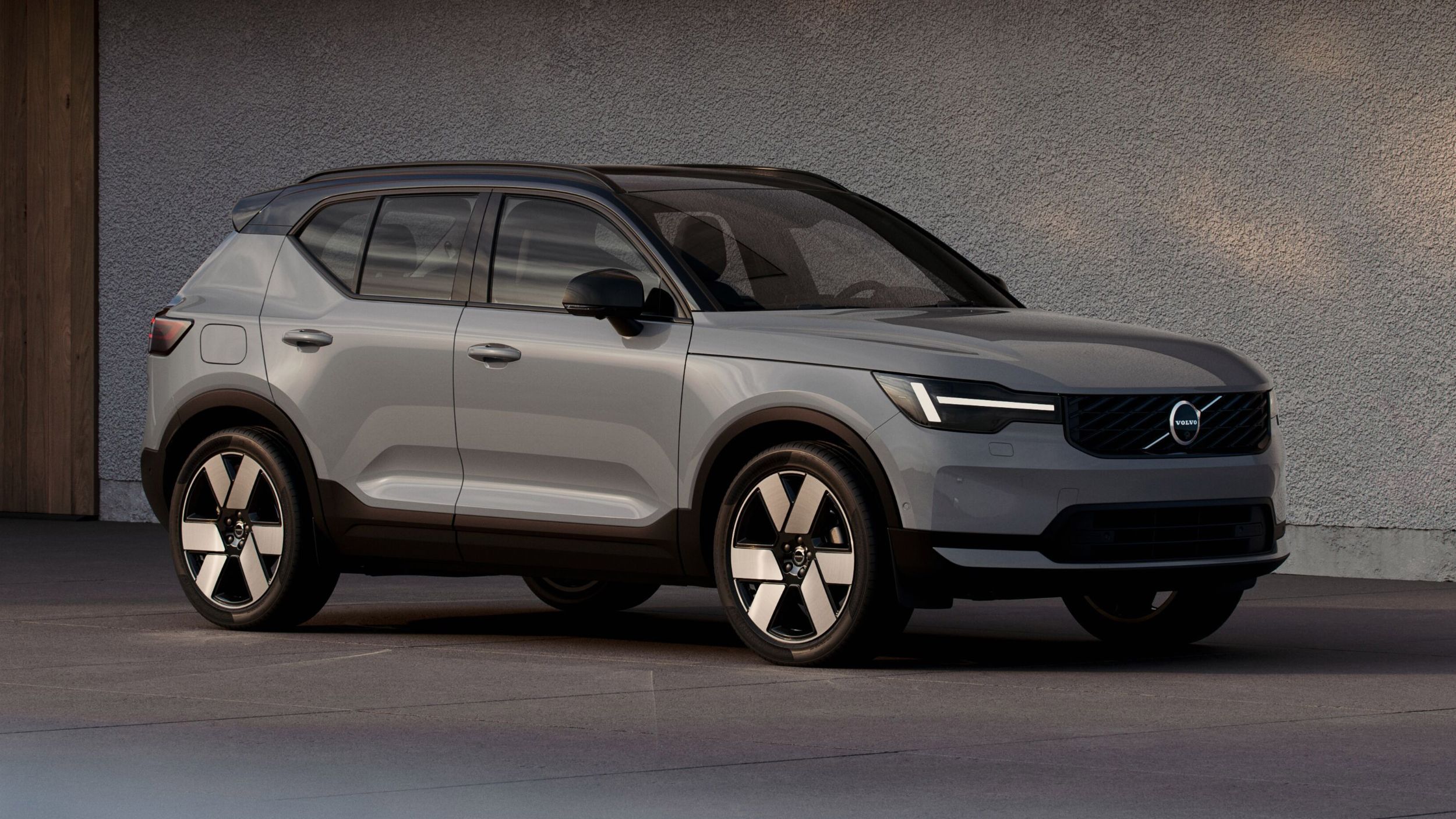
The Volvo XC40 has aged into one of the most stubbornly durable products in the Swedish lineup. It showed up as a concept in 2016, reached production in 2017, and got a facelift in 2022. A next-generation version is rumored to be in the works, but new spy shots tell a different story for the near term. The current car is lined up for another round of updates, with a possible reveal in 2027.

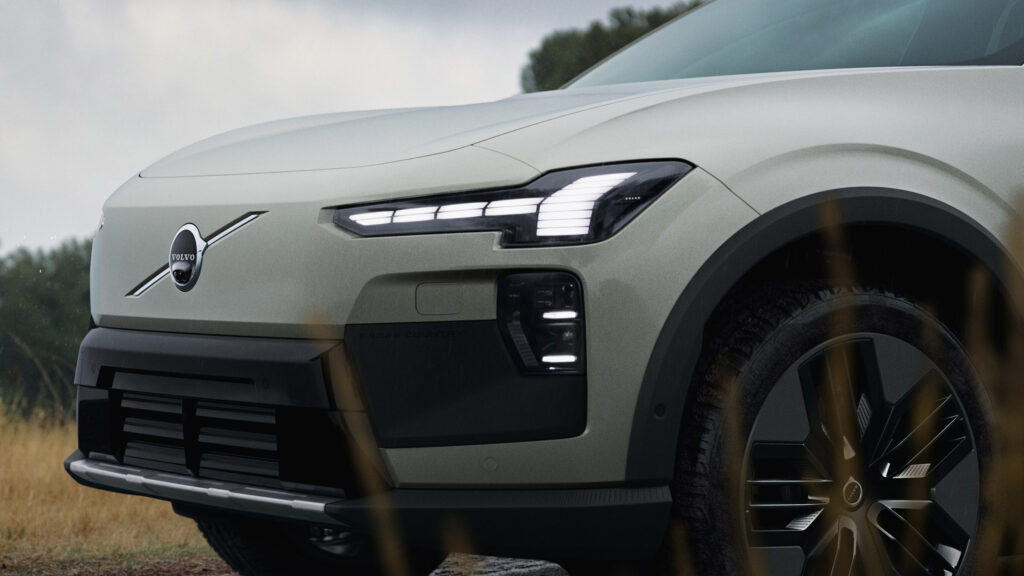
The hot weather testing season has already started in Spain, and Volvo’s engineering teams are making the most of the demanding conditions. Not long after we caught a facelifted XC60 prototype, our spy photographers have now bagged an updated XC40.

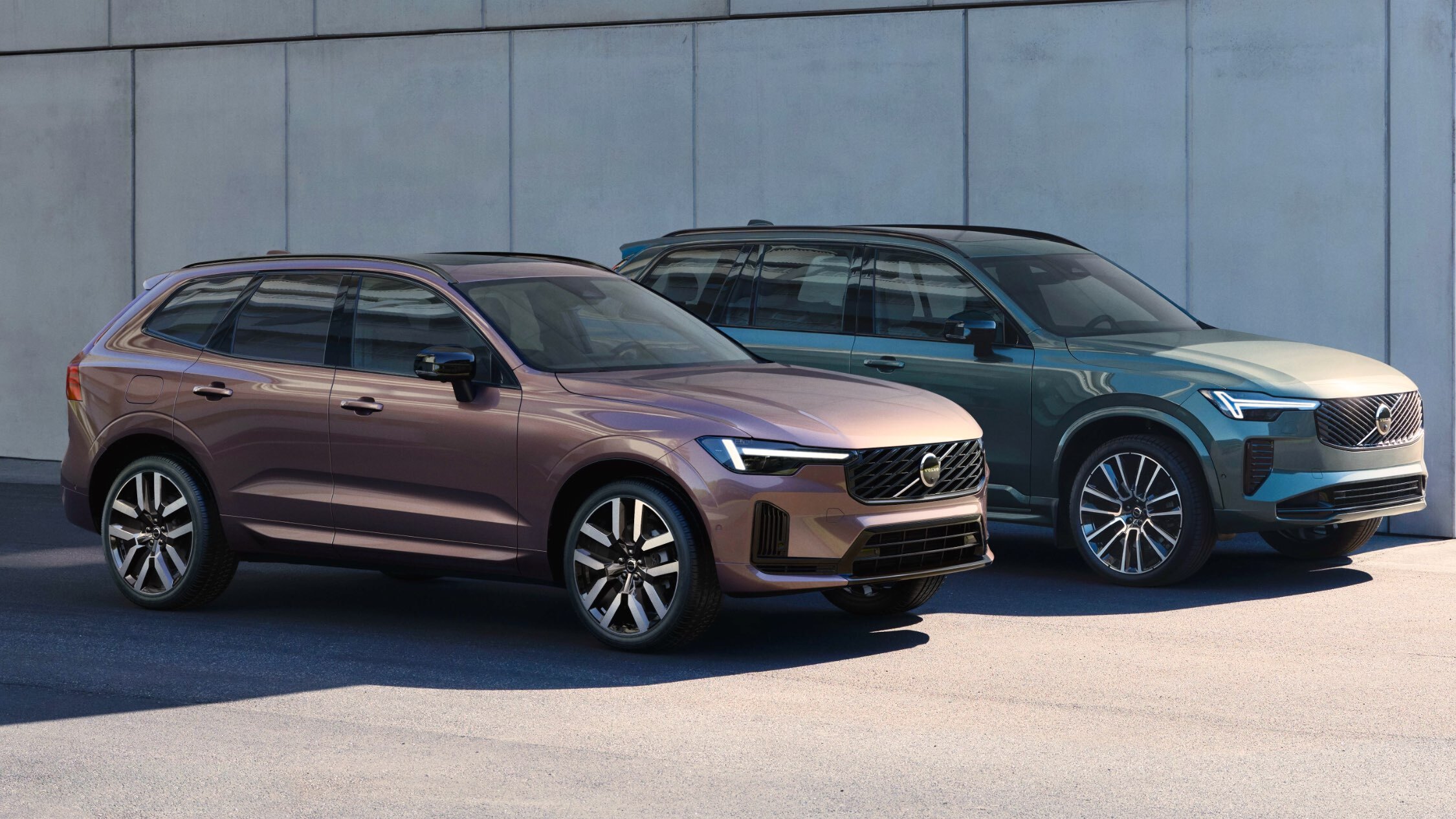
More: Volvo’s Decade-Old XC60 Just Got A Facelift, And Another One Is Already Coming

The lightly camouflaged prototype retains the signature side windows and sculpted profile of the existing model, but the front end has been redesigned. The headlights appear to be slimmer with heavier contours and Thor’s hammer LED graphics, while the revised grille is intentionally hidden under a piece of camo.

The front bumper adopts a cleaner design, doing without the side intakes of its predecessors and adding thicker cladding on the pronounced chin. At the back, the traditional L-shaped taillights are covered in black tape, an attempt to disguise the updated LED graphics.

\\\\\\\\\\\

SH Proshots

Other changes include the flatter surfacing on the tailgate and the smaller reflectors low on the rear bumper. The dual tailpipes poking out of the rear end are just provisional units, and they’ll be swapped for a different design on the production model.

A few spy shots also offer a glimpse inside the cabin. The biggest change looks to be a new portrait-oriented infotainment display, similar to the one in the EX30. Volvo could add new materials and upholstery options, too.

More: A Slate Designer Spent His Spare Time Redrawing Volvo’s Lost Wagon

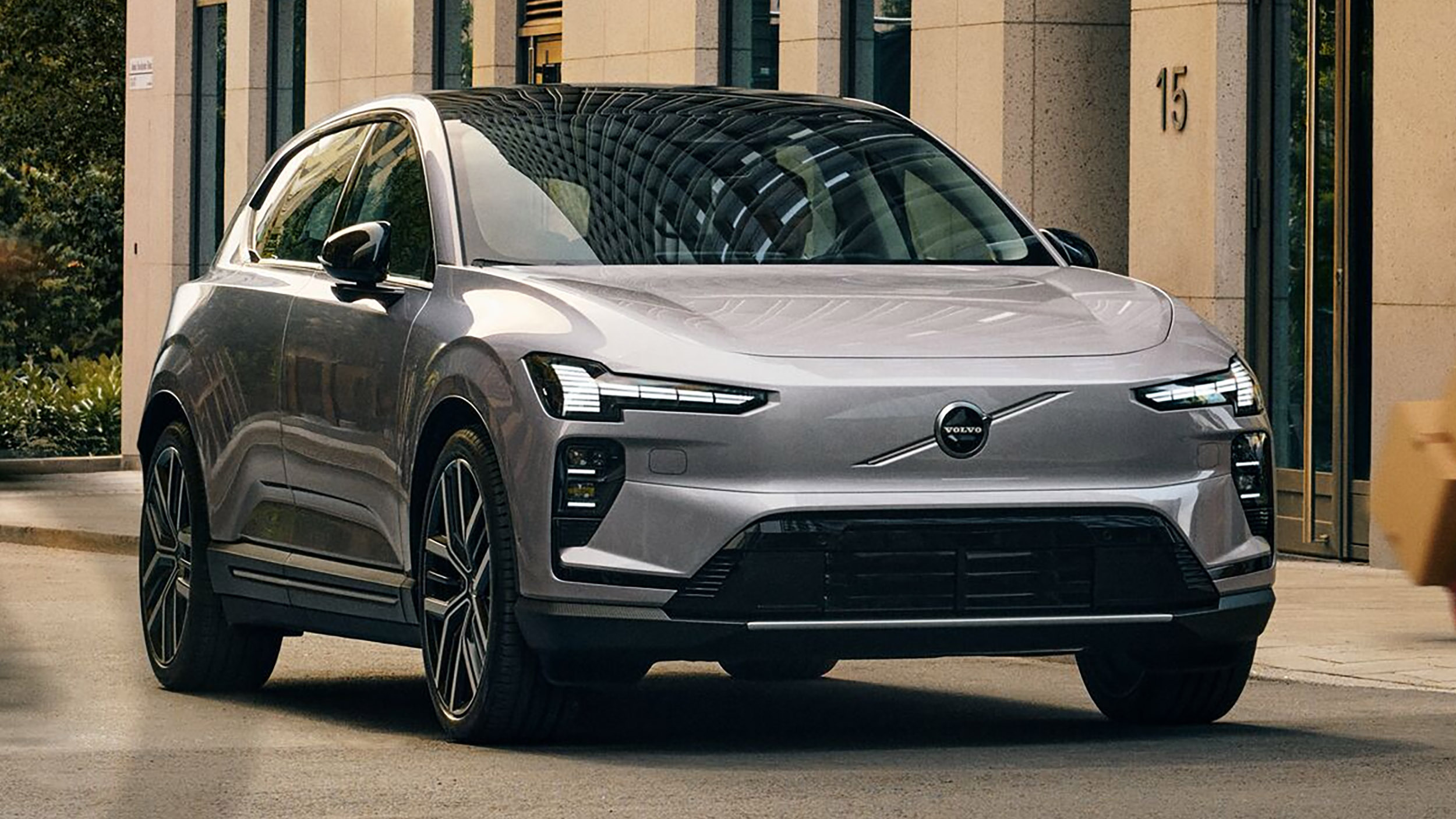
The powertrain lineup will most likely carry over the existing mild-hybrid, plug-in hybrid, and fully electric (EX40) options. The combustion engines might get updates, though, to stay compatible with Europe’s strict emission rules for a few more years. Volvo’s engineers could also tweak the chassis setup in search of a more refined ride.

The XC40’s second facelift should land in 2027, the year the nameplate turns ten. The electric EX40 will almost certainly inherit the same updates, separated by a few styling cues that mark it as the zero-emission one. It competes with the BMW X1, Mercedes GLA, Audi Q3, and Alfa Romeo Tonale.

\\\\\\\\\

SH Proshots

MG’s New Baby EV Is Coming For The Renault 5 And VW ID. Polo

  • New MG concept previews a small electric hatchback at Goodwood FOS.
  • It will be joined by another study described as an “electric design vision”.
  • MG’s stand for 2026 will also feature robots and production models.

MG is heading to the 2026 Goodwood Festival of Speed with more than a parking spot. The SAIC-owned brand trading on its British past confirmed two concept cars bound for production, parked alongside interactive robot displays and a spread of current models.

The first concept is a subcompact hatchback running a fully electric powertrain, due on the road in 2027. The model still has no name, but the teasers tell the story. The nose is rounded and grille-less with headlights that lean cute rather than aggressive. The MG badge sits on the C-pillar, and the tail goes sporty with modern LEDs and a large roof spoiler.

More: The New MG 07 Flagship’s Looks Say Porsche Taycan, Its Price Says Corolla

The EV slots into Europe’s B-segment as the zero-emission counterpart to the MG2 Hybrid. That puts it straight into the path of the Renault 5 E-Tech, Nissan Micra, VW ID. Polo, Cupra Raval, Mini Cooper Electric, Peugeot E-208, and the rest of the subcompact-EV field.

 MG’s New Baby EV Is Coming For The Renault 5 And VW ID. Polo

MG didn’t show the other concept but described it as an “electric design vision”. Still, it won’t be a simple design study as it will evolve into an “aspirational upcoming model to further enhance the MG lineup.”

As for production models, the automaker will display the MGS9 PHEV, the MG4 EV, the ZS Hybrid, the HS PHEV, the Cyberster and the IM5 sedan from last year. Furthermore, the MGS9 PHEV, the MGS6 EV and the Cyberster will participate at the hill climb.

More: MG To Open New Spanish Plant As Chinese Invasion Of Europe Continues

The MG booth at Goodwood will also include a “display of robots to entertain the public with interactive performances”.

Everything about the new concepts gets revealed at the festival premiere on July 9, when MG Global Design Vice President Jozef Kaban does the unveiling honors.

 MG’s New Baby EV Is Coming For The Renault 5 And VW ID. Polo
MG

BYD’s New Denza Z Coupe Has Nearly 1,600 HP, And It’ll Need Every One For Its 5,000 Pounds

  • A track-focused version of the Denza Z includes a large fixed rear wing.
  • Flagship versions use three powerful electric motors, including 670 hp at the front.
  • Base models will be good for 186 mph while the flagship Z can hit 217 mph.

BYD’s upmarket Denza brand pulled the wraps off its long-awaited Z sports car in late April, leading with the Convertible while confirming a Coupe would follow. Six weeks later, here it is. New photos of the Coupe variants have surfaced alongside the powertrain numbers that matter for the entire Z range.

Arguably, the most important aspect of the Denza Z is the astounding performance it should provide. Details released by China’s Ministry of Industry and Information Technology reveal that the Z will be offered with two powertrain options, both featuring a trio of electric motors.

Read: BYD’s New Denza Z Has Maserati Looks And Lamborghini Power For Toyota Money

Entry-level versions will use a 268 hp (200 kW) motor at the front axle, along with a pair of 215 hp (160 kW) motors at the rear, for a combined output of 482 hp (360 kW), nearly matching the MG Cyberster’s 502 hp (375 kW).

\\\

For those seeking even more power, Denza will also sell the Z with a 670 hp (500 kW) front motor and two 456 hp (340 kW) motors at the rear-left and rear-right wheels, for a combined output of 1,582 hp (1,180 kW). This is more than the almighty Xiaomi SU7 Ultra, which produces 1,526 hp (1,138 kW).

We don’t yet know how quickly the different versions of the Denza Z will accelerate, but the standard Coupe and Convertible will be able to hit 186 mph (300 km/h), while the flagship Coupe will be good for up to 217 mph (350 km/h).

Looks To Kill

\\\

Whereas the standard Coupe looks largely identical to the Convertible shown at the Beijing Auto Show recently, albeit with a fixed roof, the range-topping Coupe looks a lot more aggressive and is the car we spotted testing at the Nurburgring last year.

This model is equipped with a more focused aerodynamic package, including a revised front bumper and splitter. It also sits on distinctive wheels, with a large rear wing and a larger diffuser. It tips the scales at 4,938 lbs (2,240 kg). The base Coupe is slightly lighter at 4,894 lbs (2,220 kg), while the Convertible is unsurprisingly the heaviest at 5,048 lbs (2,290 kg).

Chinese pricing details for the trio of Denza Z models have yet to be announced, but they’ll almost certainly be much cheaper than any established competition from the West.

\\\

VW’s New ID.Era 8X Wears An EV Badge And Hides A 1.5-Liter Turbo

  • The ID.Era 8X pairs a 1.5-liter turbo with two battery choices.
  • Its largest 65.2-kWh pack delivers up to 214 miles of EV range.
  • Visually, the 8X is nearly indistinguishable from the larger 9X.

VW keeps doing in China what it can’t seem to manage anywhere else, rolling out EVs and range-extenders that actually look worth a second glance. The ID.Era 8X is the newest of them, and it shows up with a clean modern shape and a tech package that holds up.

These photos from China’s MIIT show the 8X looks almost identical to the slightly larger 9X, which isn’t necessarily a bad thing, but does mean it could easily be confused with that flagship model out on the road. Stretching across the fascia are an LED light bar and the daytime running lights, while the main headlight clusters sit vertically below them.

Other key elements include a gloss black grille with active elements, black fenders, and black wing mirrors. The rear is also mostly the same as the 9X, with a similar LED light bar and an illuminated VW emblem.

Read: VW Built A Bigger ID SUV Than The X7 And You Can’t Have It

In terms of size, the 8X is 197.6 inches (5,020 mm) long, 78.6 inches (1,997 mm) wide, and stands 68.9 inches (1,750 mm) tall with a 116.9-inch (2,970 mm) wheelbase. By comparison, the 9X is longer at 205 inches (5,207 mm), shares the same width, and sits slightly higher at 71.2 inches (1,810 mm). It also stretches further between the axles, with a 120.8-inch (3,070 mm) wheelbase.

A Big Range-Extender

 VW’s New ID.Era 8X Wears An EV Badge And Hides A 1.5-Liter Turbo

Four distinct versions of the ID.Era 8X will be sold. All use a 1.5-liter turbocharged four-cylinder serving as a range-extender. The base version will couple this engine with a 51.1 kWh battery pack and an electric motor for a combined 295 hp (220 kW) and an EV-only driving range of 162 miles (260 km).

A slightly lighter version using the same powertrain and battery will also be offered, raising the electric range to 171 miles (275 km). VW will sell two further variants with a larger 65.2 kWh battery, pushing the electric range to 205 miles (330 km) and 214 miles (345 km), respectively. The SUV’s weight will vary between 5,478 lbs (2,485 kg) and 5,709 lbs (2,590 kg), depending on the specification.

Pricing has yet to be announced, with full details and availability expected later in the year.

\\\\\\\\\

The Denza Z Has Up To 1,582 HP But Weighs As Much As A BMW X5

  • A track-focused version of the Denza Z includes a large fixed rear wing.
  • Flagship versions use three powerful electric motors, including 670 hp at the front.
  • Base models will be good for 186 mph while the flagship Z can hit 217 mph.

In late April, BYD’s high-end Denza brand unveiled its long-awaited Z sports car, initially showcasing it as a Convertible but confirming Coupe versions were on the cards. Fast forward six weeks, and we now have new photos of these Coupe models, as well as important powertrain specifications for the Z line-up.

Arguably, the most important aspect of the Denza Z is the astounding performance it should provide. Details released by China’s Ministry of Industry and Information Technology reveal that the Z will be offered with two powertrain options, both featuring a trio of electric motors.

Read: BYD’s New Denza Z Has Maserati Looks And Lamborghini Power For Toyota Money

Entry-level versions will use a 268 hp (200 kW) motor at the front axle, along with a pair of 215 hp (160 kW) motors at the rear, for a combined output of 482 hp (360 kW), nearly matching the MG Cyberster’s 502 hp (375 kW). For those seeking even more power, Denza will also sell the Z with a 670 hp (500 kW) front motor and two 456 hp (340 kW) motors at the rear-left and rear-right wheels, for a combined output of 1,582 hp (1,180 kW). This is more than the almighty Xiaomi SU7 Ultra, which produces 1,526 hp (1,138 kW).

We don’t yet know how quickly the different versions of the Denza Z will accelerate, but the standard Coupe and Convertible will be able to hit 186 mph (300 km/h), while the flagship Coupe will be good for up to 217 mph (350 km/h).

Looks To Kill

\\\

Whereas the standard Coupe looks largely identical to the Convertible shown at the Beijing Auto Show recently, albeit with a fixed roof, the range-topping Coupe looks a lot more aggressive and is the car we spotted testing at the Nurburgring last year.

This model is equipped with a more focused aerodynamic package, including a revised front bumper and splitter. It also sits on distinctive wheels, with a large rear wing and a larger diffuser. It tips the scales at 4,938 lbs (2,240 kg). The base Coupe is slightly lighter at 4,894 lbs (2,220 kg), while the Convertible is unsurprisingly the heaviest at 5,048 lbs (2,290 kg).

Chinese pricing details for the trio of Denza Z models have yet to be announced, but they’ll almost certainly be much cheaper than any established competition from the West.

\\\\\\

Here’s Another China-Only VW SUV The West Desperately Needs

  • The ID.Era 8X has a 1.5-liter turbo and two sizeable battery pack options.
  • The flagship model with a 65.2 kWh pack has 214 miles (345 km) of EV range.
  • Visually, the ID.Era 8X looks almost identical to the larger ID.Era 9X.

VW continues to do in China what it should be doing elsewhere in the world, revealing new and interesting EVs and range-extenders. The VW ID.Era 8X is the latest of them and looks to have plenty going for it, including a modern design and solid technologies.

These photos show the 8X looks almost identical to the slightly larger 9X, which isn’t necessarily a bad thing, but does mean it could easily be confused with that flagship model out on the road. Stretching across the fascia are an LED light bar and the daytime running lights, while the main headlight clusters are positioned vertically below them.

Read: VW Built A Bigger ID SUV Than The X7 And You Can’t Have It

Other key elements include a gloss black grille with active elements, black fenders, and black wing mirrors. The rear is also mostly the same as the 9X, with a very similar LED light bar and illuminated VW emblem.

In terms of size, the 8X is 197.6 inches (5,020 mm) long, 78.6 inches (1,997 mm) wide, and stands 68.9 inches (1,750 mm) tall with a 116.9-inch (2,970 mm) wheelbase. By comparison, the 9X is longer at 205 inches (5,207 mm), has the same width, and sits slightly higher at 71.2 inches (1,810 mm). It also has a longer wheelbase at 120.8 inches (3,070 mm).

A Big Range-Extender

 Here’s Another China-Only VW SUV The West Desperately Needs

Four distinct versions of the ID.Era 8X will be sold. All use a 1.5-liter turbocharged four-cylinder serving as a range-extender. The base version will couple this engine with a 51.1 kWh battery pack and an electric motor for a combined 295 hp (220 kW) and an EV-only driving range of 162 miles (260 km).

A slightly lighter version utilizing the same powertrain set-up and battery will also be offered, boosting the electric driving range to 171 miles (275 km). VW will also sell two variants a larger 65.2 kWh battery, boosting the electric driving range to 205 miles (330 km) and 214 miles (345 km), respectively. The SUV’s weight will vary between 5,478 lbs (2,485 kg) and 5,709 lbs (2,590 kg), depending on the specification.

\\\\\\\

BYD Wants To Outsell Toyota In Five Years While Its China Sales Just Fell 29%

  • BYD will need to increase its sales by 1 million each year to rival Toyota.
  • Last year, BYD sold 4.6 million cars, making it China’s largest automaker.
  • Its sales are down in China this year, so it will need to grow internationally.

BYD was the world’s sixth-largest car manufacturer last year, but it wants more. Not satisfied with simply building more cars than Ford, BYD wants to become the world’s largest car manufacturer, outselling the Volkswagen Group and Toyota.

The company’s chairman, Wang Chuanfu, said that the brand wants to become the world’s largest car manufacturer within just five years. He made the revelation during the brand’s annual shareholder meeting in Shenzhen, stating that the firm’s new second-generation Blade Battery will be key to the firm’s expansion.

Read: BYD Wants To Sell Humanoid Robots Right Next To Its Cars

“BYD will truly become the No. 1 automaker globally in terms of ​scale in five years,” he said during the event, notes Reuters.

Combating Sliding Shares?

\\\\\\

Of course, making such a bold statement is much easier than actually becoming the world’s largest car manufacturer. It’s likely that BYD’s boss took a leaf out of Elon Musk’s playbook, making such a proclamation to bolster the car manufacturer’s share price, which has slipped more than 45 percent over the past year.

 BYD Wants To Outsell Toyota In Five Years While Its China Sales Just Fell 29%

BYD would need to grow extraordinarily quickly over the next five years to achieve its objective. Last year, the brand sold 4.6 million vehicles, less than half of the 11.21 million sold by Toyota Motor Corporation when Lexus and Daihatsu are included. Toyota alone sold 9.6 million cars last year, so to rival it, BYD will need to grow its sales by 1 million units each year for the next five years. That’ll be an extraordinarily difficult task.

This objective will be affected by the broad cooldown across China, which has slowed BYD’s local growth. In May, it sold 207,372 vehicles in China alone, down 29.2 percent year-over-year. To make up for lower demand in its home nation, BYD will have to rapidly expand into new international markets, with Canada primed to be one of the most important.

\\\\\\\

ORA 7 Looks Like A Beetle Got Knocked Up By A Porsche

  • The ORA 7 has been revealed by Chinese officials.
  • It mixes Porsche and Volkswagen styling cues.
  • EV offers two body styles and two different motors.

Great Wall Motor’s ORA lineup is known for questionable styling, but the brand is taking things to new heights with the upcoming 7. The model was recently revealed by China’s Ministry of Industry and Information Technology, and it looks like a Volkswagen and Porsche hooked up.

Starting with the wagon, we can see a Beetle-esque front end with a sloping hood and circular headlights. They’re joined by a slender intake and a geometric pattern on the bumper.

Review: GWM Ora GT Proves The Chinese Mean Business

Further back, the beltline and window treatment recall the Porsche Cayenne. Designers also gave the car curvaceous bodywork, a gently sloping roof, and a charging port on the front fender. The model will also be offered with 18- and 19-inch wheels.

The rear end is relatively plain by comparison, but it features teardrop-style taillights and a hatch with a rear wiper. They’re joined by a spoiler and a no thrills bumper.

\\\

The sedan is largely identical, but it features a sportier roofline and an upper body reminiscent of older Panameras. The model also trades a hatch for a small trunk, while eschewing a rear wiper altogether.

The MIIT listing reveals the vehicles share a 113-inch (2,870 mm) wheelbase, but have slightly different lengths of 190 inches (4,820 mm) and 192.5 inches (4,890 mm). The sedan also has a roof that sits 0.7 inches (17 mm) lower.

Powertrain details are limited, but the ORA 7 will have a lithium iron phosphate battery that feeds electric motors with outputs of 201 hp (150 kW / 204 PS) and 215 hp (160 kW / 218 PS). They enable the model to hit a top speed of up to 112 mph (180 km/h).

\\\\\

Akio Toyoda Admits His Biggest Fear Is An All-Electric Future

  • Akio Toyoda admits he feels “very alone” in his support of combustion engines.
  • Toyota’s chairman says he wants to build cars he would have in his own collection.
  • Six months ago, Toyota unveiled its AMG-rivaling GR GT with a twin-turbo V8.

While many car manufacturers have delayed or canceled the development of certain EVs, often at the cost of billions of dollars, the overriding thought across the industry is that electric cars are the future. It’s no longer a matter of if, but simply when. Toyota, however, will desperately cling to internal combustion engines for as long as possible.

Unlike most of its rivals, Toyota is working on the full gamut of powertrains, including FCEVs and even combustion engines running on hydrogen gas. The company’s commitment to ICEs largely comes from its chairman, Akio Toyoda, arguably one of the last true car enthusiasts leading a major automaker.

The Loneliest Man In The Boardroom

While recently speaking with CarWow, Toyoda was asked what his biggest fear about the future of the car is. His response was short and sharp, showing how much he despises EVs.

Read: Akio Toyoda Teased A Mid-Engine Surprise And Absolutely Meant It Literally

“Everybody is shifting to BEVs, this is the biggest fear for me,” he said. “Three or four years ago, I was the only one to say to the media that I love smell, I love sound and I love engines, and I want to keep the jobs for engine suppliers. But it seems to me that I’m the only one. I feel very alone.”

Toyoda also suggested there are ongoing debates within Toyota itself over the pace of EV adoption, saying that car enthusiasts inside the company continue to push for alternatives to an all-BEV future.

Giving Car People Hope

 Akio Toyoda Admits His Biggest Fear Is An All-Electric Future

Ultimately, Toyota knows that moving forward, they will need to make more environmentally-friendly vehicles, including EVs. If things were solely up to Toyoda, there wouldn’t be a market for electric cars.

“The automobile is my toy,” he added. “I want to make the car which I want to keep in my garage. If I have to make only carbon neutral cars, it’s not exciting.”

He also said that focusing solely on profitability would be just as uninspiring, arguing that building cars should be about more than simply producing strong financial results.

 Akio Toyoda Admits His Biggest Fear Is An All-Electric Future
Toyota MR2 | Illustration Thanos Pappas / Carscoops

The shift to more efficient performance cars is already happening at Toyota. According to recent reports, the next-generation GR Yaris will morph into a powerful hybrid, likely combining the new 2.0-liter turbo four-cylinder in development with a small battery pack and electric motor, perhaps delivering up to 394 hp.

Also: The Mid-Engine MR2 Is Going AWD, And Toyota’s Racing It To Prove It Works

For those who despise electrons as much as Toyoda, plenty of options will remain on the table going forward. The most obvious is Toyota’s new GR GT, packing a 4.0-liter twin-turbo V8 with no electrification whatsoever, but there are also plans for more attainable sports cars like the next MR2 and a revived Celica.

 Akio Toyoda Admits His Biggest Fear Is An All-Electric Future

Xiaomi’s New Nurburgring Record Didn’t Need A Driver, But Might Have Required A Sundial

  • An image on social media suggests Xiaomi has set an autonomous Ring lap record.
  • Hero photo shows a YU7 GT SUV as the Nurburgring’s first fastest driverless car.
  • Actual time still TBC, but intel suggests human race drivers’ jobs are safe for now.

Xiaomi has already shown by setting multiple lap records that it knows its way around the Nurburgring. Now the Chinese smartphone giant turned EV maker looks set to prove its cars can find their way around without anyone touching the steering wheel. Whether they’ll find their way around quickly is another question entirely.

An Instagram post from @rollendereporter appears to reveal Xiaomi’s latest Nürburgring achievement before the company has had a chance to announce it. The behind-the-scenes image shows a Xiaomi-contracted photographer setting up a hero shot of a Lidar-equipped YU7 SUV beside an official Nurburgring plaque carrying the words “Nordschleife Autonomous Driving Prototype.”

Related: Xiaomi’s SU7 Ultra Held The EV Nurburgring Crown, Until Porsche Wanted It Back

The plaque also includes the words “Official lap time,” though frustratingly, the actual number isn’t visible in the published image. Pressed by followers in the comments, @rollendereporter admitted he could read the lap time in the original photo. But while he stopped short of revealing the number, he did offer a clue that might take some of the shine off Xiaomi’s upcoming announcement.

“It’s hard to see here, but I can read the numbers on the original photo,” he wrote. “Let’s just say it’s a lot quicker to take the wheel in your own hands 😅😂”

Some commenters were surprised to learn that an official autonomous driving category even exists. Others questioned what the point of such a record might be when the whole appeal of the Nürburgring is seeing what happens when talented drivers and fast machines are pushed to their limits.

YU7 Is Already In The Ring Record Books

 Xiaomi’s New Nurburgring Record Didn’t Need A Driver, But Might Have Required A Sundial

Still, Xiaomi clearly enjoys collecting Nürburgring silverware. Just last month, the 990 hp (1,003 PS) YU7 GT grabbed the SUV lap record with a 7 minute 22.755 second run, beating the Audi RS Q8’s previous benchmark by almost 4 seconds.

Before that, the 1,527 hp (1,548 PS) SU7 Ultra sedan clocked a stunning 7 minute 4.957 second lap, taking both the fastest EV and fastest four-door production car crowns from the Porsche Taycan Turbo GT. Porsche has since snatched it back with a 6:55 time thanks to some Manthey tuning and new Pirelli Trofeo RS tires.

So how fast do you think Xiaomi’s driverless YU7 went around the Nürburgring? And more importantly, would you be brave enough to ride shotgun while it tried to go faster?

Xiaomi, @rollendereporter

BYD Builds Buses In California. The Pentagon Just Called It A Chinese Military Company

  • The Pentagon has flagged 188 firms it calls “Chinese military companies.”
  • BYD has vehemently denied any association with the Chinese military.
  • China’s embassy has described the national security list as “discriminatory.”

Less than a month after President Donald Trump sat down with Xi Jinping at a two-day summit in Beijing, the Pentagon has dropped BYD and Nio onto its list of companies it considers tied to the Chinese military. Being named doesn’t trigger immediate sanctions, but it can scare off American firms from doing business with the listed companies and complicate their ability to operate stateside.

This is not the first time the US government has flagged companies it believes are tied to the Chinese military. The annually updated Section 1260H list already named tech giant Tencent in a prior round, and this latest expansion adds BYD and Nio, along with biotech firm WuXi AppTec, e-commerce juggernaut Alibaba, internet search provider Baidu, and humanoid robot maker Unitree, which is partnering with Nvidia on new robots.

 BYD Builds Buses In California. The Pentagon Just Called It A Chinese Military Company

In total, the US flagged 188 firms it designates as “Chinese military companies,” labeling them a national security risk. Several of these companies already operate in the US, including BYD. While the EV leader doesn’t sell its passenger cars in America, it does sell electric buses locally and builds them in California.

Read: BYD Made A Critic Pay $294,000 For Questioning Its Batteries On Camera

Speaking to the BBC, Nanyang Technological University police analyst Stefanie Kam noted that companies have likely been flagged for participating in state programs, rather than for clear evidence of their association with the Chinese military. The Pentagon added that companies like BYD were included because they have affiliations with the Assets Supervision and Administration Commission and the Ministry of Industry and Information Technology.

China Hits Back

\\\\\\\\

BYD vehemently denied being associated with China’s military and added that being included in the list harms “its development achievements in the United States. Nio noted that it will not be affected by its inclusion on the list, as it doesn’t do business in the US.

The Chinese embassy in Washington, DC, said the list is “discriminatory” and shows it’s “overstretching” the concept of national security.

“Chinese companies that do business overseas have been strictly observing laws and regulations of their host countries,” the embassy told Al Jazeera. “The US should stop its wrong practice and create a fair, just and non-discriminatory environment for Chinese companies.”

 BYD Builds Buses In California. The Pentagon Just Called It A Chinese Military Company
BYD’s school bus built in California

Ford’s $30K Electric Truck Looks So Tiny It Makes A Maverick Seem Grown Up

  • Ford’s affordable electric pickup prototype is testing in California.
  • Aerodynamic design is hidden under camo to fake a boxy look.
  • MY28 truck looks 1990s-grade small, but with a roomy second row.

Ford’s long-promised affordable electric pickup has finally been spotted in the wild, and one thing immediately stands out. This thing looks tiny.

The heavily camouflaged prototype was recently tracked down by The Autopian’s David Tracy on the West Coast, giving us our first look at the EV Ford hopes will shake up the entry-level truck market. And despite the camouflage doing its best to disguise the shape, it’s already clear this won’t be an electric Maverick. In fact, it might end up looking smaller.

Related: Ford Gives A Tiny Glimpse Of The $30K EV Truck Slate Should Be Worried About

The disguise gives the truck a traditional upright profile, but some key details poke through. Most obvious is the steeply raked windshield, which points to a far more aerodynamic design hiding beneath the camouflage. Previous design sketches hinted at a slippery front end and a more angled rear window, and the prototype seems to back that up.

The truck also appears remarkably compact in the real world. In footage captured by The Autopian, the Ford was driving alongside a full-size electric pickup and looked absolutely dwarfed by it. Even more telling, a Mazda B-Series truck trailing behind appeared almost the same size. Since that Mazda was essentially a rebadged version of the original Ford Ranger, that’s a pretty good indication this EV is going to be bijou by modern American standards.

Designed For Range, Not Trails

 Ford’s $30K Electric Truck Looks So Tiny It Makes A Maverick Seem Grown Up

The prototype’s low ride height and roofline also give away its priorities. Combined with aero wheel covers and what are almost certainly low-rolling-resistance tires, it’s clear Ford is chasing maximum efficiency rather than hardcore off-road capability. Don’t expect this one to spend much time crawling over boulders straight from the showroom.

Other details visible through the camouflage include a relatively narrow cabin that places occupants closer together than most modern trucks, a large central touchscreen, a shallow glasshouse, and what appears to be a reasonably usable second row. The bed looks short, however, Tracy estimates a length of around 4 ft (1.2 m)

 Ford’s $30K Electric Truck Looks So Tiny It Makes A Maverick Seem Grown Up
Ford’s teaser for the new EV platform.

Ford CEO Jim Farley has already revealed that it rides on an all-new low-cost EV architecture designed around what, by Ford standards, is some radical tech. The platform reportedly uses 20 percent fewer parts, 25 percent fewer fasteners, and requires 40 percent fewer workstations than conventional vehicle platforms.

Could Be Called Ranchero

 Ford’s $30K Electric Truck Looks So Tiny It Makes A Maverick Seem Grown Up

Ford is also embracing large aluminum castings similar to Tesla‘s gigacasting approach, while a dramatically simplified wiring harness is more than 4,000 ft (1.2 km) shorter and 22 lbs (10 kg) lighter than those used in the company’s first-generation EVs.

The first vehicle based on the architecture is expected to arrive in 2027 with a starting price of around $30,000. It will use lithium iron phosphate batteries and could even revive the Ranchero name Ford used on car-based trucks from the late 1950s to the late 1970s. Whatever Ford ends up calling it, one thing already seems certain. Nobody is going to accuse this truck of being a typical fat EV.

Thanks to The Autopian for letting us use a couple of its images. Check out the full story with more pics here.

The Men Who Built Honda Tried To Oust Its CEO, He Didn’t Flinch

  • Ex-Honda executives have blamed the current CEO for the brand’s EV failings.
  • Honda recently posted its first annual loss in 70 years due to its EV focus.
  • Toshihiro Mibe has been accused of failing to listen to the brand’s customers.

Just weeks after Honda announced it was scrapping three EVs it planned to launch in North America and booking roughly $15.7 billion in expenses and losses for its over-commitment to EVs, chief executive Toshihiro Mibe was asked to resign. He refused.

A new report reveals that, starting in late 2025, several retired Honda executives began meeting to discuss ongoing issues with the Japanese manufacturer. Over several months, they blamed Mibe and took particular issue with his neglect of China and his responsibility for the costly EV missteps.

Read: Honda Previews New Fastback Sedan And Next Acura RDX, And Neither Is An EV

As reported by Reuters, who spoke with two participants in these meetings, they even suggested Mibe was more focused on Honda’s golf sponsorships than its business. In April, 90-year-old former Honda chief executive Nobuhiko Kawamoto visited Honda’s headquarters and asked Mibe to step down. He said that wasn’t going to happen.

What Role has Mibe Played?

 The Men Who Built Honda Tried To Oust Its CEO, He Didn’t Flinch
Toshihiro Mibe

Mibe has served as Honda’s chief executive since 2021 and is taking a 30 percent pay cut for three months in response to the brand posting its first annual loss in 70 years. According to those who tried to force him out, Mibe hasn’t focused on the “genba” of his predecessors, or the “actual place” where important work gets done, like factory floors and showrooms.

“The CEO does not see conditions on the ground or listen to customers, and doesn’t go to the genba,” they told Reuters. “Senior ⁠management, including the CEO, do not visit the genba. Example: China.”

Although former executives wanted Mibe ousted, he had the backing of the board’s nominating committee. This committee was established with more outside directors as part of a general shift in Japan for better corporate governance and to reduce the influence of retired executives.

More: Honda’s $15.9 Billion EV Disaster Just Delayed The Next Accord, Odyssey, And MDX

Honda has quickly changed plans after the EV cancellations. In May, it was revealed that the automaker is developing a new-generation electric vehicle platform that will also support hybrid powertrains. The company acknowledges that the American market for EVs could change dramatically after Trump’s second term in office ends in January 2029. The outcome of this November’s midterm elections could also have a big impact on the market.

Under this new strategy, Honda plans to launch 15 new hybrid models by 2029. Two of these were recently previewed: one, known simply as the Honda Hybrid Sedan Prototype, and a second, a sleek SUV badged the Acura Hybrid SUV Prototype.

\\\\\\\\\

Honda Hybrid Sedan Prototype and Acura Hybrid SUV Prototype

China’s State Limo Maker Built A G-Class Rival With Three Diff Locks And Way Too Much Power

  • The G919 pairs a 2.0-liter turbo engine with four electric motors.
  • Hongqi’s rugged newcomer wears one of the largest grilles around.
  • Key features include three locking differentials and air suspension.

While plenty of Chinese brands are turning out genuinely compelling cars these days, Hongqi usually isn’t the name that springs to mind. That’s despite its pedigree as the country’s most premium homegrown marque, the one chauffeuring China’s political elite back in the day, Chairman Mao included. Their latest effort is the G919, a boxy off-roader saddled with an enormous grille that does it no favors at all.

Read: The Most Expensive New Chinese Car Ever Sold In Russia Costs $445,000

The rugged SUV was previewed at the recent Beijing Auto Show, and now a fresh batch of images has surfaced. More Chinese brands are piling into the rugged-SUV space chasing strong demand, and Hongqi decided the moment was right to join them. The styling leaves plenty to be desired, but the G919 still has a few things working in its favor.

 China’s State Limo Maker Built A G-Class Rival With Three Diff Locks And Way Too Much Power

Measuring 202.1 inches (5,135 mm) long, 80.7 inches (2,050 mm) wide, and 76.7 inches (1,950 mm) tall, with a 114.1-inch (2,900 mm) wheelbase, the G919 uses a traditional body-on-frame design, an essential element of any good off-roader. Hongqi has also fitted the model with mechanical locking differentials at both the front and rear, along with trick air suspension. And like a Mercedes G-Class it clearly has in its sight, there’s a center diff lock too.

Supercar Power

Then there’s the powertrain. The G919 will be built as an EREV, pairing a 2.0-liter turbocharged four-cylinder with four electric motors for a combined 831 hp (620 kW) and 973 lb-ft (1,320 Nm) of torque. The size of the battery pack remains unclear, but it reportedly offers an all-electric range of 174 miles (280 km) and a combined range of 839 miles (1,350 km).

Obviously, no one needs such an extraordinary amount of power in an off-roader, but it’s nice to have. In addition, because the G919 has an electric motor at each wheel, it offers precise torque adjustments to maintain traction in all conditions. It can also run from 0-100 km/h (0-62 mph) in an impressive 4.5 seconds.

Pricing has yet to be confirmed. What we do know is that the G919 is expected to go on sale in the coming months.

\\\\\\\\
❌