Reading view

There are new articles available, click to refresh the page.

China Is Blocked From Selling Cars In America, Yet Three Democratic Senators Still Sent This Letter
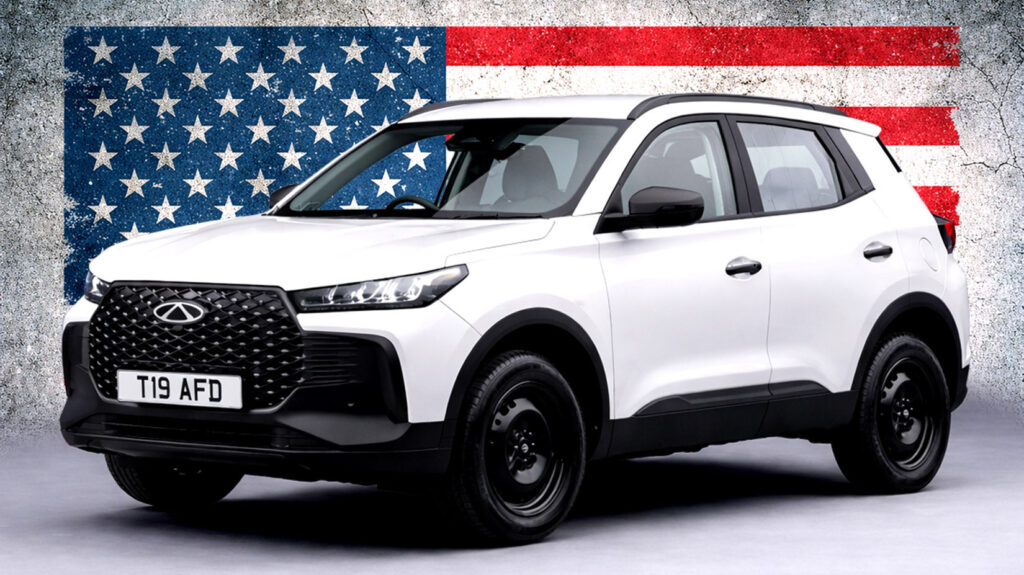
  • Lawmakers oppose Chinese automakers building factories in the US.
  • Trump has expressed support for foreign firms investing locally.
  • China accuses the US of blocking fair access to its auto market.

While President Donald Trump has shown an unexpected openness to Chinese automakers building cars in the United States, three senators from the other side of the political spectrum have now joined Republican voices pushing to ensure that never happens.

Late last week, Democratic Senators Tammy Baldwin, Elissa Slotkin, and Chuck Schumer urged the administration not to allow Chinese car companies to manufacture vehicles locally, noting this could severely harm American companies. China is none too pleased and has accused the US of engaging in “trade protectionism.”

Read: US Senator Calls Chinese Cars “Cancer,” Wants Permanent Ban

“We must be clear-eyed that inviting China’s automakers to set up shop in the ⁠United States would confer an insurmountable economic advantage impossible for American automakers to overcome, and it would trigger a national security ​crisis that could never be reversed,” the senators wrote in a letter to Trump, first reported by Reuters.
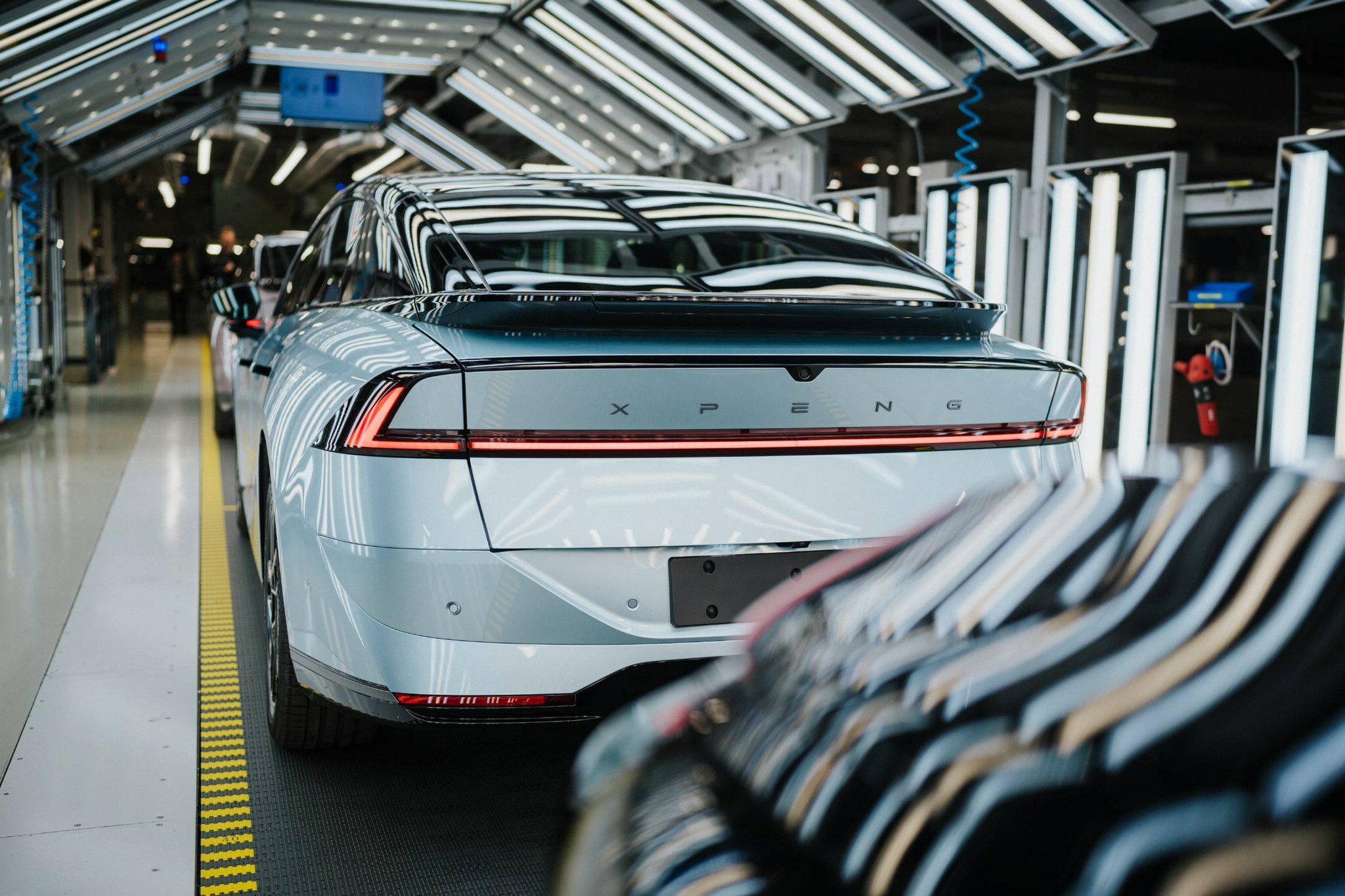
 China Is Blocked From Selling Cars In America, Yet Three Democratic Senators Still Sent This Letter

They sent the letter to President Donald Trump following comments he made in January. Speaking at the Detroit Economic Club, Trump said that “if they [Chinese companies] want to come in and build a plant and hire you and hire your friends and your neighbors, that’s great, I love that.”

Responding to Reuters about the letter from Baldwin, Slotkin, and Schumer, the White House said that “while the administration is always working to secure more investment into America’s industrial resurgence, any notion that we would ever compromise our national security to do so is baseless and false.”

China’s Not Happy

Chinese car companies have effectively been banned from selling vehicles in the United States due to policies enacted by the Biden administration in early 2025. However, it appears the Trump administration is more open to Chinese companies coming to the US than ex-President Joe Biden was, particularly if it can help to reverse the trend of ongoing job losses in the manufacturing sector.

According to the Chinese Embassy in Washington, the US has “engaged in trade protectionism and set up obstacles, including discriminatory ⁠subsidy policies ​to obstruct access to the U.S. market by Chinese-made cars.”
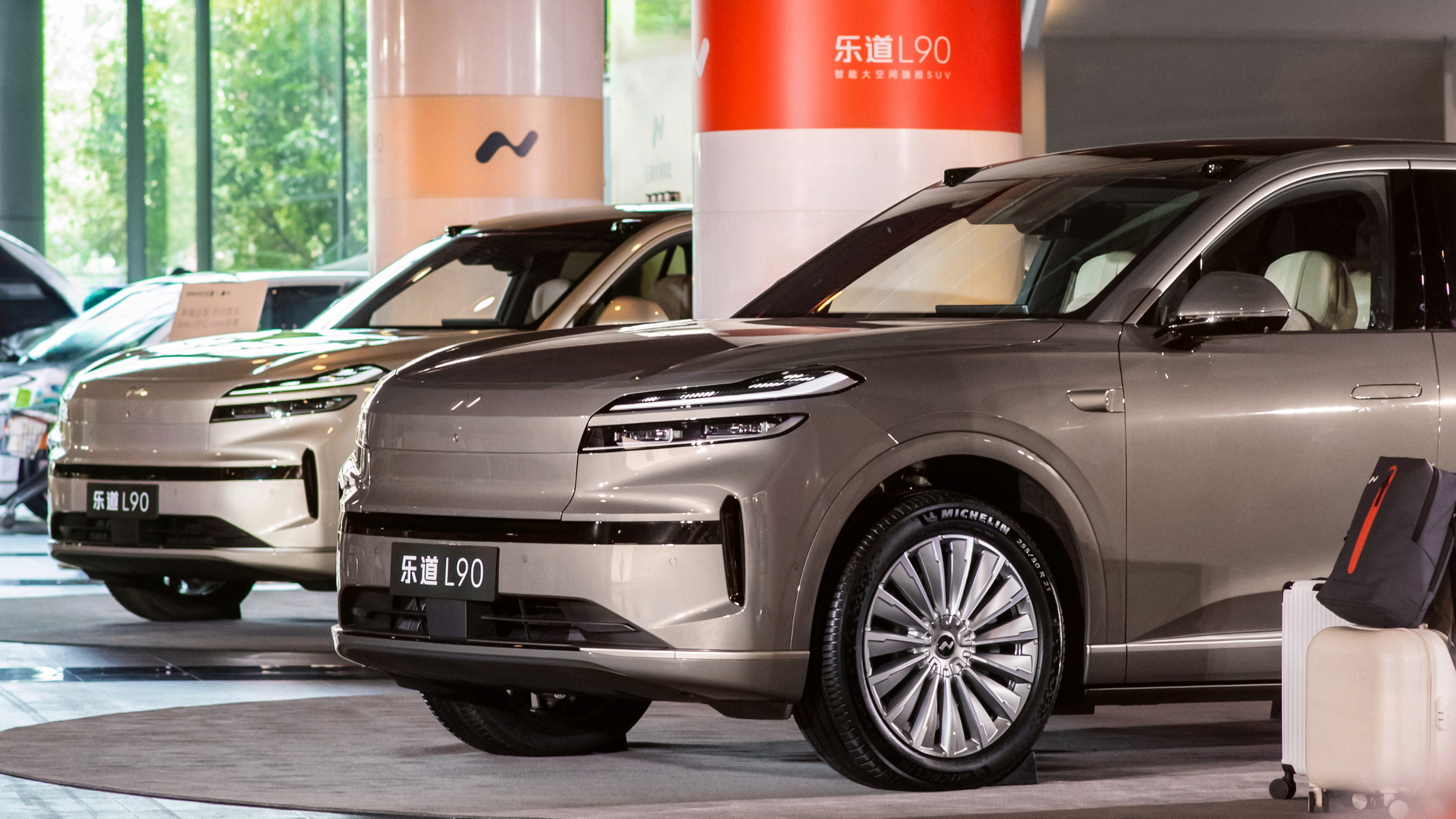
 China Is Blocked From Selling Cars In America, Yet Three Democratic Senators Still Sent This Letter

Rivian’s R2 Performance Just Out-Ranged The Tesla Model Y, And It Weighs Nearly 800 lbs More

  • The R2 Performance will have an EPA range of up to 335 miles.
  • By comparison, the Tesla Model Y Performance has a 306-mile range.
  • The R2’s dual electric motors offer a combined 656 hp and 609 lb-ft.

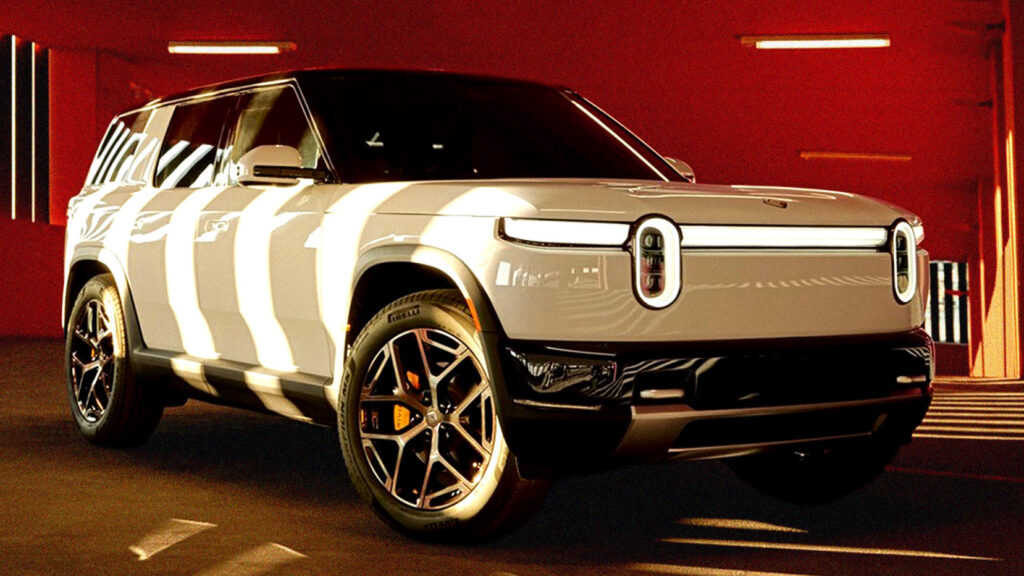
We already had a solid picture of the new Rivian R2, but fresh EPA testing data fills in a few remaining gaps. Positioned below the R1S in price yet still focused on performance and practicality, the all-electric R2 is shaping up to be a crucial model for the brand.

According to internal reports shared on the Rivian Forums, the range-topping Performance variant will use an 86.8 kWh usable battery pack and come with a choice of 20-inch or 21-inch wheels. Wheel and tire setup makes a noticeable difference. Models fitted with 20-inch wheels and all-terrain rubber are rated at up to 314 miles (505 km), while versions on 21-inch, road-focused tires stretch that to 335 miles (539 km).

Read: Rivian’s Most Affordable Model Arrives First In Its Most Expensive Form

While the R2 looks quite boxy, it has a better range than the Tesla Model Y Performance, which comes with an EPA-estimated range of 306 miles (492 km). The Tesla, however, is significantly lighter, weighing 4,466 lbs (2,025 kg), making it 784 lbs (356 kg) lighter than the R2 Performance at 5,250 lbs (2,381 kg) when equipped with 21-inch wheels.

\\\\\\

The published documents also reveal that Rivian has developed a proprietary heat pump for the R2, aimed at improving cabin cooling in hot weather while reducing NVH levels. It should also perform better in cold climates, thanks to a high-voltage coolant heater. The R2 will also feature an integrated battery health monitoring system.

There’s More To Come

The only R2 variant referenced in the EPA tests is the $57,990 Performance, which will be the first to launch. Later this year, Rivian plans to introduce the more affordable R2 Premium, starting at $53,990. It’s expected to produce 450 hp and 537 lb-ft (727 Nm), compared to the Performance model’s 656 hp and 609 lb-ft (825 Nm). There’s no official range estimate yet, though it should exceed that of the R2 Performance.

A more accessible R2 Standard is also scheduled for 2027. It will deliver 350 hp and 355 lb-ft (481 Nm), with early estimates pointing to a 345-mile (555 km) range. The lineup is expected to be completed in late 2027 with an entry-level R2 featuring a smaller battery, believed to offer around 275 miles (443 km) of range.

\\\\\\\\\\\\\\\\

Photos Rivian

VW Spent Decades Selling Germans What China Wanted. Now China’s Selling VW What It Needs

  • The new electric SUV uses VW and Xpeng’s advanced CEA architecture.
  • A high-tech driver assistance system will come standard on the new model.
  • VW is also working on Chinese EVs with its other local joint venture partners.

Volkswagen is working on yet another addition to its burgeoning range of electric cars sold in China. Whereas the brand’s range of EVs offered in Western markets is starting to feel a little old, some of its Chinese models appear to be up to the task of rivaling local brands.

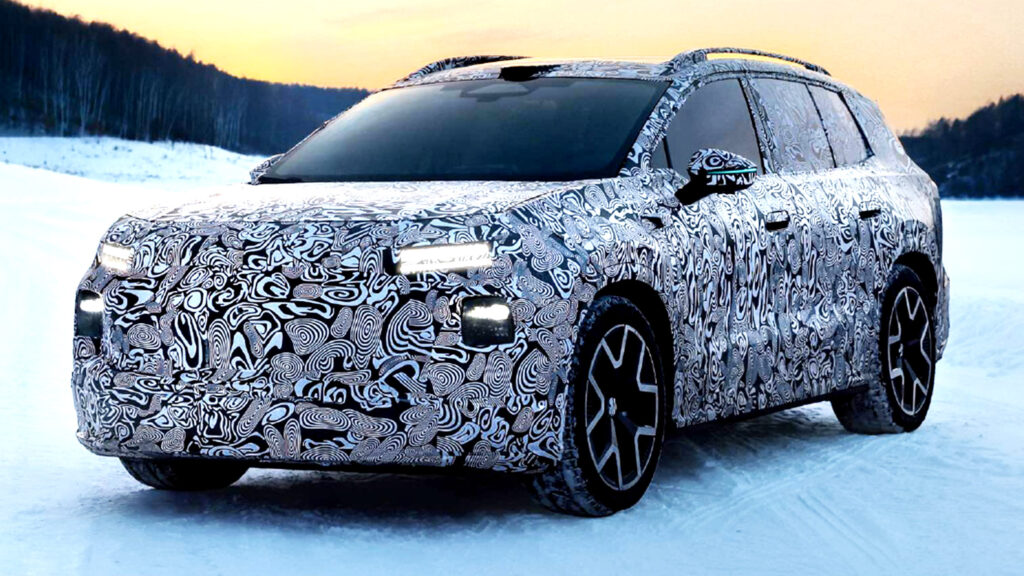
Its latest model is being brought to life through the FAW-Volkswagen joint venture, rather than the Volkswagen Anhui partnership with JAC, which is responsible for the new ID. Unyx 08. Photos published online by VW show its next Chinese EV will be a large SUV sitting above the Unyx.

Read: VW’s New Compact Sedan Costs Less Than Half What Americans Pay For A Jetta

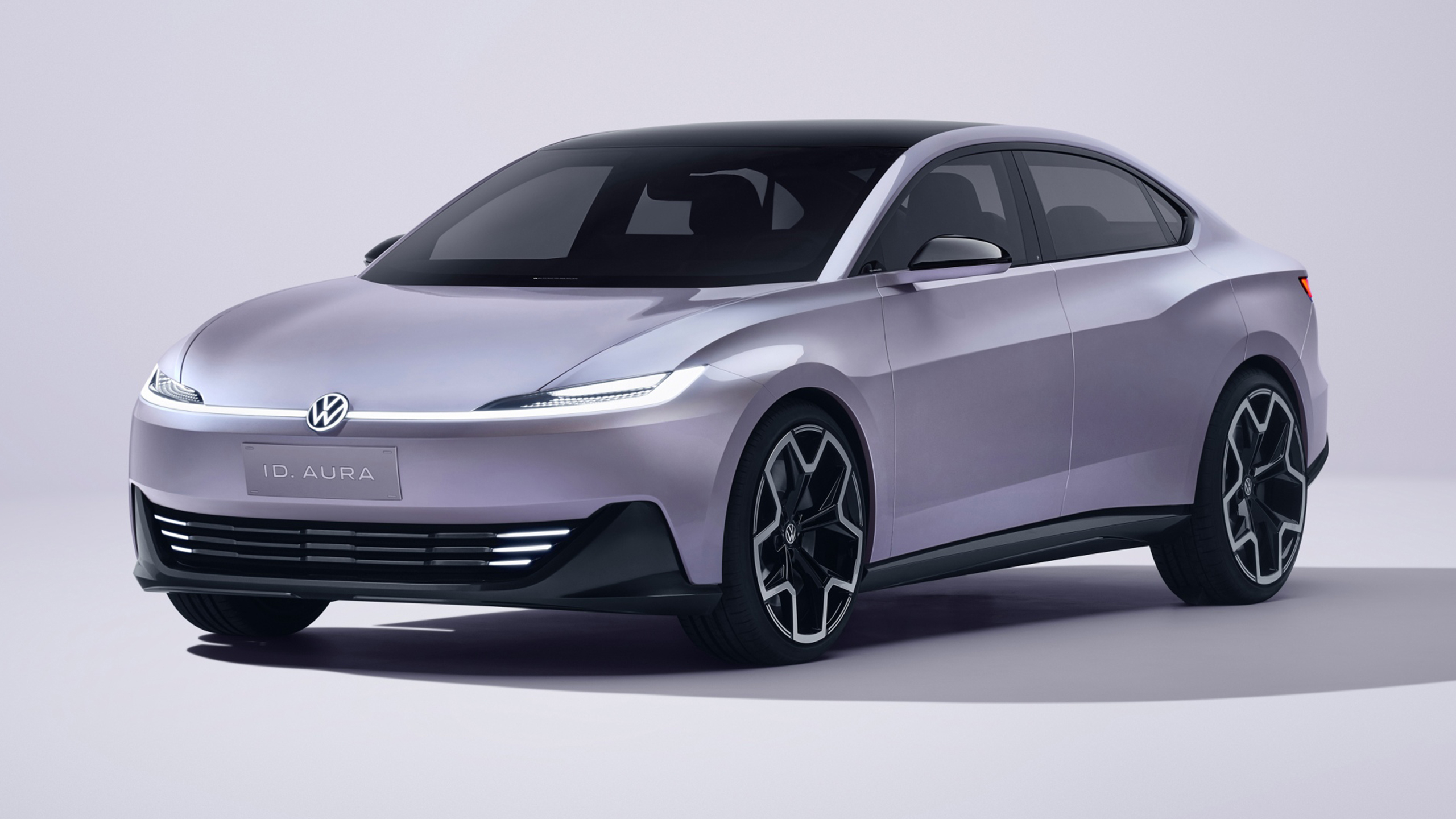
A final name for the model has yet to be confirmed, but we know this SUV will form part of VW’s ID.Aura family, previewed last year with a sleek, low-slung sedan. Like the ID. Unyx 08, it’s reported that this model is based on the CEA architecture that VW has co-developed with Xpeng, complete with 800-volt tech.

Advanced Driving Tech

\\\\

These images indicate the first ID.Aura model will be slightly more conventional in its shape than the Unyx. We can see it will have a split-headlight design and a front fascia that sits quite upright. Other notable elements of the design include bulging fenders and a LiDAR unit positioned above the windshield.

Elsewhere, this prototype can be seen sporting roof rails, a sunroof or panoramic glass roof, and a fairly traditional-looking tailgate. Small parts of the LED taillights are also visible.

It’s understood that the first model from the ID.Aura family will use an advanced driver assistant system developed by VW and Horizon Robotics, known as Carizon. Limited other details about it are known, including what powertrain it will have, what charging speeds it will support, and what kind of driving range will be on offer.

 VW Spent Decades Selling Germans What China Wanted. Now China’s Selling VW What It Needs
VW ID.Aura sedan concept

Jaguar Wants To Rival Bentley, But GT’s Cabin Goes In A Different Direction Entirely

  • The Jaguar GT has been fitted with a very unusual steering wheel.
  • A curved display has been perched on top of the car’s dashboard.
  • Jaguar has also added a pair of rather unusual steering wheel stalks.

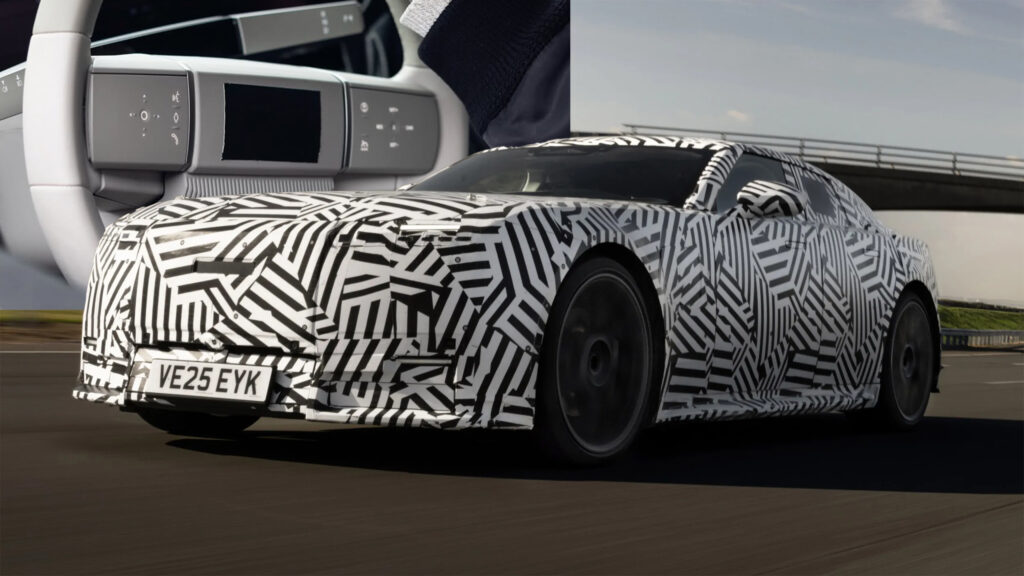
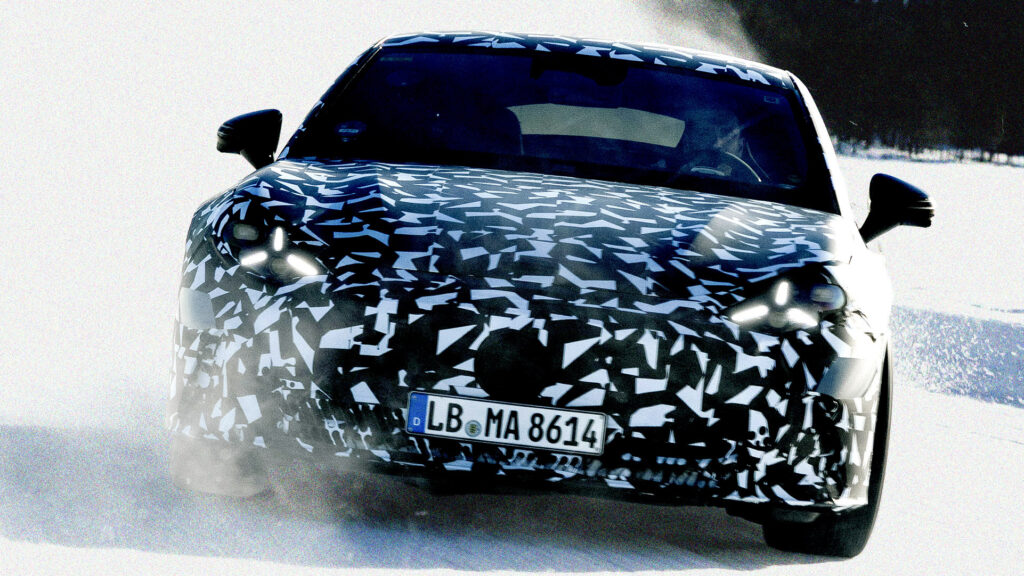
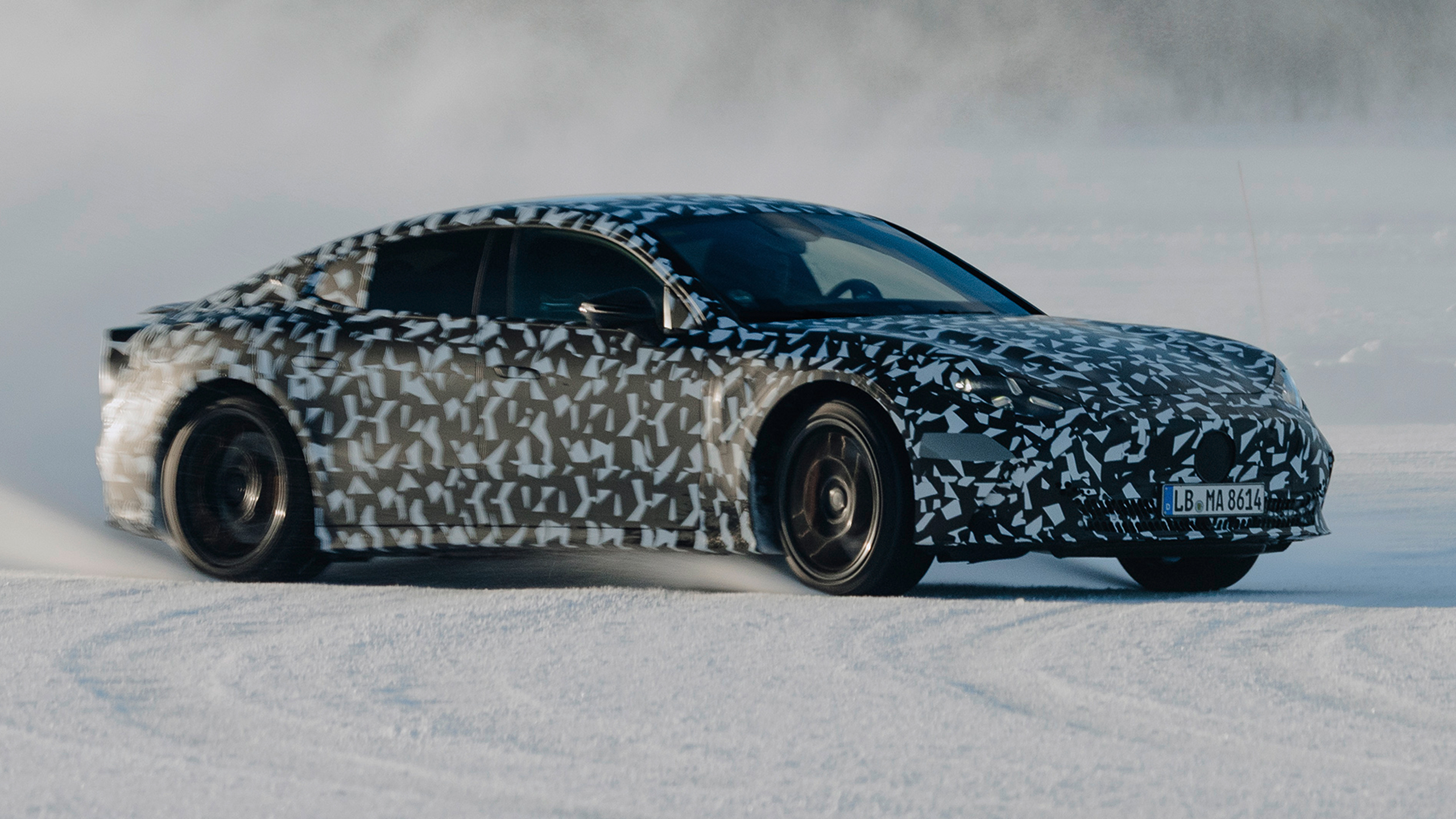
Jaguar’s controversial EV is edging closer to a September reveal, and while its exterior remains concealed under camouflage, the company has now offered a first look inside. It marks a clear departure from anything the brand has produced before. As expected, the cabin design doesn’t follow familiar Jaguar themes.

As development enters its final phase, Jaguar recently invited a small group of journalists and social creators to get behind the wheel of the EV, currently referred to as the GT, though the final name has yet to be confiremd. The exterior is expected to closely mirror the divisive Type 00 Concept, though the production car has evolved from a two-door coupe into a four-door sedan.

Read: Jaguar Benchmarked Its Electric GT Against One Classic Above All Others

With the exterior leaning heavily on straight lines and sharp edges, the interior was always going to follow suit. These photos confirm it, revealing an all-new steering wheel that looks like it could have rolled straight out of a 1970s or 1980s concept car. It features thick horizontal spokes, each packed with large touch-sensitive surfaces handling a wide range of functions.

Stalks, But Not Normal Stalks

It’s hard to say with certainty, but it appears these could be touch-sensitive or haptic-style buttons, rather than physical ones, which is a shame but a sign of the times. Positioned on the left are controls for making calls and the car’s voice function, while the cruise control settings appear on the right. The airbag module also sits lower than normal.

Positioned behind the steering wheel are two large stalks, also with a squared-off design. The one on the left appears to control the lights, turn signals, and windshield wipers, while the right stalk houses Reverse, Neutral, Drive, and Park. While Jaguar wants to rival Bentley, the dash appears quite minimal, with a large, curved infotainment screen and gauge cluster, free of any physical dials.

What About Performance?

Beyond the cabin, we know Jaguar’s new GT is based on the company’s Electric Architecture and tips the scales at about 2,700 kg (5,962 lbs). To help somewhat offset that weight, it’ll be fitted with three electric motors delivering more than 986 hp and 959 lb-ft (1,300 Nm) of torque.

As for driving impressions, Andrew Frankel from The Intercooler notes that it doesn’t offer the same kind of bonkers performance as a Tesla Model S Plaid and has been configured for smooth, progressive performance.

\\\\\\\\\\\\\

Photos Jaguar, Lead Image SidewalkHustle/Instagram

AMG’s Drift Mode Survives Into The Electric Era, With A New Way Of Working

  • The new GT 4-Door will be equipped with three axial-flux electric motors.
  • Mercedes-AMG has developed an advanced air suspension for the sedan.
  • An Agility Control system can significantly alter the car’s handling balance.

The build-up to the release of the all-electric Mercedes-AMG GT 4-Door has been painfully slow, but it’s inching closer to the market, recently finishing up winter testing in Northern Europe. Along the way, a handful of fresh details have surfaced, offering a better sense of how far Mercedes is willing to go to make this feel like a proper AMG, or at least convince you it is.

While Mercedes-AMG has yet to confirm the final power output for the production sedan ahead of its spring launch, the concept has already shown it can deliver up to 1,341 hp. AMG has confirmed the car will use three advanced axial-flux electric motors, enabling configurable rear-wheel-drive and all-wheel-drive setups. At the center of it all is a complex driving-dynamics control system, managed through three settings: Response, Agility, and Traction.

Read: Drivers Want More Buttons, So Mercedes-AMG’s New Super Sedan Removes Most Of Them

The Response Control system tweaks the behavior of the electric motors depending on different accelerator pedal commands and individual driving modes. The Agility Control system focuses specifically on tweaking the cornering behavior of the car, adjusting the power distribution on the fly to give the car the feeling of having a shorter or a longer wheelbase and varying from slight understeer to controlled oversteer. So while the car will be electric, you’ll still be able to drift it.

Can It Be A Fun EV?

 AMG’s Drift Mode Survives Into The Electric Era, With A New Way Of Working

Traction control goes unusually deep, offering nine selectable levels, similar to setups used in the previous-generation AMG GT R and AMG GT Black Series.

Mercedes-AMG has also confirmed a somewhat unconventional braking setup, pairing carbon-ceramic discs at the front with steel units at the rear. Then there’s the suspension system, which appears particularly advanced, and it better be with all that power at hand. After all, the suspension systems in the Porsche Taycan and Audi e-tron GT are already highly sophisticated, so AMG needs something that can genuinely keep pace.

\\\\\\\\\\\

The setup includes adjustable air springs paired with semi-active roll bars and configurable dampers. In theory, it should deliver a broad range of ability, smoothing out rough roads while still tightening everything up when the pace increases. AMG claims it will balance comfort and cornering precision, whether you’re commuting or pushing harder on track.

Advanced Battery Cooling System

Of course, no EV would be complete without some trick technology on the battery side of things. The cells of the AMG GT 4-Door are directly cooled and include a non-conductive oil that flows around each individual cell to maintain an optimal temperature regardless of the conditions. This should mean it’ll perform for lap after lap on a track, or while plowing through snow, and crossing deserts.

That’s all Mercedes is prepared to share for now, but more details should arrive in the coming weeks. Expect a clearer look at the final design, along with confirmed powertrain options. As for pricing, don’t expect any surprises in your favor. The current gas-powered model spans from $102,000 to $200,500, and this next chapter will almost certainly push beyond that range.

\\\\

Fiat Sold Nearly 20 Times More 500e EVs in Canada Than In The US

  • Demand for the Fiat 500e has increased significantly over the last year.
  • Fiat’s electric 500 city car is much cheaper in Canada than in the US.
  • Total sales for Stellantis rose 15 percent in Canada in the first quarter.

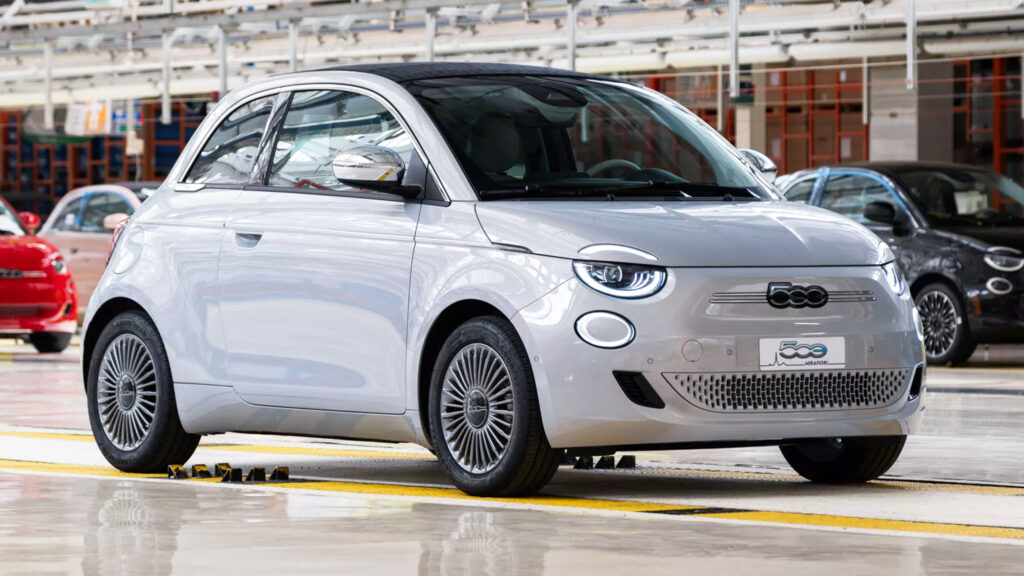
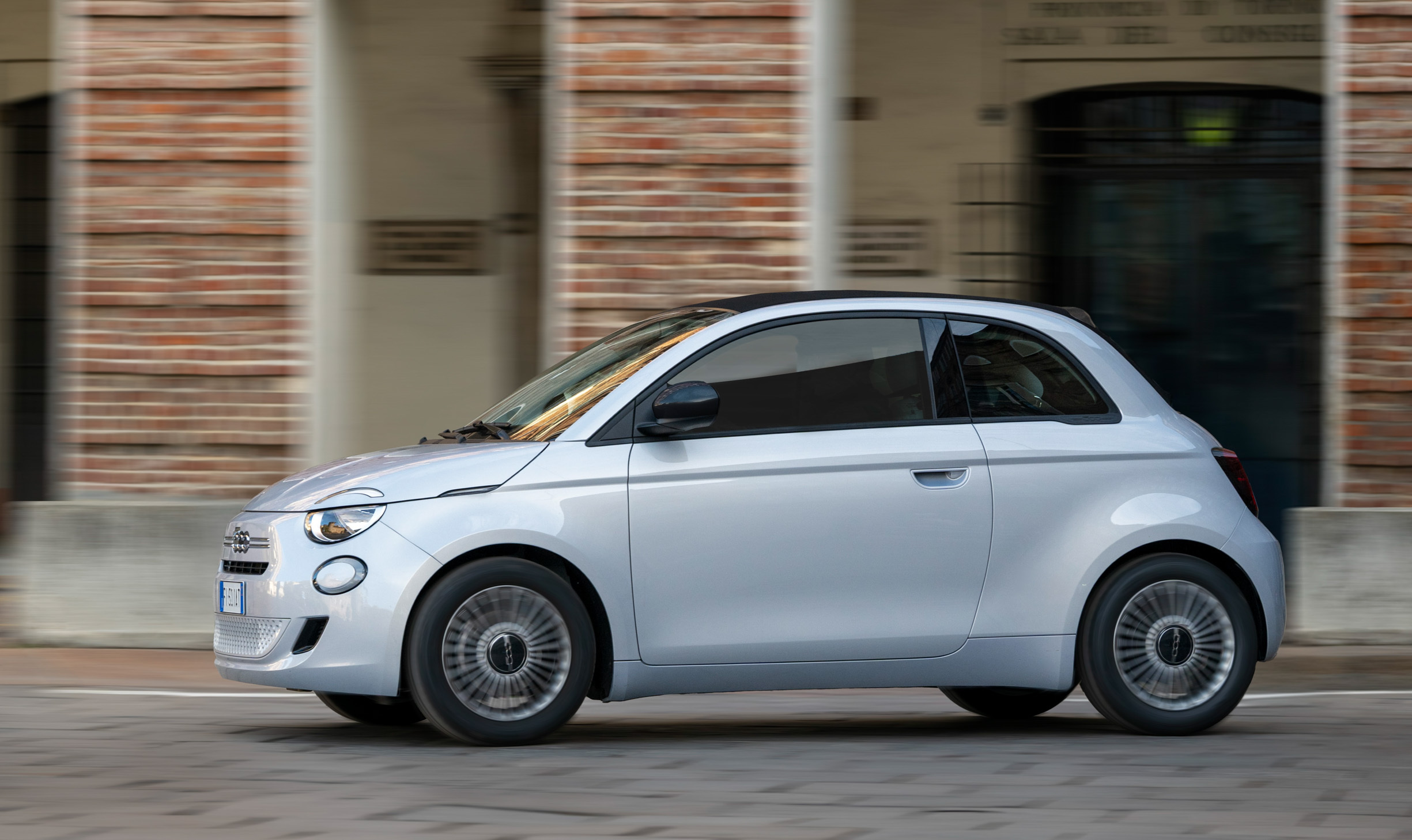
Americans don’t seem particularly fond of new Fiat models, and the numbers make that pretty clear. The Italian brand sold just 155 vehicles in the US during the first quarter of 2025, down 70 percent from a year earlier, or roughly 1.75 cars per day. Across the border in Canada, however, the story takes a different turn.

While Fiat struggles with near nonexistent demand in the US, where 500e sales have plunged 85 percent to just 68 units and 500X deliveries slipped 4 percent to 71, the story looks very different north of the border. In Canada, sales of the tiny EV have surged.

Read: Stellantis Wants To Build Chinese Cars In Canada Instead Of The Jeeps It Promised

During the January–March period, Canadians buyers snapped up 1,287 examples of the electric 500e, the only model Fiat currently sells there. That’s 19 times more than it managed in the US, and a 72 percent jump from the 749 units sold in Q1 2025. It also works out to more than eight times Fiat’s total US sales over the same stretch.

 Fiat Sold Nearly 20 Times More 500e EVs in Canada Than In The US

No doubt contributing to the higher popularity of the 500e in Canada than in America is that it’s much cheaper. In the States, prices for the 500e start at $30,500, which is only about $5,000 less than a new Chevrolet Equinox EV that’s much larger, much more practical, and has more than double the driving range.

In Canada, the Fiat 500e starts at CA$30,290 (US$21,700 at current exchange rates), or effectively CA$25,290 (US$18,100), once a CA$5,000 (US$3,600) incentive from the country’s Electric Vehicle Affordability Program is applied. That makes it the cheapest EV on sale in Canada.

Some Stellantis Models Shine, Others Don’t

 Fiat Sold Nearly 20 Times More 500e EVs in Canada Than In The US

Fiat wasn’t the only brand from under the Stellantis umbrella to post gains in Q1 2026. Sales at Jeep rose 3 percent from 8,363 to 8,631, while Ram spiked 7 percent, hitting 12,463 units. Chrysler recorded the largest increase, with sales jumping 98 percent to 5,073, driven by a 256 percent surge in Pacifica demand.

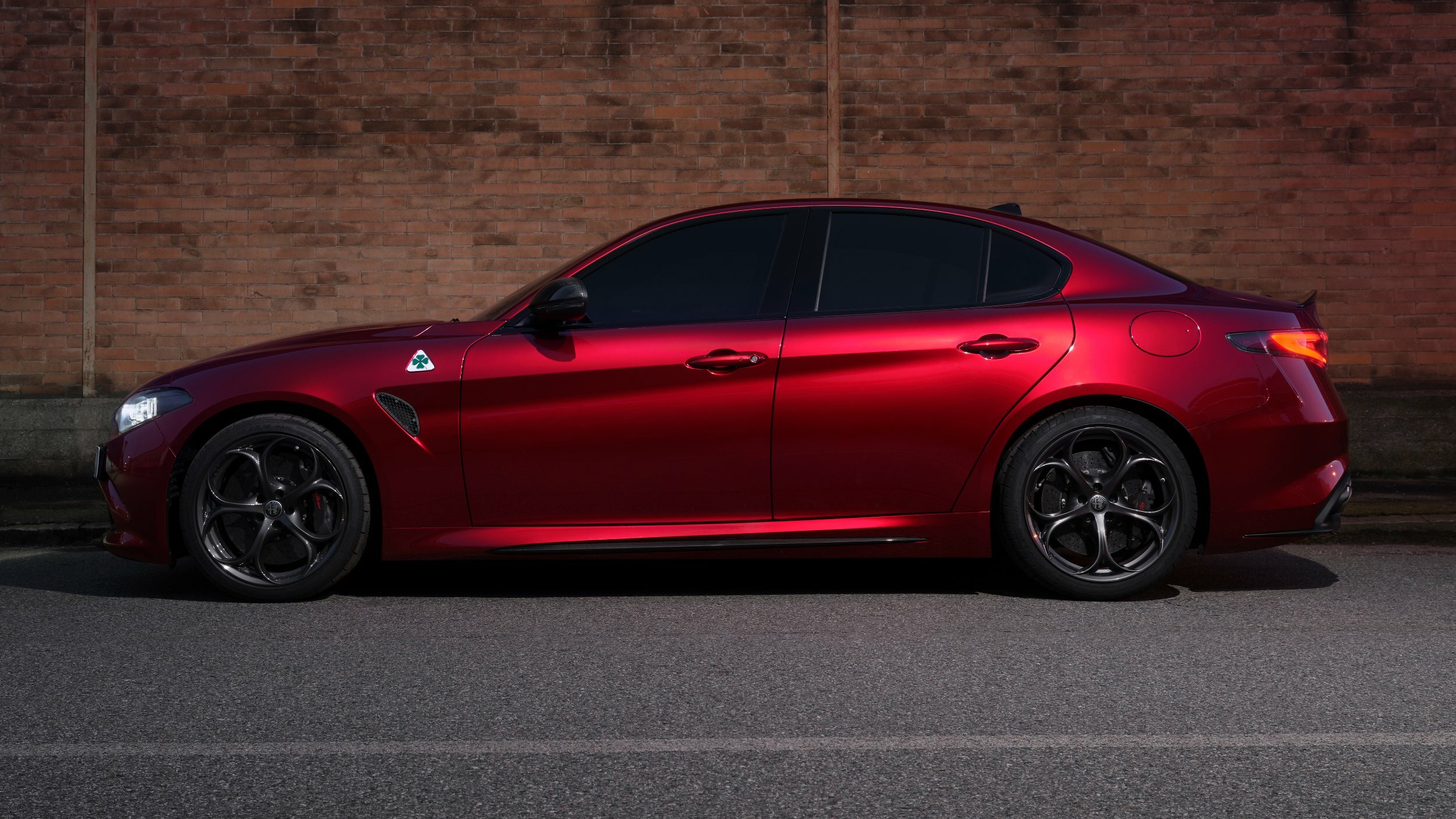
Things weren’t so pretty for Dodge as its sales fell 4 percent to 2,743 units. Additionally, Alfa Romeo plummeted by 51 percent to just 81 units, with a measly 15 Giulias, 46 Stelvios, and 20 Tonales finding new homes.

Stellantis Canada Sales

ModelQ1-26Q1-25Diff.
Compass2,0202,327-13%
Wrangler2,5182,821-11%
Gladiator53428389%
Cherokee126-96%
Cherokee (KM)9590NA
Grand Cherokee2,3342,3410%
Renegade03-100%
Wagoneer00NA
Wagoneer S29205-86%
Grand Wagoneer236357-34%
JEEP BRAND8,6318,3633%
Ram P/U11,5459,90317%
ProMaster Van9181,756-48%
ProMaster City00NA
RAM BRAND12,46311,6597%
300022-100%
Chrysler Grand Caravan1,0651,417-25%
Pacifica4,0081,126256%
CHRYSLER BRAND5,0732,56598%
Hornet37551-93%
Charger (LB)21416827%
Charger051-100%
Challenger123-96%
Caravan10NA
Durango2,4902,05121%
DODGE BRAND2,7432,844-4%
50000NA
500E1,28774972%
500X08-100%
FIAT BRAND1,28775770%
Giulia1521-29%
Stelvio4671-35%
Tonale2074-73%
ALFA BRAND81166-51%
TOTAL FCA CANADA30,27826,35415%
SWIPE

The Gap Between What Tesla Built And What It Sold Just Broke A Company Record

  • Tesla grew Q1 deliveries year over year, but missed analyst expectations.
  • Production outpaced sales, creating the largest inventory gap in years.
  • Shares dropped more than 4 percent after the company’s delivery report.

Tesla’s global sales edged up in the first quarter of 2026, but that did little to calm investors. Despite the increase, the company’s production and delivery figures sent shares down more than 5 percent on Thursday, marking their sharpest drop of the year. The stock is now down about 20 percent in 2026.

Read: Tesla’s Sales Collapsed By Nearly 90% In The Land Of EVs

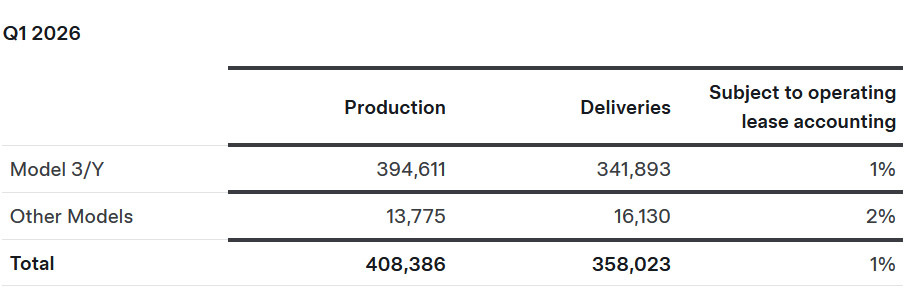
In total, Tesla sold 358,023 vehicles worldwide in Q1 2026. That marks a 6 percent increase over the same quarter last year, when it delivered 336,681 vehicles. The bigger contrast comes against the previous quarter. Deliveries are down 14.3 percent from the 418,227 vehicles handed over in Q4 2025.

US Sales Range Estimates

The company has not released a detailed breakdown for the US, but estimates from Autonews and Cox Automotive put first-quarter deliveries somewhere between 110,000 and 122,196 units. That range points to a decline of roughly 4.6 percent to 15 percent in its home market, depending on where the final number lands.

According to Morningstar analyst Seth Goldstein, there are two key reasons to explain why sales fell.

“Tesla’s first-quarter deliveries reflect the U.S. tax credit expiration as well as FSD ​not yet being approved in the EU,” he told Reuters. “These factors will likely continue to weigh on deliveries until Tesla gets EU approval and until we enter the fourth quarter in the U.S.”
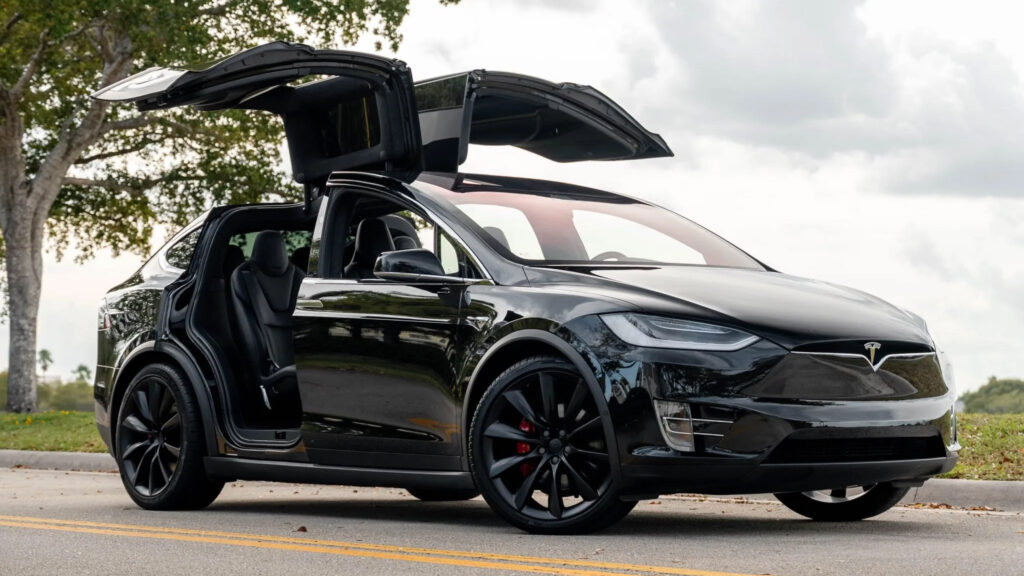
 The Gap Between What Tesla Built And What It Sold Just Broke A Company Record

As deliveries softened compared to the previous quarter, the gap between vehicles produced and sold widened to its largest level in four years. Tesla ended the quarter with 408,386 vehicles built, leaving a surplus of 50,363 units in inventory.

Data cited by Business Insider shows this is the largest gap between production and deliveries the company has recorded. That stands out for a business that has typically kept supply and demand closely aligned. The closest comparison comes from the same period in 2024, when production exceeded deliveries by around 46,500 vehicles.

Lower Than Analyst Expectations

 The Gap Between What Tesla Built And What It Sold Just Broke A Company Record

The carmaker began to temper expectations for the first quarter last week, publishing a delivery consensus based on estimates from more than a dozen analysts. This suggests Tesla would end the quarter with 365,645 deliveries, but it fell short of that. Separate estimates from StreetAccount had projected around 370,000 deliveries.

The analysts also predicted Tesla would deploy 14.4 GWh worth of energy storage, but it actually delivered just 8.8 GWh of energy storage products. That figure is also down from 10.4 GWh in Q1 2025 and 14.2 GWh in Q4 2025.

As we’ve come to expect, the Model 3 and Model Y account for the bulk of the company’s sales, with 341,893 finding new homes. The remaining 16,130 vehicles delivered included a mix of the Cybertruck, Semi and the now-discontinued Model S and Model X.

\\\\\\

The Wheels Of Your $165K Mercedes G-Class EQ Could Fall Off

  • Extreme driving maneuvers could cause the G580’s wheel bolts to loosen.
  • Mercedes-Benz will alert owners to the recall from May 22 in the US.
  • Wheel bolts used for the G580 are the same as those of the lighter G-Class.

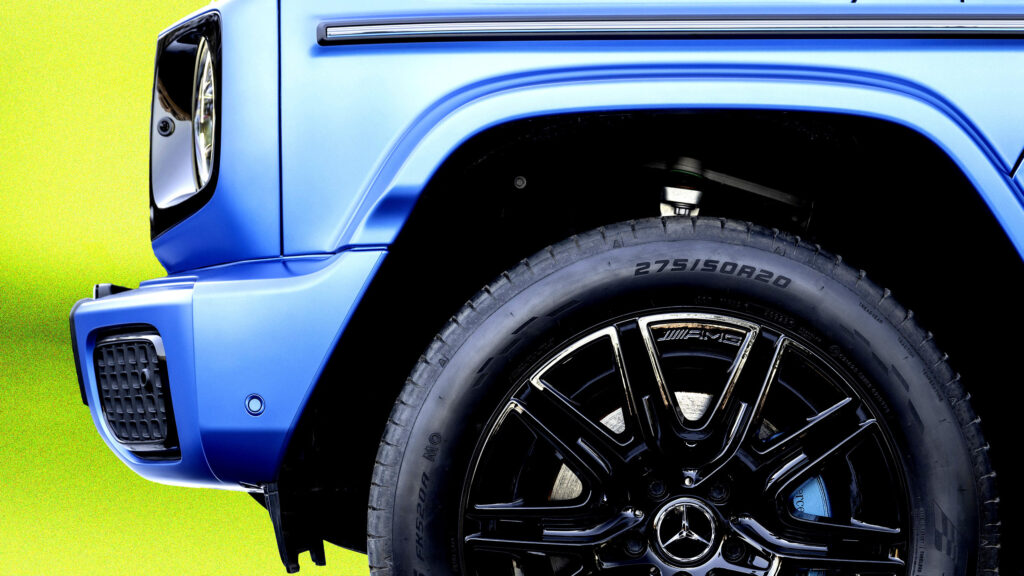
Electric vehicles tend to carry more weight than their combustion-powered counterparts, which makes hardware choices far less forgiving. That’s where things appear to have gone sideways for the Mercedes-Benz G580 with EQ Technology, now facing a recall affecting more than 3,700 units in the US.

According to Mercedes, early versions of the electric G580 were fitted with wheel bolts that weren’t properly engineered for the model’s added mass and higher torque output. Instead, they were carried over from the combustion-powered version. Over time, that mismatch can cause the connection between the wheel and hub to loosen while driving, increasing the risk of a crash.

Read: Mercedes Thinks A $10K Discount Will Get $165K Electric SUVs Moving

A total of 3,734 examples are being recalled, all of which were manufactured between February 26, 2024, to August 19, 2025.

Mercedes says that it became aware of a potential issue during ongoing durability testing of the electric G-Class, , when a wheel bolt loosened despite meeting the required specifications. That prompted a deeper investigation into whether the SUV’s added weight, higher torque output, and demanding driving conditions could gradually compromise the wheel bolt connection.

What Can Go Wrong

\\\\\\\\\

The company ultimately determined that a wheel is most likely to work loose following “extreme driving maneuvers together with a number of repeated wheel changes over the vehicle’s lifetime.” This combination can increase wear on the contact surfaces of the wheel bolts.
Starting May 22, Mercedes will begin notifying owners of the recall. Affected drivers will be asked to visit a dealership, where technicians will replace the original bolts with a redesigned set better suited to the electric model’s demands. The updated design uses a two-piece collared lug bolt, intended to maintain consistent friction at the contact surface and reduce wear during tightening.

Vehicles built from August 26, 2025, onward already feature these revised bolts from the factory.

While the regular G-Class enjoyed its best year of sales ever in 2025, the G580 was described by a Mercedes-Benz executive in mid-2025 as a “complete flop.” This recently prompted Mercedes to offer massive discounts the US, in the hopes of driving up sales of the electric SUV that starts from $164,550, including destination.

\\\\\\\\

The Guy Who Removed Every Button From Your Phone Just Filled A Ferrari With Them

  • Jony Ive leads Luce EV interior design with focus on tactile controls.
  • Ferrari blends digital screens with physical switches for better usability.
  • Touchscreens criticized as impractical for driving by Ive in interview.

The Luce, Ferrari’s first EV, is set to arrive with a refreshingly retro-modern interior that leans as much on philosophy as it does on design. At the center of that vision is Jony Ive, best known for shaping the iPhone and Apple Watch. Interestingly, despite pioneering the everyday use of touchscreen displays, he is now advocating for their restraint in cars.

Tesla played an important role in popularizing large, tablet-like touchscreens in cars, using them to house almost all key vehicle functions. Now, most vehicles on the market have precious few buttons and rely heavily on screens. While this helps brands achieve a modern design aesthetic, we also know car companies love screens because they’re much cheaper to use than physical buttons and controls.

Read: NASA Helped Ferrari Fix The Luce EV’s “Disturbing” Acceleration

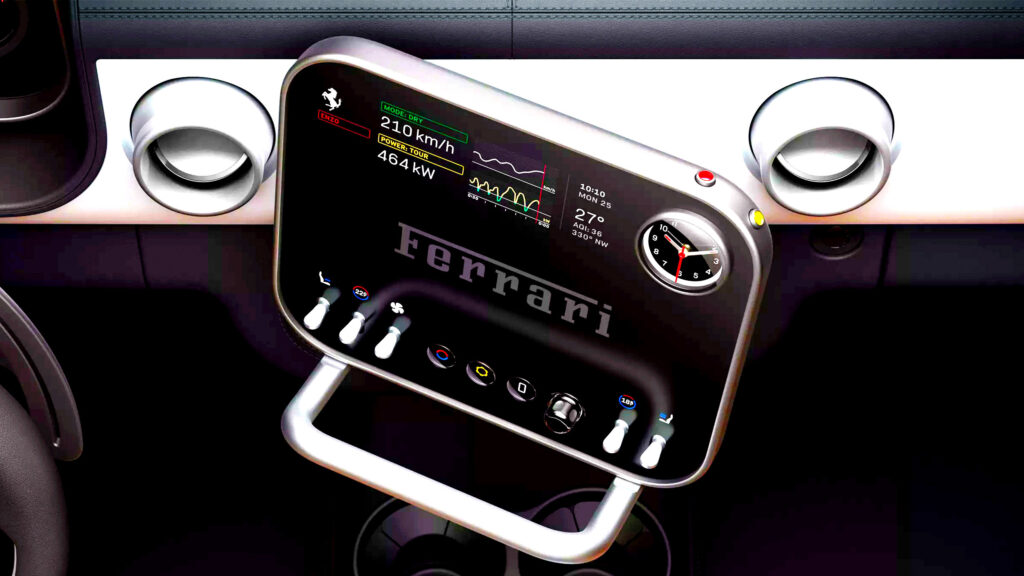
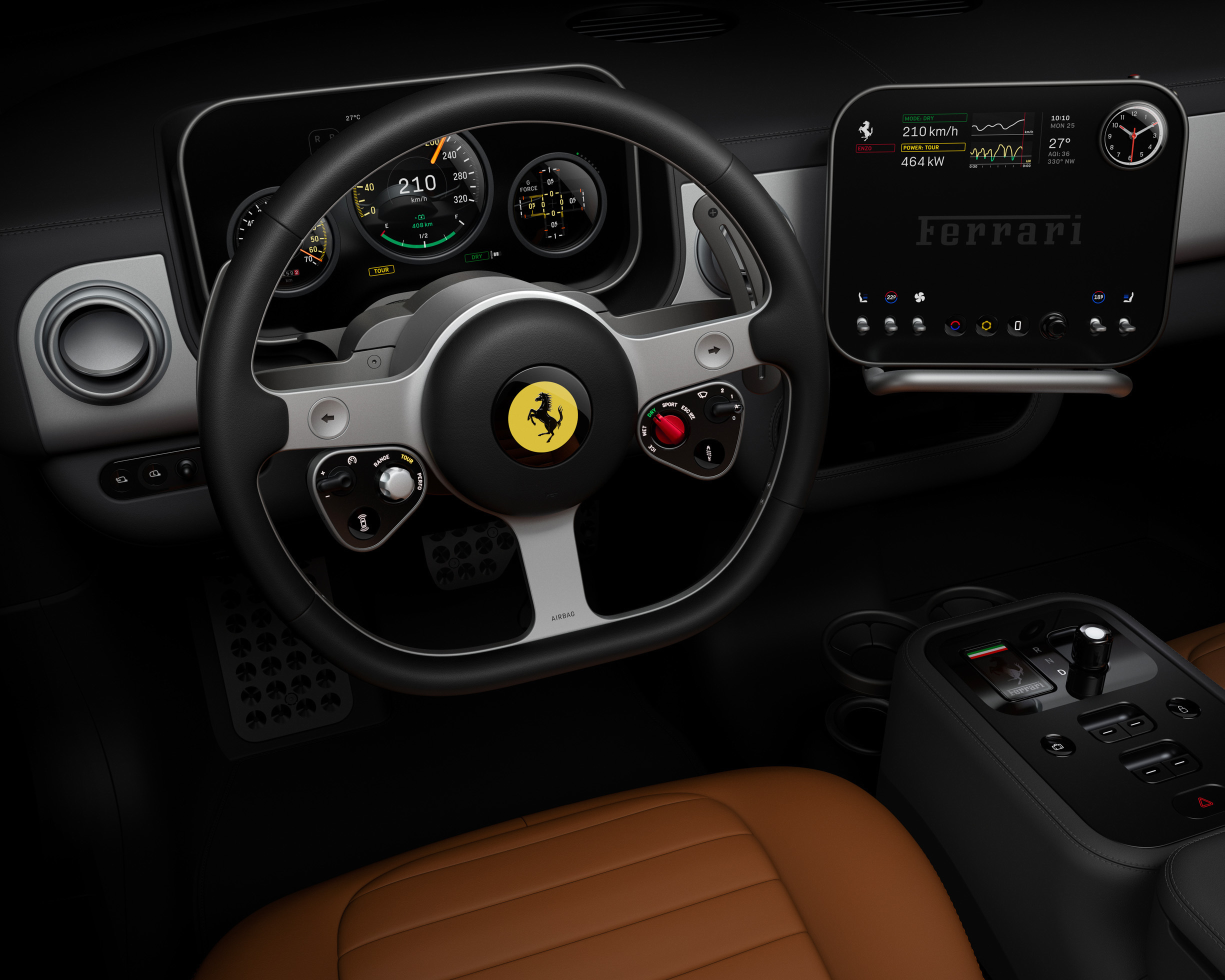
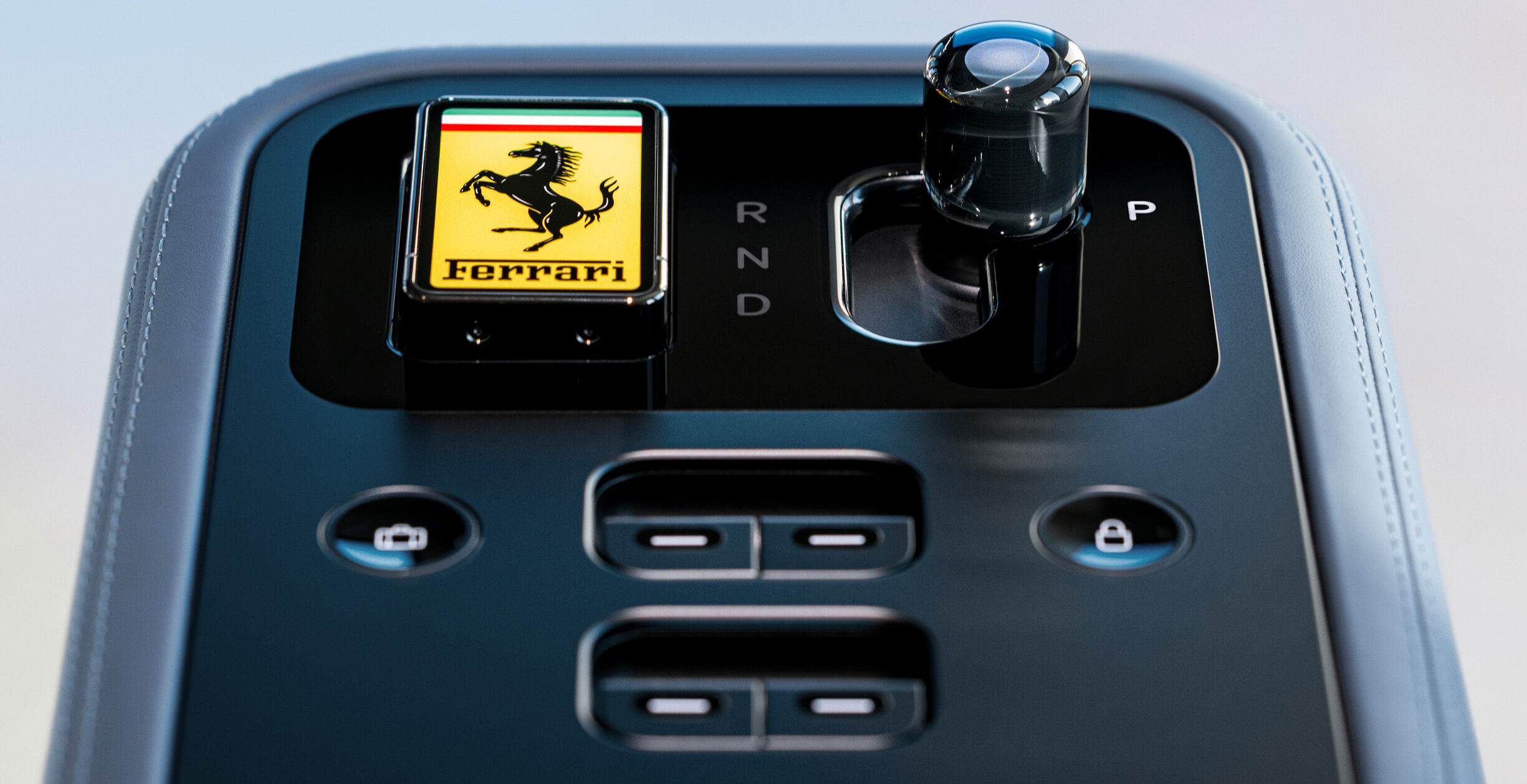
In the Ferrari Luce, Ive is looking to blend the two in a way that hasn’t been seen before. He explained that the goal was to create an interface that blends physical interaction with digital displays, combining the strengths of both rather than relying entirely on one. While there are screens, high-quality physical switches and toggles are used to control them, each with its own click and feel.

Ive Rejects Large Touchscreens

 The Guy Who Removed Every Button From Your Phone Just Filled A Ferrari With Them

“Practically and functionally, a large touchscreen doesn’t work in a car,” Ive told Top Gear during a recent interview. “That’s incontrovertible. I find it easy and lazy. This is a space where there can be an infatuation with style and fashion.”

According to Ive, he and fellow LoveFrom co-founder Marc Newson approached the project by focusing on how each element is made and used, drawing from their experience designing finely crafted objects.

They “treated every single element as if it was a camera or a watch,” noting the team obsessed over even the smallest details, effectively “designing hundreds of products” that come together to feel “singular and coherent.”

\\\\\\\\\

SHProshots

The steering wheel of the Luce has a classic, three-spoke metal design out of 19 CNC-machined parts and includes dials for the Manettino, driving modes, wipers, and turn signals. Positioned behind the wheel is an intricate digital gauge cluster with circular OLED panels from Samsung, with high-end glass positioned in front of them.

Each switch and toggle looks like a little piece of jewelry, adding some theatre to a vehicle that may lack some of the soul of other Ferraris because of its electric powertrain.

 The Guy Who Removed Every Button From Your Phone Just Filled A Ferrari With Them

“To make something simple and intuitive is really difficult,” Ive added. “Everything is founded on being functional. It’s not styled, it’s not garnish, because that’s a distraction and it doesn’t last well. The binnacle and steering wheel are intimately connected, and this is about driving. Everything else augments that experience. The binnacle is about output and the steering wheel is about input. All the controls are physical and mechanical.”

\\\\\\\\\\

BYD Says Five-Minute Charging Adds 310 Miles, BMW Says Read The Fine Print

  • The Denza Z9GT can add 310 miles (500 km) of range in just five minutes.
  • BMW execs claim that pursuing quick charging forces other compromises.
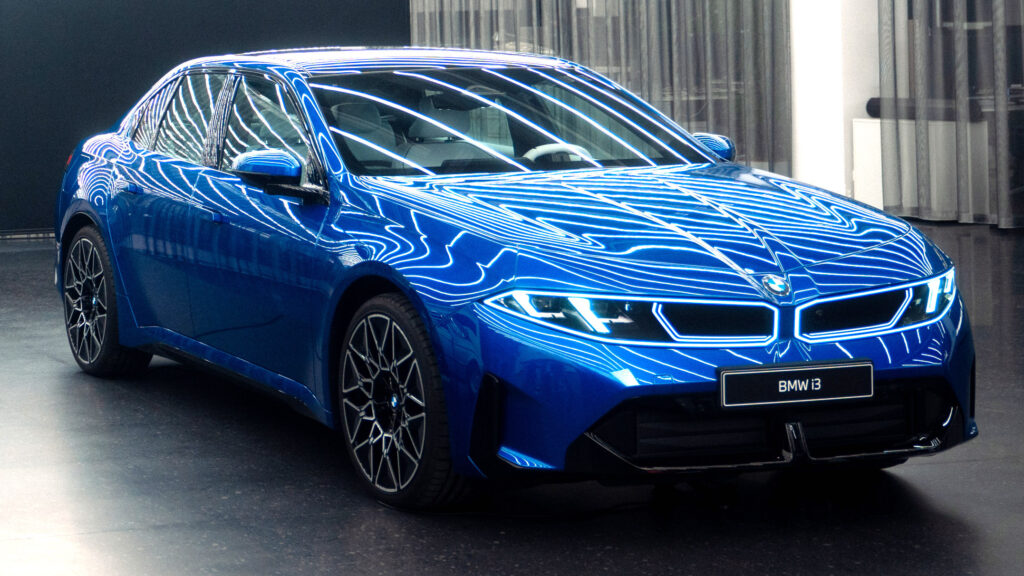
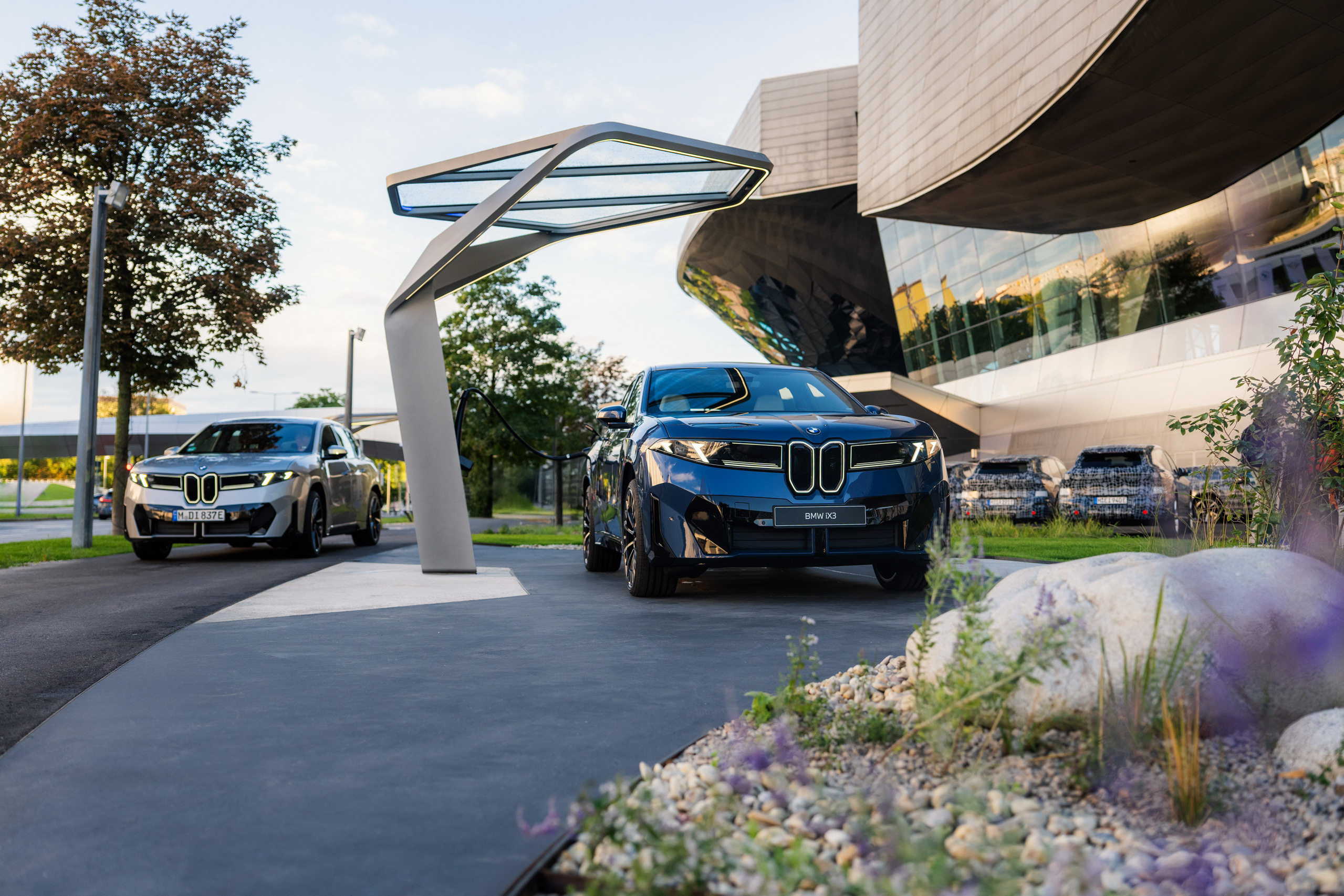
  • The iX3 and i3 are BMW’s fast-charging EVs, supporting 400 kW speeds.

BYD sent a jolt through the EV space with its ultra-fast charging push, though not everyone is ready to buy in. The Chinese automaker unveiled a 1,500 kW flash-charging system in China, promising speeds that edge close to refueling a combustion car. Despite the extraordinary claims, BMW remains unconvinced.

According to BYD, the Denza Z9GT can add roughly 310 miles (500 km) of range in just five minutes, thanks to its 1,500 kW charging technology and the second-generation Blade Battery.

Read: BYD’s New EV Chargers Are So Fast They’re Arranged Like Gas Station Pumps

The system also relies on megawatt-level charging hardware and extremely high current delivery to reach those peak rates. It all sounds pretty incredible, but BMW battery production boss Markus Fallböhmer says pursuing charging speeds like this has compromises.

“You always have to be careful with those kinds of announcements,” he told Car Sales. “It is possible to optimize one single performance indicator, but you have to make compromises on other sides. We could also increase our charging speed, but then you have to reduce other important factors of a battery. It is a blanket – if you pull it at one side.”

BMW’s New EVs Are No Charging Slouches

\\\\\\

The second-generation iX3 and the new i3 are the quickest-charging BMWs released to date, supporting peak 400 kW speeds. This is quick enough to top up the i3 with 400 km of range in just 10 minutes. BMW says it can guarantee “quality and safety” at these charging speeds, and appeared to question whether BYD can do the same.

Also: BMW Showed Just Enough Of The i3 Touring For Someone Else To Finish The Job

BMW executives also indicated that pushing beyond these speeds would bring trade-offs in battery durability, range, and affordability, which they see as unnecessary for most real-world use.

 BYD Says Five-Minute Charging Adds 310 Miles, BMW Says Read The Fine Print

“We look to decrease charging time more and more, but you have to look at range, durability, reliability,” the head of BMW’s Neue Klasse models, Mike Reichelt, added. “All of these facts, we guarantee. We look at the speed of the Chinese market… but on the other side, we guarantee quality and safety. That is a topic that we do not [negotiate] with anyone.”

The race to improve charging times in the EV world is much the same as we’ve seen among smartphone manufacturers looking to uprate charging speeds of their devices, with the Chinese often leading the charge. Boost charging speeds too much, and batteries can get hot, including the risk of thermal management issues, which is clearly something BMW would like to avoid.

\\\\\\\\\\

Lucid Is Blaming Someone Else For The Gravity’s Second Recall In Four Months

  • Lucid’s second Gravity recall stems from a supplier change no one approved.
  • A seatbelt anchor weld falls short of federal safety requirements in most SUVs.
  • Affected owners will have their seats repaired or replaced at no charge.

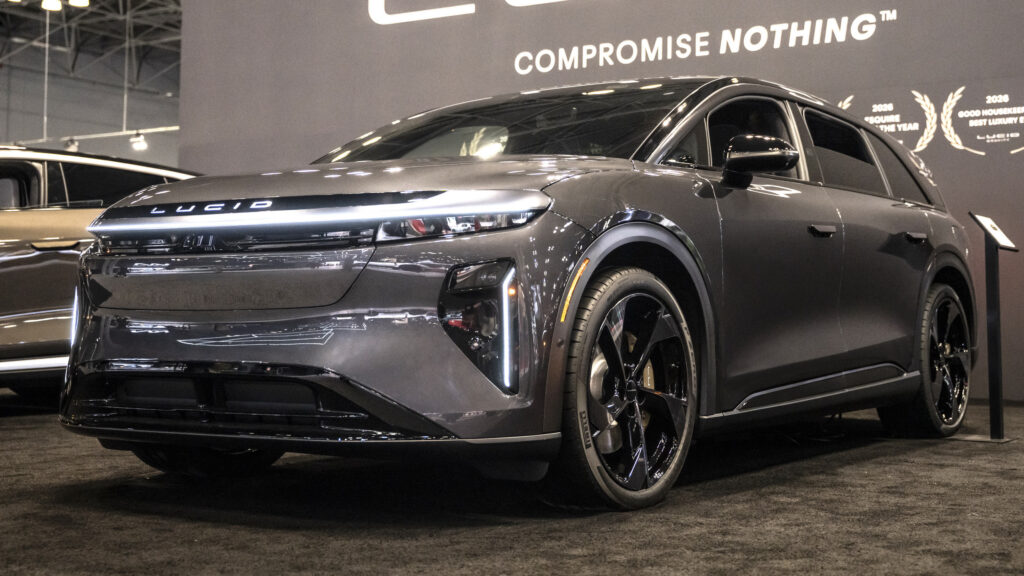
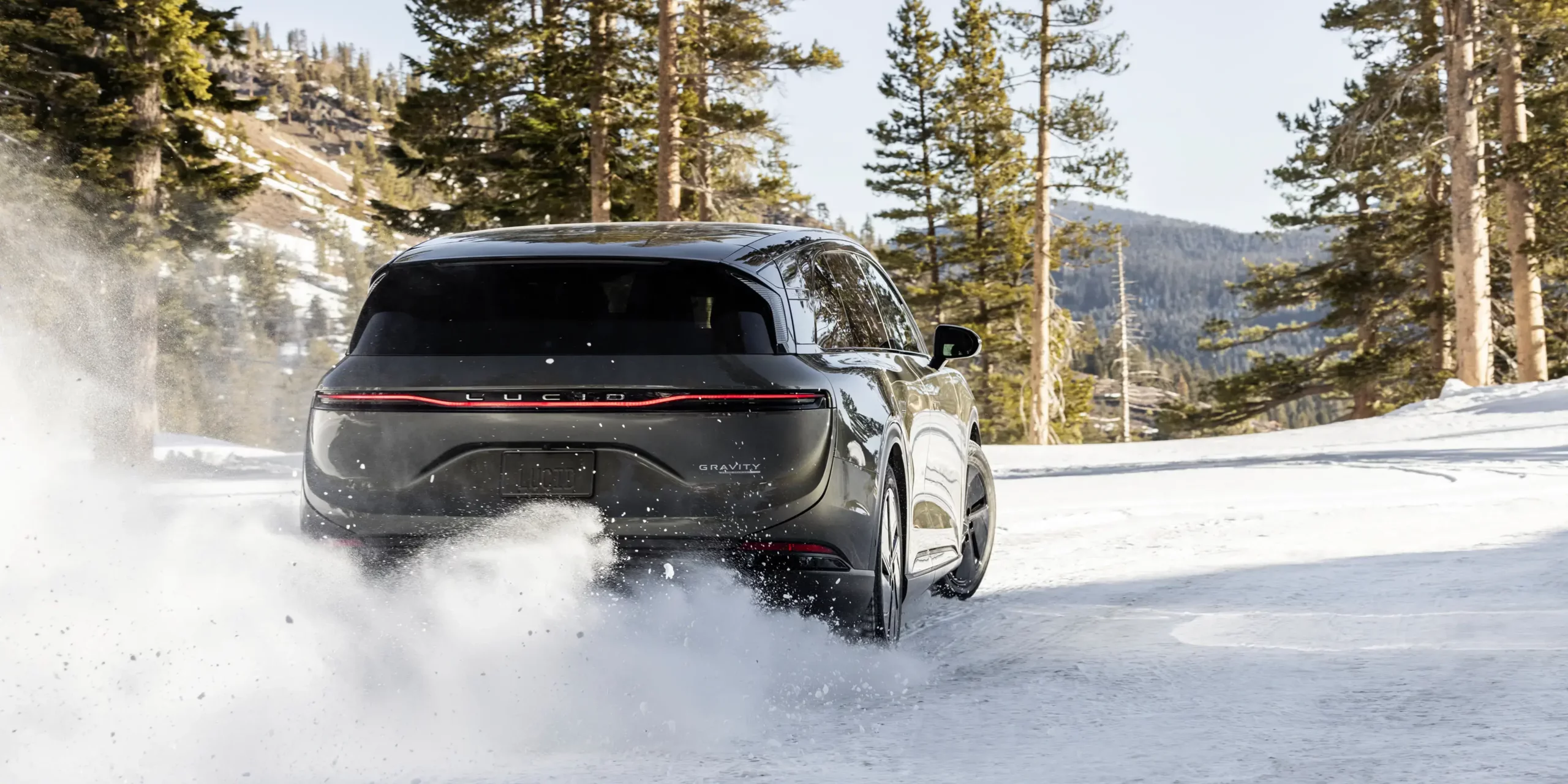
Just a few months after the Lucid Gravity was recalled over seat covers that could prevent the airbag from functioning properly, the electric luxury SUV has been recalled yet again. This time, it’s due to a potential defect in the second-row seatbelt anchors.

The EV maker says that during internal tests for another issue, it discovered the outboard lap belt anchor bracket weld in the second row is shorter than it should be and not positioned correctly. The reason? Lucid says seat manufacturer Camaco made a change to the manufacturing process without notifying the company or obtaining its approval.

Read: Wrong Seat Covers Could Stop This EV’s Airbags From Saving You

Vehicles with an insufficiently welded lap belt anchor fail to comply with Federal Motor Vehicle Safety Standards and may increase the risk of injury in a crash. Unlike December’s recall, which impacted just 66 vehicles, this one is much more widespread.

In fact, the recall involves 4,476 Lucid Gravity models built from December 2, 2024, to February 3, 2026, and listed as 2025-2026 model year vehicles. Of these, 97 percent are estimated to have the issue.

What Happens Next?

 Lucid Is Blaming Someone Else For The Gravity’s Second Recall In Four Months

This recall comes shortly after Lucid issued a brief stop-sale for the Gravity earlier this year as it ran tests to determine whether the seat belts could meet safety standards with or without a reinforcing bracket. Even with a bracket, they failed to meet load requirements, prompting Lucid to ensure the components sourced from Camaco meet its standards.

Lucid will start informing its owners of the recall on May 22. Dealers will inspect impacted vehicles, and if a non-conforming weld is found, it will be repaired with either a reinforcing bracket and adhesive or, if necessary, the entire seat will be replaced free of charge.

\\\\\\

Xiaomi Brings Its 1,000HP YU7 GT To Porsche’s Backyard Naked And Unafraid

  • The flagship YU7 GT will have two electric motors, providing blistering performance.
  • New spy shots show that Xiaomi has upgraded parts of the electric SUV’s exterior.
  • With camouflage stripped away from this prototype, a reveal may be coming soon.

Not satisfied with only building an all-electric sedan with the performance to match multi-million-dollar hypercars, Chinese tech giant Xiaomi is finalizing development of a high-performance, GT-branded version of the YU7 SUV. It has the potential to lay the smackdown on Porsche.

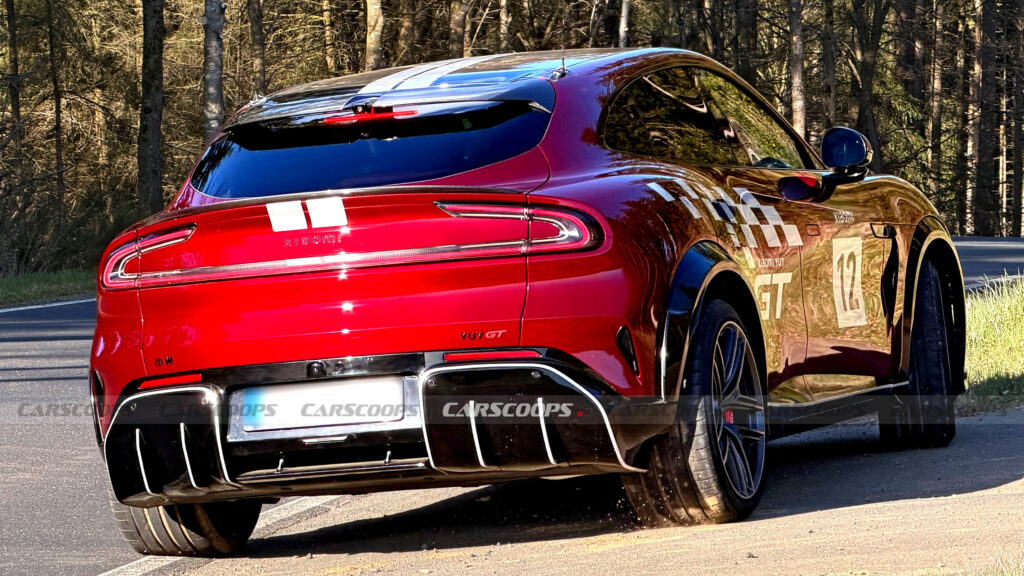
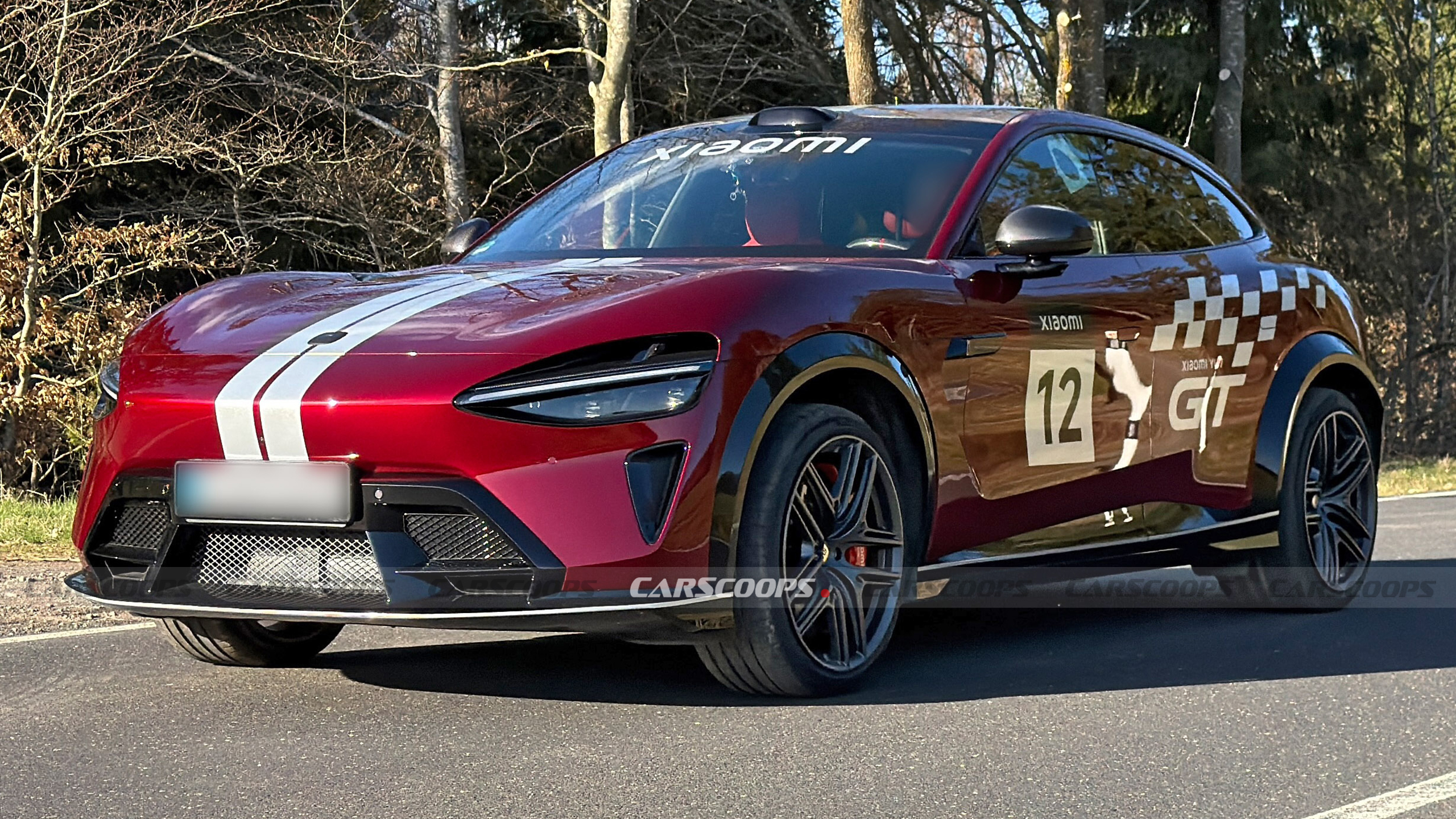
We’ve seen Xiaomi testing the YU7 GT in the past, but this is our first time seeing it without any camouflage. These photos were snapped as Xiaomi conducted an official photoshoot for the SUV near the Nurburgring. It looks just as extreme as the SU7 Ultra and appears ready to conquer race tracks and drag strips around the world.

Read: This Ferrari SUV Lookalike From China Makes More Power Than The Real One

A host of design changes have been made to the SUV, ensuring it stands out from the regular model. The alterations start at the front-end, where Xiaomi has redesigned the lower front grille of the SUV and added a new splitter to it.

Beefed Up And Aggressive

\\\\\

Baldauf

We can also see the company’s designers have crafted dramatic flared fenders for the YU7 GT, allowing for the fitment of wider wheels and tires. Hiding behind these new wheels are enlarged brakes, including absolutely gargantuan red calipers. Plenty of changes have also been made to the rear, including a more aggressive diffuser and a different bumper.

This particular prototype also features a silver, motorsport-style livery, complete with racing stripes that run the length of the body, adding to the track-ready impression.

Power To Match

 Xiaomi Brings Its 1,000HP YU7 GT To Porsche’s Backyard Naked And Unafraid
Baldauf

Recent Chinese filings have revealed how much performance the new EV will pack. Whereas the SU7 Ultra uses three high-powered electric motors to deliver 1,548 hp and 1,305 lb-ft (1,770 Nm) of torque, this model doesn’t use Ultra branding and isn’t quite as extreme. With that being said, it will still deliver around 1,000 hp from its twin-motor setup, enough to reach an 186 mph (300 km/h) top speed.

Testing at the Nürburgring suggests Xiaomi isn’t just chasing headlines, it’s putting real effort into serious on-track performance. Whether that translates into genuine driving excitement, though, is still an open question.

Prices have yet to be announced, but rumors point towards it costing between 450,000 yuan and 500,000 yuan, or between $65,000 and $73,000.

\\\\\

Baldauf

Honda Isn’t Done With The 0 Series, Just Done With Selling One Here

  • Honda will build the 0 α SUV in India to take advantage of lower production costs.
  • The smaller 0 α is distinct from the 0 SUV that was cancelled for the U.S. market.
  • Japan is confirmed as an export destination, though other markets remain open.

It’s been a couple of weeks since Honda pulled the plug on plans to build the 0 Saloon, 0 SUV, and Acura RSX EVs in the US. However, not all of that investment is going to waste, as the smaller 0 α SUV has now been confirmed for production in India, with exports planned for other markets as well.

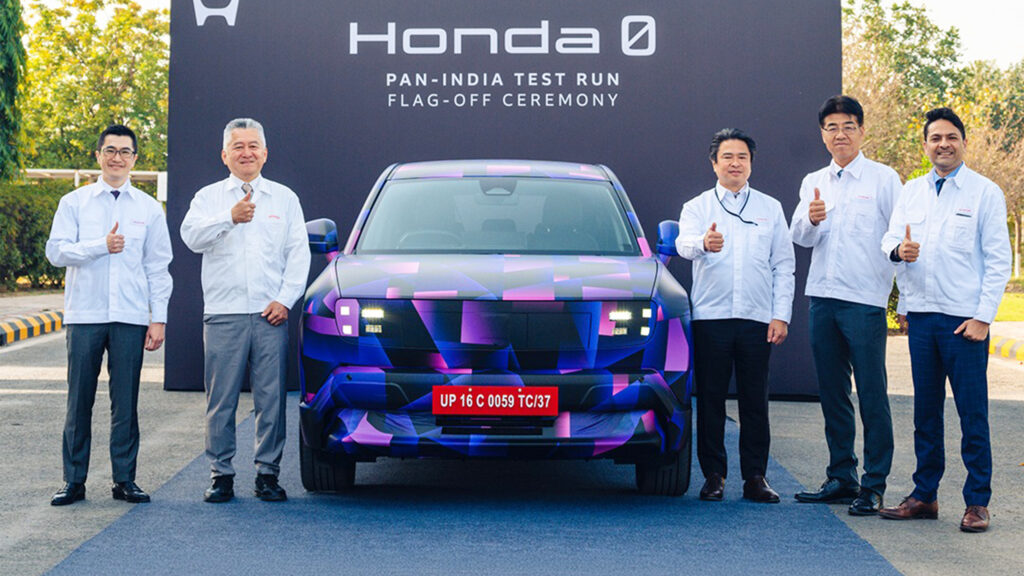
Last month, Honda began testing the all-electric SUV in India for the first time, putting it through a wide range of driving conditions. Engineers are also evaluating performance in extreme heat and monsoon environments, alongside testing its charging capabilities.

Read: New Honda 0 SUV Gets Real With Production Design

Deciding on Indian production is an obvious move for Honda. Having already poured billions of dollars investing too heavily in EVs, Honda will be eager to make the most of lower labor costs in India. It’s revealed that not only will the 0 α SUV be built and sold in India, but it will also be exported to its home market of Japan, among other “key markets”, though Honda won’t say which ones at this stage.

Deciding on Indian production is a logical move. After pouring billions into EV development with limited return, Honda will be keen to capitalize on lower labor costs. The plan now is for the 0 α SUV to be built and sold in India, while also being exported to Japan and other “key markets”, though the company has yet to specify which ones.

This Isn’t The American Model

\\\\\\

The Honda 0 α SUV was unveiled as a concept in late 2025 and looks almost identical to the 0 SUV that had been destined for the US. However, the 0 α is smaller and designed to be more affordable. In a world where lots of SUVs look the same, the 0 α stands apart, largely due to its unusually tall rear end. Whether buyers will embrace the design remains an open question.

Developed under Honda’s new ‘Thin, Light, and Wise,’ approach, the Honda 0 α SUV will hit the market with a thin and lightweight battery pack, although capacity details are not yet known. Honda has also committed to mounting the batteries and power units as low as possible to reduce the center of gravity.

 Honda Isn’t Done With The 0 Series, Just Done With Selling One Here

Honda says the new 0 α SUV will be introduced during the 2026-2027 financial year, likely launching first in India and Japan before expanding to other regions.

According to Honda, “The start of pan-India Public Road Verification testing is a key milestone in our electrification journey. India has unique driving and climate conditions, and it is important for us to test our electric vehicle thoroughly in real-world environments. This programme reflects Honda’s global engineering strengths combined with a strong focus on local customer needs, as we prepare to introduce an electric SUV that offers reliability, comfort, and ease of use.”

 Honda Isn’t Done With The 0 Series, Just Done With Selling One Here

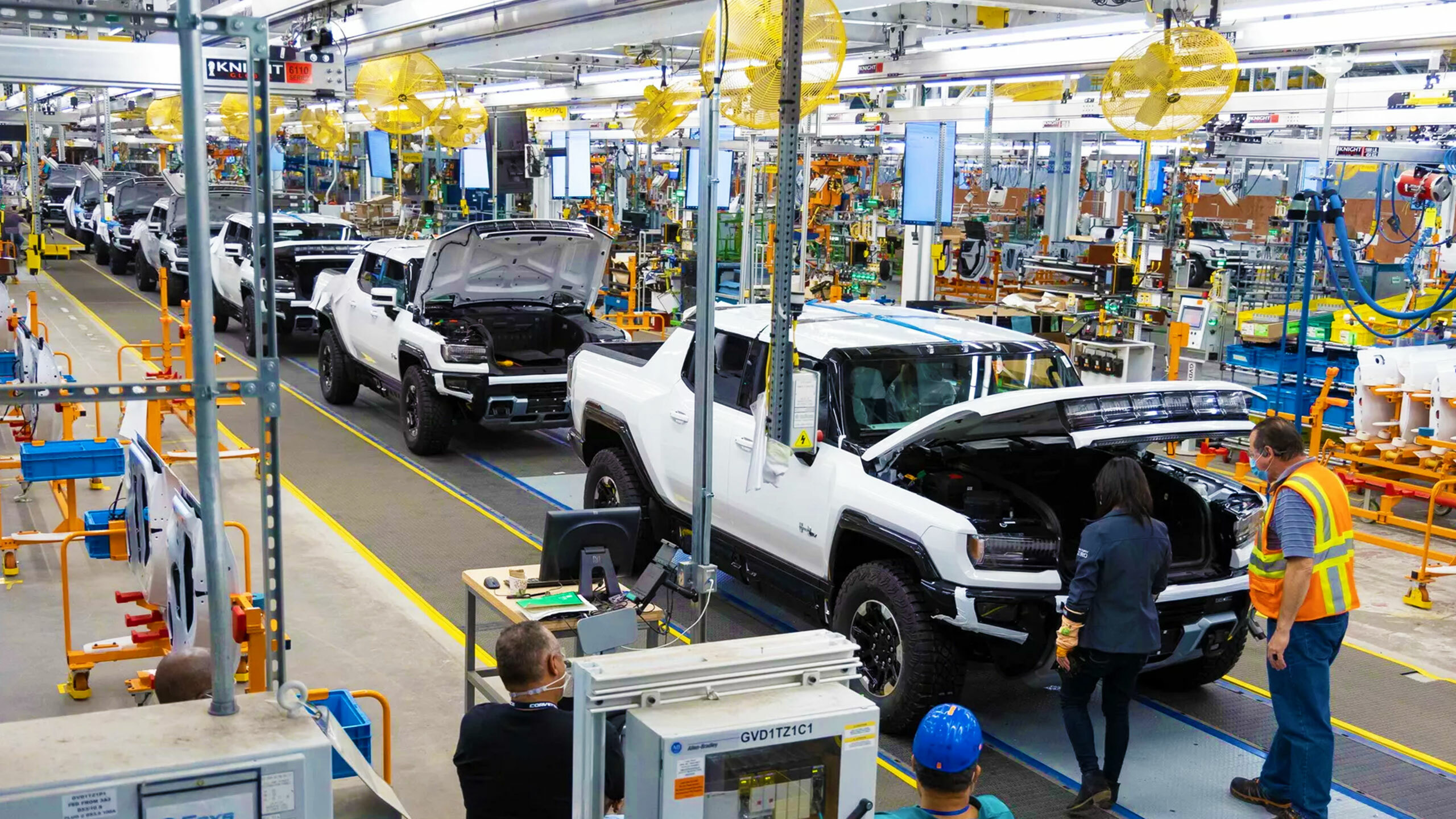
GM Pauses Production Of Two Hyped-Up EVs, Sending 1,300 Workers Home

  • GM’s Factory Zero will be idled from March 16 to April 13.
  • Shutdown affects 1,300 workers, who face temporary layoff.
  • Hummer EV sales dropped nearly 50 percent in Q4 2025.

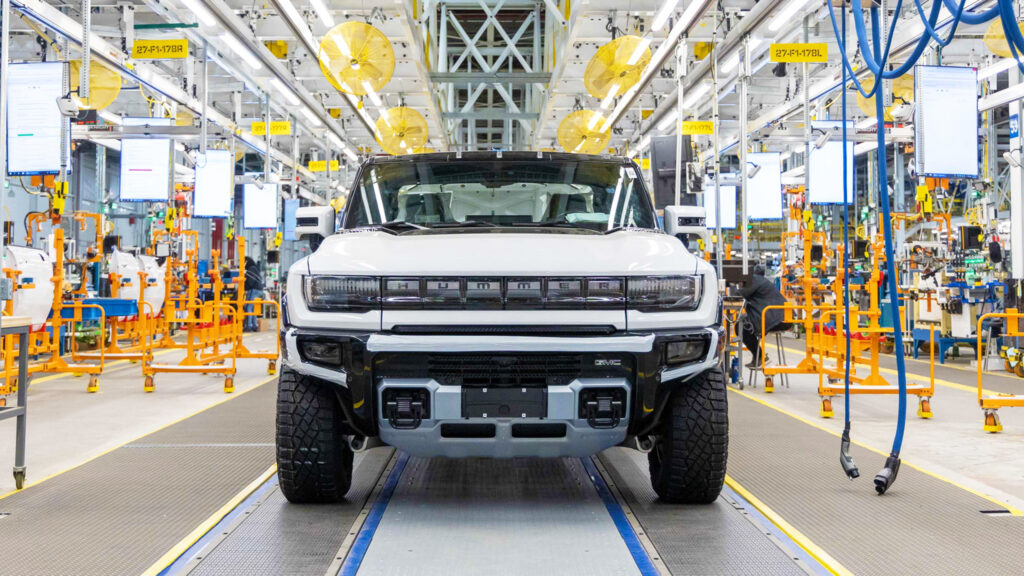
Demand for GM’s electric vehicles in the US is so poor that the carmaker has revealed Factory Zero in Detroit, its all-electric vehicle hub, will be idled until April 13. Production at the site has already been paused since March 16, so it’ll be offline for almost an entire month.

Due to the production pause, roughly 1,300 workers will be temporarily laid off by the car manufacturer. This news is just the latest blow for those who work at the site, as output at Factory Zero was already cut by almost 50 percent in January when it moved to a single-shift operation. This prompted GM to put 1,200 workers on indefinite layoff.

Read: GM Is Boosting Production Of Its Biggest Gas Guzzlers, Fuel Prices Be Damned

The plant handles production of models including the Chevrolet Silverado EV and Hummer EV, but sales have slowed since the US government axed the $7,500 federal EV tax credit.

In the last quarter of 2025, Chevy sold 1,896 Silverado EVs, down 12.9 percent from the 2,176 in 2024. Interestingly, total 2025 sales reached 11,275, which was 51.8 percent higher than 2024.

GMC Hummer EV Collapse

 GM Pauses Production Of Two Hyped-Up EVs, Sending 1,300 Workers Home

The GMC Hummer EV is starting to feel the effects of shifting government policy. Sales dropped 49.8 percent in the final quarter of 2025, falling from 5,091 units to 2,555. That slide carried straight into 2026, with just 1,653 units moved in Q1, down 52.5 percent from the 3,479 sold a year earlier.

The GMC Sierra EV, meanwhile, managed to buck the trend. It posted 1,288 deliveries in Q1 2026, narrowly beating the 1,249 units from the same period in 2025. In a tough stretch for Factory Zero, that modest gain stands out as one of the few positives.

Like some of the competition, GM is pulling back from its EV commitments, confirming it will take $7.6 billion in charges for scaling back its EV spending. While GM boss Mary Barra still refers to EVs as the company’s “end game,” The General is making changes in the meantime. This includes working on several plug-in hybrid models, details of which still remain thin on the ground.

GM also recently announced it’s boosting production of some of its biggest gas guzzlers, namely the Chevrolet Silverado 2500 and 3500, in addition to the GMC Sierra 2500 and 3500.

 GM Pauses Production Of Two Hyped-Up EVs, Sending 1,300 Workers Home

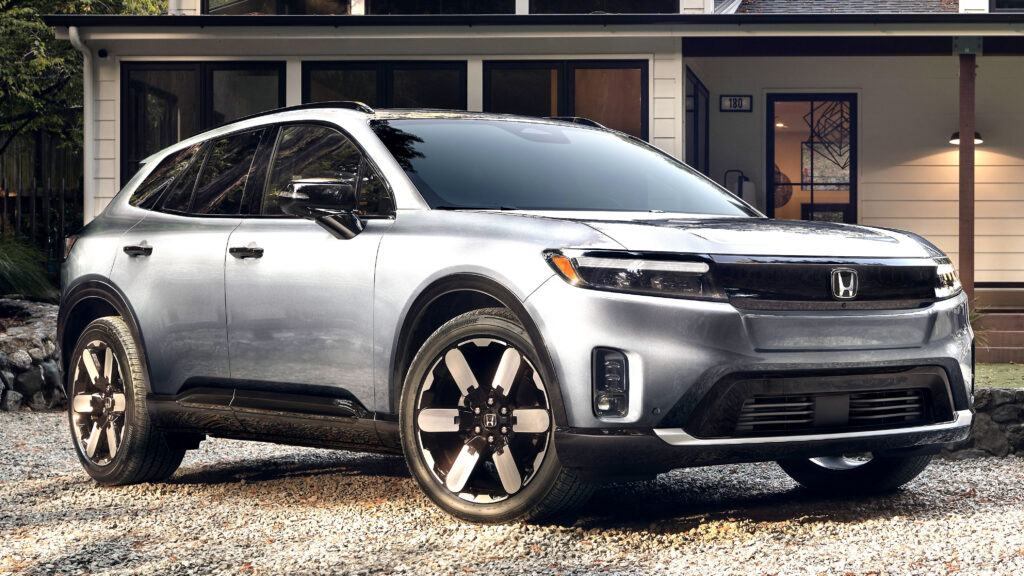
Honda Cuts $7,500 Off Every Prologue, Including Cars Already On Dealer Lots

  • The discount offsets the lost federal EV tax credit, dollar for dollar.
  • Price reductions apply to existing dealer inventory, not just new builds.
  • The base single-motor EX now starts at $41,395 including destination.

The Prologue hasn’t been the success that Honda would have liked, and pricing has been a big part of the problem. It was already on the expensive side, and the loss of the $7,500 federal EV tax credit under the Trump administration only made things harder to justify. Honda appears to have taken the hint.

For 2026, it’s cutting $7,500 across the entire Prologue lineup, effectively replacing the missing incentive and bringing the model within reach of a much wider pool of buyers.

The 2026 Prologue range goes unchanged, meaning it continues to be offered in single-motor and dual-motor EX, Touring, and Elite configurations. Importantly, the price cuts won’t just apply to newly-built models from April 1, but also 2026 models already in Honda’s inventory.

Read: That Strange Clicking Noise In Honda’s Prologue Is Now A Lawsuit

Sitting at the base of the range is the single-motor EX, now priced at $41,395, including a $1,495 destination charge, down from $48,895 for the 2025 model. Positioned above this model is the EX dual motor, now starting at $43,495. The 2026 Prologue continues to be sold in Touring guises, starting at $46,695 for the single-motor and $48,495 for the dual-motor.

2026 Honda Prologue
TrimDriveMSRPMSRP w/Dest.EPA Range
EXSingle Motor, 2WD$39,900$41,395308 miles
EXDual Motor, AWD$42,000$43,495294 miles
TouringSingle Motor, 2WD$44,200$46,695308 miles
TouringDual Motor, AWD$47,000$48,495294 miles
EliteDual Motor, AWD$50,400$51,895283 miles
SWIPE

Whereas the front-wheel drive models have 220 hp, 243 lb-ft (329 Nm) of torque, and an EPA range of 308 miles (496 km), the dual-motor versions deliver 300 hp and 355 lb-ft (481 Nm) of torque. The added power comes at the cost of range, which is reduced to 294 miles (473 km) in the dual-motor EX and Touring.

Continue to sit at the top of the range is the dual-motor Elite with a reduced range of 283 miles (455 km). For 2026, it starts at $51,895, including destination, down from $59,395.

The long-term future of the Honda Prologue remains unclear. Following the removal of the federal EV tax credit, sales have plunged through the early part of this year, prompting Honda to cut production in half. This also prompted recent speculation that the Prologue will be killed after production ends in December, with no successor on the agenda. However, Honda has denied these reports.

\\\\\\\\

Michelin’s New EV Tire Promises 10% More Range, And ICE Drivers Get Something Too

  • Michelin has launched new EV-focused tires, including a special Pilot Sport.
  • Despite boosting efficiency, the new tires also provide improved performance.
  • Both use new elastomers and resins to balance resistance and wet performance.

In the world of electric cars, efficiency is one of the most important priorities. The further you can drive, the less charging is required, so it’s hardly a surprise that so many carmakers are fixated on improving aerodynamics, ensuring their EVs can slice through the air with as little resistance as possible. Tires also play a crucial role in efficiency, and Michelin looks to have made a major step forward with EV-specific tires.

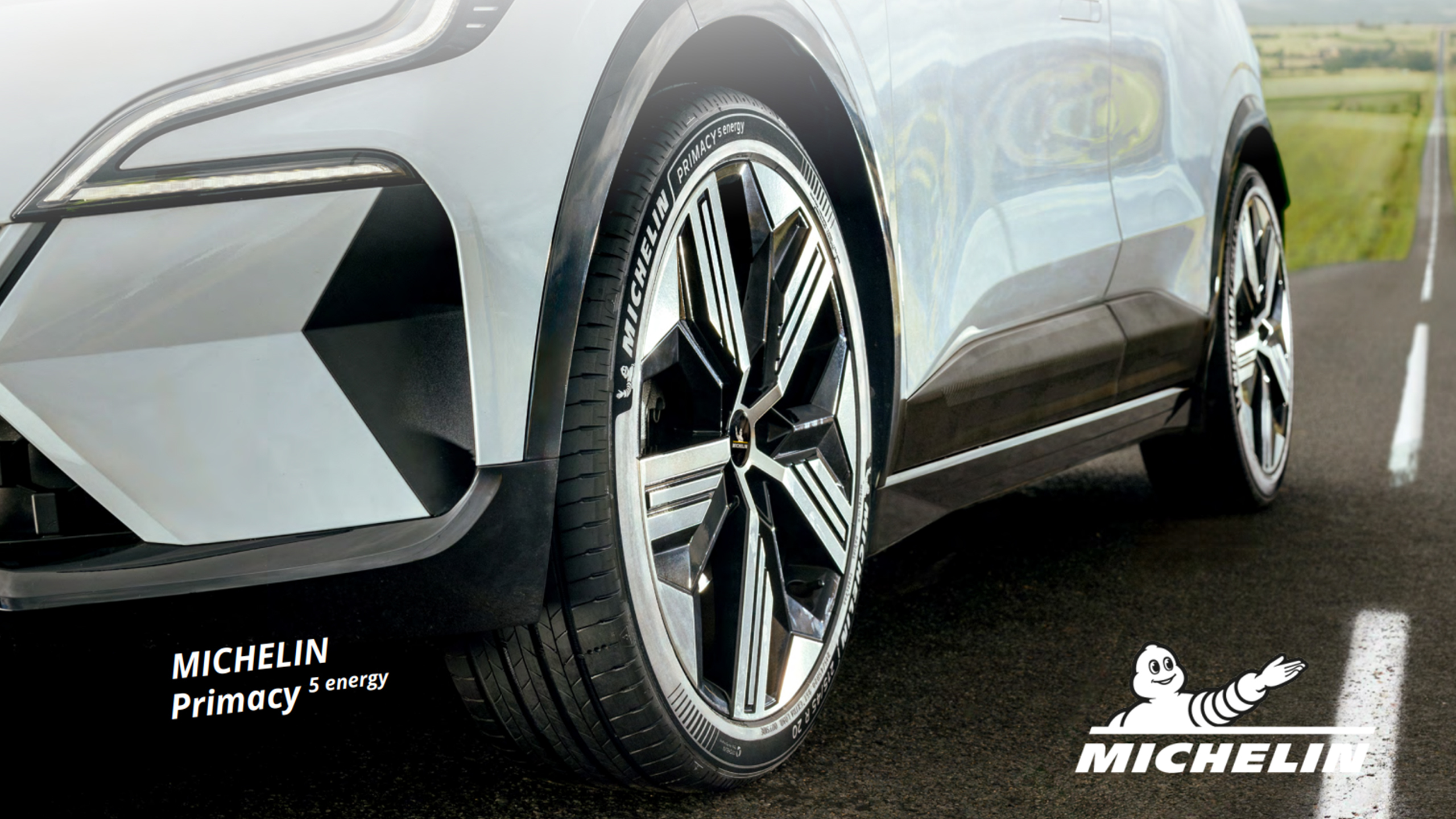
The French company has just unveiled its new Michelin Primacy 5 Energy and Michelin Pilot Sport 5 Energy, two summer tires that will be available in a number of different sizes, making them ideal for a broad spectrum of EVs.

Read: AMG Hyper EV Circles The Globe In Seven Days And Smashes 25 Records

Those fixated on efficiency will be most interested in the Primacy 5 Energy. It is rated A for rolling resistance and, when fitted to an EV, is said to boost the range by up to 10 percent, adding up to 43 miles (70 km) of driving range. On an ICE model, it can improve fuel efficiency by as much as 6 percent, or roughly 1.3 mpg (0.3 l/100 km).

When tested for longevity on a VW ID.3, the tire outperformed the Bridgestone Turanza 6, Continental PremiumContact 7, Goodyear Efficient Grip Performance 2, and Pirelli Cinturato P7C3.

Michelin hasn’t sacrificed performance, either. Compared to its predecessor, braking distances are improved by up to 8 percent, both when fresh off the shelf and when it has just 2 mm of tread remaining. Aiding in the tire’s improved performance are functionalized elastomers, new resins, and an improved tread architecture. The tire is available in 33 sizes from 16 to 19 inches.

An Efficient Pilot Sport

 Michelin’s New EV Tire Promises 10% More Range, And ICE Drivers Get Something Too

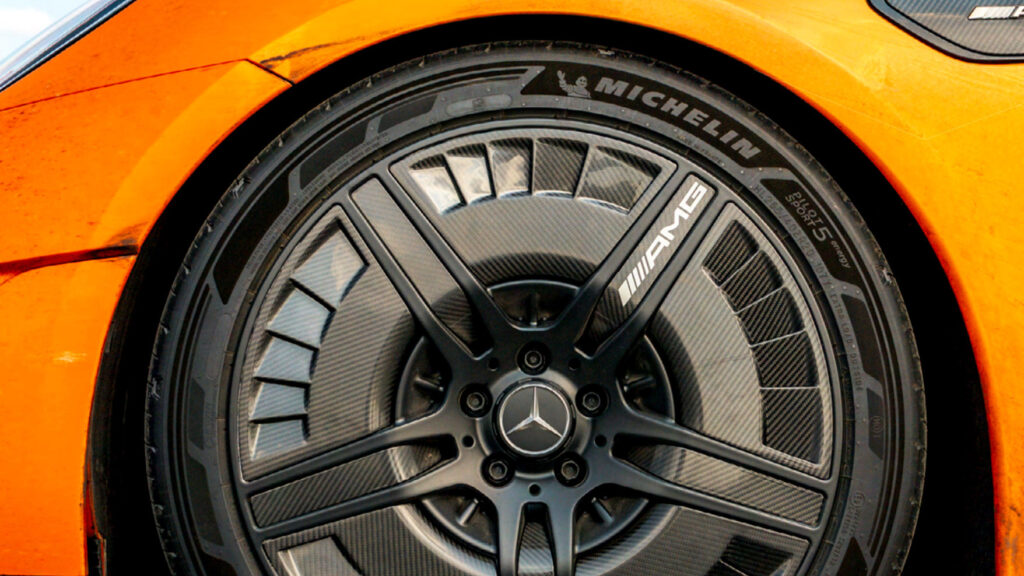
Car owners looking for a more performance-focused tire, yet one that is still efficient, would be wise to check out the new Pilot Sport 5 Energy. It includes a new Energy Passive compound on the shoulders to reduce rolling resistance and is the same tire Mercedes-AMG used with its record-breaking GT XX Concept.

When tested on a Tesla Model Y, this tire performed better in wet and dry braking than the Hankook iON Evo SUV and Pirelli P Zero E, while also outperforming those two options in longevity. With electric vehicle adoption being on the rise, it’s good to see that tire companies are tailoring their products to match the specific needs of EVs.

\\\\\\\\\\\

Japan Just Dealt BYD A Massive EV Blow

  • Japan cut subsidies for the Chinese EV maker to just 150,000 yen.
  • New rules now favor EVs using locally produced battery packs.
  • Toyota and Nissan models still qualify for far higher incentives.

Electric vehicles make up less than 2 percent of new car sales in Japan, yet that didn’t stop Chinese EV giant BYD from unveiling an all-electric Kei car last year, aiming to make inroads into the local market. However, the company has just been dealt a serious blow.

It has been revealed that the Japanese government has slashed subsidies for BYD by more than half, reducing them to just 150,000 yen, or about $936. Previously, incentives for BYD models ranged between 350,000 yen ($2,000) and 400,000 yen ($2,500).

Read: BYD Surprises Japan With A Tiny EV Ready To Take On The Kei Giants

The reason is quite simple. Japan is revising its EV subsidy scheme to benefit vehicles that use locally manufactured battery packs. Obviously, BYD’s cars use Chinese-made batteries. Thus, it seems more like a measure to protect the Japanese car industry from the burgeoning Chinese brand, which was the world’s sixth-largest car manufacturer last year.

Japanese EVs Get A Big Boost

\\\\\

BYD Racco

As part of a change to the subsidy program, the Toyota bZ4X will continue to be offered with the highest possible subsidy of 1.3 million yen ($8,100). The Nissan Ariya had been available with a 1.29 million yen ($8,075) subsidy, although this will be cut to 1 million yen ($6,200) in 2027.

Interestingly, it’s not just Japanese brands that get generous government assistance. Earlier this month, Tesla’s subsidies were increased by 400,000 to 1.27 million yen ($7,900), likely due to the fact that it uses Panasonic batteries. Audi also saw a recent increase of 320,000 yen ($2,000) up to just over 1 million yen ($6,200) for its EVs. Similarly, subsidies for some of Hyundai’s EVs have been boosted this month.

 Japan Just Dealt BYD A Massive EV Blow

As noted by Nikkei Asia, not all of these subsidy increases will remain in effect. From next January, subsidies for brands including Audi and Hyundai will be cut, although their extent remains unclear. Prior to the most recent round of cuts, BYD said it was already at a disadvantage.

“We’re at an overwhelming disadvantage,” the boss of its Japan unit, Atsuki Tofukuji said. “The gap [with companies like Toyota Motor] has grown to up to nearly 1 million yen. We can’t compete with 350,000 yen.”

 Japan Just Dealt BYD A Massive EV Blow

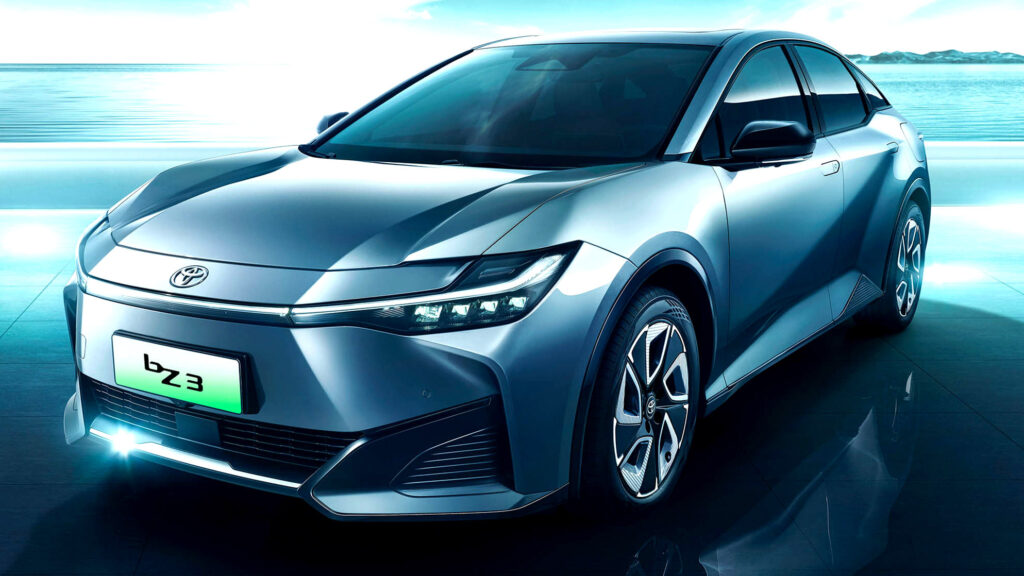
Toyota Is Selling A New EV For Less Than A 15-Year-Old Used Corolla

  • GAC and FAW Toyota have slashed pricing for their bZ3X SUV and bZ3 sedan.
  • bZ3X was the top-selling joint-venture EV in China for five consecutive months.
  • Both EVs use batteries with enough capacity to cover between 321 and 383 miles.

Toyota has just made two of its cheap EVs in China even cheaper. They’re so affordable that, depending on where you live, you may consider selling your house, packing up your belongings, and immediately moving to China.

Just kidding, but when a brand new vehicle costs less than what you pay in the States for a 15-year-old used Corolla (around $14,000), then something has gone genuinely, wonderfully wrong with our understanding of what a car is supposed to cost.

Read: China Is Snapping Up This $15K EV Faster Than Toyota Can Build It

Perhaps the most interesting of the pair is the bZ3X SUV, launched in China in early 2025 through the GAC Toyota joint venture. It typically starts at 109,800 yuan, or about $15,800, which already feels like a steal. Now, to celebrate GAC Toyota shifting 80,000 vehicles in its first year, the entry price has dropped to just 99,800 yuan, roughly $14,400.

 Toyota Is Selling A New EV For Less Than A 15-Year-Old Used Corolla

You get a heck of a lot of features for the money. The base model is powered by a 50 kWh battery, and while that’s small, it’s good enough for 267 miles (430 km) of driving on the generous CLTC cycle. It powers a single electric motor producing 221 hp. Step up to the 58 kWh or 68 kWh battery options, and range stretches to as much as 379 miles (610 km).

Unsurprisingly, it’s been flying out of showrooms. The bZ3X topped joint venture EV sales for five consecutive months starting in September. Given the starting price, it’s hardly a surprise why.

The Sedan Is Even Cheaper

\\\\\\\\\\\\

Too expensive? Well, good news, as the price cuts don’t stop with the SUV. FAW Toyota has also trimmed the cost of the bZ3 sedan, another strong seller. The refreshed version arrived just a few months ago and, like the SUV, originally carried a 109,800 yuan ($15,800) starting price. Now, that entry point has dropped to 93,800 yuan, or about $13,500.

Underneath, the electric sedan uses BYD’s Blade battery tech and comes with either a 49.9 kWh or 65.3 kWh pack. Depending on configuration, that translates to between 321 miles (517 km) and 383 miles (616 km) of claimed range.

Of course, you’re not just paying for the powertrain, but a slew of other technologies. For example, there’s a new 15.6-inch infotainment display, a digital gauge cluster, panoramic sunroof, dual wireless smartphone charging pads, a roof-mounted LiDAR, and Level 2 semi-autonomous driving functionalities. Not bad for $13,500, right?

\\\\\\\\\\\\\\\\

This $36,000 Used Tesla SUV Still Hits 0-60 in 2.9 Seconds

  • Used Model X offers more performance per dollar than a new Tesla.
  • A 2018 Model X P100D just sold for $36,000 with only 26,000 miles.
  • At that price, 680 hp and a 2.9-second 0-60 is an extraordinary deal.

Tesla has been chasing a $35,000 EV for the U.S. market since roughly 2015, when the Model 3’s unveiling promised to democratize electric motoring. It came close with the $36,990 Model 3 Rear-Wheel Drive launched last year, and the entry-level Model Y RWD at $39,990. But for buyers who want a genuinely affordable Tesla without the feel of a stripped-out special, the used market is where things get interesting.

Read: Tesla Quietly Kills Its Flagship EVs In Europe Just After Updating Them

Once-flagship versions of Tesla’s three-row Model X are now available for around $35,000 or so, and after eight years of depreciation, they represent a rather compelling proposition.

\\\\\\\\\\\\\\\\

Bring a Trailer

A 2018 Model X P100D recently sold for $36,000 on Bring a Trailer. Yes, it’s eight years old, which explains the price, but it has only covered 26,000 miles (41,800 km), which is remarkably low for its age. Barring anything catastrophic, the SUV should deliver tens of thousands of additional trouble-free miles, provided it has been routinely maintained and kept up to date with software updates.

Supercar Performance With SUV Practicality

Before Tesla’s Plaid models were a thing, the P100D-branded models represented the pinnacle of performance. In the Model X, a pair of electric motors produces a combined 680 hp, enough to send it to 60 mph (96 km/h) in just 2.9 seconds. Find an SUV buyer who claims they need something faster than that, and we’ll tell you they’re lying.

Tesla only recently announced it would stop building the Model X, hardly a surprise given how few have been sold in recent years. But when it was first launched, it was incredibly innovative.

\\\\\\\\\\\\\

Bring a Trailer

We’d argue the cabin of this original model is more appealing than newer models, which adopted Tesla’s landscape-oriented touchscreen, rather than a vertical one. There are also loads of carbon fiber throughout and plenty of plush black leather.

Three-row electric SUVs still have relatively limited appeal, but at this price point, with this mileage, and with this level of performance, there’s no denying that something like this offers good value for the money.

VW’s Biggest, Most Powerful Electric SUV Yet Costs Less Than An ID.4

  • The ID. Unyx 08 is sold with 82 kWh and 95 kWh battery packs in China.
  • VW says the flagship model can drive up to 453 miles on a single charge.
  • Xpeng’s advanced Level 2 driving-assistance system is used in the SUV.

VW’s partnership with Xpeng in China has started to bear fruit. Less than two years after the two car manufacturers joined forces to develop new EVs, production of the full-size ID. Unyx 08 has just started. It’s been priced very reasonably, too.

Pre-sales have started to coincide with the production of the ID. Unyx 08, starting at 239,900 yuan ($34,700) and topping out at 299,900 yuan ($43,400). To put those prices into perspective, a new ID.4 starts at $45,095 in the US, yet the ID. Unyx 08 blows it out of the water in terms of performance and technology.

Read: VW’s First Electric SUV With Xpeng Has A Glowing Wolf Logo

The design of the new SUV is unlike any VW sold in the West, which is no bad thing. The front is sleek with intricate LED daytime running lights and black elements. Flowing sides taper off to a modern rear-end with an illuminated VW logo. All up, it is 5,000 mm (196.8 inches) long, 1,954 mm (76.9 inches) wide, and 1,672 mm (65.8 inches) tall, with a 3,030 mm (112.9-inch) wheelbase.

Efficiency And Power

\\\\\\\\\

Autohome

Importantly, the ID. Unyx 08 is underpinned by an 800-volt electrical architecture and offered with 82 kWh and 95 kWh battery packs, both sourced from CATL. Chinese buyers can order the SUV with either a 308 hp (230 kW) motor at the rear wheels, or in all-wheel drive configuration, which includes a 188 hp (140 kW) motor at the front wheels, making for a combined 496 hp (370 kW). This model can hit 62 mph (100 km/h) in 4.9 seconds.

\\\\\\\\\

VW has yet to release range estimates for all powertrain configurations, but we know versions with the 95 kWh pack will be able to drive up to 730 km on the CLTC cycle. The battery packs also support 315 kW DC fast charging, meaning the pack can be topped up from 10-80 percent in roughly 20 minutes.

The EV is also equipped with Xpeng’s Level 2 intelligent driving assistance system and has a modern interior that appears just as tech-focused as some Chinese competitors. Positioned behind the steering wheel is a relatively traditional digital instrument cluster, but the ID. Unyx 08 also includes two huge screens, consisting of one for the infotainment system and another for the passenger.

Other key features include massaging seats, an optional in-car fridge, an electrochromatic panoramic glass roof, and a 20-speaker audio system.

\\\\\\\\
❌