A wolf makes its way across a road in Yellowstone National Park. (Jacob W. Frank/Courtesy of the U.S. National Park Service)
The Great Lakes Indian Fish & Wildlife Commission is condemning what it calls a lack of communication between state agencies and tribal communities after nine wolves were trapped and euthanized in Price County. In a press release, the commission described the wolves as a pack consisting of four pups, three yearlings, and two adults.
“This action damages existing relationships and fractures trust,” said GLIFWC Executive Administrator Jason Schlender in a statement. The Wisconsin Department of Natural Resources said late last week that the wolves posed a threat to humans following incidents reported in July 2025 and August 2026. Non-lethal measures were unsuccessful in deterring the wolves, a DNR spokesperson said, according to Wisconsin Public Radio.
“We remind the WDNR and USDA Wildlife Services to involve GLIFWC and its member tribes in the decision-making process,” Schlender said in his statement. Wolves represent powerful symbols, spirits and teachers for many tribal communities. “Simply handing us the remains of our relatives after killing them does not constitute meaningful consultation.”
In 2021, when the DNR held a controversial wolf hunt, tribal communities opted not to hunt wolves on their lands. A quota of 200 wolves had been set by the DNR, a certain portion of which was allocated to tribal communities. Hunters in the rest of the state exceeded the quota in less than three days.
The killing of the nine wolves represents the first time wolves were killed by officials in Wisconsin since a 2022 court ruling returning the animals to the Endangered Species List.
Earlier this month, President Donald Trump signed an executive order to remove the gray wolf from the federal endangered species list.
Wolves have come into conflict with rural and farming communities in Wisconsin, killing livestock and pets and triggering a campaign to restart Wisconsin’s wolf hunt. Wolf attacks on humans are rare, and only two fatal wolf attacks on humans have been documented in the last 20 years.
Randy Johnson, the DNR’s large carnivore specialist, told the Milwaukee Journal Sentinel that efforts to chase off the wolves using sound, lights and hazing were unsuccessful, and that “reports demonstrated a pattern of behavioral escalation, with the wolves showing less response to hazing and more acclimation to human presence.”
Investigative reports obtained by the Wisconsin Examiner describe three separate complaints made in August. The complaints describe wolves, sometimes collared, coming within close proximity of properties, such as in yards, driveways, or grassy areas. One of the reports mentioned chicken depredations. Another report stated that a wolf had come within 20 yards of a man mowing brush on his tractor in an effort to deter the wolves. The third report mentioned a person who saw a wolf near five-gallon bait bucket for bears. The reports described the wolves as unafraid of people, and said efforts to deter them had been ineffective.
The Great Lakes Indian Fish & Wildlife Commission states that it was left out of the decision to euthanize the wolves, and that the Wisconsin DNR and federal government had met multiple times since 2025. “At no time during that period did WDNR or federal representatives contact GLIFWC staff to inform them of reported threats, share data, or provide decision-making criteria, bypassing consultation with GLIFWC and its member tribes,” the commission stated.
It added that courts have ruled that the state of Wisconsin is required to co-manage resources within ceded Indigenous territories, such as those where the nine wolves were killed. This cooperation was reaffirmed in an executive order from Gov. Tony Evers in 2019, directing state agencies to consult with tribal governments on “matters that may directly or indirectly impact tribal nations.”
The commission says in its statement that the gray wolf is known to the the Lake Superior Ojibwe as Ma’iingan, is considered a clan relative, and is a key cultural figure that has been mistreated and misunderstood.
“People are often afraid of wolves, and wolves are too often mischaracterized,” said Conrad St. John, St. Croix tribal chairman and Voigt Intertribal Task Force chair. “Our elders relay that our communities have co-existed with Ma’iingan since the very beginning and we still don’t have any documented cases of attacks on humans in Wisconsin.”
Alex Bohman, GLIFWC biological services director, said that wolves strengthen deer populations by removing sick, weak, or old animals. “Tribes have coexisted with wolves for hundreds of years and can bring traditional ecological knowledge, as well as western science and data to these discussions.” Bohman said that state and federal agencies should engage with the commission and its member tribes on wolf management. “Ideally, this will lead to agreement on the most appropriate course of action,” she said.
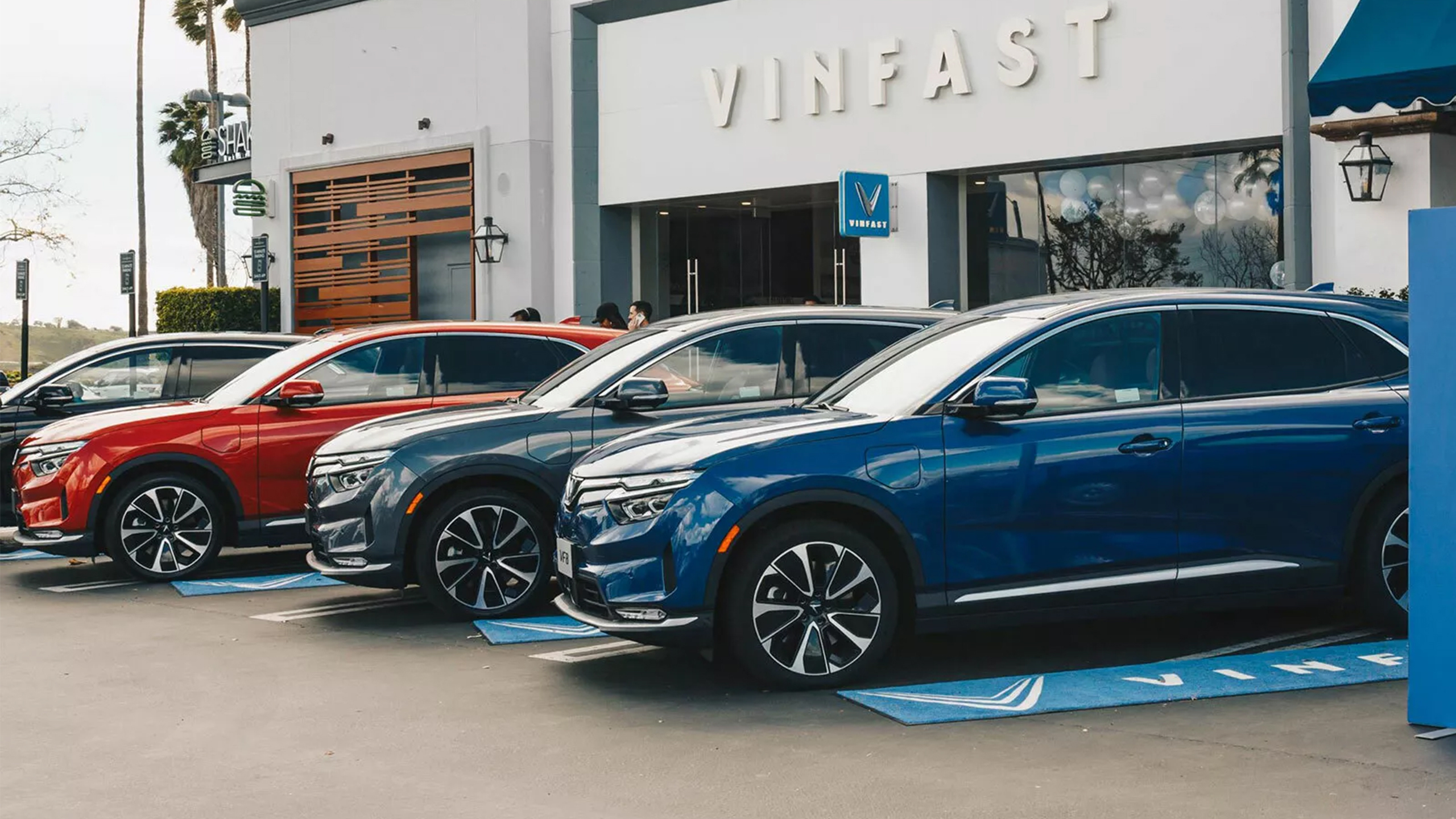
VinFast sold a measly 389 vehicles in the US through the first seven months of the year.
Despite the poor sales, VinFast remains committed to building a plant in the US.
VinFast has secured three new franchised agreements with dealers in California and Philadelphia.
The American car market is a difficult one to crack; just ask VinFast. In the three years since it started selling EVs locally, it’s delivered a few thousand of them, and it’s also had to slash the number of dealerships it operates across the country. Despite this, VinFast isn’t ready to give up on the US.
The Vietnamese company initially launched in California, before expanding into other states throughout 2024 and 2025. At one point, it said it had secured agreements with 38 dealers across the country, but as of the end of 2025, it was operating fewer than two dozen dealerships. Things aren’t looking good.
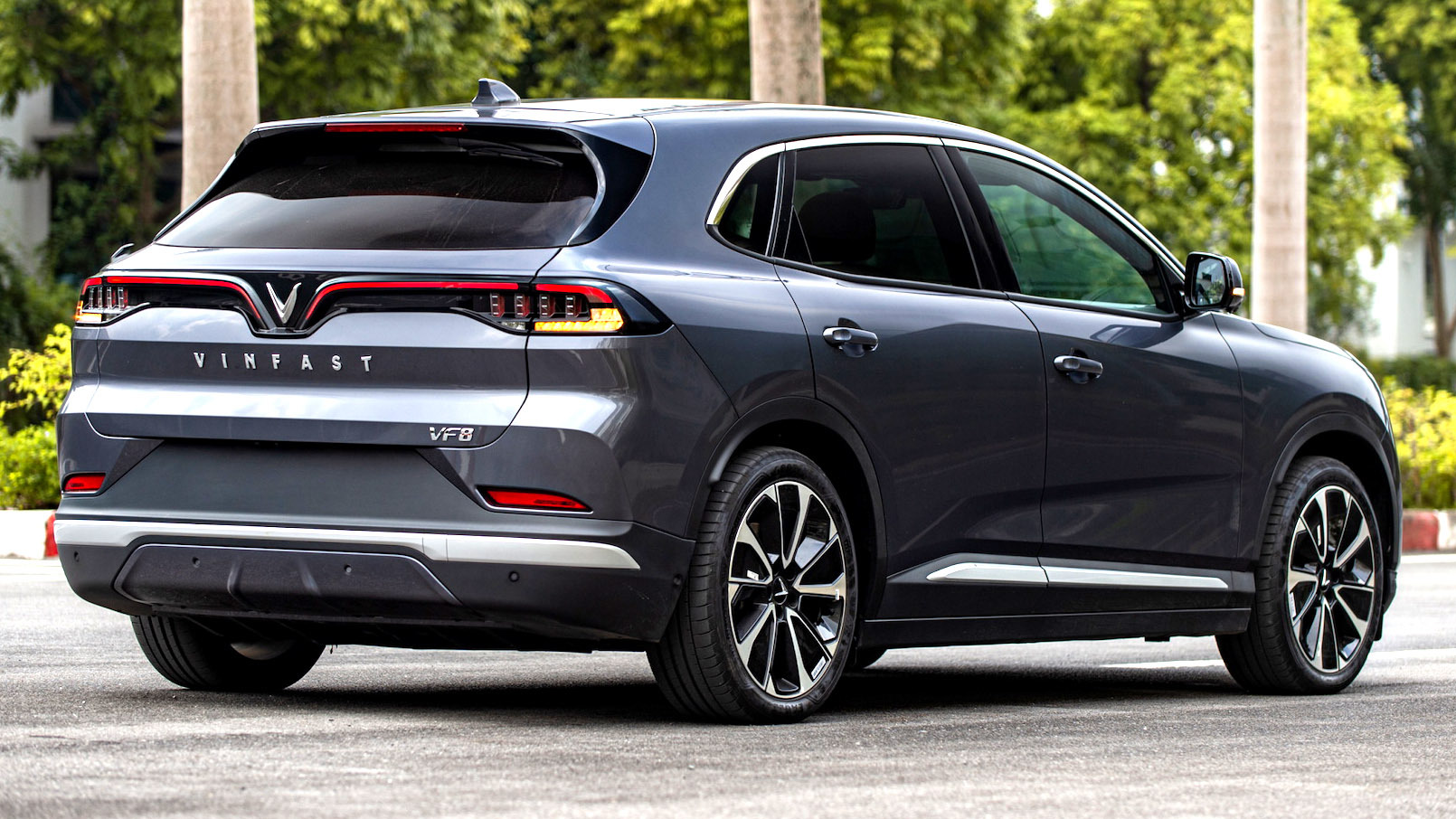
Then there’s the sales. Through the first seven months of this year, VinFast sold just 389 vehicles, a 63 percent decline from the previous year. To put that into perspective, Rivian sold 12,613 vehicles in the second quarter alone, and its vehicles are much pricier than VinFast’s. Things are so bad for VinFast that average incentives on the VF 8 sit at $19,000 per vehicle, while average incentives on the larger VF 9 are almost $20,000. It would seem the writing is on the wall for the brand.
VinFast Isn’t Going Anywhere
However, VinFast insists it isn’t going anywhere. It has secured franchise agreements for dealerships in Tustin, California, Redondo Beach, California, and one in Philadelphia. VinFast North America chief executive Brian Finnerty says the brand has a long-term commitment to the US.
“Our vision is clear: VinFast is continuing to build for the next phase of growth by investing in the customer experience, strengthening our team, continuously enhancing our products, policies, and sales and service network,” he said. “These new dealerships will ensure customers can access comprehensive sales, maintenance, and warranty support right in their local communities. This is more than an expansion of our network. It is a long-term commitment by VinFast to the U.S. market as we enter our next chapter of growth.”
This all sounds very good, but VinFast dealerships are still selling 2024 VF 9 and 2025 VF 8 models, underscoring how hard it’s proving to be for dealerships to sell these EVs.
Ambitious plans to establish a factory in the US have also been delayed multiple times. Initially, this plant in North Carolina was scheduled to start building vehicles in mid-2024, but earlier this year, VinFast pushed that date back to 2028.
Hosted by U.S. Trade Representative Jamieson Greer, the ministerial comes at a time when President Donald Trump's tariffs, a trade war with Canada and high fuel prices sparked by the war in Iran have left Americans uneasy about the economy.
The U.S. Capitol building in Washington, D.C., on June 29, 2025. (Photo by Jennifer Shutt/States Newsroom)
WASHINGTON — The Trump administration must spend the $810 million that it said last week it planned to cancel, according to a report released Tuesday by the nonpartisan Government Accountability Office.
The congressional watchdog’s decision contends the White House budget office doesn’t hold the ability to claw back that funding without approval from Congress.
“Any withholding of appropriated funds beyond their date of expiration, regardless of size, subverts both the constitutional process for enacting federal law and Congress’s constitutional power of the purse,” wrote GAO General Counsel Edda Emmanuelli Perez.
Office of Management and Budget Director Russ Vought disagreed with the decision, though he wrote in a social media post it was not “a surprise.”
“GAO has become hyper partisan and Congress recently attempted to cut their spending because of it,” Vought wrote. “GAO changed its long-time opinion on this very issue from the 1970s when they specifically noted the tool was available to the president. They make their legal assessments based on whether Democrats are in the White House.”
‘Pocket rescission’
A federal law known as the Impoundment Control Act allows the White House to ask Congress to cancel funding that lawmakers previously approved and the president signed into law.
Lawmakers have 45 days after the rescission request is sent to decide whether they want to approve it in full or modify the proposal. Congress declining to take any action means lawmakers have rejected the plans and the administration must spend the money.
A request sent during the last 45 days of the federal fiscal year, which ends on Sept. 30, is known as a pocket rescission.
The Trump administration believes that sending a rescissions request during that timeframe allows it to cancel the funding regardless of whether lawmakers sign off on the plan.
The GAO has disagreed with that opinion before and reiterated it Tuesday in its five-page decision.
“The Constitution vests in Congress the power of the purse, and Congress did not cede this important power through the ICA,” Perez wrote.
“Instead, the terms of the ICA are strictly limited,” she added. “The ICA permits only the temporary withholding of budget authority and provides that unless Congress rescinds the amounts at issue, they must be made available for obligation. The President cannot rely on the authority in the ICA to withhold amounts from obligation, while simultaneously disregarding the ICA’s limitations.”
Refugee aid programs
The rescissions request the Trump administration sent Congress on Friday proposed lawmakers cancel funding for several line items, including refugee assistance programs at the Department of Health and Human Services, a Treasury Department program that provided “debt forgiveness to foreign countries that make climate change-related investments for coral reefs and tropical forests” and a grant program at the Minority Business Development Agency.
The administration submitted its first pocket rescissions request in August 2025 and cancelled $4.9 billion without congressional action.
That came a few months after the White House budget office successfully worked with Republican lawmakers to rescind $9 billion in funding for the Corporation for Public Broadcasting and certain foreign aid accounts.
The student transportation industry faces questions after a 7-year-old student rider in a wheelchair died on her bus. Additionally, rising fuel costs alongside declining enrollment complicate matters.
Gabrielle Marie Kelley aka “Gabie the Author,” former school bus dispatcher and current office manager for Irving Independent School District in Texas, takes us behind the scenes of the web series she has been sharing with STN readers titled “Calvin & Christina” following the adventures of Calvin, an anxious but dutiful bus driver, and his sentient and safety-conscious school bus named Christina.
A Thursday webinar sponsored by Scraper Systems examined the safety and operational costs of clearing snow from school bus rooftops and shared tools districts can use to calculate whether automated snow removal makes financial sense.
New York School District Shares Success
For Daniel Boyea, assistant director of transportation at Ravena-Coeymans-Selkirk Central School District near Albany, New York, rooftop snow removal comes down to more than clearing buses after a storm. It affects employee safety, route reliability, overtime and the students waiting for those buses to arrive.
Boyea, a 25-year student transportation veteran, currently helps oversee a 53-bus fleet that transports about 2,200 students a day. At his previous district, a larger 217-bus operation, he saw firsthand how quickly manual snow removal costs could add up.
“Before the purchase of the snowscraper, it would cost us about $10,000 per snowstorm to remove the snow,” Boyea said. “So that’s mechanics coming in on overtime, dispatchers, anybody that can help out.”
With the Albany area averaging about six significant snowfalls of 3 inches or more each year, Boyea noted that those costs could reach roughly $60,000 annually. After the district adopted an automated scraper, “We were able to cut that cost in half,” he shared.
“Just six inches of wet, heavy snow equates to around 3,600 pounds, or close to two tons, of additional weight that you’re going to be carrying with you on the road if you don’t take care of that snow on top of the bus.”
- Michael Shelton, Business Development Manager, Scraper Systems
Boyea said the change also reduced the physical toll on employees. Manual roof rakes required employees to work around snow-covered buses and could lead to shoulder and back injuries or slips and falls.
“We already have a large driver shortage, so we really don’t need any more injuries,” he quipped.
The operational impact can extend to students and families. Boyea recalled that routes commonly ran late when employees had to use roof rakes to clear buses of snow.
“Starting your route on time, picking the students up on time, and getting the kids to the school on time is critical,” he emphasized.
“[The snow scraper] greatly increased our efficiency in our transportation operation, at both districts that I was with,” he confirmed.
Winter Safety Risks
Operationally, Boyea urged transportation departments to consider what happens after a school bus leaves the yard. Snow sliding forward can cover mirrors, while rooftop accumulation can fall onto the roadway.
“You have to plan for the safety of everyone, whether it’s your staff, your students, and you also have to think about the public,” he said.
Jackie Germer, inside sales representative for Scraper Systems, recalled speaking with a transportation director who recalled the danger he encountered when snow and ice flew off another vehicle and into the windshield of the school bus he was driving.
“Fortunately, he and the students [were] all safe,” Germer said. “But he told me that it made him really consider the fact that if it happened to him, it could happen because of him.”
Michael Shelton, business development manager for Scraper Systems, said a poll found 60 percent of webinar registrants were manually removing rooftop snow with ice rakes, while slightly more than 20 percent reported doing nothing.
“Safety is the main focus,” Shelton said. “What’s the most important aspect of all of this? Well, it’s having our kids get to school safely and on time.”
Illustrating how less-obvious expenses can accumulate, he calculated $18,554 in annual labor and waiting-driver costs for a 50-bus fleet experiencing five snow events a year. Additionally, he estimated that a fleet of idling buses can consume 25 gallons of fuel per hour while waiting to be cleared. That’s not to mention worker’s compensation claims or hidden issues like fines, absences and fleet delays.
“Just six inches of wet, heavy snow equates to around 3,600 pounds, or close to two tons, of additional weight that you’re going to be carrying with you on the road if you don’t take care of that snow on top of the bus,” Shelton said.
“We want to quantify it for you because that’s what we’re here to talk about,” he summarized.
Germer also noted that rooftop snow can affect liability, compliance, efficiency and employee morale. The presentation identified several U.S. states and Canadian provinces with specific rooftop snow-removal legislation.
Finn Livingston, director of product management for Scraper Systems, said districts should evaluate four factors when comparing snow-removal methods: Safety, cost, efficiency and reliability.
“Whatever method you use for rooftop snow removal, these four key points need to be considered: safety, cost, efficiency, and reliability,” Livingston said.
He said the company’s automated rooftop snow removal system clears a bus roof in about 30 seconds. Its medium-duty model is designed for fleets of up to 80 buses per day, while its heavy-duty model can accommodate up to 400.
Comparing manual and automated snow removal methods, he estimated annual time, labor and idling-fuel savings ranging from $15,040 for 50 vehicles to $46,433 for 150 vehicles. Depending on climate, fleet size and equipment cost, the examples showed potential payback periods of one to two years, though the presentation cautioned that actual results will vary.
“The calculator is a way for you to evaluate the cost of your operation today and make decisions about the value of automation for your operation in the future,” Livingston said. “Operational benefits [include] getting your busses ready faster, fewer delays, and more predictable winter operations.”
We discuss how non-domiciled CDL restrictions exacerbate the school bus driver shortage, new research on school zone and bus stop safety, reframing the student transportation conversation, and conference updates.
Consultant Launi Harden, who served as the former transportation director at Washington County School District in Utah and is the new executive director of the Florida Association of Pupil Transportation, analyzes transportation challenges driven by declining enrollment, funding and staff, the importance of bus attendants and alternative transportation, and essential hands-on emergency training she will help lead at the TSD Conference in November.
Ceer has unveiled a pair of electric models with up to 1,111 hp.
The Exobot has the longest windshield of any production car.
The EVs will initially launch in First Edition guise with 850 hp.
After several years of promises and testing, Saudi Arabia’s homegrown Ceer brand has unveiled a pair of radical EVs that look more like concept cars than real-life, production models. However, they are very real and will be manufactured at a dedicated plant in King Abdullah Economic City.
The new model is dubbed Exobot and will be sold in sedan and SUV configurations. We’ve seen plenty of bold EVs premiere from newly established companies in recent years, and often, they never see the light of day. While it’d be easy to assume the same could happen here, Saudi Arabia certainly has the funds to ensure Ceer’s models do hit local roads, although convincing locals to buy them may prove challenging.
Both the sedan and SUV stand out from other production cars thanks to steeply raked, almost perfectly flat, windshields which stretch seamlessly into the hood. According to Ceer, the Exobot has the largest windshield ever fitted to a production car, measuring 94.4 inches (2.4 meters) in length. Both versions feature narrow headlights and daytime running lights, while the SUV also rocks a rugged-looking bumper.
Big Dimensions, Big Power
Ceer’s two EVs are also very big. The sedan is 207 inches (5.26 meters) long, 82.6 inches (2.1 meters) wide, and sits just 56.2 inches (1.43 meters) high, while the SUV is slightly shorter at 197.6 inches (5.02 meters), 82.6 inches (2.1 meters) wide, and 66.5 inches (1.69 meters) tall. Both have gullwing-style doors, or as Ceer describes them, Shahin Wing Doors, inspired by the Shahin falcon.
Ceer hasn’t developed the Exobot alone. The brand was established as a joint venture with Foxconn and is understood to be using electric drive systems from BMW.
The Exobot uses three electric motors, combining to produce 1,111 hp and 1,106 lbs (1,500 Nm) of torque in the highest specification, allowing the sedan to hit 62 mph (100 km/h) in 2.1 seconds and a top speed of 155 mph (250 km/h). The SUV is a little slower, but can still reach 62 mph in 2.4 seconds and top out at 130 mph (210 km/h).
Initially, the Exobot will be sold in a limited-run First Edition guise. This model will produce 850 hp and 738 lb-ft (1,000 Nm), allowing the sedan to hit 62 mph in 2.6 seconds, while the SUV will require 2.9 seconds.
Both versions will rock a 112 kWh battery, giving the sedan 416 miles (670 km) of range and the SUV a solid 348 miles (560 km) of range. Thanks to the 800-volt setup, charging from 10-80 percent will reportedly take less than 30 minutes.
Given all the glass used in the Exobot’s construction and the scorching temperatures in Saudi Arabia, one might expect the EVs to quickly turn into a sauna the moment the sun rises. Ceer says its solution is triple silver-coated glass and a powerful cooling system that can reduce cabin temperatures from 65°C (149°F) to 32°C (90°F) within 10 minutes.
What Else Is Coming?
Other key cabin features include a 48-inch screen across the top of the dashboard, a 10.4-inch central infotainment screen, and an 8-inch display for the rear passengers. There’s also a yoke-style steering wheel, an advanced AI-powered voice assistant, and support for over-the-air updates. Ceer is also promising hands-free self-driving with point-to-point navigation, although it hasn’t said where it’s sourcing its autonomous software and hardware features from.
Pricing details haven’t been confirmed. Ceer will follow up the Exobot with five other models between 2028 and 2030. Initially, the company was only going to build EVs, but it has since tweaked its plans to also include plug-in hybrids and pure combustion-powered models.
A campsite is seen in Anchorage, Alaska, last year. The Trump administration has proposed a major shift in homelessness grants. (Photo by Yereth Rosen/Alaska Beacon)
In its latest effort to overhaul federal homelessness funding, the Trump administration is proposing to provide more money to localities that prioritize treatment-first policies such as sober living, more cooperation with law enforcement and more temporary and transitional housing.
It’s a reversal from a decade-long federal approach known as Housing First that sought to permanently house people experiencing homelessness without requiring sobriety or participation in treatment programs as a condition.
TheTrump administration has been attempting to overhaul federal funding for homelessness programs in this direction over the past two years but had suffered defeats in court that stalled its efforts to do so in 2025 and 2026.
In a notice posted in the Federal Register on Sept. 11, the Department of Housing and Urban Development argued that current policies aren’t working and said some states and localities have already shifted toward a treatment-based approach to homelessness. The agency will take public comments through Oct. 13.
Under the proposal, the department would change the bonuses it gives to state and local areas that participate in the Continuum of Care program, a federal grant initiative to fight homelessness. The department would incentivize efforts to provide transitional housing with services “concentrating on improving employment income and meeting behavioral healthcare needs.” It would also incentivize addiction treatment and recovery services, sober housing and partnerships with law enforcement.
HUD pointed to policies in Anchorage, Alaska; Houston; Portland, Oregon; and San Francisco as evidence that states and cities are already shifting their homelessness responses toward public camping restrictions with emphasis on treatment and recovery as a condition to housing support.
That shift was made possible by the U.S. Supreme Court’s City of Grants Pass v. Johnson decision in 2024, which allowed local governments to enforce public camping bans. Since then, more than 350 cities and 14 states have adopted laws or measures to crack down on street homelessness.
HUD had tried twice previously to change the application process for grants along similar lines, but a federal court ruled against the attempts, saying they violated required procedures.
One lawsuit against HUD’s efforts was brought by a coalition of 22 states and the District of Columbia, while another was filed by local governments and homelessness organizations, including the National Alliance to End Homelessness and the National Low Income Housing Coalition.
State officials joining the lawsuit were from Arizona, California, Colorado, Connecticut, Delaware, Illinois, Kentucky, Maine, Maryland, Massachusetts, Michigan, Minnesota, New Jersey, New Mexico, New York, Oregon, Pennsylvania, Rhode Island, Vermont, Virginia, Washington and Wisconsin, plus the District of Columbia.
The Obama administration made Housing First initiatives the predominant federal homelessness policy. The Trump administration argues that it hasn’t worked and that chronic homelessness has increased since 2013.
But housing advocacy groups say that Housing First initiatives are a proven, bipartisan strategy that can lead to better outcomes and reduce taxpayer spending on emergency services and the criminal legal system.
The National Low Income Housing Coalition pointed to a 2020 review of 26 studies that found Housing First programs decreased homelessness by 88% and improved housing stability by 41% compared with Treatment First programs.
This story was originally produced by Stateline, which is part of States Newsroom, a nonprofit news network which includes Wisconsin Examiner, and is supported by grants and a coalition of donors as a 501c(3) public charity.
School startup across the U.S. comes with noteworthy snafus at Prince George’s County Public Schools in Maryland, tragic student fatalities, and speculation on electric bus mandates and funding.
Glenna Wright-Gallo, vice president of policy for software provider Everway, leverages her personal experience having a disability and her experience as the former assistant secretary for the U.S. Department of Education’s Office of Special Education and Rehabilitation Services to speak on student behavior, absenteeism, IEPs, assistive technology, travel training, funding, U.S. Department of Education upheavals and more. She will present a keynote at November’s TSD Conference in Dallas-Frisco, Texas.
Secretary of Defense Pete Hegseth testifies during a Senate Appropriations Committee hearing in the Dirksen Senate Office Building on Capitol Hill on July 21, 2026 in Washington, D.C. (Photo by Finn Gomez/Getty Images)
WASHINGTON — The cost of U.S. military operations in Iran has exceeded $40 billion and the war will continue to cost taxpayers between $2 billion and $3 billion per month, according to an analysis released Tuesday by the nonpartisan Congressional Budget Office.
The ongoing bombing campaign, which President Donald Trump launched alongside the Israeli government in February, has also significantly reduced American military weapons stockpiles, according to the analysis.
CBO Director Phillip L. Swagel wrote in a letter accompanying the report that “the main opportunity cost of the conflict thus far has been the large expenditure of missile defense interceptors, which will leave the United States with a reduced inventory of interceptors for several years.
“The shortfall would become especially problematic if a conflict arose with an opponent whose arsenal included large numbers of ballistic and cruise missiles.”
Swagel noted in the letter that because the Defense Department “did not respond to CBO’s requests for information” the report “relied on government databases and public reports.”
“As a result, CBO’s estimates are subject to considerable uncertainty,” he wrote.
In addition to the direct costs, CBO expects the war to increase inflation in the first quarter of 2027 by 0.5 percentage points due to the rise in energy prices, predominantly caused by increased danger and difficulty navigating the Strait of Hormuz.
“CBO’s analysis does not assign financial costs to U.S. military personnel killed or injured in the conflict, nor does it include longer-term costs associated with future increases in outlays for veterans’ health care and disability compensation,” Swagel wrote. “It also does not include costs that could emerge in the future if ships, aircraft, and other equipment need repairs or additional maintenance as a result of their use in the conflict.”
Boyle request for numbers
The analysis stems from a request House Budget Committee ranking member Brendan Boyle submitted to CBO in March.
The Pennsylvania Democrat wrote in a statement released Tuesday that the “disastrous war in Iran has already taken the lives of brave American servicemembers and left others wounded.”
“Beyond that human toll, this nonpartisan CBO report makes clear that the war has also cost American taxpayers tens of billions of dollars and counting, while continuing to drive up costs,” Boyle added. “Donald Trump and Republicans have spent years telling Americans that we cannot afford to help families here at home, but apparently they can find tens of billions of dollars, and potentially much more, for a reckless war that is leaving Americans to pay the price.”
Inspectors general report
The CBO report differs somewhat from a report released earlier this week by inspectors general from the departments of Defense and State as well as the U.S. Agency for International Development.
That report estimated the war cost at $33.4 billion through June 29, though it didn’t include any costs since then.
Neither report includes the cost of damaged military infrastructure, with Swagel writing it was “unable to estimate the cost of damage to U.S. bases and facilities in the Middle East for two reasons.
“First, DoD has not provided CBO with information about the value of damaged or destroyed equipment and property. Second, the extent of repairs or rebuilding that DoD plans to undertake is unclear. And even if the bases were fully repaired or rebuilt, a portion of the costs of doing so could be paid by host nations.”
The inspectors general wrote their report “did not include the cost of military construction for damaged infrastructure in its estimate because the DoW has not determined what its future posture will be in the region, how it will construct its bases, and what percentage of the construction costs Allies and partners will contribute.”
Administration pleads for more war funding
Defense Secretary Pete Hegseth testified before the Senate Appropriations Committee in July that without extra money from Congress, the department would “face critical shortfalls that threaten” its ability to “pay our service members, rapidly replenish equipment and munitions, and sustain vital operations without disruption.”
The Trump administration asked Congress in June to provide $87.6 billion in emergency funding for the war as well as other expenses not covered in annual government spending bills.
That supplemental request proposed $67.15 billion for the Defense Department, $3.36 billion for the State Department, $2.03 billion for the U.S. Coast Guard, $40.26 million for the FBI, $36.18 million for the Treasury Department’s office of terrorism and financial intelligence and $13.1 million for the Homeland Security Department’s operations and support account that was part of a “classified request.”
Congress has not yet approved the additional spending and isn’t likely to this month before both chambers return to the campaign trail ahead of November’s midterm elections.
The inspectors general wrote in their report that because lawmakers have not provided dedicated funding for the Iran war that the Defense Department has “used base budget funds that otherwise would be used for standard operational activities, such as planned training and maintenance activities.”
VinFast has suggested the tiny VF 2 could eventually be sold outside Vietnam.
The two-door microcar has 40 hp, a top speed of 50 mph, and 130 miles of range.
Company implied it could be positioned as a golf cart alternative like the Topolino.
VinFast had grand ambitions, but things didn’t go according to plan. However, the company isn’t giving up and recently hinted their new microcar could eventually come to Europe and the United States.
In a meandering press release, VinFast Canada said the “microcar is quietly making a comeback.” They went on to note the success of the Citroën Ami and Fiat Topolino, the latter of which is now available in America.
The company then pivoted to the VF 2, which is their smallest model. The two-door, four-seater measures 121.7 inches (3,090 mm) long, 58.9 inches (1,496 mm) wide, and 65.5 inches (1,663 mm) tall with a wheelbase that spans 81.3 inches (2,065 mm). To put those numbers into perspective, the Fiat 500e is over 21.3 inches (540 mm) longer.
While the VF 2 is tiny, it only costs $7,214 (đ188 million) in Vietnam, which is “roughly as much as a premium motorcycle.” Despite the bargain basement pricing, the company noted the model has LED headlights, air conditioning, a 7-inch display, and 13-inch alloy wheels. They’re joined by a handful of safety features including a driver’s airbag, anti-lock brakes, and a traction control system.
Power comes from an 18.3 kWh battery pack, which feeds a rear-mounted motor developing 40 hp (30 kW / 41 PS) and 48 lb-ft (65 Nm) of torque. This enables the car to have an NEDC range of up to 130 miles (210 km). When the battery is low, a 24 kW DC fast charger can take it from 10% to 70% in approximately 34 minutes.
Those numbers aren’t very impressive, but VinFast noted they’d be perfect for the “urban commuter who drives alone.” That’s a relatively niche market, but a super cheap car certainly has some appeal, even if the top speed is limited to 50 mph (80 km/h).
While the automaker acknowledged they haven’t announced plans to bring the VF 2 to North America or Europe, they added such a decision “would not be entirely out of place.” The company went on to say that, “In many developed markets, even entry-level vehicles have become increasingly expensive, with the average new vehicle selling for more than $50,000 by the end of last year.” This suggests they see a place for something far cheaper.
The company went on to imply the VF 2 could follow in the footsteps of the Topolino and be positioned as an alternative to golf carts for neighborhood transportation. As they noted, “Walk through many newly developed residential communities in the world today, and it is no longer unusual to see golf carts being driven well beyond the golf course. Their popularity suggests there is demand for small, simple vehicles designed primarily for short urban trips.”
We examine the potential fallout from proposed changes to the Head Start program, increased danger as students return to school, a tornado that devastated a Wisconsin bus contractor, and updates from NAPT and TSD Conference.
Parker Muirbrook, strategic sales director at EverDriven, discusses new research and real-world examples that show how alternative transportation assists both district financials and student needs by providing safe and consistent school transportation.
A crew member hoses down vegetation to keep a prescribed fire from spreading outside of a designated parcel. Local leaders in the small town of Roslyn, Washington, have embraced prescribed burns as a way to protect the community. (Photo by Alex Brown/Stateline)
ROSLYN, Wash. — Francisco Martinez hefts a canister filled with a mixture of diesel fuel and gasoline. A tongue of flame dances above the nozzle. He tips the drip torch forward — whoosh — and a stream of blazing liquid races across the forest floor.
In less than a minute, a long wall of fire is spreading across the slope as Martinez and a small team of igniters fan out along the hillside. They walk in parallel, lighting grasses and shrubs, moving forward as flames spread into a dancing orange curtain behind them.
Dense columns of dark smoke billow uphill. Ashes swirl, and radiant heat warms the skin of the crew members on the line. A vortex of flame coils up a tree. Thousands of pine needles combust in an explosive shower like a fireworks show.
Radios crackle with updates as other crews race to put out spot fires caused by embers falling outside the prescribed burn area. Somewhere up the hill in the thick of the smoke, a dozen or more people are furiously working to make sure this blaze stays under control.
The scene is intense but not chaotic. The crews, assembled from local fire districts and conservation groups, move with practiced urgency instead of panic. They eat a quick lunch on the ground just a few dozen feet from the downslope edge of the fire. Some grab a fresh pouch of nicotine, and they all get back to work.
This team is conducting a prescribed burn on a forested ridge in central Washington, above a small town, Roslyn, that was nearly wiped out by a wildfire just a few years ago. The specter of wildfire is one that increasingly haunts hundreds of communities throughout the West, and the work here could point them toward a new model of living with fire.
But it won’t be easy.
FIRE belongs on this landscape.
Before white settlers arrived in the late 1800s, the forests in this part of Washington burned roughly every decade — fires sparked by lightning or set by local tribes to manage the land. These ponderosa pine forests thrive on fire, which mostly spares mature trees but opens the understory for lush regrowth that feeds many animals.
For more than a century, though, state and federal land managers kept fire away. Smokey Bear taught generations of Americans that wildfire was a scourge to be prevented. Officials throughout the country invested heavily in firefighting resources to suppress such blazes quickly.
Without fire, forests grew denser. Trees competed for water even as climate change dried the landscape further. The parched trees grew vulnerable to pests and diseases. Brush, pine needles and dead branches piled up. The forests that had been spared from fire for 100 years became primed for infernoes.
Over those same decades, more and more Americans moved into communities bordering these areas. Nothing from the recent past gave them warning that their spot on the map was supposed to burn every few years.
In recent years, wildfires have swept through communities in the West, devastating small towns and urban areas alike. The Camp Fire in 2018 destroyed much of Paradise, California, and killed 85 people. Wildfires in Los Angeles destroyed thousands of homes in January 2025 and killed at least 31. And earlier this summer, hundreds of homes went up in flames when fires ripped through neighborhoods of Spokane, Washington.
Roslyn’s wake-up call came in 2017. The Jolly Mountain Fire, sparked by lightning strikes in the nearby Wenatchee National Forest, advanced toward the town on Labor Day weekend. The fire’s incident commander gave local leaders a grim assessment.
“(He said), ‘I hate to tell you, but if fire gets into these woods, we’re going to have to write off large portions of your town as indefensible,’” recalls Chris Martin, emergency management coordinator with the Roslyn Fire Department. “That was the change-of-underwear moment for Roslyn.”
Thankfully, the fire changed course, but Roslyn now knew it was sitting on a tinderbox. The idyllic mountain community of 950 with a rich coal mining history is now a thriving tourist town that plays host to campers, mountain bikers, artists and foodies. It also ranks in the99th percentile for wildfire risk nationwide.
Just a few months after Roslyn’s near-miss, Martin offered to host a prescribed burn on forestland he owns above the town. The burn doubled as a training exercise for state, local and federal agencies — many of which were just beginning to rethink fire’s role on the landscape. Residents, still shaken by the recent wildfire, were alarmed to see smoke rising nearby. But Martin and others built an outreach program to convince their neighbors that it was time to fight fire with fire.
Roslyn has been burning ever since.
Martin keeps a map showing an ever-growing patchwork of black and yellow blobs surrounding the town. The black spots mark the 500-plus acres that local leaders have burned since 2017. The yellow represents areas where they’ve brought in logging equipment to thin trees and brush. Together, they form a rough semicircle around Roslyn that’s meant to act as a shield. If a wildfire hits this area, it will quickly be deprived of fuel — giving firefighters a chance to make a stand.
Flames spread across the forest floor as burn crews survey the fire. (Photo by Alex Brown/Stateline)
PLENTY of other towns face a predicament like Roslyn’s.
More than 1,800 communities in the Western United States are threatened by wildfire, federalresearch warns. Nationwide, nearly 72 million homes sit in areas with some wildfire risk, the climate research company First Streethas found. As climate change dries the landscape in the coming decades, the risk will only expand.
“A lot of people have the perception that this is a problem with large federal and state land ownership and that private citizens don’t have a role to play,” said Greg Dillon, director of the U.S. Forest Service’s Fire Modeling Institute. “But in many places, there’s a stretch of private lands between (public forests) and homes that can catch on fire. It’s a really important and less understood piece of the fire risk picture.”
Mike Norris, an assistant division manager in the prescribed fire program with the Washington Department of Natural Resources, said the state averages about 20,000 acres of prescribed burns across all lands each year. But Washington’s forests need three to five times that amount to stay healthy.
Many states face a similar fire deficit. And private lands are a big part of what’s missing.
But burning on private lands is hard. One section of forest may include dozens of landowners, many of whom are skeptical of fire. And even with community buy-in, burns require an incredible collaboration of resources.
“Historically, it would have been easier to burn those areas when there weren’t property lines and structures in the way,” said Kyle Lapham, who runs Washington’s Certified Prescribed Burn Manager program. “These places should be burning multiple times in our lifetime, and we’re not even scratching the surface with that first burn on tens of thousands of acres.”
The burn in Roslyn brought together 30 people from multiple fire districts and Upper Kittitas County Fuels, an interagency network that works on prescribed burns and forest thinning projects. They worked alongside staff from The Nature Conservancy, a nonprofit that manages the parcel that was burned and is perhaps the foremost practitioner of prescribed fire on private lands.
To burn just 55 acres, half a dozen organizations had to coordinate for two full days of burning and an extended monitoring period after the fire. Long before, crews dug boundary lines to hold the fire, filled portable tanks with water, laid out hoses and positioned fire engines and water tenders. Burn leaders conducted extensive briefings on safety, contingency plans and objectives.
After all that, had atmospheric conditions changed slightly, the whole thing could have been canceled. The painstaking efforts can fizzle in an instant because of strict clean air rules designed to protect communities from smoke. Fire advocates say their “burn windows” can be severely limited by well-intentioned regulations.
While catastrophic fires are far worse for smoke, prescribed burners do need to account for its very real effects on communities. They conduct extensive outreach before each burn and prepare for scenarios such as an asthmatic neighbor who needs hotel accommodations or visibility concerns on a nearby highway.
Pulling off a burn, given all those hurdles, is no easy feat.
Areas that have burned in previous years now feature open meadows, the mature trees charred but still healthy. (Photo by Alex Brown/Stateline)
BUT ROSLYN shows that it can be worth the effort.
On a bright June morning, Martin led a tour of a nearby forested hillside that was burned in 2021. Along the trails, a lush carpet of green grass and wildflowers grew up beneath the trees, sporting charred bark but still growing strong. A deer grazed peacefully in the distance.
Norris, the prescribed fire official with the state DNR, helped lead the prescribed burn that drastically reduced the dead material, brush and “ladder fuels” that can spread flames into tree canopies.
“It’s safe to say Roslyn’s in a much better place,” Norris said. “They’ve really pushed the needle in the right direction for their community.”
The burns have even become a tourist attraction. Roslyn recently designated a Forest Resilience Trail that has made the scorched forest a feature of the town’s outdoor recreation appeal.
“Now that the burns have been done, people can see the abundant wildlife, they see more flow in the streams because there’s fewer shrubs soaking water out of the landscape,” Martin said.
State leaders hope Roslyn can be a model to help other communities learn to live with fire. They’re seeing growing interest from towns that have faced close calls of their own. The work will be arduous, a few dozen acres at a time. Burn bosses will have to deal with skeptical neighbors, wary regulators and real-world risks. Volunteers will need to put in immense hours and deal with frequent setbacks.
Perhaps the only thing more daunting is the cost of doing nothing.
Editor’s note: This story has been corrected to reflect that The Nature Conservancy manages, but does not own, the parcel burned in Roslyn. Stateline reporter Alex Brown can be reached at abrown@stateline.org.
This story was originally produced by Stateline, which is part of States Newsroom, a nonprofit news network which includes Wisconsin Examiner, and is supported by grants and a coalition of donors as a 501c(3) public charity.
School districts focus on service and safety amidst students returning to school nationwide and new research on cellphone distraction among motorists. Plus, the National Association of State Directors of Pupil Transportation Services reiterated its support of lap/shoulder seatbelts on school buses.
Board Certified Behavior Analyst Patrick Mulick, the director of student engagement at Auburn School District in Washington state, and an upcoming fan-favorite TSD Conference keynote speaker, brings a voice of clarity and care to safely and appropriately transporting students with special needs, as well as supporting their independence.
Back to school safety is forefront as an illegal passing PSA features a retired Detroit Lions offensive lineman; meanwhile, a South Carolina student was fatally shot at a school bus stop. Plus, send your best school bus photos to taylor@stnmedia.com.
Special education attorney Julie Weatherly discusses how recent federal changes to the U.S. Department of Education affect school transportation and students with special needs, as well as issuing a caution on using AI in education planning. She will deliver a keynote at the Transporting Students with Disabilities & Special Needs (TSD) Conference and Trade Show this November.
RENO, Nev. – The Green Bus Summit at STN EXPO West in July explored how efficiency and modernization are reshaping student transportation. Experts shared practical strategies for using cleaner powertrains, connected technology, operational data and resilient infrastructure to reduce costs, improve reliability and prepare school bus operations for the future.
Cummins
Nicole Wheeldon, general manager of busing for North America at Cummins, joined Chris Karlin, account manager for International Motors; Matthew McGinn, senior director of e-mobility sales for Accelera by Cummins; and Matthew McClure, current product and OEM service manager for Bus North America at Cummins. They discussed how emissions regulations, technology and staffing challenges are shaping school bus purchasing and operations.
The panelists said fleets should take a holistic approach to fleet electrification that considers funding, reliability and performance alongside emissions compliance. They noted that software and automatic updates can improve efficiency by reducing service visits. The panelists also highlighted vehicle-to-grid capabilities, describing electricity as a low-cost energy that could provide districts with additional operational and community benefits.
Responding to attendees’ questions about electric school bus service, the panelists acknowledged that workforce shortages remain a significant obstacle. “There is a shortage of qualified EV techs and it is an industry issue,” they said. The lack of trained technicians can extend repair delays and discourage districts from adopting electric vehicles, making local service capacity an important consideration before purchasing buses.
The panelists reported progress on electric bus diagnostics and trouble codes, as well as efforts to reduce repair times through third-party battery assistance. Regarding parts availability, speakers confirmed that, “The parts channels are in better shape than they were a year ago in general.”
Cold-weather performance was another focus. The panelists pointed to electric fleets successfully operating in Canada and Alaska and explained how battery thermal management systems both heat and cool the batteries.
They also advised B20 users to closely monitor storage and maintenance because biodiesel attracts water. Cummins, they established, continues evaluating alternative fuels and investing in gasoline products to give districts more fleet-diversification options.
McGinn highlighted the first school bus application for the fourth-generation 14Xe ePowertrain by Cummins-Meritor. The system integrates the motor and transmission and, he said, its three-speed configuration “allows [drivers] to operate the vehicle with better range.”
Real-time Visual Notes created by Ink Factory.
IC Bus
Matthew Milewski, connected vehicle marketing director for IC Bus parent company Navistar, joined Chad Duncan, specification manager for IC Bus and Maurine Simons, transportation director for North Mason School District in Washington state, to discuss using data to improve fleet safety, maintenance and efficiency.
Milewski said student transportation departments are under increasing pressure from technician and driver shortages, limited budgets, safety requirements, parent expectations and sustainability goals. With many operations “doing more with less,” he explained that connected buses can help answer routine questions about vehicle locations, delays, maintenance needs, driver performance and developing mechanical problems.
Technology allows transportation departments to monitor routes, vehicle speed and timestamps, giving staff objective information when investigating incidents or responding to questions. Milewski said connected technology can also generate AI-driven weekly driver reports and flag events requiring additional review. Camera-based systems can alert drivers about issues such as failing to wear a seatbelt, while real-time information can support route adherence, stop accountability and parent communication.
Milewski contrasted traditional maintenance, where a driver must notice a problem before technicians diagnose it and order parts, with a connected operation. With the latter, the vehicle reports an issue to fleet managers, who can then order repair parts and schedule shop time before the bus arrives. He shared how the OnConnect Connection feature through IC’s My International fleet management system helps districts minimize downtime.
Simons shared that she began using the connected platform years ago as a technician, particularly to identify and order parts. After becoming transportation director, she continued using it to track bus information and save staff time.
Duncan advised directors purchasing vehicles to use operating data when specifying horsepower, transmissions, fuel capacity, axles, tires or electric bus battery range. He urged attendees to stay ahead of state safety regulations and plan realistically for fleet advancements in safety technology.
Milewski encouraged directors to ask, “What information do I wish I had every day that I don’t have today?” and “What decisions am I still making based on assumptions?” He added that My International is available through dealerships with a five-year subscription and can support mixed fleets, not only International buses.
Suburban Propane sales representative John Barnett moderated a discussion with Douglas Dagan, executive vice president of renewable energy at Suburban Propane; Scott Bradley, executive vice president at Pioneer eMobility; Brad Beauchamp, EV product segment leader for Blue Bird; and Nikita Mishra, industry application engineer for ABB’s automotive and battery manufacturing segment. They examined how off-grid charging and microgrids can help districts deploy electric buses despite utility delays or limited grid capacity.
Beauchamp advised transportation directors to evaluate infrastructure as soon as funding is identified, and district leadership approves an electric bus project. Asked when that process should begin, he replied, “That actually comes before you order the bus.”
He and Mishra agreed that early discussions between the district and utility will determine their power demand, equipment availability and desired mix of energy sources before design work begins.
Mishra revealed that infrastructure projects can take anywhere from several months to several years. She noted that lead times for some equipment, including transformers, can reach 75 weeks.
Likewise, Bradley urged districts to “call your utility early.” He said Pioneer eMobility can deliver certain systems within three to four months.
When permanent infrastructure is delayed, propane-powered off-grid charging systems can serve as a temporary or supplemental solution.
“Propane is available everywhere,” Gagan noted, adding that renewable propane is a fast-growing option that is chemically identical to conventional propane but produced from renewable sources.
Bradley pointed to Los Angeles Unified School District, where 180 of 220 electric Blue Bird buses are charged using “25 off-grid electric vehicle charging microgrids.”
Panelists said mobile charging can also support field trips, sporting events and emergency operations or help districts test potential sites before installing permanent infrastructure. Barnett explained how microgrids combining propane generators, battery storage and other energy sources could charge buses and power facilities during outages or reduce demand charges through peak shaving.
Speakers encouraged districts facing grid constraints to consider the entire charging “ecosystem,” including the bus, chargers, generation source and future vehicle-to-grid or vehicle-to-building uses.
Real-time Visual Notes created by Ink Factory.
Thomas Built Buses
Mark Childers, powertrain and technology sales manager for Thomas Built Buses, moderated a discussion with Alec Watson, account manager for Daimler Truck Specialty Vehicles within Cummins, and Trystan Thomas, director of transportation for Shasta Union High School District in California. They discussed evolving diesel technology, Cummins’ forthcoming B6.7 Octane gasoline engine and the factors districts should evaluate when selecting powertrains.
Watson said the B6.7 Octane was developed for the medium-duty and school bus markets using feedback from OEMs and customers. Built on the B6.7 diesel platform, the gasoline engine is designed to provide a similar torque curve, drivability and performance while eliminating diesel exhaust fluid and diesel particulate filter management. Cummins, Allison Transmission and Thomas Built Buses are collaborating on its integration.
Thomas Built Buses expects production to begin during the first quarter of 2027, initially for the Saf-T-Liner C2 school bus. Panelists clarified that the engine will meet the EPA’s near-zero emissions standard but is not a zero-emissions product. It will initially be offered only on new buses, not as a retrofit.
Watson said Cummins has trained and certified approximately 700 to 750 dealers on the new engine. Technicians already certified on the B6.7 diesel can complete an online course and test rather than attend additional in-person technical training. Cummins is also preparing its Cummins Care technical support operation and adding field service engineers.
Thomas encouraged directors to examine route mileage, terrain, field trips, infrastructure, technician capabilities and total cost of ownership. His district remains predominantly diesel because some routes exceed 120 miles per day, including steep grades or support out-of-town trips. “Anything alternative, you just got to do your homework,” he said.
Districts must also examine funding carefully. Thomas recalled receiving $5,000 per bus for electric infrastructure that ultimately cost $70,000, requiring the district to supply the difference.
Watson cautioned directors against selecting a technology simply because it is exciting. “Just because the octane engine is new and shiny doesn’t mean it’s necessarily for you,” he said.
“I believe that successful fleets will remain technology-neutral and evaluate solutions based on the operational fit rather than the trends alone,” Thomas agreed. “The future is likely to include a mix of diesel, gasoline, propane, natural gas and battery electric solutions.”
Real-time Visual Notes created by Ink Factory.
Article written with the assistance of AI and session transcripts.
A host of EVs will be developed in the UK and then built in Qatar.
WEVC has partnered with a large investment group to make it happen.
An advanced new EV plant will help boost Qatar’s manufacturing prowess.
British EV manufacturer WEVC has spent years promising a fleet of EVs, but to date it hasn’t started building them en masse. That’s about to change following confirmation of a long-term strategic partnership that will see it build models in Qatar at the nation’s first dedicated EV manufacturing plant.
WEVC, also known as Watt Electric Vehicle Company, recently unveiled its bespoke PACES platform, capable of supporting a wide array of vehicles, ranging from L7e quadricycles to passenger cars, sports cars, and even commercial vehicles and trucks. Its partnership in Qatar is with JTA International Investment Holding (JTA), a locally based international investment group headquartered in Doha.
Future vehicles from WEVC will be engineered in the UK and manufactured at the new site in Qatar. Initially, this plant will handle the production of models for the local market before expanding to export models to the GCC and several as-yet-unspecified international markets.
According to a report from Autocar, the factory will start with two models, a passenger car and a medium-sized delivery van along the lines of WEVC’s own eCV1, with manufacturing expected to begin in early 2028 at around 5,000 units a year before expanding well beyond that.
WEVC founder and CEO Neil Yates told the magazine that the Qatar deal is meant to accelerate the company’s existing plan to build its own EV manufacturing plant in the UK, with the Gulf facility acting as the forerunner to similar satellite operations planned in the US and Asia. In other words, WEVC is standing up its first volume factory abroad before the one at home.
A Boost For WEVC And Qatar
“Our partnership with JTA Investment Holding marks a defining milestone in WATT’s international growth,” founder and chief executive Neil Yates said. “Our proprietary electric vehicle platform, developed and validated in the United Kingdom, enables the rapid and commercially efficient development of highly customised electric vehicles while significantly reducing development time and manufacturing costs.”
Included within the partnership will be every stage of vehicle development, starting with proprietary platform technology through to vehicle engineering, product development, and production planning. WEVC says its lightweight aluminum architecture and EV platform will enable shorter development cycles, more manufacturing flexibility, and lead to the creation of highly customized vehicles.
The partnership is also pitched as a win for the wider Qatari economy, strengthening local supply chains and building up a more skilled automotive workforce.
Taylor sits down for a special extended conversation with STN’s 2025 Transportation Director of the Year Keba Baldwin, director of transportation and fleet services at Prince George’s County Public Schools in Maryland. He talks school startup operations, parent and media communication, AI and autonomous technology, leading STN EXPO sessions, alternative transportation and more.
Wisconsin’s voter list from the state elections commission is available to the public — and to foreign countries — for a $12,500 fee.
In a primetime speech on July 16, 2026, President Donald Trump said voter data had been “bought, stolen or hacked by China” in 18 states following the 2020 election.
The voter list available from the Wisconsin Elections Commission includes names, addresses and whether a person voted in recent elections, but excludes other personal information such as date of birth, driver’s license number and Social Security number.
State laws don’t apply limits to how that data can be used once it is purchased, according to Wisconsin Legislative Council guidance. Buyers can use it “to contact individuals for any purpose.”
This Fact Brief is responsive to conversations such as this one.

 Login
Login