Wildfires last January destroyed communities around Los Angeles. Homeowners say recovery has been slowed by fights with insurers to get their claims paid.
A federal judge ruled Monday that work on a major offshore wind farm can resume, handing the industry at least a temporary victory as President Trump seeks to shut it down.
A former Littleton Public Schools bus aide has pleaded guilty to multiple charges stemming from the abuse of at-risk students, including a nonverbal child with autism, after disturbing video evidence came to light, reported Fox 31.
Kiarra Jones reportedly accepted a plea agreement Jan. 5 that includes 10 counts of third-degree assault of an at-risk individual and two counts of child abuse. One additional charge was dismissed as part of the agreement. The case followed the release of a video in 2024 showing Jones punching and stomping on a nonverbal student while the child was riding a school bus to the Joshua School, which serves students on the autism spectrum.
Following the video’s release, additional families came forward with allegations the aide was abusing their children. The law firm representing three of those families said the abuse occurred over several months. Attorneys reported numerous warning signs, including behavioral changes and physical injuries such as unexplained bruises, scratches, a lost tooth, a broken toe, a black eye, and deep bruising on students’ bodies and feet.
“Each one of us have kids that get scared every time they see a school bus driving by,” said Kevin Yarbrough, the father of one of the students. “My son still walks with a limp from what she did to my kid, so this is going to be a lifelong process. There were obvious systemic failures, and we want more people to be held accountable.”
Attorneys for the families have alleged that Littleton Public Schools failed to protect the students, stating that district officials reviewed bus video footage in 2024 and concluded there was no cause for concern. Parents said they requested an investigation for months before action was taken.
“This should not have gone on as long as it did,” Yarbrough said. “We are going to make sure people are held accountable.”
Jones did not comment as she left the courtroom.
Jones had previously pleaded not guilty in August 2024 to 11 counts but reportedly accepted the plea agreement ahead of her scheduled trial, which was set to begin Monday. Sentencing is scheduled for March 18. According to the 18th Judicial District Attorney’s Office, each felony count carries a maximum sentence of 1.5 years in prison.
It’s a new calendar year but school transportation leaders face the same challenges. As Albert Einstein famously said, “In the middle of every difficulty lies opportunity.”
This month’s articles highlight key areas where leaders can make impactful changes to improve safety, efficiency and equity for all students, especially those riders with
disabilities.
While all important, Linda Bluth’s column on addressing sexual assault on school transportation vehicles especially strikes a chord. The topic must be the most horrifying for student transporters to discuss, aside from a fatality. We know from research that students with disabilities are at a significantly higher risk of being targeted for sexual assault than their non-disabled peers. Bluth shares that one constant over her storied career has been the number of sexual assault cases she has been asked to serve as an expert witness on.
She underscores the urgent need for proactive measures to protect students by calling for an industry task force to address this sensitive yet essential topic, to confront it head-on and ensure the safety and well-being of students.
Ask yourself, what policies does your transportation department and school district have in place regarding sexual assaults occurring on or around school buses or other school transportation vehicles. Bluth writes it is vital to create clear, school board-approved policies that define and address sexual assault as well as bullying and harassment on school transportation vehicles. Training all transportation personnel and students on these policies is vital.
Supervision must also be enhanced. A growing trend is more attendants on routes to assist school bus drivers with behavior management. High-back seats, Bluth says, create a barrier to seeing what students are doing. I hear that concern often from readers, an unintended consequence of NHTSA’s 2009 update to FMVSS 222 that increased the minimum seatback height to 24 inches.
Providing adequate adult supervision on all vehicles used for school transportation is paramount to the safety of all students.
Technology is supplementing these efforts with state-of-the art video camera systems. Increasingly, AI-enhanced software is showing the promise of even predicting or identifying the risk of potential assaults, but these solutions are in their infancy. Never mind the expense. First and foremost, student transporters must have policies for regularly reviewing footage. Most camera systems come with alerts to notify supervisors
of incidents. But there remains no consistent solution better than, if you “see something, say something.”
Train your school bus drivers, monitors and other staff to trust their intuitions. If something feels “off” during a route, it probably is. Foster a culture where transportation personnel and students feel safe reporting inappropriate behavior without fear of retaliation.
There is plenty to think about when reading this month’s issue, which also looks at the importance of modern routing software, AI-powered tools and data-driven solutions to address driver shortages and training, route optimization, and Medicaid reimbursement challenges. Alternative vehicles also continue to gain ground in transporting students to and from school.
With them comes the need to train their drivers on proper child safety restraint and wheelchair securement. At the half-way point of the school year, consider how your operations are poised to tackle all these issues. As school transportation leaders, the responsibility to ensure the safety and well-being of students is paramount. By addressing critical safety issues, embracing technology, and fostering collaboration, we can drive meaningful change in the industry.
Let’s turn these insights into action, ensuring that every student’s journey is safe, efficient and supportive of their educational success.
Editor’s Note: As reprinted from the January 2026 issue of School Transportation News.
Uncertainty with transportation funding, policies and federal changes can make the future seem foreboding for the student transportation industry. Security consultant Bret Brooks plans to outline ways to manage stress without being overwhelmed by today’s challenges.
The opening general session “How to Care Less Without Being Careless: Modern Stress Management,” is scheduled for Friday, March 27 at STN EXPO East. Brooks will explain the “Law of Reversed Effort” that reveals the impact of lowering anxiety to increase openness, creativity and problem-solving abilities.
Through a combination of real-life examples and interactive exercises, attendees will learn how to evaluate their triggers and stressors, and manage stress by realigning priorities. Brooks plans to show attendees how to see through the noise and identify “What’s Important Now,” through contemporary methods such as the Care-O-Meter, the 30,000-foot perspective and the recommendations of Stephen Covey, author of “The 7 Habits of Highly Effective People.”
This dynamic session will not only provide educational instruction but equip attendees with the steps to remove avoidable stress and focus their energies in a targeted and efficient way. Attendees will not only be able to reflect on their personal and professional challenges but discover the secrets to reducing stress and living a healthy, balanced life.
Brooks’ military and law enforcement background — he is a major in the U.S. Army and a retired member of the Missouri State Highway Patrol — provides a unique take on stress management as someone with decades of experience in high-stress situations. He is the chief operating officer for Gray Ram Tactical, LLC, a Missouri-based international training and consulting firm specializing in transportation safety and security issues, as well as an author of books and articles.
STN EXPO East will be held March 26- 31, 2026 at Embassy Suites by Hilton Charlotte Concord Golf Resort & Spa. The Early Bird Savings Deadline is Feb. 13, register today at stnexpo.com/east.
The School Superintendents Association, AASA, announced its four finalists for the 2026 National Superintendent of the Year Award. The winner will be named at the annual National Conference on Education in February.
AASA along with award co-sponsors Corebridge Financial and Sourcewell will recognize on of the finalists “for their outstanding leadership and dedication to advancing public education in their communities,” a press release noted.
The following finalists were nominated by their state associations and honored with the title of State Superintendent of the Year. They were measured against criteria such as leadership for learning, communication, professionalism and community involvement.
Demetrus Liggins, superintendent of Fayette County Public Schools in Kentucky joins Roosevelt Nivens, superintendent of Lamar Consolidated Independent School District in Texas, Heather Perry, superintendent of Schools at Maine’s Gorham School Department, and Sonja Santelises, the chief executive officer at Baltimore City Schools in Maryland.
“These extraordinary leaders embody the transformative power of public education,” stated David R. Schuler, AASA’s executive director. “Their visionary leadership uplifts students and demonstrates our continued commitment to providing every child with the opportunities, experiences, and education that prepares them for college, career, and real life in the real world. We are honored to celebrate their incredible success and accomplishments.
The winner will be announced on stage during the National Conference on Education, Feb. 12-14 in Nashville, Tennessee. A $10,000 college scholarship will be presented in the name of the 2026 National Superintendent of the Year to a student who attends the high school from which the superintendent graduated or a school within the district.
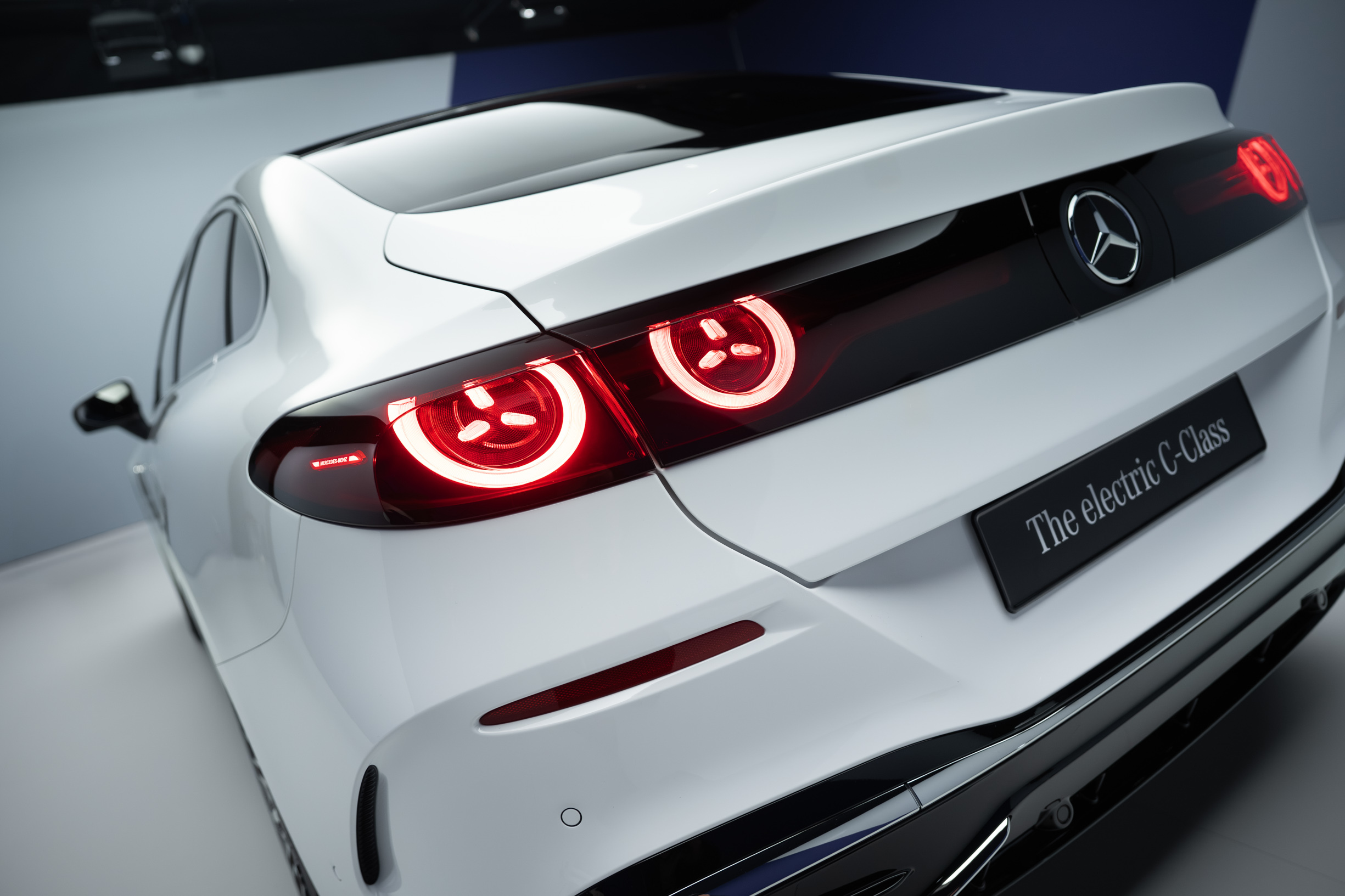
Facelifted Mercedes EQS has been spotted in winter testing.
Expect revised bumpers and optional star-pattern lighting.
Powertrain upgrades may include 800V system and new motors.
Mercedes is already looking forward to a fully electric S-Class with EQ Technology but, before it arrives, the company will introduce a second facelift for the slow-selling EQS. It’s expected to debut later this year with changes that are more than just skin deep.
Recently spied undergoing cold weather testing, the 2027 EQS looks pretty unremarkable. However, a closer inspection reveals the car will come equipped with star-infused headlights. The taillights carryover, for now, but they’ll likely follow suit on the production model.
Additional changes are hard to see, but it appears the model will have a lightly revised rear bumper. The front end could also be updated, although it’s hard to be certain with all that camouflage.
Mercedes has been tight-lipped about the car, but it’s expected to adopt a new 800 volt electrical architecture. This is a significant update and one that Polestar and Volvo did with the 3 and EX90.
Baldauf
We’ll likely learn more in the coming months, but we can expect significantly improved charging times. The upgrades won’t end there as the model is also rumored to get an improved battery cell chemistry as well as in-house developed electric motors known as eATS 2.0. The model could also trade its single-speed gearbox for a new two-speed unit.
These changes should significantly improve efficiency and range. It’s too early to talk numbers, but the EQS 450 Plus offers an EPA range of 390 miles (628 km). That’s fantastic, but it’s nowhere close to the Lucid Air, which can travel up to 512 miles (824 km) between charging sessions.
EV sales from Nissan’s rivals jumped sharply late last year.
Japan now offers EV subsidies of up to $8,300 per buyer.
BYD will launch its all-electric Racco kei car this year.
Electric vehicle sales in Japan have never quite taken off, but disruptions are underway. For nearly 15 years, Nissan held the top spot in the country’s EV market, thanks largely to the Leaf. Now, that grip is loosening.
A cooling appetite for Nissan’s EVs and rising demand for newer offerings from rivals have pushed the market into a new phase. For the first time, Nissan has been overtaken as Japan’s top-selling EV brand in quarterly sales, with Toyota stepping into the lead during Q4 2025.
According to the latest data from Japan’s automotive industry association, Toyota sold 3,684 EVs domestically in the fourth quarter of 2025, a surge helped by the October launch of the bZ4X. While that figure is still modest by global standards, it represents a thirteenfold increase over the same period in 2024.
Nissan, meanwhile, saw its electric sales plunge 56 percent to 2,857 vehicles. The Leaf and Sakura both experienced weaker demand in the closing months of the year.
The momentum wasn’t limited to Toyota. According to Nikkei Asia, Honda also made gains, boosted by the launch of the N-One e:. With a range of up to 295 kilometers (183 miles) on a single charge, it now holds the title for longest-range electric minicar in the market.
Honda sold 2,732 units in Q4, a lift that was enough to pass Tesla, which also saw its numbers rise. Tesla’s sales increased by 62 percent year over year, reaching 2,600 vehicles in the quarter.
EVs Still a Niche in Japan
While EV sales have accelerated in much of the world over the past few years, they still make up only a small fraction of the Japanese market. At present, electric vehicles account for just 1.9 percent of all new car sales in the country. This is the lowest share among advanced economies.
Several new models slated for launch in 2026 could help lift that figure, and the government is moving to speed up the transition too. This year, qualifying buyers can receive up to 1.3 million yen ($8,300) in subsidies, aimed at nudging more drivers toward electric.
BYD may soon become a more significant contender. The Chinese automaker posted a 72 percent increase in Q4 sales, reaching 832 units. It plans to launch its all-new Racco electric kei car in the Japanese market this year, positioning it to make a more aggressive push into a historically difficult segment.
EU may replace tariffs on Chinese EVs with price controls.
Minimum pricing could ease tensions but still limit imports.
Policy shift would protect European-built cars from China.
After months of trade tension and shifting political winds, the European Union is now considering a dramatic reversal of its electric vehicle policy. Just 18 months after introducing steep tariffs aimed at shielding domestic manufacturers from a flood of Chinese EVs, officials are weighing a new approach that could scrap those levies altogether.
But that doesn’t mean those Chinese automakers will have things their own way.
Instead of tariffs of up to 45 percent, the exact rate varying depending on how much financial assistance the EU investigators believed each Chinese brand got from the Chinese government, the EU is looking into setting minimum prices for the Asian imports.
Chinese companies would need to submit pricing proposals “adequate to eliminate the injurious effects of the subsidies and provide equivalent effect to duties,” according to a European Commission document seen by the South China Morning Post. Other factors, such as planned future investments in the EU, would be taken into account, the report says.
Trade Tensions
A minimum price would allow Western automakers building cars within the EU to compete with the likes of BYD and Chery. But because the Chinese brands wouldn’t have to hand over tariff cash and would instead keep profits, the system would ease trade tensions between the two regions.
After the EU slapped tariffs on imported EVs, China responded by introducing tariffs on goods heading the other way, including dairy, pork, and brandy, Bloomberg reports.
The EU’s tariffs ironically hurt some of the Western brands they were supposed to help, because cars like the BMW iX3, which was made in China and shipped to Europe for sale, were also subject to the duties. Volvo moved its Euro-market production of EX30 electric SUVs from China to Belgium to escape the tariffs.
Unstoppable
And despite the introduction of those tariffs, Chinese brands have taken an increasingly large share of the European car market. Its EVs continued to prove popular, but its hybrid models, which are not subject to tariffs, have been flying out of showrooms.
In 2024, Chinese cars accounted for around 2.5 percent of European sales; by the end of last year that had grown to around 7 percent, and almost one in every 10 cars sold in the UK in 2025 came with a Chinese badge.
How much bioenergy does the world produce, and what is it used for?<br><br><a href="https://ourworldindata.org/bioenergy-biofuels"><img src="https://ourworldindata.org/cdn-cgi/imagedelivery/qLq-8BTgXU8yG0N6HnOy8g/99904e99-0b0b-4342-6177-51f2c29b6900/w=1024"/></a>
The world dedicates a Poland-sized area of land to liquid biofuels. Is there a more efficient way to generate energy?<br><br><a href="https://ourworldindata.org/biofuel-land-solar-electric-vehicles"><img src="https://ourworldindata.org/cdn-cgi/imagedelivery/qLq-8BTgXU8yG0N6HnOy8g/9f05d67d-0d16-4494-86fd-23f5c563c200/w=1024"/></a>
ES9 is China’s longest electric SUV with a 127.9-inch wheelbase.
Dual electric motors deliver 697 hp and 516 lb-ft of torque total.
It supports three-minute battery swaps across Nio’s network.
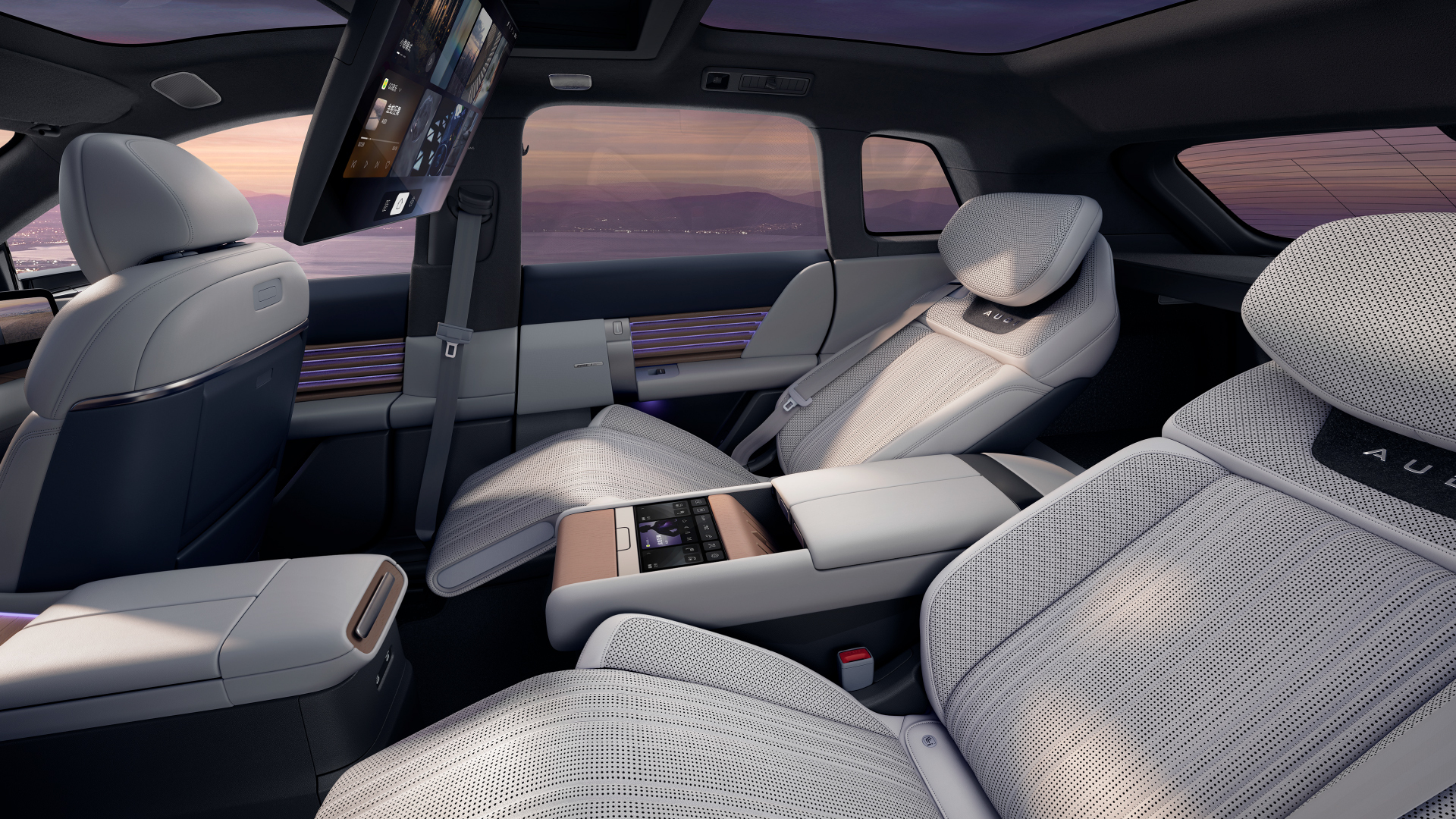
For China’s most wealthiest car buyers, the appeal of driving often takes a back seat to being driven. Luxury isn’t measured in horsepower alone, but in legroom, comfort, and the ability to stretch out while someone else handles traffic.
With that in mind, Nio is preparing a new electric SUV designed squarely for this audience, and for larger families as well. Shown here in newly released photos, the Nio ES9 is set to join the brand’s growing lineup, slotting in just above the ES8.
Big Numbers, Bigger Presence
This upcoming flagship will become the largest electric SUV available in China, overtaking the ES8 for that title, according to CarNewsChina. Figures from the Ministry of Industry and Information Technology confirm it stretches 5,365 mm (211.2 inches) in length, spans 2,029 mm (79.8 inches) in width, and stands 1,870 mm (73.6 inches) tall.
That makes it 85 mm (3.3 inches) longer, 29 mm (1.1 inches) wider, and 70 mm (2.7 inches) taller than the ES8. More importantly, the wheelbase stretches to 3,250 mm (127.9 inches), an increase of 120 mm (4.7 inches) over the ES8, which translates to noticeably more room for passengers.
To put that in perspective, its footprint lands somewhere between the standard Cadillac Escalade and the extended-wheelbase Escalade ESV.
Visually, the design of the ES9 is very similar to its smaller brother, although it does have a more upright and squared front fascia. There are split DRLs and headlights at the front, alongside a large grille and a ribbon of black along the bottom of the bumper. As with the ES8, there’s a LiDAR protruding from the roof.
Around back, the design leans toward simplicity, featuring a single LED light bar and little else of interest. Other photos of the SUV reveal that retractable side steps will be available, as will at least six different wheel designs/finishes. Shoppers will also be able to choose between black or silver accents running along the body.
Dual-Motor Drive
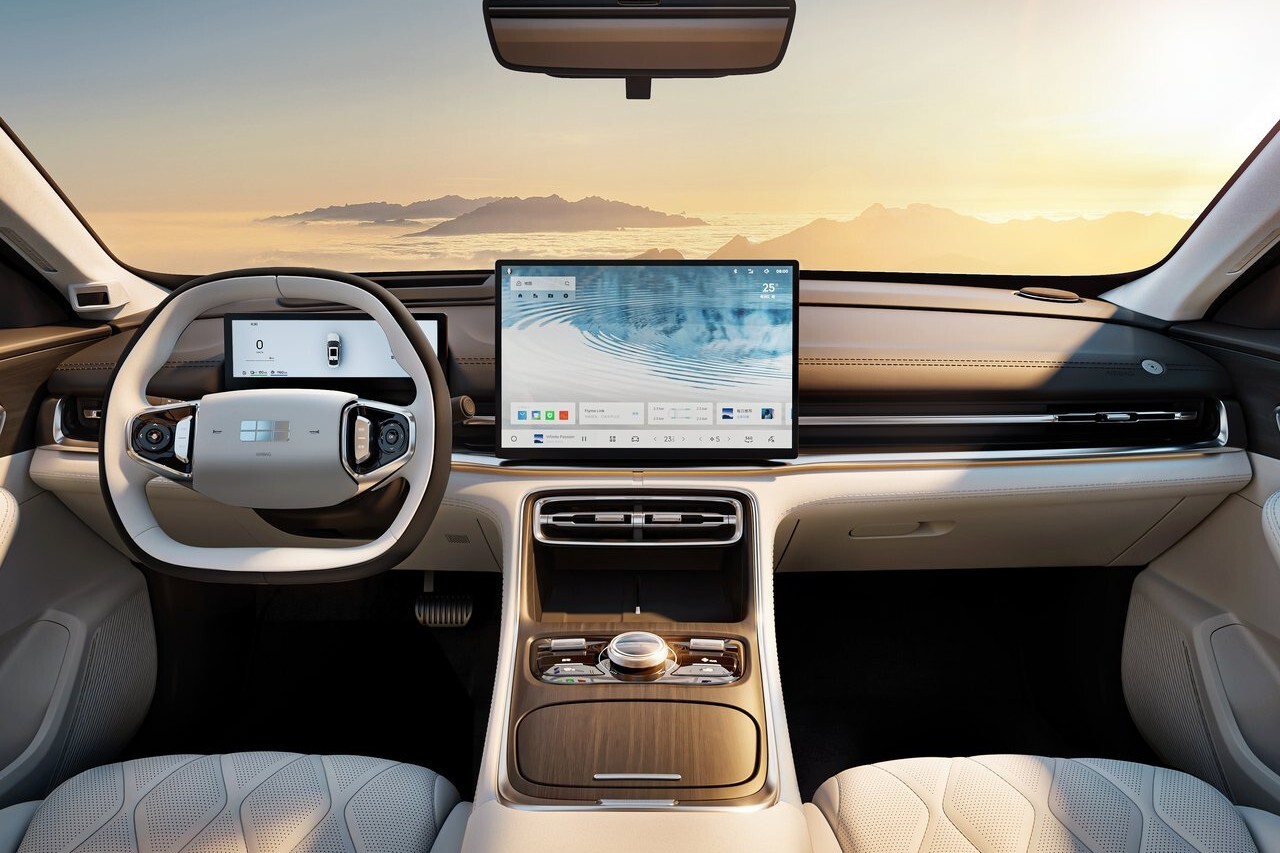
We don’t yet know what the cabin of the ES9 will look like, but we do have some important powertrain details. Powering the SUV will be a 241 hp (177 kW) electric motor at the front axle and a 456 hp (335 kW) motor at the rear axle, combining to deliver 697 hp (513 kW) and 516 lb-ft (700 Nm) of torque. The battery pack will be sourced from CATL and is expected to have a capacity of 102 kWh.
There’s no word on what charging speeds this battery will support, but in the land of Nio, charging times aren’t particularly important, as Nio operates a huge battery-swapping network where a depleted battery can be replaced with a fully charged one in just 3 minutes.
A full reveal is expected in the coming months, with its domestic launch set to follow soon after. Availability in markets outside China has not yet been confirmed.
Porsche admits its EV-only Macan strategy was a misstep.
New gas-powered SUV will arrive before end of 2028.
Future 718s will offer gas, hybrid, and electric options.
Plenty of automakers are rethinking their electric vehicle strategies. Some names make it easy to shrug and say, well, they probably bit off more than they could chew. Stellantis, for instance, has struggled to steer its EV plans with any consistency. But it’s not just the usual suspects pulling U-turns.
On the other side of that coin, you’ll find Porsche, which, like Stellantis and other mainstream brands, is now backtracking hard on its EV plans. The brand’s former CEO just openly admitted that making the Macan an EV-only model was a mistake. Porsche has plans to fix its foible, too.
A Misstep in the Macan Playbook
Former CEO Oliver Blume, who stepped down at the start of 2026, revealed that making the next-generation Macan electric-only was a mistake. Speaking with Frankfurter Allgemeine Zeitung, Blume said, “We were wrong about the Macan,” reflecting on Porsche’s 2019 decision to retire the gas-powered Macan in favor of a fully electric model.
We were there when the EV launched in early 2024. While purists didn’t love it, plenty of folks figured that most Macan buyers cared more about the badge than the engine. But cooling demand for pricey luxury EVs and regulatory hurdles made the all-electric Macan a tougher sell than some expected. Blume acknowledged that hindsight is 20/20.
“Based on the data at the time, we would have made the same decision,” Blume said, “but the situation today is different. We are responding by adding combustion engines and hybrids.” Porsche now plans to reintroduce a gas-powered compact crossover but it won’t be called the Macan.
The Macan misstep isn’t the only one the brand is handling. Porsche also confirmed that future 718 sports cars, initially slated to go EV-only, will offer combustion and hybrid options.
It turns out that even one of the world’s most famous and focused brands can misread the market and industry to an almost embarrassing degree. In the end, we all just end up with more Porsches in more flavors and I can’t say I’m sad about that.
Cybertruck owner added a center seat to carry four kids up front.
Tesla showed this layout in 2019 but never offered it to buyers.
Custom seat has no visible airbags, which may affect crash safety.
Tesla owners aren’t strangers to modifying their vehicles. Sometimes, that action comes out of a desire for additional safety. Other times, it’s because Tesla itself didn’t deliver on a previous promise. And occasionally, those two aspects of design come into fierce opposition. That’s what happened here.
A father of four needed space for his entire family, and when it became clear that Tesla wouldn’t offer a six-seat Cybertruck, he took matters into his own hands. He commissioned a custom version and later shared the results in a Tesla group on Facebook.
The custom setup removes the center console of the truck and replaces it with a narrow upright seat wedged between the original pair. It comes complete with a seatbelt, but that might be where safety ends. We’ll come back to that, though. Let’s focus first on the design itself.
It’s a far cry from the angular unit Tesla once teased, but at least the upholstery matches. Some folks might not even realize that it’s an aftermarket addition because of that.
What Killed Tesla’s Center Seat Plans?
At the same time, it’s tough to call this a big win for now. While Tesla originally showed renders of a similar setup, it never came to pass. Many believe that’s because of safety regulations regarding the center seat.
Some observers have noted that the truck includes a driver’s side inboard airbag, which could strike anyone seated in the center. There’s also no airbag directly in front of that position. And beyond the lack of protection, there’s always a chance the seat may not be anchored to mounting points strong enough to hold up in a crash.
To be clear, this isn’t a knock on the owner’s intentions. Wanting to carry your entire family with you is obviously normal and easy to understand. But it does highlight a recurring Tesla theme. The brand and CEO often make bold promises, offer flashy renderings, and then production vehicles quietly walk things back a bit.
Tesla once showed a front bench. That version never reached production, and now an owner has stepped in to fill the gap with a custom modification. In doing so, he’s taking on a level of risk that some might find concerning in a six-figure vehicle. Maybe the solution here is to just get the Model X since it actually has room for the whole family.
BMW cut prices across 31 models to stay competitive in China.
Fourteen brands launched incentives before the New Year rush.
Officials fear price cuts could trigger harmful deflation risks.
Price cuts aren’t just a domestic strategy for Chinese automakers. Even Western legacy brands are jumping in. Last week, BMW announced sweeping reductions across 31 of its models in China, highlighting a more aggressive effort to keep pace with intensifying competition in the world’s largest auto market.
The biggest cut came to the BMW i7 M70L, the high-performance flagship of the all-electric 7-Series. This dual-motor sedan delivers 659 horsepower and 811 lb-ft (1,100 Nm) of torque. As of last week, it now carries a price tag that’s 301,000 yuan lower, a reduction of roughly $42,000.
While the i7 had the largest drop in raw numbers, the steepest percentage cut went to the iX1 eDrive25L. BMW trimmed the price of the long-wheelbase variant of the compact SUV by 24 percent, bringing the new starting figure to 228,000 yuan, or about $32,600.
Speaking to Bloomberg, BMW said the price changes are part of its “regular price management,” adding that “final transaction prices are independently negotiated and determined between authorized BMW dealers and customers.”
How Far Will Discounts Go?
Behind the curtain, though, the timing suggests more than just routine recalibration. November marked the second straight month of declining sales in China, according to data from the China Passenger Car Association. That slide has spurred several automakers to adjust pricing.
Meanwhile, regulators have introduced measures designed to prevent brands from undercutting costs, prohibiting sales below production cost and banning dealer incentives that push prices beneath that threshold, Bloomberg reports.
BMW’s recent cuts appear to bring official pricing closer to what customers were already paying after negotiations. According to Yale Zhang, managing director at Automotive Foresight, the updated stickers largely reflect existing transaction norms rather than undercutting them. “The new prices aren’t any lower than typical dealer selling prices,” Zhang noted.
When Deals Become a Warning Sign
Big savings could be just around the corner. With the Chinese New Year approaching in February, many manufacturers are expected to introduce further incentives in hopes of front-loading first-quarter sales.
At least 14 car brands have already rolled out some form of discount or incentive program since the beginning of 2026. Zhang believes this trend is less a temporary blip than a reflection of broader pressures within the market.
“Various kinds of promotional activities may ebb and flow in the market from time to time, but they are here to stay,” Zhang told the news outlet.
Chinese authorities, meanwhile, are taking a cautious stance. With more manufacturers opting to slash prices, regulators are increasingly concerned about the potential knock-on effects. They worry that an extended period of discounts could spark deflation, disrupt the automotive supply chain, and put downward pressure on wages.
Toyota revealed the Euro-spec Hilux at Brussels Motor Show.
New EV version joins the mild-hybrid diesel in the lineup.
Hilux BEV offers 160-mile range with dual-motor AWD setup.
The Hilux has spent decades surviving anything the world throws at it, from mud and floods to plummeting from a Top Gear crane – though not being dropped from a helicopter. Now Toyota is testing its most famous small pickup with a more complicated challenge: staying relevant in an electric future.
Toyota unveiled the Euro-spec ninth-generation Hilux in mild-hybrid and fully electric Hilux BEV form at this week’s Brussels Motor Show, months after both trucks debuted in Asia. The first ever EV Hilux is big news, but soon it won’t be the only version of the unstoppable truck that doesn’t emit any tailpipe nasties.
As we reported last year, Toyota Toyota hasn’t just confirmed that it’s working on a hydrogen-powered Hilux that will arrive later, it’s already testing them out in the open. Yes, the same pickup that built its legend hauling bricks and sheep is about get a fuel-cell stack.
Multipath Meets Multipurpose
Toyota calls this its multipath strategy, though for many buyers little will change. Because they’ll still be able to get a truck with the same 201 hp (204 PS) 2.8 litre diesel mild hybrid (shown above) that made its debut in the previous generation Hilux’s twilight years. Some less-developed European countries will even get a non-hybrid diesel.
In the UK and Europe the 48-volt oil burner is expected to be the volume seller even after the EV’s arrival. It keeps up the old model’s 1,000 kg (2,205 lbs) payload and 3,500 kg (7,720 lbs) tow ratings, while being smoother and slightly cleaner than before.
Electric But Still Unbreakable
But business-owning truck buyers with an eye on cutting running costs and tax bills will want to give the Hilux BEV a look. It uses a 59.2 kWh battery with motors on both axles for permanent all-wheel drive.
The front motor makes 151 lb-ft (205 Nm) and the rear 198 lb-ft (268 Nm), and Toyota quotes a WLTP range of 160 miles (258 km), which sounds unimpressive in a passenger-car context, but that climbs to 236 miles (380 km) in urban use.
Payload drops to 715 kg (1,580 lbs) and towing to 1,600 kg (3,530 lbs) in the EV, but the fundamentals remain. You’re getting the same body-on-frame construction, 212 mm (8.4 inches) of ground clearance and 700 mm (27.6 inches) of wading depth, whichever power source you choose. And the BEV gets a special off road drive mode tuned for electric torque and braking.
All In the Grilles
Both hybrid and BEV models adopt the same new Cyber Sumo design that was reportedly developed by Toyota’s Australian team. Characterized by stronger angles and flatter surfaces, it gives the Hilux and more modern, big-truck look, though it seems not everyone loves it. The EV is easily identified by its hole-free grille panel and (less obvious) re-shaped silver bumper insert.
The modern makeover continues inside the crew cab-only interior where drivers and passengers are treated to a 12.3-inch digital gauge pack and same-sized tablet touchscreen, plus a steering wheel from the new Land Cruiser.
There are dual storage compartments on the passenger side, dashboard-mounted cupholders, and a full suite of electronic safety gadgets, but Toyota remembered to cram in plenty of physical switches for regularly-used functions.
UK sales start in June, Toyota says, and prices – guaranteed to be higher than for the outgoing truck – will be revealed within the next few months.
Jason Fenske’s Lucid Air critique triggered direct engineer talks.
Lucid outlined software fixes and upcoming UX 3.0 overhaul plans.
This isn’t typical service, but Lucid’s response stands out.
Negative YouTube reviews of cars have earned a certain reputation over the years. Some are so brutal they’re blamed, rightly or not, for helping to sink entire automakers, like the high-profile case of Fisker about a year ago. This time, though, a critical video sparked something different. A public takedown led not to fallout, but to potential fixes, and not just for one frustrated owner.
Jason Fenske of Engineering Explained leased a Lucid Air, ended up having issues with it, and has now been in direct contact with the brand. The result is going to benefit countless Lucid owners in the future.
A Critical Eye Meets a Willing Ear
When Jason Fenske published a blunt video detailing his disappointment with a newly leased Lucid Air Touring, it wasn’t a rage-bait takedown or a viral stunt. It was a long, technical breakdown of how a mechanically brilliant EV was being kneecapped by frustrating software, clumsy UX decisions, and some puzzling hardware quirks.
Rather than simply ignoring it and continuing on with its plans, the EV maker reached out. According to Fenske, what followed was a constructive discussion with engineers and even the SVP of engineering, Imad Dlala.
Evidently, the team at Lucid provided insider details and previews of upcoming changes. That’s where this story really takes its biggest turn. Lucid owners have a lot to look forward to if Fenske’s information proves reliable.
Lucid Plots a UX Overhaul
The biggest news is software. Lucid confirmed it’s actively improving phone-as-key reliability, door handle behavior, mirror positioning in reverse, percentage-versus-miles range inconsistencies, and Tesla Supercharger Plug & Charge support.
More significantly, a full UX 3.0 overhaul is planned for early fall 2026, bringing multitasking, faster profile switching, improved CarPlay stability, better voice commands, and a more intuitive interface. Owners with newer hardware, or those willing to pay to upgrade, will get access.
Lucid also confirmed vehicle-to-home power capability is coming in the first half of 2026, promising up to 17 kW peak output without requiring a separate home inverter, an area where Lucid’s hardware advantages could genuinely shine.
Fenske estimates that his Lucid could power his home for four days if they lost power, and that’s without changing any of the behavior his family is accustomed to.
Not All Feedback Gets a Reply
At the same time, he remains cautious, and rightly so. Promises aren’t fixes, and the Lucid Air still struggles with daily usability today. But admitting problems, engaging with informed criticism, and outlining concrete changes is more than many automakers manage.
In addition, this isn’t how most customers get treated. Fenske runs Engineering Explained, has a massive audience, and speaks the same technical language as Lucid’s engineering team. That context matters. Still, what Lucid outlined is meaningful. Especially for current and future owners.
SUVs may have flooded European streets, but compact, affordable hatchbacks haven’t packed up and left just yet. Stellantis seems to have taken note, quietly repositioning the Citroen C3 into a value-focused crossover-style hatchback and offering Fiat the same platform to build the new Grande Panda. We recently drove both, back to back, curious to see whether the distinctions ran deeper than design.
Citroen and Fiat play a specific role within the Stellantis portfolio. They’re the budget-conscious brands, tasked with delivering the most affordable cars in each segment. That’s why the new C3 and Grande Panda are built on the cost-effective Smart Car platform, rather than the more sophisticated CMP architecture underpinning their Opel Corsa, Peugeot 208, and Lancia Ypsilon cousins.
Despite the lower-cost foundations, Stellantis didn’t skimp on drivetrains. Buyers get the same menu of internal combustion, mild hybrid, and full electric powertrains.
Quick Facts
Model
Fiat Grande Panda
Citroen C3
Powertrain Options
ICE / Mild Hybrid / Electric
Length
3,999 mm (157.4 inches)
4,015 mm (158.1 inches)
Width
1,763 mm (69.4 inches)
1,755 mm (69.1 inches)
Height
1,585 mm (62.4 inches)
1,577 mm (62.1 inches)
Wheelbase
2,540 mm (100 inches)
Weight
1,240-1,554 kg (2,734-3,427 lbs)
1,226-1,491 kg (2,703-3,286 lbs)
Boot
361-412 lt (12.8-14.6 cubic feet)
310 lt (11 cubic feet)
Price (Greece)
from €16,990 ($19,900)
from €17,300 ($20,300)
SWIPE
Predictably, the two hatchbacks share a wheelbase and sit within millimetres of each other in length and width. The Citroen measures 16 mm (0.6 inches) longer, while the Fiat is 5 mm (0.2 inches) wider. On paper, these are rounding errors, but the styling does help differentiate them more than the tape measure might suggest.
Different Shells
Photos Thanos Pappas for CarScoops
Most would agree that Citroen and Fiat’s designers did well to set their cars apart. Although the two models inevitably share core proportions, roof structure, and key hardpoints, every body panel is unique. That gave each brand the freedom to apply its own design language across the entire exterior.
The Citroen looks chunky and aggressive with sculpted details, while the Fiat is boxier and retro-futuristic with many Easter Eggs doubling as references to its Italian origins. Both hatchbacks sit higher than usual and carry crossover styling cues, but the slightly thicker plastic cladding and taller roof rails of the Grande Panda make it look a bit more adventurous than the C3.
Examples that highlight the fine line between cost-cutting and design statement include the combinations of the identical mirror caps with different indicators (from the Stellantis parts bin), the shared door handles with bespoke door stampings, and the common greenhouse with slightly different window lines.
Two Interiors, Two Moods
Photos Thanos Pappas for CarScoops
The unique character of each model is even more pronounced inside the cabin. The Citroen has a modern and minimalist approach, with horizontal lines on the dashboard. Highlights include the small two-spoke steering wheel, the tiny digital instrument cluster that resembles a head-up display, and the fabric trim that disguises the hard plastics.
The Fiat is far more playful and colorful. It has an oval shaped digital cockpit with a miniature Panda trapped in the transparent perimeter, a Bamboo-like cover for the glovebox, vintage emblems and glossy black surfaces.
Of course, many of the core components are shared. The climate controls remain mercifully physical, the infotainment screen is a 10.25-inch unit across the board, and most of the switchgear and door handles are the same. It’s what you’d expect from two cars built from the same parts bin.
Comfort and Practicality
Cabin space feels identical, with both cars offering enough legroom and headroom for four adults to travel comfortably. The seats are plush and equally stylish in their own regard, leaving Citroen’s “Advanced Comfort” marketing claim mostly symbolic. The boot also looks the same to the naked eye, despite the notable difference on paper in favor of the Fiat.
Overall, the Fiat has the most unique interior ambiance that will make passengers smile. On the other hand, the Citroen might age better and has a narrow lead in perceived quality – most likely due to the darker trim.
Trim levels mirror each other from the base models to the range-toppers we tested. In Greece, the Fiat is the more affordable choice across the range. But in other markets like Germany and the UK, the Citroen often comes in cheaper, at least for the electric versions.
Driving Impressions
Behind the wheel, the similarities are immediately obvious. Contrary to what some reviews suggest, both models share identical suspension geometry and a soft overall tune. The Citroen does have a slight advantage over rough surfaces, thanks to its “Progressive Hydraulic Cushions” that take the edge off full damper extension.
Both small hatchbacks are very easy to drive and proved to be agile in Athens’ narrow streets. Of course, performance is identical across the range, which includes electric and turbocharged 1.2-liter engines in regular and mild-hybrid forms. The Grande Panda may eventually offer an all-wheel-drive version, potentially reviving the spirit of the Panda 4×4.
The steering feel is also very similar, but at least it gave me something to write about. In the Grande Panda I got the sense of the ultra-light City mode of older Fiats – but only when stationary. The Citroen’s steering adds a barely perceptible touch of extra weight, likely a result of the smaller steering wheel diameter.
Verdict
Photos Thanos Pappas for CarScoops
In the end, the Citroen C3 and Fiat Grande Panda are two interpretations of the same idea, delivered in French and Italian dialects. Both target the value end of the subcompact market and use a shared platform to keep costs down, while still managing to carve out distinct personalities through design.
They don’t face much direct competition beyond the Dacia Sandero Stepway, though small SUVs and traditional hatchbacks are always hovering nearby. Beneath the styling, they’re mechanically identical, with only slight differences in ride and agility. The C3 feels a bit more composed when the suspension hits its limits, while the Grande Panda comes across as slightly more nimble. These nuances only really emerge if you drive them one after the other.
For car enthusiasts and romantics, a little more character in the driving dynamics wouldn’t have gone amiss, but for most buyers, design is what matters. On that front, the fraternal twins deliver more than enough distinction to stand on their own.
The final verdict ends in a clear draw, with each car bringing its own strengths to the table and appealing to slightly different sensibilities. The Grande Panda leans into playful energy and quirky charm, while the C3 carries itself with a more restrained, minimalist poise. If it came down to styling alone, which one would you take home?
Localization will help Chinese carmakers boost global vehicle sales.
VW and Toyota’s market share could fall sharply in key segments.
Analysts expect Tesla’s share to rise from 2 to 8 percent globally.
In just a few years, Chinese automakers may do more than disrupt the global car industry. As they scale up overseas and lean into their strengths in electrification and cost control, the shift looks less like a disruption and more like a permanent redrawing of the map. If the current pace holds, they could control a third of the global market within five years.
Analysts at UBS, the Swiss investment bank and financial services company, point out that while China’s domestic car market continues to grow, it’s the overseas expansion that’s becoming increasingly important for them. According to their latest estimates, foreign markets now represent about 20 percent of industry sales for Chinese carmakers, and in some cases, up to 50 percent of their profits.
The Global Impact of Expansion
UBS says its forecast remains unchanged from two years ago, even as Chinese manufacturers scale up production in Europe and some legacy automakers begin stepping back from their EV plans, citing uncertain returns and cooling demand.
“The main drag was due to Europe’s slowdown of EV adoption, and tariffs and protectionism against Chinese EVs,” said Paul Gong, UBS’s lead analyst for Chinese EVs. “I think 2024 progress was slower than expected, but recent signs have shown some catch-up.”
The South China Morning Post (SCMP) reports that China’s long-term bets on electric vehicles, vertical integration, and aggressive supply chain development appear to be paying off. These moves haven’t just given Chinese brands a cost advantage, they’ve made it easier to scale production and respond quickly to market shifts.
Chinese Carmakers Gain Speed as Global Rivals Lose Ground
Frank Diana, a managing partner at Tata Consultancy Services, says China’s edge is not just about scale but about speed. “The fact that [China] has been learning aggressively means that they’re going to have a dominant position and market share,” he explained. “But they’re not alone … you will see the rise of other players in the space.”
UBS forecasts that the rise of Chinese brands will cut deep into the dominance of current global leaders. Combined, Volkswagen and Toyota now hold 81 percent of the market share in key segments. By 2030, that number could drop to just 58 percent. Meanwhile, Tesla’s global share, currently sitting at around 2 percent, could grow to as much as 8 percent by the same year.
Also helping Chinese brands expand internationally is a move to localized production. In Thailand, automakers such as SAIC Motor, Great Wall, BYD, GAC, Changan Automobile, and Chery already operate assembly plants. Great Wall and BYD have also established manufacturing in Brazil, with BYD developing a large-scale facility in Hungary to support its growing footprint in Europe.
India Eyes a Bigger Role
China isn’t the only nation that could see its car industry expand rapidly by 2030. India, too, is positioning itself for growth. Domestic automakers like Tata and Mahindra are increasing their share in the local market and looking outward.
However, they face stiff competition, not only from dominant player Maruti Suzuki, but also from Chinese-owned MG Motor, which has introduced several new models to Indian buyers. BYD has also begun to establish a presence, and both Chery and Great Wall have plans to enter the market, reports SCMP.
Still, analysts suggest that China’s early investments gave it a lasting edge. The ability to learn quickly, build tightly controlled supply chains, and manage costs efficiently has kept its companies ahead.
“The EV supply chain is dominated by Chinese companies,” said analyst Ramakrishnan. “The India EV supply chain, including electronics, is imported from China.”
Fewer Players, Bigger Stakes in the Next Phase of EVs
In Diana’s view, the current market is heading toward consolidation. China’s early lead puts it in a strong position as the EV space matures into a more concentrated field of major players.
“So there will be consolidation even at the EV market level, and you end up with 10 to 15 platform orchestrators made up of [original equipment manufacturers and] big technology companies,” he said.
The National Transportation Safety Board (NTSB) released preliminary information from an investigation into the death of a 5-year-old boy who was dragged 280 feet and killed after the school bus loading doors closed on his arm.
It was at least the third time a student dragging occurred in Maine since 2022.
The latest incident involved a Maine School Administrative District #6 school bus. It stopped to pick up students the morning of Dec. 16 on Route 35, a two-lane undivided highway with a posted speed limit of 35 mph in the Cumberland County town of Standish. The roadway was partially wet at the time.
File photo depicts how a student can go unnoticed when caught in the loading doors.
The 2022 Blue Bird school bus stopped near the intersection of Route 35 and Route 114, where a 7-year-old student boarded. The 5-year-old boy, identified by local news reports as Simon Gonzalez, followed and approached the loading doors from the rear of the bus. As the kindergartener extended his left arm into the bus, NTSB said, the doors closed. The school bus driver then proceeded to drive away with Gonzalez’s arm pinned.
The bus dragged the boy about 280 feet southbound on Route 35 before he dislodged and fell into the roadway. The school bus then ran over him and killed him. The school bus driver and the 7-year-old student, who local news reported is Gonzalez’s half-brother, did not sustain physical injuries during the incident.
NTSB said all aspects of the crash remain under investigation while determining probable cause. It also intends to issue safety recommendations, to prevent a similar incident from occurring.
The Cumberland County Sheriff’s Office, Maine State Police and Maine Department of Transportation are assisting in the investigation.