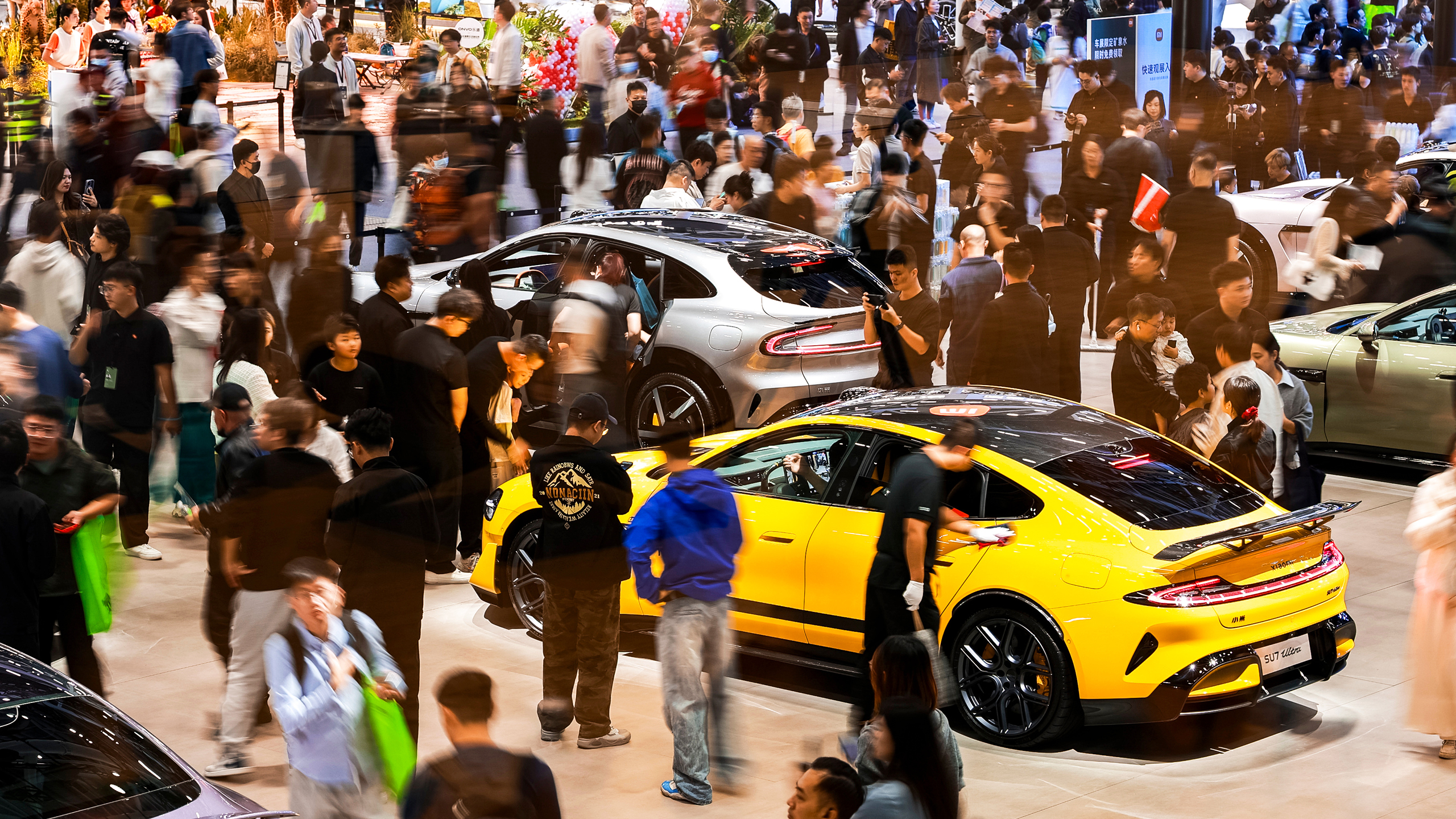
The electric i3 will be sold alongside a new ICE 3-Series.
Design influence comes from the 2023 Vision Neue Klasse.
Sixth-gen motors and batteries shared with the iX3 SUV.
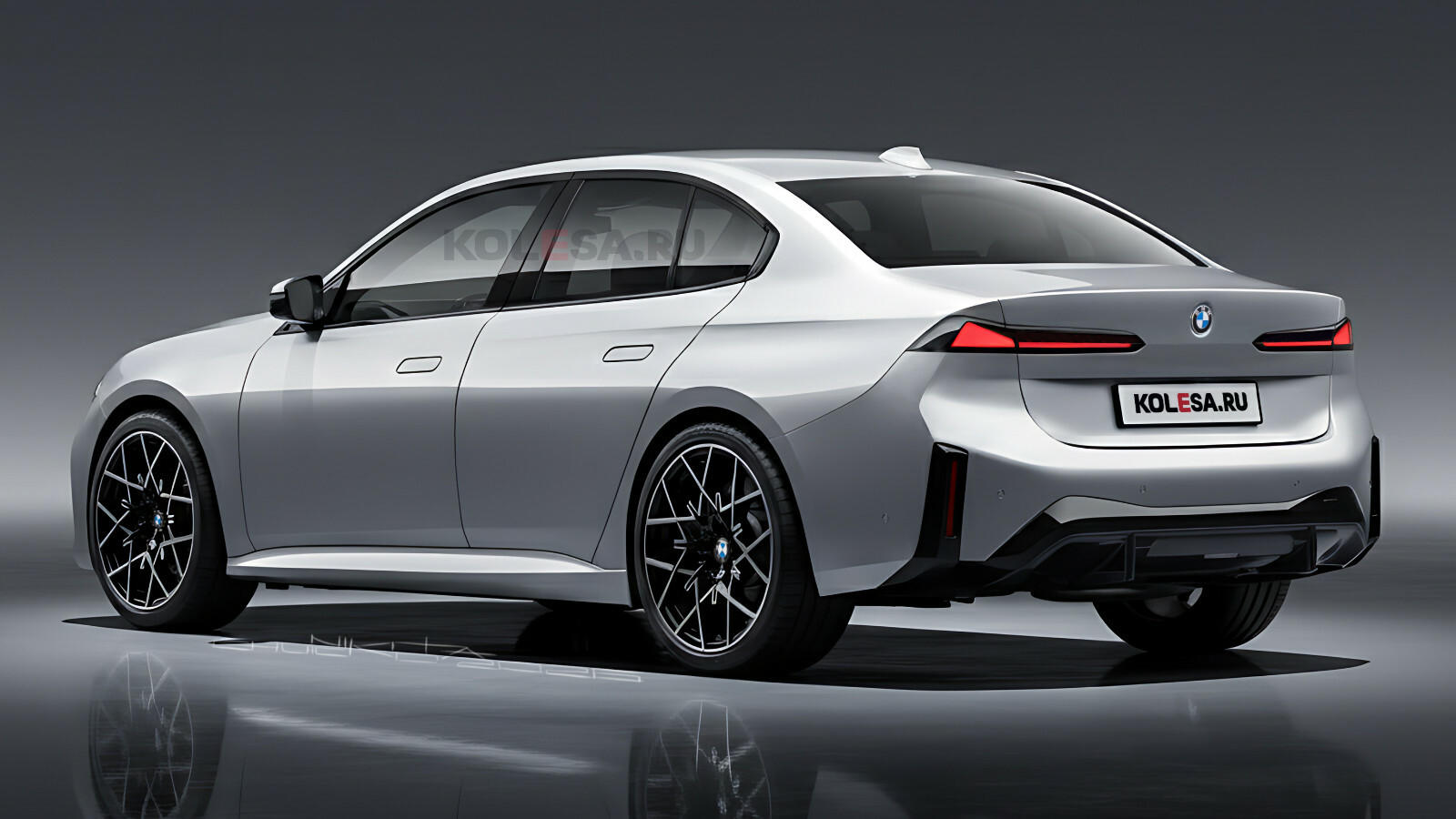
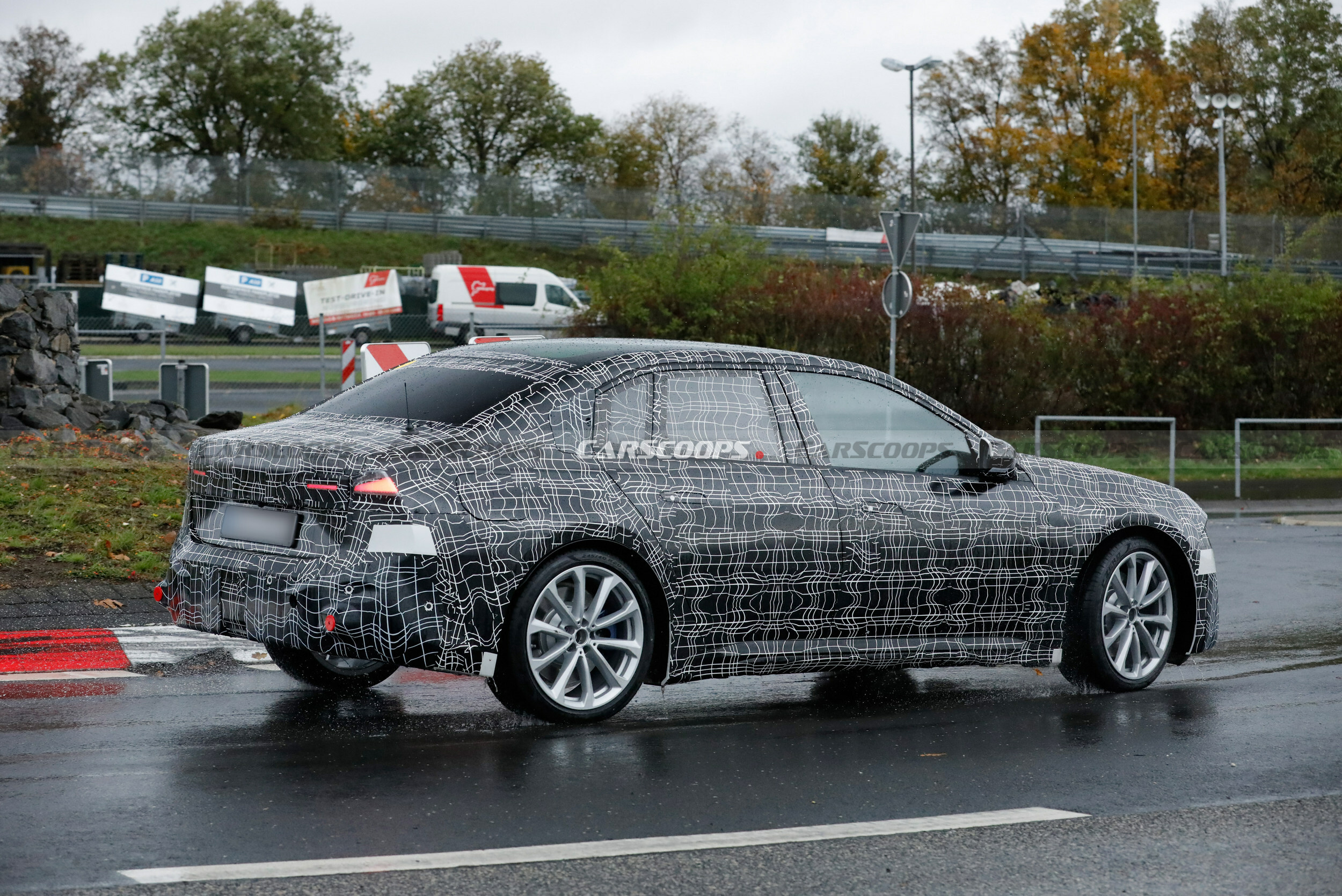
The next chapter in BMW’s electric transition is beginning to come into focus as a new i3 edges closer to the market. It brings technology closely aligned with the second-generation iX3, now packaged in sedan form. With pre-series production now underway and official images of a camouflaged prototype already released, new renderings have begun to fill in the remaining blanks.
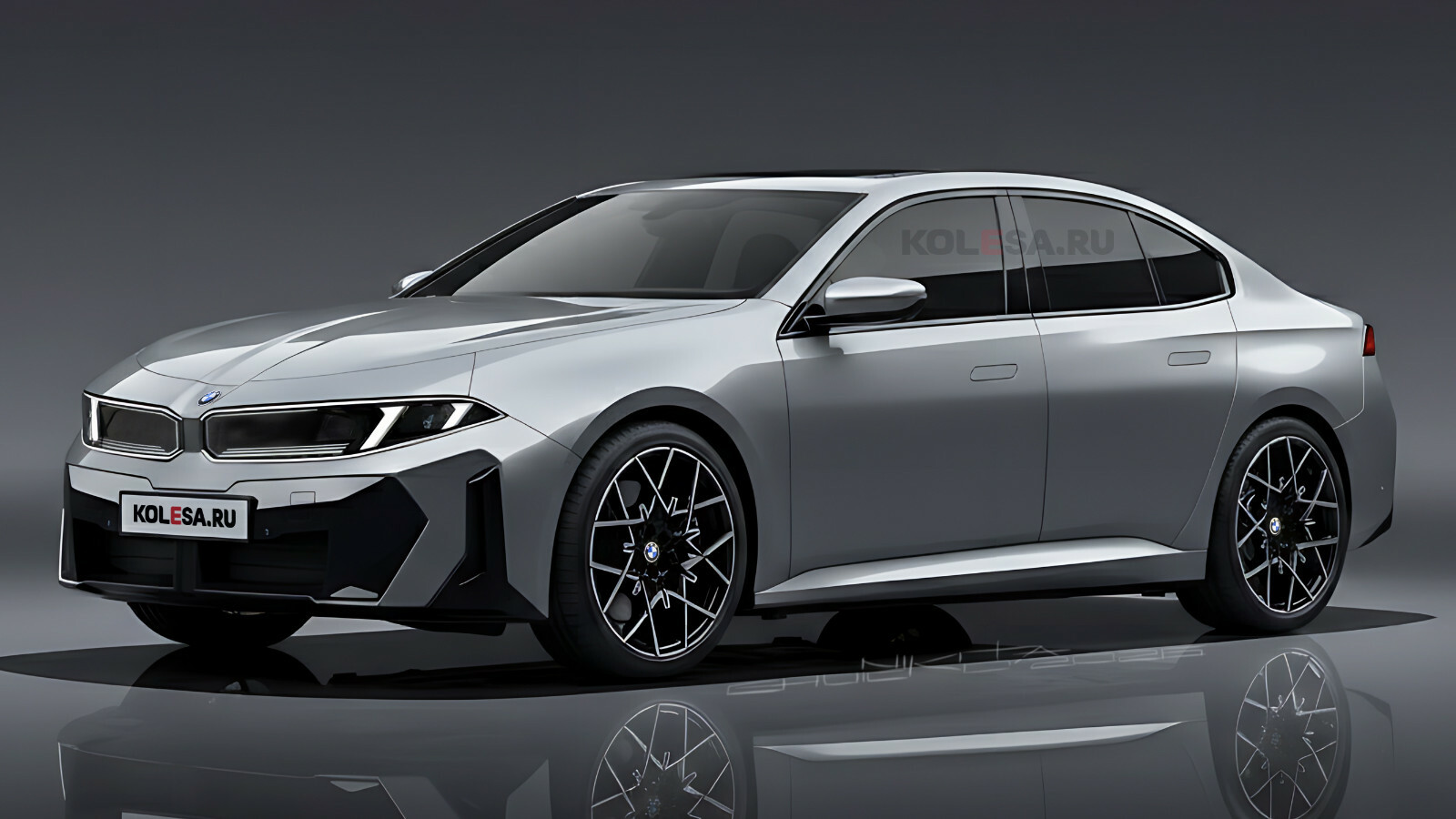
Much of the i3’s design will be inspired by the Vision Neue Klasse concept unveiled in 2023. However, whereas the subsequent Vision Neue Klasse X ended up looking almost identical to the new iX3, it appears BMW has calmed some of the sedan concept’s most dramatic elements, and the production model should look better.
While the concept featured large illuminated kidney grilles flowing into the LED headlights, recent spy shots and renderings indicate the production model might adopt smaller and slimmer units, better suited to a sedan of this size.
These renderings by Nikita Chuyko for Kolesaalso show the new electric sedan with a sharper lower front bumper and gloss-black accents. Along the sides, it departs noticeably from the current 3-Series, with split shoulder lines and flush door handles that give the bodywork a cleaner, more contemporary look.
Some uncertainty still surrounds the taillight design. Recent prototypes indicate they will be much smaller than those on the Vision Neue Klasse concept and, in these renderings, they resemble scaled-down versions of the old 2-Series Gran Coupe units.
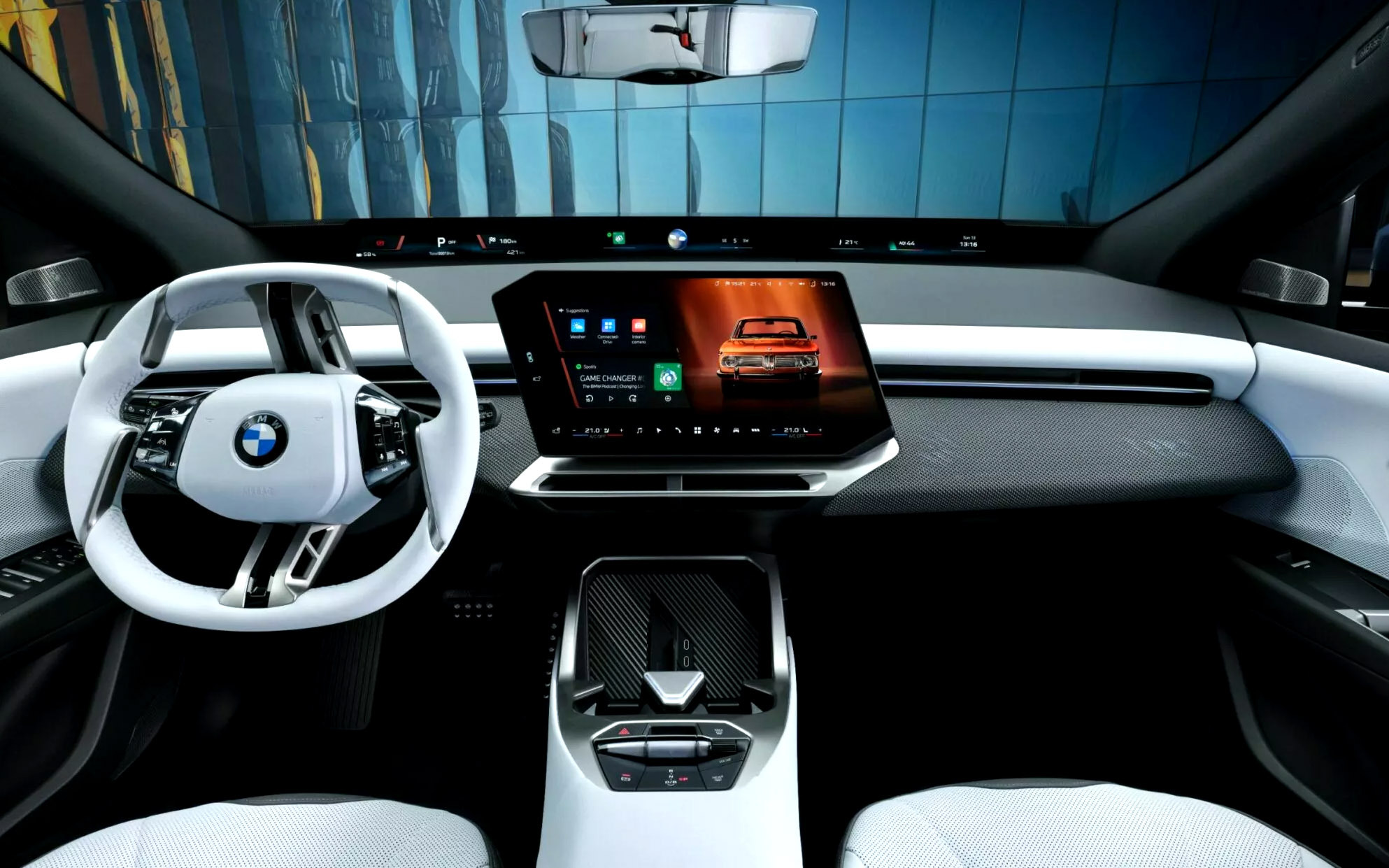
Inside, the change may feel even more dramatic than the exterior. Anyone climbing out of a current 3-Series should brace for a clear break from the more traditional cockpit BMW has refined over the years. If you are coming from the iX3, however, none of this will feel particularly shocking. The i3, along with the next combustion-powered 3-Series, will mirror BMW’s first production Neue Klasse model, down to a dashboard layout.
Front and center will be BMW’s new ‘Panoramic iDrive’ concept, paired with the brand’s latest software. The conventional instrument cluster is gone, replaced by key information projected across the base of the windscreen, while a large touchscreen sits on the center console.
Shared Underpinnings
Beneath the surface, the i3 rides on the same Neue Klasse EV platform as the new iX3. For anyone concerned that it might fully replace the 3-Series, there is no need. The combustion-powered 3-Series is being updated separately, continuing on a revised version of BMW’s CLAR architecture.
The i3 is expected to launch with BMW’s sixth-generation electric motors and battery technology, along with an 800-volt electrical system shared with the iX3. Early reports suggest one of the first variants will be the i3 50 xDrive, potentially producing around 463 hp, placing it within reach of today’s BMW M3. A less powerful rear-wheel drive model is also planned, along with a flagship electric iM3 featuring four motors.
The company wants EVs to feel like sports cars not tech showcases.
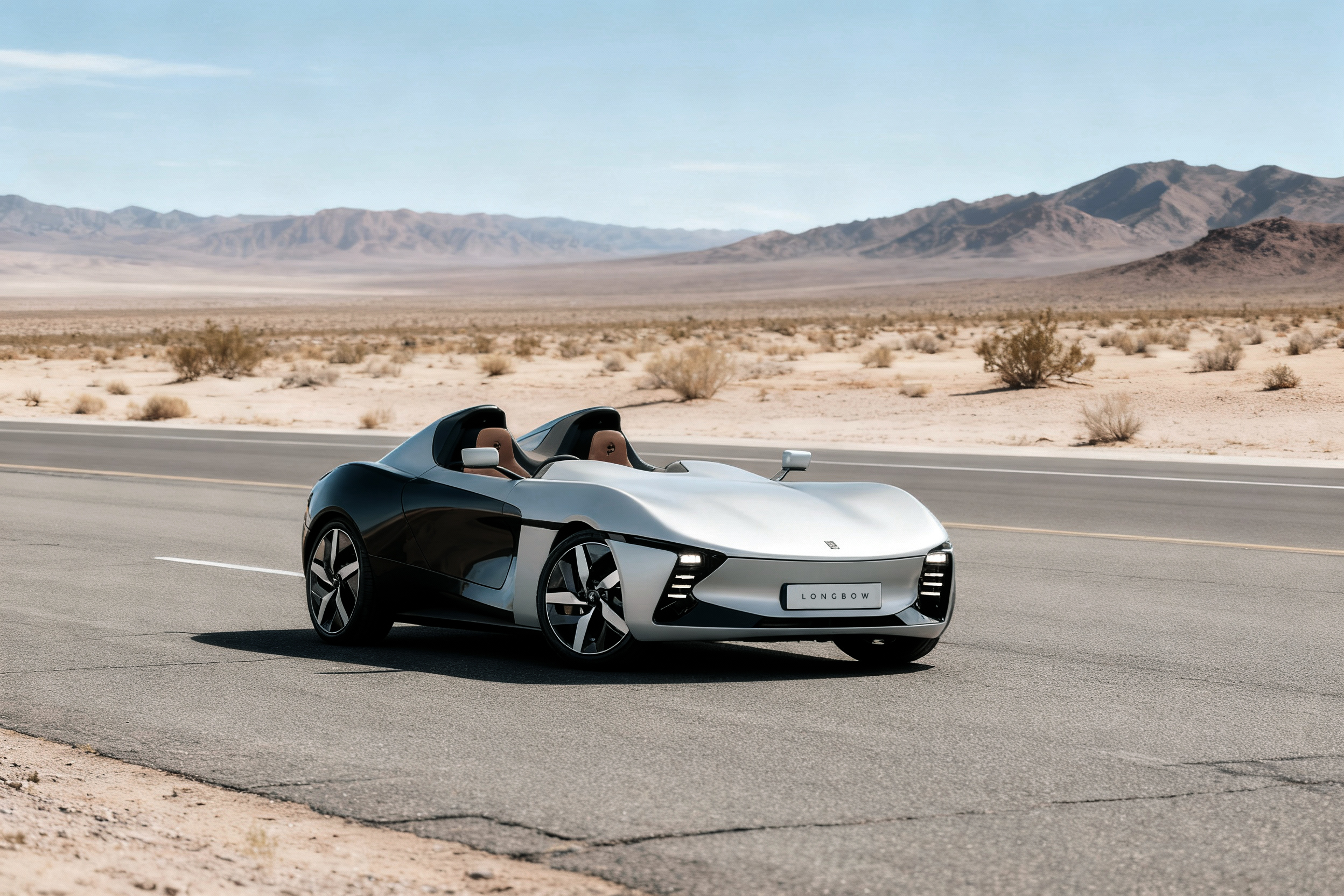
For many modern electric vehicles, progress has come to mean more. More batteries, more screens, more driver aids, and more weight. Longbow doesn’t see that as a requirement, or even desirable, for that matter.
The company was founded in 2023 by Daniel Davey and Mark Tapscott, both veterans of Tesla and Lucid, so they have seen firsthand how ambitious EV concepts hold up once they leave the presentation slide. At the end of 2025, former X Shore CEO Jenny Keisu joined the leadership team, bringing experience from the electric marine world into the mix.
Speaking exclusively with Carscoops, Tapscott outlined an engineering philosophy rooted in first principles, lightweight design, and a rejection of the idea that electrification must automatically lead to oversized, tech-heavy vehicles.
Does Every EV Need To Be Built From Scratch?
“I think it’s just a strengthening of resolve, to be honest,” Tapscott said when asked whether shifting industry conditions had forced a rethink. Rather than chasing vertical integration or speculative future technologies, Longbow is focused on building a sports car using proven components that already exist.
That mindset was reinforced early on through conversations with one of Tesla’s original co-founders, Tapscott told us, though he did not specify which one. Tesla was founded in 2003 by Martin Eberhard and Marc Tarpenning. “He sort of explained to us… that it’s exactly how they wanted to build Tesla 15–20 years ago,” Tapscott said. Back then, the supply chain simply wasn’t ready. Today, it is.
Instead of pouring resources into building motors or factories from scratch, Longbow is deliberately sourcing components with millions of miles of validation behind them. “There are so many suppliers making incredible products that we can take advantage of,” he explained. “The industry is helping us in what it’s doing.”
Physics First, Always
Tapscott says Longbow didn’t need to “unlearn” much when forming the company, largely because its founders came from motorsport, startups, and consultancy work rather than traditional OEM bureaucracy. What they did adopt, and continuously return to, is physics-based thinking.
“We always come back to that, which is the ‘why’ every single time,” he said. “It’s always ‘why this, ok, why that,’ until we get to that physics first-principle reason. And very often, there isn’t a reason—it’s just a choice.” A clear example is Longbow’s battery architecture. Instead of layering cells inside multiple cases and mounts, the company questioned whether those layers were truly necessary.
“Cells go into a case. That case is in another case. And then it goes into the vehicle, which is another case,” Tapscott explained. “So you end up having these extra layers of unnecessary weight and volume.”
By stripping those layers away and integrating the battery structure directly into the chassis, Longbow says it has achieved significant stiffness gains. According to Tapscott, the resulting structure is “at least twice as stiff as the Lotus chassis,” often cited as a benchmark for lightweight aluminum sports cars.
Clearing The Air On In-Wheel Motors
Longbow’s CES appearance sparked plenty of conversation around in-wheel motors. The brand touted a potential output of 900 horsepower, but it left us wondering how those motors would affect unsprung mass. Tapscott was quick to clarify that what was shown was a demonstration, not a production specification.
“The vehicle that we showed at CES… was really a demonstration,” he said. The goal was to highlight the flexibility of the underlying chassis rather than preview a finalized drivetrain. For production, Longbow is sticking with what Tapscott described as a “beautifully engineered, tiny little watchmaker’s motor” mounted within the vehicle. Still, he sees long-term potential in hub motors, particularly as technology matures.
“There is development work to be done on in-wheel motors,” he said. “We do think there is definitely a future for them… because it gives you so much more opportunity within the vehicle.” So for now, put a pin in the hub motors, but don’t forget them. They could pop back up in a future Longbow product.
Weight Loss As A Daily Discipline
Ask where weight was spent most reluctantly, and Tapscott doesn’t point to a single component. Instead, he describes an internal philosophy that governs every decision. “Our engineers are given two tasks,” he said. “Every day, they need to lose at least one gram from anything they’re designing. And the second is the best design they can do is no design at all.”
That ethos borrows heavily from Colin Chapman, whose influence Tapscott freely acknowledges. Still, Longbow isn’t pursuing minimalism at all costs. Some elements, like a physical shifter, exist purely to enhance the experience. “There are things we’re adding… for the theatrics,” he said. “Customer enjoyment is important.”
Additive Manufacturing And A Different Production Model
One of the most under-the-radar aspects of Longbow’s approach may be how it’s using additive manufacturing beyond prototyping. “At the moment, a lot of the development prototype cars we’ve been producing have been fully 3D printed on the exterior,” Tapscott said, noting how it enables rapid iteration during development.
Looking ahead, he sees additive manufacturing changing how low-volume cars are supported and customized. Instead of maintaining warehouses full of body panels across different markets, parts could be printed locally, on demand.
“You can actually just have one printer that can print off that part in that country immediately, without any delay,” he said. The same approach could also enable personalization without the cost typically associated with bespoke programs. “It could be entirely personalized to you,” Tapscott added. “That’s something that hasn’t been explored as much in production automotive.”
An EV That Puts The Driver First
Ultimately, Longbow’s message is that electrification doesn’t have to erase driver engagement. “An EV powertrain doesn’t mean a D-segment SUV with all of the extra cameras and weight and everything else,” Tapscott said. “Those two things are different.”
Longbow wants its car to be a tool – powerful, precise, and rewarding- but only when paired with an engaged driver. Or, as Tapscott put it, borrowing from the company’s own name: the weapon matters, but the archer matters more. Modern EVs are often defined by their tech-heavy approach, but that leads directly to just being outright heavy. Longbow’s approach to cutting out the fat might be its sharpest edge in the market.
Range extenders are enjoying a bit of a renaissance at the moment. Early examples like the Chevrolet Bolt and BMW i3 gave the world a preview of what these powertrains were capable of, but they largely fell out of favor in the middle of the last decade as carmakers shifted their focus to fully electric models.
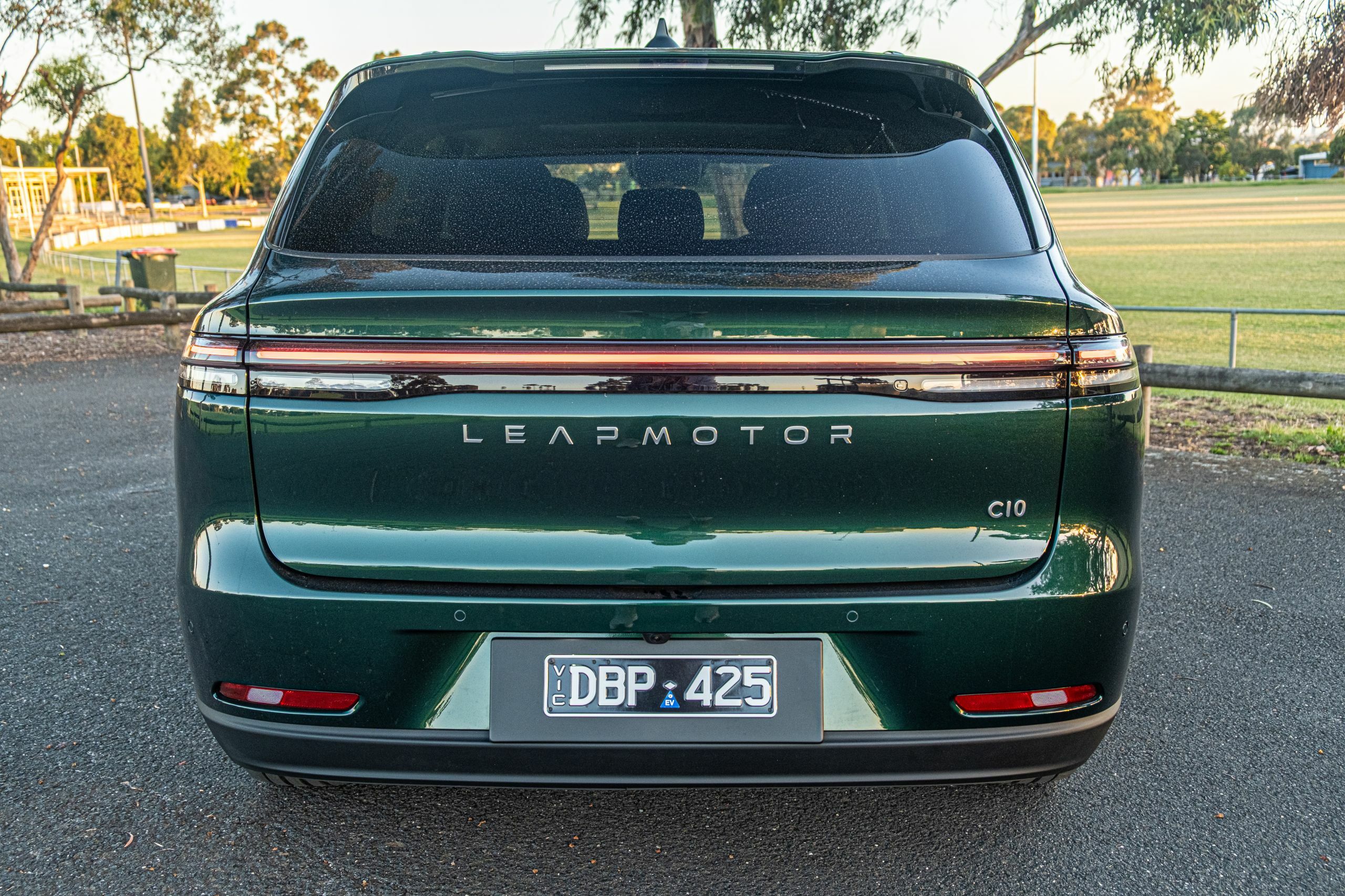
Things have changed. Thanks in large part to several major Chinese manufacturers, range-extender EVs are becoming more common and are even being adopted by legacy brands like Ford and Hyundai. Last year, Leapmotor, Stellantis’ Chinese partner brand, joined the movement by adding a range-extender option to its mid-size C10 SUV, and we had the chance to live with it over the Christmas period.
QUICK FACTS
› Model:
2026 Leapmotor C10 REEV Ultra Hybrid
› Price:
AU$47,888 (US$33,500) as tested
› Dimensions (L x W x H):
186.5 x 74.8 x 66.1 in (4,739 x 1,900 x 1,680 mm)
› Wheelbase:
111.2 in (2,825 mm)
› Curb Weight:
1,950 kg (4,299 lbs)
› Powertrain:
1.5-liter four-cylinder / Single electric motor
› Output:
212 hp (158 kW) / 236 lb-ft (320 Nm)
› 0-62 mph:
8.5 seconds
› Transmission:
Single speed
› Efficiency:
14.5 kWh/100 km, 6.1 l/100 km as tested
› On Sale:
Now
SWIPE
In markets where charging infrastructure is still patchy and long-distance driving is simply part of life, the range-extender idea holds up. You get the smooth, instant response of an EV without planning your schedule around charging stops.
On paper, the C10 REEV arrives at the right moment, pitching itself as sensible rather than compromised. In reality, while the powertrain delivers on that promise, the experience is undercut by a collection of nagging tech issues that chip away at its appeal.
What Changes With The REEV?
Photos Brad Anderson/Carscoops
The first Leapmotor I tested last year was the regular C10 EV, equipped with a 69.9 kWh battery and a rear-mounted electric motor with 215 hp and 236 lb-ft (320 Nm). The C10 REEV is quite a bit different.
Under the hood sits a 1.5-liter four-cylinder that never drives the wheels, serving solely as a generator to charge the battery pack. That battery is a 28.4 kWh unit powering a rear-mounted electric motor rated at 158 kW (212 hp) and 320 Nm (236 lb-ft) of torque.
Leapmotor says the C10 REEV can travel up to 1,150 km (715 miles) between top-ups and charges, average 15.2 kWh/100 km in electric operation, and has a quoted fuel consumption of 0.9 l/100 km (261 US mpg).
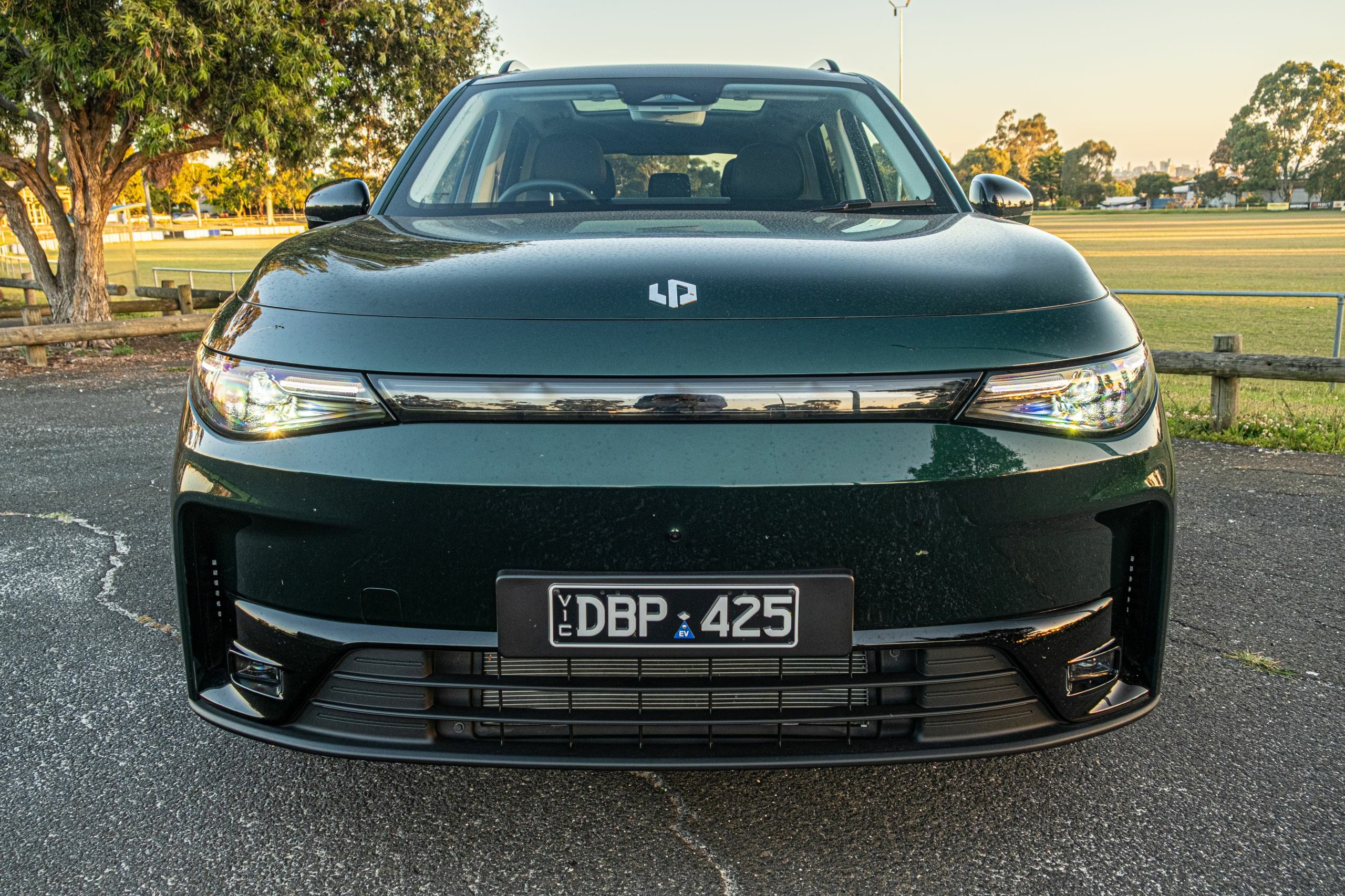
Visually, there’s nothing differentiating the C10 REEV from the EV. That means it looks as uninspiring as the EV, with not even the slightest bit of personality.
How’s The Interior?
Photos Brad Anderson/Carscoops
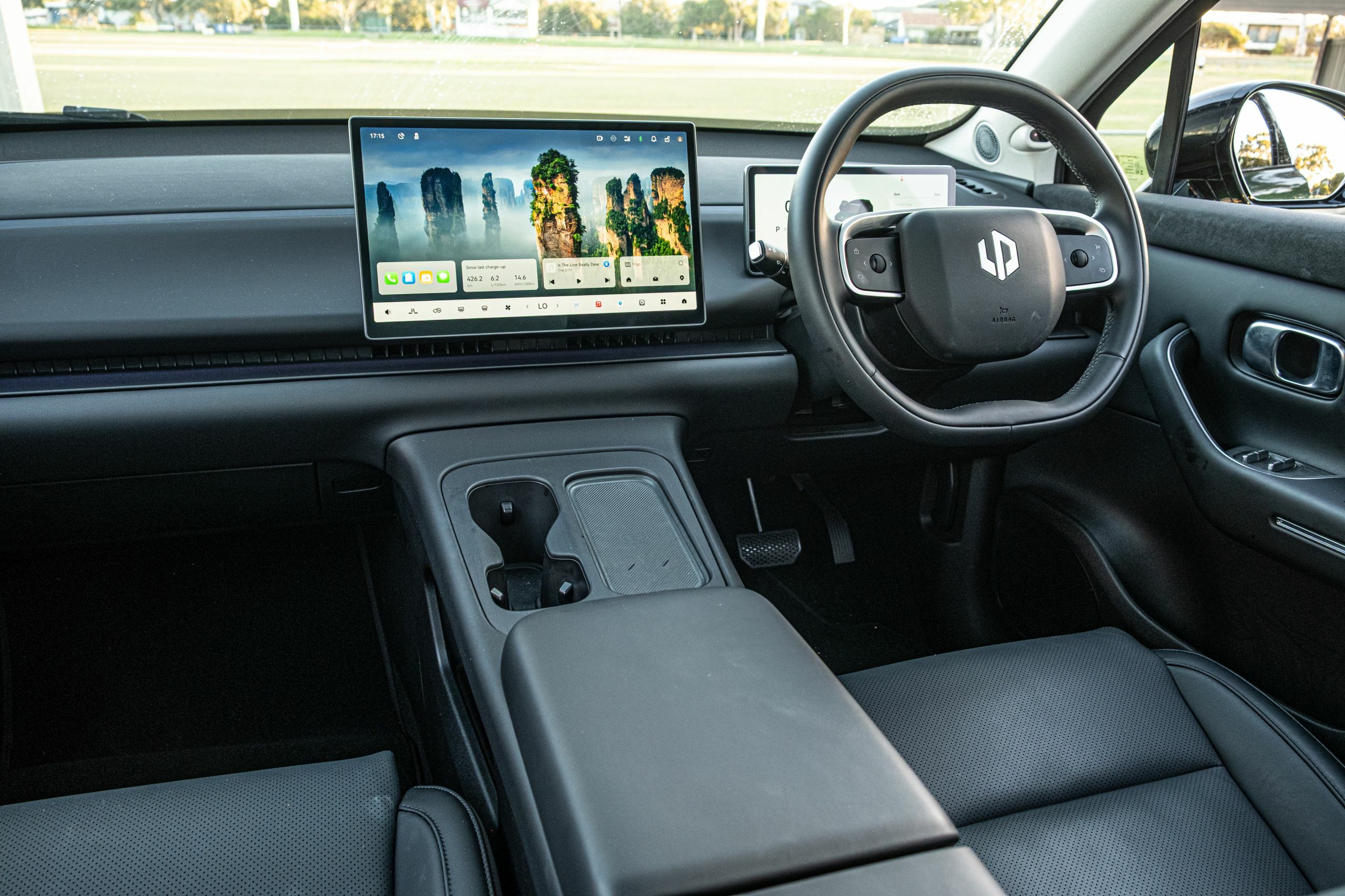
In the cabin, it’s also very familiar. Leapmotor has done exactly what Tesla popularized with the Model 3 and Model Y, opting for an ultra-minimalist design that some people will love, but others will hate.
A 14.6-inch infotainment display sits at the center of the dash running on Leapmotor’s in-house operating system, which uses Android as its base. While we wouldn’t go as far as to describe the C10’s infotainment as good as Tesla’s, it’s surprisingly not far off.
The tablet-like design doesn’t require a steep learning curve to get used to, and the display is very responsive to the touch. Admittedly, some of the settings hidden in the menu are a little too comprehensive, and it can be difficult to find things while on the move. Fortunately, there is a swipe-down notification menu that can be configured with dozens of different toggles for important vehicle functions, ensuring they’re never more than a couple of touches away.
Photos Brad Anderson/Carscoops
Frustratingly, the display does not support smartphone mirroring, so there’s no Android Auto or Apple CarPlay, leaving me to place my phone in the cupholder for navigation. Additionally, the quality of the reversing camera is shocking and not up to modern standards. The infotainment system also needs 15 seconds to load after the car is turned on, by which time I’d often already reversed without the camera loading and started driving away.
All of the materials used feel pleasantly plush, particularly the soft-touch leather adorning the seats, door panels, dashboard, and center console. However, I found that the leather marked very easily, so while it looks nice, it doesn’t stay clean for very long.
Entering and exiting the C10 REEV also turned into a bigger hassle than it should have been. In the first C10 I tested, I easily synced my phone with it and used it as the key. When I tried to use the Leapmotor app on my phone to do the same with this C10, it refused to work. A bit of digging suggests this could have been because the VIN had already been assigned to another device. Apparently, resetting the infotainment system should have fixed it. It didn’t.
Do Small Annoyances Add Up?
This left me with no choice but to use the silly keycard for my two weeks with the C10 REEV. Not only is a keycard inferior to a traditional key in every single way, but it also doesn’t have any buttons, meaning I had to tap the NFC logo on the driver’s side mirror every time I wanted to lock or unlock it. It doesn’t even have a proximity locking/unlocking function, so when unloading things out of the passenger side or the trunk, I’d have to walk back around to the driver’s mirror and tap it.
I get it, keycards are in fashion (thanks, Tesla…), but they are just not nice to use.
My issues didn’t stop here. The air conditioning is genuinely disappointing. With the temperature turned down to its lowest setting, the AC on, and the fan speed at full, the C10 would only blow out mildly cool air, equivalent to what most cars do with the AC turned off and just the fans running. In the Australian summer, that was very annoying.
Set those issues aside, and the cabin of the C10 REEV is a nice place to spend time. It’s spacious, and there’s plenty of room in the rear, too. Cargo space is also good, as it can swallow up to 546 liters (19.2 cubic feet) or 1,375 liters (48.5 cubic-feet) with the rear seats folded down.
Smooth Power
Photos Brad Anderson/Carscoops
Out on the open road, I quickly grew quite fond of the range-extender powertrain, and actually preferred it to the more traditional full-EV version.
As the engine is only ever operating in the background to charge the battery, it doesn’t intrude on the driving experience at all. In fact, even when I had the Leapmotor in the mode that prioritizes the engine charging the battery, the four-cylinder barely ever revved to beyond 2,000 rpm, so it couldn’t be heard. Around town, it’ll happily sit at less than 1,200 rpm, remaining completely silent while the instant power and torque of the rear-mounted electric motor make the REEV drive just as smoothly as an EV.
I ended my two weeks with the C10 REEV averaging 14.5 kWh/100 km, while fuel consumption sat at 6.1 l/100 km (38.5 US mpg).
On The Road
Admittedly, the Leapmotor isn’t particularly fun or engaging to drive. It takes 8.5 seconds to reach 100 km/h (62 mph) and isn’t the type of SUV that likes to be driven in a sporty manner. Drive it calmy, and it does the job just fine.
As I found in my first test of the all-electric C10, the driver assistance systems leave a lot to be desired. The SUV includes both adaptive cruise control and active lane centering, neither of which works well. Even if the adaptive cruise is set and the C10 detects a vehicle ahead, it’ll struggle to maintain a consistent distance from it, repeatedly accelerating and decelerating to hold position.
The lane centering also needs improvement. I spent hours on end sitting on well-marked highways during my time with the Leapmotor, and it’d consistently ping-pong between the lines. That’s unacceptable in this day and age.
The C10 REEV also has several other overactive sensors, like the driver attention monitoring system and speed limit warnings. Fortunately, these can be easily disabled in the swipe-down menu, and I didn’t find them to be as intrusive as I did when I first tested the C10 six months ago.
Ride quality is good most of the time, but there were a few instances when it felt like I hit the bump stops after going over speed bumps a little too fast, which most cars would have easily dealt with. The steering is exceptionally light, particularly in the Comfort setting, but it can be configured to feel slightly firmer in Sport mode.
Verdict
Photos Brad Anderson/Carscoops
The Leapmotor C10 REEV has promise. The trick hybrid powertrain works well, combining all of the benefits of a traditional EV like smoothness and instant power, without any of the downsides like range anxiety, particularly in Australia, where the charging network is sub-par.
However, the overall experience of living with the C10 is marred by poorly calibrated safety systems and some tech gremlins that need to be fixed. If these systems can be improved with software updates, the C10 REEV would be a very tempting proposition.
Cadillac’s flagship SUVs are very evenly matched in a sprint.
Electric Escalade IQ packs 750 hp and 785 lb-ft of torque.
Escalade-V delivers an almighty 682 hp and 653 lb-ft total.
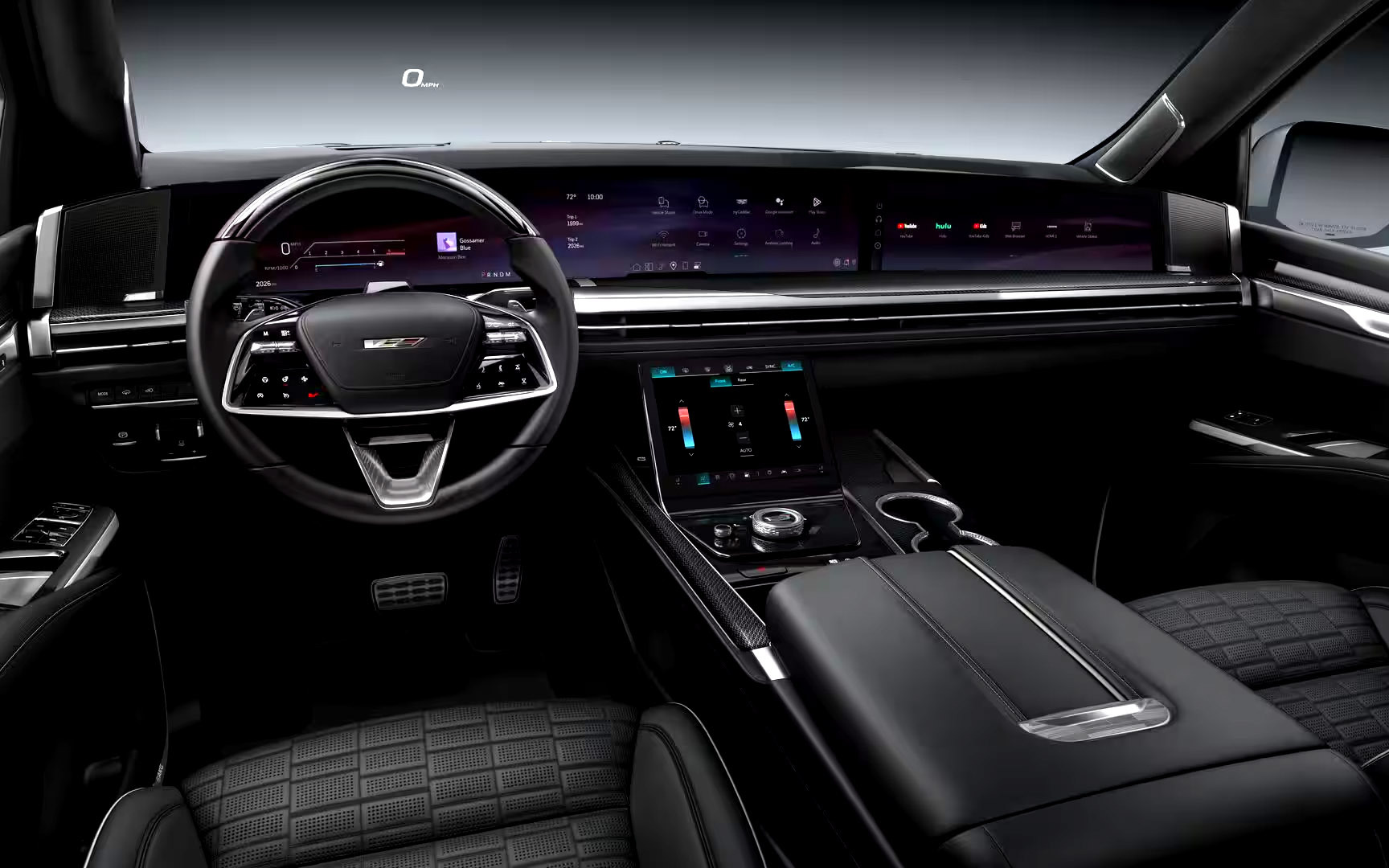
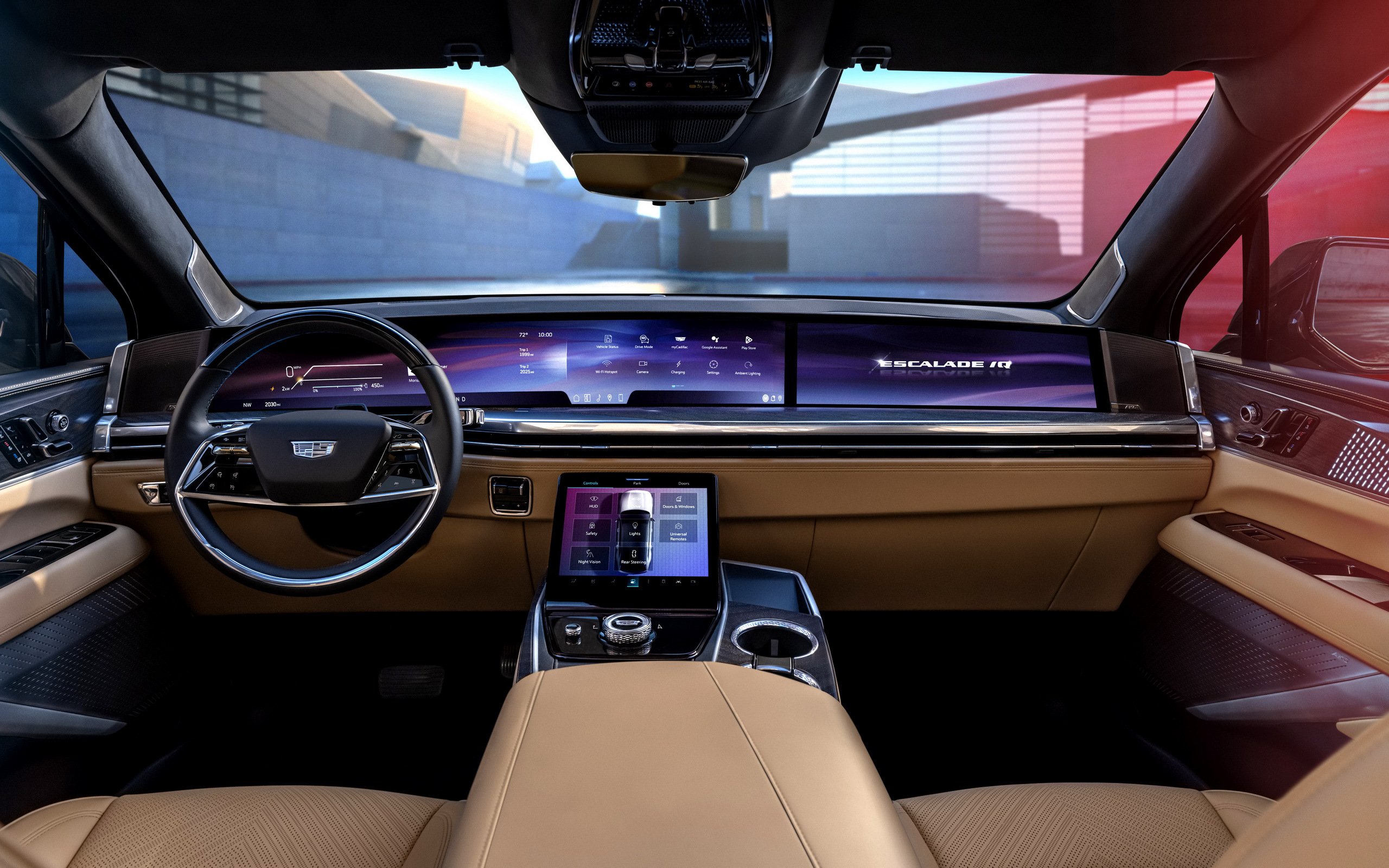
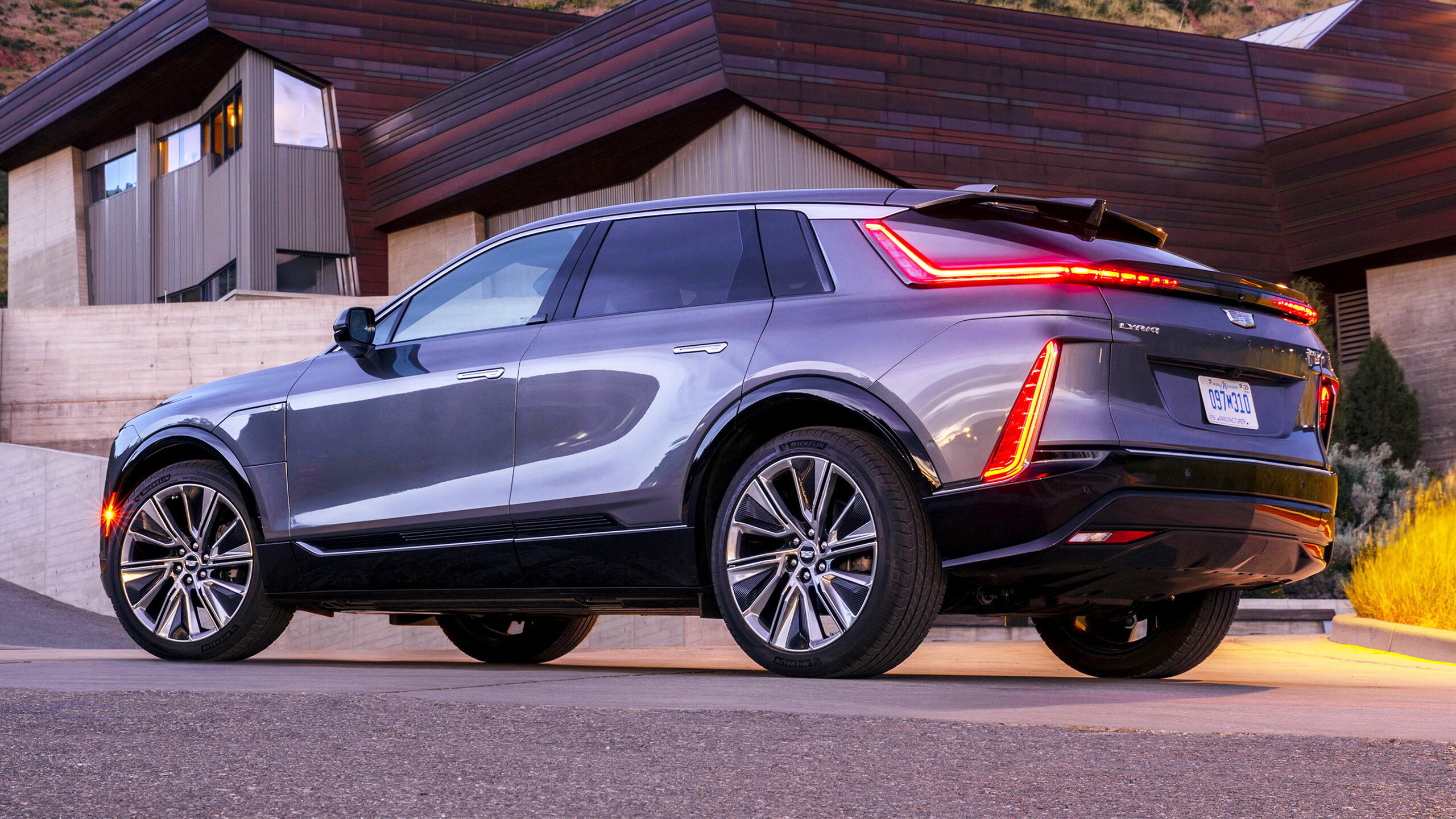
There’s something uniquely American about building an SUV with insane straight-line performance and then expecting it to hustle like a sports car. The Escalade-V and its unrelated Escalade IQ electric sibling may be two of the most gloriously excessive vehicles Cadillac sells today. Both deliver supercar levels of power, which makes the obvious question hard to resist.
Curious to see which one is actually quicker, Edmunds lined them up for one of its U-drag races. Watching these two dinosaur-sized SUVs subjected to hard launches, heavy braking, and tight turns feels surreal and just plain absurd in the best possible way.
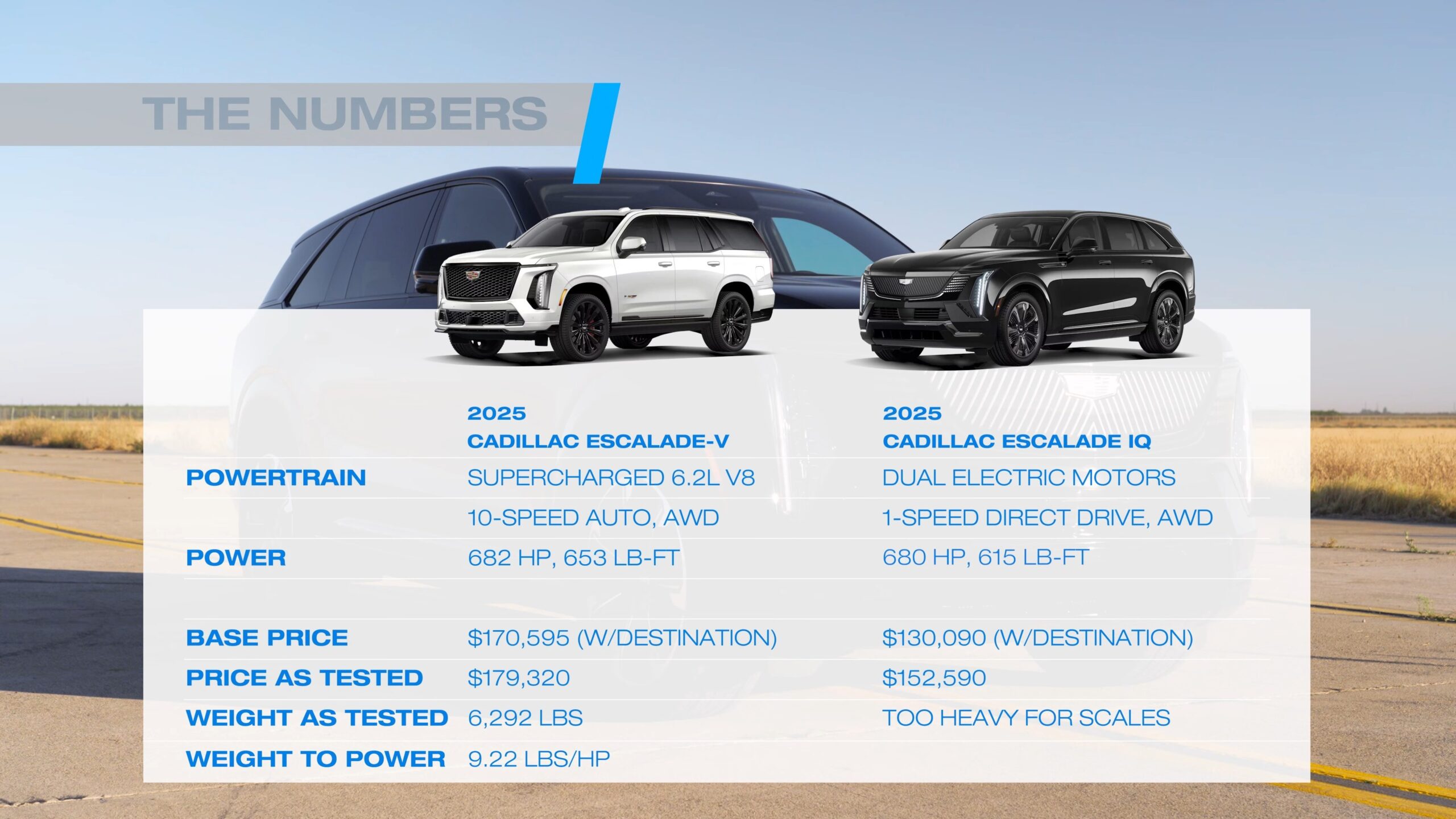
On paper, the Escalade-V and IQ are closely matched, even though their powertrains could not be more different. The V is powered by Cadillac’s 6.2-liter supercharged V8, producing 682 hp and 653 lb-ft (885 Nm) of torque, paired with a 10-speed automatic transmission that drives all four wheels.
By contrast, the Escalade IQ relies on a pair of electric motors and a substantial 212 kWh battery pack. In standard form, it delivers 680 hp and 615 lb-ft (834 Nm) of torque. Switch it into Velocity Max mode, and those figures climb to a healthier 750 hp and 785 lb-ft (1,063 Nm).
The Escalade IQ needs this additional grunt to somewhat offset its insane heft. Whereas the combustion-powered V weighs around 6,300 lbs (2,857 kg), depending on configuration, the IQ weighs in at 9,100 lbs (4,127 kg), making it one of the heaviest passenger vehicles currently on sale.
That weight difference shapes the entire contest. In a straight line, instant electric torque can mask mass for a moment, but physics always keeps score. The U-drag format, with its hard launch, heavy braking, tight turn, and sprint to the line, exposes not just power but how well each SUV manages it.
During the first test, the V8-powered version got the jump off the line. After the U-turn, however, the transmission struggled to find the right gear, and the hesitation cost the Escalade-V its lead. That opened the door for the electric IQ to surge past and cross the line several lengths ahead.
Things were closer in the second race. This time, the electric model had the best launch, although the V regained some of that lost time under braking. The duo was neck-and-neck as they raced to the finish, but the IQ just ran out of puff at the top end, allowing the V to narrowly win.
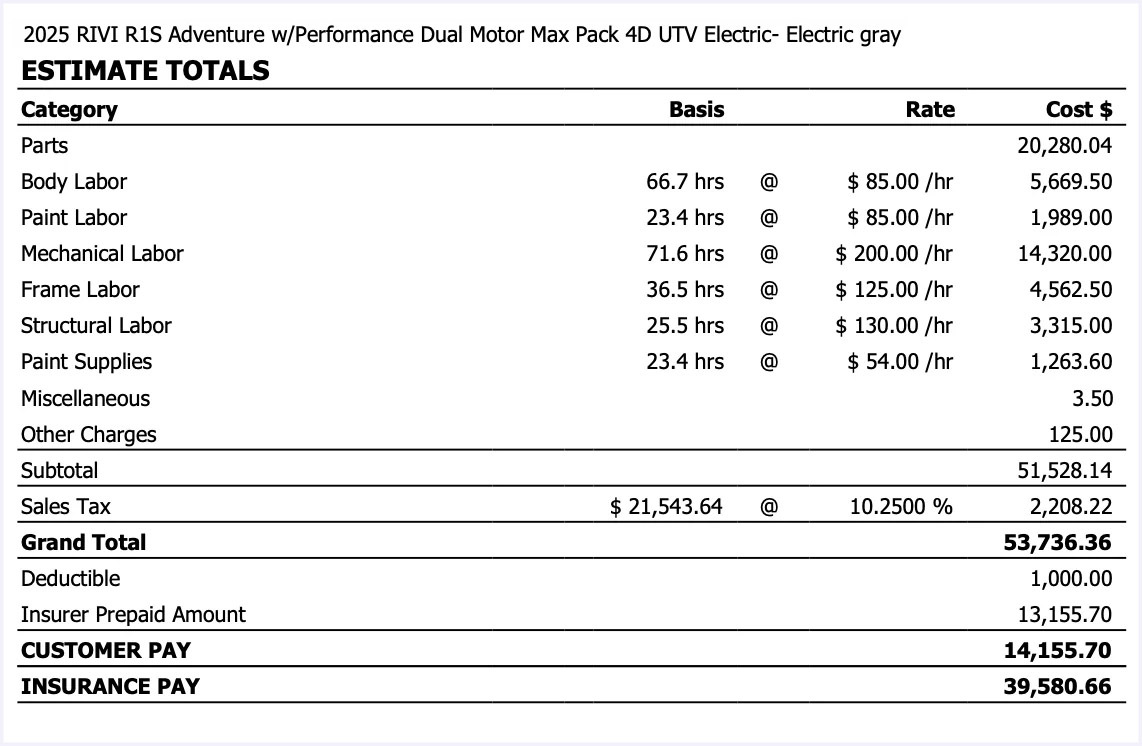
Rear quarter damage triggered a $53,736 repair bill.
Labor alone accounted for $29,856 of the estimate.
Quarter panel replacement requires major disassembly.
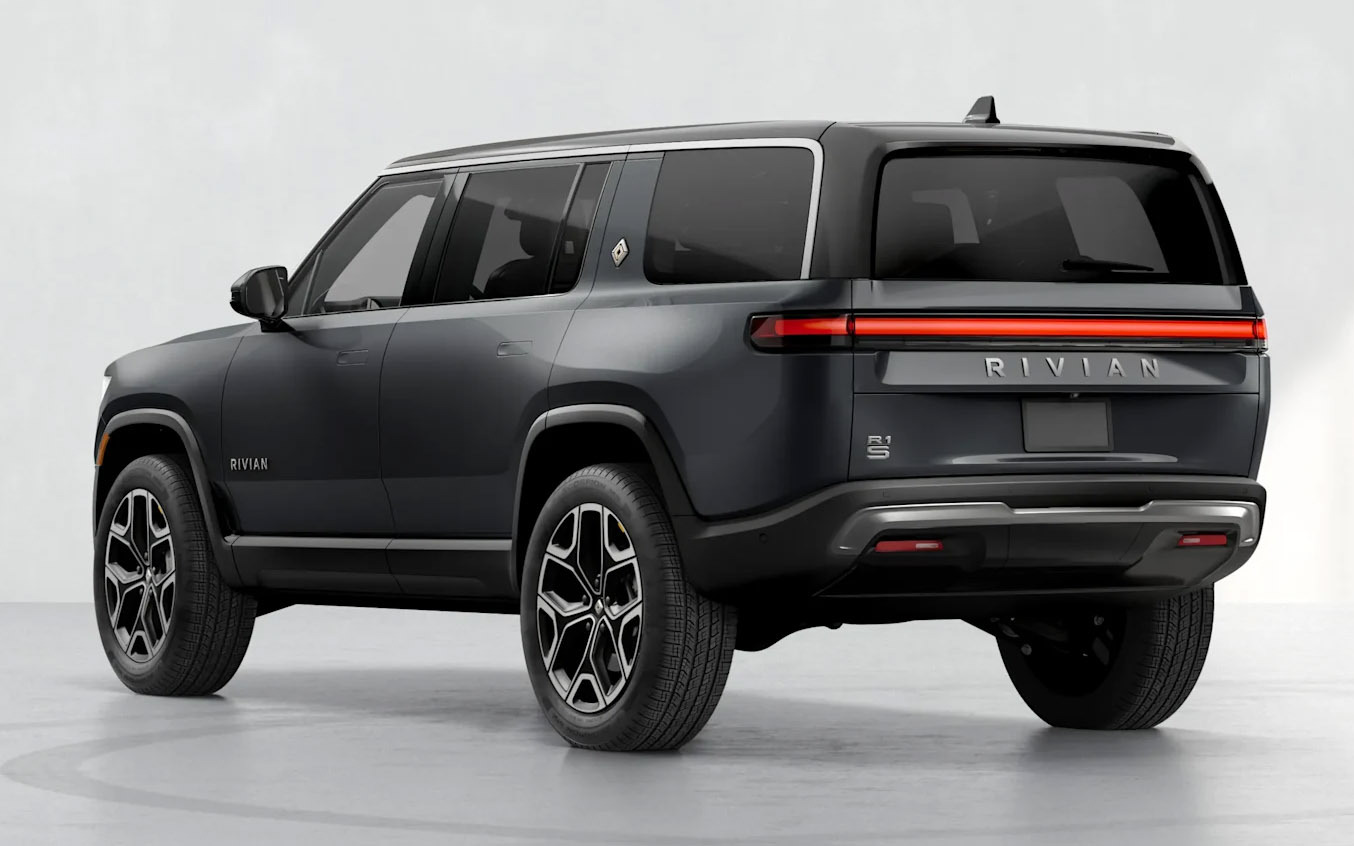
Modern vehicles may be packed with advanced engineering and clever design, but even a minor fender-bender can sometimes trigger catastrophic repair bills. If you own a Rivian R1S or R1T, you might want to keep your fingers crossed that one of the rear quarter panels is never damaged. If it is, repair costs can climb past $50,000, prompting some insurers to write off vehicles that, at least on paper, could be repaired.
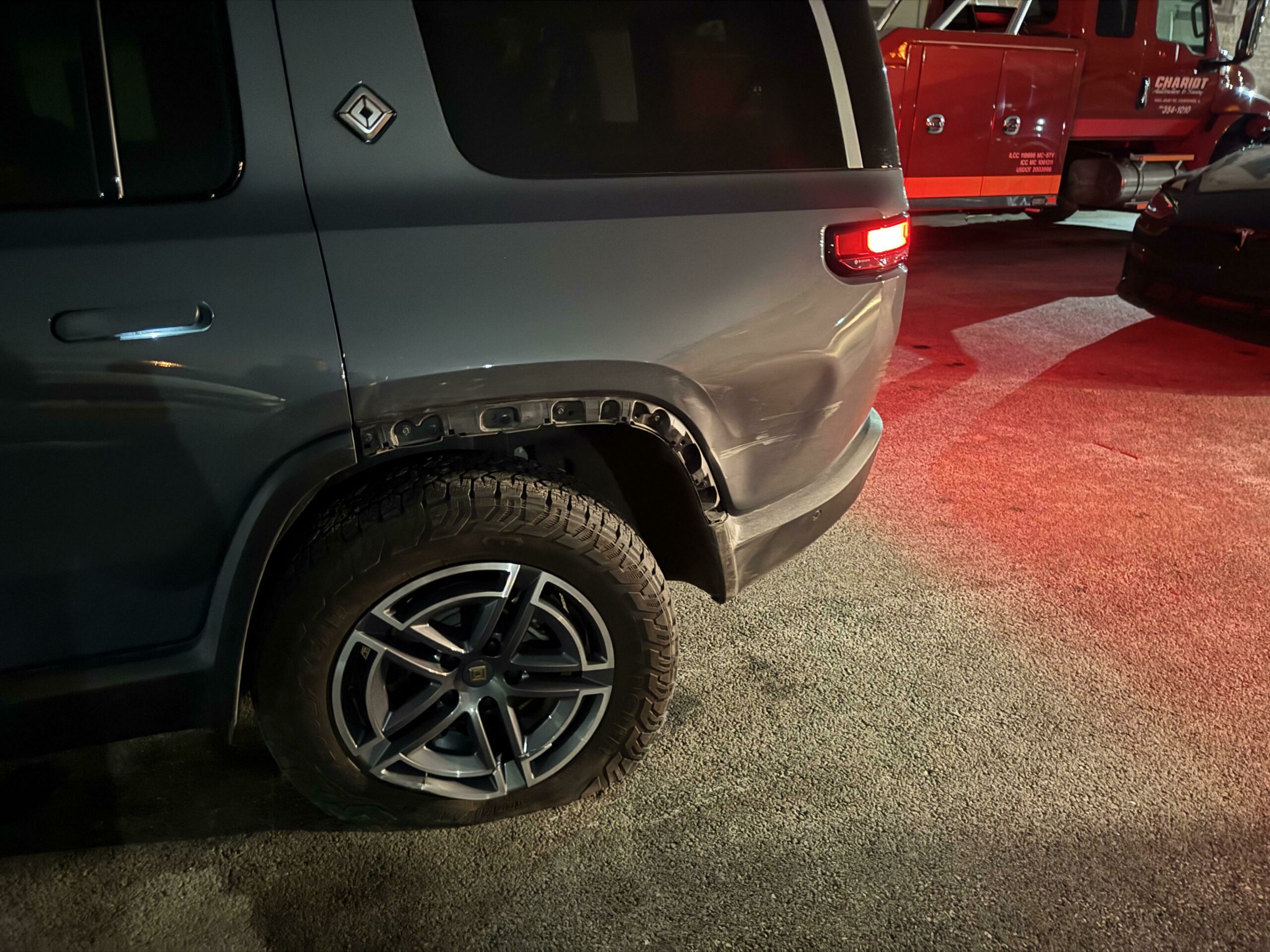
An R1S owner recently took to Reddit to share the bill shock he experienced after someone hit his wife’s SUV while it was parked. A photo posted on the forum shows a large dent in the rear quarter panel, along with damage to the wheel and, as it turns out, the frame and suspension too.
In the grand scheme of things, the damage does not appear catastrophic. You might reasonably assume the repair would run a few thousand dollars. That assumption would be wrong.
An authorized Rivian repair facility quoted the owner $53,736 to fix this R1S, or more than half the MSRP of a 2026MY that in this configuration, retails for around $100,000. Of that sum, $29,856 is attributed to labor alone. Insurance would cover close to $40,000, leaving the owner responsible for a little over $14,000.
Why Does It Cost So Much?
It appears much of the cost is related to the complexity of replacing the quarter panel, as it can’t simply be removed and replaced with another. Previous cases of similar damage indicate that much of the SUV’s interior must be stripped and that most of the R1S’s side must be removed, cut, and reassembled. In some cases, it’s been reported that the panoramic glass roof may also have to be removed.
Things can be even costlier for owners of R1T models, as the rear-quarter panel is even larger and stretches up and over the side windows, ending at the A-pillars.
According to the owner, “replacing the quarter panel is the majority of that cost. No motor battery or frame damage”. Some commenters questioned the reference to frame damage because the repair quote specifically mentioned it in one line item. The owner, however, clarified that “the side of the vehicle is considered an integral part of the frame”.
He also explained that “suspension work was quoted as 13 total hours of labor vs. about 250 hrs total. So roughly thats 5% of the price”, adding that this was “one of the top Rivian certified shops in our area, who Rivian themselves recommended”.
Without a more detailed breakdown, it is difficult to draw firm conclusions. Still, this is hardly the first time we’ve seen excessively high Rivian repair costs, including a $21,000 estimate for what was described as a relatively minor backup incident.
A Pattern Of High Repair Bills
While this particular example appears to involve underlying damage, which may justify more extensive work, the total still sounds steep. In cases without structural or deeper damage, more affordable solutions do exist.
Many paintless dent removal specialists have repaired similar quarter panel damage for a fraction of the quoted insurance repair cost, restoring the panel rather than replacing it. Just pray that you don’t damage the taillight too.
All 24 EVs were driven until they could not hold speed.
Two small EVs lost just 29 percent of claimed range.
Several big names gave up more than 40 percent range.
Winter has a way of exposing weaknesses, and in Norway it does so without mercy. A group of 24 of the newest and best EVs were recently subjected to one of the most demanding range tests imaginable in the depths of Scandinavia’s winter, and it was an American made EV that came out on top.
Conducted by Norwegian publication Motoras part of its biannual El Prix winter range program, the evaluation set out to measure how bitter cold affects real world driving range, and some of the findings are striking.
How The Test Was Conducted
Held twice a year, in winter and in summer, the drive follows a predetermined route. This time, 24 EVs were evaluated in temperatures that dipped as low as -24°F (-31°C), the coldest conditions recorded in the test event’s history and well below previous editions, when temperatures rarely fell under 14°F (-10°C).
For much of the global population, numbers like these might as well belong in weather reports from another planet. Still, they provide a useful stress test. As in previous El Prix runs, each car was driven along the set route until it could no longer maintain the posted speed limit.
The Winners
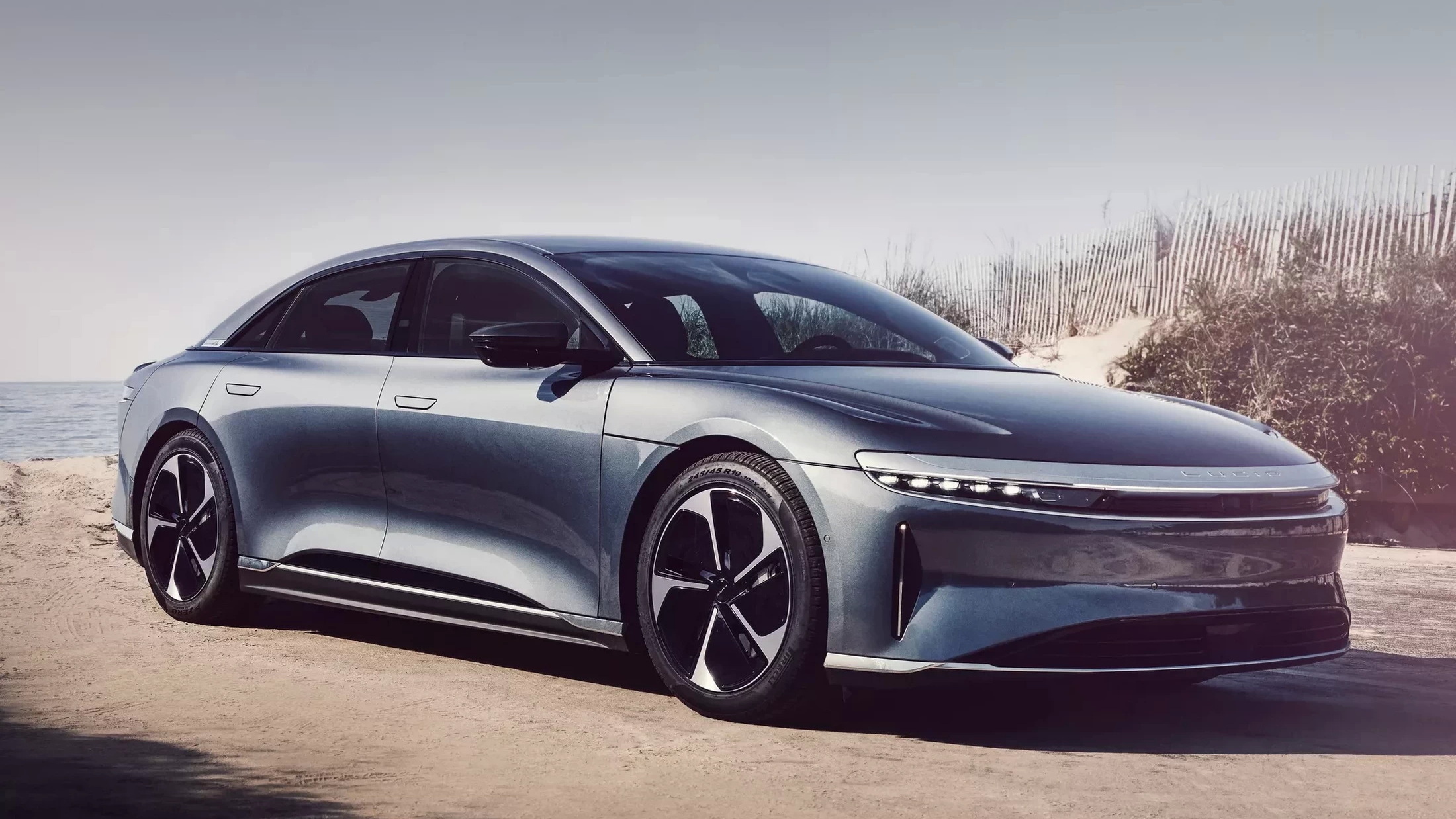
Coming into the test, the Lucid Air had the highest quoted WLTP range of 960 km (596 miles). In Motor’s winter run, it covered 520 km (323 miles) before the battery was fully depleted. On the other hand, while that figure was higher than any of the other cars evaluated, it is still 46 percent lower than the claimed range.
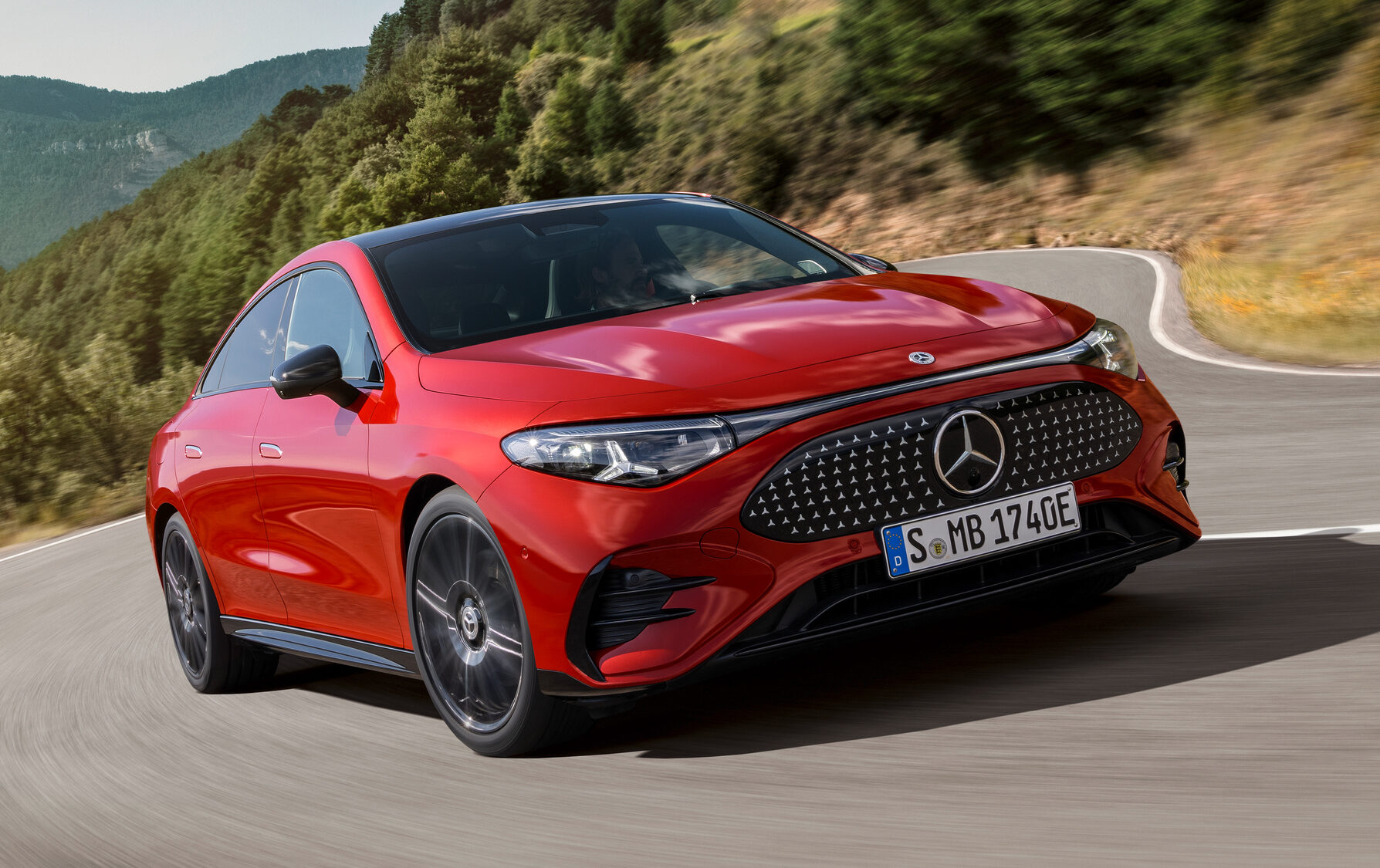
In terms of outright driving range in the frigid conditions, the Mercedes-Benz CLA also performed well, driving 421 km (261 miles), or 41 percent less than its claimed 709 km (440 miles) WLTP figure. Other strong performers included the Audi A6, which traveled 402 km (250 miles), the BMW iX with 388 km (241 miles), and the Volvo ES90 with 373 km (232 miles).
Total driving range, though, is not the most revealing part of the story. What stands out more is how much, or how little, each car’s range shrinks in the cold. By that measure, the MG 6S EV and Hyundai Inster led the field, with their ranges falling just 29 percent from their WLTP claims. They recorded 345 km (214 miles) and 256 km (159 miles), respectively.
A second Chinese MG also performed well, namely the IM6, with its range falling 30 percent from a claimed 505 km (314 miles) to 352 km (219 miles). The KGM Musso was another strong performer, seeing just a 31 percent drop in its range from 379 km (235 miles) to 263 km (163 miles).
At the other end of the scale, the Opel Grandland matched the Lucid Air for the steepest decline, surrendering 46 percent of its claimed range in the cold. The Volvo EX90 was not far behind with a 45 percent drop, while the Tesla Model Y and Suzuki eVitara each gave up 43 percent. The Skoda Elroq and Mercedes CLA also struggled to contain losses, both finishing with a 41 percent reduction.
Spy photographers recently snapped the facelifted Range Rover and now they’ve gotten a glimpse of the second-generation Velar. It will be a radical departure as the model becomes even sleeker and adopts a fully electric powertrain.
The redesigned crossover is expected to debut later this year, but it’s still covered in heavy camouflage. This hides a number of key details, but we can expect a rounded front end with a fully enclosed grille that is flanked by slender headlights. They’re joined by a clamshell hood and a wide lower intake.
The profile immediately stands out as the Velar has a rakish windscreen that flows into a steeply sloping roof. This results in a far more dynamic design, but it looks like this could come at the expense of cargo space and rear seat headroom.
SHProshots
A closer inspection reveals a rear-mounted charging port as well as flush-mounted door handles. They’re joined by streamlined bodywork, which is disguised by subtle bumps.
The rear end is the most interesting angle as we can see a distinctive liftgate with an upright tail. We can also get a glimpse of a roof-mounted camera, which could indicate the Velar will eschew a rear window. That remains to be seen, but Polestar led the way and Jaguar is following suit.
While we’re hopeful that a rear window will be included, the model will have a spoiler and wraparound taillights. They’re accompanied by a minimalist bumper, which features horizontal reflectors.
What Will Power The New Velar?
SHProshots
Land Rover has primarily been focused on promoting the Range Rover Electric, so little is known about the Velar at this point. However, the two models could have a lot in common.
If that’s the case, the Velar could have a 117 kWh battery pack as well as a dual-motor all-wheel drive system that produces around 542 hp (404 kW / 550 PS) and 627 lb-ft (849 Nm) of torque. That being said, we wouldn’t be surprised if there were multiple configurations on the Velar.
While there could be some similarities between the two models, it’s important to note the Velar will ride on the brand’s new electrified modular architecture (EMA). It will be built at the company’s Halewood plant and be a major test to see if Land Rover fans are ready to go electric.
SHProshots
Before yesterdayElectric Vehicles - Latest News | Carscoops
Mercedes is planning to introduce dozens of new models.
S-Class Maybach arrives in March, AMG GT also due this year.
16 new models coming in 2026, while 14 are slated for 2027.
Mercedes held their capital markets day presentation yesterday and announced plans to stage seven world premieres in the next three months. That’s an impressive number, especially considering the company has already introduced the facelifted S-Class and GLC 53.
The automaker didn’t delve into many specifics, but confirmed the new Mercedes-Maybach S-Class debuts in March. The company added the AMG GT 4-Door arrives later this year, while the SUV variant follows in 2027. That year will also see the unveiling of the G-Class Cabriolet.
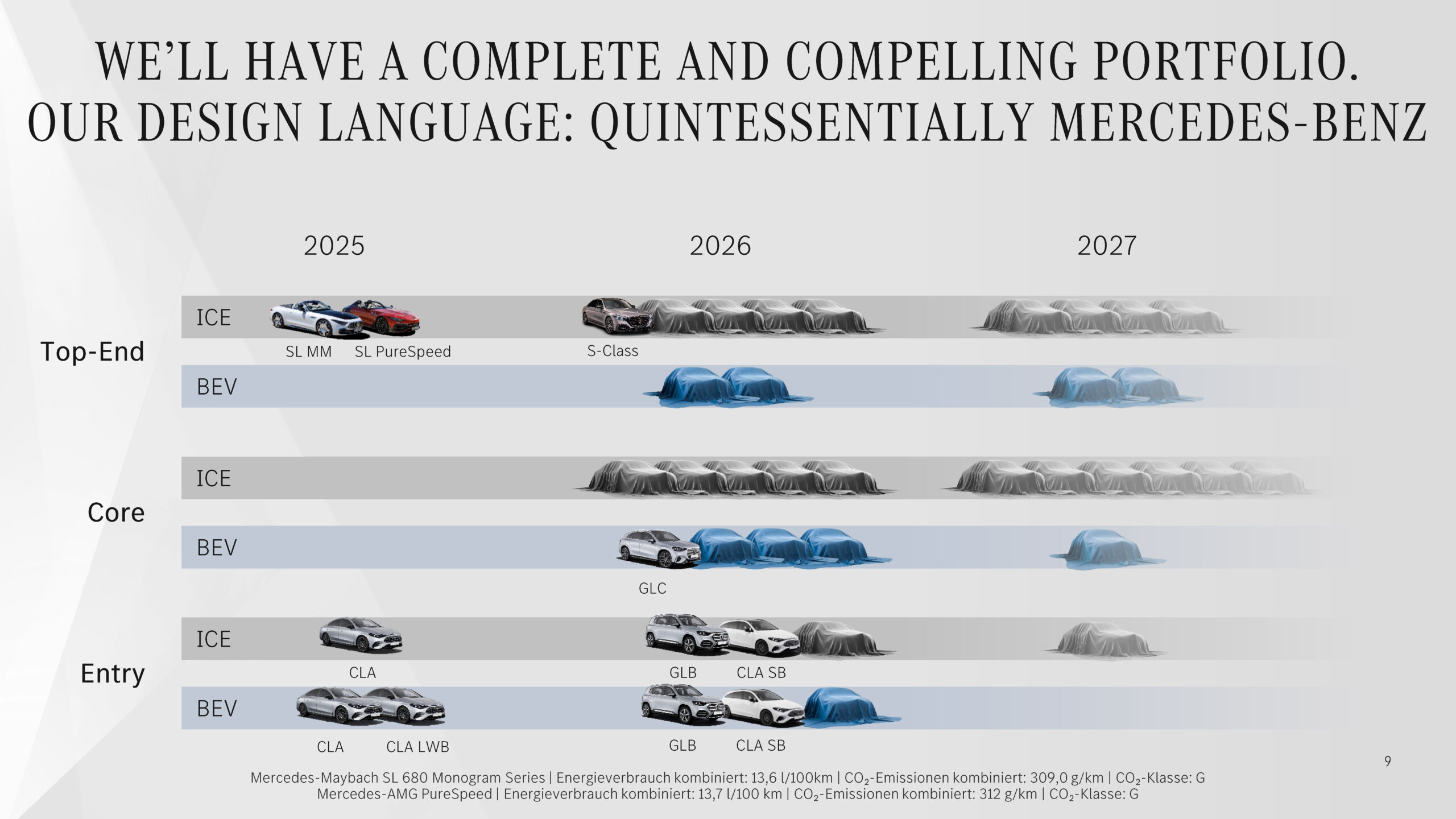
While details are light, a slide suggested Mercedes will introduce 16 vehicles this year. Six of them will be fully electric, while the others will have internal combustion engines.
Many of these will be “Top-End” vehicles, which implies we can expect a number of new S-Class variants including the aforementioned Maybach. Some of the others are presumably AMG versions.
As for the Top-End EVs, spy photographers have snapped a facelifted EQS on multiple occasions. It’s expected to feature starry lighting units, a new 800 volt electrical architecture, and an upgraded powertrain. The latter could combine an improved battery with more efficient motors.
2026 will also see the introduction of five Core ICE-powered vehicles and three EVs. One of the latter appears to be the new GLC EQ L for China, which was mentioned in one of the presentations.
On the Entry side of things, there will be a new ICE and EV model. It will join the CLA and GLB, suggesting this could be the redesigned GLA.
2027 will see the introduction of 14 models, three of which will be fully electric. A vast majority of these will become part of the brand’s Core family, while some of the Top-End models could be the facelifted SL.
Mercedes also mentioned a new long-wheelbase GLE for China, which will presumably be based on the facelifted crossover. However, it’s unclear when either model will arrive.
Financials
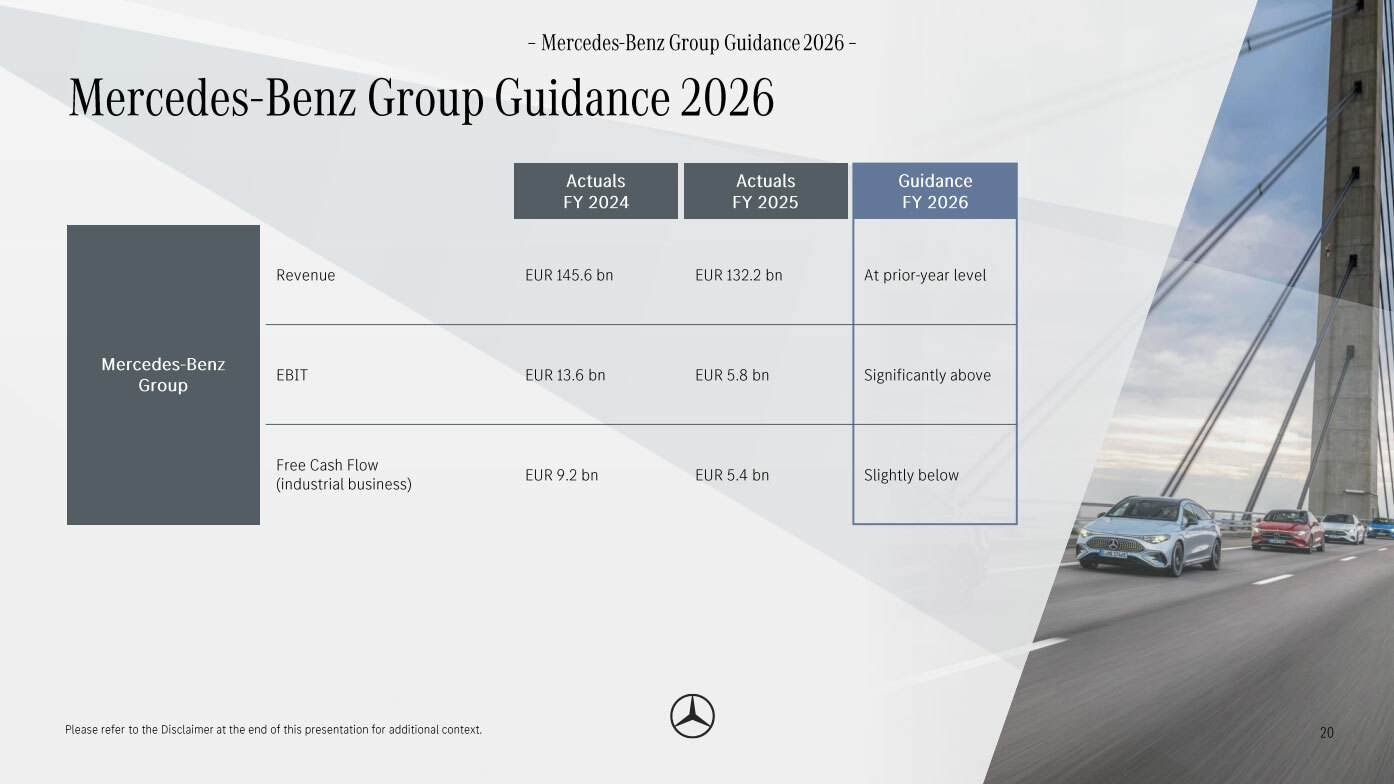
Fun stuff aside, Mercedes announced adjusted earnings before interest and taxes fell from €13.7 ($16.3) billion in 2024 to €8.2 ($9.7) billion last year. The company blamed the drop on challenges in China, tariffs, and foreign exchange headwinds. On the bright side, the company reduced research and development costs related to future architectures and technologies.
Investors probably won’t like the news, nor will they be thrilled by the proposed dividend of €3.50 ($4.15) per share. That’s significantly less than last year’s payout of €4.30 ($5.10).
Chinese tech giant sold 37,869 YU7s in the first month of the year.
Geely placed two strong sellers in the national top five chart.
VW posted several top sellers despite the wider market slowdown.
January tested the resilience of China’s auto market, exposing fault lines for some brands while spotlighting the rare breakout success. Many domestic manufacturers reported sales declines, with BYD among the most notable names to feel the squeeze. Yet even in a cooling climate, certain models found remarkable momentum. None more so than the Xiaomi YU7.
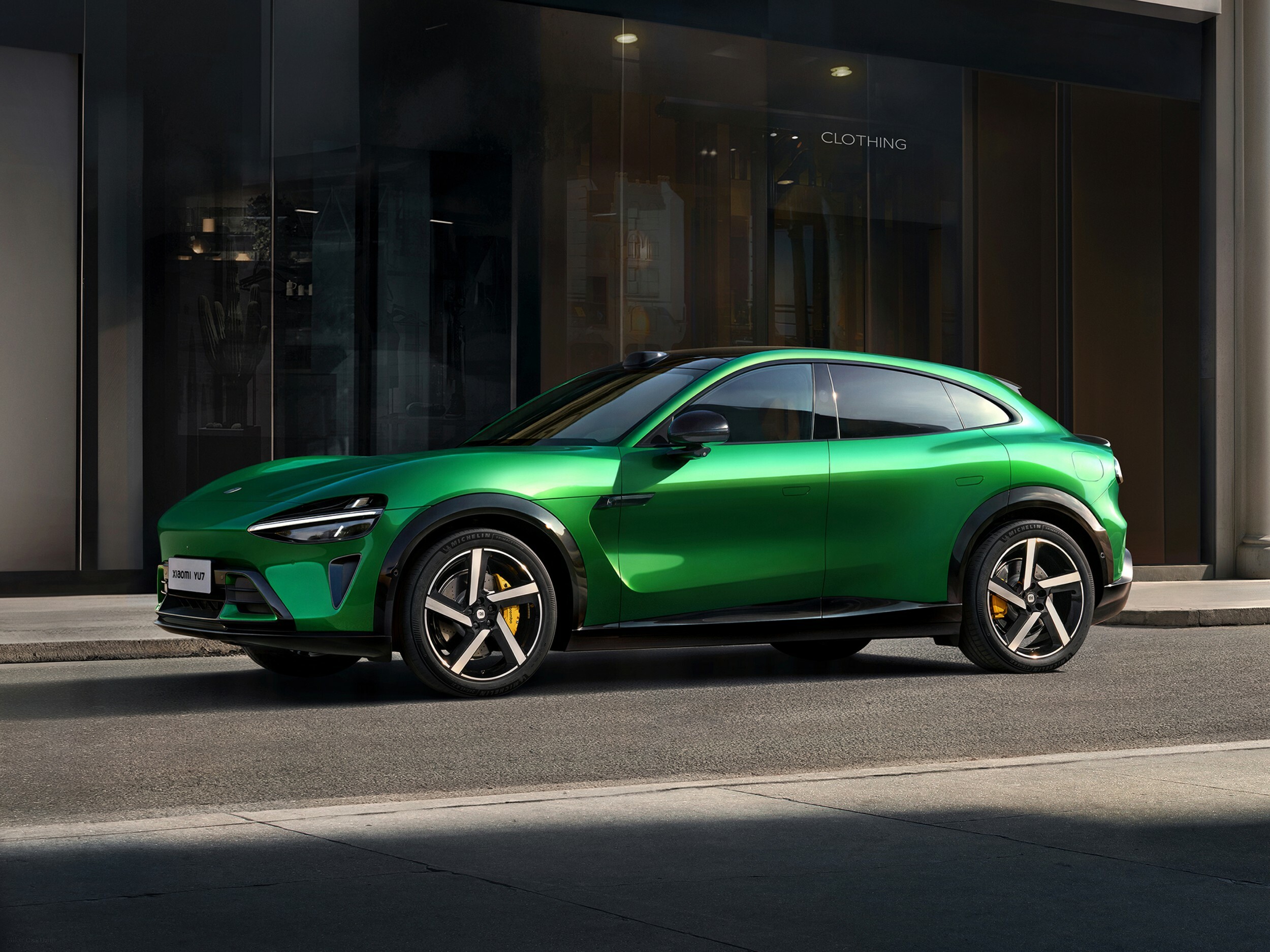
The all electric SUV, positioned as a rival to the Tesla Model Y and styled with more than a passing resemblance to the Ferrari Purosangue, was the best-selling new vehicle in China last month.
According to figures shared by Autohome, it moved 37,869 units, comfortably ahead of the Geely Boyue L in second place with 34,176 sales. The Geely Geome Xingyuan followed with 29,007, while the Aito M7 secured fourth with 26,454 units.
The presence of two Geely models in the top 5 best-sellers reflects a strong month for the group, with sales up 1 percent year-on-year to more than 270,000 units. The M7 from Aito, backed by Huawei and Seres, also surged in popularity, as did other models from the brand, helping it deliver more than 40,000 vehicles, a surge of over 80 percent from January 2025.
Sales of the YU7 in China have remained strong in recent months. December saw 39,089 units sold, making it the third best selling new car in China at the time. That figure represented a clear rise from November’s 33,729 and October’s 33,662.
It has also moved decisively ahead of the Tesla Model Y, selling more than twice as many units. The Model Y ranked only 20th last month, with 16,845 sales, a result that would have seemed unlikely not long ago. In fact, it was China’s best-selling model in December.
Perhaps the biggest surprises came from Volkswagen. It ranked fifth in China’s top 20 best-selling cars last month, led by the Sagitar with 25,316 units sold. VW also sold 23,481 Lavidas, 21,330 Tiguan Ls, 20,799 Passats, and 19,306 Magotans. In addition, the Nissan Slyphy sold 24,209 units, indicating that not all hope is lost for legacy carmakers in the country.
Things weren’t so rosy for BYD. It sold 205,518 vehicles in China last month across its brands, a significant decline from the 300,538 in January 2025. Only one of its models entered the top 20, the Fang Cheng Bao Ti7, which ranked 18th with 17,116 units sold.
Trump administration is taking aim at EV chargers.
It wants to significantly increase US parts content.
Rule would only apply to federally funded chargers.
The Trump administration has found a new way to hamper electric vehicles as Transportation Secretary Sean Duffy is eyeing an expanded “Buy America public interest waiver” for electric vehicle chargers. The proposal would increase the required domestic content from 55 percent to 100 percent.
Needless to say, that’s a tall order and would likely require significant changes to supply chains. The move would also likely drive up costs, while limiting options.
While there are obvious drawbacks, the government pointed to several benefits as they suggested the change would “strengthen domestic manufacturing, generate new American jobs, make U.S. businesses more competitive, and address potential national security concerns.”
They went on to say the administration believes manufacturers have the capacity to produce chargers in America with high domestic content.
Security Concerns In Focus
The Federal Highway Administration added the change would “protect Americans from foreign-made EV charger components that use technology with cybersecurity vulnerabilities.” Speaking of which, there have been growing concerns about vulnerabilities in American infrastructure.
Last year, the FHA warned everything from traffic signs to cameras and weather stations could be equipped with hidden cellular radios installed in batteries or inverters. The fear is these could be used for surveillance or conducting a targeted outage during the outbreak of hostilities.
What Happens Next?
The proposal hasn’t been finalized and the requirement would only apply to federally funded EV charger projects. For now, it appears there will be a comment period before the government makes its final determination.
In a statement, Secretary Duffy said “We’re ensuring that if Congress wants to see these chargers built, we put America First. Doing so will unleash American manufacturing, protect our national security, and prevent taxpayer dollars from subsidizing our foreign adversaries.”
US EV registrations dipped for the first time in a decade last year.
December sales plunged 48 percent after the EV tax credit repeal.
Analysts expect a slow recovery as prices and charging improve.
After a decade of growth, America’s electric car boom has stopped booming. In 2025, EV registrations slipped 0.4 percent to 1.3 million units, marking the first annual decline in at least 10 years. That’s not exactly a collapse, but it is the first crack in what once looked like an unstoppable surge.
The real drama arrived in December. Registrations plunged 48 percent year over year to just 75,427 vehicles after Congress repealed the $7,500 federal EV tax credit. EVs’ share of the overall market tumbled from 9.9 percent in December 2024 to 5.3 percent in the same month in ’25.
For the full year, EVs accounted for 7.8 percent of light vehicle registrations, down slightly from 8 percent in 2024, according to S&P Global Mobility data reported by Auto News. Meanwhile, total vehicle registrations rose 2.2 percent to 16.25 million units. In other words, Americans kept buying cars, but they increasingly chose ones with old-fashioned combustion engines.
Warning Signs Were There
The slowdown didn’t come out of nowhere. Growth had already cooled from triple-digit surges earlier in the decade to an 11 percent gain in 2024. Through the first half of 2025, EV registrations were still up 4.6 percent before the July announcement that the tax credit would vanish at the end of September. Buyers rushed to beat the deadline in the third quarter, then the market fell silent in the fourth.
Price remains the elephant in the charging bay. Even with incentives, EV sticker prices have hovered above what mainstream buyers feel comfortable paying. Early adopters are largely spoken for, and the next wave of customers worries about charging access and range anxiety. Hybrids have quietly become the safe middle ground.
Tesla Trouble
Tesla, still the heavyweight champion of EV sales, saw its registrations drop 6.8 percent for the year to 570,418 vehicles. Its market share slipped 3.1 percent to 44.9 percent. December was painful but not catastrophic, with a 35 percent decline.
The Model Y held its crown, but the Cybertruck and Model 3 both took heavy hits, and with the Model S and X due to be axed this year and the once-rumored small model not happening, this year is going to be tough, too.
Ford endured an even steeper December slide of 61 percent, while Cadillac enjoyed a rare bright spot thanks to genuinely fresh models, something Tesla badly needs. Rivian and Hyundai also saw declines, underscoring that this was not a one-brand problem, though Rivian does at least have a plan in the form of the smaller R2 SUV that goes on sale this year.
So is that it for EVs? Was it just a brief fad, like fidget spinners? No, analysts expect a slow and steady rebound as automakers trim prices and expand incentives. Charging networks are improving, and some EVs are nearing price parity with comparable gas models. The boom may be over, but the electric story is far from finished.
China banned selling new cars below cost including via subsidies.
Rules bar discounts, tax breaks, and trim upgrades at same price.
Automakers face legal risk if caught violating new pricing rules.
The Chinese government is stepping up efforts to end the price war among local car manufacturers following a sales decline in the first month of the year. In what is the government’s most drastic step yet, there will be a cap on how low automakers can price their vehicles.
Newly-released guidelines from the State Administration for Market Regulation explicitly ban companies from setting prices below the cost of production as part of their efforts to monopolize the market and squeeze out competition.
According to the China Automobile Dealers Association, the price war has caused up to 471 billion yuan ($68 billion) in lost output over the past three years. Market sales dipped by their fastest pace in almost two years in January, declining 19.5 percent year-on-year.
Sales fell by an even more considerable 36 percent from December 2025 to January, plummeting from 2.2 million units to 1.4 million, CTV News reports.
Some analysts predict that domestic demand for new cars in China will fall this year, with sales potentially dropping by up to 3 percent. However, Chinese car companies may offset this by exporting more vehicles to overseas markets. BYD, for example, aims to export 1.3 million battery-electric and plug-in hybrid vehicles this year, up from 1.05 million last year.
The Chinese market regulator has warned that companies that don’t comply with the new rules may face “significant legal risks,” although it didn’t reveal what actions could be taken.
Supplier Payment Cycles Slashed
This new ban on setting prices below the cost of production isn’t the only measure being taken to quell the price war. Tighter government oversight has led many major automakers to reduce their supplier payment cycles from an average of 300 days to under 60 days.
As reported by the South China Morning Post, many Chinese car brands have frequently extended payment cycles to keep cash reserves, enabling them to ramp up research and development. The new government oversight appears to be helping.
“The results showed government intervention worked, as the automotive groups feared they could face severe punishment if they failed to operate in compliance with the authorities’ requirements,” chief executive of the Shanghai Mingling Auto Service consultancy Chen Jinzhu said. “Without delayed payments to suppliers, they will not have sufficient cash on hand to sustain discount wars.”
The flagship version of the E7X delivers up to 671 hp.
Audi will offer 100 kWh and 109.3 kWh battery options.
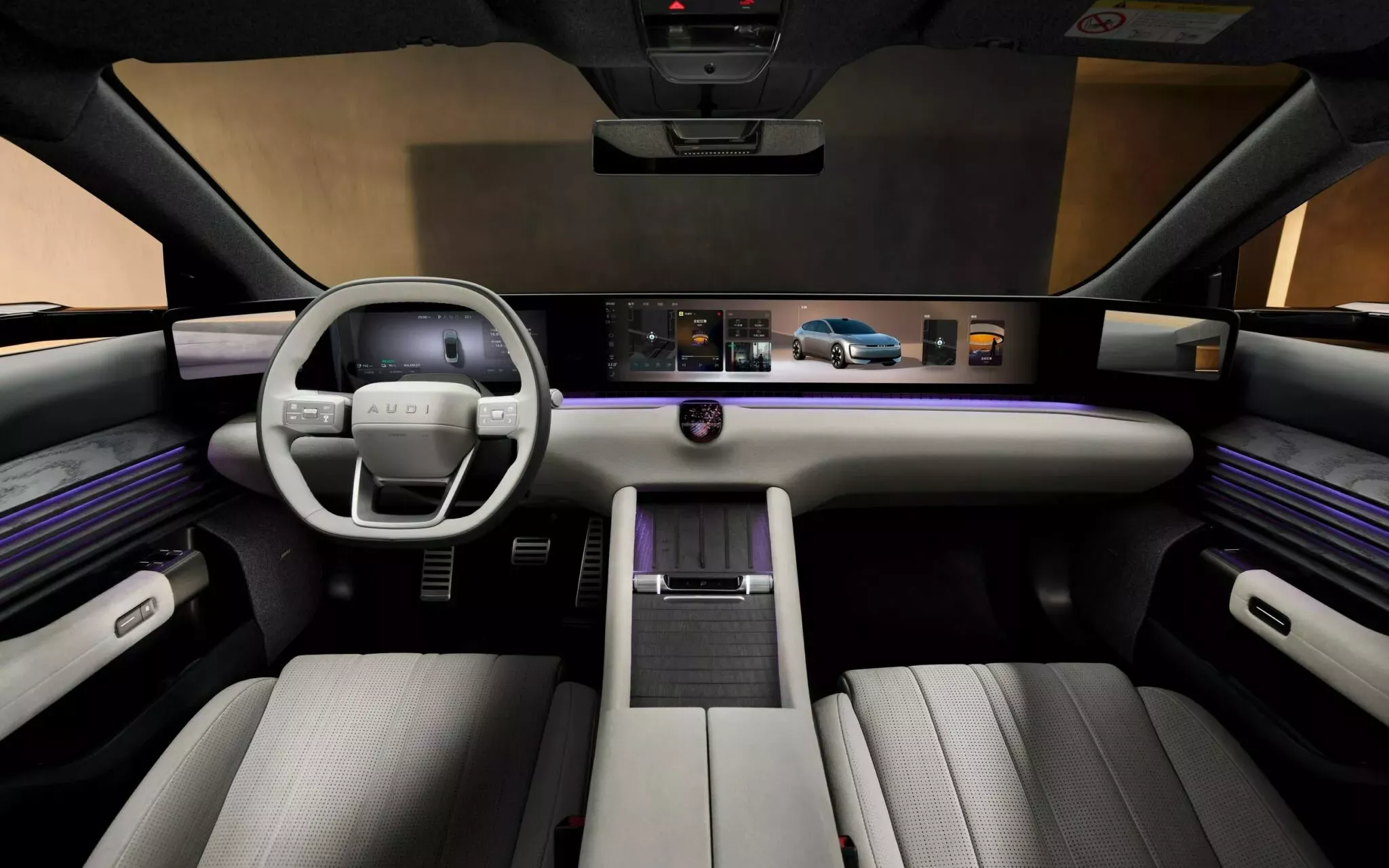
The E7X’s cabin closely resembles the Audi E5 Sportback.
In the space of just a few months, Audi has moved from teasing a China only concept to testing the finished product. Shortly after the first photos of the China only AUDI E7X surfaced, the company released a fresh image of its mid size electric SUV undergoing cold weather testing in China.
While several of Audi’s electric models in Western markets have felt stale and predictable, this one from its all-caps AUDI sub-brand for China looks like a real threat to the country’s homegrown EV powerhouses.
The design of the E7X is virtually identical to the E SUV Concept that AUDI presented at last November’s Guangzhou Auto Show. As such, it looks very similar to the E5 Sportback, albeit in the form of a high-riding crossover. Finished in a deep shade of purple and pictured driving on the snow, there’s no denying that it’s a head-turner.
The new image confirms that the front end will include an illuminated AUDI badge, with the intricate LED daytime running lights sweeping across the entire fascia. Created in partnership with Chinese juggernaut SAIC, the E7X is quite imposing, but should look right at home in some of the country’s bright and bustling cities.
Like the E5 Sportback, the E7X includes a prominent LiDAR poking out from the roof, as well as a set of digital wing mirrors. Details released in December by China’s Ministry of Industry and Information Technology confirmed that the digital mirrors will be optional, with traditional mirrors offered as an alternative.
At the rear, the lighting theme continues. An AUDI badge glows red, framed by LED taillights that wrap around the tailgate. There’s also a prominent split rooftop spoiler to aid in aerodynamics.
In terms of power, the electric E7X will have plenty. The entry-level model will use a rear-mounted motor with 402 hp, and an all-wheel drive version will also be available, fitted with dual motors to deliver 671 hp.
Shoppers will be able to choose between a 100 kWh battery and a 109.3 kWh unit, both compatible with an 800-volt electrical architecture. The E7X’s driving range will vary between 615 km (382 miles) and 751 km (466 miles), depending on the motor and battery configuration, as well as different wheel sizes.
The E7X measures 198.8 inches (5,049 mm) in length, 78.6 inches (1,997 mm) in width, and 67.3 inches (1,710 mm) in height, with a wheelbase stretching 120.5 inches (3,060 mm). That makes the production model slightly smaller and shorter than the original concept, though the overall proportions remain close.
More details about the E7X, including the all important pricing, are expected in the coming months.
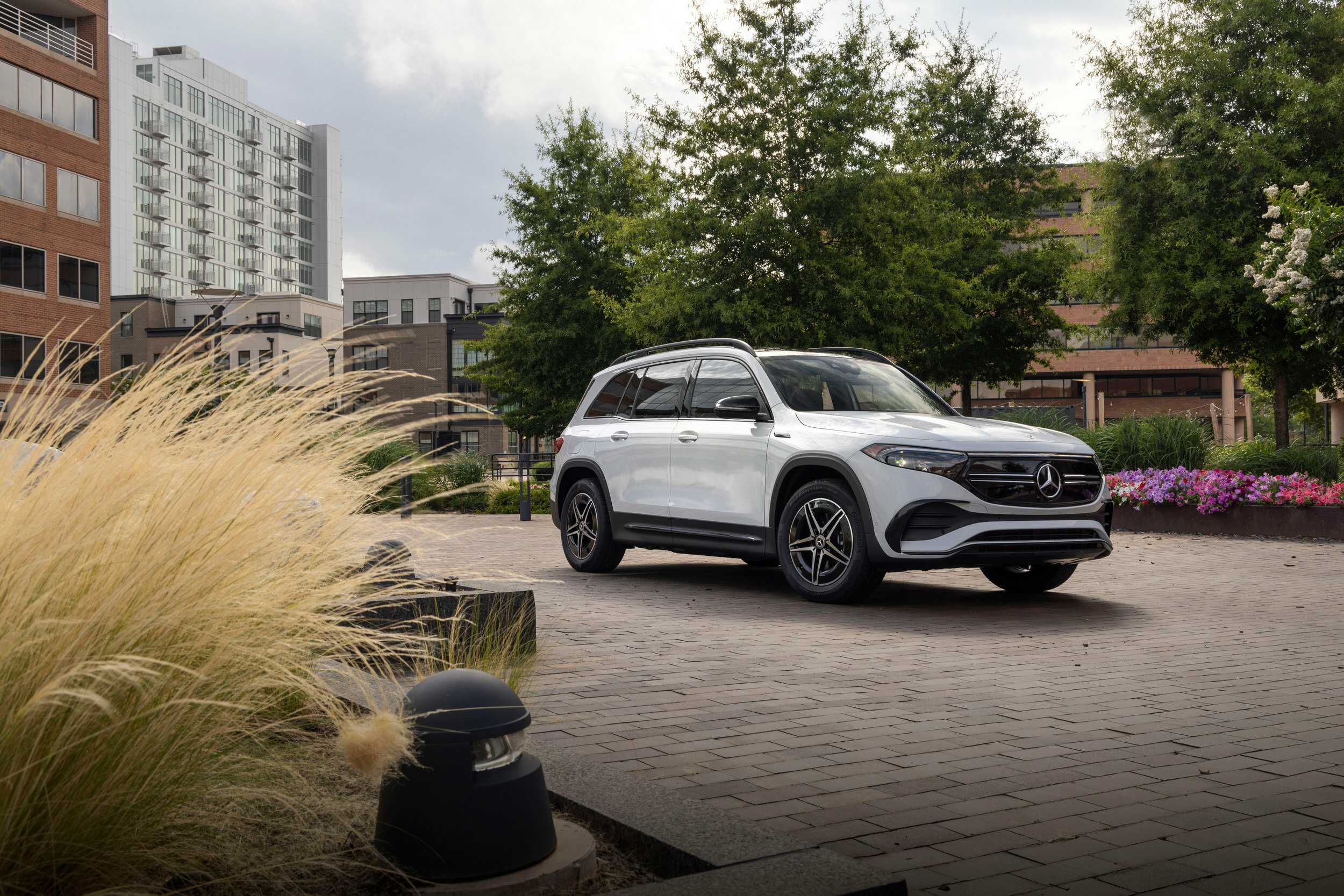
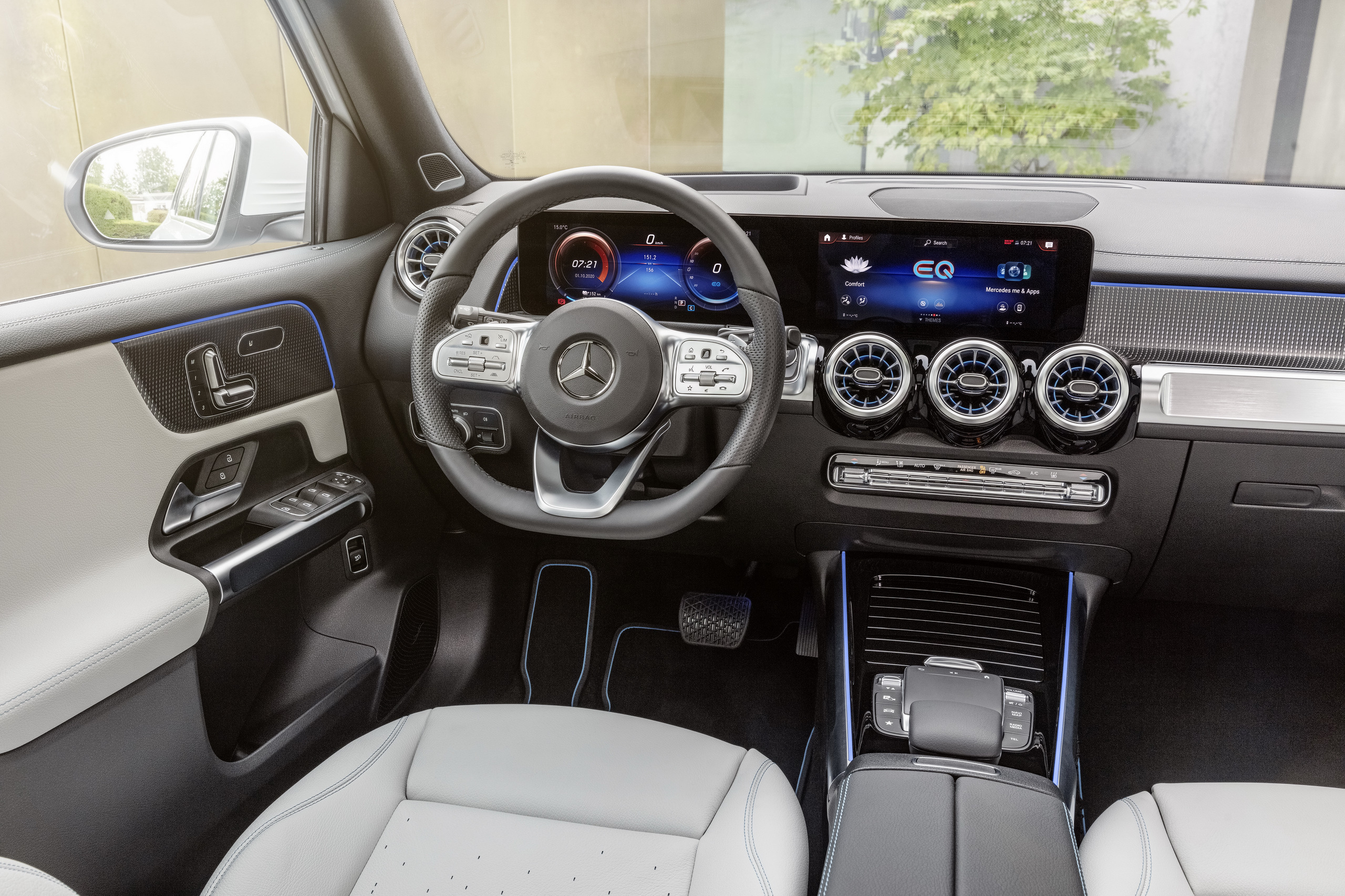
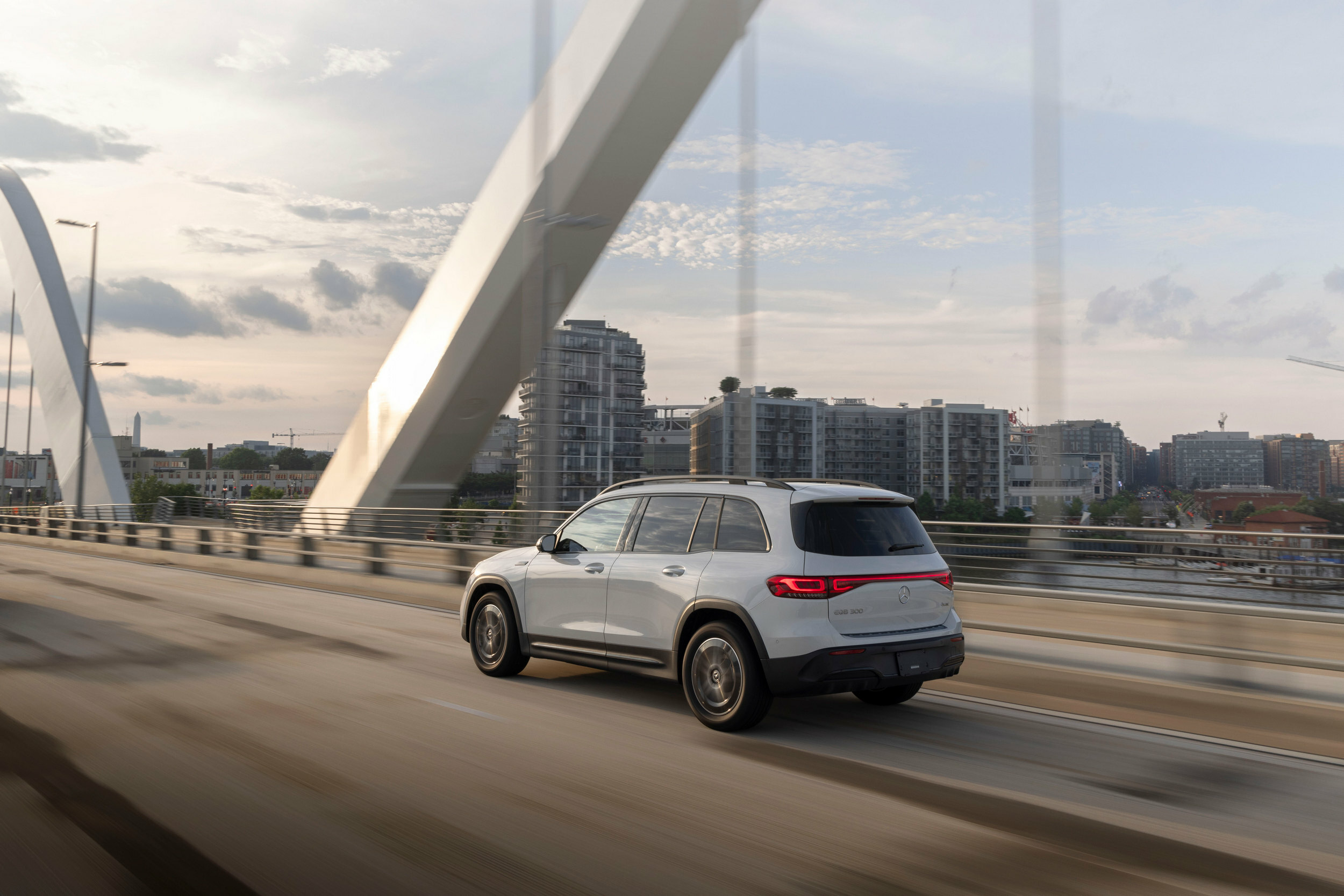
Mercedes is issuing a third fire-related recall for the EQB.
A previous software fix didn’t work and fires continued.
The automaker will replace batteries in thousands of EVs.
Another day, another fire-related recall involving an electric vehicle. This has become a common occurrence, but the déjà vu goes much deeper as Mercedes is recalling the EQB for a third time.
The latest campaign is known as 26V073 and it replaces two recalls from last year that involved 7,531 vehicles. Unfortunately for owners, crossovers that were previously ‘repaired’ under those recalls will need to get the new fix.
According to the government, 11,895 EQBs from the 2022-2024 model years have a battery that may fail internally. If this happens, the vehicle could catch on fire while parked or being driven.
Software Fix Under Question
While there’s a lot of back story, the initial recalls were sparked by a series of thermal events. The company tried to address the problem with a software update, but two crossovers that received the upgrade caught on fire late last year.
This kicked off an investigation, which eventually determined the effectiveness of the software update to reduce fire risks could not be “fully confirmed.” As a result, Mercedes decided to conduct a new recall that will see thousands of batteries replaced.
The batteries were supplied by China’s Farasis Energy and the National Highway Traffic Safety Administration said they could experience an internal short circuit of a battery cell. This is being blamed on deviations in the production process, which resulted in batteries that are “considered to be less robust against different stress factors potentially occurring during the life of the vehicle.”
What Should Owners Do Now?
Since a high state-of-charge appears to be a factor, owners are being advised to limit battery charging to a maximum of 80 percent. They should also park outside and away from structures until the battery is replaced. Unfortunately, that’s easier said than done as a final remedy isn’t available at this point.
That’s bad news for owners, but notification letters will go out later this month. When replacement batteries are available, a second letter will be sent out. This impacts the 2022-2024 EQB 300 4MATIC, 2022-2024 EQB 350 4MATIC, and the 2023-2024 EQB 250+.
Camouflaged Jeep Avenger prototype spotted in winter testing.
The subcompact is due for a facelift in 2027, four years after launch.
Production of the SUV expands to Brazil with a localized version
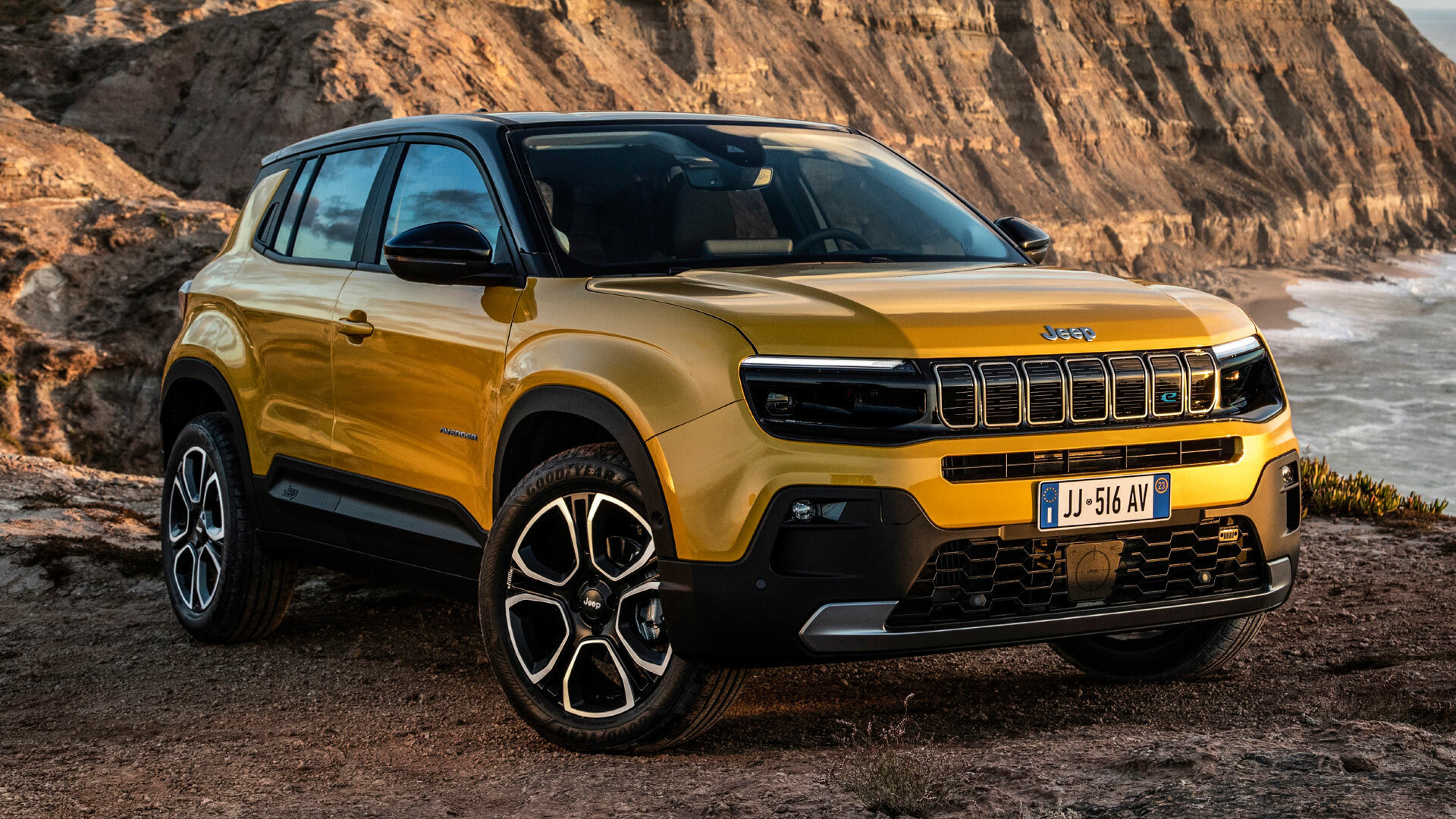
The Jeep Avenger might still seem fresh to many drivers, but Stellantis isn’t waiting around. Just a few years after its 2023 debut, the small SUV is already heading for a mid-cycle refresh. The updated model is expected to arrive in early 2027, and now, we’re getting our first look.
Caught during cold-weather testing in Europe, a camouflaged prototype hints at what Jeep may be changing on its smallest offering.
The development vehicle wears a full wrap with Jeep-branded graphics, doing its best to hide the details. But through a few narrow openings, the split LED headlights and cooling intakes seem to be in exactly the same spots as before. One noticeable adjustment, though: the fog lights have shifted slightly lower in the front bumper.
Baldauf
The sculpted profile of the Avenger will most likely be carried over from the current version. Still, the plastic cladding might get a mild revision, and we’re expecting some new alloy wheel designs and exterior colors to freshen things up.
At the back, the prototype doesn’t seem to wear any redesigned panels, although this could change as we move closer to the launch date. The single tailpipe suggests that the turbo 1.2-liter three-cylinder gasoline engine lies under the hood, either in non-electrified or mild-hybrid forms.
What To Expect Inside
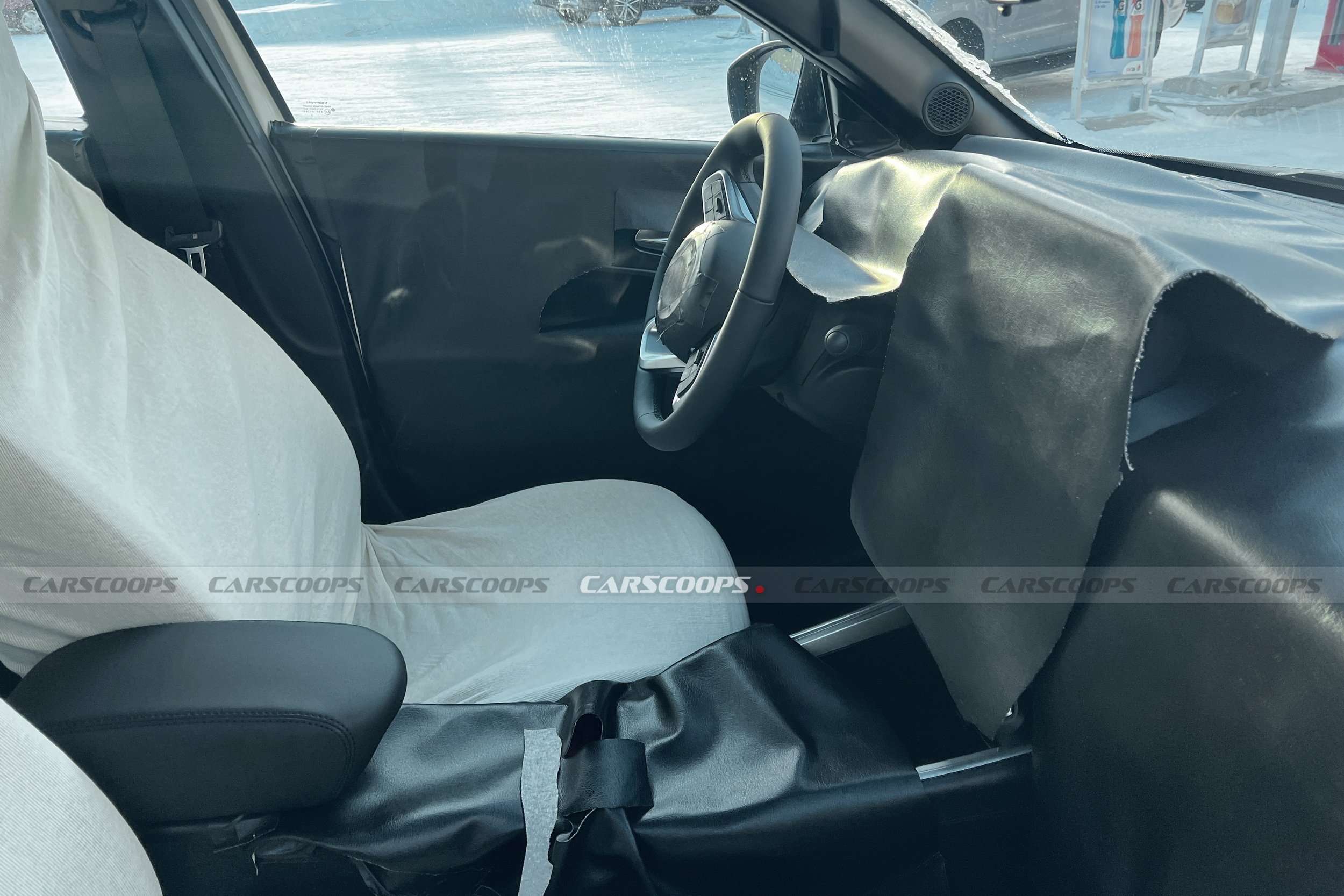
Our spy photographers managed to get a glimpse inside the cabin, though Stellantis engineers didn’t make it easy. Everything from the dashboard to the door panels and seats was concealed beneath vinyl. The SUV still appears to feature the free-standing infotainment display, positioned separately from the digital instrument cluster. Even so, the effort to hide it all suggests that changes are coming.
It remains to be seen whether Jeep will add softer materials instead of the hard plastics of the current model, at least on the main touchpoints. We also expect that equipment will be updated with the latest connectivity and safety tech from the Stellantis parts bin.
As for the mechanical side, it’s too early for specifics, but there’s no sign of a major overhaul. The current Avenger offers internal combustion, mild-hybrid, and fully electric options, and that lineup will likely continue. An all-wheel-drive variant is already available through the mild-hybrid 4xe trim, and that setup should carry over.
The Avenger rides on Stellantis’s updated CMP/eCMP platform, shared with several other models including the Alfa Romeo Junior and Fiat 600. It also underpins the Lancia Ypsilon, Opel Corsa and Mokka, Peugeot 208 and 2008, and DS3. That shared DNA means many of the same components and configurations are likely to remain in play for the refresh.
Baldauf
We’ll keep watching the test fleet as Jeep continues development. With any luck, the next round of spy shots will reveal more by shedding some of the camouflage.
Outside of Europe, the smallest Jeep is getting ready for a wider rollout. Production will soon begin in Brazil, where the Avenger will be offered with region-specific updates. In fact, this camouflaged prototype might not just preview a facelift for Europe, it could also be part of the testing program for a localized South American version with its own powertrain changes.
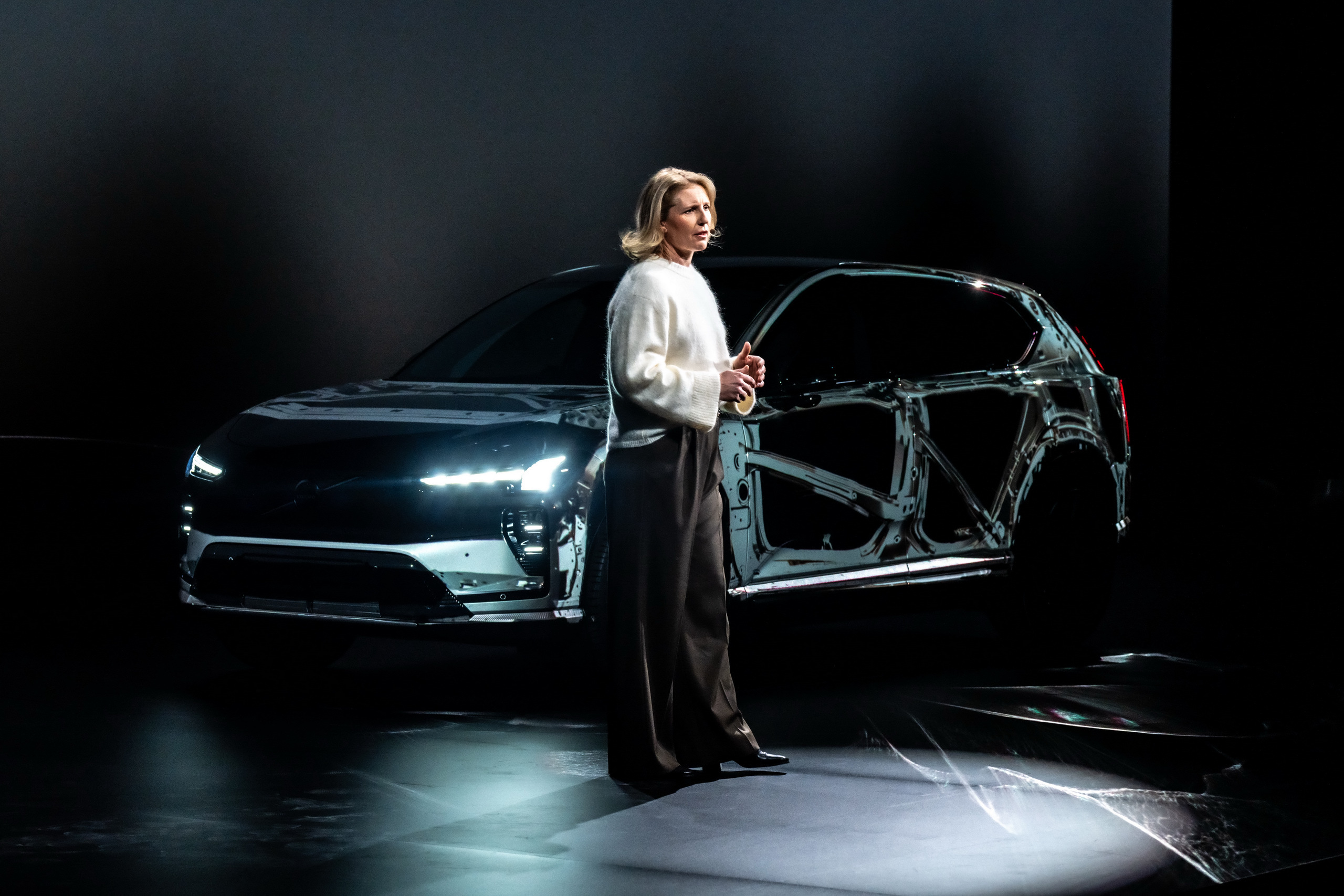
Volvo’s SPA3 platform debuts with the new EX60 electric SUV.
Battery cells can now be mounted outside the wheelbase zone.
Platform lets Volvo build sleeker EVs without crossover height.
Like so many other car manufacturers, Volvo’s line-up is becoming increasingly dominated by crossovers and high-riding SUVs, but there’s hope for those who like sedans and estates. According to the Swedish carmaker, the new SPA3 platform for the EX60 offers the flexibility to support low-slung vehicles.
The new underpinnings, which debut in the EX60, have been created in such a way that battery capacity doesn’t determine the height of the vehicle. This is an important distinguishing point between it and the EX90 and ES90’s SPA2 platform, which is an adapted version of the combustion platform.
In an interview with Autocar, Volvo’s chief technology officer Anders Bell explained that SPA3 enables future EVs to stay closer in width and height to their combustion counterparts. Without having to stretch dimensions just to fit large battery packs, the platform avoids compromising interior space.
Bell added that over 7 kWh of battery capacity can be shifted ahead of the front wheels, opening up more possibilities for weight distribution and design flexibility.
That flexibility comes from a clean-sheet rethink of the platform’s fundamentals. “We can make [cars] high. We can make them low,” said Bell. “It’s all in scalability, and this is unlocked by removing the combustion engine, the exhaust, fuel tanks and everything from the equation, and finding new ways to build up the bone structure and the scalability of the platform.”
Whereas adapted combustion platforms force battery packs to sit entirely between the axles, SPA3 gives designers more room to work with. Cells can now be placed ahead of the scuttle, using more of the floorpan without compromising crash safety or vehicle dynamics.
This means that “in a lower car, you can depopulate cells in the rear footwell, because this is actually what sets the lowest height of a car: the rear-seat passenger.” He noted that many current EVs based on ICE platforms look like baby SUVs because the cars must be raised to accommodate a flat battery pack between the wheels.
By pushing modules ahead of the windscreen, Volvo also creates space for what Bell calls “foot garages.” Similar to those found in the Porsche Taycan and Audi E-tron GT, these recessed floor sections allow for lower seating positions. The result is an EV interior that feels more like a traditional car, with lower rooflines and more natural driving ergonomics.
According to Bell, the new architecture gives Volvo the option to build just about anything it wants. “We can do low. We can do sleek. We can do high. We can do MPVs… It’s all in the cookbook. What we choose to do, however, is a different story.”
While Volvo wouldn’t reveal what kind of low-slung cars it might have in the works, Bell reiterated it can now go “very low, like proper low,” adding “you can achieve this fantastic bandwidth so we can make super-sleek cars, like there’s no battery pack that affects the height of the roof.”
In theory, this could mean electric versions of sedans like the S60 or S90 could be possible, as well as estates like a new V60 and V90. Such models could look a whole lot more appealing than the ES90, which is Volvo’s current closest car to an electric sedan, but actually sits as high as a crossover because of the ICE-derived underpinnings.
Ford’s Model e division lost $4.48 billion again last year.
Total EV losses now exceed $16 billion in just four years.
Breakeven for Model e may not arrive until 2029.
Ford has never been shy about making big, attention-grabbing bets. Sometimes they pay off, sometimes they don’t. In early 2022, the company announced it was splitting its automaking operations into two distinct branches: Ford Blue, handling traditional combustion vehicles, and Ford Model e, dedicated to EVs. At the time, it sounded like a smart move, especially with EV demand climbing fast.
That optimism, however, hasn’t quite paid off. Fast forward four years, and Ford’s huge investments in EVs have come back to bite it. In its latest financial results, the automaker disclosed that the Model e division posted a staggering $4.48 billion loss in 2025. Worse, those losses are expected to continue mounting, even after canceling several planned EV projects.
Earlier this week, Ford revealed its electric car business will likely lose between $4 billion and $4.5 billion this year, and will continue to lose money through at least 2027 and 2028.
Speaking on a conference call following the earnings report, Ford CFO Sherry House stated the company is not aiming for a breakeven point for the Model e brand until “around 2029.”
Tallying The Fallout
In the four years since the Model e division was established, Ford lost more than $16 billion. That’s an extraordinary amount of money, particularly when you consider that the only electric cars it currently sells in its home market are the Mustang Mach-E and E-Transit, following the early demise of the F-150 Lightning.
Combustion Still Carries The Load
According to The New York Times, Ford’s losses in electric vehicles were offset last year by stronger performance from its combustion-powered lineup and commercial vehicle sales. Those segments generated enough revenue to support an adjusted earnings total of $6.8 billion before interest and taxes. Ford expects those numbers to climb in 2026, projecting earnings between $8 billion and $10 billion.
One of the earliest signs of Ford backtracking on EVs came last year when it confirmed production of the F-150 Lightning had been halted indefinitely.
Still, there’s a sliver of hope for those holding out for an electrified truck. The next-generation F-150 Lightning is in the works and will feature a range-extending powertrain that combines electric drive with a combustion engine backup, offering over 700 miles of combined range.
A handful of tech YouTubers recently got hands-on with the Rivian R2.
Like many other new EVs, Rivian is using electronic door handles.
Prices for the new mid-size R2 are expected to start at around $45,000.
After a string of high-profile crashes in the US and overseas, automakers are facing increased scrutiny over something as basic as door handle design. Once a simple mechanical feature, door handles have become unnecessarily complicated with the rise of electronic systems.
Companies like Tesla and Rivian are facing significant criticism for where they’ve located the emergency interior mechanical door releases if electronic issues prevent the buttons from working. Rivian’s solution for second-row passengers is particularly bad in the R1T and R1S, as they need to remove a large black plastic panel and then reach in to pull a cable to release the door.
Is the upcoming Rivian R2 any better? Not really. A handful of tech YouTubers recently had the chance to check out pre-production versions of the R2, and JerryRigEverything has provided us with our first look at the R2’s mechanical latches.
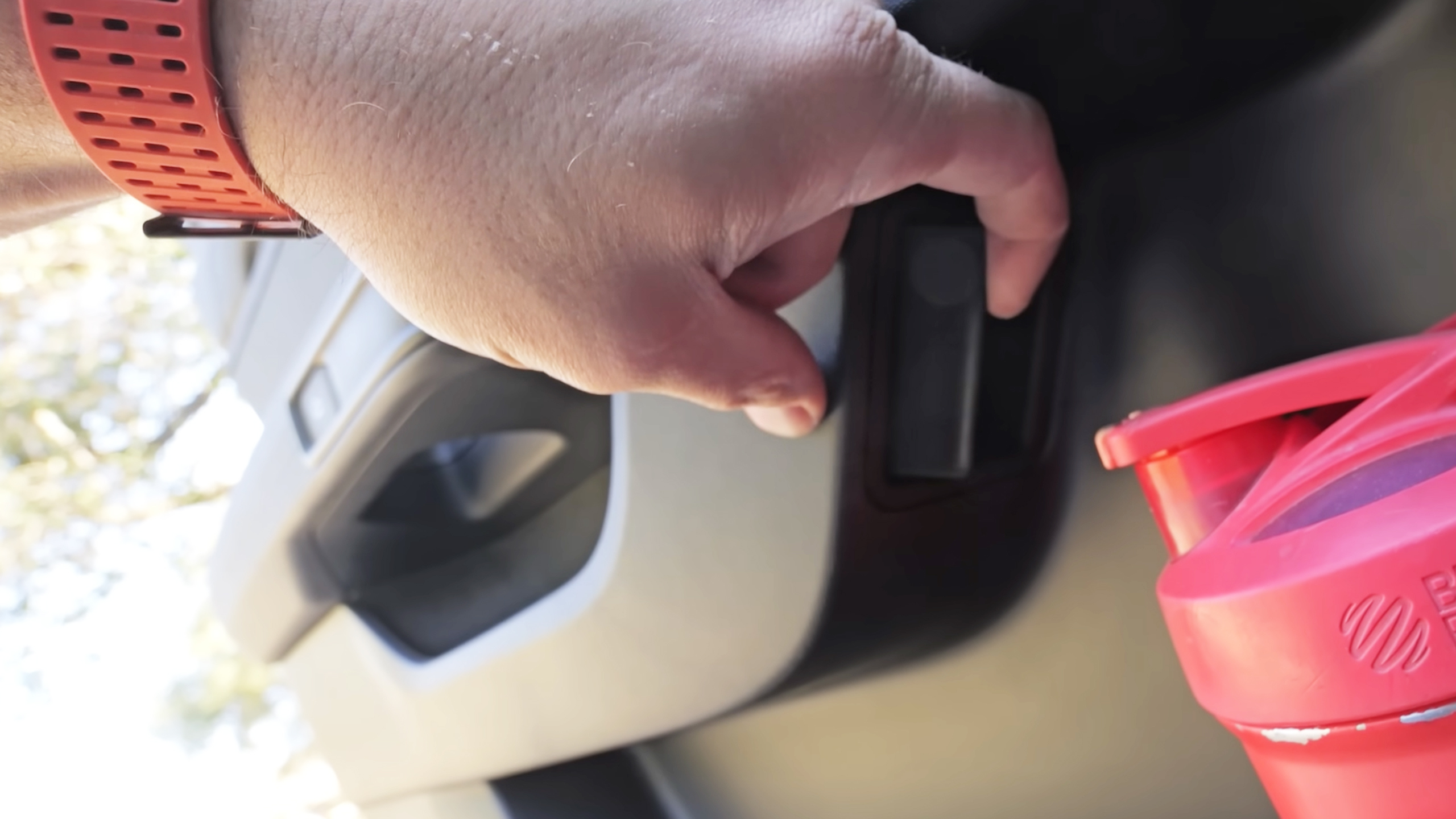
The latch in the front row is quite simple. Positioned on the underside of the floating storage compartment is a little black plastic handle used to open the doors in emergencies. It’s similar to what’s found in the R1T and R1S, although the emergency releases on those models are larger and easier to identify.
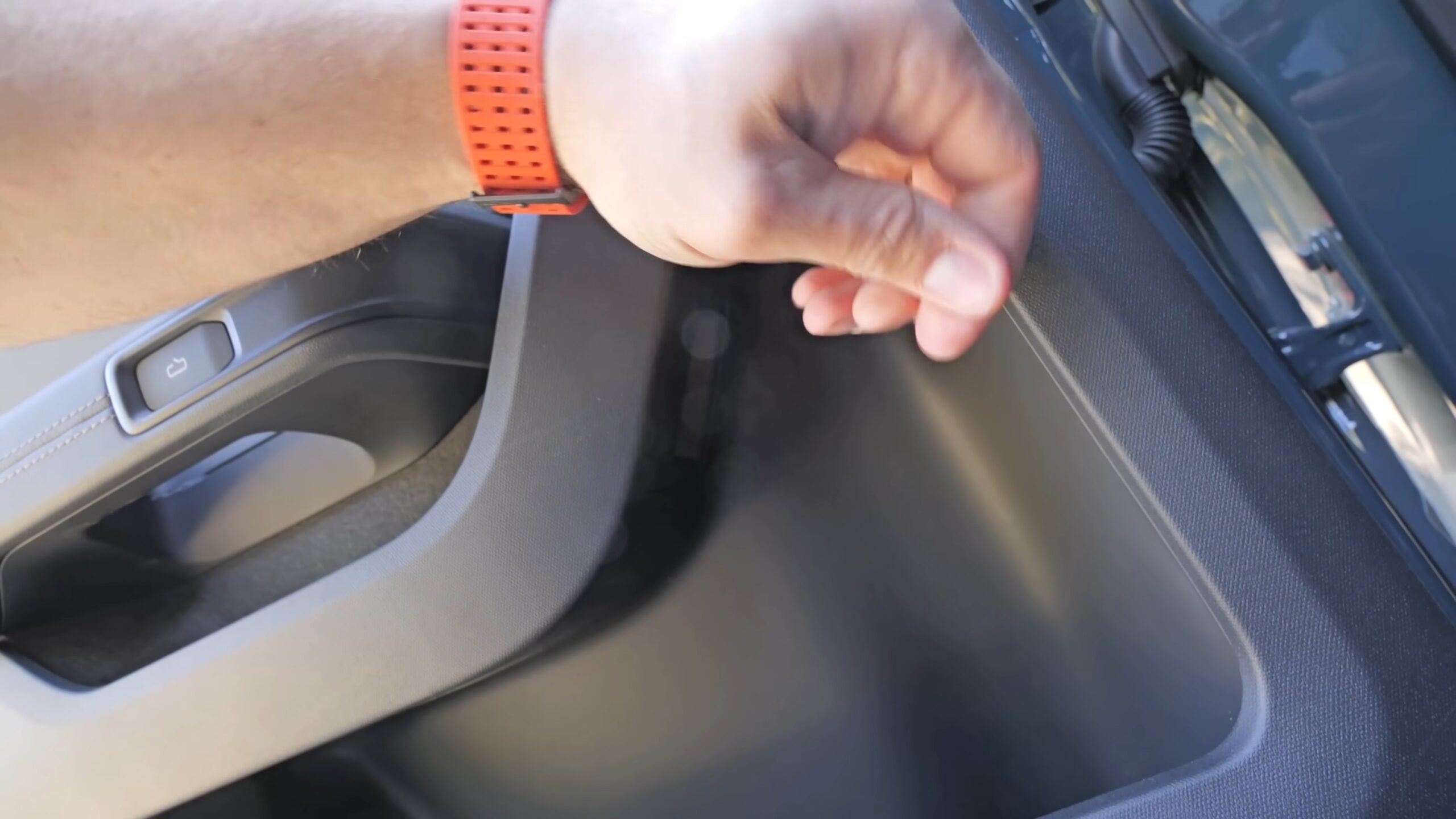
Then there’s the rear. The release is in the same position as the one up front, but bizarrely, passengers have to remove a small plastic cover and then pull a cord, just like they do in the R1 models. The only upside is that the placement has changed slightly for the better.
If you have to give your backseat passengers a tutorial on something as basic as opening the doors in an emergency, the design isn’t clever, it’s flawed. Why Rivian didn’t just carry over the simpler front-door setup is anyone’s guess, but it comes across as needless complexity at best, or cost-cutting by reusing the same flawed design at worst.
Is An Update Happening?
There had been some talk of changes. Rivian was reportedly reworking the R2’s emergency releases in response to incidents involving drivers trapped in burning Teslas. But based on this early look, it doesn’t seem like any major improvement has been made compared to the R1 models.
Although, as this example was a pre-production model, it’s possible that things will be changed for production. Or at least, that’s what we hope.
Rivian isn’t alone here. Beyond Tesla, unsurprisingly the poster child for controversial design choices, even Ford has run into trouble with the Mustang Mach-E’s door latches.
And it’s not just the inside of the car that’s raising concerns. Exterior pop-out door handles have created so much controversy that China has decided to ban them on all electric vehicles starting in 2027.
Honda reveals production Super-One ahead of its Japan launch.
Electric hot hatch gets wide arches, power boost, and fake noise.
UK, Europe, and Asia-Pacific markets confirmed for release.
Forget the clinical efficiency and silent hum of modern EVs. Honda has other ideas. The brand is channeling some of its spikiest ’80s spirit into the electric era, drawing a direct line from the analog madness of the City Turbo II to its latest pint-sized experiment.
After showing off a prototype at the Japan Mobility Show, Honda has pulled the curtain back on the production-ready Super-One via a new teaser site ahead of its domestic launch.
The Super-One isn’t just a slightly jazzed-up N-One e:. It’s a city-sized hot hatch, with a wider stance, upgraded chassis, and an electric powertrain that tries to evoke the grit of a gasoline engine with synthesized sounds. Honda says it’s a spiritual successor to the City Turbo II Bulldog from the 1980s.
Widebody Pocket Rocket
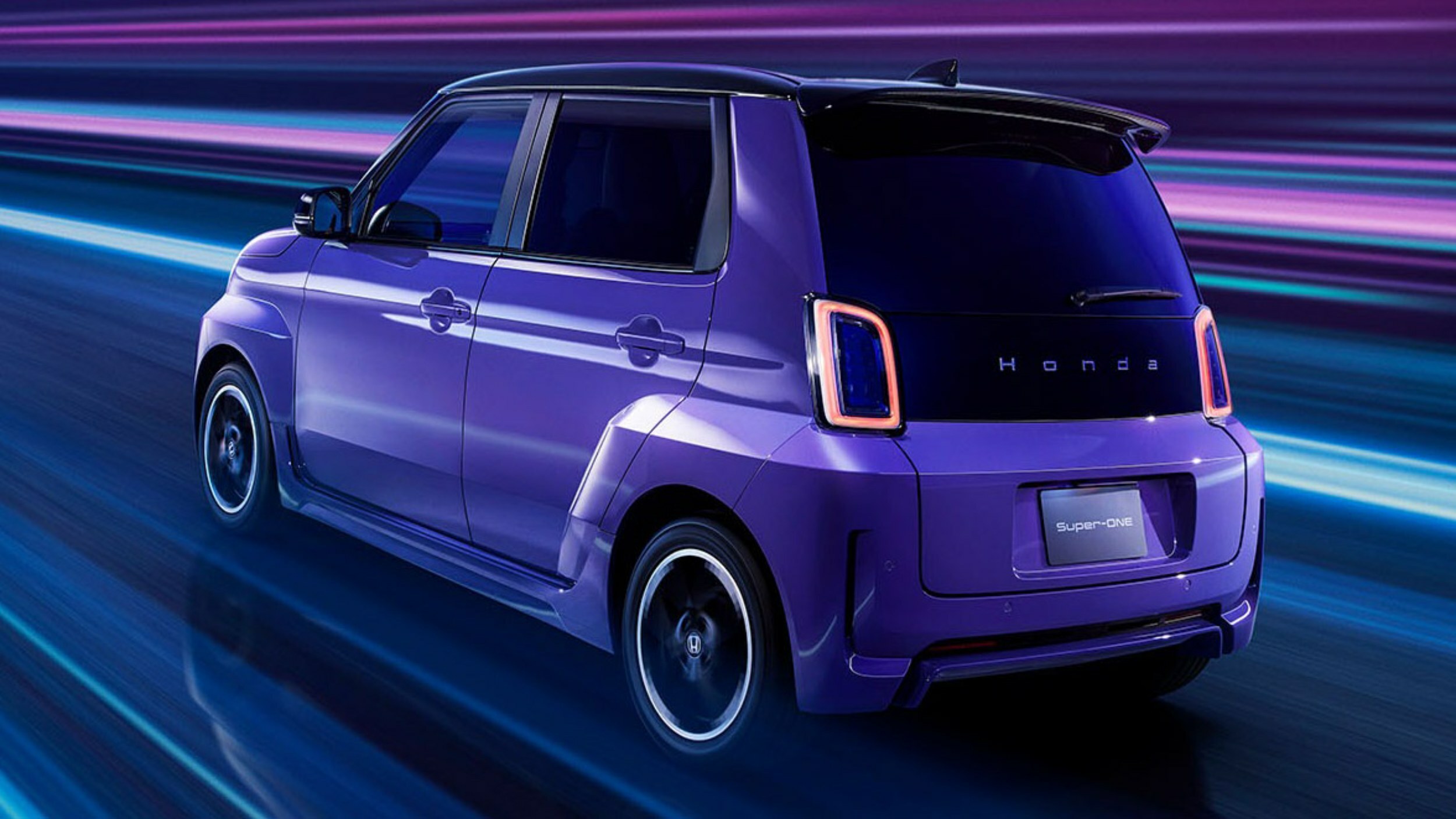
Visually, the Super-One stands out with reshaped bumpers featuring functional air ducts, distinctive “blister fenders” along the sides, and a roof spoiler. It also rides on a new set of 15-inch alloy wheels finished in matte Berlina Black with a machined face, paired with wider Yokohama tires.
In terms of size, the Super-One comes in at 3,589 mm (141.3 inches) long, 1,573 mm (61.9 inches) wide, and 1,616 mm (63.6 inches) tall. That makes it 194 mm (7.6 inches) longer, 98 mm (3.8 inches) wider, and 71 mm (2.8 inches) taller than the standard N-One e:, though it retains the same 2,520 mm (99.2-inch) wheelbase.
Honda has introduced a new color called Boost Violet Pearl, inspired by lightning and offered exclusively on the Super-One. Other available finishes include Platinum White Pearl, Crystal Black Pearl, Citron Yellow Pearl, and Mono Gray, each offered in both monotone and bi-tone combinations.
What About The Interior?
Inside, the dashboard layout is mostly carried over from the N-One e:, but the Super-One adds its own touches with reshaped seats featuring heavier bolsters, purple accents, and custom graphics for the 7-inch digital instrument cluster. When Boost Mode is activated, the display shifts to show a simulated tachometer.
Adding to the theatrics, the Active Sound Control system mimics gear shifts and engine growls through the standard eight-speaker Bose premium audio setup. Equipment levels are generous, with a 9-inch infotainment system, heated front seats, a heated steering wheel, and Honda’s full suite of advanced driver assistance features.
Power Boost
The pint-sized hot hatch is driven by a front-mounted electric motor. While Honda hasn’t officially confirmed the output, earlier details from the Singapore Motor Show in January suggest it delivers 94 hp (70 kW / 95 PS) in Boost Mode.
That might not sound like a lot, but it represents a healthy increase over the 63 hp (47 kW / 64 PS) of the N-One e:. Even so, it is less powerful than the discontinued Honda e that produced 152 hp (113 kW / 154 PS) in its most potent form.
The added power and increased width mean the Super-One will be classified as a passenger vehicle rather than a kei car. Honda has not yet revealed battery capacity or range figures, though the N-One e: uses a 29.6 kWh unit.
Rounding out the changes, the sporty EV features a custom chassis setup with a lowered suspension and wider tracks for improved handling.
How Much Does It Cost?
Full details on the Super-One’s pricing and launch timing will follow in the coming weeks. However, Japanese outlet Creative Trend reports that Honda is targeting a price range between ¥3,000,000 and ¥3,500,000 (approximately $19,700 to $22,900) before incentives.
That positions it higher than the standard N-One e:, which starts at ¥2,699,400 ($17,600) and can drop as low as ¥1,625,400 ($10,600) with full subsidies applied.
Following its debut in Japan, the Super-One will also reach additional markets including the UK, Europe, Australia, New Zealand, and select parts of Asia.
Mazda says rotary dreams live, but business limits remain.
Iconic SP may shape MX-5 more than spawn an RX-7 reboot.
European emissions rules complicate rotary development.
When Mazda rolled out the gorgeous Iconic SP concept in 2023, the enthusiast collective brain immediately screamed “new RX-7 confirmed!” Now yet another interview with Mazda execs is gently fanning those flames again, but serving it with a generous helping of cold financial reality.
In a recent chat, Mazda insiders made it clear the idea of a rotary sports car is not locked in a dusty basement drawer and that the company’s workforce would love to crank out a new RX-7-style flagship.
“The amount of car enthusiasts in this company is insane,” Mazda Europe’s planning chief Moritz Oswald told Auto Express. “Everybody loves cars, so of course there is a deep desire to keep on launching emotional products.”
Profit Is The Priority
The problem is passion doesn’t usually balance spreadsheets, and while no one doubts Mazda could deliver a great $100k sports car, guaranteeing that it would sell in sufficient quantities to make a decent profit is another matter altogether.
“So are we looking into [the Iconic SP]? Yes, of course,” Oswald continued. “But again, we are also a company that has to bring in revenues,” he aded, making clear that the MX-5 is “still our halo car.”
Christian Schultze of Mazda Europe’s R&D team also poured water on the RX-7 dream in the same Auto Express story, stating that “Mazda stands for cars for ordinary people,” not wealthy Porsche owners.
True rotary sports car
But Schultze did hint that if Mazda ever did build something like the SP, it could have a much better powertrain setup than the concept, which used its rotary engine only as a generator to power the 365 hp (272 kW / 370 PS) electric motors that turned the car’s road wheels.
“If you want to have it more sporty then maybe you look rotary plus a more sporty oriented hybrid, more parallel hybrid rather than a series hybrid,” said Schultze. “Because people who cherish the engine, they want to feel the power of the engine directly, not only listen to it.”
What Happened To “Coming Soon”?
This downbeat, pragmatic intel from Mazda Europe paints a very different picture of the SP’s future than the one presented by Masashi Nakayama, Mazda’s design chief, in November 2024.
“This concept is not just one of those empty show cars,” Nakayama said at the time. “It has been designed with real intent to turn it into a production model in the not-so-distant future.”
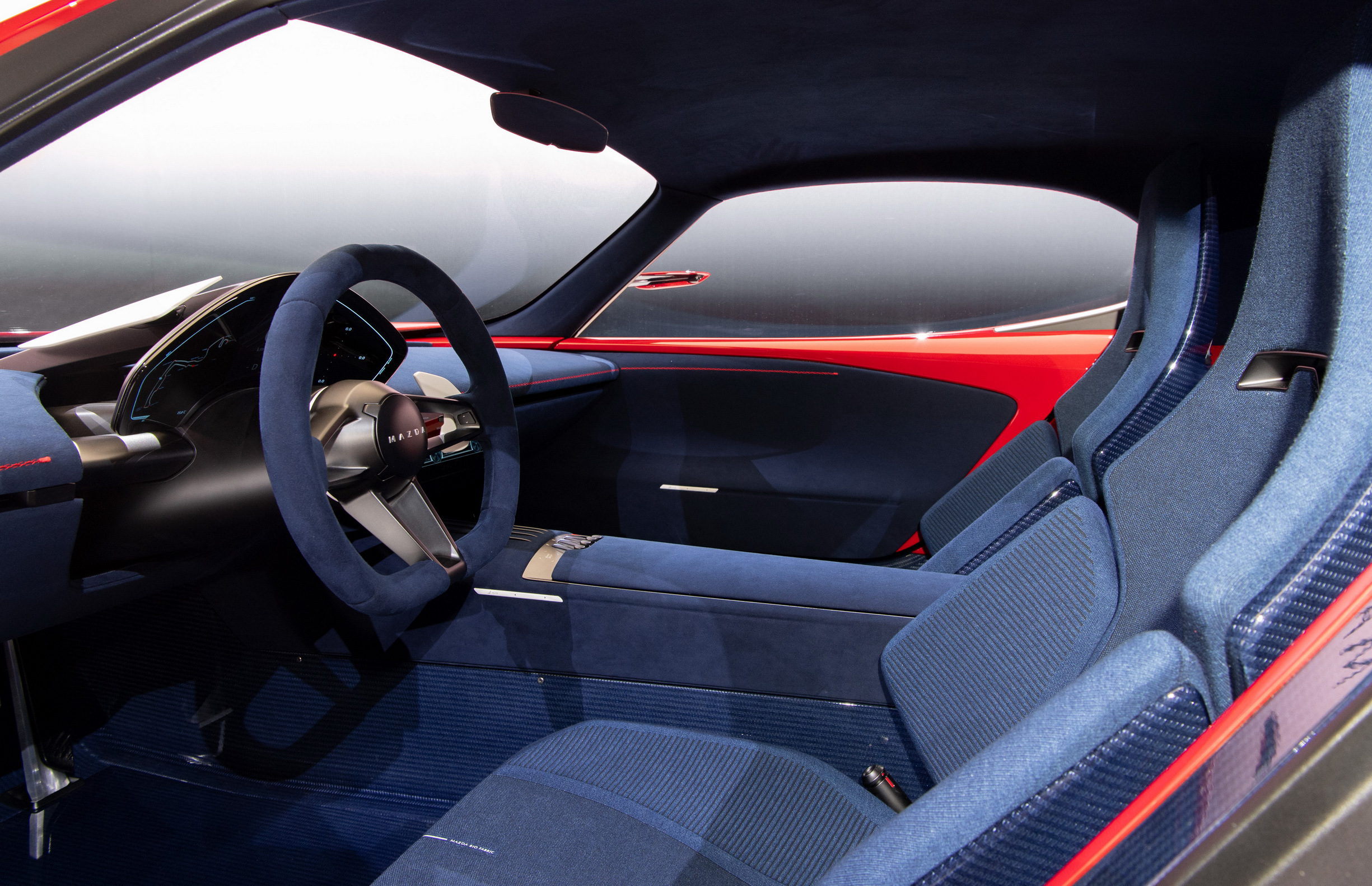
What feels more realistic to us is the Iconic SP acting as a design preview for the next MX-5. Not the full rotary fantasy, maybe, but still a pretty tasty compromise. And last year’s 503 hp (375 kW / 510 PS) Vision X four-door coupe concept hinted that we could still see a performance rotary powertrain in the near future, though probably not in a two-seat sports car.

 Login
Login