Mercedes GLB replaces EQB and launches with electric-only options.
85 kWh battery enables 392 miles in single-motor, 382 in dual-motor.
Next year, an entry-level EV will be introduced, as will several hybrids.
A new generation of the Mercedes-Benz GLB has arrived, and while the silhouette remains true to the blocky, upright form of the original, there’s quite a bit going on beneath the surface.
Offered in both 5- and 7-seat configurations, the 2026 GLB debuts as an all-electric model and, for now, serves as a replacement for the EQB in everything but name. Hybrid versions will follow later, but the first wave is electric-only.
Two versions of the new generation GLB are launching out of the gate. The first, labeled GLB 250+ with EQ Technology, features an 85 kWh lithium-ion battery and adopts an 800-volt electric architecture.
It powers a single rear-mounted motor rated at 268 hp and 247 lb-ft of continuous torque, with a short-term boost up to 335 lb-ft. Acceleration from 0–62 mph (100 km/h) takes 7.4 seconds, and range is quoted at 392 miles (630 km) on a full charge, olid figures for a compact SUV in this category.
Sitting above the 250+ is the 350 4Matic with EQ Technology. The name might not stick in your memory, but the numbers probably will. This dual-motor variant adds a front axle motor for all-wheel drive, producing a combined 349 hp and 380 lb-ft of torque.
Range takes a slight dip to 382 miles (615 km), but the extra grunt cuts the 0–62 mph time down to 5.5 seconds.
Mercedes has also confirmed a more affordable electric entry-level version will join the lineup next year, followed by a hybrid variant using 48-volt architecture. Three power levels will be available across front- and all-wheel drive formats.
Starry Eyed
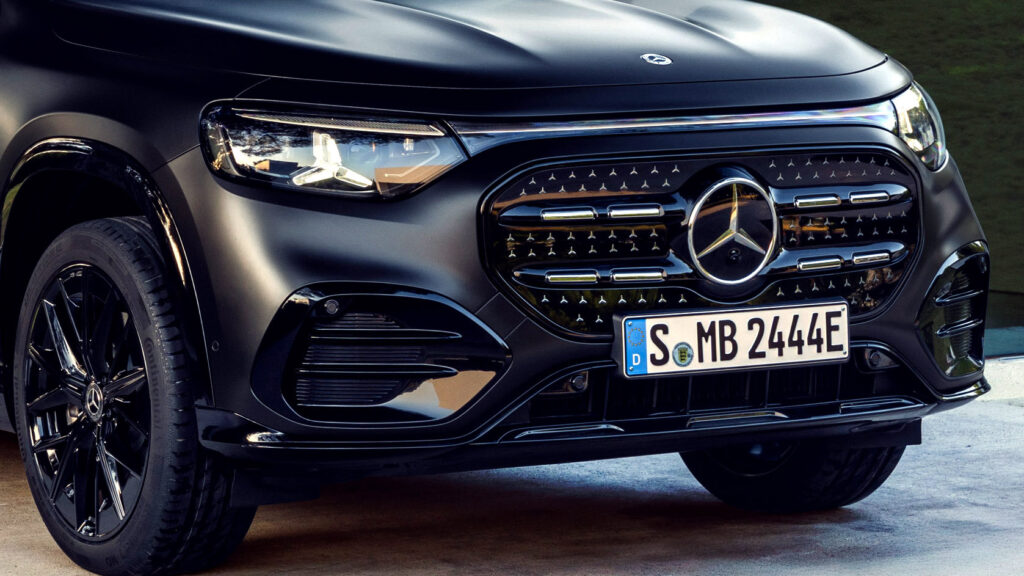
Like other new-generation Mercedes models (think CLA and GLC EQ), the GLB adopts a more expressive front end. A large grille dominates the nose, flanked by redesigned headlights with intricate star-shaped DRLs and a full-width light bar. It’s not a particularly handsome looking SUV, but neither is the outgoing model.
The rear-end is perhaps the most controversial angle of the 2026 GLB. The taillight treatment leans into the styling language seen on the brand’s EQXX Concept from a few years back, with vertically oriented clusters connected by a slim light bar. The signature star pattern makes another appearance here.
An All-New Cabin
A big step into the future has also been made with the GLB’s interior. Like the CLA, it can be optioned with the Mercedes Superscreen, consisting of a 10.25-inch driver display, a 14-inch infotainment screen, and a 14-inch display for the passenger.
As with other new Mercedes-Benz interiors, the dash of the GLB is almost completely flat, largely free of any interesting design details.
It runs on the fourth-generation MBUX system that includes Microsoft and Google artificial intelligence. The screen runs on the Unity Game Engine and includes the MBUX Virtual Assistant, based on ChatGPT4o. Clearly, Mercedes was eager to make the GLB as tech-focused as possible.
At this point, pricing is confirmed only for Germany. The GLB 250+ with EQ Technology starts at €59,048 ($68,700), while the 350 4Matic comes in at €62,178 ($72,400). US pricing hasn’t been announced yet, but expect a similar spread when it arrives in other markets next year.
EV platforms seem ideal for ultra luxury brands like Rolls Royce today.
Wealthy buyers appear hesitant about fully embracing these EVs.
Two certified Spectres show steep six figure discounts at a dealer.
Electric power should be the ultimate match for ultra-luxury motoring. On paper, nothing suits a Rolls-Royce, Bentley, or Maybach better than smooth, silent propulsion and torque-rich acceleration.
These are brands built on quietness, presence, and seamless power delivery, the very same traits electric vehicles seem born to provide better than any V12 ever has. In theory, this should be a golden era for the top of the market.
Wealthy owners don’t worry about range, rarely road-trip their cars across states, and often have multiple vehicles (and dedicated home charging) to rotate through. So why is it that the first wave of ultra-luxury EVs is landing with a thud on the used market?
The clearest example of this is the Rolls-Royce Spectre. It’s elegant, impeccably built, and quieter than basically everything else in their lineup. Despite that, resale values are cratering faster than it can rocket from 0 to 60.
Are Rich Buyers Backing Off?
Take, for instance, the Spectre listed on Bring a Trailer early last year. With only 99 miles on the odometer and the added appeal of being a “Launch Package” edition, it failed to meet reserve with a high bid of just $451,000. That might sound like a lot, but its MSRP was $521,650.
This week, we also spotted two low-mileage, certified pre-owned examples at a Rolls-Royce Boston dealership, each listed with six-figure discounts off their original MSRP! Don’t get us wrong, no luxury car (outside of hypercars) is going to maintain perfect value.
Rolls-Royce Motorcars Boston
But together, these two Spectres from Herb Chambers originally carried a combined sticker price of $1,064,725. The lower-mileage example, showing just over 2,100 miles, is listed at $385,575, or $136,000 below its original MSRP of $521,575.
The other Spectre, with only 3,822 miles on the odometer, is priced at $385,150, reflecting a massive $158,000 drop from its $543,150 MSRP from about a year ago. That’s enough to buy a brand-new Porsche 911 Carrera T ($143,700) and still have money left over for something else.
Which circles us back to the broader question. Why is it that wealthy buyers are steering clear of super-luxury EVs like the Spectre? Does it come down to tradition and the desire for a classic internal combustion powertrain like a V12 powerhouse?
Is infrastructure anxiety still a factor, even at the top end of the market? Or maybe some buyers simply haven’t driven them enough (or at all) to realize just how rewarding they really are. We’re curious what you think. Let us know in the comments below.
Electric SUVs have come a long way in a short time, but in the three-row space, progress has been surprisingly slow. Hyundai made a big impression on the EV market when it unveiled the striking Ioniq 5 in early 2021. A month later, Kia unveiled its related EV6.
However, following the debut of the Ioniq 5 and the later arrival of the Ioniq 6, Hyundai’s rollout of next-generation EVs has slowed, especially compared to Kia. In the same span, Kia has steadily grown its lineup, recently adding the EV3, EV4, EV5, and EV9 to its expanding electric stable.
This makes the launch of the new Hyundai Ioniq 9 all the more important. You see, it’s related to the three-row Kia EV9, but that model was launched more than 18 months before it, meaning Hyundai has to catch up ground.
QUICK FACTS
› Model:
2026 Hyundai Ioniq 9 Calligraphy
› Starting Price:
AU$128,413 (US$84,000)
› Dimensions:
5,060 mm (199.2 in.) Length
1,980 mm (77.9 in.) Width
1,790 mm (70.4 in.) Height
3,130 mm (123.2 in) Wheelbase
› Curb Weight:
2,721 kg (5,998 lbs)
› Powertrain:
Dual electric motors | 110.3 kWh battery
› Output:
421 hp (314 kW) / 516 lb-ft (700 Nm)
› 0-62 mph
5.2 seconds (0-100 km/h)
› Transmission:
Single-speed
› Efficiency:
22 kWh/100 km as tested
› On Sale:
Now
SWIPE
Working in Hyundai’s favor is the fact that not much has changed in the three-row electric SUV segment since the EV9 launched. Few contenders have emerged in this particular bracket, especially at the price point where both the EV9 and Ioniq 9 are playing.
We recently had the opportunity to spend a full week living with the Hyundai Ioniq 9 in Calligraphy trim, putting it through its paces not just to see how it stacks up against the EV9, but also to ask a tougher question: can it justify its position as the most expensive Hyundai ever sold?
What Does it Cost?
Photos Brad Anderson/Carscoops
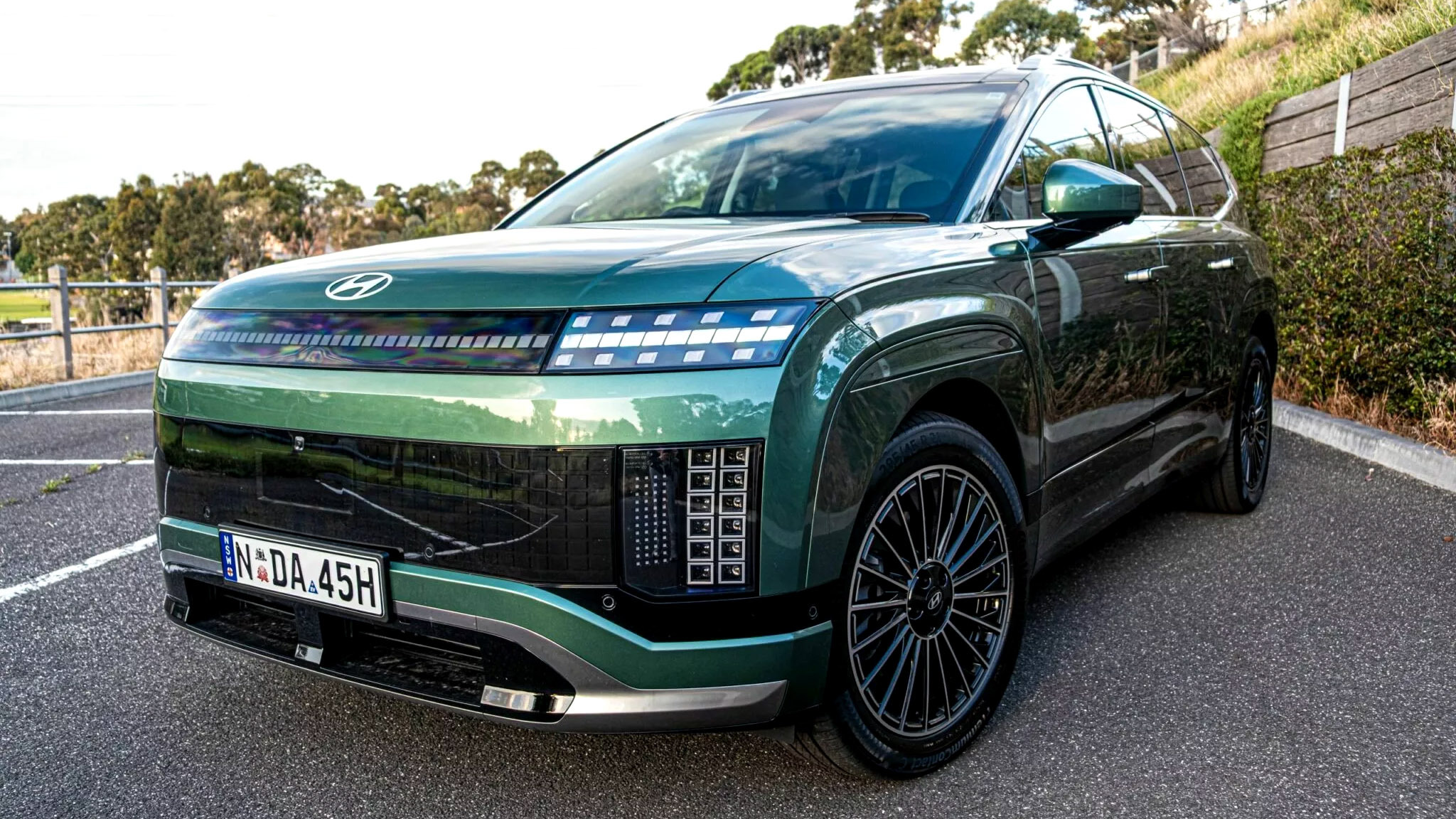
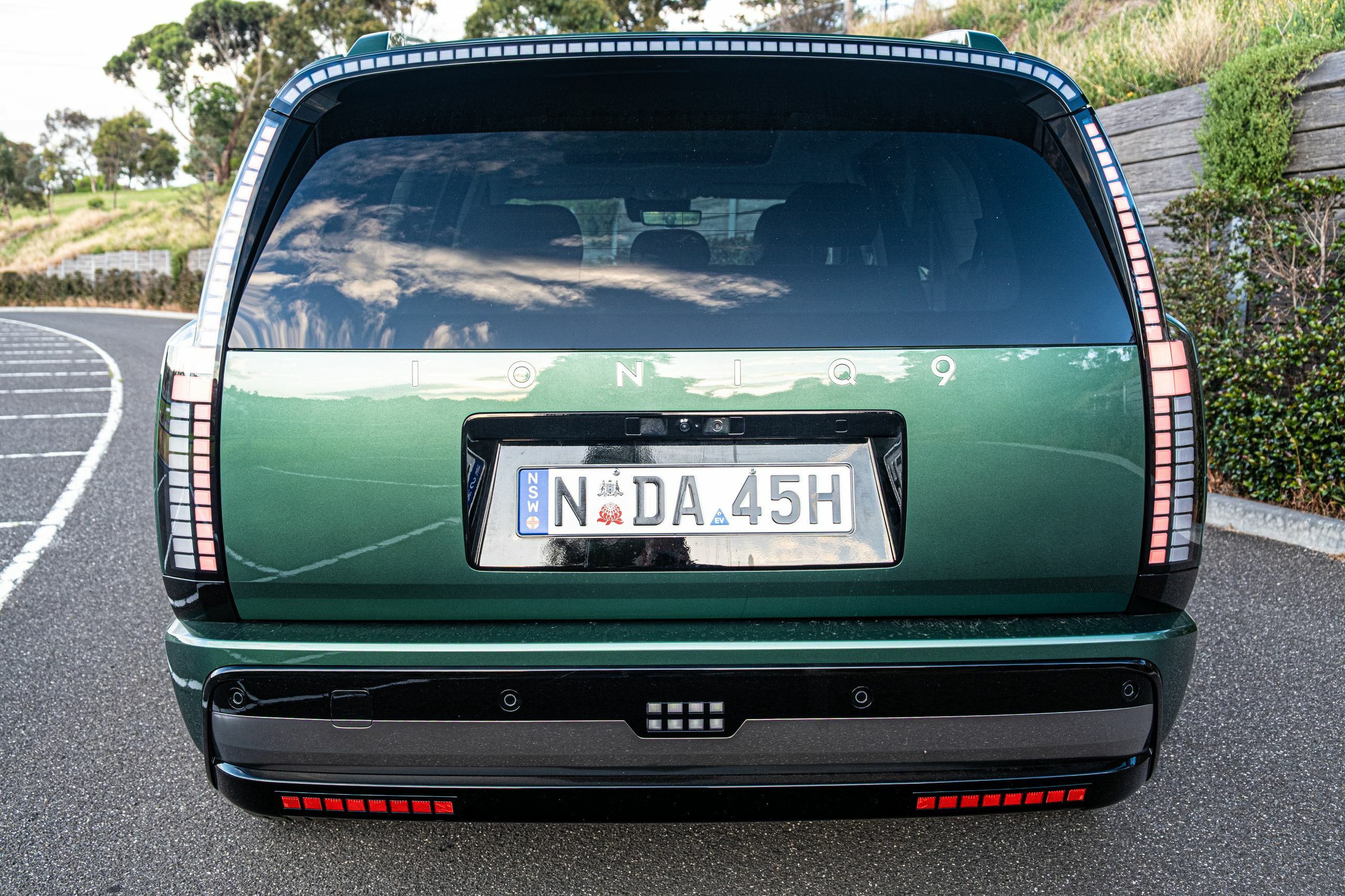
While Kia offers several versions of the EV9 in Australia, Hyundai has only launched a single trim variant of the Ioniq 9, known as the Calligraphy. Buyers can choose between six or seven seats, and pricing starts at AU$128,413 (equal to US$84,000 at current exchange rates) including on-road costs.
There’s no denying that’s a lot of cash for a Hyundai. However, it’s surprisingly good value compared to the Kia EV9 GT-Line, the nearest equivalent to the Calligraphy, which is priced from AU$138,915 ($90,700).
Shoppers in the US looking to pick up the keys to the new Ioniq 9 can purchase it for as little as US$58,955. The flagship Performance Calligraphy Design tops out at the range, starting at US$76,490. Although Australia’s Calligraphy model lacks the word ‘Performance’ in its name, it has the same powertrain as the American model.
Beneath the concept-car-like looks of the Ioniq 9 is a huge 110.3 kWh battery, larger than the flagship 99.8 kWh pack in the EV9. This battery feeds a pair of electric motors, each rated at 157 kW (210 hp), or a combined 314 kW (421 hp) and 700 Nm (516 lb-ft) of torque. That gives it a healthy edge over the EV9 GT-Line’s 283 kW (380 hp), although torque remains identical.
A High-Class Cabin
Photo Credits: Brad Anderson/Carscoops
As you’d expect for a vehicle at this price point, the Ioniq 9 Calligraphy’s cabin is exceptionally plush and feels more premium than the EV9, which has too much plastic for our liking.
Like other Hyundai models, there are two 12.3-inch screens in front of the driver, housed within a single curved display that supports wireless Apple CarPlay and Android Auto. Whereas Kia insists on continuing to employ an inconveniently located third screen on the dash for the climate controls, the Ioniq 9 uses a dedicated display under the dash with a touch panel and physical temperature dials.
Our Ioniq 9 was equipped with the eye-catching Dark Wine and Dove Grey two-tone Nappa leather, one of three available two-tone options for those not interested in the standard Obsidian Black trim. The Ioniq 9 is available with digital wing mirrors, but fortunately, our car didn’t have them. By comparison, the EV9 GT-Line is sold exclusively with cameras instead of mirrors.
There are plenty of luxuries found within the cabin, making the Ioniq 9 perfectly suited to any kind of journey. This includes a heated steering wheel, heated, ventilated, and massaging front seats and a wireless phone charger.
Photos Brad Anderson/Carscoops
There’s also a panoramic sunroof, tri-zone climate control, configurable ambient lighting, and a head-up display. Tech enthusiasts will be pleased to know that in addition to having two high-powered 100-watt USB-C ports in the dash, there are also 100-watt USB-C ports on the backs of the front seats for rear passengers.
Those seeking the ultimate in comfort would be wise to opt for the six-seat version, as it replaces the second-row bench seat with a pair of captain’s chairs, which are very similar to the front seats.
However, even in 7-seat guise, the Ioniq 9’s second row is more than large enough to carry three adults in comfort. Even the third row is surprisingly practical. I’m 6’2” (189 cm) and my hair only brushed the headliner, but I did have to slide the second-row seats forward to get any leg room.
There’s no question this ranks among the most premium interiors Hyundai has ever put together. Even so, it doesn’t feel dramatically more upscale than the far more affordable Santa Fe. It shares quite a few components too, including the dual screens, steering wheel, and HVAC controls. Cabin space is only slightly more generous as well. The latest Palisade, for that matter, feels every bit as polished as the Ioniq 9.
Performance and Comfort
Despite not being marketed as a performance vehicle in Australia, that’s exactly what the Ioniq 9 feels like, at least in a straight line. It can hit 100 km/h (62 mph) in 5.2 seconds, an impressive figure considering the seven-seater weighs a portly 2,721 kg (5,998 lbs). Pin the throttle and it lurches forward, squatting at the rear and leaving hot hatches for dead.
However, show the Ioniq 9 a set of corners, and it doesn’t match the surprising agility of the EV9 GT-Line. That isn’t to say it can’t be hustled through corners at impressive speeds, as it can, thanks in part to the Continental PremiumContact tires. But the Ioniq 9 clearly prefers a calmer approach, and with the massaging seats doing their thing, it feels most at ease settling into a smooth cruise.
Hyundai has done a good job of calibrating the steering of its new flagship SUV and it is beautifully light, perfect for a vehicle of this size, ensuring it’s easy to park. While driving the Ioniq 9, I quickly forgot about its weight, although it was a little harder to forget about the sheer size of the thing.
Measuring it at 5,060 mm (199.2 inches) long, it’s 50 mm (1.9 inches) longer than the EV9, and matches the Kia’s 1,980 mm (77.9-inch) width. It’s even 8mm (0.3 inches) longer than a full-size Range Rover.
Range to Match The Speed
Photos Brad Anderson/Carscoops
Thanks to the big battery pack and respectable efficiency, the Ioniq 9 has good, real-world driving range. Hyundai claims it can travel up to 600 km (373 miles) between stops and quotes average efficiency of 20.6 kWh/100 km. During my week with the Ioniq 9, I averaged 22 kWh/100 km, traveled 210 km (130 miles), and had 298 km of remaining range (185 miles).
As with other EVs from Hyundai, Kia, and Genesis, charging is a strong suit of the Ioniq 9. It supports charging speeds of up to 233 kW, meaning the battery can be topped up from 10-80 percent in 24 minutes through a 350 kW charger. AC charging is capped at 10.5 kWh, which is enough for an overnight charge at home.
Given the Ioniq 9’s considerable weight, I expected the ride to be on the firmer side, as is often the case with electric vehicles. Instead, it turned out to be surprisingly comfortable and noticeably softer than the EV9 GT-Line. That said, the lighter and more compact Santa Fe still manages to deliver an even smoother ride.
Brake regeneration is handled by paddle shifters behind the steering wheel, allowing you to cycle between four different levels, including a one-pedal driving mode which works superbly.
Hyundai has also equipped the Ioniq 9 Calligraphy with its Highway Driving Assist 2 system, which includes radar cruise control and an automatic lane-change function. It can even shift the EV to the edge of the lane when passing a truck for added safety. As we’ve come to expect from the South Koreans, the HDA2 system works flawlessly on the highway.
Verdict
As a standalone EV, especially when stacked against pricier rivals like the troubled Volvo EX90, the Hyundai Ioniq 9 makes a compelling case for itself. Yes, it carries a price more commonly tied to Hyundai’s luxury arm, Genesis, but large electric SUVs come at a premium, particularly those that blend comfort, refinement, and capability as well as this one.
However, as we saw with the Kia EV9, it is the competition from within Hyundai’s own lineup that will likely limit the Ioniq 9’s appeal.
For roughly AU$50,000 (US$32,600) less, you can get a seven-seat Santa Fe Hybrid Calligraphy. And if you’re looking for something larger, the all-new Palisade is available as a seven-seater or even an eight-seater, and costs around AU$30,000 (US$19,500) less. Still, if you’re dead set on an electric SUV for the family, the Ioniq 9 is an easy one to recommend.
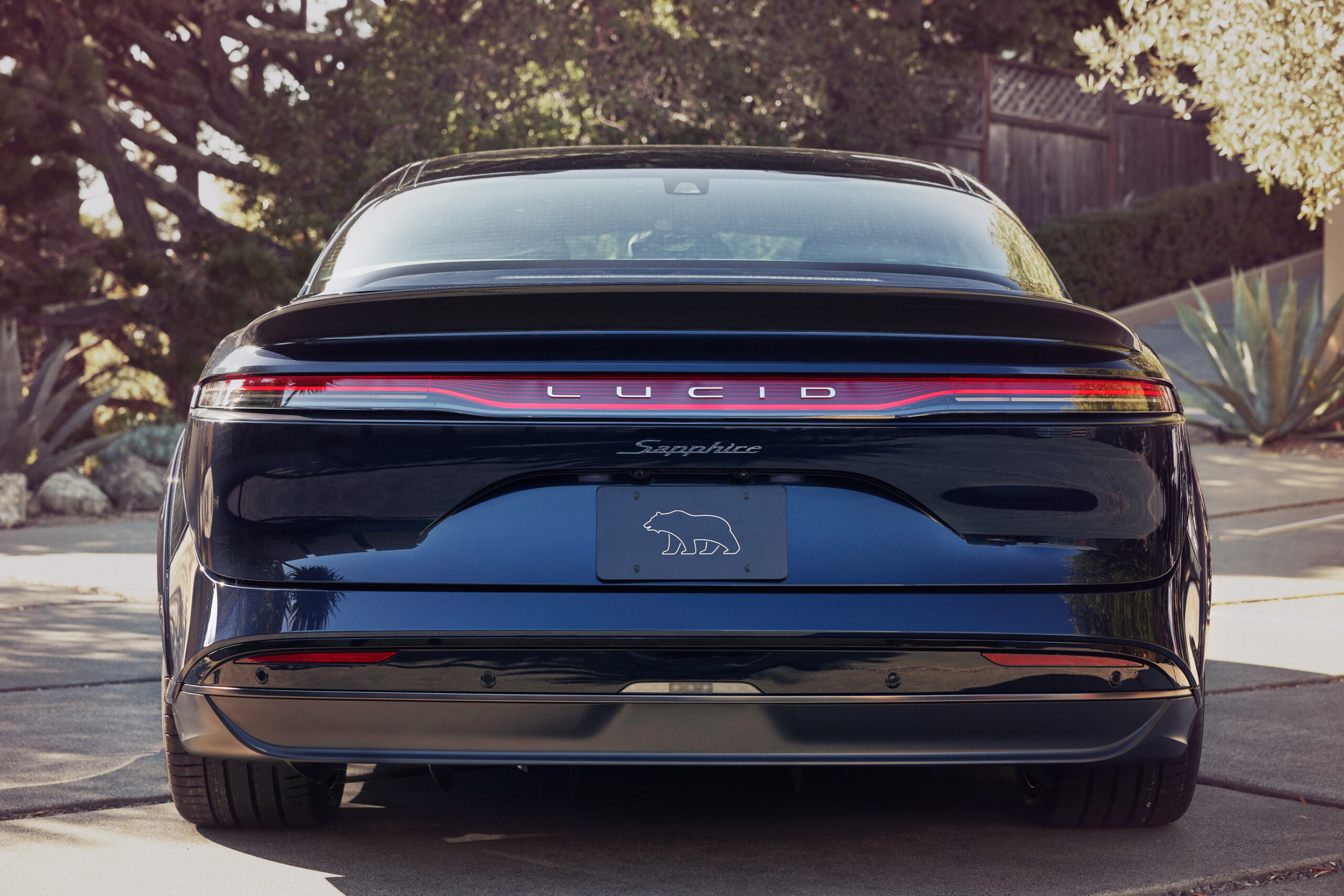
A trunk spill caused limp mode, warning lights, and left the Air stuck.
Warranty coverage was denied, and insurance may reject the repair bill.
It follows a similar Ioniq 5 incident where a water spill cost nearly $12k.
Doctors and health influencers are always telling us that drinking tons of water is the secret to clearer skin, sharper minds, strain-free poops and longer lives. But if there’s one group that absolutely should not stay hydrated, it’s modern electric vehicles, because a few drops could leave them with a massive medical bill.
Just ask Reddit user u/raging_onyx who leased a Lucid Air and saw his Thanksgiving week turn into a $15,000 lesson in why electric cars and water should never meet.
What Happened?
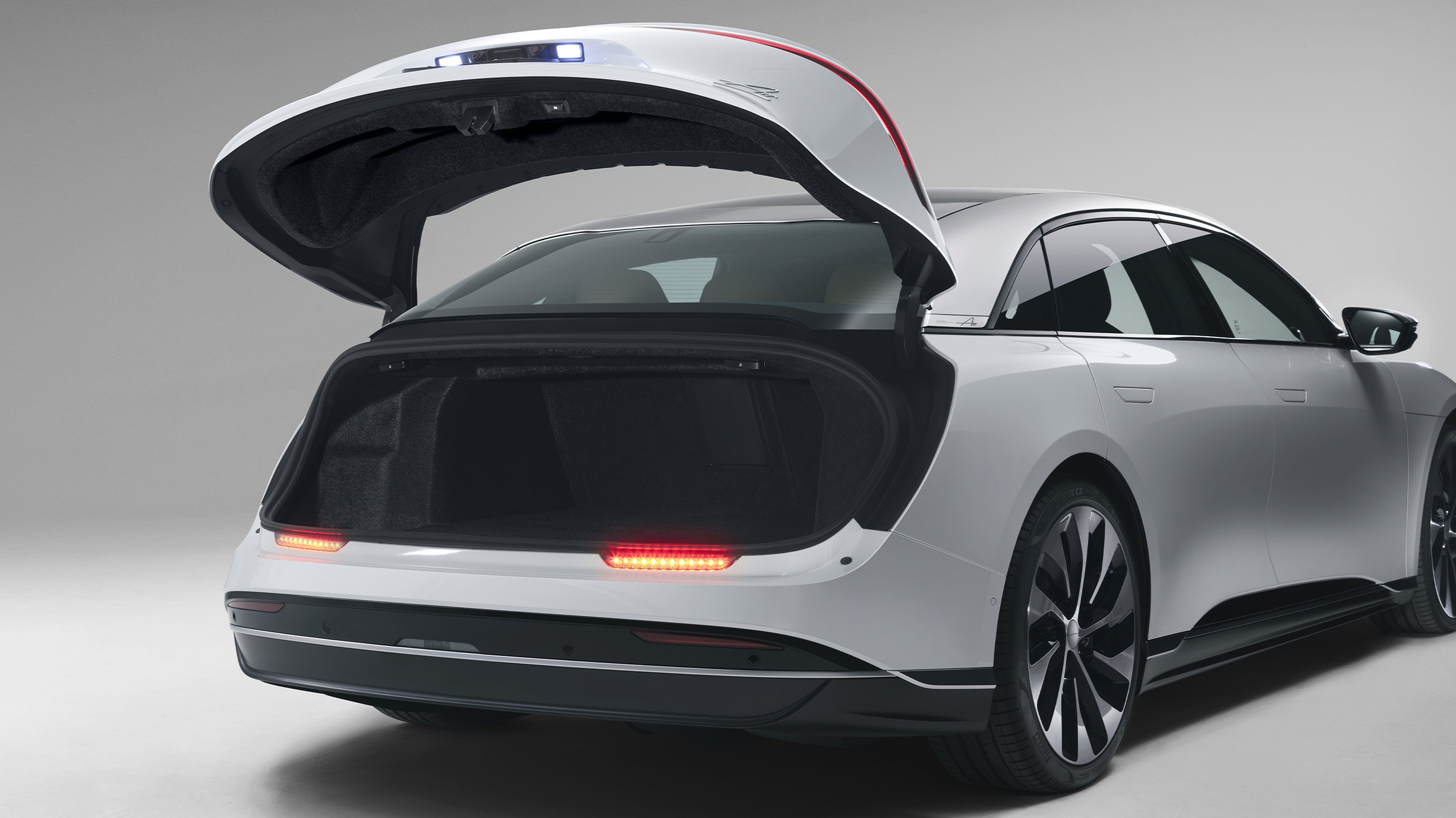
The disaster started with a perfectly innocent trip to a grocery store to refill a water container. But a pothole encountered on the way back tipped that container over, causing a catalog of faults that eventually rendered the vehicle completely immobile.
Within seconds of the spill happening the dash lit up like Times Square, the EV jumped into limp mode, regen braking tapped out, and the driver got a warning to pull over. When he found a local residential area to stop and tried to reboot the system, the Air wouldn’t shift out of Park.
A Very Expensive Lesson
Lucid customer support, in an impressive display of holiday cheer, suggested two things: call insurance, and brace for the possibility the car was totaled. Happy Thanksgiving!
There was more bad news when the first tow truck driver arrived and said he couldn’t move the sedan, since the Air wouldn’t shift into neutral. Fortunately, by the next day, neutral was found and a second truck was able to tow the stranded car.
Finally, the EV reached a service center, where the advisor initially estimated the repair at under $1,000. Bearable, right? This turned out to be off by roughly the price of a used Corolla.
The real number, the rep later confirmed, was about $15,000, and it wouldn’t be covered by warranty, because the spill was technically the driver’s fault.
As of the Reddit post, the driver was still waiting to find out whether his insurance would step in to cover the costs. You’d think the answer would be yes, but that’s not always how these things always play out.
Just last month, we reported on a similar incident involving a Hyundai Ioniq 5. A small water spill in the rear footwell damaged the car’s wiring, and neither the manufacturer nor the insurance company was willing to cover the $11,882 repair bill.
A look back at the most popular charts, articles, data insights, and more from Our World in Data in 2025.<br><br><a href="https://ourworldindata.org/top-of-the-charts-2025-redirect"><img src="https://ourworldindata.org/cdn-cgi/imagedelivery/qLq-8BTgXU8yG0N6HnOy8g/ddab06f1-a4f4-4b0f-24e2-c376b650a600/w=1024"/></a>
Facing an ongoing shortage of school bus drivers, Pasco County Schools in Florida is launching a new incentive program aimed at keeping routes covered and getting students to school on time, reported Bay News.
According to the news report, district officials say 49 of the county’s 297 school bus routes currently lack permanent drivers, resulting in some students arriving late to class. To help solve the issue, the district has approved quarterly bonuses designed to boost recruitment and retain current staff.
Beginning this quarter, drivers with strong attendance will receive a $500 bonus. Those who volunteer for designated high-need routes, often in more remote areas, will earn an additional $250 per quarter.
“Our goal is to ensure that every student gets to school on time so that learning can occur,” said Superintendent John Legg.
For veteran driver Lynn Zion-Weick, who came out of retirement four years ago after seeing an ad for the job, said the work is both meaningful and manageable.
“I’m pretty good with kids and I decided to give it a shot,” she said, adding that today’s buses drive “just like a nice car,” helping ease concerns from new recruits.
While she admits learning the engine components was the toughest part of training, she said the role has only grown more rewarding, especially since she now drives children whose grandparents she once attended school with.
With the driver shortage still pressing, the district is ramping up its hiring efforts. Pasco County Schools will host a school bus driver recruitment event on Dec. 11 and is hopeful the new bonuses will bring more applicants behind the wheel.
GM says strict fuel rules nearly forced it to cut gasoline models.
CEO claims compliance pressure could have closed GM plants.
Trump rollback eases targets automakers struggled to meet fully.
General Motors CEO Mary Barra recently acknowledged that federal fuel efficiency standards were set so aggressively under the Biden administration that her company would have been forced to scale back production of internal combustion engine vehicles just to stay compliant.
Barra shared this during a conversation at a high-profile industry conference hosted by The New York Times, where she discussed the internal pressures major automakers face under the current regulatory environment.
Timing matters, of course, as her comments came shortly after President Donald Trump confirmed that fuel efficiency standards are being rolled back, reducing the pressure on automakers to build EVs and providing them with more flexibility to manufacture and sell more combustion-powered models.
“Had to Start Shutting Down Plants”
Under the Biden-era rules, automakers would have been required to reach a fleet-wide fuel economy average of 50 miles per gallon by 2031. According to Bloomberg, achieving that would have meant electric vehicles making up more than half of all sales by that point.
If GM couldn’t meet those benchmarks, and if the administration didn’t revise the rules to reflect market realities, Barra claims that the company would have had little choice but to curtail sales of its gasoline-powered lineup.
She added that internal forecasts indicated the company would have “had to start shutting down plants” if its EV sales didn’t grow quickly enough.
Barra also touched on several other topics with Andrew Ross Sorkin, the interviewer and the founder and editor at large of DealBook. At one point, he asked her about GM flip-flopping in supporting policies during the first Trump administration, again when Joe Biden was elected, and once more after Trump returned to the White House in January.
Bending The Knee Or Business As Usual?
Barra responded by framing GM’s approach as pragmatic, not political. The company, she said, wants to build vehicles people want to buy, and it simply has to work within the regulatory frameworks set by whoever is in office.
Now, thanks to the rollback of CAFE standards, it will have the freedom to better manufacturer vehicles based on what their customers want, rather than simply what they must build to meet regulatory requirements.
How this will impact the American car industry remains to be seen, but if those rules remain in place in the future, we don’t expect to see EVs accounting for a significant share of the market any time soon.
The upcoming AUDI E7X has been revealed by Chinese authorities.
Arrives next year offering a dual-motor AWD system with 671 hp.
Cabin tech may mirror E5 with wide display and AI-powered assistant.
Audi’s awkwardly named Chinese sub-brand AUDI introduced the E SUV concept at the Guangzhou Auto Show last month and now China’s Ministry of Industry and Information Technology has revealed the production model. It’s known as the E7X and it closely echoes the concept.
The design is instantly recognizable as both have a familiar front fascia with a fully enclosed grille. However, the production model eschews the full light surround seen on the concept. The road-going crossover also has a revised lower intake with what appears to be an active shutter.
Moving further back, we can see traditional and digital side mirrors as well as new cameras or sensors on the front fenders. They’re joined by a roof-mounted Lidar sensor as well as flush-mounted door handles and a variety of wheels in sizes up to 22-inches.
How Big Is It?
The E7X measures 198.8 inches (5,049 mm) long, 78.6 inches (1,997 mm) wide, and 67.3 inches (1,710 mm) tall with a wheelbase that spans 120.5 inches (3,060 mm). That means the production crossover is slightly smaller and shorter than the concept.
Furthermore, to put those numbers into prospective, the model is 0.8 inches (20 mm) shorter than the current Q7. However, its wheelbase extends an extra 2.6 inches (66 mm).
The MIIT didn’t reveal interior pictures, but confirmed at least one variant will be offered with a four-seat setup.
That’s not much to go on, we do know the E5 Sportback has a 27-inch pillar-to-pillar display and an AI-powered avatar known as AUDI Assistant, so it’s reasonable to expect similar tech inside the E7X.
The E5 also sports three-dimensional wood trim, a dual wireless smartphone charger, and an ambient lighting system. They’re joined by a fragrance diffuser and hidden air vents.
Multiple Powertrains And Up To 671 HP
The images reveal quattro and non-quattro variants, which means we can expect an entry-level model with a rear-mounted motor producing 402 hp (300 kW / 408 PS). The all-wheel drive variant, on the other hand, will have 671 hp (500 kW / 680 PS) and a top speed of 143 mph (230 km/h).
The MIIT didn’t have much else to say about the crossover, but the concept had a 109 kWh battery pack that provided a CLTC range of more than 435 miles (700 km). The model also had an 800-volt electrical architecture, which enabled it to get 199 miles (320 km) of range with a ten minute fast charge.
AUDI has previously confirmed the production model will be launched next year, so expect to learn more in the coming months.
All 2026 Mach-E trims gain a design tweak owners asked for.
California Special package returns with Rave Blue accents.
Pricing drops slightly for 2026, with the GT starting at $53,395.
The 2026 Ford Mustang Mach-E has quietly introduced a change that’s small in size but significant in everyday use. Every trim level now comes with real rear door handles.
For owners who spent years pressing a tiny electric pad and awkwardly tugging at the door edge, this is a big quality-of-life upgrade. In fact, it might be even more noteworthy than the new California Special package.
The Blue Oval brand has long faced criticism over its rear door handle situation. Until now, entering the rear seats required touching a small electric door popper on the C-pillar.
Once the door was popped open, a second mechanism would keep it from closing fully until someone opened it up to get into the car or put something in the second row. It was a complex system, now made slightly simpler.
A spokesperson from Ford confirmed the change for the 2026MY to InsideEVs saying:
“All 2026 Mustang Mach-Es get the rear door handle as standard equipment. This was a change as part of our always-on approach that we made due to feedback from our customers who wanted a physical handle on both front and rear. The rear door still uses the same electronic latch release with the button on the door, but now the door can be pulled open with the handle.”
So, for clarification, the majority of the mechanism is unchanged. Users just don’t have to put their hand in the door jamb to open it. We’ve reached out for more information from Ford regarding whether or not this design change had anything to do with critiques over rear-door safety.
We also asked if it has any plans to make ingress easier should the 12-volt battery die. We’ll update this piece if we hear back.
In addition to the new door handles, Ford announced that the California Special package is coming back in a new way. While there aren’t any performance benefits over the GT trim it’s built on, the package features a lot of visual enhancements.
The star of the show is Rave Blue, a color-shifting blue/violet shade meant to echo the Pacific coastline. 20-inch wheels get unique GT/CS lettering and aero inserts. There are blue and silver interior accents and special Navy Pier ActiveX + Miko performance seats, too.
Pricing for 2026 also nudges downward. The Mach-E GT now starts at $53,395, about $1,100 less than last year, while the California Special package adds $2,495. The broader Mach-E lineup starts at $37,795, down $200.
Biden excluded Tesla from the 2021 White House EV summit.
GM was wrongly credited for leading the EV transformation.
Mary Barra privately told Biden Tesla deserved more credit.
In 2021, a high-profile EV summit at the White House brought together some of the biggest names in the auto industry. Hosted by then-President Joe Biden, the event was pitched as a landmark moment for the nation’s transition to electric vehicles. Executives from GM, Ford, and Stellantis were all present.
But conspicuously absent? Elon Musk, or anyone from Tesla, for that matter. That absence didn’t go unnoticed, especially when Biden publicly credited GM with leading the EV revolution.
As history has shown, Musk likes to hold a grudge. And while it may have seemed like a fleeting political oversight at the time, the snub may have had consequences that extended far beyond the Beltway.
What Was Behind the Snub?
Little has been said publicly about the summit in the years since, but during an interview at the 2025 New York Times DealBook Summit, GM president Mary Barra shed new light on what happened behind the scenes. According to Barra, she spoke privately with President Biden at the event to redirect some of the praise being sent her way.
“He was crediting me and I said, ‘Actually, I think a lot of that credit goes to Elon and Tesla,’” Barra told the audience. “You know me, Andrew. I don’t want to take credit for things.”
The snub was thought to have been done in part to throw the White House’s support behind the United Auto Workers and GM, Ford, and Stellantis, all of which have unionized labor. Tesla, on the other hand, doesn’t. Musk has been openly critical of labor unions for years, a stance that’s often put him at odds with Democratic policymakers.
The Fallout That Followed
The story didn’t end there. As reported by the Business Insider, in her recent memoir, then-Vice President Kamala Harris acknowledged that leaving Musk off the invite list was, in hindsight, a misstep.
“If you are convening the nation’s manufacturers of electric vehicles and the biggest player in the field is not there, it simply doesn’t make sense,” she wrote. “Musk never forgave it.”
Speaking in a separate interview, Harris reflected further: “So, I thought that was a mistake, and I don’t know Elon Musk, but I have to assume that that was something that hit him hard and had an impact on his perspective,” she said, according to Fox News.
It’s hard to quantify exactly how much the snub shaped Musk’s political outlook, but for years, the Tesla CEO had aligned himself with Democratic candidates, casting votes for figures like Barack Obama and Hillary Clinton.
But around 2022, Musk’s political leanings began shifting to the right, and he would go on to play a significant role in helping elect Donald Trump to a second term. Whether things might have turned out differently if Biden had acknowledged him is anyone’s guess.
Let’s not forget the White House giving Tesla the cold shoulder, excluding us from the EV summit and crediting GM with “leading the electric car revolution” in the same quarter that they delivered 26 electric cars (not a typo) and Tesla delivered 300 thousand.
Trump refuses to repay automakers for EV-related spending.
Rollback removes key EV incentives from future planning.
Ford and GM support looser fuel economy requirements.
The Trump administration is rolling back fuel-economy standards in the United States, encouraging car manufacturers to build more combustion-powered vehicles and reducing their impetus to build EVs. It’s a move that’s been a long time coming.
While companies like Ford, Stellantis, and GM have thrown their support behind the new “common sense” rules, they shouldn’t expect any handouts from the government to offset the billions they invested in EVs under Biden-era regulations.
During the recent CAFE standards announcement at the White House, a reporter from the Detroit Free Press asked President Trump whether automakers deserved compensation for those investments, given that they were made under policies assuming continued federal support for EV sales.
“No, I’m not doing it,” President Trump quickly replied, triggering laughter among those standing behind the Resolute Desk. “Nope, no, I’m not letting them recoup, they’re going to do just fine. You know how they recoup? From this point forward they’ll do very well.”
During the same presentation, the President suggested that thanks to his controversial tariffs, Stellantis, Ford, and GM are all coming back to the United States.
“The people that are up here from Stellantis and Ford and General Motors, great companies … they wouldn’t be here today if we didn’t have tariffs,” Trump claimed.
“They’d be building their plants in Mexico and other places. They’re leaving Mexico and they’re leaving Canada. They’re leaving because they ripped off our country, they took our businesses away from us. And now because of tariffs they’re all coming back, so it’s a great thing,” the president added.
Ford CEO Thrilled With Changes
According to Ford chief executive Jim Farley, previous CAFE standards “was totally out of touch with market reality,” claiming that “we were forced to sell EVs and other vehicles.”
He noted that Ford wants to give customers the freedom to choose, noting “we have a lot of EVs and a lot of hybrids at Ford, but now customers get a chance to choose what they want, not by what we force on them.”
Farley added that the rollback will allow it to “offer more affordability on our popular models, and we’ll be able to launch new vehicles built in America that are more affordable because of this rule change.”
Tesla has introduced a cut-price, less luxurious Model 3 Standard to Europe.
Std grade cars take 1 second longer to reach 62 mph, lose 134 miles of range.
The Model Y Standard has already been available in the EU since October.
Tesla has added a no-frills Model 3 Standard to its revamped European lineup in a bid to boost flagging sales, months after the stripped-down EV made its US debut. But the EU versions of the entry-level 3 come with one piece of retro kit denied US buyers – who might not even notice it’s missing.
We’re talking about an FM radio, equipment that hasn’t been worth bragging about since Gerald Ford was in the White House.
In the US, only Model 3 Premiums and up get the radio, a decision rooted more in cost saving than any lingering notion that a radio is a luxury item. Neither gets an AM radio, by the way, and only the EU version has a digital radio.
According to a 2023 study, cutting the radio unit could save Tesla around $50–70 per car, since it no longer needs to shield radio waves from interference created by the electric motors.
In other respects, the EU-spec Model 3 Standard (€36,990 in Germany) follows the US car’s lead. It gets a smaller battery versus the €44,990 Premium that cuts the WLTP range from 466 miles (750 km) to 466 miles (332 km), and the trip to 62 mph (100 kmh) takes 6.2 seconds instead of 5.2 seconds.
Bye-bye, rear touchscreen
Alloy wheels are replaced with 18-inch steelies and plastic hub caps, and the ambient lighting, rear touchscreen, electrically adjustable steering column, and heated rear seats are gone. You also get simple cloth on the chairs and a hi-fi downgrade from nine to seven speakers.
And there’s one other significant change that you won’t spot until you drive down the road for the first time. The Standard Tesla makes do with basic passive shock absorbers, whereas the Premium gets slightly more sophisticated frequency-dependent shocks that deliver a smoother ride.
But as with the US Standard, the EU base trim retains its panoramic glass roof. The Model Y Standard also keeps its glass roof, but mean old Tesla covers it over from the inside to remind you that you were too tight to pay for the Premium.
The base Y, which also loses its front and rear light bars and alloy wheels, is now on sale in the UK (for £41,990), as well as the EU. But so far, the Model 3 Standard is not available in Britain.
The recall covers nearly 35k EDVs from 2021 to 2025 in the US.
Drivers can inadvertently damage the seat-belt pretensioner.
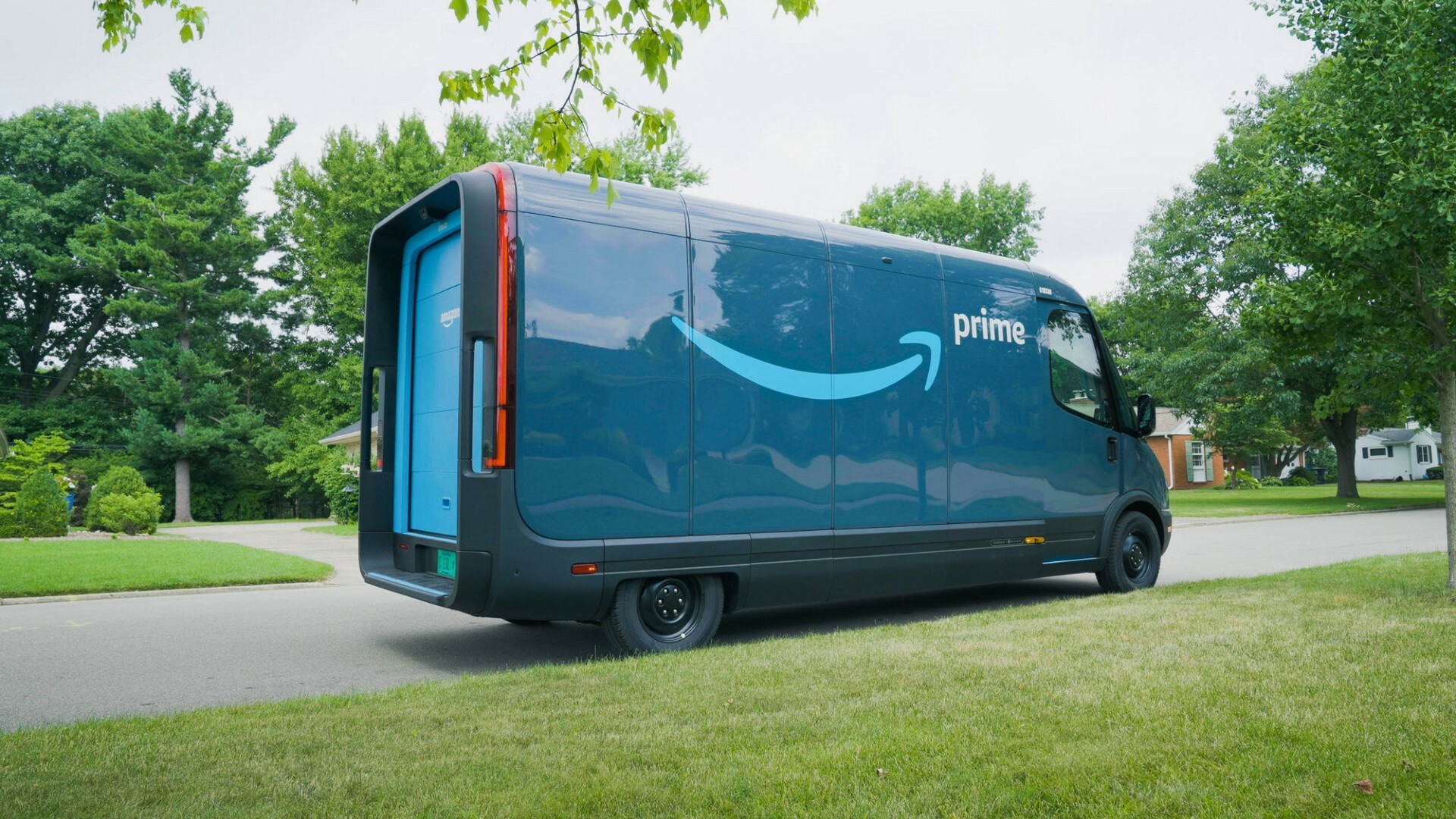
Rivian first sold the van to Amazon but now offers it to others.
Two months after the NHTSA opened an investigation into thousands of Rivian’s all-electric delivery vans, the carmaker has announced a recall impacting almost 35,000 units.
Rivian says that on certain examples of the EDV, the driver’s side seat belt pretensioner could be damaged from repeated misuse. It notes that misuse could include the driver sitting on the seat belt while it’s buckled underneath them.
If the pretensioner cable is damaged, it may not adequately restrain the occupant in a crash, increasing the risk of injury.
While Rivian notes that “a damaged pretensioner may be visibly detectable to the driver in some cases”, it presumably won’t be noticeable in others. Even so, the carmaker says it is not aware of any accidents or injuries related to the issue.
The initial probe, launched by the NHTSA’s Office of Defects Investigation, involved 17,198 examples of the 2022 and 2023 model year Rivian EDVs. However, the recall also impacts 2024 and 2025 models. All of them were manufactured between December 10, 2021, and November 8, 2025, and a total of 34,824 units are affected.
According to Rivian, it has already released an over-the-air update that enables automatic detection of driver seat belt misuse and has committed to inspecting and, if necessary, replacing the driver’s seat belt pretensioner assembly at no cost. It will also reimburse any owners who have paid out of pocket to fix the issue.
Rivian initially developed the EDV exclusively for Amazon, with the retailer placing an order for 100,000 examples, all of which are scheduled to be delivered by 2030. However, it’s now also available to other companies and sold as the ECV, or electric commercial van.
A look back at the most popular charts, articles, data insights, and more from Our World in Data in 2025.<br><br><a href="https://ourworldindata.org/top-of-the-charts-2025"><img src="https://ourworldindata.org/cdn-cgi/imagedelivery/qLq-8BTgXU8yG0N6HnOy8g/ddab06f1-a4f4-4b0f-24e2-c376b650a600/w=1024"/></a>
Driving over 1,000 miles across multiple states and meeting with over a dozen customers, BraunAbility gathered feedback from operators, bus drivers, fleet managers and transportation directors in the public and school transport space on what they want to see in an updated lift.
The result was on display at the Transporting Students with Disabilities and Special Needs Conference in Frisco, Texas, Trade Show. BraunAbility’s Dual Parallel Arm Lift Refresh, available on Century and Millennium Series Lifts, updates a product that has seen changes since 2005.
Reed Christiansen, commercial product manager for the company, explained that in 2019 they conducted a survey to customers to understand exactly what they need.
“We tried to learn and understand their challenges and opportunities [were] to improve the lift,” Christiansen said, adding that while COVID-19 slowed down the process, they were able to learn and understand the updates needed to improve the passenger experience. These updates an auto-tite system to reduce drift and rattling, a new user-friendly hand pendant, an onboard diagnostics panel for obstruction alerts, new curved vertical channels and rounded parallel arm covers and a center line platform market to support easier and more symmetrical loading.
“This is a product that hadn’t changed in a long time,” Christiansen added. “It lasts a long time, and so that can also lead us to be not as urgent in updating the product, because from a life cycle perspective, it’s continuing to do very well, and customers are happy with it. We built a really good product in 2005 and designed a really good update then, but it was time to review that. We just want to continue to innovate and challenge ourselves and give the customers what they’re looking for.”
Colton Walle, the area sales manager for the company responsible for completing the customer survey, said after five or six customer visits he started to see a trend in features that were asked for.
Lift Sentinel by BraunAbility is the yellow bar that atomically deploys to ensure safety around the lift opening. It was on display at the 2025 TSD Trade Show.
Additionally, the company announced a new product that will be a standard feature on all Century and Millennium lifts. The Lift Sentinel is a guard that automatically deploys at the front of the lift to prevent someone from entering the open area when the lift is deployed. It bolts onto any model-year 2005 or newer lift.
“This is an enhanced security feature to make our operators and passengers more comfortable as they’re loading and unloading passengers,” Christiansen said.
The Lift Sentinel will be available for pre-orders in January, and the DPA Lift Refresh is expected to be available in the second quarter of next year.
A Moncks Corner school bus driver is behind bars after being arrested in connection with an Internet Crimes Against Children (ICAC) investigation, reported Live 5 News.
Allan Bladorn, 39, was reportedly taken into custody Nov. 20, after Berkeley County investigators identified him as a suspect during an undercover online operation. The Berkeley County Sheriff’s Office arrested Bladorn and placed a hold on him until he was transferred to Chesterfield County the following day.
According to the news report, authorities confirmed that Bladorn was employed as a public-school bus driver with the Berkeley County School District at the time of his arrest. Investigators seized his cellphone, which will undergo forensic analysis as part of the ongoing case.
Bladorn is currently being held at the Chesterfield County Detention Center, where he awaits a bond hearing. The sheriff’s office stated that the investigation remains active, and that additional charges may be filed as evidence continues to be reviewed.
LFA Concept shares its aluminum chassis with Toyota’s new GR GT.
The concept skips Toyota’s twin turbo V8, even though it could fit.
Styling evolves the earlier Sport Concept with clear refinements.
This is the Lexus LFA Concept, and it’s quite unlike the V10-powered weapon that preceded it. For years, enthusiasts assumed the next LFA would be little more than a Lexus-badged take on Toyota’s new GR GT. Instead, what’s emerged is something very different. It’s electric. Yes, really.
The concept made its debut in Japan this evening alongside the twin-turbo V8 Toyota and was first teased months ago under the name Lexus Sport Concept. That early study has now morphed into the more production-ready LFA Concept, carrying a fully electric powertrain.
According to Lexus, the ‘LFA’ name is “not bound to vehicles powered by internal combustion engines,” but instead symbolizes a vehicle that “embodies the technologies that engineers of its time should preserve and pass on to the next generation.”
Toyota Underpinnings
While Toyota has already shared a trove of details about its new halo performance car, Lexus is staying quiet on the finer points of its electric sibling. The company has yet to release any figures for the LFA Concept’s powertrain, leaving its performance potential open to speculation.
Whatever its output, it’s safe to say no amount of kilowatts will replicate the unmistakable howl of the original LFA’s V10, or even the sound of the Toyota’s new V8.
Interestingly, the LFA Concept is based on the same all-aluminum platform as the Toyota GR GT and GR GT3. That presumably means Lexus had the option of using the same V8 as its parent company, but opted against it.
While the choice of powertrain seems odd, particularly given poor demand for high-performance electric sports and super cars, there’s no denying the LFA Concept looks beautiful, which isn’t a word we’d use for the Toyota. The interior is also wildly different than the Toyota, although this isn’t a surprise given the LFA is still a concept.
When Will it Launch?
What does the future hold for the LFA Concept? We know it’s headed for production, and the renaming of the Sport Concept to the LFA Concept suggests it will indeed be sold as the second-generation Lexus LFA.
When it will reach public roads remains uncertain, but if we had to place a bet, it’s likely to arrive around the same time, or perhaps a little later, than the Toyota GR GT, which is expected in 2027.
New Mercedes-AMG EVs will use advanced axial flux electric motors.
Engineers say rear brakes may shrink dramatically or even disappear.
New in-wheel motor pairs with a compact 15 kg dual inverter unit.
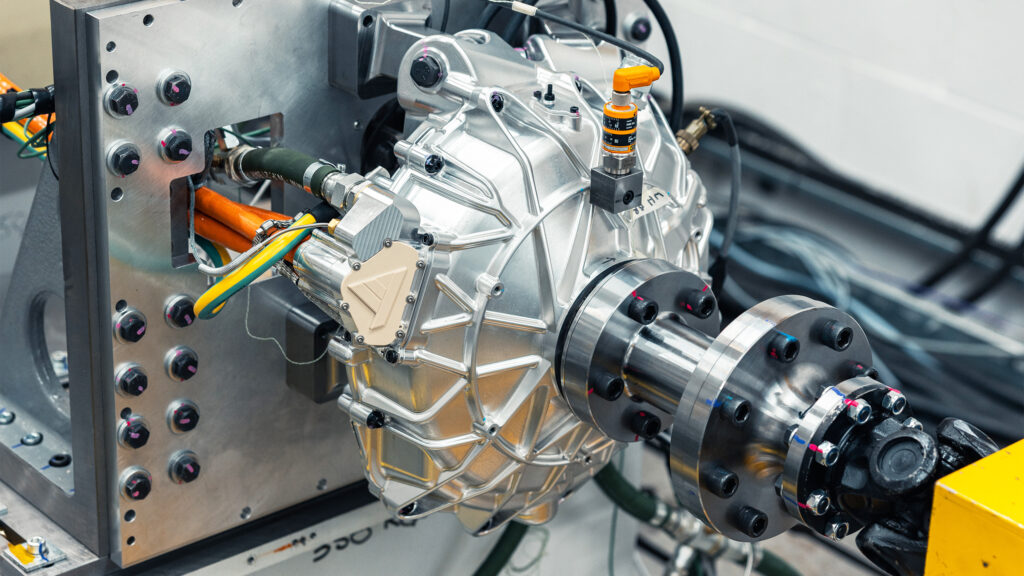
Just over a month ago, Mercedes-owned brand Yasa unveiled a record-breaking electric motor that weighs just 12.7 kg (28 lbs) and has the ability to produce up to 1,006 hp (750 kW). The company has now revealed that this axial flux motor will be used as an in-wheel unit for its next-generation EV powertrains and could even replace traditional rear wheel braking systems.
While in-wheel electric motors are nothing new, they haven’t been widely adopted in the EV market, in part because they’re heavy and generally aren’t particularly powerful. Yasa’s new motor set an unofficial electric motor power density record of 59 kW (79 hp) per kilogram, or 35 hp per pound.
While the motor can deliver a peak of up to 1,006 hp, the firm notes that its continuous power output ranges between 469 hp and 536 hp. It can then be paired with a 15 kg (33 lbs) dual inverter that Yasa has also developed in-house, and could prove perfect for high-powered hypercars and other performance EV applications.
Then there’s the matter of braking. Yasa says its in-wheel motor offers such “incredible regenerative performance” that the system could potentially negate the need to use traditional rear brakes.
This could allow carmakers to not only ditch important brake componentry, but also rear driveshafts, potentially saving up to 200 kg (441 lbs) from current models and as much as 500 kg (1,100 lbs) on new models developed from the ground-up.
“Thanks to its exceptional regenerative capability, this system has the potential to dramatically downsize rear brakes on an EV – or even remove them entirely in certain architectures,” Yasa chief of New Technology, Simon Odling, said.“And by capturing a much greater proportion of regenerative braking energy, this technology can also deliver a significant increase in EV range.”
“What’s more, our new in-wheel motor powertrain not only enables significantly lighter, more efficient and higher performance EVs, but also dramatically creates space within the architecture of an EV too, giving car makers unprecedented freedom to redesign and optimize the packaging, aerodynamics and kinematics of their next-generation vehicles,” he added.
Yasa’s axial flux motors will be used in the new all-electric Mercedes-AMG GT 4-Door sedan and SUV. However, these models are not expected to use these motors as an in-wheel application, and will instead have one motor at the front axle and two at the rear.
The 2026 Subaru Trailseeker arrives early next year for $39,995.
Electric crossover has 375 hp and around 280 miles of range.
It comes equipped with heated front seats and a 14-inch display.
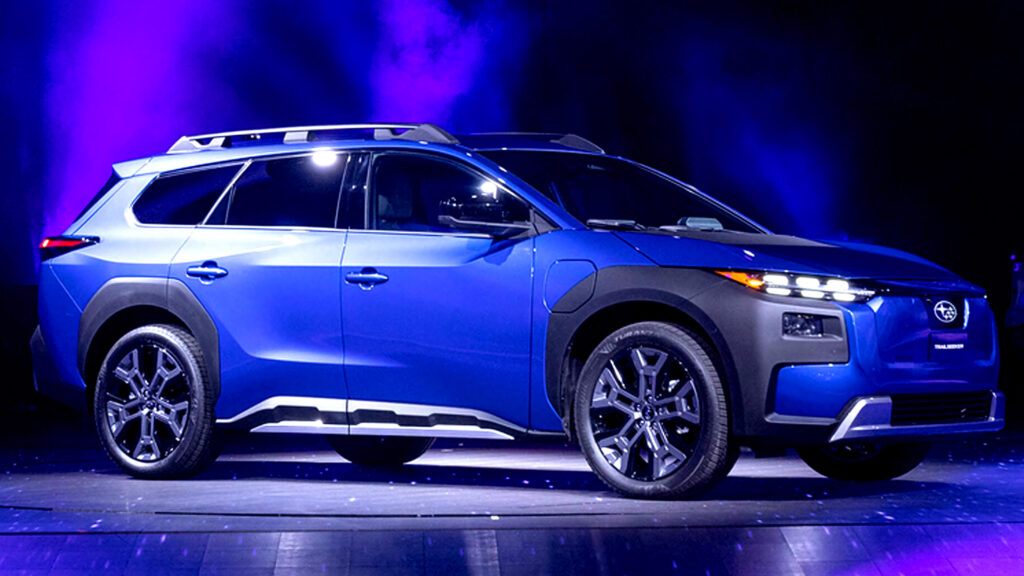
Subaru introduced the 2026 Trailseeker earlier this year and now the company has announced the wagon-like crossover will start at $39,995. That’s $5,000 more than the redesigned Outback, but the Trailseeker is far more attractive.
Kicking things off is the entry-level Premium trim, which features a fully enclosed grille that is flanked by LED headlights. Buyers will also find automatic windshield wipers, a power liftgate, and 18-inch alloy wheels with aerodynamic covers.
The model is also notable for having 8.3 inches (211 mm) of ground clearance, which is more than the redesigned Jeep Cherokee.
The minimalist interior comes nicely equipped with a 7-inch digital instrument cluster and a 14-inch infotainment system with Android Auto and Apple CarPlay. They’re joined by heated front seats that are wrapped in StarTex upholstery and have 10-way power adjustment on the driver’s side.
Other highlights include an automatic climate control system, ambient lighting, and a dual wireless smartphone charger.
The EyeSight Driver Assistance suite comes standard and provides Adaptive Cruise Control, Lane Tracing Assist, and Traffic Jam Assist. The model also has Front/Rear Cross-Traffic Alert, Pre-Collision Braking, Active Lane Change Assist, and Lane Departure Prevention. Rounding out the highlights are Safe Exit Assist and a Blind Spot Monitor.
Trailseeker Limited
Moving up the trim ladder is the $43,995 Trailseeker Limited. It features a lightly revised exterior with 20-inch wheels and a hands-free power liftgate.
Bigger changes occur inside as the cabin is more luxurious thanks to a heated leather steering wheel and heated rear seats. Buyers will also find a power passenger seat and a Harman Kardon premium audio system.
The upgrades don’t end there as the Limited features digital key technology and a 1500 watt AC power outlet in the rear cargo area. They’re joined by parking assist and a panoramic view monitor.
Trailseeker Touring
Sitting at the top of the lineup is the $46,555 Trailseeker Touring. It’s distinguished by a panoramic glass roof and a gloss black accent on the hood. Customers can also get a unique two-tone paint job for $795.
Interior changes are minor, but the range-topping variant has a digital rearview mirror, ventilated front seats, and radiant leg warmers. Customers can also shell out $300 to get black and blue leather seats.
The Fastest Subie In America
Regardless of which trim is selected, all Trailseekers have a 74.7 kWh battery pack that feeds a dual-motor all-wheel drive system. The latter produces a combined output of 375 hp (280 kW / 380 PS) and it enables the model to accelerate from 0-60 mph (0-96 km/h) in 4.4 seconds.
Besides being the fastest Subaru ever sold in America, the model is expected to have a range of approximately 280 miles (451 km). When the battery is low, the 150 kW DC fast charging capability can deliver an 80% charge in as little as 28 minutes. It’s also worth noting the model has an NACS charging port.
2026 Subaru Trailseeker Pricing
Model
MSRP
Trailseeker Premium
$39,995
Trailseeker Limited
$43,995
Trailseeker Touring
$46,555
SWIPE
Prices exclude a destination fee of $1,450 to $1,600
Hyundai launched two MobED versions with distinct capabilities and uses.
The Pro model adds full autonomy while the Basic relies on remote input.
Cameras, LiDAR, and AI let the robot navigate tight and crowded places.
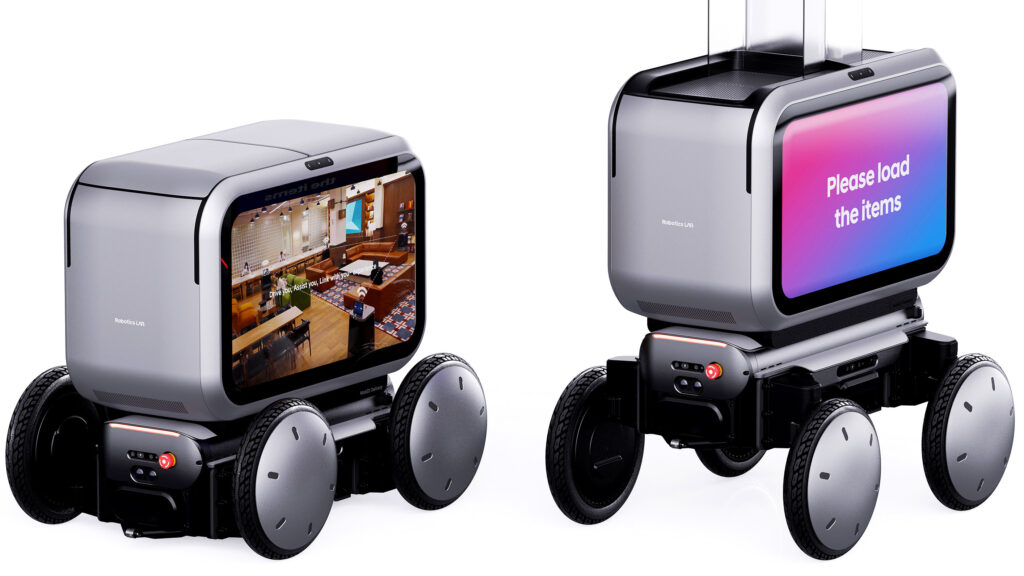
Four years after first showing its Mobile Eccentric Droid (MobED) concept, Hyundai’s Robotics LAB has now revealed the production version in Tokyo, Japan. The debut marks an important step in the company’s expansion into advanced robotics.
The compact platform has been engineered to be fully autonomous and uses advanced artificial intelligence that allows it to cruise over different surfaces and provide incredible adaptability for different use cases.
How Does It Move?
Central to MobED’s capability is its Eccentric Control Mechanism, a clever system that lets the robot adjust its posture and each wheel individually. The result is an uncanny steadiness, even when crossing inclined or uneven terrain.
For spatial awareness, Hyundai equipped the platform with a suite of advanced cameras and LiDAR sensors. An AI-driven obstacle detection system adds another layer of awareness, helping the robot navigate confined or crowded spaces without missing a beat.
Hyundai envisions it taking on various roles, from last-mile deliveries to logistics support, with minimal human intervention.
Two Flavors Of Droid
Hyundai has revealed two versions of the robot: the Basic and the Pro. The Basic measures 1,150 mm (45.2 inches) in length, 750 mm (29.5 inches) in width, and 430 mm (16.9 inches) in height. It weighs 78 kg (172 lbs) and can carry up to 57 kg (125 lbs).
The Pro variant stands a little taller at 650 mm (25.5 inches) and heavier at 88 kg (194 lbs), though its payload capacity drops slightly to 47 kg (104 lbs).
Where they diverge most is autonomy. The Pro comes equipped with Hyundai’s full self-driving system, while the Basic relies on manual operation via remote control.
What Keeps It Rolling?
Powering both versions is a small 1.47 kWh battery that provides up to 4 hours of operating time. However, compared to some of Hyundai’s EVs, the MobED charges slowly, needing 2.5 hours to juice up the battery from 10 to 90 percent.
Each robot also features universal mounting rails that make it easy to attach a variety of tools and modules. In the future, they could perform a range of important tasks in factories and warehouses, as well as crucial functions at production facilities, reducing the need for human labor.
Commercial sales of the MobED are expected to begin in the first half of 2026. Hyundai has yet to announce pricing, though it’s clear the company sees the robot as more than a novelty.

 Login
Login