Reading view

There are new articles available, click to refresh the page.

(STN Podcast E303) Moose in the Road: Making School Bus Operations Work in Alaska

We cover industry shoutouts, conference connections, a terrifying bus vs. train encounter and Diesel Emissions Reduction Act updates.

“One thing about transportation [is] it’s never boring.” Transportation Supervisor Melody Best offers a behind-the-scenes look at how operations are handled in Kenai Peninsula Borough School District in Alaska amid adverse weather, multiple school closures, budget cuts, technology needs and even moose in the road. She also shares the benefits of participating in the STN EXPO East Mentorship Program in Charlotte, North Carolina last month.

Read more about operations.

This episode is brought to you by Transfinder.


Message from School Radio.


Message from RTA.


Stream, subscribe and download the School Transportation Nation podcast on Apple Podcasts, DeezeriHeartRadioSpotify and YouTube.

The post (STN Podcast E303) Moose in the Road: Making School Bus Operations Work in Alaska appeared first on School Transportation News.

Aldine ISD Transportation Uses BusHive Technology to Save Big

By: STN

Nathan Bauman first found love, then he found his work passion.

And finally he helped his student transportation department recover roughly $500,000 in funds associated with field trips funded by various departments.

His journey began in 2009, when he was a bus driver at Aldine Independent School District in Texas and his then-girlfriend’s mother was running the field trip department.

She was struggling to integrate a new digital system the district had invested in to streamline the request-and-approval process for field trips. The new system was designed to replace the inefficient process of back-and-forth emailing that required a month’s notice for a typical field trip.

He volunteered to troubleshoot the issue, resolved it with the vendor and was promptly asked to take on more technical tasks as challenges arose across the student transportation department.

“I was naturally strong at solving these problems and was able to help the district a lot more in a technical role that served the entire department than simply as a driver,” he explained. “It’s rewarding to be able to troubleshoot issues that I know help the drivers and the staff run smarter.”

A year later he was promoted into a technical assistant role and he’s been helping the transportation department leverage busHive, the field trip software, ever since.

His work culminated in the efficient recouping of approximately $500,00 every school year from different district departments which rely on the transportation department to shuttle students to and from a diverse set of activities and programs.

“The process to recoup these funds would take an incredible amount of time, energy and focus to complete if it were not for busHive,” Bauman said.

“The fact that it automates so many of the calculations involved in so many different types of unique trips makes it easy for me to work across the district to recoup a significant amount to our department.”

A Texas-Sized Challenge: Capturing Trip Data from Various Funding Sources

Not every field trip is created equal, especially as it relates to funding.

Burnham said about 65 percent of the field trips are normal activities that are already part of the funding schedule for the transportation department, including athletics and inter-district activities.

The remaining 35 percent of the non-fixed route trips are associated with a third-party funding source, often federal or some other academic funding.

These trips carry a significant cost, averaging about $300 – $500 per run.

“There is so much variability and diversity among these trips so it’s not something we can easily crank out in a spreadsheet,” he said. “It takes a lot of focus and expertise to capture all the unique data in a way that makes it easy for us and simple for the other departments.”

In a district with 56,000 students and a transportation department that maintains 474 buses that traveled nearly five million miles last academic year, the costs of these trips add up to significant sums.

Barnham estimates these special field and activity trips total approximately 2,500 per year.

That’s where the district’s investment in the busHive software application pays dividends.

Its ability to automate the request-to-approval-to-driver assignment process without a flurry of back-and-forth emails has silenced the chaotic noise long associated with this process.

The 30-day request is still department policy, but the busHive software allows Barnham and his team to respond rapidly when a one-off last-minute request knocks at their door.

“Most of the district staff are very good about putting their requests in well in advance and it helps us manage and plan, but we’re also able to respond nearly immediately when someone forgets or a true last-minute opportunity presents itself,” he explained.

“We can get a request today and be ready to dispatch a bus tomorrow and not have it disrupt us. busHive makes it easy to route it across all the approvals and get the driver assigned in no time.”

Automating Complex Reimbursements: A Texas-Sized Challenge

But the financial side of the equation is where the busHive investment shifts from efficiency accelerator to financial differentiator.

Prior to busHive, the district had to manually calculate the value of each of those 2,500 unique trips and then engage in email requests for reimbursements. The process was slow, tedious and rife with opportunities for clerical or accounting errors to disrupt prompt payments.

“There is so much variability and diversity among these trips so it’s not something we can easily crank out in a spreadsheet,” he said. “It takes a lot of focus and expertise to capture all the unique data in a way that makes it easy for us and simple for the other department.”

Today, busHive automates the calculations, creates an invoice, integrates with a third-party financial management software to make the request and receives the reimbursement.

From request to receipt, the money is often received in about three days.

“Without busHive, this could take weeks of back and forth,” he said. “The calculations alone would be an enormous burden nevermind the reconciliation of the receipts. busHive automates so much of the heavy lifting and creates a smooth system for every person in the process.”

Bauman calculates the funds recouped equate to about $500,000 per school year. Without busHive, it would be nearly impossible to process all the requests required to achieve that recouping.

“Not everyone appreciates so many of the intricacies of special trips and how we pay for them and how the transportation department serves the district,” he said.

“It has made a world of difference to our department and our accounting to have a system that automates nearly every part of the process.”


Our School Bus Operating platform arms your team with the information they need to improve decision making around safety, reducing costs, and being more efficient each day.

Trusted by dozens of public and private student transportation fleets to improve how they do business.

Learn More and Book a Demo.

The post Aldine ISD Transportation Uses BusHive Technology to Save Big appeared first on School Transportation News.

Georgia Grandmother Writes School Bus Safety Book for Children

Teaching school bus safety behavior to younger student riders comes in a variety of forms. A Georgia grandmother is using a children’s book to bring the safety lessons to life.

Annette Bentley-Smith, or Mrs. Annie, has a passion for writing. She self-published her first book in 2015. Since then, she has expanded her books for children to cover various facets of education and other childhood experiences, including bullying, wearing braces, living through divorce and sleepovers. This eventually led her to the yellow school bus, a part of millions of children’s educational journey.

Jeremy Tackett is a school bus driver who has known author Bentley-Smith for over 10 years and served as inspiration for her children’s book on school bus safety (Photo courtesy of Annette Bentley-Smith)

Bentley-Smith said her longtime friend of over 10 years, school bus driver Jeremy Tackett, mentioned to her that he doesn’t see children’s books on the topic of school bus safety. He shared many real-life experiences from his own career as a school bus driver. Her own two grown sons rode the school bus and her six-year-old step-grandson now does the same. All those experiences shaped the story.

She added that another friend shared with her that his daughter, who was in first grade at the time, being bullied onboard the bus by a fifth-grade student. It escalated to a physical assault inside the school.

“Safety is a broad word, it’s an umbrella,” she said.

She continued that physical safety, emotional safety, bravery, challenging new life experiences, these are all things she writes about as they’re not only situations faced by many children but “all of my books are based on actual experiences” which she said hopes will help children relate to the stories.

She said that her titular character, “Kobe the Koala,” was created to resonate with children and that she has tried to use a rhyming style to make the safety education easier to remember .

“I love my books to rhyme it because I feel like it makes it stick more and makes it more relatable. It makes it more fun and then it’s not just a book of rules,” said Bentley-Smith.

Safety Book Character Kobe Inspired by Granddaughter

Kobe is also a plush toy. Bentley-Smith, the Georgia grandmother, explained that the toy not only serves as a physical comfort to students but as an auditory reminder. The children’s families can record themselves reading the book aloud, and the audio is stored within the Kobe toy. She said her granddaughter had once said to her, “I wish you could be here every night to read to me.” That inspired this journey to create a toy that can carry the voice of their loved ones.

The story in “Kobe the Koala and the School Bus Mission” follows the main character walking through the woods and seeing a school bus drive by. As it does, students demonstrate unsafe behaviors by hanging out the windows and throwing objects outside. Kobe then goes onto the school bus and starts explaining to the students that safe behaviors means staying seated, keeping backpacks out of the aisle, and speaking softly.

The goal of the story is to teach students how to be brave and set good examples for their peers which makes the school bus ride safe and fun, not only for themselves but for the driver.

“They [school bus drivers] are trying to, you know, stay focused on the road, but then at the same time, they have to stay focused on these kids and when all this commotion is going on, it’s unsafe for the kids and unsafe for the bus driver.,” stated Bentley-Smith. “So, it kind of ties in with my mission, with the kids, teaching the kids bravery and speaking up. And being willing to practice good safety and good behavior,”

Bentley-Smith posted the following review on LinkedIn from a first-grade teacher who used the book with her class:

“I read this book before our field trip and it was perfect,” the reader wrote. “I went over how to behave during the field trip and this helped to discuss how to ride a bus for the ones who are not bus riders. It helped to keep our bus clean and they were ready to discuss the right and wrong ways to ride a bus. They loved it and appreciated the fact that the author was local!”

Bentley-Smith recommends using a rewards system that gives students a sense of accomplishment when they consistently practice safe school bus behavior through a “School Bus Bucks” program that has a prize of a pin that reads “School Bus Safety Star.”

She explained that she plans to use the Kobe character in a series of 10 books that will be set in different states across the country. This first book in the series is set in her home state of Georgia.

Her website provides information about a sponsorship called the “The 485 Children’s Mission,” which looks to give 485 copies of the “Kobe the Koala and the School Bus Mission” as resources to students across the country through placement in schools, community organizations, families in need, literacy programs, and directly to student transportation professionals as part of their own safety training programs.


Related: NC Transportation Manager Channels Passion for Education, Safety into Children’s Books
Related: School Bus Driver Creates Children’s Book to Promote School Bus Safety
Related: Children’s Books by School Bus Drivers Double as Safety Education Tool

The post Georgia Grandmother Writes School Bus Safety Book for Children appeared first on School Transportation News.

NTSB Preliminary Report Details Fatal Tennessee School Bus Crash

The National Transportation Safety Board recounted the incidents leading up to the fatal March 27 Clarksville-Montgomery County School System bus crash with release of a preliminary report, but the agency won’t know or release the exact cause for another year and a half.

NTSB wrote in its preliminary report that the crash occurred April 16 at about 11:35 a.m. A Clarksville-Montgomery school bus was traveling west on US-70 in Carroll County, Tennessee, a two-lane roadway with a 55-mph speed limit. The school bus was occupied by the driver, named in a lawsuit as Sabrina Ducksworth, four adult chaperones and 24 student passengers. Ducksworth was taking students from Kenwood Middle School to a school event in Jackson.

At the same time, a 2013 International WorkStar dump truck operated by the Tennessee Department of Transportation and occupied by a driver and passenger as well as a 2014 Chevrolet Trailblazer sport utility, also occupied by a driver and passenger, were traveling east in the oncoming lane. The weather was clear and the roadway was dry.

As the school bus approached a curve in the highway, it crossed the centerline and entered the eastbound lane. NTSB said the left side of the school bus struck the left side of the dump truck in a sideswipe collision. After hitting the dump truck, the school bus then collided with the SUV, departed the roadway to the south, and came to rest facing down the roadside embankment. The school bus remained upright.

Two student school bus fatalities resulted. Local media outlets identified the students as two eighth-grade girls: Zoe Davis and Arianna Pearson, both 13 years old. School bus driver Ducksworth sustained serious injuries. Bus passenger injuries ranged from minor to serious and the two occupants of the dump truck also sustained serious injuries. The NTSB stated that occupants of the SUV were uninjured.


Related: Update: Tennessee Crash Kills 2 Students During Field Trip
Related: Chattanooga School Bus Driver Receives 4-Year Prison Sentence
Related: Florida Driver Arrested After Train Strikes School Bus Carrying 29 Students
Related: First Responders Critical in School Bus Emergencies


NTSB Preliminary Report Follows Filing of Lawsuit

As STN previously reported, the parents of Davis filed a wrongful death lawsuit in response to the school bus fatalities. The family seeks a jury award of up to $5 million.

The suit alleges that Ducksworth was distracted, fatigued, reckless, and failed to follow training, traffic laws and lane discipline. The lawsuit also claims the Clarksville-Montgomery County School System was negligent in hiring, training and supervising her. The lawsuit additionally argues the district failed to adequately check her fitness for the job before hiring her.

However, others in local media reports or on social media expressed that Duckworth may have suffered a medical episode.

The Tennessee Highway Patrol and Federal Motor Carrier Safety Administration are aiding in the investigation, which remains under investigation. NTSB told School Transportation News it cannot share details of what the FMCSA is assisting on, but said all NTSB investigations operate under what a Party System,” which allows the agency to bring in technical experts from other organizations to supplement the knowledge of our investigators.”

The post NTSB Preliminary Report Details Fatal Tennessee School Bus Crash appeared first on School Transportation News.

BusGates Urges Proactive Measures During Distracted Driving Awareness Month to Protect Students at Bus Stops

By: STN

CHATHAM, Ill. – In recognition of April being designated as Distracted Driving Awareness Month, BusGates, the makers of LED stop arm extensions, is raising awareness about the ongoing risks students face at school bus stops and asking drivers to be more diligent while encouraging communities to consider additional safety measures aimed at preventing illegal passing incidents that put students at significant risk of injury or worse.

Seeing motorists repeatedly ignore traditional school bus warning signals is a daily frustration for many school bus drivers, including Cindy Morris, a veteran bus driver for the Ball-Chatham school district in Illinois whose perspective is the subject of a new video campaign being launched this month.

“It’s been a huge issue. I’ve literally had people just watch me drop off [students] and still go by. Anytime you can draw more attention to something, it’s going to make changes and BusGates has,” said Morris.National data emphasizes the scale of the issue. According to the National Highway Traffic Safety Administration, an estimated 43.5 million illegal school bus passings occur each year in the United States, highlighting the persistent danger students face when boarding and exiting the bus.

“It’s time to move beyond reactive tools after a child has already been put at risk”, said Dan Thompson, Co-Founder at BusGates. “Real solutions exist today that proactively reduce illegal passing and protect children in the moment, and our stop arm extensions are a proven way to reduce violations before they happen.”

Communities that have implemented stop-arm extensions have reported reductions in illegal passing incidents, with some school districts noting significant decreases following deployment. The approach focuses on addressing driver behavior at the point of risk by increasing visibility of the school buses’ stop arm and reinforcing the expectation to stop when it’s extended.

BusGates is also encouraging parents and educators to use Distracted Driving Awareness Month as an opportunity to talk with students about safe crossing practices and to engage in conversations about bus stop safety within their communities.

Drivers are reminded to remain alert, particularly in residential areas and along school bus routes. Safety officials recommend avoiding phone use while driving, reducing speed near bus stops, and anticipating that children may cross the street unexpectedly.

“In today’s environment of constant distraction, we need safety measures that make school buses impossible to miss”, added Jeff Stauffer, Co-Founder at BusGates. “Stop-arm extensions increase visibility of the school bus and help reduce illegal drive arounds, keeping students safe when they get on and off the bus.”

BusGates, a stop-arm extension technology designed to increase the visibility and physical presence of a school bus stop signal, is being implemented in districts across the U.S. and Canada as part of broader efforts to improve student safety. The device extends into the roadway when the bus is stopped, creating a more prominent visual cue for approaching drivers and prompting them to slow down and stop.

BusGates Stop Arm Extensions are being used by school districts in 26 states including:
Arizona, Arkansas, Colorado, Georgia, Idaho, Illinois, Iowa, Kansas, Kentucky, Louisiana, Maine, Minnesota, Missouri, Montana, New Mexico, New Jersey, New York, North Carolina, North Dakota, Ohio, Oklahoma, Texas, Utah, Virginia, Washington, West Virginia, as well as in Canada.

About Bus Gates:
Bus Gates is on a mission to reduce vehicle “drive-arounds” at bus stops across America and make getting to and from school safer for students. Bus Gates stop-arm extensions are a simple, cost-effective solution to a major problem – cars ignoring stopped school bus warnings putting students at risk. Bus Gates stop-arm extensions easily retro fits to the existing school bus stop signs. They offer additional visibility and stick out further from the bus to make drivers more aware and reduce illegal “drive-arounds” by up to 95%. www.busgates.com

The post BusGates Urges Proactive Measures During Distracted Driving Awareness Month to Protect Students at Bus Stops appeared first on School Transportation News.

Active-threat Response Training Subject of Opening STN EXPO West Session

Emergency response is non-negotiable safety and security training for student transportation professionals as they are the first line of defense in active-threat situations that take place on the school bus.

The “Elements of School Transportation Active-Threat Response Training” four-hour seminar on Friday, July 10 at STN EXPO West conference will be organized into four distinct sections. It begins with the doctrine of in loco parentis, Latin for “in the place of a parent,” the legal term for assuming the responsibility of a child or minor. In this instance, in loco parentis ensures safety through threat recognition as well as understanding physiological stress responses.

The second part moves to de-escalation training and crisis response, explaining how to address behavioral or emotional triggers with appropriate communication techniques to defuse the situation before it becomes physical.

The third section covers behavioral intelligence. Attendees will learn to train their school bus drivers to recognize their unique placement of observation of student behavior patterns and be alert to areas of concern before an incident occurs.

Part four of the seminar will shed light on quick-threat response, including emergency communication, scenario-based security training and defensive physical intervention.

Attendees will leave the seminar with a realistic and actionable plan to equip their school bus drivers and other student transportation staff with following legal protocol, recognizing warning signs and communicating them before incidents occur, and formiong a structured response to cases of violence onboard the school bus.

Meet the Instructors Teach Active-Threat Response

The seminar is presented School Transportation Active Threat Response Training, or S.T.A.R.T., a program created by veteran Ohio law enforcement officers to train student transportation professionals in the school bus environment to be prepared for emergency situations. The lead presenters will be Jim Levine, founder of S.T.A.R.T., and John Zippay, S.T.A.R.T. co-founder and current program coordinator, along with Kevin Spackman, a S.T.A.R.T senior instructor, and Greg Truhan, former U.S. Secret Service special agent, and S.T.A.R.T program developer and senior training instructor.

All four of the instructors have extensive experience in law enforcement. Levine began his career at the Arlington County Police Department in Virginia and since then has served as a S.W.A.T. instructor as well as a field training officer, co-founded a global security organization near Washington D.C., is certified in active-shooter response techniques as well as through the Ohio Crime Prevention Association in the concepts of CPTED (Crime Prevention Through Environmental Design) and Crisis Intervention Training. Zippay currently serves as full-time police officer for the South Russell Police Department in Ohio alongside Spackman and is also a member of the Ohio School Resource Association and a certified Crisis Intervention Team member.

Save $100 on main conference registration with Early Bird Savings when you act by June 5. The STN EXPO West conference will be held July 9-15 at the Peppermill Resort in Reno, Nevada. Updates to agenda and speaker lists can be found at stnexpo.com/west.


Related: STN EXPO West Registration Open for 2026, Features Innovative Conference Experience
Related: Turkel to Uncover Secrets of Communicating Relevance at STN EXPO West
Related: Security Expert Shares Key Indicators of Violence for School Transportation Safety

The post Active-threat Response Training Subject of Opening STN EXPO West Session appeared first on School Transportation News.

Smart Goes Back To Its City Car Roots With Concept #2

  • The Smart Concept #2 previews a successor to the Fortwo.
  • The urban EV promises a range of 186 miles (300 km).
  • The production version will debut at the Paris Motor Show.

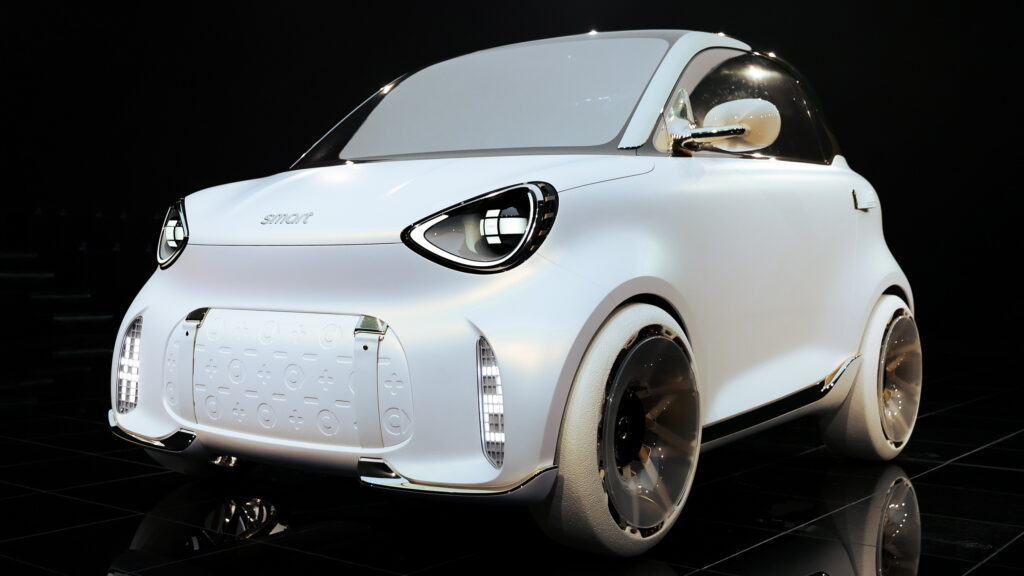
Smart goes back to basics with a successor to the original Fortwo microcar that put the company on the map. At the “Change of Perspectives” event in Beijing, the brand unveiled the Concept #2, which serves as a close preview of a tiny urban EV set to arrive later this year.

The model was designed by Mercedes-Benz, looking like a natural evolution of the EQ Fortwo that was discontinued in 2024. It has a familiar two-door silhouette with a very short hood and large wheels positioned at the corners. Other highlights include the aggressive LED headlights and the clean surfacing.

More: You’re Not Wrong, The New Mercedes GLB Looks Suspiciously Like A Smart

The concept features futuristic wheels with transparent aero covers shod in light-colored rubber, trick DRLs with #2 lettering, leather straps instead of door handles, and a blocked grille that looks like a luxury suitcase, while at the rear it sports a small matrix screen that can display various messages. Those elements will likely be toned down for production, as with the shiny gold finish of the floating roof.

\\\\\\\\\\\\\\\\\\\\\\\\\\\\\\\\\\\\\\

The Concept #2 measures 2,792 mm (109.9 inches) long, making it the largest interpretation of a two-door city car from Smart. It is 292 mm (11.5 inches) longer than the original Smart and 97 mm (3.8 inches) longer than the last generation of the EQ Fortwo.

More: Smart Thinks Its E-Class-Sized Sedan Looks Like A Shark, And Stands By It

Still, the EV remains the smallest contestant in Europe’s A-Segment, being 840 mm (33 inches) shorter than the Fiat 500e and 997 mm (39 inches) shorter than the Renault Twingo E-Tech. In fact, the new Smart is closer in size to heavy quadricycles like the Citroen Ami and the Fiat Topolino than actual cars.

New Underpinnings

Under the skin lies a new Electric Compact Architecture (ECA) developed in house. Since Smart is co-owned by Mercedes and Geely, it is safe to assume that the platform uses technology from the Chinese automaker.

The #2 will be exclusively available with an electric powertrain, similar to the #1 and #3 and unlike the larger #5 and #6, which are also available in plug-in hybrid forms.

\\\\\\\\\\

Smart has yet to announce detailed specifications, but mentioned a targeted range of around 186 miles (300 km), which is more than double the 135 km (84 miles) range of the EQ Fortwo. The battery will charge from 10-80% in under 20 minutes and will support V2L (Vehicle-to-Load) functions. Chances are that the #2 will stick to the RWD layout of its rear-engined predecessors.

More: Smart Just Killed Hopes Of A ForFour Comeback

The presentation didn’t include photos of the interior, but the packaging of the EV-dedicated platform promises a more spacious two-seater cabin which is also expected to be more premium than before.

The production Smart #2 will debut at the Paris Motor Show in October, ahead of its market launch. The model will be likely focused in Europe and the UK, although it could also find its way into other markets around the world.

\\\\\\\\\\\\\\\\\\\

Smart

The Olto Weighs 175 Pounds And Hits 33 MPH, But Regulators Call It An E-Bike

  • Olto combines e-bike legality with scooter-like performance and design.
  • A removable battery delivers up to 40 miles of claimed range.
  • Built-in security and app controls make it more car than bicycle.

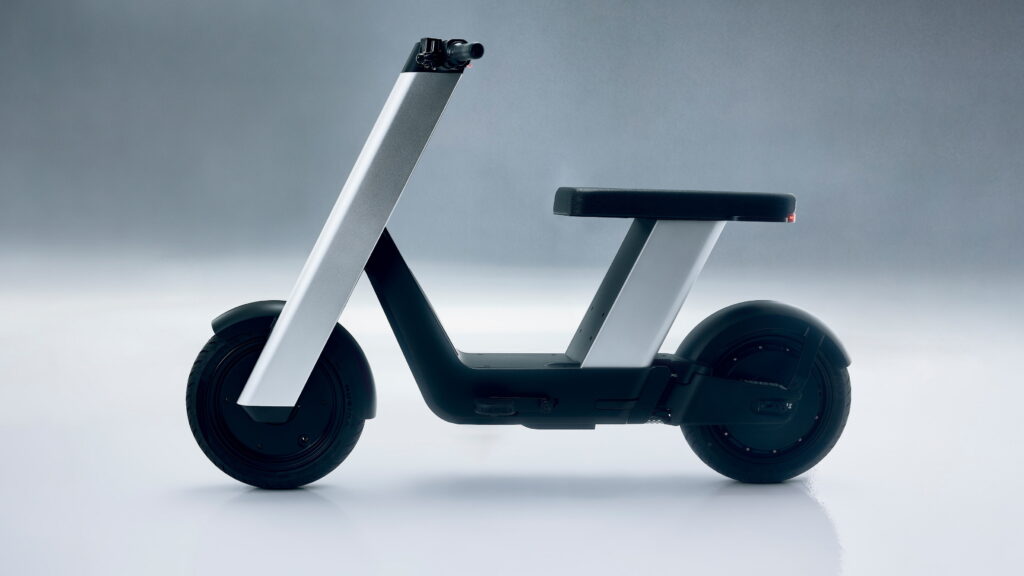
Electrified bike-shaped vehicles are becoming more and more commonplace across the USA. One of the latest additions to the market is the Infinite Machine Olto, and what it might lack in lightweight construction or conventional design, it makes up for in sheer utility and practicality. Now, after a review and a deep dive into the specs, it’s easy to see why the manufacturer sees it as a car alternative.

The Olto is technically classified as a Class 2 ebike in most places. That’s problematic for real ebike riders, as we’ve pointed out in the past. The loophole that allows this 175-lb electric moped that goes up to 33 mph (and faster downhill) to be sold as an ebike is probably also what allows Infinite Machine to build and sell it in the first place. As an e-moped or e-motorcycle (both things that it’s far more akin to), it would have to navigate more regulations, and riders would likely need to do more with regard to getting licensed and insured to use it.

More: Colorado Police Lost Most Of The Dirt Bike Pack And Still Managed To Start A Bigger Fight

That said, the product itself is noteworthy for several reasons. Let’s start with the basics. The Olto starts at $3,495, and for that price, buyers get a 48-volt architecture, a 25-Ah removable battery, a 2-kW rear hub motor, weatherproof aluminum bodywork, NFC unlocking, GPS tracking, anti-theft alerts, automatic steering lock, USB-C charging, and even over-the-air software updates. In other words, it has more tech than some actual cars.

The Olto’s biggest trick is that it changes personality depending on how you use it. In Class 2 mode, it behaves like a legal e-bike with a 20 mph top speed and throttle operation. Switch to Class 3 and it can hit 28 mph, although you have to use pedal assist (yes, it has dinky little almost vestigial pedals to get into the ebike segment). Put it in Off-Road mode, and the full 33 mph is unlocked. Infinite Machine says the companion app can even tailor the settings based on local laws. In its review of the Olto, The Verge says it managed to achieve 36 mph.

\\\\\\\\\\\\\\

All of that tech should explain why Infinite Machine sees this as a car alternative. With 40 miles of range, it’s more than enough for most commutes, errands, or quick city runs. That said, if the battery dies, good luck pedaling it.

Most folks would struggle to pedal a 30lb mountain bike very far, and those are designed for human-powered movement only. The Olto isn’t. On the plus side, the removable battery can be charged indoors, while the bike itself is designed to stay outside thanks to its weatherproof construction and built-in security features. Is it truly worth $3,495? Probably for those who will truly use it instead of a car.

Most ebikes don’t offer the modularity and practicality of the Olto. It’s available with a slew of accessories such as a kid carrier, storage bins, baskets, racks, and more. That’s a great combo of features and flexibility. We just hope regulation figures out how to allow things like the Olto without sentencing actual ebike riders to wearing motorcycle helmets and having ebike insurance while they’re on a greenway.

The Jeep You Probably Forgot About Is Going Away For 2026

  • The electric Jeep Wagoneer S is skipping the 2026 model year.
  • It will return for 2027 with a NACS port and several updates.
  • Sales plummeted to a mere 175 units during the first quarter.

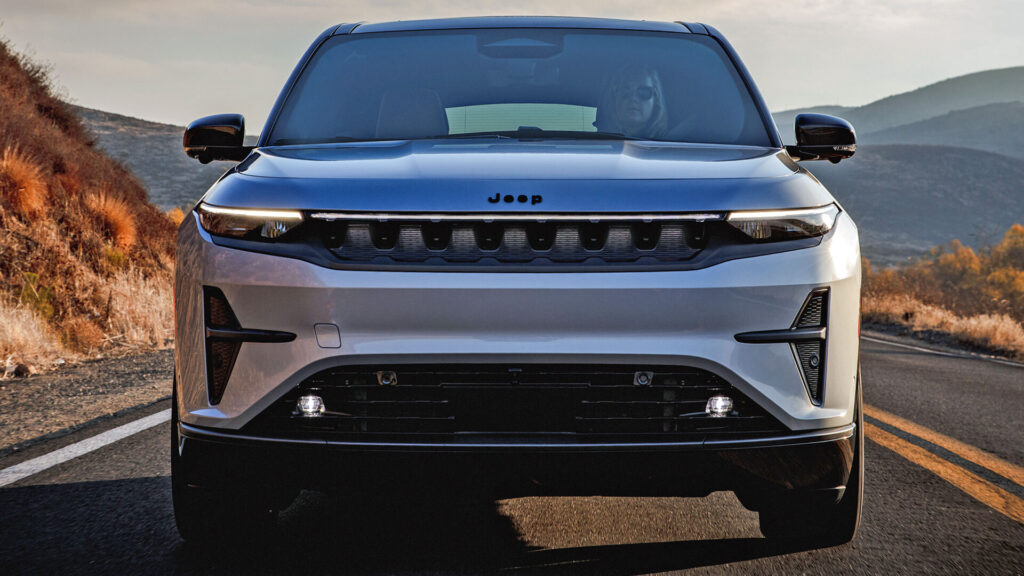
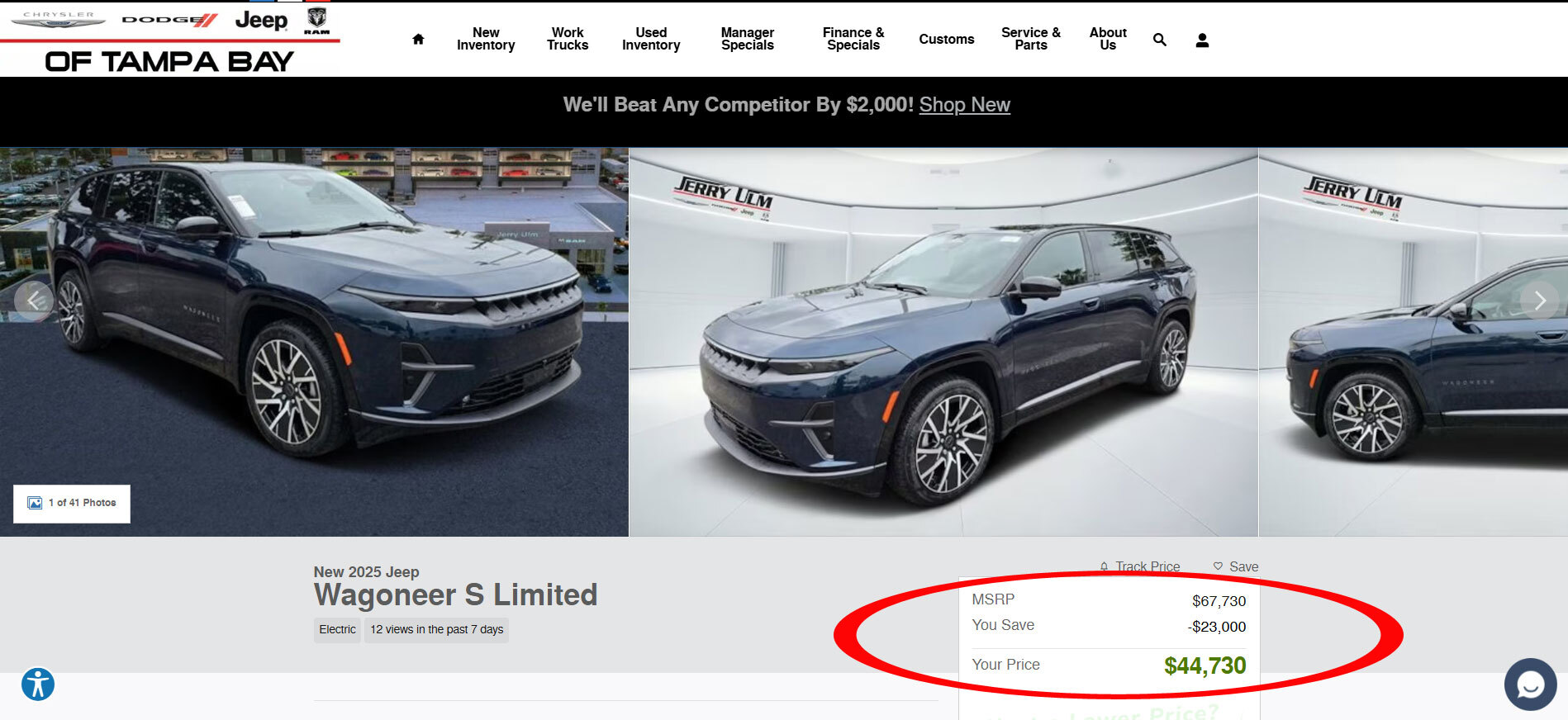
The Jeep Wagoneer S has been a perpetual disappointment and some dealers are offering discounts of nearly $25,000 to help move inventory. The fire sale enabled Stellantis to move 10,864 units in the United States last year, but sales have plummeted following the elimination of the federal tax credit.

In the fourth quarter of 2025, dealers only moved 438 crossovers. That fell to a mere 175 units in the first quarter of 2026 and that puts the company on track to sell a pathetic 700 for the entire year.

More: 2025 Jeep Wagoneer S EV Gains Cheaper Base Trim, But Locks Performance Behind A Paywall

However, even that sad figure now seems optimistic as the Wagoneer S is going away for 2026. The story was broken by Automotive News and confirmed to Car & Driver.

While the slow-selling crossover is going on hiatus like the Volkswagen ID. Buzz, it’s coming back for 2027. It also promises to be a tad more compelling when it returns as a spokesperson said they’re “pacing production of the all-electric Jeep Wagoneer S to support future improvements in battery performance, software, and capability.”

 The Jeep You Probably Forgot About Is Going Away For 2026

Those will be welcome improvements, but the biggest change appears to be the introduction of a NACS port. This will enable owners to access Tesla Superchargers without the need for an adaptor.

These sound like good developments, but the biggest hurdle appears to be price. The Wagoneer S starts at $65,200 and climbs to $70,200 for the Launch Edition, which features an increased output of 600 hp (447 kW / 608 PS).

That’s pretty steep considering the Mustang Mach-E GT begins at $53,395 and can be equipped with the GT Performance Upgrade for an additional $1,295. While the Ford has a significantly lower output of 480 hp (358 kW / 487 PS), it’s slightly quicker than the Wagoneer S as it accelerates from 0-60 mph (0-96 km/h) in 3.3 seconds, compared to the Jeep’s 3.4 seconds.

\\\\\\\\\\\\\\\\\\\

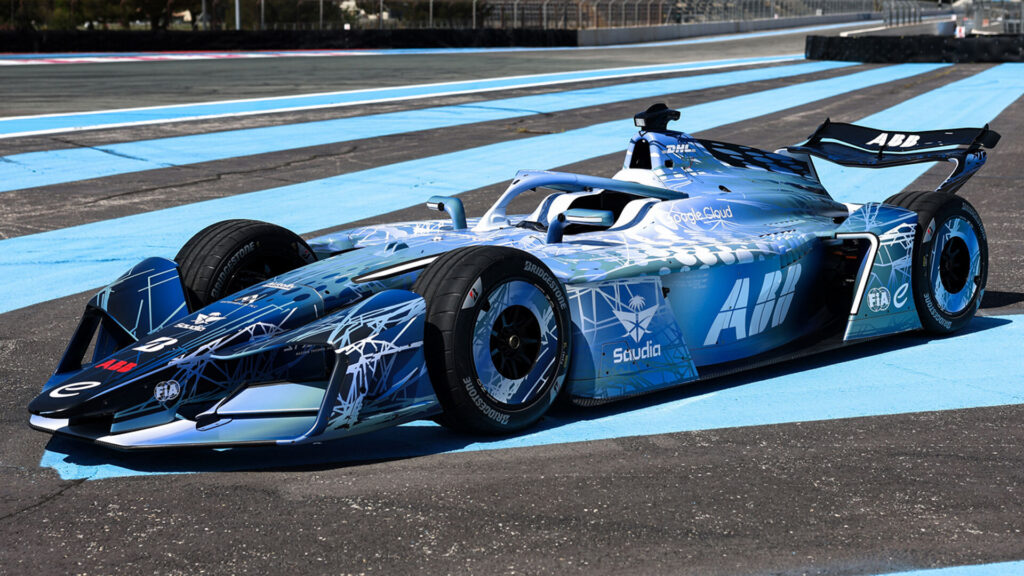
Gen4 Formula E Race Car Brings Massive 336 HP Power Boost

  • FIA and Formula E have unveiled the new Gen4 race car.
  • Features a new powertrain that produces up to 805 hp.
  • Said to be world’s first race car that is 100% recyclable.

If you think Formula E might as well be called Formula Zzz, the latest update could be right up your alley as they’ve introduced the new Gen4 race car for the 2026/2027 season. It features an all-new powertrain with significantly improved performance.

Showcased at the Paul Ricard Circuit earlier today, the model will be able to produce up to 805 hp (600 kW / 816 PS) in Attack Mode. That’s a huge increase from the previous limit of 469 hp (350 kW / 476 PS).

More: Porsche’s New 975 RSE Weighs Less Than A Miata And Hits Harder Than A Bugatti In Attack Mode

Even in ho-hum race mode, Gen4 cars will have 50% more power. This suggests they’ll produce 603 hp (450 kW / 612 PS), which is roughly on par with the Kia EV6 GT.

The impressive numbers don’t end there as the Gen4 racer accelerates from 0-62 mph (0-100 km/h) in 1.8 seconds and 0-124 mph (0-200 km/h) in 4.4 seconds, which is a full 1.5 seconds faster than its predecessor. Given enough room, the single seater will eventually hit a top speed of 208 mph (335 km/h).

Given the gains, it’s little surprise that Formula E says Gen4 cars will deliver the “fastest-ever” lap times seen in the series. In particular, they suggested lap times on street circuits should fall by at least five seconds per lap compared to Gen3 Evo cars.

The powerful stats behind the all-new GEN4 ⚡️ Reaching speeds of over 335kph and 0-200kph in 4.4 seconds, with a 71%…

Posted by ABB Formula E on Tuesday, April 21, 2026

Other highlights include a 600 kW charging capability and a focus on sustainability. In regards to the latter, the Gen4 is said to be the “world’s first racing car that is 100% recyclable.” It also includes at least 20% recycled materials as well as batteries that lack rare earth minerals.

Formula E CEO Jeff Dodds said, “Gen4 isn’t just a car, it’s a bold declaration of our ambition. Seeing what it can do on track for the first time is a real milestone for Formula E – we are now delivering performance levels that were thought impossible for electric vehicles just five years ago.” He went on to say, “This is just the beginning, as its refinement is now in the hands of our manufacturers – Porsche, Jaguar, Stellantis, Nissan, Lola Cars and Mahindra – to push development to even higher limits of performance ahead of its racing debut later this year.”

\\\\\\\\\\\

Formula E

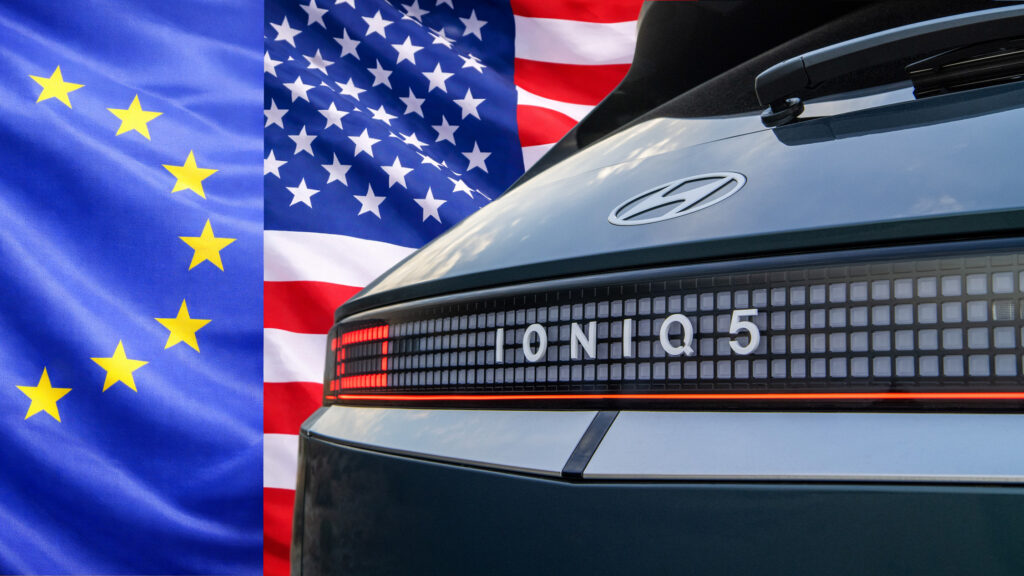
Europe’s 51% EV Sales Boom Is Leaving America Back At The Gas Pump

  • Electric vehicle sales in Europe jumped by 51% in March.
  • High fuel prices, new govt incentives are driving the switch.
  • US EV picture is very different, sales dropping 27% in Q1.

Europe’s EV market is having a moment, and it’s in large part thanks to a man who’s no fan of clean energy. President Trump’s attack on Iran sent petrol and diesel prices soaring – and European drivers into the arms of electric cars.

New figures show battery-electric registrations surged 51 percent in March 2026 across 15 key EU + EFTA (European Free Trade Association) markets as drivers in the region battled with fuel costs that jumped by around a fifth.

Related: Ford’s EV Sales Collapsed 70% While Toyota’s Nearly Doubled

More than 224,000 electric passenger cars were registered in March alone as a result, accounting for 22 percent of all new-car sales. That means close to one in every four cars sold was an EV. Over the first quarter, more than half a million EVs were sold across the EU, up 33.5 percent year over year. 

Growth was broad, too. Germany rose 42 percent year to date, helped by new state incentives and France stayed strong with a 28 percent EV share in March. Italy, long considered a reluctant adopter, jumped 65 percent. Even Poland cracked the 40 percent growth club.

Scandis Embraced EVs

Then there’s the Nordics, where normal rules don’t apply. Denmark saw fully electric cars account for 76.6 percent of March registrations. Finland was near 50 percent. Norway, naturally, continued behaving like it’s already living in 2035, with 98.4 percent of new registrations fully electric.

 Europe’s 51% EV Sales Boom Is Leaving America Back At The Gas Pump

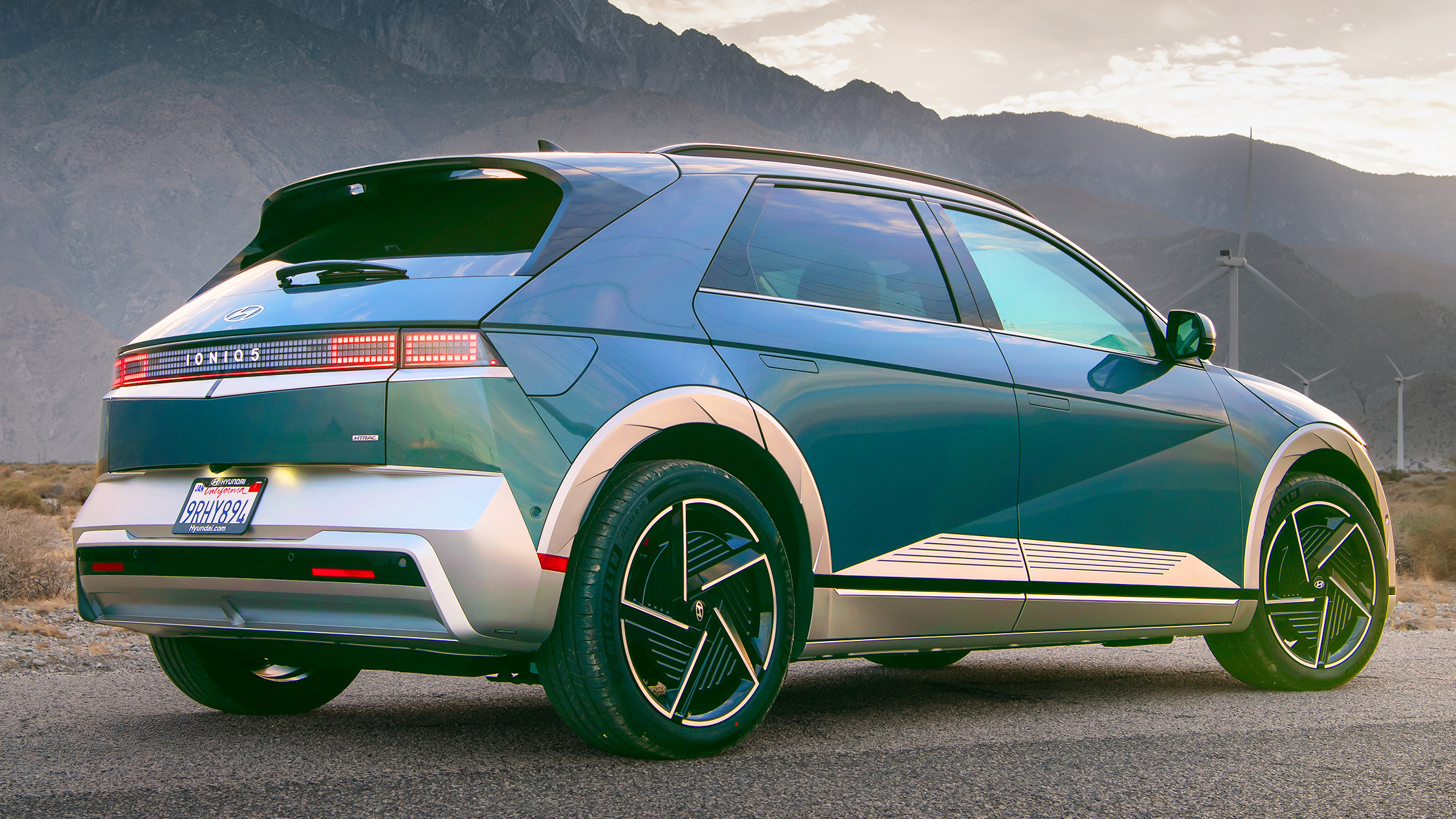
Now let’s cross the Atlantic, where the mood is rather different, despite pump prices also rising there. Though CarEdge reported internet searches for EVs jumped 20 percent in the first week following the original attack on Iran in early March, US EV sales in the first quarter fell 27 percent compared with the same period last year.

Tax Credit Hole

Only 216,399 EVs were sold in America between January and the end of March, that slide heavily influenced by the removal of the federal $7,500 tax credit last September, which appears to have yanked plenty of buyers back toward gasoline pumps.

Some brands still found success. Toyota rose 79 percent, Lexus jumped 207 percent, and Rivian edged upward by 21 percent. But others were hammered, with several mainstream and premium names like Audi, BMW, Mercedes, Porsche, Ford, VW, Jeep and Genesis posting dramatic declines as high as 93 percent.

 Europe’s 51% EV Sales Boom Is Leaving America Back At The Gas Pump

Porsche, Hyundai

China Is Getting A Jetta SUV For Less Than A Used Corolla Costs In America

  • VW debuts the ID. Aura T6 SUV and ID. Unyx 09 sedan in China.
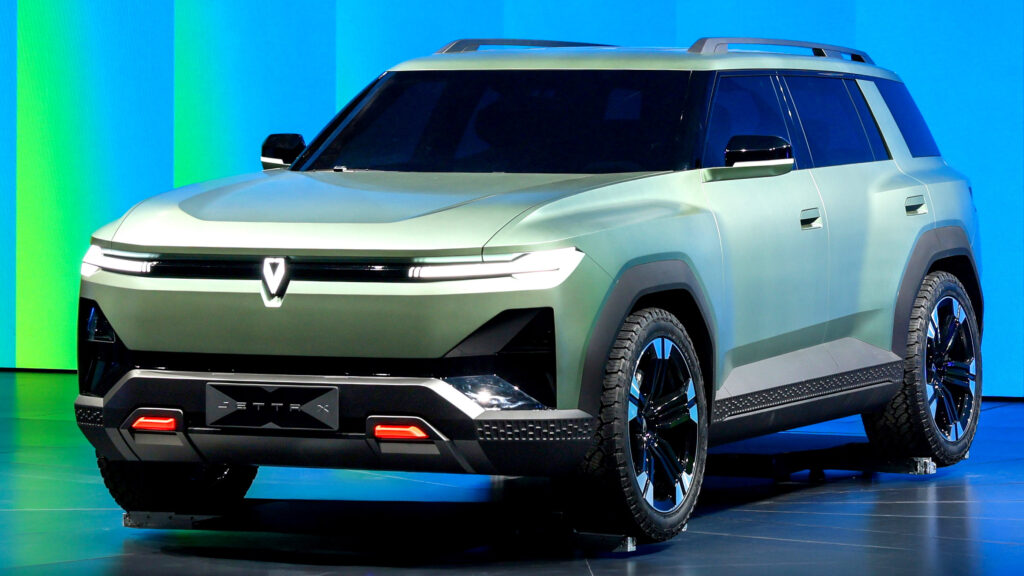
  • The Jetta X Concept previews an affordable electric SUV.
  • The VW Group has also revealed the production AUDI E7X SUV.

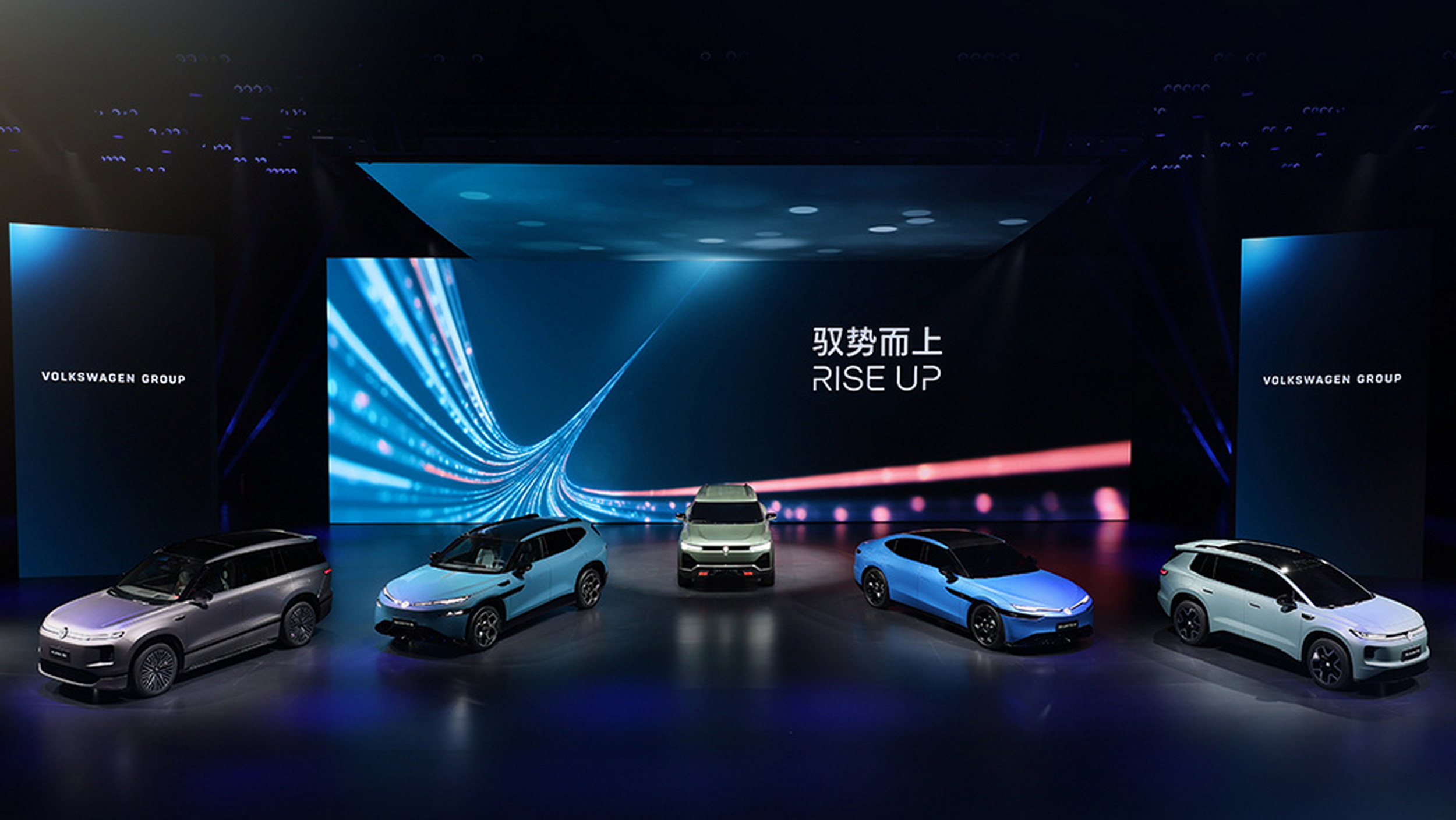
The Volkswagen Group arrived in China with a full plate, using its Media Night ahead of the Beijing Auto Show to roll out a mix of production models and near-future previews. There is a clear pattern running through it all, heavy local collaboration, faster development cycles, and a lineup that looks increasingly tailored to Chinese tastes rather than global consistency.

More: VW Spent Years Removing Knobs From Its Cars, The ID.3 Neo Puts Them Back

Among the reveals were the VW ID. Aura T6 from FAW, the ID. Unyx 09 co-developed with XPeng, and the AUDI E7X from SAIC. Sitting slightly off to the side, but arguably just as important, was the Jetta X Concept, previewing a cheaper, more accessible electric SUV.

The ID. Aura T6 is a fully electric midsize SUV built specifically for China, and at a glance, it could pass as an ID. Tiguan. It comes from the FAW-VW joint venture and leans into familiar design cues, split LED headlights, a full-width rear light bar, proper door handles, and a five-seat layout. It is also the first member of the ID. Aura family, even though the initial concept from 2025 was a sedan.

\\\\\\

VW ID. Aura T6

Next up is the ID. Unyx 09, an electrified sedan borrowing technology from Xpeng. It is a sibling to the recently unveiled ID Unyx 08 SUV, adopting a similar styling language. The low-slung model features slim LEDs and the signature black trim piece that connects the main headlights with the ADAS sensors on the profile.

More: Toyota Was Mocked For Going Slow On EVs, Honda And VW Are Now Paying For Going Fast

VW didn’t get into details, but the ID. Unyx 09 will likely share the electric powertrains with the ID. Unyx 08, including CATL-sourced battery packs. Its market launch in China is scheduled for the second half of 2026.

\\\\

VW ID. Unyx 09

Both the ID. Aura T6 and the ID. Unyx 09 feature the new CEA electric and electronic architecture, a result of VW’s partnership with Xpeng. This supports Level 2+ driving assistance and high-tech infotainment systems with an integrated AI Intelligent Assistant.

More: The New AUDI E7X Looks Nothing Like The Audis You Know

During the Media Night, VW Group also showed the production version of the AUDI E7X. The fully electric SUV is produced as part of its joint venture with SAIC, joining the E5 Sportback in the Chinese lineup.

A New Jetta SUV

Then there is the Jetta X Concept, which might be the most telling piece of the puzzle. It is a rugged-looking SUV with an electrified powertrain, styled with a kind of no-nonsense simplicity that feels closer to Dacia than anything wearing a VW badge. That is not accidental. With Skoda exiting China after a prolonged sales slide, Jetta now steps into its place as the value-focused brand.

The Jetta X rides on the Compact Main Platform (CMP), developed in China. More importantly, it is expected to reach production by FAW later this year, with a rumored starting price under the ¥100,000 ($14,700) mark. Overall, the Jetta lineup will grow with five new models by 2028, including four NEVs (models with electrified powertrains).

\\\\

VW Group’s Offensive In China

VW plans to launch 20 new electric vehicles this year as part of its “In China, for China” strategy. The company promises they will use “state-of-the-art electrical architectures, ADAS systems, an intelligent cockpit and AI features,” designed to fulfil the needs of Chinese customers.

More: VW’s China Collapse Is Bad, But Its American Problem Might Be Harder To Fix

Overall, the VW Group will offer around 50 electrified models in China by 2030, including around 30 battery electric vehicles.

 China Is Getting A Jetta SUV For Less Than A Used Corolla Costs In America

Porsche’s New Wireless Charger Is Fast, But It’ll Cost You

  • Real-world efficiency ranges from 89 to 92 percent in daily use.
  • The wireless charger is said to cost about $6,500 before taxes.
  • Upfront cost remains the main barrier despite a minimal long-term gap.

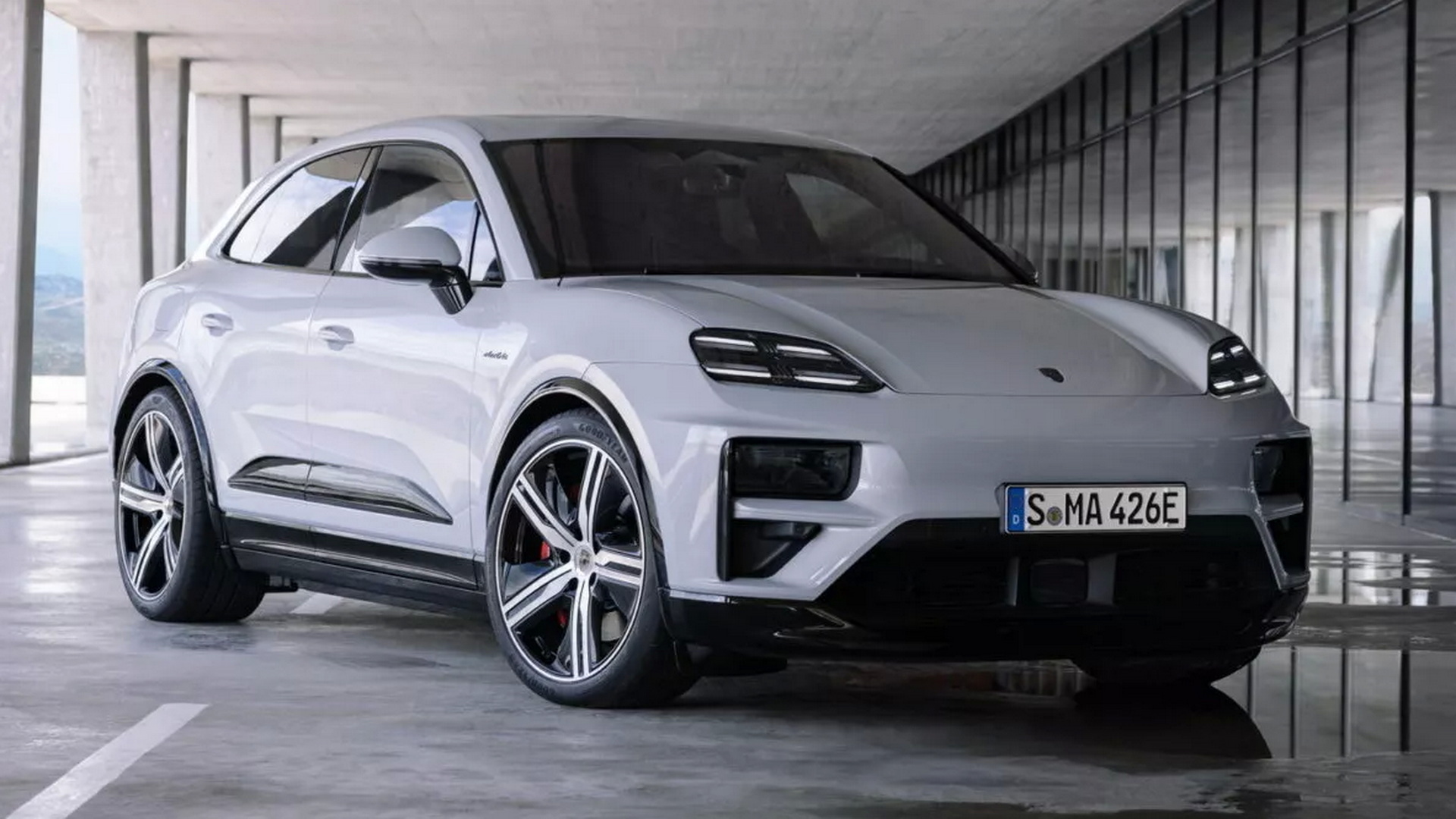
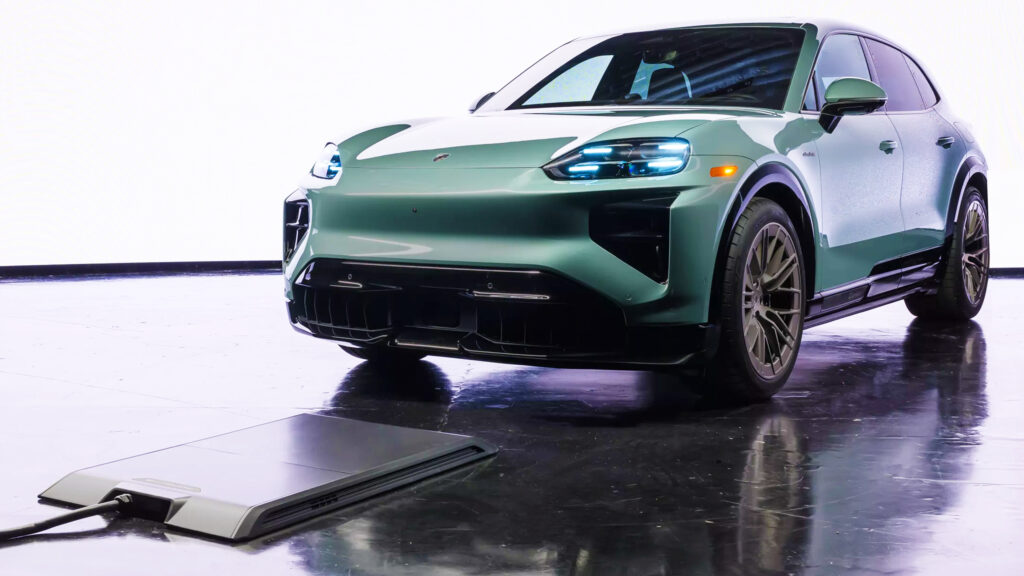
In the push to make home charging feel as seamless as refueling, automakers are starting to rethink the ritual itself. Before lifting the veil on the all-electric Cayenne, Porsche confirmed it had developed complex inductive charging technology. Now that the Cayenne Electric has reached the road, the brand is preparing to launch an optional wireless charging system for those who would rather skip plugging in at home.

At the heart of the charging system is the hefty base plate. Weighing in at 110 lbs (50 kg), it’s been designed to plug into a wall socket and houses a large transmitter coil. The base plate converts AC voltage from the electrical grid into DC voltage, and as the Cayenne Electric is positioned above it, a secondary coil beneath the SUV begins to receive power.

Read: Forget Cables, The Electric Cayenne Can Charge Hands-Free

Impressively, Porsche says its inductive charging technology supports up to 11 kW. Jason Fenske of Engineering Explained notes that Porsche’s own US mobile connector caps at 9.6 kW, making wireless the faster home-charging option for American owners.

The wireless charger comes with special software in the Cayenne Electric’s Surround View parking function, which displays the receiver’s position near the front axle, while a green circle indicates the base plate’s position. Simply pull the Porsche so the green dot is inside the circle, and it’s in the correct position to start charging.

Before the energy flow starts, the system automatically exchanges data, including a password, to prevent potential electricity theft. Wireless charging systems are generally regarded as inefficient, but Porsche’s engineers told Engineering Explained the system delivers between 89 and 92 percent efficiency in real-world use, comfortably clearing the 85 percent minimum the applicable charging standard requires.

Porsche also confirmed that Level 1 wired charging on the Cayenne Electric runs at just 60 percent efficiency, meaning the wireless pad is a significant step up over a standard household outlet.

Not Having A Cable Is Costly

\\\\

Tempted buyers shouldn’t worry about the system’s safety, with Porsche noting that the base plate is fully waterproof and includes sensors to detect foreign bodies, immediately stopping charging if something is detected.

“Ease of use, suitability for everyday use, and charging infrastructure are still the decisive factors when it comes to the acceptance of electric mobility,” Porsche R&D boss Michael Steiner said. “We are proud that inductive charging will soon be available in series production at Porsche. Charging an electric car at home has never been so easy and convenient.”

While the system is certainly convenient, it is expensive. In the UK, the entire setup is expected to cost around £6,750 ($9,125), with £4,750 ($6,421) of that being for the base plate itself.

In the US, the ground pad is said to be priced at about $6,500 before taxes, while the Cayenne EV’s onboard hardware adds another $1,650. A lifetime cost analysis by Fenske suggests the real expense is not in the electricity at all. He says that over 200,000 miles, the difference between wireless charging and a conventional wired Level 2 setup comes to roughly $1,000. Based on average U.S. driving of about 13,000 miles per year, reaching that gap would take roughly 15 years, leaving the upfront hardware premium as the main financial hurdle.

Rivian’s Factory Took A Direct Tornado Hit, But The R2 Launch May Not Be In Trouble

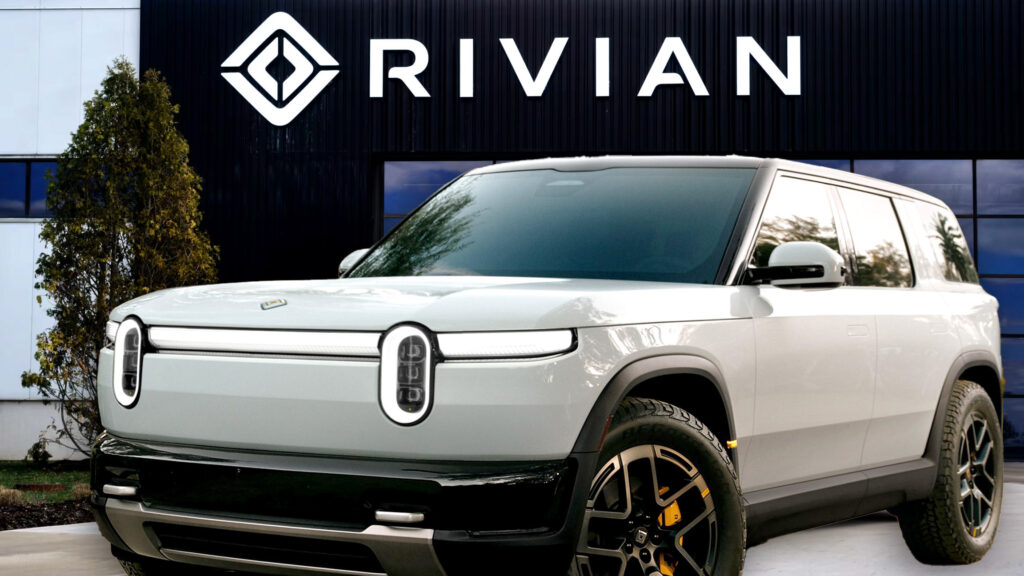
  • Rivian’s factory in Normal, Illinois, was struck by a tornado.
  • The EF1 twister traveled 10.3 miles and had 110 mph winds.
  • No employees were injured, but the plant was damaged.

Rivian has high hopes for the R2, and they have reason to be excited as the model easily beats the Jeep Recon on paper. However, it appears Mother Nature isn’t a fan.

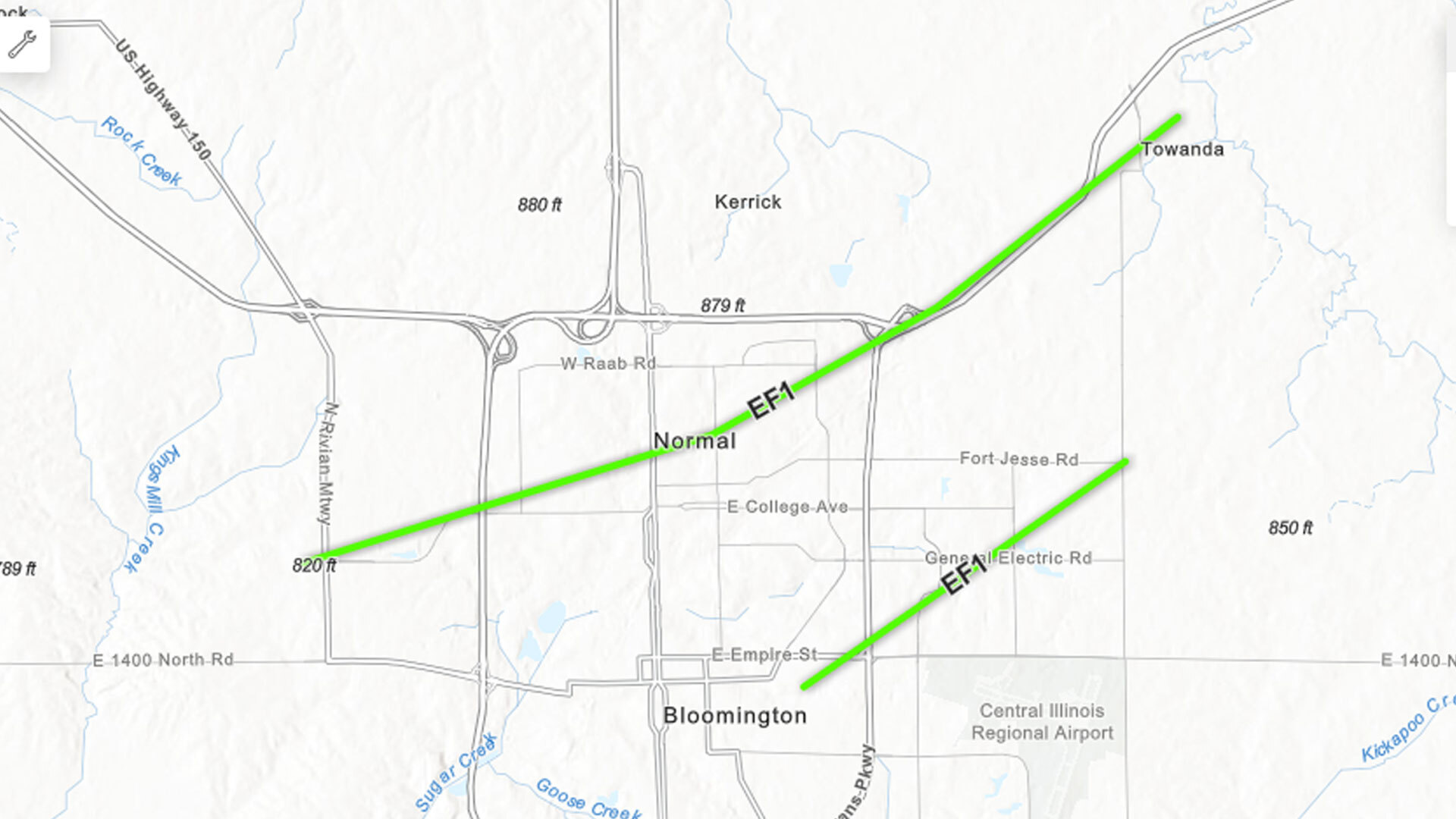
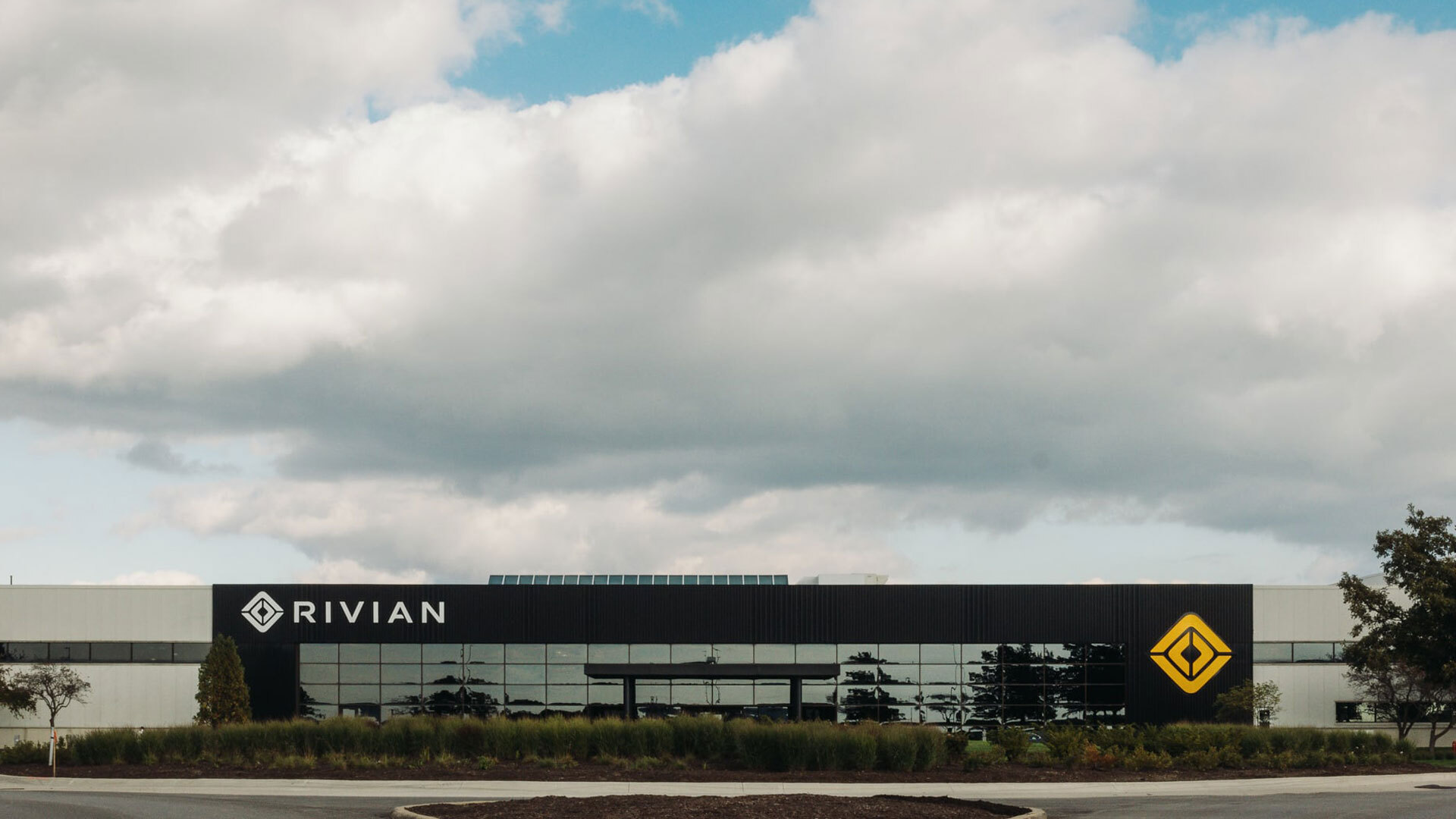
According to a company e-mail, Rivian’s factory in Normal, Illinois, was hit by a tornado on April 17. The national weather service reports a supercell traveled across the state on Friday night and spawned 25 tornados.

More: Rivian’s Most Affordable Model Arrives First In Its Most Expensive Form

The tornado that struck the plant started at 9:57 pm and was an EF1 twister that produced winds up to 110 mph (177 km/h). It traveled 10.3 miles (16.6 km) and was 800 yards (2,400 feet) wide. The government said it “damaged several metal buildings,” caused significant tree damage, and flipped over a semi on I-55.

Pictures posted on the Rivian Forums show a section of the exterior wall collapsed and the ceiling partially caved in. There’s also debris in the surrounding area, as well as a flipped-over semi-trailer, and damage to another building.

 Rivian’s Factory Took A Direct Tornado Hit, But The R2 Launch May Not Be In Trouble
National Weather Service

In a message seen by CNBC, Rivian CEO RJ Scaringe said “Building 2 has sustained damage and is closed for the time being as we complete our assessments.” He added, “I am incredibly relieved to share that there were no injuries at our plant.”

Damage reportedly occurred in areas related to “parts storage and logistics” for the R2. While the pictures look pretty bad, Scaringe suggested operations in these sections could resume as early as this week.

 Rivian’s Factory Took A Direct Tornado Hit, But The R2 Launch May Not Be In Trouble

The R2 will be launched in $57,990 Performance guise, featuring an 87.9 kWh battery pack and a dual-motor powertrain with 656 hp (489 kW / 665 PS) and 609 lb-ft (825 Nm) of torque. This enables it to accelerate from 0–60 mph (0-96 km/h) in as little as 3.6 seconds and have a range of up to 330 miles (531 km).

Additional variants will follow, including an R2 Standard Short Range in late 2027. It’s slated to cost around $45,000 and have a range in excess of 275 miles (443 km).

\\\\\\\\\\\\\\\\

Porsche’s New 975 RSE Weighs Less Than A Miata And Hits Harder Than A Bugatti In Attack Mode

  • The latest Formula E race cars can deliver up to 805 hp in peak output.
  • Each car uses a 51.25 kWh battery and reaches 62 mph in 1.8 seconds.
  • Porsche leads both drivers and teams titles in the 2025/2026 season.

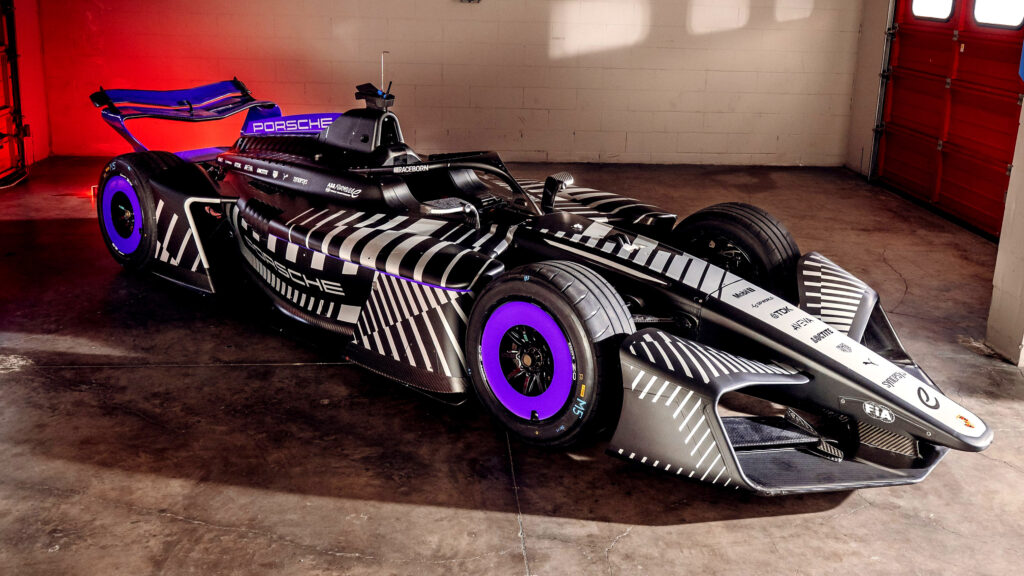
Formula E will introduce its fourth generation of cars for the upcoming 2026/2027 season, and Porsche has become the latest company to unveil its entrant. Looking more like a concept out of a Tron film than a car that will actually race, the 975 RSE delivers far more downforce than previous entrants, which should slash lap times.

This year, the powertrains used across the Formula E grid will be uprated to deliver 805 hp in Attack Mode with permanent all-wheel drive and new tires ensuring that power is sent to the tarmac efficiently. During regular racing, power will be capped at 604 hp, and all cars will use a 51.25 kWh battery pack. The GEN4 car can sprint to 100 km/h (62 mph) in just 1.8 seconds, and the 975 RSE weighs just 2,103 lbs (954 kg).

Read: Liberty Walk Gets Its Hands On A Formula E Single-Seater

Elsewhere, the new cars offer up to 700 kW of recuperation power thanks to the regenerative braking system at the front and rear axles. They also support ultra-fast charging at up to 600 kW. But it’s the design of the GEN4 cars that will really catch the attention of fans of the single-seater, all-electric racing series.

A Racer From The Future

\\\\\\\\

The front end has been overhauled and sports an all-new nose cone with an intricate multi-level splitter and complex aero elements ahead of the front wheels. The aerodynamics have also been revised along the sides, while a flowing wing is positioned at the rear. Importantly, the livery shown is for testing only, and the racer will look a little different when the season starts.

Halfway through the current 2025/2026 season, Porsche leads the current drivers’ and teams’ championships and will look to build on this success for the next season. Porsche also won the teams’ titles in 2024-2025, while current-championship leader Pascal won the drivers’ championship for the brand in 2023-2024.

“The 975 RSE and its competitors are a massive step forward for the sport,” Porsche factory driver Nico Müller said. “I’m a big fan of how aggressively you can drive. Especially in qualifying, when everyone is pushing to the limit, it should be spectacular – particularly because of the strong acceleration out of the corners. I’m glad I was involved in the simulator work from the beginning. Pascal and I share the testing duties. That’s good, because it allows us to tailor the 975 RSE precisely to our needs.”

\\\\\\\\\\

‘If You Pass’ Campaign Drives Awareness, Engagement on School Bus Safety

Thomas Built Buses is acting on one of pupil transportation’s most vulnerable part of a child’s school day: The Danger Zone and illegal passing of stopped school buses.

With its recent “If You Pass” campaign, the school bus manufacturer combined direct messaging, community engagement and financial support to elevate awareness and encourage safer driver behavior nationwide. The initiative, launched in October during National School Bus Safety Week, culminated in nearly $6,000 raised for Bryan County Schools in Georgia to support local safety efforts. Thomas Bus announced the award in February.

“The campaign was driven by a critical safety issue: The illegal passing of stopped school buses,” Mario DiFoggio, general manager of dealer channel sales and marketing for Thomas Bus, told School Transportation News last month. “There are an estimated 45.2 million illegal passings of school buses each year, which underscores just how serious and widespread the problem is.”

Rather than relying on traditional messaging, Thomas Bus leaned into a more direct and attention-grabbing approach.

“The If You Pass campaign was intentionally direct because politeness doesn’t stop traffic — awareness does. For a short, three-week campaign, the response exceeded our expectations, and we know these funds will go a long way in supporting the important work Bryan County Schools is doing to protect students and keep this conversation going,” DiFoggio added in a statement.

That approach appeared to resonate. The campaign utilized social media and a limited-edition merchandise line to spark conversation and invite participation. Proceeds from merchandise sales were directed toward safety education, while communities were encouraged to nominate deserving school districts for funding.

DiFoggio said the campaign exceeded expectations.

“The response was overwhelmingly positive,” he noted, indicating strong engagement from drivers, educators, parents and community members. “Many people thanked us for addressing the issue in a bold and memorable way.”

Thomas Bus Awards Georgia District for Making a Public Splash

Bryan County Schools ultimately stood out among nominees due to its grassroots efforts and community involvement.

“Their transportation team actively encouraged participation, which led to a high volume of nominations and broad community involvement,” DiFoggio explained.

For Thomas Bus, supporting the district reflects a broader mission that extends beyond manufacturing school buses.

“While we’re known for building school buses, our responsibility doesn’t end when we hand over the keys,” DiFoggio said. “We see ourselves as partners in student transportation.”

The nearly $6,000 contribution is intended to help Bryan County Schools expand safety education and outreach, though district leaders will ultimately determine how the funds are used.

“Our hope is that the campaign and contribution inspire and encourage the district to amplify their safety education efforts and extend the reach of their impact,” he added.


Related: Seatbelt, Danger Zone Recommendations Highlight NTSB Discussion at STN EXPO East
Related: Children’s Books by School Bus Drivers Double as Safety Education Tool
Related: NHTSA Kicks off Distracted Driving Awareness Month with Campaign
Related: Minnesota Passes Bill to Strengthen Law on Illegally Passing School Buses
Related: Iowa Launches Inaugural School Bus Safety Week Poster Contest


The campaign also highlights the role manufacturers can play in addressing safety challenges beyond vehicle design. “It takes a collective effort — manufacturers, drivers, school districts, parents and the general public all play a role,” DiFoggio said.

Thomas Bus plans to continue building on the initiative, with future outreach tied to National School Bus Safety Week in October and beyond.

“We see this as an ongoing effort, not a one-time initiative,” DiFoggio said.

His advice for districts and communities aiming to improve school bus safety awareness is to be straightforward, bold and consistent.

“This is a serious issue, and sometimes it takes a message that truly stands out to change behavior,” he said.

The post ‘If You Pass’ Campaign Drives Awareness, Engagement on School Bus Safety appeared first on School Transportation News.

Semi-truck Driver Says Brakes Failed Before Florida School Bus Crash

A semi-truck driver says his brakes failed moments before he rear-ended a school bus carrying about 30 kindergarteners on a field trip April 9, reported News 4 Jax.

According to the news report, the Duval County school bus was transporting students from San Pablo Elementary School to the Jacksonville Zoo. It stopped at railroad tracks when it was struck from behind by the semi.

Four children were reportedly taken to the hospital with injuries. Injuries included two broken legs, cuts to the head and chest pain. Authorities have not released updates on the conditions of those injured.

According to the report, the semi-truck driver told police he saw the bus stopped at the tracks and attempted to brake but said his, “brakes were not working.” The driver swerved in an effort to avoid the collision but was unable to stop in time. He was cited for careless driving. Investigators noted he was not distracted at the time of the crash.

Investigation Into Vehicle Records

Dalya Farah, an attorney representing the families of three injured students, said the focus now shifts to the truck’s condition and maintenance history.

“We will most likely inspect the truck. There’s a lot of information on semi-trucks that we can’t obtain otherwise,” Farah said via the article.

She added that inspection records and maintenance logs will be critical in determining whether mechanical failure played a role or if other factors contributed. “When it comes to a semi case, there could be a lot of factors that go into fault,” she said.

Records reviewed by local news reporters show five other crashes linked to the trucking company, Universal Logistics Holdings, over the past two years. It is unclear whether the same semi-truck driver was involved or who was at fault in those incidents. The company has also undergone 74 inspections during that period, though that figure may include its entire fleet.

A company manager declined to comment when contacted by local news reporters, the article states.

Investigators continue to examine whether mechanical issues, including possible brake failure, contributed to the crash.

Written with assistance from AI.


Related: Oregon School Bus Driver Charged in Fatal Field Trip Crash
Related: Florida Man’s School Bus Crash Claim Highlights Limits of Government Immunity
Related: Pennsylvania School Bus Driver Dies as Result of Crash
Related: West Virginia School Bus Driver Faces Sentence After DUI Crash

The post Semi-truck Driver Says Brakes Failed Before Florida School Bus Crash appeared first on School Transportation News.

When Caregivers Trust the Ride, Students Thrive: New EverDriven Survey Data Shows 8 in 10 Caregivers Would Recommend the Service

By: STN

DENVER, Colo. —EverDriven, the leading provider of alternative student transportation solutions, today released new caregiver survey data demonstrating high levels of satisfaction, trust, and reliability, reinforcing EverDriven’s role as a critical partner for school districts navigating ongoing transportation challenges.

As districts across the country face persistent school bus driver shortages, increasing demand for individualized transportation, and rising expectations around safety and reliability, caregiver trust has become a clear measure of whether a transportation solution is truly working. EverDriven’s latest data shows that its model doesn’t just meet student needs; it earns the confidence of the families it serves

Based on 2026 feedback from nearly 600 caregivers, over 80% of caregivers say they would recommend EverDriven to others, a strong indicator of trust in the company’s safety-first approach and consistent service delivery. Beyond satisfaction, these results underscore the essential role transportation plays in a student’s daily experience, including consistent attendance, stability and better overall student outcomes.

Real Caregiver Experiences
“As a single mother, I am big on my kid’s safety. I had been skeptical about putting my kids in a stranger’s vehicle without me. But EverDriven changed all of that,” said Angie Nelson of Iowa. “The staff are kind, helpful and very understanding. The EverDriven VIP App allows me to track my kids from the second they get into the vehicle to when they arrive at school. EverDriven provides safety and gives caregivers comfort their kids are safe every day.”

“My child has gone through EverDriven for the last two years, and as a parent, my experience with the company has been amazing,” said Caressa Palmer of South Carolina. “The drivers are trustworthy, honest, and understanding. EverDriven is reliable and always on time. I would definitely recommend it to a friend or family member.”

What Caregivers Value Most
The survey data points to four things caregivers say matter most:
Safety and trust: Every driver undergoes rigorous background checks, identity verification, and ongoing monitoring, supported by a culture of accountability and care. Safety protocols are designed specifically for student transportation, not ride-share.
Real-time visibility: The EverDriven VIP app enables caregivers to track their child’s ride in real time, providing end-to-end visibility from pickup through drop-off.
Consistency and reliability: Dedicated drivers and optimized routing support dependable, on-time service and a more familiar experience for students. For students with disabilities, 83% of rides are completed by the same driver, helping build consistency, trust and comfort.
Communication and support: Responsive support teams work closely with families and districts to proactively address concerns and adapt to student needs.

“When a caregiver trusts you with their child, there is nothing more important than getting that right every single day,” said Mitch Bowling, CEO of EverDriven. “These results reflect the trust families place in us and our unwavering commitment to safety. From the drivers we vet to the technology we provide, everything we do is designed to give caregivers confidence that their children are safe, supported, and cared for from pickup to drop-off.”

Meeting a Growing Need
With ongoing driver shortages, increasing numbers of students requiring specialized transportation, and rising expectations around safety and reliability, districts are under pressure to deliver transportation solutions that work for every student.

In this environment, caregiver trust serves as a critical validation point. When families feel confident in transportation, districts experience fewer disruptions, reduced administrative burden, and greater confidence that students can consistently access their education.

To learn more about how EverDriven helps districts reduce transportation challenges while ensuring safe, consistent access to education, visit everdriven.com.

About EverDriven
EverDriven delivers modern student-centered transportation that’s safe, consistent, and built for those who need it most. EverDriven specializes in routing and transporting students across all ranges of needs — from everyday support to the most complex circumstances — including students with disabilities, students experiencing housing instability, and other high-need populations. Serving more than 800 districts across 37 states, the company completed over 2 million successful trips last year. EverDriven’s deeply human, fully compliant, and AI-powered approach helps districts get students on the road in hours, not days, while maintaining consistent, high-trust rides that complement traditional yellow bus fleets. For more information, visit everdriven.com.

The post When Caregivers Trust the Ride, Students Thrive: New EverDriven Survey Data Shows 8 in 10 Caregivers Would Recommend the Service appeared first on School Transportation News.

Zum Raises $100 Million From TPG to Accelerate Zum’s Connected Mobility Experience (CMX) and for Continued Growth and Expansion

By: STN

REDWOOD CITY, Calif., — Zūm, the leader in Connected Mobility Experience (CMX™), today announced a $100 million investment from TPG, bringing the company’s total funding to $430 million and valuing Zum at $1.7 billion. TPG is making its investment through The Rise Funds, the multi-sector strategy of its global impact investing platform, and in connection with the investment, Steve Ellis, a Managing Partner of The Rise Funds, will join Zum’s Board of Directors.

The funding follows the introduction of the Zum CMX platform, a Connected Mobility Experience designed to address the fragmentation, delays, and lack of visibility that have long defined student mobility. New research unveiled today quantifies the impact of this antiquated system, identifying that 54% of parents report their child experiences worry or concern about school transportation—contributing to what Zum calls a nationwide “Transportation Anxiety Crisis” — and roughly $15 billion educational loss a year.

Together, these developments reflect a growing recognition that while transportation moves vehicles, mobility is about moving people, and that daily experience has remained largely unchanged for decades.

“Every day, millions of students depend on systems that were never designed to work in real time,” said Ritu Narayan, Founder and CEO of Zum. “Zum CMX is our answer — a system we have been building and refining across 4,500 schools that brings visibility, coordination, and reliability to daily mobility. This funding allows us to accelerate what we know works and bring it to every student in America.”

Investor Conviction in a Category-Defining Platform
“TPG invested in Zum because it’s the leading innovator in one of the largest and most underserved critical transportation markets in the country,” said TPG’s Steve Ellis. “By fundamentally redesigning how student mobility is managed in real time, Zum’s fully integrated AI powered system is delivering measurable gains in reliability, efficiency, and outcomes for students, their families, and school districts across the country.”

This is a category-defining movement. Zum is not just improving student mobility —it is fundamentally redesigning how people, vehicles, and operations are coordinated in real time.

Across the $50 billion student mobility market, the largest segment of mass mobility, millions of daily rides are still managed through fragmented systems that lack real-time coordination. Zum CMX addresses this by integrating routing, dispatch, workforce management, safety, and communication into a single, continuous operating system.

Scaling Across School Districts Nationwide
Zum currently operates across more than 4,500 schools in 17 states, serving some of the largest districts in the country, including Los Angeles Unified School District, Boston Public Schools, San Francisco Unified School District, Omaha Public Schools, and Kansas City Public Schools.

The $100 million investment will accelerate:

Expansion of Zum CMX across additional school districts nationwide.
Continued investment in AI-driven coordination and predictive operations.
Scaled infrastructure to support large-scale, real-time mobility system.

Proven Outcomes at Scale
Zum CMX is already delivering measurable results across every district it serves:

98% on-time bus arrival rate on average.
20% reduction in bus fleet size through route efficiency.
4.9 out of 5-star parent satisfaction across more than 1.7 million reviews.
Up to 10% reduction in annual transportation costs for the San Francisco Unified School District.
These outcomes demonstrate how improved transportation reliability directly impacts attendance, learning readiness, and district financial sustainability.

The Transportation Anxiety Crisis
The investment coincides with the inaugural Zum Mobility Symposium in Sunnyvale, where school district leaders, policymakers, and researchers will gather to discuss the future of student mobility. At the event, Zum will formally introduce CMX as a new category and unveil research from NORC at the University of Chicago.

The findings highlight a system that was never designed to operate in real time, in which routing, dispatch, communication, and safety have historically operated in silos, creating anxiety for families and inefficiencies for districts. Zum CMX is designed to eliminate these root causes by bringing visibility, coordination, and accountability to every ride.

About Zum
Zum is revolutionizing mass mobility with its Connected Mobility Experience (Zum CMX) system that connects and coordinates people, vehicles, and operations in real time. In the $50 billion student mobility market – the largest segment of the mass mobility industry – Zum CMX is transforming a daily source of anxiety and disruption into a reliable, transparent, and efficient mobility experience for students and families. Today, more than 4,500 schools rely on Zum CMX. Recognized globally for its innovative approach and operational execution, Zum has been named to Fast Company’s World’s Most Innovative Companies, CNBC Disruptor 50 and Changemakers, the World Economic Forum, and the Financial Times’ Fastest Growing Companies lists. Zum is backed by leading investors including Sequoia Capital, GIC, SoftBank, and TPG. Zum, Zum CMX, and associated logos are trademarks of Zum Services, Inc. All rights reserved. Learn more at www.ridezum.com.

About TPG
TPG is a leading global alternative asset management firm, founded in San Francisco in 1992, with $303 billion of assets under management and investment and operational teams around the world. TPG invests across a broadly diversified set of strategies, including private equity, impact, credit, real estate, and market solutions, and our unique strategy is driven by collaboration, innovation, and inclusion. Our teams combine deep product and sector experience with broad capabilities and expertise to develop differentiated insights and add value for our fund investors, portfolio companies, management teams, and communities.

About The Rise Funds
The Rise Funds are a core pillar of TPG’s global impact investing platform. Founded in 2016 by TPG in partnership with Bono and Jeff Skoll, The Rise Funds invest behind impact entrepreneurs and growth-stage, high potential, mission-driven companies that are focused on building and scaling solutions to the world’s most complex challenges. The Rise Funds deliver capabilities and expertise across a wide variety of sectors and countries at scale, focusing on opportunities in climate and decarbonization, education, financial inclusion, healthcare, and impact technology.

TPG’s Impact Platform is the world’s largest of its kind, managing approximately $31 billion in assets across a family of funds that pursue non-concessionary returns and social and environmental impact at scale through growth equity, private equity, and infrastructure investing strategies.

The post Zum Raises $100 Million From TPG to Accelerate Zum’s Connected Mobility Experience (CMX) and for Continued Growth and Expansion appeared first on School Transportation News.

Fresh Ideas: Recruitment, Retention

Why is finding qualified school bus drivers, mechanics and fleet managers such a continuous pain point? According to the Transportation Director Summit survey of 82 industry leaders who attended last month’s STN EXPO East, 57 percent ranked driver retention and shortages as their single biggest challenge in 2026.

The labor market remains tight, and the challenge is no longer just “finding people”—it’s competing for them when districts cannot simply raise wages. School board-approved pay scales lock compensation into predetermined steps, often tied to seniority or certifications rather than market demand. Corporate giants like Amazon, Walmart and local logistics firms can adjust to pay overnight while public school districts cannot. So, how do you market your district or company effectively and retain talent when the most obvious lever—higher pay—is off the table?

Marketing for job candidates demands precision and authenticity, not bigger budgets. Instagram, YouTube, TikTok (where district policies permit), and Facebook remain the most cost-effective channels for hyperlocal reach. Paid campaigns now use AI-driven targeting that zeroes-in on CDL holders, retirees seeking part-time stability, stayat-home parents needing mid-day flexibility, military veterans with logistics experience, or gig-economy workers craving predictable routes—all without ever leaving your district’s geographic radius. Organic content is even more powerful because it costs nothing beyond staff time.

“Your current school transportation team members are your best brand ambassadors,” said 2026 STN EXPO East keynote speaker Jim Knight, formerly the head of global training for Hard Rock International. For more than 20 years, Knight built one of the world’s most legendary service cultures by turning every Hard Rock employee from stagehands to executives—into passionate, authentic advocates. He proved that no amount of slick advertising or big-budget campaigns can match the credibility of real people who live the brand every day. The exact same principle applies to school transportation operations. It is especially powerful when pay scales are locked by district policy.

School bus drivers are already the face of your organization. Every morning, they greet families at bus stops. Every afternoon they deliver children safely home. They interact with students, parents and the community in ways no recruitment poster or corporate ad ever could. When these insiders voluntarily share their real experiences—the satisfaction of a flawless pre-trip inspection, the joy of a kindergartner’s first-day high-five, the pride in mastering new safety technology or efficiency tools, or the camaraderie during a snow-day operation—prospects listen with a level of trust that money alone cannot buy.

This internal advocacy is your ultimate competitive advantage. Job candidates today don’t just want a paycheck. They want proof that the job is meaningful, the culture is supportive and the technology makes their day easier. Your team already has those stories. All you have to do is give them a megaphone.

Hiring is only step one. Retention must come from non-monetary levers that you can control. Offering a flexible schedule can be valuable as people demand more work-life balance. Many districts now offer split-shift or four-day route options, mid-day breaks
for drivers, and predictable “no-weekend” commitments that competing employers cannot match. These arrangements often require creative planning and dialogue—not more money.

Technology makes the job easier (most of the time). Mobile apps for real-time schedule changes, instant PTO requests and digital pay stubs reduce frustration. Performance dashboards track on-time performance and safety metrics, then automatically trigger personalized digital “thank-you,” bonus points toward extra vacation days, gift cards or priority shift selection—recognition that feels immediate and data-informed.

Districts succeeding in 2026 need to consider that public recognition events (Driver of the Month with a reserved parking spot and district-wide shout-out) create belonging. Positive reinforcement and safety are tightly linked. Districts using digital recognition platforms report measurable drops in minor incidents and absenteeism because people who feel seen and supported simply drive and maintain equipment more carefully. School transportation leaders do not need unlimited budgets. They need a deliberate, tech-enabled strategy that showcases the job realistically, removes daily friction through smart tools, and builds a culture of appreciation and growth within the financial and policy guardrails that already exist.

Start with your own employees’ stories, amplify them with the platforms and targeting tools available today, and then surround those new hires with technology and human-centered perks that make your operation the place people choose to stay, even when the pay scale stays the same.

Editor’s Note: As reprinted from the April 2026 issue of School Transportation News.


Related: Technology Improves Driver Recruitment and Retention at Missouri District
Related: Transportation Directors Receive Rock Star Training on Driver Retention
Related: (STN Podcast E302) Technology Tools for Bus Drivers: No More Struggling with Paper Route Sheets
Related: Bus Monitors: Your Next Driver Retention Strategy?

The post Fresh Ideas: Recruitment, Retention appeared first on School Transportation News.

❌