Reading view

There are new articles available, click to refresh the page.

Turning pain into purpose: How Brenda Hines works through her grief by supporting Milwaukee families

A person stands in front of a door and a banner reading "Donovan Hines Foundation of Exuberance," wearing a shirt that says "GOD DON'T PLAY ABOUT ME"
Reading Time: 3 minutes

Brenda Hines still likes to refer to her son, Donovan Hines, as her “favorite son,” the same way he liked to refer to himself before he was killed on Nov. 13, 2017. 

Donovan was driving near North 29th Street and West Hampton Avenue in Milwaukee when he was struck by a stray bullet and crashed through a fence and into a home in the 4700 block of North 29th Street.

In the months that followed, Brenda Hines said she sank into such a deep, dark grief that she cried daily, unable to eat or work. She even contemplated taking her own life. 

“It took me a while to get out of the state of shock,” Hines said. “It was very difficult, spiritually, for me to come back.”

Now, almost a decade later, she has turned that pain into hope by building The Donovan Hines Foundation of Exuberance Co., a Milwaukee nonprofit that offers consistent, community-based support for families grieving violent loss.

A person wearing glasses and a shirt reading "GOD DON'T PLAY ABOUT ME" sits at a desk with hands clasped, with a cup and office items in the foreground.
Brenda Hines, president and CEO of The Donovan Hines Foundation of Exuberance Co., sits at a desk in her office.

“Exuberance means vibrant. And that’s what Donovan was. He always came out with a smile on his face,” Hines said.

After the unexpected loss of her son, Hines connected with the Medical College of Wisconsin’s Project UJIMA, a collaborative, multidisciplinary program geared to stop violent behavior patterns and reduce the number of children hurt by violence. Meeting with Project UJIMA once a month was helpful and inspired Hines to begin her own grief group that met more frequently. 

“Being a person of color, we don’t seek therapy, and we have so much trauma, so much violence going on,” Hines said.

Hines hosted her grief group weekly for about a year, with the support of the late Bishop Sedgwick Daniels of Holy Redeemer Institutional Church of God in Christ.

“That was the beginning of my healing process,” Hines said. “Not only listening to someone else, but being there for myself.”

A whiteboard displays handwritten messages including "Your talent determines what you can do" and "Your attitude determines how well you do it."
A whiteboard full of encouraging words and prayer hangs on a wall in Brenda Hines’ office.

Seven months after her loss, Hines was asked to continue her work with The Salvation Army Chaplaincy Program, in partnership with the Milwaukee Police Department. She was asked to serve as a chaplain on a case that hit close to home, helping a family who had just lost their son, who was the same age as Donovan, to suicide. 

“It gave me something to hope for,” Hines said. “That’s when I started coming back out and decided to start having empowerment groups and transformation stuff for grief.”

Ever since then, she’s kept going, growing her nonprofit in any way she can, whether it be through the Summer Meal Program for children, the emergency food pantry or stockboxes for older adults.

Two people stand behind stacked boxes labeled "FOODSHARE MAKES HEALTHY EATING SIMPLER FOR SENIORS" and "STOCKBOX," in a room with plants, chairs and a screen on the wall.
Brenda Hines, president and CEO of The Donovan Hines Foundation of Exuberance Co., and James Ferguson, senior partner and chief operating officer at Kingdom Partner Alliance, pose for a photograph with a pallet of stockboxes.
A person wearing gloves holds a box labeled "STOCKBOX" on the open bed of a truck, with other boxes inside and an American flag and building in the background.
Henry Cox loads his truck with stockboxes. A stockbox contains healthy food provided by the Hunger Task Force.

“I just kept going and going. I was like, ‘OK, I’m still not doing enough,” Hines said. “The more I help others, it seems like, the more it helps me.”

Hines, along with several other Milwaukee nonprofits, hosted a survivor-led candlelight vigil to join a National Moment of Remembrance in December. The vigil centered on healing and the belief that everyone deserves the freedom to live.

A person wearing glasses and a striped sweater stands with hands clasped, with rows of lit candles and blurred figures in the background.
Brenda Hines, founder of The Donovan Hines Foundation of Exuberance Co., leads a conversation during a candlelight vigil for those who have been victims of violence in Milwaukee.
Lit candles in glass holders display small portrait photos and names, arranged across a table in a dimly lit room.
Candles with photographs of those who were killed by violence in Milwaukee sit on a table during a candlelight vigil for the National Moment of Remembrance hosted by The Donovan Hines Foundation of Exuberance Co., and several other nonprofits, on Dec. 10, 2025.

On the hardest days, what keeps Hines going is “God first, my family and the foundation.”

A person stands against a red wall with large yellow text reading "But seek first the Kingdom of God … Matthew 6:33," wearing a shirt that says "GOD DON'T PLAY ABOUT ME"
Brenda Hines, president and CEO of The Donovan Hines Foundation of Exuberance Co., poses for a portrait in front of a Bible verse at Kingdom Partner Alliance.

Jonathan Aguilar is a visual journalist at Milwaukee Neighborhood News Service who is supported through a partnership between CatchLight Local and Report for America.

Turning pain into purpose: How Brenda Hines works through her grief by supporting Milwaukee families is a post from Wisconsin Watch, a non-profit investigative news site covering Wisconsin since 2009. Please consider making a contribution to support our journalism.

Matthews Bus Company’s West Jefferson Maintenance Team Praised for Outstanding Dedication to Safety

By: STN

JEFFERSON HILLS, Pa. – Matthews Bus Company’s West Jefferson maintenance team has received a letter of commendation from the Pennsylvania State Police for their extraordinary commitment to safety and fleet maintenance. This is the second time the team has received praise for their fleet inspections in the last few years – proving their unwavering, continuous dedication to ensuring their buses are maintained to the highest standards.

The letter of commendation, written by Corporal Jacob Y. Roberts, Patrol Supervisor and US DOT Inspector for the Pennsylvania State Police, praised Maintenance Supervisor Sam Borrelli and his team, stating the following:

“Sam and his team are far and away among the absolute best to work with. The buses are always extremely well maintained, clean, and never have any issues that would result in a violation on a DOT Inspection. There is never a concern when coming to the garage that things will be out of place or that the process will be difficult. In addition to the buses, the garage itself is always well kept and maintained, and it is always a pleasurable experience to visit.”

Left to Right: Sam Borrelli, Maintenance Supervisor and ASE Certified School Bus Technician, Robert “B.G.” G., ASE Certified Master School Bus Technician, and Robert W., ASE Certified School Bus Technician.

Corporal Roberts also lauded Sam, sharing, “I have known Sam for many years at this point, and I personally believe that he does an excellent job. He reflects extremely well upon the company, and more importantly, has a genuine care and concern for the children and drivers that are in the school buses every day. He should be commended for such consistent and excellent work.

John Hinners, who is Sam’s manager and also the Regional Maintenance Manager for the Company’s Great Lakes area, shared his sentiments regarding Sam and his team’s incredible achievement and efforts, stating, “This letter is a phenomenal testament to the dedication Sam’s team provides to fleet maintenance at West Jefferson. Determination and commitment builds integrity and character. It is clear we have made an impact with our consistent and steady approach to quality maintenance. I am beyond proud of the team and their achievement. Congrats and keep up the amazing work.”

Matthews Bus Company has served the Jefferson Hills community for over 60 years and currently provides transportation for the West Jefferson Hills School District. In addition to providing transportation services, the company is proud to support the community as part of its Partners Beyond the Bus community outreach program. Examples include donating 20,000 lbs. of food to a local food pantry for the holidays, holding a Stuff a Bus event, donating a bus to the West Jefferson Hills School District for mobile mental health services, donating backpacks to local students, and more.

About Matthews Bus Company
Matthews Bus Company has been providing safe and reliable student transportation across Pennsylvania since 1961. Its mission is to transport students to school safely, on time and ready to learn® and is a sister brand to Petermann Bus, Durham School Services, Stock Transportation, and more. Through this mission and a grassroots approach to our operations, Matthews Bus Company and its sister brands have earned recognition as a trusted transportation provider among our Customers and the Communities they serve.

The post Matthews Bus Company’s West Jefferson Maintenance Team Praised for Outstanding Dedication to Safety appeared first on School Transportation News.

Should gun violence intervention efforts start earlier? These researchers think so

Rows of lit candles in glass holders line a table, many with small photos attached, while people sit in a dimly lit room in the background.
Reading Time: 2 minutes

There are millions of Americans who have seriously considered harming others with a firearm but never acted on these thoughts, according to research from the University of Michigan published in March

Researchers say this means there could be a critical but often overlooked window for intervention.

It also suggests there is a group of people who can be targeted for various forms of novel intervention, the authors of the study conclude. 

Those more likely to report thoughts of shooting others were individuals who are younger, male, Black, living in the Midwest and in urban areas, according to the study. 

For Vaun Mayes, a community organizer who also does violence interruption for the city of Milwaukee’s Department of Community Wellness and Safety, the study’s conclusions ring true. 

“There are definitely usually signs of escalation prior to the results we see,” Mayes said. “Young people most definitely give notice before violence, and Black folks specifically culturally do as well.”

Millions report thoughts about shooting someone

The study found that roughly 8.5 million people said they had seriously thought about shooting someone in the year before being asked. Over a lifetime, that number rises to more than 19 million.

Although most never acted on their thoughts, the study estimated that 1.5 million U.S. adults had brought a gun to a specific location with the intention of shooting someone.

Fewer than 1% temporarily handed their firearm over during a time of crisis. 

The study found that gun owners are not the only people who are at risk of using a firearm, but those in the vicinity of gun owners as well. 

In other words, access to a firearm, rather than ownership, is a key predictor.

A temporary crisis and fatal outcome

James Bigham, a clinical professor at the University of Wisconsin-Madison School of Medicine and Public Health, pays a lot of attention to when and how firearms are accessed, especially during times of poor mental health or mental health crisis.   

Access to a gun can turn a temporary crisis into a fatal outcome, Bigham said. 

“If we could shift our culture where it’s normal … to transfer firearms during a time of crisis, we could really reduce the rates of death,” Bigham said.

Mayes said it’s because of the gap between consideration and action that violence interrupters can intervene to deescalate a situation.

The authors of the study suggest this is especially true in states with red flag laws.

Red flag laws, also known as Extreme Risk Prevention Orders, allow judges to issue court orders to temporarily restrict access to guns by individuals who could pose a threat to themselves or others.

More than 20 states have a version of a red flag law, but Wisconsin does not

Wisconsin also has weaker gun storage laws than most other states. 


Resources

For those who are interested in places to safely store a gun, the Wisconsin Gun Shop Project’s “Live Today – Put It Away” program partners with participating gun shops – including several in Milwaukee County – to provide firearm safety information and temporary off-site storage options, often for a low fee. 

People can also go to the city of Milwaukee’s website to learn more about local violence interruption efforts.


Jonathan Aguilar is a visual journalist at Milwaukee Neighborhood News Service who is supported through a partnership between CatchLight Local and Report for America.

Should gun violence intervention efforts start earlier? These researchers think so is a post from Wisconsin Watch, a non-profit investigative news site covering Wisconsin since 2009. Please consider making a contribution to support our journalism.

Seatbelt, Danger Zone Recommendations Highlight NTSB Discussion at STN EXPO East

CONCORD, N.C. — Federal safety officials are urging stronger seatbelt usage by students and increased awareness of dangers around school buses following a series of high-profile crashes, including a recent fatal incident under investigation in Tennessee.

In providing the parting takeways at STN EXPO East conference last month, Meg Sweeney, lead investigator and project manager for the National Transportation Safety Board, outlined how ongoing investigations and previous crash reconstructions are shaping new safety recommendations aimed at protecting student passengers and pedestrians.

“Our mission is to investigate crashes, determine a probable cause and then write recommendations to prevent future similar crashes,” Sweeney told attendees during the final conference session March 31.

The NTSB recently launched a “go team” to Tennessee after a fatal school bus crash killed two middle school students, though Sweeney said details remained limited in the early stages of the investigation. The crash took the lives of two middle school girls and parents of the deceased have since filed a lawsuit against the district and the driver.

The agency is also examining a separate student dragging fatality, underscoring the risks students face not only inside the bus but also in Danger Zone, the area immediately surrounding the vehicle during loading and unloading.

Sweeney said the agency focuses on crashes with the greatest potential to improve safety outcomes. With only about 35 staff members in its highway division, the NTSB investigates roughly 15 to 20 crashes annually out of tens of thousands reported nationwide.

“With a staff of 35 people… we have to be really selective in the crashes that we investigate,” she said, noting that cases often involve recurring safety issues or high public interest.

A key focus of recent investigations has been occupant protection, particularly the effectiveness of lap/shoulder seatbelts compared to traditional lap-only restraints or compartmentalization.

“We know and recognize that there are several other types of crashes,” Sweeney said, explaining that while compartmentalization works well in frontal impacts, it is less effective in rollovers, side impacts and other complex crash scenarios.

In multiple investigations, including crashes in Texas and New Jersey, the agency found lap-only belts provide limited protection. “They can provide a benefit… if they’re worn properly,” Sweeney said, but passengers remain “very vulnerable to injury from the flailing upper body.”

In the Leander ISD Texas rollover crash, that Director of Transportation Tracie Franco also presented during the conference, only six of 42 observed students were wearing seatbelts, and most were wearing them incorrectly. Students who were restrained were less likely to be thrown from their seats or ejected, though injuries still occurred due to the severity of the crash.

Based on such findings, the NTSB has repeatedly called on states to require lap/shoulder belts on large school buses and to strengthen enforcement of proper usage through driver training, onboard monitoring and clearer district policies.

Danger Zone Risks Examined

Beyond the bus interior, Sweeney emphasized that some of the most dangerous moments for students occur outside the vehicle.

One of the most dangerous areas for the student is the zone within about 10 feet of the bus, she said, particularly during pickup and drop-off times.

In a 2018 Indiana crash, a pickup truck traveling about 41 mph struck and killed four students crossing to board a stopped school bus despite warning lights and an extended stop-arm.

Other cases have highlighted the role of distracted driving. In Wisconsin, a teenage driver exchanging text messages struck a school bus and fatally hit a student moments later.

To address these risks, the NTSB has recommended stronger enforcement of stop-arm violations, expanded use of camera systems to catch illegal passing, and new vehicle technologies such as automatic emergency braking and pedestrian detection systems.

“We asked school districts to work with law enforcement to create educational campaigns and high-visibility enforcement,” Sweeney said.

Despite the risks and ongoing challenges, Sweeney stressed that school buses remain the safest form of student transportation in the U.S.

“We advocate and tell people school buses are the safest way to transport a student,” she said.

Still, industry leaders at the session warned that driver shortages, operational challenges and declining ridership could increase risks if more families rely on personal vehicles instead of buses.

The Tennessee crash investigation is expected to produce a preliminary report in the coming months, with a final report, including safety recommendations, likely more than a year away.

Written with assistance from AI.


Related: California School Bus Report Shows Lap/Shoulder Seatbelts Reduce Injuries
Related: NTSB Calls for Seatbelt Polices, Procedures Following Texas School Bus Crash
Related: School Bus Seatbelt Law Appears Imminent in Illinois
Related: (STN Podcast E251) Making Safety Safer: Seatbelts, Technology, Training & Electric School Buses

The post Seatbelt, Danger Zone Recommendations Highlight NTSB Discussion at STN EXPO East appeared first on School Transportation News.

State Supreme Court upholds jury’s finding that brewer owes millions in outside worker’s death

By: Erik Gunn

The historic Pabst Brewery operated in Milwaukee from 1844 until it closed in 1996. (Photo by Joe Hendrickson/Getty Images Plus)

Wisconsin’s highest court ruled Wednesday that Pabst Brewing Co. owes millions in damages to the survivors of a worker employed by a second company who died from a cancer related to asbestos in the Pabst brewery in Milwaukee.

The deceased employee — a steamfitter hired to remove asbestos insulation from piping in the facility — worked for an independent contractor, not directly for Pabst.

But Pabst  was sufficiently aware of the dangers of asbestos on its premises to be held responsible under Wisconsin’s workplace safety law, known as the safe place statute, Wisconsin Supreme Court Justice Rebecca Dallet wrote in the 5-2 decision. The ruling upheld the circuit court’s award of nearly $7 million to the estate of steamfitter Gerald Lorbiecki.

“As the owner of the brewery, Pabst owed a non-delegable duty under the safe-place statute to frequenters on the premises, a category that includes employees of independent contractors like Lorbiecki,” wrote Dallet. She was joined by Chief Justice Jill Karofsky and Justices Brian Hagedorn, Janet Protasiewicz and Susan Crawford.

Lawyers for Pabst had argued that the brewery wasn’t responsible for the hazard because Lorbiecki’s employer had directed the work, not Pabst. In a dissent, Justices Annette Ziegler and Rebecca Bradley agreed, writing that the Court majority “fails to correctly analyze the law regarding a building owner’s liability to an independent contractor’s employee.”

The asbestos only became a hazard because of the work that Lorbiecki and his coworkers were doing, Ziegler argued.

The repair work took place during the mid-1970s, according to the ruling. “At the Pabst brewery, steamfitters cut out existing insulated pipes and replaced them,” Dallet wrote — a procedure that involved “thousands of pounds of insulation” that would be torn off “many miles” of asbestos-insulated pipe, according to circuit court testimony.  The brewery closed in 1996.

Lorbiecki developed mesothelioma in 2017 and sued Pabst and several other contractors and businesses. After he died his widow and his estate took over as the plaintiffs. His widow later died and their son assumed that role.

By the time the case went to trial, claims against the other companies, including Lorbiecki’s employer, had been dismissed, leaving only Pabst.

Pabst asked the lower court to throw out the case on several grounds, including that Lorbiecki worked for an independent contractor rather than Pabst.

The judge denied the company’s summary judgment petition. The jury awarded $6.5 million for Lorbiecki’s injuries and illness. Jurors also awarded $20 million in punitive damages.

Under state law, a portion of the compensatory damages were capped. State law also caps punitive damages at twice the amount of compensatory damages.

After calculating that Pabst was responsible for 42% of the compensatory damages, the judge calculated the total award at $6,986,906, including $4,657,937 in punitive damages.

The Wisconsin 2nd District Appeals Court in Milwaukee held in a May 2024 decision that the punitive damages should be calculated based on the total amount of compensatory damages — $5.5 million — not just the portion applied to Pabst. That would result in punitive damages of more than $11 million.

The Supreme Court ruling Wednesday reversed that portion of the appeals court ruling, however. Punitive damages in the case should reflect only Pabst’s portion of the compensatory damages — $2.3 million — Dallet wrote, yielding the punitive damages as the lower court originally calculated them.

GET THE MORNING HEADLINES.

2026 State of Student Transportation Report

By: STN

In February 2026, Zonar and School Transportation News surveyed transportation professionals across the United States to document the pressures shaping fleets today and where leaders are investing next. The result is the most comprehensive look at student transportation challenges, safety priorities and 2026 technology plans available today.

Inside the report:

  • Understand why driver shortages aren’t going away and what leading districts are doing about it.
  • Identify where your safety program may have gaps in communication and driver compliance.
  • Know which technologies are worth prioritizing in 2026 before you finalize your budget.
  • See how fleets your size are investing and where adoption is lagging across the industry.
  • Find out which KPIs your peers are tracking and how to measure what actually matters.

Download the complimentary report to see how your fleet compares.

Fill out the form below and then check your email to get the report.

The post 2026 State of Student Transportation Report appeared first on School Transportation News.

Florida Driver Arrested After Train Strikes School Bus Carrying 29 Students

Florida law enforcement authorities arrested a veteran school bus driver for allegedly ignored railroad warning signals and driving into the path of an oncoming train that struck the rear of her vehicle with 29 students on board.

Yvonne Hampton, 67, a former driver for the Sumter County School District, faces charges of reckless driving, culpable negligence and 29 counts of child neglect without great bodily harm, according to the Sumter County Sheriff’s Office.

The crash occurred April 2 in Bushnell, Florida. Officials said a train clipped the back of school bus No. 2517 after Hampton drove onto the tracks despite active warning signals.

No injuries were reported, but students described the incident as terrifying.

Recounting the Near-Miss

Investigators reviewed surveillance video from inside the bus, which reportedly showed the railroad crossing’s warning arms and sirens were activated at about 4:07 p.m. as the bus approached. Six seconds later, a woman’s voice, believed to be Hampton, was heard saying, “Not gonna stop for no train,” before the bus proceeded across the tracks. Moments later, the train struck the rear left side of the bus. Only cellphone video recorded by students inside the bus has been publicly shared.

Students could be heard reacting in panic in the video, with one shouting, “There is a train coming!” Authorities said Hampton told students to “get in your seats” seconds before impact.

Hampton told deputies she was already moving across the tracks when the warning system activated and that she continued forward as far as possible. Investigators, however, allege she ignored the signals and made the decision to cross despite the approaching train.

Sumter County Sheriff Pat Breeden said in an update that deputies working with the school district conducted a thorough investigation that led to the Florida driver’s arrest.

Superintendent Logan Brown said Hampton had worked for the district since 2015 and resigned in lieu of termination following the incident.

“The trust that our families place in us to transport their children safely is something we take extremely seriously,” Brown said in a video statement. “Anyone who jeopardizes that trust will not work in the Sumter County School District.”

Alleged Neglect Could Have Been Disastrous

Brown emphasized how narrowly a more serious tragedy was avoided.

“When you look at the totality of this situation, we truly averted what could have been a catastrophic event,” he said, noting the collision missed a more severe impact by “a matter of six inches.”

Brown also praised the train conductor, who he said sounded the horn continuously and attempted to brake upon seeing the bus on the tracks.

“Based on everything we know, he did everything he was supposed to do, and in my view, he’s a hero in this situation,” Brown said.

Parents and students said the emotional impact remains significant. District officials said the crossing where the crash occurred lacks red traffic lights and provides limited clearance space for large vehicles after crossing the tracks. Following the incident, the district determined the location is unsafe for school bus routes and has since rerouted so school buses do not cross it.

Officials said they are reviewing additional safety measures. “We have also learned valuable lessons from this incident and are actively reviewing additional safety measures to ensure that something like this does not happen again,” Brown said.

Authorities said the investigation remains ongoing.


Related: Watch: School Bus Drivers Reminded About Railroad Safety
Related: Wisconsin School Bus Driver Arrested
Related: Florida School Bus Driver Arrested for Alleged Assault
Related: Florida District Introduces Innovative Safety Training for School Bus Drivers

The post Florida Driver Arrested After Train Strikes School Bus Carrying 29 Students appeared first on School Transportation News.

Safety Upgrade Complexities

To retrofit means to add a component or accessory to something that was not there when originally manufactured. Sounds simple enough, at least according to new or proposed state laws. However, when retrofitting safety technology such as seatbelts or crossing arms, there are many considerations that school district leaders need to consider.

The Lone Star State
Texas Senate Bill 546 requires all school buses transporting students to be equipped with lap/shoulder seatbelts by 2029. It expands upon a 2017 law that only applied to buses manufactured after 2018. SB546, which took effect on Sept. 1, tasks school districts with reporting seatbelt status and retrofit costs to the Texas Education Agency.

SB546 does not provide state funding but allows a temporary exemption if retrofit costs are too high, or retrofitting would void the bus manufacturer’s warranty. Districts are required to publicly report the reason for not ordering lap/shoulder seatbelts and estimated retrofit costs. Teri Mapengo, director of transportation for Prosper Independent School District near Dallas, noted that while all 230 school buses in her fleet have lap/shoulder seatbelts, she cautioned other districts to do their homework. At a previous district, she recalled the challenges of retrofitting seatbelts.

The process is harder than specifying a new purchase order. Instead, legacy buses must be taken out of service while retrofit work is conducted. Plus, she said it takes people power and resources to deliver each bus to the facility, transport that driver back to the facility, then arrange for the bus to be picked up once the installations are completed.

“The hard piece is, that you’re going to have to have some of your buses go out of commission,” she said. “So, if you don’t have spare buses to be able to use for operation, then it’s tough.”

She noted that her previous district also encountered seat structure malfunctions when retrofitting. She recalled taping off seat rows to prohibit students from sitting in them due to safety concerns. Those buses had to be sent back again to be fixed.

She noted the metal attachment that secures the seats at the wall flange would break. Seats are also secured at the aisle floor pedestal. Every bus that was retrofitted would
then need to be inspected by the mechanics to determine any deficiencies.

“The biggest thing that I took away was, when you’re going to retrofit your buses, you [need to be] talking with that company [doing the retrofit] and saying, ‘If this were
to happen, how would we get this fixed? And is there a warranty on that work that you guys are doing?’”

Because all Texas school buses manufactured and sold after 2018 should have seatbelts installed at this point, older buses may not be compatible with newer seats. Around 2014, school bus manufacturers offered seating options that allowed standard seatbacks to be upgraded to those with lap/shoulder belts, which is still an option today. Most older buses do not have options for retrofits or upgrades.

“We were having a big issue with that in my previous district, and so it was just having that communication with the company that we were working with, and they ended up still fixing all of those and then figuring out why that was happening,” she said.

In conversations with other Texas transportation directors, she said many are hoping that the law will add a funding element, especially since Texas districts have received less funding than previously.

Forty miles down the road, Jennifer Gardella sits in a very different situation. The director of transportation for Rockwall Independent School District near Austin currently has almost 50 school buses in need of retrofitting, at an estimated cost of nearly $1.5 million. She noted that the cost estimate depends on the school bus model and how the seats are attached.

She, however, also shared concerns about the scope of statewide installs. “If everyone is doing the retrofit, then how will the vendors keep up with repairs and/or getting the buses back for the start of the school year?” she asked, adding that Rockwall ISD doesn’t have extra activity buses or special program buses to be used as replacements.

Retrofit Decisions Not to Be Taken Lightly
“School bus and seat manufacturers rely on specific manufacturing and assembly processes to ensure their vehicles, seating and lap/shoulder seatbelts meet all applicable state and federal safety regulations,” explained Albert Burleigh, vice president of North America Bus Sales at Blue Bird. “School bus makers typically do not sanction or certify compliance of any aftermarket installations or modifications made to the bus that changes the original seating configuration. Therefore, retrofitters need to conduct their own evaluations to ensure full compliance with all safety regulations. They bear full
responsibility.”

A spokesperson for Thomas Built Buses shared a similar sentiment, noting that “school bus seating systems are engineered as an integrated structure that must meet specific safety standards for strength, crash performance, and so on.”

They added that in many cases adding lap/shoulder seatbelts requires replacement seats specifically designed and tested to accommodate those restraints, as well as proper attachment to the bus structure.

“Thomas Built Buses certifies that each vehicle meets all applicable Federal Motor Vehicle Safety Standards at the time it is manufactured but cannot attest to the compliance of items installed after that,” the spokesperson continued.

For buses originally built with convertible seating designed to accommodate future restraint upgrades, Thomas can provide technical guidance, the spokesperson said, adding that school districts and operators “should work closely with qualified vendors and ensure that any retrofit work is properly certified and compliant with all applicable regulations.”

A spokesperson for IC Bus said the process of adding lap/shoulder seatbelts to existing seats involves various considerations with federal seatbelt standards and requirements. IC Bus encourages its customers and operators to consult with their local IC Bus dealer to discuss retrofitting options.

Addressing Other Safety Needs
Meanwhile, Maine lawmakers introduced legislation that would require school buses in the state to have crossing arms mounted on the front of the vehicle and anti-pinch door sensors that detect objects caught in the loading doors. The bill aims to address two safety issues, which resulted in state fatalities within a little over a month span. A 12-year-old was killed in Rockland by their own school bus during drop off in November, and a 5-year-old in Standish was dragged and killed by a bus door in December. The National Transportation Safety Board is investigating the dragging incident.

The bill would apply to all buses regardless of model year, meaning older buses without these systems would need to be retrofitted or replaced. Additionally, school bus drivers who do not activate the crossing arm when students load or unload could lose their school-bus endorsement for up to two years.

Different from Texas, Maine state leaders proposed funding to support the upgrades, about $4.3 million. A school bus mechanic in Maine who requested to remain anonymous shared their district hasn’t started the retrofitting process as it waits to see if there will be funding. The mechanic said the district currently has 50 to 55 school buses in its fleet and all but seven have crossing arms. Those are more straightforward retrofits due to the fact they have already been on buses for many years.

Retrofitting anti-pinch systems onto older buses, the mechanic said, will be harder and more expensive. “Not only do you have to fit a new door mechanism but you have to run a new electrical system and reprogram if not swap out modules to be able to properly operate the system,” he said.

They added a preference that retrofitting be performed in-house to save on labor and overall costs to the district. “If the legislation passes, we are prepared to do what is
needed to meet it,” the mechanic noted. “I haven’t heard any specifics yet, but I know Blue Bird is taking this issue very seriously and is working on a solution to the retrofitting issues of the anti-pinch. Without funding from the state, I believe that a large portion of the entire bus fleet in Maine will be out of service and off the road.”

Andrew Wiseman, sales engineer at anti-pinch sensors manufacturer Mayser USA, said his company is working with Maine very closely on the potential retrofit.

Based on conversations, he said there are 2,000 to 3,000 school buses statewide that would require anti-pinch doors. “We have our partnership with Blue Bird, so we will be working on an aftermarket kit with them in the near future,” he said, adding there are also ongoing discussions with IC Bus and Thomas dealers in Maine on retrofit solutions.

“One of our big unknowns is some of the older buses do not have the necessary [electronic] logic to process an anti-pinch sensor’s signal, so we are also providing a control unit that can be mounted above the door and wired into the main control system, but we are still determining how many of these vehicles need control units at this time.”

He said it would be ideal for Mayser to work with the dealers on the best or recommended installation, and then the bus dealer can disperse this knowledge to school district mechanics on how to install the technology.

Wiseman noted that Mayser’s solution for the Maine retrofit costs around several hundreds of dollars per door, if a control unit is required, with the price being reduced further if the control unit can be omitted. For serial production on new vehicles, the price is “even more affordable for school districts” to implement.

The exact time it takes to perform an installation is still in question. “Putting the actual rubber profiles on the doors is easy and takes only a few minutes,” he said. “The difficult part of installation will be the wiring, as a wire will need to be routed from the door blades, into the compartment above the door, wired into a control unit, and then wired into the rest of the vehicle. Our current estimates are that this will take one- to- two hours per vehicle, but this is a rough estimate. Hopefully, we will gain this knowledge soon when we are testing our solutions with the manufacturers.”

Editor’s Note: As reprinted from the April 2026 issue of School Transportation News.


Related: Using AI to Reclaim Time & Improve Safety
Related: Is Safety Everyone’s Responsibility?
Related: The Importance of Streamlined Communication in School Bus Transportation for Safety and Efficiency
Related: (STN Podcast E297) Deep Dive into Safety: Illegal Passing & Child Restraints, Plus Green Bus Funding

The post Safety Upgrade Complexities appeared first on School Transportation News.

Cadillac Lyriq Lawsuit Says EVs Can Suddenly Brick Without Warning

  • Owners say SUVs can suddenly stop charging, starting, or driving.
  • Lawsuit claims GM knew about the defects before selling the Lyriq.
  • Plaintiffs allege some vehicles spent weeks or months at dealerships.

For something as expensive and high-tech as the Cadillac Lyriq, buyers probably expect a few software bugs here and there. Maybe a glitchy screen, a frozen app, or a charger that occasionally needs a second try. According to a new lawsuit against General Motors, some owners are dealing with something much worse: SUVs that suddenly become completely unusable.

A proposed class-action lawsuit filed in federal court in Washington claims the Cadillac Lyriq suffers from widespread electrical, software, and battery-management issues that can leave the electric SUV unable to start, charge, or drive. In other words, the lawsuit alleges that some Lyriqs effectively become very expensive driveway ornaments, or, in tech terms, bricks. We doubt owners find much comfort in that, regardless of whatever styling drew them in.

More: Thousands Of Cadillac EVs Recalled Over A Feature Meant To Impress

According to the lawsuit seen by Carcomplaints, Washington resident Wendy Cochran and Florida resident Charlene Riddle both say their Lyriqs suffered what’s described as “catastrophic electrical system failure.” Riddle claims GM told her a software fix was required, but that no fix was available at the time. Cochran, meanwhile, says her SUV became unusable, leaving her with lost time, added costs, and a vehicle now worth less than she paid.

 Cadillac Lyriq Lawsuit Says EVs Can Suddenly Brick Without Warning

Importantly, the filling calls into question failures with the Lyriq’s electrical architecture, battery-management modules, software systems, and vehicle control networks. All of those systems have to constantly work with one another. The plaintiffs point out that if one fails, it can cascade throughout the rest of the system and effectively brick the car.

One important piece of the puzzle is that the lawsuit claims that GM was aware about this issue and put the cars on the market anyway. The lawsuit alleges that the company had access to pre-production testing, engineering reports, warranty claims, dealership repair records, and consumer complaints, all of which pointed to the same issue. Even so, GM allegedly continued marketing the Lyriq as a premium, reliable luxury EV.

At this point, the ball is in GM’s court. It can respond by denying the allegations or, more likely, it could ask the judge to dismiss the case altogether. Generally, the next move comes within three weeks of the initial filing so we should have more news on the case soon.

 Cadillac Lyriq Lawsuit Says EVs Can Suddenly Brick Without Warning
GM

Tesla’s FSD Was Branded Controversial, But Dutch Safety Regulators Called It The Safest System In The Test

  • Owners in the Netherlands will soon be able to use Tesla’s FSD system.
  • The Dutch safety agency will now submit FSD for EU-wide approval.
  • Tesla’s FSD system was found to outperform other driver assistance systems.

Tesla’s controversial Full Self-Driving system has received the green light for use in the Netherlands, and this could just be the start of its expansion across Europe. The decision comes after more than 18 months of tests and analysis by the RDW, the Dutch vehicle authority.

The most recent version of Tesla’s supervised FSD system “makes a positive contribution to road safety,” the RDW said. Now that it has the agency’s approval, Tesla says it will soon start rolling out the technology across the Netherlands, allowing owners to experience hands-free driving in both urban and highway settings.

Read: Feds Expand Tesla FSD Investigation After Visibility Failures

Even more important than the system’s approval for use in the Netherlands is that the RDW’s approval means it can be introduced across all European Union member states at a later date.

Before this happens, however, RDW must submit the application for authentication across the entire region, and all member states must vote on it. A majority vote is needed for the system to be approved EU-wide, and even if a majority is not achieved, individual countries can still decide to approve the system, Reuters notes.

Tackling The Country’s Most Difficult Roads

Smooth https://t.co/zJdymUNkcm

— Elon Musk (@elonmusk) April 12, 2026

Since the approval, Tesla has flooded its X account with videos of the FSD Supervised system being tested in the Netherlands. Importantly, the RDW noted that “a vehicle with FSD Supervised is not self-driving,” pointing out that “the driver remains responsible and must always maintain control.”

“The Tesla driver assistance system supports the driver more than other systems because it takes over multiple driving tasks when it is switched on,” the agency said in a statement. It added that “due to the continuous strict monitoring of the driver in the vehicle, the system is safer than other driver assistance systems,” noting it was tested both on test tracks and on public roads.

If a driver is consistently found to be not fully alert while behind the wheel, the system will trigger various signals to catch their attention. In extreme cases, the system can shut down and temporarily be prevented from switching back on.

Passed the 🇳🇱 wife test @aelluswamy ! pic.twitter.com/zpZqTR1DkD

— Sander Smit (@Sandersmit83) April 12, 2026

Wisconsin attorneys team up with federal litigators as deportation cases grow more complex

A person walks past a large stone building with arched windows and a central tower, with cars parked along the street.
Reading Time: 3 minutes

A loosely formed coalition of about 60 federal litigators is working with immigration attorneys in Wisconsin who represent clients being detained and facing deportation.

Gabriela Parra, an immigration attorney and partner at Layde & Parra S.C. in Milwaukee, said immigration policies are constantly changing, which adds new challenges. 

Many cases now involve both immigration proceedings and federal civil rights issues, she said.

“If you haven’t done this, it’s a learning curve,” Parra said. 

Federal litigators and immigration attorneys are working together to help meet this demand in Wisconsin.

Surge in overall need

The need for legal representation has grown as immigration enforcement has expanded.

U.S. Immigration and Customs Enforcement held an average of 69,600 people per day in detention in December 2025 – a 78% increase compared with the year before, according to an analysis by the Vera Institute of Justice, a national nonprofit working on issues related to mass incarceration and immigration. 

But more than half the people in the immigration court system are fighting the government alone, according to immigration court data analyzed by Vera

“There is a due process crisis right now happening in our immigration system,” said Elizabeth Kenney, associate director of Vera’s Advancing Universal Representation Initiative. 

While people have the right to obtain an immigration attorney, the government does not have to provide one, said Timothy Muth, staff attorney with the American Civil Liberties Union of Wisconsin.

Kenney said not having legal representation has major consequences. 

People who have attorneys are up to 10 and a half times more likely to get successful outcomes, Kenney said.

A person in shorts walks past a building labeled "U.S. Department of Homeland Security" with an American flag on a pole outside.
The U.S. Immigration and Customs Enforcement field office at 310 E. Knapp St. in Milwaukee. (Jonathan Aguilar / Milwaukee Neighborhood News Service / CatchLight Local)

More complex cases

Parra said policy changes have added a federal civil rights dimension to many cases – changes that include how the Board of Immigration Appeals has interpreted immigration law.

The board sets binding rules for immigration judges and has authority over appeals in immigration cases.

Parra said there have been more than 80 decisions by the board since January 2025 that have affected immigration policy.  

One Board of Immigration Appeals decision, known as Yajure Hurtado, requires immigration judges to treat many as subject to mandatory detention. The decision has significantly limited people’s access to bonds.

“Now you have individuals in detention unless you can file a habeas petition in federal court,” Parra said. 

A habeas petition is used to argue that a person’s detention is unlawful. 

Habeas petitions vary widely depending on a person’s situation, said Elisabeth Lambert, a federal civil rights attorney working with the network.

Some involve people who have lived in the United States for years and seek release on bond while their cases proceed. Others involve people who entered through legal processes but are later detained and denied bond.

There also are other barriers that make it harder for people to defend themselves, requiring different support in federal court.

For example, Lambert said, immigrants facing deportation don’t have a right to discovery. This means that the only way to get the records is through a specific type of federal records request. 

A right of discovery allows defendants to access information that could be used against them from a prosecutor ahead of trial. 

Lambert said records can face various delays and other barriers and may arrive after the deportation proceeding has already happened.

Why federal court is different

Lambert said the two court systems – immigration court and federal court – operate very differently.

Each of these legal spaces has its own sets of rules, norms and procedures, she said. 

“It’s just a lot to learn very quickly in a very high-stakes situation,” Lambert said. 

It works the other way, too.

“I couldn’t go into immigration court,” she said. “I don’t have the knowledge or the experience.” 

In one case Lambert and Parra worked on together, a judge issued a restraining order barring ICE from moving ahead with a client’s removal proceeding until a Freedom of Information Act issue was resolved, she said.

Lambert anticipates similar litigation in the future.  

“We think that this is going to be a pretty common issue – of the government withholding people’s immigration records as part of this effort to stack the deportation process against people who are seeking immigration relief.”


Jonathan Aguilar is a visual journalist at Milwaukee Neighborhood News Service who is supported through a partnership between CatchLight Local and Report for America.

Wisconsin attorneys team up with federal litigators as deportation cases grow more complex is a post from Wisconsin Watch, a non-profit investigative news site covering Wisconsin since 2009. Please consider making a contribution to support our journalism.

Family’s Lawsuit Claims Distraction, Negligence in Fatal Tennessee School Bus Crash

By: Ryan Gray

The parents of an eighth-grade girl killed in the Tennessee school bus crash last month filed a $5-million wrongful death lawsuit alleging distraction and recklessness on the part of the driver and negligence and lack of oversight on the part of the Clarksville-Montgomery County School System.

Zoe Davis was 13 and a student at Kenwood Middle School when she died in the March 27 collision. Her classmate Arianna Peterson, 13, also died.

The lawsuit filed April 2 calls for a jury trial and seeks the maximum dollar amount allowed but not to exceed $5 million plus court costs.

Tennessee tort law generally caps the amount a school district can be held liable for at $700,000 for bodily injury or death of all persons in any one accident or $300,000 for any one person. School district employees are  immune from lawsuits including those involving negligent operation of motor vehicles, unless proven that the employee failed to exercise or perform a discretionary function, whether or not the discretion is abused.

The Davis family’s lawsuit names school bus driver Sabrina Ducksworth. The lawsuit claims she failed to follow her training and “acted with less than and/or failed to act with ordinary and reasonable care in the operation of the school bus.”

The filing also claims Ducksworth operated her school bus while fatigued or distracted and failed to exercise due care, obey traffic laws and keep in the proper lane.

Investigation Continues Amid Lawsuit

The Tennessee Highway Patrol and the National Transportation Safety Board continue to investigate. NTSB said on its website a preliminary report is expected by the end of this month. Duckworth reportedly remains hospitalized following several surgeries. School Transportation News learned Duckworth broke both of her legs and suffered internal injuries.

Ducksworth’s family told local reporters she may have suffered a stroke when the school bus veered across a double yellow line, into the oncoming lane and collided nearly head-on with a Tennessee Department of Transportation dump truck. A local news report also indicates a review of Duckworth’s personnel file shows a current prescription for blood pressure medication. She had driven for Clarksville-Montgomery County School System since July 2021.

The Davis family’s lawsuit also claims the school district did not perform an adequate pre-employment inquiry into Ducksworth’s fitness for employment as a school bus driver and that the hiring practices “fell below the applicable standard of care.” The lawsuit also alleges the school district failed to adequately train or supervise Ducksworth.


Related: First Responders Critical in School Bus Emergencies
Related: Tennessee School Bus Bursts Into Flames Moments After Children Evacuated
Related: Tennessee School Bus Driver Under Investigation After Leaving Children Unattended

The post Family’s Lawsuit Claims Distraction, Negligence in Fatal Tennessee School Bus Crash appeared first on School Transportation News.

First Responders Critical in School Bus Emergencies

CONCORD, N.C. — A powerful and emotional session at STN EXPO East highlighted a reality transportation leaders hope to never face: A catastrophic school bus crash, the chaos that follows, and the need to have strong relationships with first responders.

The conference discussion between Tracie Franco, director of transportation for Leander Independent School District in Texas, and STN Editor-in-Chief Ryan Gray centered on real-world lessons from a recent rollover crash and broader strategies for working effectively with first responders. Joshua Hinerman, state director for Tennessee, was scheduled to be on the panel but canceled days earlier after a fatal school bus crash.

“This industry is so predicated on safety training,” Gray said. “But there are so many other forces on the road to contend with.”

Franco recounted Leander ISD’s first day of school crash in August that included 46 students aboard a bus that rolled over twice on a rural road. “When I got there … my heart just dropped,” she said. “You had students on the side of the road … people crying … my driver had blood coming out of his head. It was just chaos.”

Actionable Takeaways for School Districts


The First Responder Coordination Session at STN EXPO East March 29 delivered several practical strategies for transportation leaders:


1. Build relationships with first responders now.

Tracie Franco, director of transportation for Leander ISD in Texas, admitted her department had limited prior coordination with local agencies when a school bus crash occurred in August. “We had really not had any training with the firemen, with EMS, with police,” she said.

Post-crash, the district strengthened partnerships, including donating a retired school bus for emergency training.


2. Train together using realistic simulations.

Hands-on exercises — including smoke-filled buses and timed evacuations — help staff build muscle memory. “You go from panic to action,” Franco explained.


3. Establish clear command structure and communication.

Confusion over who is in charge can slow response efforts. “Have a plan … who’s in charge of the scene, who’s in charge of the students,” Franco advised.


4. Prepare for student accountability challenges.

Tracking students during transport to hospitals proved difficult. “I didn’t know where the students were going,” Franco said, noting the need for better systems to identify and track students during emergencies.


5. Create a “ready bag” for emergencies.

Leander ISD now deploys a kit with essential tools, including student rosters and ID access, power banks, portable printers and communication devices.


6. Plan for reunification and parent communication.

Parents will arrive quickly on-scene, often before systems are in place. “How do they know where to meet? Where reunification happens?” Franco asked.


7. Address emotional and mental health readiness.

Preparation isn’t just operational — it’s psychological.

“Be prepared emotionally,” Franco said. “You’re going to see chaos … hurt students.”

She added that post-incident support is critical for both students and staff.


8. Reinforce seatbelt usage and safety culture.

Only three students on the bus were wearing lap/shoulder seatbelts that are mandated by state law. “They didn’t move,” Franco said of the restrained students during the rollover. The district now enforces a “no seatbelt, no roll” policy and requires parent acknowledgment.

Seven students were transported to hospitals, some via helicopter. Miraculously, there were no fatalities, Franco said, emphasizing that despite years of preparation, the reality of a major crash exposed gaps.

“No matter how much you prepare … we realized we needed to step it up,” she said. “We needed to really train on different areas.”

One of the biggest challenges at the scene was confusion over roles and communication. “You have EMS, fire, police … who’s in charge?” Franco said. “I don’t know who these students are … I don’t know where they’re going.”


Related: NTSB Calls for Seatbelt Polices, Procedures Following Texas School Bus Crash
Related: Texas School District Updates Seatbelt Policy Following School Bus Rollover
Related: Texas Student Transporter Utilizes Technology to Improve Operations


First responders immediately took control, conducting triage and transporting injured students, often without time to coordinate with school officials, she recalled. The experience reinforced a key lesson: Relationships and protocols must be established before an emergency.

She noted the importance of FEMA officials and first responders already being stationed nearby following the deadly Guadalupe River flooding that took place on July 4 in immediately directing resources to the school bus crash.

Franco repeatedly warned against assuming “it won’t happen here.”

“Don’t be complacent,” Gray added, referencing recent fatal crashes nationally.

Meanwhile, Franco closed out the session with a reminder about mindset in crisis situations. “We cannot choose our external circumstances, but we can always choose how we respond to them,” she said.

The session reinforced that while crashes may be rare, preparedness must be constant and collaborative. From coordinated training with first responders to clear communication plans and emotional readiness, transportation leaders were urged to rethink how they prepare for the unthinkable.

As Franco summarized: “Have a plan … and just train, train, train.”

Article written with assistance of AI.

The post First Responders Critical in School Bus Emergencies appeared first on School Transportation News.

Children’s Books by School Bus Drivers Double as Safety Education Tool

CONCORD, N.C. — School transportation professionals are using children’s books to address a critical and ongoing challenge: Ensuring student safety on and around school buses.

During a March 30 session at the STN EXPO East conference in Concord, North Carolina, two transportation professionals and now authors highlighted how storytelling is helping bridge gaps between schools, families and transportation departments while reinforcing safety lessons for the more than 20 million students who ride school buses each day.

“All kids deserve to know how to be safe on and around the school bus,” said Monique Jackson, area transportation manager for Charlotte-Mecklenburg Schools in North Carolina and author of Gus, the Talking School Bus.

Jackson, a former educator with more than 25 years of experience, said her transition from the classroom to transportation revealed a need for consistent, accessible safety education. She began writing children’s books during the COVID-19 pandemic to help parents and teachers reinforce expectations outside the bus environment.

Her work focuses on creating a “unifying language” that connects the classroom, the bus and the home, allowing students to learn safety behaviors in multiple settings before they are tested in real-world situations.

Valerie Higley, a substitute bus driver and dispatcher for First Student in East Lyme, Connecticut, shared similar motivation. She said her book, Shaman Rides the School Bus, was inspired by firsthand experiences managing student behavior on crowded buses, particularly during driver shortages.

On one early school day, Higley found herself transporting more than 50 elementary students, including kindergartners.

“It was very, very difficult,” she said during the session moderated by School Transportation News Senior Editor Taylor Ekbatani. “So, I put all the most important lessons in a story that I could read to them… at a time when they were not distracted.”

Higley said her book is designed to reflect real-life bus behavior, allowing students to see themselves in the story and better understand expectations. Through relatable characters and scenarios, she addresses common issues such as students leaving their seats, throwing objects and failing to follow directions, behaviors she said are often easier to correct when discussed proactively rather than in the moment.

The books written by both authors cover core safety principles such as staying seated, respecting others, exiting buses properly and understanding the “danger zone,” the area around the bus where visibility is limited and risks are highest. Higley emphasized that even simple scenarios, such as retrieving a dropped item, can become dangerous if children are not properly trained.

A panel discussion at STN EXPO East on March 30, 2026 featured two student transportation professionals who wrote children’s books that teach school bus safety. From Left to Right: Valerie Higley, school bus driver at East Lyme Public Schools in Connecticut; session moderator STN Senior Editor Taylor Ekbatani; and Monique Jackson, area transportation manager at Charlotte-Mecklenburg Schools in North Carolina.

“Don’t just pick it up. Go get your driver’s attention,” she said, describing one of the key lessons included in her story.

She added that the stories are intentionally flexible, allowing educators and transportation staff to adapt lessons based on local needs, such as emphasizing railroad crossings or other region-specific safety concerns.

The urgency behind these efforts is underscored by real-world incidents. Jackson recounted a recent case in CMS earlier in March in which a student was struck by a vehicle while crossing the street to board a bus, an event witnessed by classmates and parents.

“It’s critical that we talk about the danger zone and how you can be safe even at the bus stop,” she said.

Safety Education Takes Time

Both speakers stressed that early and repeated exposure to safety messaging is essential. Jackson noted that it typically takes about 21 days for children to develop habits, making the beginning of the school year a crucial window for establishing expectations.

Beyond safety instruction, the books are also helping to elevate the role of school bus drivers, who are often viewed as outliers to the educational process despite being among the first and last adults students encounter each day.

“The school bus is a classroom on wheels,” Jackson said, adding that drivers serve not only as operators but also as mentors and protectors.

Higley agreed, noting that transportation staff are frequently overlooked in broader school culture and that stronger connections between drivers and students can improve both safety and behavior.

“There’s a disconnect between the classroom and the bus,” she said. “If we can make the conversation happen when they’re receptive to it… it’s a game changer.”

Districts are beginning to integrate these books into broader safety and educational initiatives. Authors reported being invited into classrooms for read-aloud sessions, participating in events such as Read Across America Week and collaborating with early childhood programs to meet safety training standards.

In some cases, the books are being used as part of formal curriculum or enrichment programs, while others are distributed to families to encourage conversations at home.

The reach of these efforts is also expanding internationally. Jackson recently presented her work to students in Italy, where she said children were able to connect with the universal image of the yellow school bus despite language differences.

Higley’s book has been translated into multiple languages, including French, Spanish and Italian, with plans to expand further to serve diverse communities.

Both authors emphasized that public awareness is just as important as student education. Illegal passing of stopped school buses remains a widespread issue, with annual stop-arm violation reports documenting thousands of infractions nationwide.

To broaden their impact, the authors are engaging with local media, participating in community events, and sharing seasonal safety tips aimed at drivers and families alike.

Looking ahead, both plan to continue expanding their work, including developing additional books, incorporating more diverse student experiences and increasing accessibility through translations and specialized content.

Their shared goal remains clear: To make school bus safety education engaging, consistent and accessible for every child.

“Keeping that conversation going… is a gift,” Higley said.

Written with assistance from AI.


Related: NC Transportation Manager Channels Passion for Education, Safety into Children’s Books
Related: California School Bus Driver Teaches Lessons of Compassion Through Music
Related: Connecticut School Bus Company Publishes Bilingual Book to Ease First-Day Bus Anxiety
Related: School Bus Driver Creates Children’s Book to Promote School Bus Safety

The post Children’s Books by School Bus Drivers Double as Safety Education Tool appeared first on School Transportation News.

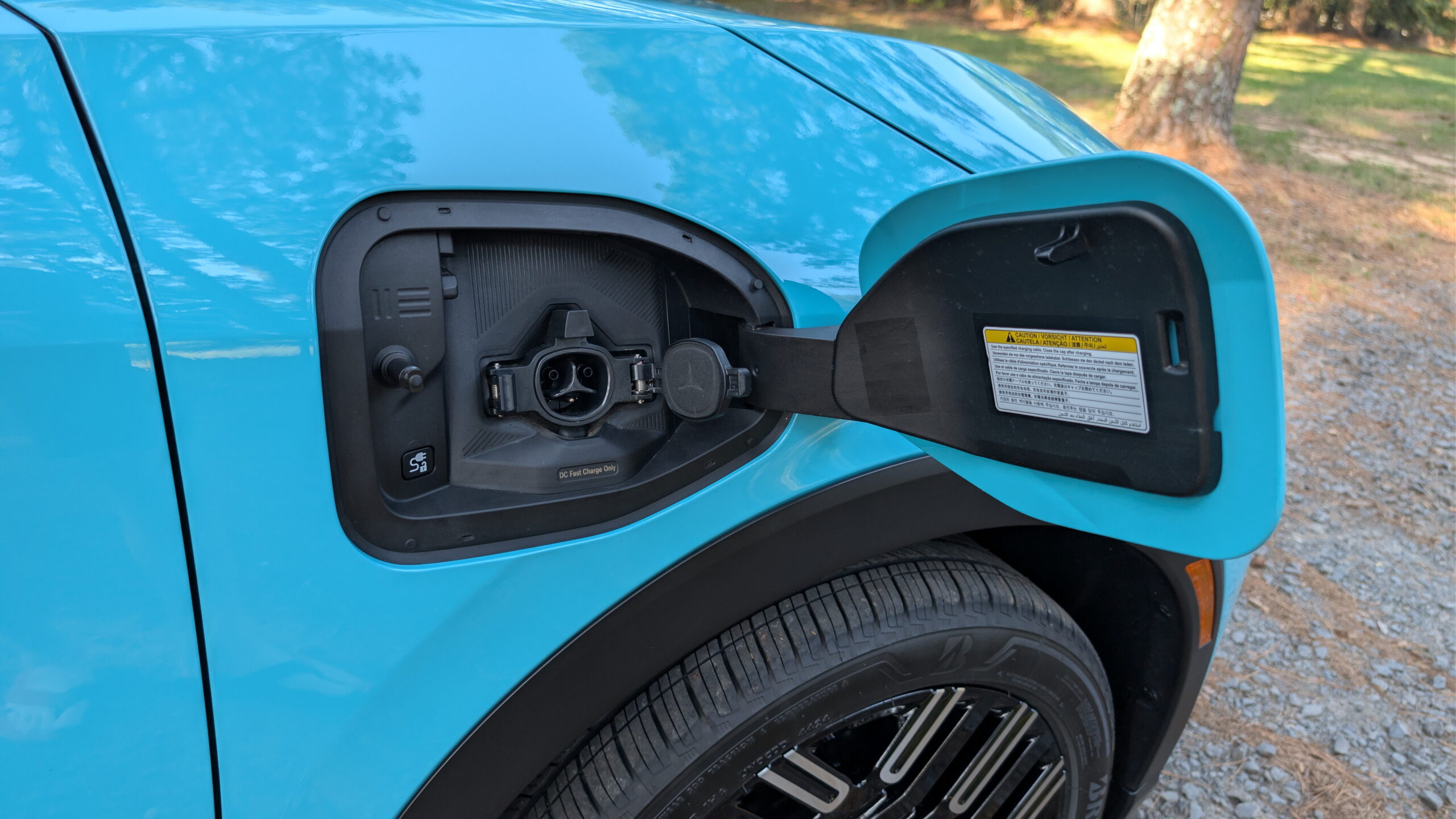
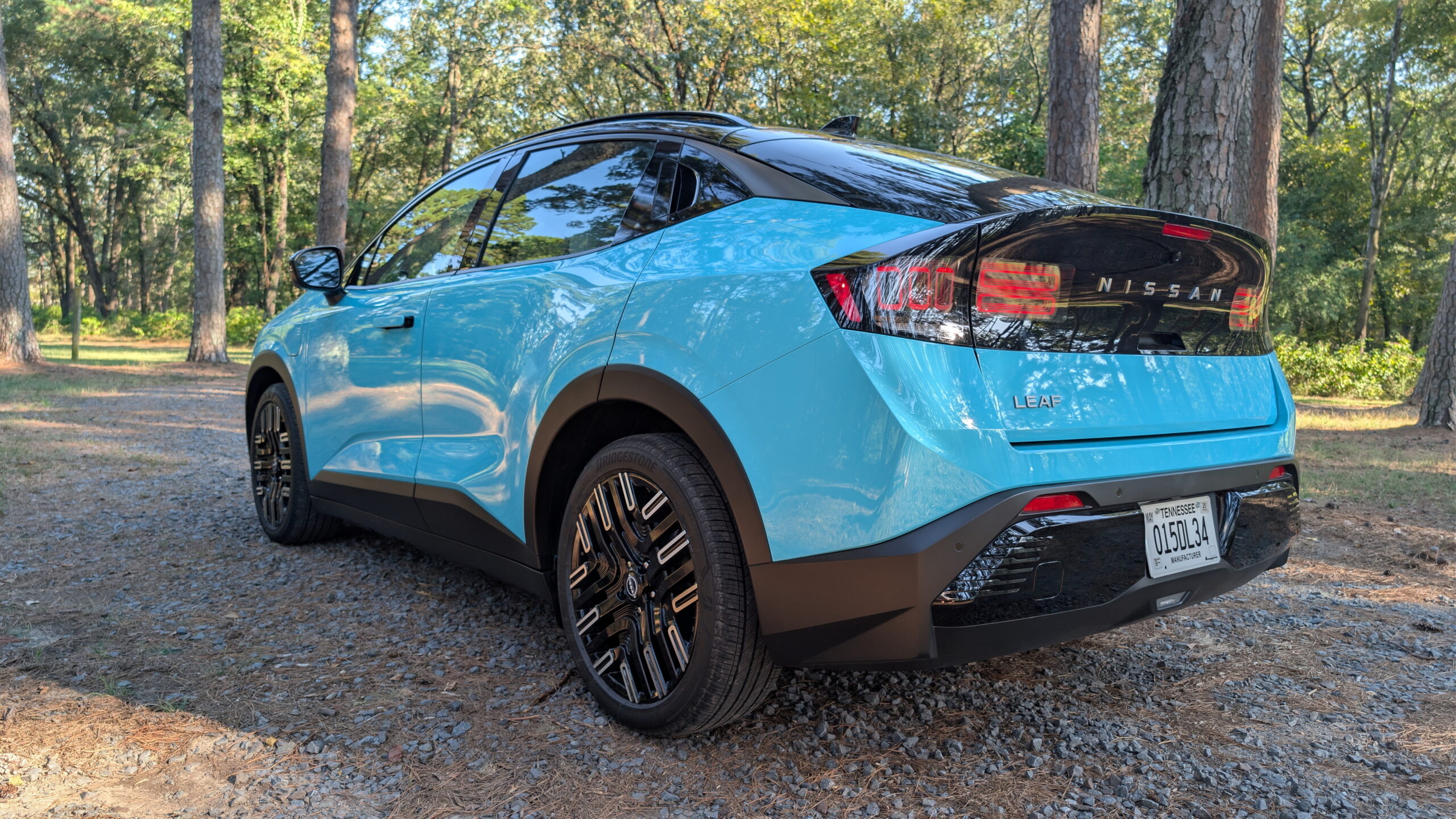
Nissan Warns 51 Leaf Owners To Stop Using Their EVs Right Now

  • Nissan recalls 51 examples of the 2026 Leaf over potential battery fire risks.
  • Owners are advised not to drive, charge, or park the vehicle near buildings.
  • Two thermal incidents were reported, though no injuries have been reported.

The current Nissan Leaf hasn’t even been out for a full year, and yet the company is already issuing a serious safety recall. 51 owners might have a car that could, in very specific circumstances, experience a thermal event. Put simply, the specific vehicles could catch fire, so Nissan is telling owners to take several safety precautions, including parking outside.

According to the recall, the issue traces back to the 78-kWh lithium-ion battery pack. During the supplier’s manufacturing process, the edge of a battery cathode may have been torn. If that damaged section folds over inside the cell, it can create an internal short circuit.

Read: 20,000 Nissan Leaf Owners Told To Stop Fast Charging After Fire Risk Warning

That’s where things get serious. Nissan says the short circuit could overheat the battery and potentially trigger what the company calls a “thermal event.” In other words, the battery could catch fire even when the car is parked, switched off, and not charging.

The first known incident happened in Japan on February 16, when a parked 2026 Leaf suffered a thermal event while sitting outside. A second case surfaced in the U.S. on March 2 at a Nissan dealership. In both cases, the vehicles were turned off and not plugged in.

 Nissan Warns 51 Leaf Owners To Stop Using Their EVs Right Now

That’s key because oftentimes, it’s the charging procedure itself that can initiate instances like this. Considering that these cars weren’t plugged in means owners could have zero indication of an issue before a fire erupts.

Nissan says it used telematics data to scan other Leafs for unusual battery behavior, then traced the suspect battery packs directly to specific VINs. The company says it has one-to-one traceability between the battery and each affected vehicle. Nissan stopped shipping potentially affected Leafs on March 17 and placed vehicles on hold at ports. Owners will begin receiving calls immediately, and interim recall letters will start going out on April 17.

Until then, Nissan says affected owners should park the car outside and away from structures, avoid charging it, and bring it to a dealer. Dealers will provide a rental car until a fix is ready. Once that happens, Nissan will replace the damaged battery modules, or the entire battery pack if necessary, free of charge.

 Nissan Warns 51 Leaf Owners To Stop Using Their EVs Right Now

Credit: Stephen Rivers for Carscoops

The Wheels Of Your $165K Mercedes G-Class EQ Could Fall Off

  • Extreme driving maneuvers could cause the G580’s wheel bolts to loosen.
  • Mercedes-Benz will alert owners to the recall from May 22 in the US.
  • Wheel bolts used for the G580 are the same as those of the lighter G-Class.

Electric vehicles tend to carry more weight than their combustion-powered counterparts, which makes hardware choices far less forgiving. That’s where things appear to have gone sideways for the Mercedes-Benz G580 with EQ Technology, now facing a recall affecting more than 3,700 units in the US.

According to Mercedes, early versions of the electric G580 were fitted with wheel bolts that weren’t properly engineered for the model’s added mass and higher torque output. Instead, they were carried over from the combustion-powered version. Over time, that mismatch can cause the connection between the wheel and hub to loosen while driving, increasing the risk of a crash.

Read: Mercedes Thinks A $10K Discount Will Get $165K Electric SUVs Moving

A total of 3,734 examples are being recalled, all of which were manufactured between February 26, 2024, to August 19, 2025.

Mercedes says that it became aware of a potential issue during ongoing durability testing of the electric G-Class, , when a wheel bolt loosened despite meeting the required specifications. That prompted a deeper investigation into whether the SUV’s added weight, higher torque output, and demanding driving conditions could gradually compromise the wheel bolt connection.

What Can Go Wrong

\\\\\\\\\

The company ultimately determined that a wheel is most likely to work loose following “extreme driving maneuvers together with a number of repeated wheel changes over the vehicle’s lifetime.” This combination can increase wear on the contact surfaces of the wheel bolts.

Starting May 22, Mercedes will begin notifying owners of the recall. Affected drivers will be asked to visit a dealership, where technicians will replace the original bolts with a redesigned set better suited to the electric model’s demands. The updated design uses a two-piece collared lug bolt, intended to maintain consistent friction at the contact surface and reduce wear during tightening.

Vehicles built from August 26, 2025, onward already feature these revised bolts from the factory.

While the regular G-Class enjoyed its best year of sales ever in 2025, the G580 was described by a Mercedes-Benz executive in mid-2025 as a “complete flop.” This recently prompted Mercedes to offer massive discounts the US, in the hopes of driving up sales of the electric SUV that starts from $164,550, including destination.

\\\\\\\\

NHTSA Kicks off Distracted Driving Awareness Month with Campaign

“Distracted driving is 100 percent preventable, yet too many people give the road far less than 100 percent of their attention,” National Highway Traffic Safety Administration (NHTSA) Administrator Jonathan Morrison said during a press event April 1.

NHTSA officials kicked off National Distracted Driving Awareness Month and unveiled a renewed national enforcement and education effort aimed at curbing one of the most persistent dangers on U.S. roadways. Also speaking was Derek Barrs, administrator of the Federal Motor Carrier Safety Administration (FMCSA); Michael Paris, chief of Fairfield, Connecticut Police; and Patty Kruszewski, who lost her daughter in a distracted driving crash.

The agency is launching its enforcement campaign, “Put the Phone Away or Pay” April 9–13, pairing high-visibility law enforcement with a broad media push targeting drivers, particularly those ages 18 to 34. Officials say the goal is to change behavior before another preventable tragedy occurs.

“We cannot be satisfied until we get that number down to zero,” Morrison said, noting that while traffic fatalities have begun to decline, tens of thousands of lives are still lost each year.

Despite recent progress, distracted driving remains a major factor in roadway crashes nationwide. Federal data cited during the press event notes that more than 33,000 people were killed in crashes involving distracted drivers in 2024, with hundreds of thousands more injured.

Officials emphasized that those numbers likely undercount the true scope of the problem, as distraction can be difficult to confirm after a crash.

“Behind every statistic … that’s a human life,” Barrs said.

Wisconsin Crash

A 13-year-old was struck and killed by a 17-year-old motorists who wasn’t paying attention and reportedly on his phone. The 13-year-old was attempting to board the school bus, when she was struck and hit by the motorists who side-swiped the bus and hit the child on the right side.


Following the crash, he NTSB recommended that NHTSA develop and publish “Driver Distraction Guidelines that address the design of current original equipment in-vehicle electronic devices, portable electronic devices and aftermarket electronic devices to prevent driver distraction.”


The agency also reiterated its recommendation to cell phone manufacturers to develop a “distracted driving lock-out mechanism that will automatically disable any driver-distracting functions when a vehicle is in motion and install the mechanism in the default setting on all new devices and apply it during major software updates.”


Five more recommendations were reiterated to NHTSA following the crash. NTSB calls for NHTSA to develop and apply testing protocols to assess the performance of forward collision avoidance systems in passenger vehicles at various velocities, including high speed and high velocity-differential. It also calls on the agency to expand the New Car Assessment Program 5-star rating system to include a scale that rates the performance of forward collision avoidance and to develop performance test criteria for vehicle designs that reduce injuries to pedestrians.


NTSB also wants NHTSA to develop performance test criteria for manufacturers to use in evaluating the extent to which automated pedestrian safety systems in light vehicles will prevent or mitigate pedestrian injury and incorporate pedestrian safety systems, including pedestrian collision avoidance systems and other more passive safety systems, into the New Car Assessment Program. Additionally, Ford Motor Company is urged to install forward collision avoidance systems that include, at minimum, a forward collision warning component as standard equipment on all new vehicles.

Distracted driving is especially dangerous around school buses, where children may unpredictably enter the roadway. Even a momentary glance at a phone can mean the difference between stopping in time, or not.

“Just even one injury or death on our roadways due to distraction … is way too many,” Barrs said.

A recent National Transportation Safety Board (NTSB) investigation found that a 17-year-old driver was using his cellphone when he struck and killed a 13-year-old student who was preparing to board a school bus in Wisconsin. In its final report on the crash, the NTSB called for stronger enforcement, education and technology solutions to protect students during loading and unloading.


Related: NTSB Says Cell Phone Distraction Cause of 2023 Wisconsin Student Fatality
Related: Wisconsin Child Fatally Struck by Car While Waiting for School Bus


Meanwhile, on Monday, Paris stressed that visible enforcement is critical, but not enough on its own. “We need every driver to make a simple but critical choice — put the phone down, slow down, pay attention,” he said.

During the campaign week, officers across the country will increase patrols and actively ticket drivers caught using handheld devices. The effort is supported by a national media campaign, both English and Spanish.

At its core, the campaign returns to a straightforward message: no notification is worth a life. Officials and safety advocates alike are urging drivers to make that decision before they start the engine: Silence the phone, set it aside and stay focused.

Because, as Morrison noted, it only takes seconds for distraction to change lives forever.


Related: (STN Podcast E297) Deep Dive into Safety: Illegal Passing & Child Restraints, Plus Green Bus Funding
Related: Action Plan Puts National Spotlight on Hidden Toll of Illegal Passing
Related: School Bus Driver Charged with Hit-and-Run Death of Brooklyn Girl
Related: Waymo Driverless Vehicles Continue to Illegally Pass School Buses


Kruszewski told the story of her daughter, Lanie, who at 24 years old was struck and killed while biking home from work in 2012. The driver later admitted he never saw her because he was looking at his phone. Kruszewski said the tragedy underscored how quickly a seemingly small decision, checking a message, can destroy lives.

It “took just one text” to take her daughter’s life and forever change her family, she said.

National Highway Traffic Safety Administration (NHTSA) Administrator Jonathan Morrison stood in front of a row of car keys during a press event April 1, 2026. Each key represented a person injured in a distracted driving crash. The display included about 4,000 keys — symbolizing just a fraction of the victims hurt in 2024.

Behind officials during the announcement stood an installation of hundreds of hanging car keys, each representing a person injured in a distracted driving crash. The display included about 4,000 keys — symbolizing just a fraction of the victims hurt in 2024.

But officials noted that if the exhibit reflected the full scale of the crisis — more than 315,000 people injured in distracted driving crashes that year — it would stretch across half a football field.

“In just the time we’ve been talking today, another 18 people have now been injured in distracted driving crashes,” Morrison said near the close of the event.

The post NHTSA Kicks off Distracted Driving Awareness Month with Campaign appeared first on School Transportation News.

Lucid Is Blaming Someone Else For The Gravity’s Second Recall In Four Months

  • Lucid’s second Gravity recall stems from a supplier change no one approved.
  • A seatbelt anchor weld falls short of federal safety requirements in most SUVs.
  • Affected owners will have their seats repaired or replaced at no charge.

Just a few months after the Lucid Gravity was recalled over seat covers that could prevent the airbag from functioning properly, the electric luxury SUV has been recalled yet again. This time, it’s due to a potential defect in the second-row seatbelt anchors.

The EV maker says that during internal tests for another issue, it discovered the outboard lap belt anchor bracket weld in the second row is shorter than it should be and not positioned correctly. The reason? Lucid says seat manufacturer Camaco made a change to the manufacturing process without notifying the company or obtaining its approval.

Read: Wrong Seat Covers Could Stop This EV’s Airbags From Saving You

Vehicles with an insufficiently welded lap belt anchor fail to comply with Federal Motor Vehicle Safety Standards and may increase the risk of injury in a crash. Unlike December’s recall, which impacted just 66 vehicles, this one is much more widespread.

In fact, the recall involves 4,476 Lucid Gravity models built from December 2, 2024, to February 3, 2026, and listed as 2025-2026 model year vehicles. Of these, 97 percent are estimated to have the issue.

What Happens Next?

 Lucid Is Blaming Someone Else For The Gravity’s Second Recall In Four Months

This recall comes shortly after Lucid issued a brief stop-sale for the Gravity earlier this year as it ran tests to determine whether the seat belts could meet safety standards with or without a reinforcing bracket. Even with a bracket, they failed to meet load requirements, prompting Lucid to ensure the components sourced from Camaco meet its standards.

Lucid will start informing its owners of the recall on May 22. Dealers will inspect impacted vehicles, and if a non-conforming weld is found, it will be repaired with either a reinforcing bracket and adhesive or, if necessary, the entire seat will be replaced free of charge.

\\\\\\

(Free White Paper) 12 Ways to Do More Without Blowing Your Fleet’s Budget

By: STN

According to our recent survey, 75% of student transportation teams cite driver shortages are the top operational bottleneck. Budget constraints and rising operational costs weren’t far behind.

This white paper outlines 12 practical, proven ways to improve efficiency, control expenses, strengthen compliance, and protect student riders.

Learn how to stretch your transportation budget with strategies that could pay for themselves in a year.

  • Right-size your fleet using actual utilization and ridership data.
  • Optimize routes, stops and fuel use to reduce operating costs.
  • Cut required vehicle inspection times while catching more defects.
  • Reduce idling and emissions for added overhead expense control.
  • Manage driving performance without adding administrative work.

Download the complimentary white paper to access all 12 strategies.

Fill out the form below and then check your email for the white paper download link.

The post (Free White Paper) 12 Ways to Do More Without Blowing Your Fleet’s Budget appeared first on School Transportation News.

❌