Nearly new Wagoneer S changed hands for huge discount.
500 hp SUV sold for the price of a base, RWD Tesla Model Y.
Jeep’s maiden EV skips MY26, returns in 2027 with upgrades.
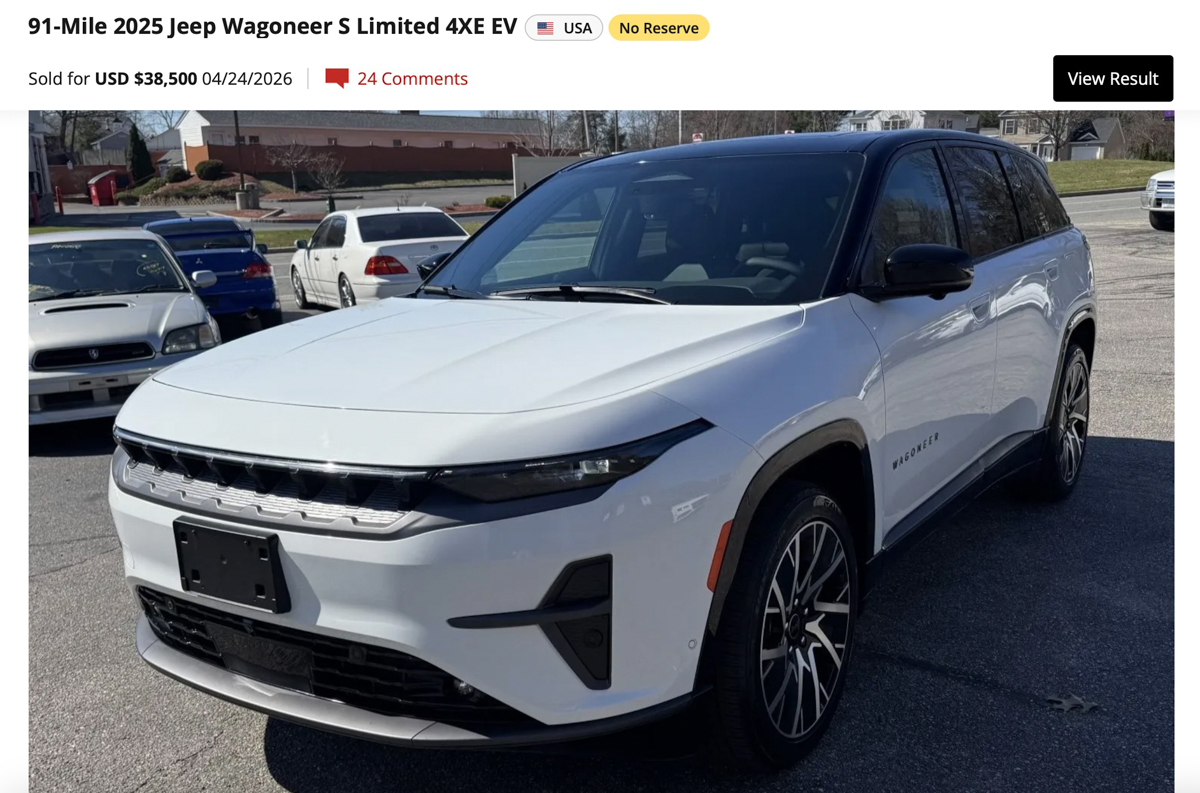
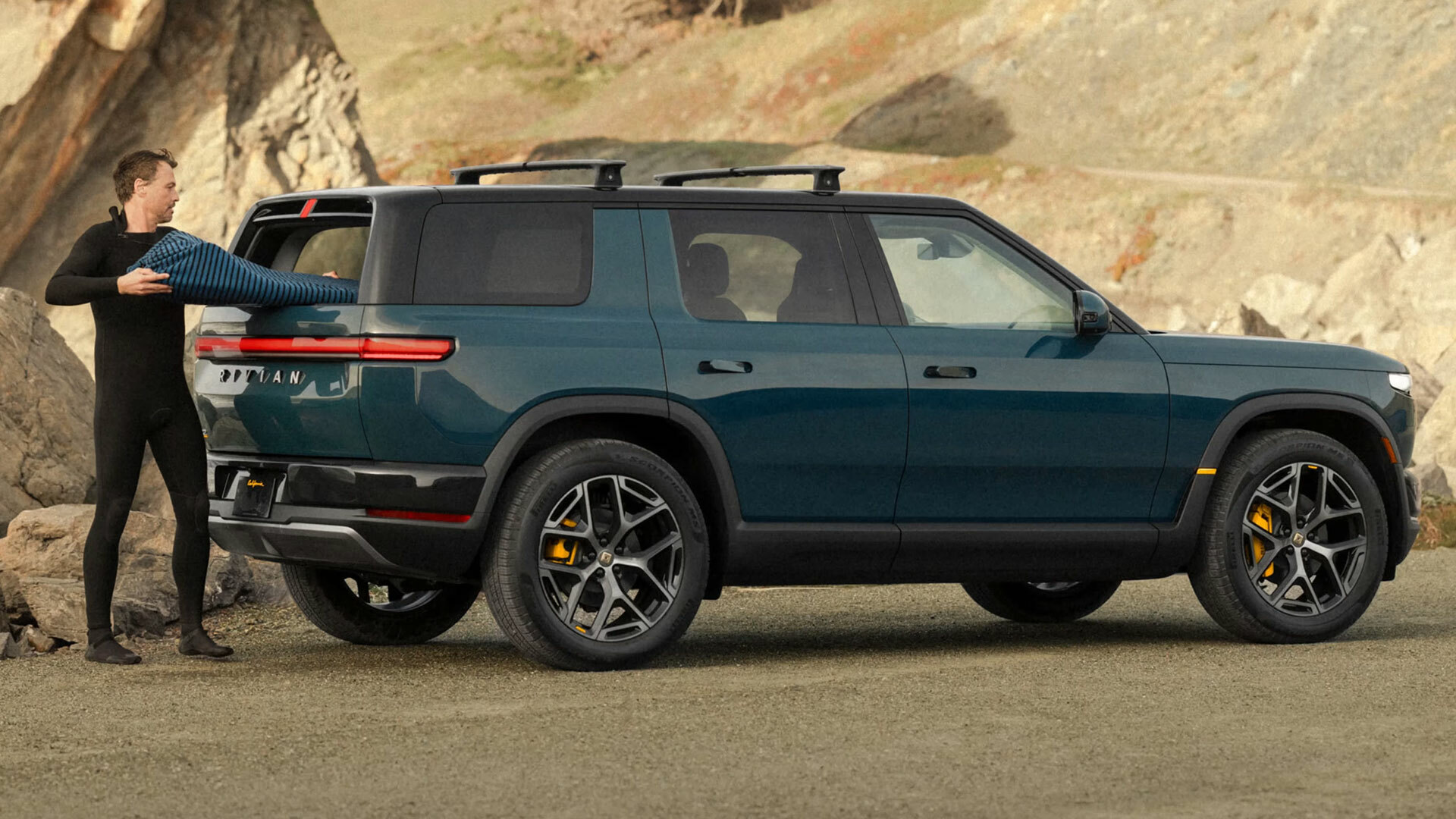
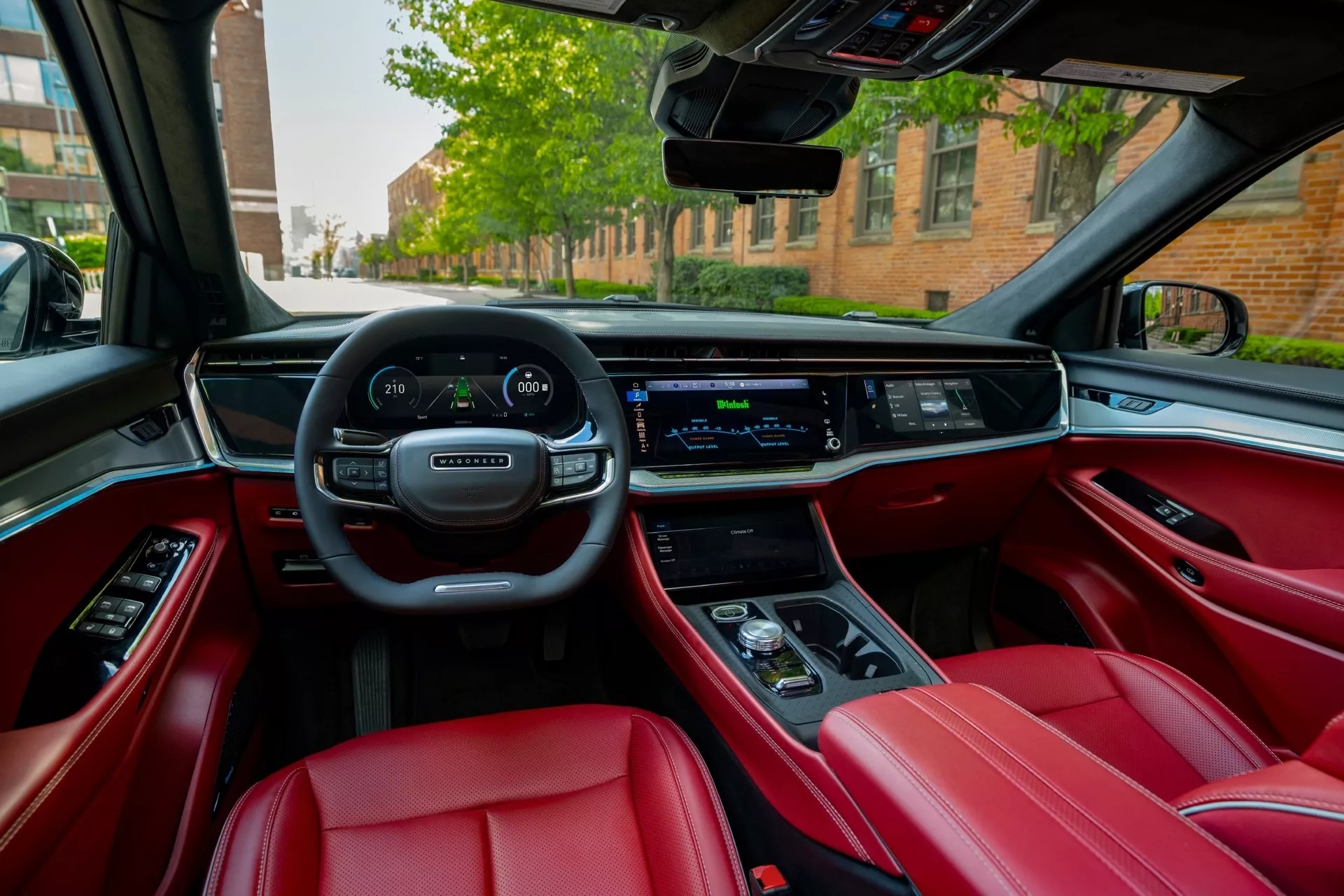
We knew Jeep’s first American EV was having a tough time, but this is something else. A nearly new Wagoneer S Limited 4xe just sold on Bring a Trailer for $38,500 after covering only 91 miles (147 km). That’s roughly $30,000 below its original sticker, and a sharp reminder that EV depreciation can be brutal.
On paper, the deal looks fantastic. The Wagoneer S packs dual motors, all-wheel drive, and a factory-rated output of 500 hp (507 PS) and 524 lb-ft (710 Nm) of torque. The quoted 294-mile (473 km) range from the 100 kWh battery isn’t amazing, but it’s tolerable, and the tailpipe-free Wagoneer is roomy enough for family duty and loaded with kit, making the auction result look like bargain-hunter gold.
This example was a Limited trim finished in white with Jeep’s Dark Appearance package. The Limited stickered at $67,195 including destination and before options, and this one came with a panoramic roof, heated front seats, heated steering wheel, surround-view cameras, adaptive cruise control, wireless smartphone mirroring, a 12.3-inch touchscreen, and an Alpine nine-speaker audio system.
So it’s not exactly a stripped rental special, even if it is a rung below the 600 hp (608 PS), $72,195 Launch Edition.
So why the huge value crash? Because the Wagoneer S has struggled badly since launch. It arrived when automakers believed premium EV demand in America would keep climbing. Instead, the market cooled, incentives changed, and shoppers became more selective about price, charging access, and brand trust.
No More Tax Credits
The biggest blow came when the $7,500 federal EV tax credit disappeared last September. Before that, Jeep reportedly moved more than 10,000 Wagoneer S models across three quarters with the help of some big discounts. In the two quarters after the credit ended, sales fell to just 613 units.
Jeep’s response has been telling. The brand won’t build a 2026 Wagoneer S at all, instead skipping straight to a 2027 model. Stellantis says the pause will allow upgrades to battery performance, software, capability, and interior quality. It’ll also gain a NACS charging port for easier access to Tesla’s growing Supercharger network.
A better Wagoneer S is coming, but we still think whoever bought this one got an absolute bargain. If he can live with uncertain resale and a model facing reboot status, $38,500 bought him a barely driven 500-hp electric SUV with lots of equipment. That’s hard to ignore, even if the first owner probably wishes they had.
The Stillaguamish Tribe in Washington state has been buying land in its traditional territory and removing levees. The goal is to turn farmland into wetlands with the hopes of restoring Chinook salmon.
BYD profits fell sharply in the first quarter of 2026 overall.
Revenue declined 12 percent year on year during the period.
Slower domestic sales in China drove much of the downturn.
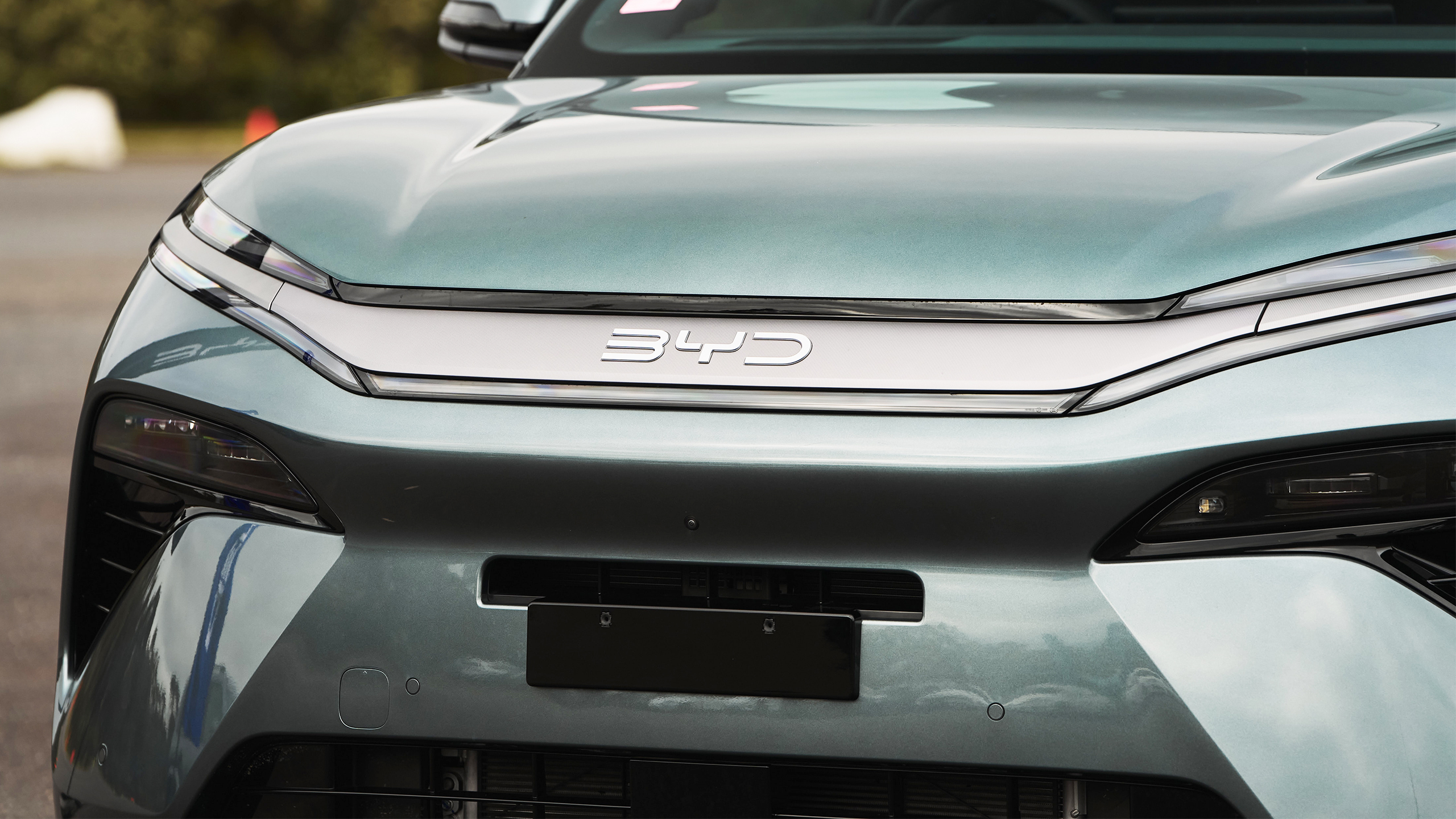
BYD has recorded its steepest quarterly profit decline since 2020, underlining the mounting pressure facing the world’s largest electric vehicle seller in its home market despite success abroad. The company’s latest report showed that net profit in the first quarter of 2026 declined by 55.4 percent from the previous year, falling to 4.09 billion yuan, approximately $597 million.
Revenue dropped by nearly 12 percent to 150.2 billion yuan ($22 million), the third consecutive quarterly decline and the lowest quarterly revenue figure since Q2 2024. However, the result still bested analysts’ prediction that revenue would be around 132-140 billion yuan. BYD sold 700,463 “New Energy Vehicle” (EVs and PHEVS) units in the quarter, down 30% year-on-year and nearly 48% below the record volumes of Q4 2025.
The Chinese market for electric cars is fiercely competitive. BYD has taken over as the market leader because of its low-priced models, yet price wars in its home market are intense. Meanwhile, the government has scaled back subsidies. China exempted NEVs from purchase tax entirely in 2024–2025, but for 2026 and 2027, the relief has been halved to a maximum of 15,000 yuan per vehicle.
This policy shift pulled demand forward into Q4 2025, exacerbating the Q1 2026 slowdown. Sales in China have declined for several consecutive months, and profits are being squeezed even as exports grow strongly.
Global Push Becomes Critical As Domestic Sales Cool
BYD is looking to the overseas market as domestic sales decline. It plans to ship more than 1.5 million automobiles this year in an attempt to overcome sluggish domestic sales. Industry insiders expect massive export growth next year, but overall delivery growth will probably be less aggressive.
This strategic shift was on display at the Beijing Auto Show, where BYD launched new products targeting the premium segment, including the Datang (Great Tang), a full-size electric SUV priced from 250,000 yuan, which attracted more than 30,000 pre-orders on its first day. Moving beyond low-end models is intended to help the company sustain profitability amid the mass-market price war.
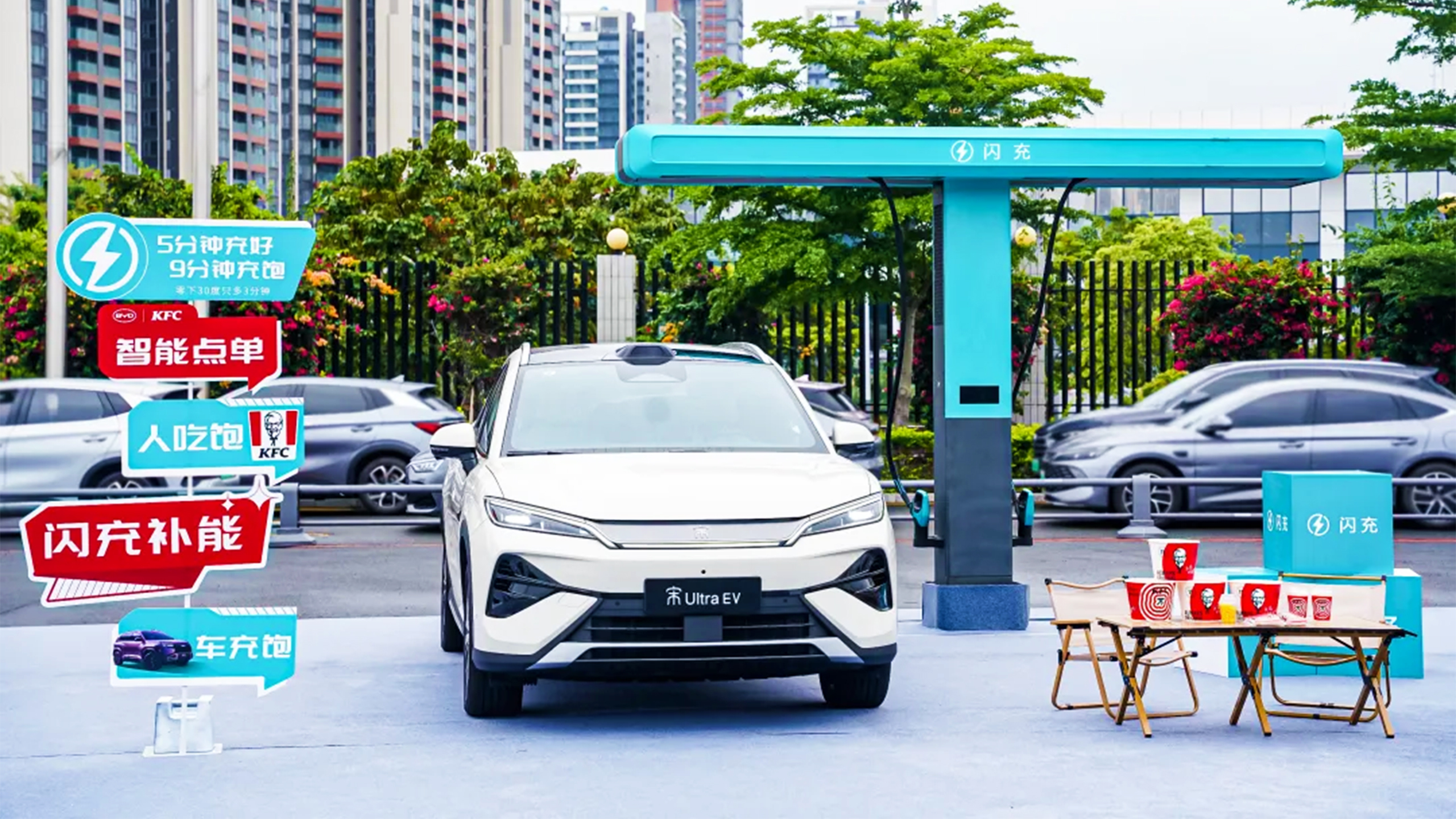
There’s a renewed focus on regaining technological superiority, too. The company is enhancing charging speed, among other features, to attract consumers who are not keen on switching from gas-powered cars.
But BYD is at a crossroads as it stands. Its expansion across borders may be the answer to whether it can bounce back. Analysts say the next few quarters will be critical, with domestic EV demand recovery and robust export growth seen as the keys to a profit rebound.
The U9 Xtreme has four electric motors delivering 2,978 hp and hits 308.4 mph.
Last year, the limited-run U9 Xtreme lapped the Nurburgring in 6:57.147.
BYD is selling each YangWang U9 Xtreme for more than 20 million yuan.
Over the past few years, we’ve become accustomed to seeing new BYD models hit the market with absurdly low price tags. The record-breaking YangWang YangWang U9 Xtreme is not that kind of a car. It is, by some distance, the priciest thing the company has ever offered.
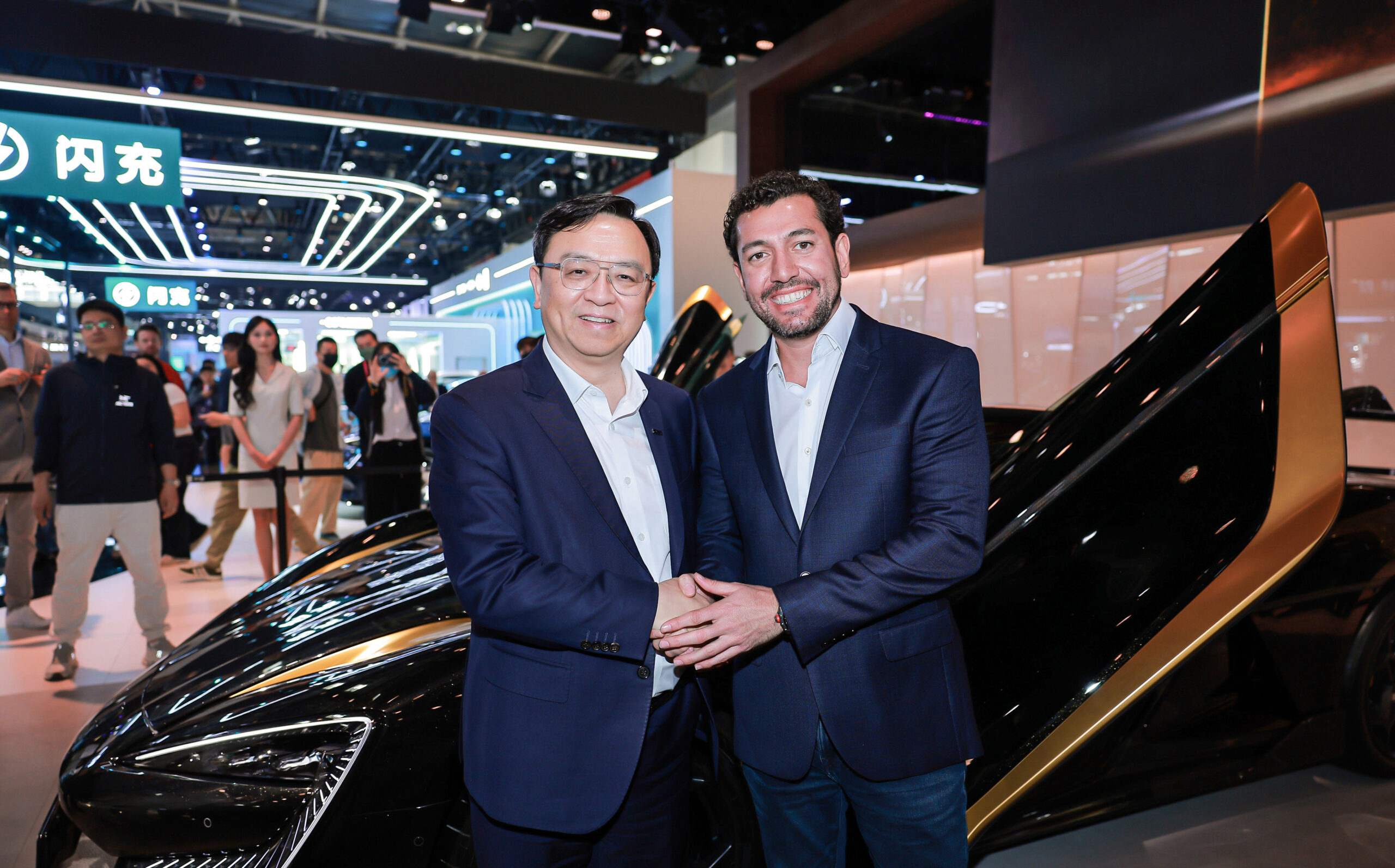
Li Yunfei, who runs branding and PR for BYD Group, posted on social media that several U9 Xtreme orders were locked in at the Beijing Auto Show. The price? North of 20 million yuan a pop, or roughly $2.92 million at current exchange rates.
This is more in line with hypercars from the likes of Koenigsegg and Bugatti than what we’d expect to see from BYD. It also makes it more than ten times as expensive as the ‘regular’ YangWang U9, which is available from 1.8 million yuan ($263,000).
Among those to have placed an order for the U9 Xtreme in Beijing was Nick Politis, an Australian businessman estimated to be worth over AU$4.5 billion ($3.2 billion). His car will be the only one sold in Australia and is expected to arrive early next year.
What will shoppers get for their money? Firstly, they get exclusivity, as just 30 units are bound for the production line. In addition, they get a car with four electric motors combining to produce an extraordinary 2,978 hp. This easily makes it the most powerful production car ever and the first to feature a 1,200-volt platform.
What Can It Do?
All of the power means the U9 Xtreme can hit 308.4 mph or 496.22 km/h, a feat it achieved last year to eclipse the top speed of the Bugatti Chiron Super Sport 300+, while easily defeating the official two-way average top speed record holder of the SSC Tuatara, set at 282.9 mph (455.3 km/h). It’s unclear if customer cars will be able to hit these speeds, or if they’ll be software-limited to a slightly more reasonable pace.
The U9 Xtreme is also quite capable around a track. While it’s heavy, it lapped the Nurburgring Nordschleife in 6:57.147, outgunning the Rimac Nevera and Xiaomi SU7 Ultra. Admittedly, it is slower than a 500-hp Porsche 911 GT3 RS and almost 20 seconds slower than the new Ford Mustang GTD Competition.
Ford teased its upcoming $30,000 electric pickup in a LinkedIn post.
It rides on a new in-house platform built by a skunkworks team.
Truck could revive the Ranchero name, unused since the late 1970s.
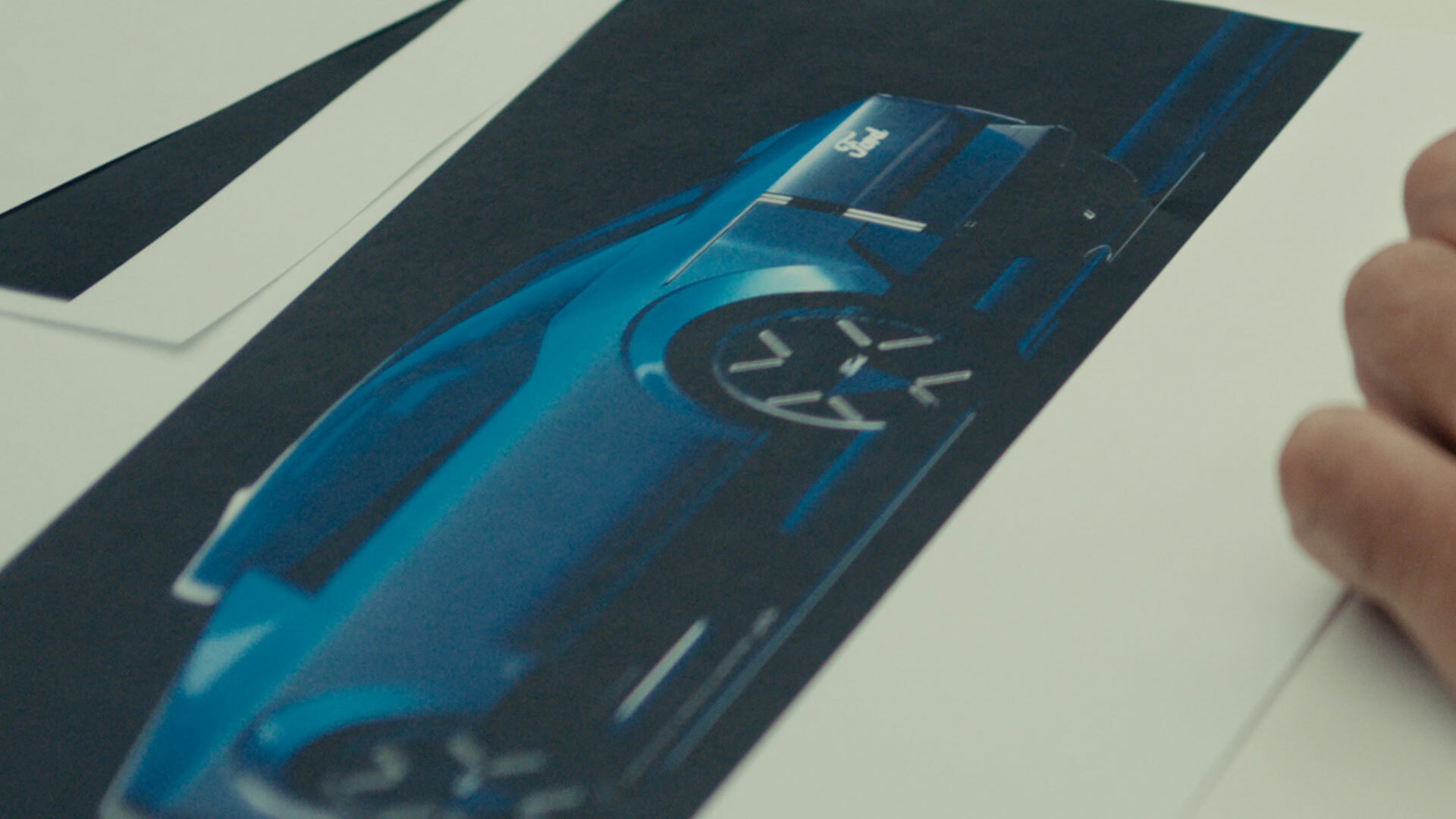
Ford has trimmed plenty from its electric vehicle plans, but the compact electric truck has survived the cuts, and the company still hopes it will deliver the success the F-150 Lightning never quite managed. A proper reveal isn’t on the cards yet, though a handful of images posted to LinkedIn give an early look at what’s coming.
Company boss Jim Farley posted these images to celebrate Doug Field’s last day with the company. One of the photos shows Field speaking about the new truck with Farley and other Ford executives, and includes a small glimpse of the EV’s bed. A separate image also seems to show the roofline of the new model, while another shows it with several roof-mounted accessories.
While these images don’t give us a good look at the new model, there’s plenty to get excited about. Underpinning the $30,000 pickup will be the new Ford Universal EV platform, developed in-house by a skunkworks team of engineers. This platform will be used by several other vehicles, including SUVs and vans.
Cheaper And More Efficient
According to Ford, the platform has 20 percent fewer parts, 25 percent fewer fasteners, and requires 40 percent fewer plant workstations than an ordinary platform. This will be aided by the new unicasting process, similar to Tesla’s gigacasting, in which important parts will use large single-piece aluminum castings. This process will also significantly reduce costs.
Speaking about the new truck last year, Farley noted its wiring harness will be more than 4,000 feet (1.3 km) shorter and 10 kg (22 lbs) lighter than its first-generation EVs. The company will also overhaul how it builds vehicles on this platform, manufacturing the front, rear, and structural battery pack in separate lines before joining them during final assembly.
Key specifications of the truck remain unclear, but we know it will use lithium iron phosphate batteries. It may also revive the Ranchero nameplate, which Ford hasn’t used since 1979.
Rivian has revamped plans for their new factory in Georgia.
Facility will now be able to build 300,000 units annually.
DOE loan has been cut from $6.6 billion to $4.5 billion.
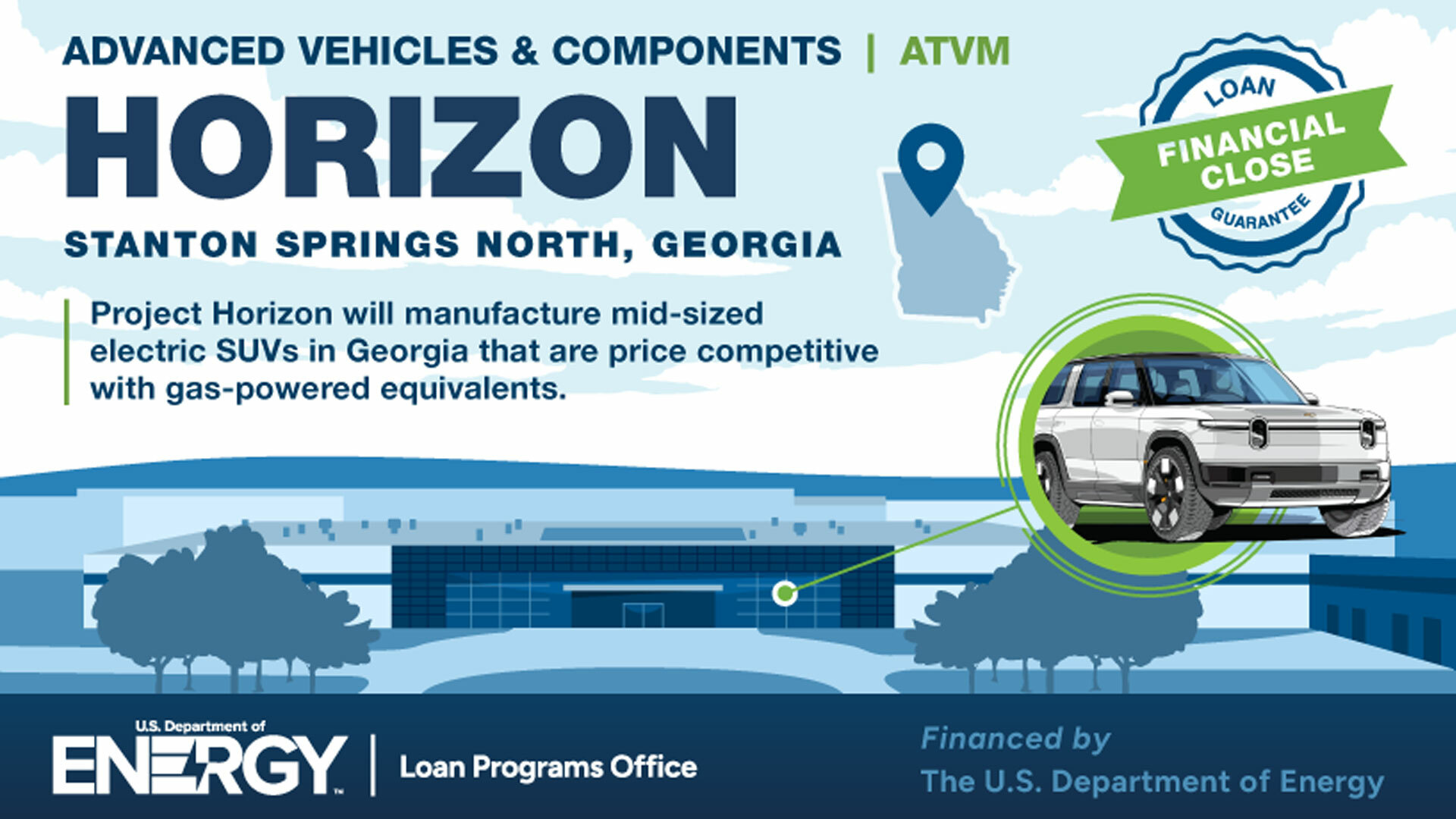
The R2 recently went into production in Normal, Illinois, and Rivian expects it to be a success. As a result, they’ve announced a new plan for their Stanton Springs North plant in Georgia.
Under the new strategy, the automaker is increasing the plant’s initial production capacity to 300,000 vehicles annually. That’s 100,000 units more than the original target and Rivian said the change will “facilitate a lower cost per unit, while also providing significant room for future expansion of capacity in later phases.”
As part of the change, Rivian worked closely with the Department of Energy to update its original $6.6 billion loan. Its value has been reduced to $4.5 billion and is “aligned with the updated facility design and roadmap for the initial phase.”
The devil is in the details, with CNBC reporting that the loan was originally structured for two phases of production and an annual capacity of 400,000 units. The new agreement reportedly just has one phase and enables Rivian to “draw on the loan sooner and have greater initial production.”
Rivian expects to start using those funds in 2027, and the plant is scheduled to begin production in late 2028. Vertical construction is set to begin this spring, and “preparations are underway for the development of the stamping press area, one of the most capital-intensive and technically demanding projects within the plant from a construction perspective.”
Q1 Results
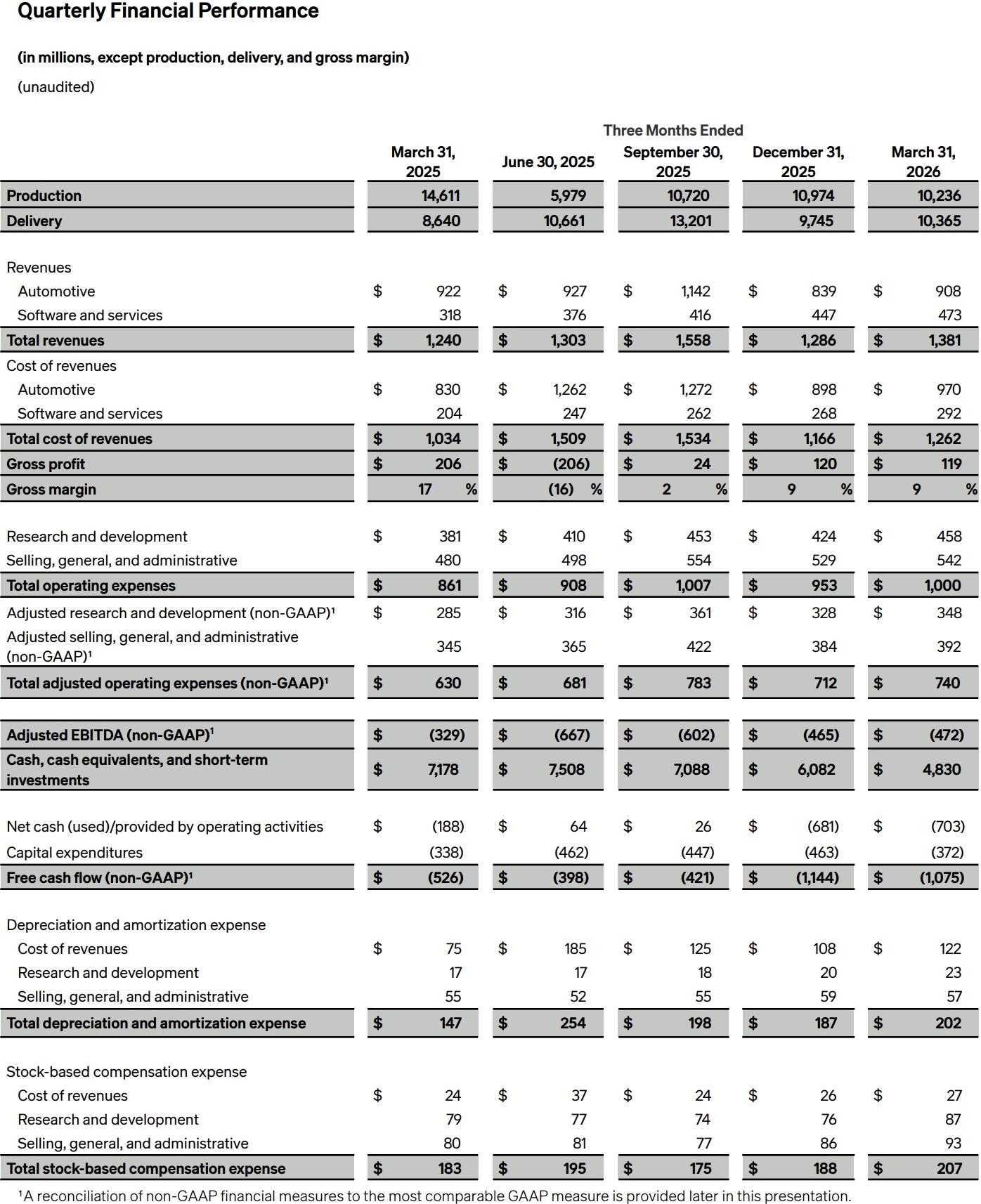
Besides the Georgia plant changes, Rivian announced its first-quarter results. The automaker built 10,236 vehicles and delivered 10,365 to customers.
Consolidated revenue increased 11% to $1.38 billion, and the company posted a $416 million net loss for the quarter. That’s down from a $541 loss in Q1 2025, but they “benefited from a $506 million gain in other income related to the Series A capital raise and related deconsolidation of Mind Robotics.”
Their outlook for 2026 isn’t stellar as they’re expecting to deliver between 62,000 and 67,000 vehicles. While those are decent numbers, their adjusted EBITDA is a $1.8 – $2.1 billion loss.
Nissan cancels Mississippi EV production plans after demand weakens.
Massive Canton plant will pivot to pickups and electrified SUVs instead.
Automaker joins rivals in slowing EV push and focusing on hybrids for now.
Nissan is backing away from its big electric vehicle ambitions in Mississippi, scrapping plans to build battery-powered models at its Canton plant as the US market cools faster than expected.
The decision follows a broader rethink inside the troubled company as EV demand softens and government incentives disappear. Nissan had once positioned the Mississippi factory as a key pillar of its electric future, with multiple models planned before the end of the decade.
Those timelines had already slipped, having been pushed back by nine months last year, and now the entire program has been shelved. Nissan made the U-turn to “better align with market conditions, customer demand and Nissan’s updated strategic direction,” a brand spokesperson told Auto News.
Instead of building EVs, the automaker is pivoting toward more traditional vehicles, including pickups and SUVs built on a rugged body-on-frame setup. A new generation of products is in the works, starting with a revived Xterra expected later in the decade. More models will follow, all sharing a common architecture designed to cut costs and boost efficiency.
Five New ICE Models
The new ladder chassis will spawn at least five trucks and SUVs, Auto News says, its sources revealing that those vehicles will have 70 percent parts commonality and be identical from the front seats forward.
That shift reflects changing buyer preferences. Gas-powered vehicles and hybrids are proving more resilient, while fully electric models have struggled with concerns over charging infrastructure, range, and upfront cost now that federal tax credits are no longer available. EV sales actually fell last year in the US, even as they continued to rapidly gain ground in Europe.
EV Investment Scrapped
The Canton plant that we were told five years ago was getting $500 million of investment so it could pump out thousands of EVs per year, will remain central to Nissan’s North American plans, just with a different focus. It already produces models like the Frontier pickup and Altima sedan, and the new strategy aims to build on that foundation with larger, more profitable vehicles tailored to US tastes.
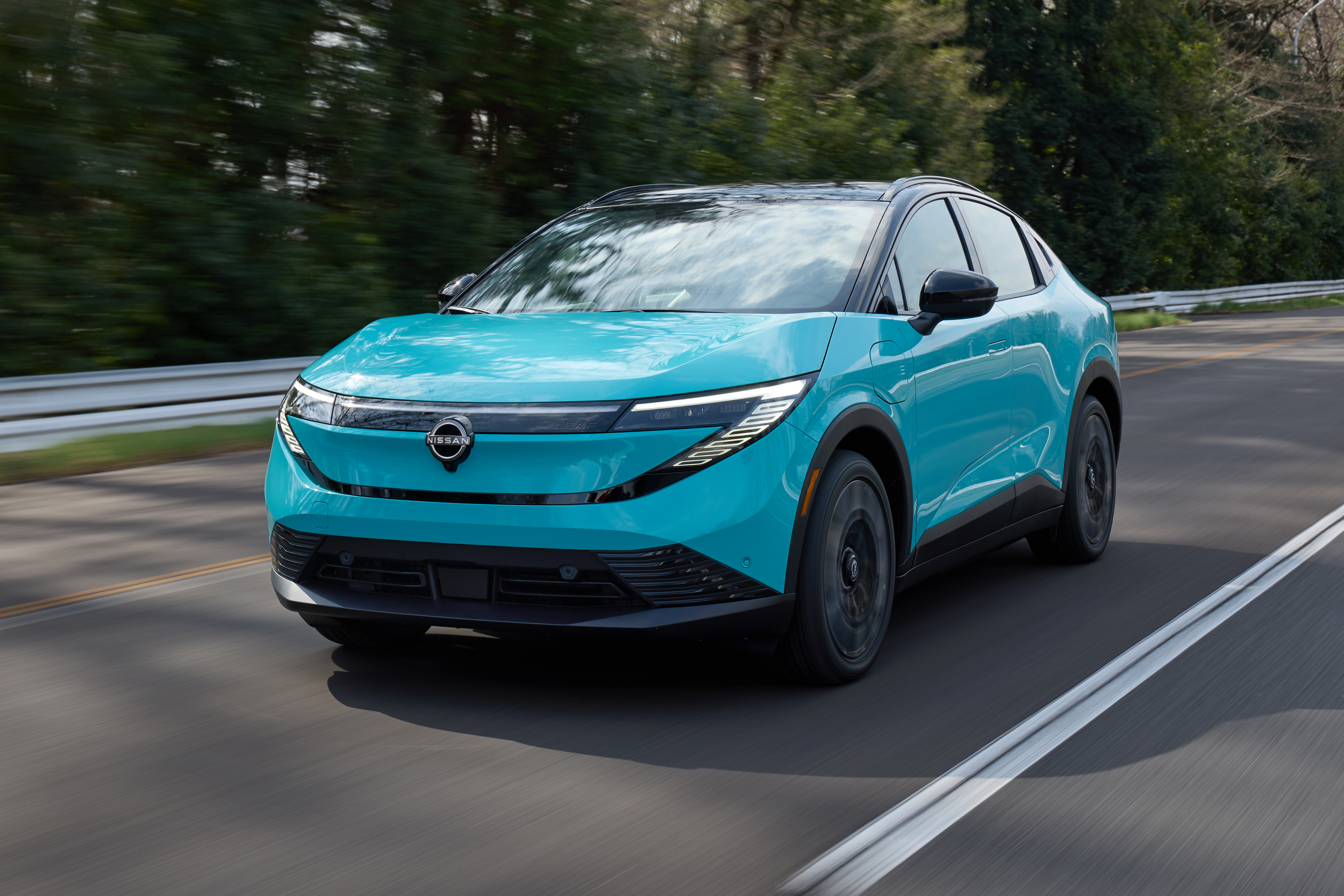
And Nissan isn’t abandoning electric vehicles entirely. It will continue selling existing models like the Leaf (shown below) in the US, but its future lineup will definitely concentrate more on hybrid technology as a stepping stone.
Baidu engineers instructed robotaxis to stop and immediately collect data.
As many as 200 robotaxis operated by the tech firm stopped in Wuhan traffic.
Regulations for robotaxis are generally set by local governments in China.
The robotaxi gold rush in China has just hit its first serious speed bump. About a month ago, dozens of autonomous vehicles run by Baidu malfunctioned on Chinese roads, and Beijing has now stopped issuing new robotaxi licenses. The episode is a reminder that while domestic brands push hard on ever more advanced self-driving systems, a single bad afternoon can quickly unravel progress.
The incident itself happened on March 31, when around 200 robotaxis from Baidu’s Apollo Go program stopped dead in traffic in Wuhan. Several collisions followed and passengers were left stranded in their cars. Fortunately, no one was injured. According to an unnamed source, Baidu engineers issued a command to tell vehicles to stop and collect data on the spot, triggering the chaos.
According to Nikkei Asia, China’s transport ministry, the industry and information technology ministry, the public security ministry, and the Cyberspace Administration sat down with eight of the country’s biggest autonomous driving firms after the Wuhan incident. Authorities demanded that these firms conduct a “comprehensive self-inspection.”
Although the Chinese government has stopped issuing new licenses for robotaxi operators, those who are already operating can continue to do so. For example, Pony.ai continues to operate its robotaxi services in Beijing, Shanghai, Guangzhou, and Shenzhen as normal.
What Laws Exist?
NEW: Dozens of robotaxis by Baidu stopped on the road in Wuhan, causing crashes on highways and trapping passengers in the cars—some for more than an hour. One passenger told me it took her 30 minutes to even connect to a customer representative.
In general, regulations governing the testing of self-driving vehicles in China are relatively lax. The federal government has let local governments decide how they’d like to govern the introduction of robotaxi services, leading to a wide range of different regulations throughout the country.
It’s understood that roughly 4,500 robotaxis were operating across pilot zones in 10 Chinese cities as of last year. Some analysts estimate that as many as 500,000 robotaxis could be in service by 2030, or about 10 percent of the country’s total taxi fleet. A national decision outlining steps to prevent similar incidents could arrive by the end of May.
Five Mississippi middle school students are praised as heroes after stopping a moving school bus when their driver lost consciousness during a medical emergency.
The incident happened the afternoon of April 22 in the Hancock County School District, when a bus driver transporting students suddenly became incapacitated while behind the wheel.
“This afternoon, during middle school dismissal, a bus driver on Bus #22 experienced a medical emergency,” the district said in a statement. “We are grateful to report that all students are safe and were transported home safely. Students acted quickly to help ensure the bus was safely brought to a stop and then contacted emergency services. We are proud of our students for staying calm and acting responsibly.”
The driver, 45-year-old Leah Taylor, told local news reporters that she suffered an asthma attack while driving her usual route and lost consciousness.
“I had a medical emergency, and the students stepped up,” she said.
Surveillance video released by the district shows a chaotic scene unfolding inside the bus as Taylor slumps over and the vehicle begins to drift. Students can be seen quickly reacting, coordinating efforts to regain control and prevent a potentially serious crash.
“She kind of, sort of, like, fell over, like flopped over, and everyone started standing up,” student McKenzy Finch told local news reporters, describing the moment the situation became clear. According to the students, the bus began veering off course and picking up speed. That’s when several of them sprang into action.
Students Seize Their Hero Moment
“I saw that the bus was veering off to the side, then I grabbed the wheel,” said Jackson Casnave, one of the students credited with helping steer the bus back under control.
At the same time, sixth grader Darrius Clark made his way to the front and stepped on the brakes, bringing the vehicle to a stop.
Other students focused on getting help and assisting the driver. Eighth grader Kayleigh Clark called 911 while fellow eighth grader Destiny Cornelius helped administer Taylor’s medication.
“I saw her medication in her hand, and I saw her reaching for it. I knew that’s what she needed,” Cornelius told reporters.
The coordinated response by the group of students ensured the safety of everyone on board. No injuries were reported among the students. Emergency responders arrived shortly after and aided Taylor, who is expected to fully recover.
School officials and community members have since praised the students for their composure and quick thinking under pressure, noting that their actions likely prevented a serious accident. The district emphasized the importance of the students’ teamwork and presence of mind during the emergency.
Two were waiting on parts. One had been sitting in the bay for four days. Her one certified technician was working hard, but too much of that work had nothing to do with fixing buses. He was printing work orders. Writing notes by hand. Checking on parts. Tracking people down. Moving paper from one step to the next.
When the transportation director asked what was slowing the shop down, Shelly didn’t have a clean answer. She knew the buses were down. She knew the team was stretched. What she couldn’t see was where the hours were actually going.
Does that story feel familiar? The technician shortage is real. Every fleet leader knows that. Hiring is hard. Keeping good people is hard. Finding enough time in the day is even harder.
Still, hiring is only part of the challenge.
The rest hides in the blind spots. It hides in the paper trail, the missing status updates, the parts questions, and the work that pulls skilled technicians away from the buses that need them most.
That is why the technician shortage is a data problem, not just a hiring problem.
A short-staffed shop can feel even shorter when the day is packed with manual work. Paperwork slows everything down. Missing information slows it down more. By the time a fleet leader realizes where the delay is, the delay has already done its damage.
That’s the real cost of fleet blind spots. They steal time from the people who can least afford to lose it.
Kern HSD 5
The hours are there. Too many shops just can’t see where they go.
Most school transportation leaders don’t need another reminder that technicians are hard to find. They live that reality every day. What they need is a clearer view of the capacity they already have.
A technician in a paper-based shop does not just repair buses. They wait on work orders. They check for parts. They stop for updates. They write down what they did. They hand off paper. Then they do it again.
That time adds up fast.
The problem here is visibility, not effort. When leaders can’t see where time is being spent, they can’t protect it.
That leaves good people working inside a system that makes every day harder than it should be.
Fleet leaders deserve better than that. So do their teams.
Better visibility gives technicians more time to do the work only they can do.
A technician should be working on buses, not chasing paperwork.
A fleet leader should be able to see what’s open, what’s waiting, and what needs attention next. They shouldn’t have to piece the story together from paper forms, hallway conversations, and scattered systems.
RTA Fleet360 brings work orders, PM scheduling, labor tracking, parts visibility, and reporting into one clear place. It helps school transportation leaders see what is happening in the shop while the work is happening. That means fewer fleet blind spots, faster answers, and a steadier day for the whole team.
When leaders can see where the hours are going, they can start giving those hours back to the shop.
That changes the pace of the work.
Jobs move faster. Delays are easier to spot. Technicians spend less time on admin drag and more time on the work that keeps buses ready.
Explore Fleet360 for K-12 fleets, or book a meeting with an RTA Fleet Expert to see how better shop visibility can help your team get more from the capacity you already have.
Real fleet leaders are already proving what better systems can do.
At Kern High School District in California, better visibility and tighter control led to a result any fleet leader would notice. Fleet Manager Adrian Corral put it simply: “As soon as we took on RTA … we got our shrink down to about $500.”
Before RTA, the district was dealing with a manual process that took too much time and too much effort to manage. With stronger systems in place, the team gained control, cut waste, and made the operation easier to run from top to bottom.
That matters in a school bus shop.
It means fewer things slipping through the cracks. It means better stewardship of public dollars. It means a leader can speak clearly about what is happening and what is improving.
Better visibility helps school transportation leaders make stronger decisions.
A fleet leader shouldn’t feel like they have fleet blinders on.
They should be able to see what work is open, what’s behind schedule, and where the pressure is building. When that visibility is clear, it gets easier to set priorities, explain decisions, and back up the team with real numbers.
That kind of clarity changes the job.
Instead of reacting to every new problem, leaders can get ahead of them. Instead of walking into tough conversations with partial answers, they can walk in with proof. Instead of feeling buried by blind spots, they can lead with a steadier hand.
The next step for school bus fleets that want more control –
School bus fleets don’t need bigger blind spots. They need cleaner information, stronger workflows, sharper planning, and a better way to turn daily effort into measurable progress.
RTA Fleet360 helps make that happen. It brings maintenance, PM, labor tracking, parts visibility, and reporting into one clear place. Transportation directors can see more clearly, parts managers can respond faster, and buses can get back on the road safely. With RTA Fleet360, fleet leaders can lead with confidence.
Lexus confirms a new electric SUV debut set for May 6.
Teasers point to a Highlander-based three-row electric SUV.
Earlier trademarks suggest it will adopt the TZ moniker.
The teaser drip has begun, as Lexus has confirmed a new SUV for May 6. The name remains withheld, though the smart money is on the Lexus TZ, a model expected to share its bones with the 2027 Toyota Highlander.
The dark teasers shared on social media reveal the silhouette of an SUV positioned as the zero-emission counterpart to the Lexus TX. The proportions read Highlander, but the roofline appears to taper more aggressively toward the rear.
The bodywork is also expected to be redesigned, with a new lighting signature and a hood that leans slightly toward the rugged Lexus GX. Recent spy shots hint at split LED headlights, a covered singleframe grille, toned fenders, sculpted doors, and large alloy wheels. Still, the greenhouse and door handles appear to carry over from the Toyota sibling.
Inside, the cabin should rise to something more befitting the badge, even if certain components, the 14-inch infotainment screen among them, get carried across. A three-row layout is expected, possibly in six-seat configuration.
The footprint of the Lexus TZ will likely align closely with the Toyota Highlander EV. The latter stretches to 5,050 mm (198.8 inches) long, with a 3,050 mm (120.1 inches) wheelbase, riding on a modified version of the TNGA-K architecture.
Lexus filed trademarks for TZ450e and TZ550e back in 2023, hinting at two electric powertrain options. The Toyota equivalent comes in front- and all-wheel-drive forms, rated at 221 hp and 338 hp respectively. Battery options include a base 77 kWh unit and a larger 95.8 kWh pack offering up to 320 miles (515 km) of range.
Baldauf
Rivals include the Kia EV9, Hyundai Ioniq 9, and Volvo EX90. Pricing will sit above the Highlander EV, which is expected to start in the low to mid $50,000s.
The unveiling will be broadcast on YouTube on Thursday, May 7, 2026, at 10:30 am JST, which translates to Wednesday, May 6, 2026, at 9:30 pm EDT. Besides North America, the model will also be sold in the Japanese market. As for production, some reports suggest it will be manufactured in the US, while others point to Japan.
Ford’s next-gen EV tech will help to improve all future models.
Higher aluminum prices could cost the automaker an extra $1 billion.
Company’s $30,000 electric truck will appeal to crossover buyers.
Ford has high hopes for their upcoming mid-size electric truck and CEO Jim Farley recently revealed the company did an “incredible job” creating its UEV platform. However, its advancements won’t be limited to next-generation electric vehicles.
Speaking during an earnings call, Farley said the platform “represents a step change in efficiency and cost, especially for the EV market.” While the company has been touting those benefits for awhile, the executive revealed they’re now integrating these “skunk works breakthroughs” into their mainstream products and processes.
He went on to say the Blue Oval is applying learnings from the program to their high-volume internal combustion and hybrid lines, and this will help to reduce costs as well as improve quality. Farley added that by the end of the decade, 90% of their global nameplates will offer electrified powertrains including hybrid, electric, and range-extended options.
When asked about Chinese automakers, Farley wants to have his cake and eat it too. As he explained, “As America’s largest auto producer, we are totally dedicated to a thriving U.S. auto industry and safeguarding our country’s industrial base.” However, he noted the company leverages global partnerships – including with Chinese automakers – to grow their business.
Despite occasionally partnering with them, Farley wants to keep Chinese automakers out of America. He said it’s not just a case of “economic vitality,” but also “national security.”
The executive briefly addressed the war in Iran by saying they’re monitoring the situation. Farley went on to note the company has successfully navigated the pandemic, chip crisis, and tariff headwinds, so they’re used to making adjustments on the fly.
That being said, the automaker is expecting some impacts including commodity headwinds. This could end up costing them $1 billion more than they originally anticipated and it’s largely due to higher aluminum prices as a result of global supply constraints.
While there was a lot of talk about aluminum, we’ll spare you the boring details and skip right to pickups. Ford is particularly bullish about them, despite a number of new contenders on the horizon including Kia.
As Farley explained, the market continues to broaden and grow. He said car and crossover buyers are moving into pickups, and he’s really excited about their $30,000 EV because its packaging will appeal to both truck and crossover shoppers.
Over 20,000 EVs were just recalled due to blank instrument clusters.
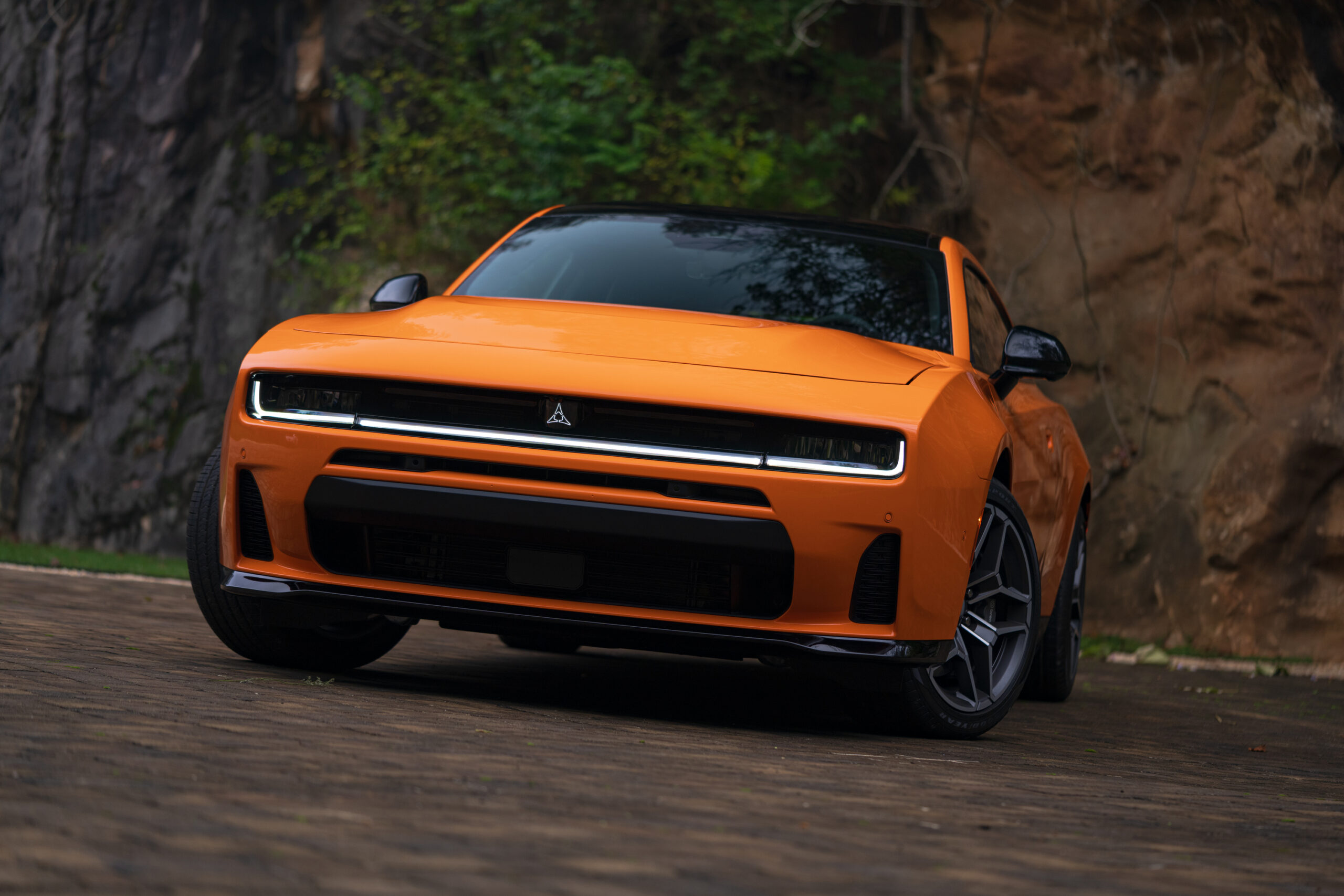
Affected models include the Jeep Wagoneer S and Dodge Charger Daytona.
The issue could hide critical warnings like brake, ESC, and tire pressure alerts.
The shift to more screens in cars was supposed to be the wave of the future. We could customize them, enjoy cute little animations, and pack more info into them than anyone could dream of doing with an analog gauge cluster. Of course, an old-school mechanical cluster can’t disappear for no obvious reason during a drive. Over 20,000 Stellantis vehicles with a digital cluster might have just that happen, so the automaker is issuing a new recall.
According to documents put together by Stellantis and filed with the NHTSA, the issue potentially exists in 100 percent of the 20,271 affected vehicles built from March of 2024 through November 2025. 11,743 are Jeep Wagoneer S EVs, and the other 8,528 are Dodge Charger Daytonas.
Stellantis says it met internally about the issue on March 10, 2026 and worked with its FCA engineering team to understand what was happening through the end of that month and into April. On April 16, it decided to issue the recall but not simply because the gauge cluster was going dark. No, instead, it’s doing this because when the cluster goes dark it can no longer alert the driver to certain information.
Federal Motor Vehicle Safety Standards require that a car can alert a driver to issues with systems like the ABS, TPMS, ESC, and more. When the panel in a Jeep Wagoneer S or Dodge Charger Daytona takes a nap, it can’t tell the driver if there are issues with these key systems. As a result, Stellantis must recall the cars and fix the issue.
Notably, the automaker stopped well short of describing exactly what causes the panel to blank out in the first place. It appears that it’s entirely software-related, as the ‘remedy’ is quoted as “software,” in the filing. Dealers will simply update the cluster software, and that should prevent them from taking a break while the driver is driving.
Chinese EVs are blocked from US sale but dominate American social feeds.
A third of US new-car shoppers now say they would buy a Chinese-built vehicle.
A Beijing platform called DCar is helping US influencers to test these EVs.
Chinese car brands can’t even sell their vehicles in the United States, yet they’re creating loyal fans across the country, largely thanks to targeted campaigns with the help of popular automotive content creators. If these brands ever do get the go-ahead to sell cars locally, established players will need to watch their backs.
If you follow any of these influencers, you’ve probably seen plenty of Chinese cars being tested on American roads, despite not being available here. Forrest Jones, who helped to pioneer short-form car reviews on TikTok, has reviewed a bunch of these over the past couple of years, generating tens of millions of views.
Speaking with Bloomberg, Jones says some of his highest engagement comes from his Chinese car content. Last year, tech YouTuber Marques Brownlee tested the popular Xiaomi SU7 in the US, and that video alone, with 10 million views, reportedly generated $1.2 million in unpaid brand exposure for the company.
The Chinese Are Taking Over
Data from Sprout reveals that, thanks to Brownlee’s video and others, Xiaomi’s TikTok following jumped 20 percent in 2025. Remarkably, roughly half of these 7.8 million followers are from the United States. Videos like Brownlee’s also lead to spikes in inquiries from Americans.
According to China EV Marketplace, a popular e-commerce platform that exports Chinese EVs overseas, it received more than 1,000 price-quote requests from the US after Brownlee released his video, with most seemingly unaware that EVs like the SU7 can’t be legally insured and titled in the US.
A Chinese automotive content platform called Beijing Dongchedi Technology Co., or DCar, is helping give Chinese cars exposure in the US. Spun out of ByteDance, the company behind TikTok, in 2023, DCar has been “courting American influencers to create content for its mobile app and showcase Chinese tech,” Bloomberg writes, with 10 million daily active users in China.
Bloomberg reports that in early 2025, DCar funded a trip to Alaska for YouTubers including Richard Benoit, better known as Rich Rebuilds, presenting him with a catalog of electric models such as the BYD Fangchengbao and Wuling Bingo before shipping the cars stateside. DCar covered Benoit’s travel and paid him a fee equal to “the price of a cheap Chinese EV” for his coverage, he told Bloomberg.
The company told the outlet it purchased or rented all the models itself, with no participation from the carmakers, to maintain “objectivity and veracity.” In return, DCar gets a barrage of slickly produced influencer posts introducing it to a wider audience.
For what it’s worth, Chinese brands like BYD and Xiaomi insist they have no immediate plans to start selling passenger cars in the United States. However, with loopholes potentially opening, you can be assured they’ll be lobbying hard to loosen regulations so they can gain access to the American market.
Kia has built a police version of the electric PV5 for South Korean officers.
A roof-mounted drone launches automatically when the van reaches a scene.
Thermal imaging and a 90x zoom camera handle aerial suspect tracking.
The humble delivery van has come a long way. Kia’s PV5, until recently best known as a versatile electric workhorse, has been seconded into law enforcement. The company has signed on with the Korean National Police Agency to build a high-tech, AI-equipped patrol vehicle that also happens to carry a drone.
Visually, the PV5 already looks the part with its futuristic LEDs and sleek surfacing. For its new role, it wears a police livery with blue and yellow graphics over its black and white bodywork. The biggest party trick, though, is the roof extension housing an integrated drone station.
When the PV5 pulls up to a scene, a section of the roof opens and an automated AI police drone takes flight. It handles aerial patrol in tight alleys and hazardous areas, the sort of places where the van itself, and indeed the officers, cannot or should not go.
The drone carries thermal imaging and a 90x zoom camera, useful kit for tracking suspects or finding missing persons. Once the job is done, it flies back to its dock and recharges using the van’s V2L system. As for the PV5 itself, no changes have been reported to the battery or electric powertrain.
The roof structure also carries three AI-powered cameras providing 360-degree coverage with no blind spots. The software is clever enough to identify suspects by clothing or accessories, working through a crowd in real time and flagging up potential matches.
The AI can also detect specific threats like weapon-carrying individuals or injured citizens who may have fallen on the ground. It even includes crowd density monitoring to alert authorities for potential overcapacity risks in public spaces.
The police-prepped Kia PV5 is scheduled to begin pilot operations in June 2026. It will be part of the Metropolitan Preventive Patrol Unit of the South Korean police force, focused on crime prevention and rapid response.
While this particular AI patrol vehicle is exclusive to Korea, it will be interesting to see whether the PV5 will serve as a base for police conversions in other parts of the world.
Range Rover has introduced the new range-topping SV Ultra.
World-first electrostatic audio system pairs with a haptic floor.
It offers the choice between V8, PHEV, and BEV powertrains.
Few vehicles wear the word flagship as comfortably as a long-wheelbase Range Rover. That, apparently, was not enough for JLR, which has now introduced the Ultra. Positioned as the most technologically advanced and finely finished interpretation of the flagship SUV to date, the SV Ultra brings world-first audio engineering to the cabin, along with exterior and interior treatments reserved for this version alone.
The headline act is the SV Electrostatic Sound system, which aims to recast the cabin as a concert hall with every occupant placed centre stage. It is the most sophisticated audio setup ever fitted to a Range Rover, available as an option on every SV trim, the new Ultra included.
There are 21 lightweight thin-film transducers in total, woven into the headrests, seatbacks, and headlining. Each membrane measures one millimetre thick, responds up to 1,000 times faster than a conventional speaker, and draws 90 percent less power than a traditional setup.
To make sure passengers feel the music as well as hear it, the system pairs with the Body and Soul Seats (BASS) and a Sensory Haptic Floor. Transducers sit inside the seats and beneath the footwell mats, generating AI-tuned pulsations. Beyond entertainment, these can be used for six wellness modes, ranging from “Calm” to “Invigorating”.
Understated Luxury
The SV Ultra is, predictably, built on the long-wheelbase four-seater Range Rover. The body wears an exclusive Titan Silver finish, mixed with aluminium flakes and a process intended to chase a liquid-metal effect.
The new color is combined with Silver Chrome inserts on the front end, and Satin Platinum Atlas accents on the grille, side gills, and tailgate garnish. Finally, the SUV rides on 23-inch alloy wheels with a bi-tone finish matching the exterior.
Inside, the SV Ultra goes leather-free, trimmed instead in Orchid White and Cinder Grey Ultrafabrics. The seats carry a laser-crafted mosaic pattern, with fine perforations that conceal the audio hardware buried within.
Another cool touch is the new rattan palm veneer. Utilizing a patented process that preserves its natural open-pore texture, the veneer is finished with an Orchid White tint and extends from the dashboard to the electrically-deployable club tables in the rear.
Powertrain Options
The SV Ultra offers a choice between traditional V8 power and electrified efficiency. The P540 powertrain utilizes the BMW-sourced twin-turbo 4.4-liter V8 producing 533 hp (397 kW / 540 PS).
The P550e plug-in hybrid delivers a combined 542 hp (405 kW / 550 PS) and offers an EV-only range of 74 miles (119 km) on the WLTP cycle. Finally, a fully-electric Range Rover SV Ultra is confirmed to follow later this year.
Pricing and Availability
The 2027 Range Rover SV Ultra is on sale in selected markets, though access varies. In the UK, it is invitation-only. In Australia, the SUV starts at AU$472,400 (US$337,000) plus on-road costs, making it one of the most expensive Range Rovers ever offered.
The Nissan Primera will return in the form of a large electric sedan.
A listing on the Department of Energy Philippines reveals more details.
The technical specifications confirm it will be a rebadged Nissan N7.
Nearly two decades after the last one rolled off the line, the Nissan Primera looks set for another act. While the company itself has yet to confirm the news, the nameplate has surfaced in a filing with the Philippines’ Department of Energy (DOE), and the document points to a very specific electric sedan.
The DOE paperwork suggests the new Primera will run purely on electrons. It also lays out the dimensions: 4,930 mm (194.1 inches) long, riding on a 2,915 mm (114.8-inch) wheelbase, which is enough to outstretch a Toyota Camry. Those numbers tally with months of speculation that the car would be a rebadged Dongfeng Nissan N7 from China.
According to Top Gear Philippines, working from the DOE-certified specs, the Primera will use a single electric motor good for 215 hp (160 kW / 218 PS) and 305 Nm (225 lb-ft) of torque. Those figures match the entry-level N7 exactly. The 60 kWh battery is calibrated a touch differently and promises 500 km (311 miles) of range.
Judging from the shared footprint, we don’t expect any styling changes compared to the Nissan N7 besides a new Primera script on the tailgate. The interior will most likely be carried over as well, including the 15.6-inch infotainment display on the minimalist dashboard.
Nissan is staying quiet on dates, but the company has already confirmed that the N7 is bound for export markets. The model is produced at the Dongfeng Nissan Huadu plant in Guangzhou, alongside the smaller N6 and the NX8 SUV.
The DOE filing suggests that the Primera’s revival is imminent in the Philippines. It will be interesting to see whether the same name will be used in other export markets, something that makes sense as it is far more recognizable than the N7.
A Short History Lesson
The Nissan Primera debuted in 1990 as a mid-size sedan for Japan and Europe, spanning three generations until its discontinuation in 2007. Available in sedan, liftback, and wagon forms, the model built a motorsport reputation by winning the BTCC championship in 1998 and 1999.
While primarily a Japanese and European affair, the first two generations of the Primera were also sold in North America as the Infiniti G20 until 2002. In later years, the Altima assumed the Primera’s role in certain markets. The nameplate remains a familiar part of Nissan’s history in Europe and Asia, which helps explain the decision to bring it back.
More state and federal approvals are needed for the 3-foot-wide Bridger Pipeline Expansion, which would stretch from the Canadian border with Montana down through eastern Montana and Wyoming, where it would link up with another pipeline.
Perspective of a school bus driver from the back of a bus Photo by Taylor Ekbatani Cover Design by Kimber Horne
The May issue dives into security and connectivity within student transportation departments. Technology meets training and utilization as incidents of violence onboard the school bus require detailed policies to address. Read articles about AI’s role in routing, how modern technology options can modernize transportation communications, maintenance software to assist the garage side of school bus operations and how safety standards are a joint effort between families and transportation personnel.
Hands On
Defining policies for school bus drivers when violence occurs on the school bus is only half the story. Video cameras are showing the full picture.
Features
Route Optimization -With or Without AI-
Transportation directors define what optimization means to their operations by using routing software integrated with various AI features.
Beyond the Garage
Maintenance software helps technicians catch even the smallest of school bus defects that can lead to big out – of- service issues.
Special Reports
The Importance of Uniformity
Education is a key piece of ensuring student safety in the Danger Zone, from educating the public on the rules of the road to educating school bus drivers on proper mirror adjustment to ensure visibility. (And don’t forget the kids.)
Reactive maintenance programs leave K-12 fleets susceptible to breakdowns, compliance gaps and rising costs. This guide gives student transportation directors a framework for shifting from costly “break-fix” repairs to a predictive, data-driven strategy that helps extend bus lifespans, reduce total cost of ownership and make every student journey safer.
Inside, you’ll learn:
Why traditional maintenance falls short: Discover how aging fleets and untracked driver behaviors can create maintenance and compliance risks.
How to progress from reactive to predictive: Understand the three stages of maintenance maturity and how to reach the predictive phase.
What telematics unlocks for your operation: Move past data silos with a solution that brings rich diagnostic data, digital DVIRs, driver behavior monitoring and predictive intelligence together.
Five steps to smarter maintenance: From benchmarking KPIs to automating key maintenance processes, turn your service program into a forward-thinking, data-driven one.
Download this guide if you’re ready to leave the chaos of reactive service behind and create safer, more efficient student journeys.
Fill out the form below and then check your email to access the guide.

 Login
Login