Normal view

There are new articles available, click to refresh the page.
Today — 21 January 2026Vehicles

EV Sales Are Booming Everywhere Except One Place

  • Worldwide EV sales jumped 20 percent to a record 20.7 million.
  • Europe and China boomed while America actually went backward.
  • Loss of incentives left US new-car buyers hitting the pause button.

The global electric car party is still raging, but the US has decided to go home to bed early with a nice soothing cup of gasoline. New data shows worldwide EV sales hit 20.7 million units in 2025, up a healthy 20 percent from 2024.

That total was capped by a strong finish, with roughly 2.1 million EVs sold globally in December alone, underlining that momentum elsewhere remained intact through year-end. Almost everywhere on Earth people bought more electric cars. But in North America it’s a different story.

More: If You Think EV Sales Are Dead, You’re Probably Staring At The Wrong Map

China remained the heavyweight champion with 12.9 million EVs sold, up 17 percent. Europe turned into the surprise star, rocketing ahead by 33 percent to 4.3 million units. Even the rest of the world got in on the action with a massive 48 percent surge to 1.7 million units.

 EV Sales Are Booming Everywhere Except One Place

Much of that growth outside the traditional EV strongholds was fueled by a flood of Chinese-built models, as domestic price competition pushed manufacturers to look overseas.

Then we get to North America, which managed a rather awkward 4 percent decline, Rho Motion reports. And it would have been worse if Mexico’s EV sales hadn’t grown 29 percent thanks to an influx of cheap Chinese cars.

In the US, that annual decline masked a sharp late-year swing, with buyers rushing to lock in incentives before September, followed by a steep pullback once those credits disappeared.

Tax-Credit Carnage

 EV Sales Are Booming Everywhere Except One Place

The removal of federal tax credits at the end of September pulled the rug out from under the US market, and buyers reacted exactly as you might expect, meaning that EV sales for the full year grew by just 1 percent. Sales spiked in August and September as incentives wound down, then collapsed in the final quarter, dropping nearly 50 percent compared with the previous quarter.

But in Canada, which lost its EV incentives much earlier in 2025, full-year sales tanked by 49 percent.

Analysts now predict US EV sales will shrink by almost a third in 2026. No wonder Ford is scrapping its F-150 Lightning in favor of a hybrid and Ram opted not to bring an electric truck to market at all.

Europe Keeps Plugging In

 EV Sales Are Booming Everywhere Except One Place

Across the Atlantic the mood could not be more different. Europe sprinted ahead thanks to stronger subsidies and looming emissions rules. Germany jumped 48 percent and the UK rose 27 percent.

Even France managed to finish the year in positive territory after a slow start. That late recovery in France was driven largely by renewed consumer incentives, after months spent underwater earlier in the year.

Other regions quietly delivered impressive numbers too. Southeast Asia almost doubled sales, South and Central America grew by 49 percent, and South Korea enjoyed a 50 percent rise thanks to new models and government incentives.

 EV Sales Are Booming Everywhere Except One Place

Japan, however, stayed stubbornly loyal to hybrids, proving not every country is ready to go fully electric. EV penetration there remained stuck at around 3 percent for yet another year, despite steady gains elsewhere in the region.

Incentives Are Key

The message from the data is clear. Around the world the EV transition is still accelerating, but America had a taste and decided that, without financial sweeteners, it preferred the old menu. Whether that’s a temporary pause or a long detour will depend on politics, prices, and what carmakers do next.

EV sales by region 2025
RegionSales (millions)Diff. vs 2024
Global20.7+20%
China12.9+17%
Europe4.3+33%
North America1.8-4%
Rest of World1.7+48%
SWIPE

Data: Rho Motion

Lotus Might Slash Eletre’s Price In Half In Canada

  • Lotus could slash Eletre prices in Canada by nearly 50 percent.
  • Eletre currently costs more than a Lamborghini Urus SE in Canada.
  • EV tariff deal lets some Chinese imports face lower 6.1 percent tax.

The Lotus Eletre might soon become a far more accessible proposition in Canada, thanks to a new trade agreement with China that could take a wrecking ball to the electric SUV’s bloated sticker price. What is now priced well into super-luxury territory may soon fall within reach for a much broader group of buyers.

Read: We Drove Lotus’ Electric SUV To See If It Can Silence Its Haters

As in the United States, 100 percent tariffs have pushed the Eletre’s price in Canada into the stratosphere, starting at a jaw-tightening CA$313,500 (about US$226,000 at current exchange rates). That puts it in the same league as a mid-spec Bentley Bentayga and even pricier than the Lamborghini Urus E. In the U.S., things aren’t much better, with a starting price of US$229,000 before delivery.

Tariff Relief

 Lotus Might Slash Eletre’s Price In Half In Canada

With the new policy in effect, the first 49,000 Chinese EVs imported into Canada each year will now face a reduced 6.1 percent tariff. Lotus claims this will cause the Eletre’s price to “fall sharply by about 50 percent.”

However, it’s worth noting that under the terms of the agreement, half of those 49,000 vehicles are required to start below CA$35,000 (US$25,000), which the Eletre most definitely does not.

Lotus announced the change on Chinese social media, although it stopped short of confirming a new starting price for the Eletre. If it does indeed drop by 50 percent, it could start from around CA$156,000 ($112,500), significantly undercutting the Urus and positioning it closer to the Porsche Cayenne GTS, which starts at CA$134,800 ($97,200).

\\\\\\\\\

“Canada has always been an important market with great strategic significance in the global territory of Lotus sports cars,” Lotus Group chief executive Feng Qingfeng wrote in a social media posting. “Users here have a high appreciation for high performance and driving pleasure. We warmly welcome the new tariff optimization policy, which has created a more open and fair market environment for international car brands.”

More: Canada Just Invited China’s Biggest EV Makers To Build Cars On America’s Border

Lotus currently operates six dealerships across Canada and will no doubt be eager to ramp up sales of the Eletre. The flagship model features a pair of electric motors that combine to produce 905 hp, allowing a 0-100 km/h (62 mph) in a blistering 2.95 seconds and reach a 265 km/h (164 mph) top speed. It also has a quoted WLTP range of 280 miles.

A Hybrid Eletre Is in the Works Too

 Lotus Might Slash Eletre’s Price In Half In Canada
The upcoming hybrid Lotus Eletre For-Me

Lotus isn’t stopping with just the all-electric Eletre. A hybrid version is also in the works, offering an alternative path for buyers who aren’t quite ready to go fully electric. Official documents out of China confirm that this variant, called the Eletre For-Me, retains the SUV’s shape and layout but adds a turbocharged four-cylinder engine to the mix.

Read: Lotus Dropped A Gas Engine Into The Eletre SUV

It’s Lotus’s first step back from its earlier pledge to go EV-only, and while the full specs haven’t been disclosed, early reports point to a combined output of 952 hp, slightly more than the current top-spec Eletre R.

We had a chance to review the all-electric Eletre last year and were pleasantly surprised. It’s quick, feels well-built, and has a beautiful interior that suits the category. Will those qualities be enough to convince Canadians to buy it if the price drops by half?

 Lotus Might Slash Eletre’s Price In Half In Canada

Canada Just Invited China’s Biggest EV Makers To Build Cars On America’s Border

  • Canada will cut EV tariffs from 100 percent to just 6.1 percent.
  • New trade deal caps Chinese EV imports to 49,000 per year.
  • Ford warns deal risks job losses and US market retaliation.

Canadian Prime Minister Mark Carney says several Chinese carmakers are showing interest in building affordable electric vehicles on Canadian soil, just days after the country signed a new trade agreement with the world’s largest EV manufacturing nation.

Read: Canada Just Let Cheap Chinese EVs Back In

Carney met with Chinese President Xi Jinping in Beijing late last week, where the two leaders finalized a deal that will sharply cut tariffs on Chinese EVs entering Canada, dropping them from 100 percent to 6.1 percent. As part of the agreement, a cap will initially limit imports to 49,000 vehicles per year, with half of those required to start below CA$35,000 (roughly $25,000 USD).

Framing the cap as a measured opening rather than a floodgate, Carney pointed out that 49,000 vehicles matches the number of Chinese-made EVs imported into Canada in 2023.

A Cautious Green Light

 Canada Just Invited China’s Biggest EV Makers To Build Cars On America’s Border

“We’ve had direct conversations directly from the Chinese companies…and collectively are the world’s leaders in this space, with explicit interest and intention to partner with Canadian companies,” Carney said.

He described the deal as a phased rollout designed to encourage collaboration between Chinese automakers and local firms. “This is an opportunity for Ontario. It’s an opportunity for Ontario workers, an opportunity for Canada, done in a controlled way with a modest start,” he added.

Any Chinese car manufacturer that intends to build EVs in Canada will need to meet the nation’s labor standards, Carney said, and reiterated that he wants to see Canada remain competitive in the auto market well into the future.

“We don’t want to be competitive in the market of 2000, 2010,” he said. “We want to become competitive in the market in the future.”

A Small Slice of the Market. For Now

 Canada Just Invited China’s Biggest EV Makers To Build Cars On America’s Border

To address concerns about disruption, Carney pointed out that the import cap amounts to less than three percent of Canada’s annual new car sales, which hover around 1.8 million vehicles. He called the agreement a “modest” first step, noting that a review is built into the deal after three years to gauge market impact.

Perhaps surprisingly, US President Donald Trump said the trade deal was a good one, despite US Trade Representative Jamieson Greer deriding it as “problematic for Canada.” According to Trump, “Well, it’s okay. That’s what he [Carney] should be doing. If you can get a deal with China, you should do that.”

Premier Hits Out

Not everyone is a fan of seeing Canada reduce tariffs on Chinese EVs. Ontario Premier Doug Ford has criticized the deal, claiming it will hurt the local economy.

“By lowering tariffs on Chinese electric vehicles, this lopsided deal risks closing the door on Canadian automakers to the American market, our largest export destination, which would hurt our economy and lead to job losses,” he said, according to CP24.

Unifor National President Lana Payne also voiced concern. “Providing a foothold to cheap Chinese EVs, backed by massive state subsidies [and] overproduction…puts Canadian auto jobs at risk while rewarding labour violations and unfair trade practices,” she said.

 Canada Just Invited China’s Biggest EV Makers To Build Cars On America’s Border

Redesigned 2027 Kia Niro Desperately Wants To Be An EV3

  • Kia has revealed the facelifted Niro in South Korea.
  • Crossover gets wishbone-shaped DRLs like Kia’s EVs.
  • Re-profiled trunk lid loses license plate to the bumper.

After bombarding us with EV news earlier this month, including the reveal of the new EV2 and several GT performance models, Kia is showing us that it hasn’t forgotten about its combustion and hybrid models. It’s dropped three images of a compact 2027 Niro crossover fresh from a mid-life makeover.

Related: Kia Might Offer A Manual K4 Hatch In America, But The Wagon’s Another Story

But there’s still an EV connection to this news, and not just because Kia still sells the Niro with an optional pure electric powertrain. Kia’s designers clearly had the automaker’s sharper-suited electric SUVs in mind when they picked up the scalpel for the Niro update. The front end of the updated Niro borrows heavily from models like the EV2, 3, 5 and 9.

 Redesigned 2027 Kia Niro Desperately Wants To Be An EV3

The new nose is squarer and more upright, and it adopts the wishbone-shaped DRLs of its electric brothers. Kia has even managed to draw attention away from the air intakes the combustion car’s radiator needs by giving the Niro an EV-style body-color band between the headlights.

\\\\\\\

There are no major changes to the central body structure and doors, but  the designers have definitely been busy at the rear end. The Niro doesn’t take on the EV models’ Y-shaped taillights, but it does get an entirely new hatch that looks far cleaner and more modern.

Review: Before You Buy A Small SUV, Look At Kia’s 2026 K4 Turbo Hatch First

It’s similar to the one on the ICE-powered Sportage SUV, and that means the license plate has been moved down to the rear bumper. We can also see a new black panel that echoes the boomerang shape of the rear lights, and the whole shebang rides on new 18-inch wheels, Kia says.

Screen Refresh

 Redesigned 2027 Kia Niro Desperately Wants To Be An EV3

The updates aren’t restricted to the Niro’s exterior. Inside, it gets a redesigned upper half of the dash featuring same conjoined, twin-12.3-inch digital displays you’ll find on the numbered EV models and also the latest Sportage, plus a new-look two-spoke steering wheel.

Hybrid or EV?

Kia revealed the Niro’s new look in Korea, adding that we’ll find out more about the MY27 crossover in March. So we might have to wait until then to learn whether there are any changes to the drivetrain.

The current Niro comes with a choice of 139 hp (141 PS) 1.6-liter hybrid and 180 hp (183 PS) 1.6 plug-in hybrid petrol engines, though it’s also available in some markets as a 201 hp (204 PS / 150 kW) EV with a 253-mile (407 km) EPA range.

A Kia official said, “The New Niro, which has maintained its heritage as the first eco-friendly SUV, will provide high customer satisfaction with excellent usability based on practical value as well as a high-quality design that reflects the latest trends.”

 Redesigned 2027 Kia Niro Desperately Wants To Be An EV3
Kia

Mitsubishi’s New 400HP Compact Comes From The Same Factory As Your iPhone

  • Mitsubishi’s next EV is based on the Foxtron Bria hatch.
  • Dual-motor flagship model is rated at 400 horsepower.
  • Testing of the new model is already underway in Australia.

If there were an award for the automaker with the least inspiring lineup, Mitsubishi might have a strong claim to it. But change is on the horizon. The Japanese brand is set to add some spark to its range with a new all-electric model, even if, as has become something of a pattern lately, the vehicle won’t be one of its own creations.

Read: Foxconn’s Pininfarina-Designed Model B Could Steal Tesla’s Thunder In The Small Segment

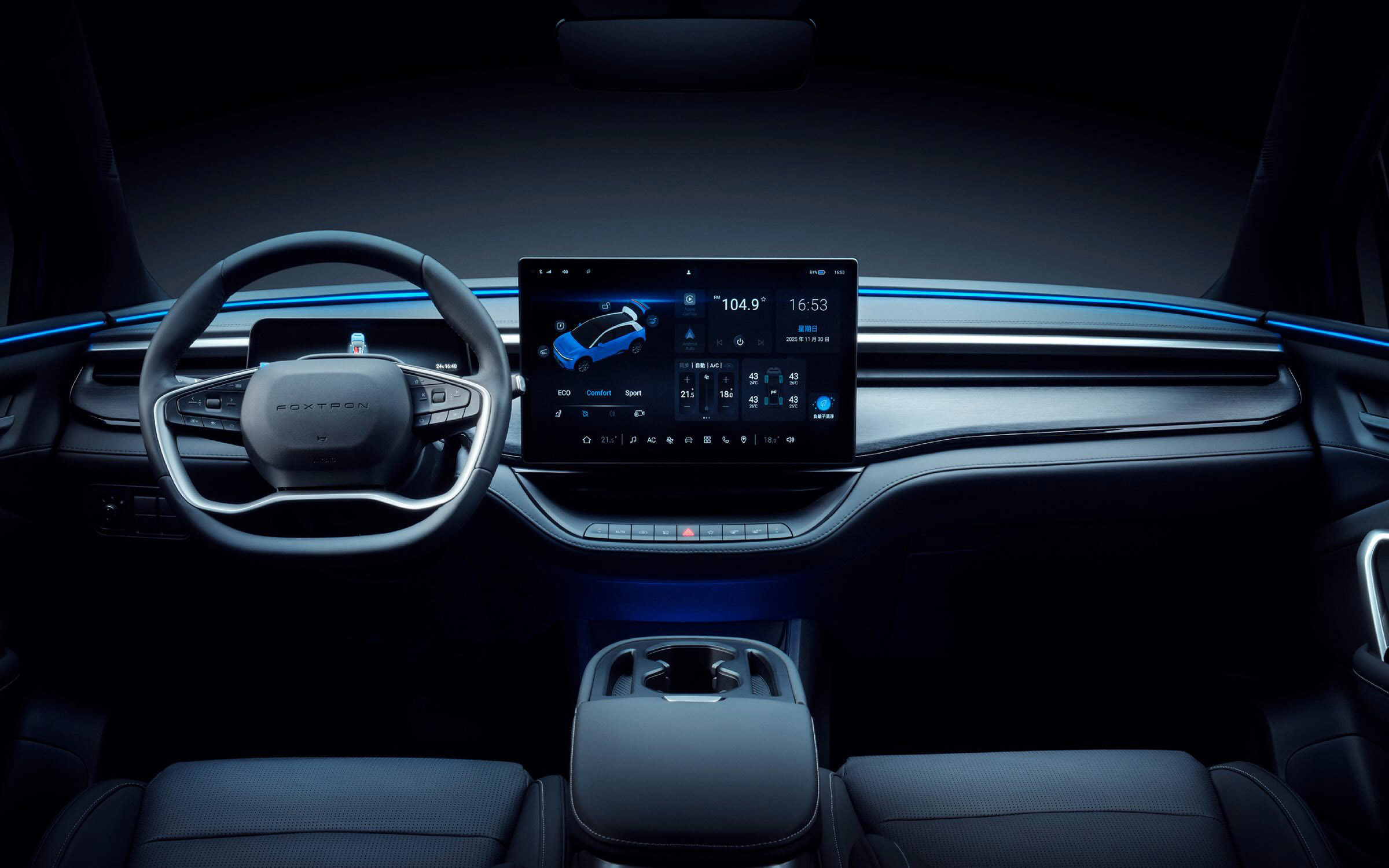
As covered previously, Mitsubishi has teamed up with Taiwanese contract manufacturer Foxconn, best known for assembling the iPhone. Together, they’ll introduce an electric hatchback based on Foxtron’s newly unveiled Bria designed by famed Italian studio Pininfarina.

That car, based on the striking Model B Concept, made its production debut in Taiwan and could bring a welcome dose of personality to Mitsubishi’s offerings.

Powering the Bria is a 57.5 kWh lithium-iron phosphate battery pack, and so far, three variants have been confirmed. Both the Elegant and Emerge models use a single 229 hp electric motor at the rear, allowing them to hit 100 km/h (62 mph) in 6.8 seconds.

For those wanting more punch, there’s the dual-motor Pioneer model. With all-wheel drive and a combined 400 hp, it cuts the sprint to 100 km/h down to just 3.9 seconds.

 Mitsubishi’s New 400HP Compact Comes From The Same Factory As Your iPhone

It’s unclear if the Mitsubishi version will retain the same specifications, but we suspect it will. A few months ago, I spotted a prototype of the Model B being tested in Melbourne, Australia, albeit without any Foxtron branding.

This is because the two companies are eyeing Australia as one of the car’s most important markets, and are believed to be fine-tuning the suspension for local road conditions.

The name of the Mitsubishi-branded EV hasn’t been confirmed, but recent trademark filings suggest a direction. According to Drive, the carmaker has secured rights in Australia for the names ‘ASX GT-e’ and ‘ASX VR-e’.

Golf Size

 Mitsubishi’s New 400HP Compact Comes From The Same Factory As Your iPhone

Dimensionally, the Bria measures 4,315 mm (169.8 inches) long, 1,885 mm (74.2 inches) wide, and 1,535 mm (60.4 inches) tall. That makes it slightly longer and wider than a Volkswagen Golf, and comparable in scale to the electric MG 4.

Considering this is Foxconn’s first production EV, the Bria makes a strong visual impression. It bears no resemblance to anything in Mitsubishi’s current stable, but that’s unlikely to be an issue. Mitsubishi has a long history with rebadged models, so it’d probably be happy to sell the Bria as is.

\\\\\\\\\\\

Trump administration claims offshore wind poses a threat. But it won't say how.

21 January 2026 at 10:00
Wind turbines are seen off the coast of Rhode Island. The Trump administration has tried to stop construction of five offshore wind projects that are being built along the East Coast.

The Interior Department said pausing construction of offshore wind farms would allow the government agencies to work with project developers to mitigate potential risks. But wind companies say the administration isn't sharing information about newly-discovered threats.

(Image credit: Michael Dwyer/AP)

(STN Podcast E290) Ideas, People & Solutions: Three-Pronged Approach to ‘Danger Zone’ Safety

20 January 2026 at 21:12

Ryan and Taylor discuss upcoming student transportation awards, the NTSB investigation of a fatal school bus dragging, and a Florida bus aide arrested for child abuse.

“Education, engineering and enforcement.” Student safety is a passion of Derek Graham, an industry consultant and former state director of pupil transportation with the North Carolina Department of Public Instruction as well as past president of the National Association of State Directors of Pupil Transportation Services (NASDPTS). He joins us to discuss NASDPTS’ annual illegal passing survey and additional safety efforts which he will present about at STN EXPO East this March in Charlotte-Concord, North Carolina.

Read more about safety.

This episode is brought to you by Transfinder.


Stream, subscribe and download the School Transportation Nation podcast on Apple Podcasts, Deezer, Google Podcasts, iHeartRadioSpotify, Stitcher and YouTube.

The post (STN Podcast E290) Ideas, People & Solutions: Three-Pronged Approach to ‘Danger Zone’ Safety appeared first on School Transportation News.

New York School Bus Driver Dies After Medical Emergency

20 January 2026 at 19:55

A school bus driver in Oneida County died Jan. 5 after suffering a medical emergency and crashing into a snowbank, reported Syracuse News.

The crash was reported around 12:25 p.m. at the intersection of state routes 31 and 365 in the town of Verona, police said. Troopers confirmed that no students were on the school bus at the time of the incident.

State police spokesperson Trooper Jennifer Jiron said the bus driver was traveling west on Route 31 when he experienced a medical emergency and collapsed. The bus then left the roadway and came to rest on a snowbank.

Two other adults, a second bus driver and a school bus aide, were also on board. Neither was reportedly injured. Police said the two attempted to stop the bus, called 911 and began CPR on the driver.

The driver was transported to Oneida Health Hospital, where they were pronounced dead. The driver’s identity has not yet been released. First Student reportedly owns the school bus and was operating under contract with the Rome City School District.

Authorities reported no damage to the bus. The incident remains under investigation.


Related: Oklahoma Student Hailed Hero After Helping Bus Driver During Medical Emergency
Related: Brother and Sister Help Save School Bus Driver During Medical Emergency in Ohio
Related: Massachusetts School Bus Driver Crashes into Trees Due to Medical Emergency
Related: Maine School Bus Driver Dies After Suffering Medical Emergency

The post New York School Bus Driver Dies After Medical Emergency appeared first on School Transportation News.

Waymo Driverless Vehicles Continue to Illegally Pass School Buses

20 January 2026 at 19:50

Despite multiple attempts to correct the situation, Waymo’s autonomous vehicles are still illegally passing Austin Independent School District school buses in Texas.

“Even after the November software update and December software recall Waymo says they conducted,” Austin ISD said in a statement Jan. 14. The school district added the most another violation just occurred two days earlier.

Austin ISD now confirms Waymo vehicles committed a total of 24 violations, as of the middle of January.

“Austin ISD again asks that Waymo cease operations in the mornings and afternoons during school days when our students are using our school buses,” a statement by the district reads. “Austin ISD continues to explore any and all legal recourse available.”

Despite the most recent update last week, Austin ISD officials have been navigating this situation for months.

The National Highway Traffic Safety Administration also opened a preliminary evaluation Oct. 17, after a Waymo vehicle failed to stop and passed a school bus in Atlanta, Georgia in September. School Transportation News reached out to Atlanta Public Schools regarding the violations but had yet to hear back at this writing.

Back in Texas, Austin ISD installed BusPatrol camera systems in 2024 on all 519 of the district’s general and special education buses. Citations for illegal passing incidents began soon after that. Prior to the BusPatrol partnership, the district saw 10,000 to 12,000 violations a year, said Kris Hafezizadeh, the executive director of transportation and vehicle services. Now, the school district sees a little over 7,000 passes. He cited a decrease in repeat offenders.

Among those violators is Waymo. Hafezizadeh said the autonomous vehicles treat the school bus like a stop sign, some not even stopping before approaching the school bus.

Waymo reported to Austin ISD as of Nov. 5 that software updates were in place to resolve the issue. Hafezizadeh said. However, a Nov. 20 memo to Waymo by Austin ISD general counsel states that five violations occurred after Waymo’s Nov. 5 letter.

“Put simply, Waymo’s software updates are clearly not working as intended nor as quickly as required. We cannot allow Waymo to continue endangering our students while it attempts to implement a fix,” the memo states. “Accordingly, Austin ISD demands that Waymo immediately cease operation of its automated vehicles during the hours of 5:20 a.m. – 9:30 a.m. and 3:00 p.m. – 7:00 p.m., until more in-depth software updates are completed and Waymo can guarantee its vehicles will comply with the law.”

Hafezizadeh said Waymo “disagreed.” In early December, Hafezizadeh offered his school buses and parking lot to further test the software in Waymo vehicles. He noted that Waymo brought two of its cars and he provided seven school buses of different OEMs to conduct tests. He added that his staff complied with any request made by Waymo officials during the four-hour test period.

“The unfortunate part is, after that, they had another two or three violations,” he said.

Waymo did not respond to requests for comment at this writing.


Related: NHTSA Investigates Autonomous Waymo Rides After Illegal School Bus Passing
Related: Waymo Driverless Car Illegally Passes Stopped School Bus in Atlanta
Related: Federal Bill Aims to Increase Awareness of Illegal School Bus Passing

The post Waymo Driverless Vehicles Continue to Illegally Pass School Buses appeared first on School Transportation News.

Zenobē and EBT partner on electric school bus fleet serving Long Island’s Copiague Public Schools

By: STN
20 January 2026 at 18:31

NEW YORK, N.Y. Zenobē, a global leader in fleet electrification, has partnered with Educational Bus Transportation, Inc. (EBT), a school transportation provider in New York’s Nassau and Suffolk Counties, on a fleet electrification project serving Long Island’s Copiague Public Schools.

The project encompasses an initial phase of 10 electric school buses and associated charging infrastructure. The 10 electric school buses will be placed into service and provide clean zero-emission transportation for the district’s 4,500 kindergarten through 12th grade students. It is supported by the New York School Bus Incentive Program, administered by the New York State Energy Research and Development Authority (NYSERDA). Zenobēprovided additional funding.

Zenobē will develop and manage the charging infrastructure at the site, which will include a scalable design that allows EBT, and its managing company The Trans Group, to continue expanding the electric fleet. The Trans Group companies currently own and operate over 1,400 buses across the pupil transportation and transit sectors.

“As a long-time provider of transportation services to Long Islanders, we’re excited to continue the process of bringing clean school buses to our students and drivers,” said Tim Flood, Executive Vice President, The Trans Group. “The combination of NYSERDA funding and Zenobē’s experience and knowledge are vital to keep our successful transition to clean rides for our students on track.”

“We look forward to supporting EBT and The Trans Group and being a part of New York State’s ambition to progress toward cleaner and healthier student transportation options,” said Maggie Clancy, Executive Vice President for Zenobē. “We see our role as providing more than just technical services and support. We’re delivering confidence and peace-of-mind through battery performance guarantees, cost-efficient charge management services, and partnership to make this fleet both operationally reliable and financially sustainable.”

As part of the turnkey fleet electrification services provided to EBT, Zenobē will manage the fleet’s batteries and charging infrastructure and guarantee performance, ensuring that EBT’s buses are at-the-ready for their required routes and the important job of transporting students safely to school. To futureproof the depot, EBT and Zenobē are working closely with the local power provider to coordinate power availability to serve the fleet as it expands.

NYSERDA Director of Clean Transportation Adam Ruder said, “NYSERDA is proud to support Educational Bus Transportation and its partner Zenobē to bring electric school buses to Long Island’s Copiague Public Schools. Together we are ensuring that students and the communities they live in benefit from clean vehicles that reduce pollution and improve air quality.”

“This project shows how private capital and public funding can work together to accelerate transport decarbonization,” said Shreya Malik, Managing Director at KKR, an investor in Zenobē. “Zenobē’s strategic partnership with EBT demonstrates how proven fleet electrification platforms can help operators meet state mandates while delivering affordable, cleaner and more sustainable transportation for local communities. We’re proud to support Zenobē as it scales its solutions across North America.”

Programs such as the New York School Bus Incentive Program, funded by New York’s Clean Water, Clean Air and Green Jobs Environmental Bond Act, when paired with technology solutions from the private sector and other resources like Zenobē’s private capital and expertise, are putting more electric school buses on New York State’s roadways.

About Zenobē Energy Ltd. (Zenobē):
Zenobē is a global EV fleet and grid-scale battery storage specialist. The company began operations in 2017 and now employs >380 FTEs with a wide range of leading skills including electrical engineering, software development, computer sciences and financing. Zenobēsupports over 3,400 electric vehicles across 122 depots globally and is the largest owner and operator of EV buses in the U.K., Australia and New Zealand. Zenobē is also the leading owner and operator of grid-scale batteries on the Great Britain transmission network with >1GW of battery storage assets in operation or under construction. Zenobē’s North American headquarters are in Chicago with a subsidiary office in New York and it is actively hiring in Canada and the U.S. For more information visit Zenobe.com or LinkedIn.

About EBT and The Trans Group:
EBT (Educational Bus Transportation, Inc.) provides public school transportation for school districts in Nassau County and western Suffolk County, NY, including Copiague, Massapequa, Amityville, Seaford, Wantagh, Farmingdale, South Huntington, Half Hollow Hills, Bethpage, Hicksville and Western Suffolk BOCES. It is a managed entity of The Trans Group which provides transportation to hundreds of thousands of passengers annually in lower New York State and Long Island. With more than 1,300 vehicles and over 2000 employees, The Trans Group is actively involved in the school bus industry on the state and federal level. For more information visit: thetransgroup.com.

The post Zenobē and EBT partner on electric school bus fleet serving Long Island’s Copiague Public Schools appeared first on School Transportation News.

Yesterday — 20 January 2026Vehicles

Mercedes Thinks A $10K Discount Will Get $165K Electric SUVs Moving

  • Mercedes G580 electric G-Class now has a $10,000 incentive bonus.
  • Previous lease-only bonus now expanded to all G580 transactions.
  • Quad-motor electric G starts at $164,550 including destination.

Mercedes-Benz’s decision to offer an all-electric version of the G-Class hasn’t come without controversy. After all, one of the most iconic and traditionally rugged off-roaders can now glide along in complete silence.

Still, fresh off a strong 2025 for the G-Wagen lineup in America, Mercedes is moving ahead with its electrification strategy, now aiming to boost interest in the G580 with EQ Technology.

Read: Mercedes’ Electric G Flops So Hard It Could Change What Comes Next

The electric G-Class is currently offered with a $10,000 Incentive Bonus, now available whether you lease or buy the vehicle outright. Previously, this discount was capped at $5,000 and applied only to lease agreements, according to Cars Direct.

 Mercedes Thinks A $10K Discount Will Get $165K Electric SUVs Moving

Whether that’s enough to sway potential buyers is another matter entirely.

The G580 starts at $164,550 including destination. However, as is often the case, finding one at base MSRP is nearly impossible. A quick search on Cars.com turned up 224 listings, with only a single example priced at MSRP. Most hovered between $180,000 and $190,000.

Even so, at base price, a $10,000 discount, while not insignificant, doesn’t sound like it will do much to tip the scales. It amounts to roughly 6 percent off, and for typical G-Class buyers, that might equate to a minor financial blip, not a reason to commit.

Sales Flop

\\\\\\\\

Mercedes recently confirmed it delivered 49,700 G-Class vehicles globally last year, a 23 percent jump over the previous year and a new high-water mark for the model. What it didn’t share is how many of those were the electric G580 and how many still carried internal combustion.

However, reports from early last year described the G580 as a sales “flop,” noting that just 1,450 examples had been sold in Europe as of April 2025, and only 58 in China. It was also claimed that Mercedes had failed to sell a single example in the US, though that was never officially confirmed.

\\\\\\\\\\\

When Porsche’s New EV Concept Gets Dirty, It Needs A Deckhand, Not A Detailer

  • One-off Macan Turbo Concept Lago debuts at German boat show.
  • Cabin features wood floor mats and marine-style fabric seats.
  • New 790 Spectre uses a Macan EV powertrain and makes 536 hp.

Porsche and boats have been flirting for a while. The German sports car brand already helped create a rapid electric speedboat with Austrian builder Frauscher. Now the partnership is back with a smaller boat called the 790 Spectre and a one-off, marine-inspired Macan concept to keep it company.

No, the Macan Turbo Concept Lago can’t jump from the road to water like a Gibbs Aquada or Amphicar 770. But it borrows some neat nautical design and trim ideas in the same way that the Frauscher’s boats have cribbed the Macan’s motors and battery pack. And it has some of the most stylish floor mats we’ve ever seen.

Related: Alfa’s Yacht-Winged Giulia Quadrifoglio Special Is Fast, Wild, And Already Sold Out

Porsche raided its Exclusive Manufaktur personalisation catalog and roped in experts from its Sonderwunsch “special wish” department to give the concept a distinctly salty vibe.

Darkteal Metallic paint, which originates from Porsche’s Paint to Sample programme, covers the outside while neat graphics tie the car to the matching boat. Even the keys wear the same color.

Swab the Floor Mats, Matey

\\\\\\\\\\

Open the doors and the nautical theme gets stronger. Real wood inspired by boat decks lines the front and rear luggage compartments and the floor mats look ready for bare feet.

A compass replaces the usual dashboard stopwatch and the seat centers use marine grade fabric trimmed with Crayon leather. Green contrast stitching finishes the look and proves Porsche’s trim specialists can customise almost anything.

Frauscher 790 Spectre

\\\\\

The Concept Lago is just a one-off, unlike the new Frauscher 790 Spectre it’s designed to promote. Engineers built the 7,970 mm (313.8 inches) sports boat around the same 100 kWh battery and dual electric motor setup used in the Macan Turbo, though Porsche quotes 630 hp (639 PS / 470 kW) for the SUV and 536 hp (544 PS / 400 kW) for its sea-going counterpart.

The hull is new and lighter than before and the cockpit borrows plenty of Porsche style touches, including the steering wheel and elements of the seat design. Buyers can personalise the boat with special paint and materials to mirror their car.

Orders for the 790 Spectre are open now, but the price is going to make a $112,700 Macan Turbo Electric look downright affordable. While neither Porsche or Frauscher has indicated an exact sticker, the fact that the earlier 850 Fantom Air cost around $600k tells us this one is for wealthy Porsche and boat lovers only.

\\\\\\\\\

Porsche

Mazda’s New EV May Not Arrive Until 2029 After Quiet Delay

  • Mazda has reportedly delayed their EVs developed in-house.
  • Instead of arriving in 2027, they could be pushed back to 2029.
  • The company will reportedly focus on hybrids in the meantime.

It appears you can add Mazda to the growing list of automakers that have delayed electric vehicles in the wake of lower than expected demand. According to reports out of Japan, the company’s first dedicated EV has been pushed back until at least 2029.

Details are still murky, but Autonews cites Nikkei and Nikkan Jidosha as saying that production has been delayed by at least two years. Instead, the company will reportedly turn its attention to more popular hybrids.

More: Mazda’s New EV Caught Testing In America

While a spokesperson said Mazda hasn’t officially announced anything, they didn’t exactly deny the reports either. Quite the opposite, as in a statement to Autonews, they said, “We continue to advance the technological development of our proprietary BEVs based on our multi-solution strategy, and will determine the timing of their introduction while carefully assessing regulatory trends in each country and changes in customer needs.”

This suggests launch plans are still up in the air and could slip beyond 2027.

Test Mule Raises Questions

\\\\\\\\

Baldauf

This is an interesting development as spy photographers snapped a mule undergoing testing in California late last year. The model wore a heavily modified CX-70 or CX-90 body and featured a fully enclosed grille as well as blocked off air curtains. The vehicle was said to be roughly the same size as the CX-50, but narrower than the body suggested.

Little is known about the EV at this point, but it’s slated to ride on the Skyactiv EV Scalable Architecture. The platform was originally announced in 2021 and was supposed to be introduced last year.

That obviously didn’t happen and it appears plans to introduce several vehicles on the architecture between 2025 and 2030 are also in jeopardy. These were set to include “various vehicle sizes and body types.”

 Mazda’s New EV May Not Arrive Until 2029 After Quiet Delay

However, the situation has changed significantly in the past few years. In the United States alone, the Trump administration has enacted steep new tariffs and eliminated the clean vehicle tax credit. The latter has caused a significant drop in EV sales and a rethink by many automakers.

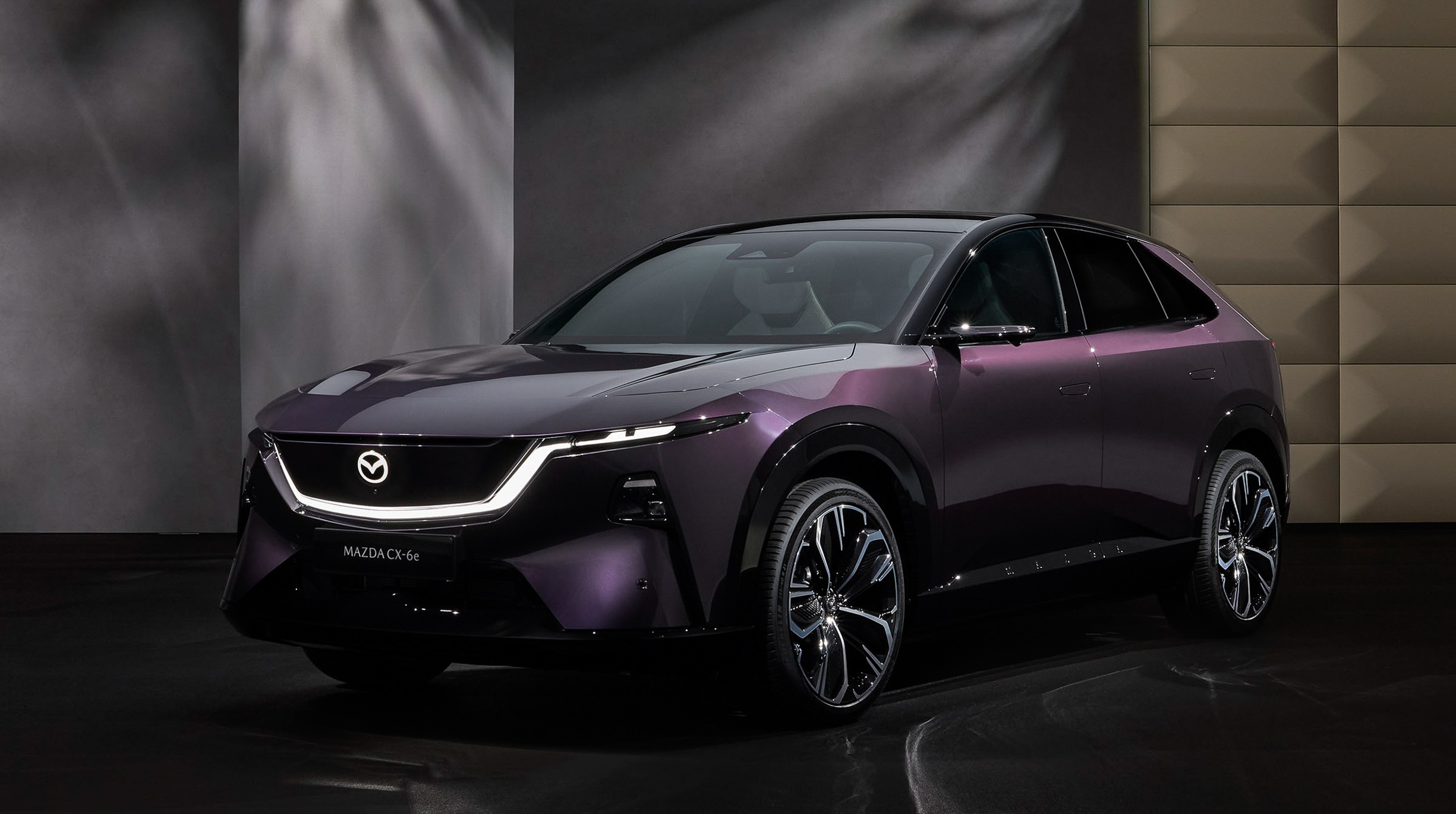
Nevertheless, Mazda isn’t giving up on electric vehicles as the company recently introduced the CX-6e in Europe. It’s a Chinese collaboration with joint-venture partner Changan, and the model has a lot in common with the Deepal S07.

 Mazda’s New EV May Not Arrive Until 2029 After Quiet Delay

Lucid Owner Gets A $50,000 Lesson On Depreciation

  • Lucid Air Grand Touring originally retailed for $124,950 new.
  • Seller drove 6,500 miles before listing it online this month.
  • Buyer avoided steep depreciation, gaining a flagship EV deal.

While Lucid has carved out a niche in the premium EV market with impressive engineering and design, even the most advanced models aren’t immune to real-world ownership realities. Software hiccups aside, the Lucid Air remains a strong contender, but like many luxury electric vehicles, it faces steep depreciation, a fact this particular seller encountered firsthand.

Read: Spilled Water Bricks Lucid, Repair Costs As Much As A Used Corolla

This 2025 Air, finished in Fathom Blue Metallic, is the Grand Touring variant. It sits near the top of Lucid’s lineup, just below the range-topping Air Sapphire, which plays in near-hypercar territory when it comes to straight-line performance.

A look at the window sticker shows a base price of $110,900 before destination charges. This example came well-optioned, including the $5,500 Tahoe extended leather package, Lucid’s $2,500 DreamDrive Pro driver assistance system, and $3,750 power front seats equipped with massage and ventilation.

What’s The Price Of Premium?

 Lucid Owner Gets A $50,000 Lesson On Depreciation

With these extras and a $1,500 delivery fee, the total MSRP climbed to $124,950 before taxes. The seller acquired the car less than a year ago, making the next part of the story particularly painful.

According to the Cars & Bids listing, the original owner bought it in February of last year and drove it just 6,500 miles (10,500 km) before putting it up for sale a few days ago. Despite being in near-new condition, it sold for only $75,500. That’s a brutal financial loss of $49,450. And that’s before taxes and other expenses like registration fees. It’s a sharp reminder of how rapidly luxury EVs can shed value.

\\\\\\\\\\\\\\\\

Cars & Bids

The good news, if you’re the buyer, is that much of that initial depreciation has likely already happened. Although the car will continue to lose value over time, as most do, the worst of the drop may be behind it. Some 2022 Air Grand Touring models are now changing hands for prices in the mid-$50,000 range, so this one may continue along that curve.

Read: Popular YouTuber Got Critical With Lucid, And Things Didn’t End With A Shrug

Still, for a long-term owner, there’s reason to feel good about the purchase. They’ve essentially sidestepped nearly $50,000 in immediate depreciation, while gaining access to one of the most refined and tech-laden luxury sedans available.

The Air Sapphire has attracted most of the buzz over the past couple of years, but the Grand Touring remains extraordinarily impressive. It has a pair of electric motors with a combined 819 hp, allowing it to hit 60 mph (96 km/h) in around 3 seconds. In addition, it has an exceptional driving range of 512 miles (824 km), among the highest of any current EV in the market.

\\\\\\\\\\\\\

Cars & Bids

Most Western Carmakers Could Be Pushed Out Of China By 2030

  • Foreign brands are losing ground to China’s EV tech dominance.
  • EV adoption in China rose, despite slower overall car sales.
  • Toyota, VW, and GM are restructuring their China operations

The hugely important Chinese car market is continuing to prove challenging for foreign automakers. Chinese manufacturers are maintaining their dominance on the home front, as the world’s largest car market continues to move towards electric and plug-in hybrid vehicles.

Domestic demand for these so-called New Energy Vehicles rose by 18 percent in 2025. This contrasts with the situation in Europe and the US, where the slowdown in EV adoption steals the headlines.

Tech Wars

One reason why imported cars are falling out of favor is the ability of local carmakers to adapt and update to changing technologies on the ground at a much faster pace. As brands such as BYD, Geely, and Changan continue to battle each other on tech features, they’re leaving Western manufacturers in the dust.

Read: EV Makers Just Got A New Problem In China, And It Starts In 2026

The ability for Chinese automakers to not only develop and implement new tech, but also integrate seamlessly with other existing Chinese tech (such as the WeChat and AliPay “super apps”) is something that consumers value highly.

 Most Western Carmakers Could Be Pushed Out Of China By 2030

According to Xiao Feng, speaking to the Wall Street Journal, this could mean that foreign car makers could mostly be pushed out of the Chinese car market by 2030. Save for some big players, such as Tesla, Toyota, and VW, it’ll be hard for imports to compete on both features and EV tech.

Passenger Car Slowdown

Although the adoption of EVs and plug-in hybrids is moving forward rapidly, last year China’s passenger car market grew at its slowest pace in three years, scoring a 4 percent increase and a total of 23.7 million vehicles.

Meanwhile, EV sales have been bolstered by local subsidies, with 2025 incentives being up to $2,900 when consumers traded in their old car for an EV or plug-in hybrid. Some 11.5 million car sales were made through the trade-in incentive, although in December, new car sales reportedly fell by 14%, due to some localities “running out” of their budgets for the incentives.

See Also: BMW And Porsche Just Lost China’s Luxury Market To A $100,000 Newcomer

 Most Western Carmakers Could Be Pushed Out Of China By 2030

It’s reported that Beijing will be looking at curtailing subsidies in 2026. Meanwhile, fierce local competition continues to affect both local and foreign brands, with many competitors seemingly locked into a price war.

One study, conducted by the China Automobile Dealers Association, claims that only 30 percent of dealers remained profitable in the first half of 2025, with 75 percent of those surveyed admitting they sold at least a few cars below cost.

Foreign Car Makers Restructure

Last year saw the departure of Mitsubishi from the Chinese market, as the company opted to end all manufacturing and sales, while JLR also underwent a significant scaleback in its product offerings. VW stopped making cars at its Nanjing plant.

Even Tesla, arguably the strongest non-local player, saw sales drop by around 5 percent while it lost the world’s best-selling EV tag to BYD.

However, with China being the largest market, many others are choosing to restructure rather than abandon ship completely. Toyota is building a new Lexus EV plant in Shanghai, VW is ready to launch a whole range of China-specific models, and GM will offer all its products with either an EV or a plug-in hybrid option.

 Most Western Carmakers Could Be Pushed Out Of China By 2030

Germany Reboots EV Subsidies, And This Time Chinese Brands Are In

  • Incentives range from €1,500 to €6,000 per eligible household.
  • Buyers earning under €45,000 may benefit from the new program.
  • Chinese brands are included in the subsidy with no import ban.

Not long ago, Germany made a sharp U-turn on electric vehicle incentives, pulling the plug on subsidies just as local automakers were counting on them to shore up faltering demand. Unsurprisingly, sales tanked. Now, the government is reversing course once again, preparing to reinstate a new subsidy program aimed at reviving interest in EVs.

Read: Mercedes Keeps Its Most Affordable Model Alive, But It Won’t Be German Soon

The upcoming scheme will offer buyers between €1,500 ($1,742) and €6,000 ($7,000) in incentives, depending on the vehicle, household income, and family size. The total budget stands at €3 billion ($3.48 billion), enough to support around 800,000 vehicles under the plan.

No Barriers for Foreign EVs

 Germany Reboots EV Subsidies, And This Time Chinese Brands Are In

Unlike some neighboring countries, Germany’s EV subsidy will be open to all manufacturers, including Chinese brands. According to Bloomberg, the government has confirmed it will not impose origin-based restrictions, with Environment Minister Carsten Schneider saying there’s no evidence of a flood of Chinese imports and that local brands are strong enough to compete.

Germany’s subsidies will be offered through 2029, and applications can be submitted retroactively to January 1, 2026. An online portal is scheduled to be launched in May to handle applications.

The program was first announced last October and has been designed to mostly benefit low- and middle-income households. Final terms are expected to be revealed later in the year.

A Reboot for EV Incentives

 Germany Reboots EV Subsidies, And This Time Chinese Brands Are In

Germany previously ditched its EV incentives in late 2023 due to budgetary issues. This immediately triggered a 27 percent decline in EV sales in 2024.

There’s now a new government in power who are clearly eager to see the sales of electric cars rebound, even though the European Union did recently give car manufacturers a major reprieve in reversing the proposed 2035 ban on new cars with internal combustion engines.

 Germany Reboots EV Subsidies, And This Time Chinese Brands Are In

In late last year, it was reported that the new incentive scheme would only provide subsidies for new EVs costing less than €45,000 ($52,300), but it’s unclear whether this cap has been confirmed. Additionally, it had been reported that only individuals earning less than €45,000 ($52,300) would be eligible.

Germany’s earlier EV incentive program, which ran from 2016 to 2023, distributed roughly €10 billion ($11.6 billion) in subsidies to buyers.

What Else Comes With the Package?

Alongside the new funding package, the program comes with additional efforts to support EV uptake, including a tax break for electric vehicles extended through 2035. Estimated to cost around €600 million (about $700 million) in forgone revenue, the move reflects the coalition’s backing for a slower, more flexible transition, even as the future of combustion engine bans remains under debate.

 Germany Reboots EV Subsidies, And This Time Chinese Brands Are In

Oklahoma Student Hailed Hero After Helping Bus Driver During Medical Emergency

19 January 2026 at 22:45

A routine ride home from school last month quickly turned into a moment of heroism when a Sand Springs school bus made an unexpected stop after the driver experienced a medical emergency. Thanks to the quick-thinking of a 9-year-old student, help arrived promptly and all students remained safe, reported News on 6.

It was a normal school bus ride for fourth-grader Kane Lee was until he noticed something was wrong. After the bus driver pulled over, Kane walked to the front of the vehicle and immediately realized the driver was unable to speak and needed help.

“She couldn’t talk, and I could tell by her face and stuff that she needed me to call someone,” Kane told local news reporters. “So, I called 911.”

Despite feeling scared, Kane stayed by the driver’s side until emergency responders arrived. “I didn’t want her to, like, pass out when I went back to my seat,” he said.

Kane also reportedly helped manage the situation inside the bus, comforting younger, frightened students alarmed by the sudden stop.

“Little kids were scared, so I gave them hugs,” he said. “Some of my other friends was quieting people down.”

All the students were safe, and a replacement bus driver arrived to complete the route. While the district had not released details about the original bus driver’s condition at this report, officials said they notified parents about the incident and praised the students for their calm and responsible actions.

District leaders specifically commended Kane for his bravery and presence of mind during the emergency.

“I just felt good that I could help,” Kane told local news reporters.


Related: Louisiana School Bus Driver Hailed Hero
Related: Brother and Sister Help Save School Bus Driver During Medical Emergency in Ohio
Related: Teens Hailed Heroes in Kentucky School Bus Crash
Related: Colorado School Bus Driver Hailed Hero After Fire

The post Oklahoma Student Hailed Hero After Helping Bus Driver During Medical Emergency appeared first on School Transportation News.

Innovative Staffing & Retention

19 January 2026 at 19:09

As we headed into 2026, many school transportation operations nationwide continue to battle persistent staffing shortages of bus drivers, aides and mechanics, disrupting routes and student rides. Some school transportation teams are getting the work done. Others are experiencing tightening budgets, leading to route reductions, cancellations and school closures. States like Maine, Missouri and Vermont experienced particularly acute shortages, contributing to route cancellations and heightened chronic absenteeism.

At the recent TSD Conference in Frisco, Texas, attendees told me they have seen improvements in hiring staff but underscored the need for robust retention strategies centered on competitive pay, positive culture, teamwork and professional development, including attending industry events.

The national school bus driver shortage showed improvement in 2025, with employment rising by about 2,300 jobs, or 1.1 percent from the previous year, according to recent data from the Economic Policy Institute (EPI). The increase appears to be driven by rising wages that have seen the median hourly wage grow by an inflation-adjusted 4.2 percent over the past year, the best since the pandemic. The median hourly wage for school bus drivers nationwide reached $22.45 in August.

However, the sector still had 21,200 fewer drivers—a 9.5 percent decline compared with August 2019. Private school bus contractors saw the sharpest drops, while public sector hiring edged up. The EPI data noted that the end of pandemic relief funds and the attacks on public education by the current presidential administration threaten to reverse this progress.

According to the 2025 State of School Transportation Report by the Associated Press and NORC Center for Public Affairs Research, in partnership with HopSkipDrive, 81 percent of respondents said school bus driver shortages are a problem in their school district, including 46 percent calling it a major problem. Additionally, 26 percent of respondents reported their school district has addressed these shortages by cutting or shortening bus routes, and 73 percent reported transportation budget shortages have affected their transportation operations.

Competitive compensation remains the cornerstone of retention. Pasco County Schools in Florida introduced monetary bonuses, including $250 for covering challenging routes, alongside recruitment fairs. Try recognition programs, such as the “Driver of the Month” award or periodic retention bonuses, to show appreciation. Consider longevity bonuses, perfect attendance awards and health insurance to compete with higher-paying competitors. Building a supportive workplace culture boosts morale and loyalty.

Districts like Klein ISD in Texas, a previous Top Transportation Teams winner at STN EXPO West, proactively makes staff feel valued through supportive environments and competitive pay. These have helped avoid shortages altogether. John Fergerson, the transportation director, conducts regular feedback sessions to address concerns promptly. He fosters a positive culture and turns employees into recruiters, as engaged staff recommend the job to others.

Teamwork enhances retention by creating a sense of belonging. Cross- training aides or involving mechanics in facility planning builds collaboration. Team events and inclusive initiatives reinforce that akk staff are vital to student success. Districts adopting flexible scheduling or job-sharing options accommodate personal needs, particularly for part-time workers.

Investing in training demonstrates a commitment to growth. Professional development in defensive driving, student behavior management and emerging technologies equips staff for long-term careers. Conferences play a key role as well. Consider STN EXPO West, held July 9-15, 2026, in Reno, Nevada. It will feature specialized training, leadership sessions, technology demonstrations and networking. STN EXPO East occurring March 26-31, 2026, near Charlotte, North Carolina, offers similar opportunities.

The TSD Conference held Nov. 4-10, 2026, in Frisco, Texas, offers training on securement, compliance, evacuations and more. Registering your staff to attend signals an investment in improving their skills that also affects their retention.

Successful districts combine these approaches. Some use routing software for efficiency, easing workloads. Others offer career pathways, like certifications for advancement. Teri Mapengo, transportation director from Prosper ISD in Texas, noted that aggressive recruiting paired with supportive cultures and pay helped operations build stable teams. The district was also awarded a Top Transportation Teams Award last summer.

In 2026, retaining school transportation staff requires intentional, multifaceted efforts. Prioritize strong pay, culture, teamwork and training to stabilize operations, ensure reliable service, and support educational equity.

Editor’s Note: As reprinted from the January 2026 issue of School Transportation News.


Related: Florida District Introduces Innovative Safety Training for School Bus Drivers
Related: Tech-Forward Approach to Staffing
Related: (STN Podcast E230) Ingredients for Success: Driver Retention & N.Y. District Teambuilding
Related: (STN Podcast E275) Teamwork & Innovation: Alabama Top Transportation Team & Exclusive Zonar Interview

The post Innovative Staffing & Retention appeared first on School Transportation News.

Before yesterdayVehicles

Toyota Split Its EV Strategy In Two, And The US Isn’t Getting The Good Half

  • Toyota will double down on hybrids and ICE in key regions.
  • China will remain Toyota’s electric-first market going forward.
  • GR GT V8 hybrid proves Toyota’s engine push isn’t just talk.

Saying the automotive world is in a bit of limbo may be an understatement. On one hand, you have the world’s largest market, China, accepting EVs and plug-in hybrids in even greater numbers than ever before. Meanwhile, in Europe, manufacturers are pulling back on their EV manifestos as the European Union provides some respite in the face of slower-than-predicted adoption.

Toyota, by contrast, has always been pro-ICE. For years, the company has questioned its competitors and governments, who have been advocating exclusively for electric vehicles. And while the company has shown off various plans for EVs, they’ve maintained a more balanced approach.

Read: Toyota GR GT Looks Like A Batmobile And Hits Like A Supercar

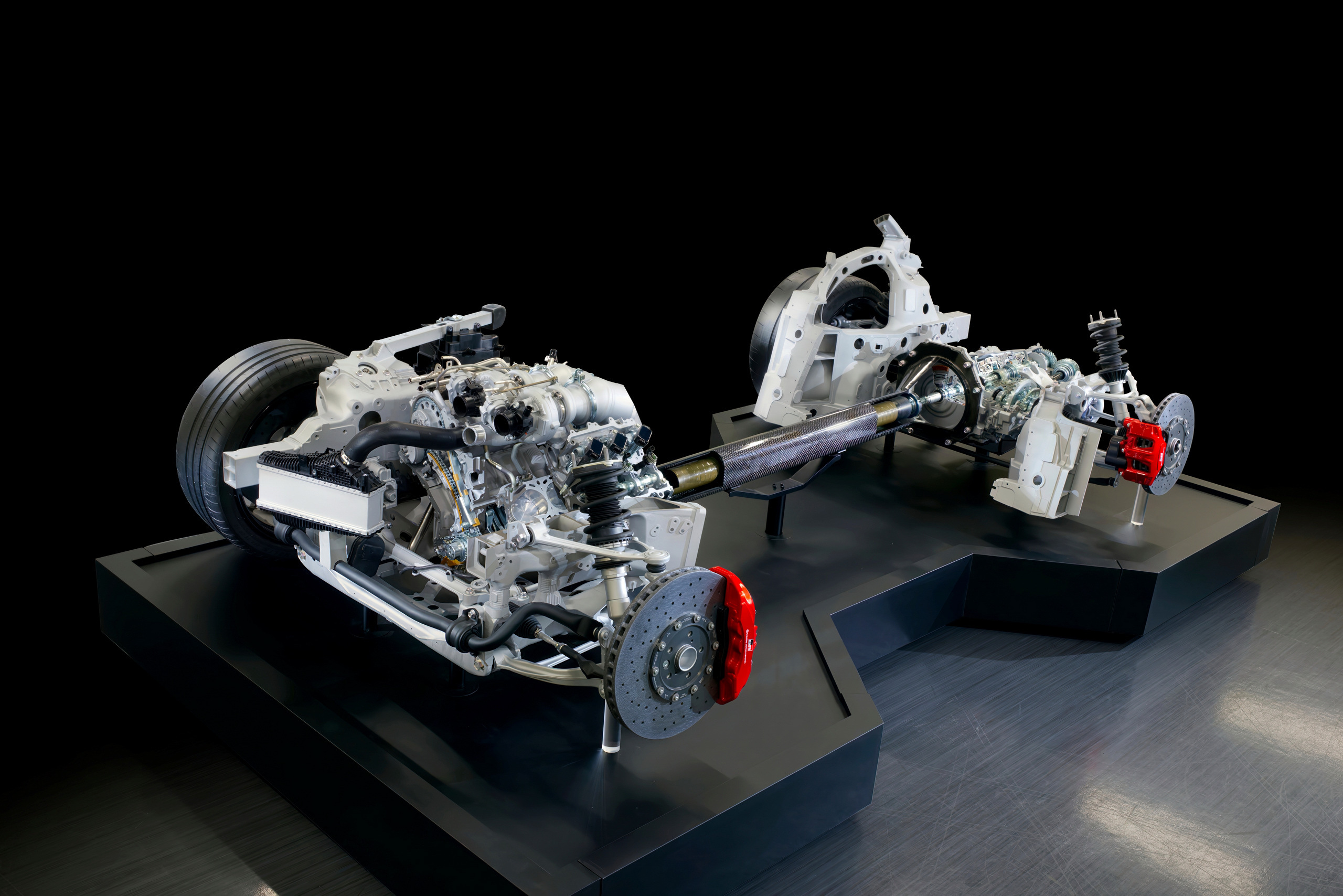
Now, it may be clear that Toyota wasn’t going to say goodbye to combustion without a fight, but we imagine not many would have predicted the unveiling of the GR GT: a production-slated halo supercar with a ferocious twin-turbocharged 4.0-liter hybridized V8 engine.

The Fight for Identity

 Toyota Split Its EV Strategy In Two, And The US Isn’t Getting The Good Half

In an era of tightening emissions regulations and downsized powertrains, the decision to green-light a V8 may seem almost rebellious. But for Toyota, the GR GT isn’t about volume or compliance alone. It’s about identity.

Nikkei Asia notes that the GR GT has been built without the assistance of Yamaha, unlike its spiritual forefathers, the 2000GT and Lexus LFA. “Automobiles, as an industrial product, are in danger of becoming commoditized,” says Toyota Chairman Akio Toyoda. “The engine still has a role to play,” underscoring the importance of the in-house powerplant.

 Toyota Split Its EV Strategy In Two, And The US Isn’t Getting The Good Half

The reality is that Toyota’s focus on keeping engines around will permeate throughout its lineup for the foreseeable future. In June 2025, Toyota convened suppliers at an internal combustion engine rally, where executives outlined plans to develop new engines, including high-output units, while maintaining overall engine production volumes through 2030.

It was a clear signal that Toyota sees a long runway for combustion, even as the market fragments.

Satisfying the Giants: US vs China

 Toyota Split Its EV Strategy In Two, And The US Isn’t Getting The Good Half
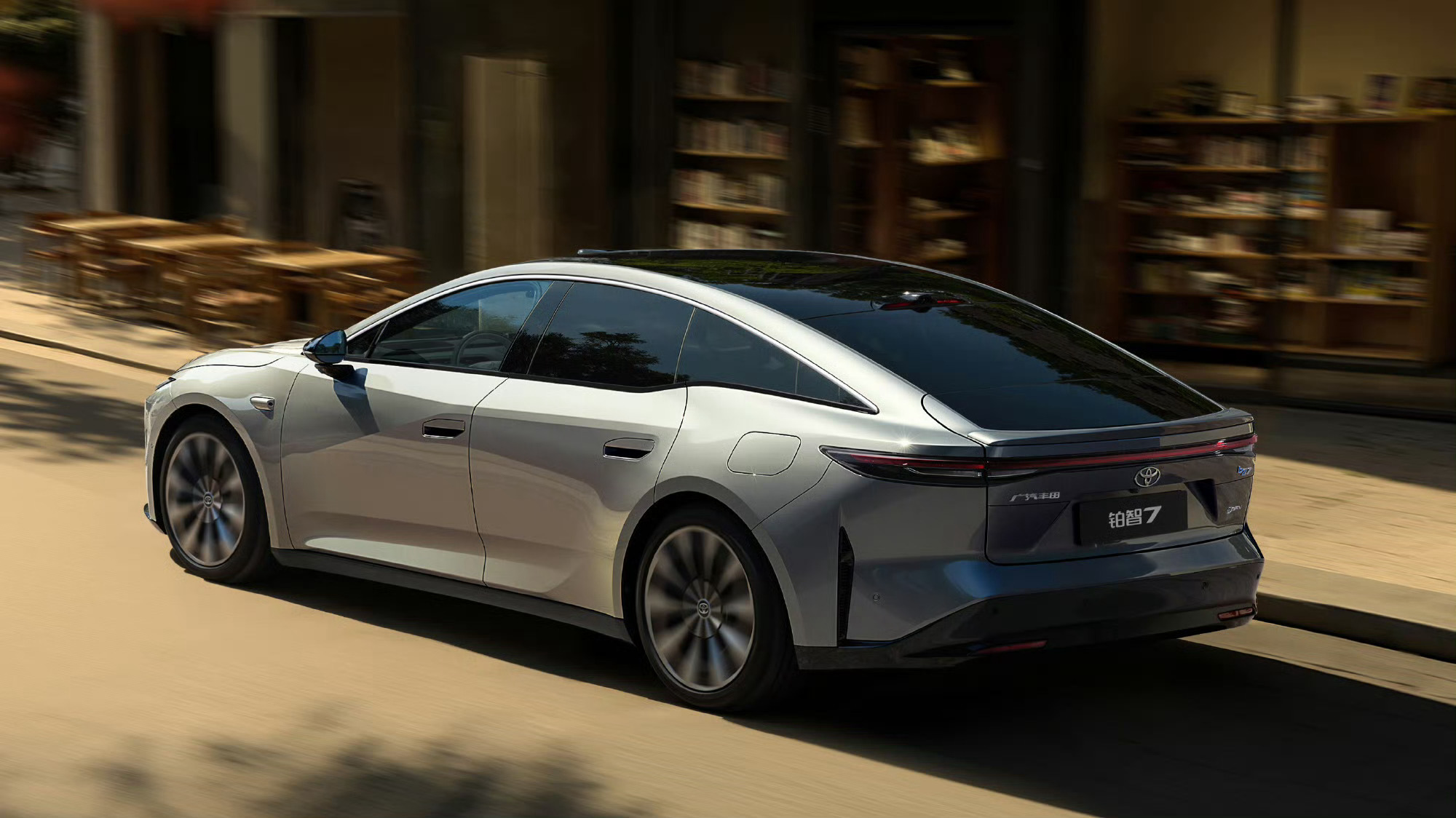
Toyota bZ7

However, Toyota is still hedging its bets with EVs, especially when it comes to China. Over there, the car-buying population continues to march towards an all-electric future.

Toyota, like all foreign manufacturers, is feeling the pinch against local rivals. At a supplier event in Shanghai last summer, a Toyota executive drew rare applause by declaring, “In China, we will focus not on cars for the global market, but on cars made specifically for China.”

More: Toyota’s New Flagship bZ7 Sedan Is Here But Not For Us

He added pointedly that if Japan’s headquarters hesitated on investment, he would “explain things to them directly.”

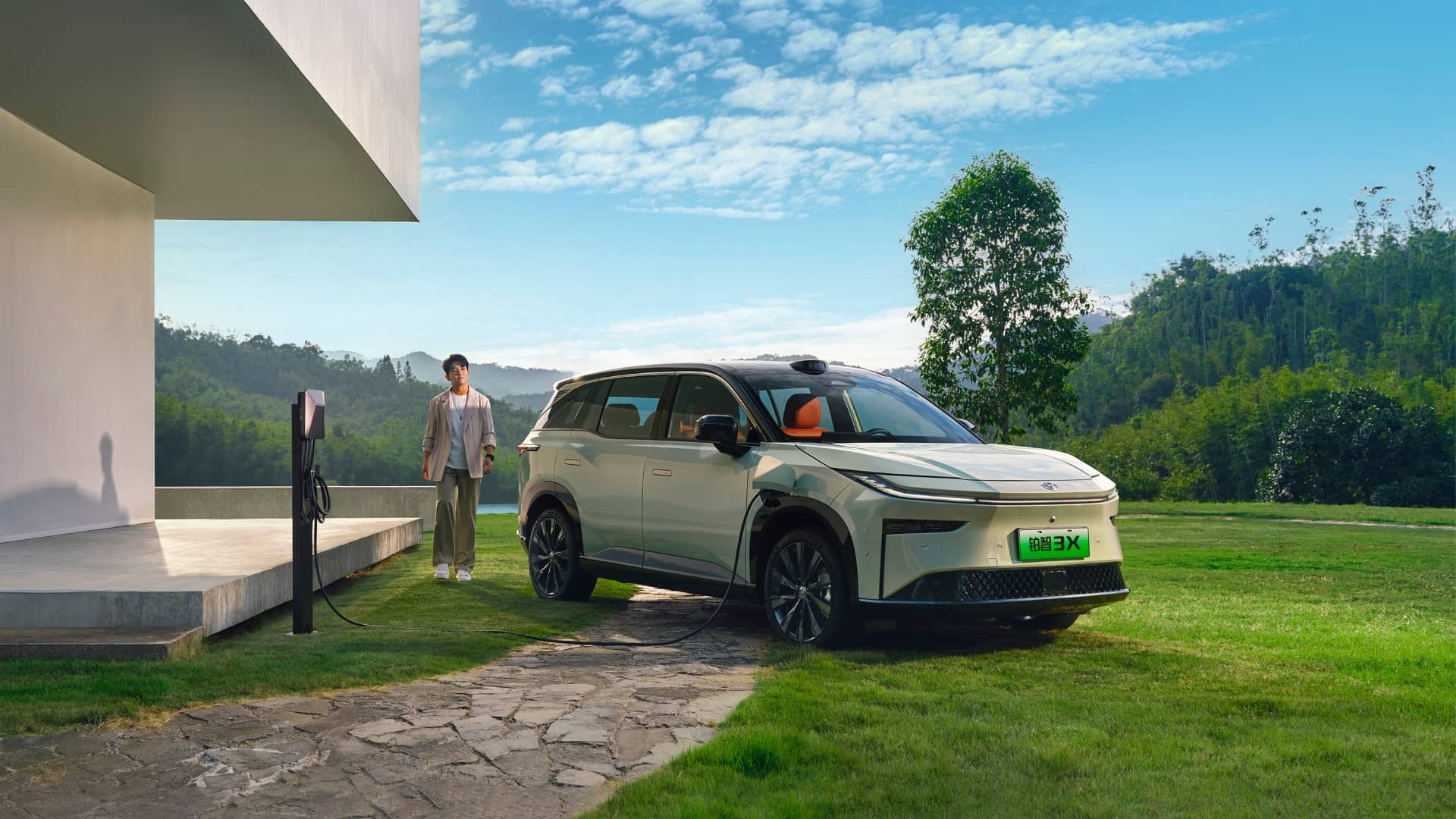
That shift is already visible in the product lineup. The bZ3X electric SUV, launched in March 2025 through GAC Toyota, was co-developed with Guangzhou Automobile Group and uses cost-effective lithium iron phosphate batteries. Priced from 109,800 yuan or about $15,300, it surpassed 10,000 units in monthly sales by November. A bZ7 electric sedan is set to follow.

 Toyota Split Its EV Strategy In Two, And The US Isn’t Getting The Good Half

Hybrid Momentum in America

Back in the US, where EV adoption is not as clear-cut, Toyota is investing in hybrid production. The move is driven by strong demand as hybrids accounted for roughly 13 percent of new-vehicle sales in the U.S. during the third quarter of 2025.

Toyota opened its new battery plant in North Carolina on November 12. Toyota Motor North America President Tetsuo Ogawa called it “a pivotal moment in our company’s history.”

On the same day, Toyota announced plans to invest up to $10 billion over five years to expand U.S. production of hybrids and related components, boosting output at five American plants and reducing reliance on Japanese imports.

Is Betting on Everything the Smartest Bet?

 Toyota Split Its EV Strategy In Two, And The US Isn’t Getting The Good Half
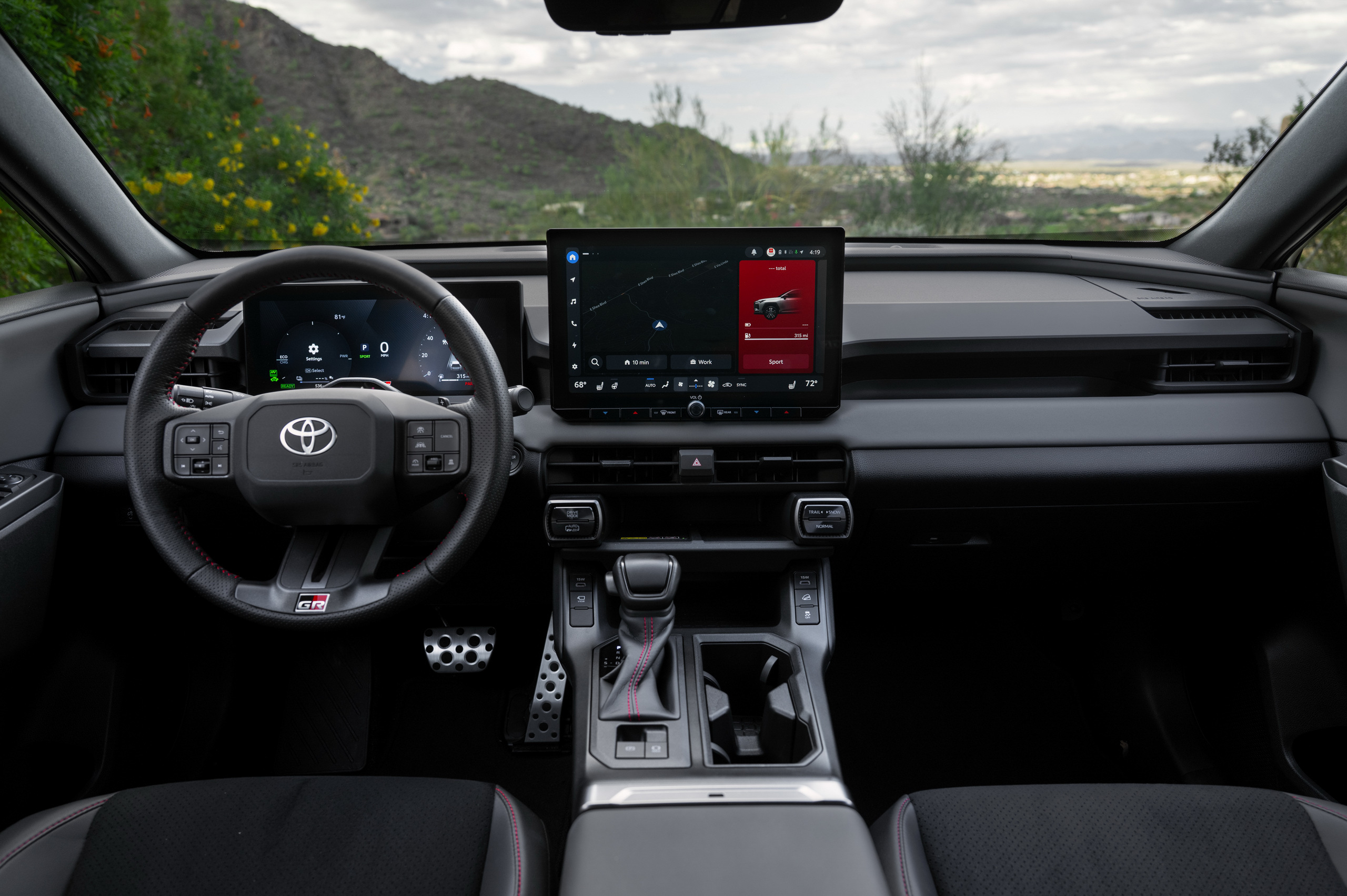
2026 Toyota RAV4 GR Sport Hybrid

Of course, building cars powered by everything from V8 hybrids to LFP-battery EVs is expensive. Toyota spent ¥1.3 trillion on R&D in the year ending March 2025, which is roughly on par with BYD, and well ahead of many rivals.

To manage the burden, Toyota has begun leaning more openly into partnerships, including work with NTT on AI-based crash prevention and a collaboration with Waymo on autonomous driving.

In a market increasingly obsessed with picking a single technological winner, Toyota’s refusal to do so may look risky. But if the global auto future really is plural rather than uniform, betting on engines, rather than shunning them, may yet prove to be the company’s most calculated move of all.

 Toyota Split Its EV Strategy In Two, And The US Isn’t Getting The Good Half

❌
❌