Reading view

There are new articles available, click to refresh the page.

Florida School Board Disputes Long-Term Trauma Claims from Student Sexual Assault

Attorneys for the Palm Beach County School Board argued in court last month that a student with autism who was a victim of sexual assault on a school bus at age 3 and a half did not suffer long-lasting trauma as a result of the attack, a claim strongly disputed by a medical expert testifying for the child’s family, reported The Palm Beach Post.

During testimony Thursday, Miami psychiatrist Dr. Michael Hughes told jurors the sexual assault had a profound and enduring impact on the girl, now 9, affecting her emotional development, learning ability and overall quality of life. Hughes rejected the school board’s assertion that the child’s ongoing difficulties stem solely from pre-existing developmental disabilities.

“The younger the child, the greater the impact of the trauma,” Hughes testified via the article, adding that early childhood experiences play a critical role in long-term development. He explained that the girl’s silence about the January 2007 sexual assault does not indicate a lack of memory or harm.

The girl was riding a school bus carrying special-needs students of varying ages when she was assaulted by a 15-year-old “emotionally disturbed boy.” The school district does not dispute that the assault occurred. Instead, its attorneys argue the district should not be held financially responsible for years of therapy and specialized education. It says the therapy is unrelated to the incident.

According to the news report, Hughes testified that the attack caused the child to withdraw from the world, stunting her curiosity and learning. He noted that adults on the school bus, the driver and a bus aide, failed to protect or comfort her, reinforcing a sense of fear and helplessness.

According to Hughes, the girl’s academic progress has significantly declined. Now in fourth grade, she is reportedly completing preschool-level work. Her I.Q. score dropped from 77 to 67 between first and third grade, placing her in the borderline intellectually disabled range.

“She’s not plateauing — she’s falling further behind,” Hughes said, recommending extensive therapy and specialized education as her only chance at achieving a functional adult life.

School board attorney Thomas McCausland reportedly challenged Hughes’ conclusions, arguing that fluctuations in I.Q. scores are common and can be influenced by factors such as fatigue or nutrition. McCausland also questioned whether the child’s behavior toward Hughes, allowing him to hug her and kiss her forehead, was consistent with someone who views the world as threatening.

Earlier testimony from the girl’s parents described behavioral changes following the sexual assault, including aggression toward toys and family members and rejection of traditionally feminine clothing. McCausland reportedly countered that some of these behaviors predated the incident and suggested that conflicts with her half-brother stem from competitive video gaming.

Jurors appeared engaged, with one asking the father how the girl behaved immediately after the assault. He testified she exited the bus “like an ordinary child.”

The alleged assailant, now 21, was deemed incompetent to stand trial and refused to testify, invoking his Fifth Amendment rights. The bus aide, Grenisha Williams, was fired and later convicted of child neglect. Jurors were shown video footage from the bus, which captured the boy’s movements during the sexual assault, though the girl was not visible due to her size.

Cross-examination of Dr. Hughes is expected to continue as the trial proceeds.


Related: Sexual Assault on School Transportation Vehicles: A Call for Action
Related: Texas Student Arrested Following Alleged Sexual Assault on School Bus
Related: Maryland School Bus Aid Charged with Sexual Assault
Related: Missouri Parent Boards School Bus, Tells Child to Assault Another Student

The post Florida School Board Disputes Long-Term Trauma Claims from Student Sexual Assault appeared first on School Transportation News.

GreenPower Regains Compliance with Nasdaq’s Equity Requirement

By: STN

VANCOUVER, Canada,  – GreenPower Motor Company Inc. (Nasdaq: GP) (“GreenPower” and the “Company”), a leading manufacturer and distributor of all-electric, purpose-built, zero-emission medium and heavy-duty vehicles serving the cargo and delivery market, shuttle and transit space and school bus sector, today announced that the Company has received formal notice from The Nasdaq Stock Market LLC (“Nasdaq”) confirming that the Company has regained compliance with Nasdaq Listing Rule 5550(b)(1), the “Equity Rule,” and otherwise satisfies all applicable criteria for continued listing on The Nasdaq Capital Market.

“Over the past few months GreenPower has completed a series of transactions including raising new capital with an equity offering of Series A Convertible Preferred Shares for up to $18 million, term loans of $5 million and a new banking relationship with CIBC including a line of credit and term loan. In addition, the Company exchanged $7 million of related party loans for convertible debentures and $3 million of related party loans for Series B Convertible Preferred Shares,” said Fraser Atkinson, CEO of GreenPower. “These transactions have helped the Company regain full compliance with the Nasdaq listing criteria as well as with the execution of our strategic goals.”

Notwithstanding the Nasdaq compliance determination, the Company will remain subject to a Panel monitor for one year. If, within that one-year monitoring period, Staff finds the Company again out of compliance with the Equity Rule that was the subject of the hearing, the Company will be subject to a delisting determination and will not have the opportunity to present a compliance plan for the Staff’s consideration. However, the Company will be afforded the opportunity to request a hearing before the Hearings Panel, and the hearing request will automatically stay any suspension or delisting action pending the conclusion of the hearings process and the expiration of any additional extension period granted by the Panel following the hearing.

The Company’s common stock will continue to trade on Nasdaq under the ticker symbol “GP.”

About GreenPower Motor Company Inc.
GreenPower designs, builds and distributes a full suite of high-floor and low-floor all-electric medium and heavy-duty vehicles, including transit buses, school buses, shuttles, cargo van and a cab and chassis. GreenPower employs a clean-sheet design to manufacture all-electric vehicles that are purpose built to be battery powered with zero emissions while integrating global suppliers for key components. This OEM platform allows GreenPower to meet the specifications of various operators while providing standard parts for ease of maintenance and accessibility for warranty requirements. For further information go to www.greenpowermotor.com

The post GreenPower Regains Compliance with Nasdaq’s Equity Requirement appeared first on School Transportation News.

Autonomous Vehicle Implications

The spotlight on autonomous vehicle safety intensified in late 2025, when multiple Waymo robotaxis were caught illegally passing stopped school buses in Austin, Texas.
Footage from Austin Independent School District revealed at least 24 such violations since the start of the school year through the middle of January, with vehicles
ignoring flashing red lights and extended stop arms while children boarded or exited. Despite a software recall in December affecting over 3,000 vehicles, incidents persisted. Investigations by both the National Highway Traffic Safety Administration (NHTSA) and the National Transportation Safety Board (NTSB) followed suit last month.

Austin ISD asked Waymo to pause operations during school hours, but the company declined, citing ongoing improvements. Director of Transportation Kris Hafezizadeh will discuss the situation next month at STN EXPO East.

This saga underscores persistent challenges in AI-driven perception systems, where even advanced neural networks struggle with contextual cues like school zones, raising alarms among educators, parents and regulators about the risks to vulnerable road users.

Power disruptions have also exposed vulnerabilities in autonomous fleets. During San Francisco’s 2025 outages, hundreds of Waymo vehicles halted abruptly, creating gridlock and highlighting dependency on stable infrastructure. Similar events in other cities have fueled debates on redundancy measures, such as onboard backup power and enhanced telematics for real-time rerouting.

As technology matures, industry experts anticipate 2026 will bring more resilient systems, with AI algorithms trained on diverse failure scenarios to minimize disruptions. Optimism persists that real-world testing will refine these tools, but incidents like these remind us that innovation must prioritize safety, especially around
schools and school buses.

The consumer automotive market is evolving rapidly, with autonomous driving features projected to become standard in over 20 percent of new vehicles this year, according to industry forecasts. Tesla’s Full Self-Driving (FSD) supervised software, for instance, has seen significant patches in 2025 and early 2026, particularly for school bus interactions. Updates have improved detection of flashing lights and stop signs, with user videos demonstrating reliable stopping and waiting behaviors.

However, NHTSA’s ongoing probes into FSD including an October evaluation of traffic law violations covering nearly 2.9 million vehicles, reveals lingering issues like occasional failures in reduced visibility. Adversarial tests by The Dawn Project staged demos showing a Tesla Model Y ignoring bus signals and striking child dummies. Tesla extended its response deadline to this month amid scrutiny of over 8,000 potential incidents. A 2023 North Carolina case, where a 17-year-old was struck by a Tesla after exiting a bus, echoes these concerns. While software fixes addressed the bug, it illustrates how AI must evolve to anticipate unpredictable child movements.

As self-driving cars proliferate in urban areas, school bus drivers face added complexity. Children in loading zones demand split-second recognition yet early AV
systems have faltered. By this year, expect wider adoption of Level 3 and 4 autonomy, where minimal human input is needed in defined conditions, promising fewer crashes
through precise sensor fusion.

NHTSA’s early 2025 estimates show overall traffic fatalities dropping: 27,365 deaths in the first nine months, a 6.4 percent decline from 2024, with the rate per 100 million vehicle miles traveled falling to 1.10. The first half of 2025 saw 17,140 fatalities, down 8.2 percent, even as miles driven rose. While distracted driving specifics for 2025 remain preliminary, trends suggest AVs could further reduce human-error crashes, though flaws in software like those in Tesla and Waymo highlight the need for rigorous validation.

Emerging trends are transforming school transportation itself. AI and telematics are shifting from reactive to proactive safety, with predictive maintenance using data
analytics to forecast bus failures, reducing breakdowns. High-definition cameras, integrated with AI software, provide 360-degree views, detecting illegal passers and
alerting authorities. Automation extends to digital forms for route planning and incident reporting, streamlining operations via cloud platforms that unify GPS/Telematics, video and RFID for student tracking.

The growth of vehicle-to-everything (V2X) communication potentially enables school buses to signal AVs directly, which could prevent illegal passes.

The school transportation industry must adapt to these innovations to safeguard students. From apps providing real-time ETA alerts to parents, to HD cameras deterring
misconduct inside buses, technology enhances efficiency and accountability.

As we share roads with evolving AVs, collaboration between manufacturers, regulators and districts is crucial. Staying ahead of the curve ensures we don’t lag in safety, after all, the families our industry serves count on us daily to innovate for the best interest of kids.

Editor’s Note: As reprinted from the February 2026 issue of School Transportation News.


Related: Investigation into Waymo Driverless Vehicles Continues Following Latest Collision with Student
Related: Waymo Driverless Vehicles Continue to Illegally Pass School Buses
Related: Waymo Driverless Car Illegally Passes Stopped School Bus in Atlanta
Related: NHTSA Investigates Autonomous Waymo Rides After Illegal School Bus Passing

The post Autonomous Vehicle Implications appeared first on School Transportation News.

Skoda’s Super-Sized EV Takes Aim At The Hyundai Ioniq 9

  • The Skoda Peaq has been spied ahead of its summer debut.
  • Electric three-row crossover previewed by Vision 7S concept.
  • Expected 89 kWh battery could provide a 373-mile WLTP range.

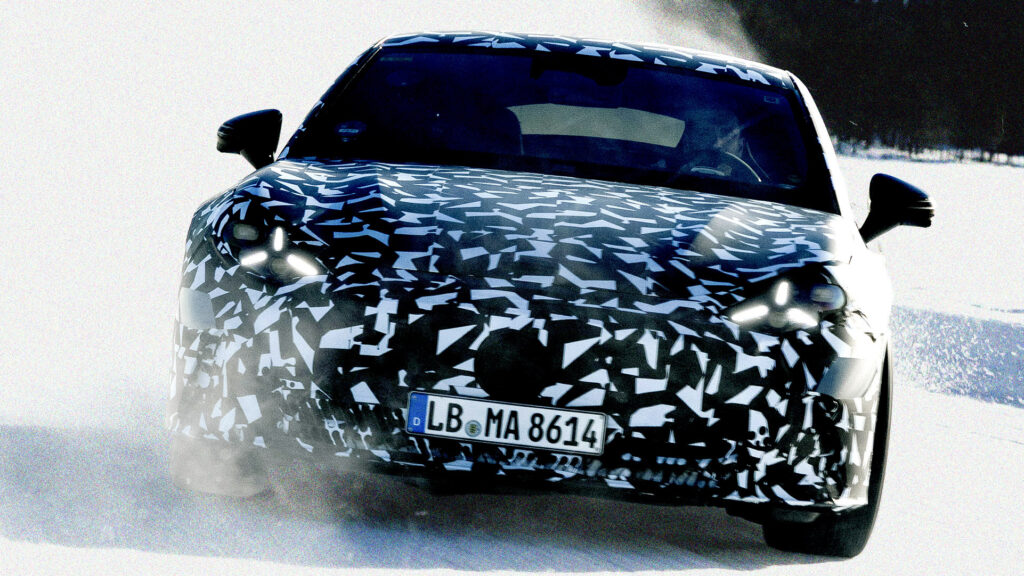
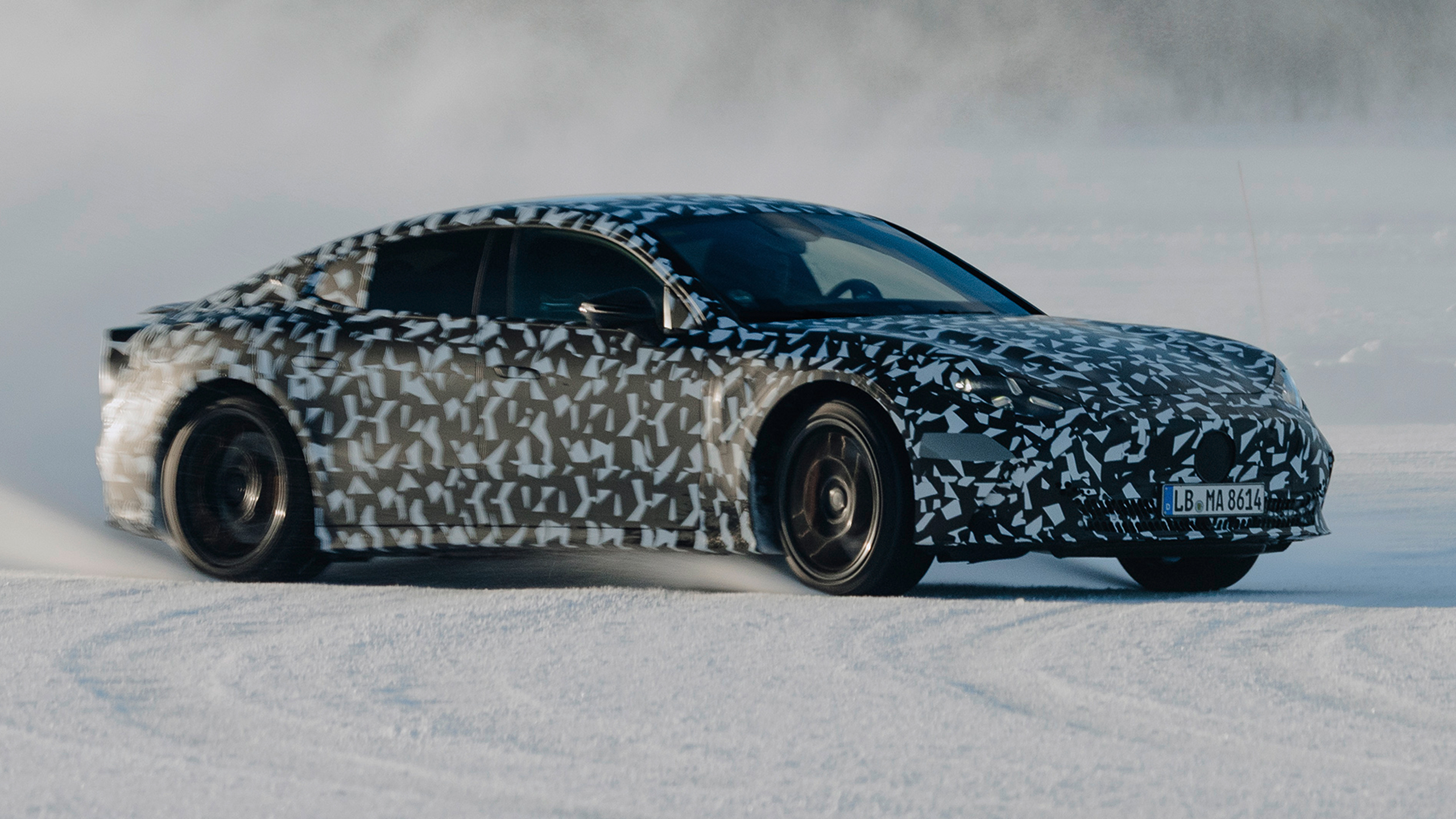
Skoda recently confirmed its upcoming three-row electric crossover would be called the Peaq and now spy photographers have caught a lightly camouflaged prototype undergoing cold weather testing.

Previewed by the Vision 7S concept, the production model will debut this summer and sport a design reminiscent of the Hyundai Ioniq 9. While stickers provide plenty of misdirection, we can see angular air curtains as well as a trapezoidal lower intake sporting stylized lines.

More: Skoda’s Electric Three-Row Crossover Steps Out Of The Shadows

The grille and headlight treatment is designed to throw people off as the camouflage hides a new “Tech‑Deck Face,” which appears to resemble the one used on the concept. A closer inspection appears to show C-shaped headlights that are connected by a lower band.

\\\\\\\\\\\\

SHProshots

Moving further back, we can see slender A-pillars that flow into a long, sloping roof. They’re joined by an expansive greenhouse, streamlined bodywork, and flush-mounted door handles. The model also has pronounced wheel arches, but the disguise appears to add some extra thickness.

The rear end has a stylish liftgate with a trapezoidal accent as well as a distinctive spoiler. The taillight graphics are fake, but presumably hide T-shaped lighting units that echo those found up front.

What About The Interior?

\\\\\\\\\\

SHProshots

Spy photographers didn’t get a look inside, but Skoda has previously said the seven-seater will bring “spaciousness and practicality to a whole new level.” We can also expect a relatively upscale cabin as the Peaq will become the brand’s range-topping model.

MEB Platform And Battery Expectations

\\\\\\\\\\

SHProshots

Powertrain details remain elusive, but the crossover will ride on the MEB platform and likely offer an assortment of powertrains. If the concept is any indication, the road-going model could have an 89 kWh battery pack and a WLTP range in excess of 373 miles (600 km). The Peaq may also offer a DC fast charging capability of around 200 kW.

The model could take a few cues from the Enyaq, which offers dual-motor all-wheel drive systems with outputs of 282 hp (210 kW / 286 PS) and 335 hp (250 kW / 340 PS). That being said, the newer Peaq could have more powerful and efficient motors.

\\\\\\\

SHProshots

Porsche’s Most Extreme Taycan Yet Exists For A Very Personal Reason

  • RS-style Taycan prototype now wears production aero parts.
  • Engineers chase Nürburgring glory after Xiaomi stole record.
  • Could make even more power than the 1,019 hp Taycan GT.

It’s eight months since Xiaomi smashed Porsche’s production EV sedan record at the Nurburgring, but 2026 is the year the Germans fight back. Fresh spy shots from northern Sweden show a vicious-looking, track-ready Taycan ahead of a new record attempt later this year.

Visually, this prototype has matured since we last saw it bullying the Nürburgring in September. The aero components, heavily inspired by the mighty 911 GT3 RS, now look less like prototype science projects and more like showroom-ready hardware.

More: Taycan Goes Full Psycho Mode To Steal Porsche’s Lost Record From Xiaomi

The front splitter is a different shape and no longer held on with motorsport-style bars, and the fat arch spats designed to cover a much wider track now have cooling slots behind the front wheels. Less visible this time, though, due to this car’s disguise, are the saw-tooth vents cut into each fender top whose job is to vent air pressure built up in the wheelhousings.

Toned-Down Rear Wing

\\\\\\\\

SH Proshots

At the back is the same gigantic diffuser we saw on the last prototype, but here it’s paired with a different trunk spoiler. The latest wing looks less race-car-like, its end planes moulded into the overall shape rather than being bolted on. It’s more like the Weissach-kitted Turbo GTs but with an added lip, though it still rides high above the tail to grab as much of the passing air as possible.

We can expect some advanced chassis trickery under the skin and more power than even the 1,019 hp (1,033 PS / 760 kW) the Taycan Turbo GT delivers. The Xiaomi SU7 Ultra’s 1,526 hp (1,547 PS / 1,138 kW) powertrain played a major role in helping the Chinese brand pull off a 7-minute 4.957-second lap of the Ring, beating the Taycan Turbo GT’s record by over 2.5 seconds.

Sub-Seven?

 Porsche’s Most Extreme Taycan Yet Exists For A Very Personal Reason

Separately, a stripped-down prototype version of the SU7 recorded 6:22.091, and though we doubt Porsche’s new Taycan will beat that in fully road-legal form, it should become the first production EV to go sub-seven. We’ll find out in a few months when the weather is good enough for Porsche to try for an official timed run.

We’ll also find out if the hottest Taycan will get an RS badge to match those RS aero goodies. If it does, it’ll be the first EV to be granted those letters, and it’ll have a price to match. The Taycan Turbo GT already costs $243,700 with or without the Weissach package, so an RS is surely going to be close to $300k.

\\\\\\\\\

SH Proshots

Kentucky Workers Are Furious After Ford’s EV Factory Reversal

  • Ford closed Kentucky EV battery plant after just 4 months.
  • 1,600 workers lost jobs after tax credit policy change.
  • Plant originally projected employment near 5,000 workers.

Ford’s sudden decision to cancel its multi-billion-dollar partnership with South Korean battery manufacturer SK On in December, just four months after the first batteries rolled off the line, left 1,600 people without jobs at the joint battery plant in Kentucky.

Read: Ford Got The Loan And Built The EV Battery Plant. Now Everything’s Falling Apart

The move caught workers and locals off guard, and many are placing the blame squarely on Ford. That’s not surprising. Still, the political backdrop, including Trump-era EV policies that limited Ford’s options, played a larger role in how this ultimately unfolded.

The Ripple Effect Of A $7,500 Credit

 Kentucky Workers Are Furious After Ford’s EV Factory Reversal

All brands selling EVs in the US were hurt by the government’s decision to kill the federal tax credit, valued at up to $7,500 for new EVs. While some understandably criticized the program as artificially propping up the industry, there’s no denying that it played a hugely important role in convincing many Americans.

With fewer people buying EVs and other government policies relaxing CAFE fuel-economy standards, Ford acknowledged that “the operating reality has changed,” which is why it’s scrapped a slew of its more ambitious and important EV projects. “We are listening to customers and evaluating the market as it is today, not as everyone predicted it would be five years ago,” Ford recently said.

As reported by The New York Times, Kentucky’s Democratic governor, Andy Beshear, said: “1,600 Kentuckians lost their jobs solely because of Donald Trump pushing that big, ugly bill, eliminating the credits that had people interested and excited to buy EVs. I bet many, if not most, of those 1,600 people voted for him, and he basically fired them.”

Unexpected Closure

 Kentucky Workers Are Furious After Ford’s EV Factory Reversal

The site had only been manufacturing EV batteries for four months before it was shut down. Speaking with the NYT, Joe Morgan says he left a job of 24 years to start working at the plant, confident that EVs would grow in popularity.

Morgan, a registered Republican, acknowledges that “taking away the tax credits did play a little bit of a role in not selling EVs,” but he thinks it’s Ford that should take most of the blame. “I just think Ford made a bad decision when they came out with an F-150 that they wanted to make all electric.”

Derek Doughtery shares a similar view. Landing a job at the battery plant was a turning point for him after previously experiencing homelessness, especially with a second child on the way. He, like others, believes Ford may have misread the market and bears more responsibility than the government.

“At the end of the day, whatever the government policy would be, the company made the decision,” he said.

A Scaled-Back Future

Fortunately, the facility will not close entirely. Now under full Ford control, it will be retooled for battery storage production and is expected to employ roughly 2,100 people. That figure is well below the 5,000 jobs originally projected when the plant was dedicated to building EV batteries, but it offers at least some continuity for a site that only recently promised much more.

 Kentucky Workers Are Furious After Ford’s EV Factory Reversal

Four minutes of air conditioning

Billions of people have access to far less electricity per day than is required to run an air conditioner for just one hour.<br><br><a href="https://ourworldindata.org/four-minutes-of-air-conditioning"><img src="https://ourworldindata.org/cdn-cgi/imagedelivery/qLq-8BTgXU8yG0N6HnOy8g/d666d8d8-6937-495b-5e37-ae8d93cc0a00/w=1024"/></a>

BMW’s New i3 Is Becoming Easier To Picture

  • The electric i3 will be sold alongside a new ICE 3-Series.
  • Design influence comes from the 2023 Vision Neue Klasse.
  • Sixth-gen motors and batteries shared with the iX3 SUV.

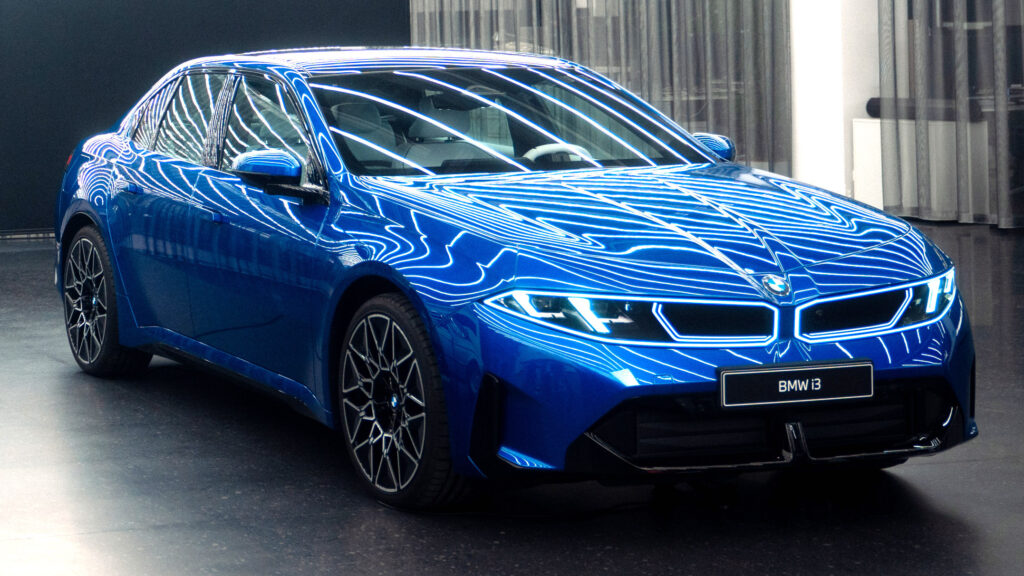
The next chapter in BMW’s electric transition is beginning to come into focus as a new i3 edges closer to the market. It brings technology closely aligned with the second-generation iX3, now packaged in sedan form. With pre-series production now underway and official images of a camouflaged prototype already released, new renderings have begun to fill in the remaining blanks.

Read: New i3 And 3-Series Reveal BMW’s Most Striking Split Yet

Much of the i3’s design will be inspired by the Vision Neue Klasse concept unveiled in 2023. However, whereas the subsequent Vision Neue Klasse X ended up looking almost identical to the new iX3, it appears BMW has calmed some of the sedan concept’s most dramatic elements, and the production model should look better.

 BMW’s New i3 Is Becoming Easier To Picture
Illustrations Nikita Chuyko / Kolesa

While the concept featured large illuminated kidney grilles flowing into the LED headlights, recent spy shots and renderings indicate the production model might adopt smaller and slimmer units, better suited to a sedan of this size.

More: The 2027 BMW M5 Facelift Might Skip The Drama, But Not The Debate

These renderings by Nikita Chuyko for Kolesa also show the new electric sedan with a sharper lower front bumper and gloss-black accents. Along the sides, it departs noticeably from the current 3-Series, with split shoulder lines and flush door handles that give the bodywork a cleaner, more contemporary look.

 BMW’s New i3 Is Becoming Easier To Picture
Illustrations Nikita Chuyko / Kolesa

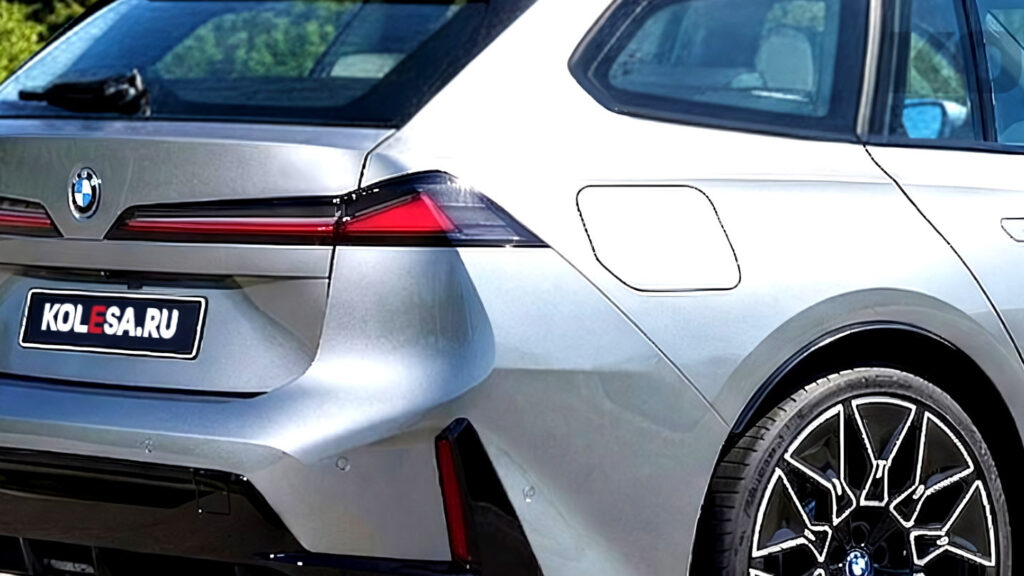
Some uncertainty still surrounds the taillight design. Recent prototypes indicate they will be much smaller than those on the Vision Neue Klasse concept and, in these renderings, they resemble scaled-down versions of the old 2-Series Gran Coupe units.

What About The Interior?

 BMW’s New i3 Is Becoming Easier To Picture
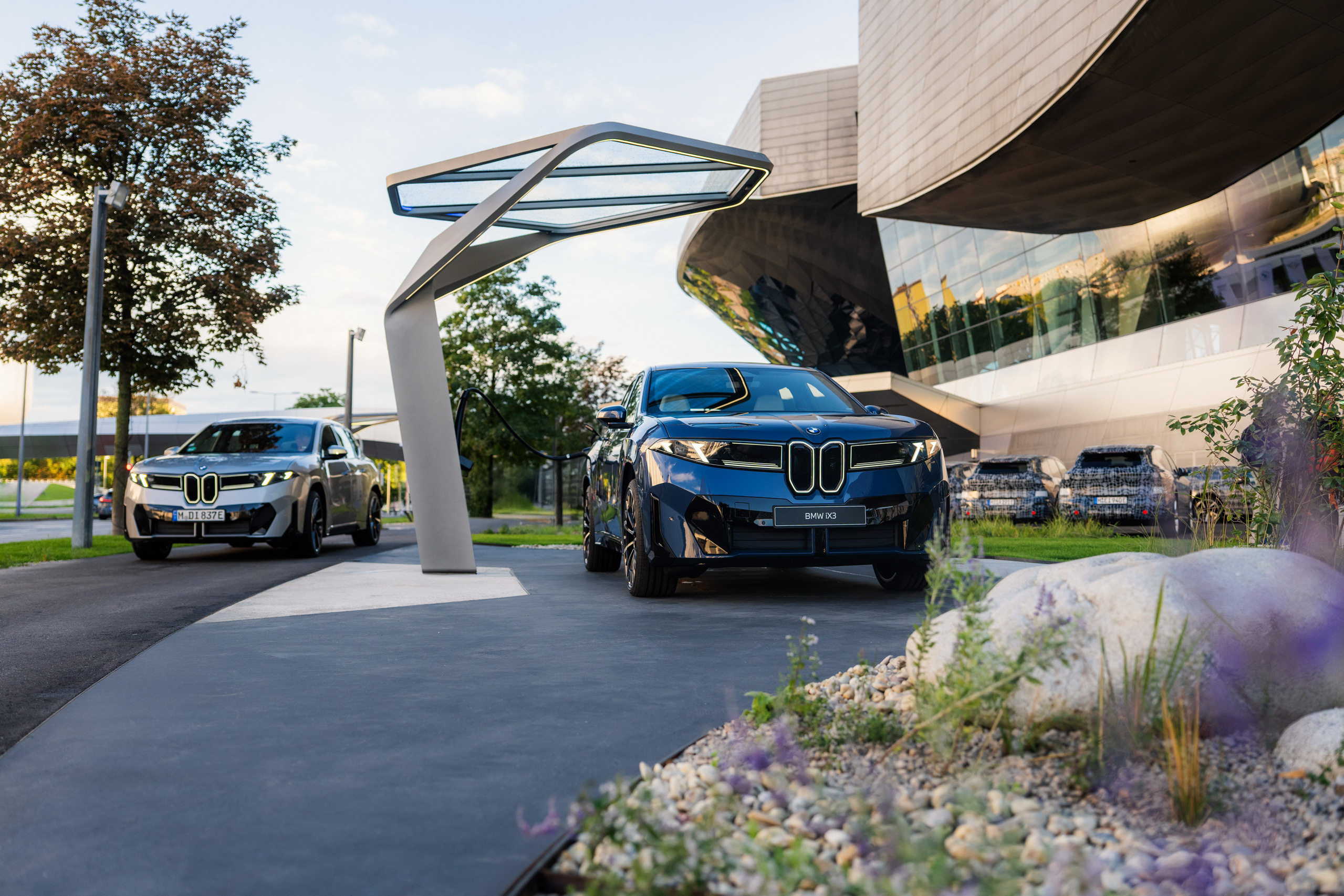
The interior of the new BMW iX3 SUV.

Inside, the change may feel even more dramatic than the exterior. Anyone climbing out of a current 3-Series should brace for a clear break from the more traditional cockpit BMW has refined over the years. If you are coming from the iX3, however, none of this will feel particularly shocking. The i3, along with the next combustion-powered 3-Series, will mirror BMW’s first production Neue Klasse model, down to a dashboard layout.

Also: BMW iX3 Has A 360 Camera, But You’ll Pay Monthly To Use It

Front and center will be BMW’s new ‘Panoramic iDrive’ concept, paired with the brand’s latest software. The conventional instrument cluster is gone, replaced by key information projected across the base of the windscreen, while a large touchscreen sits on the center console.

Shared Underpinnings

 BMW’s New i3 Is Becoming Easier To Picture

Beneath the surface, the i3 rides on the same Neue Klasse EV platform as the new iX3. For anyone concerned that it might fully replace the 3-Series, there is no need. The combustion-powered 3-Series is being updated separately, continuing on a revised version of BMW’s CLAR architecture.

The i3 is expected to launch with BMW’s sixth-generation electric motors and battery technology, along with an 800-volt electrical system shared with the iX3. Early reports suggest one of the first variants will be the i3 50 xDrive, potentially producing around 463 hp, placing it within reach of today’s BMW M3. A less powerful rear-wheel drive model is also planned, along with a flagship electric iM3 featuring four motors.

That high-performance version has been tipped to deliver as much as 1,000 hp, and could even feature a synthesized V10-style soundtrack.

\\\\\\

Ex-Tesla Engineer Says EVs Took A Wrong Turn, Longbow Thinks There’s A Better Way

  • Longbow rejects vertical integration for proven supply chains.
  • Additive manufacturing reshapes low volume customization locally.
  • The company wants EVs to feel like sports cars not tech showcases.

For many modern electric vehicles, progress has come to mean more. More batteries, more screens, more driver aids, and more weight. Longbow doesn’t see that as a requirement, or even desirable, for that matter.

The company was founded in 2023 by Daniel Davey and Mark Tapscott, both veterans of Tesla and Lucid, so they have seen firsthand how ambitious EV concepts hold up once they leave the presentation slide. At the end of 2025, former X Shore CEO Jenny Keisu joined the leadership team, bringing experience from the electric marine world into the mix.

More: This Company Just Built A Speedster Before Elon Finished His Roadster

Speaking exclusively with Carscoops, Tapscott outlined an engineering philosophy rooted in first principles, lightweight design, and a rejection of the idea that electrification must automatically lead to oversized, tech-heavy vehicles.

Does Every EV Need To Be Built From Scratch?

“I think it’s just a strengthening of resolve, to be honest,” Tapscott said when asked whether shifting industry conditions had forced a rethink. Rather than chasing vertical integration or speculative future technologies, Longbow is focused on building a sports car using proven components that already exist.

 Ex-Tesla Engineer Says EVs Took A Wrong Turn, Longbow Thinks There’s A Better Way
Fom left to right: Mark Tapscott, Jenny Keisu, and Daniel Davey.

That mindset was reinforced early on through conversations with one of Tesla’s original co-founders, Tapscott told us, though he did not specify which one. Tesla was founded in 2003 by Martin Eberhard and Marc Tarpenning. “He sort of explained to us… that it’s exactly how they wanted to build Tesla 15–20 years ago,” Tapscott said. Back then, the supply chain simply wasn’t ready. Today, it is.

Instead of pouring resources into building motors or factories from scratch, Longbow is deliberately sourcing components with millions of miles of validation behind them. “There are so many suppliers making incredible products that we can take advantage of,” he explained. “The industry is helping us in what it’s doing.”

Physics First, Always

 Ex-Tesla Engineer Says EVs Took A Wrong Turn, Longbow Thinks There’s A Better Way

Tapscott says Longbow didn’t need to “unlearn” much when forming the company, largely because its founders came from motorsport, startups, and consultancy work rather than traditional OEM bureaucracy. What they did adopt, and continuously return to, is physics-based thinking.

“We always come back to that, which is the ‘why’ every single time,” he said. “It’s always ‘why this, ok, why that,’ until we get to that physics first-principle reason. And very often, there isn’t a reason—it’s just a choice.” A clear example is Longbow’s battery architecture. Instead of layering cells inside multiple cases and mounts, the company questioned whether those layers were truly necessary.

 Ex-Tesla Engineer Says EVs Took A Wrong Turn, Longbow Thinks There’s A Better Way

“Cells go into a case. That case is in another case. And then it goes into the vehicle, which is another case,” Tapscott explained. “So you end up having these extra layers of unnecessary weight and volume.”

By stripping those layers away and integrating the battery structure directly into the chassis, Longbow says it has achieved significant stiffness gains. According to Tapscott, the resulting structure is “at least twice as stiff as the Lotus chassis,” often cited as a benchmark for lightweight aluminum sports cars.

Clearing The Air On In-Wheel Motors

 Ex-Tesla Engineer Says EVs Took A Wrong Turn, Longbow Thinks There’s A Better Way

Longbow’s CES appearance sparked plenty of conversation around in-wheel motors. The brand touted a potential output of 900 horsepower, but it left us wondering how those motors would affect unsprung mass. Tapscott was quick to clarify that what was shown was a demonstration, not a production specification.

“The vehicle that we showed at CES… was really a demonstration,” he said. The goal was to highlight the flexibility of the underlying chassis rather than preview a finalized drivetrain. For production, Longbow is sticking with what Tapscott described as a “beautifully engineered, tiny little watchmaker’s motor” mounted within the vehicle. Still, he sees long-term potential in hub motors, particularly as technology matures.

“There is development work to be done on in-wheel motors,” he said. “We do think there is definitely a future for them… because it gives you so much more opportunity within the vehicle.” So for now, put a pin in the hub motors, but don’t forget them. They could pop back up in a future Longbow product.

Weight Loss As A Daily Discipline

 Ex-Tesla Engineer Says EVs Took A Wrong Turn, Longbow Thinks There’s A Better Way

Ask where weight was spent most reluctantly, and Tapscott doesn’t point to a single component. Instead, he describes an internal philosophy that governs every decision. “Our engineers are given two tasks,” he said. “Every day, they need to lose at least one gram from anything they’re designing. And the second is the best design they can do is no design at all.”

That ethos borrows heavily from Colin Chapman, whose influence Tapscott freely acknowledges. Still, Longbow isn’t pursuing minimalism at all costs. Some elements, like a physical shifter, exist purely to enhance the experience. “There are things we’re adding… for the theatrics,” he said. “Customer enjoyment is important.”

Additive Manufacturing And A Different Production Model

 Ex-Tesla Engineer Says EVs Took A Wrong Turn, Longbow Thinks There’s A Better Way

One of the most under-the-radar aspects of Longbow’s approach may be how it’s using additive manufacturing beyond prototyping. “At the moment, a lot of the development prototype cars we’ve been producing have been fully 3D printed on the exterior,” Tapscott said, noting how it enables rapid iteration during development.

Looking ahead, he sees additive manufacturing changing how low-volume cars are supported and customized. Instead of maintaining warehouses full of body panels across different markets, parts could be printed locally, on demand.

Read: 8 Years Later, Tesla’s Still Taking $50K Roadster Reservations Musk Promised For 2020

“You can actually just have one printer that can print off that part in that country immediately, without any delay,” he said. The same approach could also enable personalization without the cost typically associated with bespoke programs. “It could be entirely personalized to you,” Tapscott added. “That’s something that hasn’t been explored as much in production automotive.”

An EV That Puts The Driver First

 Ex-Tesla Engineer Says EVs Took A Wrong Turn, Longbow Thinks There’s A Better Way

Ultimately, Longbow’s message is that electrification doesn’t have to erase driver engagement. “An EV powertrain doesn’t mean a D-segment SUV with all of the extra cameras and weight and everything else,” Tapscott said. “Those two things are different.”

Longbow wants its car to be a tool – powerful, precise, and rewarding- but only when paired with an engaged driver. Or, as Tapscott put it, borrowing from the company’s own name: the weapon matters, but the archer matters more. Modern EVs are often defined by their tech-heavy approach, but that leads directly to just being outright heavy. Longbow’s approach to cutting out the fat might be its sharpest edge in the market.

The 2026 Leapmotor C10 REEV Fixes The Biggest EV Problem Only To Fail At The Basics | Review

PROS ›› Smooth powertrain, generous range, well-priced CONS ›› Tech gremlins, subpar AC, inconsistent ADAS

Range extenders are enjoying a bit of a renaissance at the moment. Early examples like the Chevrolet Bolt and BMW i3 gave the world a preview of what these powertrains were capable of, but they largely fell out of favor in the middle of the last decade as carmakers shifted their focus to fully electric models.

Review: Before You Buy A Small SUV, Look At Kia’s 2026 K4 Turbo Hatch First

Things have changed. Thanks in large part to several major Chinese manufacturers, range-extender EVs are becoming more common and are even being adopted by legacy brands like Ford and Hyundai. Last year, Leapmotor, Stellantis’ Chinese partner brand, joined the movement by adding a range-extender option to its mid-size C10 SUV, and we had the chance to live with it over the Christmas period.

QUICK FACTS
› Model:2026 Leapmotor C10 REEV Ultra Hybrid
› Price:AU$47,888 (US$33,500) as tested
› Dimensions (L x W x H):186.5 x 74.8 x 66.1 in (4,739 x 1,900 x 1,680 mm)
› Wheelbase:111.2 in (2,825 mm)
› Curb Weight:1,950 kg (4,299 lbs)
› Powertrain:1.5-liter four-cylinder / Single electric motor
› Output:212 hp (158 kW) / 236 lb-ft (320 Nm)
› 0-62 mph:8.5 seconds
› Transmission:Single speed
› Efficiency:14.5 kWh/100 km, 6.1 l/100 km as tested
› On Sale:Now
SWIPE

In markets where charging infrastructure is still patchy and long-distance driving is simply part of life, the range-extender idea holds up. You get the smooth, instant response of an EV without planning your schedule around charging stops.

On paper, the C10 REEV arrives at the right moment, pitching itself as sensible rather than compromised. In reality, while the powertrain delivers on that promise, the experience is undercut by a collection of nagging tech issues that chip away at its appeal.

What Changes With The REEV?

\\\\\\\\\\\

Photos Brad Anderson/Carscoops

The first Leapmotor I tested last year was the regular C10 EV, equipped with a 69.9 kWh battery and a rear-mounted electric motor with 215 hp and 236 lb-ft (320 Nm). The C10 REEV is quite a bit different.

Review: I Drove Stellantis’ Chinese Electric SUV That Rivals Tesla For Just $30K

Under the hood sits a 1.5-liter four-cylinder that never drives the wheels, serving solely as a generator to charge the battery pack. That battery is a 28.4 kWh unit powering a rear-mounted electric motor rated at 158 kW (212 hp) and 320 Nm (236 lb-ft) of torque.

Leapmotor says the C10 REEV can travel up to 1,150 km (715 miles) between top-ups and charges, average 15.2 kWh/100 km in electric operation, and has a quoted fuel consumption of 0.9 l/100 km (261 US mpg).

Visually, there’s nothing differentiating the C10 REEV from the EV. That means it looks as uninspiring as the EV, with not even the slightest bit of personality.

How’s The Interior?

\\\\\\\\\\\\

Photos Brad Anderson/Carscoops

In the cabin, it’s also very familiar. Leapmotor has done exactly what Tesla popularized with the Model 3 and Model Y, opting for an ultra-minimalist design that some people will love, but others will hate.

A 14.6-inch infotainment display sits at the center of the dash running on Leapmotor’s in-house operating system, which uses Android as its base. While we wouldn’t go as far as to describe the C10’s infotainment as good as Tesla’s, it’s surprisingly not far off.

The tablet-like design doesn’t require a steep learning curve to get used to, and the display is very responsive to the touch. Admittedly, some of the settings hidden in the menu are a little too comprehensive, and it can be difficult to find things while on the move. Fortunately, there is a swipe-down notification menu that can be configured with dozens of different toggles for important vehicle functions, ensuring they’re never more than a couple of touches away.

\\\\\\\\\\\\\\\\\

Photos Brad Anderson/Carscoops

Frustratingly, the display does not support smartphone mirroring, so there’s no Android Auto or Apple CarPlay, leaving me to place my phone in the cupholder for navigation. Additionally, the quality of the reversing camera is shocking and not up to modern standards. The infotainment system also needs 15 seconds to load after the car is turned on, by which time I’d often already reversed without the camera loading and started driving away.

All of the materials used feel pleasantly plush, particularly the soft-touch leather adorning the seats, door panels, dashboard, and center console. However, I found that the leather marked very easily, so while it looks nice, it doesn’t stay clean for very long.

Entering and exiting the C10 REEV also turned into a bigger hassle than it should have been. In the first C10 I tested, I easily synced my phone with it and used it as the key. When I tried to use the Leapmotor app on my phone to do the same with this C10, it refused to work. A bit of digging suggests this could have been because the VIN had already been assigned to another device. Apparently, resetting the infotainment system should have fixed it. It didn’t.

Do Small Annoyances Add Up?

 The 2026 Leapmotor C10 REEV Fixes The Biggest EV Problem Only To Fail At The Basics | Review

This left me with no choice but to use the silly keycard for my two weeks with the C10 REEV. Not only is a keycard inferior to a traditional key in every single way, but it also doesn’t have any buttons, meaning I had to tap the NFC logo on the driver’s side mirror every time I wanted to lock or unlock it. It doesn’t even have a proximity locking/unlocking function, so when unloading things out of the passenger side or the trunk, I’d have to walk back around to the driver’s mirror and tap it.

I get it, keycards are in fashion (thanks, Tesla…), but they are just not nice to use.

My issues didn’t stop here. The air conditioning is genuinely disappointing. With the temperature turned down to its lowest setting, the AC on, and the fan speed at full, the C10 would only blow out mildly cool air, equivalent to what most cars do with the AC turned off and just the fans running. In the Australian summer, that was very annoying.

Set those issues aside, and the cabin of the C10 REEV is a nice place to spend time. It’s spacious, and there’s plenty of room in the rear, too. Cargo space is also good, as it can swallow up to 546 liters (19.2 cubic feet) or 1,375 liters (48.5 cubic-feet) with the rear seats folded down.

Smooth Power

\\\\\\\\\\

Photos Brad Anderson/Carscoops

Out on the open road, I quickly grew quite fond of the range-extender powertrain, and actually preferred it to the more traditional full-EV version.

As the engine is only ever operating in the background to charge the battery, it doesn’t intrude on the driving experience at all. In fact, even when I had the Leapmotor in the mode that prioritizes the engine charging the battery, the four-cylinder barely ever revved to beyond 2,000 rpm, so it couldn’t be heard. Around town, it’ll happily sit at less than 1,200 rpm, remaining completely silent while the instant power and torque of the rear-mounted electric motor make the REEV drive just as smoothly as an EV.

I ended my two weeks with the C10 REEV averaging 14.5 kWh/100 km, while fuel consumption sat at 6.1 l/100 km (38.5 US mpg).

On The Road

 The 2026 Leapmotor C10 REEV Fixes The Biggest EV Problem Only To Fail At The Basics | Review

Admittedly, the Leapmotor isn’t particularly fun or engaging to drive. It takes 8.5 seconds to reach 100 km/h (62 mph) and isn’t the type of SUV that likes to be driven in a sporty manner. Drive it calmy, and it does the job just fine.

As I found in my first test of the all-electric C10, the driver assistance systems leave a lot to be desired. The SUV includes both adaptive cruise control and active lane centering, neither of which works well. Even if the adaptive cruise is set and the C10 detects a vehicle ahead, it’ll struggle to maintain a consistent distance from it, repeatedly accelerating and decelerating to hold position.

The lane centering also needs improvement. I spent hours on end sitting on well-marked highways during my time with the Leapmotor, and it’d consistently ping-pong between the lines. That’s unacceptable in this day and age.

 The 2026 Leapmotor C10 REEV Fixes The Biggest EV Problem Only To Fail At The Basics | Review

The C10 REEV also has several other overactive sensors, like the driver attention monitoring system and speed limit warnings. Fortunately, these can be easily disabled in the swipe-down menu, and I didn’t find them to be as intrusive as I did when I first tested the C10 six months ago.

Ride quality is good most of the time, but there were a few instances when it felt like I hit the bump stops after going over speed bumps a little too fast, which most cars would have easily dealt with. The steering is exceptionally light, particularly in the Comfort setting, but it can be configured to feel slightly firmer in Sport mode.

Verdict

\\\\\\\\\\\

Photos Brad Anderson/Carscoops

The Leapmotor C10 REEV has promise. The trick hybrid powertrain works well, combining all of the benefits of a traditional EV like smoothness and instant power, without any of the downsides like range anxiety, particularly in Australia, where the charging network is sub-par.

However, the overall experience of living with the C10 is marred by poorly calibrated safety systems and some tech gremlins that need to be fixed. If these systems can be improved with software updates, the C10 REEV would be a very tempting proposition.

\\\\\\\\\\\\\\\\\\\\\\\\\\\\\\\\\\\\\\\\\\\\\\\\\\\\\\\\\\\\\\\\\\\\\\\\\\\\\\

Photos Brad Anderson/Carscoops

Cadillac’s Electric Escalade Learns A Hard Lesson From Its Loudmouth V8 Sibling

  • Cadillac’s flagship SUVs are very evenly matched in a sprint.
  • Electric Escalade IQ packs 750 hp and 785 lb-ft of torque.
  • Escalade-V delivers an almighty 682 hp and 653 lb-ft total.

There’s something uniquely American about building an SUV with insane straight-line performance and then expecting it to hustle like a sports car. The Escalade-V and its unrelated Escalade IQ electric sibling may be two of the most gloriously excessive vehicles Cadillac sells today. Both deliver supercar levels of power, which makes the obvious question hard to resist.

More: There’s Only One Way A Mustang Dark Horse Can Beat A BMW M4 Like This

Curious to see which one is actually quicker, Edmunds lined them up for one of its U-drag races. Watching these two dinosaur-sized SUVs subjected to hard launches, heavy braking, and tight turns feels surreal and just plain absurd in the best possible way.

Gas V8 Power Versus Electric Surge

 Cadillac’s Electric Escalade Learns A Hard Lesson From Its Loudmouth V8 Sibling
2026 Cadillac Escalade-V

On paper, the Escalade-V and IQ are closely matched, even though their powertrains could not be more different. The V is powered by Cadillac’s 6.2-liter supercharged V8, producing 682 hp and 653 lb-ft (885 Nm) of torque, paired with a 10-speed automatic transmission that drives all four wheels.

By contrast, the Escalade IQ relies on a pair of electric motors and a substantial 212 kWh battery pack. In standard form, it delivers 680 hp and 615 lb-ft (834 Nm) of torque. Switch it into Velocity Max mode, and those figures climb to a healthier 750 hp and 785 lb-ft (1,063 Nm).

 Cadillac’s Electric Escalade Learns A Hard Lesson From Its Loudmouth V8 Sibling
Edmunds

The Escalade IQ needs this additional grunt to somewhat offset its insane heft. Whereas the combustion-powered V weighs around 6,300 lbs (2,857 kg), depending on configuration, the IQ weighs in at 9,100 lbs (4,127 kg), making it one of the heaviest passenger vehicles currently on sale.

Read: 2026 Cadillac Escalade IQL Is Long, Really Long

That weight difference shapes the entire contest. In a straight line, instant electric torque can mask mass for a moment, but physics always keeps score. The U-drag format, with its hard launch, heavy braking, tight turn, and sprint to the line, exposes not just power but how well each SUV manages it.

 Cadillac’s Electric Escalade Learns A Hard Lesson From Its Loudmouth V8 Sibling
2025 Cadillac Escalade IQ

During the first test, the V8-powered version got the jump off the line. After the U-turn, however, the transmission struggled to find the right gear, and the hesitation cost the Escalade-V its lead. That opened the door for the electric IQ to surge past and cross the line several lengths ahead.

Also: When A Super Venom Mustang Shows Up, Hellcats Turn Into Pussycats

Things were closer in the second race. This time, the electric model had the best launch, although the V regained some of that lost time under braking. The duo was neck-and-neck as they raced to the finish, but the IQ just ran out of puff at the top end, allowing the V to narrowly win.

This Rivian R1S Parking Incident Triggered A $54,000 Repair Bill

  • Rear quarter damage triggered a $53,736 repair bill.
  • Labor alone accounted for $29,856 of the estimate.
  • Quarter panel replacement requires major disassembly.

Modern vehicles may be packed with advanced engineering and clever design, but even a minor fender-bender can sometimes trigger catastrophic repair bills. If you own a Rivian R1S or R1T, you might want to keep your fingers crossed that one of the rear quarter panels is never damaged. If it is, repair costs can climb past $50,000, prompting some insurers to write off vehicles that, at least on paper, could be repaired.

An R1S owner recently took to Reddit to share the bill shock he experienced after someone hit his wife’s SUV while it was parked. A photo posted on the forum shows a large dent in the rear quarter panel, along with damage to the wheel and, as it turns out, the frame and suspension too.

Read: Paintless Dent Removal Magician Saved Rivian R1 Owner From $41k Bodyshop Invoice

In the grand scheme of things, the damage does not appear catastrophic. You might reasonably assume the repair would run a few thousand dollars. That assumption would be wrong.

 This Rivian R1S Parking Incident Triggered A $54,000 Repair Bill
Reddit u/jgilbs

An authorized Rivian repair facility quoted the owner $53,736 to fix this R1S, or more than half the MSRP of a 2026MY that in this configuration, retails for around $100,000. Of that sum, $29,856 is attributed to labor alone. Insurance would cover close to $40,000, leaving the owner responsible for a little over $14,000.

Why Does It Cost So Much?

It appears much of the cost is related to the complexity of replacing the quarter panel, as it can’t simply be removed and replaced with another. Previous cases of similar damage indicate that much of the SUV’s interior must be stripped and that most of the R1S’s side must be removed, cut, and reassembled. In some cases, it’s been reported that the panoramic glass roof may also have to be removed.

Things can be even costlier for owners of R1T models, as the rear-quarter panel is even larger and stretches up and over the side windows, ending at the A-pillars.

 This Rivian R1S Parking Incident Triggered A $54,000 Repair Bill
Reddit u/jgilbs

According to the owner, “replacing the quarter panel is the majority of that cost. No motor battery or frame damage”. Some commenters questioned the reference to frame damage because the repair quote specifically mentioned it in one line item. The owner, however, clarified that “the side of the vehicle is considered an integral part of the frame”.

He also explained that “suspension work was quoted as 13 total hours of labor vs. about 250 hrs total. So roughly thats 5% of the price”, adding that this was “one of the top Rivian certified shops in our area, who Rivian themselves recommended”.

Also: Can You Believe This Rivian R1T Damage Repair Cost $21,000?

Without a more detailed breakdown, it is difficult to draw firm conclusions. Still, this is hardly the first time we’ve seen excessively high Rivian repair costs, including a $21,000 estimate for what was described as a relatively minor backup incident.

 This Rivian R1S Parking Incident Triggered A $54,000 Repair Bill

A Pattern Of High Repair Bills

While this particular example appears to involve underlying damage, which may justify more extensive work, the total still sounds steep. In cases without structural or deeper damage, more affordable solutions do exist.

More: Rivian Owner’s DIY Repair Saves Thousands After Mishap And Teaches Us A Lesson

Many paintless dent removal specialists have repaired similar quarter panel damage for a fraction of the quoted insurance repair cost, restoring the panel rather than replacing it. Just pray that you don’t damage the taillight too.

EV Range Claims Still Sound Great, Until Freezing Temps Hit

  • All 24 EVs were driven until they could not hold speed.
  • Two small EVs lost just 29 percent of claimed range.
  • Several big names gave up more than 40 percent range.

Winter has a way of exposing weaknesses, and in Norway it does so without mercy. A group of 24 of the newest and best EVs were recently subjected to one of the most demanding range tests imaginable in the depths of Scandinavia’s winter, and it was an American made EV that came out on top.

Read: 90% Of Vehicles Sold In Norway Last Year Were Electric

Conducted by Norwegian publication Motor as part of its biannual El Prix winter range program, the evaluation set out to measure how bitter cold affects real world driving range, and some of the findings are striking.

How The Test Was Conducted

Held twice a year, in winter and in summer, the drive follows a predetermined route. This time, 24 EVs were evaluated in temperatures that dipped as low as -24°F (-31°C), the coldest conditions recorded in the test event’s history and well below previous editions, when temperatures rarely fell under 14°F (-10°C).

For much of the global population, numbers like these might as well belong in weather reports from another planet. Still, they provide a useful stress test. As in previous El Prix runs, each car was driven along the set route until it could no longer maintain the posted speed limit.

The Winners

 EV Range Claims Still Sound Great, Until Freezing Temps Hit

Coming into the test, the Lucid Air had the highest quoted WLTP range of 960 km (596 miles). In Motor’s winter run, it covered 520 km (323 miles) before the battery was fully depleted. On the other hand, while that figure was higher than any of the other cars evaluated, it is still 46 percent lower than the claimed range.

In terms of outright driving range in the frigid conditions, the Mercedes-Benz CLA also performed well, driving 421 km (261 miles), or 41 percent less than its claimed 709 km (440 miles) WLTP figure. Other strong performers included the Audi A6, which traveled 402 km (250 miles), the BMW iX with 388 km (241 miles), and the Volvo ES90 with 373 km (232 miles).

 EV Range Claims Still Sound Great, Until Freezing Temps Hit
Mercedes-Benz CLA

Two Ways To Look at Numbers

Total driving range, though, is not the most revealing part of the story. What stands out more is how much, or how little, each car’s range shrinks in the cold. By that measure, the MG 6S EV and Hyundai Inster led the field, with their ranges falling just 29 percent from their WLTP claims. They recorded 345 km (214 miles) and 256 km (159 miles), respectively.

 EV Range Claims Still Sound Great, Until Freezing Temps Hit
MG6S EV

A second Chinese MG also performed well, namely the IM6, with its range falling 30 percent from a claimed 505 km (314 miles) to 352 km (219 miles). The KGM Musso was another strong performer, seeing just a 31 percent drop in its range from 379 km (235 miles) to 263 km (163 miles).

At the other end of the scale, the Opel Grandland matched the Lucid Air for the steepest decline, surrendering 46 percent of its claimed range in the cold. The Volvo EX90 was not far behind with a 45 percent drop, while the Tesla Model Y and Suzuki eVitara each gave up 43 percent. The Skoda Elroq and Mercedes CLA also struggled to contain losses, both finishing with a 41 percent reduction.

Cold EV Test
VehicleWLTPCold RangeDiff.
Lucid Air960 km (597 mi)520 km (323 mi)-46%
Mercedes CLA709 km (441 mi)421 km (262 mi)-41%
Audi A6653 km (406 mi)402 km (250 mi)-38%
BMW iX641 km (398 mi)388 km (241 mi)-40%
Volvo ES90624 km (388 mi)373 km (232 mi)-40%
Volvo EX90611 km (380 mi)339 km (211 mi)-45%
Tesla Model Y629 km (391 mi)359 km (223 mi)-43%
Hyundai Ioniq 9600 km (373 mi)370 km (230 mi)-38%
Kia EV4594 km (369 mi)390 km (242 mi)-34%
Ford Capri560 km (348 mi)339 km (211 mi)-40%
Xpeng X9560 km (348 mi)361 km (224 mi)-36%
Mazda 6e552 km (343 mi)348 km (216 mi)-37%
Zeekr 7X541 km (336 mi)338 km (210 mi)-38%
Smart #5540 km (336 mi)342 km (213 mi)-37%
Skoda Elroq524 km (326 mi)309 km (192 mi)-41%
MG IM6505 km (314 mi)352 km (219 mi)-30%
MG 6S EV485 km (301 mi)345 km (214 mi)-29%
Opel Grandland484 km (301 mi)262 km (163 mi)-46%
VW ID. Buzz449 km (279 mi)277 km (172 mi)-38%
Changan S05445 km (277 mi)293 km (182 mi)-34%
Voyah Courage440 km (273 mi)300 km (186 mi)-32%
Suzuki eVitara395 km (245 mi)224 km (139 mi)-43%
KGM Musso379 km (235 mi)263 km (163 mi)-31%
Hyundai Inster360 km (224 mi)256 km (159 mi)-29%
SWIPE

Motor.No

Forget Jaguar, Land Rover Might Have The Coolest New EV

  • The 2027 Range Rover Velar has been spied.
  • New EV is expected to debut later this year.
  • It has a sportier design and a new platform.

Spy photographers recently snapped the facelifted Range Rover and now they’ve gotten a glimpse of the second-generation Velar. It will be a radical departure as the model becomes even sleeker and adopts a fully electric powertrain.

The redesigned crossover is expected to debut later this year, but it’s still covered in heavy camouflage. This hides a number of key details, but we can expect a rounded front end with a fully enclosed grille that is flanked by slender headlights. They’re joined by a clamshell hood and a wide lower intake.

More: Land Rover’s New Velar Trades V8 Roar For Electric Muscle

The profile immediately stands out as the Velar has a rakish windscreen that flows into a steeply sloping roof. This results in a far more dynamic design, but it looks like this could come at the expense of cargo space and rear seat headroom.

\\\\\

SHProshots

A closer inspection reveals a rear-mounted charging port as well as flush-mounted door handles. They’re joined by streamlined bodywork, which is disguised by subtle bumps.

The rear end is the most interesting angle as we can see a distinctive liftgate with an upright tail. We can also get a glimpse of a roof-mounted camera, which could indicate the Velar will eschew a rear window. That remains to be seen, but Polestar led the way and Jaguar is following suit.

While we’re hopeful that a rear window will be included, the model will have a spoiler and wraparound taillights. They’re accompanied by a minimalist bumper, which features horizontal reflectors.

What Will Power The New Velar?

\\\\\

SHProshots

Land Rover has primarily been focused on promoting the Range Rover Electric, so little is known about the Velar at this point. However, the two models could have a lot in common.

If that’s the case, the Velar could have a 117 kWh battery pack as well as a dual-motor all-wheel drive system that produces around 542 hp (404 kW / 550 PS) and 627 lb-ft (849 Nm) of torque. That being said, we wouldn’t be surprised if there were multiple configurations on the Velar.

While there could be some similarities between the two models, it’s important to note the Velar will ride on the brand’s new electrified modular architecture (EMA). It will be built at the company’s Halewood plant and be a major test to see if Land Rover fans are ready to go electric.

\\\\\\\

SHProshots

STN EXPO East to Feature Illegal Passing Trends, Safety Recommendations

Industry consultant Derek Graham will take the stage at STN EXPO East to shed light on the trends of illegal passing trends involving school buses, the work of the National Highway Traffic Safety Administration to combat the crimes, and provide recommendations to protect the students on and off the yellow school bus.

The “Trends in Illegal Passing Awareness & Enforcement” session will be held March 29, on day four of the conference in Charlotte-Concord, North Carolina. Graham has a career history of passion for school bus safety as an industry consultant and former state director of pupil transportation with the North Carolina Department of Public Instruction as well as past president of the National Association of State Directors of Pupil Transportation Services (NASDPTS).

Graham’s home state of North Carolina was the first state to initiate an annual count of illegal passing trends, dating back to 1998. He co-coordinated the annual NASDPTS national school bus illegal passing count with Charlie Hood, at the time state director for Florida and later the association’s executive director, and worked with NHTSA to implement one of the first enforcement campaign using stop arm cameras.

During the STN EXPO East session, Graham will look at recent NASDPTS survey findings that found a drop in the number of illegal passing incidents last past school year. As he analyzes this and other federal data, he will explain the recent efforts of federally directed NHTSA studies that look at various components of the student transportation ecosystem to help reduce instances of illegal passing. This will include a breakdown of the NHTSA toolkit for planning safety school bus stops and routes and their evaluation of the technology offerings that target illegal passing as well their effectiveness. Graham will use his detailed knowledge of the nuance of federal laws and initiatives to summarize and explain how this research influenced NHTSA’s recommended actions to improve school bus safety.


Listen to Derek Graham’s recent interview on the STN Podcast.


Attendees will gain practical insights into how the results of these initiatives at the federal level can help further safety at their operations.

Early Bird savings ends Feb. 13. Register for the conference by the deadline to save $100 on main conference registration. The six-day conference will feature dozens of educational sessions, the Bus Technology Summit and Green Bus Summit, the hands-on National School Bus Inspection Training program and unique networking events including the Ride and Drive/Product Demo, Trade Show and Saf-T-Liner Thomas Built Buses Factory Tour. Some of these unique experiences have limited space, register now at stnexpo.com/east.


Related: STN EXPO East to Share Importance of School Bus Video Review
Related: Security Expert to Share Indicators Violent Behavior at STN EXPO East
Related: UPDATED: National School Bus Inspection Training Returns to STN EXPO East

The post STN EXPO East to Feature Illegal Passing Trends, Safety Recommendations appeared first on School Transportation News.

Superintendent Snapshot: Communication, Collaboration Key for Maine School District Success

“Smooth communication between administration and transportation operations begins with presence, clarity of vision and strong relationships,” Gorham (Maine) School District Superintendent Dr. Heather Perry told School Transportation News

Perry, one of the four finalists for the AASA: School Superintendents Association National Superintendent of the Year award, announced Thursday, continued that it means ensuring the right people are in the right leadership roles, setting clear expectations and maintaining consistent, two-way-communication. “So, transportation leaders are true partners in the district’s educational mission—not just problem solvers when issues arise. Spending time listening, coaching, and supporting transportation leaders helps ensure they are fully aligned with district goals and culture.”

Perry also wrote a blog for AASA outlining five ways the central office can strengthen the behind-the-scenes cultures, including school bus drivers. She noted leaders should integrate program leaders into the district leadership team, publicly celebrate the impact of support staff, provide tailored professional development, establish clear communication loops, and model respect and visibility.


Related: Superintendent of the Year Snapshot: Support, Understanding of Transportation
Related: (STN Podcast E293) Community, Not Individual: Maine Superintendent Collaborates for Student, Staff Success


“My advice to other superintendents is to intentionally invest in and publicly value their transportation teams,” she told STN. “Our bus drivers and dispatchers are often the first and last school connection students experience each day, and those moments shape how students feel about safety, belonging, and school itself. When communication is strong and the work is celebrated, we create a system where every child’s day begins and ends in a safe, welcoming, and caring environment.”

She highlighted the integral role of transportation in one of Gorham’s most significant initiatives, Aspire Gorham, a birth-to-adult, community-wide approach to building aspiration and purpose across the entire educational continuum. This program exposes students to a wide range of careers and possibilities, supports hands-on exploration and provides experiences for older students through internships, apprenticeships, Career and Technical Education and Extended Learning Opportunities programs, and community-based learning partnerships.

“The goal is to ensure that every student can see themselves in a future they are excited about and feel prepared to pursue it,” she said, adding that a critical factor in making the vision a reality is equitable access. “And transportation is often the gatekeeper. When learning extends beyond the walls of the classroom to job sites, colleges, training centers, and community partners, reliable and flexible transportation becomes essential. Without it, opportunities can unintentionally become limited to only those students who have access to personal transportation, creating barriers that run counter to our commitment to equity and inclusion. For this reason, strengthening our transportation system to be more adaptive, responsive, and student-centered has been an ongoing priority.”

She explained that transportation is not just an operational function, but an instructional enabler. “It is the bridge that connects students to real-world learning, career pathways, and life-changing experiences that define Aspire Gorham,” she continued. “When transportation is thoughtfully designed and adequately supported, it ensures that every student, regardless of circumstance, can fully participate in the opportunities that help them discover their passions, build skills and confidently step into their future.”

A working relationship with the transportation department, she said, is integral, not only to the program but to the effectiveness of education programs as a whole.

“As superintendent, one of my core responsibilities is quite literally to ensure we have the right people in the right seats on the bus,” she said. “That means building and sustaining high-quality leadership within transportation and providing the support, resources and clear communication they need to do their work well. When transportation leaders are valued as instructional partners rather than simply operational managers, the entire system functions more cohesively and responsively.”

She said a strong relationship also ensures challenges are anticipated, rather than reacted to, with safety and equity remaining at the forefront of every decision.

“When the relationship between district leadership and the transportation department is grounded in trust, collaboration and shared purpose, it creates a seamless system that supports students, families and schools and advances the district’s mission in meaningful, tangible ways,” she said.

Transportation Operations 

Mitzii Smith, the Gorham director of transportation and a former STN Rising SuperStar, said she has felt support from the administration from the start.

“Leadership has been welcoming and open to my ideas and experience,” she said. “Change can be challenging, but transportation consistently has support at the leadership level. That support truly starts with Perry, who values every employee and understands the importance of transportation’s role in the students’ overall educational experience.”


Related: (STN Podcast E245) Pre-Trip Yourself: Green Bus Funding Anxiety, Promoting Emotional Intelligence
Related: From School Bus Driver to Assistant Director: Journey of a Rising Star
Related: Follow the ‘GOLDEN’ Brick Road


She noted that transportation is currently focused on strengthening department training, developing clear driver handbooks and preparing for the expansion of the districts pre-k program to include 3- and 4-year olds. The department also implemented BusRight over the summer, and transportation leaders are actively working through the learning curve that comes with any new routing and communication system.

“Technology is a big part of our operation,” she shared. “We use routing and communication software to improve efficiency, enhance family communication and support safety and compliance. We continue to look for tools that make our operation more effective and transparent.”

Smith noted that while transportation is behind the scenes, it’s essential to student success. “When drivers are supported and leadership is engaged, it shows in the quality and safety of service we provide. I’m proud of our team and the work we doing,” she said, adding that Perry leads with open communication and trust.

“She makes a point to understand the challenges transportation faces and ensures we’re included in district-level conversations,” Smith added. “She’s accessible, responsive and visible throughout the district. As someone who transitioned after 20 years in my previous district, her support made that change smooth and rewarding. Gorham transportation is fortunate to have leadership that truly values our work.”

The post Superintendent Snapshot: Communication, Collaboration Key for Maine School District Success appeared first on School Transportation News.

GreenPower Reports Revenue of $8.5 million and Net Income of $4.2 million for Third Quarter

By: STN

VANCOUVER, Canada  – GreenPower Motor Company Inc. (Nasdaq: GP) (“GreenPower” and the “Company”), a leading manufacturer and distributor of all-electric, purpose-built, zero-emission medium and heavy-duty vehicles serving the cargo and delivery market, shuttle and transit space and school bus sector, today reported revenue of $8.5 million and net income of $4.2 million as a part of its financial results for the period ended December 31, 2025.

“Despite significant headwinds in the EV sector in general, GreenPower has made substantial strides with its transition from building EVs on spec., to a production strategy driven by building EVs to customer orders.” said Fraser Atkinson, GreenPower Chairman and CEO. “This transition has required recapitalization of the Company, retooling our manufacturing, managing inventory, and obtaining sources of production funding.”

“GreenPower is very excited about the excellent progress in the deployment of all-electric, purpose-built school buses during the last quarter in New Mexico; Continuing to perform on the state sponsored, two-year, zero emissions school bus pilot project.” said Brendan Riley, President of GreenPower. “This project uses the compelling West Virginia pilot project as its model but is focussed on the specific needs of New Mexico school districts where there will be challenges on deploying in both city and rural settings, challenges with charging infrastructure and operating the school buses in extreme cold weather at high elevations.”

Third Quarter 2026 Highlights
Generated revenues of $8.5 million in the third quarter of the 2026 fiscal year compared to $7.2 million for the third quarter in the previous year. Revenue was generated from the sale of vehicles, parts, leases and deferred income. Gross profit on the sale of vehicles was approximately 28%.

Total sales, general and administrative costs of $2.4 million in the third quarter compared to $5.2 million for the third quarter in the previous year representing a significant reduction in the Company’s recurring expenses. Excluding non-cash items, the sales, general and administrative costs in the current quarter were less than $2 million.

Working capital of more than $5 million and increased cash from the beginning of the fiscal year.

During the quarter the Company undertook the management of the New Mexico All-Electric, Purpose-Built, Zero-Emission School Bus Pilot Program. The contract with the state of New Mexico provides funding of more than $5 million for the deployment of GreenPower’s all-electric Type A Nano BEAST, Type A Nano BEAST Access, Type D BEAST and Type D Mega BEAST school buses, charging infrastructure and management of a pilot project in the state.

During the quarter the Company raised gross proceeds of $1,120,050 from the issuance of Series A convertible preferred shares (the “Series A shares”) with a stated value of $1,179,000. The initial tranche was comprised of 754 Series A shares issued pursuant to an effective shelf registration statement and 425 Series A Shares issued in a concurrent private placement. The Company and investor agreed that a follow-on tranche of 926 Series A Shares with a stated value of $926,000 and purchase price of $879,700 will be issued at a later date. The institutional investor has the right to acquire and the Company has the right to issue additional Series A Shares in tranches of up to $2 million, subject to certain terms and conditions, to a total of up to US$16 million

Subsequent to the end of the quarter GreenPower completed several transactions to recapitalize the Company. The Company closed on two term loans for a total of $5 million, closed on the new banking relationship with CIBC including a line of credit and Term Loan, paid out the existing bank line of credit, exchanged $7 million of related party loans for convertible debentures and exchanged $3 million of related party loans for Series B Convertible Preferred Shares.

For additional information on the results of operations for the period ended December 31, 2025 with the financial statements and related reports posted on GreenPower’s website as well as on SEDAR Plus or on EDGAR.

About GreenPower Motor Company Inc.
GreenPower designs, builds and distributes a full suite of high-floor and low-floor all-electric medium and heavy-duty vehicles, including transit buses, school buses, shuttles, cargo van and a cab and chassis. GreenPower employs a clean-sheet design to manufacture all-electric vehicles that are purpose built to be battery powered with zero emissions while integrating global suppliers for key components. This OEM platform allows GreenPower to meet the specifications of various operators while providing standard parts for ease of maintenance and accessibility for warranty requirements. For further information go to www.greenpowermotor.com

The post GreenPower Reports Revenue of $8.5 million and Net Income of $4.2 million for Third Quarter appeared first on School Transportation News.

New Data Confirms HopSkipDrive CareDrivers are Uniquely Prepared to Meet Specialized Student Needs

By: STN

LOS ANGELES, Calif. -HopSkipDrive, a leading technology company partnering with school districts to get kids to school more quickly, safely, and easily than anyone else, today released new data highlighting the impact of its expert-developed CareDriver education and the deep experience of its driver network. Following the launch of the company’s industry-leading driver education program focused on supporting students with neurodivergence, internal data reveals that 94% of surveyed CareDrivers say they feel confident supporting neurodivergent riders, a result that translates directly into greater preparation for students and better experiences for students, families, and school staff. Additionally, 85% of surveyed CareDrivers found these proprietary resources, developed in partnership with nationally recognized child development leaders, essential in preparing for these specialized rides.

Defining the “Caregiver on Wheels”

Unlike traditional rideshare platforms or traditional unlicensed brokers, HopSkipDrive vets the human, not just the paperwork. CareDrivers are highly qualified individuals from the community—often parents, nurses, or educators—who provide a dignified and supportive experience for students.

Reflecting a deep well of expertise within the network, CareDrivers bring a median of 10 years of prior caregiving experience. Every CareDriver is vetted through a rigorous 15-point certification process, which includes fingerprint-based background checks and mandatory video screenings to evaluate empathy and situational judgment before their first trip.

“My son’s driver was patient and understanding with him since he’s a special needs child,” says Andrea O., a parent in Los Angeles. “She always watched him get inside the building before she took off to make sure he got in safely. She provided a safe and calm atmosphere.”

The Differentiator: Education That Empowers Care

School districts often spend 95% of their time solving transportation for the most vulnerable 5% of their students, such as those with IEPs or those experiencing homelessness. HopSkipDrive’s customized curriculum provides CareDrivers with practical skills in:

Trauma-informed care to support students during difficult transitions.

Supporting neurodivergent riders and understanding sensory sensitivities to ensure a calm ride environment.

De-escalation techniques for proactive ride management.

“The integration [of HopSkipDrive] has significantly streamlined our processes, allowing for a smoother and more responsive service for our students,” says Marcy P., Littleton Public Schools in Littleton, Colorado. “It allows me to fully focus as a ride organizer by saving me valuable time.”

The Power of Direct Accountability

This specialized preparation is a primary differentiator of HopSkipDrive, which prioritizes direct accountability and verified oversight for every trip. As a fully licensed and regulated Transportation Network Company (TNC), HopSkipDrive maintains a direct relationship with every CareDriver on the platform. This allows for rigorous, transparent reporting and a level of verified compliance that provides school districts with peace of mind and reduced liability.

“Safety and education are not add-ons; they are the foundation of our entire model,” says Jennifer Brandenburger, SVP of Safety at HopSkipDrive. “Because we maintain a direct relationship with every CareDriver, we can ensure our specialized education reaches every person behind the wheel without a ‘game of telephone.’ This direct accountability ensures drivers are not just vetted, but truly prepared for the students they serve, providing districts with a level of verified compliance and risk reduction that subcontracted models simply can’t guarantee.”

About HopSkipDrive:
HopSkipDrive is a leading technology company partnering with school districts to get kids to school more quickly, safely, and easily than anyone else. The company is modernizing the $30 billion school transportation industry through two core solutions: a care-centered transportation marketplace and an industry-leading transportation intelligence platform, RouteWise AI™. HopSkipDrive’s marketplace supplements school buses and existing transportation options by connecting kids to highly-vetted caregivers on wheels, such as grandparents, babysitters, and nurses in local communities. RouteWise AI helps schools and districts address critical challenges, including budget cuts, bus driver shortages, and reaching climate goals. HopSkipDrive has supported over 13,500 schools across 21 states, with nearly 1,300 school districts, government agencies, and nonprofit partners. More than five million rides over 95 million miles have been completed through HopSkipDrive since the company was founded in 2014 by three working mothers.

The post New Data Confirms HopSkipDrive CareDrivers are Uniquely Prepared to Meet Specialized Student Needs appeared first on School Transportation News.

GreenPower Reports Q3 Revenue of $8.5 Million, Net Income of $4.2 Million

By: STN

VANCOUVER — GreenPower Motor Company Inc. (Nasdaq: GP) (“GreenPower” and the “Company”), a leading manufacturer and distributor of all-electric, purpose-built, zero-emission medium and heavy-duty vehicles serving the cargo and delivery market, shuttle and transit space and school bus sector, today reported revenue of $8.5 million and net income of $4.2 million as a part of its financial results for the period ended December 31, 2025.

“Despite significant headwinds in the EV sector in general, GreenPower has made substantial strides with its transition from building EVs on spec., to a production strategy driven by building EVs to customer orders.” said Fraser Atkinson, GreenPower chairman and CEO. “This transition has required recapitalization of the Company, retooling our manufacturing, managing inventory, and obtaining sources of production funding.”

“GreenPower is very excited about the excellent progress in the deployment of all-electric, purpose-built school buses during the last quarter in New Mexico; Continuing to perform on the state sponsored, two-year, zero emissions school bus pilot project.” said Brendan Riley, President of GreenPower. “This project uses the compelling West Virginia pilot project as its model but is focussed on the specific needs of New Mexico school districts where there will be challenges on deploying in both city and rural settings, challenges with charging infrastructure and operating the school buses in extreme cold weather at high elevations.”

Third Quarter 2026 Highlights

  • Generated revenues of $8.5 million in the third quarter of the 2026 fiscal year compared to $7.2 million for the third quarter in the previous year. Revenue was generated from the sale of vehicles, parts, leases and deferred income. Gross profit on the sale of vehicles was approximately 28%.
  • Total sales, general and administrative costs of $2.4 million in the third quarter compared to $5.2 million for the third quarter in the previous year representing a significant reduction in the Company’s recurring expenses. Excluding non-cash items, the sales, general and administrative costs in the current quarter were less than $2 million.
  • Working capital of more than $5 million and increased cash from the beginning of the fiscal year.
  • During the quarter, the company undertook the management of the New Mexico All-Electric, Purpose-Built, Zero-Emission School Bus Pilot Program. The contract with the state of New Mexico provides funding of more than $5 million for the deployment of GreenPower’s all-electric Type A Nano BEAST, Type A Nano BEAST Access, Type D BEAST and Type D Mega BEAST school buses, charging infrastructure and management of a pilot project in the state.
  • During the quarter, the company raised gross proceeds of $1,120,050 from the issuance of Series A convertible preferred shares (the “Series A shares”) with a stated value of $1,179,000. The initial tranche was comprised of 754 Series A shares issued pursuant to an effective shelf registration statement and 425 Series A Shares issued in a concurrent private placement. The Company and investor agreed that a follow-on tranche of 926 Series A Shares with a stated value of $926,000 and purchase price of $879,700 will be issued at a later date. The institutional investor has the right to acquire and the Company has the right to issue additional Series A Shares in tranches of up to $2 million, subject to certain terms and conditions, to a total of up to US$16 million.

Subsequent to the end of the quarter, GreenPower completed several transactions to recapitalize the Company. The Company closed on two term loans for a total of $5 million, closed on the new banking relationship with CIBC including a line of credit and Term Loan, paid out the existing bank line of credit, exchanged $7 million of related party loans for convertible debentures and exchanged $3 million of related party loans for Series B Convertible Preferred Shares.

For additional information on the results of operations for the period ended Dec. 31, 2025 with the financial statements and related reports posted on GreenPower’s website as well as on SEDAR Plus or on EDGAR.

About GreenPower Motor Company Inc.

GreenPower designs, builds and distributes a full suite of high-floor and low-floor all-electric medium and heavy-duty vehicles, including transit buses, school buses, shuttles, cargo van and a cab and chassis. GreenPower employs a clean-sheet design to manufacture all-electric vehicles that are purpose built to be battery powered with zero emissions while integrating global suppliers for key components. This OEM platform allows GreenPower to meet the specifications of various operators while providing standard parts for ease of maintenance and accessibility for warranty requirements. For further information go to www.greenpowermotor.com

Forward-Looking Statements

This document contains forward-looking statements relating to, among other things, GreenPower’s business and operations and the environment in which it operates, which are based on GreenPower’s operations, estimates, forecasts and projections. Forward-looking statements are not based on historical facts, but rather on current expectations and projections about future events, and are therefore subject to risks and uncertainties which could cause actual results to differ materially from the future results expressed or implied by the forward-looking statements. These statements generally can be identified by the use of forward-looking words such as “upon”, “may”, “should”, “will”, “could”, “intend”, “estimate”, “plan”, “anticipate”, “expect”, “believe” or “continue”, or the negative thereof or similar variations. These statements are not guarantees of future performance and involve risks and uncertainties that are difficult to predict. A number of important factors including those set forth in other public filings (filed under the Company’s profile on www.sedar.com) could cause actual outcomes and results to differ materially from those expressed in these forward-looking statements. Consequently, readers should not place any undue reliance on such forward-looking statements. In addition, these forward-looking statements relate to the date on which they are made. GreenPower disclaims any intention or obligation to update or revise any forward-looking statements whether as a result of new information, future events or otherwise.

All amounts in U.S. dollars. ©2026 GreenPower Motor Company Inc. All rights reserved.

The post GreenPower Reports Q3 Revenue of $8.5 Million, Net Income of $4.2 Million appeared first on School Transportation News.

Mercedes Teases A Flood Of New Models Coming Soon

  • Mercedes is planning to introduce dozens of new models.
  • S-Class Maybach arrives in March, AMG GT also due this year.
  • 16 new models coming in 2026, while 14 are slated for 2027.

Mercedes held their capital markets day presentation yesterday and announced plans to stage seven world premieres in the next three months. That’s an impressive number, especially considering the company has already introduced the facelifted S-Class and GLC 53.

The automaker didn’t delve into many specifics, but confirmed the new Mercedes-Maybach S-Class debuts in March. The company added the AMG GT 4-Door arrives later this year, while the SUV variant follows in 2027. That year will also see the unveiling of the G-Class Cabriolet.

More: New Mercedes G-Class Cabrio Teased As Testing Begins

While details are light, a slide suggested Mercedes will introduce 16 vehicles this year. Six of them will be fully electric, while the others will have internal combustion engines.

 Mercedes Teases A Flood Of New Models Coming Soon

Many of these will be “Top-End” vehicles, which implies we can expect a number of new S-Class variants including the aforementioned Maybach. Some of the others are presumably AMG versions.

As for the Top-End EVs, spy photographers have snapped a facelifted EQS on multiple occasions. It’s expected to feature starry lighting units, a new 800 volt electrical architecture, and an upgraded powertrain. The latter could combine an improved battery with more efficient motors.

 Mercedes Teases A Flood Of New Models Coming Soon

2026 will also see the introduction of five Core ICE-powered vehicles and three EVs. One of the latter appears to be the new GLC EQ L for China, which was mentioned in one of the presentations.

On the Entry side of things, there will be a new ICE and EV model. It will join the CLA and GLB, suggesting this could be the redesigned GLA.

 Mercedes Teases A Flood Of New Models Coming Soon

2027 will see the introduction of 14 models, three of which will be fully electric. A vast majority of these will become part of the brand’s Core family, while some of the Top-End models could be the facelifted SL.

Mercedes also mentioned a new long-wheelbase GLE for China, which will presumably be based on the facelifted crossover. However, it’s unclear when either model will arrive.

Financials

 Mercedes Teases A Flood Of New Models Coming Soon

Fun stuff aside, Mercedes announced adjusted earnings before interest and taxes fell from €13.7 ($16.3) billion in 2024 to €8.2 ($9.7) billion last year. The company blamed the drop on challenges in China, tariffs, and foreign exchange headwinds. On the bright side, the company reduced research and development costs related to future architectures and technologies.

Investors probably won’t like the news, nor will they be thrilled by the proposed dividend of €3.50 ($4.15) per share. That’s significantly less than last year’s payout of €4.30 ($5.10).

\\\\\

H/T to Motor1

❌