Reading view

There are new articles available, click to refresh the page.

AMG’s Drift Mode Survives Into The Electric Era, With A New Way Of Working

  • The new GT 4-Door will be equipped with three axial-flux electric motors.
  • Mercedes-AMG has developed an advanced air suspension for the sedan.
  • An Agility Control system can significantly alter the car’s handling balance.

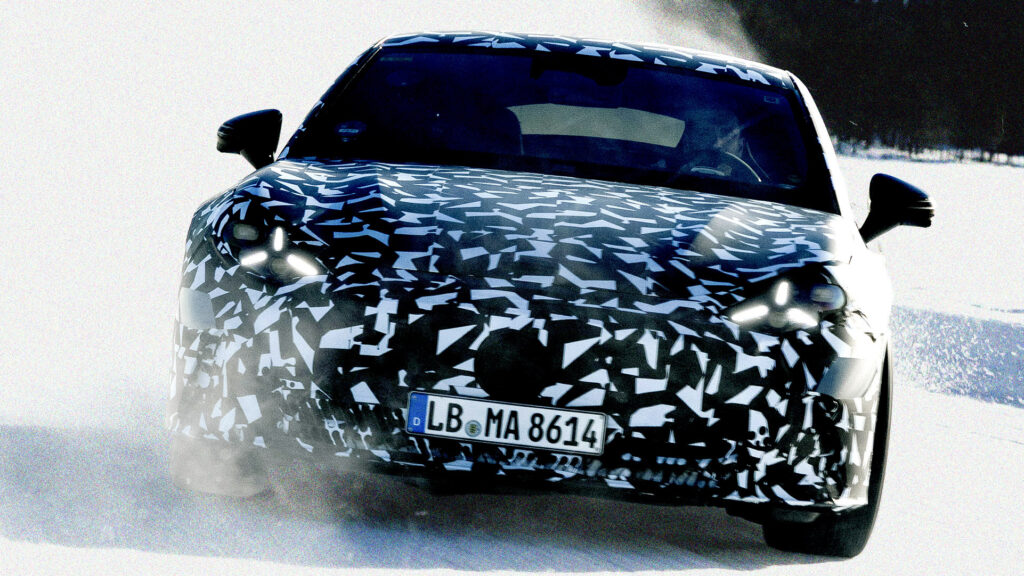
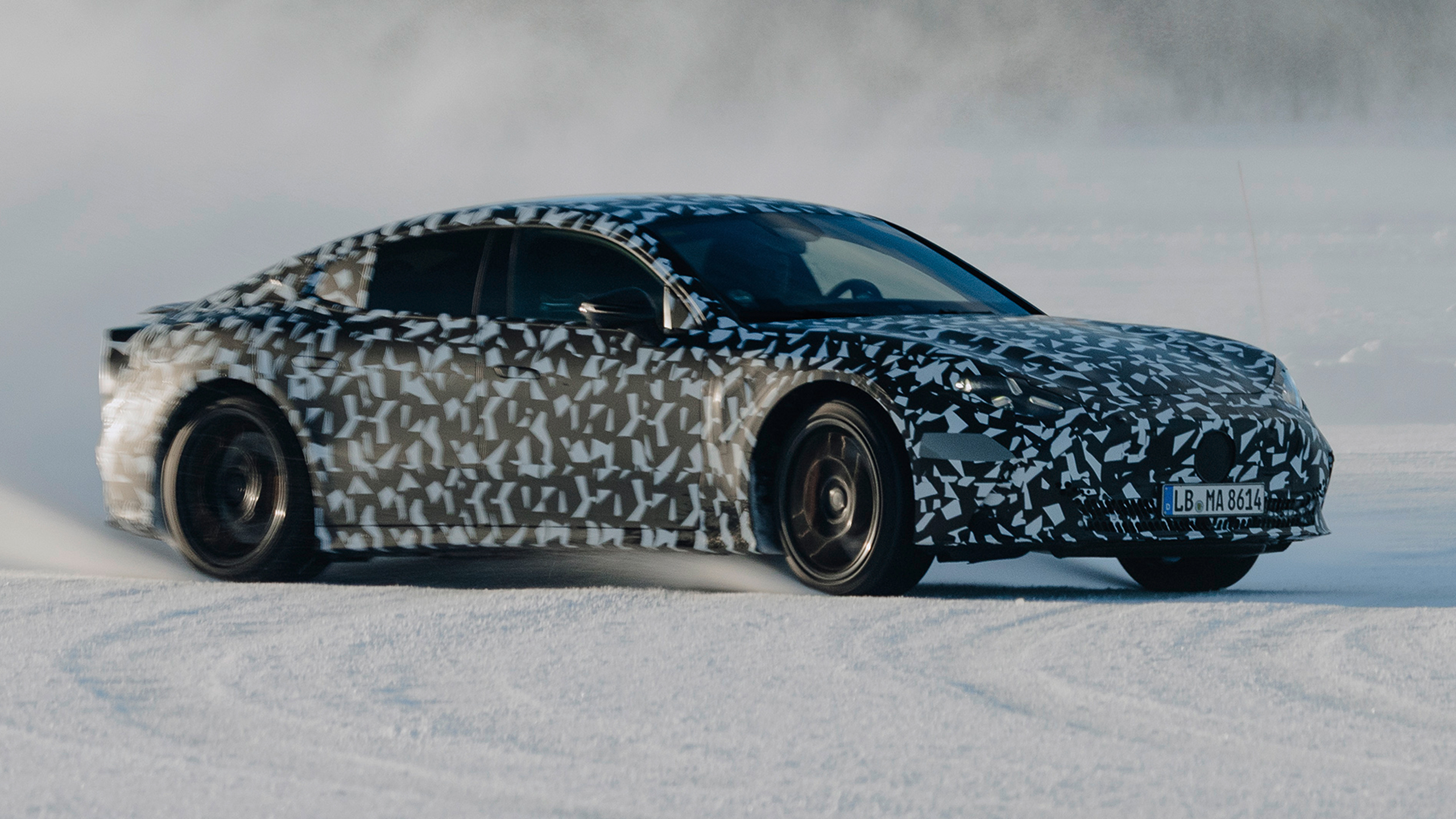
The build-up to the release of the all-electric Mercedes-AMG GT 4-Door has been painfully slow, but it’s inching closer to the market, recently finishing up winter testing in Northern Europe. Along the way, a handful of fresh details have surfaced, offering a better sense of how far Mercedes is willing to go to make this feel like a proper AMG, or at least convince you it is.

While Mercedes-AMG has yet to confirm the final power output for the production sedan ahead of its spring launch, the concept has already shown it can deliver up to 1,341 hp. AMG has confirmed the car will use three advanced axial-flux electric motors, enabling configurable rear-wheel-drive and all-wheel-drive setups. At the center of it all is a complex driving-dynamics control system, managed through three settings: Response, Agility, and Traction.

Read: Drivers Want More Buttons, So Mercedes-AMG’s New Super Sedan Removes Most Of Them

The Response Control system tweaks the behavior of the electric motors depending on different accelerator pedal commands and individual driving modes. The Agility Control system focuses specifically on tweaking the cornering behavior of the car, adjusting the power distribution on the fly to give the car the feeling of having a shorter or a longer wheelbase and varying from slight understeer to controlled oversteer. So while the car will be electric, you’ll still be able to drift it.

Can It Be A Fun EV?

 AMG’s Drift Mode Survives Into The Electric Era, With A New Way Of Working

Traction control goes unusually deep, offering nine selectable levels, similar to setups used in the previous-generation AMG GT R and AMG GT Black Series.

Mercedes-AMG has also confirmed a somewhat unconventional braking setup, pairing carbon-ceramic discs at the front with steel units at the rear. Then there’s the suspension system, which appears particularly advanced, and it better be with all that power at hand. After all, the suspension systems in the Porsche Taycan and Audi e-tron GT are already highly sophisticated, so AMG needs something that can genuinely keep pace.

\\\\\\\\\\\

The setup includes adjustable air springs paired with semi-active roll bars and configurable dampers. In theory, it should deliver a broad range of ability, smoothing out rough roads while still tightening everything up when the pace increases. AMG claims it will balance comfort and cornering precision, whether you’re commuting or pushing harder on track.

Advanced Battery Cooling System

Of course, no EV would be complete without some trick technology on the battery side of things. The cells of the AMG GT 4-Door are directly cooled and include a non-conductive oil that flows around each individual cell to maintain an optimal temperature regardless of the conditions. This should mean it’ll perform for lap after lap on a track, or while plowing through snow, and crossing deserts.

That’s all Mercedes is prepared to share for now, but more details should arrive in the coming weeks. Expect a clearer look at the final design, along with confirmed powertrain options. As for pricing, don’t expect any surprises in your favor. The current gas-powered model spans from $102,000 to $200,500, and this next chapter will almost certainly push beyond that range.

\\\\

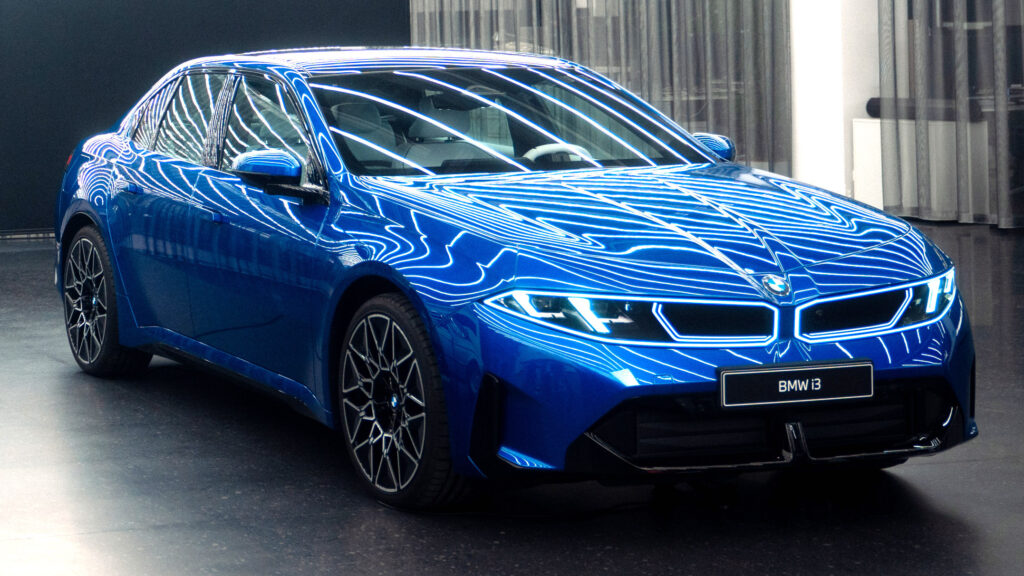
BMW Showed Just Enough Of The i3 Touring For Someone Else To Finish The Job

  • The i3 Touring will shares its design with the sedan up to the B-pillars.
  • A longer roof and revised rear will give the wagon added practicality.
  • Production starts in 2027 following the sedan’s launch in late 2026.

The new BMW i3 sedan has finally filled in enough blanks to picture what its more practical wagon sibling might look like. With BMW confirming an i3 Touring, independent artists have stepped in to interpret the brand’s vague teasers and turn them into something more tangible.

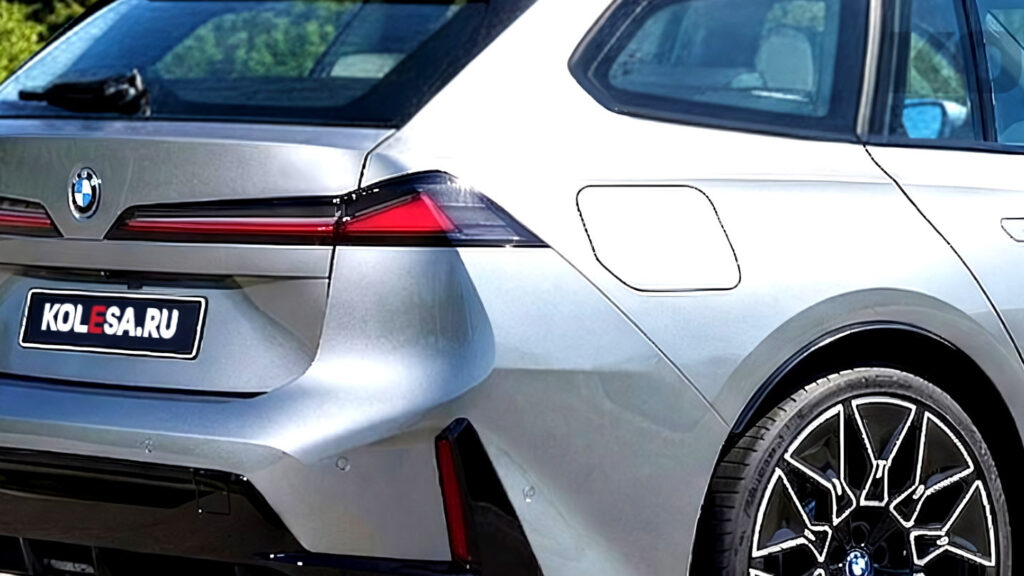
Nikita Chuyko from Kolesa and Theophilus Chin have each offered their own interpretation of the fully electric wagon, and while both follow the same basic blueprint, the details diverge. In each case, the sheet metal mirrors the i3 sedan up to the B-pillars. What distinguishes the i3 Touring is the extended roof and the redesigned tail.

More: The iX3 And i3 Will Send Video Of Your Worst Moments On The Road To BMW

BMW’s own teaser hints at a rising beltline behind the C-pillars, a small tweak meant to inject some visual tension into the longer body. Theottle leans heavily into that idea, exaggerating the upward sweep, while Chuyko opts for a more restrained interpretation. The production version could land somewhere in the middle, keeping things sporty without overdoing it.

\\

Illustrations Kolesa / Nikita Chuyko

At the rear, both designers carry over the slim LED taillights and rear bumper from the i3 sedan, focusing their changes on the tailgate and the sloping rear glass. Theottle retains the sculpted lines beside the BMW emblem and adds a more contemporary roof spoiler, similar to the one seen on the iX3 SUV.

More: BMW Gives China’s Stretched iX3 Door Handles The Rest Of The World Can’t Have

We suspect that the production i3 Touring will likely keep the sedan’s 114.1-inch (2,898 mm) wheelbase, meaning any increase in overall size will likely come from a longer rear overhang.

\\\\\

Illustrations Theophilus Chin

The interior will also be carried over, including the pillar-to-pillar display on the base of the windshield and the 17.9-inch infotainment touchscreen. Rear passengers should benefit from slightly improved headroom, along with a more generous cargo area.

Also: BYD Says Five-Minute Charging Adds 310 Miles, BMW Says Read The Fine Print

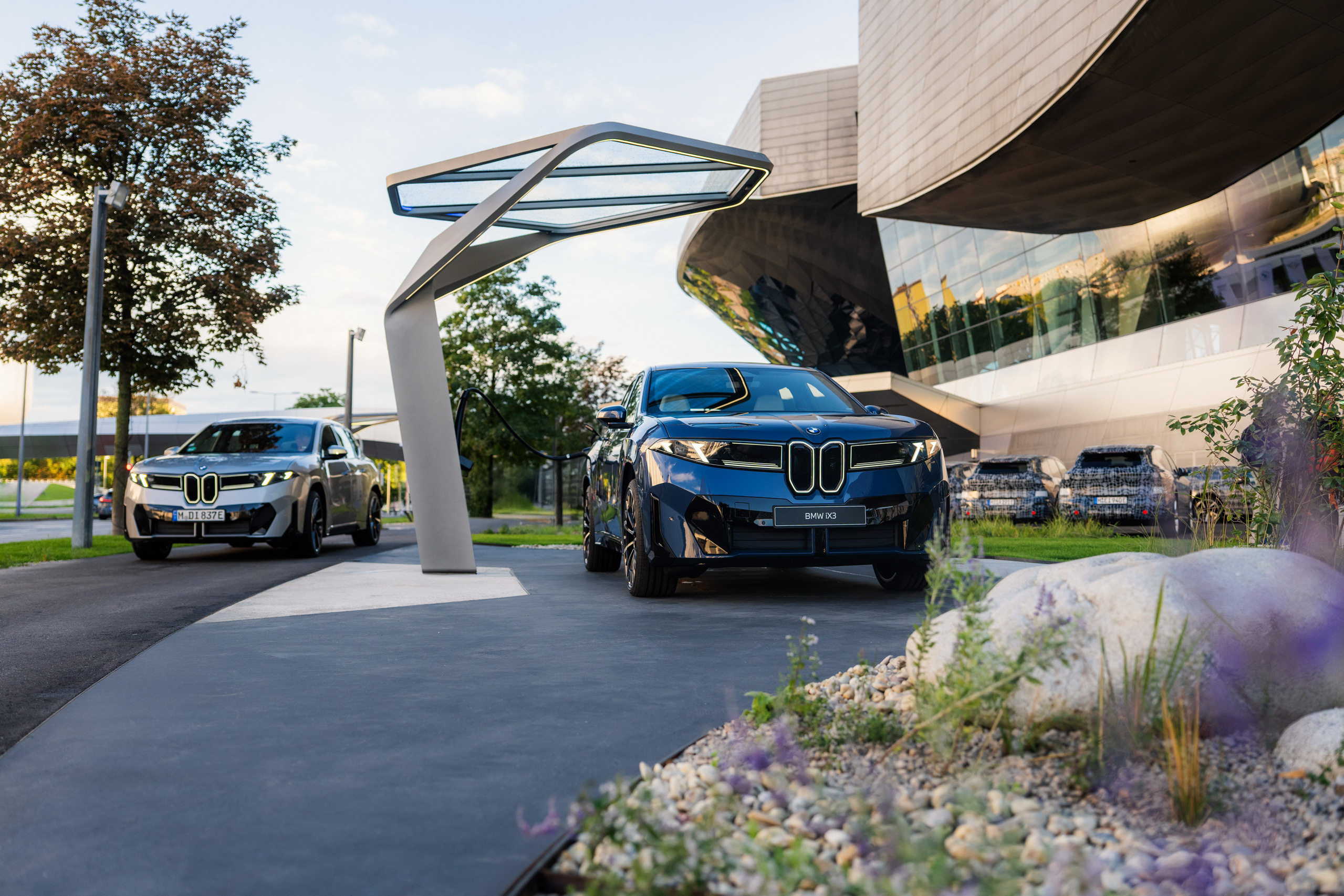
Underneath, the i3 Touring will share its 800-volt Neue Klasse architecture with the i3 sedan and the iX3 SUV. A potential 50 xDrive variant is expected to produce 463 hp (345 kW / 469 PS) and 645 Nm (476 lb-ft) of torque, offering more than enough performance for a family-oriented model.

The i3 sedan targets an EPA range of 708 km (440 miles) between charges, though the wagon’s less aerodynamic shape will likely reduce that figure slightly. Even so, it should be capable of adding 249 miles (400 km) of range in just 10 minutes when connected to a 400 kW charger.

\\\\\\

BMW has confirmed that production of the i3 sedan will begin in August 2026, with first deliveries scheduled for the fall. The i3 Touring is expected to follow in 2027, as part of the 40 new and updated models the company plans to introduce by the end of that year.

The Bavarian automaker is also preparing an ICE-powered 3-Series Touring, which will mirror the design and technology of the Neue Klasse-based i3 Touring while riding on an updated version of the current CLAR platform.

Fiat Sold Nearly 20 Times More 500e EVs in Canada Than In The US

  • Demand for the Fiat 500e has increased significantly over the last year.
  • Fiat’s electric 500 city car is much cheaper in Canada than in the US.
  • Total sales for Stellantis rose 15 percent in Canada in the first quarter.

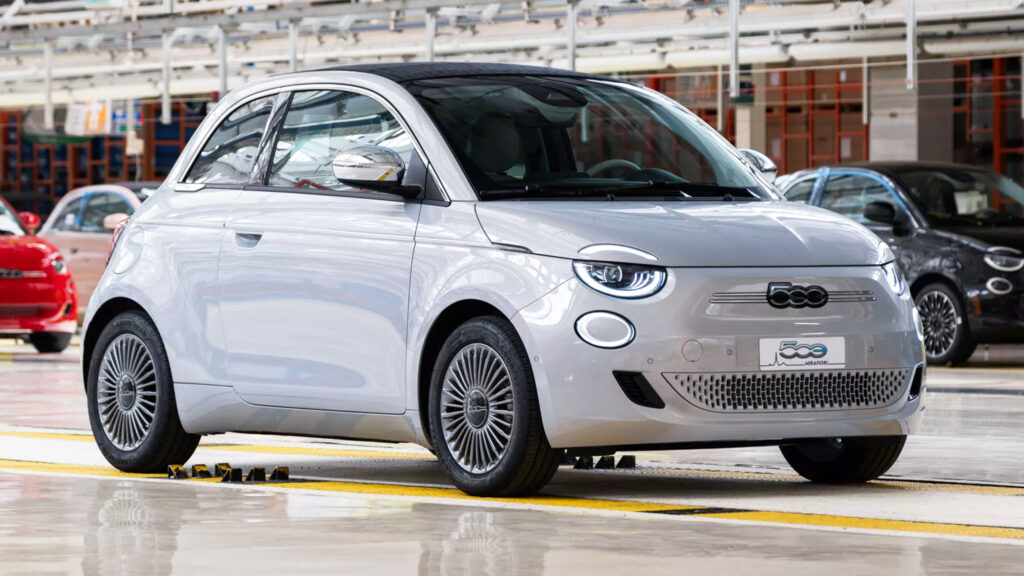
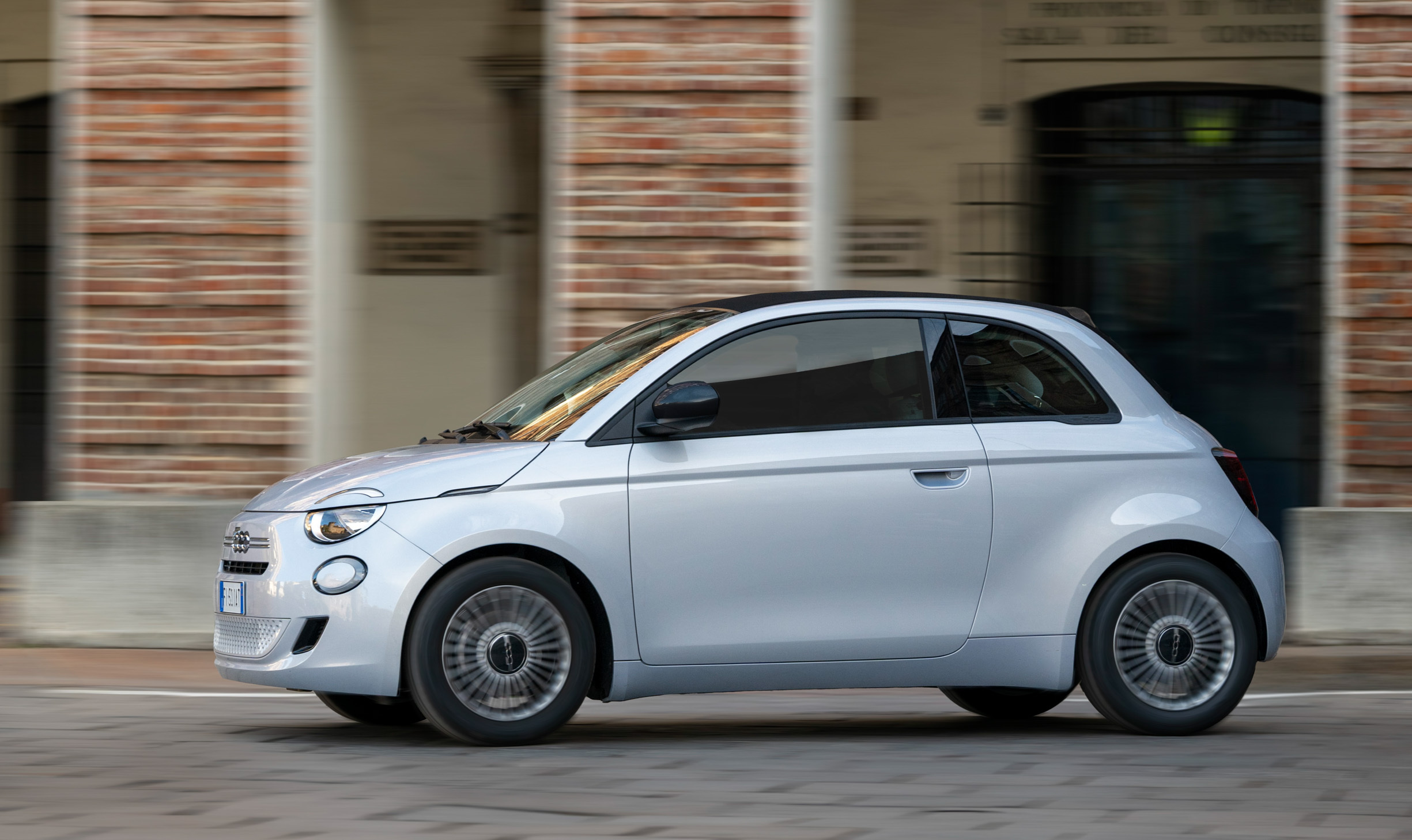
Americans don’t seem particularly fond of new Fiat models, and the numbers make that pretty clear. The Italian brand sold just 155 vehicles in the US during the first quarter of 2025, down 70 percent from a year earlier, or roughly 1.75 cars per day. Across the border in Canada, however, the story takes a different turn.

While Fiat struggles with near nonexistent demand in the US, where 500e sales have plunged 85 percent to just 68 units and 500X deliveries slipped 4 percent to 71, the story looks very different north of the border. In Canada, sales of the tiny EV have surged.

Read: Stellantis Wants To Build Chinese Cars In Canada Instead Of The Jeeps It Promised

During the January–March period, Canadians buyers snapped up 1,287 examples of the electric 500e, the only model Fiat currently sells there. That’s 19 times more than it managed in the US, and a 72 percent jump from the 749 units sold in Q1 2025. It also works out to more than eight times Fiat’s total US sales over the same stretch.

 Fiat Sold Nearly 20 Times More 500e EVs in Canada Than In The US

No doubt contributing to the higher popularity of the 500e in Canada than in America is that it’s much cheaper. In the States, prices for the 500e start at $30,500, which is only about $5,000 less than a new Chevrolet Equinox EV that’s much larger, much more practical, and has more than double the driving range.

In Canada, the Fiat 500e starts at CA$30,290 (US$21,700 at current exchange rates), or effectively CA$25,290 (US$18,100), once a CA$5,000 (US$3,600) incentive from the country’s Electric Vehicle Affordability Program is applied. That makes it the cheapest EV on sale in Canada.

Some Stellantis Models Shine, Others Don’t

 Fiat Sold Nearly 20 Times More 500e EVs in Canada Than In The US

Fiat wasn’t the only brand from under the Stellantis umbrella to post gains in Q1 2026. Sales at Jeep rose 3 percent from 8,363 to 8,631, while Ram spiked 7 percent, hitting 12,463 units. Chrysler recorded the largest increase, with sales jumping 98 percent to 5,073, driven by a 256 percent surge in Pacifica demand.

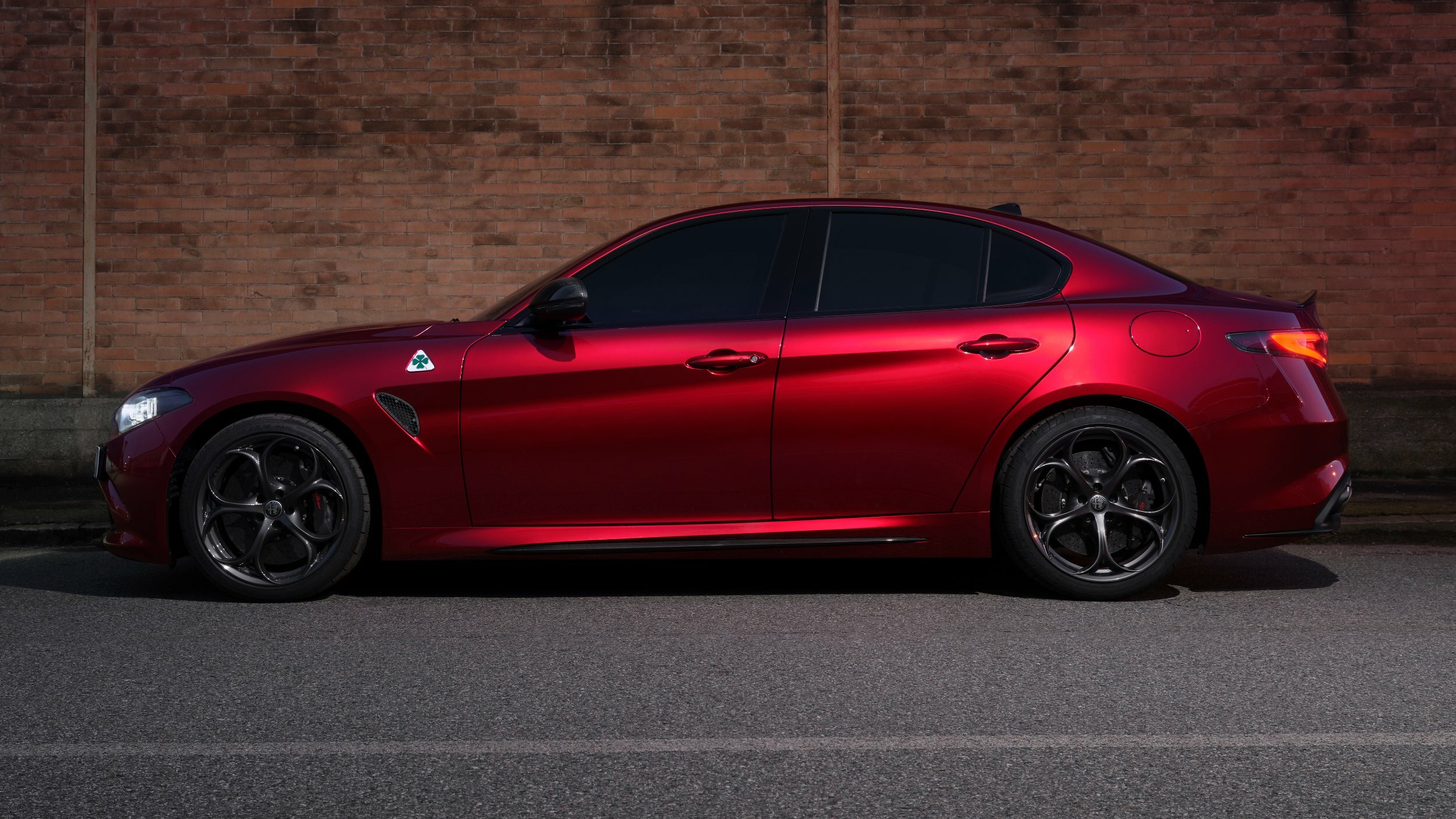
Things weren’t so pretty for Dodge as its sales fell 4 percent to 2,743 units. Additionally, Alfa Romeo plummeted by 51 percent to just 81 units, with a measly 15 Giulias, 46 Stelvios, and 20 Tonales finding new homes.

Stellantis Canada Sales

ModelQ1-26Q1-25Diff.
Compass2,0202,327-13%
Wrangler2,5182,821-11%
Gladiator53428389%
Cherokee126-96%
Cherokee (KM)9590NA
Grand Cherokee2,3342,3410%
Renegade03-100%
Wagoneer00NA
Wagoneer S29205-86%
Grand Wagoneer236357-34%
JEEP BRAND8,6318,3633%
Ram P/U11,5459,90317%
ProMaster Van9181,756-48%
ProMaster City00NA
RAM BRAND12,46311,6597%
300022-100%
Chrysler Grand Caravan1,0651,417-25%
Pacifica4,0081,126256%
CHRYSLER BRAND5,0732,56598%
Hornet37551-93%
Charger (LB)21416827%
Charger051-100%
Challenger123-96%
Caravan10NA
Durango2,4902,05121%
DODGE BRAND2,7432,844-4%
50000NA
500E1,28774972%
500X08-100%
FIAT BRAND1,28775770%
Giulia1521-29%
Stelvio4671-35%
Tonale2074-73%
ALFA BRAND81166-51%
TOTAL FCA CANADA30,27826,35415%
SWIPE

The Gap Between What Tesla Built And What It Sold Just Broke A Company Record

  • The automaker’s Q1 sales fell 14.3 percent from the last quarter of 2025.
  • Tesla was left with a surplus of over 50,300 vehicles sitting in inventory.
  • Shares dropped more than 4 percent after the company’s delivery report.

Tesla sold significantly fewer vehicles in the first quarter of this year than it did in Q4 2025, joining several other car manufacturers in reporting declines through the first three months of the year. Tesla’s poor production and delivery figures triggered a more than 4 percent fall in shares.

Read: Tesla’s Sales Collapsed By Nearly 90% In The Land Of EVs

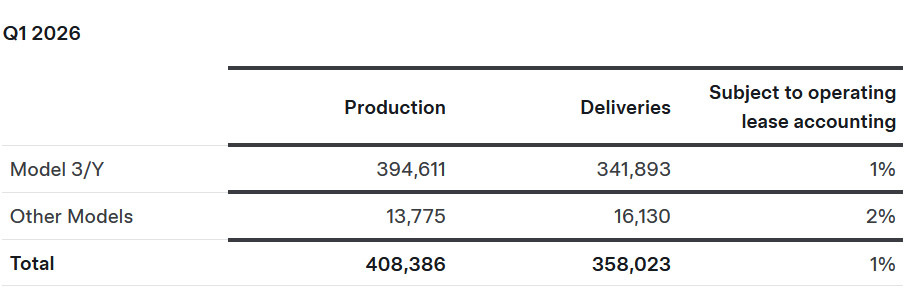
Last quarter, Tesla sold 358,023 vehicles worldwide. This represents a 14.3 percent decrease from the 418,227 models it sold in Q4 2025, but it is a 6 percent rise over Q1 last year. As sales plummeted, the difference between the number of vehicles built by Tesla and the number sold grew to its widest gap in four years.

 The Gap Between What Tesla Built And What It Sold Just Broke A Company Record

Tesla wrapped up the quarter with 408,386 vehicles built, leaving a surplus of 50,363 units sitting in inventory. Data cited by Business Insider shows that it’s the largest gap between production and deliveries the company has ever recorded, which is surprising for a company that has typically kept supply and demand tightly aligned. The closest parallel dates back to the same period in 2024, when production outpaced deliveries by around 46,500 vehicles.

According to Morningstar analyst Seth Goldstein, there are two key reasons to explain why sales fell.

“Tesla’s first-quarter deliveries reflect the U.S. tax credit expiration as well as FSD ​not yet being approved in the EU,” he told Reuters. “These factors will likely continue to weigh on deliveries until Tesla gets EU approval and until we enter the fourth quarter in the U.S.”

Lower Than Analyst Expectations

 The Gap Between What Tesla Built And What It Sold Just Broke A Company Record

The carmaker began to temper expectations for the first quarter last week, publishing a delivery consensus based on estimates from more than a dozen analysts. This suggests Tesla would end the quarter with 365,645 deliveries, but it fell short of that. The analysts also predicted Tesla would deploy 14.4 GWh worth of energy storage, but it actually delivered just 8.8 GWh of energy storage products.

As we’ve come to expect, the Model 3 and Model Y account for the bulk of the company’s sales, with 341,893 finding new homes. The remaining 16,130 vehicles delivered included a mix of the Cybertruck, Semi and the now-discontinued Model S and Model X.

\\\\\\

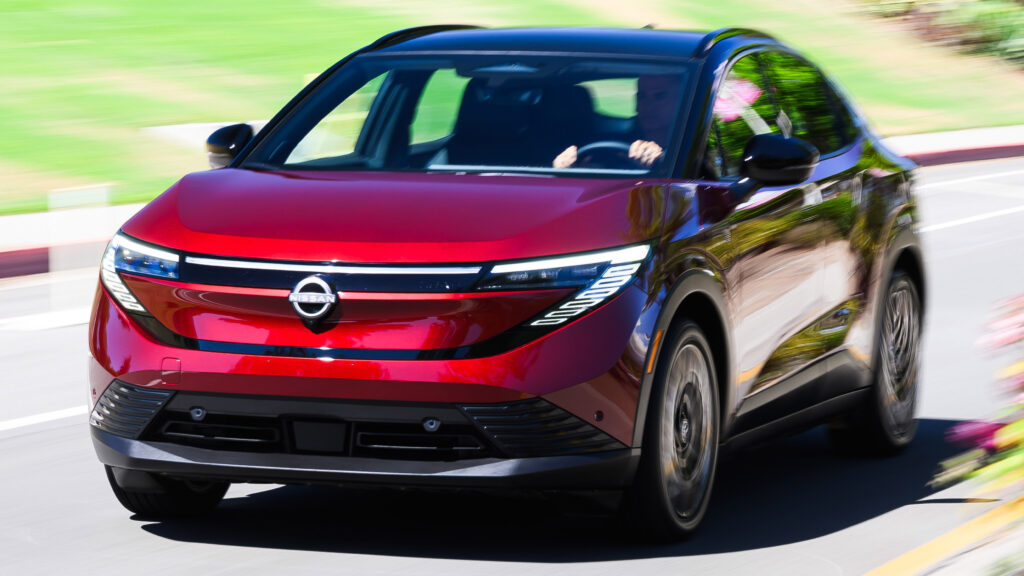
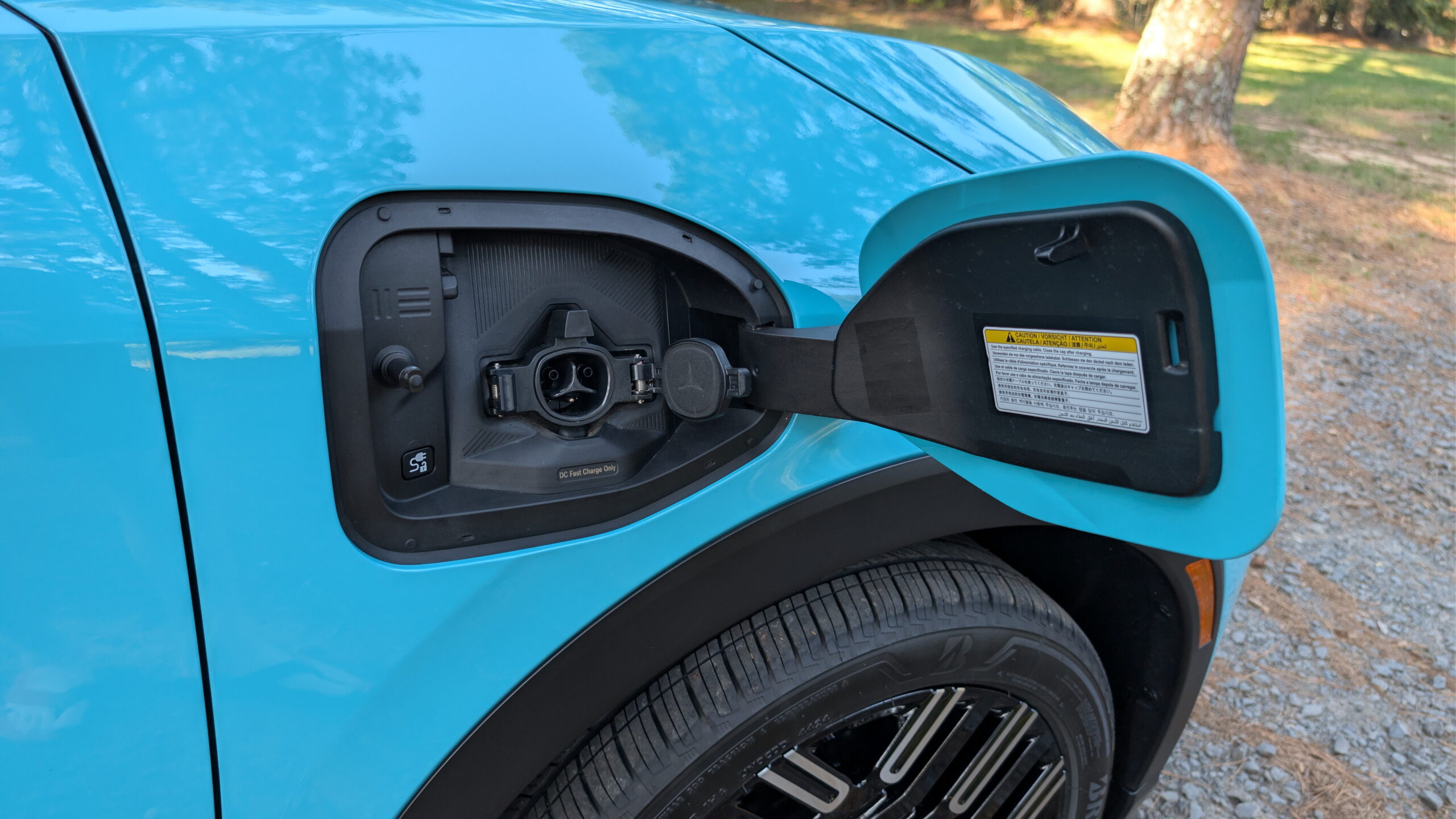
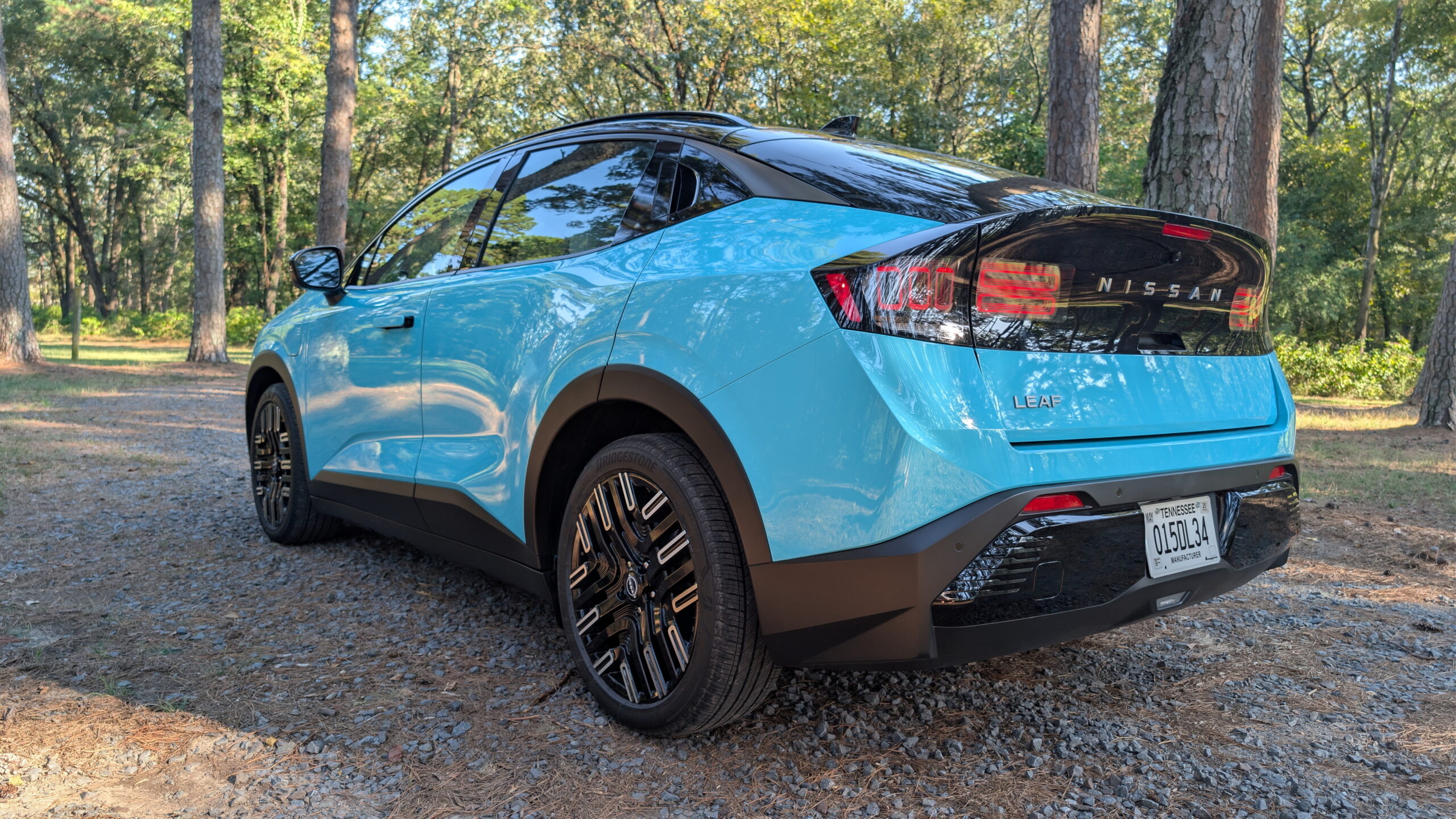
Nissan Warns 51 Leaf Owners To Stop Using Their EVs Right Now

  • Nissan recalls 51 examples of the 2026 Leaf over potential battery fire risks.
  • Owners are advised not to drive, charge, or park the vehicle near buildings.
  • Two thermal incidents were reported, though no injuries have been reported.

The current Nissan Leaf hasn’t even been out for a full year, and yet the company is already issuing a serious safety recall. 51 owners might have a car that could, in very specific circumstances, experience a thermal event. Put simply, the specific vehicles could catch fire, so Nissan is telling owners to take several safety precautions, including parking outside.

According to the recall, the issue traces back to the 78-kWh lithium-ion battery pack. During the supplier’s manufacturing process, the edge of a battery cathode may have been torn. If that damaged section folds over inside the cell, it can create an internal short circuit.

Read: 20,000 Nissan Leaf Owners Told To Stop Fast Charging After Fire Risk Warning

That’s where things get serious. Nissan says the short circuit could overheat the battery and potentially trigger what the company calls a “thermal event.” In other words, the battery could catch fire even when the car is parked, switched off, and not charging.

The first known incident happened in Japan on February 16, when a parked 2026 Leaf suffered a thermal event while sitting outside. A second case surfaced in the U.S. on March 2 at a Nissan dealership. In both cases, the vehicles were turned off and not plugged in.

 Nissan Warns 51 Leaf Owners To Stop Using Their EVs Right Now

That’s key because oftentimes, it’s the charging procedure itself that can initiate instances like this. Considering that these cars weren’t plugged in means owners could have zero indication of an issue before a fire erupts.

Nissan says it used telematics data to scan other Leafs for unusual battery behavior, then traced the suspect battery packs directly to specific VINs. The company says it has one-to-one traceability between the battery and each affected vehicle. Nissan stopped shipping potentially affected Leafs on March 17 and placed vehicles on hold at ports. Owners will begin receiving calls immediately, and interim recall letters will start going out on April 17.

Until then, Nissan says affected owners should park the car outside and away from structures, avoid charging it, and bring it to a dealer. Dealers will provide a rental car until a fix is ready. Once that happens, Nissan will replace the damaged battery modules, or the entire battery pack if necessary, free of charge.

 Nissan Warns 51 Leaf Owners To Stop Using Their EVs Right Now

Credit: Stephen Rivers for Carscoops

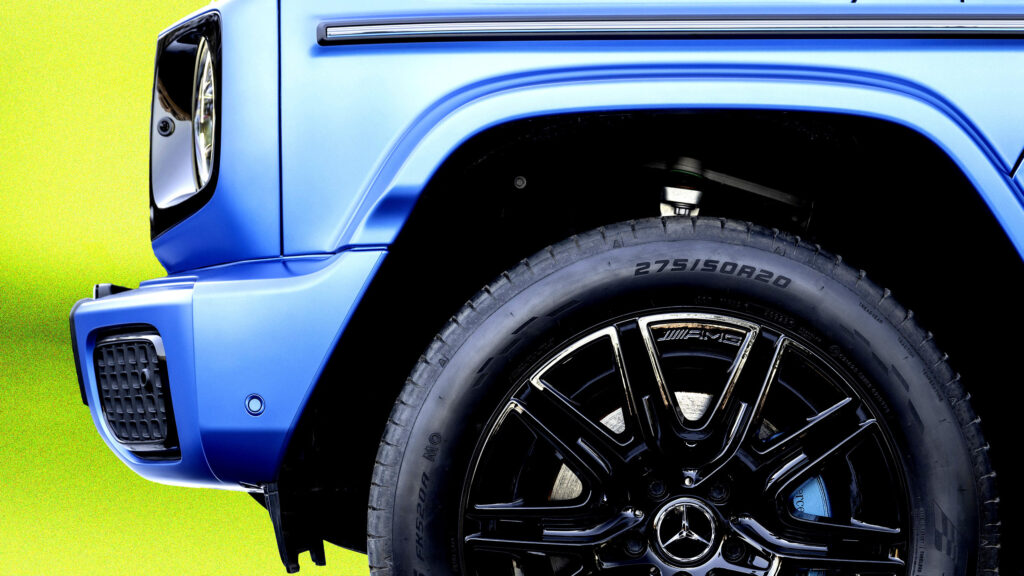
The Wheels Of Your $165K Mercedes G-Class EQ Could Fall Off

  • Extreme driving maneuvers could cause the G580’s wheel bolts to loosen.
  • Mercedes-Benz will alert owners to the recall from May 22 in the US.
  • Wheel bolts used for the G580 are the same as those of the lighter G-Class.

Electric vehicles tend to carry more weight than their combustion-powered counterparts, which makes hardware choices far less forgiving. That’s where things appear to have gone sideways for the Mercedes-Benz G580 with EQ Technology, now facing a recall affecting more than 3,700 units in the US.

According to Mercedes, early versions of the electric G580 were fitted with wheel bolts that weren’t properly engineered for the model’s added mass and higher torque output. Instead, they were carried over from the combustion-powered version. Over time, that mismatch can cause the connection between the wheel and hub to loosen while driving, increasing the risk of a crash.

Read: Mercedes Thinks A $10K Discount Will Get $165K Electric SUVs Moving

A total of 3,734 examples are being recalled, all of which were manufactured between February 26, 2024, to August 19, 2025.

Mercedes says that it became aware of a potential issue during ongoing durability testing of the electric G-Class, , when a wheel bolt loosened despite meeting the required specifications. That prompted a deeper investigation into whether the SUV’s added weight, higher torque output, and demanding driving conditions could gradually compromise the wheel bolt connection.

What Can Go Wrong

\\\\\\\\\

The company ultimately determined that a wheel is most likely to work loose following “extreme driving maneuvers together with a number of repeated wheel changes over the vehicle’s lifetime.” This combination can increase wear on the contact surfaces of the wheel bolts.

Starting May 22, Mercedes will begin notifying owners of the recall. Affected drivers will be asked to visit a dealership, where technicians will replace the original bolts with a redesigned set better suited to the electric model’s demands. The updated design uses a two-piece collared lug bolt, intended to maintain consistent friction at the contact surface and reduce wear during tightening.

Vehicles built from August 26, 2025, onward already feature these revised bolts from the factory.

While the regular G-Class enjoyed its best year of sales ever in 2025, the G580 was described by a Mercedes-Benz executive in mid-2025 as a “complete flop.” This recently prompted Mercedes to offer massive discounts the US, in the hopes of driving up sales of the electric SUV that starts from $164,550, including destination.

\\\\\\\\

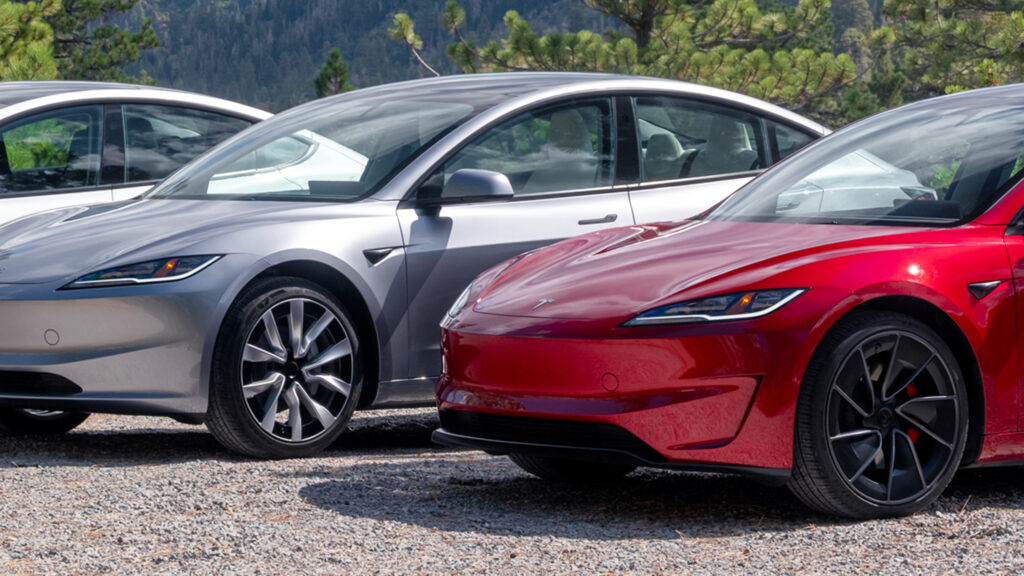
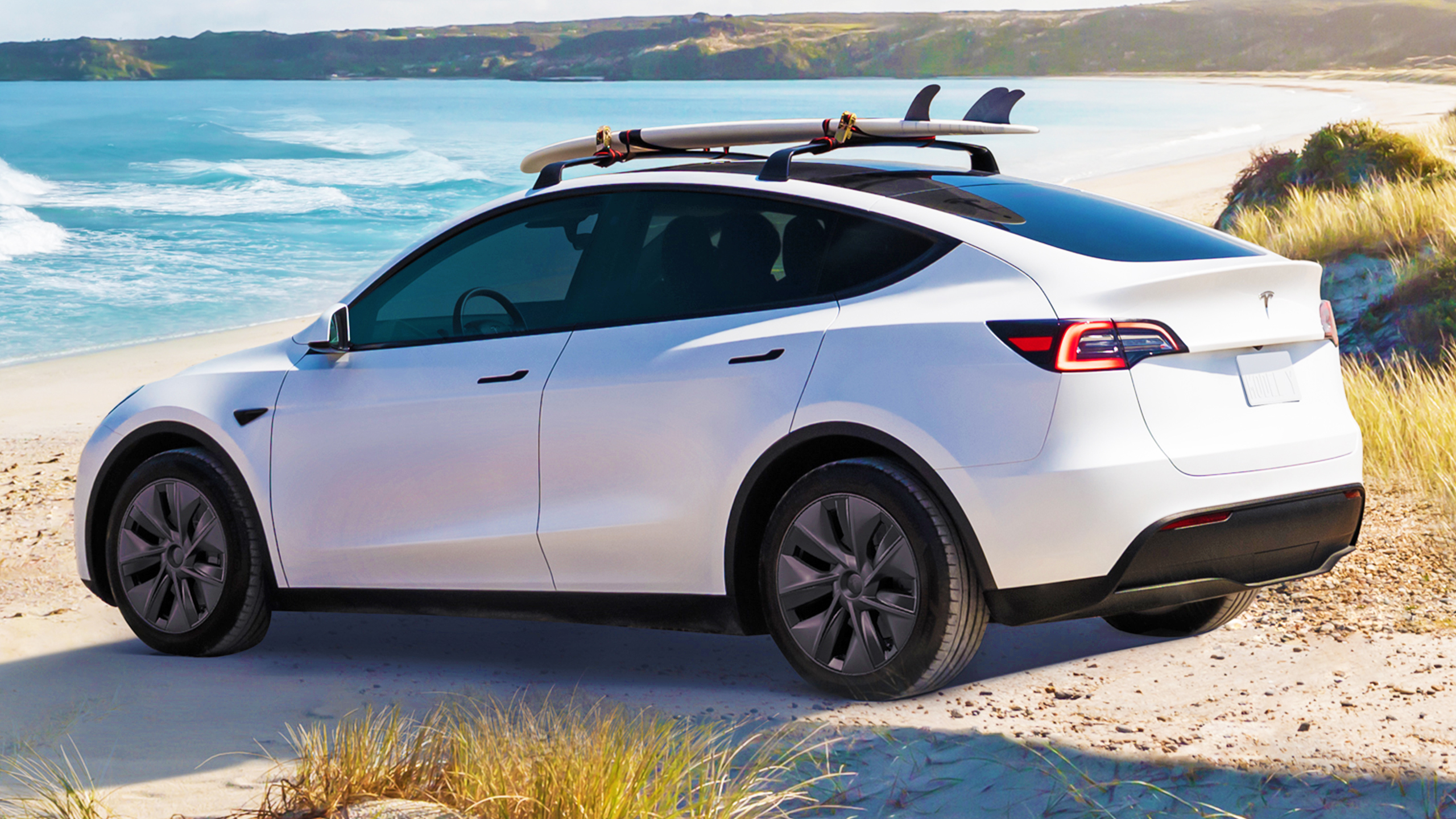
Tesla’s Third Row Is Back, And It’ll Cost UK Families £12,500 To Get There

  • Brits can now order a seven-seat Tesla Model Y for £54,490.
  • Option is only available on the pricey Long Range AWD trim.
  • Seven-seats are already available in America and in Europe.

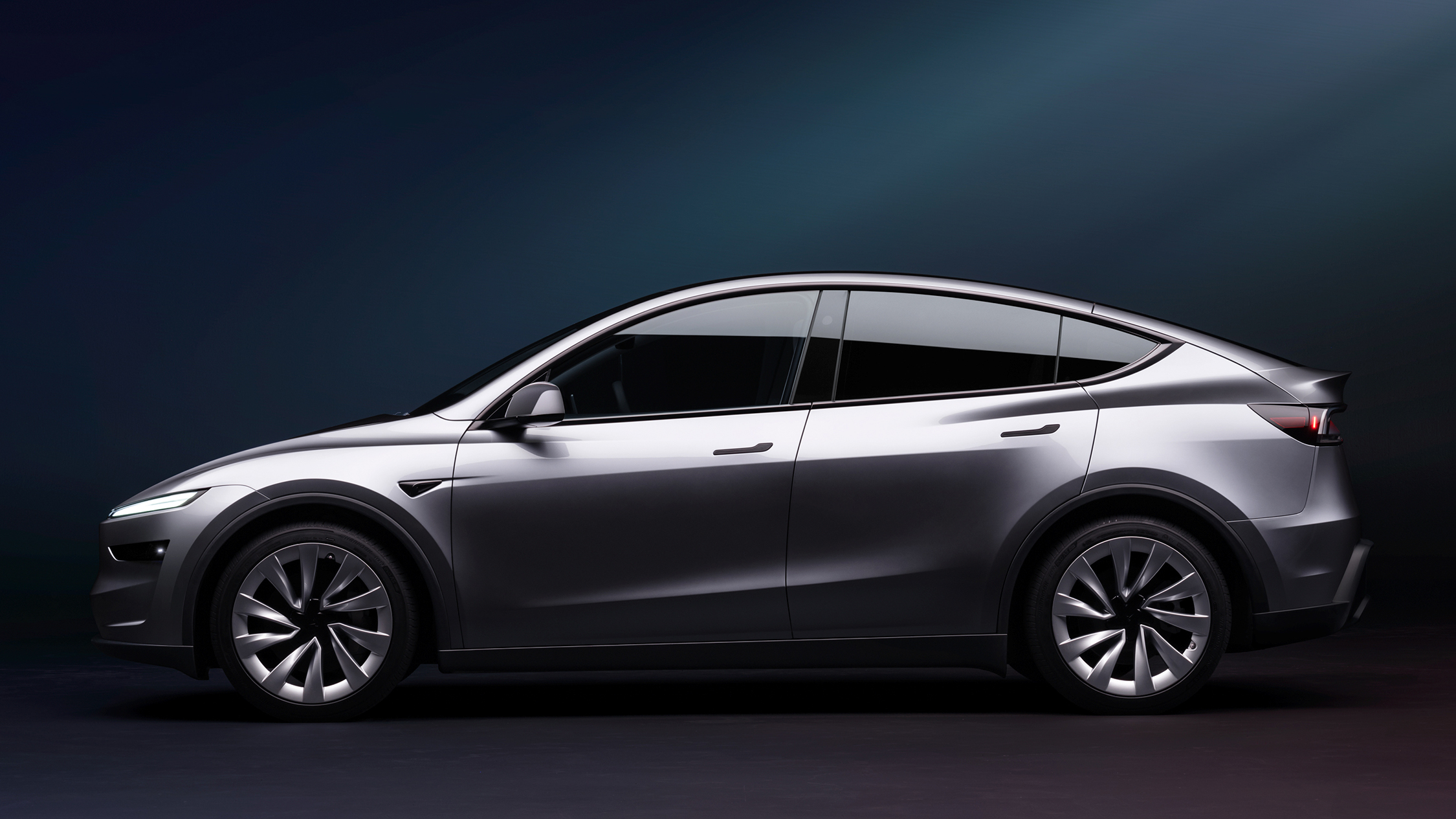
The Tesla Model Y is trying to win back big families and maybe a few lost sales rankings too. Tesla has quietly slipped a seven-seat option back into the UK lineup, and it might be just the nudge the crossover needs.

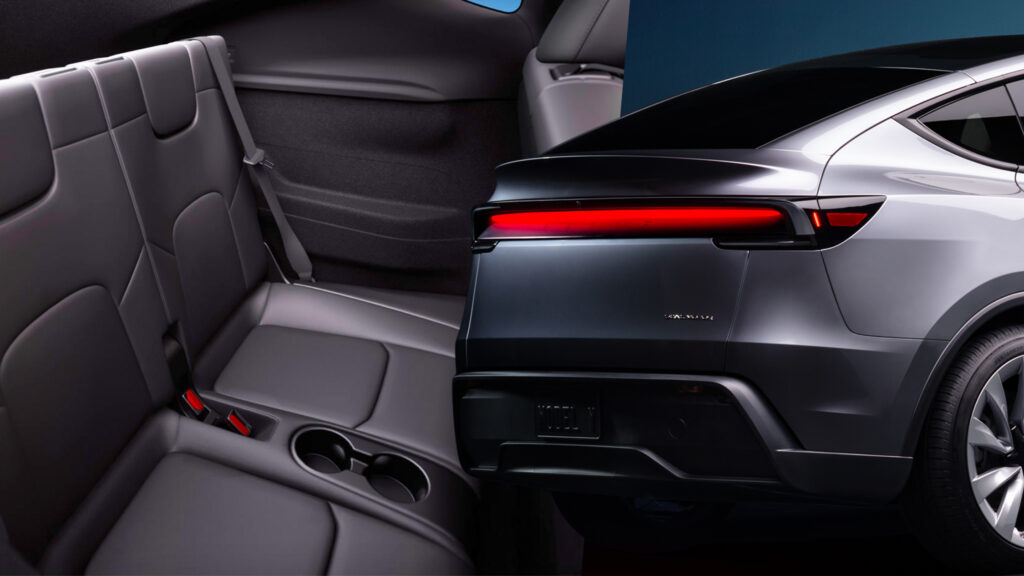
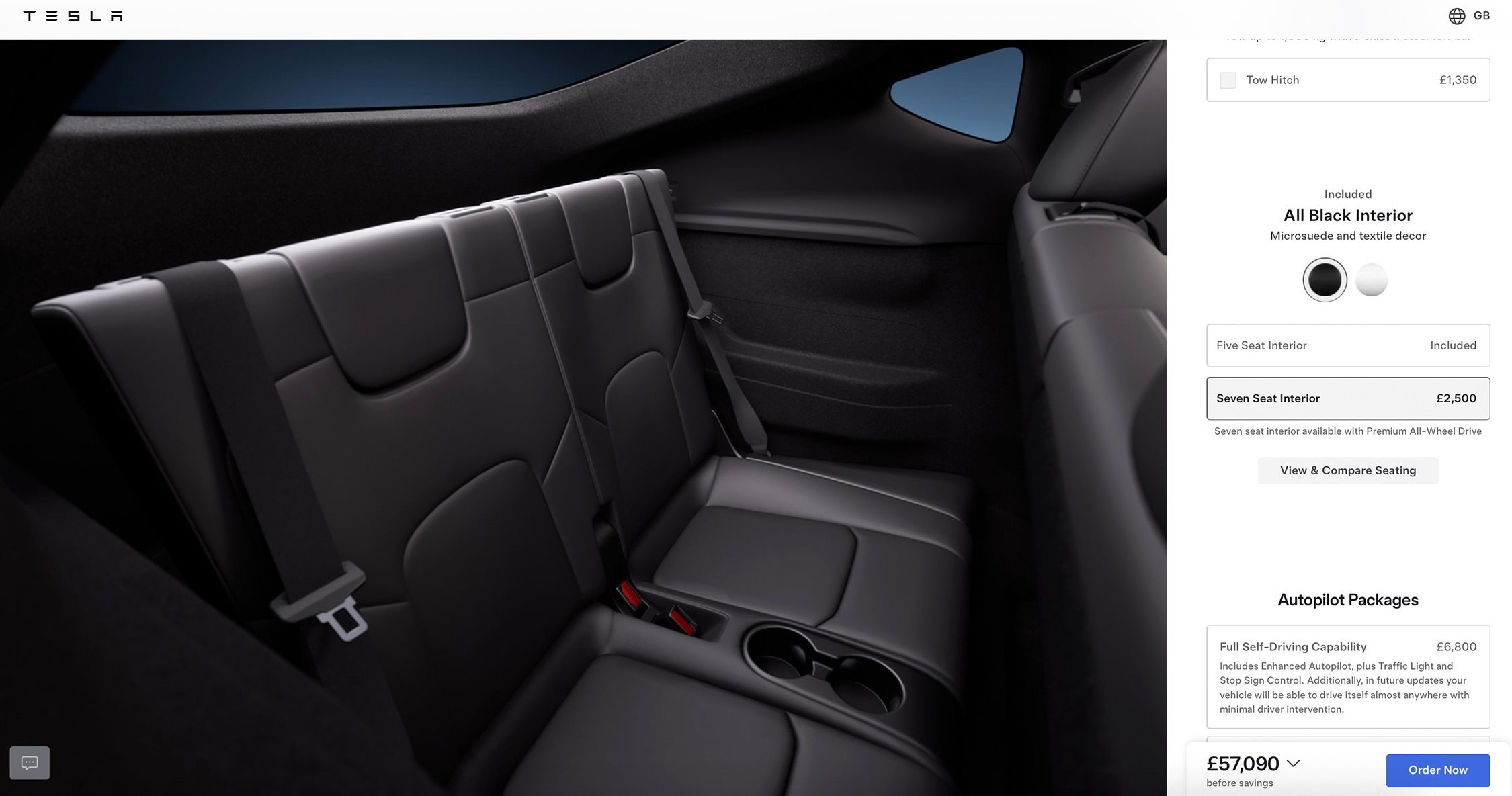
For £54,490 (equal to $68,500 at current rates), buyers get a pair of extra seats tucked neatly into the boot, an option already available in the US and the EU. That is £2,500 ($3,100) more than the regular version, versus $2,500 in the US, but that’s not the real catch. The bummer here is you can only have those extra chairs if you also choose the Long Range All-Wheel Drive model which costs £10k ($12,500) more than the entry-level single-motor SUV.

Related: Jim Farley Promises A New Affordable Ford EV To Take On Tesla’s Model 3 And Y

At least it means you still get plenty of punch to move seven bodies around. Twin motors deliver brisk acceleration, hitting 60 mph (97 kmh) in about 4.6 seconds, which is quicker than most people need when ferrying kids to school.

Tesla’s online configurator shows an identical sprint time for the five-seat version, and also suggests both are rated at 391 miles (630 km) WLTP. But UK websites like Auto Express claim the extra chairs cut the electric range to 372 miles (599 km). Even if that lower number is true, the Model Y would still be among the longest-legged seven-seat electric SUVs.

 Tesla’s Third Row Is Back, And It’ll Cost UK Families £12,500 To Get There

With all seven seats up, there is still room for a couple of carry-on suitcases, plus extra storage in the frunk. Fold the rearmost row flat and the Model Y turns back into a load-lugging champ. But the third row itself is best described as optimistic. Tesla admits it is more suited to children, and the lack of Isofix points limits its usefulness for younger passengers. Still, there are USB-C ports and cupholders, so at least those in the back will not feel entirely forgotten.

Not The Only Seven-Seat EV

This move also drops the Model Y back into the ring with rivals like the Peugeot E-5008 and Mercedes EQB, both of which have been courting family buyers looking for electric practicality with three rows of seats.

The bigger question is whether this is enough to boost Tesla’s fortunes in the UK. The Model Y used to dominate sales charts but slipped out of the top ten in 2025 despite a facelift. Adding two extra seats might not sound revolutionary, but for growing families it could be exactly what was missing.

 Tesla’s Third Row Is Back, And It’ll Cost UK Families £12,500 To Get There

Tesla

Aligning Transportation and Education Teams for IEP Success

As school districts nationwide navigate a steady rise in students requiring individualized education programs (IEPs), the conversation around students with disabilities has expanded well beyond classrooms and compliance checklists. Increasingly, district leaders are recognizing that IEP success depends not only on instructional supports but on the coordinated efforts of transportation departments, special education teams and central administration working toward shared outcomes.

Under the Individuals with Disabilities Education Act (IDEA), school districts are legally required to provide students with disabilities a free and appropriate public education tailored to their individual needs. That obligation includes not only academic services but also the “related services” necessary for students to access and benefit from instruction. In many cases, transportation is one of those services, making school transportation teams an integral, if sometimes overlooked, part of the IEP process.

As districts contend with staffing shortages, tighter budgets and growing service complexity, the need for intentional collaboration across departments has never been more critical. For superintendents and district leadership teams, fostering alignment between transportation and education is no longer optional. It is essential to deliver both legal responsibilities and student outcomes.

The Growing Complexity of IEPs

IEPs are federally mandated, individualized plans developed for students who qualify for special education services. Each plan outlines a student’s current academic and functional performance, measurable annual goals and the specific services required to support progress. These services may include specialized instruction, therapies, behavioral supports and transportation accommodations.

According to IDEA, a multidisciplinary team of educators, service providers, administrators and families must review and develop IEPs. While transportation is not explicitly named in every IEP, it frequently emerges as a related service when a student’s disability affects their ability to travel safely or consistently to and from school.

As districts report increases in the number of students with IEPs, transportation departments are being asked to meet a wider range of needs. These may include specialized routing, adjusted schedules, wheelchair-accessible vehicles, medical equipment accommodations, trained bus aides or door-to-door service. Each of these requirements carries operational, financial and staffing implications that extend far beyond the routing desk.

“From a transportation standpoint, IEP success really means that a student is able to get to and from school safely and consistently, even if they’re attending a program outside of their home school,” said Lisa Sawyer, coordinator of transportation for Tracy Unified School District in California. “It looks like having clear plans in place for behavioral or medical needs that translate well into the bus environment, so the student feels supported and everyone on the bus stays safe.”

Without clear communication and shared planning between departments, districts risk service gaps that can disrupt student access to education and expose compliance challenges. For transportation leaders, understanding the educational intent behind IEP requirements is just as important as understanding the logistical execution.

Transportation as a Related Service

IDEA defines related services as those required to assist a child with a disability in benefiting from special education. Transportation falls squarely within that definition when it is necessary for the student to attend school or participate fully in educational programming.

From a practical standpoint, this means transportation teams must translate IEP language into daily operational decisions. A single line in an IEP can affect vehicle assignments, staffing ratios, route design, training requirements and budget allocations. Even seemingly small accommodations can have ripple effects across a district’s transportation system.

Sawyer said close coordination becomes especially important when a student’s IEP needs change midyear. “When something changes midyear, we work quickly with education and special needs services to figure out the safest path forward,” she said. “If there’s a serious safety concern, transportation may pause temporarily until an IEP meeting can happen.”

More often, Sawyer said, transportation teams implement interim supports. “We might add additional assistance on the bus so the student can continue riding while the IEP team works on a longer-term solution,” she said. “Transportation is part of those conversations to make sure what’s being planned works in the bus setting and is consistent with what’s happening in the classroom.”

That collaboration can lead to practical, immediate improvements. Sawyer recalled a student who repeatedly wore a lap/shoulder seatbelt incorrectly during transport. “During the IEP meeting, transportation was included, and as we talked it through, we learned the student was uncomfortable because the belt was rubbing against their neck,” she said. “Once we adjusted the belt properly and added a padded cover, the issue stopped completely, which was added to the IEP.”

The example illustrates how transportation insight can surface solutions that might not be apparent in a classroom-only discussion. “It was a simple fix,” Sawyer said, “but it really showed how bringing everyone to the table can quickly improve safety and comfort for the student.”

Breaking Down Departmental Silos

Historically, transportation departments have often operated separately from instructional and special education teams. While this separation may have made sense when services were less complex, it poses challenges in today’s educational environment, where student needs and compliance requirements intersect daily with operations.

Effective IEP implementation requires transportation leaders to understand not only what services are required but why they are required. Likewise, special education teams benefit from understanding the logistical realities of routing, staffing, vehicle capacity and workforce limitations.

“Successful alignment between transportation and special education teams happens when both groups view themselves as partners in delivering a student’s educational program—not as separate departments with separate responsibilities,” said Heather Perry, superintendent of the Gorham School Department in Maine

Perry, who was among the four finalists for The Superintendent’s Association 2026 National Superintendent of the Year award, emphasized that bus drivers and transportation staff are often among the adults who interact with students daily. “Bus drivers are seen as important members of the student support team,” she said, “equipped with the information and training they need to safely and confidently support students with diverse needs.”


Related: Superintendent Snapshot: Communication, Collaboration Key for Maine School District Success
Related: Superintendent of the Year Snapshot: Support, Understanding of Transportation


Industry experts note that transportation involvement in the IEP process remains inconsistent across districts, even as transportation responsibilities grow more complex. Alexandra Robinson, an industry consultant and tenured faculty member for the Transporting Students with Disabilities and Special Needs Conference, said transportation representatives should be present at IEP meetings whenever student needs directly affect safety or service delivery.

“Whenever there is a marked improvement or deterioration in behavior, a change of placement, or a change of or new equipment, transportation should be included,” Robinson said.

When transportation staff are unable to attend IEP meetings, Robinson emphasized the importance of proactive communication and structured tools. “Besides having a good and regular working relationship and ongoing communication with the special education team, the transportation team should provide IEP teams with a transportation assessment checklist,” she said, pointing to examples included in last year’s National Congress on School Transportation guidance. “That gives IEP teams a framework to consider transportation needs even when transportation personnel are not present.”

Robinson also addressed situations in which transportation requests are denied or not implemented, particularly when safety concerns arise. “Safety trumps all,” she said. “It behooves the transportation department to see something and say something for any unsafe practice, issue or concern. If transportation knows something is not safe for students on buses and it happens anyway, liability is at stake. Pushback for safety, not convenience, is always appropriate.”

For districts looking to strengthen transportation visibility within IEP planning, Robinson said early and intentional engagement is key. She recommended beginning-of-year meetings that include transportation and special education staff, inviting special education teams to transportation facilities for tours and joint meetings, and developing shared communications for families.

“Transportation should not wait to be invited into the special education office,” Robinson said. “Joint ‘dear parent’ letters on district websites, visible presence at board meetings and PTA events, and shared training sessions for staff and parents help build understanding. Close communication with behavior specialists, physical therapists and occupational therapists around behavior, equipment, securement and positioning is also critical.”

The Superintendent’s Role in Alignment

From a leadership perspective, alignment does not happen by accident. Perry said superintendents play a key role in creating the conditions that allow departments to work together effectively. “Our role is to break down silos and create conditions in which all staff, regardless of department, work toward shared goals for our students,” she said.

That work includes setting clear expectations that collaboration is part of the job, building structures for regular cross-department communication and modeling respect for the expertise each team brings. “When leadership consistently reinforces that every department contributes to the student experience, collaboration becomes a natural part of the culture rather than an added task,” Perry said.

In Gorham, those structures include regular meetings with program directors and building leaders as well as a districtwide mission, vision and strategic plan that connects all components of a student’s educational experience. “We have a strong team, a strong culture and a belief that it takes a village to accomplish our goals for children,” she said.

As IEP needs have grown more complex, Perry said the district has strengthened communication between special education and transportation teams. “This includes more frequent communication between case managers and transportation leadership, clear sharing of student safety, medical and behavioral support plans, additional training for drivers and more intentional route planning that anticipates individual student needs,” she said.

Transportation considerations are reviewed earlier in the IEP process, so supports can be built into planning from the start.

Compliance, Consistency and Family Trust

IDEA includes procedural safeguards designed to protect students and families, including the right to receive services as outlined in an IEP. Transportation issues are a common source of concern when services are delayed, inconsistent or misunderstood.

Clear coordination between departments helps districts avoid these pitfalls by ensuring transportation accommodations are documented accurately, communicated clearly and implemented consistently. When families see that services are reliable and aligned with IEP commitments, trust in the district grows.

To that point, districts are also examining how documentation and communication tools can support consistency as IEP needs evolve. Alisa Roman, director of nutrition and transportation for Lewiston Public Schools in Maine, said IEPs depend on clear, districtwide coordination.

“IEP success in Lewiston Public Schools looks like the district is working together in all aspects to deliver student success,” Roman said. “Without clear communication between the IEP team and the transportation department, crucial information can be lost, which may lead to frustrations among families, school teams and transportation staff.”

Roman noted that the frequency of IEP reviews and meetings can add complexity, particularly when changes occur incrementally. “Small changes without clear notification to families, transportation and schools often result in finger-pointing and students being caught in the middle,” she explained.


Related: IEP Meetings: TSD Conference Panel Discusses the Who, When & What
Related: Florida School Bus Aide Accused of Child Abuse in Ongoing Beating
Related: TSD Panel Shares How Technology Improves Special Needs Transportation Operations


To address those challenges, Lewiston Public Schools is refining how information related to transportation services is documented and shared. “One strategy we are implementing is incorporating a form to be used for related services, which can be updated when changes occur,” Roman said.

“The form, while important, is not used to replace the daily interactions that still need to be reported,” she added.

By strengthening documentation around related services, Roman said the district aims to reduce inefficiencies while improving clarity for all stakeholders. “By implementing a strong related service practice, our goal is to reduce phone calls and emails and have a document that shares the disability as it relates to transportation,” she said.

Consistency also benefits frontline staff. Drivers and aides who receive clear guidance and appropriate training related to IEP requirements are better equipped to support students safely and respectfully. In a time of persistent driver shortages, clarity and support can also contribute to retention.

From a transportation standpoint, Gorham’s Perry said success ultimately comes down to access. “Success is achieved when the student meets the learning goals in their IEP,” she said. “In transportation, this often means ensuring students have access to the programming they need, when they need it.”

Cross-District Collaboration and Shared Learning

As districts nationwide confront similar challenges, cross-district collaboration and shared learning have become increasingly valuable. Leadership networks and superintendent recognition programs provide opportunities to share strategies and highlight districts that have successfully integrated transportation into their special education frameworks.

While local contexts differ, common themes emerge: Early communication, leadership support and a commitment to collaboration. Districts that invest in these areas are better positioned to respond to evolving student needs while maintaining compliance and operational stability.

Looking Ahead

Traditionally, IEP success has been measured primarily through academic progress and compliance benchmarks. While these metrics remain essential, transportation leaders increasingly view success through an operational and human lens.

From their perspective, success means students arrive at school safely, consistently and ready to learn. It means routes are designed with student needs in mind, staff are trained and supported and families experience reliability rather than uncertainty.

As IEP enrollment continues to rise, districts face both challenges and opportunities. The complexity of special education services will require deeper collaboration, stronger leadership alignment and a shared commitment to student access.

Aligning transportation and education teams is not simply a logistical exercise; it is a strategic investment in equity, compliance and student success—one that plays out every school day, long before the first bell rings.

The post Aligning Transportation and Education Teams for IEP Success appeared first on School Transportation News.

NHTSA Kicks off Distracted Driving Awareness Month with Campaign

“Distracted driving is 100 percent preventable, yet too many people give the road far less than 100 percent of their attention,” National Highway Traffic Safety Administration (NHTSA) Administrator Jonathan Morrison said during a press event April 1.

NHTSA officials kicked off National Distracted Driving Awareness Month and unveiled a renewed national enforcement and education effort aimed at curbing one of the most persistent dangers on U.S. roadways. Also speaking was Derek Barrs, administrator of the Federal Motor Carrier Safety Administration (FMCSA); Michael Paris, chief of Fairfield, Connecticut Police; and Patty Kruszewski, who lost her daughter in a distracted driving crash.

The agency is launching its enforcement campaign, “Put the Phone Away or Pay” April 9–13, pairing high-visibility law enforcement with a broad media push targeting drivers, particularly those ages 18 to 34. Officials say the goal is to change behavior before another preventable tragedy occurs.

“We cannot be satisfied until we get that number down to zero,” Morrison said, noting that while traffic fatalities have begun to decline, tens of thousands of lives are still lost each year.

Despite recent progress, distracted driving remains a major factor in roadway crashes nationwide. Federal data cited during the press event notes that more than 33,000 people were killed in crashes involving distracted drivers in 2024, with hundreds of thousands more injured.

Officials emphasized that those numbers likely undercount the true scope of the problem, as distraction can be difficult to confirm after a crash.

“Behind every statistic … that’s a human life,” Barrs said.

Wisconsin Crash

A 13-year-old was struck and killed by a 17-year-old motorists who wasn’t paying attention and reportedly on his phone. The 13-year-old was attempting to board the school bus, when she was struck and hit by the motorists who side-swiped the bus and hit the child on the right side.


Following the crash, he NTSB recommended that NHTSA develop and publish “Driver Distraction Guidelines that address the design of current original equipment in-vehicle electronic devices, portable electronic devices and aftermarket electronic devices to prevent driver distraction.”


The agency also reiterated its recommendation to cell phone manufacturers to develop a “distracted driving lock-out mechanism that will automatically disable any driver-distracting functions when a vehicle is in motion and install the mechanism in the default setting on all new devices and apply it during major software updates.”


Five more recommendations were reiterated to NHTSA following the crash. NTSB calls for NHTSA to develop and apply testing protocols to assess the performance of forward collision avoidance systems in passenger vehicles at various velocities, including high speed and high velocity-differential. It also calls on the agency to expand the New Car Assessment Program 5-star rating system to include a scale that rates the performance of forward collision avoidance and to develop performance test criteria for vehicle designs that reduce injuries to pedestrians.


NTSB also wants NHTSA to develop performance test criteria for manufacturers to use in evaluating the extent to which automated pedestrian safety systems in light vehicles will prevent or mitigate pedestrian injury and incorporate pedestrian safety systems, including pedestrian collision avoidance systems and other more passive safety systems, into the New Car Assessment Program. Additionally, Ford Motor Company is urged to install forward collision avoidance systems that include, at minimum, a forward collision warning component as standard equipment on all new vehicles.

Distracted driving is especially dangerous around school buses, where children may unpredictably enter the roadway. Even a momentary glance at a phone can mean the difference between stopping in time, or not.

“Just even one injury or death on our roadways due to distraction … is way too many,” Barrs said.

A recent National Transportation Safety Board (NTSB) investigation found that a 17-year-old driver was using his cellphone when he struck and killed a 13-year-old student who was preparing to board a school bus in Wisconsin. In its final report on the crash, the NTSB called for stronger enforcement, education and technology solutions to protect students during loading and unloading.


Related: NTSB Says Cell Phone Distraction Cause of 2023 Wisconsin Student Fatality
Related: Wisconsin Child Fatally Struck by Car While Waiting for School Bus


Meanwhile, on Monday, Paris stressed that visible enforcement is critical, but not enough on its own. “We need every driver to make a simple but critical choice — put the phone down, slow down, pay attention,” he said.

During the campaign week, officers across the country will increase patrols and actively ticket drivers caught using handheld devices. The effort is supported by a national media campaign, both English and Spanish.

At its core, the campaign returns to a straightforward message: no notification is worth a life. Officials and safety advocates alike are urging drivers to make that decision before they start the engine: Silence the phone, set it aside and stay focused.

Because, as Morrison noted, it only takes seconds for distraction to change lives forever.


Related: (STN Podcast E297) Deep Dive into Safety: Illegal Passing & Child Restraints, Plus Green Bus Funding
Related: Action Plan Puts National Spotlight on Hidden Toll of Illegal Passing
Related: School Bus Driver Charged with Hit-and-Run Death of Brooklyn Girl
Related: Waymo Driverless Vehicles Continue to Illegally Pass School Buses


Kruszewski told the story of her daughter, Lanie, who at 24 years old was struck and killed while biking home from work in 2012. The driver later admitted he never saw her because he was looking at his phone. Kruszewski said the tragedy underscored how quickly a seemingly small decision, checking a message, can destroy lives.

It “took just one text” to take her daughter’s life and forever change her family, she said.

National Highway Traffic Safety Administration (NHTSA) Administrator Jonathan Morrison stood in front of a row of car keys during a press event April 1, 2026. Each key represented a person injured in a distracted driving crash. The display included about 4,000 keys — symbolizing just a fraction of the victims hurt in 2024.

Behind officials during the announcement stood an installation of hundreds of hanging car keys, each representing a person injured in a distracted driving crash. The display included about 4,000 keys — symbolizing just a fraction of the victims hurt in 2024.

But officials noted that if the exhibit reflected the full scale of the crisis — more than 315,000 people injured in distracted driving crashes that year — it would stretch across half a football field.

“In just the time we’ve been talking today, another 18 people have now been injured in distracted driving crashes,” Morrison said near the close of the event.

The post NHTSA Kicks off Distracted Driving Awareness Month with Campaign appeared first on School Transportation News.

Jim Farley Promises A New Affordable Ford EV To Take On Tesla’s Model 3 And Y

  • Ford developing an affordable EV aimed at the Model 3 and Model Y.
  • The new model is expected to ride on Ford’s flexible UEV architecture.
  • A $30K electric pickup on the same platform is expected to arrive ahead of it.

We’re in the third inning of a nine-inning game, says Ford’s CEO Jim Farley. What’s he talking about? Electric vehicle adoption. And the automaker has plenty coming down the pipeline before the game is over, he adds. Chief among those products is an affordable EV built to directly take on the Tesla Model 3 and Model Y.

Ford has spent the past few years insisting it still believes in EVs, even as it slashed programs, killed the F-150 Lightning, and pivoted hard toward hybrids. That shift is one that plenty of other automakers are also going through, but none seem to have the exact same game plan as the Blue Oval brand.

More: Farley Admits Ford Got The F-150 Lightning Wrong

“We really want to bet on all of it. We’re going to have an all-hybrid lineup. So Bronco… everything you can buy at Ford will have a hybrid. We’ll also have EREVs for towing. We’ll have an all-electric, affordable vehicle to compete with Model Y and Model 3,” Farley said during an appearance on the Spike’s Car Radio podcast.

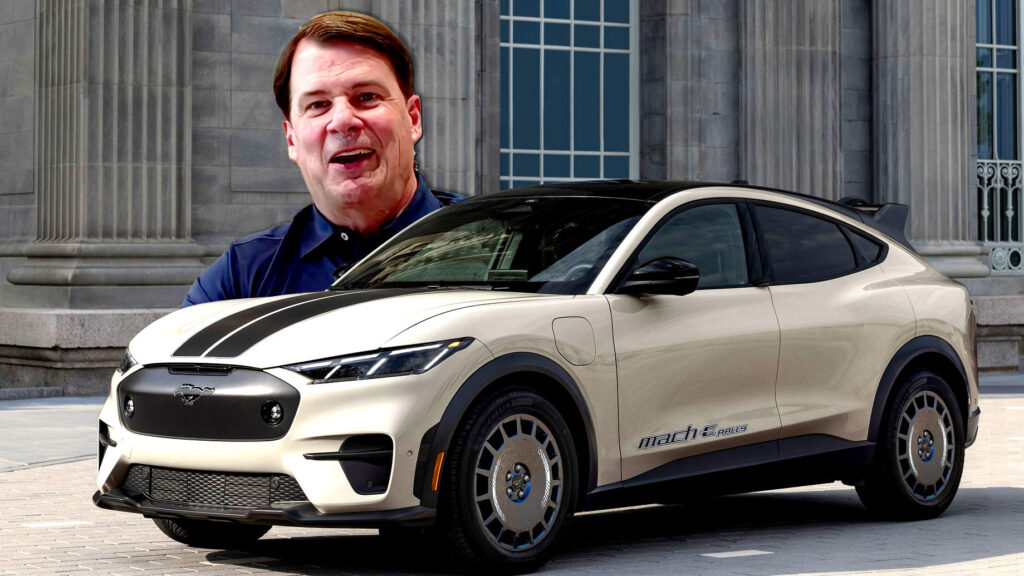
That last part is the most notable. Ford already sells the Mustang Mach-E, a relatively affordable EV that offers similar benefits to the Model Y. At the same time, the Ford lags behind in several key metrics, including range, performance, charging speed, and more. Farley clearly wants to change that.

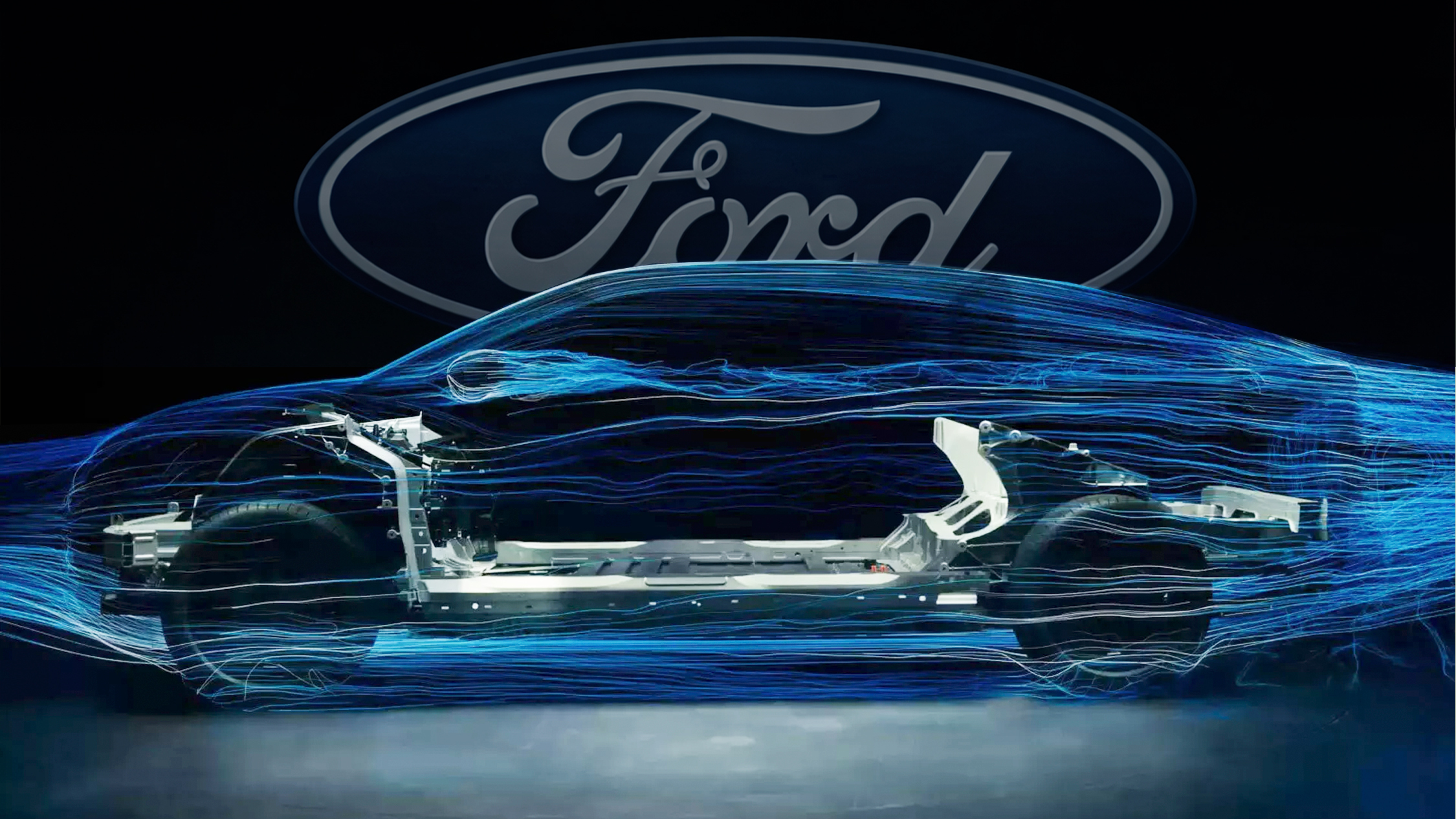
To that end, the brand is working on something new and unique. This future Model Y/Model 3 fighter will almost certainly ride on the company’s Universal EV Platform, or UEV, a new architecture developed by a secretive “skunkworks” team made up largely of former Tesla and Formula 1 engineers. According to Ford, the platform can support up to eight body styles, including compact crossovers, sedans, pickups, vans, and larger SUVs.

Ford’s first UEV-based model is expected to be a roughly $30,000 midsize electric pickup arriving in 2027. The Model 3 and Model Y rival would likely follow shortly after, potentially debuting later that year or in 2028.

 Jim Farley Promises A New Affordable Ford EV To Take On Tesla’s Model 3 And Y

Mercedes Is Betting On A Yoke To Save The Disastrous EQS

  • The facelifted Mercedes EQS will offer steer-by-wire technology.
  • It will come with a new and more compact yoke steering wheel.
  • Updated EV will have revised styling and improved infotainment.

The Mercedes EQS has been an unmitigated disaster as consumers ignored the anonymous, electric blob. The underwhelming reaction pushed the automaker to rush out an emergency facelift in 2024, which featured a more traditional grille, a hood ornament, interior tweaks, and a beefier battery pack.

The company is now preparing a second facelift and Mercedes has confirmed the model will embrace steer-by-wire technology as well as a yoke steering wheel. They’re a bit late to the game, but said the change will usher in a variety of benefits.

More: Mercedes EQS Is Going Back Under The Knife For A Second Facelift

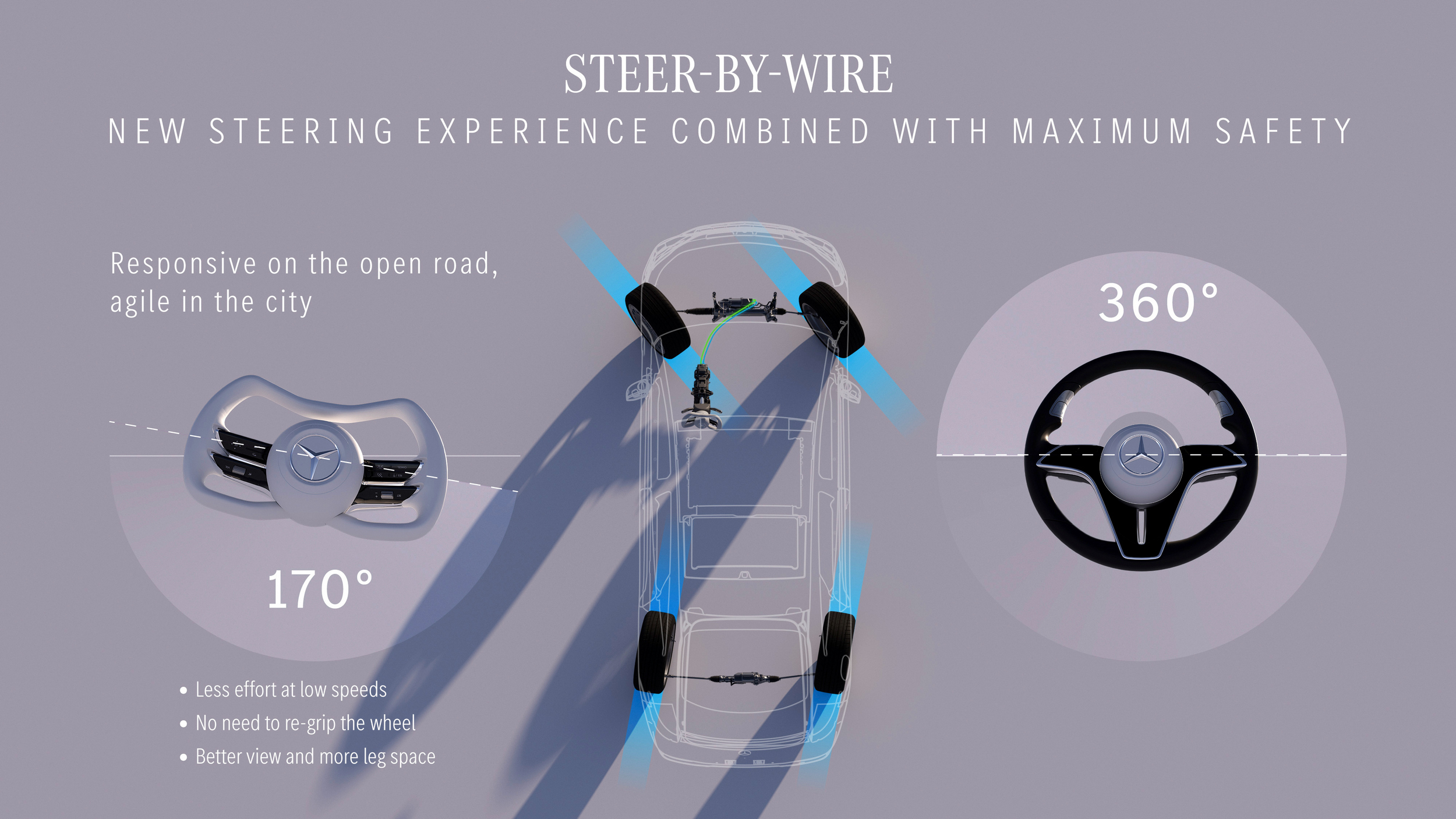
While the automaker didn’t go into many specifics, they said the changes reduce steering effort and mean drivers no longer need to adjust their grip on the wheel while turning. In effect, small movements can make a big difference when driving.

 Mercedes Is Betting On A Yoke To Save The Disastrous EQS

Mercedes went on to say road vibrations transmitted through the steering wheel are eliminated as there’s no longer a mechanical linkage. The automaker also promised the “precise, intuitive steering feel” will be maintained despite being digital.

The steer-by-wire system will be optional, but Mercedes said it has already logged over a million kilometers (621,371 miles) worth of testing. They added the technology has redundancies built in to ensure safety including two signal paths, so “steering capability is always guaranteed.”

A New Steering Wheel

\\\\\

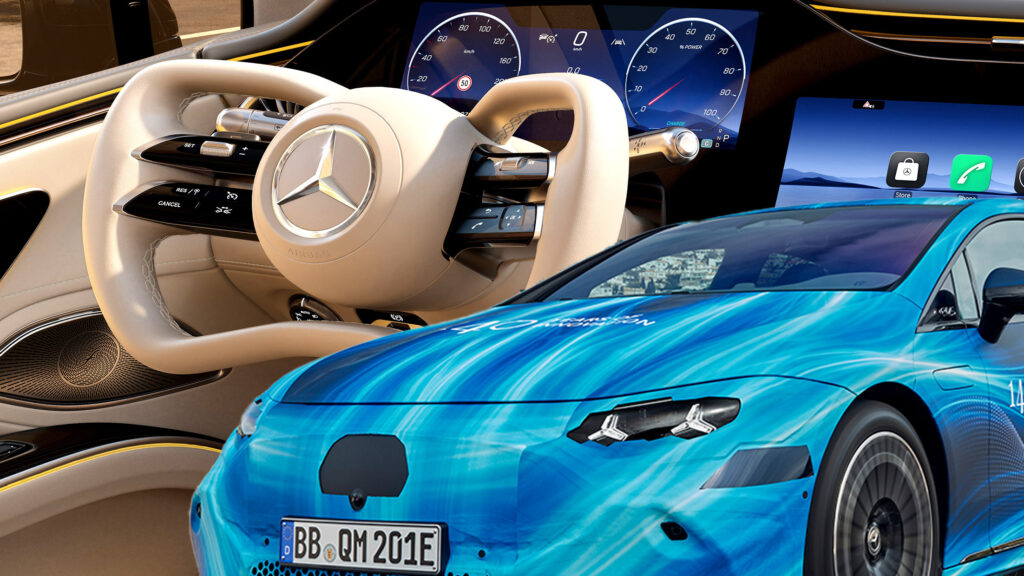
Models equipped with steer-by-wire technology will have a new, yoke-style steering wheel. It features a rectangular design with four spokes as well as curves at the top and bottom.

Mercedes said the yoke gives drivers more space, while also aiding entry and egress. Drivers can also see the digital instrument cluster more easily as the steering wheel rim no longer blocks part of the view. Those are tangible benefits, but the company noted the new designed required the development of a unique airbag.

Other Changes

\\\\\\

The interior pictures suggest the cabin will largely carryover, but a closer inspection reveals an updated infotainment system with new graphics and a revised layout. It presumably runs the new Mercedes-Benz Operating System that debuted on the CLA and is slowly spreading across the company’s lineup.

Mercedes also gave us a peek at the updated exterior, which sports star-infused headlights. We can also expect a revised grille and updated bumpers.

More importantly, the EQS could adopt a new 800 volt electrical architecture to significantly reduce recharging times. We also wouldn’t be surprised to find a new battery pack with an improved cell chemistry as well as more efficient motors that were developed in-house. These changes should deliver a significant improvement in range, although that wasn’t much of a problem as the current model can travel up to 390 miles (628 km) between stops.

\\\\\\\\\\\

Baldauf

The Guy Who Removed Every Button From Your Phone Just Filled A Ferrari With Them

  • Jony Ive leads Luce EV interior design with focus on tactile controls.
  • Ferrari blends digital screens with physical switches for better usability.
  • Touchscreens criticized as impractical for driving by Ive in interview.

The Luce, Ferrari’s first EV, is set to arrive with a refreshingly retro-modern interior that leans as much on philosophy as it does on design. At the center of that vision is Jony Ive, best known for shaping the iPhone and Apple Watch. Interestingly, despite pioneering the everyday use of touchscreen displays, he is now advocating for their restraint in cars.

Tesla played an important role in popularizing large, tablet-like touchscreens in cars, using them to house almost all key vehicle functions. Now, most vehicles on the market have precious few buttons and rely heavily on screens. While this helps brands achieve a modern design aesthetic, we also know car companies love screens because they’re much cheaper to use than physical buttons and controls.

Read: NASA Helped Ferrari Fix The Luce EV’s “Disturbing” Acceleration

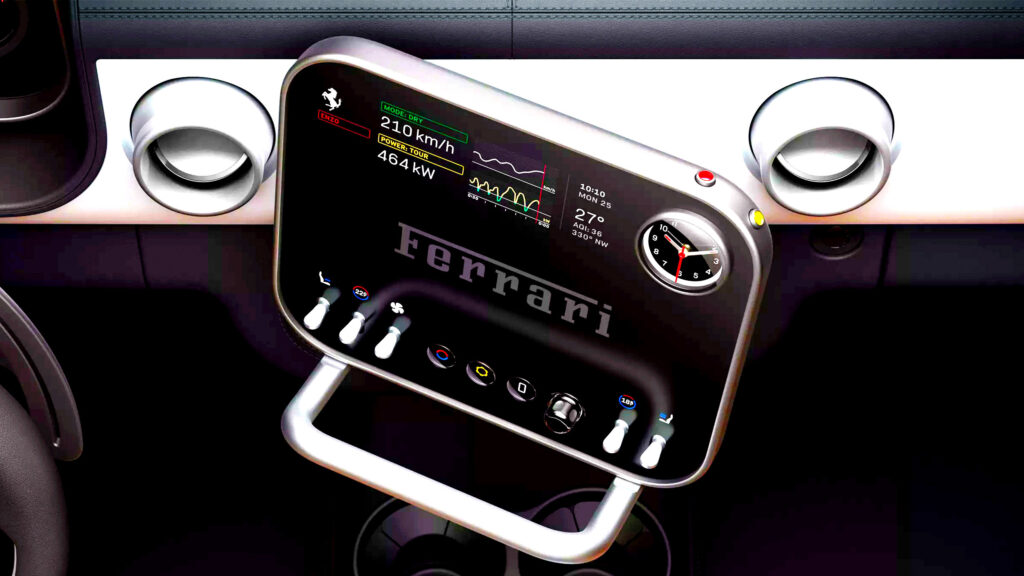
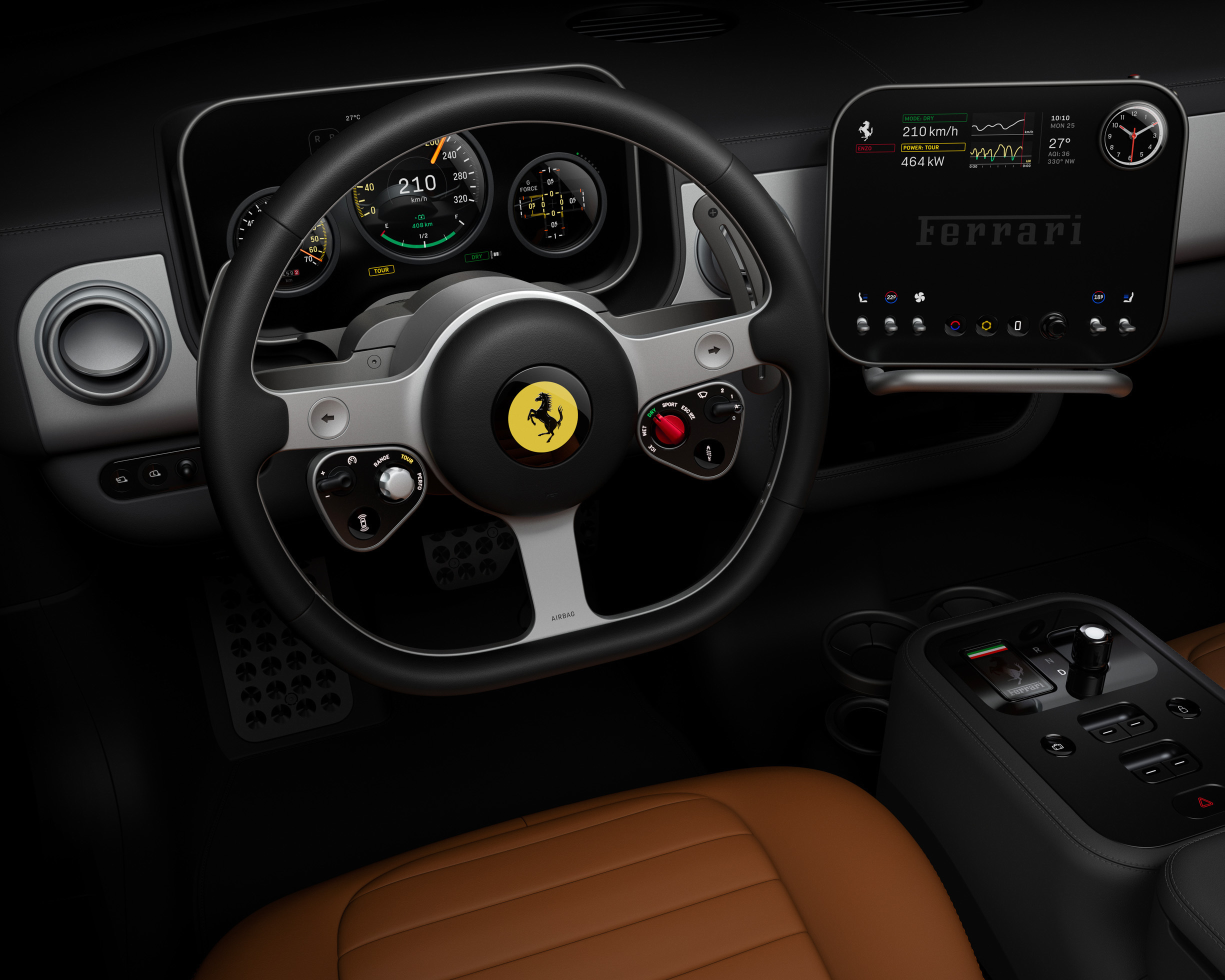
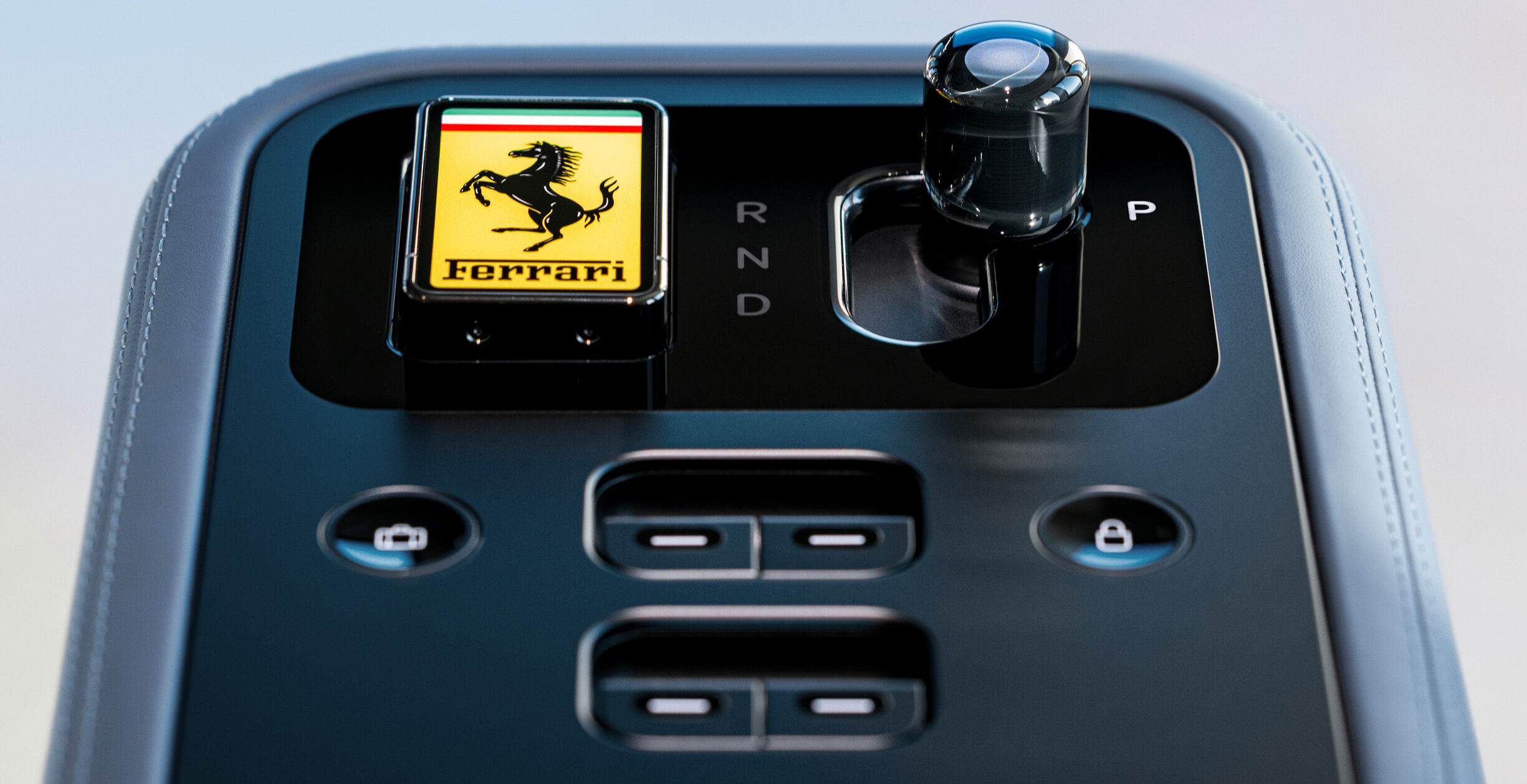
In the Ferrari Luce, Ive is looking to blend the two in a way that hasn’t been seen before. He explained that the goal was to create an interface that blends physical interaction with digital displays, combining the strengths of both rather than relying entirely on one. While there are screens, high-quality physical switches and toggles are used to control them, each with its own click and feel.

Ive Rejects Large Touchscreens

 The Guy Who Removed Every Button From Your Phone Just Filled A Ferrari With Them

“Practically and functionally, a large touchscreen doesn’t work in a car,” Ive told Top Gear during a recent interview. “That’s incontrovertible. I find it easy and lazy. This is a space where there can be an infatuation with style and fashion.”

According to Ive, he and fellow LoveFrom co-founder Marc Newson approached the project by focusing on how each element is made and used, drawing from their experience designing finely crafted objects.

They “treated every single element as if it was a camera or a watch,” noting the team obsessed over even the smallest details, effectively “designing hundreds of products” that come together to feel “singular and coherent.”

\\\\\\\\\

SHProshots

The steering wheel of the Luce has a classic, three-spoke metal design out of 19 CNC-machined parts and includes dials for the Manettino, driving modes, wipers, and turn signals. Positioned behind the wheel is an intricate digital gauge cluster with circular OLED panels from Samsung, with high-end glass positioned in front of them.

Each switch and toggle looks like a little piece of jewelry, adding some theatre to a vehicle that may lack some of the soul of other Ferraris because of its electric powertrain.

 The Guy Who Removed Every Button From Your Phone Just Filled A Ferrari With Them

“To make something simple and intuitive is really difficult,” Ive added. “Everything is founded on being functional. It’s not styled, it’s not garnish, because that’s a distraction and it doesn’t last well. The binnacle and steering wheel are intimately connected, and this is about driving. Everything else augments that experience. The binnacle is about output and the steering wheel is about input. All the controls are physical and mechanical.”

\\\\\\\\\\

Toyota’s bZ Outsold The Prius, And Now A Second US-Made Electric SUV Is Coming

  • Toyota plans to offer seven electric models in the US lineup by 2027.
  • US-built Highlander EV will be joined by another electric SUV.
  • EV sales are climbing, with the bZ outselling the Prius in Q1 2026.

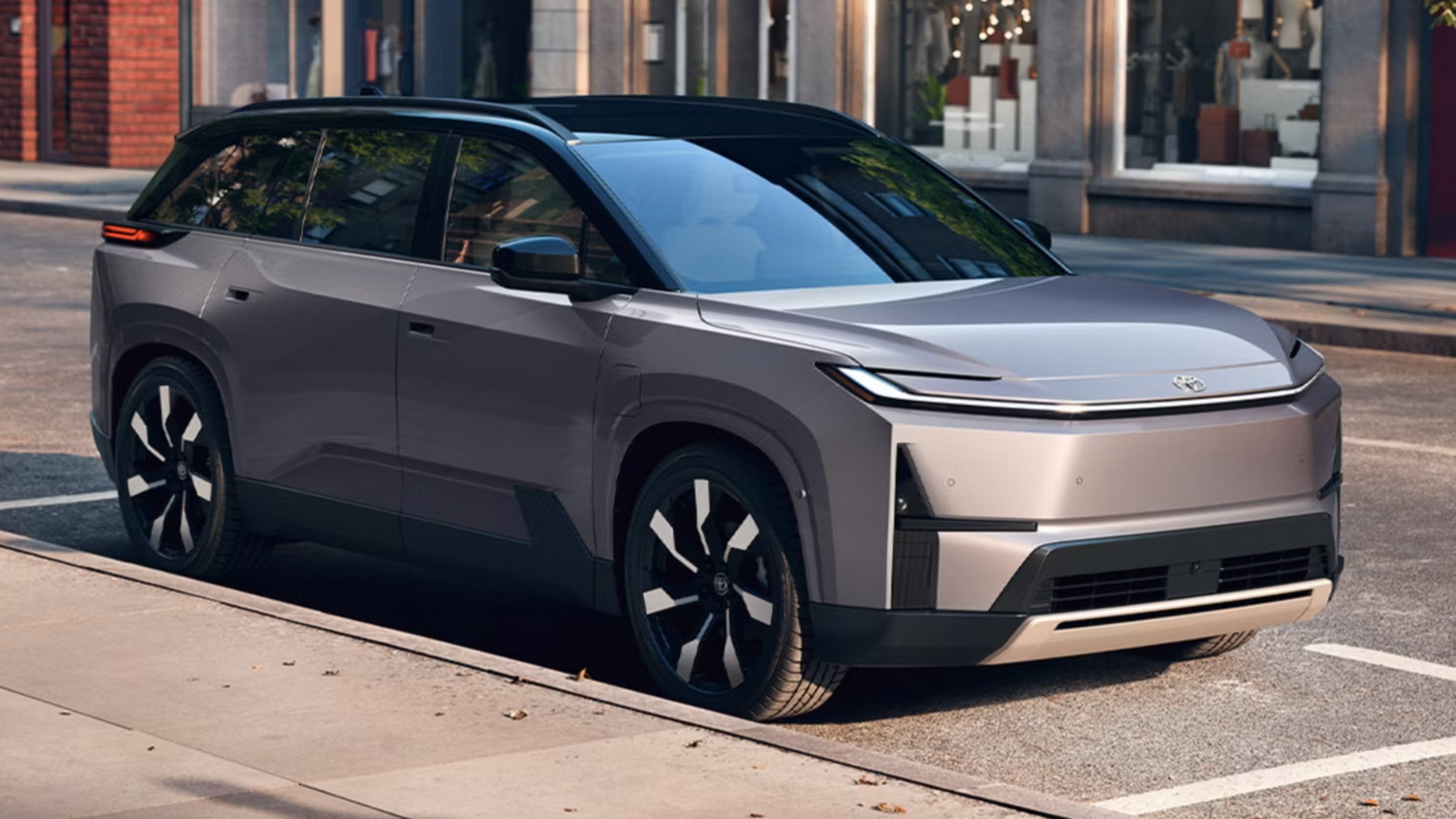
While much of the industry is quietly backing away from aggressive EV rollouts, Toyota is doing the opposite. The company is doubling down on its zero-emission push in North America, wagering that more Americans are ready to make the switch, even after the scrapped tax credits and incentives last year.

By 2027, Toyota plans to offer seven fully electric models in the country. Among them is a still-unnamed mystery SUV that will be built in the United States.

More: Toyota’s Electric Hilux Costs $20K More Than The Diesel, And That’s Not Even The Worst Part

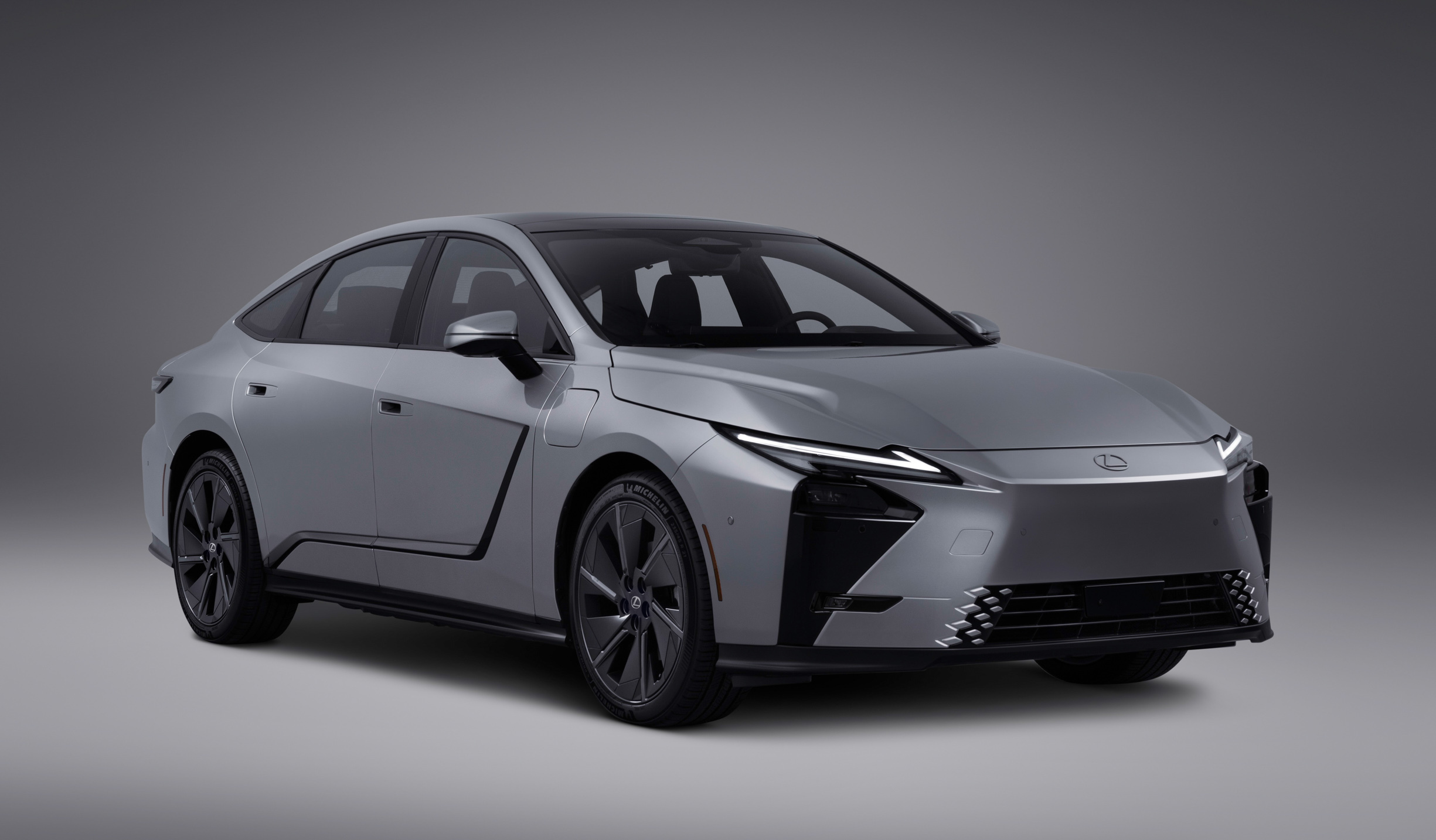
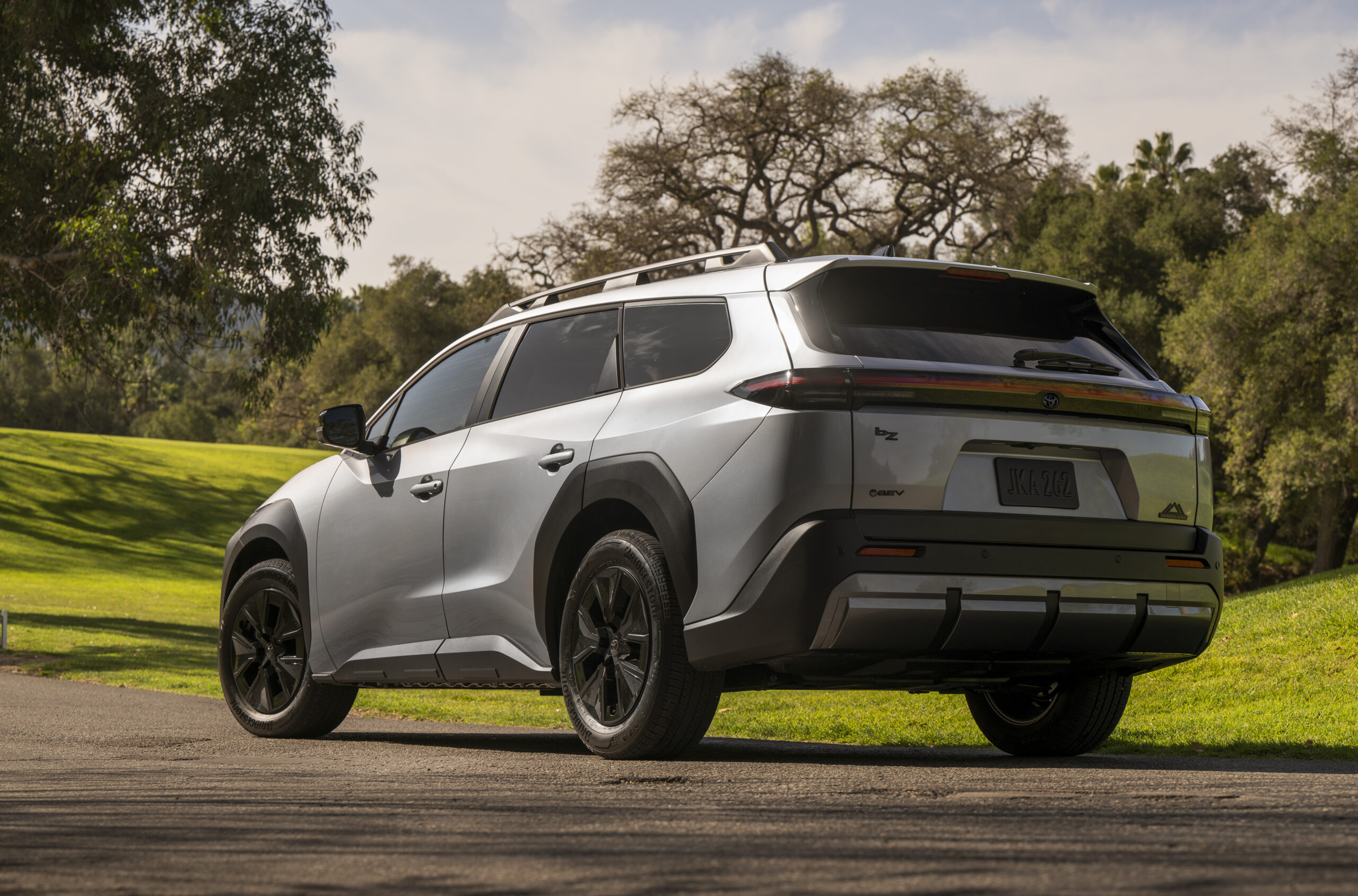
Right now, the Japanese automaker’s North American EV lineup sits at four models, and all of them are imported. That group includes the Toyota bZ, bZ Woodland, C-HR, and Lexus RZ. A fully electric Lexus ES sedan is set to arrive later this month, with the all-electric 2027 Toyota Highlander scheduled to follow in late 2026.

North America EV Expansion Plans

 Toyota’s bZ Outsold The Prius, And Now A Second US-Made Electric SUV Is Coming
2027 Toyota Highlander

The Highlander EV marks a turning point for the brand. It will be the first electric Toyota built in North America, assembled in Kentucky, with batteries sourced from North Carolina. But this is really just the first step in Toyota’s USA EV strategy.

According to a Bloomberg report, the second US-built EV is set to be an SUV already in development. Details remain scarce, including its size and where it will fit within the lineup, but production is also slated for Kentucky, with a planned start in 2027.

Mark Templin, executive vice president and chief operating officer at Toyota Motor North America, says the company plans to give buyers “multiple options.” The idea is fairly simple: if Toyota can secure 15% of the overall market in the US, it should be able to capture a similar share of the EV segment.

 Toyota’s bZ Outsold The Prius, And Now A Second US-Made Electric SUV Is Coming
Lexus ES

He also gave a better sense of who these upcoming EVs are meant to attract, referring to them as “Tesla killers.” The target, in his view, is a familiar group.

More: Toyota’s Flagship Electric Sedan Undercuts Tesla Model S By Nearly $96,000 In China

“We’ll probably see what I call boomerang customers, people who loved Prius for being the greenest car in the industry that maybe went to a Tesla – and then we get those people back. Two weeks ago in Japan, I drove three of our future battery electric cars. They’re fantastic. And I think they’re going to be Tesla killers.”

Recovering After A Rough Start

 Toyota’s bZ Outsold The Prius, And Now A Second US-Made Electric SUV Is Coming
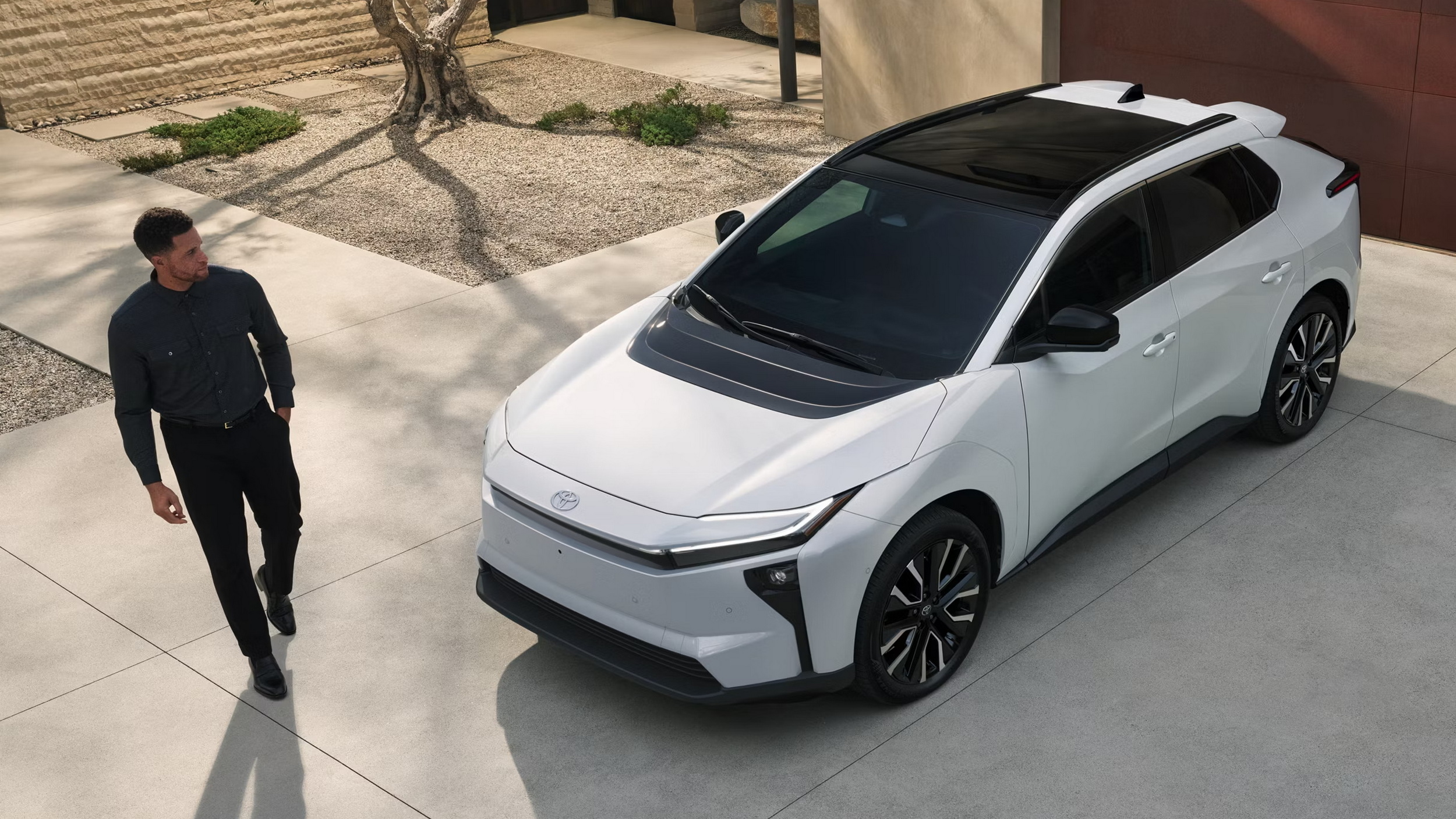
2026 Toyota bZ

Toyota didn’t exactly nail its first swing at EVs. The bZ4X landed with a bit of a thud, but things are starting to look promising. The updated bZ and the related Lexus RZ are finally gaining traction, with deliveries more than doubling in March 2026.

The numbers are revealing, with the bZ reaching 10,029 sales in Q1 2026, up from 5,610 a year earlier, a jump of about 79%. Over the same period, Prius sales fell to 9,737 from 16,653, a drop of roughly 42%. That’s been enough for the bZ to move ahead of the Prius so far this year, which shows just how quickly things can flip.

Hybrids Remain The King

Even so, hybrids are still doing the heavy lifting. They made up 55% of Toyota’s North American sales in March 2026, up from 49% a year earlier. And that number probably doesn’t tell the whole story, since plenty of buyers are still stuck on waiting lists despite factories running flat out.

More: The Soon-To-Be-Axed Supra Has More Than Doubled Its Sales This Year

Toyota clearly knows where its strength lies. The company has committed $10 billion to its U.S. operations in the coming years, including $1 billion to expand plants in Kentucky and Indiana. EVs are part of the plan, but hybrids remain the safe bet that keeps the numbers moving.

 Toyota’s bZ Outsold The Prius, And Now A Second US-Made Electric SUV Is Coming
2026 Toyota bZ Woodland

BYD Says Five-Minute Charging Adds 310 Miles, BMW Says Read The Fine Print

  • The Denza Z9GT can add 310 miles (500 km) of range in just five minutes.
  • BMW execs claim that pursuing quick charging forces other compromises.
  • The iX3 and i3 are BMW’s fast-charging EVs, supporting 400 kW speeds.

BYD sent a jolt through the EV space with its ultra-fast charging push, though not everyone is ready to buy in. The Chinese automaker unveiled a 1,500 kW flash-charging system in China, promising speeds that edge close to refueling a combustion car. Despite the extraordinary claims, BMW remains unconvinced.

According to BYD, the Denza Z9GT can add roughly 310 miles (500 km) of range in just five minutes, thanks to its 1,500 kW charging technology and the second-generation Blade Battery.

Read: BYD’s New EV Chargers Are So Fast They’re Arranged Like Gas Station Pumps

The system also relies on megawatt-level charging hardware and extremely high current delivery to reach those peak rates. It all sounds pretty incredible, but BMW battery production boss Markus Fallböhmer says pursuing charging speeds like this has compromises.

“You always have to be careful with those kinds of announcements,” he told Car Sales. “It is possible to optimize one single performance indicator, but you have to make compromises on other sides. We could also increase our charging speed, but then you have to reduce other important factors of a battery. It is a blanket – if you pull it at one side.”

BMW’s New EVs Are No Charging Slouches

\\\\\\

The second-generation iX3 and the new i3 are the quickest-charging BMWs released to date, supporting peak 400 kW speeds. This is quick enough to top up the i3 with 400 km of range in just 10 minutes. BMW says it can guarantee “quality and safety” at these charging speeds, and appeared to question whether BYD can do the same.

Also: BMW Showed Just Enough Of The i3 Touring For Someone Else To Finish The Job

BMW executives also indicated that pushing beyond these speeds would bring trade-offs in battery durability, range, and affordability, which they see as unnecessary for most real-world use.

 BYD Says Five-Minute Charging Adds 310 Miles, BMW Says Read The Fine Print

“We look to decrease charging time more and more, but you have to look at range, durability, reliability,” the head of BMW’s Neue Klasse models, Mike Reichelt, added. “All of these facts, we guarantee. We look at the speed of the Chinese market… but on the other side, we guarantee quality and safety. That is a topic that we do not [negotiate] with anyone.”

The race to improve charging times in the EV world is much the same as we’ve seen among smartphone manufacturers looking to uprate charging speeds of their devices, with the Chinese often leading the charge. Boost charging speeds too much, and batteries can get hot, including the risk of thermal management issues, which is clearly something BMW would like to avoid.

\\\\\\\\\\

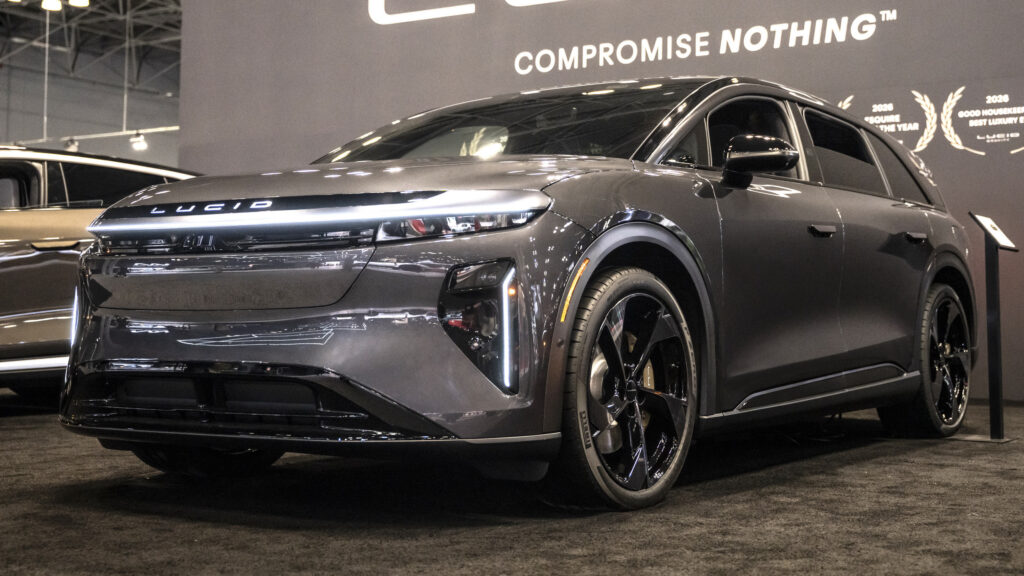
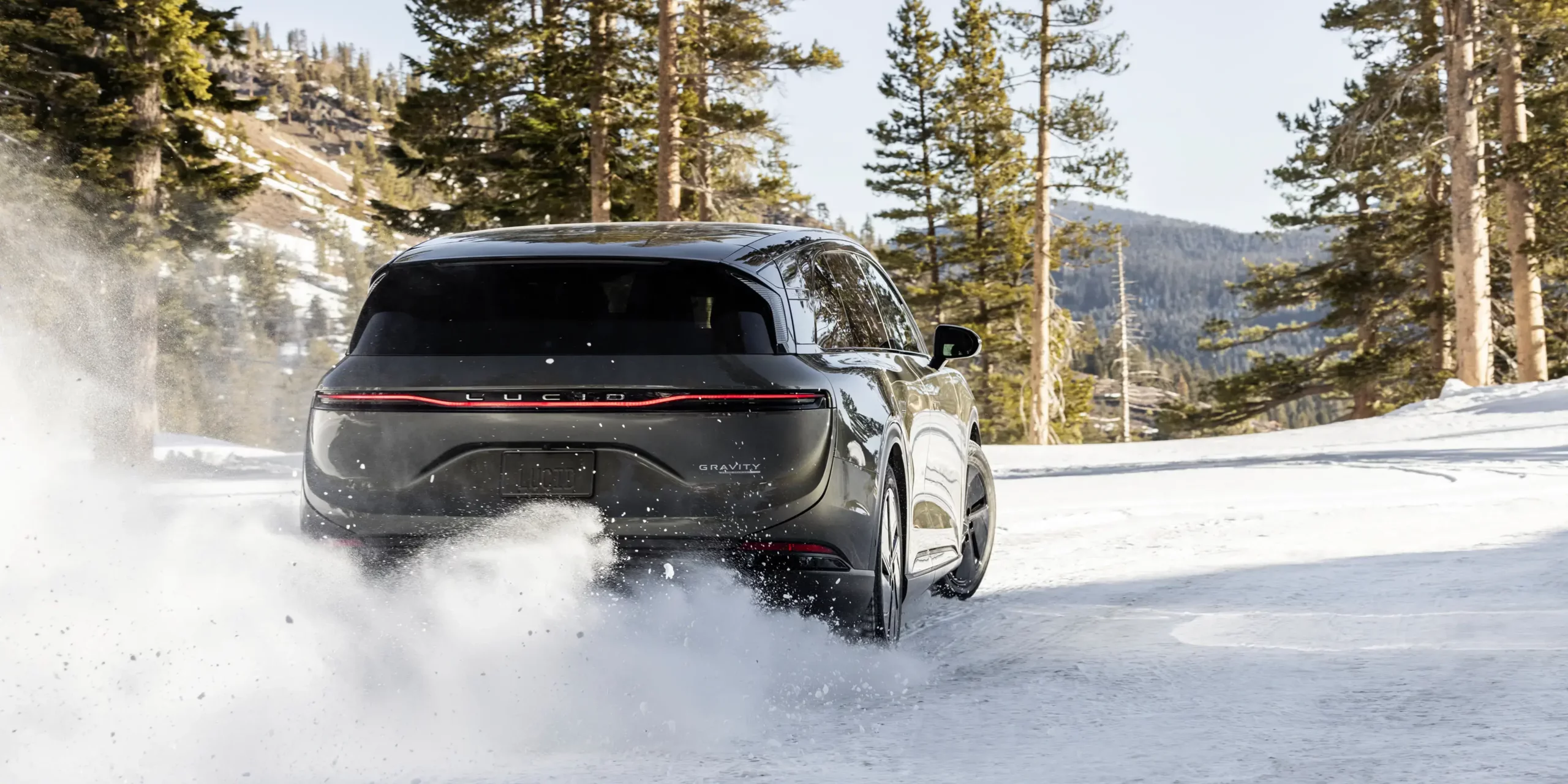
Lucid Is Blaming Someone Else For The Gravity’s Second Recall In Four Months

  • Lucid’s second Gravity recall stems from a supplier change no one approved.
  • A seatbelt anchor weld falls short of federal safety requirements in most SUVs.
  • Affected owners will have their seats repaired or replaced at no charge.

Just a few months after the Lucid Gravity was recalled over seat covers that could prevent the airbag from functioning properly, the electric luxury SUV has been recalled yet again. This time, it’s due to a potential defect in the second-row seatbelt anchors.

The EV maker says that during internal tests for another issue, it discovered the outboard lap belt anchor bracket weld in the second row is shorter than it should be and not positioned correctly. The reason? Lucid says seat manufacturer Camaco made a change to the manufacturing process without notifying the company or obtaining its approval.

Read: Wrong Seat Covers Could Stop This EV’s Airbags From Saving You

Vehicles with an insufficiently welded lap belt anchor fail to comply with Federal Motor Vehicle Safety Standards and may increase the risk of injury in a crash. Unlike December’s recall, which impacted just 66 vehicles, this one is much more widespread.

In fact, the recall involves 4,476 Lucid Gravity models built from December 2, 2024, to February 3, 2026, and listed as 2025-2026 model year vehicles. Of these, 97 percent are estimated to have the issue.

What Happens Next?

 Lucid Is Blaming Someone Else For The Gravity’s Second Recall In Four Months

This recall comes shortly after Lucid issued a brief stop-sale for the Gravity earlier this year as it ran tests to determine whether the seat belts could meet safety standards with or without a reinforcing bracket. Even with a bracket, they failed to meet load requirements, prompting Lucid to ensure the components sourced from Camaco meet its standards.

Lucid will start informing its owners of the recall on May 22. Dealers will inspect impacted vehicles, and if a non-conforming weld is found, it will be repaired with either a reinforcing bracket and adhesive or, if necessary, the entire seat will be replaced free of charge.

\\\\\\

Hyundai’s New Concepts Tease A Design Direction Ioniq Has Never Tried Before

  • Hyundai teases Earth and Venus concepts as part of its Ioniq sub-brand.
  • The EVs show slim LEDs, futuristic proportions, and sharply cut surfaces.
  • A countdown on Hyundai China’s website points to an April 10 debut.

Hyundai is setting the stage for the next phase of its Ioniq sub-brand, previewing what’s to come with a pair of new concepts. The EVs, dubbed Earth and Venus, introduce an evolved design language that will likely carry over to future production models.

The automaker’s official website in China now features a countdown to a “Hyundai Ioniq Brand Launch Event” scheduled for April 10. A teaser video shows a meteorite impact revealing a gold-colored crystal, one face shaped like the letter “i.” Whether this becomes the new Ioniq emblem remains unclear.

More: The Boulder Is Hyundai’s Answer To The Ford Bronco, And A New Pickup Is Behind It

Hyundai has also released shadowy teasers of the upcoming concepts across its global social media channels, describing them as “a cosmic statement, engineered for humans.”

 Hyundai’s New Concepts Tease A Design Direction Ioniq Has Never Tried Before
Hyundai Earth Concept

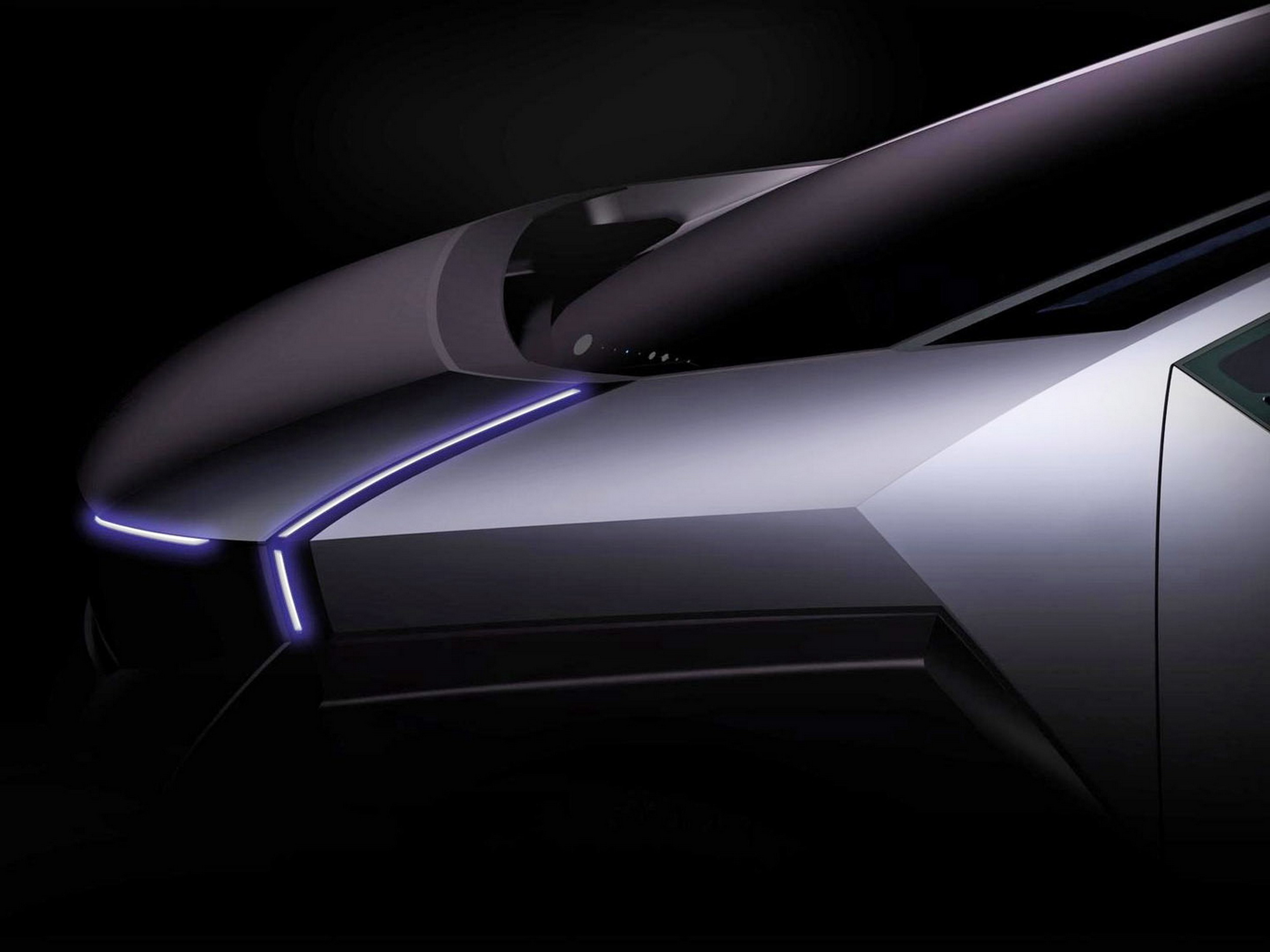
The Earth is finished in silver and features Y-shaped LEDs reminiscent of the Lamborghini V12 Vision Gran Turismo Concept from 2019. Its short hood, steeply raked windscreen, boxy wheel arches, and flat surfacing give it a distinctly Cybertruck-like presence. Unfortunately, only a small portion of the profile is visible, so the overall bodystyle remains unclear.

More: Hyundai’s New Pickup Truck Will Be Everything The Santa Cruz Refused To Be

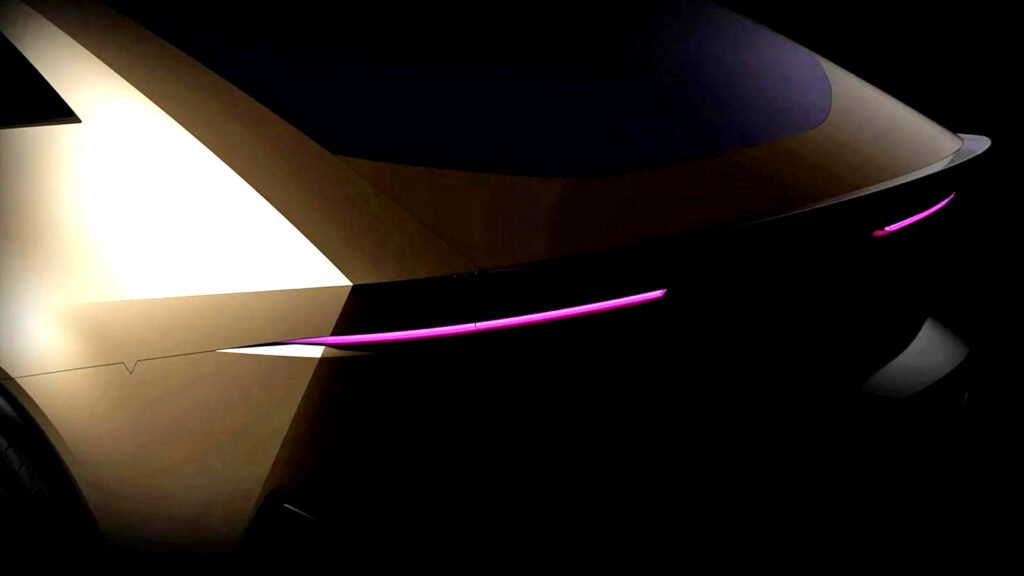
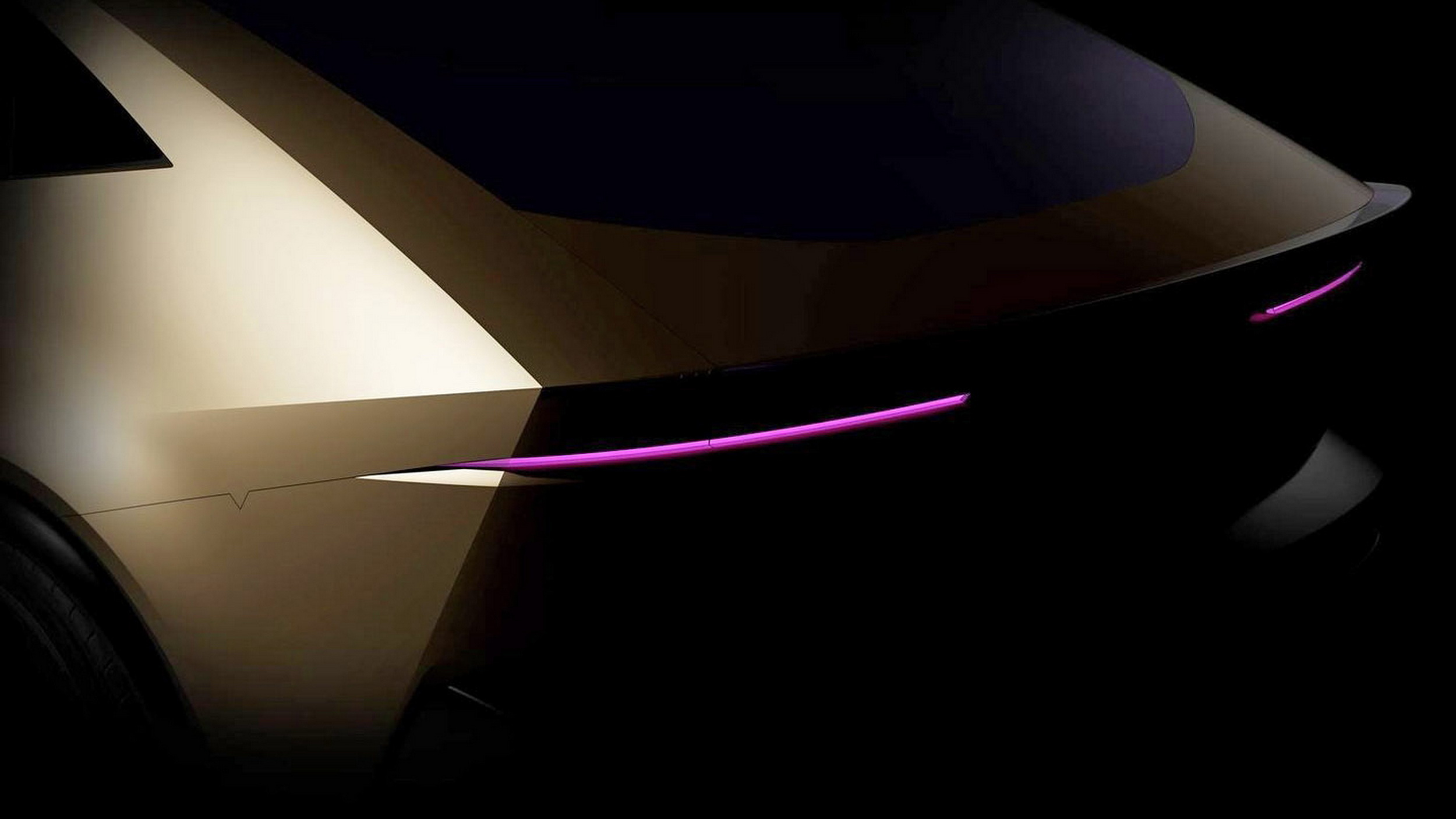
The Venus appears in a gold finish, with the teaser focusing on its rear. It leans into sharper, more angular surfacing, paired with a fastback-style tail, ultra-slim LEDs, and a ducktail spoiler. There are also glimpses of a pronounced bumper and round wheel arches.

 Hyundai’s New Concepts Tease A Design Direction Ioniq Has Never Tried Before
Hyundai Venus Concept

It will be interesting to see whether the Earth and Venus are simply futuristic styling exercises or early previews of where Hyundai’s electric lineup is headed alongside the Ioniq 3, 5, 6, and 9.

More: A Hyundai Beat The BMW M2 CS For World Performance Car Of The Year

The timing of the announcement, along with its ties to China, suggests the concepts could make their first public appearance at the Beijing Auto Show on April 24. Hyundai may also choose to reveal the designs earlier at its April 10 event.

Setting aside its global and China-focused ambitions, Hyundai is planning an aggressive product push in North America, with 36 new or refreshed models due over the next five years. That rollout includes a rugged SUV and a body-on-frame pickup previewed by the Boulder concept at the New York Auto Show.

\\\\\\

Hyundai

Thomas Built Buses adds gasoline option to C2 powertrain lineup for 2026

By: STN

HIGH POINT, N.C. – Thomas Built Buses (TBB), a leading manufacturer of school buses in North America and a division of Daimler Truck Specialty Vehicles, today announced the launch of a new gasoline engine option for the Saf-T-Liner C2 school bus at STN Expo East, taking place March 26–31, 2026 in Charlotte/Concord, North Carolina. The Saf-T-Liner C2 Gasoline is equipped with the B6.7 Octane engine produced by global power leader Cummins Inc. (NYSE: CMI).

With the addition of gasoline, Thomas Built Buses continues to expand its powertrain lineup — now offering diesel, electric and gasoline options — giving school districts greater flexibility to choose the solution that best fits their fleet goals, infrastructure and operational needs.

“With the Cummins B6.7 Octane engine, fleets gain a dependable solution that complements our proven diesel and electric offerings, giving them more choice in how they operate,” said T.J. Reed, president and CEO of Daimler Truck Specialty Vehicles. “We’re proud to expand our lineup with solutions that reflect the real-world needs of school districts — whether that’s simplifying maintenance, managing costs or planning for the future with diesel, electric or now gasoline.”

“Cummins’ longstanding partnership with Thomas Built Buses reflects our shared commitment to delivering safe and reliable transportation for students across the country,” said Nikki Wheeldon, general manager of North America bus sales at Cummins. “The integration of the B6.7 Octane highlights our continued focus on excellence and innovation. Together, we’re driving performance where it matters most.”

The Cummins B6.7 Octane is a purpose-built, durable, turbocharged gasoline engine for medium-duty applications, the first of its kind in the category. With up to 2 million miles logged before production, the engine features a broad, flat torque curve that mirrors Cummins’ trusted B6.7 diesel platform. The B6.7 Octane by Cummins will be available in the Saf-T-Liner C2 Gasoline in 220- and 260-horsepower ratings, delivering up to 600 lb-ft of torque.

Designed to provide familiar drivability and smooth power at low speeds, the B6.7 Octane also introduces an optional integrated compression brake for improved vehicle control and reduced brake wear — an industry-first for gasoline school buses.

In addition to robust performance, the Saf-T-Liner C2 Gasoline delivers key advantages in total cost and serviceability:

Strong fuel economy for lower operating costs.
2-3x longer service intervals, including oil and filter changes up to 15,000 miles.
Runs on regular 87-octane gasoline, making it easy to refuel within existing fueling infrastructure.
Engineered for cold-weather readiness and high idle tolerance, making it well suited for diverse operating environments.
Offers school districts a familiar chassis and body design, helping streamline technician training, maintenance routines and driver familiarity.

“By offering this gasoline option, we’re helping school districts simplify operations, manage costs and maintain reliable, year-round performance,” said Daoud Chaaya, vice president of sales, aftermarket and marketing at Thomas Built Buses. “Built on our trusted C2 platform, it supports technician and driver familiarity while ensuring safe, dependable transportation for students. This addition reflects our ongoing commitment to delivering an exceptional customer experience.”

Production for the Saf-T-Liner C2 Gasoline is targeted to begin in late 2026.

For more information, visit thomasbuiltbuses.com/gasoline.

About Thomas Built Buses:
Founded in 1916, Thomas Built Buses is a leading manufacturer of school buses in North America. Since the first Thomas Built bus rolled off the assembly line, the company has been committed to delivering the smartest and most innovative buses in North America. Learn more at thomasbuiltbuses.com or facebook.com/thomasbuiltbuses.

Thomas Built Buses, Inc., headquartered in High Point, North Carolina, is a subsidiary of Daimler Truck North America LLC, a leading provider of comprehensive products and technologies for the commercial transportation industry. The company designs, engineers, manufactures and markets medium- and heavy-duty trucks, school buses, vehicle chassis and their associated technologies and components under the Freightliner, Western Star, Thomas Built Buses, Freightliner Custom Chassis Corp and Detroit brands. Thomas Built Buses and Freightliner Custom Chassis Corp. together form Daimler Truck Specialty Vehicles. Daimler Truck North America is a subsidiary of Daimler Truck AG, one of the world’s leading commercial vehicle manufacturers.

About Cummins Inc.
Cummins Inc., a global power leader, is committed to powering a more prosperous world. Since 1919, we have delivered innovative solutions that move people, goods and economies forward. Our five business segments — Engine, Components, Distribution, Power Systems and Accelera by Cummins — offer a broad portfolio, including advanced diesel, electric and hybrid powertrains; integrated power generation systems; critical components such as aftertreatment, turbochargers, fuel systems, controls, transmissions, axles and brakes; and zero-emissions technologies like battery and electric powertrain systems. With a global footprint, deep technical expertise and an extensive service network, we deliver dependable, cutting-edge solutions tailored to our customers’ needs, supporting them through the energy transition with our Destination Zero strategy. We create value for customers, investors and employees and strengthen communities through our corporate responsibility global priorities: education, equity and environment. Headquartered in Columbus, Indiana, Cummins employs approximately 67,400 people worldwide and earned $2.8 billion on $33.7 billion in sales in 2025. Learn more at www.cummins.com.

The post Thomas Built Buses adds gasoline option to C2 powertrain lineup for 2026 appeared first on School Transportation News.

Massachusetts School Bus Driver Accused of Urinating on Bus with Children Present

A school bus driver in southeastern Massachusetts is under investigation after authorities say he allegedly urinated inside a bus while transporting young students to an elementary school.

The incident occurred March 30, as the bus was on route to Hoyle Elementary School, according to a news release from the Swansea Police Department.

Police said preliminary findings indicate that the 71-year-old driver pulled the bus over during the route and instructed students to move to the back. He then allegedly remained in the driver’s seat and relieved himself inside the vehicle while the children were still on board.

After the incident, the driver completed the route and dropped off the students at the school, authorities said. The situation came to light when some of the children reported what had happened to school staff, prompting an investigation by school officials and police.

“This type of behavior in the presence of children, especially young children, is unacceptable,” a statement reads.

Authorities said there were 12 children on the bus at the time, ranging from pre-kindergarten to second grade. Police noted that investigators currently believe none of the students directly witnessed the act itself.

School officials notified the parents of all children who were on the bus. The driver, who has not been publicly identified, is no longer permitted to operate within the Swansea Public Schools system. Police said the school district informed Amaral Bus Company, the transportation provider for the district, that the driver has been removed from service.

In addition, Swansea Public Schools is reviewing its relationship with the company and considering measures to prevent similar incidents in the future.

As of Monday afternoon, no criminal charges had been filed against the driver. Detectives are continuing to investigate the allegations.

School officials have also filed a report with the Massachusetts Department of Children and Families in accordance with standard procedures. Officials emphasized the seriousness of the matter and said the investigation remains ongoing.


Related: South Carolina School Bus Driver Charged with DUI While Transporting Students
Related: New York School Bus Driver Caught Drinking Alcohol While Driving
Related: Ohio School Bus Driver on Administrative Leave After ‘Reckless Driving’
Related: Superintendent Defends School Bus Driver Accused of Erratic Driving, Potential Impairment

The post Massachusetts School Bus Driver Accused of Urinating on Bus with Children Present appeared first on School Transportation News.

Kindergartner Dropped at Wrong Bus Stop, Found Walking Along Georgia Highway

A Georgia mother said her young daughter was found walking alone along a highway after being dropped off at the wrong school bus stop, raising concerns about student transportation safety, reported WCTV News.

According to the news report, the incident occurred in Terrell County, where a kindergartner was supposed to be dropped off at her usual stop, where her grandfather picks her up. Instead, the 6-year-old was let off about a half mile away near a trailer park along U.S. Highway 520.

A deputy reportedly responded after receiving reports of a child walking along the busy highway carrying a backpack. A Georgia State Patrol trooper and a nearby resident later located the student. Officials confirmed the child attends Cooper-Carver Elementary School.

The child’s mother Kiara Jones said via the article that her daughter was “crying and shaking” after the incident and had tried to alert the bus driver that she was at the wrong stop when she did not see her grandfather.

School officials responded immediately after learning about the situation, providing direct support to the student and her family. The district reportedly stated that the bus driver involved has been placed on administrative leave while the investigation continues.

No injuries were reported, but the situation could have been dangerous given the traffic along the highway.

The incident has prompted renewed concern about student drop-off procedures and supervision, particularly for younger children who may not be able to navigate unfamiliar areas safely.

Officials said they are working to determine how the error occurred and to prevent similar incidents in the future.


Related: Student Found Wandering Alone After Bus Drops Her at Wrong Location
Related: Illinois School Bus Driver Finds Teen Wandering Alone
Related: Rhode Island Woman Claims School Bus Monitor Tried to Drop Off Wrong Student
Related: 7-Year-Old Student Missing for Hours After Being Placed on Wrong School Bus

The post Kindergartner Dropped at Wrong Bus Stop, Found Walking Along Georgia Highway appeared first on School Transportation News.

❌