Normal view

There are new articles available, click to refresh the page.
Today — 22 January 2026Vehicles

You Can Sleep And Even Wash Your Dishes In This Hyundai Van, But You Can’t Buy It Yet

  • Hyundai has introduced the Staria Camper concept at the CMT Show.
  • It features a pop-up roof, refrigerator, solar panel, and smart glass.
  • The company is considering production and is looking for feedback.

Hyundai has used the Caravan, Motor und Touristik Show to introduce a camper concept based on the Staria Electric. It’s designed to explore how the van could “evolve into a premium recreational vehicle tailored to the European market.”

Designed for off-grid travel, the Staria Camper concept has been equipped with a retractable canopy as well as a power pop-up roof. The latter has been fully integrated to reduce wind noise and buffeting while driving.

More: Nissan’s Toughest Rogue Turned Into A Mattress With Wheels

The roof is also notable for being covered by a 520W solar panel, which can generate up to 2.6 kWh of electricity per day. This can be used to power onboard equipment or to extend the vehicle’s range.

\\\\\\\\\\

Another cool touch is the use of electronically adjustable smart glass for privacy. The rear windows are controlled by a dedicated touchscreen, which enables users to instantly adjust their transparency.

Besides keeping prying eyes at bay, the smart glass offers “significantly improved UV, thermal, and acoustic insulation compared with conventional glass.” Despite this, Hyundai also threw in traditional curtains.

The rest of the exterior largely carries over, but we can see water and electrical hookups located near one of the taillights.

Modular Comfort Inside

\\\\\\\\\

Moving inside, the second- and third-row seats fold flat to create an expansive sleeping area for two adults. The concept also sports a long counter that houses a sink, storage compartments, and a 1.3 cubic foot (36 liter) refrigerator. They’re joined by a folding interior table, a classy peg board, and special lights.

Rounding out the highlights are a swiveling front passenger seat and a climate control system that can keep you warm on chilly nights. Furthermore, the liftgate opens to reveal a deployable rear table as well as an outdoor shower setup.

Could It Actually Happen?

\\\\\\\\\\\\

While the van is a concept, Hyundai wasn’t shy about the possibility of a production model. In fact, they’re actively seeking feedback from a “cross-section of camping, caravan, and adventure enthusiasts from across Europe and beyond.” The company said this will help them gauge interest in bringing the concept to life.

Hyundai went on to say the production model would echo the regular Staria Electric, which has an 84 kWh battery pack as well as a front-mounted motor producing 215 hp (160 kW / 218 PS).

This enables the van to have a WLTP range of approximately 249 miles (400 km). When the battery is low, a DC fast charger can take it from 10-80 percent in around 20 minutes.

 You Can Sleep And Even Wash Your Dishes In This Hyundai Van, But You Can’t Buy It Yet

BMW Gave Its Electric SUV A Stretch, But Don’t Expect It To Reach You

  • BMW has teased the upcoming iX3 Long Wheelbase.
  • The crossover’s wheelbase has been stretched 4.3 inches.
  • Debuts at the Beijing Auto Show and arrives later this year.

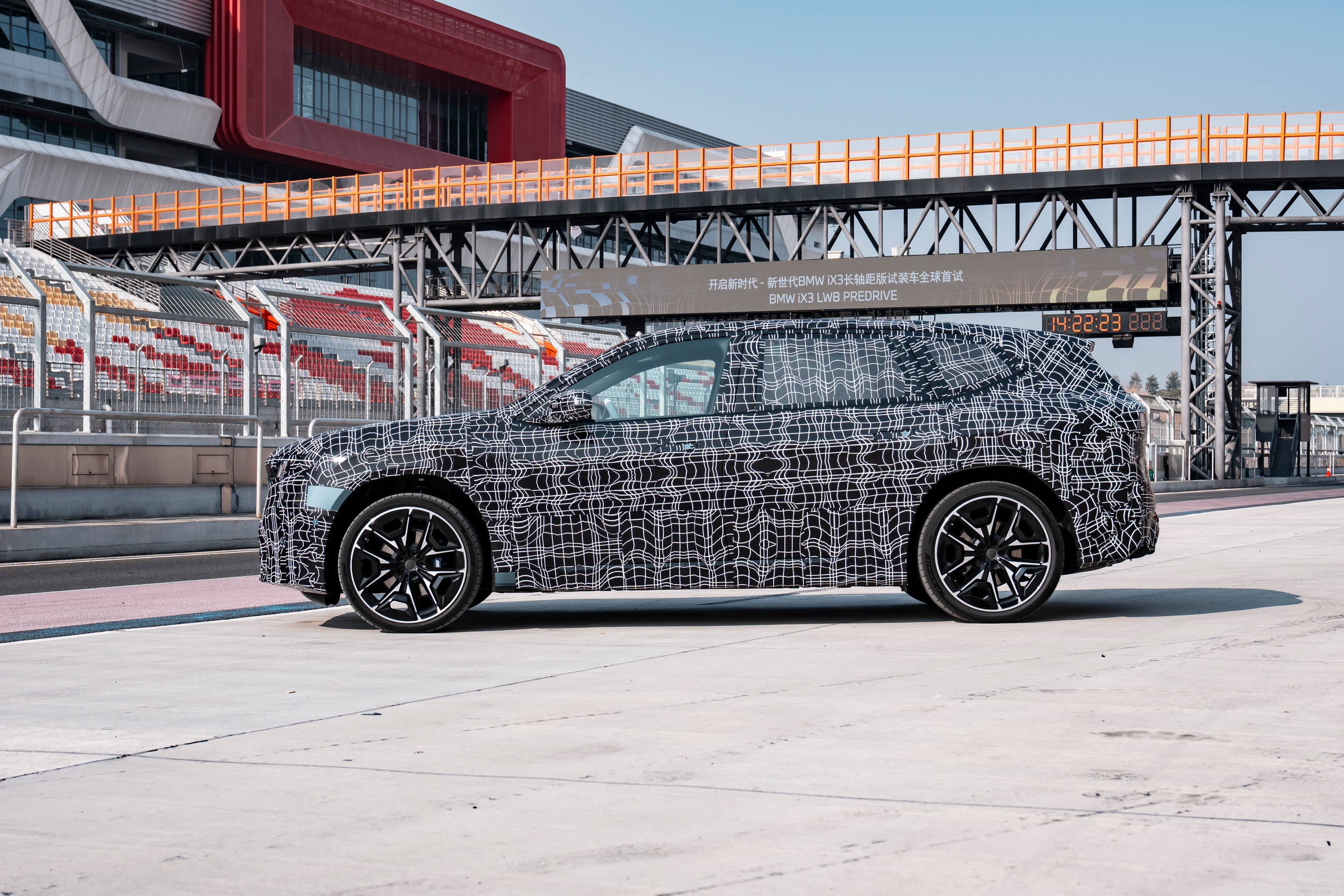
BMW unveiled the iX3 last fall and now the company is previewing the upcoming long-wheelbase variant. The electric crossover is being developed “in China, for China, and with China.”

Set to battle the Mercedes GLC L with EQ Technology, the iX3 Long Wheelbase will debut at the Beijing Auto Show in April and be launched in the second half of the year. When it arrives, the iX3 will become the first long-wheelbase model based on BMW’s Neue Klasse platform.

More: Mercedes Gave China’s Electric GLC A Little Extra, And It Shows

Looking instantly recognizable, the crossover has a wheelbase that has been stretched 4.3 inches (108 mm). Doing the math, the model will have a 118.3 inch (3,005 mm) wheelbase, which is 1.2 inches (30 mm) longer than the X5.

That’s pretty big and BMW said the iX3 Long Wheelbase will deliver “significantly enhanced rear-seat comfort and overall spaciousness.”

China-Specific Technology

\\\\\\\\\\\\\\\\\\\\

Catering to the Chinese market requires more than just stretching the wheelbase and BMW is more than happy to oblige. In this case, they’ve developed a “Chinese derivative” of Operating System X, which “incorporates approximately 70 percent locally developed software engineering.”

Customers will also find a navigation system developed in collaboration with Amap as well as an Intelligent Personal Assistant that uses large language models from Alibaba and DeepSeek.

BMW is also working on China-specific driver assistance systems with Momenta. These will be “tailored to local traffic conditions and usage scenarios” in order to deliver “highly capable driver-assistance functions optimized for complex urban environments, highways, and long-distance travel in China.”

More Than 559 Miles Of Range

\\\\\\\\\\\\\\\\\\\\\

The automaker is keeping powertrain details under wraps, but said the iX3 Long Wheelbase will have an 800-volt electrical architecture, cylindrical battery cells, and sixth-generation eDrive technology. That’s vague, but BMW promised a 400 kW DC fast charging capability as well as a CLTC combined range in excess of 559 miles (900 km).

When the battery is low, it can get more than 249 miles (400 km) of range in as little as 10 minutes. If you’re not in a rush, a 21 minute charge can take the battery from 10-80%.

 BMW Gave Its Electric SUV A Stretch, But Don’t Expect It To Reach You

We’ll learn more in the coming months, but the European iX3 was launched in 50 xDrive guise. It features a 108.7 kWh battery pack as well as a dual-motor all-wheel drive system producing a combined output of 463 hp (345 kW / 469 PS) and 476 lb-ft (645 Nm) of torque. This enables the model to accelerate from 0-62 mph (0-100 km/h) in 4.9 seconds, before hitting a top speed of 130 mph (210 km/h).

It remains to be seen if the long-wheelbase variant will echo that, but BMW said the crossover will have a China-specific chassis and suspension setup. It aims to provide a “refined balance between comfort and stability across a wide range of driving scenarios.”

While China is the main focus for the iX3 Long Wheelbase, the model will also be offered in select markets around the world. These will include India, Indonesia, Thailand, and Malaysia.

 BMW Gave Its Electric SUV A Stretch, But Don’t Expect It To Reach You

This Xiaomi-Backed Electric Stratos Is Coming To Europe

  • Chinese SC-01 will be built in Italy, sold across Europe, report says.
  • Europe scheduled to get 1,000 cars; debut takes place January 24.
  • Bi-motor, AWD two-seater gives 429 hp, 0-62 mph in 2.9 sec.

Electric sports cars are finally happening in a big way, but Europe might not be waiting for Porsche or Alpine to lead the charge. A small Chinese brand you have probably never heard of wants in on the action, and it looks like a far more serious enthusiast proposition than the MG Cyberster.

More: Chinese Sports Car Looks Like A Tesla Roadster Hooked Up With A Lancia

The car is the SC-01, a lightweight electric sports coupe that’s not just headed to Europe, as the company itself has confirmed, but also set to be built there, according to Chinese media. Backed by Xiaomi and Jiangling’s JMEV brand, around 1,000 of these compact two-seaters are expected to be produced in Italy.

 This Xiaomi-Backed Electric Stratos Is Coming To Europe

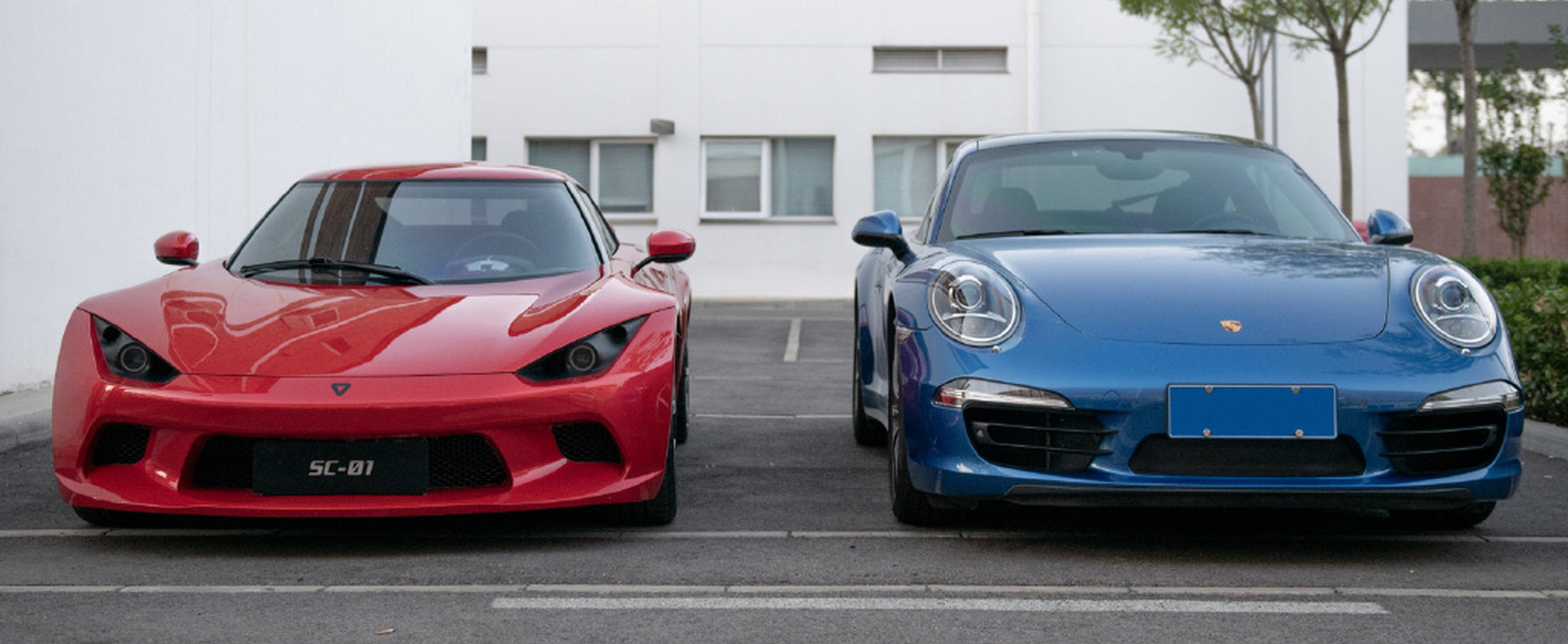
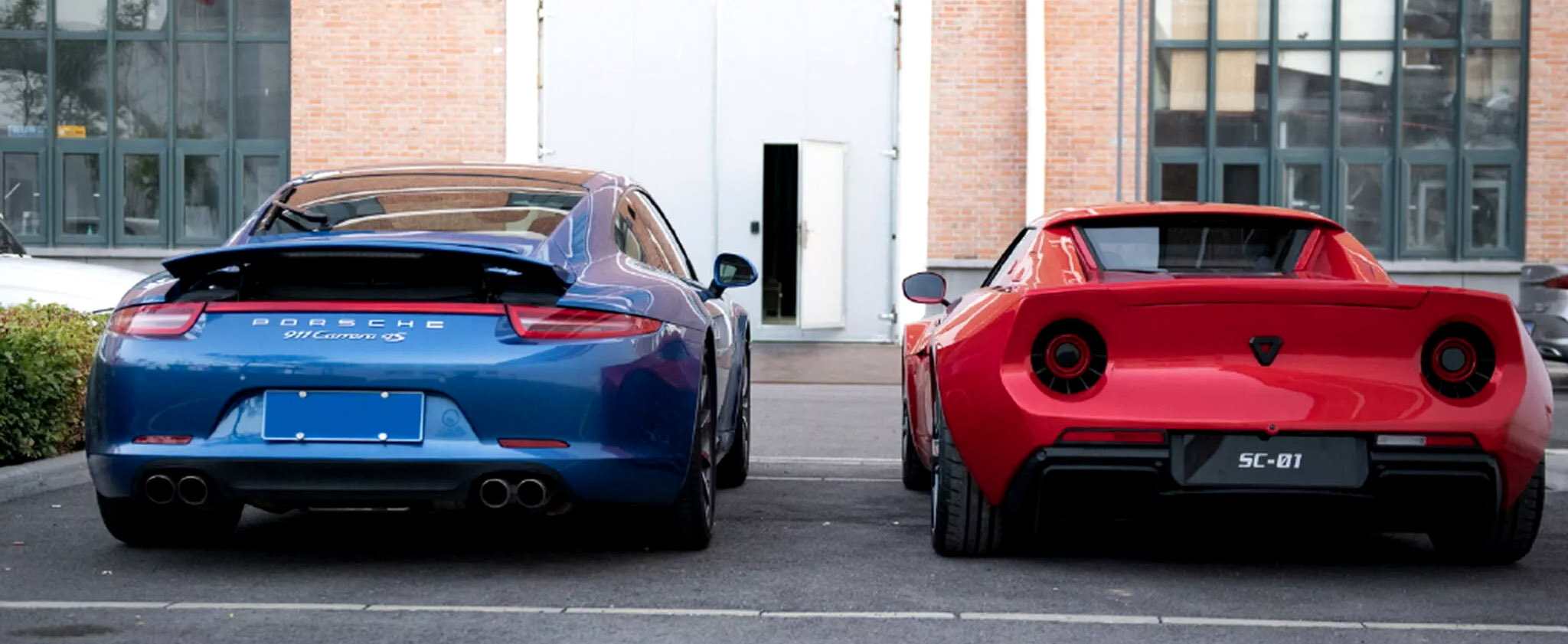
Visually, the SC-01 leans hard into classic wedge territory. Think Lancia Stratos proportions filtered through a modern EV lens, with compact dimensions and proper sports car stance.

At 4106 mm (161.7 inches) long it’s a smidge shorter than an Alpine A110 and around 270 mm (10.6 inches) more compact than the recently axed ICE Porsche 718 Cayman. The real headline, though, is the weight.

Hardcore Diet

 This Xiaomi-Backed Electric Stratos Is Coming To Europe

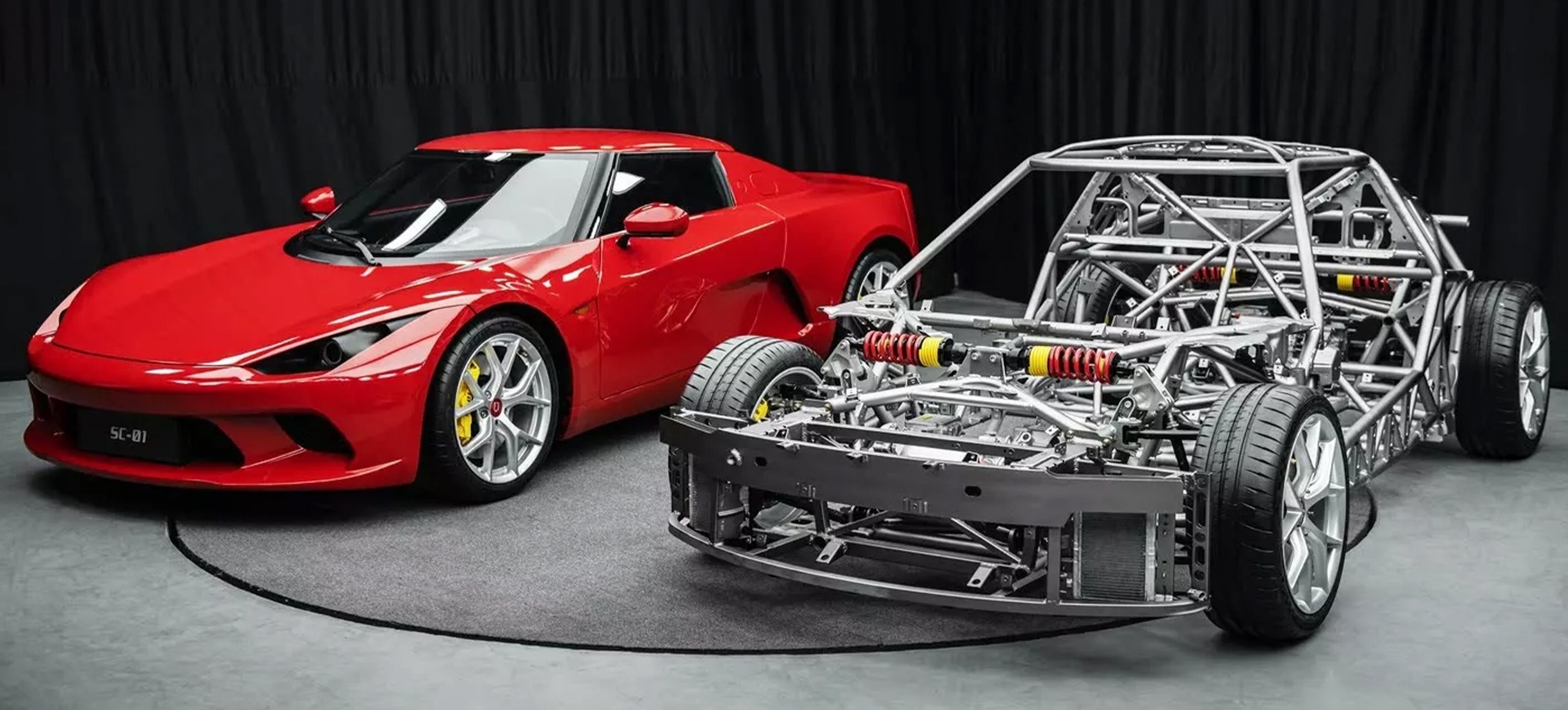
At 1,365 kg (3,009 lbs) the aluminium SC-01 is astonishingly light for an EV – 520 kg (1,150 lbs) lighter than a RWD MG Cyberster and 620 kg (1,370 lbs) down on MG’s AWD variant.

The Cyberster already seemed more like a mini Mercedes SL than a hardcore sports car, and those numbers, plus the SC-01’s front and rear pushrod suspension only underline the impression.

Power comes from dual electric motors producing a combined 429 bhp (434 PS / 320 kW), enough to launch the SC-01 to 62 mph (100 kmh) in a claimed 2.9 seconds.

A 60 kWh battery gives the car a quoted 311-mile (500 km) range on the optimistic CLTC cycle, so reckon on more like 270 WLPT miles (435 km) and even less if you’re driving it like you’re supposed to.

Minimal Screen Tech

 This Xiaomi-Backed Electric Stratos Is Coming To Europe

Inside, the SC-01 might surprise you even more. There’s no massive touchscreen wall of the kind you might expect from a modern Chinese EV. Instead you get a single driver display and physical climate controls.

In other words, it feels like someone built it for people who actually enjoy driving, and plan to be driving too hard to spend precious moments hunting for a switch on a digital display.

How Much will it Cost?

 This Xiaomi-Backed Electric Stratos Is Coming To Europe

Exact Euro prices and an on-sale date are still TBC, but according to Car News China, the car may launch at around 500,000 yuan, which comes to around $72,000, €61,000, or £53,000. That’s a significant step up from its domestic Chinese price of 229,800 yuan, or roughly $33,000 / €28,500 at current exchange rates.

Still, that would put it at a competitive advantage to the new generation of electric sports cars from Porsche, Alpine, and Lotus, some of which are still years away, and are sure to cost more.

\\\\\\\\\\\\\\

SC-01

Chevy’s EV Is Too Quiet, So GM’s Recalling It Again

  • GM recalled over 80,000 Equinox EVs in the United States.
  • The pedestrian warning system isn’t loud enough to hear.
  • This marks the second recall for the same safety issue.

The Chevrolet Equinox EV is one of GM’s most important electric vehicles, serving as a homegrown competitor to the likes of the Tesla Model Y and Ford Mustang Mach-E. But more than 80,000 units are now being recalled across the United States for a rather unusual reason: they’re too quiet.

Under US regulations, all new electric vehicles must emit a pedestrian warning sound at speeds below 6.2 mph (10 km/h) to ensure they’re audible in areas like parking lots. While the Equinox EV is equipped with such a system, GM has admitted it isn’t doing its job properly. The system was miscalibrated during production and doesn’t produce sufficient sound to alert nearby pedestrians.

Read: Chevrolet Equinox EV’s Adaptive Cruise Control May Not Activate Brakes

Given the volume of vehicles rolling out of GM’s Ramos Arizpe Assembly plant in Mexico, this isn’t the sort of issue that should have slipped through unnoticed. According to the National Highway Traffic Safety Administration (NHTSA), an Equinox EV that can’t be heard poses a genuine risk to pedestrian safety.

The recall affects a total of 81,177 Chevrolet Equinox EVs. Of those, 59,537 are from the 2025 model year, built between July 22, 2024, and August 12, 2025. The remaining 21,640 units belong to the 2026 model year and were assembled between April 7 and December 16 of 2025.

 Chevy’s EV Is Too Quiet, So GM’s Recalling It Again

GM launched an internal investigation in November after one of its engineers filed a report through the company’s Speak Up For Safety program, flagging the issue during testing of a 2025 model.

Surprisingly, this isn’t GM’s first brush with a too-quiet Equinox EV. In September of the previous year, the automaker recalled 23,700 units from the 2024 model year for the exact same problem. Those earlier vehicles used a different calibration than the 2025 and 2026 models now being flagged.

The one bit of relief for owners is that the fix is straightforward. GM will deploy an over-the-air update to recalibrate the body control module. For those who prefer in-person service, a dealership visit remains an option. Notifications will begin reaching owners on February 2.

\\\\\\\

Volvo’s New 400-Mile SUV Has One Feature Tesla Owners Will Be Jealous Of

  • Volvo’s EX60 delivers 400 miles of range and 400 kW charging.
  • First Volvo EV with native Tesla Supercharger access in US.
  • Rugged EX60 Cross Country adds lift, air suspension, and flair.

Volvo calls the new EX60 a game-changer and for once, that might not be completely marketing hyperbole. This new SUV is the brand’s most important EV yet and it rolls into the segment with some impressive numbers on paper.

More: The New EX60 Is The First Volvo To Talk Back At You

It offers 400 miles of EPA-estimated range, 400 kW fast-charging capability, and native access to Tesla’s Supercharger network. It’s also arriving with a special soft-roader variant.

Volvo Enters Long-Range Territory

The new peak of the EX60 lineup is what the brand calls the P12 AWD Electric and it’s the one with 400 miles (644 km) of range. That immediately puts it ahead of all other previous Volvo EVs and squarely in the same space as the Tesla Model Y Long Range, if not ahead of it. But wait, there’s more.

\\\\\

Charging at 400 kW enables the EX60 to add up to 173 miles (278 km) of range in just 10 minutes. Keep in mind that you’ll need a charger capable of handling such speed, which is very rare in the U.S. right now. Not even Tesla’s Supercharger network, which this car has native support for, often offers such speeds. Still, the fact that the capability is built in shows where Volvo expects the infrastructure to go.

Powertrain Options

In total, Volvo is offering the EX60 with three powertrains and seven trim levels. The P6 RWD delivers up to 310 miles (499 km) of range, the P10 AWD provides 320 miles (515 km), and then the P12 AWD brings the 400 miles (644 km) we’ve already discussed.

The brand backs its battery technology with a 10-year warranty. That’s a key point, given that this is a completely new and untested platform for Volvo.

\\\\\\\\\\\\\\\\\\\\\\\\\\\

Dubbed the SPA3, the brand pairs this new architecture with a HuginCore computing system. This setup introduces several key technologies, including cell-to-body battery construction, mega casting, and next-generation in-house electric motors.

Volvo says this all equates to less weight, better efficiency, better manufacturer scalability, and importantly… lower cost to the consumer. In the end, it matches the carbon footprint of the smaller EX30. While the brand hasn’t publicly mentioned specific pricing per trim, it has said to expect that a well-equipped EX60 to cost around $60,000.

Design Inside and Out

\\\\\\\\\\\\\\\\

Visually, the EX60 doesn’t reinvent Volvo’s design language so much as it evolves it. The car manages a 0.26 drag coefficient thanks to a low nose, a sloping roofline, and tapered sides. In the cabin, the long wheelbase and flat floor enable extra legroom in the rear along with a large cargo area.

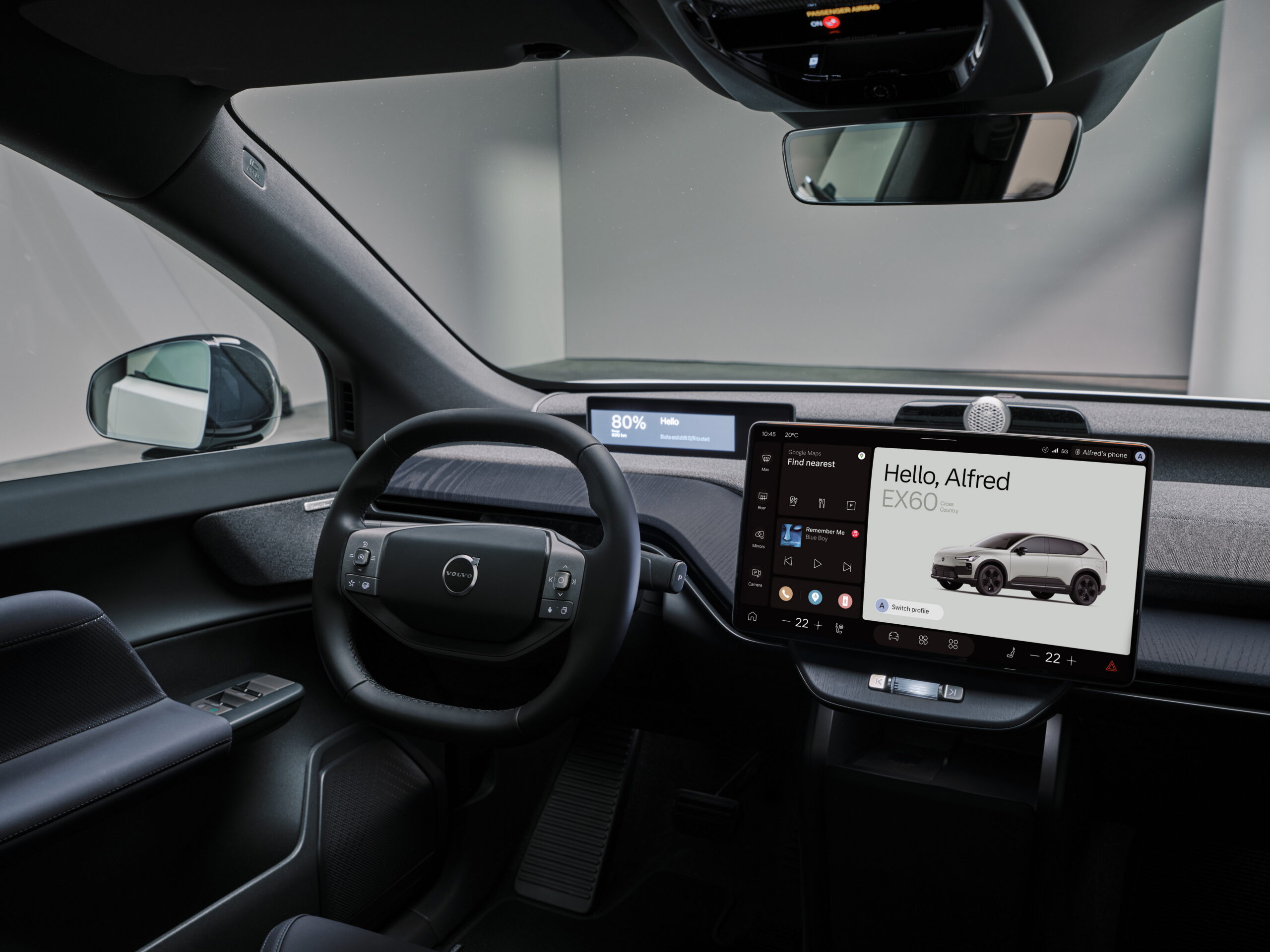
Tech highlights include a 28-speaker Bowers & Wilkins audio system, headrest speakers for all four main seats, and Apple Music with Dolby Atmos built in.

The EX60 Runs Google Gemini AI

 Volvo’s New 400-Mile SUV Has One Feature Tesla Owners Will Be Jealous Of

Let’s not forget the AI assistant that Volvo says will speak like a normal person and accept the same type of speech inputs. The system runs Google’s Gemini AI atop Android Automotive OS so it should be snappy and smooth, but we’ll have to test it to be sure. The new multi-adaptive safety belt is something else to get excited about, as are the other safety innovations in the EX60.

Volvo leveraged a reinforced safety cage using boron steel, a wide array of sensors, and constant environmental monitoring to go beyond what they say are current regulatory standards. In other words, Tesla might not be the only manufacturer with safety scores that go beyond NHTSA or IIHS ratings in the near future.

A Cross Country Version on the Way

\\\\\\\\\\\\\\\\\\\\\\\\\

Volvo also confirmed that an EX60 Cross Country model will be heading to the U.S., though it’ll debut in Europe first. This version gets 20mm (0.8 inches) of extra ride height as standard, with another 20mm (0.8 inches) available via an adjustable suspension system. Forty millimeters (1.6 inches) might not sound like much, but the Cross Country packs more than just lift.

There are underbody skid plates, wider arches, unique wheels, and exclusive Frost Green paintwork. It also comes standard with all-wheel drive and will be offered only with the P10 and P12 powertrains

\\\\\\\\\\\\\\

Availability

European customers can already place orders for the EX60. U.S. order books will open in late spring, with production kicking off around the same time at Volvo’s Swedish plant. The P6 and P10 models will arrive first this summer, followed by the long-range P12 not long after.

\\\\\\\

The Cheapest Tesla Might Be The One That Finally Solves This Daily Annoyance

  • Tesla’s Cybercab was spotted testing in Chicago with mirrors.
  • The prototype now features a rear camera washer, a Tesla first.
  • Original concept lacked pedals, mirrors, and steering wheel.

Tesla’s Cybercab may be the company’s most pivotal vehicle since the Model Y, aiming to put self-driving technology within reach of the average buyer. Development appears to be moving along as the company works to ensure the aerodynamic two-door can handle the demands of daily driving, which, in Tesla’s case, can often mean leaving a few details to be sorted out after launch.

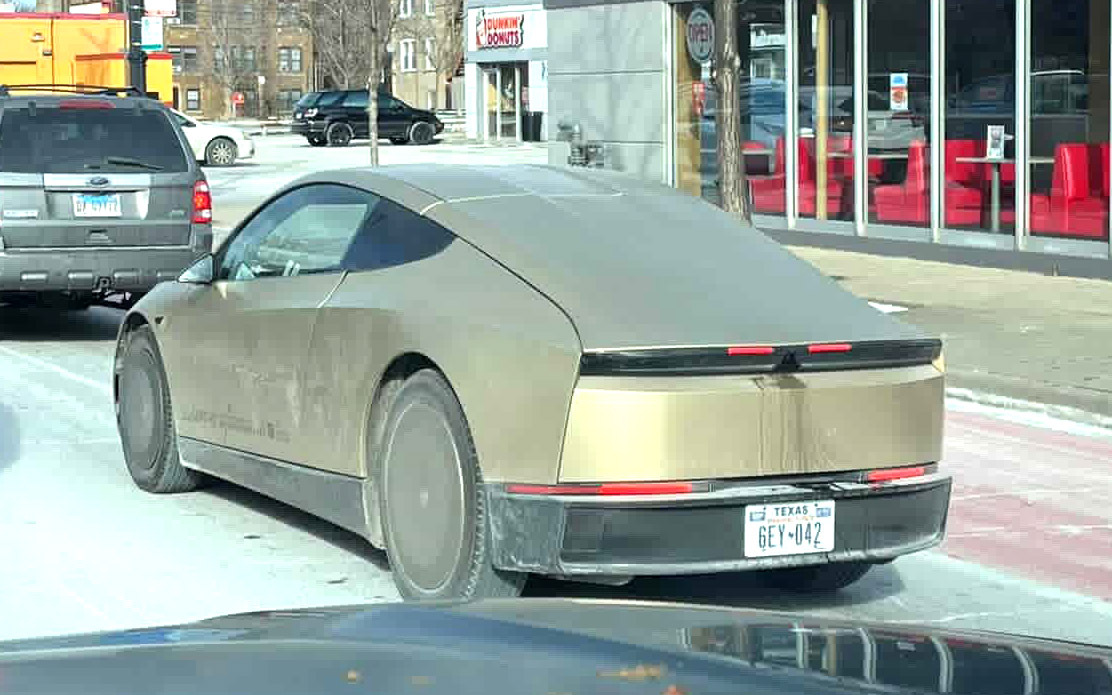
Progress, though gradual, appears to be underway. This week, an uncamouflaged Cybercab prototype was spotted cruising through Chicago by Instagram user Fbombbaggers (via DennisCW /X).

Sporting Texas plates, the test vehicle looks nearly identical to the concept shown in late 2024, though a few practical adjustments have been made to prepare it for the street.

Read: Tesla Spent Big On Cybercab Branding, Now Someone Else Owns It

The most obvious update is the presence of small triangular wing mirrors, a feature notably absent from the concept. But it’s not the mirrors that have Tesla fans excited. It’s the fact that this prototype has been fitted with a washer jet for the rear camera, an incredibly simple but genuinely useful detail that remains absent from other Tesla models.

 The Cheapest Tesla Might Be The One That Finally Solves This Daily Annoyance
Photo DennisCW_/X & Fbombbaggers /IG

In a photo shared online, liquid can be seen dripping from the center of the rear fascia, exactly where the camera is mounted. No current Tesla model includes a washer for the rear camera, even though many other automakers treat it as standard equipment. That’s changing here, and there’s a very specific reason why.

Take a close look at the back of the Cybercab and you’ll spot what’s missing: there’s no rear windshield. None. The production model relies entirely on a digital feed from its rear-facing camera for rearward visibility. Which means the camera can’t afford to be obstructed.

 The Cheapest Tesla Might Be The One That Finally Solves This Daily Annoyance

That detail forces Tesla’s hand. Unlike its higher-end models, where features are sometimes omitted in the name of cost savings or minimalist design, the Cybercab’s layout demands a washer. It’s no longer optional.

And while the Cybercab is expected to be Tesla’s most affordable vehicle yet, the addition of a camera washer here likely points to wider adoption across the lineup in the future. Standardizing components is one way to keep production costs in check.

Steering Wheel And Pedals?

 The Cheapest Tesla Might Be The One That Finally Solves This Daily Annoyance

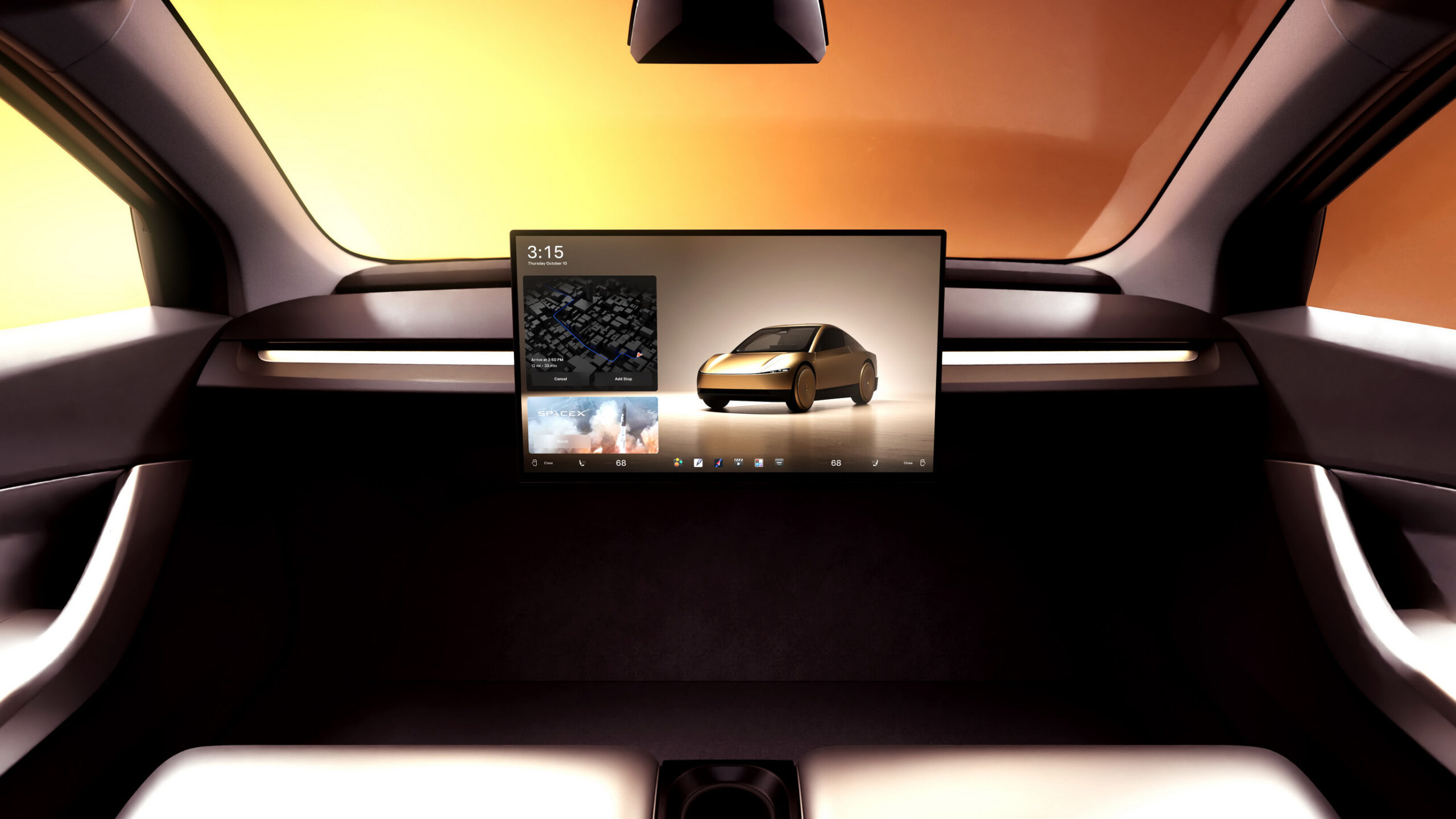
No images of the interior of this particular prototype have been released, but it was almost certainly fitted with a steering wheel and pedals, as other recent Cybercab test mules have been.

Although Tesla audaciously claimed the Cybercab would have no need for a steering wheel or pedals at its launch, it’s appearing increasingly likely that the EV will be more traditional than originally planned.

Late last year, Tesla board chair Robyn Denholm noted that, “If we have to have a steering wheel, it can have a steering wheel and pedals.” As Tesla’s self-driving system falls well short of Level 4 or Level 5 autonomy, it needs traditional controls if it wants to sell the EV in any significant numbers.

\\\\\\\\\\\\\\\\\

Tesla Cybercab Concept

Not Even Jaguar’s Dealers Are Buying Its $130K EV Plan

  • Jaguar plans to sell around 10,000 EVs a year going forward.
  • The first model is a four-door sedan priced at $130,000.
  • That price places it above the Mercedes-Benz EQS in the US.

When Jaguar announced nearly five years ago that it would completely reinvent itself as an EV-only ultra-luxury brand, setting its sights on Bentley rather than the familiar and more attainable German premium rivals like BMW and Audi it had competed with for decades, the plan sounded ambitious, perhaps too ambitious. It still does today.

Read: Jaguar’s New EV Growls Like A V8 And It’s Messing With Your Brain

Now, some of Jaguar’s retail partners are raising uneasy questions. With EV sales cooling or inching forward at a snail’s pace in key markets, skepticism around the brand’s pivot is mounting. Industry analysts are voicing similar concerns, suggesting Jaguar may be targeting a shrinking share of an already narrow segment.

Trouble in the Transition

Dealer sources say Jaguar is aiming to sell around 10,000 cars a year, aligning with Bentley’s current output. But the target, while tidy on paper, is drawing doubt. That kind of volume is tough to achieve in the luxury EV segment, where few models have made real headway.

“I doubt that Jaguar’s strategy will work,” S&P Global analyst Martin Benecke told Auto News. “Jaguar wants to go where other luxury manufacturers are withdrawing due to a lack of demand. Which customers does Jaguar want to reach with its electric luxury cars? I don’t know whether you can survive with this strategy.”

Does The Type 00 Have A Business Case?

 Not Even Jaguar’s Dealers Are Buying Its $130K EV Plan

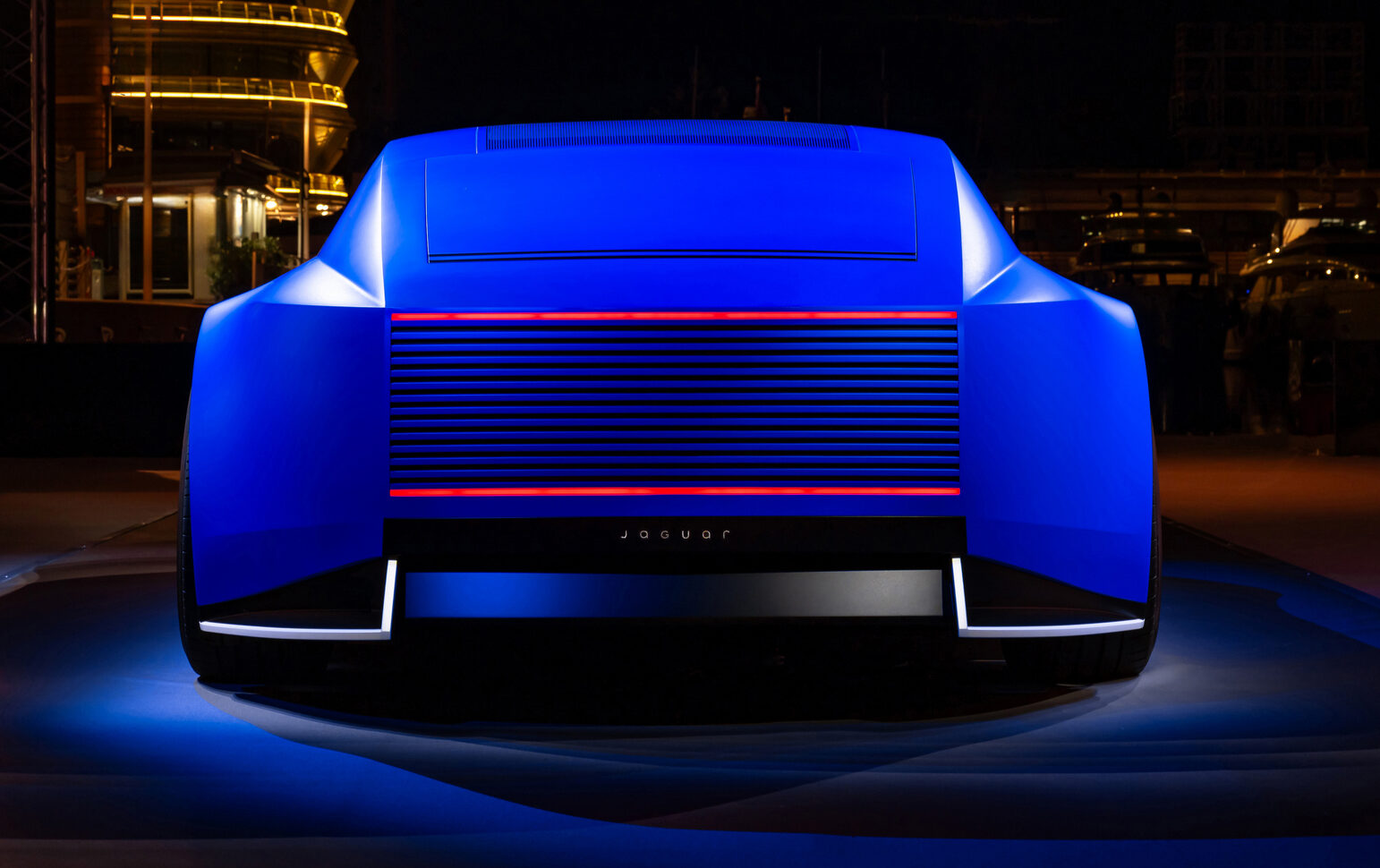
The first of Jaguar’s next-generation EVs is a luxurious four-door model previewed by the Type 00 concept. It’s expected to carry a starting price of around $130,000 in the US, making it more expensive than the Mercedes-Benz EQS. If sales fall short, reworking the platform for hybrids or combustion engines could prove, if not impossible, certainly both difficult and expensive.

Dealer Uncertainty Meets Cautious Optimism

\\\\\\\\\\\\\\\\\\

shproshots

“At the moment, there is no clear business case for Jaguar,” one dealer told Autonews. “We have committed in principle, but whether we fully invest will depend on the final strategy.”

Still, not everyone is pessimistic. Some people are onboard, including the chairman of the German Jaguar and Land Rover Dealers Association, Andreas Everschneider. According to him, “the restart is an opportunity,” but he has warned that Jaguar must avoid falling into the trap of overproduction.

“If Jaguar repeats the mistakes made by other premium brands and floods the market, prices will collapse,” he said. “In that case, the luxury strategy will fail.”

 Not Even Jaguar’s Dealers Are Buying Its $130K EV Plan
Jaguar Type 00 concept

Why This One Panel At Davos Should Worry Every EV Investor

  • BYD exec says unclear EV rules are hurting long-term planning.
  • Carmakers need policy stability to build supply chains confidently.
  • US is losing ground to China due to shifting EV regulations.

BYD has quickly become one of the most significant forces in the global auto industry’s post-Covid transformation, expanding its reach at speed and establishing itself as a dominant player in both EV and PHEV segments. Its rise has been rapid, but not without friction, especially in countries where shifting electrification policies continue to create uncertainty.

Speaking at the World Economic Forum in Davos, Switzerland, BYD executive vice president Stella Li called out the complications these changing policies create for manufacturers.

Read: The EU Blinked And Gas Cars Live To See Another Generation

In her view, the constant shifts make it difficult for companies like BYD to commit capital or build out reliable supply chains. The result, she said, is a climate that “will confuse manufacturers.”

Can Carmakers Keep Up?

“The back and forth policies at the national level have made it more difficult for industry to throw all in and ramp up the way that some of the Chinese companies have been able to,” she revealed, during a panel discussion.

When governments draw a “very clear line” and stick to it, automakers can plan more confidently, Li said. She added that stable direction helps them execute consistently and align their production timelines with long-term goals, according to a report from Business Insider.

The contrast between the Biden and Trump administrations highlights just how disruptive these swings can be. While BYD hasn’t felt the effects of U.S. policy, the European Union’s recent decision to scale back its proposed 2035 ban on internal combustion engine vehicles could potentially impact the company’s future strategy in the region.

 Why This One Panel At Davos Should Worry Every EV Investor

China Leads EVs

Li pointed out that China continues to lead the global EV sector. She credited the country’s expansive charging infrastructure, fast-moving technology, and high consumer demand as key factors driving adoption.

Elaine Buckberg, former chief economist at General Motors, echoed the need for regulatory stability during the panel discussion. She emphasized that predictable incentives play a central role in supporting long-term investment.

“Keeping those incentives stable, that’s really powerful,” she said. “That’s a place where the US is really pulling back under the Trump administration.”

 Why This One Panel At Davos Should Worry Every EV Investor

Europe Just Replaced Tesla With A New EV Sales Champion

  • Model Y and Model 3 sales dropped sharply across Europe.
  • VW ID.3, ID.4, and ID.7 all saw major sales growth last year.
  • Tesla’s decline highlights growing EV pressure from rivals.

It’s no secret that Tesla had a tough run in Europe last year. After several years of outpacing legacy automakers in EV sales, 2025 brought a sharp reversal that few would have seen coming just a couple of years ago. The brand that once led the electric car race is now falling behind a familiar rival with a very different backstory.

Read: BYD Sold Nearly Three Times As Many Cars As Tesla In Europe

Volkswagen sold more battery-electric vehicles in Europe than Tesla last year. Yes, VW, the same manufacturer that was mired in the diesel emissions scandal just as Tesla was gearing up for the Model 3, has now overtaken the American brand on its home turf.

Changing of the Guard

According to figures from Dataforce reported by Autonews, the VW brand moved 274,417 fully electric vehicles in Europe in 2025, a jump of 56 percent from its 2024 total of 175,654. Things weren’t so pretty for Tesla.

Its sales declined 27 percent last year, dropping from 326,714 units to 238,765. This came despite the fact that the Tesla Model Y remains Europe’s best-selling EV with 151,331 units sold last year, significantly more than the 94,106 Skoda Elroqs that were sold over the same period. However, Model Y sales were still down 28 percent from 2024, when 210,265 were sold.

Europe’s Best-Selling EVs
RankModel20252024
1Tesla Model Y151,331210,265
2Skoda Elroq94,10646
3Tesla Model 386,261112,967
4Renault 5 E-Tech81,51713,097
5VW ID.480,12364,729
6VW ID.378,66754,467
7VW ID.776,36832,192
8BMW iX169,81653,272
9Kia EV366,8024,960
10Skoda Enyaq65,78767,331
TOTAL2,582,5951,990,956
SWIPE

Dataforce

Helping the VW brand take the top place from Tesla is the fact that it has a larger range of EVs. For example, the VW ID.4 sold 80,123 units last year, up 23.8 percent. A total of 78,667 VW ID.3s were sold, up 44.4 percent. The ID.7 also saw growth, with 76,368 units finding new homes, a 137.2 percent rise.

To put these figures into perspective, Tesla sold 86,261 Model 3s. And while that beat out any individual VW model, it was still down 23.6 percent from 2024.

VW Conquers All…Almost

VW’s strong year wasn’t limited to EVs. It also topped Europe’s plug-in hybrid (PHEV) segment, selling 159,173 units, a 205 percent jump from 2024. That was enough to comfortably beat BMW, with 142,285 sales, followed by Mercedes-Benz at 135,878 and Volvo at 104,270.

The VW brand also led in both gasoline and diesel vehicle sales. Its gas-powered lineup moved 737,821 units in 2025, staying well ahead of Peugeot’s 492,133, despite VW recording a 7.3 percent decline. Diesel sales reached 269,277 units, down 19.4 percent from the previous year, but still enough to edge out Mercedes, which sold 250,326.

Europe’s Top-Selling EV Brands
BrandSalesDiff. vs 2024
1VW274,41756%
2Tesla238,765−27%
3BMW193,18615%
4Skoda172,100117%
5Audi153,84851%
SWIPE

Dataforce

Traditional hybrids were the only powertrain segment that VW didn’t take top honors in, as Toyota held the crown with 626,675 sales. Although VW didn’t rank in the top five, things could change this year as it plans to launch the new T-Roc, complete with a hybrid powertrain.

 Europe Just Replaced Tesla With A New EV Sales Champion

How to Automate Stop-Arm Violation Detection

By: STN
21 January 2026 at 19:45

According to a recent NASDPTS survey, more than 218,000 illegal stop-arm passings occurred daily in the U.S. during the 2024/2025 school year. For bus drivers who witness these violations then press event markers to capture them, the tasks can be overwhelming. In addition, the few seconds spent activating stop-arm cameras can distract drivers, pulling their attention away from students and the surrounding traffic. These crucial seconds could mean the difference between safe stops and serious events.

The AI Solution

To reduce drivers’ daily tasks, alleviate distractions and improve violation detection, the AI Stop Arm Violation Camera provides an innovative, effective solution. Using vision based artificial intelligence, this IP camera sees motorists enter its detection zone while the stop-arm is extended. Here’s how it works:

  1. Once the camera detects a vehicle passing the extended stop arm, it automatically prompts the REI DVR to flag and record the violation.
  2. REI’s license plate camera(s) simultaneously captures the violator’s plates.
  3. The marker then prompts REI’s ARMOR™ Software Suite to auto-download the video clip, plate images and metadata from the DVR.
  4. ARMOR receives and stores the video and data shortly after the violation, making it easily accessible to administration.
  5. Administration reviews the violation, then emails law enforcement a secure link to the video evidence if necessary.

Driver Benefits

Drivers no longer need to observe and press event markers to capture violations. The AI Stop-Arm Violation Camera does it for them. This reduces stress and allows drivers to stay focused on students as they board and exit rather than violation detection. What’s more, the camera helps reduce missed violations due to human error, improving accuracy.

Administration Benefits

For administration, the streamlined, automated detection and management process eliminates hours spent searching for violation video. It also ensures evidence and relevant data, like bus ID, date, time and location, are ready when needed for law enforcement. School officials access clear, indisputable video evidence in ARMOR within minutes, freeing up valuable time for other operational tasks.

Mounts mid-bus and sees across six lanes.

Community Impact

Beyond its benefits for bus drivers and operations, the solution signals to the community that school bus safety laws are enforced. Over time, consistent, reliable violation detection and prosecution have the potential to change motorists’ behaviors. Motorists who once took chances when they saw extended stop arms may reconsider if they know their actions are detected and recorded. This can help ease the minds of parents, students and the community.

More Than Detection

Besides its ability to detect illegal passings, the AI Stop Arm Violation Camera assists in liability protection. The time stamped video and license plate images it initiates can help verify violations and resolve disputes quickly. This minimizes lengthy investigations and supports accurate reporting to insurance companies.

Next Steps

While the survey revealed fewer violations occurred during the 2024/2025 school year than the previous year, illegal stop-arm passings remain a serious problem. By implementing REI’s AI-powered stop-arm camera solution, districts can take a proactive, automatic approach to detection. The result can lead to a safer environment for students and greater peace of mind for drivers and school officials.

If your district is ready to take the next step toward detecting and reducing stop arm violations, REI can help. Call 800.228.9275, contact us or your REI sales representative for more details about this advanced technology.* Together, we can make a difference in student safety.

*Additional hardware and software required.

The views expressed are those of the content sponsor and do not reflect those of School Transportation News.

The post How to Automate Stop-Arm Violation Detection appeared first on School Transportation News.

Industry Veteran to Address Student Transportation Funding Uncertainty at STN EXPO East

21 January 2026 at 19:14

STN EXPO East speakers will not only speak to present day challenges, but how today’s changes could affect student transportation, most notably a potential redirection of educational funding.

The Fall 2025 Fiscal Survey of the States conducted by the National Association of State Budget Officers found that expected fund spending in 23 states will either drop or stay flat in fiscal year 2026. Tim Ammon, owner of Ammon Consulting Group with 25 years experience in the student transportation industry, will present “Navigating the Funding Cliff” session on Friday, March 30 during the STN EXPO East conference. He plans to address the reassessment, realignment and expiration of funding options by the federal and state government and how they will directly impact the funds used for transportation.

Another hot topic in the industry is enrollment changes, which Ammon will discuss regarding how they specifically affect transportation due to funding models, zoning changes, and school site closures. Being aware of these trends as well as economic shifts can aid transportation as Ammon will explain how any necessary budget redesigns and cuts may look different based on district needs and unique situations.

In an era of constant change and oftentimes a feeling of “doom and gloom,” Ammon plans to provide a candid view of potential impacts, how they could affect various states, and what districts might need to do to trim budgets or allocate funds differently. Industry professionals won’t want to miss this informative session to prepare their budgets for the 2026-2027 school year.

Register by Feb. 14 to save $100 on conference registration. The STN EXPO East conference will be held March 26-31 at Embassy Suites by Hilton Charlotte Concord Golf Resort & Spa in North Carolina. Find the conference agenda, exhibitor lists, and hotel information at stnexpo.com/east.


Related: STN EXPO East to Feature Timely Discussion on Managing Stress
Related: STN EXPO East Agenda Addresses Industry Challenges, Outlines Innovative Solutions
Related: STN EXPO East Keynote Speaker to Outline Strategies for Creating Impactful Culture

The post Industry Veteran to Address Student Transportation Funding Uncertainty at STN EXPO East appeared first on School Transportation News.

Yesterday — 21 January 2026Vehicles

EV Sales Are Booming Everywhere Except One Place

  • Worldwide EV sales jumped 20 percent to a record 20.7 million.
  • Europe and China boomed while America actually went backward.
  • Loss of incentives left US new-car buyers hitting the pause button.

The global electric car party is still raging, but the US has decided to go home to bed early with a nice soothing cup of gasoline. New data shows worldwide EV sales hit 20.7 million units in 2025, up a healthy 20 percent from 2024.

That total was capped by a strong finish, with roughly 2.1 million EVs sold globally in December alone, underlining that momentum elsewhere remained intact through year-end. Almost everywhere on Earth people bought more electric cars. But in North America it’s a different story.

More: If You Think EV Sales Are Dead, You’re Probably Staring At The Wrong Map

China remained the heavyweight champion with 12.9 million EVs sold, up 17 percent. Europe turned into the surprise star, rocketing ahead by 33 percent to 4.3 million units. Even the rest of the world got in on the action with a massive 48 percent surge to 1.7 million units.

 EV Sales Are Booming Everywhere Except One Place

Much of that growth outside the traditional EV strongholds was fueled by a flood of Chinese-built models, as domestic price competition pushed manufacturers to look overseas.

Then we get to North America, which managed a rather awkward 4 percent decline, Rho Motion reports. And it would have been worse if Mexico’s EV sales hadn’t grown 29 percent thanks to an influx of cheap Chinese cars.

In the US, that annual decline masked a sharp late-year swing, with buyers rushing to lock in incentives before September, followed by a steep pullback once those credits disappeared.

Tax-Credit Carnage

 EV Sales Are Booming Everywhere Except One Place

The removal of federal tax credits at the end of September pulled the rug out from under the US market, and buyers reacted exactly as you might expect, meaning that EV sales for the full year grew by just 1 percent. Sales spiked in August and September as incentives wound down, then collapsed in the final quarter, dropping nearly 50 percent compared with the previous quarter.

But in Canada, which lost its EV incentives much earlier in 2025, full-year sales tanked by 49 percent.

Analysts now predict US EV sales will shrink by almost a third in 2026. No wonder Ford is scrapping its F-150 Lightning in favor of a hybrid and Ram opted not to bring an electric truck to market at all.

Europe Keeps Plugging In

 EV Sales Are Booming Everywhere Except One Place

Across the Atlantic the mood could not be more different. Europe sprinted ahead thanks to stronger subsidies and looming emissions rules. Germany jumped 48 percent and the UK rose 27 percent.

Even France managed to finish the year in positive territory after a slow start. That late recovery in France was driven largely by renewed consumer incentives, after months spent underwater earlier in the year.

Other regions quietly delivered impressive numbers too. Southeast Asia almost doubled sales, South and Central America grew by 49 percent, and South Korea enjoyed a 50 percent rise thanks to new models and government incentives.

 EV Sales Are Booming Everywhere Except One Place

Japan, however, stayed stubbornly loyal to hybrids, proving not every country is ready to go fully electric. EV penetration there remained stuck at around 3 percent for yet another year, despite steady gains elsewhere in the region.

Incentives Are Key

The message from the data is clear. Around the world the EV transition is still accelerating, but America had a taste and decided that, without financial sweeteners, it preferred the old menu. Whether that’s a temporary pause or a long detour will depend on politics, prices, and what carmakers do next.

EV sales by region 2025
RegionSales (millions)Diff. vs 2024
Global20.7+20%
China12.9+17%
Europe4.3+33%
North America1.8-4%
Rest of World1.7+48%
SWIPE

Data: Rho Motion

Lotus Might Slash Eletre’s Price In Half In Canada

  • Lotus could slash Eletre prices in Canada by nearly 50 percent.
  • Eletre currently costs more than a Lamborghini Urus SE in Canada.
  • EV tariff deal lets some Chinese imports face lower 6.1 percent tax.

The Lotus Eletre might soon become a far more accessible proposition in Canada, thanks to a new trade agreement with China that could take a wrecking ball to the electric SUV’s bloated sticker price. What is now priced well into super-luxury territory may soon fall within reach for a much broader group of buyers.

Read: We Drove Lotus’ Electric SUV To See If It Can Silence Its Haters

As in the United States, 100 percent tariffs have pushed the Eletre’s price in Canada into the stratosphere, starting at a jaw-tightening CA$313,500 (about US$226,000 at current exchange rates). That puts it in the same league as a mid-spec Bentley Bentayga and even pricier than the Lamborghini Urus E. In the U.S., things aren’t much better, with a starting price of US$229,000 before delivery.

Tariff Relief

 Lotus Might Slash Eletre’s Price In Half In Canada

With the new policy in effect, the first 49,000 Chinese EVs imported into Canada each year will now face a reduced 6.1 percent tariff. Lotus claims this will cause the Eletre’s price to “fall sharply by about 50 percent.”

However, it’s worth noting that under the terms of the agreement, half of those 49,000 vehicles are required to start below CA$35,000 (US$25,000), which the Eletre most definitely does not.

Lotus announced the change on Chinese social media, although it stopped short of confirming a new starting price for the Eletre. If it does indeed drop by 50 percent, it could start from around CA$156,000 ($112,500), significantly undercutting the Urus and positioning it closer to the Porsche Cayenne GTS, which starts at CA$134,800 ($97,200).

\\\\\\\\\

“Canada has always been an important market with great strategic significance in the global territory of Lotus sports cars,” Lotus Group chief executive Feng Qingfeng wrote in a social media posting. “Users here have a high appreciation for high performance and driving pleasure. We warmly welcome the new tariff optimization policy, which has created a more open and fair market environment for international car brands.”

More: Canada Just Invited China’s Biggest EV Makers To Build Cars On America’s Border

Lotus currently operates six dealerships across Canada and will no doubt be eager to ramp up sales of the Eletre. The flagship model features a pair of electric motors that combine to produce 905 hp, allowing a 0-100 km/h (62 mph) in a blistering 2.95 seconds and reach a 265 km/h (164 mph) top speed. It also has a quoted WLTP range of 280 miles.

A Hybrid Eletre Is in the Works Too

 Lotus Might Slash Eletre’s Price In Half In Canada
The upcoming hybrid Lotus Eletre For-Me

Lotus isn’t stopping with just the all-electric Eletre. A hybrid version is also in the works, offering an alternative path for buyers who aren’t quite ready to go fully electric. Official documents out of China confirm that this variant, called the Eletre For-Me, retains the SUV’s shape and layout but adds a turbocharged four-cylinder engine to the mix.

Read: Lotus Dropped A Gas Engine Into The Eletre SUV

It’s Lotus’s first step back from its earlier pledge to go EV-only, and while the full specs haven’t been disclosed, early reports point to a combined output of 952 hp, slightly more than the current top-spec Eletre R.

We had a chance to review the all-electric Eletre last year and were pleasantly surprised. It’s quick, feels well-built, and has a beautiful interior that suits the category. Will those qualities be enough to convince Canadians to buy it if the price drops by half?

 Lotus Might Slash Eletre’s Price In Half In Canada

Canada Just Invited China’s Biggest EV Makers To Build Cars On America’s Border

  • Canada will cut EV tariffs from 100 percent to just 6.1 percent.
  • New trade deal caps Chinese EV imports to 49,000 per year.
  • Ford warns deal risks job losses and US market retaliation.

Canadian Prime Minister Mark Carney says several Chinese carmakers are showing interest in building affordable electric vehicles on Canadian soil, just days after the country signed a new trade agreement with the world’s largest EV manufacturing nation.

Read: Canada Just Let Cheap Chinese EVs Back In

Carney met with Chinese President Xi Jinping in Beijing late last week, where the two leaders finalized a deal that will sharply cut tariffs on Chinese EVs entering Canada, dropping them from 100 percent to 6.1 percent. As part of the agreement, a cap will initially limit imports to 49,000 vehicles per year, with half of those required to start below CA$35,000 (roughly $25,000 USD).

Framing the cap as a measured opening rather than a floodgate, Carney pointed out that 49,000 vehicles matches the number of Chinese-made EVs imported into Canada in 2023.

A Cautious Green Light

 Canada Just Invited China’s Biggest EV Makers To Build Cars On America’s Border

“We’ve had direct conversations directly from the Chinese companies…and collectively are the world’s leaders in this space, with explicit interest and intention to partner with Canadian companies,” Carney said.

He described the deal as a phased rollout designed to encourage collaboration between Chinese automakers and local firms. “This is an opportunity for Ontario. It’s an opportunity for Ontario workers, an opportunity for Canada, done in a controlled way with a modest start,” he added.

Any Chinese car manufacturer that intends to build EVs in Canada will need to meet the nation’s labor standards, Carney said, and reiterated that he wants to see Canada remain competitive in the auto market well into the future.

“We don’t want to be competitive in the market of 2000, 2010,” he said. “We want to become competitive in the market in the future.”

A Small Slice of the Market. For Now

 Canada Just Invited China’s Biggest EV Makers To Build Cars On America’s Border

To address concerns about disruption, Carney pointed out that the import cap amounts to less than three percent of Canada’s annual new car sales, which hover around 1.8 million vehicles. He called the agreement a “modest” first step, noting that a review is built into the deal after three years to gauge market impact.

Perhaps surprisingly, US President Donald Trump said the trade deal was a good one, despite US Trade Representative Jamieson Greer deriding it as “problematic for Canada.” According to Trump, “Well, it’s okay. That’s what he [Carney] should be doing. If you can get a deal with China, you should do that.”

Premier Hits Out

Not everyone is a fan of seeing Canada reduce tariffs on Chinese EVs. Ontario Premier Doug Ford has criticized the deal, claiming it will hurt the local economy.

“By lowering tariffs on Chinese electric vehicles, this lopsided deal risks closing the door on Canadian automakers to the American market, our largest export destination, which would hurt our economy and lead to job losses,” he said, according to CP24.

Unifor National President Lana Payne also voiced concern. “Providing a foothold to cheap Chinese EVs, backed by massive state subsidies [and] overproduction…puts Canadian auto jobs at risk while rewarding labour violations and unfair trade practices,” she said.

 Canada Just Invited China’s Biggest EV Makers To Build Cars On America’s Border

Redesigned 2027 Kia Niro Desperately Wants To Be An EV3

  • Kia has revealed the facelifted Niro in South Korea.
  • Crossover gets wishbone-shaped DRLs like Kia’s EVs.
  • Re-profiled trunk lid loses license plate to the bumper.

After bombarding us with EV news earlier this month, including the reveal of the new EV2 and several GT performance models, Kia is showing us that it hasn’t forgotten about its combustion and hybrid models. It’s dropped three images of a compact 2027 Niro crossover fresh from a mid-life makeover.

Related: Kia Might Offer A Manual K4 Hatch In America, But The Wagon’s Another Story

But there’s still an EV connection to this news, and not just because Kia still sells the Niro with an optional pure electric powertrain. Kia’s designers clearly had the automaker’s sharper-suited electric SUVs in mind when they picked up the scalpel for the Niro update. The front end of the updated Niro borrows heavily from models like the EV2, 3, 5 and 9.

 Redesigned 2027 Kia Niro Desperately Wants To Be An EV3

The new nose is squarer and more upright, and it adopts the wishbone-shaped DRLs of its electric brothers. Kia has even managed to draw attention away from the air intakes the combustion car’s radiator needs by giving the Niro an EV-style body-color band between the headlights.

\\\\\\\

There are no major changes to the central body structure and doors, but  the designers have definitely been busy at the rear end. The Niro doesn’t take on the EV models’ Y-shaped taillights, but it does get an entirely new hatch that looks far cleaner and more modern.

Review: Before You Buy A Small SUV, Look At Kia’s 2026 K4 Turbo Hatch First

It’s similar to the one on the ICE-powered Sportage SUV, and that means the license plate has been moved down to the rear bumper. We can also see a new black panel that echoes the boomerang shape of the rear lights, and the whole shebang rides on new 18-inch wheels, Kia says.

Screen Refresh

 Redesigned 2027 Kia Niro Desperately Wants To Be An EV3

The updates aren’t restricted to the Niro’s exterior. Inside, it gets a redesigned upper half of the dash featuring same conjoined, twin-12.3-inch digital displays you’ll find on the numbered EV models and also the latest Sportage, plus a new-look two-spoke steering wheel.

Hybrid or EV?

Kia revealed the Niro’s new look in Korea, adding that we’ll find out more about the MY27 crossover in March. So we might have to wait until then to learn whether there are any changes to the drivetrain.

The current Niro comes with a choice of 139 hp (141 PS) 1.6-liter hybrid and 180 hp (183 PS) 1.6 plug-in hybrid petrol engines, though it’s also available in some markets as a 201 hp (204 PS / 150 kW) EV with a 253-mile (407 km) EPA range.

A Kia official said, “The New Niro, which has maintained its heritage as the first eco-friendly SUV, will provide high customer satisfaction with excellent usability based on practical value as well as a high-quality design that reflects the latest trends.”

 Redesigned 2027 Kia Niro Desperately Wants To Be An EV3
Kia

Mitsubishi’s New 400HP Compact Comes From The Same Factory As Your iPhone

  • Mitsubishi’s next EV is based on the Foxtron Bria hatch.
  • Dual-motor flagship model is rated at 400 horsepower.
  • Testing of the new model is already underway in Australia.

If there were an award for the automaker with the least inspiring lineup, Mitsubishi might have a strong claim to it. But change is on the horizon. The Japanese brand is set to add some spark to its range with a new all-electric model, even if, as has become something of a pattern lately, the vehicle won’t be one of its own creations.

Read: Foxconn’s Pininfarina-Designed Model B Could Steal Tesla’s Thunder In The Small Segment

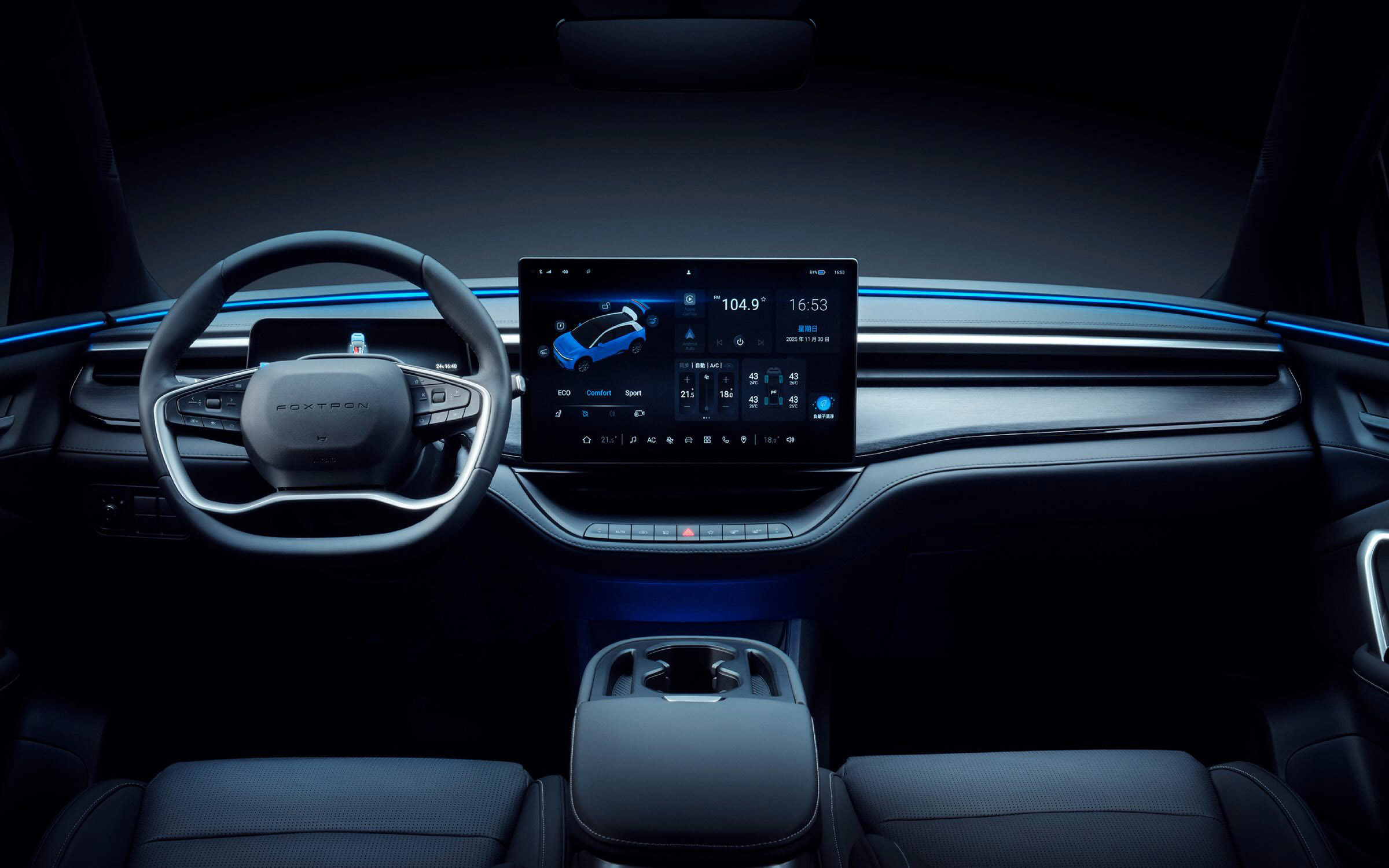
As covered previously, Mitsubishi has teamed up with Taiwanese contract manufacturer Foxconn, best known for assembling the iPhone. Together, they’ll introduce an electric hatchback based on Foxtron’s newly unveiled Bria designed by famed Italian studio Pininfarina.

That car, based on the striking Model B Concept, made its production debut in Taiwan and could bring a welcome dose of personality to Mitsubishi’s offerings.

Powering the Bria is a 57.5 kWh lithium-iron phosphate battery pack, and so far, three variants have been confirmed. Both the Elegant and Emerge models use a single 229 hp electric motor at the rear, allowing them to hit 100 km/h (62 mph) in 6.8 seconds.

For those wanting more punch, there’s the dual-motor Pioneer model. With all-wheel drive and a combined 400 hp, it cuts the sprint to 100 km/h down to just 3.9 seconds.

 Mitsubishi’s New 400HP Compact Comes From The Same Factory As Your iPhone

It’s unclear if the Mitsubishi version will retain the same specifications, but we suspect it will. A few months ago, I spotted a prototype of the Model B being tested in Melbourne, Australia, albeit without any Foxtron branding.

This is because the two companies are eyeing Australia as one of the car’s most important markets, and are believed to be fine-tuning the suspension for local road conditions.

The name of the Mitsubishi-branded EV hasn’t been confirmed, but recent trademark filings suggest a direction. According to Drive, the carmaker has secured rights in Australia for the names ‘ASX GT-e’ and ‘ASX VR-e’.

Golf Size

 Mitsubishi’s New 400HP Compact Comes From The Same Factory As Your iPhone

Dimensionally, the Bria measures 4,315 mm (169.8 inches) long, 1,885 mm (74.2 inches) wide, and 1,535 mm (60.4 inches) tall. That makes it slightly longer and wider than a Volkswagen Golf, and comparable in scale to the electric MG 4.

Considering this is Foxconn’s first production EV, the Bria makes a strong visual impression. It bears no resemblance to anything in Mitsubishi’s current stable, but that’s unlikely to be an issue. Mitsubishi has a long history with rebadged models, so it’d probably be happy to sell the Bria as is.

\\\\\\\\\\\

Trump administration claims offshore wind poses a threat. But it won't say how.

21 January 2026 at 10:00
Wind turbines are seen off the coast of Rhode Island. The Trump administration has tried to stop construction of five offshore wind projects that are being built along the East Coast.

The Interior Department said pausing construction of offshore wind farms would allow the government agencies to work with project developers to mitigate potential risks. But wind companies say the administration isn't sharing information about newly-discovered threats.

(Image credit: Michael Dwyer/AP)

(STN Podcast E290) Ideas, People & Solutions: Three-Pronged Approach to ‘Danger Zone’ Safety

20 January 2026 at 21:12

Ryan and Taylor discuss upcoming student transportation awards, the NTSB investigation of a fatal school bus dragging, and a Florida bus aide arrested for child abuse.

“Education, engineering and enforcement.” Student safety is a passion of Derek Graham, an industry consultant and former state director of pupil transportation with the North Carolina Department of Public Instruction as well as past president of the National Association of State Directors of Pupil Transportation Services (NASDPTS). He joins us to discuss NASDPTS’ annual illegal passing survey and additional safety efforts which he will present about at STN EXPO East this March in Charlotte-Concord, North Carolina.

Read more about safety.

This episode is brought to you by Transfinder.


Stream, subscribe and download the School Transportation Nation podcast on Apple Podcasts, Deezer, Google Podcasts, iHeartRadioSpotify, Stitcher and YouTube.

The post (STN Podcast E290) Ideas, People & Solutions: Three-Pronged Approach to ‘Danger Zone’ Safety appeared first on School Transportation News.

New York School Bus Driver Dies After Medical Emergency

20 January 2026 at 19:55

A school bus driver in Oneida County died Jan. 5 after suffering a medical emergency and crashing into a snowbank, reported Syracuse News.

The crash was reported around 12:25 p.m. at the intersection of state routes 31 and 365 in the town of Verona, police said. Troopers confirmed that no students were on the school bus at the time of the incident.

State police spokesperson Trooper Jennifer Jiron said the bus driver was traveling west on Route 31 when he experienced a medical emergency and collapsed. The bus then left the roadway and came to rest on a snowbank.

Two other adults, a second bus driver and a school bus aide, were also on board. Neither was reportedly injured. Police said the two attempted to stop the bus, called 911 and began CPR on the driver.

The driver was transported to Oneida Health Hospital, where they were pronounced dead. The driver’s identity has not yet been released. First Student reportedly owns the school bus and was operating under contract with the Rome City School District.

Authorities reported no damage to the bus. The incident remains under investigation.


Related: Oklahoma Student Hailed Hero After Helping Bus Driver During Medical Emergency
Related: Brother and Sister Help Save School Bus Driver During Medical Emergency in Ohio
Related: Massachusetts School Bus Driver Crashes into Trees Due to Medical Emergency
Related: Maine School Bus Driver Dies After Suffering Medical Emergency

The post New York School Bus Driver Dies After Medical Emergency appeared first on School Transportation News.

Waymo Driverless Vehicles Continue to Illegally Pass School Buses

20 January 2026 at 19:50

Despite multiple attempts to correct the situation, Waymo’s autonomous vehicles are still illegally passing Austin Independent School District school buses in Texas.

“Even after the November software update and December software recall Waymo says they conducted,” Austin ISD said in a statement Jan. 14. The school district added the most another violation just occurred two days earlier.

Austin ISD now confirms Waymo vehicles committed a total of 24 violations, as of the middle of January.

“Austin ISD again asks that Waymo cease operations in the mornings and afternoons during school days when our students are using our school buses,” a statement by the district reads. “Austin ISD continues to explore any and all legal recourse available.”

Despite the most recent update last week, Austin ISD officials have been navigating this situation for months.

The National Highway Traffic Safety Administration also opened a preliminary evaluation Oct. 17, after a Waymo vehicle failed to stop and passed a school bus in Atlanta, Georgia in September. School Transportation News reached out to Atlanta Public Schools regarding the violations but had yet to hear back at this writing.

Back in Texas, Austin ISD installed BusPatrol camera systems in 2024 on all 519 of the district’s general and special education buses. Citations for illegal passing incidents began soon after that. Prior to the BusPatrol partnership, the district saw 10,000 to 12,000 violations a year, said Kris Hafezizadeh, the executive director of transportation and vehicle services. Now, the school district sees a little over 7,000 passes. He cited a decrease in repeat offenders.

Among those violators is Waymo. Hafezizadeh said the autonomous vehicles treat the school bus like a stop sign, some not even stopping before approaching the school bus.

Waymo reported to Austin ISD as of Nov. 5 that software updates were in place to resolve the issue. Hafezizadeh said. However, a Nov. 20 memo to Waymo by Austin ISD general counsel states that five violations occurred after Waymo’s Nov. 5 letter.

“Put simply, Waymo’s software updates are clearly not working as intended nor as quickly as required. We cannot allow Waymo to continue endangering our students while it attempts to implement a fix,” the memo states. “Accordingly, Austin ISD demands that Waymo immediately cease operation of its automated vehicles during the hours of 5:20 a.m. – 9:30 a.m. and 3:00 p.m. – 7:00 p.m., until more in-depth software updates are completed and Waymo can guarantee its vehicles will comply with the law.”

Hafezizadeh said Waymo “disagreed.” In early December, Hafezizadeh offered his school buses and parking lot to further test the software in Waymo vehicles. He noted that Waymo brought two of its cars and he provided seven school buses of different OEMs to conduct tests. He added that his staff complied with any request made by Waymo officials during the four-hour test period.

“The unfortunate part is, after that, they had another two or three violations,” he said.

Waymo did not respond to requests for comment at this writing.


Related: NHTSA Investigates Autonomous Waymo Rides After Illegal School Bus Passing
Related: Waymo Driverless Car Illegally Passes Stopped School Bus in Atlanta
Related: Federal Bill Aims to Increase Awareness of Illegal School Bus Passing

The post Waymo Driverless Vehicles Continue to Illegally Pass School Buses appeared first on School Transportation News.

❌
❌