Normal view

There are new articles available, click to refresh the page.
Before yesterdayMain stream

Tesla’s Sales Crash For The 13th Straight Month As Its Scariest Rival Cleaned Up

  • European car sales dropped 3.5 % in January.
  • EVs grew their market share to almost 20 %.
  • Hybrids are the most popular vehicle type.

Europe’s new car market didn’t exactly start the 2026 race in a flurry of smokey wheelspins. Registrations across the EU, UK, and EFTA slipped 3.5 percent year-on-year to 961,382 units in January. But beneath that soggy headline number, one brand was busy throwing its own party.

And it wasn’t Tesla. Across the EU, UK, and European Free Trade Association (EFTA) regions combined, Tesla registrations dropped 17.0 percent to 8,075 cars in January. That left the American EV giant with a 0.8 percent market share, down from 1.0 percent a year earlier, according to data from industry body ACEA.

It was also Tesla’s 13th consecutive month of declining sales in Europe, a reminder that this is no short-lived dip.

Also: Tesla’s Sales Collapsed By Nearly 90% In The Land Of EVs

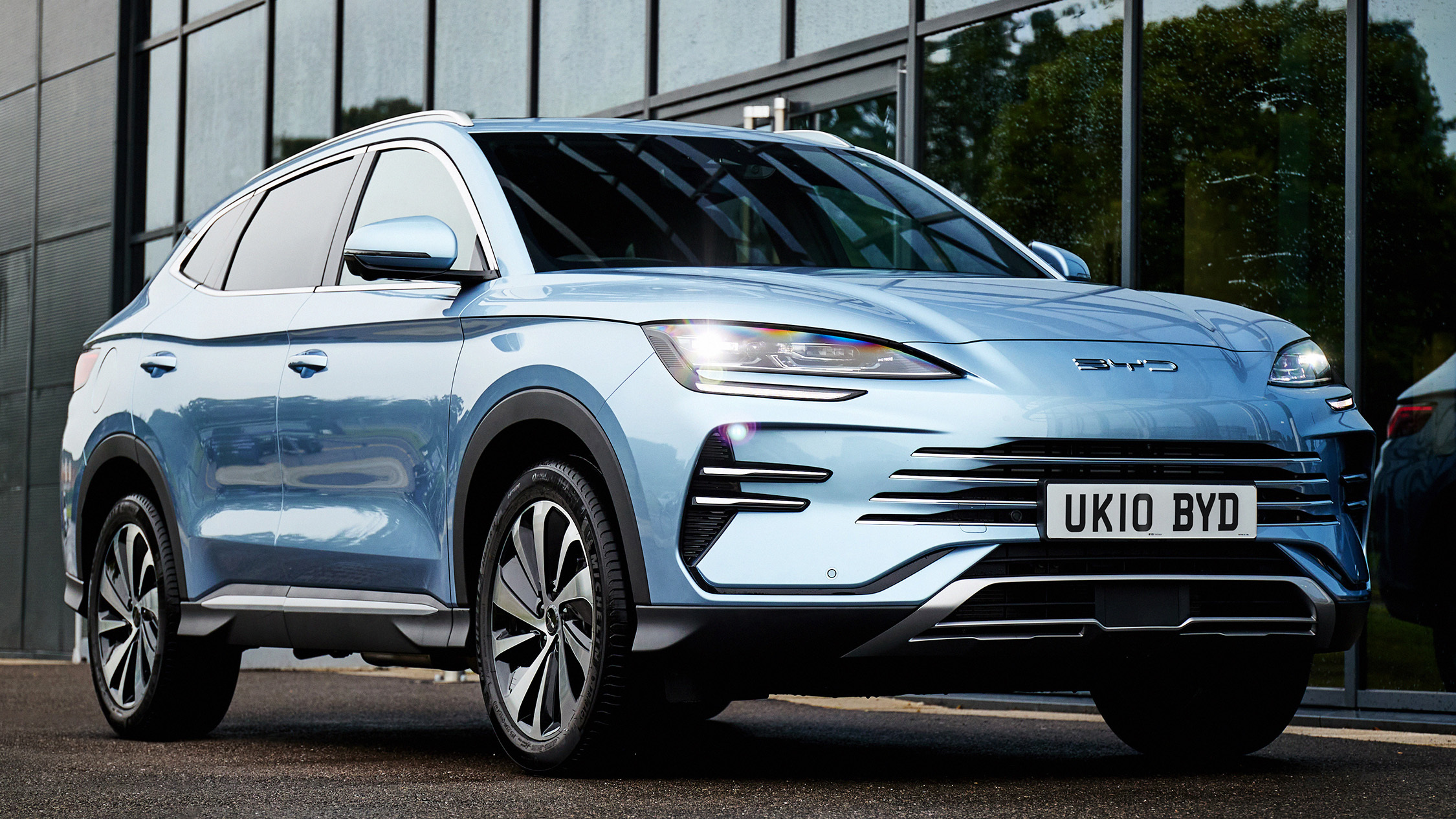
BYD, meanwhile, went into overdrive with its mix of EVs and hybrids. The Chinese brand shifted 18,242 cars across the same region, an impressive increase of 165.0 percent year-on-year (175 percent in the EU alone), and its share climbed to 1.9 percent, more than double Tesla’s slice of the pie.

Dacia’s Fall From Glory
 Tesla’s Sales Crash For The 13th Straight Month As Its Scariest Rival Cleaned Up

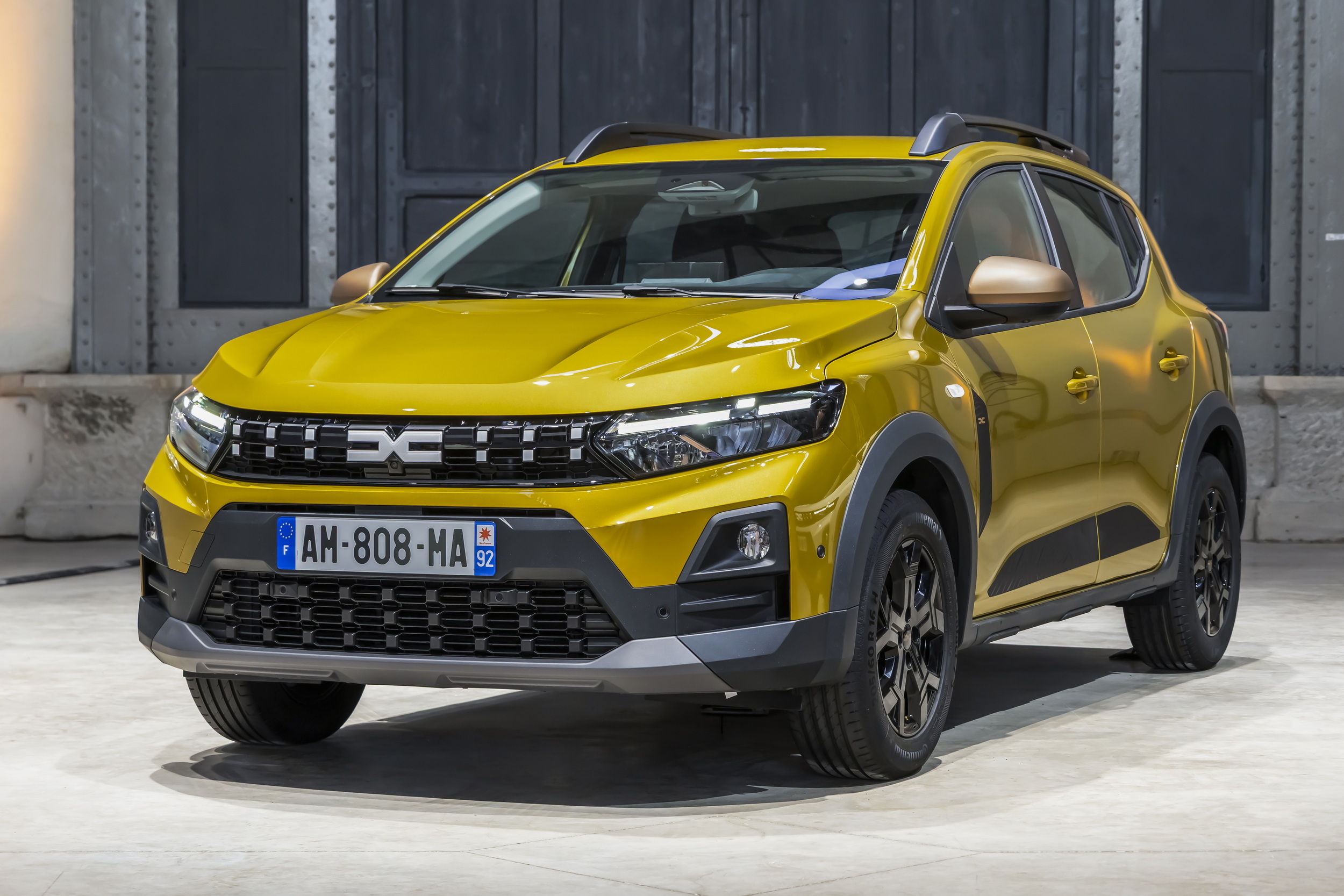
Tesla was far from the only automaker to take a beating in January. Renault Group also had a bruising month, its sales falling 15.0 percent to 83,201 units. That is a slide not too far off Tesla’s in percentage terms, though the Renault brand itself was up 4.4 percent. It was Renault-owned Dacia’s disastrous 35 percent drop that ruined the overall picture.

BMW (down 8.7 percent) and the VW brand (down 11.2 percent) were also left licking their wounds, while sister companies Mini (up 11.2 percent) and Skoda (up 10.1 percent) gleefully rubbed salt in them.

One In Five Cars Now An EV
 Tesla’s Sales Crash For The 13th Straight Month As Its Scariest Rival Cleaned Up

On the powertrain front, the shift to electrification keeps gathering pace. Sales of battery electric cars climbed 13.9 percent, meaning they now account for 19.3 percent of the EU market in January, up from 14.9 percent a year earlier. And plug-in hybrids climbed 32.2 percent while petrol registrations plunged 25.7 percent and diesel slid 22.0 percent.

Country by country, the picture was mixed. Germany and France both saw total registrations fall 6.6 percent, but their EV registrations jumped by 23.8 and 52.1 percent, respectively. And Norway, always an EV bellwether, endured a dramatic 76.3 percent drop in overall registrations, mostly due to the end of government incentives.

European Car Sales
BrandJan-26Jan-25Diff.Share ’26Share ’25
Volkswagen Group256,728266,798-3.8%26.7%26.8%
Volkswagen100,228112,885-11.2%10.4%11.3%
Skoda64,96758,98910.1%6.8%5.9%
Audi48,98449,230-0.5%5.1%4.9%
Cupra18,78220,449-8.2%2.0%2.1%
Seat15,58316,562-5.9%1.6%1.7%
Porsche7,5147,950-5.5%0.8%0.8%
Others (VW)670733-8.6%0.1%0.1%
Stellantis164,436154,1616.7%17.1%15.5%
Peugeot53,79955,432-2.9%5.6%5.6%
Opel/Vauxhall32,05428,43712.7%3.3%2.9%
Citroen31,03927,22714.0%3.2%2.7%
Fiat³29,41523,61724.6%3.1%2.4%
Jeep10,48411,022-4.9%1.1%1.1%
Alfa Romeo4,2784,794-10.8%0.4%0.5%
DS1,8232,192-16.8%0.2%0.2%
Lancia/Chrysler1,2831,05222.0%0.1%0.1%
Others (Stellantis)261388-32.7%0.0%0.0%
Renault Group83,20197,890-15.0%8.7%9.8%
Renault50,60448,4664.4%5.3%4.9%
Dacia31,81948,953-35.0%3.3%4.9%
Alpine77847165.2%0.1%0.0%
Hyundai Group72,89383,283-12.5%7.6%8.4%
Kia39,62241,762-5.1%4.1%4.2%
Hyundai33,27141,521-19.9%3.5%4.2%
BMW Group66,19170,200-5.7%6.9%7.0%
BMW54,57459,751-8.7%5.7%6.0%
Mini11,61710,44911.2%1.2%1.0%
Toyota Group69,13979,836-13.4%7.2%8.0%
Toyota63,80172,373-11.8%6.6%7.3%
Lexus5,3387,463-28.5%0.6%0.7%
Mercedes-Benz43,70442,5312.8%4.5%4.3%
Ford31,38536,117-13.1%3.3%3.6%
Nissan20,57025,010-17.8%2.1%2.5%
Volvo Cars20,36723,680-14.0%2.1%2.4%
SAIC Motor19,25419,611-1.8%2.0%2.0%
BYD18,2426,884165.0%1.9%0.7%
Suzuki12,79314,808-13.6%1.3%1.5%
Mazda11,02211,082-0.5%1.1%1.1%
Jaguar Land Rover Group10,24311,243-8.9%1.1%1.1%
Land Rover10,23710,263-0.3%1.1%1.0%
Jaguar6980-13.8%0.0%0.1%
Tesla8,0759,733-17.0%0.8%1.0%
Honda4,6264,994-7.4%0.5%0.5%
Mitsubishi2,2403,450-35.1%0.2%0.3%
SWIPE

ACEA: Figures for EU + UK + EFTA

Used Tesla Prices Jump As Other EVs Crash Back To Earth

  • Used Tesla prices climbed after the tax credit ended.
  • Most other used EVs lost value as demand cooled.
  • The Porsche Taycan was the only non-Tesla EV to rise.

The loss of $7,500 federal tax credits should, in theory, have put every EV brand on an even footing, but Tesla and its customers decided to write their own script. While most electric car values have dropped since last fall, Tesla values are actually climbing.

According to a new study, used Tesla prices have risen 4.3 percent since the EV credit disappeared at the end of September 2025. Over the same period, nearly every other used EV dropped an average of 3.6 percent.

More: EV Sales Fell Off A Cliff, Yet New Car Prices Still Set Another Record

Because Teslas make up such a huge slice of the used EV pie, the average price of all used EVs actually went up 3.5 percent, painting a superficially rosy picture. Strip Tesla out of the equation and things look very different. Non-Tesla EVs slid from an average of $24,629 to $23,738. Meanwhile, used combustion cars dipped 2 percent.

Declining Share

 Used Tesla Prices Jump As Other EVs Crash Back To Earth

The iSeeCars study also found that used EV market share fell 20 percent between September and January, dropping from 3.5 percent to 2.8 percent. A year earlier, that share had been climbing, but now it is heading the other way. The early adopters already have their EVs. Mainstream buyers are apparently thinking harder about price, charging, and range.

Average Prices For 1- To 5-Year-Old Used Cars
SegmentSep ’25Jan ’26Diff.
EVs$29,637$30,666+3.5%
ICE$31,900$31,249-2.0%
SWIPE

Look at individual models and the pattern gets clearer. Lower-cost EVs like the Hyundai Kona Electric, Volkswagen ID.4, Kia Niro EV and Nissan Leaf all lost between roughly five and six percent of their value. Meanwhile Tesla Model 3 and Model Y prices ticked up, as did those for the Porsche Taycan, the only non-Tesla EV to experience a jump in values.

New EV Prices Down

 Used Tesla Prices Jump As Other EVs Crash Back To Earth
Tesla

New EVs tell a similar story. Excluding Tesla, which iSeeCars doesn’t have data for, average new EV prices dropped 2.3 percent, while new internal combustion vehicles rose 2.5 percent. Some mainstream EVs like the Hyundai Ioniq 5 and Chevrolet Equinox EV saw even steeper cuts.

Carmakers are clearly trying to replace that vanished tax credit with old fashioned discounting, but falling EV sales figures since tax credits disappeared tells us it’s not a complete fix.

Average Used EV Prices
 Used Tesla Prices Jump As Other EVs Crash Back To Earth
ModelSep ’25Jan ’26Diff.
Hyundai Kona Electric$21,020$19,678-6.4%
Volkswagen ID.4$23,307$21,860-6.2%
Kia Niro EV$21,128$20,024-5.2%
Ford Mustang Mach-E$30,575$29,014-5.1%
Nissan LEAF$16,360$15,606-4.6%
Polestar 2$26,006$25,508-1.9%
Tesla Model Y$29,603$29,989+1.3%
Tesla Model 3$25,061$25,701+2.6%
EV Average$29,637$30,666+3.5%
Porsche Taycan$74,465$77,552+4.1%
Tesla Model S$47,226$51,249+8.5%
Tesla Model X$51,973$57,306+10.3%
SWIPE
Average New EV Prices
 Used Tesla Prices Jump As Other EVs Crash Back To Earth
ModelSep ’25Jan ’26Diff.
Hyundai IONIQ 5$52,273$45,068-13.8%
Chevrolet Equinox EV$42,373$38,687-8.7%
Jeep Wagoneer S$58,377$53,568-8.2%
Ford F-150 Lightning$70,482$65,722-6.8%
Volkswagen ID. Buzz$65,753$61,425-6.6%
Kia Niro EV$39,363$37,267-5.3%
Dodge Charger$55,873$53,195-4.8%
GMC Sierra EV$78,897$75,302-4.6%
Kia EV6$50,664$48,732-3.8%
Kia EV9$64,125$61,749-3.7%
Volvo EX90$86,343$83,867-2.9%
EV* Average$63,327$61,860-2.3%
Audi A6 Sportback e-Tron$67,718$70,338+3.9%
Lucid Air$91,479$96,256+5.2%
Audi Q6 e-Tron$68,250$72,052+5.6%
Audi Q4 e-Tron$57,622$60,867+5.6%
Volvo EX40$55,343$59,239+7.0%
Mercedes-Benz EQS (SUV)$109,614$123,643+12.8%
SWIPE

Tesla Still Rules EV Satisfaction, Though One Rival Just Caught Up

  • EV owner satisfaction has reached an all-time high.
  • Best models come from Tesla, BMW, and Cadillac.
  • Most EV owners would consider getting another one.

Electric vehicles have come a long way in the past few years, and the progress is finally showing up where it matters most: in owner satisfaction. According to the latest data, these steady gains in technology and infrastructure are translating into record-high approval from drivers.

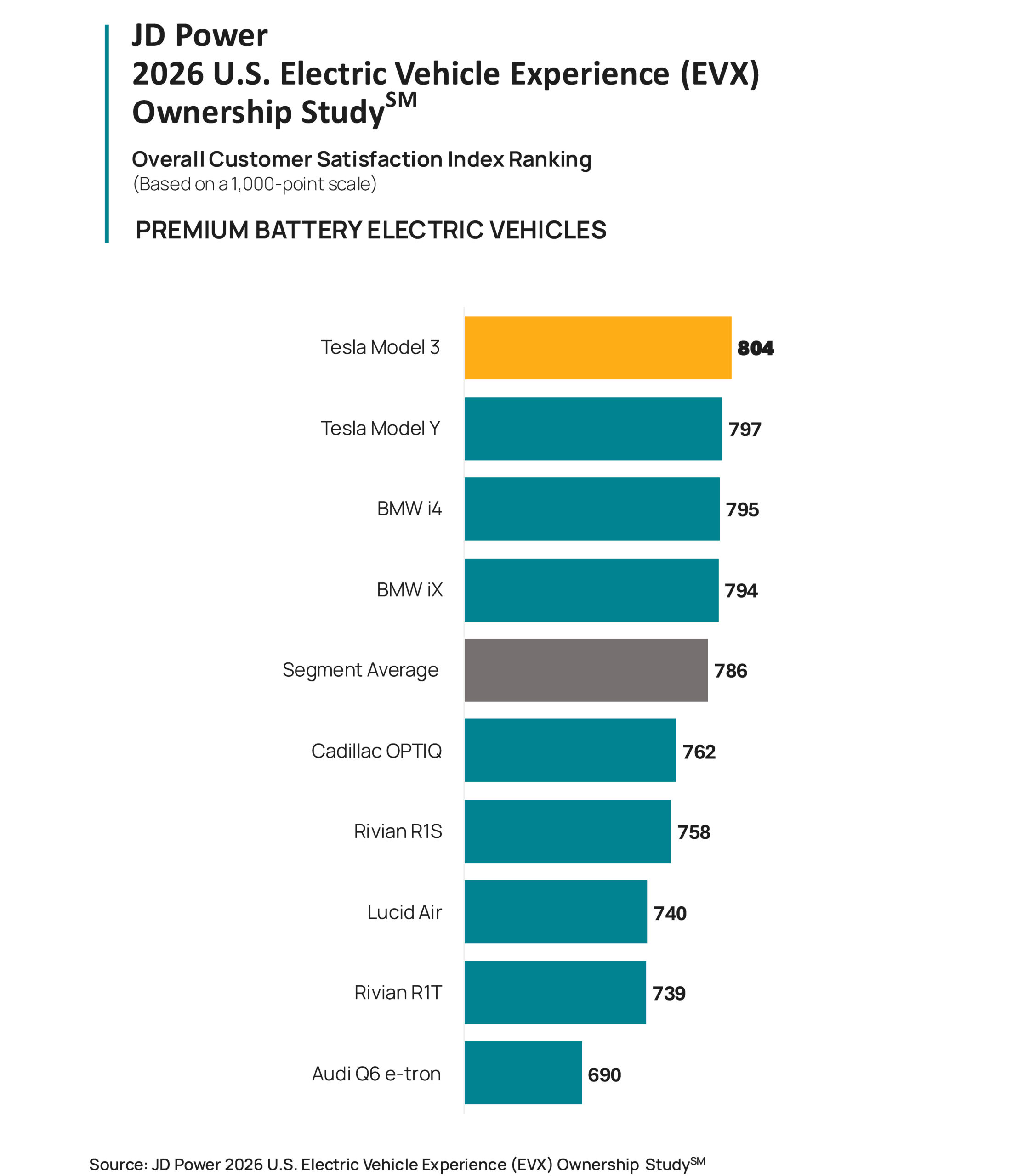
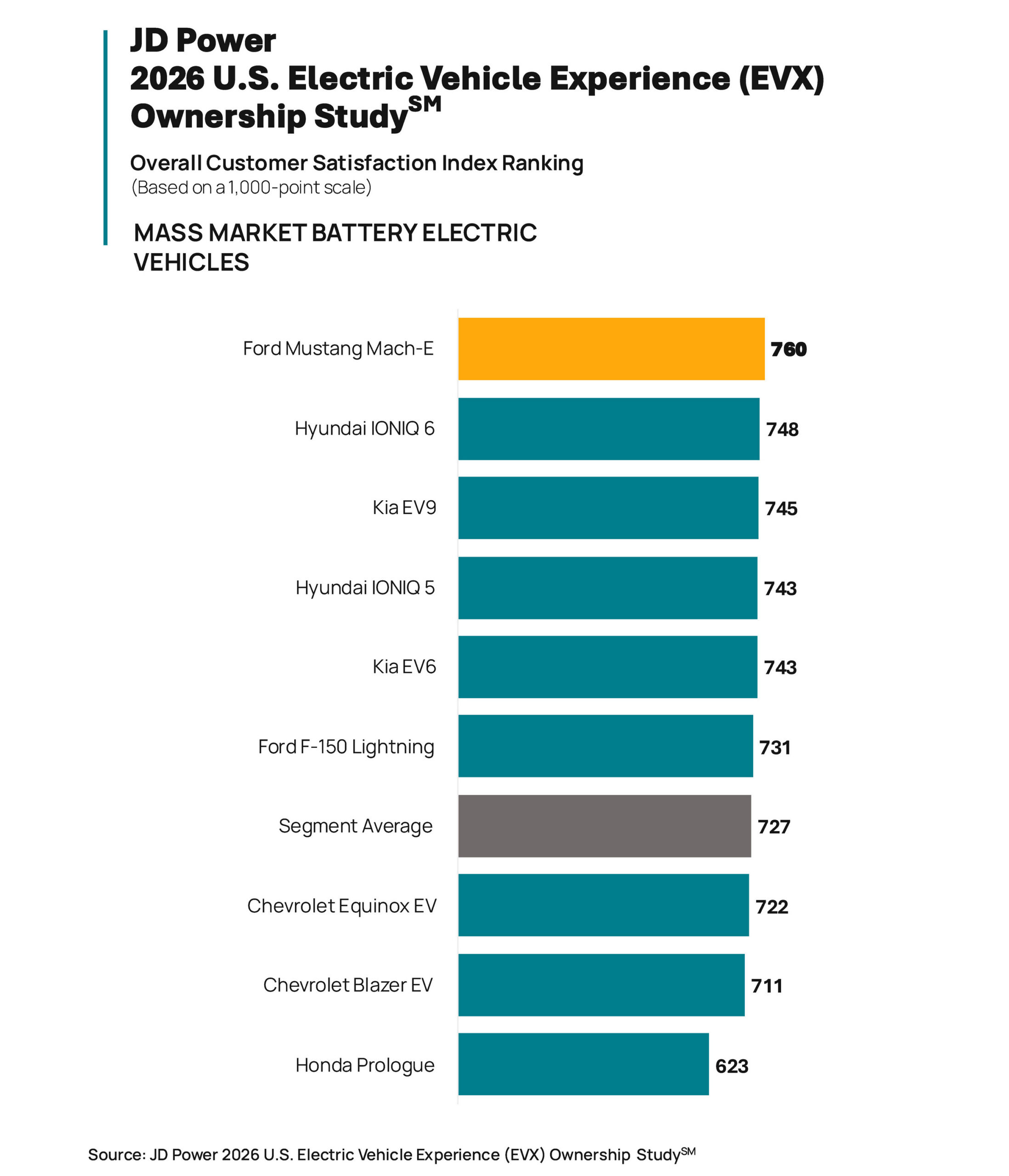
That’s the verdict from JD Power’s 2026 U.S. Electric Vehicle Experience Ownership Study, which found premium EV satisfaction climbed from 756 points last year to 789 in 2026. Mainstream EVs also improved two points to hit 727 out of 1,000.

More: A Third of Americans Are Priced Out Of New Cars, And It’s Getting Worse

The highest rated premium EVs were the Tesla Model 3 (804), Tesla Model Y (797), and BMW i4 (795). On the flip side, the new Audi Q6 e-tron came in dead last at 690. It placed well below the Lucid Air (740) and Rivian R1T (739).

 Tesla Still Rules EV Satisfaction, Though One Rival Just Caught Up

Segment Standouts And Stragglers

On the mass market side of the equation, the Ford Mustang Mach-E took top honors with a score of 760. The electric pony car was followed by the Hyundai Ioniq 6 (748) and Kia EV9 (745). Interestingly, the two lowest rated EVs were the Chevrolet Blazer EV (711) and Honda Prologue (623). That’s a huge point spread considering both models are built by GM and have a lot in common.

Of course, things aren’t completely straightforward as the study examined ten different factors. This includes the “accuracy of stated battery range, availability of public charging stations, battery range, cost of ownership, driving enjoyment, ease of charging at home, interior and exterior styling, safety and technology features, service experience, and vehicle quality and reliability.”

Encouragingly, 96 percent of EV owners said they would consider buying or leasing another one and the study also found quality has improved. That’s especially true of premium EVs, which had 15.9 fewer problems per 100 vehicles compared to last year. This brought the total down to 75 and JD Power said this was driven by noise improvements as well as fewer problems with driver assistance technology.

 Tesla Still Rules EV Satisfaction, Though One Rival Just Caught Up

Is Charging Still A Concern?

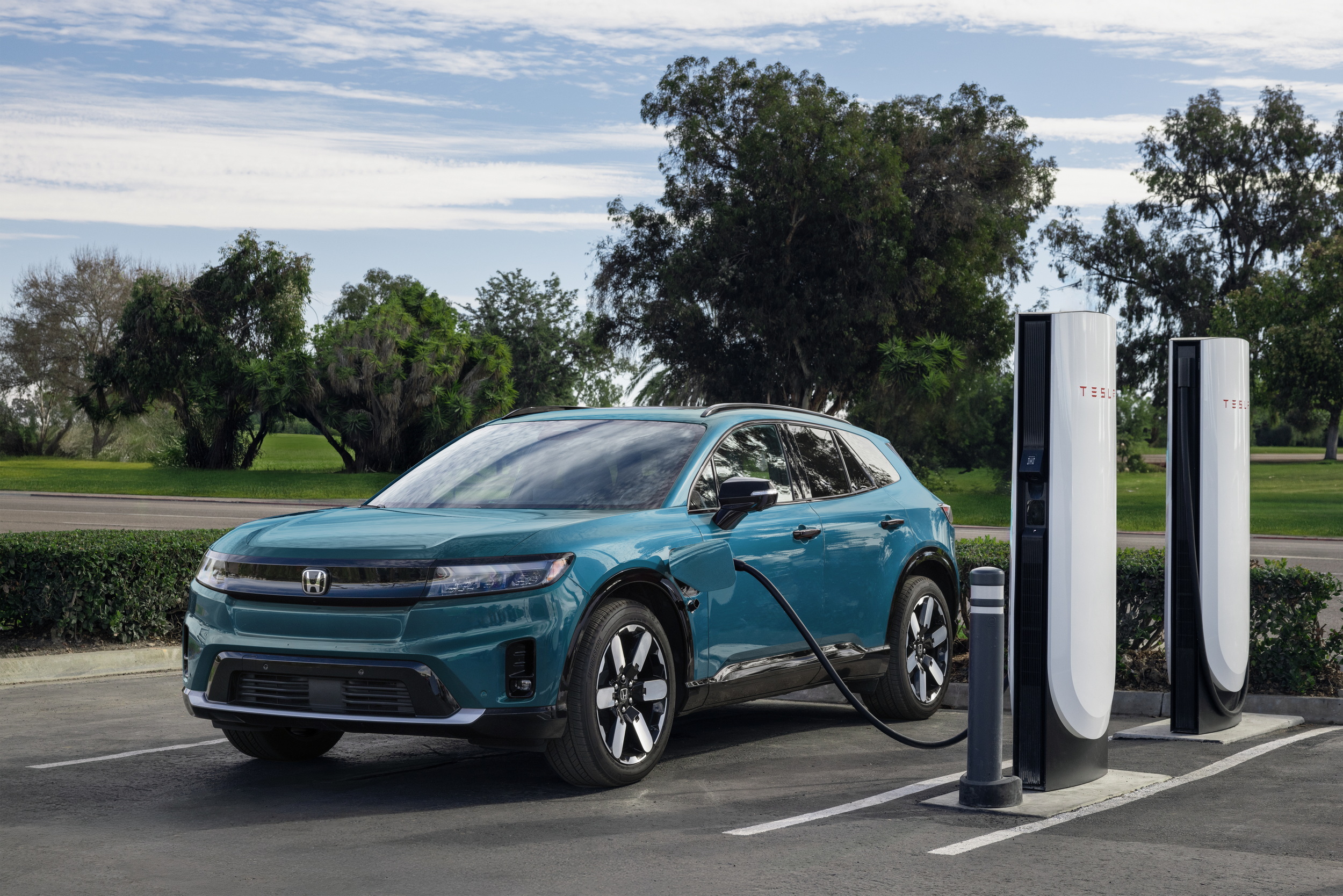
The study also found that EV drivers are becoming more satisfied with public charging. Scores climbed by over 100 points and this is being attributed to growing charging infrastructure as well as the opening of Tesla’s Supercharger network to other automakers.

Last but not least, EV drivers are more satisfied than those with plug-in hybrids. Premium EVs scored 114 points higher than their PHEV rivals, while mainstream electric vehicles had a 117 point advantage. Part of this can be chalked up to the cost of ownership as plug-in hybrid drivers have to deal with a more complex powertrain that involves gas and electricity.

In a statement, JD Power’s Brent Gruber said “Improvements in battery technology, charging infrastructure and overall vehicle performance have driven customer satisfaction to its highest level ever. What’s more, the vast majority of current EV owners say they will consider purchasing another EV for their next vehicle, regardless of whether they benefited from the now-expired federal tax credit.”

 Tesla Still Rules EV Satisfaction, Though One Rival Just Caught Up

Tesla Rolls Out First Cybercab As Musk Confirms Pricing

  • Tesla says the first Cybercab has left the Texas line.
  • Musk still targets a sub-$30,000 version by 2027.
  • Milestone revived MKBHD’s viral head-shaving bet.

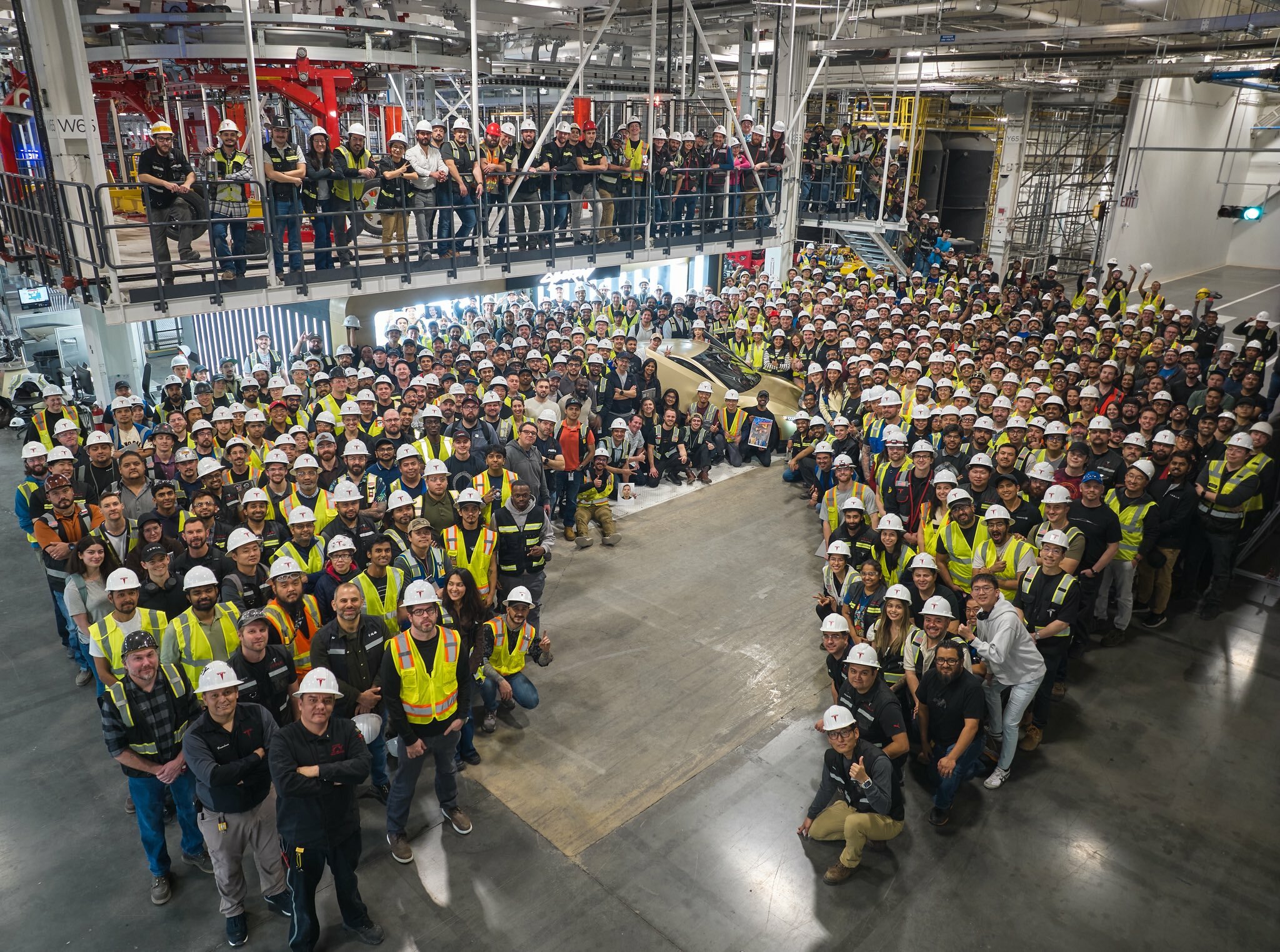
Don’t look now, but Tesla might actually be on schedule, if not slightly ahead, at least for now, with its Cybercab program. The automaker says the first production example rolled off the line on Tuesday, more than a month earlier than Elon Musk previously suggested. Its CEO also confirmed pricing.

Read: Tesla Spent Big On Cybercab Branding, Now Someone Else Owns It

Of course, plenty of hurdles remain if Tesla plans to sell one before the end of the decade. And yes, at least one major YouTuber could end up shaving his head if Musk’s team pulls it off.

 Tesla Rolls Out First Cybercab As Musk Confirms Pricing
Tesla /X

Tesla posted a photo on February 17 showing the team at Gigafactory Texas surrounding the first production Cybercab. While there’s still no clear timetable for full-scale production, Musk previously indicated that manufacturing wouldn’t even begin until April. I double-checked my calendar, and it still says February.

Importantly, this is almost certainly a pilot build and not a car destined for a customer. That said, it’s a significant step forward for a brand often associated with shifting timelines.

Public Bets And Pricing

That reputation likely played a role in Marques Brownlee (MKBHD) saying in 2024 that if Tesla launched the car before 2027 at a price below $30,000, he’d shave his head on camera.

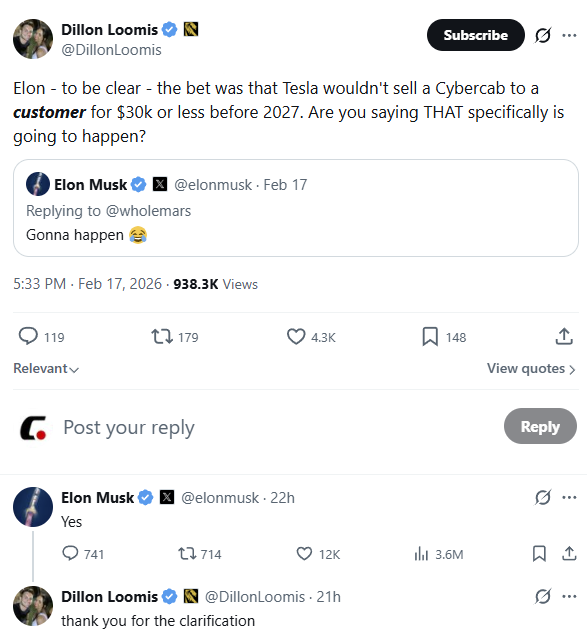
After Tesla announced the milestone, meme versions of a bald MKBHD quickly spread across X. Musk joined in, replying “Gonna happen 😂” to one such post. In a separate exchange, he also confirmed that Tesla still plans to sell a consumer version of the Cybercab before 2027 for “$30,000 or less”.

Hurdles Ahead

That all sounds promising, but Tesla has to do more than simply build the car. The Cybercab is meant to be the brand’s first true autonomous vehicle sold without a steering wheel or pedals. Since unveiling it, however, Tesla has hinted that those controls could return if regulations require them.

And that’s where the real challenge begins. Federal vehicle safety standards assume a human driver is present, and insurance frameworks do too. The NHTSA may need to grant exemptions for certain rules, while individual states could impose their own restrictions on autonomous vehicles operating on public roads.

In other words, building the Cybercab might prove easier than getting it legally approved. Whether Tesla can clear those hurdles before 2027 remains an open question.

 Tesla Rolls Out First Cybercab As Musk Confirms Pricing

Tesla Avoids A Massive California Ban By Junking Its Most Famous Feature

  • Tesla drops Autopilot term in California to avoid license suspension.
  • Brand’s new models now only come with cruise control as standard.
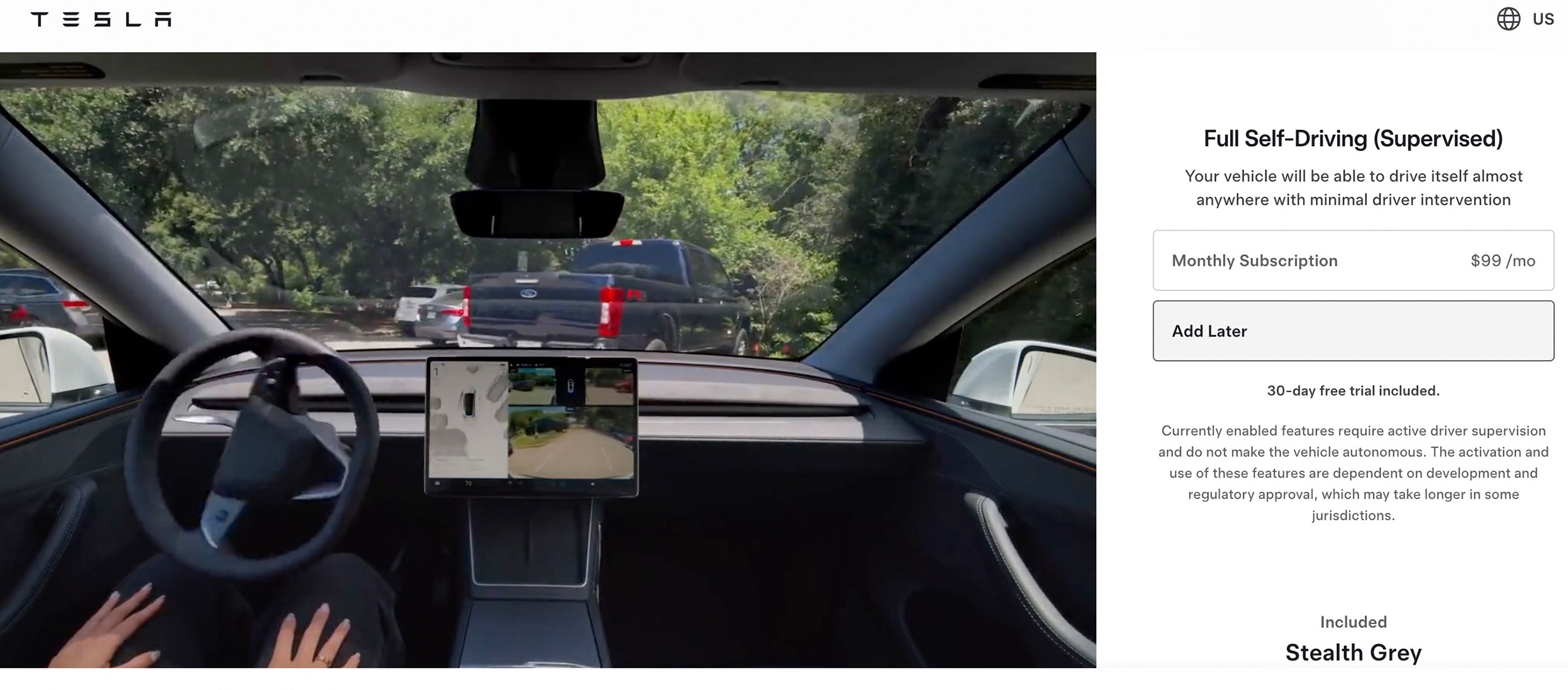
  • EV buyers are being pushed towards $99 FSD subscriptions instead.

After years of sparring with California regulators, Tesla has agreed to stop using its famous Autopilot term in the state, neatly sidestepping a 30-day suspension that would have frozen sales in its biggest US market with nearly 180,000 deliveries last year.

More: Tesla Quietly Kills Standard Autopilot, Now Wants $99 A Month To Give It Back

The California Department of Motor Vehicles (DMV) wasn’t amused by Tesla’s marketing language, arguing that phrases like “Autopilot” and “Full Self Driving Capability”, later softened to “Full Self-Driving (Supervised)”, gave buyers the impression their cars could drive themselves. The DMV pointed out that they can’t now, and never could, operate as autonomous vehicles.

The formal accusations were filed in 2023, though regulators traced the issue back to marketing language used as early as May 2021. At the time, Tesla described its system as capable of handling short and long-distance trips with no action required by the person in the driver’s seat, a claim the DMV said crossed a legal line.

60 Days To Find A Fix

A judge agreed and proposed suspending Tesla’s dealer and manufacturer licenses for a month. That would have been awkward timing for a company trying to convince the world that robotaxis are just around the corner. The DMV offered Tesla 60 days to fix the issue before the suspension started, and instead of digging in, Tesla wisely took corrective action.

“The DMV is committed to safety throughout all California’s roadways and communities,” said DMV Director Steve Gordon. “The department is pleased that Tesla took the required action to remain in compliance with the State of California’s consumer protections.”

So Autopilot, as a marketing term, is now gone in California (though you’ll still find it on the brand’s EVs elsewhere in the world). The company had already softened Full Self Driving into Full Self Driving Supervised to make it crystal clear that, no, the car is not fully autonomous. By complying with the deadline, Tesla avoided the suspension and kept the revenue rolling in.

 Tesla Avoids A Massive California Ban By Junking Its Most Famous Feature

Autopilot Feature Phased Out

This is not just a word swap, though. We reported last month that Tesla had already begun phasing out the previously standard Autopilot system on its cars, replacing it with Traffic Aware Cruise Control and pushing buyers toward a $99 per month Full Self Driving subscription.

Lane centering that rivals include as standard now lives behind a paywall, and CEO Elon Musk has hinted that the subscription price could rise over time. From a business perspective, it’s clever, but from a branding perspective, it looks like a climbdown.

Autopilot was one of Tesla’s most recognizable terms, though it was also one due to be left behind in the coming years as the far more sophisticated FSD improves to the point where it really can deliver full self-driving.

 Tesla Avoids A Massive California Ban By Junking Its Most Famous Feature
Tesla

Tesla Faces A Reckoning As This New SUV Outsold The Model Y Two To One

  • Chinese tech giant sold 37,869 YU7s in the first month of the year.
  • Geely placed two strong sellers in the national top five chart.
  • VW posted several top sellers despite the wider market slowdown.

January tested the resilience of China’s auto market, exposing fault lines for some brands while spotlighting the rare breakout success. Many domestic manufacturers reported sales declines, with BYD among the most notable names to feel the squeeze. Yet even in a cooling climate, certain models found remarkable momentum. None more so than the Xiaomi YU7.

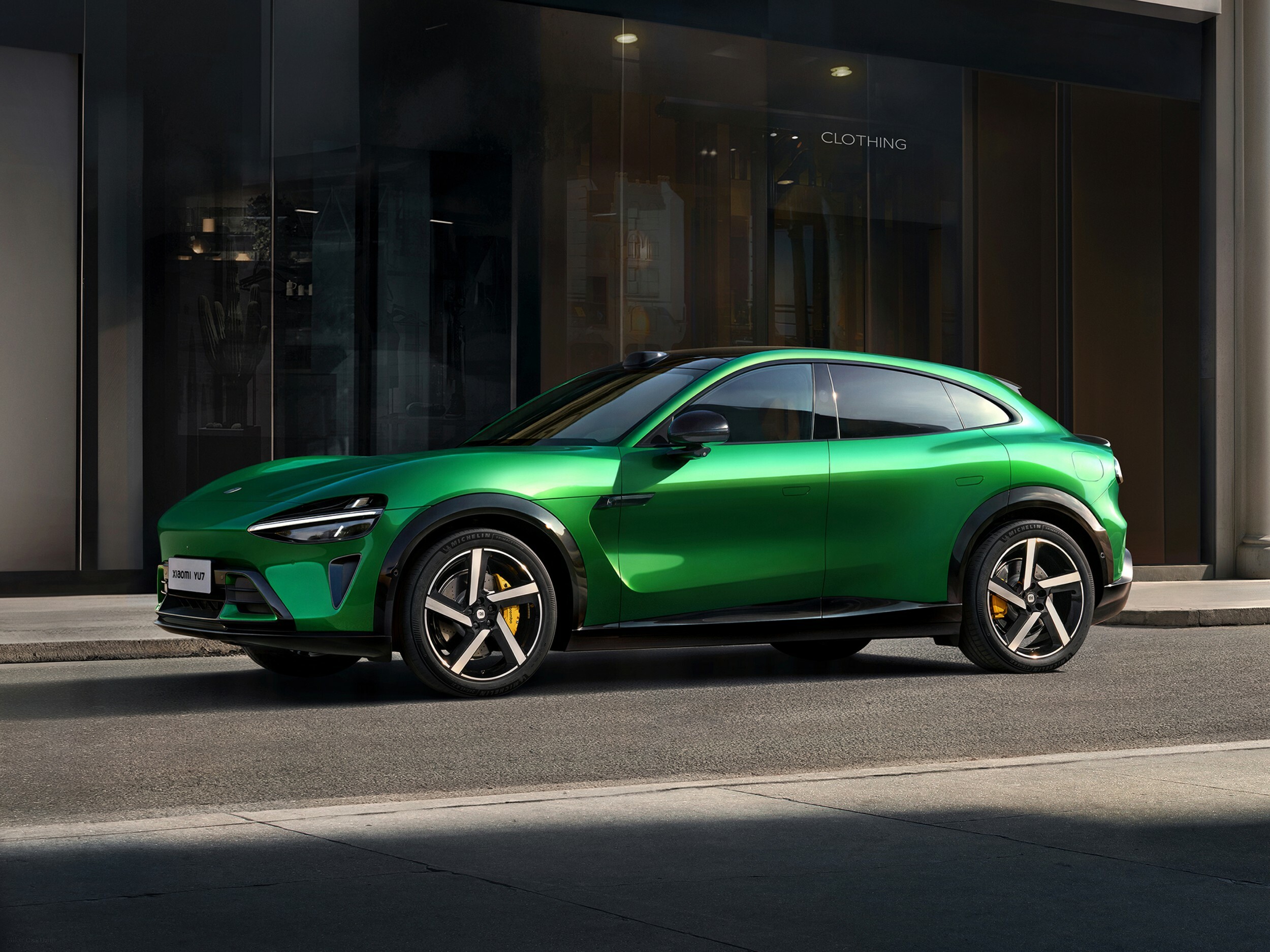
The all electric SUV, positioned as a rival to the Tesla Model Y and styled with more than a passing resemblance to the Ferrari Purosangue, was the best-selling new vehicle in China last month.

Read: This Ferrari SUV Lookalike From China Makes More Power Than The Real One

According to figures shared by Autohome, it moved 37,869 units, comfortably ahead of the Geely Boyue L in second place with 34,176 sales. The Geely Geome Xingyuan followed with 29,007, while the Aito M7 secured fourth with 26,454 units.

 Tesla Faces A Reckoning As This New SUV Outsold The Model Y Two To One

The presence of two Geely models in the top 5 best-sellers reflects a strong month for the group, with sales up 1 percent year-on-year to more than 270,000 units. The M7 from Aito, backed by Huawei and Seres, also surged in popularity, as did other models from the brand, helping it deliver more than 40,000 vehicles, a surge of over 80 percent from January 2025.

Sales of the YU7 in China have remained strong in recent months. December saw 39,089 units sold, making it the third best selling new car in China at the time. That figure represented a clear rise from November’s 33,729 and October’s 33,662.

It has also moved decisively ahead of the Tesla Model Y, selling more than twice as many units. The Model Y ranked only 20th last month, with 16,845 sales, a result that would have seemed unlikely not long ago. In fact, it was China’s best-selling model in December.

Familiar Names Climb The Charts

 Tesla Faces A Reckoning As This New SUV Outsold The Model Y Two To One
VW Sagitar

Perhaps the biggest surprises came from Volkswagen. It ranked fifth in China’s top 20 best-selling cars last month, led by the Sagitar with 25,316 units sold. VW also sold 23,481 Lavidas, 21,330 Tiguan Ls, 20,799 Passats, and 19,306 Magotans. In addition, the Nissan Slyphy sold 24,209 units, indicating that not all hope is lost for legacy carmakers in the country.

Things weren’t so rosy for BYD. It sold 205,518 vehicles in China last month across its brands, a significant decline from the 300,538 in January 2025. Only one of its models entered the top 20, the Fang Cheng Bao Ti7, which ranked 18th with 17,116 units sold.

China New Car Retail Sales January 2026
RankModelUnits
1Xiaomi YU737,869
2Geely Boyue L34,176
3Geely Geome Xingyuan29,007
4Aito M726,454
5Volkswagen Sagitar25,316
6Nissan Sylphy24,209
7Geely Xingyue L23,815
8Volkswagen Lavida23,481
9Volkswagen Tiguan L21,330
10Volkswagen Passat20,799
11Toyota Corolla20,188
12Volkswagen Magotan19,306
13Geely Xingrui19,027
14Honda CR-V18,900
15Toyota Frontlander18,629
16Nio ES817,645
17Toyota Camry17,426
18Fang Cheng Bao Ti717,116
19Li Auto i616,883
20Tesla Model Y16,845
SWIPE

Sources: Autohome, Carnewschina

EVs Just Did Something In America Not Seen In A Decade

  • US EV registrations dipped for the first time in a decade last year.
  • December sales plunged 48 percent after the EV tax credit repeal.
  • Analysts expect a slow recovery as prices and charging improve.

After a decade of growth, America’s electric car boom has stopped booming. In 2025, EV registrations slipped 0.4 percent to 1.3 million units, marking the first annual decline in at least 10 years. That’s not exactly a collapse, but it is the first crack in what once looked like an unstoppable surge.

The real drama arrived in December. Registrations plunged 48 percent year over year to just 75,427 vehicles after Congress repealed the $7,500 federal EV tax credit. EVs’ share of the overall market tumbled from 9.9 percent in December 2024 to 5.3 percent in the same month in ’25.

Related: EV Sales Are Booming Everywhere Except One Place

For the full year, EVs accounted for 7.8 percent of light vehicle registrations, down slightly from 8 percent in 2024, according to S&P Global Mobility data reported by Auto News. Meanwhile, total vehicle registrations rose 2.2 percent to 16.25 million units. In other words, Americans kept buying cars, but they increasingly chose ones with old-fashioned combustion engines.

Warning Signs Were There

 EVs Just Did Something In America Not Seen In A Decade

The slowdown didn’t come out of nowhere. Growth had already cooled from triple-digit surges earlier in the decade to an 11 percent gain in 2024. Through the first half of 2025, EV registrations were still up 4.6 percent before the July announcement that the tax credit would vanish at the end of September. Buyers rushed to beat the deadline in the third quarter, then the market fell silent in the fourth.

Price remains the elephant in the charging bay. Even with incentives, EV sticker prices have hovered above what mainstream buyers feel comfortable paying. Early adopters are largely spoken for, and the next wave of customers worries about charging access and range anxiety. Hybrids have quietly become the safe middle ground.

Tesla Trouble

 EVs Just Did Something In America Not Seen In A Decade

Tesla, still the heavyweight champion of EV sales, saw its registrations drop 6.8 percent for the year to 570,418 vehicles. Its market share slipped 3.1 percent to 44.9 percent. December was painful but not catastrophic, with a 35 percent decline.

The Model Y held its crown, but the Cybertruck and Model 3 both took heavy hits, and with the Model S and X due to be axed this year and the once-rumored small model not happening, this year is going to be tough, too.

Ford endured an even steeper December slide of 61 percent, while Cadillac enjoyed a rare bright spot thanks to genuinely fresh models, something Tesla badly needs. Rivian and Hyundai also saw declines, underscoring that this was not a one-brand problem, though Rivian does at least have a plan in the form of the smaller R2 SUV that goes on sale this year.

So is that it for EVs? Was it just a brief fad, like fidget spinners? No, analysts expect a slow and steady rebound as automakers trim prices and expand incentives. Charging networks are improving, and some EVs are nearing price parity with comparable gas models. The boom may be over, but the electric story is far from finished.

 EVs Just Did Something In America Not Seen In A Decade
GM

Trapped In His Tesla, He Said “I Can’t Get Out” Before It Was Too Late

  • Samuel Tremblett, 20, died after his Tesla caught fire.
  • He called 911, saying he was trapped inside the car.
  • His body was later found in the Model Y’s rear seat.

Tesla has been hit with yet another lawsuit related to its electrically powered doors. Last week, the mother of a 20-year-old man who died following a collision in a 2021 Tesla Model Y filed a lawsuit against the automaker. The complaint was submitted to federal court in Massachusetts.

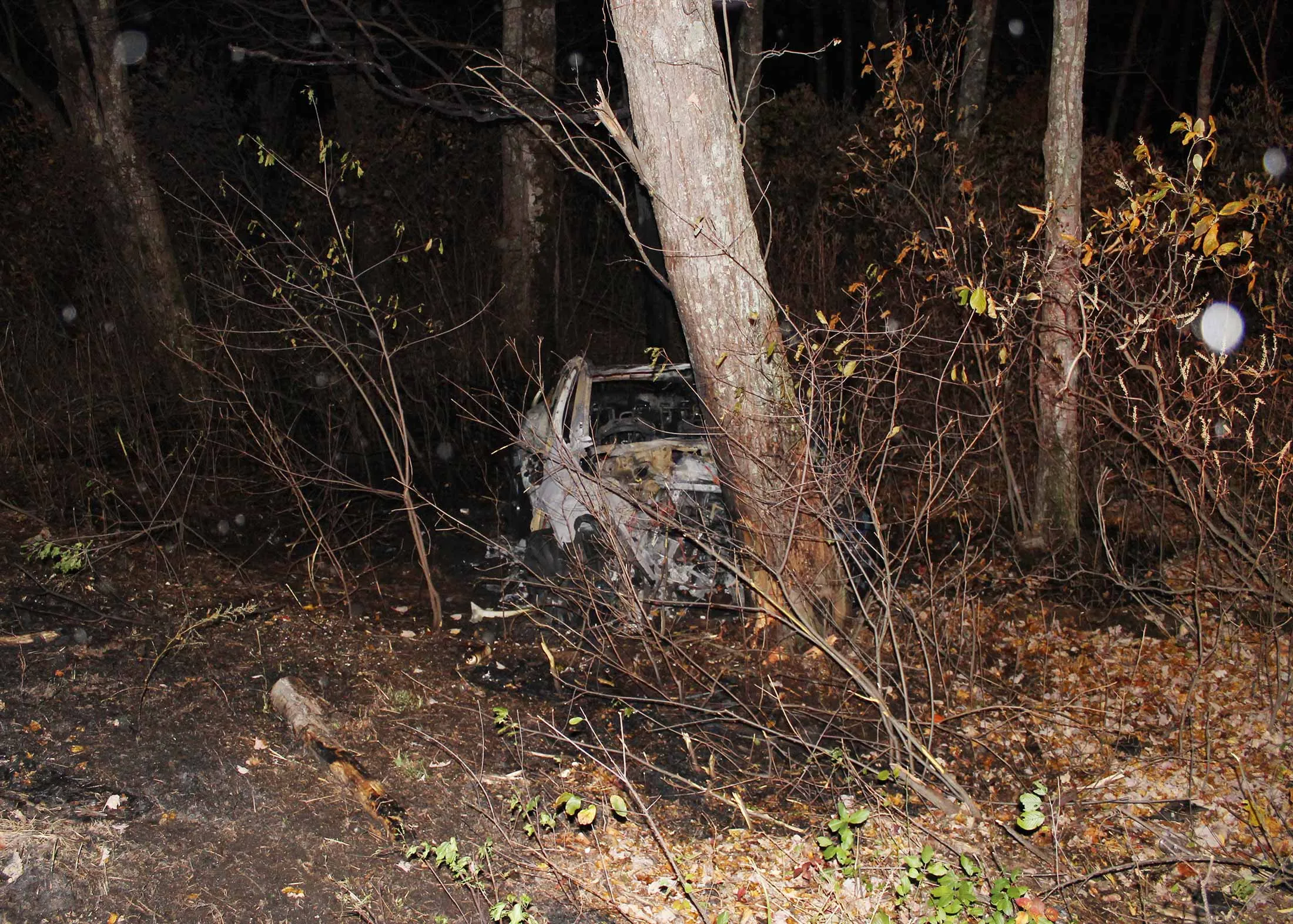
According to the filing, Samuel Tremblett was still alive after crashing his Model Y into a tree along Route 138 in Easton, a small town just south of Boston. He managed to dial 911 from inside the car, but a transcript of the call reveals he was unable to open the doors as fire began to engulf the car.

Trapped And Unable To Escape

“I’m stuck in a car crash,” Tremblett said on the call, no doubt in a frenzied state. “I can’t get out, please help me. I can’t breathe…It’s on fire…I’m going to die.”

Read: Families Claim Tesla Door Handles Trapped Teens In Burning Cybertruck

Emergency crews were dispatched to the scene, but they couldn’t extinguish the blaze fast enough to save the young man. According to local media, fire responders heard four explosions from the Model Y within the first 10 minutes at the scene. It took four hours before the inferno was put out.

 Trapped In His Tesla, He Said “I Can’t Get Out” Before It Was Too Late
The Tesla Model Y driven by Samuel Tremblett/Easton Police Department

The lawsuit states that Tremblett suffered “catastrophic thermal” injuries as well as smoke inhalation. His body was found in the back seat of the Model Y. According to the complaint, he was unable to open the doors after the crash and succumbed to the fire before help could reach him.

How Tesla Doors May Fail

The lawsuit claims that the electronic exterior door handles on the Tesla Model Y may fail to open during a crash, making it impossible to access the vehicle from outside. In addition, the suite says that the interior mechanical door release is not clearly marked and may be difficult to locate.

This is especially problematic in the rear, where the emergency release is hidden beneath a plastic panel in the door pocket. It’s a simple cable, and many Model Y owners and/or passengers may not even realize it’s there.

The lawsuit cites 17 incidents, going back to 2016, in which Tesla reportedly received complaints of both adults and children becoming trapped inside vehicles during thermal runaway events.

 Trapped In His Tesla, He Said “I Can’t Get Out” Before It Was Too Late

Growing Regulatory Pressure

A recent report from Bloomberg says that at least 15 people in the US have been killed in crashes involving Tesla vehicles where the doors couldn’t be opened. Concerns over the operation of these electronic door handles have recently prompted a ban in China, and it’s possible that other countries could follow suit.

In the US, the National Highway Traffic Safety Administration announced in September that it is investigating potential defects in some Model Y vehicles. These cases involve incidents where the external door handles allegedly failed following collisions.

Meanwhile, a US lawmaker has proposed legislation that would require manual door releases in new vehicles and provide first responders with reliable access when power is lost.

 Trapped In His Tesla, He Said “I Can’t Get Out” Before It Was Too Late

3 Out Of 4 Car Buyers In This EV-Loving Country Wouldn’t Touch This Brand

  • 75 percent of Germans say they probably won’t buy a Tesla.
  • Politics now shape how Germans view EV brands and buyers.
  • Domestic brands are gaining as Tesla’s appeal declines.

Tesla might be providing employment for thousands of Germans at its Berlin Gigafactory, but the nation’s car buyers have no interest in returning the favor by getting a Tesla of their own. A new survey suggests most Germans aren’t just hesitant about buying a Tesla, they’re actively swiping left on the idea.

Related: Tesla’s Budget Model Y Gets Grip And Grit For $2K More, But Don’t Call It Standard

According to research from the German Economic Institute, more than three quarters of Germans say buying a Tesla is off the table. Around 60 percent called it completely out of the question, while another 16 percent polled in the study said they probably wouldn’t buy one.

That’s not a minor wobble in brand appeal, it’s a serious collapse, and helps makes sense of Tesla’s 27 percent sales decline in Europe last year.

What makes it more awkward is that interest in electric cars in general is not the problem. According to DW, the same survey shows plenty of Germans are open to EVs, especially from domestic brands. Around one in five new cars sold there is fully electric and roughly 40 percent of those surveyed said they could imagine buying an electric car from a German brand.

Musk Is The Problem

 3 Out Of 4 Car Buyers In This EV-Loving Country Wouldn’t Touch This Brand

Researchers point to Tesla boss Elon Musk as a big part of the story. His outspoken political positions, including voicing support for Germany’s far-right AfD party, and his association with President Trump, and by proxy, tariffs and US threats against Greenland and European security, have not exactly gone down smoothly with many German buyers.

Read: Europe Just Replaced Tesla With A New EV Sales Champion

Political views now play a major role in EV purchasing decisions in Germany, turning what used to be a tech and environmental choice into something that feels far more tribal.

 3 Out Of 4 Car Buyers In This EV-Loving Country Wouldn’t Touch This Brand

Even groups you might expect to be more Tesla friendly aren’t rushing to sign order forms. Among supporters of Germany’s Green Party, who are generally enthusiastic about electric mobility, only one in 10 said they could imagine buying a Tesla.

On the other end of the political spectrum where AfD supporters live, enthusiasm for EVs overall is low, which drags Tesla interest down even further.

A Win For BMW And Mercedes

 3 Out Of 4 Car Buyers In This EV-Loving Country Wouldn’t Touch This Brand

For German automakers, this looks like an unexpected gift. With Tesla stumbling in the court of public opinion, local brands suddenly have more room to sell their own electric models without having to wrestle with Silicon Valley star power. BMW’s new iX3 is one EV capitalizing on Tesla apathy. It’s nearly sold out for the year.

It is a reminder that in the EV era, software and charging speeds matter, but so does how people feel about the badge on the hood. But maybe Elon Musk doesn’t care, because he has his eyes on a bigger prize.

Having revolutionised the car market, Musk is going all in on robots and robotaxis, which have the potential to generate even more money for Tesla. Last month the CEO confirmed the Model X and S would be axed this spring to make way for Optimus robot production.

 3 Out Of 4 Car Buyers In This EV-Loving Country Wouldn’t Touch This Brand
Tesla

Source DW

This Might Be The Tesla Roadster’s Biggest Update Since 2017

  • Tesla filed two new Roadster trademarks in the United States.
  • One shows three sharp lines, possibly previewing the design.
  • The other spells Roadster in a slanted sci-fi-style font.

Could the second-generation Tesla Roadster finally be on the verge of actually hitting the market? Well, if history is any guide, don’t hold your breath. It’s been more than eight years since it first showed up as a concept, but two recent trademark applications suggest things might actually be moving, and that the car could, just maybe, be inching closer to something.

Earlier this week, Tesla submitted two trademark filings with the United States Patent and Trademark Office, as first spotted by Business Insider. The first features three sharp lines that outline the sleek silhouette of the two-door, all-electric supercar. It could be used in marketing or possibly even serve as the foundation for a new badge.

Read: Tesla Chief Swears We’ll See A Demo Of The Roadster This Year

The second application depicts the ‘Roadster’ name in all-caps. It uses a custom font that’s slanted and has a sci-fi vibe, perfect for a vehicle like this.

 This Might Be The Tesla Roadster’s Biggest Update Since 2017
 This Might Be The Tesla Roadster’s Biggest Update Since 2017
Tesla / USPTO

Since its initial reveal in November 2017, details on the production Roadster have been scarce. Tesla originally promised a massive 200 kWh battery pack, claiming over 620 miles (1,000 km) of range per charge. Performance targets were just as ambitious, including a 0–60 mph (96 km/h) time of 1.9 seconds and a top speed north of 250 mph (402 km/h).

The electric car industry has advanced significantly since the Roadster was first previewed, so we expect it to reach the market with different performance and range figures. A 200 kWh pack, which would be extraordinarily heavy, seems unlikely, particularly given how much more energy-dense and efficient battery packs are now.

Last October, Tesla chief designer Franz von Holzhausen said Tesla would demo the new car before the end of 2025. That deadline came and went without anyone outside of the company seeing the new car in the flesh. He also said production would start within two years, but as with every promise made about the Roadster over the past decade, we’re taking that with a grain of salt.

\\\\\\\\

Tesla’s Budget Model Y Gets Grip And Grit For $2K More, But Don’t Call It Standard

  • Tesla adds cheaper all-wheel drive Model Y for $41,990.
  • Hits 60 mph 2.2 seconds faster than the $39,990 RWD.
  • Bare spec is carried over, so no light bar or leather seats.

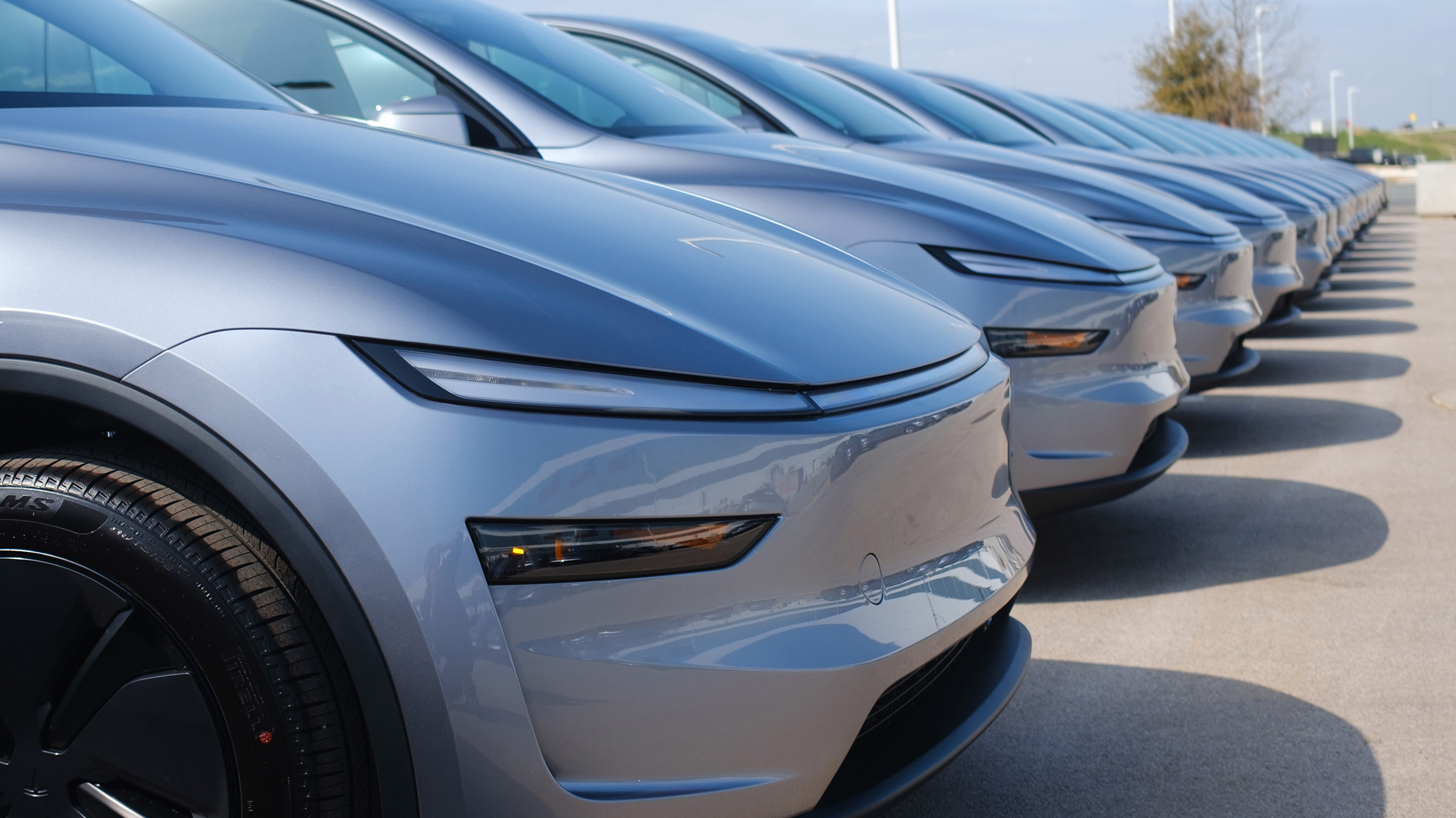
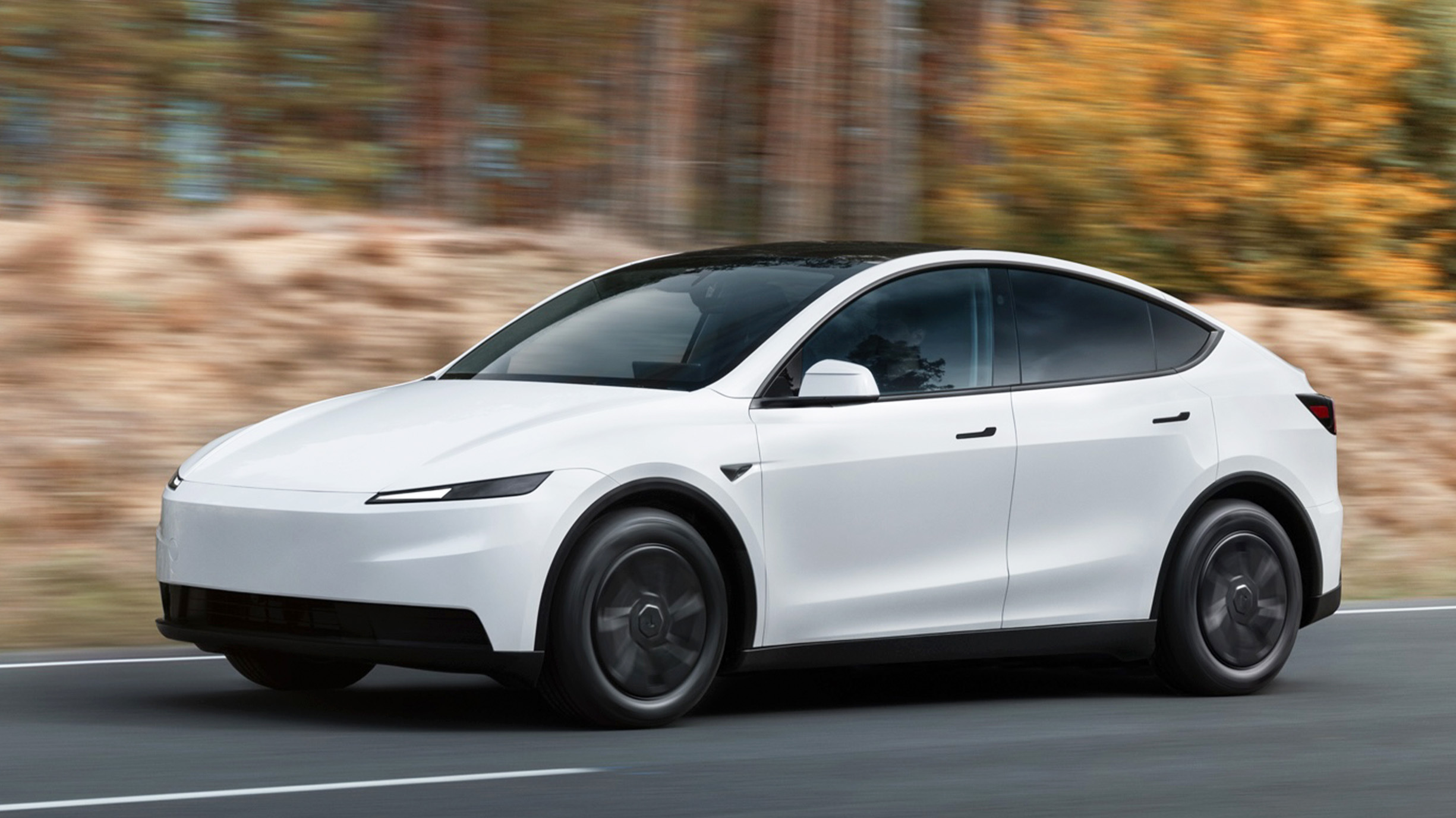
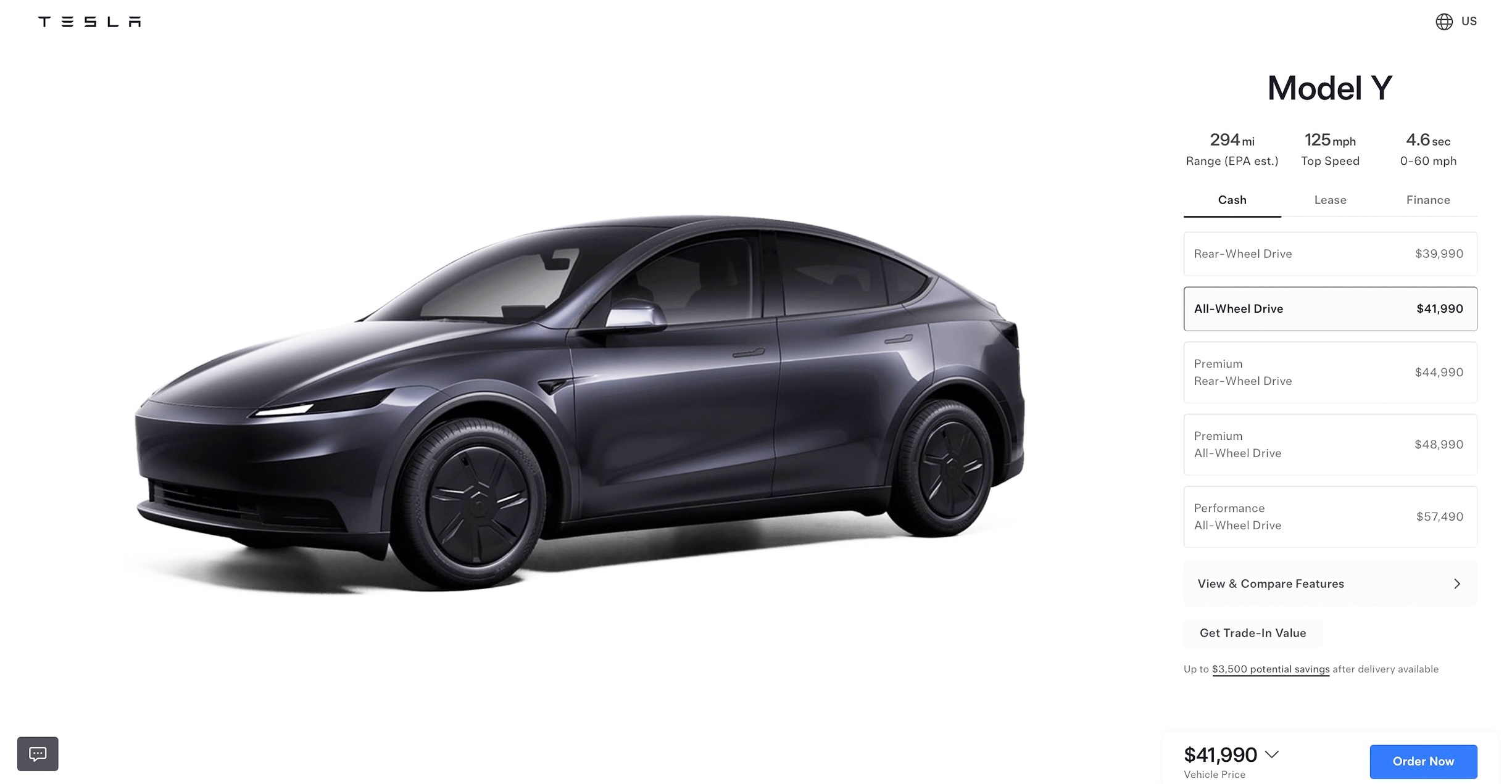
Affordability is a hot topic in America right now and Tesla is tapping into that by expanding on the base Model Y it announced last year. This updated version quietly drops the “Standard” trim name, adds all-wheel drive for improved traction, and knocks down the 0–60 mph (97 km/h) time. The tradeoff, however, is a notable drop in driving range.

The new Model Y AWD lands at $41,990, sliding between the $39,990 base RWD and $44,990 Premium RWD, while offering a big saving versus the $48,990 Premium AWD. For buyers who want extra traction and stronger acceleration without leaping to the more expensive models, this is the new sweet spot in the lineup.

Related: Luxury Sales Keep Surging As The Middle Class Quietly Gets Priced Out

Performance is where the extra cash shows. With a motor now powering the front wheels as well as the rear, this version slashes the zero to 60 sprint from 6.8 seconds to 4.6 seconds, exactly the same time the $7k pricier Premium AWD needs.

What You Lose

The trade off is range. The extra weight of the front motor means this Model Y gives up around 27 miles (44 km) compared with the 321-mile (517 km) rear-wheel drive version, dropping the EPA range to just 294 miles (473 km). The Premium RWD is rated at 357 miles (575 km) and the Premium AWD claims 327 miles (526 km).

 Tesla’s Budget Model Y Gets Grip And Grit For $2K More, But Don’t Call It Standard

What hasn’t changed when compared with the single motor base Model Y is the stripped back equipment list. This is still a no frills Model Y, with no front light bar, cloth seats instead of the Premium’s leather, a basic hifi with seven instead of 15 speakers, no FM radio, cheaper dampers, smaller wheels and manual rear air vents. And although the panoramic glass roof is still there, Tesla has covered it over with headliner to remind you you’re in the poverty-spec trim.

Sales Slip

The timing makes sense. Tesla sales have cooled in several markets, including the US, a situation exacerbated by the loss of federal EV tax credits, and small lineup tweaks are an easy way to spark fresh interest without developing an entirely new vehicle. A cheaper all wheel drive option broadens the appeal, especially in colder states where buyers like the security of power going to all four wheels.

\\\\\\\

Tesla

Tesla’s Sales Collapsed By Nearly 90% In The Land Of EVs

  • VW ID.3, Toyota bZ4X, and Urban Cruiser beat Model Y.
  • EVs made up 94 percent of all new car sales in Norway.
  • Tesla sales increased in Italy, Spain, Sweden, and Denmark.

It’s no secret that Tesla’s dominance in Europe has been under pressure for a while, but few expected just how steep the drop would be in one of its most loyal markets. While Elon Musk’s polarizing behavior and the rise of competitive alternatives have chipped away at Tesla’s popularity across the continent, one country had stood firm. Until now.

Read: Europe Just Replaced Tesla With A New EV Sales Champion

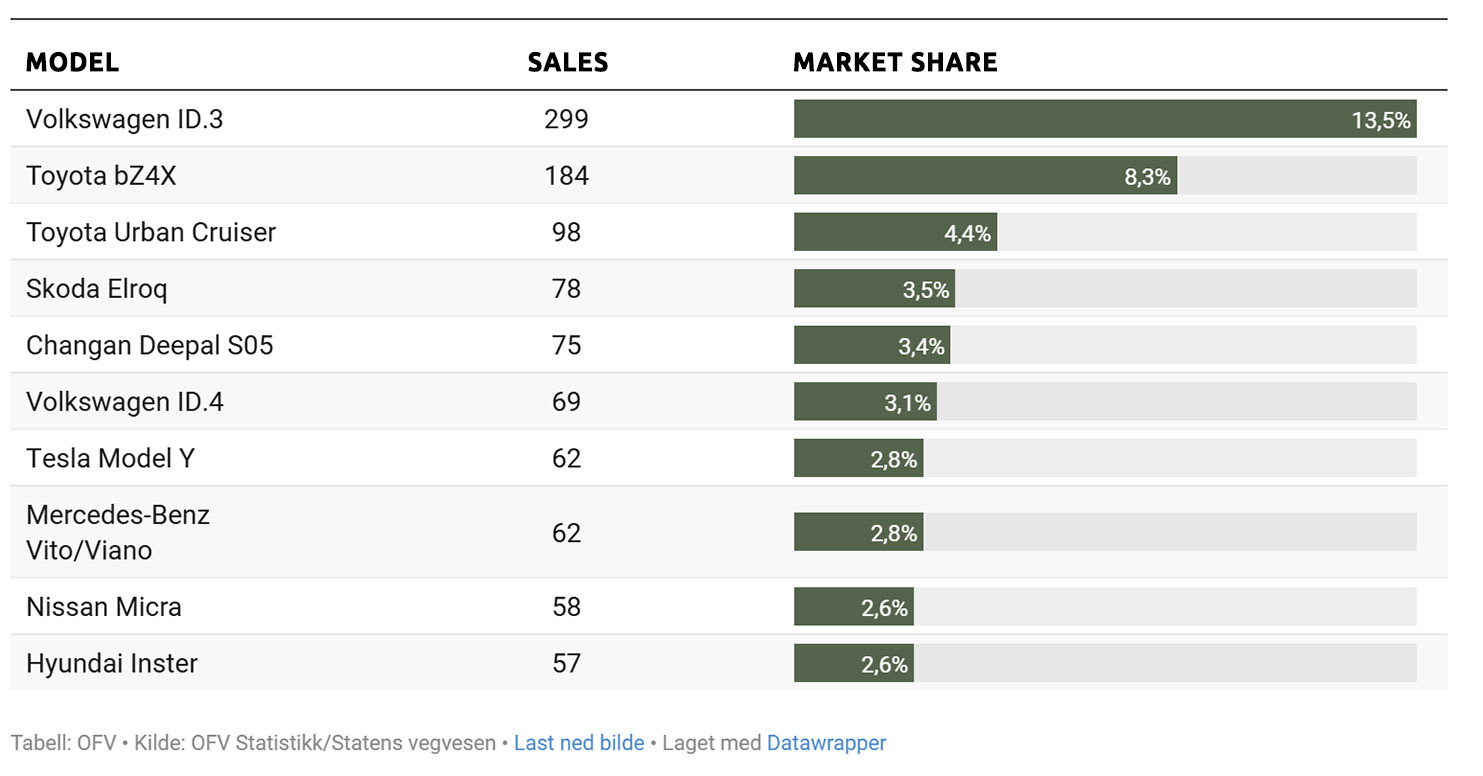
It turns out that even Norway, long considered Tesla’s European stronghold, may be losing interest. New registration data from January 2026 shows that only 62 units of the Tesla Model Y were delivered in Norway last month, accounting for just 2.8 percent of new car sales.

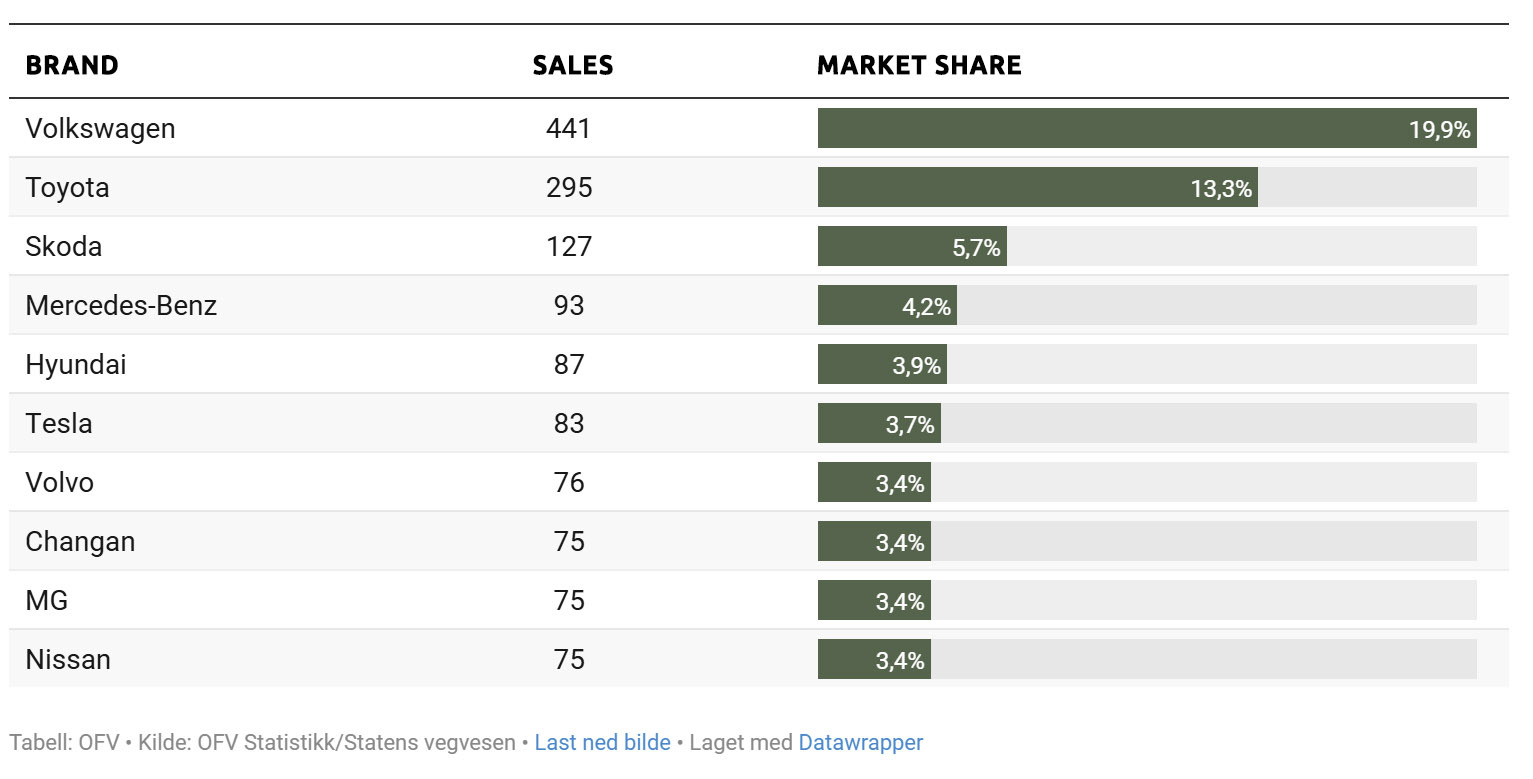
Across its full range, Tesla sold just 83 vehicles in total, marking an 88 percent decline compared to the same period last year.

Changing of the Guard

Several other electric vehicles now comfortably outpace the Model Y in Norwegian sales. Leading the pack in January was the Volkswagen ID.3, with 299 units registered, nearly five times as many as the Tesla.

Norway January 2026 Sales by Model
 Tesla’s Sales Collapsed By Nearly 90% In The Land Of EVs

The Toyota bZ4X followed with 184, ahead of the Toyota Urban Cruiser at 98 and the Skoda Elroq at 78. Even the relatively obscure Deepal S05 managed to beat the Model Y with 75 new registrations, while the Volkswagen ID.4 came in just above Tesla’s numbers with 69.

EVs Still Reign Supreme

Despite Tesla’s stumble, the Norwegian EV market remains overwhelmingly electric. A staggering 94 percent of all new vehicles sold in Norway last month were EVs. Diesel cars accounted for just 98 sales, while only 7 petrol-powered vehicles were registered across the entire country, the lowest number on record.

 Tesla’s Sales Collapsed By Nearly 90% In The Land Of EVs

While Tesla endured a difficult month in Norway, it did actually experience a bump in sales in certain European markets. For example, sales rose 70 percent in Spain to 456 examples. Additionally, sales jumped 75 percent in Italy to 713 units, rose 26 percent in Sweden to 512, and increased 3 percent in Denmark to 458.

Likely contributing to this growth are the newly available, affordable, and stripped-out versions of the Model 3 and Model Y. These Standard variants were introduced to breathe new life into Tesla’s aging lineup, which has been increasingly criticized for lagging behind newer, more dynamic competitors.

Still, Tesla’s European picture remains mixed. A Reuters report highlights significant losses in key markets: sales in France fell 42 percent, Belgium dropped 31 percent, and the Netherlands saw a dramatic 67 percent decline. In Portugal, the dip was modest but noticeable at just over 3 percent.

New Threats on the Horizon

It will be interesting to see how the rest of 2026 plays out for Tesla in Europe. A growing number of Chinese brands are launching several new models in Europe, and in the second quarter, BYD will start mass production at its plant in Szeged, Hungary, allowing it to sell EVs tariff-free in the region.

Norway January 2026 Sales by Brand
 Tesla’s Sales Collapsed By Nearly 90% In The Land Of EVs

Tesla’s Robotaxi Crash Rate Is Way Worse Than We First Thought

  • Tesla’s Robotaxis crash every 55,000 miles, far more than humans.
  • Human-driven crash estimates are around once every 200,000 miles.
  • Robotaxis operate only in Austin, despite Musk’s 2025 nationwide claim.

As many probably expected, Tesla’s Robotaxi service hasn’t grown the way Elon Musk predicted, and it’s not running as smoothly as the company might have hoped. New data shows that the autonomous cars Tesla is operating in Austin, Texas, are crashing far more often than human drivers.

Read: Tesla’s Model Y Robotaxis Can Squirt Now, But Yours Still Can’t

According to figures submitted to the National Highway Traffic Safety Administration, Tesla’s Robotaxis were involved in nine crashes between July and November of last year. During that period, the fleet logged about 500,000 miles, which works out to an incident roughly every 55,000 miles.

The Numbers Behind the Crashes

 Tesla’s Robotaxi Crash Rate Is Way Worse Than We First Thought

That rate might not seem disastrous at first glance. But NHTSA data shows that human drivers report one police-notified crash about every 500,000 miles. Factoring in unreported incidents, estimates suggest a more realistic figure of one crash every 200,000 miles.

Even by that more forgiving measure, humans are still significantly outperforming Tesla’s current autonomous system. Electrek reported this disparity, pointing out the shortfall in Tesla’s safety metrics.

What makes this more concerning is that each robotaxi has a safety monitor riding in the front passenger seat. Even with a human on board to intervene, the vehicles are still getting into more accidents per mile than human drivers typically do alone.

What Isn’t Tesla Saying?

 Tesla’s Robotaxi Crash Rate Is Way Worse Than We First Thought

Tesla doesn’t appear to be exactly transparent about these crashes, either. The reports submitted to the NHTSA are heavily redacted, leaving only limited details available.

In one case from September 2025, a robotaxi reportedly “hit an animal at 27 mph,” but there’s no information on how or why it happened. That same month, another vehicle was involved in a collision with a cyclist, though again, the specifics are missing.

Overall, Tesla reported nine crashes involving its Robotaxi fleet in Austin, between July and November 2025, according to incident data uncovered by Electrek in NHTSA’s Standing General Order crash reports:

  • November 2025: Right turn collision
  • October 2025: Incident at 18 mph
  • September 2025: Hit an animal at 27 mph
  • September 2025: Collision with cyclist
  • September 2025: Rear collision while backing (6 mph)
  • September 2025: Hit a fixed object in parking lot
  • July 2025: Collision with SUV in construction zone
  • July 2025: Hit fixed object, causing minor injury (8 mph)
  • July 2025: Right turn collision with SUV

Robotaxi’s Slow Expansion

In July of last year, Musk made the rather absurd claim that Tesla’s Robotaxi service would reach “half of the population of the US” by the end of 2025. It’s now 2026, and the service is still limited to just one city: Austin, Texas.

Tesla has expanded its service to the San Francisco Bay Area in California, but because it doesn’t have a permit to operate fully autonomous vehicles in the state, each Model Y is equipped with a human driver. It’s hardly a Robotaxi service then, but rather simply a ride-hailing taxi service.

That said, Tesla isn’t giving up on the idea. During its Q4 earnings call this week, the company confirmed plans to expand the program into seven new cities, including Dallas, Houston, Phoenix, Miami, Orlando, Tampa, and Las Vegas, all within the first half of the year.

A $9,500 Hatch Stole Tesla’s Best-Seller Crown In China

  • Geely Galaxy Xingyuan was China’s best-selling vehicle in 2025.
  • Wuling Mini EV ranked second, ahead of the Tesla Model Y in 2025.
  • BYD stayed China’s top-selling brand by a wide margin in 2025.

A new electric subcompact has pulled off a quiet revolution in China’s fiercely competitive car market, topping the charts without the backing of Tesla or BYD. The Geely Galaxy Xingyuan, a fully electric hatchback, has officially become the country’s best-selling vehicle for 2025, racking up 465,775 registrations and ending the two-year reign of the Tesla Model Y.

More: Ford Held The Best-Seller Crown, But GM Outsold It On A Technicality

Known as the Geely EX2 in export markets, the Galaxy Xingyuan was introduced in 2024 and measures 4,135 mm (162.8 inches) in length. It sits in the subcompact category, going up against popular rivals like the BYD Dolphin, Wuling Bingo, and Aion UT.

It blends simple, approachable styling with a well-equipped interior and pricing that stays competitive, currently ranging from ¥65,800 to ¥95,800 ($9,500 to $13,800 at current exchange rates) in China.

GM JV Snags Second Spot

 A $9,500 Hatch Stole Tesla’s Best-Seller Crown In China
Wuling Hongguang Mini EV

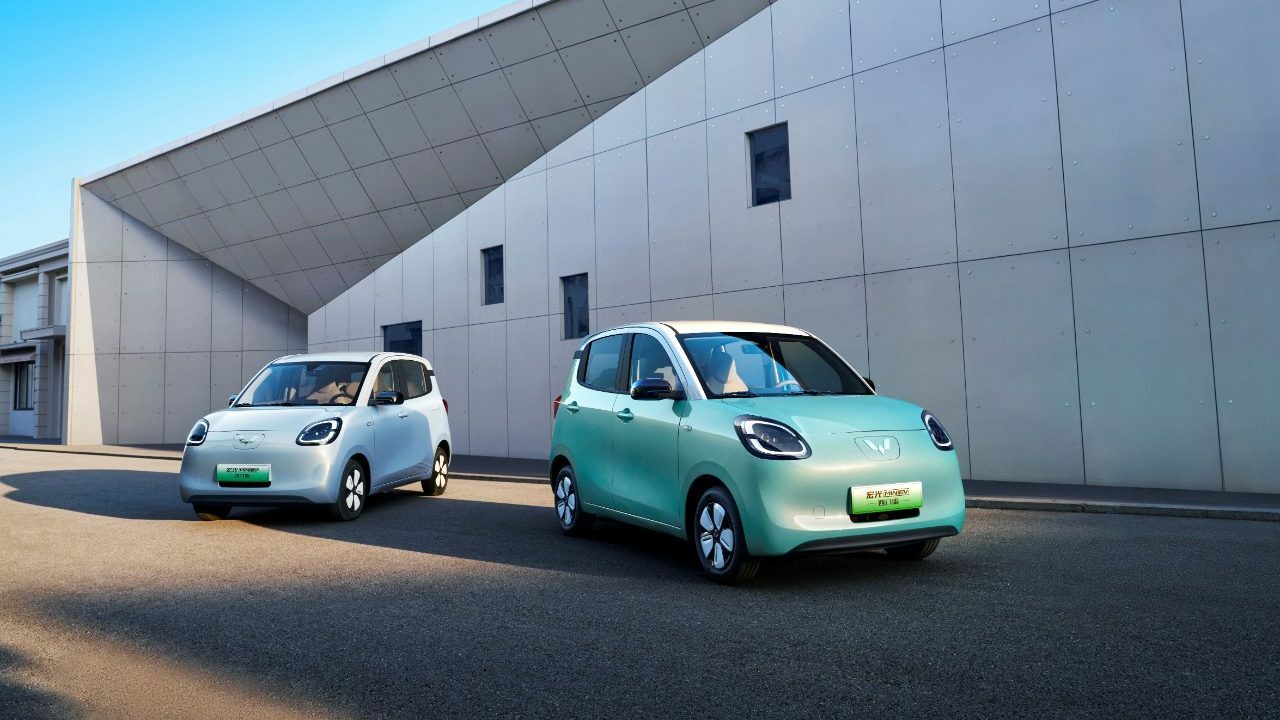
China’s second-best-selling vehicle in 2025 was the compact Wuling Hongguang Mini EV, repeating the success of its earlier version from 2021 and 2022. The pint-sized electric hatchback from the SAIC-GM-Wuling joint venture entered a new generation last year, bringing more playful styling and a new five-door variant. Those updates clearly landed well, helping it reach 435,599 units sold, a huge 82 percent jump over its 2024 total.

\\\\\\\\\\\\\\\\\\\\\\\\

Geely Galaxy Xingyuan

The Tesla Model Y, which held the top spot in 2023 and 2024, slipped to third place in 2025. It still put up strong numbers with 425,337 units sold, though that marked an 11.5 percent decline from the year before, even with the launch of a significantly updated version earlier in the year.

More: One in 10 New Cars Sold in Europe Last Month Was Chinese

In fourth place, the BYD Qin Plus sedan registered 387,315 units sold. Available as either a fully electric model or a plug-in hybrid, the Qin Plus had previously held the second spot in both 2023 and 2024 but saw its position slip this year.

The Nissan Sylphy sedan, known as the Sentra in the US, was China’s best-selling model from 2020 to 2022 before Tesla took over. Now down to fifth place with 320,000 sales, it still holds the distinction of being the country’s best-selling non-EV. A new generation has just arrived, which might give it a boost heading into next year.

RankModelPowertrainSales
1Geely Galaxy XingyuanEV465,775
2Wuling Hongguang Mini EVEV435,599
3Tesla Model YEV425,337
4BYD Qin PlusPHEV/EV387,315
5Nissan SylphyICE/Hybrid320,000
6BYD SeagullEV310,956
7BYD Qin LPHEV264,671
8Xiaomi SU7EV258,164
9Volkswagen LavidaICE245,000
10BYD Song PlusPHEV/EV200,276
SWIPE

Source: China Passenger Car Association (CPCA)

Another standout in China’s top 10 for 2025 is the Xiaomi SU7 sedan, which landed in eighth place with 258,164 units sold. The Chinese newcomer made headlines by outselling its direct rival, the Tesla Model 3, which slipped to eleventh with 200,361.

 A $9,500 Hatch Stole Tesla’s Best-Seller Crown In China

Local Brands Dominate The Charts

According to data from the China Passenger Car Association (CPCA), BYD held onto its lead as the largest manufacturer in China by total volume, selling 3,484,525 vehicles in 2025. Geely followed in second with 2,605,565 units, marking a striking 47% increase over the previous year.

Chinese brands as a whole captured 65 percent of the domestic market, while many foreign automakers that once dominated have struggled to keep up. FAW-Volkswagen secured third place with 1,531,276 sales, but joint ventures from Toyota and Honda have now dropped out of the top five.

RankBrand2025 SalesMarket Share
1BYD3,484,52514.70%
2Geely2,605,56511.00%
3FAW-Volkswagen1,531,2766.40%
4Changan1,400,8205.90%
5Chery1,348,4095.70%
SWIPE

Source: China Passenger Car Association (CPCA)

Tesla’s Replacing Half Its Lineup With Something That Doesn’t Even Have Wheels

  • Tesla is ending Model S and X production this year, Musk says.
  • Model S helped prove EVs could be fast, fun, and desirable.
  • Fremont, CA, plant will be retooled to build humanoid robots.

Tesla is quietly switching off two of the cars that helped kickstart the modern EV revolution. The Model S sedan and Model X SUV are heading for retirement as the company steers away from cars and toward humanoid robots instead.

CEO Elon Musk made the announcement on an earnings call on Wednesday, explaining that S and X production would end in California next quarter, and the Fremont plant would be repurposed to build Optimus robots.

Related: Worker Says Tesla Robot Knocked Him Out, Now He’s Knocking For $51 Million

“It’s time to bring the Model S and X programs to an honorable discharge because we’re really moving into a future that is based on autonomy,” Musk told investors.

 Tesla’s Replacing Half Its Lineup With Something That Doesn’t Even Have Wheels
Tesla

“We’ll obviously continue to support S and X programs for as long as people have the vehicles, but we’re going to take the production space in our Fremont factory and convert that into an Optimus factory with the long term goal of having 1 million units a year.”

Game changer

It feels strange to say goodbye to the Model S, and Musk himself conceded the news was “slightly sad.” When it launched back in 2012, it rewrote the rulebook. Here was an electric car that was not a compromise box on wheels but a sleek, luxury sedan with Aston Martin vibes that could outrun a BMW M5 – and later, supercars – in a straight line. Alongside the Nissan Leaf, it helped drag EVs into the mainstream.

 Tesla’s Replacing Half Its Lineup With Something That Doesn’t Even Have Wheels

The Model X followed with its dramatic falcon wing doors and family friendly space, though it never quite matched the S for cultural impact. Still, both became rolling symbols of Tesla’s rise from scrappy startup to industry disruptor.

Replacements Overdue

The problem is time waits for no car, especially in the EV world. Sales numbers told the story. The Model 3 and Model Y became Tesla’s volume heroes, while S and X faded into niche status. While Tesla refreshed the S and X over the years, it never gave us all-new versions even as the threat from Western and Chinese rivals grew stronger.

Now, rather then reboot them, Tesla has decided to pivot to something different altogether, something with the potential to make even more money, and have an even bigger impact than the S did a decade ago.

Tesla Never Made A Cybervan, So A Russian Startup Did It First

  • Russian brand Russo-Balt unveils an electric van with Tesla flair.
  • The F200 uses a hand-welded stainless steel body and monocoque.
  • It looks similar to a Chinese van, but company claims it’s original.

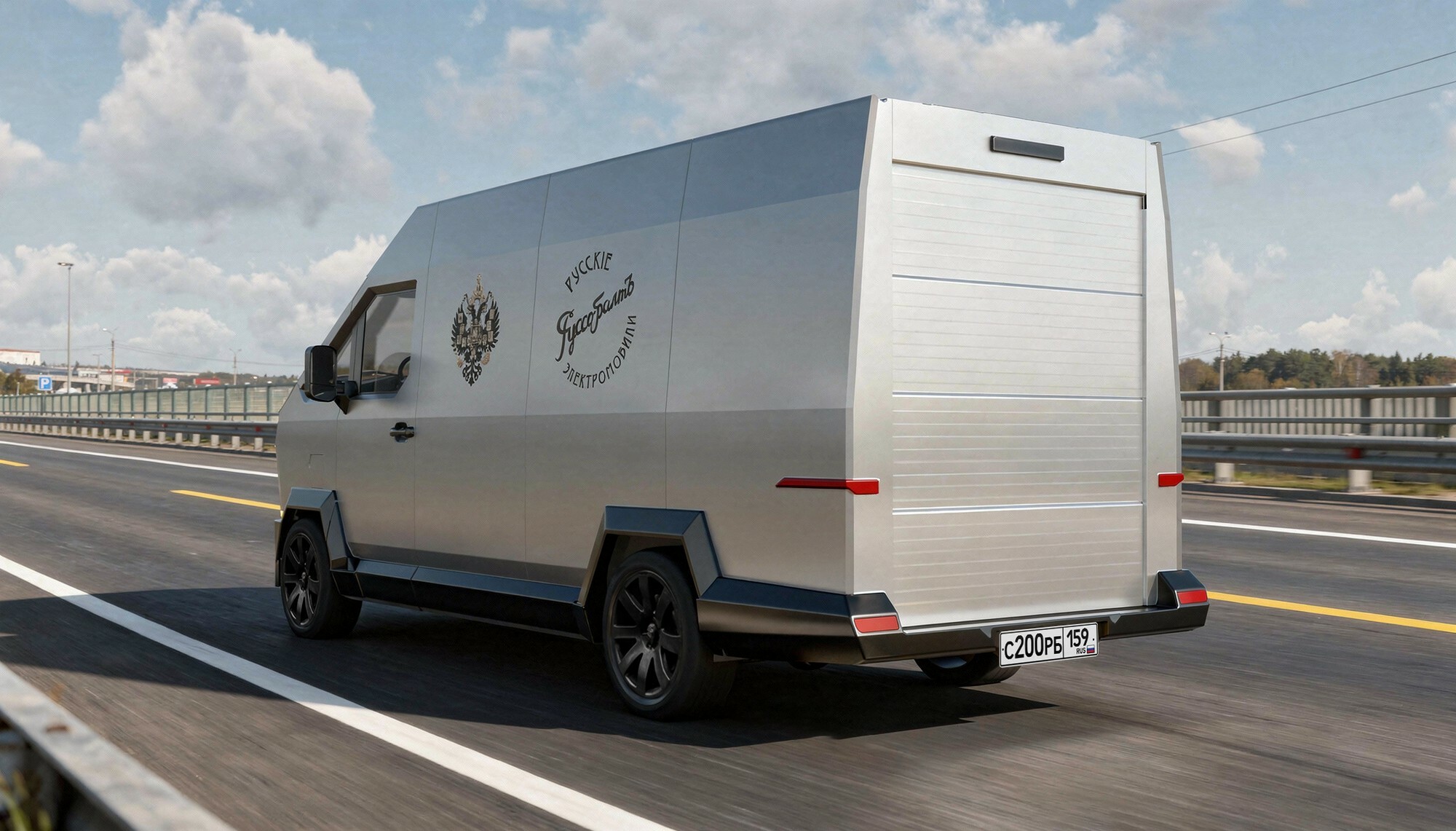
Tesla hasn’t created a Cybervan yet, but someone else just beat them to it. A Russian startup has stepped in with something that looks uncannily like a bulked-up Cybertruck, except it’s an electric van, and yes, it’s heading for production.

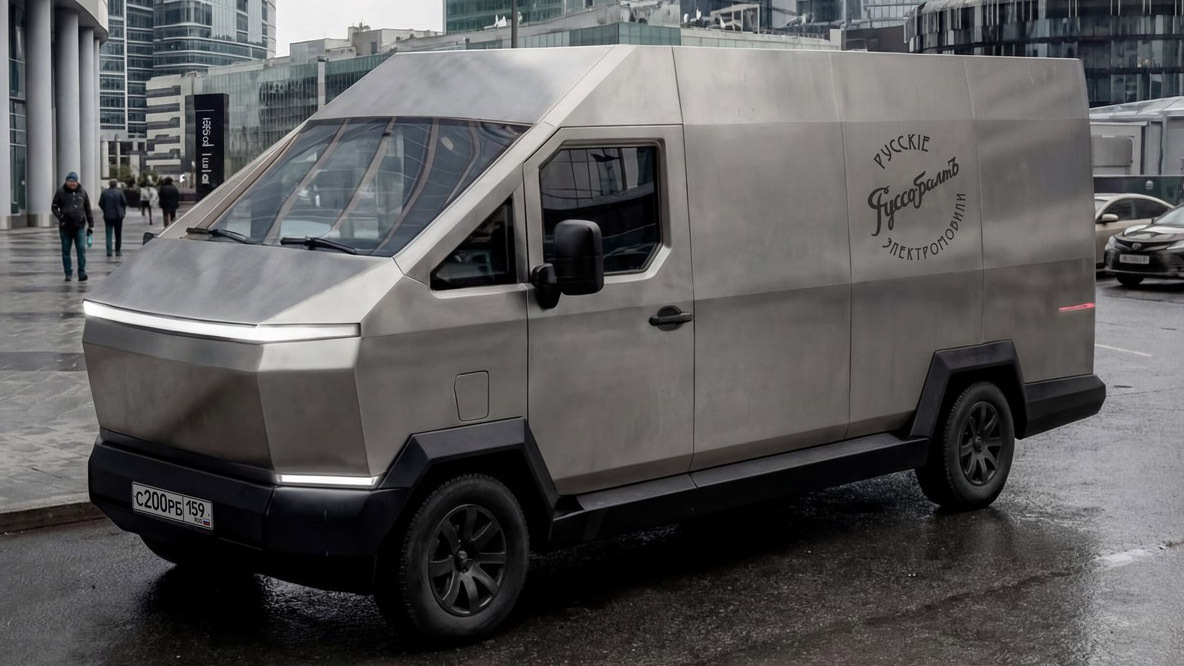
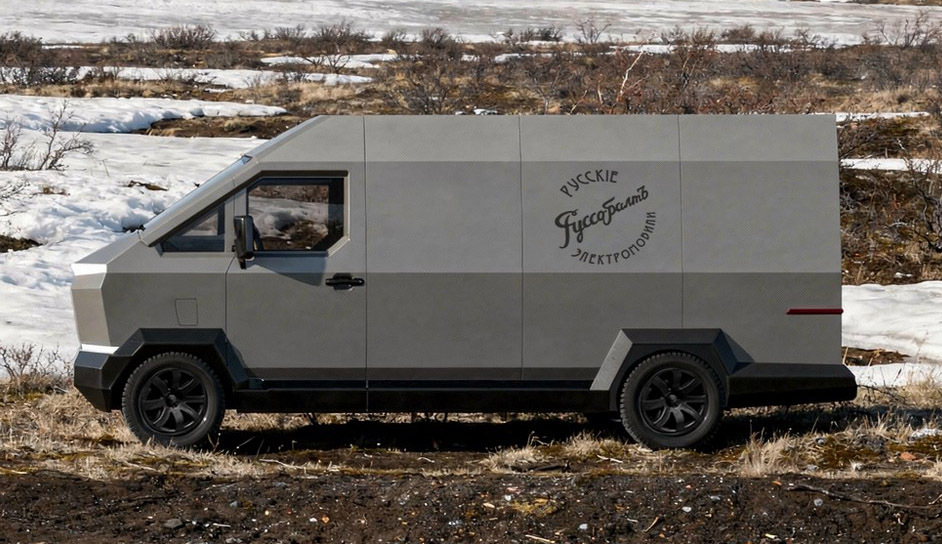
Meet the Russo-Balt F200, a stainless steel slab of a van with unmistakable Cybertruck flair. It’s the first model from a newly revived brand that traces its name back to a storied Russian automaker and railway carriage builder that operated between 1869 and 1918. Production plans are already in motion, with initial deliveries scheduled for January 2027.

More: Russia’s Cybervan Looks Like A Sci-Fi Tesla Truck That Gave Up

As we previously reported, the F200 has already been seen roaming public roads in Russia, confirming that it’s more than a rendering or vaporware project. Amusingly, the company even featured a link to our earlier coverage on its own website.

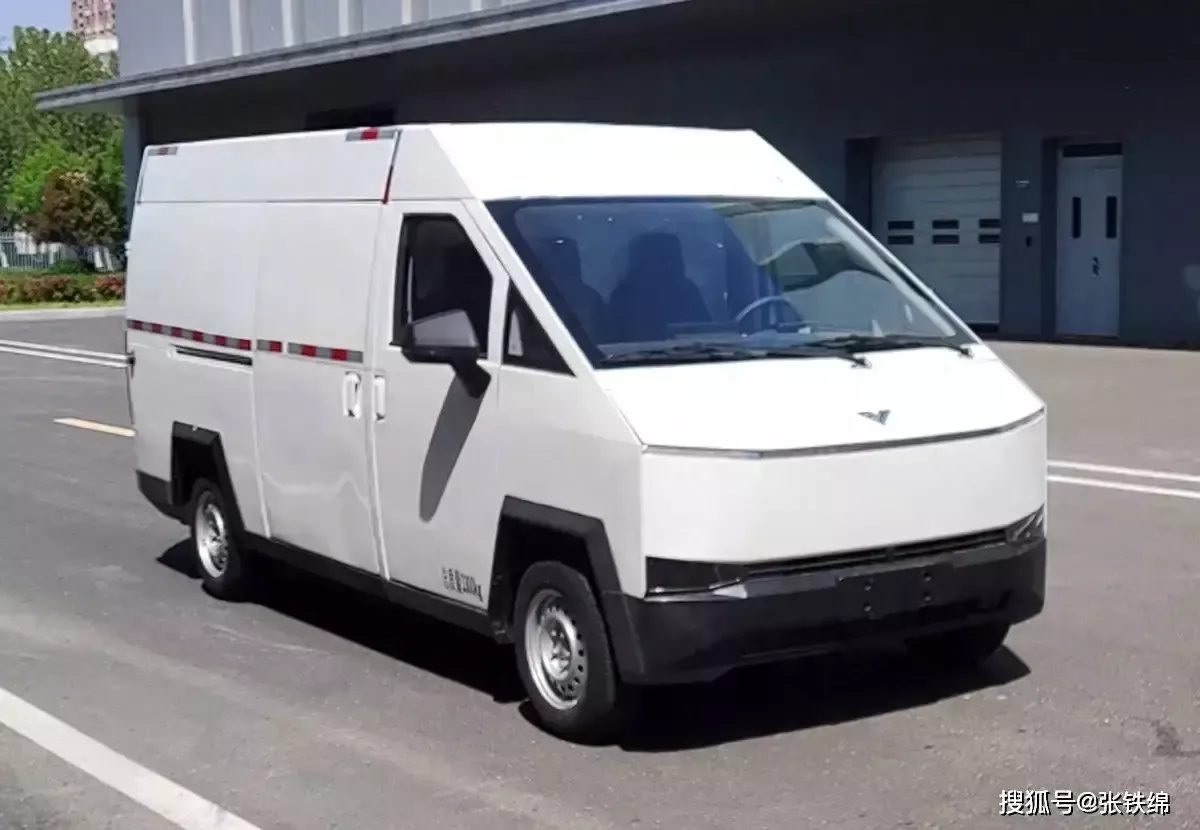
Although we pointed out a resemblance to China’s Weiqiao New Energy V90, Russo-Balt insists the F200 is its own creation and not a rebadge job.

What Is This Thing, Exactly?

 Tesla Never Made A Cybervan, So A Russian Startup Did It First
The Russo-Balt F200 above, compared to China’s Weiqiao V90 below.
 Tesla Never Made A Cybervan, So A Russian Startup Did It First

The body panels are shaped from unpainted stainless steel, just like the Cybertruck, welded together by hand. Despite the raw-metal finish, buyers can personalize the look with optional polyurethane wraps, available in a full range of colors and graphics.

From its sharp creases to the flat windows and squared-off arches, the F200 borrows more than a few cues from the Cybertruck. Full-width LED lighting front and rear, plus a tailgate design that recalls the styling of Tesla’s electric truck bed cover, round out the visual nods.

While most vans of this size ride on a ladder-frame chassis, the F200 uses a monocoque chassis. This setup supports a payload of up to 1,000 kg (2,205 pounds), which appears to be in line with commercial expectations.

100-Year Warranty

 Tesla Never Made A Cybervan, So A Russian Startup Did It First

According to the Russian startup, the vehicle falls under the international L3H3 classification and measures 5,950 mm (234.3 inches) in length, 2,000 mm (78.7 inches) in width, and 2,550 mm (100.4 inches) in height, tall enough for most people to stand upright inside.

The standard build includes a 100-year body warranty for the stainless steel panels, which sounds a bit rich for a van that hasn’t hit the road yet in full production form.

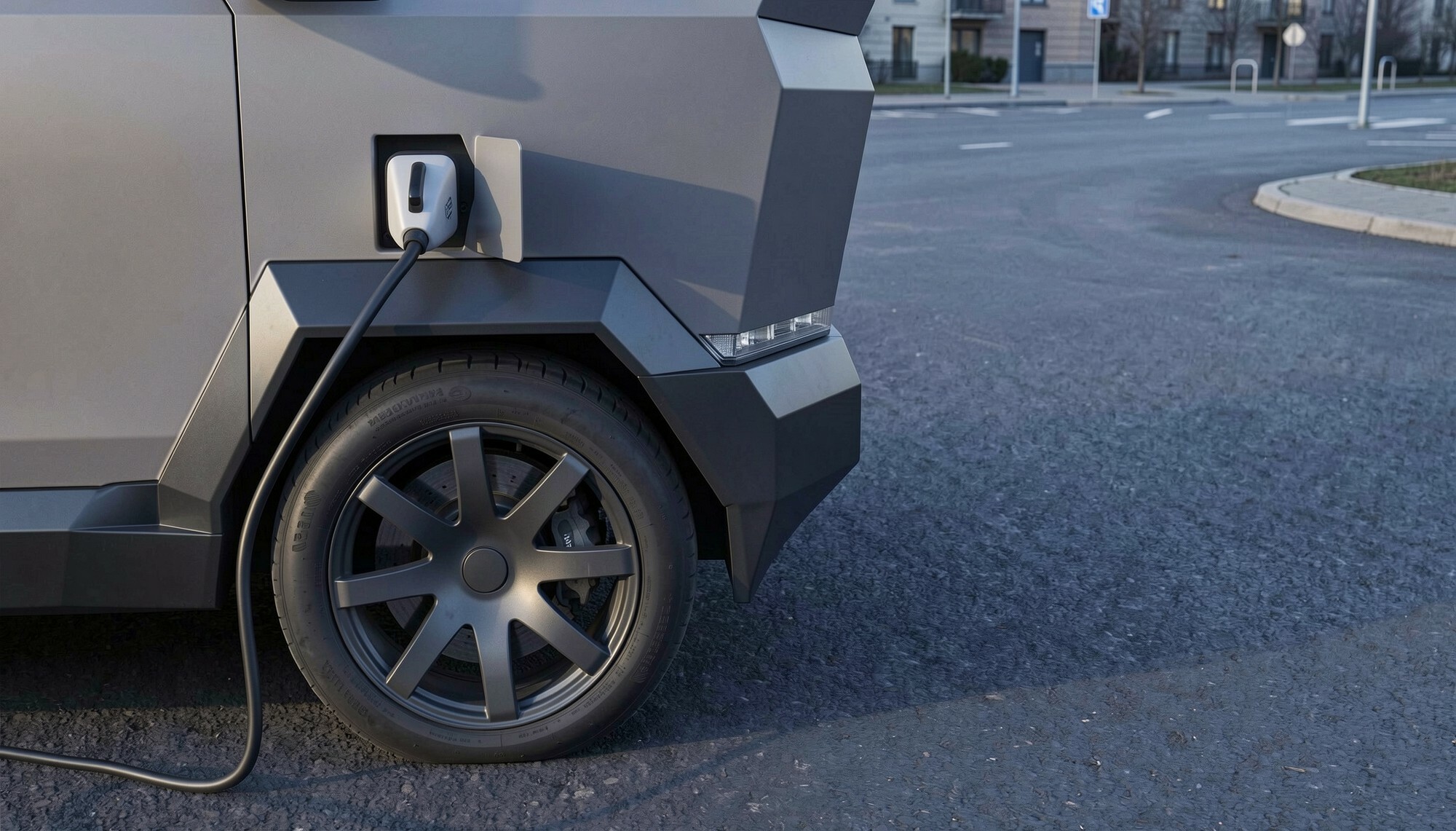
Power comes from a single electric motor with 200 hp sent to the front wheels. A 115 kWh battery pack provides a claimed range of 400 kilometers (249 miles), with DC fast charging supported via a port on the front fender.

How Much Does it Cost?

 Tesla Never Made A Cybervan, So A Russian Startup Did It First

Pricing is set at 6.5 million rubles, roughly $85,200 at current exchange rates. A refundable deposit of just 10,000 rubles (around $131) secures a place in the production queue, though the total planned volume hasn’t been disclosed.

More: Ukraine Turns A BMW 7-Series Into A Luxury Russia-Fighting Rocket Launcher

Standard equipment includes ABS, ESP, climate control, rear air suspension, and a 360-degree camera setup with live streaming capability. Virtually every surface that could be warmed, including seats, steering wheel, mirrors, even the windshield wipers, is heated. This is a vehicle built for Russian winters, after all.

Infotainment is handled by a 14-inch touchscreen, which displays vehicle settings and offers integrated entertainment from Russian platforms such as Rutube, VKvideo, and Yandex.

More to Come from Russo-Balt

 Tesla Never Made A Cybervan, So A Russian Startup Did It First

Interestingly, the team behind the F200 claims prior experience in manufacturing stainless steel water dispensers, and they plan to carry over the same material and fabrication expertise to the van. Production will be on a made-to-order basis.

A second model, the F400, is already in development. This one will feature a range-extending gas engine and all-wheel drive via dual electric motors, combining for a projected 400 horsepower. It will also add front air suspension, in addition to the rear air spring setup already included on the F200. Pricing details have yet to be announced.

\\\\\\\\\\\\

Russo-Balt

Tesla’s Problem In China Isn’t Nio Or BYD, It’s This EV That Just Outsold Them

  • Updated SU7 model could boost Xiaomi sales significantly in 2026.
  • SU7 sales topped 258,000 units, Model 3 reached 200,361 in China.
  • Technology giant aims to sell 550,000 vehicles in China this year.

Xiaomi has quickly established itself as an automaker to be reckoned with in China, and last year, it achieved something that would’ve seemed unlikely just a few years ago: its all-electric SU7 sedan outsold the Tesla Model 3.

Once the brand of choice for EV-hungry Chinese consumers, Tesla now finds itself outpaced by domestic rivals that are rapidly improving their game. Xiaomi is leading that charge.

Read: Xiaomi’s YU7 Outsold Tesla’s Model Y And Now It’s Getting Personal

Data from the Chinese Passenger Car Association shows that in 2025, Xiaomi sold 258,164 SU7s. That’s nearly double the roughly 135,000 units it moved in 2024, a figure made more impressive given that the SU7 only launched in April of that year.

Perhaps more notably, it overtook the Tesla Model 3, which saw 200,361 deliveries in the same period.

What’s Driving the Switch?

 Tesla’s Problem In China Isn’t Nio Or BYD, It’s This EV That Just Outsold Them

Chinese buyers have responded well not only to the SU7’s design inside and out but also to the technology it packs and the performance it delivers.

The base version undercuts a comparable Model 3 by roughly 9 percent, according to a report from the South China Morning Post, giving it a clear pricing advantage. Strong driving range and well-specced hardware round out the package, allowing the SU7 to compete in a segment Tesla once dominated.

“Tesla’s dominance in the premium EV segment has been eroded by its Chinese competitors that are able to churn out vehicles on par with its technology standards while offering them at lower prices,” a senior manager at the Shanghai-based consultancy Suolei told the outlet. “Xiaomi’s success is a strong boost for Chinese carmakers, which are all trying to move up the value chain.”

What’s in Store for 2026?

 Tesla’s Problem In China Isn’t Nio Or BYD, It’s This EV That Just Outsold Them

This year is shaping up to be even bigger for Xiaomi. In April, an updated SU7 will be launched, complete with more advanced driving assistance functions, including LiDAR across the entire family, and an improved driving range of up to 902 km (560 miles) on the CLTC cycle.

Within the first 15 days of pre-orders opening, Xiaomi reportedly secured 100,000 reservations for the refreshed model.

Also: Ford’s Jim Farley Was “Shocked” After Tearing Down Xiaomi And Tesla EVs

In total, Xiaomi sold 411,800 vehicles last year and is targeting 550,000 in 2026. This will also be the first full year of availability for the YU7 SUV, which could become its best-selling model.

Back in October, the YU7 notched 33,662 sales in a single month, even edging past the Tesla Model Y. Xiaomi’s third model, the YU9, will also make its debut this year as a range-extender EV.

\\\\\\\\\\\\

Tesla’s Trying To Sell The Cybertruck Somewhere You’d Never Worry About Gas

  • Tesla Cybertruck starts at $110,000 in the United Arab Emirates.
  • U.S. sales fell 48.1 percent to 20,237 units during 2025.
  • Elon Musk once predicted 500,000 annual Cybertruck sales.

Prior to launching the Tesla Cybertruck, Elon Musk suggested they could sell as many as 500,000 of them per year. However, as sales of the electric pickup never really picked up in the United States, Tesla has started selling the Cybertruck in more markets, the latest being the Middle East.

Earlier this month, the first Cybertrucks were delivered to customers in the United Arab Emirates (UAE). Roughly 60 units were handed over during a launch event held for the occasion.

Read: Tesla’s Running Out Of Cybertruck Buyers, So Musk’s Other Companies Are Buying It

While much of the early hype surrounding the electric truck has died down in the US, it’s a hot ticket in the Middle East, with many having already been imported into the region by enthusiastic buyers before Tesla made it official. Of course, the UAE and the broader Middle East remain relatively small markets and won’t help Tesla get anywhere near its early estimates for the Cybertruck.

As one of the world’s top oil producers, the UAE enjoys some of the lowest fuel prices globally, which makes electric vehicles a harder sell. With cheap gas and a strong car culture rooted in performance and presence, the appeal of a futuristic EV like the Cybertruck has more to do with novelty than necessity.

How Much Is a Cybertruck in Dubai?

\\\\

Tesla Europe & Middle East/Twitter

In the UAE, pricing starts at AED404,900 for the dual-motor variant, roughly $110,000. That’s significantly more than the $79,990 price tag in the U.S. The top-end tri-motor Cyberbeast comes in at AED454,900, or about $123,000, which represents a smaller markup over its American counterpart at $114,900.

American Sales Crater

Back in the U.S., sales of the Cybertruck tumbled in 2025. Tesla moved just 20,237 units, down 48.1 percent from the 38,965 sold in 2024, the vehicle’s first full year on the market. The final quarter was especially tough, with only 4,140 trucks delivered. That’s a 68.1 percent drop compared to the 12,991 units shifted in Q4 of the previous year.

\\\\\\\

Tesla’s Battery Upgrade Costs Twice What The Whole Car Is Worth

  • Tesla Model S battery replacement can exceed the car’s value.
  • Third-party battery options exist but still may not be worth it.
  • Used Model S values range between $10K and $15K today.

Electric vehicles come with some obvious perks, from impressive acceleration and near-silent driving to charging costs that are typically, though not always, lower than fueling up with gas. But there’s a flipside when things go wrong. Battery replacement isn’t just expensive, it can easily eclipse the value of the car itself.

Just ask the owner of this 2013 Tesla Model S, for example, now staring down a quote that’s far from reasonable.

Watch: Tesla Model S Cruises Past 430,000 Miles On Original Battery

This particular owner recently visited a Tesla service center in Madison, Wisconsin, to get estimates on a battery replacement. According to a post they shared on Reddit, they inquired about swapping out the existing 60 kWh pack for either the same model or a larger 90 kWh version. Both options came back with steep price tags that likely outstrip the resale value of the vehicle.

Battery Pricing Hits Hard

 Tesla’s Battery Upgrade Costs Twice What The Whole Car Is Worth

A replacement 60 kWh pack would cost $13,830. That includes $580.50 for labor, based on a 2.58-hour installation time. The rest, a hefty $13,250, covers just the battery itself. Not exactly light on the wallet for what is now Tesla’s smallest available battery on offer.

The price jumps significantly for the larger 90 kWh pack. The pack alone costs $18,000, with an additional $4,500 required to unlock its full capacity. Factor in installation and necessary replacement parts, and the total comes to $23,262.

That’s well beyond what most used Model S vehicles from the same year are currently worth. We found they typically range from $10,000 to $15,000, depending on trim and condition. From a financial standpoint, the upgrade cost doesn’t pencil out.

\\\

Reddit u/sirromnek

Reddit user u/sirromnek shared the experience, sparking discussion among other Tesla owners. While many have logged hundreds of thousands of miles on their original packs without issue, battery degradation isn’t unheard of. For some, the only path forward is a costly replacement.

While going directly to Tesla is an option, new batteries can also be purchased from third-party suppliers, often at a much lower price than Tesla offers. However, given that decade-old Tesla Model S sedans are barely fetching over $12,000, buying a replacement pack probably isn’t worth it.

 Tesla’s Battery Upgrade Costs Twice What The Whole Car Is Worth

The Cheapest Tesla Might Be The One That Finally Solves This Daily Annoyance

  • Tesla’s Cybercab was spotted testing in Chicago with mirrors.
  • The prototype now features a rear camera washer, a Tesla first.
  • Original concept lacked pedals, mirrors, and steering wheel.

Tesla’s Cybercab may be the company’s most pivotal vehicle since the Model Y, aiming to put self-driving technology within reach of the average buyer. Development appears to be moving along as the company works to ensure the aerodynamic two-door can handle the demands of daily driving, which, in Tesla’s case, can often mean leaving a few details to be sorted out after launch.

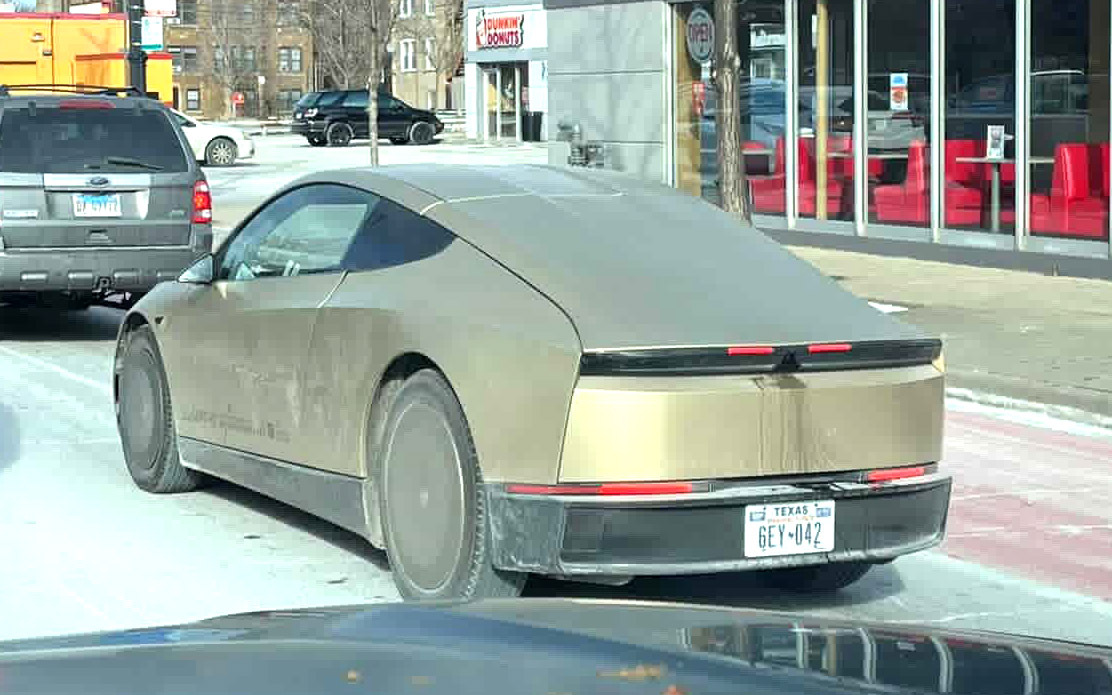
Progress, though gradual, appears to be underway. This week, an uncamouflaged Cybercab prototype was spotted cruising through Chicago by Instagram user Fbombbaggers (via DennisCW /X).

Sporting Texas plates, the test vehicle looks nearly identical to the concept shown in late 2024, though a few practical adjustments have been made to prepare it for the street.

Read: Tesla Spent Big On Cybercab Branding, Now Someone Else Owns It

The most obvious update is the presence of small triangular wing mirrors, a feature notably absent from the concept. But it’s not the mirrors that have Tesla fans excited. It’s the fact that this prototype has been fitted with a washer jet for the rear camera, an incredibly simple but genuinely useful detail that remains absent from other Tesla models.

 The Cheapest Tesla Might Be The One That Finally Solves This Daily Annoyance
Photo DennisCW_/X & Fbombbaggers /IG

In a photo shared online, liquid can be seen dripping from the center of the rear fascia, exactly where the camera is mounted. No current Tesla model includes a washer for the rear camera, even though many other automakers treat it as standard equipment. That’s changing here, and there’s a very specific reason why.

Take a close look at the back of the Cybercab and you’ll spot what’s missing: there’s no rear windshield. None. The production model relies entirely on a digital feed from its rear-facing camera for rearward visibility. Which means the camera can’t afford to be obstructed.

 The Cheapest Tesla Might Be The One That Finally Solves This Daily Annoyance

That detail forces Tesla’s hand. Unlike its higher-end models, where features are sometimes omitted in the name of cost savings or minimalist design, the Cybercab’s layout demands a washer. It’s no longer optional.

And while the Cybercab is expected to be Tesla’s most affordable vehicle yet, the addition of a camera washer here likely points to wider adoption across the lineup in the future. Standardizing components is one way to keep production costs in check.

Steering Wheel And Pedals?

 The Cheapest Tesla Might Be The One That Finally Solves This Daily Annoyance

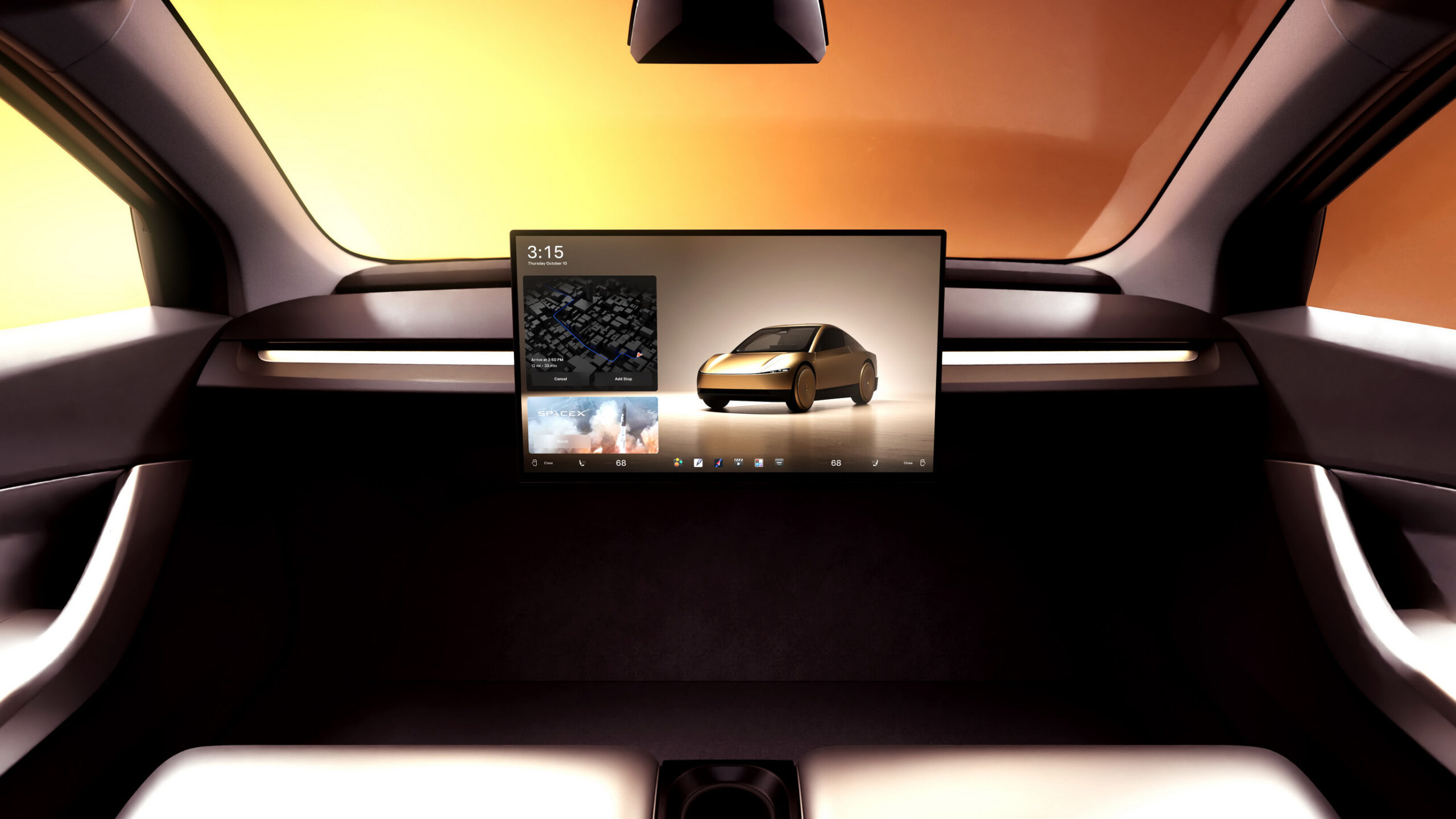
No images of the interior of this particular prototype have been released, but it was almost certainly fitted with a steering wheel and pedals, as other recent Cybercab test mules have been.

Although Tesla audaciously claimed the Cybercab would have no need for a steering wheel or pedals at its launch, it’s appearing increasingly likely that the EV will be more traditional than originally planned.

Late last year, Tesla board chair Robyn Denholm noted that, “If we have to have a steering wheel, it can have a steering wheel and pedals.” As Tesla’s self-driving system falls well short of Level 4 or Level 5 autonomy, it needs traditional controls if it wants to sell the EV in any significant numbers.

\\\\\\\\\\\\\\\\\

Tesla Cybercab Concept

❌
❌