
Normal view

There are new articles available, click to refresh the page.
Today — 25 March 2026Vehicles

Immigration Enforcement Fears Addressed at School Bus Stops with Increased Resources

24 March 2026 at 23:26

School districts in major cities like Los Angeles and Miami are taking steps to reassure families and protect students amid heightened fears of federal immigration enforcement operations near schools and bus stops.

The Trump administration last year rescinded a 2021 Department of Homeland Security memorandum that recognized schools along with churches and healthcare facilities as safe havens from Immigration and Customs Enforcement operations. All children regardless of their or their parents’ immigration status retain the right to public education, per the 1982 U.S. Supreme Court decision in Plyler v Doe.

No confirmed reports exist ICE agents conducting operations directly at school bus stops, detaining individuals on school buses, or targeting children at these locations. However, operations have reportedly occurred in the vicinity of schools in areas including Los Angeles and parts of Florida, contributing to community anxiety, enrollment drops in some districts and concerns about safe travel to and from school.

In the Los Angeles Unified School District (LAUSD), the nation’s second-largest school system, officials have emphasized campuses and bus stops as safe havens. In January, Superintendent Alberto Carvalho, who was placed on paid leave earlier this month amid an unrelated FBI investigation, said schools must remain places of stability amid fears that “fear doesn’t have a border” and shows up in neighborhoods and school communities.

The school district launched initiatives including the “We Are One” campaign, which provides “Know Your Rights” immigration resources, legal referrals, mental health support, community food distribution, and a 24/7 family hotline. LAUSD has also distributed “Family Preparedness Packets” in multiple languages, outlining steps if approached by immigration officers.

LAUSD affirmed it will not ask about or share a student’s immigration status unless required by law and maintains safe zones around schools.

To address transportation fears, LAUSD is offering individualized school bus routes, expanded transportation options and access to its virtual academy for families preferring online learning. Partnerships provide legal support, and staff have been deployed in high-risk areas for visible presence during drop-off and pickup times.

Bus Driver Training and Protecting Safe Routes to School

In Florida’s Miami-Dade County Public Schools and Collier County Schools across the state on the Gulf Coast, officials have encouraged calm preparation while re-affirming policies. The districts do not collect immigration status information on students or families and will not release records without a judicial warrant signed by a judge.

School personnel, including bus drivers, are instructed to request agent identification and a valid judicial warrant if approached by ICE. Without credentials, bus drivers are to deny entry to non-public areas. Staff have received training on responses, including the right to remain silent. Districts are assisting families with emergency plans, such as designating alternative child pick-up contacts if parents are detained and offering mental health support for students facing fear or trauma.

Meanwhile, Safe Routes to School programs focused on safe travel for students walking or riding to school have adapted to support immigrant families. California’s Alameda County Office of Education and community partners in the San Francisco Bay area have organized foot patrols and rapid response networks near campuses and bus stops. Volunteers receive reflective vests, whistles and air horns for visibility during pickup and drop-off. Trainings cover immigrant rights and protocols if ICE is spotted.

In nearby areas like Hayward, community groups have emphasized collective action, care and visibility to help families feel safer. Transform, an advocacy organization, highlights these efforts as ways ordinary people can protect children during expected enforcement actions, as seen in instances where community readiness coincided with lower attendance on anticipated raid days — though large-scale operations did not materialize.


Related: Florida School Districts on Edge About Possible School Bus Immigration Raids 
Related: District Responds to Parents Fears About Immigration Raids on School Buses
Related: School Districts Seek Student Protections from Immigration Enforcement
Related: Volunteers Help Immigrant Parents in Chicago Participate in Walking School Bus

The post Immigration Enforcement Fears Addressed at School Bus Stops with Increased Resources appeared first on School Transportation News.


Pupil Transportation Around the World: A Comparative Look at U.S., Brazil

24 March 2026 at 22:14

When I began working with transportation professionals throughout Brazil, I quickly realized that pupil transportation in the country cannot be understood through a single framework. Brazil is vast in geography, diverse in terrain and decentralized in governance.

To truly understand how students reach school each day, one must travel from the dense urban centers of São Paulo to rural interior roadways and meet with government officials and politicians in the nation’s capital of Brasília. My experience working in both urban and rural regions of Brazil has provided a unique vantage point, especially when viewed alongside my work in pupil transportation across the U.S.

While the operational structures of Brazil and the U.S. differ in important ways, there is one highly visible and symbolic similarity between both nations: The yellow school bus. In the U.S., the yellow school bus is an unmistakable national symbol. The color itself—National School Bus Glossy Yellow—was nearly 80 years ago because it is highly visible in early morning light and poor weather conditions. Across suburban neighborhoods, rural highways and city streets, the yellow bus signals one consistent message: Children are present and safety must take priority.

Brazil, particularly since the launch of the federal Caminho da Escola or school transportation program in 2007, has adopted a remarkably similar visual standard. The “Ônibus Escolar Amarelo” is now widely deployed throughout rural regions. Like its American counterpart, it is painted a highly visible yellow and clearly marked “Escolar,” the Portuguese word for school-related.

I was struck by how familiar they appeared when first observing these buses operating in Brazil. Although I was thousands of miles from home, the visual message was the same. The yellow bus communicates protection, structure and official oversight.

The similarity in appearance is not accidental. Both countries recognize that visibility enhances safety. The bright yellow exterior improves driver awareness, reduces the likelihood of collisions, and creates a distinct identity separate from other commercial vehicles. In both Brazil and the U.S., the yellow bus is not simply transportation. It is a public safety device.

The Yellow Contrast in Brazil

Despite the shared symbolism, the systems supporting these buses differ. U.S. pupil transportation is typically managed at the local school district level with strong state oversight and federal safety standards governing vehicle manufacturing. School buses are purpose-built with compartmentalized seating, reinforced structures, flashing light systems, and strict inspection requirements. The system operates largely independent of public transit. Students ride fleets dedicated exclusively to school transportation.

With Brazil pupil transportation, municipalities are responsible for operations, but the federal government plays a larger role in procurement. Through Caminho da Escola, the federal government negotiates large-scale purchases of school buses and distributes them to municipalities at reduced cost. This centralized purchasing strategy allows smaller or economically challenged communities to access standardized vehicles that meet national safety criteria.

In rural Brazil, the yellow buses are engineered for durability in ways that reflect environmental necessity. Many operate on unpaved roads that become muddy during rainy seasons. Elevated chassis, reinforced suspension systems and structural adaptations are essential for reliability. In some regions, the bus must withstand terrain conditions that would challenge standard suburban routes in the U.S.. Yet the mission remains identical: Transport students safely and consistently.


Related: Pupil Transportation Around the World: A Comparative Look at U.S., Australia
Related: Pupil Transportation Around the World: A Comparative Look at U.S., Germany
Related: Pupil Transportation Around the World: A Comparative Look at the U.S. and Colombia
Related: Pupil Transportation Around the World: A Comparative Look at the U.S. and India
Related: What Differs Between Pupil Transportation in the U.S. and the U.K.?


Urban environments reveal another contrast. In most American cities, even large metropolitan districts operate their own dedicated yellow bus fleets. Public transit and pupil transportation are separate systems. In Brazil’s largest cities, however, many students rely on municipal bus networks or metro systems for pupil transportation. Student transit passes are common, and integration with public infrastructure is routine. While yellow buses operate in certain urban districts, especially younger students or specialized routes, the system often blends with general transit operations.

This integration model reflects infrastructure development patterns unique to Brazil. However, in rural regions where public transit is unavailable, Brazil’s yellow bus functions almost identically to its American counterpart. Routes are established, drivers are assigned and communities rely on the bus as the primary gateway to education.

A new school bus to serve rural students who live in the municipality of Corumbá in southwestern Brazil. (Photo courtesy of Prefeitura de Corumbá,)

A Road to Equity

Both nations face rural transportation challenges. In the U.S. Midwest and Mountain West, students may travel long distances on paved highways. In Alaska, geographic barriers sometimes require alternative solutions. Brazil shares similar distance challenges but adds terrain and environmental complexity. In the Amazon Basin, rivers serve as transportation corridors. School boats operate in tandem with buses, ensuring that students in riverine communities have access to classrooms.

Funding structures also illustrate differences and similarities. In the U.S., transportation funding varies by state and is often influenced by local tax bases. Wealthier districts may operate newer fleets, while underfunded districts face maintenance pressures. Brazil’s PNATE policy provides federal transfers based on rural student enrollment, helping reduce disparities between municipalities. While funding challenges persist in both countries, the commitment to providing transportation as a means of educational access is evident.

Safety culture remains central in both systems. The U.S. enforces strict stop-arm laws and driver certification standards, creating a nationally recognized safety environment. Brazil has made significant progress in standardizing vehicle procurement and improving oversight. While enforcement consistency may vary across municipalities, the growing presence of standardized yellow buses has strengthened safety expectations nationwide.

Working in both Brazil and the U.S. has reinforced a powerful truth for me. The yellow school bus is more than paint and steel. It is a shared commitment to children. Whether rolling through an American suburb at sunrise or navigating a rural Brazilian roadway at sunset, the yellow bus represents society’s promise to protect students on their journey to education.

Despite differences in governance, infrastructure and funding models, both nations use the yellow bus as a visible expression of pupil transportation creating educational equity. It signals that geography should not determine opportunity. From U.S. neighborhoods to Brazilian riverbanks, the daily movement of students remains one of the clearest indicators of national priorities translated into action. The yellow bus, in both countries, stands as a symbol of safety, reliability, and the enduring importance of getting children to school.


Bret Brooks

Bret E. Brooks is the chief operating officer for Gray Ram Tactical, LLC, a Missouri-based international consulting and training firm specializing in transportation safety and security. He is a keynote speaker, author of multiple books and articles, and has trained audiences around the world. He can be reached at BretBrooks@GrayRamTacticalTraining.com.

The post Pupil Transportation Around the World: A Comparative Look at U.S., Brazil appeared first on School Transportation News.
Tornado Warning Doesn’t Faze Georgia School Bus Driver During Route

24 March 2026 at 22:04

A Bibb County school bus driver is being praised for his quick-thinking by steering a bus full of students to safety at a local fire station during a tornado warning, reported 13wmaz.

Alfonso Ponder, who drives for Bibb County Schools, told local news reporters that he began his March 12 route around 5:45 a.m. and expected a routine morning before conditions quickly deteriorated.

“Everything was pretty, pretty good until about 6:30 [a.m.] maybe,” Ponder said via the article. “[Then] I got an alert to my phone saying we was up on a tornado warning and take shelter. Dispatch had told us to take shelter also.”

With about 15 students on board headed to Howard High School, Ponder was driving near a fire station when the alert came through and winds intensified. He decided to pull into the station.

“I had about 15 kids on the bus at the time, and I had decided to pull up because the wind was blowing so hard,” he told reporters. “When I pulled up, the firefighter welcomed me along with 15 kids in for safety.”

Ponder said he had been monitoring the worsening weather and had already identified the fire station as the safest nearby option.

“The weather was kind of getting bad,” he said. “So, I already had to figure out, OK, if they tell us shelter in place, I was gonna try to make it to the fire station, because that’s about the safest place around I can make it.”

Students Kept Safe as Tornado Warning Passes

Firefighters brought Ponder and the students inside, where they remained for about 20 to 25 minutes until the tornado warning expired, and it was safe to continue the route.

The storm frightened many of the students, Ponder stated. “Most of them [were] telling me, ‘Can you please get me back to the house?’” he said. “I said, ‘No, I cannot. I got to get y’all to safety.’ And that’s the only thing was on my mind at the time, getting the kids’ safety, my safety.”

Ponder, who has been driving school buses for about three years, said the experience was his first encounter with a tornado warning while on the job. Afterward, several parents contacted him to express gratitude for protecting their children.

Capt. Keith Carter said his crew at Bibb County Fire Station 3 acted immediately when the bus arrived. “My 25 years, that was my first school bus pulling to the station,” Carter said. “I knew something was wrong. We assisted them getting off the bus, coming into the station. Mr. Ponder; he did follow his protocol. So, he came to the nearest, safest place. We wake up every day wanting to help different people.”

Ponder said he remains thankful that everyone made it through the storm unharmed.

“I want to give a special thanks to the Bibb County Fire Department for allowing me and the kids to get to safety,” he said. “I’m glad all the kids and my coworkers, everybody, was safe.”


Related: (STN Podcast E264) Tornado Warning: Illinois Rising Star Discusses Leadership, Operations
Related: Payroll Technology Saves Georgia School District Thousands of Dollars
Related: Oklahoma Student Hailed Hero After Helping Bus Driver During Medical Emergency
Related: Colorado School Bus Driver Hailed Hero After Fire

The post Tornado Warning Doesn’t Faze Georgia School Bus Driver During Route appeared first on School Transportation News.
Child Sexual Assault Charge for Colorado School Bus Driver

24 March 2026 at 21:04

Police arrested a suburban Denver school bus driver on suspicion of sexually assaulting a child.

Officers for the Lakewood Police Department were notified March 11 of a possible assault involving a 10-year-old student and the child’s school bus driver, identified as 64-year-old Robert Charles Watters, according to authorities.

A child reported that the Jefferson County Public Schools driver had engaged in what investigators described as an “inappropriate relationship,” prompting an immediate investigation.

Watters turned himself in March 12 and was taken into custody. He was arrested and faces charges on suspicion of sexual assault on a child involving a pattern of abuse and a position of trust, police said.

The allegations stem from what police called an inappropriate relationship. No further details were provided.

“As part of this investigation, detectives are asking anyone who may have information or believes they may have been a victim or witness to come forward,” police said in a March 13 statement posted to Facebook, urging the public to contact the Lakewood Police tip line.

Watters remained in custody at the Jefferson County jail as of March 13, authorities said.

According to police, Watters has worked as a school bus driver for Jefferson County Public Schools near Denver since 2018. He drove Hutchinson Elementary School students on the C-49 route from 2021 to 2023 and had been assigned to the C-31 route since August 2023.

Officials emphasized that the charges are allegations and that Watters is presumed innocent unless proven guilty in court.

Police continue to investigate and are asking anyone with information related to the case to contact authorities. The investigation remains ongoing.


Related: Maryland School Bus Aid Charged with Sexual Assault
Related: Louisiana School Bus Driver Arrested Amid Sexual Assault Charges
Related: Connecticut School Bus Driver Charged After Alleged Failure to Stop Assaults
Related: Virginia School Bus Aide Arrested for Alleged Assault

The post Child Sexual Assault Charge for Colorado School Bus Driver appeared first on School Transportation News.
(STN Podcast E299) Meeting Needs: Answering Questions on Alternative Student Transportation

24 March 2026 at 20:54

Learn more about our upcoming April magazine, inflation and fuel prices, internet for school buses, record revenue for Zum, district efforts amid ICE enforcement, and a driver dressing to impress.

Michael Signer, chief policy and legal officer for EverDriven, discusses the evolution of alternative student transportation from safety and regulatory perspectives to help school districts meet student needs alongside yellow buses.

Read more about operations.

This episode is brought to you by Transfinder.


Conversation with EverDriven
.


Stream, subscribe and download the School Transportation Nation podcast on Apple Podcasts, DeezeriHeartRadioSpotify and YouTube.

The post (STN Podcast E299) Meeting Needs: Answering Questions on Alternative Student Transportation appeared first on School Transportation News.
New York School Bus Aide Arrested for Allegedly Abusing Children

24 March 2026 at 20:07

A school bus aide on Long Island was arrested and accused of physically abusing multiple students with special needs, including restraining them by pushing and sitting on them, reported People.com.

According to the news report, police took 37-year-old Devone Medlock of Amityville into custody on March 17, following an investigation into an incident reported in January.

Detectives said Medlock, who worked as an aide for school bus contractor First Student and served a local school, became “physically and verbally abusive with multiple children who are special needs students.”

Medlock is reportedly accused of pushing, slamming, restraining and sitting on the students during the incident, which was first reported Jan. 13. He was arrested at his Long Island home.

Police charged Medlock with six counts of third-degree assault, six counts of menacing in the third degree, and six counts of endangering the welfare of a child. He was scheduled to be arraigned last weekend.

School District Responds

Uniondale School District Superintendent Monique Darrisaw-Akil said Medlock was immediately terminated following the allegations coming to light. The school also district notified law enforcement.

“We have been cooperating with law enforcement in their investigation and will continue to cooperate fully with law enforcement as this matter proceeds through the legal system,” Darrisaw-Akil said in a statement. “The safety and well-being of our students is our highest priority. We are committed to ensuring any individual or individuals responsible for any abusive or harmful behavior towards any of our students are held accountable.”

First Student also said the alleged conduct was unacceptable, and confirmed Medlock is no longer employed by the company.

Authorities are asking anyone who may have been a victim or has information about the case to contact Nassau County Crime Stoppers at at 1-800-244-TIPS.


Related: School Bus Driver Arrested for Allegedly Asking Student to Hike Skirt
Related: Florida School Bus Aide Arrested on Child Abuse Charge
Related: Former Arizona School Bus Driver Arrested on Child Molestation Charges
Related: Florida School Bus Attendant Arrested for Inappropriate Behavior with Young Girls

The post New York School Bus Aide Arrested for Allegedly Abusing Children appeared first on School Transportation News.

Intersection of Autonomous Vehicles and School Buses

24 March 2026 at 17:10

It’s alarming: A staggering 8,000 drivers illegally passed a stopped school bus, with the stop arm deployed and red lights flashing between mid-August and Feb. 10 in Austin, Texas alone.

The Austin Independent School District (AISD) partners with BusPatrol to install cameras on every bus in the district. When a car illegally passes a stopped school bus with the red flashing lights and stop arm deployed, police issue a $300 citation after confirming a violation on video provided by BusPatrol. Every school district should be capturing the license plate of offenders. BusPatrol system has no up-front cost for a school district because they fund the program out of the revenue from fines.

The City of Austin passed an ordinance in 2015 allowing the school district to implement the program. The fine is an effective deterrent because only 1 percent of drivers who are issued a ticket re-offend. Since mid-August, 25 Waymo driverless taxis have blown by stopped school buses illegally.

Three Ways to Look at These Statistics
1. Waymo’s 25 violation are small in comparison.
2. There are 2.1 million vehicles in the greater Austin area and just over 100 Waymo autonomous vehicles. One out of every 263 normal vehicles illegally drove by a stopped school bus but one in four Waymo vehicles did. On a per vehicle basis, Waymo has 65 times more illegal drive-bys than average motorists.
3. Human drivers have a 1 percent repeat rate. Waymo AVs repeated the mistake 24 times in the last seven months.

School buses are designed to have the highest visibility possible. They’re painted bright yellow. They have flashing red lights when stopped and an arm that comes out into traffic.

Alarmed about these incidents, Kris Hafezizadeh, Austin ISD’s director of transportation, got in touch with Waymo and offered to run tests in a safe parking lot in early December so that Waymo engineers could solve this problem. Waymo updated its software a couple of weeks later as a result, but violations still have occurred since the updates.

Hafezizadeh and Austin police suggested to Waymo representatives, that until the problem is resolved, Waymo not drive during the hours that school buses are picking up and dropping off students. Waymo representatives refused and said that the cars will keep driving.

The video documentation of these violations is an important part of this story because without this evidence, Austin ISD would not know the extent of the threat that children face and the National Transportation Safety Board and the National Highway Traffic Safety Administration would not have had the data that prompted their investigations.

A Waymo spokesperson is quoted by Reuters as saying, “Our safety performance around school buses is superior to human drivers” But it depends on how you look at the numbers.

In an interview with Bloomberg on Feb. 11, Waymo Co-CEO Tekedra Mawakana would not unequivocally confirm the problem has been solved.

Frightening Figure: National Epidemic
Every year, the National Association of State Directors of Pupil Transportation Services (NASDPTS) conducts a voluntary, one-day study to document how many cars illegally pass stopped school buses. Last year, bus drivers in 36 states and D.C. participated. The data was annualized and extrapolated to cover all U.S. jurisdictions. The figure is frightening: 43.5 million illegal passes a year. A NTHSA study as to why this is happening is equally disturbing: Over 30 percent didn’t care, 25 percent were in a hurry, 24 percent said they didn’t know the law, and 12 percent were distracted.

A staggering 94 percent of car crashes are due to driver error. As a result, 44,000 people are killed every year in car accidents in the U.S. and another 2.6 million end up in the hospital. So, the long-term promise of driverless vehicles is great. No more drunk driving, no more distracted driving accidents. However, currently there is a big, yawing gap between the promise and the practice.

Why Is This Important Now?
This is important right now because there is a rapid expansion of driverless cars in certain jurisdictions. In July, Waymo reported that it had completed 100 million fully autonomous rides and 250,000 paid rides per week. We are in an era of rapid expansion of driverless vehicles. This makes it critical to fix this problem as soon as possible.

Waymo operates in San Francisco, Los Angeles, Phoenix, Austin, Atlanta and Miami and plans to expand into Washington, Detroit, Las Vegas, San Diego, Denver and nine other U.S. and international cities this year. The service will hit more than 1 million paid robotaxi rides a week in the U.S. by the end of 2026, up from the current 400,000 paid rides a week, according to Mawakana.

It’s not just Waymo that’s rapidly expanding, all car manufacturers are deploying autonomous features. China is the most advanced market globally with 3,500 robotaxis deployed, but Goldman Sachs predicts that there will be 500,000 robotaxis across 10 Chinese cities by 2030, and UBS predicts there will be four million in China by the late 2030s. China shows us a vision of our own future. So, this problem is going to intensify.

The Way Forward
Waze and Google Maps are both owned by Waymo’s parent company Alphabet. Why not require Waze and Google Maps to publish all the school district locations on their maps and verbally warn human drivers to slow down in school zones and pay attention to stopped bus flashing lights and force Waymo vehicles to do the same?

Today, driverless vehicles only react to what they can “see” with Lidar and cameras. Future V2X technology will enable communication between autonomous systems. So, school buses will broadcast signals that Waymo and other driverless vehicles will detect and, as a result, be triggered to slow down and stop.

Predicting Illegal Passing
Safe Fleet has an AI-based Predictive Stop Arm. It looks at the speed of a vehicle and predicts whether it will illegally drive by the bus. This allows the bus driver to prevent students from getting off the bus. The system also comes with loudspeakers on the under side of the bus that warn children of a car that is not going to stop and to not cross the road.

Many school districts face serious budget cuts and constraints. The violator-funded model is not only a good deterrent but also makes the program financially possible. Districts might consider launching a public education campaign on media and social media similar to the highly effective ones launched by Mothers Against Drunk Driving.

Editor’s Note: As reprinted from the March 2026 issue of School Transportation News.


Jim Harris is a one of North America’s foremost thinkers, authors and on-air analysts on AI, disruption and innovation. He keynotes internationally at more than 50 in-person and virtual conferences and events a year. Association magazine ranked him as one of North America’s top ten speakers. Jim has published five books. Blindsided! was released in 80 countries and is a No. 1 International bestseller.


Related: NHTSA Investigates Autonomous Waymo Rides After Illegal School Bus Passing
Related: Waymo Driverless Vehicles Continue to Illegally Pass School Buses
Related: Investigation into Waymo Driverless Vehicles Continues Following Latest Collision with Student
Related: (STN Podcast E297) Deep Dive into Safety: Illegal Passing & Child Restraints, Plus Green Bus Funding

The post Intersection of Autonomous Vehicles and School Buses appeared first on School Transportation News.

Our First Look At The Mercedes Built To Fix Everything Wrong With The AMG EQE

  • The Mercedes-AMG E-Class EQ has been spied for the first time.
  • It replaces the AMG EQE and sports a more traditional design.
  • Car could have a tri-motor powertrain with around 900 hp.

Spy photographers have snapped the Mercedes E-Class EQ on multiple occasions and now they’ve gotten the first glimpse of the AMG variant. It’ll replace the slow-selling AMG EQE and feature a more conventional, and arguably safer, design direction.

Speaking of which, we can see the car will have a fully enclosed grille that should echo the one found on the C-Class and GLC EQs. We can also expect a sporty front bumper as well as star-infused headlights on the production model.

More: Mercedes’ New E-Class EQ Is Coming To Right The EQE’s Wrongs

Moving further back, there are lightweight AMG wheels that are backed up by a high-performance braking system with cross drilled discs. Designers also gave the car streamlined bodywork and a more traditional sedan silhouette. A closer inspection reveals extended fender flares, which likely hint at a wider track.

Elsewhere, the early prototype has a makeshift rear spoiler and temporary taillights. We can also get a glimpse of a sportier rear diffuser.

\\\\\\\\\\\

Baldauf

Spy photographers haven’t gotten a good look inside the E-Class EQ, but the model could follow in the footsteps of the electric GLC. If that’s the case, we can expect a 10.25-inch digital instrument cluster and a 14-inch infotainment system. The crossover also offers an MBUX Superscreen, which adds a 14-inch front passenger display. If that isn’t enough digital real estate, the MBUX Hyperscreen boasts a 39.1-inch display that spans the width of the dashboard.

Performance specifications remain a mystery, but the model will ride on the MB.EA platform and have a lot in common with the GLC EV. The crossover’s AMG variant is rumored to have three Yasa axial flux motors developing as much as 939 hp (700 kW / 952 PS).

That sounds like overkill, but there’s little doubt the upcoming model will easily eclipse the AMG EQE. As a refresher, it has a 90.6 kWh battery pack as well as a dual-motor all-wheel drive system producing a combined output of up to 668 hp (498 kW / 677 PS) and 738 lb-ft (1,000 Nm) of torque. This enables the model to rocket from 0-60 mph (0-96 km/h) in 3.2 seconds, but the car has a dismal EPA range of 220 miles (354 km).

\\\\\\

Baldauf

There’s No Defending The Design Of Geely’s New SUV

  • Geely has teased the upcoming Zhanjian 700.
  • It’s heavily inspired by the Land Rover Defender.
  • SUV features a tri-motor four-wheel drive system.

If imitation is the sincerest form of flattery, Land Rover must be blushing as Geely is gearing up to introduce the new Zhanjian 700. It apes the Defender and is being billed as an “AI all-terrain hardcore SUV.”

The automaker isn’t saying much at this point, but the model was previewed by a concept at last year’s Shanghai auto show and looks more British than Chinese. The similarities are striking as both models have rectangular headlights with circular daytime running lights. The 700 even incorporates the Defender’s single bar grille, although here it’s illuminated and features a logo in the center.

More: Geely’s Swimming Defender Clone Wants Land Rover’s Lunch

The design déjà vu continues further back as we can see familiar body work and similar front fender vents. They’re joined by plastic body cladding and a Defender-esque greenhouse. That being said, the 700 eschews Land Rover’s side-mounted panel and features a beltline that kicks up at the rear doors.

Rounding out the highlights are a contrasting white roof, two-tone wheels, and a rear-mounted spare tire carrier. The model also has blacked out pillars as well as a roof rack.

 There’s No Defending The Design Of Geely’s New SUV

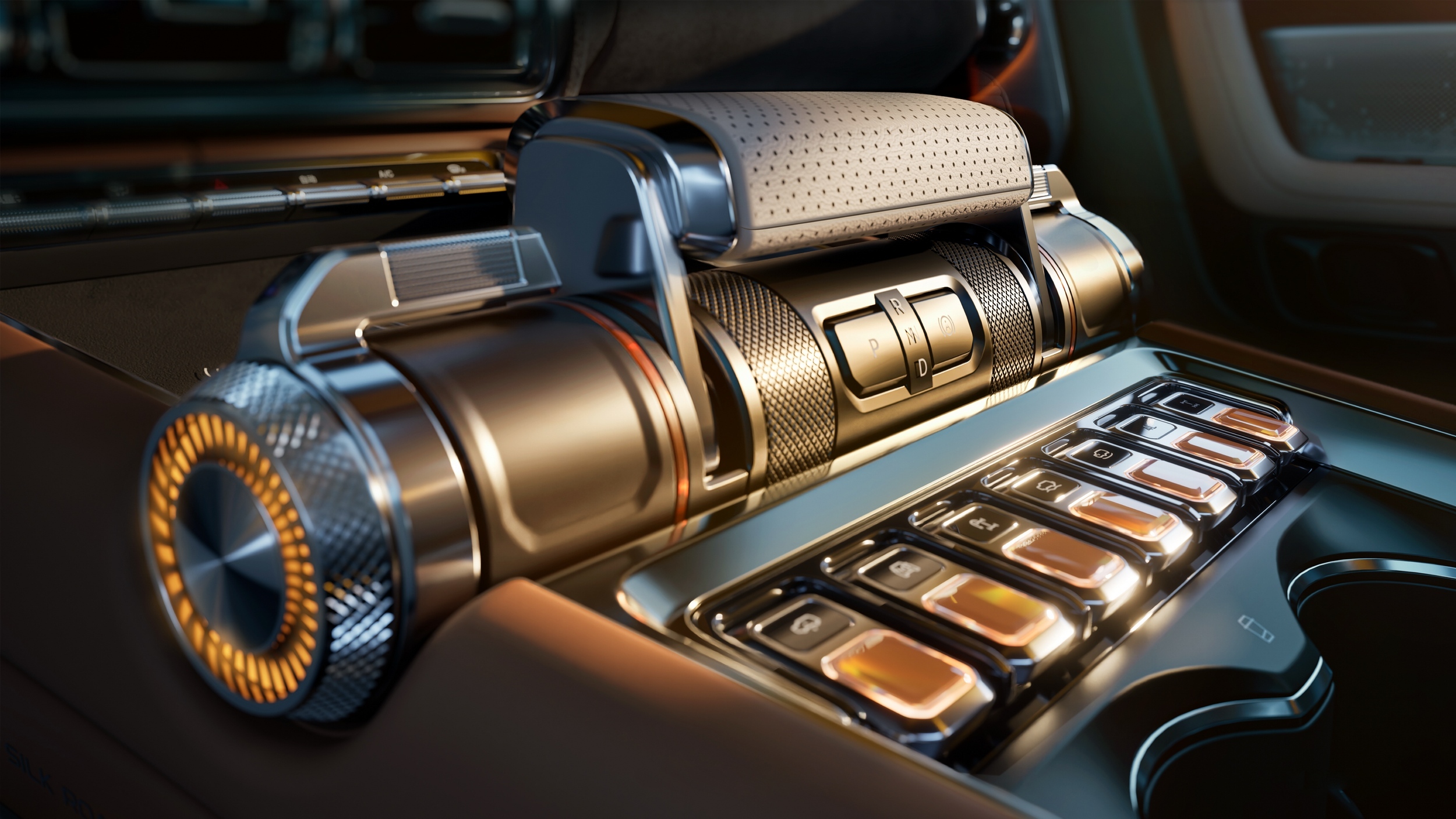
The interior image isn’t very revealing, but we can see a lever-style shifter with a leather grab handle. It’s flanked by two metallic controls and one of them could be the drive mode selector.

While that remains to be seen, the 700 has high quality switchgear and a row of dedicated off-road buttons. This appears to include a ride height selector, a 4L button, and a locking rear diff.

 There’s No Defending The Design Of Geely’s New SUV

Geely was tight-lipped on specifics, but said the model has an integrated frame as well as a tri-motor four-wheel drive system for “intelligent electric performance.” While that implies the vehicle is fully electric, that might not be the case as there are doors on both sides of the rear fenders.

One of them could be a charging port, while the other is for the gas tank. This would make sense as previous reports have suggested the model could have a 1.5- or 2.0-liter engine as well as a 70 kWh battery pack.

While a number of questions remain, the Zhanjian 700 will likely debut at Auto China next month. We can expect to learn more then, but Geely hinted the SUV won’t be cheap as it will compete in the “high-end off-road segment” and deliver “flagship-level performance.”

\\\

The Cybertruck Nobody Wanted New Is Now The One Nobody Wants Used

  • The Cybertruck Long Range RWD was only built for a limited time last year.
  • This pickup has a single electric motor and a 123 kWh battery pack.
  • Tesla lowered the Cybertruck’s towing capacity from 11,000 lbs to 7,500 lbs.

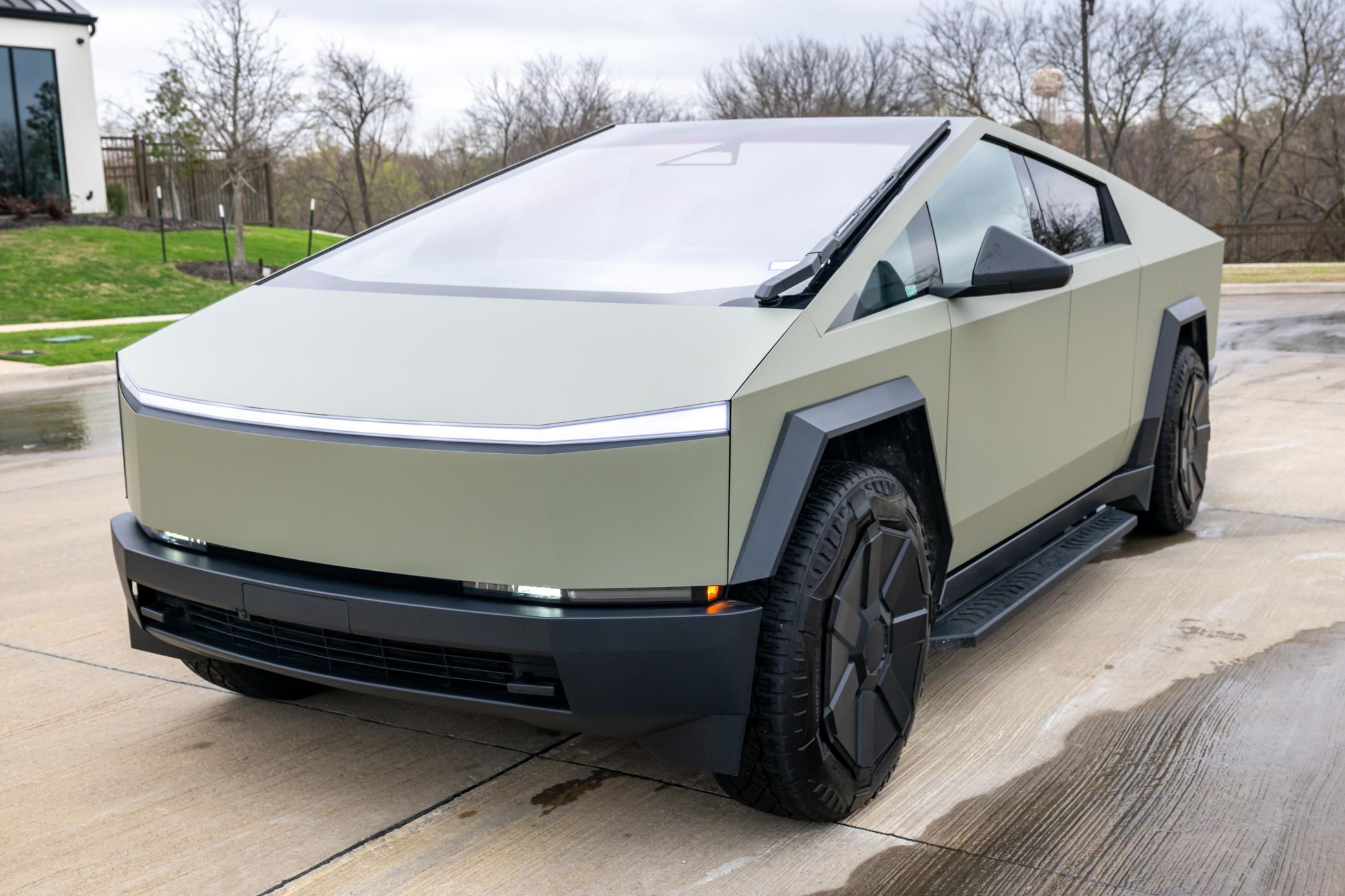
The Tesla Cybertruck’s Long Range RWD variant was short-lived, produced for less than six months, yet that rarity has done little to shield it from steep depreciation. Just look at this 2025 example, which recently changed hands for just $56,500.

Tesla introduced the Cybertruck Long Range RWD last year, pricing it from $69,990 and undercutting the All-Wheel Drive model by $10,000. However, it never proved particularly popular as Tesla cut out some important features to achieve the somewhat more approachable price tag.

 The Cybertruck Nobody Wanted New Is Now The One Nobody Wants Used

To get there, Tesla stripped back more than just an electric motor. The front axle is left unpowered, and buyers also miss out on a powered tonneau cover, 120/240V outlets, and the premium 15-speaker sound system, replaced here by a basic seven-speaker setup. The interior takes another step down with textile seats instead of leather and no rear touchscreen.

Capability takes a hit too. Towing drops from 11,000 lbs (4,989 kg) to 7,500 lbs (3,401 kg), while payload falls from 2,500 lbs (1,133 kg) to 2,006 lbs (910 kg). It’s a long list, and not the kind that quietly disappears once you’ve signed the paperwork.

Read: New Video Shows Tesla Nearly Going Off Overpass With Mom And Baby Inside

With this in mind, it’s perhaps no surprise that demand for used examples isn’t particularly strong. This Cybertruck was sold on Cars & Bids earlier this week, falling well short of its original price tag of $73,490, which included optional $3,500 20-inch Cyber wheels with 35-inch tires.

The Least Desirable Cybertruck?

\\\\\\\\

Cars & Bids

The fact that the owner also spent several thousand dollars to wrap the truck in Halo Green, add aftermarket side steps, and fit leather seat covers doesn’t seem to have boosted interest. It has just 5,800 miles (9,334 km) on the clock, which should have helped its value, but clearly hasn’t made much difference.

There is, at least, one clear strength. The RWD Long Range model carries a sizeable 123 kWh battery pack, giving it the best range of any Cybertruck at an EPA-rated 350 miles (563 km). That should be a headline advantage. Still, pairing that range with a rear-wheel-drive setup in a pickup limits how useful it feels in the real world, especially for buyers who expect capability to match the look.

In the end, this version lands in an awkward middle ground. It is cheaper, yet not cheap enough. It goes farther, yet gives up too much along the way. And in a segment where image and ability matter just as much as numbers, that balance does not seem to be working.

\\\\\\\\\\\\\\\\\\

Cars & Bids

Maybach Is Building The Ultra-Luxury Vehicle Rolls-Royce Will Never Make

  • Mercedes-Maybach has teased the upcoming VLS.
  • Ultra-luxury van promises a lounge-like interior.
  • It was previewed by a concept with a 65-inch display.

Mercedes introduced the VLE earlier this month and now they’re teasing the luxurious new VLS. However, they went a step further and confirmed the range-topping van will be getting a Maybach variant.

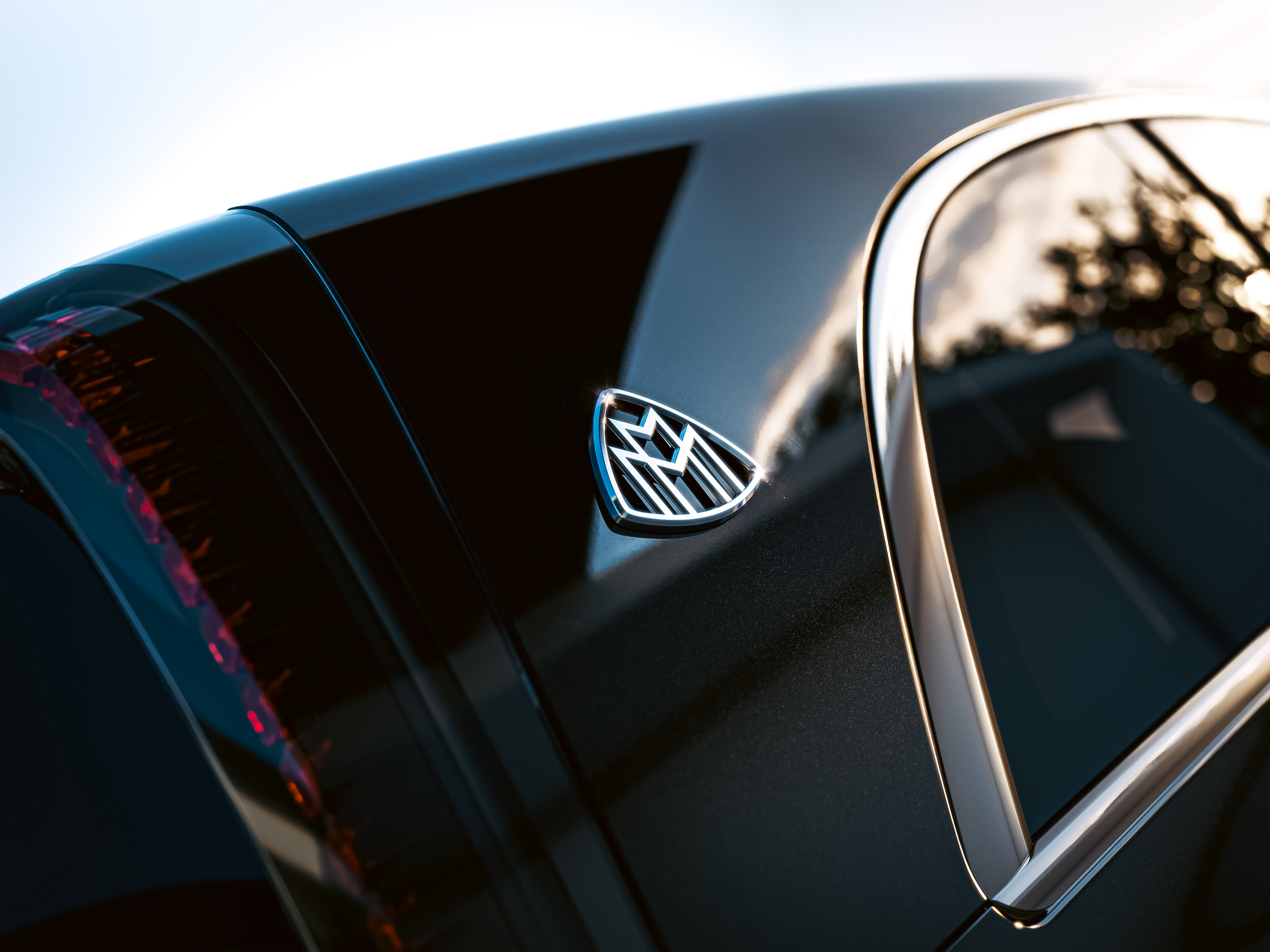
The company isn’t saying much at this point, but teased the model will elevate their “grand limousines [vans] into the realm of sophisticated luxury.” They went on to suggest the model will combine “timeless elegance” with a “first-class interior, a new level of digital sophistication, and an exceptional rear-seat experience.”

More: The Mercedes VLE Might Be The Most Luxurious Minivan America Has Ever Seen

Speaking of the rear seats, Mercedes hinted at an “extraordinary private lounge” that has luxurious materials, impeccable craftsmanship, and exquisite design details. That’s not much to go on, but the VLE offers private jet-style seats with a foot rest, pillow, and an integrated wireless phone charger.

The fancy seats will likely be joined by a center console, refrigerated compartment, and a high-tech entertainment system. If the Vision V concept is any indication, the model could have a 65-inch display as well as a 42-speaker premium audio system. We can also expect wood trim, metallic accents, and premium leather.

\\\\\\\

Vision V Concept

Little else is known about the model at this point, but the VLS will presumably be larger than the VLE. If that’s the case, this certainly isn’t a ‘minivan’ as the former measures 209.0 inches (5,309 mm) long, 78.7 inches (1,999 mm) wide, and 76.5 inches (1,943 mm) tall with a wheelbase that spans 131.6 inches (3,342 mm). An even larger VLE is also coming with a 138.5-inch (3,517 mm) wheelbase and an overall length of 215.9 inches (5,484 mm).

Powertrain details remain a mystery, but could echo higher-end versions of the VLE. This suggests the VLS could have a roughly 115 kWh battery pack as well as a dual-motor all-wheel drive system producing a combined output of 409 hp (305 kW / 415 PS).

We can also expect 800-volt technology and a 300+ kW DC fast charging capability. Other highlights will likely include an AirMatic air suspension and a rear-axle steering system.

 Maybach Is Building The Ultra-Luxury Vehicle Rolls-Royce Will Never Make

A New 912-HP Audi Sat Unsold For Months And The Price Finally Cracked

  • The 2025 Audi RS e-tron GT Performance starts at $170,500.
  • A new 13-mile example in Las Vegas is listed $54,005 under MSRP.
  • Listings nationwide show multiple cars already priced below sticker.

The new Audi RS e-tron GT Performance is a road-going rocket ship, blending hypercar-level acceleration with genuine long-distance comfort. It delivers extraordinary pace alongside impressive Grand Touring ability, yet like the model it replaces, it’s already shedding value quickly in the US. That makes now a surprisingly sensible moment to snag yourself a bargain.

The RS e-tron GT starts at $170,500, though that figure climbs past $180,000 once a few options are added. With 912 hp and 757 lb-ft (1,027 Nm) of torque available, that pricing isn’t outlandish on paper, but the market is clearly suggesting it’s too steep for a luxury EV.

Read: 2025 Audi e-tron GT Is $19,000 Pricier But Much Faster This Year

A quick scan of current classifieds shows dozens of 2025 and 2026 RS e-tron GT models listed across the United States, many showing minimal or delivery mileage and asking prices already below MSRP. The cheapest example we found is a lightly used 2025 model with 1,930 miles (3,106 km) listed by Audi Beverly Hills.

Prices Are Going Down, Down, Down

\\\\\\\\\\\\\\\\\

Audi Beverly Hills

That listing doesn’t specify the original MSRP, but with the $5,900 forged carbon package included, it would have cost at least $180,000 new. It’s now listed at just $123,993.

If you’re shopping for a new one, it’s worth checking out a 2025 model listed at Audi Las Vegas for $124,590, down from an MSRP of $178,595. It has just 13 miles (21 km) on the clock, essentially delivery mileage, and has already shed $54,005 in value without ever being registered. The gods of depreciation have clearly taken a liking to this electric Audi.

\\\\\\\\\

Audi Las Vegas

Despite the upgrades to the refreshed RS e-tron GT, it’s likely going to suffer the same fate as the original model, plummeting in value the moment it’s driven off the showroom floor. Some examples of the pre-facelift RS e-tron GT, which offers up to 637 hp and 612 lb-ft (830 Nm), have asking prices under the $50,000 mark, and the facelifted model is trending in that direction.

\\\\\\\\\

Audi Beverly Hills

Land Rover Built It, Killed It, And Now China Is Bringing It Back Without A Land Rover Badge

  • Freelander returns as a standalone electrified brand under JLR and Chery.
  • The teaser reveals pixel-style LED headlights and a boxy SUV design.
  • A global rollout is planned following the first model’s initial launch in China.

The Freelander name is making an unexpected return, though not in the way many would have predicted just a few years ago. Jaguar Land Rover’s Chinese joint venture with Chery has confirmed that the new Freelander will debut on March 31. This time, the badge does not belong to Land Rover at all, instead re-emerging as a standalone electrified brand with no traditional ties to its former parent.

The first official teaser focuses on the rectangular headlights, featuring pixel-style LED graphics. We can also spot an upright nose and hints of fender extensions, paired with gray plastic cladding on the front bumper.

More: Jaguar Land Rover’s Design Boss Is Out After Two Decades With No Successor Named

The upright lines across the front seem to nod to the original design. The Land Rover Freelander first arrived in 1997, followed by a second generation in 2006 that stayed on sale until 2015, when it was ultimately phased out in favor of the Discovery Sport.

Overall, the new model leans heavily on the Land Rover Defender’s design playbook, much like a growing number of SUVs coming out of China. Still, with JLR’s UK studio leading the design, this one at least has a legitimate claim to the look.

\\\\\\\\

Earlier spy shots have already given away much of the Freelander’s stance, revealing a boxy silhouette that leans heavily into SUV convention. It is expected to feature a three-row layout, with an overall length stretching beyond 5,100 mm (200.8 inches), placing it firmly in large family hauler territory.

Under the skin, the SUV is expected to ride on Chery’s modular architecture. The platform is designed to support both fully electric and range-extender powertrains, while also enabling ultra-fast charging,

More: Jaguar Built Its Last Gas Car, Now It Might Build China’s Next Best-Seller

Production of the new model will be centralized at the CJLR plant in Changshu, China. The facility is currently undergoing a ¥3 billion ($436 million) investment as it transitions away from the aging Land Rover Discovery Sport and Range Rover Evoque, preparing instead for the upcoming Freelander lineup.

The Chinese joint venture has also begun scaling up its workforce, recently sharing a recruitment poster on social media that lists more than 30 open positions across its Shanghai and Suzhou operations. The recruitment drive confirms that JLR and Chery are building an entirely new corporate infrastructure. While the new brand will initially launch in China, a wider global rollout is planned for the near future.

Spy Shots: Chery-JLR Freelander SUV for China

Freelander is a new brand under Chery-JLR. The Chinese name is 神行者 (Shén Xíngzhě). Freelander will manufacture various SUVs based on Chery platforms.

The spy shots show a boxy off-road-style SUV during winter tests in Northern… pic.twitter.com/IduwHRG5vw

— Tycho de Feijter (@TychodeFeijter) February 1, 2026

The EV Startup That Beat All Odds Just Beat An SEC Notice Sending 85% To Court

  • Faraday Future avoids SEC action after a four-year investigation.
  • Regulators scrutinized the company’s 2021 reverse merger with a SPAC.
  • Company now faces Nasdaq $1 share price compliance deadline.

Few car manufacturers have had a history as turbulent as Faraday Future. Founded more than a decade ago as one of America’s most promising EV startups, it’s been teetering on the edge of financial collapse for years, but has just reported one of its most significant wins.

Over the weekend, Faraday Future revealed that the US Securities and Exchange Commission has concluded its four-year investigation into the company and has decided not to take any action against it. Founder and co-CEO Jia Yueting, as well as Faraday Future President Jerry Wang, have also avoided the court room.

Read: After Failing At Cars, Faraday Is Now Building Robots

The SEC had been investigating Faraday Future over its 2021 merger with a special purpose acquisition company (SPAC) that allowed it to go public, alleging the company made several false and misleading statements. Throughout the SEC’s investigation, it subpoenaed the company and took depositions from multiple former employees and executives.

The Troubles Don’t Stop Here

\\\\\\\

Last year, it appeared the SEC was stepping up its action against Faraday Future, issuing ‘Wells Notices’ to Yueting and other executives, notices usually issued when the SEC has been recommended to take enforcement action. According to Tech Crunch, approximately 85 percent of cases where Wells Notices are issued result in the individuals facing the SEC in court.

“The conclusion of the SEC’s investigation means that the long-standing overhang and sources of instability that had constrained the Company have now been removed,” Faraday Future said in a statement. “This is the strongest and cleanest response to potential illegal short sellers. Some short sellers used the time when the investigation was still open to spread rumors, defame the Company, create panic, and profit illegally. Now, the SEC’s conclusion means FF’s reputation is being restored, and confidence is coming back.”

Admittedly, Faraday Future isn’t out of hot water yet, as it recently received a notice from Nasdaq for failing to meet the minimum $1-per-share price requirement over 180 days. It now has 180 days to boost its shares to over $1 and hopes to do so without issuing a reverse stock split.

\\\\\\\\\\\\\

Kia’s Cheapest Electric SUV Drops A Seat To Hit Its Price

  • The EV2 starts at €26,600, positioning it as an accessible entry EV.
  • Multiple trims and seating layouts give buyers flexibility across the lineup.
  • Kia has confirmed the EV2 will not be sold in the United States.

Fresh off the Kia EV2’s global premiere in Brussels earlier this year, the brand has opened order books for its latest all-electric SUV in Germany and other European markets, revealing a starting price of just €26,600 ($30,800 at current exchange rates). At that level, it feels like a missed opportunity that the EV2 isn’t headed to the United States, though tariffs would likely erode much of its affordability if it ever made the trip across the Atlantic.

Read: Kia’s Smallest Electric SUV Might Get A GT Version, But Not The Kind You’re Expecting

For European shoppers who’d rather not pay upfront for the EV2, the new car can be leased for as little as €239 ($275) per month. There are also plenty of versions on offer, ensuring there’s an EV2 to suit everyone.

 Kia’s Cheapest Electric SUV Drops A Seat To Hit Its Price

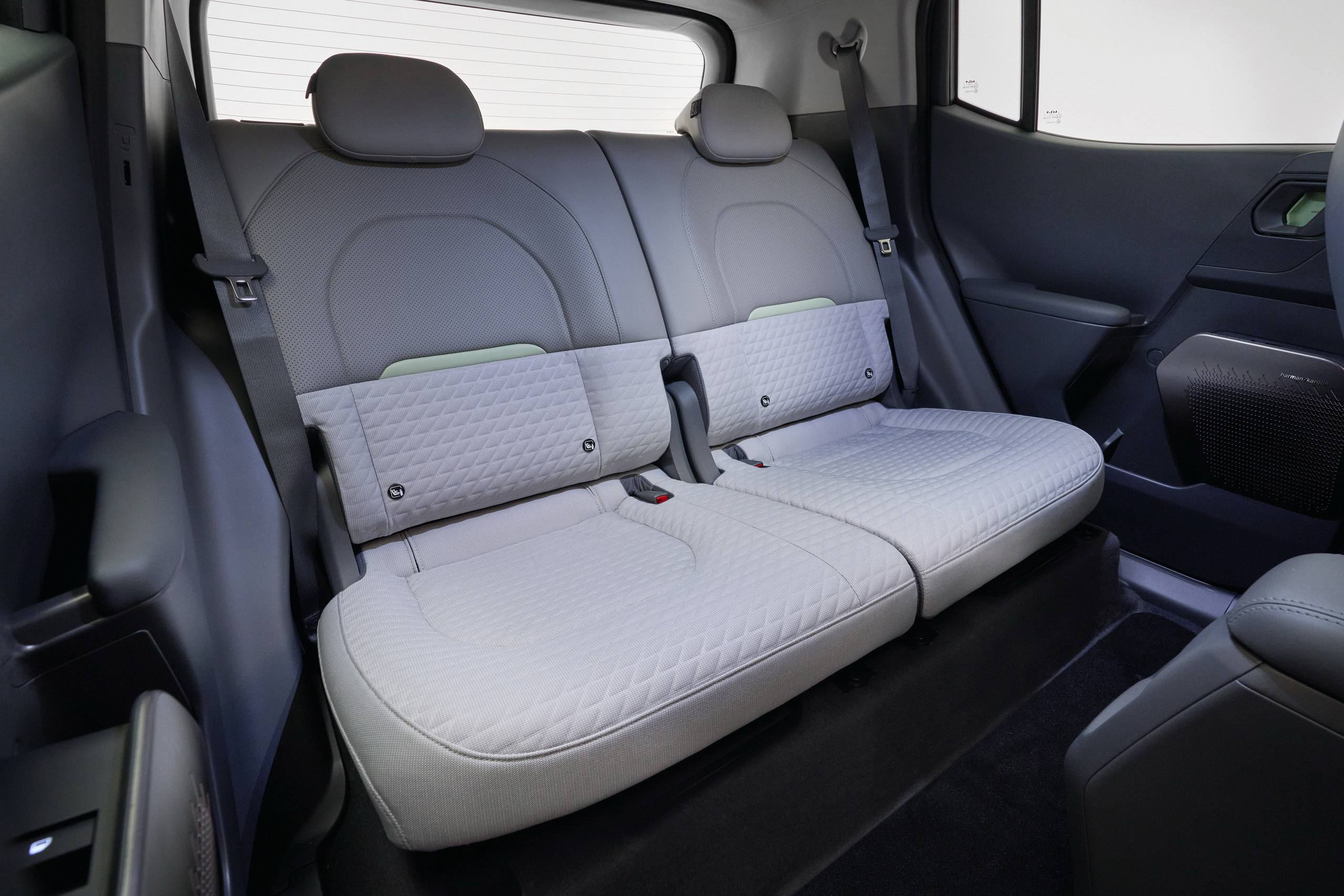
The base version is known as the Light and comes equipped with a 42.2 kWh battery pack and a single electric motor rated at 146 hp. This model has a relatively limited range of 197 miles (317 km), but that should be enough for most Europeans, particularly those living in large urban centers. Helping to further lower the cost of this version is the fact that it’s sold exclusively as a four-seater.

What Else Is On Offer?

\\\\\

Sitting above the EV2 Light is the Air, which is a five-seater. It retains the same battery and motor as the Light in standard guise, but starts at €28,990 ($33,600). Kia also sells it with a larger 61 kWh battery pack and a 135 hp motor, boosting the range to 281 miles (453 km). This version starts at €33,490 ($38,800).

Kia will also sell the EV2 in Earth and GT-Line configurations. The Earth is available as either a four-seater or five-seater with the 42.2 kWh pack and 146 hp motor, priced from €31,290 ($36,200), topping out at €31,590 ($36,600), and both with a 191-mile (308 km) driving range.

The GT-Line then starts at €36,890 ($42,700) for the five-seater with the 61 kWh pack and 135 hp motor, and tops out at €37,190 ($43,100) for the four-seater with the same powertrain. Both versions have a claimed driving range of 256 miles (413 km).

It’s not just the EV2 that the US misses out on. Kia originally intended to sell the EV4 in the United States but axed those plans late last year, likely due to concerns that it wouldn’t sell well.

\\\\\\\\\\\\\

Aircapture and Almanac Beer Co. Launch World’s First Commercial Beer Carbonated with CO? Captured From the Atmosphere with Direct Air Capture

By: newenergy
24 March 2026 at 16:11

Flow – Clean Air Edition uses 99.999% pure atmospheric CO? captured onsite by Aircapture’s Direct Air Capture system, which enables breweries to generate their own CO? and reduce reliance on unpredictable, fossil-fuel-based supply chains.   ALAMEDA, Calif., March 23, 2026 — Aircapture, a pioneer in Direct Air Capture (DAC) technology, and California craft beer brewery Almanac …

The post Aircapture and Almanac Beer Co. Launch World’s First Commercial Beer Carbonated with CO? Captured From the Atmosphere with Direct Air Capture appeared first on Alternative Energy HQ.

Yesterday — 24 March 2026Vehicles

Gasoline Engine Expands Thomas’ Future-focused Fleet Fueling Options

By: STN
23 March 2026 at 22:27

In today’s rapidly changing fleet management environment, navigating the costs and benefits of fuel types can be increasingly challenging. Evolving regulatory demands and emission standards are creating greater complexity and volatility.

That’s why Thomas is working collaboratively with districts to help them manage their unique transportation challenges by providing an array of fueling options. The launch of the Saf-T-Liner C2 Gasoline expands Thomas Built Buses’ powertrain lineup to include diesel, electric and gasoline, giving districts the flexibility to choose the solution that best fits their operational needs.

The Power of Options

For school transportation directors already managing the demands of daily operations, having the right fuel solution is essential. Thomas gives school districts greater flexibility by providing options designed to fit the fueling needs of school districts of every size and stage while supporting their existing infrastructure, budget parameters and regulatory requirements. Adding to its industry-leading diesel and electric powertrain options, Thomas’ new gasoline engine option for the Saf-T-Liner C2 school bus rounds out its full range of fuel options.

Announced at STN Expo East in Concord, N.C., the Saf-T-Liner C2 Gasoline from Thomas Built Buses features the B6.7 Octane engine produced by global power leader Cummins Inc. Its introduction supports Thomas’ commitment to empowering fleet managers with real choices designed to ensure their long-term success. This new gasoline engine option provides diesel-like durability and performance while expanding Thomas’ powertrain lineup, so it now encompasses electric, diesel and gasoline solutions. While the new gasoline option expands fuel flexibility, it also delivers operational advantages for districts seeking lower maintenance complexity.

Gasoline-powered Innovations

Designed in partnership with customers to address current school transportation needs, the gasoline-powered Saf-T-Liner C2 bus delivers key advantages in total cost and serviceability, such as better fuel economy than competitive gasoline engines and the ability to run on regular 87-octane gasoline—making it easy to refuel within existing gasoline infrastructure. The gasoline-powered C2 also delivers 2 to 3 times longer service intervals, including oil and filter changes up to 15,000 miles.

Cummins B6.7 Octane

A purpose-built, durable, turbocharged gasoline engine for medium-duty applications, the Cummins B6.7 Octane is the first of its kind in the category. With up to 2 million miles logged before production, the engine features a flat torque curve that mirrors Cummins’ trusted B6.7 diesel platform. The B6.7 Octane by Cummins will be available in the Saf-T-Liner C2 Gasoline in 220- and 260-horsepower ratings, delivering up to 600 lb-ft of torque.

In addition to robust performance, it’s designed to offer familiar drivability and smooth power at low speeds. Another feature of the gasoline-powered Saf-T-Liner C2 bus is an optional compression brake for improved vehicle control and reduced brake wear.

Built on the proven Saf-T-Liner C2 platform, the gasoline-powered model also supports technician and driver familiarity—streamlining training, simplifying maintenance routines and reducing the learning curve that can accompany new vehicle introductions. For districts with mixed fleets or those transitioning between fuel types, this consistency is a genuine operational advantage. This new gasoline-powered Cummins engine offers Thomas customers the reliable power and performance they have come to expect from its diesel counterpart, while providing an alternative that meets evolving emissions standards.

Partnering for Success

There is no single fuel solution for every district—only the right fit for each organization. By adding gasoline to its portfolio of diesel and electric options, Thomas gives fleet managers the flexibility to select the powertrain that aligns with their infrastructure, budgets and regulatory requirements. Each option is backed by the company’s time-proven reliability, durability and responsiveness to fleet operations. With its full range of powertrains, Thomas makes it easier to choose the best fueling option without compromising on safety, performance or peace of mind.

To learn more about the Saf-T-Liner C2 gasoline, visit the Thomas Built Buses website.

The views expressed are those of the content sponsor and do not reflect those of School Transportation News.

The post Gasoline Engine Expands Thomas’ Future-focused Fleet Fueling Options appeared first on School Transportation News.

This Leapmotor Packs Lamborghini Huracan Power Into A $38K Family SUV

  • The C10 AWD Sports+ delivers 590 hp from a twin-motor setup.
  • Australian pricing starts at a competitive AU$53,888 plus costs.
  • A 81.9 kWh battery offers up to 272 miles of WLTP-rated range.

The standard Leapmotor C10 is an electric SUV that could be best described as adequate. It’s not exciting or engaging to drive, but aside from a few tech gremlins, it drives quite nicely and is well priced. Now, a new version of the C10 has been launched, and it might be enough to get people excited.

Known as the Leapmotor C10 AWD Sports+ Special Edition and just introduced in Australia, the power on offer and the SUV’s price tag are simply absurd. Whereas the standard C10 has a single electric motor with 215 hp (160 kW) and 236 lb-ft (320 Nm) of torque, the AWD version has a pair of upgraded motors delivering 590 hp (440 kW) and 561 lb-ft (760 Nm).

Read: Stellantis’ Leapmotor Found An Unlikely Ally In Germany’s Tuning Scene

To put those figures into perspective, the original Lamborghini Huracan LP 610-4 had 602 hp and 413 lb-ft (560 Nm), while the rear-wheel drive only LP 580-2 was rated at 572 hp and 398 lb-ft (540 Nm). Leapmotor says its new flagship needs just 4 seconds to hit 100 km/h (62 mph), which is impressive, but perhaps a little slower than we’d expect given the horsepower and torque figures.

A Price To Stun

 This Leapmotor Packs Lamborghini Huracan Power Into A $38K Family SUV

Arguably just as impressive as the C10’s performance is the fact that it’ll start at just AU$53,888 ($37,600) plus on-road costs, or just AU$10,000 ($7,000) more than the standard model. This allows it to easily undercut the BYD Sealion 7 Performance that starts at AU$63,990 ($44,700), and even undercuts less powerful, rear-wheel drive versions of the Tesla Model Y (AU$58,900 / $41,100) and Zeekr 7X (AU$57,600 / $40,200).

Complementing the more powerful motors is a larger 81.9 kWh LFP battery that provides the oddly-named C10 AWD Sports+ Special Edition with up to 272 miles (437 km) of WLTP range. It supports DC charging speeds of up to 180 kW, meaning the battery can charge from 30-80 percent in 22 minutes, which is below par in this segment despite the C10 having an 800-volt architecture.

Leapmotor has failed to mention if any upgrades have been made to the C10’s suspension or braking systems to cope with almost triple the power of the standard model.

\\\\

Nearly 1 In 15 Wagoneer S EVs Have A Part That Can Fall Off

  • Nearly 12,000 Wagoneer S SUVs from 2024 to 2026 are recalled.
  • The liftgate hinge cover may not clip in and could fall off.
  • Jeep is aware of 17 warranty claims related to the fault in the US.

Nearly 12,000 examples of Jeep’s all-electric Wagoneer S are being recalled in the United States, highlighting a quality lapse that arguably should have been caught earlier. Now, owners will need to visit a dealership to have their vehicles inspected and the faulty component repaired or replaced.

A recall notice issued by the NHTSA states that 2024–2026 Wagoneer S models may have been built with a liftgate hinge cover that lacks sufficient design tolerances. Stellantis explains that in some cases, the rear liftgate hinge cover may not clip securely into place and could detach from the vehicle, creating a potential road hazard.

Owners might get an early warning. The company notes that occupants could hear a rattling noise or notice that one or both hinge covers aren’t sitting flush.

Review: The 2026 Jeep Wagoneer S Is Fast, Comfortable, And Wearing The Wrong Badge

FCA’s Technical Safety and Regulatory Compliance team opened an investigation on January 8. Over the next five weeks, it worked with FCA US Engineering and Manufacturing to review production data and design revisions tied to the hinge cover, focusing on pinpointing the root cause of the issue.

Warranty Claims Start Piling Up

\\\\\\\\

Jeep says that as of February 18, it had logged two customer assistance cases, 17 warranty claims, and 32 field reports potentially tied to the issue. In total, 11,767 vehicles are being recalled, all built between March 21, 2024, and July 24, 2025. The automaker estimates that 6.7 percent of them may actually have the defect in question.

The problematic component comes from Magna International, with owner notifications set to go out starting May 1. Dealers have been told to inspect the hinge cover and, if needed, repair or replace it with an updated version that stays put.

This isn’t the only recall recently issued by Jeep in the US. In February, more than 80,000 Grand Cherokees were called in for repairs because the rear coil springs may have been installed incorrectly as part of a previous recall. In this case, Jeep revealed the spring could detach from the vehicle entirely, presenting a serious safety risk.

\\\\
❌
❌