Normal view

There are new articles available, click to refresh the page.
Today — 5 May 2026Vehicles

If You Ever Dreamed Of A Cheap Bugatti Sedan, China Has You Covered

  • Dreame’s new crossover-sedan could launch through its Star Motor brand.
  • Star Motor’s latest concept sedan borrows heavily from luxury icons.
  • Images show it sporting Rolls-Royce-style suicide doors with no B-pillar.

Just a few months ago, Dreame was a virtual unknown in the West, having primarily cut its teeth in China’s consumer electronics industry, making a name for itself with vacuum cleaners. The company has since pivoted hard into the automotive space, spinning up three separate car brands called Nebula Next, Kosmera, and Star Motors, each with its own stream of concepts. This is its latest creation.

The car appears to wear the badge of Star Motor, one of Dreame’s three new automotive sub-brands. It was introduced back in February with the T08 and T08L, a pair of boxy off-roaders that looked like carbon copies of Dongfeng’s M817 and M917. The brand also showed the D09, a luxury SUV that lifted heavily from the Rolls-Royce Cullinan playbook.

Read: The Chinese Vacuum Brand That Built A 1,973-HP Sedan Just Showed Up At Berkeley With It

As for this latest concept, it was present at the recent Beijing Auto Show and may make a return appearance at the Chengdu Auto Show in September in more production-ready form. Dreame has shown a penchant for taking inspiration from other brands’ designs, and this sedan appears no different. If the Bugatti Chiron and Ferrari Purosangue had a baby, it would look a lot like this.

\\

TychodeFeijter/X

The front of the crossover-style sedan features a massive grille that recalls the Kosmera concept Dreame trotted out at CES back in January, only scaled up and turned more aggressive. It also sports wide, gaping air intakes and a set of sharp LED headlights.

The standout feature in profile is the set of Rolls-Royce-style rear suicide doors, though Star Motor has pushed the idea further than Goodwood does. Where the Phantom retains a structural B-pillar between the front and rear doors, this Dreame concept deletes it entirely, leaving one uninterrupted opening when both doors swing wide. Recent spy shots show the upcoming Genesis GV90 adopting the same pillarless layout.

\\

Photos of the rear haven’t surfaced yet, but the C-shaped element wrapping the rear side windows and rear doors definitely looks reminiscent of the signature C-line used by Bugatti.

No details have emerged on the powertrain, assuming there’s even a working one under the sheetmetal, but in all likelihood, it will follow the lead of Dreame’s other concepts and run on pure electric power.

Whether any of these showcars will actually reach production remains anyone’s guess. Dreame has so far traded entirely in show cars and renderings.

\\\\\\\\\\\\\

Dreame Nebula Next Jet Concept

EV6 Sales Tumbled Nearly 38%, Kia’s 2026 Pricing Tells The Rest

  • Kia has slashed pricing for the 2026 EV6.
  • It now starts at $37,900 for a $5,000 savings.
  • Higher-end trims see discounts of up to $5,900.

Through the first four months of the year, Kia EV6 sales have tumbled 37.4% to 2,751 units. That’s a steep decline and it can likely be attributed to the elimination of the federal electric vehicle tax credit.

Kia is now trying to shore up sales by announcing a steep price cut for 2026. Kicking things off is the EV6 Light Standard Range, which begins at $37,900 before a $1,545 destination fee. That’s a savings of $5,000 compared to the 2025 model.

Review: The Kia EV6 GT-Line Still Feels Great, Yet Something’s Missing

The EV6 Light Long Range also sees a $5,000 price cut, while the all-wheel drive variant gets marked down $5,100. The Wind trim benefits from a $5,500 reduction across the board as pricing now begins at $44,800.

\\\\\\\\

Last but not least, the GT-Line will set you back $48,700. That’s $5,500 less than last year’s model, while the AWD variant offers a savings of $5,900.

Kia didn’t mention the EV6 GT, but the automaker stopped importing the high-performance variant earlier this year “due to changing market conditions.”

Minor Model Year Updates

Besides lower prices, the 2026 EV6 now comes with a standard dual level charging cable. Buyers in ZEV states also get a free DC fast-charger adapter. Speaking of charging, the model now sports a plug and charge capability, which allows for automatic billing at compatible chargers via Kia Charge Pass.

\\\\\\

Additional changes are limited, but the EV6 Light Long Range drops the Tech Package to “reduce complexity.” Buyers will also find an updated color palette inside and out.   

As a refresher, the EV6 offers 63 and 84 kWh battery packs as well as ranges of between 237 miles (381 km) and 319 miles (513 km). Buyers will also find outputs of 167 hp (125 kW / 169 PS), 225 hp (168 kW / 228 PS), and 320 hp (239 kW / 324 PS).

2026 Kia EV6 Pricing
TrimMSRP
EV6 Light SR RWD$37,900
EV6 Light LR RWD$41,200
EV6 Light LR AWD$45,200
EV6 Wind RWD$44,800
EV6 Wind AWD  $48,800
GT-Line RWD$48,700
GT-Line AWD$53,000
SWIPE

Prices exclude a $1,545 destination fee

The Epiq Is Skoda’s Cheapest EV, But Its Cabin Wants You To Forget That

  • Skoda has teased the interior of the fully electric Epiq crossover.
  • It sports a 5.3-inch digital instrument cluster and 13-inch display.
  • The affordable model debuts May 19 and will have three powertrains.

Skoda has teased the interior of the all-new Epiq and revealed the crossover will be unveiled on May 19. Billed as the “first series-production model to fully implement all aspects of the Modern Solid design language,” the cabin embraces a horizontal architecture as well as a minimalistic aesthetic. While few details were shared, we can see a tiered dashboard with an upholstered lower section as well as rectangular air vents.

More: Skoda’s Smallest EV Has One Big-Car Surprise

Drivers sit behind a two-spoke steering wheel and find themselves looking at a hexagonal 5.3-inch digital instrument cluster. It’s joined by a freestanding infotainment system that spans 13 inches.

Beneath the large screen is slender air vents and a row of “haptic shortcuts,” which resemble buttons. The model also sports an open storage compartment, which has a wireless smartphone charger in the center.

\\\\

Rounding out the highlights are a slender center console and an ambient lighting system, which creates a “welcoming, cozy atmosphere.” Skoda also noted the model will incorporate sustainable materials including “100% recycled PES for the seat textiles.”

The cargo compartment holds 16.8 cubic feet (475 liters) of luggage, but that can be expanded to 47.5 cubic feet (1,344 liters) by folding the rear seats down.

Three Powertrains And Up To 267 Miles Of Range

\\\\\\\\

Like the Cupra Raval and Volkswagen ID. Polo, the model rides on the MEB+ platform. The entry-level Epiq 35 has a 38.5 kWh battery pack that feeds a front-mounted motor developing 114 hp (85 kW / 116 PS) and 197 lb-ft (267 Nm) of torque. It enables the crossover to accelerate from 0-62 mph (0-100 km/h) in a leisurely 11 seconds and have a range of 196 miles (315 km).

The mid-level Epiq 40 has the same LFP battery and range as the 35, but sports a more powerful motor developing 133 hp (99 kW / 135 PS) and 197 lb-ft (267 Nm) of torque. Thanks to the extra oomph, the dash to 62 mph (100 km/h) falls to 9.8 seconds.

The range-topping Epiq 55 is notable for featuring a larger 55 kWh NMC battery pack as well as a beefier motor producing 208 hp (155 kW / 211 PS) and 214 lb-ft (290 Nm) of torque. 62 mph (100 km/h) comes in 7.4 seconds, while the top speed of 99 mph (160 km/h) is 6 mph (10 km/h) faster than the other variants. Drivers can also expect to travel up to 267 miles (430 km) between charges.

Production will be handled in Spain, and Skoda has previously indicated pricing will open around €26,000 ($30,400), or about the same as its Kamiq gasoline equivalent.

\\\\\\\\\

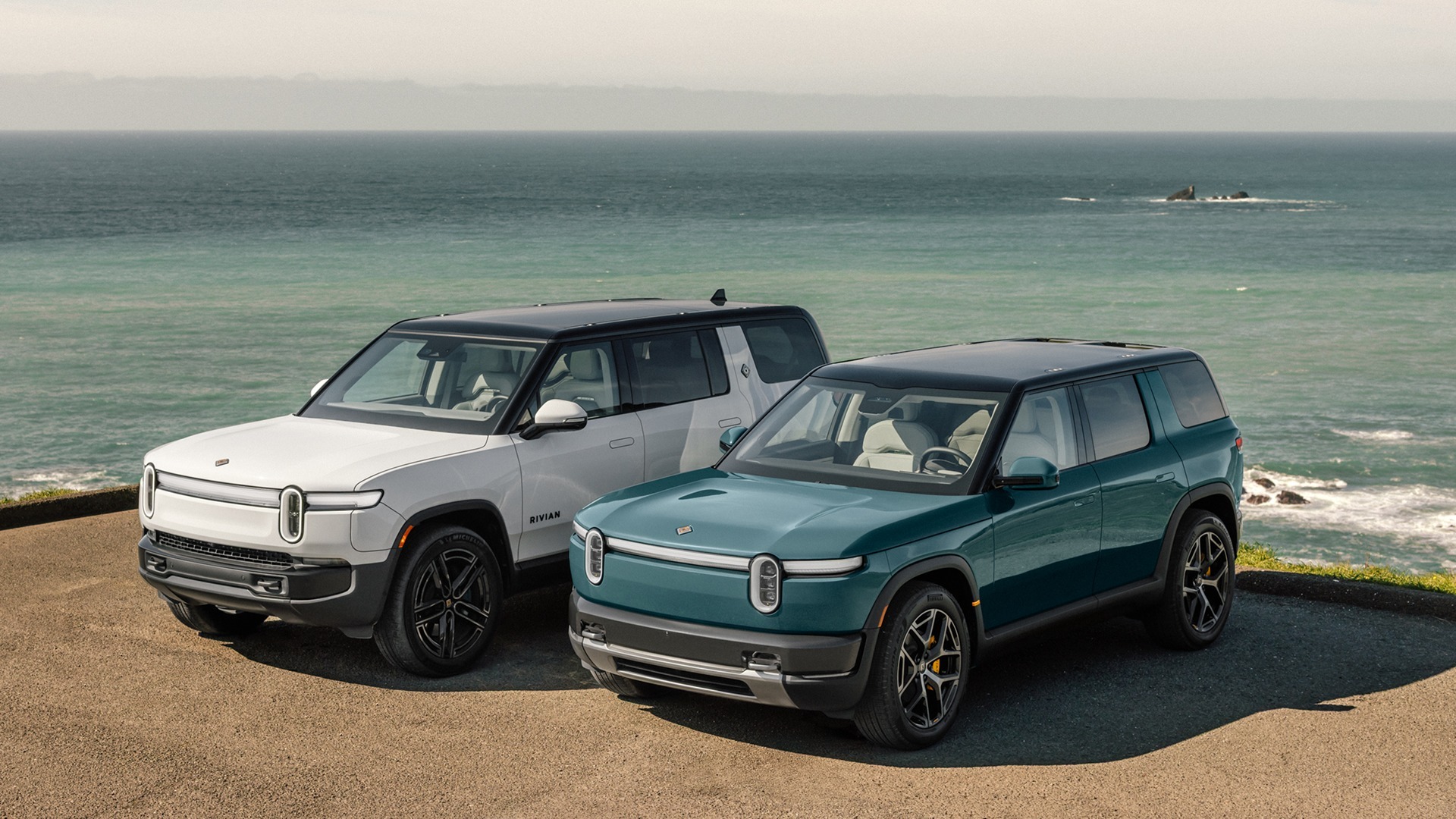
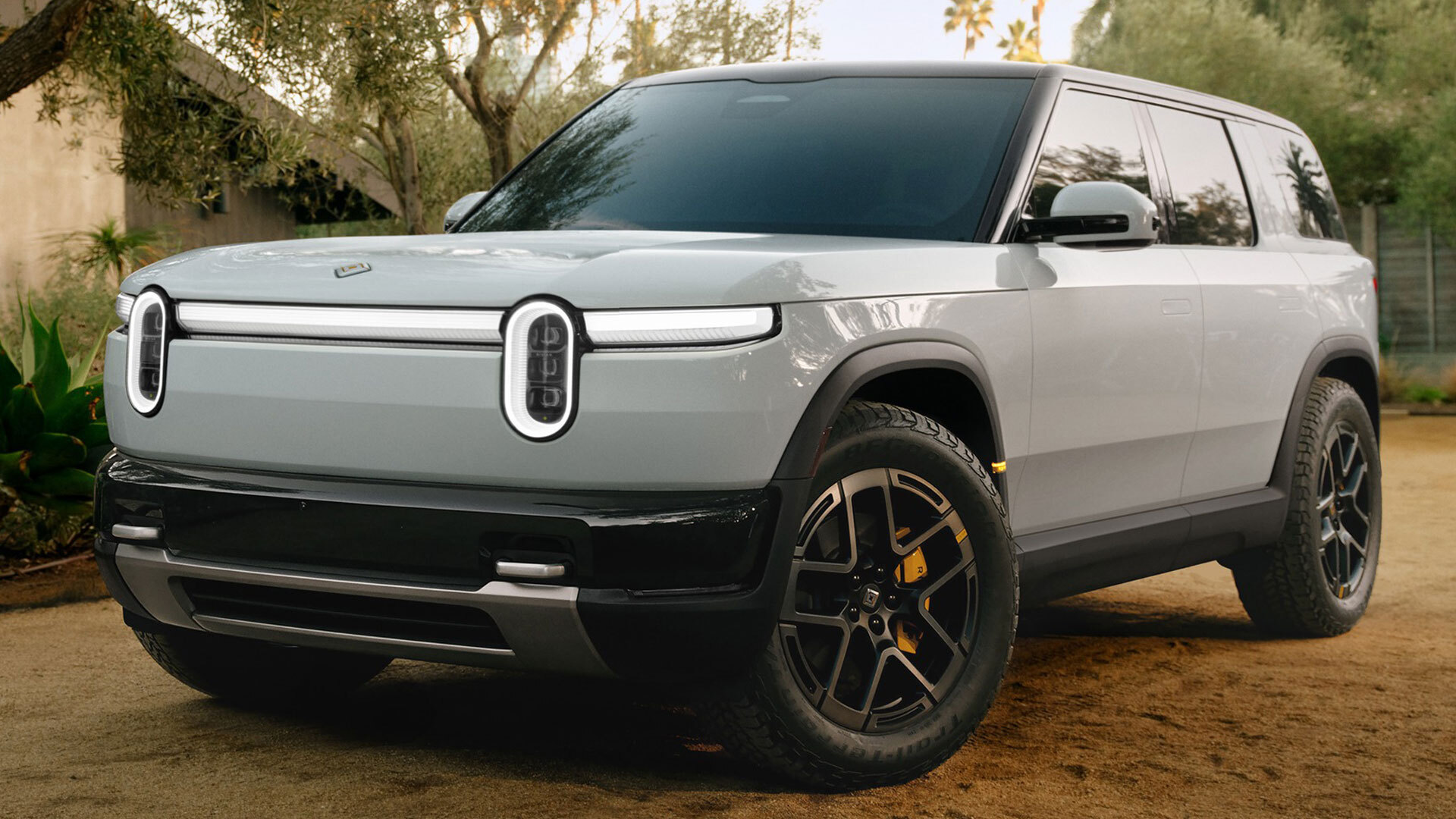
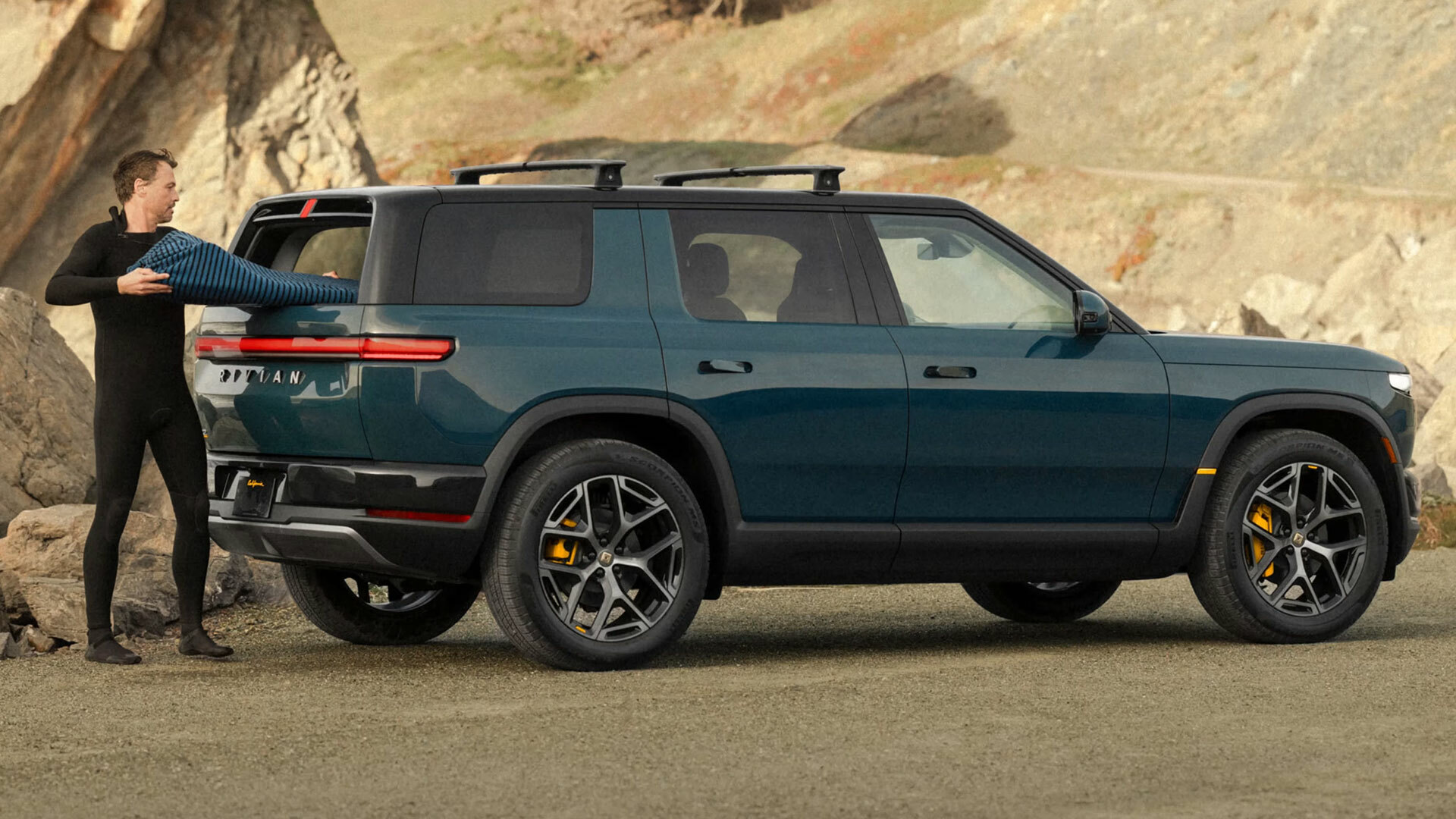
Rivian Built The R2 For Half What An R1 Costs To Make, And It’s Not The Battery

  • Rivian says the R2 costs about 50% less to build than the R1 lineup.
  • Simplified design cuts parts count dramatically across key systems.
  • R2’s smaller footprint and higher volume targets also reduce cost.

Rivian broke the mold by bringing the R1T, an electric pickup truck, to market before anyone else. Now, it’s trying to gain a far more stable foothold in the industry with its all-new R2. A new report sheds light on how Rivian cut costs but evidently not quality in this new SUV. According to the brand, it costs around half as much to build as the R1S despite keeping the performance and utility that fans love.

At the core of the R2’s cost-cutting approach is ruthless simplification. Rivian says its new zonal electrical architecture slashes wiring complexity, trimming 2.3 miles of harness length and reducing connectors by 60%. High-voltage cabling is down 70% thanks to consolidating multiple power modules into a single unit.

The same philosophy carries over to the powertrain. Rivian’s new “Maximus” drive unit uses 41% fewer parts than the Enduro units found in the R1 lineup. By integrating the inverter directly into the drive unit and even using its housing as a mounting structure, Rivian cuts both material cost and assembly time.

Read: Rivian Lost $416 Million Last Quarter And Just Bet Bigger On Georgia

According to InsideEVs, even the sensors got a rethink. Swapping ultrasonic sensors for corner radars yields a claimed 50% cost reduction, a move that reflects a broader trend toward fewer, more capable components. In theory, that could help Rivian reduce repair costs, a known concern for the brand.

 Rivian Built The R2 For Half What An R1 Costs To Make, And It’s Not The Battery

The front suspension ditches the more complex double-wishbone setup used in the R1 for a simpler MacPherson strut design, cutting costs by 70%. Large die-cast sections reduce underbody part count by 90%, while rear doors shed 65% of their complexity.

There’s also a less glamorous but equally important factor: scale. When Rivian launched the R1T and R1S, it was a newcomer building expensive, low-volume vehicles. Now, with higher production targets in sight, it can negotiate better supplier pricing.

Something as basic as a windshield reportedly costs half as much on the R2 compared to the R1. Add in the fact that the R2 is simply smaller, and therefore uses fewer raw materials, and the math starts to make sense. At this point, all that’s left is to see how Rivian executes on production and sales.

 Rivian Built The R2 For Half What An R1 Costs To Make, And It’s Not The Battery

A 1,000 HP Electric M3 And A 552 HP Gas M3 Will Have The Same Price Tag

  • BMW plans EV and ICE M3 pricing parity despite massive performance gap.
  • Electric version could hit 800-1,000 hp, gas model will make less than 600.
  • Manual gearbox and RWD options may disappear from combustion M3.

BMW is about to do something unusual with its most famous sports sedan. When the next-generation M3 arrives, buyers will get two very different machines wearing essentially the same badge and, crucially, roughly the same price.

According to a new report, BMW intends to sell the electric and combustion M3 side by side in the same price bracket. That might sound straightforward, but it gets interesting once you look at what each version actually delivers.

Related: BMW’s Electric M3 Tries To Simulate Everything It Just Replaced

The electric M3 could deliver close to 1,000 hp (1,014 PS) from its quad-motor setup, though base models are likely to deliver 700-800 hp (710-811 PS) at launch. Meanwhile, the combustion model will stick with an evolved twin-turbo straight-six boosted by mild hybrid tech to somewhere around 552 hp (560 PS).

Visually, the two cars won’t stray far from each other either. BMW wants them to feel like siblings, not alternatives from different worlds. Expect shared design cues inspired by the Neue Klasse look, even though they’re based on entirely different platforms, the combustion car sticking with an updated version of today’s M3’s CLAR platform.

Panoramic iDrive

Inside, both should follow the same minimalist, screen-heavy direction. That means fewer physical buttons and a more digital-first cabin, incorporating BMW’s Panoramic iDrive tech, which may divide opinion just as much as the powertrain choices.

Combustion M3
\\\\\\\\\\\\

Sylvia Neubauer, BMW M’s sales boss, is adamant that both cars will deliver what buyers expect. “It’s not only about acceleration and power, it’s about drivability, manoeuvrability and that level of trust and connection between the driver, car and road,” she told Autocar.

She also made it clear BMW knows not everyone will jump ship to electric overnight. “Obviously we will not convince 100 percent out of the petrolhead target group to buy an all electric BMW M3,” she admitted. “But out of 100 people that try it, we will be able to convince some.”

That explains why the combustion version isn’t going anywhere just yet, though some elements of it might be. Reports suggest the manual gearbox option, currently only available on the non-Competition version of the M3, might be retired. If that happens, even the petrol M3 edges further away from its analog roots.

Electric M3
\\\\\\\\\\\\\

Lead image BMW

Lotus Wants $189K For Its 905-HP Taycan Rival, UK Dealers Will Take $121K

  • UK Lotus dealers have slashed the prices of new all-electric Taycan rival.
  • One dealer’s unregistered EV has been priced down from £140k to £90k.
  • Lotus will launch hybrid versions of Emeya and Eletra to fight slow sales.

Around the world carmakers are u-turning on their plans to go big – or even all-in – on EVs, and Lotus is no different. The Geely-owned brand is developing hybrid versions of its Emeya sedan and Eletre SUV, but until they arrive, dealers have to focus on finding homes for the electric versions. And they’re offering huge discounts.

The UK’s Autotrader website currently has 15 brand new, unregistered examples of Lotus’s Porsche Taycan rival up for sale at prices that’ll bring tears to the eyes of anyone who paid full price for one of the EVs when they first became available in 2024.

Related: The Rarest Emira Coming To America Has A Name From The Dark Side

Most of the really crazy deals are on the flagship Emeya R, whose 905 hp (918 PS / 675 kW) bi-motor setup gets the emissions-free sedan to 62 mph (100 km/h) in less than 2.8 seconds. The biggest saving we could find was on a Kaimi Grey car at Endeavour Lotus West London. Originally priced at £140,105 ($189,330), it’s now up for £89,950 ($121,550). That’s a 40 percent (£50,155 /$67,900) haircut.

Not far away in Hatfield, another dealer has two new Rs price well below list, one of them promising a £43,755 ($59,130) saving. And a couple of hours away to the north east of the capital, Endeavour Lotus Colchester has a cut the price of another four Emeya Rs by similar amounts.

New Car, But An Old Badge

Technically, the R is an obsolete model, Lotus having now switched up its base, S, R grade structure for 600 and 900 names that reference the power outputs. But the powertrains themselves are carried over unchanged, so these heavily discounted Rs we’ve found look great value next to a new £129,990 ($175,660) 900 Sport or £139,990 ($189,180) 900 Carbon.

 Lotus Wants $189K For Its 905-HP Taycan Rival, UK Dealers Will Take $121K

And if you’re determined to have your Emeya in the current trim, dealers are offering some healthy savings on those too, including £15,000 ($20,300) off a brand new 603 hp (612 PS / 450 kW) Emeya 600 GT, which should cost £95,000 ($128,400) with options.

Hybrids This Year

Lotus is working on a hybrid Emeya, which is expected to match the spec of the bizarrely-named Lotus For Me, the new Chinese-market petrol-electric version of Lotus’s new Eletre SUV. Combining a 2.0-liter combustion engine, twin-motor 900-volt electrical system and a 70 kWh battery, the Eletre hybrid makes 939 hp (952 PS / 700 kW), and should arrive in Western markets – minus the silly name – this year. the Emeya hybrid shouldn’t ber far behind.

Would these big savings tempt you into an Emeya, would you rather wait for the hybrid, or skip the Anglo-Chinese Taycan rival altogether?

\\\\\\\\\\\\\\\\\\\\\

Endeavour Lotus/Autotrader UK

State of Sustainable Fleets: As Freight Economy Recession Enters Third Year, Powertrain and Energy Diversification Defines Fleet Resilience Strategy

By: STN
4 May 2026 at 19:38

LAS VEGAS, Nev. — Now in its seventh year, the State of Sustainable Fleets 2026 Market Brief, released today, delivers a comprehensive, technology-neutral assessment of an industry building resilience through powertrain and fuel diversification amid an extended period of uncertainty. The Market Brief was unveiled at ACT Expo in Las Vegas, Nevada — North America’s largest fleet technology conference and expo, now in its 16th year. It was authored by TRC Companies, a WSP member company and leading construction, engineering, and consulting firm.

The Market Brief arrives as commercial fleets face a convergence of pressures that industry analysts are calling the most complex operating environment in modern trucking history. A prolonged freight recession now in its third consecutive year has been compounded by sweeping federal policy reversals, tariff-driven cost increases of up to $35,000 per new truck, and geopolitical volatility affecting global supply chains and energy markets. The rollback of federal greenhouse gas (GHG) vehicle standards, the expiration of zero-emission vehicle (ZEV) tax credits worth up to $40,000 per eligible medium- and heavy-duty (MD/HD) vehicle, the cancellation of federal clean transportation funding, and the nullification of California’s clean truck regulations have restructured the policy landscape from a federally driven system to a decentralized patchwork of state policies and market-driven factors.

Yet across all this disruption, the data reveals a picture of an industry in structural adaptation rather than retreat. TRC estimates that more than $5 billion in state, local, and utility program funding remains available annually through 2028 supporting clean fleet investment. Fleet technology markets are maturing across nearly every fuel and drivetrain type. Artificial intelligence has moved from pilot projects to mainstream fleet operations. And the central strategic finding of this year’s Market Brief is clear: fleets managing total cost of ownership (TCO) across a portfolio of powertrain technologies  rather than concentrating on a single solution or waiting out the uncertainty are demonstrating measurably greater resilience. In a freight economy where external shocks can rapidly change the economics of any single technology, including conventional diesel, powertrain diversification has become both a financial strategy and a risk management imperative.

Penske Transportation Solutions and Volvo Trucks North America serve as title sponsors of the 2026 State of Sustainable Fleets Market Brief. Exelon Companies and S&P Global Mobility serve as supporting sponsors. Each sponsor contributes expertise and data that enhances credibility of the findings.

The 2026 Market Brief identifies key findings shaping the sustainable fleets landscape:

Artificial Intelligence and Autonomous Trucking: From Pilot Projects to Commercial Operations

AI-powered fleet management has moved from experimentation to mainstream operations: approximately half of fleets in the annual survey report using AI for route optimization, dispatching, predictive maintenance, and maintenance diagnostics with users reporting measurable cost savings, greater vehicle uptime, and improved fleet utilization.

Fleet AI adoption is expected to accelerate rapidly: survey respondents project that 35% of their fleets will be AI-enabled by 2027, nearly doubling from an estimated 20% across the fleet in 2025. Among respondents, 49% reported that none of their fleet had been AI-enabled as of 2025, signaling a significant near-term adoption runway.

Autonomous freight is advancing from Sun Belt pilots to commercial-scale operations: driverless light-duty vehicles have logged millions of miles, and HD autonomous trucks entered commercial freight service in 2025. Broader heavy-duty rollouts across more routes and regions are expected by end of 2026.

Policy and Funding: Federal Cuts Reshape the Landscape; States, Markets, and New Biofuel Mandates Take the Lead

Federal clean transportation funding has been substantially reduced: zero-emission tax credits of up to $40,000 for eligible MD/HD vehicles expired; DOE’s Vehicle Technologies Office budget was cut approximately 90%; $2.2 billion in hydrogen R&D funding was rescinded, including so-called “Hydrogen Hubs”; and the DOT’s National Electric Vehicle Infrastructure (NEVI) program was suspended for six months.

Despite federal cuts, available funding for clean fleet projects remains well above pre-2022 levels: more than $5 billion in state, local, and utility programs is estimated annually through 2028. California maintained over $1 billion in active grant funding for on-road trucks and buses in 2025. Low-carbon fuel standards (LCFS) in California, Oregon, Washington, and New Mexico continue generating meaningful revenue streams supporting multiple clean technology pathways.

The EPA finalized record-high Renewable Fuel Standard (RFS) volume obligations for 2026 and 2027 in April 2026, requiring approximately a 60% increase in biodiesel and renewable diesel production and use compared to 2025 levels — a major structural tailwind for renewable fuel adoption. Regulatory responsibility for GHG and criteria pollutant standards is also increasingly shifting to the state level, though significant questions remain for fleets and their partners.

Diesel Vehicles: Efficiency Gains and Drop-In Renewable Fuels Displace Conventional Diesel at Scale

New Class 8 tractor registrations declined 16% in 2025 according to S&P Global Mobility data amid the prolonged freight recession, tariff-driven cost increases, and economic uncertainty. Fleets and OEMs have focused on diesel fuel efficiency: more than one-third of survey respondents reported using efficiency technologies, with leading heavy-duty adopters in the logistics sector achieving 8.5+ mpg and best-in-class operations demonstrating 11.5 mpg or higher.

Renewable diesel (RD) and biodiesel (BD) drop-in fuels that work in existing diesel engines and infrastructure are displacing conventional diesel at scale: the two fuels combined to replace 74% of conventional diesel used in California transportation in 2024 and 71% in the first three quarters of 2025. More than half of annual fleet survey respondents now report using RD or BD, with near-100% B99 biodiesel adoption expanding in 2025.

The EPA’s Clean Trucks Plan establishing MY 2027 NOx and particulate matter (PM) standards for MD/HD vehicles remains on track, with incremental per-vehicle costs expected to range from $8,000 to $18,000. Final warranty and useful-life provisions are still pending.

Natural Gas Vehicles: 15-Liter Engine Delivers Diesel-Equivalent Performance; RNG Enables Carbon-Negative Fleet Operations

The Cummins X15N 15-liter natural gas engine completed its first full year of commercial availability in 2025 and delivered diesel-equivalent performance, range, and payload capacity alongside compelling fuel cost savings. The U.S. leads the world in commercial use of compressed natural gas (CNG) and liquefied natural gas (LNG) for trucking — a competitive advantage built on years of fleet adoption and infrastructure investment that no other market has matched.

Total MD/HD natural gas vehicle (NGV) registrations fell 15% in 2025, driven in part by the freight recession and the fleet transition period as the market shifted to 15-liter platform deliveries. Straight trucks comprised 82% of 2025 NGV registrations, followed by transit buses (10%) and tractor trucks (7%) according to S&P Global Mobility data.

Renewable natural gas (RNG) sourced from organic waste enables carbon-negative fleet operations and continues to grow: RNG accounted for 97% of all natural gas fuel used in California transportation in 2025. Among NGV-using fleets in the survey, 65% report RNG use, which they estimate accounts for 78% of their total fueling volume.

Propane Vehicles: Cost Savings Drive Steady Growth; New Role as EV Charging Power Source Expands Market

The propane vehicle fleet grew 3.1% in 2025, with school bus and upfitter markets continuing as key adoption sectors. The fuel delivered operational cost savings for 39% of propane fleet operators compared to the vehicles they replaced, reinforcing propane’s role as a cost-effective, practical option in a diversified powertrain portfolio.

Renewable propane use surged: 32% of propane-using fleets reported using it in 2025, up from just 10% in 2023 — a nearly threefold increase that reflects fleet demand for low-carbon, drop-in fuel options requiring no vehicle modifications.

Propane is expanding into a new application as a power source for EV charging infrastructure, offering fleets an alternative to or temporary solution while awaiting utility grid connections with installation cost savings of up to 75% — a development that may accelerate BEV adoption in segments where grid access and utility timelines have been barriers to uptake at scale.

Battery-Electric Vehicles: MD Registrations Set Records as Cost Benefits Demonstrated; HD Vehicles Show Signs of 2026 Growth

MD/HD BEV registrations increased in 2025, led by pickup trucks and delivery vans that set a new record in the MD segment. Fleets operating MD BEVs and HD yard electric tractors reported total cost of ownership benefits compared to the vehicles they replaced, confirming that fleet electrification is delivering financial returns in duty cycles where range and infrastructure align.

Global market signals point to long-term BEV competitiveness in heavy-duty applications: BEVs now represent 22% of China’s HD truck market, and battery costs in that market have fallen to $90/kWh — a level widely cited as cost-competitive with conventional powertrains. Battery costs have fallen below $100/kWh in some markets, a leading indicator for future U.S. fleet economics.

Near-term U.S. growth faces headwinds from the expiration of EV tax credits and manufacturer production pivots. However, data from a California funding program and other signals show that Class 8 truck deployments should exceed the 1,000 annual deployments mark for the first time.

Hydrogen Vehicles: Funding Cuts Cloud Long-Term Outlook; Duty-Cycle Fit for Long-Haul and Heavy Payloads Remains Promising

The hydrogen vehicle sector faced its most challenging year in 2025: hydrogen fuel cell electric vehicle registrations dropped 12%, the cancellation of much of the Hydrogen Hub funding removed a critical development resource, and two prominent Class 8 FCEV manufacturers exited the market.

Despite these setbacks, Hyundai, Toyota, Honda, and Cummins continue advancing fuel cell modules and vehicle programs. Real-world fleet operations continue to confirm hydrogen’s operational fit for long-haul, heavy-payload duty cycles where truck weight and range constraints are most acute, with some deployments achieving 400+ miles per day with faster refueling times than EVs.

Long-term hydrogen sector viability for heavy-duty transportation is expected to depend on sustained federal investment in research, development, and fueling infrastructure that private capital alone will not provide at scale. Coordinated government investment remains the defining variable for hydrogen’s commercial future in freight.

“This year’s Market Brief accurately captures the continuing use of AI in fleet technology and how it allows for fleets to drive enhanced fleet and MPG performance and ultimately sustainability.”

— Paul Rosa, Senior Vice President Procurement and Fleet Planning, Penske Truck Leasing

“Volvo Trucks has been clear and consistent in our commitment towards zero emissions,” said Peter Voorhoeve, president, Volvo Trucks North America. “We continue to invest across a broad range of technologies because we believe meaningful progress requires more than a single solution. By investing in multiple solutions, we’re giving fleets the confidence that they can reduce emissions with the solution that makes the most sense for their business.”

— Peter Voorhoeve, president, Volvo Trucks North America

“In a very short time we’ve moved from ‘what’s the best AI-enabled drivetrain’ to ‘how do I utilize each where it works best’ to manage cost and uncertainty. Adoption of multiple advanced, clean technologies for medium- and heavy-duty fleets has emerged as the defining strategy instead of the retreat that many had predicted.”

— Nate Springer, Vice President, Market Development, TRC Companies

To access the full 2026 Market Brief and receive ongoing updates and analysis from State of Sustainable Fleets, visit www.StateofSustainableFleets.com.

About State of Sustainable Fleets
The State of Sustainable Fleets Market Brief is the foremost authority on sustainable technology adoption within America’s on-road fleets. This annual analysis compiles real-world data from early adopter fleets nationwide, offering sector-specific insights into the uptake of battery-electric vehicles, natural gas, propane, and hydrogen fuel cell electric vehicles, alongside renewable fuels, benchmarked against diesel and gasoline vehicles. The annual Market Brief provides essential data and analysis for year-round education on the rapidly developing market via regular webinars, Academy webinar series, fleet guides, and trend briefs. State of Sustainable Fleets is authored by the Clean Transportation Solutions group of TRC Companies.

About Penske Transportation Solutions
Penske Transportation Solutions is the universal brand for Penske Truck Leasing, Penske Logistics, Epes Transport Systems, Penske Vehicle Services, and related businesses. Our businesses provide innovative transportation, supply chain, and technology solutions to keep the world moving forward. Visit GoPenske.com to learn more.

About Volvo Trucks North America
Volvo Trucks North America, headquartered in Greensboro, North Carolina, is one of the leading heavy-duty truck manufacturers in North America. Its Uptime Services commitment is delivered by a network of nearly 400 authorized dealers across North America and the 24/7 Volvo Trucks Uptime Center. Every Volvo truck is assembled in the Volvo Trucks New River Valley manufacturing facility in Dublin, Virginia. Volvo Trucks North America provides complete transport solutions for its customers, offering a full range of diesel, alternative-fuel, and all-electric vehicles, and is part of the Volvo Trucks global organization.

About ACT Expo
ACT Expo is North America’s largest fleet technology conference and expo, bringing together more than 12,000 fleet operators, OEMs, shippers, technology providers, infrastructure developers, energy companies, and policymakers for four days of peer-to-peer education, real-world case studies, and direct

access to the solutions shaping the industry. Now in its 16th year, ACT Expo 2026 takes place May 4–7 at the Las Vegas Convention Center. The 2026 program expands on ACT Expo’s long-standing leadership in clean transportation with increased focus on the digital frontier, including AI, autonomy, connectivity, and software-defined vehicles. More than 500 exhibitors will showcase the advanced vehicles, charging and fueling solutions, equipment, software platforms, and digital tools redefining commercial transportation. For more information, visit www.actexpo.com.

The post State of Sustainable Fleets: As Freight Economy Recession Enters Third Year, Powertrain and Energy Diversification Defines Fleet Resilience Strategy appeared first on School Transportation News.

The Importance of Uniformity

Millions of illegal passing violations occur across the U.S. each year. While the instances are universal, the rules governing them are not. Pupil transportation experts
noted in March at STN EXPO East in North Carolina that inconsistency is part of the problem. Uniform standards could be key to saving lives.

“People just don’t know what to do,” said Derek Graham, a retired state director with the North Carolina Department of Public Instruction and current industry consultant, during the March 29 session Illegal Passing NHTSA’s Latest Research Results.

At the center of the issue is the “loading zone triangle,” where the school bus, students and motorists intersect. When communication breaks down at any of those points, the consequences can be severe.

“Everything has to go wrong in order for a kid to get really hurt in this loading zone triangle,” Graham said. “But there’s a lot that has to go right.”

Students being injured in the Danger Zone—the 10-foot radius around stopped school buses—is often preventable, that is if education and expectations are aligned. However, the challenge of inconsistency remains.

School bus passing laws vary by state, and even by roadway type within states. All jurisdictions require a motorist to stop while overtaking from behind a stopped
school bus, regardless of road type. But 42 jurisdictions require a motorist to stop when approaching an on-coming, stopped school bus on undivided roadways, and only 12 require motorists to stop in “certain situations.” The most common (10 out of 12) being on an undivided roadway with fewer than four lanes.

Utah requires motorists to stop on undivided roadways of fewer than five lanes and Washington state only requires motorists to stop on undivided two-lane roadways. Florida, Guam, Hawaii, New York and West Virginia require a motorist to stop when approaching a stopped school bus on a divided roadway, whereas 40 jurisdictions do not. The remaining nine only require a motorist to stop when approaching a divided roadway of less than four lanes.

Additionally, state laws vary on what constitutes a divided highway, according to the State Laws on School Bus Passing report by the National Highway Traffic Safety Administration.

The result is confusion, especially for motorists crossing state lines or encountering unfamiliar road layouts. Plus, student crossing rules also differ. California school
bus drivers must physically exit their vehicle armed with a stop paddle and the school bus keys and walk younger students across the street.

“It would be best if it was all the same, if everybody knew the same rule,” Graham said, citing research from NHTSA’s November 2024 report, Driver Knowledge of School Bus Passing Laws: A National Survey.

While more than 90 percent of motorists surveyed correctly identified when to stop behind a school bus on a four-lane, undivided roadway, only 53 percent knew to stop when approaching from the front. Just 17.5 percent answered correctly when a motorist is approaching from the front on a four-lane, divided roadway.

A November 2024 NHTSA national survey found that 30.5 percent of respondents said most drivers who illegally pass stopped school buses do so because they “didn’t care.”

The National Association of Pupil Transportation is also looking at uniform language to address the gap, a board member shared during the session.

That gap has led some districts (where states allow) to adopt automated enforcement cameras that capture violations and help issue citations. Such a program is in place in Austin, Texas, where officials recorded about 14,000 violations in a single school year. Austin ISD Executive Director of Transportation Kris Hafezizadeh shared that information with attendees during a March 30 panel discussion, Strategies to Remove Danger from the Loading & Unloading Zone.

“Think about that,” Hafezizadeh said, adding the number of repeat violators is about 1 percent. “Something is working.”

Camera enforcement, combined with public awareness, has shown promise. But even that approach depends on consistent legal frameworks, something not yet in place nationwide.

While illegal passing draws much attention, it is only one part of a broader safety picture. Recent student fatality data from the Kansas Department of Education’s
National School Bus Loading and Unloading Survey show that not all tragedies involve passing vehicles. A 55-year summary of the data indicates that school buses and their drivers account for 56.5 percent of all fatalities in the Danger Zone.

“These loading zone incidents are really about student pedestrians,” said session panelist Keba Baldwin, director of transportation at Prince George’s County Public
Schools in Maryland and 2025 STN Transportation Director of the Year. “Every student… is a pedestrian for some period of time before they get on that bus.”

That reality reinforces the need for a safe system approach, which assumes human error and builds multiple layers of protection. “Humans make mistakes,” said Graham, who moderated the discussion. “Drivers, kids, bus drivers, not everything is going to work at the same time to perfection.”

He noted adherence to three pillars of safety: Education, engineering and enforcement.
Education teaches drivers the law, trains students to navigate bus stop safety and ensures parents understand their role. Hafezizadeh said it’s important to train drivers, but also educate families. “Explain the why again,” he said.

Engineering involves vehicle design and infrastructure, from stop arms and lighting to route planning that minimizes the need for children to cross busy roads. Enforcement, whether through police or cameras, reinforces accountability.

Even with strong laws and enforcement, safety ultimately depends on what bus drivers can see and what they can’t. School buses are designed with specialized mirror systems and federal visibility standards intended to eliminate blind spots, particularly in the danger zone.

“The mirrors are only as good as their adjustment,” said industry expert Dave McDonald, during his March 28 session Focused Driver 111: Proper Mirror Adjustment and Distracted Driving.

Improperly adjusted mirrors can leave critical gaps directly in front of or alongside the bus, where children are most likely to be walking. Federal guidelines require drivers to maintain clear sightlines around the bus. But in practice, those standards are not always consistently enforced or checked.

McDonald took attendees outside to the parking lot to demonstrate how to adjust mirrors in compliance with FMVSS 111, the federal requirement used to capture as much of the Danger Zone as possible. Substitute drivers, time pressures and inconsistent training can all lead to compromised visibility, he noted, adding that some drivers are unable or unwilling to adjust mirrors properly and occasionally compensate by leaning or shifting in their seats. This workaround, McDonald called, “is a recipe for disaster.”

The consequences can be severe. In crash investigations, visibility failures are closely scrutinized, he said. If a bus does not meet required visibility standards at the time of an incident, even bigger issues can result.

“If the mirrors don’t pass that grid test… the big word liability comes out,” McDonald said. Even when mirrors are properly adjusted, blind spots cannot be eliminated entirely. Drivers must actively compensate by scanning, repositioning and maintaining constant awareness, especially during loading and unloading when children may move unpredictably.

The industry has seen several fatalities where a student was killed due to a dragging incident or to pick something up that they dropped after unloading from their school bus. Uniform standards not only for laws but also training and equipment are critical. Without consistency, the effectiveness of even the best-designed safety systems depends too heavily on individual habits.

McDonald added that poorly adjusted mirrors can prevent school bus drivers from seeing children in the Danger Zone. While he said camera technology and collision avoidance systems add new layers of protection, they can’t detect blind spots or identify potential hazards like humans can. At least not yet.

“You can’t program a computer to react to every [decision] a human will do in a spur of the moment,” McDonald said, emphasizing that human behavior remains unpredictable.

As the sessions at STN EXPO East reiterated, none of these efforts are fully effective alone and without consistency. Standardizing school bus passing laws could reduce confusion and improve compliance. “We’ve got decades of data showing [motorists are] going to pass,” Graham said. “So, we have to focus on what happens when they do, and how we keep kids safe.”

He noted that responsibility is not limited to the motorists that break the law but extends to the training that shapes the behavior. From the policies that guide
enforcement, and the education that prepares children and motorists, he said.

“Responsibility is shared,” Graham concluded. “It’s not just the bad guy who passed the school bus.”

Editor’s Note: As reprinted from the May 2026 issue of School Transportation News.


Related: Seatbelt, Danger Zone Recommendations Highlight NTSB Discussion at STN EXPO East
Related: 6 Students Killed in Danger Zone, All by School Buses
Related: Doubled Vision: Covering Your Danger Zone
Related: (STN Podcast E228) Freedom From Risk: How Districts Can Protect Students in the School Bus Danger Zone

The post The Importance of Uniformity appeared first on School Transportation News.

Report Highlights Propane and Electric TCO for School Bus

By: Ryan Gray
4 May 2026 at 17:32

LAS VEGAS – As the school bus industry awaits the return and final awards of the Clean School Bus Program, propane and battery-electric continue to offer the most consistent operational cost savings.

That was the verdict of the 2026 State of Sustainable Fleets report produced by TRC Clean Transportation Companies and released this morning at the opening of ACT Expo. The published conclusions are derived from a national survey of light-, medium- and heavy-duty fleet operators across not only the school sector, but transit, refuse, delivery, freight, utility, municipal, and private contractors. The report also relied on industry interviews, market data, policy and funding analysis, and lifecycle and cost analysis.

Propane autogas — including renewable propane, which ACT News and the Propane Education and Research Council previously reported is projected to reach 300 million gallons produced by 2030 — and electric arrive at lower total cost of ownership in different ways, the report highlights.

Propane school buses traditionally cost about 10 percent more upfront to purchase than diesel counterparts. The price of EPA’s new rule expected to be updated next month would have resulted in additional costs of $8,000 to $18,000 for each new diesel vehicle. Discussions at last month’s STN EXPO East provided similar figures. But depending on how the pending 2027 federal NOx regulations update is rewritten, increased costs tied to diesel warranties and end-of-life provisions could be cut in half, according to a panel Monday morning on EPA27, with speakers Andrea Lukas of Cummins and David Hillman of International.

The speakers noted that the low NOx requirement of 0.035 g/brake-hp-hr remains with the effective date of Jan. 1, 2027 still ineffect. The separate issue of GHG and the prior regulation in effect mandating the use of battery-electric in California Air Resources Board states to be addressed with the new rule.

Daily operations are more immediately impacted by fuel prices amid the Iran war. The survey found that Midwest school districts were paying $1.31 to $1.90 per gasoline gallon equivalent, or 47- to 63 percent less than gasoline, to fuel their propane school buses. The U.S. Department of Energy said private propane fueling nationwide averaged $2.91 per GGE in January 2025.

Meanwhile, diesel prices at the pump fell $0.05 to a national average of $5.35 per gallon and gasoline increased by 7 cents to $4.12 per gallon, according to the U.S. Energy Information Administration. The State of Sustainable Fleets report found that propane Autogas delivers 50-percent lower daily fuel costs than diesel and 40 percent lower than gasoline.

Overall, 39 percent of the fleets surveyed recovered operational costs savings compared to vehicles replaced by propane.

In terms of GHG emissions, the responding fleets reported that propane offered a 59-percent reduction in California compared to gasoline. Like battery-electric, propane emits zero pounds of sulfur dioxides, according to the U.S. Department of Energy’s AFLEET data. However, that is where the similarities to propane end.

Electric school buses of course emit nothing from the tailpipe. In fact, they don’t have tailpipes. Electricity for charging in California offered a 59-pecent reduction in lifecycle GHG emissions last year compared to diesel. Propane, while reducing NOx by over 90 percent compared to diesel (including biodiesel blends and renewable diesel), emits nearly 640 percent more CO2. It emits slightly higher PM10 than diesel and same levels of PM2.5, the especially fine particles of soot that are most dangerous to children.

Comparative chart of emissions by fuel type. Source: U.S. Department of Energy AFLEET, via World Resources Institute Electric School Bus Initiative.

Tips for Making Battery-Electric Work

The report forecasts that medium- and heavy-duty electric vehicle registrations — which set a record last year — will fall in 2026 due to the loss of the EV tax credits and “pivots announced by manufacturers.”

Still, EVs show improving TCO. Fifty-seven percent of the fleets surveyed reported operational cost savings on medium-duty electric vehicles compared to the vehicles they replaced. The biggest savings occur on routes that fit electric duty cycles, managing vehicle charging and limiting maximum loads. For example, the report found that fleets can also save 30 percent by shifting to off-peak charging cycles, and doubling or tripling charging windows can cut capital and fueling costs by more than half.

Additional best practices include right-sizing charging equipment, maximizing charging windows and charging multiple vehicles per station.

Costly charging infrastructure remains a challenge, but funding assistance continues, despite the termination of the federal EV credit. The report cited a $6 billion investment by electric utility member companies of the Edison Electric Institute to support charging infrastructure through consulting services, customer rebates, make-ready infrastructure, and end-to-end charging solutions.


Related: WATCH: Ride Interview at 2025 ACT Expo
Related: WATCH: First Student at 2025ACT Expo
Related: WATCH: Accelera by Cummins Interview at 2025 ACT Expo
Related: WATCH: Beacon Mobility Interview at 2025 ACT Expo
Related: WATCH: Thomas Built Buses Interview at 2025 ACT Expo


Overall, 54 percent of the fleets surveyed said the plan is to increase usage of EVs in the next two years. In the school bus sector, the report cites S&P Global Mobility data showing that 2,289 new electric school buses were registered last year, a 59-percent increase from 2024.

The U.S. Environmental Protection Agency had yet to announce the latest and final funding opportunities under the five-year, $5-billion Clean School Bus Program at this writing. But the remaining $2.7 billion to be awarded will result in more electric school bus orders over the coming years, as well as propane and likely diesel. In addition to California and New York, which have large funding programs to try and meet their mandates that school buses be all-electric over the next two decades, the report cites increased state funding elsewhere, such as new programs in Illinois, Michigan, New Jersey and New Mexico.

Despite the Lion Electric bankruptcy and consolidation of operations to solely serve Quebec, the State of Sustainable Fleets reported positive news for electric school bus manufacturing. It cited Blue Bird’s all-time record revenue and profit posted in the fourth quarter and full year of 2025. Thomas Built Buses also announced its first Type D electric school bus, which is now available to order. IC Bus continues manufacturing and selling its CE Series electric and is offering bundled consulting, financing and maintenance services.

Diesel Continues On

The State of Sustainable Fleets report cited an American Trucking Associations blog in November that the EPA Clean Trucks Plan, which was set to reduce NOx by more than 80 percent and PM by 50 percent for 2027 model year engines, will remain largely unchanged.

A final rule was expected this spring but no announcement had been made at this writing.

“All major manufacturers have developed at least one HD engine capable of meeting those requirements,” the report states.

The report at ACT Expo suggests the final rule may remove warranty and useful life provisions that are expected to increase new diesel vehicle costs in the range of $8,000 to $18,000, with the Cummins-International session earlier Monday again indicating those figures could be less. The new final rule from EPA will eventually result in more specific cost figures.

Still, a “pre-buy, no-buy” dynamic is expected this year and next. The report states that manufacturers are already selling out new build slots for the third and fourth quarters of 2026.

As the industry awaits the Clean School Bus Program announcement and its expected incentives for using biodiesel and renewable diesel, the report found 56 percent of fleets used one of these drop-in fuels, more than double the number from 2023. Twenty-one percent reported utilizing both biodiesel and RD.

Benefits of using RD, the report confirmed, are improved cold-weather performance over biodiesel and fewer diesel particulate filter changes while realizing maintenance savings of approximately $0.015 to $0.02 per mile.


Related: Report Highlights Shift in Federal Policy from EVs to Conventional Fuels
Related: ACT EXPO Registration Opens, Event Focus on AI and Autonomy
Related: Gallery: ACT Expo 2025


What About CNG, Hydrogen and … Hybrids?

The report also covered CNG, hydrogen and hybrids. But CNG is no longer manufactured as an option for the school bus sector, and hydrogen as yet to be offered as a viable power plant. The school bus industry did test the applicability of hybrids a decade ago and shortly thereafter abandoned those efforts. But hybrid is showing some promise for tractor-trailer trucks, the report notes.

“Adoption of a new technology is almost always driven by a combination of regulation, economic savings and incentives,” Patrick Couch, senior vice president of technical services for TRC Clean Transportation Solutions, told School Transportation News last week. “For hybrid technologies, OEMs will be focused on high-fuel use applications and applications where they are allowed by regulations and operationally more suitable than alternatives. School buses may be a secondary or tertiary focus for hybrid product offerings.”

The post Report Highlights Propane and Electric TCO for School Bus appeared first on School Transportation News.

Yesterday — 4 May 2026Vehicles

A New Jeep Wagoneer S Lost Nearly Half Its Value After Just 91 Miles

  • Nearly new Wagoneer S changed hands for huge discount.
  • 500 hp SUV sold for the price of a base, RWD Tesla Model Y.
  • Jeep’s maiden EV skips MY26, returns in 2027 with upgrades.

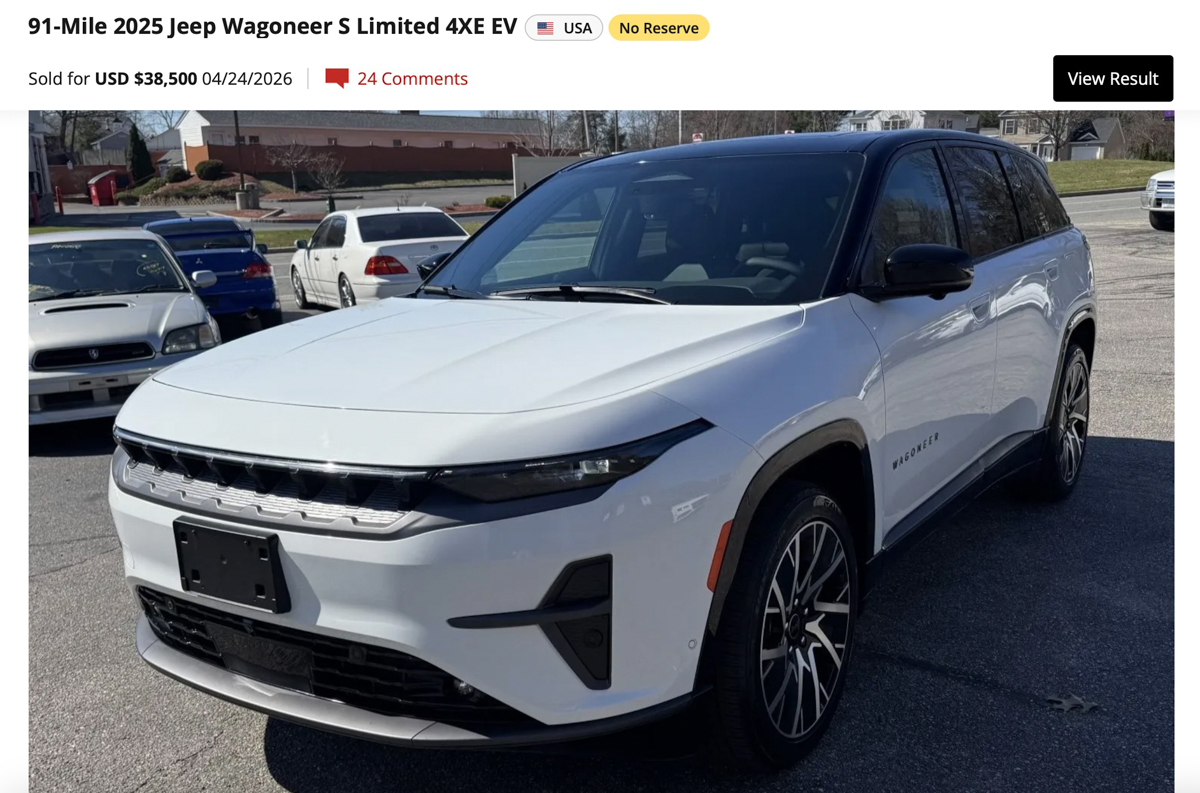
We knew Jeep’s first American EV was having a tough time, but this is something else. A nearly new Wagoneer S Limited 4xe just sold on Bring a Trailer for $38,500 after covering only 91 miles (147 km). That’s roughly $30,000 below its original sticker, and a sharp reminder that EV depreciation can be brutal.

On paper, the deal looks fantastic. The Wagoneer S packs dual motors, all-wheel drive, and a factory-rated output of 500 hp (507 PS) and 524 lb-ft (710 Nm) of torque. The quoted 294-mile (473 km) range from the 100 kWh battery isn’t amazing, but it’s tolerable, and the tailpipe-free Wagoneer is roomy enough for family duty and loaded with kit, making the auction result look like bargain-hunter gold.

Related: Wagoneer S Lost 93% Of Its Buyers, And Gas Charger Outsold Its Electric Twin 7 To 1

This example was a Limited trim finished in white with Jeep’s Dark Appearance package. The Limited stickered at $67,195 including destination and before options, and this one came with a panoramic roof, heated front seats, heated steering wheel, surround-view cameras, adaptive cruise control, wireless smartphone mirroring, a 12.3-inch touchscreen, and an Alpine nine-speaker audio system.

So it’s not exactly a stripped rental special, even if it is a rung below the 600 hp (608 PS), $72,195 Launch Edition.

\\\\\\\\\\\\\

So why the huge value crash? Because the Wagoneer S has struggled badly since launch. It arrived when automakers believed premium EV demand in America would keep climbing. Instead, the market cooled, incentives changed, and shoppers became more selective about price, charging access, and brand trust.

No More Tax Credits

The biggest blow came when the $7,500 federal EV tax credit disappeared last September. Before that, Jeep reportedly moved more than 10,000 Wagoneer S models across three quarters with the help of some big discounts. In the two quarters after the credit ended, sales fell to just 613 units.

 A New Jeep Wagoneer S Lost Nearly Half Its Value After Just 91 Miles

Jeep’s response has been telling. The brand won’t build a 2026 Wagoneer S at all, instead skipping straight to a 2027 model. Stellantis says the pause will allow upgrades to battery performance, software, capability, and interior quality. It’ll also gain a NACS charging port for easier access to Tesla’s growing Supercharger network.

A better Wagoneer S is coming, but we still think whoever bought this one got an absolute bargain. If he can live with uncertain resale and a model facing reboot status, $38,500 bought him a barely driven 500-hp electric SUV with lots of equipment. That’s hard to ignore, even if the first owner probably wishes they had.

\\\\\\\\\\\\\\\

Bring a Trailer

Before yesterdayVehicles

BYD Sold 700,000 Electrified Cars Last Quarter And Still Lost More Than Half Its Profit

  • BYD profits fell sharply in the first quarter of 2026 overall.
  • Revenue declined 12 percent year on year during the period.
  • Slower domestic sales in China drove much of the downturn.

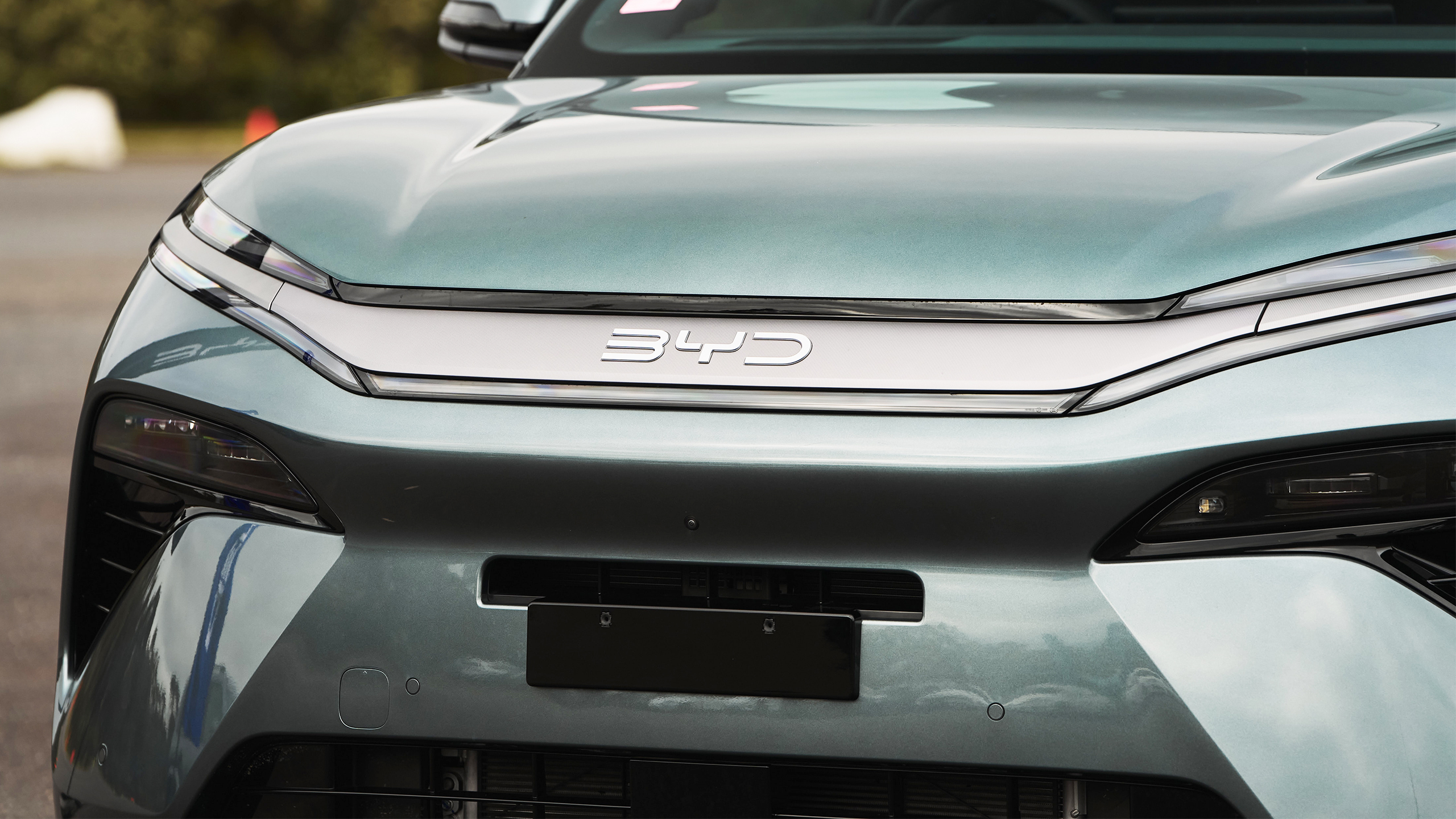
BYD has recorded its steepest quarterly profit decline since 2020, underlining the mounting pressure facing the world’s largest electric vehicle seller in its home market despite success abroad. The company’s latest report showed that net profit in the first quarter of 2026 declined by 55.4 percent from the previous year, falling to 4.09 billion yuan, approximately $597 million.

Revenue dropped by nearly 12 percent to 150.2 billion yuan ($22 million), the third consecutive quarterly decline and the lowest quarterly revenue figure since Q2 2024. However, the result still bested analysts’ prediction that revenue would be around 132-140 billion yuan. BYD sold 700,463 “New Energy Vehicle” (EVs and PHEVS) units in the quarter, down 30% year-on-year and nearly 48% below the record volumes of Q4 2025.

Read: China Told Automakers To Stop Cutting Prices, BYD Just Made It Worse

The Chinese market for electric cars is fiercely competitive. BYD has taken over as the market leader because of its low-priced models, yet price wars in its home market are intense. Meanwhile, the government has scaled back subsidies. China exempted NEVs from purchase tax entirely in 2024–2025, but for 2026 and 2027, the relief has been halved to a maximum of 15,000 yuan per vehicle.

This policy shift pulled demand forward into Q4 2025, exacerbating the Q1 2026 slowdown. Sales in China have declined for several consecutive months, and profits are being squeezed even as exports grow strongly.

Global Push Becomes Critical As Domestic Sales Cool

 BYD Sold 700,000 Electrified Cars Last Quarter And Still Lost More Than Half Its Profit

BYD is looking to the overseas market as domestic sales decline. It plans to ship more than 1.5 million automobiles this year in an attempt to overcome sluggish domestic sales. Industry insiders expect massive export growth next year, but overall delivery growth will probably be less aggressive.

This strategic shift was on display at the Beijing Auto Show, where BYD launched new products targeting the premium segment, including the Datang (Great Tang), a full-size electric SUV priced from 250,000 yuan, which attracted more than 30,000 pre-orders on its first day. Moving beyond low-end models is intended to help the company sustain profitability amid the mass-market price war.

There’s a renewed focus on regaining technological superiority, too. The company is enhancing charging speed, among other features, to attract consumers who are not keen on switching from gas-powered cars.

But BYD is at a crossroads as it stands. Its expansion across borders may be the answer to whether it can bounce back. Analysts say the next few quarters will be critical, with domestic EV demand recovery and robust export growth seen as the keys to a profit rebound.

 BYD Sold 700,000 Electrified Cars Last Quarter And Still Lost More Than Half Its Profit

BYD’s 2,978 HP Hypercar Just Found Its First Buyers Willing To Pay Bugatti Money

  • The U9 Xtreme has four electric motors delivering 2,978 hp and hits 308.4 mph.
  • Last year, the limited-run U9 Xtreme lapped the Nurburgring in 6:57.147.
  • BYD is selling each YangWang U9 Xtreme for more than 20 million yuan.

Over the past few years, we’ve become accustomed to seeing new BYD models hit the market with absurdly low price tags. The record-breaking YangWang YangWang U9 Xtreme is not that kind of a car. It is, by some distance, the priciest thing the company has ever offered.

More: China’s YangWang U9 Smashed Bugatti’s Speed Record But Still Isn’t Officially The World’s Fastest Car

Li Yunfei, who runs branding and PR for BYD Group, posted on social media that several U9 Xtreme orders were locked in at the Beijing Auto Show. The price? North of 20 million yuan a pop, or roughly $2.92 million at current exchange rates.

 BYD’s 2,978 HP Hypercar Just Found Its First Buyers Willing To Pay Bugatti Money
Li Yunfei, BYD

This is more in line with hypercars from the likes of Koenigsegg and Bugatti than what we’d expect to see from BYD. It also makes it more than ten times as expensive as the ‘regular’ YangWang U9, which is available from 1.8 million yuan ($263,000).

Among those to have placed an order for the U9 Xtreme in Beijing was Nick Politis, an Australian businessman estimated to be worth over AU$4.5 billion ($3.2 billion). His car will be the only one sold in Australia and is expected to arrive early next year.

What will shoppers get for their money? Firstly, they get exclusivity, as just 30 units are bound for the production line. In addition, they get a car with four electric motors combining to produce an extraordinary 2,978 hp. This easily makes it the most powerful production car ever and the first to feature a 1,200-volt platform.

What Can It Do?

\\\\\\\\\\

All of the power means the U9 Xtreme can hit 308.4 mph or 496.22 km/h, a feat it achieved last year to eclipse the top speed of the Bugatti Chiron Super Sport 300+, while easily defeating the official two-way average top speed record holder of the SSC Tuatara, set at 282.9 mph (455.3 km/h). It’s unclear if customer cars will be able to hit these speeds, or if they’ll be software-limited to a slightly more reasonable pace.

The U9 Xtreme is also quite capable around a track. While it’s heavy, it lapped the Nurburgring Nordschleife in 6:57.147, outgunning the Rimac Nevera and Xiaomi SU7 Ultra. Admittedly, it is slower than a 500-hp Porsche 911 GT3 RS and almost 20 seconds slower than the new Ford Mustang GTD Competition.

Ford Gives A Tiny Glimpse Of The $30K EV Truck Slate Should Be Worried About

  • Ford teased its upcoming $30,000 electric pickup in a LinkedIn post.
  • It rides on a new in-house platform built by a skunkworks team.
  • Truck could revive the Ranchero name, unused since the late 1970s.

Ford has trimmed plenty from its electric vehicle plans, but the compact electric truck has survived the cuts, and the company still hopes it will deliver the success the F-150 Lightning never quite managed. A proper reveal isn’t on the cards yet, though a handful of images posted to LinkedIn give an early look at what’s coming.

Company boss Jim Farley posted these images to celebrate Doug Field’s last day with the company. One of the photos shows Field speaking about the new truck with Farley and other Ford executives, and includes a small glimpse of the EV’s bed. A separate image also seems to show the roofline of the new model, while another shows it with several roof-mounted accessories.

Read: $30K Ford Electric Truck Coming In 2027 Is Seriously Bad News For Slate

While these images don’t give us a good look at the new model, there’s plenty to get excited about. Underpinning the $30,000 pickup will be the new Ford Universal EV platform, developed in-house by a skunkworks team of engineers. This platform will be used by several other vehicles, including SUVs and vans.

Cheaper And More Efficient

\\\

According to Ford, the platform has 20 percent fewer parts, 25 percent fewer fasteners, and requires 40 percent fewer plant workstations than an ordinary platform. This will be aided by the new unicasting process, similar to Tesla’s gigacasting, in which important parts will use large single-piece aluminum castings. This process will also significantly reduce costs.

Speaking about the new truck last year, Farley noted its wiring harness will be more than 4,000 feet (1.3 km) shorter and 10 kg (22 lbs) lighter than its first-generation EVs. The company will also overhaul how it builds vehicles on this platform, manufacturing the front, rear, and structural battery pack in separate lines before joining them during final assembly.

Key specifications of the truck remain unclear, but we know it will use lithium iron phosphate batteries. It may also revive the Ranchero nameplate, which Ford hasn’t used since 1979.  

 Ford Gives A Tiny Glimpse Of The $30K EV Truck Slate Should Be Worried About

Rivian Lost $416 Million Last Quarter And Just Bet Bigger On Georgia

  • Rivian has revamped plans for their new factory in Georgia.
  • Facility will now be able to build 300,000 units annually.
  • DOE loan has been cut from $6.6 billion to $4.5 billion.

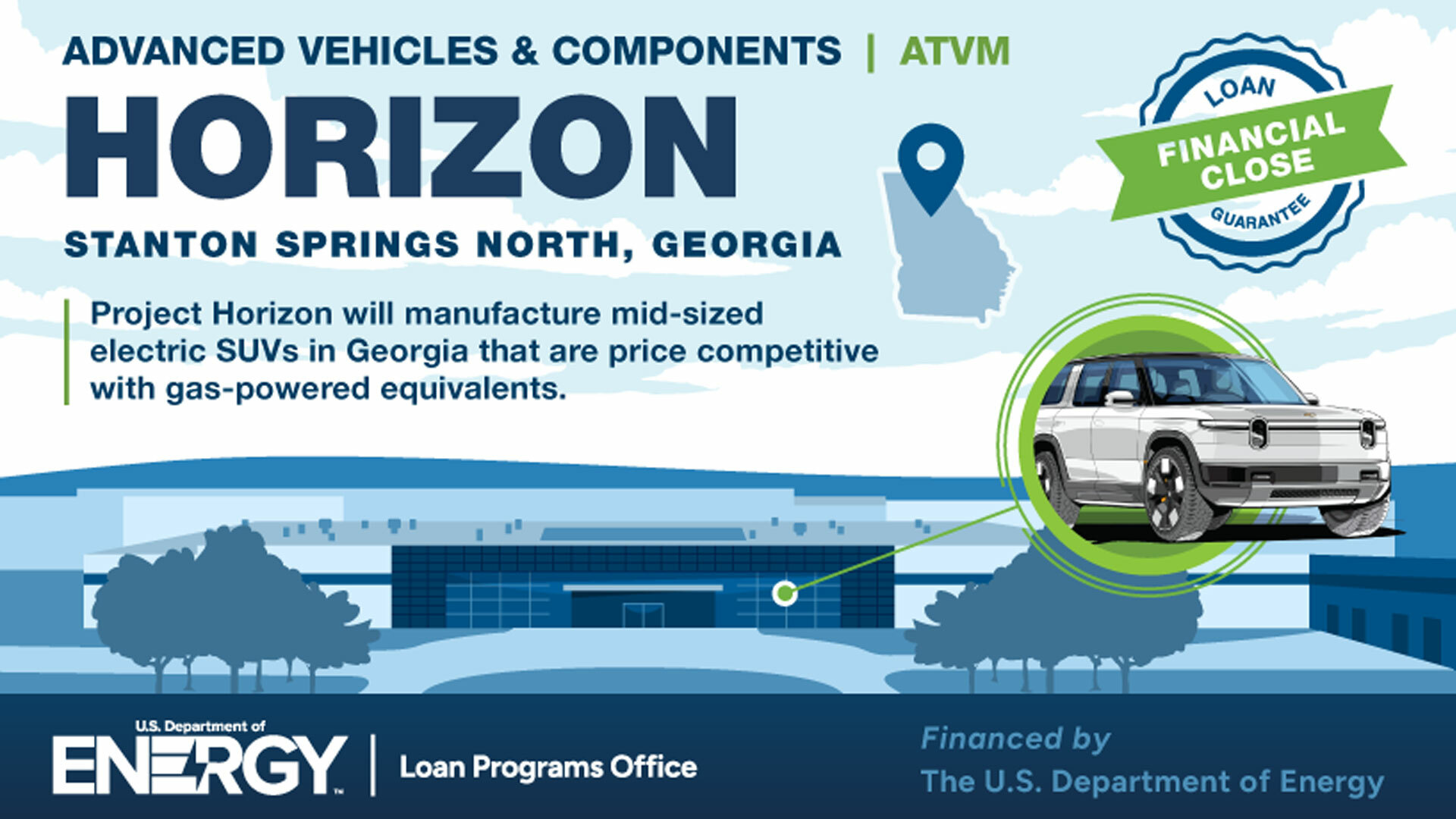
The R2 recently went into production in Normal, Illinois, and Rivian expects it to be a success. As a result, they’ve announced a new plan for their Stanton Springs North plant in Georgia.

Under the new strategy, the automaker is increasing the plant’s initial production capacity to 300,000 vehicles annually. That’s 100,000 units more than the original target and Rivian said the change will “facilitate a lower cost per unit, while also providing significant room for future expansion of capacity in later phases.”

More: Biden Admin Finalized Rivian’s $6.6 Billion Loan Before Trump Took Office

As part of the change, Rivian worked closely with the Department of Energy to update its original $6.6 billion loan. Its value has been reduced to $4.5 billion and is “aligned with the updated facility design and roadmap for the initial phase.”

 Rivian Lost $416 Million Last Quarter And Just Bet Bigger On Georgia

The devil is in the details, with CNBC reporting that the loan was originally structured for two phases of production and an annual capacity of 400,000 units. The new agreement reportedly just has one phase and enables Rivian to “draw on the loan sooner and have greater initial production.”

Rivian expects to start using those funds in 2027, and the plant is scheduled to begin production in late 2028. Vertical construction is set to begin this spring, and “preparations are underway for the development of the stamping press area, one of the most capital-intensive and technically demanding projects within the plant from a construction perspective.”

Q1 Results

 Rivian Lost $416 Million Last Quarter And Just Bet Bigger On Georgia

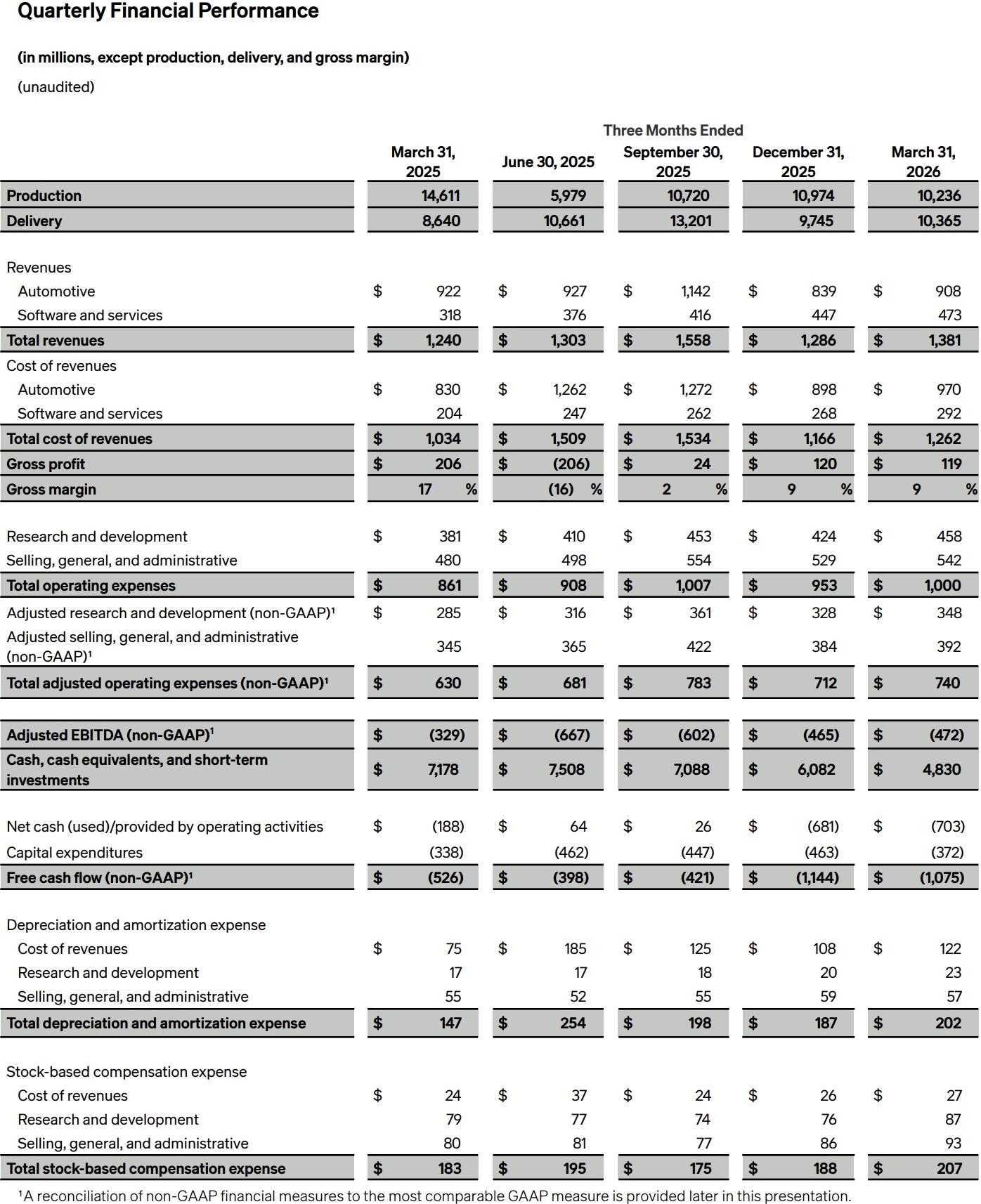
Besides the Georgia plant changes, Rivian announced its first-quarter results. The automaker built 10,236 vehicles and delivered 10,365 to customers.

Consolidated revenue increased 11% to $1.38 billion, and the company posted a $416 million net loss for the quarter. That’s down from a $541 loss in Q1 2025, but they “benefited from a $506 million gain in other income related to the Series A capital raise and related deconsolidation of Mind Robotics.”

Their outlook for 2026 isn’t stellar as they’re expecting to deliver between 62,000 and 67,000 vehicles. While those are decent numbers, their adjusted EBITDA is a $1.8 – $2.1 billion loss.

 Rivian Lost $416 Million Last Quarter And Just Bet Bigger On Georgia

Nissan Promised Mississippi A $500 Million EV Plant, Now It’s Building Gas Pickups Instead

  • Nissan cancels Mississippi EV production plans after demand weakens.
  • Massive Canton plant will pivot to pickups and electrified SUVs instead.
  • Automaker joins rivals in slowing EV push and focusing on hybrids for now.

Nissan is backing away from its big electric vehicle ambitions in Mississippi, scrapping plans to build battery-powered models at its Canton plant as the US market cools faster than expected.

The decision follows a broader rethink inside the troubled company as EV demand softens and government incentives disappear. Nissan had once positioned the Mississippi factory as a key pillar of its electric future, with multiple models planned before the end of the decade.

Related: Nissan’s New Skyline Is Coming To America As The Q50, And It May Bring Back The Manual

Those timelines had already slipped, having been pushed back by nine months last year, and now the entire program has been shelved. Nissan made the U-turn to “better align with market conditions, customer demand and Nissan’s updated strategic direction,” a brand spokesperson told Auto News.

Instead of building EVs, the automaker is pivoting toward more traditional vehicles, including pickups and SUVs built on a rugged body-on-frame setup. A new generation of products is in the works, starting with a revived Xterra expected later in the decade. More models will follow, all sharing a common architecture designed to cut costs and boost efficiency.

Five New ICE Models

The new ladder chassis will spawn at least five trucks and SUVs, Auto News says, its sources revealing that those vehicles will have 70 percent parts commonality and be identical from the front seats forward.

That shift reflects changing buyer preferences. Gas-powered vehicles and hybrids are proving more resilient, while fully electric models have struggled with concerns over charging infrastructure, range, and upfront cost now that federal tax credits are no longer available. EV sales actually fell last year in the US, even as they continued to rapidly gain ground in Europe.

EV Investment Scrapped

The Canton plant that we were told five years ago was getting $500 million of investment so it could pump out thousands of EVs per year, will remain central to Nissan’s North American plans, just with a different focus. It already produces models like the Frontier pickup and Altima sedan, and the new strategy aims to build on that foundation with larger, more profitable vehicles tailored to US tastes.

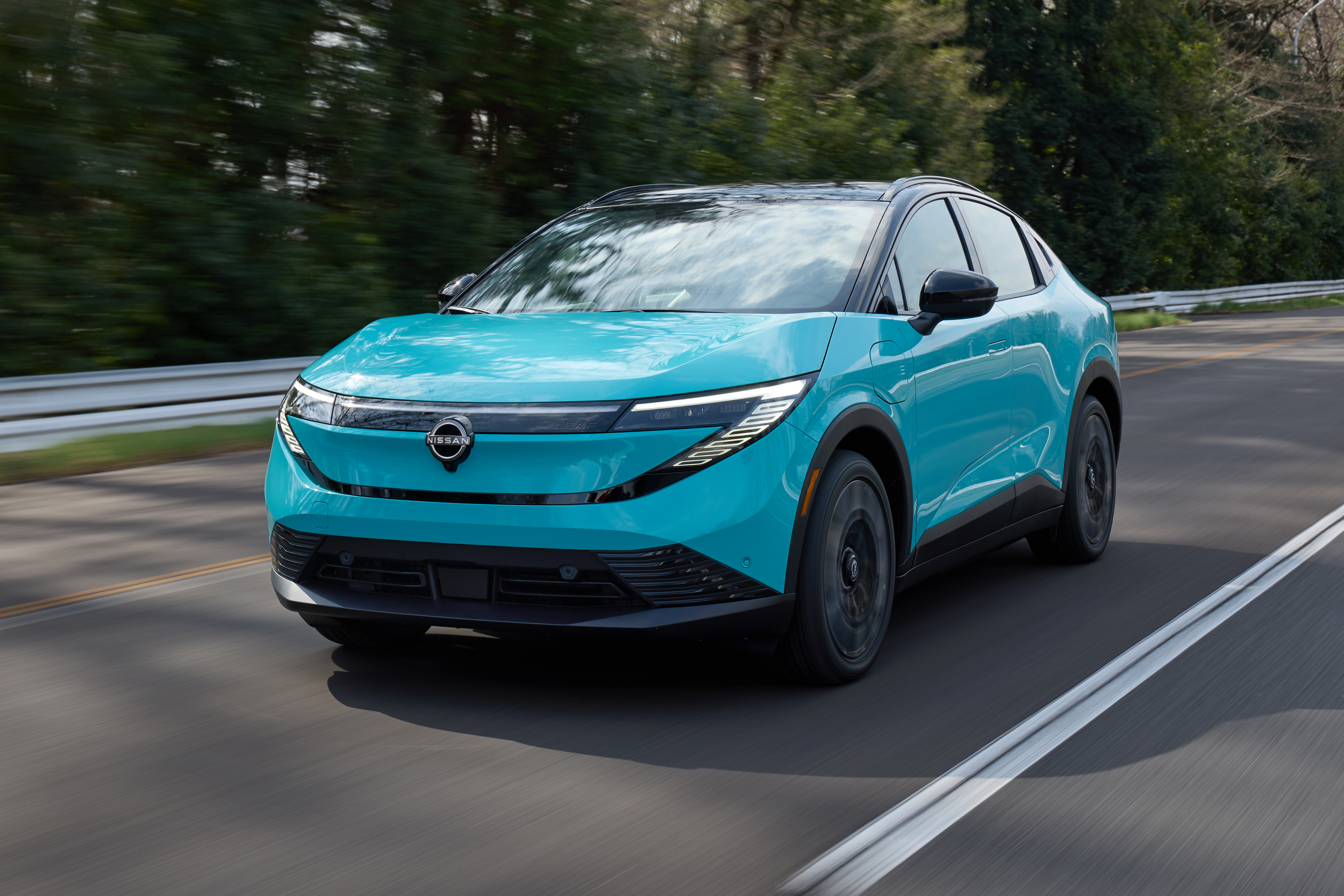
And Nissan isn’t abandoning electric vehicles entirely. It will continue selling existing models like the Leaf (shown below) in the US, but its future lineup will definitely concentrate more on hybrid technology as a stepping stone.

 Nissan Promised Mississippi A $500 Million EV Plant, Now It’s Building Gas Pickups Instead

Nissan

200 Robotaxis Stopped In Traffic, Now China Has Stopped Issuing Permits

  • Baidu engineers instructed robotaxis to stop and immediately collect data.
  • As many as 200 robotaxis operated by the tech firm stopped in Wuhan traffic.
  • Regulations for robotaxis are generally set by local governments in China.

The robotaxi gold rush in China has just hit its first serious speed bump. About a month ago, dozens of autonomous vehicles run by Baidu malfunctioned on Chinese roads, and Beijing has now stopped issuing new robotaxi licenses. The episode is a reminder that while domestic brands push hard on ever more advanced self-driving systems, a single bad afternoon can quickly unravel progress.

The incident itself happened on March 31, when around 200 robotaxis from Baidu’s Apollo Go program stopped dead in traffic in Wuhan. Several collisions followed and passengers were left stranded in their cars. Fortunately, no one was injured. According to an unnamed source, Baidu engineers issued a command to tell vehicles to stop and collect data on the spot, triggering the chaos.

Read: Baidu’s Robotaxis Froze On Wuhan Highways And Cars Started Crashing Into Them

According to Nikkei Asia, China’s transport ministry, the industry and information technology ministry, the public security ministry, and the Cyberspace Administration sat down with eight of the country’s biggest autonomous driving firms after the Wuhan incident. Authorities demanded that these firms conduct a “comprehensive self-inspection.”

Although the Chinese government has stopped issuing new licenses for robotaxi operators, those who are already operating can continue to do so. For example, Pony.ai continues to operate its robotaxi services in Beijing, Shanghai, Guangzhou, and Shenzhen as normal.

What Laws Exist?

NEW: Dozens of robotaxis by Baidu stopped on the road in Wuhan, causing crashes on highways and trapping passengers in the cars—some for more than an hour. One passenger told me it took her 30 minutes to even connect to a customer representative.

Here’s a video of a crash. pic.twitter.com/fTitNMv8kj

— Zeyi Yang 杨泽毅 (@ZeyiYang) April 1, 2026

In general, regulations governing the testing of self-driving vehicles in China are relatively lax. The federal government has let local governments decide how they’d like to govern the introduction of robotaxi services, leading to a wide range of different regulations throughout the country.

It’s understood that roughly 4,500 robotaxis were operating across pilot zones in 10 Chinese cities as of last year. Some analysts estimate that as many as 500,000 robotaxis could be in service by 2030, or about 10 percent of the country’s total taxi fleet. A national decision outlining steps to prevent similar incidents could arrive by the end of May.

 200 Robotaxis Stopped In Traffic, Now China Has Stopped Issuing Permits

Students Praised for Stopping School Bus, Helping Driver During Medical Emergency

Five Mississippi middle school students are praised as heroes after stopping a moving school bus when their driver lost consciousness during a medical emergency.

The incident happened the afternoon of April 22 in the Hancock County School District, when a bus driver transporting students suddenly became incapacitated while behind the wheel.

“This afternoon, during middle school dismissal, a bus driver on Bus #22 experienced a medical emergency,” the district said in a statement. “We are grateful to report that all students are safe and were transported home safely. Students acted quickly to help ensure the bus was safely brought to a stop and then contacted emergency services. We are proud of our students for staying calm and acting responsibly.”

The driver, 45-year-old Leah Taylor, told local news reporters that she suffered an asthma attack while driving her usual route and lost consciousness.

“I had a medical emergency, and the students stepped up,” she said.

Surveillance video released by the district shows a chaotic scene unfolding inside the bus as Taylor slumps over and the vehicle begins to drift. Students can be seen quickly reacting, coordinating efforts to regain control and prevent a potentially serious crash.

“She kind of, sort of, like, fell over, like flopped over, and everyone started standing up,” student McKenzy Finch told local news reporters, describing the moment the situation became clear. According to the students, the bus began veering off course and picking up speed. That’s when several of them sprang into action.

Students Seize Their Hero Moment

“I saw that the bus was veering off to the side, then I grabbed the wheel,” said Jackson Casnave, one of the students credited with helping steer the bus back under control.

At the same time, sixth grader Darrius Clark made his way to the front and stepped on the brakes, bringing the vehicle to a stop.

Other students focused on getting help and assisting the driver. Eighth grader Kayleigh Clark called 911 while fellow eighth grader Destiny Cornelius helped administer Taylor’s medication.

“I saw her medication in her hand, and I saw her reaching for it. I knew that’s what she needed,” Cornelius told reporters.

The coordinated response by the group of students ensured the safety of everyone on board. No injuries were reported among the students. Emergency responders arrived shortly after and aided Taylor, who is expected to fully recover.

School officials and community members have since praised the students for their composure and quick thinking under pressure, noting that their actions likely prevented a serious accident. The district emphasized the importance of the students’ teamwork and presence of mind during the emergency.


Related: Oklahoma Student Hailed Hero After Helping Bus Driver During Medical Emergency
Related: ‘Hero’ Teacher Praised by Parent Florida School Bus Crash Evacuation
Related: Teens Hailed Heroes in Kentucky School Bus Crash
Related: Mississippi Student Hailed a Hero After School Bus Crash

The post Students Praised for Stopping School Bus, Helping Driver During Medical Emergency appeared first on School Transportation News.

The Technician Shortage Is a Data Problem, Not Just a Hiring Problem

By: STN
1 May 2026 at 17:27

Shelly had three buses down on a Monday morning.

Two were waiting on parts. One had been sitting in the bay for four days. Her one certified technician was working hard, but too much of that work had nothing to do with fixing buses. He was printing work orders. Writing notes by hand. Checking on parts. Tracking people down. Moving paper from one step to the next.

When the transportation director asked what was slowing the shop down, Shelly didn’t have a clean answer. She knew the buses were down. She knew the team was stretched. What she couldn’t see was where the hours were actually going.

Does that story feel familiar? The technician shortage is real. Every fleet leader knows that. Hiring is hard. Keeping good people is hard. Finding enough time in the day is even harder.

Still, hiring is only part of the challenge.

The rest hides in the blind spots. It hides in the paper trail, the missing status updates, the parts questions, and the work that pulls skilled technicians away from the buses that need them most.

That is why the technician shortage is a data problem, not just a hiring problem.

A short-staffed shop can feel even shorter when the day is packed with manual work. Paperwork slows everything down. Missing information slows it down more. By the time a fleet leader realizes where the delay is, the delay has already done its damage.

That’s the real cost of fleet blind spots. They steal time from the people who can least afford to lose it.

Kern HSD 5

The hours are there. Too many shops just can’t see where they go.

Most school transportation leaders don’t need another reminder that technicians are hard to find. They live that reality every day. What they need is a clearer view of the capacity they already have.

A technician in a paper-based shop does not just repair buses. They wait on work orders. They check for parts. They stop for updates. They write down what they did. They hand off paper. Then they do it again.

That time adds up fast.

The problem here is visibility, not effort. When leaders can’t see where time is being spent, they can’t protect it.

That leaves good people working inside a system that makes every day harder than it should be.

Fleet leaders deserve better than that. So do their teams.

Better visibility gives technicians more time to do the work only they can do.

A technician should be working on buses, not chasing paperwork.

A fleet leader should be able to see what’s open, what’s waiting, and what needs attention next. They shouldn’t have to piece the story together from paper forms, hallway conversations, and scattered systems.

That is where RTA Fleet360 helps.

RTA Fleet360 brings work orders, PM scheduling, labor tracking, parts visibility, and reporting into one clear place. It helps school transportation leaders see what is happening in the shop while the work is happening. That means fewer fleet blind spots, faster answers, and a steadier day for the whole team.

When leaders can see where the hours are going, they can start giving those hours back to the shop.

That changes the pace of the work.

Jobs move faster. Delays are easier to spot. Technicians spend less time on admin drag and more time on the work that keeps buses ready.

Explore Fleet360 for K-12 fleets, or book a meeting with an RTA Fleet Expert to see how better shop visibility can help your team get more from the capacity you already have.

Real fleet leaders are already proving what better systems can do.

At Kern High School District in California, better visibility and tighter control led to a result any fleet leader would notice. Fleet Manager Adrian Corral put it simply: “As soon as we took on RTA … we got our shrink down to about $500.”

Before RTA, the district was dealing with a manual process that took too much time and too much effort to manage. With stronger systems in place, the team gained control, cut waste, and made the operation easier to run from top to bottom.

That matters in a school bus shop.

It means fewer things slipping through the cracks. It means better stewardship of public dollars. It means a leader can speak clearly about what is happening and what is improving.

Read the Kern High School District case study here, then book a meeting with an RTA Fleet Expert to see how those gains could translate to your fleet.

Better visibility helps school transportation leaders make stronger decisions.

A fleet leader shouldn’t feel like they have fleet blinders on.

They should be able to see what work is open, what’s behind schedule, and where the pressure is building. When that visibility is clear, it gets easier to set priorities, explain decisions, and back up the team with real numbers.

That kind of clarity changes the job.

Instead of reacting to every new problem, leaders can get ahead of them. Instead of walking into tough conversations with partial answers, they can walk in with proof. Instead of feeling buried by blind spots, they can lead with a steadier hand.

The next step for school bus fleets that want more control –

School bus fleets don’t need bigger blind spots. They need cleaner information, stronger workflows, sharper planning, and a better way to turn daily effort into measurable progress.

RTA Fleet360 helps make that happen. It brings maintenance, PM, labor tracking, parts visibility, and reporting into one clear place. Transportation directors can see more clearly, parts managers can respond faster, and buses can get back on the road safely. With RTA Fleet360, fleet leaders can lead with confidence.

Explore Fleet360 for K-12 fleets. Book a meeting with an RTA Fleet Expert. See how better shop visibility can help your team get more from the capacity you already have.

The post The Technician Shortage Is a Data Problem, Not Just a Hiring Problem appeared first on School Transportation News.

Lexus’s New SUV Is A Posh Toyota Highlander EV With A Bigger Sticker

  • Lexus confirms a new electric SUV debut set for May 6.
  • Teasers point to a Highlander-based three-row electric SUV.
  • Earlier trademarks suggest it will adopt the TZ moniker.

The teaser drip has begun, as Lexus has confirmed a new SUV for May 6. The name remains withheld, though the smart money is on the Lexus TZ, a model expected to share its bones with the 2027 Toyota Highlander.

The dark teasers shared on social media reveal the silhouette of an SUV positioned as the zero-emission counterpart to the Lexus TX. The proportions read Highlander, but the roofline appears to taper more aggressively toward the rear.

More: Lexus Is About To Charge You Lexus Money For A Toyota Highlander EV

The bodywork is also expected to be redesigned, with a new lighting signature and a hood that leans slightly toward the rugged Lexus GX. Recent spy shots hint at split LED headlights, a covered singleframe grille, toned fenders, sculpted doors, and large alloy wheels. Still, the greenhouse and door handles appear to carry over from the Toyota sibling.

Inside, the cabin should rise to something more befitting the badge, even if certain components, the 14-inch infotainment screen among them, get carried across. A three-row layout is expected, possibly in six-seat configuration.

\\\\

The footprint of the Lexus TZ will likely align closely with the Toyota Highlander EV. The latter stretches to 5,050 mm (198.8 inches) long, with a 3,050 mm (120.1 inches) wheelbase, riding on a modified version of the TNGA-K architecture.

More: Lexus Is Preparing A Facelift For Their Second Best-Selling Model

Lexus filed trademarks for TZ450e and TZ550e back in 2023, hinting at two electric powertrain options. The Toyota equivalent comes in front- and all-wheel-drive forms, rated at 221 hp and 338 hp respectively. Battery options include a base 77 kWh unit and a larger 95.8 kWh pack offering up to 320 miles (515 km) of range.

\\\\\\\\\\\\\\\\\\\\\\\\\\

Baldauf

Rivals include the Kia EV9, Hyundai Ioniq 9, and Volvo EX90. Pricing will sit above the Highlander EV, which is expected to start in the low to mid $50,000s.

The unveiling will be broadcast on YouTube on Thursday, May 7, 2026, at 10:30 am JST, which translates to Wednesday, May 6, 2026, at 9:30 pm EDT. Besides North America, the model will also be sold in the Japanese market. As for production, some reports suggest it will be manufactured in the US, while others point to Japan.

❌
❌