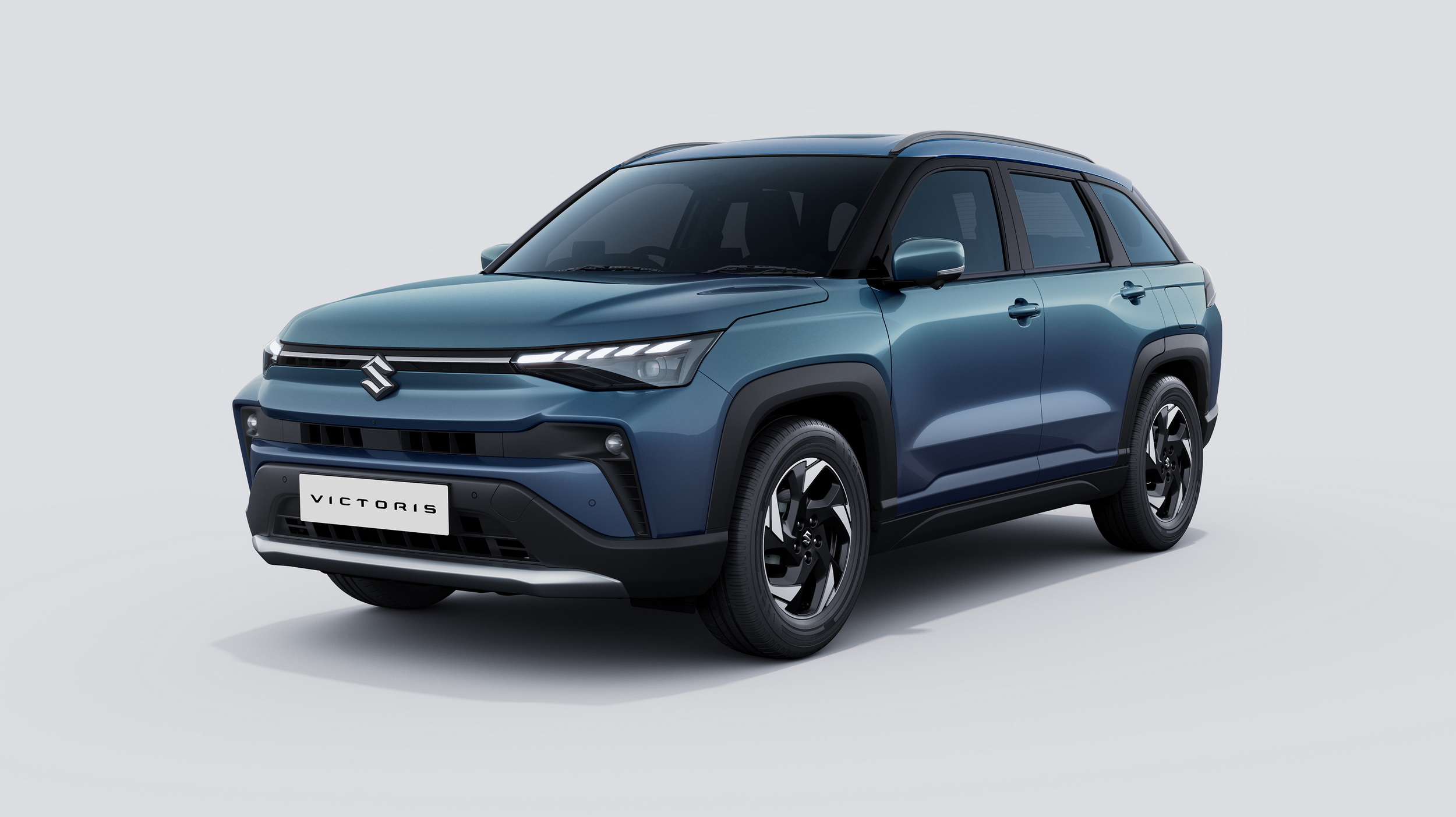
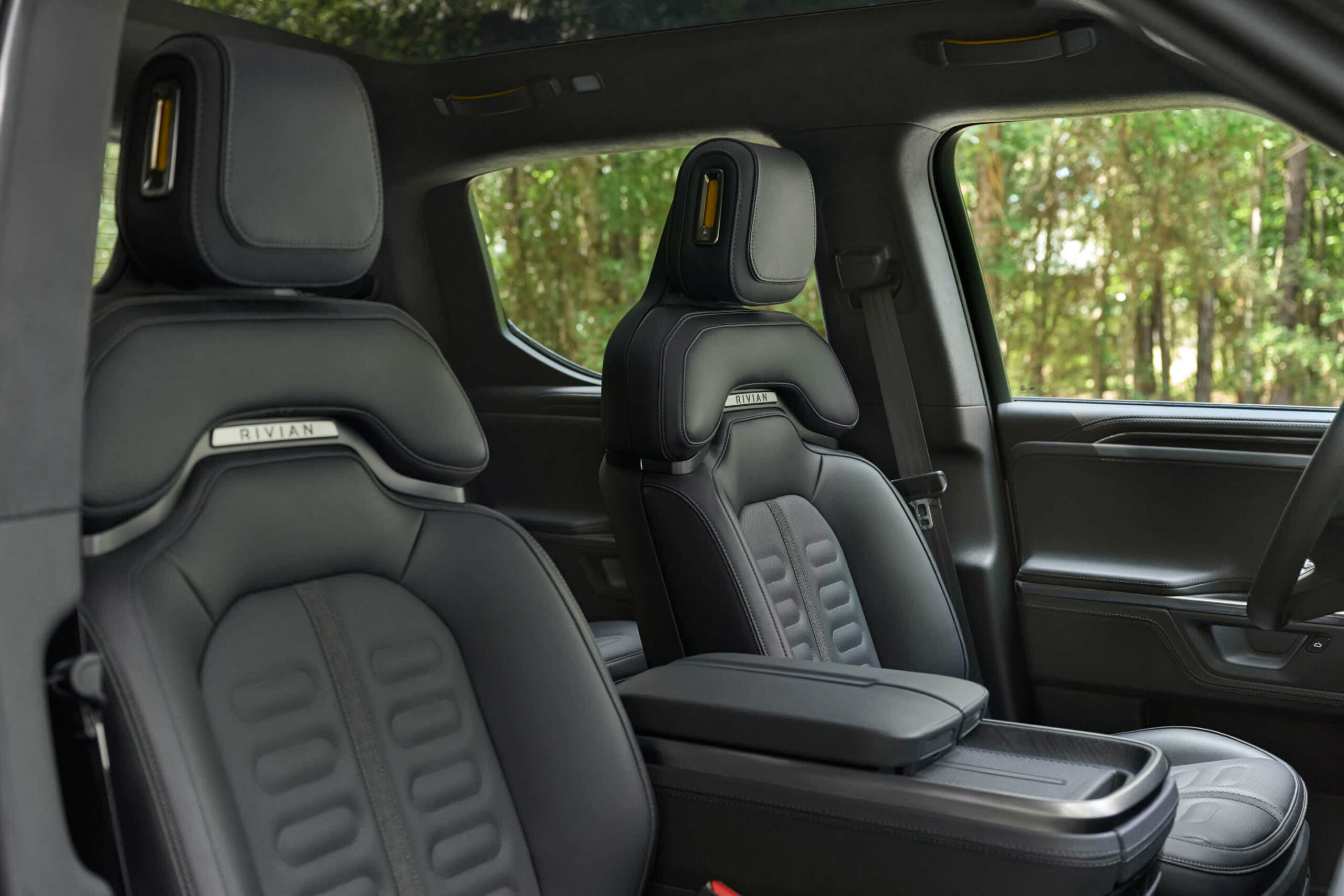
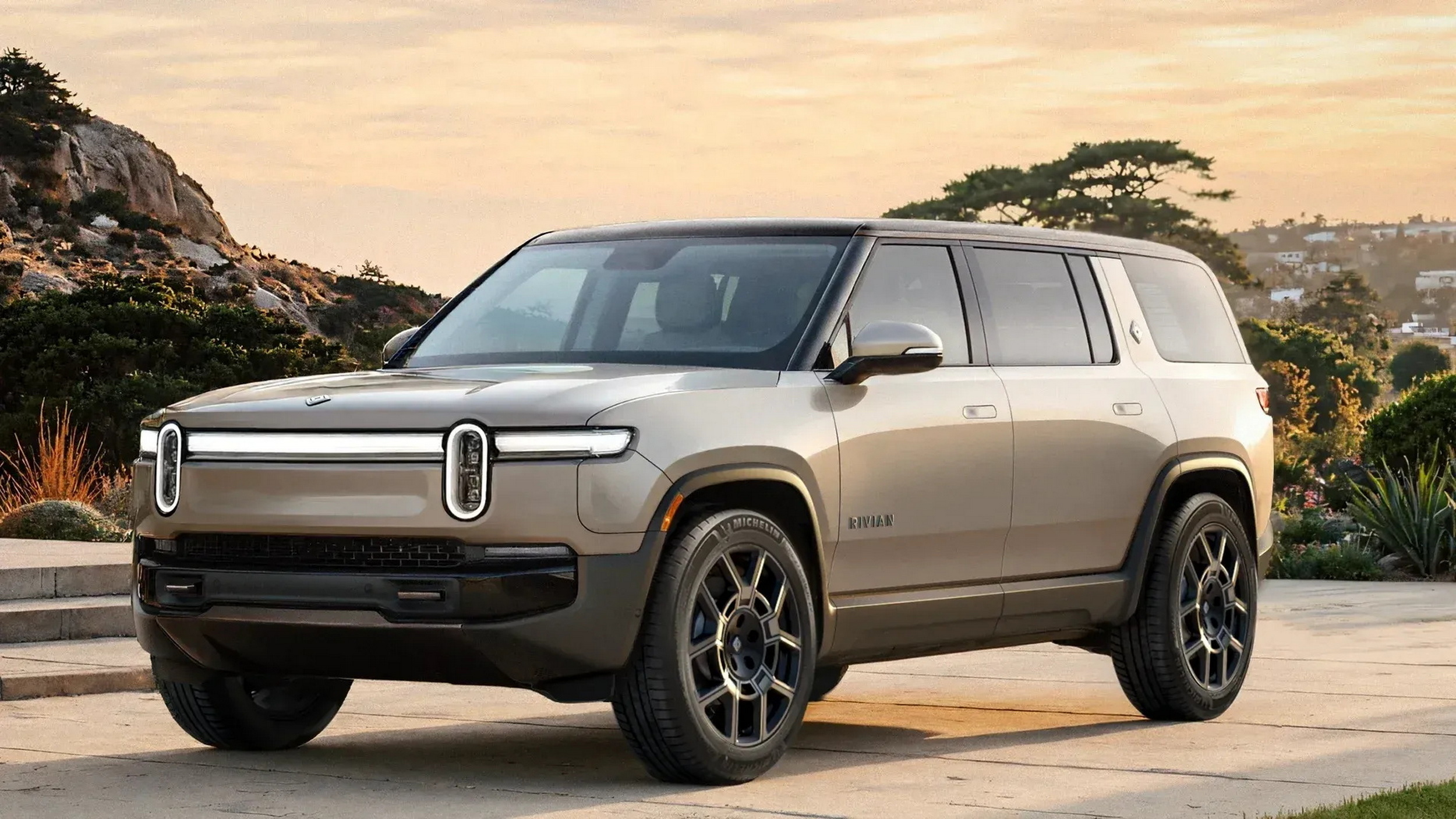
Rivian R2 enters validation build phase ahead of mid-2026 launch.
Company’s Illinois plant expansion supports 215,000 units yearly.
The R2 targets over 300 miles of range and Supercharger acces
If the R1S and R1T were the cars that gave birth to Rivian, the upcoming R2 will be the one that decides whether the brand thrives or stays in infancy. And that moment is arriving quickly, as the mid-size SUV appears to be on track to reach its first customer driveways as early as June, thanks to the rapid expansion of Rivian’s production facility in Normal, Illinois.
The R2 could be make-or-break for the EV startup. If it’s a success, it could establish the EV brand as a serious mass-market player in the US. If it fails, Rivian may remain a niche brand forever.
It will be produced at a new 2.6 million-square-foot section of Rivian’s Illinois plant, and the first validation build vehicles have already started rolling off the line.
These vehicles are production-intent, not pre-production prototypes, and will help validate key factory processes before Rivian can start building customer vehicles at scale.
As reported by WGLT, Rivian built the new manufacturing center in just 11 months, and at full capacity, the site will be able to produce up to 215,000 vehicles a year, including 155,000 R2s.
Rivian didn’t originally plan to build the R2 in Illinois. When the SUV was first announced in early 2024, the company said it would be assembled at a forthcoming $5 billion factory in Georgia.
That site, however, remains in early development, with substantial construction work expected to begin later this year. If completed as proposed, it could eventually build up to 400,000 vehicles per year, primarily R2 and future R3 models.
RJ Scaringe/Instagram
The EV maker has yet to announce final specifications for the R2 and likely won’t do so until closer to its launch. When the SUV first appeared in prototype form two years ago, the company confirmed it would ride on an all-new midsize platform and be offered in single-, dual-, and tri-motor configurations.
We do have a few technical details already. The R2 will use 4,695-type cylindrical battery cells and, in its base form, deliver more than 300 miles (483 km) of range. It will also feature a built-in NACS port as standard, giving it access to Tesla’s Supercharger network without the need for adapters or retrofits.
The Price Question
Perhaps the most important detail is still the price. Rivian initially projected a starting MSRP of around $45,000. That number will be crucial if the company hopes to compete head-on with Tesla’s Model Y. Holding that price point could be key to making the R2 not just another statement piece, but a genuinely competitive offering in the heart of the EV market.
Canada cut tariffs on Chinese EVs from 100 percent to 6.1.
Trump threatened 100 percent tariffs in response to deal.
China now wants to build EVs in Canada with local partners.
Canada’s recent trade deal with China was bound to cause controversy. The agreement slashes tariffs on Chinese EVs from 100 percent down to just 6.1 percent, prompting U.S. President Donald Trump to threaten 100 percent tariffs on Canada if the deal proceeds. Still, China insists the arrangement is meant to benefit both countries and isn’t a zero-sum game.
Under the new deal, up to 49,000 EVs from China can be imported to Canada at a reduced 6.1 percent tariff rate, though at least half of them must cost $35,000 or less by 2030.
Unifor labor union president Lana Payne argues the deal opens the door for China to quickly capture critical market share. Ontario Premier Doug Ford has voiced similar concerns, warning that Canada could be inundated with low-cost EVs, without any firm commitment from China to invest in the local economy.
Beijing Signals Willingness to Build in Canada
Despite those concerns, Chinese Ambassador to Canada Wang Di says China’s fast-growing automakers are being urged to invest directly in Canada and produce vehicles domestically.
“All these projects will be beneficial to the development of the Canadian EV industry, and will be helpful for job growth in Canada, and will help Canadian consumers to be able to buy higher quality and more affordable cars,” Wang told CTV News. “The character of China-Canada practical co-operation is complementarity and mutual benefit.”
“China encourages and supports Chinese companies to make investments and start-up companies here in Canada, on the basis of the market rules,” he continued. “At the same time, we hope that the Canadian side will provide a fair, non-discriminatory, and predictable business environment for the Chinese companies that come here.”
According to Wang, that is what Beijing ultimately wants to see, if companies choose to take up the opportunity.
“If Chinese companies will come to Canada to work with Canadian partners for investment, for opening factories or for joint ventures, all of these projects will be win-win,” he said.
Perhaps in a thinly veiled swipe at the Trump administration, Wang added that “unlike some other countries, China will not only take into consideration of its selfish interest, we don’t want ‘only we win and others lose.’”
The head of the Canada-China Energy and Environment Forum, Wenran Jiang, would like to see Canadian juggernaut Magna International partner with a Chinese car manufacturer to build EVs in Canada. Recently, it was confirmed that Magna would partner with GAC to build the Aion V, but it’ll be built at the parts giant’s factory in Graz, Austria.
“If they can do that, we can do it certainly here in Ontario,” Jiang said, adding that such cooperation could help bridge regional divides over China policy. “We could do probably better if we leverage our regional advantages and work together as a team.”
Updated SU7 model could boost Xiaomi sales significantly in 2026.
SU7 sales topped 258,000 units, Model 3 reached 200,361 in China.
Technology giant aims to sell 550,000 vehicles in China this year.
Xiaomi has quickly established itself as an automaker to be reckoned with in China, and last year, it achieved something that would’ve seemed unlikely just a few years ago: its all-electric SU7 sedan outsold the Tesla Model 3.
Once the brand of choice for EV-hungry Chinese consumers, Tesla now finds itself outpaced by domestic rivals that are rapidly improving their game. Xiaomi is leading that charge.
Data from the Chinese Passenger Car Association shows that in 2025, Xiaomi sold 258,164 SU7s. That’s nearly double the roughly 135,000 units it moved in 2024, a figure made more impressive given that the SU7 only launched in April of that year.
Perhaps more notably, it overtook the Tesla Model 3, which saw 200,361 deliveries in the same period.
What’s Driving the Switch?
Chinese buyers have responded well not only to the SU7’s design inside and out but also to the technology it packs and the performance it delivers.
The base version undercuts a comparable Model 3 by roughly 9 percent, according to a report from the South China Morning Post, giving it a clear pricing advantage. Strong driving range and well-specced hardware round out the package, allowing the SU7 to compete in a segment Tesla once dominated.
“Tesla’s dominance in the premium EV segment has been eroded by its Chinese competitors that are able to churn out vehicles on par with its technology standards while offering them at lower prices,” a senior manager at the Shanghai-based consultancy Suolei told the outlet. “Xiaomi’s success is a strong boost for Chinese carmakers, which are all trying to move up the value chain.”
What’s in Store for 2026?
This year is shaping up to be even bigger for Xiaomi. In April, an updated SU7 will be launched, complete with more advanced driving assistance functions, including LiDAR across the entire family, and an improved driving range of up to 902 km (560 miles) on the CLTC cycle.
Within the first 15 days of pre-orders opening, Xiaomi reportedly secured 100,000 reservations for the refreshed model.
In total, Xiaomi sold 411,800 vehicles last year and is targeting 550,000 in 2026. This will also be the first full year of availability for the YU7 SUV, which could become its best-selling model.
Back in October, the YU7 notched 33,662 sales in a single month, even edging past the Tesla Model Y. Xiaomi’s third model, the YU9, will also make its debut this year as a range-extender EV.
India will slash tariffs on European ICE cars from 110 to 40 percent.
European carmakers currently hold less than 4 percent market share.
Local market is projected to grow from 4.4M to 6M units by 2030.
India has long guarded its domestic car industry with near-impenetrable tariffs, making foreign vehicles a rare sight on its roads unless built locally. That’s about to change.The country is now getting ready to lower those duties on European Union cars, dropping them from a steep 110 percent to 40 percent.
Final terms of the trade agreement between India and the EU will be outlined later this week, but the current proposal outlines that tariffs on EU-made combustion-engine cars will fall to 40 percent for up to 200,000 units annually. Over time, that figure is expected to drop even further, eventually settling at 10 percent.
In order to protect local firms like Mahinda & Mahindra as well as Tata Motors, battery-electric vehicles would be excluded from the tariff cuts for the first five years. After that, European-made BEVs will also qualify for the reduced tariff structure.
Only cars priced above €15,000 (roughly $17,700) would be eligible for the reduction, a threshold designed to limit direct competition with mass-market offerings from firms such as Maruti Suzuki. These models dominate India’s affordable car segment and are critical to local industry stability.
According to Reuters, the deal is still under negotiation, with finer details yet to be finalized. Certain provisions remain subject to revision before the full announcement is made.
A Massive Market, Ripe for Growth
India now ranks as the third-largest new car market in the world, trailing only the United States and China. Yet European brands currently hold less than a 4 percent share of annual sales, positioning India as a key target for future expansion. Around 4.4 million new vehicles were sold in the country last year, with forecasts suggesting that number could climb to 6 million by 2030.
While the trade pact is expected to give EU carmakers a clearer path into the Indian market, it could also make things easier for Indian textile and jewellery exports. Those goods currently face US tariffs as high as 50 percent, and access to a new market could help take some pressure off.
A patent shows the R1S with split tailgate and opening glass.
Rivian may add more physical switches and dials to the cabin.
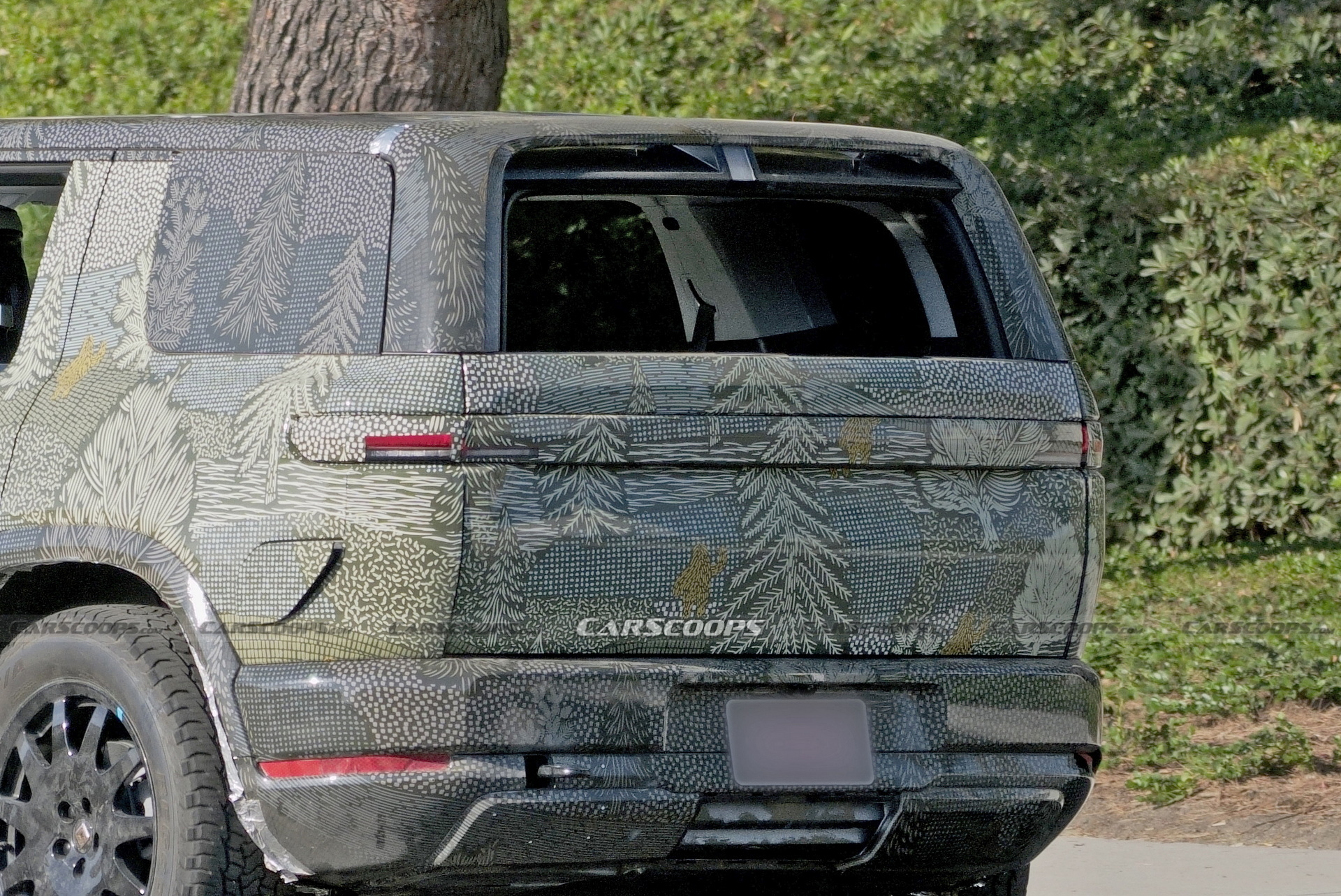
Spy shots confirm the upcoming R2 has a roll-down rear window.
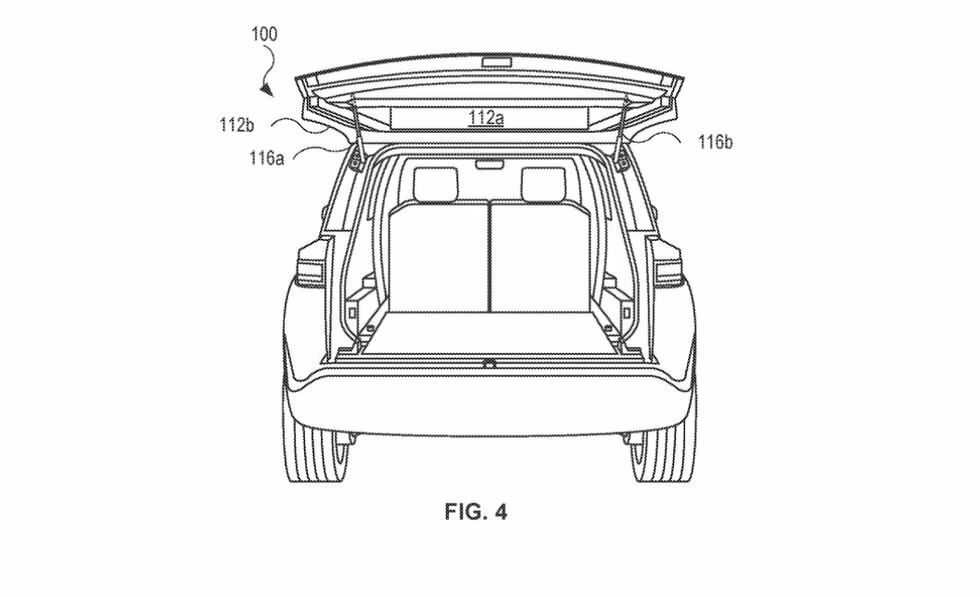
Rivian introduced a wide range of updates to the R1S and R1T for the 2025 model year, focusing on improvements beneath the surface while keeping the exterior mostly untouched. But according to a newly discovered patent, the R1S might be in line for another tweak in the form of a revised tailgate featuring a glass section that opens on its own.
According to documents uncovered by Car&Driver, Rivian has patented a new tailgate design that appears to give the R1S the ability to open either the entire hatch or just the glass panel. It’s a setup familiar to anyone who’s used the Toyota Land Cruiser or the closely related Lexus GX. BMW’s 3-Series Touring wagon also offers a similar function.
The Toyota 4Runner also has something similar, although its rear window can actually roll down just like a side window, rather than opening out as Rivian’s patent shows. It’s a useful feature, allowing you to retrieve or store items without having to open the entire tailgate.
Rivian’s patent drawings show that this independently opening glass would be integrated into the current R1S split tailgate. That means Rivian could add the new feature without altering the SUV’s distinctive two-part rear hatch, maintaining the utility and visual character of the original design.
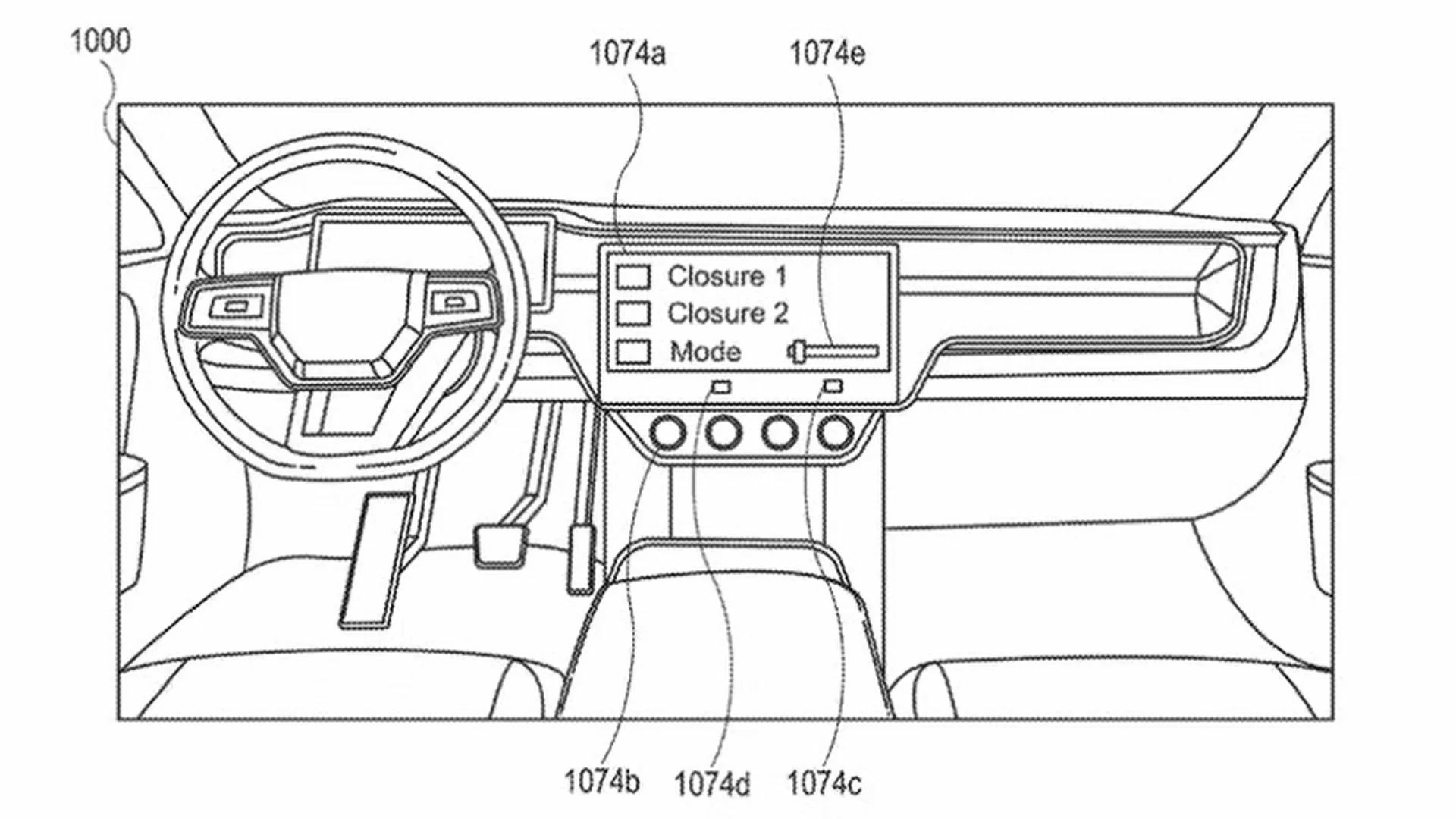
There may be more than just hardware updates in store. The same filing, as noted by Car&Driver,, shows an interior equipped with actual physical buttons and knobs, something the current R1S doesn’t offer. It’s possible these would supplement the screen-heavy layout with tactile controls for climate or audio settings, easing day-to-day usability.
The patent also hints at gesture-based controls, potentially including the now-common feature that lets drivers wave a foot under the rear bumper to pop the tailgate.
There’s no word on when the R1S, and perhaps the R1T too, could be updated for a second time, but it probably wouldn’t be at least for a couple of more years, particularly since Rivian has to focus on building the R2 and R3 models.
Interestingly, recent spy shots of the R2 revealed it will get a roll-down rear window just like the 4Runner, so Rivian is clearly thinking about improving practicality with its future models.
Tesla Cybertruck starts at $110,000 in the United Arab Emirates.
U.S. sales fell 48.1 percent to 20,237 units during 2025.
Elon Musk once predicted 500,000 annual Cybertruck sales.
Prior to launching the Tesla Cybertruck, Elon Musk suggested they could sell as many as 500,000 of them per year. However, as sales of the electric pickup never really picked up in the United States, Tesla has started selling the Cybertruck in more markets, the latest being the Middle East.
Earlier this month, the first Cybertrucks were delivered to customers in the United Arab Emirates (UAE). Roughly 60 units were handed over during a launch event held for the occasion.
While much of the early hype surrounding the electric truck has died down in the US, it’s a hot ticket in the Middle East, with many having already been imported into the region by enthusiastic buyers before Tesla made it official. Of course, the UAE and the broader Middle East remain relatively small markets and won’t help Tesla get anywhere near its early estimates for the Cybertruck.
As one of the world’s top oil producers, the UAE enjoys some of the lowest fuel prices globally, which makes electric vehicles a harder sell. With cheap gas and a strong car culture rooted in performance and presence, the appeal of a futuristic EV like the Cybertruck has more to do with novelty than necessity.
How Much Is a Cybertruck in Dubai?
Tesla Europe & Middle East/Twitter
In the UAE, pricing starts at AED404,900 for the dual-motor variant, roughly $110,000. That’s significantly more than the $79,990 price tag in the U.S. The top-end tri-motor Cyberbeast comes in at AED454,900, or about $123,000, which represents a smaller markup over its American counterpart at $114,900.
American Sales Crater
Back in the U.S., sales of the Cybertruck tumbled in 2025. Tesla moved just 20,237 units, down 48.1 percent from the 38,965 sold in 2024, the vehicle’s first full year on the market. The final quarter was especially tough, with only 4,140 trucks delivered. That’s a 68.1 percent drop compared to the 12,991 units shifted in Q4 of the previous year.
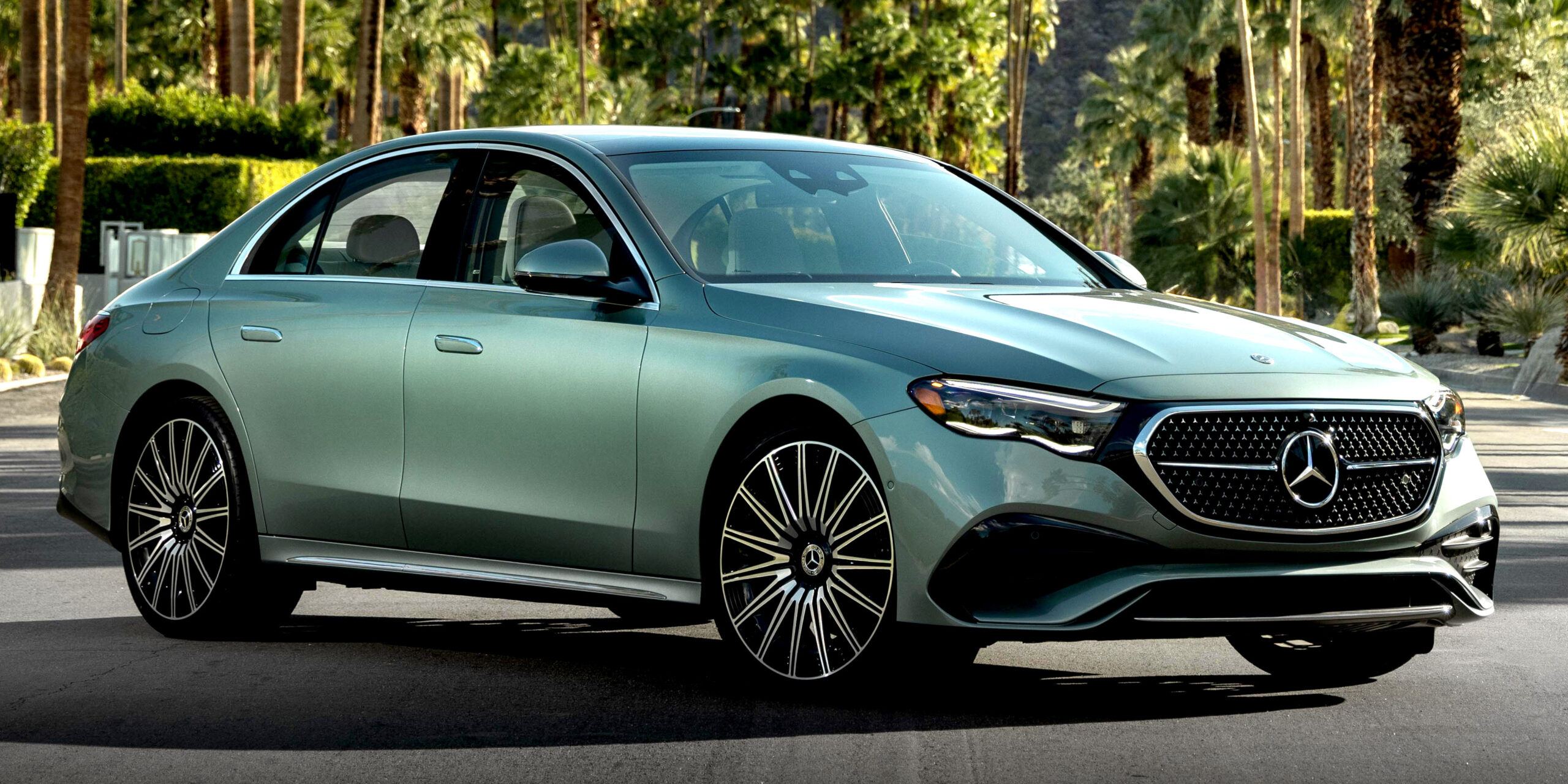
Mercedes will kill the EQE and replace it with a new EV sedan.
The new EV will resemble the current E-Class with EQ design.
A 94 kWh battery and dual motors are expected to power it.
Mercedes-Benz took a swing with the EQE sedan, but like the larger and more expensive EQS, it missed the mark. The model will quietly exit stage left before it reaches a second generation, clearing the way for a more conventional electric replacement built on familiar ground, the next-gen E-Class
Badged as the E-Class with EQ Technology, the new electric sedan was recently spotted undergoing testing under heavy camouflage in Europe. The spy shots don’t offer much clarity on what the final design will look like, but it’s reasonable to expect some styling cues from the electric GLC, reshaped into a more conventional three-box sedan profile
Grille Wars Aren’t Over Yet
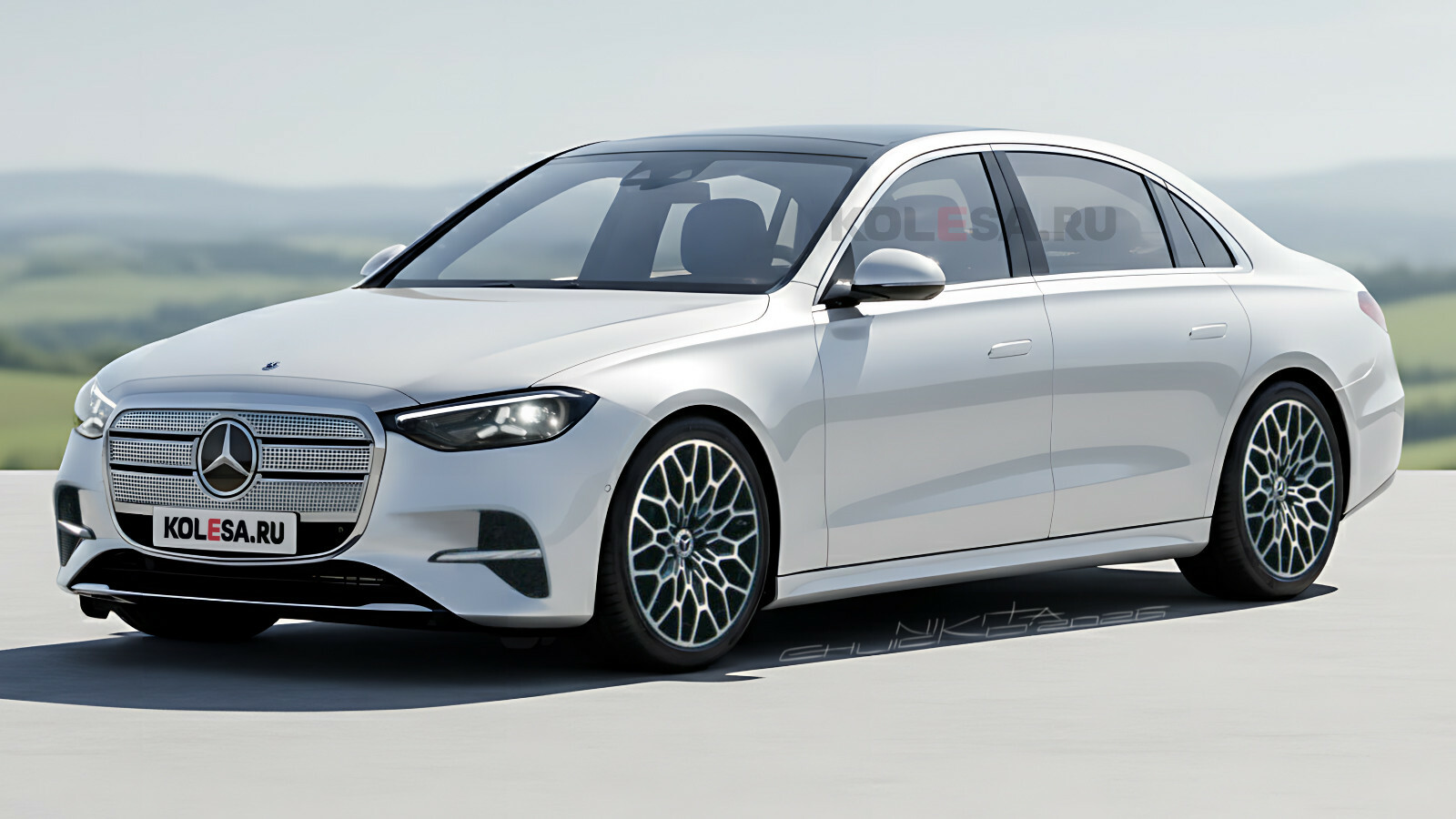
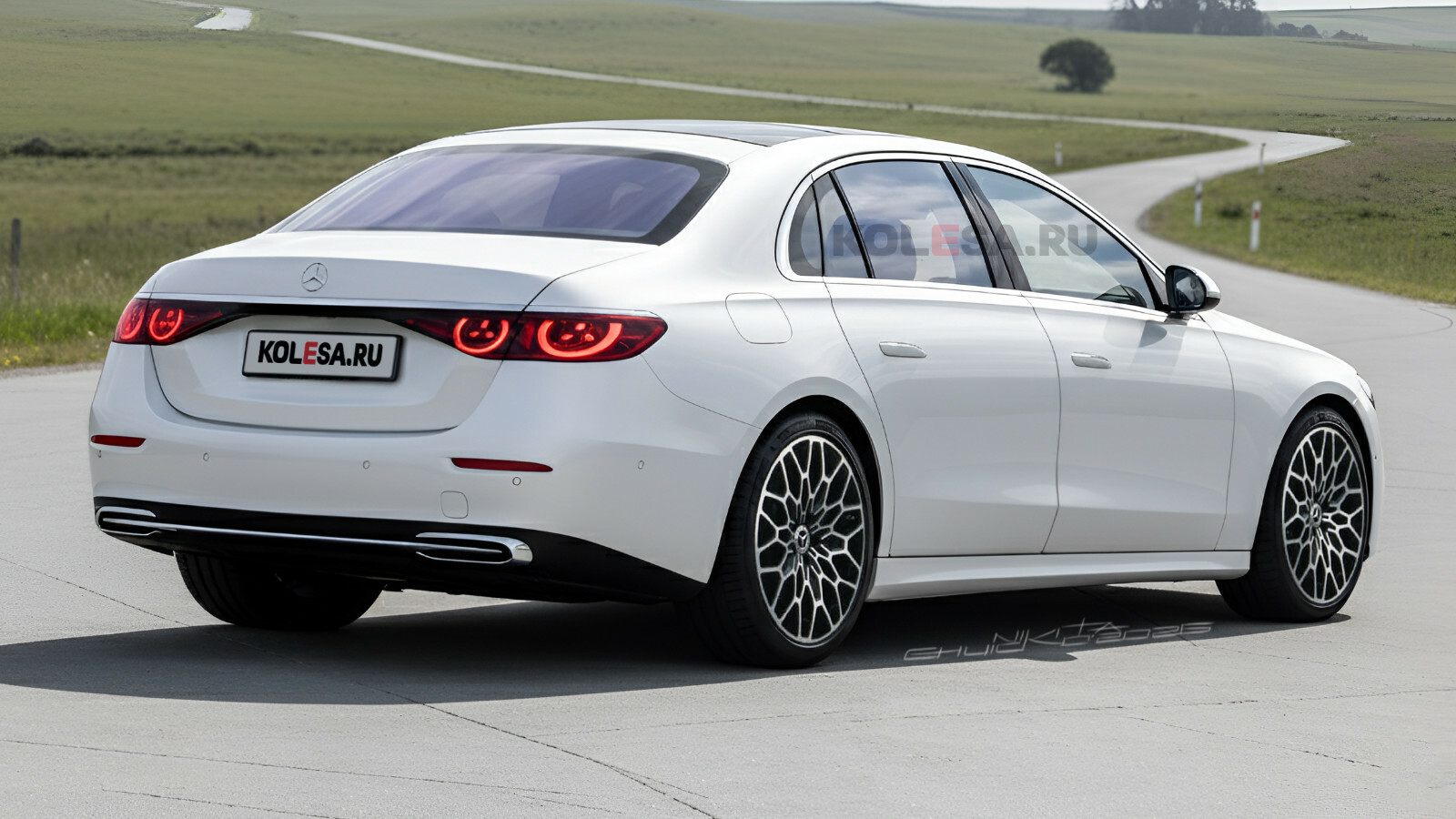
That’s where these renderings by Nikita Chuyko at Kolesa come in, offering a preview of what the finished car might look like. As with the GLC EV, it features a massive illuminated grille that dominates the front end. While BMW has started backing away from oversized grilles, Mercedes is going all-in with them.
For what it’s worth, the silver finish of the grille shown does nicely complement the car’s silver paint finish, so it doesn’t stand out like a sore thumb. Whether that same grille design will flatter a darker paint job is still an open question.
The E-Class EQ is also likely to get its own lighting treatment. Unlike the oddly sculpted headlights on the gas-powered version, this electric variant may adopt a cleaner look, potentially highlighted by star-shaped LED daytime running lights.
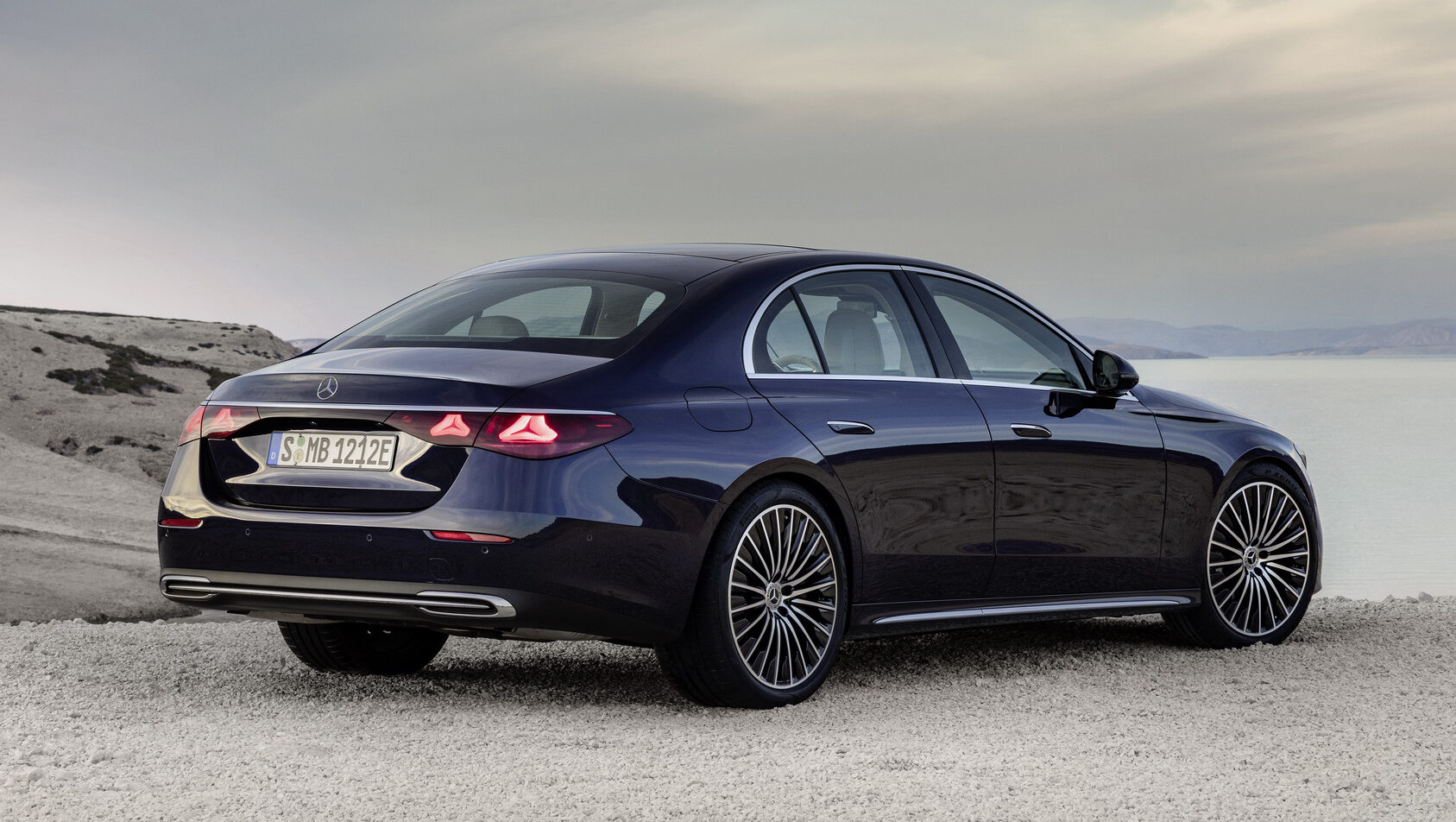
It’s a similar story at the back. Although the rear fascia shares a lot in common with the gas-powered E-Class, it could have distinctive taillights with new light signatures.
Another key difference we noticed on the prototype, and one reflected in these renderings as well, is the addition of a fourth side window that stretches behind the rear door frame. That said, Mercedes could also take a page from the Maybach S-Class, which uses a three-window layout with the final pane extending deep into the C-pillar.
What About Power?
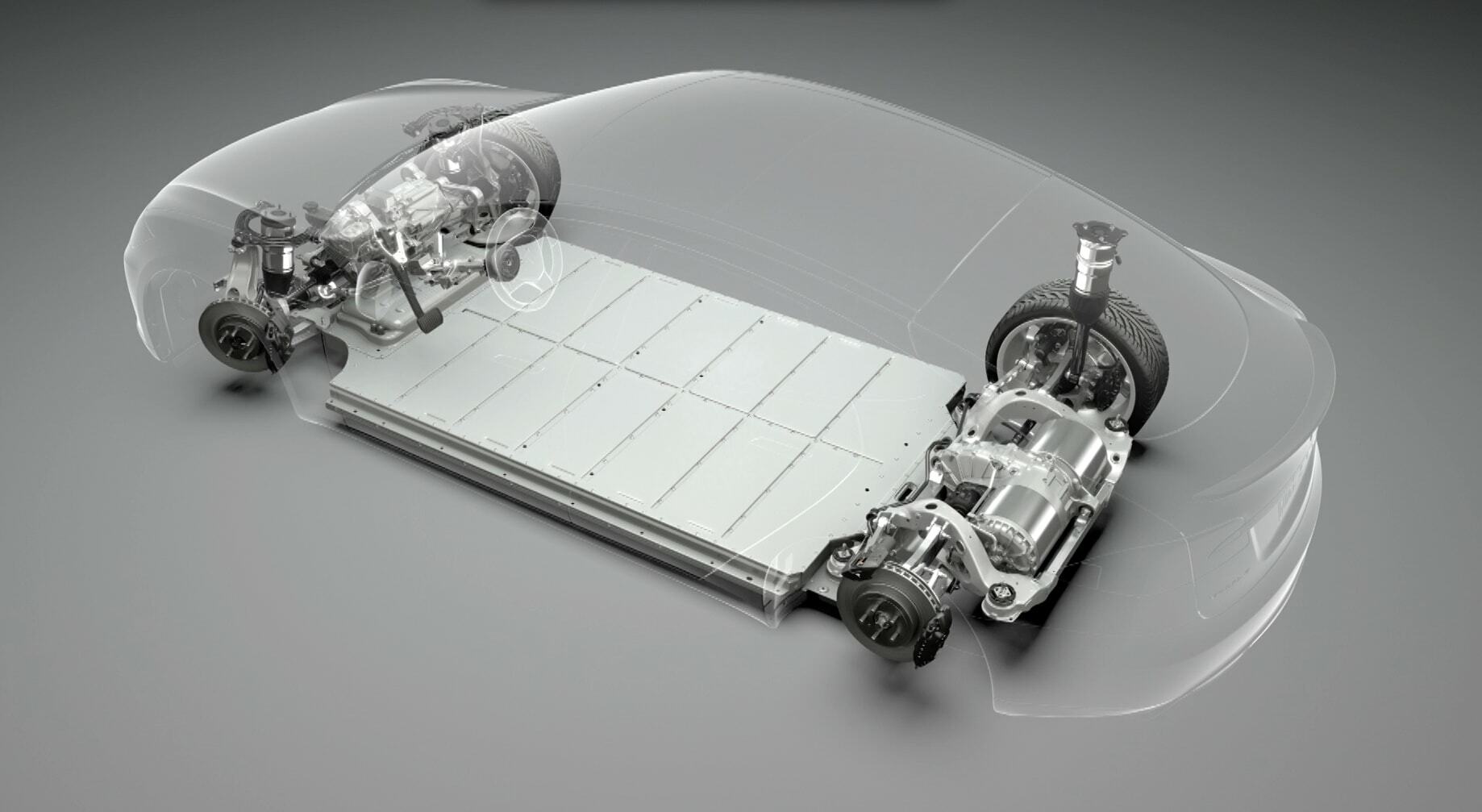
Carscoops understands Mercedes-Benz’s new electric sedan will use the same MB.EA platform as the GLC EV. That likely means it’ll share the same powertrain and battery options too. The only variant of the GLC with EQ Technology currently on sale, the GLC 400 4Matic, features a 94 kWh battery and twin motors delivering 483 hp and 590 lb-ft (800 Nm) of torque.
The sizeable battery is enough to give the SUV up to 444 miles (715 km) of driving range on the WLTP cycle. Given the slightly sleeker shape and lower profile of the E-Class EQ, it may boast an even more impressive driving range. An advanced 800-volt electrical architecture will also support charging speeds of up to 330 kW.
Tesla Model S battery replacement can exceed the car’s value.
Third-party battery options exist but still may not be worth it.
Used Model S values range between $10K and $15K today.
Electric vehicles come with some obvious perks, from impressive acceleration and near-silent driving to charging costs that are typically, though not always, lower than fueling up with gas. But there’s a flipside when things go wrong. Battery replacement isn’t just expensive, it can easily eclipse the value of the car itself.
Just ask the owner of this 2013 Tesla Model S, for example, now staring down a quote that’s far from reasonable.
This particular owner recently visited a Tesla service center in Madison, Wisconsin, to get estimates on a battery replacement. According to a post they shared on Reddit, they inquired about swapping out the existing 60 kWh pack for either the same model or a larger 90 kWh version. Both options came back with steep price tags that likely outstrip the resale value of the vehicle.
Battery Pricing Hits Hard
A replacement 60 kWh pack would cost $13,830. That includes $580.50 for labor, based on a 2.58-hour installation time. The rest, a hefty $13,250, covers just the battery itself. Not exactly light on the wallet for what is now Tesla’s smallest available battery on offer.
The price jumps significantly for the larger 90 kWh pack. The pack alone costs $18,000, with an additional $4,500 required to unlock its full capacity. Factor in installation and necessary replacement parts, and the total comes to $23,262.
That’s well beyond what most used Model S vehicles from the same year are currently worth. We found they typically range from $10,000 to $15,000, depending on trim and condition. From a financial standpoint, the upgrade cost doesn’t pencil out.
Reddit u/sirromnek
Reddit user u/sirromnek shared the experience, sparking discussion among other Tesla owners. While many have logged hundreds of thousands of miles on their original packs without issue, battery degradation isn’t unheard of. For some, the only path forward is a costly replacement.
While going directly to Tesla is an option, new batteries can also be purchased from third-party suppliers, often at a much lower price than Tesla offers. However, given that decade-old Tesla Model S sedans are barely fetching over $12,000, buying a replacement pack probably isn’t worth it.
Hyundai’s N Festival in Australia drew more than 350 cars.
Entry was AU$60, including track time and instructor support.
Non-N owners can attend through the new Nvy Track Sessions.
Building a loyal enthusiast following from the ground up isn’t something carmakers typically pull off overnight. For Hyundai, a brand that wasn’t exactly on anyone’s radar for fun, driver-focused cars to begin with, establishing its N performance sub-brand was not just about creating engaging machines. It was about cultivating a culture, and that’s a far more elusive achievement.
However, thanks to a host of owner-focused events, Hyundai Australia has done just that. There are now thousands of tightly-knit N owners across the country, helping the company’s creations become among the nation’s best-selling hot hatches. Not only that, but cars like the i20 N and i30 N have become genuine benchmarks in their respective segments.
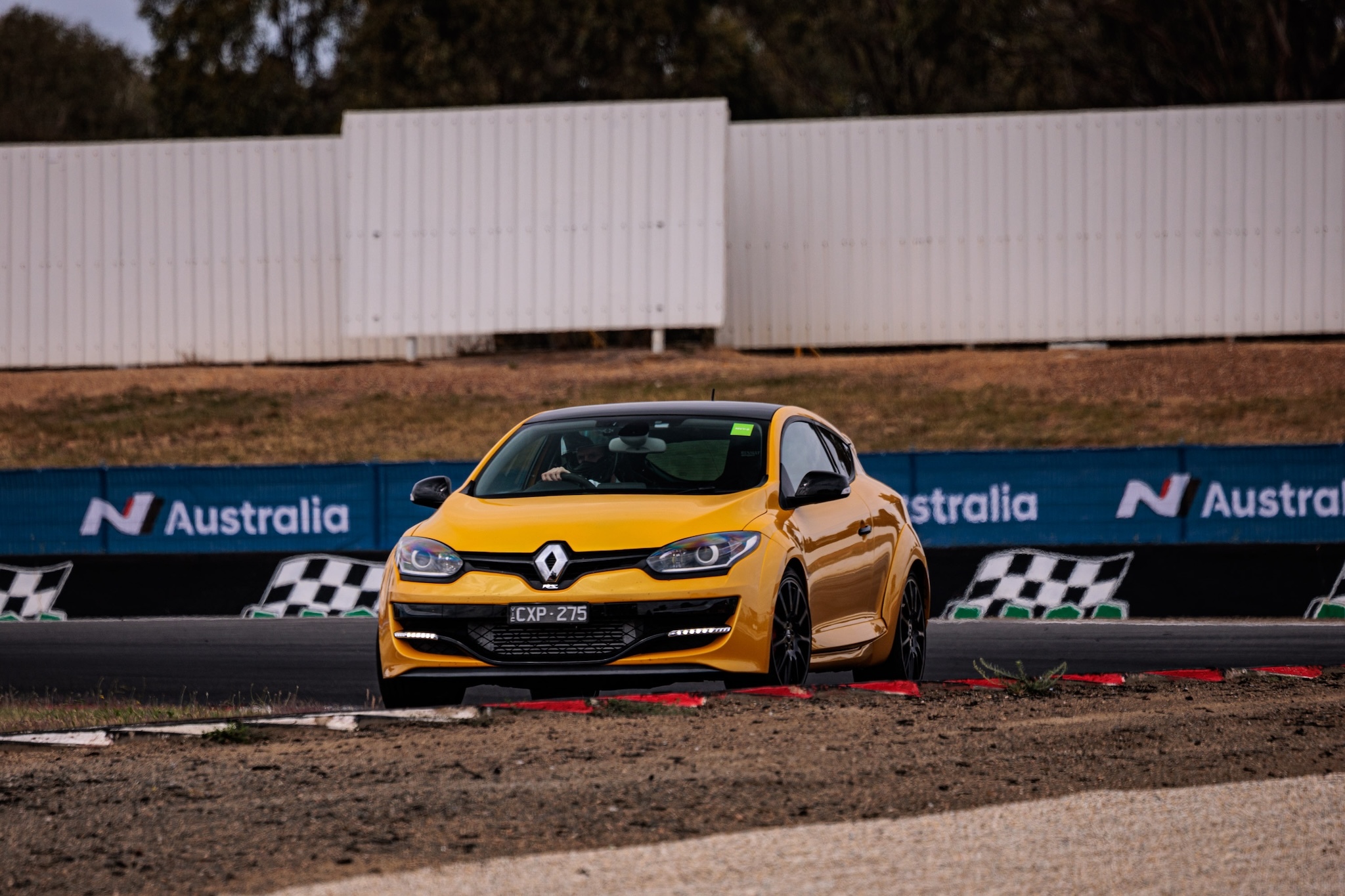
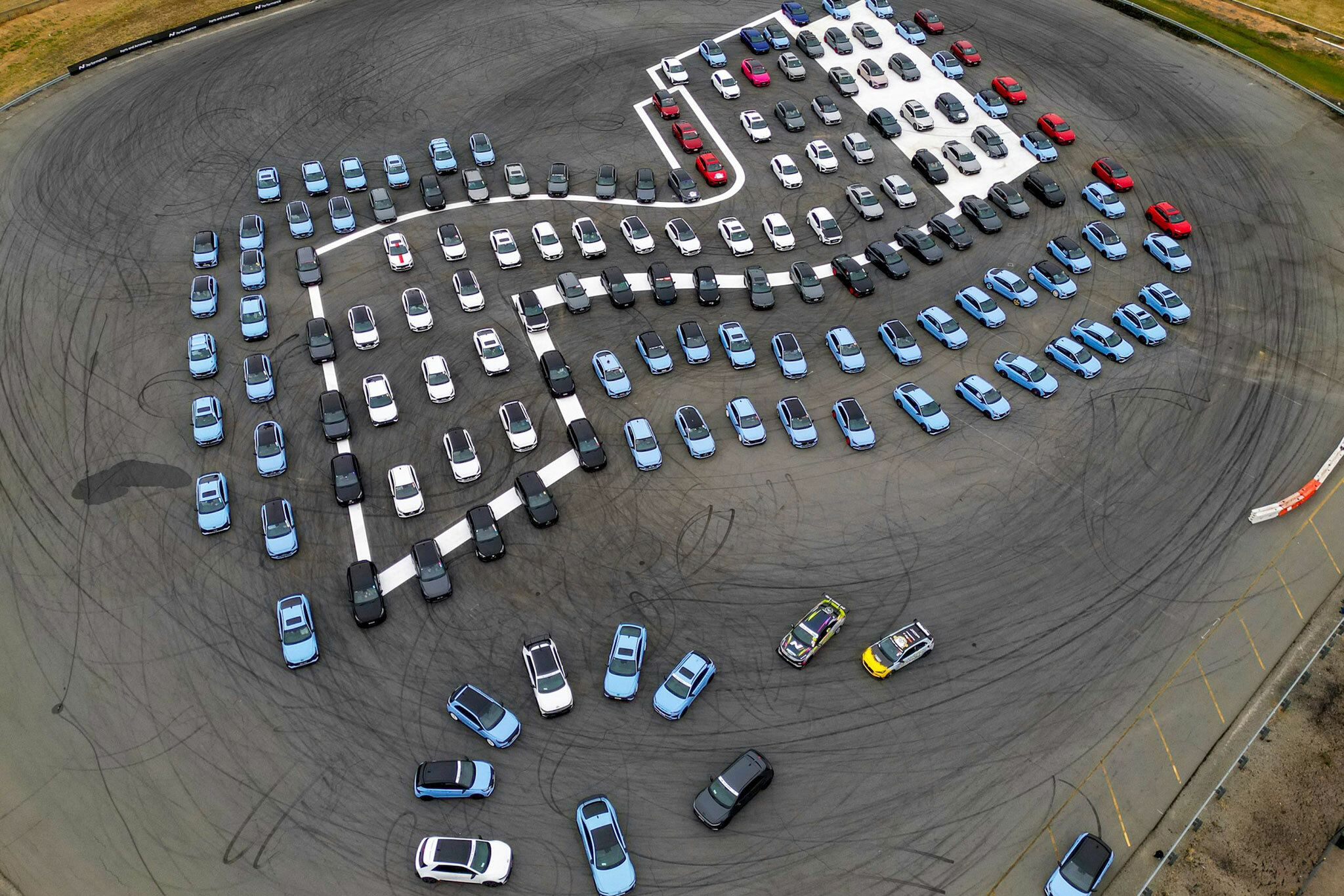
In late November, the annual N Festival returned for its seventh iteration, but with a twist. Not only was the event open to N owners, but also to a select number of owners from other brands, so we decided to join in with a bright yellow Renault.
Nvy
Hyundai N Australia
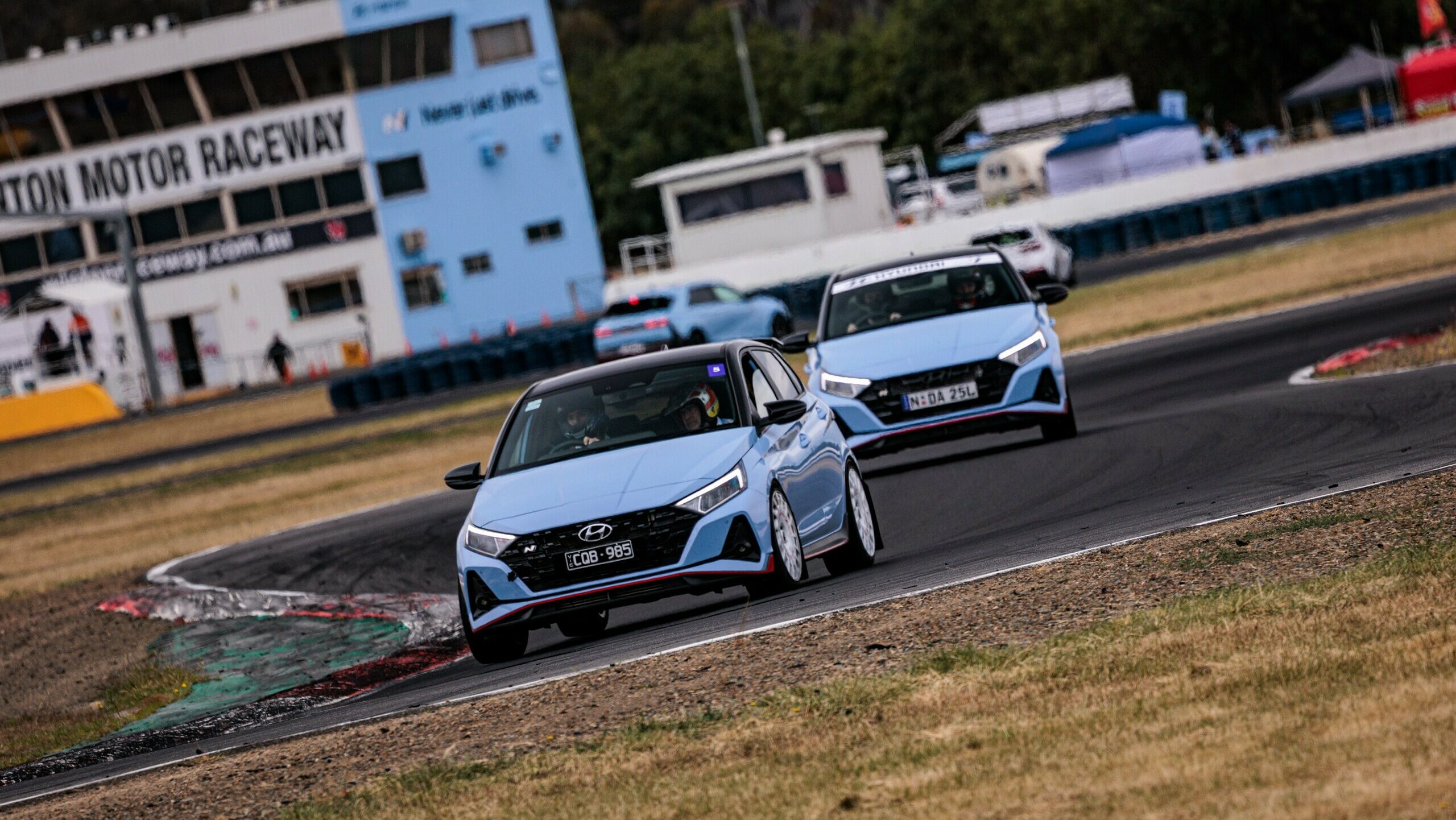
The 2025 event was held at Winton Raceway, roughly two hours north of Melbourne. As interest in the N Festival has increased in recent years, it’s no longer just an event run over Saturday and Sunday, but for the first time, it was extended to a three-day event. For eager owners wanting to get onto the track, there’s no better event.
More than 350 cars attended in December. To join in, all that was required was a AU$60 ($40) entrance fee. In return, owners get ample time on the track, a gift bag of N merchandise, and tutelage from experienced driving instructors. This makes it an absolute bargain, particularly since regular track days usually start at upwards of AU$300 ($200).
New to the 2025 N Festival were the ‘Nvy Track Sessions.’ These sessions were open to 20 non-N car owners each of the three days. To participate, you needed to receive an invitation from an N owner and to pay the same fee. I managed to secure a spot for my Renault Megane RS275.
On Friday, Saturday, and Sunday, participants were split into six groups of 20 cars, with one group for the non-N cars. Each group had five 15-minute sessions on the track, totaling 75 minutes across the day. For pretty much anyone not named Max Verstappen, that’s more than enough track time.
While I’ve done plenty of track days in the past, this was the first one in my Renault. The chassis and brakes are standard (for now…), although I have had it fitted with sticky Continental SportContact7 road tires, and the engine modified with a new intake, blow-off valve, intercooler, downpipe, and tune. It’s good for 219 kW (294 hp) and 445 Nm (328 lb-ft) of torque at the wheels, a healthy amount for the 2.0-liter turbo.
Hyundai N Australia
The temperatures were hot, pushing over 30° C (86° F) throughout my sessions, but my little French hot hatch performed flawlessly. There were some impressive cars in my sessions, like a new G80 BMW M3, an Audi RS5, a Porsche Cayman GT4, modified Toyota Supras, and a tuned Toyota GR Yaris, but I had no issue reeling each of them in and overtaking.
Just like the i30 N is considered among the best hot hatches on the market, the third-generation Megane RS275 was held in similarly high regard when it was launched. Honed on the Nurburgring, it felt right at home on the circuit, providing immense levels of grip, combined with superb stability under braking and great straight-line pace. Admittedly, my tires now look a little worse for wear.
Ns On The Track
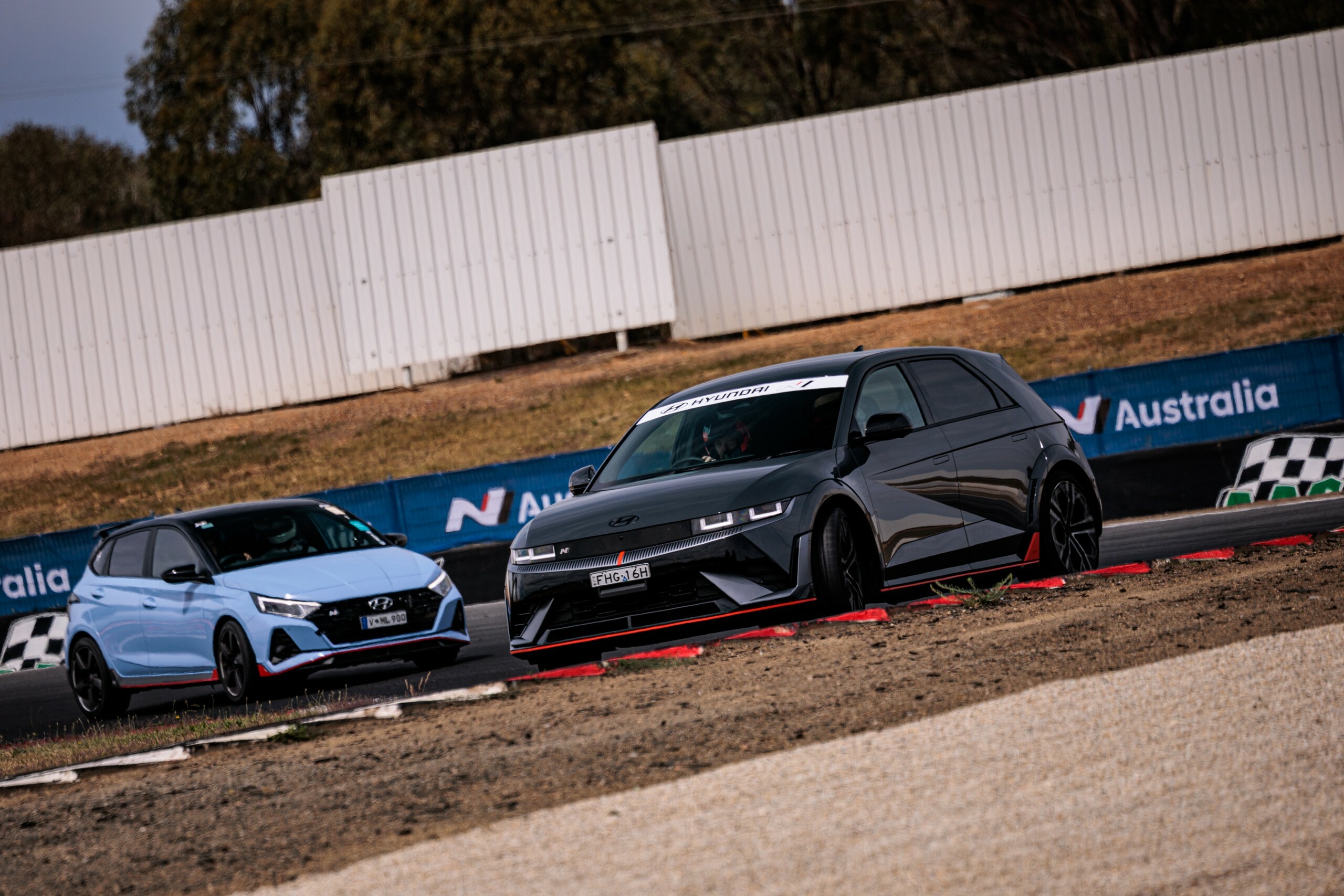
Of course, it was the Hyundais that were the real stars of the day. Hyundai Australia brought along a slew of press cars for journalists to test out. I managed to snag some seat time in each of the company’s current models, including the i20 N, i30 N hatch, i30 N Sedan, and the potent Ioniq 5 N.
Winton Raceway is quite a tight, short track, perfect for hot hatches like those from Hyundai rather than high-horsepower monsters. The pint-sized i20 N proved to be the perfect companion for the circuit.
While the i20 N only has a 1.6-liter turbocharged four-cylinder and is down more than 50 kW (67 hp) over the i30 N, it had no issue sticking with its bigger brothers on the circuit. It feels incredibly nimble and responsive, particularly around the circuit’s sweeping bends and tighter corners, often lifting one of its rear wheels as the front tires stick mercilessly to the track.
As standard, the i20 N comes with Pirelli P Zero NH tires, and they perform brilliantly on the track. As the day progressed, they did start to lose some grip, but importantly, they remained predictable despite the wear. The only issue I encountered was difficulties downshifting from 3rd to 2nd with the auto-rev match function enabled, something I also experienced at the N Festival back in 2022.
Extra Power, Extra Thrills
For those seeking superb on-track handling, combined with on-road comfort, and great straight-line speed, the i30 N hatch and i30 N Sedan remain among the best options on the market. While they may share a name, the i30 N Sedan has a longer wheelbase than the hatch and is based on a different chassis. In most of the world, it’s known as the Elantra.
In a straight line, the i30 N hatch is a little sprightlier. While both cars have the same 2.0-liter turbocharged four-cylinder and are advertised with the same 206 kW (276 hp) and 392 Nm (289 lb-ft), the hatch’s boost pressure peaks at 17 psi, whereas it usually sits around 14 psi in the Sedan. This is because the sedan has Hyundai’s controversial ‘Octane Learning Mode’.
To enable the full 17 psi, you’ll have to either drive in 8th gear between 109-159 km/h (68 -99 mph) for 5 minutes or more, or drive for 5 minutes or more in 44th or 5th gear at 40-70% throttle between 40-120 km/h (25 -75 mph). Obviously, this isn’t achievable on a track. Many owners I spoke to have had their cars tuned to unlock full boost without having to do this procedure.
The duo also feels quite different through the turns. Both stick extraordinarily well, providing enough grip to warp your face. However, the hatch is noticeably stiffer and feels a little lighter. By comparison, the i30 N Sedan feels more stable, owing to the longer wheelbase, and is easier to find the limits in. On the track, we prefer the hatch, but on the road, it’s the Sedan that stands out.
What the Ioniq 5 N Does Best
We also had the opportunity to do a few hot laps in Hyundai’s potent Ioniq 5 N. This is the performance car that has redefined what we thought was possible for an EV. Not only is it extraordinarily quick, but it’s also loads of fun to drive. It’s no surprise that Porsche and Lamborghini have benchmarked their EVs against it.
Obviously, the dual-motor powertrain makes the Ioniq 5 very quick in a straight line. However, because Winton’s straights are quite short, it doesn’t get much room to stretch its legs. Thankfully, it shines in other ways, particularly in its handling dynamics.
Thanks to some engineering trickery, it’s possible to shift the amount of power sent to the front and rear wheels. As such, the Ioniq 5 N can be driven effectively as a front-wheel-drive or rear-wheel-drive car. This means it is inherently more configurable and playful than Hyundai’s other N products. The downside? It’s electric, meaning it’s not so practical for track use unless a circuit has a DC fast charger.
Track Day Antics
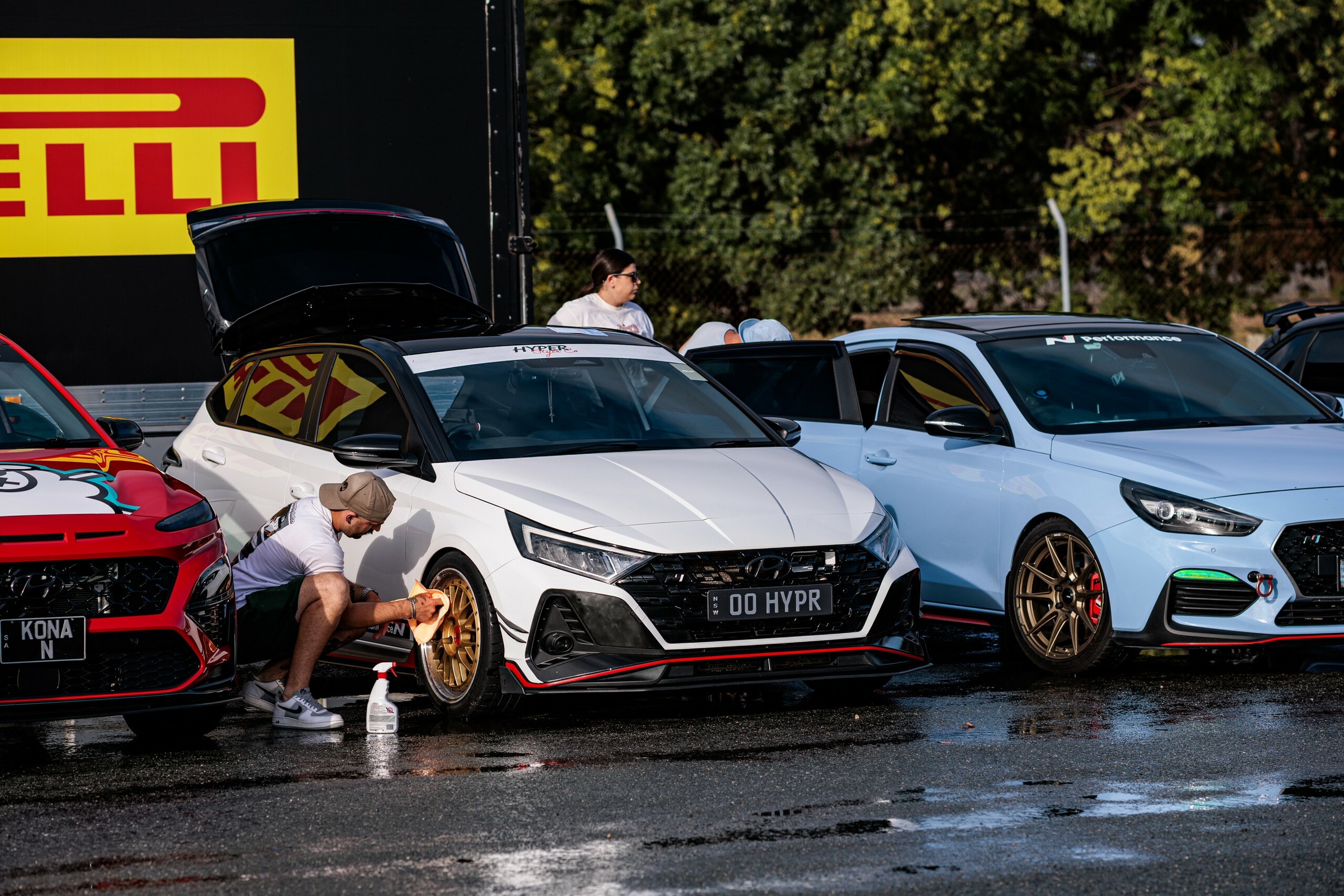
The 2025 N Festival didn’t just include dozens of track sessions. This year, owners were also able to participate in a series of head-to-head rolling races to see who owns the quicker car in a straight line. There was also a Show’N Shine and an organized drive through some of the circuit’s neighboring country roads.
Australia’s N Festival has established itself as one of the best events on Australia’s track day calendar, and it’s easy to see why. It’s affordable, well organized, and welcoming. I’m sure it convinced some non-N owners to call up their local Hyundai dealership and place an order. As for me, used Ns remain out of my price range, so I’ll be keeping my French hot hatch.
BMW could offer EV and gas versions of the next 4-Series.
Shared 3-Series development keeps cost and risk lower.
New V8 and V12 engines meet Euro 7 with minor updates.
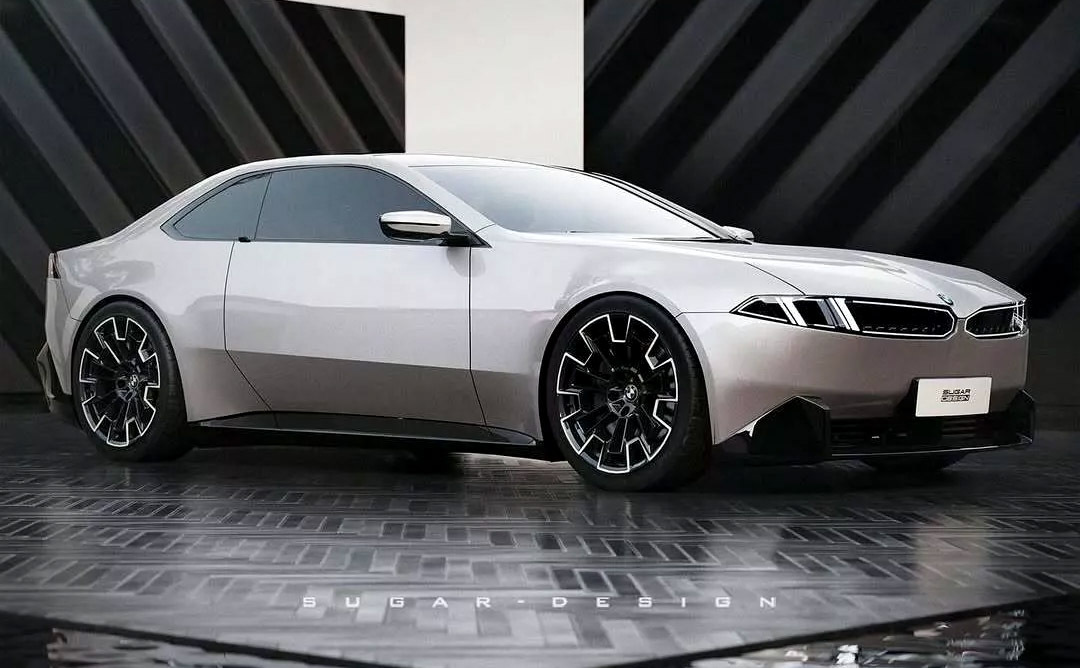
Despite the shrinking demand for coupes, BMW isn’t backing away from the segment just yet. A third-generation 4-Series is on the way, and it’s not just a box-ticking refresh. The new model looks set to play a bigger role in BMW’s long game, possibly offering both electric and combustion versions, plus a next-gen M4 flagship in the mix.
BMW has been producing the current-generation 4-Series since 2020, offering it in multiple forms including the Gran Coupe and the all-electric i4. The latter has held the distinction of being BMW’s best-selling EV to date, but that role is soon expected to shift to the i3 version of the next-generation 3-Series.
That transition has raised questions about where the 4-Series fits into BMW’s evolving electric and combustion plans.
While recently speaking with Autocar, BMW’s head of engineering and development, Joachim Post, emphasized that the 4-Series remains strategically important. He also pointed out that creating a new generation of the car would be relatively cost-effective, thanks to shared development with the next-gen 3-Series.
Platform Synergies Keep Coupes Alive
“The 4 Series is an important car for us,” he told the magazine. “It’s more sporty, and BMW is a sporty brand which has a clear heritage also on the performance side. It will play an important role also for the future. It’s not [as] expensive [as] making a completely new car and whenever we make a 3 Series or X3, we still think about the 4 Series or X4, to make it with synergies so that a derivative can be easily built out of the base.”
Post pointed to the benefits of what BMW calls “high synergies” between models like the 4-Series, X4, and X6. By leveraging shared components and platforms, BMW can build lower-volume body styles without incurring the full cost of starting from scratch. That gives models like the 4-Series a clearer business case, even in a less crowded coupe market.
If BMW does indeed launch a new 4-Series, it will follow the same path as the next 3-Series. That means we could potentially see both combustion and electric versions, each built on different platforms. The gas-powered model would use an updated version of the familiar CLAR platform, shared with the next-gen 3-Series, while the EV would ride on BMW’s Neue Klasse architecture, the same one underpinning the upcoming i3 and iX3.
Of course, there’s still a chance BMW could commit to just one direction, but for now, it hasn’t made that call publicly.
What we do know is that the Neue Klasse is already confirmed to support an electric iM3, which makes an iM4 Coupe feel entirely plausible. On the combustion side, BMW has also said the next M3 will stick with its six-cylinder engine in mild hybrid form, keeping the door open for a new gas-powered M4 Coupe as well. Whether we get both versions or just one remains to be seen.
If there’s an electric version of the 4-Series, expect a setup similar to the forthcoming i3, powered by BMW’s 108kWh battery pack. Rear- and dual-motor powertrains are also on the menu. Although Post hasn’t revealed performance targets, early indications suggest a range exceeding 500 miles is within reach.
Whatever BMW ends up doing, it’s obvious that the rest of the field is thinning out. Audi has dropped the A5 Coupe, and Mercedes has merged its C-Class and E-Class coupes into one model, the CLE. With fewer players still in the mix, BMW might find itself with a bit more room to maneuver on the sales front.
During the same interview Post noted that BMW has already developed its next-generation of engines to comply with Euro 7 regulations. This means the current twin-turbo 3.0-liter S58 straight-six of the M3 and M4 will live on, albeit upgraded with a mild-hybrid. He also confirmed that large V8 and V12 engines are safe, including the 6.75-liter V12 used by Rolls-Royce.
“We can fulfill Euro 7 with some optimization in the exhaust system – with things like the catalysts – so that’s why we have a big advantage in that Euro 7 is not that high an investment for us,” he revealed.
New growth hotspots emerged far outside traditional markets.
A major federal incentive ended late in the calendar year.
Charging access still varies widely across state lines.
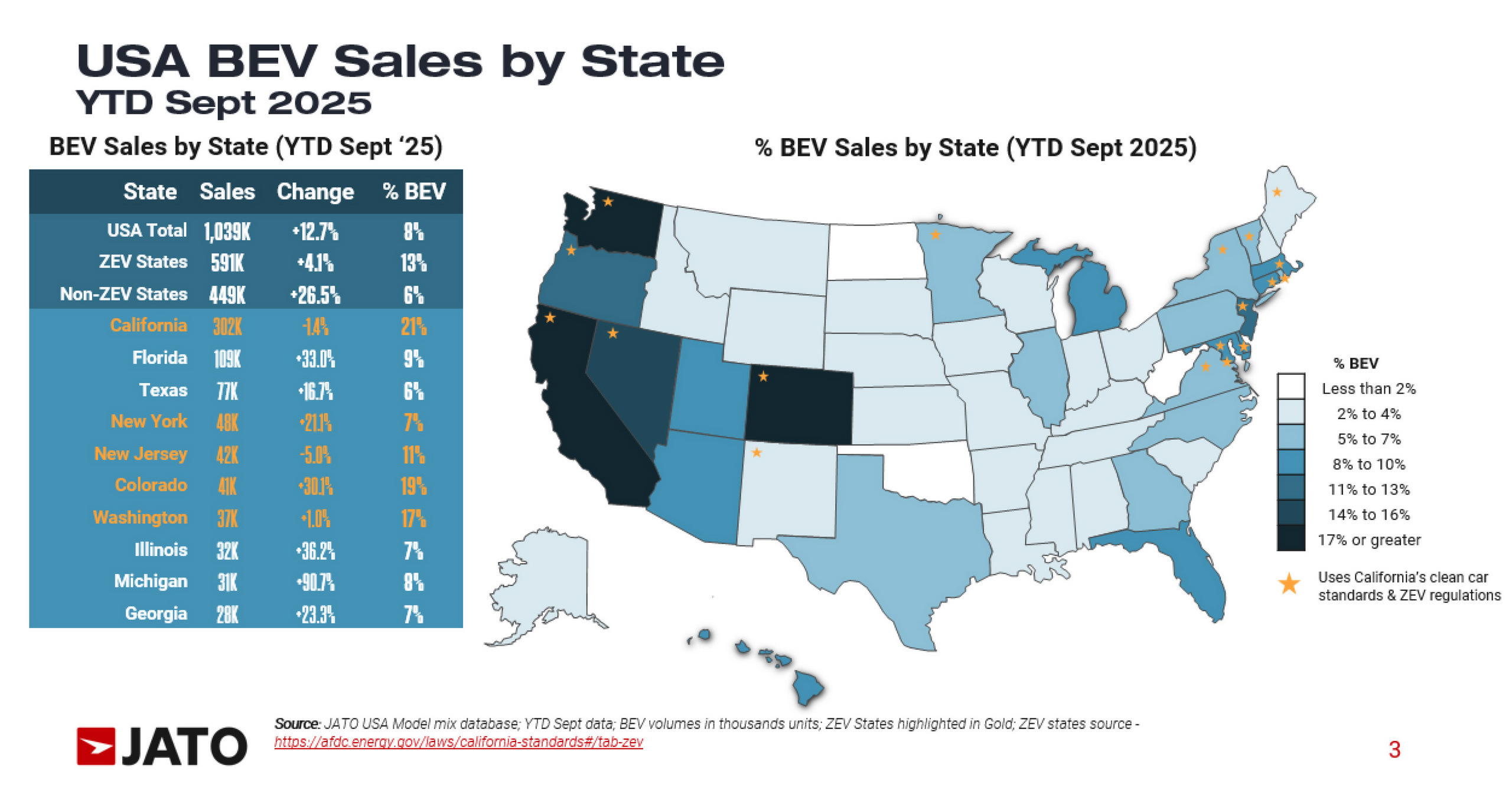
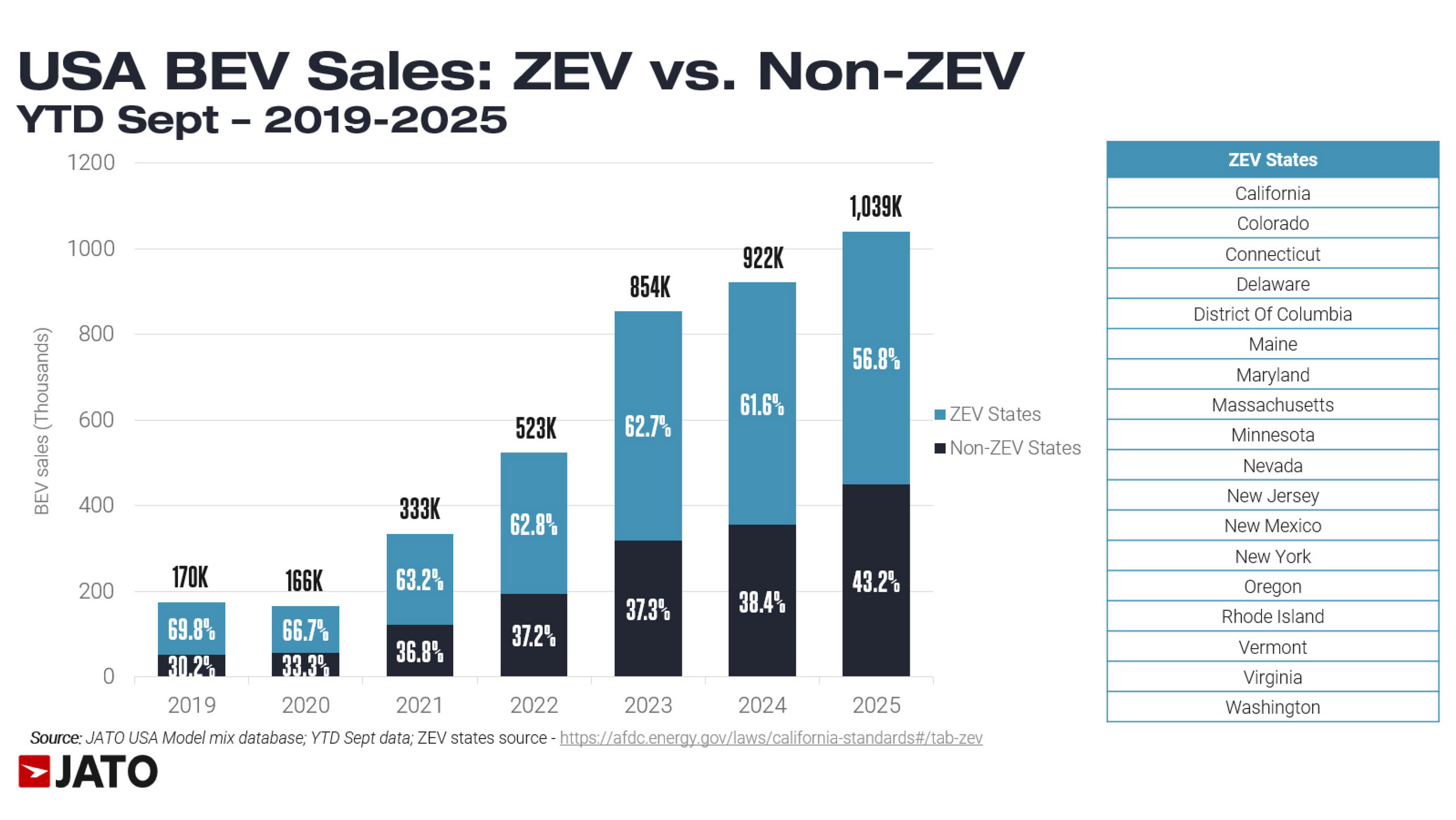
After years of leading the national shift toward electric vehicles, California may be approaching an inflection point. For the first time since the pandemic, EV sales in the state are expected to dip in 2025, even as several other states report a sharp rise in adoption.
Data from JATO Dynamics shows that during the first nine months of 2025, before the federal EV tax credit ended, roughly 302,000 electric vehicles were sold in California. That figure represents a 1.4 percent decrease compared to the same period last year, hinting that the state’s EV market could be nearing saturation.
We don’t have figures for the last quarter of the year, but given the elimination of the $7,500 federal tax credit on September 30, it’s safe to assume the final numbers will look worse, unless buyers suddenly developed a taste for paying more.
Despite this, California remains well ahead of the pack. EVs now account for 21 percent of new vehicle sales in the state, placing it above the District of Columbia (19 percent), Colorado (19 percent), Washington (17 percent), Nevada (16 percent), and Oregon (13 percent).
ZEV States Surge
Several of these ZEV states saw marked gains last year. For example, New York’s EV sales rose 21.1 percent in the first three quarters, while Colorado posted a 30.1 percent increase. On average, EVs make up 13 percent of new car sales in ZEV states. In contrast, non-ZEV states average just 6 percent, contributing to a national average of 8 percent.
EV sales also rose sharply in many non-ZEV states during the same period. Florida, in particular, recorded an impressive 33 percent jump between January and September 2025, reaching 109,000 units, which now represent 9 percent of new vehicle sales.
That jump in Florida is notable not only for its scale, but also because it comes without the backing of ZEV mandates or aggressive state-level incentives. In a politically conservative state where environmental policy isn’t front and center, the increase suggests that consumer demand, not legislation, is doing the heavy lifting.
Texas followed with a 16.7 percent rise to 77,000 units. Illinois saw a 36.2 percent increase, reaching 32,000. Georgia posted a 23.3 percent bump to 28,000, while Michigan led in growth rate, soaring 90.7 percent to 31,000 EVs sold.
“The rapid uptake in BEV sales in Michigan is a clear example of why growth in traditionally non-ZEV states presents such a valuable opportunity for domestic brands,” JATO analysis and reporting specialist Anthony Puhl said.
“While it is possible for a brand to break into a new market, as Tesla has done on a national level, we expect BEV sales in other states to come from brands with which the population is already familiar.”
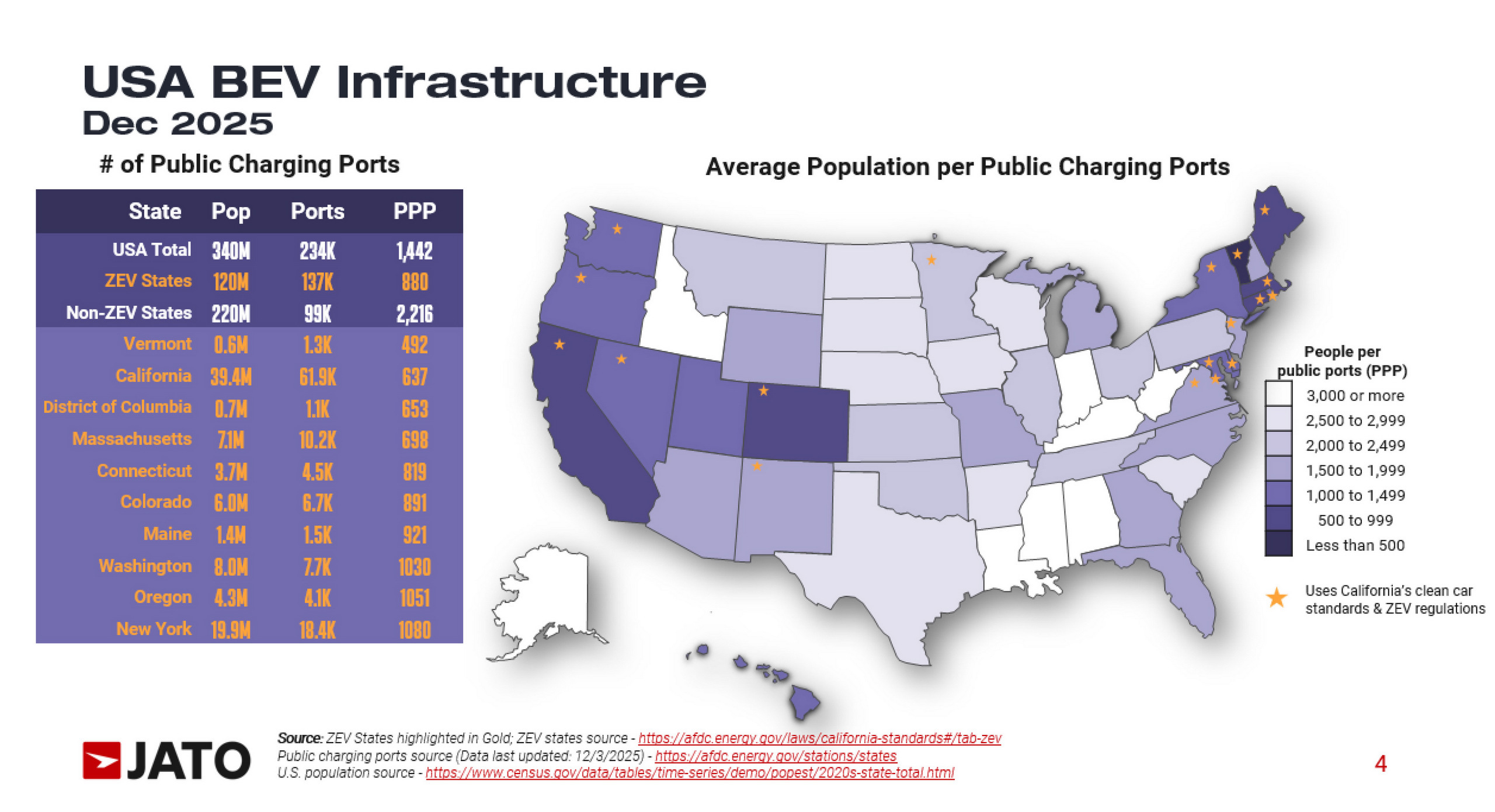
One of the key hurdles for EV adoption in non-ZEV states remains charging infrastructure. In ZEV states, there’s approximately one public charging point for every 880 people. In non-ZEV states, that number jumps significantly to one for every 2,216 people, highlighting a critical gap in support systems for EV owners.
BMW’s electric M3 uses soundtracks from past M performance icons.
It blends V8, inline-six, and V10 engine notes into its EV profile.
The M3 EV will feature simulated shifts with optional sound modes.
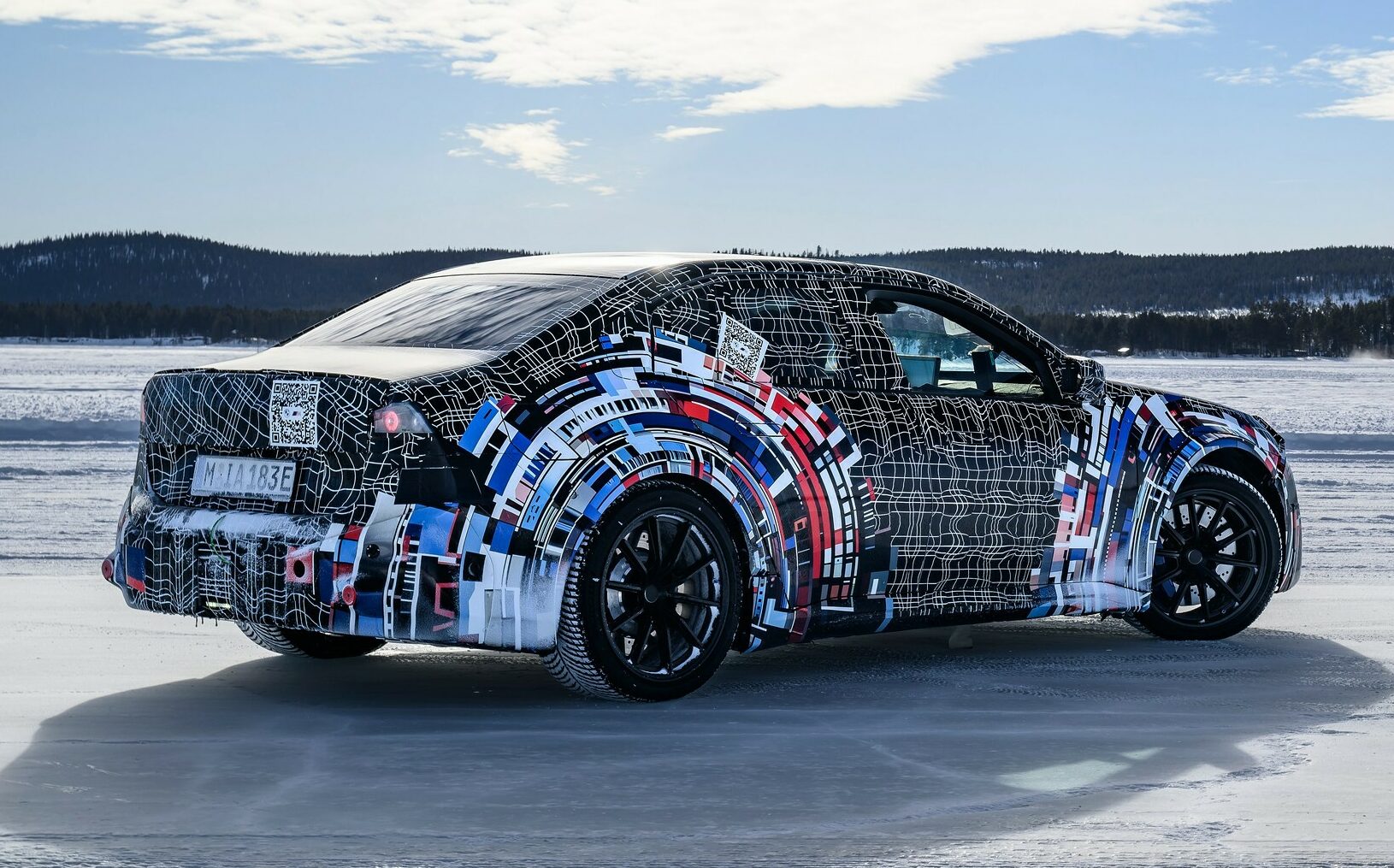
Breaking into the electric performance space is a delicate task for a brand like BMW M, which has spent decades building its reputation on combustion-powered icons. But that’s exactly what it’s attempting with the Neue Klasse-based electric M3, or, as it may end up being called, the i3M.
The upcoming high-performance EV won’t replace the traditional ICE-powered model, though. Instead, it’s designed to sit alongside it, borrowing cues from BMW M’s most celebrated models to bridge the old and the new. Or at least that’s the promise.
BMW M released the latest chapter in its video series detailing the development of the new super sedan, previewing the distinctive soundscape it plans to offer. Taking a page from Hyundai N’s playbook, BMW aims to replicate the sounds of some of its most iconic models, blending them with the unique tone of a high-performance EV.
Chasing the Sound of the Past
Rather than relying solely on software to mimic engine sounds, BMW assembled an M3 GTS with a 4.4-liter V8, an M4 GTS with its 3.0-liter twin-turbo inline-six, and a classic BMW M6 featuring the brand’s iconic 5.0-liter naturally aspirated V10. Their engine notes were recorded on a dyno, then layered into the soundtrack of the electric prototype.
The clip only demonstrates the soundtrack of the electric M3 for a brief moment while being put through its paces on BMW’s test track. As the driver hits the throttle, it begins to sound like a turbocharged engine building boost as the revs climb. There are also some notable turbo whistles, mixed in together with some of the high-pitched whine expected of an EV.
Performance to Match the Drama
Like the Hyundai Ioniq 5 N and Ioniq 6 N, BMW’s electric M3 will also include simulated gear shifts to match the synthetic engine notes. For drivers who prefer their EV experience unfiltered, these features are expected to be optional and easily switched off.
Of course, the electric M3 will need to be more than just good-looking to convince shoppers. BMW has confirmed it’ll be fitted with four electric motors and a 100 kWh battery pack that’s up to the task of track use.
While BMW hasn’t revealed any final power figures, we know that each wheel will be controlled individually, allowing for advanced torque vectoring for better performance and handling. There will also be an optional rear-wheel drive-only mode.
Rivian issued a recall for 869 R1T and R1S vehicles in the US.
Second-row seatbelt retractor bolt may be loose or missing.
Rattling noise near the C-pillar could hint at the loose bolt.
For the second time in as many months, Rivian has issued seatbelt-related recall in the States. While the last action involved nearly 35,000 units of its electric delivery van, this latest one affects a smaller number of consumer vehicles and specifically, the 2022–2025 Rivian R1T and the 2022–2026 Rivian R1S.
According to the company, the second-row seatbelt retractor bolt might not have been correctly installed during production. If improperly secured, the retractor could fail to restrain passengers in a crash, posing a higher risk of injury for those seated on the driver or passenger side.
Rattles May Hint at a Problem
In some cases, owners may notice a rattling sound coming from the area around the left or right C-pillar. Apparently, this can be an early sign that the seatbelt retractor wasn’t firmly fixed in place.
The recall affects a total of 869 vehicles, evenly split between both models. That includes 434 R1T trucks built from September 15, 2021, through April 10, 2025, and 435 R1S SUVs manufactured between May 9, 2022, and May 15, 2025.
Rivian reports no known accidents or injuries linked to the issue. The company first took notice on September 16, 2025, when a technician discovered a loose retractor during a routine service on an R1T. After months of follow-up, Rivian says it hasn’t uncovered additional defective assemblies but has still opted to move forward with the recall as a precaution.
Owners will be alerted to the recall from March 9. To resolve the problem, Rivian will properly secure the seatbelt retractor assembly in any affected vehicles free of charge.
This recall is unrelated to the earlier issue involving the company’s EDV vans. In that case, the problem stemmed from repeated misuse, where the seatbelt pretensioner could be damaged if the driver sat on the belt while it remained buckled beneath them.
Canada cut Chinese EV tariffs from 100 percent to 6.1 percent.
Doug Ford slammed the move, warning it risks local auto jobs.
Premier wants Canadians to boycott imported Chinese EV models.
Just days after Canada and China finalized a trade agreement slashing tariffs on Chinese electric vehicles from 100 percent to 6.1 percent, Ontario Premier Doug Ford has gone on the offensive.
Warning that the move could deliver a serious blow to Canada’s domestic auto industry, Ford is urging Canadians to steer clear of Chinese EVs altogether and “boycott” them, arguing the deal risks local jobs and undermines the country’s manufacturing base.
Ford didn’t wait for the details to land before voicing his concerns. Long before the tariff change was confirmed, he was already firmly against any auto-related trade agreement with China. According to the Ontario Premier, Prime Minister Mark Carney pushed the deal through without proper consultation.
Ford Sounds the Alarm on Local Jobs
“Maybe a few people might buy them, and I just discourage anyone from buying a Chinese vehicle,” Ford said at a press conference.
“But if they decide to do that, at what cost is it? Is it at the cost of your neighbor down the street that’s working in the auto sector that he’s not going to have, or she’s not going to have a job? Boycott the Chinese EV vehicles. Support companies that are building vehicles here. This is a team Canada approach. We gotta stick together.”
Who Really Benefits From the Deal
In announcing the dramatic tariff reduction, Carney stated that several Chinese carmakers have shown interest in building affordable electric vehicles on Canadian soil. Under the new deal, 49,000 EVs from China can be imported to Canada at the lower 6.1 percent tariff. Although Carney would welcome Chinese brands building cars locally, Ford isn’t convinced by the idea.
“The numbers just don’t add up,” he said. “Even if they do start assembling, how about the supply chain? They come, and they assemble, but they bring all Chinese parts in; that means nothing. We want to make sure we produce Canadian cars by Canadians, with the R and D and the specs and everything, and the steel, and the aluminum from Canada. It’s as simple as that.”
Are EV Incentives Needed?
Ontario Green Party Leader Mike Schreiner, speaking to CTV News, said the province should be looking at practical steps to build demand for Canadian-made EVs instead of clearing the way for imports.
“The federal government’s deal with China threatens Ontario’s automotive industry,” he claimed. “This is even more reason for the premier to take bold action to bring forward a complete plan to protect Ontario workers by going all-in on incentives to create demand for Ontario-made EVs.”
GM recalled over 80,000 Equinox EVs in the United States.
The pedestrian warning system isn’t loud enough to hear.
This marks the second recall for the same safety issue.
The Chevrolet Equinox EV is one of GM’s most important electric vehicles, serving as a homegrown competitor to the likes of the Tesla Model Y and Ford Mustang Mach-E. But more than 80,000 units are now being recalled across the United States for a rather unusual reason: they’re too quiet.
Under US regulations, all new electric vehicles must emit a pedestrian warning sound at speeds below 6.2 mph (10 km/h) to ensure they’re audible in areas like parking lots. While the Equinox EV is equipped with such a system, GM has admitted it isn’t doing its job properly. The system was miscalibrated during production and doesn’t produce sufficient sound to alert nearby pedestrians.
Given the volume of vehicles rolling out of GM’s Ramos Arizpe Assembly plant in Mexico, this isn’t the sort of issue that should have slipped through unnoticed. According to the National Highway Traffic Safety Administration (NHTSA), an Equinox EV that can’t be heard poses a genuine risk to pedestrian safety.
The recall affects a total of 81,177 Chevrolet Equinox EVs. Of those, 59,537 are from the 2025 model year, built between July 22, 2024, and August 12, 2025. The remaining 21,640 units belong to the 2026 model year and were assembled between April 7 and December 16 of 2025.
GM launched an internal investigation in November after one of its engineers filed a report through the company’s Speak Up For Safety program, flagging the issue during testing of a 2025 model.
Surprisingly, this isn’t GM’s first brush with a too-quiet Equinox EV. In September of the previous year, the automaker recalled 23,700 units from the 2024 model year for the exact same problem. Those earlier vehicles used a different calibration than the 2025 and 2026 models now being flagged.
The one bit of relief for owners is that the fix is straightforward. GM will deploy an over-the-air update to recalibrate the body control module. For those who prefer in-person service, a dealership visit remains an option. Notifications will begin reaching owners on February 2.
Tesla’s Cybercab was spotted testing in Chicago with mirrors.
The prototype now features a rear camera washer, a Tesla first.
Original concept lacked pedals, mirrors, and steering wheel.
Tesla’s Cybercab may be the company’s most pivotal vehicle since the Model Y, aiming to put self-driving technology within reach of the average buyer. Development appears to be moving along as the company works to ensure the aerodynamic two-door can handle the demands of daily driving, which, in Tesla’s case, can often mean leaving a few details to be sorted out after launch.
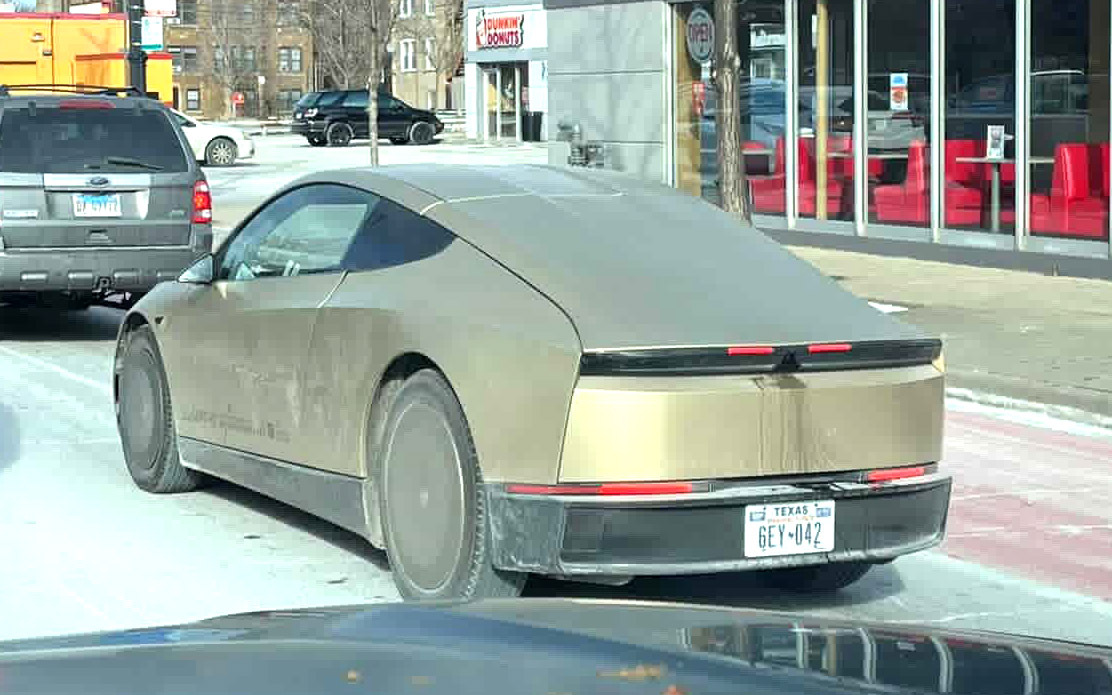
Progress, though gradual, appears to be underway. This week, an uncamouflaged Cybercab prototype was spotted cruising through Chicago by Instagram user Fbombbaggers (via DennisCW /X).
Sporting Texas plates, the test vehicle looks nearly identical to the concept shown in late 2024, though a few practical adjustments have been made to prepare it for the street.
The most obvious update is the presence of small triangular wing mirrors, a feature notably absent from the concept. But it’s not the mirrors that have Tesla fans excited. It’s the fact that this prototype has been fitted with a washer jet for the rear camera, an incredibly simple but genuinely useful detail that remains absent from other Tesla models.
In a photo shared online, liquid can be seen dripping from the center of the rear fascia, exactly where the camera is mounted. No current Tesla model includes a washer for the rear camera, even though many other automakers treat it as standard equipment. That’s changing here, and there’s a very specific reason why.
Take a close look at the back of the Cybercab and you’ll spot what’s missing: there’s no rear windshield. None. The production model relies entirely on a digital feed from its rear-facing camera for rearward visibility. Which means the camera can’t afford to be obstructed.
That detail forces Tesla’s hand. Unlike its higher-end models, where features are sometimes omitted in the name of cost savings or minimalist design, the Cybercab’s layout demands a washer. It’s no longer optional.
And while the Cybercab is expected to be Tesla’s most affordable vehicle yet, the addition of a camera washer here likely points to wider adoption across the lineup in the future. Standardizing components is one way to keep production costs in check.
Steering Wheel And Pedals?
No images of the interior of this particular prototype have been released, but it was almost certainly fitted with a steering wheel and pedals, as other recent Cybercab test mules have been.
Although Tesla audaciously claimed the Cybercab would have no need for a steering wheel or pedals at its launch, it’s appearing increasingly likely that the EV will be more traditional than originally planned.
Late last year, Tesla board chair Robyn Denholm noted that, “If we have to have a steering wheel, it can have a steering wheel and pedals.” As Tesla’s self-driving system falls well short of Level 4 or Level 5 autonomy, it needs traditional controls if it wants to sell the EV in any significant numbers.
Jaguar plans to sell around 10,000 EVs a year going forward.
The first model is a four-door sedan priced at $130,000.
That price places it above the Mercedes-Benz EQS in the US.
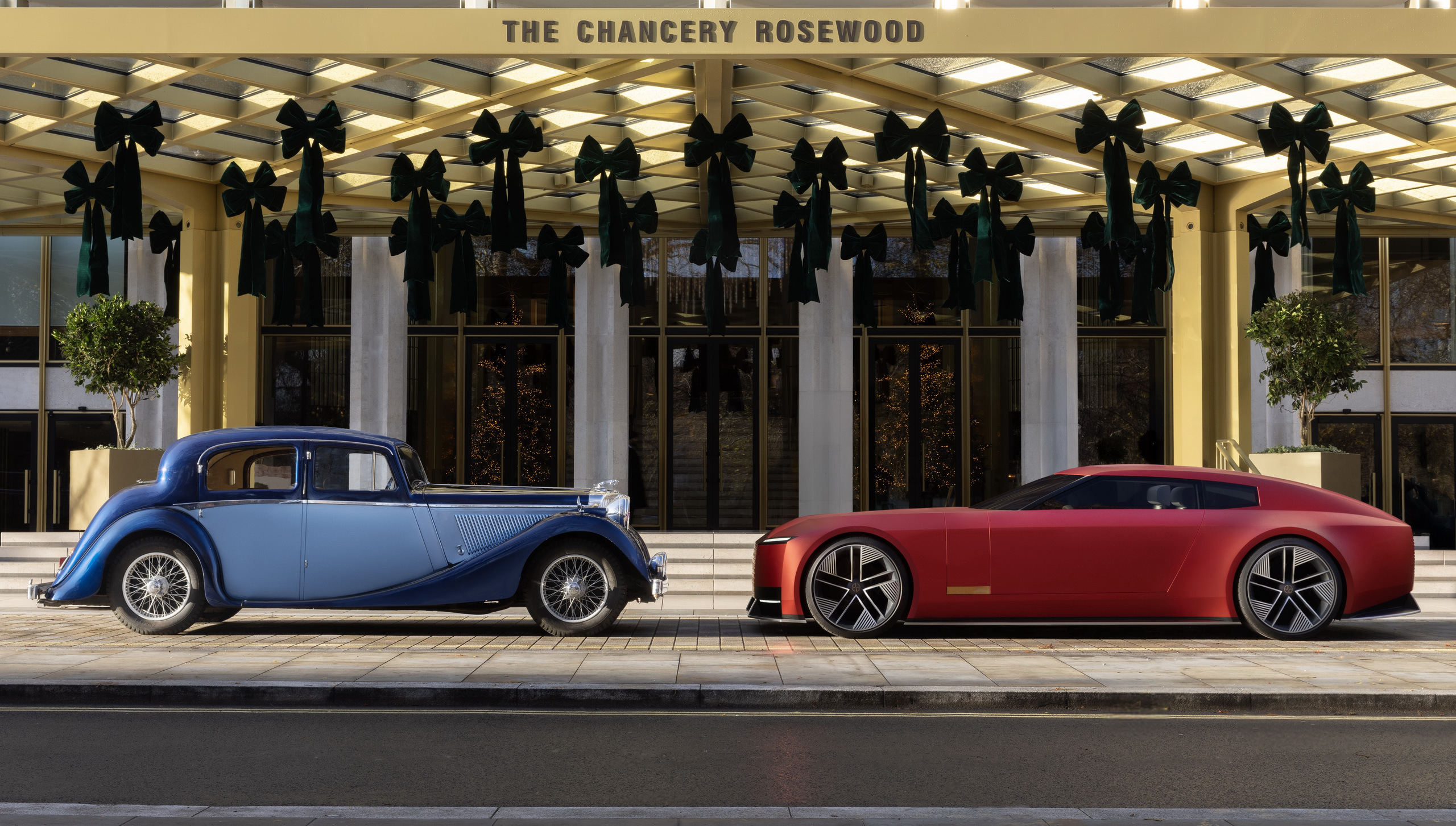
When Jaguar announced nearly five years ago that it would completely reinvent itself as an EV-only ultra-luxury brand, setting its sights on Bentley rather than the familiar and more attainable German premium rivals like BMW and Audi it had competed with for decades, the plan sounded ambitious, perhaps too ambitious. It still does today.
Now, some of Jaguar’s retail partners are raising uneasy questions. With EV sales cooling or inching forward at a snail’s pace in key markets, skepticism around the brand’s pivot is mounting. Industry analysts are voicing similar concerns, suggesting Jaguar may be targeting a shrinking share of an already narrow segment.
Trouble in the Transition
Dealer sources say Jaguar is aiming to sell around 10,000 cars a year, aligning with Bentley’s current output. But the target, while tidy on paper, is drawing doubt. That kind of volume is tough to achieve in the luxury EV segment, where few models have made real headway.
“I doubt that Jaguar’s strategy will work,” S&P Global analyst Martin Benecke told Auto News. “Jaguar wants to go where other luxury manufacturers are withdrawing due to a lack of demand. Which customers does Jaguar want to reach with its electric luxury cars? I don’t know whether you can survive with this strategy.”
Does The Type 00 Have A Business Case?
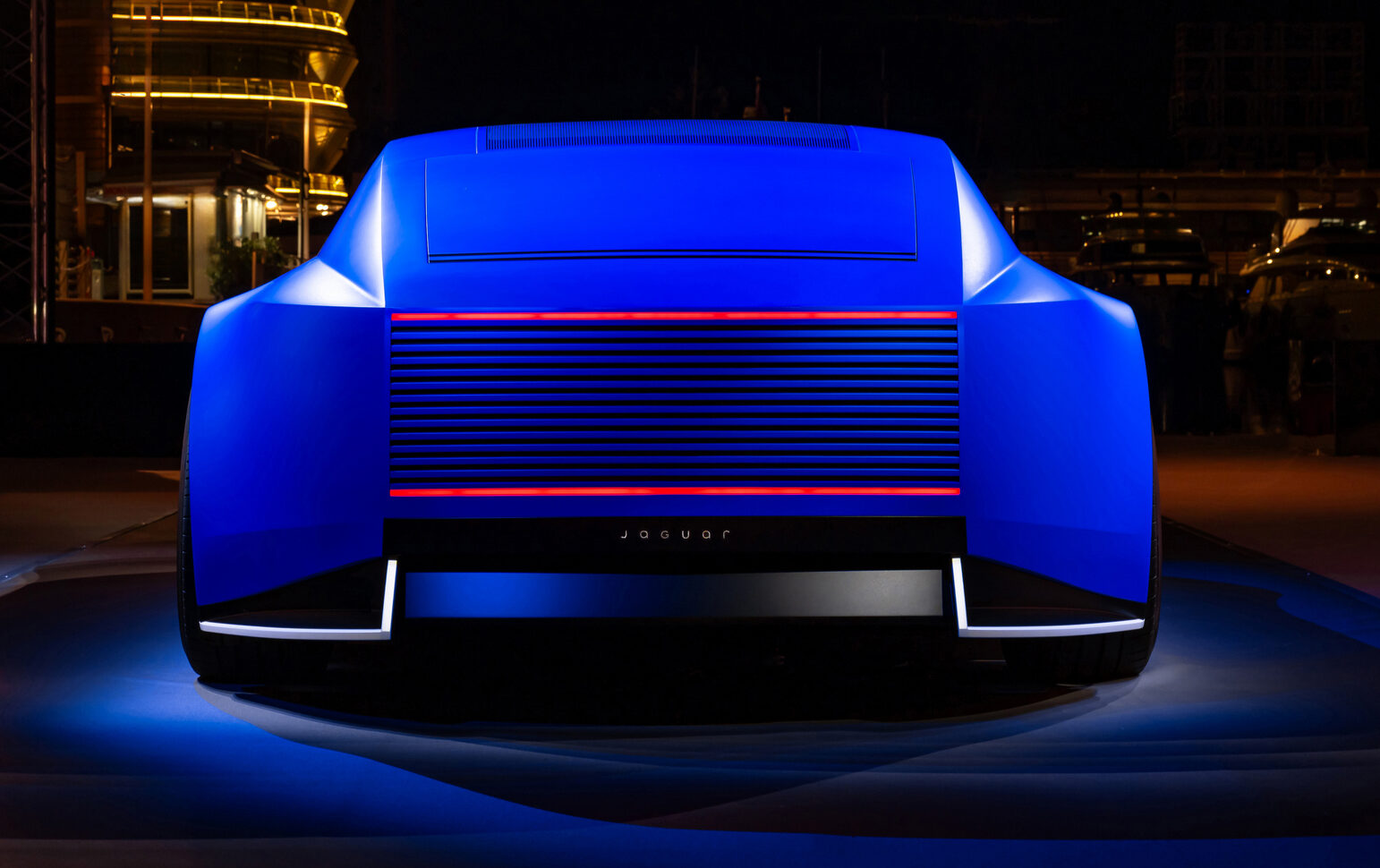
The first of Jaguar’s next-generation EVs is a luxurious four-door model previewed by the Type 00 concept. It’s expected to carry a starting price of around $130,000 in the US, making it more expensive than the Mercedes-Benz EQS. If sales fall short, reworking the platform for hybrids or combustion engines could prove, if not impossible, certainly both difficult and expensive.
Dealer Uncertainty Meets Cautious Optimism
shproshots
“At the moment, there is no clear business case for Jaguar,” one dealer told Autonews. “We have committed in principle, but whether we fully invest will depend on the final strategy.”
Still, not everyone is pessimistic. Some people are onboard, including the chairman of the German Jaguar and Land Rover Dealers Association, Andreas Everschneider. According to him, “the restart is an opportunity,” but he has warned that Jaguar must avoid falling into the trap of overproduction.
“If Jaguar repeats the mistakes made by other premium brands and floods the market, prices will collapse,” he said. “In that case, the luxury strategy will fail.”
BYD exec says unclear EV rules are hurting long-term planning.
Carmakers need policy stability to build supply chains confidently.
US is losing ground to China due to shifting EV regulations.
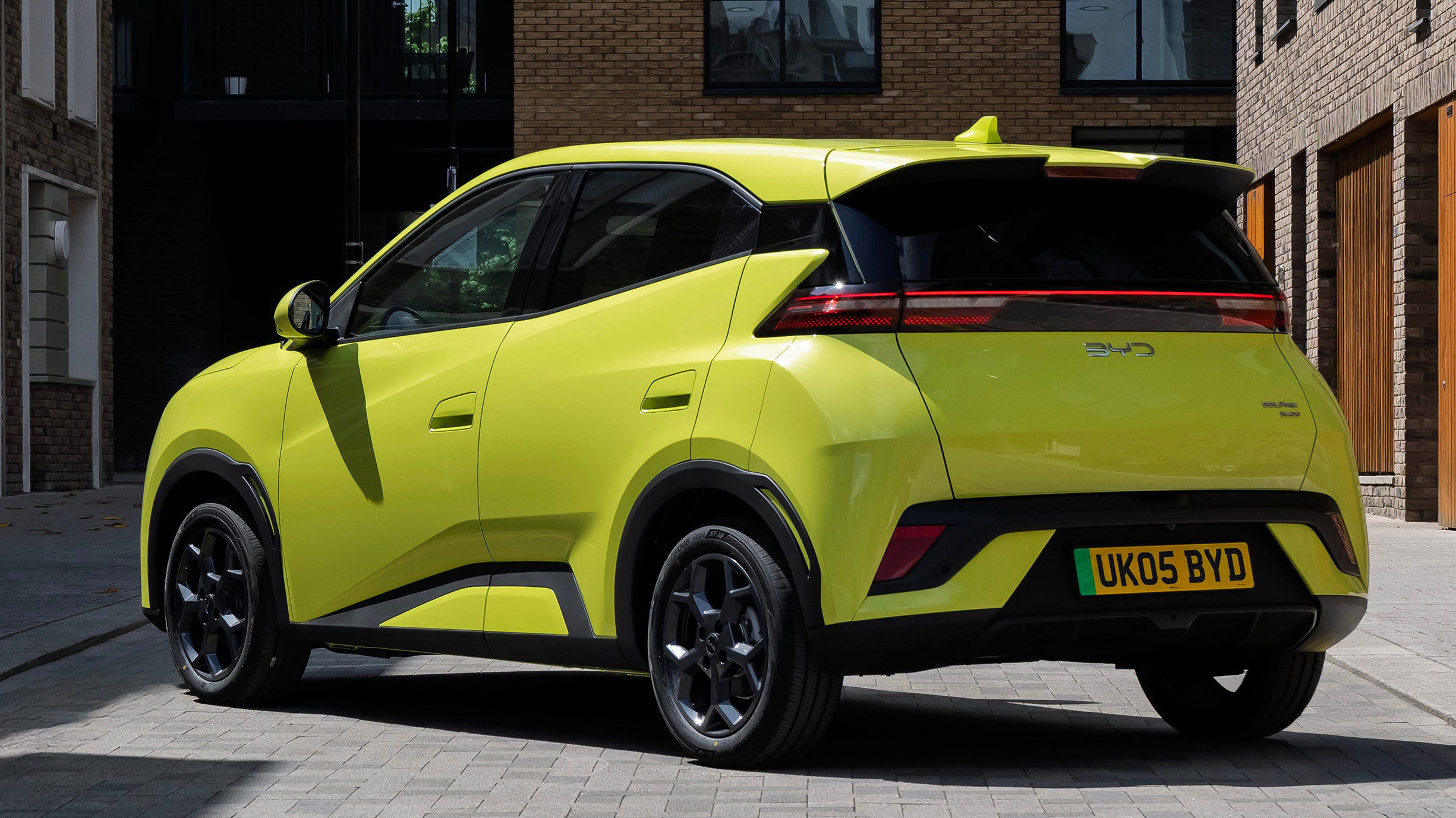
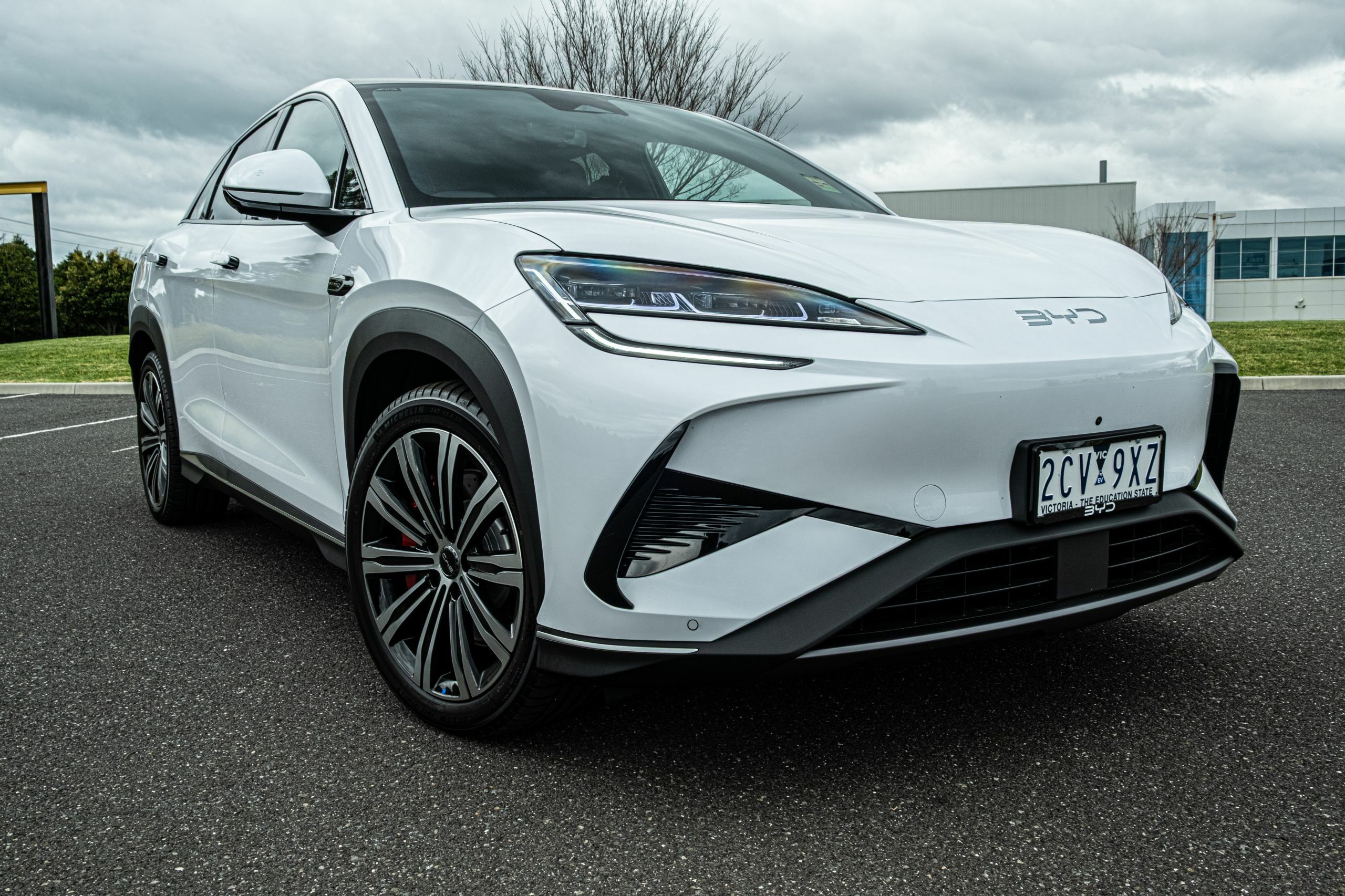
BYD has quickly become one of the most significant forces in the global auto industry’s post-Covid transformation, expanding its reach at speed and establishing itself as a dominant player in both EV and PHEV segments. Its rise has been rapid, but not without friction, especially in countries where shifting electrification policies continue to create uncertainty.
Speaking at the World Economic Forum in Davos, Switzerland, BYD executive vice president Stella Li called out the complications these changing policies create for manufacturers.
In her view, the constant shifts make it difficult for companies like BYD to commit capital or build out reliable supply chains. The result, she said, is a climate that “will confuse manufacturers.”
Can Carmakers Keep Up?
“The back and forth policies at the national level have made it more difficult for industry to throw all in and ramp up the way that some of the Chinese companies have been able to,” she revealed, during a panel discussion.
When governments draw a “very clear line” and stick to it, automakers can plan more confidently, Li said. She added that stable direction helps them execute consistently and align their production timelines with long-term goals, according to a report from Business Insider.
The contrast between the Biden and Trump administrations highlights just how disruptive these swings can be. While BYD hasn’t felt the effects of U.S. policy, the European Union’s recent decision to scale back its proposed 2035 ban on internal combustion engine vehicles could potentially impact the company’s future strategy in the region.
China Leads EVs
Li pointed out that China continues to lead the global EV sector. She credited the country’s expansive charging infrastructure, fast-moving technology, and high consumer demand as key factors driving adoption.
Elaine Buckberg, former chief economist at General Motors, echoed the need for regulatory stability during the panel discussion. She emphasized that predictable incentives play a central role in supporting long-term investment.
“Keeping those incentives stable, that’s really powerful,” she said. “That’s a place where the US is really pulling back under the Trump administration.”
Model Y and Model 3 sales dropped sharply across Europe.
VW ID.3, ID.4, and ID.7 all saw major sales growth last year.
Tesla’s decline highlights growing EV pressure from rivals.
It’s no secret that Tesla had a tough run in Europe last year. After several years of outpacing legacy automakers in EV sales, 2025 brought a sharp reversal that few would have seen coming just a couple of years ago. The brand that once led the electric car race is now falling behind a familiar rival with a very different backstory.
Volkswagen sold more battery-electric vehicles in Europe than Tesla last year. Yes, VW, the same manufacturer that was mired in the diesel emissions scandal just as Tesla was gearing up for the Model 3, has now overtaken the American brand on its home turf.
Changing of the Guard
According to figures from Dataforce reported by Autonews, the VW brand moved 274,417 fully electric vehicles in Europe in 2025, a jump of 56 percent from its 2024 total of 175,654. Things weren’t so pretty for Tesla.
Its sales declined 27 percent last year, dropping from 326,714 units to 238,765. This came despite the fact that the Tesla Model Y remains Europe’s best-selling EV with 151,331 units sold last year, significantly more than the 94,106 Skoda Elroqs that were sold over the same period. However, Model Y sales were still down 28 percent from 2024, when 210,265 were sold.
Europe’s Best-Selling EVs
Rank
Model
2025
2024
1
Tesla Model Y
151,331
210,265
2
Skoda Elroq
94,106
46
3
Tesla Model 3
86,261
112,967
4
Renault 5 E-Tech
81,517
13,097
5
VW ID.4
80,123
64,729
6
VW ID.3
78,667
54,467
7
VW ID.7
76,368
32,192
8
BMW iX1
69,816
53,272
9
Kia EV3
66,802
4,960
10
Skoda Enyaq
65,787
67,331
—
TOTAL
2,582,595
1,990,956
SWIPE
Dataforce
Helping the VW brand take the top place from Tesla is the fact that it has a larger range of EVs. For example, the VW ID.4 sold 80,123 units last year, up 23.8 percent. A total of 78,667 VW ID.3s were sold, up 44.4 percent. The ID.7 also saw growth, with 76,368 units finding new homes, a 137.2 percent rise.
To put these figures into perspective, Tesla sold 86,261 Model 3s. And while that beat out any individual VW model, it was still down 23.6 percent from 2024.
VW Conquers All…Almost
VW’s strong year wasn’t limited to EVs. It also topped Europe’s plug-in hybrid (PHEV) segment, selling 159,173 units, a 205 percent jump from 2024. That was enough to comfortably beat BMW, with 142,285 sales, followed by Mercedes-Benz at 135,878 and Volvo at 104,270.
The VW brand also led in both gasoline and diesel vehicle sales. Its gas-powered lineup moved 737,821 units in 2025, staying well ahead of Peugeot’s 492,133, despite VW recording a 7.3 percent decline. Diesel sales reached 269,277 units, down 19.4 percent from the previous year, but still enough to edge out Mercedes, which sold 250,326.
Europe’s Top-Selling EV Brands
Brand
Sales
Diff. vs 2024
1
VW
274,417
56%
2
Tesla
238,765
−27%
3
BMW
193,186
15%
4
Skoda
172,100
117%
5
Audi
153,848
51%
SWIPE
Dataforce
Traditional hybrids were the only powertrain segment that VW didn’t take top honors in, as Toyota held the crown with 626,675 sales. Although VW didn’t rank in the top five, things could change this year as it plans to launch the new T-Roc, complete with a hybrid powertrain.
Lotus could slash Eletre prices in Canada by nearly 50 percent.
Eletre currently costs more than a Lamborghini Urus SE in Canada.
EV tariff deal lets some Chinese imports face lower 6.1 percent tax.
The Lotus Eletre might soon become a far more accessible proposition in Canada, thanks to a new trade agreement with China that could take a wrecking ball to the electric SUV’s bloated sticker price. What is now priced well into super-luxury territory may soon fall within reach for a much broader group of buyers.
As in the United States, 100 percent tariffs have pushed the Eletre’s price in Canada into the stratosphere, starting at a jaw-tightening CA$313,500 (about US$226,000 at current exchange rates). That puts it in the same league as a mid-spec Bentley Bentayga and even pricier than the Lamborghini Urus E. In the U.S., things aren’t much better, with a starting price of US$229,000 before delivery.
Tariff Relief
With the new policy in effect, the first 49,000 Chinese EVs imported into Canada each year will now face a reduced 6.1 percent tariff. Lotus claims this will cause the Eletre’s price to “fall sharply by about 50 percent.”
However, it’s worth noting that under the terms of the agreement, half of those 49,000 vehicles are required to start below CA$35,000 (US$25,000), which the Eletre most definitely does not.
Lotus announced the change on Chinese social media, although it stopped short of confirming a new starting price for the Eletre. If it does indeed drop by 50 percent, it could start from around CA$156,000 ($112,500), significantly undercutting the Urus and positioning it closer to the Porsche Cayenne GTS, which starts at CA$134,800 ($97,200).
“Canada has always been an important market with great strategic significance in the global territory of Lotus sports cars,” Lotus Group chief executive Feng Qingfeng wrote in a social media posting. “Users here have a high appreciation for high performance and driving pleasure. We warmly welcome the new tariff optimization policy, which has created a more open and fair market environment for international car brands.”
Lotus currently operates six dealerships across Canada and will no doubt be eager to ramp up sales of the Eletre. The flagship model features a pair of electric motors that combine to produce 905 hp, allowing a 0-100 km/h (62 mph) in a blistering 2.95 seconds and reach a 265 km/h (164 mph) top speed. It also has a quoted WLTP range of 280 miles.
Lotus isn’t stopping with just the all-electric Eletre. A hybrid version is also in the works, offering an alternative path for buyers who aren’t quite ready to go fully electric. Official documents out of China confirm that this variant, called the Eletre For-Me, retains the SUV’s shape and layout but adds a turbocharged four-cylinder engine to the mix.
It’s Lotus’s first step back from its earlier pledge to go EV-only, and while the full specs haven’t been disclosed, early reports point to a combined output of 952 hp, slightly more than the current top-spec Eletre R.
We had a chance to review the all-electric Eletre last year and were pleasantly surprised. It’s quick, feels well-built, and has a beautiful interior that suits the category. Will those qualities be enough to convince Canadians to buy it if the price drops by half?

 Login
Login