Reading view

There are new articles available, click to refresh the page.

Where Is the Bus?

By: Jim Romeo

At 6:42 a.m., a parent refreshes an app on their phone for the third time in two minutes,
watching a small bus icon inch—or not—across a digital map. In school districts across the
country, that moment has become part of the daily routine.

When they work, they build trust. When they don’t, the breakdown is immediate, public and loud. School bus tracking apps, once marketed as a simple way to reduce anxiety and improve communication, continue as a high-visibility link between transportation departments and families.

Growing Pains
While many schools across the country are quite satisfied, some have had problems.
Osceola School District in Florida launched an app at the start of the school year. By January, the district was forced to notify families that the app was not functioning properly. The school district is still trying to work out its glitches.

Prince George’s County Public Schools, which operates roughly 1,000 bus routes daily in Maryland outside of the nation’s capital, adopted a mobile app to give parents real-time tracking and schedule alerts. Persistent reliability issues and mounting parent complaints
prompted the district to abandon the platform and migrate to a new app instead.

Tech Hiccups Aside, Bus Tracking Apps Experience Growing Use and User Satisfaction

Despite technical hiccups, data-integration challenges and the pressure of public scrutiny, school bus tracking apps have become common implementations in pupil transportation.

The Houston County School District in Perry, Georgia has used CalAmp technology for its school bus fleet since 2019 to much satisfaction. The district has 265 school buses that transport approximately 16,000 students twice a day on 180 bus routes. Houston County
initially partnered with CalAmp to utilize the core technology of GPS fleet tracking, comparative analysis, time and attendance, navigation, and engine diagnostics. After its initial installation, the school district added the Here Comes the Bus parent app.

“The fleet tracking system is a world above our previous product and gives us the ability to know instantly the location of a bus, its speed, its status on the route, as well as a history of the buses’ activity,” explained Tom Walmer, Houston County’s director of transportation.

“The tracking system as well as the dispatch monitor module allows staff to have real-time data available to ensure buses are on their routes which stops have been completed, which stops may have been missed, and enhances our ability to address emergency situations as they arise. The navigation capability makes the job of a bus driver much easier and safer. No more need for inexperienced drivers or substitute drivers to fumble with route sheets or printed directions because it is all on the tablet, giving them directions and stop location notifications. Comparative analysis and engine diagnostics are essential tools for supervisors and staff to monitor performance and eliminate issues that we may not have known about otherwise.”

Houston County Schools is not the only district in Georgia to have had success with CalAmp. Trey Stow, the director of transportation operations for Fulton County Schools serving the Atlanta metropolitan area, said over 89,000 users within the school district also use CalAmp Here Comes the Bus app. Stow says the app “works well and is heavily relied upon.”

The experiences of Houston County and Fulton Country are catching on for many other school districts as usage of bus tracking apps continues to grow.

“We are up to 1.7 million active users,” Adam Ortlieb, senior product marketing manager at CalAmp, said. “Parents expect this capability for improved student safety and more efficient use of their time. School districts are aligned on those priorities. Plus, both transportation staff and parents benefit heavily from efficiency gains.”

Integration is Key
Lam Nguyen-Bull is the chief experience officer at Edulog and leads the company’s advisory services team. Edulog claims it is the original school bus routing software company and has been providing routing and planning software solutions to districts across North America since 1977. Nguyen-Bull said a key attribute to success is integration with other software and applications such as routing and GPS systems as well as scanning systems that register students boarding the bus.

“The reality is that many parents currently track their kids via their cell phones,” she said. “The key is that a useful student ridership application has to be completely integrated with the routing system to provide information that is specific to the student’s trips to and from school. The app needs to let parents know when the bus is planned to arrive at the stop and then give the parents a heads up when the bus is nearby. Then, as the student boards the bus, the ridership piece kicks in. The student scans on with an RFID card, maybe a bar code, or the driver “boards” the student on a mobile data terminal (tablet) application. Parents are notified in the app that the student has boarded the bus. Similarly, the parents are notified when the student exits the bus. This might happen a couple of times each morning if the student transfers buses during their trip to school.”

Once implemented and adopted, it’s important for schools to monitor the utility of new apps and features, as well as their effectiveness.

Houston County School District pays attention to the data metrics readily available as subscribers to the CalAmp applications.

“We currently have approximately 15,536 stakeholders utilizing the HCTB app notifications,” said Walmer. “That number is an indication of the success of the roll out. When my staff takes parent calls about bus stop locations and times, it is our practice to ask if the parent utilizes the app. The majority of the time, the answer is yes and includes positive comments. If they do not use the app, it is our practice to bring it to their attention and encourage them to download the app. A testament to the popularity of the app is away from work while in the community. Whether at church, the grocery store or such, when a person finds out that we work at the school district transportation department, people give unsolicited feedback about how much they love the app.”

Stow with Fulton County Schools said app usage indicates when there might be an issue like a school bus driver forgetting to log into a route.

“The phone calls tend to increase in measure and expose an issue,” he said. “CalAmp provides excellent customer service with their team and always resolves any issues quickly which helps us provide the best service possible.”

App Features ‘Wish List’ Continues to Grow

While bus tracking apps are progressing along a curve of early integration, there are many features that users and app producers wish to see.

“We are currently in the process of implementing an existing feature of the Cal-Amp technology and Here Comes the Bus: Student ridership scans,” said Walmer. “We piloted the ridership scans in May of 2025 and had new hardware installed on all of our buses over the summer. We did a soft roll out of the scans at the beginning of this school year and will have full implementation later this month. This is another excellent feature that enhances student safety. Transportation department and school staff have the ability to see from their computers what students are on any given bus in real time, or search for an individual student to see what bus a student is on. It also allows us to see where and when a student boarded or exited a bus. This enhances our drivers’ ability to be successful by notifying them when a student scans whether they are an eligible rider or not, and whether they are the assigned bus or not. It will also notify the driver when a student scans to exit the bus at a stop other than their assigned one.”

Transfinder is another producer of apps for pupil transportation. “Based on what Transfinder is hearing from our clients as well as from the industry at large, a common wish list of items include predictive ETA adjustments [and] not just real-time location, but responsive to outside forces such as traffic, localized emergency alerts, notifications specific to route disruptions due to weather, accidents, or school closures with recommended alternatives,” said spokesman Rick D’Errico.

He continued, “If alerts are tailored to just those impacted, the likelihood of parents not silencing their alerts is increased, and language [translation] for multilingual support.”

Edulog’s Nguyen-Bull said gaps are in daily operations. “Try as we might, we have not come up with a card that can’t be lost or misplaced,” she said. “That’s why it is so beneficial to have a Plan B, for example, an interface that allows a bus driver to mark that a student has boarded the vehicle. Districts find out that this becomes an onerous task for drivers if it gets out of hand. That is, if Plan B is invoked too much. Some districts charge families for replacement cards, but that approach has its shortcomings, too.”

Ortlieb of CalAmp added the company is releasing more advanced safety, security and efficiency features. “For example,” he explained, “giving districts the option to prevent bus location details from appearing on a map until the vehicle enters the radius specified by the district. Single sign-on for the parent app is a very well-received new enhancement. It offers simplified, secure parent access, and allows districts to systematically manage passwords and deprovision users who should no longer have access.”

Bus Tracking Apps Are Becoming Standard

As school transportation continues its steady adoption of digital technologies, bus tracking apps are no longer experimental add-ons. They are now core service expectations. The experiences of districts highlighted show both sides of that reality: Early frustrations when systems falter, and measurable gains in efficiency, safety, and parent confidence
when technology is implemented thoughtfully and supported consistently.

The most successful deployments share common traits—tight integration with routing and dispatch systems, strong vendor support, clear communication with families, and ongoing measurement of adoption and performance.

Just as important, districts are learning that technology alone is not enough. Daily operational discipline, driver training, and contingency planning remain critical to success.

As features evolve from basic location tracking to predictive ETAs, ridership verification, and targeted alerts, the value proposition will only grow. For transportation leaders,
the takeaway is clear: Bus tracking apps, when executed well, reduce uncertainty, strengthen trust, and transform how districts connect with the families they serve turning a once anxious morning ritual into a more predictable, transparent start to the school day.

Editor’s Note: As reprinted from the March 2026 issue of School Transportation News.


Related: School Bus Tracking Apps Ease Pain Points for Everyone
Related: Georgia School District Implements Student Tracking App
Related: School Bus Adaptive Technology: Safer Rides, Stronger Teams, Better Access
Related: Feeling Super About Transportation Technology?

The post Where Is the Bus? appeared first on School Transportation News.

Importance of First Responder Coordination for School Bus Emergencies at STN EXPO East

Two student transportation professionals at STN EXPO East will discuss how transportation departments can set up a collaborative partnership with local police and fire departments to aid in safe emergency response.

Tracie Franco, director of transportation at Leander Independent School District in Texas, will join Joshua Hinerman, state director of student transportation at the Tennessee Department of Education and former director of transportation for Robertson County Schools near Nashville, in a panel discussion facilitated by STN Editor in Chief Ryan Gray March 29.

They will share tips to proactively reach out and train with emergency first responders to make sure they are aware of the unique response and recovery efforts needed for a school bus incident. They will discuss coordinated training and in-service efforts, student ridership technology that can provide instant access to crucial information in an emergency and making sure transportation departments are engaging with the district wide community to increase awareness on safety efforts.

Attendees will leave the session with a better understanding of the logistics related to involving first responders in emergency response best practices in their student transportation department and strategies to improve their incident response protocol.

The session will provide attendees with practical strategies to work with law enforcement, fire, EMS and other emergency management agencies in preparing response to school bus emergencies. Franco and Hinerman will discuss their personal experiences with school bus crashes and lessons learned on joint training with first responders.

The STN EXPO East conference will be held on March 26-31 at Embassy Suites by Hilton Charlotte Concord Golf Resort & Spa. Main conference registration gives access to five days of educational sessions, hands-on training, unique networking events, product demonstrations and updates on the latest industry happenings. Register at stnexpo.com/east.


Related: STN EXPO East Addresses Safety Concerns in School Bus Loading Zone
Related: NTSB to Provide School Bus Investigation Updates at STN EXPO East
Related: STN EXPO East to Feature Illegal Passing Trends, Safety Recommendations

The post Importance of First Responder Coordination for School Bus Emergencies at STN EXPO East appeared first on School Transportation News.

The Importance of Streamlined Communication in School Bus Transportation for Safety and Efficiency

By: STN

School bus transportation plays a crucial role in getting children to and from school safely every day. However, ensuring the safety and efficiency of this process requires more than just well-maintained buses and reliable routes.

Effective and streamlined communication between bus drivers, parents, school administrators, and transportation departments is essential for keeping a secure and efficient transportation system.

Here’s why communication is so critical and how it can be improved for the benefit of students, parents, and school communities.

Ensuring Safety

The safety of children is the top priority in school bus transportation. From the moment a child boards the bus until they safely arrive at school or home, clear communication is needed to address any potential issues that arise during the ride.

Real-Time Updates: Bus routes are sometimes subject to delays due to traffic, weather conditions, or mechanical issues. A streamlined communication system allows parents, school administrators, and transportation departments to be informed in real-time about delays or changes. By using communication tools such as two-way radios, apps, GPS systems, and automated messages, parents can track their child’s bus and adjust their schedule accordingly.

Emergency Communication: In case of accidents or emergencies, clear communication channels ensure that the right people are alerted quickly. Bus drivers can contact the school or emergency services, and parents can be notified at once to ensure a timely response.

Incident Reporting: A streamlined system enables prompt reporting of issues such as bullying, inappropriate behavior, or unsafe driving. When parents and school staff can easily communicate with the transportation team, it leads to faster resolutions and keeps the environment on the bus safe for everyone.

Improving Efficiency

School bus systems are large and complex, serving hundreds or even thousands of students each day. For this operation to run smoothly, it’s crucial to coordinate effectively between different parties.

Route Optimization: Communication allows transportation departments to adjust bus routes in real time based on factors like student attendance, road conditions, or changes in traffic patterns. This helps to prevent delays and ensures that buses are running on schedule.

Driver Support and Training: Streamlined communication ensures that bus drivers are well-informed about route changes, student needs, and any unique requirements for children (such as allergies or medical conditions). It also helps ensure that drivers receive continuous training updates and support from their supervisors, which improves overall service quality.

Preventing Overcrowding: With clear communication between transportation departments and schools, it’s easier to monitor bus capacity and adjust schedules accordingly. Overcrowded buses are a safety hazard, and by tracking attendance and bus usage, schools can prevent this issue and improve student comfort and safety.

Leveraging Technology for Better Communication

In today’s digital age, technology can play a huge role in improving communication in school bus transportation.

Automated Messaging Systems: Automated calls or text messages to parents can alert them of route changes, delays, or incidents involving their child’s bus. This minimizes confusion and ensures that parents are always in the loop.

Transportation Two-Way Radios Over Cellular, GPS and Tracking: With the ease of use of Push-to-Talk Over Cellular Radios (PoC), schools can check the progress of buses throughout the day, providing real-time data on location and estimated arrival times. This reduces the likelihood of missed pickups or drop-offs and improves overall time management for bus routes. School-Radio can do just that for school communication from transportation to administration.

Aaron Mannan Director of Project Management B&G Transportation, Inc. M&M Tours, Inc. says of their integration of the School-Radio PoC system: “Coming from a background in 9-1-1 communications to School Transportation, there are many differences, but the needs are very much just as important. We were frustrated with outdated aging radio equipment, and even worse, couldn’t find anyone to work on our system to keep us running. But then we were introduced to School Radio. Clarity is what they are all about. Our dispatch can handle communications from anywhere on the planet, our drivers are kept aware of safety sensitive information, and we know where our fleet is at all times”

Streamlined communication in school bus transportation is essential for ensuring the safety, efficiency, and overall success of the system. By using technology, improving parent-school relations, and enhancing real-time communication, school districts can create a safer and more efficient transportation environment for all students. The benefits of a well-coordinated transportation system extend beyond simply getting students from point A to point B—it helps build trust, ensures safety, and fosters a more connected school community.

By prioritizing communication at every step of the process, we can help keep our children safe and our school systems running smoothly. For more information on how School-Radio can optimize your communication, visit www.school-radio.com.

The views expressed are those of the content sponsor and do not reflect those of School Transportation News.

The post The Importance of Streamlined Communication in School Bus Transportation for Safety and Efficiency appeared first on School Transportation News.

New BMW iX4 Gets The Coupe Cut, But You’ll Feel The Trim

  • The BMW iX4 has been spied cold weather testing.
  • It’s slated to arrive next year in two configurations.
  • The range-topping variant should have 463 hp.

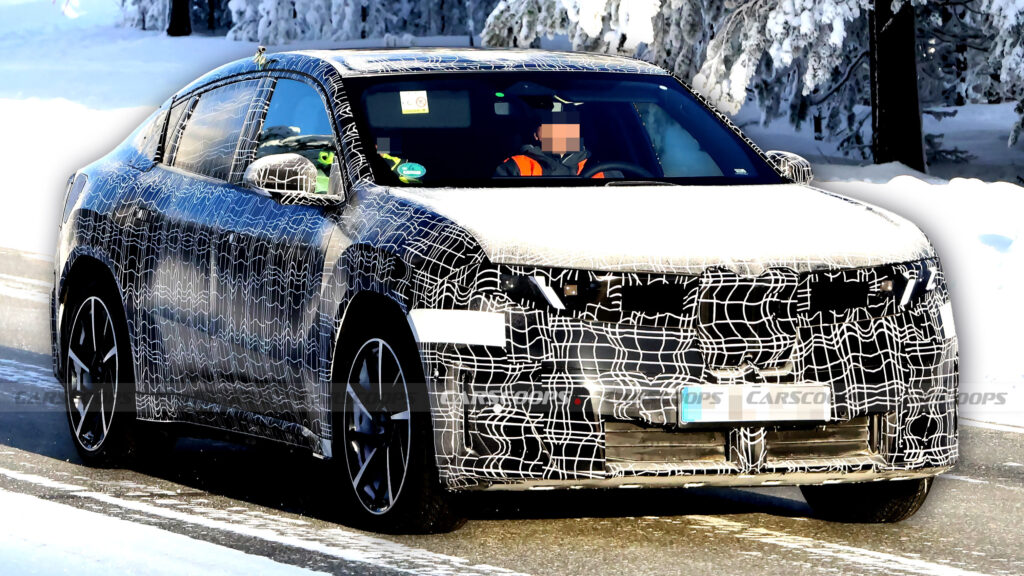
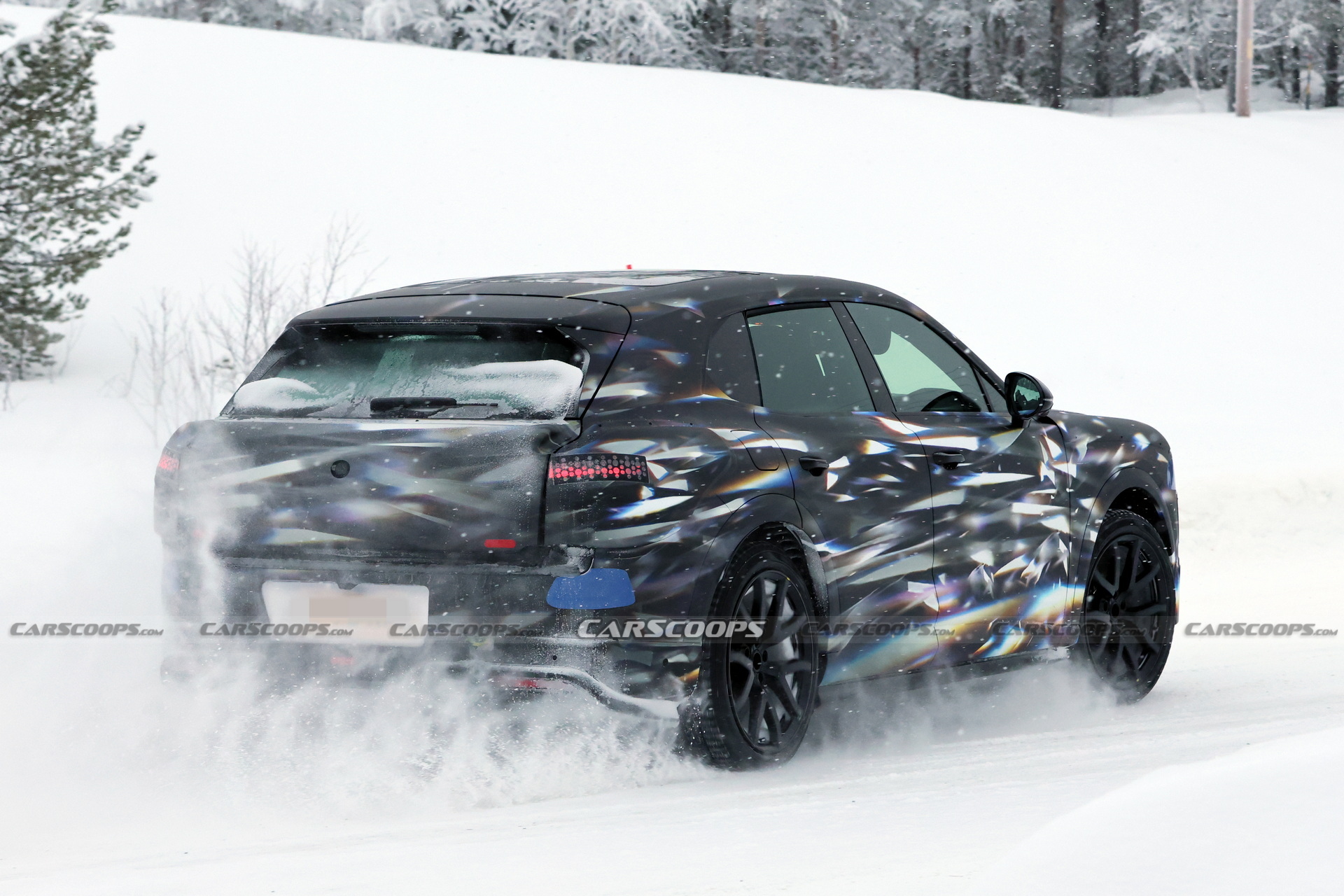
BMW introduced the redesigned iX3 last year, and it’s about to be followed by an iX4 crossover coupe. Spy photographers recently caught up with a prototype and it will closely echo its more conventional counterpart.

While the front end will be instantly recognizable, that’s where the similarities end as the iX4 adopts a rakish windscreen that flows into a gently curved roof. This results in a significantly smaller greenhouse as well as a second row that could be short on headroom.

More: BMW’s New Electric Coupe SUV Is Gunning For The Model Y

Cargo space will also be in short supply as there’s an angular rear window that meets a pronounced spoiler. The model also has an upright rear end, which should largely echo the iX3.

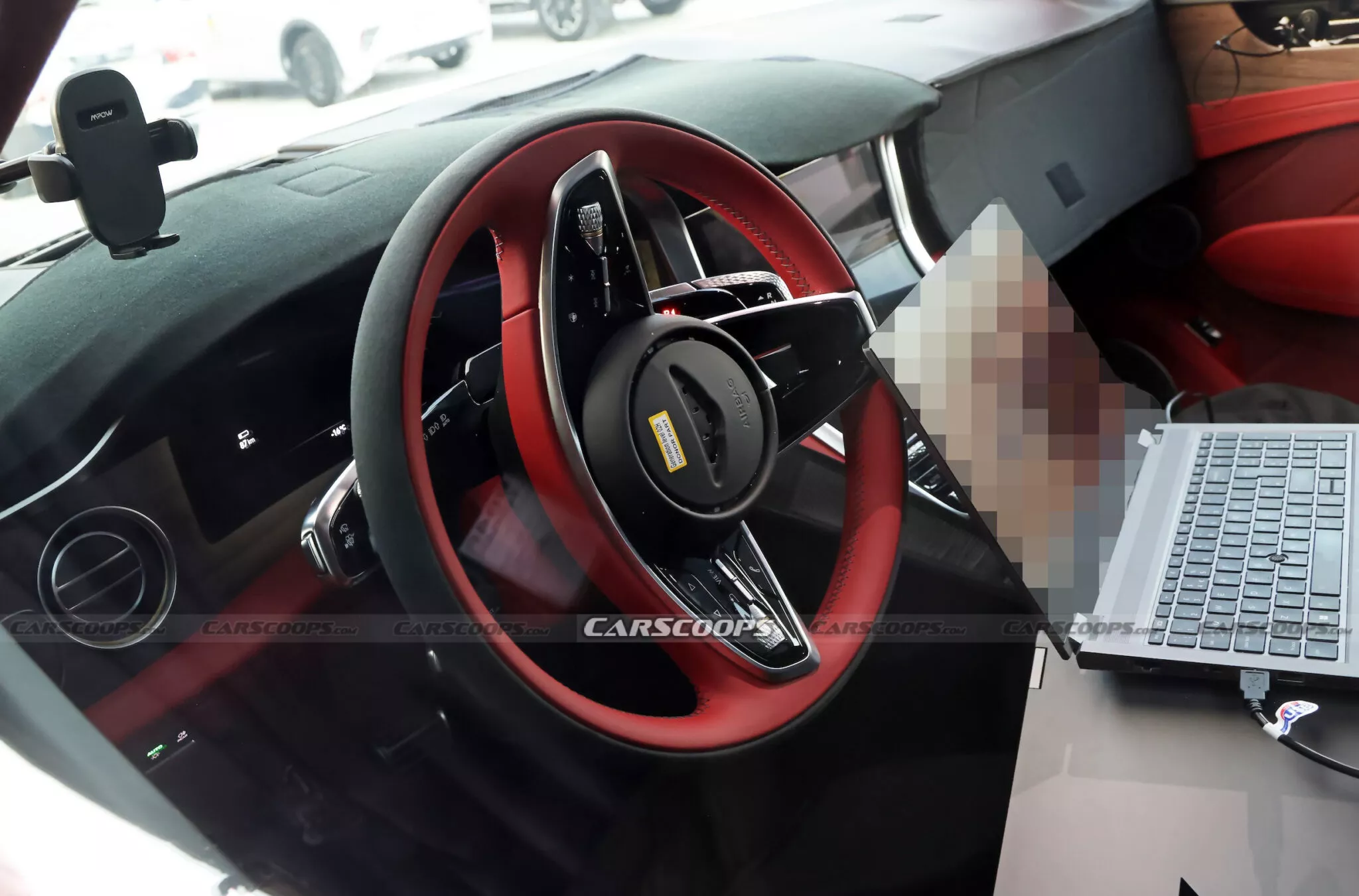
The déjà vu design should continue inside with a 17.9-inch infotainment system as well as a pillar-to-pillar Panoramic iDrive display. We can also expect a minimalist dashboard, a futuristic steering wheel, a 3D head-up display, and an intelligent personal assistant.

\\\\\\\\\\\\\

SHProshots

A recent leak revealed that the 2027 iX4 will be offered in 40 xDrive and 50 xDrive guise in the United States. The latter version should mirror the iX3 50 xDrive, which has a 108.7 kWh battery pack that feeds a dual-motor all-wheel drive system developing 463 hp (345 kW / 469 PS) and 476 lb-ft (645 Nm) of torque. This enables the model to accelerate from 0-60 mph (0-96 km/h) in 4.7 seconds, hit a top speed of 130 mph (210 km/h), and have a WLTP range of up to 500 miles (805 km).

Also: BMW’s New i3 Sedan Is Becoming Easier To Picture

The iX4 40 xDrive is more mysterious, but a recent report suggested it could have a smaller 82.6 kWh battery pack. We can also expect less powerful electric motors, although we’ll get a better idea when the iX3 variant debuts later this year.

\\\\\\\\

SHProshots

Musk Lectures Legacy Brands On Cars, Even As Tesla Drifts Beyond Them

  • Musk says legacy automakers resist electrification efforts.
  • He argues EVs are simpler, cleaner, more efficient by design.
  • CEO warns traditional brands risk extinction if they stall.

There’s no denying it. For all Elon Musk’s foibles, he and Tesla have played an instrumental role in accelerating the car industry’s shift towards electrification and autonomy. Love him or loathe him, the trajectory has shifted on his watch. Now, the controversial CEO says any legacy automaker that refuses to follow Tesla’s lead risks going the way of the dinosaurs.

Last week, the world’s richest man sat down with André Thierig, head of Tesla’s Gigafactory Berlin, for a deep dive into where Tesla is heading and where the wider industry should be going. In Musk’s telling, it has been obvious for more than 20 years that the endgame is fully electric, fully autonomous transport. The surprise, at least to him, is that some rivals still appear reluctant to accept it.

Read: Nearly Half Of Jury Pool Dismissed As Musk’s Lawyer Claims So Many ‘Hate Him’

“The automotive industry has strongly rejected electrification,” Musk said during the interview. “They’ve dragged their feet, and they’ve had to be pushed there by the government, and whenever they have any opportunity to reduce the production of electric vehicles, they’ve done so. This is not a good strategic…like it doesn’t make sense.”

He went on to argue that the need for the car industry to shift to electrification would be true even “without environmental concerns.” Musk believes that “an electric vehicle is a fundamentally better architecture than a gasoline or combustion vehicle. It is much simpler, it is more efficient, it’s quieter, there’s no pollution in cities, so really all ground transport should be electric.”

What’s next for Giga Berlin? Glad you asked pic.twitter.com/aaiBOOBxuu

— Tesla Manufacturing (@gigafactories) February 26, 2026

“The future does not contain combustion vehicles, and there will be very few vehicles that are not autonomous. If the automotive industry does not move in that direction, they will be left out,” Musk added.

Carmakers Aren’t Doing Enough, Musk Says

When Thierig asked whether Tesla could learn anything from legacy automakers, or whether it should simply keep its head down and focus on its own path, Musk conceded, “You can always learn something from some competitors.” Still, he quickly returned to familiar territory. “Strategically, they’re heading in the direction of the dinosaurs, so they’re not heading in a good place. Dinosaurs are not around anymore.”

As for the risk of traditional brands copying Tesla’s ideas, he dismissed it, arguing that you cannot simply force a good idea onto companies that are not ready to embrace it.

None of this is especially new. Musk has long criticized established carmakers for moving too slowly, and with Tesla’s business tied so closely to EVs and autonomous driving systems, he has every reason to underline the advantages of both. It also does not hurt when that message reinforces confidence in Tesla’s long-term prospects.

Perhaps more intriguing is Tesla’s evolving self-image. The company no longer presents itself purely as an EV manufacturer, and some observers believe it may not even be building cars in a decade, shifting instead toward robotics.

 Musk Lectures Legacy Brands On Cars, Even As Tesla Drifts Beyond Them

BYD’s New EV Chargers Are So Fast They’re Arranged Like Gas Station Pumps

  • BYD is testing its 1,500 kW megawatt flash charging network.
  • The demo site looks more like a gas forecourt than an EV hub.
  • Fast chargers could transform the appeal and usability of EVs.

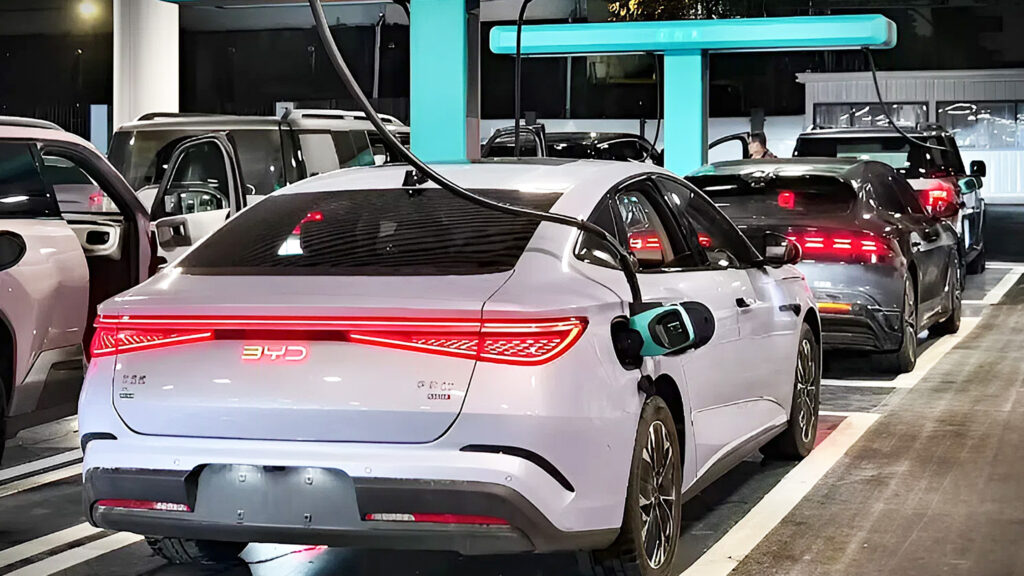
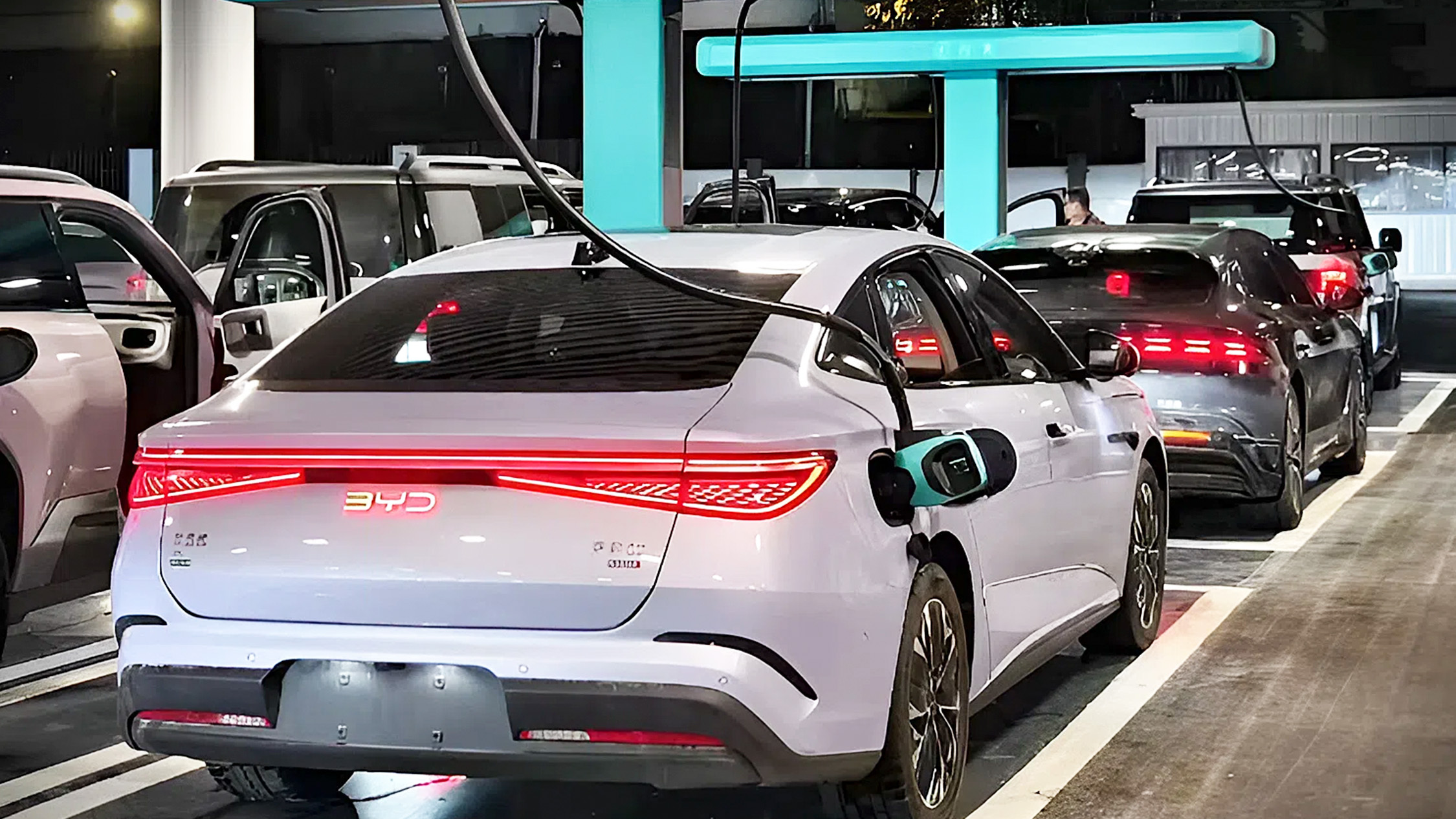
BYD isn’t just building electric cars at a frightening pace, it’s now building chargers that make today’s versions look about as powerful as your car’s 12-volt accessory plug. The company has been spotted testing a 1,500 kW flash charging network in Shenzhen, China, and the layout looks suspiciously like a traditional gas station’s.

Instead of the usual lonely bank of DC chargers around a load of parking bays arranged like a regular parking lot, the demo site features liquid-cooled charging guns and T-shaped gantries lined up like fuel pumps so that drivers can pull up, fill up, and pull out without hanging about.

Related: Breakthrough EV Battery Patent Could Charge In Minutes And Cross A Continent

Leaked intel suggests peak outputs of up to 1,500 kW running on a 1,000 V architecture that could potentially add 249 miles (400 km) of range in just 5 minutes. For context, the quickest public chargers in the US and Europe top out around 350 kW, though most push out a lot less, and the majority of EVs can’t even sustain that anyway.

BYD-Use Only, For Now

Access during testing appears limited to select BYD models wearing a Flash Charge badge, including upcoming Tang, Song, Seal, and Denza variants, Car News China says. Charging reportedly starts within about 10 seconds of plugging in, no QR codes or smartphone gymnastics required.

 BYD’s New EV Chargers Are So Fast They’re Arranged Like Gas Station Pumps

Pricing at the demo site was shown at 1.3 yuan per kWh, roughly $0.18, which will come as a shock to Western EV drivers. Plug in to a 360 kW Gridserve charger in the UK, and you’ll be stung for up to £0.89 per kWh. That’s $1.20. Even a feeble 22 kW jolt costs £0.49 ($0.66) per kWh. Buyers of compatible cars are rumored to get 1,000 kWh of free electricity annually, according to the story out of China, though final policy details haven’t been confirmed.

Drive It Like A Gas Car

The real story isn’t just the headline charging speed. It’s what that speed could mean. If you can genuinely add hundreds of miles in minutes, you don’t need a massive 450-mile battery pack. Smaller batteries mean lighter, more affordable cars with better efficiency and sharper performance. And faster charging could make EV ownership feel less like planning a military operation and more relaxed, encouraging drivers to embark on spontaneous journeys.

BYD is said to be targeting more than 4,000 self-operated flash charging stations in China, with partner networks potentially pushing that number far higher. For now, it’s all still internal testing, but it offers a glimpse into how EV ownership might look only a few years from now, not just in China, but around the world.

\\\\\\

BYD Fans

Stellantis Outguns Polo GTI With New Corsa GSE

  • Opel’s Corsa GSE has been spied ahead of a debut later this year.
  • It’s expected to get a single 278 hp motor with limited-slip diff.
  • Visually and mechanically it shares much with Mokka GSE SUV.

Opel’s famous hot hatch badge is back on a GTI-type subcompact, and this time it doesn’t need a turbocharger or fancy ICE breathing to make trouble. Fresh spy shots confirm the Corsa GSE is on the way, giving the long retired Opel OPC and British Vauxhall VXR bloodline a fully electric reboot with considerably more zap than before.

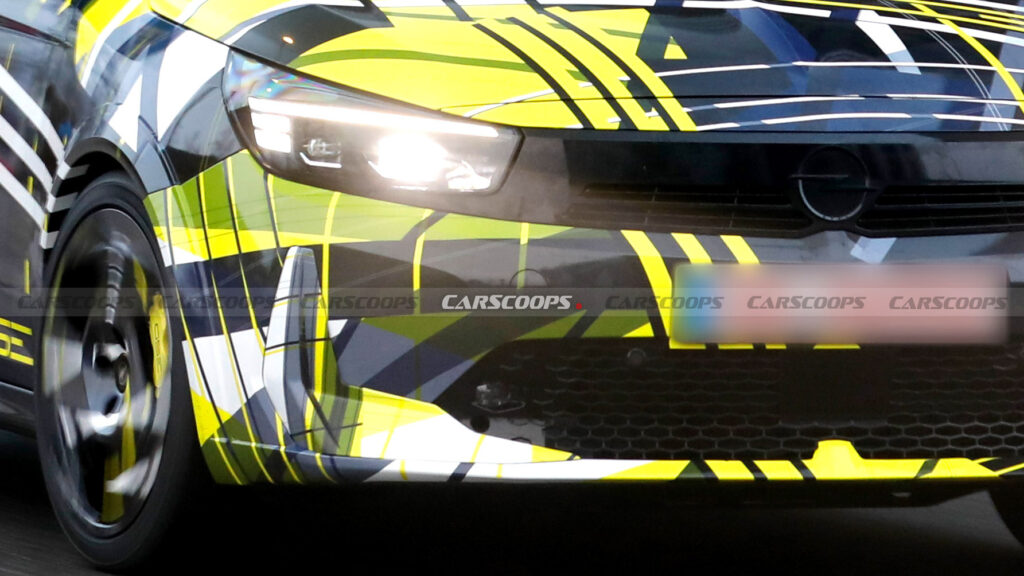
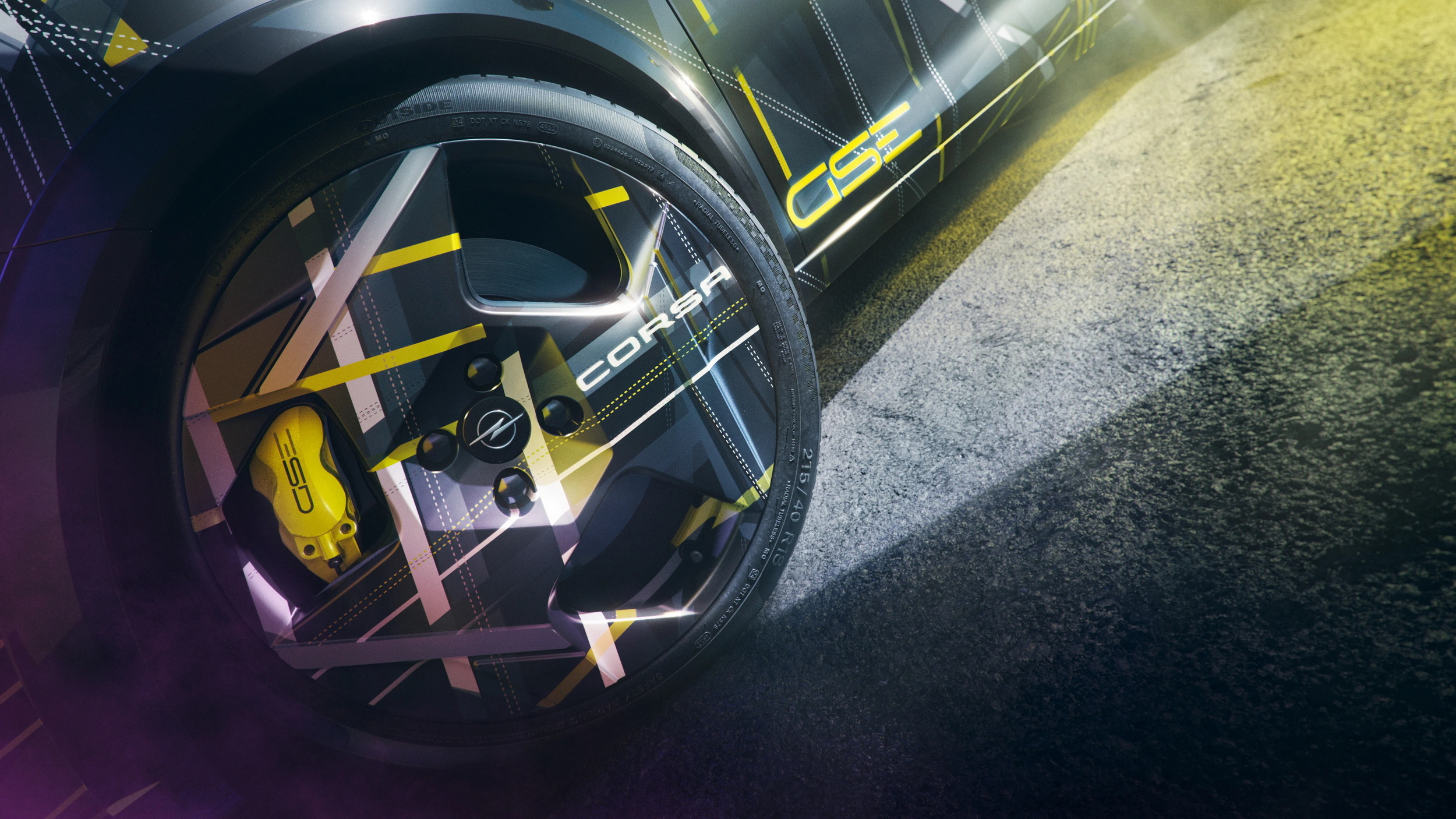
We already saw a teaser last week, zoomed in tight on a wheel like it was hiding state secrets. Now the prototypes are out stretching their legs, wearing camo but not bothering to disguise the yellow brake callipers and chunky wheels that scream performance model.

Related: The Stellantis Hot Hatch You’ll Never Buy But Can Still Drive At Home

Visually, expect something close to the Mokka GSE SUV that debuted last year. That means dynamic-looking wheel rims, plenty of moody black detailing and a lower stance resulting from uprated springs and dampers. The body panels appear largely unchanged from the facelifted Corsa, but sharper bumpers and extra cladding should help it stand apart from lesser trims in supermarket car parks.

Close To 280 hp

\\\\\\\\\\

Baldauf

Under the skin, the smart money says it’ll also mirror the Mokka GSE and its Stellantis cousins. Expect a front-mounted electric motor pushing out around 278 hp (281 PS / 207 kW) and 255 lb-ft (345 Nm) of torque, plus a Torsen limited slip differential and stiffer suspension are expected to keep torque steer tantrums in check.

Opel claims a 5.9-second zero to 62 mph (100 kmh) time for the Mokka, so the lighter Corsa should knock a couple of tenths off that, matching the 5.7 seconds Peugeot quotes for the Corsa GSE’s French brother, the 208 GTI.

\\\\\\\\\

Baldauf

Power will likely come from the familiar 54 kWh battery pack fitted to both the Mokka and 208. But the driving range will come in closer to the 208’s 217 miles (350 km) than the 201 miles (324 km) Opel says the taller, heavier Mokka can deliver between charges.

Competition Hotting Up

The 208 GTI marks the first time Peugeot has dropped a GTI badge on an EV, but it won’t the £35-40k Corsa GSE’s only competition. Alpine and Mini already have hot hatch EVs on sale and VW launches its first electric GTI this year, the ID. Polo GTI.

From what we’ve seen the Polo is going to have the upper hand when it comes to design, both inside and out, but with only 223 hp (226 hp / 166 kW), it’s not going to have the firepower of the Stellantis duo.

 Stellantis Outguns Polo GTI With New Corsa GSE
Opel

After Burning $26 Billion On EVs, Stellantis Might Turn To China For EVs

  • Stronger Leapmotor ties could sharpen its VW, Renault fight.
  • A US ban on Chinese tech cars still poses a real hurdle.
  • Stellantis booked $26.1 billion in EV strategy write-downs.

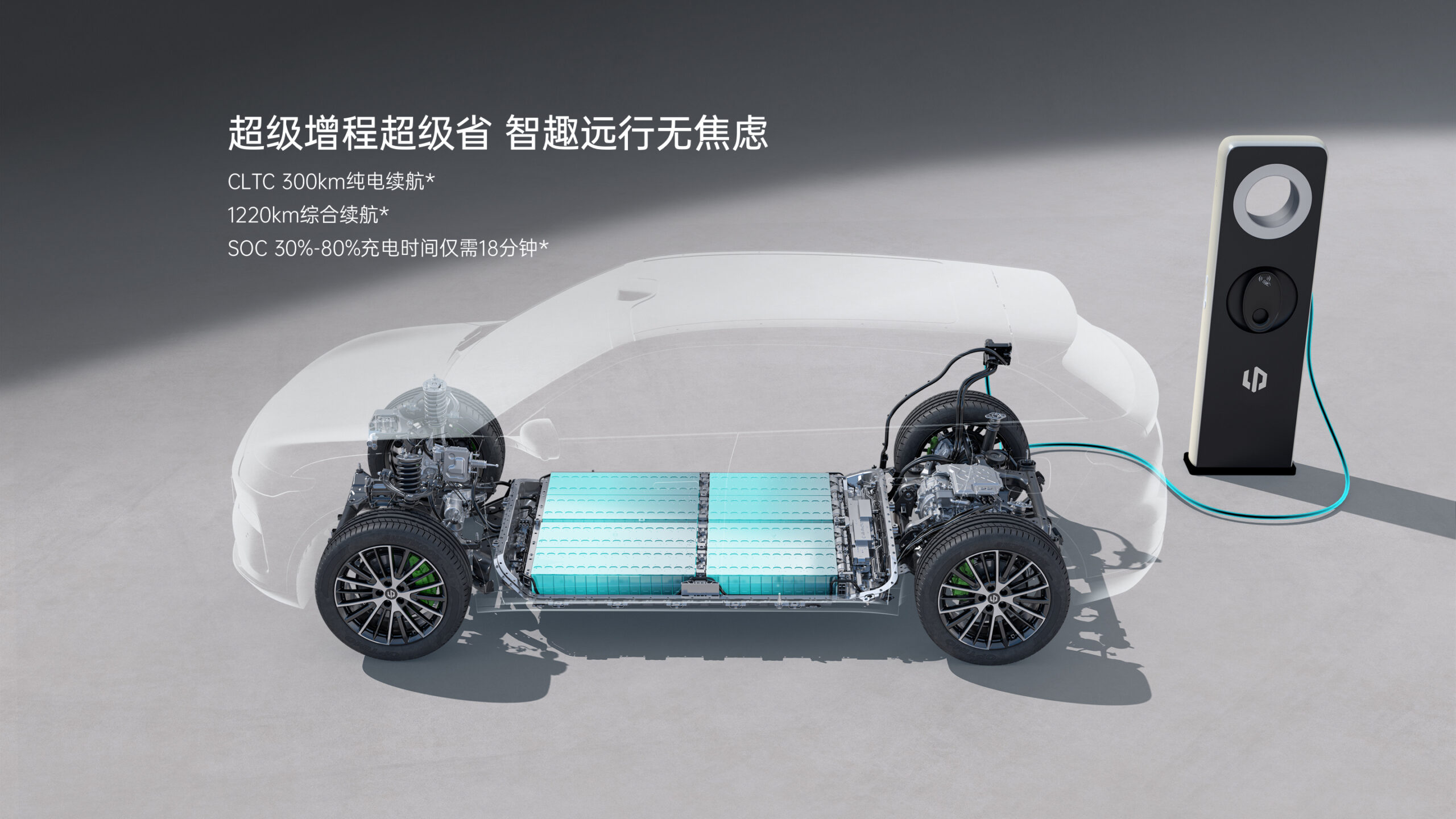
Stellantis is deepening its ties with China’s fast-moving EV sector as it searches for a more efficient path through the electric transition. In 2023, the group inked a deal with Chinese EV startup Leapmotor, purchasing a 20 percent stake in the firm for $1.1 billion. The agreement made Stellantis the exclusive distributor of Leapmotor models in Western markets.

Now, it appears the relationship could extend beyond distribution, with Stellantis potentially tapping into its partner’s EV technology for brands such as Fiat, Opel, and Peugeot.

 After Burning $26 Billion On EVs, Stellantis Might Turn To China For EVs

According to Autonews, unnamed sources say Stellantis wants access to Leapmotor’s battery and EV powertrain technologies. It’s understood that discussions are in their early stages, but using Leapmotor’s systems would help Stellantis save billions of dollars in development costs, and allow it to more quickly roll out rivals to vehicles from Chinese competitors like BYD and MG, in addition to legacy brands including the VW Group and Renault.

Read: Stellantis’ Chinese Partner Built A Minivan That Makes The Pacifica Feel Ancient

However, actually using Leapmotor’s battery and EV technologies could prove challenging. For example, vehicles using connected systems linked to China will be banned from importation and sale in the US from 2027.

What’s Next for the Partnership?

 After Burning $26 Billion On EVs, Stellantis Might Turn To China For EVs

While speaking about the collaboration between the two companies, Stellantis chief executive Antonio Filosa said the “technical partnership… will help us in getting to higher level of competitiveness especially with electric cars and it is very important for Europe.”

He added the partnership will also “improve our collaboration also on new tech development,” noting that “2025 was a year of strategic implementation for the partnership, setting the stage for deeper integration”, according to Autonews.

EV Write-Downs And Reset

Earlier this month, Stellantis announced write-downs and charges of €22.2 billion ($26.1 billion) as it scaled down its EV strategy. However, it knows it can’t back away from EVs entirely, hence why it’s interested in deepening its ties with Leapmotor.

Through the Leapmotor International joint venture, Stellantis has helped the Chinese brand launch several of its models, like the C10 and B10, in markets including Europe and Australia. For a brief period, it was also building the small T03 in Poland, but this ended last year amid fluctuations in international trade policies. This year, Stellantis plans to start building Leapmotor vehicles at its Zaragoza plant in Spain.

 After Burning $26 Billion On EVs, Stellantis Might Turn To China For EVs

Chinese Phone Giant Is Hunting For Hypercar Cred On Gran Turismo

  • Xiaomi unveiled its Vision Gran Turismo concept at MWC 2026.
  • Like the Aston Martin Valkyrie, it uses huge venturi tunnels.
  • The cocoon-like cockpit makes just enough space for two.

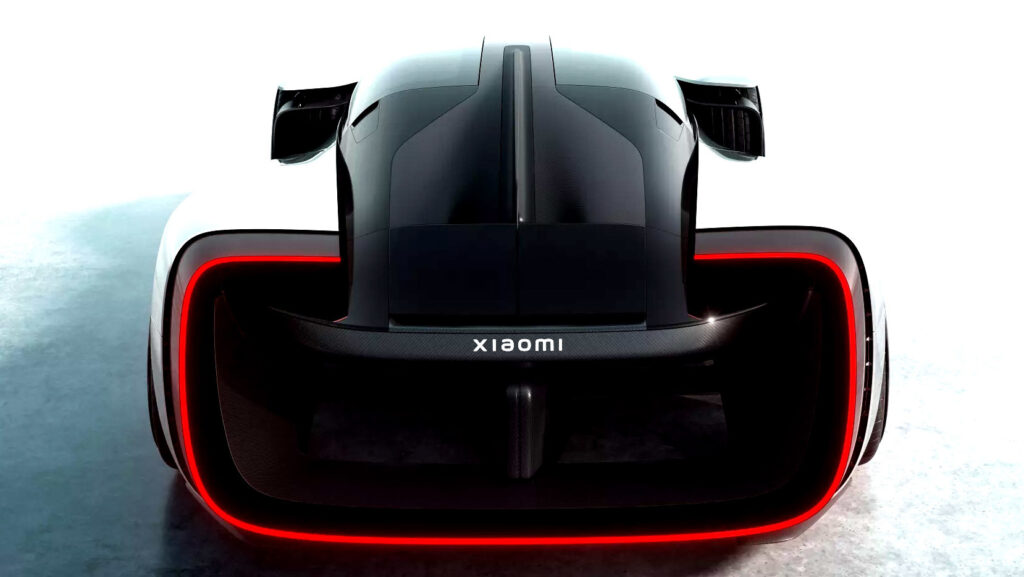
Chinese smartphone and consumer electronics giant Xiaomi, now very much a car manufacturer too, has become the first Chinese brand to unveil its own Vision Gran Turismo concept. Presented at the Mobile World Congress 2026 in Barcelona, Spain, the car is bold and offers a glimpse of what a legitimate hypercar from the tech juggernaut might look like if it ever reached production.

Underpinning the Vision GT is the company’s 900-volt Silicon Carbide platform. While no performance specifications have been released, it could deliver upwards of 1,900 hp from its electric powertrain. Most of the details shared by Xiaomi focus on the car’s design and aerodynamic intent.

Read: Trapped Driver Died After Xiaomi’s Electronic Doors Reportedly Failed

According to Xiaomi’s head of automotive design, Li Tianyuan, the Vision GT concept posts a drag coefficient of 0.29 and has effectively been sculpted by the wind.

\\\\\\

Like track-obsessed machines such as the Aston Martin Valkyrie and Red Bull RB17, the Vision GT runs vast venturi tunnels beneath its bodywork. They channel air through the underfloor and eject it at the rear, creating a dramatic tail section that works to pin the car to the tarmac at speed.

There’s no word on how much downforce it could have, but it’d inevitably be enough to warp your face while going around corners. The front-end includes a motorsport-inspired carbon fiber splitter and unobtrusive LED headlights. As mentioned, the rear is dominated by the huge venturi tunnels, but the LED taillight wrapping around the entire back of the car is also very striking.

Xiaomi has also imagined the Vision GT with a set of very intriguing wheels. Sitting over a set of carbon-ceramic brakes, the concept has a set of turbine fan rims with a floating cover over them, making it appear as though the wheels aren’t moving when the car is driving.

A Cabin From Another World

 Chinese Phone Giant Is Hunting For Hypercar Cred On Gran Turismo

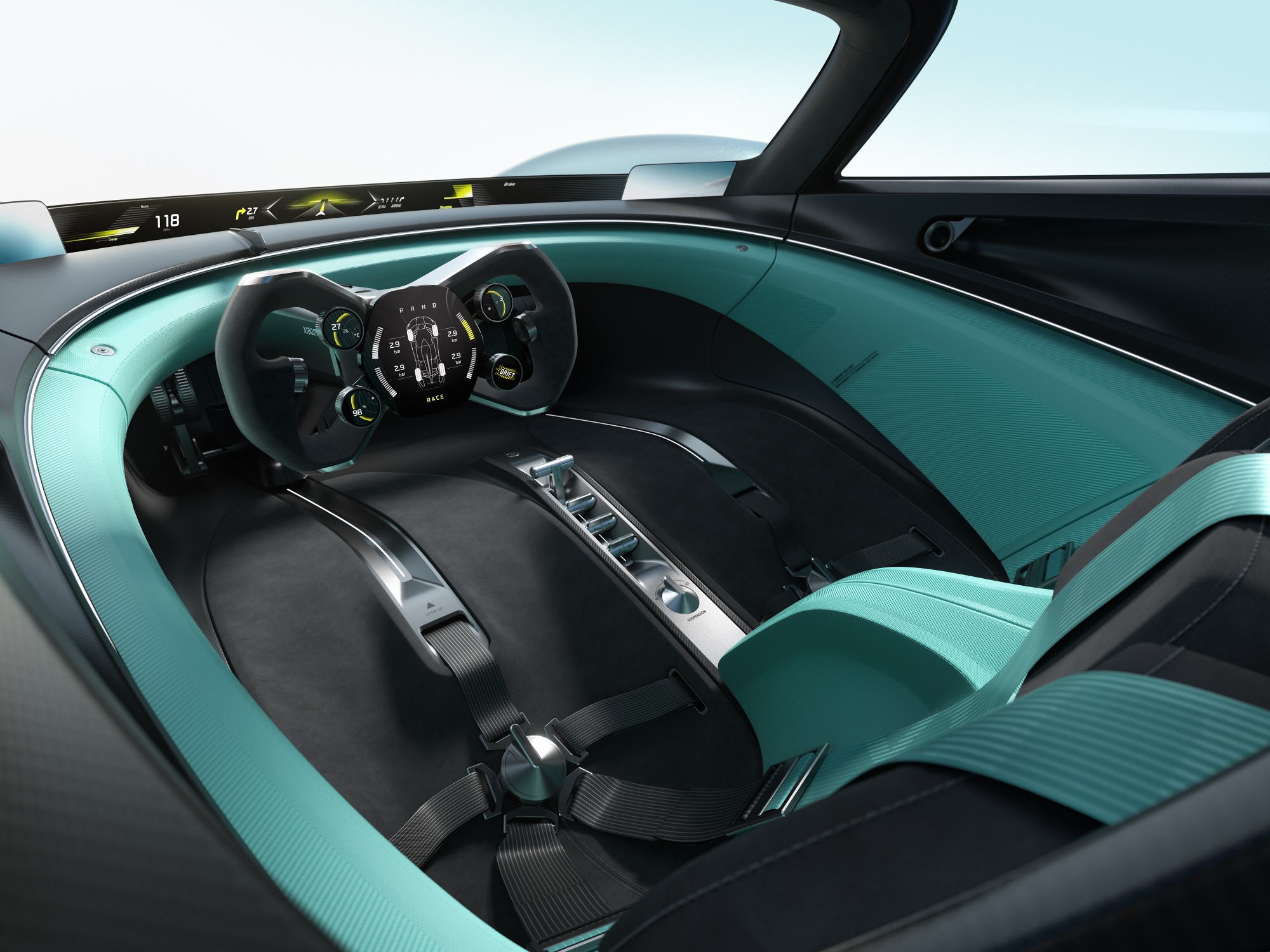
The cabin looks tight, but futuristic. Occupants sit in a pair of seats stuffed into the carbon fiber monocoque. There’s a panoramic head-up display similar to the new BMW iX3, as well as a steering wheel straight out of racing with five large circular screens, including a toggle for a drift mode.

There’s no word on when the car will be added to Gran Turismo, but it should be made available in the coming weeks. Will it influence a future road-going supercar from Xiaomi? Not likely, at least in that extreme form, but only time will tell.

\\\\\\\\

America’s Gen Z Is Ready For Chinese Cars, Their Parents Are Not

  • U.S. consumers are sharply divided on Chinese vehicle brands.
  • Dealers show strong resistance despite notable shopper curiosity.
  • Price incentives could sway buyers, but trust remains critical.

If you spend any time in automotive comment sections, you’ve seen it. Someone inevitably points to a cutting-edge EV from China and declares it superior to whatever U.S.-market model is under discussion. There’s a huge catch, though: that vehicle doesn’t actually exist in the American marketplace.

More: BYD Got In America Through The Back Door, Now It Wants The Front One Too

It’s not federally certified, not sold through U.S. dealers, not supported by a domestic service network, and not priced with tariffs factored in. It’s a theoretical alternative, not a real one, and new research helps explain why this dynamic exists. Americans are forming opinions about Chinese automakers before most have ever seen one in person.

 America’s Gen Z Is Ready For Chinese Cars, Their Parents Are Not

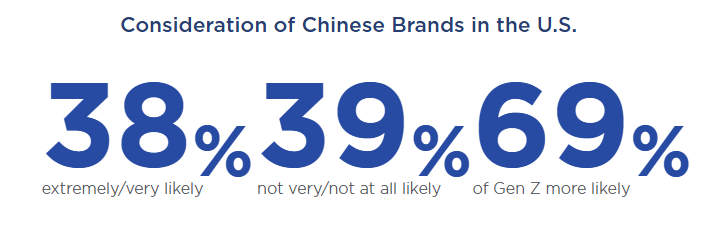
According to a study from Cox Automotive, consumers are heavily divided. Around 38 percent of shoppers say that they’re extremely or very likely to consider a Chinese brand. Another 39 percent says the opposite, that they’re extremely unlikely to do so. Among Gen Z buyers, the openness jumps to a whopping 69 percent, so if this ever does happen, expect the marketing to skew toward younger folks.

That split implies any early traction would likely be concentrated within specific demographics rather than spread across the broader market, creating both opportunity and risk for established players.

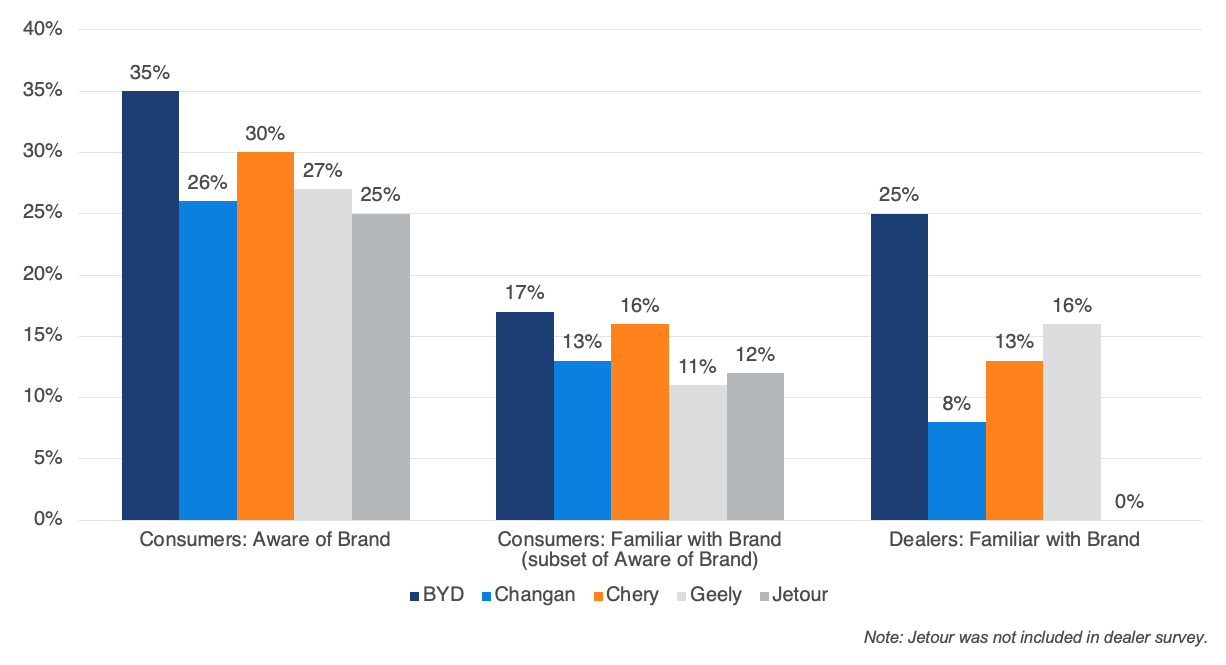
That said, actual awareness is thin. Nearly half of those surveyed said they were familiar with Chinese brands, but actual brand knowledge falls off a cliff quickly. BYD is the brand most are familiar with and that made up just over one-third of respondents. In total, only 17 percent said they had a deeper awareness of it. That’s a pretty big insight gap.

Dealer familiarity lags even further behind, with only about a quarter reporting any awareness of BYD, a reminder of how preliminary this conversation still is at the retail level.

Chinese Brand Awareness and Familiarity
 America’s Gen Z Is Ready For Chinese Cars, Their Parents Are Not
Cox Automotive

Shoppers Vs Sellers

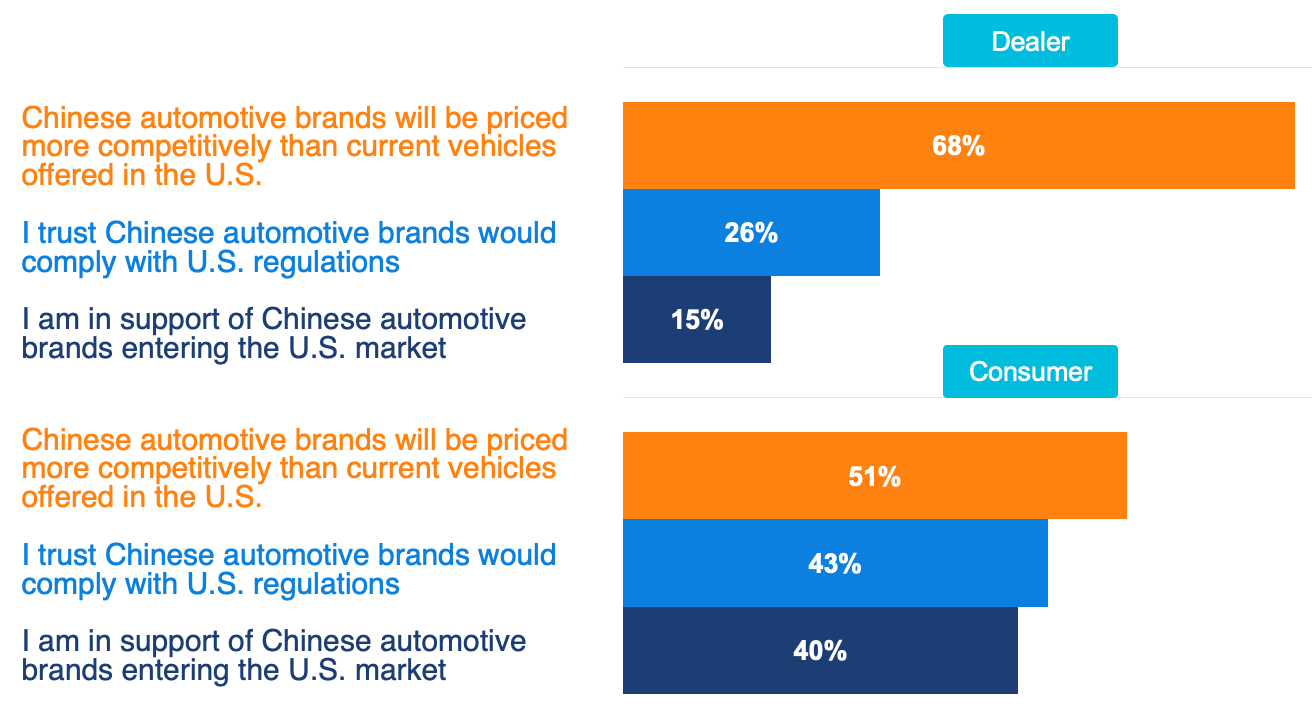
While around 40 percent of consumers say that they’re interested in Chinese brands coming to America, dealers, the ones with the real power, aren’t so hot on it. Only 15 percent said they’d like these brands in the USA. In fact, 92 percent of dealers reported concerns about selling Chinese vehicles. They cited everything from reliability to safety to long-term viability. That hesitation matters even more than the fact that some 60 percent of buyers aren’t interested.

The research also found that roughly 70 percent of dealers would adjust their business strategies if Chinese brands entered the market, suggesting preparation may follow skepticism.

Partnerships could shift the equation, though. When consumers were asked to consider a Chinese automaker aligned with an established U.S. brand, purchase consideration rose sharply to 76 percent, indicating that brand pairing may influence acceptance as much as pricing or product.

The Attraction

 America’s Gen Z Is Ready For Chinese Cars, Their Parents Are Not

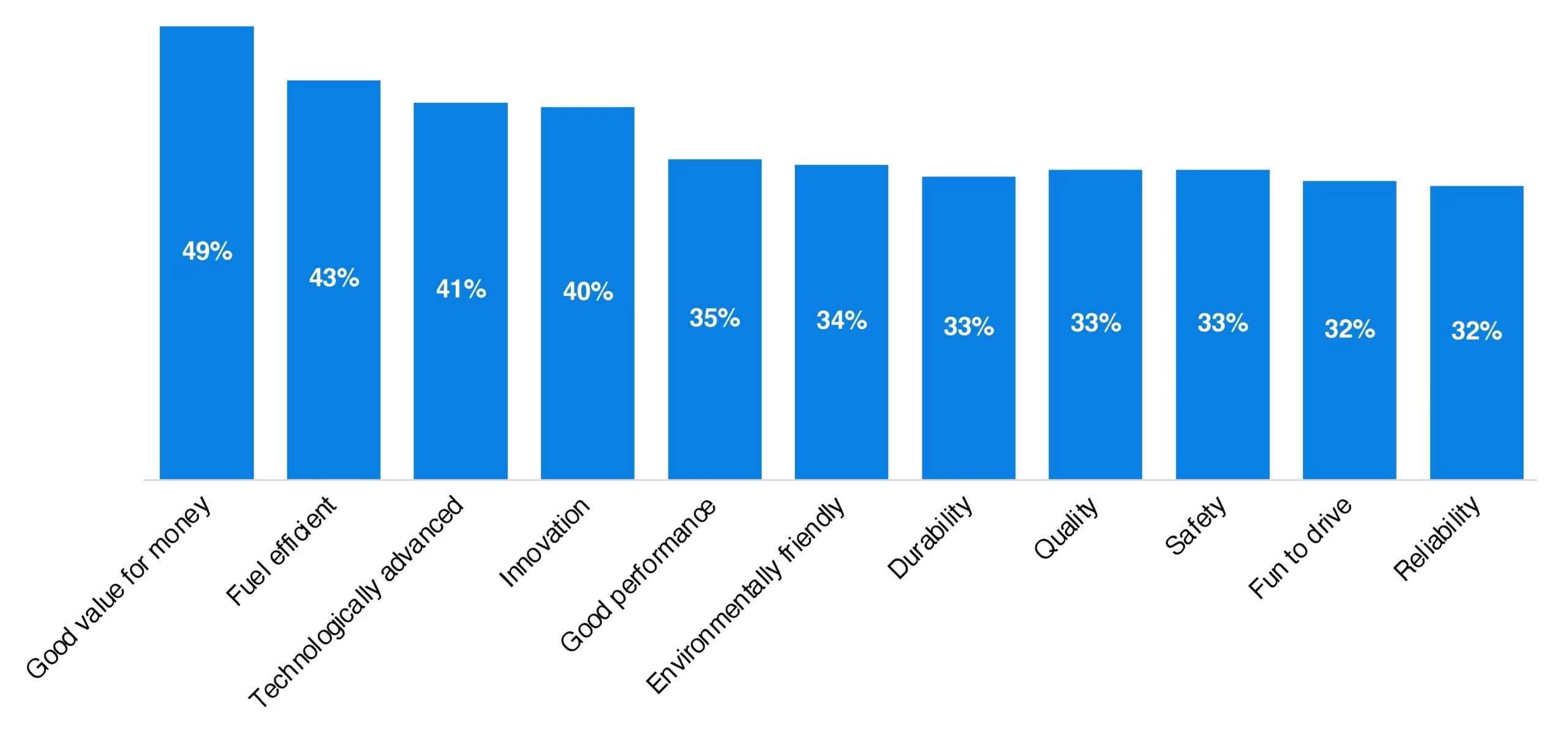
Interest does not appear to hinge on technology, styling, or practicality. It comes down to price. Nearly half of consumers rate them positively for affordability, and 35 percent give strong marks for performance. No doubt, we’ve seen pricing for Chinese automobiles undercut just about every other brand. But durability, safety, quality, and reliability fall short, and those are precisely the fundamentals that drive mainstream purchase decisions.

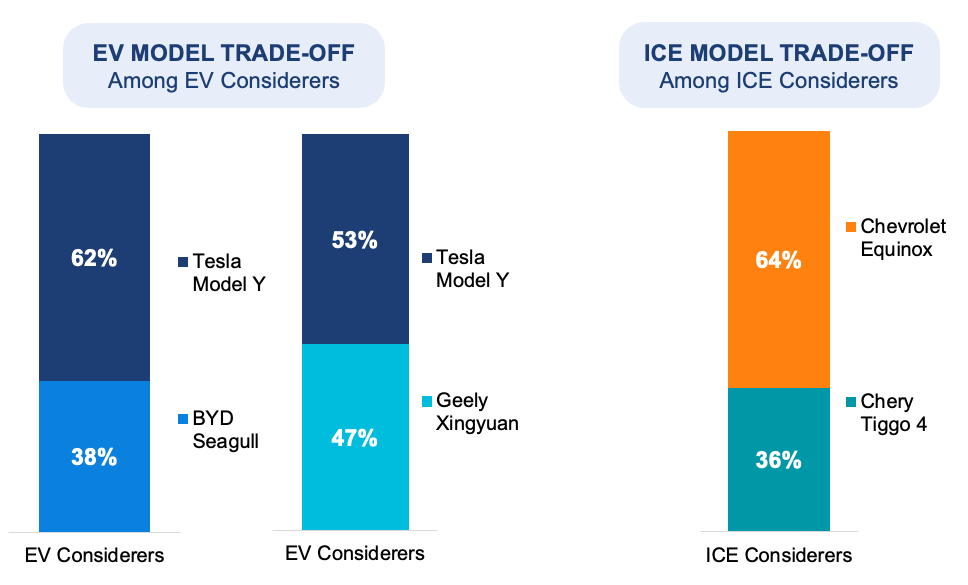
When consumers directly compared specific models, Tesla’s Model Y maintained a clear edge among EV shoppers, and the Chevrolet Equinox led among ICE vehicles, reinforcing the staying power of established nameplates.

However, when steep price discounts were introduced into side-by-side comparisons, a meaningful share of buyers indicated they would switch, particularly among lower-income and more price-sensitive groups.

Dealer and Consumer Comparisons (Strongly or Somewhat Agree)
 America’s Gen Z Is Ready For Chinese Cars, Their Parents Are Not
Cox Automotive

Established U.S. brands still hold the advantage, buoyed by trust and familiarity. Price can narrow that gap, especially among more cost-sensitive buyers, but it doesn’t erase it. And it’s why those folks in the comment section suggesting that readers get a BYD Dolphin instead of whatever is actually available might have to wait a while longer before that comment makes any sense.

Consumers Rate Chinese Brands Lower on Buying Criteria (Durability, Quality, Safety and Reliability)
 America’s Gen Z Is Ready For Chinese Cars, Their Parents Are Not
Cox Automotive
Choosing Between Brands: U.S. vs. China
 America’s Gen Z Is Ready For Chinese Cars, Their Parents Are Not
Cox Automotive

Texas PD Tests Model Y To See If Gas SUVs Really Cost Up To $12,000 More A Year

  • Murphy PD in Texas now runs the 2026 Model Y Juniper.
  • Each unit saves $4,100 to $12,000 a year in fuel and upkeep.
  • Its electric drivetrain could double the car’s service life.

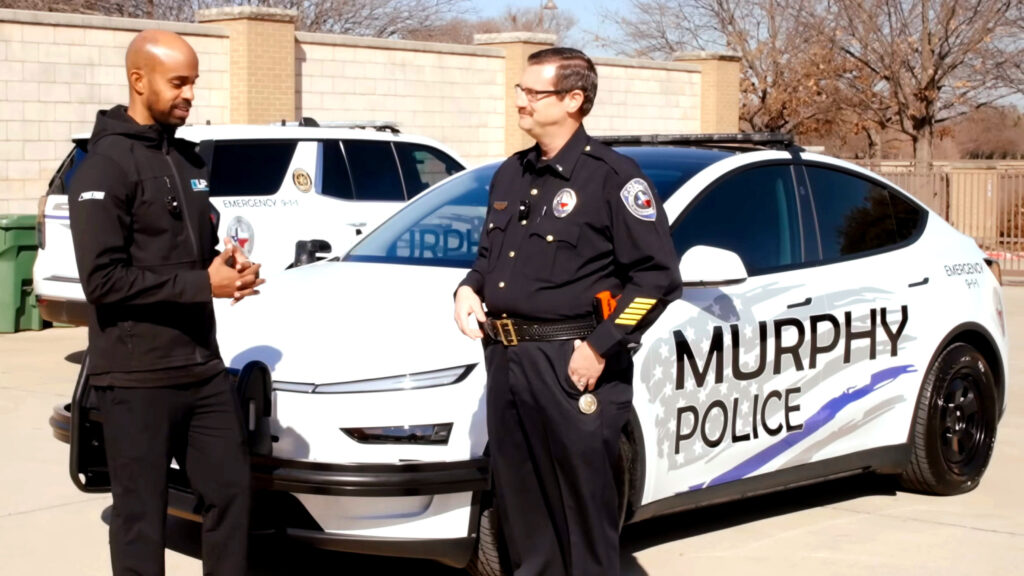
The Murphy Police Department in North Texas has become the first agency to roll out the refreshed 2026 Tesla Model Y Patrol, upgraded by Unplugged Performance. Instead of committing to a full fleet replacement, the department is running the EV in real-world conditions to see how it holds up to daily patrol duty.

Officials say the more persuasive case is financial. Each cruiser is projected to deliver measurable savings compared to a traditional ICE-powered patrol vehicle.

More: There’s A New Contender For The World’s Coolest Police Car

According to data from the City of Murphy, projected annual savings per vehicle range from $4,100 for single-officer units to as much as $12,000 for shared-shift cars clocking more than 140 hours per week. The bulk of that comes from eliminating fuel purchases, though the department will still incur electricity costs, along with a 75% reduction in maintenance compared to gasoline vehicles such as the Chevrolet Tahoe and Ford Explorer.

\\\\\\\\

No Idling Wear

The savings story does not stop at fuel and oil changes. EVs do not suffer engine wear from constant idling, which accounts for roughly 60% of a patrol car’s working life. As a result, they are expected to remain in service for up to twice as long as an ICE-powered equivalent.

More: Tesla Cybertruck Joins The Police, May Pull You Over This Year (If It Doesn’t Break Down)

Given that every hour spent idling is effectively equal to 33-35 miles (53-56 km) of driving wear, that difference adds up quickly. Without a combustion engine ticking away under the hood, the Model Y can sit on scene running lights, laptops, and climate control off its battery, without quietly shortening its lifespan.

Juniper Patrol Cars

\\\\\\\\\\\\\\\\\\\\

On the hardware front, the facelifted Tesla Model Y Juniper has been converted into a patrol unit by UP.FIT, the specialized fleet division of Unplugged Performance. Compared to the road-going version, it gains a front push bar, additional LEDs at the front and sides, a roof-mounted siren, and 18-inch forged aluminum wheels wrapped in pursuit-rated tires.

The police car is offered in RWD and AWD configurations, using the standard electric powertrains and delivering between 321-357 miles (517-574 km) of range per charge. That is more than enough for routine duty. And because police work occasionally involves pursuits, braking performance has been upgraded with six-piston calipers, stainless steel brake lines, specialized fluids, thermally upgraded components, and uprated rotors.

More: A Traffic Cop Just Got A 1,001 HP Company Car

Inside, officers get ventilated seats and improved sound insulation. Each vehicle is retrofitted with a customizable center console, a laptop mount, two weapon mounts, upgraded interior lighting, and a single rear prisoner partition.

Optional extras include ballistic protection for the front doors and custom reflective graphics.

UP.FIT has not disclosed the final MSRP for the Murphy units, though it insists the total cost of ownership undercuts everything else in the segment. Beyond the Model Y crossover, the company also offers police-ready conversions for the Cybertruck, Model S/X, and Model 3, in case your local department prefers its patrol cars in a different shape.

\\\\\

UP.FIT / Unplugged Performance

Bentley’s New SUV Will Hit 100 Miles In Seven Minutes

  • Second Bentley SUV will be sold only as an EV.
  • It rides on Porsche’s Premium Platform Electric.
  • The base version could deliver around 600 hp.

If the Bentayga proved anything, it is that Bentley buyers have no issue with a luxury SUV wearing a winged badge. So a second one was never really in doubt. That follow-up is now deep into development, and it has just been spotted winter testing for the first time.

For now, it is referred to as the Urban SUV, though that name is almost certainly temporary. It will sit below the Bentayga in the range and, more significantly, it will be fully electric. Yes, the EV market has cooled slightly, but Bentley appears confident that its customers are still ready for a battery-powered SUV with the right badge on the nose.

Read: Bentley’s New Urban SUV Copies A Controversial Feature From Audi’s Q3

Several prototypes have been seen out on the road in recent months, but this is the first time one has appeared wearing this darker, more dramatic camouflage scheme. It’s been adorned with a large LED light bar at the front, ensuring the engineers testing it can still see after the sun sets in the depths of Europe’s winter.

\\\\\\\\

SH Proshots

Most of the Urban SUV’s shape is still carefully disguised, but a few details are slipping through. Up front, the headlights feature four distinct lighting elements, giving it a signature that sets it apart from today’s Bentleys. Around the back, temporary cladding does its best to obscure the view, though slim LED taillights are clearly visible beneath the camouflage.

A Porsche Powertrain

Bentley is building its second SUV on the same Premium Platform Electric architecture as the new Porsche Cayenne Electric. That strongly suggests plenty of shared hardware with its German cousin, potentially including battery packs and motor configurations.

 Bentley’s New SUV Will Hit 100 Miles In Seven Minutes

As it stands, the entry-level Cayenne Electric delivers 402 hp and tops out at 1,039 hp in the extraordinary Turbo variant. Our hunch is that the base Bentley will deliver around 600 hp. Whether or not it receives a flagship version with a four-digit horsepower figure remains uncertain.

One figure Bentley does seem keen to emphasize is charging speed. The SUV is expected to support ultra-fast DC charging, with the promise of adding 100 miles (160 km) of range in just seven minutes.

Audi Meets Porsche Inside

 Bentley’s New SUV Will Hit 100 Miles In Seven Minutes
SH Proshots

Late last year, our spy photographers finally caught the cabin in clear view. The images show a curved central infotainment screen that looks very close to the setup in the Cayenne Electric, paired with a separate digital instrument cluster ahead of the driver. It is familiar architecture, even if the surrounding materials will inevitably be pure Bentley.

There is more evidence of parts sharing lower down the steering column. Bentley’s compact electric SUV appears to use the same multi-function stalk arrangement as the new Audi Q3. Indicators, wipers, and headlight controls are grouped on the left stalk, while the right is dedicated solely to the shifter.

As for timing, Bentley could give us our first proper look at the production-ready model later this year. Customer deliveries of the Urban SUV are expected to begin in 2027, which gives Crewe a little time to perfect the details and, presumably, settle on a name that is not “Urban SUV.”

\\\\\\\

SH Proshots

“It’s Not a Luxury Anymore—It’s a Necessity.”

By: STN

When school districts talk about closing buildings, redistricting and changing routes, transportation is often expected to “just make it work.” For Clara Bisaillon, transportation supervisor at Scotia Glenville CSD in upstate New York, that was no longer acceptable without better tools in place.

“There’s a difference between want and need,” Clara said. “And getting everybody else to understand that… those tablets, the Wayfinder tablets, are really a need.”

Her urgency came from what she sees coming next year: school closures, major route changes, and drivers being sent into unfamiliar territory.

“If I don’t get them up and running and make sure that we have our system set, we’re in the water next year when we make those changes of closing an elementary school and throwing my drivers into areas they’ve not been,” she said. “They don’t know those kiddos yet, they don’t know those areas.”

For Clara, this isn’t about technology for technology’s sake. It’s about protecting her people. “The one thing I want to do is give my staff tools to make sure that those challenges are minimized as much as possible,” she said.

She knows how close many drivers already are to the breaking point. “We ask a lot of our drivers,” Clara explained. “We’re adding extra routes to cover for their co-workers… and just people who are frustrated with student behavior. Those are the things that really tip the scale for those drivers to say this isn’t worth it anymore.”

That’s why she changed her message to district leadership. This was no longer a “nice to have.”

“It’s the only tool that I can offer my staff to kind of make them… feel like it’s going to be OK,” she said. “We’re going to be in uncertain environments and uncertain times with uncertain kids, but these are the tools that I’m going to provide you.”

The start of a new year always come with some jitters, she said. “We’re going to minimize that with these tablets.”

What finally sealed the decision was data. After testing Wayfinder for two weeks, Clara saw its impact. “The stats that get provided, the ridership, the times, the updating, the stops, the drivers being able to give me feedback on the routes—what was working, what wasn’t working—that two-week time frame gave me so much fighting power,” she said. “That really sealed the deal.”

For transportation leaders waiting on the sidelines, Clara had a warning: delays may cost more than time. With chip shortages and districts adopting tablets at once, supply is tightening. If people hold on their decision and wait on their decisions, they might find themselves not being able to get up and running, she said.

And the mindset has shifted across the industry. “A lot of us are saying now that it’s not a luxury, it’s a necessity,” Clara said. “This has definitely shifted in our mindset.”

Ultimately, her argument came back to value—of the drivers and the operation. “It’s an extra tool not only for your driver for working, but you want them to feel valued,” she said. “It’s going to make my drivers know that they are valued even more.”

For school transportation leaders facing route upheaval, staffing shortages and rising scrutiny, Clara’s message is clear: waiting carries its own risk. “You gotta fight for every little tool that you give,” she said. “You gotta be willing to fight for them.”

To learn more about how Transfinder technology can help your operation navigating challenges, email solutions@transfinder.com, visit transfinder.com/solutions or call 800-373-3609.

The views expressed are those of the content sponsor and do not reflect those of School Transportation News.

The post “It’s Not a Luxury Anymore—It’s a Necessity.” appeared first on School Transportation News.

(Free White Paper) 7 Key Criteria for Choosing a School Bus Technology Partner

By: STN

Budgets are tight, drivers are hard to come by, and districts are under pressure to do more with less. School bus operations still need to rely on modern technology to meet the complex requirements of transporting students safely, efficiently and on time. Identifying the operational, functional, technical, and financial needs that truly matter can feel overwhelming, as can choosing a provider. Where to start?

Download this white paper for clear guidance on evaluating your organization’s needs and selecting a partner who delivers long-term value.

Inside, you’ll learn how to:

  • Take a wide, objective look at your operation to understand what’s needed.
  • Identify how new technologies will impact end users and other departments.
  • Define KPIs with potential partners and calculate projected ROI.
  • Evaluate providers in detail to assess their long-term potential.
  • Ensure compliance and look for strong integrations across systems.

Fill out the form below and then check your email for the white paper download link.

The post (Free White Paper) 7 Key Criteria for Choosing a School Bus Technology Partner appeared first on School Transportation News.

EverDriven Launches Vendor-Agnostic Routing Consulting Service for School Districts

EverDriven is expanding its support for school districts with the launch of a new school bus routing consulting service designed to improve efficiency, reduce costs and ease staff burnout without requiring a change to existing software platforms.

The new offering, currently in early development and pilot planning stages, will focus on providing expert routing support for districts nationwide. Rather than introducing proprietary school bus routing software, EverDriven will work within the systems districts already use.

“We’re not forcing districts into new platforms,” explained Greg Jackson, who was recently hired as general manager of EverDriven’s new school bus services division. “We’re coming in vendor agnostic, preserving their workflows and institutional knowledge and helping them operate more efficiently.”

The service will combine remote routing work with periodic on-site visits to build relationships with transportation directors, office staff and drivers. Jackson emphasized that maintaining a human connection is critical to long-term success.

“We’re going to come into your community, sit down with your team and work alongside you,” said Jackson, who was the 2019 STN Transportation Director of the Year for his work at JeffCo Public Schools in Colorado.

EverDriven’s Routing Process


Greg Jackson, the general manager of EverDriven’s new school bus services division, explained that the company organizes its services into two distinct areas: Alternative student transportation, which provides individualized transportation for students with unique learning needs or housing instability, and consolidated routing services, which integrate school buses, vans and alternative transportation into a unified strategy. Each service has specialized teams and processes due to their differing operational requirements.


While school bus routing focuses on large-scale, fixed-route planning aligned with schedules, capacity, geographic boundaries, vehicle type and ride-time standards, alternative transportation requires a more individualized and dynamic approach. Drawing on over 20 years of experience and leadership from former transportation directors, EverDriven delivers efficient, safe, and optimized routing designed to reduce costs, improve on-time performance, shorten ride times, and quickly adapt to daily changes, Jackson said.


Routing oversight is collaborative. School districts typically provide student data, service requirements, and guidelines, while EverDriven develops routes within those parameters. Districts maintain full visibility into route plans and performance and may choose to be highly involved in route design or rely on EverDriven to lead, depending on their preference. Routing is an ongoing partnership, with school districts regularly providing feedback and updates to ensure routes remain safe, practical and aligned with district goals.


“We view routing as a partnership built on shared goals and well defined roles and responsibilities,” Jackson said. “District teams bring critical local knowledge about communities, schools and student needs. Our routing specialists bring experience, deep technical abilities, and process consistency. Together, this collaboration ensures routes remain practical, safe, and aligned with district goals throughout the school year.”


EverDriven takes a technology-agnostic approach, working within a school district’s existing routing systems rather than requiring proprietary software. Integration focuses on secure data sharing, validation, and structured reporting, allowing districts to retain ownership of their systems while benefiting from EverDriven’s routing expertise.


Read more about partnering with vendors and the importance of collaboration in the March issue of School Transportation News

EverDriven said assigned school bus routing specialists will collaborate closely with school district leaders and IT departments to establish data-sharing protocols, validate student information and normalize routing data before making adjustments. Data points include enrollment, home addresses, bell schedules, eligibility requirements and accommodations for students with disabilities or those eligible under the McKinney-Vento Homeless Assistance Act.

EverDriven Focuses on Efficiency, Budget Relief

The consulting model is designed to help districts address rising transportation costs and driver shortages. By taking a deep dive into existing routes, EverDriven said it aims to identify opportunities to consolidate routes, reduce overtime and improve vehicle utilization.

Jackson noted that many school districts struggle with overtime budgets and staffing challenges, especially when routing staff are also required to drive routes. By shifting routing responsibilities to a dedicated external specialist, he said, districts can reduce burnout and allow in-house teams to focus on daily operations and safety oversight.

“[School] boards are asking why costs keep rising,” Jackson explained. “If we can help combine routes, reduce overtime and improve efficiency, the service pays for itself.”


Related: Ins, Outs of Routing Software Discussed at STN EXPO Reno
Related: School Districts Use Data, Routing For Medicaid Reimbursements


The new school bus routing consulting arm will operate separately from EverDriven’s existing alternative transportation division. While there may be collaboration between divisions, school bus routing consulting is positioned as a standalone support function.

School districts will not need to be EverDriven alternative transportation customers to access the new routing consulting service.

“This is about helping districts be more efficient,” Jackson said, adding that EverDriven plans to launch pilot programs in select markets to refine the service before a broader rollout.

Feedback from participating districts and the company’s customer advisory board will shape final implementation, he added.

“We’re in the beginning phases,” Jackson said, noting that details on pilot opportunities are expected in the coming months. “But the focus is student first. And now, student first with district support.”

The post EverDriven Launches Vendor-Agnostic Routing Consulting Service for School Districts appeared first on School Transportation News.

How Horry County Schools Uses Onboard Cameras to Protect Students, Drivers

By: STN

For Clifford Jones, Superintendent of Horry County Schools in Conway, South Carolina, student safety isn’t just a priority; it’s a responsibility that travels approximately six million miles every single year.

With one of the largest geographic school districts in South Carolina, Horry County’s fleet covers urban corridors, coastal routes and rural roads alike. Each morning and afternoon, buses carry thousands of students across the large county. Like districts nationwide, Horry County began seeing a disturbing trend: the growing challenges of resolving onboard incidents without clear evidence.

“AngelTrax cameras on our buses support the district’s student safety goals by improving supervision, discouraging misbehavior, and helping us investigate incidents, all of which advance our commitment to safe, equitable, and accountable transportation,” Jones explained.

Photo courtesy of Horry County Schools.

Identifying the Need

The responsibility of protecting thousands of students prompted the district leadership to explore camera solutions. Without video evidence, protecting students from interior incidents, from student behavior concerns to accident investigations, required more efficient documentation.

“AngelTrax provides a solution that would allow us to retrieve video from the bus specific to the concern that we were trying to address,” explained Robert Grimes, transportation coordinator for the district. “This video could then be shared with the school to allow administrators to better handle the situation.”

The district also recognized the value of providing drivers with added layers of protection and accountability. Videos would provide objective clarity and documentation should any issues arise.

“Bus drivers seem to be appreciative of the fact that there is video footage that can help with the management of bus behaviors,” Grimes added.

Measurable Impact

After evaluating multiple options, the district selected AngelTrax as its mobile security and surveillance partner, equipping buses with interior cameras to help deter onboard incidents. Since then, Horry County Schools has installed cameras on approximately 450 buses currently in service, covering roughly 1,500 bus routes.

Since installing the cameras in 2017, as one of the first school districts in the country to use AngelTrax’s Vulcan™ Series cameras, the district has observed meaningful improvements in student behavior on their school buses.

The presence of cameras has increased awareness around school bus safety across the community.

“Based on my understanding, the cameras have enhanced the peace of mind for parents, students, and drivers by increasing accountability, deterring poor behavior, and providing clear evidence when incidents occur,” Jones shared. “We share school bus safety information with students, families, staff, and the community using multiple channels. These channels include sharing information during open house events, as well as through printed and digital/video materials, our website and social media platforms, ensuring that everyone is aware of the expectations, procedures and the process for reporting concerns.”

Photo courtesy of Horry County Schools.

A Driver’s Perspective

For veteran bus driver Steven Lombardi, the cameras have made a noticeable difference in safety, noting that in the past, he has witnessed everything from students out of their seat, to throwing objects, fighting and other behavioral issues.

“I have never been a driver when there were no cameras on the bus,” Lombardi noted. “However, prior to having the AngelTrax cameras, we had a much less dependable camera which made capturing data more difficult.”

He said he believes the presence of the AngelTrax cameras positively influences student behavior.

“When I tell students that there are cameras on the bus generally, they are less likely to misbehave,” Lombardi added.

For Lombardi, the investment Horry County Schools made in camera technology represents more than a safety upgrade. It reinforces a culture of accountability and care.

“Knowing that there is a camera system to assist with capturing behaviors gives me a sense of relief,” he shared. “I would be hesitant to drive a bus that did not have cameras.”

As Horry County Schools continues to evaluate data and refine its transportation strategies, one goal remains constant: ensuring every student arrives safely, every mile, every day.

About AngelTrax

AngelTrax is a leading designer, manufacturer and provider of in-vehicle mobile surveillance for school buses and school white fleets. Powered by AngelTrax, the Child Safety Program automated stop arm violation system is created to keep kids safer by changing driver behavior, from violation detection to citation through adjudication. AngelTrax drives the market with state-of-the-art products, including Vulcan™ Series MDVRs and MNVRs, stop arm photo enforcement technology with AI detection, 360-degree camera systems, IP cameras, HD cameras, live view, live tracking and driver behavior with AI. AngelTrax is a CJIS-compliant organization and strategic partner with Nlets for accurate DMV data.

The views expressed are those of the content sponsor and do not reflect those of School Transportation News.

The post How Horry County Schools Uses Onboard Cameras to Protect Students, Drivers appeared first on School Transportation News.

March 2026

By: STN
Transportation employees at Loudoun County Public Schools in Virginia foster collaboration.
Photo courtesy of Loudoun County Public Schools
Cover design by Kimber Horne

Learn more about the teamwork needed to keep operations running smoothly at student transportation operations. Cover stars from Loudoun County in Virginia highlight the importance of working together and with their routing software provider. Also read articles on the benefits of school bus LED lighting, beyond safety considerations, how districts are choosing the best fuel options for them, the usage of parent apps and how RFP’s and pilot programs can help districts find the best transportation technology solutions.

Find the full STN EXPO East preview for the upcoming conference in Charlotte-Concord, North Carolina.

Read the full March 2026 issue.

Cover Story

Hand-in-Hand
Communication between vendor partners and customers is the key to developing successful, safe routes for students.

Features

The One & Only
School districts and companies are realizing the maintenance and time savings of LEDs, despite the higher upfront cost compared to incandescent lighting.

More Than Fuel Costs
Among the various options available, districts are leaning into the fuel that makes the most sense for their local operations.

Special Reports

Where is the Bus?
School districts report that using parent apps have helped streamline their operations, and software providers are seeing increased community usage.

More Than a Letter Game
Pilot programs are vital to the RFP process by helping school districts confirm if a chosen solution does what is promised.

STN EXPO East Preview
Prepare for the content, community and commerce waiting this month in Charlotte/Concord, North Carolina.

Feedback
Online
Ad Index

Editor’s Take by Ryan Gray
The Security of Consistency

Thought Leader by Jim Harris
The Intersection of Autonomous Vehicles and School Buses

Publisher’s Corner by Tony Corpin
Ignite Your Leadership

The post March 2026 appeared first on School Transportation News.

Technology Webinar Takes Detailed Dive into School Bus Efficiency

A Texas transportation director provided attendees with a live demo of the Bytecurve payroll and dispatch software, as well as numerous tips on improving school bus operational efficiency.

Bryan Mitchell, marketing manager for Bytecurve parent company Transit Technologies, explained during the Thursday webinar that with COVID-era funding programs ending, budget concerns combined with routine driver shortages, upset parents and disconnected tech systems complicate student transportation operations every day. He noted that half of U.S. students rely on school bus services but the number of school bus drivers decreased 15 percent from 2019 to 2023.

Mitchell reviewed a case study on the $30,000 monthly labor cost savings that Rome School District in Georgia achieved with Bytecurve, along with nearly eliminating payroll errors and saving 10 hours per week in driver communications and payroll reconciliation. He added that Russellville School District in Arkansas reported saving $15,000 per month.

Additionally, fellow webinar panelist Jonquez Moore, transportation director of Little Elm ISD in northeast Texas, discovered school bus efficiency by bringing two school district transportation operations in-house from contractors and implemented Bytecurve both times.

“We live in a very connected world. Unfortunately, in K-12 it’s not very connected,” observed Jonathan Agenten, director of sales for Bytecurve.

The payroll, scheduling and dispatch system lets drivers clock in via tablet, app or wall clock. Moore said some Little Elm ISD drivers like using the app to save time but noted a tablet option is available for drivers who are reluctant to download the app. He confirmed the app is location based so drivers can only clock in when they are within a predetermined distance from the facility. Agenten added that management can send notifications and see when the drivers read them.

Moore said he appreciated how real-time bus locations arranged in an airport terminal-style dashboard allows managers to proactively handle late, delayed or canceled routes.

“When it’s busy, you don’t know a bus is late until it’s late,” he commented.

Moore shared a view of his Bytecurve dashboard with webinar attendees and pointed out that dispatchers can easily see what drivers are clocked in and what buses they are assigned to. Managers can also manually clock in drivers or remove buses or drivers from the schedule if an event is canceled.

Noting his fondness for reports, Moore showed how easy it is to access on-time performance reports, which he shares with district administration and uses to praise his drivers.

Various stats are clickable, he added, allowing deep dives into problem areas. He said he uses this information to talk to his team and determine what to change.

“I’m not getting paid for this [webinar], so I really believe in their system,” Moore declared.


Related: (Recorded Webinar) How School Districts Save $30,000 per Month with Smarter Payroll
Related: Arkansas District Uses Technology to Save Money and Time
Related: (Recorded Webinar) Arkansas Transportation Department Saves $15K per Month with Bytecurve
Related: Payroll Technology Saves Thousands of Dollars for Georgia School District


He added that a report on planned vs. scheduled vs. actual hours worked is a favorite of the district chief financial officer as it helps with budget questions.

He noted that if there is an unexpected school bus driver shortage, a dispatcher can reassign the route with a few clicks. The system also notes what drivers are already working and therefore unavailable.

Identifying Additional Efficiencies in Operations

When changing tiered routes, where a driver was assigned to elementary and middle or high schools, Agenten confirmed that routes can be split up and reassigned by school or stop. The system notes the resulting changes and the app communicates those changes to parents.

He reviewed payroll integrations and confirmed that each district is a unique customer that Bytecurve will set up according to its particular rules.

When it comes to union requirements and driver minimum hours, task codes added upon system setup become part of the foundation so “things are calculated proactively and accurately,” Agenten said. Managers can use a few clicks to approve driver timesheets based on these preapproved district procedures.

He also answered an attendee question by stating that Bytecurve integrates with several tablets and also provides one of its own.

Mitchell reviewed Transit Technologies’ other offerings, one of which is onboard student and driver facing cameras that are ruggedized, reliable and warranty protected. busHive software allows districts to quickly quote, set up, complete and get reimbursed for field trips. FASTER Maintenance Software allows technicians to proactively manage bus repairs.

Watch the webinar on demand.

The post Technology Webinar Takes Detailed Dive into School Bus Efficiency appeared first on School Transportation News.

International Motors Honors 2025 Dealers of the Year

By: STN

ORLANDO, Fla.,- International Motors, LLC* (“International”) announced the International and IC Bus Dealer of the Year award winners at its annual dealer meeting this week in Orlando. This event is an opportunity for International to celebrate the successes of the dealer network from the previous year. More importantly, it is a moment to align our strategy to ensure we deliver quality solutions for our customers every day.

The 2025 Dealer of the Year award winners were selected based on their performance in several criteria, such as vehicle sales, parts sales, International S13 Integrated Powertrain sales, and service dwell time. Growth in key areas like market share, customer experience survey results, and leveraging solutions through International Financial are additional data points used to make Dealer of the Year selections.

“The annual International dealer meeting is always an exciting event because it brings our network together,” said Dan Kayser, executive vice president, Commercial Operations, International. “Our truck and bus dealers are our closest partners, and they work hard every day to give customers a dependable, consistent experience. This event celebrates that partnership and the strength we have when we’re aligned as one International.”

2025 International U.S. and Canada Dealer of the Year: Wieland Truck and Trailer

Michigan-based Wieland Truck and Trailer had an impressive year, exceeding their targets across the board — from parts growth and truck sales to significant gains in customer experience and market share. They achieved nearly seven times their goal for conquest customer count.

“Customers count on dealers who act as true partners, and Wieland Truck and Trailer delivered above and beyond that promise,” said Justina Morosin, senior vice president, Sales and Field Operations, International. “Their accomplishments are a direct result of their focus and customer first approach, and we’re proud of the consistency and care their team brings to every interaction.”

“Being named Dealer of the Year is an incredible honor, and I’m proud of what our team accomplished this past year,” said Rob Cleary, dealer principal, Wieland Truck and Trailer. “Customers expect a partner who can support them across their entire operation, and our team takes that responsibility seriously. I’m looking forward to celebrating with them at the dealership and seeing what we achieve in the year ahead.”

Wieland Truck and Trailer, founded in the 1930s, has three locations in Michigan.

2025 International Latin America Dealer of the Year: Capasa

Capasa was selected as the Dealer of the Year winner because of their commitment to achieving a unique customer experience through comprehensive solutions and support.

“Capasa puts customers at the center of what they do,” said Rafael Alvarenga, vice president, Latin America Commercial Operations, International. “Their commitment to providing effective solutions and strong support makes a meaningful impact across Latin America and sets a strong example for our entire dealer network.”

“It’s an honor to be named Dealer of the Year. We take great pride in offering transportation solutions that support our customers at every stage of their operations,” said Luis Gerardo Amarante Alvarado, dealer principal, Capasa. “This award is a celebration of our team’s effort and commitment, and I look forward to what we’ll accomplish in the year ahead.”

Capasa was founded in 1962 to meet the needs of the state of Sinaloa, Mexico. They have a presence in the cities of Culiacán, Los Mochis, Mazatlán and Guamúchil and in the state of Baja California Sur in the cities of Los Cabos and La Paz.

2025 IC Bus Dealer of the Year: Midwest Transit Equipment

Midwest Transit Equipment’s strong commitment to excellence, commercial execution and customer support made them a perfect fit for IC Bus Dealer of the Year. They exceeded their target in orders, advanced battery-electric vehicle readiness and adoption, and completed training with extensive customer-facing engagement.

“Our dealers play an essential role in providing safe, dependable transportation for students,” said Charles Chilton, vice president and general manager, IC Bus. “Midwest Transit Equipment embodies what it means to be part of IC Bus through their teamwork, customer focus and dedication to building a stronger future for our industry. We’re proud of their team for the example they set for our network.”

“Celebrating our 50th year and being named IC Bus Dealer of the Year is an incredible honor for us,” said John McKinney, chairman, Midwest Transit Equipment. “Our team is committed to trust, collaboration and setting a high standard for the customers and communities we serve. I’m grateful for their effort and excited to celebrate this achievement together.”

Midwest Transit Equipment is the largest volume school bus dealership in the United States. They have nine locations and a team of 300 employees.

To find your nearest International or IC Bus dealer in the U.S. and Canada visit the dealer locators on International.com or ICBus.com. For distributors in Mexico and Latin America, search Mexico.International.com and Latin-America.InternationalCamiones.com.

About International:
Based in Lisle, Illinois, International Motors, LLC* creates solutions that deliver greater uptime and productivity to our customers throughout the full operation of our commercial vehicles. We build International trucks and engines and IC Bus school and commercial buses that are as tough and as smart as the people who drive them. We also develop Fleetrite aftermarket parts. In everything we do, our vision is to accelerate the impact of sustainable mobility to create the cleaner, safer world we all deserve. As of 2021, we joined Scania, MAN and Volkswagen Truck & Bus in TRATON GROUP, a global champion of the truck and transport services industry. To learn more, visit www.International.com.

The post International Motors Honors 2025 Dealers of the Year appeared first on School Transportation News.

❌