Normal view

There are new articles available, click to refresh the page.
Yesterday — 9 September 2026Main stream

Bronco Basecamp Breaks Out Of China And Heads Down Under

  • The Ford Bronco Basecamp is coming to Australia and New Zealand.
  • Model arrives next year with a range-extended powertrain and pop-up roof.
  • Crossover could have a combined output of 416 hp and 442 lb-ft of torque.

Nearly a decade after wrapping up production in Australia, Ford has announced big plans for the land down under. As part of an event, the company announced plans to “double coverage of the Australian vehicle market to over 60% within three years.” The automaker is also aiming for “over 90% of its volume sold to be all-new or significantly refreshed by the end of 2030.”

The centerpiece of this plan is to bring the Bronco Basecamp to Australia and New Zealand in the second half of 2027. The model launched in China last year and targets a “new breed of outdoor enthusiasts.”

More: Ford’s Electrified Bronco Arrives In China With A Pop Up Roof Surprise

Ford didn’t say much about the local variant, but confirmed it will have a “super hybrid extended-range electrified powertrain.” It consists of two electric motors, a 49 kWh battery pack, and a turbocharged 1.5-liter engine that acts exclusively as a generator.

The company said this will deliver the smooth and responsive driving dynamics of an electric vehicle, but with a range of 497 – 559 miles (800 – 900 km). It also goes without saying, you can simply fill up with gas and be back on your way.

\\\\\\\\\\\\\\

Ford didn’t talk numbers, but the Bronco Basecamp starts at ¥229,800 ($34,245 USD / $47,565 AUD) in China and features a combined output of 416 hp (310 kW / 421 PS) and 442 lb-ft (600 Nm) of torque. The model also has a CLTC electric-only range of 137 miles (220 km).

While Ford didn’t say much about the vehicle, they noted it’s built for adventure and would make the perfect camping companion. When it’s time to go to sleep, all the seats fold down and an inflatable mattress can be placed on top of them to create a bed.

When morning comes, the rear swing gate has a “Wild Kitchen” with a fold-down table. The model even has Pro Power Onboard, which enables owners to access up to 6.6 kW of juice to power equipment such as coffee makers, cooktops, and lights.

The upscale Bronco Basecamp Outer Banks goes even further as it has an electric pop top that rises at the touch of a button to increase headroom, such as when camping. The Outer Banks also has a 7.5-liter center console compartment that can be warmed or chilled.

Besides the Bronco Basecamp, Ford announced the electric Transit City will arrive in November for $50,000 AUD ($36,100 USD). Around the same time, the Mustang Dark Horse T8-Spec will land at dealers. The automaker also announced the local launch of Ford Pro, which will be supported by a new seven-year, unlimited kilometer warranty for commercial customers who exclusively rely on Ford dealerships for servicing.

\\\\\\\\\\\\\\
Before yesterdayMain stream

New Dacia Spring EV Flees From China And Pays The Price

  • New Dacia Spring is a Euro-made budget-friendly urban EV.
  • It has a Renault platform, 80 hp and a 155-mile WLTP range.
  • The entire lineup will be priced under €20k before subsidies.

Dacia has unveiled a new generation of the Spring, marking a complete overhaul for one of Europe’s most affordable urban EVs. The small hatchback is built on Renault bones, promising a 155-mile range, clever design features and a sub-€20k ($23k) price tag. Unlike its Chinese-built predecessor, the new Spring will be manufactured in Slovenia, avoiding import tariffs in Europe.

The new model swaps the aging CMFA-EV platform of its predecessor for the new RG-EV architecture. This is another name for the AmpR Small platform, already underpinning the Renault Twingo E-Tech, Renault 5 E-Tech and Nissan Micra hatchbacks.

More: Dacia’s Sub-$28K Striker Claims To Be Three Cars At Once

\\\\\\\\\\\\\\

Power comes from a Twingo-sourced electric motor producing 80 hp (60 kW / 82 PS) and 175 Nm (129 lb-ft) of torque, sending power to the front wheels. The 0-100 km/h (0-62 mph) sprint is completed in 12.1 seconds and top speed is limited at 130 km/h (81 mph). Energy is stored in a small 27.5 kWh Lithium Iron Phosphate (LFP) battery pack, offering up to 250 km (155 miles) of WLTP range.

The battery needs 28 minutes to charge from 15-80% when connected to a 50 kW DC fast charger, or 2 hours and 55 minutes from a 7 kW wallbox using the standard AC charger.

\\\\\\\\\\\\\\\\\

The shift to the new platform gives the urban EV different proportions and a larger footprint while keeping weight low at 1,212 kg (2,672 lbs). The new Spring is 150 mm (5.9 in) longer and 180 mm (7.1 in) wider compared to its predecessor, stretching to 3,850 mm (151.6 in) long. It is also 61 mm (2.4 in) longer than the Renault Twingo E-Tech twin, while adopting a different styling language.

More: Renault Shipped 100 Frog-Eyed Twingos To The UK Purely So You Can Stare At Them

Unlike the Renault which is known for its frog-style headlights and soft curves, the Dacia looks less playful and more utilitarian. Designers gave it boxy LEDs, a generous amount of plastic cladding on the bumpers, conventional door handles and steel wheels measuring 15 or 16 inches in diameter.

\\\\\\\\\\\\\\\\\\\\\\\\\\\\\\\\\\\

Inside, the larger body translates to a more spacious cabin although the model retains the four-seater layout. The cargo space has a capacity of 337 liters (11.9 cubic feet) and grows to 1,283 liters (45.3 cu ft) when folding the 50/50 split rear bench. Dacia has also added a optional 18-liter (0.6 cubic feet) frunk, plenty of storage solutions around the cabin, and the modular YouClip accessory mounting system.

More: Renault’s New Duster Looks Like An Expensive Dacia, Until You See The Price

\\\\\\\\\\\\\\\\\\\\\\\\\\\\\\\\\\\\\\\\

The dashboard appears to be covered in hard plastics with a large piece of colorful trim above the practical tray breaking the monotony of black. The standard 7-inch digital instrument cluster is joined by a 10.1-inch infotainment display on the flagship Journey trim, although the entry level Expression will be limited to a smartphone mount.

Occupants are treated with fabric seats and scratchy plastics on the door cards, designed to keep the costs low. Finally, the model has a familiar “My Safety” button allowing the driver to quickly disable or enable ADAS.

\\\\\\\\\\\\\\\\\\\\\\\\\\\\\\\\\\\\\\\\\

Production of the new Dacia Spring takes place at the Novo Mesto plant in Slovenia alongside the Renault Twingo E-Tech. The market launch is expected in late 2026, with the first deliveries scheduled for early 2027. Dacia has yet to announce detailed pricing but confirmed that all variants will cost under €20,000 ($23,000) before local EV subsidies.

More: Opel’s Cheapest New Car Is Now A Family SUV With Three Pedals And Steelies

This suggests that the new model will be more expensive compared to the outgoing Chinese-built Spring, which started from a heavily discounted €11,900 ($13,800) in Germany earlier this year. The latter will remain on sale alongside the new generation for a transitional period, serving as a cheaper alternative.

The new Spring is one of four new Dacia EVs set to debut by 2030 according to the official roadmap, including the upcoming Sandero EV with a slightly larger footprint.

\\\\\\

Dacia

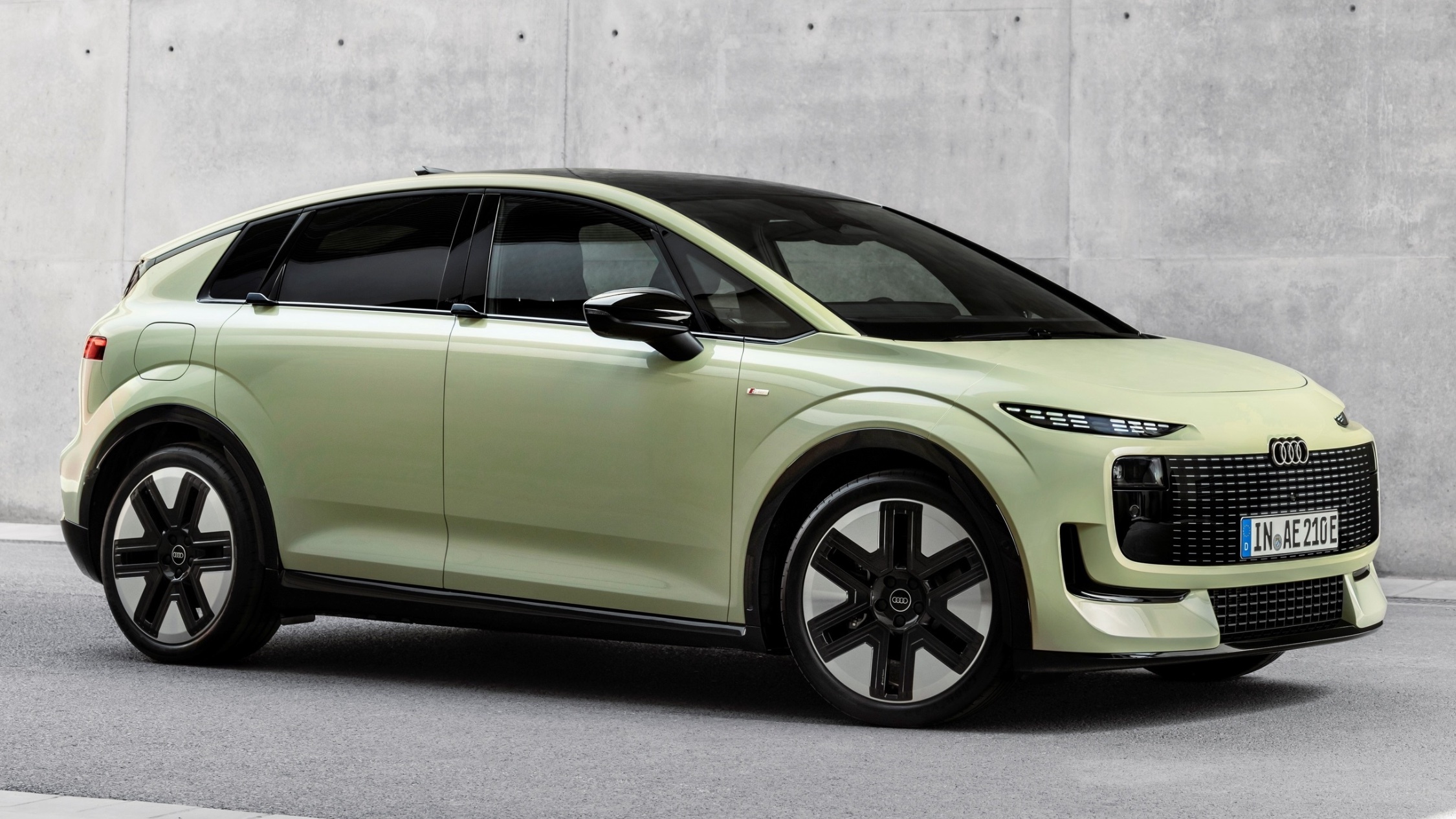
Audi’s New A2 Revives A Genius Idea That Was 25 Years Too Early

  • New A2 e-tron EV borrows design ideas from Audi’s innovative 1999 A2 hatch.
  • Biggest of three batteries delivers 401 range miles; smallest starts at £32,200.
  • Clever storage and one 167 hp motor comes standard; 322 hp hero tops lineup.

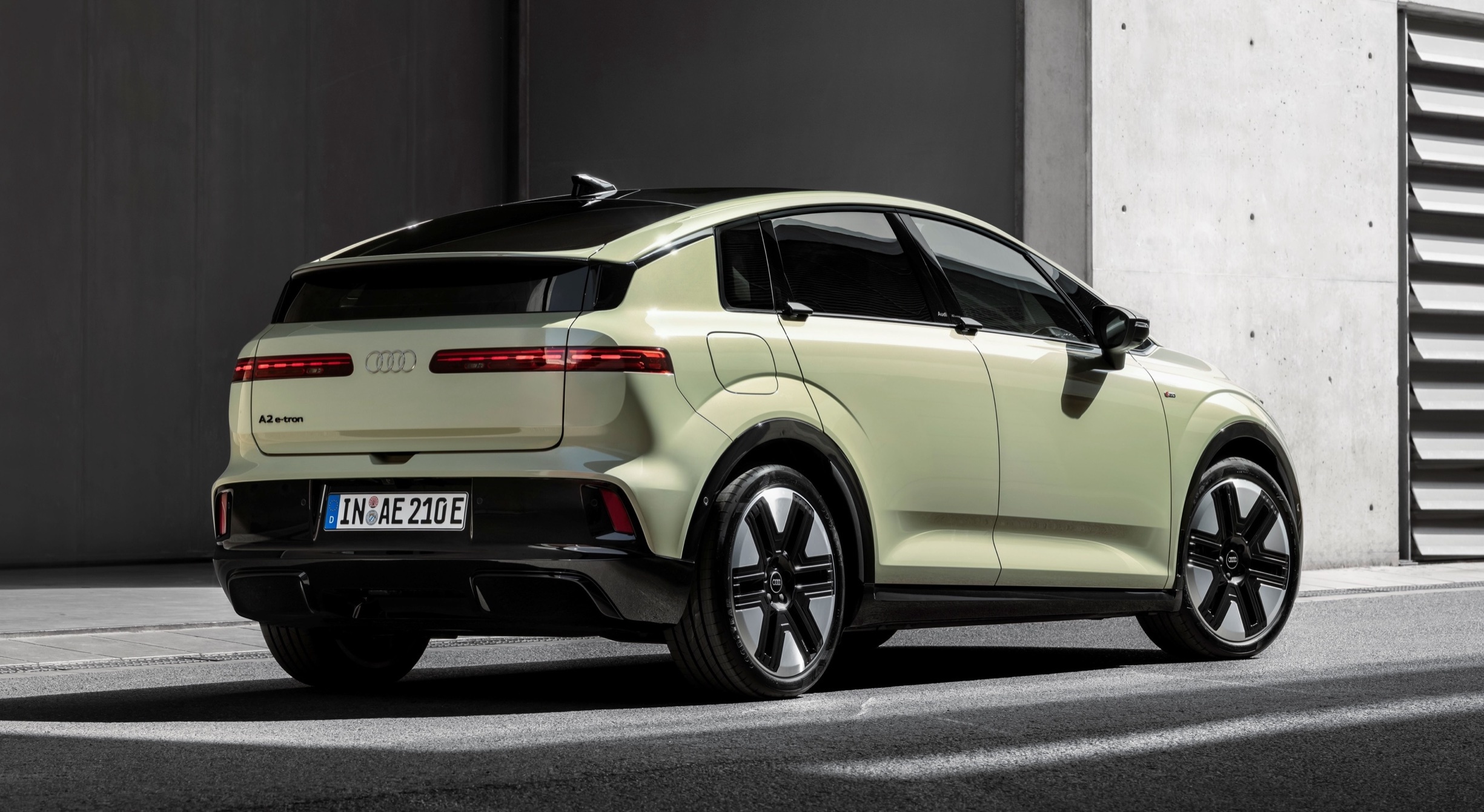
Being ahead of the curve sounds great unless nobody is ready for what you’re selling. Twenty-five years ago, Audi toyed with a radical vision of what a clever compact car could be: light, slippery, incredibly efficient and premium-feeling. Now that thinking and the A2 badge it wore is back, wrapped in a far more marketable electric crossover that might finally have arrived at exactly the right moment.

This is the new Audi A2 e-tron, and while another electric crossover might not sound like something worth cancelling dinner plans for, this one is worth your attention – even if you’re in the US, where the A2 was, and will continue to be, off limits. For a start, it takes some of the design cues of the original A2, the boxy, almost minivan-like body and split-glass rear window, and transplants them on a much wider car with a solid, four-square stance and the cheekiest grin we’ve seen an Audi wear.

Related: VW Group Confirms Plans To Kill Half Its Lineup And Slash 50,000 Jobs

 Audi’s New A2 Revives A Genius Idea That Was 25 Years Too Early

The second reason to pay attention is Audi’s claim that the A2 e-tron is the most efficient production model in the brand’s history. Yes, even more efficient than the fuel-sipping, 78 US mpg A2 3L diesel, though we’re not sure how Audi calculated that. In the right configuration, the baby e-tron consumes just 12.8 kWh per 62 miles (100 km), while the real mile-muncher of the lineup manages up to 401 miles (645 km) on the European WLTP cycle.

And Ingolstadt’s engineers haven’t achieved that by simply throwing a battery the size of a studio apartment underneath their VW ID.3 and Volvo EX30 rival. Instead, Audi has gone hunting for wasted energy pretty much everywhere. The A2 has a drag coefficient of just 0.24, helped by an enclosed underbody, active cooling intake, aero wheels and clever little pieces around the wheel arches designed to calm turbulent air.

Even the door handles have joined the efficiency crusade. They’re wing-type handles at the base of the door pillars that use sensors rather than conventional mechanical hardware. Audi scrapped them in favor of conventional handles on the new Q9 luxury SUV but promised we’d see them on a future Euro product. Tug gently and the door opens electrically. There’s even backup energy storage in case the electrical system decides it’s having the day off.

There are three battery sizes, measuring 52, 61 and 84 kWh gross, so something to suit pretty much every kind of use-case scenario. Stick with the 52 kWh battery and you get a 168 hp (170 PS /125 kW) single motor that helps your A2 hit 62 mph (100 km/h) in 8.8 seconds and cover 262 miles (422 km) of range before needing to plug-in.

Quattro Notable By Its Absence

\\\\\\

An optional 61 kWh pack comes with a 187 hp (190 PS / 140 kW) electric motor, dropping the stoplight sprint to 7.9 seconds and offering a handy range boost to 320 miles (515 km). Splash for the 228 hp (231 PS / 170 kW) A2 and you chop the 62 mph time to 7 seconds flat and unlock that 401-mile headline range figure we mentioned earlier, courtesy of an 84 kWh battery.

And if you’re prepped to swap some of that range for more zip, the 322 hp (326 PS / 240 kW) flagship delivers 5.7-second and 391-mile (629 km) stats. It’s also the only A2 capable of stretching its legs to 124 mph (200 km/h) instead of 99 mph.

 Audi’s New A2 Revives A Genius Idea That Was 25 Years Too Early

In each case that power is settled to the rear wheels because the A2 is based on the MEB platform in use on cars like the Audi’s VW ID.3 rival and Audi Q4 e-tron SUV, not the newer front-drive MEB+ architecture found under the VW ID. Polo, Cupra Raval and Skoda Epiq. That means no Quattro tech or badges.

DC charging tops out at 183 kW on big battery cars, which require an unimpressive 29 minutes to fill from 10-80 percent. The two smaller batteries sound like they’re going to be even worse due to their feeble 100 kW charge rates, but they cut the fill time to 24 minutes by virtue of their tiny capacities. Like other VW MEB EVs, this one supports bi-directional charging.

Fidlock? What’s That?

 Audi’s New A2 Revives A Genius Idea That Was 25 Years Too Early

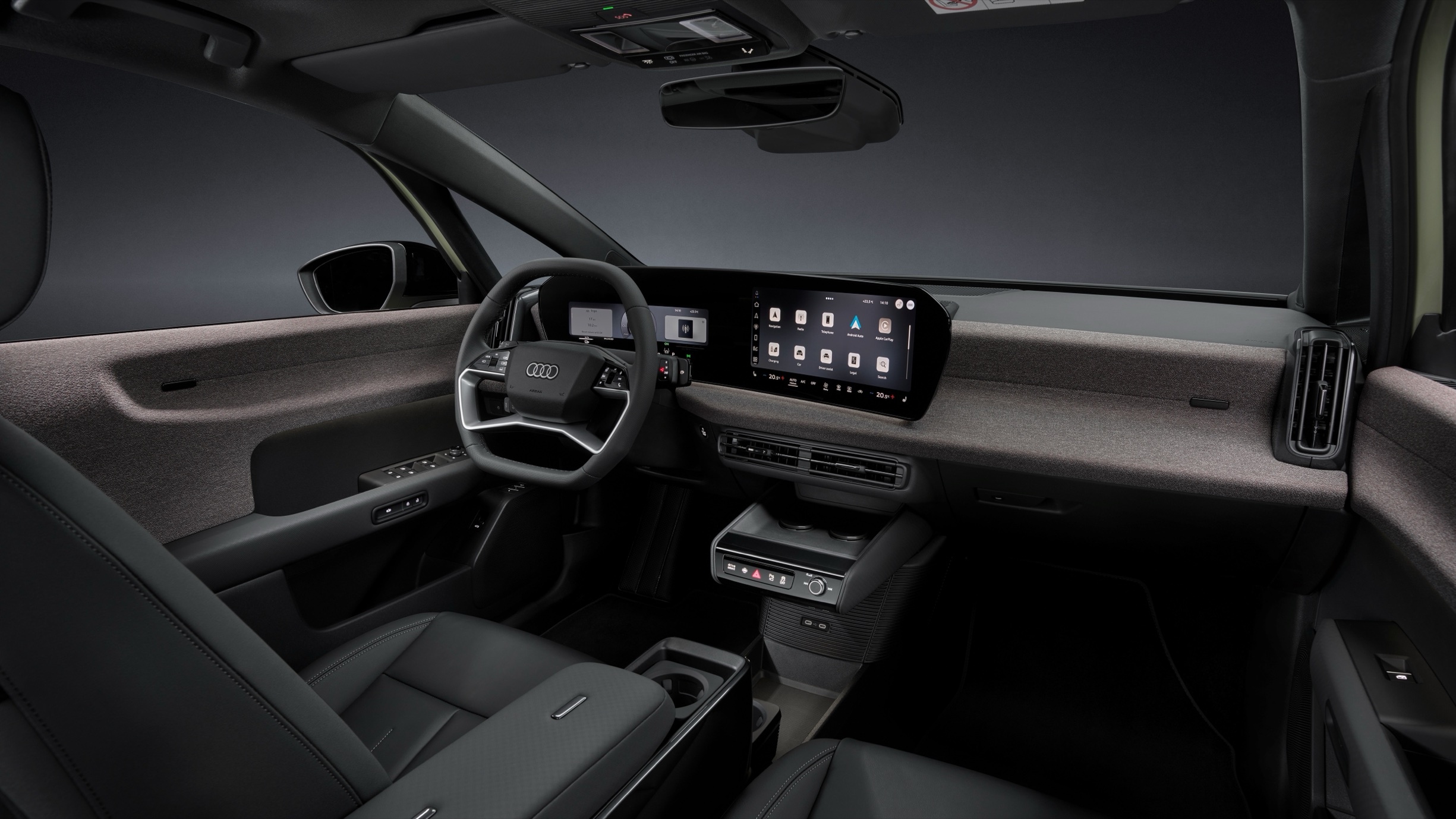
Inside, an 11.9-inch digital instrument display sits alongside a 12.8-inch curved touchscreen, while the gear selector has migrated to the steering column. That leaves more room in the center console for a Qi 2.2 charging pad that can juice two smartphones simultaneously at up to 25 watts. Useful, but hardly revolutionary. The Fidlock system, though, promises to be both.

Fidlock is actually a magnetic mounting system with a mechanical lock, allowing owners to click things like cupholders and charging cable bags into dedicated points around the cabin and trunk. If you’re an avid cyclist you might be familiar with them already, but Audi claims the tech makes its production car debut on the A2.

Ordinary Trunk, But At Least There’s A Frunk

\\\

But what about real practicality? It’s okay, but not class leading. The A2 rides on the same 2,770 mm (109 inches) wheelbase as its Q4 e-tron brother, so legroom should be good, but where the Q4 offers 520 litres of trunk space, the A2 can only muster 396 liters (14 cu-ft). It also loses out to the Renault Megane E-tech (440 liters), but beats the VW ID.3 (385 liters) and cramped Volvo EX30 (318 liters).

\\\

One of the original A2’s most innovative features was its aluminum construction, but that also made it expensive, contributing to its poor sales. So this time the A2 e-tron is mostly steel with some aluminum content. But what does feel advanced is the development timeline. It took Audi 20 years to reboot the A2 after the last was discontinued, but only 21 months to get it from drawing board to debut.

The original A2 was ahead of its time, but with a slick design, some clever interior touches, impressive efficiency, a genuinely affordable £32,200 starting price and European EV sales on fire right now, maybe this is finally the right time for the A2.

\\\\\\\\\\\\\\\\\\\\\\\\\\

Audi

Kia’s Next Electric Van Is A 17-Foot Box On Wheels And It’s Coming For VW

  • Spy photographers have snapped Kia’s upcoming PV7.
  • Electric van slots above the PV5 and is aimed at businesses.
  • Could share some powertrains with its smaller counterpart.

Kia is gearing up to introduce the new PV7 at the IAA Transportation show on September 14 and they recently released a handful of teaser images. Spy photographers are now filling in the blanks as they’ve spotted the commercial vehicle undergoing testing in Europe.

Set to become the second member of the Platform Beyond Vehicle lineup, the PV7 follows in the footsteps of the PV5 that was introduced last year. As a result, it features a stepped front end and an expansive windshield. They’re joined by black upper accents and lower black plastic body cladding.

More: Electric Kia PV7 Is Coming For The Ford Transit

\\\\

SHProshots

The model has a “one-box profile” and that’s putting it lightly as the van is essentially a box on wheels. The prototype seen by spy shooters features dual sliding doors with an odd window arrangement in the middle. They’re accompanied by a relatively flat roof that helps to maximize cargo capacity.

Around the back, there’s a vertical liftgate and a small rear bumper. They’re accompanied by vertical taillights as well as a recessed license plate area. The van also has thick rear pillars with black accents to create the illusion of a wraparound greenhouse.

\\\\\

SHProshots

The PV7 was previewed by a concept in 2024 and will reportedly measure around 208.6 inches (5,300 mm) long. To put that into perspective, the PV5 Cargo Long is 184.8 inches (4,695 mm) long and has a 117.9-inch (2,995 mm) wheelbase.

The model will ride on the Electric-Global Modular Platform for Service (E-GMP.S), which is a fleet-focused version of the E-GMP architecture that underpins the Hyundai Ioniq 5, Kia EV6, and Genesis GV60, among others.

Powertrain details remain a mystery, but the PV5 offers a 43.3 kWh LFP battery pack as well as 51.5 and 71.2 kWh NCM batteries. They power electric motors with outputs of 120 hp (89.4  kW / 122 PS) and 184 lb-ft (250 Nm) of torque as well as 161 hp (120 kW / 163 PS) and 184 lb-ft (250 Nm).

Given the PV7’s size, we wouldn’t be surprised to find the 51.5 and 71.2 kWh batteries, and they could potentially be joined by an even larger pack. The 161 hp (120 kW / 163 PS) electric motor also seems like a safe bet and it could be joined by an even more powerful one as well. That being said, we’ll find out for sure later this month.

\\\\\

SHProshots

Tesla May Be About To Lose A Bet With YouTube’s Biggest Tech Creator

  • Tech Youtuber MKBHD cast doubt on Elon Musk’s Cybercab timeline.
  • With less than four months to go, it looks like the bet could be safe.
  • However, MKBHD concedes that Tesla is at the forefront of change.

Back in October 2024, Tesla’s “We, Robot” event introduced the world to Optimus, the Robovan, and the Cybercab. Drawing design inspiration from the Cybertruck, the Cybercab offered yet another look at the proposed driverless car future, this time sans a steering wheel and pedals.

But the biggest shocker was the Tesla CEO’s claim that not only did he expect the Cybercab to be offered to customers at under $30,000, but that it would also enter high-volume production before 2027. Granted, by his own admission, Elon Musk said at the time that he tends to be “a little optimistic with timeframes,” but it got tech creator Marcus Brownlee, aka MKBHD, thinking.

More: Tesla Offers Rides In A Car With No Wheel Or Pedals, So Naturally The Feds Showed Up

So confident was MKBHD that Tesla wouldn’t meet such a timeline, he made a bit of a one-sided bet: he offered to shave his head live on camera if they made good. To be specific, Brownlee said that Tesla wouldn’t sell a Cybercab to a customer for $30,000 before 2027.

Semantics aside, that moment triggered a bunch of AI videos and memes, particularly from fans of Tesla, with Elon Musk even replying to one such post on X, saying, “Gonna happen. 😂”

A Long Time Coming

Since the Cybercab reveal, we’ve seen more information about the car trickle out, including it would likely deliver around 300 miles (482 km) of range, use large castings to save costs, and still projected to cost $30,000 or less. In February, the team even appeared to be ahead of schedule, with the first Cybercab rolling off Tesla’s Texan production line.

Brownlee himself admitted he was a little nervous when it came to light that a new Cybercab event had been scheduled for the 3rd of September. But luckily for him (and his hair), the event had nothing to do with customer sales. Instead, it announced that the Cybercab would be added to the Tesla Robotaxi network within their existing geofenced areas.

But while it looks like his hair is safe for now, the Tech Tuber went on to say that although he thinks Tesla may be ahead of its time with the Cybercab, he expects self-driving cars to become more mainstream in the next 10 years. Oh, and regardless of whether he wins the “bet” or not, he’ll be donating to Cancer Research in January.

\\\\\\\\\\\

Tesla Cybercab

New Ford Fathom Prototype Breaks Cover Ahead Of Its 2027 Debut

  • Ford’s CEO has released new teaser images of the Fathom.
  • Midsized electric truck follows in the footsteps of the Maverick.
  • Debuts next year and will start at $29,945 including destination.

Getting a good look at the Fathom has been about as easy as capturing a real phantom on camera. However, Ford CEO Jim Farley recently took to social media to release high quality teaser images.

They show the midsized electric truck traveling past the iconic Las Vegas sign. Of course, we’re more interested in the pickup than the tourist trap.

More: Ford Spent $2 Billion On A Factory To Build Its $28K Fathom Pickup In Three Pieces

Dressed in colorful camouflage, the Fathom follows in the footsteps of the Maverick as it has an upright front end with a wide lower intake. Bulky cladding hides the grille, but it’s flanked by mid-mounted headlights that have an angular accent toward the inside.

\\

Photos Ford / Jim Farley

Further back, we can see streamlined bodywork and aerodynamically optimized wheels, which are also wrapped in disguise. They’re joined by traditional door handles as well as tiny mirrors. The latter don’t look particularly good, but Ford has previously said their 20% smaller size results in an extra 1.5 miles (2.4 km) of range.

Other notable highlights include rounded wheel arches and what appears to be an angular lip around the upper bed. Elsewhere, there are vertical taillights and a relatively plain rear bumper with an offset license plate.

A closer inspection reveals the cab is slightly smaller than it appears as the prototype has been equipped with a sizeable rear spoiler. This pushes out the black camouflage and undoubtedly contributes to the truck’s efficiency.

\\

Photos Ford / Jim Farley

Despite being smaller than it appears, Ford has previously confirmed the Fathom has more passenger volume than the Toyota RAV4. This means we can expect more than 98.9 cubic feet (2,801 km) of space for occupants.

Additional details are limited, but Ford has said the truck will have a large touchscreen display with an easy-to-use navigation system powered by Apple Maps. It will also have Apple CarPlay and Android Auto compatibility, digital key technology, a bidirectional charging capability, and next-generation BlueCruise hands-free driving.

#FordFathom in the wild. https://t.co/SwmOUzeJv1 pic.twitter.com/CNERthHQEV

— Jim Farley (@jimfarley98) September 1, 2026

Specifications remain a mystery, but Ford has hinted at multiple battery packs. The base model comes with the “standard-range battery,” so that suggests there will also be a long-range variant.

Unfortunately, we still have a wait ahead of us as Ford won’t introduce the model until 2027. When pre-orders begin early next year, pricing will start at $28,350 before a $1,595 destination fee.

\\\\\\\\\\\\\\\\\

Baldauf

The Electric Range Rover Costs $25,000 More Than The Gas One And Tows A Ton Less

  • Flagship Range Rover gains its first zero-emission variant.
  • It produces 542 hp and has 372 miles of WLTP range.
  • UK pricing starts at £154,070, which translates to $208,200.

Land Rover has finally pulled the covers off the Range Rover Electric, giving its flagship SUV a battery-powered option after years of teasing. The pitch is V8-matching output from a silent dual-motor all-wheel-drive setup, the usual isolation from the outside world, and, according to Gaydon, no loss of off-road ability.

Look for visual drama and you won’t find any. The Electric is nearly indistinguishable from the fifth-generation combustion SUV that arrived in late 2021, with changes limited to a slipperier grille, new alloy wheels, and a reworked underbody. Together they trim the drag coefficient by 0.01 cd and add up to 10 miles (16 km) of highway range.

More: Range Rover’s New GT Is The Sedan-Like Crossover Gaydon Knows Will Split Buyers

\\\\\\\\\\

The SUV will be offered in standard- and long-wheelbase configurations across SE, HSE, Autobiography, SV, SV Ultra, and SV Black trim levels, alongside a curated First Edition launch model.

The interior is also carried over from the standard Range Rover, albeit with EV-specific graphics on the screens featuring AI-assisted range prediction and over-the-air updates for the battery. A lot of emphasis was given to acoustic refinement, with the electric model running 7 dBA quieter under full throttle compared to the V8-powered version.

Electric Power

\\\\\\\\\\

Beneath the familiar aluminum body sits an electrified take on the Modular Longitudinal Architecture (MLA). Two electric motors, both engineered and built in-house, make 349 hp (260 kW / 354 PS) each, for a combined 542 hp (405 kW / 550 PS) and 627 lb-ft (850 Nm). That’s 12 hp (10 kW) and 74 lb-ft (100 Nm) up on the mild-hybrid twin-turbo 4.4-liter V8.

More: Land Rover Delays Electric Defender Because The Gas One Won’t Stop Selling

The instant power delivery from the electric motors makes the zero emission model quicker off the line, with a 0-60 mph (0-96 km/h) acceleration in 4.3 seconds compared to 4.5 seconds for the V8-powered equivalent.

\\\\\\\\\\

Energy is stored in a double-stacked lithium-ion battery with a capacity of 118.5 kWh. The battery pack is housed within a high-strength aluminum case under the cabin floor. The WLTP range is up to 372 miles (600 km), while Land Rover’s own EPA estimate lands at 333 miles (535 km). Respectable, but far from class-leading among luxury electric SUVs, given that the 570 hp BMW iX5 60 AWD is quoting an EPA figure of 435 miles (700 km).

When connected to a 350 kW DC fast charger, the 800V battery charges from 10 to 80 percent in 22 minutes, and can add up to 137 miles (220 km) of range in 10 minutes.

More: Range Rover Shoves New EV Sport Out Of An Airplane, But V8 Fans Can Relax

Land Rover filed over 300 patent applications for the electric SUV. One of the highlights is the ThermAssist heat management system, which saves up to 40% on heating energy and adds up to 25 miles (40 km) of range in extreme weather conditions.

Chassis Setup

\\\\\\\\\\

The Range Rover Electric adopts twin-valve active dampers sourced from the Range Rover Sport SV alongside dual-chamber air springs and rear-axle steering. Sensors automatically monitor water level, extending ride height and allowing an impressive wading depth rating of 35.4 inches (900 mm).

More: You Can’t Buy Land Rover’s New Flagship Without This Matching 1993 Classic

Thanks to a new Integrated Traction Management (ITM) system, the Range Rover Electric can tackle slippery terrain with ease. Furthermore, the Intelligent Driveline Dynamics (IDD) system allows it to handle inclines up to 33 degrees and steep climbs of up to 45 degrees, honoring the off-road credentials of its ancestors.

The electric SUV tips the scales at 6,360 lbs (2,885 kg), making it 165 lbs (75 kg) heavier than the plug-in hybrid (PHEV) variant, although the center of gravity is lower than the V8 version. Maximum towing capacity stands at 5,512 lbs (2.5 tons), which is down from the 7,716 lbs (3.5 tons) rating of combustion models and the 6,614 lbs (3 tons) of the PHEV.

What It’ll Cost You

Here in the States, the Range Rover Electric opens at $138,000 before the $2,450 destination and delivery charge, which brings the real number to $140,550. That’s nearly $25,000 more than a base gas Range Rover, which runs $113,300, or $115,750 delivered. The P550e plug-in hybrid makes the electric look reasonable by comparison: $128,900, or $131,350 delivered, a difference of just $9,200.

In the UK, it’s priced from £154,070 ($208,200) on-the-road. Production takes place at Land Rover’s Solihull facility in the UK alongside the mild-hybrid and plug-in hybrid variants.

\\\\\\\\\\\\\\\\\\

Land Rover

September 2026

1 September 2026 at 08:00

The September issue explores how technology is reshaping school transportation, from AI and connected tools to video systems, routing and communications. Learn how Allentown School District is using technology to improve safety and operations, hear from Los Angeles Unified School District’s new superintendent on transportation’s role in student access and discover how districts are navigating the shift to cloud-based video storage. Plus, get practical insights on implementing AI with guardrails and using technology to support drivers and transportation teams.

From left: Andrew Krahulik-Knapp, Carol Birks, Jose Morales, Robert Whartenby and Tina Hemphill of Allentown School District in Pennsylvania. Cover design by Kimber Horne Photo by Melissa Kelly Photography

Read the full September issue.

Cover Story

Tech Focused
Student transportation leaders at Pennsylvania’s Allentown School District are turning connected tools into safer service and operational gains, using technology to improve communication, efficiency and the student experience.

Features

The Video Storage Shift
As school bus camera systems become more sophisticated, districts are weighing cloud, local and hybrid storage options while balancing accessibility, cost, cybersecurity and student privacy.

Driver Training Goes High-Tech
Technology is changing how transportation departments approach driver training, coaching, safety and performance.

Improving Communications With Technology
New technology is giving transportation teams more ways to communicate with drivers, families and administrators while improving visibility and service.

Special Report

AI Takes a Larger Role in School Transportation Management
Transportation leaders explore how AI can support dispatch, fleet management, budgeting, driver training and other operations while emphasizing policies, safeguards and responsible use.

Q&A 

Transportation’s True Value
Los Angeles Unified School District’s new superintendent discusses transportation’s role in student access, educational opportunity, operational efficiency and student success.

Conversations

Ad Index

Columns

Editor’s Take by Ryan Gray
Don’t Bury the ‘Lede’

Publisher’s Corner by Tony Corpin
School is Back, So Are Safety Risks

Thought Leader By Tim Ammon
Changing Times, Perspectives

The post September 2026 appeared first on School Transportation News.

VW’s New ID. Tiguan Finally Stops Pretending It’s An ID.4

  • Underpinning the all-electric ID. Tiguan is VW’s updated MEB+ platform.
  • The SUV adopts a classic VW shape and profile, unlike the ID.4 and ID.5.
  • This lightly-camouflaged prototypes includes distinctive front and rear fascias.

Like so many other legacy brands, VW has stopped pretending its EVs need to exist as a separate species from the combustion cars parked beside them, with their own naming logic and their own marketing language. That rethink is why the replacement for the ID.4 and ID.5 is expected to show up wearing an ID. Tiguan badge rather than another number, and why the car underneath the badge looks set to change more than the name suggests.

Our spy photographers have snapped the new electric SUV testing on several occasions, most recently back in June, wearing the body of the ID.4. This triggered speculation that the new model wouldn’t be a dramatic departure from the ID.4 and ID.5 it’s designed to replace, which was a bit of a shame. It seems VW was fooling us all.

Read: VW’s ID. Tiguan Will Be So Much More Than A Facelifted ID.4

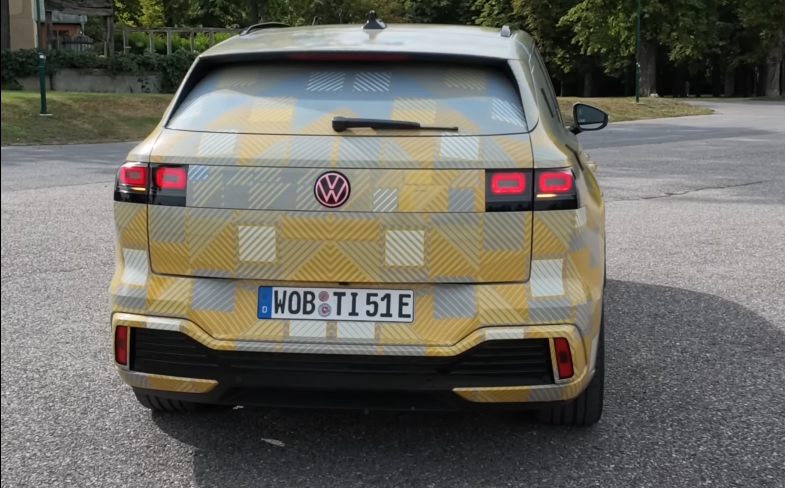
The crew from YouTube channel Autogefühl was recently given an up-close look at the new EV, and it bears little resemblance to those earlier prototypes. This camouflaged example, which appears to be wearing production-ready sheetmetal, breaks cleanly from the ID.4 and carries a more muscular, upright stance than the current Tiguan.

Visible at the front of this prototype are a distinctive LED light bar, unique DRLs, and distinctive headlamps. It also lacks a traditional front grille, making do with a blacked-out lower grille. We’re not provided with a good look at the sides of the vehicle, but we can see it also has unique windows and black roof rails.

 VW’s New ID. Tiguan Finally Stops Pretending It’s An ID.4
Autogefühl / YouTube

The rear end is also a dramatic departure from the ID.4 and ID.5. For example, it ditches the curvy taillights of those models in favor of more muscular ones, each rocking two square-shaped lighting signatures. Positioned in the center of the rear bumper is a larger black element.

Carscoops understands the new electric ID. Tiguan will use the new MEB+ platform, likely joined with upgraded batteries compared to the current model’s 58 kWh and 79 kWh packs. VW would also be wise to boost peak DC charging speeds beyond the current 175 kW to rival new offerings from China.

Lead image: Autogefühl / YouTube

MG Will Sell You A Three-Row EV For Just $14,600, Batteries Not Included

  • MG launched the Hector Tomahawk EV three-row SUV in India.
  • It is a rebadged Wuling available with EV and PHEV powertrains.
  • Prices start at ₹13.99 lakh ($14,600) for the EV minus the battery.

Chinese automakers have put out an average of 3.6 new models per day across the past five months, a pace that guarantees a certain amount of overflow into markets beyond China. The new MG Hector Tomahawk is one of those exports, a three-row SUV that has just gone on sale in India with a choice of fully electric or plug-in hybrid power.

More: MG’s $13K SUV Thinks Hand Gestures Beat Buttons

The name suggests a relationship that does not exist, because the Hector Tomahawk shares nothing with the ICE-powered Hector. What MG has actually done is rebadge the Wuling Starlight 560, a model that broke cover in late 2025 and reached Chinese showrooms in early 2026.

\\\\\

Visually, the BEV and the PHEV variants are distinguished by the different grille and front bumper, each introducing small differences compared to the equivalent models from Wuling. The PHEV has a body-colored nose, a larger cooling intake, loads of black cladding, and an aluminum-style skid plate. The EV adopts a simpler and boxier face looking nearly identical to its Wuling sibling.

Regardless of powertrain type, the SUV measures 4,745 mm (186.8 in) long, has a 2,810 mm (110.6 in) wheelbase and a ground clearance of 230 mm (9.1 in).

\\\\

MG

The right-hand-drive cabin comes with two or three rows of seating. Cargo space is 610 liters (21.5 cubic feet) in five-seat form, dropping to 192 liters (6.8 cubic feet) once the third row is in place. The kit list runs to a 15.6-inch infotainment screen, an 8.8-inch digital gauge cluster, gesture controls for the touchscreen, a dual-pane panoramic sunroof, 256-color ambient lighting, and a 10-speaker stereo. The party piece is an AI-powered assistant with a karaoke mode and a library of more than 8,000 songs across multiple genres.

More: MG’s Go! Concept Wants You To Forget About The Mini And Renault 5 In 2027

\\\\\\

The Hector Tomahawk EV utilizes a single front-mounted electric motor producing 201 hp (150 kW / 204 PS), with a 69.2 kWh battery allowing over 500 km (311 miles) of range while supporting 90 kW DC fast charging and V2L/V2H functions.

On the other hand, the Hector Tomahawk PHEV pairs a naturally aspirated 1.5-liter engine/generator with a single electric motor and a smaller 20.5 kWh battery pack. The combined range is over 1,100 km (684 miles), including 115 km (71 miles) on EV power alone.

The Battery Rental Math

\\\\\\\

MG

The MG Hector Tomahawk EV costs between ₹19.49 lakh ($20,400) and ₹23.49 lakh ($24,500) in India. Buyers can also take it under the Battery-as-a-Service (BaaS) scheme, which drops the entry price to ₹13.99 lakh ($14,600) and then charges ₹4.90 ($0.05) per kilometer (₹7.89 or $0.08 per mile) for the privilege of using the battery.

More: The New MG 07 Flagship’s Looks Say Porsche Taycan, Its Price Says Corolla

Meanwhile, the MG Hector Tomahawk PHEV starts at ₹25.70 lakh ($26,900) outright, or ₹21.79 lakh ($22,800 / €19,600) under BaaS with a battery rental rate of ₹3.20 ($0.03) per kilometer. Deliveries for the EV begin in September, followed by the PHEV in November.

A Tesla Robotaxi Got Boxed In By Bollards, So It Bulldozed Its Way Out

  • Tesla is still having issues with its robotaxis as it gears up to launch the Cybercab.
  • Footage shows a Model Y robotaxi making an illegal and dangerous right turn.
  • Later this month, the Cybercab will be added to Tesla’s robotaxi fleet in Texas.

Developing and building fully autonomous vehicles isn’t easy. Just ask Tesla, which has been working on the technology for more than a decade and has yet to perfect it. Based on a recent video of a Model Y currently being used by its robotaxi fleet in Austin, Texas, Tesla still has a long way to go.

This clip was recently shared on Reddit by a frequent user of Tesla’s Austin robotaxi service, and it may make you think twice before trying it yourself. For whatever reason, the Model Y in question attempted to make a right turn at a large intersection, but failed to realize that the inside corner of the road was blocked off by bollards for pedestrian safety.

Read: Tesla’s Cybercab Is About To Carry Real Passengers

A human driver would have seen these bollards and realized you have to turn around them. Instead, the Tesla Model Y drove directly into the blocked-off area and sat there for several seconds, presumably because it realized it was now stuck. Unable to reverse out and correct its mistake, the robotaxi instead tried to thread its way through two of the bollards, hitting them in the process.

It didn’t take long for Redditors to identify the exact intersection where the incident took place, and a Google Street View search revealed the bollards had been there since at least February 2024.

Video Reddit /bladerskb

Cybercabs Are Coming

Despite incidents like this, Tesla appears to be plowing ahead with plans to expand its robotaxi fleet in Austin. According to a recent report, it completed a local trial with the Cybercab and company employees on private roads and is now preparing to add the Cybercab to its fleet and make it available to the public.

It remains to be seen whether the Cybercab’s self-driving capabilities will be better than those of other Tesla models. We do know it’s equipped with more RAM and an upgraded AI4 Fully Self-Driving computer. Whether it actually performs any better than a Model Y like this remains to be seen, but as we’ve seen so often from Tesla in the past, members of the public will be used as test dummies.

\\\\\

Tesla’s Design Boss Sent Model S Plaid Signature #001 Straight To Unplugged Performance, But Not For Tuning

  • Franz von Holzhausen owns the Tesla Model S Plaid Signature #001.
  • The Tesla design chief took the special EV to Unplugged Performance.
  • The sedan received paint protection, ceramic coating, and window tints.

Franz von Holzhausen has run Tesla’s design studio since 2008, and most of what people picture when they see a Tesla came off his desk. The Model S is one of those cars, so it makes sense that he took delivery of the definitive version, the Plaid Signature Edition, chassis number #001, the one at the very front of the production line.

More: Tesla’s Hidden Door Handle Drama Could Change Every New Car In America

Before settling in with the car that closes out the Model S story, he drove it to Unplugged Performance in California. The tuner is better known for wheels, brakes, wraps and body kits, but detailing sits on the menu too, and that’s what he was there for. The bodywork he drew more than a decade ago stayed exactly as it left the factory. What he wanted was for it to stay that way.

Preserving His Own Handiwork

\\\

Unplugged Performance

While the car was brand-new, the first step was a thorough chemical decontamination wash to remove bonded fallout, iron particles, and transport residue picked up before delivery. Once prepared, the Auto Spa team disassembled parts of the exterior so the film could be applied without a visible seam anywhere.

According to Unplugged Performance, paint protection film acts as a physical barrier that absorbs stone chips, scratches, and minor wear, shielding the factory paint underneath. For Signature Edition #001, that was only the starting point.

\\\

Unplugged Performancean

Following careful inspection under dedicated lighting, technicians coated every panel and trim piece with a full ceramic treatment. The extra layer adds hydrophobic properties that repel dirt and make washing easier, while deepening the gloss of the paintwork.

More: The Cybertruck Finally Found Its Natural Habitat, A Fake Desert Planet

Finally, the team covered all glass surfaces with a window film that blocks 99% of ultraviolet radiation and 98% of infrared heat. That keeps the interior out of the worst of the Californian sun, so it should still look new years from now.

The Tesla Model S Plaid Signature Edition arrived earlier this year as a farewell special for the long-running nameplate. Production is capped at 250 units, offered by invitation to select customers at $159,420 apiece.

More: Tesla Tuner Dares You To Break Their New Wheels

As with the regular Plaid, the Signature Edition uses the tri-motor setup producing 1,020 hp (761 kW / 1,034 PS), with a handful of unique touches on top. Chief among them is the Garnet Red finish, paired with gold emblems, special badging, and 21-inch Velarium wheels with gold calipers over carbon-ceramic brakes. Inside there’s white Alcantara upholstery, a yoke steering wheel, and Signature branding.

This isn’t the first time von Holzhausen has handed a personal car to Unplugged Performance. Years earlier, he had his Model 3 fitted with coilover suspension, sway bars, adjustable suspension arms, and carbon-ceramic brakes, again leaving the bodywork alone.

\\\

Unplugged Performance

This Chinese EV Nailed Schumacher’s 360° Tunnel Loop, But Not The Way The Video Says

  • Voyah recreated the tunnel loop stunt Schumacher pulled in an SLS AMG in 2010.
  • Its polished 360° clip looked so clean that viewers online called it AI.
  • Leaked footage showed a camouflaged prototype crashing during the attempt.

Donfeng’s Voyah brand wanted headlines for its new electric SUV, so it drove the Passion S through a full 360-degree loop inside a Chinese tunnel, recreating the famous stunt Michael Schumacher pulled off in a Mercedes-Benz SLS AMG back in 2010.

Read: Stellantis’ New Chinese Partner Is Going After The Xiaomi YU7

Photos and specs for the Passion S have been floating around for months, but the official launch came only late last week, timed to land alongside the stunt. Going upside down in a tunnel says nothing about how Voyah’s Xiaomi YU7 rival drives, though it did exactly what it was meant to do online.

The Internet Cried AI, Voyah Responds

Shortly after Voyah released its expertly edited clip of the Passion S completing the 360-degree loop in the tunnel, many suggested it may have been the work of artificial intelligence. Before long, separate footage leaked to Weibo showing a camouflaged Passion S prototype attempting to complete the loop but falling and crashing onto the road below.

CarNewsChina, which picked up that clip, points out that a company willing to write off multiple prototypes is probably using real cars rather than a render farm.

Voyah quickly responded, releasing the raw, unedited footage from the stunt. It shows the Passion S hitting the ramp at roughly 81 mph (130 km/h) and performing a complete loop, but only just. As the SUV spun upside down, it appears to have briefly lost contact with the ceiling before the wheels smashed into the down-ramp, allowing it to complete the loop.

If you review the footage in slow motion, you’ll notice the lower corner of the Passion S’s front bumper took an absolute beating as it came off the steep down ramp and back onto the road. In the edited clip, the Passion S is shown completing the loop unscathed and emerging out of the tunnel without a single scratch. Evidently, this part was filmed with another model.

Cheap And Powerful

Voyah has confirmed the Passion S will be offered with 81 kWh and 98 kWh battery packs, and all versions will use an 800-volt electrical architecture, allowing the pack to be charged from 20-80 percent in ten minutes.

Both rear- and all-wheel-drive models will be offered, although we only have specifications for the dual-motor version, which delivers 637 hp and 564 lb-ft (765 Nm) of torque, allowing the SUV to hit 62 mph (100 km/h) in 4.5 seconds. The rear-wheel-drive model has a claimed CLTC range of 459 miles (740 km), while the all-wheel-drive version should be good for 391 miles (630 km) between stops. Prices range between 229,900 yuan ($34,100) and 279,900 yuan ($41,500).

\\\\\\\\

Bentley’s Torcal Will Offer Something No Other Automobile Has

  • The Bentley Torcal will offer 100% Merino wool.
  • Electric crossover will also have Ombre wood trim.
  • Debuts next month and will cost around $225,000.

Bentley will unveil their fully electric Torcal a little over a month from now. As part of an effort to build excitement, the company is slowly trickling out details.

The latest update focuses on the interior and reveals the crossover will have something no other automobile offers – 100% Merino wool. As the company explained, the luxurious material is celebrated for its “softness, warmth and natural elegance,” but hasn’t been used in automotive applications due to durability concerns.

More: Bentley Showcases High-Tech Interior For New Torcal EV

Bentley wanted to address that, so they teamed up with Fox Brothers. The British firm specializes in cloth, flannel, and tweed, and they were tapped to develop a special material for the Torcal. It’s the “world’s first 100 percent Merino wool automotive fabric capable of meeting the exacting demands of a luxury vehicle” and is also the “first automotive wool fabric to achieve 100 percent certification by the Responsible Wool Standard.”

The Merino wool interior will be offered in “six carefully curated colorways” and Bentley said each “combines complementary tones from the same color family, creating depth, harmony and a contemporary sense of sophistication.”

Besides talking about wool, Bentley revealed the Torcal will usher in a new Ombre Veneer. It’s created from “sustainably sourced walnut off-cuts” and recycled paper.

Up to 1,000 individually selected layers are pressed together, before being sliced less than a millimeter thick. The company said, “Four distinct walnut shades flow naturally from deep black through dark smoke and light smoke before revealing the richness of natural walnut. The result is both contemporary and timeless: a striking expression of modern luxury rooted in traditional craftsmanship.”

Customers will also find a new option known as Sunburst Aluminum by Mulliner. It’s billed as a reinterpretation of the classic engine-turned aluminum dashboards of the past.

\\\\\\\

As for the Torcal itself, it’s essentially a Porsche Cayenne Electric that went to Oxford. This means it’s instantly recognizable, despite having unique front and rear ends. The model will also sport an ultra-luxury interior with a curved display as well as a mood selector.

Powertrain details remain a mystery, but the Cayenne has a 113 kWh battery pack, a 390 kW DC fast charging capability, and outputs of 435 hp (324 kW / 441 PS), 657 hp (490 kW / 666 PS), and 1,139 hp (849 kW / 1,155 PS). The Bentley will presumably have around 800 hp (597 kW / 811 PS), but we’ll find out for sure on September 23.

\\\\\\\\\\\\\\\\

SHProshots

Ford Spent $2 Billion On A Factory To Build Its $28K Fathom Pickup In Three Pieces

  • Ford gutted Louisville Assembly Plant for its new Fathom electric truck.
  • Three parallel sub-assemblies replace a conventional linear final-assembly line.
  • Ford expects the new system to improve speed, ergonomics, and quality.

Ford’s long-promised affordable EV program has finally taken physical form. The 3-million-square-foot Louisville Assembly Plant that once built gas-powered vehicles is no longer just a familiar factory with a few new robots. Ford stripped it to its shell, spent $2 billion rebuilding it, and is now preparing it for the $28,350 Fathom electric pickup. The result is a very expensive experiment.

According to Ford’s latest progress update, production-qualified Fathom prototypes should begin rolling off the line in the first quarter of 2027. Customer trucks will follow later that year. The Fathom is the first vehicle on Ford’s new Universal EV platform and carries a $28,350 starting MSRP before its $1,595 destination charge. Ford still hasn’t revealed the range, payload, towing capacity, or most of the other figures truck buyers will care about.

Read: Ford Promised A Sub-$30K Electric Truck, The Fathom Came In At $28,350

For now, the story is the factory and how production will work. Instead of sending a mostly complete body shell down one long line, Ford splits each Fathom into three sections: the front clip, rear clip, and a structural battery-and-interior assembly. Workers outfit those sections in parallel, then bolt and bond them into a finished truck.

The front and rear sections rely on large aluminum unicastings that replace dozens of stamped and welded components. Meanwhile, the battery serves as the truck’s structural floor. That means workers can install a seat before there’s even a cabin structure in the way, rather than squeezing through a doorway with tools in hand.

\\\\\\\\\\\\\\\\\\\\\\\

There’s real potential here beyond the usual manufacturing buzzwords. Ford says the system reduces the need to reach over a fender by 84 percent. It also says the Fathom’s wiring harness is more than 4,000 feet shorter and 22 pounds lighter than the one in its first-generation electric SUV. Less twisting, less reaching, fewer parts, and fewer chances to mess something up all sound like wins. Especially for a brand so closely associated with recalls of late.

Ford says the plant will allow it to build cars 15 percent faster than its current Louisville products. A new software-flash station can even update modules while the truck moves through the plant rather than holding it up after assembly. Now, we just have to wait and see if this new production plan pays off. It’ll take a lot of $30k EV pickup truck sales to make a $2B investment look smart. But the real play here could be insight and experience that could spread to other Ford products.

Photos: Ford

Acura Built A Sharp Sports Coupe Just To Sell You An SUV

  • Acura launches new design language with the Nexera Vision.
  • The concept is a two-seater sportscar with butterfly doors.
  • New lighting signature will be used on the next RDX Hybrid.

Acura is celebrating its 40th anniversary at Monterey Car Week with a sharp two-seat sports car named the Nexera Vision. The bad news arrives fast, as the concept isn’t headed for a showroom. Instead, it previews where the brand’s design is going, and its influence will surface on future products including the upcoming RDX Hybrid SUV.

The concept plants itself with an aggressive stance, a long hood falling away toward a low, sharp nose. Its bodywork wears a Matte Titanium finish that puts the clean surfacing along the profile on full display, and that surfacing owes its tension to a generous dash-to-axle ratio,

More: Acura Plans A Bigger SUV Than The MDX And Is Calling It The XL

The exterior’s headline act is the new phantom lighting signature, with LED headlights and taillights that stay hidden until they’re switched on. The V-shaped units draw from the Acura emblem and will reach production vehicles soon, beginning with the next-gen RDX Hybrid. Acura fans have already seen these lights on the recent Acura Hybrid SUV Prototype, which previews the production RDX.

\\\\\\

Acura

The rest of the exterior keeps pace with large dual-hinge butterfly doors, an aerodynamic greenhouse, air channels on the nose, an active rear spoiler and a forged carbon bodykit. The six-spoke 22-inch center-lock wheels use a 3D directional design and pair a matte anodized finish with forged carbon inserts and Brembo carbon-ceramic brakes.

More: Acura’s 1980s Retro Dealership Is A Better Ad Than Anything It’s Running Now

The interior was designed to be futuristic, minimalist, and sustainable. Rather than lean on screens, Acura went with a curved digital instrument cluster behind the yoke-shaped steering wheel. The goal was to eliminate distractions, evoking memories of the Honda S2000.

\\\\

To reach the lowest possible seating position, the bucket seats are fixed to the floor, so the driver moves the steering wheel and pedal box instead. The cabin runs a black-and-white theme with pink accents. On materials, Acura used CircuLeather upholstery that claims a lower carbon footprint, plus Alcantara made from post-consumer recycled polyester, recycled aluminum, and forged carbon details.

The concept came out of the Acura Design California studio in Los Angeles. Yasutake Tsuchida, Acura Creative Director and Vice President of Auto Design, who oversaw the project, said:

“Our goal with this new design direction is to define Acura performance through disciplined proportions, sculpted form and the seamless integration of advanced technology, creating an expression that is both progressive and authentic to the brand.”

More: Acura Is Going All-In On Hybrids, Honda Is Keeping Gas Cars Affordable

Tsuchida added that the Nexera Vision “sets the course for the next generation of Acura design, and we are committed to evolving that direction with clarity, consistency and purpose across future Acura products.”

Acura shared nothing about what powers the concept. The packaging, though, hints at a fully electric powertrain.

More: Honda Took A $16 Billion Bath On EVs, So Now Wants More EVs On A Platform That Can Switch Sides

The Acura Nexera Vision makes its public debut at The Quail on August 14, then appears at the Pebble Beach Concours d’Elegance Concept Lawn on August 16.

\\\\\\

Acura

The company doesn’t mention plans to turn the concept into a production car, though it says that elements of its exterior and interior will reach the future Acura lineup soon. A warm public reaction could still push it toward development.

The Nexera Vision continues a line of two-door sports car concepts from Acura, including the HSC (Honda Sports Concept) from 2004, the Acura Advanced Sports Car Concept from 2007, and the NSX Concept from 2012, which evolved into the hybrid production supercar of the same name.

\\\\\\\\\\\\\\\\\\\\\\\\

Acura

Kia Prices New EV3 Nearly $10,000 Less Than The Niro EV

  • Kia has released US pricing for its most affordable EV.
  • High-spec trims offer up to 321 miles of EPA-estimated range.
  • Small SUV undercuts key rivals like the Equinox and Leaf.

Kia has revealed pricing for the 2027 EV3, the cheapest EV it sells in the US. The starting figure lands under $30k, and the SUV carries design and tech cues from the flagship three-row EV9.

The entry-level Kia EV3 Light starts at $29,890, roughly $10k less than the discontinued Niro EV ($39,600). It also slips under rivals including the Volvo EX30 ($40,345), the Chevrolet Equinox EV ($34,995), the Hyundai Kona Electric ($32,975), and the Nissan Leaf ($29,990).

More: Kia’s Affordable Niro Gets An Upscale Makeover For 2027 And Drops The EV

At the top of the range, the flagship EV3 GT reaches $45,890. That figure overlaps entry-level RWD versions of larger electric crossovers such as the Tesla Model Y ($39,990) and the Ford Mustang Mach-E ($37,795).

The EV3 Lineup

\\\\\\\\\\\\\

Kia EV3 GT Line

The EV3 range runs through Light, Wind, Land, GT-Line and GT trims. The cheapest Light comes only with a single electric motor making 201 hp (204 PS / 150 kW) and a 58.3 kWh battery good for 221 miles (356 km) of EPA range. Standard kit includes dual 12.3-inch screens, a six-speaker stereo, 17-inch alloys, rear privacy glass, and an ADAS suite.

More: 2027 Kia Seltos Has A Higher Price To Match Its More Upscale Design

The mid-spec Wind and Land step up to the larger 81.4 kWh battery, which pushes range to 321 miles (517 km), and both can be optioned with the dual-motor AWD setup producing 261 hp (265 PS / 195 kW). On equipment, the Wind adds a battery heater, SynTex upholstery, heated seats and a 10-way power driver’s seat, while the Land adds 19-inch wheels, ventilated seats, taller roof rails, a power sunroof, a smart tailgate and more.

\\\\\\\\\\\\\\\\\\\\\\

Kia EV3 GT Line

The higher-spec GT-Line and GT come in AWD only, with the GT lifting output to 288 hp (292 PS / 215 kW) alongside a sportier suspension and steering tune. Both use the 81.4 kWh battery for 280 miles (451 km) of EPA range. The EV3 handles 350kW DC fast charging through its NACS port, so a 10-80% top-up takes around 31 minutes.

More: Kia’s Next Sportage Is Getting A Rugged Redesign

The GT-Line and GT models are visually distinguished by different bumpers, though only the more powerful GT gets the machined 19-inch wheels with Neon Green brake calipers. Both include Harman Kardon audio, V2L capability, a heat pump, and power-folding mirrors, with the GT adding a 12-inch head-up display and sport seats with suede inserts.

Finally, also offers the Nightfall Package, which brings black 19-inch alloys, matching exterior accents, bridge-type roof rails, and a dark gray interior. Below are the prices for every EV3 trim in the US, excluding a $1,495 destination fee.

2027 Kia EV3 US Pricing
MSRP Prices (excluding $1,495 destination)
KIA EV3 Light FWD$29,890
KIA EV3 Wind FWD$34,990
KIA EV3 Wind AWD$38,690
KIA EV3 Land FWD$38,490
KIA EV3 Land AWD$41,690
KIA EV3 GT-Line AWD$43,490
KIA EV3 GT AWD$45,890
SWIPE

Zeekr Says EV That Burst Into Flames At Chinese Charger Had A Crash It Never Told Anyone About

  • A dark green 7X caught fire at a charging station in China’s Ningbo City.
  • Security camera footage shows sparks and flames emanating from the battery pack.
  • The driver used a fire extinguisher to keep the flames under control.

Zeekr, one of China’s most popular premium EV and hybrid manufacturers, has quickly reacted to a clip spreading across local social media showing a 7X catching fire while parked at a charging station. According to the Geely-owned brand, this particular 7X had been in a collision beforehand and had never had its repairs inspected.

In the video, the driver of the 7X can be spotted leaning over the frunk while parked at a charging station, although the electric SUV wasn’t actually plugged in. Moments later, sparks and flames can be seen violently spewing out from the underside, triggering a plume of smoke to fill the air.

Read: Zeekr’s Biggest, Plushest SUV Rolls Into Europe With 897 HP To Take On The BMW X7

For a few seconds, it seems the 7X had decided against setting itself on fire. Then sparks and flames erupt from the rear, swallowing large sections of the SUV as the battery pack keeps throwing off sparks. A bystander, presumably the driver, grabs a fire extinguisher and manages to smother the flames.

The incident happened on Sunday in Ningbo City, and local fire crews arrived quickly and brought everything under control, CarNewsChina reports.

A PR Problem, And An Unanswered Question

Obviously, the sight of an EV seemingly randomly catching fire while parked isn’t the type of publicity any car manufacturer would want. Zeekr quickly sought to quell fears among owners, stating its initial investigation had revealed this 7X had previously been involved in a collision and that it had not been properly inspected or reported at a Zeekr facility.

However, the company has yet to provide an explanation as to what exactly triggered the blaze, although it certainly looks to be battery-related.

Like so many other brands in China, Zeekr initially launched exclusively in its home country, but it is embarking on an ambitious overseas expansion. In addition to already launching in markets like Australia, it has also arrived in Europe, selling its premium EVs and hybrids at prices that easily undercut similar vehicles from legacy rivals like Mercedes-Benz, BMW, and Audi.

 Zeekr Says EV That Burst Into Flames At Chinese Charger Had A Crash It Never Told Anyone About

Cadillac Will Charge You $55K To Make Sure Nobody Else Has Your Escalade IQ

  • GM’s luxury brand is expanding their Curated by Cadillac program.
  • Customization service paves the way for unique Escalade IQs.
  • Model offers over 160 exterior colors as well as 44 interior designs.

Cadillac has embraced customization and there’s no better example of that than Cadillac House. Located at the heart of the Warren Tech Center in Michigan, the building is where customers can go to commission their ultra-luxury Celestiq.

Once inside, buyers work with Celestiq designers as well as a personal concierge to craft a one-of-a-kind vehicle. As part of the visit, they’ll browse a “magic wall,” which houses automated panels that open to reveal a host of vehicle options. This includes dozens of paint colors, numerous upholstery options, an assortment of trims, and a handful of metal accent colors.

More: We Visit Cadillac House, Home Of The Celestiq

Last year, the Celestiq commissioning process inspired a new Curated by Cadillac program. It launched with the CT5-V Blackwing and is now expanding to the Escalade IQ.

Designed to set a “new standard in customized luxury,” the Curated by Cadillac Escalade IQ will offer customers more than 160 premium exterior colors and finishes. This includes everything from your typical solids and metallics to tri-coat paint jobs as well as matte and frost finishes.

While the $150,600 Escalade IQ Premium Luxury only offers three interior colors, the Curated by Cadillac version offers up to 44. This appears to include an assortment of two-tone designs including red and black as well as white and tan.

Given the wealth of options, customers and dealers will be supported by a dedicated design concierge. They’ll guide you through the customization process and inform you of your options. As part of this experience, buyers can expect “guided configurator sessions.”

Each vehicle will be hand-built at the Artisan Center in Warren, instead of the nearby Factory Zero. The models will be hand-painted, feature unique VINs, and come equipped with a serialized builder’s badge.

Unsurprisingly, this level of craftsmanship doesn’t come cheap as the Curated by Cadillac package costs $54,995 on top of the price of the Escalade IQ. This means buyers should expect to shell out more than $185,000 and well-equipped models could easily top $215,000.

 Cadillac Will Charge You $55K To Make Sure Nobody Else Has Your Escalade IQ

The Curated by Cadillac Escalade IQ will be offered in “ultra-low” numbers in the United States and Canada. Deliveries are expected to begin in the second half of 2027 and a concept will debut at Monterey Car Week on August 14.

As a refresher, Cadillac’s flagship electric SUV has a 205 kWh battery pack that feeds a dual-motor all-wheel-drive system developing up to 750 hp (559 kW / 760 PS) and 785 lb-ft (1,063 Nm) of torque. This enables the model to accelerate from 0-60 mph (0-96 km/h) in 4.7 seconds and travel up to 465 miles on electricity alone.

\\\\\\

Mercedes-AMG Teases An Insane SUV With Over 1,100 HP

  • Mercedes-AMG is gearing up to introduce their electric crossover.
  • The sporty model will follow in the footsteps of the latest GT 4-Door.
  • We can expect dual- and tri-motor powertrains with up to 1,153 hp.

Mercedes-AMG introduced the redesigned GT 4-Door in May and now it’s almost time for the company to unveil its SUV counterpart. As a result, they released new teaser images on social media this weekend.

“Built to challenge all you know,” the crossover coupe features a wide grille that is flanked by star-infused daytime running lights. They’re slightly less gimmicky here as the inner line is elongated.

More: Will More Power Than A Veyron Convince You This Electric SUV Is A True AMG?

Moving further back, we can see pronounced wheel arches and a long hood that flows into a rakish windscreen. They’re accompanied by a sporty roofline and an angular rear window.

The rear end appears to echo the four-door coupe, but we can only see a pair of circular taillights with integrated star graphics. This stands in contrast to the six found on the car.

While there isn’t much else to see, the cabin will likely feature a 10.2-inch digital instrument cluster, a 14-inch infotainment system, and a 14-inch front passenger display. We can also expect sporty seats, a flat-bottom steering wheel, and a dual wireless smartphone charger. They should be accompanied by an ambient lighting system and a Sky Control panoramic glass roof, which transitions from transparent to opaque at the tap of a button.

\\\\

Powertrains should echo the car and this means we can expect a 53 variant with a roughly 106 kWh battery pack that feeds a dual-motor all-wheel drive system developing 536 hp (400 kW / 544 PS) and 590 lb-ft (800 Nm) of torque. This enables the four-door coupe to accelerate from 0-62 mph (0-100 km/h) in 3.9 seconds, before hitting an electronically limited top speed of up to 155 mph (250 km/h).

The GT 4-Door 53 also has a WLTP combined range of between 424 and 503 miles (682 and 809 km). When the battery is low, a 600 kW DC fast charger can deliver 332 miles (534 km) of range in as little as ten minutes.

We can also expect a more extreme 63 variant with three axial flux motors producing a combined output of 1,153 hp (860 kW / 1,169 PS) and 1,475 lb-ft (2,000 Nm) of torque. It enables the car to hit 62 mph (100 km/h) in 2.4 seconds, top out at 186 mph (300 km/h), and have a range of up to 432 miles (696 km).

❌
❌