Reading view

There are new articles available, click to refresh the page.

America’s Gen Z Is Ready For Chinese Cars, Their Parents Are Not

  • U.S. consumers are sharply divided on Chinese vehicle brands.
  • Dealers show strong resistance despite notable shopper curiosity.
  • Price incentives could sway buyers, but trust remains critical.

If you spend any time in automotive comment sections, you’ve seen it. Someone inevitably points to a cutting-edge EV from China and declares it superior to whatever U.S.-market model is under discussion. There’s a huge catch, though: that vehicle doesn’t actually exist in the American marketplace.

More: BYD Got In America Through The Back Door, Now It Wants The Front One Too

It’s not federally certified, not sold through U.S. dealers, not supported by a domestic service network, and not priced with tariffs factored in. It’s a theoretical alternative, not a real one, and new research helps explain why this dynamic exists. Americans are forming opinions about Chinese automakers before most have ever seen one in person.
 America’s Gen Z Is Ready For Chinese Cars, Their Parents Are Not

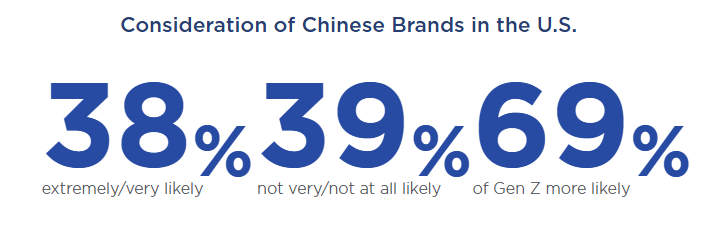
According to a study from Cox Automotive, consumers are heavily divided. Around 38 percent of shoppers say that they’re extremely or very likely to consider a Chinese brand. Another 39 percent says the opposite, that they’re extremely unlikely to do so. Among Gen Z buyers, the openness jumps to a whopping 69 percent, so if this ever does happen, expect the marketing to skew toward younger folks.

That split implies any early traction would likely be concentrated within specific demographics rather than spread across the broader market, creating both opportunity and risk for established players.

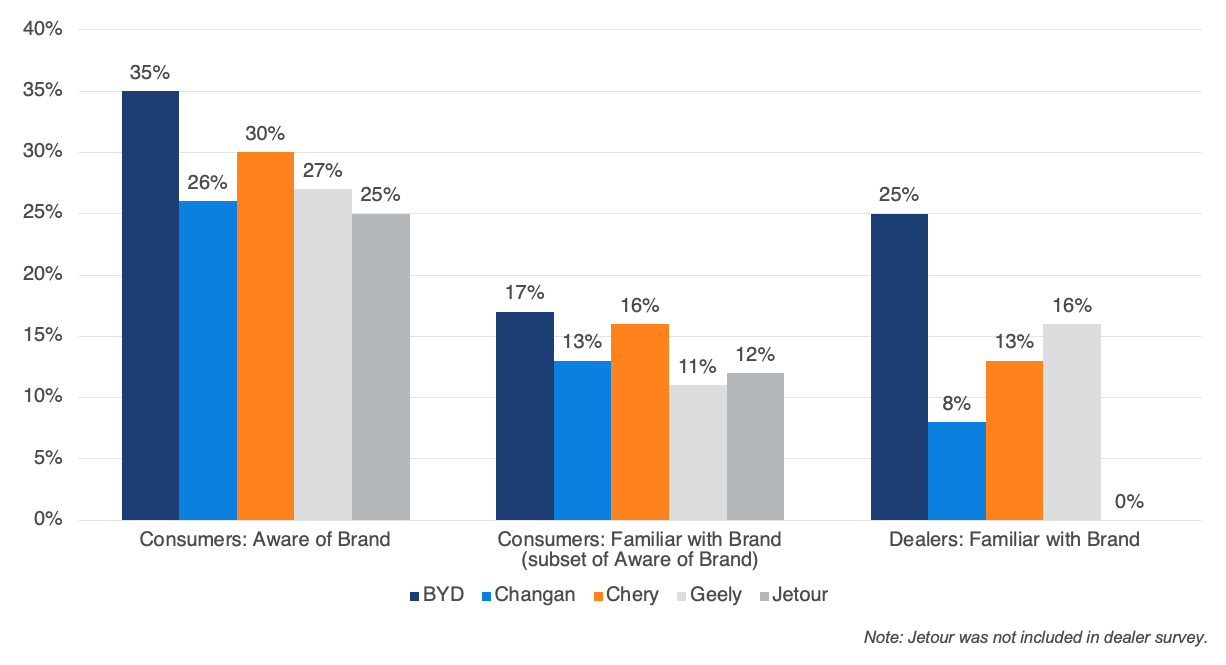
That said, actual awareness is thin. Nearly half of those surveyed said they were familiar with Chinese brands, but actual brand knowledge falls off a cliff quickly. BYD is the brand most are familiar with and that made up just over one-third of respondents. In total, only 17 percent said they had a deeper awareness of it. That’s a pretty big insight gap.

Dealer familiarity lags even further behind, with only about a quarter reporting any awareness of BYD, a reminder of how preliminary this conversation still is at the retail level.

Chinese Brand Awareness and Familiarity
 America’s Gen Z Is Ready For Chinese Cars, Their Parents Are Not
Cox Automotive

Shoppers Vs Sellers

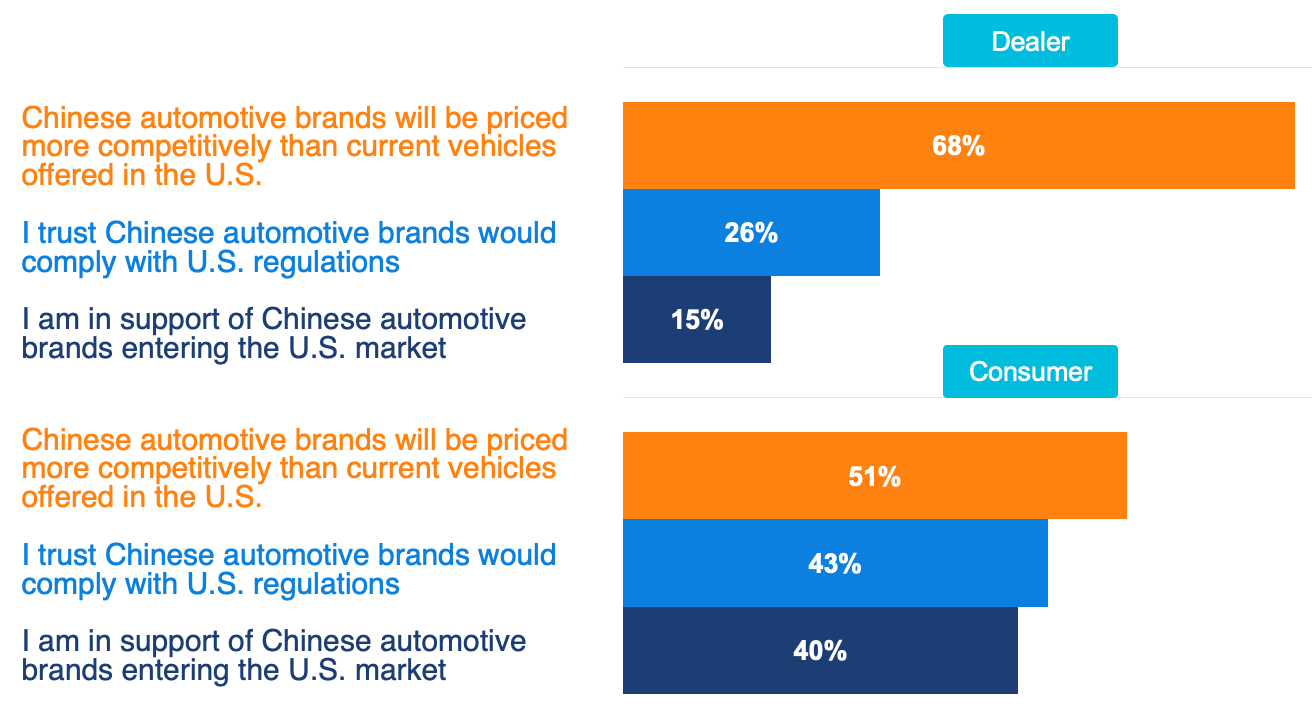
While around 40 percent of consumers say that they’re interested in Chinese brands coming to America, dealers, the ones with the real power, aren’t so hot on it. Only 15 percent said they’d like these brands in the USA. In fact, 92 percent of dealers reported concerns about selling Chinese vehicles. They cited everything from reliability to safety to long-term viability. That hesitation matters even more than the fact that some 60 percent of buyers aren’t interested.

The research also found that roughly 70 percent of dealers would adjust their business strategies if Chinese brands entered the market, suggesting preparation may follow skepticism.

Partnerships could shift the equation, though. When consumers were asked to consider a Chinese automaker aligned with an established U.S. brand, purchase consideration rose sharply to 76 percent, indicating that brand pairing may influence acceptance as much as pricing or product.

The Attraction
 America’s Gen Z Is Ready For Chinese Cars, Their Parents Are Not

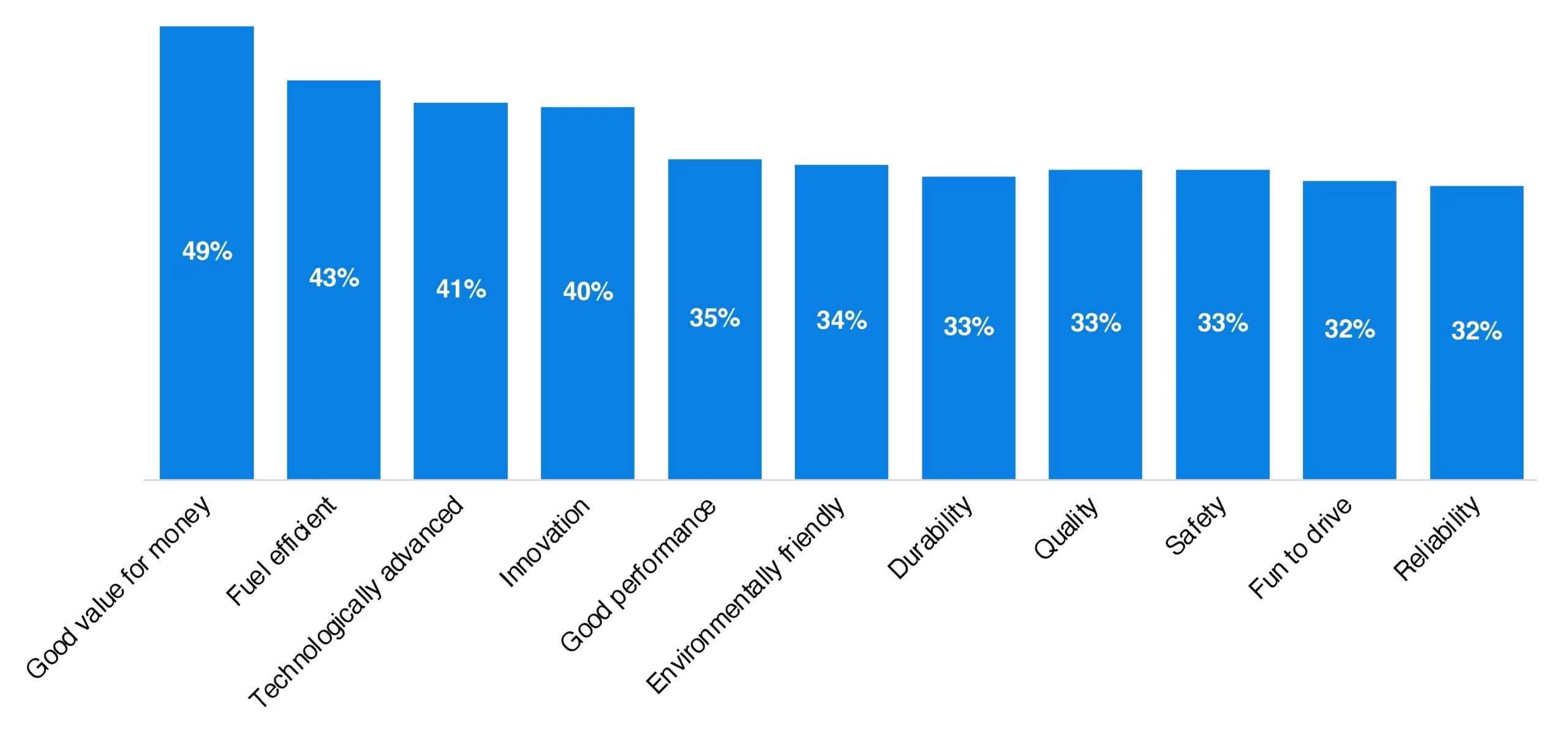
Interest does not appear to hinge on technology, styling, or practicality. It comes down to price. Nearly half of consumers rate them positively for affordability, and 35 percent give strong marks for performance. No doubt, we’ve seen pricing for Chinese automobiles undercut just about every other brand. But durability, safety, quality, and reliability fall short, and those are precisely the fundamentals that drive mainstream purchase decisions.

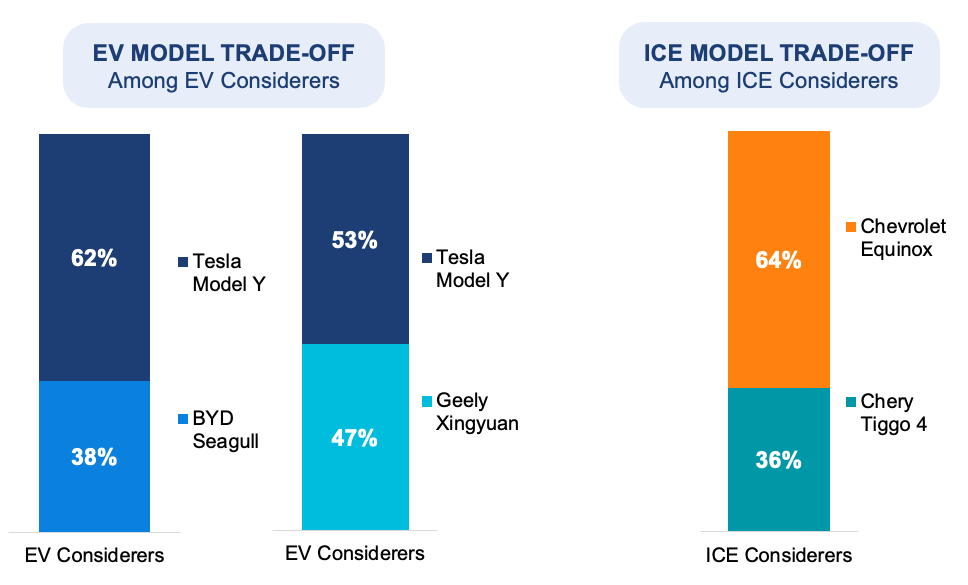
When consumers directly compared specific models, Tesla’s Model Y maintained a clear edge among EV shoppers, and the Chevrolet Equinox led among ICE vehicles, reinforcing the staying power of established nameplates.

However, when steep price discounts were introduced into side-by-side comparisons, a meaningful share of buyers indicated they would switch, particularly among lower-income and more price-sensitive groups.

Dealer and Consumer Comparisons (Strongly or Somewhat Agree)
 America’s Gen Z Is Ready For Chinese Cars, Their Parents Are Not
Cox Automotive

Established U.S. brands still hold the advantage, buoyed by trust and familiarity. Price can narrow that gap, especially among more cost-sensitive buyers, but it doesn’t erase it. And it’s why those folks in the comment section suggesting that readers get a BYD Dolphin instead of whatever is actually available might have to wait a while longer before that comment makes any sense.

Consumers Rate Chinese Brands Lower on Buying Criteria (Durability, Quality, Safety and Reliability)
 America’s Gen Z Is Ready For Chinese Cars, Their Parents Are Not
Cox Automotive
Choosing Between Brands: U.S. vs. China
 America’s Gen Z Is Ready For Chinese Cars, Their Parents Are Not
Cox Automotive

Texas PD Tests Model Y To See If Gas SUVs Really Cost Up To $12,000 More A Year

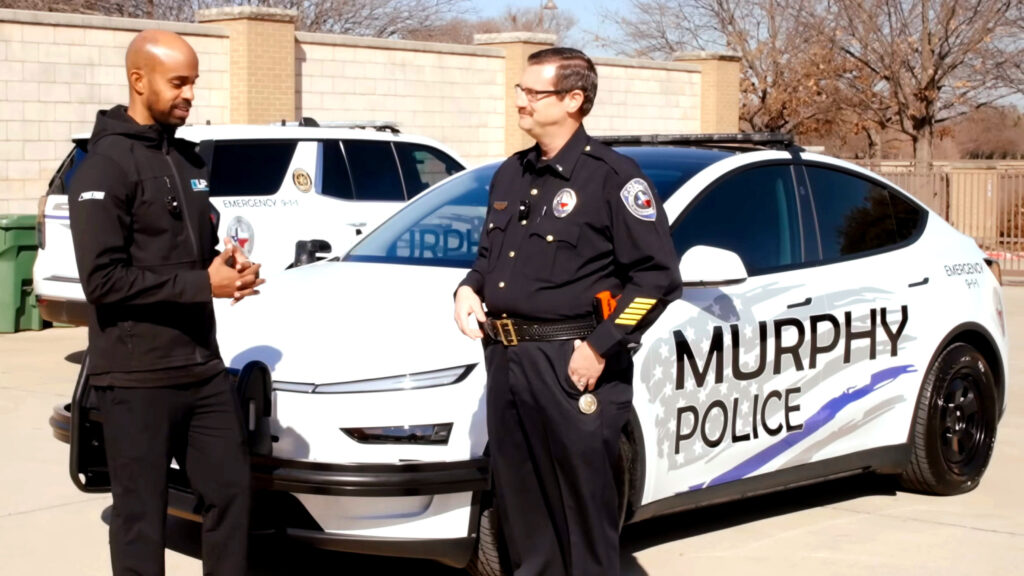
  • Murphy PD in Texas now runs the 2026 Model Y Juniper.
  • Each unit saves $4,100 to $12,000 a year in fuel and upkeep.
  • Its electric drivetrain could double the car’s service life.

The Murphy Police Department in North Texas has become the first agency to roll out the refreshed 2026 Tesla Model Y Patrol, upgraded by Unplugged Performance. Instead of committing to a full fleet replacement, the department is running the EV in real-world conditions to see how it holds up to daily patrol duty.

Officials say the more persuasive case is financial. Each cruiser is projected to deliver measurable savings compared to a traditional ICE-powered patrol vehicle.

More: There’s A New Contender For The World’s Coolest Police Car

According to data from the City of Murphy, projected annual savings per vehicle range from $4,100 for single-officer units to as much as $12,000 for shared-shift cars clocking more than 140 hours per week. The bulk of that comes from eliminating fuel purchases, though the department will still incur electricity costs, along with a 75% reduction in maintenance compared to gasoline vehicles such as the Chevrolet Tahoe and Ford Explorer.

\\\\\\\\

No Idling Wear

The savings story does not stop at fuel and oil changes. EVs do not suffer engine wear from constant idling, which accounts for roughly 60% of a patrol car’s working life. As a result, they are expected to remain in service for up to twice as long as an ICE-powered equivalent.

More: Tesla Cybertruck Joins The Police, May Pull You Over This Year (If It Doesn’t Break Down)

Given that every hour spent idling is effectively equal to 33-35 miles (53-56 km) of driving wear, that difference adds up quickly. Without a combustion engine ticking away under the hood, the Model Y can sit on scene running lights, laptops, and climate control off its battery, without quietly shortening its lifespan.

Juniper Patrol Cars

\\\\\\\\\\\\\\\\\\\\

On the hardware front, the facelifted Tesla Model Y Juniper has been converted into a patrol unit by UP.FIT, the specialized fleet division of Unplugged Performance. Compared to the road-going version, it gains a front push bar, additional LEDs at the front and sides, a roof-mounted siren, and 18-inch forged aluminum wheels wrapped in pursuit-rated tires.

The police car is offered in RWD and AWD configurations, using the standard electric powertrains and delivering between 321-357 miles (517-574 km) of range per charge. That is more than enough for routine duty. And because police work occasionally involves pursuits, braking performance has been upgraded with six-piston calipers, stainless steel brake lines, specialized fluids, thermally upgraded components, and uprated rotors.

More: A Traffic Cop Just Got A 1,001 HP Company Car

Inside, officers get ventilated seats and improved sound insulation. Each vehicle is retrofitted with a customizable center console, a laptop mount, two weapon mounts, upgraded interior lighting, and a single rear prisoner partition.

Optional extras include ballistic protection for the front doors and custom reflective graphics.

UP.FIT has not disclosed the final MSRP for the Murphy units, though it insists the total cost of ownership undercuts everything else in the segment. Beyond the Model Y crossover, the company also offers police-ready conversions for the Cybertruck, Model S/X, and Model 3, in case your local department prefers its patrol cars in a different shape.

\\\\\

UP.FIT / Unplugged Performance

Bentley’s New SUV Hits 100 Miles In Seven Minutes

  • Second Bentley SUV will be sold only as an EV.
  • It rides on Porsche’s Premium Platform Electric.
  • The base version could deliver around 600 hp.

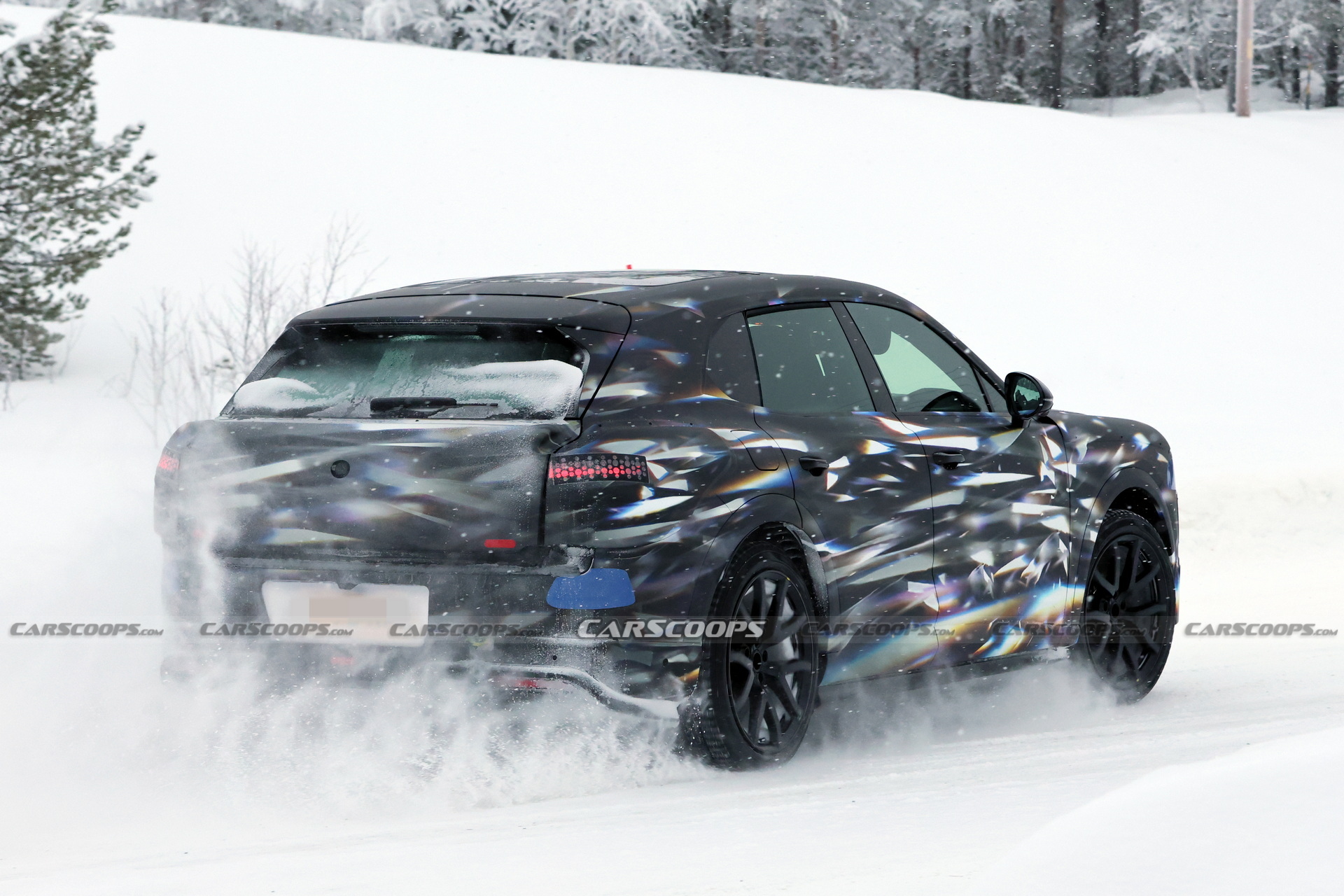
If the Bentayga proved anything, it is that Bentley buyers have no issue with a luxury SUV wearing a winged badge. So a second one was never really in doubt. That follow-up is now deep into development, and it has just been spotted winter testing for the first time.

For now, it is referred to as the Urban SUV, though that name is almost certainly temporary. It will sit below the Bentayga in the range and, more significantly, it will be fully electric. Yes, the EV market has cooled slightly, but Bentley appears confident that its customers are still ready for a battery-powered SUV with the right badge on the nose.

Read: Bentley’s New Urban SUV Copies A Controversial Feature From Audi’s Q3

Several prototypes have been seen out on the road in recent months, but this is the first time one has appeared wearing this darker, more dramatic camouflage scheme. It’s been adorned with a large LED light bar at the front, ensuring the engineers testing it can still see after the sun sets in the depths of Europe’s winter.

\\\\\\\\

SH Proshots

Most of the Urban SUV’s shape is still carefully disguised, but a few details are slipping through. Up front, the headlights feature four distinct lighting elements, giving it a signature that sets it apart from today’s Bentleys. Around the back, temporary cladding does its best to obscure the view, though slim LED taillights are clearly visible beneath the camouflage.

A Porsche Powertrain

Bentley is building its second SUV on the same Premium Platform Electric architecture as the new Porsche Cayenne Electric. That strongly suggests plenty of shared hardware with its German cousin, potentially including battery packs and motor configurations.

 Bentley’s New SUV Hits 100 Miles In Seven Minutes

As it stands, the entry-level Cayenne Electric delivers 402 hp and tops out at 1,039 hp in the extraordinary Turbo variant. Our hunch is that the base Bentley will deliver around 600 hp. Whether or not it receives a flagship version with a four-digit horsepower figure remains uncertain.

One figure Bentley does seem keen to emphasize is charging speed. The SUV is expected to support ultra-fast DC charging, with the promise of adding 100 miles (160 km) of range in just seven minutes.

Audi Meets Porsche Inside

 Bentley’s New SUV Hits 100 Miles In Seven Minutes
SH Proshots

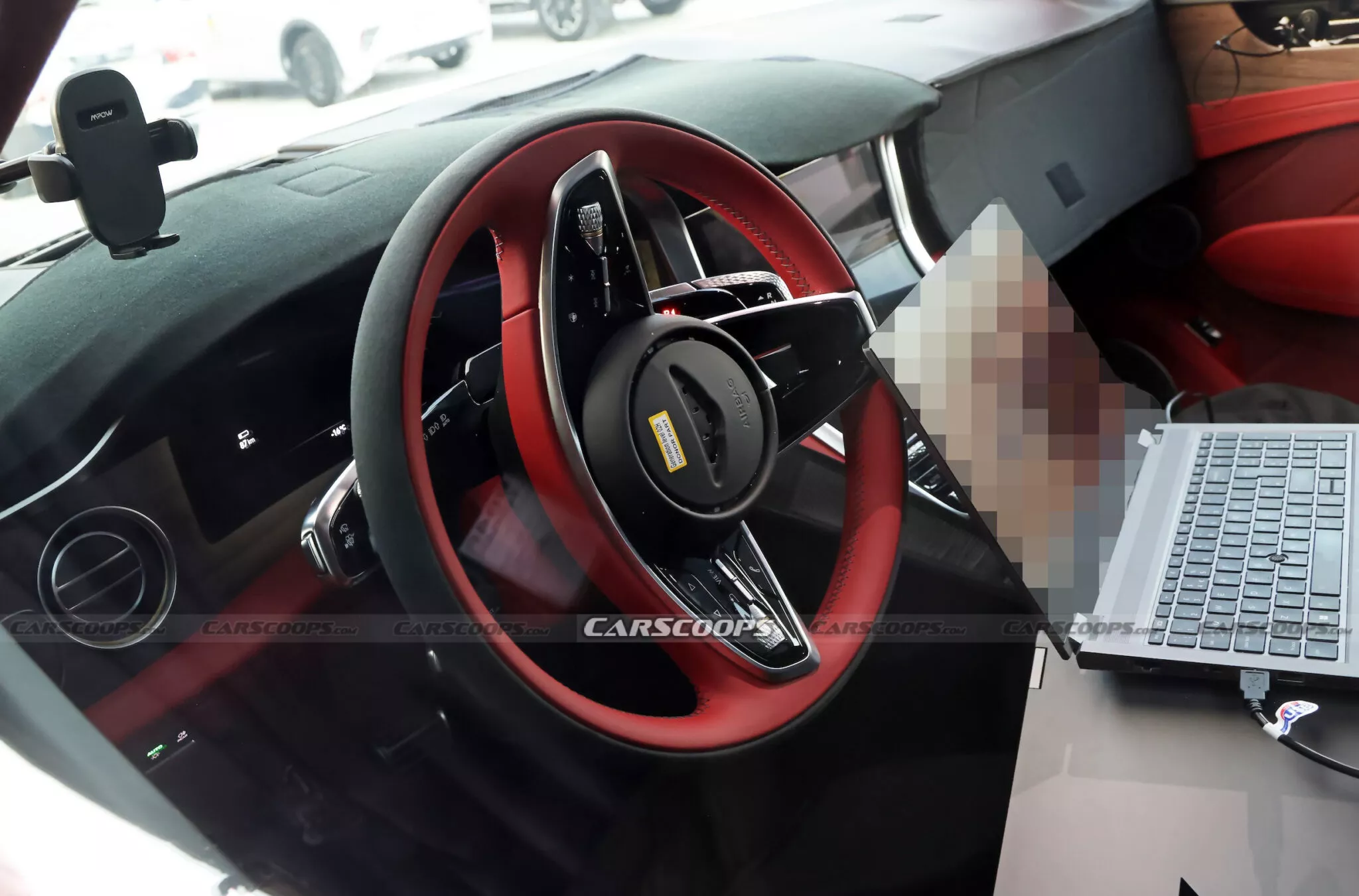
Late last year, our spy photographers finally caught the cabin in clear view. The images show a curved central infotainment screen that looks very close to the setup in the Cayenne Electric, paired with a separate digital instrument cluster ahead of the driver. It is familiar architecture, even if the surrounding materials will inevitably be pure Bentley.

There is more evidence of parts sharing lower down the steering column. Bentley’s compact electric SUV appears to use the same multi-function stalk arrangement as the new Audi Q3. Indicators, wipers, and headlight controls are grouped on the left stalk, while the right is dedicated solely to the shifter.

As for timing, Bentley could give us our first proper look at the production-ready model later this year. Customer deliveries of the Urban SUV are expected to begin in 2027, which gives Crewe a little time to perfect the details and, presumably, settle on a name that is not “Urban SUV.”

\\\\\\\

SH Proshots

“It’s Not a Luxury Anymore—It’s a Necessity.”

By: STN

When school districts talk about closing buildings, redistricting and changing routes, transportation is often expected to “just make it work.” For Clara Bisaillon, transportation supervisor at Scotia Glenville CSD in upstate New York, that was no longer acceptable without better tools in place.

“There’s a difference between want and need,” Clara said. “And getting everybody else to understand that… those tablets, the Wayfinder tablets, are really a need.”

Her urgency came from what she sees coming next year: school closures, major route changes, and drivers being sent into unfamiliar territory.

“If I don’t get them up and running and make sure that we have our system set, we’re in the water next year when we make those changes of closing an elementary school and throwing my drivers into areas they’ve not been,” she said. “They don’t know those kiddos yet, they don’t know those areas.”

For Clara, this isn’t about technology for technology’s sake. It’s about protecting her people. “The one thing I want to do is give my staff tools to make sure that those challenges are minimized as much as possible,” she said.

She knows how close many drivers already are to the breaking point. “We ask a lot of our drivers,” Clara explained. “We’re adding extra routes to cover for their co-workers… and just people who are frustrated with student behavior. Those are the things that really tip the scale for those drivers to say this isn’t worth it anymore.”

That’s why she changed her message to district leadership. This was no longer a “nice to have.”

“It’s the only tool that I can offer my staff to kind of make them… feel like it’s going to be OK,” she said. “We’re going to be in uncertain environments and uncertain times with uncertain kids, but these are the tools that I’m going to provide you.”

The start of a new year always come with some jitters, she said. “We’re going to minimize that with these tablets.”

What finally sealed the decision was data. After testing Wayfinder for two weeks, Clara saw its impact. “The stats that get provided, the ridership, the times, the updating, the stops, the drivers being able to give me feedback on the routes—what was working, what wasn’t working—that two-week time frame gave me so much fighting power,” she said. “That really sealed the deal.”

For transportation leaders waiting on the sidelines, Clara had a warning: delays may cost more than time. With chip shortages and districts adopting tablets at once, supply is tightening. If people hold on their decision and wait on their decisions, they might find themselves not being able to get up and running, she said.

And the mindset has shifted across the industry. “A lot of us are saying now that it’s not a luxury, it’s a necessity,” Clara said. “This has definitely shifted in our mindset.”

Ultimately, her argument came back to value—of the drivers and the operation. “It’s an extra tool not only for your driver for working, but you want them to feel valued,” she said. “It’s going to make my drivers know that they are valued even more.”

For school transportation leaders facing route upheaval, staffing shortages and rising scrutiny, Clara’s message is clear: waiting carries its own risk. “You gotta fight for every little tool that you give,” she said. “You gotta be willing to fight for them.”

To learn more about how Transfinder technology can help your operation navigating challenges, email solutions@transfinder.com, visit transfinder.com/solutions or call 800-373-3609.

The views expressed are those of the content sponsor and do not reflect those of School Transportation News.

The post “It’s Not a Luxury Anymore—It’s a Necessity.” appeared first on School Transportation News.

(Free White Paper) 7 Key Criteria for Choosing a School Bus Technology Partner

By: STN

Budgets are tight, drivers are hard to come by, and districts are under pressure to do more with less. School bus operations still need to rely on modern technology to meet the complex requirements of transporting students safely, efficiently and on time. Identifying the operational, functional, technical, and financial needs that truly matter can feel overwhelming, as can choosing a provider. Where to start?

Download this white paper for clear guidance on evaluating your organization’s needs and selecting a partner who delivers long-term value.

Inside, you’ll learn how to:

  • Take a wide, objective look at your operation to understand what’s needed.
  • Identify how new technologies will impact end users and other departments.
  • Define KPIs with potential partners and calculate projected ROI.
  • Evaluate providers in detail to assess their long-term potential.
  • Ensure compliance and look for strong integrations across systems.

Fill out the form below and then check your email for the white paper download link.

The post (Free White Paper) 7 Key Criteria for Choosing a School Bus Technology Partner appeared first on School Transportation News.

EverDriven Launches Vendor-Agnostic Routing Consulting Service for School Districts

EverDriven is expanding its support for school districts with the launch of a new school bus routing consulting service designed to improve efficiency, reduce costs and ease staff burnout without requiring a change to existing software platforms.

The new offering, currently in early development and pilot planning stages, will focus on providing expert routing support for districts nationwide. Rather than introducing proprietary school bus routing software, EverDriven will work within the systems districts already use.

“We’re not forcing districts into new platforms,” explained Greg Jackson, who was recently hired as general manager of EverDriven’s new school bus services division. “We’re coming in vendor agnostic, preserving their workflows and institutional knowledge and helping them operate more efficiently.”

The service will combine remote routing work with periodic on-site visits to build relationships with transportation directors, office staff and drivers. Jackson emphasized that maintaining a human connection is critical to long-term success.

“We’re going to come into your community, sit down with your team and work alongside you,” said Jackson, who was the 2019 STN Transportation Director of the Year for his work at JeffCo Public Schools in Colorado.

EverDriven’s Routing Process


Greg Jackson, the general manager of EverDriven’s new school bus services division, explained that the company organizes its services into two distinct areas: Alternative student transportation, which provides individualized transportation for students with unique learning needs or housing instability, and consolidated routing services, which integrate school buses, vans and alternative transportation into a unified strategy. Each service has specialized teams and processes due to their differing operational requirements.


While school bus routing focuses on large-scale, fixed-route planning aligned with schedules, capacity, geographic boundaries, vehicle type and ride-time standards, alternative transportation requires a more individualized and dynamic approach. Drawing on over 20 years of experience and leadership from former transportation directors, EverDriven delivers efficient, safe, and optimized routing designed to reduce costs, improve on-time performance, shorten ride times, and quickly adapt to daily changes, Jackson said.


Routing oversight is collaborative. School districts typically provide student data, service requirements, and guidelines, while EverDriven develops routes within those parameters. Districts maintain full visibility into route plans and performance and may choose to be highly involved in route design or rely on EverDriven to lead, depending on their preference. Routing is an ongoing partnership, with school districts regularly providing feedback and updates to ensure routes remain safe, practical and aligned with district goals.


“We view routing as a partnership built on shared goals and well defined roles and responsibilities,” Jackson said. “District teams bring critical local knowledge about communities, schools and student needs. Our routing specialists bring experience, deep technical abilities, and process consistency. Together, this collaboration ensures routes remain practical, safe, and aligned with district goals throughout the school year.”


EverDriven takes a technology-agnostic approach, working within a school district’s existing routing systems rather than requiring proprietary software. Integration focuses on secure data sharing, validation, and structured reporting, allowing districts to retain ownership of their systems while benefiting from EverDriven’s routing expertise.


Read more about partnering with vendors and the importance of collaboration in the March issue of School Transportation News

EverDriven said assigned school bus routing specialists will collaborate closely with school district leaders and IT departments to establish data-sharing protocols, validate student information and normalize routing data before making adjustments. Data points include enrollment, home addresses, bell schedules, eligibility requirements and accommodations for students with disabilities or those eligible under the McKinney-Vento Homeless Assistance Act.

EverDriven Focuses on Efficiency, Budget Relief

The consulting model is designed to help districts address rising transportation costs and driver shortages. By taking a deep dive into existing routes, EverDriven said it aims to identify opportunities to consolidate routes, reduce overtime and improve vehicle utilization.

Jackson noted that many school districts struggle with overtime budgets and staffing challenges, especially when routing staff are also required to drive routes. By shifting routing responsibilities to a dedicated external specialist, he said, districts can reduce burnout and allow in-house teams to focus on daily operations and safety oversight.

“[School] boards are asking why costs keep rising,” Jackson explained. “If we can help combine routes, reduce overtime and improve efficiency, the service pays for itself.”


Related: Ins, Outs of Routing Software Discussed at STN EXPO Reno
Related: School Districts Use Data, Routing For Medicaid Reimbursements


The new school bus routing consulting arm will operate separately from EverDriven’s existing alternative transportation division. While there may be collaboration between divisions, school bus routing consulting is positioned as a standalone support function.

School districts will not need to be EverDriven alternative transportation customers to access the new routing consulting service.

“This is about helping districts be more efficient,” Jackson said, adding that EverDriven plans to launch pilot programs in select markets to refine the service before a broader rollout.

Feedback from participating districts and the company’s customer advisory board will shape final implementation, he added.

“We’re in the beginning phases,” Jackson said, noting that details on pilot opportunities are expected in the coming months. “But the focus is student first. And now, student first with district support.”

The post EverDriven Launches Vendor-Agnostic Routing Consulting Service for School Districts appeared first on School Transportation News.

How Horry County Schools Uses Onboard Cameras to Protect Students, Drivers

By: STN

For Clifford Jones, Superintendent of Horry County Schools in Conway, South Carolina, student safety isn’t just a priority; it’s a responsibility that travels approximately six million miles every single year.

With one of the largest geographic school districts in South Carolina, Horry County’s fleet covers urban corridors, coastal routes and rural roads alike. Each morning and afternoon, buses carry thousands of students across the large county. Like districts nationwide, Horry County began seeing a disturbing trend: the growing challenges of resolving onboard incidents without clear evidence.

“AngelTrax cameras on our buses support the district’s student safety goals by improving supervision, discouraging misbehavior, and helping us investigate incidents, all of which advance our commitment to safe, equitable, and accountable transportation,” Jones explained.

Identifying the Need

The responsibility of protecting thousands of students prompted the district leadership to explore camera solutions. Without video evidence, protecting students from interior incidents, from student behavior concerns to accident investigations, required more efficient documentation.

“AngelTrax provides a solution that would allow us to retrieve video from the bus specific to the concern that we were trying to address,” explained Robert Grimes, transportation coordinator for the district. “This video could then be shared with the school to allow administrators to better handle the situation.”

The district also recognized the value of providing drivers with added layers of protection and accountability. Videos would provide objective clarity and documentation should any issues arise.

“Bus drivers seem to be appreciative of the fact that there is video footage that can help with the management of bus behaviors,” Grimes added.

Measurable Impact

After evaluating multiple options, the district selected AngelTrax as its mobile security and surveillance partner, equipping buses with interior cameras to help deter onboard incidents. Since then, Horry County Schools has installed cameras on approximately 450 buses currently in service, covering roughly 1,500 bus routes.

Since installing the cameras in 2017, as one of the first school districts in the country to use AngelTrax’s Vulcan™ Series cameras, the district has observed meaningful improvements in student behavior on their school buses.

The presence of cameras has increased awareness around school bus safety across the community.

“Based on my understanding, the cameras have enhanced the peace of mind for parents, students, and drivers by increasing accountability, deterring poor behavior, and providing clear evidence when incidents occur,” Jones shared. “We share school bus safety information with students, families, staff, and the community using multiple channels. These channels include sharing information during open house events, as well as through printed and digital/video materials, our website and social media platforms, ensuring that everyone is aware of the expectations, procedures and the process for reporting concerns.”

A Driver’s Perspective

For veteran bus driver Steven Lombardi, the cameras have made a noticeable difference in safety, noting that in the past, he has witnessed everything from students out of their seat, to throwing objects, fighting and other behavioral issues.

“I have never been a driver when there were no cameras on the bus,” Lombardi noted. “However, prior to having the AngelTrax cameras, we had a much less dependable camera which made capturing data more difficult.”

He said he believes the presence of the AngelTrax cameras positively influences student behavior.

“When I tell students that there are cameras on the bus generally, they are less likely to misbehave,” Lombardi added.

For Lombardi, the investment Horry County Schools made in camera technology represents more than a safety upgrade. It reinforces a culture of accountability and care.

“Knowing that there is a camera system to assist with capturing behaviors gives me a sense of relief,” he shared. “I would be hesitant to drive a bus that did not have cameras.”

As Horry County Schools continues to evaluate data and refine its transportation strategies, one goal remains constant: ensuring every student arrives safely, every mile, every day.

About AngelTrax

AngelTrax is a leading designer, manufacturer and provider of in-vehicle mobile surveillance for school buses and school white fleets. Powered by AngelTrax, the Child Safety Program automated stop arm violation system is created to keep kids safer by changing driver behavior, from violation detection to citation through adjudication. AngelTrax drives the market with state-of-the-art products, including Vulcan™ Series MDVRs and MNVRs, stop arm photo enforcement technology with AI detection, 360-degree camera systems, IP cameras, HD cameras, live view, live tracking and driver behavior with AI. AngelTrax is a CJIS-compliant organization and strategic partner with Nlets for accurate DMV data.

The views expressed are those of the content sponsor and do not reflect those of School Transportation News.

The post How Horry County Schools Uses Onboard Cameras to Protect Students, Drivers appeared first on School Transportation News.

March 2026

By: STN
Transportation employees at Loudoun County Public Schools in Virginia foster collaboration.
Photo courtesy of Loudoun County Public Schools
Cover design by Kimber Horne

Learn more about the teamwork needed to keep operations running smoothly at student transportation operations. Cover stars from Loudoun County in Virginia highlight the importance of working together and with their routing software provider. Also read articles on the benefits of school bus LED lighting, beyond safety considerations, how districts are choosing the best fuel options for them, the usage of parent apps and how RFP’s and pilot programs can help districts find the best transportation technology solutions.

Find the full STN EXPO East preview for the upcoming conference in Charlotte-Concord, North Carolina.

Read the full March 2026 issue.

Cover Story

Hand-in-Hand
Communication between vendor partners and customers is the key to developing successful, safe routes for students.

Features

The One & Only
School districts and companies are realizing the maintenance and time savings of LEDs, despite the higher upfront cost compared to incandescent lighting.

More Than Fuel Costs
Among the various options available, districts are leaning into the fuel that makes the most sense for their local operations.

Special Reports

Where is the Bus?
School districts report that using parent apps have helped streamline their operations, and software providers are seeing increased community usage.

More Than a Letter Game
Pilot programs are vital to the RFP process by helping school districts confirm if a chosen solution does what is promised.

STN EXPO East Preview
Prepare for the content, community and commerce waiting this month in Charlotte/Concord, North Carolina.

Feedback
Online
Ad Index

Editor’s Take by Ryan Gray
The Security of Consistency

Thought Leader by Jim Harris
The Intersection of Autonomous Vehicles and School Buses

Publisher’s Corner by Tony Corpin
Ignite Your Leadership

The post March 2026 appeared first on School Transportation News.

Technology Webinar Takes Detailed Dive into School Bus Efficiency

A Texas transportation director provided attendees with a live demo of the Bytecurve payroll and dispatch software, as well as numerous tips on improving school bus operational efficiency.

Bryan Mitchell, marketing manager for Bytecurve parent company Transit Technologies, explained during the Thursday webinar that with COVID-era funding programs ending, budget concerns combined with routine driver shortages, upset parents and disconnected tech systems complicate student transportation operations every day. He noted that half of U.S. students rely on school bus services but the number of school bus drivers decreased 15 percent from 2019 to 2023.

Mitchell reviewed a case study on the $30,000 monthly labor cost savings that Rome School District in Georgia achieved with Bytecurve, along with nearly eliminating payroll errors and saving 10 hours per week in driver communications and payroll reconciliation. He added that Russellville School District in Arkansas reported saving $15,000 per month.

Additionally, fellow webinar panelist Jonquez Moore, transportation director of Little Elm ISD in northeast Texas, discovered school bus efficiency by bringing two school district transportation operations in-house from contractors and implemented Bytecurve both times.

“We live in a very connected world. Unfortunately, in K-12 it’s not very connected,” observed Jonathan Agenten, director of sales for Bytecurve.

The payroll, scheduling and dispatch system lets drivers clock in via tablet, app or wall clock. Moore said some Little Elm ISD drivers like using the app to save time but noted a tablet option is available for drivers who are reluctant to download the app. He confirmed the app is location based so drivers can only clock in when they are within a predetermined distance from the facility. Agenten added that management can send notifications and see when the drivers read them.

Moore said he appreciated how real-time bus locations arranged in an airport terminal-style dashboard allows managers to proactively handle late, delayed or canceled routes.

“When it’s busy, you don’t know a bus is late until it’s late,” he commented.

Moore shared a view of his Bytecurve dashboard with webinar attendees and pointed out that dispatchers can easily see what drivers are clocked in and what buses they are assigned to. Managers can also manually clock in drivers or remove buses or drivers from the schedule if an event is canceled.

Noting his fondness for reports, Moore showed how easy it is to access on-time performance reports, which he shares with district administration and uses to praise his drivers.

Various stats are clickable, he added, allowing deep dives into problem areas. He said he uses this information to talk to his team and determine what to change.

“I’m not getting paid for this [webinar], so I really believe in their system,” Moore declared.


Related: (Recorded Webinar) How School Districts Save $30,000 per Month with Smarter Payroll
Related: Arkansas District Uses Technology to Save Money and Time
Related: (Recorded Webinar) Arkansas Transportation Department Saves $15K per Month with Bytecurve
Related: Payroll Technology Saves Thousands of Dollars for Georgia School District


He added that a report on planned vs. scheduled vs. actual hours worked is a favorite of the district chief financial officer as it helps with budget questions.

He noted that if there is an unexpected school bus driver shortage, a dispatcher can reassign the route with a few clicks. The system also notes what drivers are already working and therefore unavailable.

Identifying Additional Efficiencies in Operations

When changing tiered routes, where a driver was assigned to elementary and middle or high schools, Agenten confirmed that routes can be split up and reassigned by school or stop. The system notes the resulting changes and the app communicates those changes to parents.

He reviewed payroll integrations and confirmed that each district is a unique customer that Bytecurve will set up according to its particular rules.

When it comes to union requirements and driver minimum hours, task codes added upon system setup become part of the foundation so “things are calculated proactively and accurately,” Agenten said. Managers can use a few clicks to approve driver timesheets based on these preapproved district procedures.

He also answered an attendee question by stating that Bytecurve integrates with several tablets and also provides one of its own.

Mitchell reviewed Transit Technologies’ other offerings, one of which is onboard student and driver facing cameras that are ruggedized, reliable and warranty protected. busHive software allows districts to quickly quote, set up, complete and get reimbursed for field trips. FASTER Maintenance Software allows technicians to proactively manage bus repairs.

Watch the webinar on demand.

The post Technology Webinar Takes Detailed Dive into School Bus Efficiency appeared first on School Transportation News.

International Motors Honors 2025 Dealers of the Year

By: STN

ORLANDO, Fla.,- International Motors, LLC* (“International”) announced the International and IC Bus Dealer of the Year award winners at its annual dealer meeting this week in Orlando. This event is an opportunity for International to celebrate the successes of the dealer network from the previous year. More importantly, it is a moment to align our strategy to ensure we deliver quality solutions for our customers every day.

The 2025 Dealer of the Year award winners were selected based on their performance in several criteria, such as vehicle sales, parts sales, International S13 Integrated Powertrain sales, and service dwell time. Growth in key areas like market share, customer experience survey results, and leveraging solutions through International Financial are additional data points used to make Dealer of the Year selections.

“The annual International dealer meeting is always an exciting event because it brings our network together,” said Dan Kayser, executive vice president, Commercial Operations, International. “Our truck and bus dealers are our closest partners, and they work hard every day to give customers a dependable, consistent experience. This event celebrates that partnership and the strength we have when we’re aligned as one International.”

2025 International U.S. and Canada Dealer of the Year: Wieland Truck and Trailer

Michigan-based Wieland Truck and Trailer had an impressive year, exceeding their targets across the board — from parts growth and truck sales to significant gains in customer experience and market share. They achieved nearly seven times their goal for conquest customer count.

“Customers count on dealers who act as true partners, and Wieland Truck and Trailer delivered above and beyond that promise,” said Justina Morosin, senior vice president, Sales and Field Operations, International. “Their accomplishments are a direct result of their focus and customer first approach, and we’re proud of the consistency and care their team brings to every interaction.”

“Being named Dealer of the Year is an incredible honor, and I’m proud of what our team accomplished this past year,” said Rob Cleary, dealer principal, Wieland Truck and Trailer. “Customers expect a partner who can support them across their entire operation, and our team takes that responsibility seriously. I’m looking forward to celebrating with them at the dealership and seeing what we achieve in the year ahead.”

Wieland Truck and Trailer, founded in the 1930s, has three locations in Michigan.

2025 International Latin America Dealer of the Year: Capasa

Capasa was selected as the Dealer of the Year winner because of their commitment to achieving a unique customer experience through comprehensive solutions and support.

“Capasa puts customers at the center of what they do,” said Rafael Alvarenga, vice president, Latin America Commercial Operations, International. “Their commitment to providing effective solutions and strong support makes a meaningful impact across Latin America and sets a strong example for our entire dealer network.”

“It’s an honor to be named Dealer of the Year. We take great pride in offering transportation solutions that support our customers at every stage of their operations,” said Luis Gerardo Amarante Alvarado, dealer principal, Capasa. “This award is a celebration of our team’s effort and commitment, and I look forward to what we’ll accomplish in the year ahead.”

Capasa was founded in 1962 to meet the needs of the state of Sinaloa, Mexico. They have a presence in the cities of Culiacán, Los Mochis, Mazatlán and Guamúchil and in the state of Baja California Sur in the cities of Los Cabos and La Paz.

2025 IC Bus Dealer of the Year: Midwest Transit Equipment

Midwest Transit Equipment’s strong commitment to excellence, commercial execution and customer support made them a perfect fit for IC Bus Dealer of the Year. They exceeded their target in orders, advanced battery-electric vehicle readiness and adoption, and completed training with extensive customer-facing engagement.

“Our dealers play an essential role in providing safe, dependable transportation for students,” said Charles Chilton, vice president and general manager, IC Bus. “Midwest Transit Equipment embodies what it means to be part of IC Bus through their teamwork, customer focus and dedication to building a stronger future for our industry. We’re proud of their team for the example they set for our network.”

“Celebrating our 50th year and being named IC Bus Dealer of the Year is an incredible honor for us,” said John McKinney, chairman, Midwest Transit Equipment. “Our team is committed to trust, collaboration and setting a high standard for the customers and communities we serve. I’m grateful for their effort and excited to celebrate this achievement together.”

Midwest Transit Equipment is the largest volume school bus dealership in the United States. They have nine locations and a team of 300 employees.

To find your nearest International or IC Bus dealer in the U.S. and Canada visit the dealer locators on International.com or ICBus.com. For distributors in Mexico and Latin America, search Mexico.International.com and Latin-America.InternationalCamiones.com.

About International:
Based in Lisle, Illinois, International Motors, LLC* creates solutions that deliver greater uptime and productivity to our customers throughout the full operation of our commercial vehicles. We build International trucks and engines and IC Bus school and commercial buses that are as tough and as smart as the people who drive them. We also develop Fleetrite aftermarket parts. In everything we do, our vision is to accelerate the impact of sustainable mobility to create the cleaner, safer world we all deserve. As of 2021, we joined Scania, MAN and Volkswagen Truck & Bus in TRATON GROUP, a global champion of the truck and transport services industry. To learn more, visit www.International.com.

The post International Motors Honors 2025 Dealers of the Year appeared first on School Transportation News.

Pupil Transportation Around the World: A Comparative Look at U.S., Australia

Pupil transportation is one of the most visible ways a nation demonstrates its commitment to education. Every school day, millions of students travel from home to classroom using systems designed not only for efficiency, but for safety and equity. While Australia and the U.S. share similarities as large, developed, federal nations, their approaches to pupil transportation reflect important structural and cultural differences. 

By examining governance, fleet design, funding models, rural challenges, and safety standards, it becomes clear that both countries aim for the same goal—safe and reliable access to education—but achieve it through different methods.

Both Australia and the U.S. operate under federal systems of government but differently distribute the responsibility for pupil transportation. In the U.S., pupil transportation is primarily managed at the local school district level. States establish regulatory frameworks, and federal safety standards govern vehicle manufacturing. However, day-to-day operations—routing, hiring drivers, maintaining fleets—are typically handled by individual districts or contracted providers. This creates a highly localized system, where policies can vary significantly from one district to another.

In Australia, pupil transportation is largely administered at the state and territory level rather than by individual school districts. States such as New South Wales, Queensland, Victoria, and Western Australia design and oversee their own school transport assistance schemes. The federal government plays a minimal operational role. This state-centered approach results in more centralized control within each state, even though policies differ between states.

What’s Different with Pupil Transportation?

The key difference is the scale of control. U.S. decisions are often made at the district level. Australian decisions are typically made at the state level. Both models allow flexibility, but Australia’s approach tends to create more uniformity within each state.

Perhaps the most recognizable feature of American pupil transportation is the yellow school bus. The U.S. yellow bus is a national symbol. Nearly every public school district operates dedicated fleets painted in a standardized shade of yellow. Strict federal safety standards regulate construction, and compartmentalized seating design has been central to American school bus safety philosophy for decades.

Australia does not have the same universal yellow bus requirement. School buses in Australia may be white, yellow, or another color depending on the contractor or region. While clearly marked as school services, they do not carry the same nationally standardized appearance as American buses. This reflects a difference in cultural identity. In the U.S., the yellow bus represents childhood and public education. In Australia, school transportation is more functionally defined than symbolically branded.

Another major difference involves seatbelt policies. In Australia, seatbelts are common in school buses and often required in newer vehicles. In contrast, large American school buses traditionally rely on compartmentalization rather than seatbelts, although seatbelt requirements are expanding in some states. These differing design philosophies reflect variations in regulatory priorities and historical safety research.

One of the clearest contrasts between the two systems is how they interact with public transit. In the U.S., pupil transportation is generally separate from public transportation systems. School buses are dedicated vehicles serving only students. Even in large cities, districts often operate independent fleets rather than relying on municipal transit systems, though some districts do provide older students with transit passes.

In Australia, especially in urban areas, students frequently use public bus, train, or tram systems. Discounted or free student travel passes are common. Rather than maintaining fully separate fleets in metropolitan areas, Australia often integrates students into existing public transport networks.

This integrated approach can increase efficiency and reduce duplication of services. However, it also means that student riders share space with the general public. The American model, by contrast, prioritizes separation and controlled environments for school-aged passengers.

What’s Similar with Pupil Transportation?

Both nations face significant rural transportation challenges due to their size and geography. In the U.S., rural districts may cover hundreds of square miles, with students traveling long distances on highways and country roads. In states such as Montana or Texas long travel times are common.

Australia faces similar challenges, especially in remote outback regions. In some parts of Western Australia or Queensland, students may travel extremely long distances to reach school. However, Australia often applies strict distance-based eligibility rules. Students must live beyond a minimum distance from their nearest appropriate school to qualify for subsidized transportation. Families living closer may be responsible for arranging their own transport.

In contrast, many American districts provide transportation to all eligible students within the district, even if they live relatively close to school. The U.S. model often prioritizes broader access, while Australia’s system focuses on distance-based need.

In extremely remote parts of Australia, boarding schools are sometimes used as a practical solution due to travel distances. While boarding options exist in the U.S., they are far less central to the public education system.

Funding structures also reveal differences. In the U.S., transportation funding varies by state and is often supported by local tax revenue. This can lead to disparities in fleet age and service quality between wealthier and less affluent districts.


Related: Pupil Transportation Around the World: A Comparative Look at U.S., Germany
Related: Pupil Transportation Around the World: A Comparative Look at the U.S. and Colombia
Related: Pupil Transportation Around the World: A Comparative Look at the U.S. and India
Related: What Differs Between Pupil Transportation in the U.S. and the U.K.?


Australia typically funds pupil transportation at the state level. Many routes are operated by private contractors under government agreements. Rather than school districts owning large fleets, governments often contract services to private bus companies. This contractor-based system requires strong oversight to ensure compliance and safety standards.

The American system uses a mix of district-owned fleets and contracted providers. However, district ownership remains more common in the U.S. than in Australia.

Both countries prioritize safety, but enforcement structures differ. In the U.S., strict stop-arm laws require motorists to stop when a school bus is loading or unloading students. Violations can result in significant fines. This legal framework reinforces the protective environment surrounding the school bus.

Australia does not use the same stop-arm system in most regions. Instead, safety relies more heavily on general road rules, bus signage and public awareness. The American stop-arm system creates a highly visible and enforceable protective zone around students.

Despite these differences, Australia and the U.S. share core principles. Both aim to provide safe, reliable transportation that supports equal access to education. Both must manage long distances, rural isolation and funding constraints. Both rely on regulated driver accreditation and vehicle inspection systems.

The primary differences lie in structure and philosophy. The U.S. emphasizes a distinct, symbolic and highly regulated dedicated school bus system. Australia emphasizes state-level coordination, contractor delivery and integration with public transit.

In the end, both systems reflect national priorities and geography. Whether through the iconic yellow bus traveling down an American suburban street or a state-contracted bus crossing the wide landscapes of the rural Australian Outback, pupil transportation remains a vital link between home and classroom. Each country has developed a model suited to its environment, but both share a common mission: ensuring that distance does not prevent opportunity.

Watch for the next article in this series as we travel to another continent-sized country – Brazil.


Bret E. Brooks is the chief operating officer for Gray Ram Tactical, LLC, a Missouri-based international consulting and training firm specializing in transportation safety and security. He is a keynote speaker, author of multiple books and articles, and has trained audiences around the world. He can be reached at BretBrooks@GrayRamTacticalTraining.com.

The post Pupil Transportation Around the World: A Comparative Look at U.S., Australia appeared first on School Transportation News.

Gallery: Recap Love the Bus Month 2026

There were many thoughtful celebrations during Love the Bus Month in February from school districts and transportation companies across North America that recognized their student transportation staff with events and gifts highlighted via social media posts.

Scroll through this year’s gallery for a glimpse of the festivities.

1 of 80
Cabarrus County Schools Transportation in North Carolina thanked their drivers for their “steady hands and big hearts” during Love the Bus Month.
Comal Independent School District in Texas posted photos from a district wide celebration during Love the Bus Month that highlighted the over 500 student transportation professionals that cover an average of 2,356,322 miles per year for the students in their community.
Durham School Services shared a post about school bus driver Robert Colella who was nominated by one of his student riders as a community helper. General Manager of the transportation team in Little Egg Harbor, New Jersey, Patty Manzoni, thanked Colella for his 35 years of service.
Laura Hill, General Manager of Transportation Services at Hillsborough County Public Schools said this photo of their school bus fleet shows “the strong culture of teamwork, pride, and commitment that defines Hillsborough County Public Schools Transportation Services.”
Jennifer Gardella, director of transportation at Rockwall Independent School District in Texas shared these photos saying “I’m grateful for the opportunities to serve our team.! I’m impressed everyday what we do as a team and the magic we make happen. We transport the future.”
Katy Independent School District in Texas thanked not only their drivers but the mechanics, routers, office staff and aides who show up rain or shine to make sure students are transported safely.
Lee County Schools in North Carolina highlighted the drivers who cover their daily 105 routes, recognizing the crucial part they play in the educational system and encouraging the community to thank the drivers for all they do.
Jeffrey Flatt submitted this photo of pre-k and kindergarten students at Oak Hill School in Nashville, Tennessee celebrating Love the Bus Month.
Orange County Public Schools in Florida highlighted their transportation team for Love the Bus Month, thanking school bus drivers for being the “friendly faces our students see in the morning and the ones who ensure every journey ends with a safe trip home,” and provided lunch for the staff members.
Penn Harris Madison Schools in Indiana highlighted school bus driver Lesley Perry as the Culver’s Driver of the Month. Perry has driven for the district for nearly 30 years and is known in the community for her kindness and dedication.
Safety Vision representatives went to local school districts in Texas to personally thank the student transportation professionals who keep school buses rolling and transporting students to and from school safely. Safety Vision representatives went to local school districts in Texas to personally thank the student transportation professionals who keep school buses rolling and transporting students to and from school safely.
Safety Vision representatives went to local school districts in Texas to personally thank the student transportation professionals who keep school buses rolling and transporting students to and from school safely.
Sharp Bus Lines in Ontario, Canada shared photos of a special Valentine’s Day themed Love the Bus celebration with the Brantford drivers and staff members.
Spartanburg County School District 6 in South Carolina posted photos of their school bus drivers and aides wearing custom made shirts to celebrate Love the Bus Month and their continual dedication to the students they serve.
school bus driver, love the bus shirts
Spartanburg County School District 6 in South Carolina posted photos of their school bus drivers and aides wearing custom made shirts to celebrate Love the Bus Month. Facebook/@ Spartanburg County School District Six
Verra Mobility sales executive Matt Reich went to Orange County in Florida to participate in a school bus driver appreciation event.
Wake County Public Schools in North Carolina had a special Love the Bus Month celebration at East Cary Magnet Middle School that was organized by former state director of pupil transportation Derek Graham. The bus drivers received breakfast and goodie bags as part of School Bus Driver Appreciation Week festivities.
The West Virginia Department of Education posted photos from Kanawha County Schools' main transportation terminal featuring school bus driver AJ Cline giving a behind the scenes look at student transportation operations.
Appoquinimink School District in Delaware shared these photos of their bus drivers at work in the district, commending them for going above and beyond in participation in safety trainings, creating bus safety programs for young students and taking part in a school bus roadeo event.


Related: WATCH: West Virginia Highlights School Bus Inspection for Love the Bus Month
Related: Update: Love the Bus Month Underway, NAPT Seeks Recognition Year-Round
Related: Gallery: Love the Bus Month 2025 Celebrations

The post Gallery: Recap Love the Bus Month 2026 appeared first on School Transportation News.

Rivian Just Got Its Own M Division, And It’s Called RAD

  • The Rivian Adventure Department has made its official debut.
  • It’s a skunkworks team that pushes boundaries to improve vehicles.
  • Has already paved the way for the RAD Tuner and new drive modes.

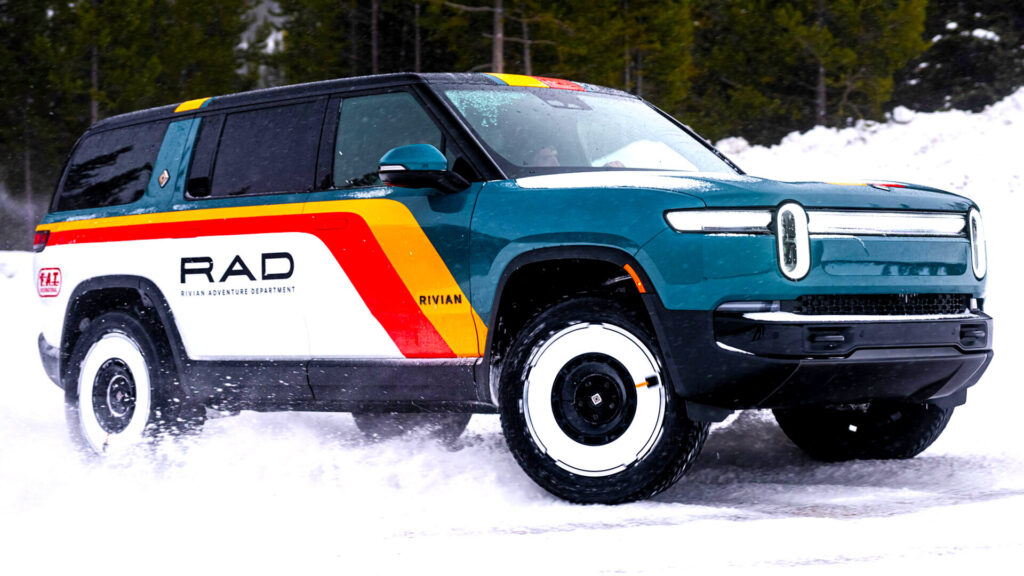
Rivian has used the FAT Ice Race in Montana to introduce the Rivian Adventure Department, or RAD for short. It’s being billed as a skunkworks team of designers, engineers, and enthusiasts “who spend their days and nights exploring the limits of what a Rivian can do.”

The company said a lot without saying much of anything, but the team is focused on unlocking the next level of capability and performance. They aren’t limited to cubicles either as they’ve “learned there’s no substitute for real-world experience.”

More: Rivian Aiming To Break Its Own Pikes Peak Record With R1T

This has already seen the company enter and win the 2023 Rebelle Rally as well as set records for a production electric truck at Pikes Peak in 2023 and 2024. Learnings from these experiences is then fed back into road-going models.

While win on Sunday and sell on Monday is hardly a new idea, Rivian said their off-road adventures directly resulted in the Desert Rally drive mode as well as the RAD Tuner. The latter debuted on the second-generation R1 Quad lineup and enables owners to customize their driving experience.

 Rivian Just Got Its Own M Division, And It’s Called RAD

While a number of automakers offer a personalization setting, most only let you adjust a few things. Rivian, on the other hand, allows drivers to tweak acceleration and regeneration as well as damping, ride height, brake assist, steering, wheel slip, and torque bias – among other things. In effect, it enables you to fine-tune the vehicle’s characteristics exactly to your liking and the situation at hand.

Will RAD Become Rivian’s AMG?

The Rivian Adventure Department has been around for awhile, but now it’s out in the open. As Chief Design Officer Jeff Hammoud explained, “RAD represents the living, breathing expression of the passion that defines Rivian. That impulse to explore, to push limits, and to embrace the adventure is not confined to one team—it is the very DNA of our entire company, from the designers and engineers to our community of owners.”

The big question is what happens next. Does RAD remain a relatively low-key team focused on improving existing products or do they transform into Rivian’s version of BMW M, Cadillac V, and Mercedes AMG? Only time will tell, but it feels like little more than marketing at this point.

\\\\\\\\\\\\\\

VW’s 1 Millionth EV Took 12 Years, Its 2 Millionth Took 10 Months

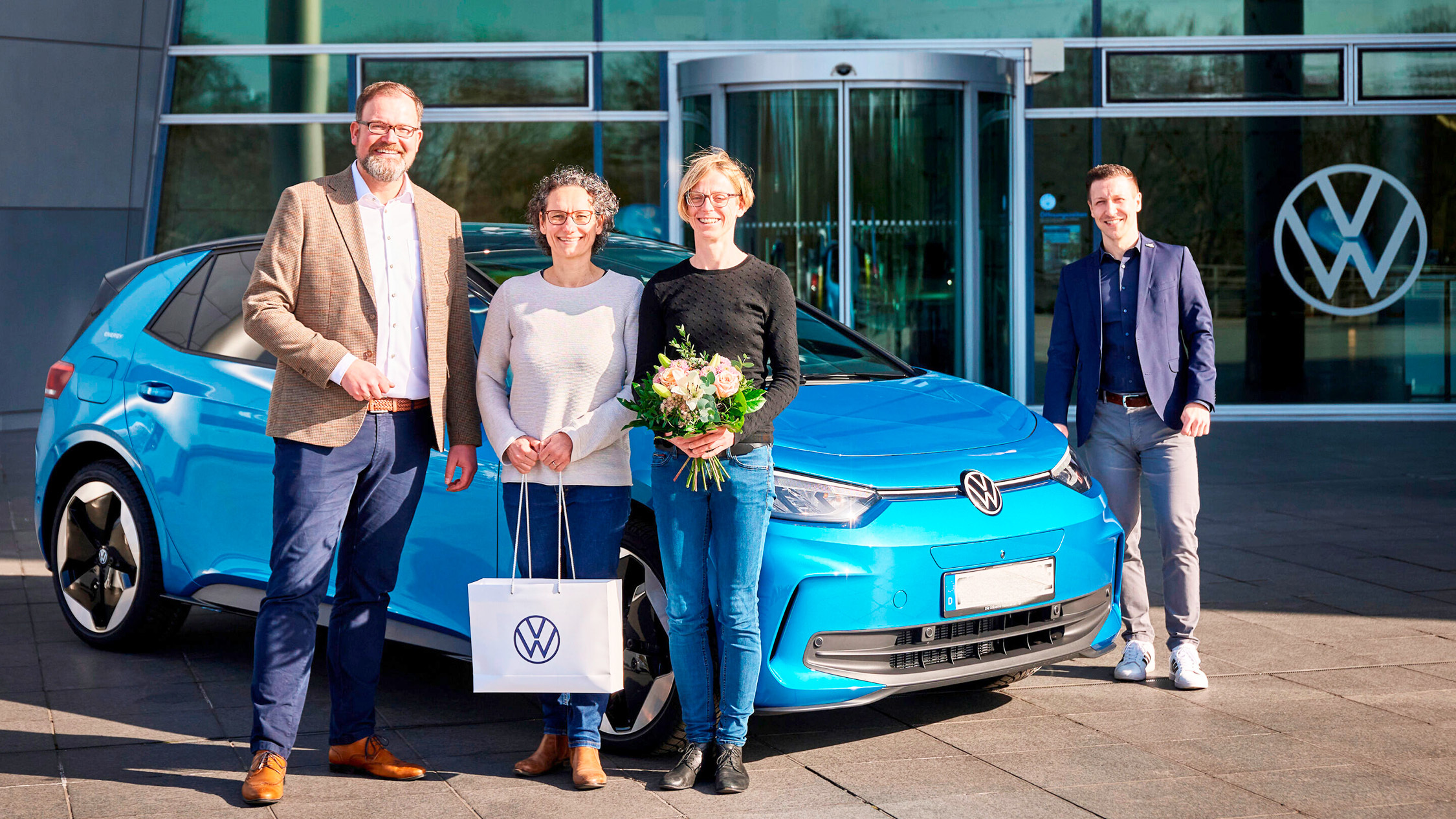
  • Volkswagen has delivered its 2 millionth EV, an ID. 3 hatch.
  • It only celebrated the 1 millionth electric car in April 2025.
  • New affordable models like ID. Polo and ID. Cross coming.

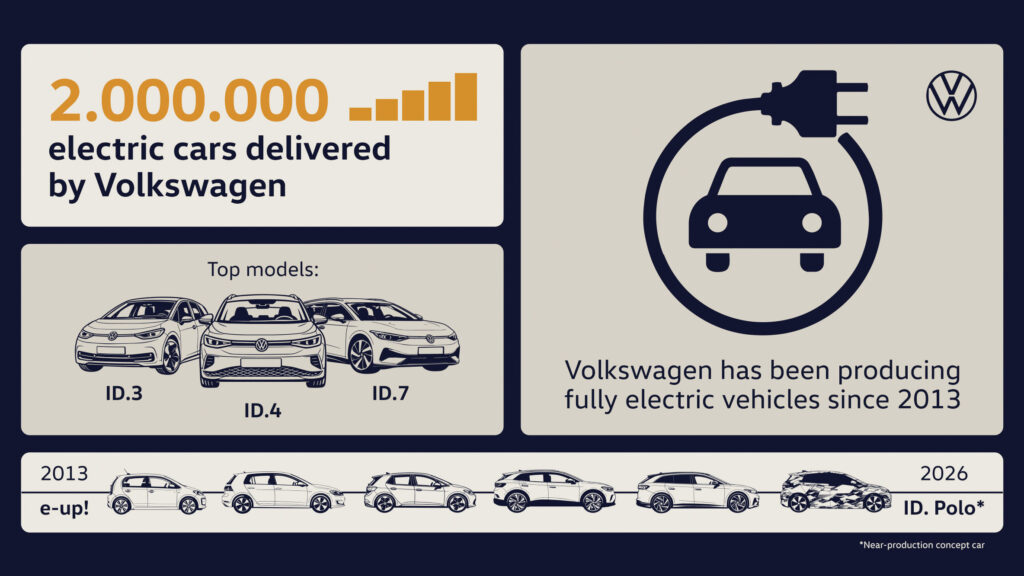
Volkswagen has just handed over its 2 millionth fully electric vehicle, and the pace is what really grabs you. It took 12 years to reach the first million. The 2 millionth car showed up just 10 months later.

The anniversary car is an ID. 3 hatch, built in Zwickau, Germany, and delivered to a customer at the Transparent Factory in Dresden. The ID. 3 kicked off VW’s large-scale MEB era back in 2020, though the modern electric journey really began with the e-up in 2013 and the company experimented with a small number of electric Golfs as far back as the 1980s.

More: VW’s ID. Polo Interior Brings Back Something You Thought Was Gone For Good

Volkswagen only celebrated its 1 millionth EV, an ID.3 GTX, last April. That means the brand effectively doubled its lifetime electric output in less time than it takes some automakers to add a new paint color to mark a model-year changeover.

ID. 4 Led The Charge

The heavy lifter in that sales charge is the ID. 4 SUV, which together with its ID. 5 fastback brother clocked up roughly 901,000 deliveries worldwide, proving SUVs still rule even in the electric age. The ID. 3, whose sales potential is restricted by the fact that it’s not available in North America, follows with around 628,000 units, while the larger and more premium ID. 7 has added another 132,000 to the tally.

 VW’s 1 Millionth EV Took 12 Years, Its 2 Millionth Took 10 Months

Europe is the engine behind much of that growth. Roughly one in five cars sold there is now electric, and Volkswagen has carved out a leading role in the region. The US market has definitely cooled, but globally, the trajectory is still pointing upward.

More EVs On The Way

And VW isn’t slowing down. A refreshed ID. 4 badged as the ID. Tiguan is on the way this year, and the new ID. Polo (seen below) and first ever electric GTI, the ID. Polo GTI, will take the fight into the affordable small car segment.

An ID. Cross SUV spinoff follows soon after and an electric ID. Golf is also looming on the horizon. At this pace, don’t be surprised if we’re talking about 3 million before your summer tan has faded.

\\\\\\\\\

VW

EPA Announces Webinar Series as Clean School Bus Program Returns

By: Ryan Gray

Three U.S. Environmental Protection Agency (EPA) webinars during the first two weeks of March will include information on the proposed expansion of eligible fuels under the revamped Clean School Bus Program (CSBP) that is expected to roll out soon.

EPA announced the time for the March 3 webinar on last week’s Request for Information, which seeks public comment on the feasibility of adding biodiesel and renewable diesel as fundable fuels. A source familiar with the program said the inclusion of liquefied natural gas and hydrogen, which are not currently available options for school buses, satisfy language contained in the 2021 Infrastructure Investment and Jobs Act that created the CSBP.

March 4 is the date for a second webinar designed to give school districts and bus companies the next steps in finalizing clean school bus projects funded by the 2023 rebate program with an overview of the close out form.

A March 10 webinar will share additional information on the 2023 project close outs EPA said is necessary to complete programs “effectively and efficiently while also ensuring they meet the conditions of their funding opportunity.”

Specifically, EPA said it is targeting potential waste, fraud and abuse by sharing guidance school districts and bus companies should use as they wrap up their projects.


Related: EPA ‘Revamping’ Clean School Bus Program
Related: Government Accountability Office Highlights FCC’s E-Rate Program for Fraud Prevention Measures
Related: Funding Among Potential Impacts of U.S. Education Department Dismantling on School Transportation

The post EPA Announces Webinar Series as Clean School Bus Program Returns appeared first on School Transportation News.

Quick-Acting New Jersey Police Free School Bus Stuck in Blizzard

Officers with the Washington Township Police Department helped free a school bus stuck in deep snow during a powerful winter storm hitting the East Coast.

It has been a season of severe winter storms in New Jersey and much of the Northeast as well as Southeast and Midwest. Even before last week’s Nor’Easter storm, New Jersey student transportation was impacted.

The Washington Township Police received a call Jan. 28 just before 9 a.m. that a school bus with children on board was stranded on a road covered with snow and ice. Officers responded quickly, working as a team to clear snow from around the tires and shovel behind the school bus to give it traction. Once freed, the bus driver safely continued the route.

“This is what Community Caretaking looks like,” the department wrote in a social media post highlighting the rescue.

Then came last week’s Nor’Easter, which closed school for several days across New Jersey and at least eight other states in the Northeast and New England.

New Jersey Office of Emergency Management operating under the Division of the New Jersey State Police issued a mandatory statewide travel restriction due to heavy snowfall, blizzard-like conditions, and strong winds that made travel hazardous. The restriction, which began at 9 p.m. on Feb. 22, was extended through noon the following day, to give road crews time to clear snow-covered roadways and ensure public safety.

Under the official travel ban, all non-exempt vehicles were prohibited from operating on state, county, municipal and interstate roads. Exemptions included emergency responders, public works and snow removal crews, transportation personnel, healthcare workers, utility crews, and others supporting essential services.

Officials urged residents to avoid non-essential travel until conditions improved, noting that slick, snow-packed roads and limited visibility could persist even after the restriction was lifted.

The storm dropped significant snow across parts of New Jersey and left many roadways treacherous, prompting ongoing cleanup efforts by municipal crews and state agencies.


Related: Bitter Winter Weather Halts School Bus Operations in Parts of South, Mid-Atlantic
Related: (STN Podcast E289) 2026 Kicks Off: Winter Weather, the World Stage & Rock ‘n Roll Leadership
Related: White-Knuckle Rides: School Bus Drivers Trained to Navigate Severe Winter Weather
Related: Snow Storm Hits Eastern U.S., Causes School Cancellations

The post Quick-Acting New Jersey Police Free School Bus Stuck in Blizzard appeared first on School Transportation News.

Zonar Becomes First Telematics Provider Approved for OEM-Based California Air Resources Board Clean Truck Check Compliance

By: STN

SEATTLE, Wash. — Zonar, a leader in smart fleet management and compliance solutions, today announced it has become the first telematics provider certified by the California Air Resources Board (CARB) to support Clean Truck Check (CTC) compliance through OEM-installed vehicle integrations. With 14+ years of the Zonar V4 telematics box installed on approximately 400,000 Freightliner Cascadia, Thomas Built Buses, and Western Star trucks at the factory, any fleet operating these vehicles in California today can immediately access the solution.

A first in the industry, this expanded executive order allows fleets operating California CTC-regulated vehicles to meet emissions compliance requirements without physically connecting to the vehicle’s diagnostic port or installing additional aftermarket hardware.

Why Zonar’s CARB Emission Solution Is Different

CARB’s Clean Truck Check regulation requires non-gasoline vehicles over 14,000 lbs operating in California to submit emissions data on a recurring schedule. Until now, compliance typically required:

Manual scans at a shop or yard.

Third-party service providers.

Vehicle downtime and scheduling complexity.

Zonar’s newly approved certification introduces a new compliance pathway.

With this executive order, OEM-installed and hardwired Zonar devices, already embedded in supported vehicles, can automatically collect and submit required emissions data directly to CARB. No shop visits. No plug-in scans. No operational disruption.

Zonar is the only provider whose CARB executive order explicitly permits compliance via a hardwired vehicle harness, not just a direct OBD connection.

Who This Impacts

With large and distributed fleets facing increasing compliance frequency, moving to four checks per year beginning in 2027, this certification directly benefits:

Fleets operating in California subject to CARB Clean Truck Check requirements.

OEM-equipped vehicles, including factory-installed telematics configurations.

School transportation, transit, and commercial fleets seeking to reduce downtime and compliance risk.

Mixed and transitioning fleets, where OEM-equipped vehicles can now meet compliance requirements without operational inconsistency.

Fleets can now achieve CARB compliance automatically, in the background, using hardware already installed in their vehicles, either as a standalone emissions solution or alongside Zonar’s broader telematics, diagnostics, and maintenance offerings.

First to Market Again
Zonar was the first telematics provider certified by CARB as a continuously connected Clean Truck Check solution and is now the first, and only, provider approved for OEM-installed and hardwired configurations.

This milestone reflects years of close collaboration with CARB, OEM partners, and Zonar’s in-house engineering team to meet the most rigorous regulatory and technical standards.

“CARB compliance is becoming more frequent, more complex, and more disruptive for fleets—but it doesn’t have to be,” said Amit Anand, SVP of Product at Zonar. “Because we design our own hardware, work directly with OEMs, and partner closely with CARB, we were able to deliver a solution no one else in the market could. This certification removes downtime, eliminates guesswork, and allows fleets to stay compliant automatically using technology they already have.”

Why Zonar’s OEM-Certified CARB Emission Solution Changes the Experience for Fleets

With Zonar’s Emission Check, fleets experience:

No downtime for compliance scans.
Earlier detection of emissions issues within CARB’s compliance window.

Lower cost compared to manual or third-party scans.

Future-readiness as CARB enforcement and inspection frequency increases.

With enforcement tied to vehicle registration, roadside inspections, ports, and rail yards, CARB compliance is no longer optional. Zonar’s solution helps fleets meet these requirements proactively and seamlessly, reducing risk while keeping vehicles on the road.

To learn more about the CARB Clean Truck Emissions Check, go to https://www.zonarsystems.com/solutions/carb-clean-truck-emissions-check/.

About Zonar Systems:
Zonar combines a unified fleet management platform with reliable telematics hardware and always-on human support giving mission-critical fleets precise, trustworthy data to improve safety, ensure compliance and reduce operating costs. Proven every day in pupil transportation, where it safeguards millions of children, Zonar’s technology and partnership deliver the trust, transparency and confidence public-sector, field service and vocational fleets need to perform when it matters most. To learn more, go to www.zonarsystems.com.

The post Zonar Becomes First Telematics Provider Approved for OEM-Based California Air Resources Board Clean Truck Check Compliance appeared first on School Transportation News.

China’s Rolling Out Solid-State Batteries This Year And The Range Claim Is Wild

  • The new battery delivers 400 Wh/kg energy density.
  • Mass production is planned to begin next year.
  • BYD, SAIC, GAC, and CATL are developing similar packs.

Solid-state batteries have been “just around the corner” for what feels like an entire EV generation. Now, they might actually be arriving. In the third quarter of this year, China’s Changan will begin fitting its new solid-state packs to robots and EVs, with full mass production slated for 2027.

According to Chinese media, Changan claims its new solid-state battery has an energy density of 400 Wh/kg, and EVs using it will be able to travel upwards of 932 miles (1,500 km) on a single charge. While you could argue that this much range borders on excessive, it would make future Changan models far better suited to long road trips through remote areas where charging infrastructure remains sparse.

Breakthrough Energy Density

 China’s Rolling Out Solid-State Batteries This Year And The Range Claim Is Wild

The pack is called the Golden Bell. Aside from being very energy-dense, it is said to be 70 percent safer than a conventional EV battery and, because this is 2026, it also uses artificial intelligence for remote diagnostics. Smarter batteries, apparently, are part of the plan.

Read: Avatr Just Extended The 06 In More Ways Than One

Changan will build these units under its new Jingzhongzhao solid-state battery brand. The company intends to manufacture fully solid-state packs while also producing liquid and semi-solid-state batteries that rely on a liquid electrolyte.

 China’s Rolling Out Solid-State Batteries This Year And The Range Claim Is Wild

China’s Solid-State Push

It is not alone. Other Chinese brands are also edging closer to making solid-state batteries mainstream. Earlier this year, Dongfeng Motor began testing its own solid-state battery in extreme cold weather. It has an energy density of 350 Wh/kg and a claimed range exceeding 620 miles (1,000 km). It also plans to roll them out in production cars this year, aiming for September.

BYD, Chery, SAIC, GAC, and CATL are all chasing similar breakthroughs. So are legacy names such as Mercedes-Benz, VW, BMW, Toyota, Nissan, Hyundai, and Honda. After years of promising headlines and laboratory milestones, solid-state batteries may finally be edging toward something tangible. If they deliver on even half of these promises, combustion engines will have one more reason to feel nervous.

 China’s Rolling Out Solid-State Batteries This Year And The Range Claim Is Wild

Sources: Changan, Carnewschina

Cupra Already Makes The Best VW ID.3, Now It’s Teasing A Better One

  • Cupra Born facelift teased with sharper triangular lights.
  • Already great interior quality set to get another boost.
  • Growing brand’s new-look EV makes its debut March 5.

Cupra is at it again, reminding us why its versions of big-name Volkswagens are almost always superior to the real thing. This time, the Spanish brand has teased an updated Born, its sportier take on the VW ID.3, and we’ll get to see the full makeover on March 5.

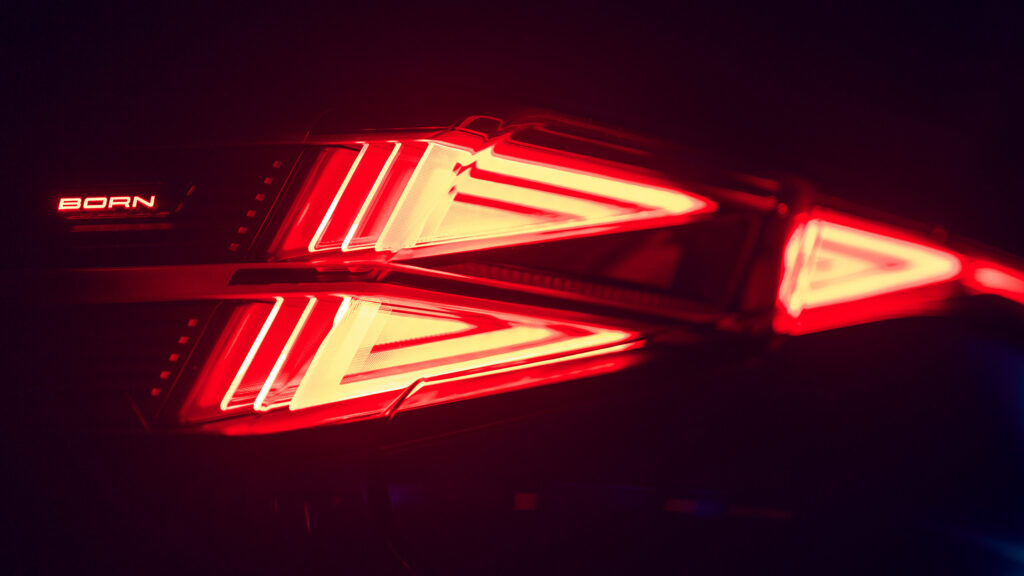
The biggest change is visual, and it seems like it’ll be hard to miss. The updated Born adopts Cupra’s latest design DNA, complete with triangular Matrix LED headlights and a matching triangular lighting graphic at the rear. There’s also an illuminated rear badge because lit logos are the car design world’s new LED light bar.

Related: VW Found A Way To Slip A Chinese Cupra EV Past EU Tariffs

We’ve spied disguised prototypes of the facelift Born testing a couple of times, and those images suggest redesigned bumpers and a taller lower grille augmented by vertical outer vents that make the EV look tougher and wider.

Tech Upgrade

The Born’s cabin already makes the ID.3s look cheap and dull (though VW did improve the materials a couple of years ago), and Cupra says we should expect even better quality and more technology in the refreshed car. But it’s not like the brand has a ton to do in this area, having already upgraded the Born to VW’s much-improved 12.9-inch touchscreen in 2024.

\\\\\

Few Below-Surface Changes

Under the skin, things are more mysterious, and we’re guessing that’s because it’s all carried across from the current hatch. Cupra hasn’t confirmed any technical changes, and the current Born is already competitive for electric range and performance in its class. So this update could be more about feel and flair than extra kilowatts. Still, a little surprise boost wouldn’t hurt.

As of today, Cupra skips the low-tune motor options offered in entry-level VW ID.3s and jumps straight to a 228 hp (231 PS / 170 kW) single-motor setup with a choice of 59 or 79 kWh batteries, giving up to 354 miles (570 km ) between fills. Hot hatch fans can upgrade to Cupra’s version of the ID.3 GTX, the Born VZ, which comes with a 322 hp (326 PS / 240 kW) motor, again driving the rear wheels only.

\\\\\\\\\\\

❌