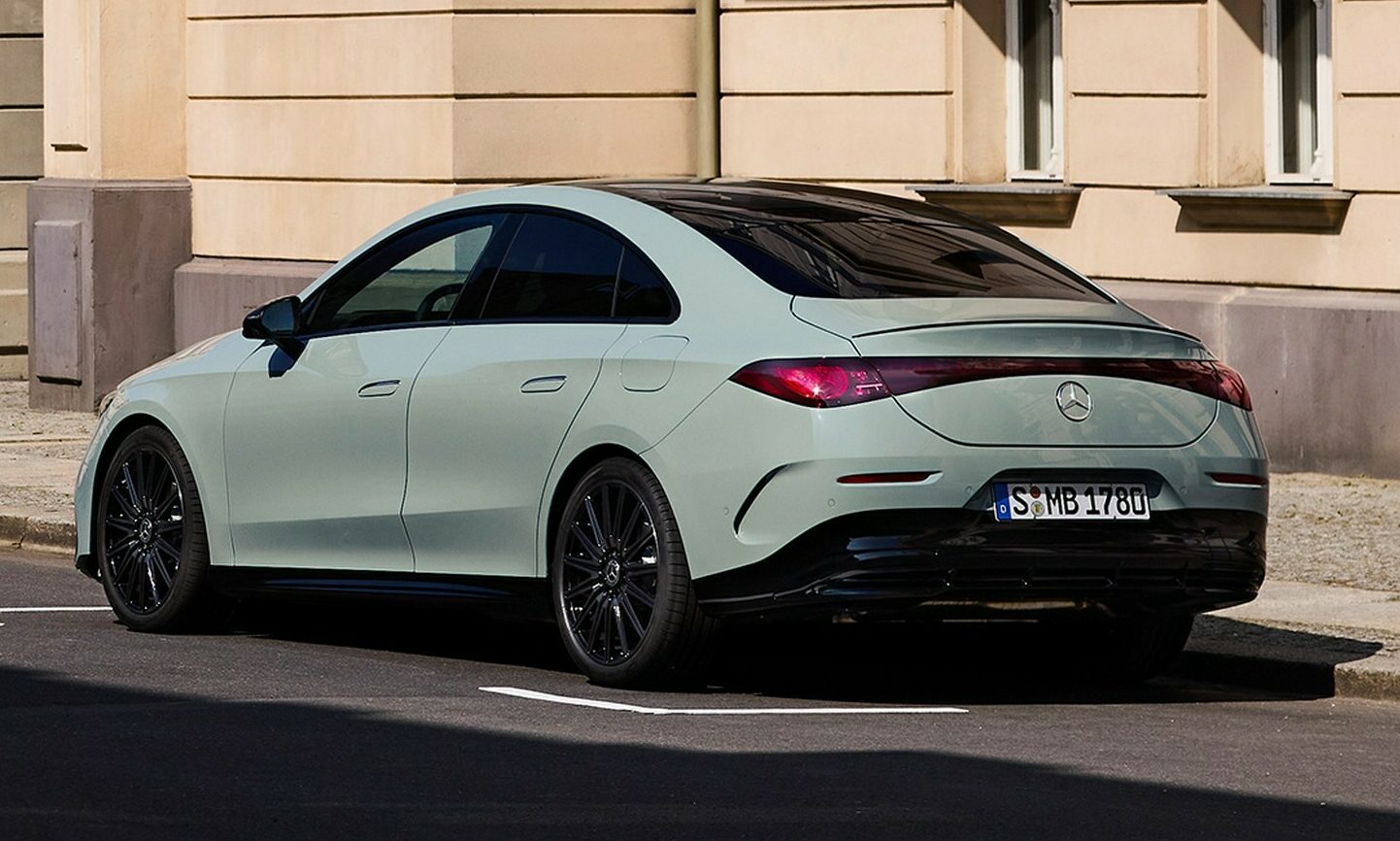
The flagship Z9 will churn out an extraordinary 1,328 hp from three motors.
Denza is also readying a single-motor Z9 sedan with 496 hp at the rear wheels.
A slew of design changes have been made to the sleek Chinese sedan.
Just 18 months after BYD’s Denza brand unveiled its all-electric Z9 sedan as a counterpart to the Z9 GT Shooting Brake, the first images and details of a revised version have surfaced. It has a thoroughly updated design and, fittingly, is now even more powerful.
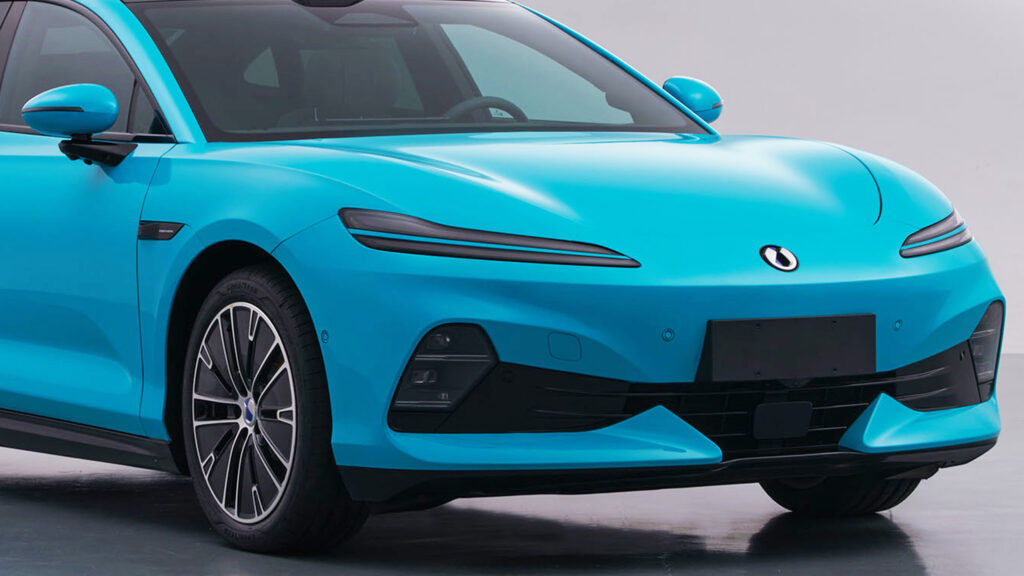
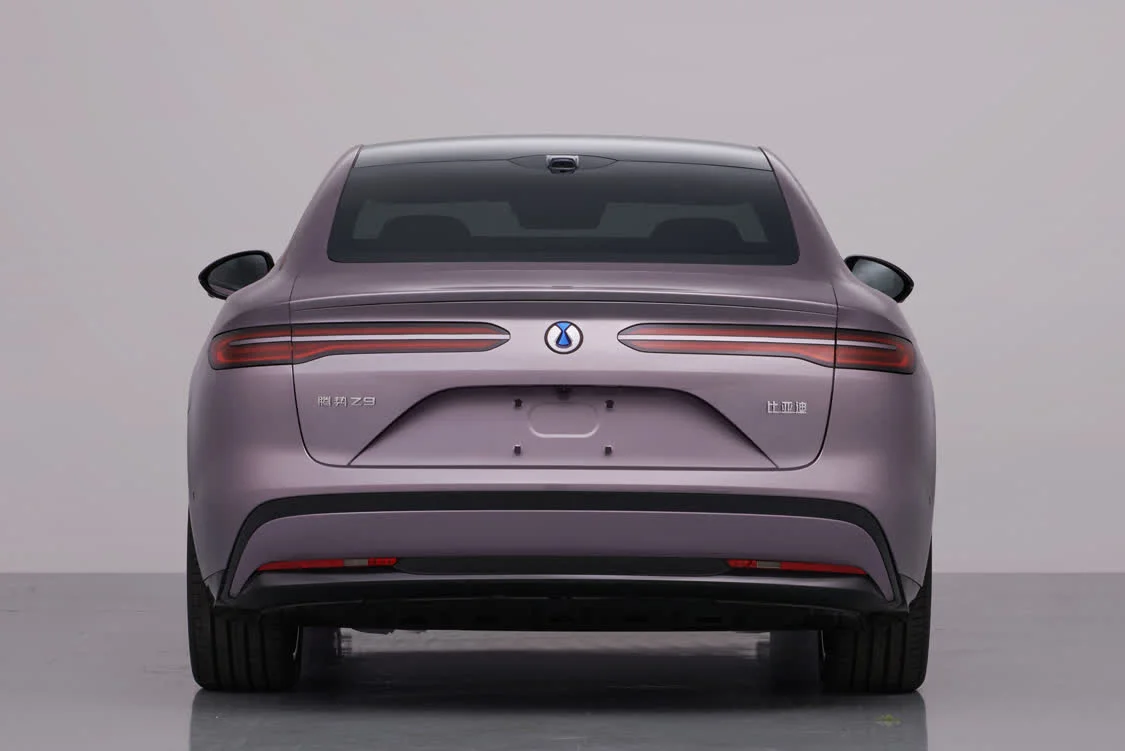
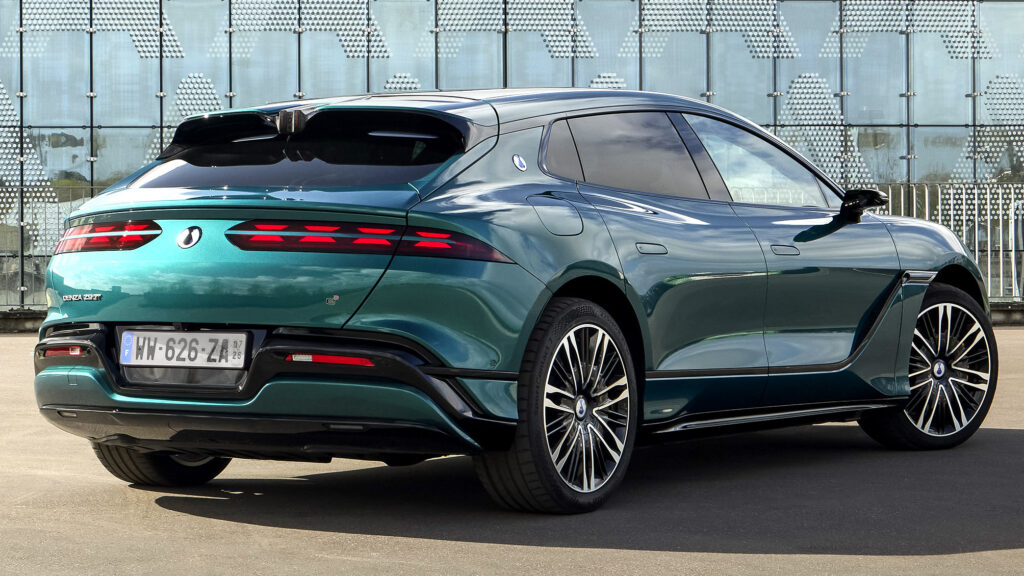
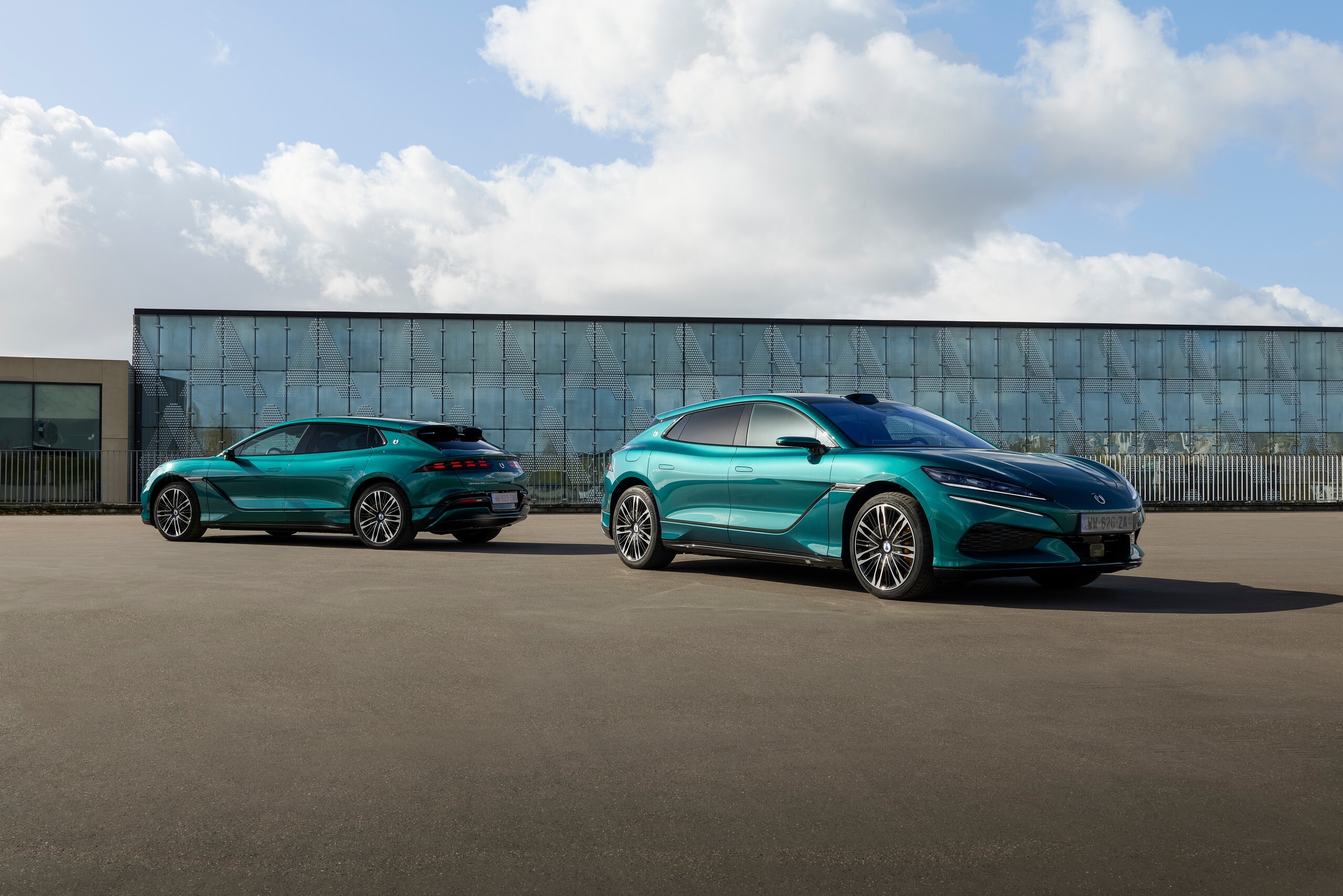
These images from China’s Ministry of Industry and Information Technology (MIIT) show the updated Z9 sports all-new bodywork. Visible at the front are revised split LED daytime running lights, while the headlights have been positioned alongside the black lower grille section.
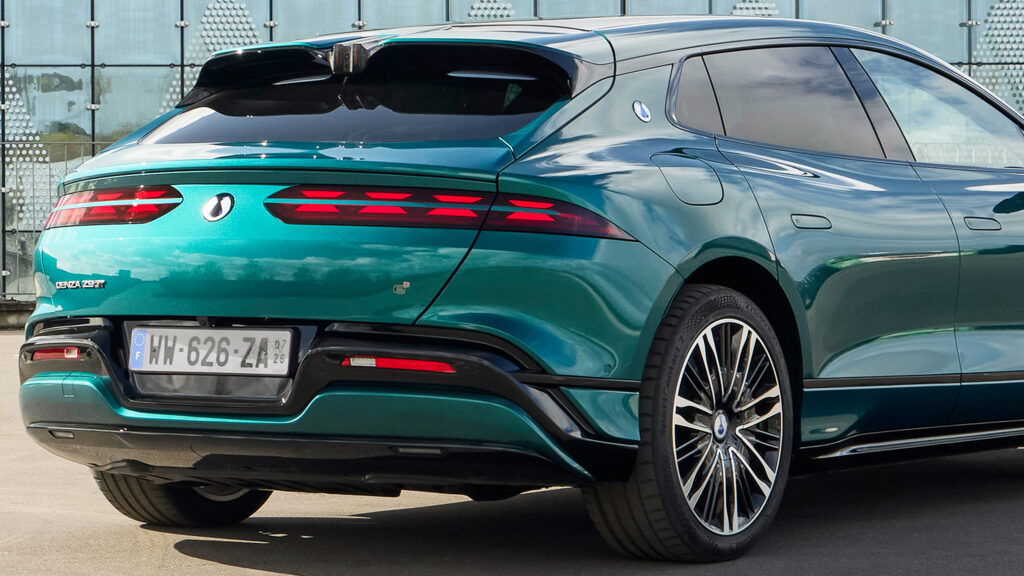
The sides remain sleek, although there are now new optional wing mirrors similar to those used by Volvo and Polestar models. The door handles have also been redesigned, while new slim LED taillights are found at the rear. The car is 5,090 mm (200.3 inches) long, 1,980 mm (77.9 inches) wide, stands just 1,490 mm (58.6 inches) tall, and has a generous 3,025 mm (119-inch) wheelbase.
Power For All
Two distinct, all-electric versions are mentioned in the MIIT filings. The first is a single-motor version with a rear-mounted electric motor delivering 496 hp. There’s no word on how large the car’s battery pack will be, but the weight of this model will vary between 2,397 kg (5,284 lbs) and 2,438 kg (5,374 lbs), depending on the specification. The top speed is listed at 155 mph (250 km/h).
As we’ve learned from Denza, simply having almost 500 hp isn’t enough. Sitting at the top of the Z9 sedan family will be a tri-motor version with a pair of 416 hp motors and a single 362 hp motor, delivering 1,328 hp. That gives it a power advantage over the existing Z9 GT Shooting Brake that tops out at 1,274 hp. The top speed of this model will be 168 mph (270 km/h), and it’ll be a little heavier, weighing in at 2,588 kg (5,705 lbs).
Details of this new model emerged shortly after Denza announced it was taking the current Z9 GT Shooting Brake global and will start selling it in Europe and Australia. Given that an updated sedan is in the works, it seems likely a new version of the Shooting Brake is also on the cards, mimicking some of the design changes made to the sedan.
Hyundai has unveiled two Ioniq concepts, badged the Venus and Earth.
The Venus is a high-riding sedan that looks nothing like the Ioniq 5.
Both concept cars feature radical interiors to inspire production models.
The Ioniq brand has served as Hyundai’s premium series of EVs in Western markets for several years. Now, Hyundai is launching Ioniq in China, but it’s not doing so with any existing models. Instead, it has presented two concepts ahead of the Auto China show in Beijing.
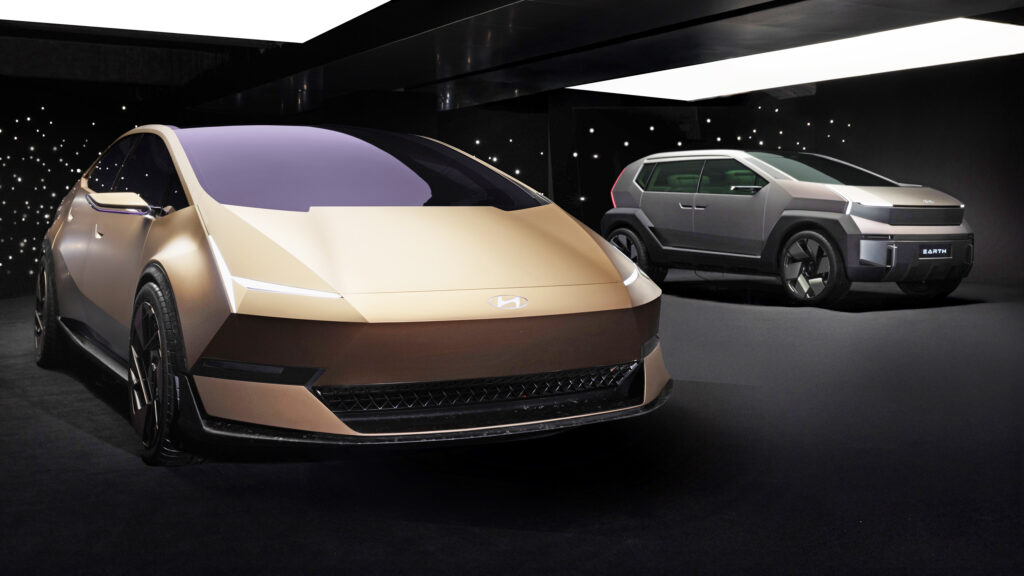
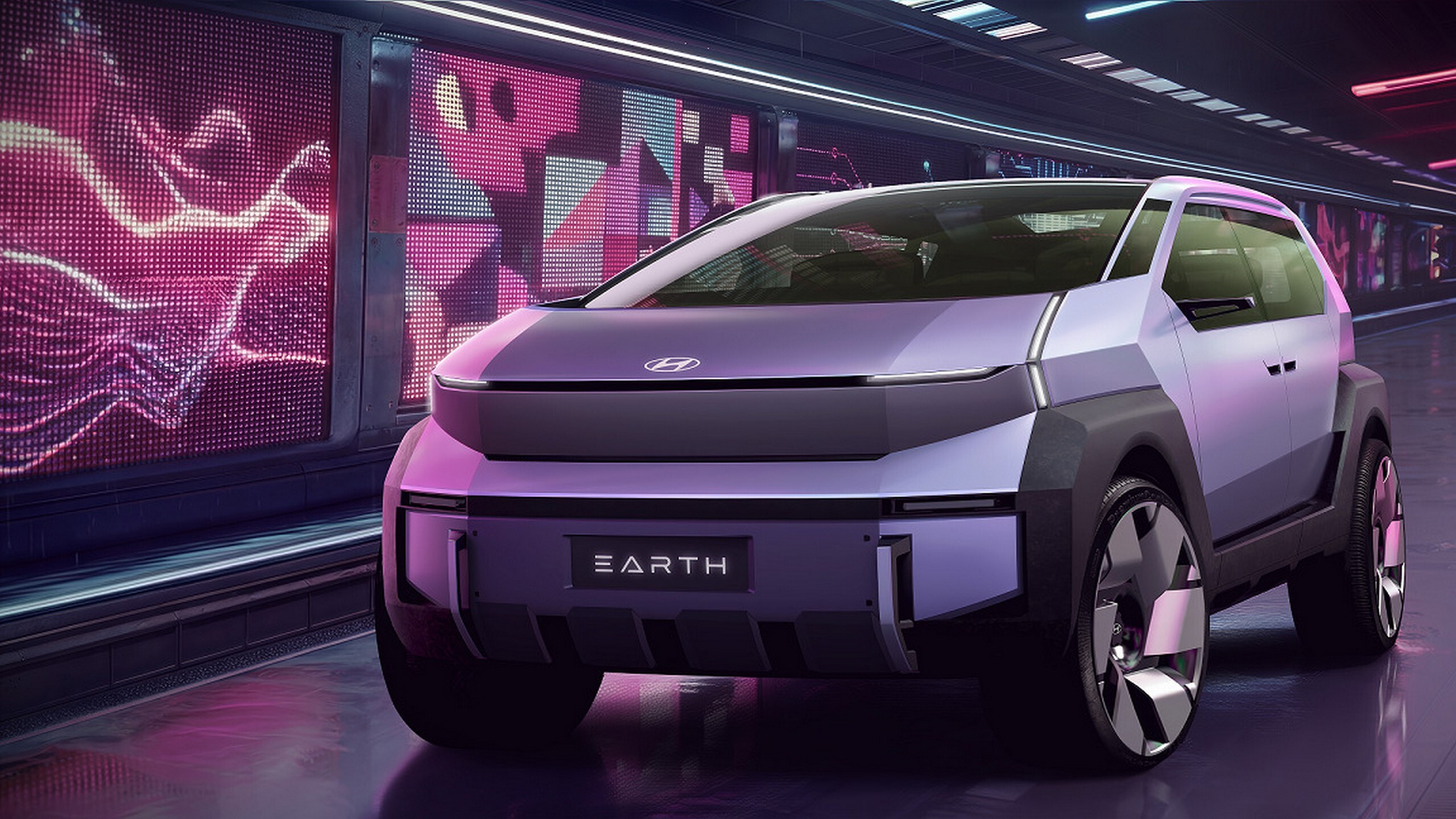
All future Ioniq models sold by Hyundai in China will be named after planets. With this in mind, its first two concepts are dubbed the Venus and the Earth, the first of which is a sleek sedan while the latter is an SUV. Hyundai has declared that its Ioniq series will “evolve beyond a product lineup into a broader mobility ecosystem tailored to local customers” as it develops.
Hyundai says the Venus and Earth serve as design ‘barometers’ for future production models. The Venus has been presented in a shade of Radiant Gold and looks unlike any other Ioniq model we’ve seen. Like an Ioniq 5, it sits quite high and has an aggressive front end with slim LEDs and a gaping grille.
The cabin is also quite intriguing, featuring a slew of gold accents and a panoramic screen for the infotainment system and the front passenger, similar to the current Hyundai Elexio built in China. Just how much of this concept’s interior will influence future production models remains to be seen, but it certainly makes a statement.
No Ordinary Hyundai
Hyundai’s Earth SUV is even more dramatic. Sharing some similarities to recent Kia concepts, it has a bold front fascia and a rugged design, painted in a shade Hyundai calls Aurora Shield. A peek inside the cabin reveals suicide rear doors, a tablet-like central touchscreen, and special seats with air-filled modules.
“Starting with the two concept cars unveiled today, we will continue to present products that reflect deep insight into Chinese customers and our genuine commitment to this market,” Beijing Hyundai Motor Company president Li Fenggang said. “Built on IONIQ’s uncompromising principles of world-class safety and quality, we will soon introduce production models that seamlessly combine the smart driving and smart cabin experiences that Chinese consumers demand.”
Hyundai has yet to announce when the first of its China-only Ioniq models will be launched, but they shouldn’t be too far off.
Mercedes continues to struggle as global sales fell 6% in Q1.
The company was hammered by a 27% decline in China.
Automaker boasts about EVs, but wants you to forget some.
We’re nearly a third of the way through April, but first quarter sales data continues to trickle out. Some of the latest numbers are from Mercedes and they’re painting a mixed picture.
Starting in the United States, Q1 passenger car retail sales fell approximately 3% to around 70,000 units. Unfortunately, it’s hard to get an accurate picture of things as the automaker no longer breaks sales down by model. Instead, the company now lumps vehicles together and cherry picks numbers that it likes.
With that massive and annoying caveat aside, Mercedes said they had a “strong performance despite significant market headwinds.” Maybach sales jumped 22%, while the G-Class saw a 16% increase. The SL received a 47% boost, while the GLC and GLE were up 17% and 19%, respectively.
Mercedes also claimed that “customer interest and excitement surrounding the CLA continues to build across the U.S. market.” However, the company declined to provide numbers, so they were presumably pretty bad. The automaker stopped short of confirming this, but implied the situation will improve as “wider availability” is expected in the second quarter as they originally prioritized European sales.
Mercedes US Retail Sales Q1
Q1 2026
Diff.
Mercedes USA Passenger Cars
70,000
-3%
Mercedes Vans USA
8,500
-6%
Total Sales
78,500
-3%
SWIPE
The firm didn’t even bother mentioning the EQE, EQE SUV, EQS, or EQS SUV. This implies sales were as hot as an Anchorage dumpster fire in January, but surely a yoke will turn things around.
On the van side of the equation, sales fell 6% to roughly 8,500 units. The automaker could barely feign interest, but said they remain “focused on delivering versatile, premium van solutions that support evolving business needs.”
That’s meaningless nonsense, but at least we can look forward to the new VLE and VLS. The latter is getting an ultra-luxurious Maybach variant that promises private jet levels of comfort.
Sales Down Globally As Well
Zooming out, global passenger car sales fell 6% in the first quarter to around 419,400 units. This came despite a 9% increase in EVs, which found around 44,300 takers.
Speaking of which, the automaker said the “new electric GLC has generated more orders in the first three months than any other electric vehicle in our history.” They added order books for the CLA, GLB, and GLC EVs are “filled well into the second half of the year.”
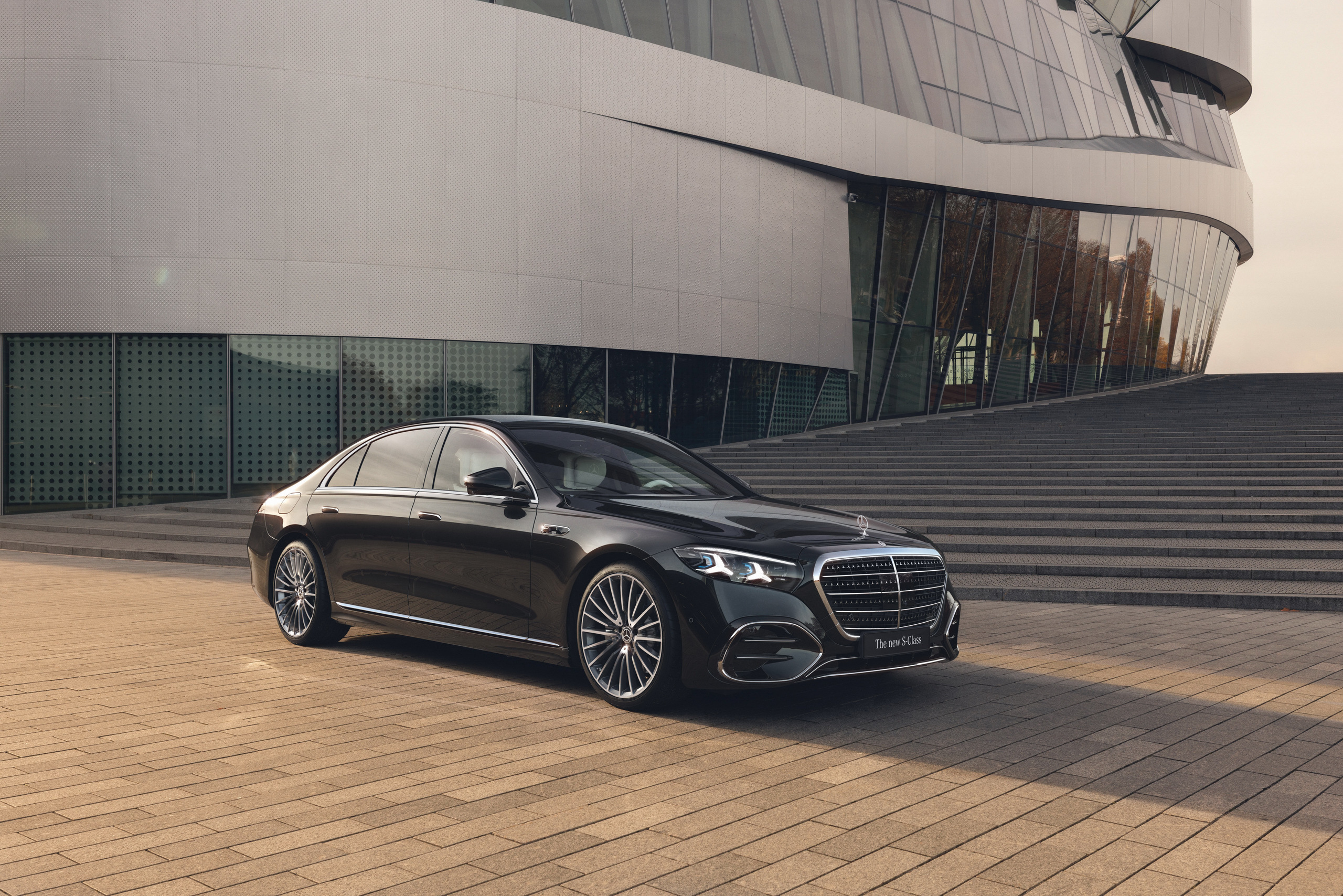
EVs weren’t the only bright spot as European orders for the facelifted S-Class were “above expectations.” The automaker is also expecting to receive a boost from the updated GLE and GLS.
Confusingly, the global release said American car sales climbed 20% to 81,100 units. The company noted these are rounded “preliminary figures,” but that’s significantly more than the 70,000 mentioned earlier. However, this appears to be a case of retail sales vs overall numbers.
This, combined with a lack of model level details, results in a confusing maze of piecemeal information that – at times – seems contradictory. Regardless, the brand is tanking hard in China as sales were down 27% to around 111,600 units.
When it comes to vans, global sales fell 3% to approximately 80,300 units. Sales of EVs spiked 29%, but Mercedes only sold 6,100.
Rolls-Royce’s new electric crossover will have a split-opening hood.
It features a central spine as well as two outer panels that lift up.
SUV will likely mix BMW Neue Klasse tech with Spectre developments.
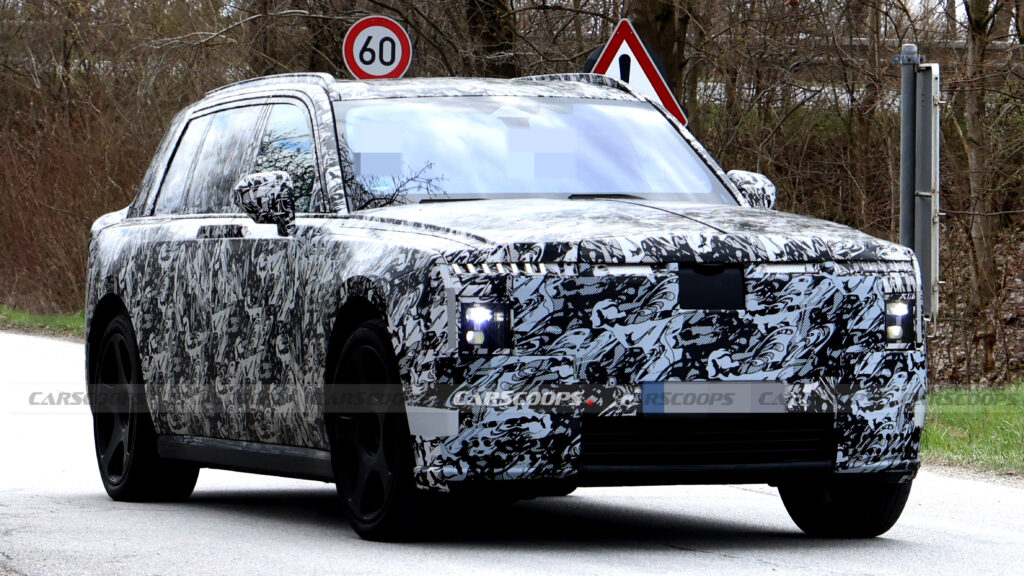
Rolls-Royce is working on an electric crossover to battle the Bentley Barnato and spy photographers recently snapped a prototype undergoing testing in Munich. While that’s notable by itself, the model appears to have an old school split hood.
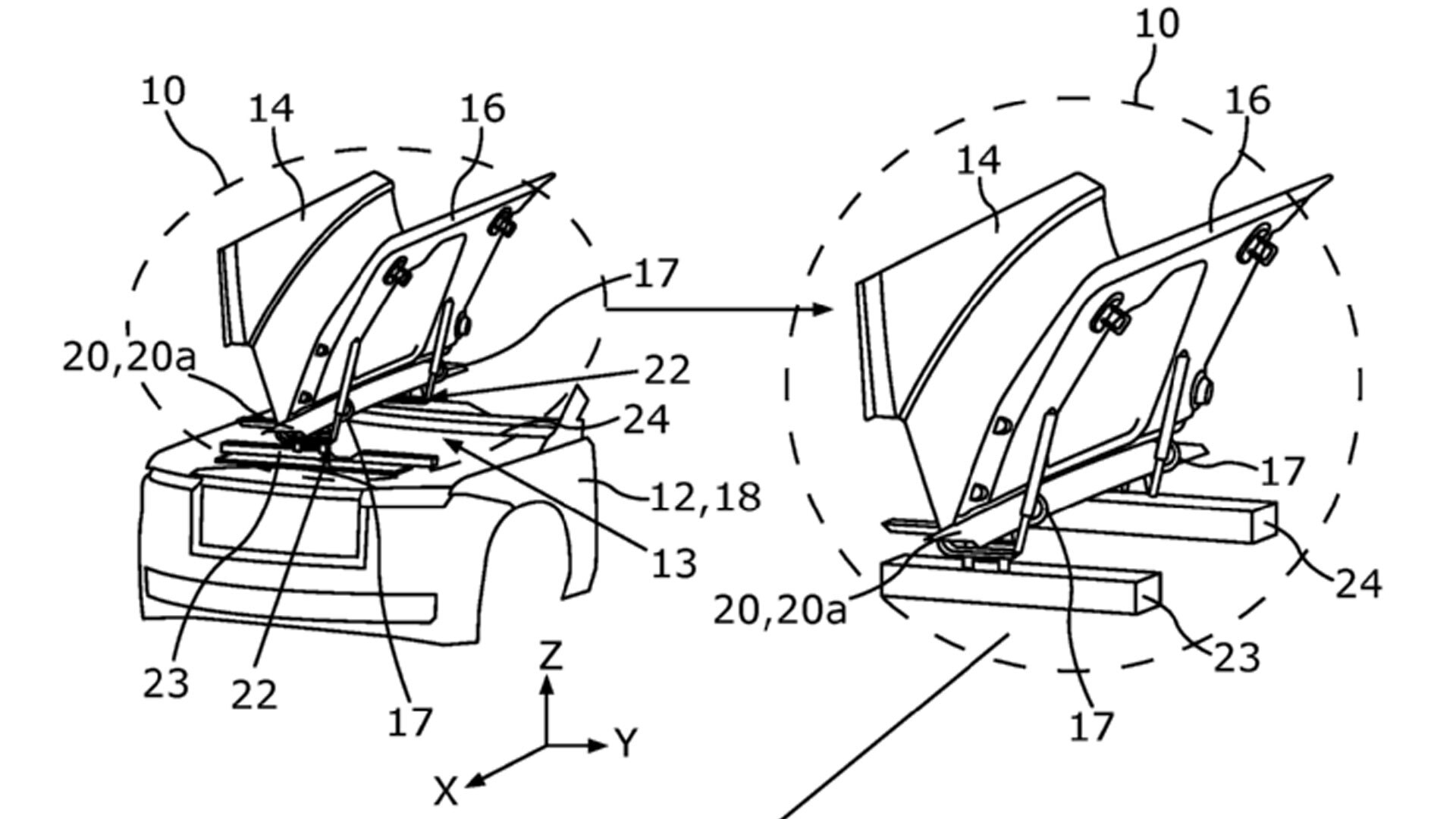
Thanks to a beefy camera lens, we can see the ‘hood’ will have a central spine with a retractable spirit of ecstasy hood ornament at the front. On either side are two movable panels, which apparently lift up similar to a trunk lid.
Rolls-Royce filed a patent for the idea in 2024 and it gives you a pretty good idea of what to expect. We can also see what appears to be a hinge at the front of the hood, although it looks like a drill attachment with a Phillips bit when you zoom in closer.
SHProshots
Forgotten tools aside, the crossover has a fully enclosed grille with a top-mounted camera. It’s flanked by split lighting units including lower headlights with “RR” badging. The model also sports a wide lower intake with horizontal bars.
The rest of the design is far more conventional and closely echoes the current Cullinan. As a result, there’s a strong shoulder line and slab-sided bodywork. They’re joined by a familiar greenhouse, a relatively flat roof, and a thick rear pillar.
The déjà vu design continues out back, but the EV has a unique bumper that lacks exhaust cut outs. The bumper also houses the license plate recess, which is a change as it’s mounted to the liftgate on the Cullinan.
These similarities originally had us believing the model was the second-generation Cullinan. However, there’s been some speculation that the two crossovers could co-exist alongside each other – at least initially.
SHProshots
While there are more questions than answers at this point, the model will undoubtedly follow in the footsteps of the Spectre. The coupe sports a 102 kWh battery pack as well as a dual-motor all-wheel drive system developing 577 hp (430kW / 584 PS) and 664 lb-ft (900Nm) of torque.
This enables the model to accelerate from 0-60 mph (0-96 km/h) in 4.4 seconds and have a WLTP range of 329 miles (530 km). There could also be a more powerful Black Badge variant with 650 hp (485 kW / 659 PS) and 793 lb-ft (1,075 Nm) of torque.
That being said, the crossover could benefit from newer technologies like the facelifted 7-Series. BMW recently announced the flagship sedan is getting their Gen6 eDrive technology and this will include a cylindrical cell lithium-ion battery with a 20% higher energy density. We can also expect the model to incorporate some other Neue Klasse advancements.
The Mercedes C-Class with EQ Technology is losing its disguise.
New photos give us our best look at the EV’s streamlined bodywork.
Should offer a dual-motor all-wheel drive system developing 483 hp.
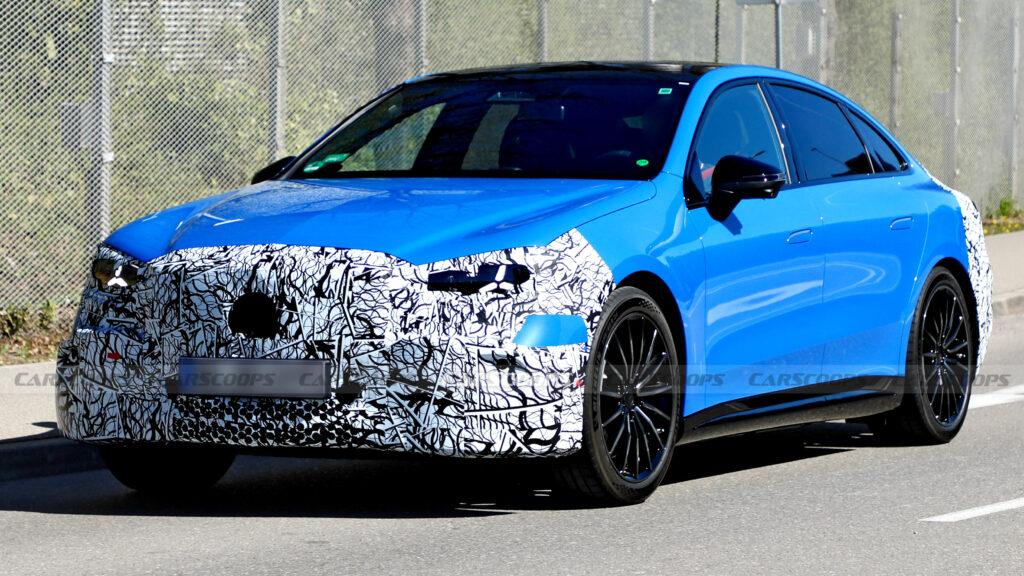
Spy photographers have snapped the Mercedes C-Class EQ on multiple occasions and the automaker officially previewed the model last fall. It now appears to be getting closer to its debut as lightly camouflaged prototypes have been spied undergoing testing in Germany.
While the front end is still heavily disguised, a previous teaser image has revealed the model will follow in the footsteps of the GLC EQ and adopt an illuminated, fully enclosed grille. It will also sport a light up surround as well as nearby star-infused headlights.
More notably, we can see our first glimpse at the production hood. It features soft curves and a protruding middle section.
Moving further back, there’s streamlined bodywork and a rakish windscreen that flows into a sloping roof. The overall design recalls the EQE and EQS, but the C-Class EQ has a sportier and less exaggerated greenhouse. We can also see the model will be offered with both traditional and flush-mounted door handles as well as an assortment of different wheels.
Baldauf
Two of the prototypes appear to be equipped with an AMG or Night Package. They have an assortment of changes including sportier wheels, black window trim, black side skirts, and black mirror caps.
Out back, there are muscular rear haunches and a trunk with an integrated spoiler. They’re joined by a rounded bumper as well as taillights with circular accents featuring star graphics.
Spy photographers didn’t get a good look inside, but previous images have suggested the cabin will echo its crossover counterpart. This suggests the sedan could be offered with three different screen setups, including a relatively basic version with a 10.25-inch digital instrument cluster and a 14-inch infotainment system.
The middle option would be an MBUX Superscreen, which throws a 14-inch front passenger display into the mix. However, the real show stopper should be a 39.1-inch MBUX Hyperscreen that spans the width of the dashboard.
Powertrains And Range
Baldauf
Powertrain details are more mysterious, but the GLC EQ gives us a pretty good idea about what to expect. It has a 94 kWh battery pack, which feeds a dual-motor all-wheel drive system developing 483 hp (360 kW / 490 PS) and 590 lb-ft (800 Nm) of torque. This enables the crossover to accelerate from 0-62 mph (0-100 km/h) in 4.3 seconds, hit a top speed of 130 mph (210 km/h), and have a WLTP range of 418 miles (673 km).
However, we can expect additional variants including models with rear-wheel drive. The company has previously said one version will offer 497 miles (800 km) of range, which would fall well short of the BMW i3’s 559 miles (900 km).
There’s no word on when the C-Class EQ will be unveiled, but the photos suggest a debut could be right around the corner and the automaker has previously said 16 new models are coming this year – including six EVs.
Kia confirms midsize pickup with hybrid and range extender powertrain options.
Truck targets US buyers with towing skills, off road ability and a roomy cabin.
Wider Kia strategy includes more hybrids, EV growth and big US sales targets.
Kia’s nearly ready to saddle up and ride into America’s most fiercely loyal segment, and it’ll be doing it with the help of two totally different electrified powertrains.
We’ve known for a while that Kia, along with its Hyundai sister brand, are working on a pair of midsize pickups for the US. They’ll be proper body-on-frame trucks designed to deprive Toyota and Ford salesmen of truck hunters that might otherwise have snapped up a Tacoma or Ranger.
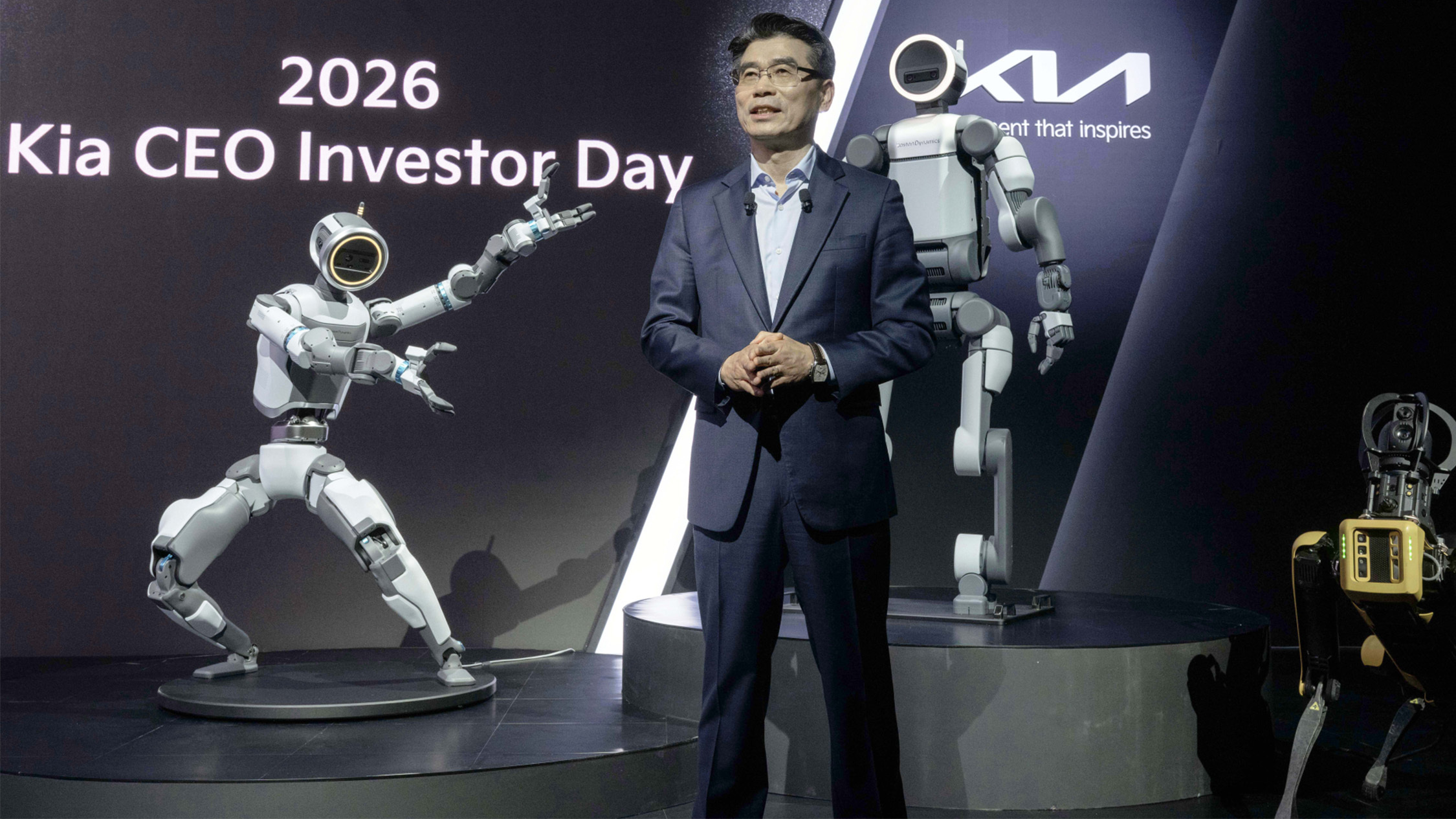
What wasn’t confirmed until today at Kia’s investor briefing, is what will be under the hood of those trucks. A hybrid option seemed likely, but Kia CEO Ho Sung Song says the pickup will offer buyers the choice of both hybrid and range-extender electric powertrains. That means it won’t just be chasing the usual suspects like the Tacoma and Ranger, but could potentially steal sales from more bigger, high-tech machinery like the Rivian R1T and Tesla Cybertruck.
Details are still thin, but Kia says the truck will offer proper capability where it matters. Expect solid towing, genuine off road chops and a roomy double-cab layout designed for real world use.
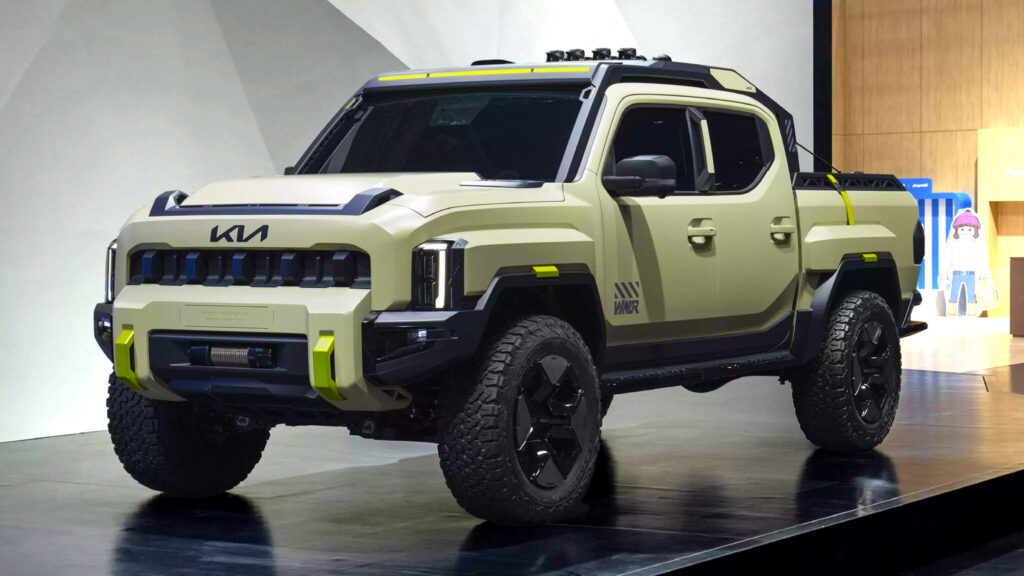
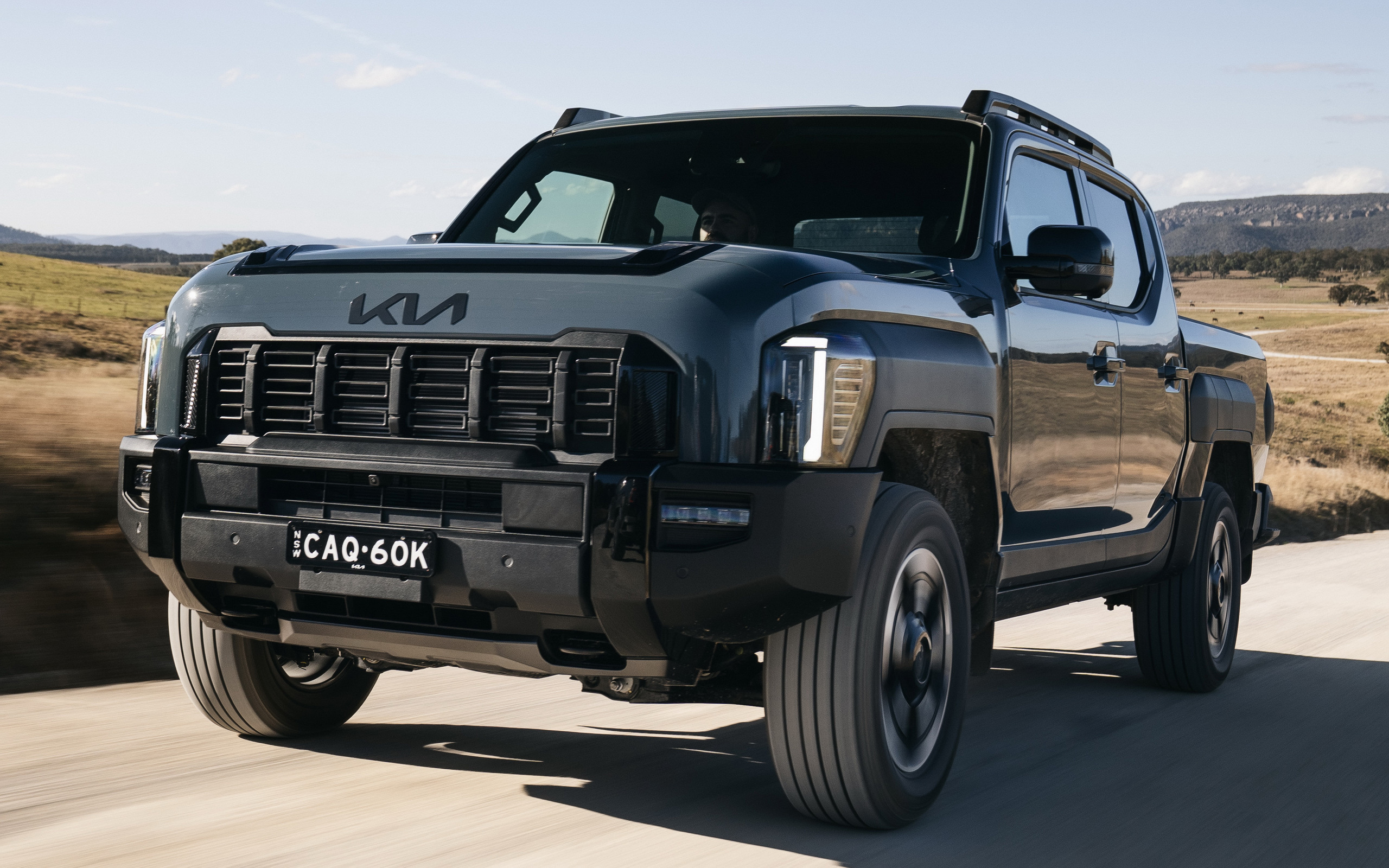
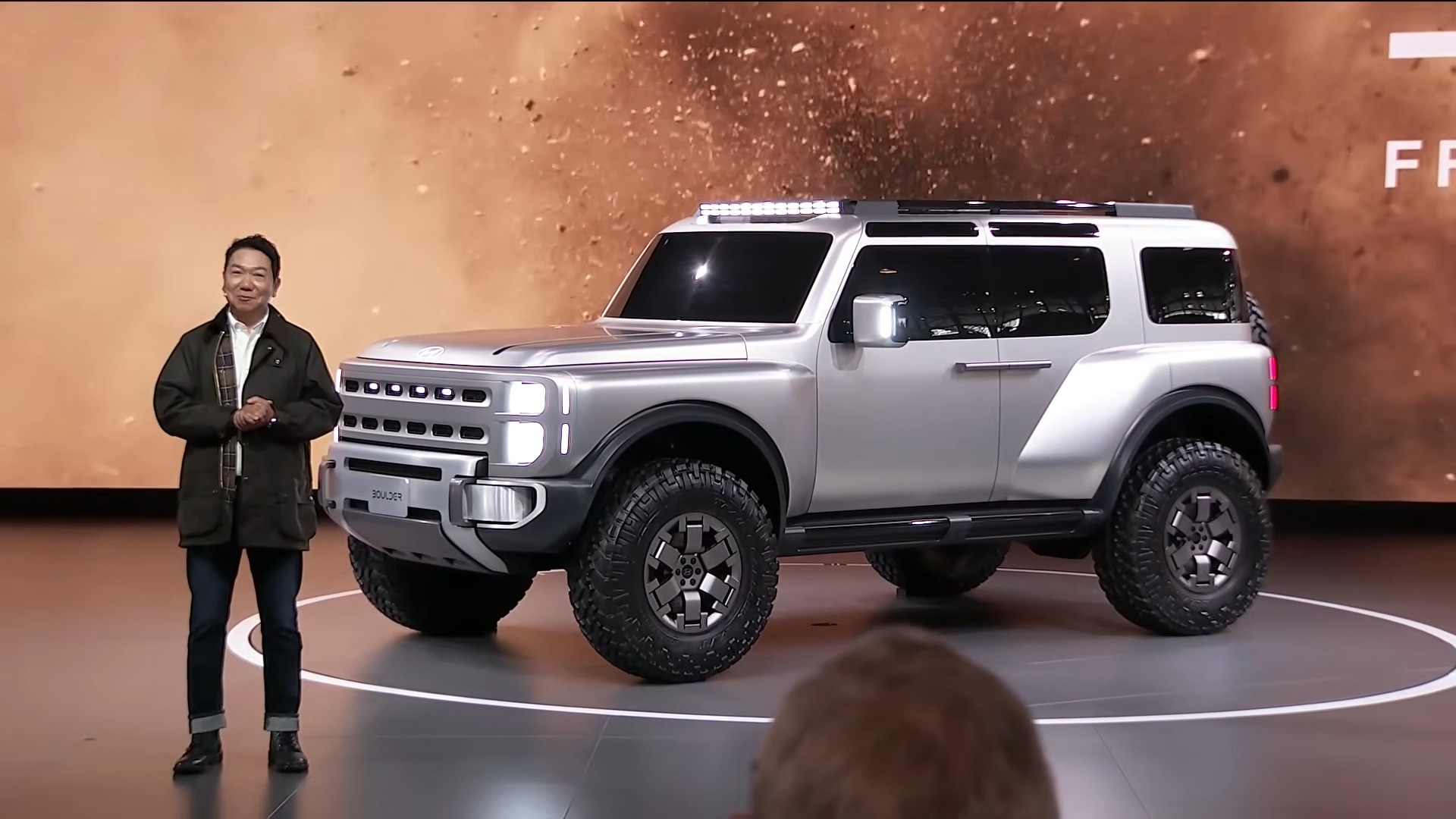
Underneath, it will share its rugged bones with a future Hyundai truck previewed by the Boulder SUV concept unveiled at the New York Auto Show earlier this month. Given the Boulder’s butch aesthetic, we can expect both trucks to have plenty of attitude, but hopefully it’ll be less ugly than the Kia Tasman truck (shown above and in the lead image) that’s sold in Australia and other markets.
This new pickup won’t just be a niche addition either. Kia reckons it can shift around 90,000 units annually in North America, Auto News reports, and carve out a meaningful slice of the segment. That’s ambitious for a brand that’s never sold a truck in the US before, but then Kia isn’t exactly lacking in confidence these days.
Hybrids For US, EVs For Europe
The truck also fits neatly into Kia’s broader US push. The company is targeting more than one million annual sales stateside by 2030, with a 6.2 percent market share. To get there, it’s doubling down on hybrids, expanding from four to eight nameplates and adding electrified options to core models.
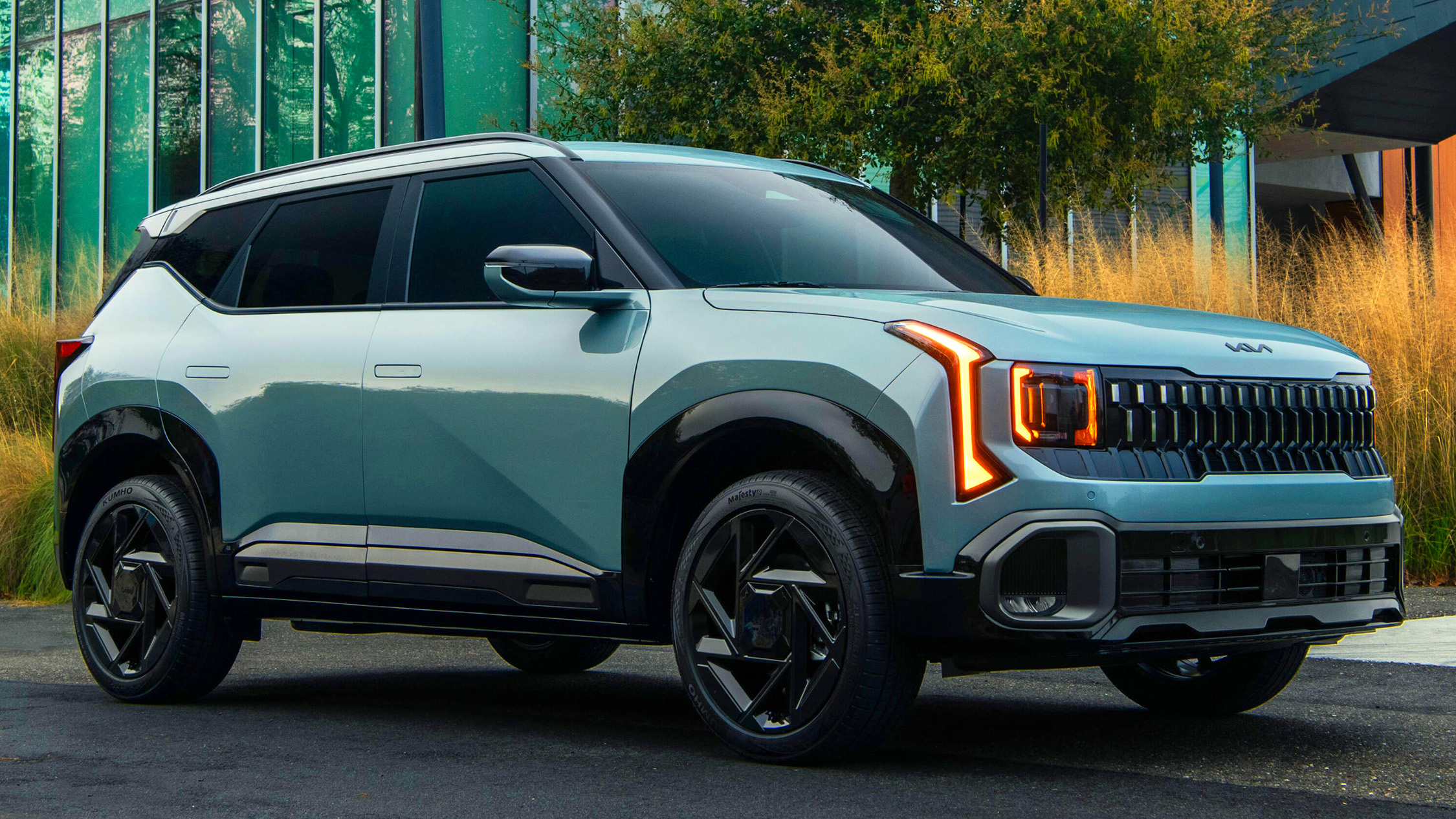
That includes big hitters like the Telluride, which is set to gain hybrid and range extender variants, plus the Sportage, which Kia wants to push past 200,000 annual sales. Even the smaller Seltos is getting in on the action with a new look (seen above) and a hybrid version aimed at cracking six-figure sales.
And while America gets a tough new truck, Europe is getting something much smaller but just as important. A new EV1 hatch is on the way to take on cars like the Renault 5, proving Kia’s strategy really does cover everything from city streets to dusty trails.
The NX8 arrives in two flavors, pure electric and range-extender.
Longest-range EREV version covers over 900 miles on a full tank.
Pricing ranges between ¥149,900-199,900 ($21,900-29,200).
Update: The new NX8 is now on sale in China. Pricing starts lower than expected, and Nissan is offering both a pure electric and a range-extender version. This story has been updated with full pricing, specs, and new photos.
Nissan has introduced a new midsize SUV developed in partnership with Dongfeng in China, marking the latest addition to its growing, budget-conscious N-series lineup. Named the NX8, the model joins the existing N6 and N7 sedans and is offered with a selection of electrified powertrains.
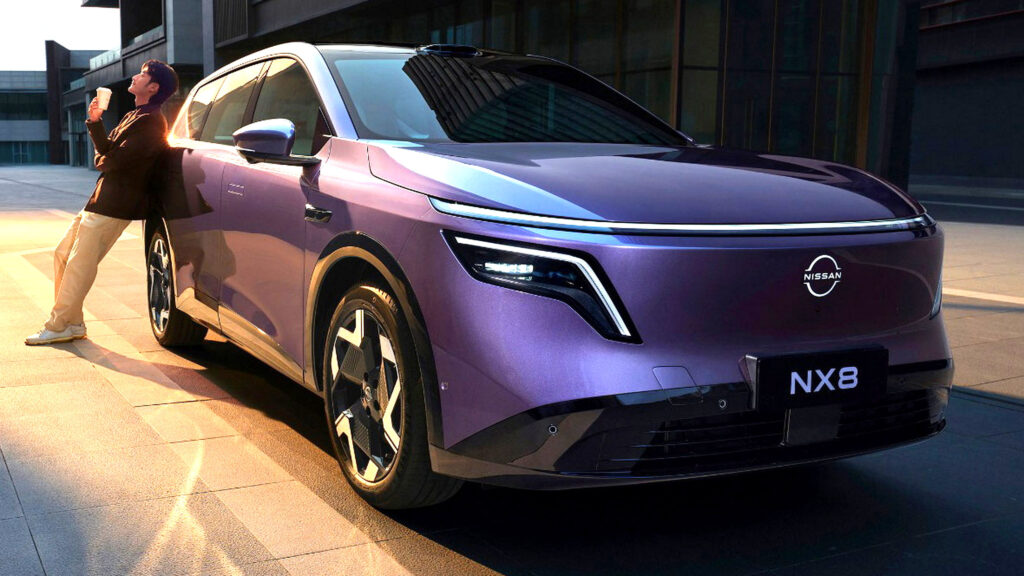
The exterior design follows the same styling language as its sedan counterparts, with clean surfacing and a grille-free front fascia. A full-width daytime running light runs across the split headlights and wraps around the front fenders, while OLED tail lights extend across the rear.
The overall shape leans toward conventional SUV proportions, marked by flush-fitting door handles and pronounced shoulders.
How Big Is It?
The midsize NX8 measures 4,870 mm (191.7 inches) in length, 1,920 mm (75.6 inches) in width, and 1,680 mm (66.1 inches) in height, with a wheelbase of 2,917 mm (114.8 inches).
That makes it 222 mm (8.7 inches) longer than the Rogue (X-Trail) and 152 mm (6 inches) shorter than the Pathfinder. Interestingly, its wheelbase is 17 mm (0.7 inches) longer than the Pathfinder’s, which should translate to slightly better interior space.
A High-Tech Interior
Inside, we find dual 15.6-inch infotainment displays on the dashboard, which are separate from the 10.25-inch digital instrument cluster and run on the Qualcomm Snapdragon 8295P chipset. The flagship trim adds a 63-inch augmented reality head-up display and a 25-speaker audio system.
Additional highlights include AI Zero Gravity Seats 2.0 with massage, heating, and ventilation, along with contactless airflow control, an onboard refrigerator, and Motion Sickness Prevention Technology 3.0.
The five-seater cabin can transform into a comfortable couch/bed by fully reclining the front seatbacks. Furthermore, the boot has extra space under the floor, and is complemented by a frunk in the battery electric versions.
In terms of safety, the SUV is fitted with up to 29 sensors including a roof-mounted lidar unit. This the hardware for the Momenta-based Advanced Driver Assistance promising sophisticated autonomous capabilities.
Powertrain Options
The Nissan NX8 is offered with both range-extender (EREV) and fully electric (BEV) powertrains, each using lithium iron phosphate battery packs supplied by CATL.
The EREV pairs a turbocharged 1.5-liter engine acting as a generator with a single electric motor producing 335 hp (250 kW/ 340 PS). It delivers an EV-only range of 310 km (193 miles) and a combined range of 1,450 km (901 miles) under CLTC testing.
The BEV variant produces either 288 hp (215 kW / 292 PS) or 335 hp (250 kW / 340 PS). Range is rated at 580 km (360 miles) and 650 km (404 miles), respectively, under the CLTC cycle. These figures exceed the Leaf’s 303-mile EPA rating on paper, though CLTC estimates typically run 20 to 30 percent higher than EPA results, so real-world differences may be smaller than they appear. The larger 81 kWh battery supports ultra-fast charging at up to 463 kW, taking it from 10 to 80 percent in 12 minutes.
How Much Does It Cost?
Nissan has initially launched the NX8 in China but as with the N6 and N7 sedans, it is expected to be exported to additional markets. Whether that will include Western regions like Europe and Australia, however, remains to be seen.
In its home market, the SUV is currently priced between ¥149,900-199,900 ($21,900-$29,200), depending on the powertrain and trim level. That’s roughly in line with what you would pay for the older Kicks Play in the US ($21,520), which remains Nissan’s most affordable model there, and still less than the new Kicks ($22,430). It also comes in well below the new Leaf EV, which starts at $29,990 in America.
These figures reflect introductory pricing for the launch period, with standard pricing set at ¥159,900-209,900 ($23,400-30,700). Even so, the China-spec model remains considerably cheaper than the Nissan Rogue, which starts at $29,490 in the US market.
Kia readies subcompact EV1 hatch based on new EV2 SUV hardware.
Brand targets one million EV sales globally while boosting hybrid lineup.
New platform coming later with 40% bigger batteries, 9% more power.
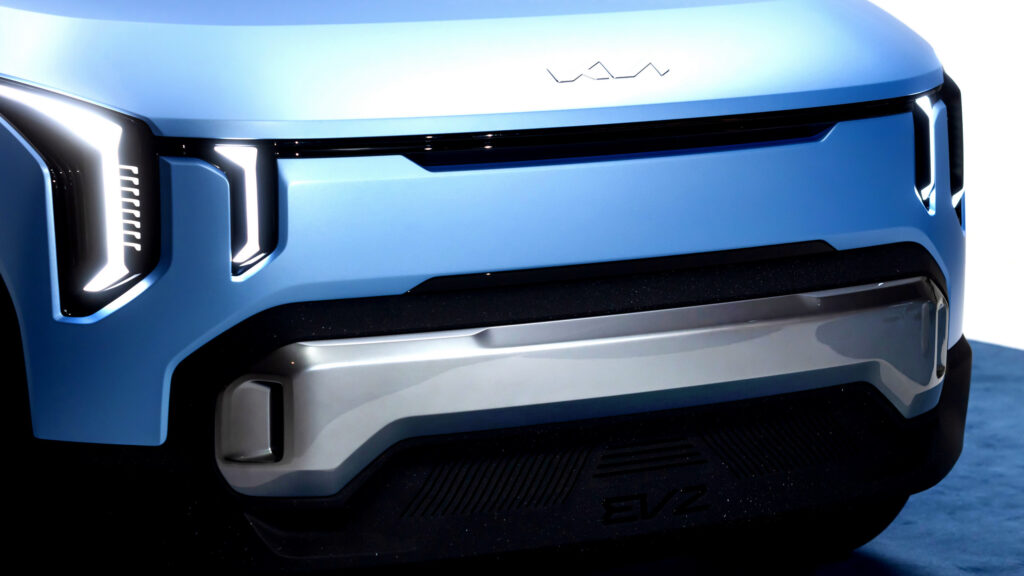
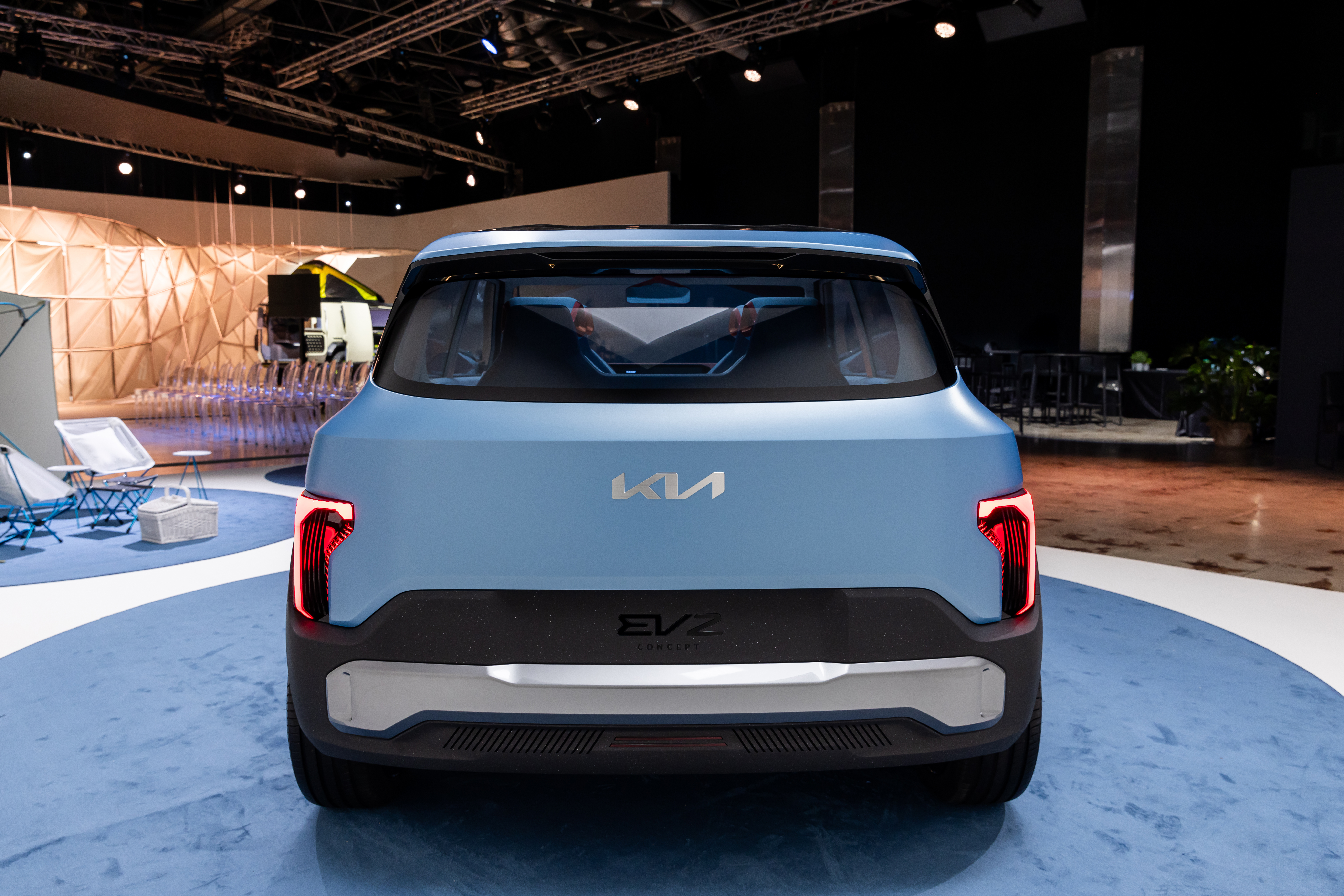
Kia just pulled the covers off its future plans, and while there’s plenty to digest, the real headline act for Europe is a tiny newcomer with big expectations. Enter the upcoming EV1, a compact electric hatch that’s shaping up to be Kia’s most affordable EV yet when it debuts next year.
Think of it as the lower, sleeker sibling to the EV2. It’s aimed squarely at Europe’s hotly contested supermini class, going up against the Renault 5, Peugeot e208 and Vauxhall Corsa Electric.
Under the skin, the EV1 is expected to share its hardware with the EV2, meaning a 400-volt E GMP platform and two battery options. Entry models should get a 42.2 kWh pack with roughly 200 miles (322 km) of range, while higher trims could use a 61 kWh battery pushing closer to 300 miles (483 km). Power outputs will likely mirror the EV2’s, so expect something in the region of 145 hp (147 PS / 108 kW) on base or mid-spec cars.
Kia also says this will be its first car in the segment to be a software-defined vehicle, one where everything from infotainment to vehicle systems is deeply integrated and updateable. Despite the clever tech, prices are likely to start at a little over £20,000 (€23,000), making it a genuine mass market EV.
New EV Platform In The Works
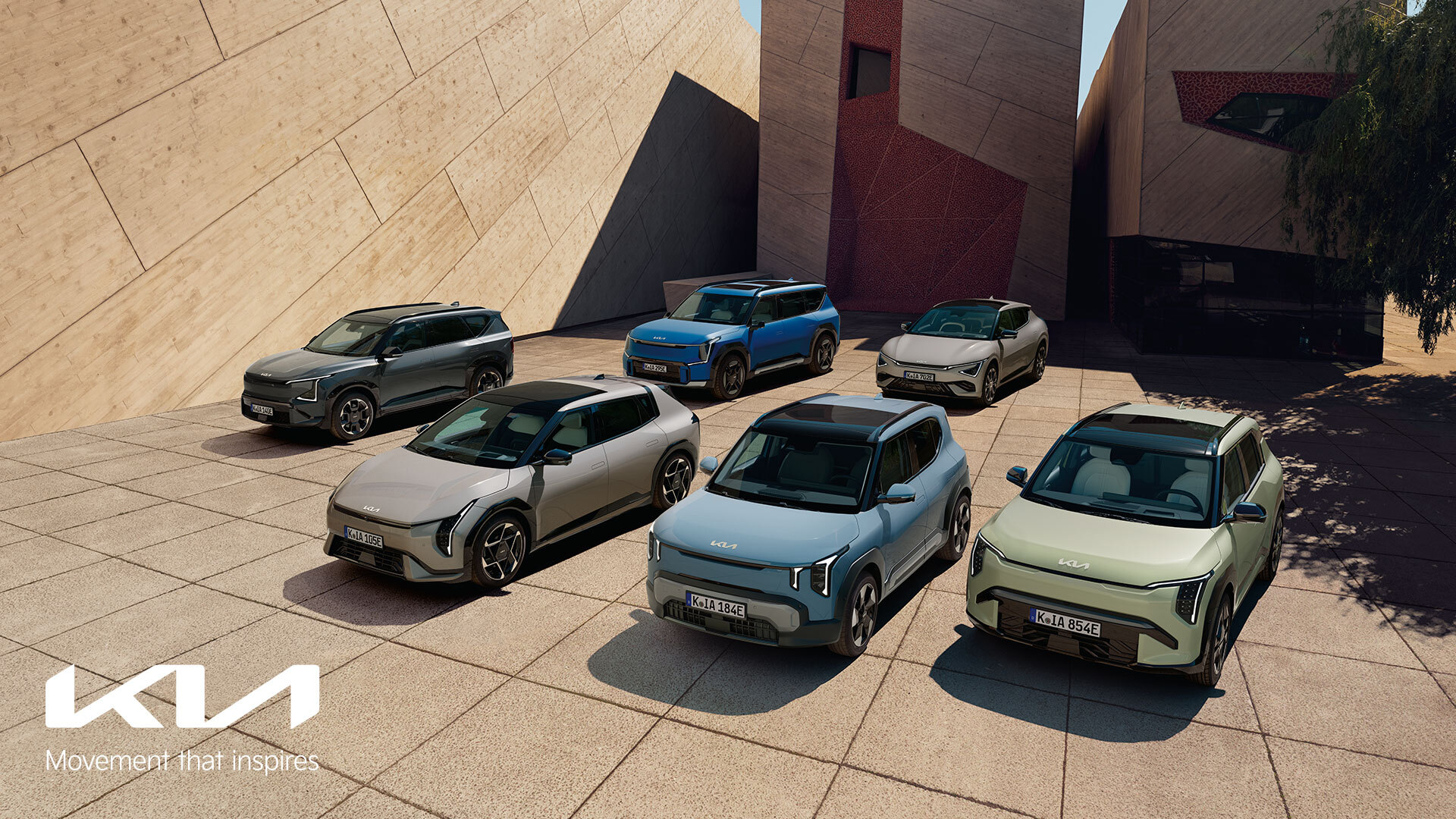
But the EV1 is just one piece of a much bigger puzzle. Kia wants 14 EVs globally by 2030 and annual electric sales of one million units. That’s part of a broader push to hit 4.13 million total sales and a 4.5 percent global market share.
Beyond the EV1, Kia will launch a new electric platform that it says will deliver up to 40 percent bigger batteries with 15 percent greater energy density powering motors that are 9 percent gruntier. An electric SUV to bridge the gap between the EV5 and EV9 is also on the way.
Big Hybrid Push
But Kia isn’t going all in on EVs just yet, especially not in the US, CEO Ho Sung Song admitting that the rate of global electric adoption had slowed. So hybrids are getting a major boost, with 13 HEV models planned and annual hybrid sales targeted at 1.1 million units. New hybrid versions of key models like the Telluride, Seltos and K4 are coming, as are hybrid and range-extender versions of the midsize body-on-frame truck Kia will debut before 2030.
Furthermore, the Korean brand is doubling down on commercial vehicles like the PV5, adding a bigger PV7 in 2027 and PV9 two years later. It’s also pushing robotics, with factory bots and delivery solutions in development. So yes, the EV1 might be small, but it’s leading a very big plan.
A new Opel EV may be built at a Spain plant alongside the Leapmotor B10 model.
Leapmotor is expected to supply key electrical and electronic parts to Stellantis.
Stellantis aims to deepen its ties after buying a 20 percent stake in the company.
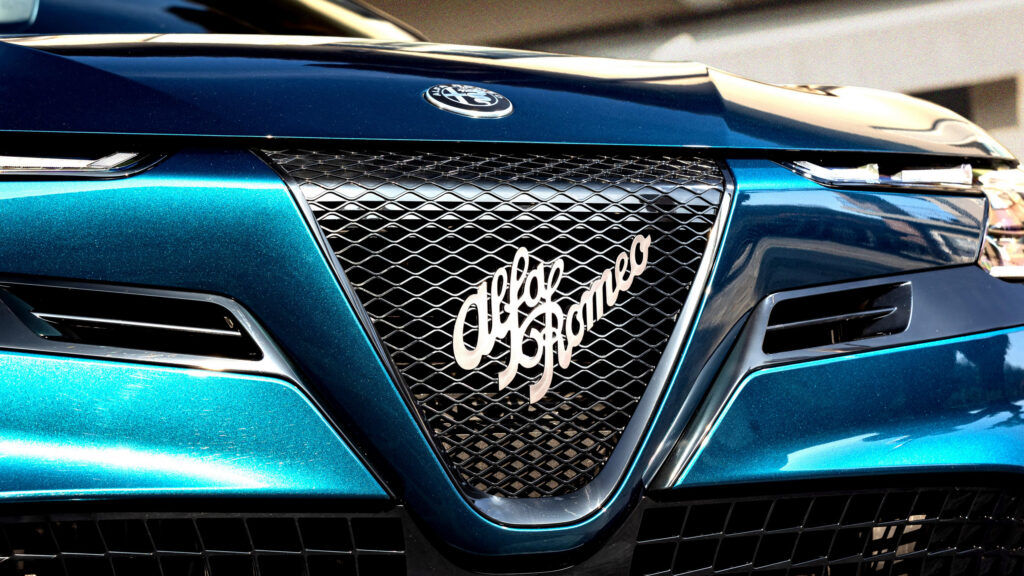
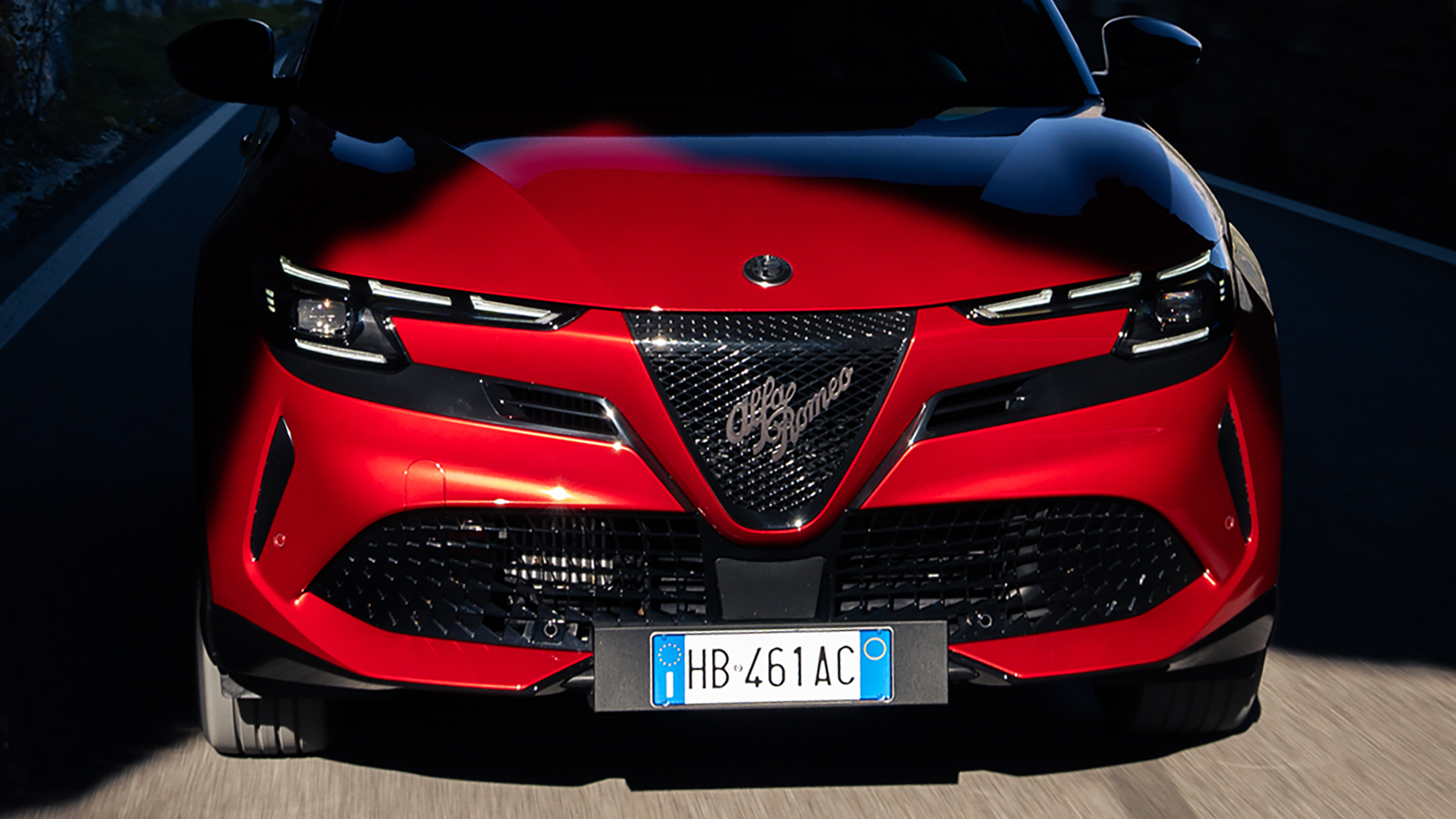
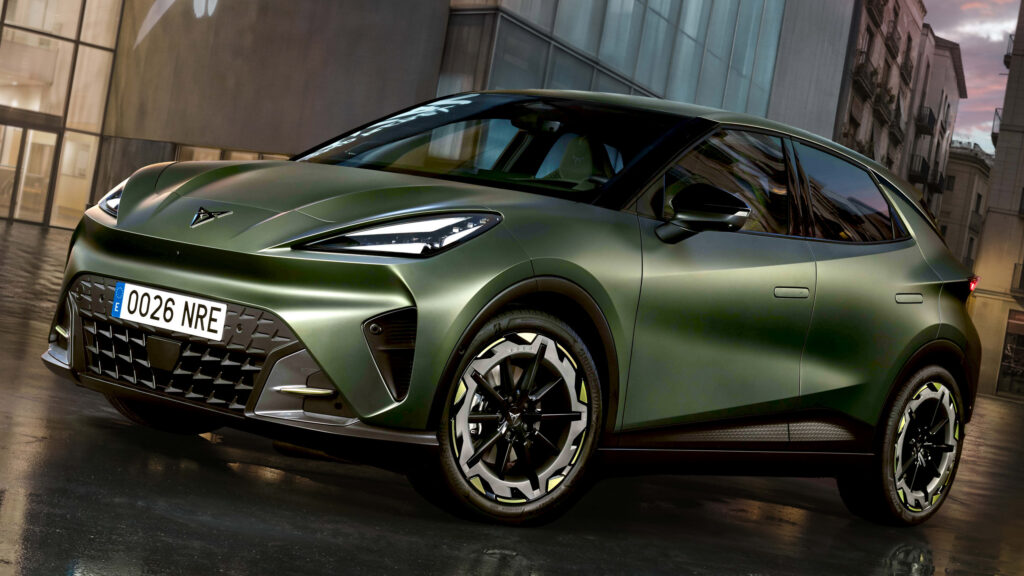
Facing mounting pressure to cut costs and speed up timelines, Stellantis is looking beyond its own engineering bench. The automaker is reportedly exploring a plan to co-develop a new EV for Opel, and possibly Alfa Romeo too, with Leapmotor, leaning heavily on the Chinese firm’s underlying technologies.
The move comes as Stellantis recalibrates its EV strategy following a $25 billion writedown tied to scaling back parts of its electric vehicle roadmap.
China-Based Development Plans
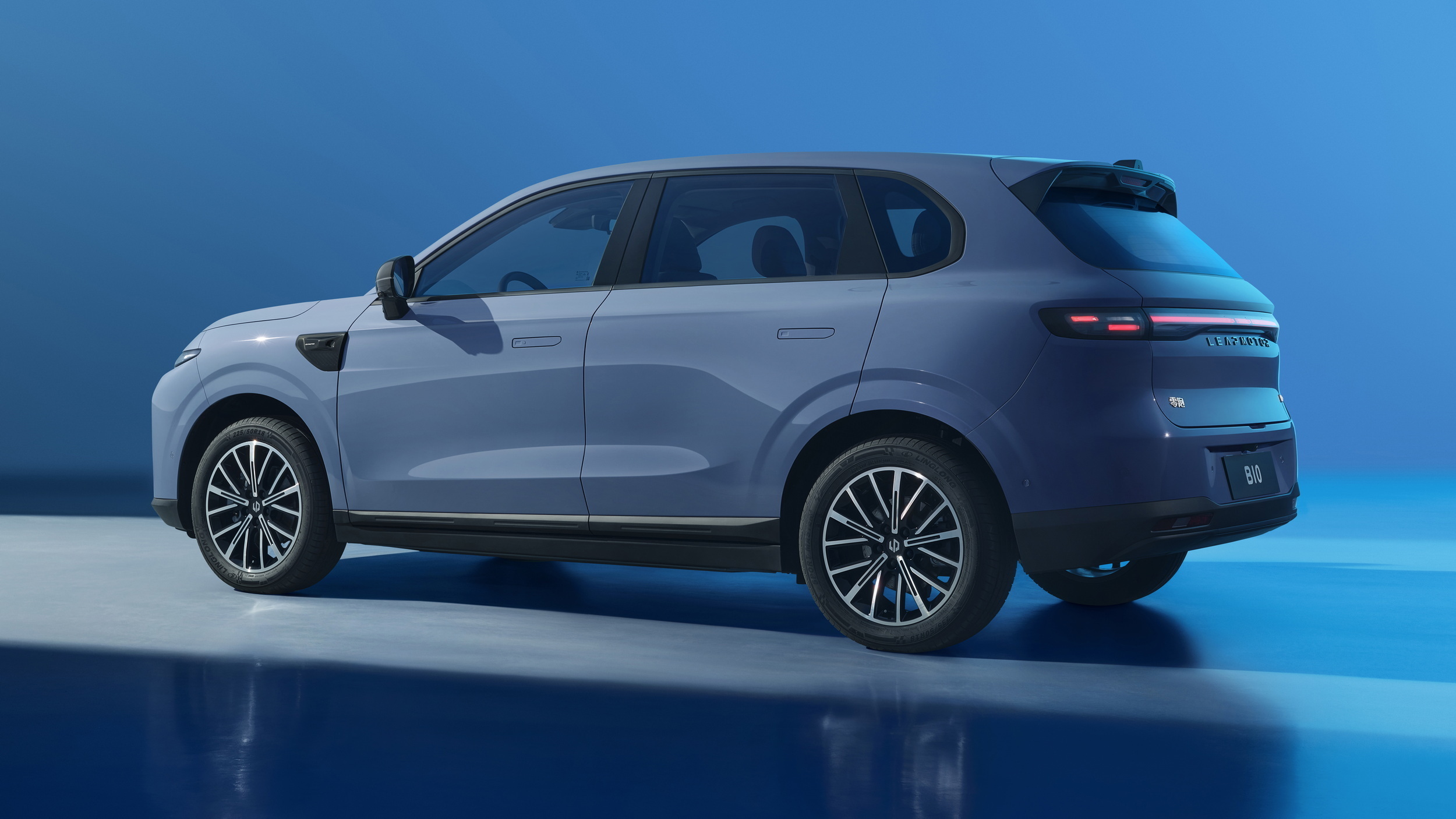
Unnamed sources claim that the new Opel could use the same architecture as the Leapmotor B10. Whether it will share the exact same powertrain remains unclear, but Leapmotor is expected to supply key systems, including electrical and electronic components, effectively doing much of the heavy lifting under the skin.
In addition, much of the development work would take place in China, with Opel focusing primarily on exterior design. Reuters reports that discussions between the two companies began late last year, and a deal could be finalized in the coming weeks.
Stellantis acquired a 20 percent stake in Leapmotor in 2023 and has since supported the brand’s international expansion through their joint venture, Leapmotor International. This entity oversees sales and production outside China. If approved, the new Opel SUV would be built at Stellantis’ Zaragoza plant in Spain, which is also set to assemble the Leapmotor B10 starting later this year.
An Alfa Romeo Next?
It is understood that the new Opel could enter production in 2028, with annual output targeted at around 50,000 units. Leapmotor has responded cautiously to the reports, noting that it continues discussions with partners, including Stellantis, but has no plans for full platform-level collaboration. Instead, it remains focused on supplying its own in-house components.
The close-knit partnership between Stellantis and Leapmotor may extend beyond a single Opel EV. Early discussions have considered applying Leapmotor’s technology to smaller A-segment models, which would likely require separate production lines. The same report also points to a possible Alfa Romeo model based on the B10 architecture, which could also be produced in Zaragoza.
Cupra Raval launches before its VW ID. Polo and Skoda Epic siblings.
Multiple battery and motor options offer up to around 280 miles range.
Entry price should be around €26k/£23k to directly challenge Renault 5.
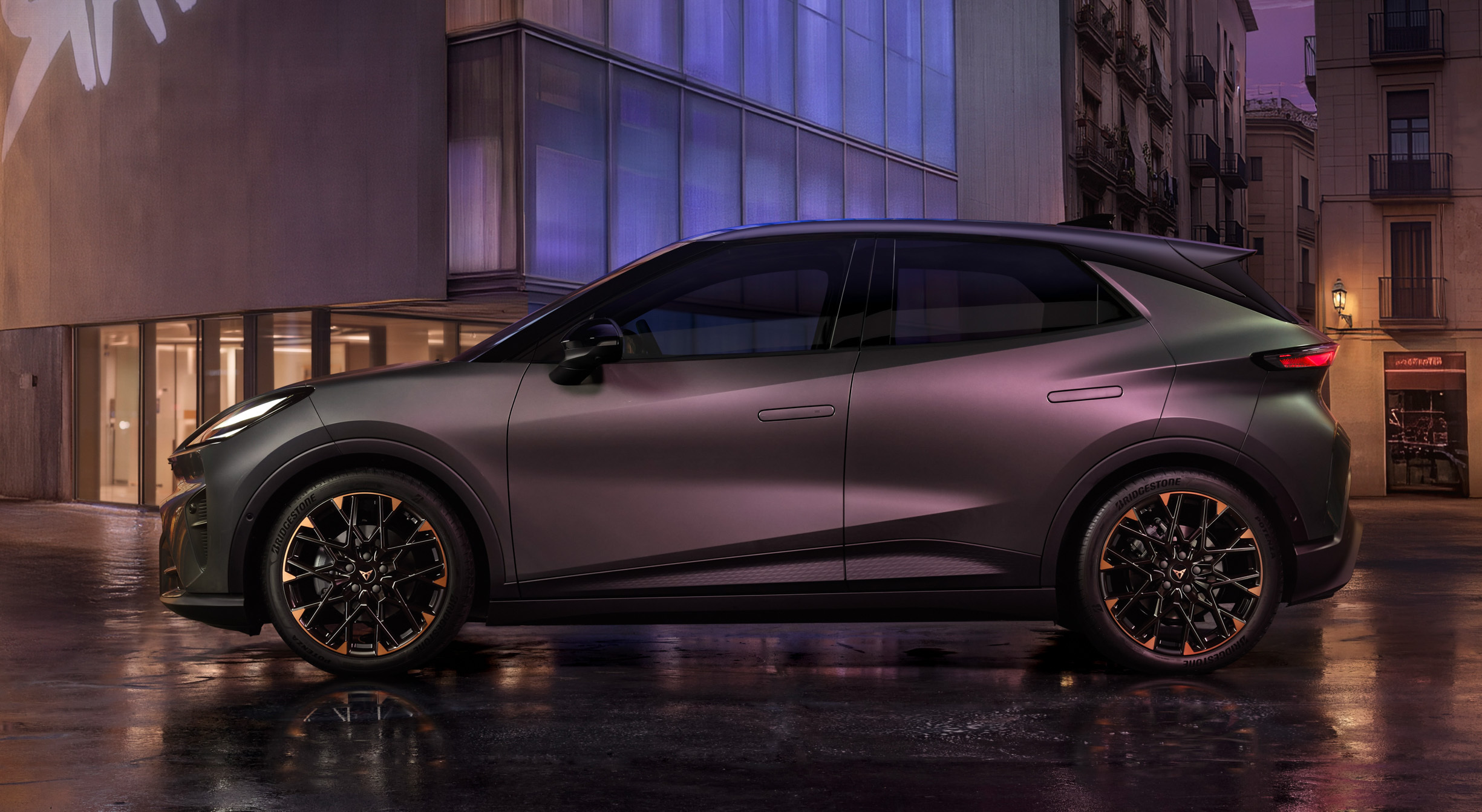
VW’s sporty Spanish brand, Cupra, has revealed its smallest EV yet. Called the Raval, this subcompact sister to the upcoming electric VW ID. Polo and Skoda Epiq hits European roads later in 2026 with bags of attitude and the aim of stealing sales away from Renault’s popular 5.
At just over 4 meters (157.4 inches) long the Raval sits in supermini territory but stretches expectations with a 2,600 mm (102.4 inches) wheelbase and a surprisingly roomy 441 liter (15.6 cu-ft) trunk. It’s wider and lower than you might expect too, giving it a squat, planted stance that screams more fun than frugal.
Underneath, it rides on the Volkswagen Group’s new MEB+ platform, which it’ll share with the ID. Polo and Epiq. Think of it as the budget friendly evolution of the architecture used in bigger EVs like the ID.4 and Born, but tuned here for smaller, cheaper cars, and set up to the drive the front wheels, rather than the rears, or all four.
Buyers get plenty of powertrain choice. Entry level versions badged simply Raval pair a 114 hp (116 PS / 85 kW) motor with a 37 kWh battery, good for around 186 miles (300 km) of range, though limited to just 50 kW DC charging. Step up a rung on the configuration ladder to Raval Plus and you’ll find a 133 hp (135 PS / 99 kW) motor using the same pack, although this time charging peaks at up to 88 kW DC for a 10 to 80 percent top up in roughly 23 minutes.
Hot Hatch Punch
Move into the bigger battery cars and things get spicier. The 52 kWh pack brings 208 hp (211 PS / 155 kW) in the Endurance trim and delivers around 280 miles (450 km) of range, with charging speeds up to 105 kW.
That should be feisty enough for most buyers, but if it’s not, there’s the VZ hot hatch. It pushes output to 222 hp (226 PS / 166 kW) and will hit 62 mph (100 kmh) in 6.8 seconds making it a rival for the Alpine A290, not to mention VW’s ID. Polo GTI. Range drops slightly to around 249 miles (400 km), but speed demons might think it a price worth paying.
Cupra hasn’t just chased power numbers, either. The Raval’s chassis sits 15 mm (0.59 inches) lower than the base MEB+ setup used on the ID. Polo and runs a 10 mm (0.39 inches) wider track, with adaptive dampers, progressive steering, and an electronic limited slip differential on the VZ. There’s also one pedal driving and a dramatic e launch feature for stoplight getaways complete with synthesized sound effects.
Big On Screen, Short On Buttons
Inside, drivers are treated to a usefully large 10.25-inch digital cluster and a 12.9 inch infotainment system, though unlike the ID. Polo, which has multiple physical buttons for features like the climate control the Raval is button-light and stuck with the old-style VW interface and its annoying temperature sliders. At least you get real physical switches on the chunky steering wheel.
Go for the launch edition Raval VZ Extreme and you’re treated to CUP bucket seats with 3D knit technology upholstery, as well as Sulfur Green 19-inch wheels and a Manganese matt exterior finish. At the other end of the scale, prices are expected to start at around €26,000, or just under £23,000 in the UK, when the Raval arrives in summer 2026. That puts the smallest Cupra in a head-on battle with the Renault 5 – which would you pick?
The Z9 GT Shooting Brake makes 1,139 hp in EV guise, hitting 62 mph in 2.7 seconds.
A PHEV variant offers 126 miles of electric range and a combined total of 500 miles.
BYD plans 3,000 European charging stations within 12 months alongside the launch.
BYD isn’t content with its core brand competing against the world’s biggest carmakers. It has now launched its premium Denza brand in Europe. There’s a certain irony here, as Denza was originally created as a joint venture between BYD and Mercedes-Benz owner Daimler, blending Chinese EV expertise with German premium know-how. It was established in 2010 before Mercedes-Benz gradually stepped back and exited entirely in 2024.
The rollout begins in Germany, France, Italy, Spain, and the UK, with two key models leading the way. By the end of 2026, Denza is expected to be present in 30 countries across the continent.
Those opening acts are the D9 DM-i minivan and the Z9GT Shooting Brake. The D9 leans on a plug-in hybrid setup, while the Z9GT gives buyers a choice between full electric and plug-in hybrid power. Their arrival also lines up with BYD’s wider push to roll out its Flash Charging system internationally. Over the next 12 months, the company aims to install 3,000 charging stations across Europe, with another 3,000 planned for markets beyond China.
Denza has already been selling the Z9GT Shooting Brake in China for quite some time, and it’s one of the country’s most intriguing family cars. Based on the firm’s e3 Platform, the all-electric model uses a sizeable 122.49 kWh battery pack, a front motor with 308 hp (230 kW) and 302 lb-ft (410 Nm) of torque, as well as two 416 hp (310 kW) and 295 lb-ft (400 Nm) motors at the rear axle, giving it a combined 1,139 hp (850 kW) and 892 lb-ft (1,210 Nm) of torque.
The sprint to 62 mph (100 km/h) is dealt with in just 2.7 seconds, and the top speed is 167 mph (269 km/h), more than enough for high-speed cruising on the German Autobahn. The EV has a quoted WLTP driving range of 372 miles (599 km), and thanks to BYD’s 1,500 kW Flash Charging system, it charges from 10-70 percent in five minutes and 10-97 percent in nine minutes.
A High-Powered Plug-In
The plug-in hybrid version uses a 2.0-liter turbocharged four-cylinder engine producing 170 hp (127 kW) and 236 lb-ft (320 Nm), along with a 268 hp (200 kW) front motor and two 248 hp (185 kW) rear motors producing 266 lb-ft (360 Nm) each, resulting in a combined output of 765 hp (570 kW) and 763 lb-ft (1,035 Nm).
It also features a sizeable 63.82 kWh battery and can travel 126 miles (203 km) on all-electric power, or 500 miles (805 km) when combined with the engine. It needs just 3.6 seconds to hit 62 mph (100 km/h) and tops out at 161 mph (259 km/h).
Both versions come standard with carbon ceramic brakes and include rear-wheel steering. They also included BYD’s advanced DiSUS-A dual-chamber air suspension system and can tow up to 2,000 kg (4,409 lbs). A rear-wheel-drive-only version of the electric Z9 GT will launch later this year, boasting greater driving range.
The D9 DM-i minivan features a plug-in hybrid, all-wheel-drive powertrain delivering up to 130 miles (209 km) of electric-only range and a combined range of 590 miles (950 km). It also supports BYD’s Flash Charging technology.
Market-specific pricing for the new Denza models has yet to be announced, though details are expected to follow shortly.
A man was arrested over the weekend after authorities say he stole a school bus from a high school parking lot and later abandoned it at a nearby store, reported ABC 13.
According to the news report, officers responded Saturday afternoon to a Dollar General near Glasgow High School after school officials reported that the stolen bus had been located. The vehicle showed visible scratches on the rear-passenger side and front that appeared to be recent.
Glasgow Independent Schools Superintendent Chad Muhlenkamp said GPS data indicated the bus was started at approximately 4:34 a.m., left school property and traveled along Coral Hill Road before making a stop. The bus was later parked at the Dollar General around 5:27 a.m.
Security camera footage identified the suspect as 18-year-old Tayesean M. Barlow. The footage reportedly showed Barlow entering the bus with a flashlight and appearing to have what looked like a drum magazine attached to a handgun in his waistband. He was later seen sitting in the driver’s seat, starting the bus and driving away. Police said he briefly stopped to speak with someone out of view before continuing and eventually parking the bus.
According to the article, officers later went to Barlow’s home on Coral Hill Road, where his mother told them she was aware of the situation and had instructed her son to return the stolen bus. Barlow then came outside and was taken into custody.
While being held at the Barren County Detention Center, Barlow reportedly told police he had been with friends at a local apartment complex and decided to leave after “things got a little crazy.” He said he entered the bus after finding it unlocked, located the keys and drove it home because he did not want to walk.
Barlow remains jailed on a $25,000 cash bond. He faces charges including theft by unlawful taking, second-degree criminal mischief, unlawful possession of a weapon on school property, and operating a vehicle with a suspended or revoked license.
A 78-year-old school bus monitor in South Carolina is charged with sex crimes involving a teenage girl who was riding his bus, reported The Augusta Press.
According to the news report, McDonald Walker of Aiken was charged Friday with criminal sexual conduct with a minor and criminal solicitation of a minor. The charges stem from an incident reported March 6 on a school bus.
Police stated a 14-year-old girl said she boarded the bus and took a seat when Walker approached her. “The bus monitor got up from his seat and went over to speak to her and then returned to his seat,” the report states. “The victim stated she began crying.”
Authorities reportedly said Walker allegedly made another comment to the teen girl as she was getting off the bus. Details of the alleged conduct were not immediately released, and officials said additional information is expected in formal warrants.
Aiken Public Safety Lt. Jennifer Hayes said investigators are working to obtain those warrants, which typically provide more specific descriptions of the allegations. Walker turned himself in to authorities Friday and was served with the warrants, Hayes said. He was later released after posting a $20,000 bond.
Officials have not released further details about the circumstances of the encounter or whether additional incidents are being investigated. It was also unclear if Aiken County Public Schools continued to employ the school bus monitor.
Records show Walker has previously been arrested multiple times in Aiken County. Past charges include domestic violence in 2017, 2018, and 2023, as well as violating an order of protection in 2018. He was also charged with assault and battery in 2017, a case that resulted in a sentence of 30 days in jail or a fine. The investigation remains ongoing.
CONCORD, N.C. — A powerful and emotional session at STN EXPO East highlighted a reality transportation leaders hope to never face: A catastrophic school bus crash, the chaos that follows, and the need to have strong relationships with first responders.
The conference discussion between Tracie Franco, director of transportation for Leander Independent School District in Texas, and STN Editor-in-Chief Ryan Gray centered on real-world lessons from a recent rollover crash and broader strategies for working effectively with first responders. Joshua Hinerman, state director for Tennessee, was scheduled to be on the panel but canceled days earlier after a fatal school bus crash.
“This industry is so predicated on safety training,” Gray said. “But there are so many other forces on the road to contend with.”
Franco recounted Leander ISD’s first day of school crash in August that included 46 students aboard a bus that rolled over twice on a rural road. “When I got there … my heart just dropped,” she said. “You had students on the side of the road … people crying … my driver had blood coming out of his head. It was just chaos.”
Actionable Takeaways for School Districts
The First Responder Coordination Session at STN EXPO East March 29 delivered several practical strategies for transportation leaders:
1. Build relationships with first responders now.
Tracie Franco, director of transportation for Leander ISD in Texas, admitted her department had limited prior coordination with local agencies when a school bus crash occurred in August. “We had really not had any training with the firemen, with EMS, with police,” she said.
Post-crash, the district strengthened partnerships, including donating a retired school bus for emergency training.
2. Train together using realistic simulations.
Hands-on exercises — including smoke-filled buses and timed evacuations — help staff build muscle memory. “You go from panic to action,” Franco explained.
3. Establish clear command structure and communication.
Confusion over who is in charge can slow response efforts. “Have a plan … who’s in charge of the scene, who’s in charge of the students,” Franco advised.
4. Prepare for student accountability challenges.
Tracking students during transport to hospitals proved difficult. “I didn’t know where the students were going,” Franco said, noting the need for better systems to identify and track students during emergencies.
5. Create a “ready bag” for emergencies.
Leander ISD now deploys a kit with essential tools, including student rosters and ID access, power banks, portable printers and communication devices.
6. Plan for reunification and parent communication.
Parents will arrive quickly on-scene, often before systems are in place. “How do they know where to meet? Where reunification happens?” Franco asked.
7. Address emotional and mental health readiness.
Preparation isn’t just operational — it’s psychological.
“Be prepared emotionally,” Franco said. “You’re going to see chaos … hurt students.”
She added that post-incident support is critical for both students and staff.
8. Reinforce seatbelt usage and safety culture.
Only three students on the bus were wearing lap/shoulder seatbelts that are mandated by state law. “They didn’t move,” Franco said of the restrained students during the rollover. The district now enforces a “no seatbelt, no roll” policy and requires parent acknowledgment.
Seven students were transported to hospitals, some via helicopter. Miraculously, there were no fatalities, Franco said, emphasizing that despite years of preparation, the reality of a major crash exposed gaps.
“No matter how much you prepare … we realized we needed to step it up,” she said. “We needed to really train on different areas.”
One of the biggest challenges at the scene was confusion over roles and communication. “You have EMS, fire, police … who’s in charge?” Franco said. “I don’t know who these students are … I don’t know where they’re going.”
First responders immediately took control, conducting triage and transporting injured students, often without time to coordinate with school officials, she recalled. The experience reinforced a key lesson: Relationships and protocols must be established before an emergency.
She noted the importance of FEMA officials and first responders already being stationed nearby following the deadly Guadalupe River flooding that took place on July 4 in immediately directing resources to the school bus crash.
Franco repeatedly warned against assuming “it won’t happen here.”
“Don’t be complacent,” Gray added, referencing recent fatal crashes nationally.
Meanwhile, Franco closed out the session with a reminder about mindset in crisis situations. “We cannot choose our external circumstances, but we can always choose how we respond to them,” she said.
The session reinforced that while crashes may be rare, preparedness must be constant and collaborative. From coordinated training with first responders to clear communication plans and emotional readiness, transportation leaders were urged to rethink how they prepare for the unthinkable.
As Franco summarized: “Have a plan … and just train, train, train.”
CONCORD, N.C. — School transportation professionals are using children’s books to address a critical and ongoing challenge: Ensuring student safety on and around school buses.
During a March 30 session at the STN EXPO East conference in Concord, North Carolina, two transportation professionals and now authors highlighted how storytelling is helping bridge gaps between schools, families and transportation departments while reinforcing safety lessons for the more than 20 million students who ride school buses each day.
Jackson, a former educator with more than 25 years of experience, said her transition from the classroom to transportation revealed a need for consistent, accessible safety education. She began writing children’s books during the COVID-19 pandemic to help parents and teachers reinforce expectations outside the bus environment.
Her work focuses on creating a “unifying language” that connects the classroom, the bus and the home, allowing students to learn safety behaviors in multiple settings before they are tested in real-world situations.
Valerie Higley, a substitute bus driver and dispatcher for First Student in East Lyme, Connecticut, shared similar motivation. She said her book, Shaman Rides the School Bus, was inspired by firsthand experiences managing student behavior on crowded buses, particularly during driver shortages.
On one early school day, Higley found herself transporting more than 50 elementary students, including kindergartners.
“It was very, very difficult,” she said during the session moderated by School Transportation News Senior Editor Taylor Ekbatani. “So, I put all the most important lessons in a story that I could read to them… at a time when they were not distracted.”
Higley said her book is designed to reflect real-life bus behavior, allowing students to see themselves in the story and better understand expectations. Through relatable characters and scenarios, she addresses common issues such as students leaving their seats, throwing objects and failing to follow directions, behaviors she said are often easier to correct when discussed proactively rather than in the moment.
The books written by both authors cover core safety principles such as staying seated, respecting others, exiting buses properly and understanding the “danger zone,” the area around the bus where visibility is limited and risks are highest. Higley emphasized that even simple scenarios, such as retrieving a dropped item, can become dangerous if children are not properly trained.
A panel discussion at STN EXPO East on March 30, 2026 featured two student transportation professionals who wrote children’s books that teach school bus safety. From Left to Right: Valerie Higley, school bus driver at East Lyme Public Schools in Connecticut; session moderator STN Senior Editor Taylor Ekbatani; and Monique Jackson, area transportation manager at Charlotte-Mecklenburg Schools in North Carolina.
“Don’t just pick it up. Go get your driver’s attention,” she said, describing one of the key lessons included in her story.
She added that the stories are intentionally flexible, allowing educators and transportation staff to adapt lessons based on local needs, such as emphasizing railroad crossings or other region-specific safety concerns.
The urgency behind these efforts is underscored by real-world incidents. Jackson recounted a recent case in CMS earlier in March in which a student was struck by a vehicle while crossing the street to board a bus, an event witnessed by classmates and parents.
“It’s critical that we talk about the danger zone and how you can be safe even at the bus stop,” she said.
Safety Education Takes Time
Both speakers stressed that early and repeated exposure to safety messaging is essential. Jackson noted that it typically takes about 21 days for children to develop habits, making the beginning of the school year a crucial window for establishing expectations.
Beyond safety instruction, the books are also helping to elevate the role of school bus drivers, who are often viewed as outliers to the educational process despite being among the first and last adults students encounter each day.
“The school bus is a classroom on wheels,” Jackson said, adding that drivers serve not only as operators but also as mentors and protectors.
Higley agreed, noting that transportation staff are frequently overlooked in broader school culture and that stronger connections between drivers and students can improve both safety and behavior.
“There’s a disconnect between the classroom and the bus,” she said. “If we can make the conversation happen when they’re receptive to it… it’s a game changer.”
Districts are beginning to integrate these books into broader safety and educational initiatives. Authors reported being invited into classrooms for read-aloud sessions, participating in events such as Read Across America Week and collaborating with early childhood programs to meet safety training standards.
In some cases, the books are being used as part of formal curriculum or enrichment programs, while others are distributed to families to encourage conversations at home.
The reach of these efforts is also expanding internationally. Jackson recently presented her work to students in Italy, where she said children were able to connect with the universal image of the yellow school bus despite language differences.
Higley’s book has been translated into multiple languages, including French, Spanish and Italian, with plans to expand further to serve diverse communities.
Both authors emphasized that public awareness is just as important as student education. Illegal passing of stopped school buses remains a widespread issue, with annual stop-arm violation reports documenting thousands of infractions nationwide.
To broaden their impact, the authors are engaging with local media, participating in community events, and sharing seasonal safety tips aimed at drivers and families alike.
Looking ahead, both plan to continue expanding their work, including developing additional books, incorporating more diverse student experiences and increasing accessibility through translations and specialized content.
Their shared goal remains clear: To make school bus safety education engaging, consistent and accessible for every child.
“Keeping that conversation going… is a gift,” Higley said.
The Z9GT Shooting Brake churns out a massive 1,139 hp in EV guise.
A plug-in hybrid version with a 63.82 kWh battery is also offered.
Joining the sleek Z9GT Shooting Brake is Denza’s D9 DM-i minivan.
Not satisfied with its namesake brand expanding worldwide and rivaling some of the world’s largest car manufacturers, BYD has officially launched its premium Denza brand in Europe. Bringing with it two compelling models, the firm is initially launching in Germany, France, Italy, Spain, and the UK, but by the end of 2026, it will be present in 30 countries across the continent.
The two models launched are the D9 DM-i minivan and the Z9GT Shooting Brake. The D9 is a plug-in hybrid, while the Z9GT is offered in all-electric and plug-in hybrid guises, and the launch of both models coincides with BYD’s planned international rollout of its new Flash Charging system. Within the next 12 months, it plans to establish 3,000 stations in Europe and 3,000 others in markets outside of China.
Denza has already been selling the Z9GT Shooting Brake in China for quite some time, and it’s one of the country’s most intriguing family cars. Based on the firm’s e3 Platform, the all-electric model uses a sizeable 122.49 kWh battery pack, a front motor with 308 hp (230 kW) and 302 lb-ft (410 Nm) of torque, as well as two 416 hp (310 kW) and 295 lb-ft (400 Nm) motors at the rear axle, giving it a combined 1,139 hp (850 kW) and 892 lb-ft (1,210 Nm) of torque.
The sprint to 62 mph (100 km/h) is dealt with in just 2.7 seconds, and the top speed is 167 mph (269 km/h), more than enough for high-speed cruising on the German Autobahn. The EV has a quoted WLTP driving range of 372 miles (599 km), and thanks to BYD’s 1,500 kW Flash Charging system, it charges from 10-70 percent in five minutes and 10-97 percent in nine minutes.
A High-Powered Plug-In
The plug-in hybrid version uses a 2.0-liter turbocharged four-cylinder engine producing 170 hp (127 kW) and 236 lb-ft (320 Nm), along with a 268 hp (200 kW) front motor and two 248 hp (185 kW) rear motors producing 266 lb-ft (360 Nm) each, resulting in a combined output of 765 hp (570 kW) and 763 lb-ft (1,035 Nm). It also features a sizeable 63.82 kWh battery and can travel 126 miles (203 km) on all-electric power, or 500 miles (805 km) when combined with the engine. It needs just 3.6 seconds to hit 62 mph (100 km/h) and tops out at 161 mph (259 km/h).
Both versions come standard with carbon ceramic brakes and include rear-wheel steering. They also included BYD’s advanced DiSUS-A dual-chamber air suspension system and can tow up to 2,000 kg (4,409 lbs). A rear-wheel-drive-only version of the electric Z9 GT will launch later this year, boasting greater driving range.
The D9 DM-i minivan is equipped with a plug-in hybrid, all-wheel drive powertrain offering 130 miles (209 km) of electric driving range, and a combined driving range of 590 miles (950 km). It also supports BYD’s Flash Charging technology.
Market-specific pricing details for the new Denza models have yet to be announced, but are expected to be confirmed soon.
Honda faces product drought in North America after cancelling multiple EV programs.
No major redesigns expected until the new CR-V SUV arrives sometime around 2027.
Losses mount while rivals push ahead with fresher lineups and faster development.
Honda slammed the brakes on its EV push, and now it faces the prospect of being stuck at a development red light with not much new to show customers. After canceling several electric models, the company is staring down a product gap in North America that could stretch into 2027 and far beyond.
That’s a problem in a market where newness sells. Analysts say there may be no fully redesigned core models arriving next year, leaving Honda to rely on cars that are starting to feel a little long in the tooth.
The irony is that only a couple of months ago, Honda dealers were preparing for a massive influx of exciting new metal. Honda had gone all in on EVs, shifting engineers and resources away from traditional development. Then demand softened, policies shifted, and suddenly those future models didn’t make financial sense anymore.
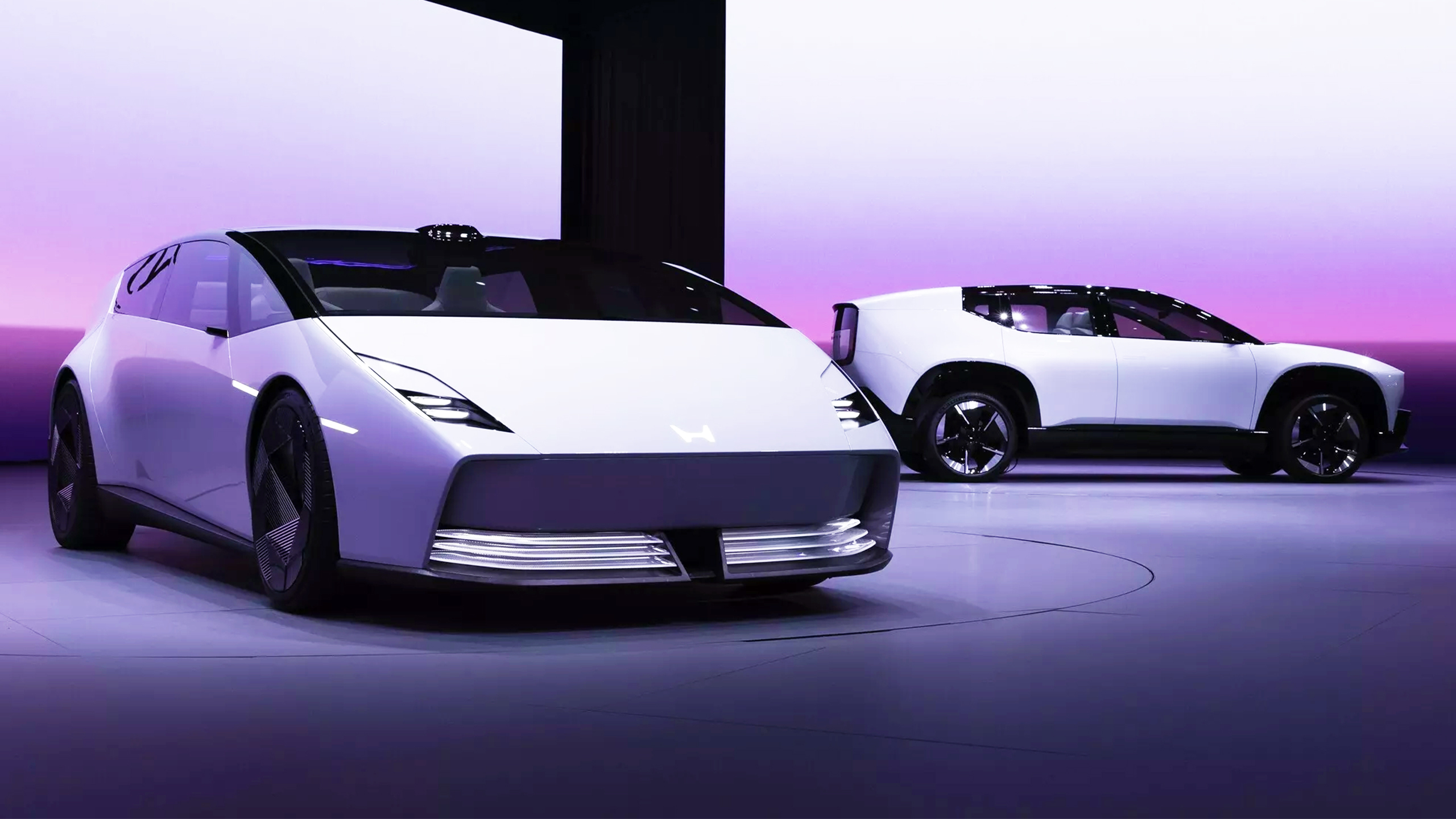
So the company pulled the plug. That included the wild looking 0 Saloon, the 0 SUV, and even Acura’s planned RSX revival. Cool ideas, all gone, along with billions in investment. What’s left is the hangover. Development pipelines for gas powered cars have slowed, and the company is left trying to rebuild momentum while competitors keep rolling out fresh vehicles. Its first fresh vehicle will be a redesigned CR-V due in 2027, Nikkei Asia reports.
Rivals More Efficient
It’s not just about product timing either. Honda’s development efficiency has been under scrutiny for years, and the gap versus rivals like Toyota isn’t helping. Pricing pressure is another concern. In the US, Honda is already offering bigger incentives than some rivals to keep cars moving. If newer competitors arrive while Honda’s lineup stays largely unchanged, those discounts may have to climb even higher.
No New Cars But Plenty Of Bills
Financially, things don’t look much rosier. The EV retreat is expected to trigger massive losses, and not just in wasted development time and money. Nikkei Asia says the automaker could have to pay $10 billion to suppliers who were all geared up and ready to build parts for the cancelled electric cars. And there’s growing chatter that dividends could come under pressure if earnings don’t recover soon.
Honda insists it’s stabilizing things and focusing on hybrids while reorganizing development to speed things up again, and there’s even talk of potential collaboration with Nissan in North America. But nothing concrete has emerged yet, so don’t expect many new-model fireworks for a couple of years.
New EVs are now out-selling petrol-powered cars in the country.
On January 1, Germany reintroduced subsidies for electric cars.
Sales of hybrid and plug-in hybrid models are also on the rise.
It hasn’t taken long for the EV pendulum to swing back in Germany. Less than a year after Europe’s biggest car market pulled the plug on EV subsidies and watched demand stumble, fresh incentives have stepped in and buyers are piling back in like the discount aisle just reopened.
Despite economic jitters tied to trade tensions and the war in Iran, Germany’s car market picked up pace in March, with registrations rising 16 percent compared to the previous month. A total of 294,161 vehicles were registered, and a striking 24 percent of them were battery-electric. That translates to 70,663 EVs sold during the month.
This surge has pushed EVs ahead of both petrol and diesel models, which now account for 22.8 percent and 12.8 percent of the market, respectively.
This represents a significant 66.2 percent increase over the 42,521 sold in March of last year. Year-to-date, a total of 159,630 BEVs have been sold, up 41.3 percent from the 112,968 sold across the January-March period in 2025.
Hybrids Join The Party
It’s not just EVs that have surged in popularity this year. Sales of hybrid models, including plug-in hybrids, climbed 16.2 percent in March to 117,845 units. First-quarter figures are up as well, rising 10.4 percent to 282,600 units. Hybrids now account for 40.1 percent of all new car registrations in the country.
Several brands contributed to the surge in electrified vehicle sales. For example, BYD sold 3,438 vehicles in March, up 327.1 percent from the year prior. Sales from Leapmotor also rose 318.1 percent to 1,388, and Tesla sales climbed 315.1 percent to 9,252 units. This year, 12,829 new Tesla models have been sold in Germany, up 160 percent from the same period last year.
Among established brands, Opel (+43.0%), Audi (+25.0%), and BMW (+16.5%) posted strong gains in March, while Skoda reached an 8.4 percent market share, making it the top import brand.
As of January 1, new electric vehicles registered in Germany are exempt from motor vehicle tax until December 31, 2035. Additionally, EVs are eligible for a base subsidy of €3,000 ($3,500) and up to €6,000 ($7,000) for lower-income households. Similarities, plug-in hybrids, and extended-range EVs can receive subsidies of up to €4,500 ($5,200).
Overall registrations for the first quarter of the year rose by 5.2 percent compared to the same period last year.
Training school bus drivers to respond to inclement weather emergencies is a crucial part of student transportation safety training, but sometimes even the best training can’t fully prepare for the harsh reality of a real-life emergency situation.
Transportation Supervisor Kelly Bennett at Three Rivers Community Schools in Michigan confirmed for School Transportation News that this is how her team of bus drivers felt when a tornado suddenly appeared the afternoon March 6.
“On the day of the tornado, there was no indication that severe weather was approaching. No watches had been issued, and it seemed like a normal, beautiful day,” said Bennett.
Bennett shared that in-house training has led to Three Rivers school bus drivers practicing a variety of responses to emergency situations including inclement weather during Beginning Bus Driver School.
A local news outlet reported that the tornado was severe enough to down trees and rip roofs off buildings. Superintendent Nikki Nash shared a letter on social media March 8 saying that the “rapid and severe” weather emergency struck at the “most challenging time possible: During afternoon dismissal.” With many school buses already on the road transporting students home, it was crucial to act quickly.
Bennett explained that when the tornado warning sirens sounded, most bus drivers did not hear them because they were on routes, but the transportation office staff were alerted on their phones and through the radio. Dispatch then contacted the drivers immediately and directed the buses to re-route to safe locations at the nearest school building.
According to the local news report, within 10 minutes all students were accounted for.
Both Bennett and Nash commended the district’s school bus drivers for their quick response to the inclement weather emergency (Photo courtesy of Kelly Bennett)
Nash thanked the drivers and staff for their heroic actions and tornado response. “While we recognize that these emergency protocols caused significant delays and inconveniences for many of you, the safety of our students and staff is our absolute top priority,” she said. “I want to thank our students for their bravery, our staff for their quickly thinking and you- our families- for your patience and cooperation as we worked to ensure every child was out of harm’s way.”
Unfortunately, the district’s new transportation building that houses the district’s 20 buses “took a direct hit,” as the tornado passed through. Nash shared in her statement that they “lost the garage roof with several damaged vehicles, including buses in the parking lot.”
Bennett said that the damage was confined to the garage and did not impact the office, so transportation staff that were onsite during the tornado were unharmed.
“Due to the extent of the damage, we are unable to operate from that facility,” said Bennett. “In the meantime, we have returned to our old building, where the mechanic is handling repairs, and the office staff is now working out of the middle school. Although the transition has been challenging, we are continuing to adapt and make it work. Once the garage is secured, we will be able to return to operating out of the office.”
Tornado Response Hinges on Adequate Training
Bennett shared that her advice to other transportation directors “is that there is never such a thing as too much training, especially when it comes to safety.”
She continued that it’s imperative to make this safety training a priority, regularly review procedures during department meetings and investing in additional training opportunities beyond in-house resources.
“Our drivers are trained to prioritize safety above all else when transporting students. In emergency situations, I expect them to remain calm and maintain control, as their response will influence how everyone on the bus reacts,” said Bennett, adding that she emphasizes another facet of school bus safety, “clear and concise communication over the radio.”
She advised “keeping messages brief and direct so others can quickly understand and respond,” which aides safety efforts for both the 16 drivers in the district and the 1,194 students they transport each day.
The local media report also shared that the community banded together for recovery and rebuilding efforts, and the bus drivers drove their normal routes on Monday following the tornado response to ensure that routes were safe for students to return to school.
“Our thoughts and prayers of support go out to everyone who was personally impacted by this event,” stated Nash. “We know that the cleanup process will take days and even weeks, but our strength remains unshaken.”
CONCORD, N.C. – The Green Bus Summit at STN EXPO East featured school bus manufacturers discussing products, technology, innovations and support for school districts looking to run cleaner, safer and more efficient school bus operations.
Blue Bird: EV Myth vs. Reality: What’s Actually Driving Adoption?
“We’ve taken the lead on the EV side,” declared Brad Beauchamp, EV product segment leader for Blue Bird, reviewing how the company entered the field eight years ago.
Noelle White, channel partner marketing specialist for Blue Bird, led attendees through a gamified quiz on common electric school bus myths.
Attendees correctly identified answers to questions such as what regenerative braking does (charges the battery while slowing), time required for infrastructure upgrades (six to 18 months), and how much of a total EV project cost is tied to infrastructure (25 to 40 percent).
Although cold weather reduces electric school bus range by 10 to 30 percent, Beauchamp noted that technology advances and operational techniques allow for improvements in this area.
Level 1 chargers are commonly used by most districts today, but Beauchamp recommended Level 2 chargers, which he said are best for overnight charging.
Infrastructure readiness most commonly delays electric school bus projects since the work “doesn’t stop on the first wave of buses,” Beauchamp cautioned.
Operational planning significantly shifts during the move from diesel to electric due to routes and weather, to name a few factors, Beauchamp reminded attendees.
“As you start to use [electric school buses], there is a learning curve,” he said. “On the great side for EV, a lot of things can be corrected without even leaving your yard.”
Viewing electric bus deployment as equivalent to a straightforward vehicle purchase is a common pitfall, explained Beauchamp. Instead, he said districts must consider infrastructure, utilities, load planning and route modeling early in the process. He added that data gathered from onboard telematics helps transportation directors in this crucial planning phase.
“It’s going to take a team,” he said, especially as not all aspects of electric school bus implementation happen sequentially.
In fact, the bus purchase from the OEM is “the easy part,” he quipped.
“Eighty percent of routes in the U.S. can be covered with an EV,” Beauchamp continued.
He advised putting an electric school bus on shorter routes until success is achieved, and then operations can branch out.
“Figure out what your long-term strategy will be,” he said.
When districts purchase an electric school bus with federal funds, they are required to decommission and scrap an old diesel bus rather than keep it as a spare, Beauchamp cautioned. He advised planning for scalability, not simply pilot projects.
Lastly, he reviewed EPA Clean School Bus program updates, noting that state and local funding opportunities also help keep electric school bus projects afloat. He advised performing preventative maintenance on both the bus and charger.
1 of 2
Brad Beauchamp, EV product segment leader for Blue Bird, speaks at STN EXPO East 2026.
IC Bus: Leveraging Technology Solutions for Efficient Fleet Management
Matt Milewski, market segmentation director for IC Bus, reviewed how First Student announced last September that it was outfitting its fleet of 46,000 school buses with Samsara technology.
Jason Kierna, vice president of information technology for First Student, spoke to the company’s customer-focused motivation rather than just adding technology for its own sake.
“We’ve got thousands of customers and all of them want to use technology in a different way and that’s why it’s more about the process for us than it is about the technology,” he said.
He explained how the new AI-powered HALO offering combines vehicle inspections, driver coaching, AI cameras, predictive analytics, and more to improve safety for students and transparency for parents.
“Parents today are expecting more objective evidence when incidents occur,” agreed Scott Jobe, head of public sector strategists for Samsara.
He noted that AI is “maybe not the best when you deal with human interaction or conversation, but when it comes to objectivity, we think of AI as like a force multiplier.”
Kierna elaborated that hazard alerts or safety behavior remediation that HALO provides, can help school bus drivers proactively self-correct so a reactive supervisor conversation is unneeded. He added that some First Student drivers now refuse to drive a bus without the technology.
Kierna related an incident in which a bus was struck at over 60 mph and said the driver would have been injured if she had not been wearing her seatbelt, which she had just put on properly due to the AI powered camera’s alert. Jobe added that another district saw a reduction in risky behaviors by drivers, illegal passing incidents, bus crashes and maintenance costs due to the AI technology.
“What does safety mean to your organization?” Kierna rhetorically asked the audience.
Milewski emphasized IC Bus’ support for what Jobe termed a “frictionless experience” in technology integration for school district and bus contractor clients. Kierna reiterated the commitment of all three companies to overall safety for students.
Kierna underscored that empowering drivers and lobbying for safety initiatives are two of the many aspects that are directly related to the effective gathering and leveraging of data.
“Integrated technology is the future,” Jobe agreed. He shared a pothole detection feature in development, in which information gathered via onboard cameras, bus location and G-forces the bus undergoes can be sent directly to cities for repair escalation.
“We have so much data that we can turn into real actionable insights,” he said.
In answer to an attendee question on staff who may struggle with technology, Kierna said the AI assistant helps put things in plain language for users.
1 of 4
Matt Milewski, market segmentation director for IC Bus.
Jason Kierna, vice president of information technology for First Student.
Thomas Built Bus: Let’s Talk Fuels – What Legislative Uncertainty Means for School Transportation
Mark Childers, direct sales and technology sales manager for Thomas Built Buses, reviewed current challenges and uncertainty surrounding fuel choice. “You’ve got to make some decisions,” he said.
“Where we stand today is that in 2027 all of the manufacturers are subject to EPA’s low NOx rule, so that is the new multi-pollutant criteria rule that’s going to deal with NOx and particulate matter that is coming in 2027,” explained Alissa Rector, policy advisor for Thomas Built Buses parent company Daimler Trucks North America. “Even though EPA’s greenhouse gas regulations have been rolled back in 2027, we are still subject to the existing greenhouse gas phase 2 standard at [the National Highway Traffic Safety Administration] NHTSA so there’s not a lot of change that you’re going to see on the greenhouse gas side compared to where we are today.”
Jim Ellis, director of pupil transportation for Henrico County Public Schools in Virginia, has 600 school buses and is receiving 25 electric buses in July. When managing his bus fleet, he said he must balance getting the best bang for his buck with environmental concerns for cleaner air.
“I think that the key lesson is to just know change is going to continue to happen and just continue to take one step at a time,” declared Brittany Barrett, deputy director of operations and implementation for the World Resources Institute. She advised staying on top of fleet data, so it is easier to pivot and make decisions.
Rector discussed the differences between local pollutants like NOx, Volatile Organic Compounds (VOCs) and particulate matter, as opposed to greenhouse gases like carbon and CO2 which enter the atmosphere.
Whitney Kopanko, vice president of school bus sales and marketing for Sonny Merryman, noted that the Thomas Built Buses Virginia dealer has put 300 electric school buses on the road. She spoke to dovetailing student transporter priorities of getting students to and from schools with community and regulatory pressure for cleaner air.
She and Ellis agreed that it’s crucial to provide numbers and data to stakeholders during decision-making processes.
WRI provides helpful tools and resources, Barrett informed attendees. Kopanko added that AFLEET suite from the U.S. Department of Energy can be used to compare fuel types. Fuel choice is a hyper localized decision based on what each district needs, she stated.
Though most school buses currently run clean diesel and will continue to, Rector prognosticated that the future will be mixed fuels with interesting developments in hydrogen. “Any future roadmap is going to have a lot of different options on it,” she declared.
Diesel fuel doubling in price due to the war in Iran is currently juxtaposed with conversations on propane or electric implementation, said Ellis.
While changing fuels may look tempting, Kopanko advised considering availability of alternative or drop-in fuel, infrastructure needs, driver and mechanic training, and the extra accountability involved in abiding by rules for government subsidies.
Barrett said electric buses have the range to meet 90 percent of the routing requirements for districts she works with, but infrastructure is the biggest question mark. “It’s not insurmountable but it requires a plan,” she said.
She praised Sonny Merryman’s electrification project with Dominion Energy in Virginia.
Panelists advised working closely with dealers, gathering all available fleet operation data, considering urban versus rural needs to determine what type of bus goes where, taking part in vigorous training and education, and keeping abreast of the rapidly changing regulatory landscape.
They also answered questions from attendees on electric school bus range, charging time, battery degradation and V2G.
(Left to right) Alissa Rector, policy advisor for Daimler Trucks North America, and Brittany Barrett, deputy director of operations and implementation for the World Resources Institute, speak at STN EXPO East 2026.

 Login
Login