Normal view

There are new articles available, click to refresh the page.
Yesterday — 12 April 2026Main stream

Wisconsin attorneys team up with federal litigators as deportation cases grow more complex

A person walks past a large stone building with arched windows and a central tower, with cars parked along the street.
Reading Time: 3 minutes

A loosely formed coalition of about 60 federal litigators is working with immigration attorneys in Wisconsin who represent clients being detained and facing deportation.

Gabriela Parra, an immigration attorney and partner at Layde & Parra S.C. in Milwaukee, said immigration policies are constantly changing, which adds new challenges. 

Many cases now involve both immigration proceedings and federal civil rights issues, she said.

“If you haven’t done this, it’s a learning curve,” Parra said. 

Federal litigators and immigration attorneys are working together to help meet this demand in Wisconsin.

Surge in overall need

The need for legal representation has grown as immigration enforcement has expanded.

U.S. Immigration and Customs Enforcement held an average of 69,600 people per day in detention in December 2025 – a 78% increase compared with the year before, according to an analysis by the Vera Institute of Justice, a national nonprofit working on issues related to mass incarceration and immigration. 

But more than half the people in the immigration court system are fighting the government alone, according to immigration court data analyzed by Vera

“There is a due process crisis right now happening in our immigration system,” said Elizabeth Kenney, associate director of Vera’s Advancing Universal Representation Initiative. 

While people have the right to obtain an immigration attorney, the government does not have to provide one, said Timothy Muth, staff attorney with the American Civil Liberties Union of Wisconsin.

Kenney said not having legal representation has major consequences. 

People who have attorneys are up to 10 and a half times more likely to get successful outcomes, Kenney said.

A person in shorts walks past a building labeled "U.S. Department of Homeland Security" with an American flag on a pole outside.
The U.S. Immigration and Customs Enforcement field office at 310 E. Knapp St. in Milwaukee. (Jonathan Aguilar / Milwaukee Neighborhood News Service / CatchLight Local)

More complex cases

Parra said policy changes have added a federal civil rights dimension to many cases – changes that include how the Board of Immigration Appeals has interpreted immigration law.

The board sets binding rules for immigration judges and has authority over appeals in immigration cases.

Parra said there have been more than 80 decisions by the board since January 2025 that have affected immigration policy.  

One Board of Immigration Appeals decision, known as Yajure Hurtado, requires immigration judges to treat many as subject to mandatory detention. The decision has significantly limited people’s access to bonds.

“Now you have individuals in detention unless you can file a habeas petition in federal court,” Parra said. 

A habeas petition is used to argue that a person’s detention is unlawful. 

Habeas petitions vary widely depending on a person’s situation, said Elisabeth Lambert, a federal civil rights attorney working with the network.

Some involve people who have lived in the United States for years and seek release on bond while their cases proceed. Others involve people who entered through legal processes but are later detained and denied bond.

There also are other barriers that make it harder for people to defend themselves, requiring different support in federal court.

For example, Lambert said, immigrants facing deportation don’t have a right to discovery. This means that the only way to get the records is through a specific type of federal records request. 

A right of discovery allows defendants to access information that could be used against them from a prosecutor ahead of trial. 

Lambert said records can face various delays and other barriers and may arrive after the deportation proceeding has already happened.

Why federal court is different

Lambert said the two court systems – immigration court and federal court – operate very differently.

Each of these legal spaces has its own sets of rules, norms and procedures, she said. 

“It’s just a lot to learn very quickly in a very high-stakes situation,” Lambert said. 

It works the other way, too.

“I couldn’t go into immigration court,” she said. “I don’t have the knowledge or the experience.” 

In one case Lambert and Parra worked on together, a judge issued a restraining order barring ICE from moving ahead with a client’s removal proceeding until a Freedom of Information Act issue was resolved, she said.

Lambert anticipates similar litigation in the future.  

“We think that this is going to be a pretty common issue – of the government withholding people’s immigration records as part of this effort to stack the deportation process against people who are seeking immigration relief.”


Jonathan Aguilar is a visual journalist at Milwaukee Neighborhood News Service who is supported through a partnership between CatchLight Local and Report for America.

Wisconsin attorneys team up with federal litigators as deportation cases grow more complex is a post from Wisconsin Watch, a non-profit investigative news site covering Wisconsin since 2009. Please consider making a contribution to support our journalism.


Before yesterdayMain stream

Family’s Lawsuit Claims Distraction, Negligence in Fatal Tennessee School Bus Crash

By: Ryan Gray
10 April 2026 at 16:18

The parents of an eighth-grade girl killed in the Tennessee school bus crash last month filed a $5-million wrongful death lawsuit alleging distraction and recklessness on the part of the driver and negligence and lack of oversight on the part of the Clarksville-Montgomery County School System.

Zoe Davis was 13 and a student at Kenwood Middle School when she died in the March 27 collision. Her classmate Arianna Peterson, 13, also died.

The lawsuit filed April 2 calls for a jury trial and seeks the maximum dollar amount allowed but not to exceed $5 million plus court costs.

Tennessee tort law generally caps the amount a school district can be held liable for at $700,000 for bodily injury or death of all persons in any one accident or $300,000 for any one person. School district employees are  immune from lawsuits including those involving negligent operation of motor vehicles, unless proven that the employee failed to exercise or perform a discretionary function, whether or not the discretion is abused.

The Davis family’s lawsuit names school bus driver Sabrina Ducksworth. The lawsuit claims she failed to follow her training and “acted with less than and/or failed to act with ordinary and reasonable care in the operation of the school bus.”

The filing also claims Ducksworth operated her school bus while fatigued or distracted and failed to exercise due care, obey traffic laws and keep in the proper lane.

Investigation Continues Amid Lawsuit

The Tennessee Highway Patrol and the National Transportation Safety Board continue to investigate. NTSB said on its website a preliminary report is expected by the end of this month. Duckworth reportedly remains hospitalized following several surgeries. School Transportation News learned Duckworth broke both of her legs and suffered internal injuries.

Ducksworth’s family told local reporters she may have suffered a stroke when the school bus veered across a double yellow line, into the oncoming lane and collided nearly head-on with a Tennessee Department of Transportation dump truck. A local news report also indicates a review of Duckworth’s personnel file shows a current prescription for blood pressure medication. She had driven for Clarksville-Montgomery County School System since July 2021.

The Davis family’s lawsuit also claims the school district did not perform an adequate pre-employment inquiry into Ducksworth’s fitness for employment as a school bus driver and that the hiring practices “fell below the applicable standard of care.” The lawsuit also alleges the school district failed to adequately train or supervise Ducksworth.


Related: First Responders Critical in School Bus Emergencies
Related: Tennessee School Bus Bursts Into Flames Moments After Children Evacuated
Related: Tennessee School Bus Driver Under Investigation After Leaving Children Unattended

The post Family’s Lawsuit Claims Distraction, Negligence in Fatal Tennessee School Bus Crash appeared first on School Transportation News.

First Responders Critical in School Bus Emergencies

8 April 2026 at 18:57

CONCORD, N.C. — A powerful and emotional session at STN EXPO East highlighted a reality transportation leaders hope to never face: A catastrophic school bus crash, the chaos that follows, and the need to have strong relationships with first responders.

The conference discussion between Tracie Franco, director of transportation for Leander Independent School District in Texas, and STN Editor-in-Chief Ryan Gray centered on real-world lessons from a recent rollover crash and broader strategies for working effectively with first responders. Joshua Hinerman, state director for Tennessee, was scheduled to be on the panel but canceled days earlier after a fatal school bus crash.

“This industry is so predicated on safety training,” Gray said. “But there are so many other forces on the road to contend with.”

Franco recounted Leander ISD’s first day of school crash in August that included 46 students aboard a bus that rolled over twice on a rural road. “When I got there … my heart just dropped,” she said. “You had students on the side of the road … people crying … my driver had blood coming out of his head. It was just chaos.”

Actionable Takeaways for School Districts


The First Responder Coordination Session at STN EXPO East March 29 delivered several practical strategies for transportation leaders:


1. Build relationships with first responders now.

Tracie Franco, director of transportation for Leander ISD in Texas, admitted her department had limited prior coordination with local agencies when a school bus crash occurred in August. “We had really not had any training with the firemen, with EMS, with police,” she said.

Post-crash, the district strengthened partnerships, including donating a retired school bus for emergency training.


2. Train together using realistic simulations.

Hands-on exercises — including smoke-filled buses and timed evacuations — help staff build muscle memory. “You go from panic to action,” Franco explained.


3. Establish clear command structure and communication.

Confusion over who is in charge can slow response efforts. “Have a plan … who’s in charge of the scene, who’s in charge of the students,” Franco advised.


4. Prepare for student accountability challenges.

Tracking students during transport to hospitals proved difficult. “I didn’t know where the students were going,” Franco said, noting the need for better systems to identify and track students during emergencies.


5. Create a “ready bag” for emergencies.

Leander ISD now deploys a kit with essential tools, including student rosters and ID access, power banks, portable printers and communication devices.


6. Plan for reunification and parent communication.

Parents will arrive quickly on-scene, often before systems are in place. “How do they know where to meet? Where reunification happens?” Franco asked.


7. Address emotional and mental health readiness.

Preparation isn’t just operational — it’s psychological.

“Be prepared emotionally,” Franco said. “You’re going to see chaos … hurt students.”

She added that post-incident support is critical for both students and staff.


8. Reinforce seatbelt usage and safety culture.

Only three students on the bus were wearing lap/shoulder seatbelts that are mandated by state law. “They didn’t move,” Franco said of the restrained students during the rollover. The district now enforces a “no seatbelt, no roll” policy and requires parent acknowledgment.

Seven students were transported to hospitals, some via helicopter. Miraculously, there were no fatalities, Franco said, emphasizing that despite years of preparation, the reality of a major crash exposed gaps.

“No matter how much you prepare … we realized we needed to step it up,” she said. “We needed to really train on different areas.”

One of the biggest challenges at the scene was confusion over roles and communication. “You have EMS, fire, police … who’s in charge?” Franco said. “I don’t know who these students are … I don’t know where they’re going.”


Related: NTSB Calls for Seatbelt Polices, Procedures Following Texas School Bus Crash
Related: Texas School District Updates Seatbelt Policy Following School Bus Rollover
Related: Texas Student Transporter Utilizes Technology to Improve Operations


First responders immediately took control, conducting triage and transporting injured students, often without time to coordinate with school officials, she recalled. The experience reinforced a key lesson: Relationships and protocols must be established before an emergency.

She noted the importance of FEMA officials and first responders already being stationed nearby following the deadly Guadalupe River flooding that took place on July 4 in immediately directing resources to the school bus crash.

Franco repeatedly warned against assuming “it won’t happen here.”

“Don’t be complacent,” Gray added, referencing recent fatal crashes nationally.

Meanwhile, Franco closed out the session with a reminder about mindset in crisis situations. “We cannot choose our external circumstances, but we can always choose how we respond to them,” she said.

The session reinforced that while crashes may be rare, preparedness must be constant and collaborative. From coordinated training with first responders to clear communication plans and emotional readiness, transportation leaders were urged to rethink how they prepare for the unthinkable.

As Franco summarized: “Have a plan … and just train, train, train.”

Article written with assistance of AI.

The post First Responders Critical in School Bus Emergencies appeared first on School Transportation News.

Children’s Books by School Bus Drivers Double as Safety Education Tool

8 April 2026 at 16:00

CONCORD, N.C. — School transportation professionals are using children’s books to address a critical and ongoing challenge: Ensuring student safety on and around school buses.

During a March 30 session at the STN EXPO East conference in Concord, North Carolina, two transportation professionals and now authors highlighted how storytelling is helping bridge gaps between schools, families and transportation departments while reinforcing safety lessons for the more than 20 million students who ride school buses each day.

“All kids deserve to know how to be safe on and around the school bus,” said Monique Jackson, area transportation manager for Charlotte-Mecklenburg Schools in North Carolina and author of Gus, the Talking School Bus.

Jackson, a former educator with more than 25 years of experience, said her transition from the classroom to transportation revealed a need for consistent, accessible safety education. She began writing children’s books during the COVID-19 pandemic to help parents and teachers reinforce expectations outside the bus environment.

Her work focuses on creating a “unifying language” that connects the classroom, the bus and the home, allowing students to learn safety behaviors in multiple settings before they are tested in real-world situations.

Valerie Higley, a substitute bus driver and dispatcher for First Student in East Lyme, Connecticut, shared similar motivation. She said her book, Shaman Rides the School Bus, was inspired by firsthand experiences managing student behavior on crowded buses, particularly during driver shortages.

On one early school day, Higley found herself transporting more than 50 elementary students, including kindergartners.

“It was very, very difficult,” she said during the session moderated by School Transportation News Senior Editor Taylor Ekbatani. “So, I put all the most important lessons in a story that I could read to them… at a time when they were not distracted.”

Higley said her book is designed to reflect real-life bus behavior, allowing students to see themselves in the story and better understand expectations. Through relatable characters and scenarios, she addresses common issues such as students leaving their seats, throwing objects and failing to follow directions, behaviors she said are often easier to correct when discussed proactively rather than in the moment.

The books written by both authors cover core safety principles such as staying seated, respecting others, exiting buses properly and understanding the “danger zone,” the area around the bus where visibility is limited and risks are highest. Higley emphasized that even simple scenarios, such as retrieving a dropped item, can become dangerous if children are not properly trained.

A panel discussion at STN EXPO East on March 30, 2026 featured two student transportation professionals who wrote children’s books that teach school bus safety. From Left to Right: Valerie Higley, school bus driver at East Lyme Public Schools in Connecticut; session moderator STN Senior Editor Taylor Ekbatani; and Monique Jackson, area transportation manager at Charlotte-Mecklenburg Schools in North Carolina.

“Don’t just pick it up. Go get your driver’s attention,” she said, describing one of the key lessons included in her story.

She added that the stories are intentionally flexible, allowing educators and transportation staff to adapt lessons based on local needs, such as emphasizing railroad crossings or other region-specific safety concerns.

The urgency behind these efforts is underscored by real-world incidents. Jackson recounted a recent case in CMS earlier in March in which a student was struck by a vehicle while crossing the street to board a bus, an event witnessed by classmates and parents.

“It’s critical that we talk about the danger zone and how you can be safe even at the bus stop,” she said.

Safety Education Takes Time

Both speakers stressed that early and repeated exposure to safety messaging is essential. Jackson noted that it typically takes about 21 days for children to develop habits, making the beginning of the school year a crucial window for establishing expectations.

Beyond safety instruction, the books are also helping to elevate the role of school bus drivers, who are often viewed as outliers to the educational process despite being among the first and last adults students encounter each day.

“The school bus is a classroom on wheels,” Jackson said, adding that drivers serve not only as operators but also as mentors and protectors.

Higley agreed, noting that transportation staff are frequently overlooked in broader school culture and that stronger connections between drivers and students can improve both safety and behavior.

“There’s a disconnect between the classroom and the bus,” she said. “If we can make the conversation happen when they’re receptive to it… it’s a game changer.”

Districts are beginning to integrate these books into broader safety and educational initiatives. Authors reported being invited into classrooms for read-aloud sessions, participating in events such as Read Across America Week and collaborating with early childhood programs to meet safety training standards.

In some cases, the books are being used as part of formal curriculum or enrichment programs, while others are distributed to families to encourage conversations at home.

The reach of these efforts is also expanding internationally. Jackson recently presented her work to students in Italy, where she said children were able to connect with the universal image of the yellow school bus despite language differences.

Higley’s book has been translated into multiple languages, including French, Spanish and Italian, with plans to expand further to serve diverse communities.

Both authors emphasized that public awareness is just as important as student education. Illegal passing of stopped school buses remains a widespread issue, with annual stop-arm violation reports documenting thousands of infractions nationwide.

To broaden their impact, the authors are engaging with local media, participating in community events, and sharing seasonal safety tips aimed at drivers and families alike.

Looking ahead, both plan to continue expanding their work, including developing additional books, incorporating more diverse student experiences and increasing accessibility through translations and specialized content.

Their shared goal remains clear: To make school bus safety education engaging, consistent and accessible for every child.

“Keeping that conversation going… is a gift,” Higley said.

Written with assistance from AI.


Related: NC Transportation Manager Channels Passion for Education, Safety into Children’s Books
Related: California School Bus Driver Teaches Lessons of Compassion Through Music
Related: Connecticut School Bus Company Publishes Bilingual Book to Ease First-Day Bus Anxiety
Related: School Bus Driver Creates Children’s Book to Promote School Bus Safety

The post Children’s Books by School Bus Drivers Double as Safety Education Tool appeared first on School Transportation News.

Nissan Warns 51 Leaf Owners To Stop Using Their EVs Right Now

  • Nissan recalls 51 examples of the 2026 Leaf over potential battery fire risks.
  • Owners are advised not to drive, charge, or park the vehicle near buildings.
  • Two thermal incidents were reported, though no injuries have been reported.

The current Nissan Leaf hasn’t even been out for a full year, and yet the company is already issuing a serious safety recall. 51 owners might have a car that could, in very specific circumstances, experience a thermal event. Put simply, the specific vehicles could catch fire, so Nissan is telling owners to take several safety precautions, including parking outside.

According to the recall, the issue traces back to the 78-kWh lithium-ion battery pack. During the supplier’s manufacturing process, the edge of a battery cathode may have been torn. If that damaged section folds over inside the cell, it can create an internal short circuit.

Read: 20,000 Nissan Leaf Owners Told To Stop Fast Charging After Fire Risk Warning

That’s where things get serious. Nissan says the short circuit could overheat the battery and potentially trigger what the company calls a “thermal event.” In other words, the battery could catch fire even when the car is parked, switched off, and not charging.

The first known incident happened in Japan on February 16, when a parked 2026 Leaf suffered a thermal event while sitting outside. A second case surfaced in the U.S. on March 2 at a Nissan dealership. In both cases, the vehicles were turned off and not plugged in.

 Nissan Warns 51 Leaf Owners To Stop Using Their EVs Right Now

That’s key because oftentimes, it’s the charging procedure itself that can initiate instances like this. Considering that these cars weren’t plugged in means owners could have zero indication of an issue before a fire erupts.

Nissan says it used telematics data to scan other Leafs for unusual battery behavior, then traced the suspect battery packs directly to specific VINs. The company says it has one-to-one traceability between the battery and each affected vehicle. Nissan stopped shipping potentially affected Leafs on March 17 and placed vehicles on hold at ports. Owners will begin receiving calls immediately, and interim recall letters will start going out on April 17.

Until then, Nissan says affected owners should park the car outside and away from structures, avoid charging it, and bring it to a dealer. Dealers will provide a rental car until a fix is ready. Once that happens, Nissan will replace the damaged battery modules, or the entire battery pack if necessary, free of charge.

 Nissan Warns 51 Leaf Owners To Stop Using Their EVs Right Now

Credit: Stephen Rivers for Carscoops

The Wheels Of Your $165K Mercedes G-Class EQ Could Fall Off

  • Extreme driving maneuvers could cause the G580’s wheel bolts to loosen.
  • Mercedes-Benz will alert owners to the recall from May 22 in the US.
  • Wheel bolts used for the G580 are the same as those of the lighter G-Class.

Electric vehicles tend to carry more weight than their combustion-powered counterparts, which makes hardware choices far less forgiving. That’s where things appear to have gone sideways for the Mercedes-Benz G580 with EQ Technology, now facing a recall affecting more than 3,700 units in the US.

According to Mercedes, early versions of the electric G580 were fitted with wheel bolts that weren’t properly engineered for the model’s added mass and higher torque output. Instead, they were carried over from the combustion-powered version. Over time, that mismatch can cause the connection between the wheel and hub to loosen while driving, increasing the risk of a crash.

Read: Mercedes Thinks A $10K Discount Will Get $165K Electric SUVs Moving

A total of 3,734 examples are being recalled, all of which were manufactured between February 26, 2024, to August 19, 2025.

Mercedes says that it became aware of a potential issue during ongoing durability testing of the electric G-Class, , when a wheel bolt loosened despite meeting the required specifications. That prompted a deeper investigation into whether the SUV’s added weight, higher torque output, and demanding driving conditions could gradually compromise the wheel bolt connection.

What Can Go Wrong

\\\\\\\\\

The company ultimately determined that a wheel is most likely to work loose following “extreme driving maneuvers together with a number of repeated wheel changes over the vehicle’s lifetime.” This combination can increase wear on the contact surfaces of the wheel bolts.

Starting May 22, Mercedes will begin notifying owners of the recall. Affected drivers will be asked to visit a dealership, where technicians will replace the original bolts with a redesigned set better suited to the electric model’s demands. The updated design uses a two-piece collared lug bolt, intended to maintain consistent friction at the contact surface and reduce wear during tightening.

Vehicles built from August 26, 2025, onward already feature these revised bolts from the factory.

While the regular G-Class enjoyed its best year of sales ever in 2025, the G580 was described by a Mercedes-Benz executive in mid-2025 as a “complete flop.” This recently prompted Mercedes to offer massive discounts the US, in the hopes of driving up sales of the electric SUV that starts from $164,550, including destination.

\\\\\\\\

NHTSA Kicks off Distracted Driving Awareness Month with Campaign

3 April 2026 at 15:26

“Distracted driving is 100 percent preventable, yet too many people give the road far less than 100 percent of their attention,” National Highway Traffic Safety Administration (NHTSA) Administrator Jonathan Morrison said during a press event April 1.

NHTSA officials kicked off National Distracted Driving Awareness Month and unveiled a renewed national enforcement and education effort aimed at curbing one of the most persistent dangers on U.S. roadways. Also speaking was Derek Barrs, administrator of the Federal Motor Carrier Safety Administration (FMCSA); Michael Paris, chief of Fairfield, Connecticut Police; and Patty Kruszewski, who lost her daughter in a distracted driving crash.

The agency is launching its enforcement campaign, “Put the Phone Away or Pay” April 9–13, pairing high-visibility law enforcement with a broad media push targeting drivers, particularly those ages 18 to 34. Officials say the goal is to change behavior before another preventable tragedy occurs.

“We cannot be satisfied until we get that number down to zero,” Morrison said, noting that while traffic fatalities have begun to decline, tens of thousands of lives are still lost each year.

Despite recent progress, distracted driving remains a major factor in roadway crashes nationwide. Federal data cited during the press event notes that more than 33,000 people were killed in crashes involving distracted drivers in 2024, with hundreds of thousands more injured.

Officials emphasized that those numbers likely undercount the true scope of the problem, as distraction can be difficult to confirm after a crash.

“Behind every statistic … that’s a human life,” Barrs said.

Wisconsin Crash

A 13-year-old was struck and killed by a 17-year-old motorists who wasn’t paying attention and reportedly on his phone. The 13-year-old was attempting to board the school bus, when she was struck and hit by the motorists who side-swiped the bus and hit the child on the right side.


Following the crash, he NTSB recommended that NHTSA develop and publish “Driver Distraction Guidelines that address the design of current original equipment in-vehicle electronic devices, portable electronic devices and aftermarket electronic devices to prevent driver distraction.”


The agency also reiterated its recommendation to cell phone manufacturers to develop a “distracted driving lock-out mechanism that will automatically disable any driver-distracting functions when a vehicle is in motion and install the mechanism in the default setting on all new devices and apply it during major software updates.”


Five more recommendations were reiterated to NHTSA following the crash. NTSB calls for NHTSA to develop and apply testing protocols to assess the performance of forward collision avoidance systems in passenger vehicles at various velocities, including high speed and high velocity-differential. It also calls on the agency to expand the New Car Assessment Program 5-star rating system to include a scale that rates the performance of forward collision avoidance and to develop performance test criteria for vehicle designs that reduce injuries to pedestrians.


NTSB also wants NHTSA to develop performance test criteria for manufacturers to use in evaluating the extent to which automated pedestrian safety systems in light vehicles will prevent or mitigate pedestrian injury and incorporate pedestrian safety systems, including pedestrian collision avoidance systems and other more passive safety systems, into the New Car Assessment Program. Additionally, Ford Motor Company is urged to install forward collision avoidance systems that include, at minimum, a forward collision warning component as standard equipment on all new vehicles.

Distracted driving is especially dangerous around school buses, where children may unpredictably enter the roadway. Even a momentary glance at a phone can mean the difference between stopping in time, or not.

“Just even one injury or death on our roadways due to distraction … is way too many,” Barrs said.

A recent National Transportation Safety Board (NTSB) investigation found that a 17-year-old driver was using his cellphone when he struck and killed a 13-year-old student who was preparing to board a school bus in Wisconsin. In its final report on the crash, the NTSB called for stronger enforcement, education and technology solutions to protect students during loading and unloading.


Related: NTSB Says Cell Phone Distraction Cause of 2023 Wisconsin Student Fatality
Related: Wisconsin Child Fatally Struck by Car While Waiting for School Bus


Meanwhile, on Monday, Paris stressed that visible enforcement is critical, but not enough on its own. “We need every driver to make a simple but critical choice — put the phone down, slow down, pay attention,” he said.

During the campaign week, officers across the country will increase patrols and actively ticket drivers caught using handheld devices. The effort is supported by a national media campaign, both English and Spanish.

At its core, the campaign returns to a straightforward message: no notification is worth a life. Officials and safety advocates alike are urging drivers to make that decision before they start the engine: Silence the phone, set it aside and stay focused.

Because, as Morrison noted, it only takes seconds for distraction to change lives forever.


Related: (STN Podcast E297) Deep Dive into Safety: Illegal Passing & Child Restraints, Plus Green Bus Funding
Related: Action Plan Puts National Spotlight on Hidden Toll of Illegal Passing
Related: School Bus Driver Charged with Hit-and-Run Death of Brooklyn Girl
Related: Waymo Driverless Vehicles Continue to Illegally Pass School Buses


Kruszewski told the story of her daughter, Lanie, who at 24 years old was struck and killed while biking home from work in 2012. The driver later admitted he never saw her because he was looking at his phone. Kruszewski said the tragedy underscored how quickly a seemingly small decision, checking a message, can destroy lives.

It “took just one text” to take her daughter’s life and forever change her family, she said.

National Highway Traffic Safety Administration (NHTSA) Administrator Jonathan Morrison stood in front of a row of car keys during a press event April 1, 2026. Each key represented a person injured in a distracted driving crash. The display included about 4,000 keys — symbolizing just a fraction of the victims hurt in 2024.

Behind officials during the announcement stood an installation of hundreds of hanging car keys, each representing a person injured in a distracted driving crash. The display included about 4,000 keys — symbolizing just a fraction of the victims hurt in 2024.

But officials noted that if the exhibit reflected the full scale of the crisis — more than 315,000 people injured in distracted driving crashes that year — it would stretch across half a football field.

“In just the time we’ve been talking today, another 18 people have now been injured in distracted driving crashes,” Morrison said near the close of the event.

The post NHTSA Kicks off Distracted Driving Awareness Month with Campaign appeared first on School Transportation News.

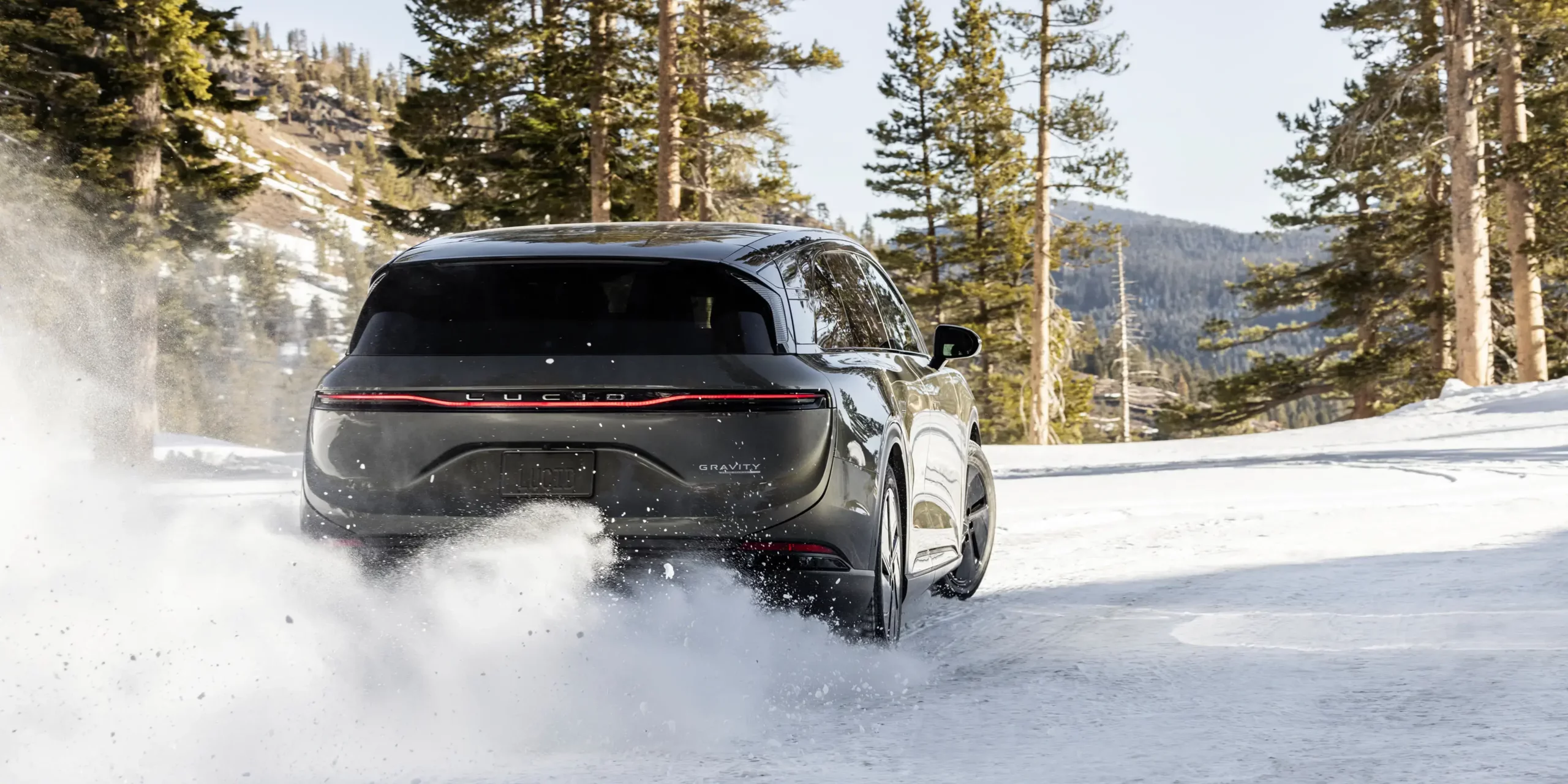
Lucid Is Blaming Someone Else For The Gravity’s Second Recall In Four Months

  • Lucid’s second Gravity recall stems from a supplier change no one approved.
  • A seatbelt anchor weld falls short of federal safety requirements in most SUVs.
  • Affected owners will have their seats repaired or replaced at no charge.

Just a few months after the Lucid Gravity was recalled over seat covers that could prevent the airbag from functioning properly, the electric luxury SUV has been recalled yet again. This time, it’s due to a potential defect in the second-row seatbelt anchors.

The EV maker says that during internal tests for another issue, it discovered the outboard lap belt anchor bracket weld in the second row is shorter than it should be and not positioned correctly. The reason? Lucid says seat manufacturer Camaco made a change to the manufacturing process without notifying the company or obtaining its approval.

Read: Wrong Seat Covers Could Stop This EV’s Airbags From Saving You

Vehicles with an insufficiently welded lap belt anchor fail to comply with Federal Motor Vehicle Safety Standards and may increase the risk of injury in a crash. Unlike December’s recall, which impacted just 66 vehicles, this one is much more widespread.

In fact, the recall involves 4,476 Lucid Gravity models built from December 2, 2024, to February 3, 2026, and listed as 2025-2026 model year vehicles. Of these, 97 percent are estimated to have the issue.

What Happens Next?

 Lucid Is Blaming Someone Else For The Gravity’s Second Recall In Four Months

This recall comes shortly after Lucid issued a brief stop-sale for the Gravity earlier this year as it ran tests to determine whether the seat belts could meet safety standards with or without a reinforcing bracket. Even with a bracket, they failed to meet load requirements, prompting Lucid to ensure the components sourced from Camaco meet its standards.

Lucid will start informing its owners of the recall on May 22. Dealers will inspect impacted vehicles, and if a non-conforming weld is found, it will be repaired with either a reinforcing bracket and adhesive or, if necessary, the entire seat will be replaced free of charge.

\\\\\\

(Free White Paper) 12 Ways to Do More Without Blowing Your Fleet’s Budget

By: STN
1 April 2026 at 07:00

According to our recent survey, 75% of student transportation teams cite driver shortages are the top operational bottleneck. Budget constraints and rising operational costs weren’t far behind.

This white paper outlines 12 practical, proven ways to improve efficiency, control expenses, strengthen compliance, and protect student riders.

Learn how to stretch your transportation budget with strategies that could pay for themselves in a year.

  • Right-size your fleet using actual utilization and ridership data.
  • Optimize routes, stops and fuel use to reduce operating costs.
  • Cut required vehicle inspection times while catching more defects.
  • Reduce idling and emissions for added overhead expense control.
  • Manage driving performance without adding administrative work.

Download the complimentary white paper to access all 12 strategies.

Fill out the form below and then check your email for the white paper download link.

The post (Free White Paper) 12 Ways to Do More Without Blowing Your Fleet’s Budget appeared first on School Transportation News.

April 2026

By: STN
1 April 2026 at 07:00
Superintendent Jennifer Collier poses in front of a school bus
Kansas City Public Schools Superintendent Jennifer Collier.
Cover design by Kimber Horne
Cover photo for Zum by
Alexis Cronk with Cronk & Co Collective.

This month’s issue features the leadership perspectives from superintendents on the importance of student transportation on educational access for students and how they’re navigating in the educational world. The other features look at school transportation mobility models and factors to consider when upgrading current school buses or purchasing new ones. Also, learn more about the intricacies of addressing safety issues, fresh ideas for staff recruitment and training with AI.

Read the full April 2026 issue.

Cover Story

What’s Trending?
Superintendents share how they’re navigating some of the challenges impacting not only education but also transportation operations.

Features

Something Old vs. Something New
Other factors besides cost are considered when districts decide to either upgrade their current school buses or purchase new ones.

How Do Your Kids Arrive at School?
A child can get to school in a variety of ways. Operations discuss how they are ensuring a safe route to school regardless of the mode.

Special Reports

Safety Upgrade Complexities
State laws are normally reactive to various safety related incidents, and Texas and Maine are no different. But experts say that solving one safety issue could create others when retrofitting a fleet.

Conversations
Trends
Ad Index

Editor’s Take by Ryan Gray
You Can’t Spell Training Without AI

Publisher’s Corner by Tony Corpin
Fresh Ideas: Recruitment, Retention

The post April 2026 appeared first on School Transportation News.

$250K in Funds Awarded to Train New Pennsylvania School Bus Drivers

31 March 2026 at 16:33

Pennsylvania officials are investing nearly a quarter million dollars to train new school bus drivers as part of a new program aimed at improving student transportation safety across the state.

The Pennsylvania Department of Transportation said in a statement last month the funding will help seven school districts and transportation providers cover costs tied to training nearly 90 new drivers, including commercial driver’s license training, trainee wages, testing fees and permit costs.

Officials said the funding is part of Gov. Josh Shapiro’s newly established School Bus Safety Program, designed to expand the number of qualified drivers and strengthen safety measures for students traveling to and from school. The national school bus driver shortage remains one of the greatest challenges faced by school transportation.

“Ensuring enough drivers to safely get our students to school is another way we’re focusing on our children’s futures,” said PennDOT Secretary Mike Carroll in a statement.

He added that the funding will help schools and transportation providers make student transportation more reliable.

The funds awarded will support driver training programs across multiple counties. Recipients include the Chartiers Valley School District in Allegheny County, which received $17,256 to train 12 new drivers, and Fullington Auto Bus Company serving Centre and Clearfield counties, which received $42,500 to train 25 drivers.

Other recipients include contractor Krapf School Bus – GKJ Inc. serving Chester, Dauphin and York counties, which received $98,160 to train 32 drivers; Boyo Transportation Services in Dauphin County, which received $31,250 to train 10 drivers; the North East School District in Erie County, which received $8,160 to train eight drivers; the Laurel School District in Lawrence County, which received $1,000 for driver certification costs; and DMJ Transportation in Westmoreland County, which received $50,000 to train additional drivers.

Program award funds comes from fines collected through Pennsylvania’s automated school bus enforcement system. State law allows school buses to use camera systems to capture motorists who illegally pass buses with flashing red lights and extended stop arms.

Officials said $25 of each $300 fine issued through the enforcement system goes toward the School Bus Safety Grant Program. STN contacted the districts awarded but had not heard back at this writing.


Related: Ohio Announces School Bus Safety Grant Recipients for Technology Enhancements
Related: Iowa Launches Inaugural School Bus Safety Week Poster Contest
Related: The Importance of Streamlined Communication in School Bus Transportation for Safety and Efficiency
Related: (STN Podcast E296) Technology Has Blossomed: School Bus Mirrors & Student Safety

The post $250K in Funds Awarded to Train New Pennsylvania School Bus Drivers appeared first on School Transportation News.

Security Expert Shares Key Indicators of Violence for School Transportation Safety

By: Ryan Gray
30 March 2026 at 02:05

CONCORD, N.C.— School bus drivers play a critical role in preventing violence and ensuring student safety, and a seasoned law enforcement veteran is on a mission to equip them with the skills to recognize and respond to warning signs of aggression.

Speaking at the STN EXPO East conferece Friday, security expert Bret Brooks of Gray Ram Tactical emphasized the importance of training drivers to identify behavioral and verbal cues that signal potential violence, empowering them to take proactive steps to de-escalate situations and protect lives.

He shared actionable insights to help bus drivers and school staff recognize warning signs of aggression and prevent violent incidents.

“Every single human being has the potential for violence,” said Brooks, a retired Missouri law enforcement officer with 23 years of experience. “Violence is simply a way of handling a situation. If we can understand the biology behind violence, then we can start to recognize it before it happens and take steps to de-escalate.”

Brooks emphasized that violence is a biological process triggered by seven universal factors: Family, order, restraint, resources, mate, insult, and life or limb. He explained that these triggers, which have evolved over thousands of years, are deeply ingrained in human behavior and can be activated in high-stress situations.

He likened violence prevention training to CPR certification, stressing the need for regular refreshers and hands-on practice. Just as CPR training requires participants to practice chest compressions on a mannequin, he explained, violence prevention training should involve real-world scenarios to prepare bus drivers for high-stress situations. Without such practice, he warned, drivers may not be equipped to respond effectively when faced with a crisis.

The importance of training bus drivers to recognize concealed weapons was another key point in Brooks’ presentation. He noted a troubling trend in which active shooters are increasingly arriving at schools via school buses.

“That means kids with guns, knives, or other weapons are boarding buses, and our bus drivers are unknowingly delivering the murderer to the victims,” he said.

Brooks shared a chilling anecdote about a school bus driver who recentlly and successfully identified a student carrying a gun and planning to harm his girlfriend.

“We just saved somebody’s life because the bus driver could see what was going on, took action and prevented the active shooter,” he said. “That’s what gives me the motivation to keep moving forward.”
Throughout his presentation, Brooks outlined key nonverbal and verbal cues that can signal potential violence. He stressed the importance of observing clusters of behaviors rather than relying on a single indicator.

For example, excessive staring or avoiding eye contact, dropping the chin to protect the airway, rapid or deep breathing, flared nostrils, wringing hands, shedding clothing, standing with feet shoulder-width apart, and shifting weight can all signal aggression. Similarly, verbal cues such as strained speech, increased pitch, parroting or echoing words, repetitive word usage, nervous laughter, forced air exhalation, mass statements, indifference in conversation, and escalating profanity can indicate a loss of self-control and a potential for violence.

Proactive De-escalation

Brooks emphasized the critical role of de-escalation in preventing violence. He explained that when someone’s triggers are activated, it is essential to act immediately to prevent the situation from escalating further. He shared a real-life example of a school bus driver who failed to de-escalate a situation with a student for over 15 minutes, leading to a physical altercation.

“The driver never asked the student why she wanted off the bus. What if she had said, ‘Because I’m being molested in the back.’ That would have changed everything,” Brooks said.

An attendee commented that her school district uitlizes crises prevention training and encouraged her peers to do the same.

Meanwhile, Brooks suggested that bus drivers play the “what-if” game to prepare for potential scenarios.

“Don’t wait for the bad thing to happen. Have a plan ahead of time,” the security expert said. “If you see the train wreck coming, you need to act.”


Related: ‘Care Less Without Being Careless’ Urges Security Expert to Student Transporters
Related: School Violence Grant Provides Opportunity for Threat Assessment Training
Related: Times Are Changing … What Is Your Response to School Bus Violence?
Related: Q&A: Cybersecurity in Student Transportation: Why It Matters, Where It’s Headed


Brooks also acknowledged that the indicators of violence and de-escalation techniques for special needs students differ from those for the general population

“It’s imperative that we do special needs training,” he said. “Special needs drivers should be consistently trained to understand the unique triggers and indicators for these students.”

In closing, Brooks urged school transportation professionals to take violence prevention seriously and to recognize the importance of their role in ensuring safety. “This happens in every other school district, not just yours,” he said. “We have to be open enough to see things for what they are and act to prevent violence.”

By understanding the biological triggers of violence, recognizing key indicators and employing effective de-escalation techniques, school bus drivers and transportation staff can play a vital role in keeping students, staff and themselves safe.

Article written with the assistance of AI.

The post Security Expert Shares Key Indicators of Violence for School Transportation Safety appeared first on School Transportation News.

Update: Tennessee Crash Kills 2 Students During Field Trip

28 March 2026 at 02:41

A Clarksville-Montgomery County School System school bus traveling on a field trip crashed, resulting in at least two student fatalities.

STN received initial information about the Tennessee crash Friday, but details were limited at this report. Law enforcement officers are on scene in Carroll County, where the crash took place around noon Eastern Time.

“First and foremost, our hearts are with the families impacted by this devastating loss,” the Tennessee Highway Patrol released in a statement. A photo of the final resting position of the bus shows it at a steep angle, off the roadway.

Twenty-four students and five adults were on board the school bus at the time. Individuals were transported to the hospital, some via life-flight, while others were taken by ambulance. Two students were pronounced dead at the scene.

While the Tennessee Highway Patrol has not officially released the names of the students, online fundraisers and local media outlets identified the students as two eighth-grade girls: Zoe Davis and Arianna Pearson.

The Tennessee Highway Patrol stated via a press conference that in a preliminary crash investigation, the school bus collided with a Tennessee Department of Transportation dump truck and a passenger vehicle. Video of the crash shows the bus crossing the center line, veering into the other lane of traffic.

Lap/shoulder seatbelts are believed not to have been installed on the school bus. Additional information on the nature of the crash remained unknown at this time.

The Clarksville-Montgomery County School System posted on its website that the community is “grieving the tragic loss of two young lives. Please continue to keep these families in your heart,” the statement reads. “We continue to pray for the students and employees injured and everyone who was affected by today’s accident. The Kenwood Middle community will need our continued support, and we will share opportunities to assist families as details are confirmed.”

Officials noted that counselors will be available to support anyone in our school community and across the district who may need someone to talk to in the days ahead and for as long as needed.

“From the bottom of our hearts, we thank the Carroll County Sheriff’s Office, Tennessee Highway Patrol, Montgomery County Sheriff’s Office, Carroll County School District, First Baptist Church of Huntingdon, TN, and the numerous other law enforcement, emergency medical, and community organizations and volunteers from across the state who have provided tremendous support during this tragedy,” the statement continued.

The article was updated to indicate the crash did not take place during Spring Break. It will continue to be updated as more information is available. 


Related: Tennessee School Bus Bursts Into Flames Moments After Children Evacuated
Related: Tennessee Bill Would Lower Minimum Age for School Bus Drivers to 21
Related: Tennessee School Bus Bursts Into Flames Moments After Children Evacuated

The post Update: Tennessee Crash Kills 2 Students During Field Trip appeared first on School Transportation News.

Minnesota Passes Bill to Strengthen Law on Illegally Passing School Buses

By: Ryan Gray
25 March 2026 at 21:17

The Land of 10,000 Lakes is moving to crack down on motorists who illegally pass stopped school buses with new legislation aimed at enhancing the state’s current law that a Minnesota appeals court saw a loophole in.

S.F. No. 3623 seeks to amend Minnesota Statutes 2024, section 169.444, subdivision 1, the state law on the safety of schoolchildren and the duty of motorists in school zones, to enforce stricter rules for approaching school buses. It heads to the desk of Gov. Tim Walz for signature.

The bill would continue to require motorists to stop at least 20 feet away from a school bus, but only with its red lights flashing, removing language mentioning federally mandated stop arms. This is due to a motorist’s appeal of an illegal passing conviction that made its way to the Minnesota Court of Appeals last year.

In that case, motorist Allison Waln challenged her conviction by arguing that the school bus video evidence showed the stop arm was not fully extended. The appellate court ruled in her favor in September due to ambiguity of how the law defined the word extended.

“In sum, we hold that the plain meaning of the term extended, as used in Minn. Stat. § 169.444, subd. 1, requires a school bus’ stop-signal arm to be fully stretched out before an approaching driver must stop,” the court found.

Legislating a Fix

This led legislators to try and close the loophole by rewriting the traffic code to reinforce that the flashing amber lights notify motorists that the school bus will begin loading or unloading students. The legislation adds language to the state law that motorists must prepare to come to a complete stop when they see the pre-warning flashing amber lights on school buses, which signals drivers that the bus is preparing to stop and activate its red flashing lights. Under the bill, vehicles must not encroach within 20 feet of a school bus when those amber lights are flashing, reinforcing the need for caution in school zones.

The bill also prohibits vehicles from moving until the stop arm is retracted and the red lights stop flashing by replacing the previous language of “shall stop” with “must stop.”

S.F. No. 3623 advanced quickly through the legislative process. Sen. Ann Johnson Stewart introduced the bill, which was referred to the Transportation Committee on the same day, Feb. 17. The committee recommended the bill for passage Feb. 26, and it underwent a second reading. The bill passed its third reading in the Senate March 9 by a vote of 19-7. The House unanimously passed the bill Monday by a vote of 133-0.

The bill would go into effect as law the day after its final enactment rather than the normal date of Aug. 1 for passed and signed legislation.


Related: Action Plan Puts National Spotlight on Hidden Toll of Illegal Passing
Related: Waymo Driverless Vehicles Continue to Illegally Pass School Buses
Related: Minnesota School Bus Driver Rescues Missing 4-Year-Old from Lake
Related: Minnesota Mom Helps Evacuate 22 Students from Burning School Bus

The post Minnesota Passes Bill to Strengthen Law on Illegally Passing School Buses appeared first on School Transportation News.

Every Tesla Is Missing The Door Handle The Cybercab Just Introduced

  • Tesla has designed a new door handle similar to what Audi and Lexus use.
  • The new interior handle houses both the electric and mechanical releases.
  • Other Tesla models will be updated with these safer door releases.

Following a spate of fatal incidents involving Tesla models with door handles that allegedly couldn’t be opened after a crash, and several lawsuits, we now have our first chance to see the new inner door handles that Tesla has developed. Perhaps surprisingly, these new handles have premiered on the self-driving Cybercab.

Development of Tesla’s mass-market robotaxi is continuing, and the carmaker continues to make changes to the car. Recently, a pair of YouTubers had the chance to take an in-depth look at a new Cybercab prototype, revealing the new handles and a slew of other features.

Read: Cybercab Spotted Up Close, Steering Wheel, Panel Gaps And All

In the current Tesla Model 3, Model Y, and Cybertruck, there are individual interior buttons to open the doors, and then physical pulls incorporated into the handles. At the rear, the emergency releases are generally located in the door pockets, beneath a plastic panel, possibly making them hard to find in an emergency, particularly for someone unfamiliar with the car.

Tesla’s solution has been to switch to a small latch that can be lifted lightly to trigger the electronic release, opening the door. If you then pull the same latch harder, it will serve as the manual release. It’s a much better system than the one currently used and is similar to the door latches used by companies like Audi and Lexus, where the electronic and manual releases share the same switch or handle.

Tesla has also gone to the trouble of adding braille to the release, helping those with visual impairments to find it. That’ll be particularly useful in the Cybercab, where people will be driven around by the car’s advanced self-driving suite without anyone else on board. This new door pull is presumably the same one that will be added across all other existing Tesla models.

What Else Is New?

 Every Tesla Is Missing The Door Handle The Cybercab Just Introduced

Several other changes have been made to the Cybercab. For example, it now includes a charging port at the rear, despite initially being presented without one because Tesla only wanted them to be charged wirelessly. However, the more significant change made on a prototype Carscoops recently spied was the presence of a steering wheel, which given the autonomous nature of the Cybercab was a surprise.

\\\\\\

Photos Robert G. | Lead screenshot Kim Java / YouTube

Immigration Enforcement Fears Addressed at School Bus Stops with Increased Resources

24 March 2026 at 23:26

School districts in major cities like Los Angeles and Miami are taking steps to reassure families and protect students amid heightened fears of federal immigration enforcement operations near schools and bus stops.

The Trump administration last year rescinded a 2021 Department of Homeland Security memorandum that recognized schools along with churches and healthcare facilities as safe havens from Immigration and Customs Enforcement operations. All children regardless of their or their parents’ immigration status retain the right to public education, per the 1982 U.S. Supreme Court decision in Plyler v Doe.

No confirmed reports exist ICE agents conducting operations directly at school bus stops, detaining individuals on school buses, or targeting children at these locations. However, operations have reportedly occurred in the vicinity of schools in areas including Los Angeles and parts of Florida, contributing to community anxiety, enrollment drops in some districts and concerns about safe travel to and from school.

In the Los Angeles Unified School District (LAUSD), the nation’s second-largest school system, officials have emphasized campuses and bus stops as safe havens. In January, Superintendent Alberto Carvalho, who was placed on paid leave earlier this month amid an unrelated FBI investigation, said schools must remain places of stability amid fears that “fear doesn’t have a border” and shows up in neighborhoods and school communities.

The school district launched initiatives including the “We Are One” campaign, which provides “Know Your Rights” immigration resources, legal referrals, mental health support, community food distribution, and a 24/7 family hotline. LAUSD has also distributed “Family Preparedness Packets” in multiple languages, outlining steps if approached by immigration officers.

LAUSD affirmed it will not ask about or share a student’s immigration status unless required by law and maintains safe zones around schools.

To address transportation fears, LAUSD is offering individualized school bus routes, expanded transportation options and access to its virtual academy for families preferring online learning. Partnerships provide legal support, and staff have been deployed in high-risk areas for visible presence during drop-off and pickup times.

Bus Driver Training and Protecting Safe Routes to School

In Florida’s Miami-Dade County Public Schools and Collier County Schools across the state on the Gulf Coast, officials have encouraged calm preparation while re-affirming policies. The districts do not collect immigration status information on students or families and will not release records without a judicial warrant signed by a judge.

School personnel, including bus drivers, are instructed to request agent identification and a valid judicial warrant if approached by ICE. Without credentials, bus drivers are to deny entry to non-public areas. Staff have received training on responses, including the right to remain silent. Districts are assisting families with emergency plans, such as designating alternative child pick-up contacts if parents are detained and offering mental health support for students facing fear or trauma.

Meanwhile, Safe Routes to School programs focused on safe travel for students walking or riding to school have adapted to support immigrant families. California’s Alameda County Office of Education and community partners in the San Francisco Bay area have organized foot patrols and rapid response networks near campuses and bus stops. Volunteers receive reflective vests, whistles and air horns for visibility during pickup and drop-off. Trainings cover immigrant rights and protocols if ICE is spotted.

In nearby areas like Hayward, community groups have emphasized collective action, care and visibility to help families feel safer. Transform, an advocacy organization, highlights these efforts as ways ordinary people can protect children during expected enforcement actions, as seen in instances where community readiness coincided with lower attendance on anticipated raid days — though large-scale operations did not materialize.


Related: Florida School Districts on Edge About Possible School Bus Immigration Raids 
Related: District Responds to Parents Fears About Immigration Raids on School Buses
Related: School Districts Seek Student Protections from Immigration Enforcement
Related: Volunteers Help Immigrant Parents in Chicago Participate in Walking School Bus

The post Immigration Enforcement Fears Addressed at School Bus Stops with Increased Resources appeared first on School Transportation News.

Pupil Transportation Around the World: A Comparative Look at U.S., Brazil

24 March 2026 at 22:14

When I began working with transportation professionals throughout Brazil, I quickly realized that pupil transportation in the country cannot be understood through a single framework. Brazil is vast in geography, diverse in terrain and decentralized in governance.

To truly understand how students reach school each day, one must travel from the dense urban centers of São Paulo to rural interior roadways and meet with government officials and politicians in the nation’s capital of Brasília. My experience working in both urban and rural regions of Brazil has provided a unique vantage point, especially when viewed alongside my work in pupil transportation across the U.S.

While the operational structures of Brazil and the U.S. differ in important ways, there is one highly visible and symbolic similarity between both nations: The yellow school bus. In the U.S., the yellow school bus is an unmistakable national symbol. The color itself—National School Bus Glossy Yellow—was nearly 80 years ago because it is highly visible in early morning light and poor weather conditions. Across suburban neighborhoods, rural highways and city streets, the yellow bus signals one consistent message: Children are present and safety must take priority.

Brazil, particularly since the launch of the federal Caminho da Escola or school transportation program in 2007, has adopted a remarkably similar visual standard. The “Ônibus Escolar Amarelo” is now widely deployed throughout rural regions. Like its American counterpart, it is painted a highly visible yellow and clearly marked “Escolar,” the Portuguese word for school-related.

I was struck by how familiar they appeared when first observing these buses operating in Brazil. Although I was thousands of miles from home, the visual message was the same. The yellow bus communicates protection, structure and official oversight.

The similarity in appearance is not accidental. Both countries recognize that visibility enhances safety. The bright yellow exterior improves driver awareness, reduces the likelihood of collisions, and creates a distinct identity separate from other commercial vehicles. In both Brazil and the U.S., the yellow bus is not simply transportation. It is a public safety device.

The Yellow Contrast in Brazil

Despite the shared symbolism, the systems supporting these buses differ. U.S. pupil transportation is typically managed at the local school district level with strong state oversight and federal safety standards governing vehicle manufacturing. School buses are purpose-built with compartmentalized seating, reinforced structures, flashing light systems, and strict inspection requirements. The system operates largely independent of public transit. Students ride fleets dedicated exclusively to school transportation.

With Brazil pupil transportation, municipalities are responsible for operations, but the federal government plays a larger role in procurement. Through Caminho da Escola, the federal government negotiates large-scale purchases of school buses and distributes them to municipalities at reduced cost. This centralized purchasing strategy allows smaller or economically challenged communities to access standardized vehicles that meet national safety criteria.

In rural Brazil, the yellow buses are engineered for durability in ways that reflect environmental necessity. Many operate on unpaved roads that become muddy during rainy seasons. Elevated chassis, reinforced suspension systems and structural adaptations are essential for reliability. In some regions, the bus must withstand terrain conditions that would challenge standard suburban routes in the U.S.. Yet the mission remains identical: Transport students safely and consistently.


Related: Pupil Transportation Around the World: A Comparative Look at U.S., Australia
Related: Pupil Transportation Around the World: A Comparative Look at U.S., Germany
Related: Pupil Transportation Around the World: A Comparative Look at the U.S. and Colombia
Related: Pupil Transportation Around the World: A Comparative Look at the U.S. and India
Related: What Differs Between Pupil Transportation in the U.S. and the U.K.?


Urban environments reveal another contrast. In most American cities, even large metropolitan districts operate their own dedicated yellow bus fleets. Public transit and pupil transportation are separate systems. In Brazil’s largest cities, however, many students rely on municipal bus networks or metro systems for pupil transportation. Student transit passes are common, and integration with public infrastructure is routine. While yellow buses operate in certain urban districts, especially younger students or specialized routes, the system often blends with general transit operations.

This integration model reflects infrastructure development patterns unique to Brazil. However, in rural regions where public transit is unavailable, Brazil’s yellow bus functions almost identically to its American counterpart. Routes are established, drivers are assigned and communities rely on the bus as the primary gateway to education.

A new school bus to serve rural students who live in the municipality of Corumbá in southwestern Brazil. (Photo courtesy of Prefeitura de Corumbá,)

A Road to Equity

Both nations face rural transportation challenges. In the U.S. Midwest and Mountain West, students may travel long distances on paved highways. In Alaska, geographic barriers sometimes require alternative solutions. Brazil shares similar distance challenges but adds terrain and environmental complexity. In the Amazon Basin, rivers serve as transportation corridors. School boats operate in tandem with buses, ensuring that students in riverine communities have access to classrooms.

Funding structures also illustrate differences and similarities. In the U.S., transportation funding varies by state and is often influenced by local tax bases. Wealthier districts may operate newer fleets, while underfunded districts face maintenance pressures. Brazil’s PNATE policy provides federal transfers based on rural student enrollment, helping reduce disparities between municipalities. While funding challenges persist in both countries, the commitment to providing transportation as a means of educational access is evident.

Safety culture remains central in both systems. The U.S. enforces strict stop-arm laws and driver certification standards, creating a nationally recognized safety environment. Brazil has made significant progress in standardizing vehicle procurement and improving oversight. While enforcement consistency may vary across municipalities, the growing presence of standardized yellow buses has strengthened safety expectations nationwide.

Working in both Brazil and the U.S. has reinforced a powerful truth for me. The yellow school bus is more than paint and steel. It is a shared commitment to children. Whether rolling through an American suburb at sunrise or navigating a rural Brazilian roadway at sunset, the yellow bus represents society’s promise to protect students on their journey to education.

Despite differences in governance, infrastructure and funding models, both nations use the yellow bus as a visible expression of pupil transportation creating educational equity. It signals that geography should not determine opportunity. From U.S. neighborhoods to Brazilian riverbanks, the daily movement of students remains one of the clearest indicators of national priorities translated into action. The yellow bus, in both countries, stands as a symbol of safety, reliability, and the enduring importance of getting children to school.


Bret Brooks

Bret E. Brooks is the chief operating officer for Gray Ram Tactical, LLC, a Missouri-based international consulting and training firm specializing in transportation safety and security. He is a keynote speaker, author of multiple books and articles, and has trained audiences around the world. He can be reached at BretBrooks@GrayRamTacticalTraining.com.

The post Pupil Transportation Around the World: A Comparative Look at U.S., Brazil appeared first on School Transportation News.

Child Sexual Assault Charge for Colorado School Bus Driver

24 March 2026 at 21:04

Police arrested a suburban Denver school bus driver on suspicion of sexually assaulting a child.

Officers for the Lakewood Police Department were notified March 11 of a possible assault involving a 10-year-old student and the child’s school bus driver, identified as 64-year-old Robert Charles Watters, according to authorities.

A child reported that the Jefferson County Public Schools driver had engaged in what investigators described as an “inappropriate relationship,” prompting an immediate investigation.

Watters turned himself in March 12 and was taken into custody. He was arrested and faces charges on suspicion of sexual assault on a child involving a pattern of abuse and a position of trust, police said.

The allegations stem from what police called an inappropriate relationship. No further details were provided.

“As part of this investigation, detectives are asking anyone who may have information or believes they may have been a victim or witness to come forward,” police said in a March 13 statement posted to Facebook, urging the public to contact the Lakewood Police tip line.

Watters remained in custody at the Jefferson County jail as of March 13, authorities said.

According to police, Watters has worked as a school bus driver for Jefferson County Public Schools near Denver since 2018. He drove Hutchinson Elementary School students on the C-49 route from 2021 to 2023 and had been assigned to the C-31 route since August 2023.

Officials emphasized that the charges are allegations and that Watters is presumed innocent unless proven guilty in court.

Police continue to investigate and are asking anyone with information related to the case to contact authorities. The investigation remains ongoing.


Related: Maryland School Bus Aid Charged with Sexual Assault
Related: Louisiana School Bus Driver Arrested Amid Sexual Assault Charges
Related: Connecticut School Bus Driver Charged After Alleged Failure to Stop Assaults
Related: Virginia School Bus Aide Arrested for Alleged Assault

The post Child Sexual Assault Charge for Colorado School Bus Driver appeared first on School Transportation News.

(STN Podcast E299) Meeting Needs: Answering Questions on Alternative Student Transportation

24 March 2026 at 20:54

Learn more about our upcoming April magazine, inflation and fuel prices, internet for school buses, record revenue for Zum, district efforts amid ICE enforcement, and a driver dressing to impress.

Michael Signer, chief policy and legal officer for EverDriven, discusses the evolution of alternative student transportation from safety and regulatory perspectives to help school districts meet student needs alongside yellow buses.

Read more about operations.

This episode is brought to you by Transfinder.


Conversation with EverDriven
.


Stream, subscribe and download the School Transportation Nation podcast on Apple Podcasts, DeezeriHeartRadioSpotify and YouTube.

The post (STN Podcast E299) Meeting Needs: Answering Questions on Alternative Student Transportation appeared first on School Transportation News.

❌
❌