Login
LoginFord Killed Fiesta For A Crossover, Now It Might Return Like This
- Ford Fiesta could return as an all-electric model in Europe.
- It will ride on Renault’s 400-volt AmpR Small platform.
- Hotter ST version may join the lineup with around 200 hp.
Once thought to be permanently axed in favor of the Puma subcompact crossover, it appears the Ford Fiesta is poised for an electrified resurrection. The Blue Oval has turned to its strategic partnership with Renault Group to develop two affordable electric cars for Europe based on the French automaker’s AmpR Small platform.
Future Cars: Mercedes’ Smallest SUV Points To A Different Kind Of Compact Future
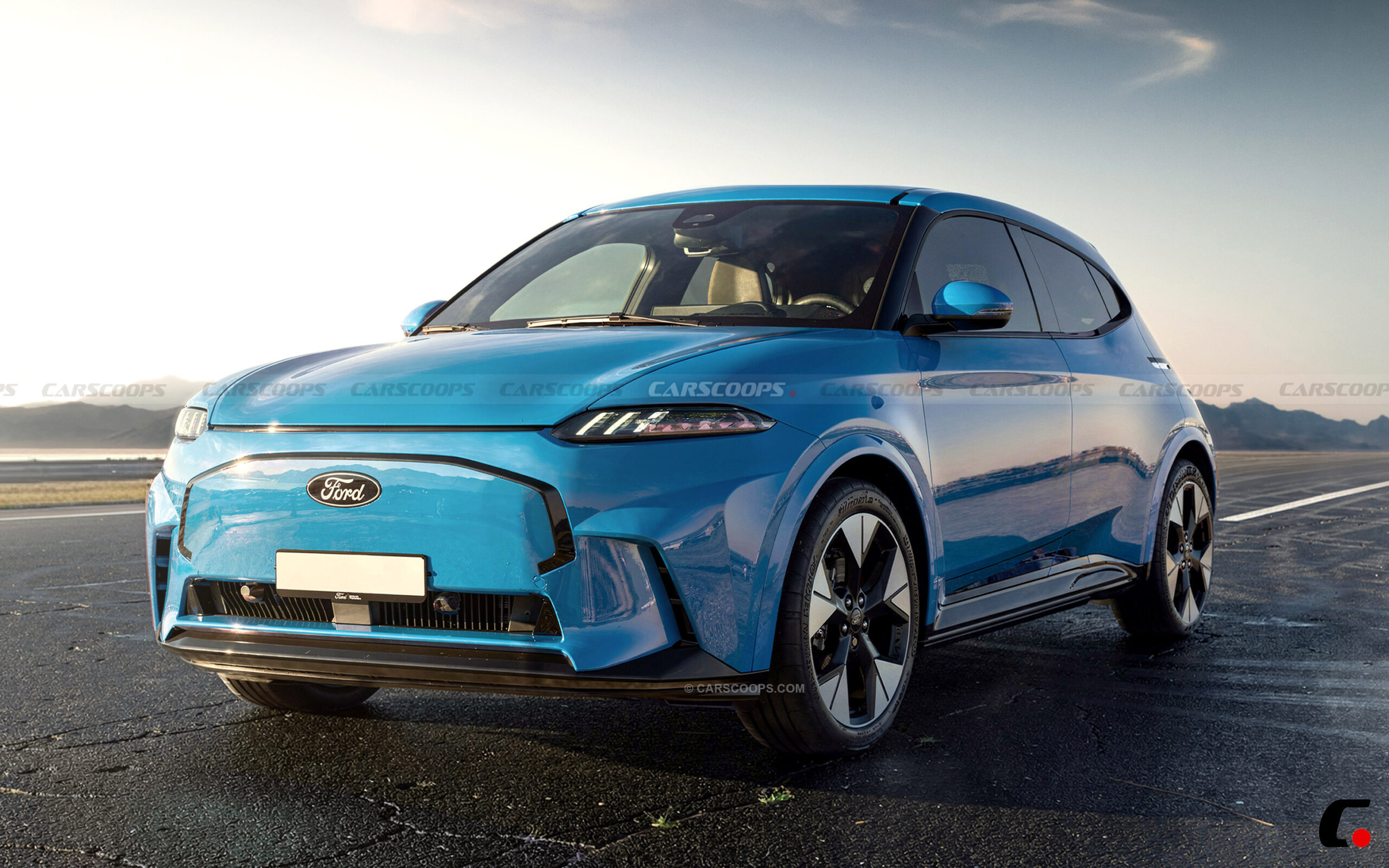
While the Fiesta EV has yet to be officially confirmed, intel suggests it’s all systems go. So we’ve pulled together everything we know so far, along with what to reasonably expect, including an exclusive illustration previewing how Ford’s smallest electric hatch might look in production form.
Fresh Look, Familiar Proportions
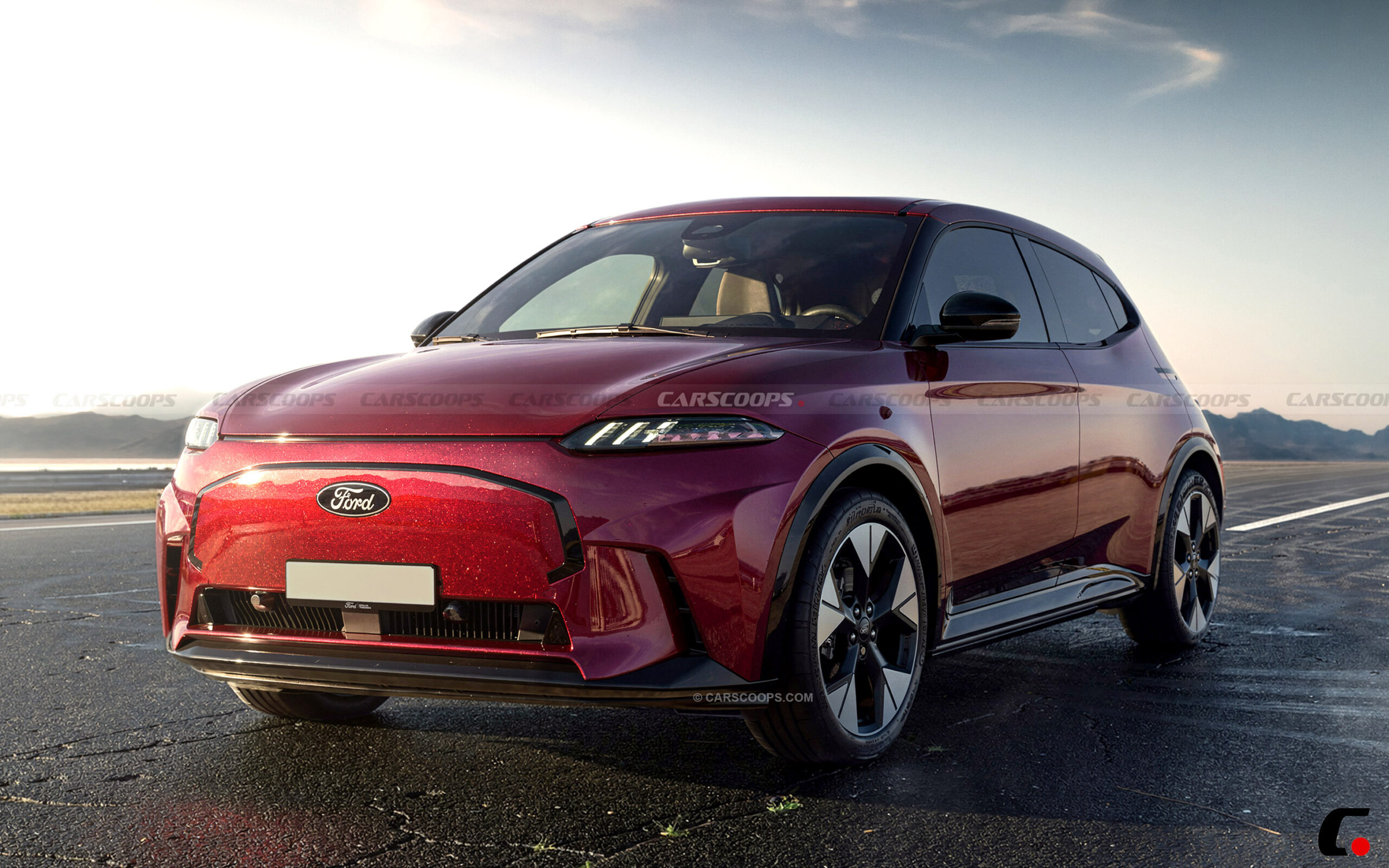
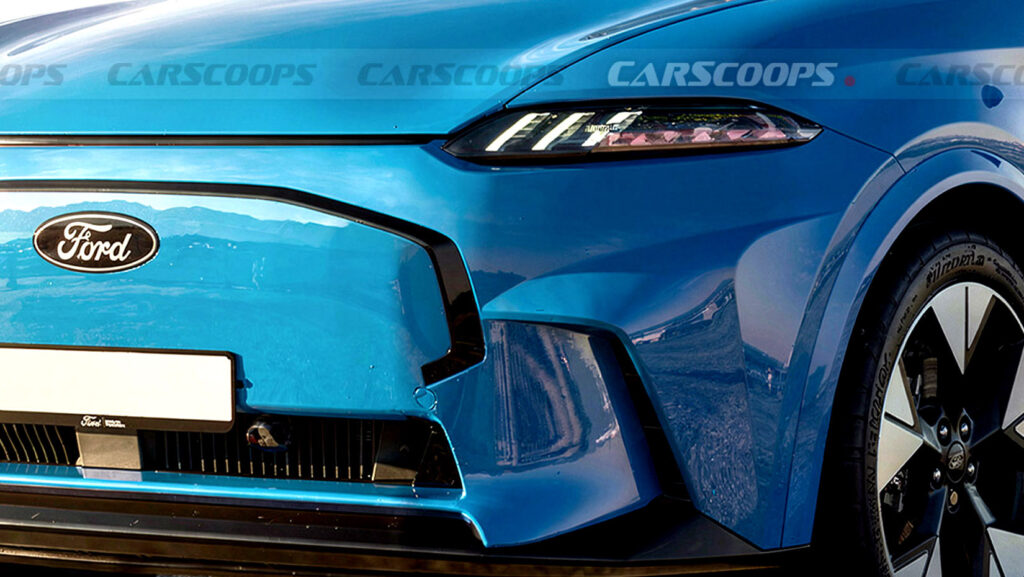
The basis for my render is the Renault R5, which is evident in its bite-size dimensions, short overhangs, and upright windscreen. Upfront, it adopts a clean, closed-off nose typical of most EVs with a smooth panel framed by a gloss-black moustache motif. Slim headlights with tri-DRLs sit high on the fascia, while subtle air intakes below aid cooling without adding visual clutter.
Read: Ford Quietly Ends Focus Production After 27 Years Without Even Saying Goodbye
In profile, it’s defined by a gently rising beltline, blacked-out a-pillars, and curvaceous surfacing inspired by Ford’s radical ‘Start’ that debuted in 2010. Out back, it appears wider due to a contrasting horizontal line that connects the taillights and the lower bumper, which sports a centrally located vertical fog lamp.
A Smart Interior
Inside, the Fiesta is expected to be a tech-laden affair, owing much of its electronic hardware to its French-supplied architecture. Sure, it’ll feature Ford-specific fonts and graphics, but underneath the dual 10-inch digital instrument cluster and infotainment screen, it’s a Google-based Renault operating system with over-the-air update capabilities.
Future Cars: Ford’s $30K Pickup Wants To Beat Cybertruck At Its Own Game
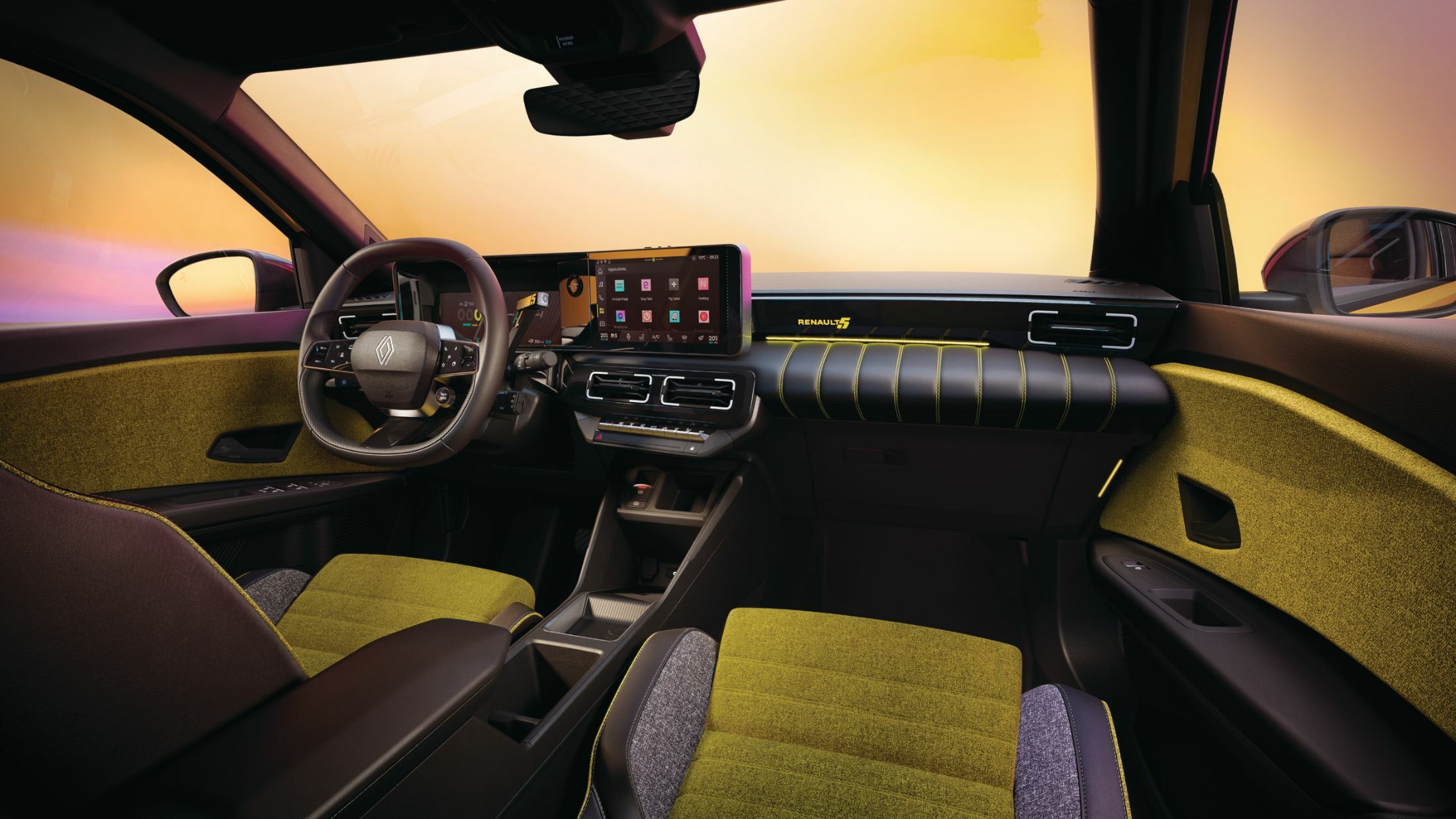
Material quality should improve, with soft-touch surfaces and recycled fabrics replacing the budget plastics of past Fiestas. The dedicated EV platform should also help liberate cabin space, with overall dimensions expected to closely shadow those of the Renault 5.
The electric French hatch measures 3,922 mm (154.4 inches) in length, 1,774 mm (69.8 inches) in width and 1,498 mm (59.0 inches) in height, with a wheelbase of 2,540 mm (100.0 inches). Sharing the same underpinnings, the Fiesta EV should sit in virtually the same size class, even if Ford gives it its own visual character.
Renault Platform
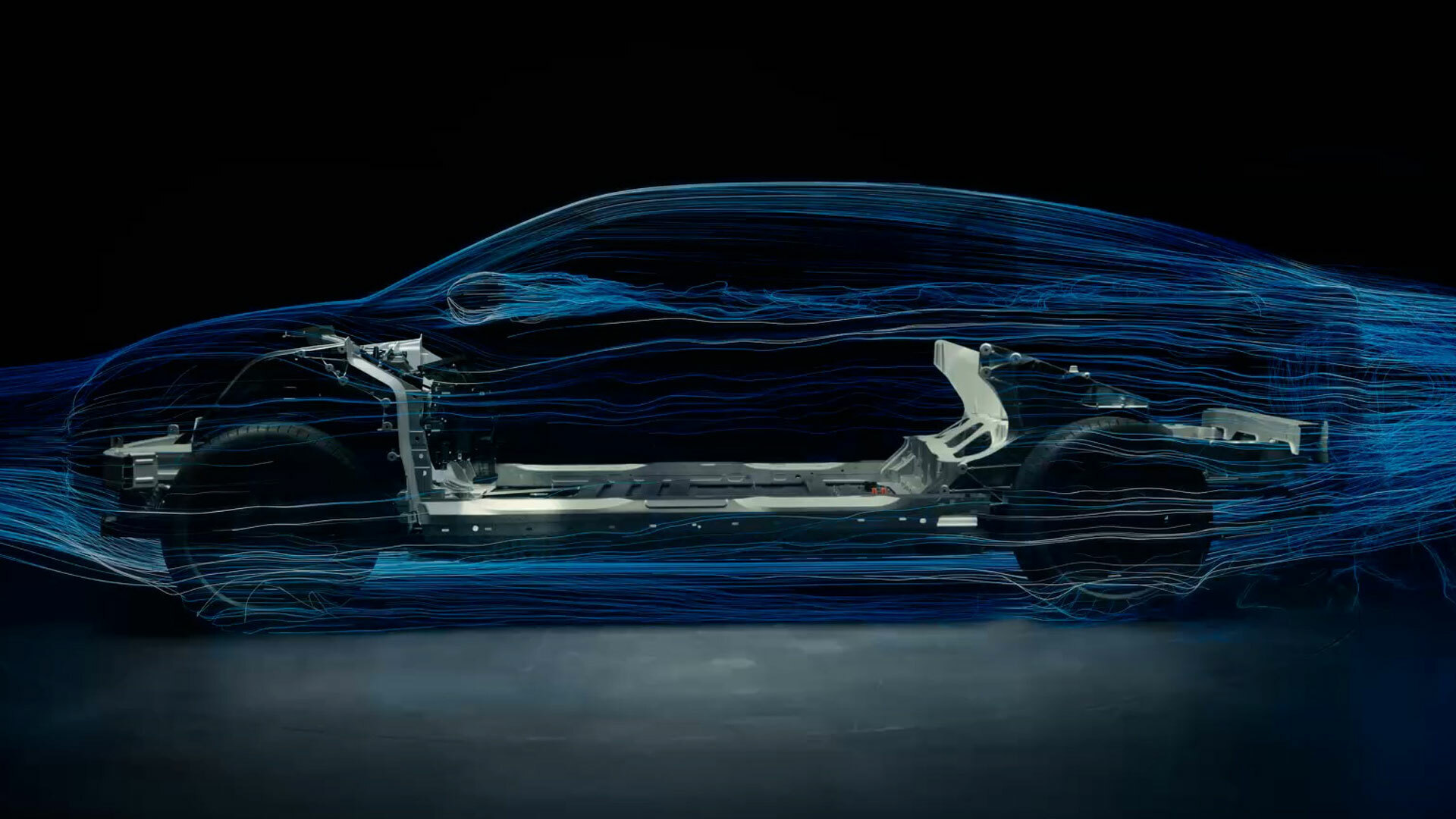
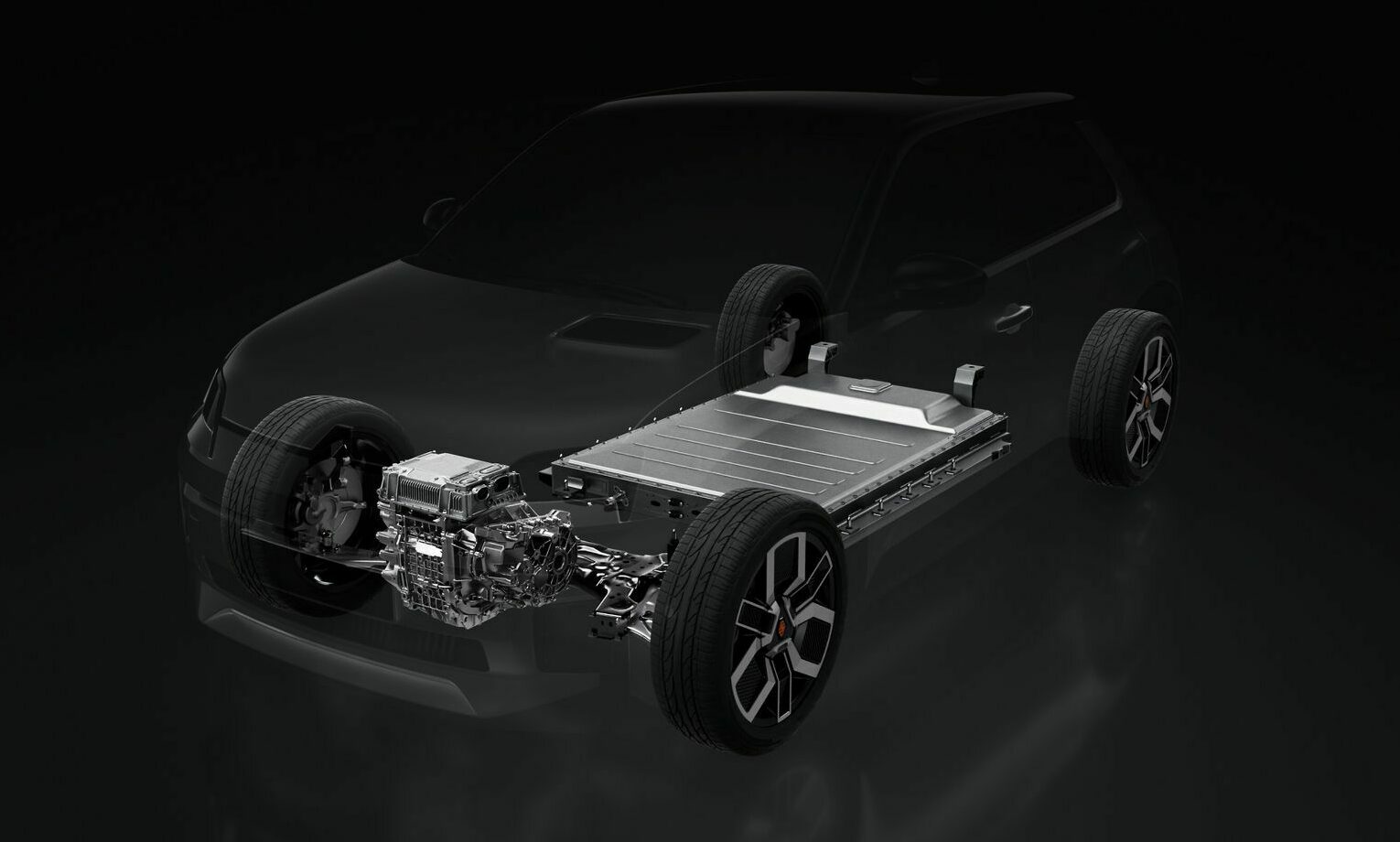
Based on the Renault group’s 400-volt AmpR-Small architecture, Ford Europe engineers will work their magic on ride and handling. It will likely have a multi-arm rear suspension and a low-mounted battery for comfort and taut body control.
Watts Over EcoBoost
Before the axe fell, the last Fiesta had a cracking wee 1.0-litre turbocharged 3-cylinder engine. Sadly, the three-pot thrum will be replaced by a front-drive, single-motor electric setup. It’s not all bad, though, with outputs projected to be in the 120-150 hp (88–110kW) range. We’d expect a spicier ‘ST’ variant to come later with up to 210 hp.
Also: Farley Says Ford Couldn’t Compete With Toyota And Hyundai, So It Stopped Trying
Expect 40 kWh and 52 kWh NMC battery options, with a range up to 248 miles (400km) on the WLTP cycle. Using the R5 as a reference, DC fast charging will max out at 101 kW, and it is expected to have vehicle-to-load and vehicle-to-grid capabilities.
Rivals And Reveal
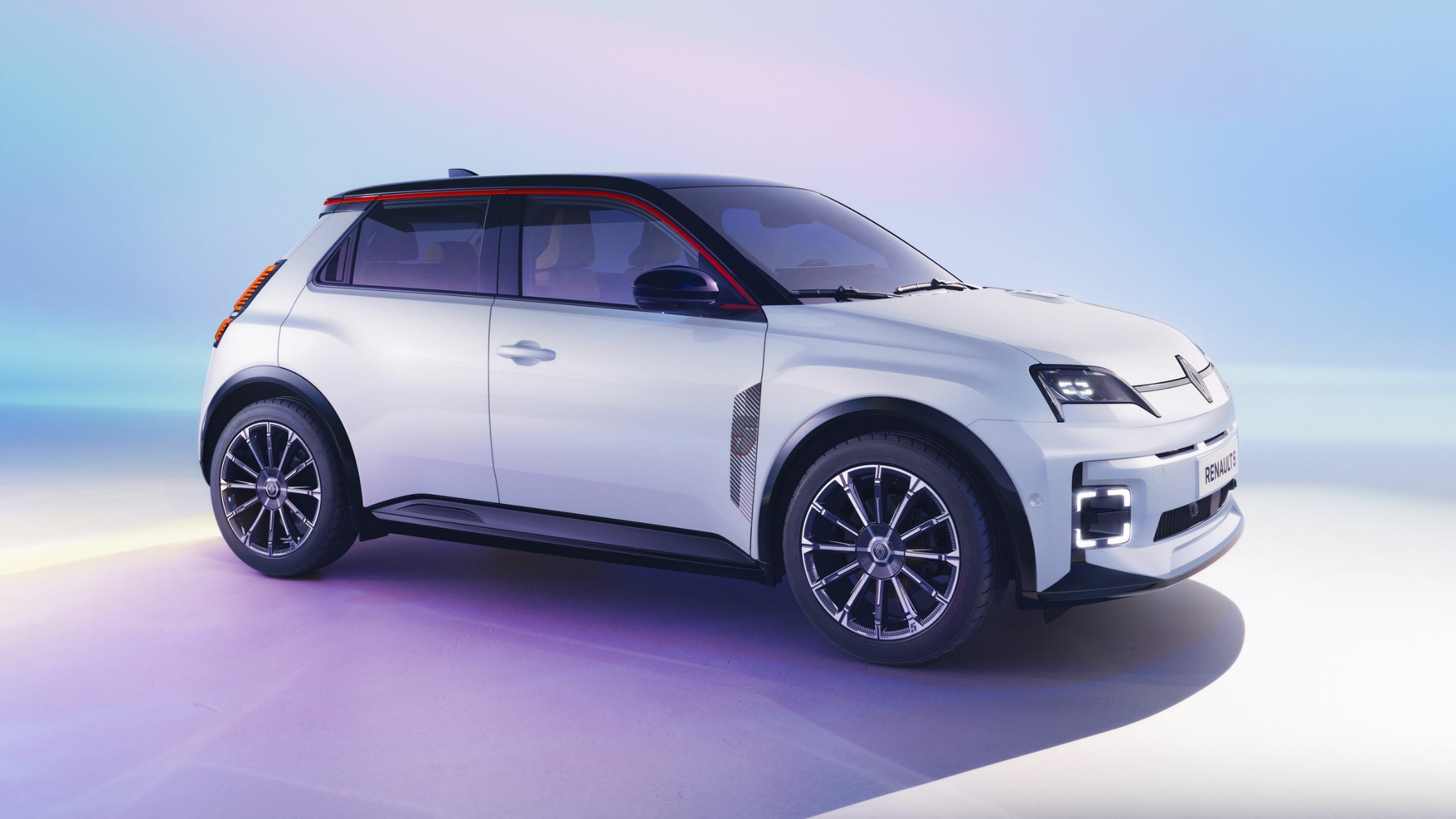
Competition will be fierce. Likely rivals include the Peugeot e-208, Opel Corsa-E, Cupra Raval, Kia EV2, Renault 5 E-Tech and Volkswagen ID.Polo. More about the Fiesta EV is expected to surface in the next 12 months, with a potential reveal likely to be late next year or early 2028.
Could it be offered outside Europe? It’s possible. But given the current tariff landscape, the Fiesta’s small footprint, and America’s cooling appetite for EVs following the end of the federal tax credit last year, a US launch feels highly unlikely.
Would you like to see the Fiesta reborn as an affordable EV? We’d love to hear your thoughts in the comments below.





 Gladys De Lucio is the Director of Transportation for East Aurora School District 131, one of Illinois’ largest Spanish-speaking districts. With 21 years of experience in school transportation, she oversees daily operations with a strong focus on safety, bus stop planning, and community engagement. De Lucio leads both traditional bus services and alternative transportation programs, working closely with bilingual dispatch teams to support non-English-speaking families. Her deep commitment to equitable access ensures that every student has reliable transit to and from school. She holds a degree from Robert Morris University–Illinois.
 Leon Fornelli, MBA, is the Area General Manager of Alternative Transportation at First Alt®, where he leads inclusive student transportation programs across nine states. A seasoned leader in education logistics, Fornelli develops and scales operations from the ground up, always with safety, equity, and innovation in mind. He’s deeply committed to increasing access, amplifying parent and community engagement, and building systems that meet diverse student needs, including non-traditional routes and support. Fornelli also champions technology integration and workforce development in transportation services.
 As Vice President of First Alt®, Gregg Prettyman brings more than 13 years of leadership in alternative student transportation and is recognized as one of the original architects of the alternative transportation model. Before joining First Student, Prettyman served as Chief Operating Officer at ALC Schools, where he supported over 400 district contracts across 20 states, and oversaw more than 10,000 student trips each day. Today, he leads a team with over 50 years of combined experience, all focused on helping districts deliver safe, reliable, and cost-effective transportation for students with unique needs.