Three U.S. Environmental Protection Agency (EPA) webinars during the first two weeks of March will include information on the proposed expansion of eligible fuels under the revamped Clean School Bus Program (CSBP) that is expected to roll out soon.
EPA announced the time for the March 3 webinar on last week’s Request for Information, which seeks public comment on the feasibility of adding biodiesel and renewable diesel as fundable fuels. A source familiar with the program said the inclusion of liquefied natural gas and hydrogen, which are not currently available options for school buses, satisfy language contained in the 2021 Infrastructure Investment and Jobs Act that created the CSBP.
March 4 is the date for a second webinar designed to give school districts and bus companies the next steps in finalizing clean school bus projects funded by the 2023 rebate program with an overview of the close out form.
A March 10 webinar will share additional information on the 2023 project close outs EPA said is necessary to complete programs “effectively and efficiently while also ensuring they meet the conditions of their funding opportunity.”
Specifically, EPA said it is targeting potential waste, fraud and abuse by sharing guidance school districts and bus companies should use as they wrap up their projects.
Officers with the Washington Township Police Department helped free a school bus stuck in deep snow during a powerful winter storm hitting the East Coast.
It has been a season of severe winter storms in New Jersey and much of the Northeast as well as Southeast and Midwest. Even before last week’s Nor’Easter storm, New Jersey student transportation was impacted.
The Washington Township Police received a call Jan. 28 just before 9 a.m. that a school bus with children on board was stranded on a road covered with snow and ice. Officers responded quickly, working as a team to clear snow from around the tires and shovel behind the school bus to give it traction. Once freed, the bus driver safely continued the route.
“This is what Community Caretaking looks like,” the department wrote in a social media post highlighting the rescue.
Then came last week’s Nor’Easter, which closed school for several days across New Jersey and at least eight other states in the Northeast and New England.
New Jersey Office of Emergency Management operating under the Division of the New Jersey State Police issued a mandatory statewide travel restriction due to heavy snowfall, blizzard-like conditions, and strong winds that made travel hazardous. The restriction, which began at 9 p.m. on Feb. 22, was extended through noon the following day, to give road crews time to clear snow-covered roadways and ensure public safety.
Under the official travel ban, all non-exempt vehicles were prohibited from operating on state, county, municipal and interstate roads. Exemptions included emergency responders, public works and snow removal crews, transportation personnel, healthcare workers, utility crews, and others supporting essential services.
Officials urged residents to avoid non-essential travel until conditions improved, noting that slick, snow-packed roads and limited visibility could persist even after the restriction was lifted.
The storm dropped significant snow across parts of New Jersey and left many roadways treacherous, prompting ongoing cleanup efforts by municipal crews and state agencies.
SEATTLE, Wash. — Zonar, a leader in smart fleet management and compliance solutions, today announced it has become the first telematics provider certified by the California Air Resources Board (CARB) to support Clean Truck Check (CTC) compliance through OEM-installed vehicle integrations. With 14+ years of the Zonar V4 telematics box installed on approximately 400,000 Freightliner Cascadia, Thomas Built Buses, and Western Star trucks at the factory, any fleet operating these vehicles in California today can immediately access the solution.
A first in the industry, this expanded executive order allows fleets operating California CTC-regulated vehicles to meet emissions compliance requirements without physically connecting to the vehicle’s diagnostic port or installing additional aftermarket hardware.
Why Zonar’s CARB Emission Solution Is Different
CARB’s Clean Truck Check regulation requires non-gasoline vehicles over 14,000 lbs operating in California to submit emissions data on a recurring schedule. Until now, compliance typically required:
Manual scans at a shop or yard.
Third-party service providers.
Vehicle downtime and scheduling complexity.
Zonar’s newly approved certification introduces a new compliance pathway.
With this executive order, OEM-installed and hardwired Zonar devices, already embedded in supported vehicles, can automatically collect and submit required emissions data directly to CARB. No shop visits. No plug-in scans. No operational disruption.
Zonar is the only provider whose CARB executive order explicitly permits compliance via a hardwired vehicle harness, not just a direct OBD connection.
Who This Impacts
With large and distributed fleets facing increasing compliance frequency, moving to four checks per year beginning in 2027, this certification directly benefits:
Fleets operating in California subject to CARB Clean Truck Check requirements.
OEM-equipped vehicles, including factory-installed telematics configurations.
School transportation, transit, and commercial fleets seeking to reduce downtime and compliance risk.
Mixed and transitioning fleets, where OEM-equipped vehicles can now meet compliance requirements without operational inconsistency.
Fleets can now achieve CARB compliance automatically, in the background, using hardware already installed in their vehicles, either as a standalone emissions solution or alongside Zonar’s broader telematics, diagnostics, and maintenance offerings.
First to Market Again
Zonar was the first telematics provider certified by CARB as a continuously connected Clean Truck Check solution and is now the first, and only, provider approved for OEM-installed and hardwired configurations.
This milestone reflects years of close collaboration with CARB, OEM partners, and Zonar’s in-house engineering team to meet the most rigorous regulatory and technical standards.
“CARB compliance is becoming more frequent, more complex, and more disruptive for fleets—but it doesn’t have to be,” said Amit Anand, SVP of Product at Zonar. “Because we design our own hardware, work directly with OEMs, and partner closely with CARB, we were able to deliver a solution no one else in the market could. This certification removes downtime, eliminates guesswork, and allows fleets to stay compliant automatically using technology they already have.”
Why Zonar’s OEM-Certified CARB Emission Solution Changes the Experience for Fleets
With Zonar’s Emission Check, fleets experience:
No downtime for compliance scans.
Earlier detection of emissions issues within CARB’s compliance window.
Lower cost compared to manual or third-party scans.
Future-readiness as CARB enforcement and inspection frequency increases.
With enforcement tied to vehicle registration, roadside inspections, ports, and rail yards, CARB compliance is no longer optional. Zonar’s solution helps fleets meet these requirements proactively and seamlessly, reducing risk while keeping vehicles on the road.
About Zonar Systems:
Zonar combines a unified fleet management platform with reliable telematics hardware and always-on human support giving mission-critical fleets precise, trustworthy data to improve safety, ensure compliance and reduce operating costs. Proven every day in pupil transportation, where it safeguards millions of children, Zonar’s technology and partnership deliver the trust, transparency and confidence public-sector, field service and vocational fleets need to perform when it matters most. To learn more, go to www.zonarsystems.com.
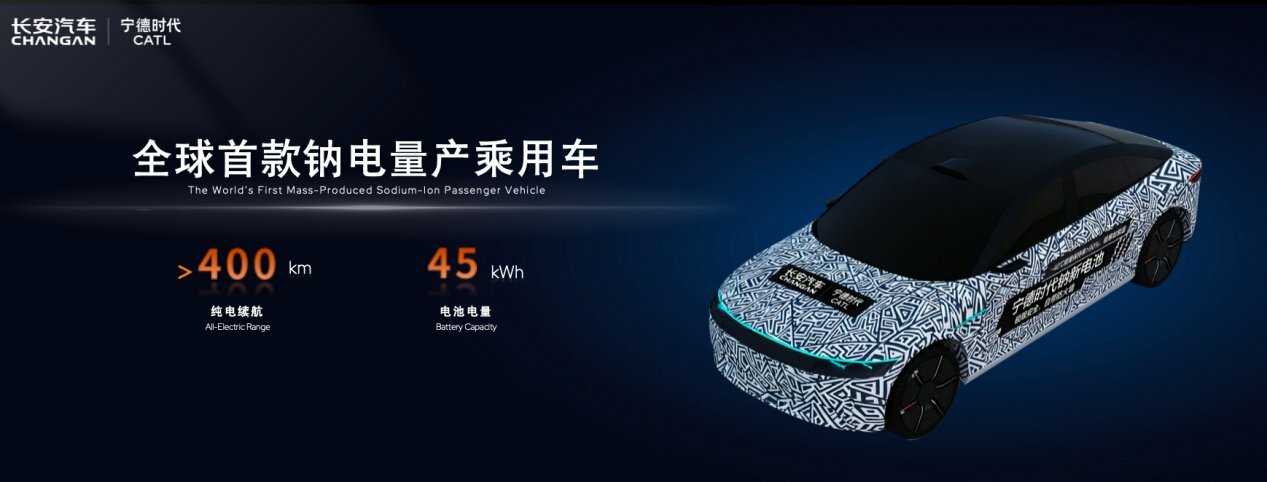
The new battery delivers 400 Wh/kg energy density.
Mass production is planned to begin next year.
BYD, SAIC, GAC, and CATL are developing similar packs.
Solid-state batteries have been “just around the corner” for what feels like an entire EV generation. Now, they might actually be arriving. In the third quarter of this year, China’s Changan will begin fitting its new solid-state packs to robots and EVs, with full mass production slated for 2027.
According to Chinese media, Changan claims its new solid-state battery has an energy density of 400 Wh/kg, and EVs using it will be able to travel upwards of 932 miles (1,500 km) on a single charge. While you could argue that this much range borders on excessive, it would make future Changan models far better suited to long road trips through remote areas where charging infrastructure remains sparse.
Breakthrough Energy Density
The pack is called the Golden Bell. Aside from being very energy-dense, it is said to be 70 percent safer than a conventional EV battery and, because this is 2026, it also uses artificial intelligence for remote diagnostics. Smarter batteries, apparently, are part of the plan.
Changan will build these units under its new Jingzhongzhao solid-state battery brand. The company intends to manufacture fully solid-state packs while also producing liquid and semi-solid-state batteries that rely on a liquid electrolyte.
China’s Solid-State Push
It is not alone. Other Chinese brands are also edging closer to making solid-state batteries mainstream. Earlier this year, Dongfeng Motor began testing its own solid-state battery in extreme cold weather. It has an energy density of 350 Wh/kg and a claimed range exceeding 620 miles (1,000 km). It also plans to roll them out in production cars this year, aiming for September.
BYD, Chery, SAIC, GAC, and CATL are all chasing similar breakthroughs. So are legacy names such as Mercedes-Benz, VW, BMW, Toyota, Nissan, Hyundai, and Honda. After years of promising headlines and laboratory milestones, solid-state batteries may finally be edging toward something tangible. If they deliver on even half of these promises, combustion engines will have one more reason to feel nervous.
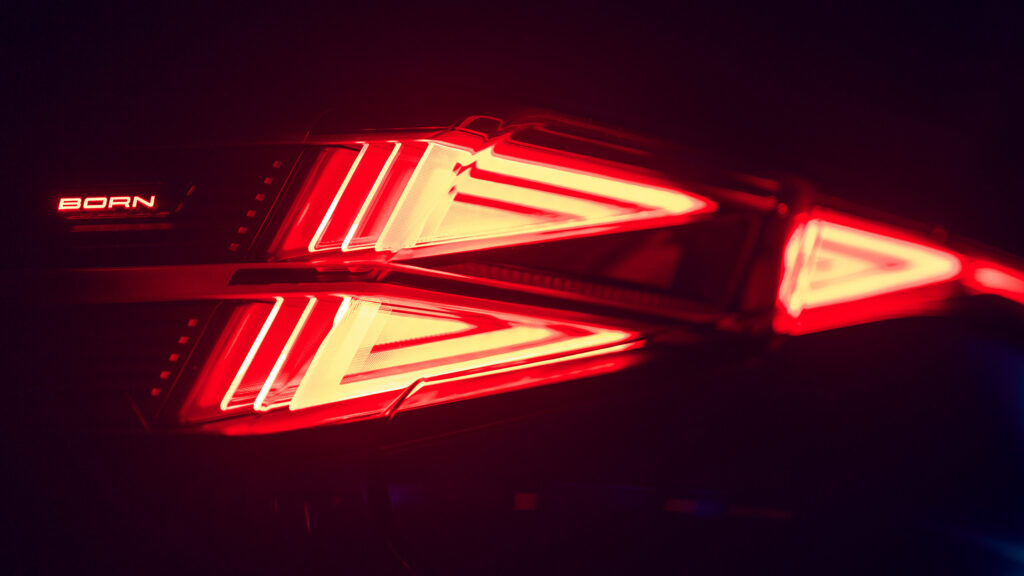
Cupra Born facelift teased with sharper triangular lights.
Already great interior quality set to get another boost.
Growing brand’s new-look EV makes its debut March 5.
Cupra is at it again, reminding us why its versions of big-name Volkswagens are almost always superior to the real thing. This time, the Spanish brand has teased an updated Born, its sportier take on the VW ID.3, and we’ll get to see the full makeover on March 5.
The biggest change is visual, and it seems like it’ll be hard to miss. The updated Born adopts Cupra’s latest design DNA, complete with triangular Matrix LED headlights and a matching triangular lighting graphic at the rear. There’s also an illuminated rear badge because lit logos are the car design world’s new LED light bar.
We’ve spied disguised prototypes of the facelift Born testing a couple of times, and those images suggest redesigned bumpers and a taller lower grille augmented by vertical outer vents that make the EV look tougher and wider.
Tech Upgrade
The Born’s cabin already makes the ID.3s look cheap and dull (though VW did improve the materials a couple of years ago), and Cupra says we should expect even better quality and more technology in the refreshed car. But it’s not like the brand has a ton to do in this area, having already upgraded the Born to VW’s much-improved 12.9-inch touchscreen in 2024.
Few Below-Surface Changes
Under the skin, things are more mysterious, and we’re guessing that’s because it’s all carried across from the current hatch. Cupra hasn’t confirmed any technical changes, and the current Born is already competitive for electric range and performance in its class. So this update could be more about feel and flair than extra kilowatts. Still, a little surprise boost wouldn’t hurt.
As of today, Cupra skips the low-tune motor options offered in entry-level VW ID.3s and jumps straight to a 228 hp (231 PS / 170 kW) single-motor setup with a choice of 59 or 79 kWh batteries, giving up to 354 miles (570 km ) between fills. Hot hatch fans can upgrade to Cupra’s version of the ID.3 GTX, the Born VZ, which comes with a 322 hp (326 PS / 240 kW) motor, again driving the rear wheels only.
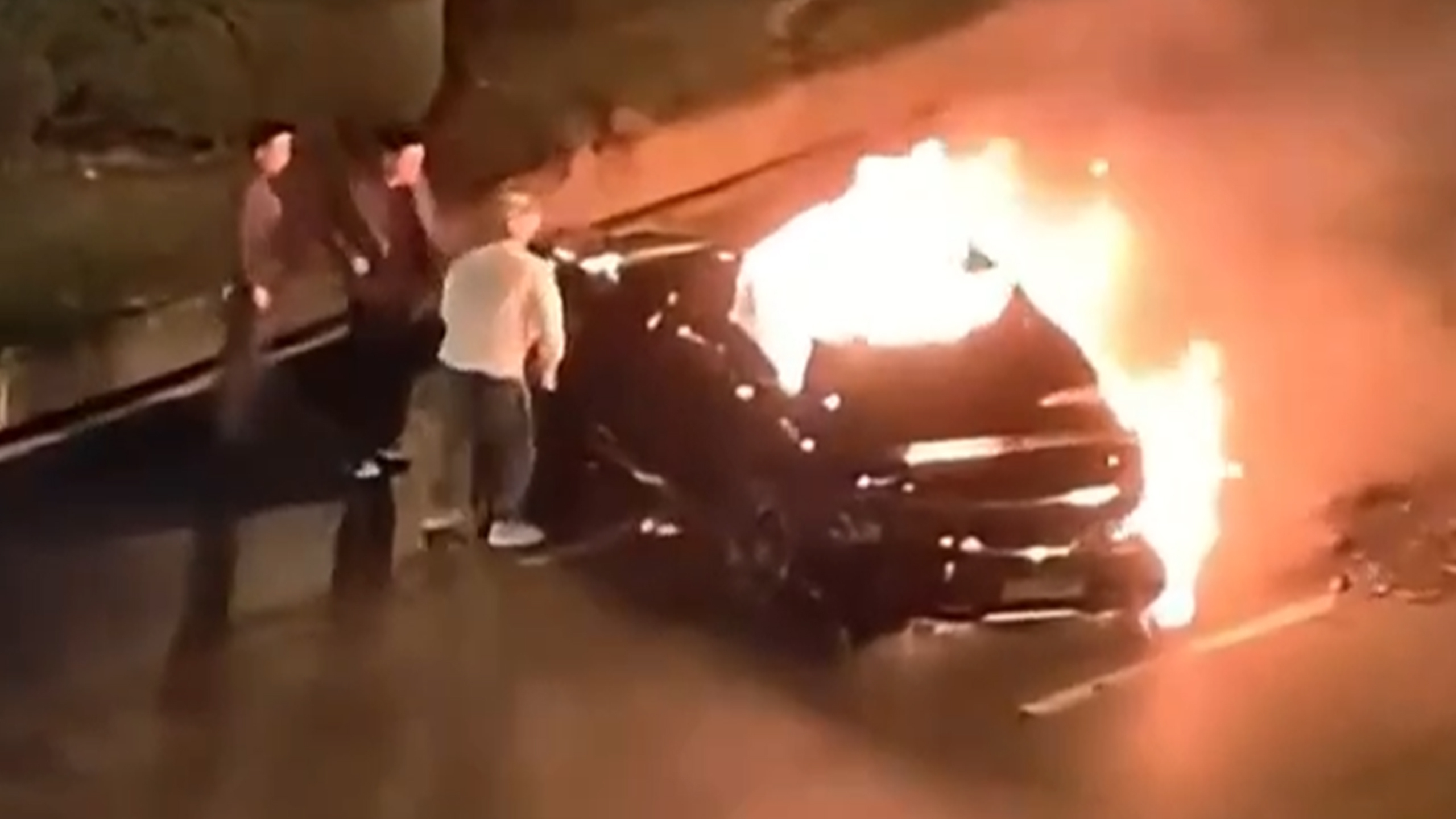
Rescuers couldn’t open SU7’s electric door releases as it burned.
Eyewitnesses tried desperately to smash the driver’s side window.
China will ban electric door releases like the SU7’s from 2027.
An official investigation into the death of a man who crashed his Xiaomi SU7 in China last year has confirmed details previously reported by local media. The findings underscore how critical basic mechanical access can become in seconds. Authorities concluded that the 31-year-old died after being unable to open the electrically operated doors once the electric sedan caught fire.
While this case involves a Xiaomi, concerns about electronically actuated door systems have been debated across the industry and in global markets for years. This isn’t just a Tesla issue.
The crash occurred at approximately 3:15 a.m. on October 13, 2025, in Chengdu, reports Carnewschina. The Xiaomi driver, identified simply as Deng, was allegedly driving under the influence of alcohol at the time and slammed into another vehicle on Tianfu Avenue South before jumping over the central divider and bursting into flames.
Timeline Of The Crash
According to forensic findings cited by the Chinese magazine Caixin, the SU7 reached 203 km/h (126 mph) just three seconds before the crash. It then slowed to 167 km/h (104 mph) after striking the other car and was traveling 138 km/h (86 mph) when it hit the divider.
Harrowing footage captured in the immediate aftermath showed bystanders attempting to smash the driver’s side window and open the door in an effort to save him, but without success.
Why The Doors Wouldn’t Open
Investigators concluded that the doors could not be opened from the outside because the fire caused the low-voltage system to shut down, disabling the door handle release function. The report added that the SU7 has no mechanical latches accessible from the outside and relies solely on electric release buttons.
Xiaomi shares plunged nearly 9% after a fatal crash involving its SU7 electric car, Bloomberg reports
According to the outlet, a 31-year-old driver in China collided with another vehicle, crossed into the opposite lane, and the car caught fire. Witnesses tried to pull the man… pic.twitter.com/yPQ70FoKXN
The Xiaomi also uses electric release buttons inside the cabin. Although it is equipped with mechanical emergency releases, locating and operating them while disoriented after a crash would not be straightforward.
Regulatory Response In China
This fatal crash, along with others, has prompted regulators in China to ban electronic door handles on EVs. The new rule will take effect on January 1, 2027. It will require exterior handles that provide a handhold of at least 60 mm by 20 mm (2.36 inches x 0.79 inches), ensuring they can be used by rescuers in an emergency. In addition, mechanical releases inside the vehicle must include clear signage explaining how to open them during an emergency.
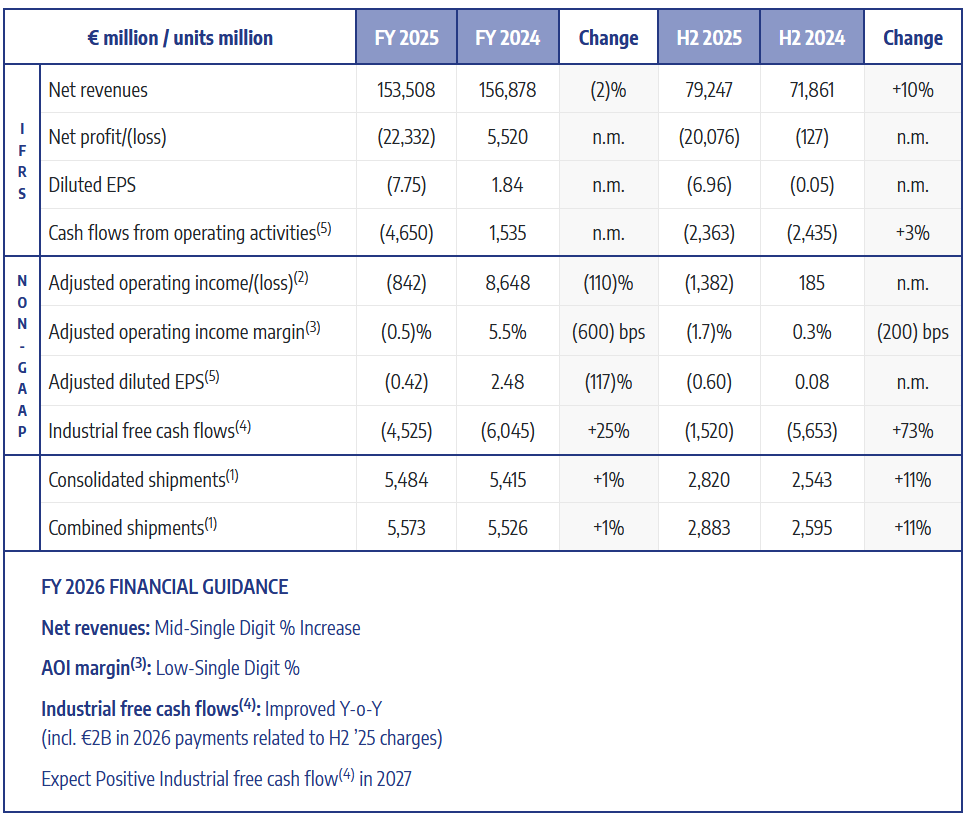
Stellantis has published its 2025 financial results, and they make for sobering reading. The headline figure is a €22.3 billion deficit, equal to $26.3 billion at current rates, marking the group’s first-ever annual loss. That swing looks even worse when set against 2024’s €5.5 billion ($5.8 billion) profit, which was already down 70% compared to 2023. In the span of two years, the company has gone from profitable to deep in the red.
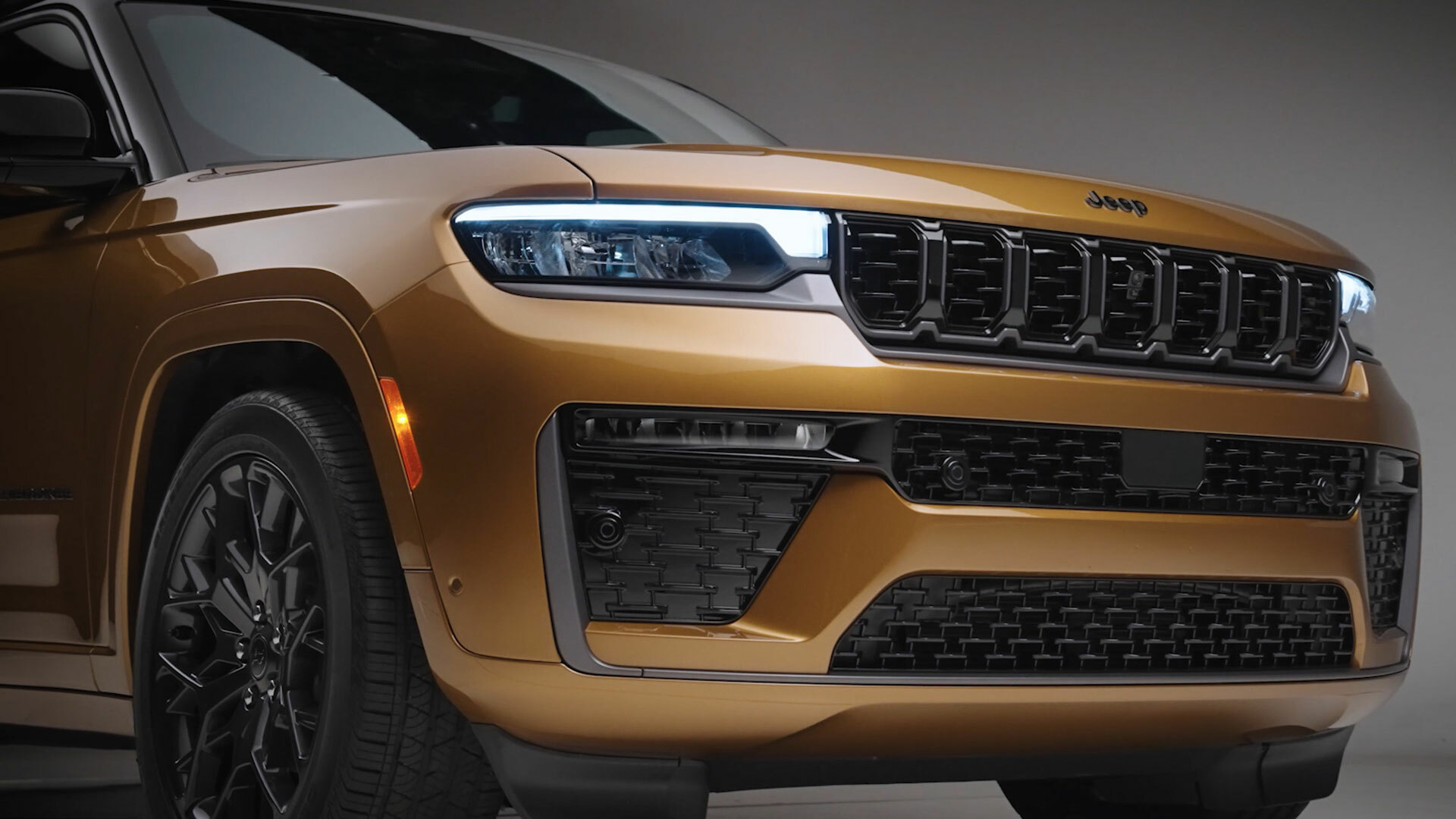
The group, which owns 14 brands including Abarth, Alfa Romeo, Chrysler, Citroen, Dodge, DS Automobiles, Fiat, Jeep, Lancia, Maserati, Opel, Peugeot, Ram, and Vauxhall, attributes the damage to €25.4 billion ($30 billion) in “unusual charges,” largely tied to what it calls a “profound strategic shift to meet customer preferences.” In plain terms, Stellantis overestimated how quickly the market would pivot toward electric mobility and is now paying to recalibrate.
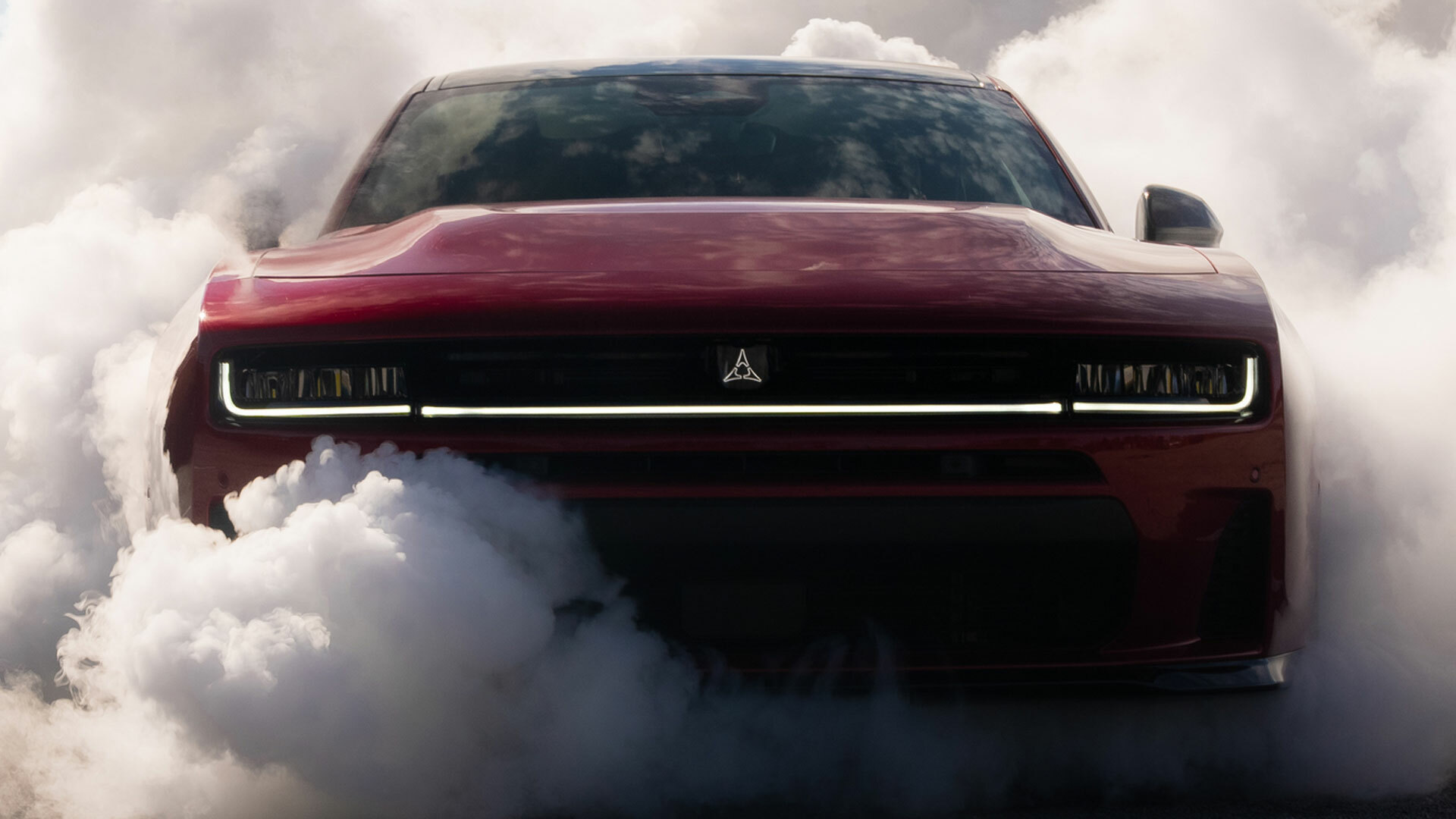
That is only part of the story. It wasn’t just a matter of customers being slow to embrace EVs. Several of Stellantis’ electric efforts, particularly in the US, struggled on their own terms. Models such as the Dodge Charger Daytona EV and the Jeep Wagoneer S were priced at the upper end of their segments yet struggled to justify that positioning against established rivals.
Rethinking Its EV Strategy
Regardless, that recalibration means canceling several electric models that were in development, mainly for the US market, and putting new emphasis on high-margin combustion engines. The return of the HEMI V8 in North America is the obvious attention grabber.
In Europe, diesel and mild-hybrid gasoline options are being folded back into the lineup across several current and upcoming models, including the now-delayed Alfa Romeo Stelvio and Giulia replacements.
“Our 2025 full year results reflect the cost of over-estimating the pace of the energy transition and of the need to reset our business around our customers’ freedom to choose from the full range of electric, hybrid and internal combustion technologies,” said Stellantis CEO Antonio Filosa.
“In the second half of the year we began to see initial, positive signs of progress with the early results of our drive to improve quality, strong execution of the launches of our new product wave and a return to top line growth. In 2026 our focus will be on continuing to close the execution gaps of the past, adding further momentum to our return to profitable growth.”
How Does Stellantis Plug The Gap?
The financial strain has prompted the board to suspend the 2026 dividend and authorize up to €5 billion ($5.9 billion) in hybrid bonds to shore up liquidity. Industrial free cash flow remained firmly negative at €4.5 billion ($5.3 billion), although that represents a 25% improvement on the previous year.
Net revenue totaled €153.5 billion ($181.1 billion), down 2% year-on-year. The decline is attributed to exchange rate headwinds and net pricing drops in the first quarter of 2025, neither of which tends to flatter the bottom line.
The group posted an adjusted operating loss of €842 million ($993.5 million). Still, the second half of the year showed signs of stabilization. Revenues rose 10% and shipments climbed 11% as inventories normalized. Stellantis also highlighted that H2 2025 marked the first six months under its renewed leadership team, a detail clearly intended to signal that the worst may already be in the rearview mirror.
Shipments Went Up But Shares Go Down
Combined shipments for 2025 reached 5.573 million vehicles, up 1% year-on-year. That keeps Stellantis in fifth place globally by volume, behind Toyota (11.3 million), Volkswagen Group (8.98 million), Hyundai Motor Group (7.27 million), and General Motors (6.11 million).
Momentum was stronger in the second half, with 2.883 million shipments, up 11% over H2 2024. North America did most of the heavy lifting, posting a 39% H2 increase as inventories returned to more normal levels and demand improved.
Investors, however, appear less convinced. Reuters reports that Stellantis shares have fallen by more than 30% this year, sliding to their lowest level since the PSA-FCA merger in 2021.
Across the country, Republicans and Democrats have found bipartisan agreement on regulating artificial intelligence and data centers. But it's not just big tech aligning the two parties.
HIGH POINT, N.C. – Thomas Built Buses (TBB), a leading manufacturer of school buses in North America and a division of Daimler Truck Specialty Vehicles, has selected Bryan County Schools in Georgia as the recipient of proceeds from its recent ‘If You Pass’ school bus safety awareness campaign. The contribution will support the district’s ongoing work to reduce illegal school bus passings and improve roadway safety for students.
Launched during National School Bus Safety Week, the ‘If You Pass’ campaign confronted the ongoing issue of illegal school bus passings, an offense that occurs an estimated 39.3 million times each school year according to National Association of State Directors of Pupil Transportation Services (NASDPTS). Rather than softening the message, the campaign opted for a direct, no-nonsense approach to school bus safety — If You Pass.
Through bold social messaging and a limited-edition merchandise collection, the campaign caught the attention of drivers, educators and families nationwide, helping push the issue into the public conversation. This reinforced the responsibility to stop and gave communities a way to actively participate in school bus safety advocacy.
Supporters purchased items from the merchandise collection, with all net proceeds dedicated to supporting school bus and driver safety education efforts. Supporters were also encouraged to nominate districts in their communities to receive campaign funds.
Of the districts nominated by supporters, Bryan County Schools received the most recognition and has been selected as the recipient of the campaign proceeds.
“Illegal passings are one of the most preventable dangers students face every day, and yet they keep happening,” said Mario DiFoggio, general manager of dealer channel sales and marketing for Thomas Built Buses. “The ‘If You Pass’ campaign was intentionally direct, because politeness doesn’t stop traffic — awareness does. For a short, three-week campaign, the response exceeded our expectations, and we know these funds will go a long way in supporting the important work Bryan County Schools is doing to protect students and keep this conversation going.”
Thomas Built Buses will continue to collaborate with school districts, transportation departments and industry partners to advance student safety and encourage responsible driver behavior nationwide.
About Thomas Built Buses:
Founded in 1916, Thomas Built Buses is a leading manufacturer of school buses in North America. Since the first Thomas Built bus rolled off the assembly line, the company has been committed to delivering the smartest and most innovative buses in North America. Learn more at thomasbuiltbuses.com or facebook.com/thomasbuiltbuses.
Thomas Built Buses, Inc., headquartered in High Point, North Carolina, is a subsidiary of Daimler Truck North America LLC, a leading provider of comprehensive products and technologies for the commercial transportation industry. The company designs, engineers, manufactures and markets medium- and heavy-duty trucks, school buses, vehicle chassis and their associated technologies and components under the Freightliner, Western Star, Thomas Built Buses, Freightliner Custom Chassis Corp and Detroit brands. Thomas Built Buses and Freightliner Custom Chassis Corp. together form Daimler Truck Specialty Vehicles. Daimler Truck North America is a subsidiary of Daimler Truck AG, one of the world’s leading commercial vehicle manufacturers.
A former school bus monitor in Grady County in southwest Georgia is facing a simple battery charge following allegations that she assaulted a student with autism while on duty, reported WALB News.
The alleged student assault occurred Feb. 12 at Eastside Elementary School in Cairo, Georgia.
The school’s resource officer along with another witness reviewed surveillance footage from the school bus. The officer reportedly stated that the video showed the bus monitor pinching the child and “striking him in the face with what appeared to be a bag.”
The child’s mother said she was notified to come to the school and discovered a bruise on her son when she arrived. She said her child, who is on the autism spectrum, was able to communicate what happened during the student assault on the school bus ride.
“I felt like I needed to speak out to protect my son,” the mother said via the article.
Grady County Schools confirmed that the school bus monitor involved is no longer employed by the district.
Authorities said the former school employee was charged with simple battery. The school resource officer indicated officials are working toward making an arrest as the investigation continues.
PROS ›› Good tech, comfortable ride, better than EV5 CONS ›› Poor ADAS, pricey, inefficient, slow-charging
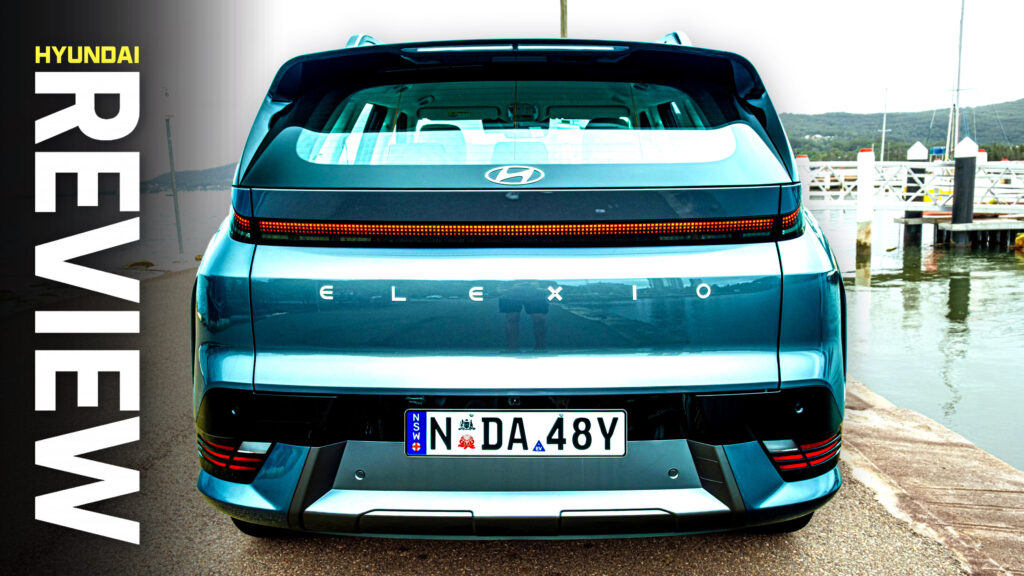
Electric vehicles make up just over 8 percent of new car sales in Australia, so they are hardly dominant. Yet the competitive noise has increased dramatically in recent years, thanks largely to a surge of new Chinese brands. Hyundai’s counterpunch is the Elexio, its latest EV and one aimed squarely at that fast-growing crowd.
The Elexio is unlike any other electric Hyundai so far. Crucially, it was not developed entirely in-house, but rather brought to life through its joint venture partnership with BAIC Motors.
This means it is built in China, tapping into the country’s vast manufacturing scale and efficiency, paired with the engineering experience and brand weight of a legacy player like Hyundai. When it was revealed last year, it looked set to remain a China-only model. Instead, it has now landed in Australia, and we were among the first to get behind the wheel earlier this month.
QUICK FACTS
› Model:
2026 Hyundai Elexio Elite
› Starting Price:
AU$61,990 ($44,000) as tested
› Dimensions:
181.6 L x 73.8 W x 65.8 in H (4,615 x 1,875 x 1,673 mm)
› Wheelbase:
108.2 in (2,750 mm)
› Curb Weight:
2,105 kg (4,640 lbs)
› Powertrain:
Single electric motor / 88.1 kWh battery
› Output:
215 hp (160 kW) / 236 lb-ft (320 Nm)
› 0-62 mph
~8.0 seconds
› Transmission:
Single-speed
› Efficiency:
19.5 kWh/100 km as tested
› On Sale:
Now
SWIPE
According to Hyundai, the Elexio has been designed to neatly slot between the Kona EV and Ioniq 5 in its line-up, serving as an all-electric alternative to the Hyundai Tucson. It’s Hyundai’s answer to popular competitors like the Tesla Model Y, Kia EV5, BYD Sealion 7, and Xpeng G6, and this is reflected in the price.
Can It Compete On Price?
Hyundai Australia
Two versions will be offered: the base Elexio and the flagship Elexio Elite. Prices for the base version will start at AU$58,990 (US$41,900) before on-road costs, while the Elite will be priced from AU$61,990 (US$44,000). However, the Elite will be available for AU$59,990 (US$42,600), including all on-road costs, in a limited-time deal running until the end of March.
Hyundai is predicting big things for the Elexio and expects it to be its best-selling EV in Australia. Achieving this won’t be easy. The Kia EV6 undercuts the Elexio at AU$56,770 (US$40,300), the Tesla Model Y Premium is available from AU$58,900 (US$41,800), and the BYD Sealion 7 Premium is available from AU$54,990 (US$39,000). The superb Zeekr 7X also undercuts it at AU$57,900 (US$41,100).
Big Battery, Modest Charging Speeds
So, what do you get for your money in the world of the Elexio? Like Hyundai’s Ioniq models, and unlike the Kia EV5, the Chinese-built Elexio uses the familiar E-GMP platform. However, it doesn’t have an 800-volt architecture like the Ioniqs, instead using a 400-volt system.
With this in mind, charging the battery pack 10-80 percent on a 150 kW charger, with peak speeds in the mid-120s, will take 38 minutes. This is slightly slower than the Kia EV5, which takes 36 minutes, but whereas it has a compact 64.2 kWh battery, the Hyundai has a much larger and more practical 88.1 kWh unit.
This battery powers a front-mounted electric motor with 160 kW (215 hp) and 310 Nm (236 lb-ft). Hyundai quotes a combined efficiency of 18.2 kWh/100 km, which is okay, but certainly not class-leading.
A Digital-First Cabin
Photos Brad Anderson/Carscoops
We only sampled the Elexio in flagship Elite trim, so first impressions came fully loaded. Stepping into the cabin for the first time, it is immediately clear this is not your typical Hyundai interior.
Dominating the interior is a massive widescreen 27-inch display, encompassing both the central infotainment display and a display for the passenger. This screen houses Hyundai’s new Connect-C infotainment system and runs on Android Automotive with a powerful Snapdragon 8295 processor and Unreal 3D graphics engine.
While there are several cars on sale in China with a similar passenger and infotainment screen, this is one of the first implementations of a display like this in a Western market. It looks great, providing excellent colors, clarity, and response. However, it’s not particularly practical to use, especially when you’re driving.
Photos Brad Anderson/Carscoops
I am quite tall with long arms, yet adjusting the climate controls or digging into vehicle settings on the move meant leaning forward and stretching almost to the limit. It should not feel like a light workout just to change the temperature. The more traditional screens in other current Hyundai models are much easier to reach, as are the tablet-like displays found in many of the Elexio’s rivals.
On the plus side, the new Connect-C system is good and is far more modern than Hyundai’s outgoing software. It has a much smartphone-like layout with convenient shortcuts on the driver’s side.
In a Hyundai first, a traditional gauge cluster has been replaced by a head-up display. In photos, it doesn’t look like a HUD at all, but rather a physical cluster positioned at the base of the windshield. In reality, it is a true head-up display, albeit it projects onto a small black area of the windshield, providing better contrast than HUDs that project onto normal glass.
The obvious downside of this is that if you chip or crack the windshield, you probably won’t be able to buy a generic HUD-compatible replacement, but rather need one from Hyundai with this black element.
Quality And Space
The rest of the cabin is quite minimal, as many EVs are today. In terms of fit and finish, it feels on par with some Chinese rivals, like the BYD Sealion 7, and is certainly more premium than the Kia EV5. There’s soft-touch suede on the dashboard and door panels, as well as heated and ventilated front seats, and plenty of leather. Dual wireless chargers are also standard on the Elite.
Overall, space and comfort are good, whether that be in the front row or the second-row. While the Elexio only has a wheelbase of 2,750 mm (108.2 inches), 5 mm (0.1 inches) less than the Tucson and 250 mm (9.8 inches) less than the Ioniq 5, there’s still plenty of legroom for rear passengers, and that includes adults. Cargo space is decent, rated at 506 liters (17.8 cubic-feet) or 1,540 liters (54.3 cubic-feet) with the rear seats folded 60/40 flat.
Disappointingly, neither Elexio model has a panoramic glass roof, which is common in electric SUVs at this price point, nor a frunk, even though there’s plenty of space for one.
How Does It Drive?
Photos Brad Anderson/Carscoops
Driving the Elexio revealed that it is a solid performer, and it does some things well. However, it fails to stand out from the competition and could benefit from some tweaks to lift it to a new level.
As any EV should, the Elexio’s powertrain is smooth and quiet, providing more than enough grunt for everyday driving duties, whether that be in urban settings or on the highway.
With 160 kW (215 hp) and 310 Nm (236 lb-ft), the Elexio has exactly the same power as the front-wheel drive Kia EV5. Crucially, it doesn’t suffer from the same horrible torque steer that the EV5 does. In fact, there’s no torque steer whatsoever, which is a great thing. However, like the EV5, the Elexio does love to spin up its inside front wheel should you get greedy with the throttle and play around with the traction control.
Efficiency is not so good. After several stints behind the wheel of the Elexio, we averaged 19.5 kWh/100 km, which is quite poor, particularly given that we averaged 20.5 kWh/100 km in the Sealion 7 Performance, and it has an extra 230 kW (308 hp) and 380 Nm (280 lb-ft) of torque.
Like other Hyundai and Kia EVs, the Elexio has paddle shifters behind the steering wheel to adjust the level of brake regeneration, which is something every EV should have. I spent most of my time in the one pedal i-Pedal mode, with it bringing the SUV to a smooth and predictable stop every time. The transition between the mechanical brakes and the regen is also imperceptible, so kudos to Hyundai for that.
The brand says that, like most of the cars it sells in Australia, the Elexio has been specifically tuned for local roads by teams of engineers from South Korea. I was pleasantly surprised with the Elexio’s ride, finding it to be comfortable and softer than many other EVs, which can be too firm and harsh over bumps.
Software Still Finding Its Feet
Photos Brad Anderson/Carscoops
In addition to tweaking the suspension for Australia, Hyundai insinuated during a press briefing that the Elexio’s advanced driver assistance system have also been set up for local conditions. Despite this, further refinements are needed.
During long highway jaunts, there were several instances when the lane-keeping assist and lane-centering functions failed to recognize clearly-marked lines, causing it to slowly drift into adjacent lanes. In addition, I experienced some slow ping-ponging between lane markings. This is odd as the dozens of other Hyundai and Kia models I’ve tested in recent years all have great lane-keeping systems, keeping you locked in the center of the lane on well-marked highways.
In addition, there was an instance where I had the adaptive cruise control enabled on a 100 km/h (62 mph) country road when suddenly, the Elexio suddenly braked to 75 km/h (47 mph) despite there being no object or car in front of me. I suspect the large semi-truck traveling in the opposite direction in the lane next to me fooled the system.
Like so many other new cars built in China, the Hyundai Elexio’s driver monitoring system is overactive, ringing the moment you yawn or take your eyes off the road. Additionally, turning it offer requires multiple steps through the menu, which is frustrating.
Verdict
Photos Brad Anderson/Carscoops
The Hyundai Elexio is definitely better than the Kia EV5, which has quickly gained popularity in Australia and is the best-selling EV from a legacy brand in the local market. With this in mind, there’s a good chance that the Elexio should also sell well for Hyundai, and it’ll likely attract many shoppers who were previously interested in the Kona EV or Ioniq 5.
However, it may be prudent for buyers to exercise some patience before getting an Elexio. Earlier this year, Hyundai slashed prices of the Inster by AU$7,288 ($5,200), and reduced the Kona Electric by more than AU$13,000 ($9,200). If internal sales targets are missed, similar price adjustments for the Elexio would hardly be surprising.
Just as importantly, Hyundai’s latest EV still needs a few software refinements, particularly to its ADAS, before it feels like the clear choice in an increasingly crowded segment.
It sports special graphics and a revamped interior.
Americans will only get the JCW variant with 228 hp.
Anniversary editions are popular with consumers and automakers, but they typically follow a predictable pattern. However, Mini is mixing things up by honoring the 61st anniversary of their win at the 1965 Monte Carlo Rally.
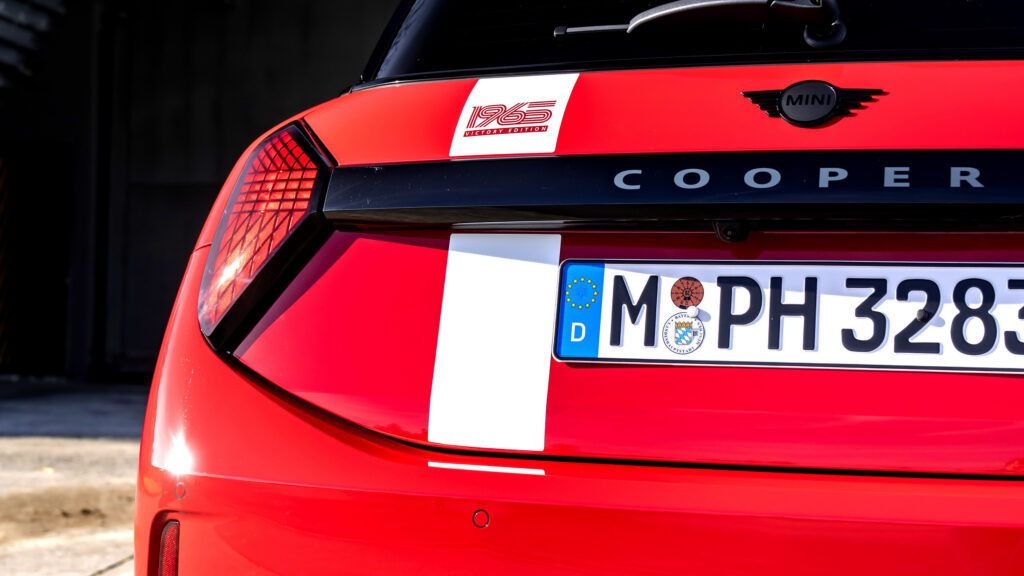
That’s a weird anniversary to celebrate, but the company is marking the occasion by unveiling the new 1965 Victory Edition. Based on the Cooper, the model features a Chili Red exterior with a full-length white body stripe and a white “52” graphic on both sides of the vehicle.
They’re joined by a Glaced or panoramic glass roof and a “1965” sticker on the C-pillar. The model also sports 18-inch alloy wheels in either a black or two-tone design.
The upgrades extend to the cabin, which has been adorned with special door sill plates and a sport steering wheel featuring 1965 badging. Elsewhere, there’s two-tone accents, 52 graphics, and a special storage box in the center console. Buyers will also find a ‘hidden’ door sticker noting Timo Mäkinen’s win at the 1965 Monte Carlo Rally in a Cooper S.
Multiple Engine Options
Three different powertrains are available as the Cooper S 1965 Victory Edition has a turbocharged 2.0-liter four-cylinder pumping out 201 hp (150 kW / 204 PS) and 221 lb-ft (300 Nm) of torque. It enables the model to accelerate from 0-62 mph (0-100 km/h) in 6.6 seconds.
Customers can also get a JCW variant, which has an upgraded 2.0-liter turbo producing 228 hp (170 kW / 231 PS) and 280 lb-ft (380 Nm) of torque. This lowers the dash to 62 mph (100 km/h) to 6.1 seconds.
If that’s too slow, the John Cooper Works Electric hits 62 mph (100 km/h) in 5.9 seconds thanks to a beefy motor producing 255 hp (190 kW / 258 PS). The model is also notable for having a 49.2 kWh battery pack and a range of 226-250 miles (364-402 km) in the United Kingdom.
The special edition will be launched later this year and offered in an assortment of different markets. However, Americans will only get the JCW variant and it’ll cost $46,220 before a $1,175 destination fee.
Europe gets a new base EX30 with 148 hp and 211 miles of range.
It adds updated UX and V2L, both coming via OTA updates.
Production moves from China to Europe to avoid EU tariffs.
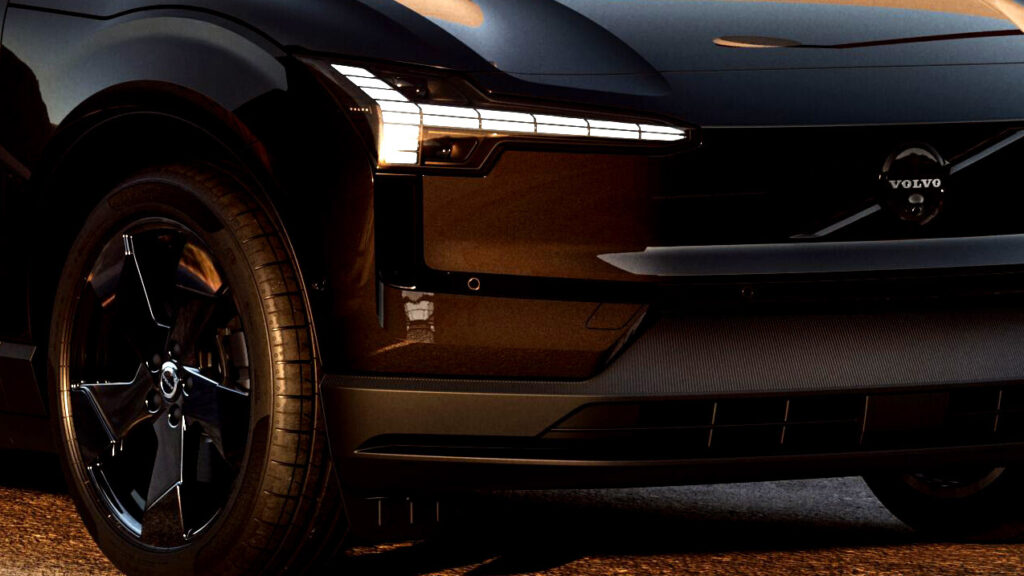
The Volvo EX30 has been updated in Europe for 2026, mirroring changes already introduced on the US-spec model. The range now gains a new entry-level powertrain, refreshed infotainment, new Vehicle-to-Load capability, and a Europe-exclusive Black Edition.
For European buyers, the headline is a lower entry point into the Volvo EV range. The EX30 now comes with a less potent electric motor producing 148 hp (110 kW / 150 PS), positioned as a more affordable alternative to the existing single-motor 268 hp (272 PS) and dual-motor 422 hp (428 PS) versions.
This new variant, not available in North America, can be paired with a 51 kWh battery pack delivering 339 km (211 miles) of WLTP range. Step up to the 69 kWh battery and the range increases to 476 km (296 miles). More miles, same compact footprint, and a little more choice at the showroom.
Turn Your Volvo Into A Power Bank
Volvo says the EX30 is now hardware-compatible with Vehicle-to-Load (V2L), though the feature will initially roll out in selected markets. With an optional adapter, the battery can power external kit such as electric bicycles, sound systems, or your increasingly elaborate camping setup.
There is also an infotainment update, bringing what Volvo calls a completely redesigned settings and controls system, plus a customizable content bar. Crucially, existing EX30 owners are not being left behind. The new user experience and V2L functionality will arrive via over-the-air updates scheduled for this summer.
The EX30 Black Edition
The EX30 only arrived in 2023, so there was no pressing need for a mid-cycle nip and tuck for either the standard model or the chunkier Cross Country. Instead, Volvo has opted for a wardrobe change. Enter the new Black Edition, now extended to its smallest SUV in line with the rest of the range.
Despite the name, you are not limited to one shade of noir. The Black Edition can be specified in Onyx Black, Vapour Grey, or Crystal White. Whichever you choose, the chrome has been quietly retired in favor of a high-gloss black finish. That treatment covers the 19-inch alloy wheels, the Volvo badge up front, and the lettering across the tailgate.
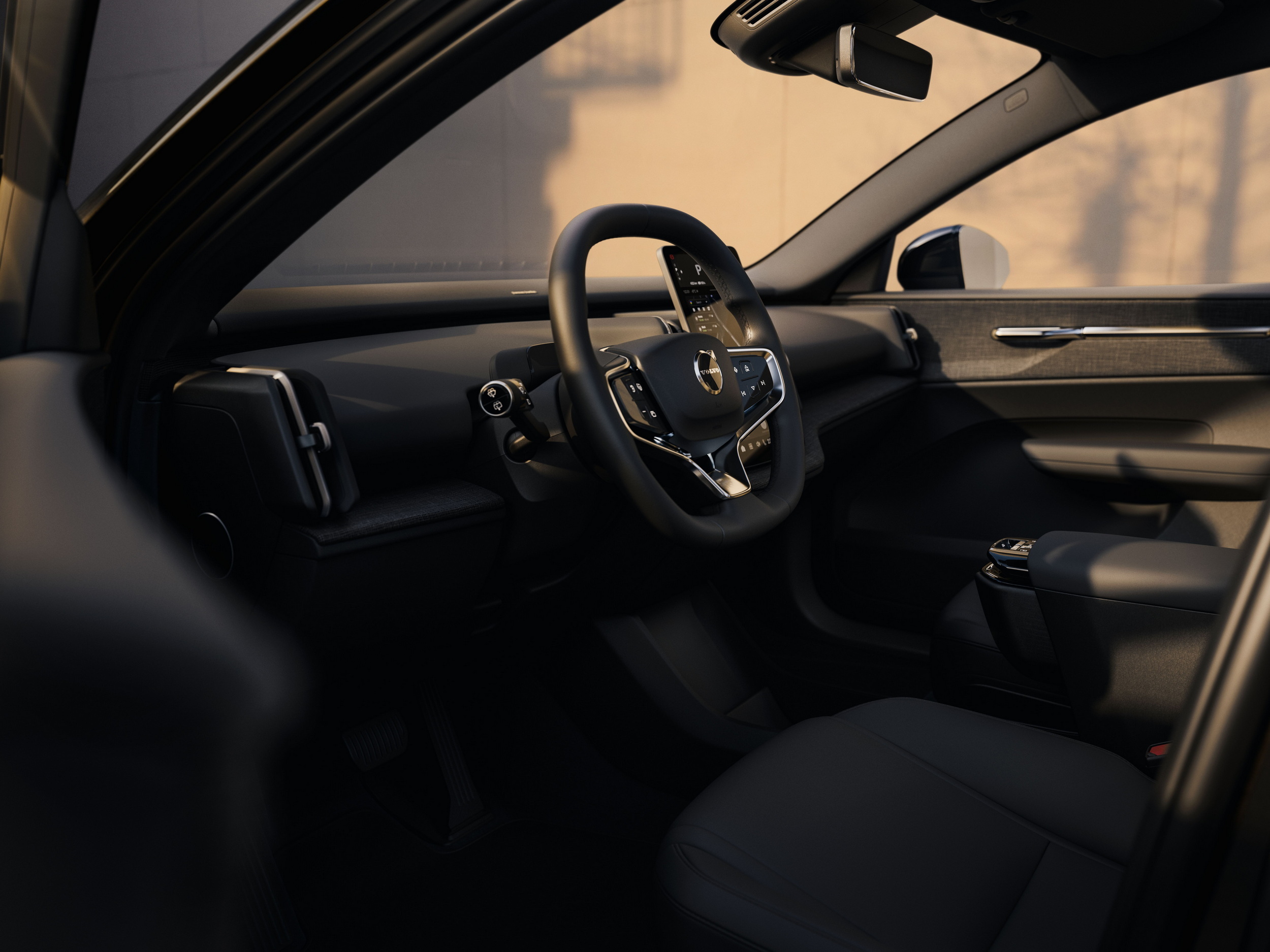
Inside, there is Nordico upholstery with contrasting stitching and dark flax decor to complete the theme.
If you like the darker cabin but not the full blackout look, the Black interior specification is also available across the broader EX30 lineup. There is also a new option called Harvest. Inspired by late Scandinavian summer evenings, it brings light-colored, woven recycled textile upholstery for the seats and door inserts, paired with a Nordico dashboard, dark flax decor, and a black headliner.
Pricing for the updated range will be confirmed at a later date. European-market EX30s are now built in Belgium, after Volvo shifted production from China to sidestep import tariffs.
Lancia’s flagship crossover was spotted in winter tests.
New Gamma will offer electric, mild-hybrid, and PHEV options.
It will be built in Melfi, Italy, alongside the DS No8.
Stellantis’ grand Lancia revival, or as they called it, ‘Renaissance’, has not exactly burst out of the gates. The new Ypsilon subcompact hatchback has struggled to gain momentum, which is not quite a surprise. Still, phase two is already taking shape, and it brings with it a familiar name. The Lancia Gamma is coming back.
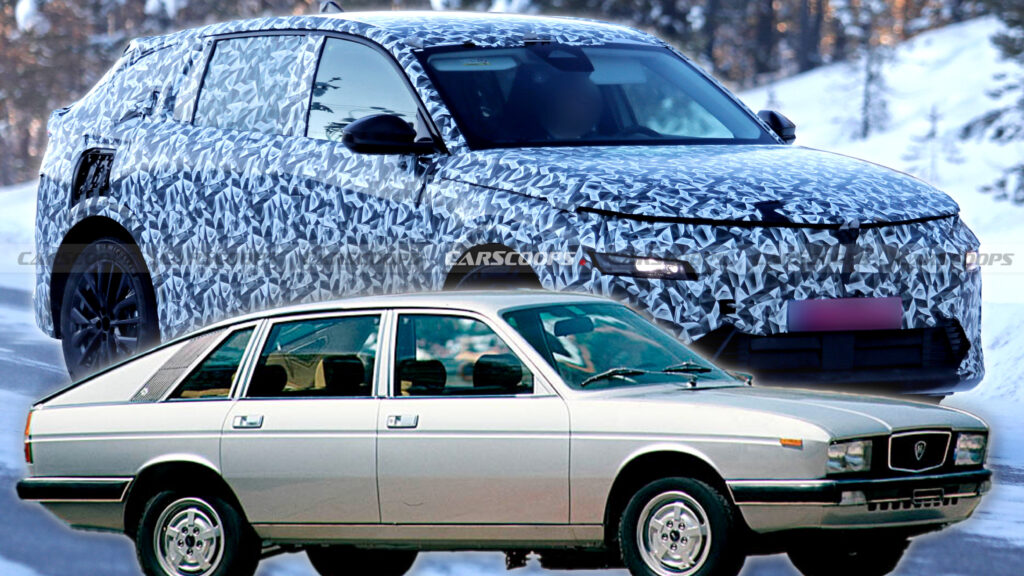
This time, it arrives as an electrified crossover, and our spies have spotted a prototype for the first time during winter testing. The test car reveals enough to give us a better sense of what to expect ahead of its official debut later this year.
Unlike the original Gamma, which was offered from 1976 through 1984 as a fastback saloon and coupe, the new model takes a very different route. It is now a crossover, effectively the Italian sibling to France’s DS No8. From the spy shots, the Gamma appears more upright than the DS, leaning closer to coupe-SUV territory than to a traditional crossover.
Design Direction Takes Shape
Baldauf
At the front, expect familiar cues borrowed from the smaller Ypsilon. The split LED headlight layout looks set to return, joined by an illuminated T-shaped grille that, intentionally or not, brings to mind a Mandalorian helmet. Down below, the lower bumper intake has a clean, contemporary design and seems to incorporate active shutters flanking an ADAS sensor.
Down the sides, the surfacing closely mirrors the DS, right down to the door handles and mirror caps, though the Gamma appears to get slightly larger windows. The wheels look modest in size, which is usually a giveaway that this is not the upcoming HF performance version.
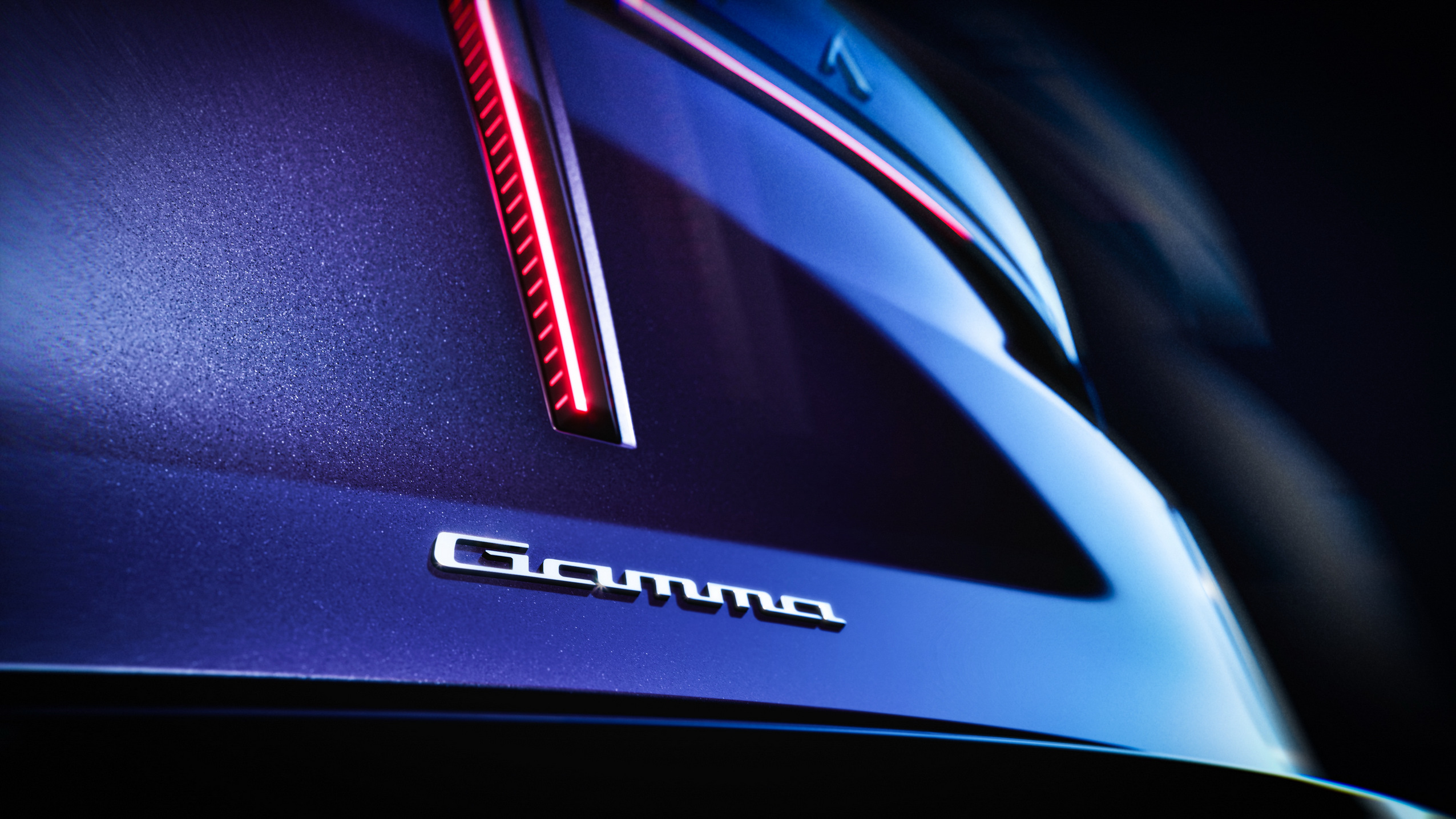
At the rear, heavy camouflage does its best to hide the details, but you can still make out the coupe-style rear glass flowing into what seems to be an integrated spoiler. An official teaser released in late 2024 indicates that the full-width LED taillights will adopt a T-shaped lighting signature, directing your eye toward the Gamma lettering across the sculpted tailgate. There are no visible tailpipes beneath the diffuser, reinforcing the likelihood that this particular prototype is fully electric.
Inside, expect a mix of premium and sustainable materials, along with Lancia’s signature “tavolino,” a mini round coffee-table integrated into the center console. The digital setup should include a 10.25-inch instrument cluster paired with a 16-inch infotainment display running the Lancia SALA system.
A Broader Powertrain Mix
Like the DS No8, the Lancia Gamma will sit on Stellantis’ STLA Medium platform and roll out of the Melfi plant in Italy. Both models were originally pitched as fully electric, but Stellantis has since recalibrated. Mild-hybrid and plug-in hybrid options are now part of the plan.
Looking at what Stellantis already has on the shelf, we can speculate on the powertrain lineup. The entry-level Gamma is expected to be powered by a turbocharged 1.2-liter mild-hybrid unit generating 143 hp (107 kW / 145 PS). At the opposite end, the Gamma HF could pack dual electric motors delivering up to 370 hp (276 kW / 375 PS), complete with AWD.
In terms of range, the larger 97 kWh battery pack could allow the Gamma to cover up to 435 miles (700 km) between charging stops.
Lancia has confirmed the new Gamma will arrive in 2026, so expect a steady drip of details over the coming months. It will later be joined by a new Lancia Delta in 2028, rounding out a three-model lineup for the revived Italian brand.
Ford claims most Mach-E owners barely use the frunk.
Several standard features have been dropped for 2026.
The EV also gains new physical door handles at the rear.
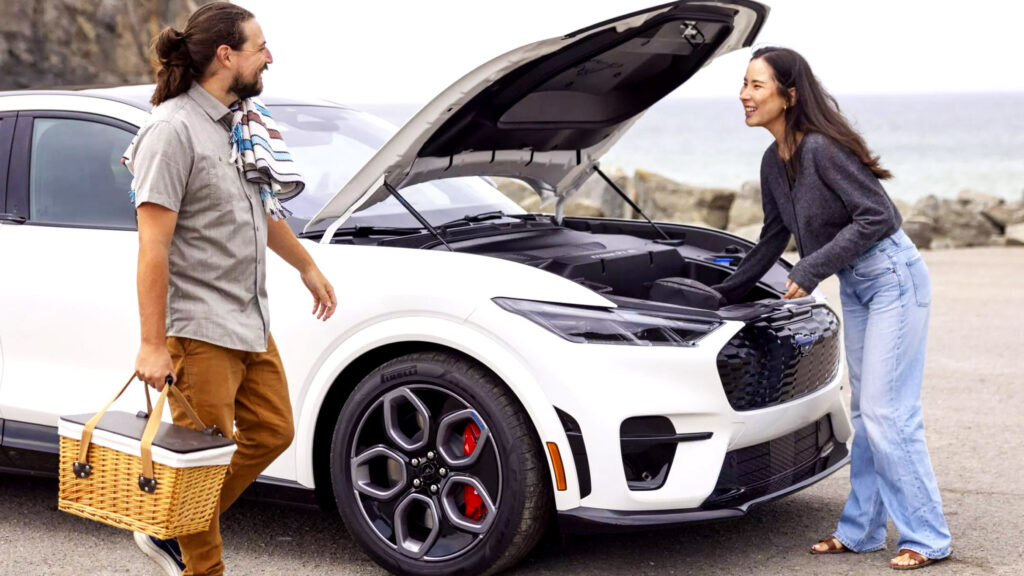
Ford has given the Mustang Mach-E a light reshuffle for 2026, and one change jumps out immediately. The front trunk is no longer standard kit. If you want a frunk now, you will have to tick a box and pay for the privilege. And it’s a pretty expensive one at that.
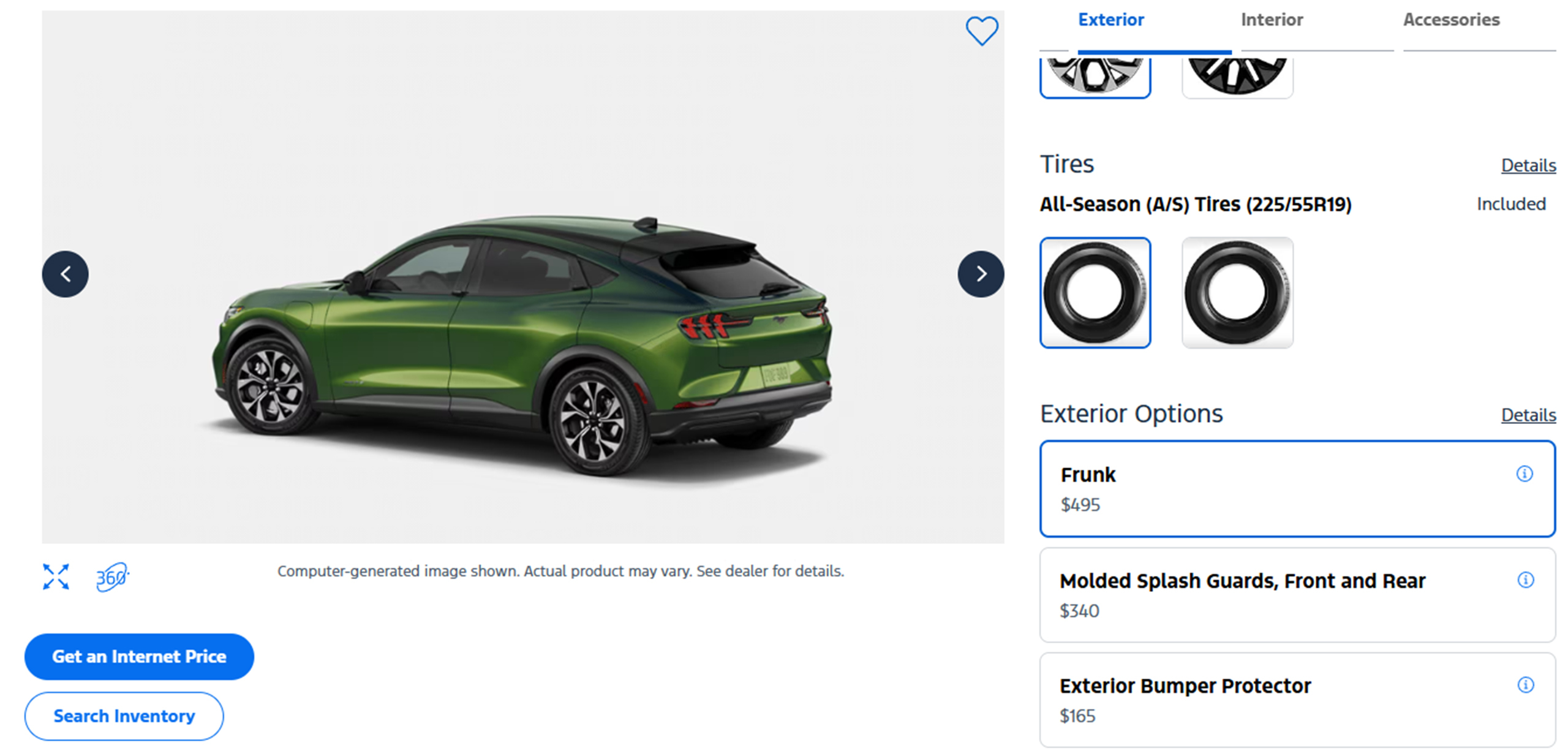
First noticed by Ford Authority, the updated online configurator reveals that the frunk is now a $495 option across the entire model line-up. While there are plenty of EVs out there that don’t have a frunk at all, this is the first time we’ve heard of one being offered as an optional extra. It may also be the first instance of a once-standard frunk becoming a paid add-on.
Ford says the decision was driven by customer behavior. Not many owners were using the frunk in the first place, or so the company claims. Removing it as standard helps cut costs, and the company insists those savings are being passed on.
To be fair, as we reported back in December, the Mach-E GT is almost $1,000 cheaper for 2026 than it was last year. The entry-level car, however, still starts at $37,795, which suggests the savings have not been distributed equally.
What Else Is Missing?
There are a few more trims to the lineup for 2026. For example, the front-seat map pockets have quietly disappeared, presumably in the name of saving a few pennies per car. The Mach-E Rally also parts ways with its standard rear spoiler and graphics, both now shuffled onto the options sheet. And if you were fond of the Bronze Appearance Package, it has been shown the door as well.
It is not all subtraction, though. Ford has made one practical addition at the back, fitting the rear doors with the same small grab handles used up front. You still have to press a button to pop the door open, because this is 2026, but at least there is now something physical to grab once it releases.
However, given how much bad press electronic door handles had over the past year, as well as regulatory changes in other markets, it’s possible Ford may eventually have to revert to more traditional door handles. We will see how long the current setup lasts.
AUDI E5 Sportback price cut by $4,370 to stir up demand.
Total wagon deliveries reached just 7,070 units since launch.
New brand abandons Audi’s iconic four rings in China.
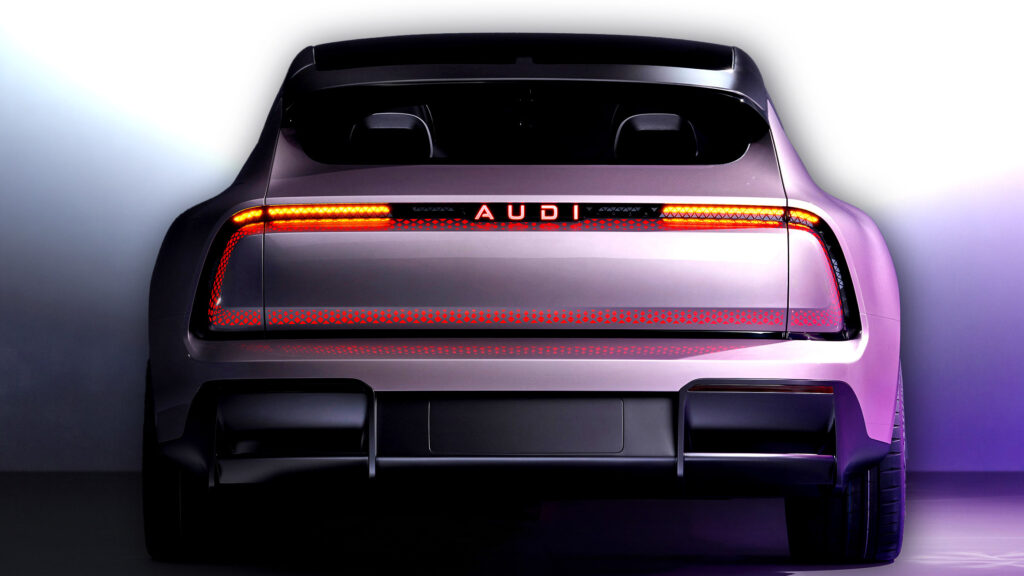
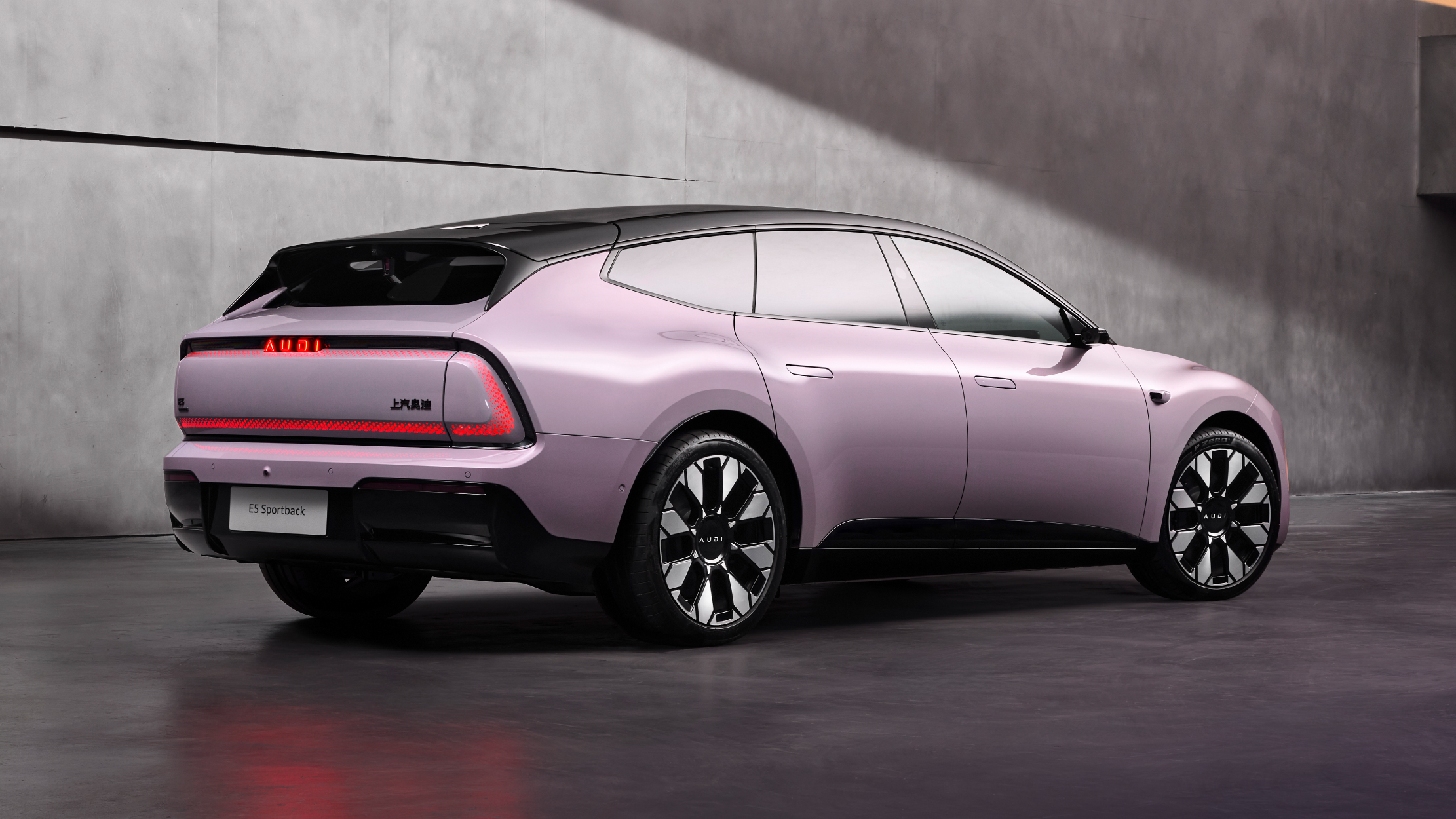
When Audi decided to launch a new AUDI brand just for China, complete with no four-ring badge and a bold new design language, it looked like a confident reset. Fast forward a few months and there’s another reset, this time to the price, which has been slashed in the face of abysmal sales.
Deliveries of the E5 Sportback, AUDI’s first model under its SAIC joint venture, began in August 2025, with prices ranging from ¥235,900 to 319,900 yuan (equal to around $34,300-$46,600 at current rates). On paper, it ticked plenty of boxes and had the potential to snare Chinese buyers who are increasingly picking domestic brands over legacy Western luxury ones. But things haven’t gone according to plan.
Now Under $30,000
Total deliveries since launch have only reached 7,070 units, with just 420 cars sold in January. So AUDI has rolled out a limited-time discount, slicing ¥30,000 ($4,370) off the already low sticker, bringing the entry price down to ¥205,900, or just under $30,000, Car News China reports.
Buyers get ¥10,000 ($1,460) in purchase tax compensation, ¥10,000 yuan in cash discount, and ¥10,000 in trade-in subsidy. Financing sweeteners include a five-year plan with zero interest, or a seven-year low-interest option if you only take the purchase tax handout.
Tough Competition
Price-wise, that puts the E5 Sportback right in the mix with the Zeekr 007 GT and slightly below the Xiaomi SU7, a car bought over 250,000 times last year. That’s strong competition in a market that does not lack for shiny new electric sedans and fastbacks.
Spec-wise, the E5 isn’t exactly junk. It has a long 2,950 mm (116.1 inches) wheelbase, up to 776 hp (787 PS / 579 kW) and 480 miles (773 km) of CLTC range, depending on the spec chosen. It also comes with LiDAR, three radars, 11 cameras, and 12 ultrasonic radars on every model, and the interior is dominated by a 59-inch, pillar-to-pillar screen.
Why Aren’t Buyers Responding?
But for some reason, the E5 Sportback just isn’t hooking Chinese drivers in. That’s despite Audi claiming last September that it had scored 10,000 pre-orders in only 30 minutes, and the model recently being named China Car of the Year. The price cut is only supposed to last until March 31, but we can imagine Audi extending it if sales don’t pick up.
Audi isn’t the only Western premium brand forced to cut prices to shore up sales in China. BMW and Mercedes have also been forced to reduce MSRPs by as much as 10 percent to compete in a market so aggressive that less than a third of dealers turned a profit last year, according to the same report.
Toyota and Lexus teamed up with Treehouse to simplify home charging.
Every 2026 and newer model includes a Level 1 and Level 2 charger.
Buyers can spend $524 on a stronger ChargePoint Level 2 unit.
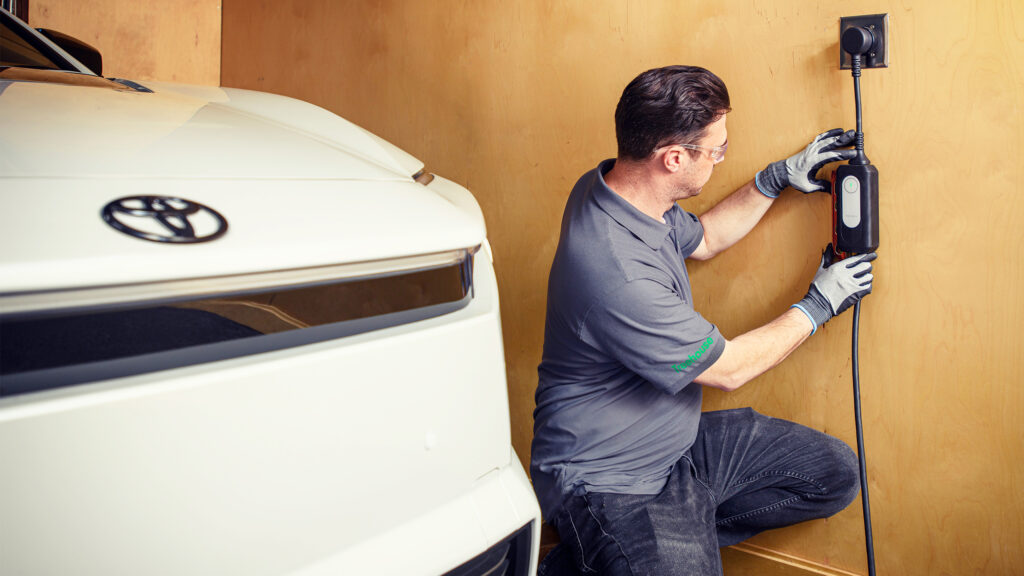
Electric vehicles make plenty of sense if you are not clocking up cross-country miles every week and you have somewhere at home to plug in. The complication usually starts after you sign the paperwork, when you realize installing a home charger involves quotes, site visits, and more emails than expected. Toyota thinks it has found a way to smooth that part out.
Toyota’s North American division has partnered with Treehouse, an EV charging infrastructure company, to simplify the process of getting a Level 2 AC home charger installed and operational.
Thanks to Treehouse, owners only need to upload a few photos and complete a short survey. From there, the company promises a quote within 48 hours and can then send technicians out to install the charger.
Traditionally, home charger installs can involve multiple visits, especially when someone needs to assess the right mounting location and electrical setup in person. This approach is meant to cut that step out entirely.
Treehouse says it relies on proprietary technology, along with the homeowner’s photos, to determine exactly what the installation requires. If upgrades are necessary, licensed electricians will step in to update or install any electrical systems needed to support home EV charging.
Standard Equipment On 2026 Models
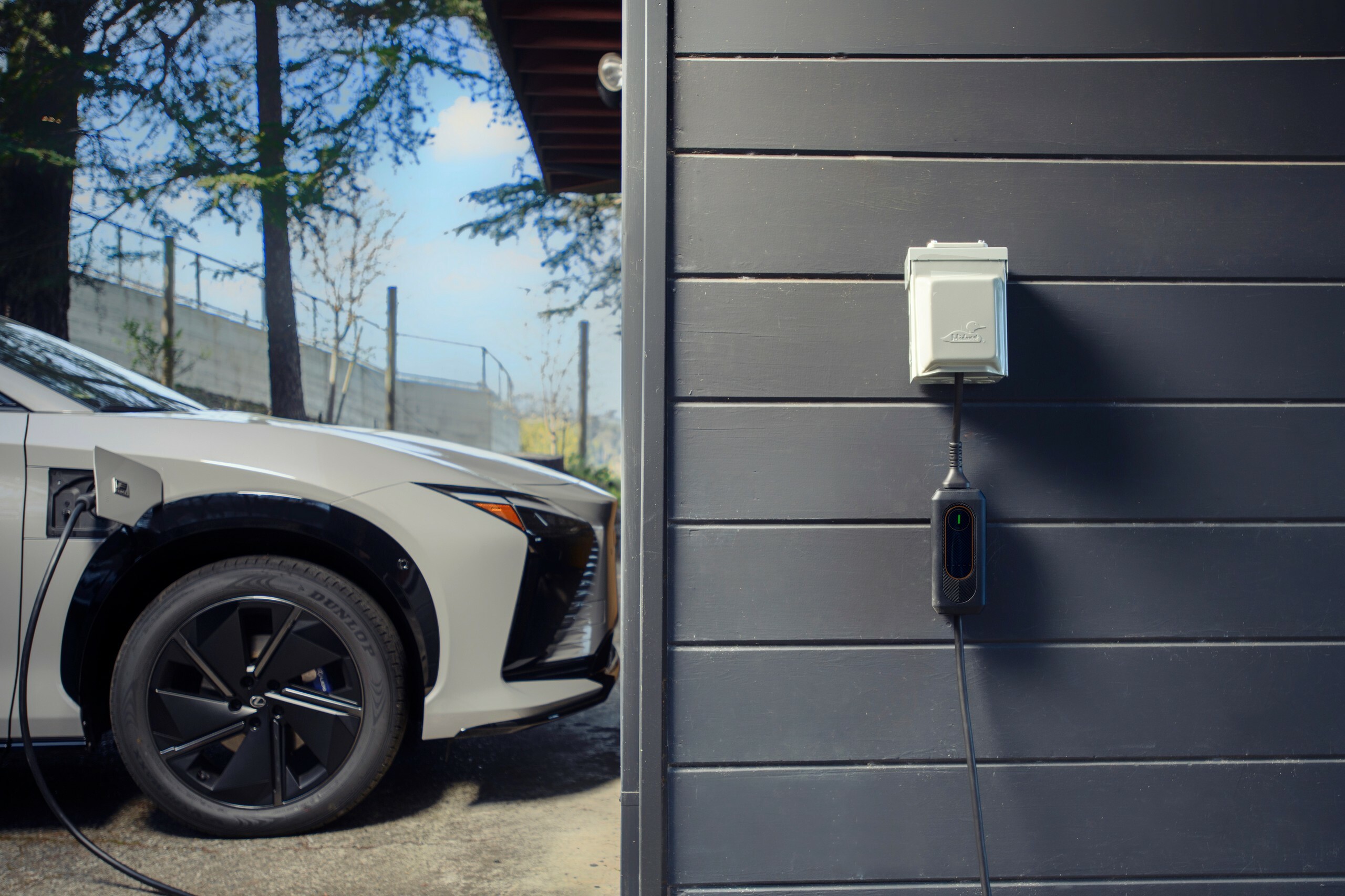
From 2026 onward, every Toyota and Lexus battery-electric vehicle and PHEV sold in the US will include a dual-voltage 120V/240V AC home charger. It supports both Level 1 and Level 2 charging, so you can plug into a standard outlet or step up to a quicker setup. In typical conditions, that is enough to take a battery from about 10 percent to full overnight, which should cover most daily routines.
If that still feels too leisurely, there is an upgrade. Owners can opt for a hardwired ChargePoint Home Flex Level 2 charger, installed by Treehouse, which Toyota says trims charging times by roughly 30 percent. The unit costs $524, assuming your electrical panel is feeling cooperative.
“We’re thrilled to work with Toyota to enhance the electrified vehicle and home charging experience for Toyota and Lexus customers,” Treehouse co-founder and chief executive Eric Owski said. “By bringing seamless, end-to-end home charging solutions into the EV ownership journey, this collaboration with Toyota reflects our shared commitment to making electrification easy and accessible for consumers.”
Many farmers have had to fallow land as a state law comes into effect limiting their access to water. There's now a push to develop some of that land … into solar farms.
Authorities in Georgia are searching for a woman accused of stealing a full-size school bus from an elementary school parking lot and taking it on a late-night drive across county lines, reported Fox News.
The school bus was reportedly taken from Arbor Springs Elementary School in Coweta County during the early morning hours Feb. 9. The vehicle was later recovered nearly 40 miles away in Temple, located in Carroll County.
Investigators reportedly said the suspect did not appear to force entry into the bus, as she seemingly had access to a key. Internal surveillance cameras installed on the vehicle captured images of the woman during the incident. Authorities noted that a bag or purse could be seen being placed on the front seat in the footage.
The school bus was recovered without any visible damage, and officials confirmed the incident occurred on school property outside of normal school hours. No injuries have been reported.
The case remains under investigation. The sheriff’s office is asking for the public’s assistance, particularly residents in the Temple area, to help identify the suspect.
We consider what recent headlines mean to the school transportation industry: proposed updates to the Clean School Bus Program, Blue Bird fully acquiring Micro Bird, Trump tariffs being struck down and safety conversations at STN EXPO East this March.
Mike Ippolito, chief operating officer of School Radio, discusses the future of bus communications – including multi-carrier SIM cards and satellites – and what school districts looking to the future should know to maximize safety and efficiency. Real-world emergency scenarios and radio as a service are also examined.

 Login
Login