A Texas transportation director provided attendees with a live demo of the Bytecurve payroll and dispatch software, as well as numerous tips on improving school bus operational efficiency.
Bryan Mitchell, marketing manager for Bytecurve parent company Transit Technologies, explained during the Thursday webinar that with COVID-era funding programs ending, budget concerns combined with routine driver shortages, upset parents and disconnected tech systems complicate student transportation operations every day. He noted that half of U.S. students rely on school bus services but the number of school bus drivers decreased 15 percent from 2019 to 2023.
Mitchell reviewed a case study on the $30,000 monthly labor cost savings that Rome School District in Georgia achieved with Bytecurve, along with nearly eliminating payroll errors and saving 10 hours per week in driver communications and payroll reconciliation. He added that Russellville School District in Arkansas reported saving $15,000 per month.
Additionally, fellow webinar panelist Jonquez Moore, transportation director of Little Elm ISD in northeast Texas, discovered school bus efficiency by bringing two school district transportation operations in-house from contractors and implemented Bytecurve both times.
“We live in a very connected world. Unfortunately, in K-12 it’s not very connected,” observed Jonathan Agenten, director of sales for Bytecurve.
The payroll, scheduling and dispatch system lets drivers clock in via tablet, app or wall clock. Moore said some Little Elm ISD drivers like using the app to save time but noted a tablet option is available for drivers who are reluctant to download the app. He confirmed the app is location based so drivers can only clock in when they are within a predetermined distance from the facility. Agenten added that management can send notifications and see when the drivers read them.
Moore said he appreciated how real-time bus locations arranged in an airport terminal-style dashboard allows managers to proactively handle late, delayed or canceled routes.
“When it’s busy, you don’t know a bus is late until it’s late,” he commented.
Moore shared a view of his Bytecurve dashboard with webinar attendees and pointed out that dispatchers can easily see what drivers are clocked in and what buses they are assigned to. Managers can also manually clock in drivers or remove buses or drivers from the schedule if an event is canceled.
Noting his fondness for reports, Moore showed how easy it is to access on-time performance reports, which he shares with district administration and uses to praise his drivers.
Various stats are clickable, he added, allowing deep dives into problem areas. He said he uses this information to talk to his team and determine what to change.
“I’m not getting paid for this [webinar], so I really believe in their system,” Moore declared.
He added that a report on planned vs. scheduled vs. actual hours worked is a favorite of the district chief financial officer as it helps with budget questions.
He noted that if there is an unexpected school bus driver shortage, a dispatcher can reassign the route with a few clicks. The system also notes what drivers are already working and therefore unavailable.
Identifying Additional Efficiencies in Operations
When changing tiered routes, where a driver was assigned to elementary and middle or high schools, Agenten confirmed that routes can be split up and reassigned by school or stop. The system notes the resulting changes and the app communicates those changes to parents.
He reviewed payroll integrations and confirmed that each district is a unique customer that Bytecurve will set up according to its particular rules.
When it comes to union requirements and driver minimum hours, task codes added upon system setup become part of the foundation so “things are calculated proactively and accurately,” Agenten said. Managers can use a few clicks to approve driver timesheets based on these preapproved district procedures.
He also answered an attendee question by stating that Bytecurve integrates with several tablets and also provides one of its own.
Mitchell reviewed Transit Technologies’ other offerings, one of which is onboard student and driver facing cameras that are ruggedized, reliable and warranty protected. busHive software allows districts to quickly quote, set up, complete and get reimbursed for field trips. FASTER Maintenance Software allows technicians to proactively manage bus repairs.
ORLANDO, Fla.,- International Motors, LLC* (“International”) announced the International and IC Bus Dealer of the Year award winners at its annual dealer meeting this week in Orlando. This event is an opportunity for International to celebrate the successes of the dealer network from the previous year. More importantly, it is a moment to align our strategy to ensure we deliver quality solutions for our customers every day.
The 2025 Dealer of the Year award winners were selected based on their performance in several criteria, such as vehicle sales, parts sales, International S13 Integrated Powertrain sales, and service dwell time. Growth in key areas like market share, customer experience survey results, and leveraging solutions through International Financial are additional data points used to make Dealer of the Year selections.
“The annual International dealer meeting is always an exciting event because it brings our network together,” said Dan Kayser, executive vice president, Commercial Operations, International. “Our truck and bus dealers are our closest partners, and they work hard every day to give customers a dependable, consistent experience. This event celebrates that partnership and the strength we have when we’re aligned as one International.”
2025 International U.S. and Canada Dealer of the Year: Wieland Truck and Trailer
Michigan-based Wieland Truck and Trailer had an impressive year, exceeding their targets across the board — from parts growth and truck sales to significant gains in customer experience and market share. They achieved nearly seven times their goal for conquest customer count.
“Customers count on dealers who act as true partners, and Wieland Truck and Trailer delivered above and beyond that promise,” said Justina Morosin, senior vice president, Sales and Field Operations, International. “Their accomplishments are a direct result of their focus and customer first approach, and we’re proud of the consistency and care their team brings to every interaction.”
“Being named Dealer of the Year is an incredible honor, and I’m proud of what our team accomplished this past year,” said Rob Cleary, dealer principal, Wieland Truck and Trailer. “Customers expect a partner who can support them across their entire operation, and our team takes that responsibility seriously. I’m looking forward to celebrating with them at the dealership and seeing what we achieve in the year ahead.”
Wieland Truck and Trailer, founded in the 1930s, has three locations in Michigan.
2025 International Latin America Dealer of the Year: Capasa
Capasa was selected as the Dealer of the Year winner because of their commitment to achieving a unique customer experience through comprehensive solutions and support.
“Capasa puts customers at the center of what they do,” said Rafael Alvarenga, vice president, Latin America Commercial Operations, International. “Their commitment to providing effective solutions and strong support makes a meaningful impact across Latin America and sets a strong example for our entire dealer network.”
“It’s an honor to be named Dealer of the Year. We take great pride in offering transportation solutions that support our customers at every stage of their operations,” said Luis Gerardo Amarante Alvarado, dealer principal, Capasa. “This award is a celebration of our team’s effort and commitment, and I look forward to what we’ll accomplish in the year ahead.”
Capasa was founded in 1962 to meet the needs of the state of Sinaloa, Mexico. They have a presence in the cities of Culiacán, Los Mochis, Mazatlán and Guamúchil and in the state of Baja California Sur in the cities of Los Cabos and La Paz.
2025 IC Bus Dealer of the Year: Midwest Transit Equipment
Midwest Transit Equipment’s strong commitment to excellence, commercial execution and customer support made them a perfect fit for IC Bus Dealer of the Year. They exceeded their target in orders, advanced battery-electric vehicle readiness and adoption, and completed training with extensive customer-facing engagement.
“Our dealers play an essential role in providing safe, dependable transportation for students,” said Charles Chilton, vice president and general manager, IC Bus. “Midwest Transit Equipment embodies what it means to be part of IC Bus through their teamwork, customer focus and dedication to building a stronger future for our industry. We’re proud of their team for the example they set for our network.”
“Celebrating our 50th year and being named IC Bus Dealer of the Year is an incredible honor for us,” said John McKinney, chairman, Midwest Transit Equipment. “Our team is committed to trust, collaboration and setting a high standard for the customers and communities we serve. I’m grateful for their effort and excited to celebrate this achievement together.”
Midwest Transit Equipment is the largest volume school bus dealership in the United States. They have nine locations and a team of 300 employees.
To find your nearest International or IC Bus dealer in the U.S. and Canada visit the dealer locators on International.com or ICBus.com. For distributors in Mexico and Latin America, search Mexico.International.com and Latin-America.InternationalCamiones.com.
About International:
Based in Lisle, Illinois, International Motors, LLC* creates solutions that deliver greater uptime and productivity to our customers throughout the full operation of our commercial vehicles. We build International trucks and engines and IC Bus school and commercial buses that are as tough and as smart as the people who drive them. We also develop Fleetrite aftermarket parts. In everything we do, our vision is to accelerate the impact of sustainable mobility to create the cleaner, safer world we all deserve. As of 2021, we joined Scania, MAN and Volkswagen Truck & Bus in TRATON GROUP, a global champion of the truck and transport services industry. To learn more, visit www.International.com.
Pupil transportation is one of the most visible ways a nation demonstrates its commitment to education. Every school day, millions of students travel from home to classroom using systems designed not only for efficiency, but for safety and equity. While Australia and the U.S. share similarities as large, developed, federal nations, their approaches to pupil transportation reflect important structural and cultural differences.
By examining governance, fleet design, funding models, rural challenges, and safety standards, it becomes clear that both countries aim for the same goal—safe and reliable access to education—but achieve it through different methods.
Both Australia and the U.S. operate under federal systems of government but differently distribute the responsibility for pupil transportation. In the U.S., pupil transportation is primarily managed at the local school district level. States establish regulatory frameworks, and federal safety standards govern vehicle manufacturing. However, day-to-day operations—routing, hiring drivers, maintaining fleets—are typically handled by individual districts or contracted providers. This creates a highly localized system, where policies can vary significantly from one district to another.
In Australia, pupil transportation is largely administered at the state and territory level rather than by individual school districts. States such as New South Wales, Queensland, Victoria, and Western Australia design and oversee their own school transport assistance schemes. The federal government plays a minimal operational role. This state-centered approach results in more centralized control within each state, even though policies differ between states.
What’s Different with Pupil Transportation?
The key difference is the scale of control. U.S. decisions are often made at the district level. Australian decisions are typically made at the state level. Both models allow flexibility, but Australia’s approach tends to create more uniformity within each state.
Perhaps the most recognizable feature of American pupil transportation is the yellow school bus. The U.S. yellow bus is a national symbol. Nearly every public school district operates dedicated fleets painted in a standardized shade of yellow. Strict federal safety standards regulate construction, and compartmentalized seating design has been central to American school bus safety philosophy for decades.
Australia does not have the same universal yellow bus requirement. School buses in Australia may be white, yellow, or another color depending on the contractor or region. While clearly marked as school services, they do not carry the same nationally standardized appearance as American buses. This reflects a difference in cultural identity. In the U.S., the yellow bus represents childhood and public education. In Australia, school transportation is more functionally defined than symbolically branded.
Another major difference involves seatbelt policies. In Australia, seatbelts are common in school buses and often required in newer vehicles. In contrast, large American school buses traditionally rely on compartmentalization rather than seatbelts, although seatbelt requirements are expanding in some states. These differing design philosophies reflect variations in regulatory priorities and historical safety research.
One of the clearest contrasts between the two systems is how they interact with public transit. In the U.S., pupil transportation is generally separate from public transportation systems. School buses are dedicated vehicles serving only students. Even in large cities, districts often operate independent fleets rather than relying on municipal transit systems, though some districts do provide older students with transit passes.
In Australia, especially in urban areas, students frequently use public bus, train, or tram systems. Discounted or free student travel passes are common. Rather than maintaining fully separate fleets in metropolitan areas, Australia often integrates students into existing public transport networks.
This integrated approach can increase efficiency and reduce duplication of services. However, it also means that student riders share space with the general public. The American model, by contrast, prioritizes separation and controlled environments for school-aged passengers.
What’s Similar with Pupil Transportation?
Both nations face significant rural transportation challenges due to their size and geography. In the U.S., rural districts may cover hundreds of square miles, with students traveling long distances on highways and country roads. In states such as Montana or Texas long travel times are common.
Australia faces similar challenges, especially in remote outback regions. In some parts of Western Australia or Queensland, students may travel extremely long distances to reach school. However, Australia often applies strict distance-based eligibility rules. Students must live beyond a minimum distance from their nearest appropriate school to qualify for subsidized transportation. Families living closer may be responsible for arranging their own transport.
In contrast, many American districts provide transportation to all eligible students within the district, even if they live relatively close to school. The U.S. model often prioritizes broader access, while Australia’s system focuses on distance-based need.
In extremely remote parts of Australia, boarding schools are sometimes used as a practical solution due to travel distances. While boarding options exist in the U.S., they are far less central to the public education system.
Funding structures also reveal differences. In the U.S., transportation funding varies by state and is often supported by local tax revenue. This can lead to disparities in fleet age and service quality between wealthier and less affluent districts.
Australia typically funds pupil transportation at the state level. Many routes are operated by private contractors under government agreements. Rather than school districts owning large fleets, governments often contract services to private bus companies. This contractor-based system requires strong oversight to ensure compliance and safety standards.
The American system uses a mix of district-owned fleets and contracted providers. However, district ownership remains more common in the U.S. than in Australia.
Both countries prioritize safety, but enforcement structures differ. In the U.S., strict stop-arm laws require motorists to stop when a school bus is loading or unloading students. Violations can result in significant fines. This legal framework reinforces the protective environment surrounding the school bus.
Australia does not use the same stop-arm system in most regions. Instead, safety relies more heavily on general road rules, bus signage and public awareness. The American stop-arm system creates a highly visible and enforceable protective zone around students.
Despite these differences, Australia and the U.S. share core principles. Both aim to provide safe, reliable transportation that supports equal access to education. Both must manage long distances, rural isolation and funding constraints. Both rely on regulated driver accreditation and vehicle inspection systems.
The primary differences lie in structure and philosophy. The U.S. emphasizes a distinct, symbolic and highly regulated dedicated school bus system. Australia emphasizes state-level coordination, contractor delivery and integration with public transit.
In the end, both systems reflect national priorities and geography. Whether through the iconic yellow bus traveling down an American suburban street or a state-contracted bus crossing the wide landscapes of the rural Australian Outback, pupil transportation remains a vital link between home and classroom. Each country has developed a model suited to its environment, but both share a common mission: ensuring that distance does not prevent opportunity.
Watch for the next article in this series as we travel to another continent-sized country – Brazil.
Bret E. Brooks is the chief operating officer for Gray Ram Tactical, LLC, a Missouri-based international consulting and training firm specializing in transportation safety and security. He is a keynote speaker, author of multiple books and articles, and has trained audiences around the world. He can be reached at BretBrooks@GrayRamTacticalTraining.com.
There were many thoughtful celebrations during Love the Bus Month in February from school districts and transportation companies across North America that recognized their student transportation staff with events and gifts highlighted via social media posts.
Scroll through this year’s gallery for a glimpse of the festivities.
1 of 80
Cabarrus County Schools Transportation in North Carolina thanked their drivers for their “steady hands and big hearts” during Love the Bus Month.
Cabarrus County Schools Transportation in North Carolina thanked their drivers for their “steady hands and big hearts” during Love the Bus Month.
Cabarrus County Schools Transportation in North Carolina thanked their drivers for their “steady hands and big hearts” during Love the Bus Month.
Cabarrus County Schools Transportation in North Carolina thanked their drivers for their “steady hands and big hearts” during Love the Bus Month.
Cabarrus County Schools Transportation in North Carolina thanked their drivers for their “steady hands and big hearts” during Love the Bus Month.
Cabarrus County Schools Transportation in North Carolina thanked their drivers for their “steady hands and big hearts” during Love the Bus Month.
Comal Independent School District in Texas posted photos from a district wide celebration during Love the Bus Month that highlighted the over 500 student transportation professionals that cover an average of 2,356,322 miles per year for the students in their community.
Comal Independent School District in Texas posted photos from a district wide celebration during Love the Bus Month that highlighted the over 500 student transportation professionals that cover an average of 2,356,322 miles per year for the students in their community.
Comal Independent School District in Texas posted photos from a district wide celebration during Love the Bus Month that highlighted the over 500 student transportation professionals that cover an average of 2,356,322 miles per year for the students in their community.
Comal Independent School District in Texas posted photos from a district wide celebration during Love the Bus Month that highlighted the over 500 student transportation professionals that cover an average of 2,356,322 miles per year for the students in their community.
Comal Independent School District in Texas posted photos from a district wide celebration during Love the Bus Month that highlighted the over 500 student transportation professionals that cover an average of 2,356,322 miles per year for the students in their community.
Durham School Services shared a post about school bus driver Robert Colella who was nominated by one of his student riders as a community helper. General Manager of the transportation team in Little Egg Harbor, New Jersey, Patty Manzoni, thanked Colella for his 35 years of service.
Durham School Services shared a post about school bus driver Robert Colella who was nominated by one of his student riders as a community helper. General Manager of the transportation team in Little Egg Harbor, New Jersey, Patty Manzoni, thanked Colella for his 35 years of service.
Durham School Services shared a post about school bus driver Robert Colella who was nominated by one of his student riders as a community helper. General Manager of the transportation team in Little Egg Harbor, New Jersey, Patty Manzoni, thanked Colella for his 35 years of service.
Laura Hill, General Manager of Transportation Services at Hillsborough County Public Schools said this photo of their school bus fleet shows “the strong culture of teamwork, pride, and commitment that defines Hillsborough County Public Schools Transportation Services.”
Jennifer Gardella, director of transportation at Rockwall Independent School District in Texas shared these photos saying “I’m grateful for the opportunities to serve our team.! I’m impressed everyday what we do as a team and the magic we make happen. We transport the future.”
Jennifer Gardella, director of transportation at Rockwall Independent School District in Texas shared these photos saying “I’m grateful for the opportunities to serve our team.! I’m impressed everyday what we do as a team and the magic we make happen. We transport the future.”
Jennifer Gardella, director of transportation at Rockwall Independent School District in Texas shared these photos saying “I’m grateful for the opportunities to serve our team.! I’m impressed everyday what we do as a team and the magic we make happen. We transport the future.”
Katy Independent School District in Texas thanked not only their drivers but the mechanics, routers, office staff and aides who show up rain or shine to make sure students are transported safely.
Katy Independent School District in Texas thanked not only their drivers but the mechanics, routers, office staff and aides who show up rain or shine to make sure students are transported safely.
Katy Independent School District in Texas thanked not only their drivers but the mechanics, routers, office staff and aides who show up rain or shine to make sure students are transported safely.
Katy Independent School District in Texas thanked not only their drivers but the mechanics, routers, office staff and aides who show up rain or shine to make sure students are transported safely.
Katy Independent School District in Texas thanked not only their drivers but the mechanics, routers, office staff and aides who show up rain or shine to make sure students are transported safely.
Katy Independent School District in Texas thanked not only their drivers but the mechanics, routers, office staff and aides who show up rain or shine to make sure students are transported safely.
Katy Independent School District in Texas thanked not only their drivers but the mechanics, routers, office staff and aides who show up rain or shine to make sure students are transported safely.
Katy Independent School District in Texas thanked not only their drivers but the mechanics, routers, office staff and aides who show up rain or shine to make sure students are transported safely.
Lee County Schools in North Carolina highlighted the drivers who cover their daily 105 routes, recognizing the crucial part they play in the educational system and encouraging the community to thank the drivers for all they do.
Lee County Schools in North Carolina highlighted the drivers who cover their daily 105 routes, recognizing the crucial part they play in the educational system and encouraging the community to thank the drivers for all they do.
Lee County Schools in North Carolina highlighted the drivers who cover their daily 105 routes, recognizing the crucial part they play in the educational system and encouraging the community to thank the drivers for all they do.
Lee County Schools in North Carolina highlighted the drivers who cover their daily 105 routes, recognizing the crucial part they play in the educational system and encouraging the community to thank the drivers for all they do.
Jeffrey Flatt submitted this photo of pre-k and kindergarten students at Oak Hill School in Nashville, Tennessee celebrating Love the Bus Month.
Orange County Public Schools in Florida highlighted their transportation team for Love the Bus Month, thanking school bus drivers for being the “friendly faces our students see in the morning and the ones who ensure every journey ends with a safe trip home,” and provided lunch for the staff members.
Orange County Public Schools in Florida highlighted their transportation team for Love the Bus Month, thanking school bus drivers for being the “friendly faces our students see in the morning and the ones who ensure every journey ends with a safe trip home,” and provided lunch for the staff members.
Orange County Public Schools in Florida highlighted their transportation team for Love the Bus Month, thanking school bus drivers for being the “friendly faces our students see in the morning and the ones who ensure every journey ends with a safe trip home,” and provided lunch for the staff members.
Orange County Public Schools in Florida highlighted their transportation team for Love the Bus Month, thanking school bus drivers for being the “friendly faces our students see in the morning and the ones who ensure every journey ends with a safe trip home,” and provided lunch for the staff members.
Orange County Public Schools in Florida highlighted their transportation team for Love the Bus Month, thanking school bus drivers for being the “friendly faces our students see in the morning and the ones who ensure every journey ends with a safe trip home,” and provided lunch for the staff members.
Orange County Public Schools in Florida highlighted their transportation team for Love the Bus Month, thanking school bus drivers for being the “friendly faces our students see in the morning and the ones who ensure every journey ends with a safe trip home,” and provided lunch for the staff members.
Penn Harris Madison Schools in Indiana highlighted school bus driver Lesley Perry as the Culver’s Driver of the Month. Perry has driven for the district for nearly 30 years and is known in the community for her kindness and dedication.
Penn Harris Madison Schools in Indiana highlighted school bus driver Lesley Perry as the Culver’s Driver of the Month. Perry has driven for the district for nearly 30 years and is known in the community for her kindness and dedication.
Penn Harris Madison Schools in Indiana highlighted school bus driver Lesley Perry as the Culver’s Driver of the Month. Perry has driven for the district for nearly 30 years and is known in the community for her kindness and dedication.
Safety Vision representatives went to local school districts in Texas to personally thank the student transportation professionals who keep school buses rolling and transporting students to and from school safely. Safety Vision representatives went to local school districts in Texas to personally thank the student transportation professionals who keep school buses rolling and transporting students to and from school safely.
Safety Vision representatives went to local school districts in Texas to personally thank the student transportation professionals who keep school buses rolling and transporting students to and from school safely.
Safety Vision representatives went to local school districts in Texas to personally thank the student transportation professionals who keep school buses rolling and transporting students to and from school safely.
Sharp Bus Lines in Ontario, Canada shared photos of a special Valentine’s Day themed Love the Bus celebration with the Brantford drivers and staff members.
Sharp Bus Lines in Ontario, Canada shared photos of a special Valentine’s Day themed Love the Bus celebration with the Brantford drivers and staff members.
Sharp Bus Lines in Ontario, Canada shared photos of a special Valentine’s Day themed Love the Bus celebration with the Brantford drivers and staff members.
Sharp Bus Lines in Ontario, Canada shared photos of a special Valentine’s Day themed Love the Bus celebration with the Brantford drivers and staff members.
Sharp Bus Lines in Ontario, Canada shared photos of a special Valentine’s Day themed Love the Bus celebration with the Brantford drivers and staff members.
Spartanburg County School District 6 in South Carolina posted photos of their school bus drivers and aides wearing custom made shirts to celebrate Love the Bus Month and their continual dedication to the students they serve.
Spartanburg County School District 6 in South Carolina posted photos of their school bus drivers and aides wearing custom made shirts to celebrate Love the Bus Month and their continual dedication to the students they serve.
Spartanburg County School District 6 in South Carolina posted photos of their school bus drivers and aides wearing custom made shirts to celebrate Love the Bus Month and their continual dedication to the students they serve.
Spartanburg County School District 6 in South Carolina posted photos of their school bus drivers and aides wearing custom made shirts to celebrate Love the Bus Month. Facebook/@
Spartanburg County School District Six
Spartanburg County School District 6 in South Carolina posted photos of their school bus drivers and aides wearing custom made shirts to celebrate Love the Bus Month. Facebook/@
Spartanburg County School District Six
Verra Mobility sales executive Matt Reich went to Orange County in Florida to participate in a school bus driver appreciation event.
Verra Mobility sales executive Matt Reich went to Orange County in Florida to participate in a school bus driver appreciation event.
Verra Mobility sales executive Matt Reich went to Orange County in Florida to participate in a school bus driver appreciation event.
Wake County Public Schools in North Carolina had a special Love the Bus Month celebration at East Cary Magnet Middle School that was organized by former state director of pupil transportation Derek Graham. The bus drivers received breakfast and goodie bags as part of School Bus Driver Appreciation Week festivities.
Wake County Public Schools in North Carolina had a special Love the Bus Month celebration at East Cary Magnet Middle School that was organized by former state director of pupil transportation Derek Graham. The bus drivers received breakfast and goodie bags as part of School Bus Driver Appreciation Week festivities.
Wake County Public Schools in North Carolina had a special Love the Bus Month celebration at East Cary Magnet Middle School that was organized by former state director of pupil transportation Derek Graham. The bus drivers received breakfast and goodie bags as part of School Bus Driver Appreciation Week festivities.
Wake County Public Schools in North Carolina had a special Love the Bus Month celebration at East Cary Magnet Middle School that was organized by former state director of pupil transportation Derek Graham. The bus drivers received breakfast and goodie bags as part of School Bus Driver Appreciation Week festivities.
Wake County Public Schools in North Carolina had a special Love the Bus Month celebration at East Cary Magnet Middle School that was organized by former state director of pupil transportation Derek Graham. The bus drivers received breakfast and goodie bags as part of School Bus Driver Appreciation Week festivities.
Wake County Public Schools in North Carolina had a special Love the Bus Month celebration at East Cary Magnet Middle School that was organized by former state director of pupil transportation Derek Graham. The bus drivers received breakfast and goodie bags as part of School Bus Driver Appreciation Week festivities.
Wake County Public Schools in North Carolina had a special Love the Bus Month celebration at East Cary Magnet Middle School that was organized by former state director of pupil transportation Derek Graham. The bus drivers received breakfast and goodie bags as part of School Bus Driver Appreciation Week festivities.
Wake County Public Schools in North Carolina had a special Love the Bus Month celebration at East Cary Magnet Middle School that was organized by former state director of pupil transportation Derek Graham. The bus drivers received breakfast and goodie bags as part of School Bus Driver Appreciation Week festivities.
Wake County Public Schools in North Carolina had a special Love the Bus Month celebration at East Cary Magnet Middle School that was organized by former state director of pupil transportation Derek Graham. The bus drivers received breakfast and goodie bags as part of School Bus Driver Appreciation Week festivities.
Wake County Public Schools in North Carolina had a special Love the Bus Month celebration at East Cary Magnet Middle School that was organized by former state director of pupil transportation Derek Graham. The bus drivers received breakfast and goodie bags as part of School Bus Driver Appreciation Week festivities.
The West Virginia Department of Education posted photos from Kanawha County Schools' main transportation terminal featuring school bus driver AJ Cline giving a behind the scenes look at student transportation operations.
The West Virginia Department of Education posted photos from Kanawha County Schools' main transportation terminal featuring school bus driver AJ Cline giving a behind the scenes look at student transportation operations.
The West Virginia Department of Education posted photos from Kanawha County Schools' main transportation terminal featuring school bus driver AJ Cline giving a behind the scenes look at student transportation operations.
The West Virginia Department of Education posted photos from Kanawha County Schools' main transportation terminal featuring school bus driver AJ Cline giving a behind the scenes look at student transportation operations.
The West Virginia Department of Education posted photos from Kanawha County Schools' main transportation terminal featuring school bus driver AJ Cline giving a behind the scenes look at student transportation operations.
Appoquinimink School District in Delaware shared these photos of their bus drivers at work in the district, commending them for going above and beyond in participation in safety trainings, creating bus safety programs for young students and taking part in a school bus roadeo event.
Appoquinimink School District in Delaware shared these photos of their bus drivers at work in the district, commending them for going above and beyond in participation in safety trainings, creating bus safety programs for young students and taking part in a school bus roadeo event.
Appoquinimink School District in Delaware shared these photos of their bus drivers at work in the district, commending them for going above and beyond in participation in safety trainings, creating bus safety programs for young students and taking part in a school bus roadeo event.
Appoquinimink School District in Delaware shared these photos of their bus drivers at work in the district, commending them for going above and beyond in participation in safety trainings, creating bus safety programs for young students and taking part in a school bus roadeo event.
Appoquinimink School District in Delaware shared these photos of their bus drivers at work in the district, commending them for going above and beyond in participation in safety trainings, creating bus safety programs for young students and taking part in a school bus roadeo event.
Appoquinimink School District in Delaware shared these photos of their bus drivers at work in the district, commending them for going above and beyond in participation in safety trainings, creating bus safety programs for young students and taking part in a school bus roadeo event.
Appoquinimink School District in Delaware shared these photos of their bus drivers at work in the district, commending them for going above and beyond in participation in safety trainings, creating bus safety programs for young students and taking part in a school bus roadeo event.
Appoquinimink School District in Delaware shared these photos of their bus drivers at work in the district, commending them for going above and beyond in participation in safety trainings, creating bus safety programs for young students and taking part in a school bus roadeo event.
Appoquinimink School District in Delaware shared these photos of their bus drivers at work in the district, commending them for going above and beyond in participation in safety trainings, creating bus safety programs for young students and taking part in a school bus roadeo event.
Appoquinimink School District in Delaware shared these photos of their bus drivers at work in the district, commending them for going above and beyond in participation in safety trainings, creating bus safety programs for young students and taking part in a school bus roadeo event.
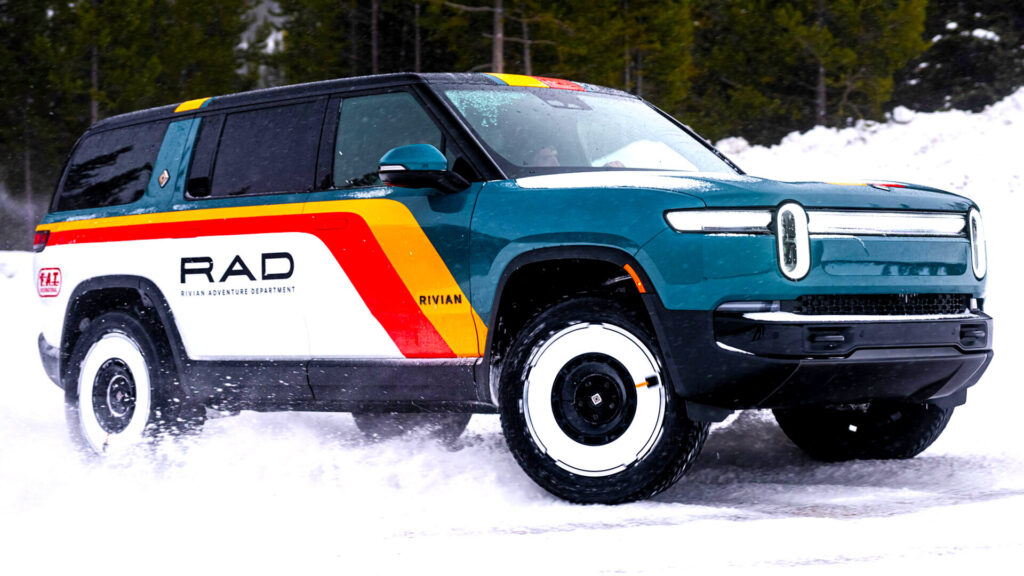
The Rivian Adventure Department has made its official debut.
It’s a skunkworks team that pushes boundaries to improve vehicles.
Has already paved the way for the RAD Tuner and new drive modes.
Rivian has used the FAT Ice Race in Montana to introduce the Rivian Adventure Department, or RAD for short. It’s being billed as a skunkworks team of designers, engineers, and enthusiasts “who spend their days and nights exploring the limits of what a Rivian can do.”
The company said a lot without saying much of anything, but the team is focused on unlocking the next level of capability and performance. They aren’t limited to cubicles either as they’ve “learned there’s no substitute for real-world experience.”
This has already seen the company enter and win the 2023 Rebelle Rally as well as set records for a production electric truck at Pikes Peak in 2023 and 2024. Learnings from these experiences is then fed back into road-going models.
While win on Sunday and sell on Monday is hardly a new idea, Rivian said their off-road adventures directly resulted in the Desert Rally drive mode as well as the RAD Tuner. The latter debuted on the second-generation R1 Quad lineup and enables owners to customize their driving experience.
While a number of automakers offer a personalization setting, most only let you adjust a few things. Rivian, on the other hand, allows drivers to tweak acceleration and regeneration as well as damping, ride height, brake assist, steering, wheel slip, and torque bias – among other things. In effect, it enables you to fine-tune the vehicle’s characteristics exactly to your liking and the situation at hand.
Will RAD Become Rivian’s AMG?
The Rivian Adventure Department has been around for awhile, but now it’s out in the open. As Chief Design Officer Jeff Hammoud explained, “RAD represents the living, breathing expression of the passion that defines Rivian. That impulse to explore, to push limits, and to embrace the adventure is not confined to one team—it is the very DNA of our entire company, from the designers and engineers to our community of owners.”
The big question is what happens next. Does RAD remain a relatively low-key team focused on improving existing products or do they transform into Rivian’s version of BMW M, Cadillac V, and Mercedes AMG? Only time will tell, but it feels like little more than marketing at this point.
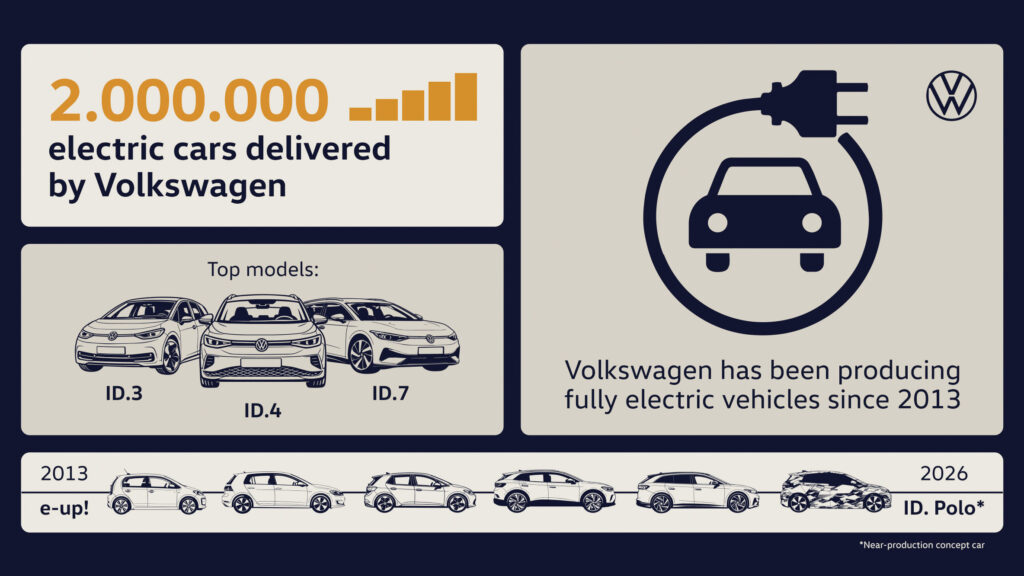
Volkswagen has delivered its 2 millionth EV, an ID. 3 hatch.
It only celebrated the 1 millionth electric car in April 2025.
New affordable models like ID. Polo and ID. Cross coming.
Volkswagen has just handed over its 2 millionth fully electric vehicle, and the pace is what really grabs you. It took 12 years to reach the first million. The 2 millionth car showed up just 10 months later.
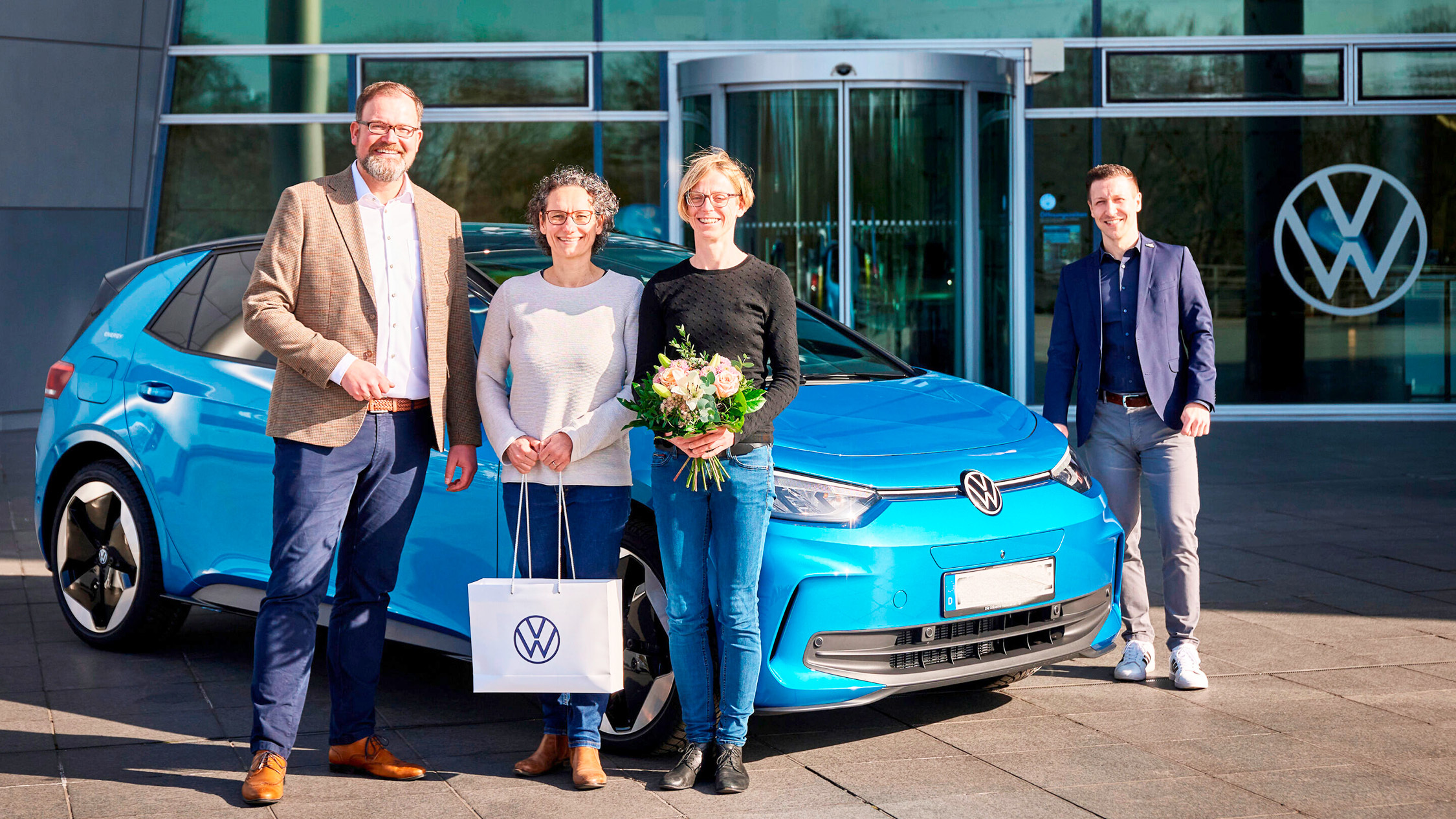
The anniversary car is an ID. 3 hatch, built in Zwickau, Germany, and delivered to a customer at the Transparent Factory in Dresden. The ID. 3 kicked off VW’s large-scale MEB era back in 2020, though the modern electric journey really began with the e-up in 2013 and the company experimented with a small number of electric Golfs as far back as the 1980s.
Volkswagen only celebrated its 1 millionth EV, an ID.3 GTX, last April. That means the brand effectively doubled its lifetime electric output in less time than it takes some automakers to add a new paint color to mark a model-year changeover.
ID. 4 Led The Charge
The heavy lifter in that sales charge is the ID. 4 SUV, which together with its ID. 5 fastback brother clocked up roughly 901,000 deliveries worldwide, proving SUVs still rule even in the electric age. The ID. 3, whose sales potential is restricted by the fact that it’s not available in North America, follows with around 628,000 units, while the larger and more premium ID. 7 has added another 132,000 to the tally.
Europe is the engine behind much of that growth. Roughly one in five cars sold there is now electric, and Volkswagen has carved out a leading role in the region. The US market has definitely cooled, but globally, the trajectory is still pointing upward.
More EVs On The Way
And VW isn’t slowing down. A refreshed ID. 4 badged as the ID. Tiguan is on the way this year, and the new ID. Polo (seen below) and first ever electric GTI, the ID. Polo GTI, will take the fight into the affordable small car segment.
An ID. Cross SUV spinoff follows soon after and an electric ID. Golf is also looming on the horizon. At this pace, don’t be surprised if we’re talking about 3 million before your summer tan has faded.
Three U.S. Environmental Protection Agency (EPA) webinars during the first two weeks of March will include information on the proposed expansion of eligible fuels under the revamped Clean School Bus Program (CSBP) that is expected to roll out soon.
EPA announced the time for the March 3 webinar on last week’s Request for Information, which seeks public comment on the feasibility of adding biodiesel and renewable diesel as fundable fuels. A source familiar with the program said the inclusion of liquefied natural gas and hydrogen, which are not currently available options for school buses, satisfy language contained in the 2021 Infrastructure Investment and Jobs Act that created the CSBP.
March 4 is the date for a second webinar designed to give school districts and bus companies the next steps in finalizing clean school bus projects funded by the 2023 rebate program with an overview of the close out form.
A March 10 webinar will share additional information on the 2023 project close outs EPA said is necessary to complete programs “effectively and efficiently while also ensuring they meet the conditions of their funding opportunity.”
Specifically, EPA said it is targeting potential waste, fraud and abuse by sharing guidance school districts and bus companies should use as they wrap up their projects.
Officers with the Washington Township Police Department helped free a school bus stuck in deep snow during a powerful winter storm hitting the East Coast.
It has been a season of severe winter storms in New Jersey and much of the Northeast as well as Southeast and Midwest. Even before last week’s Nor’Easter storm, New Jersey student transportation was impacted.
The Washington Township Police received a call Jan. 28 just before 9 a.m. that a school bus with children on board was stranded on a road covered with snow and ice. Officers responded quickly, working as a team to clear snow from around the tires and shovel behind the school bus to give it traction. Once freed, the bus driver safely continued the route.
“This is what Community Caretaking looks like,” the department wrote in a social media post highlighting the rescue.
Then came last week’s Nor’Easter, which closed school for several days across New Jersey and at least eight other states in the Northeast and New England.
New Jersey Office of Emergency Management operating under the Division of the New Jersey State Police issued a mandatory statewide travel restriction due to heavy snowfall, blizzard-like conditions, and strong winds that made travel hazardous. The restriction, which began at 9 p.m. on Feb. 22, was extended through noon the following day, to give road crews time to clear snow-covered roadways and ensure public safety.
Under the official travel ban, all non-exempt vehicles were prohibited from operating on state, county, municipal and interstate roads. Exemptions included emergency responders, public works and snow removal crews, transportation personnel, healthcare workers, utility crews, and others supporting essential services.
Officials urged residents to avoid non-essential travel until conditions improved, noting that slick, snow-packed roads and limited visibility could persist even after the restriction was lifted.
The storm dropped significant snow across parts of New Jersey and left many roadways treacherous, prompting ongoing cleanup efforts by municipal crews and state agencies.
SEATTLE, Wash. — Zonar, a leader in smart fleet management and compliance solutions, today announced it has become the first telematics provider certified by the California Air Resources Board (CARB) to support Clean Truck Check (CTC) compliance through OEM-installed vehicle integrations. With 14+ years of the Zonar V4 telematics box installed on approximately 400,000 Freightliner Cascadia, Thomas Built Buses, and Western Star trucks at the factory, any fleet operating these vehicles in California today can immediately access the solution.
A first in the industry, this expanded executive order allows fleets operating California CTC-regulated vehicles to meet emissions compliance requirements without physically connecting to the vehicle’s diagnostic port or installing additional aftermarket hardware.
Why Zonar’s CARB Emission Solution Is Different
CARB’s Clean Truck Check regulation requires non-gasoline vehicles over 14,000 lbs operating in California to submit emissions data on a recurring schedule. Until now, compliance typically required:
Manual scans at a shop or yard.
Third-party service providers.
Vehicle downtime and scheduling complexity.
Zonar’s newly approved certification introduces a new compliance pathway.
With this executive order, OEM-installed and hardwired Zonar devices, already embedded in supported vehicles, can automatically collect and submit required emissions data directly to CARB. No shop visits. No plug-in scans. No operational disruption.
Zonar is the only provider whose CARB executive order explicitly permits compliance via a hardwired vehicle harness, not just a direct OBD connection.
Who This Impacts
With large and distributed fleets facing increasing compliance frequency, moving to four checks per year beginning in 2027, this certification directly benefits:
Fleets operating in California subject to CARB Clean Truck Check requirements.
OEM-equipped vehicles, including factory-installed telematics configurations.
School transportation, transit, and commercial fleets seeking to reduce downtime and compliance risk.
Mixed and transitioning fleets, where OEM-equipped vehicles can now meet compliance requirements without operational inconsistency.
Fleets can now achieve CARB compliance automatically, in the background, using hardware already installed in their vehicles, either as a standalone emissions solution or alongside Zonar’s broader telematics, diagnostics, and maintenance offerings.
First to Market Again
Zonar was the first telematics provider certified by CARB as a continuously connected Clean Truck Check solution and is now the first, and only, provider approved for OEM-installed and hardwired configurations.
This milestone reflects years of close collaboration with CARB, OEM partners, and Zonar’s in-house engineering team to meet the most rigorous regulatory and technical standards.
“CARB compliance is becoming more frequent, more complex, and more disruptive for fleets—but it doesn’t have to be,” said Amit Anand, SVP of Product at Zonar. “Because we design our own hardware, work directly with OEMs, and partner closely with CARB, we were able to deliver a solution no one else in the market could. This certification removes downtime, eliminates guesswork, and allows fleets to stay compliant automatically using technology they already have.”
Why Zonar’s OEM-Certified CARB Emission Solution Changes the Experience for Fleets
With Zonar’s Emission Check, fleets experience:
No downtime for compliance scans.
Earlier detection of emissions issues within CARB’s compliance window.
Lower cost compared to manual or third-party scans.
Future-readiness as CARB enforcement and inspection frequency increases.
With enforcement tied to vehicle registration, roadside inspections, ports, and rail yards, CARB compliance is no longer optional. Zonar’s solution helps fleets meet these requirements proactively and seamlessly, reducing risk while keeping vehicles on the road.
About Zonar Systems:
Zonar combines a unified fleet management platform with reliable telematics hardware and always-on human support giving mission-critical fleets precise, trustworthy data to improve safety, ensure compliance and reduce operating costs. Proven every day in pupil transportation, where it safeguards millions of children, Zonar’s technology and partnership deliver the trust, transparency and confidence public-sector, field service and vocational fleets need to perform when it matters most. To learn more, go to www.zonarsystems.com.
The new battery delivers 400 Wh/kg energy density.
Mass production is planned to begin next year.
BYD, SAIC, GAC, and CATL are developing similar packs.
Solid-state batteries have been “just around the corner” for what feels like an entire EV generation. Now, they might actually be arriving. In the third quarter of this year, China’s Changan will begin fitting its new solid-state packs to robots and EVs, with full mass production slated for 2027.
According to Chinese media, Changan claims its new solid-state battery has an energy density of 400 Wh/kg, and EVs using it will be able to travel upwards of 932 miles (1,500 km) on a single charge. While you could argue that this much range borders on excessive, it would make future Changan models far better suited to long road trips through remote areas where charging infrastructure remains sparse.
Breakthrough Energy Density
The pack is called the Golden Bell. Aside from being very energy-dense, it is said to be 70 percent safer than a conventional EV battery and, because this is 2026, it also uses artificial intelligence for remote diagnostics. Smarter batteries, apparently, are part of the plan.
Changan will build these units under its new Jingzhongzhao solid-state battery brand. The company intends to manufacture fully solid-state packs while also producing liquid and semi-solid-state batteries that rely on a liquid electrolyte.
China’s Solid-State Push
It is not alone. Other Chinese brands are also edging closer to making solid-state batteries mainstream. Earlier this year, Dongfeng Motor began testing its own solid-state battery in extreme cold weather. It has an energy density of 350 Wh/kg and a claimed range exceeding 620 miles (1,000 km). It also plans to roll them out in production cars this year, aiming for September.
BYD, Chery, SAIC, GAC, and CATL are all chasing similar breakthroughs. So are legacy names such as Mercedes-Benz, VW, BMW, Toyota, Nissan, Hyundai, and Honda. After years of promising headlines and laboratory milestones, solid-state batteries may finally be edging toward something tangible. If they deliver on even half of these promises, combustion engines will have one more reason to feel nervous.
Cupra Born facelift teased with sharper triangular lights.
Already great interior quality set to get another boost.
Growing brand’s new-look EV makes its debut March 5.
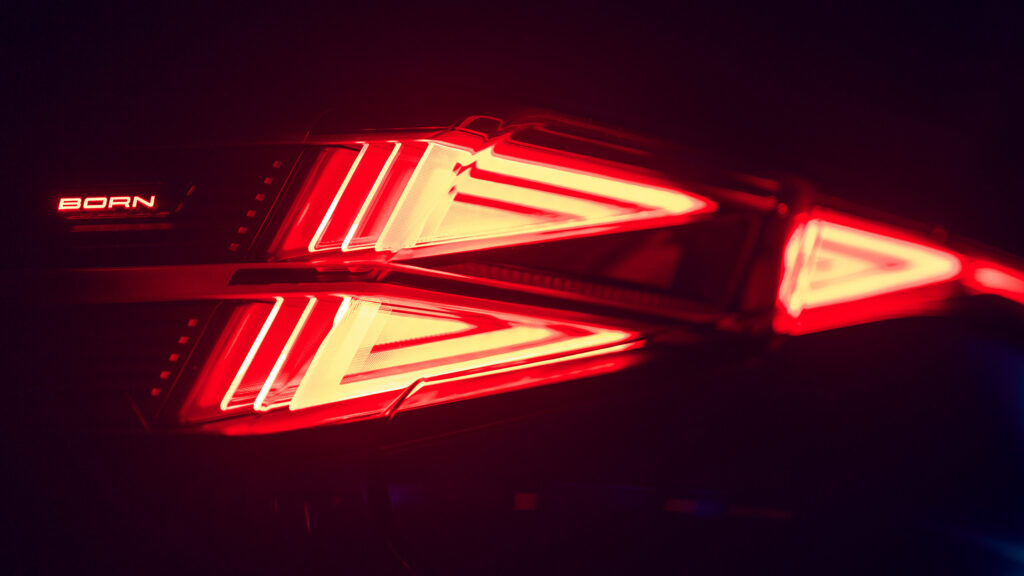
Cupra is at it again, reminding us why its versions of big-name Volkswagens are almost always superior to the real thing. This time, the Spanish brand has teased an updated Born, its sportier take on the VW ID.3, and we’ll get to see the full makeover on March 5.
The biggest change is visual, and it seems like it’ll be hard to miss. The updated Born adopts Cupra’s latest design DNA, complete with triangular Matrix LED headlights and a matching triangular lighting graphic at the rear. There’s also an illuminated rear badge because lit logos are the car design world’s new LED light bar.
We’ve spied disguised prototypes of the facelift Born testing a couple of times, and those images suggest redesigned bumpers and a taller lower grille augmented by vertical outer vents that make the EV look tougher and wider.
Tech Upgrade
The Born’s cabin already makes the ID.3s look cheap and dull (though VW did improve the materials a couple of years ago), and Cupra says we should expect even better quality and more technology in the refreshed car. But it’s not like the brand has a ton to do in this area, having already upgraded the Born to VW’s much-improved 12.9-inch touchscreen in 2024.
Few Below-Surface Changes
Under the skin, things are more mysterious, and we’re guessing that’s because it’s all carried across from the current hatch. Cupra hasn’t confirmed any technical changes, and the current Born is already competitive for electric range and performance in its class. So this update could be more about feel and flair than extra kilowatts. Still, a little surprise boost wouldn’t hurt.
As of today, Cupra skips the low-tune motor options offered in entry-level VW ID.3s and jumps straight to a 228 hp (231 PS / 170 kW) single-motor setup with a choice of 59 or 79 kWh batteries, giving up to 354 miles (570 km ) between fills. Hot hatch fans can upgrade to Cupra’s version of the ID.3 GTX, the Born VZ, which comes with a 322 hp (326 PS / 240 kW) motor, again driving the rear wheels only.
Rescuers couldn’t open SU7’s electric door releases as it burned.
Eyewitnesses tried desperately to smash the driver’s side window.
China will ban electric door releases like the SU7’s from 2027.
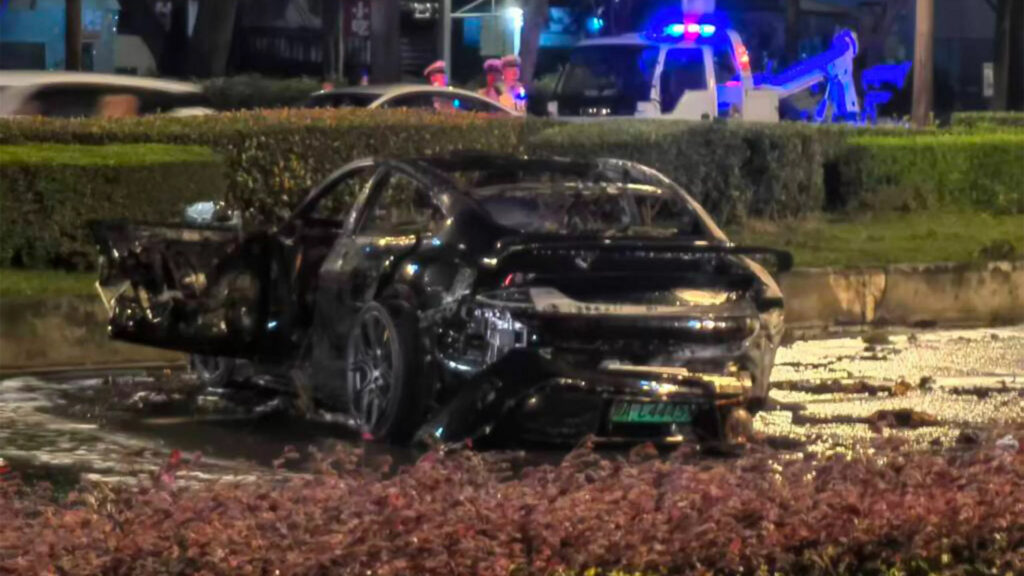
An official investigation into the death of a man who crashed his Xiaomi SU7 in China last year has confirmed details previously reported by local media. The findings underscore how critical basic mechanical access can become in seconds. Authorities concluded that the 31-year-old died after being unable to open the electrically operated doors once the electric sedan caught fire.
While this case involves a Xiaomi, concerns about electronically actuated door systems have been debated across the industry and in global markets for years. This isn’t just a Tesla issue.
The crash occurred at approximately 3:15 a.m. on October 13, 2025, in Chengdu, reports Carnewschina. The Xiaomi driver, identified simply as Deng, was allegedly driving under the influence of alcohol at the time and slammed into another vehicle on Tianfu Avenue South before jumping over the central divider and bursting into flames.
Timeline Of The Crash
According to forensic findings cited by the Chinese magazine Caixin, the SU7 reached 203 km/h (126 mph) just three seconds before the crash. It then slowed to 167 km/h (104 mph) after striking the other car and was traveling 138 km/h (86 mph) when it hit the divider.
Harrowing footage captured in the immediate aftermath showed bystanders attempting to smash the driver’s side window and open the door in an effort to save him, but without success.
Why The Doors Wouldn’t Open
Investigators concluded that the doors could not be opened from the outside because the fire caused the low-voltage system to shut down, disabling the door handle release function. The report added that the SU7 has no mechanical latches accessible from the outside and relies solely on electric release buttons.
Xiaomi shares plunged nearly 9% after a fatal crash involving its SU7 electric car, Bloomberg reports
According to the outlet, a 31-year-old driver in China collided with another vehicle, crossed into the opposite lane, and the car caught fire. Witnesses tried to pull the man… pic.twitter.com/yPQ70FoKXN
The Xiaomi also uses electric release buttons inside the cabin. Although it is equipped with mechanical emergency releases, locating and operating them while disoriented after a crash would not be straightforward.
Regulatory Response In China
This fatal crash, along with others, has prompted regulators in China to ban electronic door handles on EVs. The new rule will take effect on January 1, 2027. It will require exterior handles that provide a handhold of at least 60 mm by 20 mm (2.36 inches x 0.79 inches), ensuring they can be used by rescuers in an emergency. In addition, mechanical releases inside the vehicle must include clear signage explaining how to open them during an emergency.
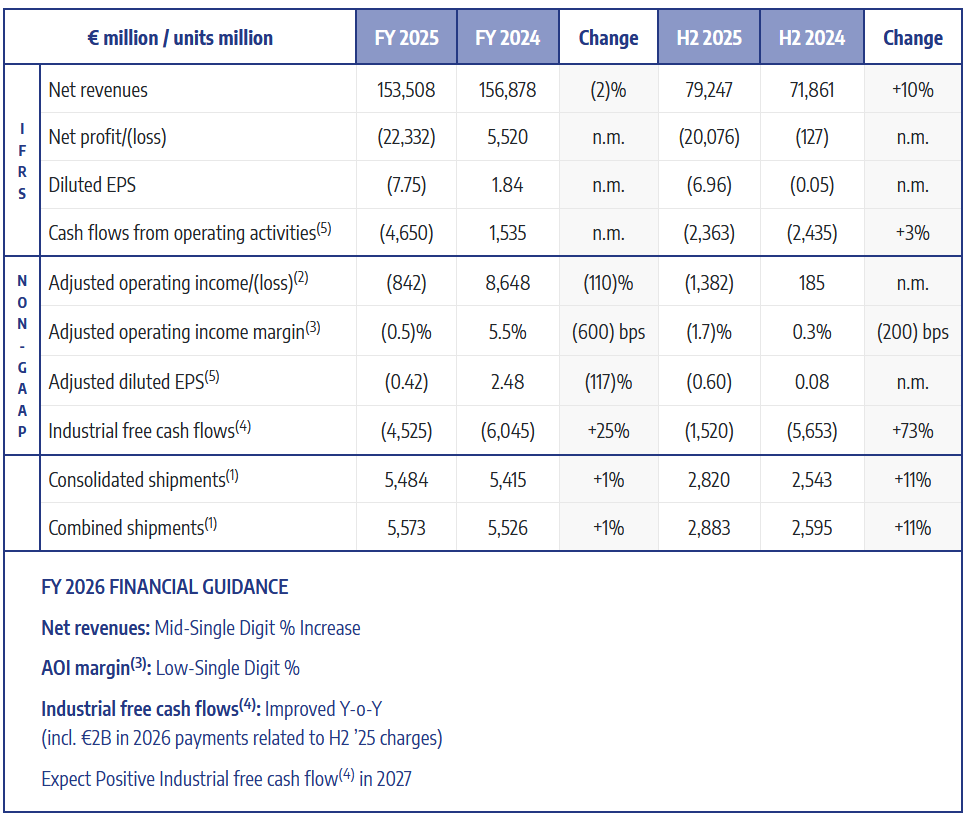
Stellantis has published its 2025 financial results, and they make for sobering reading. The headline figure is a €22.3 billion deficit, equal to $26.3 billion at current rates, marking the group’s first-ever annual loss. That swing looks even worse when set against 2024’s €5.5 billion ($5.8 billion) profit, which was already down 70% compared to 2023. In the span of two years, the company has gone from profitable to deep in the red.
The group, which owns 14 brands including Abarth, Alfa Romeo, Chrysler, Citroen, Dodge, DS Automobiles, Fiat, Jeep, Lancia, Maserati, Opel, Peugeot, Ram, and Vauxhall, attributes the damage to €25.4 billion ($30 billion) in “unusual charges,” largely tied to what it calls a “profound strategic shift to meet customer preferences.” In plain terms, Stellantis overestimated how quickly the market would pivot toward electric mobility and is now paying to recalibrate.
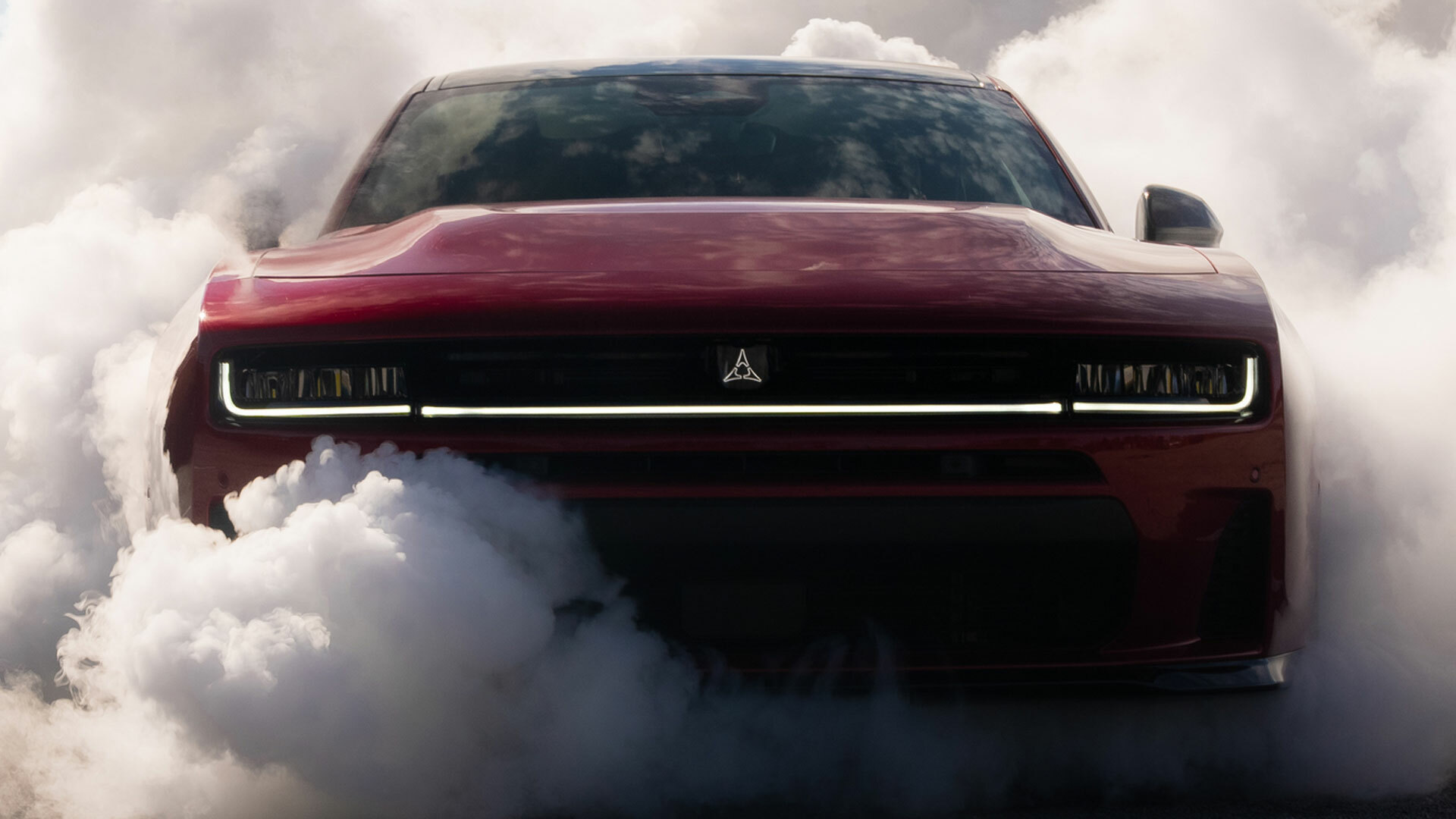
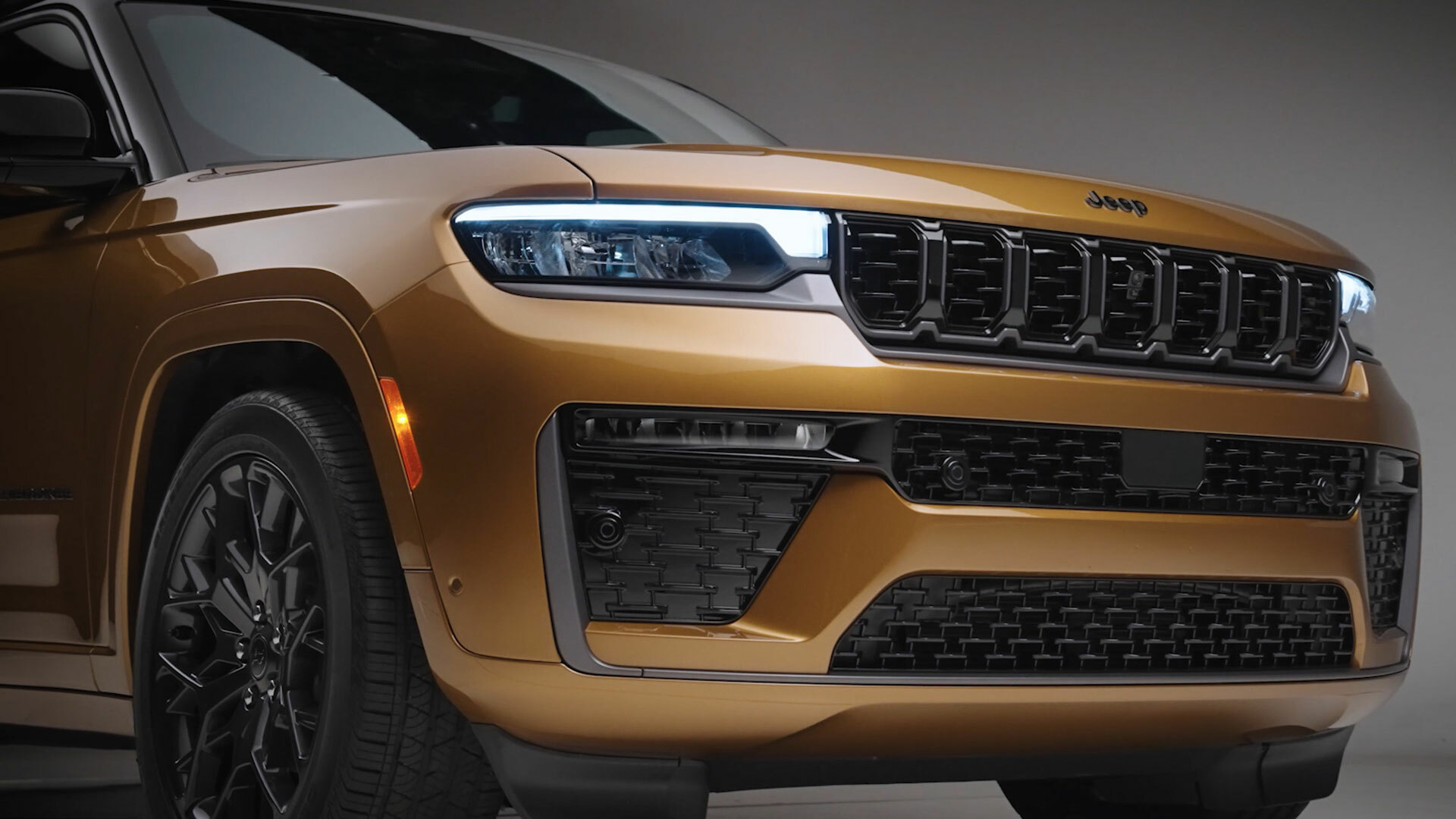
That is only part of the story. It wasn’t just a matter of customers being slow to embrace EVs. Several of Stellantis’ electric efforts, particularly in the US, struggled on their own terms. Models such as the Dodge Charger Daytona EV and the Jeep Wagoneer S were priced at the upper end of their segments yet struggled to justify that positioning against established rivals.
Rethinking Its EV Strategy
Regardless, that recalibration means canceling several electric models that were in development, mainly for the US market, and putting new emphasis on high-margin combustion engines. The return of the HEMI V8 in North America is the obvious attention grabber.
In Europe, diesel and mild-hybrid gasoline options are being folded back into the lineup across several current and upcoming models, including the now-delayed Alfa Romeo Stelvio and Giulia replacements.
“Our 2025 full year results reflect the cost of over-estimating the pace of the energy transition and of the need to reset our business around our customers’ freedom to choose from the full range of electric, hybrid and internal combustion technologies,” said Stellantis CEO Antonio Filosa.
“In the second half of the year we began to see initial, positive signs of progress with the early results of our drive to improve quality, strong execution of the launches of our new product wave and a return to top line growth. In 2026 our focus will be on continuing to close the execution gaps of the past, adding further momentum to our return to profitable growth.”
How Does Stellantis Plug The Gap?
The financial strain has prompted the board to suspend the 2026 dividend and authorize up to €5 billion ($5.9 billion) in hybrid bonds to shore up liquidity. Industrial free cash flow remained firmly negative at €4.5 billion ($5.3 billion), although that represents a 25% improvement on the previous year.
Net revenue totaled €153.5 billion ($181.1 billion), down 2% year-on-year. The decline is attributed to exchange rate headwinds and net pricing drops in the first quarter of 2025, neither of which tends to flatter the bottom line.
The group posted an adjusted operating loss of €842 million ($993.5 million). Still, the second half of the year showed signs of stabilization. Revenues rose 10% and shipments climbed 11% as inventories normalized. Stellantis also highlighted that H2 2025 marked the first six months under its renewed leadership team, a detail clearly intended to signal that the worst may already be in the rearview mirror.
Shipments Went Up But Shares Go Down
Combined shipments for 2025 reached 5.573 million vehicles, up 1% year-on-year. That keeps Stellantis in fifth place globally by volume, behind Toyota (11.3 million), Volkswagen Group (8.98 million), Hyundai Motor Group (7.27 million), and General Motors (6.11 million).
Momentum was stronger in the second half, with 2.883 million shipments, up 11% over H2 2024. North America did most of the heavy lifting, posting a 39% H2 increase as inventories returned to more normal levels and demand improved.
Investors, however, appear less convinced. Reuters reports that Stellantis shares have fallen by more than 30% this year, sliding to their lowest level since the PSA-FCA merger in 2021.
Across the country, Republicans and Democrats have found bipartisan agreement on regulating artificial intelligence and data centers. But it's not just big tech aligning the two parties.
HIGH POINT, N.C. – Thomas Built Buses (TBB), a leading manufacturer of school buses in North America and a division of Daimler Truck Specialty Vehicles, has selected Bryan County Schools in Georgia as the recipient of proceeds from its recent ‘If You Pass’ school bus safety awareness campaign. The contribution will support the district’s ongoing work to reduce illegal school bus passings and improve roadway safety for students.
Launched during National School Bus Safety Week, the ‘If You Pass’ campaign confronted the ongoing issue of illegal school bus passings, an offense that occurs an estimated 39.3 million times each school year according to National Association of State Directors of Pupil Transportation Services (NASDPTS). Rather than softening the message, the campaign opted for a direct, no-nonsense approach to school bus safety — If You Pass.
Through bold social messaging and a limited-edition merchandise collection, the campaign caught the attention of drivers, educators and families nationwide, helping push the issue into the public conversation. This reinforced the responsibility to stop and gave communities a way to actively participate in school bus safety advocacy.
Supporters purchased items from the merchandise collection, with all net proceeds dedicated to supporting school bus and driver safety education efforts. Supporters were also encouraged to nominate districts in their communities to receive campaign funds.
Of the districts nominated by supporters, Bryan County Schools received the most recognition and has been selected as the recipient of the campaign proceeds.
“Illegal passings are one of the most preventable dangers students face every day, and yet they keep happening,” said Mario DiFoggio, general manager of dealer channel sales and marketing for Thomas Built Buses. “The ‘If You Pass’ campaign was intentionally direct, because politeness doesn’t stop traffic — awareness does. For a short, three-week campaign, the response exceeded our expectations, and we know these funds will go a long way in supporting the important work Bryan County Schools is doing to protect students and keep this conversation going.”
Thomas Built Buses will continue to collaborate with school districts, transportation departments and industry partners to advance student safety and encourage responsible driver behavior nationwide.
About Thomas Built Buses:
Founded in 1916, Thomas Built Buses is a leading manufacturer of school buses in North America. Since the first Thomas Built bus rolled off the assembly line, the company has been committed to delivering the smartest and most innovative buses in North America. Learn more at thomasbuiltbuses.com or facebook.com/thomasbuiltbuses.
Thomas Built Buses, Inc., headquartered in High Point, North Carolina, is a subsidiary of Daimler Truck North America LLC, a leading provider of comprehensive products and technologies for the commercial transportation industry. The company designs, engineers, manufactures and markets medium- and heavy-duty trucks, school buses, vehicle chassis and their associated technologies and components under the Freightliner, Western Star, Thomas Built Buses, Freightliner Custom Chassis Corp and Detroit brands. Thomas Built Buses and Freightliner Custom Chassis Corp. together form Daimler Truck Specialty Vehicles. Daimler Truck North America is a subsidiary of Daimler Truck AG, one of the world’s leading commercial vehicle manufacturers.
A former school bus monitor in Grady County in southwest Georgia is facing a simple battery charge following allegations that she assaulted a student with autism while on duty, reported WALB News.
The alleged student assault occurred Feb. 12 at Eastside Elementary School in Cairo, Georgia.
The school’s resource officer along with another witness reviewed surveillance footage from the school bus. The officer reportedly stated that the video showed the bus monitor pinching the child and “striking him in the face with what appeared to be a bag.”
The child’s mother said she was notified to come to the school and discovered a bruise on her son when she arrived. She said her child, who is on the autism spectrum, was able to communicate what happened during the student assault on the school bus ride.
“I felt like I needed to speak out to protect my son,” the mother said via the article.
Grady County Schools confirmed that the school bus monitor involved is no longer employed by the district.
Authorities said the former school employee was charged with simple battery. The school resource officer indicated officials are working toward making an arrest as the investigation continues.
PROS ›› Good tech, comfortable ride, better than EV5 CONS ›› Poor ADAS, pricey, inefficient, slow-charging
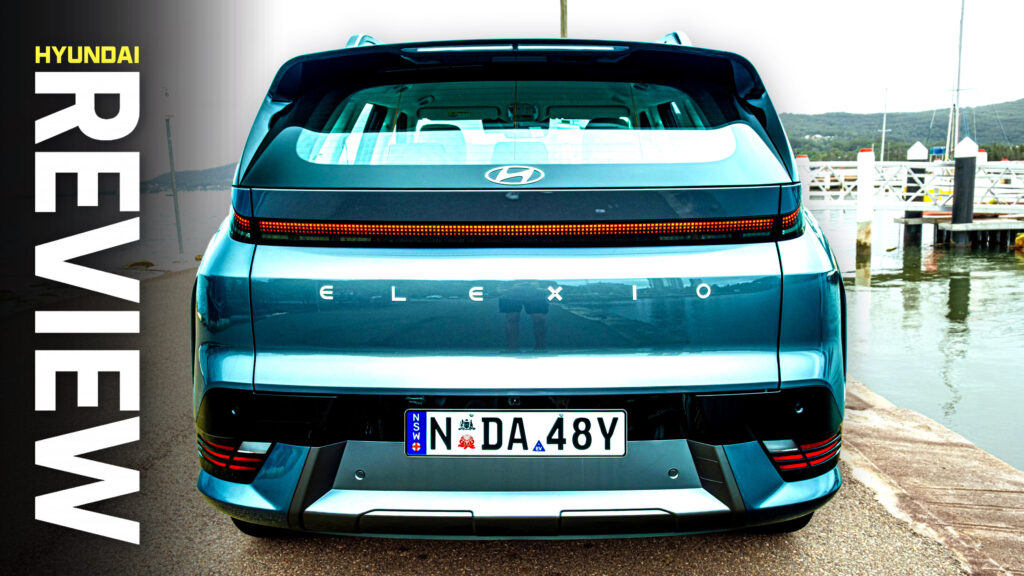
Electric vehicles make up just over 8 percent of new car sales in Australia, so they are hardly dominant. Yet the competitive noise has increased dramatically in recent years, thanks largely to a surge of new Chinese brands. Hyundai’s counterpunch is the Elexio, its latest EV and one aimed squarely at that fast-growing crowd.
The Elexio is unlike any other electric Hyundai so far. Crucially, it was not developed entirely in-house, but rather brought to life through its joint venture partnership with BAIC Motors.
This means it is built in China, tapping into the country’s vast manufacturing scale and efficiency, paired with the engineering experience and brand weight of a legacy player like Hyundai. When it was revealed last year, it looked set to remain a China-only model. Instead, it has now landed in Australia, and we were among the first to get behind the wheel earlier this month.
QUICK FACTS
› Model:
2026 Hyundai Elexio Elite
› Starting Price:
AU$61,990 ($44,000) as tested
› Dimensions:
181.6 L x 73.8 W x 65.8 in H (4,615 x 1,875 x 1,673 mm)
› Wheelbase:
108.2 in (2,750 mm)
› Curb Weight:
2,105 kg (4,640 lbs)
› Powertrain:
Single electric motor / 88.1 kWh battery
› Output:
215 hp (160 kW) / 236 lb-ft (320 Nm)
› 0-62 mph
~8.0 seconds
› Transmission:
Single-speed
› Efficiency:
19.5 kWh/100 km as tested
› On Sale:
Now
SWIPE
According to Hyundai, the Elexio has been designed to neatly slot between the Kona EV and Ioniq 5 in its line-up, serving as an all-electric alternative to the Hyundai Tucson. It’s Hyundai’s answer to popular competitors like the Tesla Model Y, Kia EV5, BYD Sealion 7, and Xpeng G6, and this is reflected in the price.
Can It Compete On Price?
Hyundai Australia
Two versions will be offered: the base Elexio and the flagship Elexio Elite. Prices for the base version will start at AU$58,990 (US$41,900) before on-road costs, while the Elite will be priced from AU$61,990 (US$44,000). However, the Elite will be available for AU$59,990 (US$42,600), including all on-road costs, in a limited-time deal running until the end of March.
Hyundai is predicting big things for the Elexio and expects it to be its best-selling EV in Australia. Achieving this won’t be easy. The Kia EV6 undercuts the Elexio at AU$56,770 (US$40,300), the Tesla Model Y Premium is available from AU$58,900 (US$41,800), and the BYD Sealion 7 Premium is available from AU$54,990 (US$39,000). The superb Zeekr 7X also undercuts it at AU$57,900 (US$41,100).
Big Battery, Modest Charging Speeds
So, what do you get for your money in the world of the Elexio? Like Hyundai’s Ioniq models, and unlike the Kia EV5, the Chinese-built Elexio uses the familiar E-GMP platform. However, it doesn’t have an 800-volt architecture like the Ioniqs, instead using a 400-volt system.
With this in mind, charging the battery pack 10-80 percent on a 150 kW charger, with peak speeds in the mid-120s, will take 38 minutes. This is slightly slower than the Kia EV5, which takes 36 minutes, but whereas it has a compact 64.2 kWh battery, the Hyundai has a much larger and more practical 88.1 kWh unit.
This battery powers a front-mounted electric motor with 160 kW (215 hp) and 310 Nm (236 lb-ft). Hyundai quotes a combined efficiency of 18.2 kWh/100 km, which is okay, but certainly not class-leading.
A Digital-First Cabin
Photos Brad Anderson/Carscoops
We only sampled the Elexio in flagship Elite trim, so first impressions came fully loaded. Stepping into the cabin for the first time, it is immediately clear this is not your typical Hyundai interior.
Dominating the interior is a massive widescreen 27-inch display, encompassing both the central infotainment display and a display for the passenger. This screen houses Hyundai’s new Connect-C infotainment system and runs on Android Automotive with a powerful Snapdragon 8295 processor and Unreal 3D graphics engine.
While there are several cars on sale in China with a similar passenger and infotainment screen, this is one of the first implementations of a display like this in a Western market. It looks great, providing excellent colors, clarity, and response. However, it’s not particularly practical to use, especially when you’re driving.
Photos Brad Anderson/Carscoops
I am quite tall with long arms, yet adjusting the climate controls or digging into vehicle settings on the move meant leaning forward and stretching almost to the limit. It should not feel like a light workout just to change the temperature. The more traditional screens in other current Hyundai models are much easier to reach, as are the tablet-like displays found in many of the Elexio’s rivals.
On the plus side, the new Connect-C system is good and is far more modern than Hyundai’s outgoing software. It has a much smartphone-like layout with convenient shortcuts on the driver’s side.
In a Hyundai first, a traditional gauge cluster has been replaced by a head-up display. In photos, it doesn’t look like a HUD at all, but rather a physical cluster positioned at the base of the windshield. In reality, it is a true head-up display, albeit it projects onto a small black area of the windshield, providing better contrast than HUDs that project onto normal glass.
The obvious downside of this is that if you chip or crack the windshield, you probably won’t be able to buy a generic HUD-compatible replacement, but rather need one from Hyundai with this black element.
Quality And Space
The rest of the cabin is quite minimal, as many EVs are today. In terms of fit and finish, it feels on par with some Chinese rivals, like the BYD Sealion 7, and is certainly more premium than the Kia EV5. There’s soft-touch suede on the dashboard and door panels, as well as heated and ventilated front seats, and plenty of leather. Dual wireless chargers are also standard on the Elite.
Overall, space and comfort are good, whether that be in the front row or the second-row. While the Elexio only has a wheelbase of 2,750 mm (108.2 inches), 5 mm (0.1 inches) less than the Tucson and 250 mm (9.8 inches) less than the Ioniq 5, there’s still plenty of legroom for rear passengers, and that includes adults. Cargo space is decent, rated at 506 liters (17.8 cubic-feet) or 1,540 liters (54.3 cubic-feet) with the rear seats folded 60/40 flat.
Disappointingly, neither Elexio model has a panoramic glass roof, which is common in electric SUVs at this price point, nor a frunk, even though there’s plenty of space for one.
How Does It Drive?
Photos Brad Anderson/Carscoops
Driving the Elexio revealed that it is a solid performer, and it does some things well. However, it fails to stand out from the competition and could benefit from some tweaks to lift it to a new level.
As any EV should, the Elexio’s powertrain is smooth and quiet, providing more than enough grunt for everyday driving duties, whether that be in urban settings or on the highway.
With 160 kW (215 hp) and 310 Nm (236 lb-ft), the Elexio has exactly the same power as the front-wheel drive Kia EV5. Crucially, it doesn’t suffer from the same horrible torque steer that the EV5 does. In fact, there’s no torque steer whatsoever, which is a great thing. However, like the EV5, the Elexio does love to spin up its inside front wheel should you get greedy with the throttle and play around with the traction control.
Efficiency is not so good. After several stints behind the wheel of the Elexio, we averaged 19.5 kWh/100 km, which is quite poor, particularly given that we averaged 20.5 kWh/100 km in the Sealion 7 Performance, and it has an extra 230 kW (308 hp) and 380 Nm (280 lb-ft) of torque.
Like other Hyundai and Kia EVs, the Elexio has paddle shifters behind the steering wheel to adjust the level of brake regeneration, which is something every EV should have. I spent most of my time in the one pedal i-Pedal mode, with it bringing the SUV to a smooth and predictable stop every time. The transition between the mechanical brakes and the regen is also imperceptible, so kudos to Hyundai for that.
The brand says that, like most of the cars it sells in Australia, the Elexio has been specifically tuned for local roads by teams of engineers from South Korea. I was pleasantly surprised with the Elexio’s ride, finding it to be comfortable and softer than many other EVs, which can be too firm and harsh over bumps.
Software Still Finding Its Feet
Photos Brad Anderson/Carscoops
In addition to tweaking the suspension for Australia, Hyundai insinuated during a press briefing that the Elexio’s advanced driver assistance system have also been set up for local conditions. Despite this, further refinements are needed.
During long highway jaunts, there were several instances when the lane-keeping assist and lane-centering functions failed to recognize clearly-marked lines, causing it to slowly drift into adjacent lanes. In addition, I experienced some slow ping-ponging between lane markings. This is odd as the dozens of other Hyundai and Kia models I’ve tested in recent years all have great lane-keeping systems, keeping you locked in the center of the lane on well-marked highways.
In addition, there was an instance where I had the adaptive cruise control enabled on a 100 km/h (62 mph) country road when suddenly, the Elexio suddenly braked to 75 km/h (47 mph) despite there being no object or car in front of me. I suspect the large semi-truck traveling in the opposite direction in the lane next to me fooled the system.
Like so many other new cars built in China, the Hyundai Elexio’s driver monitoring system is overactive, ringing the moment you yawn or take your eyes off the road. Additionally, turning it offer requires multiple steps through the menu, which is frustrating.
Verdict
Photos Brad Anderson/Carscoops
The Hyundai Elexio is definitely better than the Kia EV5, which has quickly gained popularity in Australia and is the best-selling EV from a legacy brand in the local market. With this in mind, there’s a good chance that the Elexio should also sell well for Hyundai, and it’ll likely attract many shoppers who were previously interested in the Kona EV or Ioniq 5.
However, it may be prudent for buyers to exercise some patience before getting an Elexio. Earlier this year, Hyundai slashed prices of the Inster by AU$7,288 ($5,200), and reduced the Kona Electric by more than AU$13,000 ($9,200). If internal sales targets are missed, similar price adjustments for the Elexio would hardly be surprising.
Just as importantly, Hyundai’s latest EV still needs a few software refinements, particularly to its ADAS, before it feels like the clear choice in an increasingly crowded segment.
It sports special graphics and a revamped interior.
Americans will only get the JCW variant with 228 hp.
Anniversary editions are popular with consumers and automakers, but they typically follow a predictable pattern. However, Mini is mixing things up by honoring the 61st anniversary of their win at the 1965 Monte Carlo Rally.
That’s a weird anniversary to celebrate, but the company is marking the occasion by unveiling the new 1965 Victory Edition. Based on the Cooper, the model features a Chili Red exterior with a full-length white body stripe and a white “52” graphic on both sides of the vehicle.
They’re joined by a Glaced or panoramic glass roof and a “1965” sticker on the C-pillar. The model also sports 18-inch alloy wheels in either a black or two-tone design.
The upgrades extend to the cabin, which has been adorned with special door sill plates and a sport steering wheel featuring 1965 badging. Elsewhere, there’s two-tone accents, 52 graphics, and a special storage box in the center console. Buyers will also find a ‘hidden’ door sticker noting Timo Mäkinen’s win at the 1965 Monte Carlo Rally in a Cooper S.
Multiple Engine Options
Three different powertrains are available as the Cooper S 1965 Victory Edition has a turbocharged 2.0-liter four-cylinder pumping out 201 hp (150 kW / 204 PS) and 221 lb-ft (300 Nm) of torque. It enables the model to accelerate from 0-62 mph (0-100 km/h) in 6.6 seconds.
Customers can also get a JCW variant, which has an upgraded 2.0-liter turbo producing 228 hp (170 kW / 231 PS) and 280 lb-ft (380 Nm) of torque. This lowers the dash to 62 mph (100 km/h) to 6.1 seconds.
If that’s too slow, the John Cooper Works Electric hits 62 mph (100 km/h) in 5.9 seconds thanks to a beefy motor producing 255 hp (190 kW / 258 PS). The model is also notable for having a 49.2 kWh battery pack and a range of 226-250 miles (364-402 km) in the United Kingdom.
The special edition will be launched later this year and offered in an assortment of different markets. However, Americans will only get the JCW variant and it’ll cost $46,220 before a $1,175 destination fee.
Europe gets a new base EX30 with 148 hp and 211 miles of range.
It adds updated UX and V2L, both coming via OTA updates.
Production moves from China to Europe to avoid EU tariffs.
The Volvo EX30 has been updated in Europe for 2026, mirroring changes already introduced on the US-spec model. The range now gains a new entry-level powertrain, refreshed infotainment, new Vehicle-to-Load capability, and a Europe-exclusive Black Edition.
For European buyers, the headline is a lower entry point into the Volvo EV range. The EX30 now comes with a less potent electric motor producing 148 hp (110 kW / 150 PS), positioned as a more affordable alternative to the existing single-motor 268 hp (272 PS) and dual-motor 422 hp (428 PS) versions.
This new variant, not available in North America, can be paired with a 51 kWh battery pack delivering 339 km (211 miles) of WLTP range. Step up to the 69 kWh battery and the range increases to 476 km (296 miles). More miles, same compact footprint, and a little more choice at the showroom.
Turn Your Volvo Into A Power Bank
Volvo says the EX30 is now hardware-compatible with Vehicle-to-Load (V2L), though the feature will initially roll out in selected markets. With an optional adapter, the battery can power external kit such as electric bicycles, sound systems, or your increasingly elaborate camping setup.
There is also an infotainment update, bringing what Volvo calls a completely redesigned settings and controls system, plus a customizable content bar. Crucially, existing EX30 owners are not being left behind. The new user experience and V2L functionality will arrive via over-the-air updates scheduled for this summer.
The EX30 Black Edition
The EX30 only arrived in 2023, so there was no pressing need for a mid-cycle nip and tuck for either the standard model or the chunkier Cross Country. Instead, Volvo has opted for a wardrobe change. Enter the new Black Edition, now extended to its smallest SUV in line with the rest of the range.
Despite the name, you are not limited to one shade of noir. The Black Edition can be specified in Onyx Black, Vapour Grey, or Crystal White. Whichever you choose, the chrome has been quietly retired in favor of a high-gloss black finish. That treatment covers the 19-inch alloy wheels, the Volvo badge up front, and the lettering across the tailgate.
Inside, there is Nordico upholstery with contrasting stitching and dark flax decor to complete the theme.
If you like the darker cabin but not the full blackout look, the Black interior specification is also available across the broader EX30 lineup. There is also a new option called Harvest. Inspired by late Scandinavian summer evenings, it brings light-colored, woven recycled textile upholstery for the seats and door inserts, paired with a Nordico dashboard, dark flax decor, and a black headliner.
Pricing for the updated range will be confirmed at a later date. European-market EX30s are now built in Belgium, after Volvo shifted production from China to sidestep import tariffs.
Lancia’s flagship crossover was spotted in winter tests.
New Gamma will offer electric, mild-hybrid, and PHEV options.
It will be built in Melfi, Italy, alongside the DS No8.
Stellantis’ grand Lancia revival, or as they called it, ‘Renaissance’, has not exactly burst out of the gates. The new Ypsilon subcompact hatchback has struggled to gain momentum, which is not quite a surprise. Still, phase two is already taking shape, and it brings with it a familiar name. The Lancia Gamma is coming back.
This time, it arrives as an electrified crossover, and our spies have spotted a prototype for the first time during winter testing. The test car reveals enough to give us a better sense of what to expect ahead of its official debut later this year.
Unlike the original Gamma, which was offered from 1976 through 1984 as a fastback saloon and coupe, the new model takes a very different route. It is now a crossover, effectively the Italian sibling to France’s DS No8. From the spy shots, the Gamma appears more upright than the DS, leaning closer to coupe-SUV territory than to a traditional crossover.
Design Direction Takes Shape
Baldauf
At the front, expect familiar cues borrowed from the smaller Ypsilon. The split LED headlight layout looks set to return, joined by an illuminated T-shaped grille that, intentionally or not, brings to mind a Mandalorian helmet. Down below, the lower bumper intake has a clean, contemporary design and seems to incorporate active shutters flanking an ADAS sensor.
Down the sides, the surfacing closely mirrors the DS, right down to the door handles and mirror caps, though the Gamma appears to get slightly larger windows. The wheels look modest in size, which is usually a giveaway that this is not the upcoming HF performance version.
At the rear, heavy camouflage does its best to hide the details, but you can still make out the coupe-style rear glass flowing into what seems to be an integrated spoiler. An official teaser released in late 2024 indicates that the full-width LED taillights will adopt a T-shaped lighting signature, directing your eye toward the Gamma lettering across the sculpted tailgate. There are no visible tailpipes beneath the diffuser, reinforcing the likelihood that this particular prototype is fully electric.
Inside, expect a mix of premium and sustainable materials, along with Lancia’s signature “tavolino,” a mini round coffee-table integrated into the center console. The digital setup should include a 10.25-inch instrument cluster paired with a 16-inch infotainment display running the Lancia SALA system.
A Broader Powertrain Mix
Like the DS No8, the Lancia Gamma will sit on Stellantis’ STLA Medium platform and roll out of the Melfi plant in Italy. Both models were originally pitched as fully electric, but Stellantis has since recalibrated. Mild-hybrid and plug-in hybrid options are now part of the plan.
Looking at what Stellantis already has on the shelf, we can speculate on the powertrain lineup. The entry-level Gamma is expected to be powered by a turbocharged 1.2-liter mild-hybrid unit generating 143 hp (107 kW / 145 PS). At the opposite end, the Gamma HF could pack dual electric motors delivering up to 370 hp (276 kW / 375 PS), complete with AWD.
In terms of range, the larger 97 kWh battery pack could allow the Gamma to cover up to 435 miles (700 km) between charging stops.
Lancia has confirmed the new Gamma will arrive in 2026, so expect a steady drip of details over the coming months. It will later be joined by a new Lancia Delta in 2028, rounding out a three-model lineup for the revived Italian brand.

 Login
Login