Reading view

There are new articles available, click to refresh the page.

Solving the solvent problem

Lithium-ion batteries are the leading choice in today’s electric vehicle and battery energy storage system industries, but they contain a number of critical minerals — including lithium, cobalt, nickel, and graphite — that are considered essential for economic and national security reasons, and therefore vulnerable to supply chain disruptions. As renewable energy, electrified infrastructure, and high-power digital technologies continue to grow, there is an increasing need for energy storage systems that are low-cost, resource-abundant, and capable of fast charging and discharging. 

That need, among other reasons, has motivated a group of researchers — based at MIT and led by Ju Li, the Carl Richard Soderberg Professor of Power Engineering in the departments of Nuclear Science and Engineering (NSE) and Materials Science and Engineering — to develop complementary energy storage solutions. 

The team is looking, in particular, at sodium-metal batteries, which offer several attractive features. Sodium is about 1,000 times more abundant than lithium and, pound for pound, about one-hundredth the cost. A key challenge, however, is that sodium metal is highly reactive, making it difficult for these batteries to achieve both long-term stability and fast cycling. 

A new paper in the journal Joule — written by 15 members of the MIT team and published online this week — shows how this dilemma can be addressed by finding the right electrolyte for this battery system.

Electrolytes behaving badly

An electrolyte is one of three main components of a battery, along with the negative electrode (the anode) and the positive electrode (the cathode). The electrolyte acts like the “blood” of the battery, allowing electrically charged ions to move between the two electrodes. “The electrolyte is supposed to just transmit those ions,” explains Li. “It’s supposed to be an ion conductor.” But unfortunately, most electrolytes get involved in unwanted chemical reactions with the electrodes, which can greatly undermine battery stability.

The consequences of these “side reactions” can be severe, says Weiyin Chen, a postdoc in NSE and one of four lead authors of the Joule paper. Insoluble compounds produced during the reactions can build up on the electrodes, creating a barrier that blocks ion transport and can eventually cause the battery to fail. 

Until recently, Chen says, no electrolyte used in sodium-metal batteries was fully stable against these unwanted reactions at both the anode and cathode, even though such stability is essential for rechargeable batteries to achieve a long cycle life. An initial breakthrough occurred in 2021, when the Li group and their collaborators identified a “sulfonamide” molecule — consisting of sulfur, oxygen, and nitrogen atoms — that, when used as a solvent, “is magically stable at both electrodes in lithium batteries,” according to Li. This molecule is known as DMTMSA. 

Building on that discovery, Li and his colleagues set out to see if related molecules could improve sodium batteries. The goal was not only to maintain stability, but also to enable fast charging and discharging. If charging is too slow, it could take all night to recharge, and if discharging is too slow, the battery cannot deliver much power when needed.

How did the solvent cross the road?

Chen explains the idea with an analogy: Suppose you need to cross a street jam-packed with pedestrians, much like ions traveling from one electrode to another. “You can move more quickly through the crowd with a small backpack that is snug against your body, rather than dragging a bulky suitcase on wheels,” Chen says. 

A similar situation occurs in batteries: When sodium ions are surrounded by smaller solvents, they can move faster than when they are surrounded by larger, bulkier solvents. Faster ion transport enables more-rapid charging and discharging. The team’s goal, accordingly, was to identify solvent molecules that are small enough to improve ion transport while still maintaining electrolyte stability.

There is, however, a complicating factor — a trade-off to be addressed: Faster ion transport often comes at the expense of electrolyte stability. Many highly conductive electrolytes react more easily with the electrodes, shortening battery life. Fortunately for their plan, Li says, “reducing the size of solvents provides a new pathway to overcome this trade-off.” 

The question then becomes how to find a smaller solvent that has other desirable properties. The idea they adopted is to look for molecules that are “congeneric,” says Li, “meaning that they belong to a similar family and are molecularly similar.” In particular, they searched for molecules related to DMTMSA, hoping to find candidates that were smaller but could retain the stability that made DMTMSA so promising.

Chia-Wei Hsu, an MIT PhD student in materials science and engineering, created an AI-guided algorithm, which designed 100,000 candidate molecules on his computer within 24 hours. Hsu then narrowed down the pool to 200 candidates by applying a set of technical criteria — including similarity in shape to DMTMSA and comparable electronic properties. Twenty-seven representative candidates covering the full range of possibilities were selected for experimental tests. 

“We tested them all under the same conditions to make it a fair, head-to-head competition,” Chen says. A clear winner emerged, a solvent called DMFSA, which was both the smallest and the best.

Small is beautiful

This work, claims Jinhyuk Lee, an associate professor of materials engineering at McGill University who is not part of the study, “addresses one of the most persistent challenges in battery research: improving battery performance at high charging and discharging rates without sacrificing long-term stability. By carefully tailoring the size of solvent molecules, the authors demonstrate a new design strategy that could enable lower-cost, higher performance batteries.” 

The group is not done. A new search is underway to find an even better solvent. This time, the approach is similar, but DMFSA (rather than the larger DMTMSA molecule) serves as the starting point. Chen believes the new solvents they are uncovering could eventually lead to rechargeable sodium-metal batteries that combine low-cost, abundant materials with fast charging and high-power performance, opening the door to broader energy storage applications.

The overriding goal of this work, the authors emphasize, is not only to advance sodium batteries. It’s also to introduce a new approach to electrolyte design that uses solvent size and molecular similarity as the key guideposts. Viewing the research in this light, sodium-metal batteries serve as a model system for demonstrating a more general design principle.

“Because the concept is broadly applicable,” Lee comments, “its impact could extend well beyond sodium batteries and influence the design of a wide range of future energy storage technologies.”

This work was supported, in part, by a National Research Foundation of Korea grant funded by the government of Korea government, as well as U.S. National Science Foundation graduate research fellowship. The characterization equipment used in this project is partly from the MIT.nano Characterization Facilities. 
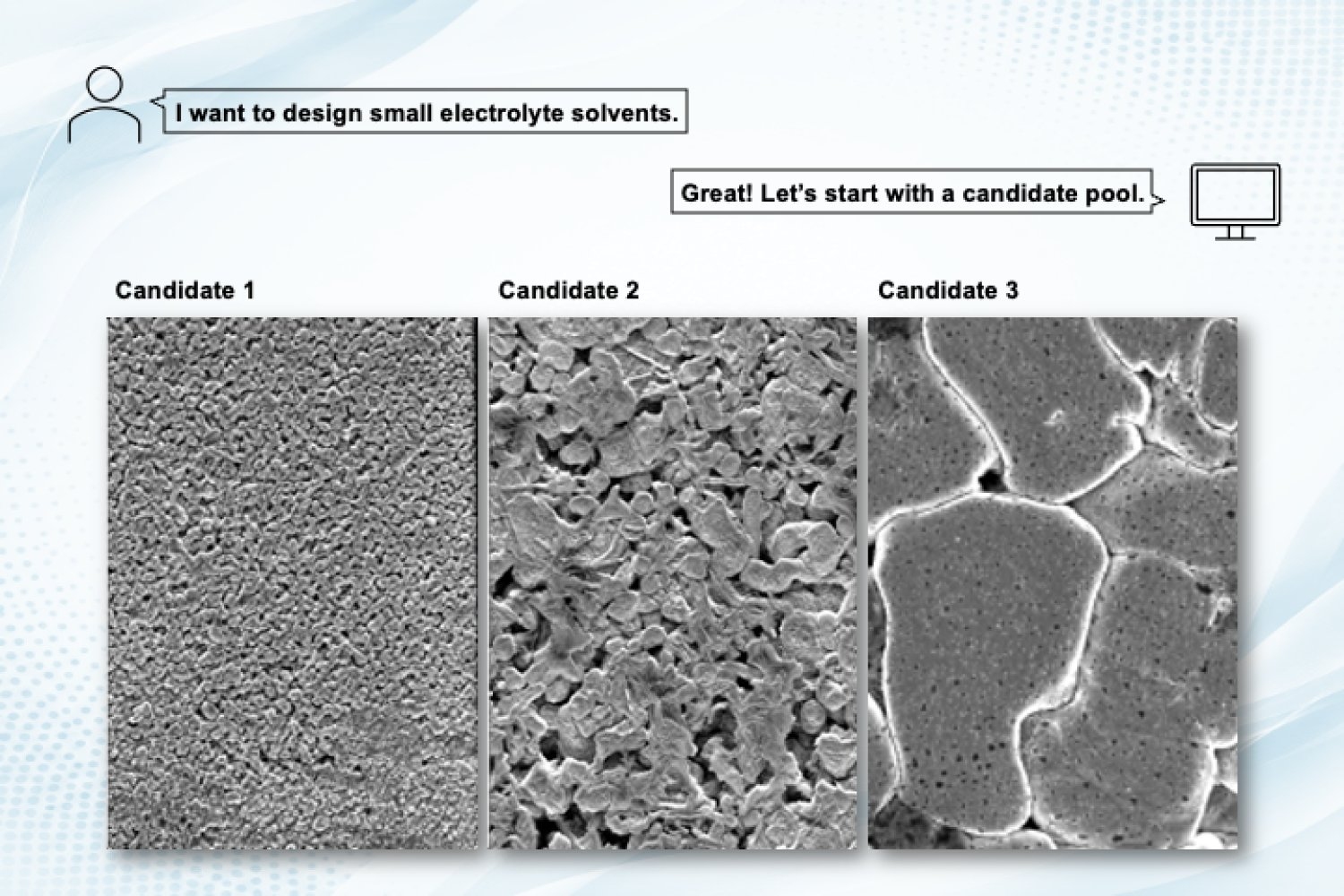
© Image: Weiyin Chen
A machine-learning-guided pipeline enables researchers to generate solvent candidate pools on demand, narrow the selections down, and experimentally test the most promising electrolyte recipes. These scanning electron microscopy images show the morphology of sodium-metal deposits obtained from three different electrolyte candidates.

Central, West Florida School Districts Seek Bus Drivers Before Classes Resume

A school district serving a county between Walt Disney World and the Tampa area is working to fill dozens of school bus driver vacancies as they prepare for the start of the new academic year, reported Tampa-Bay 28.

Polk County Public Schools has more than 60 full-time driver positions unfilled. The district is offering a starting wage of $19.46 per hour and full benefits as it works to recruit additional employees and provide reliable transportation for students.

George Millar, director of transportation operations for Polk County Public Schools, said the county’s rapid growth has intensified the district’s staffing needs.

“The rapid growth though has escalated the need to make sure we have a full complement of drivers, because the more drivers we have in the driver’s seat of the buses, the more reliable our students can get to school and get to school on time and safely,” Millar told local news reporters.

The vacancies in Polk County are part of a wider regional demand for school bus drivers ahead of the first day of classes. Pasco County Schools reportedly plans to hold a transportation hiring event from 4 to 6 p.m. Aug. 6 at the district office in Land O’ Lakes. Prospective employees may register through the district. Pasco County is seeking candidates for transportation positions as it prepares for the coming school year.

Hillsborough County Public Schools serving the Tampa area is also seeking approximately 80 school bus drivers. The district’s next hiring event is reportedly scheduled for Aug. 19, and interested candidates are being directed to submit applications through its employment website.

The School District of Manatee County needs 11 drivers, according to local news reporters. Information about available positions and application requirements is available through the district. Unfilled positions near the start of school can affect route coverage and on-time service. Transportation departments must also allow applicants time to complete licensing, training and other employment requirements before they can begin transporting students.

The hiring efforts are intended to strengthen driver rosters before students return and reduce the possibility of transportation delays or disruptions during the opening weeks of school.

Editor’s note: The original news article this report links to contained a typo. Polk County’s starting wage is $19.46 per hour, not $9.46.


Related: School Bus Driver Shortages Create Wider Consequences for Students
Related: Driver Shortage Could Lead to Bus Route Disruptions, District Warns
Related: Go Riteway Hosts ‘Drive the Bus’ Events Amid Wisconsin Driver Shortage
Related: Technology Webinar Tackles the School Bus Driver Shortage

The post Central, West Florida School Districts Seek Bus Drivers Before Classes Resume appeared first on School Transportation News.

Kia Sold More Minivans Than Any July Before

  • Kia set a new July sales benchmark with 75,857 units in the US.
  • Carnival sales surged 22.8% to reach 7,279 units last month.
  • Sportage, Telluride, Seltos, and K4 also achieved best-ever July sales.

Kia keeps rewriting its own US sales record, and July gave it another line in the book. Last month stood as the brand’s best July ever, with several models posting record numbers for the month, the Carnival family hauler among them.

The Korean automaker moved 75,857 vehicles in July, a 7 percent gain over the same month last year. Through the first seven months of 2026, the running total reaches 506,584 units, up 4 percent, which puts Kia on course for a fourth straight annual sales record in the US.

Record-Setters Across The Lineup

 Kia Sold More Minivans Than Any July Before
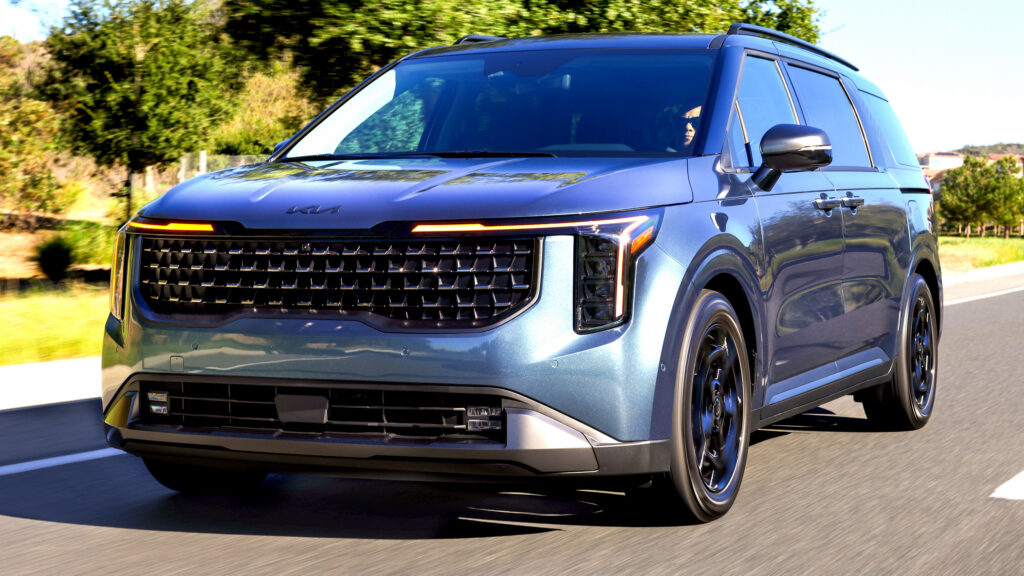
2027 Kia Carnival Hybrid

According to Kia, the Sportage, Carnival, Telluride, Seltos, and K4 all logged best-ever July sales. The Sportage led the pack with 16,083 sales (+11.7%), trailed by the K4/Forte at 12,094 (+8%), the Telluride at 11,816 (+13%), the Sorento at 9,038 (+13.5%), and the Seltos at 8,807 (+79.1%).

More: Kia’s Next Sportage Is Getting A Rugged Redesign

The one that caught our eye, though, is the Carnival minivan. Its 7,279 deliveries marked a hefty 22.8% climb over last year and landed within striking distance of its all-time monthly best of 7,362 units, set in November 2025. A recent study found millennials are fueling a minivan comeback, sold on the practicality and value SUVs can’t match, and Kia’s numbers appear to reflect the trend.

Kia introduced the current Carnival in 2020, and it reached the US for the 2022 model year. A mid-cycle refresh arrived in late 2023 for the 2025 model year, bringing a sharper face and a hybrid powertrain option. Pricing now runs from $37,490 to $53,590, with buyers choosing between a 3.5-liter V6 and a turbocharged 1.6-liter hybrid.

EV Sales Down, Hybrids On The Rise

Strong as the month was overall, Kia’s electric lineup told a rougher story. EV6 deliveries nearly halved to 674 units (-48%) in July, dragging its year-to-date figure to 4,717 (-34%). The three-row EV9 dipped more gently to 1,650 units (-5%), though its year-to-date total still runs ahead of last year at 8,685 (+30%).

 Kia Sold More Minivans Than Any July Before
2026 Kia Sportage Hybrid

Hybrids went the other direction, and hard. Total hybrid sales jumped 108 percent year-over-year. The Sportage Hybrid posted the steepest growth among electrified models at 76%, while the Sorento Hybrid and Carnival Hybrid each managed a 16 percent gain over last July.

More: 2027 Kia Seltos Has A Higher Price To Match Its More Upscale Design

Kia plans to keep the momentum going with the new Seltos and the entry-level EV3 electric crossover, due later this year.

Kia US Sales 2026
ModelJul-26Jul-25Jul %YTD-26YTD-25YTD %
EV91,6501,737-5.0%8,6856,675+30.1%
EV66741,290-47.8%4,7177,165-34.2%
K4/Forte12,09411,188+8.1%85,67386,723-1.2%
K56,6945,879+13.9%45,08840,444+11.5%
Soul04,665-100.0%3,48030,791-88.7%
Niro1,7222,751-37.4%15,48914,539+6.5%
Seltos8,8074,917+79.1%41,31129,856+38.4%
Sportage16,08314,392+11.7%110,990101,564+9.3%
Sorento9,0387,965+13.5%58,38658,884-0.8%
Telluride11,81610,411+13.5%85,41871,913+18.8%
Carnival7,2795,928+22.8%47,34739,080+21.2%
Total75,85771,123+6.7%506,584487,634+3.9%
SWIPE
 Kia Sold More Minivans Than Any July Before
2027 Kia EV3

Michigan’s Allendale Public Schools Eliminates Bus Routes Amid Driver Shortage

Allendale Public Schools in Michigan is establishing new non-transportation zones for the upcoming school year, meaning school buses will no longer pick up students living in certain areas as the district responds to an ongoing driver shortage, reported WZZM 13.

According to the news report, Superintendent Garth Cooper said recruiting and retaining drivers has become increasingly difficult, in part because of the position’s split schedule.

“It’s a very challenging position,” Cooper said. “The hours are not ideal because you work in the morning, then you go home, and then you work in the afternoon. That’s unique for this type of job.”

The district keeps driver job postings open throughout the year and pays applicants while they complete required training, Cooper said.

“We keep the posting open. It never ends. We’re constantly seeking recruits,” he added.

The shortage has also complicated transportation for extracurricular activities. Cooper said all available drivers are typically completing elementary school routes until 4:30 or 5 p.m., while many high school athletic competitions begin at 4 p.m.

The district reportedly considered using passenger vans for smaller athletic teams, but Cooper said Michigan law restricts the use of larger vans without a commercial driver’s license.

Community members reportedly expressed mixed reactions following the announcement. One commenter attributed the shortage to the district’s driver wages and said increasing pay could improve recruitment. Another parent raised safety concerns about young children walking longer distances, particularly during severe weather or when their parents are working.

The district’s new non-transportation and walk zones are reportedly scheduled to take effect at the beginning of the upcoming school year. Allendale Public Schools has not indicated how many students or existing bus routes will be affected by the changes.

Written with the assistance of AI.


Related: School Bus Driver Shortage Impacts Florida Districts
Related: School Bus Driver Shortages Create Wider Consequences for Students
Related: Go Riteway Hosts ‘Drive the Bus’ Events Amid Wisconsin Driver Shortage
Related: Driver Shortage Could Lead to Bus Route Disruptions, District Warns

The post Michigan’s Allendale Public Schools Eliminates Bus Routes Amid Driver Shortage appeared first on School Transportation News.

Technology Webinar Tackles the School Bus Driver Shortage

A webinar explored how school districts are responding to ongoing driver shortages by maximizing existing staff through better routing, unified technology and data-driven decision-making.

School bus driver shortages remain the biggest operational challenge facing student transportation departments heading into the 2026-2027 school year, but some school districts are adapting by making better use of existing drivers rather than waiting for the labor market to recover. Rick Dunn, vice president of customer engagement at Zonar, shared this and more findings Thursday from the 2026 Back-to-School Readiness Report conducted in July by Zonar and School Transportation News, based on a survey of 128 transportation directors, operations managers and fleet leaders.

The webinar discussed how technology can help transportation departments improve efficiency despite staffing shortages and budget constraints.

Driver Availability Remains the Top Concern

Dunn said the survey found driver availability outweighs every other operational concern for transportation leaders.

“Here’s the headline: 75 percent named driver availability as their number one concern heading into fall. Not budget, not equipment, not routing, driver availability, and that number holds steady across every fleet size and every kind of operation,” he underscored.

The challenge extends beyond hiring, Dunn explained. An aging workforce, shrinking recruiting pools and limited budgets mean what many in the industry have thought for decades: The driver shortage is a long-term operational issue.

“This isn’t a one-year story,” Dunn said. “The state of student transportation data confirms the driver shortage stays at a top focus for the next two to three years. So, whatever we build to handle it needs to hold up for a while, not just get us through this fall.”

Only 15 percent of surveyed school districts reported they were fully prepared for the new school year, while most still had at least one significant item left unresolved before classes began. Dunn noted that compressed summer schedules and limited staffing leave little opportunity to complete every task before students return.

Technology Can Improve Productivity

Rather than focusing exclusively on recruitment, Dunn encouraged districts to maximize the productivity of the drivers they already have.

“The other path is to multiply the drivers you already have with tighter routing and coaching that retrains instead of polices,” he said. “Routing software means less wasted time and better coverage. Coaching means drivers who stick around instead of burning out. Put those two together, and that’s how you multiply hours without adding headcount.”

The survey reflected that strategy. Routing software ranked as districts’ top planned technology investment, followed by student ridership tracking and driver coaching tools. Dunn said those priorities directly address the operational challenges transportation departments face every day.

He also urged districts to simplify operations by reducing the number of disconnected software systems that dispatchers manage.

“We heard about operations running GPS with one vendor, cameras with a second, routing with a third, and student tracking with a fourth,” Dunn said. “Even when a couple of those systems technically integrate, you still don’t get one view. You get four logins and a prayer.”

Integrated Systems Reduce Daily Friction

Valeria Ríos, Zonar’s product marketing manager, said technology should eliminate administrative hurdles so transportation teams can focus on serving students.

“The problem is not only the number of tools. It’s also that there is no process and no staff to manage them all,” she noted. “When you consolidate, you’re not only removing logins. You’re also removing the friction that takes up your team’s entire day.”

She shared that integrated platforms like Zonar Bus Suite also help transportation departments respond faster when drivers call out unexpectedly.

“A driver calls out at 6:15 [a.m.]. In Bus Suite, you split her route, you reassign the vehicle, you message a substitute driver, and that’s all in one screen, in one moment,” she said.

Technology can also make substitute drivers more successful by providing the information they need to stay on schedule.

“We’re going to make it easy by assigning a route. You can follow the app. It will give you turn-by-turn directions. It will tell you which students you need to pick up,” Ríos explained. “That’s kind of where Bus Suite comes from. It’s actually to address all of their needs from the transportation industry.”


Related: How Technology Can Assist the 2026 State of Student Transportation
Related: School Bus Fuel Innovation, Technology Education Meet at STN EXPO West
Related: (STN Podcast E302) Technology Tools for Bus Drivers: No More Struggling with Paper Route Sheets
Related: How Technology Powers Daily Student Transportation Operations


Better Data Supports Better Decisions

The presenters also highlighted the role of analytics in helping districts stretch limited staffing resources. Ríos said route utilization tools can identify underused buses, recommend better vehicle assignments and provide transportation leaders with the information they need to consolidate routes when necessary.

“It will give you all the data points you need to be able to consolidate those runs and make the most out of every driver that you already have,” she declared.

Dunn advised districts to evaluate their existing technology before investing in additional products.

“Three things to remember: Run one picture of readiness, multiply your driver hours instead of just chasing headcount, and sweat what you already own before you buy something new,” he concluded.

To support those goals, Dunn and Ríos demonstrated how Zonar Bus Suite integrates routing, dispatch, live vehicle tracking, student ridership, navigation, field trip management and parent communication into a single platform. They emphasized that consolidating data and workflows can reduce manual tasks, improve visibility and help transportation departments make better use of limited staff while maintaining service levels.

Watch the webinar on demand.

This article was written with the assistance of AI.

The post Technology Webinar Tackles the School Bus Driver Shortage appeared first on School Transportation News.

Building energy security through more sustainable batteries

For Hugh Smith, the challenge of building an energy-secure future isn’t about creating the world’s “best” battery. It’s about designing the right battery for the right job.

As a fifth-year PhD candidate in MIT’s Department of Materials Science and Engineering, Smith studies sodium-ion batteries, an emerging alternative to the lithium-ion batteries that power everything from smartphones to electric vehicles. By replacing expensive critical minerals like lithium, nickel, and cobalt with more readily available elements like sodium, iron, and manganese, his research aims to make energy storage both more affordable and more sustainable.

“I’ve believed for a very long time that the biggest engineering problem humanity faces is the transition to clean energy,” Smith says. “Batteries are a critical bottleneck in that transition.”

Growing up in Albany, New York, Smith was drawn to materials science because it combined two of his favorite subjects: chemistry and math. What kept him interested, however, was the field’s ability to touch nearly every aspect of everyday life.

“Anytime you interact with a solid material, there are people who intentionally designed that material for a specific purpose,” he says.

That idea of designing materials with a real-world purpose eventually led him to batteries. After earning his undergraduate degree in materials science from Case Western Reserve University, Smith came to MIT to explore how new battery chemistries could reduce costs without sacrificing performance.

Consumers often want batteries that charge quickly, last for years, store large amounts of energy, and remain inexpensive. But in reality, improving one characteristic of this technology usually means compromising another. A smartphone battery, for example, prioritizes energy density and long lifespan, while a battery storing electricity for the power grid doesn’t need to be lightweight or compact. Instead, cost and reliability become the most important considerations.

Rather than chasing an all-encompassing solution, Smith focuses on finding the right balance for specific applications, often juggling competing priorities. Instead of strengthening a singular characteristic, Smith works to maximize as many components of the battery as possible, including cost, performance, sustainability, and reliability, depending on how it will be used.

“It’s trying to balance everything,” he says. “It’s not catering extremely to some properties and then abandoning others.” 

The sodium-ion batteries Smith studies could eventually provide lower-cost options for electrical grids or more affordable electric vehicles. Because sodium-ion batteries can largely be manufactured using the same infrastructure already developed for lithium-ion batteries, they also offer a potentially smoother path toward commercialization than many emerging battery technologies.

Smith’s graduate school journey has been defined as much by the process of learning how to do research as by the science itself. He joined a brand-new research group at MIT as its first graduate student, and helped establish the lab run by Professor Iwnetim Abate. Without senior graduate students or postdocs to turn to for day-to-day guidance, he often had to teach himself new techniques and how to troubleshoot when things went wrong.

“I learned not to be fearful of new things,” Smith says. “Just because I didn’t know how to do something didn’t mean I couldn’t figure it out.”

He says the experience transformed him into a more independent researcher and someone who is willing to dive headfirst into unfamiliar problems.

Before beginning graduate school, Smith spent seven months at the Battery Innovation Center in Newberry, Indiana, an experience that broadened his understanding of how scientific discoveries become real technologies. Working alongside materials scientists, chemists, mechanical engineers, and chemical engineers showed him that no single discipline can solve the challenges of battery development alone.

“It requires a huge team effort,” Smith says. “It requires a lot of different types of knowledge.”

He says the experience also helped him better understand where his own expertise could make the greatest impact and when collaboration across disciplines is essential.

Outside the lab, Smith makes time to stay active through MIT’s intramural sports program, where he plays soccer, ultimate frisbee, football, and volleyball on teams with fellow graduate students. The games offer a chance to unwind after long days of research while strengthening the friendships he’s built throughout graduate school. He also enjoys fishing around the Boston area with friends and exploring New England’s coastal towns, museums, and historic sites.

As he prepares to graduate in the winter and pursue a career in battery research and development, Smith hopes to continue designing technologies that support the transition to clean energy. 

“Lots of smart people have already made wind and solar very cheap,” Smith says. “The issue is reliability, and batteries can help solve that problem. I hope the work I’m doing helps to affordably unlock the transition to an electric grid powered by reliable clean energy, and an electrified transportation network.”

© Credit: Adam Glanzman

“Lots of smart people have already made wind and solar very cheap,” Hugh Smith says. “The issue is reliability, and batteries can help solve that problem.”

School Bus Driver Shortages Create Wider Consequences for Students

As school districts prepare for the 2026-2027 academic year, persistent school bus driver shortages are prompting transportation departments to expand recruitment efforts while families face the possibility of canceled routes, longer rides and interruptions to students’ education.

School buses remain a primary means of transportation for millions of children. The National Center for Education Statistics reported that school bus transportation was available at 87 percent of public school districts. On average, school districts reported that 40 percent of their students traveled by school bus on a typical day.

When there are not enough drivers to operate every route, districts may consolidate routes, adjust pickup times, or ask existing drivers to complete additional runs. Those changes can lead to earlier mornings, longer trips and delayed arrivals for students. If a route is canceled entirely, families without flexible work schedules or access to another vehicle may struggle to get their children to school.

Prince George’s County Public Schools in Maryland said it began the 2025-2026 school year with open routes because of a school bus driver shortage. Although the district expected every route to be covered, it warned families to prepare for longer travel times, transportation delays and schedule adjustments.

To help families manage anticipated delays, the district launched a portal identifying open routes and schools where transportation delays were expected. It also continued using a bus-tracking app that provides estimated arrival alerts while increasing customer-service staffing and expanding contracted transportation services.

Reliable transportation can play an important role in attendance. A peer-reviewed study published in Education Finance and Policy examined student data and transportation policies from Michigan’s 50 largest school districts. The study found that eligibility for school-provided transportation increased attendance and reduced chronic absenteeism, with the strongest effects among economically disadvantaged students.

The U.S. departments of Education and Transportation have also identified safe, accessible and reliable transportation as a strategy for reducing chronic absenteeism.

Recruiting enough drivers, however, remains difficult. According to the U.S. Bureau of Labor Statistics, school bus drivers held approximately 387,300 jobs in 2024, with a median annual wage of $47,040. Part-time work is common, and drivers’ hours are often limited because they typically work only when school is in session. Those scheduling conditions may affect the pool of applicants available to districts.

Some districts are using hands-on events to make the job more approachable for prospective applicants.

Wentzville School District in Missouri held “Drive the Bus” recruitment events every Monday and Tuesday throughout July. Interested participants could operate a bus, submit an application, and complete an on-the-spot interview. The district also promoted transportation aide positions and district-paid employee benefits.

Forest Hills School District in Ohio held a similar event July 25. Participants with valid driver’s licenses could operate a school bus under the supervision of an experienced driver without already possessing a commercial driver’s license. The district said paid CDL training was available to accepted applicants.

By allowing community members to experience the driver’s seat before applying, districts hope to reduce anxiety about operating a large vehicle and introduce candidates to the responsibilities of transporting students.

For children who rely on the school bus, the success of those efforts can determine more than whether a vehicle arrives. Consistent staffing helps protect students’ access to class, predictable daily routines, and the educational opportunities that begin after they reach school.


Related: Go Riteway Hosts ‘Drive the Bus’ Events Amid Wisconsin Driver Shortage
Related: Florida School District to Host Transportation Hiring Event
Related: Driver Shortage Could Lead to Bus Route Disruptions, District Warns
Related: (Free Webinar) Short-Staffed and on Schedule: Tackling the Student Transportation Driver Shortage

The post School Bus Driver Shortages Create Wider Consequences for Students appeared first on School Transportation News.

Mechanic Killed After School Bus Crushes Him in Pennsylvania Garage

A longtime mechanic was killed after the school bus he was repairing rolled and crushed him inside a Westmoreland County bus garage, reported CBS News.
According to the news report, Barry Barker was working on a school bus at the Lodestar Bus Lines garage in New Florence Borough when the incident occurred July 2 at approximately 9:30 a.m.

Pennsylvania State Police Trooper Steve Limani said emergency responders were dispatched around 9:35 a.m. after an employee reported the unresponsive mechanic inside the garage.

“An employee at a bus garage … said they had a mechanic that was lying inside the garage, that [he] was unresponsive, and it appears he may have had an incident where a bus drove over him,” Limani said.

Investigators reportedly said Barker had been repairing a school bus that was experiencing brake problems. Police located cutting tools near Barker that appeared to have been used during the repair, though investigators have not yet determined exactly what caused the bus to begin moving.

The bus reportedly rolled over Barker before slowly traveling across 13th Street and coming to rest in a nearby yard. Authorities said the incident appears to have been accidental.

“It just seems like a horrific tragedy and a pure accident,” Limani said via the article. “From my understanding, he has been a mechanic for quite a long time, and he has been at that garage for an extended period of time.” He added that investigators currently have no reason to believe foul play or any criminal activity was involved.

The Westmoreland County Coroner’s Office identified Barker and said the cause and manner of death remain pending following an autopsy and toxicology testing. State police continue to investigate how the school bus began moving while Barker was working underneath it.


Related: Florida School District Begins School Bus Mechanic Apprenticeship Program
Related: 10 Taken to Hospital After School Bus, Car Crash in New York
Related: Distracted Driving Maryland Man Convicted in Fatal Crash with School Bus
Related: School Bus Driver Charged with Hit-and-Run Death of Brooklyn Girl

The post Mechanic Killed After School Bus Crushes Him in Pennsylvania Garage appeared first on School Transportation News.

Driver Shortage Could Lead to Bus Route Disruptions, District Warns

Bullitt County Public Schools in Kentucky is warning families to prepare for possible school bus route disruptions as the district continues recruiting staff amid a driver shortage ahead of the 2026-2027 school year reported, WDRB News.

In a letter sent to families last week, the district said canceled routes remain a possibility if substitute bus drivers are unavailable. The district reminded parents that they are responsible for ensuring students get to school if a route is canceled.

“Families are responsible for student transportation and attendance,” the district said. “If a bus route is canceled, absences will not be excused.”

To help minimize disruptions, the district reportedly said elementary and middle school students may be dropped off as early as 6 a.m. through its Right at School before-school program and remain until 6 p.m. High school students will also have access to designated community pickup locations, where buses will provide transportation to campus.

The district reportedly noted that parents have up to six excused absences for their children each school year to use for unexpected emergencies.

District Short on Sub Drivers

Superintendent Jesse Bacon said the district expects to have enough full-time drivers to cover all regular routes when school begins but continues to face a shortage of substitute bus drivers. “Our problem is that there are not enough people who want to drive a bus,” Bacon said in a statement. “We have raised pay considerably over the last five years.”

According to Bacon, the average bus driver reportedly earns $25.44 per hour over a 179-day work year and receives benefits including health insurance, retirement, paid sick leave, personal leave and emergency leave. He added that the district’s most experienced drivers earn $30.20 per hour.

Some parents say canceled routes have already affected student attendance. Parent Chelsea Stanley said her first-grade daughter missed multiple days of school last year after repeated route cancellations. “It’s actually been a nightmare,” Stanley said, adding that without reliable transportation, her family was left with few safe alternatives for getting her daughter to school.

Written with the assistance of AI.


Related: (STN Podcast E313) Put People First: School Bus Driver Shortages & Retention Advice
Related: Retirements Spur Summer Hiring Push to Address School Bus Driver Shortages
Related: Florida School District to Host Transportation Hiring Event
Related: Pasco County Schools Rolls Out New Cash Incentives to Tackle School Bus Driver Shortage

The post Driver Shortage Could Lead to Bus Route Disruptions, District Warns appeared first on School Transportation News.

CEO Talk with Zonar: The State of Back-to-School Readiness

RENO, Nev. – At the 2026 STN EXPO West Conference, a Zonar “CEO Talk” brought together industry leaders to confront the realities of preparing for the 2026-2027 school year.

This is read by an automated voice.

Led by Zonar CEO Charles Kriete, who has guided the company for over a year and a half, the session spotlighted Zonar’s enduring role as an innovator in school transportation technology and its deep partnerships with organizations like school bus contractor Student Transportation of America, whose lead electric vehicle performance analyst, Cameron Wood, was named STN’s Innovator of the Year this month, and electric bus manufacturer Ride. Zonar’s active presence at STN EXPO included fresh coffee sponsorships, the Ride and Drive experience, engaging trade show activations, and a welcoming booth offering hands-on product trials.

Kriete’s address, infused with Zonar’s “mile for mile” support and “where the rubber meets the road” philosophy, revealed sobering survey data: only 15 percent of districts feel fully ready for back-to-school, while 85 percent acknowledge moderate or significant gaps. Budget pressures are acute. Sixty percent of districts report flat budgets, 19 percent face outright cuts, and 10 percent have no dedicated technology budget at all in 2026. These constraints are exacerbated by a 57 percent surge in fuel costs, yet 36 percent of districts are not investing in new technology. The top areas for tech investment — routing software, ridership solutions, and driver coaching — are critical, with Kriete emphasizing that technology is the main way to bridge the education access gap.

Central to his talk was what Kriete termed “one picture of readiness,” advocating for integrated platforms that unify data and streamline operations, directly addressing the challenge of “data scattered all over the place.” He illustrated this with stories from the field, including a Pittsburgh district’s struggles and a California transportation director unaware of Zonar’s remote emissions testing. He urged districts to “sweat what you already own,” audit current providers for untapped features, and recognize that the Zonar Bus Suite’s flexibility supports both rural and urban environments. Attendees were invited to “try it for free” via a QR code at the STN EXPO Trade Show booth.

Driver shortage remains student transporters’ top concern, with 77 percent of districts affected, but Kriete highlighted that technology investments can more than double driver retention rates, offering “career progression” and addressing root causes rather than just symptoms.

“It does a lot to make them feel more engaged, more safe, more efficient in their job,” he said. “It increases retention levels extraordinarily, dramatically.”

He reframed the school bus industry’s mission, saying, “we’re not actually in the student transportation business, we’re in the access to education business,” underscoring the imperative to deliver “every kid to school.” Kriete closed by urging attendees to maximize partnerships, audit and leverage existing resources, and embrace innovation.

Written with assistance of AI from a session transcript.


Related: Zonar CEO Kriete Talks Tech Solutions for School Bus Safety, Efficiency
Related: Zonar CEO Kriete Reminds Student Transporters of the Business They’re In
Related: Zonar Acquisition Results in Launch of Routing Software

The post CEO Talk with Zonar: The State of Back-to-School Readiness appeared first on School Transportation News.

(Free Webinar) Short-Staffed and on Schedule: Tackling the Student Transportation Driver Shortage

By: STN

The student transportation driver shortage is not news, and the 2026 data confirms it is still top of mind for fleet managers. 75% of transportation professionals rank driver availability as their top concern heading into fall, holding across every fleet size and operation type.

On July 30, Zonar and School Transportation News bring together a panel of experts for a live look at where the industry stands and how purpose-built technology supports teams running short-staffed. Walk away with data, context and practical steps your operation takes into the 2026-27 school year.

What we’ll cover:

  • Why 75% of transportation professionals rank driver availability as their top concern, and what the long-term data says about where this is headed
  • Why only 15% of districts say all systems are confirmed for fall, and what the preparation gap costs on day one
  • How flat budgets buy less in 2026 than they did in 2025, and where the 64% of districts investing in technology are putting their money
  • How fleet tech can be an ally in this fight: one unified system, end-to-end safety, proven hardware and everything included at no extra cost
  • Practical steps for transportation leaders on where to focus technology investment heading into the 2026-27 school year

Brought to you by Zonar


REGISTER BELOW:


Featured speakers:

Malinda Sandhu
Director, Strategic Accounts
Zonar

Malinda Sandhu leads strategic account relationships at Zonar, working directly with transportation directors to translate operational challenges into technology solutions. With more than 20 years in transportation, she has watched safety technology, automated enforcement and fleet electrification reshape the industry across North America. Her work connects vendors, operators, regulators and industry partners, turning innovation into revenue, partnerships and scalable market growth. She also founded Malinda Sandhu Innovation Partners, advising transportation, mobility and K-12 pupil transportation organizations on strategy, partnerships and growth.

Valeria Rios
Product Marketing Manager
Zonar

With seven years in the industry across support and marketing, Valeria translates product capabilities into real-world value for fleet operators. She built her foundation leading customer support teams through complex technical and operational issues, gaining first-hand insight into how fleets actually use Zonar products day to day. Now she works across product, engineering and regional leadership teams to guide platform initiatives, drive adoption and keep operations aligned.

The post (Free Webinar) Short-Staffed and on Schedule: Tackling the Student Transportation Driver Shortage appeared first on School Transportation News.

Mr. School Bus Driver to Discuss Mental Fatigue Discussion at STN EXPO West

An educational session coming up at the STN EXPO West conference will dive into the behind-the-scenes reality of mental fatigue and its impact on school bus drivers.

This session brings together 2025 Transportation Director of the Year Keba Baldwin and school bus driver and influencer Cor’Darius Jones, known as “Mr. Bus Driver,” on Facebook and TikTok for an insightful and candid discussion on the mental fatigue that many school bus drivers experience.

School bus drivers face high levels of stress as they tirelessly work to keep students safe on their routes while balancing covering routes, split shifts, early morning and long hours, and insufficient recovery time. Many drivers have been pushed to their limits and end up leaving the job entirely, as evidenced by the driver shortage that many districts face. Baldwin and Jones will discuss the factors involved that contribute to this fatigue on drivers and what it looks like on both sides of the transportation operations, from behind the wheel to district leadership.

Chronic exhaustion, lack of support from district administration, and lack of assistance with student behavior are all driving turnover. So, of course, can low pay or lack of benefits. But there are solutions to build a healthy workplace culture that ensures school bus drivers feel supported and equipped to do their job well. The speakers will also discuss how to address the mental and physical toll by creating an environment where drivers can work schedules that will not harm their mental or physical health and where wellness is treated as a safety issue.

Transportation department leadership, school bus driver advocates and anyone who works within the student transportation industry will leave the session with practical strategies to implement that will positively benefit not only school bus drivers but the entire operational structure of student transportation.

STN EXPO West will be held July 9-15 at the Peppermill Resort in Reno, Nevada. Attendees will have access to a week of educational sessions based on the challenges facing the industry, training classes to improve operations, networking events to bring peers together for problem-solving and innovative experiences such as the Ride and Drive/Live Product Demo, the STN EXPO Trade Show and the Transportation Director Summit. Register at stnexpo.com/west.


Related: Scientific Approach to Illegal Passing Issue Coming to STN EXPO West
Related: Safety Impact of School Bus Seatbelts Topic at STN EXPO West
Related: School Bus Fuel Innovation, Technology Education Meet at STN EXPO West

The post Mr. School Bus Driver to Discuss Mental Fatigue Discussion at STN EXPO West appeared first on School Transportation News.

(STN Podcast E313) Put People First: School Bus Driver Shortages & Retention Advice

Transfinder announced its annual Top Transportation Teams award winners, the industry is concerned about autonomous vehicles ignoring school bus stop arms, and two federal grants provide opportunities for school transportation emergency training.

Veteran transportation leader Jim Schiffler draws on his personal and family experience in the school bus industry to offer thoughtful advice on building stronger teams and healthier workplace cultures, from company values and unions to recruitment and promotions. He’ll share more at STN EXPO West in July.

Read more about leadership.

This episode is brought to you by Transfinder.


Message from School Radio.


Stream, subscribe and download the School Transportation Nation podcast on Apple Podcasts, Deezer, iHeartRadio, Spotify and YouTube.

The post (STN Podcast E313) Put People First: School Bus Driver Shortages & Retention Advice appeared first on School Transportation News.

70 Bus Drivers Needed in Florida District Ahead of New School Year

Polk County Public Schools is working to fill about 70 bus driver positions before students return to class this fall, as the district continues to face a nationwide shortage of qualified drivers, reported Spectrum News.

Transportation Operations Director George Millar said recruiting additional drivers is a top priority ahead of the upcoming school year.

Millar, who has worked in public school transportation for more than 30 years, began his career as a school bus driver before moving into a leadership role. He said driving a school bus offers an opportunity to make a lasting impact on students throughout their academic careers. “It’s very rewarding and you could be a very large success,” Millar told local news reporters.

He said drivers often build relationships with students over many years, from their first days of school through graduation. “All the way from when they’re 5-years-old or even younger sometimes, all the way through seeing them walk across that stage at graduation. It is so rewarding,” he said.

Millar said some prospective applicants may be discouraged by the commercial driver’s license, or CDL, testing process. However, he said via the report that the district provides training materials and support to help candidates prepare for and pass the required written exam.

“For the individuals applying with us, we’ll help them get through that process,” Millar told reporters. “We will give them the training materials to help them study for that test and to be successful.” After completing the exam, new hires continue receiving hands-on training before driving routes independently, he said.

Increasing Pay to Fill Bus Driver Positions

To attract more applicants to fill the 70 bus driver positions, the district recently increased base pay for bus drivers by 2 percent, bringing hourly wages to just over $19. Drivers are also eligible to work seven-hour shifts with opportunities for additional earnings.

Millar said some drivers may have the option to park their buses at home, depending on where they live, reducing commute times and adding convenience. “In some areas you might even be able to park your school bus at home just to make it more convenient for you,” he said.

Millar said the district remains focused on supporting employees while ensuring reliable transportation for students. Applications for bus driver and bus attendant intern positions are available through the Polk County Public Schools website.

Written with the assistance of AI.


Related: Retirements Spur Summer Hiring Push to Address School Bus Driver Shortages 
Related: Pasco County Schools Rolls Out New Cash Incentives to Tackle School Bus Driver Shortage
Related: Pennsylvania School Bus Transportation Company Hosts Hiring Event
Related: Updated Iowa School Bus Driver Hiring Law Adds Optional Refresher Course

The post 70 Bus Drivers Needed in Florida District Ahead of New School Year appeared first on School Transportation News.

(Free White Paper) The Driver Shortage Playbook

By: STN

Student transportation fleets have a new take on an age-old problem: driver shortages. Millions of CDL holders are out there, so filling seats isn’t as big of an issue as filling seats with safe, reliable drivers who meet performance expectations. Retaining them isn’t easy, either.

How can a school fleet navigate this new world of driver shortage and retention problems? As you read this Driver Shortage Playbook, you’ll learn why traditional school bus driver recruitment strategies are no longer effective and how today’s fleets are adapting.

  • Understand why financial incentives and fast hiring practices fail.
  • Find out why a focus on quality over quantity benefits you both.
  • Take away practical strategies for expanding your talent pool.
  • Why career pathing for school fleet drivers is so important.
  • And other ways to improve retention, safety, reliability and compliance.

Fill out the form below and then check your email to get the report.

The post (Free White Paper) The Driver Shortage Playbook appeared first on School Transportation News.

Retirements Spur Summer Hiring Push to Address School Bus Driver Shortages

School districts across the country are preparing for a wave of summer retirements of school bus drivers, adding pressure to an already strained student transportation workforce.

To address the growing shortage, school districts are ramping up recruitment efforts through hiring events, sign-on bonuses, paid training programs, referral incentives, and retention initiatives aimed at attracting and keeping qualified drivers.

One district taking a hands-on approach is Branson Public Schools in Missouri. The district’s transportation department hosted its first annual “Take the Wheel” Driving Event on June 13, giving community members the opportunity to get behind the wheel of a school bus, meet transportation staff and learn more about available career opportunities.

The event was designed to provide prospective applicants with a firsthand summer-time look at what it is like to serve as a school bus driver while highlighting the benefits of the profession, including flexible schedules and the opportunity to make a meaningful impact on students’ daily lives. Participants visited multiple event locations throughout the community, while bus test drives were available at Buchanan Elementary. Branson’s initiative reflects a growing trend among school districts looking beyond traditional job postings to recruit new drivers, especially to address retirements.

In Alabama, Tuscaloosa City Schools recently hosted a Bus Driver Hiring Fair, where prospective applicants could receive assistance with the application process, schedule fingerprinting appointments and participate in on-the-spot interviews. The school district is also offering a $2,000 signing bonus for new drivers, starting pay of $23.80 per hour, and paid commercial driver’s license (CDL) training, helping remove barriers for individuals interested in entering the profession.

Retirements Spur Need for More School Bus Driver Hiring

The urgency behind these recruitment efforts is driven not only by ongoing nationwide school bus driver shortages, but also by the retirements of a number of longtime drivers retiring this summer who have spent decades serving their communities.

In Georgia, Fayette County school bus driver Diane Vaughn recently retired at age 82 after an extraordinary 50-year career. According to local news reports, Vaughn began driving in 1976 to secure health insurance for her child’s cancer treatment and quickly developed a passion for the profession. Over the past five decades, she safely transported thousands of students and became a familiar face to generations of families. The Fayette County School Board honored her service with a specially made 50-year service pin and a standing ovation, recognizing a career that exemplifies the dedication many veteran drivers have brought to student transportation.

In Tennessee, retiring Wilson County Schools bus driver Frances Theiring is also marking the end of a remarkable career. According to local news reports, Theiring, who spent nearly 50 years driving a special education bus and teaching in a special education classroom in Mt. Juliet, will become the first woman from Wilson County inducted into the Tennessee School Bus Driver Hall of Fame. Honored recently by fellow drivers and district staff at the transportation department’s year-end cookout, Theiring said she felt “overwhelmed but grateful” as she reflected on a career dedicated to serving students and families.

Theiring’s induction recognizes not only her longevity but also her commitment to safe and reliable transportation. According to the Tennessee School Bus Driver Hall of Fame, inductees must have at least 45 years of uninterrupted service as a daily route driver and demonstrate exceptional dedication, integrity and service to students. Wilson County Schools officials praised Theiring’s impact on the community, with school board chair Joe Padilla noting that her influence on generations of students and families cannot be measured.

Retirements like those of Vaughn and Theiring underscore the challenge facing school transportation departments nationwide. According to recent reports, Tuscaloosa City Schools continues to seek hiring additional drivers this summer for the upcoming school year, while school systems across the country are investing in recruitment and training programs to strengthen their transportation workforce.

From interactive experiences like Branson’s “Take the Wheel” event to hiring fairs, signing bonuses, competitive wages, and paid CDL training, districts are employing a variety of strategies to attract new drivers before students return to classrooms this fall. As veteran drivers leave the workforce after decades of service, transportation leaders are increasingly focused on finding innovative ways to ensure students have safe and reliable transportation for the school year ahead.


Related: Wisconsin School Bus Driver Retires After 54 Years Behind the Wheel
Related: Survey: Driver Shortages, Underutilized Buses and Community Pressures Top Challenges to School Transportation Efficiency
Related: Pasco County Schools Rolls Out New Cash Incentives to Tackle School Bus Driver Shortage
Related: Retired Man Now Drives a School Bus and Sings to Children

The post Retirements Spur Summer Hiring Push to Address School Bus Driver Shortages appeared first on School Transportation News.

Driving American battery innovation forward

Advancements in battery innovation are transforming both mobility and energy systems alike, according to Kurt Kelty, vice president of battery, propulsion, and sustainability at General Motors (GM). At the MIT Energy Initiative (MITEI) Fall Colloquium, Kelty explored how GM is bringing next-generation battery technologies from lab to commercialization, driving American battery innovation forward. The colloquium is part of the ongoing MITEI Presents: Advancing the Energy Transition speaker series.

At GM, Kelty’s team is primarily focused on three things: first, improving affordability to get more electric vehicles (EVs) on the road. “How do you drive down the cost?” Kelty asked the audience. “It's the batteries. The batteries make up about 30 percent of the cost of the vehicle.” Second, his team strives to improve battery performance, including charging speed and energy density. Third, they are working on localizing the supply chain. “We've got to build up our resilience and our independence here in North America, so we're not relying on materials coming from China,” Kelty explained.

To aid their efforts, resources are being poured into the virtualization space, significantly cutting down on time dedicated to research and development. Now, Kelty’s team can do modeling up front using artificial intelligence, reducing what previously would have taken months to a couple of days.

“If you want to modify … the nickel content ever so slightly, we can very quickly model: ‘OK, how’s that going to affect the energy density? The safety? How’s that going to affect the charge capability?’” said Kelty. “We can look at that at the cell level, then the pack level, then the vehicle level.”

Kelty revealed that they have found a solution that addresses affordability, accessibility, and commercialization: lithium manganese-rich (LMR) batteries. Previously, the industry looked to reduce costs by lowering the amount of cobalt in batteries by adding greater amounts of nickel. These high-nickel batteries are in most cars on the road in the United States due to their high range. LMR batteries, though, take things a step further by reducing the amount of nickel and adding more manganese, which drives the cost of batteries down even further while maintaining range.

Lithium-iron-phosphate (LFP) batteries are the chemistry of choice in China, known for low cost, high cycle life, and high safety. With LMR batteries, the cost is comparable to LFP with a range that is closer to high-nickel. “That’s what’s really a breakthrough,” said Kelty.

LMR batteries are not new, but there have been challenges to adopting them, according to Kelty. “People knew about it, but they didn’t know how to commercialize it. They didn’t know how to make it work in an EV,” he explained. Now that GM has figured out commercialization, they will be the first to market these batteries in their EVs in 2028.

Kelty also expressed excitement over the use of vehicle-to-grid technologies in the future. Using a bidirectional charger with a two-way flow of energy, EVs could charge, but also send power from their batteries back to the electrical grid. This would allow customers to charge “their vehicles at night when the electricity prices are really low, and they can discharge it during the day when electricity rates are really high,” he said.

In addition to working in the transportation sector, GM is exploring ways to extend their battery expertise into applications in grid-scale energy storage. “It’s a big market right now, but it’s growing very quickly because of the data center growth,” said Kelty.

When looking to the future of battery manufacturing and EVs in the United States, Kelty remains optimistic: “we’ve got the technology here to make it happen. We’ve always had the innovation here. Now, we’re getting more and more of the manufacturing. We’re getting that all together. We’ve got just tremendous opportunity here that I’m hopeful we’re going to be able to take advantage of and really build a massive battery industry here.”

This speaker series highlights energy experts and leaders at the forefront of the scientific, technological, and policy solutions needed to transform our energy systems. Visit MITEI’s Events page for more information on this and additional events.

© Photo: Gretchen Ertl

Kurt Kelty (right), vice president of battery, propulsion, and sustainability at General Motors, joined MITEI's William Green at the 2025 MIT Energy Initiative Fall Colloquium. Kelty explained how GM is developing and commercializing next-generation battery technologies.

How artificial intelligence can help achieve a clean energy future

There is growing attention on the links between artificial intelligence and increased energy demands. But while the power-hungry data centers being built to support AI could potentially stress electricity grids, increase customer prices and service interruptions, and generally slow the transition to clean energy, the use of artificial intelligence can also help the energy transition.

For example, use of AI is reducing energy consumption and associated emissions in buildings, transportation, and industrial processes. In addition, AI is helping to optimize the design and siting of new wind and solar installations and energy storage facilities.

On electric power grids, using AI algorithms to control operations is helping to increase efficiency and reduce costs, integrate the growing share of renewables, and even predict when key equipment needs servicing to prevent failure and possible blackouts. AI can help grid planners schedule investments in generation, energy storage, and other infrastructure that will be needed in the future. AI is also helping researchers discover or design novel materials for nuclear reactors, batteries, and electrolyzers.

Researchers at MIT and elsewhere are actively investigating aspects of those and other opportunities for AI to support the clean energy transition. At its 2025 research conference, MITEI announced the Data Center Power Forum, a targeted research effort for MITEI member companies interested in addressing the challenges of data center power demand.

Controlling real-time operations

Customers generally rely on receiving a continuous supply of electricity, and grid operators get help from AI to make that happen — while optimizing the storage and distribution of energy from renewable sources at the same time.

But with more installation of solar and wind farms — both of which provide power in smaller amounts, and intermittently — and the growing threat of weather events and cyberattacks, ensuring reliability is getting more complicated. “That’s exactly where AI can come into the picture,” explains Anuradha Annaswamy, a senior research scientist in MIT’s Department of Mechanical Engineering and director of MIT’s Active-Adaptive Control Laboratory. “Essentially, you need to introduce a whole information infrastructure to supplement and complement the physical infrastructure.”

The electricity grid is a complex system that requires meticulous control on time scales ranging from decades all the way down to microseconds. The challenge can be traced to the basic laws of power physics: electricity supply must equal electricity demand at every instant, or generation can be interrupted. In past decades, grid operators generally assumed that generation was fixed — they could count on how much electricity each large power plant would produce — while demand varied over time in a fairly predictable way. As a result, operators could commission specific power plants to run as needed to meet demand the next day. If some outages occurred, specially designated units would start up as needed to make up the shortfall.

Today and in the future, that matching of supply and demand must still happen, even as the number of small, intermittent sources of generation grows and weather disturbances and other threats to the grid increase. AI algorithms provide a means of achieving the complex management of information needed to forecast within just a few hours which plants should run while also ensuring that the frequency, voltage, and other characteristics of the incoming power are as required for the grid to operate properly.

Moreover, AI can make possible new ways of increasing supply or decreasing demand at times when supplies on the grid run short. As Annaswamy points out, the battery in your electric vehicle (EV), as well as the one charged up by solar panels or wind turbines, can — when needed — serve as a source of extra power to be fed into the grid. And given real-time price signals, EV owners can choose to shift charging from a time when demand is peaking and prices are high to a time when demand and therefore prices are both lower. In addition, new smart thermostats can be set to allow the indoor temperature to drop or rise —  a range defined by the customer — when demand on the grid is peaking. And data centers themselves can be a source of demand flexibility: selected AI calculations could be delayed as needed to smooth out peaks in demand. Thus, AI can provide many opportunities to fine-tune both supply and demand as needed.

In addition, AI makes possible “predictive maintenance.” Any downtime is costly for the company and threatens shortages for the customers served. AI algorithms can collect key performance data during normal operation and, when readings veer off from that normal, the system can alert operators that something might be going wrong, giving them a chance to intervene. That capability prevents equipment failures, reduces the need for routine inspections, increases worker productivity, and extends the lifetime of key equipment.

Annaswamy stresses that “figuring out how to architect this new power grid with these AI components will require many different experts to come together.” She notes that electrical engineers, computer scientists, and energy economists “will have to rub shoulders with enlightened regulators and policymakers to make sure that this is not just an academic exercise, but will actually get implemented. All the different stakeholders have to learn from each other. And you need guarantees that nothing is going to fail. You can’t have blackouts.”

Using AI to help plan investments in infrastructure for the future

Grid companies constantly need to plan for expanding generation, transmission, storage, and more, and getting all the necessary infrastructure built and operating may take many years, in some cases more than a decade. So, they need to predict what infrastructure they’ll need to ensure reliability in the future. “It’s complicated because you have to forecast over a decade ahead of time what to build and where to build it,” says Deepjyoti Deka, a research scientist in MITEI.

One challenge with anticipating what will be needed is predicting how the future system will operate. “That’s becoming increasingly difficult,” says Deka, because more renewables are coming online and displacing traditional generators. In the past, operators could rely on “spinning reserves,” that is, generating capacity that’s not currently in use but could come online in a matter of minutes to meet any shortfall on the system. The presence of so many intermittent generators — wind and solar — means there’s now less stability and inertia built into the grid. Adding to the complication is that those intermittent generators can be built by various vendors, and grid planners may not have access to the physics-based equations that govern the operation of each piece of equipment at sufficiently fine time scales. “So, you probably don’t know exactly how it’s going to run,” says Deka.

And then there’s the weather. Determining the reliability of a proposed future energy system requires knowing what it’ll be up against in terms of weather. The future grid has to be reliable not only in everyday weather, but also during low-probability but high-risk events such as hurricanes, floods, and wildfires, all of which are becoming more and more frequent, notes Deka. AI can help by predicting such events and even tracking changes in weather patterns due to climate change.

Deka points out another, less-obvious benefit of the speed of AI analysis. Any infrastructure development plan must be reviewed and approved, often by several regulatory and other bodies. Traditionally, an applicant would develop a plan, analyze its impacts, and submit the plan to one set of reviewers. After making any requested changes and repeating the analysis, the applicant would resubmit a revised version to the reviewers to see if the new version was acceptable. AI tools can speed up the required analysis so the process moves along more quickly. Planners can even reduce the number of times a proposal is rejected by using large language models to search regulatory publications and summarize what’s important for a proposed infrastructure installation.

Harnessing AI to discover and exploit advanced materials needed for the energy transition

“Use of AI for materials development is booming right now,” says Ju Li, MIT’s Carl Richard Soderberg Professor of Power Engineering. He notes two main directions.

First, AI makes possible faster physics-based simulations at the atomic scale. The result is a better atomic-level understanding of how composition, processing, structure, and chemical reactivity relate to the performance of materials. That understanding provides design rules to help guide the development and discovery of novel materials for energy generation, storage, and conversion needed for a sustainable future energy system.

And second, AI can help guide experiments in real time as they take place in the lab. Li explains: “AI assists us in choosing the best experiment to do based on our previous experiments and — based on literature searches — makes hypotheses and suggests new experiments.”

He describes what happens in his own lab. Human scientists interact with a large language model, which then makes suggestions about what specific experiments to do next. The human researcher accepts or modifies the suggestion, and a robotic arm responds by setting up and performing the next step in the experimental sequence, synthesizing the material, testing the performance, and taking images of samples when appropriate. Based on a mix of literature knowledge, human intuition, and previous experimental results, AI thus coordinates active learning that balances the goals of reducing uncertainty with improving performance. And, as Li points out, “AI has read many more books and papers than any human can, and is thus naturally more interdisciplinary.”

The outcome, says Li, is both better design of experiments and speeding up the “work flow.” Traditionally, the process of developing new materials has required synthesizing the precursors, making the material, testing its performance and characterizing the structure, making adjustments, and repeating the same series of steps. AI guidance speeds up that process, “helping us to design critical, cheap experiments that can give us the maximum amount of information feedback,” says Li.

“Having this capability certainly will accelerate material discovery, and this may be the thing that can really help us in the clean energy transition,” he concludes. “AI [has the potential to] lubricate the material-discovery and optimization process, perhaps shortening it from decades, as in the past, to just a few years.” 

MITEI’s contributions

At MIT, researchers are working on various aspects of the opportunities described above. In projects supported by MITEI, teams are using AI to better model and predict disruptions in plasma flows inside fusion reactors — a necessity in achieving practical fusion power generation. Other MITEI-supported teams are using AI-powered tools to interpret regulations, climate data, and infrastructure maps in order to achieve faster, more adaptive electric grid planning. AI-guided development of advanced materials continues, with one MITEI project using AI to optimize solar cells and thermoelectric materials.

Other MITEI researchers are developing robots that can learn maintenance tasks based on human feedback, including physical intervention and verbal instructions. The goal is to reduce costs, improve safety, and accelerate the deployment of the renewable energy infrastructure. And MITEI-funded work continues on ways to reduce the energy demand of data centers, from designing more efficient computer chips and computing algorithms to rethinking the architectural design of the buildings, for example, to increase airflow so as to reduce the need for air conditioning.

In addition to providing leadership and funding for many research projects, MITEI acts as a convenor, bringing together interested parties to consider common problems and potential solutions. In May 2025, MITEI’s annual spring symposium — titled “AI and energy: Peril and promise” — brought together AI and energy experts from across academia, industry, government, and nonprofit organizations to explore AI as both a problem and a potential solution for the clean energy transition. At the close of the symposium, William H. Green, director of MITEI and Hoyt C. Hottel Professor in the MIT Department of Chemical Engineering, noted, “The challenge of meeting data center energy demand and of unlocking the potential benefits of AI to the energy transition is now a research priority for MITEI.”

© Image: Igor Borisenko/iStock

Researchers at MIT and elsewhere are investigating how AI can be harnessed to support the clean energy transition.

Burning things to make things

Around 80 percent of global energy production today comes from the combustion of fossil fuels. Combustion, or the process of converting stored chemical energy into thermal energy through burning, is vital for a variety of common activities including electricity generation, transportation, and domestic uses like heating and cooking — but it also yields a host of environmental consequences, contributing to air pollution and greenhouse gas emissions.

Sili Deng, the Doherty Chair in Ocean Utilization and associate professor of mechanical engineering at MIT, is leading research to drive the transition from the heavy dependence on fossil fuels to renewable energy with storage.

“I was first introduced to flame synthesis in my junior year in college,” Deng says. “I realized you can actually burn things to make things, [and] that was really fascinating.”

Deng says she ultimately picked combustion as a focus of her work because she likes the intellectual challenge the concept offers. “In combustion you have chemistry, and you have fluid mechanics. Each subject is very rich in science. This also has very strong engineering implications and applications.”

Deng’s research group targets three areas: building up fundamental knowledge on combustion processes and emissions; developing alternative fuels and metal combustion to replace fossil fuels; and synthesizing flame-based materials for catalysis and energy storage, which can bring down the cost of manufacturing battery materials.

One focus of the team has been on low-cost, low-emission manufacturing of cathode materials for lithium-ion batteries. Lithium-ion batteries play an increasingly critical role in transportation electrification (e.g., batteries for electric vehicles) and grid energy storage for electricity that is generated from renewable energy sources like wind and solar. Deng’s team has developed a technology they call flame-assisted spray pyrolysis, or FASP, which can help reduce the high manufacturing costs associated with cathode materials.

FASP is based on flame synthesis, a technology that dates back nearly 3,000 years. In ancient China, this was the primary way black ink materials were made. “[People burned] vegetables or woods, such that afterwards they can collect the solidified smoke,” Deng explains. “For our battery applications, we can try to fit in the same formula, but of course with new tweaks.”

The team is also interested in developing alternative fuels, including looking at the use of metals like aluminum to power rockets. “We’re interested in utilizing aluminum as a fuel for civil applications,” Deng says, because aluminum is abundant in the earth, cheap, and it’s available globally. “What we are trying to do is to understand [aluminum combustion] and be able to tailor its ignition and propagation properties.”

Among other accolades, Deng is a 2025 recipient of the Hiroshi Tsuji Early Career Researcher Award from the Combustion Institute, an award that recognizes excellence in fundamental or applied combustion science research.

© Photo: John Freidah/MIT MechE

Associate Professor Sili Deng
❌