The roadeo for teams of school bus drivers and aides who serve students with disabilities and preschooler returns to the TSD Conference this November with expanded hands-on training, new team challenges and an open invitation to school transportation professionals who want to test — and strengthen — their skills in real-world scenarios involving students with disabilities and special needs.
The roadeo sponsored by Q’Straint/Sure-Lok will be held Friday and Saturday, Nov. 6-7, in conjunction with the Transporting Students with Disabilities & Special Needs Conference and Trade Show in Frisco, Texas. The event is produced and organized by the industry group WIT., LLC, Women in Transportation, which is dedicated to leading, mentoring and empowering women in student transportation,
The teams from across the country will take written exams Friday. Prosper Independent School District is again hosting the Saturday competition that is open to all.
Participation is not limited to teams that have qualified through a state or regional competition. Driver-attendant teams may represent a school district, contractor, state association or other organization, while independent participants and “pickup” teams are also welcome to take part in the challenging professional-development experience.
While friendly competition remains part of the roadeo, the emphasis is on learning, teamwork and strengthening the skills needed to safely transport students with disabilities.
Teams will need to work together throughout the course, with particular attention paid to communication with students, safety and care. This year’s event will also feature additional activities and hands-on training designed to challenge participants beyond traditional driving skills. On-site team challenges will provide opportunities to earn extra credit during the competition.
The Saturday course at Prosper ISD will place driver-attendant teams in situations that require them to communicate, make decisions and apply best practices while working together.
Preparation begins well before teams arrive in Texas. The 2026 roadeo test package will be distributed to registered teams by Oct. 1. As in previous years, the written portion of the competition will be open book, allowing participants to use the preparation process as another opportunity to build their knowledge of specialized transportation.
Friday, Nov. 6 will combine roadeo preparation with access to TSD Conference education. Registered team participants can attend the opening keynote by behavior expert Patrick Mulick, who will present “Promoting Independence and Reducing the Reliance on 1:1 Adult Support.” Mulick will examine how student transporters can maintain safety while helping students develop greater independence.
Roadeo participants will also have access Friday to the Foundations of Transporting Students with Disabilities & Preschoolers seminar, which provides instruction on laws and regulations, the IEP process, terminology, operational practices and other fundamentals involved in transporting students with disabilities and young children.
The roadeo team and judges meeting will be held Friday afternoon in preparation for Saturday’s competition.
Those remaining through Sunday morning can participate in American Sign Language for Student Transporters, which provides practical instruction for improving communication with deaf and hard-of-hearing students. The hands-on training introduces useful ASL phrases, accessibility considerations and strategies transportation teams can apply on the school bus.
The broader access to TSD Conference education is intended to make participation in the special needs team roadeo more than a one-day skills competition. Drivers and attendants can learn from national experts, practice techniques with other transportation professionals and then apply those lessons to challenges modeled on situations they may encounter while serving students with disabilities.
Team registration is separate from main TSD Conference main registration. Visit the TSD Conference website for registration information, scholarship details and the latest event agenda.
The 2026 TSD Conference and Trade Show takes place Nov. 4-10 at the Embassy Suites in Frisco, Texas, and features specialized education and training focused on transporting students with disabilities and special needs. Early Bird registration is currently available through Oct. 2, a savings of $100 off the standard registration rate. Main conference registration includes keynote, general and breakout educational sessions, networking events, the Ride & Drive + Technology Demonstration, and the TSD Trade Show and reception.
HIGH POINT, N.C.– Thomas Built Buses (TBB), a leading manufacturer of school buses in North America and a division of Daimler Truck Specialty Vehicles, announced the appointment of Brian Daniels as vice president of sales, aftermarket and marketing, effective late October.
Daniels brings two decades of experience with Daimler Truck North America (DTNA) and deep ties to the school bus industry to his new role.
“Brian is a proven and respected leader whose track record of delivering results, building strong teams and earning the trust of colleagues, customers and industry partners speaks for itself,” said T.J. Reed, president and CEO of Daimler Truck Specialty Vehicles. “His roots in the school bus industry and genuine understanding of its purpose make him uniquely suited to lead Thomas Built Buses’ sales and marketing organization and serve our dealers and customers.”
Daniels joined DTNA in 2006 after beginning his career in the Thomas Built Buses dealer network with Hoekstra Transportation. Since then, he has held a variety of leadership roles across DTNA, including positions in product strategy, product marketing, Daimler Truck Remarketing and vocational and on-highway national accounts.
Most recently, Daniels served as head of new truck pricing at DTNA, where he led strategic pricing and sales initiatives supporting customers and dealers across North America.
“As I step into this leadership role, I look forward to continuing to foster a culture of transparency, trust, and collaboration with our dealer and customer partners, with the goal of achieving shared success in all that we do to keep the world moving,” said Daniels.
Daniels is a graduate of Western Michigan University, where he earned a Bachelor of Business Administration in marketing.
About Thomas Built Buses
Founded in 1916, Thomas Built Buses is a leading manufacturer of school buses in North America. Since the first Thomas Built bus rolled off the assembly line, the company has been committed to delivering the smartest and most innovative buses in North America. Learn more at thomasbuiltbuses.com or facebook.com/thomasbuiltbuses.
Thomas Built Buses, Inc., headquartered in High Point, North Carolina, is a subsidiary of Daimler Truck North America LLC, a leading provider of comprehensive products and technologies for the commercial transportation industry. The company designs, engineers, manufactures and markets medium- and heavy-duty trucks, school buses, vehicle chassis and their associated technologies and components under the Freightliner, Western Star, Thomas Built Buses, Freightliner Custom Chassis Corp and Detroit brands.
Thomas Built Buses and Freightliner Custom Chassis Corp. together form Daimler Truck Specialty Vehicles. Daimler Truck North America is a subsidiary of Daimler Truck AG, one of the world’s leading commercial vehicle manufacturers.
The lawsuit alleged that Tesla and Elon Musk misrepresented the capabilities of Autopilot.
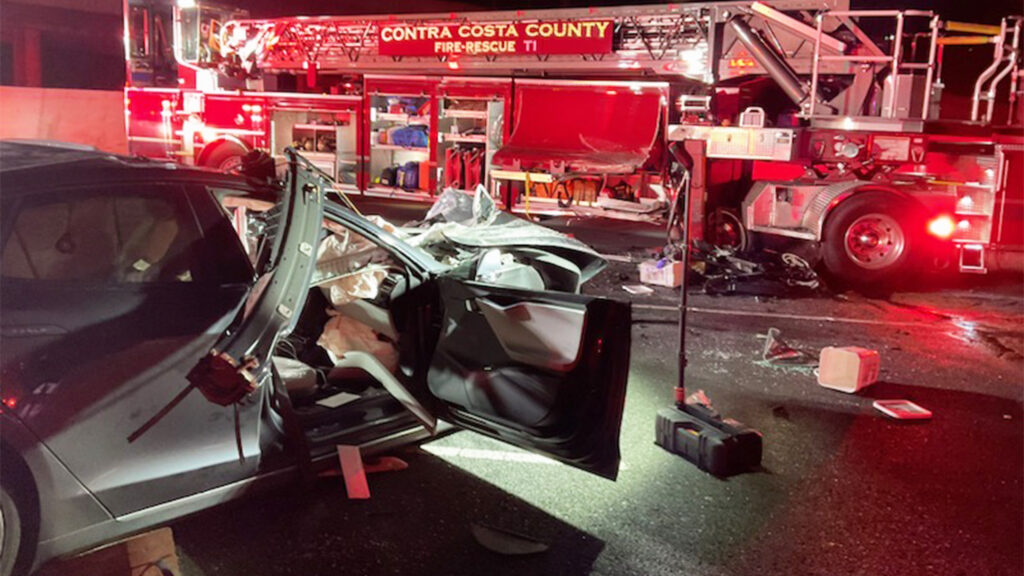
Genesis Giovanni Mendoza Martinez was killed when his Model S hit a firetruck.
Elon Musk previously said a car with Autopilot was “probably better” than a human driver.
Lawsuits that turn into jury trials can be costly, and likely to avoid a potentially astronomical payout, Tesla has settled a lawsuit filed in relation to the death of a 31-year-old killed while driving a Model S with Autopilot enabled. As you may expect, details about the settlement remain confidential.
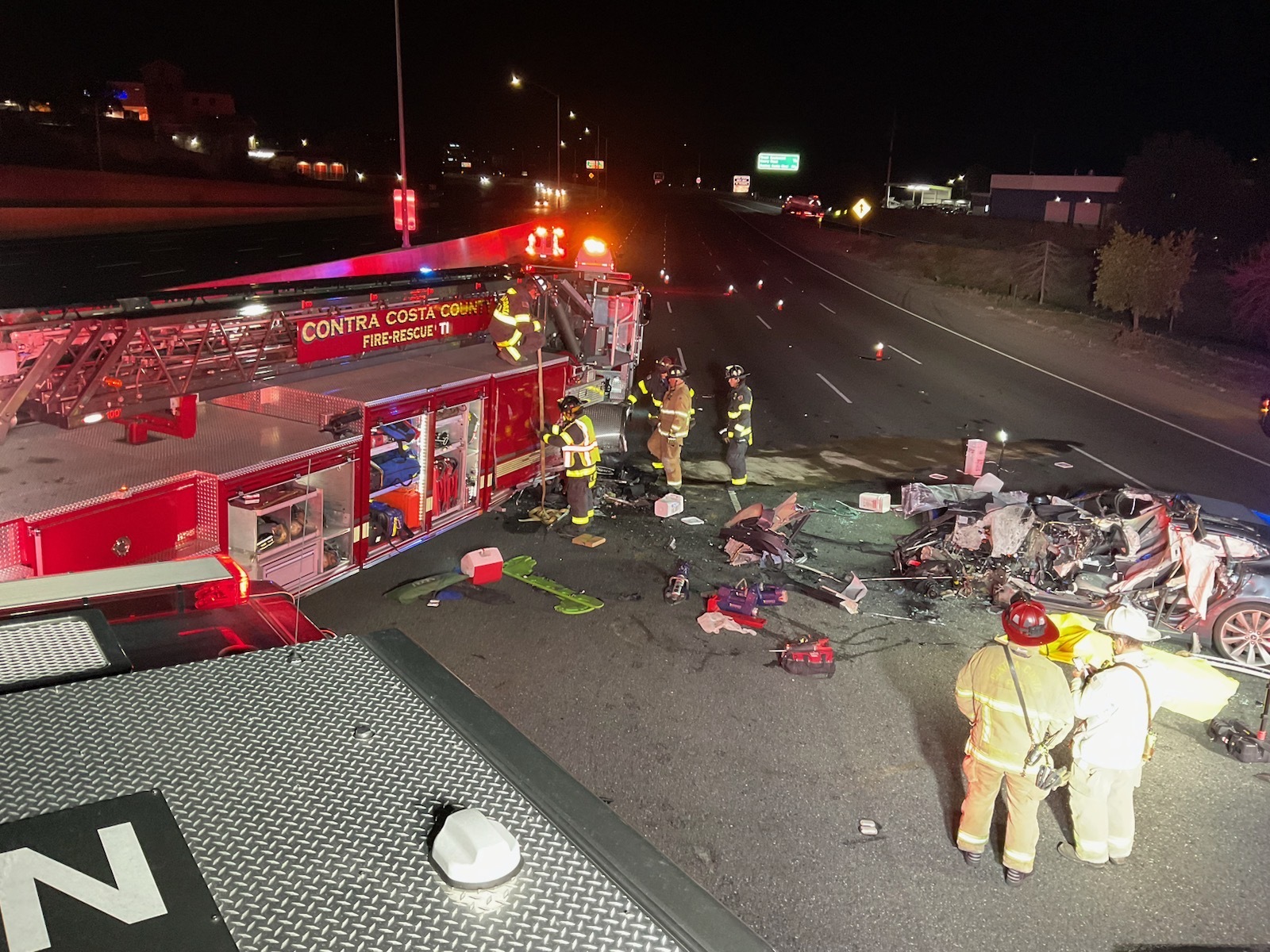
On February 18, 2023, Genesis Giovanni Mendoza Martinez was driving his 2014 Tesla Model S on Interstate 680 in Contra Costa County, California, when the EV slammed into a fire truck responding to an earlier accident. Martinez was killed in the 70-mph crash, while his brother in the passenger seat suffered serious injuries.
The lawsuit took issue with how Tesla advertised its Autopilot system, and suggested that the 31-year-old would not have been killed had the system performed as advertised. The lawsuit alleged that both Tesla and company boss Elon Musk had misrepresented the capabilities of the Level 2 driver-assistance system, causing Martinez to place too much trust in it.
The case was being overseen by Judge Vince Chhabria, who determined last year that the ‘Autopilot’ name was “plausibly misleading.” He also ruled that Musk’s statements about Autopilot, including statements in which he said it was “probably better” than a human driver, were legally actionable.
Did Tesla Make False Promises?
Contra Costa Fire Department/X
Data recovered from the wrecked Model S revealed that Autopilot had been engaged roughly 12 minutes before the crash. Because of advertising around the technology, the lawsuit said the driver thought the EV “would drive itself and he no longer needed to drive it.”
Tesla fiercely contested the claims, saying it wasn’t at fault given that Martinez had ignored warnings in the owner’s manual and active warnings while inside the vehicle. Despite this, the judge cleared the path for a jury trial where Musk’s statements on Autopilot would have inevitably been put under the microscope. To avoid this, Tesla has agreed to settle.
The automaker has settled numerous similar lawsuits in the past. In 2025, it opted against settling a case in Florida, and a jury returned a verdict that it must pay $243 million in damages in relation to the 2019 death of a man who was inside a Model S with Autopilot engaged, which hit a parked Chevrolet Tahoe.
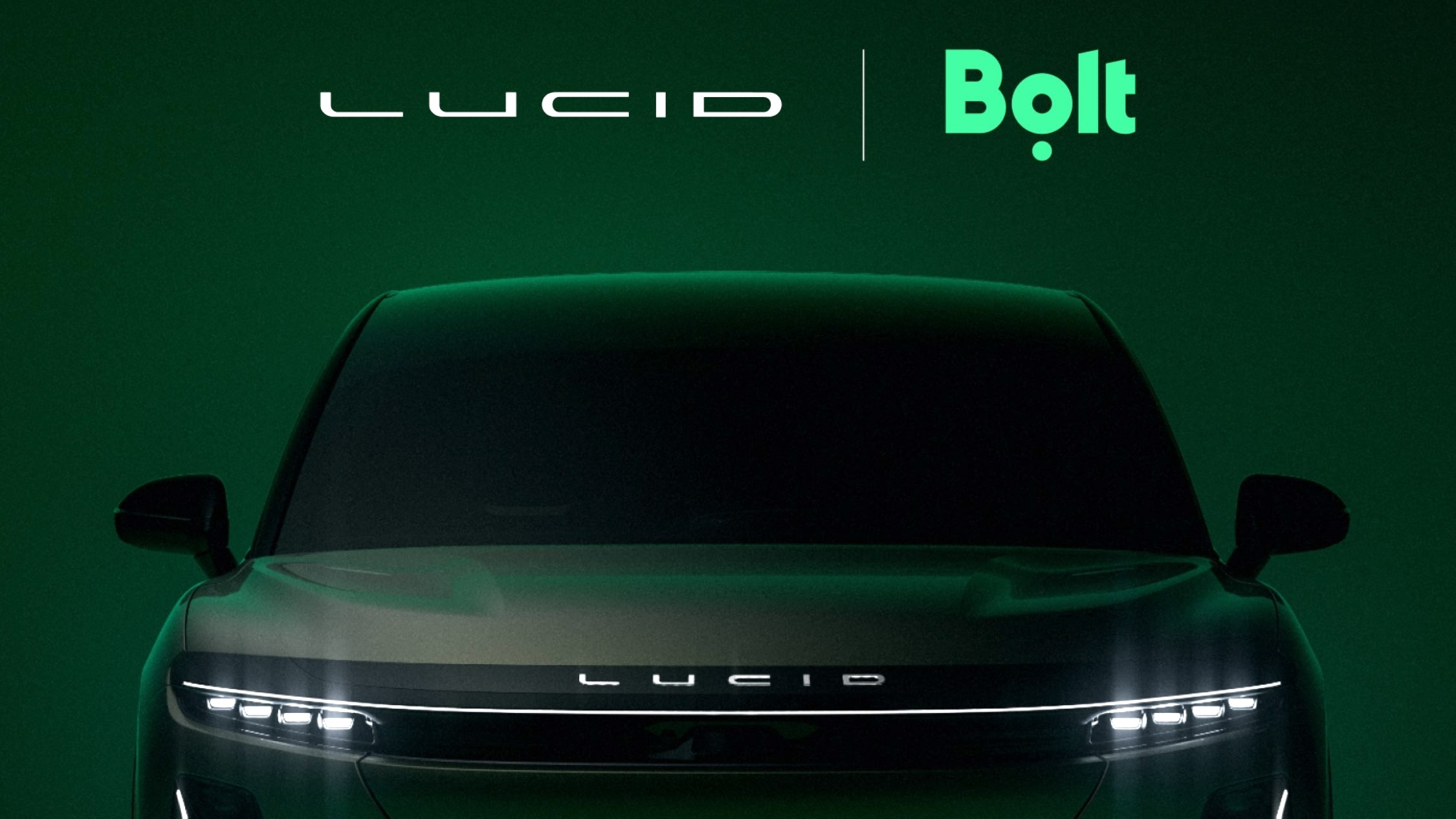
Lucid’s upcoming midsize platform will spawn a robotaxi for European cities.
The cabs will operate under the Bolt banner and use Nvidia Hyperion L4 tech.
Lucid already has a US deal with Uber and Nuro to deploy 35,000 robotaxis.
The name might not be familiar in America, but the Bolt ride-hailing company is a Goliath in other parts of the globe, operating in more than 850 cities across 50 countries. And proving that anything its more famous rival Uber can do, Bolt can do too, the Euro operation is teaming up with Lucid to develop tens of thousands of robotaxis.
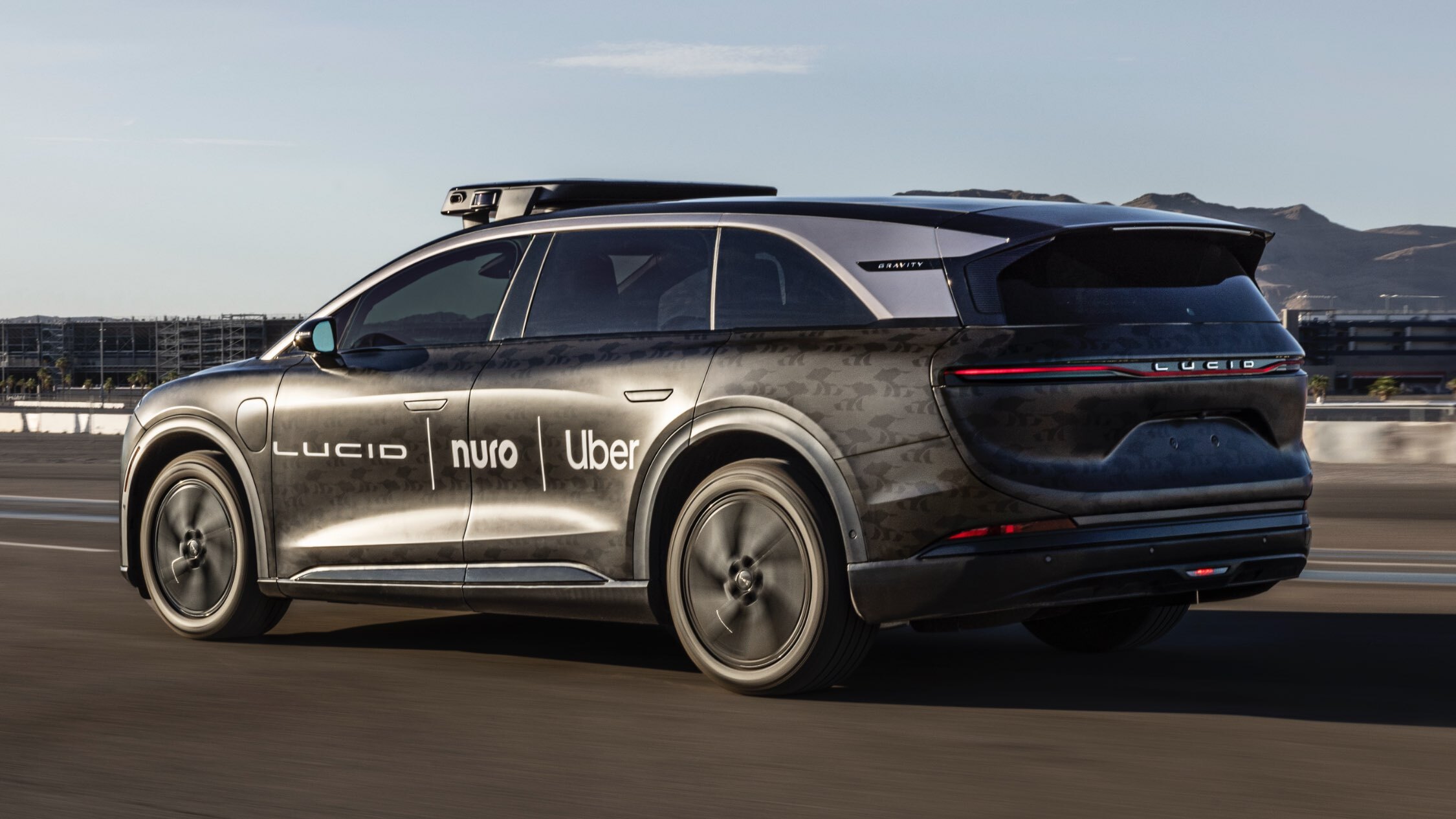
Lucid and Bolt today announced they are joining forces to put 25,000 autonomous cabs on Europe’s streets. It’s part of Bolt’s commitment to provide riders access to 100,000 driverless cars on its platform by 2035. The American EV brand already has a deal in place with Uber to roll out 35,000 robotaxis across North America starting this year.
But there are a couple of important differences between the two deals. Bolt’s Lucids will be based on the carmaker’s upcoming midsize platform, which is probably a better fit for Europe’s generally smaller roads. Lucid and Uber in the US, meanwhile, will use the Gravity SUV, as well as the midsize car when it arrives.
And that’s not the only point of differentiation. Both ride-hail operators’ robotaxis will feature Level 4 autonomous tech enabling them to function without a human driver. But while the US cabs rely on hardware and software from Nuro (image below), Bolt’s robotaxis get their driverless brains from Nvidia Hyperion. Bolt says it will own the entire 25,000-car fleet.
Strong Competition
The robocab market is really heating up in Europe right now. Uber, Verne (co-founded by Mate Rimac) and Pony.ai have already started offering rides in Zagreb, Croatia, and Waymo is currently testing in Europe and plans to launch in Germany before the end of 2027.
Uber has also joined forces with Wayve to put 15 autonomous Mustang Mach-E robotaxis on London’s streets, though each of the EVs is currently required to have a human driver, while Wayve waits for final regulatory approval. And Elon Musk has promised to bring Tesla’s Cybercab to Europe, without offering any kind of timeline.
Volvo’s new product offensive includes 13 new model launches in 4 years.
Seven models will reach Western markets, and six will be reserved for China.
Lineup to include hybrid and EV powertrains across different bodystyles.
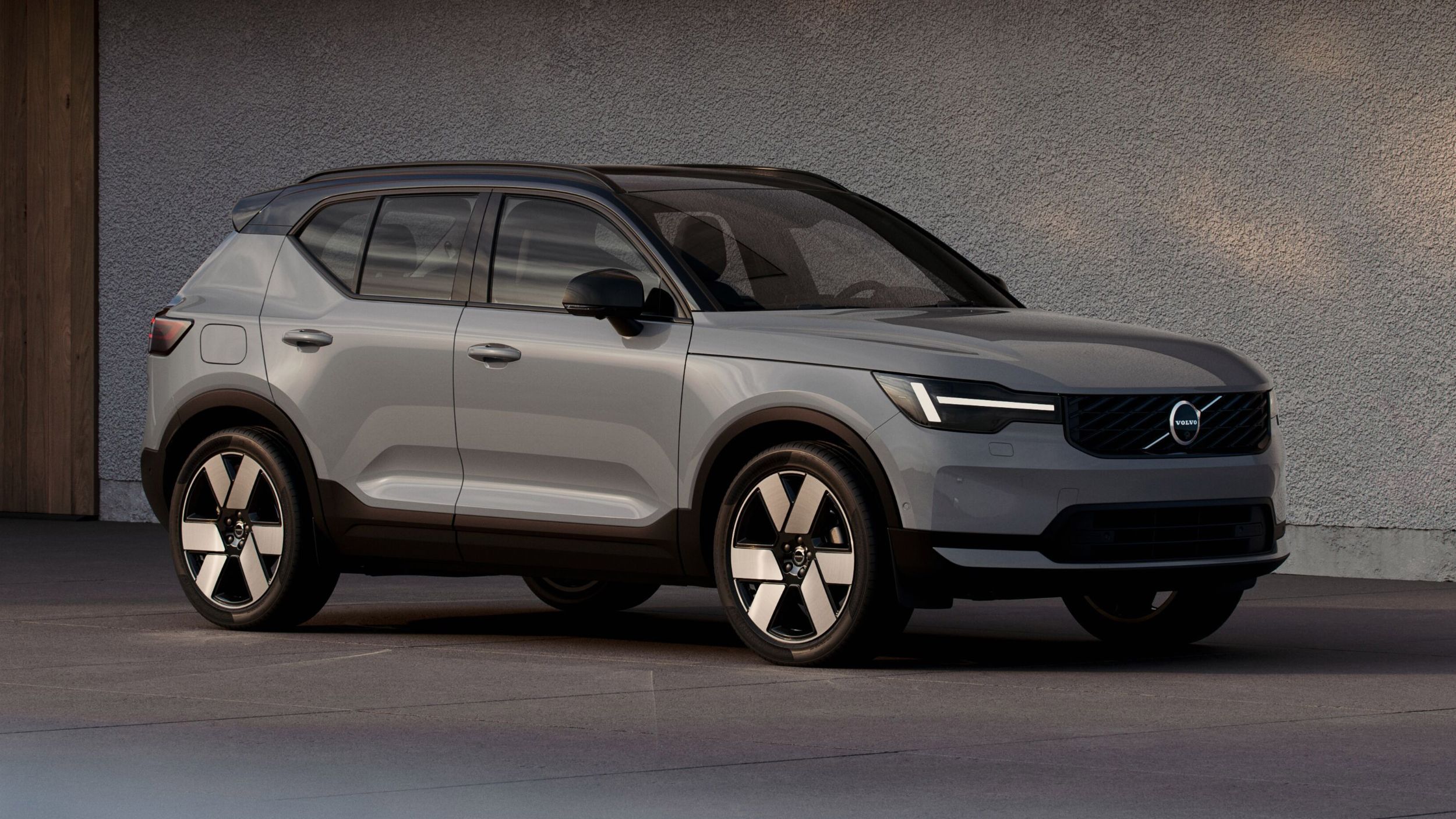
Volvo has presented what it calls “the largest and most ambitious global product push in its 99-year history”, in an effort to improve profitability and double its market share. The automaker will launch 13 new models by the end of 2030, including hybrids and EVs.
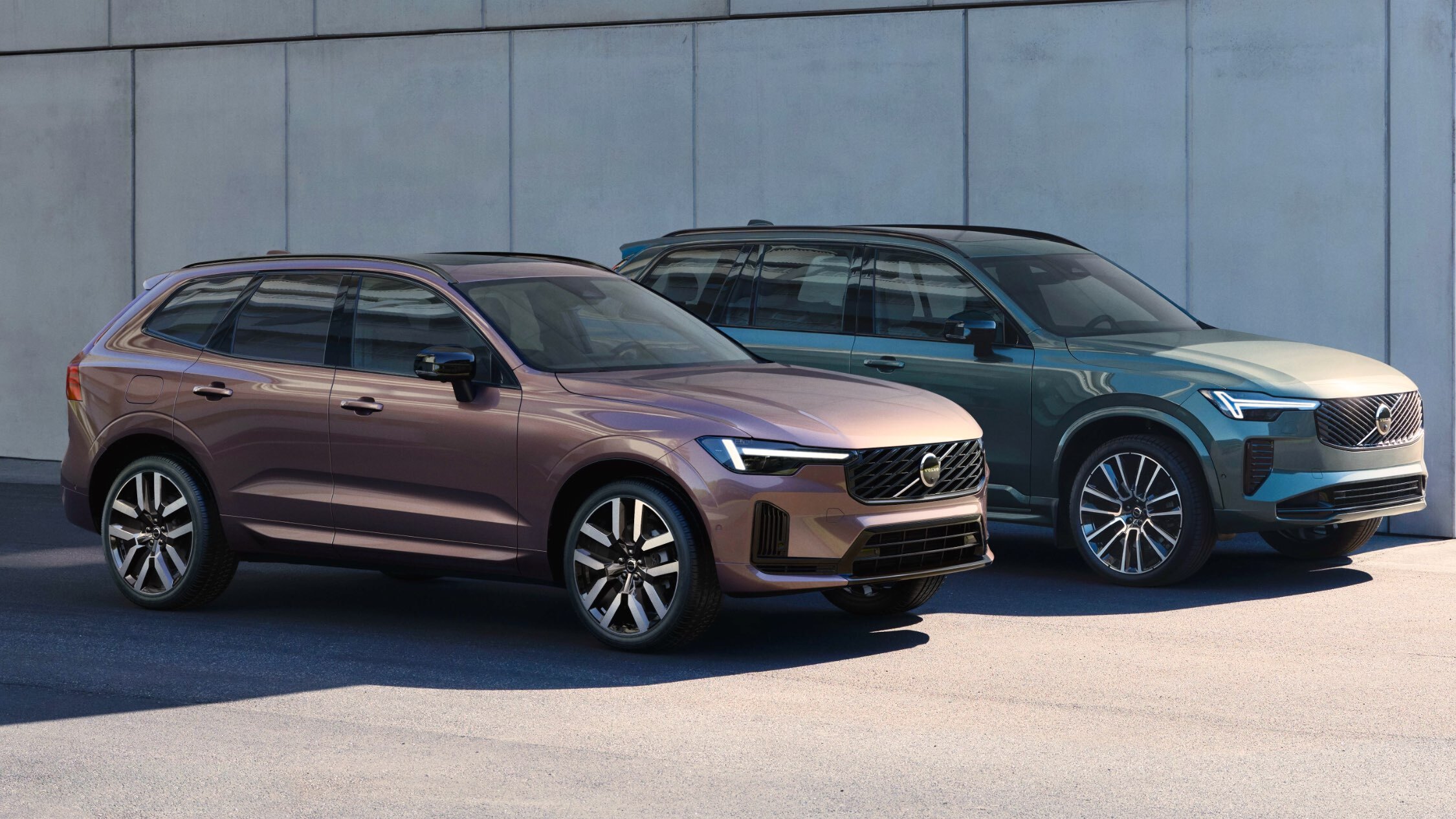
The announcement comes shortly after Volvo introduced updated versions of the XC40, EX40, EC40, and XC60, alongside a new plug-in hybrid powertrain for the XC60 and XC90 with up to 124 miles (200 km) of EV-only range.
Unlike the aforementioned extensive facelifts, the 13 announced models will be all-new. Seven are destined for Western markets including Europe and North America, while the other six will be heading to China.
More importantly, Volvo has confirmed that its future lineup will include cars in new segments, so expect a few surprises, and a potential return to wagons.
The company will preview an evolution of its styling language with a new concept car in 2027. This will be penned under the direction of Thomas Ingenlath, who returns as Volvo’s Chief Design Officer after a seven-year stint as the Polestar CEO.
The new models destined for Western markets will ride on the SPA2 (EX90, ES90) and SPA3 (EX60) architectures, using the HuginCore computing platform. The Chinese models will use shared platforms and a market-specific tech stack developed in collaboration with parent brand Geely. The goal is to increase component commonality across Geely Group vehicles from the current 10 percent to as much as 30 percent by 2030.
Hakan Samuelsson, Volvo president and CEO, said: “Our showrooms will look very different in 2030”, adding that they want to become “the leading premium car brand”. The CEO outlined the four pillars behind the new product offensive as “regionalized product offerings, leadership in electrification, unique synergies with Geely, and complete customer offers that goes beyond the car alone”.
Overall, Volvo wants to double its market share by introducing more EVs alongside third-generation hybrids for those not ready to make the switch. The company promised to treat its customers with regular over-the-air software updates, and make buying a new Volvo easier and more transparent with special offers and fast-delivery model variants.
A bacterial infection is wiping out Florida's citrus trees. Growers hope a rootstock developed with gene-editing technology could keep the disease at bay.
Nearly half of parents with school bus riders say their child has experienced a close call near a bus or in a school zone, according to a new national survey that also found broad support for automated enforcement against motorists who illegally pass stopped buses.
The Governors Highway Safety Association said in a Sept. 15 news release that 46 percent of parents whose children ride a school bus reported such an incident. The survey also found that 91 percent of parents support automated stop-arm enforcement, which uses cameras mounted on buses to identify vehicles that pass while a bus is stopped to load or unload children with its flashing red lights activated and federally mandated stop arm extended.
Overall, 36 percent of the respondents said their children experienced a similar close call involving dangerous driving near a school bus or school zone, which GHSA said includes distracted driving and speeding. Another 43 percent said they know another child who had experienced a close call.
When asked why they think motorists drive dangerously around school buses, 53 percent of the parents think the motorists do not believe they will be caught.
Survey Methodology
The survey was conducted June 16 through 25 by the Ocamb Group and included 525 U.S. parents with children ages 6 to 17 living at home. Separate oversamples of 250 Texas parents and 251 Ohio parents were interviewed June 26 through 28. Ocamb Group founder David Ocamb said respondents were recruited through a national online research panel. The national sample was weighted by gender and geographic region to better reflect the U.S. population of parents with school-age children. For the national sample of 525 respondents, the equivalent maximum margin of sampling error is approximately plus or minus 4.3 percentage points at the 95-percent confidence level. The Texas and Ohio oversamples each have an equivalent maximum margin of sampling error of approximately plus or minus 6.2 percentage points.
The findings come as students are back in classrooms across the country and communities renew efforts to protect children at bus stops, crosswalks and school zones. Parents responding to the survey described motorists passing buses with flashing lights and extended stop signs, speeding through school zones and driving while distracted.
In accounts released with the findings, one parent said a motorist tried to pass a school bus on the side where the parent’s child was walking and nearly struck the student. Another described a car swerving within feet of a child who was crossing in front of a school bus while its lights flashed and its stop sign was extended.
“Parents are telling us that dangerous driving around school buses and school zones is not an abstract concern but something their children are experiencing firsthand,” GHSA CEO Jonathan Adkins said in a statement.
Adkins added that driver education remains important, but the findings show parents also want motorists held accountable when they endanger children. He encouraged communities to use proven tools and technology to make school travel safer.
Parents called for stronger enforcement and greater use of stop-arm cameras, according to GHSA. One respondent also suggested placing more crossing guards at busy intersections during school arrival and dismissal times.
“This is a back-to-school, wake-up call and it’s no wonder that 91 percent of parents support automated stop-arm enforcement to protect their children’s safety,” Justin Meyers, president and chief innovation officer of BusPatrol, told STN.
BusPatrol, which markets school bus stop-arm camera systems, provided financial support for the survey, according to GHSA.
The association, which represents state and territorial highway safety offices, said the results add parents’ perspectives to a broader national push to address illegal passing and other dangers around school buses.
The Illegal Passing National Action Plan
GHSA and BusPatrol released “A National Action Plan for School Bus Safety” in March. The organizations described it as the first comprehensive 50-state roadmap for protecting the approximately 20 million children who travel on the nation’s 500,000 school buses each day.
The plan includes 69 recommendations for state highway safety offices, law enforcement agencies, school districts, educators, school bus drivers, technology companies, autonomous vehicle providers, safety advocates, judges and prosecutors.
Recommendations include adding school bus safety to state highway safety plans, using data to identify locations with frequent violations, expanding public education campaigns, establishing stop-arm enforcement programs and training drivers to recognize unsafe motorist behavior. The plan also effectively calls for more consistent definitions and reporting protocols for bus-stop injuries and related incidents.
As STN previously reported, the plan refers to estimates that motorists illegally passed school bus stop arms over 39 million times during the 2024-2025 school year, the equivalent of each school bus being passed once every three days.
Since then, the National Association of State Directors of Pupil Transportation Services’ annual one-day survey, in which participating school bus drivers manually record illegal passings, extrapolated that the number of illegal passings decreased for the 2025-2026 school year but still show a significant problem. Over the summer, NASDPTS reported that 101,334 school bus drivers in 39 states and the District of Columbia observed 56,024 illegal passings in one day. NASDPTS adjusted the results to estimate nationwide daily violations and projected that figure across a 180-day school year.
The action plan grew out of discussions at the inaugural National School Bus Safety Summit in December 2025. BusPatrol convened the event with support from GHSA and Safe Kids Worldwide, bringing together nearly 500 government officials, law enforcement representatives, transportation professionals and safety advocates.
The plan also seeks to draw more attention to close calls and psychological trauma that may never appear in traditional crash statistics.
GHSA Captures Perspectives on Real-Life Illegal Passings
The new GHSA survey did not measure crashes or injuries. Instead, it captured parents’ reports of close calls and their views about enforcement. Two recent incidents in Michigan and Florida illustrate the different dangers children can encounter around school buses and nearby roads.
In Bedford Township, Michigan, an elementary student came within inches of being struck by a car that passed his stopped school bus Sept. 9, according to the Monroe County Sheriff’s Office.
The incident happened about 4:05 p.m. in the 7600 block of Douglas Road as the student was being dropped off by a Bedford Public Schools bus. Sheriff Troy Goodnough said the bus had its flashing red lights and stop arm activated, legally requiring other motorists to stop.
Video released by the sheriff’s office shows the student beginning to cross the road in front of the bus before abruptly stopping as a blue Chevrolet Malibu passes in the opposite direction.
“Thankfully, a devastating incident was avoided due to the awareness of both the student and bus driver observing the vehicle prior to the student completely crossing the roadway,” Goodnough said.
Bus surveillance video captured the vehicle’s license plate, allowing investigators to identify the driver as a 19-year-old from Toledo, Ohio, authorities said. Police used Flock cameras in Bedford Township and Toledo to locate the vehicle.
The sheriff’s office is seeking a reckless driving charge against the driver.
Michigan law requires motorists to stop at least 20 feet from a school bus when its overhead red lights are flashing. Passing a stopped school bus can result in a civil infraction and a fine of up to $500. A violation resulting in injury can carry a fine of up to $1,000 and/or up to one year in jail.
In Escambia County, Florida, a 12-year-old Pensacola boy suffered non-life-threatening injuries after being struck by a car Sept. 8.
The Florida Highway Patrol said via local news reports that an Escambia County school bus was stopped facing west on La Ventana Drive and unloading students at the intersection. After leaving the bus, the boy walked west toward Muldoon Road.
“As he attempted to cross Muldoon Road to reach Perkins Street, he walked directly into the path of a northbound white sedan driven by a 25-year-old Pensacola woman,” the Highway Patrol said.
The boy was taken to a hospital with injuries that were not considered life-threatening.
Authorities did not say the Florida driver illegally passed the school bus. The incident nevertheless highlights the risks children can face after leaving a bus and crossing nearby roads.
Hybrid sales in the US jumped from 16 % share to 19 % after start of Iran war.
Explosion in gas prices has pushed people into hybrids, but not fully electric cars.
GM lost market share because of its EV focus while Toyota has gained ground.
If you follow the stock market at all, you’re probably still kicking yourself for not dropping $10k into Sandisk last year. If you’d done that in April 2025 and cashed out 14 months later you’d have made almost $800k. It could be worse though: You could be GM and have invested billions in EVs only to discover everyone wants hybrids.
Rewind to the late 2010s and the whole car industry was going gaga for EVs, with multiple brands pledging to go electric-only by 2030 and most putting huge resources into battery-powered cars. Growing EV sales figures and tightening regulations really did make electric vehicles look like they would take over the world.
Hybrids, meanwhile, which had kick-started the modern electric revolution in the late 1990s, were dismissed as an “interim solution” by GM boss Mary Barra in 2019, Reuters reminds us. But seven years later, American car sales say hybrids are the complete solution, not an interim one. And automakers who bet on gasoline-electric rather than electric power alone are winning big.
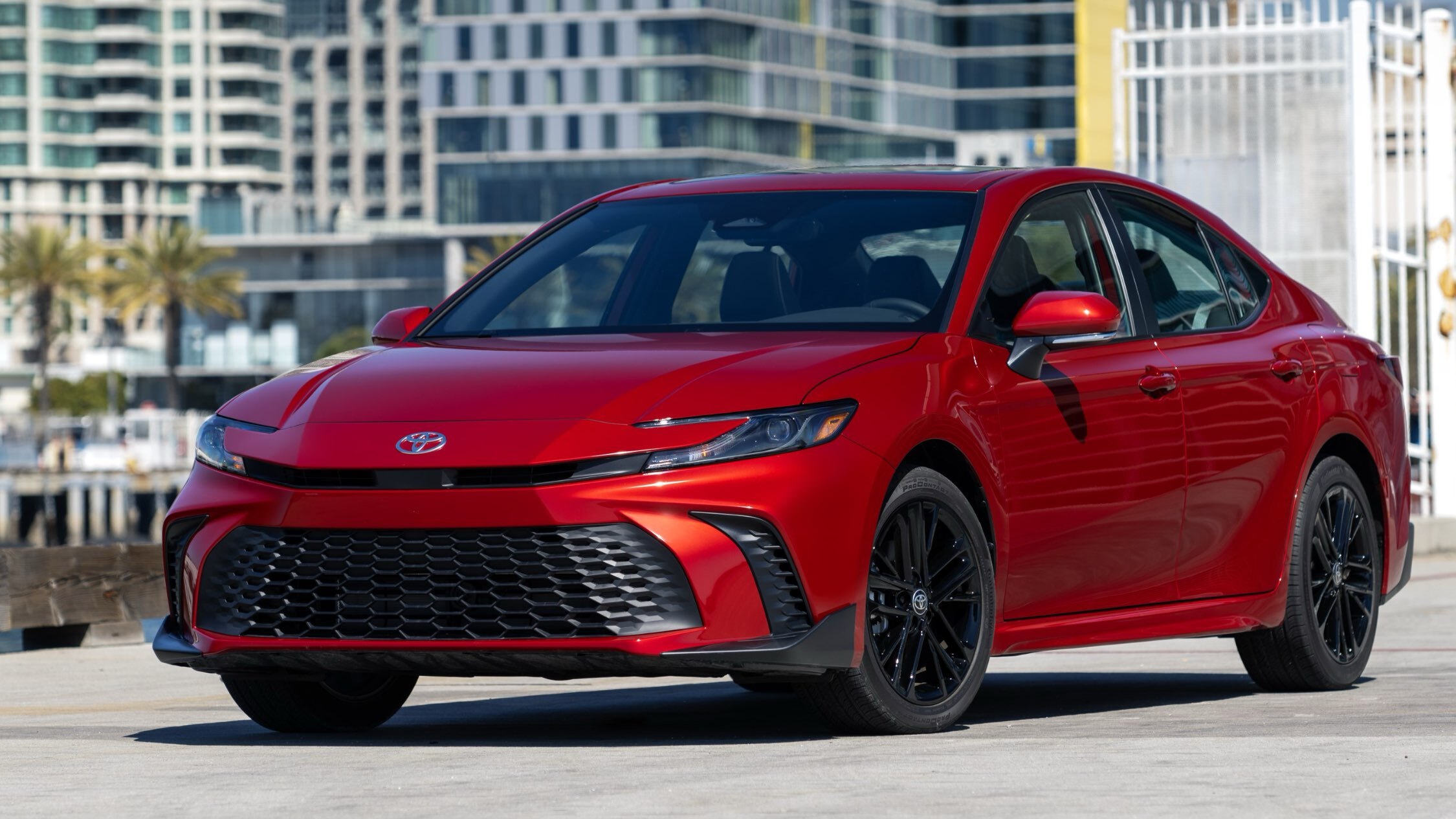
The biggest winner is Toyota. It’s crushing the competition, securing a 49.2 percent share in Q1 of the hybrid market, Cox Automotive says, per Reuters. That market has grown, too. Hybrids’ share of the total car market swelled from 16 percent in February to 19 percent in August on account of gas prices exploding following the start of war in Iran. And one analyst told Reuters he expects hybrids to hit a 34 percent share by 2031.
Stuck To Its Hybrid Guns
Toyota, you’ll remember, popularized the hybrid with the original Prius, and endured years of criticism for being slow to launch EVs. But it never wavered from its commitment to hybrids, and that determination is paying off in the US in 2026. While GM’s share of the US car market fell from 17.6 percent in the first half of 2025 to 16.8 percent in the same period this year, Toyota’s grew from 15.5 to 15.8 percent, according to Cox Automotive.
EVs also cut fuel costs, of course. And in Europe, which is suffering the same kind of gas pain American drivers are battling, EV sales are on fire. One in every four new cars sold there is an EV. But in the US, sales are heading in the opposite direction, partly as a result of the Trump administration killing federal EV tax credits. Their share of the US market fell from 14.4 percent in September 2025 to 7.1 percent this May.
The 19 MPG Hybrid
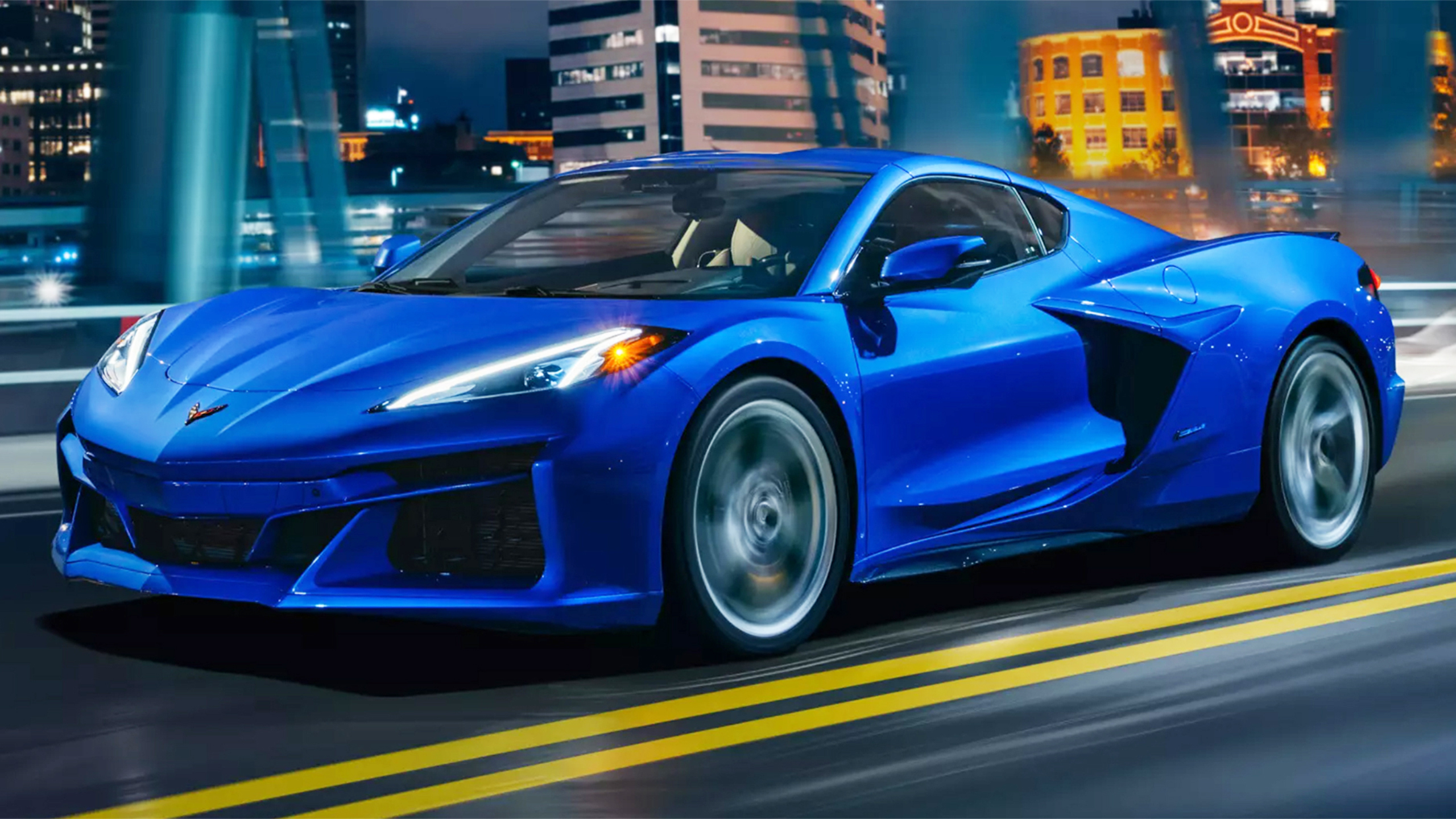
So if GM wants to get back in the game, it’s got no option but to deliver multiple new hybrid choices to support the straight gas vehicles it fortunately kept building. Incredibly, the General’s sole hybrids in the US today are three Corvettes, the $111k E-Ray, $119k Grand Sport X and $227k ZR1X, though in previous years it also sold hybrid sedans and SUVs. It also sells hybrids in China.
When will we see new GM hybrids with more than two seats in North America? Dealers won’t like the answer, because while the automaker won’t confirm dates or comment on speculation, Reuters industry sources say American showrooms could be hybrid-free zones until near the end of the decade.
Powered doors can close when the driver buckles up or presses the brake.
Wireless charging delivers up to 11 kW with roughly 90 percent efficiency.
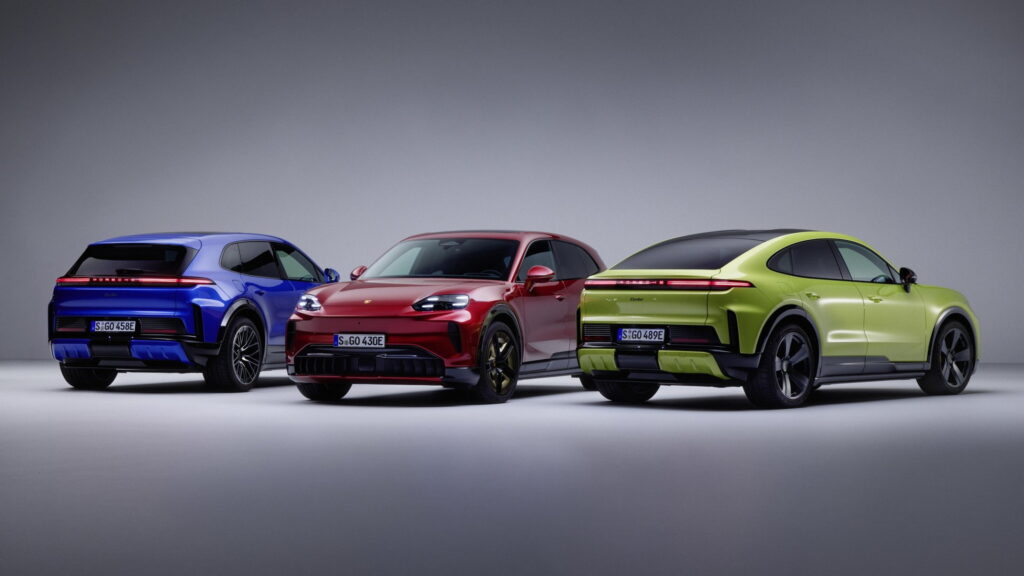
Paint to Sample expands the Cayenne Electric’s palette to 105 colors.
The Porsche Cayenne Electric is learning some new tricks, including some aimed squarely at drivers who find closing doors and connecting charging cables unduly exhausting. For the new model year, Porsche is adding electrically operated doors, wireless home charging, and an even more elaborate massage system. Buyers can also select from 105 exterior colors. Of those features, however, it’s the self-closing driver’s door that may attract the most attention.
The optional powered doors use servo motors to open and close automatically after a brief pull of the handle. They can also be controlled through buttons inside the cabin, the infotainment system, exterior handles, or Porsche’s Digital Key. Drivers won’t necessarily need to reach for any of those controls, as the Cayenne can close its driver’s door when the seat belt is fastened, or the brake pedal is pressed, making the start-up process feel a little more private jet than family SUV. They also feature one cool and vital trick.
Sensors monitor the surrounding area and halt the doors if they detect a person or obstacle. The system also works with the vehicle’s exit warning technology to prevent a door from opening into approaching traffic. Porsche says the powered mechanism can function on inclines, while conventional manual operation remains available.
Another new option removes the charging cable from the equation. Porsche Wireless Charging uses a weatherproof ground pad that can be installed indoors or outside. Once the Cayenne is positioned correctly, charging starts automatically at up to 11 kW. Porsche claims approximately 90 percent energy-transfer efficiency.
Motion sensors and foreign-object detection can interrupt charging if a person or animal approaches, or if a metallic object lands on the pad and begins heating up. The system is now available to order in Germany and certain European markets, with a broader rollout planned in stages. Porsche has not yet detailed US availability or pricing.
Massage Seats That Feel The Music
The front seats can now be fitted with 16 air cushions and six sound actuators apiece. Five massage programs are offered, while the actuators produce vibrations synchronized with music for what Porsche calls a “4D” audio experience. Three additional wellness modes combine massage, vibration, and curated soundscapes.
Finally, Paint to Sample adds 92 shades to the Cayenne Electric’s 13 regular colors, bringing the total to 105. Porsche hasn’t revealed what all these indulgences will cost, but expecting restraint from the options sheet would probably be optimistic.
Khyzyl Saleem created a Group B-inspired Hyundai Ioniq 5 N.
The concept ditches the EV powertrain for WRC turbo ICE power.
The ultra-aggressive bodykit takes cues from classic rally icons.
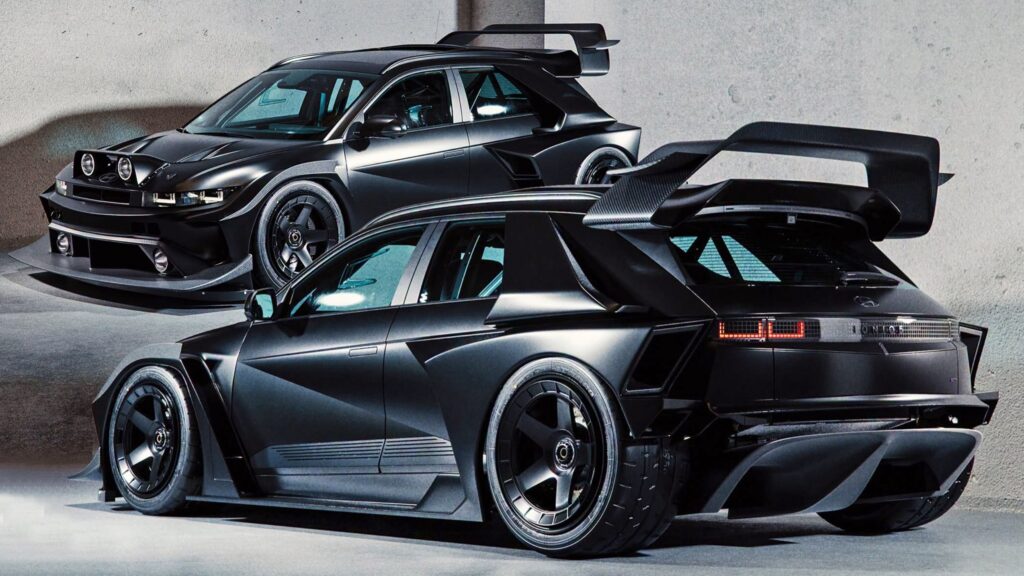
The Hyundai Ioniq 5 N is one of the most exciting performance-focused EVs, and while it is technically based on a crossover, it looks like a proper hot hatch. The sharp lines of the model inspired independent designer Khyzyl Saleem to create a wild concept, evoking the spirit of the Group B Rally icons from the ’80s.
The model is dressed with a custom bodykit, altering its proportions and making it look ready for the special stages. The front end has been redesigned with a pronounced carbon fiber splitter and extra LEDs on the vented hood.
The profile features ultra-wide fender extensions with integrated cooling intakes. The flying buttresses over the C-pillars are reminiscent of the Lancia Delta S4, which is a fitting homage since the greenhouse of the Ioniq 5 sends subtle Delta vibes.
The tail is even more aggressive with a massive wing and an equally large diffuser. The rally car treatment also includes Lexan windows, a roll cage, and a new set of five-spoke alloy wheels finished in black. The designer also created a slightly different version with a smaller rear wing and a bronze shade, looking like a homologation special.
Hyundai never experimented with a Group B entry, but they retain a strong presence in WRC, competing at the highest level against Toyota Gazoo Racing. The Korean automaker started with the Accent WRC in 2000, followed by the i20 WRC in 2014, and the more recent i20 N Rally1 in 2022. With the i20, Hyundai won two WRC Manufacturer’s titles in 2019 and 2020, and one Driver’s title in 2025 (Thierry Neuville).
Swapping EV For ICE?
Taking inspiration from Hyundai’s motorsport involvement and, despite the fully electric nature of the donor Ioniq 5, Khyzyl said he likes to imagine the concept with a combustion engine. More specifically he wants the “screaming” turbocharged 1.6-liter four-cylinder engine from the WRC rally car – presumably in mid-ship position – although he would also consider rotary power.
After the latest regulatory changes that removed the hybrid boost from Rally1 contestants, the turbo engines have a maximum permitted output of 375 hp (280 kW / 380 PS). This is lower than the 641 hp (478 kW / 650 PS) from the dual electric motors of the roadgoing Ioniq 5 N, making us wonder if Hyundai could come up with a more potent hybrid setup.
In any case, the Group B-inspired Ioniq will likely stick to the digital world. Still, the project is part of a broader collaboration between Hyundai USA and Khyzyl Saleem. Last month, the company shared renderings of a Baja-inspired Santa Fe concept on social media, asking their followers which Hyundai model should the_kyza try next.
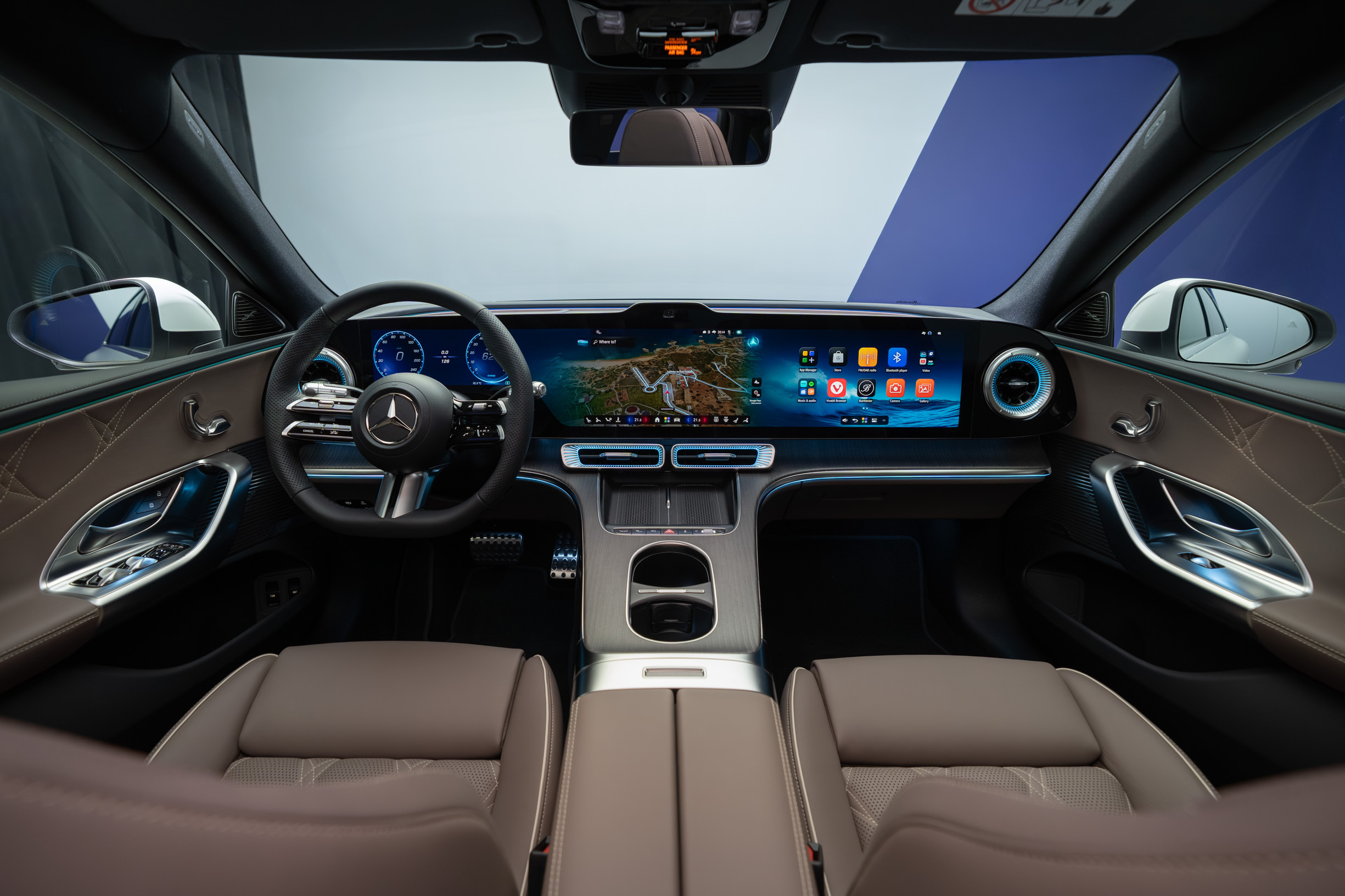
Mercedes debuts new entry-level C 300 electric with 416 hp instead of C 400’s 483 hp.
Zero to 62 mph takes 4.5 seconds, and range falls from 473 to 429 miles.
C300 is $5,500 cheaper in Germany, but even more affordable RWD models land soon.
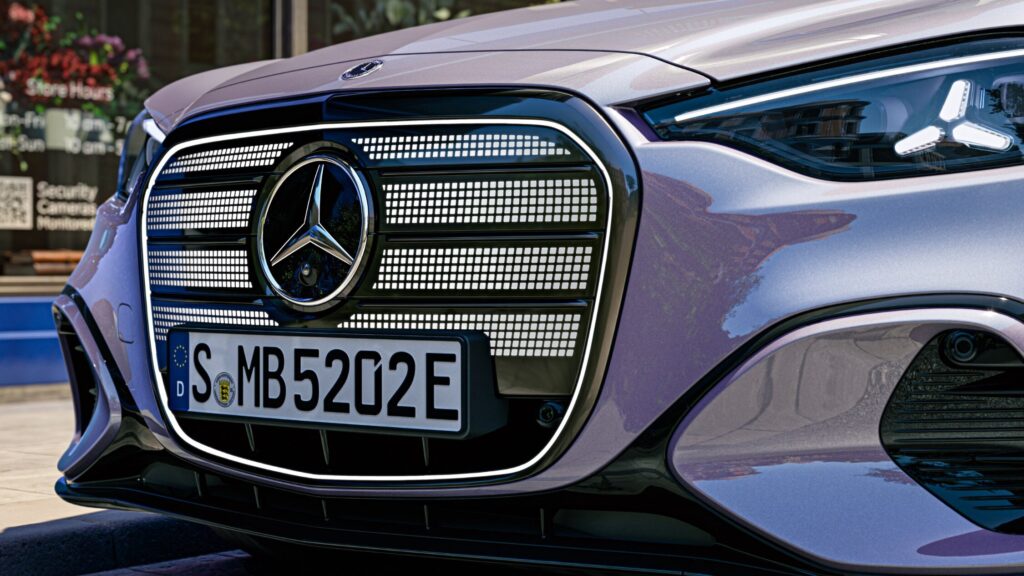
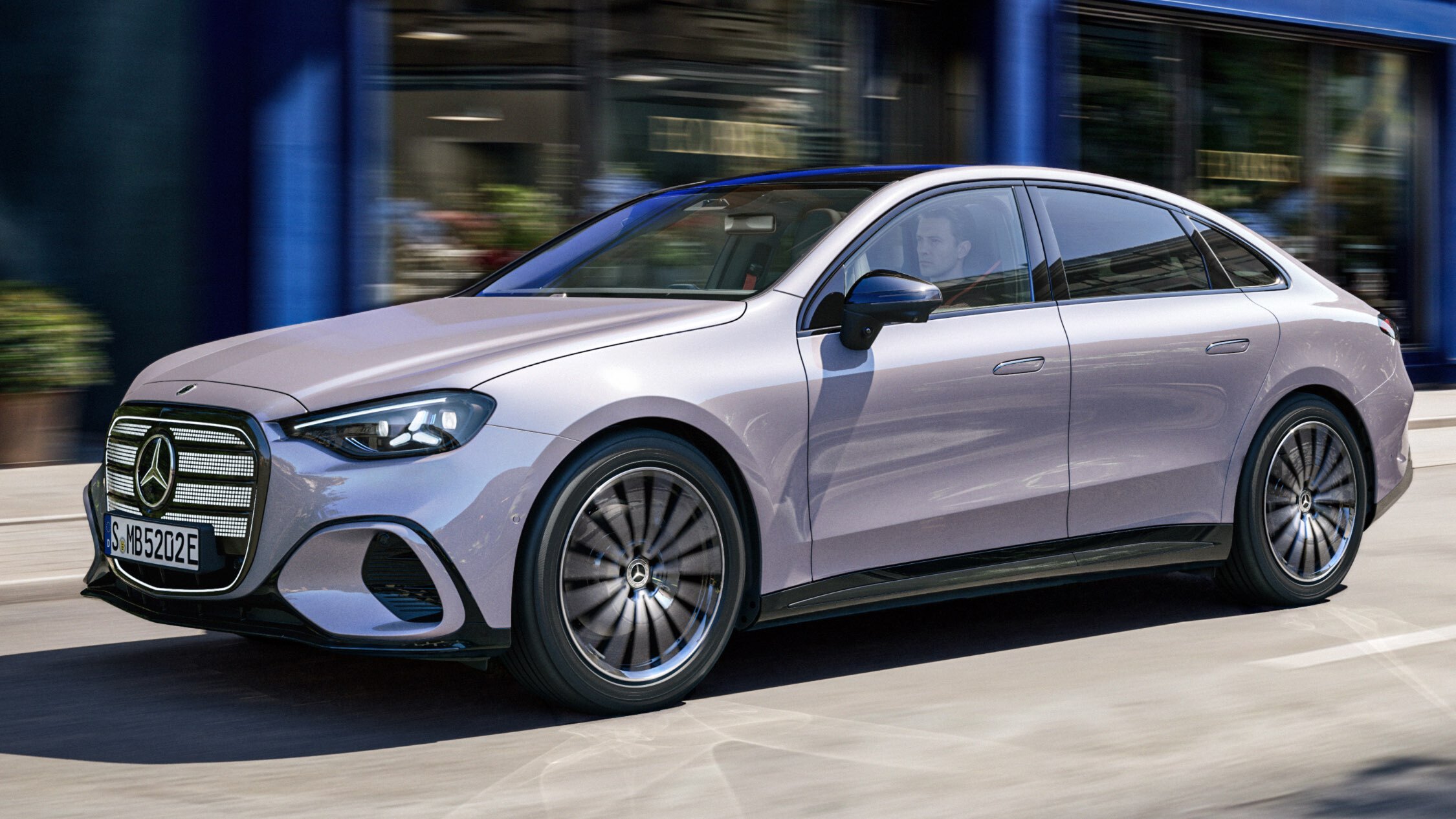
Mercedes pulled the covers off its first-ever electric C-Class sedan back in April, but so far we’ve only seen one flavor. That was the C 400 4Matic electric, a bi-motor, all-wheel-drive version of the compact luxury car. Now it’s joined by a more affordable C 300, but the specs are so close it feels like one of those cars is pointless. But which one?
First, let’s quickly recap the C 400 specs. It makes 482 hp (490 PS / 360 kW), gets to 62 mph (100 km/h) in 4.0 seconds, can charge at 330 kW, and claims a 473-mile (762 km) range from a 94 kWh (usable) battery.
Now the C 300. You still get two electric motors and all-wheel drive, plus the same 590 lb-ft (800 Nm) of torque. But output falls to 416 hp (422 PS / 310 kW) and the 62 mph trip takes 4.5 seconds, so half a second longer. That’s still plenty of power and performance though, and even the range holds its own, despite a drop in battery capacity to 85 kWh.
180 Miles Added In A Bathroom Break
Mercedes says it’ll manage 429 miles (690 km), and while the max charge rate is slightly slower, from 330 to 320 kW, the C 300’s ability to add 180 miles (290 km) of range in 10 minutes isn’t that far off the 202 miles (325 km) the C 400 gains in the same time.
If you want that plush air-spring ride, a passenger-side screen, and more than 18 inches of wheel, you’ll have to hit the options list in both cars, so there’s no big difference in spec that we can see. But in Germany, where C-Class electric prices have been announced, the C 300’s €62,951 ($72,700) sticker saves you €4,760 ($5,500) versus going for the €67,711 ($78,200) C 400. In the US, the C 400 is expected to cost around $65,000.
Worth The Premium?
The C 400 pulls rank in every key area, but to be honest, we’re surprised how close the C 300 gets. It’s still brisk, still has a really usable electric range, and also the security of all-wheel drive. For plenty of buyers who can look past the kudos of the C 400’s badge, the C 300 looks like the better value option.
But that’s not the end of the C-Class electric story. Mercedes says even more affordable single-motor, rear-wheel-drive cars will follow, and at the other end of the spectrum, AMG is working on a tri-motor rival for BMW’s electric M3 with at least 671 hp (680 PS / 500 kW). Which would you pick – C 300 or C 400?
The Nissan Kicks e-Power will be sold in Europe, the UK, and Turkey.
Production will take place at Nissan’s Sunderland plant in the UK.
It will be joined by the new Pixo EV and the next-gen Juke EV.
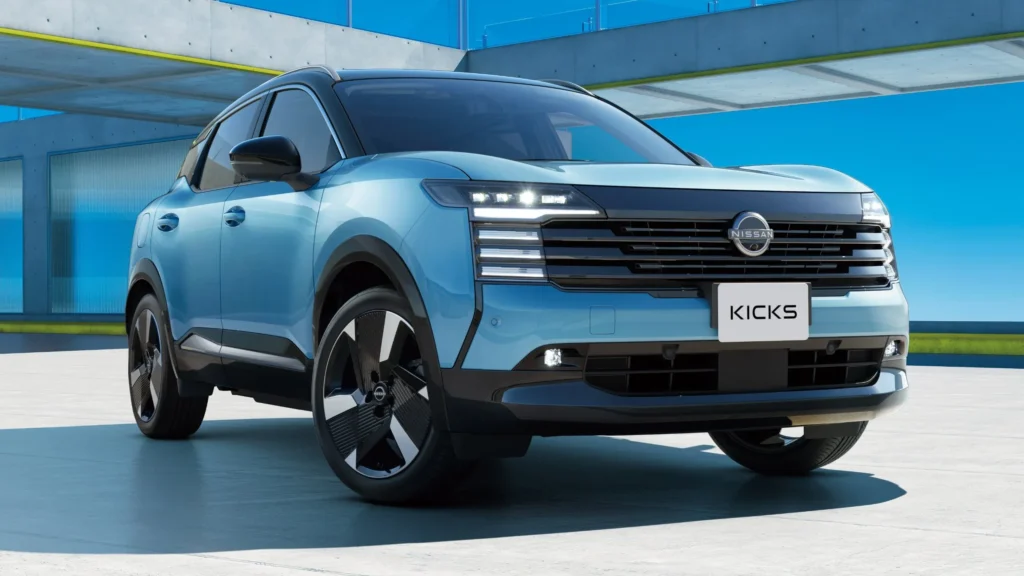
Nissan has announced that the Kicks e-Power will become available in Europe, the UK, and Turkey, with production taking place at the Sunderland Plant in England. The automaker has also confirmed two new EVs for European markets – the Pixo urban hatchback and the next-generation Juke.
The current Nissan Kicks was introduced in 2024 in North America, with the Kicks e-Power arriving in 2026 in Japan. Naturally, European customers will gain access to the electrified version, in line with the region’s strict emission regulations and strong hybrid demand.
Measuring 4,365 mm (171.85 in) long, the Kicks will be one of Europe’s biggest B-SUVs, being longer even than its cousin, the Juke that stretches to 4,210 mm (165.8 in) long. Direct rivals include the Toyota C-HR, the Hyundai Kona, and the VW T-Roc, which are also available with self-charging hybrid powertrains.
Nissan Kicks (Japan)
Nissan didn’t share the detailed specifications of the EU-spec Kicks, but we expect it to be similar – if not identical – to the Japanese version. The subcompact crossover features Nissan’s third-gen e-Power hybrid technology, with an electric motor moving the wheels and a combustion engine acting as a generator.
In Japan, the Kicks e-Power is fitted with a 1.4-liter three-cylinder gasoline engine with 97 hp (72 kW / 98 PS), a front-mounted electric motor generating 141 hp (105 kW / 143 PS), an optional rear-mounted electric motor contributing another 67 hp (50 kW / 68 PS), and a lithium-ion battery. It remains to be seen whether Europe will get both the FWD and AWD (e-4ORCE) powertrain options, as well as the adventurous Rock Creek trim.
Production In The UK
Nissan Sunderland facilities
The EU-spec Kicks e-Power will be manufactured in Sunderland alongside the Juke, Qashqai, and Leaf, following a £170 million ($229 million) investment. The plant celebrates its 40th anniversary this year, and has built a total of 12 million vehicles since the first Nissan Bluebird rolled off the assembly line back in 1986.
The UK factory will be the fourth production location for the second-gen Kicks, which is currently made in Japan, Mexico, and Brazil. A facelifted version of the first-gen Kicks with hybrid power still survives in some regions, like Thailand. Since the debut of the original in 2016, Nissan has sold over 1.8 million units in more than 70 countries.
Two New EVs
A camouflaged prototype of the new Nissan Pixo | Photos: SH Proshots
Besides the European arrival of the Kicks, Nissan has also confirmed that a new electric city car will be unveiled next week. The model will adopt the Pixo nameplate and will serve as a twin to the Renault Twingo and the Dacia Spring, albeit with Nissan-specific styling.
Last but not least, Nissan said that the all-new third generation of the Juke will also be manufactured in Sunderland starting in 2027, migrating to a fully electric powertrain. This explains why the automaker brought the Kicks e-Power to Europe, offering a hybrid alternative to the upcoming zero-emission Juke.
Massimiliano Messina, Chairperson of Nissan AMIEO Region, said: “Electrification with choice is what European customers want, and the introduction of Kicks will further demonstrate how Nissan has options for all.”
School startup across the U.S. comes with noteworthy snafus at Prince George’s County Public Schools in Maryland, tragic student fatalities, and speculation on electric bus mandates and funding.
Glenna Wright-Gallo, vice president of policy for software provider Everway, leverages her personal experience having a disability and her experience as the former assistant secretary for the U.S. Department of Education’s Office of Special Education and Rehabilitation Services to speak on student behavior, absenteeism, IEPs, assistive technology, travel training, funding, U.S. Department of Education upheavals and more. She will present a keynote at November’s TSD Conference in Dallas-Frisco, Texas.
The new school year has begun in the Empire State, and local school districts and bus companies have an additional five years to transition to all-electric fleets. But transportation leaders and policymakers say the clock is still ticking on major funding and infrastructure challenges that could make or break the ambitious mandate.
As part of the 2027 fiscal year budget passed in May, lawmakers extended the deadline for full compliance with New York’s electric school bus mandate from 2035 to 2040 and the requirement for all new school bus purchases to be zero-emission from 2027 to 2032. The move is widely viewed as a necessary reset for the nation’s largest school transportation system, but sources caution that time alone won’t solve the structural barriers districts face in electrifying their fleets.
“It’s great that both parts of the legislation were moved down five years, but the looming questions weren’t answered, and the school districts still have so many questions that the contractors really can’t answer,” said Corey Muirhead, executive vice president for New York City contractor Logan Bus. “They still don’t understand how the state funding is going to work and how they’re going to get reimbursed.”
A First Step, Not a Finish Line
For years, the state’s three primary school transportation associations—the New York Association for Pupil Transportation (NYAPT), New York School Bus Contractors Association (NYSBCA) and New York State Bus Distributors Association (NYSBDA)—have warned that the mandate, as originally written, was moving faster than the market, utilities and school budgets could reasonably support.
“Over the past five years, New York’s school transportation industry…has collaborated closely with Gov. [Kathy] Hochul’s administration and state lawmakers,” said lobbyist Andre Claridge, who represents NYAPT and the NYSBDA and formerly worked with the NYSBCA. “We have kept state leaders updated on our progress toward meeting the electric school bus mandate while highlighting the significant challenges faced by local school districts and industry partners.”
Claridge called the five-year extension “a welcome first step,” but stressed that the law’s language “leaves no room for innovation and requires revision.” He and other industry leaders are pushing for not only extended timelines, but increased state investment and regulatory flexibility that would allow other zero- and near-zero-emission technologies to count toward compliance.
“We opposed the mandate from the beginning and advocated for no mandate or a more realistic timeline. Finally, they heard us,” commented David Christopher, executive director of NYAPT. “We are now looking at how we will lobby going forward, because five years will go by quickly, and we need to provide realistic transition plans for the legislature to consider. Hopefully they will listen.”
Tim Flood, executive vice president for New York school bus contractor The Trans Group, said the compliance delay offers a little relief but noted the challenges “are still very real and numerous.”
“I think there will be changes to the mandate. I certainly hope there will be,” he continued, citing a belief that ongoing negotiations will add more delays between now and 2032. “But at this point and time, we have to move forward as it is exactly how it is.”
The new deadline could also be impacted by upcoming political election cycles, he added.
Meanwhile, the extension could provide breathing room to build out a more data-driven, district-by-district, company-by-company approach.
An electric Type A school bus operated by Trans Group company Educational Bus Transportation, Inc. on Long Island, New York.
Where Electric Buses Prove Viable Is a Diverse Playing Field
“There is no category of district based on what we’ve seen where an electric school bus is inherently not viable,” said Alok Disa, senior advisor for the New York State Energy and Research Development Authority’s (NYSERDA) clean transportation team.
NYSERDA is tasked by the state legislature with awarding funds to districts for purchasing electric school buses and related infrastructure as well as developing electrification plans for fleets. Disa pointed to real-world operations in rural, suburban and urban communities based on the organization’s experience work with school districts across the state.
About 50,000 school buses of all fuel types operate across New York. The split between large school buses and Type A “vans” is about 60-40.
Disa explained that more than 350 electric school buses are currently registered in New York state, up from roughly 250 to 275 the previous year, and 54 school districts currently have at least one electric school bus deployed. The World Resource Institute’s Electric School Bus Initiative says the number is more like 561 ESBs deployed in New York, with over 1,200 in the pipeline or “committed” to a school district or bus company through state or federal funding.
Despite the figures, most electric school buses operate outside New York City, countering the perception that electrification is only advancing in dense urban markets, Disa noted.
Early data from NYSERDA’s work with school districts on the fleet electrification planning program suggests that approximately 80 percent of routes statewide fall within the range today’s electric school buses can handle, once reasonable safety margins and cold-weather performance are factored in. In general, Disa said NYSERDA estimates that roughly 70 to 80 miles per day is the typical working range for many morning and afternoon home-to-school routes, even in cold regions such as the Adirondacks, Western New York and the Finger Lakes.
“We recommend that districts begin their electric school bus transition with some of their a.m./p.m. routes…rather than starting with extracurricular or longer trips,” he said, adding that districts operating buses in severe winter conditions have largely been able to keep those vehicles in service with appropriate planning and protocols.
Challenging Case in Point
In addition to being the transportation director for Naples Central School District, located about an hour drive southeast of Rochester, Pat Elwell also owns personal electric vehicles. That led him to push the district to apply for the first round of EPA Clean School Bus Program funding in 2022, around the same time the state legislature passed the electric mandate.
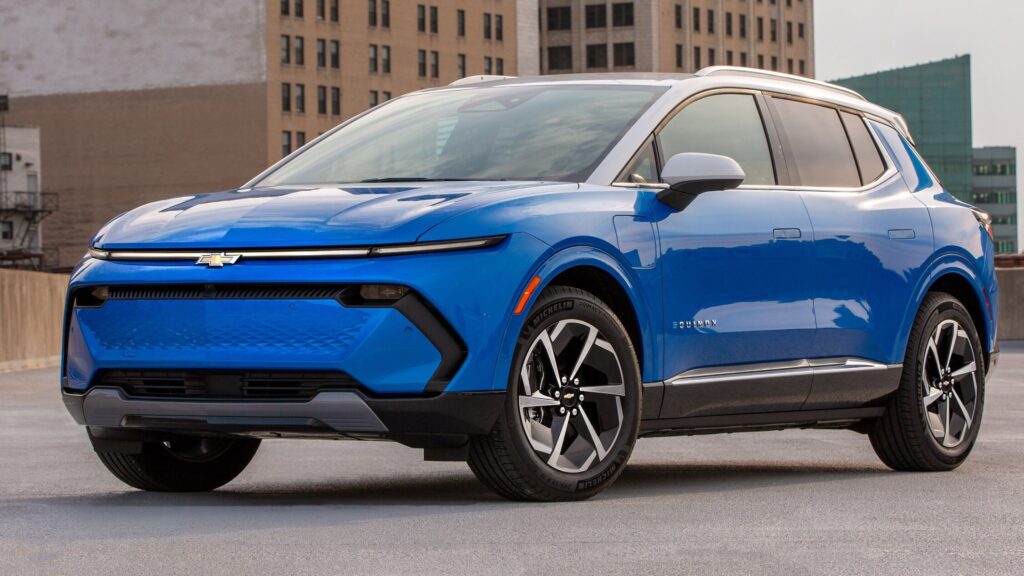
Elwell is also a bus mechanic, so his attention was finely tuned to how the ESBs would operate once the first two were delivered in March 2024. The district also has an electric Chevrolet Equinox used for students served by the McKinney-Vento Homeless Assistance Act.
“Our first issue came right out of the gate when our Level 2 chargers were taking 17-plus hours to charge our buses,” he shared with STN. “Working with the charger company, and getting a crash course in charger programing, we were able to fix this problem to where they [now] charge up within six to eight hours.”
Otherwise, he said maintenance has been “negligible,” though brake inspection intervals had to be cut in half to six months or 6,000 miles.
“I received a frantic radio transmission one morning from the driver that she smelled a burning smell on the bus. When the bus made it to the transportation facility, I quickly found that the smell was from the right front brake,” recounted Elwell, who is also the president of NYAPT’s Wayne-Finger Lakes chapter. “Turns out that with one pedal drive the drivers do not use the brakes much, therefore the pads had seized in the caliper bracket.”
While he said the ESBs only need one daily charge to operate all in-district and the one out-of-district route in 40- and 50-degree spring temperatures, an obvious challenge has been heating the ESBs in winter. Elwell said he learned the 10kWh heat pumps originally installed were too small for the cabin heating system. Even then, issues have remained.
“Working with the engineers at IC Bus they came to the conclusion that a 20-kWh pump should fix this problem,” he explained. “We did swap them out, and the difference in heat and battery consumption was significantly better. Fast forward to winter 2026, with sustained temps in the single digits and below zero, and the buses could not produce heat to be able to operate the buses safely and comfortably. Therefore, we moved the runs to diesel buses.”
He added that a repeated test of winter-time range in January and February 2025 documented the need for mid-day charging to complete back-to-back runs within the district service area, “which still holds true to this day,” he said.
The longest Naples routes are 80 miles round trip per day, Elwell continued, with the average morning and afternoon routes being 29 miles. In addition to the two EVs, the fleet currently consists of 13 diesel Type C school buses, six gasoline Type A vans, three SUVs, and a sedan.
“We currently use diesel/gasoline buses for out-of-district routes and field/athletic trips as the ESBs do not have the range,” he added.
So far, he said he has calculated a cost of around $0.57 per mile/kWh for his ESBs and $0.65 per mile for diesel. He added that he has been working with NYSERDA to develop a better formula.
Meanwhile, there’s the issue of support. It was only a couple of years ago Lion Electric filed for bankruptcy protection and was then acquired by Montreal investors, with the caveat that the electric school bus line would only be sold and serviced in Quebec. Other players in the segment have also fallen by the wayside, which creates concern for long-term customer support and warranty coverage.
“Some of those chassis, those companies aren’t even in business anymore, and I think that’s going to be one of the challenges,” commented Trans Group’s Flood. “Maybe not as much in the vehicles but in charging stations, in charging software. There are a lot of options, but how many are going to be there three, four or five years from now?”
“We don’t find a problem with electric buses because we are lucky enough to be in a location with sufficient power and have routes that are relatively short … [W]e’ve never had a bus where the batteries have been drained fully,” commented CEO Matt Berlin. “We are not worried about someone being stranded in the middle of rural New York. In the worst case, they’re in the middle of Queens.”
Berlin added that if NYCSBUS was running 100 ESBs, it might be a different story.
New York City formed the non-profit NYCSBUS in 2021 after acquiring the assets of school bus contractor Reliant Transportation. NYCSBUS operates a fleet of over 900 school buses with 888 routes. Twenty-nine of the school buses are electric. All so far are Type A’s consisting of 22 Micro Birds, six Type A Collins Bus (five with Lightning eMotors electric drives and one with a Motiv), and a RIDE Achiever.
As of the new school year, Berlin said the average daily route any school bus travels a day is 65 miles, which is normally within range of an ESB. A quarter of the 888 daily routes are 30 miles or shorter.
“We are not putting our EVs on every single route. We’re lucky that the city is compact,” he explained, adding that ESBs aren’t currently used on longer routes from Queens to New Jersey. “We’re lucky that regenerative braking benefits urban driving more than rural.”
He said the 29 Type A ESBs cost $0.13 per mile to operate, compared to $0.45 per mile for gasoline ($4.10 per gallon and 9 mpg) and $1 per mile for diesel ($6 per gallon and 6 mpg).
Like elsewhere in the state, Berlin said winter temperatures impact the range. He added that a proprietary route planning tool calculates which routes are best served by an ESB or an internal-combustion bus. The set goal is to return the former to the depot with a 20-percent charge remaining each day.
He also is looking at the viability of adding repowered school buses with electric batteries.
“We think the promise of repowering is terrific, if it worked right, and we haven’t seen it work. But if it did, it would cut the [purchase] price by a third,” he added. “Not to mention create jobs in New York City and train another generation of mechanics in how to work with these vehicles.”
Billions Still Needed for Buses and Charging
While route viability is trending positive, at least in some areas, dollars remain a major sticking point.
“It’s a massive capital outlay to reach this goal for many folks,” observed Flood at Trans Group. “For us as contractors, for school districts, whether they’re operating their own [fleet] or contracting or a combination of both, allocating or acquiring the capital to do those things … it’s just a challenge.”
Logan Bus’s Muirhead noted that new purchase costs of ESBs, could range from 30-percent to as high as 70-percent more than an internal combustion engine bus, putting school districts between a rock and a hard place.
“A school transportation’s budget was $2 million, and now it goes to $5 million?” he asked. “The way that I understand state reimbursement is that the district has to fund that $5 million, and then at the end of the year they get reimbursed by the state. This [is] the biggest elephant in the room that’s not addressed.”
Lobbyist Claridge said the industry has consistently told state leaders that fully funding the transition, “covering the billions required for new buses, charging infrastructure and power grid capacity,” he shared, is essential if New York is to convert what is “arguably the largest land-based mass transit system in the nation.”
Without that, he warned, the mandate risks outpacing realistic district budgets.
Another issue is the additional parking space needed for ESBs based on charging needs. Berlin said the NYCSBUS yard would need to be 25-percent larger to park ESBs with traditional bollards and in-ground chargers.
“That is certainly an issue for us. It is an additional cost of these vehicles,” he said. “It requires more parking, which is more space, and you know in New York City that’s expensive.”
He added NYCBUS has considered overhead chargers, portable charger carts and even induction or wireless charging.
So far, NYSERDA administers $500 million from the state Bond Act through the New York School Bus Incentive Program, with another $100 million added in the state budget, for a total of $600 million earmarked specifically for electric school buses and associated infrastructure.
Disa said that when NYSERDA incentives are combined with State Education Department aid formulas, “for a lot of districts…inclusive of the charging costs, it can be the equivalent, or even it can be cheaper to acquire an electric school bus than a diesel or combustion bus right now,” with no additional local tax impact.
Still, those funds represent the early days of a far longer and more expensive transition. With roughly 50,000 school buses operating statewide, and only a fraction on the road being electric or in the pipeline, tens of thousands of vehicles will still need to be replaced by 2040. Claridge argued that even with the extension, “meeting these goals will ultimately require additional time, state investment and flexibility.”
The U.S. Environmental Protection Agency is expected to announce the return of the Clean School Bus Program by next month. Nearly $2.5 billion must still be awarded nationwide. How much will go to New York school districts and bus companies remains to be seen.
Three electric school buses operated by school bus contractor Logan Bus in New York City.
Utilities and Infrastructure: ‘Early and Often’ Engagement
Beyond fleet costs, infrastructure and utility partnerships may pose the steepest near-term challenges for school districts and contractors.
“One of the critical elements that distinguish an electric school bus deployment compared to a traditional combustion bus is you do have to have a couple new stakeholders in the room, and one of those is your electric utility,” Disa said. “We recommend until we’re blue in the face that you’ve got to start talking to your electric utility early and often.”
Through NYSERDA-funded fleet electrification plans, school districts like Naples CSD are working with engineering firms to assess route energy needs, depot capacity, interconnection timelines and likely utility bill impacts. Disa said many districts currently have enough available capacity to support at least a few buses while longer-term upgrades are planned and financed, but those efforts take time and coordination.
Infrastructure upgrades are Naples CSD’s “biggest hurdle,” Elwell added. He said the district currently has adequate electricity for adding one more ESB to the fleet before utility provider NYSEG will need to upgrade the transmission line.
Claridge noted that utilities and the broader grid are central to whether the mandate can be implemented on the ground. “Fully transitioning [to electric buses] is impossible without adequate power grid capacity, charging infrastructure and funding,” he said.
Disa again pointed to NYSERDA’s fleet electrification plans led by consultants to help.
“These plans receive input from utilities, which can help determine infrastructure needs and next steps,” he explained.
For example, First Student announced Tuesday it is partnering with Con Edison and NYSERDA to demonstrate First Charge, the school bus contractor’s above-ground charging infrastructure. The organizations claim that installation could reduce infrastructure costs by 20 percent through less construction.
First Student is adding 40 ESBs in New York and is considering expanded solar and creating a smart energy hub.
“Deploying electric school buses at scale requires more than vehicles. It requires the right infrastructure, technology and utility partnership,” said Kevin Matthews, head of electrification at First Student. “Working with Con Edison, we’ve demonstrated a more efficient approach that can help overcome some of the cost and construction challenges that have traditionally made fleet electrification difficult in dense urban environments.”
Con Ed and NYSERDA are funding the project, which includes six bus vouchers through the New York School Bus Incentive Program and four retrofit buses.
Third-Party Testing and Policy Uncertainty
Another unresolved issue is a state law passed in last year’s budget requiring independent third-party testing of electric school bus range on specific routes and under varying conditions—a provision Claridge and other stakeholders describe as “overly complex” and disconnected from market realities.
Claridge said NYSERDA “continues to grapple with the implementation of this overly complex legislation,” and that the working group tasked with developing a regulatory framework “appears to have stalled” due to the law’s lack of clarity and practicality. He characterized the agency as “attempting to fit a square peg into a round hole.”
Disa said NYSERDA is using empirical fleet data and route planning results to answer the core questions lawmakers raised, such as how climate and terrain affect electric range. He noted NYSERDA convened a working group of industry stakeholders last September to help identify information that could benefit school bus operators and support industry stakeholders in finding their own paths to compliance.
‘Not a Time to Sit Back and Wait’
Everyone agrees that, despite the five-year extension, school districts cannot afford to wait.
Claridge emphasized that while the electric school bus mandate “has clear value,” the current policy framework “requires revision” to create space for innovation and realistic funding mechanisms.
Disa framed the extension as an opportunity for districts to move from planning to pilots and then to scale deployments, not as a pause button.
“Even though there is some extra time … it’s not a time to sit back and wait for years to elapse,” he said.
Districts that haven’t started a fleet plan should begin now, he added, while those with plans in hand should work with NYSERDA to get their first buses on the road and then scale up.
NYAPT’s Christopher said two important challenges remain.
“School districts vote on their budgets here, so regardless of the state mandates, if local district residents say no, buses are not purchased. This remains unresolved to date, putting a district in an untenable situation,” he explained. “Secondly, we have multiple utility companies operating in the state, and they all do business differently. It’s difficult for a school district or NYERSDA, for that matter, to sort through all the different rules and processes each utility follows in order to build out infrastructure.
“There needs to be more coordination and more attention to districts that need infrastructure built out if the mandate holds in five years,” he continued. “Districts need certainty from utilities regarding costs and timelines to secure voter approval and funding. It’s complicated to say the least.”
LOS ANGELES, Calif.— HopSkipDrive, the leader in safe, fast, and simple supplemental student transportation, today debuted CareEngine, the technology platform that powers every HopSkipDrive ride. Purpose built for the complexity of school transportation, CareEngine connects school districts, schools, families, riders, CareDrivers, and HopSkipDrive’s Safe Ride Support team before, during, and after every ride, so everyone gets the information they need at the right time.
Districts today are too often stuck stitching coordination together with disconnected systems that don’t speak to each other, can’t move at the speed students need, and aren’t sustainable over time. When something changes, coordination breaks down exactly when it matters most.
CareEngine was built to close that gap. School transportation is unlike any other transportation, involving far more than a car and a driver moving a rider from one place to another, and every ride is personal: a seven-year-old who depends on a consistent pickup routine, a teenager experiencing homelessness in her third school placement this year, a student who is non-verbal and relies on a familiar greeting. A late pickup can affect a classroom, an outdated handoff instruction can create a safety concern, and a missed update can lead to uncertainty and a chain of phone calls.
When a student’s home address changes at 10:30 at night, CareEngine puts a new plan into motion, and coordinates everyone in real-time. The CareDriver’s route updates automatically in the CareDriver app. RideIQ gives district staff real-time visibility into the change, the school’s Daily Queue shows the day’s updated pickups and dropoffs, the student can follow their own ride through Track My Ride, and the family’s Caregiver app confirms the new pickup, all without a series of phone calls, left messages, or lost sticky notes that plague current processes.
CareEngine brings that coordination to every part of the ride:
● Seamless coordination, always in sync: Districts can book a full school year of rides in minutes. When a pickup time, address, rider instruction, or any other detail changes, CareEngine automatically routes the update to everyone who needs it, the district, the family, and the CareDriver, so one update replaces five phone calls.
● Proactive, human-centered safety: CareEngine brings the CareDriver app, HopSkipDrive’s Safe Ride technology, and the Safe Ride Support team into one connected system that can flag unsafe driving while a CareDriver is still on the way to pickup, giving Safe Ride Support the chance to intervene before a child ever gets in the car.
● Individualized care at scale: CareEngine’s unified system captures each student’s specific needs and preferences, and seamlessly communicates them to the CareDriver at the right time, every ride. This creates a consistent experience tailored specifically to each student, even when the CareDriver changes. CareEngine makes it possible to deliver this level of individualized care consistently across thousands of students and millions of rides.
● Speed when it matters most: New rides are guaranteed in as little as six hours, and location changes in as little as two. For a student whose housing placement changes unexpectedly, that means getting to school the next morning, not the next week, protecting their attendance and continuity at their school of origin.
● A system that improves with every ride: Every ride adds useful information: how long a pickup actually takes, where delays keep repeating, and which instructions reduce confusion. HopSkipDrive’s team uses those insights to make coordination smoother and more reliable over time.
“We’ve spent more than a decade building purpose-built technology for every person involved in a student’s ride: districts, schools, families, riders, CareDrivers, and our safety team,” said Joanna McFarland, CEO and co-founder of HopSkipDrive.”CareEngine is what happens when all these applications connect with each other in one unified system. It helps transportation teams spend less time chasing information and more time serving their students. It’s not a new fix for the driver shortage. It’s what makes sure the capacity districts do have isn’t wasted on coordination they shouldn’t have to do by hand.”
CareEngine arrives as student transportation faces two forces at once. Need is rising: More students require specialized transportation than ever before, from students in temporary housing to students in foster care to students with IEPs who need consistent, individualized care. At the same time, capacity remains constrained and issues like budget restrictions and school bus driver shortages persist. HopSkipDrive’s 2026 State of School Transportation Report found that 71% of districts experienced at least one tangible operational consequence of driver shortages in the past year, including longer ride times, missed or late pickups, and staff pulled in to cover gaps. Nearly a quarter, 23%, say they can no longer offer transportation for extracurricular activities or field trips at all.
About HopSkipDrive
HopSkipDrive is the leader in safe, fast, and simple supplemental student transportation. The company is modernizing the $30 billion school transportation industry through two core solutions: a care-centered transportation marketplace and an industry-leading transportation intelligence platform, RouteWise AI. HopSkipDrive’s marketplace supplements school buses and existing transportation options by connecting kids to highly-vetted caregivers on wheels, such as grandparents, babysitters, and nurses in local communities. RouteWise AI helps schools and districts address critical challenges, including budget cuts, bus driver shortages, and reaching climate goals. HopSkipDrive has supported over 14,500 schools across two dozen states, with over 2,000 school districts, government agencies, and nonprofit partners. Millions of rides across 130 million miles have been completed through HopSkipDrive since the company was founded in 2014 by three working mothers.
BROOKLYN, N.Y., – First Student, North America’s largest student transportation services provider backed by EQT Infrastructure, and Con Edison, today announced the completion of the first phase of an electric school bus project serving the New York City Department of Education. The project brings together electric school buses, First Student’s First Charge infrastructure solution, advanced bi-directional charging technology, and a cost-effective approach to fleet electrification in one of the nation’s most complex urban environments.
“We’re incredibly proud of the work we’re doing with Con Edison and the progress we’re making together to advance electric school bus transportation,” said John Kenning, CEO and President of First Student. “Our mission is to provide the safest, most reliable, and efficient ride to school, so that students arrive ready to learn and achieve their full potential. Living that mission means continuing to live our values, including setting the highest standards for student transportation. Safety will always be at the heart of everything we do, and we’re proud to pair that commitment with innovation that is improving the sustainability of student transportation.”
At the center of the project is First Charge, First Student’s innovative trenchless, modular charging infrastructure solution that reduces costs and accelerates time to market. By avoiding traditional underground trenching, the installation reduced infrastructure construction costs by 13% while minimizing construction complexity and disruption, an especially important advantage in dense urban environments like New York City.
“Con Edison supports innovation to help make transitioning to electric vehicles affordable for our customers,” said Vicki Kuo, senior vice president of Customer Energy Solutions at Con Edison. “Eliminating the need to bury the service line to these chargers lowers the upfront costs for First Student and is a strategy that other fleet owners can replicate to save money and complete projects more quickly. Replacing inefficient, fossil fuel-powered buses with vehicles that produce no tailpipe emissions will help keep our region sustainable.”
Con Edison and the New York State Energy Research and Development Authority (NYSERDA) contributed funding for the project. The funding included six bus vouchers awarded through NYSERDA’s New York School Bus Incentive Program through First Student’s school bus manufacturer, International, as well as funding for four retrofit buses.
This project is also exploring ways to decrease energy costs for fleets. Using advanced load management software, the electric school buses charge during off-peak hours when energy is less expensive, not only decreasing complexity but also ensuring energy is used efficiently.
First Student is continuing to expand its electrification operations in New York with the addition of 40 new electric school buses. First Student is also considering additional initiatives at its Brooklyn facilities, including expanded solar use and the creation of a smart energy hub.
NYSERDA is supporting the purchase of six electric school buses for this project through the New York School Bus Incentive Program and through First Student’s vendor, International, and four retrofit buses through the New York Truck Voucher Incentive Program.
“This project is exactly the kind of critical infrastructure investment to which EQT is committed across our portfolio – pairing patient, long-term capital with practical innovation that strengthens energy security and accelerates the shift to cleaner transportation,” said Crosby Cook, Partner at EQT Infrastructure. “First Student’s work with Con Edison demonstrates that the right partnership between fleet operators and utilities can make electrification more affordable and scalable.”
“Electric school buses offer a healthier, quieter transportation experience for students while reducing pollution in the communities they serve,” said New York State Energy Research and Development Authority President and CEO Doreen M. Harris. “Projects like this demonstrate how thoughtful planning, innovative charging solutions, and strong partnerships can help lower costs and accelerate the deployment of electric school buses in New York City and across the state.”
“Deploying electric school buses at scale requires more than vehicles; it requires the right infrastructure, technology, and utility partnership,” said Kevin Matthews, Head of Electrification at First Student. “Working with Con Edison, we’ve demonstrated a more efficient approach that can help overcome some of the cost and construction challenges that have traditionally made fleet electrification difficult in dense urban environments.”
During the 2025-26 school year, First Student operated approximately 490 electric school buses, with more than 550 additional vehicles on order. The company has surpassed 11.2 million miles driven in electric buses.
About First Student
First Student, the leading student transportation services provider in North America, safely transports millions of students across the U.S. and Canada each day. With a fleet of more than 48,000 vehicles and a workforce of highly trained drivers, the company partners with school districts, divisions, and boards to deliver safe, reliable, and efficient transportation solutions that families can depend on. Recognized as a CIO 100 Award winner and named to the TIME100 Most Influential Companies 2026 list, First Student provides a range of transportation services, including special-needs transportation, routing and fleet management, vehicle electrification, maintenance services, and charter transportation. Through its proprietary HALO technology platform, First Student is helping shape the future of student transportation by integrating safety, operations, maintenance, workforce management, and customer communications into one intelligent transportation ecosystem that enhances safety, improves operational performance, and creates a more connected transportation experience for students and families. Learn more at https://firststudentinc.com
ID.3 GTI gets a single rear motor and can go from zero to 62 mph in 5.6 seconds.
79 kWh net battery gives a WLTP range of 373 miles, can charge at up to 183 kW.
20-inch Wörthersee wheel design lifted from the smaller, also-electric ID. Polo GTI.
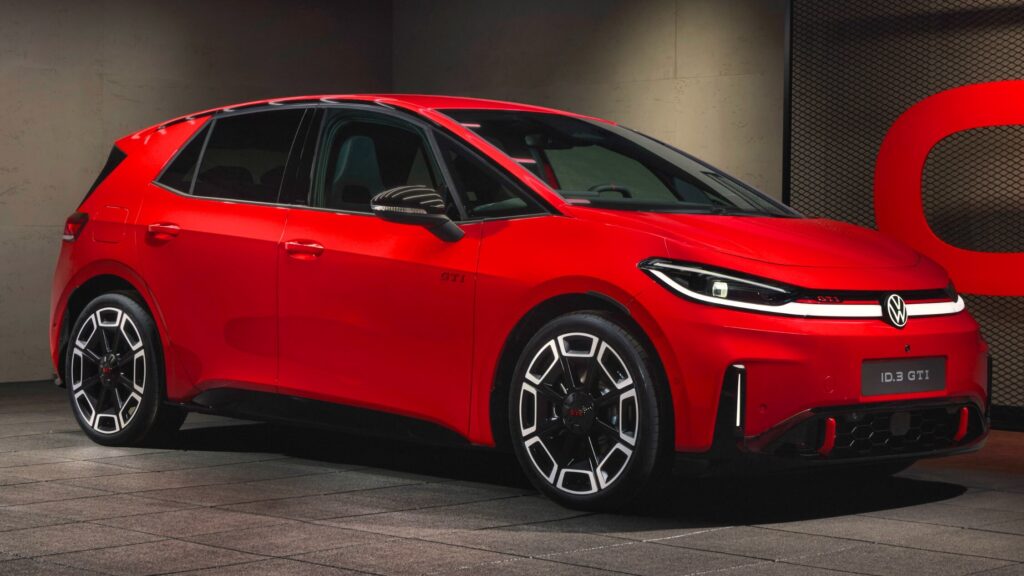
VW celebrated its GTI badge’s half-century earlier this year with the launch of the first-ever electric hatch to wear those three letters, the ID. Polo GTI. The ID.3 GTI then is only the second-ever electric GTI. But it is a pioneer in other ways. It’s the first ever VW GTI to send its power to the rear wheels, rather than the front.
Europe’s ID.3 electric hatch was overhauled in April and rebranded as ID.3 Neo. The GTI is the halo model of the new lineup and is effectively the pre-facelift GTX, but this time with a GTI badge and some design cues pinched from the ID. Polo GTI.
And damn, doesn’t it look the better for it? A GTI trademark red stripe connects the IQ. Light LED matrix headlights and the gloss-black honeycomb lower grille is punctuated by a pair of red-painted elements meant to look like racecar towing eyes.
Contrasting with the launch car’s searing Tornado red paint – it’s actually a classic 1980s GTI color – are the gorgeous black 20-inch Wörthersee wheels and black mirror caps. But unlike the GTX, the GTI features a body-color roof, rear spoiler, and rear panel.
What has been carried over from the GTX is the single 322 hp (326 PS / 240 kW) electric motor, which outranks the Golf GTI Edition 50’s as the most powerful GTI engine by just one horse. Unlike the ID. Polo GTI, which uses VW’s new MEB+ front-wheel-drive platform, the ID.3 rides on the older MEB shared with models like the ID.4 and ID. Buzz.
Beats Edition 50 For Power, But Not Pace
Which means the single motor sends its power to the rear wheels, VW quoting the exact same 5.6-second zero-to-62 mph (100 km/h) time it did for the old GTX Performance. That compares with 6.8 seconds for the 223 hp (226 PS / 166 kW) Polo GTI and 5.3 seconds for the petrol GTI Edition 50.
A 79 kWh (net) battery under the floor can charge at 183 kW, top up from 10-80 percent in a middling 29 minutes, and gives a solid WLTP range of 373 miles (601 km). The Polo manages just 263 miles (424 km) from its 52 kWh battery.
GTI Mode
But is the GTI just a GTX with some Tornado red lipstick? VW says it’s more than that thanks to a new GTI-specific tune for the DCC adaptive dampers, springs and anti-roll bars. There’s even a GTI driving mode that shifts the motor, throttle response, steering and chassis into maximum attack mode, and is activated by pressing an illuminated button at the base of the sport steering wheel’s center boss.
You won’t find that feature in other ID.3s, or the motorsport-style 12 o’clock marker or red, black and gray bucket seats. But the GTI does benefit from the same interior upgrade regular ID.3s got earlier this year. That means higher-quality materials, clickable steering wheel buttons, and another bank of real switches under the 12.9-inch touchscreen.
One thing VW hasn’t yet revealed is how much the ID.3 GTI will set you back when it goes on sale in Europe (but not America) in early 2027. The old GTX Performance cost more than £46,000 in the UK ($62,000), placing it above the Golf GTI, and even making it more expensive than the mighty R. For some potential buyers, those cars, and the slower but roomy and fun-looking ID. Polo GTI with its circa £34k ($46k) sticker, are going to seem like tempting alternatives.
Some dealers are offering the Kia EV9 for $16,000 under sticker.
One of the cheapest new models in America costs just $40,694.
Higher-end variants and Long Range models also have big discounts.
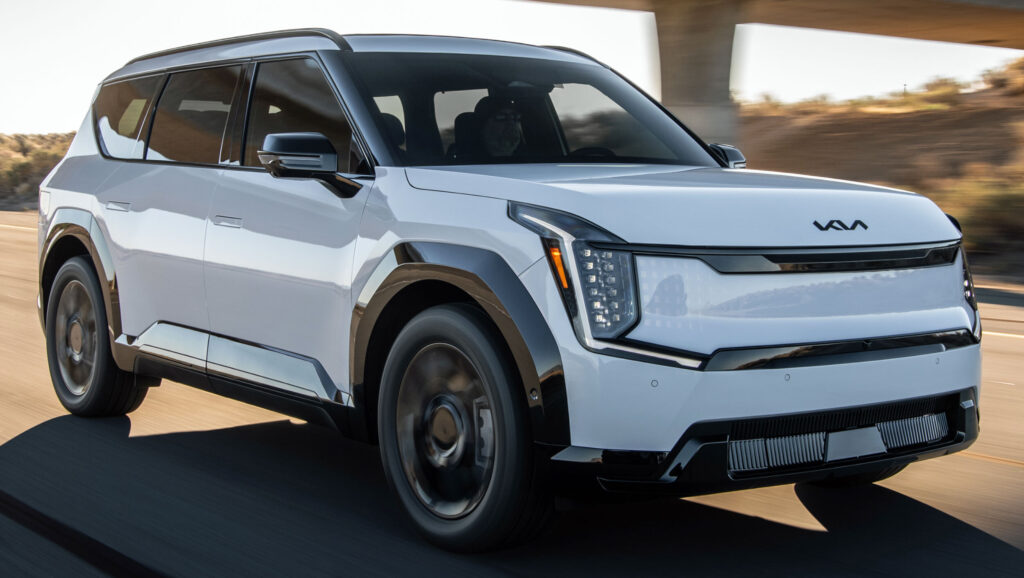
Kia had high hopes for the EV9, and this wasn’t surprising as Americans love three-row crossovers. However, sales dropped 33% last month to a disappointing 1,789 units. That pales in comparison to the 12,693 Tellurides sold in August and even the smaller Niro.
While that’s bad news for the automaker, dealers are slapping huge discounts on the EV. If you’re willing to do a little research and some travel, you can score more than $16,000 off a brand-new EV9.
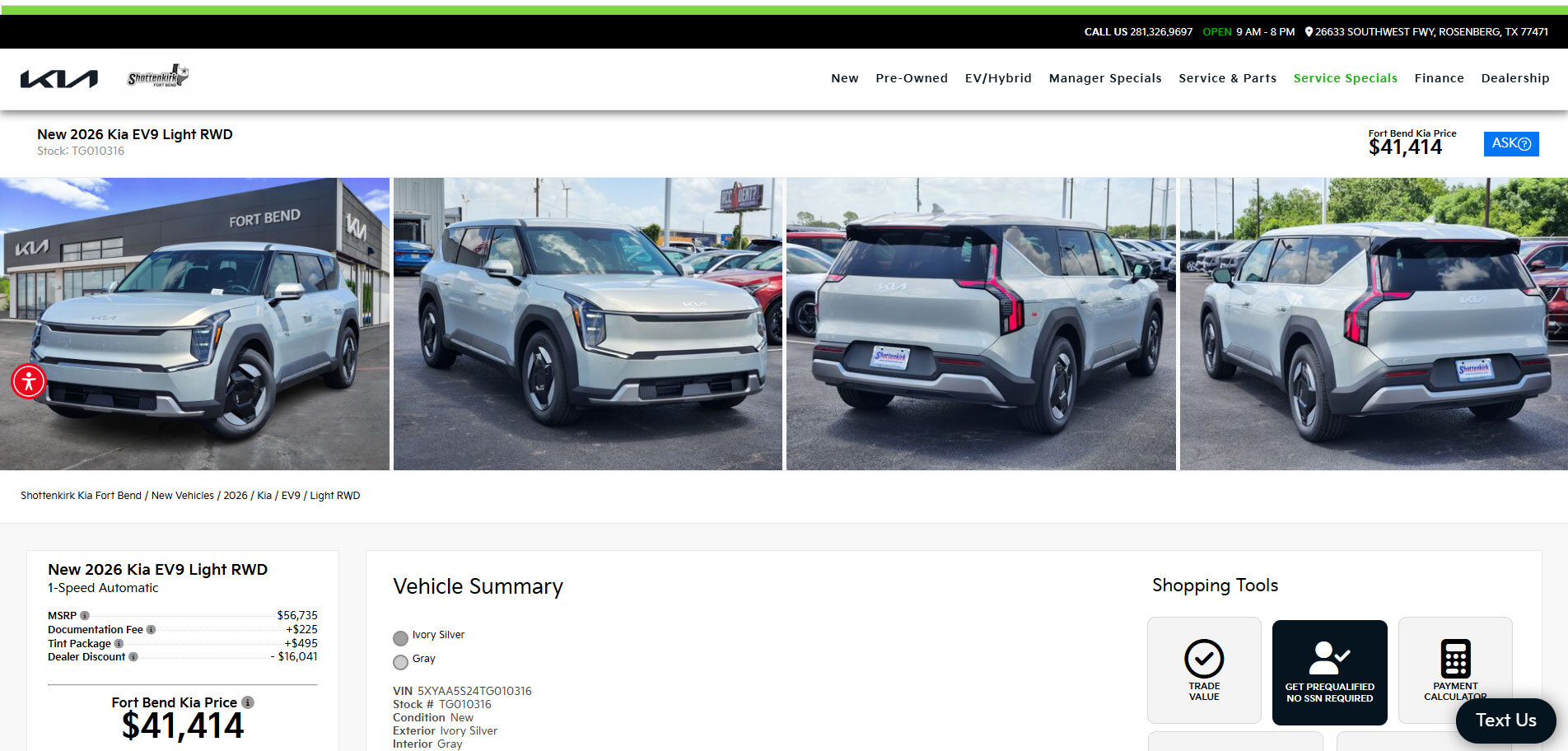
Shottenkirk Kia of Fort Bend has one of the cheapest EV9s in America as their Light RWD model has been marked down by $16,041. This lowers the sticker price from $56,735 to $40,694. That sounds like a bargain considering the Telluride Hybrid begins at $46,490 before a $1,545 destination fee.
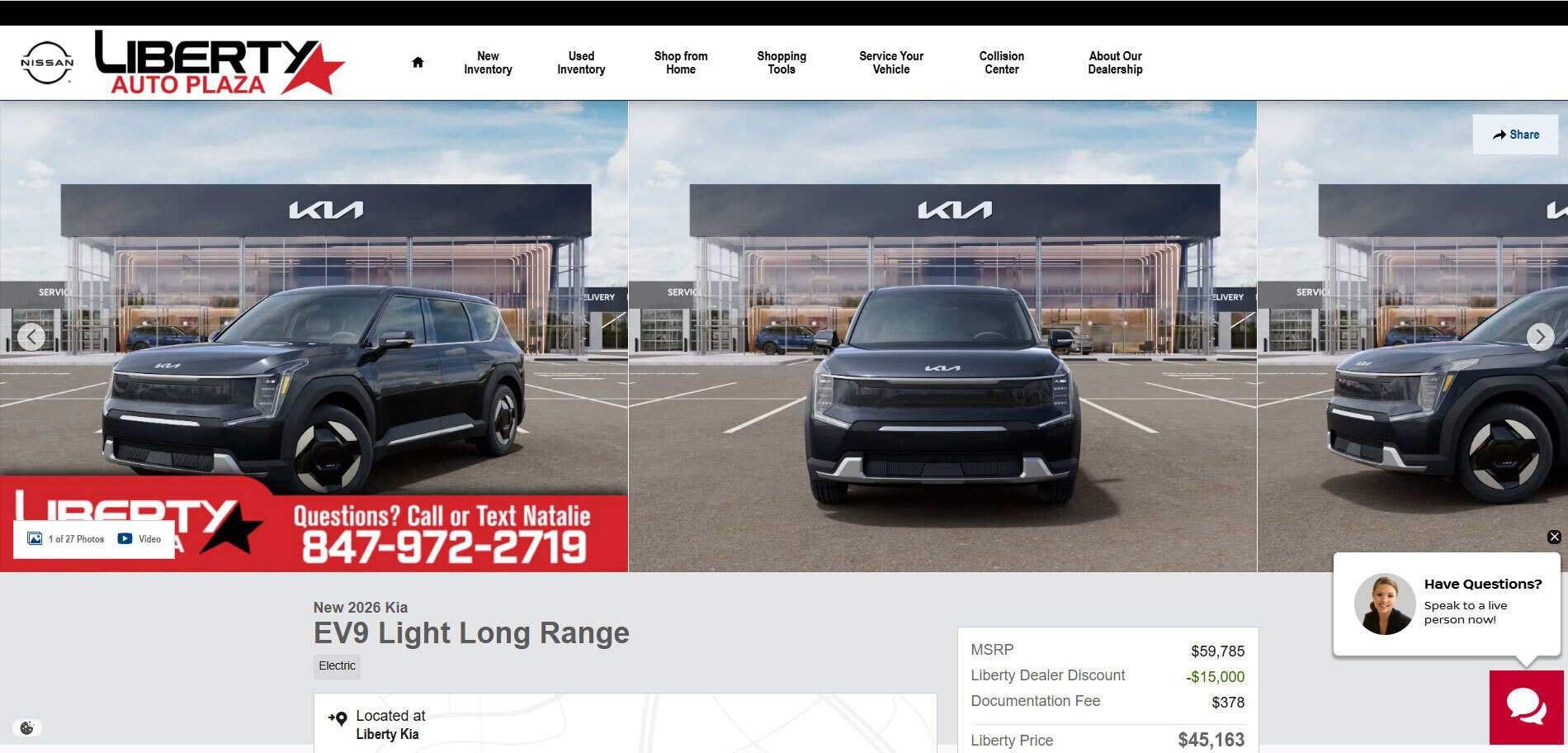
Liberty Auto Plaza in Libertyville, Illinois also has steep discounts on their EV9s. An EV9 Light Short Range has been slashed from $57,480 to $42,480 thanks to a $15,000 discount.
If 230 miles (370 km) of range isn’t enough, the dealer also has an EV9 Light Long Range with a similar $15,000 markdown. This means the 304-mile (489 km) crossover can be yours for $44,785 instead of $59,785.
If you’re in the market for a classier variant, Crain Kia of Bentonville has a $66,820 EV9 Wind for $52,370. This is due to $10,000 in customer cash from Kia and a $4,450 dealer discount.
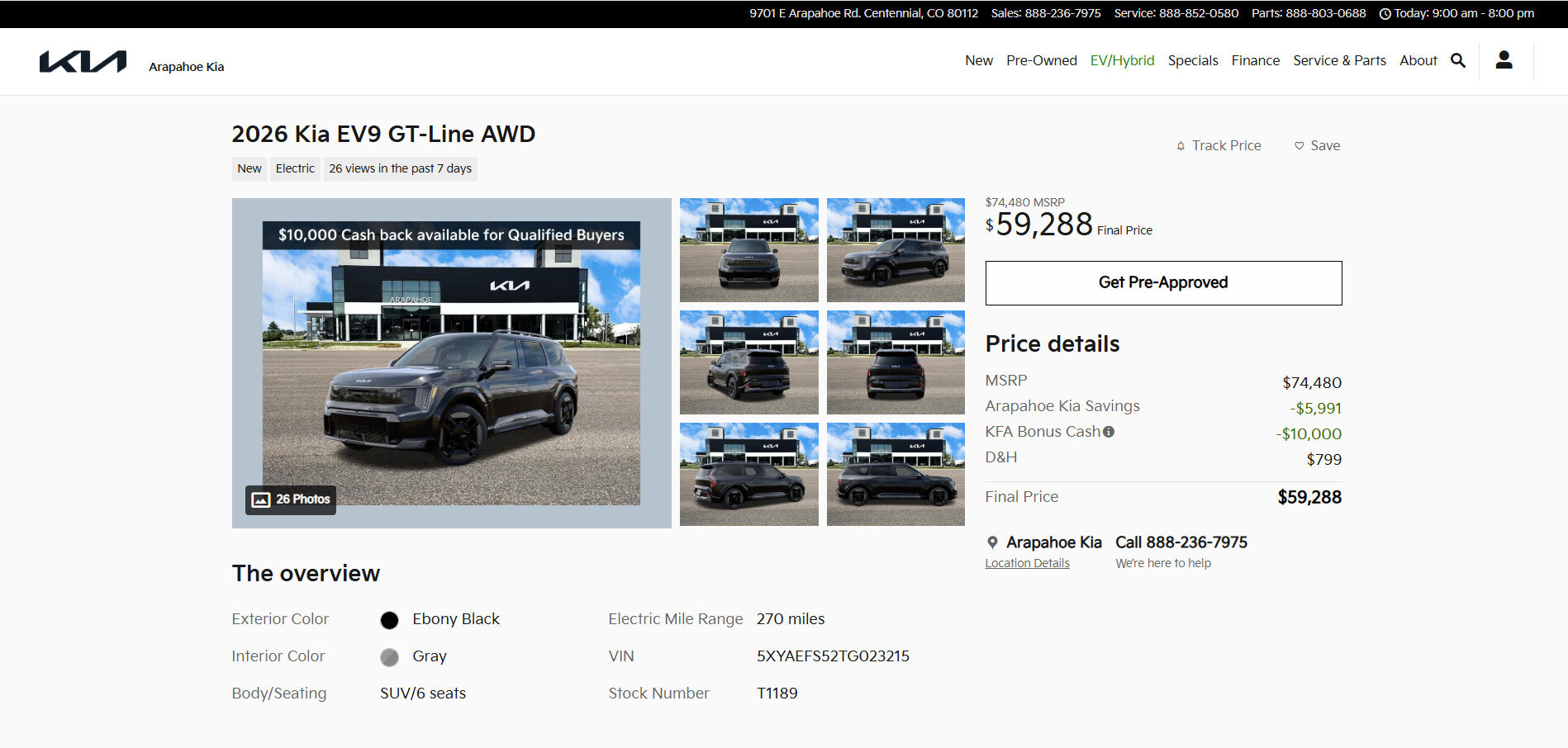
It’s a similar situation at Arapahoe Kia, where an EV9 GT-Line AWD is nearly $16,000 off. Thanks to a combination of Kia customer cash and a $5,991 discount, the model is priced from $58,489 before fees.

 Login
Login