Reading view

There are new articles available, click to refresh the page.

Investigation into Waymo Driverless Vehicles Continues Following Latest Collision with Student

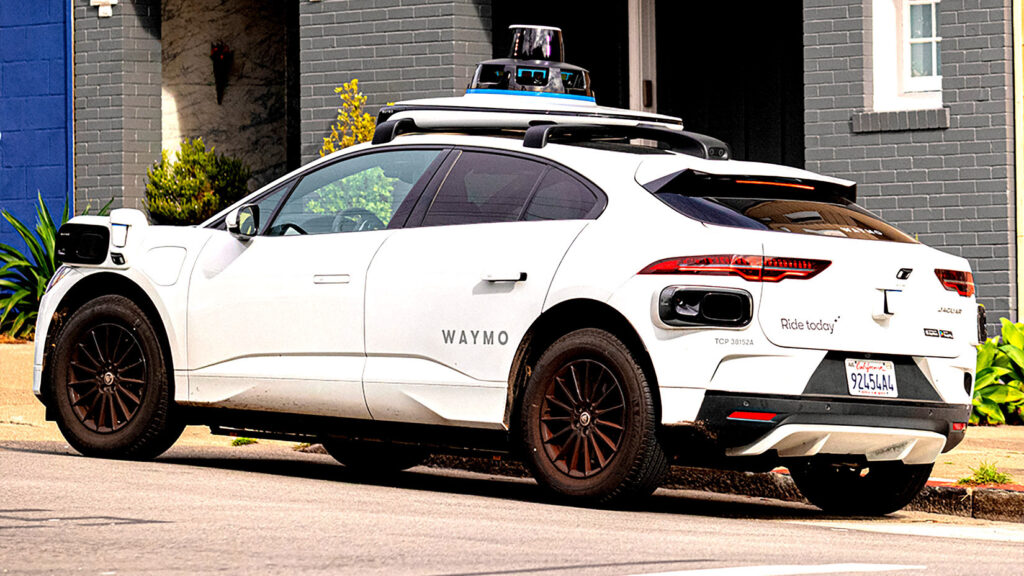
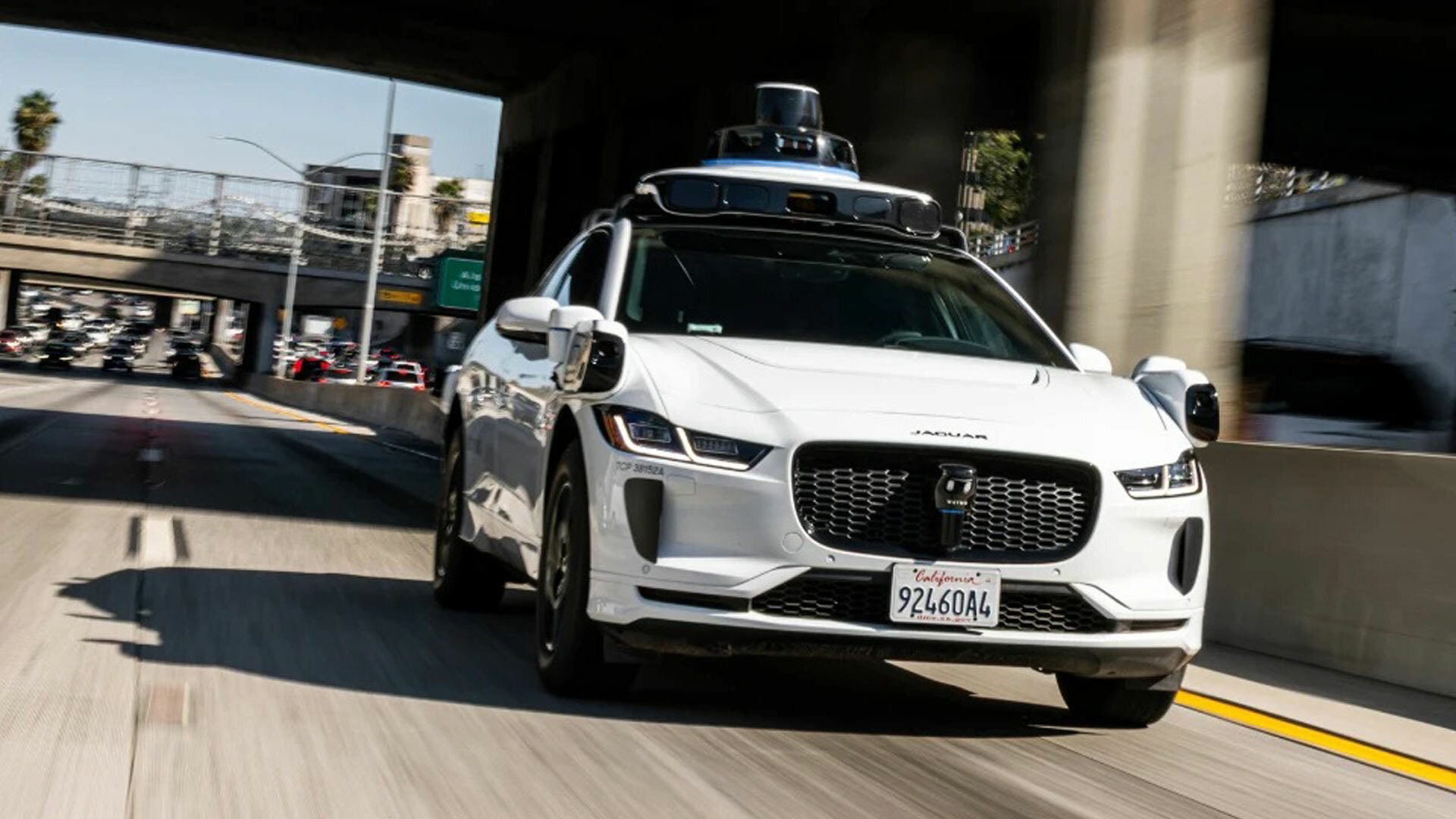
Another investigation is underway after a Waymo driverless vehicle hit a young pedestrian, this time in Santa Monica, California.

Last month, School Transportation News reported that Waymo’s driverless vehicles are still illegally passing Austin Independent School District school buses in Texas despite multiple attempts to correct the situation. The National Highway Traffic Safety Administration opened a preliminary evaluation Oct. 17, after a Waymo vehicle failed to stop and passed a school bus in Atlanta, Georgia a month earlier.

NHTSA opened another investigation Jan. 28 following the Santa Monica incident, which is about 15 miles west of downtown Los Angeles. The preliminary evaluation states that on Jan. 23 Waymo “reported to the Office of Defects Investigation (ODI) that a Waymo Automated Vehicle (AV) had struck a child near an elementary school earlier that day.”

The incident occurred within two blocks of the Santa Monica elementary school and during normal school drop off hours. Other children, a crossing guard and several double-parked vehicles were in the vicinity.

The child reportedly ran across the street from behind a double-parked SUV towards the school and was struck by the Waymo AV. Waymo reported that the child sustained minor injuries. The Waymo driverless vehicle was operated by the 5th Generation Automated Driving System.

Waymo announced on its website that it has a commitment to transparency and road safety.

“At Waymo, we are committed to improving road safety, both for our riders and all those with whom we share the road. Part of that commitment is being transparent when incidents occur,” the blog post states.


Related: Waymo Driverless Car Illegally Passes Stopped School Bus in Atlanta
Related: NHTSA Investigates Autonomous Waymo Rides After Illegal School Bus Passing
Related: Texas Autonomous Vehicle Task Force Will Work with School Bus Companies


Waymo Response to Santa Monica Incident

The company details the incident, noting that it contacted NHTSA and will cooperate with the investigation.

“The event occurred when the pedestrian suddenly entered the roadway from behind a tall SUV, moving directly into our vehicle’s path,” the post notes. “Our technology immediately detected the individual as soon as they began to emerge from behind the stopped vehicle. The Waymo Driver braked hard, reducing speed from approximately 17 mph to under 6 mph before contact was made.”

The Waymo post notes that “a fully attentive human driver in this same situation would have made contact with the pedestrian at approximately 14 mph. This significant reduction in impact speed and severity is a demonstration of the material safety benefit of the Waymo Driver.”

Following contact, the student pedestrian reportedly stood up and walked to the sidewalk, and Waymo called 911. The driveless vehicle moved to the side of the road and stayed there until law enforcement cleared the vehicle.

“This event demonstrates the critical value of our safety systems,” Waymo added. “We remain committed to improving road safety where we operate as we continue on our mission to be the world’s most trusted driver.”

The post Investigation into Waymo Driverless Vehicles Continues Following Latest Collision with Student appeared first on School Transportation News.

California’s New EV Rebate Is A Huge Slap In The Face For Loyal Owners

  • Unlike an early proposal, the new EV incentive will include several Tesla models.
  • Passenger vehicles priced at or below $55,000 in the state will be eligible.
  • State needs to finalize details for the new program, but it will commit $200M.

The federal EV tax credit is no more, but California is stepping in with a plan to keep momentum alive in the country’s largest EV market. Governor Gavin Newsom has outlined a new set of state-level incentives aimed at first-time EV buyers, designed to pick up where the now-defunct federal tax credit left off.

However, the proposal rules out any repeat discounts for those who already own an electric vehicle, limiting eligibility to newcomers.

Read: Trump Killed The Federal EV Credit, So California Wrote Its Own

The initiative, which still requires approval from state lawmakers, would set aside $200 million. Under the current framework, passenger EVs priced at or under $55,000 would qualify, while vans, SUVs, and pickup trucks with a starting price below $80,000 would also be eligible.

Who Gets What and When?

California has yet to confirm the value of each incentive. What we do know is that the policy would require manufacturers to match the state’s contribution dollar-for-dollar. Like the old federal tax credit, the incentives will be offered immediately at the point of sale and will apply to new EVs purchased or leased. Additionally, Bloomberg reports there will be incentives for used EVs priced below $25,000.

 California’s New EV Rebate Is A Huge Slap In The Face For Loyal Owners

Sarah Swig, a senior climate advisor to Governor Newsom, criticized the rollback of federal support. “The Trump administration’s reckless retreat has created unprecedented uncertainty for automakers and families alike,” she said.

“California is proud to partner with automakers who are committed to the transition to a zero-emission future through shared investment to keep costs down and drive the market forward.”

Expanding the EV Base

According to a spokesperson from the California Air Resources Board, limiting eligibility to first-time EV buyers will help to expand the market, “introducing new consumers to ZEV technology.” CARB added in a statement to InsideEVs that “research shows that once consumers make the switch to ZEVs, they typically don’t go back to dirty gasoline or diesel vehicles.”

In late 2024, Governor Gavin Newsom presented his first proposal for a new EV subsidy scheme in the state, in response to President-elect Trump’s threat to repeal the federal program. Newsom’s proposal would have excluded EVs from Tesla, which quickly drew the ire of Elon Musk. As part of the latest proposal, many Tesla models would be eligible.

 California’s New EV Rebate Is A Huge Slap In The Face For Loyal Owners

Jay Leno Drives The $25,000 Pickup You Modify Like IKEA Furniture

  • Jay Leno featured the Slate Truck and its DIY upgrade system.
  • Owners can customize it with kits or convert it to an SUV.
  • No dealership visits needed for service or warranty repairs.

Amid all the noise and high-concept EV launches, one company is quietly betting that simple might be the next big idea. Slate Auto has its skeptics, including Ram boss Tim Kuniskis, but tens of thousands of people have placed reservations for its back-to-basics electric vehicle, suggesting a real appetite for something more grounded and affordable.

Production of the Slate is scheduled to start at a converted factory in Warsaw, Indiana, before the end of this year, but well before this happens, the carmaker has brought one example to Jay Leno’s Garage, eager to show what makes it special.

Read: Slate Still Doesn’t Know What Its EV Truck Will Actually Cost

Joining the bright red and white Slate with Leno was the head of design at Slate, Tisha Johnson, and the company’s chief commercial officer, Jeremy Snyder.

According to Slate, its philosophy is to build an affordable vehicle, which is desperately needed now that the average new car in the US costs almost $50,000. During the interview with Leno, Snyder says the Slate will start in the “mid-$20s,” although the firm still doesn’t appear to have nailed down a final price.

When the EV was announced, it had a promised starting price of under $20,000, thanks largely to the $7,500 federal EV tax credit. Now that the tax credit has been axed, the price has increased.

Personalization is also a key part of what makes Slate interesting. Many exterior parts have exposed fasteners, making it easy to remove and customize panels. Buyers who prefer an SUV body style can purchase a conversion kit, either to install themselves or through a Slate service provider. This places the owner at the center of the experience, and also helps cut costs.

Slate is also placing right-to-repair at the forefront of the ownership experience. Owners won’t need to visit Slate service centers to have their vehicles repaired, whether under warranty or not, and can shop around and take them to their preferred mechanic. If desired, owners can easily repair the Slate truck themselves.

 Jay Leno Drives The $25,000 Pickup You Modify Like IKEA Furniture
Jay Leno / YouTube

BMW’s First Neue Klasse Sedan Is One Big Step Closer To Your Driveway

  • BMW begins i3 pre-series production at its Munich facility.
  • Electric i3 promises strong performance and long driving range.
  • Gas-powered 3-Series continues using BMW’s CLAR platform.

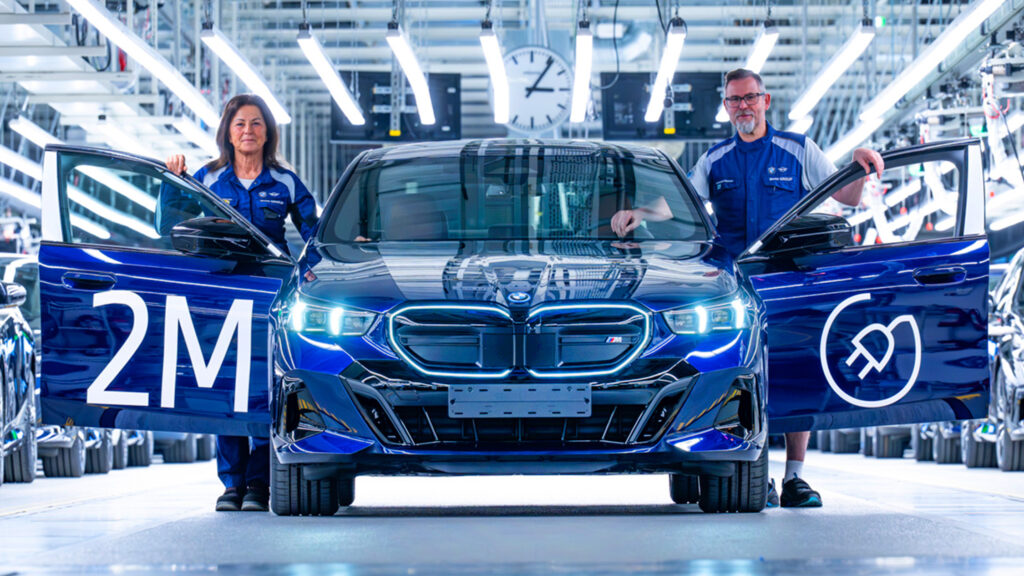
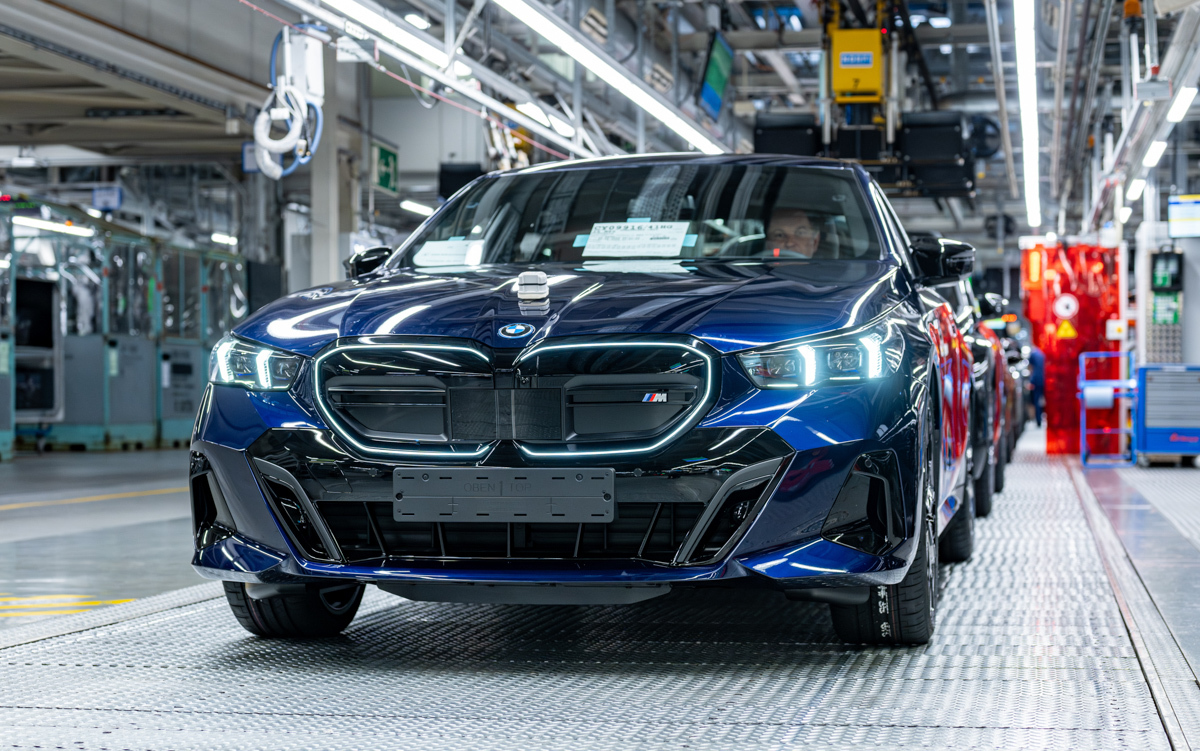
After months of spy shots and speculation, BMW’s all-new electric i3 is officially leaving the theoretical stage. The brand has begun pre-series production at its Munich plant, which means the future 3-Series EV is no longer just a prototype trying to evade Nürburgring photographers.

BMW released official images of camouflaged near-series cars to mark the milestone, confirming that production-spec hardware is now running through the factory. According to BMW, these early cars are built using full production processes, from the press shop to final assembly, to stress-test logistics, equipment, and workflows before series production begins in the second half of 2026.

Related: New i3 And 3-Series Reveal BMW’s Most Striking Split Yet

This is a bigger deal than it sounds. Until now, early i3s were assembled partly at BMW’s pilot plant near its Research and Innovation Centre. With Munich’s new body shop, paint shop, and assembly areas now complete, the i3 finally goes through every production step under one roof, just like a real car should.

 BMW’s First Neue Klasse Sedan Is One Big Step Closer To Your Driveway

The timing fits perfectly with what we’ve seen on the road. Spy shots have shown the electric i3 and the next combustion 3-Series testing side by side, wearing similar Neue Klasse styling but hiding very different bones underneath.

The i3 rides on BMW’s dedicated Neue Klasse EV platform first seen on the 2026 iX3 SUV, while the gas-powered 3-Series sticks with an updated version of today’s CLAR architecture.

Spot the EV

But you won’t need to get them on a ramp to tell them apart, you’ll just have to look closely. The electric i3 has a flatter roofline, different door and window shapes, and even a relocated charging port compared to the fuel door on the ICE model. Inside, though, both will share a futuristic cabin, including a freestanding display and BMW’s pillar-to-pillar Panoramic iDrive screen.

 BMW’s First Neue Klasse Sedan Is One Big Step Closer To Your Driveway

iX3 Powertrain

Powertrain details remain unofficial, but based on what we already know about the iX3, expectations are sky high. The i3 50 xDrive is rumored to deliver around 463 hp (469 PS / 345 kW) and an EPA range that should exceed 400 miles (644 km), backed by a massive battery and ultra-fast DC charging.

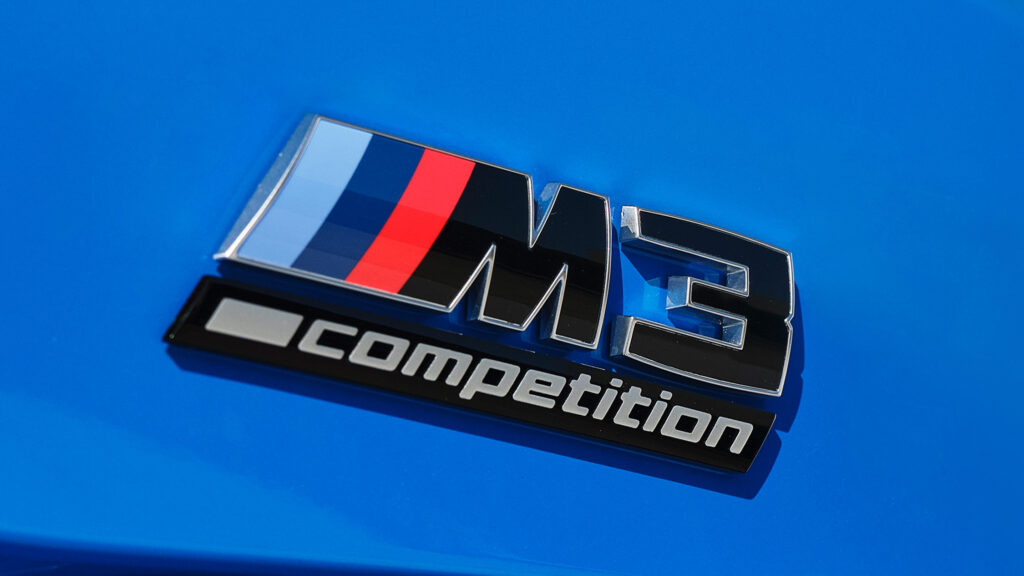
An entry-level rear-wheel drive version will follow, with a hotter, heavier, M3 EV also confirmed.

BMW says employee training is now shifting from virtual reality to hands-on work with real machinery, which tells us the launch clock is ticking. The camouflage may still be on, but the electric i3 has clearly entered its final dress rehearsal and the full disguise-free show starts later this year with first deliveries coming in early 2027.

\\\\\\\

BMW

America Is Stockpiling Something Most Drivers Never Knew Could Stop Production

  • The United States has announced a Project Vault stockpile.
  • Designed for industry, it will store rare earths and critical minerals.
  • The move comes after China cut off access to rare earths last year.

President Trump has signed an executive order establishing Project Vault. It’s being billed as the critical materials equivalent of the strategic petroleum reserve.

Designed to ensure that American businesses and workers are never harmed by shortages of critical materials, the stockpile will be established by a $12 billion investment. It’s focused on rare earths and critical minerals, which have been dominated by China.

More: A Resource You’ve Probably Never Heard Of Is Quietly Crippling The Auto Industry

Things came to a head last year when China imposed export restrictions on rare earth elements in April. This forced a number of automakers and suppliers to scramble and some even had to temporarily stop production.

While the situation has improved significantly since those dire days, the United States has apparently decided they can’t depend on China.

Introducing Project Vault, a critical mineral stockpile for American businesses, unaffected by market disruptions. 💎🇺🇸 pic.twitter.com/Hd14JxujdP

— The White House (@WhiteHouse) February 2, 2026

The White House hasn’t released the wording of the executive order, as of this writing, but President Trump said $10 billion of funding will come from export-import bank financing, while another $2 billion will come from the private sector. He also claimed taxpayers could end up making a profit on the loan interest.

The president added the government is working to streamline the permitting process for mines and is signing major critical mineral deals with countries from all over the world.

GM CEO Mary Barra was on hand for the signing and Trump said she’s doing a “fantastic job.” Barra returned the compliment and said, “Having a resilient supply chain is critical for our nation and it’s critical for all industry, especially the auto industry.”

Things then got a little awkward as one of the attendees claimed that if Trump hadn’t been elected, the “auto industry in America would be over.” He also slammed Democrats and their electric vehicle ‘mandates,’ which is a bit ironic for a signing event that will presumably benefit EVs.

Update: The Export-Import Bank of the United States released new details about the “supply chain security initiative” that establishes a Strategic Critical Minerals Reserve. It will be an independently governed public‑private partnership, which will store essential raw materials in facilities across the United States.

Specifics are few and far between, but the bank said the move advances “U.S. economic and national security objectives by reducing dependence on foreign‑controlled supply chains, strengthening the domestic industrial base, and ensuring uninterrupted access to materials essential for advanced manufacturing and critical technologies.”

pic.twitter.com/71SqRqBQJS

— U.S. Export-Import Bank (@EximBankUS) February 2, 2026

Lead image Nissan

STN EXPO East Features Exclusive North Carolina Thomas Built Buses Tour

The STN EXPO East conference will close for attendees with an exciting behind-the-scenes Thomas Built Buses factory tour at the Saf-T-Liner Plant in High Point, North Carolina.

The Thomas factory tour is scheduled for March 31 with attendance limited to the first 100 signups.

Attendees will be transported to and from the plant by bus in two groups of 50 from the Embassy Suites by Hilton Charlotte Concord Golf Resort & Spa. They will then be escorted through the plant in groups of 10 by Thomas Built Buses regional sales managers, who will explain the inner workings of the plant and manufacturing processes. Tour attendees will see in real-time the production of Thomas Type C and Type D buses as well as automation on the assembly line, welding, painting and body mounting processes.

Attendees will also see the latest in OEM offerings from the company. Last year, Thomas announced that all Type D school bus production, including the Saf-T-Liner HDX2, as well as the new Saf-T-Liner EFX2 Type D bus had been fully transitioned to the North Carolina Saf-T-Liner plant. Thomas also unveiled its second-generation Type C Jouley electric bus and its new Type D Wattson electric bus.

All tour attendees will enjoy lunch at the plant, industry updates and networking with Thomas Built Buses representatives as well as receive a special gift bag to take home with them.

Space is limited so reserve your spot today. Early Bird savings end Feb. 14. Save $100 on main conference registration before the deadline. Main conference registration will also provide access to dozens of educational sessions, the interactive Bus Technology Summit and Green Bus Summit experiences, networking events including the Charlotte Motor Speedway Reception, and the STN EXPO Trade Show. Register at stnexpo.com/east.


Related: Ride and Drive, Technology Demo Return to Charlotte Motor Speedway in March
Related: Transportation Director Summit Provides Exclusive Leadership, Networking
Related: WATCH: National School Bus Inspection Training Returns to STN EXPO East

The post STN EXPO East Features Exclusive North Carolina Thomas Built Buses Tour appeared first on School Transportation News.

Questar Predictive Total Fleet Health Management Now Available in the Geotab Marketplace

By: STN

DETROIT, Mich. – Questar Auto Technologies’ predictive Total Fleet Health Management solution is now available on the Geotab Marketplace,a network of fleet-focused solutions for companies looking to increase productivity and compliance while lowering operating costs.

Questar’s AI-driven Total Fleet Health Management solution helps fleet operators to detect vehicle issues earlier, plan repairs proactively, and reduce unplanned downtime through predictive and prescriptive health insights.

Questar is one of the only fleet health solutions that shows the estimated cost of early intervention along with the estimated downstream cost of inaction; thereby helping fleets make confident, economics-driven maintenance decisions.

From easy implementation to higher revenues

Through a cloud-to-cloud integration with Geotab – which means there is no additional hardware to contend with — Questar analyzes vehicle telemetry, engine fault data, maintenance history, and environmental context to identify emerging issues before they become failures.

The Questar platform provides early-warning alerts (up to 30 days in advance), repair recommendations, and actionable insights tailored to each vehicle.

By combining Geotab high-quality data with Questar’s advanced analytics and industry-specific, patented AI Foundation models, fleet operators gain a proactive, data-driven approach to maintenance that drives measurable operational and financial impact. Vehicles stay on the road longer, generating more revenue.

“Fleets are looking for solutions that fit naturally into their existing technology environments,” says Aaron Howell, Vice President of Sales for Questar North America. “Through the Geotab Marketplace, fleets across North America can now access Questar’s advanced features.”

About Questar Auto Technologies:
Questar is a pioneer in vehicle health management, offering a comprehensive solution that includes both predictive and prescriptive VHM. Questar enables Tier 1 suppliers, OEMs, leasing companies, service providers and enterprise fleets to cut downtime, reduce maintenance costs, and maximize revenue through advanced AI-driven analytics. https://questarauto.com

The post Questar Predictive Total Fleet Health Management Now Available in the Geotab Marketplace appeared first on School Transportation News.

Heliox, A Siemens Business, Highlights VersiCharge Blue 80A for Fleet and Commercial EV Charging

By: STN

Heliox, A Siemens Business, a leader in EV charging solutions, is proud to highlight its VersiCharge Blue 80A, engineered for the most demanding fleet and commercial vehicle charging environments. Designed to deliver up to 80A AC (19.2 kW) power output, the VersiCharge Blue 80A ensures that fleet operators can keep vehicles moving efficiently and reduce operational downtime. With Level 2 charging capability via a J1772 connector and a 24-foot cable, this solution is compatible with most standard EVs, E-Trucks and School Buses, and streamlines installation and daily operation for maximum flexibility and reach.

This charger exemplifies robust quality, featuring Buy America compliance to meet government procurement requirements and ENERGY STAR certification to support lower operational costs and high energy efficiency. Safety remains paramount, as the VersiCharge Blue 80A holds multiple UL listings and carries a NEMA 4 and IK10 rating to ensure exceptional resilience against extreme temperatures, humidity, and physical impact. Backed by a 3-year warranty, customers gain peace of mind knowing their investment is safeguarded for the long haul.

Connectivity is central to the VersiCharge Blue 80A’s design, with cellular and Wi-Fi networking providing easy remote monitoring and flexible network-sharing in commercial deployments. Site safety and aesthetics are prioritized thanks to retractable cable management, reducing trip hazards and maintaining a clean, professional appearance. State-of-the-art smart charging features, including ISO15118-2 hardware readiness and OCPP 1.6J support, enable advanced load management, authentication, security, and future compatibility, while Sifinity Setup mobile app configuration simplifies multi-charger installations.

Precise energy tracking is guaranteed by embedded metering, helping operators optimize usage and manage costs. Built for resilient operation, the unit withstands wide temperature swings from -40°C to 50°C (>50°C with derating) and functions reliably in up to 98% humidity, making it ideal for harsh climates and challenging locations. Wall or post mounting options offer flexible installation for any site layout, and over-the-air (OTA) software upgrades future-proof investments by delivering remote updates and new capabilities.

Engineered for versatility, VersiCharge Blue 80A features rated current settings from 12A to 80A to easily accommodate varying power needs across fleet and facility applications. Its recommended wire cross section of 3 AWG with a 90°C minimum ensures safe, high-capacity wiring and consistent performance even under heavy usage. Built-in ground fault and overvoltage protection shield both users and vehicles against electrical risks, while multicolor LED indicators provide instant feedback on charging status, connectivity, and fault diagnostics to streamline site management.

Advanced OCPP and ISO15118-2 user authentication deliver enterprise-grade security and fleet management capability. The charger operates at altitudes up to 6,562 feet, expanding site possibilities in high-elevation regions, and customizable mounting options ensure seamless integration in diverse venues.

With VersiCharge Blue 80A, Heliox, A Siemens Business, is bringing a powerful blend of reliability, safety, and intelligent connectivity to the heart of fleet and commercial EV operations, enabling customers to scale with confidence as electrification demands grow.

About Heliox, A Siemens Business
Heliox, A Siemens Business, delivers world class EV charging equipment, EV charger maintenance and support services, and robust solutions for a broad range of EV fleets. Our portfolio encompasses all aspects of smart and efficient AC and DC charging infrastructure, including IoT-connected hardware, software, and a comprehensive service offering. Heliox manufactures UL compliant products that meet Buy America Act (BAA) and Build America Buy America (BABA) standards. Heliox’s high-quality, field-proven charging products are now backed by Siemens’ financial strength, global reach, and long-term stability—delivering the best of both worlds.

The post Heliox, A Siemens Business, Highlights VersiCharge Blue 80A for Fleet and Commercial EV Charging appeared first on School Transportation News.

(STN Podcast E292) Emergencies & Training: Lessons Learned From Texas School Bus Crash

The February edition of STN magazine is out, where we continue discussions on the oversight of autonomous vehicles and alternative student transportation. Plus, sign up for school bus inspection training and many more learning opportunities at STN EXPO East in Charlotte, North Carolina, this March.

In the aftermath of a high-profile school bus rollover last August at Leander Independent School District in Central Texas, Director of Transportation Tracie Franco talks lessons learned in emergency response, lap-shoulder seatbelt enforcement, first responder collaboration and staff training.

Read more about crashes.

This episode is brought to you by Transfinder.


Message from EverDriven
.


Message from School Radio.


Stream, subscribe and download the School Transportation Nation podcast on Apple Podcasts, Deezer, Google Podcasts, iHeartRadioSpotify, Stitcher and YouTube.

The post (STN Podcast E292) Emergencies & Training: Lessons Learned From Texas School Bus Crash appeared first on School Transportation News.

Getting the Word Out

A motorist is late for work and, in a rush, passes a stopped school bus loading children. By doing so, this person is putting children’s lives in danger. Community and political leaders have become increasingly concerned about this issue, and state legislation is addressing the running of school bus stop arms.

An online survey of 2,000 parents and caretakers also indicates increasing concern with their children’s commutes to and from school. In fact, 43 percent said they have observed a “near miss” in a school zone, with one-third saying they saw motorists nearly hit students at school bus stops with the stop-arm extended. Eighty-two percent of those parents said they support safety cameras to monitor and penalize illegal passers. The results come from a survey conducted last year by Verra Mobility.

Educating the public on the importance of school bus safety is an essential goal for Ward Leber, the founder and chairman of the Child Safety Network (CSN), who has worked with the U.S. Senate over the past dozen years to recognize National School Bus Safety Month in September.

Leber said research indicates some motorists who pass stopped buses are just not paying attention. Other people don’t know the dangers present when children are boarding and exiting buses. Even worse, as a survey conducted by the National Highway Traffic Safety Administration uncovered, many motorists say they don’t care about school buses.

“We are working on a campaign to increase awareness of school bus safety,” Leber added. The football themed “Know When It’s Safe to Pass” PSA is authorized by the Senate resolution and is expected to be released this month to coincide with the Super Bowl. Ward said CSN is working with several well-known professional athletes to create messages to promote the idea that quarterbacks must make correct decisions, especially when the big game is on the line. But illegally passing a stopped school bus is more than a bad mistake. It endangers the lives of children. Leber said he believes motorists must make the right call behind the wheel when they approach school bus stops. And that is to always stop and remain stopped until the flashing red lights and stop arm deactivate.

The CSN campaign also provides free resources that explain in plain language with visuals when it is safe and lawful to pass school buses in either direction. And it seeks to improve how school bus safety is covered on not only state-administered driving tests but internationally as well. Leber said information must be updated to reflect real-world driving situations.

“We intend to ask the U.S. State Department to require basic instruction on school-bus laws for visitors who will be driving in the U.S., and to encourage rental car companies to voluntarily provide school-bus safety information, authored by CSN, particularly to international renters and especially during back-to-school periods,” he added. “This is about removing ignorance as an excuse before it becomes a tragedy.”

The Michigan Association for Pupil Transportation is working on this issue and has supported state legislation to increase fines for people who run red lights at stopped school buses. Fines for passing a stopped bus can reach $500.

Katrina Morris, executive director of MAPT, said efforts are underway to educate drivers about the importance of stopping when they see a school bus stop arm through fun, informative PSAs.

She worked last fall with Ryan Preece, a professional NASCAR driver on team RFK Racing owned by Jack Roush, founder of ROUSH Enterprises and the ROUSH CleanTech division, to make a public service announcement on the importance of not passing stopped school buses. As a race car driver, Preece likes to go fast and not stop, the PSA says. It shows him not stopping for a tire change at a pit stop and not stopping for a drink at a roadside lemonade stand, but even he has time to stop when the reds are flashing for a school bus.

Lomas Brown, a retired offensive lineman for the NFL’s Detroit Lions, is currently working with Morris and MAPT to create a similar ad. It states, “When the reds are flashing, there is no passing.”

Morris said MAPT also plans to work with Sen. Gary Peters of Michigan to support legislation he introduced last year with Sen. Todd Young of Indiana, the Brakes for Kids Act, a campaign to increase public awareness of the dangers of illegally passing a stopped school bus. Peters also co-introduced the School Bus Safety Month proclamation led by CSN and Sen. Deb Fischer of Nebraska.

“Parents need to know their kids are safe taking the bus to and from school,” said Peters in a statement. “That’s why I’m proud to help lead this bipartisan, commonsense legislation to raise awareness of the dangers of illegally passing school buses and promoting best practices for making our communities safer.”

The Ohio Association of Pupil Transportation is encouraging drivers to stop when they see a school bus with its stop arm out. An important goal is to educate the public about the importance of caring for children. OAPT developed a new safety program and has been working alongside MAPT and its Reece PSA to encourage people not to pass stopped school buses.

The association also promoted legislation to raise fines for people who are caught passing stopped school buses with stop arms out. Ohio school buses are equipped with cameras that capture images of drivers passing stopped school buses, and the photos can be used to issue tickets. The state is providing more grant money that school districts can apply for to purchase cameras.

“We have School Bus Safety Week and have encouraged public school districts to promote bus safety,” said Todd Silverthorn, executive director of OAPT. “We are using social media to get the message across that drivers should not pass stopped school buses.

As part of the new school bus safety grant initiative, a campaign has been launched to promote school bus safety. More efforts are being made to involve law enforcement. Thomas Built Buses has created a campaign that says, “If you pass, you’re an ass,” Silverthorn said.

Meanwhile, the one-day annual survey conducted by the National Association of State Directors of Pupil Transportation Services reported 67,000 violations observed by 114,000 participating school bus drivers last year. It lead NASDPTS to estimate that millions of incidents occur nationwide each school year and put children at significant risk for injury or death.

Reach Out and Stop Someone
Another measure to reduce stop-arm running is by installing extended stop arms. Child Safety Network’s Ward Leber has worked to create a partnership with one of these providers, BusGates. An important goal of this partnership is to end the millions of illegal school bus passings each year.

BusGates and CSN have developed an LED-lit, stoparm extension that attaches to the stop arm already installed on the school bus. To date, about 5,000 have been installed on school buses in 26 states. When the bus comes to a stop, the extension swings out nearly five feet from the side of the bus, reinforcinga visual and physical barrier that a motorist cannot miss.

This extended stop arm acts like a railroad crossing gate, forcing drivers to stop in advance of the bus, before a violation or resulting collision can occur. Field tests from school districts using BusGates have been promising, with some seeing their daily illegal passing incidents drop from many to zero after the extensions were installed, explained Leber.

“No parent should have to fear for their child’s life at the bus stop. The numbers are staggering, tens of millions of violations each year, and each one is a child’s close call or worse. By partnering with Children Safety Network, BusGates is taking action to ensure every driver gets the message that when a school bus stops, we must all stop,” he added.

Editor’s Note: As reprinted from the February 2026 issue of School Transportation News.


Related: (STN Podcast E290) Ideas, People & Solutions: Three-Pronged Approach to ‘Danger Zone’ Safety
Related: WATCH: Michigan Association Releases Illegal Passing PSA for School Bus Safety Week
Related: WATCH: West Virginia Releases Illegal Passing Awareness Video
Related: Michigan Association Films Illegal School Bus Passing PSA with NASCAR’s Preece

The post Getting the Word Out appeared first on School Transportation News.

(Free White Paper) Boosting K-12 Attendance With Innovative Transportation Solutions

By: STN

The connection between student attendance and transportation is more direct and critical than often acknowledged. While a complex array of factors drives chronic absenteeism — one of the most critical threats to K–12 success — a fundamental and frequently overlooked root cause is the failure of existing transportation mechanisms to reliably connect all students to the classroom.

The student attendance crisis is not just an academic problem; it is a systemic challenge that directly impacts federal and state funding, staffing efficiency, and district stability, making the need for reliable transportation attendance imperative.

This white paper outlines a strategic, data-driven approach for district administrators to move beyond reliance on the yellow school bus alone.

Fill out the form below and then check your email for the white paper download link.

The post (Free White Paper) Boosting K-12 Attendance With Innovative Transportation Solutions appeared first on School Transportation News.

This Sleek New Wagon Hides Huawei’s Smartest Tech Inside

  • Avatr 06T is a shooting brake version of the 06 sedan.
  • Targets Nio ET5T with BEV and EREV powertrains.
  • Debuts Huawei’s new LiDAR and ADS 4.0 tech suite.

Update: Following the teasers, Avatr has shared the first official photos of the wagon on its Weibo account, revealing the exterior design.

Even as SUVs continue to dominate global sales, the Chinese market still makes room for sleeker wagons. One of the latest to step forward is the Avatr 06T, a streamlined shooting brake designed as a more practical counterpart to the brand’s electric sedan aimed at the Tesla Model 3.

The automaker has revealed the exterior design of the new model ahead of an imminent debut. As expected, the front design, complete with split LED headlights, is carried over from the Avatr 06 sedan launched last year. What sets the 06T apart are the roof rails and an extended roofline that flows into a reshaped rear section.

More: Avatr’s 18-Foot Concept Makes The Ghost Look Petite And Germans Look Twice

The rear shoulders are more defined, and the rising beltline contributes to a sportier stance than the sedan, helped along by a prominent rear spoiler. The wagon also features a steeply inclined rear windscreen, setting it apart from the sedan’s windowless tail.

\\\\\\\\\\\\

The slim full-width LED taillights have a Jaguar-like feel and are paired with a sculpted bumper and an aerodynamic diffuser. The black cladding on the profile and tail sends crossover vibes, although Avatr designers decided to keep the wheel arches clean.

More: Kia Built A New Wagon In Mexico That Looks Better Than The Sedan

Another important update is the revised door handles that deviate from the flush design of the sedan. This is probably the company’s response to China’s new rules about door handles, and will gradually find its way to the rest of the lineup.

The 06T is expected to share the same 2,940 mm (115.7 inches) wheelbase as the 06 sedan, with an overall length of 4,855 mm (191.2 inches).

Inside, the layout will likely carry over too, including the 35.4-inch display along the base of the windshield and the 15.6-inch touchscreen running HarmonyOS 5.0. Rear passengers can expect more headroom and additional space for luggage.

 This Sleek New Wagon Hides Huawei’s Smartest Tech Inside
Avatr 06 Sedan

Huawei Hardware Takes the Lead

The wagon will be the first model to feature Huawei’s next-generation 192-line LiDAR sensor, mounted on the roof, along with the latest Qiankun ADS 4.0 driver assistance system. The updated LiDAR boosts detection range to 250 meters (820 feet), a 20 percent improvement over the previous version.

Underneath, the 06T is expected to share its platform with the 06 sedan and the closely related 07 SUV. Both offer a choice between fully electric and range-extender powertrains. The dual-motor EV delivers up to 590 hp (440 kW / 598 PS), while the EREV variant offers a combined range of up to 1,250 km (777 miles). Both versions support 5C fast charging.

When Will It Arrive?

The Avatr 06T is slated to launch in the Chinese market in the coming months. It will compete more directly with the Nio ET5T than with high-end wagon offerings like the Denza Z9 GT, Stelato S9T, and Zeekr 007 GT. Pricing hasn’t been announced, but the 06 sedan currently starts at ¥209,900 ($30,200) in China.

The growing appeal of the 06 and 07 has helped Avatr push average monthly sales to around 10,000 units in China. Even so, the automaker, backed by Changan, Huawei, and CATL, still needs higher volume to keep pace with rivals like Zeekr and Nio.

\\\\\\\

Avatr / Weibo

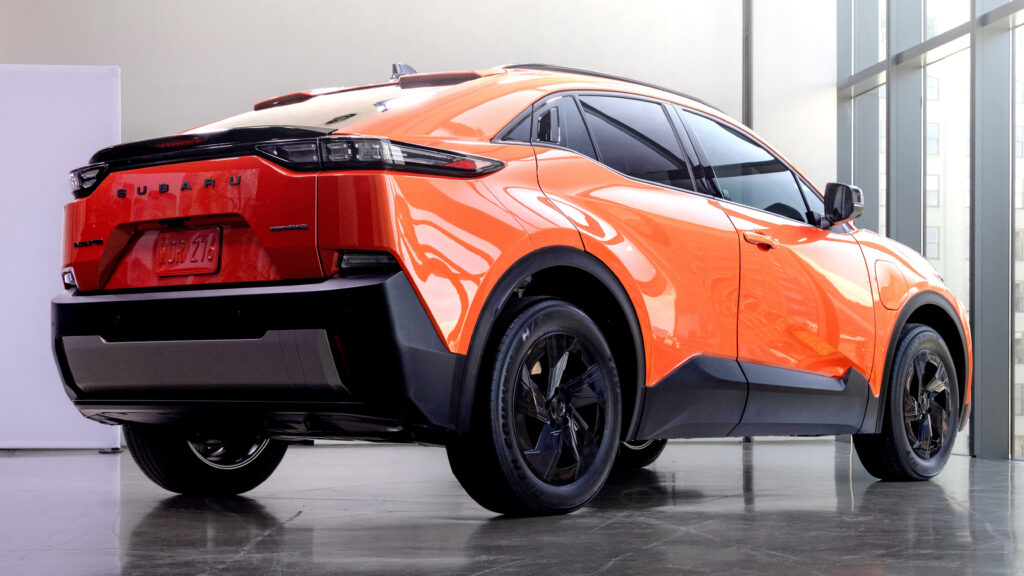
Think Smaller Means Cheaper? Not With Toyota’s New C-HR

  • The 2026 Toyota C-HR will start at $37,000.
  • That’s $2,005 more than the Subaru Uncharted.
  • Model has standard AWD system with 338 hp.

Toyota has quietly confirmed that the new 2026 C-HR will carry a starting price of $37,000, excluding a $1,450 destination fee. That makes the new electric crossover $2,100 more expensive than Toyota’s larger bZ model.

More: Toyota’s C-HR Returns To America But It’s Nothing Like You Remember

While paying more for less is typically a bad thing, the C-HR rides on the e-TNGA platform and comes standard with a dual-motor all-wheel drive system producing a combined output of 338 hp (252 kW / 343 PS). The bZ, on the other hand, comes standard with front-wheel drive and an all-wheel drive variant will set you back at least $39,900.

So what does $37,000 get you? A 0-60 mph (0-96 km/h) time of approximately five seconds and a 74.7 kWh battery that provides a range of up to 290 miles (467 km). Buyers will also find an NACS charging port as well as a fast charging capability that can take the battery from 10-80% in roughly 30 minutes.

On the styling front, the crossover coupe has C-shaped lighting units and 18-inch alloy wheels. The model also comes standard with rain-sensing wipers, roof rails, and a power liftgate.

\\\\\\\

Despite its entry-level status, the C-HR SE comes nicely equipped with a digital instrument cluster and a 14-inch Toyota Audio Multimedia system. They’re joined by a heated steering wheel as well as heated front seats with fabric and SofTex upholstery.

Other niceties include an 8-way power driver’s seat, dual wireless smartphone chargers, and a six-speaker audio system. The model also has steering wheel-mounted paddle shifters that can apply the regenerative braking system.

The Toyota Safety Sense 3.0 suite comes standard and includes Full-Speed Range Dynamic Radar Cruise Control, Lane Departure Alert with Steering Assist, and a Pre-Collision System with Pedestrian Detection.

They’re joined by Lane Tracing Assist, Road Sign Assist, Proactive Driving Assist, and Automatic High Beams. Buyers will also find Safe Exit Alert, a Blind Spot Monitor, and Front/Rear Parking Assist with Automatic Braking.

\\\\\\\\\\

The range-topping C-HR XSE will set you back $39,000 and it’s distinguished by larger 20-inch wheels with a gun metal finish. Buyers will also find an upgraded interior with SofTex and synthetic suede seats sporting 8-way power adjustment on both sides. Rounding out the highlights are a driver’s seat memory function, Traffic Jam Assist, Lane Change Assist, and a Panoramic View Monitor.

While Toyota hasn’t released full details, the company has previously mentioned a handful of options. These include a two-tone paint job and a panoramic glass roof.

2026 Toyota C-HR US Pricing
TrimMSRP
C-HR SE$37,000
C-HR XSE$39,000
SWIPE

One Hyundai EV Is Falling Off A Cliff, The Other Just Shrugged It Off

  • Ioniq 6 sales collapse 61% in January, while Ioniq 5 only dipped slightly.
  • Hyundai SUVs and hybrids deliver strong gains, carry sales performance.
  • Overall, Hyundai sales rise 2% despite sharp drop for electric sedan.

Hyundai just posted its best January ever in the US, but if you zoom in on the EV corner of the showroom, you’ll probably find salesmen consoling one particular electric model. Because while one Ioniq barely flinched in the face of EV market turmoil, the other faceplanted. Hard, really hard.

Let’s start with the good-ish news. The Hyundai Ioniq 5 slipped just 6 percent year over year in January, which in today’s EV market basically counts as holding steady while everyone else is struggling to keep the fire alive. Hyundai moved 2,126 of them, proving the retro-futuristic crossover still has plenty of fans.

Related: Gas Or EV? Hyundai N Embraces Both With Two New Models For America

Now for the ouch. The Ioniq 6 didn’t just dip, it fell off a statistical cliff, plunging 61 percent to just 344 units. That’s the kind of number that makes accountants quietly close the spreadsheet and go for a walk. Stylish and slippery though it is, the sedan is clearly having a much tougher time finding buyers.

 One Hyundai EV Is Falling Off A Cliff, The Other Just Shrugged It Off

SUVs Equals Sales Success

If Hyundai needs a reminder of what Americans really want, it only has to glance at the SUV side of the ledger. The combustion Palisade surged 29 percent off the back of a refresh, while the Santa Fe climbed 9 percent.

Even the smaller Kona jumped 22 percent. Big, practical, and family-friendly continues to beat low and sleek in the real world.

Hybrids are the real heroes here, though. Hyundai says petrol-electric sales shot up 60 percent, showing buyers still love the idea of electrification, just maybe not one that doesn’t come with a plan B. Models like the Santa Fe Hybrid are clearly hitting the sweet spot between fuel savings and banishing charging anxiety.

 One Hyundai EV Is Falling Off A Cliff, The Other Just Shrugged It Off

Combustion Losers

Not everything else was sunshine, though. The Sonata slid 34 percent, the dies-soon Santa Cruz dropped 32 percent, and Tucson eased back 4 percent. Still, with total Hyundai sales up 2 percent and SUVs making up the bulk of the action, the brand has a solid cushion.

We’ll be following the action closely to see if Hyundai can keep the good news flowing through 2026 – and what action it takes to turn the Ioniq 6’s dismal performance around.

Hyundai USA sales
ModelJan ’26Jan ’25Diff.
Elantra9,0918,866+3%
loniq 52,1262,250-6%
loniq 6344871-61%
loniq 95800
Kona5,3214,365+22%
Palisade8,6046,687+29%
Santa Cruz1,2121,786-32%
Santa Fe9,0118,296+9%
Sonata3,1404,757-34%
Tucson14,42815,025-4%
Venue1,7671,600+10%
TOTAL55,62454,5032%
SWIPE

Scout Built An Electric Truck, Buyers Are Choosing Something Else

  • Scout says 85 percent of buyers chose the range extender models.
  • A four cylinder engine recharges the 63 kWh battery on board.
  • Reservations for Terra and Traveler have passed 150,000 already.

Volkswagen is investing a significant amount of money to revive the Scout brand and is facing costly overruns. Still, the gamble might be paying off, as early demand for the upcoming Terra pickup and Traveler SUV has been unexpectedly strong.

In a recent interview, a company spokesperson confirmed that more than 150,000 reservations have been placed across the two models. It’s worth noting, though, that these are fully refundable, so as always, there’s a gap between raising a hand and writing a check. Still, for a vehicle that doesn’t yet exist beyond concept form, that’s a solid show of intent.

Read: Scout Concept Rethinks What Actually Belongs On The Back Of An SUV

Of those reservations, Scout CEO Scott Keogh told InsideEVs that roughly 85 percent are for the extended-range models, with only 15 percent opting for the pure EV variants.

A Telling Preference

\\\\\\\\\\

The decision to launch both the Terra and Traveler as extended-range electric vehicles (EREVs) appears to have struck a nerve. Dubbed the “Harvester,” these versions use a compact four-cylinder generator mounted at the rear, paired with a 63 kWh lithium-ion battery and an electric motor. The result is a combined range of over 500 miles, which clearly resonates with customers wary of battery-only limits.

According to Keogh, Scout has been surprised by just how popular the EREV options are proving. “We felt very good about it,” he said. “Did I think it was 85/15? No. I thought it might be more 60/40, let’s put it that way.” 

He went on to point out that Scout’s call to go EREV from day one has since been echoed by announcements from other major brands, including Ford, Hyundai, Kia, and Jeep, all of whom are preparing range-extender models of their own.

 Scout Built An Electric Truck, Buyers Are Choosing Something Else

“We felt good about it, and we still do obviously feel good about it,” he added. “We feel better about it now, because, let’s be honest, when you’re all alone, you feel good, but you’re still a little bit alone. Now that others have made similar announcements, it’s like, okay, yeah, people are jumping in.”

All future Scout models will be built at a plant in Blythewood, South Carolina. This site was initially expected to cost $2 billion, but according to a new report, that figure has ballooned to $3 billion. Production of the Terra and Traveler is scheduled to begin in 2027.

\\\\\\\\

Tesla’s Budget Model Y Gets Grip And Grit For $2K More, But Don’t Call It Standard

  • Tesla adds cheaper all-wheel drive Model Y for $41,990.
  • Hits 60 mph 2.2 seconds faster than the $39,990 RWD.
  • Bare spec is carried over, so no light bar or leather seats.

Affordability is a hot topic in America right now and Tesla is tapping into that by expanding on the base Model Y it announced last year. This updated version quietly drops the “Standard” trim name, adds all-wheel drive for improved traction, and knocks down the 0–60 mph (97 km/h) time. The tradeoff, however, is a notable drop in driving range.

The new Model Y AWD lands at $41,990, sliding between the $39,990 base RWD and $44,990 Premium RWD, while offering a big saving versus the $48,990 Premium AWD. For buyers who want extra traction and stronger acceleration without leaping to the more expensive models, this is the new sweet spot in the lineup.

Related: Luxury Sales Keep Surging As The Middle Class Quietly Gets Priced Out

Performance is where the extra cash shows. With a motor now powering the front wheels as well as the rear, this version slashes the zero to 60 sprint from 6.8 seconds to 4.6 seconds, exactly the same time the $7k pricier Premium AWD needs.

What You Lose

The trade off is range. The extra weight of the front motor means this Model Y gives up around 27 miles (44 km) compared with the 321-mile (517 km) rear-wheel drive version, dropping the EPA range to just 294 miles (473 km). The Premium RWD is rated at 357 miles (575 km) and the Premium AWD claims 327 miles (526 km).

 Tesla’s Budget Model Y Gets Grip And Grit For $2K More, But Don’t Call It Standard

What hasn’t changed when compared with the single motor base Model Y is the stripped back equipment list. This is still a no frills Model Y, with no front light bar, cloth seats instead of the Premium’s leather, a basic hifi with seven instead of 15 speakers, no FM radio, cheaper dampers, smaller wheels and manual rear air vents. And although the panoramic glass roof is still there, Tesla has covered it over with headliner to remind you you’re in the poverty-spec trim.

Sales Slip

The timing makes sense. Tesla sales have cooled in several markets, including the US, a situation exacerbated by the loss of federal EV tax credits, and small lineup tweaks are an easy way to spark fresh interest without developing an entirely new vehicle. A cheaper all wheel drive option broadens the appeal, especially in colder states where buyers like the security of power going to all four wheels.

\\\\\\\

Tesla

Tesla’s Sales Collapsed By Nearly 90% In The Land Of EVs

  • VW ID.3, Toyota bZ4X, and Urban Cruiser beat Model Y.
  • EVs made up 94 percent of all new car sales in Norway.
  • Tesla sales increased in Italy, Spain, Sweden, and Denmark.

It’s no secret that Tesla’s dominance in Europe has been under pressure for a while, but few expected just how steep the drop would be in one of its most loyal markets. While Elon Musk’s polarizing behavior and the rise of competitive alternatives have chipped away at Tesla’s popularity across the continent, one country had stood firm. Until now.

Read: Europe Just Replaced Tesla With A New EV Sales Champion

It turns out that even Norway, long considered Tesla’s European stronghold, may be losing interest. New registration data from January 2026 shows that only 62 units of the Tesla Model Y were delivered in Norway last month, accounting for just 2.8 percent of new car sales.

Across its full range, Tesla sold just 83 vehicles in total, marking an 88 percent decline compared to the same period last year.

Changing of the Guard

Several other electric vehicles now comfortably outpace the Model Y in Norwegian sales. Leading the pack in January was the Volkswagen ID.3, with 299 units registered, nearly five times as many as the Tesla.

Norway January 2026 Sales by Model
 Tesla’s Sales Collapsed By Nearly 90% In The Land Of EVs

The Toyota bZ4X followed with 184, ahead of the Toyota Urban Cruiser at 98 and the Skoda Elroq at 78. Even the relatively obscure Deepal S05 managed to beat the Model Y with 75 new registrations, while the Volkswagen ID.4 came in just above Tesla’s numbers with 69.

EVs Still Reign Supreme

Despite Tesla’s stumble, the Norwegian EV market remains overwhelmingly electric. A staggering 94 percent of all new vehicles sold in Norway last month were EVs. Diesel cars accounted for just 98 sales, while only 7 petrol-powered vehicles were registered across the entire country, the lowest number on record.

 Tesla’s Sales Collapsed By Nearly 90% In The Land Of EVs

While Tesla endured a difficult month in Norway, it did actually experience a bump in sales in certain European markets. For example, sales rose 70 percent in Spain to 456 examples. Additionally, sales jumped 75 percent in Italy to 713 units, rose 26 percent in Sweden to 512, and increased 3 percent in Denmark to 458.

Likely contributing to this growth are the newly available, affordable, and stripped-out versions of the Model 3 and Model Y. These Standard variants were introduced to breathe new life into Tesla’s aging lineup, which has been increasingly criticized for lagging behind newer, more dynamic competitors.

Still, Tesla’s European picture remains mixed. A Reuters report highlights significant losses in key markets: sales in France fell 42 percent, Belgium dropped 31 percent, and the Netherlands saw a dramatic 67 percent decline. In Portugal, the dip was modest but noticeable at just over 3 percent.

New Threats on the Horizon

It will be interesting to see how the rest of 2026 plays out for Tesla in Europe. A growing number of Chinese brands are launching several new models in Europe, and in the second quarter, BYD will start mass production at its plant in Szeged, Hungary, allowing it to sell EVs tariff-free in the region.

Norway January 2026 Sales by Brand
 Tesla’s Sales Collapsed By Nearly 90% In The Land Of EVs

California School Bus Report Shows Lap/Shoulder Seatbelts Reduce Injuries

Ron Kinney hopes California’s student injury data in school bus crashes serves as a blueprint for the rest of the U.S. to adopt lap/shoulder seatbelts.

When California became the first state in the nation to implement lap/shoulder seatbelts on school buses in 2004, many in the industry viewed the occupant restraints as unnecessary luxury items. But 20 years of data now tells a much more compelling story, resulting in injury declines and calmer school bus interiors for drivers.

Kinney, who served as state director of school transportation for the California Department of Education from 1983-1997, compiled 30 years of crash data from the California Highway Patrol’s annual “School Bus Crash and Pupil Passenger Injury Summary Report.” Kinney tracked the 10 years prior to and 20 years after the state law went into effect in 2002 that requires all newly purchased school buses after July 1, 2025 be equipped with lap/shoulder seatbelts.

The law led to the development of the current FMVSS 222 requirements for lap/shoulder seatbelts in all Type A school buses nationwide.

Kinney’s data calculates a 74.5 percent decrease in the absolute number of school pupil passenger injuries since 2004. In terms of passenger injuries “per million vehicle miles” traveled, the report tracked a 45.5 percent decrease over the past 20 years.

Meanwhile, the data finds that as the percentage of California school buses equipped with lap/shoulder belts increased incrementally since 2004, “it is reasonable to believe that school pupil passenger injuries will continue to decrease as more school buses equipped with lap/shoulder belts are added to the state fleet.”

Nine of the 10 years prior to the implementation of lap/shoulder seatbelts, student passenger injuries ranged between 425 and 760 per school year, with the height of injuries being 1,112 in the year 2000. There was no information on why the injuries spiked. But 2000 also saw the most school buses on the road (26,291) and the highest number of miles traveled (367,893,624) during that 10-year period before seatbelts.

Meanwhile, in the 20 years after the lap/shoulder seatbelt law went into effect, injuries declined. In 2005, 400 students were injured. During the 2013-2014 school year, 266 injuries were reported. Injuries dropped to 136 the following year. However, the 2015-2016 school year saw a spike to 313 injuries, with the most school buses on the road (28,982) and miles traveled (283,812,564) in the 20-year span. Those resulted in the most school bus crashes (1,886) as well. The 2023-2024 school year, the most recent data collected, saw 131 passenger injuries.

The report states that several factors need consideration when attempting to draw conclusions from the data. These include lap/shoulder belts having a positive impact in reducing pupil passenger injuries per million miles, California’s reduction in regular education home-to-school transportation, and expansion of special education home-to-school transportation.

Additionally, the report cites the increased number of California school buses equipped with lap/shoulder belts and the number of pupil passengers wearing lap/shoulder belts. Kinney writes that the reduction of driver distractions from pupil passengers who are now belted in and less able to misbehave has led to a reduction in driver turnover. The reduction in disciplinary problems and driver distractions also reduces the risk of crashes caused by driver errors.

“This also contributes to reduced driver turnover by creating a safer, less stressful and more rewarding work environment,” the report states. “By physically containing students, these belts address the primary stressors that lead drivers to leave the profession.”

The report also touches on the National Transportation Safety Board investigation into the 2014 Anaheim, California school bus crash, which resulted in a school bus leaving the roadway and striking a concrete light post after the driver fell unconscious. The bus continued up an embarkment and struck an uprooted tree.

NTSB crash simulations found that students sitting in row eight, where the tree intruded into the school bus cabin, would have experienced greater injuries had they not been wearing lap/shoulder seatbelts.


Related: NTSB Calls for Seatbelt Polices, Procedures Following Texas School Bus Crash
Related: Illinois Bill Advances to Require Lap/Shoulder Seatbelts on New School Buses
Related: Evolution of Thought


Kinney’s report also addresses the increased cost of a school bus with lap/shoulder seatbelts.

“Based on the large reduction in pupil passenger injuries revealed in this report since the implementation of lap/shoulder belts in all new California school buses, the cost-benefits of lap/shoulder belts clearly tip the scales in favor of installing lap/shoulder belts on all new school buses across the nation,” it states, adding that in the 20 years since lap/shoulder seatbelts were required California saw no student fatalities. “…the reduction in pupil passenger injuries more than justifies the few thousands of dollars initial cost.

“When spread over the average 20-year life cycle of a California school bus, the cost is around $500.00 per year. And, if you consider the number of trips per school year and the number of pupils transported each day, the cost is pennies per child per day. The litigation costs, not to mention the costs of settling a court case, can easily be measured in millions of dollars. The financial litigation risks, along with the pain and suffering of a pupil passenger and their family, is something to consider when drawing conclusions on the results and use of this report.”

The post California School Bus Report Shows Lap/Shoulder Seatbelts Reduce Injuries appeared first on School Transportation News.

N.Y. Child Struck, Killed by School Bus

A 5-year-old boy was killed Thursday morning after being struck by a school bus in Rockland County, New York, reported CBS News.

According to the news report, the crash happened around 8:35 a.m. in the Village of New Square. Police said preliminary evidence indicates the school bus struck the child and then run over him.

The boywas rushed to Westchester County Medical Center, where officials said they were pronounced dead at approximately 12:15 p.m. The child’s name has not been released.

Investigators said the school bus driver did not initially realize the child had been struck and continued driving until being flagged down, at which point the driver returned to the scene.

The Ramapo Police Crash Investigation Unit responded and is reportedly conducting an extensive investigation, which involves coordination with partner agencies, interviews, scene measurements, data analysis, and vehicle inspections.

Police told local news reporters that the bus company is cooperating with the investigation, and the vehicle will be inspected by the New York State Department of Transportation.

No charges or additional details have been announced as the investigation remains ongoing.


Related: Wisconsin Teen Injured After Being Struck by Pickup While Boarding School Bus
Related: 4-Year-Old Girl Killed After Being Struck by School Bus in New York
Related: 11-Year-Old Struck by School Bus in Utah, in Stable Condition
Related: Louisiana Student Struck and Killed by School Bus

The post N.Y. Child Struck, Killed by School Bus appeared first on School Transportation News.

Teen Arrested After Stolen Vehicle Pursuit Ends with School Bus Crash

Police took a teenager suspected of vehicle theft into custody after a brief pursuit ended in a collision with an Aldine Independent School District school bus near Houston, Texas, reported Fox News.

According to the news report, the incident began around 4:22 p.m. Jan. 27, when a FLOCK license plate camera alerted authorities to a possibly stolen vehicle in northeast Harris County. Sheriff’s deputies located the vehicle and attempted a traffic stop. The driver fled, prompting the pursuit that lasted approximately five minutes.

The pursuit reportedly ended near Homestead Road and U.S. 59, after the suspect ran a red light and struck the Aldine ISD school bus on its right-rear side.

Aldine ISD said 28 Aldine Middle School students were on board at the time of the crash. Four students were transported to a hospital for evaluation, though authorities did not release details on their conditions.

Investigators said the suspect, believed to be around 17 years old and not named due to their age, was taken into custody at the scene of the crash. The teen was evaluated by EMS, refused treatment and was transported to the Joint Processing Center.

The teen could face felony charges related to possession of a stolen vehicle and firearm, which Sheriff’s deputies also recovered. The investigation remains ongoing.


Related: Teen Arrested After Allegedly Hitting Student Waiting for School Bus in New York
Related: Teen Charged in Pennsylvania School Bus Shooting, 3 Others Wanted
Related: Maryland Teen Charged as Adult for Attempted Murder on School Bus
Related: Texas Student Arrested Following Alleged Sexual Assault on School Bus

The post Teen Arrested After Stolen Vehicle Pursuit Ends with School Bus Crash appeared first on School Transportation News.

❌