Reading view

There are new articles available, click to refresh the page.

Opel’s New Corsa GSE Beats Peugeot’s GTI Using Peugeot’s Own Powertrain

  • New Corsa GSE delivers 276 hp and 0-62 mph in 5.5 seconds.
  • FWD chassis gets a limited-slip diff and performance brakes.
  • Plaid bucket seats tip a hat to classic hot hatches from the ’80s.

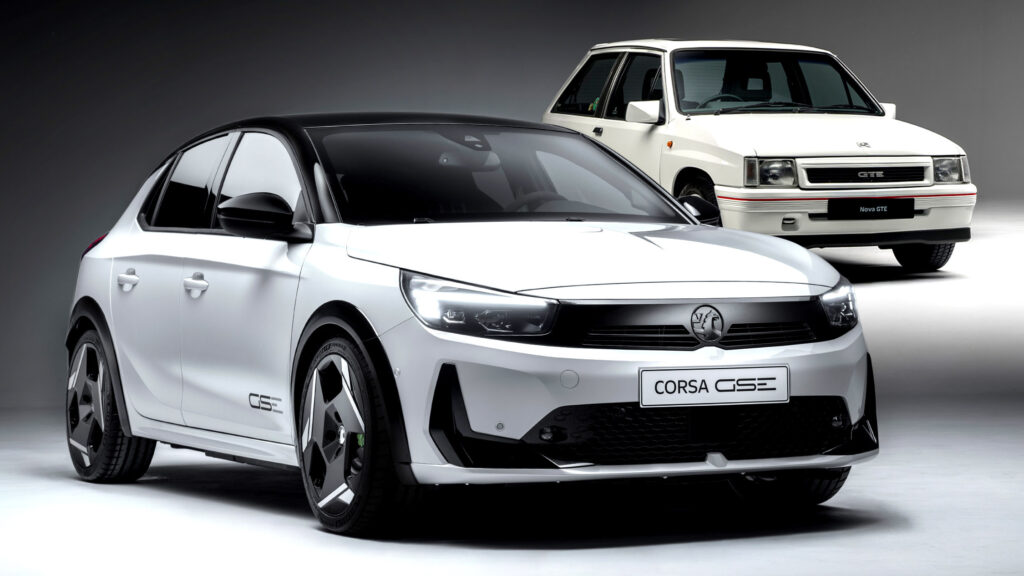
Opel and its badged-engineered British sister brand Vauxhall are rediscovering their hot hatch roots, but with a charging cable this time. The pair dropped their Corsa GSE today, along with a zero to 62 mph (100 kmh) time that says it’s faster than any rival electric hot hatch on the market.

That includes fellow Stellantis company Peugeot’s e-208 GTI whose platform, powertrain and basic chassis setup the GSE shares. Under the skin is a single electric motor that sends 276 hp (281 PS / 207 kW) and 254 lb-ft (345 Nm) of torque to the front wheels through a limited-slip differential, though only in Sport mode. In Normal you make do with 228 hp (231 PS / 170 kW).

Related: Stellantis Just Decided Which Four Brands Actually Matter And Opel Isn’t One

Zero to 62 mph (100 kmh) takes 5.5 seconds in Sport, versus 5.7 seconds for the e-208 and 5.9 seconds for the 1,550 kg (3,420 lbs) Corsa’s mechanically identical, but 47 kg (104 lbs) heavier crossover brother, the Mokka GSE. That’s pretty damn swift for a small, front-wheel drive hatch, and also makes the Corsa GSE significantly quicker than its key non-Stellantis electric rivals like the Alpine A290 and Mini Cooper JCW, which need 6.4 and 5.9 seconds respectively to hit the 60 mph mark.

Stiffer, lower suspension and uprated brakes with four-pot calipers are part of the chassis package, Opel claiming that both the steering and pedal responses are massively improved over what you experience from the regular EV. Rolling stock is Michelin Pilot Sport 4S 215/40 R18 rubber wrapped around alloy rims whose three-spoke design is there to evoke memories of the 1980s Opel Corsa GSE, which traded blows with the Peugeot 205 GTI almost 40 years ago.

Plaid Buckets? Check!

\\\\

Climb inside and you’ll find the sports seats have plaid centers to carry on the 1980s hot hatch theme. Other GSE interior details on the 2027 car include Alcantara trim, aluminum pedals, and strong yellow accents, plus a performance data display showing acceleration stats and G-force readings. On the outside, in addition to those three-spoke rims you get a black roof, rear spoiler and sportier bumpers.

As for range, we don’t have numbers yet, but we do know that the GSE uses the same 51 kWh (usable) battery as other Corsas and other Stellantis cars built on the same CMP platform. So we’d expect the GSE to roughly equal the e-208 GTI’s 217-mile (349 km) range, which will be fine for blasting around town, but not so good on longer trips.

VW’s ID. Polo GTI debuts any day, and should deliver more than 260 miles (418 km) of range, though with only 223 hp (226 PS / 166 kW) it won’t trouble the GSE in a race to 62 mph. Which one gets your vote?

\\\\\\\\\\\\\\\\\\\

Opel/Vauxhall

One In Six New Cars Sold In Australia Is Now An EV As Gas Sales Fall Off A Cliff

  • Gas-powered vehicle sales fell 30 percent as electrified models rose.
  • In April, Toyota held first place, with BYD second and Kia third overall.
  • Other Chinese automakers gain ground, including Zeekr, Geely, and Chery.

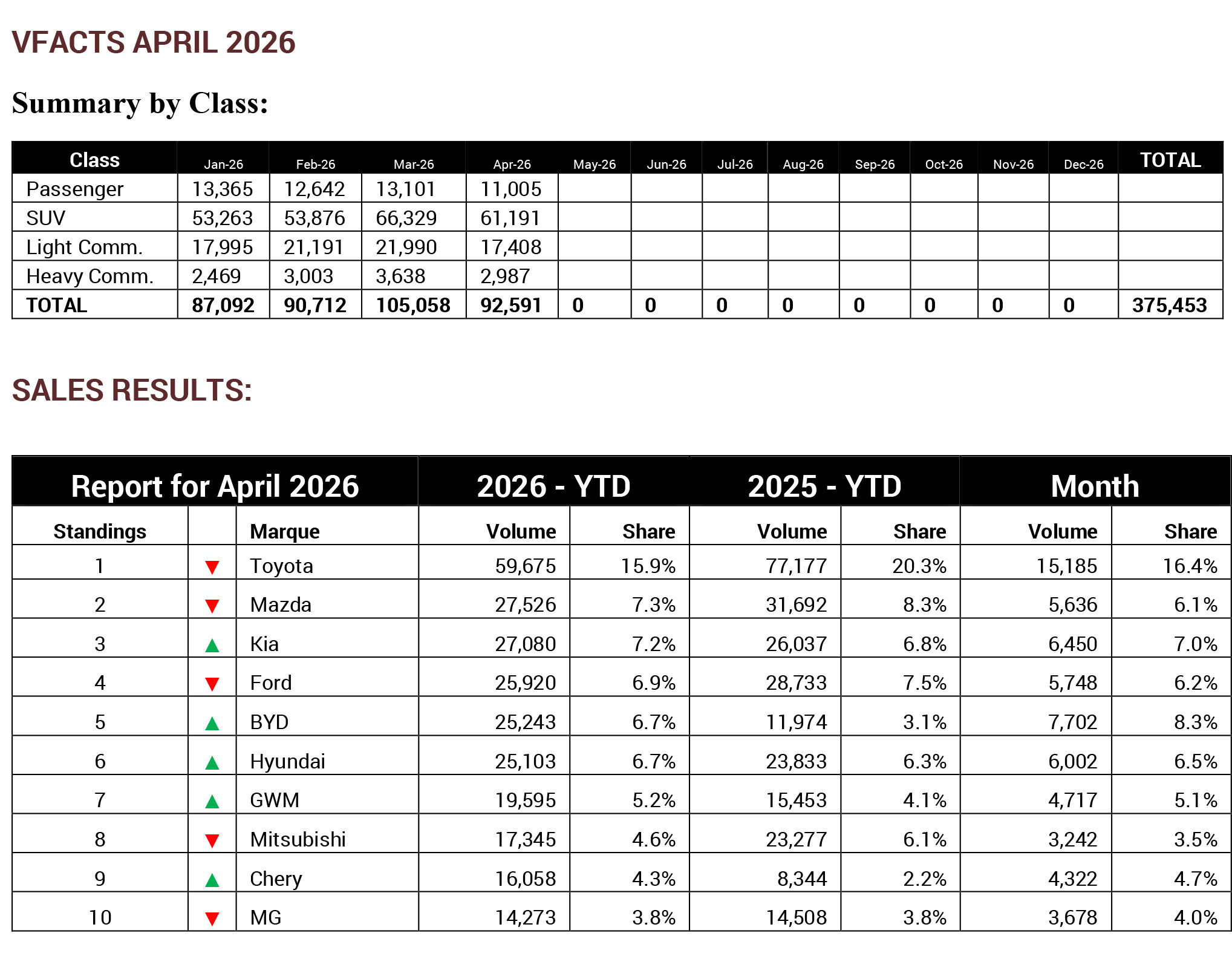
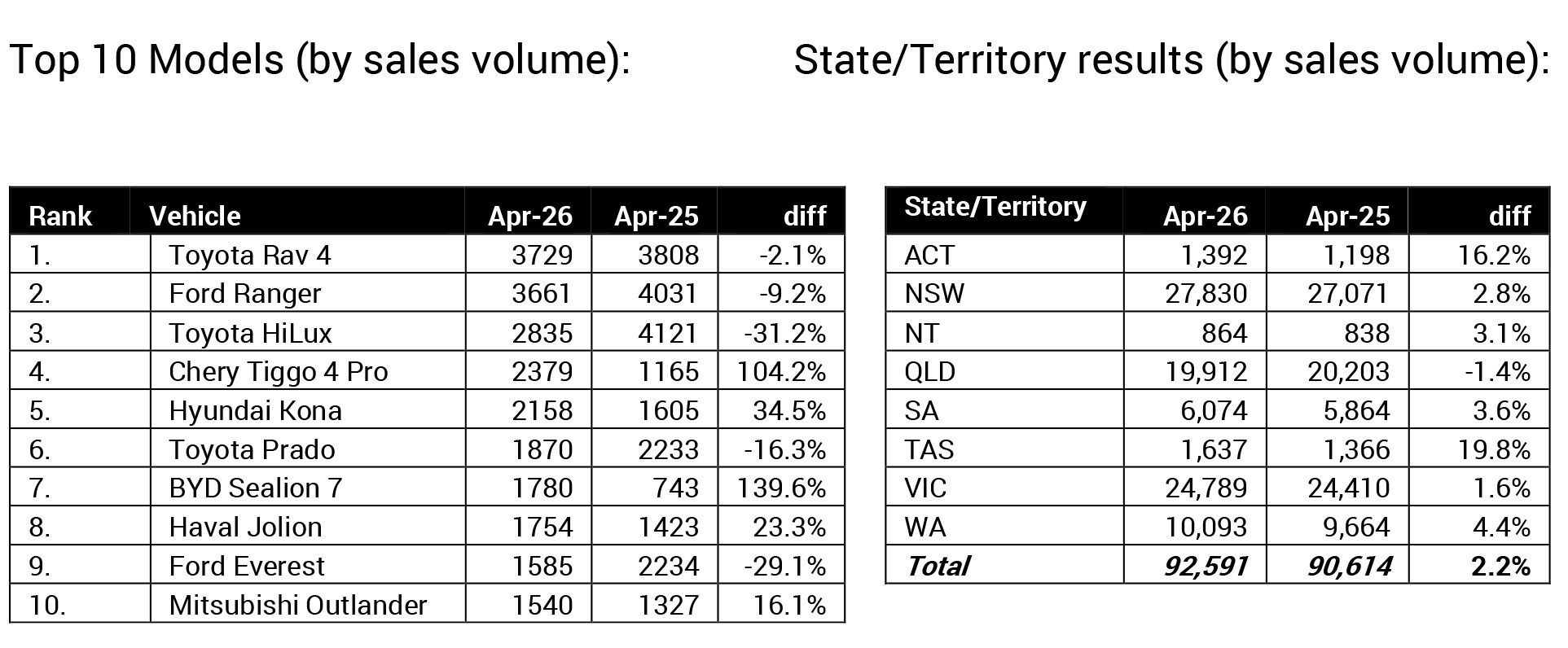
Data from Australia’s Federal Chamber of Automotive Industries and the Electric Vehicle Council reveal that, of the 92,591 new cars, SUVs, pickups, vans, and trucks sold in April 2026 (up 2.2% over the same month in 2025), 16.4% were battery-electric. This works out to 15,185 vehicles. In contrast, April 2025 saw just 6,010 new EV sales.

See Also: For The First Time, Electrified Car Sales Surpassed Gas Vehicles In Australia

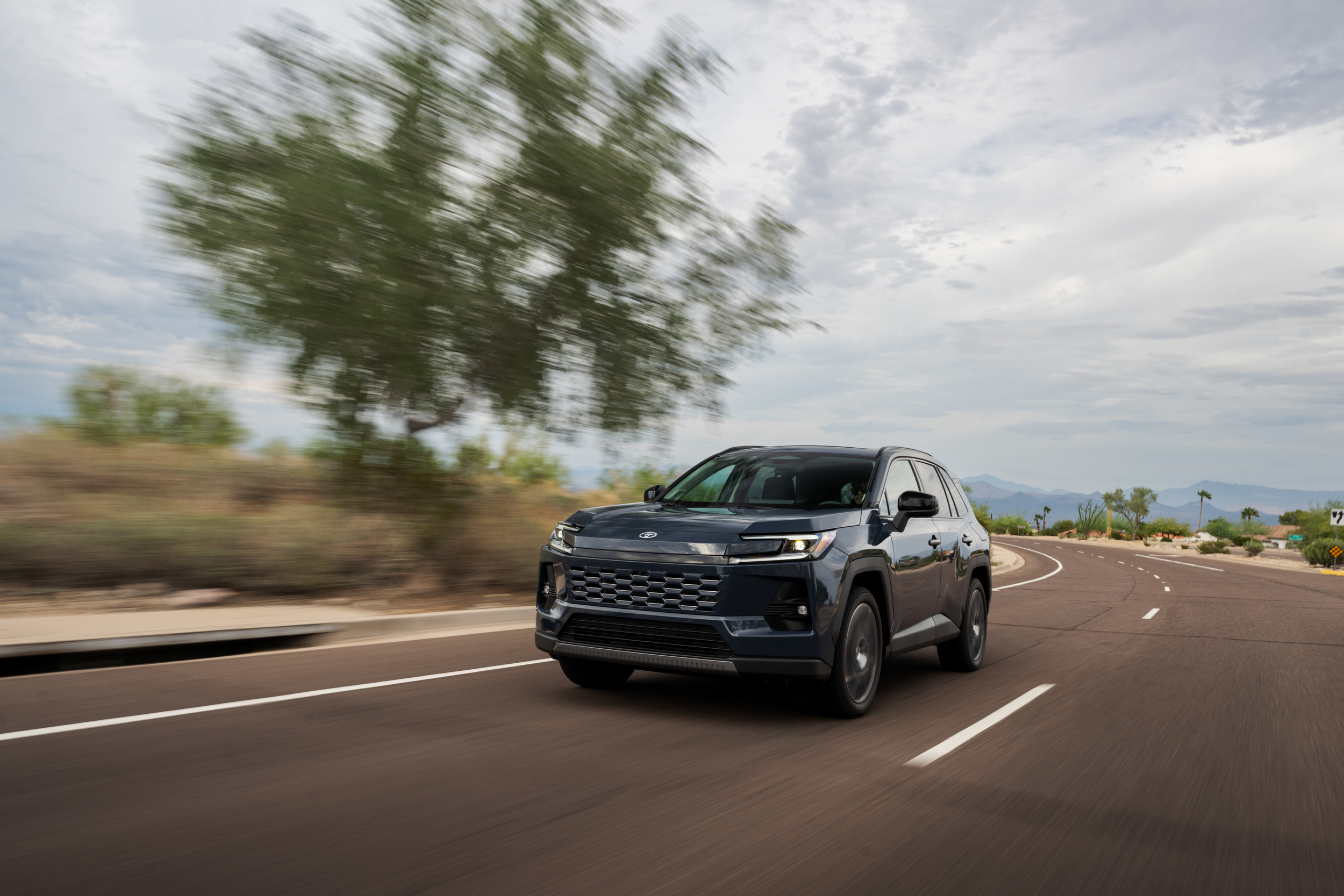
It’s not just EVs that saw strong numbers; hybrids were also in demand. In fact, 18,162 new hybrids found homes in April 2026, bolstered by the first full month of sales of the Toyota RAV4, which bagged best-selling car in Australia. Plug-in hybrids also saw 9,628 new units shifted in April 2026.

Petrol And Diesel Vehicle Sales Dwindle

While EVs, hybrids, and plug-in hybrids were enjoying the limelight, partly driven by tax incentives, traditional gasoline and diesel-powered vehicles took a hit in April 2026. Sales of new gasoline-powered vehicles saw a decline of 30.1% in comparison with April 2025 figures.

Diesel-powered new vehicle sales were down by 21.7%. These declines could also be attributed to the ongoing war in the Middle East, which has significantly affected crude oil deliveries to Australia. This has resulted in rising prices at the pump, as well as some scattered shortages.

For April 2026, BYD’s Sealion 7 SUV dominated the EV rankings, with 1,780 units sold. Meanwhile, the Tesla Model Y sold nearly 1,000 fewer units, although it was up 193.6% year-on-year, as last year’s model was due for replacement.

The BYD brand as a whole shifted 7,702 new units. Other strong sellers in the Chinese EV space include the Geely EX5 with 1,202 deliveries, and 1,006 units from Chinese brand Zeekr, of which 973 were its 7X SUV. Shifting our attention to the car segment, Tesla’s Model 3 narrowly beat BYD’s Seal, with 403 versus 370 deliveries.

Toyota Still Leads, Ford And Mazda Drop From Podium

 One In Six New Cars Sold In Australia Is Now An EV As Gas Sales Fall Off A Cliff

Despite a 21.6% reduction in year-on-year sales, Toyota remained top dog in Australian new vehicle sales through April 2026. They shifted 15,185 units, followed by BYD with a 7,702 new unit tally.

 One In Six New Cars Sold In Australia Is Now An EV As Gas Sales Fall Off A Cliff

BYD’s rise to second place means that Ford and Mazda, the historical second and third-place finishers, are now fifth and sixth, with 5,748 and 5,636 units respectively. However, the Ford Ranger held on to the silver medal as the second best-selling vehicle, sandwiched between the RAV4 and Hilux.

When looking at Australian new car sales as a whole, the new third- and fourth-place occupants for April are Kia and Hyundai, with 6,450 and 6,002 units sold respectively. Of course, these two automakers also have EVs and hybrids in their portfolio. The same is true for Chery in eighth place and MG in ninth, while Isuzu rounded off the Top 10 ahead of Mitsubishi.

 One In Six New Cars Sold In Australia Is Now An EV As Gas Sales Fall Off A Cliff

Britain’s Biggest EV Brand Isn’t Tesla, BMW Or Volkswagen

  • BYD has emerged as the biggest EV brand in the United Kingdom.
  • Chinese automaker sold 12,754 electric vehicles through April.
  • Overall BYD sales are up 124% and beating European competitors.

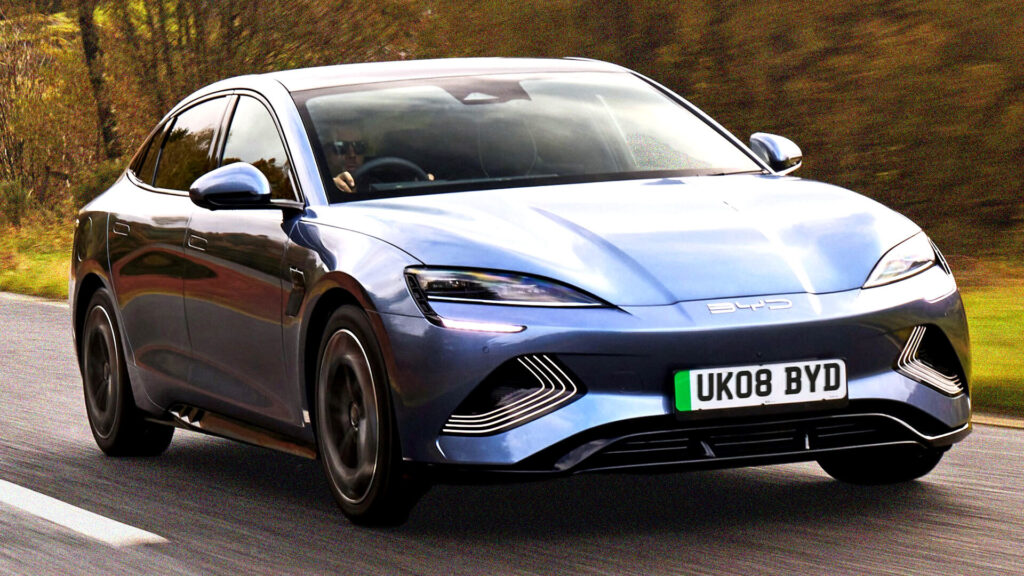
There’s a new electric vehicle king in the United Kingdom and it’s not one that you’d expect. Quite the opposite as BYD has taken the podium.

More: BYD Sold 700,000 Electrified Cars Last Quarter And Still Lost More Than Half Its Profit

Citing data from the Society of Motor Manufacturers and Traders (SMMT), BYD said they have sold 12,754 EVs through April and that gives them over 7% of the market share. This makes the Chinese firm the “UK’s largest electric vehicle brand” and places them ahead of rivals such as BMW, Tesla, and Volkswagen.

 Britain’s Biggest EV Brand Isn’t Tesla, BMW Or Volkswagen

BYD went on to note they’ve also “become the best-selling EV brand among private buyers.” This is a notable achievement since the company’s vehicles don’t qualify for government subsidies. The electric vehicle grant provides discounts of up to £3,750 ($5,079) for certain vehicles including the Ford Puma Gen-E, Nissan Leaf, and Mini Countryman Electric.

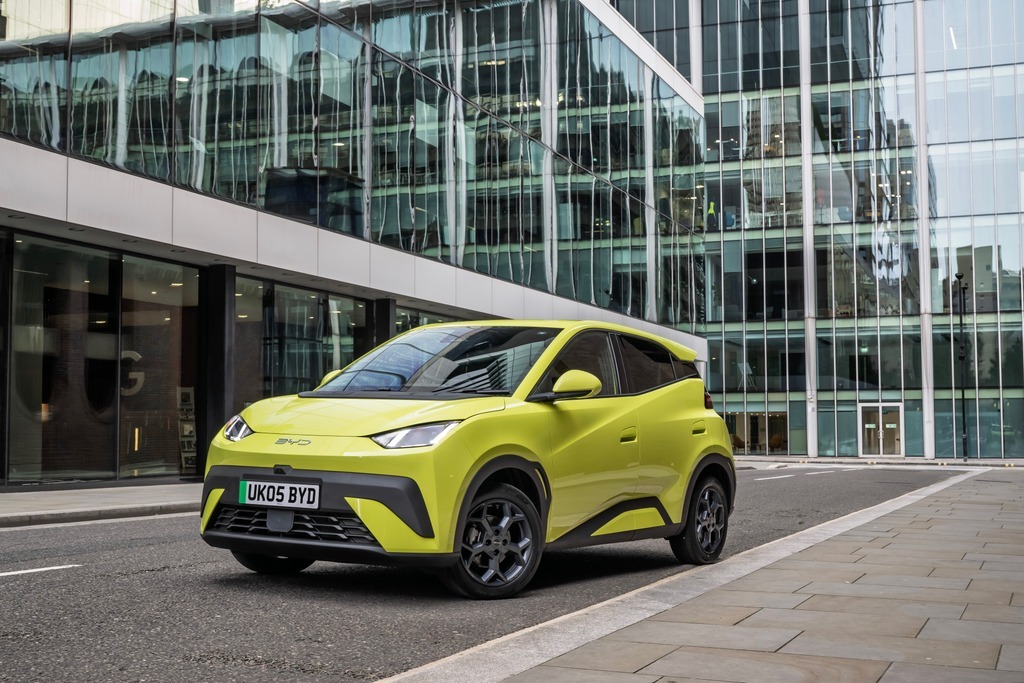
The automaker credited its success to a diverse lineup of vehicles that includes everything from the £18,675 ($25,290) Dolphin Surf to the £47,025 ($63,682) Sealion 7. The latter features an 82.5 kWh battery pack that provides a WLTP combined range of 300 miles (483 km), although higher-end variants have more advanced powertrains.

 Britain’s Biggest EV Brand Isn’t Tesla, BMW Or Volkswagen

BYD UK’s Bono Ge said, “With fuel prices remaining high, more drivers are turning to electric vehicles as a smarter and more economical choice. We are delighted to see the UK EV market grow by 22% year-on-year, and even more proud that BYD has become the UK’s leading EV brand in a little over three years.”

Year-to-date BYD sales are up 124% to 26,396 units, which puts the brand ahead of a number of European automakers including Citroen (12,142), Cupra (15,171), and Dacia (10,250). The brand is also beating Fiat (2,320), Land Rover (25,313), Mini (18,814), and Renault (23,645) – among others.

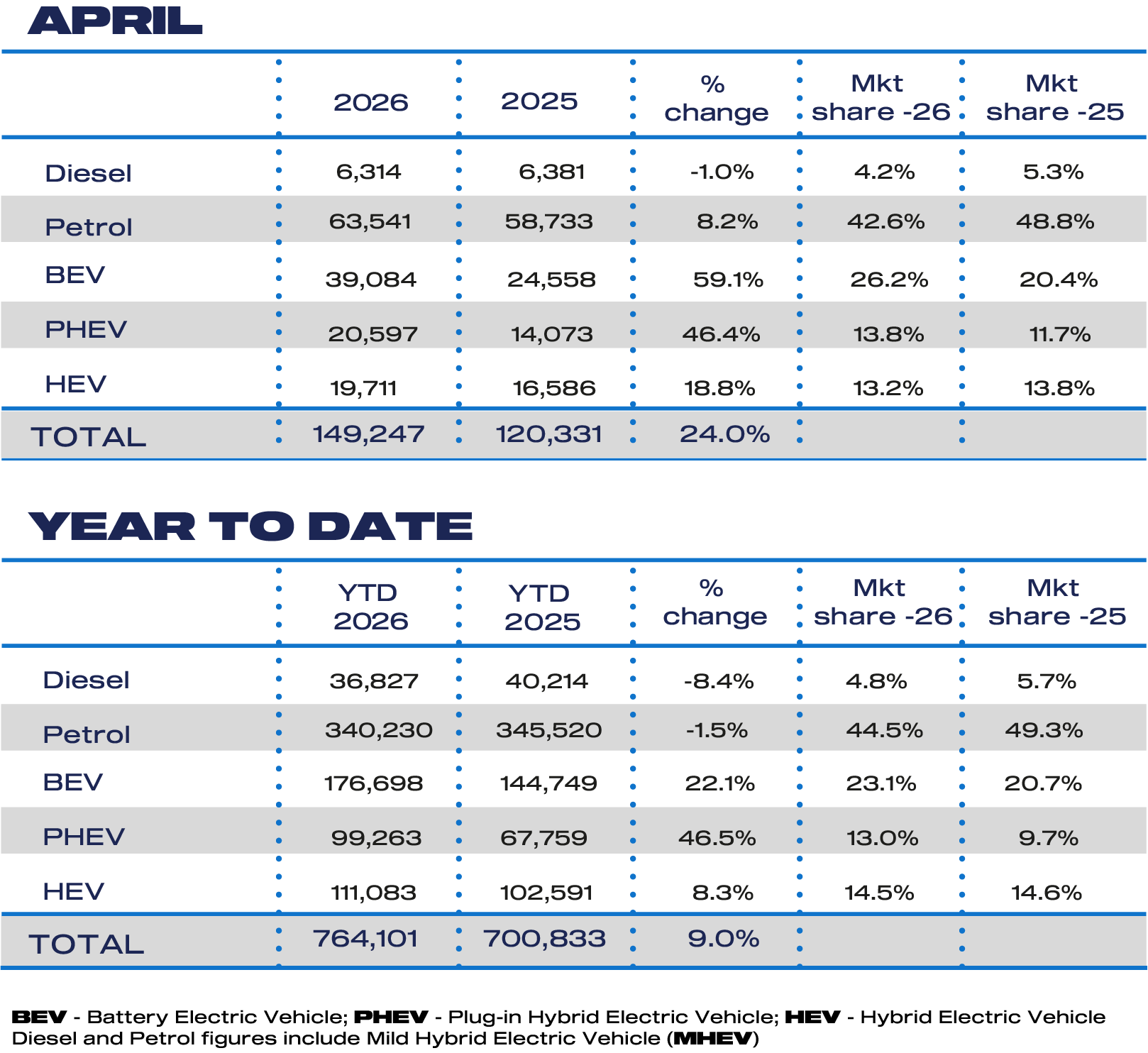
UK Sales April 2026
BrandApr-26Apr-25Diff. %YTD-26YTD-25Diff. %
VW12,88410,47423.059,87863,630-5.9
Kia8,9228,3207.243,53843,3830.4
BMW8,7008,086.007.642,60743,645-2.4
Ford8,2307,006.0017.541,00441,709-1.7
Audi8,0908,017.000.938,13335,8236.5
MG7,0053,78984.930,88328,4308.6
Mercedes6,9895,37130.135,28532,7867.6
Skoda6,2445,48313.930,67528,0559.3
Hyundai6,0776,524.00-6.930,27831,410-3.6
Vauxhall5,8895,16214.133,72932,5333.7
Peugeot5,3685,914-9.230,38634,450-11.8
BYD5,0592,511.00101.526,39611,782124.0
Volvo4,9924,23118.024,11723,1984.0
Toyota4,9815,301-6.030,38931,445-3.4
Renault4,8014,3699.923,64522,0627.2
Mini4,7742,51290.118,81415,56120.9
Nissan4,0794,899-16.728,38932,754-13.3
Jaecoo3,8771,053.00268.222,7894,288431.5
Land Rover3,8343,7871.225,31324,9321.5
Cupra3,3722,205.0052.915,17112,23724.0
Omoda3,275910259.912,3244,104200.3
Chery2,9000.000.010,97700.0
Citroen2,558958.00167.012,1425,347127.1
Dacia1,7981,977.00-9.110,25011,238-8.8
Geely1,6490.000.03,24400.0
Porsche1,5601,22527.46,0416,556-7.9
Suzuki1,3211,01530.29,9096,94042.8
Lexus1,1591,04311.15,2235,447-4.1
Honda1,1551,206.00-4.28,50610,108-15.9
Mazda1,1261,541-26.911,66912,537-6.9
Polestar1,07685925.35,2274,55414.8
Jeep8388152.84,6094,900-5.9
Tesla83151262.312,57012,986-3.2
Seat7901,842-57.15,6208,795-36.1
Fiat708289.00145.02,3204,373-47.0
Leapmotor580108437.03,6763011,121.3
Alpine37357.00554.41,08599996.0
Changan2160.000.096900.0
Alfa Romeo210209.000.5949950-0.1
Other British20116323.31,1051,00210.3
Smart15770124.374055732.9
Other Imports98125-21.6446731-39.0
KGM937229.267158514.7
Xpeng889877.844145880.0
Genesis7141.0073.2363460-21.1
Lotus644445.5299688-56.5
Subaru5291-42.9709916-22.6
Abarth3825.0052.0129159-18.9
Maserati3212166.713611419.3
Ineos1822.00-18.21017731.2
Gwm1638.00-57.91251240.8
DS1332.00-59.459230-74.4
Chevrolet124.00200.02231-29.0
Skywell42100.0199111.1
Fisker00.000.0000.0
Jaguar00.000.071,725-99.6
Maxus01-100.0032-100.0
Grand Total149,247120,33124.0764,101700,8339.0
SWIPE

* Includes all types of powertrains. Source SMMT

Tesla Is Recalling All 173 Cheap Cybertrucks Because Their Wheels Can Fall Off

  • The issue stems from cracking around brake rotor stud holes under load.
  • Only rear-wheel-drive units with base 18-inch wheels are affected.
  • Some serviced EVs may also carry the same potentially faulty parts.

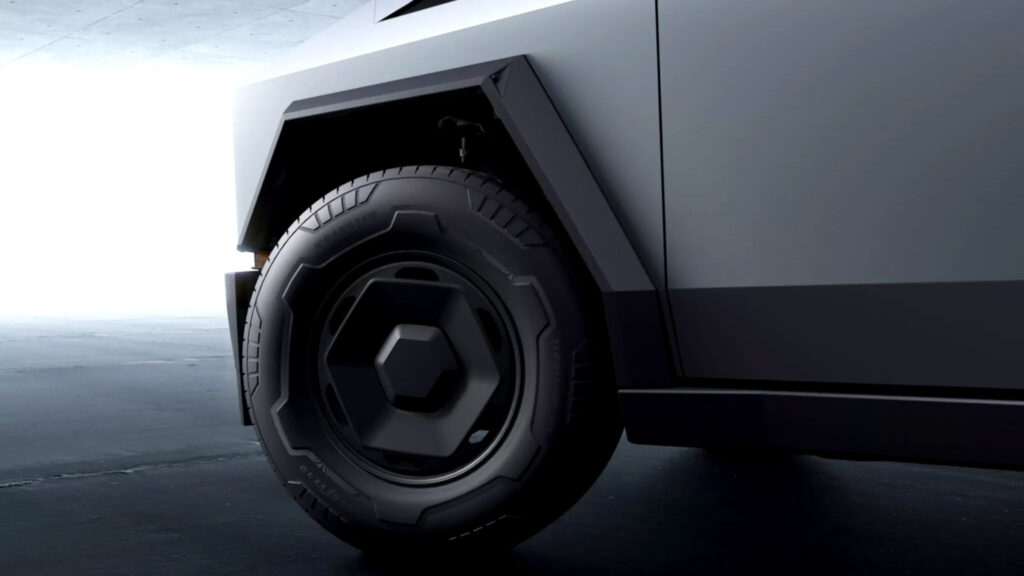
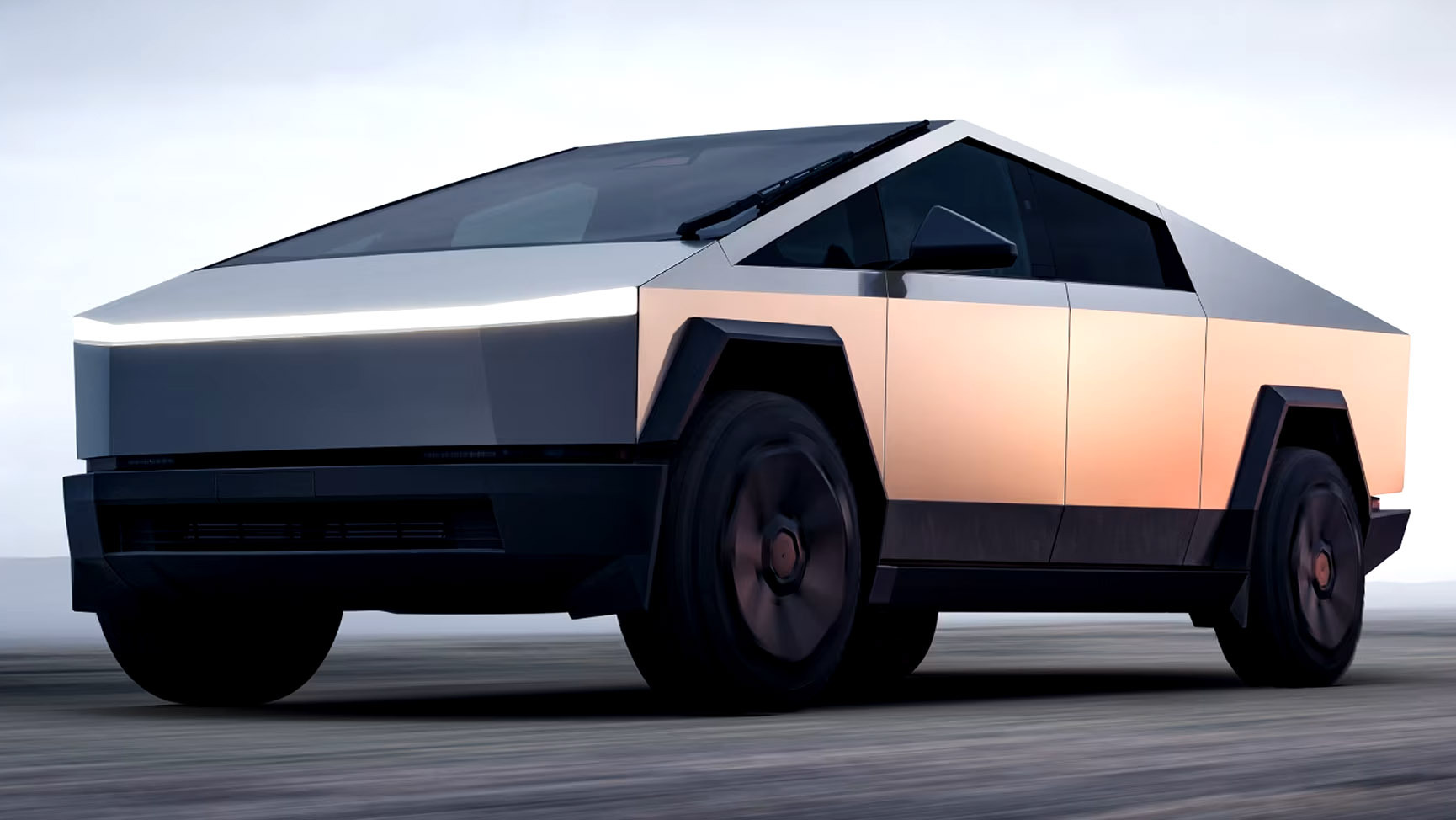
The owners of 173 Cybertruck RWDs have a new problem to worry about. Tesla has issued a recall on the short-lived budget variant after discovering the wheels can come off while driving, which ranks somewhere near the top of the list of things you definitely do not want your vehicle to do.

Tesla says that on-road disturbances and cornering forces can cause cracking around the stud holes in the brake rotors. If that happens, the entire wheel stud may separate from the hub. The company is not aware of any crashes or injuries tied to the issue, though it has logged three related warranty claims.

Read: His Cybertruck Made It to 100,000 Lyft Miles Before Sending A $7,200 Reminder

A total of 173 models built between March 21, 2024, and November 25, 2025, are included in the recall. Only Cybertruck RWD versions with the base 18-inch wheels are affected, not those fitted with the optional 20-inch setup.

Tesla first identified a potential problem in August of last year, when pre-production testing revealed some cracking in the brake rotors, even though all studs remained intact at the time. Further investigation, along with field reports, showed the issue was more serious than initially thought.

Not only did Cybertruck RWD models leave the factory with the defect, but some Tesla service centers were also using the potentially faulty brake rotors, so vehicles that have had their brakes replaced may also suffer from the same issue.

What’s The Fix?

 Tesla Is Recalling All 173 Cheap Cybertrucks Because Their Wheels Can Fall Off

While the recall notice lists vehicles produced from March 21, 2024, Tesla says it only began building Cybertruck RWD models with 18-inch wheels on August 28, 2025. Production ended less than three months later, on November 5, with the company citing limited demand for the variant.

Owners can expect notification from Tesla after June 20. They will be asked to bring their trucks to a service center, where technicians will replace the front and rear brake rotors, hubs, and lug nuts with updated, more durable components.

\\\\\

Hyundai Says Beating Chinese EVs Is Impossible, Ford’s $30K EV Is Betting Otherwise

  • Ford’s secret EV team is rewriting how the company builds vehicles from scratch.
  • A $30,000 electric pickup aims to rival Chinese automakers and Tesla by 2027.
  • Radical manufacturing changes could determine if Ford’s EV future survives.

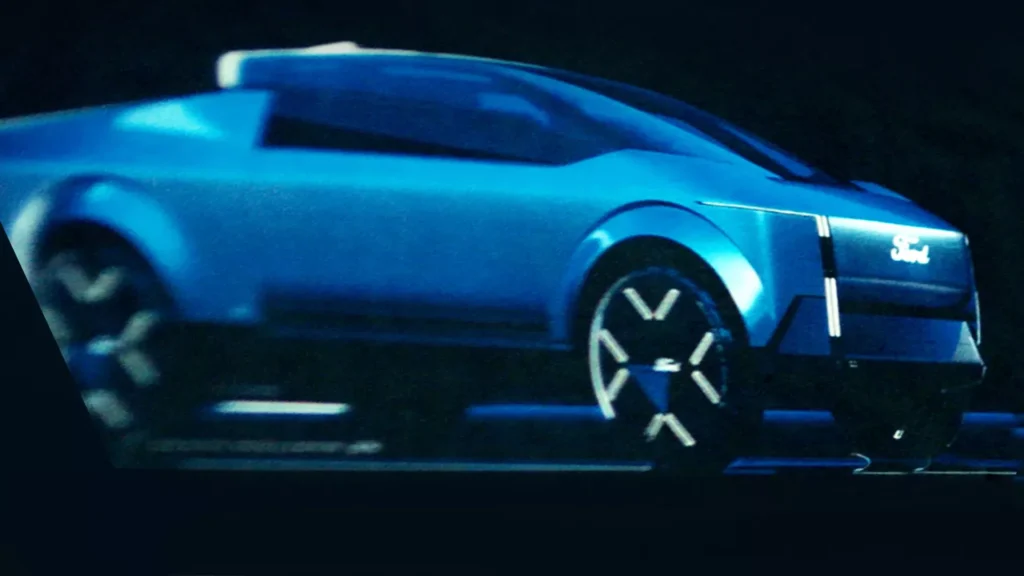
Ford hangs its hat on the creation of the assembly line. Now, it’s literally tearing one apart in the middle of the night. That’s a part of the brand’s new strategy to win over more buyers. If it’s successful, the work it’s doing now will allow it to not just beat domestic automakers in the U.S., but to compete against China worldwide with a cheap but robust electric car.

More: Ford’s $30K Pickup Wants To Beat Cybertruck At Its Own Game

The “skunk works” project has been underway for quite some time now. Led by former Tesla and Apple employees, the team is aiming for something unheard of. It involves the confirmed $30,000 EV pickup truck (which can end up leading to several forms of cars) that offers some 300 miles of range and Mustang-like performance. That’s the kind of car that doesn’t exist in America, but it does exist elsewhere, namely China.

 Hyundai Says Beating Chinese EVs Is Impossible, Ford’s $30K EV Is Betting Otherwise

Ford’s CEO Jim Farley has tested Chinese cars in his everyday life. He’s also had a front row seat to the billions that his brand has burned through in building out its own EV platforms. According to the Wall Street Journal, that’s included too many parts, too much complexity, and old-school processes that don’t translate well to the EV space. So the team is cutting everything it can as aggressively as it can.

The manufacturing process itself is being flipped on its head. Instead of traditional step-by-step assembly, Ford is moving toward a modular system with large cast sections and fewer touchpoints. Put another way, it’s how Tesla and Chinese automakers build EVs today. According to Jolanta Coffey, the vehicle program director, “We’ve never blown the whole thing up before and just started over. If and when we build this, we will rewire Ford.”

 Hyundai Says Beating Chinese EVs Is Impossible, Ford’s $30K EV Is Betting Otherwise
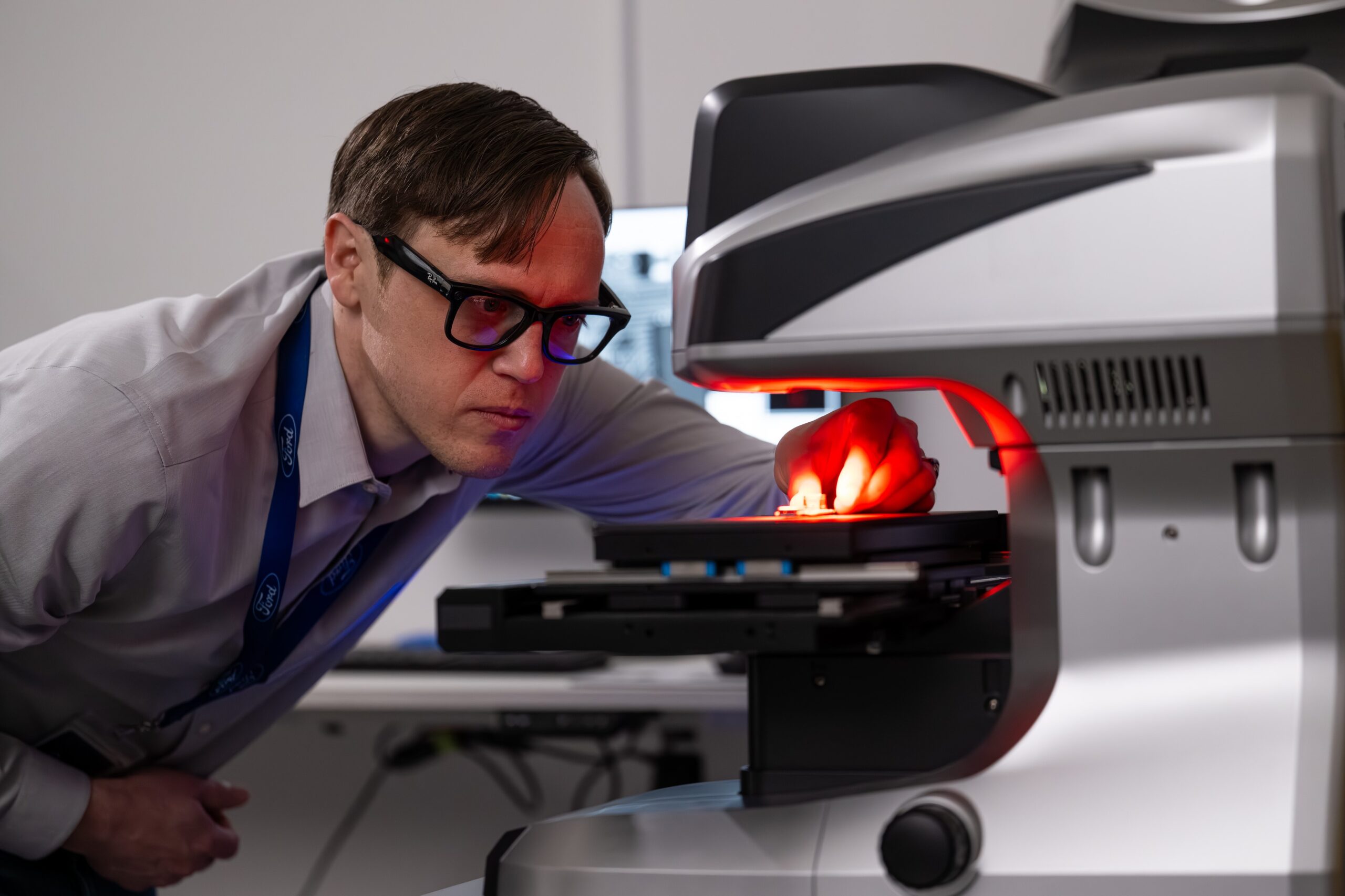
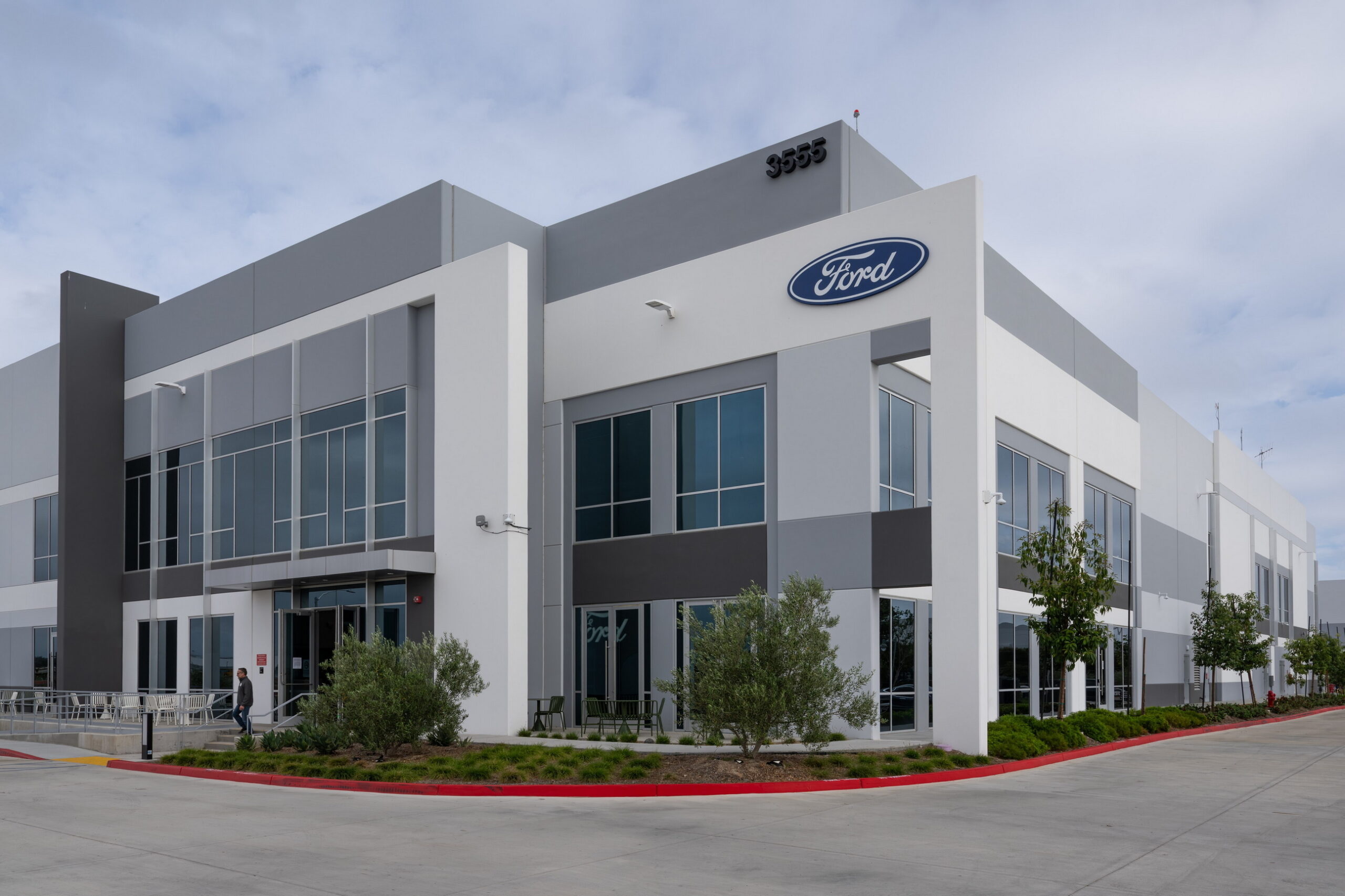
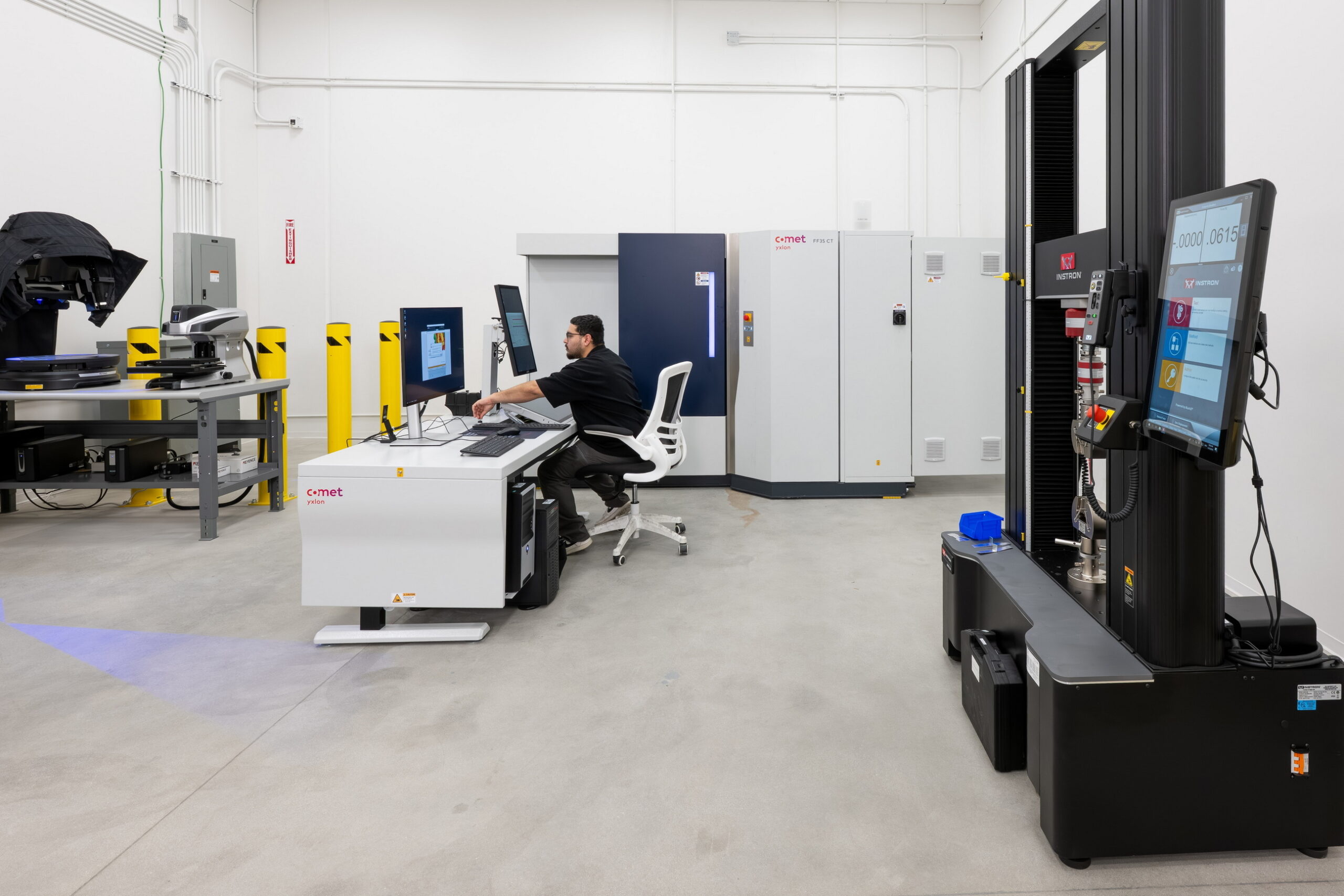
Ford’s electric vehicle development center

All of this comes at a turning point for much of the industry. Automakers abroad are continuing their push toward electrification while domestic automakers rethink the near future. Hyundai Motor CEO José Muñoz, recently said of competing with Chinese EVs, “It is impossible… Unless they are subsidized by the government.” Ford’s betting he’s wrong. We all get to see who ends up being right as Ford is aiming for a 2027 launch.

 Hyundai Says Beating Chinese EVs Is Impossible, Ford’s $30K EV Is Betting Otherwise
Photos Ford

Waymo’s Robotaxi Made It To San Jose, His Luggage Made It To San Francisco

  • The tech giant initially said it wouldn’t pay to ship the rider’s luggage back.
  • Waymo offered Di Jin two free rides to pick up his luggage from a depot.
  • As it turns out, there are some advantages to using human-driven taxis.

Taking a trip in one of Waymo’s robotaxis should be a smooth and stress-free experience, particularly since there’s no pressure to have an awkward conversation with a driver. However, for one Waymo user in California, taking a robotaxi to the airport left him without luggage for a business trip.

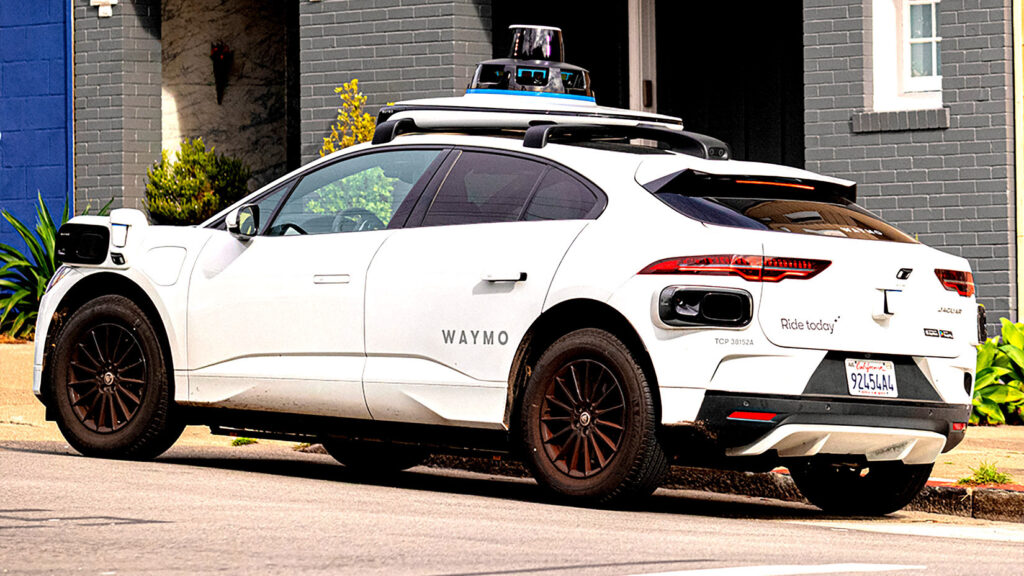
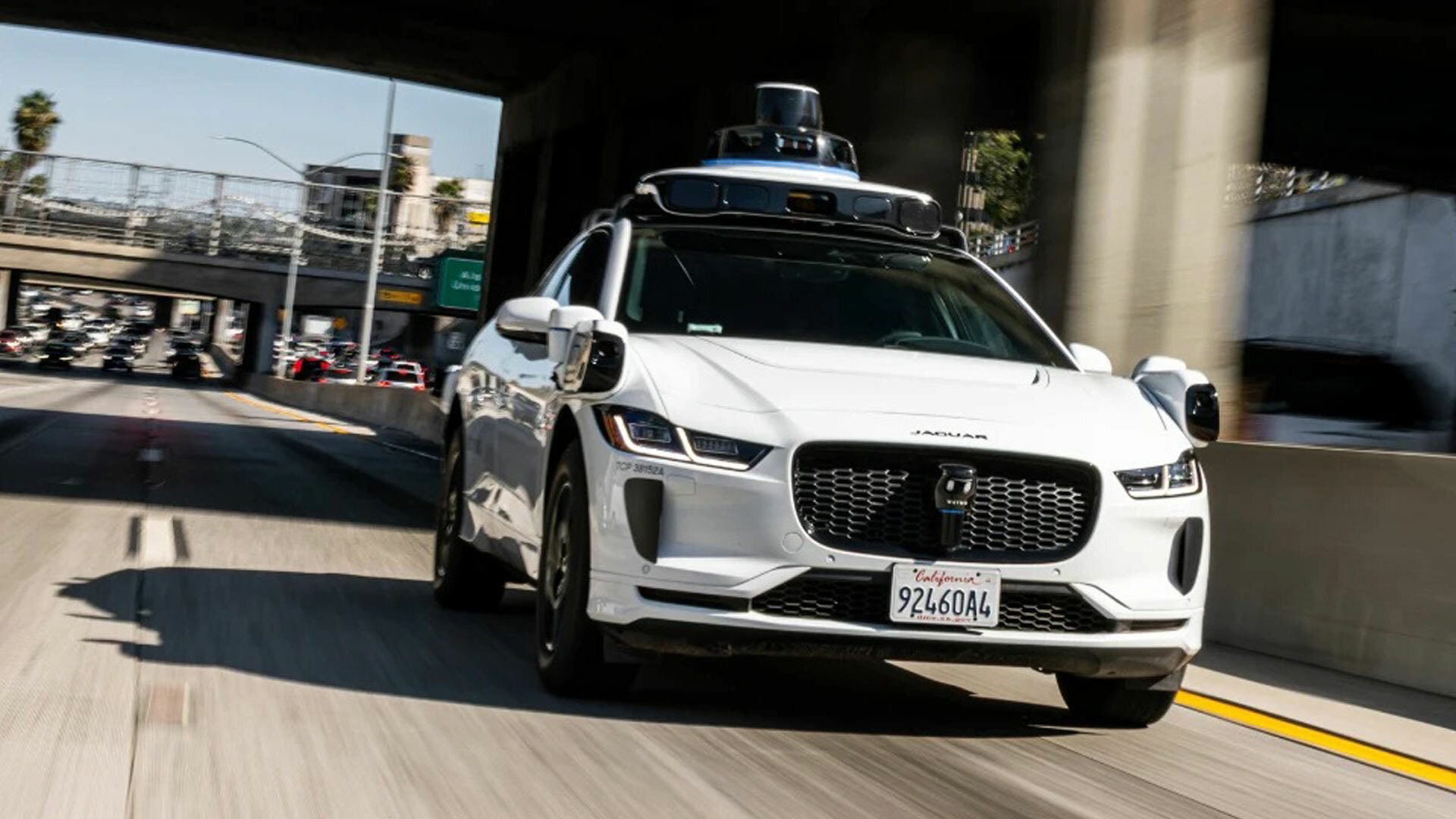
In late April, Di Jin took his first ride in one of Waymo’s robotaxis, traveling from Sunnyvale to San Jose Mineta Airport. The self-driving Jaguar I-Pace took him to the airport without issues, but when Jin got out of the car and attempted to open the trunk to get his luggage, the button did nothing. Moments later, the vehicle drove off, still carrying his luggage.

Read: Waymo’s Robotaxis Sometimes Receive Guidance By Some Guy In The Philippines

Speaking with NBC, Jin said he frantically contacted Waymo customer service but was told the robotaxi couldn’t be turned around and was heading to the depot. He was then forced to board his flight without any of his luggage.

The Californian man was informed later in the day that Waymo had retrieved his luggage at the depot. The only problem is that the depot is in San Francisco, and the company refused to pay shipping costs to get it back to Jin. If Jin didn’t want to pay for shipping, Waymo offered him two free rides to and from the depot to pick up his luggage.

Waymo Finally Steps Up

However, time is money, and Jin didn’t like the idea of wasting two hours getting his luggage. Waymo ultimately relented, confirming that it would pay to deliver his luggage after all.

Waymo notes that riders can open the trunk of one of its vehicles by pressing the physical trunk release button on the outside of the vehicle, or by tapping the ‘open trunk’ button in the Waymo app. For this rider, the trunk release apparently didn’t work, and with no human driver behind the wheel, he had no way of immediately notifying the car that he couldn’t retrieve his luggage. Perhaps human-operated taxis aren’t so bad after all.

 Waymo’s Robotaxi Made It To San Jose, His Luggage Made It To San Francisco
Photos Waymo

Americans Pay $37K For The Cheapest Tesla, Canada Got A Chinese One For $29K

  • Tesla is making the most out of reduced tariffs on Chinese-built EVs.
  • Up to 49,000 EVs built in China can be imported to Canada annually.
  • Base Model 3 RWD hits 62 mph in 5.2 seconds and has a 288-mile range.

As expected, Tesla has become the first EV maker to begin selling Chinese-made models in Canada after the two countries finalized a major trade deal earlier this year. It’s good news for Canadian car buyers, who now get access to Tesla models priced well below their American counterparts. In fact, it’s the cheapest Tesla EV ever sold in North America.

Thanks to the new trade deal, up to 49,000 EVs built in China can be imported into Canada at a reduced tariff rate of 6.1 percent, down from the 100 percent tariff imposed in 2024. Canadian officials began issuing permits for the first 24,500 vehicles in March, and Tesla moved quickly to capitalize.

Read: Canada Could Give China’s Biggest Carmaker A Backdoor Into The US Market

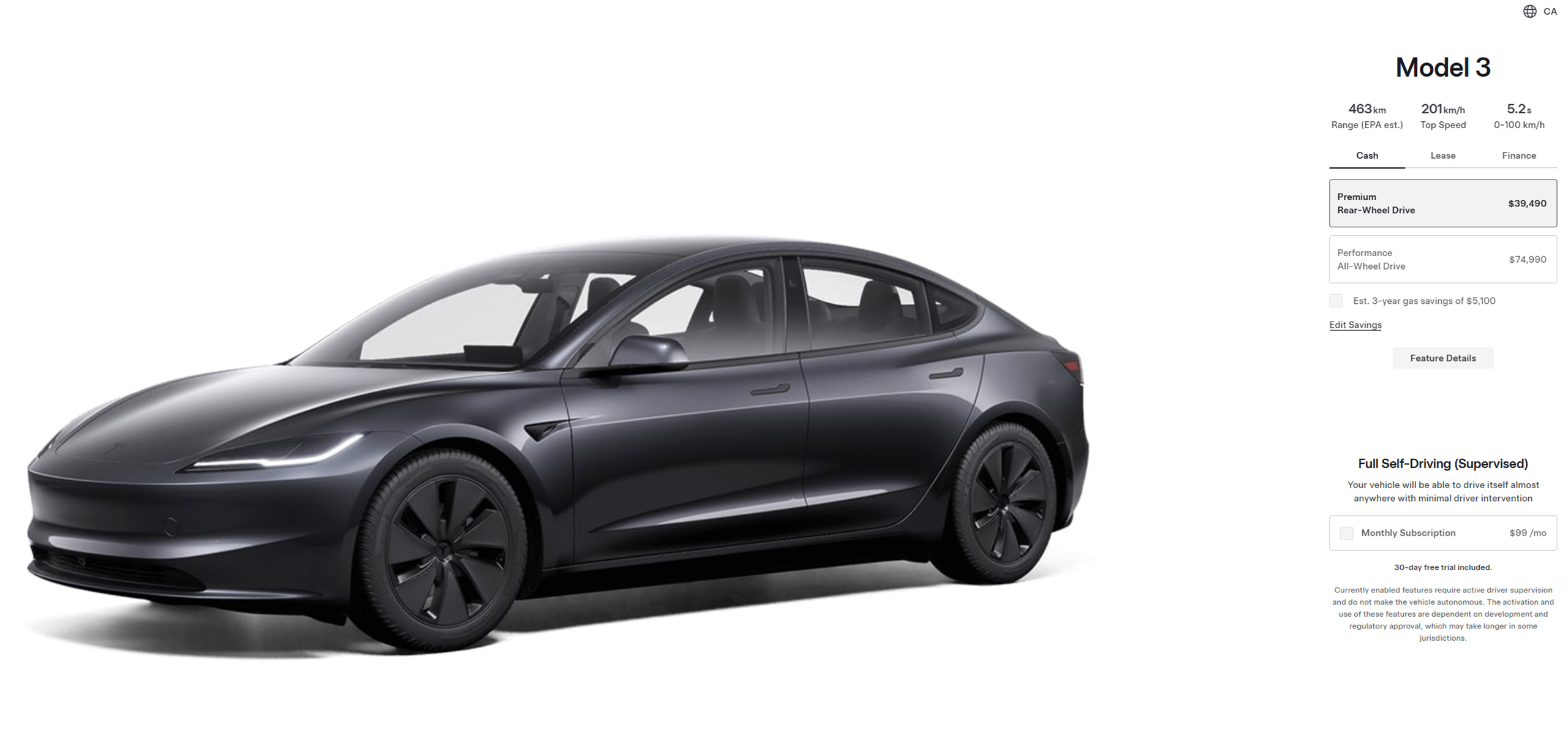
By importing from China, Tesla has reintroduced the entry-level Model 3 Premium RWD to Canada. It is priced from just CA$39,490 before delivery, or around US$29,007 at current exchange rates, undercutting the most affordable Model 3 in the US, the standard RWD model that starts at US$36,990 before taxes and delivery fees. The Shanghai-spec Model 3 has a quoted driving range of 463 km (288 miles) and can go from 0 to 100 km/h (62 mph) in 5.2 seconds.

Before the deal took effect, the most affordable Model 3 available in Canada was the Long Range AWD shipped up from Fremont, California, with a starting price of CA$79,990 (US$58,700). It isn’t a spec-for-spec comparison, but Tesla has effectively cut its Canadian entry point in half overnight.

Performance Gets A Price Cut

 Americans Pay $37K For The Cheapest Tesla, Canada Got A Chinese One For $29K

Canadian buyers can also order the Model 3 in Performance guise, now priced from CA$74,990 (US$55,050). That marks a 17 percent drop from CA$89,990 (US$66,070), bringing the Canadian price roughly in line with the US$54,490 sticker American buyers pay for the same trim. Tesla has not confirmed where it will source Model 3 Performance models for the Canadian market, though reports suggest Fremont remains the likely origin.

The only downside of Tesla now importing some Model 3s from China is that these models do not qualify for Canada’s Electric Vehicle Affordability Program (EVAP) rebate, valued at $5,000, according to Drive Tesla.

It remains unclear how many of the initial 24,500 permits Tesla will lock down, though Canadian officials have confirmed they’re being issued on a first-come, first-served basis. Unless rivals like Volvo and Polestar move quickly to get their own Chinese-built EVs across the Pacific, Tesla looks poised to walk away with the lion’s share.

\\\\\

Subaru’s New EV Leases For $345, Less Than A Crosstrek Hybrid

  • In some states, it’s possible to lease the Uncharted for $345 per month.
  • Entry-level Uncharted models are front-wheel drive with a single motor.
  • The Uncharted’s RWD model has a driving range of 308 miles (496 km).

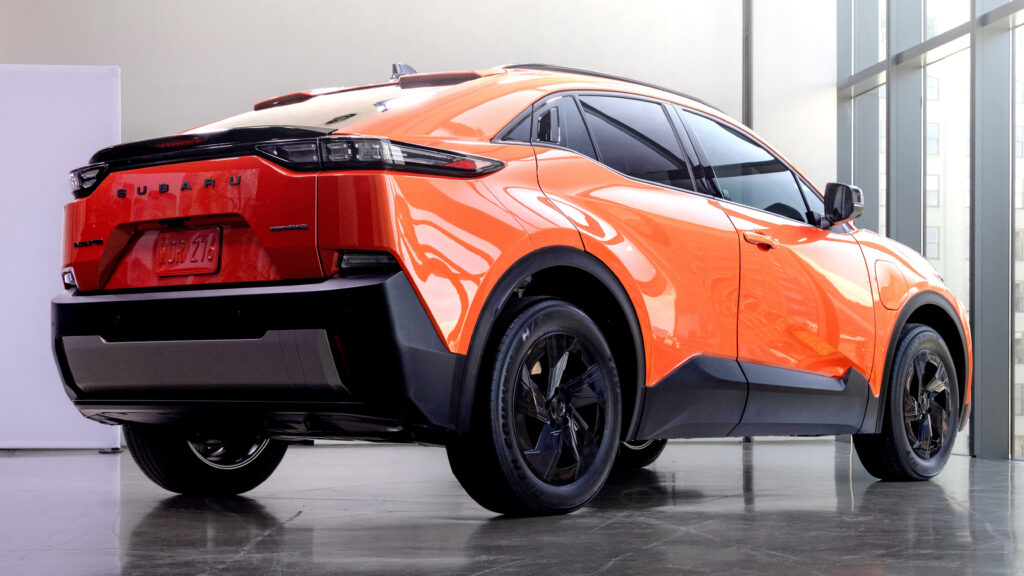
Subaru’s take on the all-electric Toyota C-HR, badged the Uncharted, may share a name with a 2022 Hollywood blockbuster starring Tom Holland and Mark Wahlberg, but it has a unique appeal that makes it stand out in this ever-competitive segment. It’s now also much cheaper to lease than it was last year.

In California, the Uncharted Premium can be leased for $345 per month with 10,000 miles a year and just $845 due at signing. Roll the drive-off into the payment, and the effective cost lands at $368 per month over 36 months, a $97 monthly savings versus the previous deal.

Read: Subaru’s New $35K SUV Breaks Years Of AWD Tradition

This actually makes the all-new Uncharted cheaper to lease in some areas than a Crosstrek Hybrid. As Cars Direct notes, a Crosstrek Hybrid Sport is available for $339 per month in Los Angeles but requires a $3,829 signing fee, effectively increasing the price to $445 per month. A standard gas-powered Crosstrek can be leased for as little as $345 per month, so it does undercut the Uncharted.

Through these lease cuts, the Uncharted is now $11 cheaper per month than the updated Subaru Solterra Premium.

Nationwide Savings

\\\\\\\\\

Lease deals vary across the country, but cuts have also been made in several other states, including New York, where prices are down 12 percent to an effective $410 per month when factoring in the $885 due at signing.

Importantly, these figures apply exclusively to the entry-level model, which is limited to front-wheel drive and comes with a single electric motor. This motor produces 221 hp and draws its juice from a 74.7 kWh battery pack. Although the front-wheel drive model can’t match the 338 hp offered up by the twin-motor AWD Sport and GT models, it does have the highest driving range of any Uncharted model, quoted at up to 308 miles (496 km).

\\\\\\\\\

BMW’s First Million EVs Took 11 Years. The Second Took Two

  • BMW Group hits two million EVs just two years after first million.
  • More important EVs coming through include i3 electric 3-Series.
  • Europe leads growth but US, China slowdown hurts momentum.

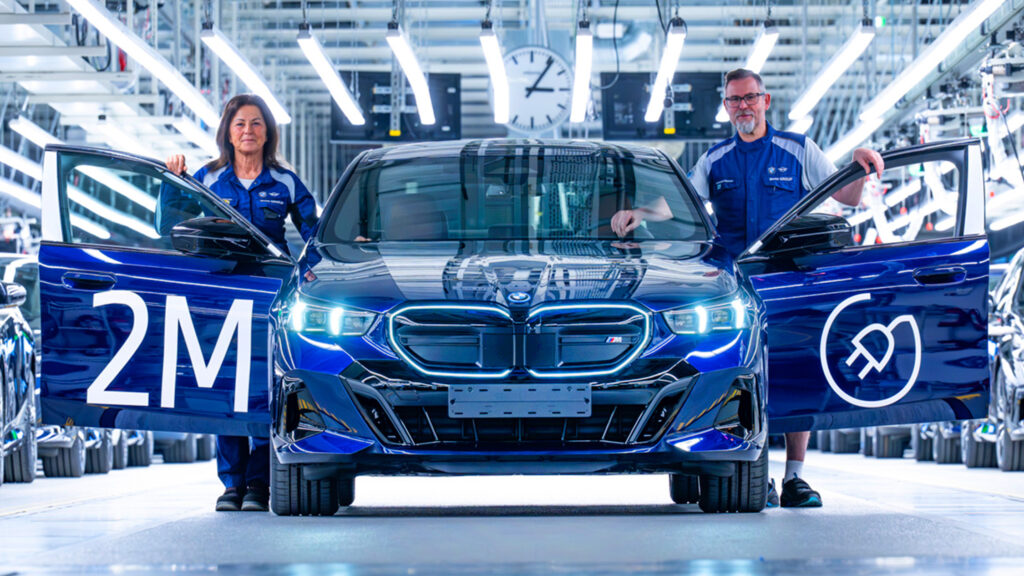
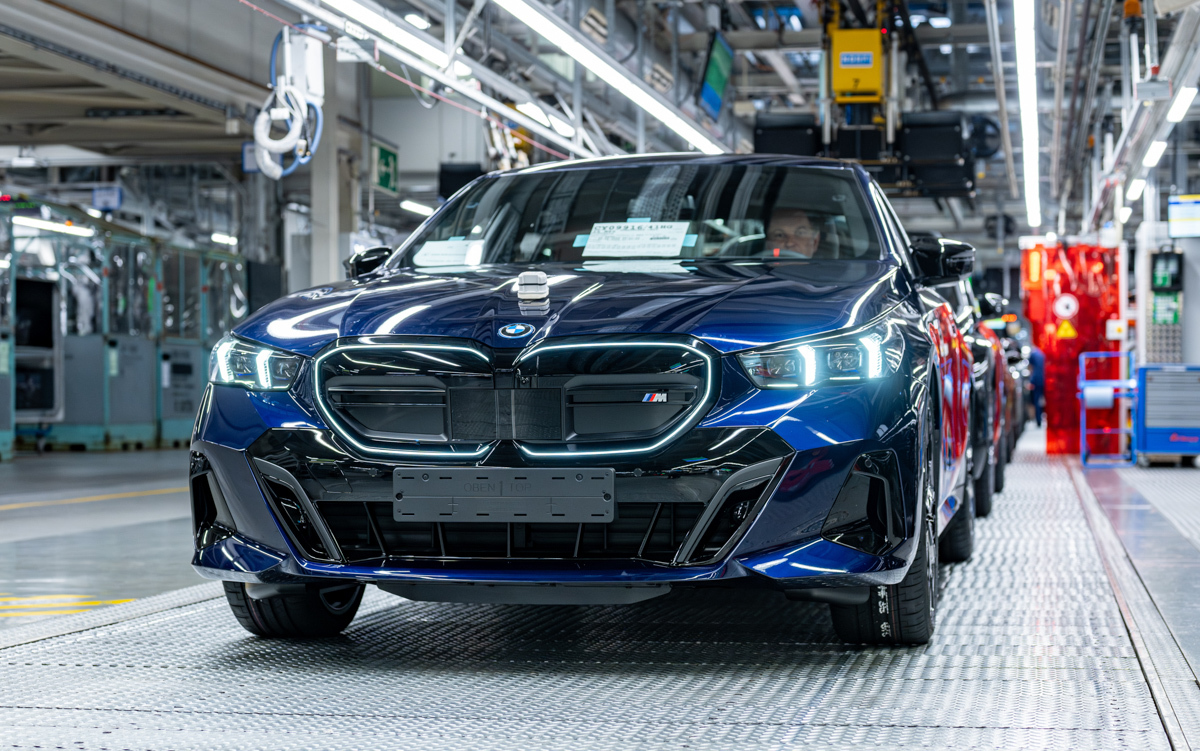
The BMW Group has just built its two millionth fully electric car, and the speed of that climb is impressive. It took almost 11 years after the first i3 hatch rolled off the line in 2013 to reach the first million, then only about two more to double it.

The milestone car is a BMW i5 M60 xDrive, built in Germany and heading to a buyer in Spain. That destination says a lot, because Europe is leading the way when it comes to EV demand right now. Sales of fully electric cars in the region jumped 28 percent in 2025, and one in every five cars sold in the EU is now an EV.

Related: BMW’s China-Only EVs Solve A Problem Tesla Owners Keep Running Into

Production is ramping fast to accommodate that growth. BMW now builds EVs at all its German plants and mixes them with combustion cars on the same lines. That flexibility lets it react as demand shifts, and lately, demand has been shifting quite a bit, because Europe’s love for EVs isn’t mirrored in other regions.

Globally, BMW delivered 442,072 EVs in 2025, a modest increase that shows growth is still happening, just not at the same pace as before. Because in the United States, BMW’s EV momentum has clearly cooled. Battery electric sales fell to 42,484 units in 2025, down 16.7 percent year over year.

The drop was even sharper late in the year, with fourth quarter EV sales plunging 45.5 percent after federal EV tax credits were axed. At the same time, plug-in hybrids surged more than 30 percent, showing where buyers are heading. China isn’t helping either. Sales there dropped significantly, with the region down double digits overall, dragging on global performance.

Hot New Electric Metal Inbound

 BMW’s First Million EVs Took 11 Years. The Second Took Two

But on the plus side, BMW has just begun to roll out fresh EV product with cutting-edge design and technology. The iX3, the first of BMW’s Neue Klasse cars, is already in showrooms, and the i3 electric 3-Series that debuted this spring won’t be far behind. And it’ll be followed by the first-ever electric X5, while Rolls-Royce has its own electric SUV on the way, although the sales numbers will obviously be modest.

That lineup should help keep BMW Group’s EV registrations growing, but it might struggle to keep pace with another big German automaker. VW recently announced it had made its 2 millionth EV only 10 months after rolling out its millionth, and with the ID.3 now much improved and the ID. Polo arriving at dealers soon, its next million could come even quicker.

\\\\\\\\

BMW

School Bus Fuel Innovation, Technology Education Meet at STN EXPO West

The Bus Technology Summit and Green Bus Summit return to Reno, Nevada this July during the STN EXPO West conference.

The Bus Technology Summit begins Sunday, July 12 with live product labs presented by companies representing different facets of the student transportation space. Solutions include routing software, safety features, fleet optimization, student ridership, transportation communications and more. Attendees will select labs to attend based on operational needs and will interact with vendors to ask targeted questions and get a closer look at the technology solutions transforming the industry.

The Sunday labs will be presented by Transfinder, First Light Safety Products, Alpha Route, Geotab, Samsara, BusRight and Verra Mobility. Labs continue Monday, July 13 with SafeFleet, Tyler Technologies, School-Radio, CalAmp, Cummins/Accelera and HopSkipDrive.

Zonar CEO Charles Kriete will present a “CEO Talk” on Sunday morning to discuss the technology trends impacting the student transportation industry. The following morning, ZUM’s COO and co-founder Vivek Garg will present his “Tech Talk” to conference attendees.

Meanwhile, the Green Bus Summit will focus on green leadership that enables attendees to discover the latest advancements in sustainable transportation. A wide-range of speakers from OEMs, school districts using low-emission fuel options, and industry experts will share operational considerations, real-life experiences and tips to find the best fuel option for their operations. Sessions will be presented by Blue Bird, Thomas Built Buses, Micro Bird, the Propane Education & Research Council (PERC) and IC Bus. The Green Bus Summit sessions will also be held on Sunday and Monday.

The two Summits meet for an immersive outdoor experience Sunday night at the STN EXPO West Ride and Drive/Live Technology Demo. Attendees will ride electric, propane and low-emission diesel school buses from Blue Bird, IC Bus, Micro Bird, RIDE and PERC. In addition, they will visit Zonar, Tyler Technologies, Transfinder and ZUM for more live product demos and networking with vendors for real-time discovery of solutions to take home to their districts.

The evening will include an energetic networking atmosphere with food and beverages, interactive games and a live DJ. Attendees will not only network with companies providing transportation solutions but meet other transportation professionals to have the conversations that are driving innovation in the industry.

Find the full conference agenda and registration details at stnexpo.com/west. STN EXPO West will be held July 9-15 at the Peppermill Resort in Reno, Nevada. The conference will feature hands-on training classes including the National School Bus Inspection Training Program, educational sessions, the Transportation Director Summit leadership event, the STN EXPO West Trade Show and other unique networking events.


Related: Turkel to Uncover Secrets of Communicating Relevance at STN EXPO West
Related: WATCH: Active-threat Response Training Subject of Opening STN EXPO West Session
Related: WATCH: Exclusive Leadership Event Summons Transportation Leaders for Networking, Professional Development

The post School Bus Fuel Innovation, Technology Education Meet at STN EXPO West appeared first on School Transportation News.

(STN Podcast E305) It’s Your Job: Industry Legend Dick Fischer Talks School Bus Safety, Training

More U.S. Environmental Protection Agency news and webinars on funding, plus how clean energy demand intersects with AI’s need for resources. Conversations continue at ACT EXPO this week and the Green Bus Summit at STN EXPO West in July.

“The tragedy will never leave you.” Shocking real-life stories abound in this special extended episode as 91-year-old industry legend and consultant Richard “Dick” Fischer underscores the need for thorough safety leadership and training. He discusses student transportation history, school bus crashes in the news, drunk and criminal drivers, illegal passing and the Danger Zone. See him live at STN EXPO West and email him to sign up for his free safety newsletter.

Read more about safety and access safety resources.

This episode is brought to you by Transfinder.


Message from Kajeet.


Stream, subscribe and download the School Transportation Nation podcast on Apple Podcasts, DeezeriHeartRadioSpotify and YouTube.

The post (STN Podcast E305) It’s Your Job: Industry Legend Dick Fischer Talks School Bus Safety, Training appeared first on School Transportation News.

First Student Named to Time100 Most Influential Companies List

By: STN

CINCINNATI, Ohio – First Student, North America’s largest student transportation services provider, today announced it has been named to the TIME100 Most Influential Companies 2026. First Student was named in the Industry Leaders: Transportation category, which honors organizations making an extraordinary impact in their industries. The recognition highlights First Student’s leadership in transforming and redefining student transportation through its proprietary HALO technology platform, which integrates real-time data, AI technology and predictive analytics.

HALO was developed in-house to address the growing complexity in K–12 operations and the long-standing problems of fragmented systems and a lack of real-time visibility in school transportation. With HALO, dispatching and routing intelligence, vehicle tracking, safety insights, preventive maintenance, and communication are all seamlessly connected, unifying First Student’s fleet of over 48,000 vehicles and supporting approximately 4.8 million student journeys each day for approximately 1,400 customers, creating a unified, real-time operating platform for student transportation at scale.

The impact of HALO is measurable across the business, driving improvements in workforce stability, operational efficiency, and safety outcomes.

In pilot programs conducted across six locations, HALO-enabled safety technology delivered strong early results, including:

81% reduction in inattentive driving events
63% reduction in forward collision rates
54% reduction in rolling stops

Beyond safety, HALO is also improving workforce and operational performance across the platform, including:

115% increase in driver interview completion rates
38% reduction in training time
“Being named to the TIME100 Companies list is a meaningful recognition for First Student and reflects the impact we’re making for millions of students and families every day,” said John Kenning, CEO and President of First Student. “At First Student, caring for students is at the heart of everything we do. Our mission is to provide the best transportation experience, so students arrive ready to achieve their full potential, and this recognition reflects our team’s commitment to living our values and delivering on that promise every day. As we look ahead, we remain committed to setting the highest standards in safety and service for the thousands of communities we serve.”

Enhanced through a strategic partnership with Samsara (NYSE: IOT), the HALO platform incorporates AI-powered cameras, advanced analytics, and predictive safety insights. The results are measurable with HALO driving meaningful improvements in safety, operational efficiency, and the student experience. From reducing road incidents to improving driver performance and streamlining claims management, the platform is helping deliver safer, more reliable transportation at scale. At the same time, HALO provides real-time visibility to parents and caregivers through its First View app, offering peace of mind and strengthening trust in every ride.

“HALO represents a fundamental shift from reactive to predictive operations in student transportation,” said Sean McCormack, CIO of First Student. “We’ve taken an industry that has long been siloed and reimagined it through AI-powered innovation at scale. By integrating real-time data across routing, safety, maintenance, and communications, HALO turns insight into action, improving outcomes for students, drivers, parents and school districts alike. This recognition from TIME underscores how purpose-built technology can transform complex, real-world systems and improve the transportation experience for millions of students and parents.”

By combining scale, technology, and a deep commitment to operational excellence, First Student is setting a new global standard for student transportation. The company is redefining how it operates at scale and delivering not just students, but confidence, safety, and a better start to every school day.

About First Student
First Student is reimagining the school bus experience, making approximately 4.8 million student journeys across North America every day. As a leader in K-12 transportation, the company completes approximately 860 million student rides annually, delivering not just students, but confidence, reliability, and peace of mind to families and school districts alike. Backed by a workforce of highly trained drivers and an industry-leading fleet of over 48,000 vehicles, including electric buses, First Student is a mission-driven partner in education.

Named one of Fast Company’s 2025 Most Innovative Companies, First Student offers cutting-edge services including special needs transportation, AI route optimization, fleet electrification, vehicle maintenance services, and charter services. First Student’s impact extends beyond logistics: every ride is designed to be a safe and supportive space where students can start their day with a great experience. With innovation at our core, First Student is driving the future of student transportation one ride at a time.

The post First Student Named to Time100 Most Influential Companies List appeared first on School Transportation News.

Tighter 2027 EPA NOx Rules Put Fleets on the Clock

By: Ryan Gray

LAS VEGAS — The Trump administration may have the revoked greenhouse gas (GHG) rules, but student transportation fleets are still barreling toward a major emissions change that will reshape diesel engine technology, maintenance practices and purchasing strategies as soon as Jan. 1, 2027.

That was the clear message from engine and truck executives during Monday’s ACT Expo roundtable, “What the Final Rule Means for Fleets, OEMs & Suppliers.” Cummins and International leaders urged fleets to prepare now for the new low nitrogen oxides (NOx) rules — and not be lulled into complacency by headlines regarding greenhouse gas (GHG) rollbacks.

GHG Push Eases, but NOx Crackdown is Full Speed Ahead

David Hillman, vice president of integrated technology sales at IC Bus parent company International, told attendees that many fleets still misunderstand the regulatory landscape. He said fleets often assume that because federal GHG actions were rescinded, tailpipe rules are off the table. That, he warned, is wrong.

He urged fleets to separate climate-focused GHG policy from criteria pollutant rules such as NOx. The federal GHG “endangerment” framework — which effectively pushed manufacturers toward battery-electric vehicles by requiring rapid fuel-efficiency gains — has been set aside.

But the EPA’s low-NOx rule remains, added panelist Andrea Lukas, the director of product management for the North American on-highway business at Cummins

“We’ve heard from high-level officials at EPA that’s sticking, so we need to prepare for that now,” she said.

The upcoming federal standard will tighten heavy-duty NOx limits to 35 milligrams, or 0.035 g/bhp-hr, starting Jan. 1. Hillman described the change as an approximately 80 percent reduction in NOx compared with current levels. That shift is substantial, even though the core diesel technology path of diesel oxidation catalysts, diesel particulate filters and selective catalyst reduction aftertreatment will remain largely familiar.

For school buses, that means diesel is not going away anytime soon, but the next generation of engines will be more complex, more tightly controlled and, almost certainly, more expensive.

“Speaking for International, we’ve been fairly direct that we are we’re very bullish on diesel … it’s hard to beat the efficiency of the diesel combustion cycle … diesel’s got a very enviable track record in position,” Hillman added. “I think it’s reasonable to expect diesel efficiency to still be applicable into the 2040 and beyond realm.”

Costs Less Than Early Numbers but Still Higher

A year to 18 months ago and even at the STN EXPO East conference in March, many fleets heard dire projections about price spikes for 2027-compliant vehicles. Hillman explained those early figures assumed not only new hardware but also much longer federal emission warranty and “useful life” requirements — in some proposals, up to 10 years.

He said roughly half of the anticipated price increase was tied to added hardware and design changes, while the other half came from extended emission warranties and the costly validation work to ensure engines would still meet the 35 mg NOx limit a decade after production.

More recent signals from EPA suggest warranty and useful-life requirements may revert closer to today’s norms, such as five years or 100,000 miles in the heavy-duty space. If that holds in the final rule, Hillman said fleets can roughly “cut in half” some of the largest price increases they heard discussed last year.

Still, the technology required to hit 35 mg NOx rule has its costs. Student transportation directors should budget for higher acquisition costs for 2027 and newer diesel buses, even if the final price tags fall short of the early worst-case scenarios. Exact numbers will not be clear until the EPA’s rulemaking language is finalized.

Fuel, DEF and Performance: Less Disruption than 2007, 2010

On performance, both Cummins and International stressed that fleets should not expect the kind of fuel-economy and drivability disruptions seen in the 2007 and 2010 emission changeovers.

Lukas said the focus is now building on mature architectures rather than introducing unproven concepts. Larger catalysts, new heating strategies to address cold-start NOx, and packaging changes are being paired with redesigned, lighter engine blocks and combustion improvements.

Lukas said Cummins is targeting fuel efficiency improvements on its new platforms and weight neutrality once lighter engine components and larger aftertreatment systems are balanced. She also said the company aims to keep diesel exhaust fluid (DEF) consumption in a similar range to today’s levels.

“We are utilizing a belt‑driven alternator, so pretty simple technology on the engine, and so that powers heaters in the aftertreatment … trying to simplify it as much as possible by using known designs,” she explained.

Hillman said International’s S13 powertrain is engineered to be fuel-economy neutral and weight neutral with the 2027 regulations in most applications. He expects DEF consumption to rise modestly — on the order of one percentage point relative to fuel, rather than a dramatic jump.

For school buses, that could mean routing, refueling infrastructure and gross vehicle weight ratings may not require wholesale redesigns. Instead, DEF logistics and range assumptions should be revisited once final product specifications are known.

Emissions Training and Tools

One message that came through clearly for maintenance managers: Training cannot wait.

Lukas said Cummins will begin rolling out technician training for 2027 products over the next one to two months, with materials pushed through OEM and dealer channels. She urged fleets to take every available opportunity to get technicians trained early, especially around new service tools.

For fleets running Cummins-powered trucks and buses, one major shift will be the retirement of Cummins Insight on the model-year 2027 and beyond fuel-agnostic HELM platforms. Instead, Cummins will rely on Guidanz as its primary diagnostic and service interface, with expanded digital capabilities, including portals, over-the-air diagnostics and remote calibration updates.

International, which carries over roughly 90 percent of the hardware in its S13 powertrain from current products, expects less disruption in its own toolchain. But Hillman echoed Lukas on the need for ongoing technician and driver training to keep pace with more sophisticated electronics and emissions controls.

Don’t Wait on Pre-Buys

Hillman and Lukas also warned that the back half of 2026 is likely to be production-constrained, as fleets across multiple sectors pull forward purchases to avoid first-year 2027 NOx rule pricing and complexity. This year’s State of Sustainable Fleets report unveiled Monday at ACT Expo stated that manufacturers are already selling out new build slots for the third and fourth quarters of 2026.

While the panelists said they do not expect a pre-buy on the scale of 2007 or 2010, both Cummins and International anticipate enough “front-loading” of demand to stress supplier capacity. In practice, that means school bus orders for the 2026–2027 school year could compete with a crowded market, especially for certain configurations.

Article written with the assistance of AI session transcript.


Related: Updated: EPA Seeks to Expand Fuel Scope of Clean School Bus Program
Related: Amid ‘Unprecedented Degree of Uncertainty,’ CARB Proposes Two Pathways for Emissions Regulations
Related: Micro Bird Officially Opens U.S. Manufacturing, School Bus Production Already Underway

The post Tighter 2027 EPA NOx Rules Put Fleets on the Clock appeared first on School Transportation News.

If You Ever Dreamed Of A Cheap Bugatti Sedan, China Has You Covered

  • Dreame moved from vacuum cleaners into cars with three new brands.
  • Star Motor’s latest crossover-sedan concept borrows heavily from luxury icons.
  • Images show it sporting Rolls-Royce-style suicide doors with no B-pillar.

Just a few months ago, Dreame was a virtual unknown in the West, having primarily cut its teeth in China’s consumer electronics industry, making a name for itself with vacuum cleaners. The company has since pivoted hard into the automotive space, spinning up three separate car brands called Nebula Next, Kosmera, and Star Motors, each with its own stream of concepts. This is its latest creation.

The car appears to wear the badge of Star Motor, one of Dreame’s three new automotive sub-brands. It was introduced back in February with the T08 and T08L, a pair of boxy off-roaders that looked like carbon copies of Dongfeng’s M817 and M917. The brand also showed the D09, a luxury SUV that lifted heavily from the Rolls-Royce Cullinan playbook.

Read: The Chinese Vacuum Brand That Built A 1,973-HP Sedan Just Showed Up At Berkeley With It

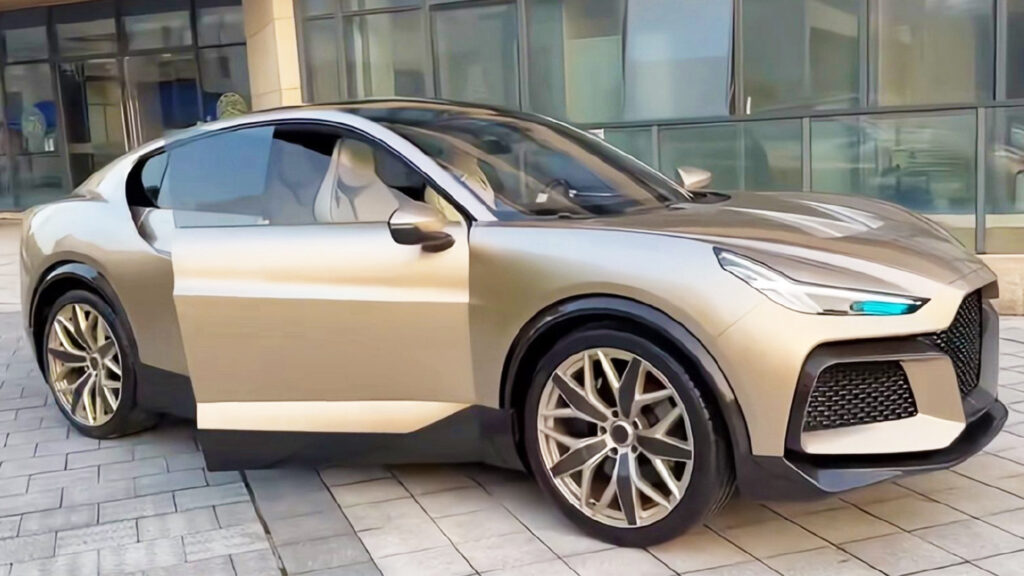
As for this latest concept, it was present at the recent Beijing Auto Show and may make a return appearance at the Chengdu Auto Show in September in more production-ready form. Dreame has shown a penchant for taking inspiration from other brands’ designs, and this sedan appears no different. If the Bugatti Chiron and Ferrari Purosangue had a baby, it would look a lot like this.

\\

TychodeFeijter/X

The front of the crossover-style sedan features a massive grille that recalls the Kosmera concept Dreame trotted out at CES back in January, only scaled up and turned more aggressive. It also sports wide, gaping air intakes and a set of sharp LED headlights.

The standout feature in profile is the set of Rolls-Royce-style rear suicide doors, though Star Motor has pushed the idea further than Goodwood does. Where the Phantom retains a structural B-pillar between the front and rear doors, this Dreame concept deletes it entirely, leaving one uninterrupted opening when both doors swing wide. Recent spy shots show the upcoming Genesis GV90 adopting the same pillarless layout.

\\

Photos of the rear haven’t surfaced yet, but the C-shaped element wrapping the rear side windows and rear doors definitely looks reminiscent of the signature C-line used by Bugatti.

No details have emerged on the powertrain, assuming there’s even a working one under the sheetmetal, but in all likelihood, it will follow the lead of Dreame’s other concepts and run on pure electric power.

Whether any of these showcars will actually reach production remains anyone’s guess. Dreame has so far traded entirely in show cars and renderings.

\\\\\\\\\\\\\

Dreame Nebula Next Jet Concept

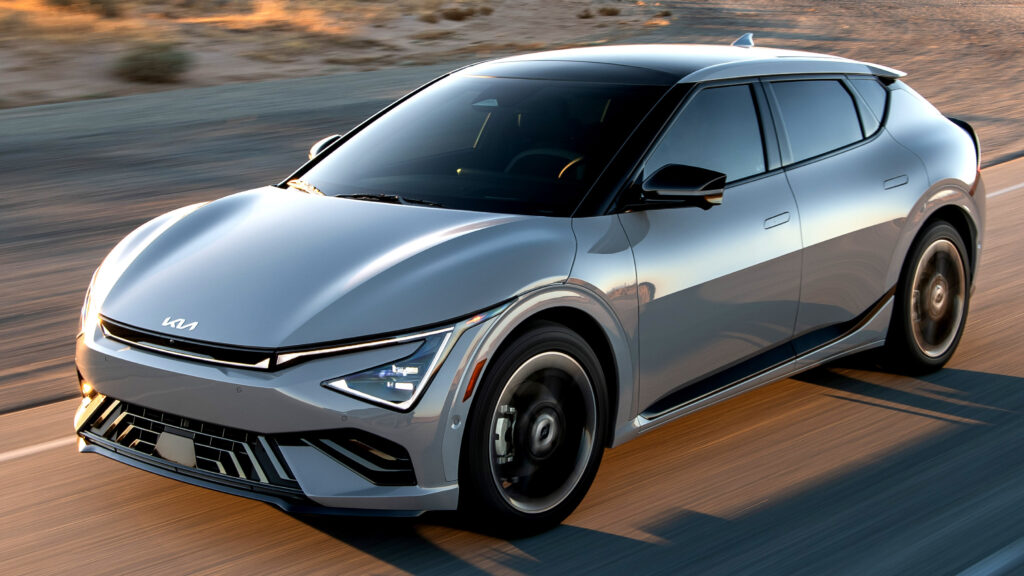
EV6 Sales Tumbled Nearly 38%, Kia’s 2026 Pricing Tells The Rest

  • Kia has slashed pricing for the 2026 EV6.
  • It now starts at $37,900 for a $5,000 savings.
  • Higher-end trims see discounts of up to $5,900.

Through the first four months of the year, Kia EV6 sales have tumbled 37.4% to 2,751 units. That’s a steep decline and it can likely be attributed to the elimination of the federal electric vehicle tax credit.

Kia is now trying to shore up sales by announcing a steep price cut for 2026. Kicking things off is the EV6 Light Standard Range, which begins at $37,900 before a $1,545 destination fee. That’s a savings of $5,000 compared to the 2025 model.

Review: The Kia EV6 GT-Line Still Feels Great, Yet Something’s Missing

The EV6 Light Long Range also sees a $5,000 price cut, while the all-wheel drive variant gets marked down $5,100. The Wind trim benefits from a $5,500 reduction across the board as pricing now begins at $44,800.

\\\\\\\\

Last but not least, the GT-Line will set you back $48,700. That’s $5,500 less than last year’s model, while the AWD variant offers a savings of $5,900.

Kia didn’t mention the EV6 GT, but the automaker stopped importing the high-performance variant earlier this year “due to changing market conditions.”

Minor Model Year Updates

Besides lower prices, the 2026 EV6 now comes with a standard dual level charging cable. Buyers in ZEV states also get a free DC fast-charger adapter. Speaking of charging, the model now sports a plug and charge capability, which allows for automatic billing at compatible chargers via Kia Charge Pass.

\\\\\\

Additional changes are limited, but the EV6 Light Long Range drops the Tech Package to “reduce complexity.” Buyers will also find an updated color palette inside and out.   

As a refresher, the EV6 offers 63 and 84 kWh battery packs as well as ranges of between 237 miles (381 km) and 319 miles (513 km). Buyers will also find outputs of 167 hp (125 kW / 169 PS), 225 hp (168 kW / 228 PS), and 320 hp (239 kW / 324 PS).

2026 Kia EV6 Pricing
TrimMSRP
EV6 Light SR RWD$37,900
EV6 Light LR RWD$41,200
EV6 Light LR AWD$45,200
EV6 Wind RWD$44,800
EV6 Wind AWD  $48,800
GT-Line RWD$48,700
GT-Line AWD$53,000
SWIPE

Prices exclude a $1,545 destination fee

The Epiq Is Skoda’s Cheapest EV, But Its Cabin Wants You To Forget That

  • Skoda has teased the interior of the fully electric Epiq crossover.
  • It sports a 5.3-inch digital instrument cluster and 13-inch display.
  • The affordable model debuts May 19 and will have three powertrains.

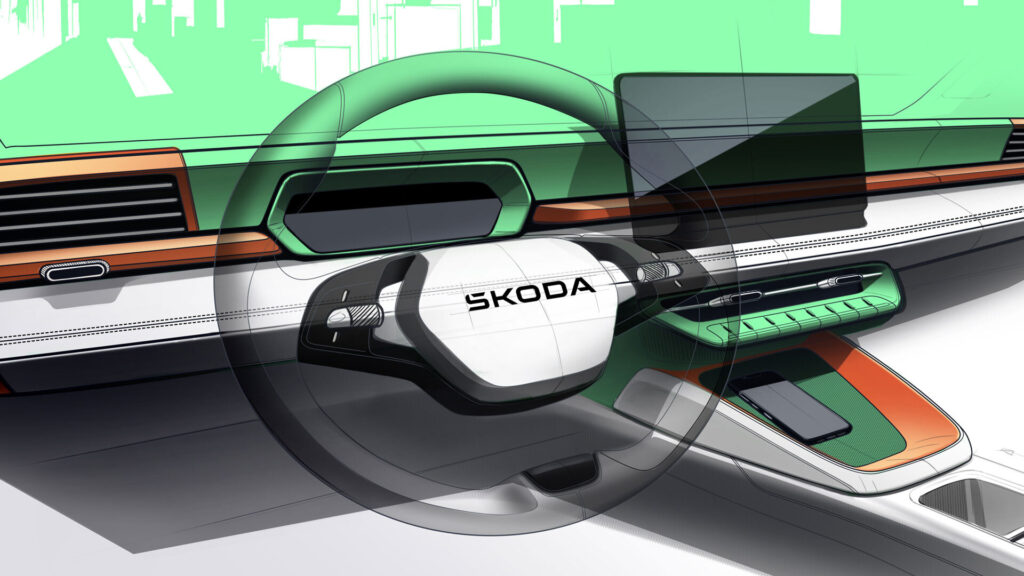
Skoda has teased the interior of the all-new Epiq and revealed the crossover will be unveiled on May 19. Billed as the “first series-production model to fully implement all aspects of the Modern Solid design language,” the cabin embraces a horizontal architecture as well as a minimalistic aesthetic. While few details were shared, we can see a tiered dashboard with an upholstered lower section as well as rectangular air vents.

More: Skoda’s Smallest EV Has One Big-Car Surprise

Drivers sit behind a two-spoke steering wheel and find themselves looking at a hexagonal 5.3-inch digital instrument cluster. It’s joined by a freestanding infotainment system that spans 13 inches.

Beneath the large screen is slender air vents and a row of “haptic shortcuts,” which resemble buttons. The model also sports an open storage compartment, which has a wireless smartphone charger in the center.

\\\\

Rounding out the highlights are a slender center console and an ambient lighting system, which creates a “welcoming, cozy atmosphere.” Skoda also noted the model will incorporate sustainable materials including “100% recycled PES for the seat textiles.”

The cargo compartment holds 16.8 cubic feet (475 liters) of luggage, but that can be expanded to 47.5 cubic feet (1,344 liters) by folding the rear seats down.

Three Powertrains And Up To 267 Miles Of Range

\\\\\\\\

Like the Cupra Raval and Volkswagen ID. Polo, the model rides on the MEB+ platform. The entry-level Epiq 35 has a 38.5 kWh battery pack that feeds a front-mounted motor developing 114 hp (85 kW / 116 PS) and 197 lb-ft (267 Nm) of torque. It enables the crossover to accelerate from 0-62 mph (0-100 km/h) in a leisurely 11 seconds and have a range of 196 miles (315 km).

The mid-level Epiq 40 has the same LFP battery and range as the 35, but sports a more powerful motor developing 133 hp (99 kW / 135 PS) and 197 lb-ft (267 Nm) of torque. Thanks to the extra oomph, the dash to 62 mph (100 km/h) falls to 9.8 seconds.

The range-topping Epiq 55 is notable for featuring a larger 55 kWh NMC battery pack as well as a beefier motor producing 208 hp (155 kW / 211 PS) and 214 lb-ft (290 Nm) of torque. 62 mph (100 km/h) comes in 7.4 seconds, while the top speed of 99 mph (160 km/h) is 6 mph (10 km/h) faster than the other variants. Drivers can also expect to travel up to 267 miles (430 km) between charges.

Production will be handled in Spain, and Skoda has previously indicated pricing will open around €26,000 ($30,400), or about the same as its Kamiq gasoline equivalent.

\\\\\\\\\

Rivian Built The R2 For Half What An R1 Costs To Make, And It’s Not The Battery

  • Rivian says the R2 costs about 50% less to build than the R1 lineup.
  • Simplified design cuts parts count dramatically across key systems.
  • R2’s smaller footprint and higher volume targets also reduce cost.

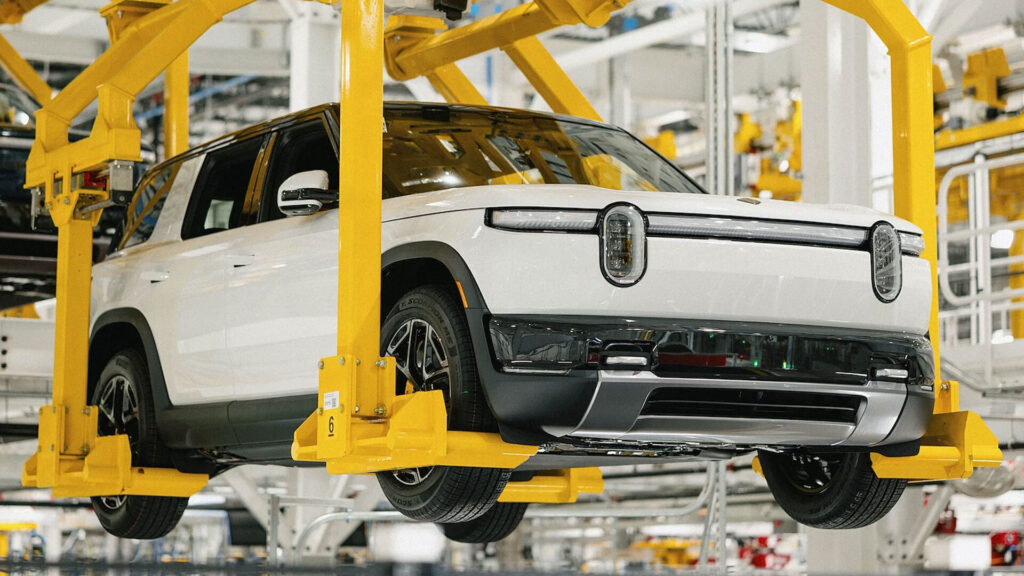
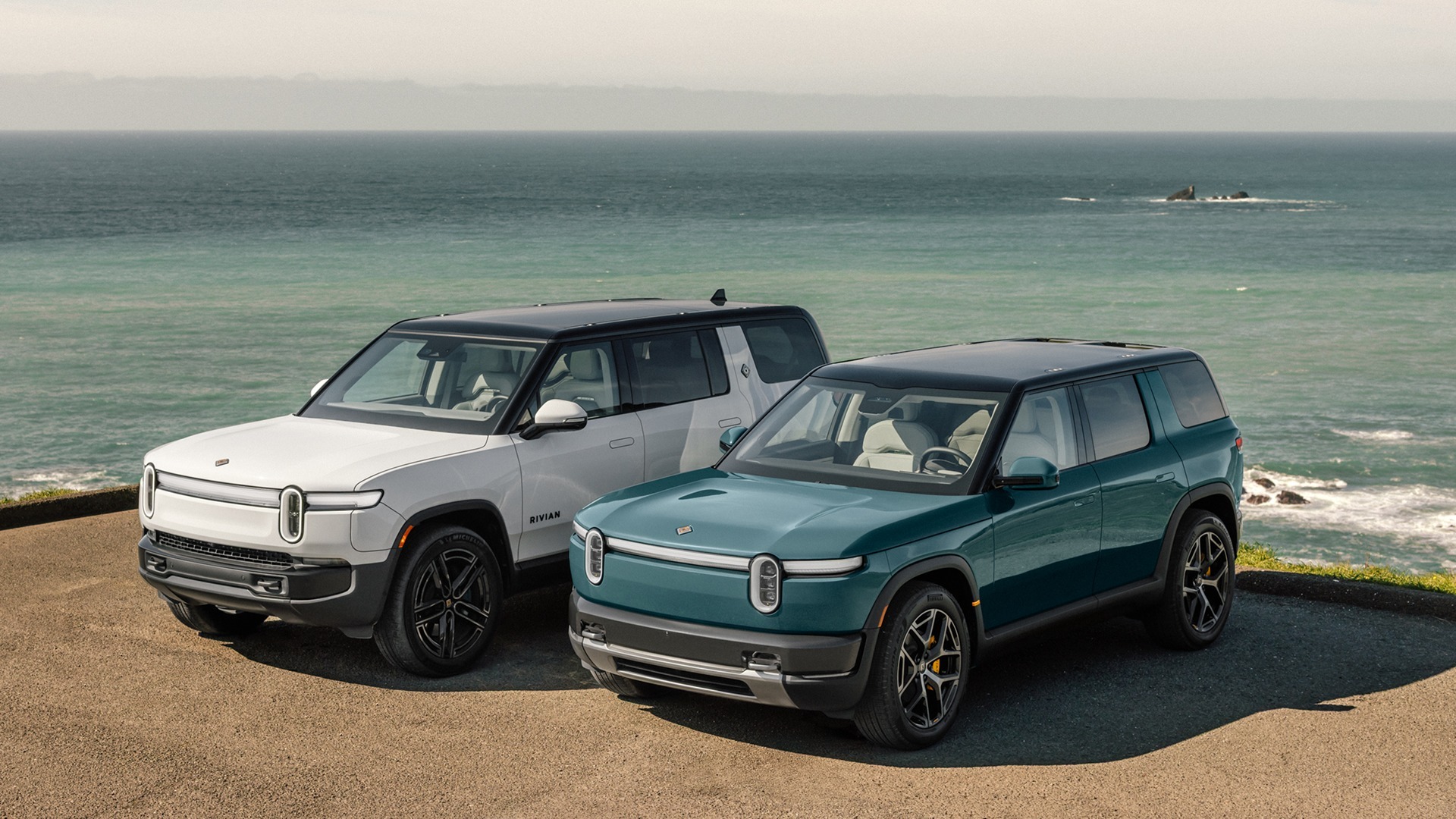
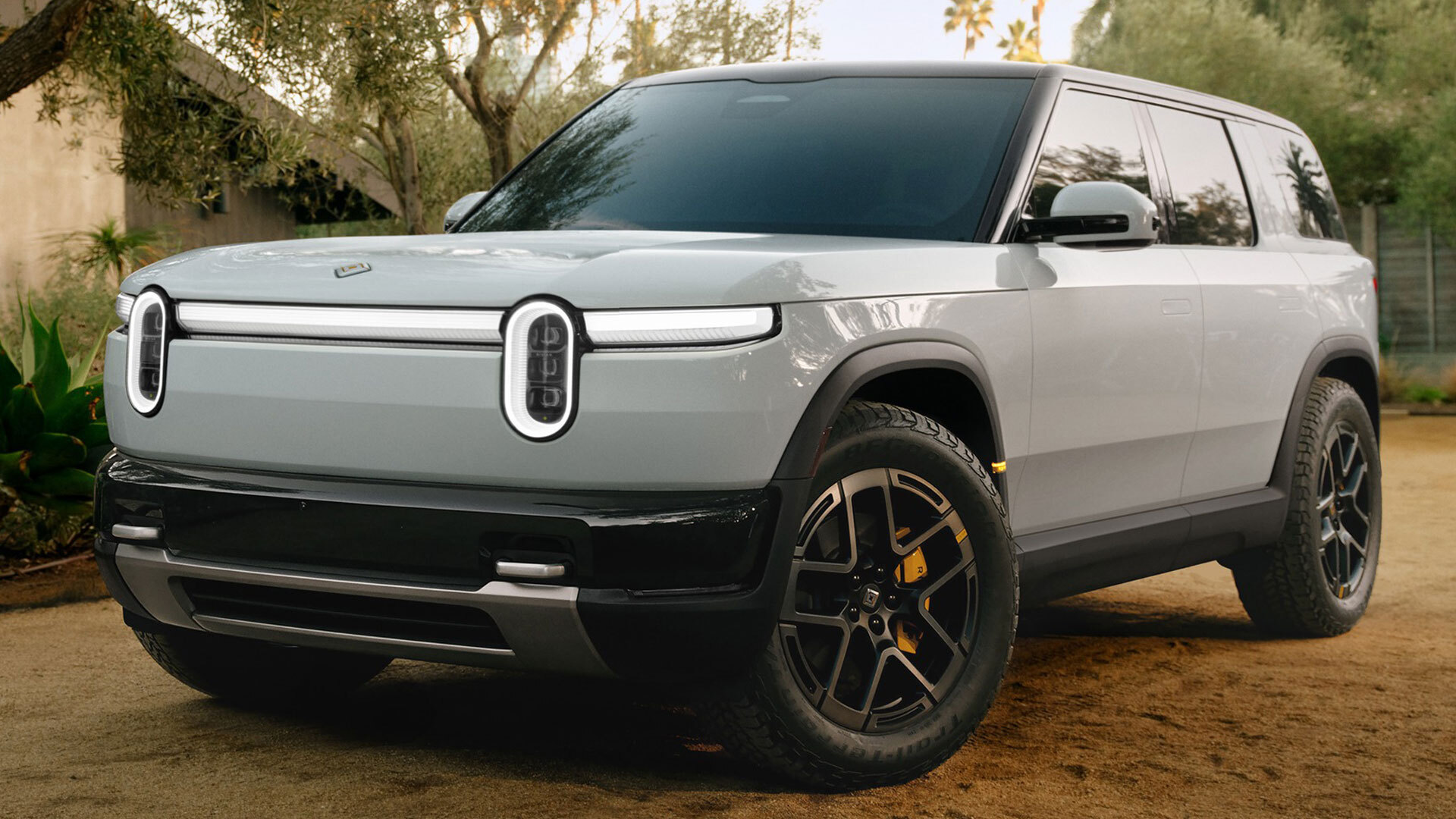
Rivian broke the mold by bringing the R1T, an electric pickup truck, to market before anyone else. Now, it’s trying to gain a far more stable foothold in the industry with its all-new R2. A new report sheds light on how Rivian cut costs but evidently not quality in this new SUV. According to the brand, it costs around half as much to build as the R1S despite keeping the performance and utility that fans love.

At the core of the R2’s cost-cutting approach is ruthless simplification. Rivian says its new zonal electrical architecture slashes wiring complexity, trimming 2.3 miles of harness length and reducing connectors by 60%. High-voltage cabling is down 70% thanks to consolidating multiple power modules into a single unit.

The same philosophy carries over to the powertrain. Rivian’s new “Maximus” drive unit uses 41% fewer parts than the Enduro units found in the R1 lineup. By integrating the inverter directly into the drive unit and even using its housing as a mounting structure, Rivian cuts both material cost and assembly time.

Read: Rivian Lost $416 Million Last Quarter And Just Bet Bigger On Georgia

According to InsideEVs, even the sensors got a rethink. Swapping ultrasonic sensors for corner radars yields a claimed 50% cost reduction, a move that reflects a broader trend toward fewer, more capable components. In theory, that could help Rivian reduce repair costs, a known concern for the brand.

 Rivian Built The R2 For Half What An R1 Costs To Make, And It’s Not The Battery

The front suspension ditches the more complex double-wishbone setup used in the R1 for a simpler MacPherson strut design, cutting costs by 70%. Large die-cast sections reduce underbody part count by 90%, while rear doors shed 65% of their complexity.

There’s also a less glamorous but equally important factor: scale. When Rivian launched the R1T and R1S, it was a newcomer building expensive, low-volume vehicles. Now, with higher production targets in sight, it can negotiate better supplier pricing.

Something as basic as a windshield reportedly costs half as much on the R2 compared to the R1. Add in the fact that the R2 is simply smaller, and therefore uses fewer raw materials, and the math starts to make sense. At this point, all that’s left is to see how Rivian executes on production and sales.

 Rivian Built The R2 For Half What An R1 Costs To Make, And It’s Not The Battery

A 1,000 HP Electric M3 And A 552 HP Gas M3 Will Have The Same Price Tag

  • BMW plans EV and ICE M3 pricing parity despite massive performance gap.
  • Electric version could hit 800-1,000 hp, gas model will make less than 600.
  • Manual gearbox and RWD options may disappear from combustion M3.

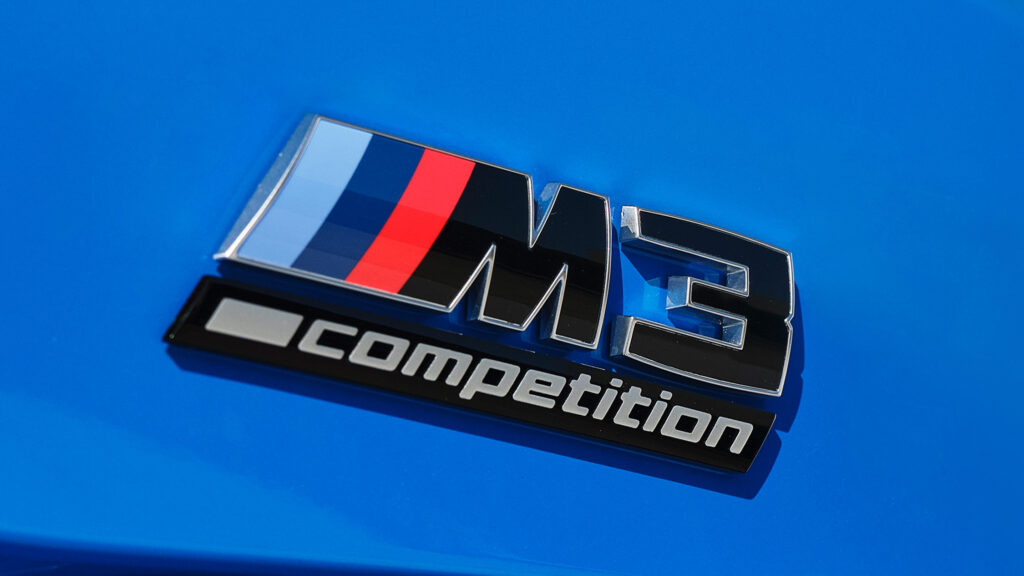
BMW is about to do something unusual with its most famous sports sedan. When the next-generation M3 arrives, buyers will get two very different machines wearing essentially the same badge and, crucially, roughly the same price.

According to a new report, BMW intends to sell the electric and combustion M3 side by side in the same price bracket. That might sound straightforward, but it gets interesting once you look at what each version actually delivers.

Related: BMW’s Electric M3 Tries To Simulate Everything It Just Replaced

The electric M3 could deliver close to 1,000 hp (1,014 PS) from its quad-motor setup, though base models are likely to deliver 700-800 hp (710-811 PS) at launch. Meanwhile, the combustion model will stick with an evolved twin-turbo straight-six boosted by mild hybrid tech to somewhere around 552 hp (560 PS).

Visually, the two cars won’t stray far from each other either. BMW wants them to feel like siblings, not alternatives from different worlds. Expect shared design cues inspired by the Neue Klasse look, even though they’re based on entirely different platforms, the combustion car sticking with an updated version of today’s M3’s CLAR platform.

Panoramic iDrive

Inside, both should follow the same minimalist, screen-heavy direction. That means fewer physical buttons and a more digital-first cabin, incorporating BMW’s Panoramic iDrive tech, which may divide opinion just as much as the powertrain choices.

Combustion M3
\\\\\\\\\\\\

Sylvia Neubauer, BMW M’s sales boss, is adamant that both cars will deliver what buyers expect. “It’s not only about acceleration and power, it’s about drivability, manoeuvrability and that level of trust and connection between the driver, car and road,” she told Autocar.

She also made it clear BMW knows not everyone will jump ship to electric overnight. “Obviously we will not convince 100 percent out of the petrolhead target group to buy an all electric BMW M3,” she admitted. “But out of 100 people that try it, we will be able to convince some.”

That explains why the combustion version isn’t going anywhere just yet, though some elements of it might be. Reports suggest the manual gearbox option, currently only available on the non-Competition version of the M3, might be retired. If that happens, even the petrol M3 edges further away from its analog roots.

Electric M3
\\\\\\\\\\\\\

Lead image BMW

Lotus Wants $189K For Its 905-HP Taycan Rival, UK Dealers Will Take $121K

  • UK Lotus dealers have slashed the prices of new all-electric Taycan rival.
  • One dealer’s unregistered EV has been priced down from £140k to £90k.
  • Lotus will launch hybrid versions of Emeya and Eletra to fight slow sales.

Around the world carmakers are u-turning on their plans to go big – or even all-in – on EVs, and Lotus is no different. The Geely-owned brand is developing hybrid versions of its Emeya sedan and Eletre SUV, but until they arrive, dealers have to focus on finding homes for the electric versions. And they’re offering huge discounts.

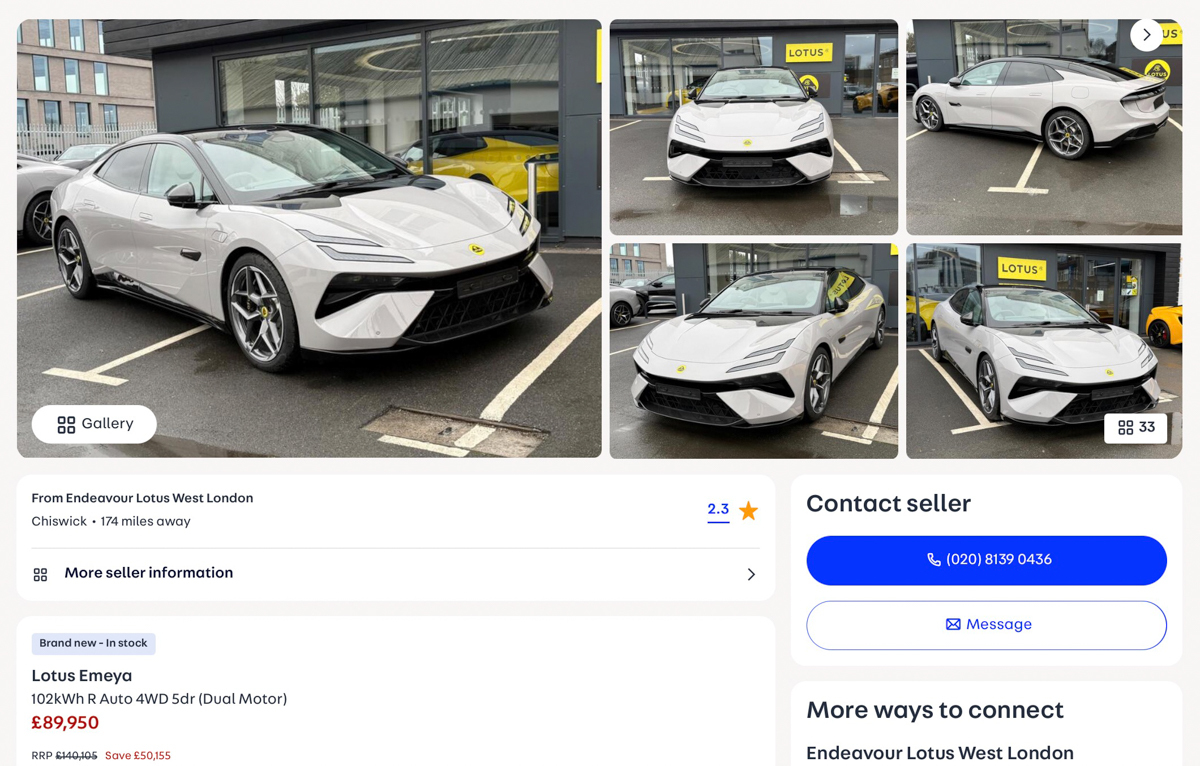
The UK’s Autotrader website currently has 15 brand new, unregistered examples of Lotus’s Porsche Taycan rival up for sale at prices that’ll bring tears to the eyes of anyone who paid full price for one of the EVs when they first became available in 2024.

Related: The Rarest Emira Coming To America Has A Name From The Dark Side

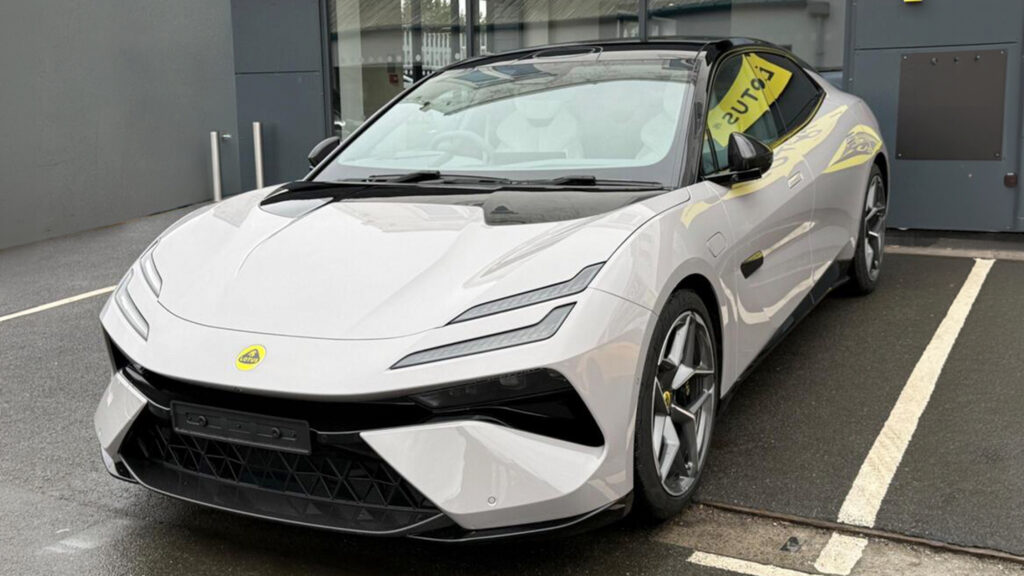
Most of the really crazy deals are on the flagship Emeya R, whose 905 hp (918 PS / 675 kW) bi-motor setup gets the emissions-free sedan to 62 mph (100 km/h) in less than 2.8 seconds. The biggest saving we could find was on a Kaimi Grey car at Endeavour Lotus West London. Originally priced at £140,105 ($189,330), it’s now up for £89,950 ($121,550). That’s a 40 percent (£50,155 /$67,900) haircut.

Not far away in Hatfield, another dealer has two new Rs price well below list, one of them promising a £43,755 ($59,130) saving. And a couple of hours away to the north east of the capital, Endeavour Lotus Colchester has a cut the price of another four Emeya Rs by similar amounts.

New Car, But An Old Badge

Technically, the R is an obsolete model, Lotus having now switched up its base, S, R grade structure for 600 and 900 names that reference the power outputs. But the powertrains themselves are carried over unchanged, so these heavily discounted Rs we’ve found look great value next to a new £129,990 ($175,660) 900 Sport or £139,990 ($189,180) 900 Carbon.

 Lotus Wants $189K For Its 905-HP Taycan Rival, UK Dealers Will Take $121K

And if you’re determined to have your Emeya in the current trim, dealers are offering some healthy savings on those too, including £15,000 ($20,300) off a brand new 603 hp (612 PS / 450 kW) Emeya 600 GT, which should cost £95,000 ($128,400) with options.

Hybrids This Year

Lotus is working on a hybrid Emeya, which is expected to match the spec of the bizarrely-named Lotus For Me, the new Chinese-market petrol-electric version of Lotus’s new Eletre SUV. Combining a 2.0-liter combustion engine, twin-motor 900-volt electrical system and a 70 kWh battery, the Eletre hybrid makes 939 hp (952 PS / 700 kW), and should arrive in Western markets – minus the silly name – this year. the Emeya hybrid shouldn’t ber far behind.

Would these big savings tempt you into an Emeya, would you rather wait for the hybrid, or skip the Anglo-Chinese Taycan rival altogether?

\\\\\\\\\\\\\\\\\\\\\

Endeavour Lotus/Autotrader UK

State of Sustainable Fleets: As Freight Economy Recession Enters Third Year, Powertrain and Energy Diversification Defines Fleet Resilience Strategy

By: STN

LAS VEGAS, Nev. — Now in its seventh year, the State of Sustainable Fleets 2026 Market Brief, released today, delivers a comprehensive, technology-neutral assessment of an industry building resilience through powertrain and fuel diversification amid an extended period of uncertainty. The Market Brief was unveiled at ACT Expo in Las Vegas, Nevada — North America’s largest fleet technology conference and expo, now in its 16th year. It was authored by TRC Companies, a WSP member company and leading construction, engineering, and consulting firm.

The Market Brief arrives as commercial fleets face a convergence of pressures that industry analysts are calling the most complex operating environment in modern trucking history. A prolonged freight recession now in its third consecutive year has been compounded by sweeping federal policy reversals, tariff-driven cost increases of up to $35,000 per new truck, and geopolitical volatility affecting global supply chains and energy markets. The rollback of federal greenhouse gas (GHG) vehicle standards, the expiration of zero-emission vehicle (ZEV) tax credits worth up to $40,000 per eligible medium- and heavy-duty (MD/HD) vehicle, the cancellation of federal clean transportation funding, and the nullification of California’s clean truck regulations have restructured the policy landscape from a federally driven system to a decentralized patchwork of state policies and market-driven factors.

Yet across all this disruption, the data reveals a picture of an industry in structural adaptation rather than retreat. TRC estimates that more than $5 billion in state, local, and utility program funding remains available annually through 2028 supporting clean fleet investment. Fleet technology markets are maturing across nearly every fuel and drivetrain type. Artificial intelligence has moved from pilot projects to mainstream fleet operations. And the central strategic finding of this year’s Market Brief is clear: fleets managing total cost of ownership (TCO) across a portfolio of powertrain technologies  rather than concentrating on a single solution or waiting out the uncertainty are demonstrating measurably greater resilience. In a freight economy where external shocks can rapidly change the economics of any single technology, including conventional diesel, powertrain diversification has become both a financial strategy and a risk management imperative.

Penske Transportation Solutions and Volvo Trucks North America serve as title sponsors of the 2026 State of Sustainable Fleets Market Brief. Exelon Companies and S&P Global Mobility serve as supporting sponsors. Each sponsor contributes expertise and data that enhances credibility of the findings.

The 2026 Market Brief identifies key findings shaping the sustainable fleets landscape:

Artificial Intelligence and Autonomous Trucking: From Pilot Projects to Commercial Operations

AI-powered fleet management has moved from experimentation to mainstream operations: approximately half of fleets in the annual survey report using AI for route optimization, dispatching, predictive maintenance, and maintenance diagnostics with users reporting measurable cost savings, greater vehicle uptime, and improved fleet utilization.

Fleet AI adoption is expected to accelerate rapidly: survey respondents project that 35% of their fleets will be AI-enabled by 2027, nearly doubling from an estimated 20% across the fleet in 2025. Among respondents, 49% reported that none of their fleet had been AI-enabled as of 2025, signaling a significant near-term adoption runway.

Autonomous freight is advancing from Sun Belt pilots to commercial-scale operations: driverless light-duty vehicles have logged millions of miles, and HD autonomous trucks entered commercial freight service in 2025. Broader heavy-duty rollouts across more routes and regions are expected by end of 2026.

Policy and Funding: Federal Cuts Reshape the Landscape; States, Markets, and New Biofuel Mandates Take the Lead

Federal clean transportation funding has been substantially reduced: zero-emission tax credits of up to $40,000 for eligible MD/HD vehicles expired; DOE’s Vehicle Technologies Office budget was cut approximately 90%; $2.2 billion in hydrogen R&D funding was rescinded, including so-called “Hydrogen Hubs”; and the DOT’s National Electric Vehicle Infrastructure (NEVI) program was suspended for six months.

Despite federal cuts, available funding for clean fleet projects remains well above pre-2022 levels: more than $5 billion in state, local, and utility programs is estimated annually through 2028. California maintained over $1 billion in active grant funding for on-road trucks and buses in 2025. Low-carbon fuel standards (LCFS) in California, Oregon, Washington, and New Mexico continue generating meaningful revenue streams supporting multiple clean technology pathways.

The EPA finalized record-high Renewable Fuel Standard (RFS) volume obligations for 2026 and 2027 in April 2026, requiring approximately a 60% increase in biodiesel and renewable diesel production and use compared to 2025 levels — a major structural tailwind for renewable fuel adoption. Regulatory responsibility for GHG and criteria pollutant standards is also increasingly shifting to the state level, though significant questions remain for fleets and their partners.

Diesel Vehicles: Efficiency Gains and Drop-In Renewable Fuels Displace Conventional Diesel at Scale

New Class 8 tractor registrations declined 16% in 2025 according to S&P Global Mobility data amid the prolonged freight recession, tariff-driven cost increases, and economic uncertainty. Fleets and OEMs have focused on diesel fuel efficiency: more than one-third of survey respondents reported using efficiency technologies, with leading heavy-duty adopters in the logistics sector achieving 8.5+ mpg and best-in-class operations demonstrating 11.5 mpg or higher.

Renewable diesel (RD) and biodiesel (BD) drop-in fuels that work in existing diesel engines and infrastructure are displacing conventional diesel at scale: the two fuels combined to replace 74% of conventional diesel used in California transportation in 2024 and 71% in the first three quarters of 2025. More than half of annual fleet survey respondents now report using RD or BD, with near-100% B99 biodiesel adoption expanding in 2025.

The EPA’s Clean Trucks Plan establishing MY 2027 NOx and particulate matter (PM) standards for MD/HD vehicles remains on track, with incremental per-vehicle costs expected to range from $8,000 to $18,000. Final warranty and useful-life provisions are still pending.

Natural Gas Vehicles: 15-Liter Engine Delivers Diesel-Equivalent Performance; RNG Enables Carbon-Negative Fleet Operations

The Cummins X15N 15-liter natural gas engine completed its first full year of commercial availability in 2025 and delivered diesel-equivalent performance, range, and payload capacity alongside compelling fuel cost savings. The U.S. leads the world in commercial use of compressed natural gas (CNG) and liquefied natural gas (LNG) for trucking — a competitive advantage built on years of fleet adoption and infrastructure investment that no other market has matched.

Total MD/HD natural gas vehicle (NGV) registrations fell 15% in 2025, driven in part by the freight recession and the fleet transition period as the market shifted to 15-liter platform deliveries. Straight trucks comprised 82% of 2025 NGV registrations, followed by transit buses (10%) and tractor trucks (7%) according to S&P Global Mobility data.

Renewable natural gas (RNG) sourced from organic waste enables carbon-negative fleet operations and continues to grow: RNG accounted for 97% of all natural gas fuel used in California transportation in 2025. Among NGV-using fleets in the survey, 65% report RNG use, which they estimate accounts for 78% of their total fueling volume.

Propane Vehicles: Cost Savings Drive Steady Growth; New Role as EV Charging Power Source Expands Market

The propane vehicle fleet grew 3.1% in 2025, with school bus and upfitter markets continuing as key adoption sectors. The fuel delivered operational cost savings for 39% of propane fleet operators compared to the vehicles they replaced, reinforcing propane’s role as a cost-effective, practical option in a diversified powertrain portfolio.

Renewable propane use surged: 32% of propane-using fleets reported using it in 2025, up from just 10% in 2023 — a nearly threefold increase that reflects fleet demand for low-carbon, drop-in fuel options requiring no vehicle modifications.

Propane is expanding into a new application as a power source for EV charging infrastructure, offering fleets an alternative to or temporary solution while awaiting utility grid connections with installation cost savings of up to 75% — a development that may accelerate BEV adoption in segments where grid access and utility timelines have been barriers to uptake at scale.

Battery-Electric Vehicles: MD Registrations Set Records as Cost Benefits Demonstrated; HD Vehicles Show Signs of 2026 Growth

MD/HD BEV registrations increased in 2025, led by pickup trucks and delivery vans that set a new record in the MD segment. Fleets operating MD BEVs and HD yard electric tractors reported total cost of ownership benefits compared to the vehicles they replaced, confirming that fleet electrification is delivering financial returns in duty cycles where range and infrastructure align.

Global market signals point to long-term BEV competitiveness in heavy-duty applications: BEVs now represent 22% of China’s HD truck market, and battery costs in that market have fallen to $90/kWh — a level widely cited as cost-competitive with conventional powertrains. Battery costs have fallen below $100/kWh in some markets, a leading indicator for future U.S. fleet economics.

Near-term U.S. growth faces headwinds from the expiration of EV tax credits and manufacturer production pivots. However, data from a California funding program and other signals show that Class 8 truck deployments should exceed the 1,000 annual deployments mark for the first time.

Hydrogen Vehicles: Funding Cuts Cloud Long-Term Outlook; Duty-Cycle Fit for Long-Haul and Heavy Payloads Remains Promising

The hydrogen vehicle sector faced its most challenging year in 2025: hydrogen fuel cell electric vehicle registrations dropped 12%, the cancellation of much of the Hydrogen Hub funding removed a critical development resource, and two prominent Class 8 FCEV manufacturers exited the market.

Despite these setbacks, Hyundai, Toyota, Honda, and Cummins continue advancing fuel cell modules and vehicle programs. Real-world fleet operations continue to confirm hydrogen’s operational fit for long-haul, heavy-payload duty cycles where truck weight and range constraints are most acute, with some deployments achieving 400+ miles per day with faster refueling times than EVs.

Long-term hydrogen sector viability for heavy-duty transportation is expected to depend on sustained federal investment in research, development, and fueling infrastructure that private capital alone will not provide at scale. Coordinated government investment remains the defining variable for hydrogen’s commercial future in freight.

“This year’s Market Brief accurately captures the continuing use of AI in fleet technology and how it allows for fleets to drive enhanced fleet and MPG performance and ultimately sustainability.”

— Paul Rosa, Senior Vice President Procurement and Fleet Planning, Penske Truck Leasing

“Volvo Trucks has been clear and consistent in our commitment towards zero emissions,” said Peter Voorhoeve, president, Volvo Trucks North America. “We continue to invest across a broad range of technologies because we believe meaningful progress requires more than a single solution. By investing in multiple solutions, we’re giving fleets the confidence that they can reduce emissions with the solution that makes the most sense for their business.”

— Peter Voorhoeve, president, Volvo Trucks North America

“In a very short time we’ve moved from ‘what’s the best AI-enabled drivetrain’ to ‘how do I utilize each where it works best’ to manage cost and uncertainty. Adoption of multiple advanced, clean technologies for medium- and heavy-duty fleets has emerged as the defining strategy instead of the retreat that many had predicted.”

— Nate Springer, Vice President, Market Development, TRC Companies

To access the full 2026 Market Brief and receive ongoing updates and analysis from State of Sustainable Fleets, visit www.StateofSustainableFleets.com.

About State of Sustainable Fleets
The State of Sustainable Fleets Market Brief is the foremost authority on sustainable technology adoption within America’s on-road fleets. This annual analysis compiles real-world data from early adopter fleets nationwide, offering sector-specific insights into the uptake of battery-electric vehicles, natural gas, propane, and hydrogen fuel cell electric vehicles, alongside renewable fuels, benchmarked against diesel and gasoline vehicles. The annual Market Brief provides essential data and analysis for year-round education on the rapidly developing market via regular webinars, Academy webinar series, fleet guides, and trend briefs. State of Sustainable Fleets is authored by the Clean Transportation Solutions group of TRC Companies.

About Penske Transportation Solutions
Penske Transportation Solutions is the universal brand for Penske Truck Leasing, Penske Logistics, Epes Transport Systems, Penske Vehicle Services, and related businesses. Our businesses provide innovative transportation, supply chain, and technology solutions to keep the world moving forward. Visit GoPenske.com to learn more.

About Volvo Trucks North America
Volvo Trucks North America, headquartered in Greensboro, North Carolina, is one of the leading heavy-duty truck manufacturers in North America. Its Uptime Services commitment is delivered by a network of nearly 400 authorized dealers across North America and the 24/7 Volvo Trucks Uptime Center. Every Volvo truck is assembled in the Volvo Trucks New River Valley manufacturing facility in Dublin, Virginia. Volvo Trucks North America provides complete transport solutions for its customers, offering a full range of diesel, alternative-fuel, and all-electric vehicles, and is part of the Volvo Trucks global organization.

About ACT Expo
ACT Expo is North America’s largest fleet technology conference and expo, bringing together more than 12,000 fleet operators, OEMs, shippers, technology providers, infrastructure developers, energy companies, and policymakers for four days of peer-to-peer education, real-world case studies, and direct

access to the solutions shaping the industry. Now in its 16th year, ACT Expo 2026 takes place May 4–7 at the Las Vegas Convention Center. The 2026 program expands on ACT Expo’s long-standing leadership in clean transportation with increased focus on the digital frontier, including AI, autonomy, connectivity, and software-defined vehicles. More than 500 exhibitors will showcase the advanced vehicles, charging and fueling solutions, equipment, software platforms, and digital tools redefining commercial transportation. For more information, visit www.actexpo.com.

The post State of Sustainable Fleets: As Freight Economy Recession Enters Third Year, Powertrain and Energy Diversification Defines Fleet Resilience Strategy appeared first on School Transportation News.

❌