Normal view

There are new articles available, click to refresh the page.
Today — 19 April 2026Vehicles

Toyota Flooded With 3,100 Orders In 1 Hour For New EV, See The Price And You’ll Know Why

  • Toyota grabbed 3,100 bZ7 orders during first launch hour.
  • China-only flagship EV priced below smaller Tesla Model 3.
  • Cabin features Huawei HarmonyOS and zero-gravity seats.

We’re seven months out from Black Friday, but Toyota could be forgiven for thinking it’s November already. The automaker was bombarded with 3,100 orders for its new electric sedan in just the first hour after it went on sale, which sounds nuts until you learn how much it costs.

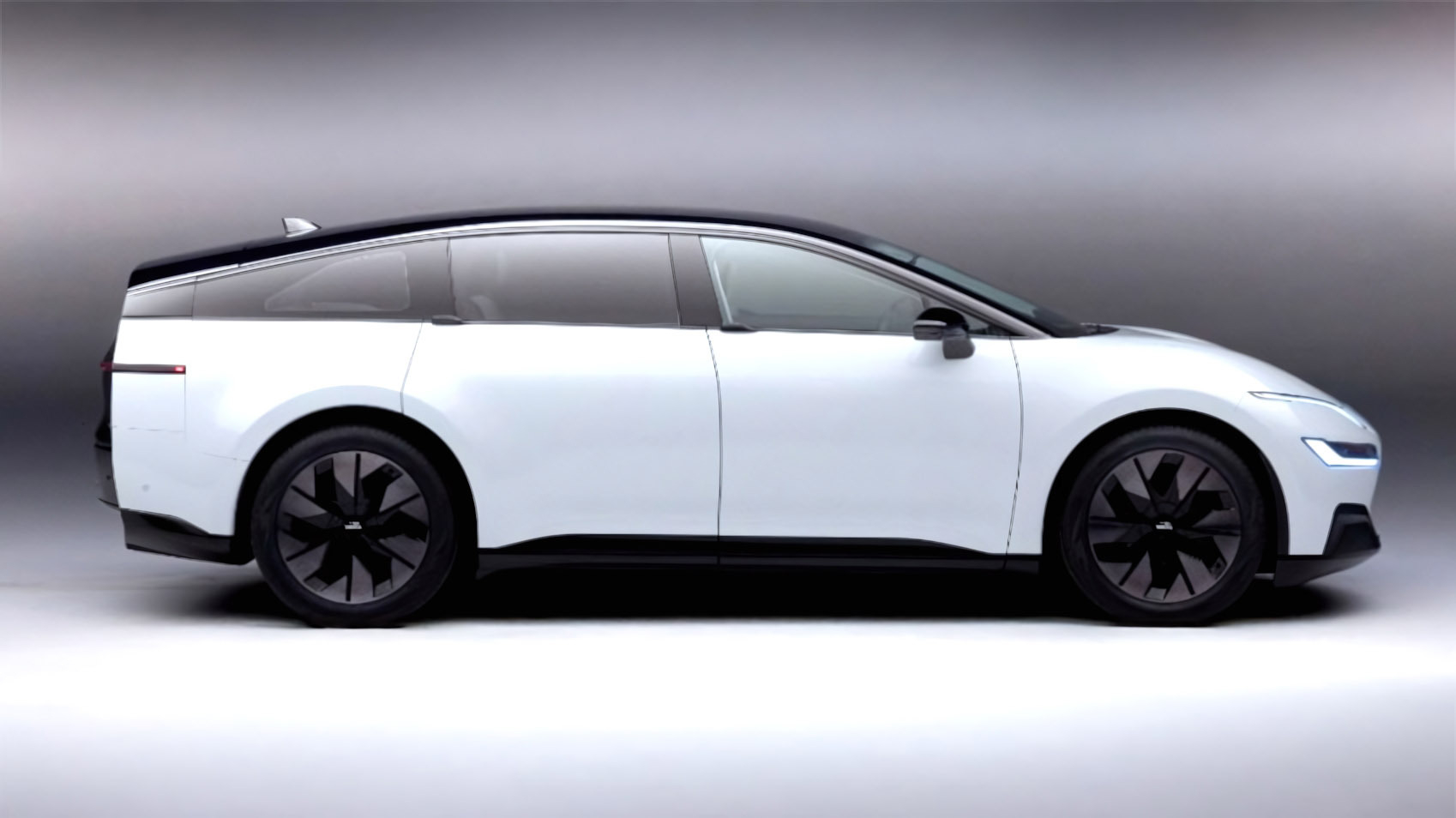
The bZ7 is Toyota’s new flagship EV for China, launched through its GAC-Toyota joint venture. It’s big and full of clever tech, but it’s also ridiculously cheap. Prices begin at ¥147,800, or about $21,500, and rise to ¥199,800, roughly $29,000.

Related: Toyota’s Flagship Electric Sedan Undercuts Tesla Model S By Nearly $96,000 In China

China’s domestic market is so competitive that buyers’s aren’t short of bargains, but even so, the bZ7 looks like incredible value for money. At 5,130 mm (202 inches) long and with a 3,020 mm (118.9 inches) wheelbase, it has a similar footprint to a Tesla Model S, but it’s priced below even the Model 3, which starts at ¥236,500 ($34,500) in China.

More Tortoise Than Hare

The biggest bZ is no Model S Plaid, with a peak power output of 278 hp (282 PS / 207 kW), but battery choices include 71 kWh and 88 kWh LFP packs delivering claimed CLTC ranges of up to 440 miles (710 km) depending on trim. Toyota also says fast charging can add 186 miles (300 km) in 10 minutes.

 Toyota Flooded With 3,100 Orders In 1 Hour For New EV, See The Price And You’ll Know Why

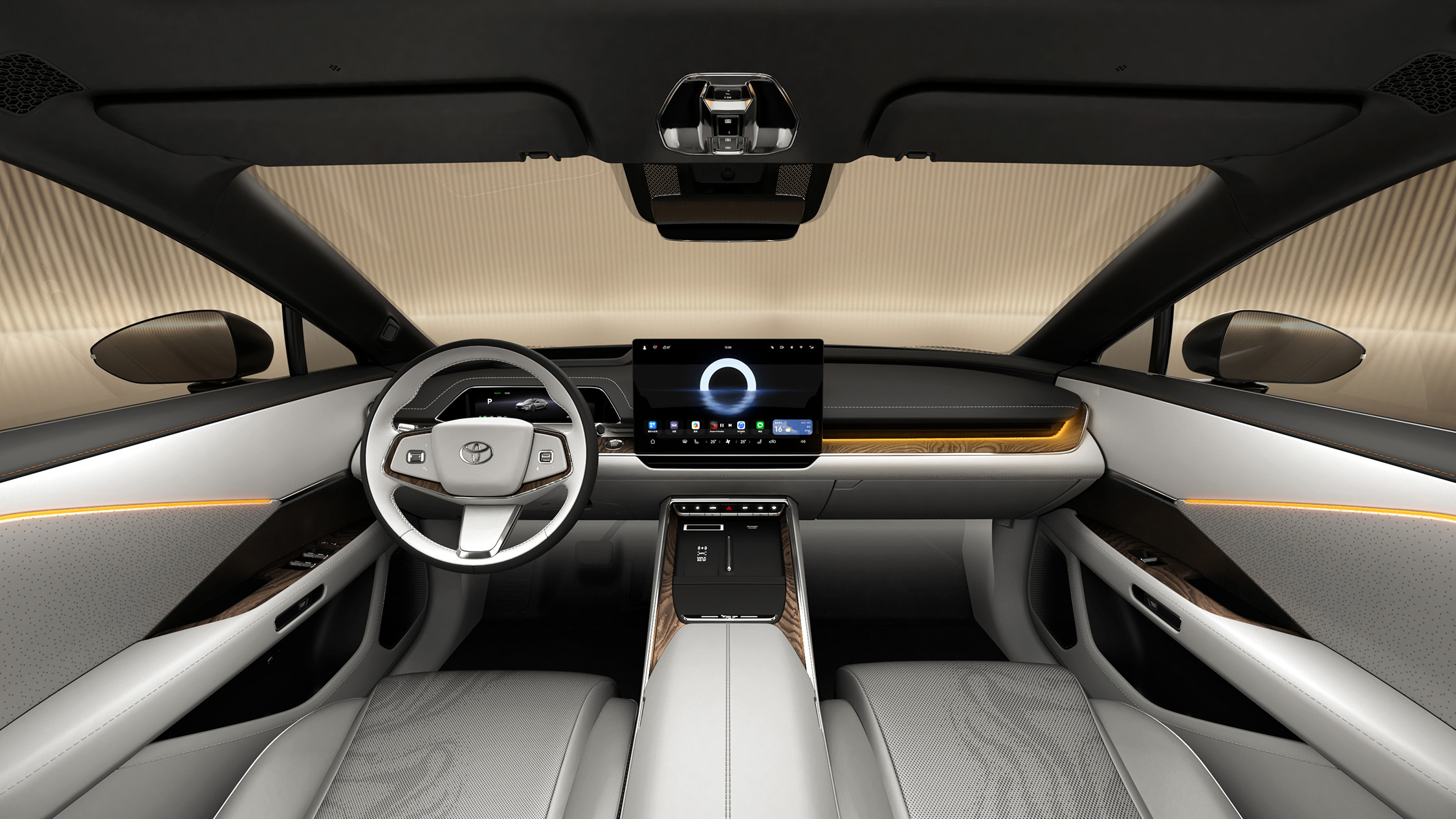
And although it won’t win many drag races, it will impress plenty of drivers with its tech. Available zero-gravity front seats offer heating, ventilation, and massage functions. A floating 15.6-inch center display dominates the dash, backed by a smaller driver screen and head-up display.

Sensory Overload

The cabin runs Huawei’s HarmonyOS system on a floating 15.6-inch center display, and there’s integration with Xiaomi’s smart-home ecosystem, meaning drivers can interact with household devices from the car. You can also spec a cutting-edge driver assistance pack with roof-mounted lidar, five millimetre-wave radars, 11 high-definition cameras, and 10 ultrasonic radars.

That’s 27 sensors to keep you safe, or just 27 electrical headaches for a used owner a decade down the road, depending on your point of view.

\\\\\

Toyota GAC

H/t to Car News China

Porsche’s New Patent Turns Racing Stripes Into A Battery Gauge

  • Porsche patented body panels that can change color electronically.
  • The system could add racing stripes in different drive modes.
  • Future EVs might display battery charge through exterior color changes.

It’s a question that dates back decades. Do you option your fancy sports car with or without visual flourishes like rally or racing stripes? Once you choose, changing your mind isn’t exactly an easy task. Installing or removing stripes is a painstaking process on one’s own and can cost thousands when a professional does the work.

Porsche owners might not have to make that choice in the near future. A new patent would allow them to switch from stripes to no stripes with the push of a button.

More: Tesla Files New Seat Patent For A Supercar That’s Been Sitting Since 2017

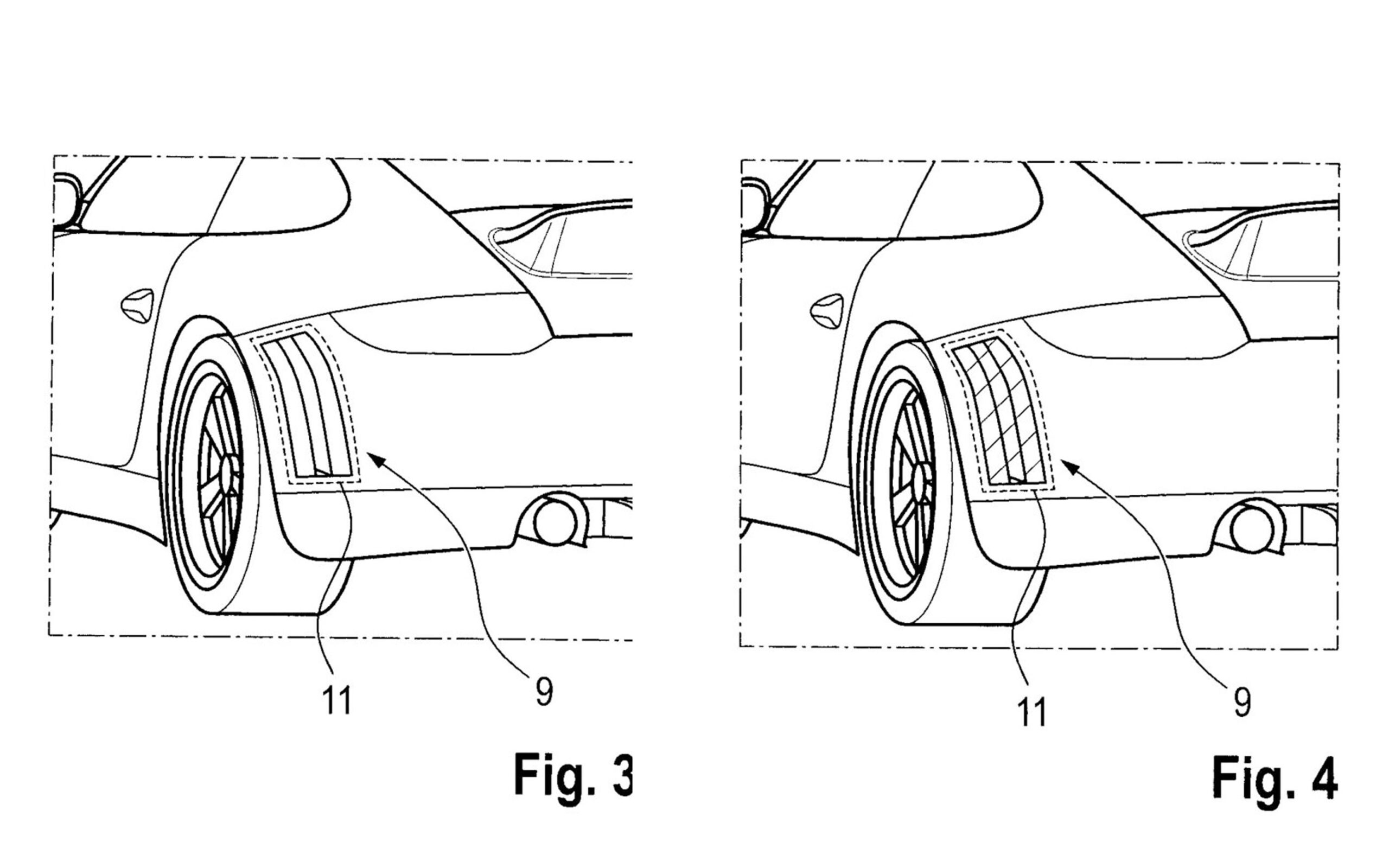
According to the newly published patent application that was first spotted by Jalopnik, Porsche’s system would use an “actively controllable, optically variable coating” applied to exterior body panels. When voltage is applied, the coating changes appearance.

The company says the technology could rely on either so-called electronic paper or paramagnetic coatings, both of which can alter their color when electricity is introduced. This kind of tech already exists, but it’s not used in this fashion.

Plenty of automakers use it for glass panels which allows the occupant to make the glass appear transparent or opaque on command. The big change here is using it on a body panel instead. According to the patent, Porsche owners would see the “rally stripes” appear when the car goes into Sport mode. Additional accents could also light up around areas like the diffuser or the side blades behind the rear wheels.

An EV Battery Indicator Too

\\\\\

Porsche says the idea is partly cosmetic, but there is a functional side too. The company notes that racing stripes could help identify one car from another during competition, especially when multiple identical cars are on track at the same time. Porsche also believes the same coating could act as an exterior battery gauge on EVs.

Instead of opening an app or looking at the dashboard, owners could glance at the car and instantly know how much charge remains. A panel might glow green when the battery is nearly full, yellow when it is running low, and red when it is close to empty.

While there’s no way to know for sure if or when Porsche gives this idea the green light, it’s very much the kind of tech we see popping up more and more across the bleeding edge of the industry. Sooner or later, someone will probably put it into production. Here’s hoping Porsche makes it happen and lets other automakers license the tech.

 Porsche’s New Patent Turns Racing Stripes Into A Battery Gauge

Credit: WIPO / Porsche

Porsche’s Macan Turbo Electric Lost Over $33,000 In Value After Just 1,500 Miles

  • Nearly-new Macan Turbo Electric struggled to excite auction bidders.
  • High-specification, 1,500-mile car failed to sell on the Cars&Bids site.
  • Porsche is also struggling with a fall in demand for new examples.

Hype and market reality are very different. Just check out the tale of this Porsche Macan Electric. A 2025 MY car in desirable Turbo trim bought for over $120,0000 when the Macan EV was still bathing in the glow of the model’s launch buzz, it stalled at just $88,500 in bids on an auction website this month.

This particular example, finished in Ice Grey Metallic and with just 1,500 miles (2,414 km) on the clock, originally stickered at $121,855 including destination when sold through Porsche Edison, NJ. That’s some serious money for a compact luxury SUV, even one wearing a Porsche badge.

More: Porsche’s Next Gas Macan Is Already Testing In An Audi Disguise

But then it also offers some serious go. The Macan Turbo Electric packs dual-motors pushing around 630 hp (639 PS / 470 kW) and a massive 833 lb ft (1,130 Nm) of torque through all four wheels. It’ll hit 60 mph (96 km/h) in just 3.1 seconds and still promises nearly 300 miles (483 km) of EPA range.

RS Wheels And Bottom Coolers

A bare-bones Turbo would have cost $105,300, but this car’s first owner splashed out another $15k on goodies like the 22-inch RS Spyder Design wheels ($3,900), head-up display ($2,630), Sport Chrono package ($980), and $600 of fake engine sounds. It also has a $1,310 Premium Package that included four-zone climate, ventilated front seats and heated rear seats.

\\\\\\\\\\\

It’s the kind of EV most of us would love to see on our driveways, but Cars&Bids visitors didn’t like it enough to put in on theirs. The C&B listing shows bidding stopped short of the unknown reserve at $88,500, which would have represented a $33,355 haircut, and that was obviously too much for the seller to handle. The seller, by the way, claims he bought the car 100 miles (160 km) ago, so we don’t know how much he would have lost had the final bid secured a sale.

New Macan Sales Struggling

Macan Electric owners looking to exit aren’t the only one struggling to find buyers for the EV. So are Porsche dealers. Global Macan sales are already sliding, down 23 percent overall, and the electric version is taking an even harder hit. Deliveries dropped 43 percent year over year in Q1, while the combustion version most buyers prefer goes out of production this summer and won’t be replaced until 2028.

\\\\\\\\\\

Cars&Bids

Yesterday — 18 April 2026Vehicles

(Free Webinar) Beyond the Bus: Comparing Transportation Models for Serving Today’s Most Complex Student Needs

By: STN
17 April 2026 at 22:16

When a student experiencing homelessness moves in the middle of the night, how quickly can your district get them a ride to school the next morning? When a student with an IEP can’t be adequately served by a traditional bus route, who do you call — and what happens if they don’t show up?

For most transportation directors, solving for the most complex student needs consumes 95% of your time. McKinney-Vento compliance, IEP mandates, chronic absenteeism, driver shortages, and the everyday scramble of last-minute changes don’t slow down — and neither can you.

Join School Transportation News and HopSkipDrive for a candid, peer-led conversation on how districts are rethinking their transportation mix to serve every student — not just the ones the yellow bus can reach. You’ll hear directly from a McKinney-Vento Coordinator and a Director of Pupil Transportation and Fleet Management who have navigated these challenges firsthand, alongside a HopSkipDrive transportation analyst who has sat on both sides of the table.

We’ll dig into the real costs and tradeoffs of different transportation operating models — Transportation Network Companies (TNCs), brokers, and taxis — and explore what a smarter, multimodal approach can mean for attendance, compliance, and the students who need you most. You’ll leave this webinar with:

  • A clearer framework for evaluating transportation operating models and where each fits in your district’s plan
  • A practical look at what McKinney-Vento transportation can and should look like
  • Real-world strategies for using supplemental transportation to reduce chronic absenteeism
  • A comparison of TNCs, brokers, taxis, and white fleets: what each model actually delivers in terms of safety, speed, visibility, cost effectiveness, and compliance

This content is brought to you by HopSkipDrive

REGISTER BELOW

Featured speakers:

Claire Bergman
McKinney-Vento Coordinator
Sun Prairie Area School District (WI)

headshot - Claire Bergman, McKinney-Vento Coordinator, Sun Prairie Area School District (WI)Claire Bergman currently serves as the McKinney-Vento Coordinator for the Sun Prairie Area School District, where she is dedicated to removing barriers to education for students experiencing housing instability. With a deep passion for policy reform and systems-level change, focuses on strengthening districtwide support frameworks to ensure equitable outcomes for vulnerable students and their families. Ms. Bergman holds a Master’s in Social Work from Loyola University Chicago.


MeChale’ Johnson
Director, Office of Pupil Transportation and Fleet Management
Alexandria City Public Schools (VA)

headshot - MeChale’ Johnson, Director, Office of Pupil Transportation and Fleet Management, Alexandria City Public Schools (VA)MeChale’ Johnson is the Director of Pupil Transportation and Fleet Management for Alexandria City Public Schools (ACPS). For the past four years, she has overseen a fleet of 124 school buses and more than 85 passenger vehicles, ensuring the safe and reliable transportation of students to and from school each day. Her operation also provides specialized transportation services for students with unique needs through partnerships with contracted public carrier vendors. Prior to joining ACPS, Ms. Johnson served as the Director of Transportation for Falls Church City Public Schools. She possesses more than 15 years of experience in transportation management, beginning her career at the University of Maryland (UMD), where she supervised transportation services that supported university students commuting to campus from surrounding counties and local communities. She also spent several years in public mass transit leadership with the Washington Metropolitan Area Transit Authority (WMATA). Ms. Johnson holds a bachelor’s degree in Criminology and Criminal Justice from the University of Maryland and a Master of Business Administration (MBA).

Greg Dutton
Senior Transportation Analyst
HopSkipDrive
Former Director of Transportation
Renton School District (WA)

headshot - Greg Dutton, Senior Transportation Analyst, HopSkipDriveGreg Dutton is a Senior Transportation Analyst at HopSkipDrive with nearly three decades of experience spanning transportation operations and technology leadership. Greg brings a uniquely informed perspective to his role — having first engaged with HopSkipDrive on the client side as Director of Transportation at Renton School District in Washington State, he has a deep understanding of the daily struggles and tough decisions facing school transportation professionals, including issues related to the national school bus driver shortage. In that role, Greg led all aspects of the district’s transportation department — from personnel management and route planning to budget administration, safety, and fleet operations. Prior to that, Greg held the role of Assistant Director of Transportation, overseeing daily operations, accident investigations, and coordination with law enforcement and community stakeholders. He holds an MBA in Telecommunications Management from Alaska Pacific University, a BA in Telecommunications from Texas Tech University, and an AA in Mass Communications from Amarillo College.

The post (Free Webinar) Beyond the Bus: Comparing Transportation Models for Serving Today’s Most Complex Student Needs appeared first on School Transportation News.

WATCH: Michelle Summers on the School Transportation Nation Podcast

17 April 2026 at 20:56

Michelle Summers was a part of both the Transportation Director Summit and the inaugural STN EXPO Peer-to-Peer Mentorship Program at the STN EXPO East conference. She joined Senior Editor Taylor Ekbatani on the School Transportation Nation Podcast to share the impact of networking within the industry, discover new solutions, take actionable strategies and meaningful relationships from the STN EXPO East conference back to her district.

Listen to STN Podcast E300: Fuse Your Ideas: Connection & Innovation at STN EXPO East 2026.


Related: WATCH: STN EXPO East 2026
Related: (STN Podcast E301) STN EXPO East: Connection, Leadership & Quality Transportation Products
Related: Transportation Directors Receive Rock Star Training on Driver Retention

The post WATCH: Michelle Summers on the School Transportation Nation Podcast appeared first on School Transportation News.

‘Prepare and Pivot,’ Advises Texas Student Transportation Director

17 April 2026 at 18:47

A Thursday webinar went behind the scenes into how a Dallas-area school district transportation department utilized data and alternative transportation to support student attendance amid budgetary concerns.

Budget Pressure is Rising

“We know efficiency is going to be top of mind for every district,” declared Courtney Pallotta, chief marketing officer for EverDriven.

She said the sponsored webinar Thursday was meant to provide tools so districts can submit budget plans with the goal of “[making] sure every kiddo gets to school every day, safely.”

Timothy Logan, director of transportation for nearby Garland Independent School District, advised keeping an eye on data and trends, such as enrollment fluctuations, spiking fuel costs, staff overtime and legislative mandates without funding.

“Prepare and pivot,” he encouraged.

Alex Muirbrook, strategic sales director for EverDriven, noted that the student-centric mission stays the same no matter the cost increases or how much the budget shrinks.

“It’s a very interesting paradox in that, when you think about student transportation, there are elements of what has to be managed every day that are incredibly operational like fuel or drivers, but the flipside is that the outcome is incredibly human,” Pallotta said. “At the end it’s still about a student experience.”

Pallotta reviewed a recent survey sent to STN readers that indicated pressure on transportation leaders continues despite varying budget outlooks.

Logan and Garland ISD Operations Supervisor Jazmyn Ware agreed with the survey results, which found that the top reasons transportation departments expected a funding decrease were: District-wide budget cuts, state and federal funding reductions, declining enrollment and rising operational costs elsewhere.

It costs just as much to run the same scope of operations even if the school buses grow empty as more students move out of the area, Logan said.

Budgetary challenges aren’t going away soon. Logan said transportation leaders must reconsider vehicle choices, utilize third parties, or make hard decisions such as cutting field trips or overtime. Wared added it’s a tough conversation because “we have the overtime because we have the need” for sports or band trips.

Ware underscored the importance of intentionality to reduce idling and deadhead (miles travelled without cargo), consolidate routes, run fuller buses and overall be more efficient. That must be balanced with student welfare since “we want to get the students to and from in a timely manner but also a safe manner,” she said.

Muirbrook and Logan praised the student transportation industry for being a close-knit group whose members converse and brainstorm solutions to budget issues.

“Phone a friend,” Ware agreed.


Related: As School Bus Production Spikes, So Do Alternative Vehicles?
Related: (STN Podcast E299) Meeting Needs: Answering Questions on Alternative Student Transportation
Related: National Specifications Manual Republished to Fix Alternative Transportation Section Omission
Related: Alternative Transportation a Fit for this Catholic All-Girls High School in L.A.
Related: State Budget Calls for Real-world Range Testing for Electric School Bus Sales
Related: Texas Team Takes Home Roadeo Award at TSD Conference


Three Practical Transportation Shifts

The first of three practical transportation shifts advised was to align transportation decisions with student access and attendance goals.

Serving special education, medically fragile, or McKinney-Vento eligible students is an important piece of the puzzle, Muirbrook said. He noted that adding these students to existing routes and buses is a different consideration than if they need new routes or vehicles.

Ware spoke to continuing economic hardships resulting in more McKinney-Vento eligible students. Logan reiterated the need for data, which shows a spike near the winter holiday season but indicates that the overall trend is increasing.

The second tip was to improve efficiency by matching student need with the right transportation mode, which Pallotta noted may not always be the yellow school bus.

“This is an outcome-driven approach,” she said. She advised considering enrollment data and planned routes then asking, “How do I plug this into the choices I have, or do I need to introduce a choice I don’t have to gain more efficiency and flexibility?”

For students with special needs, Ware noted that the many considerations include ride times, student disabilities, level of service needed and more. “We are very creative,” she confirmed.

“I’m sure there’s a lot of both art and science to how you do that,” Pallotta quipped.

Logan agreed, “Our goal is to get them there, and that’s what we do.”

Ware stated that the team first looks to put a student on a yellow school bus and, if that doesn’t fit, works with EverDriven for alternative transportation. Logan noted that this partnership helps fill a need where the district requires alternatives.

Having the flexibility to choose the most appropriate options lets transportation teams focus on safety, student support and affordability amid increased homelessness or school closures, Muirbrook noted.

Lastly, the panel advised connecting transportation outcomes to the district’s 2026 – 2027 budget request.

Clear communication and avoiding surprises, Logan said, have resulted in transportation having a seat at the table in Garland ISD and securing buy-in from administration.

Muirbrook noted that investing in student attendance is not only valuable for the children but often ends up cyclically paying off financially for the district.

“Have multiple tools in your kit so you have the flexibility to do the right thing for the right student within your budget,” Pallotta said.

Watch the webinar on demand. 

The post ‘Prepare and Pivot,’ Advises Texas Student Transportation Director appeared first on School Transportation News.

Dacia’s New $21,000 EV Looks Like A Twingo Without The Fun

  • Dacia’s upcoming electric city car has been spied undergoing testing.
  • The small hatchback is due later this year with pricing under €18,000.
  • EV is based on the Renault Twingo E-Tech, but features unique styling.

Last month, Dacia unveiled their 2030 roadmap, which called for a “confident and decisive entry into electric mobility.” This will see them launch four new EVs by the end of the decade.

The first arrives later this year and will be an A‑segment electric hatchback based on Renault’s RGEV Small / AmpR Small platform. The model has been developed in less than 16 months and will cost less than €18,000 (about $21,200 / £15,700 at current exchange rates).

More: Dacia Confirms Four New EVs, Including Model That Costs Around $21k

That’s impressively cheap and spy photographers recently caught a prototype undergoing testing in Europe. Camouflage hides a number of details, but it’s pretty clear this is a reworked version of the Renault Twingo E-Tech.

Despite this, the Dacia has a unique front end with far more traditional headlights. We can also see a different front bumper that appears to have a wide lower intake as well as rugged body cladding.

\\\\\\\\\\

Baldauf

The profile appears to carryover largely untouched, while the rear end features new taillights that are mounted higher up than on the Twingo E-Tech. We can also see a unique bumper as well as what appears to be a more conventional liftgate.

The single interior image doesn’t reveal much, but we can get a glimpse of a floating infotainment system as well as a Dacia-branded steering wheel. However, the model could echo the Twingo and adopt a 7-inch digital instrument cluster as well as a 10-inch central display.

 Dacia’s New $21,000 EV Looks Like A Twingo Without The Fun

Baldauf

We can also expect sliding rear seats that adjust up to 6.7 inches (170 mm). This enables owners to balance passenger space and cargo capacity. When luggage is what matters, there’s up to 12.7 cubic feet (360 liters) at your disposal. If that’s not enough room, the rear seats can be folded down to provide over 35.3 cubic feet (1,000 liters) of space.

The powertrain will likely carryover as well and this means we can expect an electric motor developing 80 hp (60 kW / 82 PS) and 129 lb-ft (175 Nm) of torque. This enables the Twingo to accelerate from 0-62 mph (0-100 km/h) in a leisurely 12.1 seconds, before topping out at a mere 81 mph (130 km/h).

To help keep costs down, the Twingo uses a small 27.5 kWh lithium iron phosphate battery pack. It provides a WLTP range of up to 163 miles (263 km), which isn’t much but likely fine for a city car.

\\\\\\\\\\\\

Baldauf

Audi Just Greenlit More Models For A Brand That Can Barely Sell One

  • Audi’s AUDI brand is preparing to launch several new models.
  • E7X debuts at Auto China and will be followed by new car in 2027.
  • Three to four more are planned thanks to expanded SAIC partnership.

Audi’s AUDI brand has been struggling as of late, but the company still has faith in the Chinese offshoot. That’s clear today as the automaker is deepening their collaboration with SAIC and preparing to launch an assortment of new models.

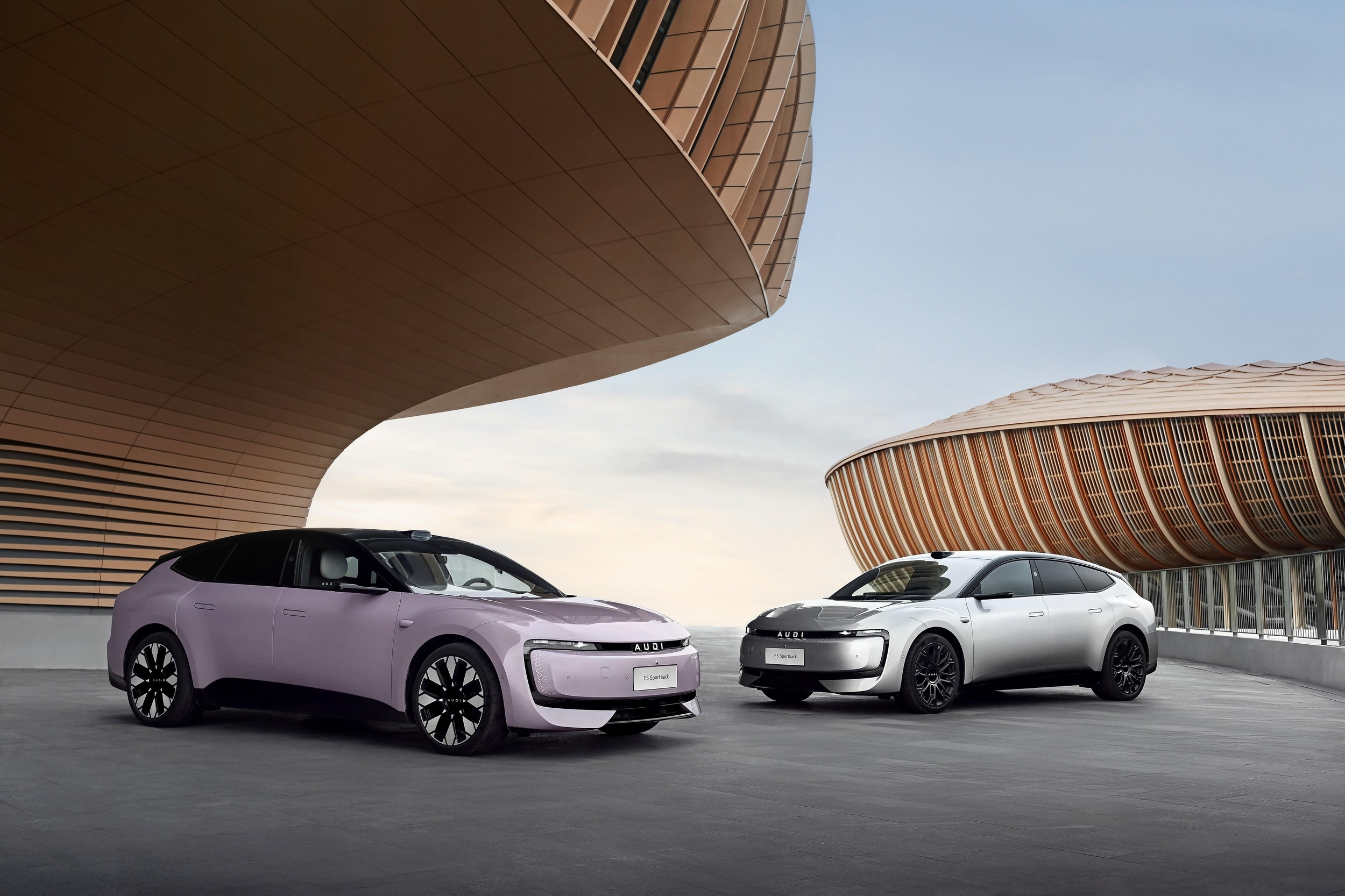
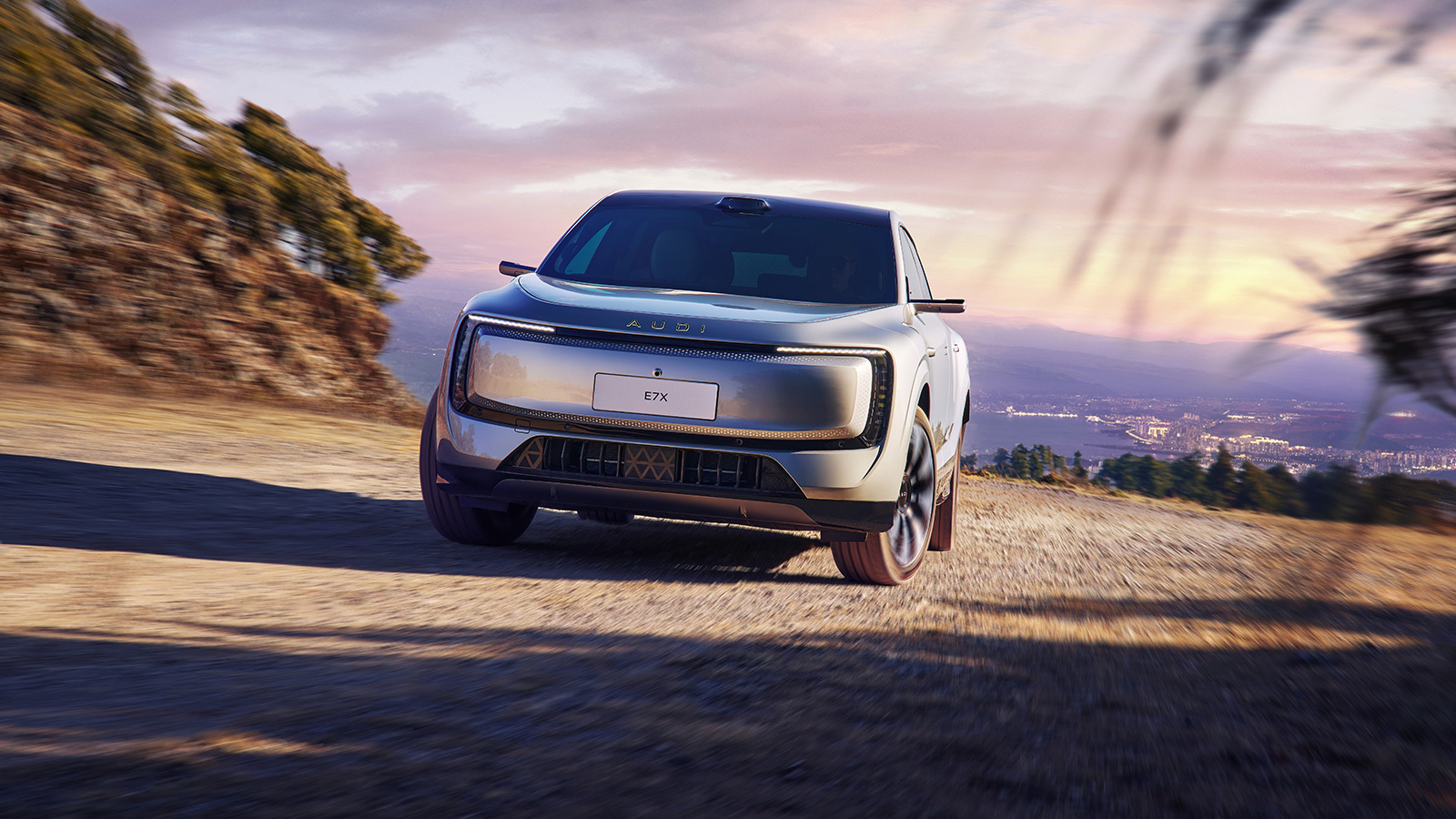
The brand, as you may recall, was launched with the E5 Sportback in 2025. The E7X crossover will debut at Auto China later this month, while a third model is scheduled to arrive in 2027. Little is known about the latter, but officials have previously suggested it could be a sporty limousine.

More: Audi’s China Brand Is Cutting Prices And Losing Sales, So It’s Building A Sporty Limo

More vehicles will follow as the latest agreement between Audi and SAIC “focuses on the full value chain for AUDI’s future models, encompassing R&D, with a dedicated AUDI Innovation & Technology Center to be established in Shanghai.” The latter will be led by Audi and tasked with the “development of China-specific, intelligent electrification technologies and whole-vehicle development across the entire value chain of intelligent connected vehicles.”

The companies did not share many specifics, but said customers can look forward to “AI-powered, immersive smart cabins” as well as advanced driver assistance systems designed specifically for Chinese consumers.

 Audi Just Greenlit More Models For A Brand That Can Barely Sell One

That still leaves plenty of open questions, but the partnership will spawn four new AUDI models in the coming years. However, it’s not clear if that number includes the car coming in 2027. Regardless, upcoming models will be based on the next-generation Advanced Digitized Platform. The luxury brand added the vehicles will “extend and complement Audi’s existing portfolio.”

Audi Chairman Gernot Döllner said, “Audi’s ambition is to remain a strong player in China through the ICV era. Our partnership with SAIC and our NEV brand AUDI has been instrumental, allowing us to connect with new customer groups and expand our product offerings to meet their evolving needs. Following the successful launch of AUDI and its first model, we are ready to take the next step: establishing a dedicated Innovation and Technology Center in cooperation with our long-trusted partner SAIC to drive Vorsprung in China.”

 Audi Just Greenlit More Models For A Brand That Can Barely Sell One

Ford’s Cancelled Three-Row EV Finally Surfaced, And It Looks Nothing Like A Ford

  • The aerodynamic crossover would have offered over 350 miles of electric range.
  • A range-extended version was planned with a potential range of 550 miles.
  • Ford confirmed the prototype is now used to “inform” its next-generation EVs.

When automakers kill a project, it rarely sees the light of day. However, there have been a few exceptions as Volkswagen showed a near-production prototype of the second-generation Phaeton in 2022. A handful of ill-fated Saabs also appeared after their demise including a 9-3 prototype and a Subaru Tribeca-based 9-6X.

See: Mystery Sporty Ford Or Lincoln Model Spotted At Dearborn Development Center

We can add one more to that list as Ford’s Doug Field has quietly been showing the company’s axed three-row EV on LinkedIn. The surprising discovery was first noticed by Ford Authority and a Blue Oval spokesperson told The Drive it’s the “3-row SUV we cancelled in 2024.” They added the model is “now a research vehicle that is informing our next generation of electric vehicles” and we’ll see “its significant influence” on future EVs.

 Ford’s Cancelled Three-Row EV Finally Surfaced, And It Looks Nothing Like A Ford
A prototype believed to be the three-row EV was spied back in 2023 (Photos Baldauf)

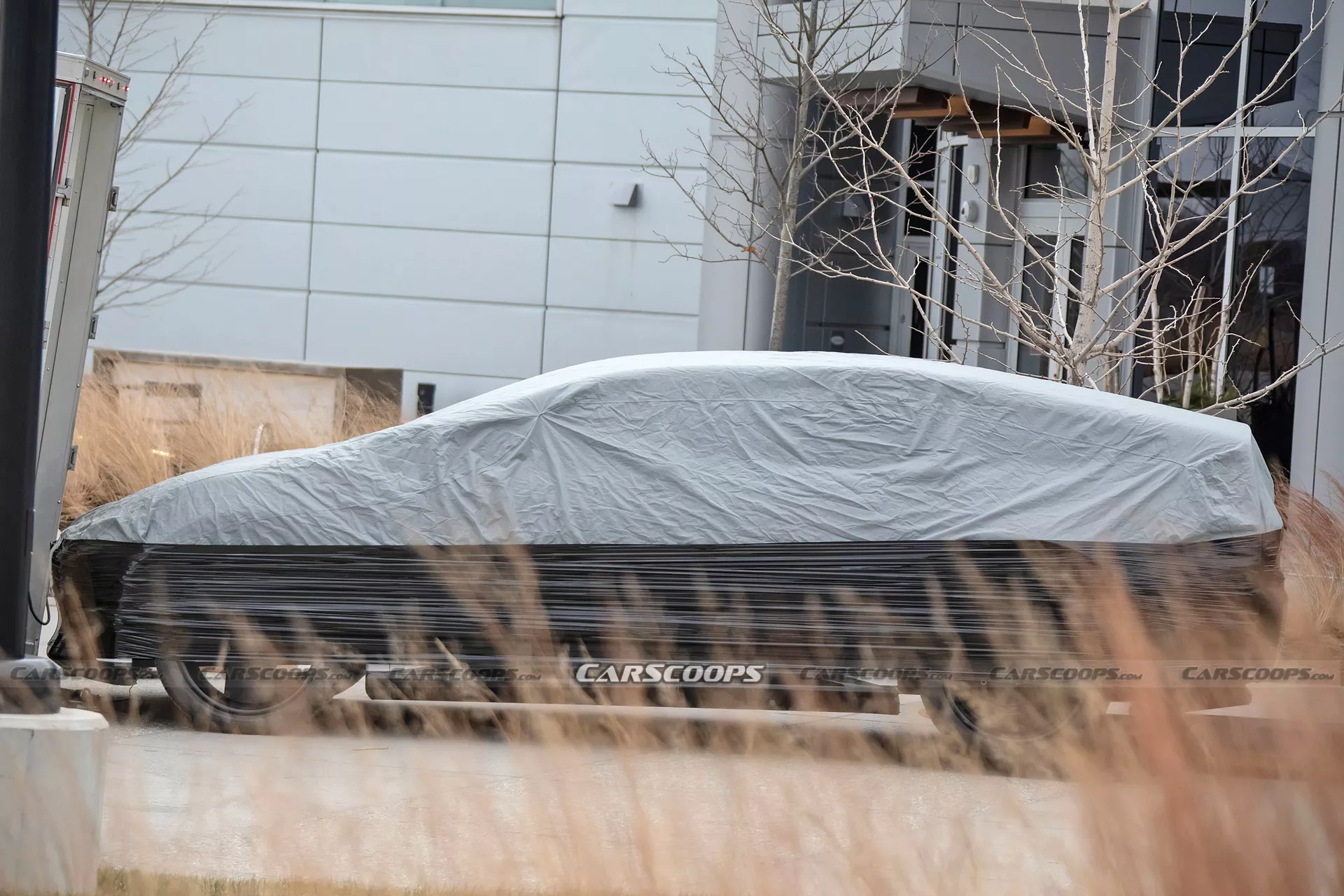
The model is apparently a “development prototype” and it looks like nothing else in the Ford lineup. As you can see, the crossover has an extremely aerodynamic design with a rounded front end and a rakish windscreen that flows into a long, sloping roof.

Designers also gave the crossover streamlined bodywork and minimalist door handles that appear to echo those found on the Mustang Mach-E. They’re joined by aerodynamically optimized wheels and a nearly vertical rear end.

\\\

The model vaguely recalls the Honda 0 SUV, which was axed last month. However, Ford billed it as a seven-passenger “bullet train” that would have a range in excess of 350 miles (563 km). When the battery was low, a DC fast charger could provide up to 100 miles of range in as little as six minutes. There were also apparently plans for a range-extended variant that would have been able to travel 550 miles (885 km) without stopping.

More: Flip-Flopping Ford Delays Electric Truck And Axes 3-Row EV Plans, Will Build Hybrids Instead

Of course, none of that came to pass and the automaker has significantly dialed back its EV plans. However, Ford is still working on a range of affordable electric vehicles including a $30,000 pickup.

 Ford’s Cancelled Three-Row EV Finally Surfaced, And It Looks Nothing Like A Ford

Bentley’s New Uniforms For EV Workers Contain A Material You’d Expect In The Car, Not On The Staff

  • Bentley has developed new carbon fiber workwear for production staff.
  • The new clothing will work in electrostatically protected areas of the plant.
  • Underpinning the firm’s first EV is the VW Group’s PPE platform.

Later this year, Bentley will launch its very first EV. The new model, a mid-size SUV expected to be dubbed the Barnato, will slot below the Bentayga and arrive in the US in 2027. In addition to all the development of the vehicle itself, building an EV also prompted a rather unusual change at Bentley’s Crewe factory.

To get ready to start manufacturing the Barnato, Bentley has designed new workwear for those who’ll be working with electrostatically protected areas of the plant. According to Bentley, the new pieces of clothing include carbon fiber in their construction, not in an effort to reduce weight, but instead to dissipate static electricity.

Read: Bentley Just Told Us What The Barnato SUV Will Cost, Sort Of

The British automaker hasn’t mentioned working with external clothing suppliers for the new kit, but notes it focused on using specific materials and construction methods to reduce environmental impact. When the clothing is ready to be replaced, Bentley will recycle every single piece, which will then be repurposed into new items.

Several photos released by the company show workers posing in the new clothing. They may be smiling, but we suspect they were eager to actually get back to the job of building cars, not pretending to look busy for the camera.

A Bentley With VW Tech

\\\\\\

Bentley’s second SUV is an important vehicle for the brand. It will launch at a time when EV sales are contracting in the United States, but rising in Europe, and it remains to be seen how receptive Bentley buyers will be to an electric SUV.

With that being said, the electric Rolls-Royce Spectre has established itself as their second-best-selling model after the Cullinan, meaning there’s a good chance those shopping for a Bentley will also appreciate the smoothness and quietness of an electric powertrain.

Underpinning the Barnato will be the same PPE platform as vehicles like the Audi A6 e-tron, Q6 e-tron, Porsche Macan Electric, and Cayenne Electric.

\\\\\\\\\\\\

SH Proshots

Mugen’s Super-One Looks Like A Race Car. Its Motor Disagrees

  • Mugen reveals upgrades for the Honda Super-One EV platform.
  • A widebody kit with carbon aero parts adds visual aggression.
  • Changes focus on style and dynamics rather than outright power.

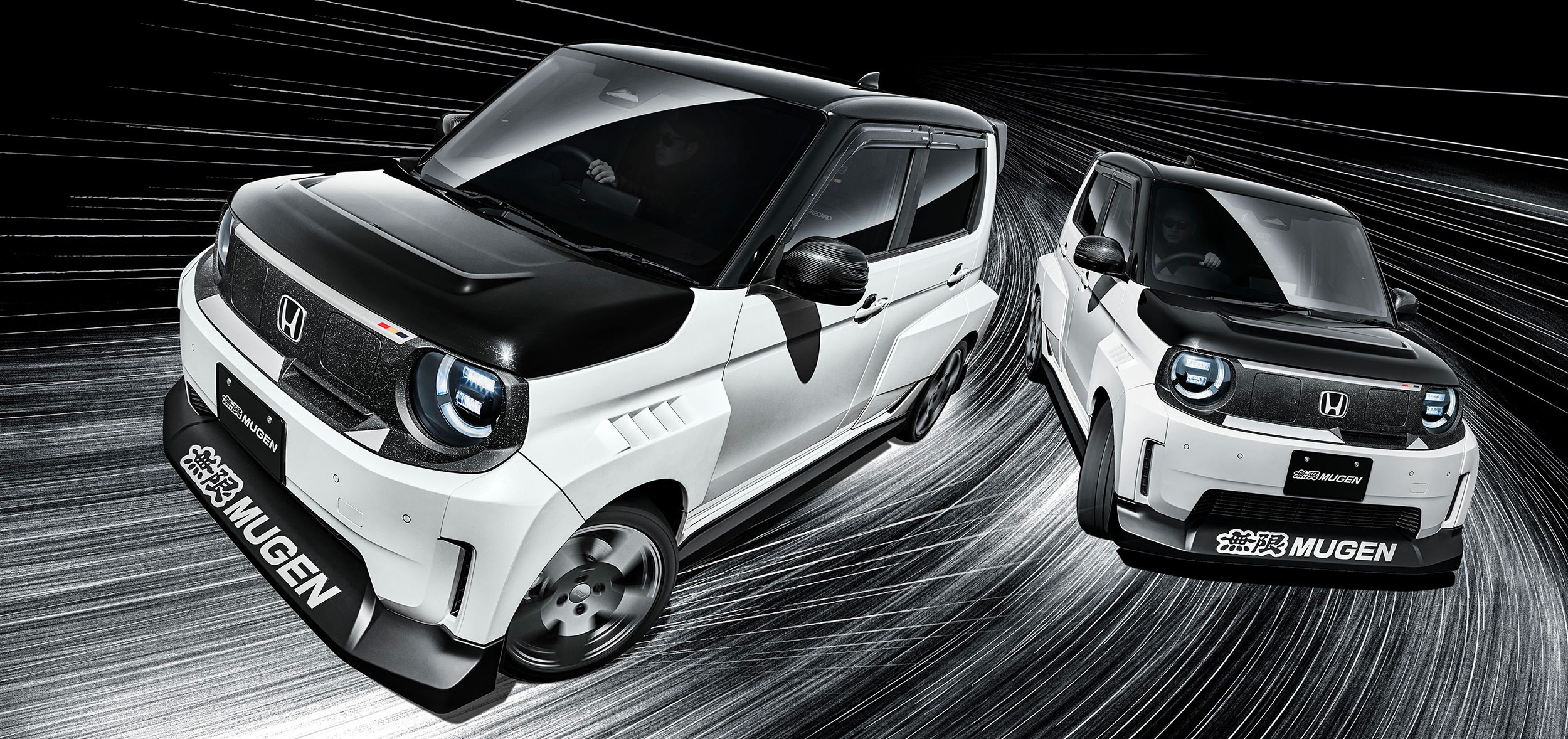
The new Honda Super-One taps into a growing appetite for retro-flavored EVs, borrowing heavily from the irreverent charm of the City Turbo II from the ’80s. While the standard model already leans into a sporty aesthetic, Mugen has taken it further with a more aggressive bodykit, interior tweaks, and a set of performance dampers to back up the look.

Starting with the exterior, the Japanese tuner injects a dose of motorsport attitude into the Super-One. Up front, it gains a black chin spoiler and a vented hood, but the real standout sits along the sides, where vented wide fender extensions are mounted over the already flared arches.

More: Mugen Turns Honda’s Tiny EV Into A Pocket-Sized Street Fighter

Those arches are complemented by carbon mirror caps, deeper side skirts, and a set of 16-inch forged aluminum wheels with a five-spoke design. Around back, Mugen adds a sizeable roof spoiler and sharper extensions to the rear bumper.

\\\\

Inside, the front seats have been swapped with semi-buckets from Recaro, complementing the track-ready stance. Buyers can also get special floor and luggage mats, scuff plates, and protective door trim with Mugen branding, which can also be found on the rim of the two-spoke steering wheel. Other accessories include the hydrophobic mirrors and the window visors.

More: The Manual Honda That Thinks It’s A Baby Type R

Under the skin, Mugen is offering Performance Dampers developed in collaboration with Yamaha, which are said to improve handling and reduce vibrations. Note that the Super-One has a more aggressive chassis setup compared to the N-One e: kei car, featuring a lowered suspension and wider tracks.

\\\\\\\\

Unfortunately, the zero-emission powertrain is left untouched. The Super-One sticks with a single electric motor producing 94 hp (70 kW / 95 PS) in Boost Mode. It is not a headline-grabber, though Honda tries to add some theatre with an Active Sound Control system that pipes in simulated gearshifts and engine noise through the speakers.

More: Honda’s Tiny £20k Super-N EV Lands In UK Like A Half-Scale Ioniq 5 N

Mugen has yet to put a price on any of these upgrades, as they remain under development. A market launch in Japan is scheduled for late May 2026.

Beyond Japan, the Super-One is headed to the UK, Europe, Australia, New Zealand, and parts of Asia, which raises the prospect of a one-make series. It would suit the car rather well.

 Mugen’s Super-One Looks Like A Race Car. Its Motor Disagrees

Mugen

Before yesterdayVehicles

Matthews Bus Company’s West Jefferson Maintenance Team Praised for Outstanding Dedication to Safety

By: STN
16 April 2026 at 19:02

JEFFERSON HILLS, Pa. – Matthews Bus Company’s West Jefferson maintenance team has received a letter of commendation from the Pennsylvania State Police for their extraordinary commitment to safety and fleet maintenance. This is the second time the team has received praise for their fleet inspections in the last few years – proving their unwavering, continuous dedication to ensuring their buses are maintained to the highest standards.

The letter of commendation, written by Corporal Jacob Y. Roberts, Patrol Supervisor and US DOT Inspector for the Pennsylvania State Police, praised Maintenance Supervisor Sam Borrelli and his team, stating the following:

“Sam and his team are far and away among the absolute best to work with. The buses are always extremely well maintained, clean, and never have any issues that would result in a violation on a DOT Inspection. There is never a concern when coming to the garage that things will be out of place or that the process will be difficult. In addition to the buses, the garage itself is always well kept and maintained, and it is always a pleasurable experience to visit.”

Left to Right: Sam Borrelli, Maintenance Supervisor and ASE Certified School Bus Technician, Robert “B.G.” G., ASE Certified Master School Bus Technician, and Robert W., ASE Certified School Bus Technician.

Corporal Roberts also lauded Sam, sharing, “I have known Sam for many years at this point, and I personally believe that he does an excellent job. He reflects extremely well upon the company, and more importantly, has a genuine care and concern for the children and drivers that are in the school buses every day. He should be commended for such consistent and excellent work.

John Hinners, who is Sam’s manager and also the Regional Maintenance Manager for the Company’s Great Lakes area, shared his sentiments regarding Sam and his team’s incredible achievement and efforts, stating, “This letter is a phenomenal testament to the dedication Sam’s team provides to fleet maintenance at West Jefferson. Determination and commitment builds integrity and character. It is clear we have made an impact with our consistent and steady approach to quality maintenance. I am beyond proud of the team and their achievement. Congrats and keep up the amazing work.”

Matthews Bus Company has served the Jefferson Hills community for over 60 years and currently provides transportation for the West Jefferson Hills School District. In addition to providing transportation services, the company is proud to support the community as part of its Partners Beyond the Bus community outreach program. Examples include donating 20,000 lbs. of food to a local food pantry for the holidays, holding a Stuff a Bus event, donating a bus to the West Jefferson Hills School District for mobile mental health services, donating backpacks to local students, and more.

About Matthews Bus Company
Matthews Bus Company has been providing safe and reliable student transportation across Pennsylvania since 1961. Its mission is to transport students to school safely, on time and ready to learn® and is a sister brand to Petermann Bus, Durham School Services, Stock Transportation, and more. Through this mission and a grassroots approach to our operations, Matthews Bus Company and its sister brands have earned recognition as a trusted transportation provider among our Customers and the Communities they serve.

The post Matthews Bus Company’s West Jefferson Maintenance Team Praised for Outstanding Dedication to Safety appeared first on School Transportation News.

HopSkipDrive Launches “Flexible Invoice Groups” to Simplify Complex School District Billing

By: STN
16 April 2026 at 18:40

LOS ANGELES, Calif. — HopSkipDrive, the leader in safe, fast, and simple supplemental student transportation, today announced the introduction of Flexible Invoice Groups. This new self-service tool, available directly within the ride management software RideIQ, allowing transportation directors to automate and customize how they group rides—aligning them instantly with specific school budgets, grant funding, or departmental structures.

In school transportation,”simple” billing is often a myth. Managing these operations is about more than just a ride; it’s about navigating a complex web of budgets, grants, and departmental funding. For large districts, the reality of McKinney-Vento funds, General Ed budgets, and changing Foster Youth placements often means transportation directors end up buried in manual spreadsheets and custom workarounds.

Flexible Invoice Groups is designed to simplify these complex needs by putting control back in the hands of districts and eliminating the need for manual workarounds. Every month, the system automatically generates:

● Custom Budget Alignment: Invoices are automatically pre-sorted into your district’s
specific “buckets”—such as McKinney-Vento or General Ed. Because riders are mapped to these groups on the backend, your billing arrives already aligned with your funding and departmental structures.
● Total Transparency: Every invoice automatically generates a consistent Excel backup with trip-level details. Because we maintain a direct relationship with every CareDriver, you get a verified audit trail showing exactly how each student’s ride is billed.
● Clear Reporting: Access clean, standardized PDFs that are pulled directly from our ride records. Our direct relationship with drivers on our platform means reports are generated directly from our data, not from a middleman’s spreadsheet. These PDF reports provide the easy-to-understand documentation that procurement teams often need to share with other departments and district leadership.

From a Manual Marathon to Total Accuracy
Aligning invoices with internal cost centers used to be a manual marathon, especially for
districts juggling multiple funding sources. We’ve transformed that”spreadsheet scramble” into a centralized, automated system, slashing the time spent on reconciliation and freeing your team to focus on what matters most: getting students to school safely and reliably. Unlike unregulated brokers who can subcontract to unknown third-party fleets—leading to “middleman markups” and fragmented data—HopSkipDrive maintains a direct relationship with every CareDriver. This oversight provides the verified audit trail and transparent reporting necessary to protect your district’s budget and liability, without the hidden costs.

Precision at Scale
The strength of Flexible Invoice Groups lies in providing the granular data needed to track every dollar. By enabling admins to create custom groupings and providing a standardized Excel backup for every billing cycle, this feature ensures that your financial reporting stays seamless and manageable, no matter how many rides you’re coordinating.

At HopSkipDrive, we are committed to being a trusted partner in your district’s financial health. While Flexible Invoice Groups automates the technical side of billing, it is just one part of our support ecosystem. From Shared Billing that automatically splits costs between districts, to RideIQ reports that provide the documentation needed for Medicaid reimbursements, we are giving administrators back their most valuable resource: time. As districts continue to scale their operations, these tools ensure that your billing remains as agile and transparent as you need.

About HopSkipDrive
HopSkipDrive is the leader in safe, fast, and simple supplemental student transportation. Modernizing the $30 billion school transportation industry through its care-centered transportation marketplace which supplements school buses by connecting kids to highly-vetted caregivers on wheels, such as grandparents, babysitters, and nurses in local communities. HopSkipDrive also offers its industry-leading transportation intelligence platform, RouteWise AI, to address critical challenges, including budget cuts, bus driver shortages, and reaching climate goals. With this technology, HopSkipDrive has supported over 14,500 schools and over 2,000 school districts, government agencies, and nonprofit partners. Since its founding in 2014 by three working mothers, HopSkipDrive has surpassed more than 100 million safe miles driven. This record includes nearly 3 million foster and McKinney-Vento rides and 1.7 million Individualized Education Program (IEP) rides, alongside millions of additional trips for General Education, Career and Technical Education (CTE) programs, and extracurricular activities.

The post HopSkipDrive Launches “Flexible Invoice Groups” to Simplify Complex School District Billing appeared first on School Transportation News.

Mercedes’ EV Push In America Has Nothing To Do With What American Buyers Want

  • Mercedes will continue offering EVs across US for the foreseeable future.
  • The company expects pockets of demand despite lost federal tax incentives.
  • US supply remains tight as Europe and China continue to absorb inventory.

Mercedes-Benz is not stepping back from electric vehicles, despite competitors scaling back amid slower adoption rates. The news comes as US demand for EVs cools following the rollback of federal tax credits.

Instead, during the next three years, Mercedes will introduce a number of new electric models to the United States, including three AMG performance EVs and battery-powered versions of popular models such as the GLC crossover, E-Class and the C-Class sedan that was previewed today.

The Global Need To Go Electric

The update to Mercedes’ plans came from Adam Chamberlain, the CEO of Mercedes-Benz USA, speaking to AutoNews, who explained the company’s position. Mercedes is sticking to its EV plans due to the requirement from global markets, said Chamberlain. Strict international regulations, especially in China and Europe, mean that for a brand selling worldwide, it is impossible to turn its back on EVs.

Also: Mercedes Heard ‘Too Many Screens’ And Built A New C-Class EV That’s One Giant Screen

However, unlike other manufacturers, they won’t be pushing electrification on consumers, hoping they’ll switch. Instead, Mercedes has moved to flexible vehicle platforms. Rather than their initial approach of offering a separate line of EVs, Merc’s current plan is to design cars compatible with gasoline engines, hybrids, or full battery-electric power.

American Demand For EVs Remains

 Mercedes’ EV Push In America Has Nothing To Do With What American Buyers Want
The upcoming Mercedes-Benz C-Class with EQ Tech.

Mercedes predicts pockets of demand among US consumers for EVs in the foreseeable future, despite the loss of federal incentives. While the company predicts EVs to constitute approximately 5 percent of its retail sales in the U.S. this year, that’s partly down to limited production and strong demand from Europe and China.

On the national scale, approximately 14 percent of consumers indicate that they would give serious consideration to an EV next time. In California, it grows to 28 percent. So, there is demand, but it is unevenly distributed. In fact, according to the report, Mercedes US have only been able to allocate around 200 electric CLA’s for customers, all units of which have been spoken for.

Read: Mercedes’ Future EVs May Be More Chinese Than You Think

Chamberlain thinks the U.S. EV sales would rise to 10 to 15 percent in the year 2021, with the supply increasing and more mainstream electric models coming into the market, such as battery versions of the GLC and C-Class. Nevertheless, profitability is still its focus. He made sure it was evident that Mercedes is not going to produce tens of thousands of vehicles without confirmed demand in its bid to achieve market share.

 Mercedes’ EV Push In America Has Nothing To Do With What American Buyers Want

Ford’s Biggest Product Push In Years Will See 80% Of Its American Lineup Refreshed By 2029

  • Ford plans to refresh most of its global vehicle lineup by 2029.
  • A new internal group will unify design, EV, and software teams.
  • UEV platform focuses on weight reduction and system simplicity.

Ford is preparing one of its most aggressive product overhauls in years, and it is reorganizing itself to get there. The company plans to refresh 70 percent of its global portfolio by 2029 and, to support that effort, has created a new end-to-end internal organization that integrates its EV, digital, and design teams with its global industrial system.

According to Ford, this structure will “deliver one of the most intensive product, software, and services rollouts in Ford’s history.”

The new group, called Product Creation and Industrialization, will be led by Kumar Galhotra. Beyond the global target, Ford says 80 percent of its North American portfolio by volume will also be refreshed by 2029. That includes a next-generation F-150 and F-Series Super Duty, alongside a new mid-size pickup built on Ford’s Universal Electric Vehicle (UEV) platform.

Read: Jim Farley Promises A New Affordable Ford EV To Take On Tesla’s Model 3 And Y

Developed by a skunkworks team, the UEV platform uses unicastings to reduce weight and complexity. It also features an ultra-efficient powertrain and a fully zonal electrical architecture, supported by in-house software and advanced driver assistance systems.

More Electrified Options

 Ford’s Biggest Product Push In Years Will See 80% Of Its American Lineup Refreshed By 2029

As part of Ford’s product updates, nearly 90 percent of its global nameplates will offer electrified powertrains by 2030, including hybrids, extended-range EVs, and full EVs. Interestingly, Ford notes that work on its UEV platform will benefit its hybrids, too, thanks to the new high-efficiency motors developed.

“This is the culmination of years of work and progress to create the modern Ford – a talented, unified organization capable of scaling high-quality, software-defined vehicles with a choice of propulsion, distinctive digital experiences and features, and a personalized ownership experience that improves over time,” Ford chief executive Jim Farley said in the announcement.

Doug Field Exits

Ford’s sweeping internal reset comes with a notable departure at the top. The company confirmed that Doug Field, who joined five years ago to steer its push into electrified, connected, and software-defined vehicles, will leave within the next month.

Field played a central role in shaping the newly formed Product Creation and Industrialization organization, the same group tasked with streamlining development across hardware, software, and manufacturing. His exit lands at a critical moment, as Ford leans on this structure to execute its broad product overhaul and move toward an 8 percent adjusted EBIT margin by 2029.

 Ford’s Biggest Product Push In Years Will See 80% Of Its American Lineup Refreshed By 2029
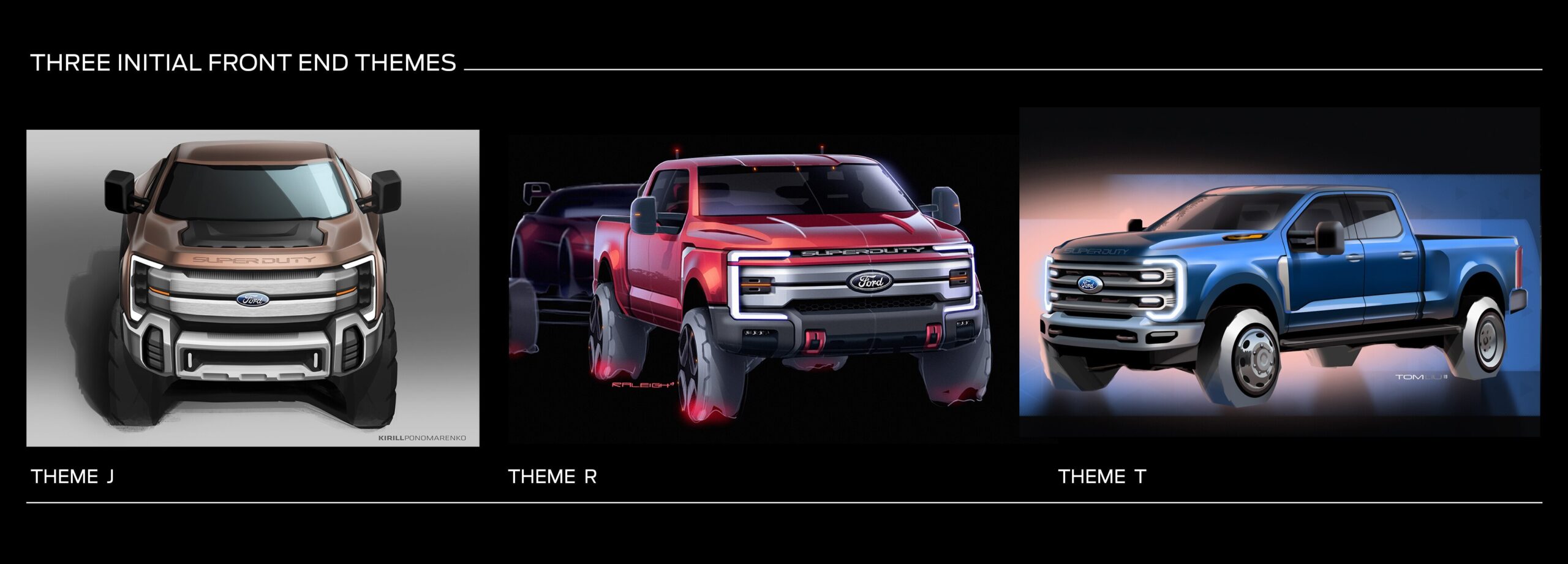
Ford Super Duty sketches from the past.

Mercedes Heard ‘Too Many Screens’ And Built A New C-Class That’s One Giant Screen

  • The new electric C-Class adopts a full-width digital dashboard layout.
  • A 39.1-inch Hyperscreen dominates the cabin with few physical controls.
  • Mercedes promises improved space, long-distance comfort, and sportiness.

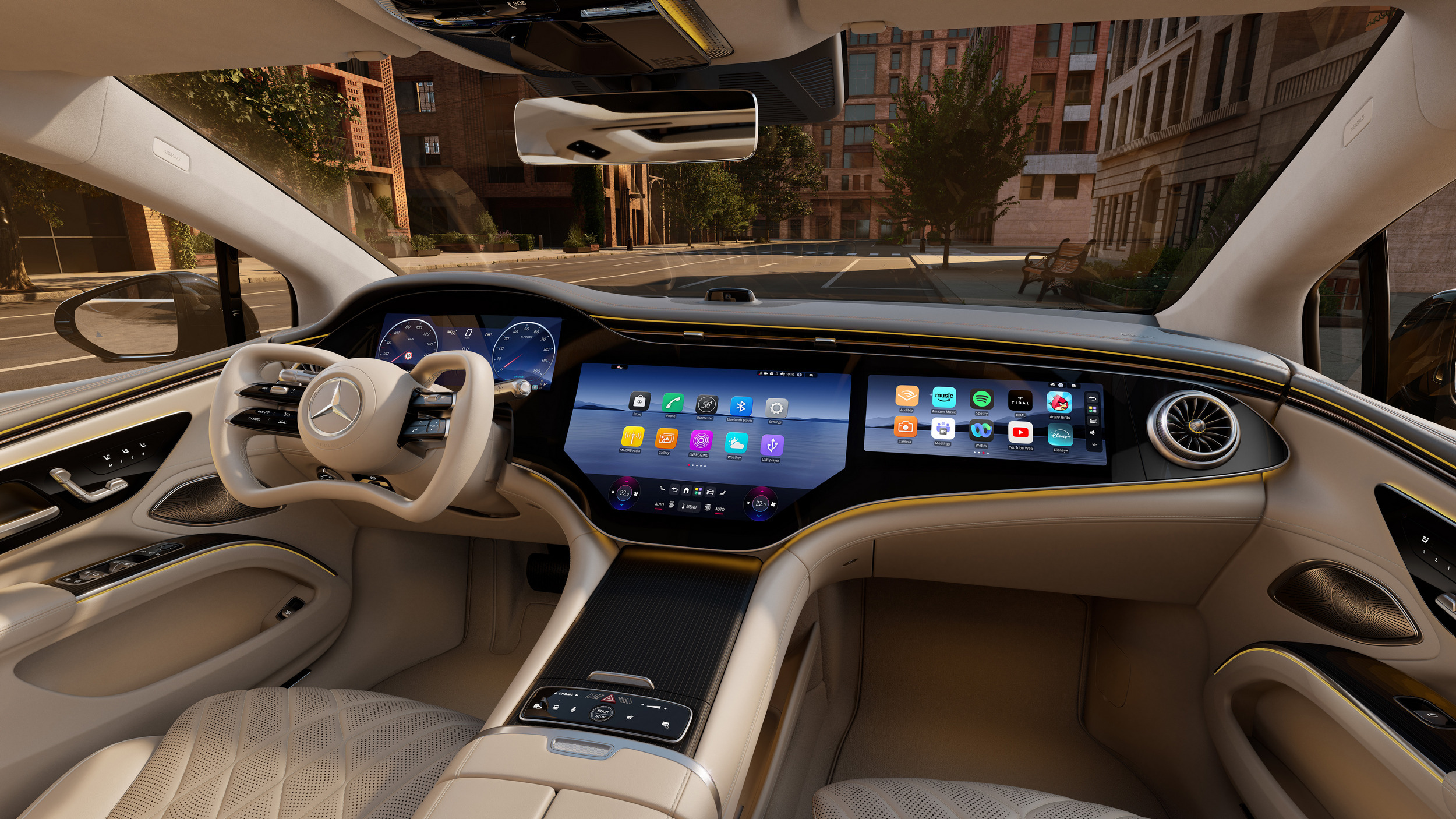
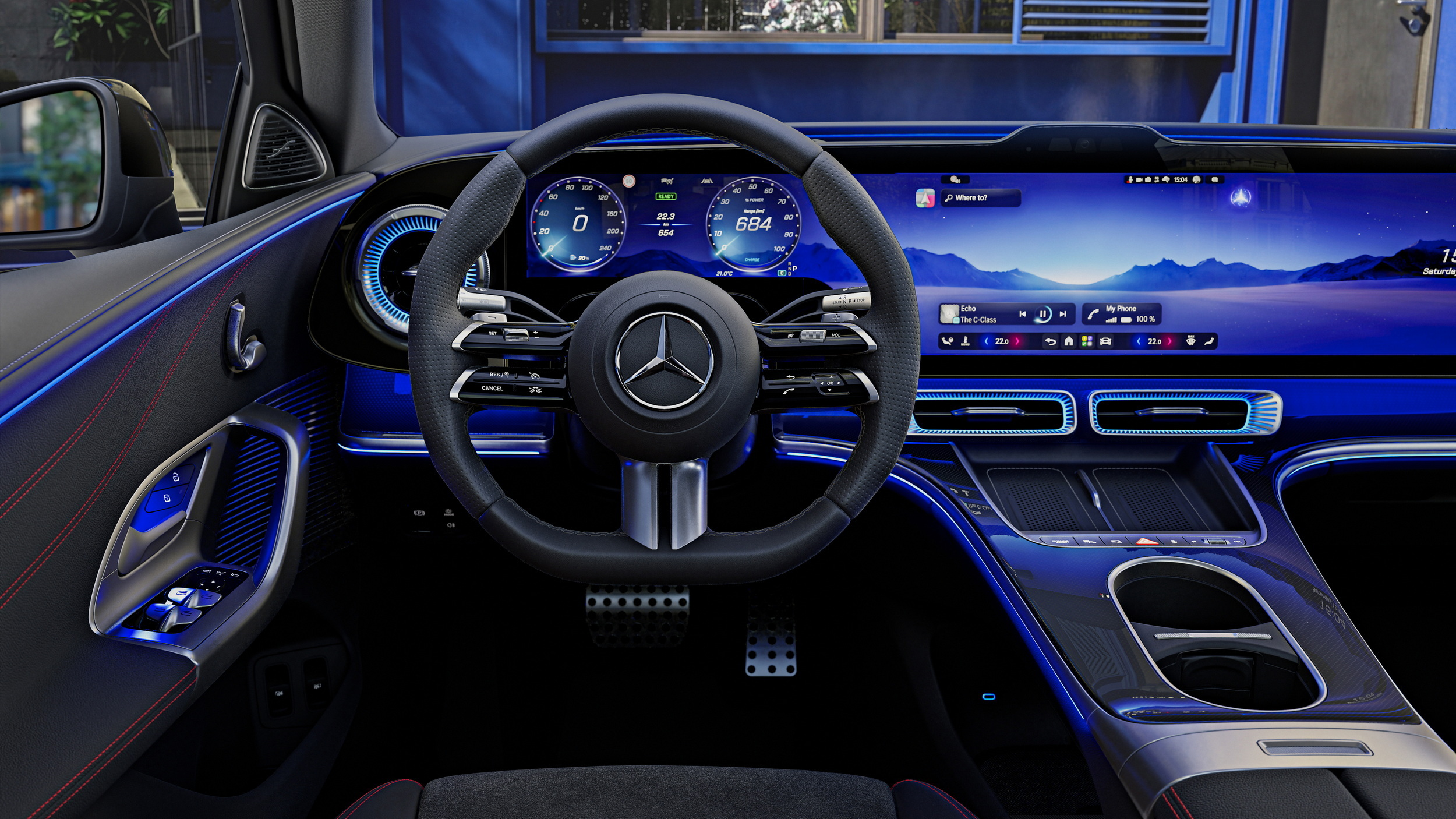
Mercedes is getting ready to reveal its all-electric C-Class on April 20, but the interior has already made an early appearance. Front and center is a massive MBUX Hyperscreen stretching almost the full width of the dashboard, uninterrupted and unmistakably similar to what we have already seen in the GLC EV.

The company describes the new interior of the electric sedan as a “driver-oriented refuge”, though it reads more like a rolling digital billboard from where we’re sitting. The display appears to mirror the 39.1-inch Hyperscreen from the GLC EV, which makes the recently updated EQS and S-Class flagships feel either a step ahead or already behind, depending on your perspective.

More: Mercedes’ Electric C-Class EQ Is Running Out Of Camouflage

With approximately 10 million pixels, the giant display aims to reduce the need of menus, having everything within reach. Even so, experience keeps reminding us that glass can’t replace the certainty of a proper button or dial. There are at least a few holdouts here, with physical controls still present on the center console and steering wheel, the latter seemingly lifted straight from its SUV counterpart.

 Mercedes Heard ‘Too Many Screens’ And Built A New C-Class That’s One Giant Screen

Besides the attention-grabbing Hyperscreen, Mercedes also mentions the Superscreen, which is a more conventional triple-screen layout reserved for lower trim levels of the sedan. Both setups offer the option between ten ambient styles with different colors to fit your mood.

More Space And Comfort

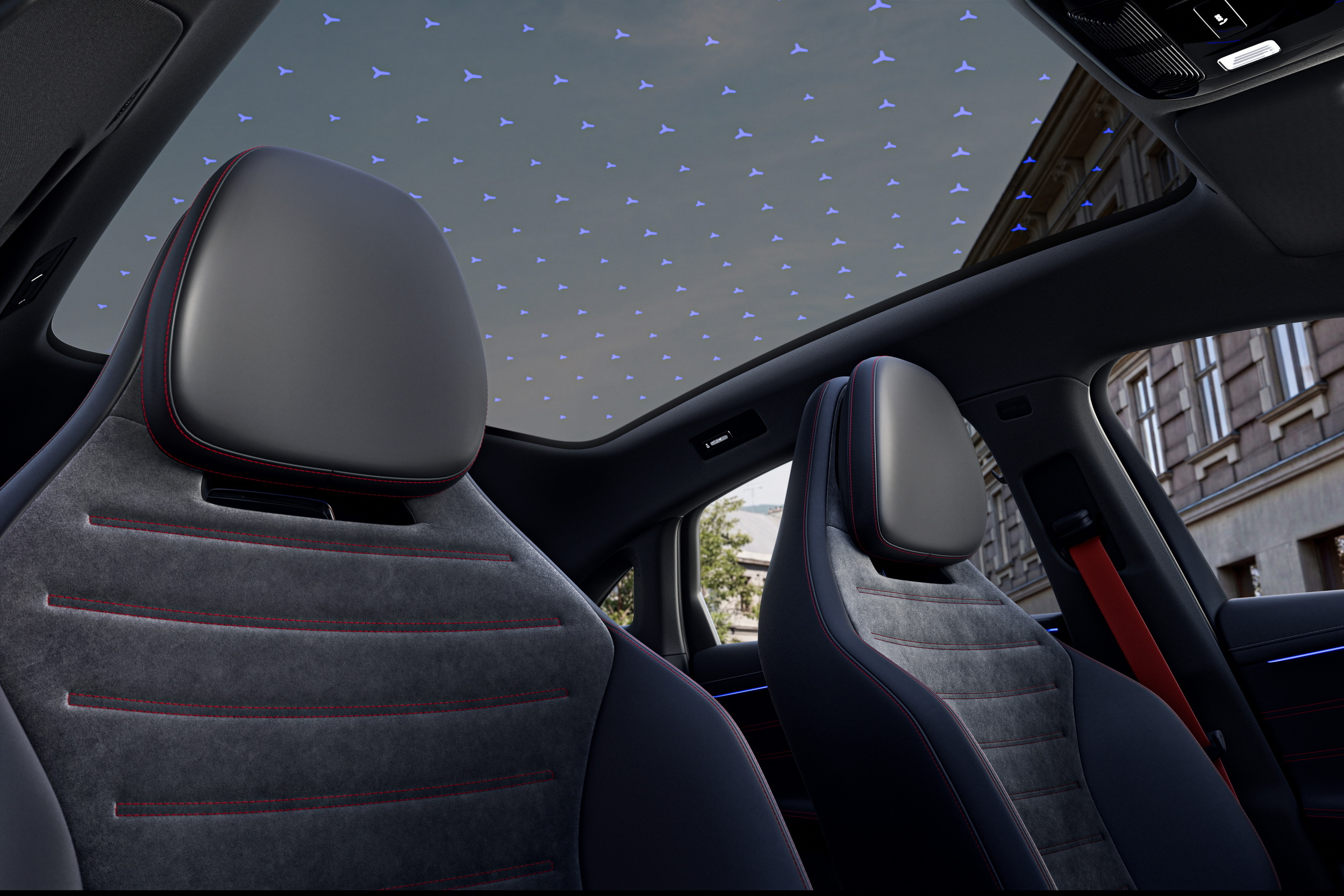
The company promises that the electric sedan will be the best and sportiest C-Class yet, while offering more space than ever before. It will also bring “exceptional” long distance comfort thanks to the new seats, the optional star-shedded panoramic sunroof, the sophisticated climate control system, and the extensive sound insulation.

 Mercedes Heard ‘Too Many Screens’ And Built A New C-Class That’s One Giant Screen

The front seats come with electro-pneumatic four-way lumbar support, 4D sound, massaging and ventilation functions. These are coordinated with the Energizing Comfort programs designed for “mental and physical rejuvenation” while on the go. Furthermore, the climate system features a multi-source heat pump that can heat the cabin twice as fast as a combustion vehicle while using 50% less energy.

More: C-Class Facelift Mirrors A Direction Mercedes Has Already Taken Elsewhere

The electric C-Class will also offer a vegan-certified interior with soft-touch surfaces. Other options include the Softtorino leather grain, the Twisted Diamond Nappa leather, and the 3D-relief stainless steel speaker grilles for the Burmester 3D sound system.

 Mercedes Heard ‘Too Many Screens’ And Built A New C-Class That’s One Giant Screen
A lightly camouflaged prototype of the electric C-Class. Photo: Baldauf

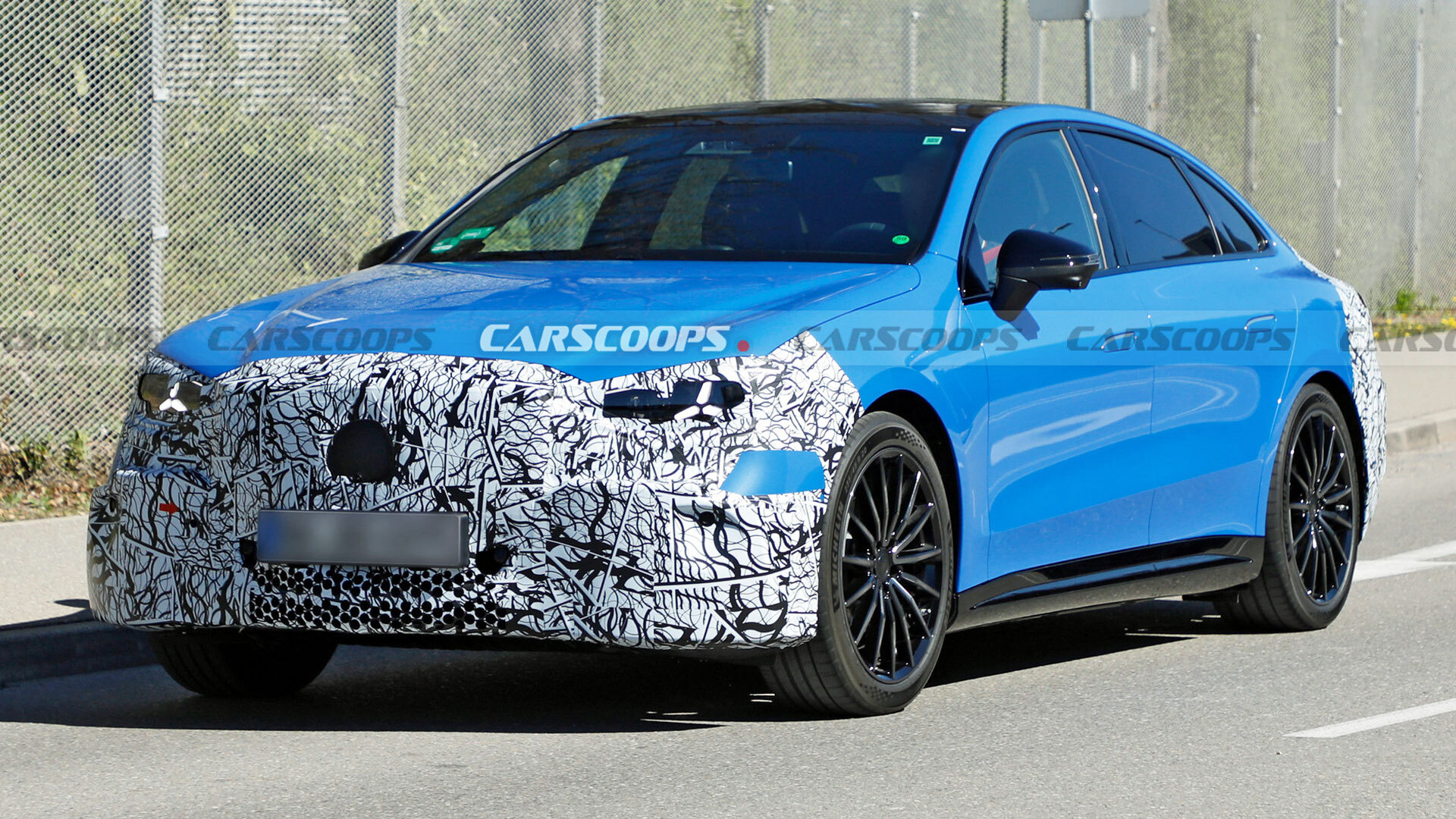
In terms of exterior design, we already know that the model will adopt a large illuminated grille flanked by aggressive headlights with star-shaped LED graphics.

Recent spy shots have also revealed the sleek surfacing of the profile, looking like an evolution of the EQE and EQS sedans albeit with more pronounced front and rear volumes to avoid an egg-shaped silhouette. Expect sportier bumpers and different wheels for the AMG Line trims.

Any Specs?

Mercedes has yet to announce the technical specifications of the electric C-Class, but the model will most likely ride on the same 800-volt MB.EA platform with the GLC. The SUV produces 483 hp (360 kW / 490 PS) and 800 Nm (590 lb-ft) of torque from dual electric motors, with a 94 kWh battery offering a WLTP range of 673 km (418 miles).

More: AMG Built A Sedan That Growls, Revs, And Shifts Like It Has A V8. It Doesn’t

In terms of the chassis setup, the company claims that the sedan “raises performance and driving dynamics”, making our appetite for future AMG-branded versions.

We will learn everything about the new model at its official debut in South Korea on April 20. The EV will be joined by a facelifted version of the ICE-powered C-Class, also expected to be unveiled later this year. It’s biggest rival is the new BMW i3 Neue Klasse sedan that debuted last month.

\\\\\\\

Seatbelt, Danger Zone Recommendations Highlight NTSB Discussion at STN EXPO East

15 April 2026 at 20:54

CONCORD, N.C. — Federal safety officials are urging stronger seatbelt usage by students and increased awareness of dangers around school buses following a series of high-profile crashes, including a recent fatal incident under investigation in Tennessee.

In providing the parting takeways at STN EXPO East conference last month, Meg Sweeney, lead investigator and project manager for the National Transportation Safety Board, outlined how ongoing investigations and previous crash reconstructions are shaping new safety recommendations aimed at protecting student passengers and pedestrians.

“Our mission is to investigate crashes, determine a probable cause and then write recommendations to prevent future similar crashes,” Sweeney told attendees during the final conference session March 31.

The NTSB recently launched a “go team” to Tennessee after a fatal school bus crash killed two middle school students, though Sweeney said details remained limited in the early stages of the investigation. The crash took the lives of two middle school girls and parents of the deceased have since filed a lawsuit against the district and the driver.

The agency is also examining a separate student dragging fatality, underscoring the risks students face not only inside the bus but also in Danger Zone, the area immediately surrounding the vehicle during loading and unloading.

Sweeney said the agency focuses on crashes with the greatest potential to improve safety outcomes. With only about 35 staff members in its highway division, the NTSB investigates roughly 15 to 20 crashes annually out of tens of thousands reported nationwide.

“With a staff of 35 people… we have to be really selective in the crashes that we investigate,” she said, noting that cases often involve recurring safety issues or high public interest.

A key focus of recent investigations has been occupant protection, particularly the effectiveness of lap/shoulder seatbelts compared to traditional lap-only restraints or compartmentalization.

“We know and recognize that there are several other types of crashes,” Sweeney said, explaining that while compartmentalization works well in frontal impacts, it is less effective in rollovers, side impacts and other complex crash scenarios.

In multiple investigations, including crashes in Texas and New Jersey, the agency found lap-only belts provide limited protection. “They can provide a benefit… if they’re worn properly,” Sweeney said, but passengers remain “very vulnerable to injury from the flailing upper body.”

In the Leander ISD Texas rollover crash, that Director of Transportation Tracie Franco also presented during the conference, only six of 42 observed students were wearing seatbelts, and most were wearing them incorrectly. Students who were restrained were less likely to be thrown from their seats or ejected, though injuries still occurred due to the severity of the crash.

Based on such findings, the NTSB has repeatedly called on states to require lap/shoulder belts on large school buses and to strengthen enforcement of proper usage through driver training, onboard monitoring and clearer district policies.

Danger Zone Risks Examined

Beyond the bus interior, Sweeney emphasized that some of the most dangerous moments for students occur outside the vehicle.

One of the most dangerous areas for the student is the zone within about 10 feet of the bus, she said, particularly during pickup and drop-off times.

In a 2018 Indiana crash, a pickup truck traveling about 41 mph struck and killed four students crossing to board a stopped school bus despite warning lights and an extended stop-arm.

Other cases have highlighted the role of distracted driving. In Wisconsin, a teenage driver exchanging text messages struck a school bus and fatally hit a student moments later.

To address these risks, the NTSB has recommended stronger enforcement of stop-arm violations, expanded use of camera systems to catch illegal passing, and new vehicle technologies such as automatic emergency braking and pedestrian detection systems.

“We asked school districts to work with law enforcement to create educational campaigns and high-visibility enforcement,” Sweeney said.

Despite the risks and ongoing challenges, Sweeney stressed that school buses remain the safest form of student transportation in the U.S.

“We advocate and tell people school buses are the safest way to transport a student,” she said.

Still, industry leaders at the session warned that driver shortages, operational challenges and declining ridership could increase risks if more families rely on personal vehicles instead of buses.

The Tennessee crash investigation is expected to produce a preliminary report in the coming months, with a final report, including safety recommendations, likely more than a year away.

Written with assistance from AI.


Related: California School Bus Report Shows Lap/Shoulder Seatbelts Reduce Injuries
Related: NTSB Calls for Seatbelt Polices, Procedures Following Texas School Bus Crash
Related: School Bus Seatbelt Law Appears Imminent in Illinois
Related: (STN Podcast E251) Making Safety Safer: Seatbelts, Technology, Training & Electric School Buses

The post Seatbelt, Danger Zone Recommendations Highlight NTSB Discussion at STN EXPO East appeared first on School Transportation News.

Side By Side, The Rivian R2 And Model Y Look Like They’re From Different Planets

  • Rivian’s new entry-level electric SUV has a lot going for it.
  • The R2 is taller than a Model Y, but surprisingly, it’s also shorter.
  • Driving the R2 Performance are dual electric motors with 656 hp.

In a market where electric SUVs are starting to blur into one another, standing out is no longer optional. The Rivian R2 is a pivotal model for the brand, bringing its EV technology into a smaller, more affordable package. If Rivian wants to grow into a true volume manufacturer and challenge legacy players, the R2 needs to land with buyers.

Its biggest hurdle is persuading shoppers to choose it over the Model Y, still America’s best-selling EV by a wide margin that even Tesla’s own Model 3 does not approach, let alone anything else. As these side-by-side photos of an R2 and a Model Y show, the pair have similar footprints but look absolutely nothing alike.

Read: Rivian R2 And Jeep Recon Solve The Same Problem, But Which One Solves It For You?

These photos, captured by Reddit user SciencesNotStudies at Rivian’s headquarters, show both vehicles charging next to each other. Whereas Tesla opted for a sleek profile in the Model Y, making it look like a bloated Model 3 rather than a traditional SUV, the Rivian R2 is very different. It’s boxier, stands taller, and is much more upright, looking just like the R1, albeit on a slightly smaller scale.

Interestingly, the Model Y is slightly longer than the R2, measuring 188.6 inches (4,790 mm) compared to the Rivian’s 185.9 inches (4,722 mm). The R2 is also slightly narrower at 75 inches (1,905 mm), versus 75.6 inches (1,920 mm) for the Tesla.

The biggest gap appears in height, with the R2 standing 66.9 inches (1,700 mm) tall compared to the Model Y’s 63.9 inches (1,624 mm). The Rivian’s wheelbase is also 1.8 inches longer, at 115.6 inches (2,935 mm) compared to 113.8 inches (2,890 mm) for the Tesla.

The ground clearance also differs dramatically between the pair. Like the R1, the R2 has been designed to be right at home off-roading, offering 9.6 inches (245 mm) of clearance compared to the Model Y’s 6.0 inches (152 mm).

What About Performance?

 Side By Side, The Rivian R2 And Model Y Look Like They’re From Different Planets

The first version of the R2 to be sold, the Performance Launch Edition, rocks a pair of electric motors delivering 656 hp and an 88.7 kWh battery pack, giving it slightly more power than the Model Y Performance with 618 hp and better range, 328 miles (528 km) compared to 306 miles (492 km). However, as the Tesla weighs less, it hits 60 mph (96 km/h) in 3.3 seconds compared to the R2’s 3.6 seconds.

Where The Numbers Stop Favoring Rivian

And then there’s pricing, which is not doing Rivian many favors on paper. The R2 Performance Launch Edition starts at $57,990, essentially mirroring the $57,490 Model Y Performance. However, step down to the mid-tier R2 Premium with 450 hp and all-wheel drive, and you’re still looking at $53,990, a noticeable jump over Tesla’s Model Y Premium AWD at $48,990.

Also: Rivian R2 Starts At $57,990, But Cheaper Versions Are Still Coming

Rivian has confirmed a base rear-wheel-drive R2 at $45,000, though that version will not arrive until 2027, which is a long wait. Tesla, meanwhile, already covers that ground with two RWD options, starting at $39,990 for the standard version and $44,990 for the Premium.

Although the R2 is Rivian’s answer to the Tesla Model Y, matching its sales volume will be a tall order. Like the R1, it appears to lean toward a more niche appeal and could end up competing more closely with models like the Jeep Recon.

\\\\\\\\\

Lead image Reddit / SciencesNotStudies

❌
❌