Normal view

There are new articles available, click to refresh the page.
Yesterday — 11 January 2026Main stream

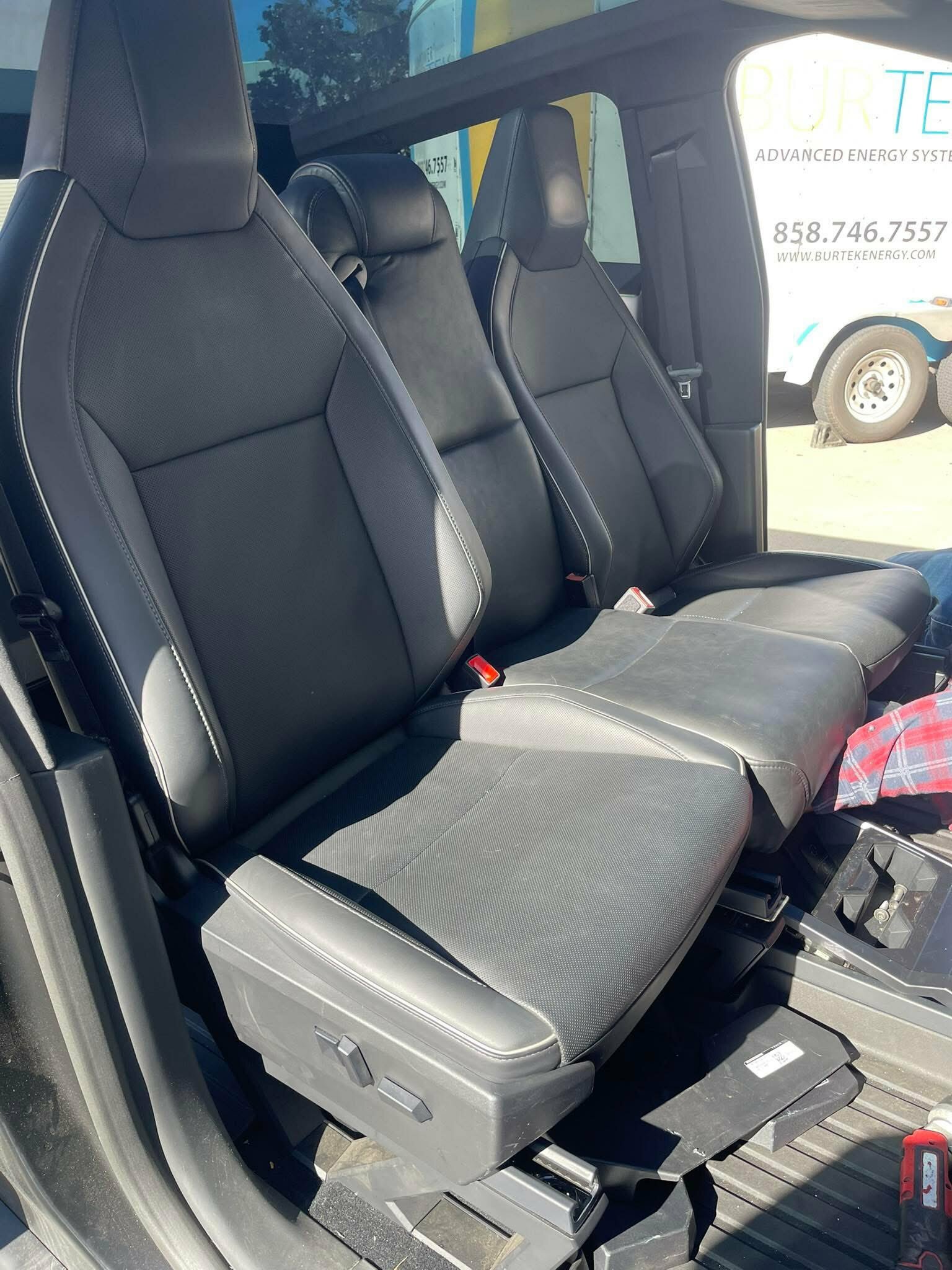
Tesla Never Sold The Six-Seat Cybertruck, So A Dad Built One Himself

  • Cybertruck owner added a center seat to carry four kids up front.
  • Tesla showed this layout in 2019 but never offered it to buyers.
  • Custom seat has no visible airbags, which may affect crash safety.

Tesla owners aren’t strangers to modifying their vehicles. Sometimes, that action comes out of a desire for additional safety. Other times, it’s because Tesla itself didn’t deliver on a previous promise. And occasionally, those two aspects of design come into fierce opposition. That’s what happened here.

A father of four needed space for his entire family, and when it became clear that Tesla wouldn’t offer a six-seat Cybertruck, he took matters into his own hands. He commissioned a custom version and later shared the results in a Tesla group on Facebook.

More: Cybertruck’s $16K Range Booster Is Dead And Tesla Isn’t Saying Why

The custom setup removes the center console of the truck and replaces it with a narrow upright seat wedged between the original pair. It comes complete with a seatbelt, but that might be where safety ends. We’ll come back to that, though. Let’s focus first on the design itself.

It’s a far cry from the angular unit Tesla once teased, but at least the upholstery matches. Some folks might not even realize that it’s an aftermarket addition because of that.

What Killed Tesla’s Center Seat Plans?

At the same time, it’s tough to call this a big win for now. While Tesla originally showed renders of a similar setup, it never came to pass. Many believe that’s because of safety regulations regarding the center seat.

Some observers have noted that the truck includes a driver’s side inboard airbag, which could strike anyone seated in the center. There’s also no airbag directly in front of that position. And beyond the lack of protection, there’s always a chance the seat may not be anchored to mounting points strong enough to hold up in a crash.

 Tesla Never Sold The Six-Seat Cybertruck, So A Dad Built One Himself
Credit: Roger D. / Facebook

To be clear, this isn’t a knock on the owner’s intentions. Wanting to carry your entire family with you is obviously normal and easy to understand. But it does highlight a recurring Tesla theme. The brand and CEO often make bold promises, offer flashy renderings, and then production vehicles quietly walk things back a bit.

Tesla once showed a front bench. That version never reached production, and now an owner has stepped in to fill the gap with a custom modification. In doing so, he’s taking on a level of risk that some might find concerning in a six-figure vehicle. Maybe the solution here is to just get the Model X since it actually has room for the whole family.

Before yesterdayMain stream

NTSB Investigating Fatal School Bus Dragging in Maine

By: Ryan Gray
9 January 2026 at 22:01

The National Transportation Safety Board (NTSB) released preliminary information from an investigation into the death of a 5-year-old boy who was dragged 280 feet and killed after the school bus loading doors closed on his arm.

It was at least the third time a student dragging occurred in Maine since 2022.

The latest incident involved a Maine School Administrative District #6 school bus. It  stopped to pick up students the morning of Dec. 16 on Route 35, a two-lane undivided highway with a posted speed limit of 35 mph in the Cumberland County town of Standish. The roadway was partially wet at the time.

bus snag2
File photo depicts how a student can go unnoticed when caught in the loading doors.

The 2022 Blue Bird school bus stopped near the intersection of Route 35 and Route 114, where a 7-year-old student boarded. The 5-year-old boy, identified by local news reports as Simon Gonzalez, followed and approached the loading doors from the rear of the bus. As the kindergartener extended his left arm into the bus, NTSB said, the doors closed. The school bus driver then proceeded to drive away with Gonzalez’s arm pinned.


Preventing School Bus Snagging and Dragging

‘Check the Door Once More’ to Avoid School Bus Dragging Incidents


The bus dragged the boy about 280 feet southbound on Route 35 before he dislodged and fell into the roadway. The school bus then ran over him and killed him. The school bus driver and the 7-year-old student, who local news reported is Gonzalez’s half-brother, did not sustain physical injuries during the incident.

NTSB said all aspects of the crash remain under investigation while determining probable cause. It also intends to issue safety recommendations, to prevent a similar incident from occurring.

The Cumberland County Sheriff’s Office, Maine State Police and Maine Department of Transportation are assisting in the investigation.


Related: School Bus Driver Pleads Guilty in 2016 Student Dragging Death
Related: Indiana Student Dragged Down Street by School Bus
Related: Maine Student Caught in School Bus Door is Dragged Down the Road
Related: ‘Check the Door Once More’ to Avoid School Bus Dragging Incidents

The post NTSB Investigating Fatal School Bus Dragging in Maine appeared first on School Transportation News.

Family Wants Cybertruck Off The Roads After Teen Killed In Crash

  • Malachi James, 14, died in a Christmas crash with a Cybertruck.
  • Family wants Cybertruck banned for weight and safety concerns.
  • Their concerns are the same many have about trucks in general.

On Christmas night, the driver of a Tesla Cybertruck allegedly piloted their vehicle into oncoming traffic and hit a Toyota Corolla. Inside that car was 14-year-old Malachi James, who died as a result. Now, his family is raising questions about whether or not the U.S. should follow Europe’s lead and keep the Cybertruck off public roads.

“We are going to do our best to look at some ways to see if we can get them removed from the streets,” said Royael Saez, Malachi’s aunt, to WTNH.

“We don’t believe in something like this; this is a tank.” The family argues the Cybertruck is simply too big and too fast to safely share the road with normal traffic. “From our understanding, it’s already banned all over Paris, so obviously they know something like this shouldn’t be on the road,” Saez added.

More: Tesla Cybertruck Too Unsafe To Be Sold In Europe, German Authorities Say

While the vehicle meets U.S. safety standards and boasts a five-star rating from the National Highway Traffic Safety Administration, experts note its size and weight remain significant factors in crash severity. We’ll circle back to those factors, though.

Trucks Are Growing, and So Are the Risks

Dr. Eric Jackson from the Connecticut Transportation Institute explained, “They are very large vehicles, they are very heavy vehicles…a unibody structure, so it’s one solid frame throughout.”

He added that the Cybertruck is equipped with 11 cameras that record sensor data during collisions, helping investigators analyze accidents. The lightest Cybertruck model weighs 6,634 pounds, according to Tesla’s website.

While the James family’s concerns have focused on Tesla’s futuristic truck, it’s worth noting that the Cybertruck is far from unique in its size or weight. The Rivian R1T weighs roughly 6,800 pounds. Standard-sized pickups from Ford, GM, and Stellantis can all weigh as much, if not more.

Heavy-duty trucks like the Ford F-350, GMC Sierra 3500 HD, and RAM 3500 can weigh over 7,000 pounds and are considerably larger than any Cybertruck.

Regardless of powertrain or shape, heavier cars are worse at just about every important metric on public roads. Braking, handling, and visibility all suffer when compared to everyday commuter vehicles.

Critics are quick to call out the angular nature of the Cybertruck, but the reality is that all trucks probably deserve a lot more scrutiny than they receive.

As for the case that has broken the hearts of the James family, police now have their suspect in custody. He has 11 pending cases preceding this one, including one for reckless driving. Video from the scene appears to show him speeding and overtaking cars in the oncoming lane moments before the fatal crash. That type of behavior is dangerous in any car, not just a big angular pickup.

New Hampshire School Bus Transporting Athletes Catches Fire

6 January 2026 at 22:23

A school bus carrying Concord High School athletes caught fire Saturday, prompting a multi-agency emergency response, reported My Keene News.

The Keene Police Department and Keene Fire Department responded Jan. 3 to reports of a bus fire. Police officials confirmed all students and coaches safely evacuated the bus before emergency crews arrived.

Firefighters reportedly found the engine compartment of the bus fully engulfed in flames upon arrival. Crews brought the fire under control, and no injuries were reported.

The bus was transporting an out-of-town Concord High School athletic team from a sporting event in Keene. A second bus carrying another group of Concord athletes from the same event transported the displaced students and coaches back to Concord.

Police said via the articleConcord High School administrators implemented a communication plan to notify parents about incidents such as when a school bus catches fire. The bus, owned by Concord School District, was later towed from the scene.

Keene police were reportedly assisted by the Keene Fire Department, New Hampshire State Police and the New Hampshire Department of Transportation.

The cause of the fire remains under investigation.


Related: Missouri Students Learn School Bus, Fire Safety During Back-to-School Bash
Related: Two Juveniles Charged with Destroying Buses in Arson Fire
Related: Arkansas School District Thanks Driver for Quick Response During Bus Fire
Related: New Hampshire Students Recognized for Helping Bus Driver During Medical Emergency

The post New Hampshire School Bus Transporting Athletes Catches Fire appeared first on School Transportation News.

Innovator Award Seeks Nominations of Trailblazing School Bus Contractors

By: Ryan Gray
6 January 2026 at 18:32

School Transportation News has opened registration for its fifth-annual Innovator of the Year award, which features a private school bus contractor employee who exemplifies the adoption of cutting-edge technology and programs.

The magazine partners with the National School Transportation Association (NSTA) to present the award. Readers may submit an online nomination through May 1 to recognize an individual who works for a school bus contractor company and meets the criteria.

Qualifications include making “significant, tangible contributions” to the school transportation industry within the past 12 months. Innovations could include technology implementation, operations, safety initiatives and green energy adoption.

“I believe that change begins with the ability to recognize an innovator when you meet one. It is vitally important to share the achievements of our leaders to help elevate our industry. School Transportation News is honored to share this story of innovation with the entire school transportation industry,” said Tony Corpin, publisher of STN magazine and president of STN Media Group.


Read about & hear podcasts with previous years’ winners:

July 2022: The Great Innovator
(STN Podcast E120) Onsite at STN EXPO Reno: Electric Innovator Pulls Back the Curtain

July 2023: There Is No ‘I’ in Team
(STN Podcast E170) Meet the Innovator of the Year: Maintaining a Fast-Growing Bus Fleet

July 2024: Driven by Students, Driven by Technology, Driven by Partnerships
(STN Podcast E217) From Submariner to Innovator of the Year: Fleet Electrification for Student Success

July 2025: ‘Here to Serve’ People With Technology
(STN Podcast E256) Empathy is a Core Principle: Bringing Funding, Tech & People Together for Student Service


This year’s winner will be announced on the front cover of the July edition of STN magazine. The award will be presented in-person at both STN EXPO West held July 9-15 in Reno, Nevada, and at the NSTA Summer Meeting held July 19-22 in Denver, Colorado.

“NSTA is proud and pleased to partner with School Transportation News in the promotion of the 2026 Innovator Award. With so many talented individuals in student transportation, we encourage school bus operators to nominate a worthy candidate, so we can honor them with this prestigious award this summer,” stated NSTA Executive Director Curt Macysyn.

“Receiving the Innovator of the Year recognition was a humbling moment that reinforced how much meaningful progress in student transportation comes from people willing to challenge the status quo,” said Gaurav Sharda, CTO of Beacon Mobility and the 2025 Innovator of the Year award winner. “The award represents more than innovation for its own sake. It honors work that improves safety, dignity, and daily experiences for students, families, and the professionals who serve them. I encourage peers across the industry to nominate individuals whose ideas and leadership are quietly making a lasting difference, because their impact deserves to be recognized and shared.”


Related: Start Your Green Fleet Innovation Strategy
Related: School Bus Contractors Compete in Driver Applicant Pool
Related: School District, Bus Contractor Partnerships Vital When Transporting Special Needs Students

The post Innovator Award Seeks Nominations of Trailblazing School Bus Contractors appeared first on School Transportation News.

Assembly committee considers bills on homelessness and crime

6 January 2026 at 22:48
Milwaukee's King Park surrounded by yellow tape

Milwaukee's King Park surrounded by yellow tape after Sam Sharpe, a resident of a temporary encampment there, was shot by Ohio police officers during the 2024 Republican National Convention. (Henry Redman | Wisconsin Examiner)

The Wisconsin Assembly Committee on Criminal Justice and Public Safety on Tuesday held a public hearing on a pair of bills that would require homeless people on the state’s sex offender registry to wear ankle monitors and increase the penalty for selling drugs close to homeless shelters. 

Under the first bill, authored by Rep. Dave Maxey (R-New Berlin), people required to sign up for the sex offender registry and unable to provide a permanent address must be placed under GPS monitoring. An estimated 16% of Wisconsin’s homeless population is on the sex offender registry, according to Maxey, who said he wanted to make sure this population was not a blind spot for Department of Corrections monitoring of people on the list. 

“This bill is a clear and common-sense public safety measure that applies one uniform standard so every registrant is monitored at the same level, regardless of housing status,” Maxey said. “This is a straightforward way to protect every member of our society.”

A number of Democrats on the committee had concerns about putting the proposal into practice. 

Rep. Jodi Emerson (D-Eau Claire) wondered if the cost of the monitoring would end up being paid for by the state. 

“Most times, the GPS monitoring is paid for by the person who needs to wear it eventually,” Emerson said. “And if they don’t have the resources to afford a home, I don’t know if they’re going to have the resources to pay the state back for this. And is this something that we’re just going to end up incurring extra costs on? I’m trying to balance the cost versus safety factor.”

Rep. Sequanna Taylor (D-Milwaukee) noted that the ankle monitors need to be regularly charged, which might pose a challenge for people without a home. 

“When we talk about the GPS, I know even the people that are not in this situation, who may be on it, there are sometimes tweaks or glitches with them, and also the everyday charging, if we’re talking about someone who’s homeless, is not staying anywhere, I guess I’m just trying to see, how can we encompass or ensure that it will be charged, because once it’s not able to be charged and it’s off, are they meant to go report somewhere or is that a process we haven’t thought about yet?”

Another bill heard by the committee Tuesday, authored by Rep. Bob Donovan (R-Greenfield), would add homeless shelters to the list of places including schools, government buildings and public parks that are considered drug-free zones. Convictions for selling drugs within these zones carry harsher penalties. 

“Drug-related crimes pose a severe threat to community safety, particularly in areas where at-risk populations are located, current law wisely imposes enhanced penalties for distributing illegal drugs within 1,000 feet of sensitive locations like schools and parks, adding up to five years to the maximum sentence,” Donovan said. “These Drug Free Zones deter illegal activity and safeguard those who are most vulnerable. However, homeless shelters are not included in these protections. Many, many homeless individuals face profound challenges, including addiction and mental health issues. Extending these zones is about punishing malicious drug dealers who prey upon the homeless while providing basic security for them as they attempt to reenter society.”

But advocates for addiction treatment and criminal justice reform questioned the wisdom of the proposal. 

Dr. Charles Schauberger, an Onalaska resident and president of the Wisconsin Society of Addiction Medicine, said making homeless shelters a drug-free zone could increase police presence around a shelter, which might push homeless drug users away from the area and into more dangerous situations. 

“This legislation is not only ineffective in helping homeless people, but potentially worsens the situation,” Schauberger said. “Increasing criminal penalties for substance-related offenses near shelters may lead to increased law enforcement presence around these facilities for people who use substances they may carry, or may even carry a small amount for personal use, which creates a great deal of fear, fear of harassment, fear of incarceration, fear of losing the only safe place they have yet to go.”

He added that when people are afraid to use shelters, “they don’t disappear. They move further into unsafe spaces. They sleep outside. They use substances alone. They disengage from services. They increase risk of overdose. Medical emergencies, deaths make it much harder for clinicians like me to reach them.”

Amanda Merkwae, advocacy director of the ACLU of Wisconsin, said that while the proposal has an “admirable goal” it comes with unintended consequences. She said that in the state’s larger, denser cities, so much of the land is covered by various drug-free zones that lots of drug-related activity is punished there more harshly than in rural parts of the state. 

“In densely populated urban areas, that radius around each of these integrated locations overlaps to the point where sometimes an entire city can become functionally a drug-free zone,” she said, noting that the city of Milwaukee contains 156 public schools, 101 private schools, 12 multi-unit public housing facilities, four public swimming pools, dozens of youth and community centers, hundreds of child care facilities, six correctional facilities and more than 130 public parks. 

“So studies have shown that these zones don’t necessarily track where drug activity is most prevalent, but rather where certain populations are concentrated,” she said. “So we create this kind of two-tiered justice system based on geography rather than the nature of the crime. So residents in cities can face greater exposure to enhanced maximum penalties than those in rural or suburban areas for the exact same conduct.”

GET THE MORNING HEADLINES.

Eagle Eye on Student Transportation Safety

5 January 2026 at 22:25

Onboard school bus cameras have changed the game when it comes to school bus driver and student safety. Combined with proper procedures and training, they can be a pivotal part of an enhanced safety strategy for student transportation operations.

In North Carolina, Charlotte-Mecklenburg Schools (CMS) has had cameras in place since area manager Monique Jackson joined the transportation department in 2018. Her passion for safety has been front and center throughout her career as an educator and now in student transportation.

“The number one reason for us to have those cameras is for bus safety and, of course, to capture whatever footage is necessary for reporting and documentation purposes,” said Jackson.

She noted the cameras originally used physical hard drives for video storage. Video is now cloud-based, so transportation leadership can make requests to view certain parts of the footage and be able to access it electronically in a more timely manner.

At the Transporting Students with Disabilities and Special Needs (TSD) Conference held in Frisco, Texas, keynote speaker and special education attorney Betsey Helfrich outlined common pitfalls when school districts and transportation departments don’t have clear policies and procedures for handling video footage. Lawsuits filed against the district can succeed if they prove there was insufficient training for employees and that the correct action wasn’t taken as soon as an incident is discovered.

She advised timely, documented communications with Title IX coordinators about incidents. However, there’s often a tricky balance between open record laws and FERPA, or Family Educational Rights and Privacy Act, when distributing footage among staff members. She cited cases where districts used FERPA to justify not releasing footage of incidents onboard the school bus to parents of students who were involved but were later overruled in court. FERPA is also no excuse for keeping specific information from school bus drivers that pertains to their passengers’ access and safety.

Helfrich urged cautioned when sharing sensitive footage of safety incidents to ensure transportation personnel are fully educated on what constitutes an
immediate or imminent health and safety emergency. These would require footage to be shared with multiple parties that are trained on how to act when an incident is discovered or reported.

“Reviewing footage after an incident is important, but it is vital to randomly and periodically review footage,” said Bret Brooks, chief operating officer for school safety and security consultant Gray Ram Tactical. “Don’t wait for something bad to happen to review the recordings. There should be a written policy detailing how often recordings will be reviewed and by whom. Recordings should be kept for 30 days with the ability to retain for longer if needed.”

Ron Deming, territory manager for REI’s school bus division, said many customers praise cameras’ abilities to provide evidence for investigations. “Footage from cameras can serve as crucial evidence in case of accidents, injuries or misconduct, making it easier to identify causes and fault,” he said. “This reduces liability risks for districts.”

STN reported on an incident in October of a parent boarding a Ferguson Florissant School District bus near St. Louis, Missouri. Onboard cameras captured a disturbing scene of the father commanding his daughter to strike her alleged bully. The faces of other students and the school bus driver were blurred, which Helfrich advised districts to do, before the footage was shared.

Mike Dorn, executive director of nonprofit global K-12 school security consultant Safe Havens International, noted school districts should state on school bus driver applications that cameras are recording all driver behavior. That can serve as a deterrent to individuals who could be trying to harm students or behave inappropriately. It can also exonerate them if wrongly accused.

He discussed a case he worked on where a student reported they had been inappropriately touched by a driver. Pulling footage from the 30 days prior to the incident showed the veteran driver assaulting the pre-K student. He noted that the driver “knew from experience that the district only pulled camera footage when an incident like a fight was reported, not a typical occurrence
on a pre-K route,” hence the need for consistent review of footage even when no incident has been reported.

Driver Training
“For drivers, there has typically been an initial hesitancy and reluctancy to use the camera systems, but once they see how video and audio can back up their side of the story during incidents, most ultimately like having the camera systems in placem,” shared Brooks. Jackson echoed this sentiment by saying drivers she oversees at CMS have found that onboard cameras provide peace of mind that safety incidents don’t turn into “he-said, she-said” situations.

“While traditionally more of a post-incident investigative tool, modern security cameras can also be a powerful prevention tool,” said Dorn. “For example, we advise our clients to consider crafting, implementing and following a policy [that] outlines how supervisory personnel will use a random selection process to pull segments of video footage from school buses at key route times, check for policy compliance and archive the footage to document their efforts.”

Dorn noted drivers are made aware their performance is being regularly monitored and that management can recognize them for adhering to safety standards.Stephen Satterly, senior analyst at Safe Havens International, said when he was a school transportation supervisor in Ohio he would conduct a “hot wash” footage review with individual school bus drivers to “identify what went well and what could be improved.”

Jackson shared that she not only uses the footage in her CMS area to identify when and why drivers need more training but also to back up her drivers when there are behavioral challenges with students that required changes be made for the safety of everyone on board.

Clint Bryer, vice president of student transportation sales for Safety Vision, demonstrated camera features that aid in driver performance review and training at the TSD Conference Trade Show. He said school districts can customize what qualifies as an infraction, such as looking away from the road, not wearing a seatbelt, or using a cellphone while driving. Different infractions can carry “heavier weight” when it comes to scoring driver performance.

“Driver behavior management solutions have significantly contributed to improving driver performance by providing actionable data from AI detection of phone use, following too closely, seatbelt compliance and front collisions,” added AngelTrax CEO Richie Howard. “The most effective solutions integrate GPS and G-Force sensors with high-resolution video, with interior and exterior views, to provide context for the driver’s decisions and/or reactions along the route.”

Multiple video vendors and safety experts noted thatAI is becoming an increasingly used tool to detect safety incidents. Howard noted that the industry is only “scratching the surface” and the capabilities of AI will continue to grow and be used to notify transportation immediately if a safety concern is detected.

“Machine learning can be integrated into school bus cameras to predict dangerous situations, such as student bullying or a conflict about to break out,” said Deming. Brooks summed up his advice regarding the use of cameras for increased safety and driver training by highlighting the importance of that human involvement.

“Even with the advancements of AI, or any technology, we must remember that human involved is paramount. Training drivers will always be critical regardless of any technology that can assist them. Assist is the key term, not
replace,” he said. “Don’t allow cameras to replace human involvement, training, reviewing, interactions, etc. Cameras are great tools but not a cure all in of themselves.”

Editor’s Note: As reprinted from the January 2026 issue of School Transportation News.


Related: (STN Podcast E187) Onsite at the TSD Conference, Part 1/2: Technology, Cameras & Special Needs
Related: 8 Must-Know Tips for Bus Camera System Installations
Related: Is Safety Everyone’s Responsibility?
Related: (STN Podcast E286) End of Year Review: Safety & Technology Trends of 2025

The post Eagle Eye on Student Transportation Safety appeared first on School Transportation News.

White-Knuckle Rides: School Bus Drivers Trained to Navigate Severe Winter Weather

4 January 2026 at 22:36

As powerful winter storms moved across the Midwest and into the Northeast last month, snow-covered highways, icy overpasses and whiteout conditions disrupted daily travel across multiple states. For many commuters, the storm meant delayed workdays or staying home altogether.

For school bus drivers, it meant something entirely different.

Like the U.S. Postal Service, school bus drivers navigate rain, sleet, snow, ice, high winds, and reduced visibility—often on tight schedules and challenging terrain—while transporting students safely to and from school. For districts returning from the winter break and resuming operations in regions where winter weather is unpredictable or severe, these conditions are not occasional obstacles but a routine part of operations.

School Transportation News last month asked school bus driver-trainers and safety leaders in Colorado how school transportation professionals prepare for and manage these high-risk conditions. They have spent years operating and training others to operate school buses in some of the most challenging winter environments in the country.

Preparing for Unpredictable Conditions

In Weld County School District 6, driver-trainer Shadra Terrill said rapid weather shifts are a constant consideration when preparing drivers to navigate roads in and around Greeley, Colorado.

“In Colorado, there are several different weather days,” Terrill said. “You could wake up to 60–80-degree weather and by the end of the day have a tornado or blizzard. We are always teaching and training for Mother Nature.”

Preparation begins well before drivers leave the yard. Terrill said district mechanics and technicians start buses well before dawn to ensure engines and systems are operating properly.

“Our mechanics start our buses at 3 a.m. on cold days,” she said. “We give drivers an extra 10–15 minutes as needed to clean off snow from all lights and windows.”

Beyond mechanical readiness, Terrill emphasized that driver judgment plays a critical role in winter safety. She shared an experience that continues to shape her approach to training.

“I once had heavy wind and rain. The roads were flooding, so I pulled off the highway, parked the bus in a gas station parking lot with a line of trees as a windbreak on one side of the bus,” she said.

With six students onboard, Terrill focused on both physical and emotional safety.
“I had six students and had them all sit one to a seat, facing each other with their backs to the windows,” she said.

Clear communication followed immediately.

“We called dispatch, and some called their parents to let everyone know where we were and that we were safe,” Terrill said. “I stayed calm, which helped them stay calm.”

Once conditions improved, the route was completed safely. That experience reinforces the core message Terrill shares with drivers, which is “to stay calm, take a deep breath and stay focused on safety.”

Mountain Training as a Core Requirement

For districts operating in mountainous terrain, winter preparation often extends well beyond standard CDL requirements. In Weld County and across Colorado, mountainous driving is mandatory training.

“Weld County School District 6 does have a specific training class for mountains, which includes weather training,” she said. “They have a class for approximately eight hours, and each driver is taken to the mountains for a daylong trip.”

Training covers chaining procedures, auto socks, hairpin turns, grade and pitch management, and adverse weather response.

“All [brake] retarders must be turned off, if there is any moisture on the ground or falling from the sky,” Terrill said. “Drive slowly and give yourself doubled stopping and following distance.”

Drivers progress through federally mandated Entry-Level Driver Training, skills development and pre-trip mastery before testing for a CDL. Training does not end there.

“Once a trainee has completed ELDT, driving techniques, skills training, and learned their pre-trip of the bus, they would receive their CDL after testing,” she said. “We then take the trainee and teach them all series of buses, so they are comfortable with driving before any adverse weather.”

Routes are rarely modified, she added, but support is always available.

“Should anyone ask for assistance or would like someone to ride with them, we will make that happen,” Terrill said.

Her guidance remains consistent.

“The best advice I can give is take your time, be observant, slow down and give yourself space,” she said.

Lessons from Historic Winter Storms

In nearby Colorado Springs, Debbie Thomas, lead driver-trainer for Widefield School District, said her approach to winter driving has been shaped by decades of experience, including the blizzard of 1997.

“The most challenging, memorable winter weather situation was the blizzard of 1997,” Thomas said. “The school districts shut down due to the whiteout conditions that were prevalent, and the forecast for continuous high winds with blizzard conditions.”

She recalled winds exceeding 60 mph, snow accumulation over three feet and snowdrifts reaching 15 feet.

“The schools had to shut down for three days for the area to dig out,” she said.

Thomas said preparation and composure are essential when conditions deteriorate.

“I always respect the weather and prepare for the unexpected,” she said. “I remained calm and relied on my driving capabilities so that my students would have faith in me to get them home safely.”

Maintaining a steady environment for students is also part of safe operation.

“I love to have fun with my students, so talking to them and ensuring that everything was going to be all right made the hourlong drive enjoyable,” she said.

From a technical standpoint, Thomas emphasized fundamentals that apply in all severe weather.

“Using my over-the-road experience and training, I increased my following distance, used my gears, went slow and delivered my students to their homes,” she said.

Training for Severe Weather Conditions

When discussing how new drivers are prepared for winter conditions, Thomas emphasized confidence built through repetition and fundamentals.

“Trust your driving abilities. Trust your training. Trust your vehicle by ensuring that they have done a proper safety inspection. Slow down. Increase your following distance. Use engine compression first (gearing down). Use feather braking when needed,” she said, adding that situational awareness is also central to training.

“Check your surroundings and expect the unexpected. Look for those hazards — Other roadway drivers, stalled vehicles, icy intersections, etc.,” she continued.

Widefield School District distributes monthly safety flyers focused on adverse weather and operates a mountain driving program that blends classroom instruction with hands-on experience.

“For mountain driving, we do hands-on application of actual driving,” Thomas said. “Certificates are issued for drivers participating in the mountain driving program.”

Despite this month’s storm, Thomas said Colorado operations were not significantly affected.

“Colorado usually gets the bulk of its snow in the spring, and then it is a heavy, wet snow,” she said, adding that support from trainers is critical.

“Being there and supporting them when they need it most,” Thomas said. “Answering questions with clarity and from my own experiences.”

Confidence, she noted, develops over time.

“Eventually, new drivers have to drive in adverse weather conditions without a trainer on board,” she said. “This builds confidence when a trainer is there to guide and direct correct maneuvers for driving in rain, sleet, snow and ice.”

Her message to first-time winter drivers is clear.

“Have confidence in your training. Go slow, do not be in a hurry, and you can do this.”

Managing Loss of Traction in Mountainous Terrain

For Marcus Thomas, transportation safety manager for Colorado Springs School District 11 and unrelated to Debbie Thomas, winter driving risks are most pronounced on steep grades, where packed snow and black ice can quickly compromise traction. Drawing from years of experience operating school buses on mountain roads, Thomas described one situation that underscores how rapidly conditions can change.

“Many miles and years of driving up mountainous roads, hills and downhill with snow-packed roads utilizing the Onspot Automatic Tire Chains,” he said. “Driving on black ice on a downhill, the school bus lost traction and started to slide sideways.”

In that moment, Thomas said, the priority was maintaining control and resisting overcorrection.

“Stayey alert. Slow down. Stayed in control,” he said. “Drove slowly and deployed the Onspot Automatic Tire Chains in the snow-packed roads.”

Black ice, he added, leaves little margin for error and demands patience and space. He advised driving cautiously, riding it out slowly and increasing the following distance when driving in snowy conditions (increased following spacing by doubling the four- to six-second rule). He said his district follows Colorado Department of Education guidance for adverse weather and mountain driving certifications.

“All drivers are certified on a Mountain Road Drive Certification in a school bus,” Thomas said.

Operational Adjustments During Severe Weather

Thomas said winter storms may prompt operational changes, but safety remains the priority.

“Some school closings will happen if necessary to keep the public, students and employees safe,” he said.

Routes and student stops are adjusted when needed, and two-hour delays are used to allow conditions to improve.

“All drivers will get the experience of driving in adverse conditions,” he said.
Preparation also includes reinforcing equipment checks.

“Even though it is inspected every day during pre-trip inspections, double-check the following: Onspot Automatic Tire Chains, tire depth, windshield wipers and fluid and also check heaters and defrosters,” Thomas said.

Winter in-service briefings begin in October and include hands-on practice.

“We have the drivers deploy their chains and also turn in adverse-weather student stop and route directions,” he said.


Related: School Bus Safety: Do it Right the First Time
Related: ‘Check the Door Once More’ to Avoid School Bus Dragging Incidents
Related: PTSI Names Bentley New Managing Director


Safety Culture and Driver Mindset

Across all three districts, one message remained consistent: Safety takes precedence over schedules.

“One key thing we push is the first stop is the only one that matters,” Marcus Thomas said. “All the other stops you will be late for due to the safety precautions and hazardous conditions.”

Terrill echoed the same principle.“We teach drivers to stay calm, take a deep breath, and stay focused on safety,” she said.

Debbie Thomas summed it up simply. “Trust your training,” she said

The post White-Knuckle Rides: School Bus Drivers Trained to Navigate Severe Winter Weather appeared first on School Transportation News.

Rivian Owners Take Matters Into Their Own Hands Because No One Should Need A Pry Tool To Escape A Burning Car

  • Rivian hides rear mechanical door release behind plastic trim.
  • Some owners add bright paracord to make it easier to reach.
  • Company says the new R2 will fix the door handle design flaw.

While Tesla has taken most of the heat for its elusive manual door handles, criticized for being difficult to locate or operate in an emergency, it’s far from the only brand overlooking the importance of an intuitive, mechanical release, especially for rear-seat passengers. The issue isn’t just about convenience; it can be critical when every second counts.

Like Tesla, Rivian has adopted a similar approach, hiding manual releases beneath door trim and effectively leaving owners to improvise their own fixes.

Read: Tesla Owners Are Adding Escape Tools Before It’s Too Late

Not long after we brought you a story about the various accessories and modifications that Tesla owners are making to ensure occupants can easily get out after a crash or fire, we came across a Reddit post of a Rivian owner doing something similar. It’s not a particularly elegant solution, but if it helps save a life, who cares how it looks?

A Manual Release That Isn’t Easily Accessible

 Rivian Owners Take Matters Into Their Own Hands Because No One Should Need A Pry Tool To Escape A Burning Car
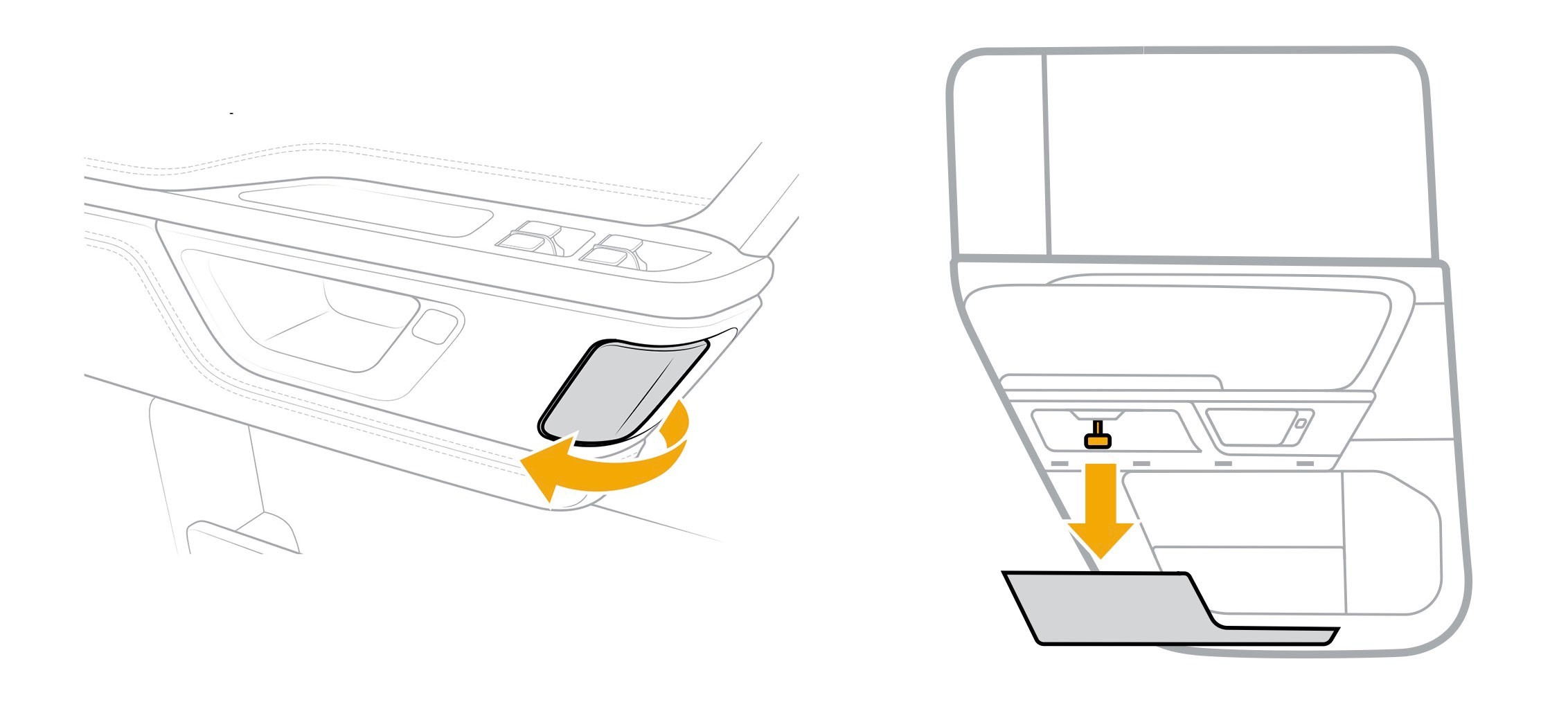
Front door (left) and rear door (right) emergency releases for the Rivian R1S and R1T

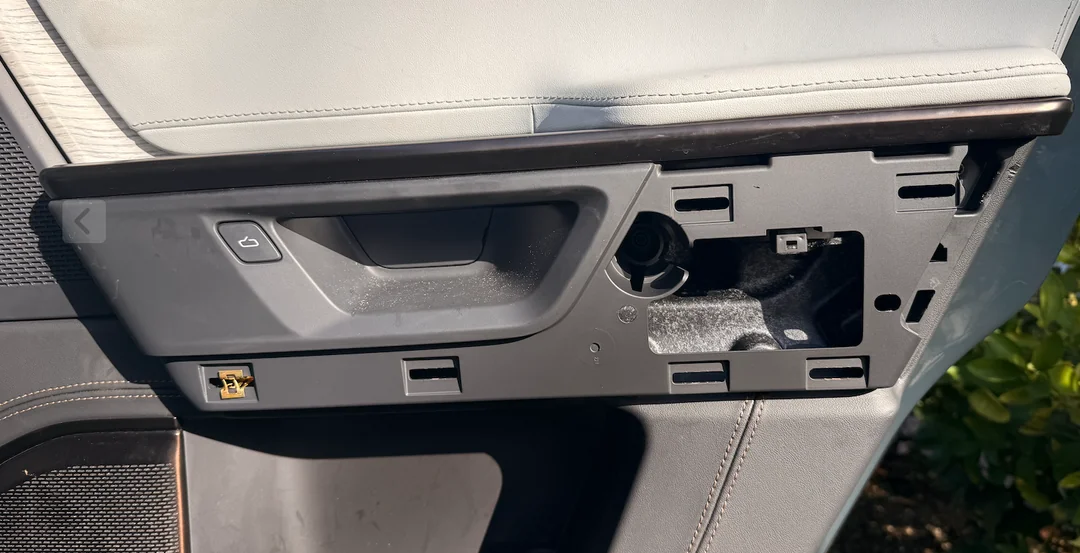
In the current Gen 2 Rivian R1S and R1T models, an easy-to-access mechanical door handle is found in the front, just like in current Tesla models. Things are more confusing in the rear. Occupants first have to pull off a piece of plastic trim on the door panel and then pull down on the release cable.

To make matters worse, the owner of this Rivian says it takes a lot of force to remove this plastic trim, requiring a pry tool. In an emergency situation, it seems unlikely a child would be able to open the door.

The Solution?

 Rivian Owners Take Matters Into Their Own Hands Because No One Should Need A Pry Tool To Escape A Burning Car
Reddit/u dublew_dubs

To work around this issue, this owner has tied a piece of red paracord around the release cable and then run it under the plastic trim piece that needs to be removed. The cord now hangs down from the door panel and is within easy reach should the electrically-operated doors fail to open in a crash.

Rivian confirmed in early October that it will redesign the door handles of the upcoming R2, ensuring the manual release is closer to the electric one. While this is good news for those planning to buy an R2, it does nothing for the tens of thousands of people who already own and drive an R1T or R1S.

\\\\\\\\

Photos Reddit/u dublew_dubs

STN EXPO East Agenda Addresses Industry Challenges, Outlines Innovative Solutions

2 January 2026 at 16:00

School districts are facing steep budget cuts amid the continued need to provide the safest rides to and from school are among the topics planned for the STN EXPO East conference March 26-31 near Charlotte, North Carolina.

The packed agenda also features specialized training as well as additional insightful education and networking opportunities, to facilitate the conversations that are making a difference in the industry.

The conference opens Friday, March 27 with school security expert Bret Brooks of Gray Ram Tactical tackling an issue all people — school transporters especially deal with. His general session will discuss strategies for better management of stress, which is currently sky high for many attendees.

Friday also includes exclusive limited space events, the National School Bus Inspection Training and the Transportation Director Summit. Both two-day events require pre-registration.

Leadership and workplace culture will take center stage with Jim Knight’s Transportation Director Summit presentation and keynote address as well as sessions on stress management, handling multi-modal and alternative transportation, fleet replacement and student behavior.

Safety will be the common theme throughout the educational agenda. In addition to navigating the upcoming funding cliff, sessions are expected to look at trends in multimodal vehicle operations, illegal passing, Danger Zone reduction strategies, seatbelt usage, distracted driving, emergency coordination with first responders, accident investigation and the increased usage of school bus monitors, and more.

The conference will also feature the technology and clean fuel options that are being released and impacting the industry with sessions and demonstrations during the Bus Technology Summit and Green Bus Summit on Sunday and Monday. Attendees will also have the opportunity to attend an exclusive tour of the Thomas Built Buses Saf-T-Liner Factory Tour in High Point, North Carolina to see the behind-the-scenes of school bus production.

For a full list of STN EXPO East conference topics, visit stnexpo.com/east.

STN EXPO East will be held March 26- 31, 2026 at Embassy Suites by Hilton Charlotte Concord Golf Resort & Spa. The Early Bird Savings Deadline is Feb. 13, register today at stnexpo.com/east!


Related: STN EXPO East Keynote Speaker to Outline Strategies for Creating Impactful Culture
Related: STN EXPO East Opens Online Registration for March 2026
Related: STN Launches Peer-to-Peer Mentorship Program at 2026 Conferences

The post STN EXPO East Agenda Addresses Industry Challenges, Outlines Innovative Solutions appeared first on School Transportation News.

Mercedes Warns EV Drivers Not To Charge Past 80% Or Risk The Consequences

  • Mercedes EQB EVs are being recalled over the danger of a battery fire.
  • Owners of 169 EQBs are being told not to fully charge their vehicles.
  • Dealers will update the battery software to prevent short circuit risks.

Mercedes EV drivers with a bad case of range anxiety might want to stock up on Ambien, now that the automaker is warning them not to charge their cars to full. The German brand has instructed owners of certain electric SUVs to limit charging to 80 percent because their cars could suffer what engineers term a “thermal event.”

In other words, a short circuit of the battery cells might result in a fire, and we’ve all seen enough videos of EV infernos to know they can be devastating, and extremely difficult to put out.

Read: Multiple Fires Spark Urgent Warning For VW EV Owners

Fortunately for Mercedes and its owners, this issue only affects a relatively small number of cars. Just 169, to be exact, including 100 EQB 300 4Matics and 48 EQB 350 4Matics. Both are dual-motor EVs, but the recall also concerns 21 owners of the single-motor EQB 250.

Previous Form

And while the scope of this safety campaign is small, some of you might remember that the brand previously recalled over 7,000 of the SUVs in the US early in 2025 due to a fire risk. In that case Mercedes issued the same guidance about not charging past 80 percent until the fix – a software update – was applied.

 Mercedes Warns EV Drivers Not To Charge Past 80% Or Risk The Consequences

All of the newly-recalled EQBs are what Mercedes calls “early-stage” MY22-23 vehicles, the automaker claiming that batteries fitted to later EQBs are more robust, and not caught up in the recall.

It also says that while owners of the 169 EVs that are affected will probably receive dash cluster warnings if things were hotting up under the floorpan during drives, a parked EQB could light up with no warning.

So if these early EQBs have less robust batteries, Mercedes must be swapping them out for newer ones, right? Apparently not. Instead owners will get a simple software update, although it’s one that still requires a trip to a Mercedes service center early in 2026.

Short-range Missile

The EQB 350 was only rated for a miserable 227 EPA miles (366 km) with a full battery, so restricting charges to 80 percent would bring the max range down to around 180 miles (290 km).

Factor in the need to leave a safety margin at the ‘empty’ end of the battery charge indicator and you could be looking at 150 miles (242 km) between fills. Let’s hope your relatives live nearby, or that you’ve made peace with spending part of the holidays loitering at freeway charging stations.

 Mercedes Warns EV Drivers Not To Charge Past 80% Or Risk The Consequences
Mercedes

Top 10 STN Website Articles of 2025

29 December 2025 at 17:00

During 2025, the most-viewed online articles on the School Transportation News  website overwhelmingly focused on school bus crashes, student injuries or fatalities, and incidents involving driver misconduct or error. Together, these stories reflect ongoing public concern about the safety of students not only while riding the bus, but also during loading and unloading, as well as the accountability of those entrusted with student transportation.


Below is a summary of the top 10 most-viewed STN articles of 2025, as ranked by reader engagement.

10. Former Pennsylvania School Bus Driver Charged for Inappropriately Touching Students

Prisoner, Jail, Handcuffs
Stock Image

Published May 16, 2025
The 10th most-viewed online article covered the criminal charges against a former school bus driver in Pennsylvania accused of inappropriately touching students. The article highlighted the severity of the allegations, addressed community reaction, and underscored the importance of screening and oversight in school transportation staff.


9. Indiana School Bus Driver Arrested for Allegedly Driving While Intoxicated

Police officer holds breathalyzer device.
Stock image.

Published Feb. 19, 2025
A school bus driver in Indiana was arrested for allegedly operating a school bus under the influence. Given the serious responsibilities school bus drivers carry, the story resonated strongly, underlining the potential risks when safety protocols are not followed.


8. Kindergartner Struck and Killed by School Bus

Published Jan. 13, 2025
A tragic account of a kindergartner fatally struck by a school bus served as a sobering reminder of how hazardous pick-up and drop-off zones can be, especially for very young children. The article prompted readers to reflect on safety practices around bus loading zones.


7. 8-Year-Old Struck, Killed by Vehicle After Exiting School Bus in Texas

Published March 4, 2025
The heartbreaking case in Texas of an 8-year-old who was struck and killed by a vehicle after exiting a school bus, was the year’s seventh most-viewed online article. It underscored the vulnerabilities children face even after safely leaving the bus, and how monitoring, infrastructure and awareness are critical for safety after the ride ends.


6. Pennsylvania Kindergartener Struck by School Bus

Stock image of first responders loading a patient into an ambulance.

Published April 24, 2025
In a separate but related incident, a kindergartner was hit by a school bus in Pennsylvania. The coverage drew attention to recurring safety issues with bus-stop zones and raised questions about what measures are in place (or need to be put in place) to prevent such accidents.


5. Over a Dozen Injured in a New Jersey School Bus Crash

Published March 17, 2025
This online article described a serious crash in New Jersey involving a school bus, with more than a dozen individuals injured. The high number of injuries made this a widely read and deeply concerning report, emphasizing the risks school buses face when collisions occur.


4. Missouri Child Hit by Pickup Truck While Getting Off School Bus

Stock image.

Published Jan. 22, 2025
A child in Missouri was struck by a pickup truck as they were exiting a school bus. It highlighted how everyday tasks, like getting off a bus, can turn dangerous, especially in areas with vehicle traffic and stirred discussions about safer drop-off procedures.


3. Alabama School Bus Driver Falls Asleep at Wheel, Crashes
An entry-level school bus driver performs behind-the-wheel training. (Image courtesy of FMCSA.)
Published March 5, 2025
A report on a school bus crash in Alabama was caused by a driver reportedly falling asleep at the wheel. This article resonated widely, bringing attention to driver fatigue and the critical importance of driver readiness, training, and safety oversight.


2. School Bus Crashes into Pennsylvania Home

Published Oct. 13, 2025
In a startling incident, a school bus crashed into a residential home in Pennsylvania. The unusual nature of the crash, a bus leaving the road and hitting a home, captured many readers’ attention and raised serious questions about mechanical safety, driving conditions and oversight.


1. Michigan Middle Schooler Dead After Exiting School Bus

Published April 18, 2025
Topping the list of the most-viewed online articles, this tragic article reported on a middle schooler in Michigan, who died after exiting their school bus. The cause was unclear and under investigation, which added to the emotional weight of the story. The high view count suggests a strong public concern for student safety beyond just the ride itself, particularly what happens immediately after students leave the bus.


Related: 2025 STN Magazine Top Articles
Related: (STN Podcast E241) 2024 in Review: Top STN Online News Articles
Related: Newsflash: School Buses Are Essential

The post Top 10 STN Website Articles of 2025 appeared first on School Transportation News.

EverDriven Identifies 3 Forces Quietly Reshaping Modern Student Transportation in 2026

By: STN
22 December 2025 at 23:49

DENVER, Colo. — EverDriven, the nation’s leader in alternative student transportation, today shared new insights on the three forces expected to shape modern student transportation in 2026. Drawing from national district trends, operational data, and daily conversations with transportation teams, EverDriven outlines how greater flexibility, deeper equity considerations, and technology as essential infrastructure are reshaping transportation planning in the year ahead.

To support district leaders in understanding these emerging pressures, EverDriven is providing a structured, Q&A-style overview of the factors influencing modernization across districts nationwide.

What key pressures are driving districts to modernize student transportation in 2026?
Student transportation is entering a new era, shaped by key pressures including the changing demographics, evolving mobility patterns, tighter funding conditions, and heightened expectations from families.

According to EverDriven’s Future of Modern Student Transportation and Safety Report, 98% of districts report active modernization efforts, signaling a nationwide shift toward transportation systems that are more flexible, more equitable, and more technology-enabled.

EverDriven’s work with transportation teams across the country offers real-time visibility into these pressures and how they are reshaping planning for the year ahead.

How will funding volatility elevate the need for flexibility in student transportation?
Many districts are heading into 2026 with uncertainty surrounding key federal programs—including EHCY, IDEA, and Title I—that support transportation for vulnerable student groups. At the same time, student needs are becoming more individualized, and mobility patterns are shifting more frequently.

These realities are prompting districts to explore flexible operating models, including:
Blended fleets that mix small-capacity vehicles with traditional buses
Partnerships with vetted, compliant transportation providers
Dynamic routing and communication tools that allow rapid adjustments

Flexibility is becoming non-negotiable—a foundational strategy for maintaining service reliability when financial or demographic conditions change quickly.

How are shifting student needs elevating equity as a core priority in student transportation?
Districts are seeing rapid changes in the populations they serve. Since 2020:
McKinney-Vento transportation requests increased 167%
62% of districts report growth in special education populations
Family homelessness increased nearly 39%

These shifts are reshaping what equitable transportation must provide, including shorter ride times, reliable access regardless of housing status, and seamless continuity when students move or experience instability.

With 88% of district leaders identifying access disparities, equity is moving from an aspirational goal to a central planning lens for 2026. Districts are prioritizing modern transportation models that offer stability and predictability for students who need it most.

Why is technology becoming core operational infrastructure for transportation teams?
Transportation operations have become more complex due to individualized routing, expanded compliance requirements, and demands for real-time communication with families. According to EverDriven’s report, 68% of district leaders say technology will play a significant or critical role in their 2026 strategies.

As a result, districts are turning to systems that:

  • Integrate routing, planning, and driver credential management
  • Automate verification and reporting
  • Consolidate parent communication and visibility tools
  • Reduce manual workload across transportation teams

In 2026, technology becomes core infrastructure—the backbone that enables districts to respond to student needs quickly, operate transparently, and maintain high levels of safety and compliance.

What does this mean for the year ahead?
Flexibility, equity, and modern infrastructure will define how districts adapt in 2026. These forces are reshaping the foundation of modern student transportation planning, helping districts build systems that are more resilient, more adaptable, and more student-centered.

Whether managing shifting funding, meeting the needs of highly mobile students, or navigating complex operational requirements, districts are using modernization to create transportation experiences that help every student arrive at school safely, consistently, and ready to learn.

To learn more about how EverDriven supports districts in modernizing student transportation through flexible, equitable, and technology-enabled programs, visit www.EverDriven.com.

About EverDriven

EverDriven delivers modern student-centered transportation that’s safe, consistent, and built for those who need it most. EverDriven specializes in transporting students across a wide range of needs — from everyday support to the most complex circumstances — including students with disabilities, students experiencing housing instability, and other high-need populations. Serving more than 800 districts across 36 states, the company completed over 2 million trips last year, 99.99% of them accident-free with 100% safety compliance. EverDriven’s deeply human, fully compliant, and AI-powered approach helps districts get students on the road in hours, not days, while maintaining consistent, high-trust rides that complement traditional yellow bus fleets. For more information, visit everdriven.com.

The post EverDriven Identifies 3 Forces Quietly Reshaping Modern Student Transportation in 2026 appeared first on School Transportation News.

(STN Podcast E288) 2025 in Review: Top STN Online Articles

22 December 2025 at 22:00

Tony, Ryan and Taylor discuss the most-read online articles from stnonline.com during 2025, which focused on illegal passing incidents, school bus driver misconduct and students injured or killed. Training is needed for students, parents and drivers.

Read all our latest news.

This episode is brought to you by Transfinder.


Stream, subscribe and download the School Transportation Nation podcast on Apple Podcasts, Deezer, Google Podcasts, iHeartRadio, Spotify, Stitcher and YouTube.

The post (STN Podcast E288) 2025 in Review: Top STN Online Articles appeared first on School Transportation News.

HopSkipDrive Elevates Family Trust with Personal Calls to Families of New Riders

By: STN
16 December 2025 at 21:33

LOS ANGELES, Calif. – HopSkipDrive, a technology company solving complex transportation challenges with safety, access, and care, has announced strong momentum with its enhanced Caregiver Great Start Program. This initiative introduces a dedicated support team that provides proactive and personalized outreach to new parents and guardians of HopSkipDrive riders. The goal is to ensure every family feels supported, confident, and well-equipped to fully utilize the HopSkipDrive platform once their school district books a ride.

While HopSkipDrive is built on a foundation of rigorous CareDriver vetting including caregiving experience and a 15-point certification process with fingerprint-based background checks—the Caregiver Great Start Program recognizes that even the best technology requires a trust-building human connection to ensure full confidence in every ride. The program is specifically designed to bridge this gap, guiding new caregivers through key processes and ensuring a positive, secure start to their experience.

“Having someone from the Caregiver Support team talk directly with a parent and student who are new users of HopSkipDrive builds trust and success from the start… I noticed far fewer calls and emails this year, especially at the start of the year, and I think it’s because their support team took that task off my plate. This support has made a huge difference,” said Brianne Nakayama at Southern California Regional Occupational Center.

The Caregiver Great Start Program’s core strategic focus is on ensuring a seamless and confident start for new caregivers. This involves personally welcoming them with a proactive call placed at least 24 hours before the scheduled time of the first ride. During this touch-point, the support team provides immediate, personalized guidance on ride logistics, safety measures (such as HopSkipDrive’s ride verification mechanism which pairs a code word and birthdate to ensure each CareDriver meets the right rider), and how to utilize the HopSkipDrive app for maximum peace of mind.

The Caregiver Great Start Program has already demonstrated significant impact since the start of the Back-to-School season, delivering high-touch support that reinforces family confidence and platform adoption. The program actively engages all eligible caregivers for new riders from our client partners, ensuring 100% of contacted caregivers receive full guidance on the safety protocols and app features necessary for a smooth first ride.

By guiding caregivers to use the app to confidently track rides and access details, the program directly reinforces HopSkipDrive’s commitment to transparency and peace of mind. The personalized outreach ensures families fully grasp the power of the platform’s safety tools, including:

● Real-Time Tracking: Providing step-by-step instructions on how to track their child’s ride live on a map, from CareDriver arrival to safe drop-off.

● Ride Verification Reinforcement: Reiterating the two-factor verification process, which involves a two-way code word and birthdate communication, to ensure the right child is picked up by the right, vetted CareDriver.

● Self-Service Convenience: Empowering caregivers to manage their trips, including quick edits, cancellations, and updating specific location or rider notes directly in the app without relying solely on phone support.

● Safe Ride Support and Proactive Detection: Providing access to our dedicated team that monitors every ride, including the ability to measure driving behavior before a ride starts to ensure road safety and prevent dangerous driving.

About HopSkipDrive
HopSkipDrive is a technology company that solves complex transportation challenges where there is a heightened need for safety, equity, and care. HopSkipDrive is modernizing the $30 billion school transportation industry through two core solutions: a care-centered transportation marketplace and an industry-leading transportation intelligence platform, RouteWise AI. HopSkipDrive’s marketplace supplements school buses and existing transportation options by connecting kids to highly-vetted caregivers on wheels, such as grandparents, babysitters, and nurses in local communities. RouteWise AI helps schools and districts address critical challenges, including budget cuts, bus driver shortages, and reaching climate goals. HopSkipDrive has supported over 13,500 schools across 21 states, with nearly 1,300 school districts, government agencies, and nonprofit partners. More than five million rides over 95 million miles have been completed through HopSkipDrive since the company was founded in 2014 by three working mothers.

The post HopSkipDrive Elevates Family Trust with Personal Calls to Families of New Riders appeared first on School Transportation News.

Pupil Transportation Around the World: A Comparative Look at the U.S. and Colombia

19 December 2025 at 17:00

Traveling the world and studying how children get to school has given me a deep appreciation for the difference in how nations approach something as simple—and as complicated—as pupil transportation.

Last month, I compared systems in the U.S. and India. This month, my attention is on Colombia, a country whose breathtaking geography, social dynamics and history shape the school commute in ways that most Americans would never experience in their daily lives. Despite all the differences, the underlying mission remains the same everywhere I go. Communities getting children safely to school so they can learn, grow and reach their potential.

When I think about school transportation in the U.S., the image that immediately comes to mind is that familiar yellow school bus. It’s amazing how recognizable it is—even internationally. No matter where I travel, people know what that yellow bus symbolizes. It represents regulation, structure, stability and the idea that education begins the moment a child steps into a professionally operated transportation system. Nearly 25 million children ride these buses every school day, making it the largest mass transportation system in the U.S. And it operates with a level of uniformity that, in many places around the world, is simply unheard of.

This system isn’t accidental. American school buses are purpose-built from the ground up with safety in mind: Compartmentalized seating, high visibility, reinforced frames, stop arms, flashing lights, emergency exits, and strict federal standards. As someone who has spent years in the fields of safety and security, I’m constantly impressed by the investment our country places in the transportation of its students. And it’s not just the equipment—it’s the people. In the U.S., drivers undergo specialized training not only in vehicle operation but also in behavior management, first aid, emergency evacuation, situational awareness, and increasingly, how to identify potential security threats. Whether you’re in a rural district in Missouri, a suburb in Ohio, or a dense metropolitan area like Chicago or Phoenix, you can expect the same level of commitment and consistency.

Of course, our system has challenges. Anyone who works in pupil transportation knows the constant struggle with driver shortages, bus replacements, new technology integration, and motorists who still don’t understand—or choose to ignore—stop arms. But even with those obstacles, the foundation is solid. There are predictable structures and regulated safety nets that American families have come to trust.

Colombia presents a very different picture—one shaped by dramatic landscapes, economic diversity and a transportation network that must continuously adapt. When I’ve spent time in Colombia’s major cities—Bogotá and Medellín—I’ve seen buses that closely resemble those in the U.S., often operated by private schools or contracted services. These buses usually include attendants responsible for helping younger children board and exit the vehicle safely. The presence of attendants is especially important in cities where the traffic congestion is unlike anything most Americans experience on a regular basis. A 30-minute ride in an American suburb might easily become an hour or more in Bogotá, simply because clogged streets and gridlock are daily realities.

Bret Brooks presents at BusWorld in Medellin, Colombia.

Yet even these city operations are only part of Colombia’s story. Once you leave the urban centers, the transportation landscape changes dramatically. The country’s geography is breathtaking but unforgiving—towering Andean mountains, deep valleys, dense rainforests and winding rural roads carved into hillsides. In small towns and rural villages, I’ve watched children board brightly painted chivas—rugged, colorful buses that are as much a symbol of rural Colombia as the yellow bus is in America. I’ve ridden in colectivos, the shared vans that serve as the backbone of transportation for many families. I’ve seen children climb onto the backs of motorcycles driven by parents or hired riders. In river communities, I’ve watched entire groups of students load into wooden boats at daybreak, drifting along waterways to reach schools that are otherwise inaccessible.

One of the most striking sights I’ve encountered in isolated Andean regions is students traveling to school on horseback or mule-back. For them, it is entirely normal—simply the most reliable way to traverse rugged mountain trails that no motorized vehicle could safely navigate. To an American child, that might sound like something out of a storybook. But in these communities, it is simply life.

These different methods bring different safety challenges. In the U.S., we worry about motorists illegally passing stopped school buses, maintaining aging fleets, rolling out electric buses, securing qualified drivers, and ensuring that our transportation teams are supported and properly trained. The hazards we face largely come from human behavior and modern roadway issues.

In Colombia, the risks can be far more varied and unpredictable. I’ve seen narrow mountain roads so tight that one wrong turn would send a vehicle over a steep drop-off. I’ve seen roads washed out by landslides during the rainy season—forcing communities to carve temporary alternative routes or walk long distances. Some rural roads never see maintenance at all. In certain areas, the presence of criminal or terrorist groups adds an entirely different dimension of risk that American school transportation rarely encounters. Despite these challenges, Colombian communities continue to show remarkable resilience and ingenuity. Many rural drivers have an almost intuitive understanding of the landscape, knowing which curves are the most dangerous, which areas flood quickly, and where rocks tend to fall after a storm.

What stands out the most to me in Colombia is the power of community. I’ve seen neighbors without children pitch in money to keep an old community van running so other people’s children don’t have to trek miles through dangerous terrain. I’ve watched drivers show immense pride in their role because they know they are providing children with opportunities that could shape their futures. I’ve seen parents walk hand-in-hand with their kids along muddy roads, ensuring they reach the main path where they can catch a ride. In indigenous communities, I’ve witnessed elders accompany groups of children through forest paths—viewing education as a shared responsibility rather than an individual task.

Back in the U.S., that same commitment exists, but it takes a different form. Our strength lies in structure—transportation departments with budgets, routing software, regulations, and formalized training programs. Drivers form long-term bonds with students. Administrators work behind the scenes to ensure compliance and safety. School boards debate funding for improvements because they recognize that transportation is not just a logistical service—it’s a vital part of education.


Related: What Differs Between Pupil Transportation in the U.S. and the U.K.?
Related: Report: Inequities in Canadian Electric School Bus Transition Threaten At-risk Populations
Related: Routes Around the World: Quarterly Quotes From Anson Stewart


As I compare school buses in the U.S. and Columbia, I keep coming back to the fact that the vehicles may look different, the roads may be different, and the challenges may come in different forms, but the heart behind the work is the same. Whether a child is riding a chiva in the mountains, a wooden boat in the Amazon basin, a motorcycle through a rural town, or a yellow school bus in Texas, the journey to school symbolizes hope, opportunity, and the shared belief that education matters.

Next month, I’ll continue exploring pupil transportation across the globe as we examine Germany. Every country I visit teaches me something new—not just about transportation, but about culture, community, and the universal commitment to keeping children safe as they pursue their futures.


Bret E. Brooks is the chief operating officer for Gray Ram Tactical, LLC, a Missouri-based international consulting and training firm specializing in transportation safety and security. He is a keynote speaker, author of multiple books and articles, and has trained audiences around the world. Reach him directly at BretBrooks@GrayRamTacticalTraining.com.

The post Pupil Transportation Around the World: A Comparative Look at the U.S. and Colombia appeared first on School Transportation News.

Background check delay shows crackdown’s strain on immigration system

19 December 2025 at 12:00
Snow-covered brick and tan building with the text "JAIL 216" above a glass door
Reading Time: 6 minutes
Click here to read highlights from the story
  • More than a month since an immigration judge agreed to grant a Sheboygan Falls mother a green card, she was still sitting in an ICE jail waiting for a required background check, which Department of Homeland Security officials said staffing issues had delayed.
  • The predicament illustrates how President Donald Trump’s immigration crackdown has strained some of the immigration system’s most basic infrastructure. Immigration attorneys say increased pressure from mass arrests has “exponentially inflamed” many of its long-standing flaws.
  • Defendants in felony cases have been deported before a judge can issue a verdict, fast-changing asylum rules have led to inconsistent outcomes, and inefficiencies like the mother’s background check delay have dramatically affected residents’ lives.

Update, Dec. 19, 2025, 12:50 p.m.:

Cleveland immigration court Judge Richard Drucker cancelled Elvira Benitez’s removal from the country on Friday, her attorney Marc Christopher told Wisconsin Watch. The U.S. Department of Homeland Security reserved the right to appeal his ruling within the next 30 days, but Christopher expects she will be able to return to Wisconsin before the end of the year.

Original story:

Elvira Benitez of Sheboygan Falls is just one step away from receiving her green card. 

But more than a month since an immigration judge agreed to grant her permanent residence pending a biometric background check, she’s still sitting in a U.S. Immigration and Customs Enforcement detention facility in Ohio, where she has spent half of 2025. 

The reason? The Department of Homeland Security, ICE’s parent agency, told an immigration court judge that a staffing shortage delayed the background check, which requires running her fingerprints through a national registry.

The ongoing immigration crackdown has strained some of the immigration system’s most basic infrastructure, and Benitez is one of many stuck as a result. Many immigration attorneys, including Benitez’s, say increased pressure on the system from mounting arrest numbers and rapidly shifting policies has “exponentially inflamed” many of its long-standing flaws, even as the Trump administration spends billions trying to keep up with its own demands.  

Those flaws have appeared in many forms: defendants in felony cases deported before a judge can issue a verdict, inconsistent application of ever-changing asylum rules and inefficiencies that cost the administration little while dramatically affecting the lives of people like Benitez. 

How has that played out in Wisconsin? Wisconsin Watch has documented the shifting landscape in a range of stories during a chaotic year for immigration policy. 

Accidental Canadian trip triggers arrest

Benitez, 50, fled an abusive home in Michoacán, Mexico, as a teenager, crossing the border with her 8-year-old sister and making her way to the Midwest, said Crystal Aguilar, Benitez’s eldest daughter. She lived without legal status for more than three decades, entering the immigration court system only after her arrest this year.

She landed in ICE custody in July after accidentally crossing the Canadian border due to a GPS mixup during a family road trip in Michigan. In her absence, her two adult daughters – both U.S. citizens – took charge of their school-age siblings and the family’s painting and cleaning business.

“I have four kids of my own,” Aguilar said. “So we’re kind of just all over the place, taking turns.”

A person stands behind a table with three pink decorated cakes, surrounded by balloons, floral arrangements and a banner reading "HAPPY BIRTHDAY"
Elvira Benitez, a Sheboygan Falls resident, waited over a month in custody for federal immigration authorities to complete a biometric background check, extending her time in detention as she awaits a possible green card. She is shown at a birthday party. (Courtesy of Crystal Aguilar)

Benitez was among more than 25,000 people ICE arrested in July alone, a Wisconsin Watch analysis found. Monthly arrests eclipsed 30,000 by September, including at least 143 in Wisconsin. Relatively few of those detainees have remained in the U.S. More than 65% of those arrested from January through mid-October have already left the U.S., either through deportation or, less frequently, voluntary departure. 

The time between an arrest and a deportation can vary widely. One Mexican man picked up in an October ICE raid in Manitowoc, for instance, was deported within four days of his arrest, while a Nicaraguan asylum seeker arrested in the same operation waited over a month in custody before opting to return to Nicaragua. 

The Trump administration’s “big” bill-turned-law, encompassing most of its policy and spending priorities, took effect just days before Benitez’s arrest. It included a record $178 billion for DHS, including funding for at least 1 million annual removals, additional detention beds and thousands of new ICE officers and federal immigration prosecutors. The bill added or expanded upon nearly two dozen fees for immigrants, asylum seekers and seasonal visa holders, including a $1,600 fee that Benitez paid to cancel her removal from the U.S. 

Wisconsin’s jails at center of crackdown

The additional funding has enabled ICE to contract with a growing number of Wisconsin sheriffs’ offices to secure beds in county jails for its detainees

The Dodge County jail in Juneau, for instance, held an average of more than 100 ICE detainees per day in September – the most recent complete month of detention data. 

Other county sheriffs have supported ICE enforcement efforts by honoring agency detainer requests by holding inmates suspected of immigration violations past their scheduled release dates, buying time for ICE agents to take them into custody. The Wisconsin Supreme Court this month agreed to hear a lawsuit challenging the legality of such practices.

While Trump’s border czar, Tom Homan, has claimed the administration is prioritizing “the worst first” for deportation, just over 40% of immigrants arrested by ICE nationwide between January and mid-October had prior criminal convictions, and nearly a third had no prior criminal history or pending charges. 

In Wisconsin, however, nearly 60% of immigrants arrested by ICE during that period had at least one prior criminal conviction, while less than 20% had no prior criminal history or pending charges.

Most immigrants with prior convictions or pending charges arrested by ICE in Wisconsin this year have been deported. Roughly half of arrested immigrants with no criminal record — such as Benitez — have not. 

But even the quicker deportations of immigrants facing pending criminal charges pose challenges. When defendants land in ICE custody, their criminal cases generally go on without them, often with no explanation of their absence. 

The immigration crackdown has left Wisconsin courts with loose ends: missing defendants, victims without a chance to testify and thousands of dollars in forfeited bail. For some defendants facing serious prison time, Dane County District Attorney Ismael Ozanne argued that deportation can serve as a “get-out-of-jail-free card.”

Asylum seekers face legal whiplash

Immigrants with no criminal history have often landed in drawn-out legal proceedings complicated by sudden rule changes. 

Reversing decades of precedent, DHS announced in July that most immigrants in ICE custody would be ineligible for bond and instead subject to “mandatory detention.” Benitez, whose arrest nearly coincided with the rollout of the policy, was among the detainees unable to leave custody as a result.

Asylum seekers have faced particularly intense policy whiplash. Among other changes, the U.S. Department of Justice’s Board of Immigration Appeals opened the door in October for immigration courts to more easily toss out asylum cases and instead deport applicants not to their home countries, but to “third countries,” primarily in Latin America and Africa. 

The volume of cases before federal immigration courts — faced with a backlog that has declined only slightly from a peak of 3.7 million cases in 2024 — and the pace of rule changes have led to inconsistent prosecutions. 

In November, DHS prosecutors moved to deport the Nicaraguan asylum seeker arrested in Manitowoc to Honduras. His attorney said he ultimately chose to return to Nicaragua, where he risks retaliation for his involvement in protests against authoritarian President Daniel Ortega, to avoid landing in Honduras, where he spent only a few days on his trek north to the U.S.

But DHS did not suggest third-country deportation when a fellow ICE detainee in Dodge County appeared in court just over a week later. 

Diego Ugarte-Arenas, a 31-year-old asylum seeker from Venezuela, was arrested alongside his wife during a routine check-in at a DHS office in Milwaukee in late October. An immigration court judge in Chicago granted the couple asylum last week, though Ugarte-Arenas will remain in ICE custody while DHS appeals the judge’s ruling. Meanwhile, his wife, Dailin Pacheco-Acosta, just returned to Madison, where the couple has lived since 2021. Pacheco-Acosta spent the past two months in an ICE detention facility in Kentucky, but a federal judge approved her release earlier this month.

“When you move this quickly and have this volume of cases, not every case gets treated the same,” said Ben Crouse, an attorney representing the Venezuelan couple. The inconsistency, Crouse added, reflects the “crazy arbitrariness of the system.” 

Arrest brings opportunity

The peculiarities of federal immigration law turned Benitez’s arrest into an opportunity to secure permanent residency. She had few pathways to legal status as an undocumented immigrant, her attorney Marc Christopher said, but her placement in deportation proceedings brought her before a judge who could cancel her removal and issue her a green card. 

Judge Richard Drucker of the immigration court in Cleveland signaled his intent to do just that on Nov. 6, citing the hardships Benitez’s absence would impose on her U.S.-born children. 

But the long-delayed background check stood in the way.

DHS notified the court on Wednesday that it was finally complete, setting the stage for what may be Benitez’s last hearing by the end of this week. 

The agency did not respond to Wisconsin Watch’s questions about whether staffing shortages were delaying background checks systemwide.

Aguilar says the step forward in her mother’s case does not resolve the systemic problems that have kept her jailed.

“The disorganization surrounding my mom’s detention underscores a broader failure,” she wrote to Wisconsin Watch. “When families cannot get basic information or timelines, it reflects a system that has lost its ability to function responsibly.”

Wisconsin Watch is a nonprofit, nonpartisan newsroom. Subscribe to our newsletters for original stories and our Friday news roundup.

Background check delay shows crackdown’s strain on immigration system is a post from Wisconsin Watch, a non-profit investigative news site covering Wisconsin since 2009. Please consider making a contribution to support our journalism.

Waushara County deputy quits sheriff’s office following The Badger Project’s investigation

In side-by-side images, uniformed people stand in rows on pavement with trees behind them, some holding flags while others stand with hands clasped and gloves visible.
Reading Time: 3 minutes

A deputy known for making a large number of arrests, but who had a history of unreliability in his reports and court testimony, resigned from the Waushara County Sheriff’s Office in early December.

Scott Schaut had worked for the sheriff’s office since 2018 and was making about $34 per hour, according to county administration.

After The Badger Project requested records of his disciplinary record in September, Scott Schaut resigned a few days later from his leadership position as the night shift sergeant, dropping himself down to a patrol deputy. In November, The Badger Project published a story about Schaut’s work history, including a performance improvement plan he had been under, and at least two documented instances of the officer’s changing testimony led to a dismissal of criminal charges.

In side-by-side images, uniformed people stand in rows on pavement with trees behind them, some holding flags while others stand with hands clasped and gloves visible.
Pictured from left to right in this screenshot from the Waushara County Sheriff’s Office Facebook page are Deputy William Galarno, Deputy Scott Schaut, Detective Jesse Gilchrist and Lieutenant Brad McCoy. (https://www.facebook.com/WausharaCountySheriff/posts/pfbid02wZPZJ31KCBDY8aA9o5169nkcQ2AWYFv1vhyuAn3e7JdjiBE7udVCirXjepVLaKELl)

“After careful consideration, I have decided that it is best for me to move on,” he wrote in his resignation letter, which The Badger Project obtained from the county via a records request. “The current direction and internal environment of the department no longer align with what I believe is necessary for me to be successful in my role. For that reason, I feel it is in everyone’s best interest for me to step away at this time.”

The Waushara County Sheriff’s Office has been under great scrutiny in recent months, as an investigation from The Badger Project found that Sheriff Wally Zuehlke had collected more than $20,000 in stipends for his K9 after quitting the law enforcement trainings with the dog. The county board voted to force Zuehkle to repay that sum plus interest.

Another investigation by The Badger Project found the sheriff’s office promoted a deputy who had been sending and requesting lewd photos to and from officers in the department. That deputy resigned after The Badger Project requested his records.

And the sheriff’s office’s second-in-command, Chief Deputy Jim Lietz, resigned in October after pressure from citizen journalist Sam Wood, who makes online videos watched by thousands in the county and beyond, regarding his handling of the lewd photo investigation and other accusations.

Schaut had previously been on a performance improvement plan with the department, during which he conducted what may have been an illegal searchdocuments from the plan note.

Wood had also been criticizing Schaut in his recent videos, derisively calling him “Schnauzer” due to his aggressive and frequent searches for drugs.

But documents show that, on at least a couple occasions, Schaut failed to follow department policy, and the law, when executing searches.

Before conducting a house check in the village of Coloma in April, Schaut and other deputies received verbal permission from a caller to ensure no person was in the home. But body camera video showed Schaut looking in boxes, the refrigerator and a washing machine, areas too small for a person to hide, according to a sheriff’s office report.

For his breaking of department policy, the top administration of the sheriff’s office decided Schaut would be penalized with two unpaid days off, Lietz wrote in the report.

Upon Schaut’s resignation from the sergeant’s position, Lt. Stacy Vaccaro ended the improvement plan.

“Overall, Sgt. Schaut’s performance has been mediocre without much change,” Vaccaro wrote in the final report. “After speaking with Schaut about concerns or issues, he would acknowledge his understanding, improve for a short period of time, and then regress back.”

Schaut, Vaccaro and Zuehlke did not respond to messages seeking comment.

Schaut also had trouble with reliability in his police work in other documented instances.

In a case from 2024, Schaut reported receiving consent to enter a man’s home, in which he found drug paraphernalia. However, when a judge asked Schaut to note on an audio recording where he had received that consent, the officer said he could not, according to the court transcript. That led to the judge dismissing the paraphernalia charge because Schaut had not obtained consent and had no warrant.

In another case involving underage drinking in 2023, Waushara County District Attorney Matthew Leusink and Assistant District Attorney Joshua Zamzow alerted the court that Schaut had misremembered facts during his testimony, leading to the dismissal of a citation.

The Badger Project is a nonpartisan, citizen-supported journalism nonprofit in Wisconsin.

This article first appeared on The Badger Project and is republished here under a Creative Commons Attribution-NoDerivatives 4.0 International License.

Waushara County deputy quits sheriff’s office following The Badger Project’s investigation is a post from Wisconsin Watch, a non-profit investigative news site covering Wisconsin since 2009. Please consider making a contribution to support our journalism.

(STN Podcast E287) 2025 in Review: Top STN Magazine Articles

16 December 2025 at 20:59

Tony, Ryan and Taylor discuss the most-read School Transportation News magazine articles from 2025, which focused on student safety, operational efficiency and technological advancement. STN also recognized outstanding individuals and teams in the industry through programs like Innovator of the Year, Garage Stars, Rising Stars and Transportation Director of the Year.

Read all our digital editions.

This episode is brought to you by Transfinder.


Stream, subscribe and download the School Transportation Nation podcast on Apple Podcasts, Deezer, Google Podcasts, iHeartRadio, RadioPublic, Spotify, Stitcher and YouTube.

The post (STN Podcast E287) 2025 in Review: Top STN Magazine Articles appeared first on School Transportation News.

Breaking Down Wheelchair Crash Testing at TSD Conference

16 December 2025 at 05:54

Miriam Manary, the lead research engineer at the University of Michigan, provided Transporting Students with Disabilities and Special Needs (TSD) Conference attendees an overview of crash-testing standards for wheelchairs in motor vehicles.

The Nov. 8 session emphasized why proper securement, crashworthy equipment and correct belt usage use are essential for occupant safety. She explained that testing is based on WC19, voluntary industry standards that establish minimum design and performance requirements for wheelchairs used as passenger seats in moving vehicles. It requires the wheelchairs to withstand a 30-mph frontal impact (30 mph delta-V)—a severity greater than 96 percent of real-world crashes. She explained that frontal impacts are the priority because they account for nearly half of crash events. Although side-impact testing methods have been developed, they are not yet incorporated into the standards.

Manary explained that side-facing and rear-facing wheelchair transport consistently fails crash tests because wheelchairs lack structural strength in those directions. Early tests demonstrated catastrophic failures, including seatback collapse and occupant head strikes on the vehicle interior. Only forward-facing transport currently offers a predictable, test-validated protection environment.

Manary added that the vehicle mass matters. Larger vehicles, such as school buses, experience lower delta-V in similar crash scenarios, thus reducing injury risk for all occupants. Still, correct equipment use remains essential, she said.

WC19 wheelchairs provide crash-tested securement points, stronger frames and accessible hook paths designed to allow all four tie-downs to be attached in under 10 seconds. Yet, many school transportation issues arise from insufficient space within the vehicle.

She added that poor securement remains a major challenge. Common mistakes include attaching tie-downs to removable parts such as footrests, armrests and quick-release wheels, Manary said. A securement point must always be a strong, welded portion of the main frame. Plus, using fewer than four straps dramatically increases rotation and instability, she added, noting a significant portion of injuries stems not from wheelchair movement but from improper or absent occupant restraints.


Related: Funding Among Potential Impacts of U.S. Education Department Dismantling on School Transportation
Related: BraunAbility Says New Wheelchair Lift Addresses Customer Needs
Related: Texas Team Takes Home Roadeo Award at TSD Conference
Related: School District Directors Share Strategies for Transporting Students with Disabilities


Riders in wheelchairs must wear crash-tested seatbelts because they lack the protection of compartmentalized seating, Manary continued, adding that a good fit is essential.

Lap belts must rest low on the pelvis, “If it’s not on the thigh, it’s too high,” angled 30–70 degrees from vertical. Shoulder belts must cross mid-shoulder, avoiding the neck but staying far enough inboard to prevent sliding off, she said.

Additional hazards come from loose equipment such as ventilators, trays or oxygen tanks. In crash tests, even an 11-pound device can become a dangerous projectile at high speeds.

Emerging research focuses on future mobility, including universal docking systems that allow wheelchair users to independently secure their chairs in autonomous vehicles and, potentially, aircraft. Early prototypes show promise, offering independence while meeting crash performance comparable to four-point tie-downs, Manary said.

The post Breaking Down Wheelchair Crash Testing at TSD Conference appeared first on School Transportation News.

❌
❌