Reading view

There are new articles available, click to refresh the page.

‘One Type of Driver’ Training

Whether it’s a full-size school bus with track seating running the length of the floor or a compact van with fixed belt points, no two vehicles secure a student the same way—and too often, drivers are left to figure it out on the fly.

That variability, experts warn, can compromise safety for students who rely on wheelchairs, car seats or booster seats, especially as alternative transportation expands and fleets grow more diverse. Driver training has never been more paramount.

Darren Reaume, the director of training for Q’Straint/Sure-Lok, explained that school buses from different OEMs and of various model years have different characteristics. This is why it’s so important that drivers know what’s available on the vehicle and how to use the wheelchair securement equipment.

“If you have 50 different buses in your fleet, chances are you have four or five varieties of different equipment, and your drivers need to know how to use all of that stuff because you don’t know which [vehicle] they’re going to have,” he said.

When transporting a student in a wheelchair as a van passenger, the space is going to be much more limited than in a school bus, where track seating will typically extend the length of the bus because of the need for traditional bench seats. In vans, everything is much more compact. This mean there could be a fixed location for the shoulder belt, for example.

“Sometimes we run into this disconnect where it’s easier to transport a small student in a side-entry van because it’s a smaller space and the device is small,”  he said. “But then the occupant securement doesn’t fit great on them because they’re a smaller individual.”

On the flip side, it might be harder to secure a larger student in their mobility device because it’s a small space, but the occupant securement fits better.

“So now, you’re taking into account the particular equipment and layout of that vehicle,” he said, adding that everything from the size of the securement location to how much space the driver has to operate in makes a difference in safely securing at student.

Certified passenger safety technician Cassidy Miller noted drivers are responsible for proper securement of the CSRS in their vehicles, and they need proper training or information on the student. Miller, who is also the director of transportation for Cashmere School District in Washington state, shared that a lower anchor system securing the car seat into a vehicle has a weight limit. The other option is using a seatbelt, which has no weight limit, to secure the car seat.

Miller suggested asking if contracted providers know each child’s weight, or are they guessing based on age and size? Regardless of weight, Miller added that if the child is being restrained in a forward-facing car seat, a strong U.S. recommendation is to use the top tether.

“And they need to make sure that the harness straps fit the child who they’re transporting,” she said. “If they’re transporting multiple [students] in a day, that can get tricky. They need to make sure that it’s adjustable.”

All are adjustable to a degree, she explained, but some are more complicated and require removing the car seat to make the adjustment.

The Alternative Student
Transportation Association


Greg Prettyman, vice president of FirstAlt, explained the creation of the Alternative Student Transportation Association that gives a voice to providers. He said the goal is for different companies to develop a unified message on issues as they arise. At the top of the to-do list is public outreach and creating a website as well as consulting on the National Congress on Student Transportation Alternative Transportation committee. Prettyman added NCST was the impetus for creating the association because each company was providing input individually.

Miller added that the harness needs to fit the child properly, and it needs to be snug to their body with the chest clip at armpit level. “Those points need to be monitored by the drivers, and sometimes that’s hard when they’re a company that has back-to-back rides or a lot of turnover,” she added.

She also recommended that families who are using an alternative transportation service also be educated about the car seat installation points. “Is the family looking to make sure that the car seat is installed properly for the child’s weight? Is it installed via seatbelt or lower anchors? Is the harness fitting them correctly? Is the chest clip at the right point, is the top tether attached to the back of the seat? … They should kind of have a mental checklist every day when they help load their child,” she recommended.

The liability does falls on the school district but she said parents can serve as a second set of eyes to ensure the car seat is installed correctly. She provided an example at her previous district, where a family took pictures to prove the contractor wasn’t installing the car seat correctly.

“I took [the pictures] back to that transportation company, and I said, ‘Listen, here are five things wrong with this car seat right now. Those need to be addressed,” Miller recalled. “I know you say you train your drivers on using car seats, but this car seat has not shown up in an acceptable manner, and the parent has been reinstalling the car seat as properly as she can get because she doesn’t have the manual in hand whenever the car seat arrives. And it’s getting very frustrating.’”

Depending on the state, it might be hard for all independent contracted drivers to undergo securement training like district employees. Instead, she advised school districts ask for the driver training curriculum that contractors use and determine if it meets the standard. Plus, she recommends random checks.

“Go out to that elementary school at pickup and see and just observe that child. Observe that car seat as it’s waiting,” she said, adding it’s important to make extensive notes. “I would highly recommend all of those random checks just to ensure the drivers are in compliance with their company and or even if it’s your own drivers, that they’re in compliance with your standards.”

Training Drivers

Gregg Prettyman, the vice president of First Student subsidiary FirstAlt, said the driver training standard should be the same no matter the vehicle. He noted FirstAlt follows First Student’s driver vetting, training and credentialing standards.

“There’s a lot of different types of vehicles — Type A, Type B, Type C, vans and SUVs — but there really should only be one type of driver, and that’s just a driver that meets all of the state requirements for a bus driver,” he explained.

He said the only exception would be vehicle-specific licensing, adding that alternative vehicle drivers like those in Type A school buses don’t need a CDL. He added that when it comes to wheelchair securement, FirstAlt works with transportation companies that are established in correctly transporting people in wheelchairs, whether that’s to and from work or doctor’s appointments.

“We reach out to those companies who really are already experts in that and doing that in the state, and we certify, license and onboard them,” he said, adding the oversight provides an extra layer of protection “We still do verify that their drivers know how to secure and meet all the student securement transportation requirements. But the nice thing is, when you’re working with existing companies, they already have a lot of that training and expertise in place.”

Blake Smith, area general manager for the east for FirstAlt, agreed, noting the importance of being a part of First Student and how it has been asset for its training program.

“We really want to make sure that we’re doing our due diligence for the safety aspect and keeping with those First Student standards and core values to make sure that we’re properly securing these students and properly securing the equipment, because at the end of the day … we’re firm believers that the yellow school bus is the safest way to get these students to school, but in those instances where you’re not using a yellow school bus for a variety of reasons, we want to make sure that the safety isn’t sacrificed when we’re doing that.”

He said a session presented by industry consultant Alexandra Robinson at the National State Directors of Pupil Transportation Services annual conference in November touched on securement in yellow school buses as well as alternative transportation vehicles. CPST instructor Denise Donaldson is presenting a similar topic at STN EXPO East on March 28, “What’s the Difference?! CSRS Use in School Buses versus Alternative Vehicles.”

Smith said a takeaway from the NASDPTS presentation was ensuring the drivers know that information. “In the event that we have to take a car seat out because they’re doing another route where we need actual space in the vehicle, that we’re properly securing that piece of equipment back in the vehicle,” he said of the importance of training. “And understanding the different checkpoints of making sure that that that piece of equipment is secure in the vehicle.”

Even something like not securing a child in a puffy coat needs to be communicated to drivers, as they transport students in the Northeast, where kids are coming out of their houses in jackets.

“[We’re] making sure we’re doing our due diligence for those two pieces, helping the drivers and also the monitors — if we have monitors in those vehicles — not only properly secure the car seat, but secure the student properly.”

EverDriven CEO Mitch Bowling said every driver is required to complete the EverDriven Driver Education Course, “which is the first program in the industry designed specifically for transporting students with unique needs,” he claimed.

He explained the course covers everything from wheelchair securement to defensive driving to sensitivity training.

“It’s a six-module course that prepares drivers for real-world situations, like managing behavioral challenges or responding to emergencies,” he continued. “Drivers must pass a 40-question exam before they can drive students. While district requirements vary, our training is built to meet those needs and often goes beyond them.”

Bowling said a standardized training ensures every driver is ready for a variety of scenarios and can adapt to individual student needs, whether that involves mobility devices or behavior support.

Blake added that drivers are trained before they start any trips with FirstAlt, with a test at the end of the program to become certified. Every six months they do a refresher course. However, he noted states and districts will have other requirements. For example, some districts in the Dallas area require transportation to the school for the deaf and blind, and FirstAlt will send their drivers to be trained on courses that address that specific group of individuals.

The School of Philadelphia has a specific training course for monitors and Colorado has inclement weather training. “It’s not only important to have your own [standard] but to make sure you’re compliant with the unique training requirements of each state and each district,” he said.


Related: NAPT Statement Provides Recommendations for Alternative Transportation
Related: Alternative School Transportation: Roadmap for Decision-Making For Children with Disabilities and Special Needs
Related: NASDPTS Publishes Paper Espousing Safety of School Buses Over Alternative Transportation
Related: Beyond the Yellow School Bus: Alternative School Transportation


Prettyman said that alternative transportation can be so individualized at times that FirstAlt will partner with the district to ultimately support that one particular student.

“Maybe it’s a student where they’re trying to reinforce certain behaviors in the classroom, and we’re trying to figure out how do we extend that classroom to the classroom on wheels,” he said. “We’ve had drivers and monitors that we coordinate with at the school specifically to go in and observe that student in a classroom setting and better understand not only that student from when they’re just transporting, but also how are we understanding that student, and how can we support that student through transportation?”

Putting the driver classroom on wheels can heighten learning quickly.

“One small thing can become a major issue,” he said. “How can we partner with our districts, and also their teachers and paraprofessionals … to ultimately support these students on an individualized basis? Because that’s what alternative transportation does really well. The yellow school bus is great, but when it comes down to these individual students that have IEPs …how do we take that classroom environment and extend to the to the vehicle and also support safe transportation for that student?”

Jennifer Brandenburger, the senior vice president of Safety at HopSkipDrive, said dedicated programs for riders with specialized needs help ensure safety and compliance.

Drivers transporting younger riders “receive specialized education on proper installation and harnessing techniques, which is guided by certified child passenger safety technicians from Safe Kids Worldwide,” she said. “Only these approved drivers receive and use the company-provided car seats for these specific rides.”

Brandenburger added that HSD selected a car seat model that meets the impending standards set by the National Highway Traffic Safety Administration in consultation with expert advisors.

Wheelchair transportation, meanwhile, is facilitated by CarePartners. Brandenburger said these are “local professionals who undergo HopSkipDrive’s rigorous and comprehensive certification process, including name- and fingerprint-based background checks, clearing child abuse and neglect screenings where available, and enrolling in continuous criminal record monitoring.”

She said that CarePartners provide a wheelchair accessible vehicle (WAV) and are trained on the correct securement.

“By ensuring CarePartner drivers undergo our onboarding and management, we are able to monitor, manage, and ensure compliance with district requirements,” she concluded.

The post ‘One Type of Driver’ Training appeared first on School Transportation News.

A Mystery Brand Called Kosmera Is Coming To CES

  • A new automaker called Kosmera is debuting at CES next month.
  • Their first vehicle appears to be a sporty four-door sedan.
  • The mysterious company seemingly hails from Suzhou, China.

Many of us are looking forward to Christmas and New Year’s, but CES is right around the corner. As a result, we’re seeing announcements trickle out including one for an all-new company called Kosmera.

Details are limited, but the company is planning to stage its international debut at the show. They’re promising to take a “fundamentally different approach to mobility,” which apparently contrasts with firms chasing an “autonomous and connected future.”

More: Sony Honda Mobility Bringing New Concept And Pre-Production Afeela 1 To CES

While would seemingly imply an analog driver’s car, Kosmera described themselves as “not just an automaker,” but a “technology-driven company developing a platform that connects people with real-world scenarios and digital services.”

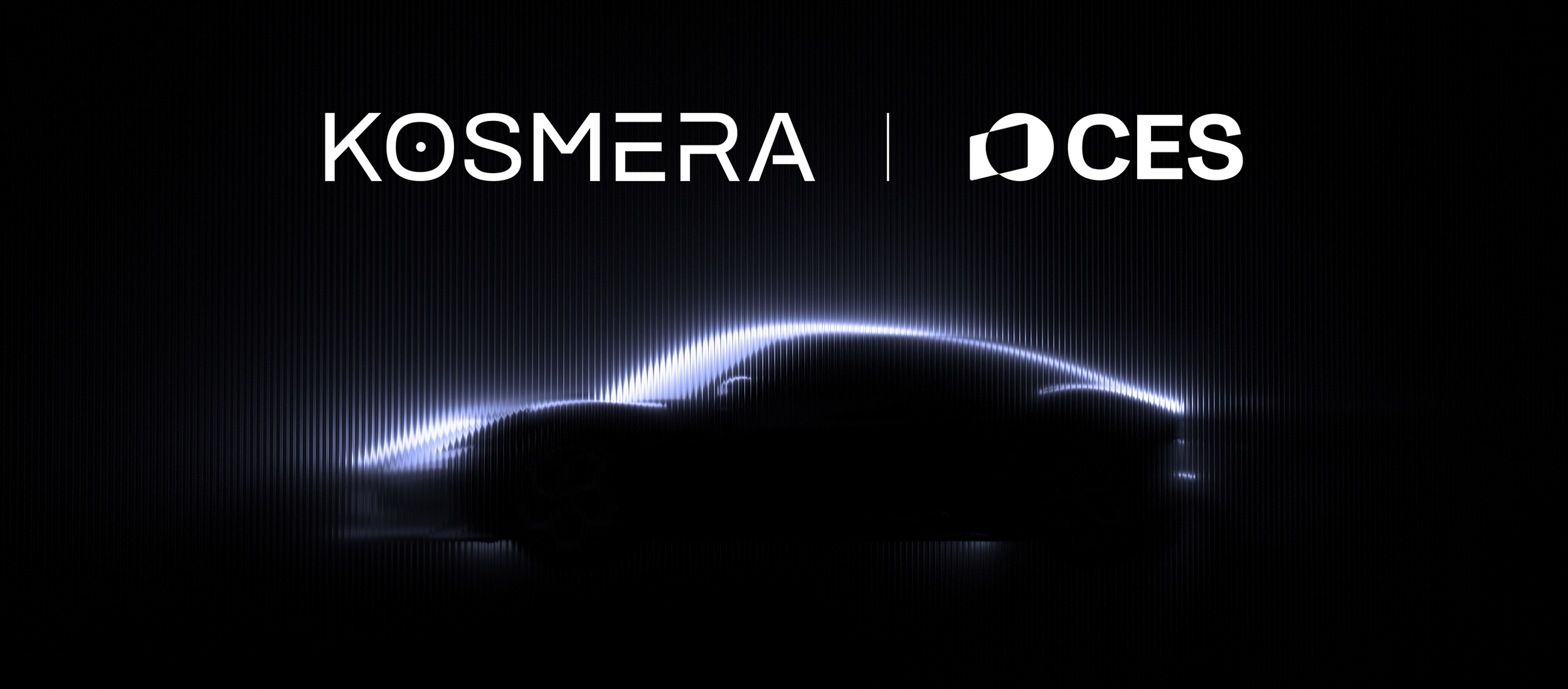
That’s a head scratcher, but the company dropped an interesting teaser image. At first glance, it appears to show a stylish sports car that vaguely recalls the Porsche 718 Cayman.

Enhanced Teaser Image

 A Mystery Brand Called Kosmera Is Coming To CES

However, after playing around in Photoshop, we were able to enhance the image to reveal it shows a four-door sedan or liftback. We can also see muscular rear haunches and a seemingly massive front overhang. The latter is presumably some sort of distortion, but you get the idea.

Doing a little more digging, we were able to uncover a trademark application from earlier this month. It was for the Kosmera name and was made by Xing Chen Future Automotive Technology Co Ltd. While this doesn’t tell us much, we know the mysterious model hails from China.

We’ll learn more next month as Kosmera’s exhibit opens on January 6.

 A Mystery Brand Called Kosmera Is Coming To CES

Someone Ghosted Their Celestiq Order, And Now A Dealer’s Selling It

  • Cadillac built just 25 Celestiqs for the 2025 model year.
  • Buyers can skip the waiting list with this dealer-listed car.
  • Exterior paint alone adds a hefty $15,900 to the total price.

The Celestiq isn’t just Cadillac’s fanciest and most extravagant car in decades, it also carries the highest price tag in the brand’s history. And with only 25 examples scheduled for production in 2025, it’s one of the rarest Cadillacs ever made too. An ultra-luxury trifecta, really.

You can’t just hop onto Cadillac’s website and place an order, either. Buying a Celestiq involves direct contact with the brand, followed by a wait, possibly a long one.

The process is more aligned with how Rolls-Royce or Ferrari handles their customers, complete with a bespoke configuration experience where virtually every detail is customizable. No two cars will leave the factory looking the same.

Poll: Would You Spend Over $400K On A Cadillac Celestiq Or A Rolls-Royce Ghost?

Yet now, as picked up by Road&Track, one of these elusive machines has surfaced for sale, at a Cadillac dealership, no less. The car is currently listed through Cadillac Beverly Hills.

\\\\

The dealership hasn’t confirmed whether the original buyer backed out post-delivery, or if there’s another story behind how it ended up on the lot. Either way, it presents a rare opportunity for someone to bypass the usual waitlist, assuming one still exists.

How Much Does Bespoke Cost?

Cadillac hasn’t really shared many details publicly, including exact pricing. For the 2025 model year, the starting figure was confirmed at around $340,000. That’s since crept up, with the 2026 Celestiq now beginning in the “low $400,000s”, and that’s before diving into options.

Read: Think The 2025 Celestiq Was Expensive? 2026 Says That’s Cute

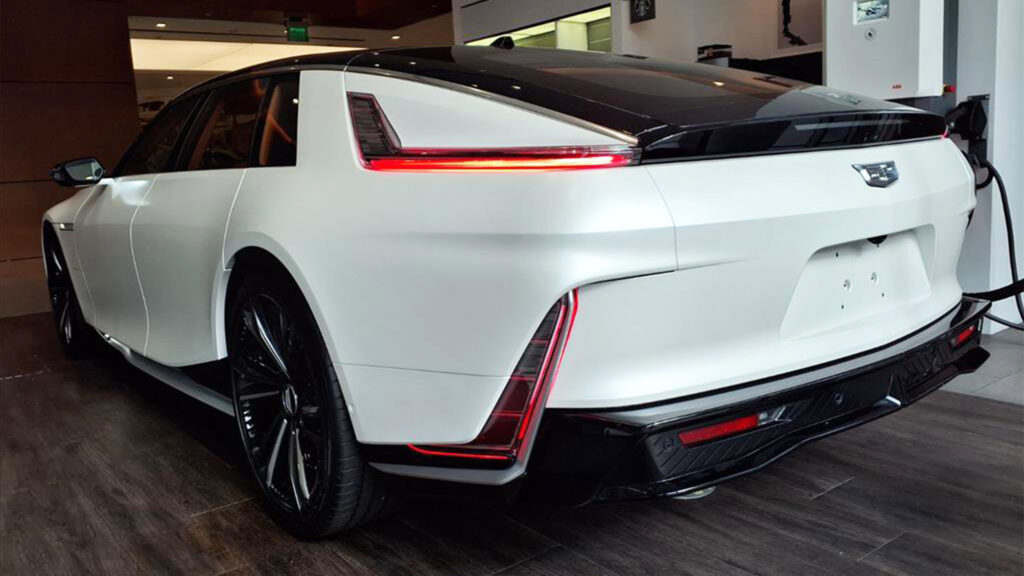
What makes this particular Celestiq even more interesting is that its spec sheet provides a rare peek behind the curtain at individual option pricing. The exterior is finished in Abalone White Tricoat, a paint choice that adds $15,900 to the bill.

It has also been equipped with a flamboyant combination of blue and orange leather upholstery that cost $8,910, as well as a $1,525 Cadillac Crest headstone ornament, and a $4,000 Uranus Recycled Paper Wood ornamental finish.

\\\\\\\\\\

Cadillac Beverly Hills

Inside, things get even more colorful. The cabin features a mix of bright blue and vivid orange leather, a combination priced at $8,910. There’s also a $1,525 Cadillac Crest headstone ornament, plus a $4,000 interior trim made from Uranus Recycled Paper Wood.

Would You Pay This Much?

The dealer is asking $418,575 for the rare luxury EV. That’s a lot of money, particularly since prices for the 2025 Celestiq the 2025 version started well below that before options were added. But with the 2026 Celestiq now beginning above $400,000, the dealer’s price isn’t entirely out of step.

There’s no doubt that the 650-horsepower Celestiq is special, but we wouldn’t be surprised if this car ends up sitting on the lot for quite some time. A buyer needs to be convinced to buy this, as opposed to a Rolls-Royce Phantom, and love the striking color combination, which we suspect will divide opinions.

\\\\\\\\\\\\

Cadillac Beverly Hills

Mercedes’ New VLE Is A Starry-Eyed Grille Seeker

  • New VLE minivan debuts March 10 with a massive grille.
  • First model built on new modular VAN.EA electric platform.
  • Offers up to eight seats and limousine-like ride comfort.

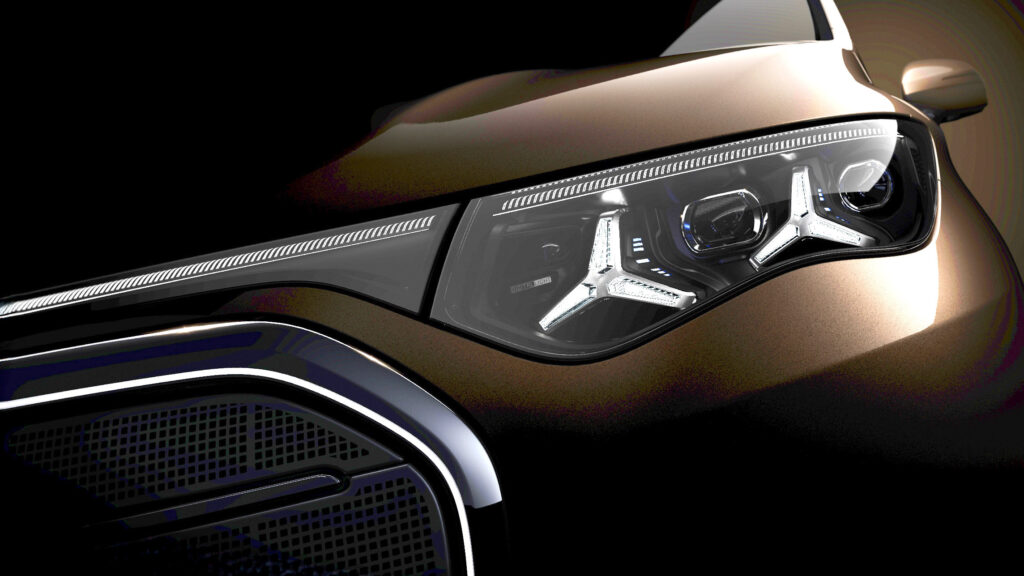
Mercedes has confirmed when its all-new VLE electric minivan will step into the spotlight, and the date is set for March 10 in Stuttgart. Along with the announcement, the company dropped a teaser image that gives us a close look at the front end. The bright star-patterned daytime running lights immediately tie the production VLE to the earlier Vision V concept.

Related: New Mercedes VLE Could Be The Most Opulent Minivan Ever In America

While the concept turned heads with its bold proportions and almost sci-fi surfacing, the VLE keeps things fractionally more grounded. Even so, the family resemblance is clear, and Mercedes is not shy about saying this is the start of a new era.

It will be the first model built on the brand’s fresh VAN.EA electric platform, which is modular and scalable to cover everything from basic people carriers to plush shuttles and big delivery vans.

 Mercedes’ New VLE Is A Starry-Eyed Grille Seeker

Mercedes says the VLE mixes limousine-like ride quality with MPV practicality. Think flexible seating for up to eight, a pillar-to-pillar MBUX Hyperscreen dashboard that runs the latest version of Mercedes-Benz’s (MB.OS) operating system, and tons of clever storage ideas.

A more luxurious VLS variant with lounge-style chairs and a huge 4K rear entertainment screen comes later for buyers who want full chauffeured opulence and fewer seats.

Biggest Grille Yet

The teaser image shows a smooth nose with an even bigger grille than the one on the new GLC EQ flanked by those star-shaped DRLs, which give the van a distinctive identity.

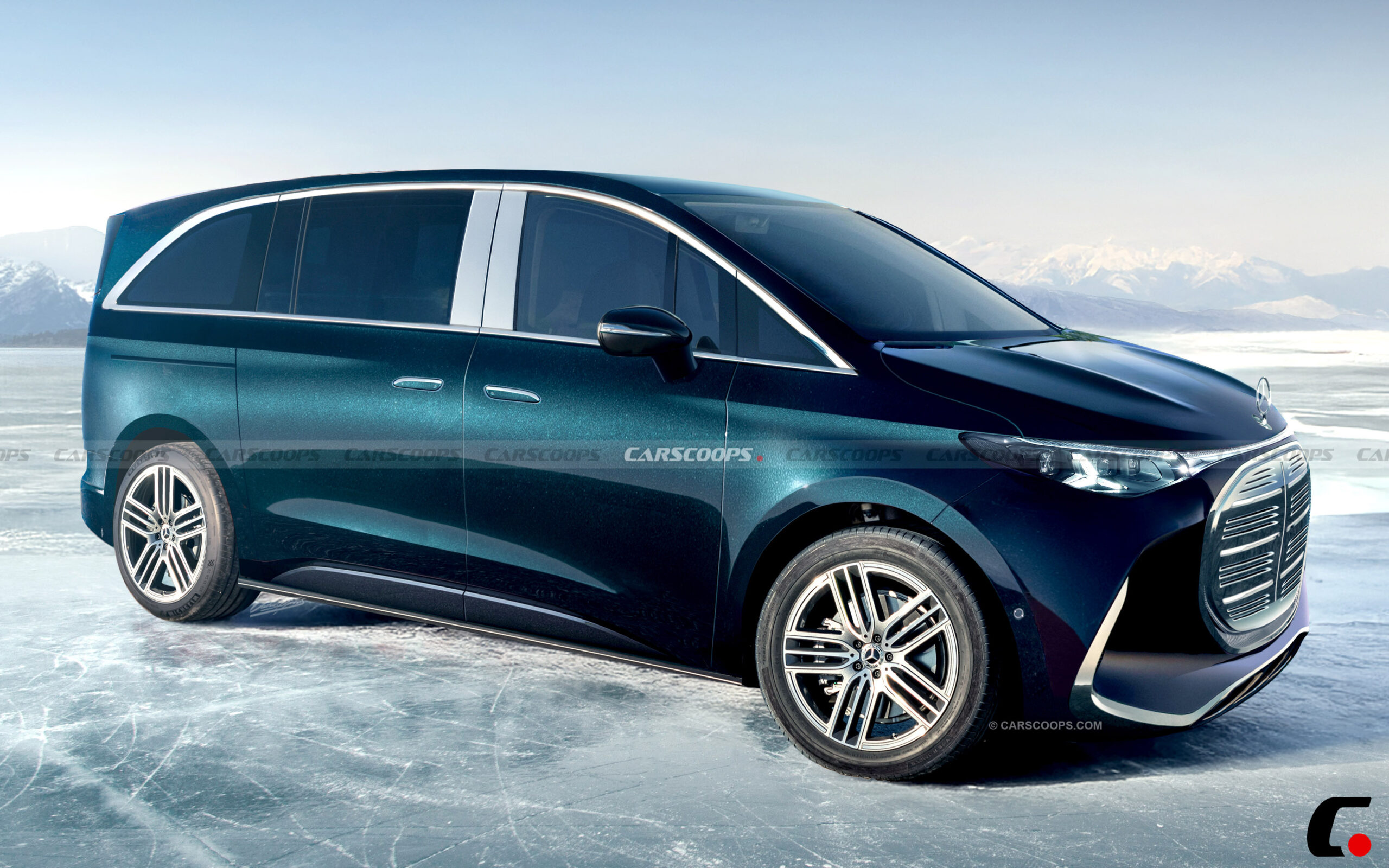
Recent prototypes caught winter testing suggested the overall shape will closely track the Vision V’s silhouette with a lower roofline and more sculpted body sides to avoid the usual slab-sided look of most big vans. Our own Carscoops rendering, seen below, shows how the production VLE could look.

 Mercedes’ New VLE Is A Starry-Eyed Grille Seeker
Josh Byrnes/Carscoops

Under the skin, the electric VAN.EA platform is expected to deliver single and dual motor options to cover a wide performance spread, entry versions making do with 268 hp (272 PS / 200 kW) and top models nudging 470 hp (476 PS / 350 kW).

300+ Mile Range

Battery sizes could vary from 90 kWh to almost 120 kWh, with WLTP ranges of over 300 miles (500 km) in the most efficient versions, and all VLEs are able to take 350 kW inputs thanks to their 800-volt electrics. Today’s combustion vans will still be offered, but they ride on a different platform.

Mercedes calls the VLE the world’s first luxury urban SUV, though really it is a high-end electric minivan with big ambitions that arrives after similar vans from Lexus, Volvo, and Zeekr.

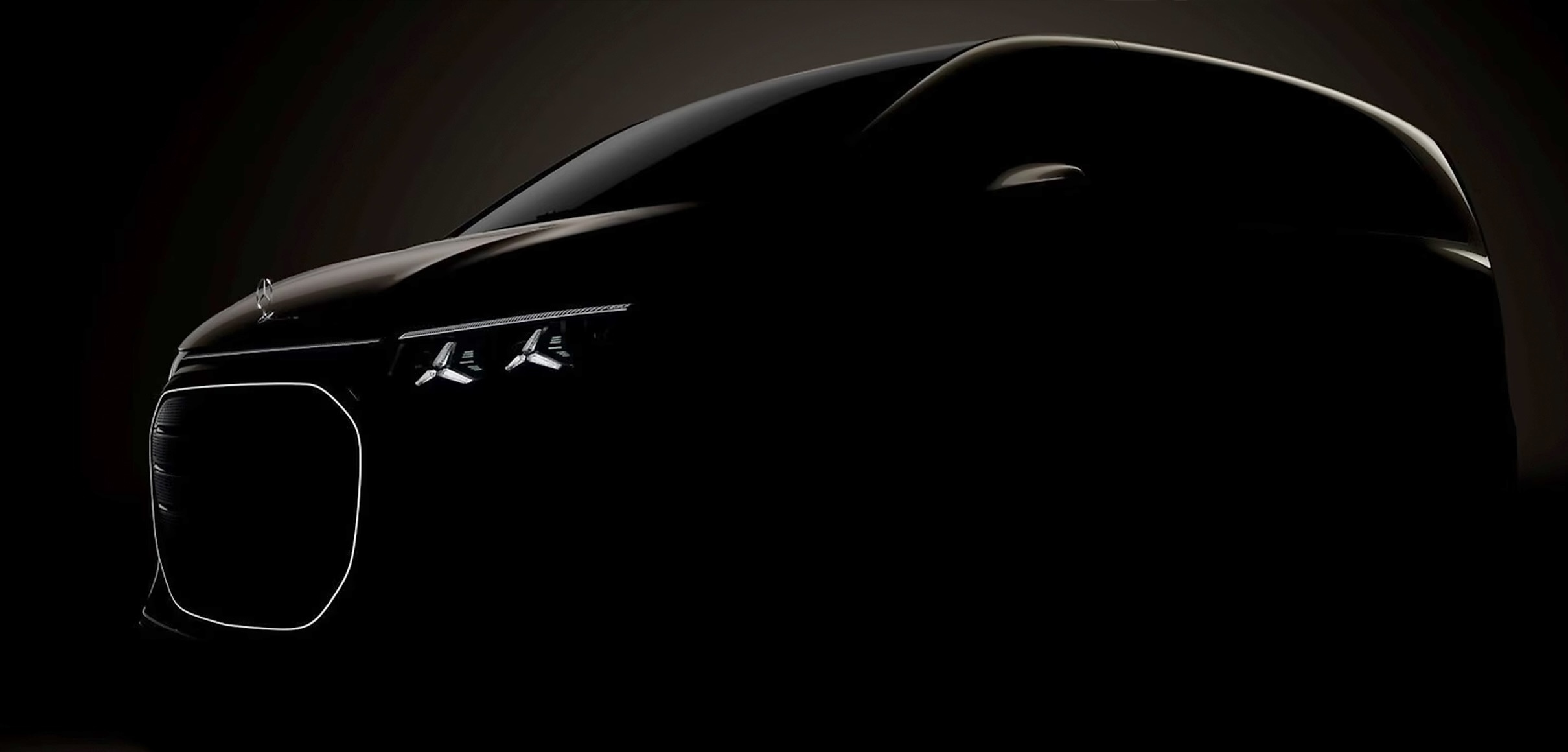
We’ll get the full details in March, but the early signs suggest the people mover class is about to get a lot more glamorous, though maybe not quite as glamorous as the Vision V concept shown below.

\\\\\\\\\\\\\

Mercedes

Just Six Months Later, BMW’s Hiking Its 2026MY Prices Again

  • BMW is raising prices on most 2026 models starting January 1.
  • MSRP hikes range from $400 to $1,500 depending on the vehicle.
  • The company first increased prices of its 2026MYs in early July.

After Porsche’s recent round of price hikes, it looks like BMW will soon follow suit. According to a report from CarsDirect citing a dealer bulletin sent this week, BMW will be doing the same in the new year.

While it didn’t explicitly point to tariffs as the cause, the timing does invite speculation for certain models, even if the biggest increase happens to hit a model built right in the United States, where tariffs aren’t the go-to excuse.

Also: Porsche Keeps Making Customers Pay For Trump’s Tariffs

BMW’s internal notice reportedly states that most vehicles in its range will see a price increase of roughly 1 percent, though not every model is affected. The adjustment will result in MSRP hikes ranging from $400 to $1,500 and will go into effect on January 1, 2026.

 Just Six Months Later, BMW’s Hiking Its 2026MY Prices Again

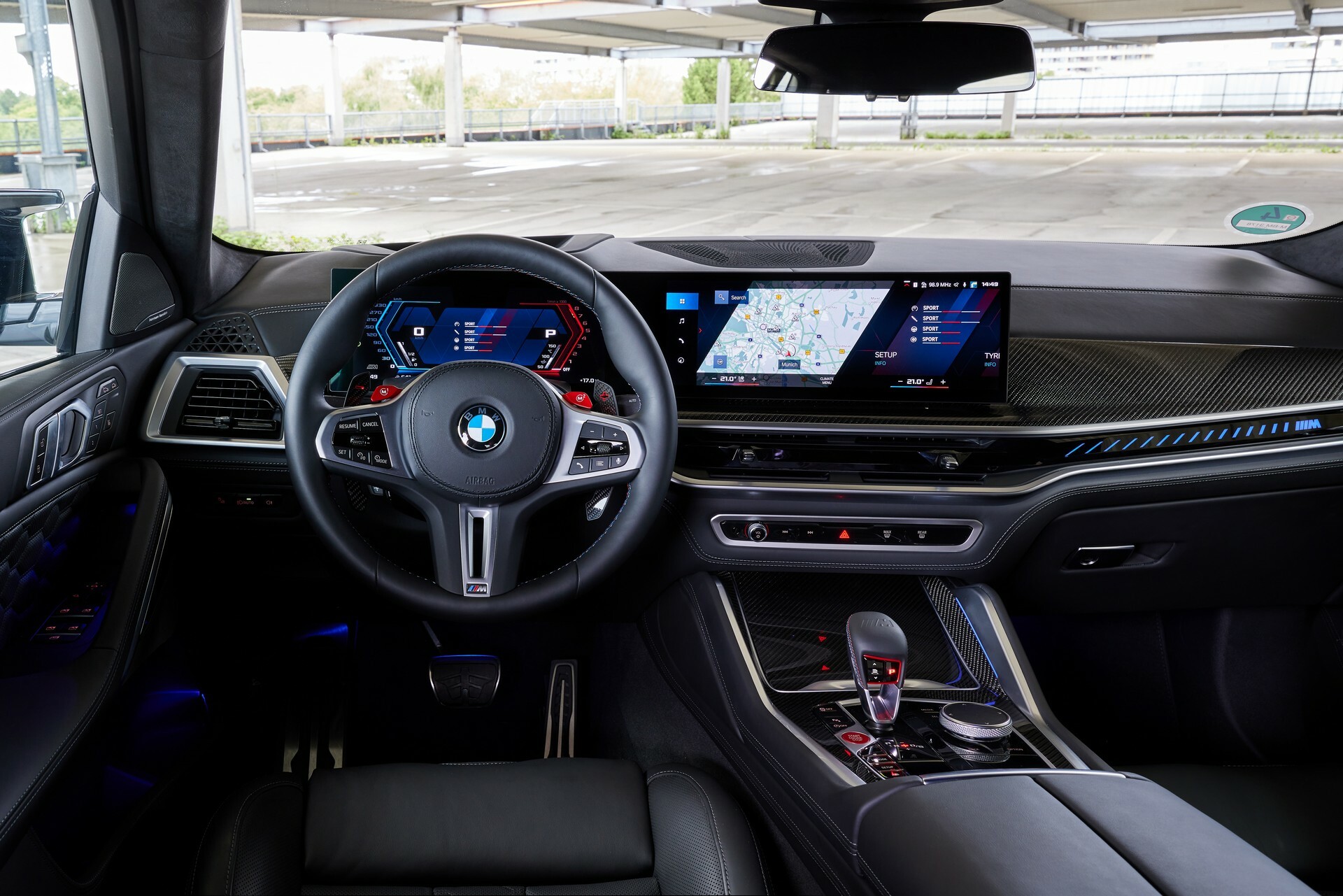
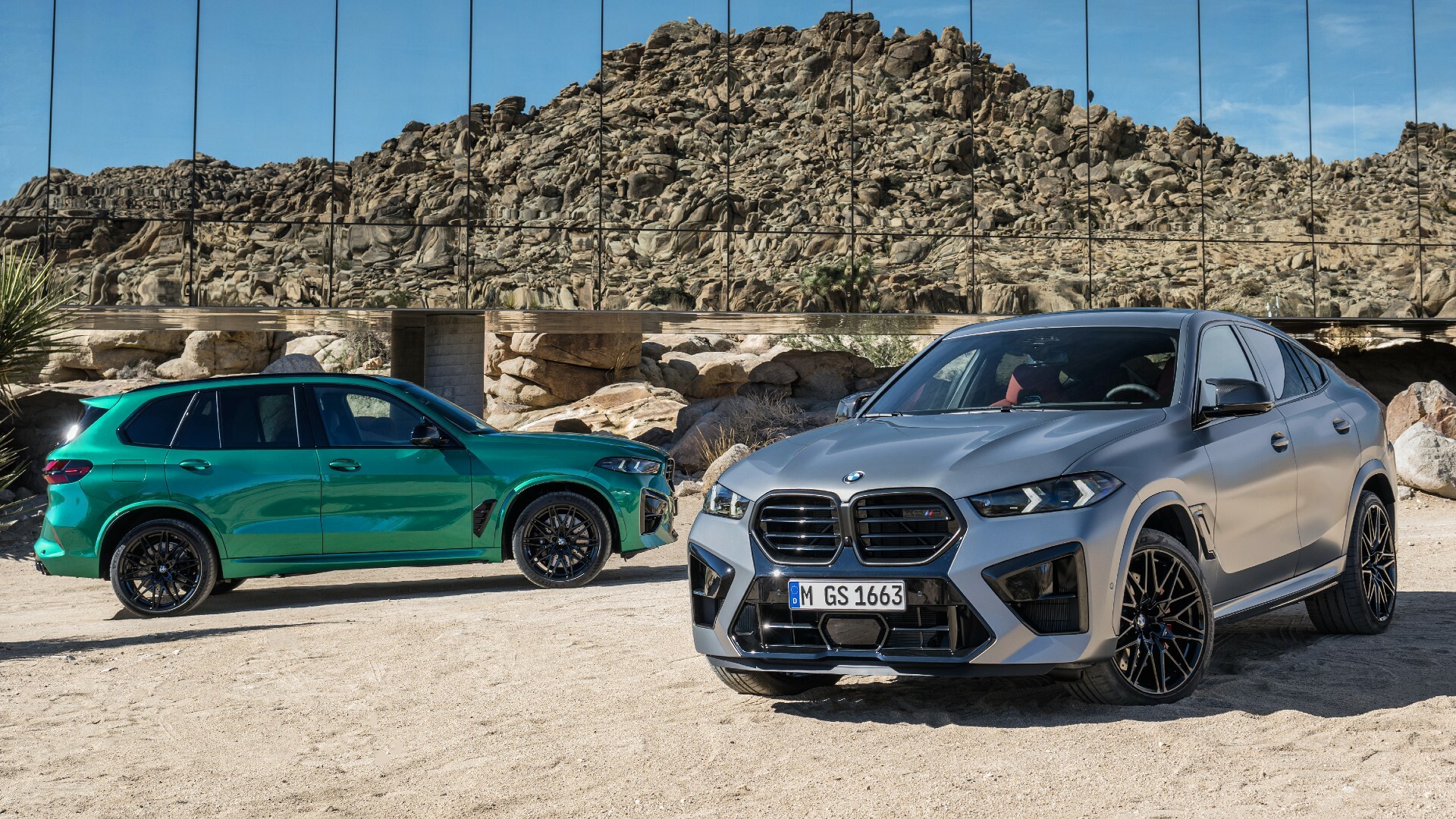
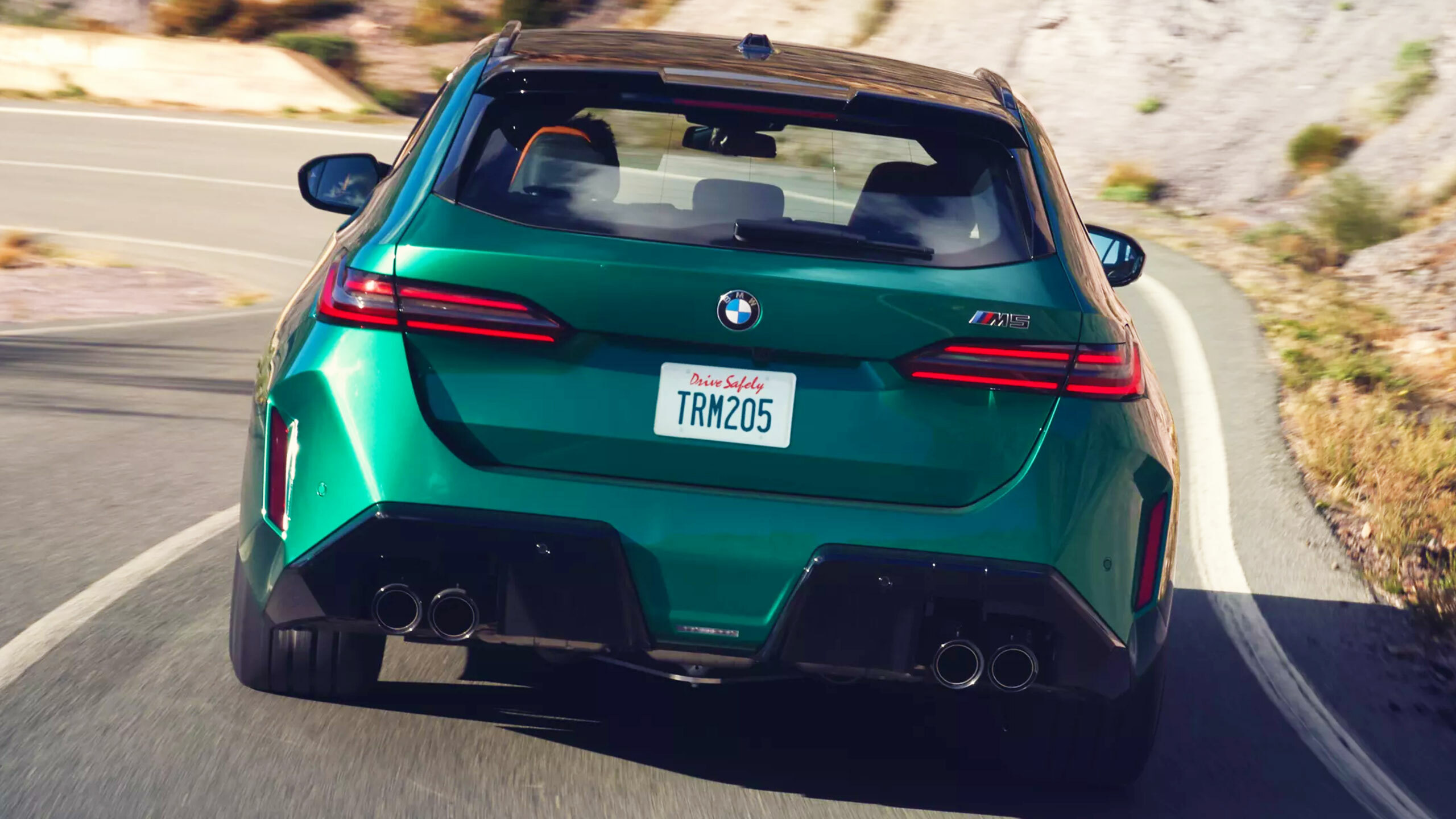
The most significant increases apply to the M5 Sedan and Touring, both up $1,400, and the BMW X6 M Competition, which will now cost an extra $1,500. Interestingly, the i4, i5, iX, i7, 7-Series, Z4, and XM are excluded from the price hikes.

This isn’t the first time that BMW has increased prices over the past six months. Back in July, it announced that the MSRPs of most 2026 models would rise by as much as 1.9 percent, resulting in price hikes of $2,500 for vehicles like the BMW X5 M and X6 M.

Those two models are built in the States, alongside other SUVs at the automaker’s South Carolina facilities. So technically, they shouldn’t have been impacted by tariffs, or at least not significantly, unless imported components factored in. As usual, the truth sits in a grey area.

 Just Six Months Later, BMW’s Hiking Its 2026MY Prices Again

For buyers looking to sidestep the latest round of price changes, it may be worth checking local inventory for cars already on dealer lots. Vehicles delivered before the end of the year are likely to carry current pricing.

Tariffs may have influenced BMW’s pricing for 2026, but the broader pattern raises more pressing questions. This is the second increase in just six months, suggesting something beyond routine adjustments.

Annual price bumps aren’t unusual in the auto industry, particularly with new model years. But those are usually linked to updates or added content, not blanket, across-the-board hikes with no clear explanation, and certainly not with this frequency.

 Just Six Months Later, BMW’s Hiking Its 2026MY Prices Again

UK’s Cheapest EV Is Made In China, But Doesn’t Wear A Chinese Badge

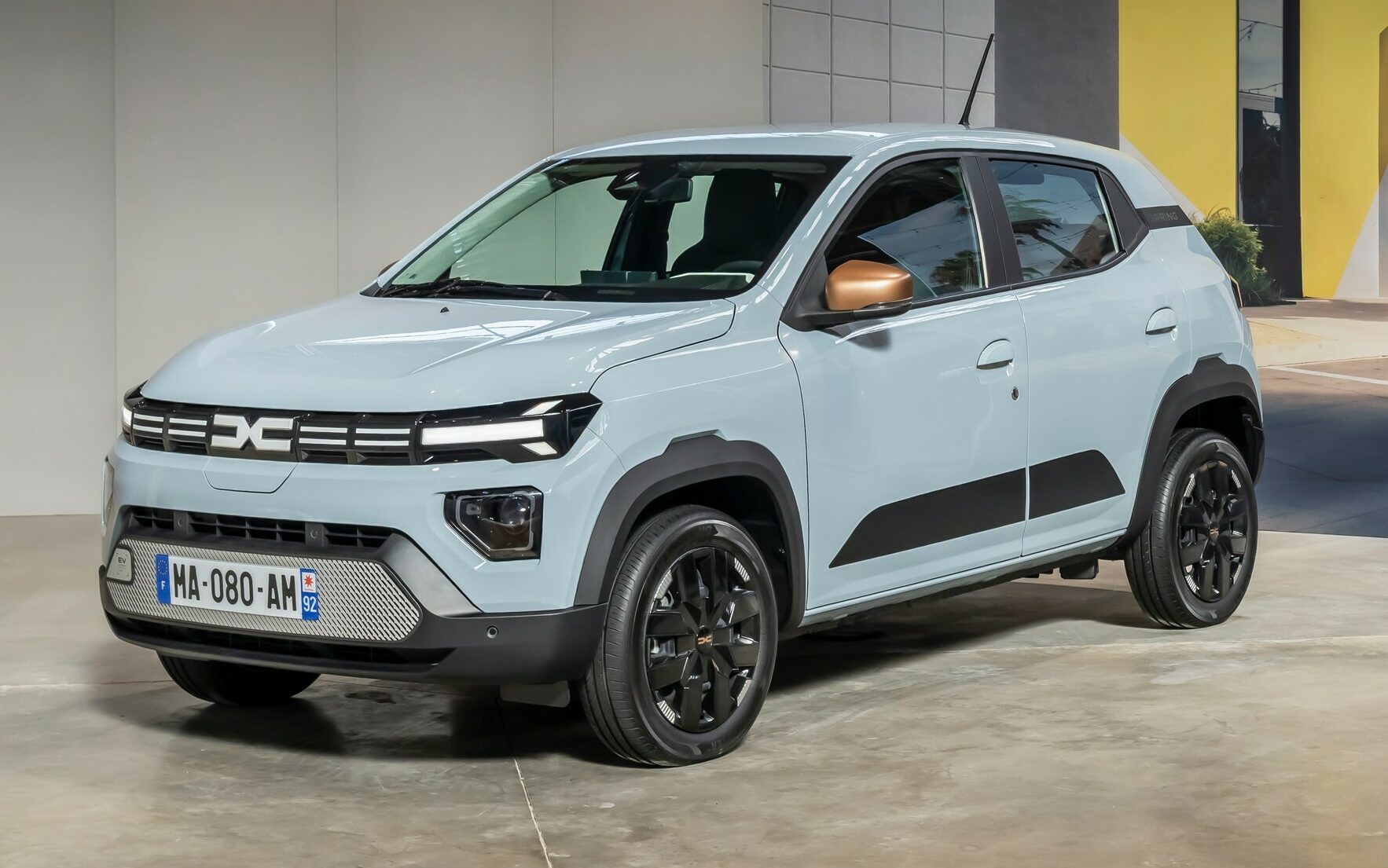
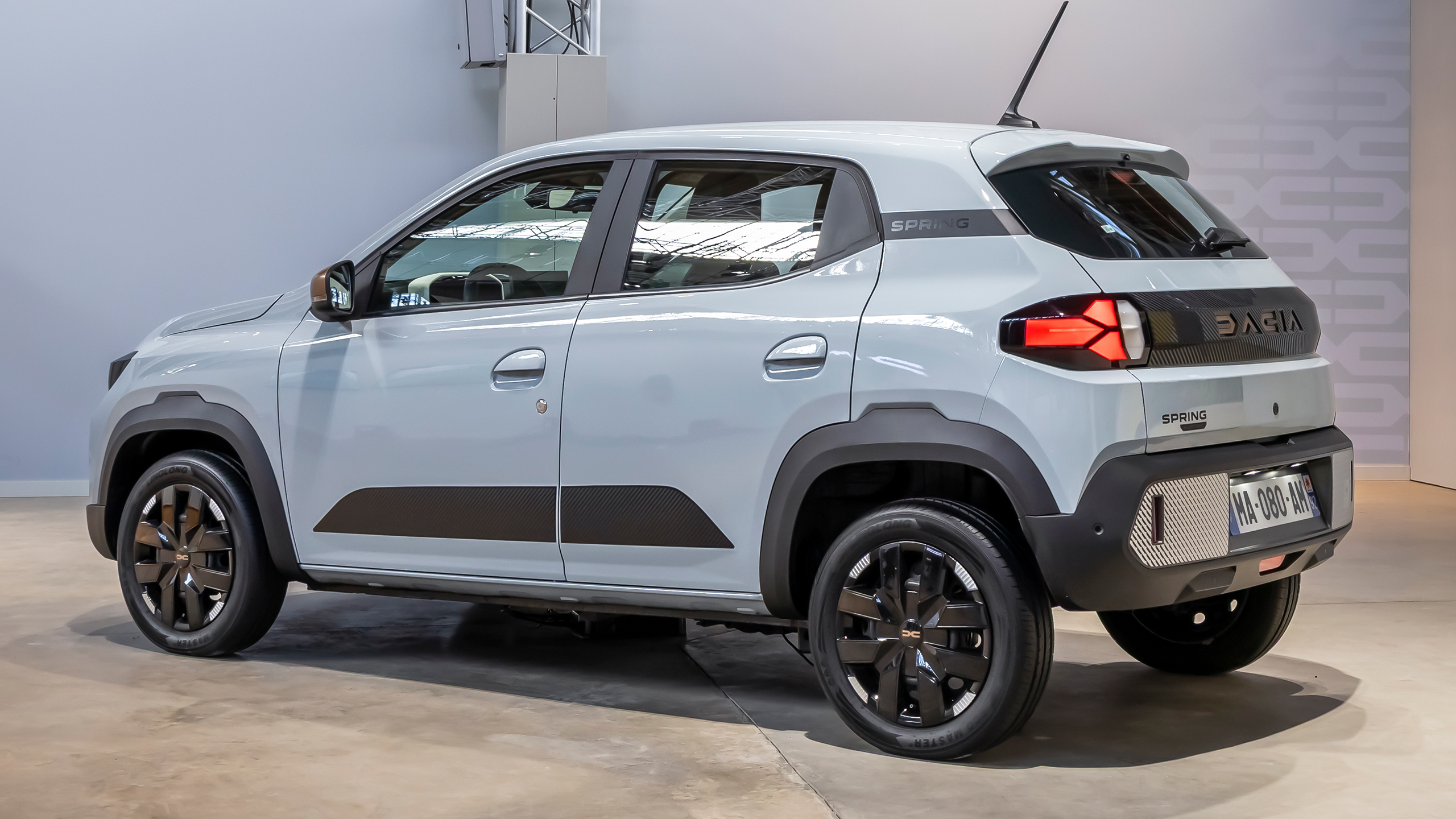
  • British prices for the 2026 Dacia Spring start as low as £12,240.
  • Dacia is offering a £3,750 grant to undercut its Chinese rivals.
  • Two versions of the Spring are on offer with 70 hp and 100 hp.

We’ve become quite accustomed to hearing about impossibly cheap EVs coming out of China, easily undercutting those from Europe, the US, Japan, and elsewhere.

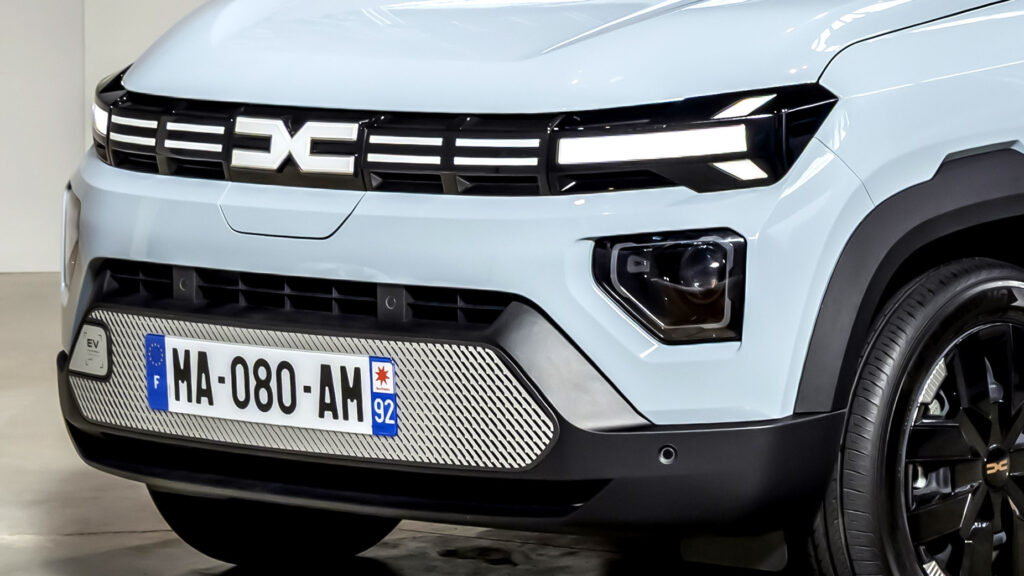
The Dacia Spring fits that mould in one sense, as it’s built in China, but it arrives wearing a European badge and undercutting everything else on the market. It’s the cheapest EV currently on sale in the UK, thanks to the new £3,750 ‘Dacia Electric Car Grant’.

Read: Dacia’s EV Tortoise Just Got A Hare Transplant

For the freshly updated 2026 model, the Dacia Spring starts at just £12,240 ($16,415 at current exchange rates) including all on-road charges.

 UK’s Cheapest EV Is Made In China, But Doesn’t Wear A Chinese Badge

That makes it cheaper than the long-reigning Dacia Sandero, which has typically held the title of Britain’s most affordable car, unless you count outliers like the Citroën Ami quadricycle. Even the Leapmotor T03, another low-cost Chinese EV, can’t quite match it on price, starting from £15,995 ($21,400).

In the UK, the high-riding hatchback with the crossover aesthetics is offered in two forms: the Expression Electric 70 and the Extreme Electric 100. The total, on-the-road price for the base model technically starts at £15,990 ($21,400), while the flagship model starts at £16,990 ($22,800).

However, both are available with Dacia’s £3,750 ($5,000) grant, bringing the prices down to £12,240 ($16,415) and £13,240 ($17,700), respectively.

What’s New For 2026?

 UK’s Cheapest EV Is Made In China, But Doesn’t Wear A Chinese Badge

Several important upgrades have been made to the Spring for 2026. For example, Dacia has revised the chassis, suspension, and brakes, aiming to make the EV “feel more secure, more composed, and more capable across a wider range of everyday situations.”

Additionally, both models now include a new 24.3 kWh lithium-ion phosphate battery.

Both the Expression Electric 70 and Extreme Electric 100 feature single electric motors, but as their names suggest, the base model is capped at 70 hp while the range-topper delivers 100 hp.

This version also includes copper-accented styling, electric rear windows, a larger 10.1-inch infotainment display with wireless Apple CarPlay and Android Auto, and a vehicle-to-load function. Both models can travel up to 140 miles on a charge.

\\\\\\\\\\\

(STN Podcast E287) 2025 in Review: Top STN Magazine Articles

Tony, Ryan and Taylor discuss the most-read School Transportation News magazine articles from 2025, which focused on student safety, operational efficiency and technological advancement. STN also recognized outstanding individuals and teams in the industry through programs like Innovator of the Year, Garage Stars, Rising Stars and Transportation Director of the Year.

Read all our digital editions.

This episode is brought to you by Transfinder.


Stream, subscribe and download the School Transportation Nation podcast on Apple Podcasts, Deezer, Google Podcasts, iHeartRadio, RadioPublic, Spotify, Stitcher and YouTube.

The post (STN Podcast E287) 2025 in Review: Top STN Magazine Articles appeared first on School Transportation News.
STN EXPO East Keynote Speaker to Outline Strategies for Creating Impactful Culture

STN EXPO East attendees are looking forward to an energizing new keynote speaker who will be featured during the conference coming up March in North Carolina.

Jim Knight is a best-selling author with a colorful background in “Rock ‘n Roll,” documenting his 21-year-long career as head of global training and development at Hard Rock International. Knight plans to use his business expertise to give STN EXPO East attendees strategies on revitalizing company and organization culture, developing leadership and maintaining excellent customer relations to achieve exceptional results.

On Saturday, March 28, Knight will act as a thought starter for the exclusive leadership sessions at the Transportation Director Summit held at Topgolf Charlotte Southwest. Drawing upon his career start in hospitality and extensive experience in organizational culture, he looks to inspire student transportation leaders with his “Leadership That Rocks” non-negotiable traits to develop a winning team. Regardless of an organization’s history or current culture status, Knight plans to provide concrete strategies for systemic changes.

On Monday, Knight will return to guide all conference attendees through his signature “Culture That Rocks: Set List on How to Amp Up the Company’s Culture (to Eleven) and Deliver Sustainable Results” keynote session.

Knight has been recognized by Training Magazine representing one of the top 125 training companies in the world. His work at Hard Rock International included facilitating corporate training, managing training materials (including creation of training videos), facilitating leadership transitions, and more. His best-seller “Culture That Rocks,” and unique presentation style have earned recognition in multiple national publications, including Forbes, Inc., Entrepreneur and Business News Daily.

In addition to Knight’s keynote session, attendees will have a wide variety of educational sessions, hands-on training and networking events over the course of the entire STN EXPO East conference to gain innovative solutions to transportation’s biggest challenges.

STN EXPO East will be held March 26- 31, 2026 at Embassy Suites by Hilton Charlotte Concord Golf Resort & Spa. Save $200 on main conference registration when registering by Dec. 19. at stnexpo.com/east.


Related: STN EXPO East Opens Online Registration for March 2026
Related: STN Launches Peer-to-Peer Mentorship Program at 2026 Conferences
Related: WATCH: STN EXPO East 2025

The post STN EXPO East Keynote Speaker to Outline Strategies for Creating Impactful Culture appeared first on School Transportation News.
BMW’s New Compact SUV Spills Its Innermost Secrets

  • Spy photographers appear to have snapped the redesigned iX1.
  • It’s expected to arrive in 2027 with a host of Neue Klasse technology.
  • SUV follows in the footsteps of the iX3 and adopts Panoramic iDrive.

The BMW iX1 will turn four years old in May, but major changes are in store as a Neue Klasse version is in the works. It promises to be a radical departure that ushers in some new technology we’ve already seen on the iX3.

More: BMW’s 2027 X5 Finally Shows Its Lights And What’s Hiding Inside

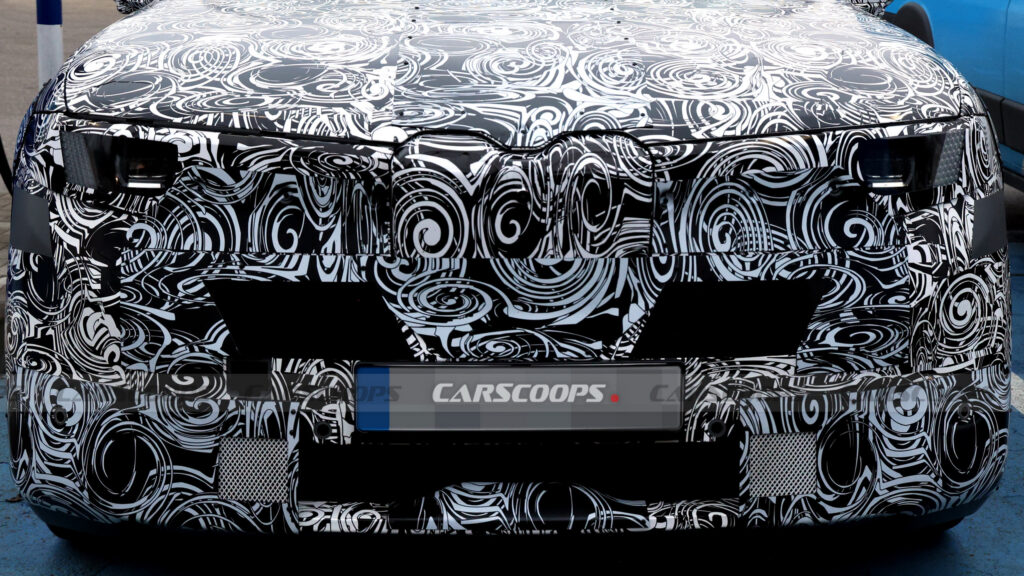
Spied at a charging station, the crossover adopts an all-new front end with a slender twin kidney grille. It’s accompanied by lighting units that closely recall those found on the iX3.

Further below, we can see a wide central intake that eschews the vertical element found on its larger counterpart. The bumper also appears pretty curvaceous, which should help to improve the model’s aerodynamics.

 BMW’s New Compact SUV Spills Its Innermost Secrets

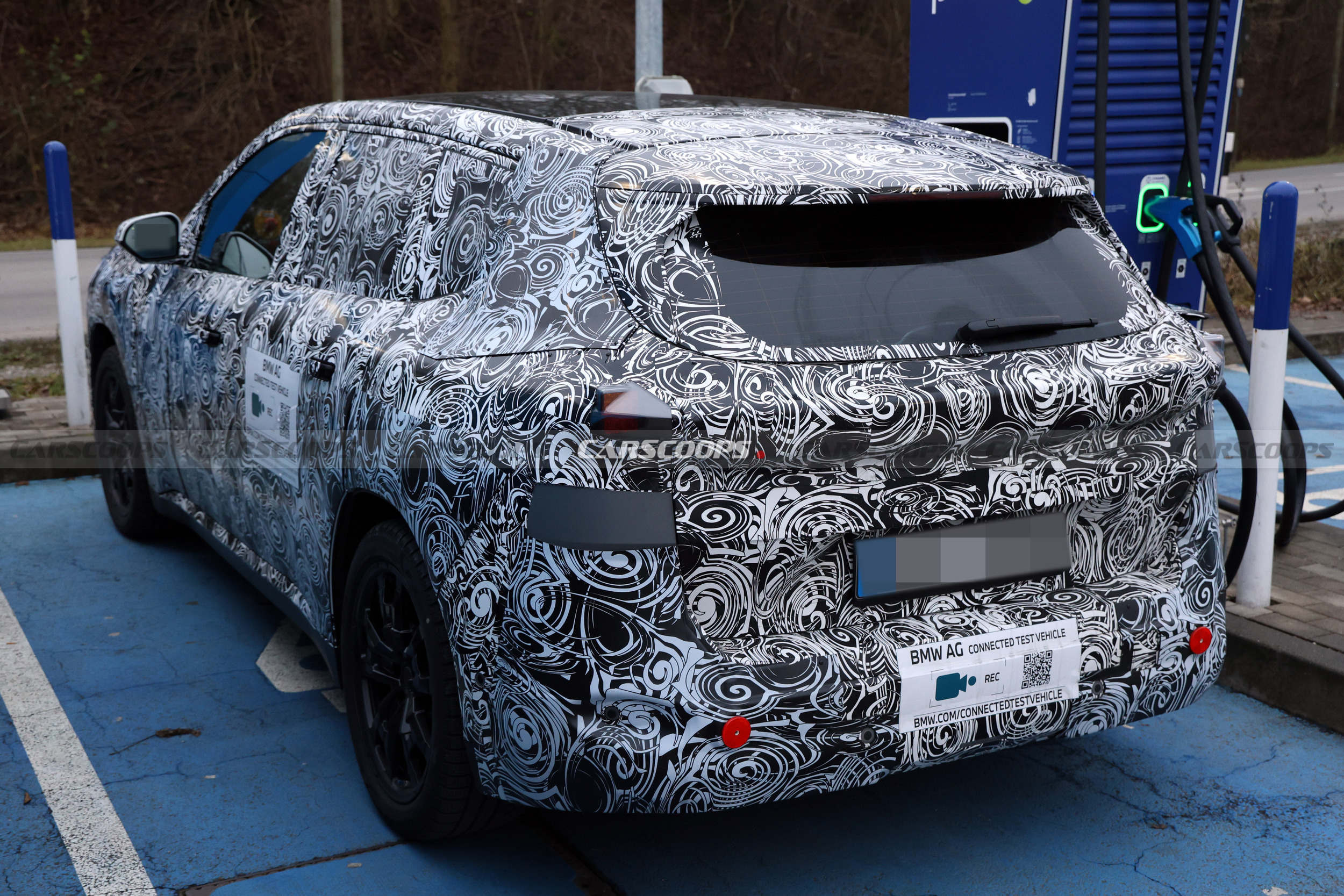
Moving down the sides, there are pronounced wheel arches and streamlined bodywork. We can also see flush-mounted door handles and a familiar greenhouse.

The rear end is heavily disguised, but there’s a new liftgate with a license plate recess that has been moved closer to the bumper. The model also sports a flatter spoiler and a more rounded design.

 BMW’s New Compact SUV Spills Its Innermost Secrets

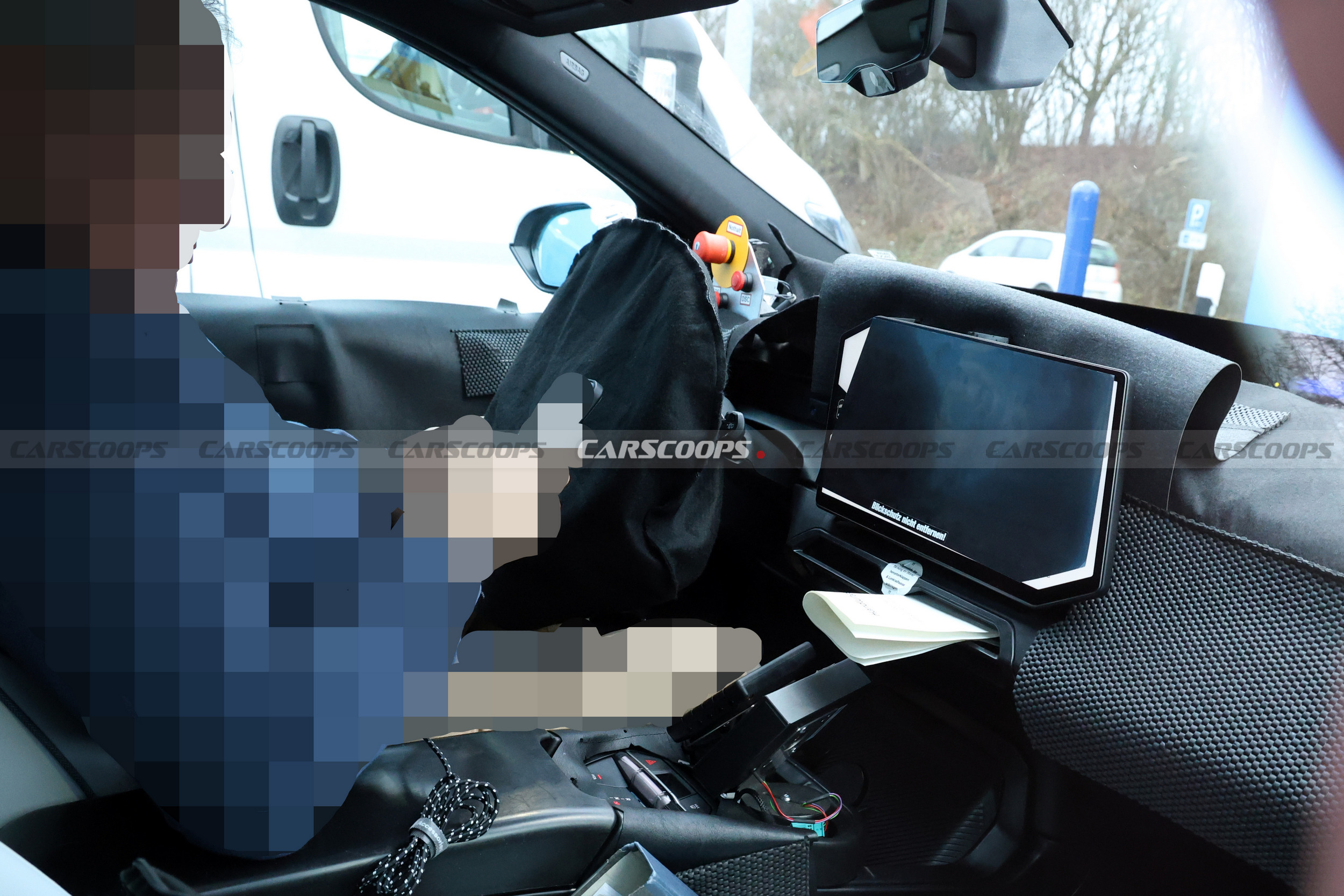
The Neue Klasse design continues inside the cabin, which has been equipped with Panoramic iDrive. It features a pillar-to-pillar display at the base of the windscreen as well as a freestanding infotainment system, which presumably measures 17.9 inches.

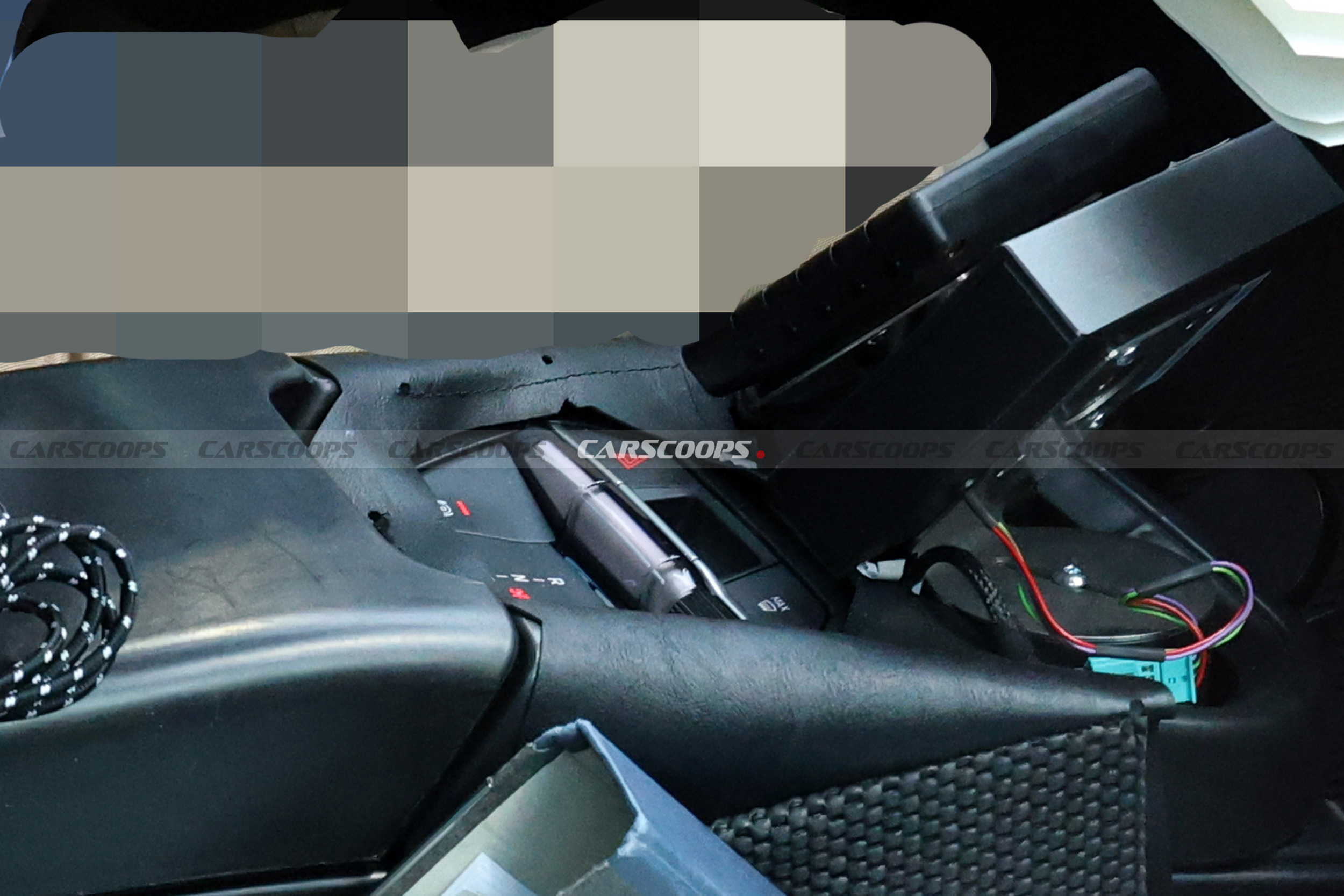
Elsewhere, we can see a new center console with a shifter and controls that appear to be lifted directly from the iX3. Additional details are hard to make out, but the crossover has a camera-mounted on the rearview mirror.

 BMW’s New Compact SUV Spills Its Innermost Secrets

While it was initially believed BMW was working on a Neue Klasse facelift for the X1 lineup, this appears to be a redesigned iX1. This suggests the ICE and EV variants will diverge in a similar fashion to the X3 and iX3.

As a result, the connections to the iX3 will be more than skin deep and the two models will likely share a lot in common. This should include an 800V architecture, cylindrical-cell battery packs, and efficient electric motors.

We’ll likely get a better idea of what to expect once BMW rolls out additional versions of the iX3. So far, we’ve only seen the 50 xDrive variant, which has a dual-motor all-wheel drive system producing a combined output of 463 hp (345 kW / 469 PS) and 476 lb-ft (645 Nm) of torque. The model also sports a 108.7 kWh battery pack, which provides a WLTP range of up to 500 miles (805 km).

\\\\\\

shproshots

VW’s Cheapest Electric SUV Steps Out Almost Undisguised

  • New ID. Cross prototype loses heavy disguise and mirrors concept.
  • VW uses clever tape tricks to fake gas cues but EV details obvious.
  • Likely to get 208 hp motor and 52 kWh battery from ID. Polo.

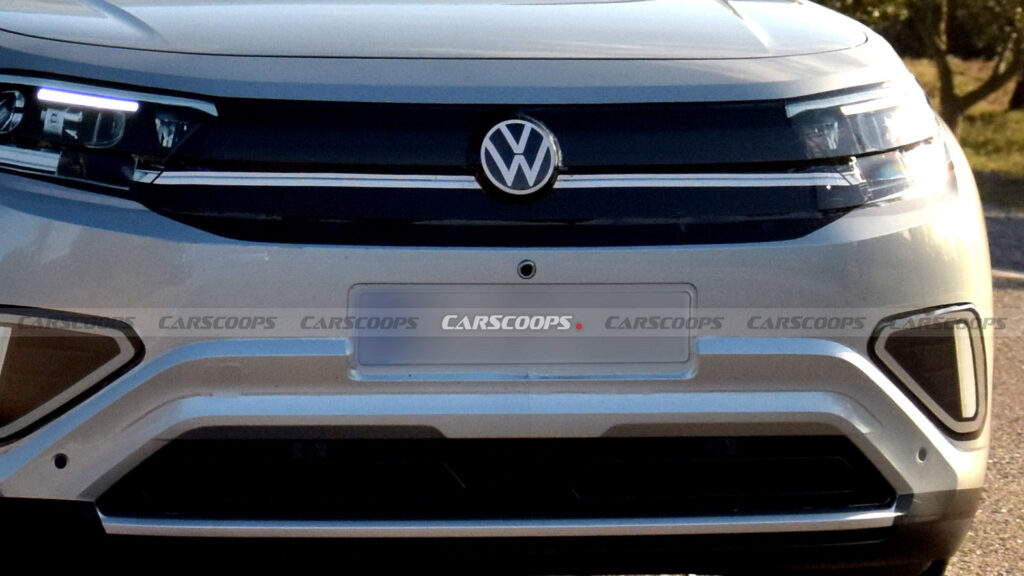
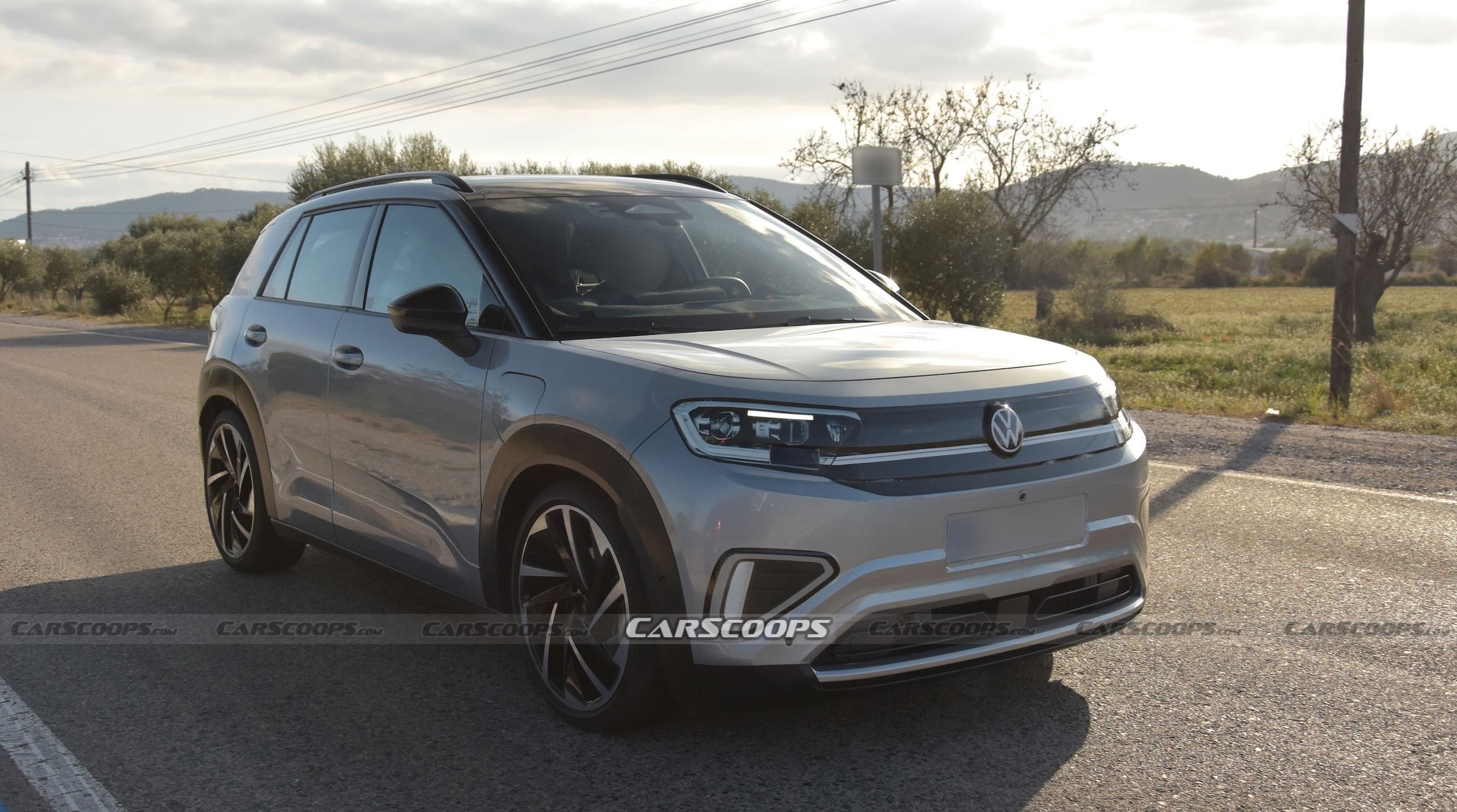
Spy photographers just caught VW’s smallest electric SUV running around almost completely undisguised – it was even wearing a VW badge. And the only thing more obvious than the ID. Cross‘s shape is the fact that Wolfsburg really wants us to think it’s not electric at all.

Related: VW’s Entry EV Packs More Power And Space Than You’d Think

Gone is the heavy swirly wrap. In its place is VW’s favorite optical illusion job where silver and black tape is slapped across the grille, lights and bumpers to impersonate an older gas powered model. It doesn’t work. Under the tape we can clearly see the exact contours of the ID.Cross concept shown a few months ago at the Munich auto show.

C pillars still hiding

 VW’s Cheapest Electric SUV Steps Out Almost Undisguised
Baldauf

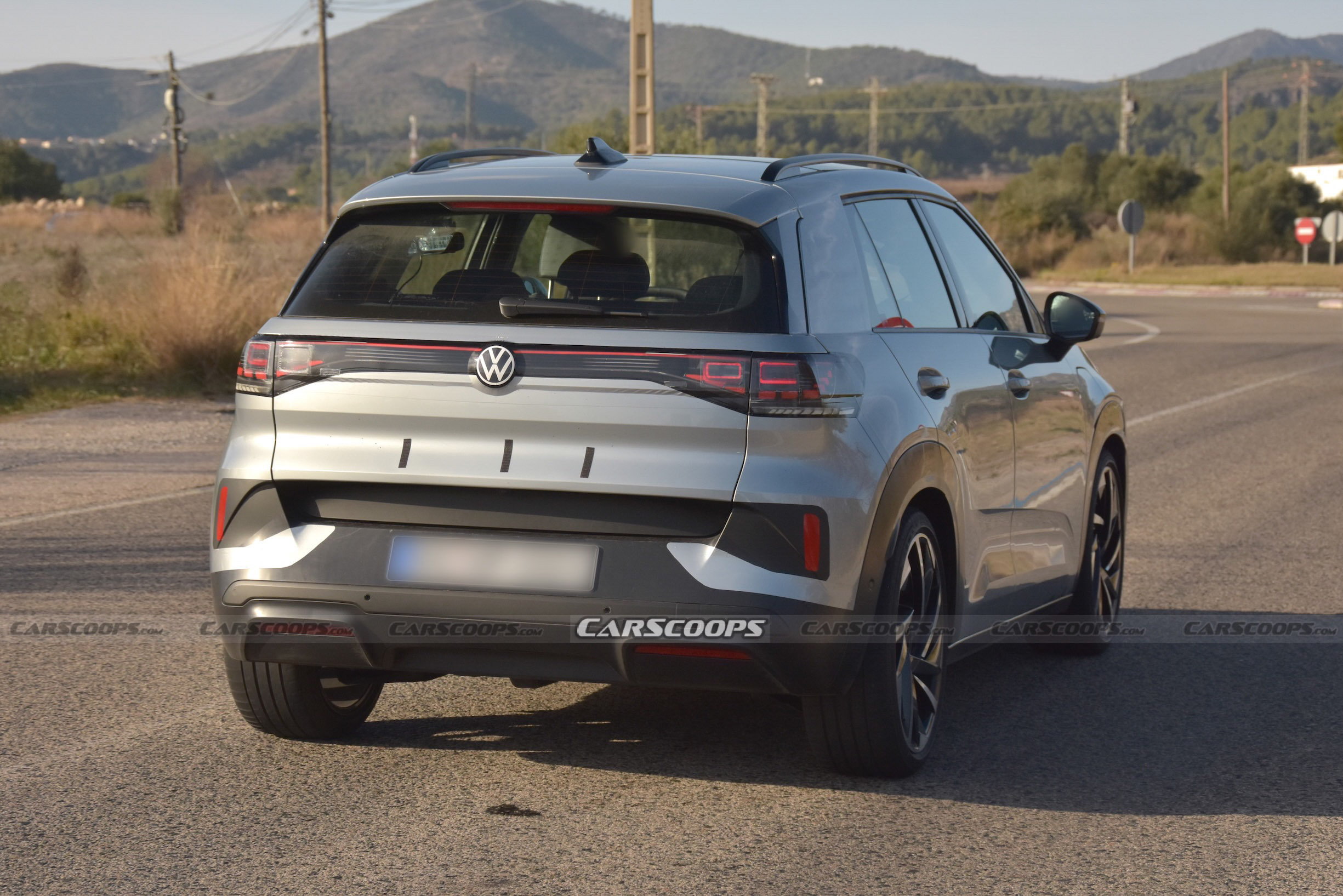
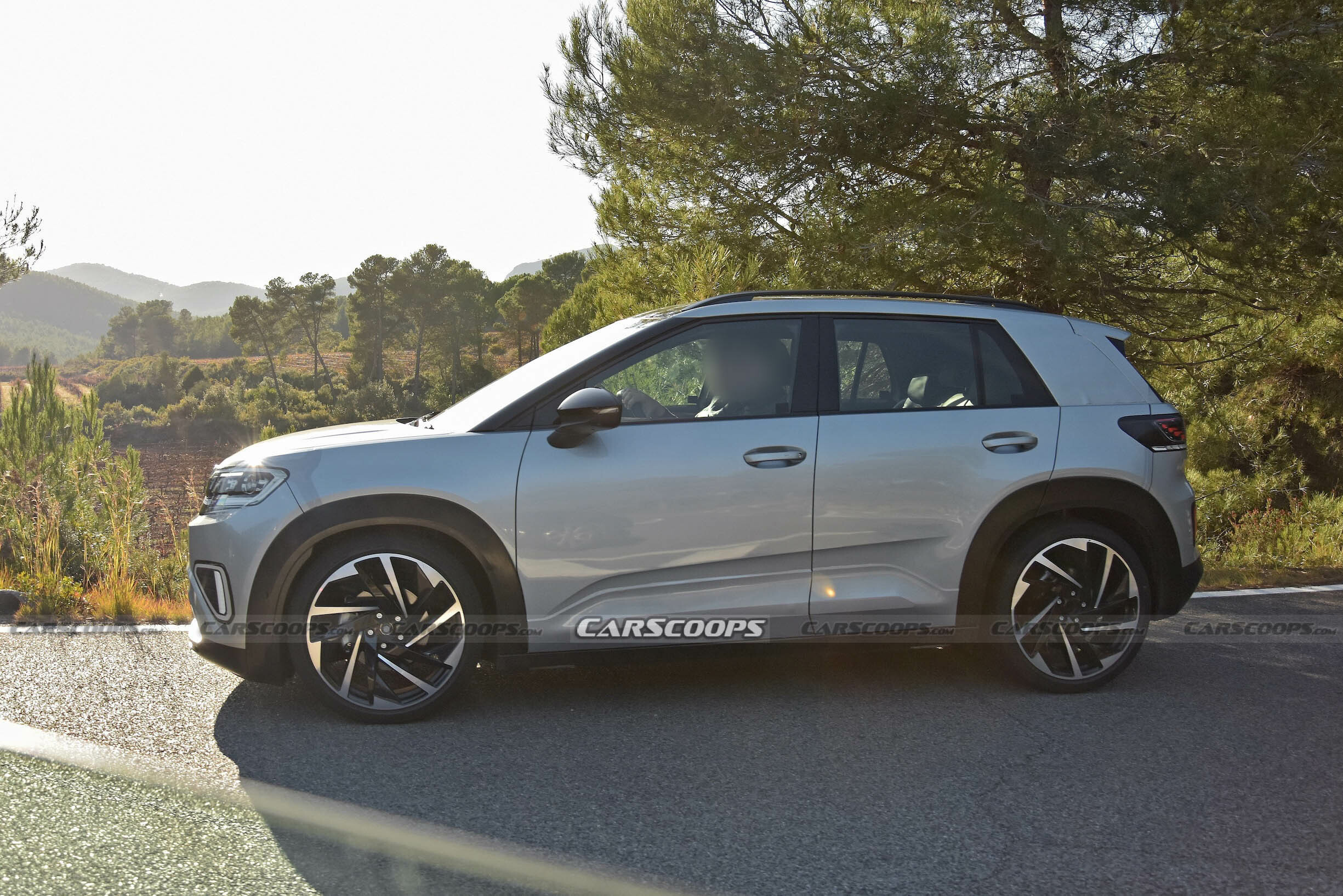
The production doors are now almost fully exposed without their earlier cladding, although VW has even tried to hide the black lower plastic trim by covering it with body color tape. The C pillar treatment is also disguised, though only enough to hide the fun ID. Buzz style inserts that we know sit underneath.

Shape-wise nothing has changed. The bluff little nose, the tight overhangs and the tucked tail all match the concept almost panel for panel. Even the light graphics are visible through the tape and they look identical to the Munich show car’s with VW’s latest family face emerging loud and clear.

\\\\\\\\\\\\\\

Tablet touchscreen with AI

Though we can’t see inside on these latest images, we can be sure it will also closely echo what was on display at Munich. That means an 11-inch freestanding rectangular digital gauge cluster ahead of the steering wheel, and a much bigger, 13-inch tablet touchscreen mounted above the console and featuring ChatGPT-powered AI assistance.

Read: VW Has A Plan To Save EVs And It Involves Gas Engines

Under the skin the ID. Cross shares its MEB platform and hardware with the new ID. Polo. The Cross concept had a 208 hp (211 PS / 155 kW) front mounted motor, which is the punchiest of the three launch powertrains VW confirmed for the Polo EV this week.

 VW’s Cheapest Electric SUV Steps Out Almost Undisguised

ID.Cross GTI?

The other two Polo options make 114 hp (85 kW / 116 PS) and 133 hp (99 kW / 135 PS), and you can be sure that the second of those, if not both, will also make it to the ID. Cross.

How about an ID. Cross GTI? It’s theoretically possible, since VW plans to add a 223 hp (166 kW / 226 PS) motor to the Polo down the line to create its first electric hot hatch.

 VW’s Cheapest Electric SUV Steps Out Almost Undisguised
Baldauf

VW never confirmed battery dimensions for the concept, but did reveal a 261-mile (420 km) range. That ties in with the 280 miles (450 km) VW claims for the lighter, more slippery ID. Polo with a 52 kWh battery. Polos will also be available with a 37 kWh pack, though VW might not offer that on the SUV when it debuts in production form in 2026.

\\\\\\\\

Photos Baldauf / Carscoops

The EU Blinked And Gas Cars Live To See Another Generation

  • EU will allow ICE and hybrid cars beyond 2035 under new rules.
  • Carmakers can offset emissions using fuels and green steel.
  • No formal end date now exists for combustion car sales.

Europe’s big plan to end internal combustion by 2035 always seemed a bit like an immovable deadline carved into regulation. Now, that’s over as the European Union is walking back that goal. The European Commission just unveiled a major revision to its automotive regulations, and it adds a lot more flexibility moving forward. 

Read: Looks Like Gas And Diesel Cars Won’t Be Banned In Europe After All

Instead of requiring a 100 percent reduction in tailpipe CO₂ emissions compared to 2021 levels, automakers will now need to achieve a 90 percent reduction from 2035 onward. That remaining 10 percent can be offset using a mix of biofuels, e-fuels, and credits tied to the use of low-carbon steel produced within the EU. 

The full automotive regulation package, formally announced on December 16, will be presented to the European Parliament and Council in 2026 for formal review and approval.

What Happens After 2035?

 The EU Blinked And Gas Cars Live To See Another Generation

In practice, this opens the door for pure ICE cars, mild hybrids, plug-in hybrids, and range extenders to continue existing alongside EVs and hydrogen vehicles. Importantly, this revised proposal doesn’t include a new sunset date for combustion engines.

Once the 90 percent target is met, there is no hard legal endpoint for selling ICE-powered vehicles, provided manufacturers can balance their emissions through the approved compensation mechanisms.

Automakers will also benefit from softened 2030 requirements, as emissions targets will now be averaged over the 2030 to 2032 period, offering manufacturers additional flexibility similar to the approach taken with 2025 targets.

Also: Jim Farley Warns Europe It’s Selling Its Future To Chinese Carmakers

Again, all of this is coming in the wake of pressure from industry leaders like BMW, VW, Mercedes, Renault, and Stellantis. Even Ford’s CEO Jim Farley warned the EU that its previous targets were too stringent. It appears as if the corporate powers that be made their voices heard. 

Pressure From the Top

The move follows a year of high-level meetings between EU officials and the auto industry, part of a broader “strategic dialogue” aiming to rebuild trust after years of tension, much of it stemming from the fallout of the VW diesel-emissions scandal.

That said, the EU is not abandoning electrification. The Commission is doubling down on incentives for small, affordable electric cars built in Europe, granting them “super credits” that count more heavily toward manufacturers’ emissions compliance.

A new M1E vehicle category will also simplify regulations for EVs under 4.2 meters (13.7 ft) in length, making it easier for governments to support them with targeted incentives.

Lightening the Load

To give automakers more stability, the Commission is also proposing a 10-year freeze on new vehicle regulations. That pause could significantly reduce compliance complexity and offer clearer long-term planning for product cycles.

In short, the EU isn’t reversing course altogether, but it’s trading the rigidity it once held for a bit more realism. Combustion engines won’t die after 2035; they’ll just be managed more heavily than in the past. 

Alongside the policy update, the Commission is rolling out additional support for European battery production, investment in software-defined vehicles, and new local-content requirements for EVs. These steps are aimed at improving competitiveness, particularly in the face of mounting pressure from Chinese automakers.

If You Think EV Sales Are Dead, You’re Probably Staring At The Wrong Map

  • EV and PHEV sales climbed significantly in China and Europe.
  • Roughly 18.5 million electrified vehicles were sold this year.
  • North America’s EV market declined despite global momentum.

While the headlines might suggest an EV apocalypse is underway, with manufacturers pulling back and investments drying up, the reality is a bit more complicated. Sure, some markets are cooling and certain automakers are reconsidering their timelines, but the global picture paints a different story.

At least for now. The coming months could easily tip the scale again, especially in regions where policy and consumer behavior tend to swing fast.

Read: More Buyers Are Ditching EVs And Choosing Gas Again

New data shows that worldwide sales of battery-electric and plug-in hybrid vehicles have actually grown this year, bolstered by steady demand in China and across Europe.

According to figures from Rho Motion, approximately 18.5 million EVs and PHEVs have been sold globally between January and November 2025, representing a 21 percent increase from last year.

Where the Growth Is

Unsurprisingly, China leads the way with reported sales of 11.6 million, a 19 percent rise from the same period in 2024. While Europe remains a far smaller market, with 3.8 million EVs and PHEVs finding new homes, it experienced a higher growth rate with sales jumping 33 percent.

A closer look at Europe reveals that 35 percent more BEVs have been sold this year, and 39 percent extra PHEVs have been delivered. Contributing to this growth was France, where for the first time this year, year-to-date sales rose in November, although only by 1 percent.

EV Sales Jan-Nov 2025
Region YTD 2025YoY Change
Global18.5 million+21%
China11.6 million+19%
Europe3.8 million+33%
North America1.7 million-1%
Rest of World1.5 million+48%
SWIPE

Rho Motion

Italy also experienced a strong November with EV and PHEV sales jump to 25,000 units after an incentive program was launched, encouraging locals to sell their old ICE models.

Still, the trajectory in Europe could change direction quickly. On Tuesday, the European Commission revealed plans to drop the proposed 2035 ban on new combustion-engine vehicle sales, a reversal largely driven by industry lobbying.

What About America?

 If You Think EV Sales Are Dead, You’re Probably Staring At The Wrong Map

Things couldn’t be anymore different in North America, in particular in the US. While EV sales increased in November compared to October, the first month without the federal EV tax credit, they are still far below what they were when the $7,500 credit was still available.

Data from Rho Motion notes that sales in North America have fallen 1 percent this year, meaning it’s quickly turned into a global laggard when it comes to global EV adoption.

Following President Trump’s decision to rollback CAFE fuel economy standards, sales of EVs and PHEVs are unlike to grow at a significant rate, and may ultimately decline.

In contrast, the rest of the world, grouped together in the dataset, logged 1.5 million EV and PHEV sales this year, up 48 percent compared to 2024. While the volumes are smaller, the growth suggests that in many regions, electrification is still gaining ground, just not always where the spotlight is aimed.

 If You Think EV Sales Are Dead, You’re Probably Staring At The Wrong Map

Australia And Other Markets Might Finally Get A Bronco, Just Not The One You Expect

  • Ford developed the Bronco Basecamp with its Chinese joint venture partner.
  • Both fully electric and range extender versions of the SUV are available.
  • Right and left-hand drive builds could allow exports to Australia and beyond.

Given Australia’s long-running affection for off-roaders and the popularity of models like the Ford Ranger and Ranger Raptor, it’s somewhat surprising that the Ford Bronco has never officially made it over there. That may soon change.

But rather than bringing in one of the two American-market Broncos, Ford could instead be planning to import a new, unrelated version just launched in China.

Read: Ford’s Electric Bronco Costs The Same As Ours And Gives You Twice The Power

Known as the Ford Bronco Basecamp, or Bronco New Energy, this model is the result of Ford’s joint venture with Jiangling Motors Corporation (JMC). It’s styled like a mash-up of the full-size US Bronco and the more compact Bronco Sport, yet it’s larger than both.

Importantly, unlike the Bronco sold stateside, Ford will build the Bronco Basecamp in right-hand drive configuration. According to the team from Wheelsboy, it will be exported to markets like Australia, as well as throughout Southeast Asia, the Middle East, and South America.

A New Angle on the Bronco

 Australia And Other Markets Might Finally Get A Bronco, Just Not The One You Expect

Unlike the American Bronco, which sits on a ladder-frame chassis, the Chinese version uses a unibody construction. That suggests it won’t be quite as competent in hardcore off-road situations, though it could be more agreeable on sealed roads.

And it’s no small thing, literally, as it measures 5,025 mm in length, or just over 197 inches, which makes it 101 mm longer than the Ford Everest already sold in Australia.

This shift in construction doesn’t just affect handling. It also reflects a different sort of appeal, likely aimed at buyers who want rugged looks with more livable day-to-day driving dynamics. As such, it feels less like a direct rival to traditional 4x4s and more like a large SUV with outdoorsy credentials.

EV And Range-Extender Power

\\\\\\\\\\

The powertrains are particularly interesting. All-electric versions of the Bronco Basecamp are equipped with a sizeable 105.4 kWh battery pack and two electric motors that combine to deliver 445 hp and 424 lb-ft (575 Nm) of torque. This gives it more horsepower than the ICE-powered Bronco Raptor, and almost as much torque.

In China, the Bronco Basecamp is also available as a range-extender, featuring a 1.5-liter turbocharged four-cylinder engine with two electric motors and a 43.7 kWh battery pack. It delivers a combined 416 hp and 442 lb-ft (600 Nm), all while being able to travel up to 220 km (137 miles) on a single charge.

It’s not yet clear if Ford could bring both of these powertrain options to Australia, or if it’ll limit the range to just one. While this won’t be the American Bronco that many locals have been clamoring for, it could be the next best thing.

\\\\\\\\\\\

Breaking Down Wheelchair Crash Testing at TSD Conference

Miriam Manary, the lead research engineer at the University of Michigan, provided Transporting Students with Disabilities and Special Needs (TSD) Conference attendees an overview of crash-testing standards for wheelchairs in motor vehicles.

The Nov. 8 session emphasized why proper securement, crashworthy equipment and correct belt usage use are essential for occupant safety. She explained that testing is based on WC19, voluntary industry standards that establish minimum design and performance requirements for wheelchairs used as passenger seats in moving vehicles. It requires the wheelchairs to withstand a 30-mph frontal impact (30 mph delta-V)—a severity greater than 96 percent of real-world crashes. She explained that frontal impacts are the priority because they account for nearly half of crash events. Although side-impact testing methods have been developed, they are not yet incorporated into the standards.

Manary explained that side-facing and rear-facing wheelchair transport consistently fails crash tests because wheelchairs lack structural strength in those directions. Early tests demonstrated catastrophic failures, including seatback collapse and occupant head strikes on the vehicle interior. Only forward-facing transport currently offers a predictable, test-validated protection environment.

Manary added that the vehicle mass matters. Larger vehicles, such as school buses, experience lower delta-V in similar crash scenarios, thus reducing injury risk for all occupants. Still, correct equipment use remains essential, she said.

WC19 wheelchairs provide crash-tested securement points, stronger frames and accessible hook paths designed to allow all four tie-downs to be attached in under 10 seconds. Yet, many school transportation issues arise from insufficient space within the vehicle.

She added that poor securement remains a major challenge. Common mistakes include attaching tie-downs to removable parts such as footrests, armrests and quick-release wheels, Manary said. A securement point must always be a strong, welded portion of the main frame. Plus, using fewer than four straps dramatically increases rotation and instability, she added, noting a significant portion of injuries stems not from wheelchair movement but from improper or absent occupant restraints.


Related: Funding Among Potential Impacts of U.S. Education Department Dismantling on School Transportation
Related: BraunAbility Says New Wheelchair Lift Addresses Customer Needs
Related: Texas Team Takes Home Roadeo Award at TSD Conference
Related: School District Directors Share Strategies for Transporting Students with Disabilities


Riders in wheelchairs must wear crash-tested seatbelts because they lack the protection of compartmentalized seating, Manary continued, adding that a good fit is essential.

Lap belts must rest low on the pelvis, “If it’s not on the thigh, it’s too high,” angled 30–70 degrees from vertical. Shoulder belts must cross mid-shoulder, avoiding the neck but staying far enough inboard to prevent sliding off, she said.

Additional hazards come from loose equipment such as ventilators, trays or oxygen tanks. In crash tests, even an 11-pound device can become a dangerous projectile at high speeds.

Emerging research focuses on future mobility, including universal docking systems that allow wheelchair users to independently secure their chairs in autonomous vehicles and, potentially, aircraft. Early prototypes show promise, offering independence while meeting crash performance comparable to four-point tie-downs, Manary said.

The post Breaking Down Wheelchair Crash Testing at TSD Conference appeared first on School Transportation News.
(Free Webinar) Building Resiliency: Hot Trends in Student Transportation For 2026

By: STN

The landscape of student transportation is constantly evolving, but are your district’s strategies adapting with it? Get powerful takeaways to keep pace with the industry’s changes and stay resilient by attending this webinar.

Across four trends, you’ll learn:

  • How to get a 360-degree view of operations by integrating on-bus technology.
  • Tech-driven methods to overcome the driver shortage, empower your team and cut turnover.
  • Budget-friendly strategies to navigate differing electric school bus priorities.
  • Practical ways to implement AI for safer, more efficient student transportation.

Save your spot now. 

Brought to you by Geotab

REGISTER BELOW:


Presenters:

Alfred Karam
Former Director of Transportation (Retired)
Shenendehowa Central School District

Alfred is a Master Gunnery Sergeant of Marines (retired), an award-winning Director of Transportation and a published author. Following 25 years of service in the U.S. Marine Corps, he led transportation operations for two of New York’s largest school districts for 24 years. His leadership has been recognized with multiple top honors, including the School Bus Fleet Magazine Administrator of the Year (2013) and the National Association for Pupil Transportation Larson Quality Award (2017).

Keba Baldwin
Director of Transportation and Central Garage
Prince George’s County Public Schools

Keba Baldwin serves as the Director of Transportation & Central Garage for Prince George’s County Public Schools, one of the nation’s largest school districts. He leads operations for more than 1,200 school buses and 700 fleet vehicles, ensuring safe and reliable service for over 85,000 students each day.

Mr. Baldwin brings a unique perspective that bridges the classroom and operations. His scientific background has shaped his analytical approach, while his educator’s mindset informs his commitment to equity, safety and service. He has led initiatives in routing optimization, safety training for transporting students with disabilities and the adoption of clean-energy fleets.

Craig Berndt
Business Segment Manager, People Transportation
Geotab

With 15 years in telematics, Craig brings to the table extensive experience in passenger transportation, public works and vehicle sharing. In his current role at Geotab as the Business Segment Manager for People Transportation, Craig is responsible for leading a cross-functional team to ensure success in this rapidly growing area of the business. He earned an MBA in 2020 and his community engagement includes volunteering with Scouting America (formerly BSA) and his non-profit animal rescue.

The post (Free Webinar) Building Resiliency: Hot Trends in Student Transportation For 2026 appeared first on School Transportation News.
BusPatrol, GHSA, and Safe Kids Worldwide Host Inaugural National School Bus Safety Summit, Bringing Together Nation’s Top Safety Leaders to Confront Growing Crisis on America’s Roads

By: STN

WASHINGTON, D.C. — BusPatrol, the leading school bus safety technology company in North America, last week convened the first-ever National School Bus Safety Summit, bringing together more than 400 national leaders in government, public safety, technology, law enforcement, education, and child advocacy for a landmark discussion on the escalating dangers children face around school buses. The Summit, supported by the Governor’s Highway Safety Association (GHSA) and Safe Kids Worldwide, marked the first coordinated national effort to accelerate solutions that address the millions of illegal school bus stop-arm violations occurring each year.

In the months ahead, GHSA, in collaboration with BusPatrol, will develop a comprehensive national blueprint for action—a strategic framework for policymakers, law enforcement, educators, and transportation leaders to strengthen school bus safety nationwide and build on the momentum generated at the Summit.

Photos from the event can be found here.

Throughout the day, attendees heard from leading experts across a series of panel discussions that explored the multifaceted challenges confronting student transportation safety. Panel topics included Aboard the Bus: The Landscape of School Bus Safety; Enforcement Changing Behavior: The Role of Law Enforcement & Courts; Communities Working Together: On/Off the Bus; Public/Private Partnerships: Fueling a Mission, Changing Culture; and Advocacy in Action: Policies That Save Lives.

In addition, two keynote addresses were delivered by Justin Meyers, President and Chief Innovation Officer at BusPatrol, and Karoon Monfared, CEO of BusPatrol, who shared his own emotional story of witnessing a childhood friend struck by a vehicle while disembarking from a school bus—an experience that has shaped his lifelong commitment to student safety.

Featured speakers also included:

Jonathan Adkins, CEO of the Governors Highway Safety Association

Torine Creppy, President, SafeKids Worldwide

Frederick S. Humphries, Jr., Corporate Vice President, U.S. Government Affairs, Microsoft

Michael Hanson, Director, MN Office of Traffic Safety/Chair, GHSA

Kristin Poland, Ph.D., Acting Director, Office of Highway Safety, NTSB

Molly McGee Hewitt, Ph.D., CEO & Executive Director, National Association for Pupil Transportation

Russ Rador, Chief Communications Officer, Insurance Institute for Highway Safety

Sharon Bryson, Director, Delaware Highway Safety Office

Emily Davidson, Director, Ohio Traffic Safety Office

Cathy Chase, President of Advocates for Highway and Auto Safety

Kelly Browning,Ph.D. Executive Director, Impact Teen Drivers

Anthony Baldoni, VP of Strategic Initiatives, Axon

The Honorable Kate Huffman, National Judicial Fellow, ABA

Adam Youssi, Supervisor of Automated Enforcement Howard County (MD) Police Department

Marisa Jones, Managing Director, Safe Routes to School Partnership

Erin Inman, Director, National Traffic Law Center, NDAA

Leah Walton, Transportation Safety Specialist, National Transportation Safety Board

Prisha Shah, National President, Students Against Destructive Decisions (SADD)

Sutton Sherrard, FCCLA National Student VP of Programs

Steve Randazzo, Chief Growth Officer, BusPatrol

Ryan Monell, Executive Vice President, Government Operations, BusPatrol

Rick Birt, Vice President of Government Operations and Safety, BusPatrol

Every day across the United States, thousands of drivers illegally pass stopped school buses—even when red lights are flashing and stop-arms are deployed. With almost 500,000 school buses operating daily, this results in millions of violations each year, placing children in immediate danger. A recent survey by the National Association of State Directors of Pupil Transportation Services found that in a single day, school bus drivers reported over 67,000 illegal passes. When projected over an academic year, that equates to more than 39 million unsafe encounters.

To confront this issue, officials emphasized the importance of implementing the safety roadmap outlined by the National Transportation Safety Board following the 2018 fatal crash in Rochester, Indiana. Those recommendations call for a three-pronged strategy combining education, traditional law enforcement, and automated enforcement technology. Since the release of that report, at least 30 states have passed laws enabling the deployment of camera-based stop-arm enforcement tools, paving the way for companies like BusPatrol and others to assist communities nationwide.

The summit also highlighted how school districts across the country are increasingly adopting AI-powered enforcement tools to monitor and document dangerous driver behavior. BusPatrol, which launched in 2017, has become the largest school bus safety technology provider in North America, with high-definition cameras and AI models installed on more than 40,000 buses across nearly two dozen states. This technology has supplied districts and law enforcement agencies with unprecedented visibility into the magnitude of the danger children face on their way to and from school.

“When a child loses their life, it’s more than any community can bear, it’s more than any of us can bear. And so what do we do when an unspeakable tragedy occurs? We respond and we take action,” said Justin Meyers, President and Chief Innovation Officer at BusPatrol. “Today cannot be the end of the conversation but must be the beginning of a coordinated, relentless push to accelerate school bus safety in every state, every district, and every community. Our commitment to you at BusPatrol is that however you want to show up for this fight we will be there with you — we will team up, we will share data, we will push policy, and we will build partnerships to protect our children and make our communities safer.”

“The data show that even around our most vulnerable population, young kids, people are driving in risky and unsafe ways,” said Jonathan Adkins, CEO of the Governors Highway Safety Association. “We look forward to supporting the State Highway Safety Offices as they implement recommendations that emerge from this important safety conversation.”

“The safety of children as they make their way to and from school should be one of our nation’s top priorities,” said Torine Creppy, President of Safe Kids Worldwide. “No matter how kids travel—riding on buses, in cars, on bikes or walking — we must keep them safe from preventable injuries. We look forward to working with our partners to identify innovative and effective ways to keep kids safe at home, at school, at play, and on the way.”

“School Bus Safety is a crisis on our roadway,” said Jessica Hugdahl, Acting Chief Executive Officer of SADD. “The National School Bus Safety Summit elevated the youth voice in this issue, as millions of students board the bus every day. We thank BusPatrol for their leadership in this space, as SADD is proud to work with this coalition of partners to make our roadways safer for us.”

“The inaugural National Bus Safety Summit created a vital platform for meaningful dialogue and partnership,” said Dr. Kelly Browning, Executive Director, Impact Teen Drivers. “I appreciate BusPatrol’s leadership in bringing national stakeholders together, and I look forward to continuing our work to strengthen school bus safety.”

“Children are our most precious passengers and families rely on school buses to safely transport them to and from school,” said Cathy Chase, President of Advocates for Highway Safety. “To address critical safety vulnerabilities, we support actions aimed at implementing safety recommendations from the National Transportation Safety Board (NTSB) like ensuring each seat has a three-point safety belt and that buses are equipped with technologies like automatic emergency braking. We must do all we can to protect the future of these young people, and we look forward to working with our safety partners to do so.”

About BUSPATROL:
BusPatrol is the most deployed school bus stop-arm safety technology solution in the nation, protecting nearly two million students across 40,000 buses. Using advanced AI, machine learning, and telematics, BusPatrol helps communities reduce illegal passings and make roads safer for every child.

The post BusPatrol, GHSA, and Safe Kids Worldwide Host Inaugural National School Bus Safety Summit, Bringing Together Nation’s Top Safety Leaders to Confront Growing Crisis on America’s Roads appeared first on School Transportation News.
Transportation (Success) Leads the Way to Sustainability

These days there are a lot of questions and institutions, state regulations, and in federal funding. The constructive focus will always be on the “half-full” glass because that is what we can control. However, in my opinion, too much airtime is spent focusing on the “what we don’t have” and “what we don’t know.” This seems to be a preoccupation that serves no purpose and has me continually asking “to what end?”

As leaders within our organizations, we are tasked with vision casting, strategic planning and daily implementation, irrespective of the questions and the challenges that (we know) will arise. People look to us for support and reassurance that corrective measures are available and will be deployed when necessary. Therefore, it is our responsibility to acknowledge and promote the success stories within our organizations or external examples that can help our journey.

Record Setting Examples
Within the last six years, I have helped two different school districts go from breaking ground to charging electric school buses in less than a year. Prior to these projects, electric charging infrastructure was thought to be at least a two- to three-year process because of COVID-19 shutdowns, supply chain issues, the procurement process, the complexity of utility coordination, and normal construction schedules.

Both districts are in California’s Central Valley. The first was Stockton Unified School District, and the most recent was Modesto City Schools. I realize that everyone is busy and rarely do we have time to add one more project, especially something as complex as EV charging. But I can tell you firsthand that every district that helps to reduce harmful emissions makes their city better for their students, their staff and everyone in their community.

Every successful accomplishment is a building block that generates momentum, creates more opportunities and inspires others. It is important for district leadership to attend workshops and conferences like STN’s to hear positive lessons from other districts. Collaboration with our peers is always valuable. Finding examples with similar fleet size, terrain, weather conditions and funding strategies are most useful.

Transportation Leading the Way
Transportation can (and should) be the leader for innovative efforts at your school district. We get up earlier than most and many times a bus driver is the first district staff that students see and interact with. In January 2022, the board of trustees for Modesto City Schools voted to convert half of its school bus fleet to battery electric with the purchase of 30 Blue Bird buses. The success of our electric school bus conversion was the fulcrum that allowed us to develop and expand sustainability initiatives.

Since then, Modesto City Schools has:

  • Started a new Sustainability & Adaptation Department (2022).
  • Created sustainability webpages.
  • Contracted $61 million in solar carports and sustainability initiatives.
  • Secured almost $24 million in state and federal grant funding.
  • Received $5.3 million in elective pay for 2024 Investment Tax Credit.
  • Paid stipend to teachers for environmental club support at all 34 schools.
  • Installed Purple Air Monitors at every school site.
  • Contracted with Climate Action Pathways for Schools (CAPS) for paid student internships promoting Green Career Path education.
  • Achieved the Green Ribbon Schools District Award in 2024, Gold Level, from the California Department of Education.

Everyone’s path is unique but learning how successful districts chose their team and decreasing timelines helps. Understanding the strengths and roles of specific project partners can save you time (and a lot of headaches).

Strategies that Make a Difference
Zig Ziglar said that “success occurs when opportunity meets preparation.” In my last six years, my greatest results have come from innovative “out-of-the-box ideas.” I think we must dream big and strive for the ideas that make the most impact.

We should trust our project partners and be willing to try good ideas regardless of where they come from. Many people say, “We are doing projects for the kids,” but the end goal should be doing sustainability projects with our students.

An example would be having student reporters attending press events, interviewing administrators, and working alongside the local news stations. (That happened at Modesto.)

I would encourage you to include student voices in transportation messaging, professional development videos and instructional notifications. As a sustainability director, I would love nothing more than to break my job into eight semester modules and create a sustainability certificate program for students. Visit the Modesto City Transportation page at stnonline.com/go/nw.

Focusing Forward
I was an interim transportation director at Stockton Unified for two months in 2021. That means that I have a special appreciation for all that you do for students and the districts you serve. The complexity of this responsibility requires the ability to spin 13 plates at once, be able to put out any situational fires, and make sure all students get to (and from) school safely (and on time!!) All of you are talented, seasoned professionals. You are good at what you do (that’s why you are in charge).

It doesn’t matter what tomorrow brings, we will always show up and we will always do our best. In this month of November, I am thankful that transportation continues to lead the way and I wish you all the best.

Editor’s Note: As reprinted from the November 2025 issue of School Transportation News.


Gilbert Blue Feather Rosas is the director II of sustainability and adaptation at Modesto City Schools in California. He is a 2022 STN Rising SuperStar and serves
on several boards such as the World Resource Institute, Generation180 (Solar), School Energy Coalition and the California Environmental Literacy Initiative (CAELI). Gilbert can be reached at gr122mmlt@gmail.com.


Related: Education Leader Challenges Transportation Professionals to Reimagine Compliance and Student Access
Related: (STN Podcast E277) Make the System Better: Safety Leadership Training & D.C. Insider on Disability Supports
Related: Giving Birth to Proper Leadership
Related: School Bus Safety Company Unveils New Leadership Training Course to Elevate Safety Leadership

The post Transportation (Success) Leads the Way to Sustainability appeared first on School Transportation News.
A Unique Gathering and a Cry for Help

On Dec. 10, I attended a unique event held in Washington, D.C., hosted by school bus stop-arm camera and automated enforcement supplier Bus Patrol. The one-day National School Bus Safety Summit assimilated a wide range of child and school transportation safety stakeholders. The event received support from the Governors Highway Safety Association (GHSA) and Safe Kids Worldwide.

Those of us in the school bus business were by no means a large percentage of attendees. Far different from “our” conferences, where attendees share a common “yellow bus” point of view, this summit included non-profit safety advocate organizations and sectors of government not usually associated with school transportation. In fact, more than one speaker noted that they had never been to a school transportation event.

Attendees included representatives of governors highway safety offices, safe kids and Safe Routes to Schools organizations, law enforcement, Students Against Destructive Decisions (SADD), researchers and more. They even included a few dozen students local to the D.C. area. NASDPTS Executive Director Ronna Weber and NAPT Executive Director and CEO Molly McGee Hewitt (a panelist) were also a part of the school bus audience, along with a handful of school transportation directors and NTSB staff that are well acquainted with school transportation safety issues. (I was disappointed NHTSA was not on the program or in attendance.)

The event format featured information shared by panels of experts followed by interactive tabletop discussions designed to capture takeaways from participants.

I already mentioned that the event was unique and, as such, I’m not sure anyone knew what to expect. I am conditioned to think that events sponsored by vendors and suppliers may be focused on product education or sales. It was a pleasant surprise to see that the 2025 School Bus Safety Summit indeed lived up to its name. With a possible exception of pre-summit activities I was not able to attend, there were no software demos or marketing materials, and my interactions with the Bus Patrol team had nothing to do with sales. It was all about how to improve safety and how best to deal with infractions of highway safety laws.

Kudos to Bus Patrol for delivering on the focus of school bus safety. They made a good effort at getting attendees out of their silos by spreading people out with assigned seating, designed to mix up the crowd.

In his opening remarks, Justin Meyers, Bus Patrol president and chief innovation officer, stated, “We called this summit as a cry for help.” Suggesting the need for a nationwide response, he cited the NASDPTS annual survey as evidence of a large illegal passing problem and implored attendees to brainstorm solutions around the table during the day.

While it’s not realistic to expect a solution to evolve from a one-day discussion, this could be a great first step if the conversation is able to continue.

I’ve been to the annual Lifesavers Conference on Road Safety, where the state highway safety office folks hang out, along with other safety advocates, researchers and law enforcement. School transportation is typically not a part of the focus. A review of a recent conference program confirms that, showing emphasis on occupant protection, distracted driving, law enforcement, pedestrian safety, vehicle technology, driver training and more.

But wait! Aren’t those topics relevant to school transportation, too? Absolutely!

I’m not suggesting that school bus safety should be a core topic of discussions at Lifesavers. (Or am I?) What I am suggesting is that there is a lot to be learned from the knowledge and energy of safety professionals working in similar safety areas. It seems that’s why they were brought together to discuss school bus safety.

The experiences and lessons are not that different. Here are a couple of points made from the podium that resonated with me.

Judge Kate Huffman of the Ohio 2nd District Court of Appeals noted that research indicates fines do not change behavior, and that judges want to change behavior. She noted there are resources for judges in dealing with drunk driving offenders such as curriculum aimed at changing behavior. But there is nothing out there for illegal passing.

“School bus safety is pedestrian safety.” That point was made by Marisa Jones, managing director of the Safe Routes to School Partnership. This is a core concept in NHTSA’s Planning Safer Stops and Routes Toolkit, which notes that every student is a pedestrian before they board the bus or after the disembark, and they need to learn to be safe pedestrians.


Related: WATCH: West Virginia Releases Illegal Passing Awareness Video
Related: Parents Speak Out After Motorists Target Son with Disabilities at School Bus Stop
Related: Combatting Illegal Passing with Awareness, Technology


An unexpected piece of advice was shared by Anthony Baldoni of AXON, a public safety technology company. “Don’t lead with the tech. Lead with the objective.” This advice really resonated with me, having spent a lot of time with technology through the years. Whether the topic is using cameras to prosecute stop arm violators or GPS to let parents know where their child’s bus is, gaining support for an initiative comes first by getting support for the objective and then applying the technology.

These are just a few of the points made through the course of the six-plus hour summit. But the points were made by speakers and audience members that don’t typically operate in the school transportation space. (NTSB, NAPT and, of course, Bus Patrol are the exceptions to that statement.) Bus Patrol and GHSA brought this group together to have important conversations and my hope is that this can serve as a model for other collaborations at the national, state or local level to bring school bus safety to the table when other highway safety issues are being discussed, or at least foster relationships that allow for collaboration aimed at improving safety for students as they travel to and from school.

Closing the summit and implying that it would be an annual event, Justin Meyers, said that GHSA will be “memorializing” the events of the day, preparing a national blueprint, moving the attendees from awareness to action. GHSA CEO Jonathan Adkins noted a historical emphasis on “drunk, drugged and distracted driving” but stated that there is now support to add school bus safety to the list, and GHSA will make it a priority going forward.

I’m looking forward to seeing the blueprint derived from the collective thoughts of the attendees that we can use to improve school transportation safety.


Derek Graham is the retired state director of student transportation for the North Carolina Department of Public Instruction and is currently an industry consultant. He will present on the topic illegal school bus passing at STN EXPO East in Concord, North Carolina, on March 27.

The post A Unique Gathering and a Cry for Help appeared first on School Transportation News.
Ford Pulled The Plug On More EVs Than You Realize

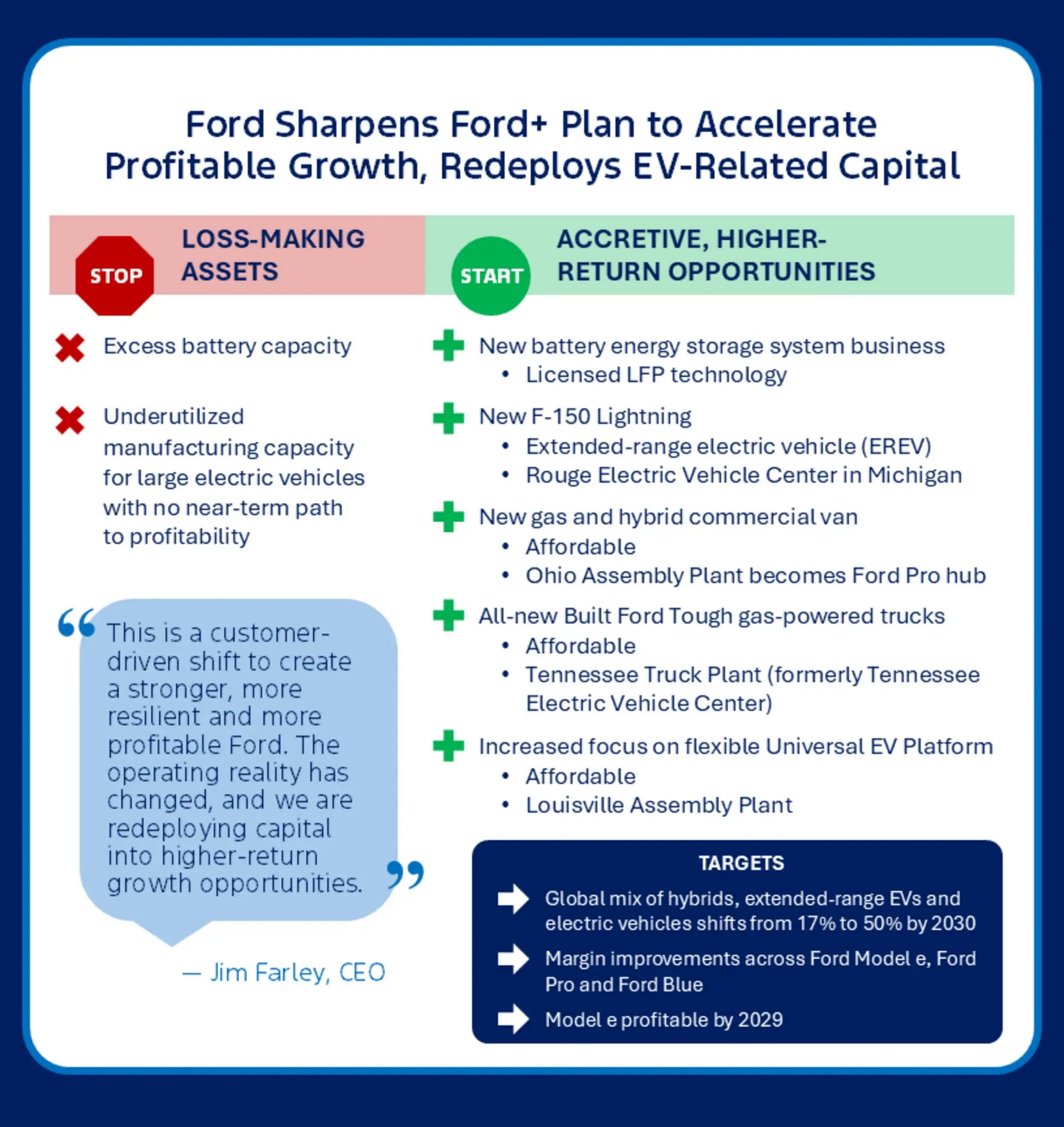
  • Ford cancels Lightning EV and planned electric vans worldwide.
  • Automaker shifts focus to hybrids and range-extended EV trucks.
  • It will also build a new van in Ohio with gas and hybrid engines.

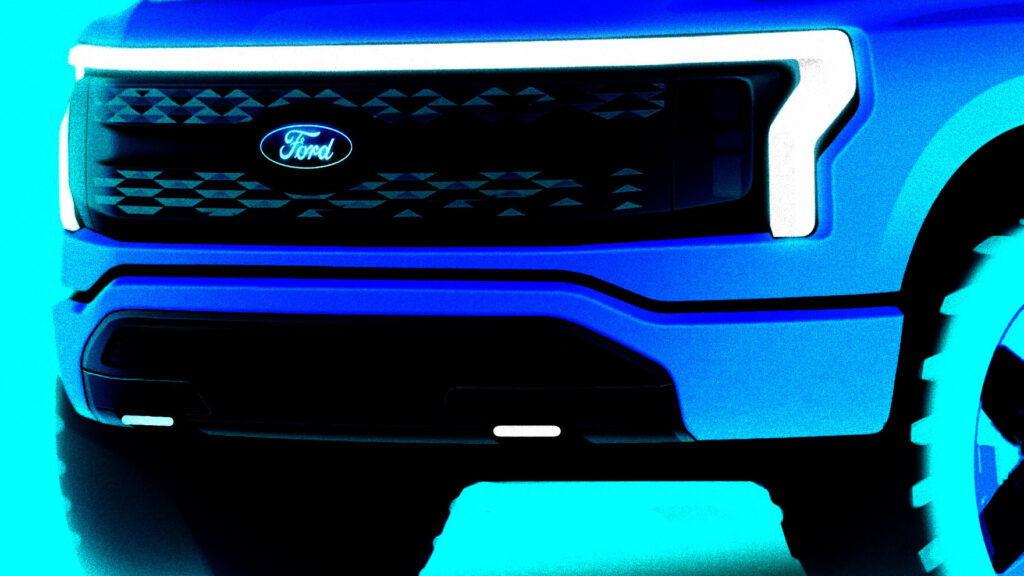
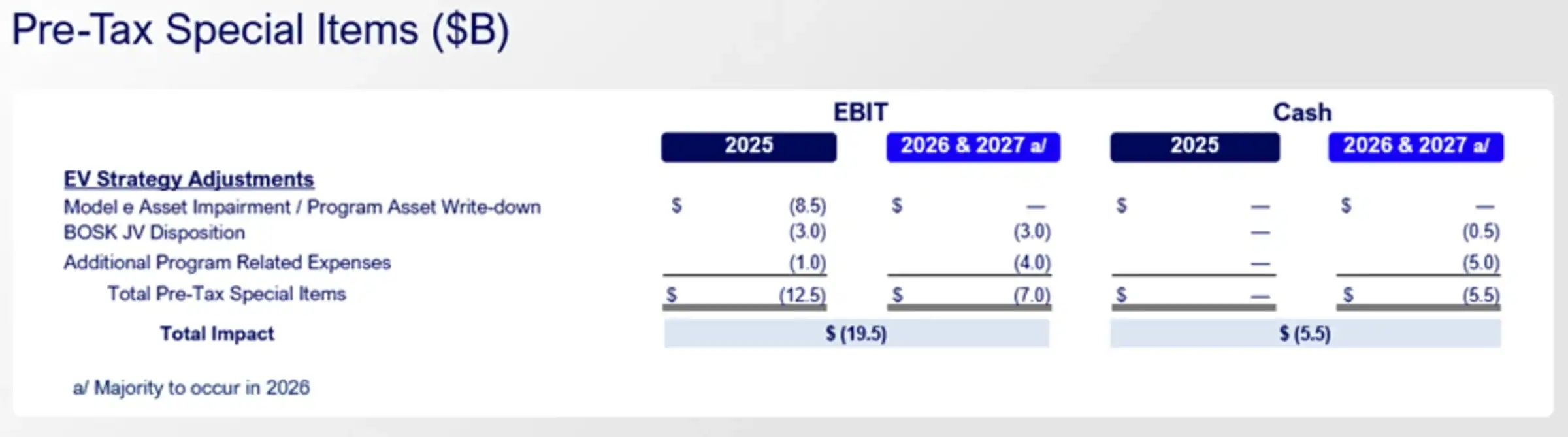
Ford’s bad bet on electric vehicles continues to have brutal repercussions, so they announced plans to rationalize their “U.S. EV-related assets and product roadmap.” This will come with a steep price tag as the automaker announced plans to record about $19.5 billion in special items on their financial results.

Aside from wasting a ton of money, Ford revealed they no longer plan to “produce select larger electric vehicles where the business case has eroded due to lower-than-expected demand, high costs and regulatory changes.” This likely references today’s decision to axe the F-150 Lightning EV and eventually revive it as a range-extended pickup truck.

More: The F-150 Lightning Is Dead, But It’s Coming Back As A Range-Extended EV

The company also announced they will no longer build a previously planned electric commercial van for Europe. Plans for an electric van in North America have also been dropped, but they’re being replaced by an affordable commercial van that will offer gas and hybrid engines. This model will be built at Ford’s Ohio Assembly Plant in Avon Lake starting in 2029.

Ford previously abandoned three-row EVs, but they’re still committed to new electric vehicles based on the Universal EV Platform. These will be small and affordable, with the first variant arriving in 2027 for around $30,000.

 Ford Pulled The Plug On More EVs Than You Realize

Besides hitting the brakes on most BEVs, Ford confirmed they’ll “expand powertrain choice” by offering more hybrids and range-extended electric vehicles. The company expects the mix of these three powertrains will be approximately 50% of its global volume by 2030, which would be up from 17% this year.

To help fuel this projected jump in demand, Ford is planning a range of different hybrids. Some will focus on fuel economy, while others chase performance. We can also expect hybrids with exportable power, which has become popular with customers.

 Ford Pulled The Plug On More EVs Than You Realize

On the range-extended side of things, Ford implied the second-generation F-150 Lightning will be joined by range-extended versions of their larger SUVs. This likely means we can expect to see electrified versions of the Expedition and Navigator.

Ford went on to say that by the end of the decade, nearly every vehicle will offer a hybrid or “multi-energy powertrain choice.”

Given the shift away from EVs, Ford is renaming the Tennessee Electric Vehicle Center as the Tennessee Truck Plant. It will build new, affordable gas-powered trucks starting in 2029. This is a departure as the plant was originally supposed to build the next-generation F-150 Lightning.

Ford Battery Business

 Ford Pulled The Plug On More EVs Than You Realize

Despite throwing in the towel on most EVs, Ford announced plans to launch a battery energy storage system business. It will provides sales and service to support the electric grid and growing demand from data centers.

The pivot can partially be explained by the transition away from EVs as Ford has a lot of excess battery manufacturing capacity. As a result, they’re repurposing their Glendale, Kentucky plant to manufacture 5 MWh+ advanced battery energy storage systems. As part of the change, the facility will build “LFP prismatic cells, battery energy storage system modules, and 20-foot DC container systems.”

 Ford Pulled The Plug On More EVs Than You Realize

Ford also announced their BlueOval Battery Park in Marshall, Michigan will make residential energy storage solutions. They’ll be built alongside LFP prismatic battery cells for models based on the Universal EV Platform.

In a statement, Ford CEO Jim Farley said “This is a customer-driven shift to create a stronger, more resilient and more profitable Ford.” He added, “The operating reality has changed, and we are redeploying capital into higher-return growth opportunities: Ford Pro, our market-leading trucks and vans, hybrids and high-margin opportunities like our new battery energy storage business.”

 Ford Pulled The Plug On More EVs Than You Realize
❌