VinFast sold a measly 389 vehicles in the US through the first seven months of the year.
Despite the poor sales, VinFast remains committed to building a plant in the US.
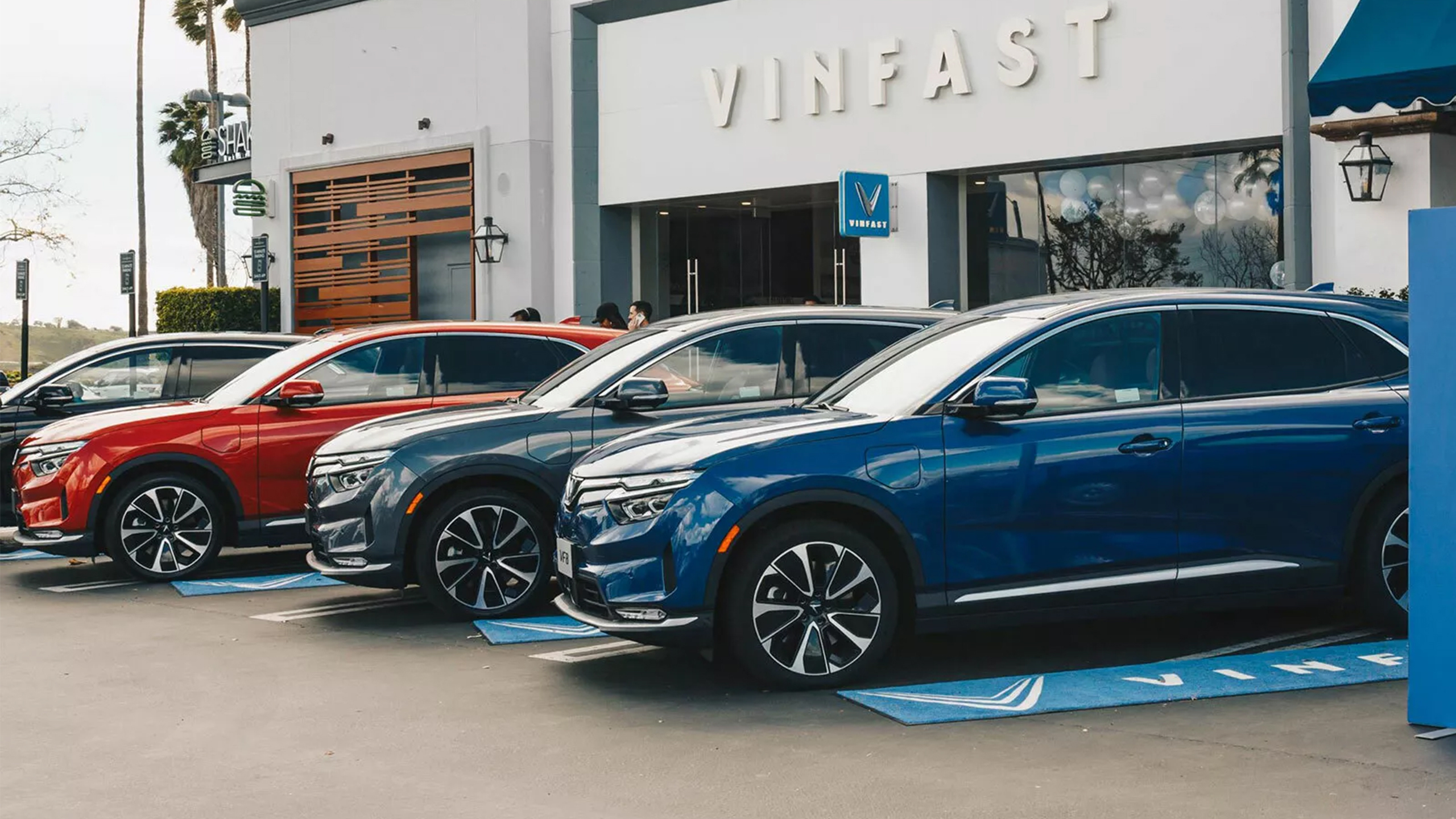
VinFast has secured three new franchised agreements with dealers in California and Philadelphia.
The American car market is a difficult one to crack; just ask VinFast. In the three years since it started selling EVs locally, it’s delivered a few thousand of them, and it’s also had to slash the number of dealerships it operates across the country. Despite this, VinFast isn’t ready to give up on the US.
The Vietnamese company initially launched in California, before expanding into other states throughout 2024 and 2025. At one point, it said it had secured agreements with 38 dealers across the country, but as of the end of 2025, it was operating fewer than two dozen dealerships. Things aren’t looking good.
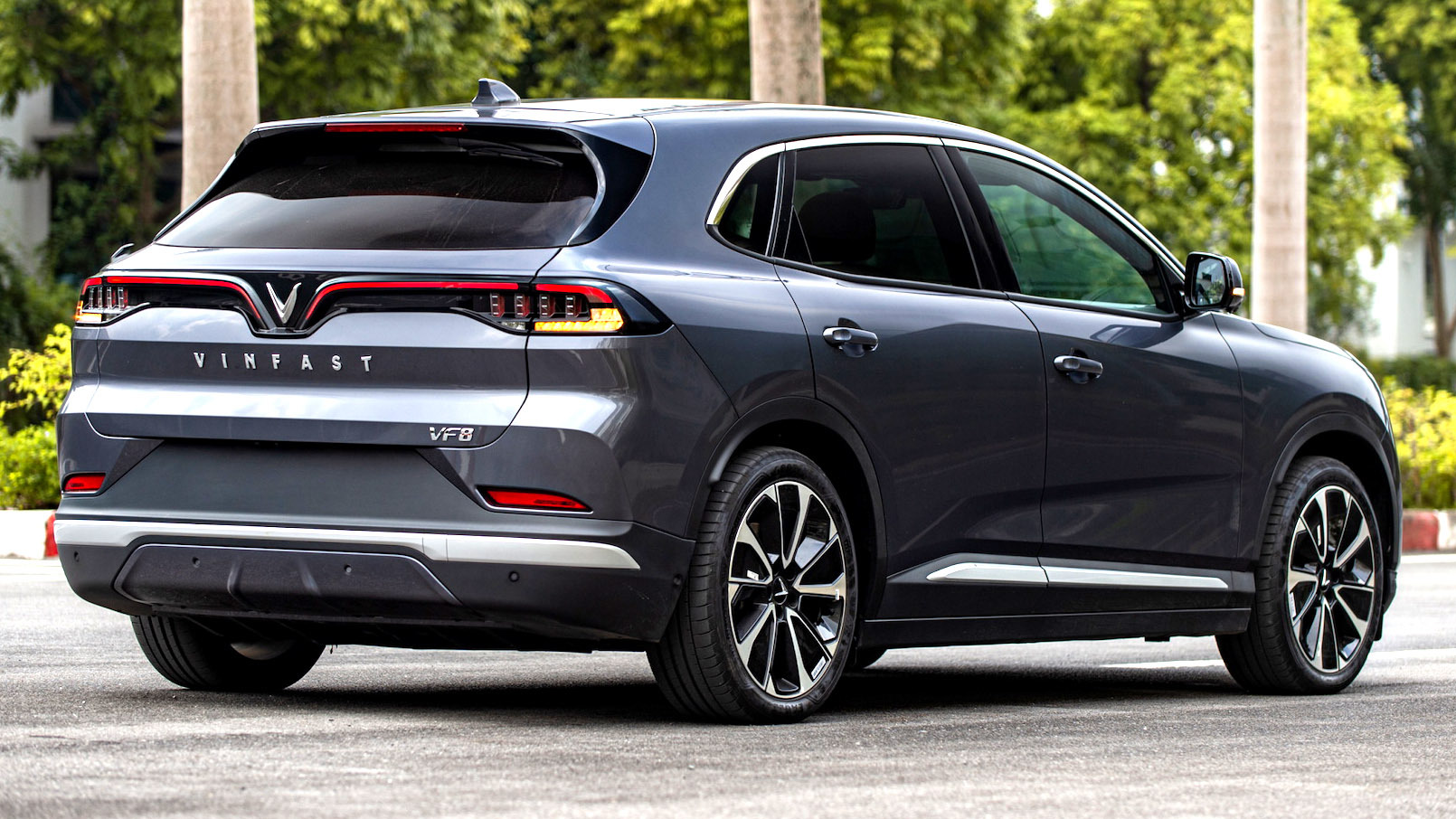
Then there’s the sales. Through the first seven months of this year, VinFast sold just 389 vehicles, a 63 percent decline from the previous year. To put that into perspective, Rivian sold 12,613 vehicles in the second quarter alone, and its vehicles are much pricier than VinFast’s. Things are so bad for VinFast that average incentives on the VF 8 sit at $19,000 per vehicle, while average incentives on the larger VF 9 are almost $20,000. It would seem the writing is on the wall for the brand.
VinFast Isn’t Going Anywhere
However, VinFast insists it isn’t going anywhere. It has secured franchise agreements for dealerships in Tustin, California, Redondo Beach, California, and one in Philadelphia. VinFast North America chief executive Brian Finnerty says the brand has a long-term commitment to the US.
“Our vision is clear: VinFast is continuing to build for the next phase of growth by investing in the customer experience, strengthening our team, continuously enhancing our products, policies, and sales and service network,” he said. “These new dealerships will ensure customers can access comprehensive sales, maintenance, and warranty support right in their local communities. This is more than an expansion of our network. It is a long-term commitment by VinFast to the U.S. market as we enter our next chapter of growth.”
This all sounds very good, but VinFast dealerships are still selling 2024 VF 9 and 2025 VF 8 models, underscoring how hard it’s proving to be for dealerships to sell these EVs.
Ambitious plans to establish a factory in the US have also been delayed multiple times. Initially, this plant in North Carolina was scheduled to start building vehicles in mid-2024, but earlier this year, VinFast pushed that date back to 2028.
The student transportation industry faces questions after a 7-year-old student rider in a wheelchair died on her bus. Additionally, rising fuel costs alongside declining enrollment complicate matters.
Gabrielle Marie Kelley aka “Gabie the Author,” former school bus dispatcher and current office manager for Irving Independent School District in Texas, takes us behind the scenes of the web series she has been sharing with STN readers titled “Calvin & Christina” following the adventures of Calvin, an anxious but dutiful bus driver, and his sentient and safety-conscious school bus named Christina.
A Thursday webinar sponsored by Scraper Systems examined the safety and operational costs of clearing snow from school bus rooftops and shared tools districts can use to calculate whether automated snow removal makes financial sense.
New York School District Shares Success
For Daniel Boyea, assistant director of transportation at Ravena-Coeymans-Selkirk Central School District near Albany, New York, rooftop snow removal comes down to more than clearing buses after a storm. It affects employee safety, route reliability, overtime and the students waiting for those buses to arrive.
Boyea, a 25-year student transportation veteran, currently helps oversee a 53-bus fleet that transports about 2,200 students a day. At his previous district, a larger 217-bus operation, he saw firsthand how quickly manual snow removal costs could add up.
“Before the purchase of the snowscraper, it would cost us about $10,000 per snowstorm to remove the snow,” Boyea said. “So that’s mechanics coming in on overtime, dispatchers, anybody that can help out.”
With the Albany area averaging about six significant snowfalls of 3 inches or more each year, Boyea noted that those costs could reach roughly $60,000 annually. After the district adopted an automated scraper, “We were able to cut that cost in half,” he shared.
“Just six inches of wet, heavy snow equates to around 3,600 pounds, or close to two tons, of additional weight that you’re going to be carrying with you on the road if you don’t take care of that snow on top of the bus.”
- Michael Shelton, Business Development Manager, Scraper Systems
Boyea said the change also reduced the physical toll on employees. Manual roof rakes required employees to work around snow-covered buses and could lead to shoulder and back injuries or slips and falls.
“We already have a large driver shortage, so we really don’t need any more injuries,” he quipped.
The operational impact can extend to students and families. Boyea recalled that routes commonly ran late when employees had to use roof rakes to clear buses of snow.
“Starting your route on time, picking the students up on time, and getting the kids to the school on time is critical,” he emphasized.
“[The snow scraper] greatly increased our efficiency in our transportation operation, at both districts that I was with,” he confirmed.
Winter Safety Risks
Operationally, Boyea urged transportation departments to consider what happens after a school bus leaves the yard. Snow sliding forward can cover mirrors, while rooftop accumulation can fall onto the roadway.
“You have to plan for the safety of everyone, whether it’s your staff, your students, and you also have to think about the public,” he said.
Jackie Germer, inside sales representative for Scraper Systems, recalled speaking with a transportation director who recalled the danger he encountered when snow and ice flew off another vehicle and into the windshield of the school bus he was driving.
“Fortunately, he and the students [were] all safe,” Germer said. “But he told me that it made him really consider the fact that if it happened to him, it could happen because of him.”
Michael Shelton, business development manager for Scraper Systems, said a poll found 60 percent of webinar registrants were manually removing rooftop snow with ice rakes, while slightly more than 20 percent reported doing nothing.
“Safety is the main focus,” Shelton said. “What’s the most important aspect of all of this? Well, it’s having our kids get to school safely and on time.”
Illustrating how less-obvious expenses can accumulate, he calculated $18,554 in annual labor and waiting-driver costs for a 50-bus fleet experiencing five snow events a year. Additionally, he estimated that a fleet of idling buses can consume 25 gallons of fuel per hour while waiting to be cleared. That’s not to mention worker’s compensation claims or hidden issues like fines, absences and fleet delays.
“Just six inches of wet, heavy snow equates to around 3,600 pounds, or close to two tons, of additional weight that you’re going to be carrying with you on the road if you don’t take care of that snow on top of the bus,” Shelton said.
“We want to quantify it for you because that’s what we’re here to talk about,” he summarized.
Germer also noted that rooftop snow can affect liability, compliance, efficiency and employee morale. The presentation identified several U.S. states and Canadian provinces with specific rooftop snow-removal legislation.
Finn Livingston, director of product management for Scraper Systems, said districts should evaluate four factors when comparing snow-removal methods: Safety, cost, efficiency and reliability.
“Whatever method you use for rooftop snow removal, these four key points need to be considered: safety, cost, efficiency, and reliability,” Livingston said.
He said the company’s automated rooftop snow removal system clears a bus roof in about 30 seconds. Its medium-duty model is designed for fleets of up to 80 buses per day, while its heavy-duty model can accommodate up to 400.
Comparing manual and automated snow removal methods, he estimated annual time, labor and idling-fuel savings ranging from $15,040 for 50 vehicles to $46,433 for 150 vehicles. Depending on climate, fleet size and equipment cost, the examples showed potential payback periods of one to two years, though the presentation cautioned that actual results will vary.
“The calculator is a way for you to evaluate the cost of your operation today and make decisions about the value of automation for your operation in the future,” Livingston said. “Operational benefits [include] getting your busses ready faster, fewer delays, and more predictable winter operations.”
We discuss how non-domiciled CDL restrictions exacerbate the school bus driver shortage, new research on school zone and bus stop safety, reframing the student transportation conversation, and conference updates.
Consultant Launi Harden, who served as the former transportation director at Washington County School District in Utah and is the new executive director of the Florida Association of Pupil Transportation, analyzes transportation challenges driven by declining enrollment, funding and staff, the importance of bus attendants and alternative transportation, and essential hands-on emergency training she will help lead at the TSD Conference in November.
Ceer has unveiled a pair of electric models with up to 1,111 hp.
The Exobot has the longest windshield of any production car.
The EVs will initially launch in First Edition guise with 850 hp.
After several years of promises and testing, Saudi Arabia’s homegrown Ceer brand has unveiled a pair of radical EVs that look more like concept cars than real-life, production models. However, they are very real and will be manufactured at a dedicated plant in King Abdullah Economic City.
The new model is dubbed Exobot and will be sold in sedan and SUV configurations. We’ve seen plenty of bold EVs premiere from newly established companies in recent years, and often, they never see the light of day. While it’d be easy to assume the same could happen here, Saudi Arabia certainly has the funds to ensure Ceer’s models do hit local roads, although convincing locals to buy them may prove challenging.
Both the sedan and SUV stand out from other production cars thanks to steeply raked, almost perfectly flat, windshields which stretch seamlessly into the hood. According to Ceer, the Exobot has the largest windshield ever fitted to a production car, measuring 94.4 inches (2.4 meters) in length. Both versions feature narrow headlights and daytime running lights, while the SUV also rocks a rugged-looking bumper.
Big Dimensions, Big Power
Ceer’s two EVs are also very big. The sedan is 207 inches (5.26 meters) long, 82.6 inches (2.1 meters) wide, and sits just 56.2 inches (1.43 meters) high, while the SUV is slightly shorter at 197.6 inches (5.02 meters), 82.6 inches (2.1 meters) wide, and 66.5 inches (1.69 meters) tall. Both have gullwing-style doors, or as Ceer describes them, Shahin Wing Doors, inspired by the Shahin falcon.
Ceer hasn’t developed the Exobot alone. The brand was established as a joint venture with Foxconn and is understood to be using electric drive systems from BMW.
The Exobot uses three electric motors, combining to produce 1,111 hp and 1,106 lbs (1,500 Nm) of torque in the highest specification, allowing the sedan to hit 62 mph (100 km/h) in 2.1 seconds and a top speed of 155 mph (250 km/h). The SUV is a little slower, but can still reach 62 mph in 2.4 seconds and top out at 130 mph (210 km/h).
Initially, the Exobot will be sold in a limited-run First Edition guise. This model will produce 850 hp and 738 lb-ft (1,000 Nm), allowing the sedan to hit 62 mph in 2.6 seconds, while the SUV will require 2.9 seconds.
Both versions will rock a 112 kWh battery, giving the sedan 416 miles (670 km) of range and the SUV a solid 348 miles (560 km) of range. Thanks to the 800-volt setup, charging from 10-80 percent will reportedly take less than 30 minutes.
Given all the glass used in the Exobot’s construction and the scorching temperatures in Saudi Arabia, one might expect the EVs to quickly turn into a sauna the moment the sun rises. Ceer says its solution is triple silver-coated glass and a powerful cooling system that can reduce cabin temperatures from 65°C (149°F) to 32°C (90°F) within 10 minutes.
What Else Is Coming?
Other key cabin features include a 48-inch screen across the top of the dashboard, a 10.4-inch central infotainment screen, and an 8-inch display for the rear passengers. There’s also a yoke-style steering wheel, an advanced AI-powered voice assistant, and support for over-the-air updates. Ceer is also promising hands-free self-driving with point-to-point navigation, although it hasn’t said where it’s sourcing its autonomous software and hardware features from.
Pricing details haven’t been confirmed. Ceer will follow up the Exobot with five other models between 2028 and 2030. Initially, the company was only going to build EVs, but it has since tweaked its plans to also include plug-in hybrids and pure combustion-powered models.
School startup across the U.S. comes with noteworthy snafus at Prince George’s County Public Schools in Maryland, tragic student fatalities, and speculation on electric bus mandates and funding.
Glenna Wright-Gallo, vice president of policy for software provider Everway, leverages her personal experience having a disability and her experience as the former assistant secretary for the U.S. Department of Education’s Office of Special Education and Rehabilitation Services to speak on student behavior, absenteeism, IEPs, assistive technology, travel training, funding, U.S. Department of Education upheavals and more. She will present a keynote at November’s TSD Conference in Dallas-Frisco, Texas.
VinFast has suggested the tiny VF 2 could eventually be sold outside Vietnam.
The two-door microcar has 40 hp, a top speed of 50 mph, and 130 miles of range.
Company implied it could be positioned as a golf cart alternative like the Topolino.
VinFast had grand ambitions, but things didn’t go according to plan. However, the company isn’t giving up and recently hinted their new microcar could eventually come to Europe and the United States.
In a meandering press release, VinFast Canada said the “microcar is quietly making a comeback.” They went on to note the success of the Citroën Ami and Fiat Topolino, the latter of which is now available in America.
The company then pivoted to the VF 2, which is their smallest model. The two-door, four-seater measures 121.7 inches (3,090 mm) long, 58.9 inches (1,496 mm) wide, and 65.5 inches (1,663 mm) tall with a wheelbase that spans 81.3 inches (2,065 mm). To put those numbers into perspective, the Fiat 500e is over 21.3 inches (540 mm) longer.
While the VF 2 is tiny, it only costs $7,214 (đ188 million) in Vietnam, which is “roughly as much as a premium motorcycle.” Despite the bargain basement pricing, the company noted the model has LED headlights, air conditioning, a 7-inch display, and 13-inch alloy wheels. They’re joined by a handful of safety features including a driver’s airbag, anti-lock brakes, and a traction control system.
Power comes from an 18.3 kWh battery pack, which feeds a rear-mounted motor developing 40 hp (30 kW / 41 PS) and 48 lb-ft (65 Nm) of torque. This enables the car to have an NEDC range of up to 130 miles (210 km). When the battery is low, a 24 kW DC fast charger can take it from 10% to 70% in approximately 34 minutes.
Those numbers aren’t very impressive, but VinFast noted they’d be perfect for the “urban commuter who drives alone.” That’s a relatively niche market, but a super cheap car certainly has some appeal, even if the top speed is limited to 50 mph (80 km/h).
While the automaker acknowledged they haven’t announced plans to bring the VF 2 to North America or Europe, they added such a decision “would not be entirely out of place.” The company went on to say that, “In many developed markets, even entry-level vehicles have become increasingly expensive, with the average new vehicle selling for more than $50,000 by the end of last year.” This suggests they see a place for something far cheaper.
The company went on to imply the VF 2 could follow in the footsteps of the Topolino and be positioned as an alternative to golf carts for neighborhood transportation. As they noted, “Walk through many newly developed residential communities in the world today, and it is no longer unusual to see golf carts being driven well beyond the golf course. Their popularity suggests there is demand for small, simple vehicles designed primarily for short urban trips.”
We examine the potential fallout from proposed changes to the Head Start program, increased danger as students return to school, a tornado that devastated a Wisconsin bus contractor, and updates from NAPT and TSD Conference.
Parker Muirbrook, strategic sales director at EverDriven, discusses new research and real-world examples that show how alternative transportation assists both district financials and student needs by providing safe and consistent school transportation.
School districts focus on service and safety amidst students returning to school nationwide and new research on cellphone distraction among motorists. Plus, the National Association of State Directors of Pupil Transportation Services reiterated its support of lap/shoulder seatbelts on school buses.
Board Certified Behavior Analyst Patrick Mulick, the director of student engagement at Auburn School District in Washington state, and an upcoming fan-favorite TSD Conference keynote speaker, brings a voice of clarity and care to safely and appropriately transporting students with special needs, as well as supporting their independence.
Back to school safety is forefront as an illegal passing PSA features a retired Detroit Lions offensive lineman; meanwhile, a South Carolina student was fatally shot at a school bus stop. Plus, send your best school bus photos to taylor@stnmedia.com.
Special education attorney Julie Weatherly discusses how recent federal changes to the U.S. Department of Education affect school transportation and students with special needs, as well as issuing a caution on using AI in education planning. She will deliver a keynote at the Transporting Students with Disabilities & Special Needs (TSD) Conference and Trade Show this November.
RENO, Nev. – The Green Bus Summit at STN EXPO West in July explored how efficiency and modernization are reshaping student transportation. Experts shared practical strategies for using cleaner powertrains, connected technology, operational data and resilient infrastructure to reduce costs, improve reliability and prepare school bus operations for the future.
Cummins
Nicole Wheeldon, general manager of busing for North America at Cummins, joined Chris Karlin, account manager for International Motors; Matthew McGinn, senior director of e-mobility sales for Accelera by Cummins; and Matthew McClure, current product and OEM service manager for Bus North America at Cummins. They discussed how emissions regulations, technology and staffing challenges are shaping school bus purchasing and operations.
The panelists said fleets should take a holistic approach to fleet electrification that considers funding, reliability and performance alongside emissions compliance. They noted that software and automatic updates can improve efficiency by reducing service visits. The panelists also highlighted vehicle-to-grid capabilities, describing electricity as a low-cost energy that could provide districts with additional operational and community benefits.
Responding to attendees’ questions about electric school bus service, the panelists acknowledged that workforce shortages remain a significant obstacle. “There is a shortage of qualified EV techs and it is an industry issue,” they said. The lack of trained technicians can extend repair delays and discourage districts from adopting electric vehicles, making local service capacity an important consideration before purchasing buses.
The panelists reported progress on electric bus diagnostics and trouble codes, as well as efforts to reduce repair times through third-party battery assistance. Regarding parts availability, speakers confirmed that, “The parts channels are in better shape than they were a year ago in general.”
Cold-weather performance was another focus. The panelists pointed to electric fleets successfully operating in Canada and Alaska and explained how battery thermal management systems both heat and cool the batteries.
They also advised B20 users to closely monitor storage and maintenance because biodiesel attracts water. Cummins, they established, continues evaluating alternative fuels and investing in gasoline products to give districts more fleet-diversification options.
McGinn highlighted the first school bus application for the fourth-generation 14Xe ePowertrain by Cummins-Meritor. The system integrates the motor and transmission and, he said, its three-speed configuration “allows [drivers] to operate the vehicle with better range.”
Real-time Visual Notes created by Ink Factory.
IC Bus
Matthew Milewski, connected vehicle marketing director for IC Bus parent company Navistar, joined Chad Duncan, specification manager for IC Bus and Maurine Simons, transportation director for North Mason School District in Washington state, to discuss using data to improve fleet safety, maintenance and efficiency.
Milewski said student transportation departments are under increasing pressure from technician and driver shortages, limited budgets, safety requirements, parent expectations and sustainability goals. With many operations “doing more with less,” he explained that connected buses can help answer routine questions about vehicle locations, delays, maintenance needs, driver performance and developing mechanical problems.
Technology allows transportation departments to monitor routes, vehicle speed and timestamps, giving staff objective information when investigating incidents or responding to questions. Milewski said connected technology can also generate AI-driven weekly driver reports and flag events requiring additional review. Camera-based systems can alert drivers about issues such as failing to wear a seatbelt, while real-time information can support route adherence, stop accountability and parent communication.
Milewski contrasted traditional maintenance, where a driver must notice a problem before technicians diagnose it and order parts, with a connected operation. With the latter, the vehicle reports an issue to fleet managers, who can then order repair parts and schedule shop time before the bus arrives. He shared how the OnConnect Connection feature through IC’s My International fleet management system helps districts minimize downtime.
Simons shared that she began using the connected platform years ago as a technician, particularly to identify and order parts. After becoming transportation director, she continued using it to track bus information and save staff time.
Duncan advised directors purchasing vehicles to use operating data when specifying horsepower, transmissions, fuel capacity, axles, tires or electric bus battery range. He urged attendees to stay ahead of state safety regulations and plan realistically for fleet advancements in safety technology.
Milewski encouraged directors to ask, “What information do I wish I had every day that I don’t have today?” and “What decisions am I still making based on assumptions?” He added that My International is available through dealerships with a five-year subscription and can support mixed fleets, not only International buses.
Suburban Propane sales representative John Barnett moderated a discussion with Douglas Dagan, executive vice president of renewable energy at Suburban Propane; Scott Bradley, executive vice president at Pioneer eMobility; Brad Beauchamp, EV product segment leader for Blue Bird; and Nikita Mishra, industry application engineer for ABB’s automotive and battery manufacturing segment. They examined how off-grid charging and microgrids can help districts deploy electric buses despite utility delays or limited grid capacity.
Beauchamp advised transportation directors to evaluate infrastructure as soon as funding is identified, and district leadership approves an electric bus project. Asked when that process should begin, he replied, “That actually comes before you order the bus.”
He and Mishra agreed that early discussions between the district and utility will determine their power demand, equipment availability and desired mix of energy sources before design work begins.
Mishra revealed that infrastructure projects can take anywhere from several months to several years. She noted that lead times for some equipment, including transformers, can reach 75 weeks.
Likewise, Bradley urged districts to “call your utility early.” He said Pioneer eMobility can deliver certain systems within three to four months.
When permanent infrastructure is delayed, propane-powered off-grid charging systems can serve as a temporary or supplemental solution.
“Propane is available everywhere,” Gagan noted, adding that renewable propane is a fast-growing option that is chemically identical to conventional propane but produced from renewable sources.
Bradley pointed to Los Angeles Unified School District, where 180 of 220 electric Blue Bird buses are charged using “25 off-grid electric vehicle charging microgrids.”
Panelists said mobile charging can also support field trips, sporting events and emergency operations or help districts test potential sites before installing permanent infrastructure. Barnett explained how microgrids combining propane generators, battery storage and other energy sources could charge buses and power facilities during outages or reduce demand charges through peak shaving.
Speakers encouraged districts facing grid constraints to consider the entire charging “ecosystem,” including the bus, chargers, generation source and future vehicle-to-grid or vehicle-to-building uses.
Real-time Visual Notes created by Ink Factory.
Thomas Built Buses
Mark Childers, powertrain and technology sales manager for Thomas Built Buses, moderated a discussion with Alec Watson, account manager for Daimler Truck Specialty Vehicles within Cummins, and Trystan Thomas, director of transportation for Shasta Union High School District in California. They discussed evolving diesel technology, Cummins’ forthcoming B6.7 Octane gasoline engine and the factors districts should evaluate when selecting powertrains.
Watson said the B6.7 Octane was developed for the medium-duty and school bus markets using feedback from OEMs and customers. Built on the B6.7 diesel platform, the gasoline engine is designed to provide a similar torque curve, drivability and performance while eliminating diesel exhaust fluid and diesel particulate filter management. Cummins, Allison Transmission and Thomas Built Buses are collaborating on its integration.
Thomas Built Buses expects production to begin during the first quarter of 2027, initially for the Saf-T-Liner C2 school bus. Panelists clarified that the engine will meet the EPA’s near-zero emissions standard but is not a zero-emissions product. It will initially be offered only on new buses, not as a retrofit.
Watson said Cummins has trained and certified approximately 700 to 750 dealers on the new engine. Technicians already certified on the B6.7 diesel can complete an online course and test rather than attend additional in-person technical training. Cummins is also preparing its Cummins Care technical support operation and adding field service engineers.
Thomas encouraged directors to examine route mileage, terrain, field trips, infrastructure, technician capabilities and total cost of ownership. His district remains predominantly diesel because some routes exceed 120 miles per day, including steep grades or support out-of-town trips. “Anything alternative, you just got to do your homework,” he said.
Districts must also examine funding carefully. Thomas recalled receiving $5,000 per bus for electric infrastructure that ultimately cost $70,000, requiring the district to supply the difference.
Watson cautioned directors against selecting a technology simply because it is exciting. “Just because the octane engine is new and shiny doesn’t mean it’s necessarily for you,” he said.
“I believe that successful fleets will remain technology-neutral and evaluate solutions based on the operational fit rather than the trends alone,” Thomas agreed. “The future is likely to include a mix of diesel, gasoline, propane, natural gas and battery electric solutions.”
Real-time Visual Notes created by Ink Factory.
Article written with the assistance of AI and session transcripts.
A host of EVs will be developed in the UK and then built in Qatar.
WEVC has partnered with a large investment group to make it happen.
An advanced new EV plant will help boost Qatar’s manufacturing prowess.
British EV manufacturer WEVC has spent years promising a fleet of EVs, but to date it hasn’t started building them en masse. That’s about to change following confirmation of a long-term strategic partnership that will see it build models in Qatar at the nation’s first dedicated EV manufacturing plant.
WEVC, also known as Watt Electric Vehicle Company, recently unveiled its bespoke PACES platform, capable of supporting a wide array of vehicles, ranging from L7e quadricycles to passenger cars, sports cars, and even commercial vehicles and trucks. Its partnership in Qatar is with JTA International Investment Holding (JTA), a locally based international investment group headquartered in Doha.
Future vehicles from WEVC will be engineered in the UK and manufactured at the new site in Qatar. Initially, this plant will handle the production of models for the local market before expanding to export models to the GCC and several as-yet-unspecified international markets.
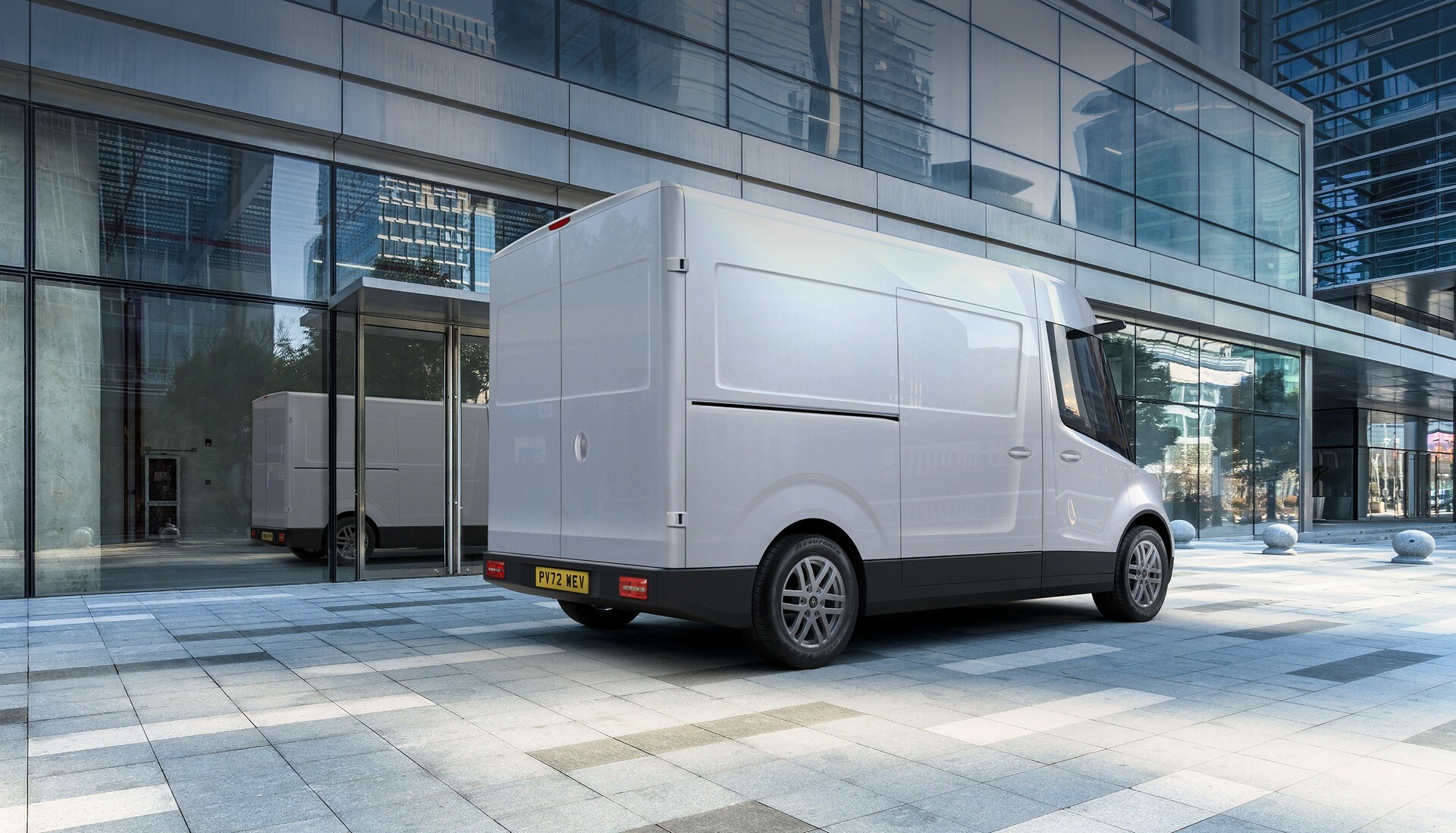
According to a report from Autocar, the factory will start with two models, a passenger car and a medium-sized delivery van along the lines of WEVC’s own eCV1, with manufacturing expected to begin in early 2028 at around 5,000 units a year before expanding well beyond that.
WEVC founder and CEO Neil Yates told the magazine that the Qatar deal is meant to accelerate the company’s existing plan to build its own EV manufacturing plant in the UK, with the Gulf facility acting as the forerunner to similar satellite operations planned in the US and Asia. In other words, WEVC is standing up its first volume factory abroad before the one at home.
A Boost For WEVC And Qatar
“Our partnership with JTA Investment Holding marks a defining milestone in WATT’s international growth,” founder and chief executive Neil Yates said. “Our proprietary electric vehicle platform, developed and validated in the United Kingdom, enables the rapid and commercially efficient development of highly customised electric vehicles while significantly reducing development time and manufacturing costs.”
Included within the partnership will be every stage of vehicle development, starting with proprietary platform technology through to vehicle engineering, product development, and production planning. WEVC says its lightweight aluminum architecture and EV platform will enable shorter development cycles, more manufacturing flexibility, and lead to the creation of highly customized vehicles.
The partnership is also pitched as a win for the wider Qatari economy, strengthening local supply chains and building up a more skilled automotive workforce.
Taylor sits down for a special extended conversation with STN’s 2025 Transportation Director of the Year Keba Baldwin, director of transportation and fleet services at Prince George’s County Public Schools in Maryland. He talks school startup operations, parent and media communication, AI and autonomous technology, leading STN EXPO sessions, alternative transportation and more.
We discuss the postponement of the New York state electric mandate, feedback on the annual NASDPTS illegal passing survey, the impact of Daylight Savings Time conversations on students, and accolades for former STN Transportation Director of the Year Teresa Fleming of the School District of Philadelphia at Zum’s Mobility Summit.
See how mentorship and teamwork star in the noteworthy career of Sandy Dillman, a longtime school transportation director and certified driver trainer who was named the 2026 Peter J. Grandolfo Memorial Award of Excellence winner at STN EXPO West last month.
The Washoe County School District Getto Transportation Center in Sparks, Nevada opened this spring. Photo by Vincent Rios Creative Cover design by Kimber Horne
The August issue explores the people, technology and strategies keeping school bus fleets running safely and efficiently. Learn how school districts are investing in modern maintenance facilities, meet this year’s Garage Stars, discover how routing analytics reduce fuel costs, and read key takeaways from STN EXPO West. Plus, find out why building a smarter parts inventory program is essential to maximizing fleet uptime.
Built for Uptime
School districts are making strategic investments in maintenance facilities, shop equipment and technology to improve fleet reliability, reduce downtime and prepare for the future of school transportation.
Features
The Sum of All Parts
Supply chain challenges and rising costs are making parts inventory management more important than ever. Fleet leaders share strategies for getting the right parts to the right technicians at the right time.
2026 Garage Stars
Meet the outstanding technicians, mechanics and maintenance professionals recognized in the 11th annual Garage Stars program for their dedication to student safety and fleet excellence.
Special Report
‘Routing’ Out Fuel Waste
Transportation leaders are using routing analytics, GPS, telematics and other data-driven tools to reduce fuel consumption, optimize routes and lower operating costs.
STN EXPO West: Insights in Action
From AI adoption and active-threat response to leadership and propane infrastructure, revisit key lessons and takeaways from educational sessions at STN EXPO West. Conversations Ad Index
RENO, Nev. — School districts nationwide are opening the new school year with less money for student transportation, and three sessions at STN EXPO West challenged directors to change how and to whom they make their case for resources.
Ryan Hahn of Strategic School Consultants presented back-to-back sessions, “Budgeting in Uncertain Times: Navigating the Fiscal Cliff Without Losing Ground” on July 12 and “Advocating for Resources: How to Get a Seat at the Table Before the Cuts Are Already Made” on July 13. Another session presented later during STN EXPO West on July 14 by Tim Purvis focused on using AI to help with budgeting decisions.
Hahn started as a school bus driver in college 26 years ago and went on to direct transportation, maintenance and operations for districts in Washington state and Oregon. He earned a chief business official certification through California’s Fiscal Crisis and Management Assistance Team (FCMAT), served as chief financial officer of a 25,000-student Washington district, and now owns Strategic School Consultants.
Federal pandemic relief is spent, Hahn said, and districts that used that one-time money to fund recurring positions are paying for it now. Add inflation, fuel volatility and liability costs — he said insurance at his former district rose 150 percent in 10 years — and operations departments are absorbing across-the-board reduction targets.
“Every operational unit is going to have to cut 10 percent of their budget,” Hahn said, describing a conversation he said is playing out across the country. “You cannot defer a bus ride.”
His central argument was that transportation directors lose budget fights before the budget is built. Most, he said, live entirely in an operational network — covering routes, filling trips, solving problems — and never develop the personal and strategic networks that determine who and what gets funded.
“Your value as the leader of the unit dictates what you get in your unit, every single time,” he said.
That means lateral and vertical relationships with principals, executive directors and the superintendent, not just the CFO. It also means translating requests into the language cabinet members already use. Hahn told attendees to find their board’s adopted strategic goals and tie every ask to one of them.
He urged directors to request a copy of their district’s position control, the roster of every funded position with wages, steps and employer-paid benefits. Staffing consumes 86 percent to 90 percent of a transportation budget, he said, yet many directors have never seen the document. Districts resist adding lines to position control because it shifts staffing ratios districtwide, he said, so directors who need to pilot a new function should ask instead for substitute dollars or contracted services, which are treated as temporary expenses.
Hahn also warned that efficiency can be punished in reimbursement states. After cutting roughly $1 million in overtime at an Oregon district, he said, his CFO called him into a meeting but not to thank him. The savings reduced the following year’s reimbursement. He was told to spend the money on purchasing new buses.
Funding models differ sharply, he noted. Oregon reimburses roughly 70 cents on the dollar. California reimburses about 60 percent of eligible operating costs but excludes capital purchases such as school buses. Washington funds based on ridership, routes and destinations and maintains a vehicle replacement fund, though the legislature recently extended the replacement cycle from 13 years to 15.
On electric school buses, Hahn advised directors to follow board priorities but to be candid about range and infrastructure limits. Remaining grant money, he added, generally requires an older diesel bus as a trade-in. He cautioned against buying every technology product from a single vendor.
“It costs a lot to get divorced and remarried to another product,” he added.
Deferred maintenance was a recurring theme. Directors should cost out preventive maintenance cycles, track fuel economy and failures by brand, and bring trend data, not feelings, to the business office. Hahn told the room not to volunteer training and conference dollars when cuts are demanded.
For advocacy beyond the district, he recommended working through state school business and transportation associations rather than lobbying independently and aligning with the National Association for Pupil Transportation where interests match.
Consultant Ryan Hahn discusses the necessary budget language student transporters must know to become better negotiators with district administrators on July 12, 2026 at STN EXPO West in Reno, Nevada. (Photo by Ryan Gray)
In a separate session, Purvis, principal and founder of consultancy Pupil Transportation Information and a former California director of transportation with four decades in the industry as well as a California FMCAT member, walked attendees through using artificial intelligence in budget decision-making. His message: AI is a tool, not a decision maker, and its value depends almost entirely on the prompt and the data behind it. And, of course, verify the result.
Purvis demonstrated a case study built from an actual client — 58 approved driver positions with 12 vacancies, 20 general education routes, 30 special education routes, an aging fleet and rising overtime. His actual prompt ran more than two pages. The output flagged driver vacancies as the leading cost driver, projected expenditures rising from $4.8 million to $5.8 million over four years, and recommended stabilizing labor before expanding the fleet. It also provided bell schedule optimization, which Purvis called one of the largest budget levers after labor, without being prompted.
The three-year projection, he said, is what secured the school district with a fully funded vehicle replacement schedule.
He cautioned against uploading a proposed budget that has not been adjusted midyear, said inaccurate data should be left out entirely, and warned that student identifiers routinely appear in routing exports sent outside the district. Once uploaded to an AI system, he said, it cannot be recalled.
“Verify all calculations,” Purvis said. “We’re human, we make mistakes.”
Article written with the assistance of AI and session transcripts.
We analyze the conversations at the National School Transportation Association’s annual convention, an Insurance Institute for Highway Safety study on autonomous vehicle safety, and how student transporters can respond to the evolving trends of AI and new technology.
Cameron Wood, the lead electric vehicle performance analyst for school bus contractor Student Transportation of America, shares how his technical background led him to brainstorm an EV charging solution and accept the Innovator of the Year award at STN EXPO West this month.
RENO, Nev. — Transfinder swept the 2026 STN EXPO Innovation Choice Awards, taking first place in each of four product categories after main conference attendees cast ballots July 13 and 14 during the STN EXPO West trade show.
The program, in its fifth consecutive year, recognized a winner and two finalists in the categories of Best Green Technology, Best Hardware, Best Safety Technology and Best Software/AI Solutions. A tie in the safety category expanded that group, with three products sharing third place. The results reflected attendees’ evaluations of technology presented on the show floor for use in school transportation operations.
Only STN EXPO West main conference attendees who are employees of school districts, bus contractors or consultants were eligible to vote.
Best Green Technology
Transfinder won Best Green Technology for Ride Impact Metrics, or RIM. The tool helps school districts and families quantify the broader effects of yellow school bus service by estimating avoided carbon emissions, household driving time saved and transportation savings. Attendee Sandy Dillman, this year’s winner of the Peter J. Grandolfo Memorial Award of Excellence, praised Transfinder’s “great products” and “even better customer service.”
RIDE earned second-place honors for its Blade Battery, a lithium-iron phosphate battery designed for electric vehicles with an emphasis on safety, energy density and cycle life. Attendee Denise George said, “Our best EV is from RIDE.”
Thomas Built Buses was the third-place finalist for the Saf-T-Liner eHDX2 Wattson, a Type D electric school bus that combines an 800-volt powertrain, integrated eAxle, flexible charging and vehicle-to-grid capability.
Best Hardware
STN EXPO West trade show attendees voted the Wayfinder Hardware Suite from Transfinder as Best Hardware. The integrated suite combines RFID reading, barcode and QR scanning, push-to-talk communication and PIN-based student identification, giving drivers more options to identify students and communicate with dispatch through one platform.
Zum Services took second place for its Connected Mobility Experience, or Zum CMX, which integrates routing, dispatch, workforce management, safety systems, communications and operational dashboards. Stone Mountain Ltd. received third-place honors for the UVox USB C Push to Talk Speaker Mic, which connects to Android, iOS and Windows devices over push-to-talk cellular networks and includes a dedicated emergency button.
Best Safety Technology
Transfinder’s Live Share won Best Safety Technology. The real-time mapping and incident-response tool allows transportation teams to share interactive maps, drawings and operational information with trusted recipients through secure text-based access. The company said the tool is designed to support coordination during emergencies, events and daily transportation planning.
Zonar’s Bus Suite was the second-place finalist. The platform brings routing, fleet management, GPS tracking, student ridership verification, driver workflows, dispatch, vehicle inspections and parent communication into one operational view intended to improve visibility and response time.
A three-way tie for third place honored Q’Straint, IC Bus and Geotab. Q’Straint ONE simplifies wheelchair securement through an all-in-one platform with visual and audible locking indicators. Attendee Christine Campoli-Silva called the Q’Straint system “very impressive.”
IC Bus was recognized for Fusion 3.0, which integrates radar, cameras, driver alerts and automated braking assistance. Geotab earned its place with Vitality, a program that uses telematics data, positive reinforcement and rewards to encourage safer driving behavior.
Transfinder completed its four-category sweep with Atlas & Intelligent Tools. The platform applies AI-assisted search and automation to routing, planning and operational data, including the use of actual bus speeds and stop times to improve maps and schedules. Attendee Jose Cruz cited its potential to provide “help with routing.”
Tyler Technologies earned second place for Rider AI Assistant, a chat interface within Tyler’s Student Transportation solution that answers operational questions and builds reports from plain-language prompts. IC Bus received third-place honors for My International, a connected platform that provides mixed-fleet vehicle monitoring, maintenance alerts, service management and dealer communication in one dashboard.
By placing the decision with eligible main conference attendees on the trade show floor, the Innovation Choice Awards highlighted the products that resonated most with the school transportation professionals who could evaluate them in person. Recognizing the top finishers in each category also broadened the spotlight on the range of new technology supporting safer, cleaner and more connected student transportation.
Tony, Ryan and Taylor go over the highlights from STN EXPO West last week which focused on not only skills, technology and training but also teambuilding, workplace culture and making emotional connections.
Highlights included focused inspection and special needs trainings, a musical keynote, Great Gatsby and Alice in Wonderland themed networking events, multiple awards given, a Mr. Bus Driver appearance, a military leadership panel, the Green Bus Summit and Bus Technology Summit, an AI track, and the Pete & Dick Show.
RENO, Nev. — School transportation departments may not be legally required to comply with Occupational Safety and Health Administration (OSHA) standards but ignoring them is a risk few districts can afford to take, explaiend school transportation safety expert Jeff Cassell.
Speaking Monday at STN EXPO West, Cassell urged transportation leaders to voluntarily adopt OSHA safety practices for maintenance facilities, technicians and even drivers, arguing that the true measure of safety is not regulatory compliance but systematically removing risk before it leads to injury, litigation or loss of life.
“The loss that costs the least is the one that was prevented,” Cassell told conference attendees.
For school district transportation departments facing staffing shortages, aging facilities and evolving vehicle technology, Cassell said implementing OSHA-based procedures is one of the most effective ways to reduce operational risk while protecting employees and students.
Drawing on his experience as former vice president and corporate risk manager for Laidlaw, where he oversaw insurance, claims and safety programs across roughly 480 locations in North America, Cassell recounted how a mechanic’s death beneath a collapsing school bus exposed widespread deficiencies in shop safety.
Following the fatality, OSHA inspections resulted in significant fines, but Cassell said the larger lesson was that many maintenance facilities simply lacked consistent safety procedures.
“We asked who was OSHA compliant, and at least half argued it didn’t apply because they were exempt,” he said. “Legally, many school districts may be exempt. That doesn’t mean it’s the right way to operate.”
Unlike private school bus contractors and other businesses, government-operated transportation departments generally are not subject to federal OSHA enforcement, though some states have their own workplace safety requirements. Cassell emphasized that districts should view OSHA not as a regulatory burden but as a proven framework for preventing injuries.
The Definition of Safety
Central to his presentation was a simple definition that shaped the remainder of the session.
“Safety means freedom from risk,” he said. “If you reduce risk, you’re safer. If you remove risk, you’re safe.”
That philosophy shifts attention away from simply reacting to accidents and toward identifying the conditions that create them.
Cassell argued that risk typically stems from two sources: Unsafe equipment and unsafe behaviors.
Faulty jacks, damaged lifting equipment, unsecured ladders, worn electrical cords and improperly stored chemicals all create unnecessary hazards, he said. But he estimated that most workplace risk results from what he called “conscious and deliberate unsafe behaviors,” including skipping procedures to save time, working beneath unsupported vehicles, failing to use spotters when backing buses, or ignoring lockout/tagout requirements.
“The rewards for taking risks are minimal and short-term,” he said. “The consequences can be permanent and catastrophic.”
Throughout the presentation, Cassell reinforced his message with real-world incidents, including mechanics killed beneath buses, propane explosions that severely burned employees, tire explosions that permanently disabled technicians, and injuries caused by high-pressure grease equipment.
He said each case, including one that occurred earlier this month in Pennsylvania when a bus rolled over a mechanic reportedly working on the brake line, shares a common thread: Established safety procedures either were absent or ignored.
Additionally, maintenance shops remain among the highest-risk environments in pupil transportation.
Rather than focusing on blame after an incident, Cassell encouraged transportation leaders to build systems that prevent errors before they occur.
That includes documented policies, annual refresher training, leadership accountability and regular facility inspections covering everything from housekeeping and fire prevention to hazardous materials, electrical systems, personal protective equipment and emergency response planning.
Photo of a slide in Jeff Cassell’s July 13, 2026 presentation at STN EXPO West on the importance of following OSHA regulations to increase safety in school bus maintenance facilities.
Cassell outlined 26 OSHA subject areas applicable to maintenance personnel and three additional topics for drivers. He said the material can be effectively delivered through approximately four hours of annual training broken into manageable sessions.
Equally important, he added, is documenting that training.
“If something goes wrong, you can show you made the best effort to stop it happening in the first place,” Cassell said.
Leadership ultimately determines whether safety becomes part of an organization’s culture, he added.
“If it matters to the boss, it matters to you,” Cassell said, encouraging managers to establish clear expectations, enforce policies consistently and never allow unsafe shortcuts simply because operations are busy.
For transportation departments balancing budget pressures and operational demands, Cassell acknowledged that implementing comprehensive safety programs requires commitment. But he argued the investment is small compared with the financial and human costs of workplace injuries.
Whether OSHA enforcement applies or not, he concluded, the goal should remain the same.
“I’m a great believer in it,” Cassell said. “Whether it’s the law or not the law, you should be doing it.”
Written with the assistance of AI from a session transcript.

 Login
Login