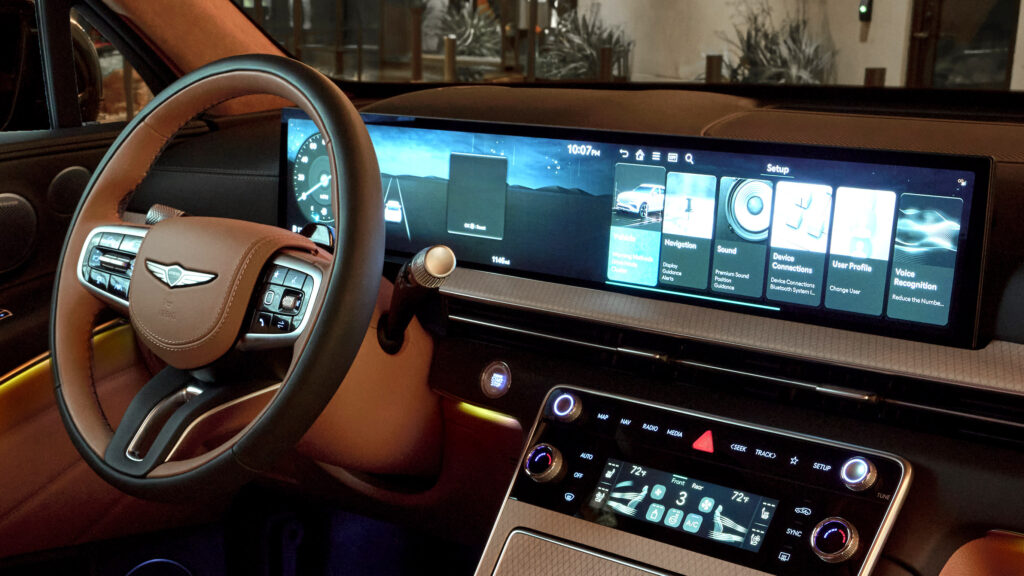
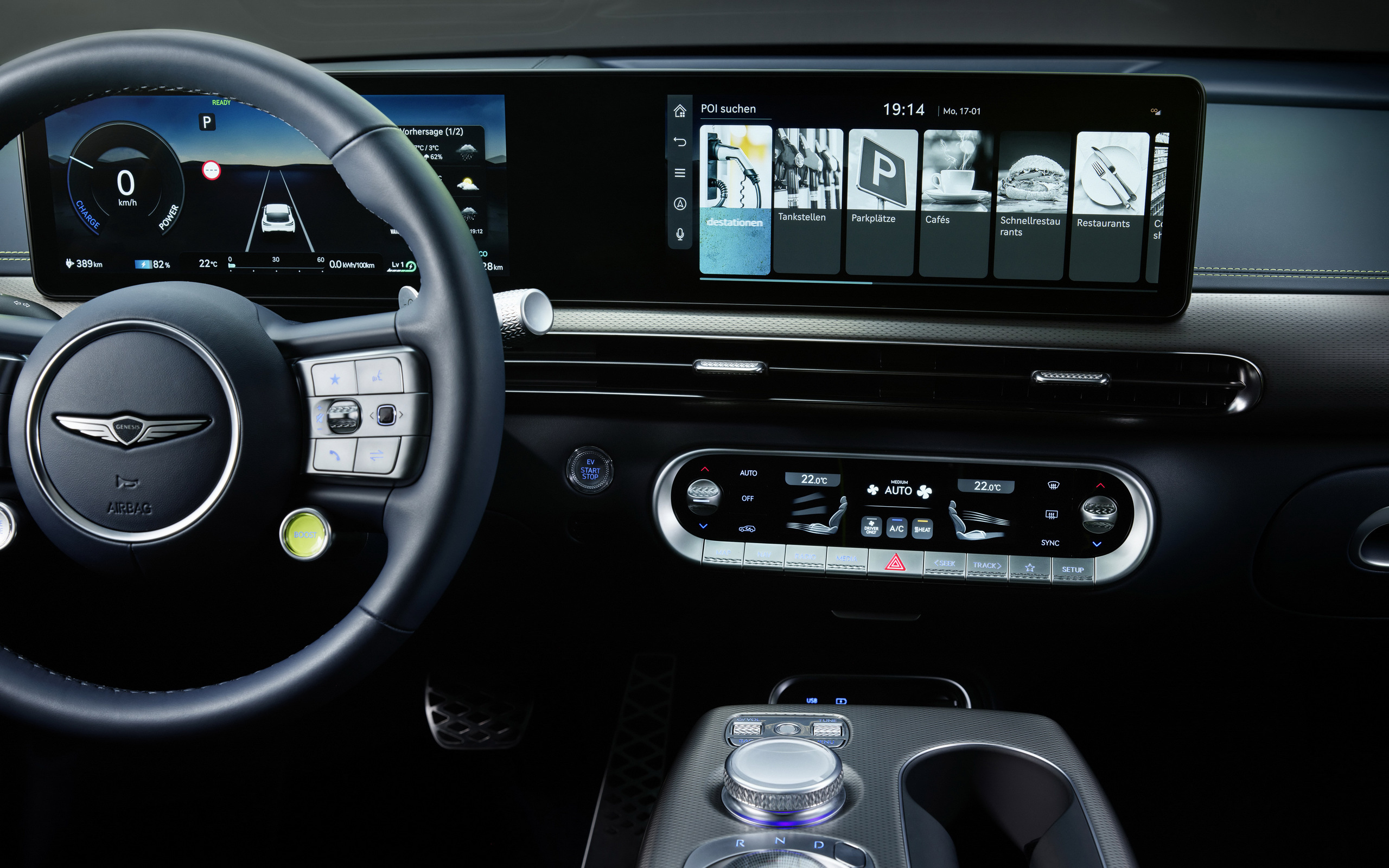
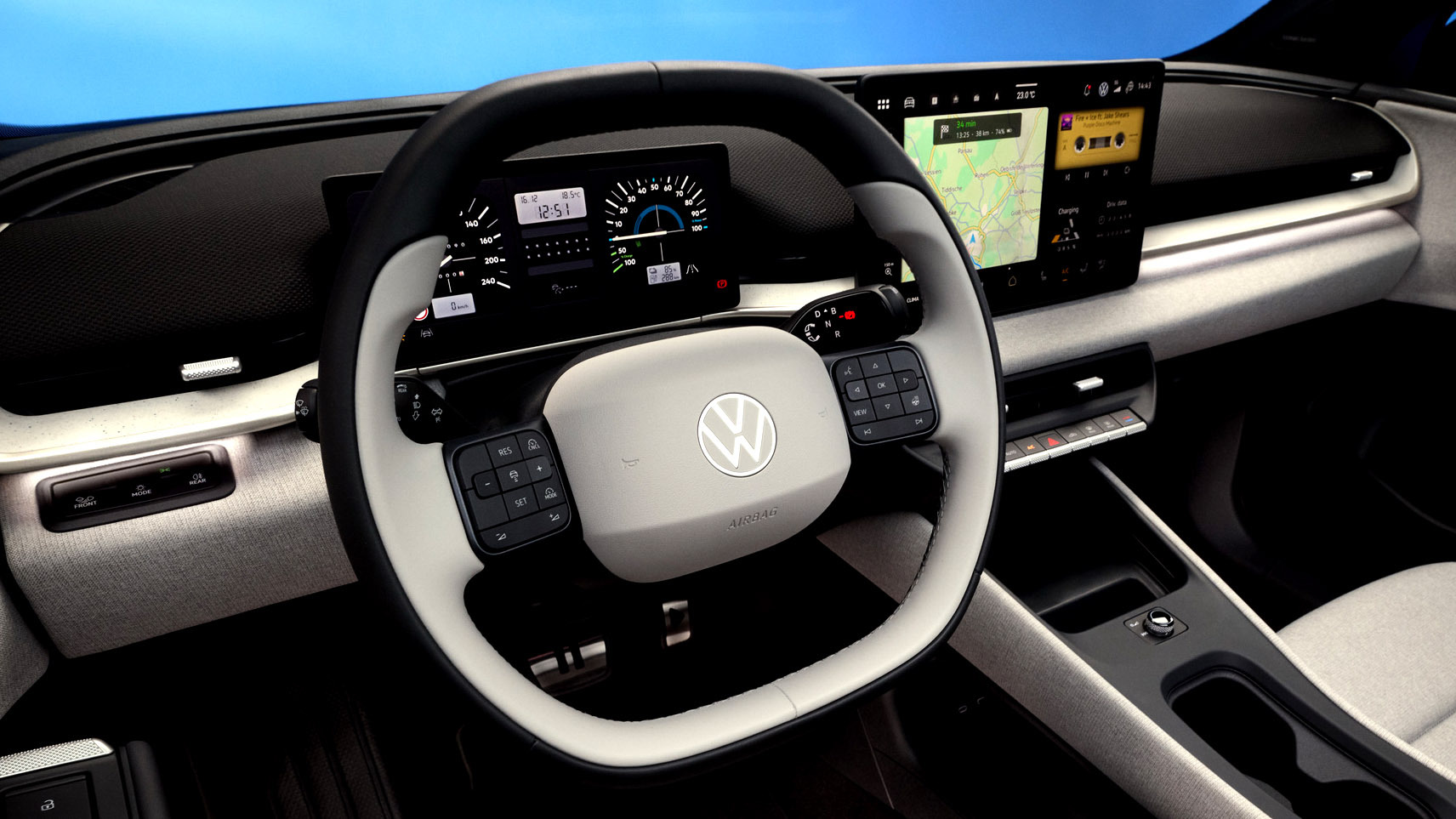
Nearly 84,000 Genesis vehicles have an instrument failure issue.
Affected screens may suddenly reboot or briefly stop working.
The update addressing the issue is expected by early March.
Genesis just issued a new recall covering nearly 84,000 vehicles, but there’s no need to worry about misbehaving driver aids, parking outside, or a luxury SUV that might roll away on its own. Instead, owners are being told to disable their high-definition radio.
No, not because it might advertise another car brand, but because it can shut off the entire screen altogether while the car is in motion.
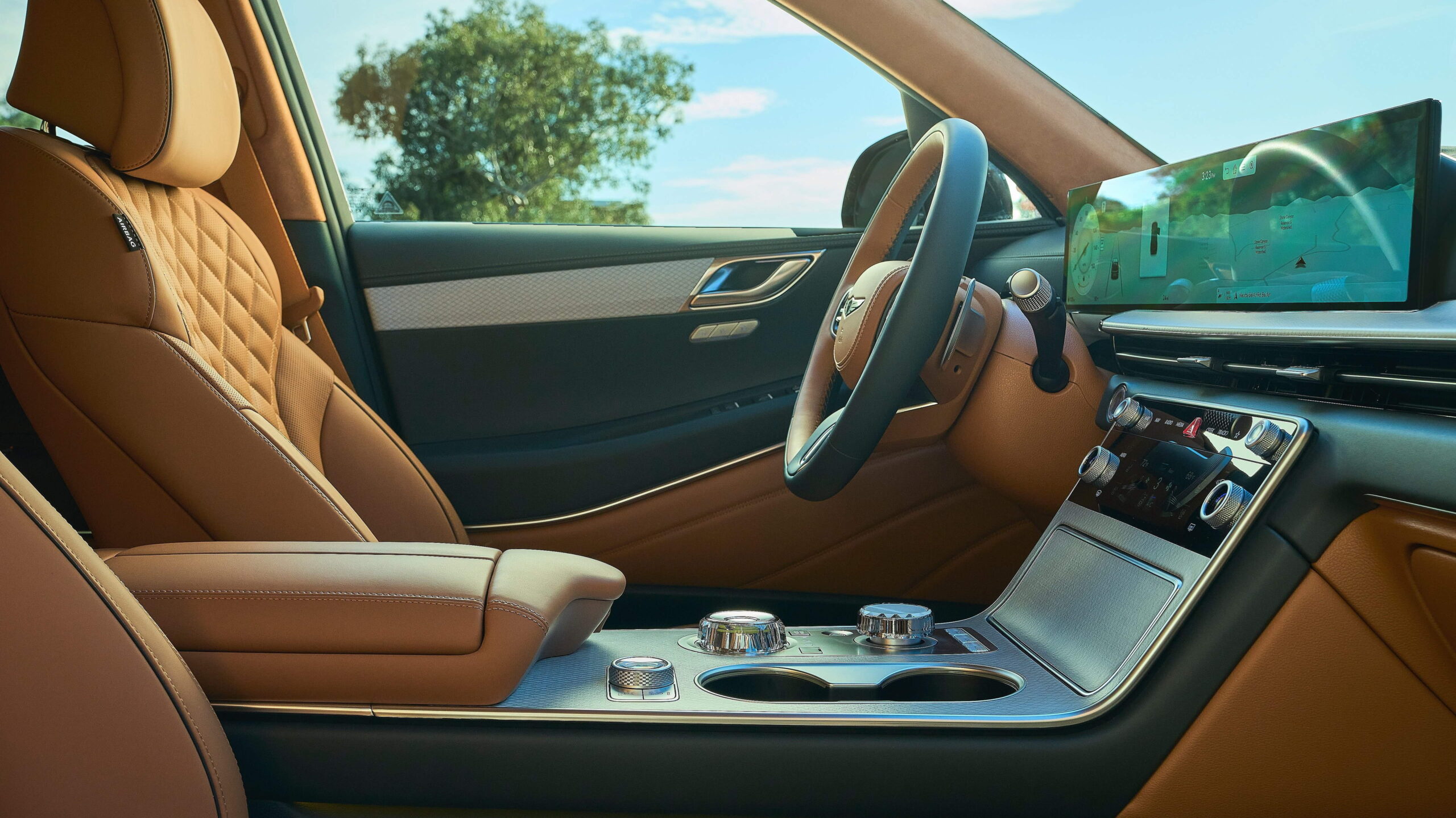
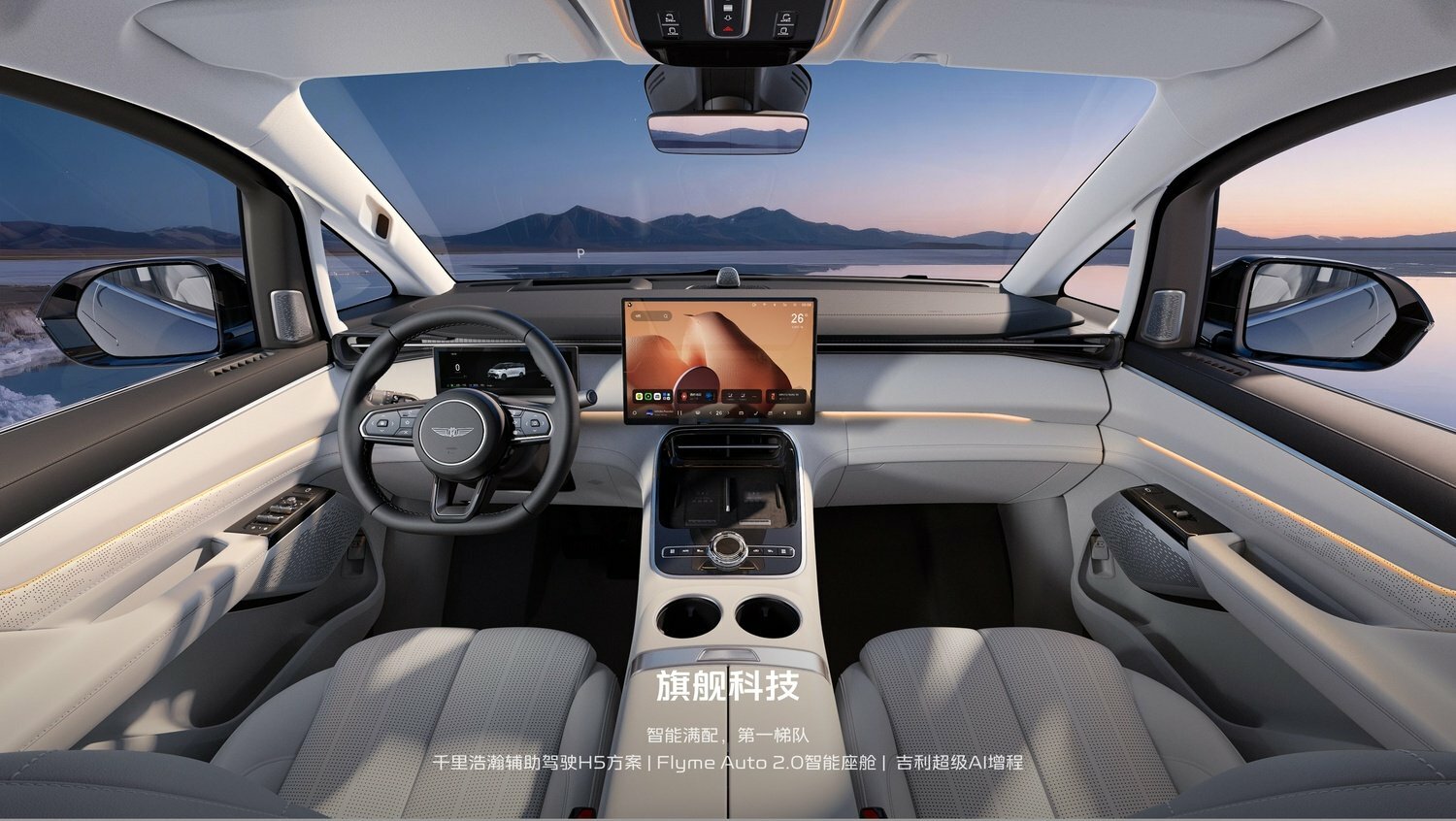
According to the National Highway Traffic Safety Administration (NHTSA), Genesis is recalling a wide range of 2025 and 2026 model-year sedans and SUVs after discovering that their digital instrument clusters can intermittently reboot and go blank.
When that happens, drivers may lose access to critical information such as vehicle speed, warning alerts, and fuel or battery levels for up to 10 seconds at a time.
Which Models Are Affected?
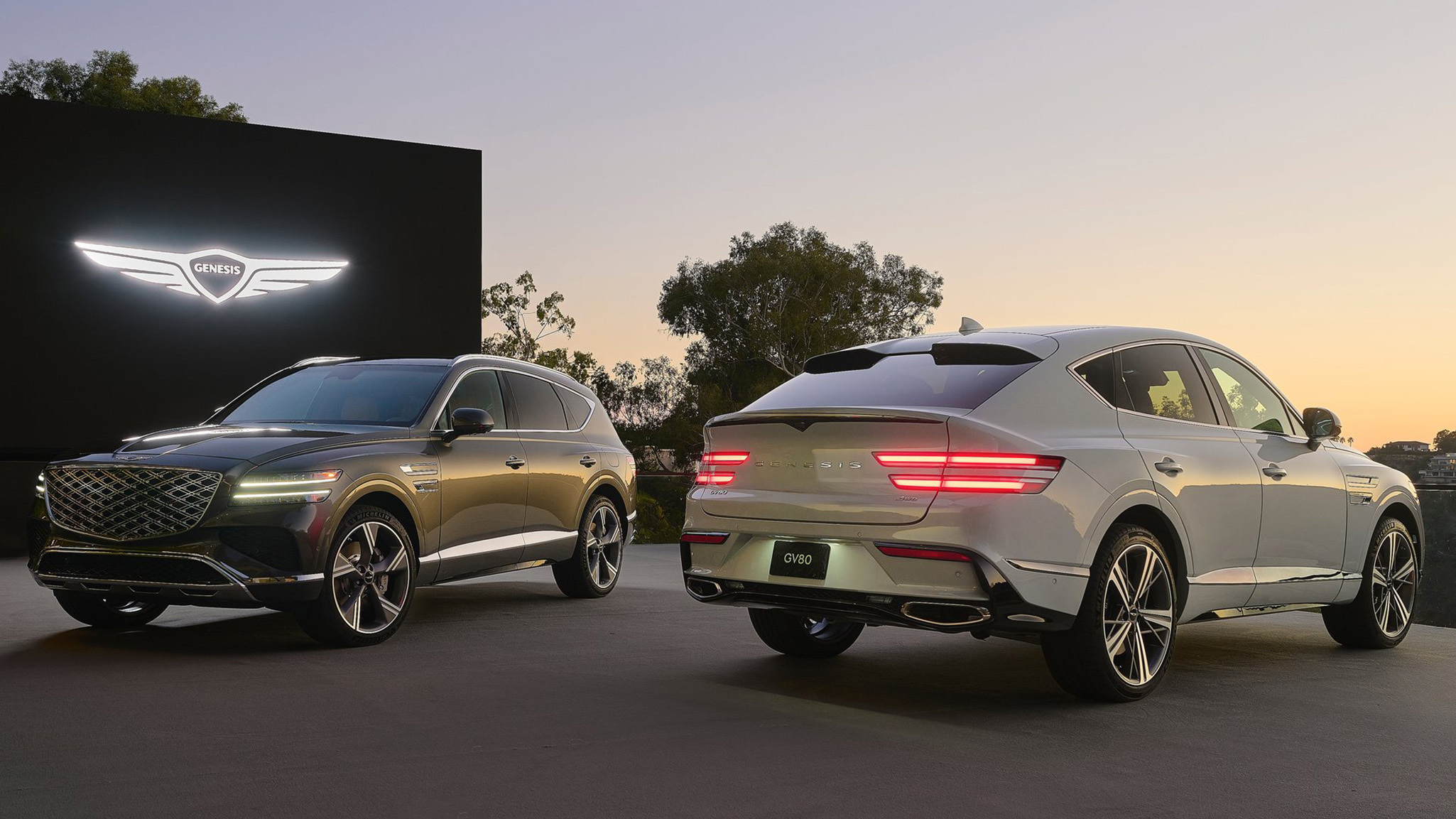
The recall covers six different Genesis models, totaling 83,877 vehicles in the U.S. These include the 2025–2026 G80, the 2026 G80 Electrified, the 2026 GV60, the 2026 GV70 and GV70 Electrified, and the 2025–2026 GV80. While recalls from Hyundai Motor Group often span multiple brands, this issue appears to be limited strictly to Genesis products.
The heart of the issue involves a software logic error in the vehicle’s head unit and integrated display system. Both HD and analog radio data are being written to the same memory location due to overlapping software routines.
Under certain conditions, that overlap can trigger a data overwrite error, causing the system to reboot and temporarily cut the display output to both the instrument cluster and infotainment screen.
Hyundai says it has received 237 reports related to the issue between late September 2024 and early January 2026, but no crashes, injuries, or fatalities have been linked to the problem so far.
A permanent software fix is expected by mid-March. Owners will be able to visit a Genesis dealer for an update, or download it over the air if their vehicle supports OTA updates. In the meantime, Genesis recommends that affected drivers disable the HD radio feature while on the road. That’s right. Back to FM and AM folks, at least for now.
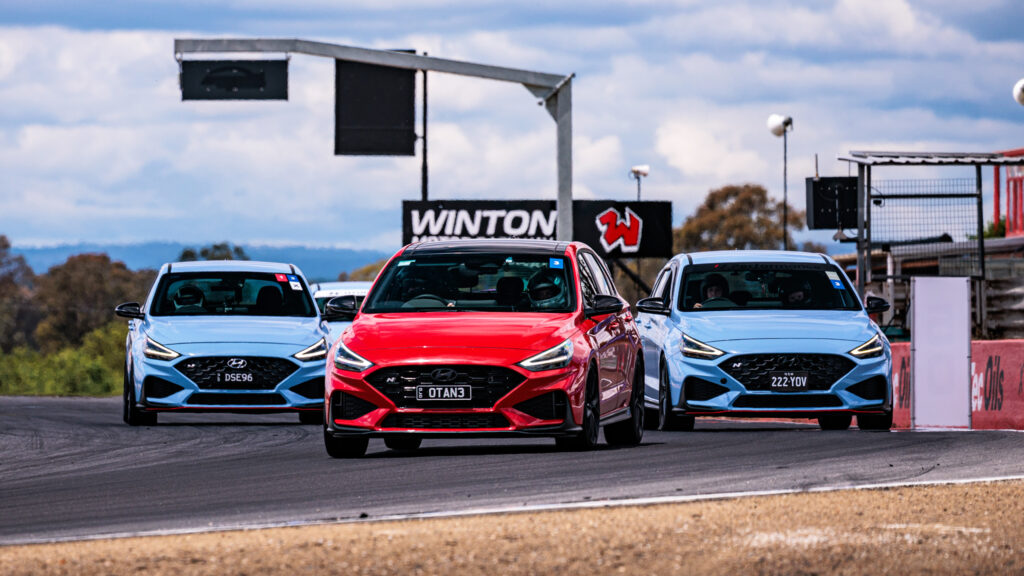
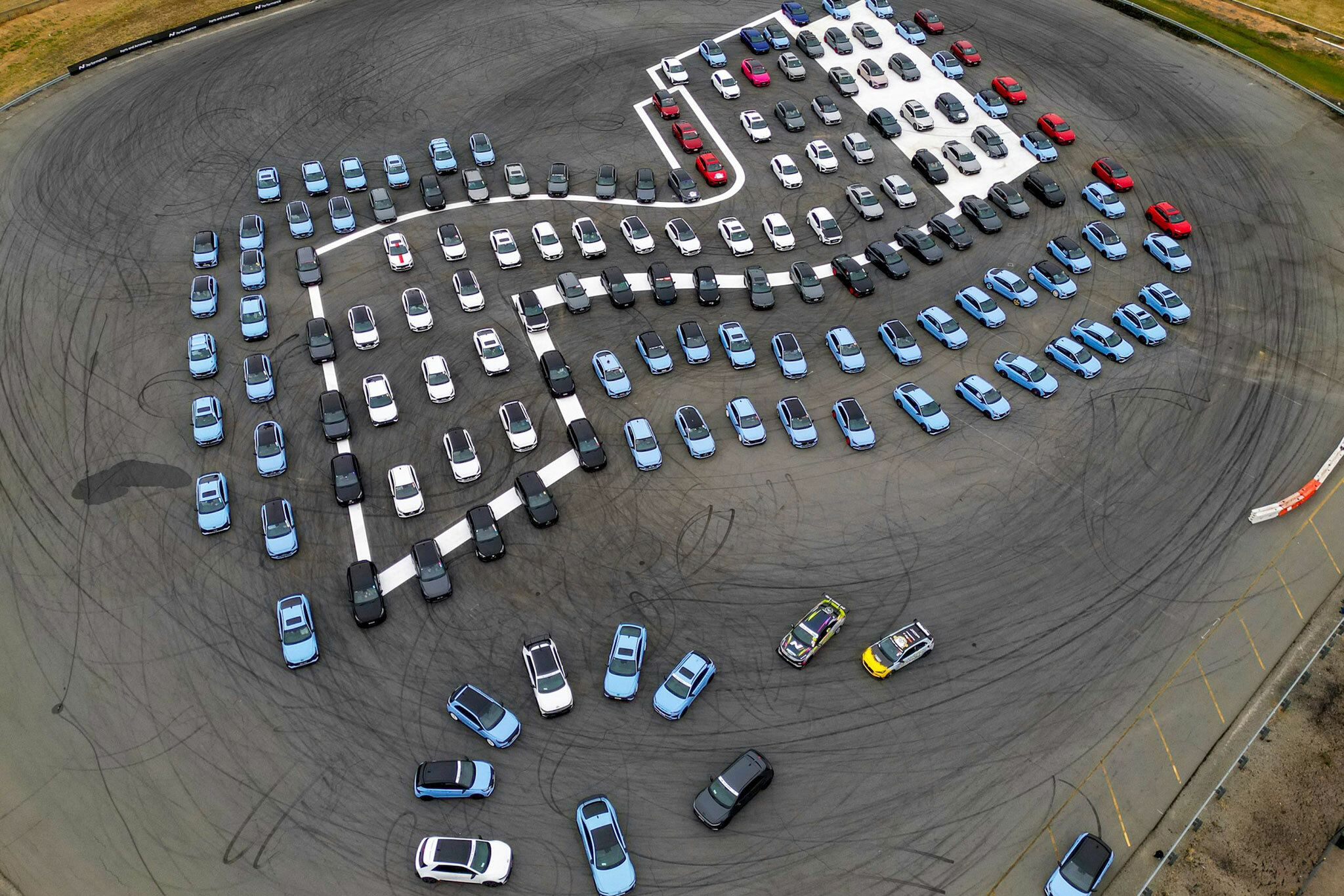
Hyundai’s N Festival in Australia drew more than 350 cars.
Entry was AU$60, including track time and instructor support.
Non-N owners can attend through the new Nvy Track Sessions.
Building a loyal enthusiast following from the ground up isn’t something carmakers typically pull off overnight. For Hyundai, a brand that wasn’t exactly on anyone’s radar for fun, driver-focused cars to begin with, establishing its N performance sub-brand was not just about creating engaging machines. It was about cultivating a culture, and that’s a far more elusive achievement.
However, thanks to a host of owner-focused events, Hyundai Australia has done just that. There are now thousands of tightly-knit N owners across the country, helping the company’s creations become among the nation’s best-selling hot hatches. Not only that, but cars like the i20 N and i30 N have become genuine benchmarks in their respective segments.
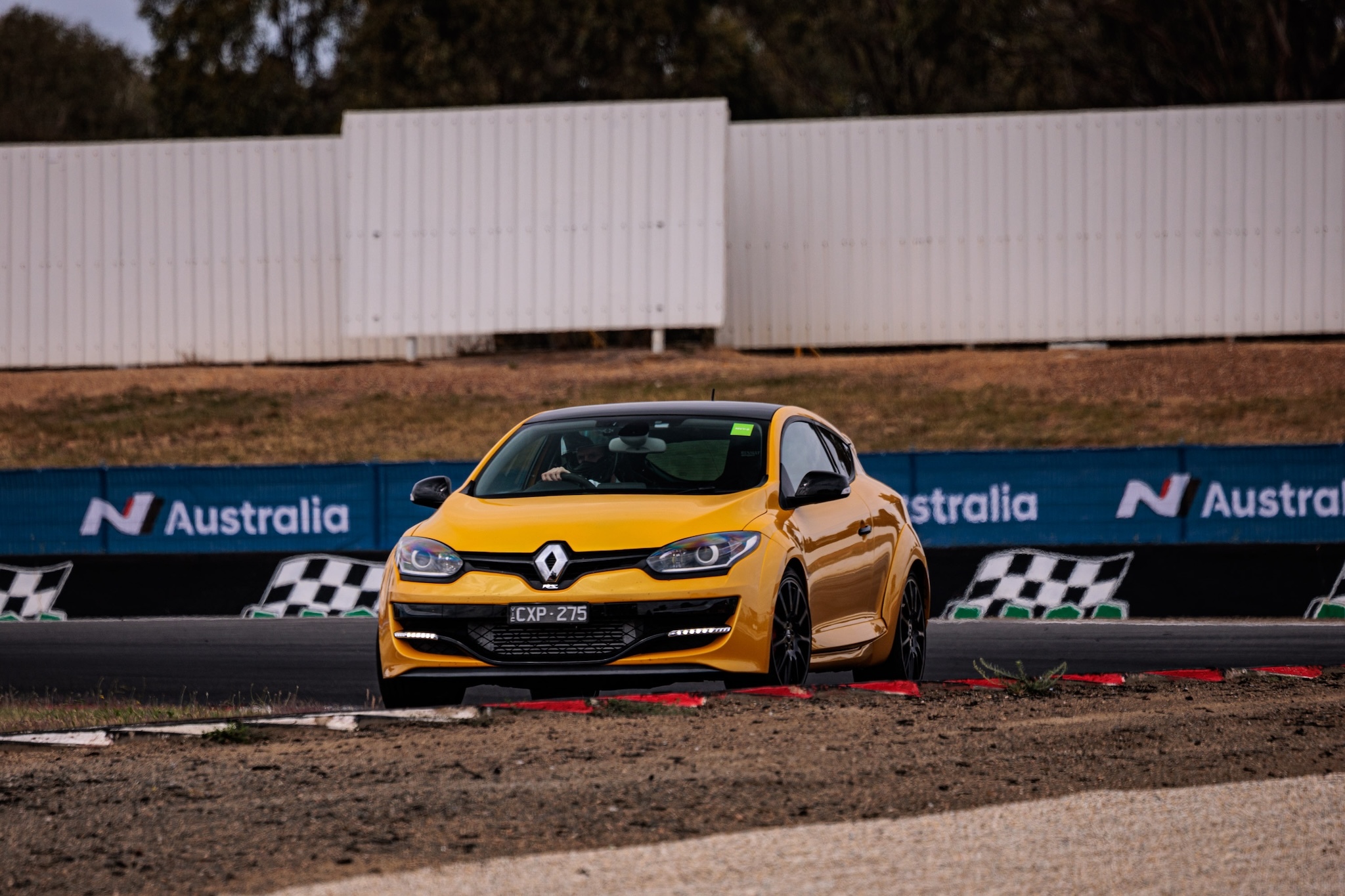
In late November, the annual N Festival returned for its seventh iteration, but with a twist. Not only was the event open to N owners, but also to a select number of owners from other brands, so we decided to join in with a bright yellow Renault.
Nvy
Hyundai N Australia
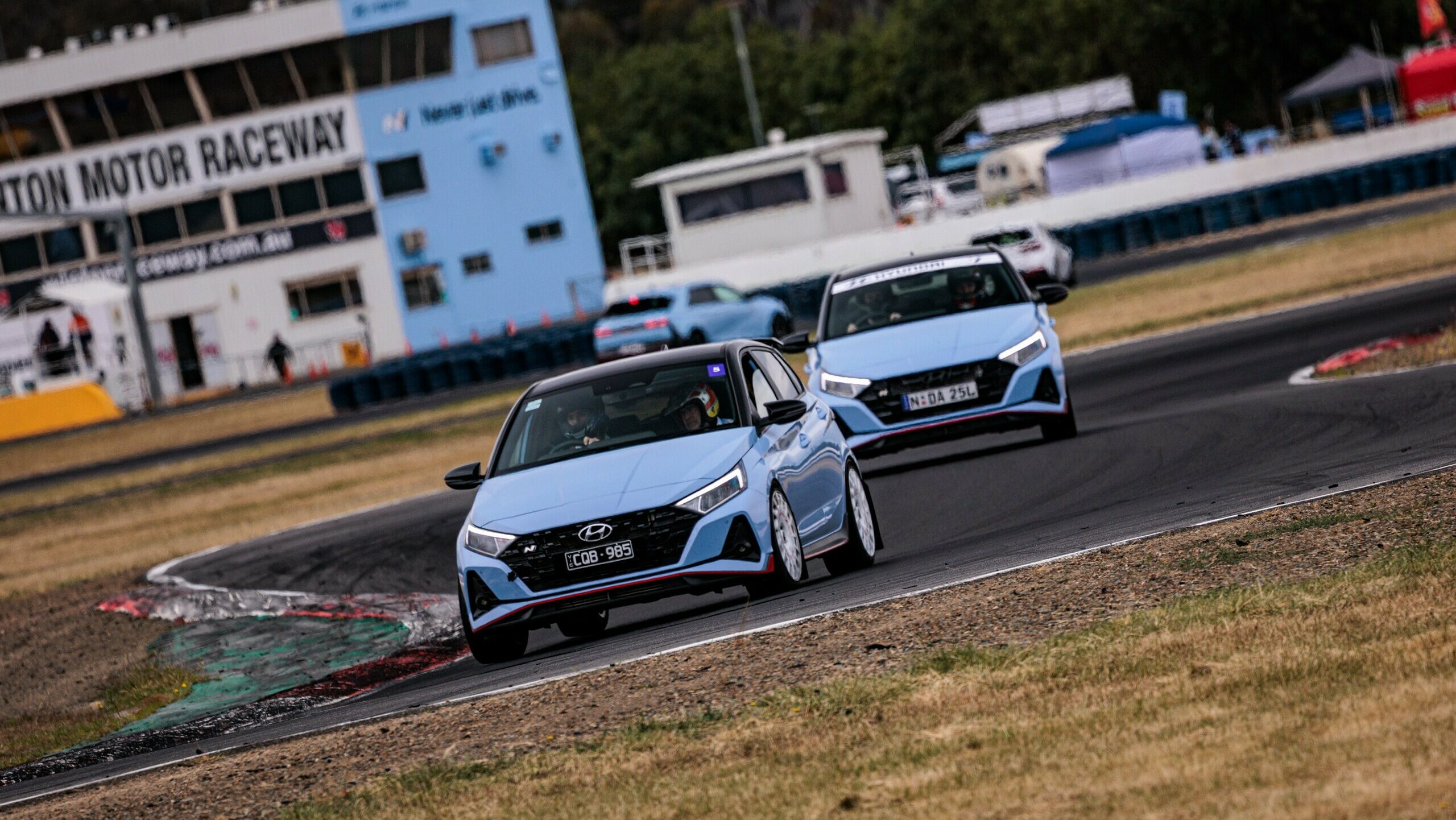
The 2025 event was held at Winton Raceway, roughly two hours north of Melbourne. As interest in the N Festival has increased in recent years, it’s no longer just an event run over Saturday and Sunday, but for the first time, it was extended to a three-day event. For eager owners wanting to get onto the track, there’s no better event.
More than 350 cars attended in December. To join in, all that was required was a AU$60 ($40) entrance fee. In return, owners get ample time on the track, a gift bag of N merchandise, and tutelage from experienced driving instructors. This makes it an absolute bargain, particularly since regular track days usually start at upwards of AU$300 ($200).
New to the 2025 N Festival were the ‘Nvy Track Sessions.’ These sessions were open to 20 non-N car owners each of the three days. To participate, you needed to receive an invitation from an N owner and to pay the same fee. I managed to secure a spot for my Renault Megane RS275.
On Friday, Saturday, and Sunday, participants were split into six groups of 20 cars, with one group for the non-N cars. Each group had five 15-minute sessions on the track, totaling 75 minutes across the day. For pretty much anyone not named Max Verstappen, that’s more than enough track time.
While I’ve done plenty of track days in the past, this was the first one in my Renault. The chassis and brakes are standard (for now…), although I have had it fitted with sticky Continental SportContact7 road tires, and the engine modified with a new intake, blow-off valve, intercooler, downpipe, and tune. It’s good for 219 kW (294 hp) and 445 Nm (328 lb-ft) of torque at the wheels, a healthy amount for the 2.0-liter turbo.
Hyundai N Australia
The temperatures were hot, pushing over 30° C (86° F) throughout my sessions, but my little French hot hatch performed flawlessly. There were some impressive cars in my sessions, like a new G80 BMW M3, an Audi RS5, a Porsche Cayman GT4, modified Toyota Supras, and a tuned Toyota GR Yaris, but I had no issue reeling each of them in and overtaking.
Just like the i30 N is considered among the best hot hatches on the market, the third-generation Megane RS275 was held in similarly high regard when it was launched. Honed on the Nurburgring, it felt right at home on the circuit, providing immense levels of grip, combined with superb stability under braking and great straight-line pace. Admittedly, my tires now look a little worse for wear.
Ns On The Track
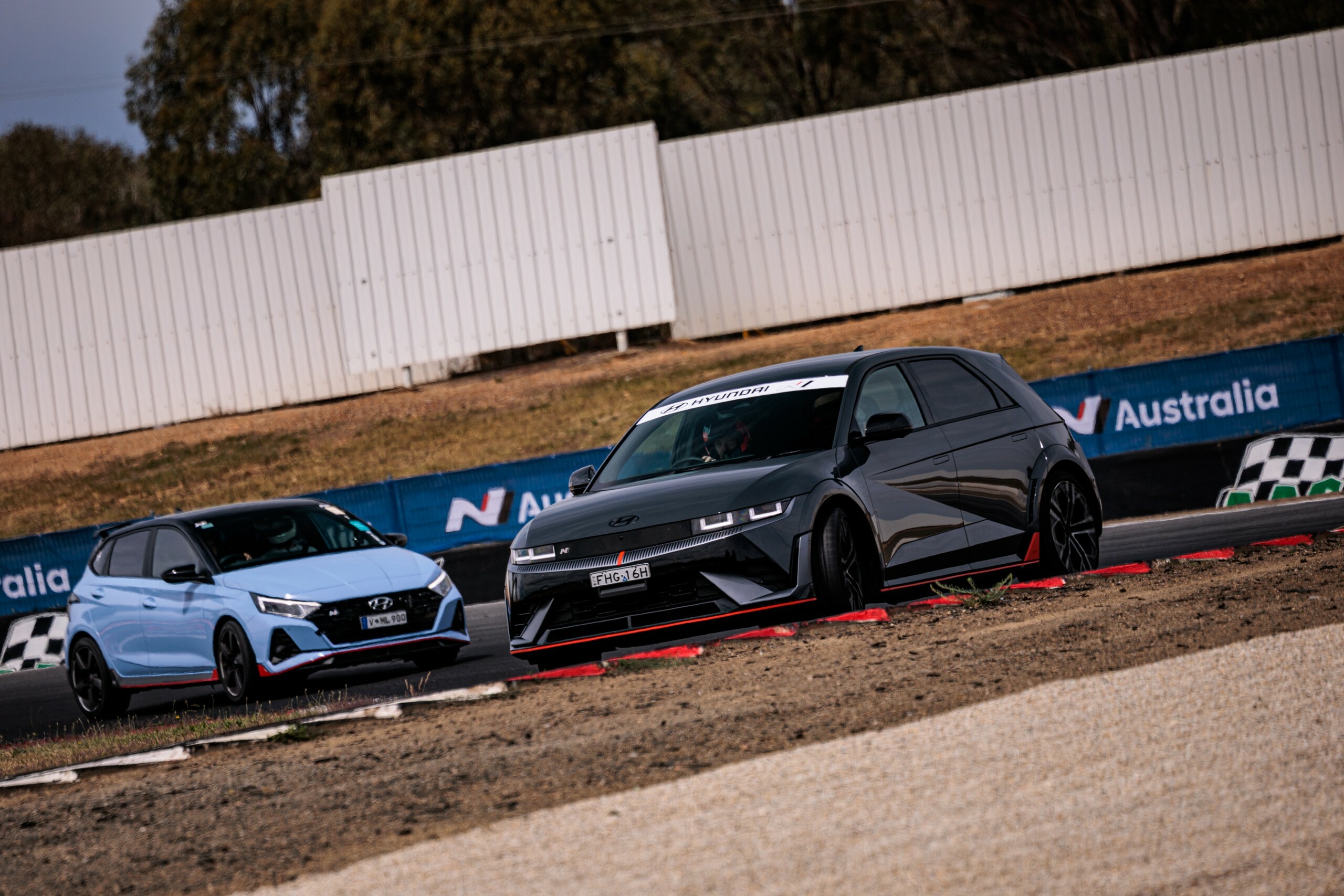
Of course, it was the Hyundais that were the real stars of the day. Hyundai Australia brought along a slew of press cars for journalists to test out. I managed to snag some seat time in each of the company’s current models, including the i20 N, i30 N hatch, i30 N Sedan, and the potent Ioniq 5 N.
Winton Raceway is quite a tight, short track, perfect for hot hatches like those from Hyundai rather than high-horsepower monsters. The pint-sized i20 N proved to be the perfect companion for the circuit.
While the i20 N only has a 1.6-liter turbocharged four-cylinder and is down more than 50 kW (67 hp) over the i30 N, it had no issue sticking with its bigger brothers on the circuit. It feels incredibly nimble and responsive, particularly around the circuit’s sweeping bends and tighter corners, often lifting one of its rear wheels as the front tires stick mercilessly to the track.
As standard, the i20 N comes with Pirelli P Zero NH tires, and they perform brilliantly on the track. As the day progressed, they did start to lose some grip, but importantly, they remained predictable despite the wear. The only issue I encountered was difficulties downshifting from 3rd to 2nd with the auto-rev match function enabled, something I also experienced at the N Festival back in 2022.
Extra Power, Extra Thrills
For those seeking superb on-track handling, combined with on-road comfort, and great straight-line speed, the i30 N hatch and i30 N Sedan remain among the best options on the market. While they may share a name, the i30 N Sedan has a longer wheelbase than the hatch and is based on a different chassis. In most of the world, it’s known as the Elantra.
In a straight line, the i30 N hatch is a little sprightlier. While both cars have the same 2.0-liter turbocharged four-cylinder and are advertised with the same 206 kW (276 hp) and 392 Nm (289 lb-ft), the hatch’s boost pressure peaks at 17 psi, whereas it usually sits around 14 psi in the Sedan. This is because the sedan has Hyundai’s controversial ‘Octane Learning Mode’.
To enable the full 17 psi, you’ll have to either drive in 8th gear between 109-159 km/h (68 -99 mph) for 5 minutes or more, or drive for 5 minutes or more in 44th or 5th gear at 40-70% throttle between 40-120 km/h (25 -75 mph). Obviously, this isn’t achievable on a track. Many owners I spoke to have had their cars tuned to unlock full boost without having to do this procedure.
The duo also feels quite different through the turns. Both stick extraordinarily well, providing enough grip to warp your face. However, the hatch is noticeably stiffer and feels a little lighter. By comparison, the i30 N Sedan feels more stable, owing to the longer wheelbase, and is easier to find the limits in. On the track, we prefer the hatch, but on the road, it’s the Sedan that stands out.
What the Ioniq 5 N Does Best
We also had the opportunity to do a few hot laps in Hyundai’s potent Ioniq 5 N. This is the performance car that has redefined what we thought was possible for an EV. Not only is it extraordinarily quick, but it’s also loads of fun to drive. It’s no surprise that Porsche and Lamborghini have benchmarked their EVs against it.
Obviously, the dual-motor powertrain makes the Ioniq 5 very quick in a straight line. However, because Winton’s straights are quite short, it doesn’t get much room to stretch its legs. Thankfully, it shines in other ways, particularly in its handling dynamics.
Thanks to some engineering trickery, it’s possible to shift the amount of power sent to the front and rear wheels. As such, the Ioniq 5 N can be driven effectively as a front-wheel-drive or rear-wheel-drive car. This means it is inherently more configurable and playful than Hyundai’s other N products. The downside? It’s electric, meaning it’s not so practical for track use unless a circuit has a DC fast charger.
Track Day Antics
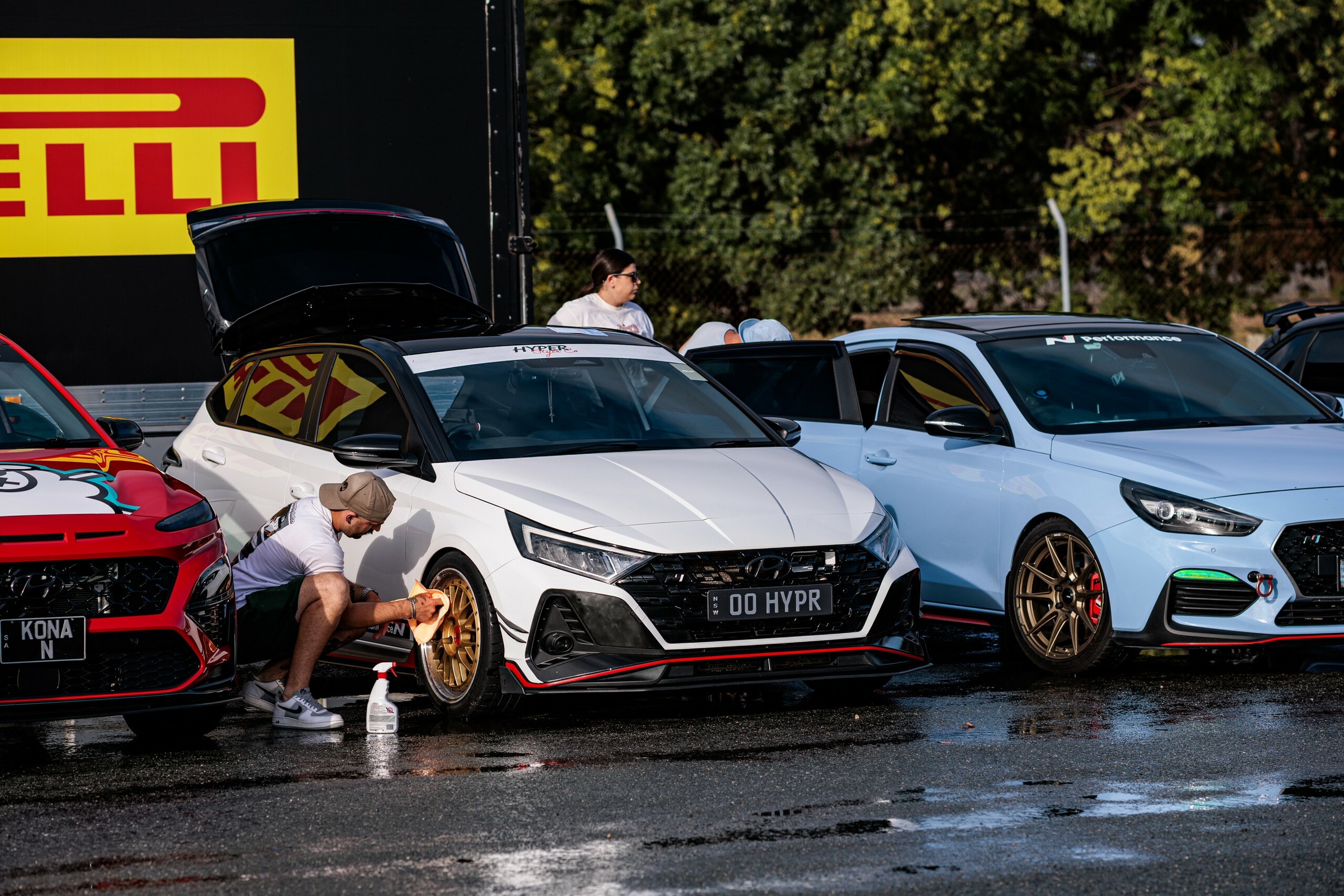
The 2025 N Festival didn’t just include dozens of track sessions. This year, owners were also able to participate in a series of head-to-head rolling races to see who owns the quicker car in a straight line. There was also a Show’N Shine and an organized drive through some of the circuit’s neighboring country roads.
Australia’s N Festival has established itself as one of the best events on Australia’s track day calendar, and it’s easy to see why. It’s affordable, well organized, and welcoming. I’m sure it convinced some non-N owners to call up their local Hyundai dealership and place an order. As for me, used Ns remain out of my price range, so I’ll be keeping my French hot hatch.
Kia’s Meta Turismo concept mixes retro lines with EV hardware.
A production version could ride on Hyundai’s E-GMP platform.
Dual motors could deliver over 650 hp and sub-3s acceleration.
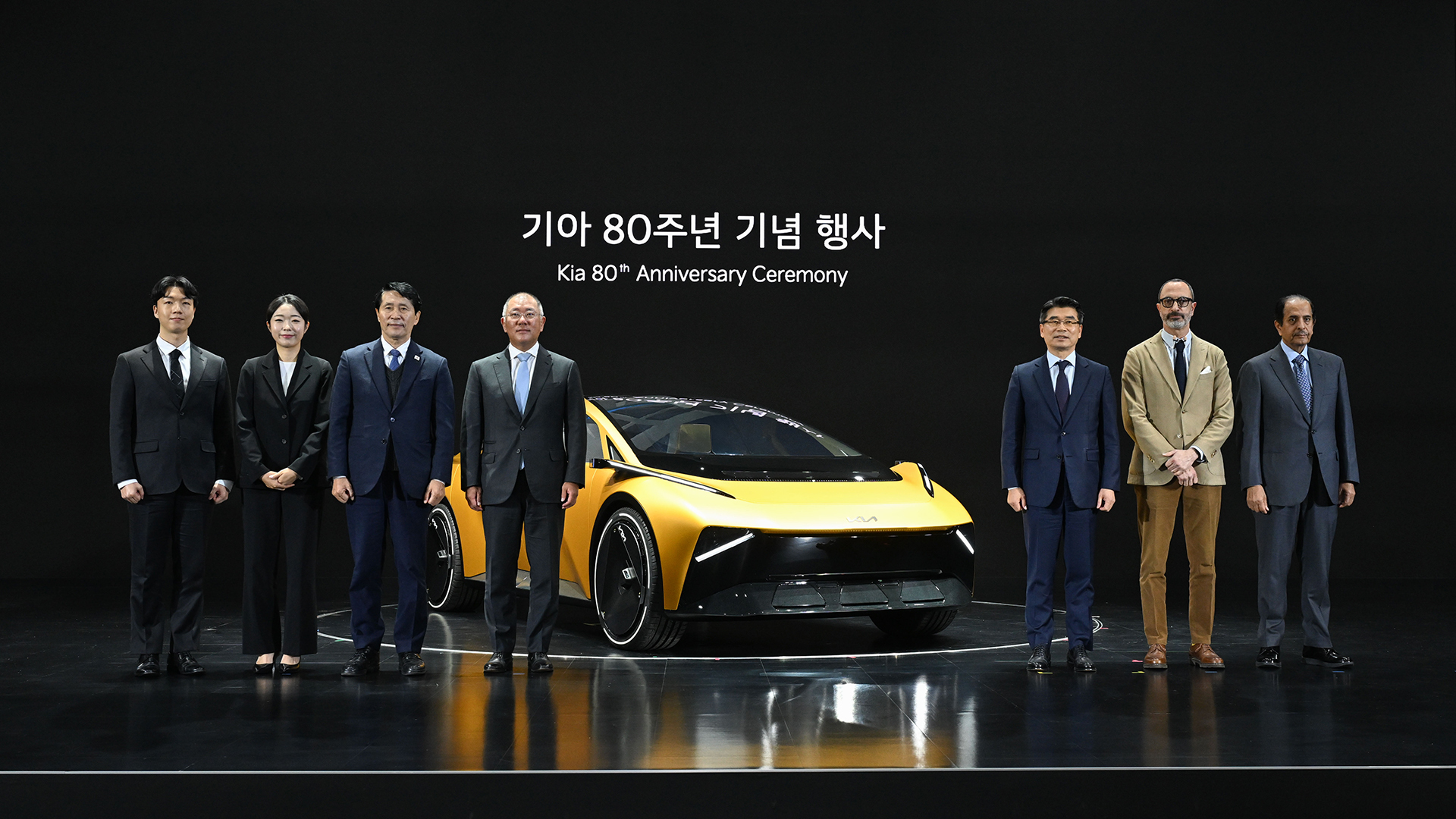
Kia’s 80th anniversary Meta Turismo GT concept wasn’t just a nostalgic design exercise; it was an absolute mic-drop moment. With its futuristic, yet 1960s concept-inspired lines and EV underpinnings, it offers a tantalizing glimpse at where Kia’s performance ambitions could be heading.
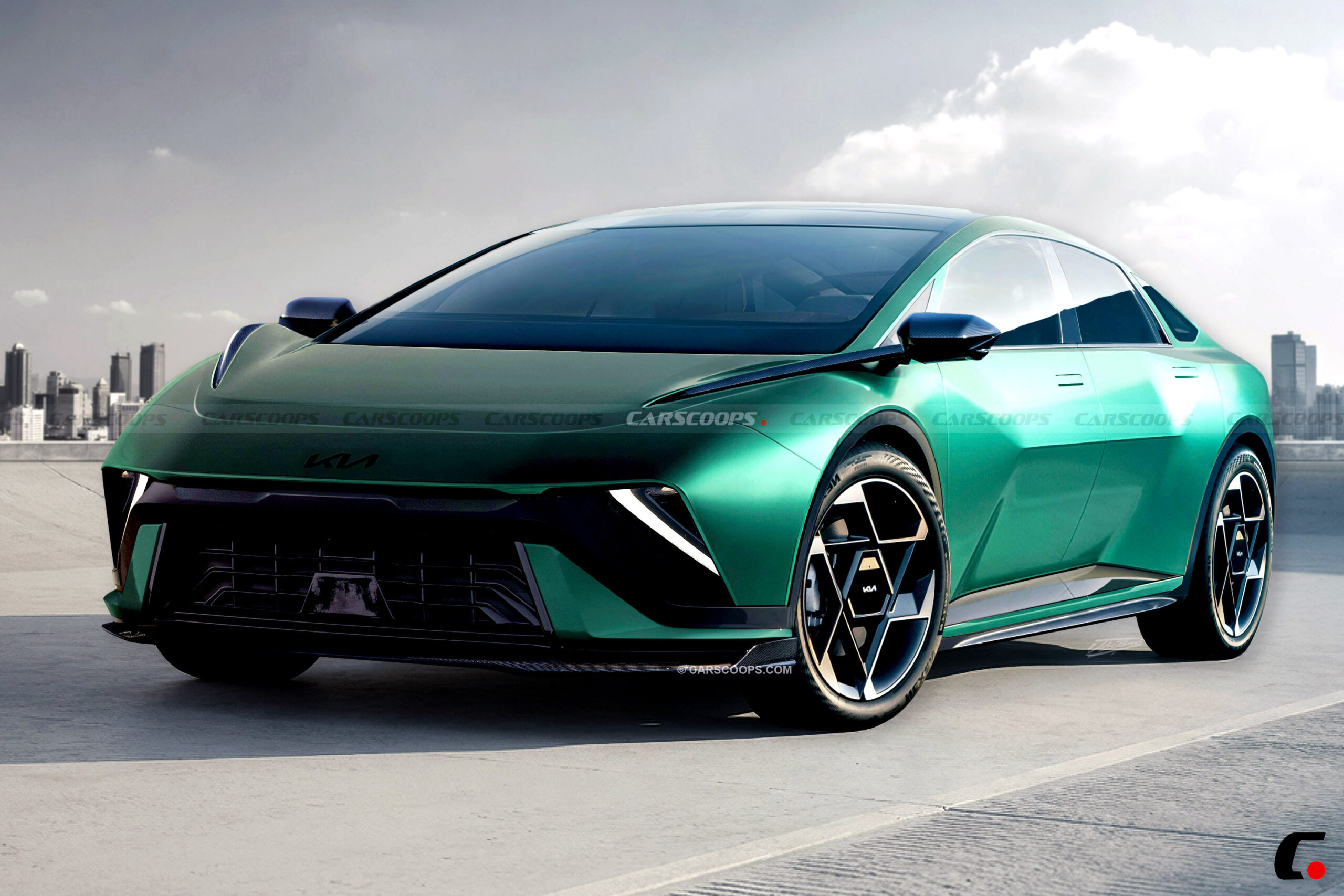
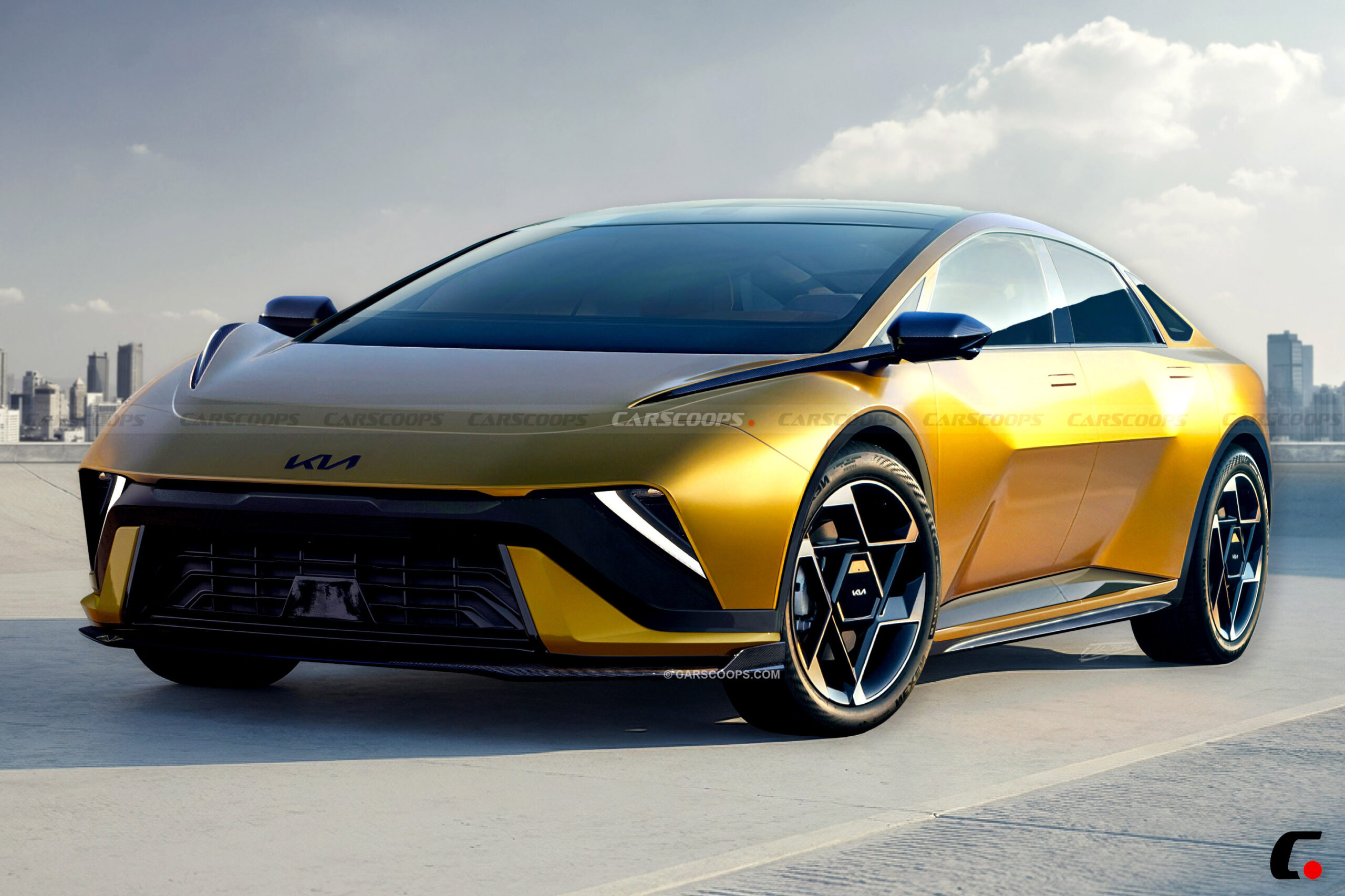
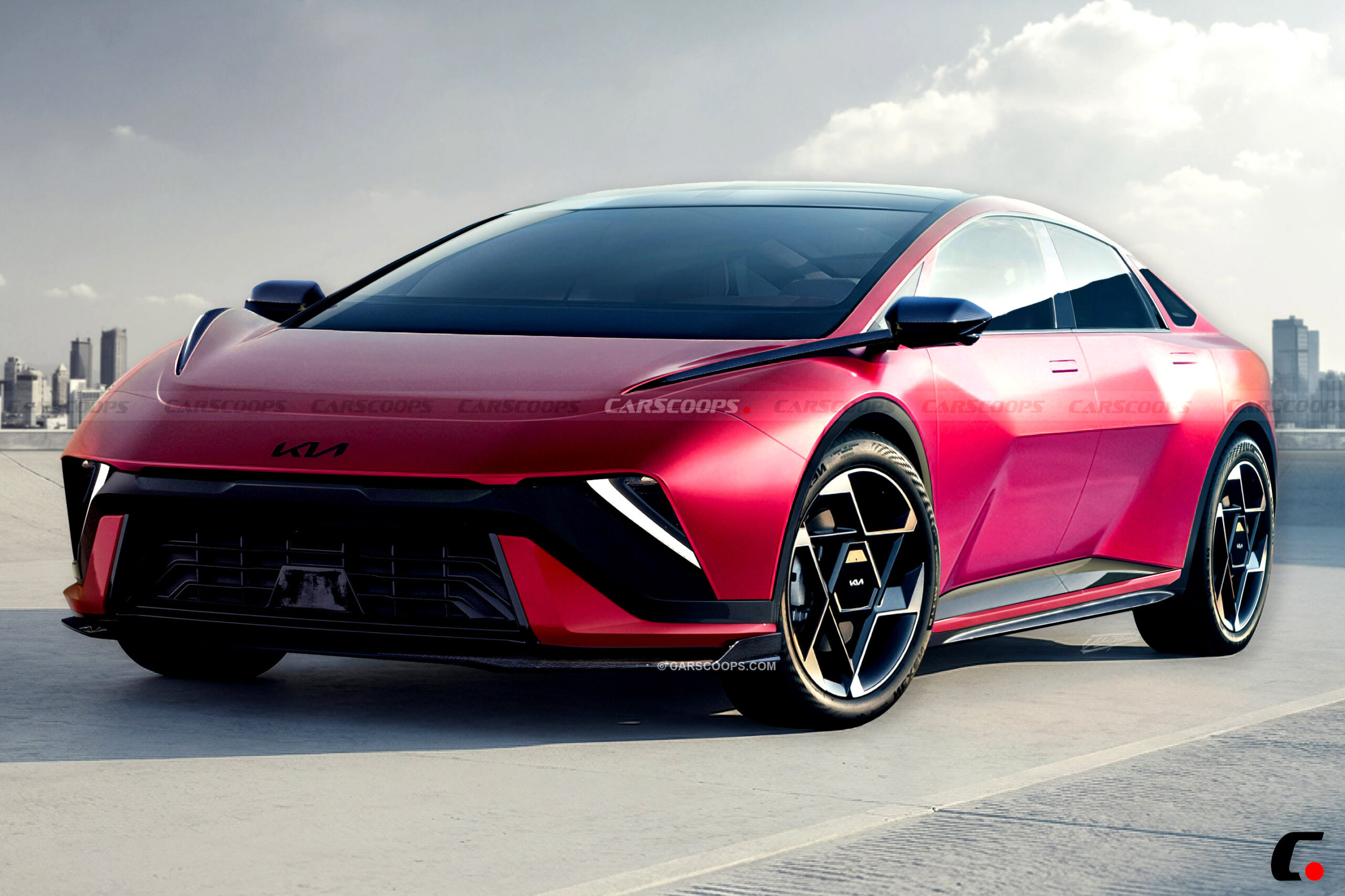
That got us thinking. Now that the Stinger has officially bowed out, and with Kia in need of a new halo model, what would a production-ready Meta Turismo actually look like? Here’s our take imagined as what could be called the EV8 GT.
Soft forms clashing with angular geometry: that’s how Kia describes its ‘Opposites Unite’ design language. In this imagined production model, the concept evolves into something more grounded yet still sharp, mixing vintage concept wedge proportions from the 1960s with flashes of Lamborghini aggression.
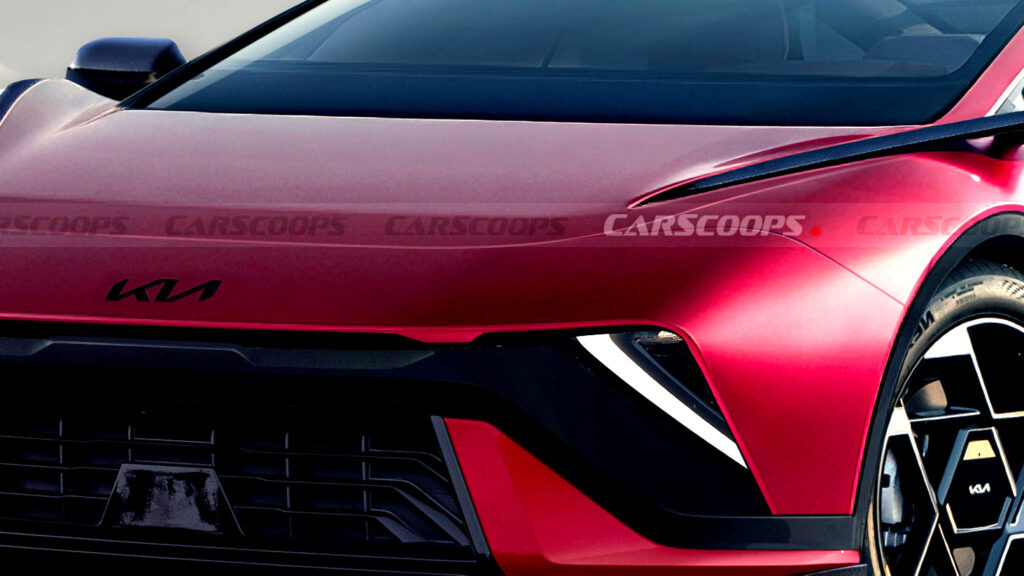
Up front, the Meta concept’s face has been reworked to better align with Kia’s current design language, featuring a low-set tiger nose and an active lattice grille. Carbon fibre is used generously across the front splitter, side skirts, and hood strakes, which flow cleanly into the wing mirrors.
Viewed from the side, our EV8 GT study is defined by a fastback roofline and cab-forward stance. While the angular side surfacing remains the same, we’ve added flush door handles and traditional pillars. Around the back, the rear is more restrained with halo-effect LED light bar, and a functional diffuser.
The Inside Take
The Vision Meta Turismo concept’s interior.
The cabin of the Meta Turismo concept is decidedly dramatic, but for production, it would be dialed back without losing its focus on the driver. Key elements like an augmented reality head-up display and smart glass would remain, while the overall layout would feel more grounded.
We’re also anticipating deeper AI integration, including conversational voice interfaces and tools like ChatGPT.
Hyundai Motor Group’s tried-and-true E-GMP architecture would be the obvious choice as a platform, as it offers 800-volt capability and Vehicle-to-Load (V2L) and Vehicle-to-Grid (V2G) functionality. Handling-wise, the GT sports adaptive damping, torque vectoring, and rear-biased all-wheel drive to balance ride comfort with canyon-carving prowess.
Kia’s dual-motor setups are capable of 650 horsepower (478 kW) and 568 lb-ft of torque. We expect the EV8 GT to surpass this, with a 0-60 mph performance closing in on the 3-second mark. Like Hyundai Group’s other performance EVs, there will be simulated gear shifting and synthetic noise generation to accompany its rapid pace.
In a perfect world, solid-state batteries would make an appearance, yet commercial reality for this chemistry still appears a long way off. A safer bet would be a 100 kWh Li-Ion Phosphate (LFP) battery pack good for an WLTP range of over 435 miles (700 km).
BMW could offer EV and gas versions of the next 4-Series.
Shared 3-Series development keeps cost and risk lower.
New V8 and V12 engines meet Euro 7 with minor updates.
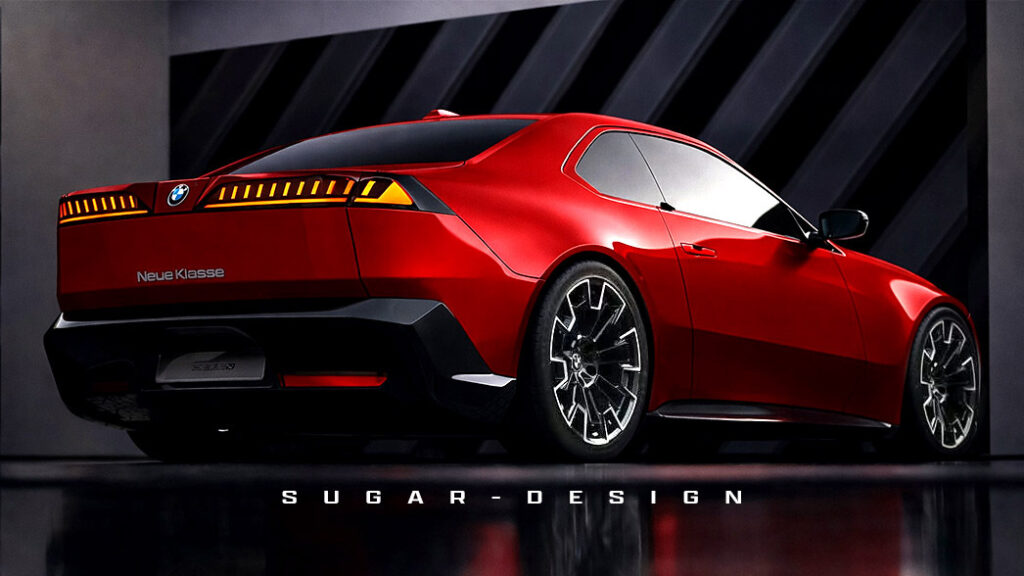
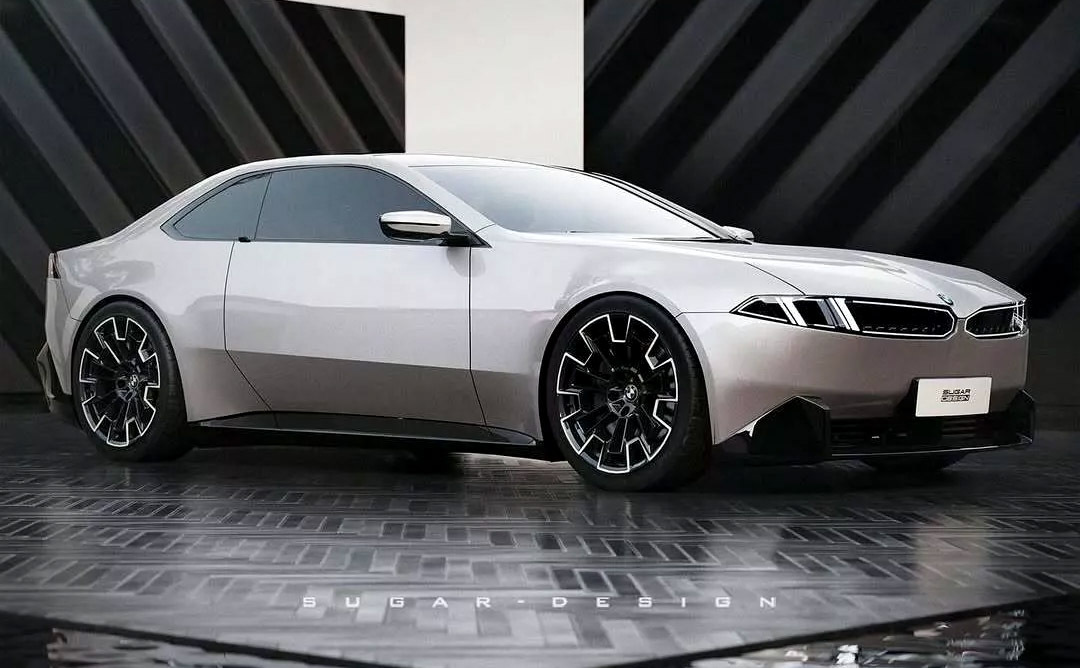
Despite the shrinking demand for coupes, BMW isn’t backing away from the segment just yet. A third-generation 4-Series is on the way, and it’s not just a box-ticking refresh. The new model looks set to play a bigger role in BMW’s long game, possibly offering both electric and combustion versions, plus a next-gen M4 flagship in the mix.
BMW has been producing the current-generation 4-Series since 2020, offering it in multiple forms including the Gran Coupe and the all-electric i4. The latter has held the distinction of being BMW’s best-selling EV to date, but that role is soon expected to shift to the i3 version of the next-generation 3-Series.
That transition has raised questions about where the 4-Series fits into BMW’s evolving electric and combustion plans.
While recently speaking with Autocar, BMW’s head of engineering and development, Joachim Post, emphasized that the 4-Series remains strategically important. He also pointed out that creating a new generation of the car would be relatively cost-effective, thanks to shared development with the next-gen 3-Series.
Platform Synergies Keep Coupes Alive
“The 4 Series is an important car for us,” he told the magazine. “It’s more sporty, and BMW is a sporty brand which has a clear heritage also on the performance side. It will play an important role also for the future. It’s not [as] expensive [as] making a completely new car and whenever we make a 3 Series or X3, we still think about the 4 Series or X4, to make it with synergies so that a derivative can be easily built out of the base.”
Post pointed to the benefits of what BMW calls “high synergies” between models like the 4-Series, X4, and X6. By leveraging shared components and platforms, BMW can build lower-volume body styles without incurring the full cost of starting from scratch. That gives models like the 4-Series a clearer business case, even in a less crowded coupe market.
If BMW does indeed launch a new 4-Series, it will follow the same path as the next 3-Series. That means we could potentially see both combustion and electric versions, each built on different platforms. The gas-powered model would use an updated version of the familiar CLAR platform, shared with the next-gen 3-Series, while the EV would ride on BMW’s Neue Klasse architecture, the same one underpinning the upcoming i3 and iX3.
Of course, there’s still a chance BMW could commit to just one direction, but for now, it hasn’t made that call publicly.
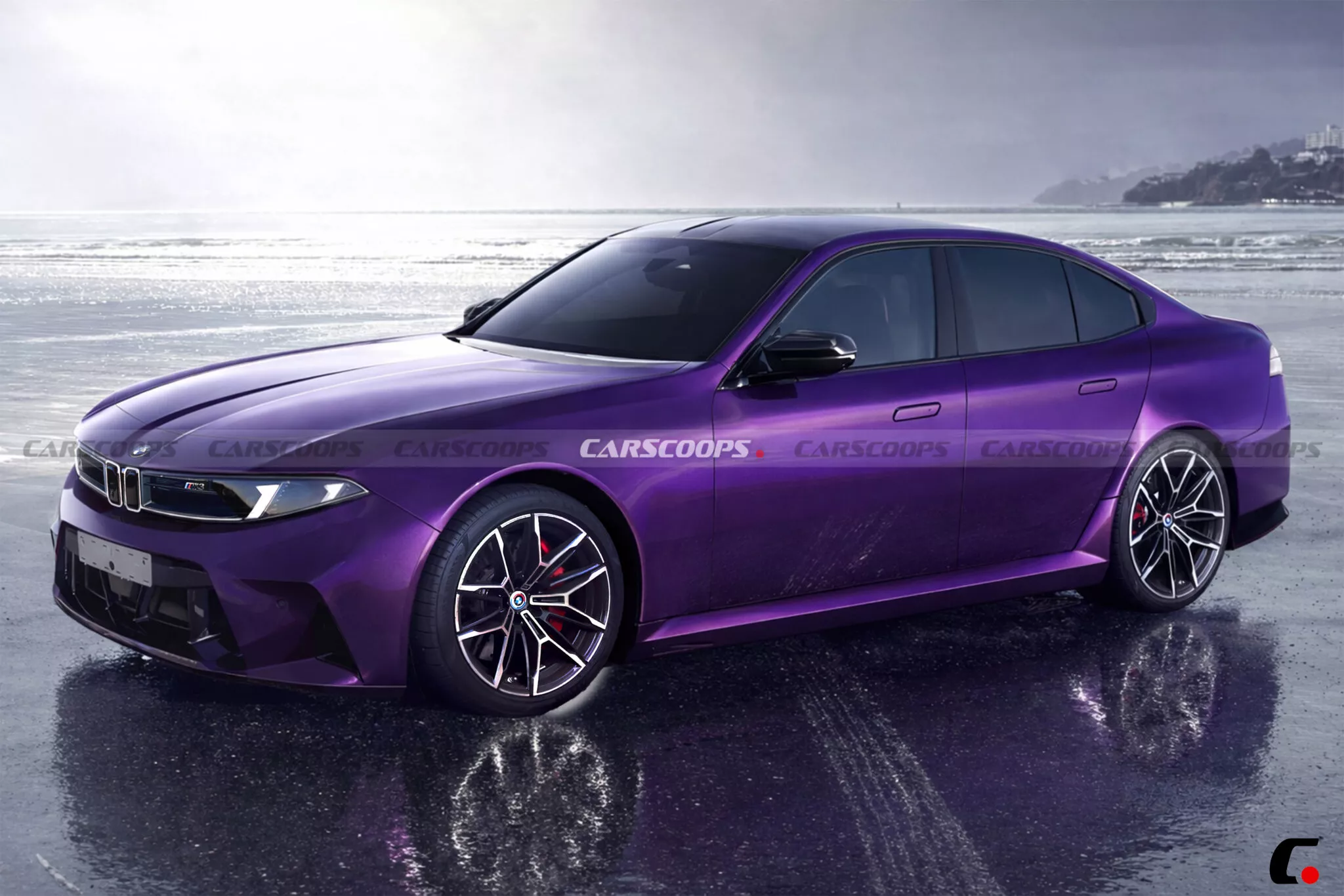
What we do know is that the Neue Klasse is already confirmed to support an electric iM3, which makes an iM4 Coupe feel entirely plausible. On the combustion side, BMW has also said the next M3 will stick with its six-cylinder engine in mild hybrid form, keeping the door open for a new gas-powered M4 Coupe as well. Whether we get both versions or just one remains to be seen.
If there’s an electric version of the 4-Series, expect a setup similar to the forthcoming i3, powered by BMW’s 108kWh battery pack. Rear- and dual-motor powertrains are also on the menu. Although Post hasn’t revealed performance targets, early indications suggest a range exceeding 500 miles is within reach.
Whatever BMW ends up doing, it’s obvious that the rest of the field is thinning out. Audi has dropped the A5 Coupe, and Mercedes has merged its C-Class and E-Class coupes into one model, the CLE. With fewer players still in the mix, BMW might find itself with a bit more room to maneuver on the sales front.
During the same interview Post noted that BMW has already developed its next-generation of engines to comply with Euro 7 regulations. This means the current twin-turbo 3.0-liter S58 straight-six of the M3 and M4 will live on, albeit upgraded with a mild-hybrid. He also confirmed that large V8 and V12 engines are safe, including the 6.75-liter V12 used by Rolls-Royce.
“We can fulfill Euro 7 with some optimization in the exhaust system – with things like the catalysts – so that’s why we have a big advantage in that Euro 7 is not that high an investment for us,” he revealed.
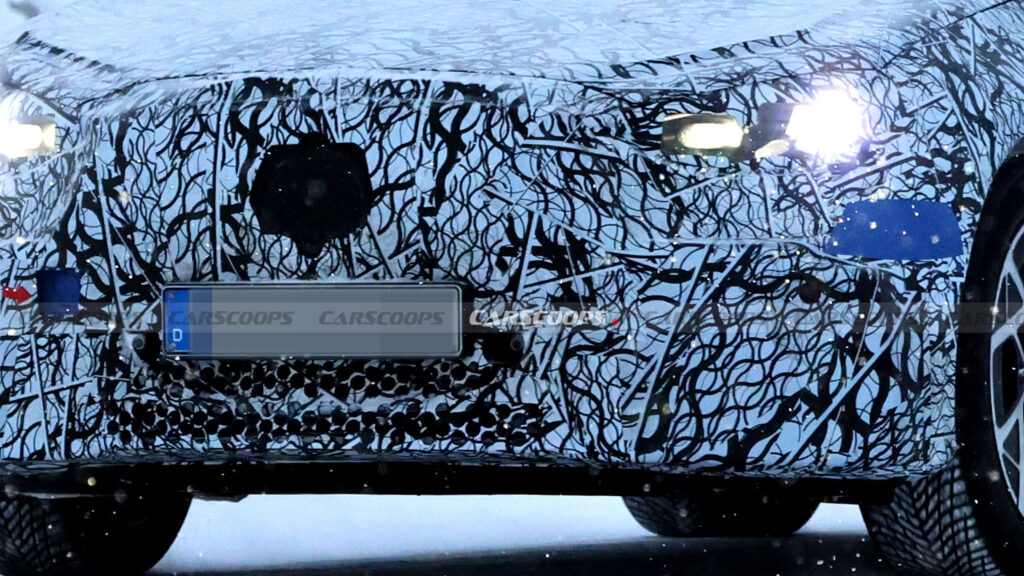
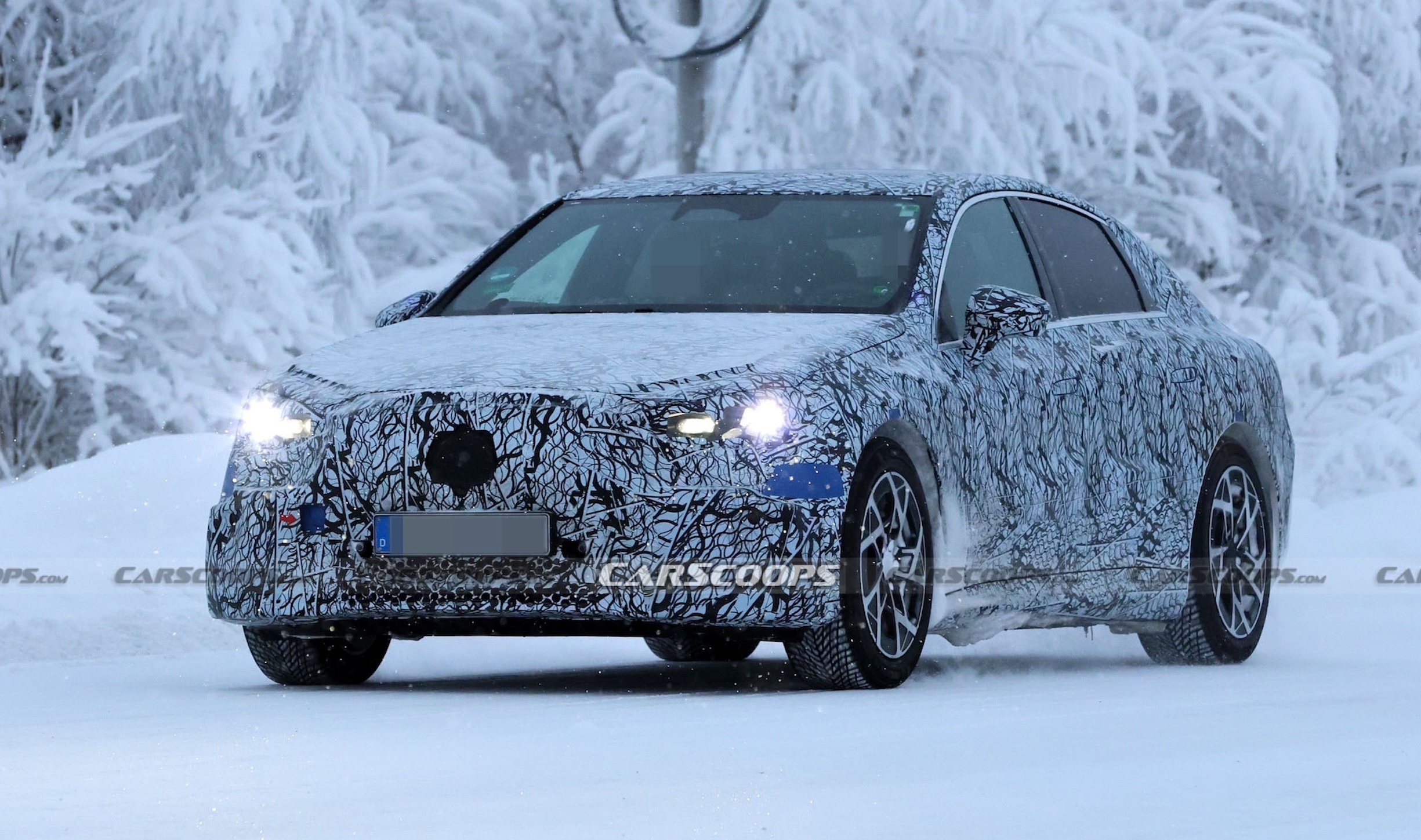
Mercedes’ new C-Class with EQ Technology has been spied.
The first ever C-Class EV debuts in the second half of 2026.
Borrows huge illuminated grille and 800-volt tech from GLC.
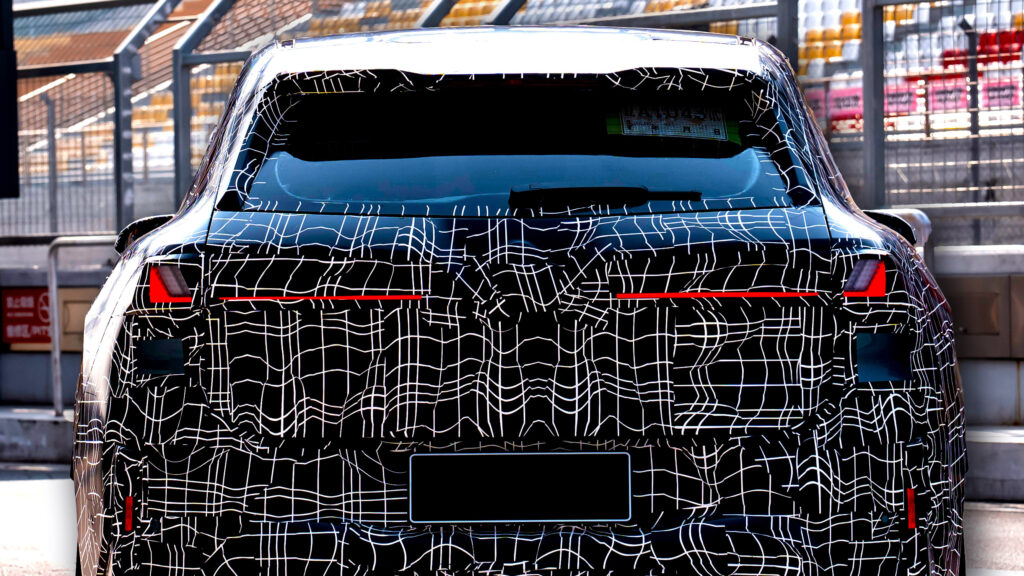
Mercedes might have eased back on its electric goals in the face of slowing global demand, but it still has plenty of hugely important EVs on the way. And this is one of them, the first ever electric C-Class, which debuts later this year.
If Mercedes sticks to current naming convention it’ll be saddled with the clunky C-Class with EQ Technology name, something we’re familiar with from models like the new GLC with EQ Technology, which made its global debut at the Munich Motor Show last September.
And that’s not all the new zero emissions sedan shares with the electric GLC. Both ride on Mercedes’ new MB.EA platform, while the smaller CLA sedan uses a different MMA architecture.
The C-class – which will be sold alongside an updated version of today’s combustion C-Class – also adopts the large, illuminated, traditional-look Mercedes grille that the GLC debuted, and which is expected to be rolled out across multiple model lines in the next couple of years.
450+ mile range
SH Proshots
Based on what we know of the GLC EQ, the electric C-Class will get 800-volt electrics, and the C400 version should have a 483 hp (489 PS / 360 kW) dual-motor drivetrain that gets it to 60 mph (97 kmh) in well under 5 seconds.
It could also get the same 94 kWh lithium-ion battery pack as the SUV, and if that’s the case, expect the lower, lighter sedan to improve on the GLC’s already excellent 443-mile (713 km) range.
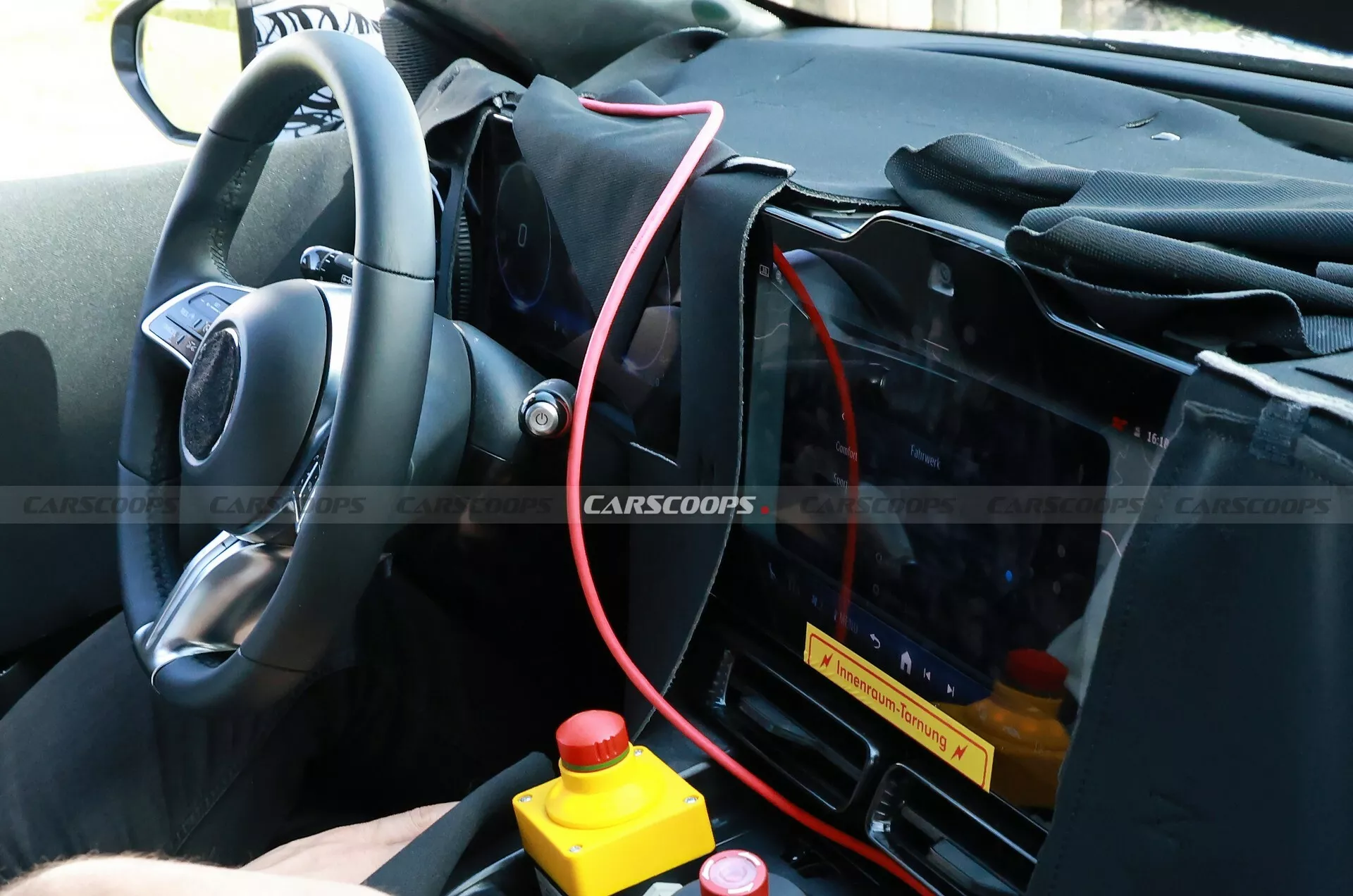
Glimpses of the C’s interior in previous spy shot hauls indicate that it’ll feature the same 39.1 inches (99.3 cm) MBUX Hyperscreen display that stretches right across the dashboard.
That’ll give the C-Class a very different interior ambience to its electric BMW i3 sedan rival, which is also schedule to debut this fall, but is believed to feature minimal conventional dashboard screens, favoring head-up displays instead.
The i3’s Neue Klasse exterior should mean the BMW feels more modern on the outside, too, though it could prove too futuristic for some fans who like the way the current 3-series looks.
One thing’s for sure, and it’s that electric sedan buyers are going to be spoiled for choice come 2027 when both cars land in dealerships. Which would you pick?
New growth hotspots emerged far outside traditional markets.
A major federal incentive ended late in the calendar year.
Charging access still varies widely across state lines.
After years of leading the national shift toward electric vehicles, California may be approaching an inflection point. For the first time since the pandemic, EV sales in the state are expected to dip in 2025, even as several other states report a sharp rise in adoption.
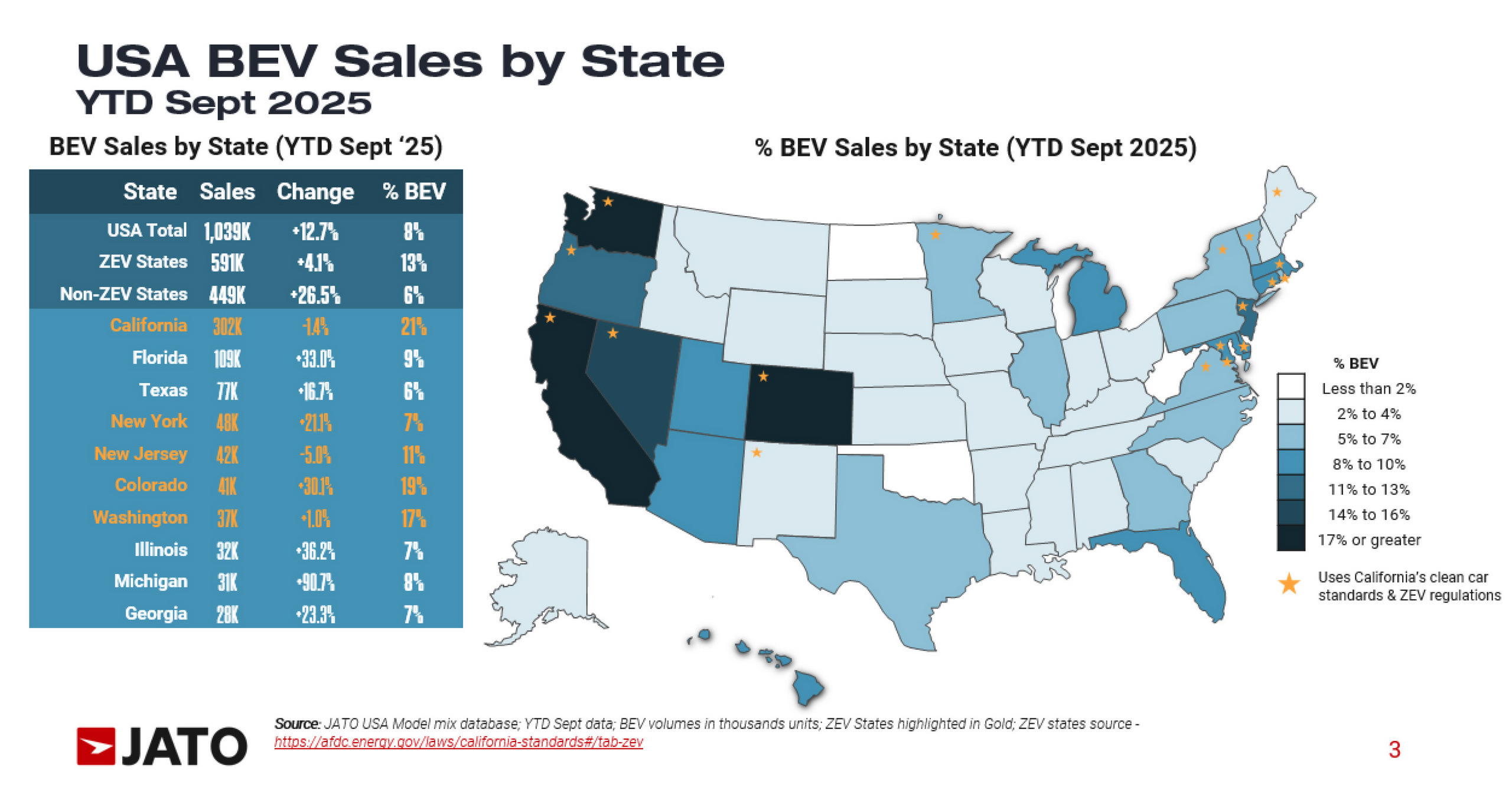
Data from JATO Dynamics shows that during the first nine months of 2025, before the federal EV tax credit ended, roughly 302,000 electric vehicles were sold in California. That figure represents a 1.4 percent decrease compared to the same period last year, hinting that the state’s EV market could be nearing saturation.
We don’t have figures for the last quarter of the year, but given the elimination of the $7,500 federal tax credit on September 30, it’s safe to assume the final numbers will look worse, unless buyers suddenly developed a taste for paying more.
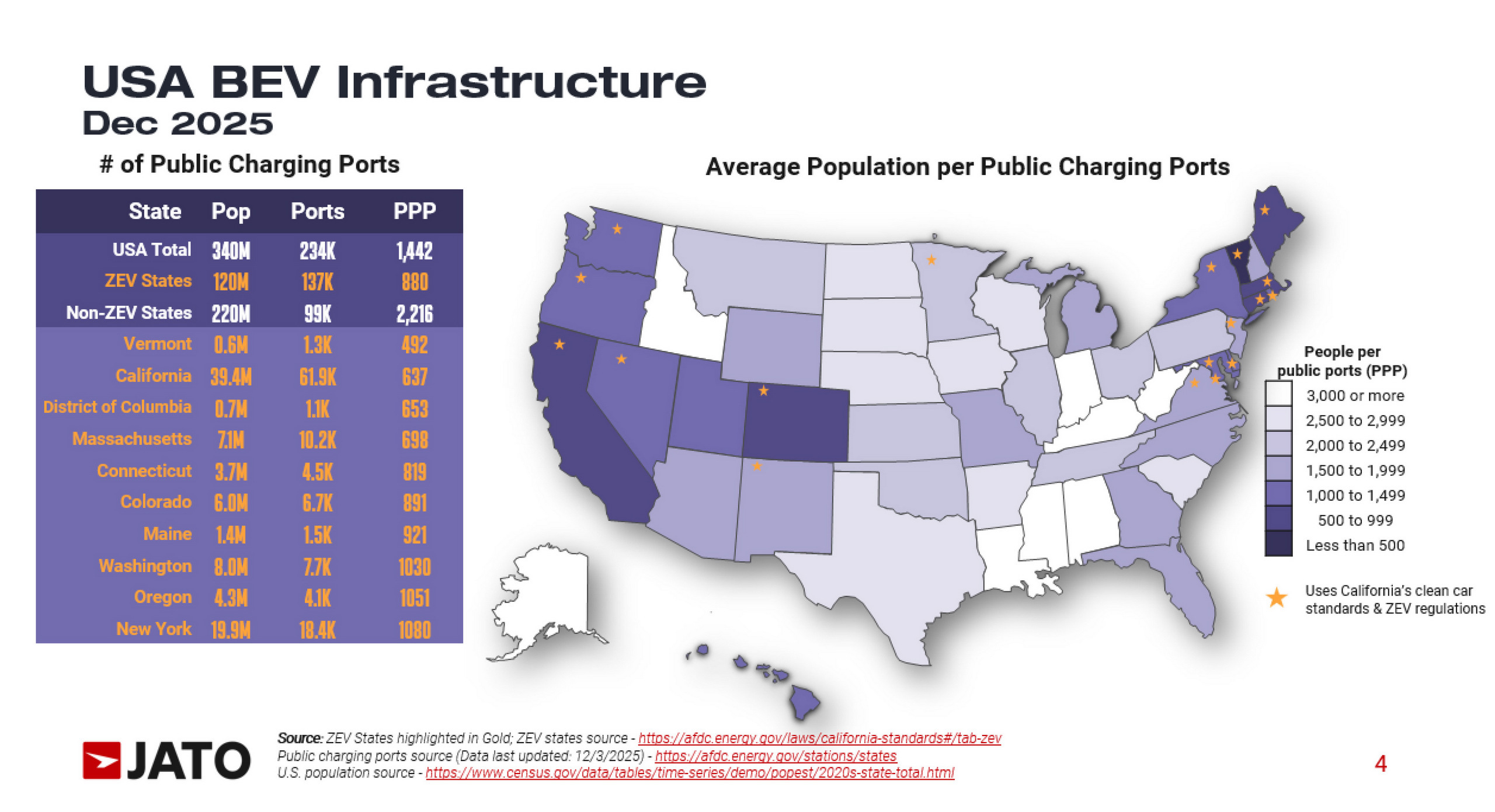
Despite this, California remains well ahead of the pack. EVs now account for 21 percent of new vehicle sales in the state, placing it above the District of Columbia (19 percent), Colorado (19 percent), Washington (17 percent), Nevada (16 percent), and Oregon (13 percent).
ZEV States Surge
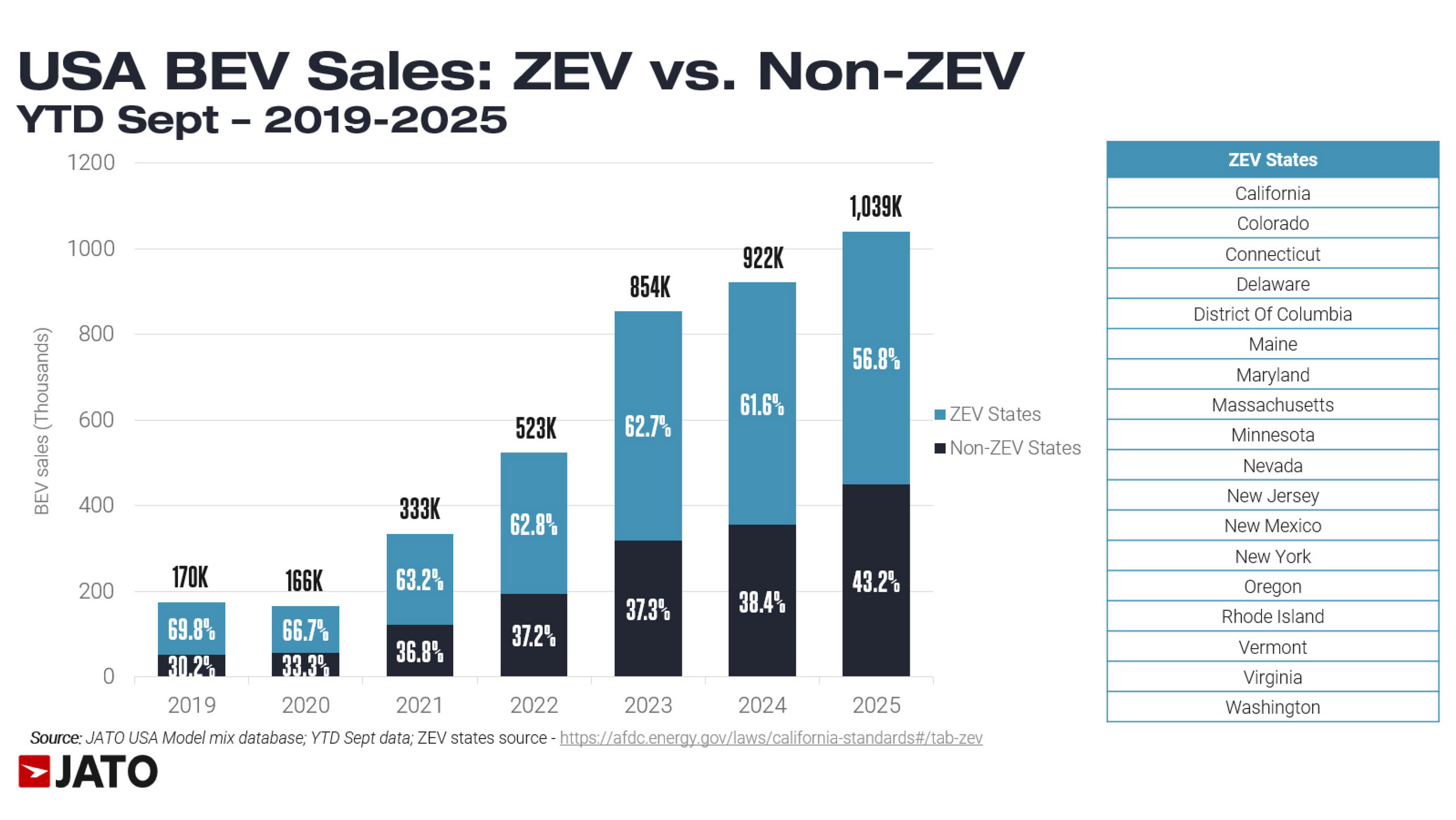
Several of these ZEV states saw marked gains last year. For example, New York’s EV sales rose 21.1 percent in the first three quarters, while Colorado posted a 30.1 percent increase. On average, EVs make up 13 percent of new car sales in ZEV states. In contrast, non-ZEV states average just 6 percent, contributing to a national average of 8 percent.
EV sales also rose sharply in many non-ZEV states during the same period. Florida, in particular, recorded an impressive 33 percent jump between January and September 2025, reaching 109,000 units, which now represent 9 percent of new vehicle sales.
That jump in Florida is notable not only for its scale, but also because it comes without the backing of ZEV mandates or aggressive state-level incentives. In a politically conservative state where environmental policy isn’t front and center, the increase suggests that consumer demand, not legislation, is doing the heavy lifting.
Texas followed with a 16.7 percent rise to 77,000 units. Illinois saw a 36.2 percent increase, reaching 32,000. Georgia posted a 23.3 percent bump to 28,000, while Michigan led in growth rate, soaring 90.7 percent to 31,000 EVs sold.
“The rapid uptake in BEV sales in Michigan is a clear example of why growth in traditionally non-ZEV states presents such a valuable opportunity for domestic brands,” JATO analysis and reporting specialist Anthony Puhl said.
“While it is possible for a brand to break into a new market, as Tesla has done on a national level, we expect BEV sales in other states to come from brands with which the population is already familiar.”
One of the key hurdles for EV adoption in non-ZEV states remains charging infrastructure. In ZEV states, there’s approximately one public charging point for every 880 people. In non-ZEV states, that number jumps significantly to one for every 2,216 people, highlighting a critical gap in support systems for EV owners.
BMW’s electric M3 uses soundtracks from past M performance icons.
It blends V8, inline-six, and V10 engine notes into its EV profile.
The M3 EV will feature simulated shifts with optional sound modes.
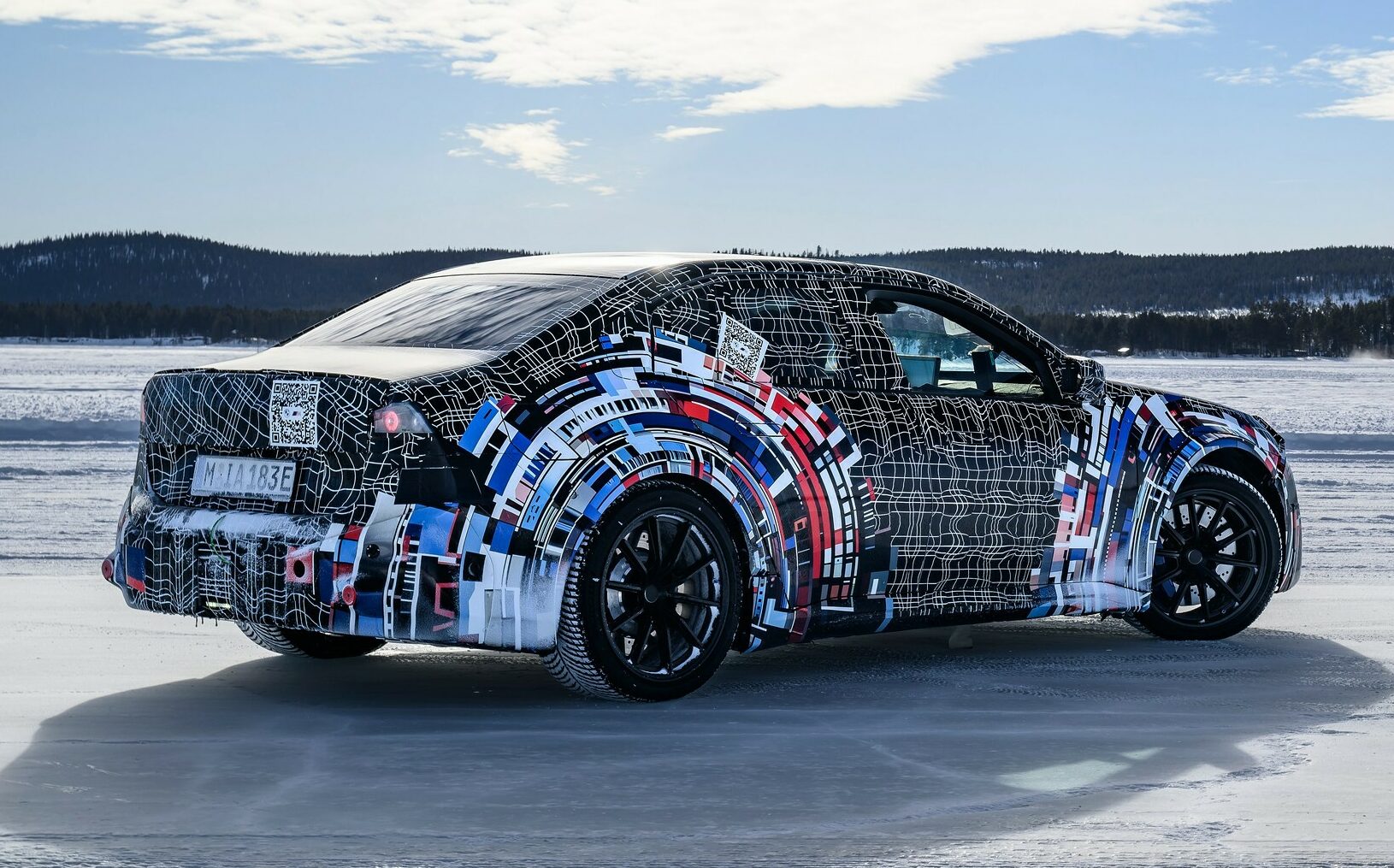
Breaking into the electric performance space is a delicate task for a brand like BMW M, which has spent decades building its reputation on combustion-powered icons. But that’s exactly what it’s attempting with the Neue Klasse-based electric M3, or, as it may end up being called, the i3M.
The upcoming high-performance EV won’t replace the traditional ICE-powered model, though. Instead, it’s designed to sit alongside it, borrowing cues from BMW M’s most celebrated models to bridge the old and the new. Or at least that’s the promise.
BMW M released the latest chapter in its video series detailing the development of the new super sedan, previewing the distinctive soundscape it plans to offer. Taking a page from Hyundai N’s playbook, BMW aims to replicate the sounds of some of its most iconic models, blending them with the unique tone of a high-performance EV.
Chasing the Sound of the Past
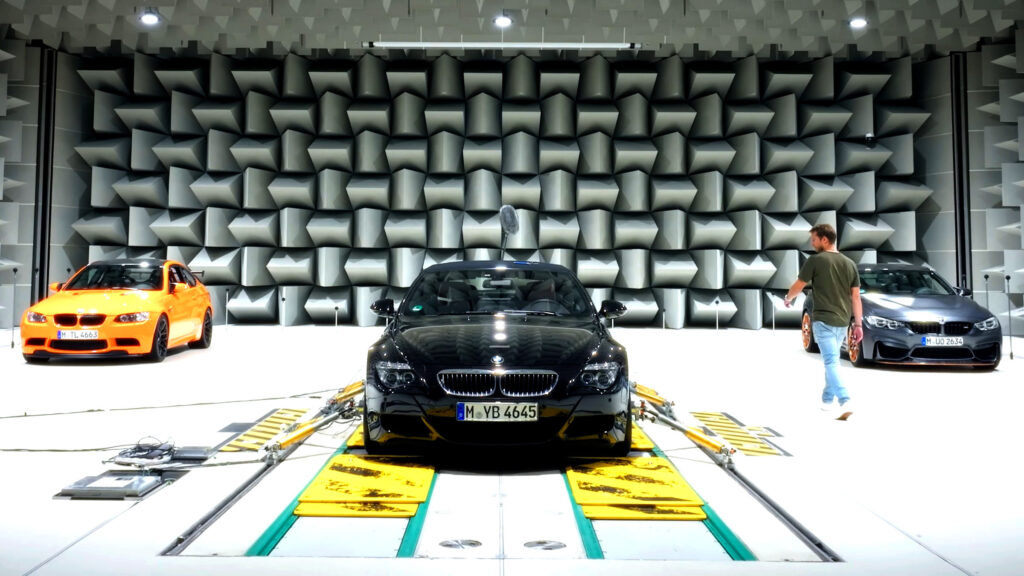
Rather than relying solely on software to mimic engine sounds, BMW assembled an M3 GTS with a 4.4-liter V8, an M4 GTS with its 3.0-liter twin-turbo inline-six, and a classic BMW M6 featuring the brand’s iconic 5.0-liter naturally aspirated V10. Their engine notes were recorded on a dyno, then layered into the soundtrack of the electric prototype.
The clip only demonstrates the soundtrack of the electric M3 for a brief moment while being put through its paces on BMW’s test track. As the driver hits the throttle, it begins to sound like a turbocharged engine building boost as the revs climb. There are also some notable turbo whistles, mixed in together with some of the high-pitched whine expected of an EV.
Performance to Match the Drama
Like the Hyundai Ioniq 5 N and Ioniq 6 N, BMW’s electric M3 will also include simulated gear shifts to match the synthetic engine notes. For drivers who prefer their EV experience unfiltered, these features are expected to be optional and easily switched off.
Of course, the electric M3 will need to be more than just good-looking to convince shoppers. BMW has confirmed it’ll be fitted with four electric motors and a 100 kWh battery pack that’s up to the task of track use.
While BMW hasn’t revealed any final power figures, we know that each wheel will be controlled individually, allowing for advanced torque vectoring for better performance and handling. There will also be an optional rear-wheel drive-only mode.
VW plans to rename ID.4 as ID. Tiguan with facelift, report says.
Familiar name aims to make VW electric SUVs easier to sell.
Facelift brings new look, better interior and new FLP battery tech.
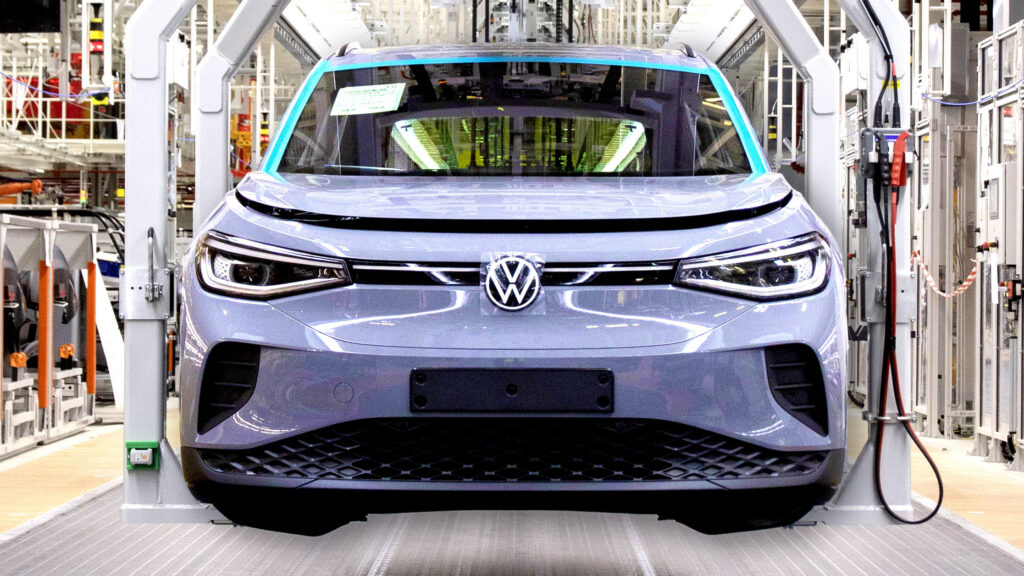
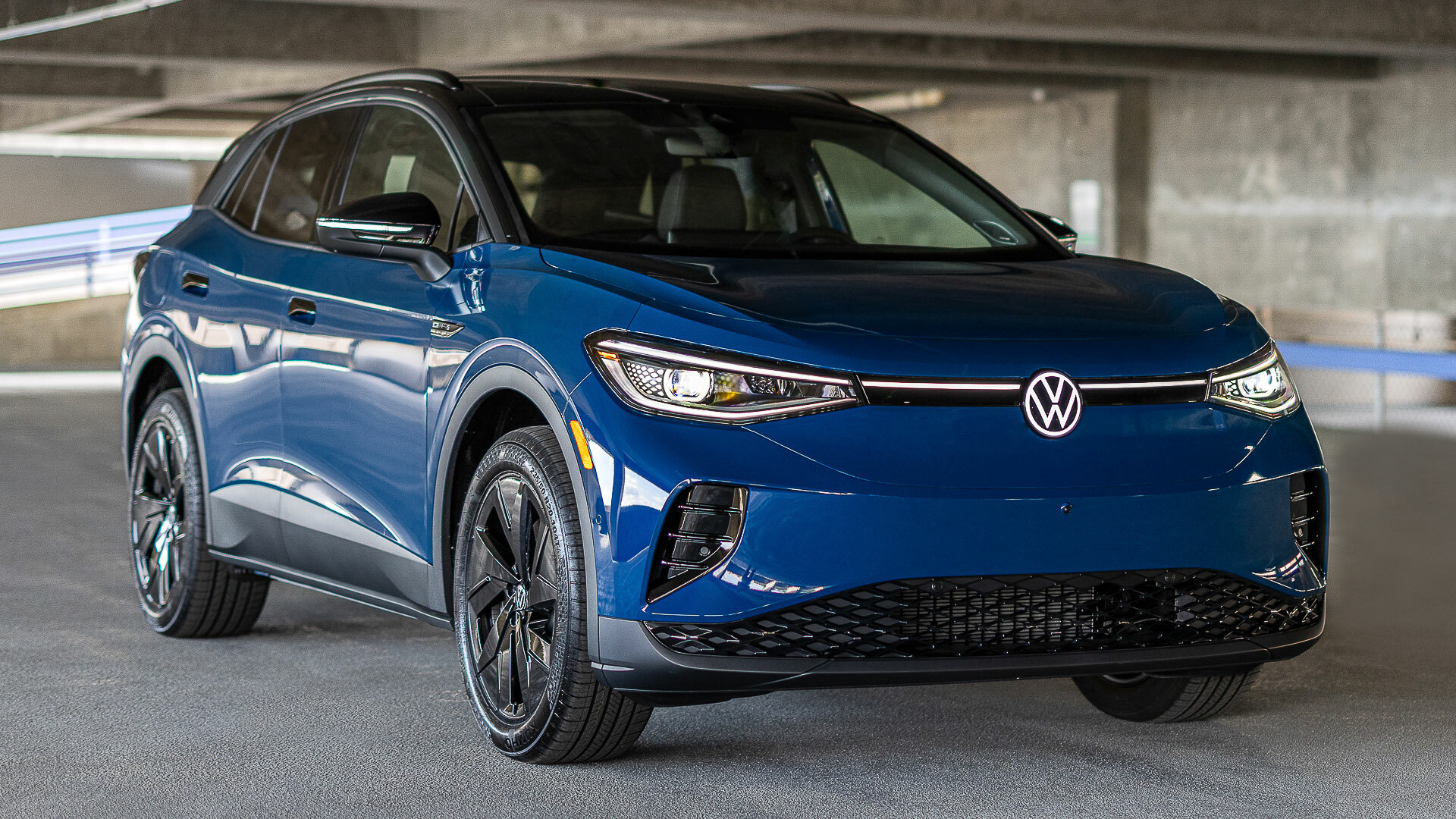
Volkswagen’s ID.4 electric SUV is getting a new suit and a new name to go with it. A report out this week suggests the ID.4 will soon be rebadged as the ID. Tiguan, confirming what we suspected in a recent spy shot story.
The name change will arrive alongside a comprehensive facelift later this year, according to Auto News. Their nformation reportedly came from the IG Metall labor union during a press conference in Germany, which is about as official as things get without VW actually saying anything. Unsurprisingly, Volkswagen declined to comment.
Baldauf
This move fits perfectly with VW’s recent decision to abandon cold numeric names in favor of familiar badges. It was recently confirmed that the production version of the ID.2all hatch concept will be called ID. Polo when it arrives in European dealerships this year, and don’t be surprised if the ID.Every1 concept turns into an ID. Up.
We’ve already seen what the ID. Tiguan looks like in prototype form. Our spy shots revealed a heavily revised exterior with new doors, redesigned lights, fresh bumpers, and a reworked rear hatch. The shape remains familiar, but the surfacing is sharper and more upright, bringing it closer to the combustion Tiguan and the upcoming ID Cross.
Rediscovering Buttons
The changes are more than skin deep. Inside, Volkswagen appears ready to undo some of its recent interior mistakes. Physical buttons are expected to return, including a proper volume knob, along with better materials and a cleaner dashboard layout.
The touchscreen and digital cluster should grow in size, while updated software promises a smarter voice assistant that hopefully listens this time. The result should look something like the interior of the new ID. Polo, shown below.
Underneath, the facelifted ID. Tiguan is expected to ride on a revised MEB plus platform. That likely means newer battery cells, including LFP chemistry in some versions, improving efficiency and potentially boosting real-world range. Don’t expect a voltage upgrade though, as it will stick with 400-volt architecture and modest charging speeds.
Performance updates should be mild, since VW already boosted the base single-motor version in 2024 to 282 hp (286 PS/ 210 kW), though dual-motor versions could get a lift to help them regain their advantage over rear-drive models. The focus overall though, will be on usability, refinement, and making the electric Tiguan feel like a natural alternative to the combustion SUV carrying the same name.
Production of the new ID. Tiguan will continue in Emden, Germany, through 2031, Auto Newsreports, suggesting VW sees plenty of life left in this model. And that makes sense, since the ID.4 was one of only two models that grew, rather than lost, sales in the US last year.
Standing on a platform at a Bahnhof or train station in Germany early one morning, watching students filter onto a regional train with backpacks slung over their shoulders, it struck me just how different pupil transportation is here compared to what I have spent most of my career studying and teaching in the U.S. No flashing lights. No crossing arms. No dedicated “school-only” environment. Just students, moving confidently and independently through a public transportation system designed to include them.
In Germany, pupil transportation is not treated as a specialized service owned and operated by schools. Instead, it is understood as a shared civic responsibility. One woven into the fabric of public infrastructure, reinforced by law, education and cultural expectations. The result is a system that looks radically different from the yellow-bus model most Americans know, yet functions with remarkable efficiency and safety.
One of the most noticeable differences I encountered was how heavily Germany relies on public transportation—known broadly as Öffentlicher Personennahverkehr (ÖPNV)—to move students. In cities and suburbs alike, students routinely use Linienbusse (city buses), Straßenbahnen (trams), U-Bahn and S-Bahn systems, and Regionalzüge (regional trains). These are not “student-only” vehicles. They are the same systems used by office workers, retirees and tourists.
Students who qualify for transportation assistance receive a Schülerticket or Jugendticket, subsidized or fully funded by local municipalities (Kommunen) or the federal states (Länder). In many regions, these passes are valid beyond school hours, reinforcing the idea that mobility is part of daily life—not a narrowly defined school function.
As I observed students navigating routes and transfers, it became clear that independence is not optional here. It is expected. Even younger students demonstrate a working knowledge of timetables (Fahrpläne), platform signage and transfer points. This competence does not appear by accident. Verkehrserziehung—traffic and transportation education—is introduced early in German schools and reinforced repeatedly as children grow.
The Differences of U.S. Yellow School Bus Transportation
Back home in the U.S., pupil transportation is far more centralized and tightly controlled. School districts typically operate or contract dedicated fleets governed by extensive regulations at both the federal and state levels. American school buses are marvels of passive safety engineering, built to protect students even in hostile traffic environments. However, this model also ties student mobility to specialized vehicles, specialized drivers and funding streams that are increasingly fragile.
In Germany, the focus shifts away from specialized vehicles and toward system-wide safety design. Around schools, I consistently saw Tempo-30-Zonen. Reduced speed zones enforced not just by signage, but by roadway narrowing, raised crosswalks and visual cues that force drivers to slow down. Fußgängerüberwege (pedestrian crossings) are clearly marked, well lit, and treated seriously by drivers.
Cycling infrastructure is another major pillar. Germany’s Radwege—dedicated bicycle lanes—are often physically separated from vehicle traffic, not merely painted lines on asphalt. Students cycling to school are not treated as anomalies. They are anticipated users of the transportation system.
In the U.S., safety strategies often compensate for infrastructure shortcomings by relying heavily on the school bus itself. Stop arms, flashing lights and strict loading procedures act as mobile safety zones. In Germany, safety is embedded into the environment long before a student ever steps onto a vehicle.
Walking and cycling to school are not fringe behaviors here, rather they are normalized. Younger students often walk together along designated Schulwege (school routes), sometimes participating in what Germans call a Laufbus, the equivalent of a “walking bus.” These routes are mapped, communicated to families, and designed to minimize risk exposure.
Older students routinely travel alone, whether on foot, by bike, or via public transit. While this level of independence might raise eyebrows in the U.S., in Germany it is viewed as a critical developmental step. Children are taught how to assess risk, not avoid it entirely.
Dedicated school buses—Schulbusse—do exist in Germany, primarily in rural regions where public transit coverage is limited. However, even these buses look different from their American counterparts. They are often standard coaches or city buses with minimal external markings. They lack stop arms or specialized lighting systems, reinforcing the notion that responsibility for student safety does not rest solely on the vehicle.
This difference is jarring for American professionals, but it reflects a deeper cultural expectation: All road users share responsibility for safety, and traffic laws are consistently enforced. German driver training standards are rigorous, and compliance with Verkehrsregeln (traffic rules) is culturally ingrained.
Special needs transportation further illustrates Germany’s integrated approach. Students with disabilities receive individualized transportation accommodations arranged through municipal authorities in coordination with social services, not solely through school systems. This may involve specialized vehicles, door-to-door service or escorted travel on public transit depending on need.
Accessibility is treated as a societal obligation rather than an educational exception. In the U.S., special education transportation is often managed almost entirely by school districts, adding complexity and cost to already strained systems. Germany distributes that responsibility across public institutions.
Perhaps the most important lesson I took from being in Germany is philosophical. The German pupil transportation system assumes that safety is created through design, education and accountability — not isolation. Students are not shielded from the transportation system. They are trained to function within it.
In the U.S., we often build systems designed to protect students from risk. Germany builds systems designed to reduce risk at its source. That difference matters. Especially as U.S. districts face driver shortages, rising costs and expanding safety mandates.
Germany’s model is not directly transferable to every American community. Many U.S. regions lack the density, transit infrastructure or legal frameworks to replicate it wholesale. Rural geography, suburban sprawl and fragmented governance present real challenges. But the value lies in the comparison.
By studying Germany’s use of ÖPNV, Schulwegplanung (school route planning), Verkehrserziehung, and integrated accessibility models, U.S. transportation leaders can identify concepts—not replicas—that may strengthen our own systems. Infrastructure investment, early safety education, shared responsibility, and multimodal planning all have a place in the American conversation.
Being in Germany reminded me that pupil transportation is not just about moving students. It is about shaping how young people engage with their communities. When transportation is treated as a shared civic responsibility rather than a standalone service, students gain more than a ride. They gain independence, situational awareness and confidence that extends far beyond the school day.
Watch for my next article in this series, where we travel “down under” to explore how Australia conducts pupil transportation.
Bret Brooks
Bret E. Brooks is the chief operating officer for Gray Ram Tactical, LLC, a Missouri-based international consulting and training firm specializing in transportation safety and security. He is a keynote speaker, author of multiple books and articles, and has trained audiences around the world. He can be reached at BretBrooks@GrayRamTacticalTraining.com.
CARLSBAD, Calif., – CalAmp today announced that it maintained an “A” rating by SecurityScorecard for the fourth quarter. SecurityScorecard is widely recognized as the global leader in cybersecurity ratings, as evidenced by its designation as a Leader in Forrester’s Cybersecurity Risk Ratings Platforms Wave and unmatched scale, including adoption by a significant majority of the Fortune 500.
CalAmp K-12 is a complete bus and white fleet transportation management solution for school districts and bus contractors. By earning an A rating, CalAmp K-12 has demonstrated an exceptionally strong cybersecurity posture based on SecurityScorecard’s continuous, independent assessment. The rating reflects how effectively CalAmp minimizes externally observable vulnerabilities, such as misconfigurations, unpatched systems, or other exposure points commonly exploited by attackers. Because SecurityScorecard evaluates real‑world signals rather than self‑reported controls, the rating provides an objective and credible measure of CalAmp’s security resilience.
For CalAmp K-12 customers, this achievement offers meaningful assurance that the company’s connected‑asset and telematics technologies are supported by a cybersecurity foundation that meets or exceeds top industry benchmarks. At a time when external attack vectors and supply‑chain risks continue to escalate, CalAmp’s A rating underscores its commitment to protecting customer data, ensuring operational continuity, and upholding the highest standards of digital trust.
“School districts and bus contractors depend on us not only for advanced telematics and student safety solutions, but also for the highest standard of cyber‑resilience,” said Hamid Rezaie, Vice President of IT at CalAmp. “Achieving this A rating from SecurityScorecard reflects our uncompromising focus on protecting our systems and, by extension, safeguarding our customers’ data and operations. Security is foundational to everything we deliver, and this recognition reinforces the strength of that commitment.”
To learn more about CalAmp technology and how the company helps organizations monitor, track, and protect their vital assets, visit calamp.com.
About CalAmp
CalAmp provides flexible solutions to help organizations worldwide monitor, track, and protect their vital assets. Our unique device-enabled software and cloud platform enables commercial and government organizations worldwide to improve efficiency, safety, visibility, and compliance while accommodating the unique ways they do business. With over 10 million active edge devices and 220+ approved or pending patents, CalAmp is the telematics leader organizations turn to for innovation and dependability. For more information, visit calamp.com, or LinkedIn, Twitter, YouTube or CalAmp Blog.
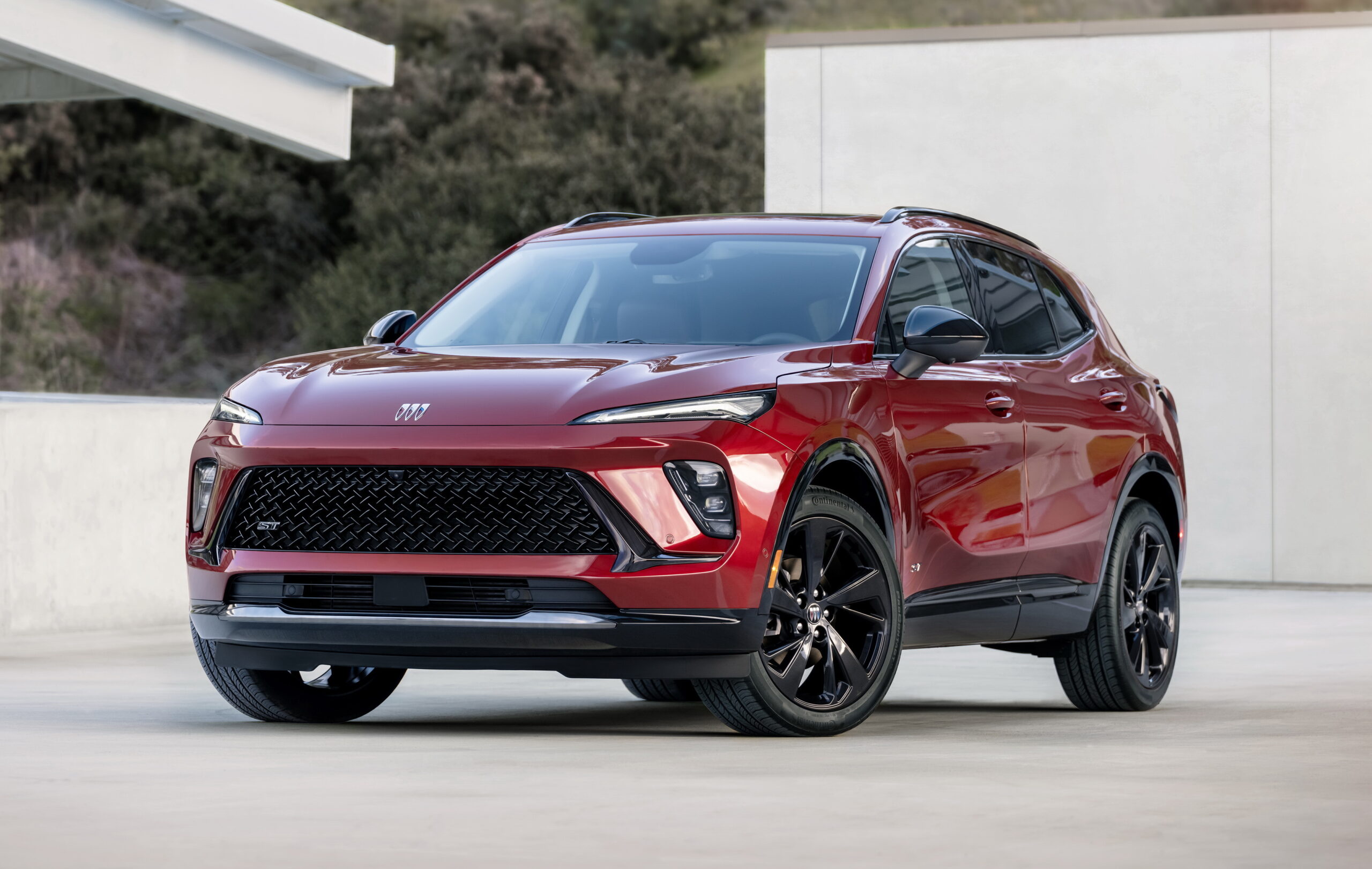
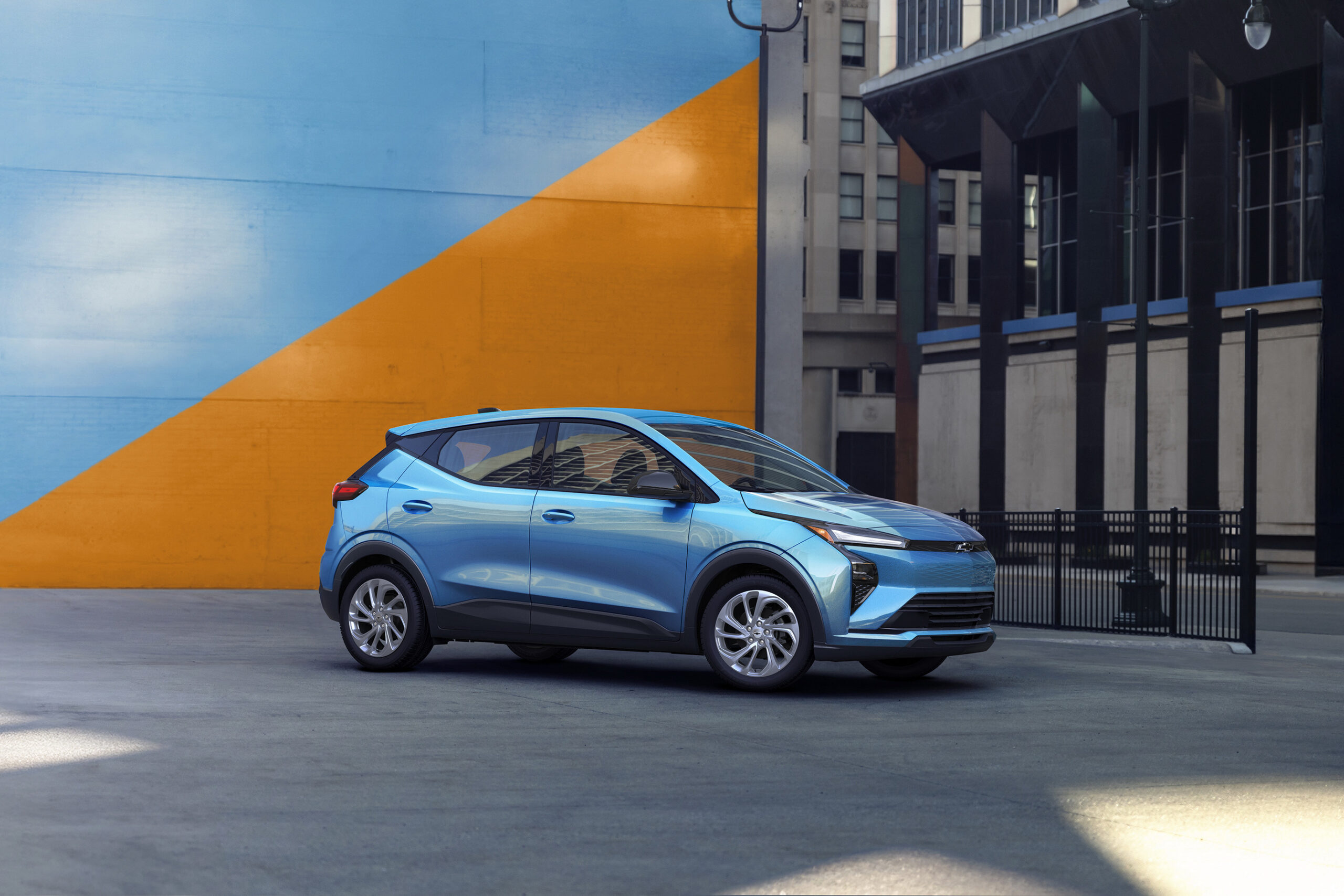
GM will build the third-generation Buick Envision in America.
Will be built alongside the Chevrolet Equinox at Fairfax Assembly.
Production begins in 2028, following the demise of the Chevy Bolt.
The Chinese-built Buick Envision got slammed by Trump’s tariffs and the company recently hiked prices by $3,000. This followed an earlier increase, which means the cost of entry has shot up $4,500 in less than a year.
As a result, the 2026 Envision now starts at $41,000 before a $1,995 destination fee. That’s pretty steep and the price increases appear to have started weighing on sales.
While the model was only down 11.4 percent last year to 41,924 units, fourth quarter sales plummeted 60.9 percent. Even with the steep decline, the Envision finished the year as Buick’s third best-selling vehicle, accounting for just over a fifth of the brand’s total annual sales of 198,155 deliveries.
However, the situation was unsustainable and General Motors has effectively admitted as much. In a brief statement, the company said they’ll “onshore production of the next-generation Buick compact SUV to Fairfax Assembly in Kansas City, beginning in 2028.”
The automaker didn’t have much to say about the move, but stated the “decision further strengthens GM’s domestic manufacturing footprint and supports U.S. jobs, building on $5.5 billion in new investments announced across our U.S. manufacturing sites in the last year.”
We also asked whether the current model will remain on sale until its replacement arrives in 2028. A GM spokesperson told us, “We are working through the model transition plan”, a rather a noncommittal response that suggests the company isn’t ready to confirm details just yet.
Chevrolet Bolt Dies Soon
Interestingly, the announcement also revealed the impending death of the Chevrolet Bolt. While the EV was just relaunched, the company had previously referred to it as a “limited run model.”
They weren’t joking as Fairfax Assembly will be retooled to build the Chevrolet Equinox starting in 2027. This suggests the Bolt will only be sticking around for about a year.
The third-generation Envision will follow one year after the Equinox and this could hint at some commonality between the two models. This remains to be seen, but the bowtie brand’s crossover has a turbocharged 1.5-liter four-cylinder that develops 175 hp (131 kW / 177 PS) and up to 203 lb-ft (275 Nm) of torque. It’s connected to a continuously variable or eight-speed automatic transmission.
Rivian issued a recall for 869 R1T and R1S vehicles in the US.
Second-row seatbelt retractor bolt may be loose or missing.
Rattling noise near the C-pillar could hint at the loose bolt.
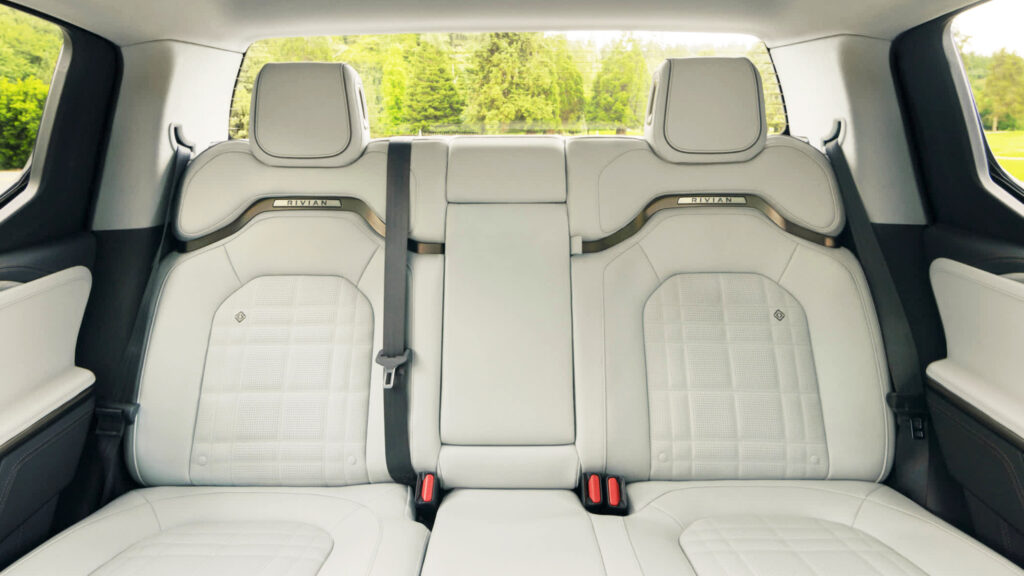
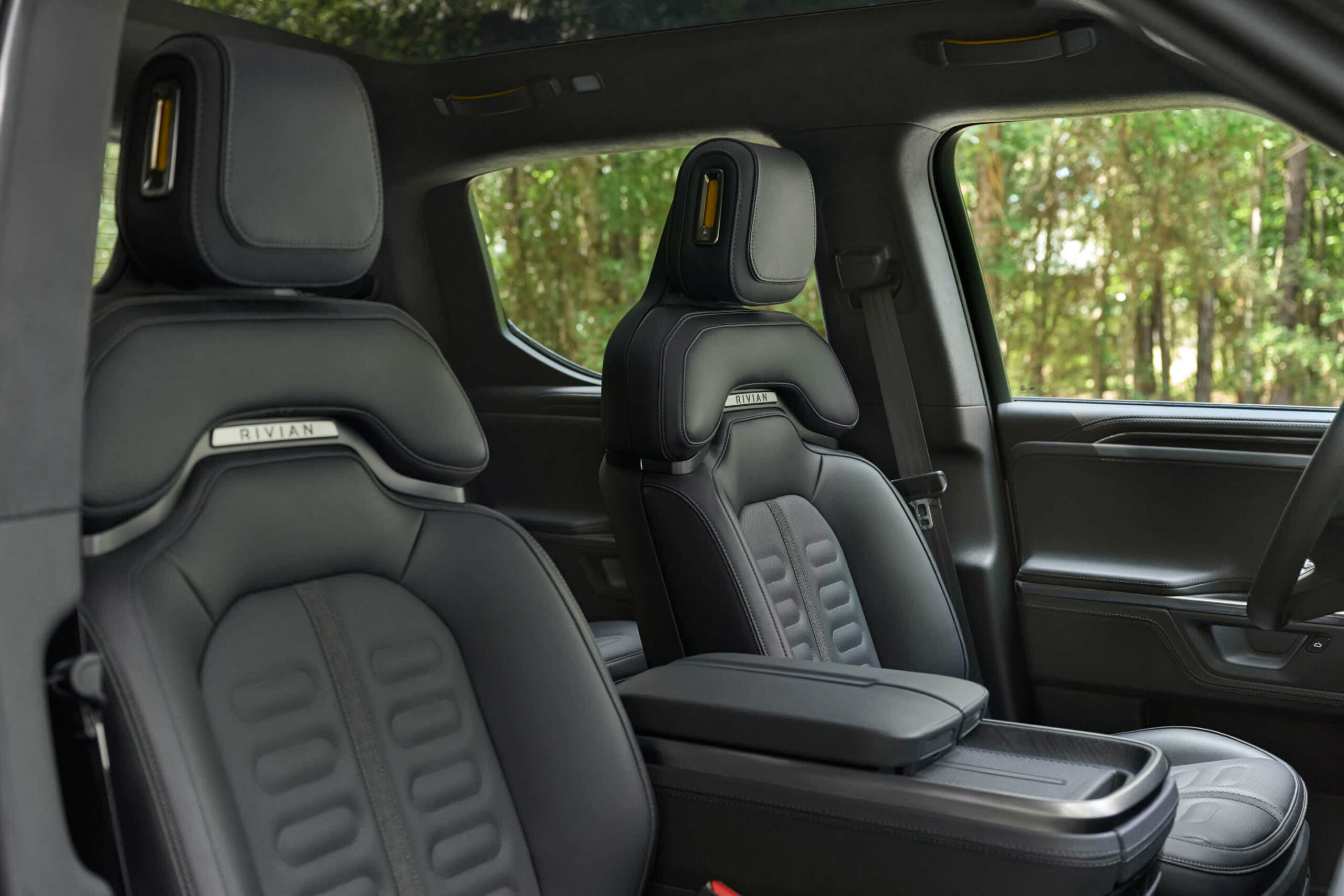
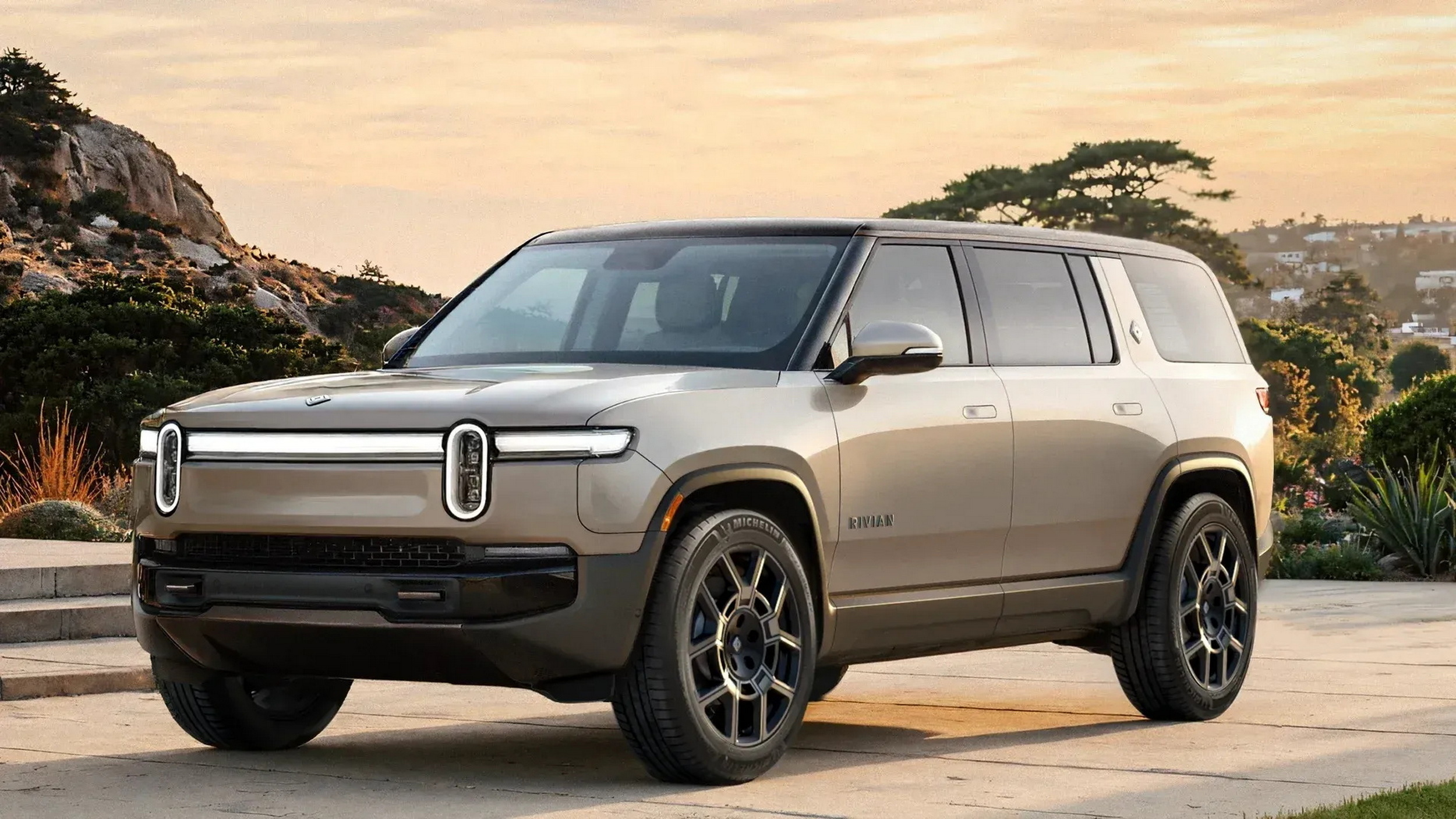
For the second time in as many months, Rivian has issued seatbelt-related recall in the States. While the last action involved nearly 35,000 units of its electric delivery van, this latest one affects a smaller number of consumer vehicles and specifically, the 2022–2025 Rivian R1T and the 2022–2026 Rivian R1S.
According to the company, the second-row seatbelt retractor bolt might not have been correctly installed during production. If improperly secured, the retractor could fail to restrain passengers in a crash, posing a higher risk of injury for those seated on the driver or passenger side.
Rattles May Hint at a Problem
In some cases, owners may notice a rattling sound coming from the area around the left or right C-pillar. Apparently, this can be an early sign that the seatbelt retractor wasn’t firmly fixed in place.
The recall affects a total of 869 vehicles, evenly split between both models. That includes 434 R1T trucks built from September 15, 2021, through April 10, 2025, and 435 R1S SUVs manufactured between May 9, 2022, and May 15, 2025.
Rivian reports no known accidents or injuries linked to the issue. The company first took notice on September 16, 2025, when a technician discovered a loose retractor during a routine service on an R1T. After months of follow-up, Rivian says it hasn’t uncovered additional defective assemblies but has still opted to move forward with the recall as a precaution.
Owners will be alerted to the recall from March 9. To resolve the problem, Rivian will properly secure the seatbelt retractor assembly in any affected vehicles free of charge.
This recall is unrelated to the earlier issue involving the company’s EDV vans. In that case, the problem stemmed from repeated misuse, where the seatbelt pretensioner could be damaged if the driver sat on the belt while it remained buckled beneath them.
Canada cut Chinese EV tariffs from 100 percent to 6.1 percent.
Doug Ford slammed the move, warning it risks local auto jobs.
Premier wants Canadians to boycott imported Chinese EV models.
Just days after Canada and China finalized a trade agreement slashing tariffs on Chinese electric vehicles from 100 percent to 6.1 percent, Ontario Premier Doug Ford has gone on the offensive.
Warning that the move could deliver a serious blow to Canada’s domestic auto industry, Ford is urging Canadians to steer clear of Chinese EVs altogether and “boycott” them, arguing the deal risks local jobs and undermines the country’s manufacturing base.
Ford didn’t wait for the details to land before voicing his concerns. Long before the tariff change was confirmed, he was already firmly against any auto-related trade agreement with China. According to the Ontario Premier, Prime Minister Mark Carney pushed the deal through without proper consultation.
Ford Sounds the Alarm on Local Jobs
“Maybe a few people might buy them, and I just discourage anyone from buying a Chinese vehicle,” Ford said at a press conference.
“But if they decide to do that, at what cost is it? Is it at the cost of your neighbor down the street that’s working in the auto sector that he’s not going to have, or she’s not going to have a job? Boycott the Chinese EV vehicles. Support companies that are building vehicles here. This is a team Canada approach. We gotta stick together.”
Who Really Benefits From the Deal
In announcing the dramatic tariff reduction, Carney stated that several Chinese carmakers have shown interest in building affordable electric vehicles on Canadian soil. Under the new deal, 49,000 EVs from China can be imported to Canada at the lower 6.1 percent tariff. Although Carney would welcome Chinese brands building cars locally, Ford isn’t convinced by the idea.
“The numbers just don’t add up,” he said. “Even if they do start assembling, how about the supply chain? They come, and they assemble, but they bring all Chinese parts in; that means nothing. We want to make sure we produce Canadian cars by Canadians, with the R and D and the specs and everything, and the steel, and the aluminum from Canada. It’s as simple as that.”
Are EV Incentives Needed?
Ontario Green Party Leader Mike Schreiner, speaking to CTV News, said the province should be looking at practical steps to build demand for Canadian-made EVs instead of clearing the way for imports.
“The federal government’s deal with China threatens Ontario’s automotive industry,” he claimed. “This is even more reason for the premier to take bold action to bring forward a complete plan to protect Ontario workers by going all-in on incentives to create demand for Ontario-made EVs.”
SCHENECTADY, N.Y. – Transfinder Corporation’s record-breaking growth continued in 2025, as the company closed the year with $50.15 million in revenue, a 19 percent increase over the prior year and the 28th consecutive year of annual revenue growth. Transfinder, the nation’s leading developer of school transportation management solutions, including routing software, parent and driver apps and fleet maintenance and law enforcement solutions, added 180 clients in 2025. Of those new clients, 64 of those new clients left competing systems.
President and CEO Antonio Civitella shared highlights from across the company’s departments and outlined ambitious plans for the year ahead during his annual “State of the Union” presentation that includes employees from every department. “We hit the goal I set at the start of 2025—$50 million in revenue,” Civitella said. “It was a total team effort.” For 2026, Civitella has set an even higher target, projecting $60 million in revenue.
Drivers of Growth:
Several factors contributed to Transfinder’s record-setting year. Hardware sales increased 22 percent to $11.5 million. Hardware sales included tablets and RFID card readers. A major driver of hardware growth was the continued adoption of Wayfinder, Transfinder’s driver app, which provides turn-by-turn navigation and student attendance tracking. Along with Transfinder’s flagship Routefinder PLUS routing solution, Wayfinder ranked among the most-purchased products in 2025, along with the Stopfinder parent app and Servicefinder maintenance solution.
Transfinder’s Patrolfinder solution closed 2025 with clients in four states. The first notable client being the Schenectady Police Department. The company also saw a significant rise in procurement activity, participating in 217 percentmore Requests for Proposals (RFPs) than in 2024. Transfinder won 51 percent of those RFPs,
generating more than $2.2 million in revenue.
“Transfinder has never been in a stronger position,” Civitella said. “We have the right team, the right solutions, and our finger on the pulse of the industry. We can now serve the largest districts in the country. There is no opportunity in this space that we will not go after.”
Industry Recognition and Engagement
In 2025, Transfinder once again earned recognition as a Best Place to Work, Top Workplace, and Best Company to Work For in New York State. Industry leaders also voted Transfinder Best Software, Best Hardware, and Best Safety Technology for the second consecutive year.“This isn’t just me saying we have the best team and the best solutions,” Civitella said. “Our clients are part of that recognition. More and more of them are stepping forward as references to share why they chose Transfinder.” The number of client references increased 244 percent in 2025.
Transfinder further strengthened its industry presence through its Annual Client Summit (ACS), which was held outside New York and Texas for the first time. The sold-out event took place in Nashville, Tenn., drawing a record 359 attendees.
Transfinder employees also went to more conferences last year, attending 67 compared with 25 in 2024.
Impact on Student Safety
“Perhaps the most meaningful growth isn’t revenue-related at all—it’s student-related,” Civitella said. “At the end of the day, what matters most is the safe transportation of every student.”
“Routefinder PLUS was named Best Software for a reason,” Civitella said. “We’ve cracked the code to make routing faster and easier while preventing students from crossing the street and helping districts manage the driver shortage. We are saving lives and saving districts significant money.”
Usage of the Wayfinder app also surged. Trips navigated using Wayfinder increased 103 percent to 5.3 million trips in 2025, while RFID attendance scans grew 210 percent to 21.9 million for the year.
Families increasingly relied on Stopfinder for real-time visibility into their children’s transportation. In 2025, 958 districts used Stopfinder, a 24 percent increase. Nearly 1 million subscribers received 128 million GeoAlert notifications, up 120 percent, including 57 million attendance notifications, an increase of 185 percent.“As a dad, I know how important peace of mind is,” Civitella said. “We have to get it right.
Growth in Fleet Safety and Operations
Transfinder’s Servicefinder also posted strong gains, growing 46 percent to 356 clients. Those districts documented 85,382 assets, completed 132,998 work orders, and submitted 989,143 vehicle inspection forms, representing triple-digit growth across all categories.
“We say it all the time—safety begins in the garage,” Civitella said. “Servicefinder ensures vehicles are reliable and safe, closing a critical gap in student transportation safety.”
2025 Highlights
• 28th consecutive year of revenue growth
• $50.15 million in annual revenue
• 180 new clients
• 13 new employees (212 total, most in the company’s history)
• Hardware sales up 22 percent
• Named Best Software, Best Hardware, and Best Safety Technology for the second straight year by School Transportation News
• Named to Inc.’s Fastest-Growing Companies list (13th time)
• Named to The Business Review Fastest-Growing Companies list
• Recognized as a Best Place to Work, Top Workplace, and Best Company to Work For in New York State
• Attended 67 conferences nationwide
• Hosted largest Annual Client Summit to date in Nashville, Tenn.
“We worked tirelessly on all fronts in 2025,” Civitella said. “There were no easy wins. But we grew financially, technologically, and mentally. We are sharper than ever—and I expect 2026 to be the best year in the company’s history.”
About Transfinder
Founded in 1988 and headquartered in Schenectady, New York, Transfinder is a national leader in intelligent transportation systems, providing transportation management systems and services to municipalities, school districts and police departments. Transfinder has been an Inc. magazine “fastest-growing company” 13 times.
The company provides software, hardware and consulting services. Transfinder received Best Software, Best Hardware and Best Safety Technology awards by industry leaders two years in a row andhas been named a Best Place to Work, Top Workplace and Best Company to Work for in New York State multiple times, For more information, visit www.transfinder.com
DENVER, Colo. —EverDriven, the nation’s leader in Alternative Student Transportation, today announced the recipients of its 2025 Driving Access Forward micro-grant initiative, awarding $20,000 in total funding to 30 schools and districts to help remove barriers to education for students and families facing instability.
EverDriven’s Driving Access Forward initiative was created to support students, families, and school staff nationwide by addressing community-identified needs. Awards were determined through applications submitted by school representatives, with funding being used for food, clothing, school supplies, emergency rides, and essential resources, including support for students experiencing homelessness and other vulnerable populations.
Award recipients span 13 states, including Alabama, Arkansas, California, Colorado, Indiana, Kansas, Maryland, Michigan, Missouri, Ohio, Texas, Washington, and Wisconsin, highlighting the breadth of need across school communities nationwide.
“Every day, we see how transportation and access to essential needs can stand in the way of a student’s education,” said Mitch Bowling, CEO of EverDriven. “Through our Driving Access Forward initiative we launched on Giving Tuesday, our goal with this micro grant initiative was to provide tangible support directly to school districts, empowering them to meet immediate needs and keep students connected to school, no matter the circumstances.”
Addressing Critical Needs for Students and Families
While needs varied by community, award recipients consistently identified three core priorities: emergency transportation access to help students attend school consistently; essential supplies, including food, clothing, and school or care items; and direct support for students experiencing homelessness, helping remove barriers tied to housing instability. A significant number of awarded applications focused on strengthening services for students protected by the McKinney-Vento Homeless Assistance Act, including funding for emergency rides, last-minute transportation needs, and other critical resources that promote stability and continuity in education. Together, these funds allow districts to respond quickly in moments of crisis, helping ensure students can remain engaged in school even during periods of uncertainty.
“I am tremendously grateful to the EverDriven team for making this opportunity possible! Funds from the Driving Access Forward grant will go to transportation, first and foremost. That was a gamechanger for us last year,” said Sara Landrum, Social Worker and McKinney-Vento Liaison, Huntington County Community School Corporation. “We have a number of students who qualify for McKinney-Vento but not for health insurance, so the remaining funds will go toward eye exams and dental work support for those students in need.”
“Thank you very much for selecting us as a recipient of the Driving Access Forward grant. We look forward to continuing our programs and services in 2026. Your support will certainly improve access for students and families in our community,” said Dr. Narineh Khemichian, Interim Director of Student Wellness Services Department, Glendale Unified School District.
EverDriven’s Driving Access Forward initiative reflects the company’s broader mission to ensure safe, reliable access to education for every student, particularly those navigating complex life circumstances. To learn more about EverDriven’s work in modernizing student transportation and policy, visit www.EverDriven.com.
About EverDriven
EverDriven delivers modern student-centered transportation that’s safe, consistent, and built for those who need it most. EverDriven specializes in transporting students across a wide range of needs — from everyday support to the most complex circumstances — including students with disabilities, students experiencing housing instability, and other high-need populations. Serving more than 800 districts across 36 states, the company completed over 2 million trips last year, 99.99% of them accident-free with 100% safety compliance. EverDriven’s deeply human, fully compliant, and AI-powered approach helps districts get students on the road in hours, not days, while maintaining consistent, high-trust rides that complement traditional yellow bus fleets. For more information, visit everdriven.com.
REDWOOD CITY, Calif.,- Zum, the leader in modern student transportation, today announced the appointment of Joseph Chong as Chief Marketing Officer. Chong will lead Zum’s marketing strategy and execution as the company accelerates national expansion, deepens adoption across major school districts, and continues to scale its technology-led, data-driven student transportation platform.
Zum is transforming student transportation—the largest mass transit system in the United States—by replacing fragmented, antiquated models with a tech and AI-driven transportation solution built around safety, reliability, transparency, and operational excellence. As adoption continues to grow rapidly across the country, Chong will help strengthen and amplify Zum’s narrative, strengthen engagement with districts and families, and support continued momentum across new and existing markets.
Chong brings more than 25 years of marketing leadership experience across high-growth and category-defining technology companies. Most recently, he served as Chief Marketing Officer at Incode, where he helped scale the company through a period of rapid growth. A graduate of Harvard College and The Wharton School of the University of Pennsylvania, Chong has also held senior leadership roles at Zoom, Salesforce, and Twitter.
“Zum is setting a new standard in student transportation with technology that reduces commute times, increases visibility and transparency, and ensures students arrive at school ready to learn,” said Chong. “I’m excited to join the team at a moment of significant momentum, and to help bring Zum’s world-class technology and operations to even more communities nationwide.”
“We’re delighted to welcome Joseph to Zum at a pivotal stage in our growth,” said Ritu Narayan, Founder and CEO of Zum. “Joseph’s experience building and scaling trusted brands aligns perfectly with where Zum is today. As more districts turn to Zum to modernize student transportation, Joseph’s leadership will help us deepen impact and continue raising the bar for how student transportation is delivered.”
Zum currently serves more than 4,000 schools across 14 states, with partnerships in many of the nation’s largest school districts, including Los Angeles Unified, San Francisco Unified, Oakland Unified, Seattle Public Schools, Boston Public Schools, Omaha Public Schools, and St. Louis Public Schools.
To learn more about how Zum is delivering safe, reliable, and modern student transportation at scale, visit www.ridezum.com.
About Zum:
Zum is a technology-led, data-driven transportation company transforming student transportation—the largest mass transit system in the United States. Today, Zum provides turnkey, modern transportation solutions to more than 4,000 schools across 14 states and is expanding rapidly nationwide. Recognized globally for its innovative approach and operational execution, Zum has raised over $350 million from leading investors including Sequoia Capital, GIC, and SoftBank. Zum has been named to Fast Company’s World’s Most Innovative Companies, CNBC’s Disruptor 50 and Changemakers, the World Economic Forum, and the Financial Times Fastest-Growing Companies. Learn more at www.ridezum.com.
Hyundai has introduced the Staria Camper concept at the CMT Show.
It features a pop-up roof, refrigerator, solar panel, and smart glass.
The company is considering production and is looking for feedback.
Hyundai has used the Caravan, Motor und Touristik Show to introduce a camper concept based on the Staria Electric. It’s designed to explore how the van could “evolve into a premium recreational vehicle tailored to the European market.”
Designed for off-grid travel, the Staria Camper concept has been equipped with a retractable canopy as well as a power pop-up roof. The latter has been fully integrated to reduce wind noise and buffeting while driving.
The roof is also notable for being covered by a 520W solar panel, which can generate up to 2.6 kWh of electricity per day. This can be used to power onboard equipment or to extend the vehicle’s range.
Another cool touch is the use of electronically adjustable smart glass for privacy. The rear windows are controlled by a dedicated touchscreen, which enables users to instantly adjust their transparency.
Besides keeping prying eyes at bay, the smart glass offers “significantly improved UV, thermal, and acoustic insulation compared with conventional glass.” Despite this, Hyundai also threw in traditional curtains.
The rest of the exterior largely carries over, but we can see water and electrical hookups located near one of the taillights.
Modular Comfort Inside
Moving inside, the second- and third-row seats fold flat to create an expansive sleeping area for two adults. The concept also sports a long counter that houses a sink, storage compartments, and a 1.3 cubic foot (36 liter) refrigerator. They’re joined by a folding interior table, a classy peg board, and special lights.
Rounding out the highlights are a swiveling front passenger seat and a climate control system that can keep you warm on chilly nights. Furthermore, the liftgate opens to reveal a deployable rear table as well as an outdoor shower setup.
Could It Actually Happen?
While the van is a concept, Hyundai wasn’t shy about the possibility of a production model. In fact, they’re actively seeking feedback from a “cross-section of camping, caravan, and adventure enthusiasts from across Europe and beyond.” The company said this will help them gauge interest in bringing the concept to life.
Hyundai went on to say the production model would echo the regular Staria Electric, which has an 84 kWh battery pack as well as a front-mounted motor producing 215 hp (160 kW / 218 PS).
This enables the van to have a WLTP range of approximately 249 miles (400 km). When the battery is low, a DC fast charger can take it from 10-80 percent in around 20 minutes.
The crossover’s wheelbase has been stretched 4.3 inches.
Debuts at the Beijing Auto Show and arrives later this year.
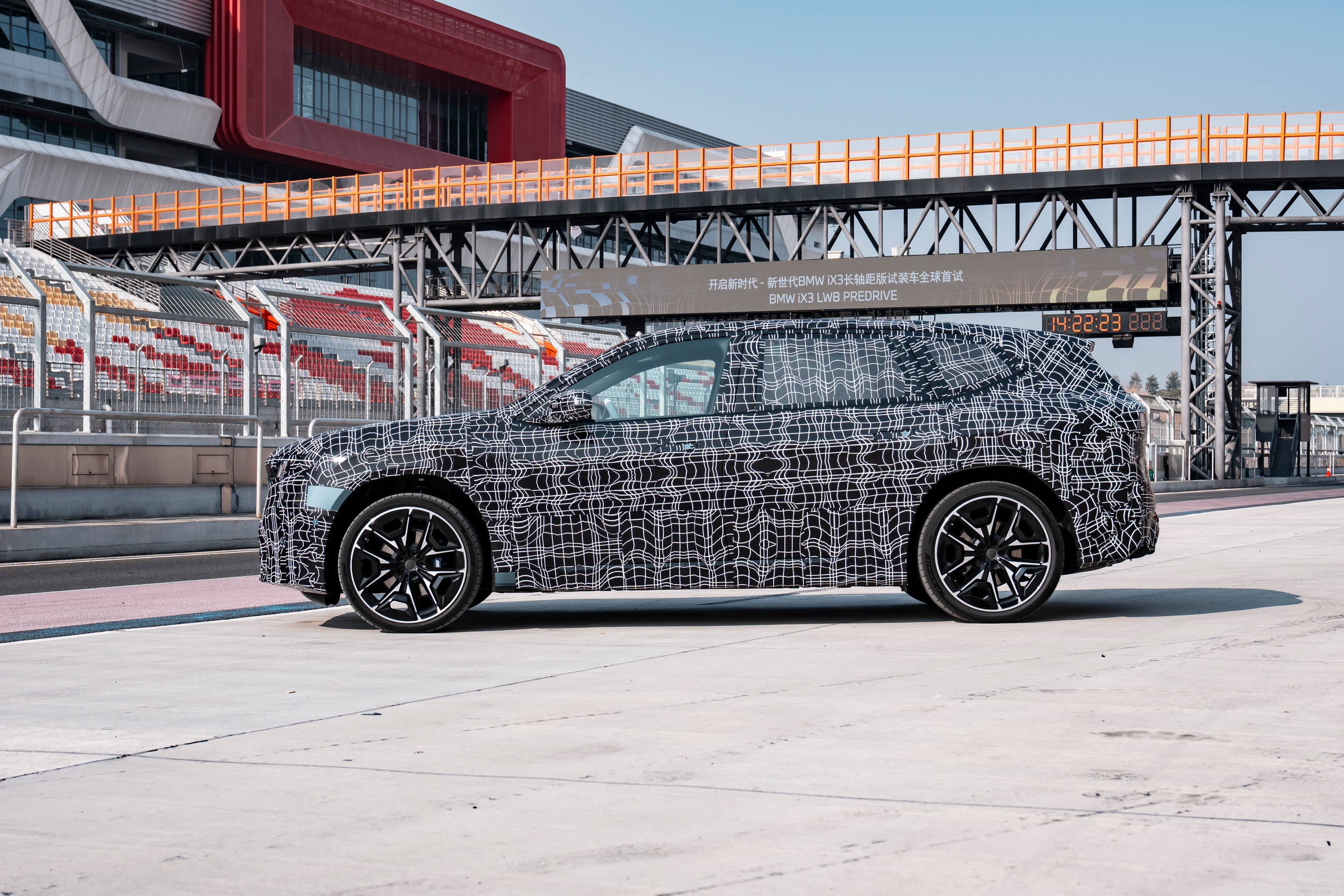
BMW unveiled the iX3 last fall and now the company is previewing the upcoming long-wheelbase variant. The electric crossover is being developed “in China, for China, and with China.”
Set to battle the Mercedes GLC L with EQ Technology, the iX3 Long Wheelbase will debut at the Beijing Auto Show in April and be launched in the second half of the year. When it arrives, the iX3 will become the first long-wheelbase model based on BMW’s Neue Klasse platform.
Looking instantly recognizable, the crossover has a wheelbase that has been stretched 4.3 inches (108 mm). Doing the math, the model will have a 118.3 inch (3,005 mm) wheelbase, which is 1.2 inches (30 mm) longer than the X5.
That’s pretty big and BMW said the iX3 Long Wheelbase will deliver “significantly enhanced rear-seat comfort and overall spaciousness.”
China-Specific Technology
Catering to the Chinese market requires more than just stretching the wheelbase and BMW is more than happy to oblige. In this case, they’ve developed a “Chinese derivative” of Operating System X, which “incorporates approximately 70 percent locally developed software engineering.”
Customers will also find a navigation system developed in collaboration with Amap as well as an Intelligent Personal Assistant that uses large language models from Alibaba and DeepSeek.
BMW is also working on China-specific driver assistance systems with Momenta. These will be “tailored to local traffic conditions and usage scenarios” in order to deliver “highly capable driver-assistance functions optimized for complex urban environments, highways, and long-distance travel in China.”
More Than 559 Miles Of Range
The automaker is keeping powertrain details under wraps, but said the iX3 Long Wheelbase will have an 800-volt electrical architecture, cylindrical battery cells, and sixth-generation eDrive technology. That’s vague, but BMW promised a 400 kW DC fast charging capability as well as a CLTC combined range in excess of 559 miles (900 km).
When the battery is low, it can get more than 249 miles (400 km) of range in as little as 10 minutes. If you’re not in a rush, a 21 minute charge can take the battery from 10-80%.
We’ll learn more in the coming months, but the European iX3 was launched in 50 xDrive guise. It features a 108.7 kWh battery pack as well as a dual-motor all-wheel drive system producing a combined output of 463 hp (345 kW / 469 PS) and 476 lb-ft (645 Nm) of torque. This enables the model to accelerate from 0-62 mph (0-100 km/h) in 4.9 seconds, before hitting a top speed of 130 mph (210 km/h).
It remains to be seen if the long-wheelbase variant will echo that, but BMW said the crossover will have a China-specific chassis and suspension setup. It aims to provide a “refined balance between comfort and stability across a wide range of driving scenarios.”
While China is the main focus for the iX3 Long Wheelbase, the model will also be offered in select markets around the world. These will include India, Indonesia, Thailand, and Malaysia.
Chinese SC-01 will be built in Italy, sold across Europe, report says.
Europe scheduled to get 1,000 cars; debut takes place January 24.
Bi-motor, AWD two-seater gives 429 hp, 0-62 mph in 2.9 sec.
Electric sports cars are finally happening in a big way, but Europe might not be waiting for Porsche or Alpine to lead the charge. A small Chinese brand you have probably never heard of wants in on the action, and it looks like a far more serious enthusiast proposition than the MG Cyberster.
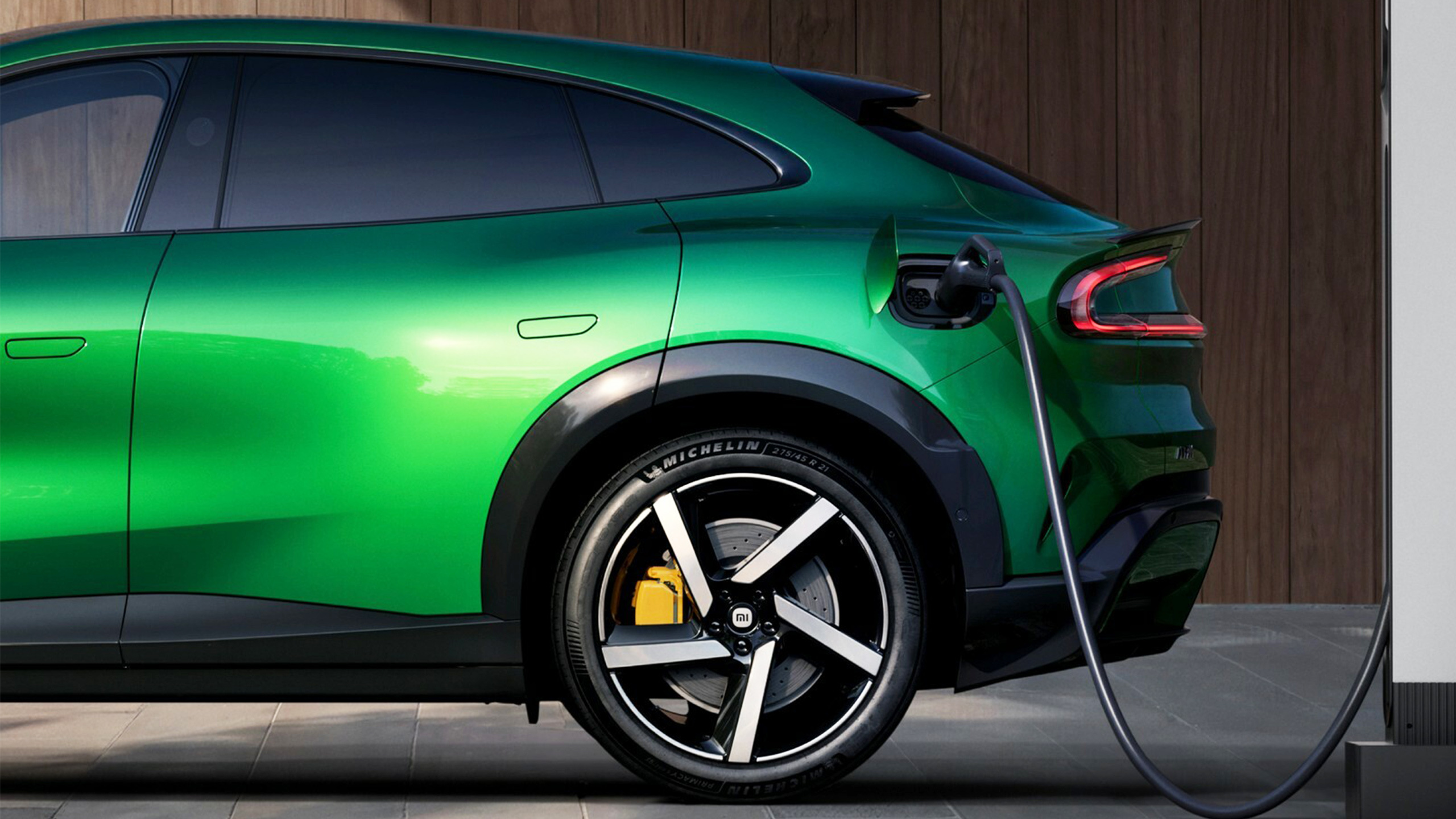
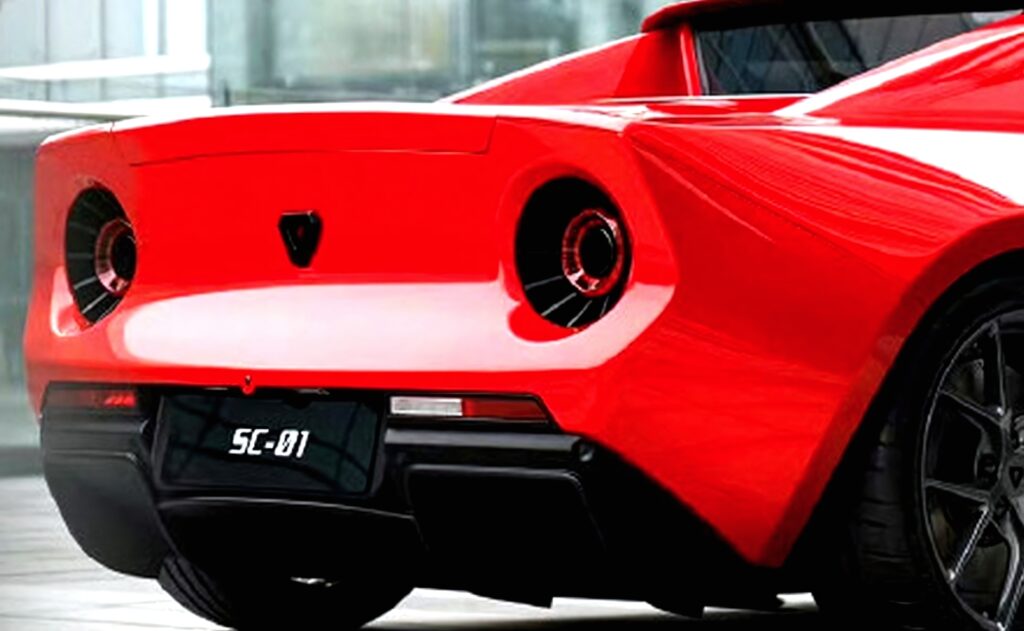
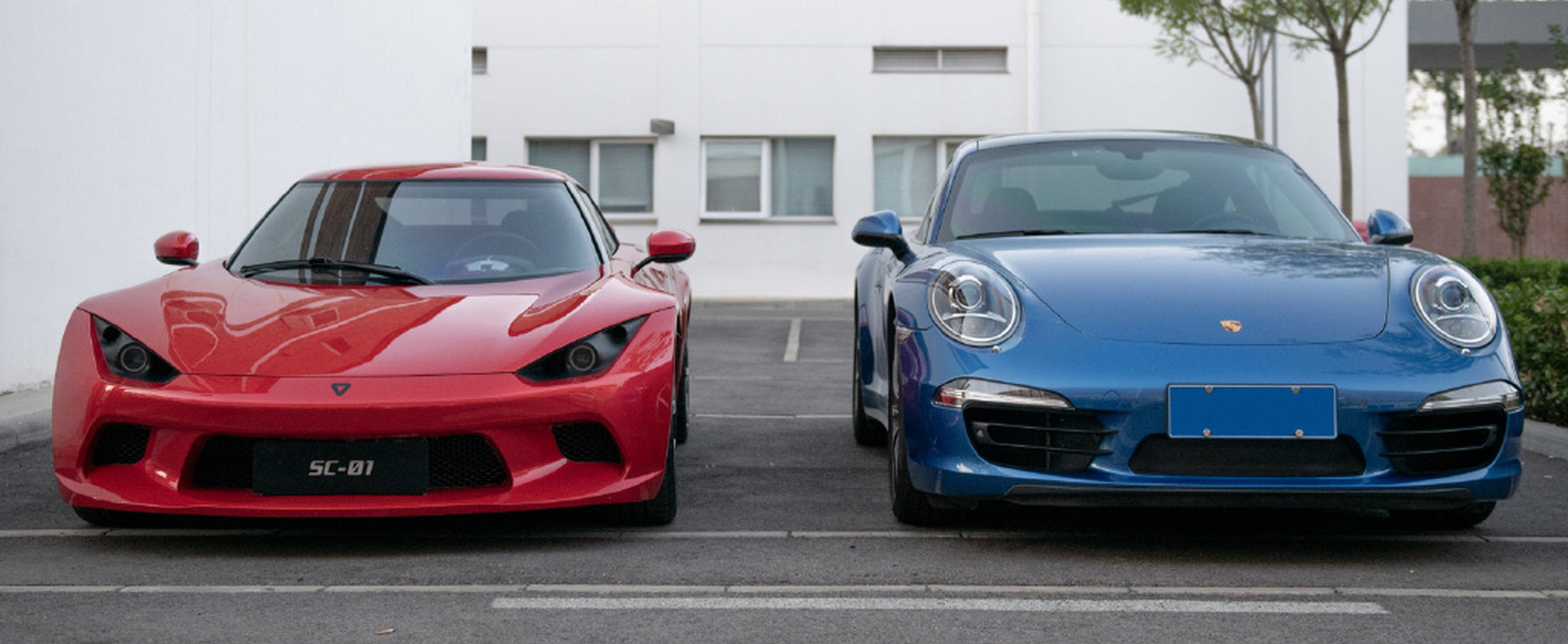
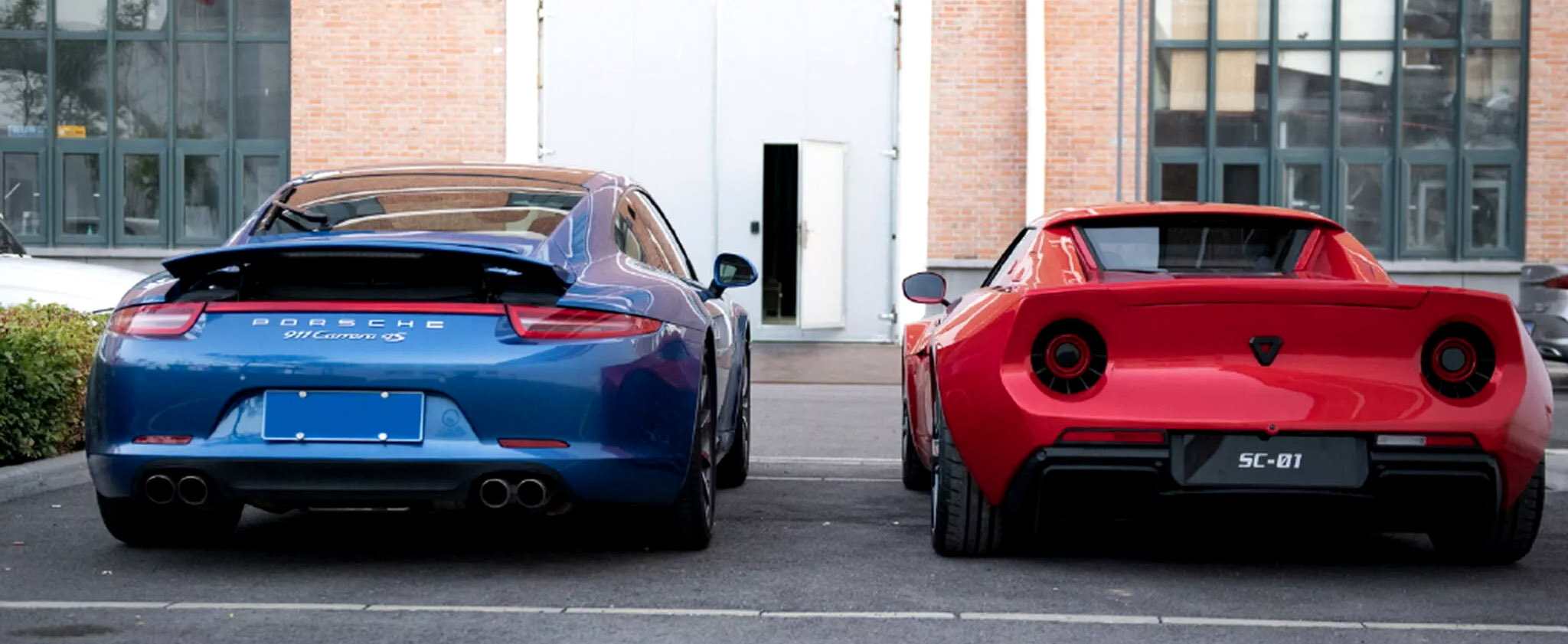
The car is the SC-01, a lightweight electric sports coupe that’s not just headed to Europe, as the company itself has confirmed, but also set to be built there, according to Chinese media. Backed by Xiaomi and Jiangling’s JMEV brand, around 1,000 of these compact two-seaters are expected to be produced in Italy.
Visually, the SC-01 leans hard into classic wedge territory. Think Lancia Stratos proportions filtered through a modern EV lens, with compact dimensions and proper sports car stance.
At 4106 mm (161.7 inches) long it’s a smidge shorter than an Alpine A110 and around 270 mm (10.6 inches) more compact than the recently axed ICE Porsche 718 Cayman. The real headline, though, is the weight.
Hardcore Diet
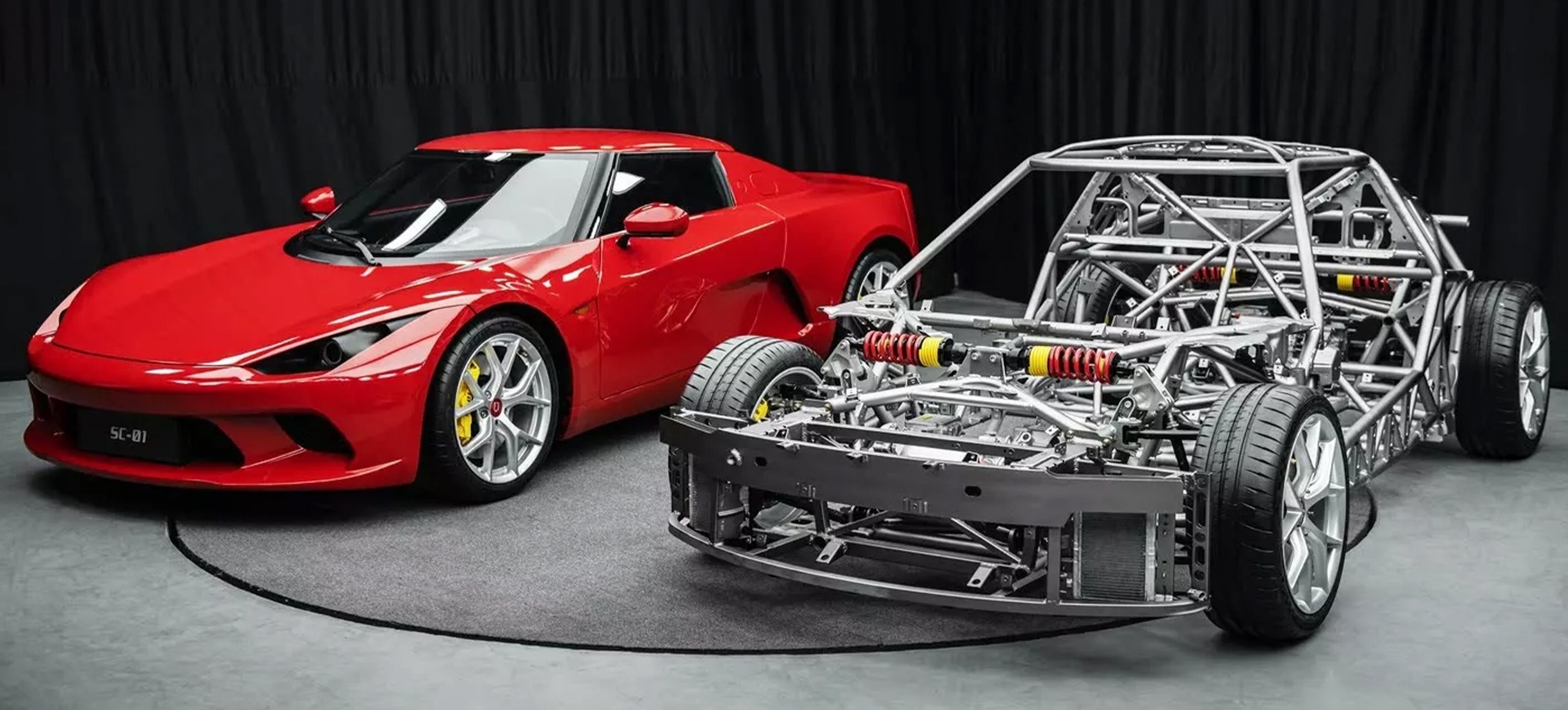
At 1,365 kg (3,009 lbs) the aluminium SC-01 is astonishingly light for an EV – 520 kg (1,150 lbs) lighter than a RWD MG Cyberster and 620 kg (1,370 lbs) down on MG’s AWD variant.
The Cyberster already seemed more like a mini Mercedes SL than a hardcore sports car, and those numbers, plus the SC-01’s front and rear pushrod suspension only underline the impression.
Power comes from dual electric motors producing a combined 429 bhp (434 PS / 320 kW), enough to launch the SC-01 to 62 mph (100 kmh) in a claimed 2.9 seconds.
A 60 kWh battery gives the car a quoted 311-mile (500 km) range on the optimistic CLTC cycle, so reckon on more like 270 WLPT miles (435 km) and even less if you’re driving it like you’re supposed to.
Minimal Screen Tech
Inside, the SC-01 might surprise you even more. There’s no massive touchscreen wall of the kind you might expect from a modern Chinese EV. Instead you get a single driver display and physical climate controls.
In other words, it feels like someone built it for people who actually enjoy driving, and plan to be driving too hard to spend precious moments hunting for a switch on a digital display.
How Much will it Cost?
Exact Euro prices and an on-sale date are still TBC, but according to Car News China, the car may launch at around 500,000 yuan, which comes to around $72,000, €61,000, or £53,000. That’s a significant step up from its domestic Chinese price of 229,800 yuan, or roughly $33,000 / €28,500 at current exchange rates.
Still, that would put it at a competitive advantage to the new generation of electric sports cars from Porsche, Alpine, and Lotus, some of which are still years away, and are sure to cost more.
GM recalled over 80,000 Equinox EVs in the United States.
The pedestrian warning system isn’t loud enough to hear.
This marks the second recall for the same safety issue.
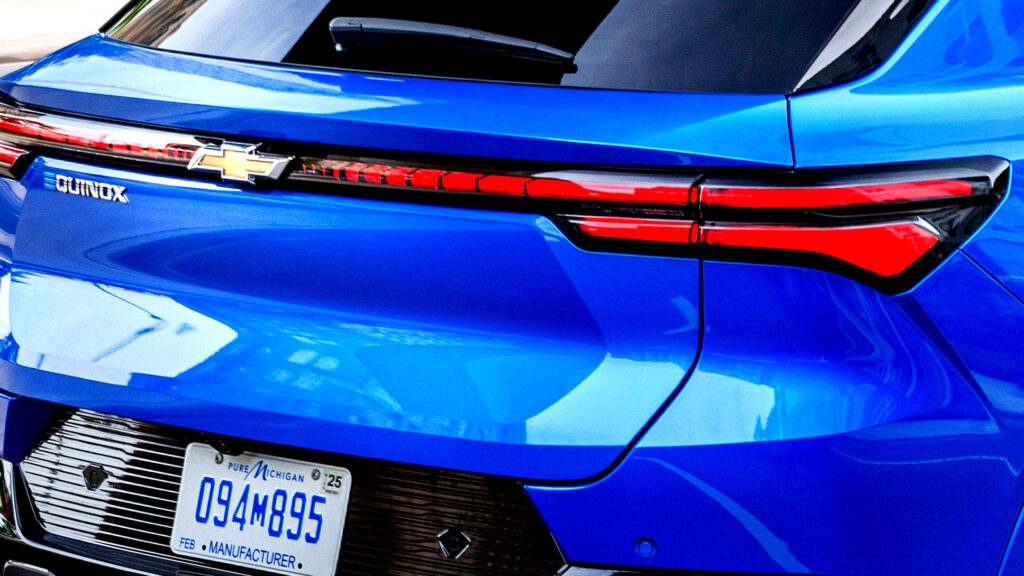
The Chevrolet Equinox EV is one of GM’s most important electric vehicles, serving as a homegrown competitor to the likes of the Tesla Model Y and Ford Mustang Mach-E. But more than 80,000 units are now being recalled across the United States for a rather unusual reason: they’re too quiet.
Under US regulations, all new electric vehicles must emit a pedestrian warning sound at speeds below 6.2 mph (10 km/h) to ensure they’re audible in areas like parking lots. While the Equinox EV is equipped with such a system, GM has admitted it isn’t doing its job properly. The system was miscalibrated during production and doesn’t produce sufficient sound to alert nearby pedestrians.
Given the volume of vehicles rolling out of GM’s Ramos Arizpe Assembly plant in Mexico, this isn’t the sort of issue that should have slipped through unnoticed. According to the National Highway Traffic Safety Administration (NHTSA), an Equinox EV that can’t be heard poses a genuine risk to pedestrian safety.
The recall affects a total of 81,177 Chevrolet Equinox EVs. Of those, 59,537 are from the 2025 model year, built between July 22, 2024, and August 12, 2025. The remaining 21,640 units belong to the 2026 model year and were assembled between April 7 and December 16 of 2025.
GM launched an internal investigation in November after one of its engineers filed a report through the company’s Speak Up For Safety program, flagging the issue during testing of a 2025 model.
Surprisingly, this isn’t GM’s first brush with a too-quiet Equinox EV. In September of the previous year, the automaker recalled 23,700 units from the 2024 model year for the exact same problem. Those earlier vehicles used a different calibration than the 2025 and 2026 models now being flagged.
The one bit of relief for owners is that the fix is straightforward. GM will deploy an over-the-air update to recalibrate the body control module. For those who prefer in-person service, a dealership visit remains an option. Notifications will begin reaching owners on February 2.

 Login
Login