We cover a harsh winter ice storm, takeaways from the 2026 NSTA Midwinter Meeting, updates to the U.S. EPA’s Clean School Bus Program and illegal passing by Waymo autonomous vehicles.
Industry consultant Tim Ammon gives tips for transportation budgeting and business efficiency while maximizing educational access for students. He will lead sessions at STN EXPO East this March in Charlotte-Concord, North Carolina.
Authorities in Elk River, Minnesota are investigating how a man abducted a 7-year-old girl from her school bus stop.
According to a statement from the Sherbourne County Sheriff’s Office, the child exited her school bus just before 4 p.m. last Wednesday and was reported missing at approximately 6:30 p.m. An extensive search resulted in no information about her whereabouts.
Investigators later determined that the girl had likely been abducted. “An extensive search by law enforcement, first responders and the public didn’t reveal her whereabouts, and investigators had no corroboration that she had potentially left the area in a vehicle until hours later,” said Sherbourne County Sheriff’s Office Commander Ben Zawacki.
The sheriff’s office issue an Amber Alert at 11:40 p.m., after authorities confirmed the abduction. The investigation led officials to a white Dodge Ram believed to be connected to the disappearance. Around 1 a.m. Thursday, law enforcement agencies located the suspect vehicle and found the 7-year-old girl inside.
“The girl was safe and the suspect was arrested,” the sheriff’s office stated.
Joseph Bragg, 28, was charged in connection with the child’s abduction. No additional details about the suspect or the circumstances surrounding the incident have been released. The investigation remains ongoing.
January 28, 2025 – At a time when the administration claims the U.S. is facing a nationwide energy emergency and consumers are increasingly concerned about rising electricity costs, its efforts to stop five large offshore wind projects under construction along the Atlantic Coast could cost consumers billions of dollars and keep much-needed new electricity off …
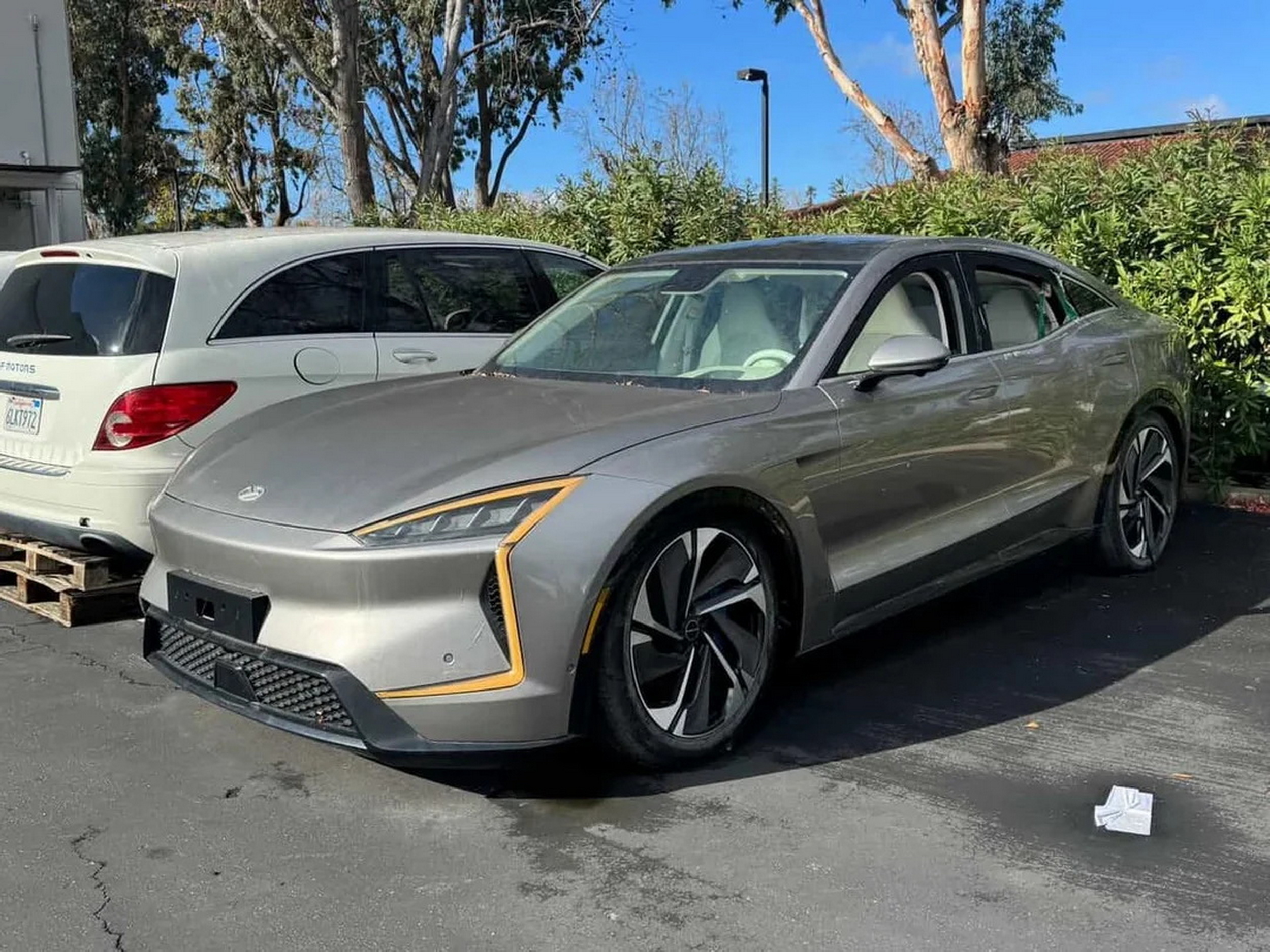
Abandoned prototype in California shows Chinese brand’s US plans.
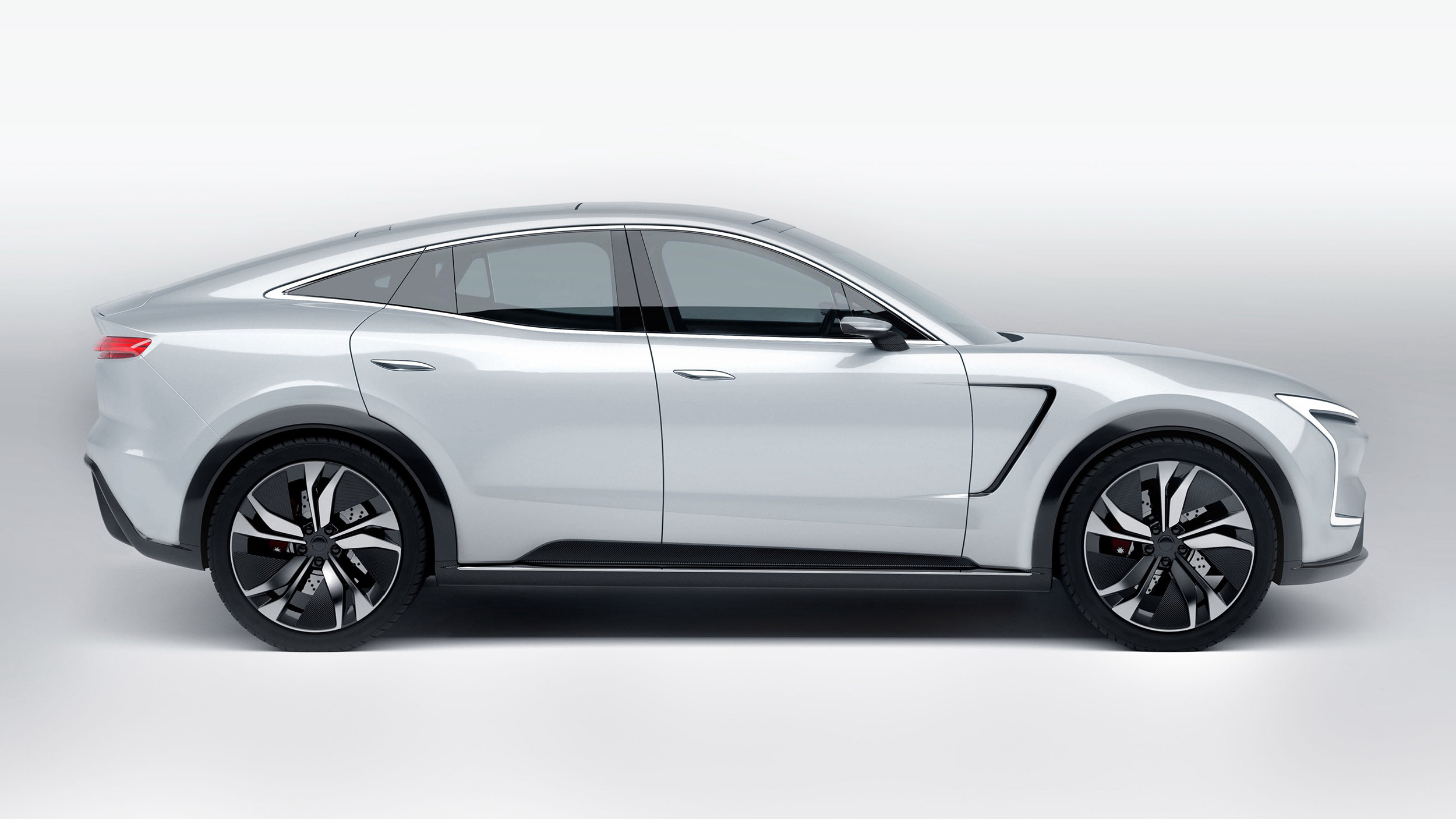
Near-production SF7 crossover was built to meet US regulations.
SF Motors rebranded as Seres after halting US production plans.
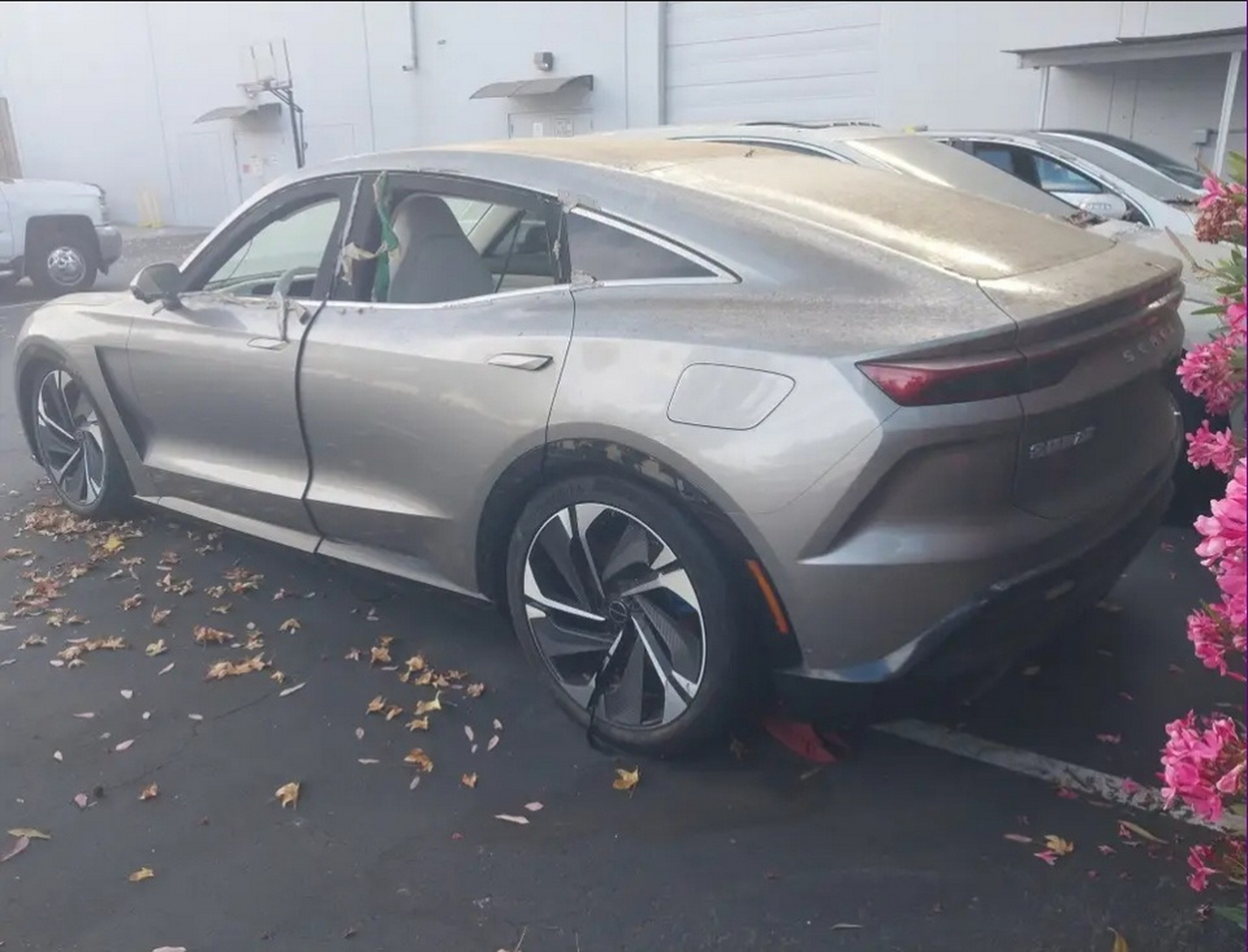
A dust-covered prototype spotted in a California parking lot has stirred plenty of curiosity across forums and social media. Weathered and left behind, it’s another eerie reminder of how unforgiving the EV game can be, especially for startups trying to find a foothold in a market that moves fast, burns money, and doesn’t wait for anyone to catch up.
The vehicle in question appears to be a near-production evolution of the SF7 concept, which SF Motors first revealed back in 2018. That company would later be rebranded as Seres, eventually spinning off the Aito nameplate in partnership with Chinese tech giant Huawei. And yes, keeping track can be a bit of a challenge.
That same year, it also opened a 130,000-square-foot R&D and low-volume manufacturing facility at the McCarthy Creekside Industrial Center in Milpitas, California.
By the following year, however, those plans had been shelved. Officially, it was due to shifting market dynamics and the usual complications of US-China trade. Unofficially, the writing was already on the wall.
The abandoned prototype, first noticed by forum users and Reddit sleuths, was spotted in the parking lot of the SF Motors facility in Milpitas, California. Compared to the original SF7 concept, this one looks much closer to production, with reworked bumpers, reshaped fenders, and more conventional lighting units.
Overall, it looks like a mix between a sedan and a fastback crossover, with discreet cladding around the wheel arches and a sleek roofline. It also features. US-market details like amber indicators suggest it was being prepped for local homologation.
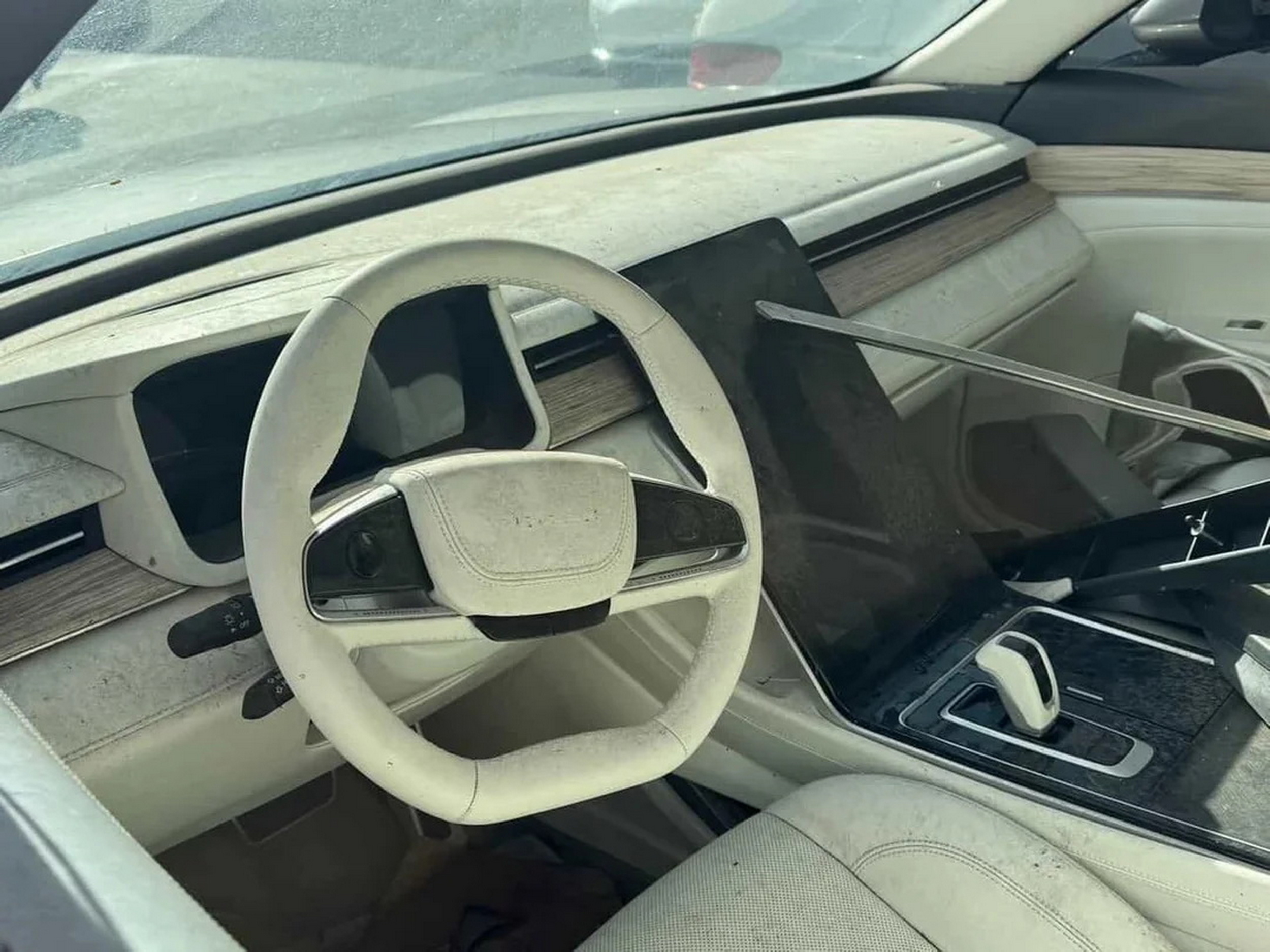
Inside, there’s a large portrait-oriented infotainment display paired with a digital instrument cluster. The cabin is trimmed in white leather with wood accents, but it’s clearly suffered from exposure, thanks to windows left partially open to the elements.
Specs That Never Saw the Road
Originally, the SF7 was meant to ride on a dedicated EV platform, boasting quad electric motors with a combined output of up to 1,000 horsepower. A liquid-cooled battery was estimated to provide around 300 miles (483 kilometers) of range, putting the SF7 in direct competition with premium electric SUVs at the time.
Although the SF7 never made it to showrooms, the slightly smaller SF5 managed to find a second life. That concept evolved into the Seres 5, which we reviewed, and the Aito M5, developed through the Seres-Huawei partnership.
A Failed Dream
Seeing this derelict development vehicle in California is reminder of how close SF Motors came to offer vehicles in the US. But in the end, those plans never crossed the finish line.
The Mishawaka facility, originally chosen as the production site for the SF5 and SF7, once built the Mercedes R-Class. That likely explains the presence of the white R-Class, sitting on pallets next to the abandoned SF7.
The old Mercedes crossover carries SF Motors emblems and was repurposed as a development mule for a “high-performance electric powertrain.”
From One Collapse to Another
After SF Motors scrapped its US production plans, the Indiana facility was picked up by Electric Last Mile Solutions (ELMS), a startup that later filed for bankruptcy. Mullen Automotive stepped in and took ownership in 2022, but by late 2025, the company handed the plant over to the GEM Group to resolve outstanding legal liabilities.
Neue Klasse iX3 demand is so strong BMW is adding production shifts early.
Strong early sales bode well for the Neue Klasse 3-Series arriving later this year.
BMW also upgrades charging, colors, and range for iX3 and other electric SUVs.
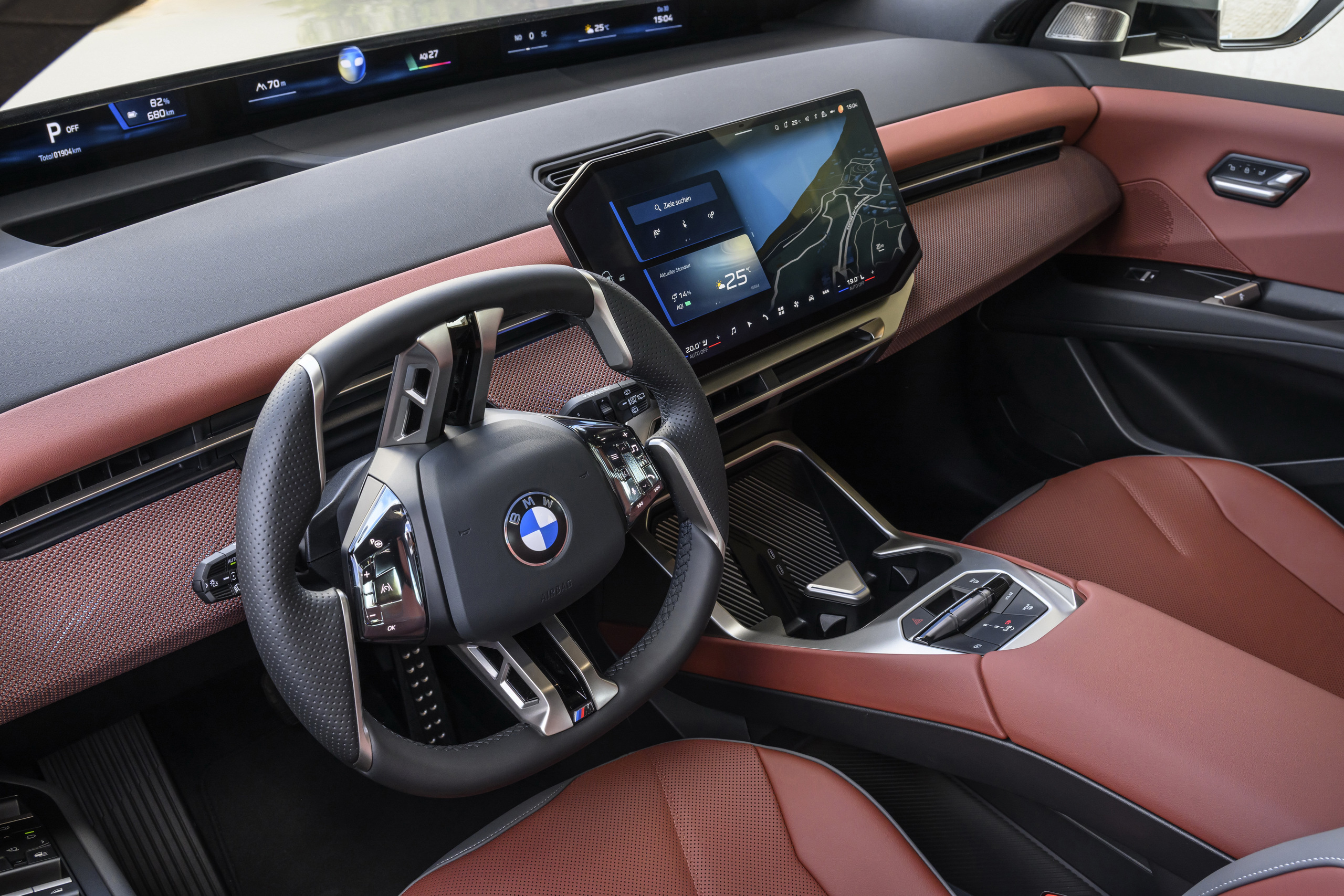
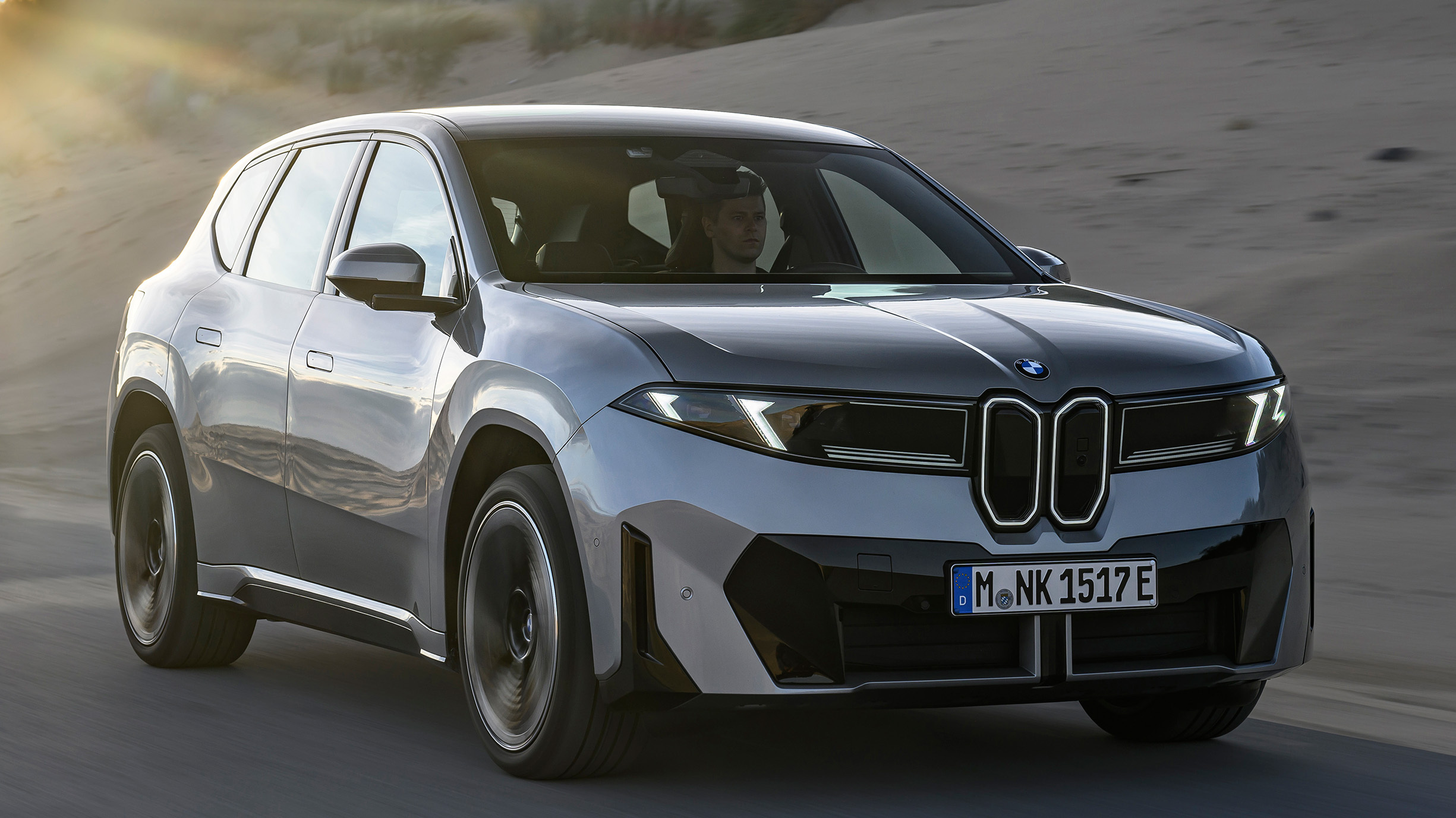
The Neue Klasse revolution has barely begun and already BMW has a problem. The good kind. Buyers are snapping up the new electric iX3 so quickly that it’s almost sold out through to the end of 2026, forcing the company to speed up plans for extra factory shifts.
That’s a big vote of confidence for a car customers haven’t even driven yet. Since its debut last autumn, the iX3 has made up around a third of BMW’s electric orders in Europe. Deliveries only start in March, yet much of the planned output is effectively gone.
To keep wait times from stretching into next winter, BMW is bringing forward a second production shift at its brand new Debrecen plant in Hungary, Auto News reports. The site is BMW’s first factory built purely for EVs, and while it’ll eventually build around 150,000 cars a year, it’s currently still ramping up. Clearly, that ramp needs to get steeper.
This matters far beyond one SUV. The iX3 is the first model on BMW’s all-new Neue Klasse platform and wears a bravely modern Neue Klasse design, as will the upcoming Neue Klasse 3-Series replacement later this year.
If buyers are this enthusiastic about the SUV, BMW executives will be feeling pretty good about the electric sports sedan waiting in the wings.
More Tech, More Color for 2027MY
BMW isn’t wasting time in adding polishing the package to make the iX3 even more desirable, either. From spring, the compact SUV gains an optional 22 kW AC charging upgrade, cutting home and workplace charging times. It also adds Vehicle to Load capability, letting owners power external devices at up to 3.7 kW and making camping trips more sophisticated.
There are fresh paint choices, too, including Eucalyptus Green metallic and Frozen Space Silver, plus some interior trim tweaks and the introduction of new options like a stainless steel loading sill, bright white steering wheel and an M-striped key.
Smaller SUVs Get Some Love Too
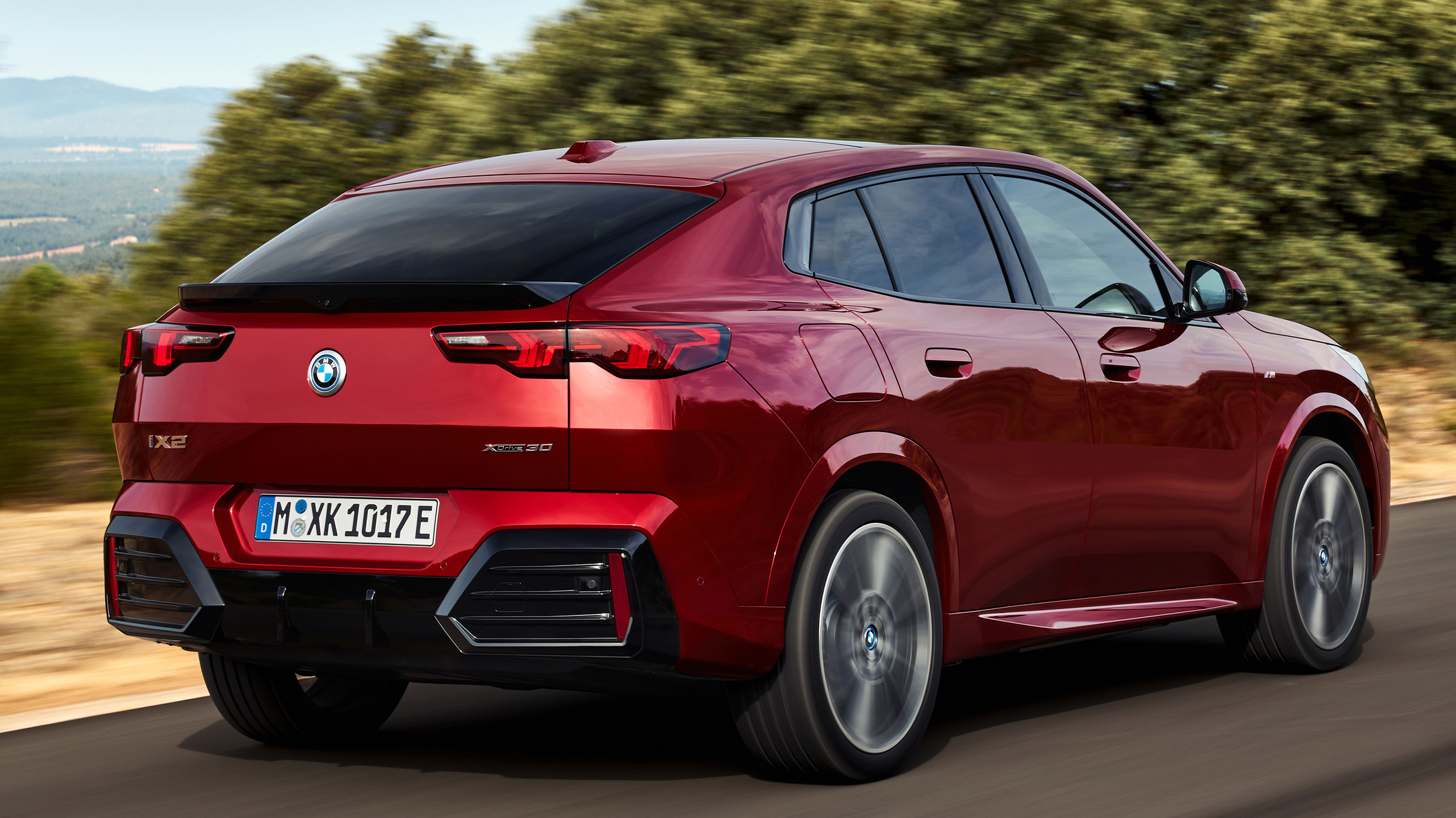
And BMW’s older electric crossovers aren’t being ignored this year, even if the iX3 is hogging the spotlight. The iX1 and iX2 receive more efficient silicon-carbide semiconductor components, boosting range by about 25 miles (40 km) depending on version. That’s a handy bump for everyday usability, improving the previously poor range of the best-performing eDrive20 to as much as 319 miles (514 km).
Russian brand Russo-Balt unveils an electric van with Tesla flair.
The F200 uses a hand-welded stainless steel body and monocoque.
It looks similar to a Chinese van, but company claims it’s original.
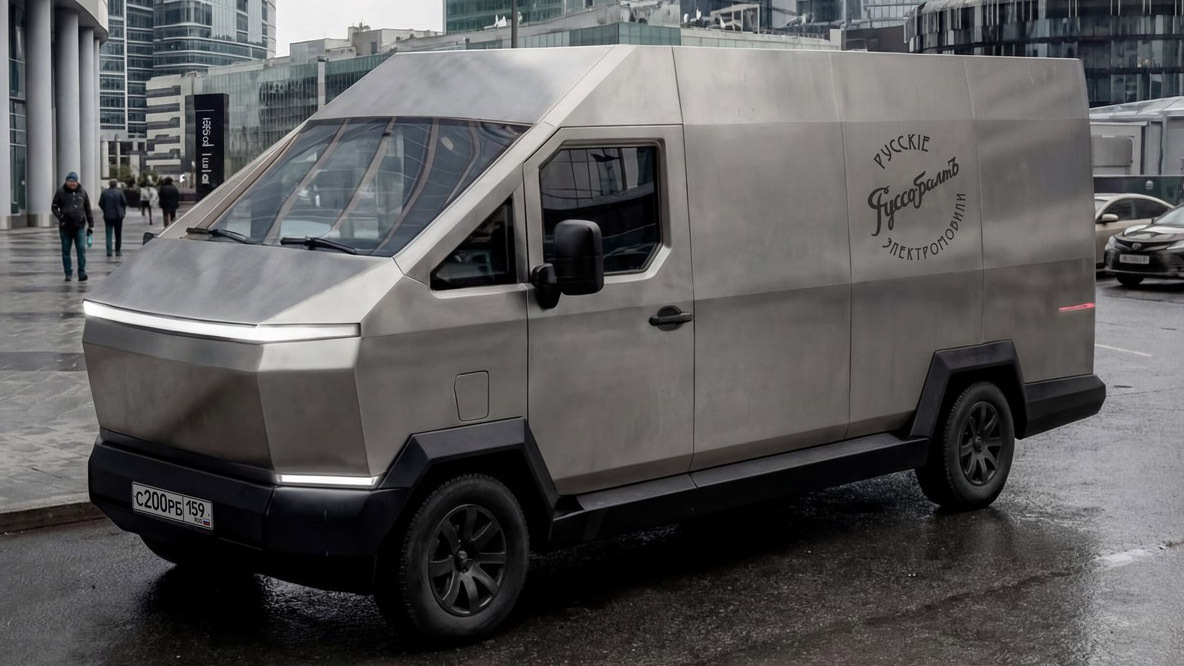
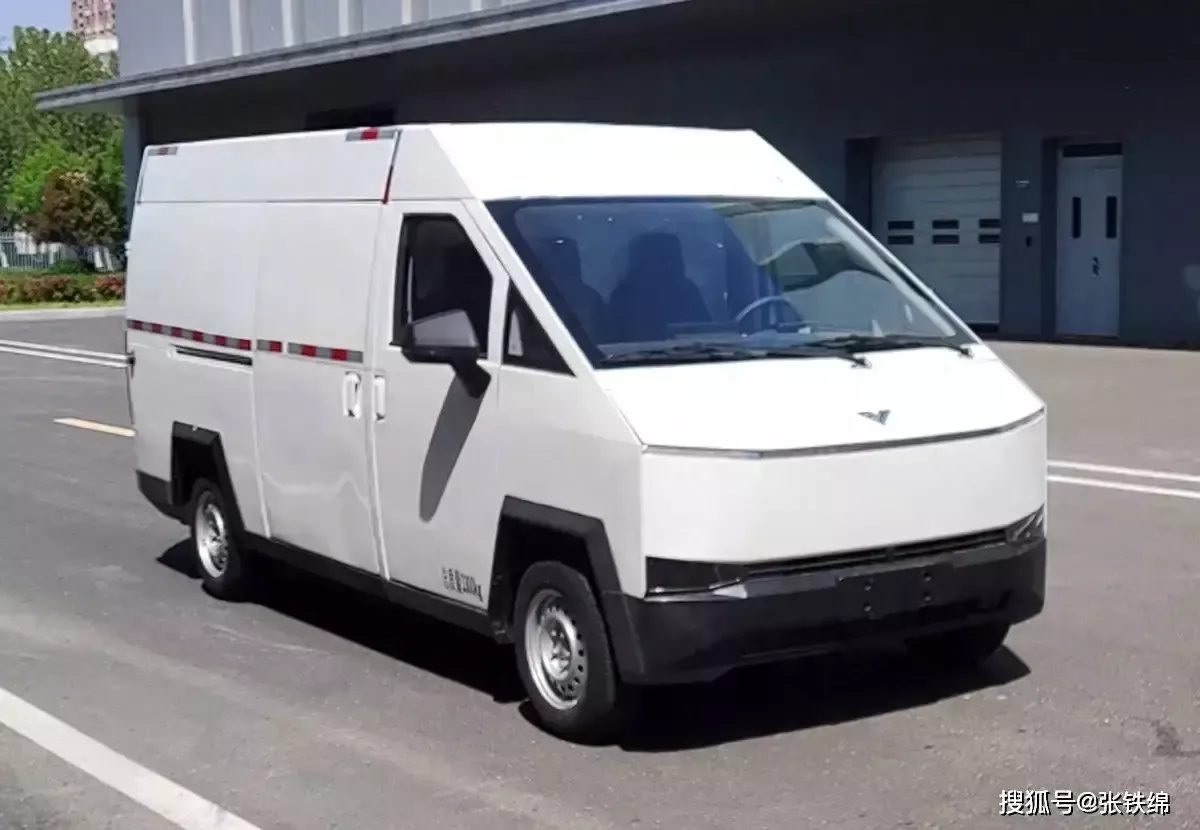
Tesla hasn’t created a Cybervan yet, but someone else just beat them to it. A Russian startup has stepped in with something that looks uncannily like a bulked-up Cybertruck, except it’s an electric van, and yes, it’s heading for production.
Meet the Russo-Balt F200, a stainless steel slab of a van with unmistakable Cybertruck flair. It’s the first model from a newly revived brand that traces its name back to a storied Russian automaker and railway carriage builder that operated between 1869 and 1918. Production plans are already in motion, with initial deliveries scheduled for January 2027.
As we previously reported, the F200 has already been seen roaming public roads in Russia, confirming that it’s more than a rendering or vaporware project. Amusingly, the company even featured a link to our earlier coverage on its own website.
Although we pointed out a resemblance to China’s Weiqiao New Energy V90, Russo-Balt insists the F200 is its own creation and not a rebadge job.
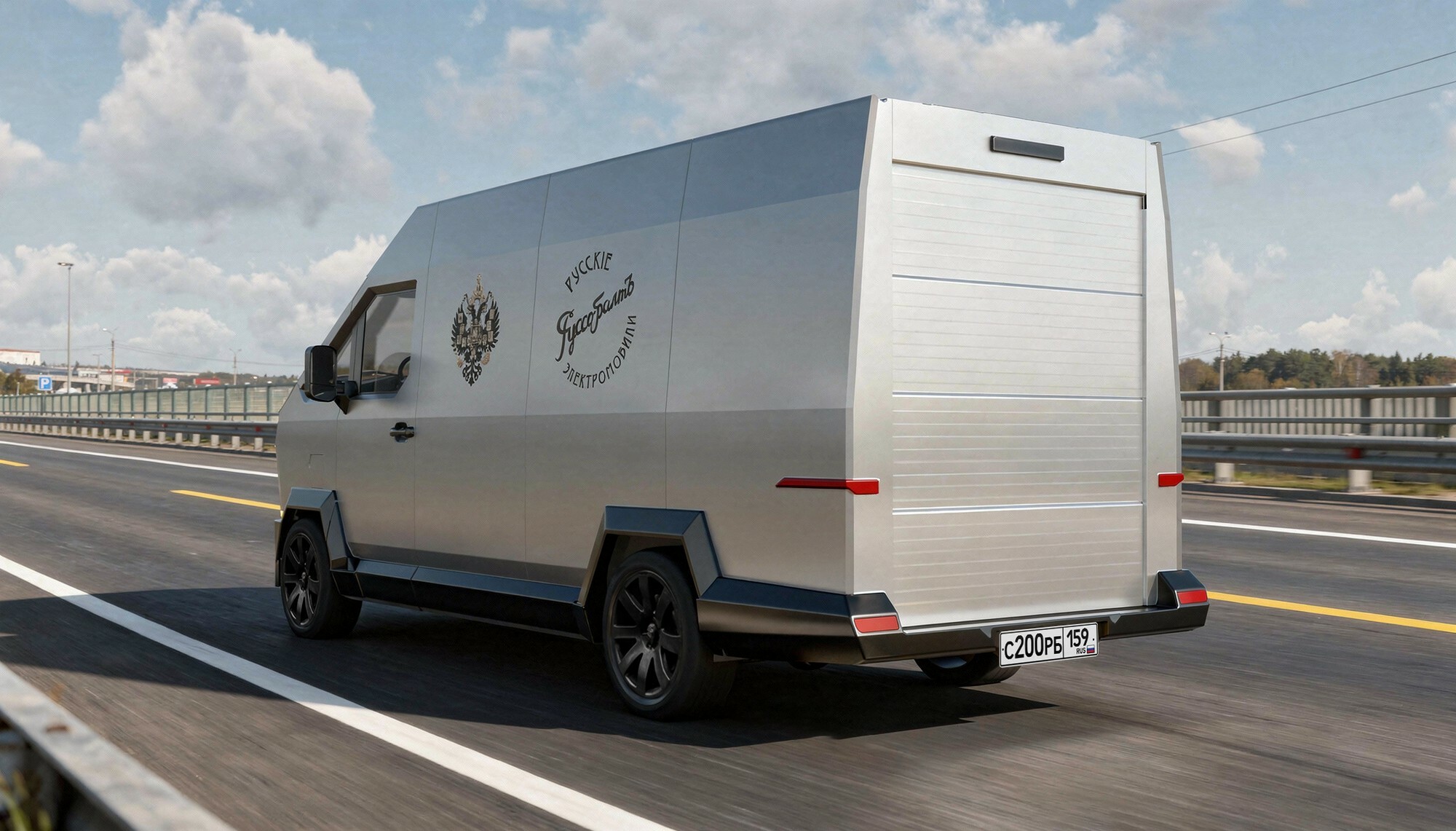
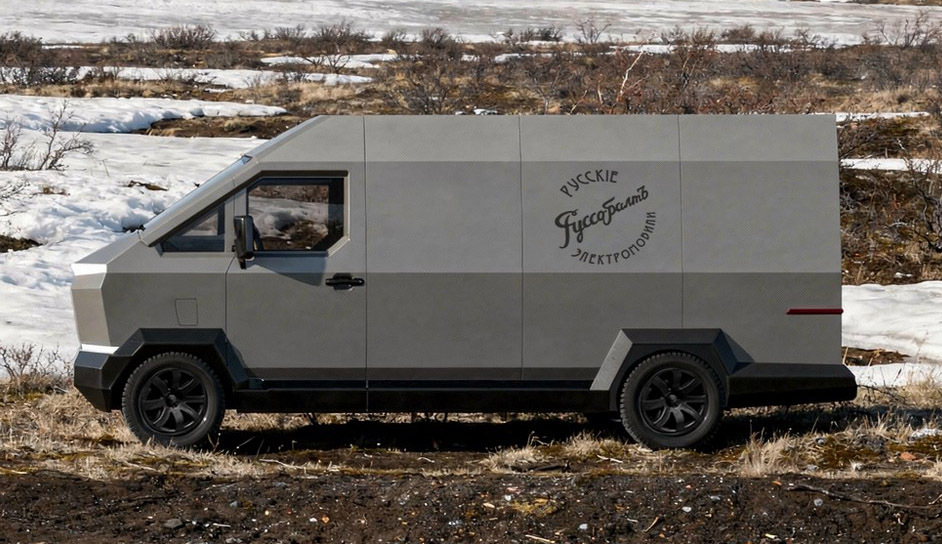
The body panels are shaped from unpainted stainless steel, just like the Cybertruck, welded together by hand. Despite the raw-metal finish, buyers can personalize the look with optional polyurethane wraps, available in a full range of colors and graphics.
From its sharp creases to the flat windows and squared-off arches, the F200 borrows more than a few cues from the Cybertruck. Full-width LED lighting front and rear, plus a tailgate design that recalls the styling of Tesla’s electric truck bed cover, round out the visual nods.
While most vans of this size ride on a ladder-frame chassis, the F200 uses a monocoque chassis. This setup supports a payload of up to 1,000 kg (2,205 pounds), which appears to be in line with commercial expectations.
100-Year Warranty
According to the Russian startup, the vehicle falls under the international L3H3 classification and measures 5,950 mm (234.3 inches) in length, 2,000 mm (78.7 inches) in width, and 2,550 mm (100.4 inches) in height, tall enough for most people to stand upright inside.
The standard build includes a 100-year body warranty for the stainless steel panels, which sounds a bit rich for a van that hasn’t hit the road yet in full production form.
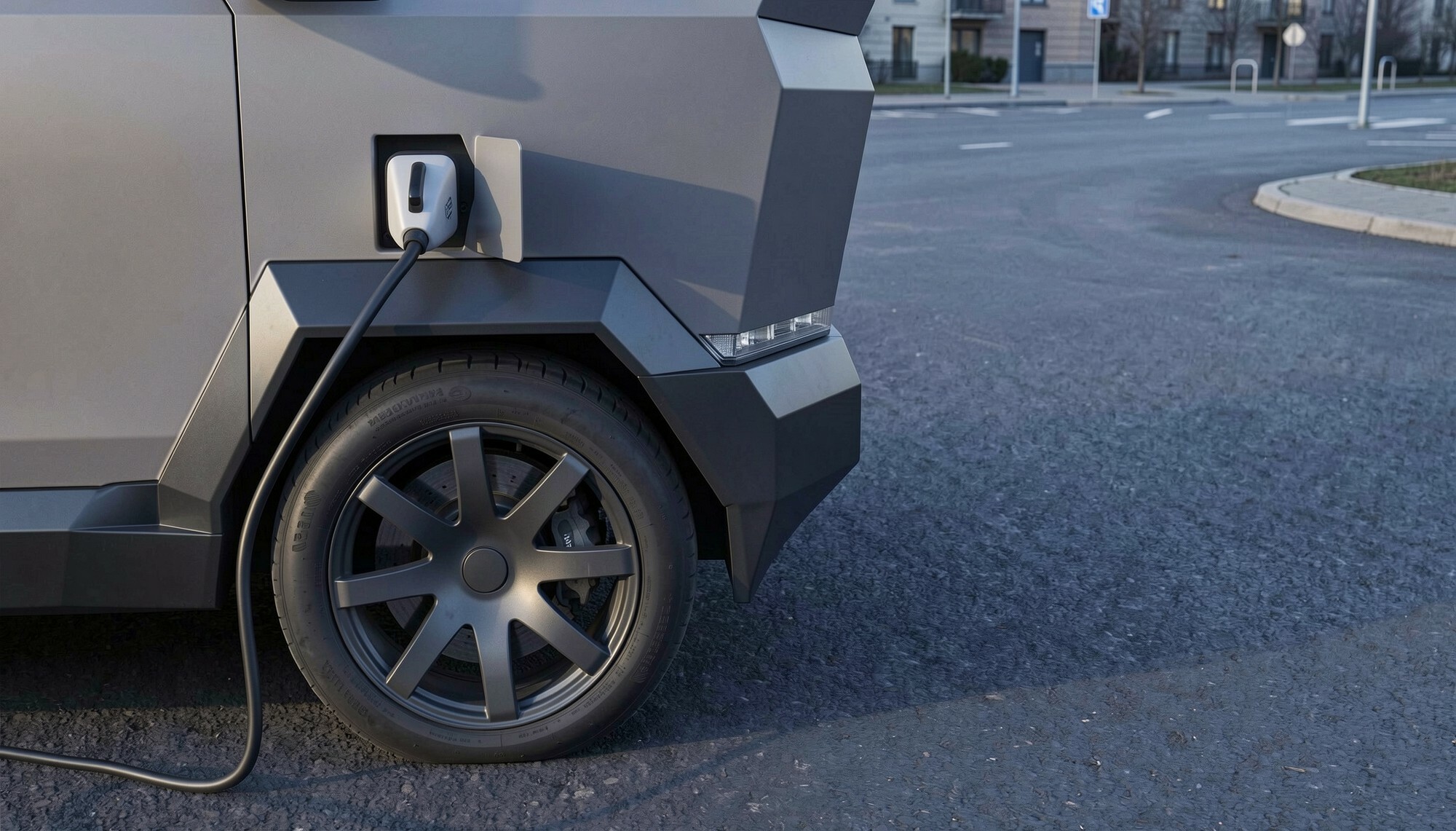
Power comes from a single electric motor with 200 hp sent to the front wheels. A 115 kWh battery pack provides a claimed range of 400 kilometers (249 miles), with DC fast charging supported via a port on the front fender.
How Much Does it Cost?
Pricing is set at 6.5 million rubles, roughly $85,200 at current exchange rates. A refundable deposit of just 10,000 rubles (around $131) secures a place in the production queue, though the total planned volume hasn’t been disclosed.
Standard equipment includes ABS, ESP, climate control, rear air suspension, and a 360-degree camera setup with live streaming capability. Virtually every surface that could be warmed, including seats, steering wheel, mirrors, even the windshield wipers, is heated. This is a vehicle built for Russian winters, after all.
Infotainment is handled by a 14-inch touchscreen, which displays vehicle settings and offers integrated entertainment from Russian platforms such as Rutube, VKvideo, and Yandex.
More to Come from Russo-Balt
Interestingly, the team behind the F200 claims prior experience in manufacturing stainless steel water dispensers, and they plan to carry over the same material and fabrication expertise to the van. Production will be on a made-to-order basis.
A second model, the F400, is already in development. This one will feature a range-extending gas engine and all-wheel drive via dual electric motors, combining for a projected 400 horsepower. It will also add front air suspension, in addition to the rear air spring setup already included on the F200. Pricing details have yet to be announced.
Ford updates Explorer and Capri with new battery chemistry.
52 kWh LFP battery adds up to 70 km (52 miles) of extra range.
Output climbs to 187 hp with an 8.0-second 0–100 km/h time.
Sluggish demand is putting pressure on Ford’s European EV strategy, as two of its newest models struggle to gain traction. The Explorer and Capri have fallen short of sales expectations across the region, prompting the company to scale back shifts and lay off workers at its Cologne factory in Germany.
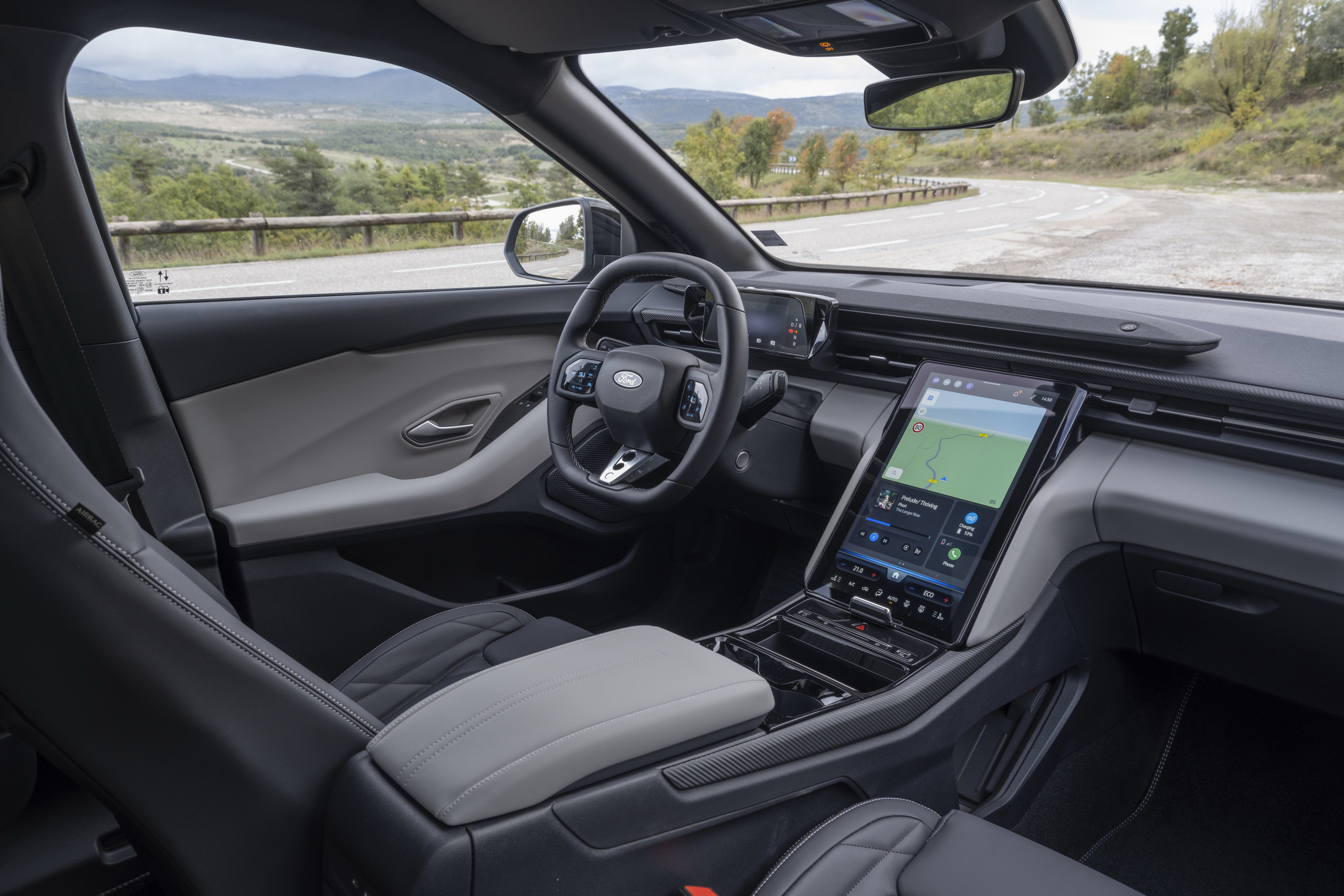
To rekindle buyer interest in its VW-based EVs, Ford has upgraded the Standard Range versions with added power and extended driving range.
The 2026 Ford Explorer and Capri Standard Range look the same as before, but benefit from hardware upgrades under the skin. The 52 kWh battery has the same capacity but now features lithium iron phosphate technology, unlocking more range.
According to Ford, the WLTP range figures have been increased by up to 70 km (52 miles). More specifically, the Explorer can travel 444 km (276 miles) between charges, and the more aerodynamic Capri has a range of 464 km (288 miles).
Acceleration Gets a Modest Bump
Furthermore, the rear-mounted electric motor is now making 187 hp (140 kW / 190 PS) and 350 Nm (258 lb-ft) of torque. This represents an increase of 20 hp (15 kW) and 40 Nm (30 lb-ft) compared to the outgoing Standard Range models, allowing the 0-100 km/h (0-62 mph) sprint to be completed in 8 seconds flat (-0.7 seconds).
Those suffering from range anxiety can still get the Extended Range RWD, which comes with a bigger 77 kWh battery and a more powerful 282 hp (210 kW / 286 PS) motor, or the flagship Extender Range AWD with a 79 kWh battery and dual motors producing 335 hp (250 kW / 340 PS).
The Ford Explorer was introduced in 2023, followed by the Capri in 2024. Both models are produced at the Cologne Electric Vehicle Center in Germany, following a multi-billion-dollar investment to convert the historic Fiesta plant into an EV hub.
Ford has yet to announce pricing for the updated EVs. In Germany, the current Explorer and Capri start from €39,900 ($47,600) and €42,400 ($50,700) respectively. It remains to be seen whether the improved specs will lead to increased customer demand.
Ford’s rivals in the segment continue to grow, with the list including the Skoda Enyaq, Renault Scenic E-Tech, Nissan Ariya, Kia EV6, Hyundai Ioniq 5, Peugeot E-3008, Opel Grandland Electric, Citroen e-C5 Aircross, Jeep Compass Electric, and the ever-present Tesla Model Y
Hybrids topped Europe’s powertrain sales with 4.5 million units.
Plug-in hybrids overtook diesel with a 33.4 percent sales increase.
In December, BEVs outsold gas cars for the first time in Europe.
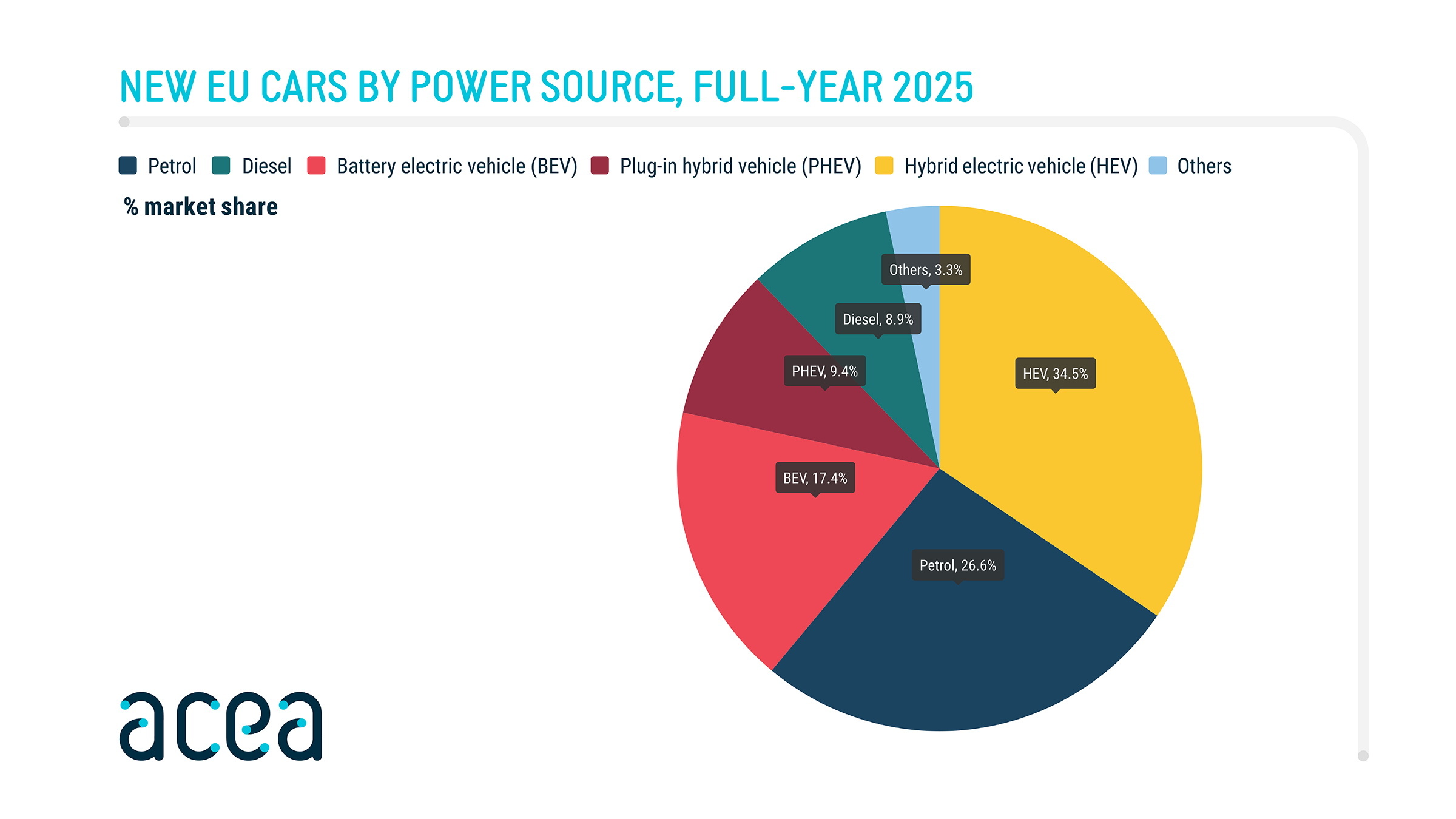
Electrified vehicles are no longer playing second fiddle in Europe’s car market. Sales of battery-electric, plug-in hybrid, and traditional hybrid models climbed sharply across the continent last year, while demand for gasoline and diesel vehicles continued to shrink.
The shift picked up real momentum in December, when BEV sales pulled ahead of gas-powered cars for the first time in the European Union, even as policymakers were making plans to ease emissions regulations.
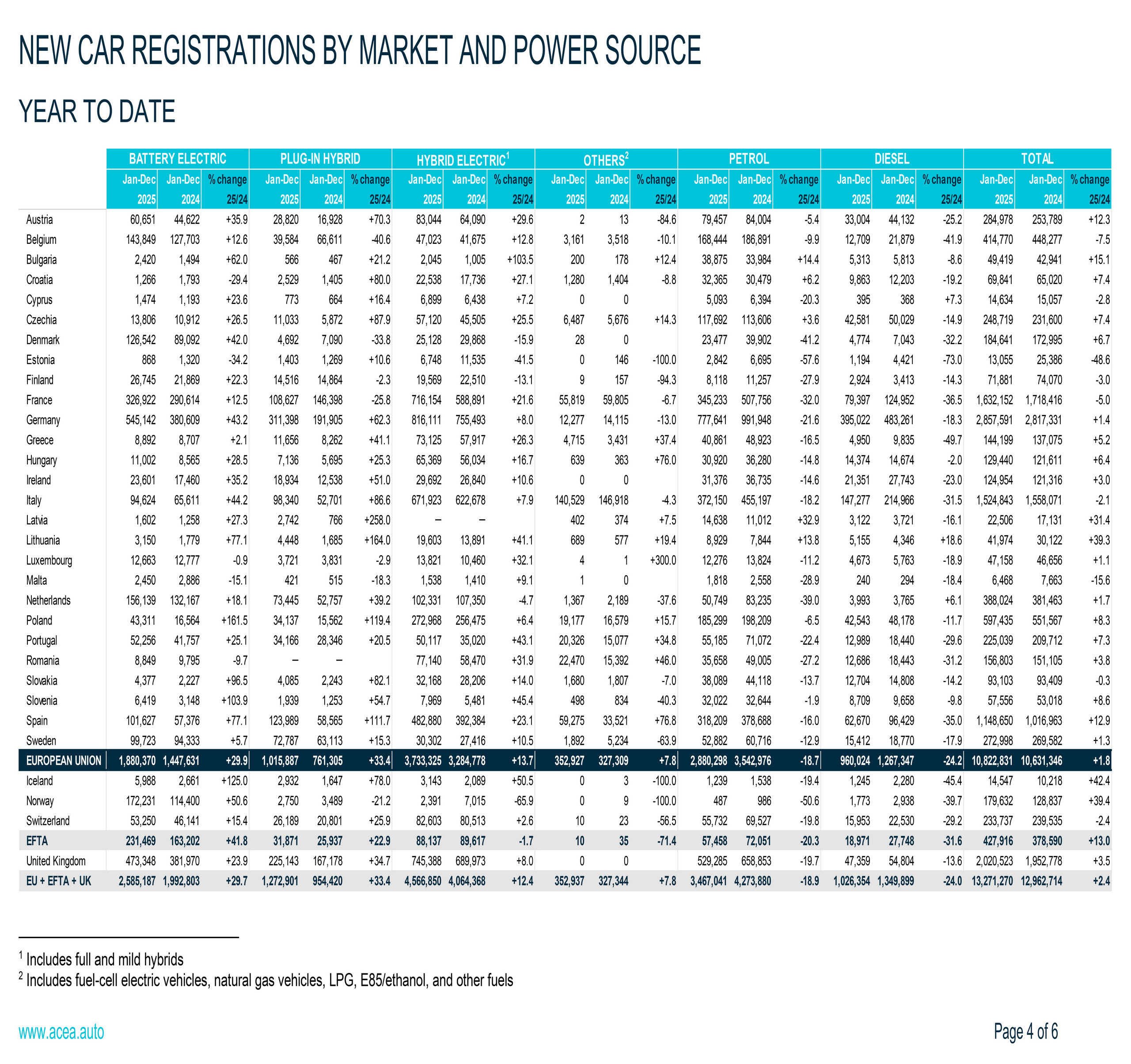
That month, BEVs accounted for 22.6 percent of the market, slipping just ahead of petrol cars at 22.5 percent. Hybrids held the largest share overall at 33.7 percent, followed by plug-in hybrids with 10.7 percent. Diesel fell further to 7.2 percent, while alternatives like LPG closed the list at 3.3 percent.
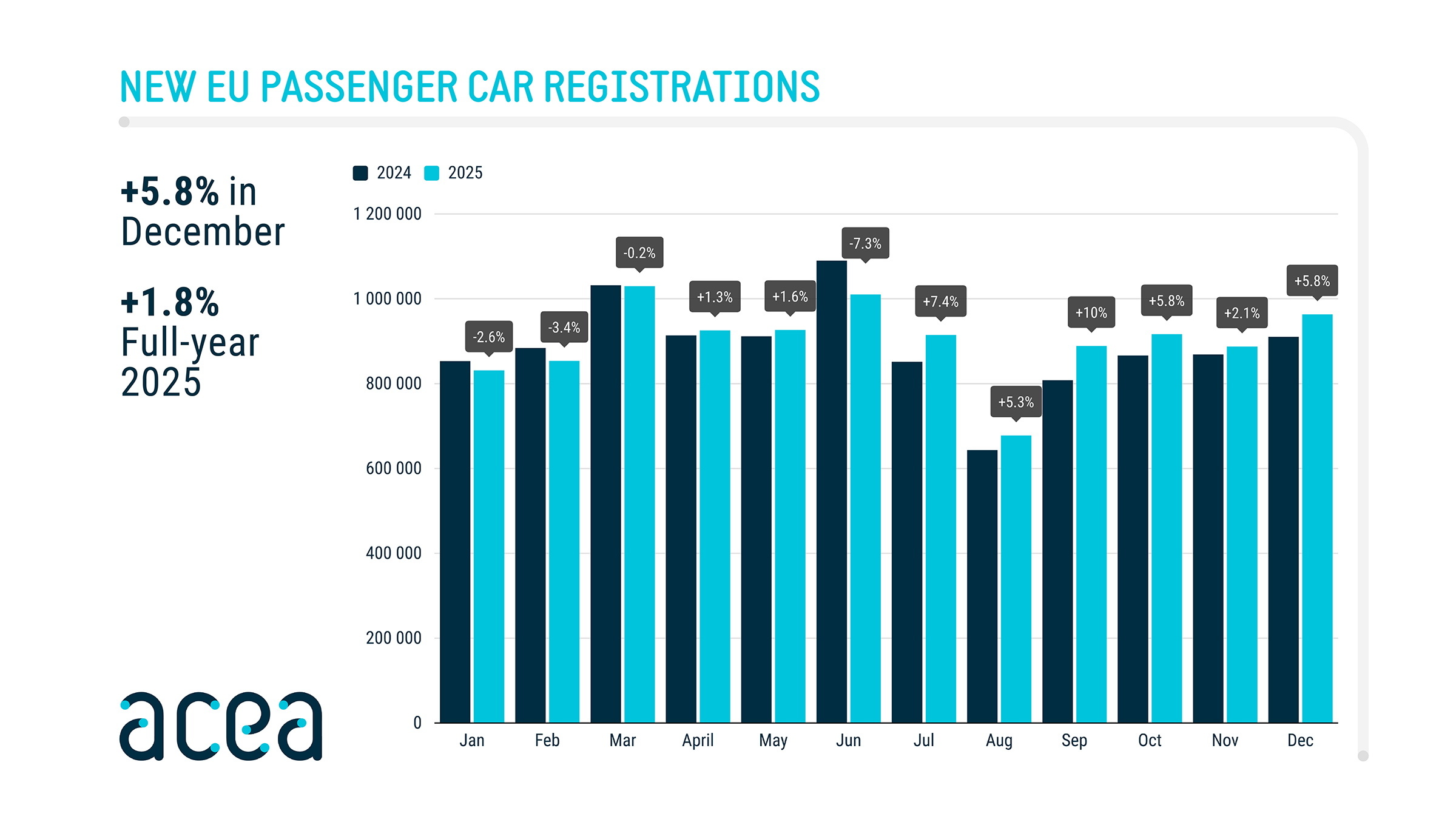
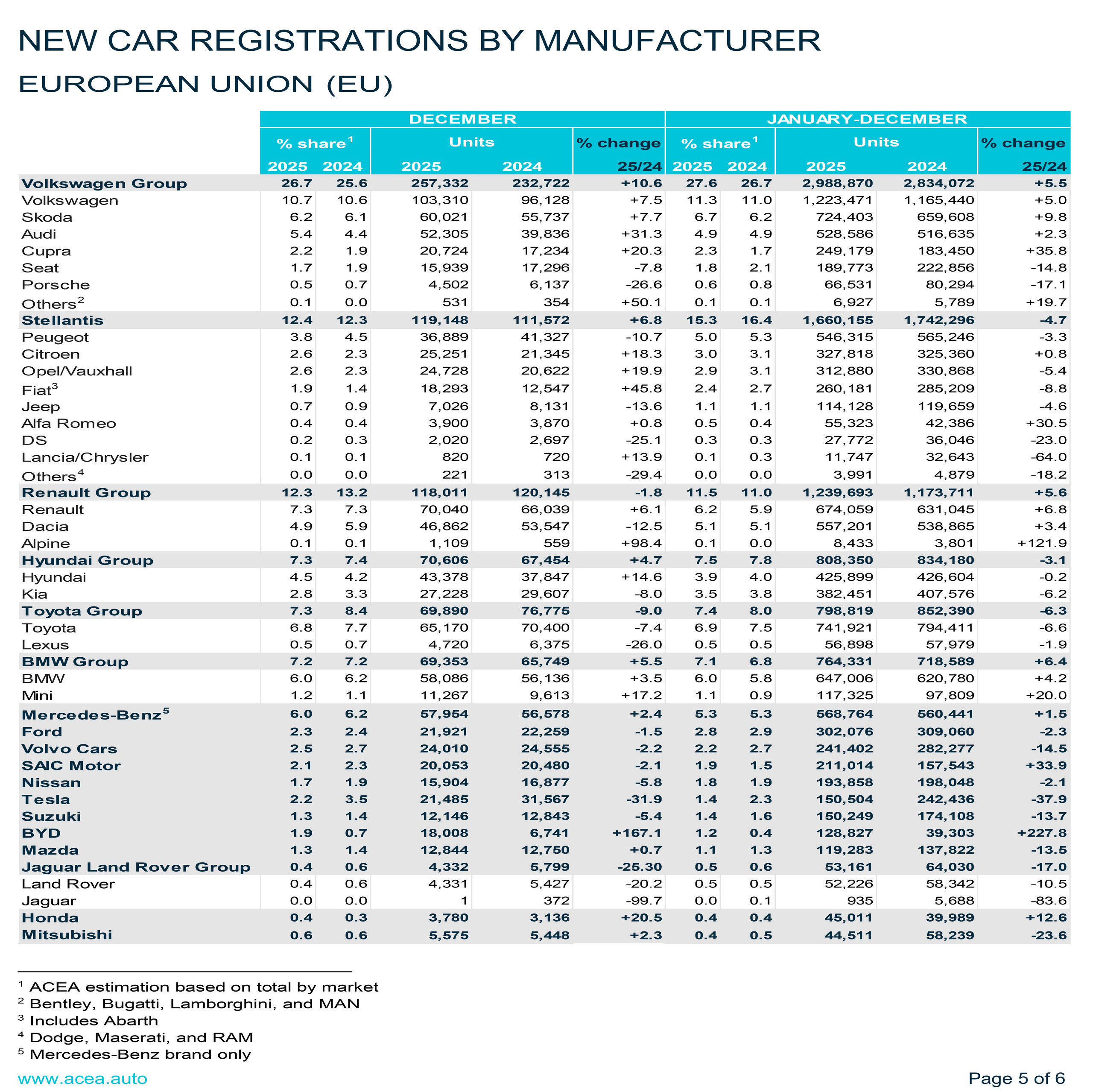
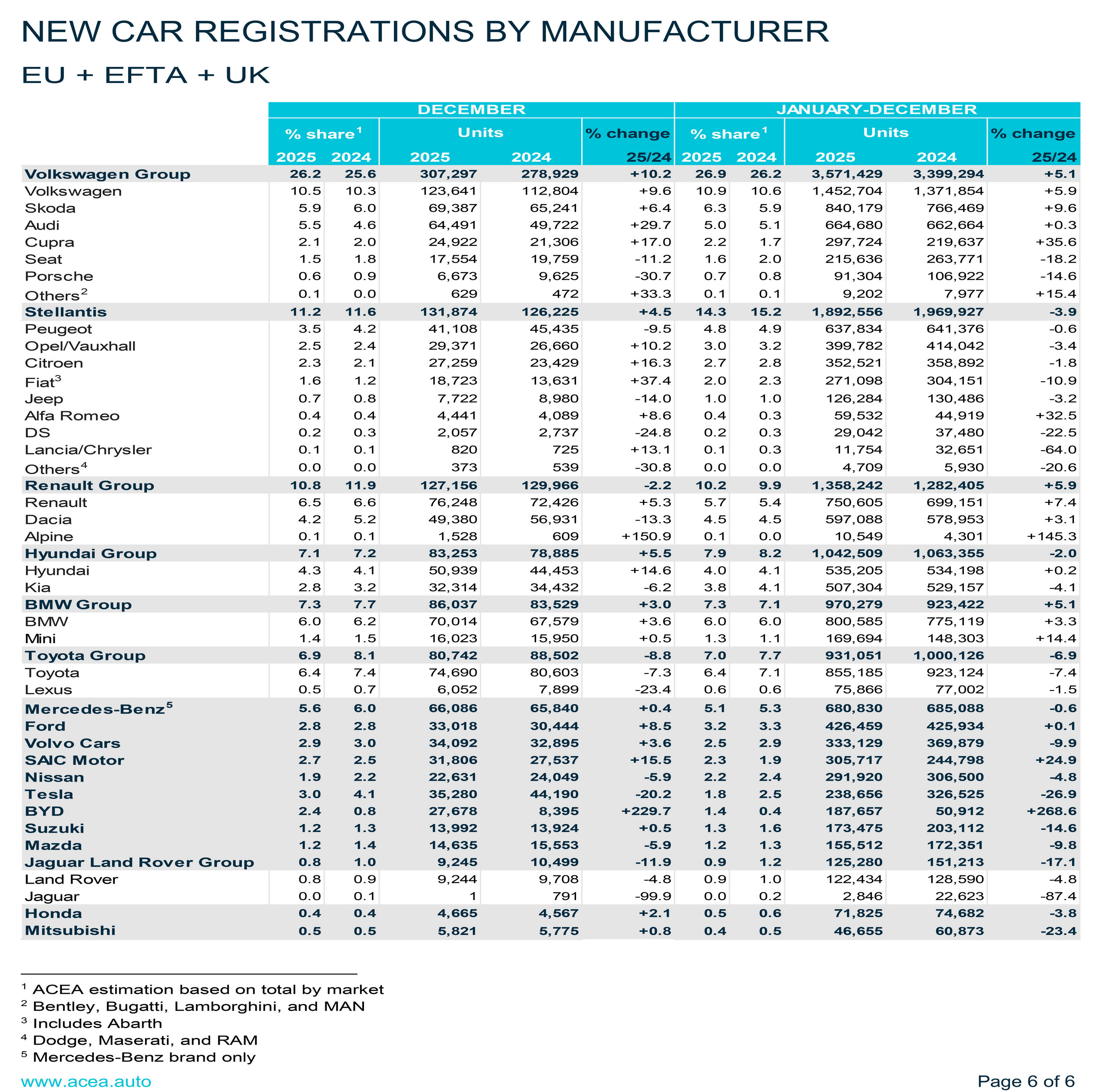
Across the European Union, the UK, and members of the European Free Trade Association, including Iceland, Norway, and Switzerland, a total of 13,271,270 new vehicles were sold throughout 2025. That marks a modest but notable 2.4 percent uptick from the previous year. Within that total, BEVs accounted for 2,585,187 sales, a significant 29.7 percent increase over the 1.9 million sold in 2024.
Hybrids Lead the Charge
Despite the BEV surge, traditional hybrids took the crown as the continent’s best-selling powertrain last year. A total of 4,566,850 hybrids were sold, reflecting a 12.4 percent increase and pushing them past gasoline-powered cars for the first time.
In 2024, petrol models held a narrow lead with 4,273,880 units sold, but in 2025, that number dropped sharply by 18.9 percent to 3,467,041.
Similarly, demand for diesel cars fell by a considerable 24 percent, down from 1,349,899 to just 1,026,354 units. This allowed plug-in hybrids to overtake diesels, selling a total of 1,272,901, or a 33.4 percent rise from 2024.
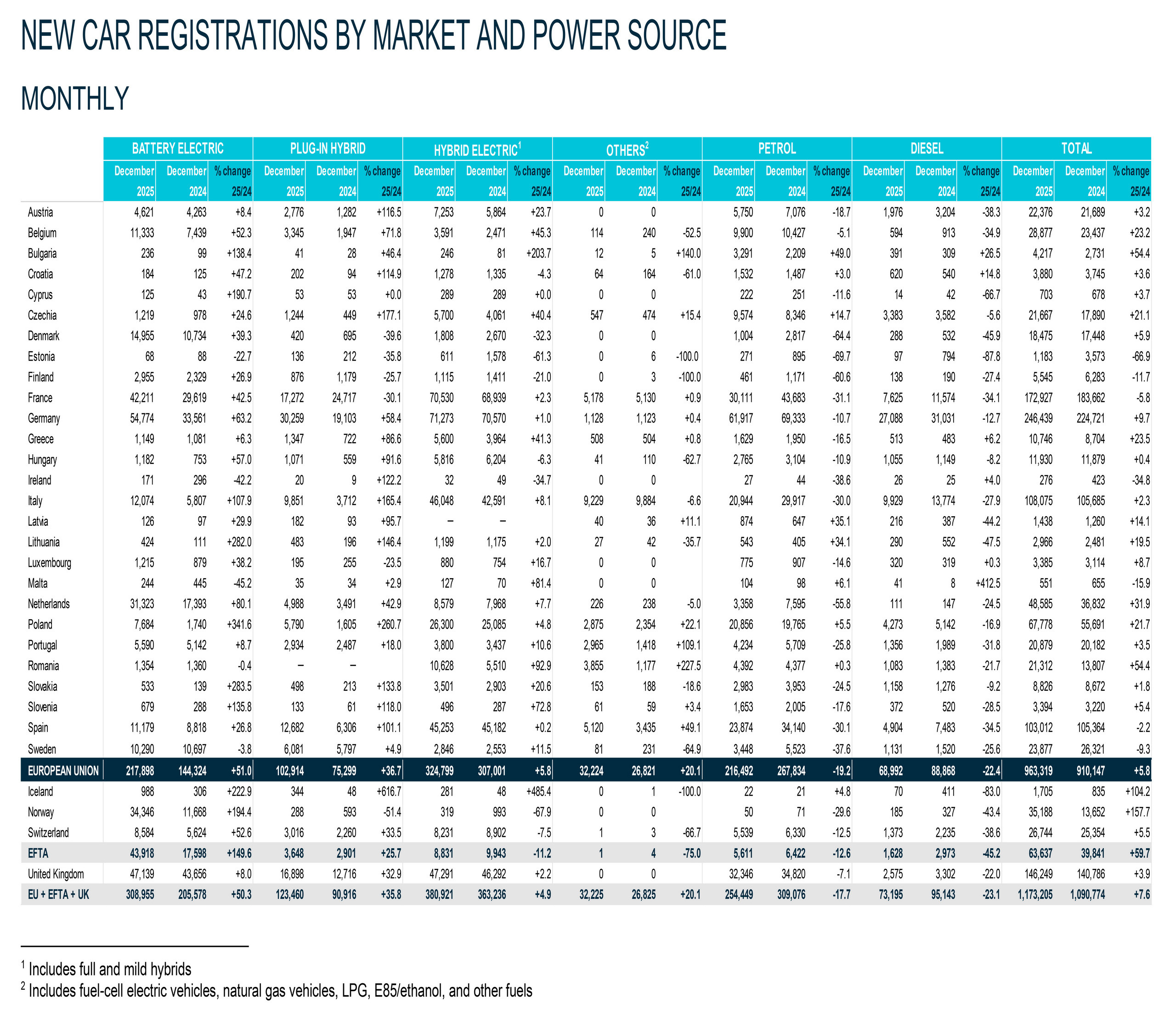
December’s numbers laid bare the speed of change. BEV registrations soared to 308,955, up 50.3 percent compared to the same month a year earlier. That was enough to edge out gasoline car sales, which declined 17.7 percent to 254,449. Diesel models also slumped in December, with sales falling 23.1 percent to 73,195.
As in the January-December period, hybrids remained the most popular powertrain choice in December, with sales reaching 380,921, up 4.9 percent. Demand for plug-in hybrids also rose 35.8 percent to 123,460.
The Story Behind the Numbers
While it’s easy to conclude that EVs outsold gas-powered cars entirely in December, that’s not entirely true. These figures from the European Automobile Manufacturers’ Association include full and mild hybrids in the ‘hybrid electric’ category, which led the industry in sales.
The vast majority of full hybrid and mild hybrids on sale use gas-powered combustion engines, whether that’s to drive the wheels, charge the battery pack, or a combination of both, so it would perhaps be more accurate to lump together hybrid electric and gas-powered vehicles into the same category. If that were the case, they would come out well ahead of BEVs.
Mini has introduced an updated Countryman E lineup.
It has a beefier battery and a new silicon carbide inverter.
Changes enable the model to gain up to 24 miles of range.
Electric vehicle technology advances quickly and models tend to get outdated relatively fast. To avoid this, a number of companies make significant changes just a few years after launch.
We can add Mini to this list as they’ve unveiled an improved Countryman E. While the crossover was introduced less than three years ago, the latest version has significantly improved range thanks to a larger 65.2 kWh battery pack and a new silicon carbide inverter, which minimizes power losses.
The model also benefits from new front axle wheel bearings that reduce rolling resistance and help to improve overall efficiency.
Thanks to these changes, the Countryman E now has a WLTP range of up to 311 miles (501 km). For comparison, the current model has a smaller 64.6 kWh battery and a range of up to 287 miles (462 km). That doesn’t sound like much of an improvement, but it’s an 8.4 percent increase.
The Countryman SE ALL4 benefits from the upgrades as well and this allows for a range of up to 290 miles (467 km). That’s 21.7 miles (35 km) more than its predecessor.
The updated Countryman will be available in Europe this March and will presumably come stateside shortly thereafter. While that remains to be seen, the US-spec Countryman SE ALL4 starts at $45,200 and has a dual-motor all-wheel drive system producing 308 hp (230 kW / 312 PS) and 364 lb-ft (493 Nm) of torque.
This enables the electric crossover to accelerate from 0-60 mph (0-96 km/h) in 5.4 seconds, before hitting a top speed of 112 mph (180 km/h). Buyers can also expect a modest EPA range of up to 212 miles (341 km).
Xpeng’s P7+ undercuts VW’s ID7 with a €43,600 starting price.
It uses 800V tech for faster 350 to 446 kW charging speeds.
Long-range P7+ offers 530 km versus ID7’s 619 km estimate.
While VW and Xpeng are teaming up to develop new EVs for China, the partnership hasn’t stopped a quiet rivalry from unfolding. Xpeng has just rolled out its latest electric sedan, the P7+, across European markets, and it’s not shy about naming its target, which is none other than the VW ID.7, one of Europe’s top-selling EVs.
The P7+ has already spent time on the Chinese market, but it recently arrived in Europe with more than just a new badge. It debuted in European specification at the Brussels Auto Show earlier this month and is now being built locally at Magna Steyr’s contract manufacturing facility in Graz, Austria.
Like the ID.7, it’s a streamlined, low-profile sedan with a strong focus on range and high-speed charging.
A Cheaper Entry, With Compromises
One thing the Xpeng has going for it over the VW is price. In Germany, the entry-level P7+ starts at just €43,600 ($51,200), significantly undercutting the ID.7 that kicks off from €54,105 ($64,900). However, whereas the base ID.7 uses a 77 kWh battery and has a WLTP driving range of 385 miles (619 km), the base P7+ uses a much smaller 62 kWh pack, restricting its range to 283 miles (455 km).
Shoppers who want to travel farther between stops will need to pay at least €49,600 ($59,500) for the long-range model, which boasts a 75 kWh pack and a 329-mile (530 km) range. However, that pales in comparison to the flagship ID.7 Pro S with its 86 kWh pack and 440-mile (708 km) range.
Charging Without Compromise
According to Sven De Smet, head of brand and marketing at Xpeng Europe, who spoke to AutoNews, one of the key advantages of the P7+ is its faster charging capability. The VW tops out at 200 kW for DC fast charging, while the base P7+ can reach 350 kW, and the long-range version peaks at 446 kW.
“We believe charging is one of the pain points,” De Smet said. “A big battery is heavier, which means it consumes more electricity, which means you charge it more.”
Xpeng also points out that the smaller, lighter battery packs in the P7+ should have a positive impact on handling and overall driving dynamics. That could prove appealing to European drivers, who often place a premium on responsiveness and efficiency.
The question now is whether the P7+ can match the ID.7’s strong European sales. Last year, VW moved 76,368 units of the ID.7 across the continent, putting it in seventh place among all EVs sold. That figure put it just 10,000 units behind the Tesla Model 3. Xpeng may be the challenger in this case, but it’s stepping into a crowded field.
Strategic Partners, Not Just Rivals
VW holds a five percent stake in Xpeng following a $700 million investment, but the ties run deeper than capital. The two brands are jointly developing several EVs for the Chinese market, including at least one model built on Xpeng’s Edward platform. VW has also committed to integrating aspects of Xpeng’s tech stack, including its proprietary Turing chip and VLA 2.0 software, into future models.
All schools and districts that applied for funding for eligible safety features ranging from seatbelts to collision avoidance to additional lighting through the $10 million Ohio School Bus Safety Grant received an award.
An Ohio Department of Education spokesperson confirmed that it received 371 applications from schools, districts and county boards of developmental disabilities for the School Bus Safety Grant. Of those applications, 56 requested funds for “Occupant restraining devices that conform to the school bus seat belt requirements of 49 C.F.R. 571.”
The other authorized safety features are external school bus cameras, fully eliminated stop arms, crossing arms, illuminated school bus signs, lane departure warning systems, collision avoidance systems, and electronic stability control.
The school bus safety grant program was created in response to recommendations made by the Ohio School Bus Safety Working Group, which Gov. Mike DeWine convened to review all aspects of student transportation, following an August 2024 school bus crash that resulted in a student fatality.
Among its 17 recommendations made in January 2024, which did not include the use of lap/shoulder seatbelts — a main reason Gov. DeWine called together the working group — were strategies for improving bus safety features, driver training and emergency response.
Safety rant funding may be used for the repair, replacement or addition of the eight authorized safety features on school buses in active service or for safety enhancements on new school bus purchases.
Indian Hill EVSD in Ohio, applied for the safety grant. Diane Spurlock, transportation director, said they asked for collision avoidance systems and lane departure warning system.
“The program we selected is an AI camera that can notify the driver if either of the instances occurs while they are on the road,” she said. “The main reason is that we recently had an incident happen with a driver where this could have kept it from happening thus ensuring a safer drive. A secondary reason is that our current cameras are getting outdated quickly and I hope this opens the door to purchase more products from this company.”
Additionally, Indian Hill applied for the ground wash lights “because our district does not have street lights and some streets are very narrow. We have added the LED lights near the back tires but believe the ground wash lights will be especially helpful for turnarounds,” she continued.
Gov. DeWine, the Ohio Department of Education and Workforce Director Stephen D. Dackin announced via a press release that, “the grants will help ensure safer travel for Ohio students through safety upgrades to existing buses and the addition of advanced safety features on new buses.”
“Whether students are in the classroom or on the school bus, we owe it to parents and families to do everything we can to keep them safe,” said DeWine. “We’re raising the bar for student safety on Ohio’s buses, and these grant awards demonstrate our dedication to making school transportation safer.”
Dackin added, “Student safety is our top priority, and Ohio is investing in critical safety improvements to equip school buses with proven technology that keeps children safe.”
Dover Police arrested a 62-year-old man after surveillance footage from inside a school bus allegedly showed him engaging in sex acts in exchange for money, reported WBOC News.
Police took Alvin Rohm into custody following an investigation that began Jan. 6. Police said the incident came to light when a local school district employee was reviewing school bus video footage related to an unrelated matter.
During the review, the employee reportedly discovered video showing Rohm, who was driving the bus at the time, picking up a woman near an intersection. The footage allegedly shows Rohm driving to the area of Jerusalem Way, where he parked the bus and engaged in sexual activity with the woman. Police say via the article that the video also captured an exchange of money.
The footage was reportedly turned over to the Dover Police Department, prompting a criminal investigation. Police arrested Rohm on Jan. 12 and charged him with patronizing a prostitute within 1,000 feet of a school, residence, church, or place, as well as lewdness.
Police emphasized that Rohm was an employee of an unnamed school bus contractor company ad not the school district. Rohm was released on bond. The investigation remains ongoing.
ALBANY, N.Y.,– The National Association for Pupil Transportation (NAPT) is proud to announce the launch of the 2026 Love the Bus digital toolkit and campaign guide, now available for download on the official Love the Bus webpage. This year’s resources are designed to help schools, districts, and transportation professionals celebrate the vital role student transportation plays in education and community life throughout February and beyond.
The celebration begins this Sunday, February 1, marking the start of Love the Bus Month and launching a year-long initiative that underscores the significance of the school bus and the vital role it plays in education.
“Love the Bus Month sets the stage for a year of positive national focus on the importance and value of the school transportation industry,” said Molly McGee Hewitt, NAPT CEO and Executive Director. “Our Love, Delivered. campaign empowers our members and partners with tools, templates, and messaging to celebrate the dedication, professionalism, and impact of transportation teams everywhere. We encourage school districts, associations, and community leaders to leverage these resources, not just in February but as the foundation for ongoing recognition and engagement.
Love the Bus celebrates the trusted yellow school bus and the professionals who safely deliver students to school each day, while highlighting the critical connection between safe transportation and educational access. The toolkit includes ready-to-use graphics, social media templates, press materials, certificates, and ideas to create vibrant, visible campaigns at the district, school, and community levels.
“Behind every safe ride is a team of professionals who care deeply about students and the communities they serve,” said Keith Kaup, President of NAPT. “Love the Bus Month is a chance for communities to come together and recognize the people who make safe student transportation possible every day. When we support and appreciate these teams, we strengthen not only our transportation systems, but the connection between schools and the communities they serve.”
NAPT invites members, school transportation professionals, and industry partners to share their Love the Bus activities, photos, and stories on social media throughout February using #LoveTheBus and tagging/mentioning the association. These shared moments help amplify appreciation for student transportation nationwide, and NAPT will look to spotlight selected stories on a larger scale, including through its official publication, School BUSRide, extending the celebration and recognition even further.
We encourage districts to take advantage of these opportunities offered in the digital toolkit. Learn more and get instant access to the toolkit and guide.
The annual school bus inspection training that goes above and beyond state and federal Department of Transportation requirements brings back OEM training and looks to add post-crash inspection criteria in addition to hands-on detection of defects
Developed by school bus maintenance and inspection expert Marshall Casey for the South Carolina Department of Education, the in-depth training at STN EXPO East starts with classroom instruction on Friday, March 27. The eight-hour training will also include a written exam.
On Saturday, mechanic and technician participants will be transported to a local school district in Charlotte, North Carolina for the hands-on training. The day starts with an overview of high-voltage school bus electrification followed by instruction on finding real defects on real school buses. Class attendees will learn how to avoid costly repairs with early detection, which also leads to less vehicle downtime and a more efficient school bus maintenance schedule in the garage.
OEM training on propane-autogas systems inspections, wheelchair lift inspections, and more will follow the hands-on portion. Blue Bird, IC Bus, RIDE and Thomas Built Buses confirmed their participation.
New this year is a planned Sunday half-day seminar on school bus inspections following a crash to determine cause.
Meanwhile, the inspection training is designed based on best practices from the South Carolina Department of Education, which operates the only state-owned and operated fleet in the country. The department’s maintenance team, which serves as the hands-on inspection and classroom instructors at STN EXPO East, was recognized as one of the nation’s top 10 Garage Stars last August by School Transportation News. Participants of the training will be learning directly from some of these recognized student transportation professionals.
School bus inspection training class size is limited to 50 participants to ensure the instructors will be able to provide a thorough training experience for everyone registered. Separate registration and fee are required to attend.
Save $100 on conference registration by registering before Feb. 14. Find the full conference agenda, list of unique trainings and experiences, exhibitor lists, and hotel information at stnexpo.com/east.
The ID.4 has been hit by two new recalls involving fires.
670 vehicles have batteries with misaligned electrodes.
43,881 others need new software and a battery health check.
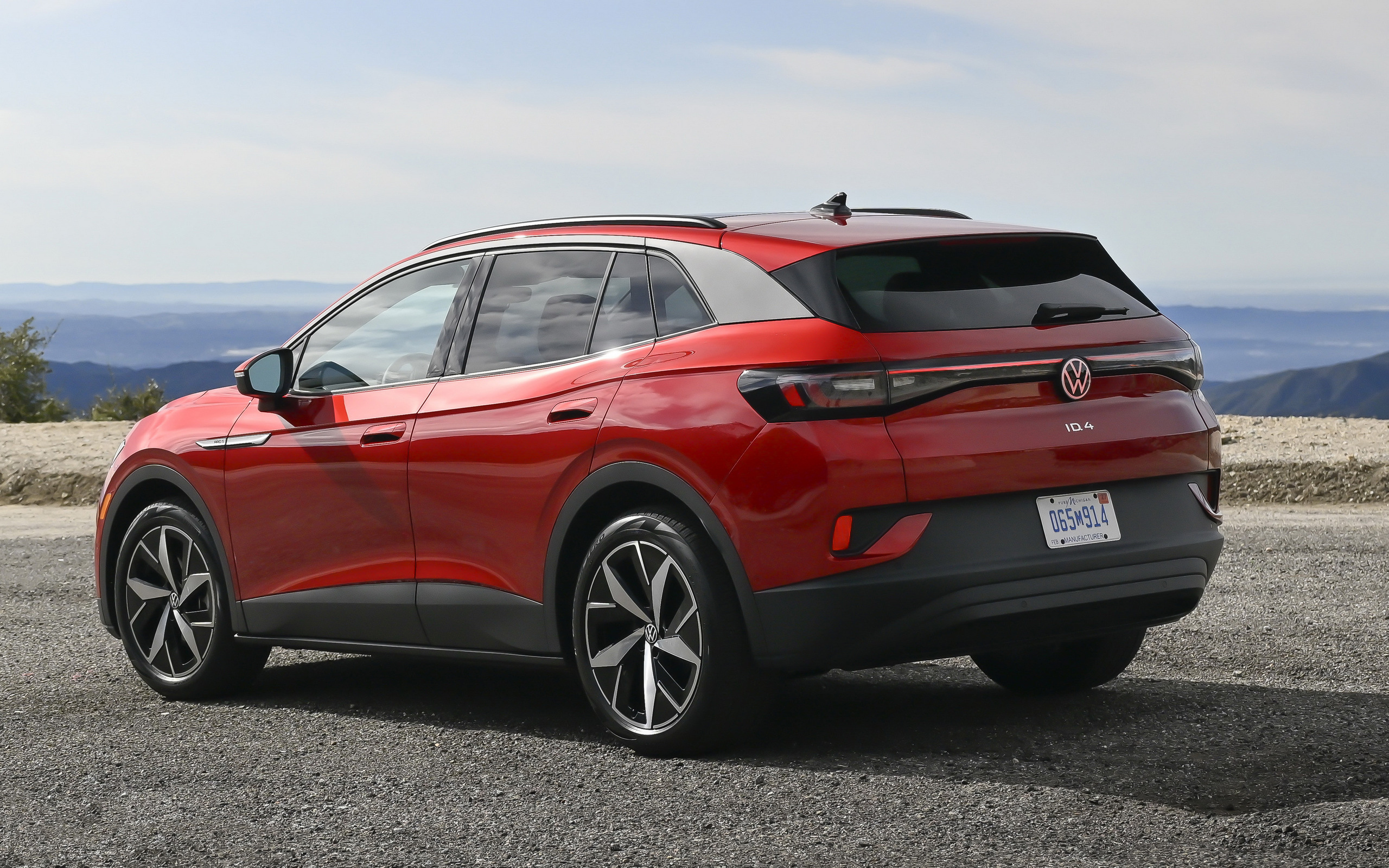
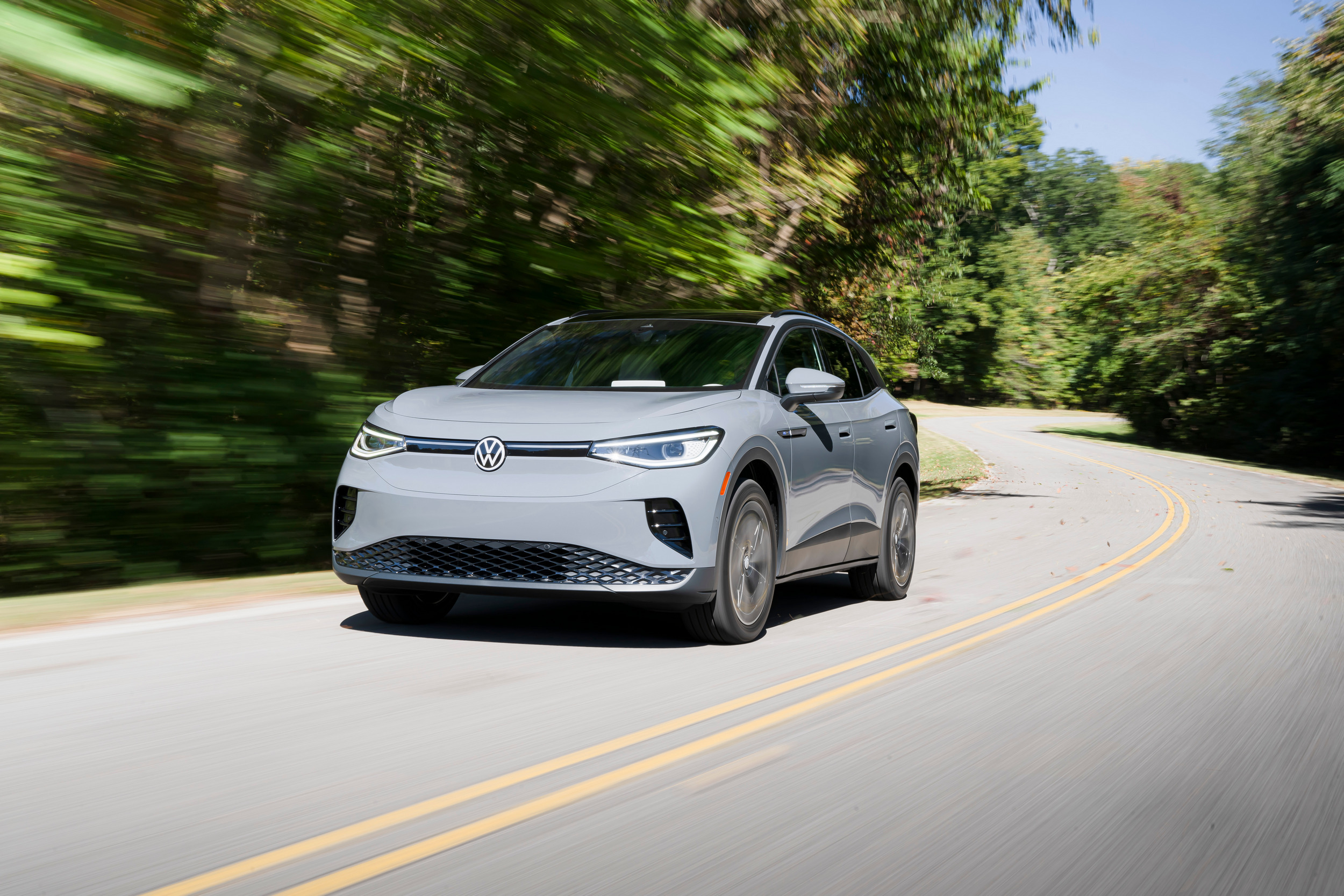
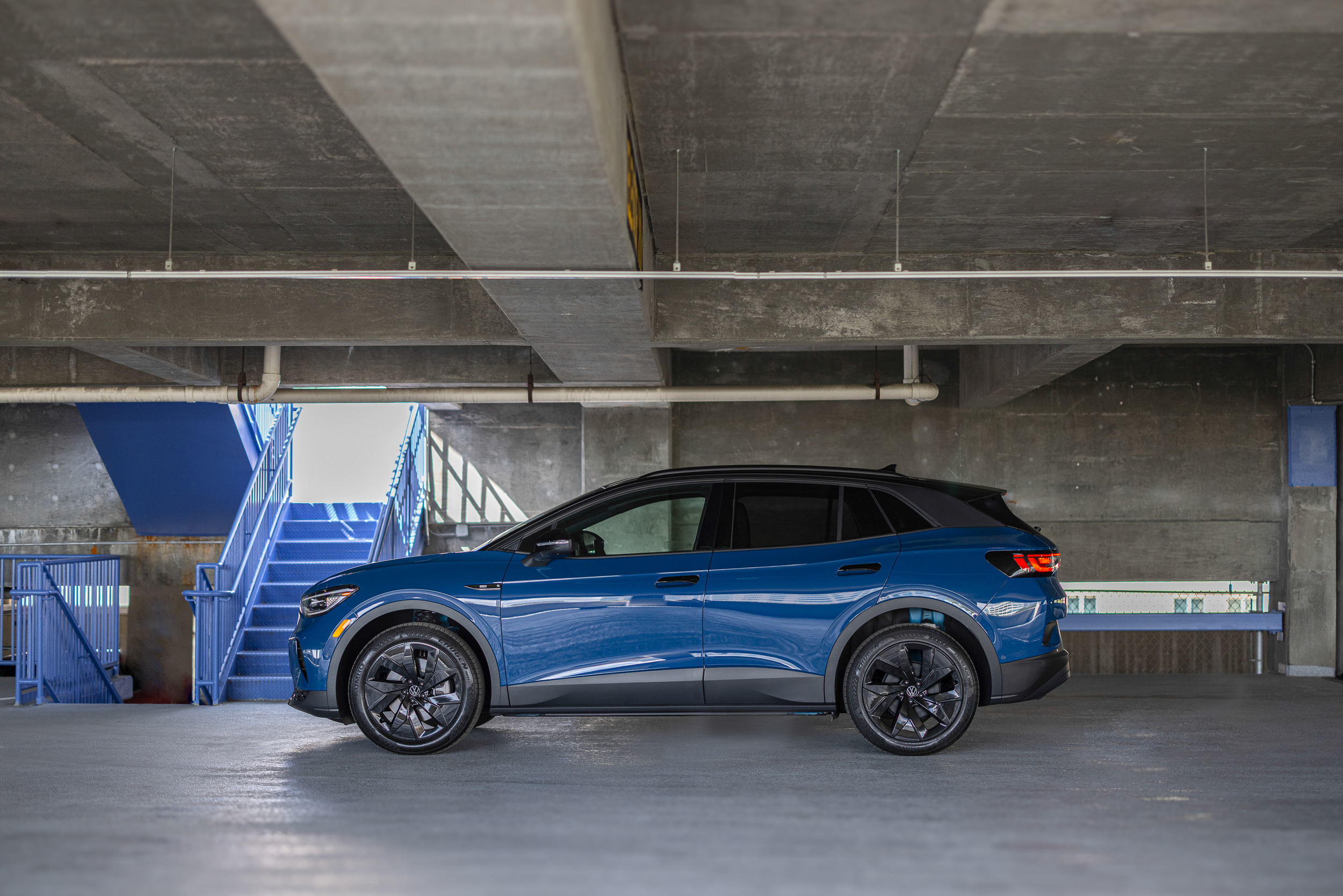
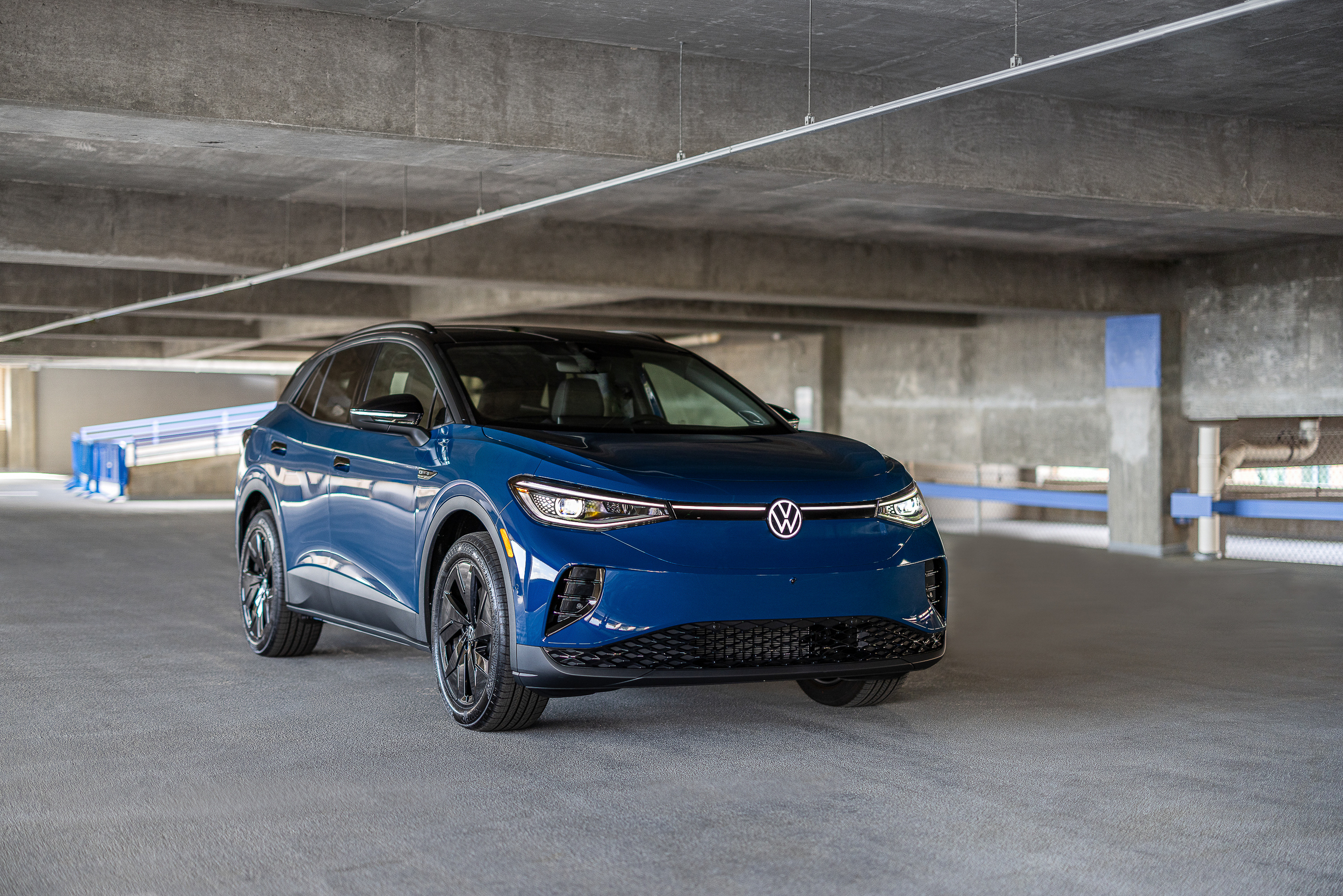
The recalls keep adding up for the Volkswagen ID.4 and the latest is a major safety issue impacting 670 crossovers. It involves 2023 and 2024 model year vehicles, which have misaligned electrodes that can result in a battery fire.
According to the National Highway Traffic Safety Administration, Volkswagen first became aware of a problem when an ID.4 caught on fire while using a DC fast charger in January of 2024. This kicked off an investigation, but a second fire in a parked vehicle was reported in July.
A third fire followed in October of 2024, while a fourth came in December. The latter was being driven at the time.
What Caused the Fires?
Due to the “differing nature of these events and the condition of the batteries,” Volkswagen and suppliers had a hard time determining a root cause. However, the company managed to trace the origin of the fires to the battery and found “shifted electrodes” in one of them.
A fifth fire was reported in August of 2025 while using a DC fast charger. Eventually, a tear-down analysis found shifted electrodes and these were confirmed in previous cases via CT images. This sparked a recall in December of 2025, which was amended less than two weeks later as additional faulty batteries where identified.
The companies continued looking into the issue and SK Battery America discovered a second production problem that could result in shifted electrodes. The companies aren’t aware of any field reports related to this specific issue, but they’ve decided to conduct a new recall.
Serious Safety Warning
100 percent of the recalled vehicles are believed to be impacted and Volkswagen is warning owners to “park outside immediately after charging and not leave their vehicles charging indoors overnight until the recall repair is complete.”
On top of that, drivers are being advised not to use DC fast chargers and to limit the battery charge to a maximum of 80 percent.
That’s a big inconvenience, but it beats having your ID.4 burst into flames. To address the issue, Volkswagen will replace high voltage battery cell modules.
A Second ID.4 Recall
Speaking of ID.4 recalls, there’s a second one involving 2023-2025 models. This one impacts 43,881 vehicles and is due to a battery that can overheat.
This is related to the aforementioned problem and is designed to cover “incidents outside of the ranges being recalled for the shifted electrode issues.” Unfortunately, details are hazy as Volkswagen hasn’t found a clear root cause.
That being said, the automaker warned the battery can experience “thermal propagation” in rare circumstances. This can eventually lead to a vehicle fire.
While the root cause remains elusive, “current analysis results show that certain deviations at the supplier of the battery modules may result in self-discharge.” If this issue exists in your ID.4, you might notice reduced range and/or performance.
As part of the recall, Volkswagen technicians will perform a battery health check and install updated self-discharge detection software. The company may also replace some batteries, based on the results of the inspection and software readings.
Only 1% of the recalled vehicles are believed to have the defect, which would equate to around 439 crossovers.
Genesis shared a design study for a US-targeted electric pickup.
The concept used a ladder frame and fully electric drivetrain.
Design sketches showed production-like wheels and detailing.
Genesis’s designers have had their hands full lately, dreaming up all kinds of projects that could eventually lead to production cars. Some we’ve already seen up close, like the G90 Magma Performance Wagon and the Magma GT, their mid-engine Corvette rival, but others have stayed behind closed doors. Until now.
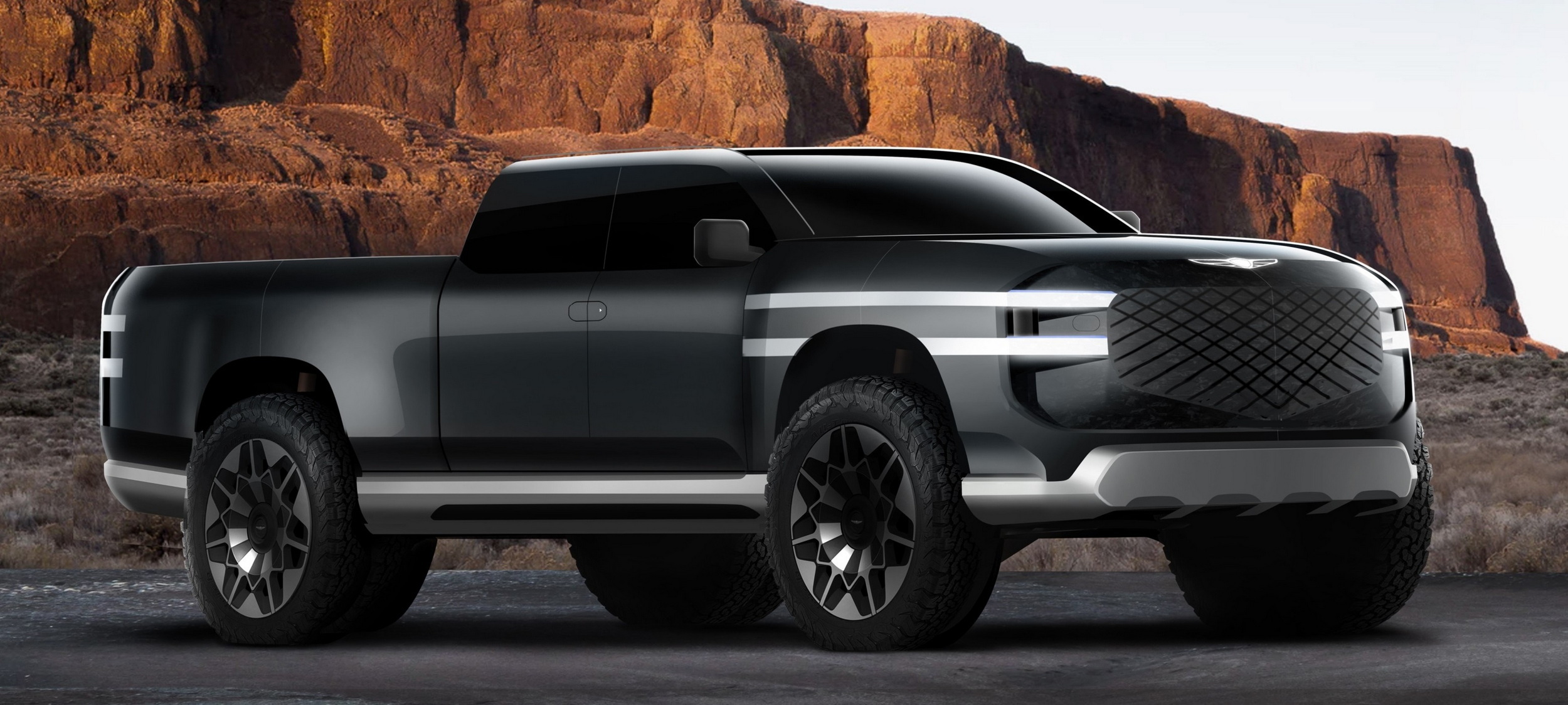
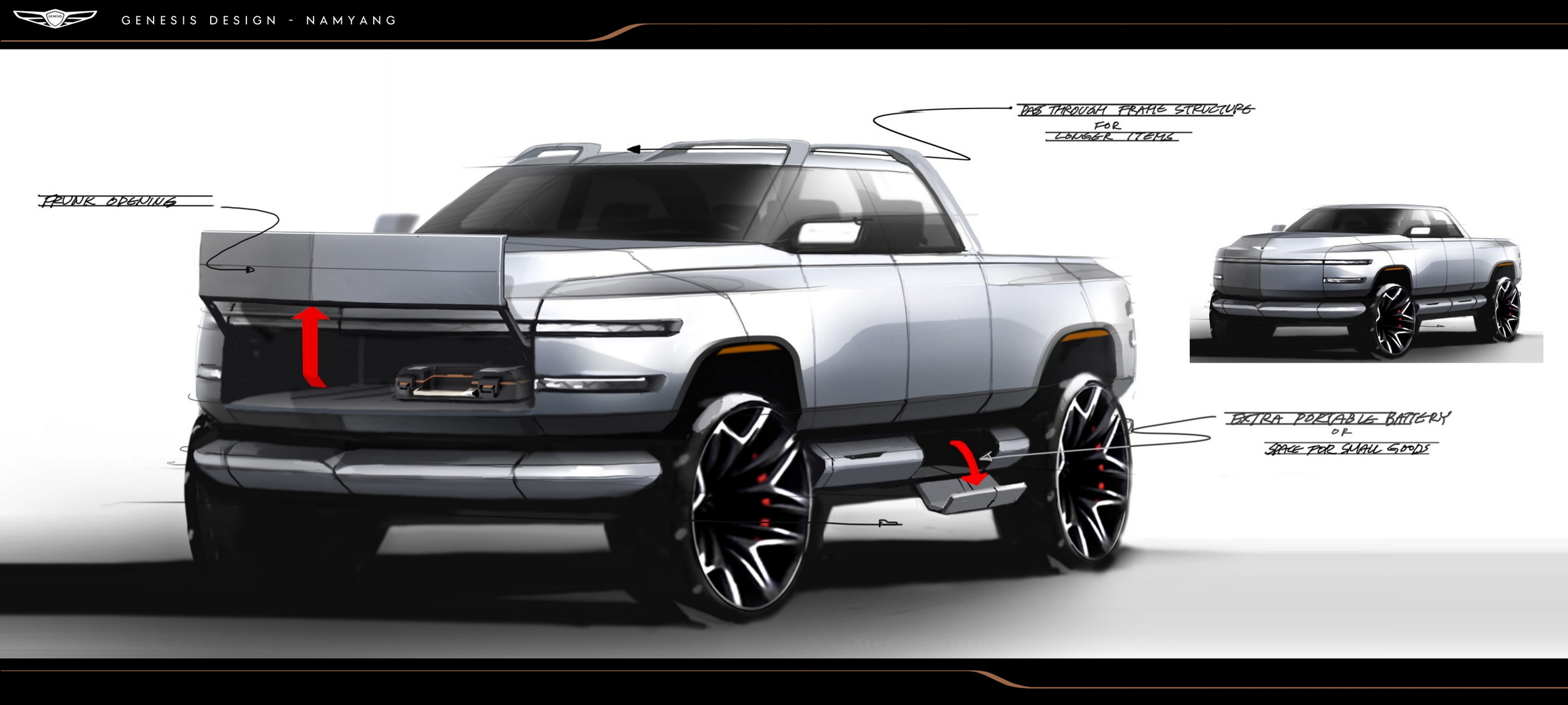
We’ve already told you about the minivan and the hydrogen SUV studies, but there’s one more you wouldn’t usually expect from a premium brand, a project simply known as “The Pickup.” It’s a design exercise for a fully electric model aimed at the North American market. The project has been shelved for now, but it’s not entirely off the table for the future.
Hyundai Motor Group’s Chief Creative Officer, Luc Donckerwolke, recently acknowledged that Genesis had been exploring the idea. Ultimately, though, the team felt “it was not the right time,” choosing instead to focus on performance-focused Magma models.
First Glimpse of a Truck That Might Have Been
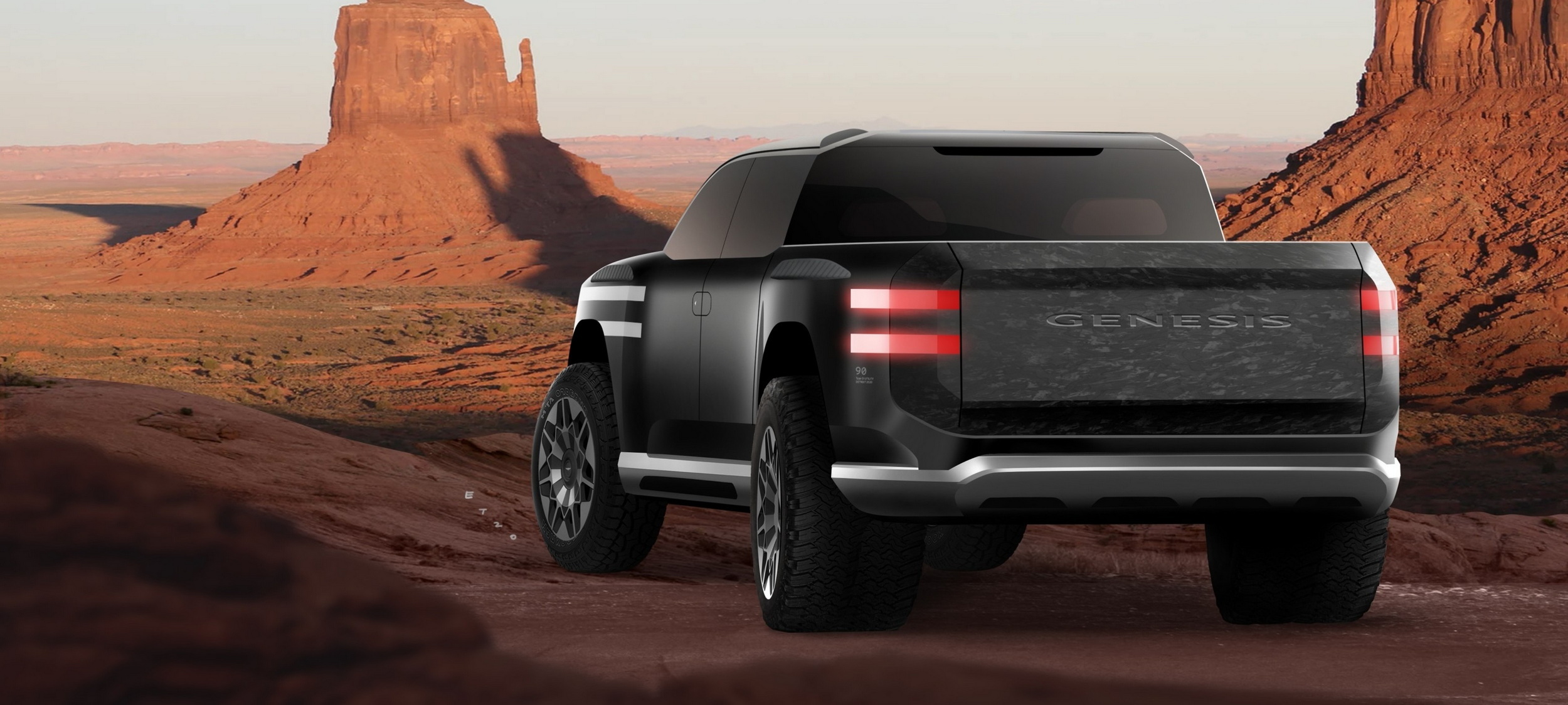
Most concepts like this stay buried inside design studios, rarely seeing the light of day. This time, however, Genesis opted to pull back the curtain slightly, sharing official sketches and renderings. The images originally appeared in the January/February issue of Auto&Designmagazine, but Genesis has also released them directly to Carscoops.
Visually, the design stays rooted in Genesis’s familiar language. Two-Line LED headlights sweep back into pronounced front fenders, mirrored by the taillight design at the rear. The large Crest grille remains a focal point, flanked by sleek side intakes and a sturdy aluminum skid plate anchoring the front bumper.
The profile is defined by imposing proportions, with a tall hood, a sizable rear bed, and an aerodynamic greenhouse. The sketches also show oversized wheels fitted with futuristic alloy designs and chunky, high-grip tires.
Another variation of the concept study features a flip-up panel on the nose that reveals a storage compartment, along with added space in the side skirts for portable batteries or other small items. This version takes a more minimalist approach to the styling, paired with more pronounced fenders for a bolder stance.
Designed for Americans
Genesis confirms the concept was developed with the American market in mind, and had it gone further, it would have ridden on the same ladder-frame chassis as the X Gran Equator Concept. That would mean better off-road capability and hauling strength than you’d get from a unibody setup.
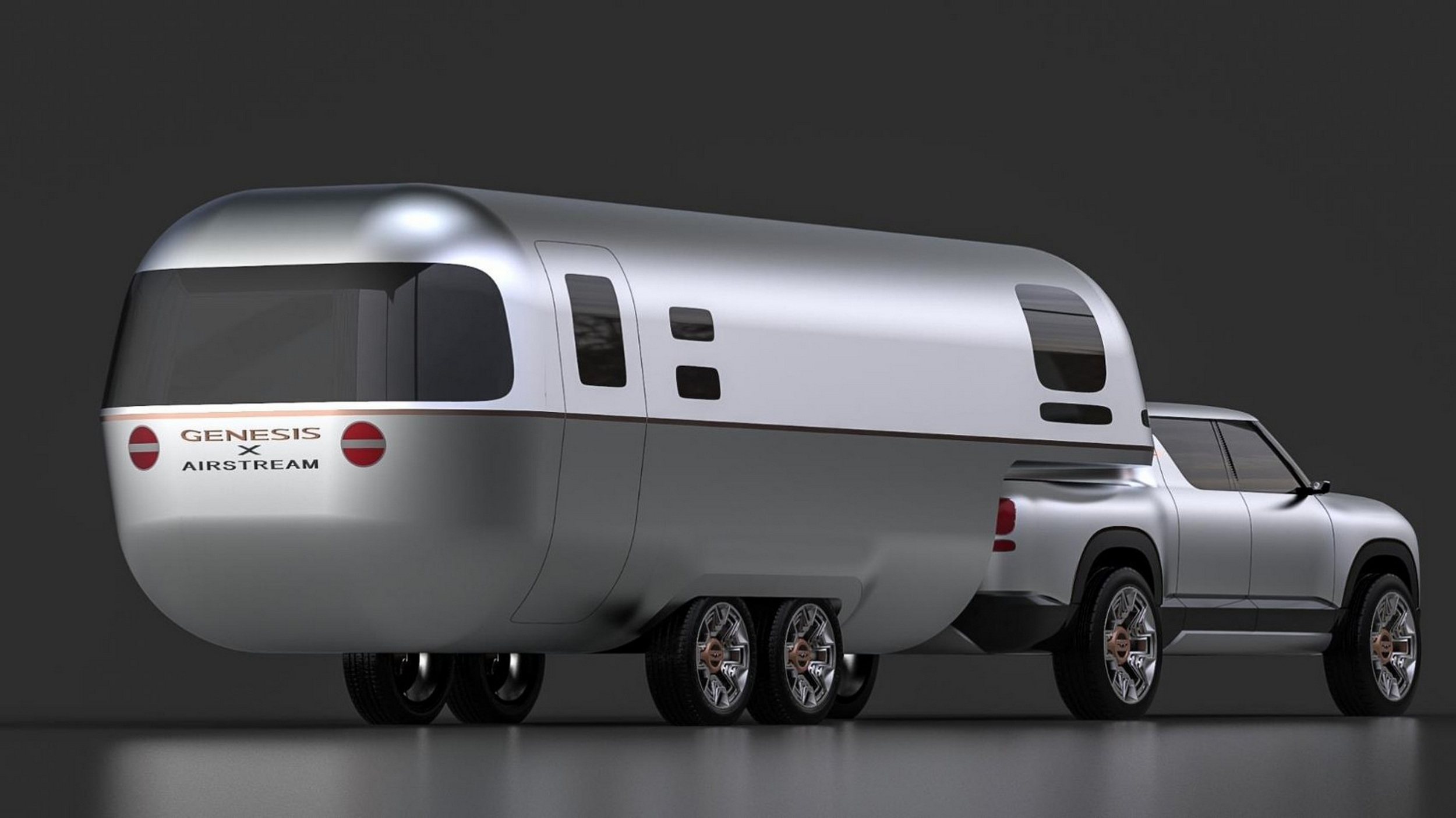
No specific power or range figures have been shared, though it’s safe to assume the EV platform would support all-wheel drive. In one rendering, the truck is shown towing a custom-designed Airstream camper, suggesting it was at least envisioned with serious towing capability in mind.
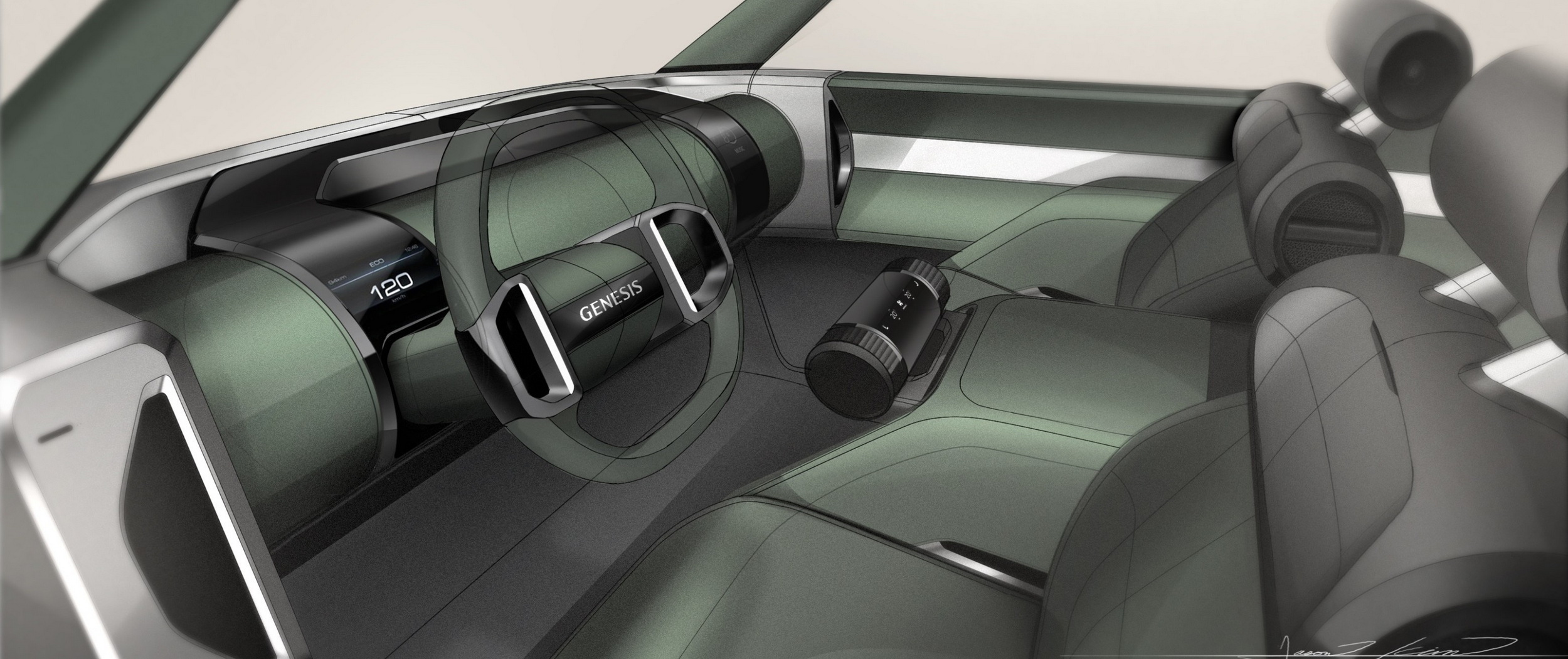
The cabin gets a brief preview as well. One sketch shows a five-seater layout with a mix of soft, cylindrical forms across the dash, console, and seats. A two-spoke steering wheel and slim digital instrument panel create a minimalistic front row, with a curved passenger display extending the width of the dashboard.
However, Donckerwolke’s more recent comments to Auto&Design suggest the idea isn’t entirely off the table. “An electricpickup truck? Why not?” he said. “Then we discarded it because we had to focus on different projects. Maybe in the future, who knows.”
It wouldn’t be surprising if Genesis revisits the truck segment down the line, possibly sharing underpinnings with one of Hyundai’s upcoming pickups. The Korean automaker is already developing an electric truck that could slot into the Ioniq lineup, along with ladder-frame midsize pickups for the U.S. and Australian markets, some of which may use a range-extender powertrain.
In a comment to Carscoops, a Genesis spokesperson clarified how these internal projects often unfold. “Genesis often undertakes future design exercises to explore possibilities for our ever-expanding portfolio,” he told us. “While some of these concepts ultimately don’t move forward to production, this showcases the broad capabilities and strengths of the Genesis design team.”
Rivian R2 enters validation build phase ahead of mid-2026 launch.
Company’s Illinois plant expansion supports 215,000 units yearly.
The R2 targets over 300 miles of range and Supercharger access.
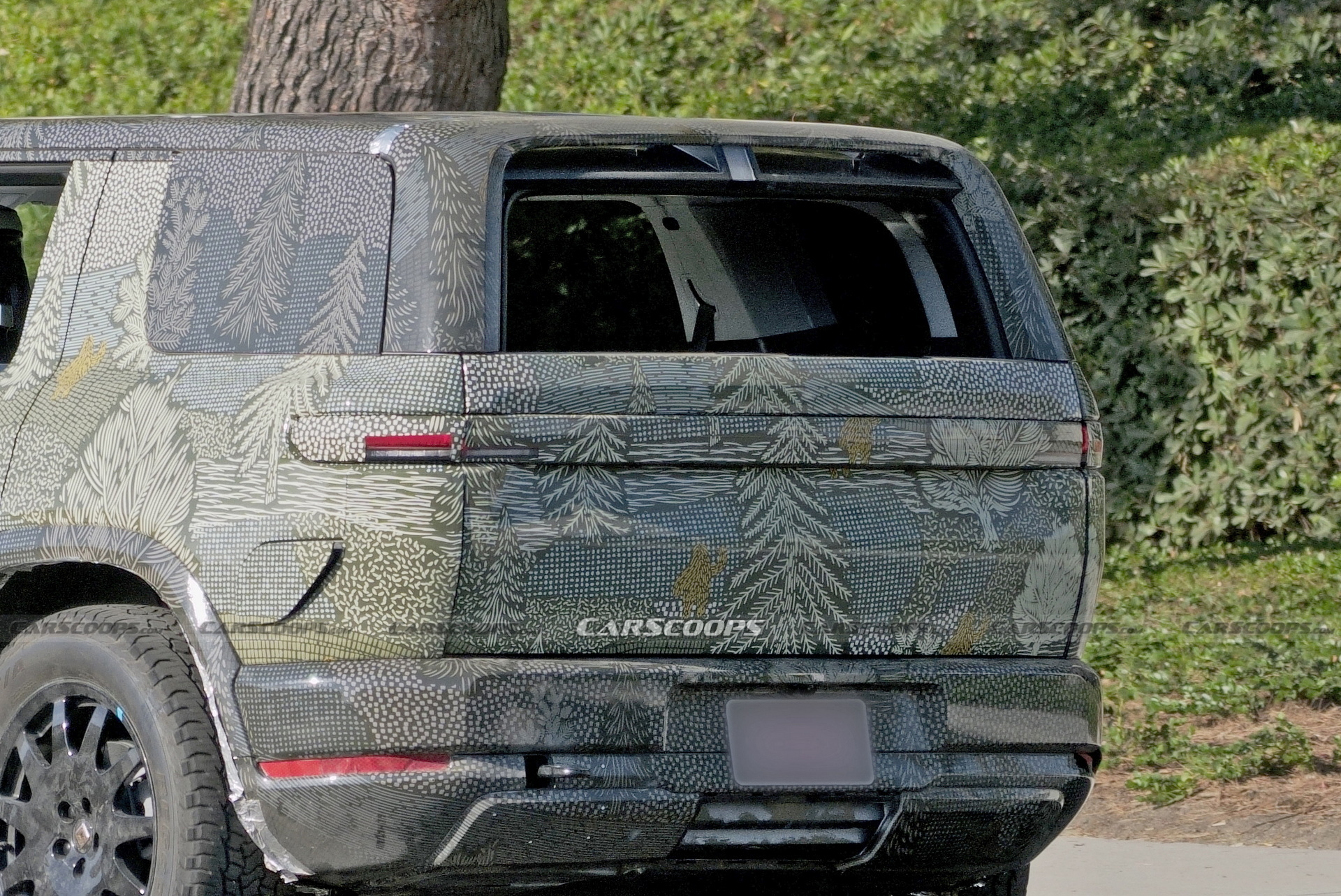
If the R1S and R1T were the cars that gave birth to Rivian, the upcoming R2 will be the one that decides whether the brand thrives or stays in infancy. And that moment is arriving quickly, as the mid-size SUV appears to be on track to reach its first customer driveways by June, thanks to the rapid expansion of Rivian’s production facility in Normal, Illinois.
The R2 could be make-or-break for the EV startup. If it’s a success, it could establish the EV brand as a serious mass-market player in the US. If it fails, Rivian may remain a niche brand forever.
It will be produced at a new 2.6 million-square-foot section of Rivian’s Illinois plant, and the first validation build vehicles have already started rolling off the line.
These vehicles are production-intent, not pre-production prototypes, and will help validate key factory processes before Rivian can start building customer vehicles at scale.
As reported by WGLT, Rivian built the new manufacturing center in just 11 months, and at full capacity, the site will be able to produce up to 215,000 vehicles a year, including 155,000 R2s.
Rivian didn’t originally plan to build the R2 in Illinois. When the SUV was first announced in early 2024, the company said it would be assembled at a forthcoming $5 billion factory in Georgia.
That site, however, remains in early development, with substantial construction work expected to begin later this year. If completed as proposed, it could eventually build up to 400,000 vehicles per year, primarily R2 and future R3 models.
RJ Scaringe/Instagram
The EV maker has yet to announce final specifications for the R2 and likely won’t do so until closer to its launch. When the SUV first appeared in prototype form two years ago, the company confirmed it would ride on an all-new midsize platform and be offered in single-, dual-, and tri-motor configurations.
We do have a few technical details already. The R2 will use 4,695-type cylindrical battery cells and, in its base form, deliver more than 300 miles (483 km) of range. It will also feature a built-in NACS port as standard, giving it access to Tesla’s Supercharger network without the need for adapters or retrofits.
The Price Question
Perhaps the most important detail is still the price. Rivian initially projected a starting MSRP of around $45,000. That number will be crucial if the company hopes to compete head-on with Tesla’s Model Y. Holding that price point could be key to making the R2 not just another statement piece, but a genuinely competitive offering in the heart of the EV market.
Canada cut tariffs on Chinese EVs from 100 percent to 6.1.
Trump threatened 100 percent tariffs in response to deal.
China now wants to build EVs in Canada with local partners.
Canada’s recent trade deal with China was bound to cause controversy. The agreement slashes tariffs on Chinese EVs from 100 percent down to just 6.1 percent, prompting U.S. President Donald Trump to threaten 100 percent tariffs on Canada if the deal proceeds. Still, China insists the arrangement is meant to benefit both countries and isn’t a zero-sum game.
Under the new deal, up to 49,000 EVs from China can be imported to Canada at a reduced 6.1 percent tariff rate, though at least half of them must cost $35,000 or less by 2030.
Unifor labor union president Lana Payne argues the deal opens the door for China to quickly capture critical market share. Ontario Premier Doug Ford has voiced similar concerns, warning that Canada could be inundated with low-cost EVs, without any firm commitment from China to invest in the local economy.
Beijing Signals Willingness to Build in Canada
Despite those concerns, Chinese Ambassador to Canada Wang Di says China’s fast-growing automakers are being urged to invest directly in Canada and produce vehicles domestically.
“All these projects will be beneficial to the development of the Canadian EV industry, and will be helpful for job growth in Canada, and will help Canadian consumers to be able to buy higher quality and more affordable cars,” Wang told CTV News. “The character of China-Canada practical co-operation is complementarity and mutual benefit.”
“China encourages and supports Chinese companies to make investments and start-up companies here in Canada, on the basis of the market rules,” he continued. “At the same time, we hope that the Canadian side will provide a fair, non-discriminatory, and predictable business environment for the Chinese companies that come here.”
According to Wang, that is what Beijing ultimately wants to see, if companies choose to take up the opportunity.
“If Chinese companies will come to Canada to work with Canadian partners for investment, for opening factories or for joint ventures, all of these projects will be win-win,” he said.
Perhaps in a thinly veiled swipe at the Trump administration, Wang added that “unlike some other countries, China will not only take into consideration of its selfish interest, we don’t want ‘only we win and others lose.’”
The head of the Canada-China Energy and Environment Forum, Wenran Jiang, would like to see Canadian juggernaut Magna International partner with a Chinese car manufacturer to build EVs in Canada. Recently, it was confirmed that Magna would partner with GAC to build the Aion V, but it’ll be built at the parts giant’s factory in Graz, Austria.
“If they can do that, we can do it certainly here in Ontario,” Jiang said, adding that such cooperation could help bridge regional divides over China policy. “We could do probably better if we leverage our regional advantages and work together as a team.”
Updated SU7 model could boost Xiaomi sales significantly in 2026.
SU7 sales topped 258,000 units, Model 3 reached 200,361 in China.
Technology giant aims to sell 550,000 vehicles in China this year.
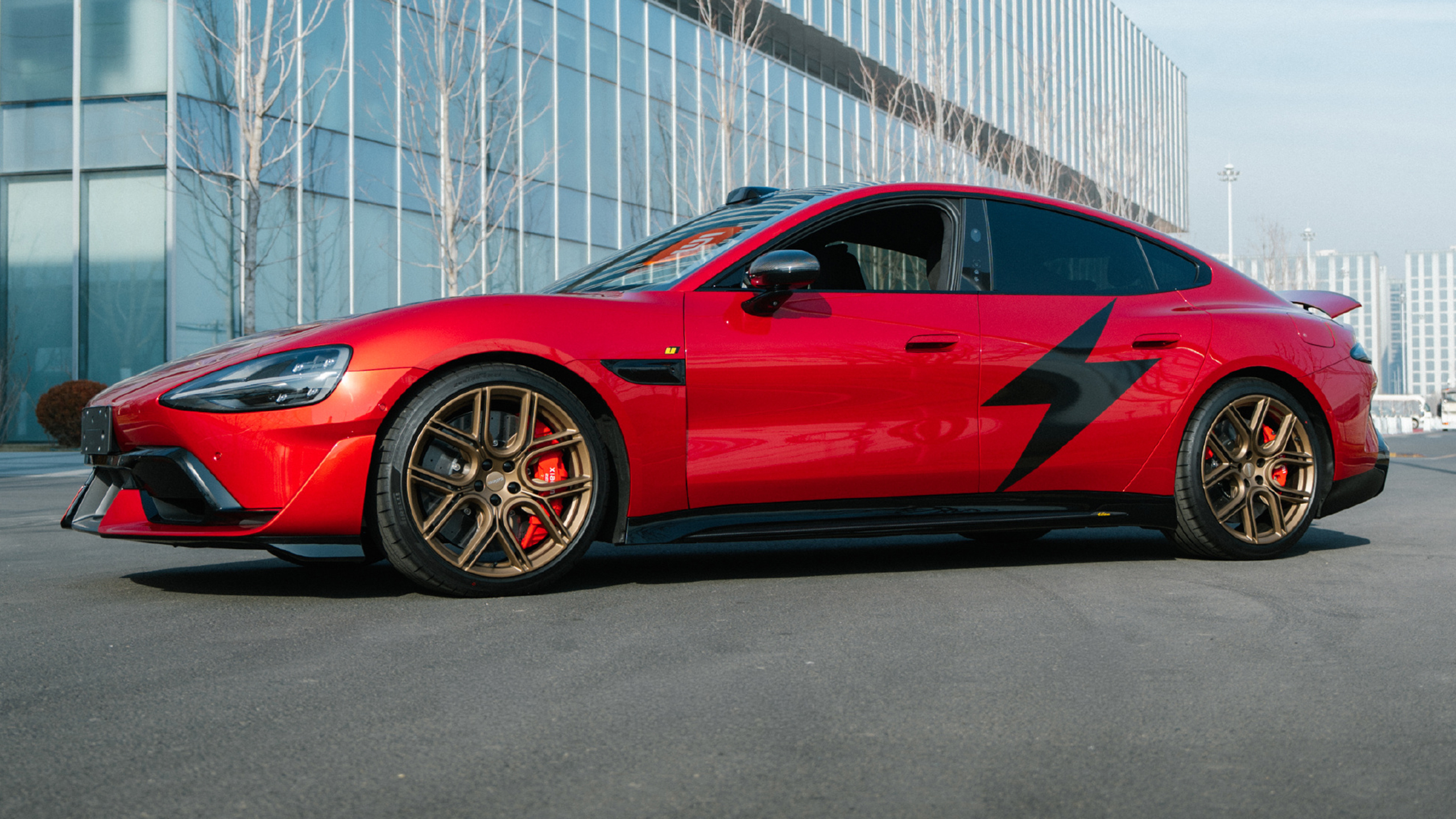
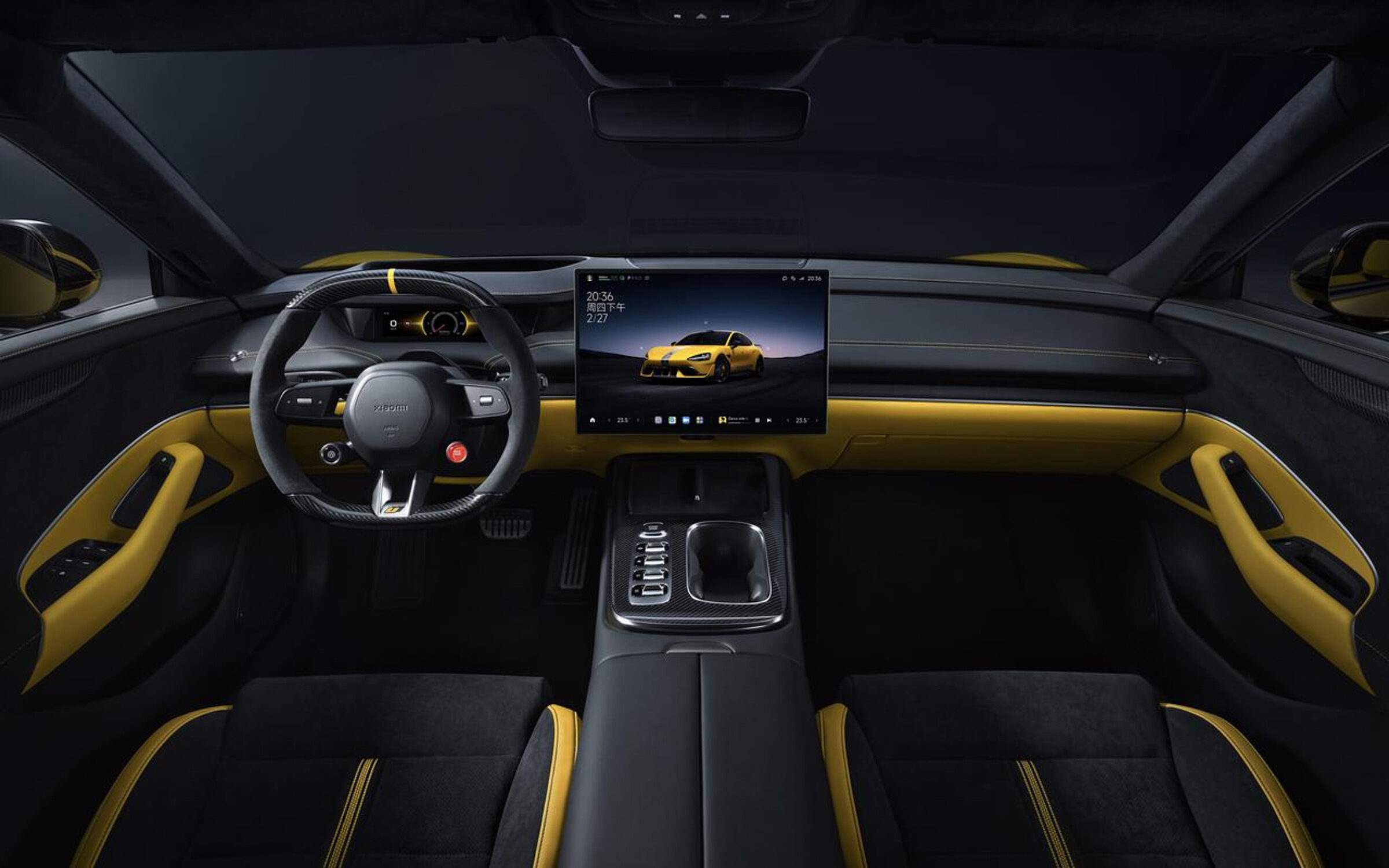
Xiaomi has quickly established itself as an automaker to be reckoned with in China, and last year, it achieved something that would’ve seemed unlikely just a few years ago: its all-electric SU7 sedan outsold the Tesla Model 3.
Once the brand of choice for EV-hungry Chinese consumers, Tesla now finds itself outpaced by domestic rivals that are rapidly improving their game. Xiaomi is leading that charge.
Data from the Chinese Passenger Car Association shows that in 2025, Xiaomi sold 258,164 SU7s. That’s nearly double the roughly 135,000 units it moved in 2024, a figure made more impressive given that the SU7 only launched in April of that year.
Perhaps more notably, it overtook the Tesla Model 3, which saw 200,361 deliveries in the same period.
What’s Driving the Switch?
Chinese buyers have responded well not only to the SU7’s design inside and out but also to the technology it packs and the performance it delivers.
The base version undercuts a comparable Model 3 by roughly 9 percent, according to a report from the South China Morning Post, giving it a clear pricing advantage. Strong driving range and well-specced hardware round out the package, allowing the SU7 to compete in a segment Tesla once dominated.
“Tesla’s dominance in the premium EV segment has been eroded by its Chinese competitors that are able to churn out vehicles on par with its technology standards while offering them at lower prices,” a senior manager at the Shanghai-based consultancy Suolei told the outlet. “Xiaomi’s success is a strong boost for Chinese carmakers, which are all trying to move up the value chain.”
What’s in Store for 2026?
This year is shaping up to be even bigger for Xiaomi. In April, an updated SU7 will be launched, complete with more advanced driving assistance functions, including LiDAR across the entire family, and an improved driving range of up to 902 km (560 miles) on the CLTC cycle.
Within the first 15 days of pre-orders opening, Xiaomi reportedly secured 100,000 reservations for the refreshed model.
In total, Xiaomi sold 411,800 vehicles last year and is targeting 550,000 in 2026. This will also be the first full year of availability for the YU7 SUV, which could become its best-selling model.
Back in October, the YU7 notched 33,662 sales in a single month, even edging past the Tesla Model Y. Xiaomi’s third model, the YU9, will also make its debut this year as a range-extender EV.
India will slash tariffs on European ICE cars from 110 to 40 percent.
European carmakers currently hold less than 4 percent market share.
Local market is projected to grow from 4.4M to 6M units by 2030.
India has long guarded its domestic car industry with near-impenetrable tariffs, making foreign vehicles a rare sight on its roads unless built locally. That’s about to change.The country is now getting ready to lower those duties on European Union cars, dropping them from a steep 110 percent to 40 percent.
Final terms of the trade agreement between India and the EU will be outlined later this week, but the current proposal outlines that tariffs on EU-made combustion-engine cars will fall to 40 percent for up to 200,000 units annually. Over time, that figure is expected to drop even further, eventually settling at 10 percent.
In order to protect local firms like Mahinda & Mahindra as well as Tata Motors, battery-electric vehicles would be excluded from the tariff cuts for the first five years. After that, European-made BEVs will also qualify for the reduced tariff structure.
Only cars priced above €15,000 (roughly $17,700) would be eligible for the reduction, a threshold designed to limit direct competition with mass-market offerings from firms such as Maruti Suzuki. These models dominate India’s affordable car segment and are critical to local industry stability.
According to Reuters, the deal is still under negotiation, with finer details yet to be finalized. Certain provisions remain subject to revision before the full announcement is made.
A Massive Market, Ripe for Growth
India now ranks as the third-largest new car market in the world, trailing only the United States and China. Yet European brands currently hold less than a 4 percent share of annual sales, positioning India as a key target for future expansion. Around 4.4 million new vehicles were sold in the country last year, with forecasts suggesting that number could climb to 6 million by 2030.
While the trade pact is expected to give EU carmakers a clearer path into the Indian market, it could also make things easier for Indian textile and jewellery exports. Those goods currently face US tariffs as high as 50 percent, and access to a new market could help take some pressure off.

 Login
Login